Tag Archives: social psychology

Why We Are All Jerry Smiths In A World Of Jerry Smiths

jerry_post

If you’re reading this, then chances are you’re not a famous scientist, celebrity, politician, intellectual, or cultural icon. If you are, I’m flattered and a little shocked that you’re reading a site built around sexy short stories, erotica romance novels, and multiple pieces on sex robots. Whatever your status, I hope you find this both informative and revealing. It’ll also help if you’re a fan of “Rick and Morty.”

I know I’ve used that show many times to make points about everything from love to nihilistic morality. It’s not my fault the show is so brilliant in how it presents complex issues in a way that’s entertaining, hilarious, and vulgar. Sometimes, we need certain concepts presented in such a way in order to make sense of them, especially if the implications are unpleasant.

While “Rick and Morty” explores many concepts through many colorful characters, some more memorable than others, there’s one particular character who embodies a particularly distressing concept. That character is Jerry Smith, Morty’s father and Rick’s son-in-law. You could argue Jerry represents a lot of things in this show, but I would argue that Jerry Smith, more than any other character, represents us.
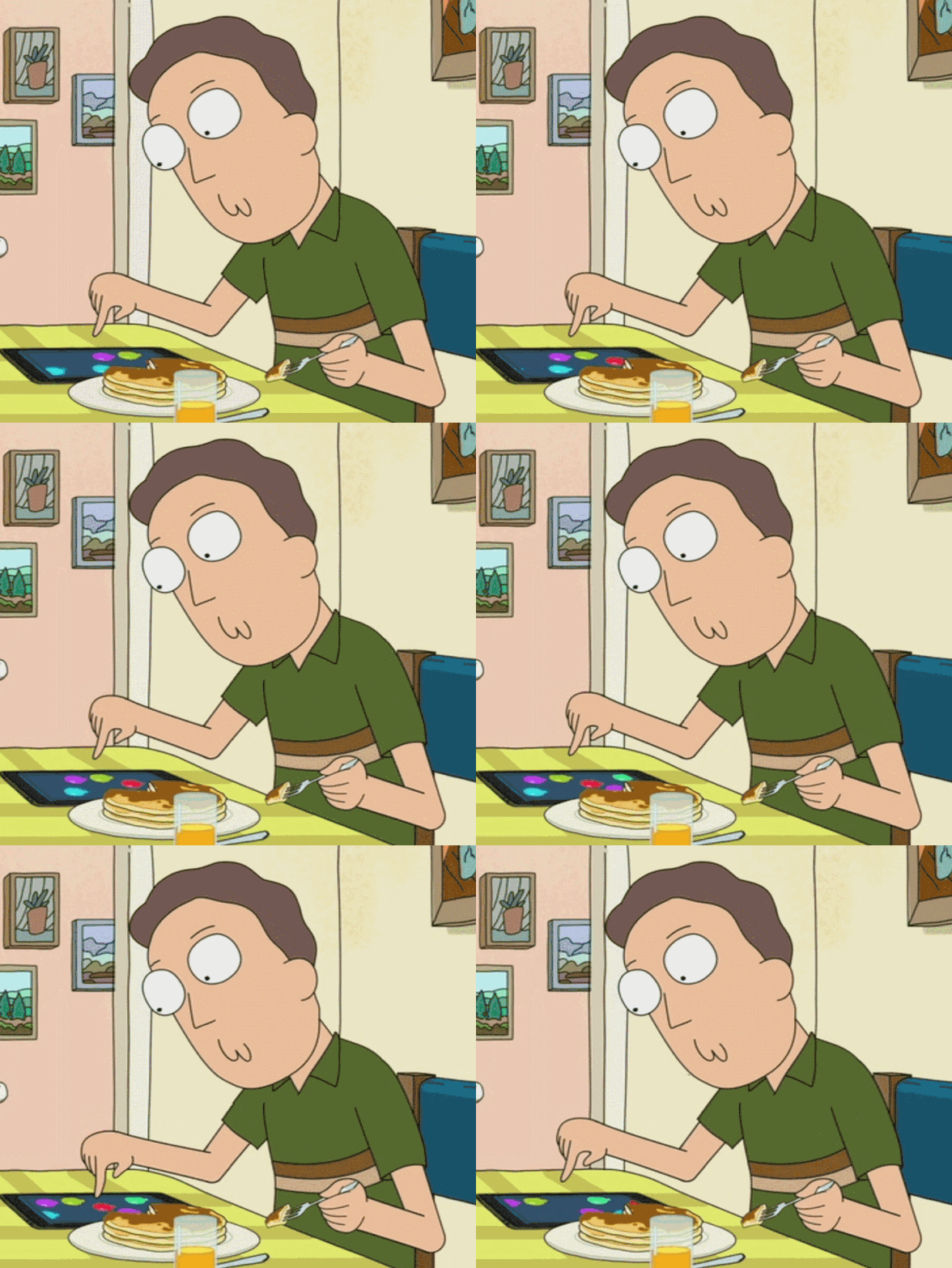
Chances are you’ve done something like this today.

By us, I don’t mean the people who watch regularly “Rick and Morty.” I’m not even referring to those exceedingly passionate fans who went ballistic on McDonald’s employees for not having any Szechuan Sauce. When I say that Jerry Smith is us, I mean that this colorful character that we love to laugh at represents the hopes, dreams, flaws, and foils of the entire human race.

To understand this sentiment, it’s necessary to know who Jerry is and what role he plays in over-arching mythos of “Rick and Morty.” For the most part, he’s neither a protagonist nor an antagonist. He’s rarely a hindrance to the cosmic antics of Rick Sanchez and while he tries to be a capable father to Morty, his influence is limited, at best. For the most part, he’s an afterthought at best and an inconvenience at worst.

When the family has to ban together to fight off alien parasites, Jerry doesn’t do any fighting.

When the family first encounters the Council of Ricks, Jerry either cowers or is fodder for pranks.

Even when he does play a significant role in an episode, Jerry tends to make the problem worse with his actions or is the underlying catalyst for them.

Chances are you’ve been this frustrated recently.

It wouldn’t be accurate to say he’s completely inept. By and large, he is a respectable person who tries to do his best with his current situation. Granted, nobody in his family makes that easy for him, but there’s no doubting his intentions. He wants to do what’s best for his family, but his capabilities are exceedingly limited.

That’s understandable, given who he deals with. Rick Sanchez is an alcoholic super-genius who can travel across universes, enter other peoples’ dreams, and build intelligent robots whose sole purpose is to pass butter. His wife is a skilled horse surgeon who can also hold her own against Rick-level threats. His two kids are young, but still capable of handling themselves in a post-apocalyptic wasteland.

Pretty much every character in “Rick and Morty” demonstrates that they can handle themselves in the crazy situations that Rick often puts them in. When aliens, parasites, or intelligent dogs enter the picture, they can confront the situation and even help resolve it. Jerry has never shown that ability. Every time he tries, he either fails or makes it worse.

Or just looks foolish.

The reasons for his failure aren’t entirely his fault. Jerry’s biggest shortcoming is that he’s an ordinary person in a family of extraordinary people. In any other circumstance, he would be able to relate, understand, and cooperate with others. In an environment where alien creatures are kept in his garage, this just isn’t possible.

In essence, Jerry Smith is as powerless and inept as almost anyone else would be in that situation. That even extends to a real world full of Jerry Smiths and exceedingly few Rick Sanchezes. Unless your name is Elon Musk, Bill Gates, Tim Cook, or Barack Obama, you’ll have more in common with Jerry than you will with anyone else in “Rick and Morty.”

In many respects, that’s a little distressing. It reflects a hard truth that most people aren’t able to effect meaningful change that ripples across the multiverse. For the most part, they’re at the mercy of the powerful forces around them and people like Rick Sanchez who are able to guide them to some extent.

Drunk or sober, Rick will guide you.

Even when Rick Sanchez espouses his nihilistic rhetoric, it seems to hit Jerry and everyone else like him a lot harder. Even if nothing Rick does matters, he’s smart enough and skilled enough to pursue what he wants while minimizing the consequences. Jerry can’t do that. He can only ever react to the random meaningless chaos surrounding him.

Most everyone in the real world is in a similar position. When something crazy happens, be it a natural disaster or a controversial election, there’s little any of us can do about it. A select few, such as lawyers, judges, and other powerful politicians, may be in a position to effect some change. Everyone else is stuck watching, hoping, and living their meaningless lives along the way.

We can react to the meaningless chaos, but we rarely be proactive. If most people had that opportunity, they would likely mess it up in the same way Jerry messed up a simple Meeseeks Box. Even if your intelligence is above average, your credit score is good, and you have no criminal record, you’re still just one person. You can only do so much without a portal gun and a high-tech lab.

However, it gets even more depressing than that. Throughout three seasons of “Rick and Morty,” Jerry isn’t just shown to be inept whenever faced with a crazy situation. He’s also completely replaceable. This is best demonstrated in the episode, “Mortynight Run,” in which Rick takes Jerry to a special adult daycare center that’s specifically caters to keeping Jerrys from multiple universes safe.

It’s hilarious, but pragmatic for someone like Rick Sanchez because it gives him a place to keep Jerry from undermining his plans. It’s also disturbing how effective it is because as soon as Jerry arrives, he finds himself surrounded by other versions of himself. While upset and insulted, at first, he quickly finds himself enjoying the amenities that are tailor-made to pacify him.

By the end of the episode, it’s hard to tell what separates this Jerry Smith from all the other Jerry Smiths in the multiverse. In the end, even Rick and Morty don’t seem to care which one they take home. One Jerry is as good as any other. He’s basically an interchangeable part that fulfills as basic role and little else.

It’s a role in which many people in the real world find themselves. Modern society, especially after the industrial revolution, has reduced most ordinary people of Jerry Smith’s abilities to that of societal cogs. They’re not individuals as much as they are a mass of humanity that produces, consumes, and provides support for the select few who can achieve the kind of impact of a Rick Sanchez.

More than one episode of “Rick and Morty” has explored how society can dehumanize people and there are plenty of examples in the real world, as well. That dehumanization is just easier to inflict on someone like Jerry Smith. While Rick Sanchez may realize when he’s in a simulation, Jerry likely wouldn’t. In fact, he would be quite comfortable and content in such a simulation.

That’s the ultimate flaw in the character construct of Jerry Smith. By being so unremarkable, he is easy to outwit and even easier to placate. He’s basically a sheep that herders can keep docile just by making sure there’s fresh grass to eat. While Rick Sanchez isn’t always the herder, he and others like him knows how to guide the sheep whenever it benefits him.

Even the Devil is not immune.

Nobody will ever admit they’re just a sheep. People will tell themselves whatever they have to in order to believe that their lives have greater meaning than they actually do. Jerry does this more than once throughout the show. People in real life do so when they carry themselves as the heroic underdogs of their own movie. More often than not, it doesn’t amount to much, which even Morty points out at one point.

Like it or not, most people who aren’t rich, beautiful, or well-connected will always have more in common with Jerry Smith than with any other character in “Rick and Morty.” The number of Jerrys in the world will always vastly outnumber the Ricks. A huge chunk of society is structured around having a vast population of unremarkable, but easily placated Jerrys.

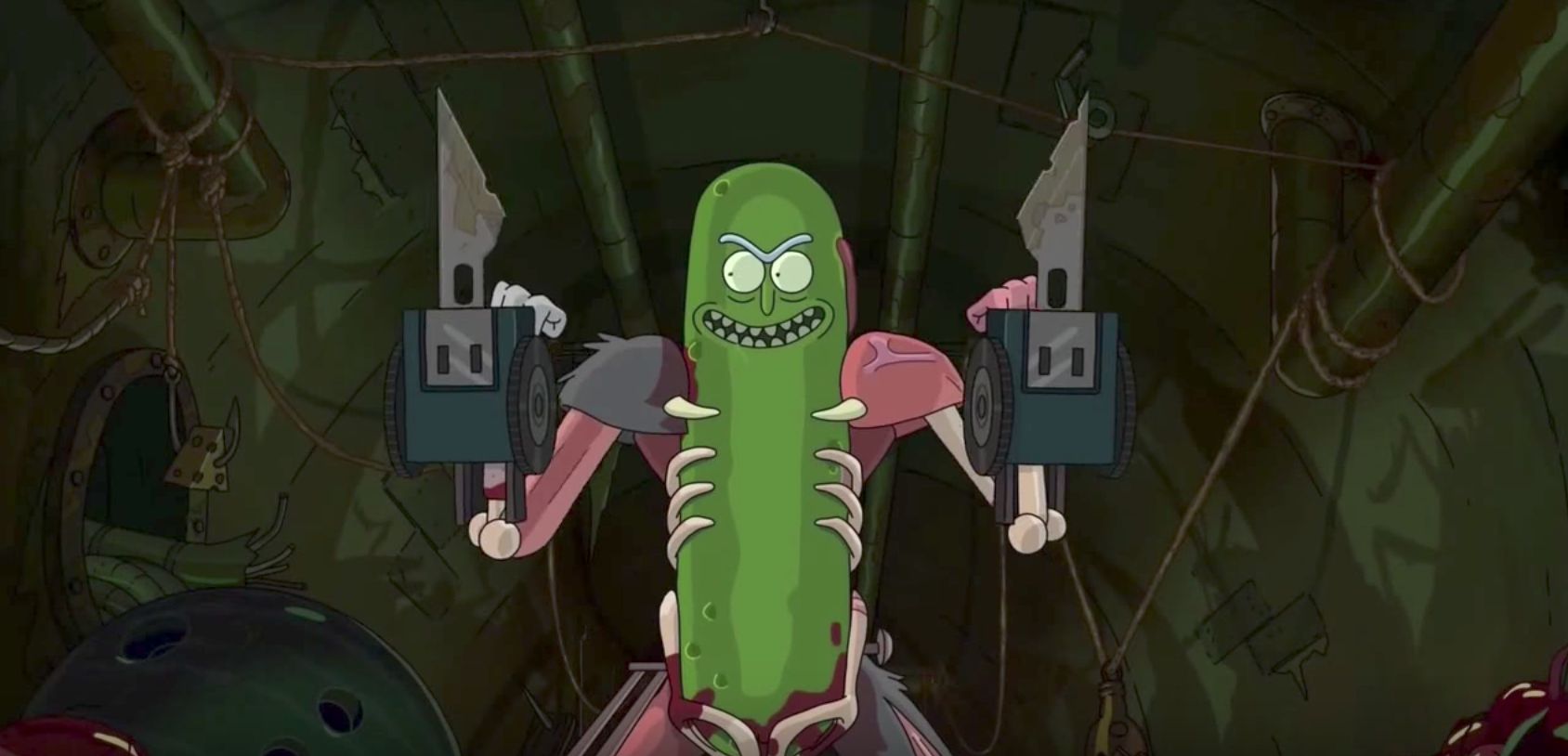
Whether we admit it or not, we are part of that system. We are the Jerrys who act as the cogs while the Ricks act as the operators. We don’t have the resources or genius of a Rick Sanchez so we can’t do much to subvert it. Even Rick can only do so much, even with his immense capabilities, which includes turning himself into a pickle.
It’s a bit depressing, but at the same time, there’s also a strange serenity that comes with the character of Jerry Smith. Even if he isn’t as capable as Rick or his family, he’s still someone who can find contentment and even peace in a chaotic world. Compared to Rick, whose famous catch-phrase masks his own inner pain, Jerry is probably happier overall, despite his meaningless lot in life.

Sometimes, ignorance is bliss, even if we’re oblivious to how ignorant we really are. In the long run, finding happiness will be easier for Jerry than it’ll ever be for Rick. For him, and the countless others who are just like him, the best recourse may be the same advice Rick often gives Morty.

Simply put, just don’t think about it.

2 Comments

Filed under human nature, philosophy, psychology, Rick and Morty, television

How Smiling Became A Feminist Issue (For Terrible Reasons)

smilingispowerful

What would you think of someone who randomly walked up to you, sensed you looked sad, and suggested something that is scientifically proven to make you feel better? The person doesn’t force it on you. They don’t offer their advice to be smug or facetious. They just see a fellow human in distress and offer to help. By nearly every measure, the person is being a compassionate, decent human being.

Now, having contemplated that scenario, what would you think of a man who walked up to a woman and asked her to smile? While some might not see that as too big a deal, it has become a serious issue in recent years. It may not be the most absurd since it doesn’t involve Wonder Woman’s armpit hair, but it’s still up there.

The scenario I just described is something that, from a purely superficial level, may not seem controversial. Telling someone to smile, regardless of whether they’re a man or a woman, is not just an empty platitude. There is real, legitimate science behind it.

Research has shown that the mere act of smiling has many health benefits, such as improving mood, relieving stress, and strengthening immune function. To some extent, it helps rewire our brain in a way that directly combats depression, anxiety, and all sorts of ailments. It might be the easiest thing anyone can do to feel better. If it were a drug, it would be hailed as a medical breakthrough.

Why then has smiling become such a point of contention? While linking it to sexism is full of many absurdities, there are legitimate grievances that helped make this an issue. I know I’m going to upset people when I talk about this, but I believe it’s worth talking discussing, if only to preserve the benefits of smiling.

From the perspective of those protesting being told to smile, many of which identify as feminists or left-leaning, the issue isn’t about those aforementioned benefits. It’s about people telling them to be happy in a world where they don’t feel like equals. Considering how unequal things were for women throughout history, that’s an understandable sentiment.

Plenty of inequality lingers.

The situation for these women didn’t involve kind strangers walking up to them when they were sad and telling them to smile. It likely involved bosses, spouses, teachers, and various authority figures telling them to smile because frowning wasn’t lady-like. Even if you don’t consider yourself a feminist, it’s easy to see why that would seem condescending.

In some situations, it was even worse. In service jobs, which are often dominated by women, telling them to smile is like asking them to act as a billboard for an organization. They’re treated as a pretty face rather than a person. It’s the male equivalent of being treated as a cog in an assembly line.

That sort of treatment is dehumanizing and people, regardless of gender, resent that and for good reason. In that context, telling a woman to smile is no different than telling her to just shut up and accept everything the way it is, no matter how much she resents it. While that’s rarely the intent, that’s the interpretation.

Most reasonable people can and do acknowledge the sentiments that women feel in those situations. Nobody likes being told to just smile and accept your misery. However, the issue descends into absurdity when telling someone to smile is famed as a byproduct of sexism. It effectively politicizes the very concept of smiling.

As a result, it fosters this idea that a woman cannot smile and be feminist. It’s an idea that has become more mainstream in recent years. To see how, just Google “modern feminist” and look at the images that come up. Very few of the faces that come up are smiling. There’s no Rosie the Riveter. There’s only angry, outraged women yelling to the point where it’s a common meme.

This isn’t just an issue with respect to the popular perception of feminists. When it comes to faces, there’s a great deal of intrinsic biology and neuroscience at work. Seeing an angry face triggers a very different reaction compared to seeing a smiling face. Some of that reaction transcends even extends to other species.

There are also significant differences in how people react to smiling men compared to smiling women. The extent to which that difference is biological is not clear, but unlike many other behavioral traits, smiling is directly tied to many psychological and physiological forces. Tying smiling to ongoing debates about gender is one nobody can win. Like it or not, you can’t debate around biology.

Then, there’s the other side of the gender equation, specifically the one regarding the male perspective. While this perspective is less obvious, it does add some other complexities that often fall through the cracks during these arguments. This is where I can offer some perspective, as a man, because I can attest to this impact.

Whatever you think about the nature of masculinity, it’s a well-documented fact that male brains are wired differently compared to female brains. One of those differences stems from how we react to women in distress. Whether they’re angry or sad, seeing it can trigger that protective instinct that men often feel around women.

I can attest that this instinct is real. A few years back, I was walking down the boardwalk at a beach. It was a loud, rowdy place in the middle of summer so there was plenty of noise. Then, out of nowhere, I heard this woman scream. Almost immediately, I turned towards it and I wasn’t the only one. Several other men, as well as a few women, took notice as well.

The woman had badly hurt herself on her bicycle. I’d rather not describe the injury so I’ll just say she couldn’t stand on her left leg. Thankfully, she was with a couple of friends and they immediately aided her. However, her cries caught the attention of plenty of men, most of them total strangers.

While some with more cynical attitudes may think of that reaction as white knighting, I can assure you it’s a real phenomenon. Men sensing a woman in distress evokes a reaction that stems directly from our natural inclination to form social bonds and protect others. Since women are the ones who bear the babies, we tend to give them extra scrutiny.

That’s not to say that a man telling a woman to smile is always an altruistic act. It doesn’t overlook the situations in which someone uses that rhetoric to denigrate women and make light of the issues they face. However, if the simple act of smiling becomes part of the line that divides feminists from misogynists, then the entire debate surrounding gender becomes obscure.

Telling a woman to smile is not the same as telling her to get back in the kitchen. In addition, making outrage the face of female empowerment won’t help in addressing legitimate issues. It’ll just frame every discussion as something hostile and unreasonable. No matter how legitimate the issues are, it’s difficult to have a meaningful discussion in that situation.

Objectively speaking, smiling is good for you, regardless of gender. It’s something I encourage everyone to do when they’re feeling upset, depressed, or angry. It’s a small gesture and one that doesn’t solve problem, in and of itself.

However, it can help your in many ways, especially if you’re hoping to connect with others in a way that ensures they’ll listen. There are many issues surrounding men, women, and gender that are worth discussing. Making the act of smiling a rallying cry for gender conflicts will only ensure that nobody succeeds in the long run.

3 Comments

Filed under gender issues, human nature, Marriage and Relationships, men's issues, outrage culture, political correctness, psychology, sex in society, sexuality, women's issues

Polygamy Vs. Consensual Non-Monogamy: Is There A Difference?

open-relationships-hero

When it came to dissecting the absurdities of language, nobody did it better than George Carlin. Beyond being one of the funniest comedians of all time, Carlin could break down certain concepts in a way that was as insightful as it was hilarious. His brilliant analysis of what he called “soft language” is more relevant now than it was when he was still performing.

Given the rise of outrage culture, I often wish George were still alive today so that he could tear the absurdities down, as only he could. We can only imagine how he would’ve tackled issues like fake news, alternative facts, and toxic masculinity. At the very least, his legacy of attacking soft language lives on.

In his book, “Parental Advisory,” Carlin defined soft language as terminology people use to help them avoid unpleasant truths. It helps fat people feel better about being “morbidly obese.” It helps poor people feel better about being “economically disadvantaged.” It helps drug addicts feel better about being “substances abusers.”

The face of a man who didn’t buy such bullshit.

Whatever the case, no matter how many colorful words people utilize, the underlying theme is the same. There are certain aspects of reality that bother some people, so they decide to re-frame it in a way that feels less serious and more palatable. It’s rarely overt. There’s rarely an official announcement or anything. Most of the time, it’s just a trend that people forget is absurd.

This leads me to the emerging concept of “consensual non-monogamy.” It’s kind of what it sounds like. It’s a form of a non-monogamous relationship in which both partners grant one another permission to seek sexual or romantic entanglements with others. Sometimes it involves certain rules and boundaries that are openly negotiated. The key is that there is consent and understanding at all levels.

This is not a new idea. If it sounds a lot like polyamory, an idea I’ve touched on before, that’s because it is for the most part. It’s a non-monogamous relationship that people pursue for any number of reasons. It’s actually one of humanity’s oldest forms of relationships and some even argue that it’s more natural than monogamy.

I’m not going to argue how natural or unnatural such practices are, but I think this latest manifestation of soft language requires scrutiny. Like every other kind of soft language, these sorts of linguistic quirks don’t evolve randomly. There’s often a method behind the absurdity and while I’m not as brilliant as Carlin, I have a pretty good idea of why it’s happening.

In terms of definitions, there isn’t that much difference between polyamory and consensual non-monogamy. Logistically, though, there are a few complexities that differentiate the two practices. They’re minor, but relevant to the extent that inspired soft language.

While there hasn’t been much research into consensual non-monogamous couples, the little we do have paints a fairly comprehensive narrative. In these relationships, there is a “primary” partner who holds the role of spouse/lover. This is the partner with which they love and seek to share their lives with. They’re the ones whose names are on emergency contact forms, loan applications, and wills.

Beyond the primary partner are all the girlfriends/boyfriends with which the sexy stuff occurs. The extent and motives behind these encounters are communicated and understood with the primary partner. Every couple is different so the boundaries vary. Some couples have to be together when they’re getting sexy with others. Some are okay with it happening more randomly.

If that sounds a lot like polyamory, then congratulations. You’re starting to understand how George Carlin thought. While polyamory has its own dictionary definition, it’s connotations are not the same as consensual non-monogamy. What people think of when they hear the word “polyamory” conjures different mental images than a term like consensual non-monogamy.

Polyamory, for better or for worse, is one of those terms that has a certain level of linguistic baggage. It’s less associated with the free-spirited couples who get their own reality show and more with outdated traditions associated with polygamous marriages. Think “Big Love” rather than “Friends With Benefits.”

Now, I know I’ll upset those in the polyamorous community for just hinting at that association. For that, I apologize. I know most who identify as polyamorous or consensual non-monogamous don’t like being associated with the kinds of practices that are often associated with horrific crimes. That gets to the heart of where this soft language comes from.

Even if the principles are the same, those sexy free-spirited couples have a valid incentive to set themselves apart from polyamory. It doesn’t matter the disturbing practices of extreme religious cults are only a small subset of polyamorous relationships. They’re distressing enough for most reasonable people.

I dare you to find something more creepy.

As a result, a less broad term emerges. Consensual non-monogamy may have a few extra syllables, but it feels more technical and official. It’s harder to apply to the more distressing aspects of polyamory because it emphasizes consent, a concept that has only become more heated in recent years.

You can’t have child marriages or even arranged marriages of any kind under consensual non-monogamy. It would undermine the whole “consensual” part of the term. In that context, it’s understandable that this kind of term would emerge. There’s nothing in the definition of polyamory that weeds out those negative associations. Rather than actually confront it, soft language acts as a filter.

Given the frequency with which the negative aspects of polygamy still occur, it’s hard to blame those who practice consensual non-monogamy for wanting to set themselves apart. As those relationships become increasingly acceptable, there will be an increasing desire to frame it in a particular way and “consensual non-monogamy” checks all the right boxes.

It emphasizes consent.

It implies choice and personal freedom.

It’s technical, but doesn’t completely undercut the sex appeal.

Even if the definitions aren’t that different, consensual non-monogamy still does just enough to set itself apart from polyamory. In terms of soft language, it adds some critical, but necessary complications to something that is still subject to plenty of taboos. In a perfect world, such a differentiation wouldn’t be necessary. Sadly, that’s not the kind of world we live in.

Sadly, indeed.

I like to think even Carlin would understand that some amount of soft language is necessary. Whether you call it consensual non-monogamy or polyamory, how we think about these ideas are going to affect our attitudes towards it. If consensual non-monogamous couples don’t want to be associated with crackpot religious cults, then they have every right to set themselves apart.

That said, it’s also entirely possible that more soft language will emerge as consensual non-monogamy becomes more mainstream. Love, sex, and relationships are complicated and human beings are uniquely talented at complicating things. Years from now, we may not call it consensual non-monogamy. We may use something along the lines of “mutually non-binding romantic intimacy relationship agreements.”

At that point, hopefully someone will have picked up on the absurdities. George Carlin may no longer be with us, but that doesn’t mean we should tolerate more bullshit in a world that already has too much of it.

Leave a comment

Filed under gender issues, human nature, Marriage and Relationships, polyamory, psychology, romance, sex in society, sexuality

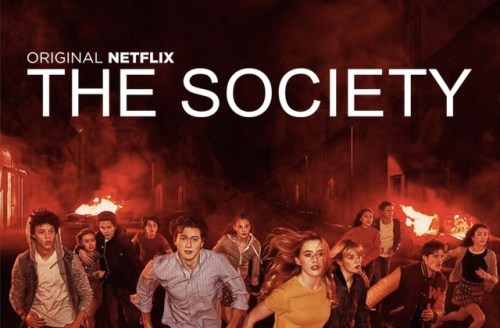
How “The Society” Humanizes Teenagers In A Refreshing (And Overdue) Way

the-society-netflix

As someone who hasn’t been a teenager for many years, I admit I have some unflattering perceptions of that demographic. Ask anyone over the age of 30 what they think of teenagers today and chances are you’ll hear more than a few complaints.

They’re too obsessed with their phones.

They’re too emotionally fragile and prone to outrage.

They’re too entitled, coddled, and sheltered from the real world.

You’ve probably heard those rants before and not just from Fox News. With those stereotypes in mind, imagine what would happen if a large collection of teenagers were left unsupervised and isolated in a large area for long stretches of time. What do you think would happen? How do you see that playing out?

Something like this, probably.

I don’t deny that I’d make some unflattering assumptions such a scenario. I would fully expect that they act erratically and irresponsibly. I would also expect for them to falter emotionally if left alone for too long. Having lived their whole lives within some system of authority and supervision, I wouldn’t expect them to function for very long on their own.

It’s those very assumptions that that “The Society,” a very binge-worthy Netflix show, dares to challenge. This thriller/mystery/drama is one of those shows that has all the right ingredients to play up every tired trope that teen-centered television show has explored for years. That was certainly what I expected when I discovered the show. I freely admit that those expectations were wrong.

The premise of “The Society” is built around a strange mystery that “Lost” fans should appreciate. One day, a large contingent of high school students get on a bus and leave the affluent New England town of West Ham for a 10-day camping trip. For reasons not yet revealed, the buses turn around and drop them off exactly where they picked them up.

Upon returning, these teenagers find out that all the adults in their town are gone. Near as they can tell, everyone just picked up and left. To further compound the mystery, they find out that all the paths leading out of the town have become dead ends. There are no neighboring towns to visit. As far as they know, there’s nothing but endless forests in every direction.

It’s genuine mystery with distressing implications. While the specifics are only partially explored in the first season, the mystery is only part of what makes the “The Society” such a compelling show. It doesn’t just put a bunch of hormonal, irrational teenagers in an enclosed area and let the drama tell the story. The show dares to humanize teenagers in a way that is exceedingly rare in a TV show.

By that, I’m not just referring to a handful of character that are well-developed and fleshed out. While there are certainly plenty of those in this show, it approaches how teenagers conduct themselves with more balance and nuance. It even makes the case that, in dire situations, they can come together and cooperate as well as full-fledged adults.

In the beginning, that’s not immediately apparent. When they all return to West Ham and find out the adults are gone, they react the way most would expect of decadent, hormonal teenagers if they were left unsupervised all night. However, the extent of their decadence never goes beyond a certain point.

To a point, being the key term.

Sure, many drink, they dance, and they hook up. A few just go home and turn in for the night, thinking nothing is amiss. They don’t do anything too outrageous, though. In essence, they conduct themselves the same way most single adults would if they knew there were no police or authority figures to stop them.

After that first night, though, things start getting serious. These teenagers, who still come off as kids in the first few episodes, realizes that something has gone very wrong. Their parents are gone. The adults are gone. Their entire town is completely cut off. They have no connection to the world beyond their town. They have a finite supply of food and little experience in terms of governing themselves.

It’s a scary situation. Some handle it better than others, but a few start to crack under the pressure. For some, especially Campbell Eliot and Lexie, the situation reveals sides of their personality that probably wouldn’t have otherwise emerged. That tends to happen with most people in extreme circumstances, but being a teenager tends to raise the stakes even more.

The fun and games quickly end. People start getting hurt. There are even a few deaths, which has a significant impact on everyone in the town. It sends a clear, unambiguous message. This isn’t just about hanging in there until their parents find them. They have to survive and they can’t do that unless they work together.

On paper, it sounds like it can only end in disaster and it certainly comes close, especially towards the end of the first season. Again, these are teenagers. Most people don’t expect them to function beyond a certain point. While “The Society” doesn’t strip away everything in the mold of “Lord of the Flies,” it removes enough to make the situation dire.

They still have electricity, running water, and shelter. However, their food supply is finite and there’s a distressing lack of expertise in everything from basic medical care to fixing a car. In order to survive, they must create a system of governance to keep the peace. If they don’t, then everybody suffers.

This is where “The Society” really shines, both as a story and as a concept. It’s also where it explores how teenagers, despite their maturity and lack of experience, can come together when they have to. They’re not perfect, but neither are experienced adults. They do find themselves in painful, heart-wrenching situations that include murder, illness, and despair. However, things never totally fall apart.

To anyone who has ever tried to explain student loan debt to a teenager, it almost seems absurd. The idea that a bunch of unsupervised teenagers can somehow form a functioning society just doesn’t fit with the common narrative surrounding teenagers.

In that narrative, things always tend to devolve until the adults return to impart the proper amount of discipline. Look at any movie, sitcom, or rowdy music video and the themes often come back to teenagers being out of control and needing the discipline of responsible adults. “The Society” makes the case that teenagers can become responsible on their own, albeit after some setbacks.

There are still many factors working against them. We’ve yet to see what happens to the citizens of New Ham, as they dubbed it, when the food runs out and they have to start farming the land. We also haven’t seen them endure a harsh New England winter. However, “The Society” never gives the impression that these young people are incapable of overcoming these challenges.

By the end of the first season, it’s easy to root for them. The emotional toll is palpable and so are the difficult decisions that many end up facing. Over the course of the show, however, it’s easy to see the progression that they all experience. It’s hard to even see them as teenagers anymore. Some conduct themselves as true, full-fledged adults.

While the mystery surrounding “The Society” is still unfolding, complete with fan theories and potential clues, the show’s approach to depicting teenagers is its greatest accomplishment in my opinion. If there is a second season, I’m definitely interested in seeing how these characters and their over-arching story progresses.

I doubt “The Society” will change anyone’s current attitudes of teenagers. There will surely be other shows and movies that double down on the many stereotypes surrounding them. If nothing else, “The Society” shows that teenagers are capable of carrying a story without adults complaining about them.

2 Comments

Filed under human nature, philosophy, psychology, television

The (Surprising) Sources And Implications Of Slut Shaming

vicious-cycle-of-shaming

As a fan of romance and people exploring their sexy side, I’m generally opposed to slut shaming. I understand why it exists, to some extent. Nearly every society in history has had certain hang-ups about sex. Considering its role in propagating the species, it’s understandable that people give it extra scrutiny.

That said, I consider slut shaming a misguided form of scrutiny. The definition, itself, has some ugly implications that go far beyond the inherent risks associated with being reckless, promiscuous, and irresponsible.

For one, it’s almost entirely heaped upon women. James Bond never gets called a slut for his promiscuous behavior. Instead, he gets to be a masculine icon. A woman who has just as much sex gets called a slut and is often painted as deviant. Look no further than legendary Bond girls like Xania Onatopp and Pussy Galore for proof of that.

While it can be pretty overt in popular media, it’s even more pernicious in real life. From women who choose wear revealing clothing to those who actively attempt to confront sexual stigma, there’s no shortage of shaming from multiple directions. It’s frustrating in that it amounts to incessant whining about how other people choose to live their lives, but recent research has cast slut shaming in a new light.

A study published in the Journal of Evolution and Human Behavior attempted to analyze how behaviors associated with slut shaming differed among genders. The popular narrative is that men do most of the slut shaming. The logic is that men see beautiful women having a lot of sex. That bothers them because those women aren’t having sex with them.

Granted, that’s a gross generalization that I’m sure many men and even a few women find offensive. Despite the details, that is the common narrative and it tends to play out in one too many teen comedies. However, science has a way of disrupting those narratives in unexpected ways.

The study revealed that while men and women were equally likely to not trust promiscuous women, women who were more likely to favor punishing those women. In a comprehensive summary conducted by PsyPost, the differences were pretty striking.

“In the study, participants played one of three kinds of economic decision-making games. The participants were led to believe they were playing against a female opponent in real-time, but were actually only interacting with computerized responses.

The opponents varied in whether they appeared to be sexually accessible or sexually restricted. For some participants, the opponent was depicted as a woman wearing a tight, red outfit and an abundance of makeup. For others, the opponent was depicted as a woman wearing loose-fitting clothing with less makeup.

The researchers found that both male and female participants were less willing to share money with a woman wearing the tight outfit. The participants also trusted sexually-accessible opponents with a financial investment less than sexually-restrictive opponents.

Women, but not men, were also willing to inflict punishments on a sexually-accessible female opponent who made an unfair offer, even though it left them empty-handed as well.

Given the choice between receiving a small sum of money while their opponent took a large sum or having neither player receive any money at all, women tended to pick the latter option.”

Take a moment to comprehend what this does to the slut shaming narrative. For those who idealize that 1950s sitcom family life that never truly existed, it’s an aberration. While those women make for good one-night-stands, they hardly make for quality long-term relationships.

Why, then, would men be reluctant to punish those women? I’ve noted before how society tends to micromanage women’s bodies. Slut shaming is only a half-measure because it offers no tangible punishment. While certain societies don’t mind punishing promiscuous women, it doesn’t appear to be entirely predicated on male attitudes.

This study shows that women are just as mistrustful of promiscuous women and are willing to go further in terms of punishing their behavior. The reasons for this are difficult to surmise. The researchers hypothesized that men were primarily concerned with avoiding investment in a child that wasn’t theirs. From an evolutionary standpoint, that’s something to avoid, but not punish.

Conversely, women may be more concerned with the bigger picture. The researchers surmised that women had an evolutionary imperative to keep the cost of sex high to improve their value as potential partners. Actively punishing potential rivals further served that purpose.

From a logistical standpoint, it makes sense. They see beautiful, promiscuous women as people who use cheat codes in video games. They have an unfair advantage when it comes to attracting potential partners and that has significant consequences, especially to those who aren’t beautiful or sexually flexible.

Beyond distracting partners who might otherwise be interested in them, it lowers the value of the sex they have to offer. Why would men be as interested in having sex with them when there are promiscuous women who were willing to give it to them for a lower cost with fewer strings?

While I believe this may be a factor for some women, it’s also another broad generalization that would offend more than a few women. It assumes too much about how they think and feel. Believing women slut shame because it hinders their own sexual value is as absurd as blaming all misogyny on some vast patriarchal conspiracy.

Like all research, the study is limited and can only reveal so much about the complexities of human behavior. The researchers themselves freely admitted this, but that’s exactly why it warrants further study. Like it or not, slut shaming is still prominent in most modern societies. I would argue that the internet and social media are making it worse.

At the same time, I also believe that slut shaming is something we should confront. It causes real harm to real people. It damages our love lives, our sex lives, and everything in between. There are instances in which someone’s irresponsible sexual behavior genuinely warrants scrutiny, but shaming can only serve to make things worse, even for people who aren’t sluts.

3 Comments

Filed under gender issues, human nature, men's issues, outrage culture, political correctness, psychology, sex in media, sex in society, sexuality, women's issues

Addiction, Religion, And The Striking Similarities

1df129fb-3296-485a-8010-1e7989560ad7-large16x9_photo

Battling addiction is a serious issue. Even if you haven’t struggled with it at some point in your life, there’s a good chance that you know someone who has. I’ve known more than a few. I’ve seen how damaging it can be to people and their families.

That makes the process for treating addiction just as critical. Unlike the flu or a nasty headache, it’s not as easy as simply getting a prescription and taking a few pills. Oftentimes, there are powerful psychological factors at work to go along with the equally-powerful biological factors. Finding an effective treatment is exceedingly difficult, especially in the midst of a deadly opioid crisis.

One of the greatest challenges for finding such treatments is ensuring that someone doesn’t just exchange one bad addiction for another. Even if some addictions aren’t as damaging as another, going from heroin to methadone is only a marginal improvement for many. There is, however, one secondary addiction that adds even more complications to the mix and it’s not a pill or a substance. It’s religion.

As always, I’m going to try and be careful with my words here. I know discussions involving religion tend to bring out a lot of high emotions. I’m also aware that whenever I discuss religion, I don’t portray it in a positive light. I make it a point to disclose that religion can be a positive force for many people and I have many devoutly religious people in my family who I love dearly.

That disclaimer aside, the forces surrounding organized religion are powerful and they can be misused. The history of such misuse is well-documented. It’s impact on treating addiction is less known, but does manifest. There have been more than a few celebrities who have become religious after a battle with addiction. Some are genuinely better because of it. However, that does raise a few questions.

Did their religion actually help them overcome their addiction?

Did their religion help them address the underlying factors behind their addiction?

Did their religion just become a replacement for whatever they’d been addicted to?

These questions may come off as cynical, but they have serious implications. Religion is a powerful force on some people. Whether you’re a true believer or an ardent atheist, it’s hard to deny the impact of such a force. Religious experiences have been documented to have measurable effects on the human brain. Some of those effects are comparable to addictive drugs.

That’s not to say that going to church and going to a heroin dealer are the same thing. Addiction is complex and so is brain function. At the same time, the human brain is prone to plenty of flaws. It can be easily tricked and people can even trick themselves. When it comes to addictions, you can’t expect your brain the know the difference between heroin and a religious experience.

There is even some research that demonstrates this to some extent. For people who once built their lives around their addiction, religion is a pretty effective replacement. It demands a great deal of money, time, and energy. It surrounds you with people who reinforce and reaffirm your beliefs and behavior. It can even give some people a very specific high.

That high just becomes the new addiction. That intense feeling that religion gives people suddenly becomes the feeling that addicts are so driven to pursue. It may not feel the same as an addict’s previous addiction, which is why they may not see it as such. That doesn’t matter, though. What matters is that it fills the proverbial void that the previous addiction once filled.

That’s why it shouldn’t be too surprising to find out that some famous addiction treatment programs have deeply religious roots. It also shouldn’t be that surprising when those who find religion after dealing with addiction tend to be quite passionate about their faith, compared to those who found religion through a different path.

Even if these programs help people, it still doesn’t answer the relevant questions surrounding their addiction. Exchanging one disease for another doesn’t constitute a cure, but people make an exception for religion. The idea of someone being addicted to a religion isn’t as easy to imagine as someone being addicted to cigarettes, gambling, or porn. To them, a religious addict is just someone who goes to church more often.

Some see that as a good thing. Compared to robbing gas stations for drug money, it is an improvement. However, it still leaves the underlying cause of the addiction untreated. Whatever is making someone an addict is still present. While I don’t doubt religious organizations are happy to accept their adherence, it doesn’t fundamentally change an addict’s condition.

That can be damaging and dangerous to people who are already vulnerable. In the worst case scenario, finding religion can only create the illusion that the addict has been cured. Society didn’t approve of them being a junkie on the street, but it does approve of them being a devout religious zealot who rails against the evils of their former vice.

That sends the message that society is selective when it comes to treating addicts. As long as their addiction is productive for society, in that it benefits established institutions, it’ll treat that as a cure. It doesn’t matter if it never helps someone get to the root of their problems. As long as it makes them productive, that’s good enough.

Again, I’m not claiming that most religious organizations actively exploit people struggling with addiction. Some definitely do and a few are quite famous for it. However, it’s somewhat telling that we ascribe finding religion to overcoming an addiction when, on many levels, it’s just exchanging one source of addictive behavior for another.

At its best, religion inspires people to do great things for all the right reasons. At its worst, it can exploit someone to such an extent that it can make people who are genuinely sick feel like they’re healed. Addiction, like many other disease, is something that can only get worse if left untreated.

Whether it’s religion or crack, the brain of an addict will do what it takes to sustain its addictive state. There are effective, legitimate treatments for addiction that actually attempt to confront the source of the issues within an addict. Many aren’t as easy or overwhelming as finding religion, but they make a concerted effort at treating the addict rather than simply guiding them to a more socially-acceptable addiction.

Leave a comment

Filed under extremism, human nature, psychology, religion

Bachelor Parties, Masculinity, And A (Much Needed) Feel Good Story

bachelor-parties-san-diego

There’s a lot of bad, depressing news in the world. There are just as many depressing trends in terms of politics, society, and the very world we live on. It’s an unfortunate fact of life. We live in an imperfect world and, thanks largely to our own refined survival instinct, we pay more attention to the bad news instead of the good news, which is there.

Every once in a while, though, some news emerges that strikes all the right chords, evokes all the right feelings, and reminds us that humanity can still be pretty darn awesome. I’d like to share one of those stories that I believe is just that awesome.

It involves masculinity, bachelor parties, and a happy accident turned into something incredible. It’s one of those stories that we need right now. In case you haven’t been watching certain commercials and the visceral reaction to such commercials, the state of masculinity has been precarious, to say the least. While I’ve made my opinions on the subject known, I don’t deny the debate is ongoing and exceedingly frustrating.

Then, a man named William Novak came along and showed just how amazing men could be when given the opportunity. The story, which went viral for all the right reasons, started with a wedding, a bachelor party, and an email typo. Not even three “Hangover” movies could’ve created a perfect storm like this.

Angelo Onello was getting married. His brother, Devin, was responsible for sending out the invites to the bachelor party. By complete accident, he misspelled an email address and sent a message to William Novak in Phoenix, Arizona, who was not the same Bill Novak that he’d intended to invite.

Now, most people probably would’ve just deleted the email or let the sender know that it was a mistake. William Novak of Phoenix, Arizona is not most people. He’s a cut above the rest. Instead of just deleting the email, he replied and said he’d love to attend. He would help Angelo, a total stranger, have the best bachelor party he could possibly have.

Let that sink in, for a moment. Novak doesn’t know this man. He doesn’t even live in the same time zone. Angelo lives across the country and the bachelor party was in Vermont. That’s a hell of a trip, just to help out a total stranger. Most people will make excuses to avoid any drive more than an hour for a blood relative.

Again, Novak isn’t most people. He’s more awesome than that and people respond to awesome. To pay for the long trip, he actually started a GoFundMe page. He was only trying to raise about $1,000. He ended up raising over $5,000. When someone announces they’re going to go out of their way for a total stranger like that, it’s hard not to support them.

By all accounts, the trip and the bachelor party that ensued was a success. Mr. Novak helped a total stranger enjoy himself. He also showed that when given an opportunity, men will go out of their way for one another and for all the right reasons. Mr. Novak’s story resonated so much that even late night talk show hosts like Seth Meyers took some time to tell this amazing story.

It’s a story that deserves to be told. It’s a story that shows that men can do amazing things for no other reason than because it’s amazing. You don’t have to look too far to see heart-warming stories about people helping strangers. This one is just one of those stories that came along at just the right time.

Men, women, and everyone in between can appreciate the gesture that someone like Mr. Novak demonstrated. He’s not just a decent husband and father. He’s the kind of guy who will help another guy have a memorable bachelor party. Regardless of where you stand on gender politics, that’s the kind of masculinity that’s worth celebrating.

1 Comment

Filed under gender issues, human nature, men's issues, noble masculinity, Uplifting Stories, women's issues

Six New Years Resolutions For 2019 (That Will Help Everybody)

new-years-resolutions

It’s that time of year again. By that, I mean it’s the time when people either bemoan how few of their New Years resolutions they accomplished this past year and try to convince themselves they’ll do better next year. I’m not knocking the concept. I’m as guilty of that as the next person who dares to set goals at the end of every year.

I like to think I’ve accomplished a thing or two, but 2018 was rough for me. It’s not just that I was unable to find a new publisher for my outstanding manuscripts. When 2018 began, “Passion Relapse” and “Rescued Hearts” were my only published novels. I’d hoped to add at least one, but that didn’t pan out. I tried to make up for it by writing over two dozen sexy short stories, but I’m still determined to further publishing efforts.

Beyond my publishing endeavors, though, I underwent some pretty major upheavals. A very close family member of mine passed away, which was incredibly difficult. There were a few other major life events that I’d prefer not to share just yet. While 2018 had plenty of high points, the low points were especially painful.

Be that as it may, I’m more ready than most to close the book on 2018 and work on making 2019 much better. While I have my share of resolutions that I’d like to achieve, I would also like to contemplate resolutions that society, as a whole, can strive to achieve in 2019.

Let’s face it, we had some pretty bad moments in 2018. There’s a lot of room for improvement in 2019. I’m not saying humanity can fix all its problems in one year, but striving to do better is always worth doing. What follows are six New Years resolutions for humanity in 2019. Some are more ambitious than others, but I think these are minor steps we can take to making 2019 the best year it can be.


Resolution #1: Learn To Channel Selective Outrage For More Productive Purposes

This could’ve easily been a resolution for 2018, as well. It’ll likely be a resolution for years to come because, as I’ve noted before, getting exceedingly outraged over trivial matters has become a pastime, of sorts, for people these days. The internet and social media is just the platform. People are the ones who stoke the fires.

Whether it’s controversy over Jennifer Lawrence’s dress or getting all up in arms about old jokes from famous comedians, people seem to get outraged over exceedingly petty things. Now, I’m not saying that people shouldn’t get riled up, but there are some things that just aren’t worth the emotional energy.

Who hosts the Oscars or old tweets from a decade ago do not warrant this kind of attention in the marketplace of ideas. Scandals about big companies illegally harvesting user data or children being forcibly separated from their parents are more deserving of such outrage. There are things worth getting upset about and celebrity attire isn’t one of them.

For 2019, I think we’ll do everyone a favor by channeling our outrage into something that actually warrants it. It can’t just be about what celebrities do or whether certain video game characters are too sexy. There’s plenty of room to channel our outrage into something more productive.


Resolution #2: Stop Taking Certain Celebrities Seriously

This is closely tied to the first resolution, but I thought it deserved a resolution of its own. Let’s face it. Our culture is obsessed with celebrities. We have been since long before the rise of mass media. It’s not going to stop in 2019, but that doesn’t mean we can’t be more diligent with how we obsess over celebrities.

Specifically, we can go out of our way to ignore certain individuals whose rhetoric is barely discernible from typical trolls. I’m talking about the Lena Dunhams and Ted Nugents of the world. These are not serious people with serious ideas. They’re celebrities who pretend to know what they’re talking about and not very well.

There are plenty of respectable celebrities worth following and admiring. While the assholes may make the news, there are celebrities out there who do genuinely good things and they deserve true admiration. We can do both them and the world a favor by not giving so much attention to those who don’t deserve it.

When in doubt, just follow someone like Ryan Reynolds.


Resolution #3: Focus On Future Possibilities Rather Than Past Transgressions

There are a lot of factors that fuel outrage, controversy, and what not. One that often comes up involves past transgressions and for good reason. Historically, people have been committing horrific atrocities on one another due to differences in race, religion, sexual orientation, and gender. These actions are objectively awful. Nobody can deny that.

That said, focusing on them and bemoaning them constantly does nothing to honor the victims or reduce the potential for similar atrocities. We can’t change the past. We can only learn from it. The crimes, be they the horrific treatment of a particular race or the actions of a particular individual, cannot be undone. We can prosecute them and, if possible, we should.

However, there comes a point where focusing so much on past crimes becomes less about learning from them and more about whining. I see it a lot in debates surrounding race and gender. One race or gender bemoans how horrible they had been treated in the past and use that to justify their sentiments in the present. That’s not a productive use of history.

That’s because whining is never productive. It’s true. Things in the past weren’t very pleasant for a lot of people, especially if they were a minority. There’s no way to change that. Many of the victims and perpetrators are long dead and can never be held accountable. While that clashes with our innate sense of injustice, it’s not something we can change.

That’s why it’s important to focus on the future rather than whining about the past. We can’t change the past, but we can shape the future. We can do things that’ll make the world better for everybody, regardless of their minority status. Whining, however, is not one of those things.


Resolution #4: Celebrate Good More Than Emphasizing Bad

You don’t have to look far to see some pretty awful things happening in the world. Those awful things are usually the first thing to make the news. The whole “if it bleeds, it leads” mantra has a lot of distressing truth to it.

Even though 2018 had plenty of horrific news, there were genuine bright spots. Did you know that charitable giving reached record highs this past year? Did you know crime rates are tending downward in almost every major city? Did you know science developed a drought-resistant rice that could potentially feed millions? Did you know that Jean Grey finally came back from the dead in the X-men comics after a 15-year absence?

That last one was for me, as a life-long X-men fan. However, the point is still valid. There was a lot of good news that happened in 2018, in terms of society and civilization. Even in genuinely awful stories, you can find bits of hope here and there. You don’t even have to look too hard. The news is there, if you’re willing to find it.

That’s a resolution I think is worth pursuing, even if horrific news still gets our attention. The good will never shock us as much, but it will evoke all the right emotions. I strongly believe in having faith in humanity. I’ve explained why on a few occasions. I think we would do ourselves and our futures a favor by celebrating that good rather than agonizing over the bad.


Resolution #5: Laugh At Absurdities Instead Of Making Them Controversies

Beyond the good news and the bad news, 2018 had plenty of weird news as well. Granted, a lot of them came from Florida, but the principle is the same. Regardless of whether you think people are inherently good or bad, most can agree they do weird things. You can either lament for the future of our species or just laugh at it.

As it turns out, laughing is a lot healthier. It helps make difficult or strange situations easier to process. Let’s face it, we’re always going to have plenty of those, even if you don’t live in Florida. The best thing we can do is laugh, even if it’s not that funny. It’s something we should do plenty of in 2019 because 2018 showed a marked decline in peoples’ sense of humor.

There were controversies about jokes in the past and jokes that were in poor taste. Granted, not all of these jokes were funny, but making them into these big controversies about race, gender, and what not didn’t help. All it did was fuel contrived outrage over issues that didn’t need any extra fodder.

People are going to tell bad jokes. We can’t be as funny or as smart as George Carlin or Richard Pryor. People are going to get offended too, but that can’t be the sole basis for a controversy. Being offended is not a serious injury and offending someone is not a crime. If faced with the option of laughing it off or making a big deal out of something comes up in 2019, let’s just err on the side of laughter.


Resolution #6: Focus On What We Can Control Instead Of Agonizing Over What We Can’t Control

This is something that become a major talking point in 2018 and, at times, for the right reason. There was a lot of whining, especially in the world of outrage culture and politics. However, there was a bit more emphasis on what to actually do about it. Specifically, there was a huge push to urge people to vote in the mid-term elections. That effort, as frustrating as it was at times, paid off.

Voter turnout in the 2018 Midterm Elections was the highest it had been since the mid-1960s. The results paid off. People wanted change, there was a process for implementing that change, and they did it. That’s how we progress in a functioning society. It’s not always as extensive as we prefer, but it’s still progress.

This was in stark contrast to those who whine constantly about what one particular gender or race has done in the past. Like I said in the previous resolution, we can’t change the past. Whining about it won’t magically conjure a time machine or rewrite history. It’ll just incur pity, which is even less productive.

There are things we can do to help people. Do you want to help women who have been sexually abused? Contribute to legal funds that help them prosecute their abusers. Do you want to help save the environment? Consider donating to the World Wildlife Fund or invest in green energy. Do you want to help victims of atrocities? Consider donating or volunteering for the Red Cross or Amnesty International.

These actions constitute meaningful change in a world that still needs it. Your money and your time are tangible assets that can do real help. Whining doesn’t help and neither does contrived outrage. We live in a complicated world where a lot of things are out of our control. By focusing on what we can control, we can make 2019 the best year it can possibly be and I’m ready to do my part.

3 Comments

Filed under Celebrities and Celebrity Culture, Current Events, gender issues, human nature, media issues, outrage culture, political correctness, psychology, sex in society

Why “Adulting” Is Getting Harder

adulting-1

I’ve stated before that there are certain words I believe should be purged from the English lexicon. Contrived, agenda-driven terms like “toxic masculinity” or “mansplaining” are at the top of my list. I strongly believe that terminology like that is doing everything to further hostility and hinder understanding.

That being said, there are a few words that I have mixed feelings about. I think they also do plenty to divide people for all the wrong reasons, but I also understand why they exist. One term that I feel is increasingly relevant, albeit for negative reasons, is the concept of “adulting.”

I put that term in quotes for a reason, but it’s not out of sarcasm or scorn. This is one of those words that exists because there’s a need for it. Even if you think “adulting” sounds silly, chances are a word every bit as silly, if not more so, would’ve been coined. That’s because what it means to be a functioning adult is changing and not in a way that makes things easier.

This sentiment is implied in the popular definition. Even though it’s a fairly new term, it has become relevant enough to warrant a listing in the Oxford Dictionary, which defines it as follows:

The practice of behaving in a way characteristic of a responsible adult, especially the accomplishment of mundane but necessary tasks.

It may seem too simple to warrant scrutiny and maybe that was right several decades ago. However, a lot has changed in the past 30 years. A lot has changed in the past 10 years. The world isn’t as simple as it used to be. It’s become incredibly complex, full of fake news, alternative facts, and contrived outrage. That has changed what it means to be an adult.

I know this will elicit plenty of groans from certain crowds, but I’ll say it anyways. Being an adult is hard these days. Yes, I’m aware that it’s supposed to be hard to some extent. It always has been, going back to the hunter/gatherer days. Being an adult means functioning on your own and contributing to your society. You can no longer rely on parents or elders to provide for you. You must now do the providing.

It’s a challenge for many, some more so than others. However, there are some unique challenges facing adults today, especially among the younger crowds. I know this because I’m one of them. I’ve discussed the distressing issues surrounding Millennials and the potential issues that Generation Z will face in the coming years. Many of those issues, though, will affect everyone of any generation.

I’m not just referring to the crippling student loan debts that are burdening Millennials or the rising cost of housing in urban areas. There are deeper, more fundamental struggles that hinder or even discourage our ability to embrace adulthood. You want to know why nostalgia is so popular or why escapism is so prominent in media? Well, the complications and frequent frustrations that come with “adulting” are huge factors.

To understand, here’s a list of a few reasons why “adulting” is a thing and why just being an adult is getting harder. Hopefully, it’ll help make sense of this annoying, but relevant term. You’ll still probably roll your eyes whenever someone claims they cannot “adult” anymore for the day. If nothing else, this will help you understand where they’re coming from.


Too Much Information Is Overwhelming Us (And Making Us Mentally Ill)

This isn’t just a Millennial thing. It’s not even a byproduct of social media. The trend of people just getting more and more information has been happening for decades as people moved further and further away from rural, agrarian communities. Today, more people are educated now than at any point in human history. That has many benefits, but it comes at a cost.

Now, we can’t just see what’s going on in our world through pictures and streaming media. We can read about things, learn about them, and scrutinize them. That’s helpful in some instances, but in a world that’s increasingly connected and full of conflicting information, it can be overwhelming.

On top of that, we tend to find out about bad news and horrific atrocities as they’re unfolding. Many people alive today actually saw the horrors of the September 11th attacks occur on live TV. More recently, people were able to follow the horrors of the Parkland shooting as it unfolded on social media.

Being informed is part of being an adult, but when you’re informed of every horrific thing that happens in the world, it can wear on you. Some research has shown that this sort of system is impacting peoples’ mental health. In that context, it makes sense for someone to want to step back from that part of adulting.

For most of human history, we didn’t know or care about the horrors going on outside our tiny community. In the past 30 years, we know everything that’s going on everywhere. The human mind is good at a lot of things. Making sense of that much information isn’t one of them.


Our Options Feel Increasingly Limited (And We Don’t Know Which To Follow)

Growing up, every adult told me the path to success was simple. If you just stayed in school, got good grades, went to a decent college, and got a bachelor’s degree, then you were set. You could expect to find a good job with decent pay that would allow you to build a comfortable living for yourself and your future family. I believed in that path. I followed it. I can safely say it was half-true at best.

While there is plenty of merit to a college education, it’s no longer the clear-cut path it once was. I personally know people who graduated from good schools with quality degrees in subjects like engineering and they’re struggling. It’s not that people are getting useless degrees in underwater basket weaving. It’s that just getting a degree is no longer sufficient.

After graduating from college, I was in this daze for a while and many of my fellow graduates were the same. We were all told that getting this degree would set us on the right path, but nobody told us how to navigate that path or what it even looked like. As a result, most people ended up in jobs that had nothing to do with their college major.

On top of that, the job market is becoming increasingly unstable. The rise of the gig economy is making it so people don’t just live paycheck to paycheck. They live job to job, never knowing if they’ll even have one when they wake up the next day. These are not the same well-paying, blue collar factory jobs of the past. This is work that will not help pay a mortgage or a student loan debt.

However, we’re still told that this is the path. This is how we’ll prosper in the future. Even as we look for other options, most adults today don’t know how viable they are. We’re left in a state of uncertainty that past adults never had to deal with. We still need to choose, though, because our bills aren’t going to pay themselves.


There’s No Margin For Error And Every Mistake Will Follow You Forever

Remember when it was possible to make a dirty, offensive joke among friends and not worry about it haunting you for the rest of your life? I’m not being old or cantankerous. I’m serious because I do remember when that was possible. In my youth, I heard plenty of jokes that would’ve ruined someone’s life today if they’d been captured on video or posted on social media.

This isn’t just about political correctness or identity politics corrupting discourse. Adults today live in a world where any mistake they make, be it a bad joke or an off-hand comment, can come back to haunt them. It doesn’t matter if it’s from a celebrity or even if it occurs in private. It can still cost you dearly.

Now, I wish I didn’t have to say this, but I have to since I’m posting this on the internet. None of what I’m saying is implying that certain behavior, language, or comments are justified. I think it’s a good thing, for the most part, that certain people are paying a price for their bigoted attitudes. However, that good does come at a cost and it’s felt by adults at every level.

To some extent, we envy kids now because kids can say dumb things and get away with it. They’re kids. They have an excuse and it’s one of the few excuses most people accept these days. If you’re an adult, though, you’ve got nothing of the sort. You can blame liberals, conservatives, or Ambien all you want. You’re still going to pay a price.

As adults, we’re responsible for what we say and do. That’s part of what it means to be an adult. The problem is that in a world where every mistake is documented and preserved forever, our margin for error is exceedingly small. How many people don’t get the job they want because of an embarrassing photo or tweet they made a decade ago? How many people get fired because of it?

Regardless of how justified it may or may not be, it adds further stress to the inherently-stressful responsibilities that come with being an adult. The adults of today have many complications to deal with and if you mess even one up, then it could haunt you to the day you die. Now, do you understand why so many adults seem so uptight about adulting?


We Feel Like We Cannot Escape (And Badly Need To)

Life has always carried harsh burdens. Whether it was escaping wars or fighting disease, people of every generation in every period have sought out some reprieve from the endless struggle. Sometimes, it takes the form of games, drugs, books, or sports. After a long day of working the fields or gathering food, we needed some form of reprieve.

It’s as important today as it was in previous centuries. The big difference today is that we feel like we have fewer and fewer opportunities to do so. Life on farms and fields was rough, but at least the challenges were clear and laid out. We worked to survive. If we survived, we celebrated. It was simple.

Today, surviving just isn’t enough. We have bills to pay, debts to service, jobs to find, and connections to make. On top of that, we have to keep up with the news and popular trends. We have to fit into an increasingly diverse world where people of different communities and cultures are connected. It’s a lot of work, taking time and energy that go beyond plowing a field.

It doesn’t help that the abundance of information and the prominence of bad news makes the future seem so bleak. Even if society is progressing on almost every measurable level, our perceptions imply that the world outside our windows is dangerous, hostile, and hopeless. We can’t do anything about it, our politicians are inept, and our votes don’t even count.

In those frustrating circumstances, it makes sense for people to lose themselves in video games, movies, and TV shows. The whole concept of binge-watching allows adults to lose themselves in hours of content, which subsequently allows them to detach from a harsh reality that they have no hope of effecting.

Say what you want about adults who still love comic books and video games. The fact that they’re both multi-billion dollar industries is a sign that many are desperate for an escape from the frustrations of their adult lives. The things we loved as kids are just the easiest and most familiar paths.


There are plenty of other reasons I could list about “adulting” and why it’s getting increasingly difficult. I have a feeling that many adults reading this have their own sets of reasons and there will probably be more within the coming years. There will also be others who complain about anyone who tries to talk about those reasons. It’s sure to evoke more frustration and whining.

In the end, we all have to be adults at some point. There’s a time and a place to just step back from it all and take a breath. That shouldn’t be controversial, but the fact that “adulting” is now a thing means there are a lot of complications to adult life and we’re not doing a good enough job handling them.

Leave a comment

Filed under human nature, outrage culture, philosophy, psychology

Aging In A Society Where Nobody Ages

anti-aging-treatment-lead_730x419

We’ve all known someone who perfectly fits the profile of a grumpy old coot. Whether they’re a family member or a stranger, we can readily identify the associated traits. They’re bitter, angry, cynical, and exceedingly nostalgic for an era that has long since passed. Having to live in a frail, failing body certainly doesn’t help.

As annoying as their attitudes can be, it does raise a relevant question. Are they grumpy because they genuinely feel that everything in their world is awful or are they grumpy because their youth has become a distant memory? It’s a question that doesn’t apply to every old person, but it’s relevant to more than few.

Being old is not a pleasant experience for a lot of people. There are a lot of undesirable symptoms associated with it. Your skin gets wrinkled, your organs start to fail, your mind starts to slip, and you just don’t have the energy you used to have. On top of that, your sex life really suffers, regardless of your gender.

In that context, it’s not hard to understand why people get grumpier as they get older. They have plenty of reasons and plenty more excuses. It has always been a part of society. Like rebellious teenagers, their existence is an accepted part of life, so much so that it’s hard to imagine society without it.

This is where I take the same twisted mind that helps me write sexy stories and use it to propose a thought experiment. It’s also where I explore exciting new technology that will change the way society functions. It’s true that aging is part of our world. However, small pox, polio, and ridiculously flawed assumptions about the female body were once part of our world as well. That didn’t stop us from changing it.

In recalling the grumpy old coots I’ve known in my life, I often wonder whether they would act and feel the same way if they suddenly woke up in the body of their 25-year-old self. How much or how little would that change their attitudes? Would they be as jaded about the world if they were suddenly able to think, move, and hump like their younger selves?

Some might still be grumpy.

I even wonder this when recalling the elder individuals I know who aren’t grumpy and cantankerous. Those people do exist. Some of the happiest people I know are old, gray, and have a long list of health issues. They’ve lived good lives, have few regrets, and are content with their current state. Would that change for better or for worse if they were young again?

These are questions that will become increasingly relevant in the coming decades. While it’s currently impossible to just wake up in a new body like in “Altered Carbon,” the anti-aging industry is a burgeoning multi-billion dollar market. With demographics in the western world shifting rapidly, this market is poised to grow even more.

As it stands, there’s no comprehensive treatment that reverses aging for everyone. There are things people can do to improve longevity, but more often than not, someone’s ability to live comfortably into old age depends on factors they cannot control. The fact that Keith Richards lived beyond 1989 is proof enough of that.

That’s not to say we all just have to hope we have the same genetic fortitude as someone like Keith Richards. The current research into anti-aging is making significant strides. We understand aging a lot more than we did 20 years ago. In essence, it’s largely a matter of cells not being able to repair themselves as well as they used to. If we can fix that, then we fix aging.

It sounds simple, but it’s not. However, unlike some of the other advanced technologies I’ve discussed, there’s no need to prove the concept in the real world. We know it’s possible for organisms to live significantly longer than humans. Lobsters, turtles, and even whales have been documented to live centuries and function on the same level as their younger counterparts.

How they do this and whether it can be applied to humans is still uncertain, but there’s a great deal of research into this field. There’s also a huge incentive to perfect anti-aging treatments on a large scale. The first company that does that will likely be a trillion-dollar company. Whether or not it happens in my lifetime is difficult to surmise, but given the pace of technology, I believe it will happen eventually.

When it does, that raises a whole host of questions that are difficult to answer. What does a society where people don’t age even look like? How does it even function? I doubt our current system could support it. Countries like Japan are already dealing with significant problems associated with their rapidly-aging population. That issue will likely get more complicated as anti-aging technology improves.

What will it mean to retire in a world where people live for centuries rather than decades?

What will it mean to have a career?

What will it mean to have a family?

What will it mean for rearing and caring for children?

Think of how multiple generations function together at the moment. For a while, my family had four generations living at once. I had my parents, my grandparents, and my great-grandparents alive at one point. That made for a robust, but sometimes convoluted family structure. Just keeping up with family affairs could be tricky since my family moves around a lot.

Now, imagine having even more generations alive at once. Imagine dealing with parents, grandparents, and great-great-great-great-grandparents. As individuals and as a society, we’ve never dealt with that kind of dynamic. What would the roles be for that many living descendants? What would that do to custody, inheritance, and just basic overall functioning?

It’s difficult to imagine, but it gets even more complicated than that. Another major aspect of anti-aging research doesn’t just involve extending the human lifespan. It also involves reversing aging and preserving youth. Animals like turtles already do it. They get to a certain age and basically stay that way. Ideally, we want to provide something similar in humans.

That means our parents, grandparents, and great-great-great grandparents wouldn’t just live longer. They wouldn’t look a day over 30. On top of that, they would still be perfectly capable of having more children. People could have siblings who are decades younger than them. They could also end up with uncles and aunts of all ages.

Imagine some of these people being older than your grandmother.

Then, there are the nearly limitless number of half-siblings they could have. Even in our current state of aging, a good chunk of the population lives within a step-family where they’re only related to one parent biologically. In a world where people never age out of their sexual prime, it’s more than likely this will increase.

It may get to a point where age really is just a number. That won’t just be a cute euphemism or a creepy R. Kelly song. If we’re able to effectively rewire and repair our biology, then it would be nothing more than a legal designation on our birth certificate. It would have no further bearing on our lives.

That could cause all sorts of issues for our love lives. Imagine walking down a busy street and not seeing anyone who looks older than 30 years old. It would be like walking through a college town everywhere you went. You wouldn’t know if that cute girl at the bar or that handsome guy on the bus is just out of college or of they’ve got five living grandchildren. How would flirting even work?

Guy: Hey there, cutie. You want to go get some coffee?

Girl: I’d love to, but I’m picking my granddaughter up from her retirement party. Maybe tomorrow?

That could really affect how we see romance, sex, and relationships. The whole concept of “Till death do you part” could suddenly become a major complication. Sure, there may be couples who manage to stay married for centuries. They’ll make for great stories, as many long-time spouses do today. Chances are they’ll be the exceedingly-rare exception and not the norm.

It may be the case that marriages and family bonds become subject to time-frames. People may just get together to raise a family, but once those kids reach a certain age, they go their separate ways, possibly to do it all over again with someone else. If their bodies don’t age and they remain healthy, what would stop them?

That assumes a lot about what people will even want if they live indefinitely and maintain their youth. Again, we have no precedent for this. We’ve never lived in a society where everyone is young, healthy, and immune to the rigors of time.

There may very well be effects that go beyond our personal lives. Even if our bodies never age beyond 30, our minds certainly will. Aging does have an impact on the human brain and I’m not just referring to the effects of dementia. Just living longer affects how we perceive the world. It even affects how we perceive time. A year to a 10-year-old means something very different to someone who is 95-years-old.

Even if we could maintain a high level of brain function for centuries, there’s still the possibility that we’ll struggle to function as a whole. Many major social movements throughout history occur because older generations that retained entrenched prejudices died off. How will we advance civil rights in a society where the old traditionalists never died off?

Still not over the Civil War.

Then, there’s the boredom issue. I’ve mentioned before how powerful boredom can be, even without living forever. What do we do with ourselves if we can live for centuries and never lose our youth? How would we keep ourselves occupied and entertained? Would the boredom drive us mad? Would it turn us into sociopath super-villains like Vandal Savage?

It’s impossible to know for now, but it’s a possibility that we should take seriously. We’re already dealing with the serious effects of overpopulation. How will our civilization and our planet cope if people stop aging?

Future currency could be the ability to stretch your arms.

None of this is to say that we shouldn’t pursue this technology. I’ve seen what aging does to people. I’ve seen how it effects people very close to me. We all probably know someone who endures endless hardship and discomfort because of their age. We should help them and the burgeoning anti-aging industry is poised to do just that.

We should also seriously contemplate what kind of society we’ll be creating if and when we cure aging. It will require a complete re-imagining of what it means to live, love, and be part of a family. Chances are people today will think it’s crazy. In a world where everyone stays young and sexy, it’ll just be life.

3 Comments

Filed under futurism, gender issues, human nature, Marriage and Relationships, psychology, romance, sex in society, sexuality, Sexy Future, Thought Experiment