Tag Archives: Men’s Rights Activists

Gender, Equality, And The Pain That Binds Us

gender-bias-design-aiga-640

Imagine, for a moment, there are two kids playing on a playground. Both are young, rowdy, and energetic. They run around, rough-house, and engage in the kind of reckless fun you would expect of most kids.

Then, at some point, they both run into each other. They both get hurt, sustaining similar bruises and experiencing similar pain. They both start crying. Those cries are equally loud and they each shed the same volume of tears. Naturally, this gets the attention of nearby adults.

However, in responding to the cries, one child ends up getting more attention than the others. Most crowd around that child, offering solace and treatment. All the while, the other child is still crying just as loudly. Only a handful of other adults tend to that child, but the crying and the pain persist.

Does what I just describe sound fair? Does the idea of one child’s pain getting more attention than the other strike seem wrong to you? Absent any larger context or notable personality disorders, I believe most people would agree. The idea that one child’s pain warrants more attention than others is wrong. It offends that innate sense of empathy and justice that binds us as humans.

I tell this story to make an important point about pain. To some extent, pain is the ultimate egalitarian. It doesn’t care about your gender, your race, your ethnic background, your politics, your ideology, or your religion. It also doesn’t care about how many arguments you win, how much virtue signaling you do, or how informed you may be. It still hurts all the same.

Pain is, effectively, the one uniting force that reasonable and unreasonable people alike can agree on. It affects us all. Too much of it can leave lasting scars. When someone’s pain is ignored or overlooked, it still feels like an injustice. On the most basic level, pain reveals just how similar we are in the grand scheme of things.

I make this important point in lieu of a revealing conversation I had with someone on Reddit. Every now and then, you find yourself interact with people who help you come to profound realizations without seeking them in the first place. It’s a conversation that I feel is worth sharing, if only to thank the person who inspired it.

The conversation began with a woman posting a brief inquiry in the Men’s Rights subreddit. That, in and of itself, is pretty remarkable and says a lot about the woman. She identifies herself as a feminist, yet she goes out of her way to start a conversation in a place that is sure to have differing opinions. In this era of highly bias media exposure, we should all take a moment to appreciate her open-mindedness.

The substance of her post was not combative or hostile. At no point did she come off as anything other than sincere and curious. These are the exact words she used to start the conversation.

I’m a woman and for lack of a better term a feminist and to be honest I don’t understand why there has to be conflict between men’s rights and women’s rights. The way society is set up at the moment I think women face more challenges, the majority of which are created by men. But on the flip side men also face challenges due to their gender, but these problems are often created by men as well. I’m not saying for either gender men create all the problems, as women we have to step up and acknowledge what we do as well.

I guess what I’m asking is why not try and work with the feminist movement?

When I first read this post, I admit I was somewhat worried about the reaction it would generate. In my vast experience with Reddit and message boards, people who go out of their way to talk to those who disagree with them tend to start conversations that get easily derailed. Whether it’s feminism or Star Trek, people can get pretty passionate with their opinions and that can cause problems.

In reading through some of the comments, there were indeed some crass remarks. You see those in almost any subreddit or message board in some form or another. Not everyone was reasonable during the conversation, but I still felt it was a conversation worth having.

That’s why I made it a point to submit some comments of my own. In doing so, and getting a few generous responses from the woman, I came to this critical realization about pain and how it affects gender issues, double standards, and identity politics as a whole.

When you get down to the most fundamental level, it all comes back to pain. Feminism, men’s rights, the LGBT community, racial politics, ethnic conflicts, and even clashes within a sub-culture all build their movements around the pain their group experiences.

Whether it’s political oppression, social stigma, legal discrimination, or just plain hostility, these groups and the agendas they pursue are forged by the pain they experience. The most divisive part of that agenda, though, is the idea that their pain matters more than others.

With respect to gender, which was the primary topic of the discussion the woman started, much of the arguments could be broken down into categories of pain. For the feminist crowd, the pain they experience from discrimination, slut shaming, harassment, reproductive rights, and specific health issues takes priority and understandably so.

It’s just as understandable that the men’s rights crowd would prioritize the pain they experience by damaging double standards, legal discrimination, circumcision, social pressures, and violent victimization. When they feel their pain is deemed less important or trivial, it doesn’t just inspire resentment. It sends the message that someone else’s pain doesn’t matter.

That very notion, the idea that someone else’s pain is more important than another, undermines some of the most fundamental facets of our humanity. That’s not to say there aren’t times when certain pain takes priority. When there’s an ongoing atrocity, like a mass shooting or a war crime, then that’s an instance where we should prioritize that pain.

It’s an indirect message that few intend to send, but many find themselves surmising. A woman stands up and should that their pain is important. Others interpret that as her saying that the pain of men doesn’t matter. A man does the same, shouting that their pain is important. Even if they’re wholly sincere, women interpret that as opposition.

When it comes to discussions about gender politics, racial politics, ideology, or social justice, though, the act of elevating someone else’s pain over the other will only ever serve to breed resentment. It’s rarely direct, but that’s exactly what makes it so impactful.

If there’s one message that I took away from the conversation, it’s that one person’s pain can undermine the other when agendas take priority over understanding. Whether they’re feminist, men’s rights, LGBT, religious, or racial in nature, building that agenda around a particular pain requires that it be elevated to some extent.

That may be understandable within a certain context, but when the agenda takes on the character of an ideology, it turns that pain into a force for division. Given our tribal nature, those divisions can widen considerably and at a time when there are over 7.6 billion of us, that can be more damaging.

Even with these divisions, the conversation with that woman gave me hope because it reminded me of just how similar we are when you get down to it. We all experience pain in our lives. We all tend to elevate our own pain compared to that of others. However, the fact that we’re all vulnerable to such pain proves that we’re more equal than we think.

I believe we can take comfort in that, if only to remind ourselves that our pain matters as much as those of others. We are, at the end of the day, a compassionate species. We may have any number of ways to divide ourselves, but we have far more powerful ways to bring us together.

To the woman who posted that message, I sincerely thank you. I hope your effort will inspire others as much as they inspired me.

2 Comments

Filed under gender issues, human nature, sex in society, sexuality

Why We Should Be Excited (And Worried) About A “Y: The Last Man” TV Show

y-the-last-man

There are certain announcements that certain kinds of comic book fans have been waiting to hear for years. Most people who don’t have boxes and bookshelves full of comics probably won’t appreciate the importance of those announcements when they finally arrive. Ideally, everyone eventually comes to acknowledge how important it is in the long run.

Just recently, one of those announcements hit the entertainment wire and comic book fans like myself are still trying to catch their breath from the excitement. It has to do with a series called “Y: The Last Man,” one of the most critically acclaimed comic book series of the past 20 years. According to The Hollywood Reporter, FX has officially ordered a pilot for a TV series based on this comic.

I know that may not sound like ground-breaking news in an era when TV shows based on comic books account for a sizable chunk of programming. There are shows featuring famous superheroes like “The Flash,” “Supergirl,” and “Daredevil.” There are also shows based on non-superhero comics like “Preacher” and “The Walking Dead.” Why is adding yet another show to that list such a big deal?

Well, as someone who has thoroughly read and deeply enjoyed Y: The Last Man, I can attest that this is one of those comics that is special for all the right reasons. It’s compelling, dramatic, mysterious, and emotional on so many levels. It doesn’t just tell a great story. It builds an entirely new world around a truly catastrophic event.

The premise of Y: The Last Man is simple in concept, but grandiose in implications. One day, all the men in the world just die. They don’t get sick first. There’s no mass pandemic. They all just start bleeding from their mouth and eyes before they keel over and die. It’s not just human men either. Everything with a Y-chromosome just dies.

It happens so suddenly and so quickly. It’s not the flashiest apocalypse, but it’s every bit as brutal and traumatic as it sounds. In the midst of this massive gendercide, only one man survives for mysterious reasons. His name is Yorick Brown, an amateur escape artist who also happens to have a male pet monkey, who also survives.

The story about how he survives in this post-apocalyptic world, while also trying to uncover the mysteries of the plague that killed all the men, is full of intrigue, sorrow, hope, and drama. The fact that it manages to achieve all this without zombies or superheroes makes it all the more remarkable.

Add on top quality writing from by acclaimed comic writer Brian K. Vaughan and top-notch art from Pia Guerra and it’s easy to see why this series received multiple awards, including the coveted Eisner Award back in 2008. The fact that Y: The Last Man wasn’t made into a movie or TV show earlier is both shocking and outrageous.

To be fair, there have been multiple attempts to make a movie based on the series, all of which failed for a wide variety of reasons. Given the scope and nature of the story, though, a TV series is probably more suited and there has been interest in making one since 2010.

Now that there’s finally a pilot in the works on FX, a network that is less inclined to water down the harsher elements of the series, there’s are plenty of reasons for comic fans and fans of apocalyptic dramas to be excited. At the same time, however, there are also a plenty of reasons to worry.

Had this been announced five years ago, I don’t think those worries would’ve been major. Then, gender politics began getting exceedingly heated. From scandals born from video games to new concerns about female representation in movies to the anti-harassment movement, things have gotten a lot more hostile between genders.

This is an era where every action between men and women are subject to greater scrutiny. It’s an era where attempts at rational discussion are overshadowed by ever-present outrage. Buzzwords like mansplaining, social justice warrior, soy boy, and toxic masculinity are now part of our lexicon. I’ve expressed my dismay over such terms and why they’re empty in meaning, but I don’t expect them to disappear anytime soon.

It’s because of these ongoing trends in gender politics that I’m concerned about what form Y: The Last Man will take in this era. I don’t expect a perfect, panel-for-panel recreation of the 60-issue comic series. That’s not always necessary, as the success of “The Walking Dead” has proven.

However, I do worry that the greater meaning and dramatic impacts of the story will get lost, somehow, under the weight of ongoing gender politics. Some of those concerns are even articulated in the Hollywood Report’s announcement. Mr. Vaughan is even quoted as saying this when he met with potential show-runner, Michael Green.

“When [Green] first pitched his take on it to Nina Jacobson and me a long time ago, he came in saying he wanted to do something about toxic masculinity. It felt very relevant, and unfortunately, I think it’s only become more relevant with each passing day. His take on it was really brave and very different, but exciting as well. I really admire how audacious he’s been with his translation.”

It’s the bolded part that really has me worried. I’m not entirely surprised that producers of the show would want to tap into ongoing debates about toxic masculinity, no matter how asinine a term that might be. Like it or not, it is a relevant issue and for a premise that involves killing nearly all the men on the planet, it’s going to influence the story.

It’s just a matter of how different those involved want to make the narrative in Y: The Last Man. What matters most, however, is keeping with the overall theme of the story. Y: The Last Man is not just about an apocalypse involving gendercide. It’s part of a much larger world full of colorful and, at times, eccentric characters.

What happens to these characters is downright traumatic, as is to be expected in the face of a global apocalypse. The world, as they know it, is shattered. Their sons, fathers, husbands, and brothers are all dead. The pain, the loss, the sorrow, and the anger surrounding that trauma is what helps drive the story.

That’s especially true of the lone male survivor, Yorick Brown. In the comic, he’s not a superhero or even a multi-talented super-genius. In fact, he’s painfully human and downright inept at times, especially compared to some of his supporting cast. However, he never comes off as a whiny beta male or a brutish meathead. He’s the kind of character we see in real men throughout the real world.

Any effort to subvert that by turning him into some sort of superhero or some beta male weakling will remove a core aspect of Yorick’s appeal, not to mention the appeal of the overall story. It’s not just Yorick’s story either. The female characters in this story are every bit as rich and diverse, but as we saw with the female characters in “Star Wars: The Last Jedi,” that can be badly mishandled.

There are no Mary Sues in Y: The Last Man. There are no Lara Crofts or Wonder Womans either. These characters, especially Yorick’s sister, Hero Brown, and his bodyguard and traveling companion, Agent 355, are all as human as he is. They fight, struggle, fail, and suffer like real people navigating a traumatic apocalypse.

That’s not to say there aren’t some elements of gender politics in Y: The Last Man. There are aspects of the story that lend plenty of fodder to the radical feminist part of the political spectrum. There are a few characters who go so far as to celebrate the death of all men. The fact that some women in the real world have advocated killing all men shows that this sentiment is very present.

At the same time, there are parts of Y: The Last Man that will appeal to the men’s rights crowd, as well. The way society collapses with the death of all the men will give plenty of credence to those seeking to highlight men’s role in society. As with the radical feminists, though, it might be tempting to take it too far.

The story is not defined exclusively by toxic masculinity or radical feminism. It’s a story that puts men, women, and society in an extreme situation that brings out the best and worst in them. That would be the ultimate failure for a show like this and an egregious insult for a series as celebrated as Y: The Last Man. If it becomes driven by gender politics and not the spirit of the actual story, then that’s tragedy for all genders.


Leave a comment

Filed under Comic Books, Jack Fisher, Superheroes, gender issues, sex in society, sexuality

How Excessive Guilt Inspires Regressive Attitudes (And Ugly Politics)

sjw-cannibal

Have you ever done something that made you feel so guilty that it messed with your head? Have you ever felt so much guilt heaped upon you that it made you feel sick in ways that combine the nausea of a hangover with the delirium of a bad flu? If you haven’t been in that situation, then consider yourself lucky because guilt really is that powerful.

Like anger and hatred, guilt is one of those powerful feelings that can circumvent reason, reality, and everything in between. It can be like a rat gnawing at your brain stem, a stabbing pain in the most vulnerable part of your psyche. It doesn’t matter what the facts of the situation might be. Like any other pain, you’ll do anything to alleviate it.

As bad as it is, guilt is a critical component of the human condition. Guilt is a major aspect of being a social species. When we do something wrong within a functioning society, we should feel guilty. In the absence of laws and governments, guilt is part of what binds us together as a people and helps guide us in doing right by one another.

It’s because guilt is so powerful, though, that it can easily be weaponized to pursue an agenda. I would even argue it’s too easy because in recent years, efforts to channel and pile on guilt have become more overt. It’s becoming so overt that it’s not even subtle anymore. The effects aren’t just damaging. They’re counterproductive.

Last year, I wrote a lengthy post about how certain people use virtue signaling to make them feel like the heroes in their own story. In some respects, that effort is partially fueled by feelings of guilt that just happen to supplement the inherent desire to feel like John McClane in a “Die Hard” movie. That inherent desire to feel virtuous can sometimes coincide with feelings of guilt, real or imagined.

However, it’s the imagined, contrived guilt that’s becoming a problem. It’s guilt belabored by those seeking vindication that’s subverting the actual guilt that’s healthy and necessary for a functioning society. In an era where it’s easy to shame and condemn others through social media, it has never been easier to channel the power of guilt.

In some cases, that might be a good thing, being able to use our inter-connected world to lump guilt upon those who might otherwise get away with serious misdeeds. One could even argue it’s because of mass media that we, as a global society, have become more tolerant over the past century. Unlike most of human history, we can see the suffering of our fellow humans and rightly feel guilt about it.

The problem, however, comes when that same media is used to evoke excessive guilt in people who may not have any real stake in an issue. It usually has nothing to do with any direct action or decision that these people made. It’s often more vague, involving anything from the crimes of our ancestors to social status to physical appearance.

Whatever the method, the end results are fairly predictable. It usually goes something like this.

“You’re a [Insert Race/Religion/Gender/Ethnic Group/Social Class Here]! Just look at how great your life is compared to all the poor [Insert Oppressed Class/Group/Opposing Political Affiliation Here]! You should feel ashamed of yourself! You should sacrifice your comforts, your time, and your money to pay for all that suffering! If you don’t, then you’re a horrible person and deserve no respect!”

Whether it’s race, religion, gender, or some other label, it really doesn’t take much. It just needs to single out a certain contingent of people who identify a certain way. It doesn’t even have to be a physical trait. Sub-cultures like gaming, sports, and general hobbies are prone to it. Gaming, especially, has been subjected to a lot of scrutiny in recent years.

If it’s possible to judge a group for not being inclusive, understanding, or generous enough, then guilt can be leveraged against it. On paper, it almost seems fair, using guilt to level the playing field. In practice, however, it has one exceedingly nasty side-effect that derails any effort at justice.

To illustrate how, it’s necessary to scrutinize the basics of guilt in terms of how it actually works compared to how some people think it works. To highlight that difference, here are two scenarios that focus on basic reactions to guilt. See if you can find where those nasty side-effects I mentioned manifest.

Scenario One: That person just made me feel really guilty about something. I had better sit down, listen, and calmly discuss this matter with them in a reasonable, rational way so I can address this feeling.

Scenario Two: That person just made me feel guilty. This feels awful! I hate this person for making me feel this way. Now, I need to find a way to alleviate this feeling. What’s the quickest, easiest way to do that?

I hope it’s obvious which one is more consistent with the real world. While I like to think I have more faith in humanity than most these days, I don’t deny there are some bugs in our collective operating system. When it comes to guilt, though, some will use those bugs against others in hopes of shaping their opinions. However, when guilt is the primary ingredient, those opinions are far more likely to be regressive.

Whether it’s extreme political correctness, extreme religious dogma, or extreme identity politics, guilt is effectively targeted to put people in a state of anxiety. You’re guilty for committing egregious sins against a deity. You’re guilty for being too offensive to a particular group. You’re guilty of not being inclusive enough to a particular minority.

That guilt doesn’t even have to involve a direct action or choice. It can be entirely wrong, built on myths, lies, or debunked science. It just has to evoke a reaction. Our brains, being the crude products of nature that they are, cannot tell the difference between the guilt we feel for stealing our mother’s purse or just being the same race as one that owned slaves 200 years ago.

As a result, our first instinct isn’t calm, reasoned debate. It’s to alleviate the guilt in the quickest way possible. That often means becoming defensive, angry, and aggressive. That kind of reaction is not going to make someone more understanding or tolerant. It’s going to make them hostile or upset towards the source of the guilt.

Guilt is pain on some levels, which is why many see heaping guilt on others as an outright attack. It’s why those attempting to evoke the guilt are vilified or despised. It doesn’t even matter if they make valid arguments. Their use of guilt renders their every word inherently toxic, a word I don’t use lightly.

When messages become toxic, attitudes become combative. When people become combative, their politics become regressive. Think about the guilt-obsessed Puritans or the loudest voices in the social justice crowd. They not just intolerant of the source of the guilt. They go out of their way to overreact, like attacking a fly with a shotgun.

In the name of alleviating the pains of guilt, that almost seems justified. It’s a big reason why the politics of those consumed by guilt tend to be extreme. It’s not enough to address a simple injustice in the present. Everything in the past related to that guilt needs to be a factor. That’s how you get people who condemn their own race, hate on their own gender, and favor politics that are antithetical to basic concepts of liberty.

It’s why radical feminists who say men are guilty of all the world’s ills actually make anti-feminism seem appealing to some.

It’s why race-baiting tactics by those attempting to promote racial equality tend to incur a major backlash.

It’s why attacking popular culture and sub-cultures who aren’t “inclusive” enough to become even less inclusive.

In that context, using excessive guilt only inspires a greater backlash than the one that usually comes from major social movements. If used carefully, it can subdue people into a state of desperation, longing for a way to alleviate the feeling. Some religion have managed this to great effect.

It doesn’t take much, though, in our interconnected world for guilt to become excessive. In a sense, it helps to see using guilt as using torture. Sure, the torture will usually get someone to say what you want to hear, but unless they’re a sociopath or exceedingly masochistic, they’re not going to share the attitudes or sentiments of their torturer.

1 Comment

Filed under Current Events, gender issues, human nature, Reasons and Excuses

Dangerous Double Standards And The Distressing Stories They Tell

father-main1

When it comes to conveying complex ideas in an understandable way, I don’t consider myself exceptionally skilled. When it comes to telling a story, though, that’s a skill I know I have and not just because I aced every essay question in college.

Sometimes, a story is the best way to convey an idea and the emotional weight it carries. Anyone can list the details of complex issues like gun control, abortion rights, or net neutrality. Some, like John Oliver, can even make it funny or entertaining. However, explaining what an issue is doesn’t necessarily convey why it matters.

Whenever I talk about gender double standards, be it uncomfortable thought experiments or imbalances in our sexual attitudes, I try to do so in a way that highlights the larger implications. Those implications, I believe, are part of the reason why there’s so much hostility on issues like the anti-harassment movement, representation in popular culture, and fair treatment under the law.

I don’t want to belabor the points I’ve made on that topic in the past. Instead, I want to tell a quick story that I thought about turning into a short novel. Then, something happened in the process that struck me on a personal level. Read the following story and see if you can tell where the process broke down.

An average man, single and living alone, is walking down the street on a Saturday evening. It’s cold and rainy. Not many people are out in these conditions.

Then, as he passes by the dumpster near his home, he sees a girl who can’t be older than 10-years-old huddling under some dirty boxes. She’s wearing dirty clothes, she’s shivering, and is clearly in a bad situation.

The man feels sorrow and concern for the girl. He asks her where her parents are. He learns that the girl has run away. Her mother was abusive, even showing him some scars she had from when her mother cut her with a fork. Horrified, the man offers to help the girl. She eagerly accepts.

The man takes the girl home, gives her some badly-needed food, lets her take a hot bath, and lets her sleep in his bed while he sleeps on the couch. The next morning, he calls social services and finds out the girl’s mother is nowhere to be found. Overwhelmed and under-staffed, they are unable to find any relatives to take care of her.

Having grown fond of her company, he offers to look after her. The girl eagerly accepts. The man spends the next several weeks caring for her, getting her new clothes and introducing her to his family. At first, his parents and siblings are uncertain about him taking care of a kid. When they meet her and see how much she loves him, their worries quickly fade.

As time goes on, the girl comes to love the man as a father. She starts calling him daddy. At first, he keeps reminding her that he’s not her real father. Soon, he stops and just smiles. The girl enriches his life in ways he never imagined. He wants to be a father to this girl who isn’t his. He wants to love her in the way she deserves.

Then, one day, a woman arrives at his door. She’s angry, disheveled, and badly dressed. She claims to be the girl’s mother. When the girl sees her, she’s terrified and hides behind the man in fear. The man demands that she leave, but she refuses to leave without her daughter. He threatens to call the police, but she threatens to do the same.

She then takes a step closer, revealing bad teeth, foul breath, and loveless eyes, and presents him with an ultimatum. If he doesn’t hand over the girl, she’ll call social services, the police, and the local news crew and tell him that he’s a sick pervert who took a girl off the streets just so he could groom her to be his personal slave.

It doesn’t stop there. She points out that he’s single, unmarried, and living by himself. Conversely, she’s just a poor woman who got taken advantage of by the girl’s biological father, fled out of fear for their safety, and got tragically separated in the process. All she wants to do is get her daughter back and away from a sadistic pervert. She even says she’ll claim he gave her all the girl’s scars.

In that story, he won’t be the man who took a poor little girl under his care and loved her like a father. He’ll become a disgusting pervert, his reputation destroyed and his life ruined. The fact the girls loves him will just be proof of how much he’s groomed her to be his slave.

The man is horrified. The girl says her mother is a liar and a monster. The woman just laughs before asking one more time for the man to hand over the girl. The man, seeing the terrified look in the girl’s eyes, doesn’t want to see her suffer. He then gets up in her face and tells her this.

“You stay the hell away from her! She belongs with me! Lie all you want. I know the truth and so does she.”

The woman just shakes her head and laughs again.

“It doesn’t matter what the truth is. Everyone will believe me at my worst before they believe you at your best.”

This is as far as I could take the story. At this point, the creative process broke down for me. For someone like me who loves telling stories, sexy or otherwise, that’s akin to tripping over my own feet in the middle of a race. It usually takes a lot for me to throw my hands up and give up on a story. This was one of them.

Image result for man in defeat

That’s because when I imagined that final confrontation, I could not come up with a way to see it through. I can easily see the man fighting the woman’s accusations and winning out in the end. I can also see the woman winning out and the man having his life ruined, all because he showed compassion for a little girl.

The fact that I can see both outcomes as equally possible really bothers me and not just because I found myself unable to finish the story. In telling that story, I touched on a disturbing implication of double standards and the assumptions we have about men, women, and how they treat one another.

The story was partially inspired by an incident in the UK where a man, who happens to be a widower, took his teenage daughter on a vacation. When they checked into a motel, though, the staff got suspicious that an older man was traveling with a teenage girl. They called the police on him, suspecting that he might be a pedophile.

 The dad and daughter were staying over for trip to Thorpe Park together

By most measures, it’s a simple, albeit egregious misunderstanding. It deeply disturbed the girl and put the father in a terrible position. He was able to show the staff pictures and IDs to prove that he was the girl’s father and not some pervert. The damage was done, though.

When I read that story, I found myself wondering what would’ve happened if the man hadn’t had those family pictures. Then, I wondered what would’ve happened if the man wasn’t a blood relative of the girl. Then, and this is where the impact got especially heavy, I wondered what would’ve happened if the man had just tried to help a girl who had run away and had nowhere to go.

If he had been a woman helping a 14-year-old girl in her time of need, I doubt anyone would’ve batted an eye. However, because this involves a man and expectations about parenting is different for men, the situation takes on a much darker undertone.

Image result for man with daughter

That undertone highlights why these gender double standards can be so damaging. It’s one thing for those standards to inspire overplayed tropes about men in sitcoms. When they create a real incentive for people to not do the compassionate thing, that’s not just a problem. That creates real, tangible harm in the world.

Men are capable of kindness and compassion. Most decent people believe this. However, when there’s a situation in which assuming the best for one gender requires that you assume the worst for another, that reflects the kind of double standard that needs to be confronted.

We’re already seeing men show more reluctance in being alone with women. Any level of reluctance requires a certain level of fear. When it gets to a point that just being alone with another human being scares us, then that’s a sign that something is very wrong with our attitudes.

7 Comments

Filed under gender issues, sex in society, sexuality

The Law Of Proportional Backlash And The Anti-Harassment Movement

tolentino-rising-pressure-of-the-metoo-backlash

There comes a point in every social movement where the momentum seems unstoppable. Whether it’s same-sex marriage, racial equality, or finally having a female Dr. Who, there’s a sentiment that certain trends are just going to play out and there’s nothing anyone can do about it.

That’s a false impression, by the way. Human beings are complex, erratic, and fickle creatures. I’ve touched on this before and will likely bring it up again because human beings are just that interesting. That said, they can also be quite frustrating.

Image result for human nature

When it comes to highlighting those qualities in the midst of an ongoing controversy, though, I have to be careful because I don’t want my points to get lost in the anger. I know as well as anyone else with an internet connection that digital outrage has a nasty habit of undermining meaningful dialog. I want to avoid that as much as possible cause this is one point I feel is worth making.

As I write this, the latest major social movement to combat sexism and sexual misconduct is close to that point I mentioned earlier. It’s still a very hot-button issue and I’ve tried to be fair in discussing it on this blog. However, the current momentum of this movement, which has the wholly noble goal of preventing harassment, is coming up against a force that reflects the eccentricities of human nature.

That force doesn’t have an official or scientific name, but it has many familiar components. For the sake of this discussion, I’ll label it as follows:

The Law Of Proportional Backlash

I’m not claiming this law is definitive or on the same level as the laws of relativity. To make sense of what’s going on, and what often happens with these social movements, it’s just helpful to have a unifying idea to tie it all together.

The essence of this law that I just randomly coined is pretty simple. It’s the human equivalent of Newton’s Third Law, which says for every action, there is an equal and opposite reaction. When it comes to social movements, though, the reaction is more than that. It’s can also be an outright backlash.

Image result for social backlash

To illustrate, you need only look at the frequency with which political parties gain and lose power. Throughout the latter part of the 20th century, as society has become more connected, open, and diverse, these tendencies have played out with stunning regularity. It often plays out like this:

“Hey! The current social order isn’t the perfect, utopian society I want. Let’s kick the people in power out of office and put in these people making impossible promises to achieve impossible things.”

A few years later.

“Hey! These people we put in power haven’t created the perfect, utopian society I waned either. Let’s kick them out and put in other people in power who are also making impossible promises to achieve impossible things. Moreover, let’s hate, shame, and spit on the other side for failing to do all those impossible things!”

I fully concede that’s a very basic illustration of how political power fluctuates in the modern world. I also concede there are many variations, but in terms of the big picture, this is how the Law of Proportional Backlash works.

A movement begins, be it political or social. It gains momentum. Usually, there’s some sort of event that acts as a catalyst. With racial segregation, events like the ruling in Brown v. Board of Education helped get things going. With same-sex marriage, Massachusetts being the first state to legalize it did the same.

Image result for same-sex marriage legalized

For the current movement against sexism and sexual misconduct, I think most would point to either the 2016 presidential election or the Harvey Weinstein scandal as the catalyst. I would argue it’s a combination of both, but I don’t think there’s any doubt that the movement gained a lot of momentum. If it could take down someone as powerful as Harvey Weinstein, then it’s safe to say that movement is pretty strong.

As often happens, though, the momentum provokes backlash. That happens whenever a movement fails to achieve every goal and, spoiler alert, no movement ever achieves every goal. The world is too complex and impossible problems tend to frustrate human limitations. As a result, a movement has to overreach and that will spurn a backlash.

With the movement against sexual misconduct, there are plenty of signs of overreach. There are people scorning others for making reasonable arguments about there being a spectrum of harassment. Careers are being ruined on the basis of anonymous accusations and mixed messages that are impossible to discern.

Image result for Matt Damon comments

There was even a distressing article on BigThink that argued that crimes involving sexual violence should not be subject to the traditional standards of proof. The underlying reason for that is too many guilty people get away with their crimes so it’s worth the risk of punishing the innocent to remedy that issue.
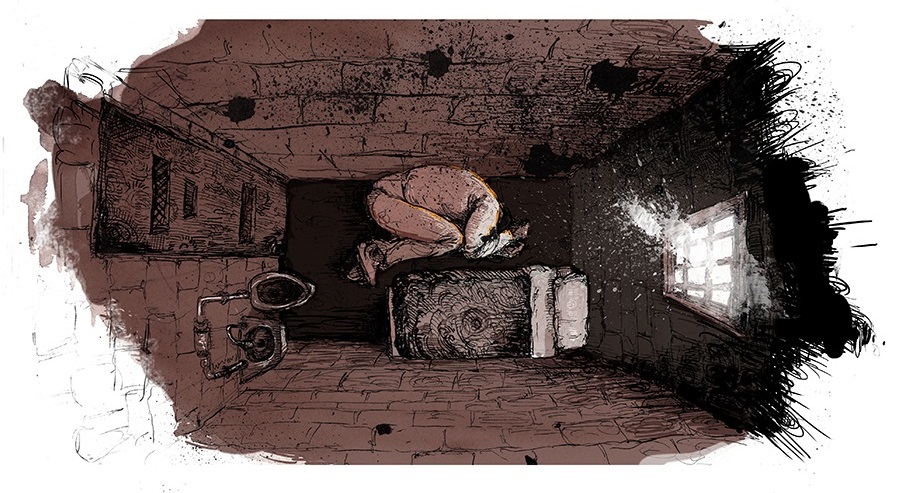
It’s that kind of sentiment, one in which the proportion becomes increasingly extreme, that tends to hasten the backlash. Whenever a movement gets to a point it’s deemed appropriate to sacrifice innocent people for the sake of a cause, then that’s usually a sign that it’s reaching beyond its ideals and emboldening opponents.

There are already major news outlets reporting on that phenomenon. Publications like the New Yorker, the Washington Post, and even the liberal Huffington Post have discussed it in various forms. The reactions to those speaking out against sexual misconduct is no longer one of unity and support. Now, there’s criticism and animosity, the first signs of a real backlash.

Image result for angry feminist protest

Those behind the movement need only look at the LGBT movement to see what that backlash can entail. Even though same-sex marriage is legal, the resulting backlash triggered a surge in “religious freedom” bills that promoted a new kind of discrimination. That backlash is still ongoing. The one surrounding sexual misconduct may just be getting started.

I still don’t doubt the sincerity and ideals behind the movement against sexual misconduct. People want justice for those who have been victimized. Justice is an inherent aspect of the human condition. We’re literally wired to seek it when we feel there’s an injustice in the world.

Unfortunately, in the pursuit of that justice, anger and resentment end up clouding those ideals. We’ve seen that anger directed towards the political process that played out in 2016. We’ve seen it used to demonize and denigrate entire groups of people, including an entire gender in some cases.

Image result for man hating women

When people are attacked, their first instinct isn’t to admit defeat. It’s to fight back. That’s just basic survival instinct and there’s no way any movement, be it political or social, can circumvent that. By fighting back, the backlash itself gains momentum. Sometimes that backlash gains enough momentum to become a movement in it’s own right. Then, it too may be subject to a backlash.

It seems like an never-ending cycle, one in which little is gained in the long run. While I don’t deny it can be disheartening, I believe there are gains that make many movements worthwhile in the long run. Just ask any same-sex couple who can get married now if they’re willing to risk such a backlash. They would probably do so in a heartbeat.

I don’t know how the movement against sexual misconduct is going to play out, even if the backlash it inspires ends up being minor. I hope, in the long run, it has a net-positive effect on society. It still won’t be a perfect society, but whether it’s from the movement or the backlash, even a little gain in justice and human progress can still mean a lot in the long run.

12 Comments

Filed under Current Events, gender issues, sex in media, sex in society, sexuality

The Devastation Of Alienation On Our Sexuality (Among Other Things)

When I was growing up, the concept of alienation only applied to grunge rock, heavy metal, and whatever other media disaffected youth used to voice their dissatisfaction with the world around them. Being such a miserable teenager myself, I thought I understood that sentiment to some extent. As I’ve gotten older, I’ve realized that there’s a lot more to it.

Alienation has been in the news a lot lately, but it’s not one of those annoying contemporary buzzwords like “toxic masculinity.” It’s actually a term with a dictionary definition, which also has some philosophical backbone that goes back centuries. Like most philosophical terms, though, it has undergone some revisions over the years.

Rather than get into the long, tedious path the idea of alienation has taken, I want to apply it to our current situation. In addition, I’m going to analyze alienation the same way I often do with superhero comics in that I’m going to apply it to sexuality. I doubt that’ll surprise long-time readers of this blog, but I also doubt it’ll surprise anyone who has observed recent societal trends in how we approach sex in society.

Without question, there is a sense of alienation going on in our collective sex lives. While it doesn’t affect everybody, especially the billionaire rock star/celebrity crowd, it does affect some people more than others. I imagine I’ll upset or offend some people by identifying parts of that crowd, but I need to take that chance to make my point.

The basics of alienation are simple. According to Dictionary.com, the definition is as follows:

  • The act of alienatingor of causing someone to become indifferent or hostile.
  • The state of being alienatedwithdrawn, or isolated from the world, through indifference or disaffection.
  • The act of turning away, transferring, or diverting.

Within the scope of this definition, you probably know someone who has experienced this type of feeling. At the very least, you knew someone growing up who just felt left out of everything and went out of their way to detach themselves from the rest of society.

Their reasons for doing this vary. Some have serious mental health issues. Others are driven to alienation by economic factors like poverty. Some even go so far as to say that our modern form of capitalism is an inherently alienating force. The entire premise of “Fight Club” actually revolves around that idea, as so wonderfully articulated by the folks at Wisecrack.

With respect to sexuality, though, alienation is a bit trickier. So much attention has been placed on how powerful men solicit sex from beautiful women or how women struggle to maintain some semblance of sexual freedom that it’s hard to see the forest from the trees. Being both a man and an aspiring erotica/romance writer, I’m going to make an effort.

I don’t doubt for a second that alienation affects the sexuality of all genders. Sex, especially if you’re not having the kind that fulfills your needs and desires, can be pretty alienating. We humans are wired to want, seek, and enjoy sex. Given the crude and clunky nature of biology, in general, it’s bound to get distressing and disorienting.

For centuries, women were more prone to sexual alienation than men. That’s because, until relatively recently, their sexual choices were made for them. They didn’t get to choose their spouse. They didn’t get to live their own lives or explore their sexuality with a variety of partners. In fact, doing so might actually be detrimental to their safety.

When you have no choices and much of your life is controlled by others, it’s easy to feel alienated. You have no agency, control, or freedom to even know what you want sexually. That led to a lot of unsatisfied, desperate women.

Conversely, men weren’t just allowed to fool around on their spouses. In fact, it was kind of expected. In that respect, not having a mistress might actually be alienating. Men who loved their wives too much were even criticized.

Then, in the late 20th century and into the 21st century, the pendulum swung in the other direction. The women’s rights movements and the rise of modern feminism gave women more control of their sexuality. For the most part, modern women can explore their sexuality and enjoy a level of sexual freedom once reserved for aristocratic men with a legion of mistresses.

By and large, this has been a good thing. In fact, greater gender equality with respect to sexuality might actually be more conducive to our caveman brains. The sexual practices of Bonobo apes are a testament to that. However, in some respects, the pendulum has swung so far in the other direction that the alienating forces are hitting another group.

I’ve mentioned it before and it seems to be an ongoing trend. With the rise of third-wave feminism and political correctness, all the evil and ills of the world are attributed to horny men seeking sex from beautiful women. It’s very much a double standard that seems to be intensifying with each passing year.

Whereas a man trying to seek sex with multiple women are more likely to be seen as a misogynist pig, women seeking sex are seen as empowered. Sure, there’s still slut-shaming, but a good chunk of that actually comes from other women. It’s almost paradoxical in the sense that a woman will be criticized, no matter how much or how little she decides to exercise her sexual freedom.

That too can be alienating, but those same women can take comfort in the knowledge that they’re the sexual gatekeepers. They’re the ones who give the consent. They’re the ones who decide whether a man is getting sex. If the man has a problem with that choice, then he can be subject to serious consequences, even if he misinterprets the message.

The recent surge of sex scandals and the growing emphasis on consent has put a lot more pressure on men, especially those who aren’t rich, well-connected, or attractive. In terms of raw numbers, that represents the vast majority of men, myself included. Some call it the 80/20 rule of dating, but I prefer to think of it as a greater alienation complex.

By that, I mean the existing standards and methods for men seeking love, sex, and intimacy make most men prone to a sense of alienation. I won’t say it’s as bad as it was for Victorian Era women, but alienation is difficult for anyone, regardless of time, circumstance, or gender.

The situation for men is akin to playing a game in which you know other players cheat and/or have inherent advantages, but there’s nothing you can do about it. On top of that, the standards are so high and the margin for error is so low that, from a distance, it seems impossible. It creates this distressing sentiment that you will never find the love or intimacy you seek.

I’m not going to lie. I’ve looked in the mirror on some mornings and felt that way, especially in my awkward, acne-laden teen years. I like to think I’ve gotten better over the years because I’ve worked on myself, gotten into shape, and made myself more attractive to the opposite sex. However, I understand that there are plenty of men who struggle to do that or don’t have the same opportunities.

For them, the alienation is almost unavoidable. They see the marketplace for love and sex, but don’t see any opportunities. Sure, they can still play the game, but it would be like a toddler trying to win a boxing match against Floyd Mayweather. It just doesn’t seem worth it.

Within the current system, the structures in place ensure that there will always be a sizable chunk of men who are left out of the sexual landscape. They’re not the only ones either. Women who are either unattractive or not inclined to play by the evolving rules of that landscape will be just as isolated. So long as those standards are so rigid, there will be a lot of sexually unsatisfied people in this world.

From a pragmatic standpoint, our current approach to sexuality fails the Stanhope Principle. Society cannot function or progress with such a system. Any system that has such large groups of people feeling alienated and left out is inherently unstable. Karl Marx, however you feel about him and his ideas, made that obvious years ago.

For now, we can only do so much to adapt the current system. The sexual alienation that people feel will continue to evolve, for better and for worse, in accord with major trends. If history is any guide, though, the sexual landscape will continue to change. Whether or not that’ll mitigate or intensify the alienation remains to be seen.

3 Comments

Filed under gender issues, sex in society, sexuality

Social Context Versus “Toxic” Behaviors: Why The Difference Matters (A Lot)

There’s a fairly well-known set of experiments involving rats and cocaine. It’s a strange, yet revealing combination. In the initial experiment, a rat in a cage was given the choice between cocaine and food. Not surprisingly, especially for someone who has ever tried cocaine, the rat chose cocaine to the point of killing itself.

That experiment, which took place in the 1960s and 1970s, helped establish the idea that those who use cocaine would be so damaged, so addicted, and so utterly gone that they would rather take the drug than survive. It was pretty scary stuff and it helped inspire harsher anti-drug policies in the 1980s.

However, that experiment came into question in 1981 when a professor named Bruce Alexander re-did the experiment, but with one critical change. He didn’t isolate the rats in a cage. He put them in a colorful, positive environment with other rats that came to be known as “rat park.” The results weren’t nearly as scary.

As it turns out, when placed in a better environment with more social support, the rats didn’t become irreversibly damaged cocaine addicts. In fact, even when offered much more addictive drugs like morphine, the rats didn’t imbibe in illicit, drug-fueled bliss nearly as much as their caged counterparts.

I bring up this experiment because it illustrates an important point about behavior and social creatures. Context and social setting matters. It matters a lot. Put someone in a cage, strip them of any social support, and isolate them from the world and they’re bound to endure some pretty toxic effects. That’s a big reason why solitary confinement is considered torture.

That brings me back to the inherently flawed idea of “toxic masculinity,” a term I’ve gone on record as saying should be buried in the deepest, darkest pit of our collective lexicon. I don’t want to re-hash or belabor any of the points I’ve already made about toxic masculinity. I’ll just note that some of the rhetoric surrounding it is distressingly similar to what anti-drug zealots used when demonizing cocaine.

Think, for a moment, about some of the negative traits associated with toxic masculinity. They include, but aren’t restricted to, stuff like:

  • Suppression of emotions
  • Being prone to violence
  • Increases in aggression
  • Associations with abhorrent sexual behavior

Then, look at the traits associated with cocaine addiction and note some of the parallels. In each case, there’s a direct association between these traits and a tangible, unambiguous cause. In one case, it’s a drug. In the other, it’s just being a man and associating with masculinity. Like the rats in that first experiment, though, there’s no context or social circumstances to consider.

That begs an intriguing, but important question, especially to those who still want to use “toxic masculinity” as a catch-all for certain behaviors. Is it really the nature of masculinity itself that’s behind these toxic behaviors or is it the social circumstances within the society?

That’s not a question anyone, especially not aspiring erotica/romance writers, can definitively answer. I don’t doubt it has been asked in other ways. It might even have been studied to some extent, but since it involves the complex machinations of the human psyche, definitive answers are hard to come by.

Even without the results of those studies, is it really that hard to contemplate the possibility that circumstances may effect how masculinity and femininity manifest? The rat park experiments alone hint at a fairly significant impact. Given the orders of magnitude in difference between rat and human brains, it’s not unreasonable to suspect that impact is substantial.

While we can’t run the kinds of experiments that Bruce Alexander did in 1981, we can assess the current status of masculinity within our culture. It may vary from region to region, but in terms of modern western culture, there are a number of traits that we’ve come to associate with masculinity.

It tends to manifest most distinctly in our standard models of romance, which puts men in situations where they have to be competitive, aggressive, cunning, and determined to get the kind of emotional and sexual satisfaction they want. Even when they do, those same situations make them just as inclined to seek other outlets of satisfaction.

Furthermore, men have to navigate these situations with the added baggage of being biologically wired to seek social, romantic, and sexual connections. Women have this wiring too, but the circumstances for them are different in that the culture has different expectations. Moreover, there’s no concept of “toxic femininity” to color their feminine traits as inherently negative.

What this means is the men are entering these circumstances pre-programmed to be very horny, very lonely, and in need of various forms of fulfillment. Being men, they’re expected to go out and get it while women are expected to just let it come to them. Now, I get that this is a gross oversimplification that obscures the overall gender dynamics, but in terms of the overall culture, these are the circumstances.

To illustrate the inherent issues with those circumstance, here’s a scenario that should help paint a picture of the male predicament. Again, it’s a gross oversimplification that I’m sure will offend more than a few people, but still reflects an important point.

Man: Hello, ma’am. I’m lonely and horny. How do I go about getting sex, love, and social support?

Woman: First of all, the fact that you just admitted you’re horny is disgusting. Women being horny, that’s beautiful and erotic. Men being horny is not, so you’re already a pig in my mind.

Man: What? Why? That’s not fair.

Woman: Don’t interrupt me! Talking down to a woman is rude and sexist. It’s basically the first step towards harassment and abuse. Raising your voice to a woman, showing any kind of dominance, is just perpetuating an oppressive gender stereotype that has no place in the current year.

Man: Okay. I’m sorry about that. So how do I go about it then?

Woman: You’re still talking over me. You’re getting dangerously close to harassing me and since you’re a man, everyone will believe me if I accuse you. So choose your words very carefully because if any woman feels upset by what you say or do, even if it’s unintentional, we can accuse you of being an abuser and ruin your life.

Man: Well, I’d like to avoid that at all costs.

Woman: Then, you’ll have to play by our rules. You’ll have to respect every choice a woman makes and take her side in every argument. Disagree with us or go against us and we’ll label you a sexist, misogynist pig. Then, you’ll never find love, sex, or any kind of social support.

Man: Wow. That almost sounds risky. I might just be better off watching porn and masturbating by myself.

Woman: Now, you’re just making it worse. For one, watching porn or admiring female bodies in any capacity is insulting, demeaning, and objectifying.

Man: But I’m attracted to beautiful women. Is that bad?

Woman: It’s awful! You’re contributing to unhealthy beauty standards that not every woman can hope to achieve. You’re part of a much larger problem in society that forces women to meet obligations that are difficult, inconvenient, or outright impossible. That makes you an accomplice to all the crimes ever committed against women.

Man: But I’ve never attacked, hurt, or insulted a woman in my entire life.

Woman: That doesn’t matter. Since men have gotten away with too many crimes in the past, you have to be the one to pay the price in the present. That means you have to carry the guilt of men you’ve never met for crimes and attitudes you had no part in creating. If you go against this in any way, then you’re an even bigger sexist misogynist.

Man: I don’t want that. I don’t want that at all. I guess I’ll have to find some other way to masturbate.

Woman: You’re still making it worse. You see, women can masturbate because it’s sexy and erotic. Men can’t. It’s just disgusting for reasons that neither of us can change. If any women finds out you’ve ever masturbated or paid for sex in any capacity, then they’ll think you’re a creep and a loser. They won’t even look at you, let alone want to be with you.

Man: But that’s not fair! I can’t turn off my desires.

Woman: That’s too bad. You’ll just have to suppress them while you jump through all the elaborate hoops a woman demands in the meantime. Just remember that even if you jump through all those hoops and do everything they ask, they still reserve the right to not have sex with you or love you in the way you want. That’s their choice and you can’t do anything about it.

Man: So what am I supposed to do? This is making me kind of frustrated and angry.

Woman: That’s not my problem. You either play by these arbitrary rules or we cut you off socially, sexually, and romantically. Try to change any of these rules and that just makes you the biggest misogynist of them all.

I’ll stop there and give everyone a moment to fume. Take all the time you need. It’s not the first time I’ve crafted a scenario with some pretty distressing monologues.

If you can get past the outrage, then try and take a moment to reflect on the circumstances in the scenario. Men are in a situation where the path to the kind of sexual, emotional, and social fulfillment that all social species seek is full of potential pitfalls.

Since those obstacles have gotten a lot more treacherous lately, it’s even harder for men to actively seek the very things that make them healthy and fulfilled. It’s akin to forcing the rats from the cocaine experiment back in the cage and demanding that they not succumb to the detrimental effects.

Now, it’s worth pointing out that women didn’t create these circumstances. There’s no feminist conspiracy any more than there’s a nefarious patriarchal conspiracy. In fact, some of these circumstances stem from traditions men have promoted, like the whole obsession with female purity and the concept of slut-shaming. Men have done more than their part to create and exacerbate these circumstances.

As it stands, though, the circumstances for men are such that frustration, anger, and isolation are almost inescapable. Unless you’re very rich and very well-connected, you’ve got a lot of hazards to navigate. Slip up and you’ll be labeled a creep, a misogynist, or worse. Even if that doesn’t put you in a literal cage, it’ll make you feel like you’re in one. At that point, is it really that surprising when a person’s behavior comes off as toxic?

With these circumstances in mind, the concept of “toxic masculinity” becomes even more asinine because it utterly ignores this context. Absent that context, it can only ever damage whatever harmony men and women have. Given how sensitive we’ve become to scandals and sexism, we can’t afford to do much more damage and expect either gender to come out better.

3 Comments

Filed under gender issues, sex in media, sex in society, sexuality

Why The Term “Toxic Masculinity” Should Be Retired

There aren’t a lot of terms in the English language that I wish could be uninvented. As someone with a strong appreciation for language, as well as someone who aced every essay question in school, the concept of throwing away words is akin to throwing away a box of fresh donuts. It’s an abhorrent thought.

That said, I do find myself making exceptions every now and then. Sometimes, you have to because a set of words comes along that’s so loaded, so skewed, and so esoteric that its only real use is to embolden assholes and inspire disdain. Given how there are enough assholes in this world, male and female alike, such words can be powerful weapons.

That leads me to one of the few terms I wish we could expunge from the English language, as well as every other language, including those invented by Tolken and Star Trek.

Toxic Masculinity

You’ve probably heard it before and never in a positive context so get ready to cringe. You may find yourself cringing again, just by reading over it. For that, I apologize. However, this term and what it entails is worth discussing because it affects men, women, and everything in between.

In terms of contemporary meaning, it’s worth noting that the idea of toxic masculinity is fairly new in terms of context. It only recently emerged as a major buzzword of third wave feminism, which I’ve mentioned before and is still evolving. It’s definition is somewhat vague, which is one of its many problems, but according to Wikipedia, it embodies all sorts of problematic concepts.

The concept of toxic masculinity is used in the social sciences to describe traditional norms of behavior among men in contemporary American and European society that are associated with detrimental social and psychological effects. Such “toxic” masculine norms include dominance, devaluation of women, extreme self-reliance, and the suppression of emotions.

Conformity with certain traits viewed as traditionally male, such as misogyny, homophobia, and violence, can be considered “toxic” due to harmful effects on others in society, while related traits, including self-reliance and the stifling of emotions, are correlated with harm to men themselves through psychological problems such as depression, increased stress, and substance abuse. Other traditionally masculine traits such as devotion to work, pride in excelling at sports, and providing for one’s family, are not considered to be toxic.

In simplest terms, toxic masculinity is the idea that the very traits and social norms associated with manhood are both destructive to modern society and detrimental to women. It is basically the invisible hand that guides people towards regressive, patriarchal attitudes that prefer that everyone live in a 50s sitcom.

Granted, that’s an extremely oversimplified understanding of the concept, but it would take way too many blog posts to get into all the nuances that have been ascribed to toxic masculinity. For this piece, I want to focus on the bigger picture and not the fine print.

Now, to be fair, the idea of men being beasts is not new. It pre-dates feminism and modern society by centuries, going all the way back to pagan folklore. However, that concept always came with a particular context, one that the very idea of toxic masculinity seems to ignore.

Dig deep into any mythos about snarling, beast-like men and you’ll usually encounter the same themes. Put a man in a situation where he’s stripped of humanity, love, community, and family and he becomes a pretty dangerous person. That’s basically the entire concept behind the appeal of characters like Wolverine from the X-men.

With toxic masculinity, though, that important caveat gets overlooked or cast aside. In applying toxic masculinity in its current context, there’s no circumstance behind all these negative traits associated with men. Just being a man and having any concept of masculinity is inherently toxic.

This is the most nefarious, not to mention insulting, aspect of the concept. It eschews any idea of context and calls the entire experience of being masculine toxic. It creates a situation where the only way to not be toxic is to be feminine, which is overly convenient for those arguing certain brands of feminism.

In essence, it readily embraces one of the most common and well-known fallacies of all time. You’ve probably heard it before, but it can’t be belabored enough.

Correlation does NOT imply causation.

It’s behind every major superstition and many failed scientific observations. It’s also the only way in which toxic masculinity works, with respect to criticizing an entire gender.

With toxic masculinity, there is no circumstance or context. There’s no need to subject anyone to a dehumanizing process, be it complex social pressures or an adamantium bonding process. Just being a man who exercises his masculinity in any capacity is inherently toxic.

That’s a wonderfully simplistic understanding that encapsulates an entire gender for all the wrong reasons, but as is often the case with wonderfully simplistic ideas, it’s not accurate. With toxic masculinity, though, it’s far more dangerous.

Being such a new word that hasn’t had time to develop traditions and complexity, toxic masculinity is a lot like other concepts, such as “fake news” and “alternative facts.” They’re so new and so vague that you can basically use it as linguistic cheat code to discount anything that you either don’t agree with or don’t care to scrutinize.

A man commits more crime than a woman? That’s toxic masculinity.

A man blames a rape victims for putting herself in a dangerous situation? That’s toxic masculinity.

A man makes an inappropriate joke that offends women? That’s toxic masculinity.

A man denies sexually harassing a woman? That’s toxic masculinity.

A man uses vulgar, profane insults while playing video games? That’s toxic masculinity.

There’s a clear pattern here in that there doesn’t need to be a pattern. Just take any undesirable trait ever ascribed to a man and call it toxic masculinity. Then, like magic, there’s no need to scrutinize context or circumstance. There’s no need to run any tests or dig deeper. You know the diagnosis and the treatment is obvious. If masculinity is so toxic, then that means we just have to discourage masculinity altogether.

Again, it’s an overly simple interpretation of an exceedingly complex phenomenon. It’s one that lumps all men, as well as the many dynamics behind masculinity, into a singular collection of traits that just happen to have all sorts of negative connotations. It provides a clear antagonist for those seeking gender equality or women’s rights. It also provides a potent mechanism for shaming men.

Ironically, this concept of treating certain gender traits as outright diseases is not unprecedented. In fact, there was a time when the roles were reversed and it was feminine traits that were considered “toxic.” However, people didn’t call it that. They actually had a medical term for it, which was “female hysteria.” Look at the definition and notice some of the parallels to toxic masculinity.

Women considered to have had it exhibited a wide array of symptoms, including faintness, nervousness, sexual desire, insomnia, fluid retention, heaviness in the abdomen, shortness of breath, irritability, loss of appetite for food or sex, and a “tendency to cause trouble”.

It seems funny and disturbing now, but back then, it was a serious issue. Society really did get to a point where being too feminine was considered a disease. Just being a woman carried with it an inherent shame that people couldn’t escape.

However, at least with female hysteria, the treatment wasn’t that bad in that it involved regularly being masturbated to orgasm. In terms of medical treatments, that beats the hell out of headaches and constipation. For toxic masculinity, though, there is no such treatment.

Since the term is so vague and its concepts so loaded, it creates a situation where the only way to avoid it is for a man to constantly denounce, deny, and disparage a core part of his identity. That usually involves a lot of virtue signaling and adopting the role of a beta male. The fact that approach has one too many similarities to gay conversion therapy should give anyone pause.

As it stands, the newness and ambiguity of toxic masculinity makes it a useful term for those who need an easy way to disparage men or extrapolate specific male behaviors to suit an agenda. That’s what makes it such a dangerous term for men and women alike, but that’s also what makes it an easy term to drop.

Now, I’m not denying that men have their share of undesirable traits. I also don’t deny that there are some aspects of masculinity that are worth scrutinizing. However, little good has ever come from creating terms that treat basic human traits as a disease. It creates a dangerous precedent that skews what it means to be sick and healthy.

Since it’s in the best interest for society and aspiring erotica/romance writers for genders to get along, ditching such a flawed concept like toxic masculinity will definitely help. It won’t solve all the issues associated with masculinity and feminism, but if we can do it for female hysteria, we can do it for toxic masculinity.

22 Comments

Filed under gender issues, sex in media, sex in society

Bryan Singer, Harvey Weinstein, And The Double Standards Of Sexual Abuse

What does it say about the state of our culture, our society, and our sexuality when every week seems to bring a new sex scandal to light? That’s not a rhetorical question, by the way. That’s a question that many are trying to answer. I’ve certainly tried to answer parts of it, but with every new scandal, that effort gains a new complication.

By now, most people know the famous names, the ruined careers, and the sordid extent of the allegations. Names like Harvey Weinstein, Louis C.K., and Bill Cosby are now etched into the public consciousness for all the wrong reasons. The outrage and anguish surrounding their egregious actions evokes all sorts of passions.

It eventually culminated with Time Magazine recognizing the women who brought these scandals to light as the collective person of the year. For the most part, these women have been hailed as brave and strong for coming forward and exposing these crimes. It’s because of them that these powerful men can no longer hide their misdeeds, which is a good thing.

I don’t deny the importance of what these women have done. They’ve helped kick-start a movement that has made people more aware of these egregious crimes. It’s because of those efforts that even powerful people who are inclined to use that power to exploit women can’t hide from the consequences of their actions. In the name of furthering a just society, I think that’s a good thing.

However, and this is where I know I may upset some people, there’s a part of that effort that’s still incomplete. There’s a missing piece of this ongoing battle against sexual misconduct, one that has the feel of a very subtle, but deeply distressing double standard. Having talked about the less obvious double standards in our society, I feel like the extent of this one is only growing.

Recently, a fresh sex scandal came to light involving another powerful name in Hollywood. Bryan Singer, the accomplished director behind “The Usual Suspects” and the architect of the X-men movie franchise, has been accused of raping a 17-year-old boy. We’re not talking about loose bath robes, groping, and shady casting couches. This story involves full-blown rape.

It’s not the first time Singer has been accused of sexual misconduct. To date, he hasn’t been proven guilty in a court of law, which is an important detail to note. False accusations do happen and people in positions of power, like Hollywood, are easy targets.

I’m not going to speculate how true or exaggerated the accusations against Singer are. The details are still not clear and information is still coming out. However, there’s an important element to the news of this scandal that’s worth pointing out.

Unlike the scandals with Weinstein and Cosby, the victims in this case weren’t women. They were men. If you don’t think that matters, then take a second to recall the reactions to other scandals.

When the sordid stories about Weinstein came out, they generated all sorts of outrage. It was a hot topic on the news, social media, and even “Family Guy” jokes. The fact that these men did such disgusting things to women got a lot of people talking. However, when the victims are men, the narrative is different.

Before Bryan Singer, the only notable scandal involving men was that of Kevin Spacey. However, the outrage he generated had less to do with the gender of his victim and more to do with how he used the scandal to come out as homosexual. That upset people, but the alleged crime he committed against his male victim became an afterthought.

This is where the double standard gets uncomfortably apparent. We, as a society, agree that assaulting and harassing women is a terrible crime. We rightly condemn it. However, when it happens to a male victim, and it happens more often than we think, we’re not quite as vocal with our outrage. It’s still a crime. It still involves exploration and pain. When the victim is a man, though, we don’t see it the same way.

I’ve highlighted this to some degree with a thought experiment. However, it plays out in other ways throughout our culture. Stories about women being victims are often harrowing and brutal. Stories built around male victims of sexual assault, though, can be comedies starring Will Ferrall and Kevin Hart.

There are any number of reasons as to why that is. Male victimization, especially in matters of sexual misconduct, carries with it some unique taboos. There’s this idea that men, being the ones with more power and influence in this world, can’t be victims in the same way as women. Never mind the fact that the pain any victim feels is real, regardless of gender. We still treat one victim differently than another.

It plays into this notion that men are just supposed to shake off that kind of victimization and women need some sort of special treatment. In a sense, it’s insulting to both genders and obscures the actual substance of the crimes involved. Whereas there’s an entire movement behind the effort to combat sex crimes against women, the crimes against men just fall to the wayside.

That’s not to say it’s being completely ignored. Some are making an admirable effort. Corey Feldman, a former child star, has been among the few celebrities who have been outspoken about the abuse young men have suffered in the entertainment industry. Terry Crews, a successful actor and former Old Spice Man, has spoken out against it as well.

However, to date their efforts haven’t generated the kind of notoriety and outrage as the movement to protect women from these same crimes. Their voices are often drowned out by other scandals that fit into this overall narrative of creepy, sinister men in power exploiting women.

For reasons that are too voluminous for one blog post, the narrative surrounding scandals like that of Bryan Singer aren’t quite as enticing. The notion of a powerful man victimizing another man just doesn’t come off as the kind of struggle that makes everyone feel more virtuous by joining.

It certainly doesn’t help that the taboos surrounding these scandals also mix with other taboos involving homosexuality. Those attempting to take a stand against male victimization have to be careful with their outrage because if they don’t, they can get labeled as a homophobic bigot and that’s not the crowd most people want to be part of.

In a sense, voicing outrage against the female victimization is easier and safer. There’s little ambiguity. A powerful man victimizing a vulnerable woman has clear, defined lines of injustice. The only emotions we deal with are those involved with our aversion to injustice.

With male victims, those emotions are still there, but they’re complicated by these uncomfortable ideas that don’t fit that narrative. It goes beyond double standards in that it requires us to contemplate the kind of crime that we don’t want to believe happens as often as it does.

That mentality is downright dangerous because it creates the sense that some victims are more important than others. Whereas a female victim will get all the love and support that hashtags and talk shows can offer, male victims have to fend for themselves. That’s a problem because fighting the same injustice with different standards is an injustice in and of itself.

The allegations against Singer remain to be proven and may end up being false, but the fact that this scandal doesn’t carry the same weight as others involving women reveals that ongoing efforts to combat sexual misconduct are incomplete. Until some of these double standards are confronted, then the injustice will continue.

11 Comments

Filed under Celebrities and Celebrity Culture, gender issues, sex in society, sexuality

The War On Horny Women (And Why We Keep Fighting It)

People have been waging wars since the dawn of civilization. These never-ending struggles have people clash over ideas, concepts, and identities that cannot and will not be resolved. Some of these conflicts have literally reshaped society and the world we live in. They are a fundamental, and at times inescapable, part of civilization.

Then, there are the subtle, less obvious wars that we never win, but insist on fighting. These wars rarely have epic battles or iconic names like Waterloo, D-Day, or Super Bowl XLII. On some level, we know these wars can’t be won. We know we inflict a lot of collateral damage by fighting them. We’ve just been doing it for so long that we don’t know how not to fight it.

The war, in this case, involves horny women. Yes, that’s a war too. I know I dedicated an entire post to documenting the war on horny men. Even though I am a man with functioning genitals and a healthy sex drive, I don’t deny that women experience plenty of horniness, as well. I also don’t deny that those same women have endured a war that has spanned generations, cultures, and rap battles.

Despite not being a woman, I think it’s important to touch on that struggle, especially since recent scandals and trends in our sexual culture have taken the war to uncharted territory for both genders. For women, in particular, the conflict is far different from the one they’re used to fighting.

Anyone who has studied history, or just listened to Pat Robertson for more than five minutes, understands that civilization hasn’t exactly been kind to the female libido. For a good chunk of human history, a horny woman had exceedingly limited options.

If they weren’t having sex with their husband, who they probably didn’t even choose, then they weren’t having much sex. For the most part, a man could get away with having a few mistresses or seeing a prostitute every now and then. If a woman dared stray from her wifely duties, though, the punishments were severe.

Even today, a woman sleeping around on her husband is dangerous in some parts of the world. Even when it doesn’t get you killed, it can ruin your life in many other ways that men rarely deal with. It’s not fair. It’s certainly not in line with notions of gender equality. That’s the problem with wars, though. Things like logic, justice, and compassion are the first to go.

Why is this war even being fought in the first place, though? Moreover, why are women dealing with a different war than men? Well, there are many answers to that question and most of them will piss off most feminists, egalitarians, or people who just value any semblance of fairness.

I’ve touched on it before, to some extent, but the foundation for the war on horny women has its roots in a mix of biology and economics. Humans are a sexually dimorphic species in that each gender bears distinct traits that set them apart, beyond the presence or absence of certain organs. However, the trait that most distinguishes women is their ability to have children.

It’s a beautiful, but critical skill that any species needs to survive. A great deal of energy goes into giving incentives for humans to make babies and some of those incentives are pretty damn powerful. However, because of the biology involved, there are circumstances that set a horny woman apart from a horny man.

In terms of raw numbers, horny women are at a evolutionary disadvantage. No matter how horny they are or how much sex they have, they can only bear one or a few children at the same time over the course of nine months. Men, on the other hand, can impregnate dozens of women and sire a much larger volume of offspring.

From an evolutionary perspective, it’s like one person has a butter knife and the other has a machine gun. One tool is just inherently better at doing more damage. Now, if men and women are living in some hippie commune where nobody cares about which kid belongs to who and nobody has to deal with messy child custody hearings, then a horny woman doesn’t have much issues.

Unfortunately, hippie communes are few, far between, and prone to poor hygiene and clogged toilets. Much of our civilization was built on complex, hierarchical societies that required men to work the fields, women to care for children, and a certain assurance that the kids you had were yours.

Before the days of Maury Povich, though, the only way to be sure of that was to be sure that a woman was faithful from her wedding night onward. Since people rarely trust the horniness of their spouses or the men who may seduce them, this led to traditions and taboos that demanded modesty and subjugation for women.

It didn’t matter how horny or sexually unsatisfied they were. From the perspective of society, it was more important that these women remained “untainted” so that men could be sure their kids were legitimate and there were no nasty diseases, a common problem that plagued ancient societies to no end. It wasn’t as much a war of misogyny as it was a war of practicality.

Even after we learned to treat disease, control conception, and test for paternity, the idea of a horny woman is still taboo. There are some that even claim that promiscuous women bring down entire civilizations. These are not claims that anyone should take seriously, but they do reflect the ongoing struggles of this war.

The idea of a woman being horny, sexual, and feeling no shame about it just seems wrong to many people. They see that and they see an affront to how they believe society should work. Never mind the fact that society is always changing and technology promises to accelerate that change. We, men and women alike, are still stuck in this war-like mentality when it comes to horny women.

It often manifests in subtle ways. Watch any slasher movie, sitcom, or poorly-scripted reality show and you’ll see a similar theme. The horny, promiscuous women are the villains. They are an evil, corruptive force that undermines all that is good and noble. Why else would Regina George be so easy to despise?

Beyond the media, female horniness is often presented as something that has to be contained and hidden. Unlike men, who are expected to fight the wars and work the fields, the standards for women are different. A “good woman” is someone who doesn’t sleep around, flash her tits, or show off her thong to an entire basketball team. A “good woman” stays home, has babies, and dresses in a way that doesn’t attract horny men.

That’s why modesty is conveyed as such a virtue for women, but not so much for men. That’s also why exceedingly repressive societies segregate women from men. The possibility that someone might get horny and might act on that horniness is seen as a bomb going off in house full of puppies. It’s just that terrifying.

However, despite this centuries-old war, ripe with traditions and taboos, women still get horny. Women still want to have sex and not just to make babies, but to enjoy the toe-curling pleasure that comes along with it. No amount of modesty, shame, or scorn can stop it. That says a lot about the strength of horny women. As an aspiring erotica/romance writer, I can’t help but admire that.

As much an optimist I am, at heart, I don’t see the war ending anytime soon. Like the war against horny men, certain taboos and insecurities still linger. Some are cracking, though. Just recently, Mayim Bialik from “The Big Bang Theory,” generated a lot of criticism for daring to claim that women should dress more modestly in order to avoid harassment, as though horny men aren’t that determined.

Naturally, albeit unfairly, she got accused of blaming the victim for the misdeeds of horny men. The idea that horny women are somehow responsible for crimes committed against them is rightfully absurd, but the notion that horny women need to contain themselves while some men can still push the boundaries is beyond absurd.

As I said at the beginning, the basis of the war on horny women is neither fair nor logical. Compared to the war on horny men, though, it’s just unfair and illogical in a very different way. There reasons and justifications for the war are changing and will likely continue to change, especially as certain medical advancements emerge.

Whatever the change, though, the war will continue to rage. Horny women will still be considered this taboo force of chaos that could potentially undermine the whole of society. This may be a taboo that’s impossible to break, but that may not matter much in the long run.

No matter how the war is fought, whether by religious dogma or excessive shaming, it won’t turn off that fundamental drive to make love or to enjoy good orgasm. In the long run, the horny women will win, if only because the horny men will want to hang out with them more. I’m not one to take sides in a war, but if my sexy novels can act as battle cries, I’m happy to do my part.

5 Comments

Filed under Current Events, gender issues, Marriage and Relationships