Tag Archives: human relationships

Polyamorous Relationships: The (Near) Future Of Love?

Back in 2015 when the debate over same-sex marriage was reaching its legal crescendo in the Supreme Court, the opposition began getting desperate. They sensed that people weren’t as comfortable telling gay couples that their love was somehow wrong in the eyes of the law. As a result, their arguments got increasingly hysterical.

One of the most popular involved the classic slippery slope fallacy. Simply put, the idea is that if you allow same-sex marriage, then the next thing you know, people will want to marry their dogs, their cars, or even themselves. Never mind the fact that such a laughable argument has no bearing on legal, ethical reasons to prevent two consenting adults of the same sex from marry each other. It still persists.

There was, however, one part of that slippery slope that might not need much greasing. It’s a kind of love that I’ve discussed before, both in discussions about immortal humans and certain love triangles involving my favorite comic book characters. It may very well be a kind of love that becomes more prominent in the future. Yes, I’m referring to polyamory again.

Most people already know about it, if only because same-sex marriage opponents wouldn’t shut up about it during their many legal debates leading up to the Supreme Court’s 2015 decision. According to the basics on Wikipedia, polyamory is “consensual, ethical, and responsible non-monogamy” between intimate partners.

There’s really not much complexity to it, regardless of how horrifying thinks it is. Two people still love each other. They still get married or commit to one another, building lives and families together. The difference is they also form intimate attachments with others.

Sometimes those attachments involve a quick sexual fling. Sometimes they involve deeper relationships. The underlying theme is that these relationships don’t operate under the strict intimate protocols of monogamy. There’s more emotional and sexual flexibility, so to speak. It’s not quite as sexy as it sounds, but it has the potential to be.

Needless to say, polyamorous relationships are exceedingly taboo, much more so than same-sex marriage. There are already some legal battles surrounding polygamy that have emerged in wake of the legalization of same-sex marriage. I have a feeling those legal battles will continue and escalate.

As it stands, there isn’t a lot of research on polyamorous relationships. There’s some evidence to suggest that it might be healthier for some people. There is also some evidence that it can be detrimental to a relationship. Since I’m neither a researcher, nor a mind-reader, it’s unreasonable to assume any level of merit.

If I look at polyamory through the lens of caveman logic, which I tend to do a lot on this blog, I can discern some extent of promise. Within the context of a caveman setting, polyamory is actually more pragmatic than monogamy. It’s not just because of the paradoxical nature of the 50s sitcom versions of romance.

With monogamy, an individual is putting all their emotional and sexual energy into one basket. Sure, it might be more stable and basic, but if your lover gets mauled by a lion, which is possible in a caveman setting, you’re immediately at a disadvantage. Having more lovers who have a vested interest into protecting and satisfying you not only increases your chances at survival, but provides more support for your children.

In addition to the pragmatic aspects, the math is already on the side of polyamory to some extent. According to surveys conducted by Superdrug on the United States and Europe, the average lifetime number of sexual partners is 7.2 and 6.2 respectively. By the numbers, most people aren’t just having sex with one person, much to the chagrin of the priests, rabbis, mullahs, and monks of the world.

Even with the support of math and caveman logic, though, polyamory is still taboo and for wholly legitimate reasons. Polyamory is still closely associated with the kind of polygamous practices of exceedingly patriarchal religious zealots who insist that all the pretty young girls belong to them and only them. Given the perverse infamy of some of these zealots, that taboo is well-earned.

On top of that, it wasn’t until very recently with the advent of modern contraception and antibiotics that polyamory became less risky. As I’ve pointed out before, diseases were a real mood-killer for much of the history of modern civilization. They still are to this day. Even though contraception has made numerous advances, access to it is still controversial.

However, those limits and taboos may be changing. Other than data suggesting that polyamory is on the rise, advances in technology are removing barriers that have been in place since the days of the pyramids. Tools like CRISPR are on the cusp of eliminating infectious disease altogether and contraceptives like Vasalgel will allow even greater control over how people plan their families.

We may very well be creating a situation where polyamory is more practical for a population that has more and more tools to connect. Thanks to social media and modern medicine, the taboos surrounding polyamory may become as empty as those that once surrounded homosexuality.

It didn’t happen overnight. It wasn’t until 2003 that sex between gay couples became legal in the United states, but it took less than two decades to go from that to legalized same-sex marriage. It’s not impossible that polyamory will follow a similar path. Given the potential need for greater intimacy within future generations, polyamory may end up making sense for a lot of people.

Now, that’s not to say that the future will be full of overly-complicated family structures that combine the dynamics of a Mormon cult with a hippie commune. Human beings are far too complex and varied to favor just one formula for romantic satisfaction.

There will still be some people who just aren’t wired for polygamy, just as there are some people who aren’t wired for monogamy. As society progresses, becoming more diverse and flexible with each passing generation, people will pursue new methods for achieving emotional and sexual fulfillment. Whatever form it takes, I hope to capture all the necessary passion in my sexy novels.

5 Comments

Filed under Marriage and Relationships, polyamory

Purging Bad Memories And The (Hidden) Price That Comes With It

Think about the most traumatic experience you’ve ever had. No, this isn’t another thought experiment, nor is it something I’ll put a sexy spin on. It’s an honest, but difficult question to contemplate. Some people don’t even need to contemplate it. Some trauma is so severe that simply asking the question is redundant.

Even if you accept, as I have argued, that the world is getting better and people are generally good, there is still a lot of suffering in this world. There are horrific wars throughout the world, extreme poverty, and gruesome crimes unfolding every day. The crimes themselves are awful, but it’s often the scars they leave on people, mentally and emotionally, that further amplifies the suffering.

Those scars can be pretty debilitating, even after the physical wounds heal. It often manifests in post-traumatic stress disorder, a terrible mental state that effectively locks someone into their scars. Wars, violence, abuse, and criminal victimization can create varying degrees of trauma and coping with that trauma can be a never-ending struggle.

Now, here’s the part where I try to make this discussion less depressing. This is a blog that talks about sexy thoughts, sexy novels, and personal stories involving awkward boners. In general, I want my posts to inspire and, if possible, arouse in the sexiest way possible.

I don’t think it’s possible to make something like dealing with terrible trauma sexy, but it does present an opportunity to discuss something that might not just be a thought experiment within our lifetime. It boils down to one simple question.

“If you could purge traumatic memories from your mind, would you do it?”

If that question sounds familiar, then congratulations. You’ve probably seen one of Jim Carrey’s most underrated movies, “Eternal Sunshine of the Spotless Mind.” Granted, it wasn’t exactly as funny or memorable as “Ace Ventura: Pet Detective,” but it dealt with this question in ways nobody had dared by making the concept of purging memories a simple service to facilitate the process of getting over a loss.

All three “Men In Black” movies streamlined that process even more with their trademark neuralizer, a device that erases peoples’ memories of an incident in a simple flash. When you’re a super-secret government agency trying to hide aliens from the public, it’s kind of a necessity. However, its implications are much greater than simply making life easier for government agents.

Think back to that traumatic experience I mentioned earlier. In addition, think of the many traumatic experiences behind those who suffer from PTSD. All that suffering is built around the memories of those horrible moments. Whether it’s an atrocity in a war, severe child abuse, or a sexual assault, it’s the memory that locks that moment into the mind.

Now, imagine being able to purge that memory from your brain. In an instant, be it a flash by a neuralizer or the service offered in “Eternal Sunshine of the Spotless Mind,” that experience is gone. You didn’t just forget it. As far as your brain is concerned, it never happened.

It’s a concept that “Eternal Sunshine of the Spotless Mind” avoids and is never expanded upon in “Men In Black.” The ability to purge our memories of traumatic experiences has huge implications, even if they’re not as entertaining as watching Will Smith fight aliens. It’s one thing to improve our memories. Actually manipulating them opens up a new world of complications, some of which we might not be ready to confront.

At the moment, we don’t have to because the technology isn’t there yet. While we have a fairly comprehensive understanding of how our brain forms memories, we currently lack the necessary tools to manipulate them. However, those tools are in development.

Once again, I’ll mention Neuralink and the advanced brain implants its hoping to use to augment human cognition. Given how often our brains frustrate us with our inability to keep up with the world or program a goddamn coffee maker, it’s a given that there will be a market for that. Part of that enhancement, though, will likely extent to memories.

It may even be among the early uses for the implants developed by companies like Neuralink. As I write this, PTSD plagues millions of people, many of them military veterans who experienced unspeakable horrors in a war zone. Given the inherent difficulties in treating PTSD, who wouldn’t opt for a better way?

Sure, it involves manipulating our brains, but talk to anyone who can’t sleep, work, or form functional relationships because of their trauma. Some of them would do brain surgery on themselves and accept all the risks that came with it. Some experiences are just that traumatic and I’m not just talking about the ones that involve wars and clowns.

It’s a tragic situation, but one that makes the idea of actually purging those memories from our minds more pressing. Before brain implants like Neuralink start enhancing our minds for the hell of it, they’ll focus on treating those who are sick. It happened with artificial limbs. It will likely happen with brain manipulation.

Due to the wars in Afghanistan and Iraq, we’re already dealing with a significant population suffering from PTDS. Since those wars show no signs of ending, that population will likely grow. Medical science has gotten better at helping soldiers recover from major injuries, but treatments for the brain are still lagging, so much so that governments are considering using MDMA, also known as Ecstasy, to treat PTSD.

Unlike a bullet wound or a broken bone, though, traumatic experiences don’t always heal. Our brain is wired to tie powerful emotions to powerful memories. That’s great for giving us fond memories of the food we eat, the sex we have, and the social bonds we create, but terrible when it comes to dealing with trauma.

In a sense, removing the memories completely may be the only way to actually cure PTSD and allow people to live fully functional lives. Given the incentives, the prevalence, and mankind’s innate ability to make awesome tools, this ability will likely emerge at some point, possibly in my lifetime.

That may be great for those who endure traumatic experiences, but it may come at a price, as all great advancements do. If we live in a world where trauma is so easy to treat and so easy to get rid of, then does that undermine the power of those experiences? Would we, as a species, become numb to those who experience trauma and those who inflict it?

Picture a scenario where someone commits a brutal rape, one that leaves another person so traumatized and scarred that it may haunt them until their dying daze. Right now, we would all want that rapist punished to the fullest extent of the law. However, what if a simple brain implant removes that experience completely while simple medicine treats the wounds?

If the victims has no memory of the experience, no lingering pain, and suffers no ill-effects for the rest of their lives, then do we still treat the rapist with the same disdain? Right now, that’s an unconscionable question to answer. I’m sure there are those who want to strangle me through their computer screens, just by asking it.

First, I apologize if that question causes someone significant distress, but it’s a question worth asking. Once we have the ability to undo all suffering caused by a crime, then will that affect our ability and desire to punish such crimes? No amount of Will Smith fighting aliens can detract from those implications.

At the moment, the technology doesn’t exist, but the trauma doesn’t stop. As decent, empathic human beings, we want to do everything in our power to stop such trauma and heal those wounds. Our efforts may get to a point where we can literally attack the source of that trauma. The questions still remain. What will the hidden cost be and can we stomach that cost?

1 Comment

Filed under Marriage and Relationships, Second Sexual Revolution, Sexy Future

Lessons In Misguided (And Sincere) Love From An X-men Comic

Emma Frost

In general, I don’t always write these posts with a sense of timing in mind. My brain just doesn’t work that way. Usually, I get an idea, either through inspiration or just something that comes to me in the shower, and I just go with it. I find that to be the most effective means of exploring sexy and non-sexy issues alike on this blog.

Every now and then, I get lucky and fall ass-backwards into a perfectly timed topic. Sometimes, I even get obscenely lucky because that topic can relate to comics, which I love tying into sexy topics on this blog every chance I get. Well, whether by luck or outright fluke, I have a chance to link an issue I’ve been discussing lately directly to a comic book.

Trust me, I didn’t plan it. I didn’t expect it. I’m just going to run with it because it’s so relevant to the recent issues I’ve been exploring. It also involves X-men, which I go out of my way to talk about every chance I get, and a very particular character that I’ve mentioned before named Emma Frost. In case you need a reminder, this is Emma Frost.

I’m assuming I have your attention now, especially if you’re a heterosexual man or a homosexual woman with functioning genitals. I swear that pic isn’t some juvenile fan art, like the ones that drew big tits on Flintstones characters. That’s how Emma Frost actually dresses in the X-men comics. Can you now see why I’m so fond of them?

Sadly, I’m not writing this to talk about Emma Frost’s overtly sexy costumes. I’m writing this because recent events in the X-men comics tie directly into what I’ve been discussing with respect to conditioning our brains for love. While it’s an issue we’ll probably have to address once we start hacking our brain’s wiring, it’s something that comic book characters deal with regularly.

I’ve already mentioned how Carol “Captain Marvel” Danvers dealt with it during her early history. I’ve also cited past stories involving mind control, including one infamous story in Action Comics where Superman was brainwashed into making a porno tape with Big Barda. It’s one of those odd, but disturbing kinks that’s unique to worlds filled with psychics, aliens, and talking raccoons with machine guns.

However, this is one instance where a story about the mental manipulation of emotions and/or horniness isn’t quite as disturbing. If anything, it’s tragic in that reveals a lot about what some people are willing to do in the name of love.

To understand that tragedy, it’s necessary to understand the comic in question and the context behind it. The story unfolds in the pages of “X-men Blue #9” by Cullen Bunn, which is one of several ongoing X-men titles. This one focuses on the exploits of the time-displaced original five X-men, who are currently stuck in the future due to some time travel shenanigans that began back in 2012.

I’ll skip the part where I make a bunch of “Back To The Future” jokes and make clear that X-men Blue has much higher stakes compared to other X-men comics. That’s because what happens to these five time-displaced X-men, who also happen to be teenagers, could potentially affect the entire history of the X-men, which has already been subject to the kinds of time travel upheavals that would make Doc Brown’s head explode.

That’s where Emma Frost comes in. She knows, as well as any X-men regular who has encountered time travelers, that influencing these time-displaced teenagers could alter how things play out in their future. That’s important to her because she has a good, albeit tragic, reason to want to change that outcome.

Shortly before the events of this issue, Emma Frost endured a terrible loss. In an ominously-named event called “Death of X,” her former lover, Cyclops, died in her arms. To make matters even worse, it was one of those rare situations where there was nothing she could’ve done to stop it.

This isn’t akin to Spider-Man not stopping the Green Goblin in time or Superman not being able to save Lois Lane. This is basically someone being in the wrong place at the wrong time for the right reasons. In a sense, it’s a lot more realistic than the deaths most superheroes endure. It comes out of nowhere and there’s nothing anyone can do to stop it.

However, Emma Frost isn’t the kind of person to just accept that kind of tragedy and move on. This is a woman who once watched an entire classroom of her students die in an outright mutant genocide. When tragedy hits her, she hits back and looks damn sexy while doing it.

Granted, she does tend hit harder than she needs to or ought to. It has made her a lot of enemies, even alienating some of her former allies. However, Emma Frost isn’t one of those characters who does what she does out of malice. She’s not the Red Skull, Thanos, or even Dr. Doom.

She does see herself as a hero. She carries herself as a hero and has been on the front lines of some major Marvel conflicts. She’s also not a sociopath. She is capable of great love, both for her students and for lovers like Cyclops. So when Cyclops died, it hit her very hard.

When hit with a loss that hard, who wouldn’t jump at the chance to undo it? Even if it means crossing certain lines and hurting others, isn’t that worth getting back the person you love?

That’s a question that a lot of heroes and non-hero’s alike might debate in a philosophy class or a message board. However, there’s no debate for Emma Frost. She sees an opportunity to get her lover back and she takes it. Specifically, she sets her sights on the time-displaced, teenage Cyclops who has yet to grow into the man she fell in love with.

Finally, in X-men Blue #9, she’s in a position to get what she wants. As part of an ongoing event called “Secret Empire,” an event that’s hitting every major Marvel series, she abducts the time-displaced X-men and singles Cyclops out for some special treatment. Trust me, it’s nowhere near as sexy as it sounds.

XMBLUE-3

Emma basically does exactly what I described in my post about managing the future of brain hacking. She tires to twist and contort young Cyclops’ mind into being the man she once loved. She knows it may ruin the timeline. I’m sure Doc Brown would scream at the top of his lungs to get her to stop. It would still do no good.

That’s because Emma wants her lover back. She wants the man who has helped save the mutant race on more than one occasion. She’s willing to risk a time paradox and undermining the free will of someone who made clear in the issue that he doesn’t care for her. She’s just that desperate to get the man she loves back.

I won’t spoil how the book ends. I’d much rather people go out and read X-men Blue #9 because it’s a great comic that’s worth supporting. I’ll just say that the tragedy surrounding Emma Frost and her misguided efforts to subvert that tragedy really strike a chord.

It’s a tragic, but potentially prophetic story that may become more relevant over time. There’s no doubt that Emma Frost’s love for Cyclops in X-men Blue #9 is sincere. It’s not part of an agenda or some elaborate trick. It’s real, honest love that got destroyed through forces nobody could’ve foreseen.

Who’s to say that someone wouldn’t do something similar if they were in her position? I’ve said before in other posts that love is a powerful drug. It’s medically proven that love affects our brains like a drug. Compared to love, crack is watered-down diet soda.

Emma Frost is a powerful telepath, one of the most powerful in the Marvel universe, in fact. That means she can manipulate minds, twist thoughts, and conjure emotions in others. It does have limits, but it’s not that different from the kind of brain hacking that is in development as we speak.

What happens in the future when someone loses a loved one and refuses to accept it? What happens when someone just can’t stand the idea that someone they once loved no longer loves them? If there exists technology that could conjure or recapture that feeling, who wouldn’t be tempted to exploit it?

Our desire to love and be loved is a core, emotional need that every non-sociopath human feels. We don’t have the technology of Neuralink or the telepathy of Emma Frost to force it when we can’t have it. However, once it becomes possible, how long will it be before someone tries it?

Emma Frost didn’t need much temptation in X-men Blue #9. She just needed an opportunity and a plan. Again, it’s wrong to call it an evil plan. She was just trying to get back the man she loved and was willing to cross lines to do it. Love makes us do a lot of crazy, stupid things. What Emma Frost does in this comic is as much a lesson as it is a warning, albeit the sexy kind.

5 Comments

Filed under Comic Books, Jack Fisher, Superheroes, Marriage and Relationships

What Makes A Man An Asshole?

I often talk about things on this blog that are complicated, convoluted, and downright esoteric at times and that’s just with respect to sex robots and superhero comics. Hell, I could probably run several separate blogs on those topics alone, but there just aren’t enough hours in the day.

Some topics, though, need not be too complicated. Some basically explain themselves. It’s like the movie “Snakes On A Plane.” There’s nothing deep or vague about that concept. It’s exactly what it sounds like. It’s a movie about snakes on a plane. Sure, it’s basic and a little dumb, but sometimes we need to turn our brains off and just enjoy the spectacle.

So, in the interest of giving everyone’s brain a rest from thought experiments and sociopolitical undertones surrounding major protests, I’m going to talk about something simple that requires little thought or mental exertion. At most, it only requires us to think about a certain type of person or character, real or fictional, that we’ve all probably dealt with at some point in our lives.

This brings me to people who are assholes, specifically of the male variety. I hope that’s a topic that needs no explanation, exposition, or build-up. We know them. We deal with them. We may even be related to a few. Chances are, you find yourself dealing with asshole men at least once a week.

It’s just as common in fiction, including the erotica/romance variety. I’m not just talking about the Biff Tannen variety either. In many major conflicts, including the ones I write about in books like “Skin Deep,” there are plenty of assholes who seem to only exist to make others miserable. They are both the driving force of a story and an infinite source of frustration in real life.

At the risk of sounding sexist, I’ll just be blunt and say that the male gender breeds a special kind of asshole. That’s not to say that women aren’t as capable of such assholery, but I’ll save that for another post. Being a man, I like to think I have a greater insight into what makes a man an asshole.


Now, the psychoanalyst and wannabe philosopher in me is tempted to break down every major component that goes into turning an innocent young boy into a walking affront to all things fueled by testosterone. I’m sure there are all sorts of reasons, excuses, and faulty brain wiring that go into it. I’m going to skip those complexities for now and just focus on the basics.

With that in mind, here are my list of factors that go into making a man the kind of asshole that doesn’t deserve functioning genitals. Again, these are fairly basic. I’m sure other people have other, more elaborate ideas of what makes men assholes. I would love to hear some of those ideas so I can expand this list down the line. For now, though, let’s just start with laying the foundation for all things male asshole.


Asshole Factor #1: Always Having Something (Stupid) To Prove

Chief among any male asshole’s defining traits includes excessively flexing his male bravado. We all get that there’s a time and a place for bravado. If someone is attacking a loved one or there’s a hungry lion coming at you, that’s an appropriate moment for a man to flex his nuts and show what he can do.

For assholes, though, that time is all day and that place is anywhere. They’re the kinds of guys who will do anything on a dare, make everything a competition, and not give enough of a damn about the rules. If they’re not trying to impress pretty girls, they’re trying to impress friends. If they have no friends, they’re trying to show up enemies. It never ends until they do something so stupid that they hurt themselves.

I’m not going to lie, though. When an asshole like this take it too far and pays the price, it’s kind of nice. Like seeing King Joffrey die, it can help remind us that there is some semblance of justice in the universe.


Asshole Factor #2: Entitlement To Certain Things (Like Sex)

This largely shows in the rich, arrogant, I’m-a-big-deal-so-I-can-do-anything type of male asshole, of which there are too many. From reality stars to the asshats on Instagram, these assholes exploit the hell out of the lucky hand they’ve been dealt in life and expect the world to massage his balls upon demand.

It goes beyond wealth, though. There are even non-rich male assholes who think the mere act of having a penis entitles them to certain things, like the love of a beautiful woman or the freedom to be a dick to other people.

They carry themselves with this mindset that just being a man makes them inherently manly, entitling them to all the stuff that comes with it. They fail to realize that you still have to work for certain things. You still have to earn the right to see that pretty girl naked. Real men do that work. Assholes don’t even try.


Asshole Factor #3: Always Needing To Show Off And Seek Vindication

We’ve all known our share of class clowns. I knew more than a few back in grade school. Sure, they were funny at times and could get a cheap laugh. Some do it in a likable way. Others are just assholes about it.

As with the first factor, there’s a time and a place to show off. If you’ve won the Super Bowl, achieved something of note, and done something that few can do, then go ahead and show off. You’ve earned it. Just showing off for the sake of showing off is what distinguishes the lovable class clown from the asshole.

Beyond just showing off, the asshole does it in a way that seeks some sort of unearned vindication. They’re basically saying, “I’m here! I exist! Now, I demand that I be valued!” Always needing that kind of vindication hints at a lot of insecurity and, deep down, assholes tend to be a lot more insecure than most.


Asshole Factor #4: Needing To Be The Loudest Voice In A Conversation

If there’s one good thing about most male assholes you deal with, it’s that they make themselves known. You don’t have to look very hard to find them. Usually, they’ll either come to you or be so obnoxiously loud that you can’t miss them. Like a bear taking a shit on your driveway, it’s hard to miss.

It goes beyond just being loud, though. An asshole man talks as though his voice is the only one that matters. He acts as though he’s the leader by default and everyone else’s voices might as well be the echoes of a dying cat.

They don’t listen. They barely even hear what others say. They just keep talking because the sound of their voice is just that much more valuable. These are the kinds of guys that make noise-canceling headphones a godsend.


Asshole Factor #5: Always Making Excuses (And Never Learning From Failure)

I dedicated multiple posts regarding the difference between reasons and excuses. I won’t rehash all the main details behind those concepts because, in this instance, you really don’t need to know those details. Like the loudmouth factor, it’s fairly clear that male assholes live in a world of excuses and reasons might as well be an alien concept.

You know this because whenever they screw up or fail at anything, it’s never their fault. It’s never even the fault of luck. It’s everyone else that’s the problem. They’re the reason the male asshole believes he didn’t get what he wanted.

That’s a big part of why male assholes tend to be bullies. Everyone’s an obstacle. Everyone’s a means to an end. They’ll have any number of excuses to shove them out of their way or bend them to their will. Other people are just tools to get that vindication I mentioned earlier.

In many respects, it’s this factor that helps distinguish the casual assholes from the professionals.


Asshole Factor #6: (Overly) Emphasizing Style And Avoiding Substance

Even if you don’t hear a male asshole’s loudmouth rantings, which isn’t easy, or avoid his constant excuses, which is next to impossible, there’s still one way they stand out from their non-asshole peers. They will purposefully style themselves as the kind of person that is so superficial and so shallow that they inspire awful Jack Black movies.

The spoiled rich assholes do it with pride. Even the non-rich assholes find a way to do it with sheer arrogance and bravado. They spend way too much time on their hair, buy way too many overpriced clothes, and generally conduct themselves in ways meant to gain unearned vindication.

It’s one thing to wear a championship ring that you earned. These guys just wear all sorts of fancy crap that gives the illusion that they’ve done something meaningful with their lives. More often than not, they haven’t done squat. They can’t be bothered to put in the work. That, my friends, is the literal mark of a true asshole.


I hope this gives everyone a better concept of male assholes. You can never be too prepared or informed. Make no mistake. Assholes can really make your life difficult. Even if you can’t avoid them, you can use this information to better endure their crap. We’re an imperfect species full of imperfect people. Some people just take those imperfections to an annoying extreme.

Again, if you want to help add to this list, please let me know in the comments. Maybe down the line, I’ll update it in another post. For now, make good use of this information and may the influence of assholes in your life be minimal.

3 Comments

Filed under Jack Fisher's Insights, Marriage and Relationships, Reasons and Excuses

Why Do We Choose The Wrong Lovers?

We’ve all either seen it from afar, experienced it ourselves, or know someone who has. It’s one of the few narratives that plays out as often in real life as it does in fiction, including the sexy novels I write.

We seek out love and connection, putting a sizable chunk of our time and energy into finding that perfect lover. It’s the basis of almost every iconic love story ever made, from Shakespeare to “Titanic” to almost every Disney movie ever made. It’s also the basis of family, elaborate social connections, and the entire wedding industry. By every measure, finding that special someone is a big freakin’ deal for us.

If it’s such a big deal, though, then why do we do such a lousy job of actually choosing our lovers? I don’t ask that question out of cynicism. I ask it with a straight face, a sober mind, and a never-ending need to understand romance so I can write sexier, more romantic novels.

I know that’s somewhat self-serving, but every question involving love and sex has major implications far beyond those of aspiring erotica/romance writers. In that context, the actual process of choosing a lover is one of the most important choices we can ever make in our personal lives. It’s right up there with choosing your smartphone or your internet speeds. So why is it that we do such a lousy job in making such a critical choice?

I’m not just referring to the frustrating divorce rate among married couples, although that is a sign. I’m also not referring to the documented fact that the average number of sexual partners a person has in their lifetime is not one or less, although that also is a sign.

We humans seem to understand the importance and value of love, sex, and intimacy. However, we do a piss poor job when it comes to actually making decisions about it. Good girls will fall in love with bad boys. Good men will fall in love with bitchy girls. Good, decent people will try to love one another, but for all the wrong reasons and not realize it for years.

It’s both tragic and unsexy. People want to love each other, but can’t seem to pick up on the right signs. Even if they’re not looking for love and just want sex, they still find a way to screw that up too, as evidenced by the orgasm gap.

I even have some personal experience with this myself. Without getting into too great a detail, I was once involved with a cute, sweet, yet naturally sexy young woman in college. She and I met through our mutual love of comics and she was, in many ways, my first serious relationship. I won’t deny that I actually did feel love for her.

However, the longer we were together, the more I noticed on some fairly telling signs that were hard to ignore. She and I may have had a lot in common, but we had very different personality types. She was one way. I was another. We were rarely on the same page and it did cause plenty of stress.

Being drunk on love, I sure as hell didn’t notice it. My parents did, though, and they weren’t afraid to tell me. They know me too damn well and love me enough to discourage me from making foolish decisions. Were it not for them, I probably would’ve cut my face off the first time I tried to shave.

I credit them more than anyone for keeping me anchored, with respect to my emotions. I admit I kind of resisted their insight and made my share of excuses. In the end, they turned out to be right. My girlfriend and I broke up. It hurt, but I can’t say it was entirely surprising.

The fact that I, a guy who writes and reads a lot about sex and romance, can be so blinded by the feeling should be as clear a sign. It shows that we, as a species, aren’t very good at making wise choices when it comes to our love lives. Why is that, though?

That’s a hard question to answer and I’m certainly not going to claim to be a definitive authority on that. It’s so hard to answer that you can kind of understand why marrying for love is such a novel concept and why it was actually discouraged throughout history. Even so, it’s still a question worth contemplating, if only to refine our understanding.

I feel as though being an erotica/romance writer gives me a certain insight into this issue. I won’t say I’m the best equipped to confront it, but I do think I can bring something to the conversation. So in the interest of furthering that conversation, here are my explanations/speculations on why we choose the wrong lovers.


Reason #1: We Commit And Promise For Misguided Reasons

When most people talk about being with someone for the wrong reasons, they almost immediately conjure images of the kind of big-titted, gold-digging skank whose sole purpose in life is to inherit money from a horny old guy. Thanks to Anna Nicole Smith, that sentiment is not wholly inaccurate.

However, I’m not just talking about the gold digging angle here. That’s actually a tiny part of this reason. When I talk about being with someone for wrong or misguided reasons, I’m referring to the mental and emotional gymnastics that people do to justify the status of an inherently flawed relationship.

We’ve all heard a variation of those excuses. It usually takes a pretty bloated excuse bank to begin with, but it often manifests in fairly familiar, sometimes distressing sort of ways. It often ends with statements like this.

  • “Things will settle down after we get married.”

  • “Things will settle down after we have children.”

  • “I don’t think I can handle being alone right now.”

  • “I need someone like him/her in my life.”

  • “We’ve been together for a long time so we might as well get married.”

Each one of these statements probably makes sense to the person saying them. However, a lot of weird things make sense when you’re in love or you think you’re in love. That’s why falling in love is often described as being intoxicated. You don’t always make good decisions when you’re drunk. The same applies to when you’re in love.


Reason #2: We Have False Or Misguided Ideas Of Who We Should Be With

This reason is a big less convoluted than the first. We’ve either known someone who has made horrible choices in their love lives or we’ve been that someone. A lot of those choices stem from having a skewed or erratic criteria for who should be our lover. Some people don’t even stop to examine that criteria and it only becomes painfully clear after the relationship fails.

This is actually something that plays out in one of my books, specifically “Skin Deep.” Early in the story, Mary Williams is the hot girl that every guy wants to be with. Not surprisingly, she ends up with a star basketball player named Zach Crenshaw. It’s the classic hot girl and male athlete hook-up that we’ve seen play out every movie inspired by “Varsity Blues.”

Initially, she doesn’t really give much thought to why she’s with him. As the story plays out, though, Mary realizes that she was with Zach because she thought she was supposed to be with him. There was this indirect assumption that because she’s the hot girl, she should be with someone like Zach.

That misguided idea becomes part of the many conflicts that play out in “Skin Deep.” It also plays out in real life with people seeking certain types because they think they’re supposed to. Sometimes it’s peer pressure. Sometimes the pressure comes from culture or religion. It’s hard to actually acknowledge these pressures until after a relationship ends, but they all work to skew our emotions in certain directions.

It’s also part of why good girls fall for bad boys and good boys fall for bad girls. We have a false impression of why we’re with these people. We may call it love, but sometimes it’s something as simple as the adrenaline rush we feel when we’re with someone who might crash a motorcycle into septic tank on a bar bet.

Granted, that can be a good time that results in some pretty hot sex, but that’s not love, nor is it the foundation for a meaningful relationships.


Reason #3: We Underestimate AND Overestimate Our Ability To Love Someone

This one is a bit more subtle and self-reflective, compared to the other reasons on this list. Some of it has to do with our eagerness to love someone outstripping our ability. That does happen a lot with people who try their best to make a failing relationship work. Sometimes they succeed. Most of the time, though, it just delays the inevitable.

A better manifestation of this concept plays out in nearly every wedding ceremony, but not in the way you might think. A man or woman at their wedding is so overwhelmed by emotion and passion that it’s easy to love someone and imagine loving them until your dying days. That moment, and everything surrounding it, makes it seem so easy.

However, it’s all the days after that wedding ceremony that someone really has to worry about. A person is usually at their best on their wedding day. It’s only when we deal with someone when they’re having a really bad day that we understand the breadth of our love for them.

It’s when things go wrong that the strength of a relationship, or lack thereof, really shows. It’s in those moments when we realize that we don’t love this person nearly enough to deal directly with these issues. It’s also in these moments when we realize that we may love this person too much because their issues become hugely detrimental to our own.

Our capacity for love varies from person to person. It even varies from situation to situation. The key is finding a person whose capacity for love is similar to our own and who knows how to deal with those situations. That’s how some people can stay in love for half-a-century while others leave a trail of failed relationships wherever they go.

It’s like an extension of the laws of entropy. When you’re not on the same page as your lover, things just tend to fall apart in the long run. It’s only when you and your lover truly complement each other that it grows stronger over time. We see it in in real life and in the occasional X-men comic. It’s a perspective worth heeding.


Reason #4: We Fail To Know Ourselves Or Our Lovers Well Enough

This is basically the ultimate manifestation of not seeing the forest from the trees with respect to your love life or yourself. It also happens to be the reason that is almost impossible to realize until after it’s too late. You’re not going to see it on the first night you have sex or on your wedding day. It’s only going to become clear after the damage has been done.

This often happens with couples who marry young and divorce quickly. I actually know a few people who have endured this. One of them described it as akin to getting blackout drunk for seven years, waking up in a strange new city, and almost dying on the spot from sheer shock. In this person’s defense, he married someone who just wanted kids and that’s it. The lack of love or meaningful connection was an afterthought.

It’s somewhat tragic, but understandable to a certain extent. Some people really don’t know themselves as well as they think. Some are just really good at lying to themselves about the kind of person they are. We see it frequently in alcoholics and people with poor impulse control. They never think too much about a situation or themselves, never realizing their mistake until it’s too late.

The best illustration of this comes from another friend of mine who went through a nasty divorce early in life, but met the love of his life and has been happily married for decades. He told me outright that he and his first wife really didn’t know each other that well. They knew enough to want to hook up and that was it. It wasn’t until after they divorced that it became painfully obvious why they were wrong for each other.

Then, he met his future wife and he knows pretty much everything about her. He can tell me how she takes her coffee, what her favorite movie is, and what she throws at the TV whenever a referee calls a bad penalty during a football game. He and his wife know each other so well and not just with respect to their anatomy. It’s that knowledge and understanding that helps make their relationship so strong.

Sometimes, we get ahead of ourselves in wanting to be with someone. We love them before we truly know them and marry them before we’re ready. It creates a lot of complications for ourselves and our lovers, some of which become ticking time bombs in a relationship that can sometimes go off in the worst of ways.


Reason #5: We Fail To Understand That Love (And Sex) Is An Ongoing Process

I look at this reason the same way I look at foreplay. For one, I am totally in favor foreplay. It is one of the best parts of sex. It helps turn what is already an inherently intimate experience into something more awesome.

Sex without foreplay is still sex. It still can have the same end result, preferably a mutual orgasm. However, the process behind it, namely the foreplay, is what makes it meaningful. It’s that process that tends to get overlooked in both sex and love.

It happens with marriages that grow stale. It happens with relationships that burn out quickly. Those involved eventually stop putting work into the process of love and sex. Some think that the work is done when they get married or after they start having sex. They see that as an endpoint. It’s not. That’s just the beginning of a new process.

I’ve learned this in my own personal life. I’ve seen it play out with friend and family as their relationships evolve. Seeing love and sex as an endpoint is usually setting yourself up for disappointment, heartbreak, and a lack of quality orgasms. Emotions don’t end until we’re dead. Treating them otherwise will just turn us into the Bundy family.

Now, that’s not to say that the process always gets harder and more tedious over time. That only applies to relationships that are flawed or doomed from the start. Ideally, the process gets smoother over time if you’re with someone that you love for all the right reasons.

You shouldn’t have to do quantum physics to keep being with someone. Just being yourself, always trying to improve along the way, should be sufficient and complementary to the efforts of your lover. It’s a process that never ends, but is always rewarding if done right.


Once again, I want to emphasize that I am not an authority on love. I just write a lot about it and try to tell sexy stories. This is just my way of exploring this question that doesn’t get enough scrutiny, in my opinion.

If anyone has any insight that they would like to add, please let me know in the comments. I’d love to turn this into a larger conversation about the poor and not-so-poor decisions we make about our live lives. Until the day comes when super-intelligent machines can make those decisions for us, which may eventually happen, this is an issue that we’ll continue to struggle with.

1 Comment

Filed under Marriage and Relationships, Reasons and Excuses

On Conditioning The Brain (For Love)

In nearly every love story, the actual process of falling in love is the easy part. A man sees a beautiful woman. A woman see’s a handsome man. A man see’s another beautiful man or a woman see’s another beautiful woman. Sexy romantic activities follow. People don’t need much incentive or reason to fall in love is what I’m saying.

The real challenge, and the main struggle in those same love stories, is convincing someone else to love them back. It can be an all-encompassing, all-consuming struggle that inspires epic quests, blood feuds, and kinky fantasies of every kind, from the genuinely heart-warming to the downright disturbing.

In most stories, those elaborate efforts either pay off or make for the kind of Shakespearean tragedy that crushes the spirits of every high school English student for generations. Love stories have a special knack for hitting a broad spectrum of emotions, from the kind that makes us cry to the kind that makes us horny. That’s a big part of their appeal and that’s the kind of appeal I try to capture in my novels.

As epic as these love stories can be, on top of the sex appeal they inherently bring, there’s one key element to love that’s easy to overlook, but impossible to avoid. No matter who you or a character in a story falls in love with, you can’t do much with that feeling if the person you love isn’t receptive to it on some level. Even if they don’t eventually love you back, you work under the assumption that they’re open to love.

That’s usually a pretty safe assumption. Between the novels I write, as well as the many other epic love stories that have been written, it’s clear that humans are a very passionate species. We fall in love almost as often as we go to war for stupid reasons. It’s literally hardwired into our brain.

However, it’s that same wiring that makes love such an erratic, fleeting emotion. It’s the primary reason why that, until recently, a marriage built around love was seen as unstable. That makes an unsexy bit of sense when you think about it. Given how easily we fall in love with others, or how horny we get after being with one person for a while, relying on love to hold a marriage together seems like a bold bet with long odds.

Granted, it’s a beautiful thing when it pays off. However, as with any bet that has such high stakes, it’s safe to assume that someone will try to cheat in order to change the odds. Why else would so many stories involve love potions, spells, and elaborate lies that blow up in someone’s face?

While those kinds of manipulations can be dishonest, and more than a little creepy, it’s also understandable. It’s an unfair world full of unfeeling people who seem eager to crush your emotions, burn them to a crisp, and spit on the ashes. If there was a way to just nudge someone’s emotions to be in line with your own, wouldn’t you take it?

That leads to a distressing, but relevant question. It’s part philosophical, part practical, and part ethically suspect. I know those are a lot of conflicting parts, but bear with me because it affects our love lives and our sex lives so it’s pretty damn important. Here it is and feel free to take as much time as you need to contemplate it.

“Is a love that is conditioned, coerced, or magically conjured in someone any less sincere?”

I know what the knee-jerk reaction to that sort of question is. The idea that any kind of love that’s forced is somehow sincere seems like something you shouldn’t imply unless you’re wearing a suit of adamantium armor. Most love stories built around forced love tends to either fall apart or turn into some twisted form of BDSM erotica. It can even show up in classic Disney movies, albeit indirectly.

In a perfect world full of singing animals and naked supermodels, love would never have to be conditioned or coerced. Those in love would just need to follow the steps laid out in every John Hughes movie ever made and that’s it. You’ll win the love of whoever you desire.

Sadly, we know this isn’t a perfect world. Animals don’t sing. You have to pay to see naked supermodels. Love and heartache aren’t always mutually exclusive either. Every other love song ever made is proof of that. So why shouldn’t we entertain the thought that a magic love potion every now and then might be warranted?

The substance of this question was inspired, in part, by the post I did about the less pleasant details of Marvel’s defacto Wonder Woman, Carol “Captain Marvel” Danvers. Early in her history, one of Carol Danvers’ most defining stories came when she was manipulated by a powerful being named Marcus Immortus into falling in love with her.

Sure, he did it so he could impregnate her and be reborn before he died of accelerated aging, but his tactic worked. He did get Carol to fall in love with her and bear his child. It might be one of the most infamous Marvel stories that doesn’t involve clones, time travel, or deals with the devil. Some go so far as to call it rape and that wouldn’t be entirely wrong in certain jurisdictions.

That still doesn’t change the actual results of Immortus’ efforts. As much as asshole as he is, does that make Carol’s emotions in the story any less real? From her perspective, does it really matter if the love she feels is forced, conditioned, or magically conjured? It’s easy for anyone not in Carol’s position to be disgusted by that kind of treachery. When you’re in love, though, you tend not to care much for those kinds of details.

It has been well-documented in both science and any number of one night stands. Being in love is like a drug, one that induces a sense of euphoria on par with a cocaine binge with Led Zeppelin. Your brain, being the crude hunk of biomatter that it is, doesn’t care about the circumstances. It loves to love. It wants to love. It doesn’t give a wet fart where it comes from. When it happens, it lets us know how awesome it is.

It doesn’t help that the brain is incredibly easy to fool. Con artists, street magicians, and used car salesmen all know this better than anyone. The brain, as wonderfully complex as it is, can be tricked and manipulated. If someone can evoke the right chemical cocktail in your cerebral cortex, it won’t ask twice. It might not even ask once. If it checks all the right boxes, we’ll get that same passionate rush.

It’s a disturbing thought, but it’s distressingly easy to imagine. Say, for instance, that someone conditioned another to love them the same way Marcus Immortus did with Carol Danvers. That person now loves them with all their heart. They don’t know, nor do they care, how that love happened. They just feel it and that’s all there is to it.

Now, imagine that same person living the rest of their life with that conditioned love. They never find out that it was forced or conjured within them. To them, it’s as real as any genuine, non-coerced love that we’ve ever felt. They love someone and feel loved in return. They go to their graves having felt that love, experienced it, and cherished it with all their hearts.

While the idea of creating that kind of love seems distressing, requiring that someone has no respect whatsoever for someone else’s individual autonomy, it does seem oddly pragmatic. It even seems like a win-win on some levels. One person gets the lover they want. The other gets to live a life immersed in the high that is love. Other than the guilt one person might feel for resorting to such tactics, it’s not like anyone really suffers.

I don’t bring this issue up to undermine the profound nature of love. As an aspiring erotica/romance writer, contemplating these things and asking these sometimes unsexy questions are just part of the job. Capturing the appeal of love in a novel is something I try to do with every story I write. I did my best with “Passion Relapse.” I hope I succeed even more with “Rescued Hearts.”

However, there’s no denying the complexities of love and the passions behind it. They’re not always pure. They’re not always sexy either. Stories like that of Carol Danvers and Marcus Immortus highlight a fundamental tension, of sorts, within the nature of love. Our brains can’t always tell the difference when a feeling is real or induced.

At the end of the day, though, does that really matter? Isn’t a feeling as powerful as love worth it? It’s something to contemplate when scrutinizing love or telling sexy stories. As long as we remain such a passionate species, we’ll keep seeking that feeling with our hearts, our genitals, and everything in between.

3 Comments

Filed under Marriage and Relationships

Lessons In Fate, Power, And Passion (From An X-men Comic)

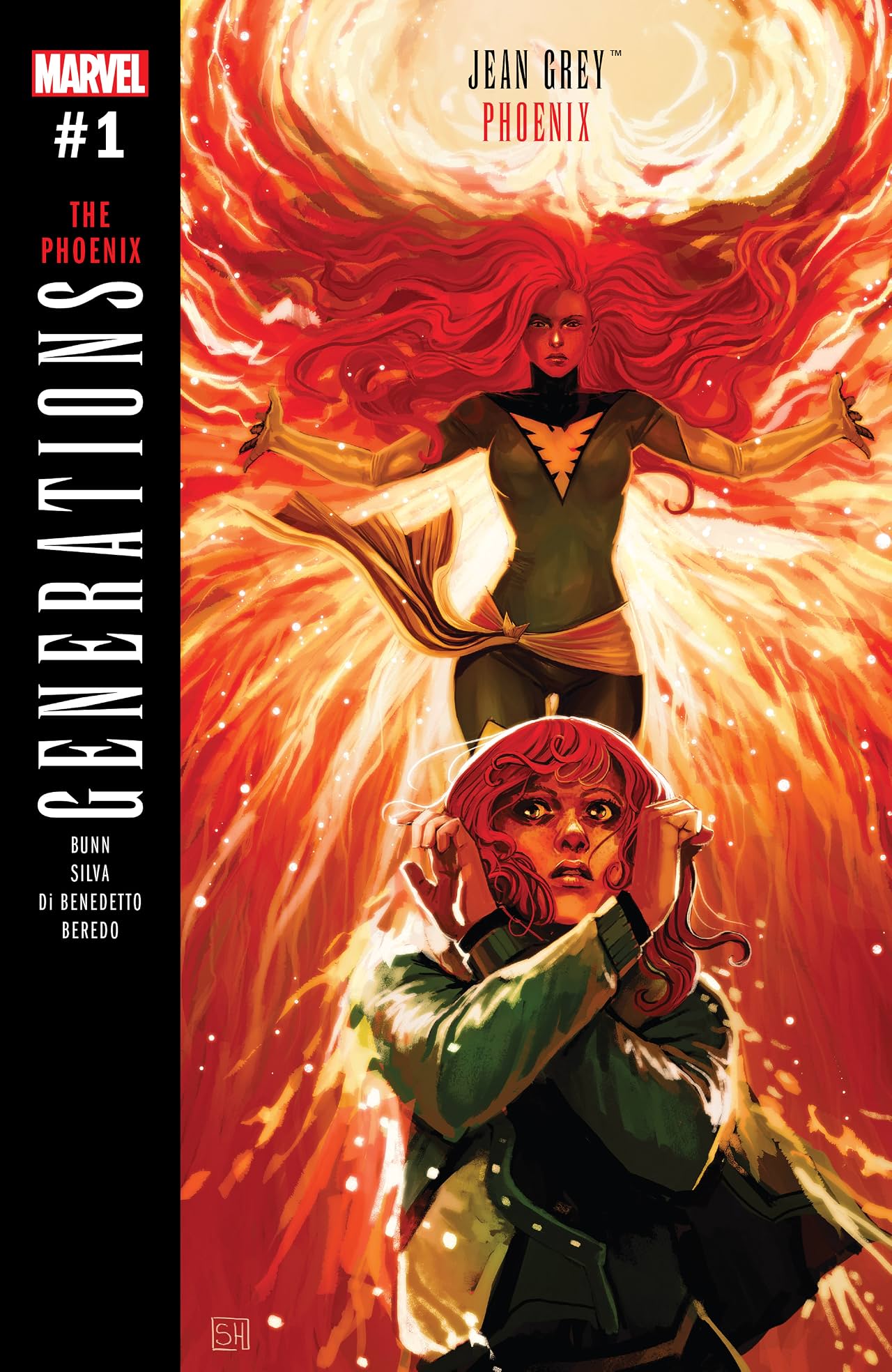
Generations: Phoenix & Jean Grey (2017) #1

As kids, it seems as though everyone is trying to teach us morality lessons that’ll help us grow into functioning adults. Those lessons aren’t always effective, though. Just ask the potheads who sat through the DARE program in school.

As adults, we tend to pay less attention to those kinds of lessons because we arrogantly believe we’ve figured it out. We think we know enough about the human experience to determine what is right and what is wrong. People who think that way tend to be the arrogant assholes who refuse to admit that Dr. Oz is a quack and a fraud.

Truly functional people, be they kids, adults, or adults who still act like kids, never stop learning important life lessons. Life is a constantly changing, obstacle-filled struggle where you never see the finish line and are guaranteed to fall flat on your face at least once a week. That’s why lessons that really deliver a powerful message in a compelling way is a special, precious thing in this chaotic world we live in.

That brings me to comic books, superheroes, and the X-men. Yes, this is going to be another one of those posts. Yes, that means I’m about to extrapolate a major philosophical insight into the human condition from an X-men comic, most likely in a way that applies to love, sex, and everything in between. You’re welcome.

It’s not the first time I’ve gleaned such lessons from an X-men comic. A year ago, I singled out X-men 92 #5 as a testament to just how powerful a romance between equals can be. Chances are, I’ll single out more comics in the future and there’s a high possibility that they’ll involve the X-men, Deadpool, or Wonder Woman.

The comic in question today is Marvel Generations: Phoenix & Jean Grey #1. It’s actually not part of any ongoing X-men series. It’s a single, self-contained story that’s part of an major promotional effort by Marvel called Marvel Generations.

The goal is as simple. Marvel seeks to bridge the gap between its older incarnations of iconic characters with the newer versions. While some of those newer versions have already caused controversy, the goal is always the same. Marvel hopes to appeal to their long-time fans while appealing to newer fans who are just getting into the world of Marvel.

Comic companies do this fairly often, trying to please old fans while creating new ones. Having followed comics for a good chunk of my life, I’ve seen more than my share of efforts. DC Comics, Marvel’s chief rival, did it last year with their DC Rebirth initiative. By most accounts, it was a success. Now, Marvel is attempting to achieve similar success.

There are many challenges to that effort, but for Jean Grey of the X-men, those challenges are more daunting than most. I’m not talking about the kind of daunting that involves dragons, killer robots, and Brett Ratner movies. I’m talking about convoluted complications involving time travel, evil clones, and cosmic forces. Trust me, it’s way more complicated than it sounds.

For this particular issue, though, you don’t need to know the fine print of those complications. You only need to know that Jean Grey’s story, after 50 years of X-men comics, got so crazy that one of her teammates, Beast, traveled back and time and brought her and the rest of the original five X-men to the future.

Now, since 2012, Jean Grey has basically been Marty McFly from “Back To The Future,” minus the incest sub-plot. She knows that her future sucks in that she ends up dead, and multiple times, no less. On top of that, she finds out she’s destined to become corrupted by a cosmic power known as the Phoenix Force, which will go onto cause all sorts of headaches, heartbreaks, and overall frustration.

That destiny is a huge part of the X-men mythos. That’s the part that “X-men: Dark Phoenix,” a movie I’ve talked about extensively, is going to try and capture. In this comic, Jean Grey has already read the spoilers to that story. She knows it doesn’t turn out well.

In fact, she has an ongoing solo series where the primary theme involves her preparing herself to face the Phoenix Force so that she doesn’t become that cute redheaded mutant who constantly dies and ends up on the wrong side of a bad love triangle. That’s entirely understandable and Marvel Generations: Phoenix & Jean Grey #1 gives her the best opportunity she’s had to date to change her fate.

This is where the lesson that Marty McFly learned the hard way comes in. Through elaborate space-time machinations that would give Doc Brown a migraine, Jean Grey is transported to a critical moment in the history of her character. It’s a moment that puts her in a position to change a lot more than just her fate.

That’s because she’s plopped in the middle of the iconic Phoenix Saga, also known by fans as the greatest X-men story ever told. It’s after her older self gains the cosmic power of the Phoenix force, but before it corrupts her in a way that destroys an entire star system and dooms her to a life of death and resurrection. There’s no part of that last sentence that’s exaggerated.

It’s an understandably confusing situation, but it’s one that puts Jean Grey in a position that even Marty McFly never dealt with. She doesn’t just have a chance to change her fate or learn more about her older self, who she’s only really known through the memories of other X-men. She has a chance to learn more about the cosmic power that she knows will doom her.

It makes for a series of colorful interactions between her and her older self that will bring tears of joy to the eyes of X-men fans of any generation. It’s hopeful, sincere, dramatic, and impactful. It fits perfectly within the narrative of Jean’s ongoing story in other X-men comics, as well as the story of her past self.

There’s so much to love about this comic, but I’m not going to spoil the entire thing here. I’d much rather have people go out and buy the issue. It’s money well-spent. Even if you don’t know much about comics or only know the X-men through the movies, this comic will appeal to you.

Beyond that appeal, though, I want to highlight an important theme within this comic. It’s a theme that applies to stories beyond comics and is relevant to life, in general. It especially applies to matters of love, passion, and intimate connections, which are major topic of this blog and the novels I write.

Generations: Phoenix & Jean Grey (2017) #1

At the heart of Jean Grey’s struggle in Marvel Generations: Phoenix & Jean Grey #1 is a difficult decision that everybody who isn’t a psychotic dictator faces at some point in their lives. It has to do with having the power to effect a situation and choosing whether or not to exercise it.

In the comic, Jean Grey has a chance to tell her older self everything she knows about her fate. She could, in principle, warn her about how the events of the Phoenix Saga play out for her. As a result, she could ensure it turns out differently, preferably in a way that doesn’t leave her dead and subsequently cloned.

On the surface, it seems easy. We saw what Marty McFly chose. We saw what the entire cast of “Hot Tub Time Machine” chose. They chose the easiest, most obvious path. They understandably wanted to improve their situation. In doing so, they created a lot more problems that they had to solve. The stakes for Jean’s problems, though, are much higher.

The problems she could create by changing her fate might be far worse than simply ending up dead. She’s not dealing with incestuous infatuations here. She’s dealing with a cosmic force that eats entire stars just for the fun of it.

She already knows the consequences of not changing anything. That has been hard enough to deal with. However, she has no idea whether she’ll fix anything by choosing otherwise. Given the Phoenix Force’s mixed track record, the odds are not in her favor.

I won’t spoil the choice she makes or what goes into. Again, I’d rather people read this comic to appreciate the full weight of its message. I’ll just say that the decision Jean makes is one that we all indirectly make when we have any kind of power over someone and can affect the course of their life.

Whether you’re a parent, a spouse, or an authority figure of any kind, you have an ability to make choices that affect other peoples’ fate. This is especially true when you’re in a relationship with someone. Your love for them and their love for you effectively links your fate. That makes your ability to make the right choices for the right reasons so critical.

It happens all too often, people using their position of power over others to abuse them. We see it when police harass minorities. We see it in crimes of passion. We see it in cases of spousal abuse and child abuse. When someone else trusts us with authority, we impact their lives in so many ways, often in ways we can’t see.

It can bring out the best and the worst in people, as the Phoenix Saga famously demonstrated. Real life demonstrates it too. Power does corrupt people. Sometimes the hardest choice to make is to not exercise that power to avert the potential consequences it might incur. It’s a choice that a lot of crazy dictators fail to make.

It’s a choice ordinary people fail to make as well. Parents find this out the hard way when they try to make decisions for their children. Sure, it seems like the right thing to do at the time. They may see it as them just protecting their child, as every parent should. However, they don’t realize until it’s too late how much damage that can do.

When you’re in an intimate relationship with someone, it can be just as powerful. If someone loves you implicitly and is willing to trust you so completely, you have the power to guide their lives in profound ways. That guidance, though, can be detrimental to the both of you.

When you have the power to influence a person or a situation, it’s easy and tempting to bend it to what you think will be more beneficial. The problem is that, without the benefit of hindsight, it’s impossible to know whether you’ll actually make things better or much worse.

The hardest decision in that situation is to acknowledge the problems as you understand them, bear the burden of solving them, and focus on the future rather than agonizing over the past. It’s rarely a preferable decision because it means accepting a situation and your role in it. It may feel like a missed opportunity, but it can just as easily be an averted crisis. Hindsight may be painfully clear, but possibilities are painfully vague.

Jean Grey, who is a teenager, mind you, in the story that plays out in Marvel Generations: Phoenix & Jean Grey #1, has to make this decision in the face of impossibly high stakes. What she does is a testament to the kind of character she is and the values we cherish in our heroes.

It’s a short, but powerful story that teaches an important lesson to children, adults, comic fans, and non-comic fans alike. Whether you’re a comic book character, a celebrity, an authority figure, or just someone with the slightest bit of leverage over someone, it’s a lesson worth learning.

4 Comments

Filed under Comic Books, Jack Fisher, Superheroes, Jack Fisher's Insights

Professor Marston & The Wonder Women Trailer (A Non-Traditional Love Story)

When we look back on 2017, I think it’s safe to say that many will see it as the year that Wonder Woman shined and the year that the “mic drop” officially became overused.

There’s no doubt about it. This has been a damn good year for Wonder Woman. Her movie was a hit with critics and fans alike. Her comic raised the bar for female heroes while also letting her get laid. She’s on a winning streak right now that we don’t usually see unless the New York Yankees and the New England Patriots are involved.

However, 2017 isn’t done with Wonder Woman just yet. It’s not enough that her movie may have single-handedly saved the DC Extended Universe, established Gal Gadot as an A-list actress with A-list sex appeal, and raised the bar for female directors like Patty Jenkins. Wonder Woman, being the iconic female hero that she is, just has to go the extra distance.

That brings me back to the man who created this sexy female icon, William Marston. In a sense, Wonder Woman is one of those characters that could never have emerged from a traditional mind looking to create a traditional hero. For her to become the icon she is now, she needed an unconventional mind and William Marston was definitely that.

I’ve talked a bit about the origins of Wonder Woman and the not-so-secret BDSM elements within that origin. A lot of that is a direct result of the non-traditional thinking that William Marston used in creating Wonder Woman. It was also the product of a very non-traditional life, some of which had some very kinky connotations.

The story behind that kinky life is now about to get some overdue attention and at the best possible time. Wonder Woman’s star couldn’t be flying higher. Why shouldn’t the man behind the sexy icon get a little attention? It’s 2017. Kink is already mainstream, thanks to internet porn and best selling novels based on Twilight fan fiction. The timing couldn’t be better.

That leads me to the upcoming quasi-biopic on William Marston, “Professor Marston & The Wonder Women.” Admit it. You probably didn’t know that a movie like this was being made. Even ardent Wonder Woman fans probably didn’t know.

It’s happening, though. This is not some weird fan film or parody to poke fun at Wonder Woman’s BDSM origins. This is a real movie starring Luke EvansRebecca Hall, and JJ Feild. It’s even being directed by a woman, Angela Robinson, who was a writer/producer on the sexy bloody spectacle that was “True Blood.” This movie is coming out later this year and last week, the trailer dropped.

It’s a very different trailer compared to “Wonder Woman.” It’s supposed to be different. It might not have as many warrior women. It might not have a naked Chris Pine. However, it does have some sexy, but kinky connotations.

Unlike Stan Lee, Bob Kane, or Jack Kirby, who are icons in their own right for the characters they created, William Marston kind of gets forgotten. Granted, he didn’t create nearly as many iconic characters as Stan Lee and Jack Kirby. However, it was his non-traditional views and the non-traditional life he lived that might have made it easier for people to dissociate the man from his creation.

As the trailer shows, Marston was an unusual voice at a time in history before the modern feminist movement and before the sexual revolution. He believed in peace through submission, seeing submission as an act of love. He also believed that women were more honest than men in certain situations. He never said they were superior, but he made it a point to highlight female strengths, as often revealed in Wonder Woman.

On top of those unusually progressive views at a time when women were still seen as nurses, teachers, and baby-makers, Marston had a non-traditional view of love. He was married to Elizabeth Holloway Marston, but theirs was a somewhat open marriage in that he also had a relationship with a woman named Olive Byrne.

It was not at all akin to the kinds of open relationships that make for raunchy TV shows about Mormons or the kinky softcore porn series that used to play on premium cable. It was a real relationship and, as the trailer showed, it was very different in terms of substance and approach. In a sense, you can say that Marston had a non-traditional relationship to match his non-traditional views.

Even today, his views on men, women, and the ways they relate to one another would be odd. Chances are, he would evoke protests from the overly politically correct crowd. That probably wouldn’t dissuade him, though. If anything, those protests would prove a part of the point he was trying to make, which was reflected somewhat in the trailer.

He claimed that there was peace and happiness to be found in submission. To the ardent individualist, which is very much at the heart of western culture, that sounds abhorrent. That sounds like something slave-masters would say to keep their slaves content, which was a thing, sadly. However, that’s not the kind of submission Marston was talking about.

In Marston’s kinky world, to submit to someone willingly is an act of love and to accept that submission with love is the apex of human connection. He sees the endless struggle to dominate everything around you, be it a person, a job, a pet, or World of Warcraft, as the source of conflict.

He also labels that kind of dominating persona as a very masculine trait. While it’s not exclusively masculine, he sees it as a common thread among male-driven narratives. Conversely, he sees women as having a greater capacity for that kind of loving submission. Wonder Woman is, in his point of view, embodies the greatest capacity for that kind of love.

Wonder Woman loves and embraces everyone around her. Her capacity for love, regardless of gender, is well-documented over her 70-year history. Sure, the kink has been largely filtered out with a few notable exceptions, namely “Wonder Woman: Earth One.” That only makes the elements Marston used in creating her all the more profound.

In some ways, William Marston was ahead of his time in creating a female hero that emphasized what he saw as female traits. He never tried to make Wonder Woman as strong or as capable in the same way as Superman or Batman. She wasn’t supposed to prove that women could be as strong as men. Just being a woman gave her a unique strength all her own.

You could also say he was ahead of his time, with respect to how he conducted his personal life. He didn’t bother with the ideal of monogamy, one man and one woman being in love until the day they died. He and the two women in his life forged their own brand of love and family. They followed their own romantic path.

They never claimed their non-traditional brand of love made them superior. That would’ve defeated the point. In Marston’s kinky world, any effort to dominate others through force, shame, or debate was pointless. In the end, the best way to bring peace is to conduct yourself in a way that makes others want to submit to your loving authority.

That’s not just my interpretation. When he was once asked by The American Scholar in 1943 about why Wonder Woman would appeal to men, he said this.

“Give them an alluring woman stronger than themselves to submit to, and they’ll be proud to become her willing slaves!”

As a comic book fan, a fan of beautiful women, and a fan of female strength in general, I whole-heartedly agree. The success of the “Wonder Woman” movie, over 70 years of comics, and a top place in the pantheon of iconic female heroes says a lot about our willingness to submit. Perhaps “Professor Marston & The Wonder Women” will help us appreciate that even more.

1 Comment

Filed under Comic Books, Jack Fisher, Superheroes, Jack Fisher's Insights

How To Break A Taboo (Or Stop It From Becoming One)

It’s not easy talking about taboos, sexual or otherwise. It’s kind of in the definition. Taboos, by default, are hard to talk about and hard to make sense of. Some don’t even make sense indirectly. If you’ve seen more than two seasons of “South Park,” you understand that.

In talking about weird taboos and the quasi-logic behind them, I try my best to make sense of them. We all have to do that to some extent over the course of our lives. I just try to do it in a way that’s sexy and could potentially lead to sexy stories that I can turn into novels.

While every taboo is unique in the sense that it’s uniquely weird, they are prone to fads, trends, and people just getting bored of them. As I’ve pointed out before, there are certain innocuous behaviors that we do every day that most used to be on par with public masturbation.

A lot of taboos fade over time, often as new generations enter the picture and form taboos of their own. Some linger and refuse to die gracefully. That’s why we still have blurred female nipples on cable TV and not a hint of BDSM in the “Wonder Woman” movie. I refuse to believe that there’s any justification for blurring nipples on network TV in the area of ubiquitous internet porn.

There’s no doubt that we’ll be dealing with taboos for as long as we’re a bunch of cavemen running around with smartphones and nuclear weapons. That may change when we get around to upgrading our brains, but even that may inspire a whole host of taboos that we can’t begin to imagine, although I did try.

For now, there aren’t many ways to break a taboo or stop something from becoming taboo. In some cases, it’s downright impossible. No matter what you do, people are going to get weird around certain proclivities, some of which involve some pretty kinky fetishes. Look up something called “cake farts” and try to find a way to not make that weird.

While there may not be a way to completely eliminate some taboos from our society, there are some ways to confront them. It is possible to break certain taboos and/or avoid them from becoming one altogether. Now, that’s not to say it can be done overnight or with a few strategic tweets. People are really stubborn when it comes to taboos, but they will come around if the conditions are right.

With that in mind, here are some of my tips on breaking and/or circumventing taboos. A lot of these tactics can apply to the sexy kind of taboos, but they also apply to others, many of which involve poor people and minorities. Again, don’t take this as a magic pill or something. Breaking taboos is hard and for good reason. We’re a petty species, but we can be reasonable if the conditions are right. That’s a big if though.


Tip #1: Make Taboos Profitable And Lucrative For Business Interests

This probably won’t surprise anyone who tips generously and has never found used bubblegum wrappers on their pizza. Money talks. It talks a lot. It also influences, more so than we’re comfortable admitting. It can, and often is, a source of corruption. In some parts of the world, that corruption is a big part of the economy. When there’s money to be made by politicians and business people, it can get messy.

That said, it’s a two-way street. Money and business interests can be corrupt, but that same corruptive force can be channeled. We’re seeing that with the growth of the marijuana industry. We saw it with the rise of the porn industry. These industries generate billions of dollars. That’s a lot of money by any measure.

No matter how regressive or uptight people may be, when there’s money to be made, people generally follow the money. A taboo that makes nobody any money is easy to clamp down on. A taboo that generates billions of dollars and significant tax revenue is a lot harder to fight.

While I don’t agree with Gordon Gekko’s famous quote about greed, it can sometimes work to others’ advantage. When it comes to legitimizing a taboo, being profitable and taxable on some level really goes a long way. At some point, the money just overpowers the weirdness.


Tip #2: Make Taboos Expensive To Preserve

This is more a preventative than confrontational measure. After a taboo becomes entrenched, it can usually find ways to endure any number of expensive lawsuits and litigation. Just look at the Church of Scientology. Truly robust taboos will find ways of exploiting the legal system to their advantage.

If you have a chance to be proactive, though, the legal system can work for you. It’s not too hard to sue for discrimination or harassment, these days. If you’re a minority, it’s even easier and you may end up on the news with Bernie Sanders. They key here is to focus more on the bigger picture, though. One lawsuit alone isn’t going to break a taboo. Many lawsuits, however, will make it impossible to maintain.

This is how a lot of our modern anti-discrimination laws emerged, using a series of successive lawsuits that made preserving old taboos too damn expensive. People may be stubborn, but when it comes to getting their lawyer’s bill, they will eventually grit their teeth and change their perspective. Even if they have the money to pay the lawyers, you can’t always put a price on frustration.


Tip #3: Make Sure Taboos Scare And/Or Inconvenience Rich People

This is one of those uncomfortable, if not infuriating, aspects of taboos and social norms. There are usually a disproportionate number of them that are directly effected, or in some cases imposed, by the rich and powerful. Taboos can be a form of excuse banking, helping rich people justify their treatment of the poor and minorities.

That’s how many people justified segregation, slavery, and feudalism. The system was such that any changes would’ve grossly inconvenienced the rich and powerful. In some cases, it might have completely ruined them.

Say what you will about rich people. They can afford to accept such criticism. They, like any other rational human being, seek to preserve their resources and their power. That’s the entire theme of the “Star Wars” movies. If giving minorities equal rights or allowing women to show their tits in public somehow undermines profits or power, then you can bet they’ll fight it with every ounce of their considerable resources.

Conversely, the act of frustrating the rich can help break taboos and even end them. Rich people want more money. Powerful people want more power. One of the major problems with segregation, among many, is that it effectively cut off an entire customer base. Once minorities could work and earn money, they wanted to do what everyone else does and spend it. The desire to spend money knows no race or gender.

Eventually, rich companies will want that money. At the same time, powerful people will want those votes and support. At that point, a taboo’s days are numbered. Being a racist asshole may be fun for some people, but it gets old fast once it starts costing money.


Tip #4: Make A Taboo Boring Or Bland

I’ve spoken before about the power of boredom. It can create super-villains and drive teenagers to cold-blooded murder. It is a powerful force, one that’s plenty powerful to break a taboo.

It’s not easy, though. In fact, I would argue that this is probably the hardest tactic to use if you’re trying to combat a taboo. Taboos usually emerge because something gets a rise out of people, often revulsion or outrage. It’s hard to temper that sort of thing. However, it can be done.

It’s happening right now with taboos surrounding marijuana. When I was growing up, the mere mention of marijuana conjured fear and horror. These days, it mostly conjures scenes from Seth Rogen movies. You could make the argument that public attitudes changed because of growing awareness of the effects of marijuana compared to alcohol. I would argue that the debate just got too boring.

Now that marijuana is becoming a full-fledged industry, there’s a financial incentive to break the taboo. However, it’s the lack of horror and outrage that comes with smoking a joint these days that really undermines the taboo. Say what you will about Seth Rogen. The man isn’t exactly scary. Without that fear, boredom usually follows.


Tip #5: Give A Taboo Political Connections

This is another aspect of making a taboo too expensive to preserve. Sometimes, it’s just not enough that taboos cost businesses money, as racial segregation often does. Even when the economics are on your side, you still need powerful allies when combatting or preventing a taboo.

This is where it pays to have powerful friends who owe you money and/or favors. You don’t always need compromising pictures of them either, but that can help. This is a big part of how the gay rights movement got off the ground. They had the support of billionaires and well-connected individuals who could influence people in power. Money talks, but sometimes political connections shout.

Again, it can cut both ways. There are billion-dollar organizations that fight to preserve taboos, but at least it’s a level playing field. Unlike the working poor, some taboos have billionaires who spend time, money, and favors to fight them. That’s a big part of how same-sex marriage became legal.

So as a rule-of-thumb, it helps to have both rich people and powerful connections in fighting a taboo. Granted, those same taboos could use similar tactics, but they’re at the mercy of the same limits. That means that if, despite the battles between billionaires and power brokers, a taboo simply doesn’t jive with our caveman brains, then it’s going to fail in the long run.


Tip #6: When In Doubt, Turn A Taboo Into A Party

This tactic is probably the most enjoyable, as well as the most satisfying. We humans love to party. We’ll look for any excuse to throw a party, have some fun, and take our clothes off without public shame. Taboos can be serious, scary, and depressing. Parties are the exact opposite of that.

Fighting a taboo with a party is like fighting fire with a waterfall. It’s using a diametrically opposing force to combat something. Mix in music, dancing, alcohol, festivities, exposed body parts, and an excuse to leave work early and you have the perfect antidote to a taboo.

This is what Mardi Gras does once a year. This is what Brazil does with Carnival. Taboos, reservations, anxieties, and fears all melt away in the spirit of having fun and enjoying yourself. This is especially potent for sexual taboos. These taboos, and the social norms built around them, tend to be frustrating and difficult for those who preserve them. A party is like a release, one that’s easy and enjoyable for all those involved.

So if you want to start the ball rolling on breaking a taboo, don’t hire a lawyer or make friends with a billionaire. Start by throwing a party. Make it fun, festive, and happy for all those involve. No taboo will stand a chance.


There are probably more tips and tricks for beating taboos that I didn’t list. There are likely a lot more that I didn’t even think of. Again, I’m not an expert. I’m an aspiring erotica/romance writer who tends to overthink certain subjects more than most, be they comic books or sleeping naked.

While I don’t expect these methods to spare us from a future of censor bars and blurred tits, I hope it makes people aware of the mechanisms behind taboos. They’re rarely logical and they tend to reflect certain proclivities in our society that we’d rather ignore. If we’re to make progress as a species, though, we should confront them and, if necessary, kick them in the ass.

4 Comments

Filed under Jack Fisher's Insights

How Idiots Fall In (And Make) Love

Image result for stupid love cartoon

I know I’ve been talking about idiots a lot lately. I’m sorry if I give the impression that I’m belaboring an issue that doesn’t need to be belabored. We’ve all had problems with idiots at some point in our lives. Most people know that they tend to complicate, obscure, and frustrate many productive endeavors in life. Anyone who thinks otherwise just hasn’t dealt with enough idiots.

Well, there’s still one last aspect to this issue that I want to touch on. I was going to talk about it in my post about how idiots affect our love lives and our sex lives, but I felt like it would’ve derailed the underlying point I was trying to make. For this particular issue, I want to focus on method behind the idiocy. Specifically, I want to apply that method to love.

That kind of insight matters to me, particularly, because I’m trying to be a quality erotica/romance. That means it’s not enough to just know how to craft meaningful love stories with plenty of sex appeal. I also have to be mindful of how these stories can go horribly wrong and the quickest way to do that is to mix idiots with love.

Image result for dumb blonde

Make no mistake. Idiots can ruin love, sex, and everything in between just as they ruin so much else in life. It’s rarely pretty. It can be downright tragic. Most of the time, though, it’s just pathetic. People have a low enough opinion of the human race thanks to idiots. They way they can undermine love only strengthens that opinion.

So what are the specifics of idiots screwing up love and making life difficult for aspiring erotica/romance writers? Well, there are a number of dynamics at work, but they’re best summed up by this chart I found a few days ago while doing my other post on idiots and love. It’s as humorous as it is uncomfortably true.

Image result for smart guy + dumb girl

It’s usually difficult to sum up complex subjects into a simple piece of clip art, but this comes pretty damn close. Sure, it’s a bit cynical in some areas, but the message is clear. Stupidity is not a key ingredient to meaningful love.

Let’s break down some of the dynamics at work. For the most part, it comes down to a mix of incentives and motivations. When a smart guy and a dumb girl get involved, there aren’t a lot of factors that would lay the foundation for a meaningful relationship.

A smart guy won’t be able to share deeper emotions with an idiot woman. She’d do more to frustrate rather than inspire his passions. She’d be immature, childlike, and annoying. Being an idiot, chances are she’d find a way to screw up contraception so the odds of her ending up pregnant would be pretty high.

Related image

The man, in this case, would have both the opportunity and the means to exploit the woman’s stupidity. It would be less about developing love and more about getting some easy sex from someone too stupid to know understand what was going on.

This kind of dynamic appeals to the kind of smart men who tend to be assholes. Even if they want to find love, they’ll jump at a chance for easy sex. It’s productive manifestation of their biological imperative. Sure, their offspring won’t benefit from having an idiot mother, but it’ll still put the smart man ahead of the game in terms of evolution.

A similar dynamic plays out with smart women and stupid men. Let’s face it, there are plenty of stupid men out there who don’t know a healthy romance from a wet fart. As a man, I freely admit that such stupidity can make for comically toxic romances that are even worse than the ones we see on “The Big Bang Theory.”

Image result for Leonard and Penny

A smart woman may have an incentive to avoid having an idiot man’s stupid kids. However, she also has an incentive and means to extract as many resources out of him. Being smart, she could easily manipulate him into a situation where he marries her and is legally obligated to provide for her.

Some women are able to do this to smart and successful men. Just look at Anna Nichole Smith, may she rest in peace. If men like that are unable to avoid those kinds of legal pitfalls, then idiots don’t have a prayer.

Smart women will rope them into unfavorable arrangements that involve giving them a significant chunk of their income. Those same smart women will easily be able to outwit their idiot husbands into cheating with far smarter, more attractive men. If they’re really smart, they’ll even get the idiot husband to provide for a kid they think is theirs. When it comes to human biology, it’s basically a perfect win/lose scenario.

Image result for gold digger

Again, this kind of dynamic depends on one part of the romance being kind of an asshole. Idiots are easily manipulated and doing so requires more than a few dick moves, to say the least. The kind of smart people who take advantage of these situations are, by and large, bullies on the same level as Biff Tannen from “Back To The Future.”

It’s not quite as tragic when two people who are equal idiots get together, but it’s just as inane. These are situations where two people are too stupid to understand what meaningful love is, the role that sex plays, and how to make something of it. If you want a perfect example of that, just watch a few episodes of “Married With Children.” That’ll tell you everything you need to know about how idiots approach sex and love.

Image result for married with children

If you need a real-world example, there is one clear sign that seems to come up often among those who may not realize that they’re being idiots. I’ve seen it happen a few times in my own life. I’m sure others have experienced it too in some form or another.

It often happens in a casual conversation with friends. It probably happens with women just as much as it does men, although I imagine the men are a lot more eager to jump into the realm of idiocy when given the chance. The conversation usually unfolds like this.

“So how are things going?”

“Well, I’m thinking about asking him/her to marry me.”

“Really? Um…why now?”

“We’ve been together for a while now. This is just what people do.”

Read over the last part a few times to get the full context of the idiocy. Even on the surface, the logic is shallow. Does just being with someone for a certain amount of time mean you have to marry or commit to them? Some may make appeals to tradition, but those traditions can sometimes be more excuse than reason, which can cause a whole host of problems.

I’ve heard real people make these arguments. They’re good people who sound smart most of the time, but when they make these kinds of excuses in their love lives, you almost want to hit them upside the head to restart their brain. It doesn’t help that sometimes they’re the only ones who don’t realize they’re in an unhealthy relationship. It’s tragic, but that’s what happens when you’re an idiot.

Image result for idiot guy

It gets even worse when you start to mix idiocy and sex. In this instance, I’m not talking about people who put themselves in bad situations that make them victims of serious crimes. That’s a whole other matter that’s neither sexy nor funny. Instances when people are just stupid with their sex lives are far more common and far less reported.

It’s not just men who don’t understand how a vagina works. It’s not just women who overestimate a man’s coordination when he’s horny. Idiots will eagerly have sex at the wrong times for the wrong reasons. It’s one thing to just have sex because you’re horny. It’s quite something else when you have sex to accomplish something stupid.

We’ve heard these kinds of conversations before. If you’ve ever been to high school or known someone who attracted all the wrong people, you’ve probably heard something along these lines.

“We’ll have sex and that’ll shut him/her up.”

“I’ll have sex with him/her to stop them from breaking up with me.”

“He/she wants to have sex with me and I’m not sure how to go about it. Should we break up?”

The people who have these conversations may not be drooling idiots, but their logic and understanding of a situation utterly fails. They treat sex as a means more than an end. They think it’s part of some unwritten rule that they don’t understand. It should be a general rule of them. If a rule is unwritten and hard to understand, then chances are it only applies to idiots.

Image result for only idiots

Idiots having sex and falling in love can cause all sorts of problems. Sometimes, as is the case with “Married With Children,” it can be hilariously entertaining. Most of the times, though, it can be tragic and downright toxic.

That leads me back to the top of the chart I cited earlier, namely the part that identifies what happens when two smart individuals come together. They’re not idiots. They’re not making excuses. They’re together for the right reasons, sharing honest, meaningful emotions. That, my friends, is real love, the kind that makes for much hotter sex.

Image result for couple in love

Idiots can fall in love. Idiots can have sex and make idiot children. Even when it’s comical, it’s still more a cautionary tale than a meaningful story. That’s why I leave those kinds of stories to the Chuck Lorre’s of the world. I’d rather tell stories about non-idiots finding and/or making love.

That’s the kind of love I try to pursue in my novels. I made a concerted effort to forge that kind of love in my latest book, “Passion Relapse.” Whether or not I succeeded is up to the reader. At the very least, I made sure the story wasn’t derailed by idiots.

Leave a comment

Filed under Jack Fisher's Insights