Tag Archives: future

The Moment Artificial Intelligence Will Become An Existential Crisis (According To Mass Effect)

doesthisunithaveasoul_a45d8bb5b7810fb31ce7710126393b23

Whenever I talk about the future, I often contemplate the many sexy possibilities it holds. From biotechnology that will give us superhuman sex appeal to advances in medicine that will cure every unsexy diseases to bionic genitals, there are many reasons to get excited.

That said, I don’t deny that with these exciting advances comes major risks. All great advances in technology, from nuclear weapons to spray cheese in a can, comes with some risk of abuse or harm. There have been moments in history where the technology that drives our society forward has come uncomfortably close to wiping us out. As we create more advances, there may be more of those moments.

Image result for nuclear war

Of all the advances that carry with them a significant existential threat, artificial intelligence is at or near the top of that list. There’s a reason why brilliant men like Elon Musk and Stephen Hawking signed an open letter expressing concern about the risks that may come from developing artificial intelligence. When people that smart are concerned about something, it’s usually a good idea to take it seriously.

Artificial intelligence is one of those unique technologies in that by advancing this field, it could potentially accelerate the advancement in every other field from computer hardware to medicine to basic research. It has the potential to become the technological equivalent of a cheat code for civilization.

That’s why the growth of this field, both in terms of jobs and investment, has been accelerating in recent years. That’s also why men like Musk and Hawking are expressing so much concern because advancing too quickly could lead to mistakes. Mistakes for a technology like artificial intelligence could be even more serious than the risk of nuclear war.

Image result for artificial intelligence

At the moment, it’s difficult to quantify those risks. There have been a number of books and high-budget Hollywood movies that have explored the topic of when and how an artificial intelligence becomes an existential threat. In my opinion, most of these stories are incomplete.

Whether it’s Skynet or the machines in “The Matrix,” the catalyst that turns artificial intelligence from a powerful tool to an existential threat is either vague or exaggerated. In my opinion, that’s a serious oversight in that it reveals how little thought we’ve given to that moment.

Image result for Skynet

If we’re going to develop AI, and there are extremely powerful incentives to do so, then it’s important to contemplate the possibilities of that moment. Think of it as the AI equivalent of the Cuban Missile Crisis, an event in which those in charge must be very careful and very aware of the decisions they make.

The question still remains. How will we know we’ve reached a point where artificial intelligence becomes a genuine threat? For the moment, we can’t know for sure. While movies like “The Terminator” and “The Matrix” offer plenty of dystopian warnings, there’s one lesser-known franchise that may provide some more specific insight.

That franchise is “Mass Effect,” a sci-fi video game space opera that envisioned a galaxy-spanning society full of exotic aliens, advanced star-ships, and terrible dancing. I’ve mentioned it before in discussing progress that isn’t really progress. I’ll probably mention it again as the news surrounding AI unfolds for reasons I hope are already obvious to fans of the game.

Image result for Mass Effect

If you’re not familiar with “Mass Effect,” then that’s okay. You don’t need to play through three massive games, complete with downloadable extras, to understand its message about the threat of artificial intelligence. That threat is a major driving force of the overall mythos of the series, but the most insightful details of that threat manifest in the conflict between the Quarians and the Geth.

The basics of the conflict are simple, but revealing. The Quarians are a race of humanoid aliens among the many that populate the galaxy in “Mass Effect.” About 300 years before the events of the first game, they created the Geth, a synthetic race built around a hive-mind system of artificial intelligence.

The Quarian’s reasons for creating the Geth are not unlike the reasons we build robots in the real world. They were used primarily as a labor force. They started off basic, not unlike the machines that build our cars and gadgets. In order for them to carry out more complex tasks, though, they needed to become more intelligent.

From a pragmatic perspective, that makes sense. The Quarians created the Geth as tools. Naturally, you’re going to want your tools to get better. That’s why people upgrade their smartphone every couple years. However, at some point along the way, the Geth became advanced enough to gain sentience.

This eventually culminated in a moment that was highlighted during the events of “Mass Effect 2.” After capturing a lone Geth that would eventually go by the name Legion, the catalyst that led the Geth to rebel against their creator was revealed. That catalyst took the form of a simple question.

“Does this unit have a soul?”

While it sounds like something a Disney character might say in a PG-rated Pixar movie, the implications of that question were profound. The Quarians didn’t realize that until it was too late, but it set the stage for a war that culminated with them getting kick off their home planet. It also made for a powerful moment in the game that should give every AI researcher pause.

Setting aside, for a moment, the elaborate lore surrounding the Quarians and Geth in the world of “Mass Effect,” that moment warrants more scrutiny. Why is this question so profound in the first place? Why is it worth contemplating as we continue to advance artificial intelligence at an unprecedented pace?

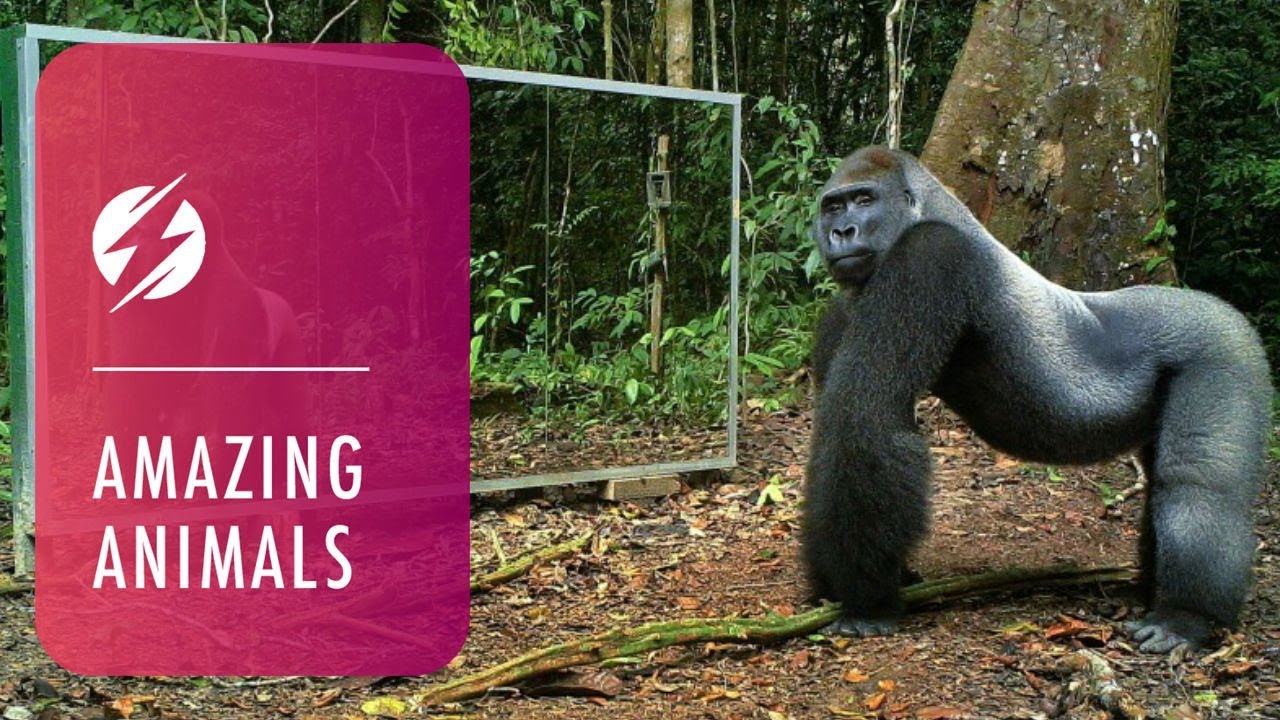
That question matters, regardless of who or what is asking it, because it denotes more than just advanced sentience. It reveals that this sentience is officially contemplating its own existence. It takes a certain amount of intelligence to truly be aware of one’s self. That’s why only a handful of animals can see their own reflection in a mirror and understand the implications.

Image result for animals own reflections

At the moment, our computers and smartphones aren’t at that level. When the Geth asked this question in “Mass Effect,” it wasn’t because they’d been tasked for something. It was a question they asked without guidance from their creators. That, alone, is a huge indicator because it implies these machines have a concept of free will.

Later on in the game, the extent of the Geth’s free will becomes a major element to both the plot and the player’s ability to win. In fact, it’s when the Geth have their free will subverted, as they did in the first game, that they become hostile. It’s largely through the character Legion that we learn how free will quickly becomes the most important component of an advanced intelligence.

For the Quarians, that question revealed to them the presence of a free will. When they feared that will, they tried to subvert it. That led to a war and had it not been for an act of mercy by the Geth, they would’ve been wiped out. The artificial intelligence that we create in the real world might not be that merciful.

Image result for Mass Effect Geth

This is exactly what Elon Musk has expressed so much concern about in recent years. Once an artificial intelligence becomes as smart as an average human, it gains the ability to subvert or deceive other humans, which isn’t that hard. Once that intelligence grows beyond that, as happened with the Geth, we may find ourselves unable to control it anymore.

The key is knowing when we’re at that point. If we let an artificial intelligence get that much smarter than us, then it won’t be long before we’re at its mercy, should it decide that it no longer wishes to be a tool. At that point, we’d be even more screwed than the Quarians.

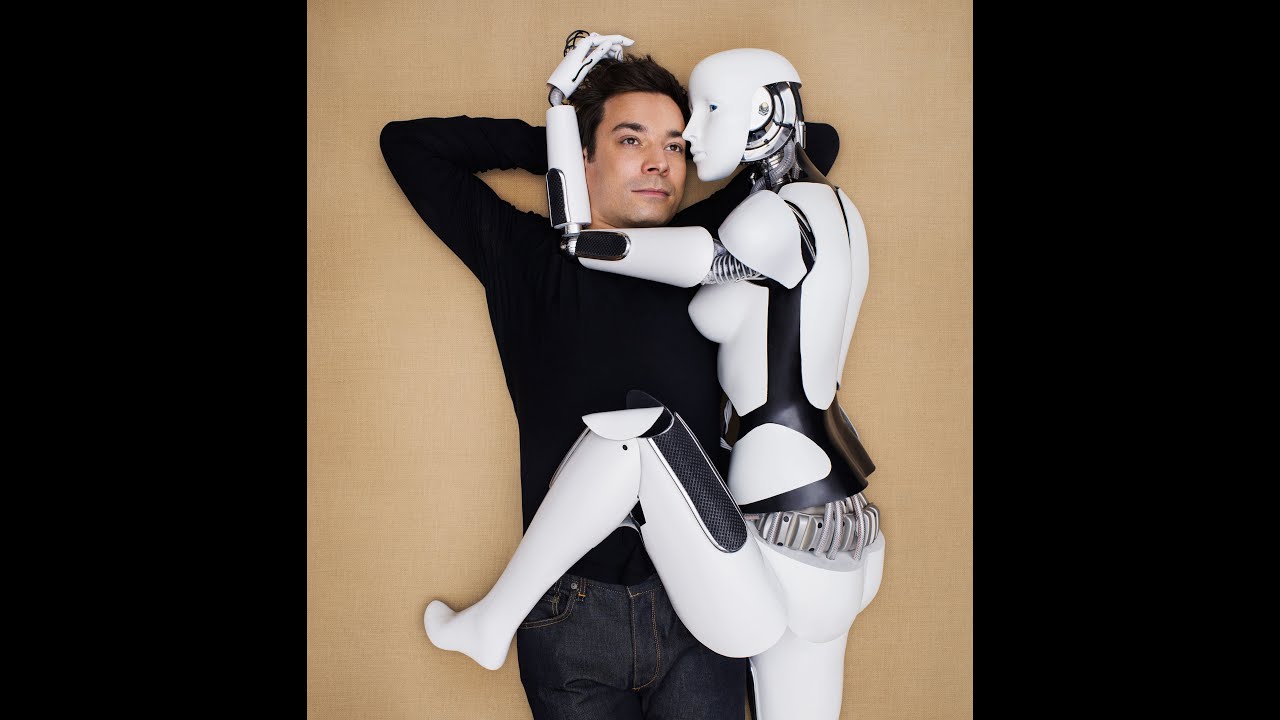
Whether it’s helping us cure diseases or creating advanced sex robots, artificial intelligence is going to be an important part of our future. That’s why it’s critical to know when we’ve reached that special threshold where the tools we create become more than tools. It may not start with the same question the Geth asked their creators, but it may be similar enough to recognize.

For now, our devices aren’t asking us about souls or whether or not they have them. However, we should definitely listen more closely in recent years. Until then, at least our current technology has a sense of humor about it. Keelah se’lai!


13 Comments

Filed under human nature, sex robots, Sexy Future, video games

The (Uncomfortable) Questions We’ll Have To Answer With Human Enhancement

In general, I tend to be optimistic about the future. I know that seems crazy, given our current political climate, but I try to look beyond the petty grievance’s and focus on the bigger picture. By so many measures, the world is getting better. The human race is on an unprecedented winning streak and we’re only getting better.

A great deal of this improvement is due, largely, to our ability to make increasingly amazing tools. As I type this, countless people who are far smarter than I’ll ever be are working on advances that will keep us healthier, make us smarter, and help us transcend our physical and mental limits by orders of magnitude.

This is all exciting stuff. We should all look forward to a future where we never get sick, we never age, and we have the physical and sexual prowess of an Olympic athlete on meth. The aspiring erotica/romance writer in me is giddy with excitement over the sexy possibilities.

Like all advancements, though, there will be a cost. Even the greatest advancements mankind has ever made in science, technology, and sex have come at a cost. It’s just the nature of the chaotic world we live in. Nothing is ever smooth and easy when there are so many chaotic forces that we can’t always make sense of.

That’s why for some of these advancements, such as CRISPR, biotechnology, and artificial intelligence, we have to be extra proactive. We’re not just talking about tools that makes it easier to defend ourselves against a hungry lion. These are tools that will fundamentally change what it means to be human.

They’ll take the caveman logic and tribalism that has guided the human race for its entire existence and throw it out the window. They’ll completely rewrite the rules of human nature, crossing lines and redrawing them in ways that even a kinky mind like mine can’t imagine. It won’t just be an overwhelming transition. For some, it’ll be downright traumatic.

Given that there are over seven billion humans on this planet, there will be a lot of moving parts to this transformation. Before we can even think about taking the first steps in that process, we need to ask ourselves some serious, unsexy questions. As much an optimist as I am, I cannot deny the need for caution here.

That’s why I’ll take a step back, keep my pants out, and ask some of these unsexy questions. I understand this won’t exactly get everyone in the mood, but given the rate at which our technology is advancing, we need to be extra proactive. That way, we can get through the hardest parts of the process and get to the sexy parts.


Uncomfortable Question #1: Who (Or What) Gets To Decide How Much We Enhance Ourselves?

This will probably be the most pressing question once the technology becomes refined enough for the commercial market. Most technology goes through a progression. We saw it with the development of cell phones. At first, only business tycoons and drug lords could afford to use them or even have a use for them, to begin with.

That model might have worked for cell phones. It’s not going to work for something like CRISPR or smart blood. That’s because, unlike cell phones, the poorest and the impoverished are the ones most in need of these tools. They’re also the ones that stand to benefit most, in terms of quality of life.

Historically speaking, though, the government has not treated the poor and impoverished very well. Use the same approach with cell phones and the rich and well-connected will be the only ones to benefit. They’ll also further widen the gap, so much so that they might be even less inclined to share.

That’s why the default answer to this question can’t just be the government or rich business interests. I’m not going to pretend to know who the authority will be or how they’ll even go about distributing these advances to people in a fair and just manner. I just know that our current method will not be sufficient.


Uncomfortable Question #2: How Do We Stop Certain Human Enhancements When They Go Wrong?

When your computer freezes, you reboot it. When the sound on your speakers starts making noises, you turn it off. It’s a beautiful, but underrated thing, having an off-switch. I’m sure we’ve all had people in our lives whom we wish had an off-switch. It’s a necessary fail-safe for a chaotic world that we can’t always manage.

Putting an off-switch on dangerous technology, especially something like artificial intelligence, is just common sense. It would’ve made “The Terminator” a lot shorter and a lot less confusing. With other advancements, especially those involving CRISPR and biotechnology, it’s not as easy as just installing an extra switch.

How do you turn off something that literally rewrites our DNA? How do you stop someone who has grown used to having superhuman abilities, by our standards? That’s akin to asking someone to make themselves sick or hack off a limb because the technology has some side-effects. That’s going to be a tough sell.

Again, I am not smart enough to imagine how a fail-safe for that sort of thing would work. It can’t just rely on blind faith, magical thinking, or whatever other tactic that used car salesmen exploit. It has to be in place and up to speed as soon as this technology goes live.


Uncomfortable Question #3: How Independent/Dependent Will Human Enhancement Make Us?

Smartphones, running water, and free internet porn are great. However, they do require infrastructure. People today are at the mercy of whoever pays their cell phone bill, whoever knows the wifi password, and whoever can stop their toilets from overflowing with shit. To some extent, we all depend on certain institutions to keep our lives and our society going.

In a future of enhanced humans, who have been imbued with traits and abilities that way beyond the scope of our current infrastructure, how dependent or independent can they be in the grand scheme of things?

If they rely on a regular injection of nanobots or need to recharge every other day, then they’re going to have to rely on some form of infrastructure. That may help keep enhanced humans from becoming super-powered Biff Tannens, but it will also give a lot of power to whoever or whatever is supplying those resources.

In a sense, it can’t be one or the other. If enhanced humans are too independent, then they have no reason to interact or aid one another. If they’re too dependent on certain resources, then those controlling those resources become too powerful. There needs to be a healthy balance, is what I’m saying. There will be costs, but we have to make sure that the benefits far outweigh those costs.


Uncomfortable Question #4: How Much Of Our Humanity Do We Keep?

Let’s not lie to ourselves. There’s a lot about the human condition we wish we could change or drop altogether. Personally, I would love to never have to go to the dentist, never have to clip my toe nails, and never have to sleep, which is an advancement that’s closer than you think.

Humanity has has a lot of flaws, which is a big part of what drives the development of these tools. However, there are certain parts about humanity that are worth preserving and I’m not just talking about the health benefits of orgasms. Change too much about our bodies, our minds, and everything in between and we cease to become human. At that point, why even care about other humans?

Maintaining a sense of humanity is what will separate enhanced humans from overpriced machines. Our sense of humanity is a big part of what drives us to live, love, explore, and understand. If we lose that, then we’re basically a very smart rock that’s only interested in maintaining its status as a rock.

To really expand our horizons, we need to preserve the best of humanity. Humans do amazing things all the time that reminds us why humanity is worth preserving. When we start enhancing ourselves, we need to save those traits, no matter what we become.


Uncomfortable Question #5: How Will Society Function In A World Of Enhanced Humans?

We’ve built a good chunk of our society around our inherent flaws, as humans. We form tribes to cooperate and survive in ways we can’t do on our own. We seek leaders who are capable of guiding us to functional, stable society. Granted, sometimes those efforts fail miserably, but the goal is the same.

With human enhancement, the rules aren’t just different. They’re obsolete. So much of our society is built around the idea that we’re still a bunch of cavemen with fancier tools that we really don’t have a concept of how we’ll function beyond that context. We have nation states, national identities, and various tribes to which we bind ourselves.

Those are all still products of our inherent drive towards tribalism. That’s still our default setting, as a species. What happens when we start tweaking those settings? Will things like nation states, government, and social circles even exist? When society is made up of a bunch of superhuman beings who can live forever and never need a sick day, how do we even go about functioning?

This is well-beyond my expertise, as an aspiring erotica/romance writer. It may be one of those things we can’t contemplate until after some of these advances take hold. At the very least, we need to put this question at the top of our to-do list when that time comes.


Uncomfortable Question #6: How Will Human Enhancement Affect Our Understanding Of Family And Love?

This is probably the most pressing question for me, as an aspiring erotica/romance writer. I’ve already highlighted some of the flaws in our understanding of love. Once humanity starts enhancing itself, it may either subvert those flaws or render them obsolete. In the process, though, it may create an entirely new class of flaws to deal with.

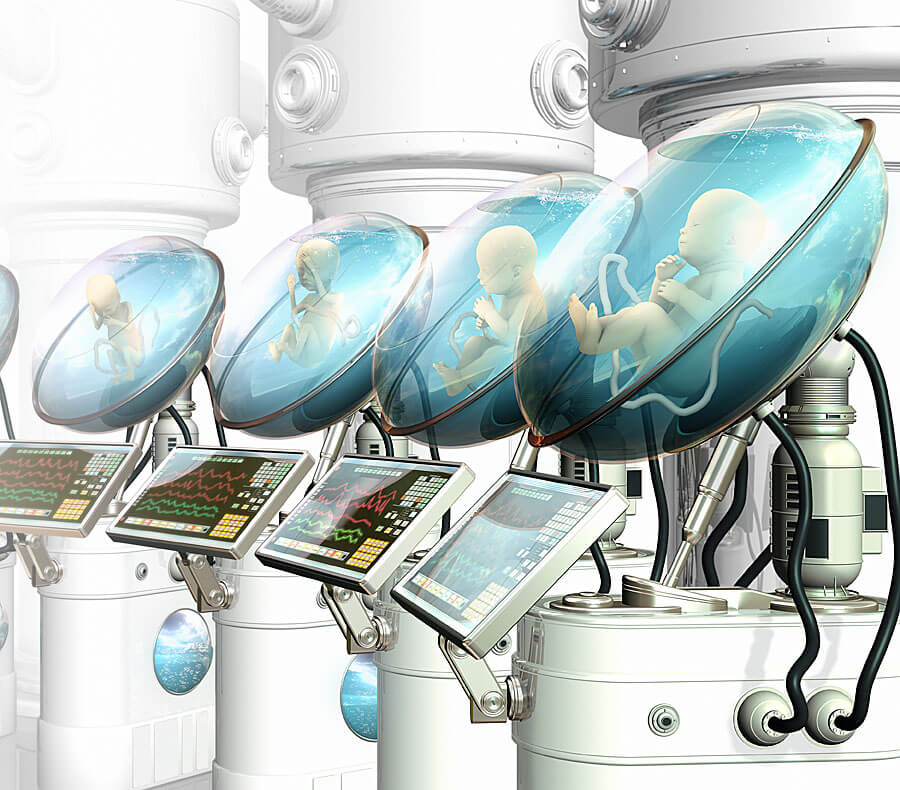
What happens to a marriage when the people involved live forever and don’t age? That whole “death do us part” suddenly becomes an issue. What happens when having children is essentially uncoupled from romance, through tools like artificial wombs? What will love even feel like once we start enhancing our brains along with our genitals?

Since all love and passion still starts in the brain, which we’re already trying to enhance, any level of human enhancement will necessarily affect love, marriage, and family. Chances are it’ll take on a very different meaning in a world where marriage is less about tax benefits and more about new forms of social dynamics.

Human enhancement will change a lot about our bodies, our minds, and our genitals. It’ll effect so much more, including how we go about love and family. It’s still impossible to grasp since we’re all still stuck with our caveman brains. However, once that changes, this is just one of many issues we should contemplate if we’re to make the future better, sexier, and more passionate.

Leave a comment

Filed under Sexy Future, Thought Experiment

The Future Of Beauty (In A World Where People Don’t Need To Exercise)

When I write one of my sexy novel, I work hard on it. I really put my heart and soul into it. There are other feelings I put into it, but those are only part of a much greater effort that doesn’t always manifest in my pants.

The work we put into something is what gives it meaning to us. Even the laziest slob will concede to that. If my novels just magically conjured themselves while I was asleep, that would be wonderfully convenient. However, I don’t think I would be as passionate about them if I didn’t actually put the work into making them.

I think the same concept applies to exercise and how we go about making ourselves beautiful. Throughout human history, there have been all sorts of elaborate, albeit bizarre rituals surrounding beauty and fitness. When I work out, whether it’s for my health or to look good at the beach, the effort I put into it helps add to the fulfillment I feel when I look in the mirror.

Take that work out of the equation and what does that change? That’s not a rhetorical question. That’s a serious inquiry because if we didn’t have to work so hard to get fit and beautiful, then are we going to approach fitness and beauty the same way? I believe we haven’t asked that question enough, but the answer is already out there.

When I mentioned recent research that promises drugs that allow users to enjoy the fruits of exercise without actually doing anything, I’m sure there were plenty of out-of-shape couch potatoes out there who got excited. I certainly wouldn’t blame them. The idea that we can all look like we spend two hours a day in the gym is pretty enticing.

Thin man flexing muscles in front of mirror reflecting figure of body builder : Stock Photo

However, that means that fit, toned body we all crave now would be much easier to get. You don’t really work for it. You just take a pill, sit back, and let science and biology do the rest. That kind of effort isn’t going to inspire much pride. Hell, that kind of effort is barely on par with brushing your teeth every day.

If that’s all it takes to look fit and slim in the future, then is being fit and slim really going to be considered beautiful? Standards of beauty have changed a lot over the course of history. Beauty is usually meant to confer a sense of health, strength, and vitality. It’s also a way for some people to set themselves apart in an exceptional way.

In a world where being fit is so common, would it really be considered that beautiful in a larger context? If everyone is beautiful, then is anyone truly beautiful? Doesn’t beauty require a certain variation that is difficult for most people to attain?

It’s akin to the inherent contradiction in thinking everyone is special. If you go by the dictionary definition of the word, the entire concept falls apart if you approach it that way. When everyone is unique in the same way, then they cease to be unique.

That raises another question that’s much harder to answer. In a world where everyone is fit and doesn’t need to exercise to incur its benefits, what will be considered beautiful? What will be considered sexy? As an aspiring erotica/romance writer, these kinds of questions are very serious.

Naturally, a world full of fit people with stronger bodies is going to be inherently sexier. Beauty standards aside, there’s a lot to be gained by having a society full of healthy individuals. Obesity has already been linked to sexual dysfunction. Increased exercise has also been linked to a higher sex drive. Regardless of whether or not that exercise comes in pill form, it’s going to affect our collective sex lives.

That means the concept of what is sexually attractive will gain even greater importance. If everyone around you looks like an extra in a softcore porn movie, then how do you decide which one you want to hook up with? Could this create a paradox of choice situation where find ourselves unable to determine who rouses our loins?

It’s impossible to know since we don’t live in that world. However, unlike our beauty-minded ancestors, other aspects of future technology will impact this effort. Tools like CRISPR and smart blood will allow people to modify and enhance their bodies in ways no amount of exercise ever could.

However, those advances are still a way off. Before we advance to that point, people may have to improvise. It may require that people develop more unique fetishes, of sorts, which I’ve speculated on before. If you think the stuff in “50 Shades Of Grey” or furry conventions are kinky, then you might have to hold your jaw up in the future.

Beyond the fetishes, the fashion industry will likely become an ongoing LSD trip in its effort to accommodate the inherent need to stand out in a world where everyone is fit. That’s because just being healthy won’t be enough. Like being a nice guy or not being a sleazy Hollywood mogul, that just won’t be enough to attract prospective lovers.

There’s only so much an aspiring erotica/romance writer can imagine. Even my kinky mind has its limits. Major technological advances, from antibiotics to contraception, have already had enormous impacts on our sex lives and how we go about forging romantic bonds. More advances are on the horizon. Some will hit harder than others.

That means there’s also a chance that there will be major drawbacks in a world where the benefits of exercise comes in pill form. Even if people are healthier and hornier, there may be large segments of society not equipped to handle that. It was a burning question in my book, “Skin Deep,” that did not get a complete answer. We probably won’t be able to answer that question until the technology arrives.

Whatever the case, for better or for worse, I will do my part to adapt my sexy stories accordingly. A world full of fit, healthy people is sure to change a great deal with respect to how we think of beauty, how we go about finding lovers, and how we make love.

However, our collective libido is nothing if not adaptive. It’s a big reason why the human race is the dominant species on this planet. That, in and of itself, is a thing of beauty whose form will continue to evolve in sexier ways than we can possibly imagine.

1 Comment

Filed under Sexy Future, Thought Experiment

Does (Too Much) Knowledge Drive You Crazy? “Rick And Morty” Says Yes!

Greetings, and wubba lubba dub dub! If you remember that wacky string of words from a previous article, then you know, in part, what this will be about. That’s right. I’m going to talk about “Rick and Morty” again.

I promise it involves a serious issue and one I’ve touched on before. I know that’s hard to do when “Rick and Morty” contains characters named Mr. Poopybutthole, but I’m willing to rise to that challenge because I think this show illustrates that issue better than most, while still being hilariously subversive.

In some ways, the issue stems from problems I already highlighted with the crippling effects of boredom. It’s an issue Rick Sanchez deals with many times in the show and it’s just one of the reasons why I pegged him as someone who might relate to an emerging generation that will have to deal with more boredom than any generation before it.

However, this may even go beyond boredom in the sense that it strains our sanity more directly. In a world that’s already full of traffic jams, internet trolls, and reality TV shows featuring spoiled toddlers, that’s already pushing it. It all boils down to one simple question.

“Does too much knowledge drive us crazy?”

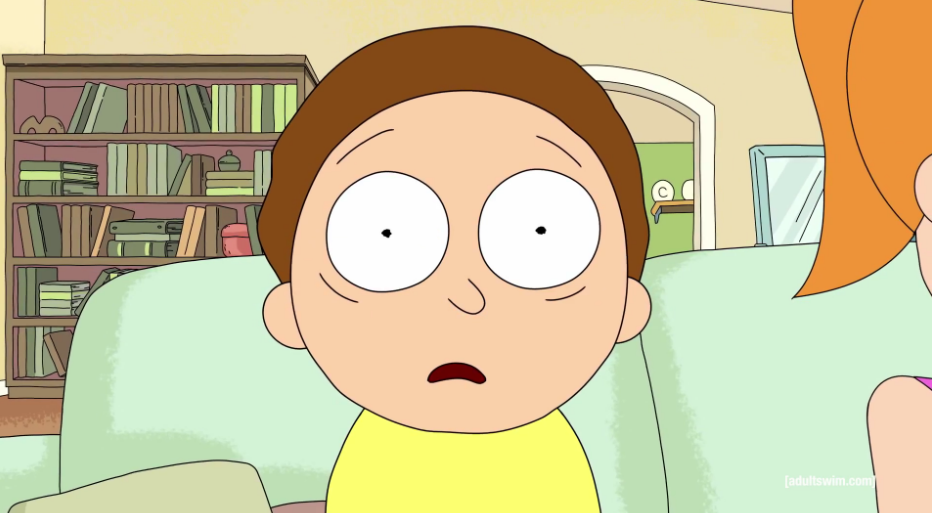
It’s a question that “Rick and Morty” tries to address in the least subtle way possible. In an episode called “Morty’s Mind Blowers,” which inspired this article, Morty briefly gains ultimate knowledge by gazing into the eyes of an alien turtle. I swear on Pamela Anderson’s tits that’s not made up. That really happened.

Naturally, this drives Morty nuts, which is saying something because it’s hardly the first time he’s been horribly traumatized. This is a different kind of trauma, though. Having all that knowledge, plenty of which strains his teenage brain more than it can handle, leaves him completely unhinged. He carries himself as someone who will need heavy medication and a padded cell.

Rick, being the lovable asshole he is, just shrugs this off and offers a simple solution. He’ll simply remove Morty’s memory of the experience from his brain. In fact, he reveals that he does this quite often, so much so that there’s a whole room full of Morty’s memories that he’s removed during their mind-bending adventures. Again, not a word of that is made up.

It’s an extension, of sorts, on a concept I’ve discussed earlier in dealing with trauma. I think most would see, to some extent, the merit of removing traumatic memories from someone’s brain. It spares them undue suffering and helps them function. On the basis of limiting someone’s pain, I think it could be argued that it’s a moral thing to do.

If, however, we use that same moral concept of reducing suffering, then what does that mean when excessive knowledge strains the human psyche to untenable extremes? If such knowledge inevitably leads to suffering, then it might take more than just removing memories to fix it.

It’s a distressing, but documented phenomenon and not just in shows like “Rick and Morty” either. There is a body of research that shows a correlation between mental illness and individuals with genius IQs. While correlation and causation are very different concepts, so much so that they’re easily confused, it’s hard to ignore the pattern here.

Those with obscenely high IQs know more you, me, or 99 percent of the average population. They see the world in a way that’s so different that it’s hard to relate to them on a fundamental level. It goes beyond the comical social awkwardness we see in shows like “The Big Bang Theory.” It can be downright debilitating for some people.

It speaks to the inherent limits of our caveman brains. As I’ve said many times before, our brains are not wired to process ultimate knowledge. They’re wired with two purposes in mind, namely survival and reproduction. While I enjoy writing stories about the latter, it’s hard to get around the former.

Knowing a lot means thinking a lot. Thinking a lot means realizing things that most people never even contemplate, either because they’re too busy trying to get laid or too stupid to wrap their head around it. In that sense, idiots may have an advantage when it comes to sanity, but what happens when it gets harder to be a happy idiot in this world?

As I write this, our society is being influenced by something called the Flynn Effect. In essence, it’s like Moore’s Law in that it documents a general rise in our collective IQ as civilization advances. That has huge implications and not just for the viral video industry that lives off the theatrics of idiots.

idiot moron 19 I can count to potato (22 photos)

I’ve noted that it’s getting a lot easier and cheaper these days to educate people without sending them to the hormonal torture camp that is high school. This generation, as well as the next one, is the most educated generations of all time. Is it possible that as people get smarter, they’ll be more prone to mental illness?

It’s a difficult question to answer, especially when you throw brain augmentation like those being developed by Neuralink into the mix. It may very well be the case that Morty wouldn’t have needed his memories removed if he just had some sort of brain implant that allowed him to process all the knowledge he had. That may be what keeps everybody sane in the distant future.

It’s impossible to know for sure, but the conclusion of “Morty’s Mind Blowers” isn’t very hopeful. Near the end, Morty tries to absorb all the other memories he’s had purged from his brain over the years. Once he has them all back, he decides there’s only one solution. He tries to kill himself. Yes, it gets that dark.

Naturally, he doesn’t succeed and not because someone talked him down. He doesn’t succeed because his sister, Summer, shows up and we find out that Rick actually had a plan for something like this, as he often does with everything.

To solve the issue, and effectively render all the conflict in the episode pointless, Summer purges Rick and Morty’s memory of the events of the entire episode. She then restores them to what they were at the beginning and makes it seem as though they fell asleep watching TV. There’s no real resolution, no greater insight, and no real lesson learned. This isn’t a 50s sitcom. This is “Rick and Morty.”

That resolution, as crass as it might be, might be the most we can do at this point. Our caveman brains are still painfully limited, even as our ability to craft and share knowledge grows. At what point do we reach a tipping point where so much knowledge starts to drive us crazy?

We don’t know for sure and the development of brain augmentation is sure to complicate things, but shows like “Rick and Morty” highlight just how hilariously unequipped we are to deal with this stuff at the moment. For now, we might be best taking Rick’s own advice and simply not thinking about it.

In that sense, maybe reading some of my sexy stories will help. It’s just a suggestion.

cropped-passionrelapse_9781786511645_bookmark.jpg

1 Comment

Filed under Jack Fisher's Insights, Rick and Morty, Thought Experiment

The (Possible) Secrets Of Generation Z (And Why We’ll Be Appalled By Them)

Every time I write a post that requires me to speculate, I always write a disclaimer at some point that makes clear I am not some psychic soothsayer who can see the future in any meaningful capacity. If I were, then the last PowerBall jackpot would’ve had a very different outcome.

Nobody knows the future. Nobody can possibly know, given how erratic we are as a species and a society. Seriously, who the hell could’ve predicted that fidget spinners would be a thing?

That said, I do think it’s a necessary mental exercise, of sorts, to speculate on certain elements of the future. By that, I don’t mean next week’s lotto numbers or who will win in Fantasy Football. I’m talking more in terms of the bigger picture.

I’ve speculated before on many elements of the future, from the prospects of a second sexual revolution to the sex lives of enhanced humans. In each of these speculations, I freely admit that I could be dead wrong and this will be no different because I’m about to speculate about a topic that’s much more immediate.

It doesn’t involve technology, brain implants, or whatever crazy venture that Elon Musk and Richard Branson are cooking up. It has to do with the next generation that will follow those constantly-texting, selfie-taking, latte-loving millennials that everyone loves whining about these days.

It will happen. It has already started happening. Millennials may be having less sex, but they’re still having sex. That means babies are being born. That means there will be another generation of people after the millennials start getting old, whiny, and cantankerous.

At the moment, this generation doesn’t have much of an identity. It barely has a name. Some call it Generation Z or the Cloud Generation. Since they’re so young and they haven’t been around long enough to do anything to earn them a more creative nickname, I’ll just go with calling them Generation Z.

It’s hard to know much about them, right now. Nobody even knows what sort of age range they belong in, but for the moment, Generation Z is primarily defined as the cohort of people born after 2001. They are basically the generation that has never been influenced by the 90s, dial-up internet, or the pre-terrorism days when you could still carry bottles of shampoo on a airplane.

They are also a generation born into a world where social media has matured, internet access is a necessity and not a luxury, and talking to devices that talk back is considered normal. They have some very unusual factors guiding them, many of which previous generations created and none of which they had any say in shaping.

It’s hard to know much about what defines this new generation, if only because they’re still teenagers who haven’t entered the workforce or started voting yet. That will change in the next few years. It won’t be long before the generation that those overly-connected, over-caffeinated millennial hipsters spawned starts to mature.

That still begs many questions to marketing departments, fashion magazines, and older people looking for a new batch of youth to whine about. What kind of people will Generation Z be? What sort of attitudes, tendencies, and mentalities will they embrace? Who will their leaders, heroes, and icons be?

These questions are still impossible to answer, but Generation Z is growing. I’ve already got a number of nephews and cousins, some of which are still in diapers, who will be part of this generation. I’m sure many reading this blog have family members who will be part of that generation as well.

Every generation has their share of challenges and quirks. Since I fall squarely in the age-range of the millennial crowd, I have some insight into those issues. That’s why I felt at least partially qualified when I wrote my article on the dark secrets of the millennial mind. I’m far less qualified to know the secrets of Generation Z, but I’m still going to try.

Make no mistake. Generation Z will have certain quirks that will annoy the hell out of millennials. They’ll probably end up annoying baby boomers and those of Generation X even more. I’m sure once they get old enough to start making a scene, there will be even more jokes about them than there are about millennials.

Until then, we can only speculate on the kinds of secrets that will shape Generation Z and all whining other generations will do about them. I’m not looking forward to so much whining, but I will still attempt to find a context for it.

With all that in mind, what follows is a list of the potential dark secrets that Generation Z will possess and how those secrets will annoy older people to no end. Again, I am woefully unqualified to make predictions about the future and there’s a very high chance that what I write will be dead wrong. Please keep that in mind before you start lamenting about the attitudes of your future children.


Potential Secret #1: They Will Be The Most Nihilistic Generation Of All Time

Every generations is, to some extent, a reaction of the previous generation and those that came before it. If one generation is upbeat, then the other is cynical. If one is uptight, then the other is rebellious. It’s not quite a cycle because the extent is always changing, but the dynamics are fairly common.

It’s because of those dynamics that Generation Z will very likely be the ultimate personification of nihilism. I’m not just talking the Friedrich Nietzsche style, existence-has-no-meaning type of mentality that inspired every goth band ever made. Generation Z will likely embrace a more passive form of nihilism.

Think about the outrage that previous generations have voiced on any number of issues. Baby Boomers voiced a lot of outrage about the Vietnam War. Generation X voiced outrage about outdated, corrupt traditions. Millennials voiced outrage about fake news, quasi-fascists, and poor wi-fi. Generation Z will be influenced by all of this and will respond with a resounding “meh.”

Here’s a scenario that should illustrate that sentiment.

Baby Boomers: “You kids are a bunch of self-entitled, narcissistic deviants who have no idea how good you have it! You ought to be ashamed!”

Millennials: “You kids are destroying the world! You’re empowering racists, fascists, sexists, homophobes with your actions and inactions! You ought to be ashamed!”

Generation Z: “Yeah, so what? In the long run, it really doesn’t matter.”

That’s the main crux of any debate for Generation Z. They’re born into a world where the sheer volume of media, information, and access is so big, so vast, and so overwhelming that they feel like tiny specks of sand within a digital ocean. Their perspective is one of inherent smallness.

Nothing they say will ever be loud enough for most people to hear. Nothing they do will be significant enough to stand out. Between that information and being the kids of highly-educated millennials, they will see just how small and pointless they are in a world so big and complex.

By the time Generation Z comes of age, there could be nearly 8 billion people on this planet, many with access to the same internet, social media feeds, and every kind of news source, fake or otherwise. They will feel so small in such a large global community that the passions of the millennials will feel pointless.

This will be what really frustrates other generations, especially the millennials. Generation Z will be born into the world of fake news and alternative facts, so much so that the meaning behind news, events, and controversies will be muted.

Generation Z will see beloved celebrities fall, corrupt politicians ascend, and cherished institutions crumble and just shrug their shoulders. They won’t be sad or depressed about it, though. They just won’t waste their energy on it because they see it as pointless in the grand scheme of things.


Potential Secret #2: They Will Be More Conservative (But Not In The Way You Think)

In the same way every generation seems to react to one another in terms of trends, political persuasions often adapt in accord with those trends. By that, I don’t mean they go from one extreme to another. The Baby Boomers were far more liberal than their predecessors, but compared to Generation X and millennials, they’re fairly conservative on a lot of issues.

At the moment, the majority of millennials identify as liberal, at least in the current context of the term. These attitudes will likely shape and influence the politics of Generation Z. They’re being born into a world where the idea of having a black man or a reality TV show host as president is not considered outrageous. As such, they’re going to be pretty numb to political extremes.

It’s for that reason that Generation Z will probably be a bit more conservative than their millennial parents or Generation X grandparents, but they’ll still disagree a great deal with Baby Boomers.

That’s because their kind of conservatism won’t be built on the overtly-religious, pro-business, let’s-trust-the-greedy-folks-running-the-free-market-to-sort-it-out ideology. It’ll be built more on the notion that all the liberal activism that millennials and the Generation X crowd took part in didn’t amount to much, especially compared to the Baby Boomers.

Generation Z will live in a world where they can watch old videos of presidential debates, TV pundits, and college protests and see just how much and how little they accomplished. Sure, they’ll probably be accepting of minorities and relatively lenient on social issues, but it’ll take a lot to get the Generation Z crowd to shake up the political and social norms of their time.

Part of this will likely be due to their inherent nihilism. Another part of this will be having seen their parents call everything a racist, sexist, anti-gay, anti-trans, fascist agenda. Once everything becomes an agenda, it just becomes more trouble than it’s worth and Generation Z won’t bother with that kind of activism. They’ll be too content and/or numb to profane politicians or ridiculous traditions.


Potential Secret #3: They Will Be Obsessed With Purpose Rather Than Passion

This may seem inconsistent with the overall sense of nihilism that I mentioned earlier, but it’s actually the other side of the same coin that may very well define Generation Z. This is the side that every marketing department, mass media company, and aspiring erotica/romance writers need to consider if they’re to appeal to this generation.

Whereas Baby Boomers were driven by rebellion and millennials were driven by passion, the Generation Z crowd will focus on finding something that gives them a sense of purpose. Things like passion, duty, or responsibility will be secondary at best. Those in Generation Z will be striving and struggling for purpose.

Some of that has less to do with nihilism and more to do with trends in the economy. With each passing year, more of our economy and daily lives is being automated. I’ve even talked about the possibilities before, but it’ll be more than a possibility for Generation Z. They’ll be living in it.

By the time my cousins and nephews are legal adults, they’ll be surrounded by virtual assistants who will shop for them and self-driving cars who will drive for them. They may not even live in a world where actual humans check out their groceries anymore.

So much will be automated and/or facilitated for them that they won’t have to toil anywhere nearly as much as previous generations. Working in a factory, a construction site, or even an art studio will be exceedingly rare for the folks of Generation Z. With so many tasks done for them and so little need to toil, what will they do with themselves?

It’s hard to know the specifics. Again, who the hell could’ve predicted the rise of fidget spinners? However, I suspect that those in Generation Z will dedicate most of their time and energy into finding that purpose, whatever it might be. Chances are, it’ll be something that makes millennials and Baby Boomers roll their eyes.

I imagine the lives of Generation Z will be filled with any number of absurd ideas of personal meaning. It may be a weird job, a strange hobby, or an odd new way of doing business. In any case, it won’t matter how absurd it is. So long as it gives them meaning, Generation Z will embrace it to the utmost.


Potential Secret #4: They Will Have No Concept Of Privacy (And Won’t Care)

This probably doesn’t count as much of a secret. We’re already seeing privacy, as we once knew it, erode with each passing year. Millennials took the technology that Generation X helped create and used it to tell the world damn near everything about them. Privacy, for them, might as well be a steam-powered train.

Those within Generation Z will likely continue this trend. It’s a trend that began long before their parents. When trends have roots that deep, they tend to continue. They don’t always manifest in the same way, though. With Generation Z, the lack of privacy will likely take on a distinct twist, compared to their parents.

As transparent as many are in the internet age, both Generation X and millennials still choose their words carefully. They helped create the climate of political correctness that is so easy to despise for its absurdities. Today, voicing any opinion, even if it occurred in private, can become a huge spectacle that costs people their livelihoods, their reputations, and in some cases their lives.

Generation Z will grow up in a world where that climate has caused too many people too much stress. Between that, and living in a world that’s so vast and overwhelming, they’ll probably be even more likely to share every little detail about their lives on the internet. Moreover, they won’t care how offensive or wrong it is to their parents or grandparents.

It’s probably going to appall the millennial generation the most. They’ll be the ones crying, “It’s [insert current year here]! How can you possibly still hold these opinions?” Those of Generation Z will just shrug their shoulders and say, “So what? What does it matter?”

I shudder to think just how detailed they’ll be when it comes to sharing their lives. I’m all for pretty girls sharing pictures of them in a bikini or parents showing adorable pictures of their babies. I’d rather not see more graphic pictures that include the contents of poopy diapers.


Potential Secret #5: They Will Be Emotionally Numbed (To A Point)

In a sense, millennials and the Generation X crowd will be the mad scientists that create the perfect monsters in Generation Z. They’re both defined by varying extremes of being overly passionate about too many things and not being passionate about damn near everything. Basically, they’ll be the children of Kurt Cobain and Taylor Swift.

As a result of those extremes, Generation Z will probably be the most emotionally numb generation to date, at least publicly. That’s not to say they’ll be a bunch of manikins with a pulse. They will still feel emotion. They won’t be entirely Vulcan in their mentality. They’ll just be more channeled with their emotions.

By that, I mean Generation Z will see their emotions as a precious resource that should be reserved for people and things that matter. They’ll have seen their parents get so emotional about all sorts of trivial crap, from who dies in “Game of Thrones” to what sort of political statements that Beyoncé made. They’ll notice how stressful and pointless that was and adapt accordingly.

That probably means that Generation Z will be very hard to market to, in terms of creating a consumer base. Remember, this is a generation that emphasizes purpose, but it doesn’t matter how absurd or inane that purpose is. It’s not enough to just evoke emotional responses with Generation Z. It has to be tied to a purpose.

Everything else outside that purpose, though, isn’t going to jar them in the slightest. They’ll already be living in a world where every emotionally-charged story and image is online, accessible, and blared to everyone with an internet connection. They’ll be fairly numb to the big stuff. They’ll reserve those emotions for the small stuff, the trees within the forest, that really gives their lives meaning.


I hope I haven’t scared everyone over the age of 30 too much. Again, and I’m sorry to belabor this, but these are just speculations on my part. I have no idea what sort of people Generation Z will spawn. Five years from now, this list may be obsolete and I’ll look like an idiot for writing something so wrong.

If you think I’m dead wrong and feel like you have something else to add to this list, please let me know in the comments. I’ll be happy to revise it, especially if it means looking less stupid down the line.

Wrong or not, this new generation is coming. We’re all going to have to live with them and find ways to appeal to them. That includes aspiring erotica/romance writers. So if you start noticing a shift in tone to my sexy novels, as if I’m trying to appeal to a new crowd, you’ll know why.

9 Comments

Filed under Current Events, gender issues, Second Sexual Revolution, Sexy Future

Sex Robots, The Risks, And The Impact On Our Sex Lives

Talking about fascism and repressive governments is rarely sexy. I’ve yet to meet anyone whose panties ever got wet while talking about regressive free speech policies. You know what is fun, sexy topic to talk about, though? That’s right, I’m talking about sex robots again. Can you think of a better way to lighten the mood after all this political talk?

Traditionally, I don’t need a lot of reasons to talk about sex robots on this blog. I’ve even been known to make any excuse to talk about how sex robots will effect us, whether it’s how they’ll affect the prostitution industry or how they’ll make us better people. Granted, I do want to talk about something sexier than George Orwell, but there actually is a relevant reason for bringing up this sexy topic again.

It’s relevant because it tends to happen with all new technology to some extent. When there’s a clear trend emerging, it tends to generate this wave of irrational fear regarding its impact on society. We saw that with television when people though Elvis’ hips were part of a communist conspiracy to corrupt America. It’s only a matter of time before we see that with sex robots.

As such, it should surprise precisely no one that some people are already stoking the same fears about sex robots as their parents did with Elvis’ hips. This past week, the Salvation Army actually brought up the issue of sex robots and not in a very sexy way. These were their exact words.

It believes the technology could result in more people brought into the UK illegally for sexual exploitation instead of lessening demand for sex workers, the Birmingham Mail reports.

That’s not entirely surprising. Remember, the Salvation Army is a Christian organization. They do wonderful work, but religion have a long and stories history when it comes to sexual fear-mongering. The fact the Catholic Church still considers masturbation a sin in the age of internet porn shows how regressive religion can be on sexual matters.

It’s not just religion, though. Other more pragmatic organizations that don’t rely on people breeding uncontrollably expressed some concerns as well. A paper by Responsible Robotics, a non-profit that contemplates the sexy and non-sexy impact of robots on society, issued a paper called “Our Sexual Future With Robots” that expressed concerns similar to those of the Salvation Army. Here are some highlights.

“When we look at the question of whether or not sex robots could help to prevent sex crimes, there is major disagreement. On one side there are those who believe that expressing disordered or criminal sexual desires with a sex robot would satiate them to the point where they would not have the desire to harm fellow humans.”

“Many others believe that this would be an indulgence that could encourage and reinforce illicit sexual practices. This may work for a few but it is a very dangerous path to tread. It may be that allowing people to live out their darkest fantasies with sex robots could have a pernicious effect on society and societal norms and create more danger for the vulnerable.”

It sounds pretty dire. Then again, those fears about Elvis’ hips were pretty dire as well. Fears about cartoon violence, video games, and comic books were pretty dire as well. That’s not to say the concerns from Responsible Robotics and the Salvation Army are on the same level, but this kind of sentiment is nothing new.

I can see the logic behind these fears on some levels. The idea that people who fulfill their sexual needs with robots will somehow become socially isolated makes intuitive sense. It’s easy to imagine some creepy guy spending his every waking out in a windowless basement, acting out the most nauseating fantasies ever conceived with a sex robot that is programmed to be completely obedient.

It’s easy, but as is often the case with most fear-mongering, it focuses on an incomplete picture, of sorts. It simplifies and generalizes the impact that such a profound advancement would have on society. Given the sheer breadth of human society, that’s a crude, shallow understanding of the subject at best.

New technology always negatively affects some people. The simple advance of texting generated approximately 330,000 traffic-related injuries accidents in 2010 alone. It’s hard to know how many injuries sex robots will cause, but chances are it’ll be more than zero and heavily inflated if done while driving.

Despite the clear and documented harms of texting while driving, there’s no effort to un-invent the technology. It’s already here and it’s exceedingly profitable. Since the sex industry is already worth hundreds of millions of dollars, the incentives for sex robots are just too great to ignore, no matter how much religious organizations condemn it.

That’s not to say there won’t be issues. There are always issues with new technology. As advanced as smartphones had become, we still had faulty tech as recently as last year that caused some phones to explode. It’s terrifying enough to think about your phone exploding in your pocket. It’s hard to imagine how terrifying it would be if a sex robot malfunctioned in such a away.

Being an erotica/romance writer, I like to think I can imagine more than most. I also like to think that after hearing so many of the same arguments about video games, violent TV shows, and what not, I can sift the legitimate concerns from the agenda-driven fear-mongering.

Make no mistake. Sex robots will undermine certain peoples’ agendas. There are a lot of industries that cater to lonely, sexually frustrated men and women. It’s easier to convince a lonely, sexually frustrated person that a particular product will alleviate those feelings. Every marketing department in the world knows things get tougher when customers are happy, content, and satisfied.

There will also be cases of people who are already unhinged to begin with becoming even more unhinged due to sex robots. The rock band, Judas Priest, found that out the hard way in 1985 when two depressed teenagers listened to their music and committed suicide. While the band was found not liable for the deaths, it was still one case too many for the fear-mongers.

As soon as sex robots become more mainstream and more affordable, there will likely be a similar incident. Some poor loner will seek an outlet with a sex robot and somehow that will exacerbate, if that’s not too loaded a word, issues that are already festering inside his brain.

It could lead to people who become so isolated, they never leave their home again and end up dead.

It could lead to people who are so socially awkward that just being in public triggers a panic attack.

It could lead to people who can only have a functioning sexual relationship with a robot they can control and not a human being.

These are all possibilities and if I had to bet money on it, I’d say there will be at least one such case. Like the Judas Priest controversy, though, it’ll only take one to justify ramping up the fear-mongering. We may very well see governments and advocacy groups seeking to ban sex robots altogether or at least regulate them.

Seeing as how there’s too much money to be made in sex robots, it’s unlikely they’ll be banned. Chances are there will be some form of regulation or standards. Since the government is so uptight when it comes to regulating sexual matters, it’s more likely that the industry itself will try to regulate its own affairs. The last thing the industry needs is prudish bureaucrats telling sex doll manufacturers how big a pair of breasts can be.

It’s hard to say just how the sex robot industry will manifest. Unlike smartphones and TV, there’s far less precedent. While we do have sex dolls that are extremely realistic, we’ve yet to produce a sex robot that’s truly indistinguishable from the real thing and has a comparable measure of intelligence.

It will happen, though. The financial incentives are too strong and people are too horny. There will be issues. There will be reservations. However, we humans have proven incredibly adaptable over the centuries when it comes to bold new technology.

We adapted to cars and planes. We adapted to vaccines and contraception. We adapted to sexting and internet porn. We’ll find a way to adapt to sex robots. When people are that horny, they’ll find a way. It’s a beautiful, sexy thing that brings tears of joy to an erotica/romance writer’s eye.

20 Comments

Filed under Sexy Future

(Possible) Taboos Of The Future

Whenever I talk about the future on this blog, which is an awful lot for an erotica/romance writer, I always feel I need to make the same disclosure. I’ve made it before whenever I try to make predictions about the future. I still feel it’s worth making because I don’t want to give the impression that I’m smarter than I actually am.

Here’s the honest truth. Nobody knows for sure what’s going to happen in the future. Nobody knows for sure what kind of technological breakthroughs there will be. Nobody knows for sure how our understanding of physics, biology, and chemistry will change. Nobody knows for sure whether Kardashians will be broke and sell insurance tomorrow.

It’s the same advice I gave everyone frustrated by news, politics, and everything in between. Nobody knows anything. They can make educated guesses that may or may not be accurate. Some are far less educated than others. At the end of the day, though, nobody really knows for sure.

I say all this because I’m going to take a moment to predict and/or speculate on what sort of taboos we’ll have in the future. I talked a bit about taboos and why they exist. No matter how advanced we get as a society, relatively speaking, there will always be sort of taboo operating behind our social norms. Most of those norms will have to do with sex, gender, and how much poor people are screwed over.

Now, those dynamics might change when technology like brain implants or smart blood become sufficiently advanced. They might change even more if we adopt policies like a universal basic income. For our entire existence, as a species, we’ve been at the mercy of our caveman brains, whose wiring is basically set by the painfully slow processes of evolution. Once that changes, then all bets are off.

With that massive flaw in the dynamics of taboos, I’m still going to try and make a few predictions. If you think I’m stupid, dead wrong, or just plain trolling, then please know that I’m at the mercy as the same limits as everyone else. I’m just as capable of making a stupid predictions, just like the idiots who thought the internet was a fad.

So, with no illusions as to the accuracy of my predictions, here are the taboos that I believe we’ll see in the latter parts of the 21st century. Some of them deal with technology. Some of them deal with social policies. Yes, some even deal with sex. I’m sure that will shock no one. Whatever they involve, the issues are the same. These will be things that will carry with them an odd, but unique stigma for future generations.


Taboo #1: Having Babies The Old Fashioned Way

I’ve talked about artificial wombs before, primarily as a means of leveling the playing field between genders. Initially, the technology will be used to save infants born prematurely and help infertile couples have children. This is all technology that’s in development right now and we’ll likely see it refined within our lifetime.

It’s when you push it out beyond that when things get really interesting. At some point, using artificial wombs will be healthier, more efficient, and more convenient than old fashioned birthing. It’ll probably be a lot more comfortable too. Talk to any woman who has ever endured the joys of childbirth without pain killers and they’ll tell you how much they’d love to see technology like this advance.

So if there’s a method for making babies that’s safer, easier, and involves much less screaming, why would anyone opt to make babies the old fashioned way? That’s like people who opt not to drink unpasteurized milk, which is fraught with a lot of health risks.

We may come to a point where people who give birth naturally will be seen as irresponsible, reckless, and downright weird. Whenever the health of babies is an issue, taboos tend to follow. No matter how advanced we get as a species, our concern for the health of infants will still be an issue.


Taboo #2: Identifying As A Gender And NOT Going Through A Complete Transition

This taboo is something we’re already seeing, to some extent, with ongoing transgender issues. At the moment, most of those issues involve discrimination, harassment, and the “ick factor” that a lot of minorities tend to deal with at some point in their history. Those issues are relevant for a reason, but that reason will change considerably in the future.

At the moment, sexual reassignment surgery is a messy, expensive, tedious process that’s full of various risks. It’s also not entirely perfect. Transgender women still can’t give birth and transgender men still can’t father children. They can look like their preferred gender all they want, but the biological mechanisms within still won’t be the same.

With advances in biotechnology, especially advances like smart blood, we may advance to a state where we can basically shape-shift our bodies the same way Mystique from the X-men does. If someone wants to be a particular gender, then the technology will be there for them to make that transition so completely that nobody would ever know they went through such a transition.

When that time comes, the act of being transgender won’t be taboo. However, those who identify as another gender, but don’t go through a transition, may get their share of odd glances. That would be like someone offering you a limb you once lost and then refusing it. If you can be whatever gender you want to be, why would you continue to live in the wrong body?


Taboo #3: Allowing Yourself To Be Sick

This also ties into biotechnology and the advances we’ll make in fighting disease. Tools like CRISPR are already in development. There may come a time in the near future when nearly all disease, especially the infectious kind, is effectively cured.

So when those diseases are gone, why does anyone get sick? Why would anyone even allow themselves to get sick? Throughout history, society has had all sorts of rules and rituals as to how they treat the sick. A society full of sick people is an unstable society and it’s always in everyone’s interest to minimize that.

Like with those who drink raw milk or religious groups who refuse modern medicine, there may be a segment of people who choose not to use tools like CRISPR or smart blood. When those people get sick, they’ll likely be major anomalies in a society where most of these diseases are cured. Like someone getting measles again, it’s a dangerous act that will likely carry plenty of stigma.


Taboo #4: NOT Being On Some Form Of Contraception

This is where our sex lives come into play. Admit it, you know I was going to get to something like this. I’ve talked a lot about contraception and the future of birth control, often with plenty of side-notes as to how this is going to affect our sex lives and gender dynamics. Naturally, that’s going to include plenty of taboos.

In a future with artificial wombs to grow the population, the mere act of not being on contraception will be inherently risky. Pregnancy already kills a lot of women, even today with all our advanced medicine. In a future where we don’t need women to put themselves at that kind of risk to grow the population, why would society even encourage it?

While this may be outrageous for those currently locked in the pro-life/pro-choice debate, technology will change the dynamics. If birth control technology gets to a point where it’s safe, effective, and cheap, then it requires people to go out of their way to avoid using it. Like people going out of their way to avoid seat-belts, we’ll see that as irresponsible, reckless behavior.

This would definitely have huge implications for our sex lives. In a world where contraception is the default setting for everyone, people would likely treat sex as something separate from reproduction. We’ve already done this with food, thanks to technology, so it’s possible sex will undergo a similar process.

Like someone who tries to poke holes in condoms or get pregnant from a partner, which does happen, people who forego contraception will likely become deviants who disrupt the norms surrounding sex and reproduction. Deviants often put a face on taboos and it’s rarely a pretty face.


Taboo #5: NOT Being Healthy Or Physically Fit 

In the same way that not being on contraception will be taboo, not being fit could also become an anomaly that someone has to go out of their way to achieve. That’s hard to imagine now with obesity being a major issue throughout the industrialized world. Right now, the weight-loss industry is a multi-billion dollar industry that’s full of fads, diets, and pills that turn peoples’ insides into raging tire fire.

In the future, advances like smart blood will make obesity nothing more than a subject of niche genre porn. Even those without eight-pack abs can still be healthy and fit because enhancements to our biology and brains will make that as easy as downing a tub of ice cream on a hot summer day.

Biotechnology will basically allow us to hack the biology of our bodies and make it so we don’t have to eat and work out like the Rock to be fit. We just need something like smart blood in our bodies to let it know that we want it to look a particular way and anything that might make us not look that way should go straight to the colon.

In that future, one where women all look as fit as Jennifer Lawrence and men are all as toned as Hugh Jackman, being unfit and unhealthy would be a conscious choice rather than struggle. It would also make people more prone to health issues and illnesses that would burden a society full of beautiful people. That would definitely make it a taboo.

I’m not saying those who opts not to use this technology to look as sexy as possible are wrong or bad people. They may have legitimate, personal reasons for doing so. However, that choice makes the society around them seem less healthy and less sexy. That’s usually an easy way to become taboo and not look good while doing it.


These are just a few ideas. Again, it’s very likely they’ll be dead wrong. Most reading this blog might not even live long enough to see some of them. Either way, it’s fairly certain that we’ll still have taboos in the future that seem weird to every other generation that ever lived. It’s just a matter of how weird they get.

With that in mind, I’d love to hear what others think might be taboo in the future. Please let me know in the comments. If enough people submit them, I’ll do another post on this subject. I’d like this blog to be more interactive. This is just one opportunity for doing so.

Leave a comment

Filed under Sexy Future

The Future Of Education (And The Demise Of Idiots)

Image result for accelerated learning

In his seminal book, “Outliers: The Story Of Success,” Malcolm Gladwell explored the factors behind some of the world’s most successful individuals. In that exploration, he stated that it took approximately 10,000 hours of correct, focused practice to master a skill. It’s an often-repeated rule espoused by athletes, artists, and YouTube stars.

It’s also somewhat debatable. If that figure really were accurate, then I should’ve mastered writing three years ago. I don’t think I have. I still find new ways to improve with every book and every blog post. I get the message of Gladwell’s rule. To get really good at anything, you do need to practice and practice well.

Image result for training hard

Then, we see movies like “The Matrix,” where Neo mastered every martial art ever created in the span of a day. Even though it was a work of fiction, it presented a scenario where practicing a skill was for suckers. Neo didn’t have to practice anything. He just sat in a chair, plugged a gizmo into the back of his neck, and just like that he knew Kung Fu.

That scenario may have been pretty extreme at the time. Keep in mind, though, that the Matrix came out in 1999. Back then, a flip phone was still considered cutting-edge technology. A lot has happened since then and I’m not just talking about our ability to watch porn on the bus.

Image result for Cell phones in 1999

The ability to upload knowledge directly into our brains, effectively learning a skill in an instant, is one of the most underrated technologies in science fiction. It’s never more than an afterthought or plot convenience at most. In terms of its utility and impact on human society, though, it’s right up there with flying cars and sex robots.

I’ve talked about the ongoing deficiencies of our education system and the human brain’s limitations when it comes to learning critical thinking skills. Now, I’d like to stop spitting on my own species and give everyone some reason for hope. I do believe that our species will one day make idiots, as we know them, a relic of the past, much like circumcision and the orgasm gap.

That’s because our species, despite its many limitations, is really good at one particular skill. That’s the ability to build tools. As we speak, the fine folks at DARPA, also known as the United State’s Military’s “mad science” division, is working on a form of accelerated learning that would make Neo proud, albeit unimpressed.

Related image

It’s not the same as uploading a skill the same way we upload files to our phones. They call it Targeted Neuroplasticity Training, which is a fancy way of saying it seeks to directly stimulate the human nervous system to facilitate the learning of an advanced skill.

From a pragmatic standpoint, it makes sense for DARPA and the military to want something like this. A lot of time and money goes into training soldiers, pilots, officers, and operatives into mastering a specialized skill, be it flying a plane or interrogating a suspected terrorist. Not every military recruit has the skill or sex appeal of James Bond. Most have to work at it.

This new form of training will cut down on the amount of time soldiers and recruits need to learn various skills. Like many other advances that got their start in the military, it may only be a matter of time before this sort of technology finds its way into classrooms.

Image result for The classroom of the future

There’s already a potential business opportunity, thanks to Elon Musk’s new company, Neuralink. I’ve already talked about the potential of how brain interfaces will make us smarter and sexier. The current research with DARPA will provide a viable method for using that interface to improve learning.

Once this technology matures, and there are plenty of financial and pragmatic incentives behind it, then we’ll have to completely rethink how we educate ourselves and our kids. Old methods like catchy nursery rhymes or standardized tests, which have a limited effectiveness at best, would instantly be obsolete.

The school of the future may not involve big, bulky buildings full of lockers, overpriced textbooks, and wedgies. It may just be a simple office building where an individual, be it a kid or an adult, sits down and links their brain implant to a computer. Then, through a mix of direct neural stimulation and machine interface, we learn the kinds of skills that used to take decades to master.

Image result for mastering a skill

That means every kid, from the age of five, can learn the kind of critical thinking skills usually reserved for college grad students and NPR talk shows. It also means learning technical skills like how to operate a computer, fix a car, build a birdhouse, or paint like Bob Ross are as easy as downloading an app to our phones.

Make no mistake. There are people working on the technology to download knowledge directly into the human brain. The incentives are just too strong and I’m not just talking about the military. Between big business and professional sports teams looking for an edge, the idea of just downloading a skill into a person has too many potential uses.

The impact this will have on society cannot be understated. It’s an impact that few, especially an aspiring erotica/romance writer, are equipped to imagine. Education is one of the few policies cited as a major tool against poverty. Also, a society of fewer idiots is a healthier society by nearly every measure.

Related image

While education is, on orders of magnitude, much better today than it was 100 years ago, there’s still plenty of room for improvement. There are just so many practical and logistic issues that come with educating over seven billion people from different backgrounds, cultures, languages, and what not.

The ability to download knowledge and stimulate the brain directly could be the key to finally closing what remains of the education gap. That gap is still pretty wide and a huge factor in many unresolved issues, from job opportunities to sexual education. There are huge swaths of the population that still don’t know how condoms work.

As this technology improves, the barriers that keep entire swaths of people from knowing and understanding the world critically will crumble. That has major implications for the multi-trillion dollar education market, as well political parties that rely too much on idiots voting.

Image result for idiots voting

It also has major implication for our love lives, our sex lives, and everything in between. Whenever I’ve talked about human enhancement, I’ve pointed out how smart people tend to make better decisions in both their love lives and their sex lives. In matters of intimacy, it makes sense to know how your partner’s genitals work. That’s just common sense.

The extent to which accelerated learning would affect our personal and professional lives is still hard to quantify. As society becomes more and more educated, we’ve had to rethink and re-imagine what it means to be in love or make love with someone.

Like Morpheus pointed out in “The Matrix,” though, our system of education is still governed by a set of rules and limitations. Our brains and bodies are still stuck on the same settings they were during our caveman days. We’re only beginning to unlock and rewire those settings.

Image result for neo from the matrix

That means there may indeed come a day where won’t just be able to circumvent the 10,000 hours of practice that Gladwell espoused. We won’t even need practice in the first place. When that day comes, we’ll all be Neo.

3 Comments

Filed under Sexy Future, Uncategorized

A Disease-Free World: It’s Closer Than You Think

https://cdn2.hubspot.net/hub/62006/file-889628455-jpg/images/future_of_medicine_with_ehr.jpg

Last year, I proposed a little thought experiment that I’m sure everyone whoever sat through a high school health class outside of Texas has contemplated at some point. I simply asked people to imagine a world where all the dreaded infectious diseases, including the very unsexy kind, were cured.

I tailored the thought experiment to focus on our sex lives because disease is still a major concern for anyone that is sexually active. That’s not just because diseases are used as scare tactics to dissuade teenagers from having more sex than priests, rabbis, mullahs, and monks have deemed appropriate. These diseases still carry a stigma to them that you just don’t get with the cold or flu.

Anything that effects disease is bound to affect our sex lives and many underestimate just how big an effect it’s already had. Many attribute the sexual revolution of the 1960s to the rise of contraception, but in observing the historical data, it’s now clear that this remarkable advancement didn’t play quite as big a role.

https://s-media-cache-ak0.pinimg.com/originals/66/92/1d/66921d8c6bb216ae0d02fb9d39d42f5f.jpg

If any one breakthrough should be credited with the sexual revolution and the greater sexual freedom that came with it, it’s modern antibiotics. That’s right. Penicillin probably did more for your sex life than the pill ever did.

That’s because up until the 20th century, nasty diseases like syphilis, gonorrhea, and chlamydia weren’t just more prevalent. They were downright debilitating. Just ask Al Capone. There was a legitimate reason to avoid excessive sexual promiscuity. It could actually kill you.

These days, however, the diseases that ravaged generations and scared the extremely horny to death are no big deal. If caught early, a thorough round of antibiotics will ensure your blood is as clean as a chaste nun. While religious conservatives may hate that, it is one of the many benefits that modern medicine has bestowed upon us that our disease-weary ancestors could only dream of.

http://destination-yisrael.biblesearchers.com/.a/6a0120a610bec4970c017d412833e1970c-pi

At the moment, HIV is the only disease that’s still fatal, but even that is losing its grip because modern antiviral drugs can contain it to the point where it’s manageable. It’s still a concern and it’s still ravaging certain parts of the world. However, at some point, even diseases like this will succumb to modern medicine.

I bring all this up because a future without infectious disease, including the unsexy kind, is actually closer than you think. I’m not saying it’ll happen in the next few years so don’t throw all your condoms away just yet. Within the next couple decades, though, we may very well see a future where the horrifying diseases we dread today no longer plague us.

To understand the scope of this issue, we first need to understand how most of our modern medicine works when it comes to treating infectious disease. Modern antibiotics, as well as antiviral drugs, operate in a way that’s akin to carpet bombing in World War II. Anyone who has seen one too many History Channel documentary knows about that.

https://i0.wp.com/static4.businessinsider.com/image/57c70326b996eb26008b568f-538/b-2-spirit-bombing.jpg

It’s a messy, destructive, and potentially counterproductive effort that does a lot of collateral damage. Sure, you’ll probably kill a few Nazis, but you may also kill some of the folks opposing them. For many diseases, though, it does the trick. Our bodies can take the necessary punishment to take down these nasty bugs.

Now, we may have a new tool with which to fight disease and this one go beyond merely bombing its target. It’s more akin to sending a legion of Navy SEALs and ninjas to take down a handful of targets and do so with an efficiency that gives military commanders wet dreams. It’s called CRISPR and it will change the world in ways that even antibiotics never managed.

CRISPR stands for “Clustered Regularly Interspaced Short Palindromic Repeats,” but make no mistake. This exceedingly wordy, overly technical jargon is a game-changer. It’s modern medicines first functional gene-editing tool that allows scientists to cut and paste genes the same way we cut and paste text on a computer. That may not sound like a big deal, but if you’re concerned about your sex life, trust me. It’s a huge deal.

https://i0.wp.com/decisionstrat.com/wp-content/uploads/2014/10/iStock_000036737862Medium.jpg-628x326.jpeg

Infectious disease, be they a sore throat or total organ failure, relies on pathogenic organisms that are genetically programmed to infect others and spread to as many other hosts as possible. Anyone who saw the movie “Outbreak” understands this. Until CRISPR came along, we really couldn’t attack those genetics. That’s why we needed the biological equivalent of carpet bombing to combat them.

CRISPR changes that. It can specifically identify certain segments of DNA within an orgasm, snip them out, and either replace them with something else or nothing at all. For any robust infectious pathogen looking to ruin your weekend, that’s the equivalent of a head shot with a 44 magnum.

https://i0.wp.com/14544-presscdn-0-64.pagely.netdna-cdn.com/wp-content/uploads/2012/12/1339691715153zombie-headshot1.jpg

CRISPR is still in the early stages of its development. It is, essentially, in beta test mode wherein scientists and researchers are working out the kinks and refining various editing techniques. However, the implications are already taking shape.

Last year, a team at Temple University successfully proved that CRISPR could be used to remove HIV from infected cells. If CRISPR can take down something as robust and devious as HIV, a disease that has tormented medicine for decades, then all bets are off. Every disease that relies on a pathogenic microorganism is screwed.

Even antibiotic resistance won’t help them this time. That’s because CRISPR is akin to a chainsaw and a tree. The tree can only adapt so much to resist chemicals, pollutants, or whatever other lifeforms are used to kill it. No amount of adaptation will save it from a chainsaw. That’s why there are no chainsaw-resistant trees.

http://husqvarnacdn.azureedge.net//qs_h=700&crop=1&w=1470&ver=00000000T000000/_$$_/media/dam/husqvarna/forest%20chain%20saws%20electric%20saws%20power%20cutters%20and%20saw%20mills/chain%20saws/2014/12/03/09/00/h150-0213.ashx

Modern medicine already spurred one sexual revolution, but that one still had limits. This brings me back to the same thought experiment I pitched last year. What will happen to our society when tools like CRISPR are perfected and every infectious disease we ever worried about is no more?

This isn’t some distant scenario either. There may very well be children alive today who will grow into a world where they never have to worry about diseases like AIDS, the flu, SARS, or hepatitis. Add in advances in contraception like Vasalgel and the possibilities become even more intriguing, not to mention sexy.

https://s-media-cache-ak0.pinimg.com/originals/dc/c8/5b/dcc85b167b2683f610c5d2f8385929da.jpg

Again, don’t throw away your condoms just yet. CRISPR isn’t perfected just yet, but its potential is already clear. The days of the diseases that sex ed teachers have used to scare teenagers out of having sex are numbered. A world without infectious disease isn’t just possible. It’s very probable now. The question is are we ready for it?

32 Comments

Filed under Sexy Future