

There are a lot of complexities, oddities, and eccentricities that go into what makes someone attractive. Betty White might not have the body of a Victoria’s Secret model, but she has a wide range of talents and quirks that make her attractive in her own unique way. Being physically beautiful is nice, but that will only get someone so far in terms of being attractive.
Certain people find weird things beautiful and there’s nothing wrong with that. Human beings have diverse and eclectic tastes in many things, especially when it comes to beauty standards. That said, there are some attributes to being attractive that are difficult to circumvent. That’s not to say one particular feature is always unattractive. There are simply some logistical issues that go beyond taste.
One feature that tends to become an issue every summer is that of fat acceptance. In recent years, ads using beautiful female models to promote beach body readiness have become controversial for reasons that are only half-legitimate. The complaints are fairly standard. Using beautiful models promotes unhealthy body images. While the veracity of those concerns may have some merit, that’s rarely where the complaining stops.

The outrage.
It’s not enough to protest products that use beautiful people in their advertising or movies that only ever cast attractive, relatively fit actors. For some, the entire concept of finding someone fit and thin as beautiful is detrimental. It doesn’t just foster unrealistic beauty standards. It perverts the entire concept of beauty. It sends the message that fat cannot be attractive.
At a time when obesity rates all over the world are increasing, it seems like a problem that’s bound to get worse, especially if the media insists on using thin, fit models. It has given those in the fat acceptance movements, as well as those on extreme ends of the political spectrum, ample material with which to voice their outrage.

Now, in the spirit of sifting through the firestorm that is outrage culture, I want to make clear that there are certain traits that don’t warrant shame and stigma. Someone’s race, ethnicity, sexuality, and gender aren’t things they can control. Attacking someone or judging their attractiveness by those standards isn’t just unreasonable. It’s just a dick move.
When it comes to fat, however, the line gets somewhat obscure. It’s true that some people are genetically predisposed to being obese. There’s nothing they can do to change that. Losing weight or staying thin is just much harder for them than most people. I know this because I have relatives who are thin as a rail, but eat like pigs and never gain an ounce.
To that extent, I don’t support shaming or stigmatizing individuals who just got dealt a bad genetic hand. Having the body of a Victoria’s Secret model isn’t something that anyone can gain with sufficient exercise and diet. That kind of beauty is akin to winning a genetic lottery.
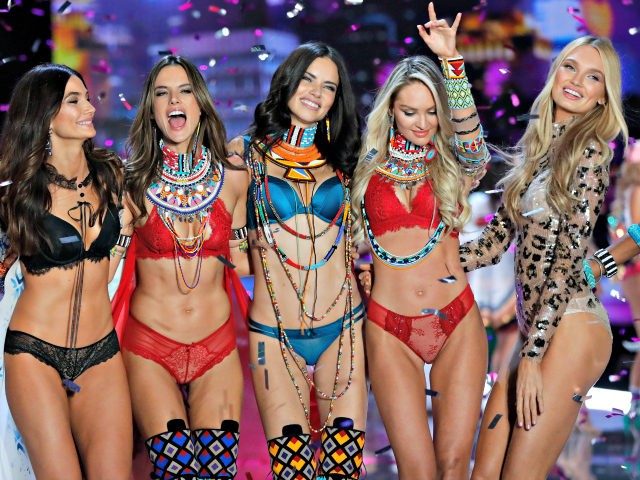
The sexiest lotto winners.
Where the fat acceptance movement loses credibility, though, is when it attempts to place fat as something that warrants a level of attractiveness on par with those who are thin. Some frame it as healthy at any size or basic body positivity, but the intended results are the same. The idea is to make those not blessed with supermodel genes feel and be accepted as attractive.
While I can understand and even appreciate the intentions, idealistic they might be, I can’t overlook one glaring problem with that effort. It’s not so much a matter of attitudes as it is an issue of logistics. Simply put, fat will never be as attractive as thin or otherwise toned bodies. It’s not because of culture, the media, or some nefarious conspiracy by the patriarchy, either. It’s just simple logistics.
To understand, you need only look at what it takes to be fat and compare it to what it takes to be thin. Being fat is relatively easy. You eat lots of sugary, unhealthy food and you don’t get enough exercise to burn off the calories. While genetics will add numerous variations, this process is part of basic human biology.

To be thin and fit like the models in the beach body ads, you need to put in real, strenuous effort. As someone who has made that effort, I can attest to how difficult it is. You have to exercise discipline in changing your eating habits. You have to push yourself to exercise regularly and that exercise is rarely pleasant. At times, it’ll feel downright uncomfortable. However, in time, you will see results.
Those intractable difference also sends other, less obvious messages that influence how attractive someone is. When people see someone who is thin and fit, they don’t just see their body. They see someone who is willing to put in the work to look they way they do. They also see someone who will endure physical and mental strain in order to achieve a goal. Those are all things we want in a potential partner.
Conversely, seeing someone who is fat or unfit sends the message that someone doesn’t care about their health. They either don’t want to put in the effort to look better or don’t care to look better. Then, they expect other people to find them attractive without them doing anything to earn it. Beyond the physical attributes of fat, it’s an attitude that’s hard to make attractive in any context.
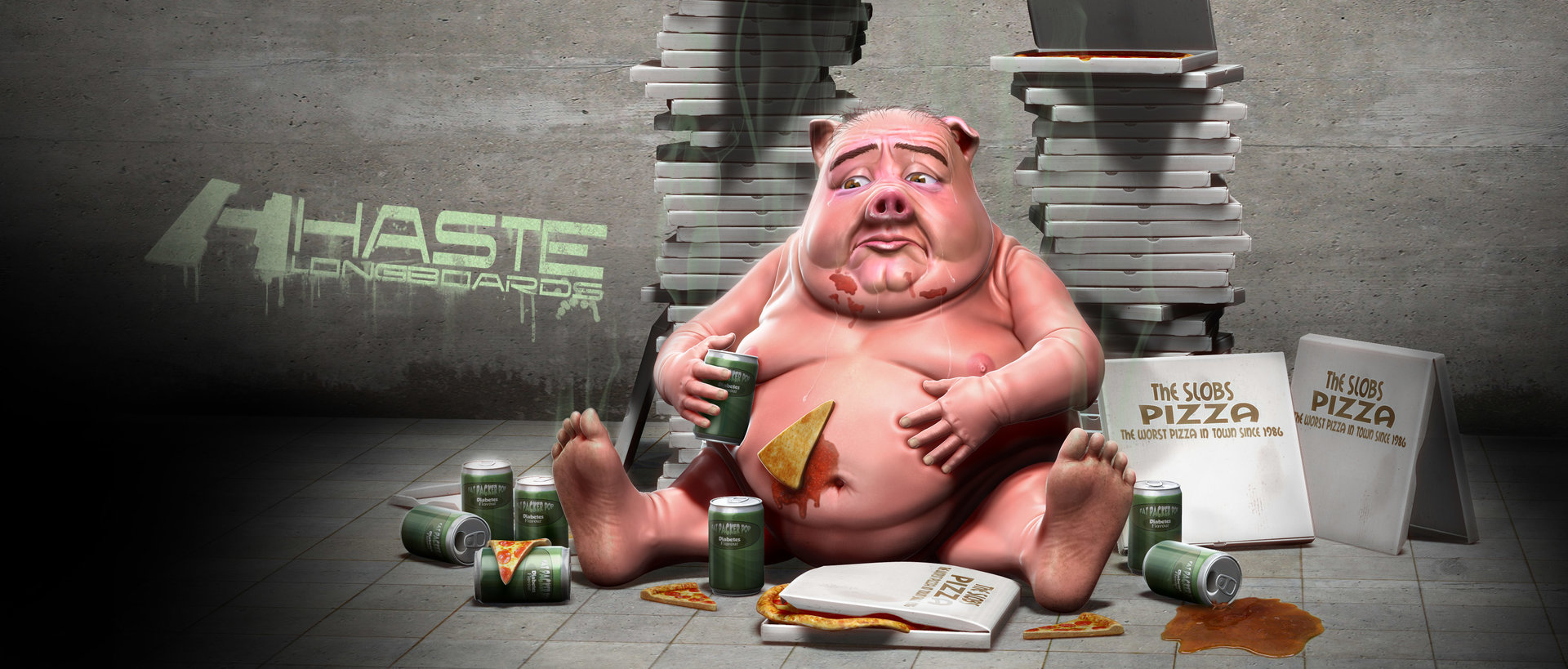
On top of that, obesity does lead to a host of legitimate medical issues that go beyond beauty standards. Unlike other physical traits, it is possible to lose weight and body fat. There is a biological process for it and there’s no need for fad diets, either. There are plenty of success stories about people who put in the work and lost considerable weight.
Again, such efforts are very difficult for certain people due to genetic factors that they cannot control. I know people who work out regularly, but can only seem to lose so much weight. It’s frustrating, but the fact they put in the effort still shows in other ways. They’re healthier, they have more energy, and they feel better about themselves. That makes them more attractive than anyone protesting beach body ads.
To some extent, there needs to be some stigma against activities that are objectively unhealthy. It’s how many societies have managed to reduce smoking rates. Like it or not, being too fat is unhealthy. No matter how many ads someone protests or how many plus-sized models get hired for underwear ads, that’s not going to change.

Beauty standards are subject to all sorts of trends and quirks. They always have been and fat has been part of that for much of human history. No matter how much or how little fat is considered attractive, unhealthy traits that denote unhealthy characteristics will never reflect ideals of beauty.
In the same way being attractive takes effort, being healthy, fit, and desirable to others requires hard work and a measure of discipline. Someone’s ability to achieve that often says more about who they are, as a person, than what they look like in a bikini.








































 Jack Fisher's Official Publishing Blog
Why The Outrage Over Brie Larson And “Captain Marvel” Is Misguided (And Counterproductive)
Celebrities sometimes say dumb things. I doubt most people would contest that. Sometimes, celebrities say things that aren’t dumb, but badly taken out of context. I imagine most people would agree with that too. However, in an era where outrage is a national pastime and social media makes it way too easy to blow things out of proportion, it’s easy for a celebrity to cause controversy for all the wrong reasons.
Brie Larson, whose star is set to rise considerably with the release of “Captain Marvel,” is learning this the hard way and a large consortium of angry people on the internet are intent on making it harder. What should’ve been a culmination of a young woman’s career and a female hero’s ascension to the superhero A-list is now mired in the ugliest kind of gender politics.
The origin of that controversy actually had nothing to do with Ms. Larson’s role on “Captain Marvel.” Back in June 2018, she made some overly political comments while accepting the Crystal Award for Excellence in Film. While celebrities making political statements is nothing new, Ms. Larson’s statement was hardly extreme.
It wasn’t some radical feminist tirade.
It wasn’t some angry rant about the outcome of 2016 Presidential Election.
It wasn’t even some act of elaborate virtue signaling by some smug celebrity.
All Ms. Larson did was advocate for greater diversity among film critics. She didn’t just make such a statement on a whim, either. She did so in response to a study published by the USC Annenberg School for Communication and Journalism that revealed a significant lack of representation in the industry of film criticism.
That’s not an unreasonable concern. The western world is becoming more diverse and the success of movies like “Black Panther” and “Crazy Rich Asians” shows that there’s a market for such diverse tastes. Advocating for greater representation in the field of film criticism makes a lot of sense.
Unfortunately, that’s not the message that some people gleamed from Ms. Larson’s comments. All they heard was that she doesn’t want to hear from white men anymore. They somehow got the impression that Brie Larson resents white men and her movies, including “Captain Marvel,” aren’t made for them. They’re not even welcome in the conversation.
Who these people are and the politics they represent is difficult to discern. I don’t think it’s accurate to call them conservative, liberal, feminist, anti-feminist, leftist, or any other political label. Outrage culture rarely gets that specific, but given the heated politics surrounding movies like “Ghostbusters” and “Star Wars: The Last Jedi,” it’s a frustratingly familiar narrative.
While I can understand some of the outrage surrounding “Ghostbusters” and “Star Wars: The Last Jedi,” in this case I don’t think it’s justified. That’s not just because I’m a big fan of Marvel Comics, superhero movies, and all things Captain Marvel. It’s because the actual substance of Ms. Larson’s words don’t warrant the controversy she has generated.
For specific reference, here’s what she actually said during her speech in June 2018. Read it very slowly and try to understand the context of her statement.
Remember, she said these words after learning how little diversity there was among movie critics. Unlike most people, she was actually in a position to do something about it. Being an Oscar winning actress who was poised to join the Marvel Cinematic Universe, her words carry more weight than most.
Even so, those words were construed as racist and sexist, two exceedingly loaded terms that bring out the worst in people, especially on the internet. Never mind the fact that she made clear in her original speech that she did not hate white men. Never mind the fact that she has since clarified her words. She is still being attacked as some angry radical feminist who hates men, especially those who are white.
It would be one thing if she had said outright that white men should be banned from criticizing certain movies. Many celebrities, including a few still relevant today, have said far worse. However, that’s not what Ms. Larson said. She never, at any point, advocated disparaging white men. She didn’t even say that people who hate her movies are racist and sexist, something the “Star Wars” crowd is painfully familiar with.
Again, all Ms. Larson spoke out against was a lack of diversity among film critics. That part is worth emphasizing because it renders the outrage surrounding her statement as utterly absurd. It also makes the targeted attack on the fan reviews for “Captain Marvel” both asinine and misguided.
Even though the movie isn’t out yet, the movie is being targeted with negative comments on Rotten Tomatoes. Since it has only screened for a handful of audiences, it’s unlikely that any of these people actually saw the movie or were inclined to see it in the first place. Some are even claiming that this has already impacted the projected box office for the movie.
Whether that impact manifests remains to be seen, but it’s worth noting that when “Black Panther” was targeted with similar attacks, it failed miserably. At the moment, early reactions to “Captain Marvel” have been glowing so the chances of these attacks hurting the box office are probably minor at best. If the pre-ticket sales are any indication, the movie will likely turn a hefty profit for Marvel and their Disney overlords.
Even if there were an impact, it would be for all the wrong reasons. It would send the message that there’s a large contingent of people who are willing to work together to tank a movie because of comments a celebrity said that had nothing to do with that movie and weren’t the least bit controversial, when taken in context.
In this case, it was simply twisting someone’s comments to make them sseem like they said things that they never said or even implied. Then, those who bought into that narrative simply use that as an excuse to disparage a movie that they haven’t seen. That’s not just absurd, even by the skewed standards of outrage culture. It sends the worst possible message from those who think they’re protecting their favorite movie genre.
It tells the world that they don’t care what a celebrity actually says. They actively look for an excuse to hate someone who doesn’t completely buy into their preferred status quo. It would be one thing if that status quo was just and reasonable, but that’s not the case here.
All Ms. Larson did was advocate for more diversity among film critics. If that is somehow too extreme, then the problem isn’t with her or celebrities like her. It’s with those determined to hate her. There are a lot of issues in the world of celebrities and movies that warrant outrage, but advocating for more diversity in film criticism isn’t one of them.
I can already hear some people typing angry comments stating that if she had said those same words, but changed the demographic to something other than white men, then it would be an issue. However, the fact remains that this isn’t what she said.
It also doesn’t help that Brie Larson identifies as a feminist and that term has become incredibly loaded in recent years. However, she has never embraced the kind of radical rhetoric that other, less likable celebrities have espoused. Until she does, those determined to identify her and “Captain Marvel” as racist, sexist propaganda are only doing themselves and their politics a disservice.
16 Comments
Filed under Celebrities and Celebrity Culture, extremism, gender issues, Marvel, media issues, men's issues, movies, outrage culture, political correctness, superhero movies
Tagged as anti-feminism, Brie Larson, Brie Larson comments, Captain Marvel, Carol Danvers, celebrities, celebrity controversy, celebrity culture, celebrity scandals, ComicsGate, female superheroes, feminism, gender, gender disparity, gender inequality, gender politics, internet outrage, internet trolls, Marvel, Marvel Cinematic Universe, Marvel Comics, Men's Rights Activists, movie criticism, movie critics, movies, MRA, outrage, outrage culture, political correctness, politics, Racism, Rotten Tomatoes, Superheroes, trolls