
Category Archives: human nature

Selling (And Exploiting) Human Enhancement: An Ominous Lesson From “Superior Iron Man”

tumblr_static_tumblr_static_251b2rz5uxz4s4sssw0skg04c_640

How much would you be willing to pay for perfect health, perfect beauty, and a greater capacity to enjoy life as you see fit? This is not a rhetorical question. I would even argue that it’s an increasingly relevant question. In the coming years, answering it might even become more urgent.

I’ve talked about the prospects of human enhancement through emerging technology before. From its impact on our concept of beauty to how our society will function, there are many impacts to consider. Some of those impacts are already manifesting before our eyes. Just last year, the first genetically modified babies were born in China. Like it or not, this is happening.

It’s impossible to overstate the benefits, risks, and upheavals that human enhancement will have on our species and our world. Nobody knows for sure what’s going to happen as this technology matures or how societies, economies, and governments will react to it. Even so, it’s worth contemplating. It’s even worth imagining elaborate scenarios in fictional worlds.

While plenty of noteworthy stories have imagined such scenarios, some more dystopian than others, there’s one in particular I’d like to single out. It’s not entirely dystopian, but it does offer some distressing lessons about the larger economics of human enhancement. It also helps that those lessons come through a forgotten, but criminally underrated Iron Man comic.

Given the rapid rise of Iron Man’s star power over the past decade, his character is uniquely qualified to explore these difficult questions surrounding technology and how we use it. He is, at his core, a visionary who uses technology to solve problems, save lives, and occasionally fight invading aliens. In the series, “Superior Iron Man,” he takes that vision several steps further and cross many lines along the way.

While there are some convoluted circumstances surrounding this series, the ideas it explores are profound, even by the standards of superhero comics. You don’t need to know the specifics of those circumstances. They involve forces like magic and inversion spells, which are far too complicated to explain to those who haven’t followed Marvel comics for more than two decades.

The only detail anyone needs to know about “Superior Iron Man” is that the Tony Stark in this story is not the same lovable character that helped make Robert Downy Jr. one of the most lovable stars in Hollywood. This version of Tony is less bound by concepts of heroism, selflessness, and sobriety. That’s not to say he’s evil, but he’s definitely no hero.

Within this ethically bankrupt state, Tony embarks on a new initiative that’s as selfish as it is lucrative. It revolves around Extremis, an exotic cocktail of nanotechnology and biotechnology that effectively rewrites the blueprint of the entire human body into something better, stronger, and more robust. In essence, it is the ultimate tool for human enhancement.

While the initial version of Extremis was lethal to most people who used it, Tony creates a more commercialized version in “Superior Iron Man” that gives everyone a chance to enjoy its benefits. He calls it Extremis 3.0 and people can access it through a simple smartphone app. With it, people can achieve what Tony describes as physical perfection.

Everyone can be perfectly healthy.

Everyone can be young and beautiful.

Everyone can be functionally immortal.

It sounds like a miracle drug and by every measure, it is. This isn’t some Dr. Oz wannabe pitching vitamins that do nothing other than give you false hope. This technology actually works. With it, Tony gives the entire city of San Francisco a chance to experience the fruits of human enhancement.

Understandably, once people get a taste of what Extremis 3.0 has to offer, they love it. They also take full advantage of it. At one point in the story, Pepper Potts says it’s turning the streets of San Francisco into a non-stop parade of debauchery and self-indulgence. Tony does not see this as a bad thing. If anything, it perfectly complements his plans and his renewed appetite for self-indulgence.

This is where “Superior Iron Man” attempts to answer that question about putting a price on physical perfection. Writer Tom Taylor, alongside artist Yildiray Çinar, doesn’t hide from the disturbing parts of that answer. By the end of the first issue, Tony puts a literal price on that perfection. Needless to say, it causes plenty of conflict and it escalates quickly.

When he initially released Extremis 3.0 onto San Francisco, he gives ordinary people a taste of what it’s like to be as fit as Captain America, as beautiful as Emma Frost, and as physically endowed as Thor. It’s not a drug that just attempts to match that feeling. It physically changes their bodies and their capacity for using them. That taste, however, was just a free sample. To keep enjoying it, they must pay $99 a day.

It’s crude trick right out of the playbook of subscription apps. People get a free trial period that’s just long enough to get them hooked. Then, before they even realize they have to pay anything, they get hit with a paywall. It’s a cruel bait-and-switch, but this isn’t just another streaming video service. This is physical perfection and unlimited self-indulgence. Is $99 a day really that unreasonable?

It certainly rubs plenty of people the wrong way, including many of Tony’s long-time friends and allies. Both Daredevil and Pepper Potts turn against him for such devious tactic. It also has some noticeable effects on the people who use it. By the end of the first issue, a stark class divide emerges between those who can afford Extremis 3.0 and those who can’t.

Naturally, it causes crime and conflict among the residents of San Francisco. Tony, now both feared and beloved by these people, takes it upon himself to manage it. He gains power, wealth, status, and an endless supply of eager party guests for whenever he seeks to indulge. It’s a perfect cocktail of recklessness and irresponsibility.

Without spoiling the rest of the story, which ended too soon, I think it’s worth taking a step back and looking at the bigger picture that “Superior Iron Man” presented. If you take away the iconic characters and the superhero themes, you get a story about a selfish business tycoon who has sole possession of the ultimate biotech product.

The goal isn’t to heal the sick, ease suffering, or evolve the human species. The goal is simply to make a lot of money, feed an inflated ego, and indulge in every conceivable vice without consequences. It’s a worst-case scenario for liberals and conservatives, alike. At the same time, it makes a compelling case that our current system can’t handle the impacts of large-scale human enhancement.

That doesn’t mean it can’t succeed in our current system. The size of the current biotech industry is already measured in the hundreds of billions. Overpriced drugs are nothing new, either. Just this past year, the FDA approved a drug called Zolgensma, which costs $425,000 a year for five years to treat a rare genetic disorder called spinal muscular atrophy.

By comparison, Extremis 3.0 is a bargain with far greater value. Even at $99 a day, the yearly cost of enjoying that physical perfection amounts to around $36,500 a year. That still takes up a good chunk of the average income for most Americans, but considering all the benefits of having a perfect body, is it still a bargain?

For anyone who has overpaid for inflated medical expenses, I suspect they would gladly pay that high price for Extremis 3.0. Tony Stark banked on that in “Superior Iron Man” and he was right. People did pay and it was very lucrative for him. The population of the San Francisco Bay Area in which he unleashed Extremis 3.0 is around 4.6 million. At $99 a day, that’s a potential annual revenue of $167 billion.

In terms of business ranking, that would put Tony’s venture in the top 20 in terms of largest companies by revenue. If he were to unleash Extremis on the entire United States, the potential annual revenue would be near $11.8 trillion. That’s a little more than half of the entire US economy.

Imagine one company, let alone one person, having that much money and influence over a population. Tony was already a billionaire before “Superior Iron Man,” but Extremis 3.0 rewarded him with more than just money. Tony, being the sole provider, held a great deal of power and influence over San Francisco. As is often the case in superhero stories, that power goes to his head.

That story plays out in the real world just as often. In some cases, it brings out the worst in people. For a product like Extremis 3.0, which provides human enhancement into a simple commercial package that anyone can access through an app, the potential for abuse is much worse.

Beyond the greed it would inspire and the recklessness it fosters, it would also widen and solidify a gap in society that might be impossible to close. The wealth gap is in the non-superhero world is already egregious. Adding something like Extremis 3.0 to the mix would only make it immeasurably worse.

More than a few people has expressed concern about the prospects of such an enormous societal divide. “Superior Iron Man” showed just how bad it could get and how quickly it could escalate. While the series only managed to explore this conflict to a point before it got canceled, Tom Taylor did enough to get a powerful point across.

In a world where human enhancement is real and commercially available, how do we go about distributing it among a population? Should we put a price on it? How high should that price be? Who should be in control of it?

Worst case scenario.

Superior Iron Man” never got a chance to explore the answers, but these are questions that will become increasingly relevant as advances in biotechnology accelerate. We may not be close to having a product like Extremis 3.0 and it’s uncertain whether we’ll even develop something like it in the next few decades.

Even if we do, “Superior Iron Man” made one thing clear. We, as a species and a society, are not ready for it.

1 Comment

Filed under biotechnology, futurism, health, human nature, Neuralink, Sexy Future, superhero comics

Jack Fisher’s Guide To (Awesome) Gift Giving

6394062d5dc2de5fd64749.40574617_

It’s official now. Thanksgiving is over. The leftovers are mostly gone. That means for the next few weeks, the holiday spirit will revolve entirely around Christmas and Christmas-like festivities. There’s no more complaining about seeing holiday decorations too early. At this point, the time is right to get into the swing of things.

Whether you celebrate it or not, there’s no avoiding it. The season is upon us. We see it in commercials, holiday specials, holiday-themed food, and holiday music. By now, we’ve all probably heard Mariah Carey’s “All I Want For Christmas Is You” at least a dozen times on the radio.

Without a doubt, Christmas is my favorite time of year. It always has been. As a kid, my family always did so many wonderful things around Christmas. Some of my fondest childhood memories took place around Christmas. As an adult, I found entirely new ways to make it memorable. I’ve every intention of keeping that tradition, especially once I find the love of my life.

Chief among those traditions is my approach to gift giving. Talk to anyone in my family and they’ll tell you the same thing. When it comes to giving Christmas gifts, I go above and beyond. I’m not the kind of guy who will be cheap or thoughtless. I’m also not the kind of guy who puts in minimal effort, stuffing cheap crap into bags and slapping tags on it. I am willing to put extra time and money into holiday gift giving.

It doesn’t matter if I’m buying for my parents, my siblings, my friends, or my nieces and nephews, who are all still kids. I make it a point to give them gifts that are special, memorable, and meaningful. From what I get into how I wrap them, I make sure every gift I give on the holidays conveys a sense of love and sincerity.

For that reason, and in hopes of inspiring others to go the extra mile this Christmas, I’d like to share my unofficial guide, of sorts, to gift giving on the holidays. It’s not a science, but it’s not some wild crap shoot either. You can give awesome gifts without being rich, psychic, or possessed by the spirit of Santa Claus.

These are simple tips and tricks that I’ve learned from years of successful gift giving. I sincerely hope they help enhance your holiday experience, both with respect to giving gifts and inspiring the right spirit for this time of year.


Tip #1: Be Proactive And Listen Along The Way

This may seem too obvious, but I’ll say it anyways. When it comes to Christmas shopping, you don’t want to procrastinate. I know that’s easier said than done. I know there’s a reason why people feel inclined to procrastinate. Given everything that goes on during the holidays, people have even more excuses.

However, this is one effort for which you really want to be proactive. That means planning or at least contemplating your gift giving schedule around Halloween. It may sound too early, but trust me. It pays off.

This past year, I began browsing Amazon, Ebay, and all the usual retail outlets around mid-October, putting together lists of potential gifts for loved ones. I didn’t buy anything at that point. The idea wasn’t to buy it all at once. That’s actually not a good strategy. The best recourse, in my experience, is to have a long list of possible gifts. It’s just a matter of selecting the right gift for the right person.

You won’t always know that in mid-October. You might not even know that until mid-December. That’s where the listening part comes in. As early as Labor Day, start listening to your friends and family. Get a sense for what they want or need. You don’t have to be obvious. A little tact goes a long way.

Then, once Thanksgiving comes around and every major outlet starts throwing big sales, you already have a list of gifts to work with. Take advantage of those sales and you’ll even save money in the process. There is literally no downside to being proactive during the holidays, which is why it’s probably the most important tip I can give for the holidays.


Tip #2: Be Transparent With Loved Ones For Their Gifts (And Yours)

This tactic is a bit more subtle, but it pays off in the grand scheme of things. Sometimes, in order to glean what your loved ones want for Christmas, you have to start by letting them know what you want. Most of my friends and relatives agree. I’m very easy to shop for on the holidays.

That’s not just because I maintain an Amazon Wish List and that most of my requests involve comics, video games, and accessories that rarely cost more than $50. I’m hope and honest about what I want them to get me. I’ll go so far as to text them multiple links to items I want. When you’re that easy to shop for, people are more willing to return the favor.

This has helped a great deal with loved ones who rarely give me any clues about what to get them. Some are just difficult to shop for because they claim to not want anything. Some are genuinely sincere about that. However, they know I’m still getting them something. It can either be just some random thing I guess on or something they can help make meaningful.

Sometimes, it takes a few years to get that sort of rapport with a loved one, but it’s worth doing. Trust me. When you find that right gift for that someone and see their reaction, it makes the holidays that much more special.


Tip #3: Find Meaningful Gifts (Which Need Not Be Expensive)

This is another tip that seems logical, but is easier said than done. That whole notion that it’s the thought that counts isn’t completely wrong, but it still has some merit. Meaningful gifts are the best kind of gifts to get someone. It can have both sentimental and material value. If you really care about someone, you want this gift to send a message. Giving it meaning always helps.

Years ago, a friend of mine got his girlfriend an iPod mini. It was simple. It didn’t seem that meaningful at first. Then, I found out he engraved a quote from his girlfriend’s mother on the back. That quote made that gift more meaningful than anything else he could’ve given her. Needless to say, that was a memorable Christmas and my friend is still with that same woman.

Giving a gift greater meaning also doesn’t mean buying something expensive. Some of the most meaningful gifts I’ve ever given cost less than $20, but they were extremely personal and they sent a message to the person I gave it to. They got that message loud and clear. Our Christmas was better because of it. You can put a price on a lot of things during the holidays, but you can’t put a dollar value on genuine sentiment.


Tip #4: Know When (And How) A Gift Card Is Appropriate

This is a somewhat controversial topic among gift-giving circles. There’s this notion that if you really care about someone, you never give them a gift card. Gift cards are great for birthdays or for people you can’t always see very often, but there’s a taboo with respect to giving them as a Christmas gift. I don’t entirely agree with that.

In general, I don’t give gift cards. I treat it as a last resort, but it’s still an option. I just try to make it more than just a socking stuffer. You can give greater meaning to a gift card. One year, I included a gift card with a Christmas card that has a poem I wrote in it. That poem helped give greater value to the gift card. It made the gesture personal. It showed that I cared and it got the point across.

In the right circumstances, gift cards can totally work. When someone can’t be there for the holidays or is still new to the family, as is often the case with in laws and extended family, a gift card can go a long way towards establishing a rapport. I find that it’s a useful starting point with someone, but it shouldn’t be the endpoint.

Personally, I hope the taboo surrounding gift cards fades in the coming years. With more and more shopping being done online, I think gift cards are a lot more practical today than they were when I was a kid. The rules surrounding them may change, but for now, a gift card should remain a last resort when shopping for a loved one.


Tip #5: Make A List (And Check It More Than Twice)

That old adage about Santa having a list and checking it twice isn’t just a memorable song lyric. It’s a very practical tool for keeping track of your holiday gift giving. I maintain a list on my phone that has everyone I buy a gift for, as well as some ideas on what to get them. I constantly update that list over the course of the year and I let people know when they’re on it.

When the time comes to start buying, I use that list to track what I buy, who I buy it for, and how they react to it. This list, which can get a little bloated at times, acts as both a reference and a guide onto how I perform every Christmas. Given the size of my family and the amount of gifts I buy, it helps to keep track of who gets what. It also helps to identify a certain trend in terms of what certain loved ones like.

Over the years, those trends have helped me refine my gift giving skills for certain people. I learn their tastes. I learn what makes a gift meaningful to them. Most importantly, I keep track of it. Don’t expect to remember all these little quirks over the course of a year.

Keep a list. Check it constantly, especially around mid-November. It’ll ensure you know what to look for and who to get it for when the time comes. It also acts as a way of noting ideas that come to you for certain people. On more than one occasion, I’ll randomly see something online or in a store that I know someone would love for Christmas. I make a note of it and it pays off in the long run.


I hope this helps everyone in their gift giving efforts this season. As I write this, I’m proud to say my shopping is done. I have my presents ready and wrapped for my loved ones. I look forward to seeing their reactions on Christmas morning. I hope everyone else can enjoy a similar holiday experience.


2 Comments

Filed under human nature, Jack Fisher's Insights, Marriage and Relationships

Getting (Back) Into Shape After Thanksgiving

2012_06_18_gettingintoshapeforsummer

By now, with the Thanksgiving festivities over and the family gatherings complete, it’s finally sinking in. You realize just how much you ate and how much you’ve probably set back that New Years Resolution you made 11 months ago. If your Thanksgiving was as successful as mine, then it’s likely you feel as anxious as I do about what we just put our bodies through.

That’s not to say it was a bad thing. Thanksgiving is a holiday. You’re supposed to overeat, over-indulge, and forget every sound nutrition advice you ever got from your doctor. That’s part of what makes it special. At some point, however, you have to let go of the holiday spirit and get back to more responsible health habits.

It can be frustrating, tedious, and strenuous on so many levels. It’s still worth doing. Take it from someone who eats like a pig on the holidays and was out of shape for the first half of his life. You do feel a difference when you make an effort to get back into shape after Thanksgiving.

To that end, I’d like to share a few tips, along with some personal insights. Over the past few years, I’ve developed and refined my own method for getting back into healthier habits after a successful Thanksgiving. I’ve even developed my own unique workout routine.

Now, I’m not going to claim that this is one of those gimmicky fitness regiments that you see in infomercials and fitness magazines full of Photoshopped fitness models. What works for one person isn’t going to work for everyone. Everybody’s body is different. Everybody reacts to holiday gorging and exercise differently. There’s no one-size-fits-all approach to getting into shape, at least for now.

That said, there are many health benefits to exercise and staying in shape, especially after the holidays. It goes beyond just looking better naked and looking sexier at the beach in the summer. In some ways, the exercise you do after the holidays is even more rewarding and not just because you have more calories to burn.

You work hard on yourself to ensure you can indulge during the holidays. Like anything worth achieving, putting in the effort makes the end result more satisfying. I’ve certainly come to appreciate that effort and in the interest of helping those still digesting that extra slice of cheesecake, here is my personal process for getting into shape after Thanksgiving.


Step 1: Refocused Diet (That Makes Me Less Hungry)

Make no mistake. Diet is the hardest part of staying in shape.

There’s a popular saying that six-pack abs are made in the kitchen. That’s not just an adage. It’s true. How you eat is a major factor in how you look, feel, and conduct yourself in any effort related to your health. I know Thanksgiving tends to throw a wrench in any diet you might have maintained all year. I say that as someone who ate no fewer than three slices of cheesecake on Thanksgiving.

In a sense, Thanksgiving is the ultimate cheat day and one you should take advantage of. When that day is over, though, the key is less about eating less and more about eating right. What I mean by that is you should focus not on just eating fewer calories. The goal should be to feel less hungry.

That can be done without sheer will-power. It’s a fact that certain foods make you less hungry. Those foods are often high in fiber and protein, including things like eggs, nuts, and whole wheat bread. You don’t have to eat much of those to feel full. Most of my post-Thanksgiving meals consist of chicken, mixed vegetables, and eggs. Much of it comes from frozen meals which aren’t that expensive.

On top of that, I ditch soda and drink mainly water or black coffee. That helps keep sugar intake to a minimum. While it’s difficult to cut sugar out completely, especially after enjoying so many holiday desserts, it is important to limit it. Whether it’s your coffee or your snacks, it’s the sugar that’ll make you feel hungry and keep you from feeling energized.

I usually dedicate the first two weeks after Thanksgiving to sticking to my diet. I make sure most of my meals involve chicken, eggs, and vegetables. I do keep a cheat day for which I will indulge a little, but I try to usually make those first two weeks the most important. Get through that and you’ll be back into less festive eating habits, at least until Christmas.


Step 2: My Workout Routine

This part is somewhat easier for me because I love working out. I know that’s not a feeling everyone has, especially if they’ve never been big on going to the gym. I understand that. I too used to resent going to the gym. When I started taking my health more seriously, it became part of my routine. Now, I get upset when I can’t go.

My routine isn’t on par with an Olympic athlete or body builder. I also wouldn’t call it easy, either. You will get winded and sore from my workout, but only to a point. It will get the job done, though. I know this because it has helped keep my weight stable, even after holidays. I can also see my abs, biceps, and leg muscles too, which is a nice touch.

My workout isn’t all about going to the gym, either. In fact, I usually go to a gym at least twice a week. That’s as much as I can squeeze in. On days I don’t go, I still work out. It’s just usually involves something different. For that reason, I’ll separate my workout from my gym days from my non-gym days. With that in mind, here’s my routine.

On my gym day, I start by running at least 3.5 miles on a treadmill or outside, if the weather permits it.

I then do a series of weight training with either machines or free weights that include 4 sets of 12 reps of the following:

  • Bicep curls
  • Tricep curls
  • Butterfly chest
  • Shoulder pull-downs/extensions
  • Ab crunches
  • Leg lifts
  • Leg press

In general, this whole routine takes a little over an hour. I’ll also mix it up at times, either by doing the weight training first and then doing cardio at the end. I’ll also sometimes exchange the treadmill for an elliptical, which is easier on my feet and gives a better workout for my legs. If you have knee or foot problems, I highly recommend using an elliptical.

For days when I don’t go to the gym or can’t make it, I try to go running. Most of the time, it’s around the block. I try to run for at least 30 minutes, sometimes longer. In addition, I’ll also do 100 sit-ups, followed by 100 squats in my bedroom. This keeps those muscles strong and gets my heart rate going to burn extra calories.

I also reserve one day of the week for rest. Usually, it’s Wednesday. That’s not just a cheat day, either. It’s critical that you rest your body, even if you’re doing a modest workout routine. I’ve tried going 7 days a week a few times. I often end up hurting myself or making myself too sore to work out for extended periods. Don’t learn that lesson the hard way. Leave one day for rest. Your body will thank you.


Step 3: Staying Focused (Until Christmas)

I know it’s easy to encourage diet and exercise as a means to get back into shape, especially after a holiday like Thanksgiving. Most people can even make the effort for the first couple days after Thanksgiving, just like they do in the first few days after New Year’s when they promise themselves they’ll get into shape.

In the same way people tend to break their New Year’s Resolution, they’ll often break their post-Thanksgiving resolution and it doesn’t help that there’s another major holiday right afterwards. Christmas, with all its sugar cookies and candy canes, adds plenty of temptation to the mix and it’s not easy to resist. I don’t deny that for a second.

That’s why the most critical aspect of getting into shape after Thanksgiving involves focus. By that, I don’t just mean keeping a schedule. One reason why it’s so easy to slip back into unhealthy habits is because the holidays can be overwhelming. You find yourself wanting to just stop, take it easy, and let everything slow down.

However, the holidays don’t slow down, especially as Christmas gets closer. If anything, it makes things even more stressful. When you’re stressed out, you’re less inclined to exercise. You’re also more inclined to reach for those sugary holiday treats. It can quickly become a self-reinforcing cycle that’ll leave you even less healthy than you were after Thanksgiving.

The best way to combat this is to maintain focus. One of the benefits of having other holidays after Thanksgiving is that it offers plenty of distractions. When you’re distracted, you’re less likely to eat and slack off. Use that to your advantage.

Sometimes, it means going shopping or just hanging out with friends more often. It also can involve things like preparing holiday decorations and preparing gift lists. It may not always be productive, but if it keeps you from slipping into that ugly self-reinforcing cycle, then it has merit.


I hope these tips help with everyone still digesting their Thanksgiving treats. There’s a time and a place for indulgence and the holidays are definitely one of them. However, it’s for that reason that we make the time in between as productive and healthy as possible. As a result, it helps make the holidays feel more special in the end.

Leave a comment

Filed under health, human nature, Jack Fisher's Insights, psychology

Answering (And Understanding) Where The “Good” Men Have Gone

shutterstock_249465919

Human beings are social creatures. We’re biologically wired to pursue social and emotional bonds. It’s one of the most fundamental traits for being human. Being a fan of romance, I certainly appreciate it. For that same reason, though, I think it’s telling when people encounter barriers in seeking those bonds.

In recent years, one particular question has been asked any number of ways. It’s often asked in many different contexts, which in turn inspires many different answers. The implications are still the same.

Where have all the “good” men gone?

Now, I put “good” in quotation marks for a reason. I hope that reason becomes apparent soon enough because adding that qualifier to the question frames it as a blanket statement about an entire gender. As a man, who sees himself as “good” by most standards, I feel I have a personal stake in addressing this question. However, I suspect the answers I provide won’t go over well with certain women and even a few men.

Before I answer, it’s important to add a specific context to what makes a man “good.” When the question is often asked, it’s often done from the perspective of women seeking men for marriage. We no longer live in an era where women have their spouses chosen for them or must seek marriage as a means of survival. Despite what some regressive individuals may say, I believe that’s an objectively good thing.

The complications arise when we start to establish the criteria of what makes a “good” man worthy of marriage. Most people, regardless of gender, understand there’s a difference between the person you hook up with and the one you marry. Ideally, this is a person you want to share your life with, for better or for worse. This is someone you genuinely love and go out of your way for.

The primary reason why this question is being asked, namely by women seeking a male spouse, is because they’re having an increasingly difficult time finding someone who meets that criteria. It shows in the data. According to Pew Research, about half of the adult population in America is married, which marks significant decline compared to what it was 50 years ago.

There are many theories as to why this is occurring, some more offensively absurd than others. Even the not-so-absurd theories have become mired in gender politics, which has a tendency to denigrate everyone in the grand scheme of things. I certainly have mine and I don’t think the answers are simple. Every person is different. People are complicated, in general, and so are the societies they live in.

However, this question about “good” men frames the issue a problem ascribed to men. It implies that the issue has nothing to do with a the overall desire to seek long-term romantic bonds. Like I said before, humans are emotional creatures wired to seek romantic bonds. The problem is that the men worthy of such bonds just aren’t there anymore. That’s why women are asking the question to begin with.

As a man, who hopes to one day find someone to marry and love with all my heart, I can offer my take on the answer. Simply put, those good men exist. They’re just not where you’re looking to find them. Even if you are, you might not even realize that those men are good because you don’t give them a chance.

Now, I understand that answer is basic and simplistic. It’s the sentiment of one person who just happens to contemplate romance than most straight men are likely to admit. Everyone’s situation is different, but there is a bigger forest to see and my opinion is only one of those trees. To see that forest, it’s necessary to understand the question better.

Thankfully, there has been research done on this topic. According to a study done in the Journal of Marriage and Family, a major factor driving this question could be a combination of demographics and math. To understand how, this is how they compiled the data.

Focusing their analyses on single heterosexual women, the researchers used data from the American Community Survey (2008-2012; 2013-2017) to predict the likely characteristics of these women’s husbands if they had husbands and then compared those characteristics to what’s actually available in these single women’s dating pool. More specifically, the researchers generated “synthetic spouses” for the single women in their sample by first matching them with demographically similar women (e.g., same race, education, military status, income) who happened to be married. The “synthetic spouses” were designed to reflect the characteristics of the husbands of the similar-married women. Thus, assuming women of similar demographics are looking for similar characteristics in their partners, this method offers a starting point for documenting the characteristics single women might be looking for in a partner.

The long and short of it is simple. The women in the study had criteria for the kind of man they want to marry. However, when that criteria was applied to the male population, there was a significant disparity. Over half the male population was eliminated on the basis of income alone. Essentially, the supply of men who meet this standard for marriage is not sufficient to meet demand.

That’s not to say that it’s the fault of women for having standards that are too high, although I know some have made that argument. While I agree that there are some women who make wholly unreasonable expectations of men, I think they’re the minority. I would argue those changing standards have less to do with gender politics and more to do social and economic factors.

Both women and men are able to be more independent today than they were 50 to 100 years ago. A basic consequence of independence is that you can afford to elevate your standards. When you have the money, time, and resources, you’re less likely to settle for less. It’s the same reason why you willingly pay extra for a better phone or faster internet if you have the means.

A much bigger factor, in my opinion, has to do with the economics and imbalances in marriage. Over the past several decades, the wealth gap has grown and the ability to make a comfortable living, which the women in the study prioritize, is getting considerably difficult. For a man, especially if he doesn’t have a college degree, it’s getting harder and harder to meet those criteria.

At the same time, the investment in relationships has only grown. It’s no longer enough to be a steady, dependable partner. Along with our newfound independence, men and women alike seek something greater from their spouse. That something often requires money, time, and resources. Between student loan debt and the rising cost of living, those assets have become increasingly scarce.

On top of that, the price of failure has gone up considerably as well. While both parties suffer significant loss when a relationship or marriage fails, men tend to take a bigger hit from a material standpoint. Between alimony laws and child custody, men stand to lose a lot if they don’t measure up to the woman’s ideals of a good spouse.

None of this even attempts to factor in the effects of other trends in gender politics, such as the anti-harassment movement. The criteria for a “good” man doesn’t even matter if it becomes overly difficult to be intimate with someone without fear of being accused of something. Even without such complications, the underlying question still evokes troubling answers.

Those answers still aren’t complete. There are still going to be women out there who cannot find a suitable partner for reasons beyond her control. There will also be genuinely good men out there who struggle just as much to find a partner of their own. As a romantic, I believe love does inspire people to make these connections, even when we insist on making it more difficult.

Leave a comment

Filed under gender issues, human nature, Marriage and Relationships, men's issues, psychology, romance, sex in society, sexuality, women's issues

How The Internet Has Weakened (But Not Destroyed) Organized Religion

pic

The current state of organized religion is ripe with conflict and mixed messages. On one hand, religious affiliation has significantly declined over the past 30 years. According to a 2018 survey from Eastern Illinois University, around 23 percent of the US population identifies as having “no religion.” For comparison, that number was only 5 percent in 1972.

In other industrialized countries, the decline is even more pronounced. Throughout Europe, more and more people are drifting away from organized religion. That’s especially true of young people, who are one of the least religious demographics in modern history. In terms of the bigger picture, organized religion is facing a generational time bomb that’s just starting to go off.

At the same time, however, religion still exercises an absurd amount of political power. Religious groups, particularly those who align themselves with conservative politics, have enormous influence. Its platform is tightly woven with that of a major political party. Many people in positions of power identify as religious. Many more rely on a religious base to get elected.

It’s a strange trend that seems counter-intuitive. How can something be weakening due to declining adherents, but still wield so much power? In an age where the egregious crimes of religious institutions have been exposed and more people are educated on the many absurdities of various holy texts, it feels as though organized religion should be on its death bed.

While there are many factors behind this situation, I believe that one particular factor is more influential than most. It also happens to be the same factor that has done the most to weaken religion while helping to sustain its political and social influence. It’s a force that has already radically changed everyone’s life, regardless of their affiliation.

That force is the internet and its impact on religion cannot be overstated.

I’m old enough to remember what it was like to talk about religion in the pre-internet days. You listened to your parents, relatives, priests, mullahs, rabbis, and monks. They told you the history and tenants of their religion. You might ask questions. You might not understand the philosophy behind it. No matter how curious or skeptical you were, you could only do so much to question it.

Most of the time, you just had to trust your elders that they knew what they were talking about. You also had to trust that they wouldn’t lie to you, which is often a risky bet. If you were really motivated, you might go to a library and do some research. Even then, you’d have an uphill battle a head of you, given the many complexities behind religion and why people believe in it.

These days, it’s exceedingly simple to fact check an absurd religious claim. If someone were to claim that a 900-year-old man built a 300-foot wooden boat that housed two of every kind of animal for 40 days during a global flood, you wouldn’t have to spend years in college to learn why that’s absurd. You could just pull out your phone, do a few simple searches, and find out why this claim is completely wrong.

Even a kid who has only taken a basic science class can look up any of the stories their priest, mullah, rabbi, or monk tell them to find out whether they’re based on real history or embellished folklore. Religious institutions, parents, and schools can fight to control the information their young people receive. Many organizations do engage in activities that are outright indoctrination.

However, as demographic trends show, the effectiveness of those efforts only go so far. The information about the absurdities, inconsistencies, lies, and agendas is still out there. It’s widely available to anyone who can access a smartphone or a computer. There’s only so much anyone can do to prevent someone from accessing that information.

As a result, organized religion will never have the same sway it once did in centuries past. No matter how much conservative reactionaries complain, it’s impossible to go back. The combination of modern education and accessible information ensures that major religious institutions will never wield the power they once did.

Given the complexities of modern societies and the geopolitics surrounding it, it’s just not practical for a centralized religious institution to exist. The Vatican can still make statements about morality, ethics, and spiritual matters. It just has no means of enforcing them, as evidenced by how little typical Catholics follow their edicts.

Even without this power, the same internet that has permanently weakened religion is also the same thing that sustains some of its considerable influence. In fact, the internet might act as a catalyst that can turn certain individuals from nominal adherents to ardent zealots.

Think back to the young people sitting in churches, mosques, synagogues, or temples. While some might casually look up the religious claims out of curiosities, others might go out of their way to find information that confirms these claims. Even if they’re factually wrong, they’ll look for any bit of information that they can twist to make it seem true and cling to it.

This is why creationism still persists, despite extensive resources that thoroughly debunk it. If someone is really determined to find information that affirms their beliefs, they’ll find it on the internet the same way people find cat videos and knife-wielding crabs. There will even be unscrupulous people to exploit them, including those who are convicted felons.

Like it or not, there are people who sincerely want to believe their preferred religion and will cling to anything that strengthens that belief. Given the open nature of the internet, shaped by the whims of users rather than objective truth, it’s distressingly easy for someone to customize what kind of information they receive.

If someone only wants news and memes about how their religion is true while everyone else is doomed to eternal torture in Hell, then that’s what they’ll get. They can get their news and information from exceedingly bias sources while brushing off others as fake news. There’s nothing from stopping anyone from using the internet in such a manner.
We already see how this has divided people along political lines in recent years. I would argue that this has been going on with religion for even longer. The rise of the religious right and the prevalence of religious media has done plenty to tighten their grasp on ardent believers. While less people may identify as religious, those who do tend to be more dogmatic about it.

Since those kinds of believers can be mobilized and pandered to, they’re a more unified political force. As such, appealing to them means gaining power. That power may be tenuous and limited, but it’s still viable power that plenty of politicians exploit, sometimes to an egregious extent.

In a sense, the internet has made it easy for both the extreme zealots and the inherently skeptical. Those who might have identified as religious out of tradition in the past are more comfortable identifying themselves as non-religious today. It also helps there’s not as much stigma to being a non-believer as there used to be.

At the same time, those who were devout before can become outright zealots if they consume enough extreme content. In fact, their declining numbers in the general population might give them more reasons to become zealous. History has shown that small bands of religious zealots can do a lot of damage. The internet might hinder their ability to gain adherents, but it might also make them more desperate.

It’s a scary possibility, but one I tend to believe is remote. While I might not be a fan of organized religion, I still have many friends and family members who are religious and wonderful human beings. The internet hasn’t changed that. In the long run, I believe that basic humanity that binds us all will win out in the long run. The internet won’t always help, but it’s certainly a valuable tool.

2 Comments

Filed under extremism, human nature, philosophy, politics, religion

How Jar Jar Binks Exposed The Flaws (And Dangers) Of Social Media

maxresdefault-1

Every now and then, something extraordinary happens that reveals how flawed our current system is and how far behind we are in terms of fixing it. Sometimes, it’s tragic. Sometimes, it’s frustrating. In rare cases, it’s hilarious, albeit in a distressing way. Personally, I find those cases most revealing.

Recently, there was one notable instance that included one of the most reviled fictional characters of the past 20 years. No, I’m not talking about King Joffrey or Ramsay Bolton. I’m talking about Jar Jar Binks. If you’re a “Star Wars” fan, then that name likely inspires all sorts of anger, dread, and distress.

Jar Jar is both a joke and a cautionary tale. Aside from proving that George Lucas has no business directing another “Star Wars,” he demonstrates just how wrong an attempt at comedic relief can go. While he wasn’t the only problem with the prequels, he augmented the flaws. On top of being annoying, incoherent, and incompetent most of the time, he was a major symptom of a much larger disease.

Once again, everything that makes Jar Jar such a pariah in the cultural landscape has exposed another disease in a place that’s not far, far away. For reasons that many found confusing and confounding, Jar Jar started trending on Twitter. While there was a someone legitimate reason for this, it was indirect and unintentional. There was no concerted effort to get him trending. It wasn’t even part of any elaborate trolling.

The fact that it took a while to explain why this infamous character was trending says more about social media than it does about Jar Jar. There’s no question that social media has changed the media landscape in ways that cannot be overstated. We current live in a world where companies invest a great deal of time and resources into making their presence on social media unique. Some definitely do it better than others.

At the same time, social media has not always had a positive effect on the world and its users. There have been plenty of cases where social media has been used to brutally harass people and spread blatant lies. There are even some cases in which social media played a role in directing real harm to innocent people. The dangers are there and well-documented.

Most people with an internet connection know those dangers are there. Many see it as the cost of doing business for a technology that has an uncanny ability to connect people. I certainly pay that cost, given my own presence on social media. However, what just happened with Jar Jar on Twitter demonstrated that the cost might have hidden fees in the fine print.

Remember, there was no concerted effort to get Jar Jar trending. Even after he did, nobody could figure out why he was trending. On top of that, the fact that nobody could figure it out only got people more curious, which made him trend even more. It was a self-reinforcing cycle that was funny in some respects, but distressing in many others.

It’s somewhat similar to what happens with people who are famous just for being famous and little more. This unfortunate, but inescapable aspect of celebrity culture rarely creates people who garner respect or admiration. If anything, they foster cynicism and disconnection from the culture. That kind of fame just feels so random, unearned, and empty. Thanks to Jar Jar, we now know social media trends can do the same.

Things can trend for no discernible reason. Matters that nobody even wants to get trending can garner unexpected and often unwanted attention. Thanks to the mechanisms of social media, the mystery behind why something trends can make it trend even more. While that’s going on, legitimate issues that warrant attention can slip under the radar.

Human beings only have so much attention to give. When something like Jar Jar trends for no discernible reason, a non-significant chunk of our collective attention is redirected. It would be one thing if it were just some masterfully act of trolling, but this is something we do to ourselves collective. That means we have no one to blame but ourselves when something like Jar Jar trends.

We’re the ones who make and share these hashtags. The social media companies are just tools and businesses. Like many companies, they’ll engage in plenty of shady activities. They’ll do whatever they think will make them more money. At the end of the day, though, we’re still the consumers who shape social media.

That should be cause for concern because this isn’t vapid celebrity culture we’re dealing with. The things that trend on social media have real-world consequences. Companies have suffered significant harm. Lives of non-celebrity people have been ruined. A random person who becomes famous for no reason rarely causes actual harm to anyone. Social media trends can do so much more.

In some cases, it can cause a great deal of good. If the right thing gets trending, it can rally people to a worthy cause. It can also inform the public of a serious issue. It can even turn real-world tragedies into a powerful force for good. Personally, I think this good overshadows the bad, but when I see Jar Jar trending, I can’t deny that there’s a flaw in this system.

Is there a fix? I believe there is, but I don’t believe it’s as simple as companies tweaking their rules or insulting people who share hash tags. Jar Jar may have been a source of frustration in the early 2000s, but he’s only relevant in 2019 because we make him relevant. It’s not him. It’s not George Lucas. This is all us.

I believe we’re better than that. Despite all the awful things I’ve seen trending on Twitter and Facebook, I see far more positives that warrant far greater attention. Jar Jar might be a symptom, but I take comfort in the fact that he’s a symptom that often burns out quickly. When something is empty, people get bored of it much easier and nobody should ever underestimate the power of boredom.

In the grand scheme of things, Jar Jar trending for no reason isn’t necessarily a setback. It’s just a sign that we, as a tech-savvy society, have a long way to go with respect to managing social media. In an imperfect world, dumb things will trend for dumb reasons. However, when something like Jar Jar starts trending, that’s a sign that we have plenty of room for improvement.

Leave a comment

Filed under human nature, media issues, outrage culture, political correctness, psychology, Star Wars, technology, War on Boredom

What “Malcolm In The Middle” And “Joker” Can Teach Us About Deviance

mv5bowi0nzzjzjqtyzezzc00zwjiltg1ntmtnmzhmmyyogywywq1xkeyxkfqcgdeqxvynja0otqyode40._v1_

What makes someone deviant? What turns otherwise normal human beings into the kind of deviants who go onto commit crimes, foster discord, or lash out at the rest of society? These questions are often contemplated by psychologists, police, politicians, and people who just want to live in peace.

The answers aren’t easy, but they often make for compelling movies and TV shows. Some dare to offer answers that are as revealing as they are distressing. That’s part of what made “Joker” such an impactful movie. It’s also what triggered the controversy surrounding its subversive message. I tried to explore that message my review of the movie, but in doing so, I uncovered something surprising.

The themes in “Joker” are more relevant today than they’ve been in years. It makes the case that when people denigrate, marginalize, or ignore those in the lowest rungs of society, they’re going to create the kinds of monsters and supervillains that undermine the current order. Moreover, they deserve the chaos and deviance that these individuals cause.

In “Joker,” Arthur Fleck was a perfect storm of unfortunate circumstances and societal denigration. While Gotham City didn’t turn him into the Joker, they put him in a position to make those fateful choices. Nobody tried to help him or give him other options. If anything, the help and options he needed were taken away. It was part of what made his deviance both compelling and understandable.

It reminded me of a famous TV show that made a similar point, albeit one from a very different genre and medium. It dared to make that point decade earlier, long before the current controversies surrounding mass shooters in movie theaters and so-called “incel culture.” That show is “Malcolm In The Middle.”

The two narratives couldn’t be more different. One is an R-rated movie that defies the conventions of the superhero genre and explores the twisted mind of an iconic villain. The other is a prime-time sitcom full of funny, cartoonish antics from a dysfunctional working-class family. One is dark and serious. The other is funny and light-hearted.

Despite those vast differences, they convey very similar messages. They both make the case that a callous, negligent society will create deviant individuals within its most disadvantaged. They also highlight how efforts to push them aside or suppress their deviance will only make things worse.

In “Joker,” it turned Arthur Fleck into an agent of chaos who went onto inspire more chaos in others. The circumstances in “Malcolm In The Middle” were very different and a lot more subtle, but the underlying message was still there.

It’s subtle, but it’s there.

From the first episode of the show to its finale, Malcolm and his family are depicted as both dysfunctional and disadvantaged. In some instances, they’re downright destitute. On many occasions, they deal with crippling debt, dead-end jobs, and arrogant upper-class types who look down on them with disgust. More often than not, Malcolm and his brothers get back at them in their own creative way.

Whatever form the antics take, the show never uses the lower-class status of Malcolm’s family to justify their behavior. Much like “Joker,” it establishes that the characters have agency. They’re dealt a lousy hand, but they still have opportunities to make non-deviant choices. They’re rarely forced into deviant acts. Opportunities arise and they exercise poor judgement, to say the least.

The very least.

Malcolm and his brothers didn’t have to lie about what happened to Dewey’s bike in Season 1, Episode 15. They did it anyways and things only escalated from there when the consequences caught up with them.

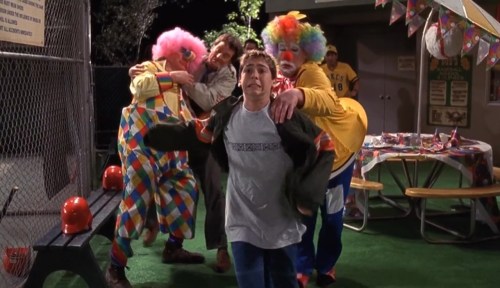
Malcom and his brother didn’t have to buy their mother a terrible birthday gift in Season 2, Episode 3. They still did and the end result led to them fighting an army of clowns in one of the show’s most memorable moments.

It’s not just the kids, either. Hal didn’t have to resort to unorthodox tactics when coaching Dewey’s soccer team in Season 3, Episode 16. He still did and things only got messier from there.

Lois didn’t have to force Malcolm to getting a job as terrible as hers in order to teach him a lesson in Season 5, Episode 6. She still did and, in doing so, taught him an entirely different lesson about just how screwed people like them are. It’s a message that even found its way into her memorable speech in the series finale.

It’s an important component of the show’s brilliance and humor. Malcolm and his family are a mess. They’re constantly getting screwed over by circumstances, bad choices, and other people who look down on them. However, they never come off as victims, nor do they carry themselves as such. They have opportunities to become less dysfunction, but often squander them.

Arthur Fleck had chances to become something other than a killer clown. There were a number of instances in “Joker” in which he could’ve gone a different path. He simply chose not to and society didn’t lift a finger to help him. If anything, they took away what little help he got.

Throughout seven seasons in “Malcolm In The Middle,” Malcolm’s family finds themselves in similar situations. One of the best examples is in Season 4, Episode 17, which happened to be the second clip show episode. In that episode, Hal and Lois recount the births of their kids as they prepare for the arrival of another.

In every instance, the births are subject to strange and hilarious circumstances. In one of them, Lois goes into labor in the driveway of their house because Francis locked her out of the car. Then, while she’s writhing in pain from the labor, a jogger passes by. She yells out she’s having a baby, but the jogger just ignores her and congratulates her.

It’s funny, but symptomatic of the family’s lot in life. Nobody goes out of their way for them. Nobody offers to help them. It even happens again a few episodes later in Season 4, Episode 21 when Lois goes into labor with Jamie. Even though someone calls 9-1-1 and an ambulance arrives, they don’t get there until after she gives birth. The EMTs even joke about how they stopped for coffee.

Like Arthur Fleck, the society around Malcolm’s family doesn’t care about them. They even go out of their way to avoid or neglect them. In “Joker,” Arthur is repeatedly victimized by both the system and individuals who go out of their way to harass him. His situation is already bad, but these ordeals only make it worse.

Early in the movie, Arthur does show signs that he’s capable of being a decent person. He tried to make a kid on the bus laugh. He entertained sick children at a hospital. He could’ve been a productive, positive force in society. Then, society started screwing him over and bad choices on his part led him to become a dangerous deviant.

While Malcolm and his family didn’t become as deviant as the Joker, they still did plenty of damage with their antics. At the same time, there were plenty of instances that showed that, as dysfunctional as they were, they could still be good and decent to others when given the chance. They just rarely got those changes and society rarely provided the incentives.

It’s a powerful message with respect to what makes people deviant. Some people are at the mercy of bad circumstances, be they poverty, mental illness, or having an overbearing mother like Lois. They’re still capable of being good, but it’s easier for them to become deviant when society neglects them. That deviance only compounds as a result of poor judgement and bad choices.

Yes, they compound a LOT.

There are plenty of differences between “Joker” and “Malcolm In The Middle.” Whereas “Joker” takes things to the worst possible outcome in the descent towards deviance, “Malcolm In The Middle” manages to maintain a more hopeful outlook. People can still be deviant and dysfunctional, but they can rise above it. The events of the series finale affirm that.

Those differences aside, this movie and this TV show offer lessons and insight into something that all societies must deal with. There will always be a certain level of deviance. There will also be those more inclined to pursue it. It’s just a matter of how to confront it. More than anything else, “Joker” and “Malcolm In The Middle” shows the consequences of confronting it the wrong way.

1 Comment

Filed under Current Events, human nature, movies, psychology, television, Villains Journey

Why “Joker” Is Brilliant, But Controversial (For The Wrong Reasons)

960x0

Every now and then, a movie comes along that’s brilliant in so many ways, but undermined by the circumstances of its release. In the same way certain movies come along at just the right time to become a cultural phenomenon, others hit theaters with unexpected forces working against them.

When “The Dark Knight” came out in 2008, its timing was perfect. It struck all the right notes from a cinematic, narrative, and cultural perspective. On top of that, Heath Ledger’s performance as the Joker went down as one of the greatest displays of acting prowess of all time, and not just for a superhero movie. For many, myself included, Ledger’s version of the Joker will always be the one by which all others are measured.

By contrast, “Joker” couldn’t have been timed worse. The current social, political, and cultural landscape is vulnerable and hypersensitive to every one of the themes it explores. On top of that, the movie explores those things very well, so much so that it warrants being in the same conversation as “The Dark Knight” in terms of how it portrays the Joker.

While Heath Ledger’s Joker is still superior in almost every way, what Joaquin Phoenix accomplished in this movie deserves plenty of praise. At the very least, it helps cleanse the memories of those still cringing at Jared Leto’s rather eccentric take on the character in “Suicide Squad.”

This movie, as well as Phoenix’s performance, comes at a time when taboos about mental health and disturbed lonely men are hot-button topics. On top of that, a string of mass shootings perpetrated by disturbed men, some with disturbing manifestos, has created real-life horror while stoking genuine fears. The story in “Joker” neither avoids nor downplays those issues.

This movie also dares to do something that few beyond Alan More has been able to achieve, which is to give the Joker a backstory. For many lifelong comic fans, especially Batman fans, the very concept of fleshing out this character undermines the core of his appeal. He has always functioned better as a chaotic force of nature rather than a person with a tangible history.

Ever since his creation in 1940, his life and his story have been vague. He has been defined as a perfect counter to Batman’s never-ending crusade. Whereas Batman seeks justice through clear, defined rules, the Joker seeks chaos and laughs at such rules. He can never be too defined, as a character, if he’s to personify that chaos.

Despite these challenges, “Joker” finds a way to tell his story and, like “The Dark Knight” before it, actually manages to make the Joker even more terrifying. Through the character of Arthur Fleck, we see a disturbed mind trapped within an environment that does everything to make his condition worse. Through both unavoidable circumstances and fateful choices, we see this broken mind become something far more dangerous.

It doesn’t happen all at once. There’s no single trigger, like falling into a vat of chemicals. There’s a cumulative effect to Arthur Fleck’s transformation. It’s not always logical or smooth, which comes off as intentional from the beginning. The only constant is that Fleck gets more twisted and unhinged with each escalating event.

This is where Phoenix’s performance really shines. He carries himself with a presence that feels very close to what Ledger captured in “The Dark Knight.” He starts off as simply being mentally ill and struggling with it. However, what he does with his illness and what it does to him turns him into something more than just another disturbed loner.

It’s here where the controversy behind the “Joker” takes hold. I would argue it’s a dumb controversy, but it was serious enough for Aurora, Colorado to cancel screenings of the movie. While it feels like an overreaction, it’s somewhat understandable, given what happened in Aurora in 2012.

If that were the extent of the controversy, then “Joker” would only be a passing concern for most people. Then came the idea the movie celebrates or glorifies “incel culture” through Fleck’s story. While I usually try to be balanced when scrutinizing certain ideas, even if they’re absurd, I can’t do that this time.

Simply put, this part of the controversy is just plain stupid. There’s no better way to say it.

Worrying that this movie might somehow inspire lonely, disturbed men to go on killing sprees is completely without merit. It’s akin to worrying that “Friday the 13th” will inspire anyone who wears a hockey mask to brutally murder camp counselors. Moreover, the absurdity of this controversy undercuts the more substantive messages of this movie.

There is a real message in “Joker” and it has nothing to do with incels, masculinity, or even violence. In this world, Gotham City is the perfect symbol of a grossly flawed society that tries to pretend those flaws can be fixed by staying the course. From the perspective of people like Arthur Fleck, this notion is a complete joke.

Much like our world, there’s a small segment of very rich, very powerful people who benefit the most from this society. The Wayne family is the perfect manifestation of this joke. Even when they carry themselves as responsible, upstanding pillars of the community, they still look down at those who are dissatisfied. On top of that, they think their dissatisfaction is a flaw.

Arthur Fleck is as caught up as anyone in this decaying society. Then, through details I won’t spoil, he starts something that inspires chaos that would make Heath Ledger’s Joker proud. That chaos may or may not be entirely justified, but it’s understandable. In a sense, the Joker is just an extreme manifestation of something that seemed inevitable.

If there is a real controversy with “Joker,” it’s that the wrong issues became controversial. This movie conveys a message to the rich, powerful people who benefit the most from society that things aren’t as rosy as they seem. Those same people who think they know the solutions have no idea what people at the bottom are going through and dismissing them as “clowns” only makes things worse.

We’ve already seen this happen in the real world. The powerful who seek greater power call those who lash out as unimportant or misguided. They think those who protest loudly have nothing of merit to say, which only feels like an excuse to not listen. In that sense, it’s probably not surprising that many media outlets have turned on this movie, albeit for the wrong reasons.

At its core, “Joker” highlights the craziness that compounds craziness. In a world that’s unfair, unjust, and full of lies, how can sane person not be driven insane by their circumstances? Arthur Fleck had more circumstances than most and his mental illness only compounded the situation.

There are times when it’s not entirely clear when the events unfolding are real or vivid delusions. It nicely reflects the uncertain nature of the Joker’s origins, as both the Killing Joke and “The Dark Knight” have previously established. There’s a point in the movie where it becomes unclear where Arthur Fleck truly comes from or whether that name is truly his.

In the end, his name doesn’t matter because once he becomes the Joker, he becomes something more than just a mentally ill loner. For certain people who have seen mentally ill loners commit atrocities in the real world, it sparks real fear. At the same time, “Joker” makes clear that’s the wrong target.

After seeing “Joker,” I feel like I just saw a movie that people are going to be talking about for years to come. It’s a movie that can be interpreted in many ways, which is perfectly befitting of the Joker’s chaotic nature. At the same time, I knew some of those interpretations would be used in the name of an agenda and not in a good way.

In another time, “Joker” would be hailed as a movie worthy of praise on the level of “The Dark Knight.” However, because it came out at a time when people fear the lonely, deranged men more than the society that creates them, it’s not able to have the same impact. It’s still an excellent movie and one that will have a unique place in cinematic history for years to come.

1 Comment

Filed under human nature, outrage culture, philosophy, political correctness, politics, psychology, superhero comics, superhero movies

John Oliver, Sex Dolls, And The (Unwarranted) Shaming Of Lonely Men

6732

There’s a general rule in comedy with respect to insults. If you’re going to demean, denigrate, or make fun of a particular person or group, you don’t want to punch down. Granted, you can do it. You can even get a few laughs out of it if you do it well and are exceptionally funny. However, in the grand scheme of things, you’re still an asshole.

It’s the main reason why comedians, be they stand-up comics or talk show hosts, generally direct their insults at the rich, powerful, and privileged. There’s a general understanding that if you’re doing well in this chaotic game of life, either through luck or talent, you can afford to take a few insults. At the end of the day, you can still go home and cry into a pile of money, fame, and affluence.

When you insult a group that has none of those things in any abundance, it’s usually not something people respect, even if they laugh. It’s why even great comedians like George Carlin had to be very careful and exceptionally skilled when he joked about rape.

We miss you, George. We miss you SO much.

Unfortunately, not everyone can be as funny or talented as George Carlin. Sometimes, insult comedy hits an undeserving target. It tends to reveal something about the comedian delivering the insult and where society is, in terms of sympathies. It’s often subtle, but the subtext is there and it has larger implications.

That brings me to John Oliver, the nerdy smart-ass British comedian who owes 95 percent of his fame to John Stewart. His show, “Last Week Tonight,” has won multiple Emmy awards and has garnered substantial praise for its colorful approach to tackling major issues, from the abortion debate to annoying robocalls to the flaws in standardized testing.

While I don’t agree with Mr. Oliver’s politics all the time or his approach to tackling certain issues, I consider myself a fan of his show. Compared to other satirical comedy shows, he tends to strike just the right balance between quality comedy and tackling serious issues.

However, he recently took a comedic jab that deviated from his usual style and not in a good way. It occurred during his episode that focused on China’s controversial One Child Policy. It’s an issue that has been subject to plenty of controversy for years and I think Mr. Oliver was right to talk about it.

One of the major consequences of this policy, which Mr. Oliver rightly pointed out, was how it led to a massive gender population imbalance. Due to a historic preference for sons, there are millions more men than women in China. The disparity is so great that it has caused major social upheavals.

While discussing some of those upheavals, the issue of sex dolls came up. In a country where there are so many lonely men, it makes sense that they would seek some form of outlet and it helps that the market of sex dolls is growing. This is where Mr. Oliver did a little punching down and, unlike his jabs at New Zealand, this didn’t have the same impact. See for yourself in this clip.

Take a moment to consider what he’s joking about here. There are millions of men in China who, through no fault of their own, are likely doomed to a life of loneliness. It’s not because they’re bad men. They’re not creepy, cruel, or misogynistic. They’re just at the mercy of math and demographics. There simply aren’t enough women in their country.

For these men, the old saying that there’s plenty of fish in the sea is an outright lie. Their options are limited and Mr. Oliver is making light of that. He essentially claims that men who use sex dolls are somehow even more pathetic and destined for more loneliness. He makes that claim as someone who is married, has a child, and doesn’t have to deal with those prospects.

It’s not just bad comedy. It’s hypocritical. Earlier in that same clip, he showed sympathy and understanding to a Chinese woman who was forced to have an abortion against her will. He’s shown similar sympathy to people in other situations, from women dealing with restrictive abortion laws to prisoners who had been screwed over by an unfair justice system.

Why would he show no sympathy for these lonely men?

Moreover, why would he make a joke about it?

To some extent, it’s not all on him. There is an egregious double standard when it comes to men who use sex toys. A woman can walk into a sex shop, buy a vibrator, and talk about using it without too much stigma. Sure, there will be a few repressive, sex-negative religious zealots who will complain about anything that gives anyone unsanctioned pleasure, but most people don’t take them seriously.

For men, however, there’s a taboo surrounding the use of sex toys in any capacity. Some of that comes from men more than women. There’s this not-so-subtle assumption that a man who needs a sex toy is somehow less manly. Any man who has to resort to one must be somehow deficient. It can’t just be that he’s lonely or wants to use new tools to please his lover. That would make too much sense.

For the men in China, and other areas where there’s a huge gender disparity, the situation is even worse. These are men who are facing both loneliness and sexual frustration. There’s more than a little evidence that this is not healthy for them on any level. That’s not to say that sex dolls or sex toys will help fill that void, but it will give them an outlet, just as a vibrator gives a lonely woman an outlet.

Unlike a lonely woman, though, these men can’t expect much sympathy. As Mr. Oliver demonstrates, they can expect plenty of shame and stigma. It doesn’t matter that they can’t do anything about their situation. They’re victims of circumstance, demographics, and basic math. Adding stigma and taboo to the mix is akin to kicking them in the balls on the worst day of their lives.

I won’t say that Mr. Oliver should apologize for his remark. He’s a comedian. He’s a citizen in a free country. He can say what he wants. However, the fact that he can joke about lonely men and still get a laugh says a lot about the current attitudes towards lonely men, in general.

We know they’re suffering. We know there’s not much they can do about it, especially in places like China. While we’ll give plenty of sympathy to the lonely women who resort to using sex toys, we’ll stick to shaming and stigmatizing the men who dare to do the same. Then, we’ll pretend to be surprised when they get angry and resentful.

Is that fair? No, it isn’t.

Is that funny? No, I argue that it’s not, especially with the way Mr. Oliver went about it.

He’s no George Carlin. He’s no John Stewart, either. In this particular case, he’s just an asshole.

4 Comments

Filed under Current Events, gender issues, human nature, men's issues, outrage culture, psychology, sex in society, sex robots, sexuality, women's issues

What “Daria” Can Teach Us About Educating (Uninterested) Teenagers

daria-920x584

Some shows have one particular episode that you can watch again and again while still enjoying it. Great shows have multiple episodes like that. By that measure, “Daria” is greater than most. Even by the standards of late 90s animation, the show stands out in so many ways. It’s one of those rare shows that has aged remarkably well and feels more relevant now than when it originally aired.

I’ve already praised “Daria” for its unique approach to shedding a critical light on a world full of lies, half-truths, and fake news. I’ve even singled out a single episode for how the show handled a sensitive issue like mental health. These are issues that have only become more relevant since the show went off the air.

In that same spirit, I’d like to highlight another episode from the show that highlights another major issue. It also happens to be my favorite episode and the one I’ve probably re-watched the most. That episode is “Lucky Strike,” the sixth episode of the fifth season. On top of being one of the funniest episodes of the series, it also has some of the shows best moments while still tackling a major issue.

The issue, this time around, is education. It might not be the kind of a hot-button issue that makes for major headlines, but it’s still as relevant as ever, especially if we’re referring to the American education system. It’s not hard to find stories about just how bad it is, especially when compared to how other industrialized countries do it.

It was a big deal in the 90s and early 2000s, as well. Fittingly enough, this episode aired just a few months before the passage of the No Child Left Behind Act, which has been the cornerstone of the American education system. While reasonable people can debate how well it has or hasn’t worked, “Daria” has already made one of the most effective arguments about what constitutes good education.

The premise of the episode begins with a teacher strike, an issue that has become distressingly common in recent years. Lawndale High’s notoriously uptight principal, Angela Li, short-changes a group of teachers who are underpaid, under-appreciated, and have to deal with uninterested idiots like Kevin Thompson and Brittney Taylor. By any measure, they have a very good reason to strike.

Never one to concede defeat or express genuine concern for student aptitude, she keeps the school running by hiring substitute teachers, some of which demonstrate limited qualifications at best. One even showed an overtly creepy attraction with one of the female students. This leads to Daria getting roped into teaching a class.

As it just so happens, the class she’s teaching is the same class that her sister and unapologetic popularity whore, Quinn, is in. Given how Quinn has spent almost the entire series denying she’s even related to Daria, it’s a great opportunity to make things awkward. Daria makes more than a few quips about it in her own wonderfully misanthropic way.

However, when it comes to actually teaching the class, Daria does something that sets herself apart from most substitutes. Even if she’s only doing it to mess with her sister, she takes her role seriously. She shows a genuine desire to teach, but she doesn’t use the same approach as the rest of her teachers. She utilizes her own unique way.

It helps that the class is an English class. Daria is a voracious reader. That is established in the first episodes of the series and belabored on multiple occasions. It also helps that the assignment is simple. The class is reading Romeo and Juliet, a story that almost every high school English class reads at some point. In terms of substitute teacher gigs, it’s as standard as it comes.

I remember reading this play in high school as well. I don’t remember it fondly, though. In class, we would just read through each act, do a few assignments in a textbook, and take a test at the end. Most of the time, the test involved multiple choice or short answer. There were only right and wrong answers. That was really all there was to it.

Daria’s approach is different. Daria doesn’t just teach from a textbook. She has the students read the play, but not so they can get the answers for an assignment. She takes the time to help them appreciate it. When one of her air-headed students doesn’t appreciate a particular part, she helps put it into a more relevant context. It doesn’t just work. It makes the story feel like something other than an assignment.

It’s an approach that anyone who loathes standardized tests can appreciate. I’ve made my disdain for standardized tests known before, but it’s not a personal peeve on my part. There is legitimate research that indicates that standardized testing is not a good way to educate kids.

Teaching kids to take a test is not the same as teaching. They’re learning how to memorize answers for a test. That’s not real learning. You can memorize all the answers for a particular test, but not know why those answers are correct. For someone like Daria Morgendorffer, who places a high value on thinking for yourself, this approach just doesn’t work for her.

For everyone else, the test is the only thing that matters. For the always-superficial Quinn, that’s her primary concern. She laments about how her sister might screw her over or worse, undermine her popularity. It’s such a burden that actually reading the play and knowing what it’s about barely registers.

Then, in one of Daria’s finest moments, she further deviates from the traditional educational model and gives her class a simple essay test. There’s no multiple choice or short answer. She just gives them a simple question.

What is Romeo and Juliet about?

That’s it. The only requirement is that they write at least 250 words and support their answer. For those who didn’t care enough to read the play, like Quinn’s equally-superficial posse, the Fashion Club, it’s the worst possible scenario. For Quinn, who actually read the play, it was easy.

In fact, it was because of that test that Quinn also had her finest hour. In one of the few moments of the show in which she’s actually likable, she defends Daria’s approach to teaching to the entire class. Then, in another pivotal moment for the series, she admits that Daria is her sister.

In addition to this critical moment of personal growth, Daria shows that she truly values people who think for themselves. Even when one of her students makes an objectively foolish comment about Romeo and Juliet, she still gives him a good grade because he actually tried to back it up. For her, that’s more valuable than simply knowing the difference between Paris and Tybalt.

Her approach is even appreciated by her students. Keep in mind, these are the same students who show little to no interest in class throughout the show. They are, like most teenagers, not that big on having to be at school for seven hours a day, learning things they don’t want to learn about. Daria understands this and tries to make the class less tedious. It’s something even an air-headed teenager can appreciate.

Most of them, anyway.

It’s also a valuable lesson that has real-world applications. Some places have even applied Daria’s approach, to some extent. Countries like Finland have a system that doesn’t rely so heavily on standardized tests. Not surprisingly, Finland’s education ranking is significantly better than the United States and by a significant margin. Daria would’ve actually fit in with that system.

It’s not just because that system eschews standardized tests. It actually emphasizes teaching a student how to think and reason. A test isn’t going to reveal that. On top of that, teachers are better-educated and well-compensated in places like Finland. They would not have had to strike like the teachers in this episode.

In some respects, Daria showed how much better someone could teach a class if they didn’t have to deal with the constraints of the current system. It even helped that the Principal Li was more focused on outwitting the teacher union than she was with teaching students. Without those constraints, Daria managed to teach a class in a way that her students appreciated.

Between that moment and the moment she shared with her sister, “Lucky Strike” accomplishes a great deal. Daria has a chance to shine and makes the most of it. On top of that, she demonstrates that it is possible to educate a room of disinterested teenagers in a way that’s genuinely effective.

There are many other moments in “Daria” where major complications, and the many absurdities they entail, get cut down by the show’s distinct brand of misanthropic humor. Daria rarely sets out to make big statements, be they about the educations system or our flawed understanding of mental health. However, she still finds a way to make her point and never crack a smile.

That’s why Daria is so lovable. It’s also why we need wisdom like hers more than ever.

Leave a comment

Filed under Current Events, Daria, human nature, psychology, television