Tag Archives: technology

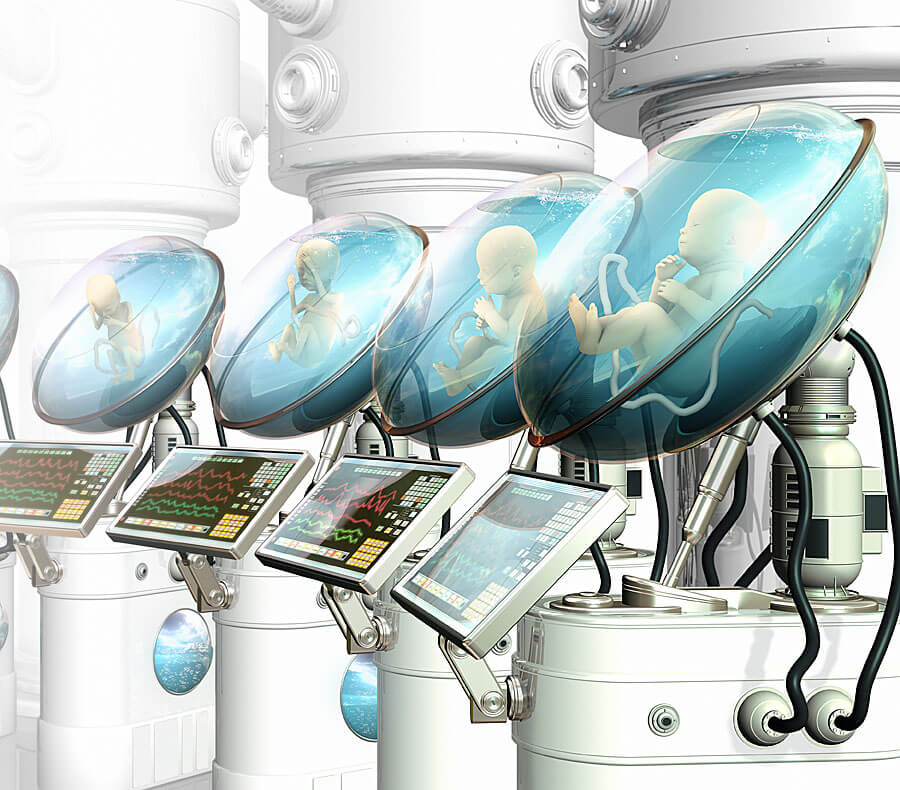
How Immortal Humans (Might) Make Love

At every wedding or marriage ceremony, we’ve all heard those sweet, romantic words. Two people stand before friend, family, and whatever deity they happen to worship, and pledge to love, honor, and be faithful to one another until death do they part. It’s a powerful romantic sentiment, one that holds a special place in our culture and our understanding of love.

It’s also a sentiment that’s becoming increasingly hallow because the divorce rates throughout the world are pretty staggering. It runs anywhere between 40 and 65 percent. If every promise someone made to you had a failure at that level, you’d never leave your house without a lawyer and branding iron.

As rough and agonizing as divorce can be, it exists for a legitimate reason. Staying married to the same person your entire life is hard. I’m not just talking about staying sexually monogamous either. Being with only one person, putting all your romantic and emotional energy into a single individual, is not easy. You’re putting your entire heart into one person’s hand and trusting them not to crush it.

It didn’t used to be that hard. In fact, it wasn’t that long ago that it was a fairly pragmatic arrangement and by that, I mean as recently as the 1950s. I’ve talked about the history of marriage before and at the heart of that history is a sort of romantic pragmatism, if that’s even the right word.

For most of human civilization that have some form of marriage arrangements, people lived on farms or in small towns, rarely venturing more than fifty miles from their homes. Most of the time, people didn’t even choose their spouse. Their parents chose for them.

You weren’t expected to love each other. You only really had to tolerate each other and be willing to have children. Those are some pretty low standards, but that was all it took for a successful marriage, so to speak. Sexual fidelity was necessary for the woman to ensure the passage of property, but it was pretty much expected for men to have a few mistresses here and there.

Even with mistresses, this form of marriage worked because it was practical. Staying with one person your whole life made sense in a world where you barely ever left the farm or the town you were born in. Getting divorced, even if there was some cheating on the sides, just didn’t make sense. It was more trouble than it was worth.

Then, society changed, technology improved, and civilization revamped its idea of marriage. Instead of the low standards and cold pragmatics of the past, we needed our marriages to be built around the kind of ideal love that’s been in every Disney movie since 1944. We need a lover who is our heart, our soul, and our everything. They need to be the personification of a Barry White song mixed with a One Direction song.

Those are some mighty high expectations and I’ve mentioned how unreasonable they are. Add a little thing called “No-Fault Divorce” to the list, a legal term that rips men’s hearts out through their wallets, and suddenly that ideal of love is much trickier. Stories about couples who have been together for 70 years are endearing, but that’s because they’re the exception and not the norm.

There are still a lot of flaws to dissect in our current understanding of love and marriage. I’ll probably do more posts about that in the future. For this one, though, I’m afraid I have to dig deeper into those flaws and the implications are not good. I may end up painting a sad, unsexy picture about the future of our love lives, but bear with me. I’m going to try and inject a little hope and sexiness towards the end.

I’ve often speculated on how emerging technology like brain implants, biotechnology, and bionic genitals will improve and redefine our love lives, including the sexy parts. In my recent discussions about boredom among immortals, it revealed a relevant issue that we’re going to have to address at some point.

In a future where we can live for centuries, maintain our youth, and continue to enjoy a robust sex life, how will we go about love, sex, and marriage? It’s a legitimate question because there’s no way our current system can work. That system is failing without the impact of bionic genitals. What hope does it have when lovers become full-blown shape-shifters?

Beyond the way we look and our ability to have sex with bionic body parts, the immortal factor may be the trickiest. That’s because, as I’ve pointed out with characters like Vandal Savage and Superman, an extremely long life makes people more prone to crippling boredom. When people become bored, they tend to become dispassionate and that’s not a recipe for a functioning romance.

Couples already get bored with each other with stunning regularity. What happens when those couples start living to be 500-years-old and never get too old to attract new partners? The idea of “till death do us part” suddenly becomes woefully impractical. Despite what vampire novels might have us believe, monogamy for an immortal just isn’t practical. It might not even be that romantic, in the long run.

Romance and practicality aside, it’s still important to maintain those passionate connections between people, even if they are immortal. Without them, they’ll inevitably end up like Vandal Savage, who comes to see humans as aging meat-bags in dire need of his exploitation.

However much we enhance our bodies and mind, we humans are still a social species. We are also a passionate species. We seek love, intimacy, and connection with one another. No matter what the economics may say or what religious zealots may decree, we’re driven to find love and connection. When we become immortal super-humans, complete with smart blood and bionic genitals, that won’t change.

That begs the question, which also happens to inspire another sexy thought experiment. How exactly does a society of immortal humans go about making love and forging romantic bonds? That’s a difficult, if not impossible, question to answer, especially for an erotica/romance writer. If I could predict the future that well, I’d play the stock market and become a billionaire by next Tuesday.

However, being an erotica/romance writer, I’m pretty adept at coming up with sexy ideas with plenty of romance mixed in. Anyone who has read my novels knows this all too well. So here’s how I imagine a future society of immortal humans will make love.


Scenario 1: The Monogamy Scenario (But Not In The Way You Think)

As much as I poke fun at monogamy on this blog, I don’t discount its value or its beauty. I also don’t think it’s going away anytime soon. Even among immortals, there will always be certain individuals for whom monogamy just works. With human enhancement, though, it gets a badly-needed upgrade.

The monogamy I’m talking about isn’t the same monogamy you associate with your grandparents who have been married since the stone age. Monogamy in this, context, may also include sharing a mind link, not unlike Cyclops and Jean Grey of the X-men. Two people could be so committed to each other that they want to link minds and stay linked, effectively becoming a single conscious entity.

It may sound creepy, but it also takes monogamy to a whole new level. It also makes use of brain implant technology, like the ones being developed by Neuralink. Monogamy like this could be deeper on a level that would impress the Edward Cullens and Bella Swans of the world. It would be, by our understanding, a perfect monogamous union. You might think their sex would get boring, but it wouldn’t matter to them.


Scenario 2: The Family Scenario (Not THAT Kind Of Family)

Don’t flex your gag-reflex just yet. When I say “family,” I’m not talking about incest. I’ll leave that to the very specific, very targeted genres of porn that specialize in that sort of thing. For the purposes of this scenario, I’m going to use family in a way that it hasn’t been used before, at least outside of a creepy sex cult.

The family scenario focuses on a small group of tight-knit individuals. It may never be more than a dozen people of varying genders. These people may or may not have some sort of mind link via brain implant, sort of like the monogamy scenario. The difference is that this small group shares a collective loving bond.

They exchange intimacy, sex, and love amongst themselves. There aren’t any couples or hookups, per se. There’s no such thing as an affair or cheating. They all see themselves as a family unit, loving and supporting each other in addition to meeting their sexual and emotional needs. In a future of immortal, enhanced humans, I think this would probably be the most common scenario.


Scenario 3: The Community Scenario (Kind Of What It Sounds Like)

This one is less suggestive. It means almost what you think it means. In this scenario, larger groups of individuals, each with enhanced bodies, live or connect in a common way. That connection is fairly loose, though. They opt to maintain most of their individual autonomy, but they see themselves as part of one romantic unit.

Traditional, non-enhanced brains can’t function in that way without calling it an orgy. Brains that are enhanced, in that respect, are better able to see themselves as part of a larger unit. It could be among hundreds, if not thousands of people. They may or may not live in a similar area. However, they would all see themselves as romantically linked, just as most monogamous lovers today see themselves romantically linked.

There would be plenty of variety, in terms of sex. Finding a sexual and romantic outlet would be almost casual. It would be like a private sex club, of sorts, one where you get to skip all the small talk and flirting. With enhanced brains and bodies, it’s that much more effective. It allows for larger groups of people to function romantically without becoming a Jerry Springer episode.

I imagine a scenario like this would be pretty messy. It would strain even the breadth of human enhancement. For certain individuals, though, namely the ones who want to still be individuals, it would definitely appeal. They get the same love and sex they need. They also get to be their own person, even if they’re an asshole sometimes.


Again, these are just a few scenarios conjured by one aspiring erotica/romance writer and without the aid of a brain-enhancing neural implant, no less. There’s only so much I can speculate and even less I can do to speculate accurately. I’m good at thinking kinky, sexy thoughts and telling kinky, sexy stories with those thoughts. That limits my ability to predict the future, especially a future with enhanced brains.

However accurate, or inaccurate, my scenarios might be, the way we make love with our enhanced selves will be a big part of who we are and the society we inhabit. Chances are it’ll be nothing like anything we imagine and it’s entirely likely that ever religious group and social conservative will hate it.

It will happen, though. If history has taught us one thing, it’s that we’re constantly adapting to the crazy new situations we create for ourselves. Part of being human is seeking connection, love, and intimacy with others. As we embrace new technology, new ways of thinking, and new ways of life, our ability and capacity for love, sex, and everything in between will adapt with it.

5 Comments

Filed under Sexy Future, Thought Experiment

Superman Vs. Boredom: Why It Matters (For Your Love Life)

In talking so much about boredom, it can get kind of boring just dwelling on it so much. I don’t know if that counts as irony or a paradox, but I think it’s kind of poetic. The more we contemplate the impact boredom has on our lives and our society, the more we realize just how powerful it is and how quick we are to avoid talking about it.

We still don’t know the true impacts of crippling boredom on society because, for the moment, there are plenty of distractions, jobs, and obligations to keep people busy. Horrific stories like the murder of Christopher Lane, which was allegedly inspired by boredom, will continue to be rare and newsworthy, at least for the near future.

However, there may very well be future generations, including those that will emerge within our lifetime, that will have to deal with a growing glut of boredom. Between advances in biotechnology that will cure disease and the rise of automation, which may necessitate a universal basic income, this may be an issue that impacts us sooner than we think.

That brings me to Superman. Bear with me. I promise that’s not a non-sequiter. I’ve used comic book superheroes before to make my points, be they inspiration for one of my novels or examples of a sex-positive female character. I even cited comics when I singled out Vandal Savage as a villain forged by boredom. For the purposes of this post I need to cite him again, but Superman will be the primary focus.

Being the personification of our ideals and morals, the things that affect Superman also affect and I’m not just referring to kryptonite. If the epitome of our heroes and the icon of our most cherished values cannot handle a certain burden, then what hope do we have? That’s why when there’s a flaw with Superman, one of the most powerful characters in the DC Universe, we need to take notice.

Image result for Superman iconic

In a sense, Superman and the immoral villain, Vandal Savage, are indirectly linked. They’re facing the same overwhelming burden and neither of them has found a way to effectively deal with it. The only difference is that Savage had a huge head start. Superman will catch up eventually and that’s where the true struggle resides.

Based on his current power set, which has been prone to change over the years, Superman is functionally immoral. So long as he replenishes his powers with the energy of a yellow sun, he’ll never age and he’ll never die. That puts him in the same boat as Vandal Savage, who never ages and can’t die. That also means that, at some point, he’ll have to deal with the burden of crippling boredom.

That’s a burden that DC Comics has never had him deal with. Like so many other oversights, such as how glasses can be an effective disguise, it’s one of those flaws that’s easier to just ignore. However, it has been confronted to some extent and the implications for Superman, the real world, and our love lives is pretty distressing.

Image result for Superman struggling

Again, that’s not a non-sequiter. I brought up our love lives for a reason and it’s not just because I’m an aspiring erotica/romance writer, although that is part of it. While we might not be immortal, our lifespan is increasing. There are emerging technologies that may very well make us functionally immortal. That’s going to, by default, affect our love lives just as it will affect Superman.

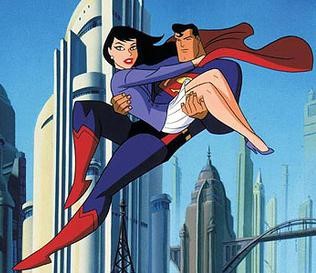
Nearly everyone, including non-comic book fans, know the extent of Superman’s love life. They may not know about that time he made a porno tape with Big Barda, but they know that Superman’s primary love interest is Lois Lane. His romance with Lois is, by nearly every measure, the most iconic romance in the history of superhero comics.

Image result for Superman and Lois Lane

While the romance has evolved a number of ways over time, the core themes remain the same. Lois Lane, being as human as they come, complements Superman in every meaningful way. She often acts as an emotional anchor of shorts, highlighting and strengthening the humanity within Superman. While she isn’t the primary source of Superman’s values, she is definitely a catalyst for strengthening them.

It’s a big part of what makes Superman so strong and so upstanding, with respect to his values. Lois Lane provides that sense of love and connection that reminds Superman that, despite being an alien, he has a strong sense of humanity. That is a humanity that Vandal Savage lost long ago.

While Superman’s romance with Lois Lane may be iconic, it still relies on one major flaw. Lois Lane, as beautiful, sexy, and charismatic as she might be, is still human. That means that at some point, she’s going to grow old and die. Superman may still love her all the same because he’s just that kind of person. However, she’s not immortal and he is. There’s just no way around that.

That’s not a primarily concern for him, though, because in the comics, Superman’s age is usually between 29 and 33 years old. There are some comics that explore an older version of him, but the bulk of his mythos is structured around him being the age of a typical man. That means, by default, the story can only cover a tiny sliver of Superman’s love life with Lois.

That has major implications because if Superman is functionally immortal, then he will outlive Lois Lane and that emotional anchor that helps him be the hero he is disappears. What will that do to him? Can he still be Superman without it?

Image result for Lois Lane Dies

Vandal Savage’s descent into madness sets a dangerous precedent. It’s entirely possible that Savage had someone like Lois Lane in his life at some point. The man has been alive for 50,000 years old. The sheer breadth of his lifespan makes that entirely possible.

Unfortunately, or tragically in some respect, that love died because everyone around Savage dies. It’s not because he kills them. He just outlives them. Being immortal, getting attached to anybody means enduring heartbreak and loss.

Even if someone he loves dies peacefully in their sleep, he still feels that loss. People in general, when they lose loved ones, feel emotional pain no matter what the circumstances. I had a relative live into her late 90s and die peacefully. When I went to her funeral, there were still people with tears in their eyes.

Imagine how many times Vandal Savage has endured that over his 50,000 year lifetime. Is it any wonder that he lost his humanity and has such a lower regard for human life? For him, forming human attachments of any kind just guarantees more pain. Whether you’re a human or a worm, you do whatever it takes to avoid that kind of pain.

That brings me back to Superman. He’s only lived a fraction of the life of Vandal Savage. However, he’s in a far worse position because while Savage may be a genius, he doesn’t have anything close to the power set that Superman possesses.

Superman is not just immortal and smart. He possesses the kind of speed, strength, and agility that allows him to do anything, go anywhere, and master every skill. Whereas someone like Savage may take centuries to master something, Superman can do it in seconds. That means he’ll run out of things to do even faster than Savage. It will not take 50,000 years for Superman to be overcome by crippling boredom.

Someone like Lois Lane might be able to keep Superman human, at least in his young age. However, there are many occasions in the comics where Lois Lane’s death leads to Superman becoming distant, detached, and despondent. While their love may be strong, the influence is at the mercy of time.

That’s not to say Superman will inevitably become like Vandal Savage. Granted, there are stories where Superman goes completely insane and becomes the kind of super-powered tyrant that North Korean dictators aspire to be. There are others where he ages gracefully and helps make the world a better place. In a sense, Superman’s potential reflects the uncertainty that such boredom will incur on immortals.

That’s an important concept to grasp because, as we humans live longer, healthier lives, we’ll have to contend with some of Superman’s burdens. Some people may be able to live centuries and maintain a strong sense of humanity. Others may end up like Vandal Savage and see humanity as a bunch of perishable meat bags.

This has huge implications for both our love lives, as well as the attachments we make. If we start living long, near-immortal lives, why even form romantic attachments? Why bother when time is just going to destroy it in the long run? Will we abandon those passions because it only leads to more pain? Will a world of functional immortals be completely devoid of love?

It’s impossible to say for sure and that’s what’s so disturbing about it. If someone as good and pure as Superman struggles to deal with the impact of crippling boredom, then what hope do we have?

1 Comment

Filed under Comic Books, Jack Fisher, Superheroes, Jack Fisher's Insights, Uncategorized

Will Sex Robots Make Us Better People?

https://i0.wp.com/mojidelano.com/wp-content/uploads/2016/10/15-58-55-special-report-sex-robots-a-psychological-perspective-sfw-jpeg-209057.png

I’m going to do it again. That’s right. I’m going to talk about sex robots. Do I have your attention now? I know it’s not the first time I’ve brought up this inherently kinky, but sexy topic. I doubt it’ll be the last. Honestly, there’s so much potential in this topic, sexy and otherwise, that I’m surprised I don’t talk about it more often.

There’s no way around it. Sex robots are coming, literally and figuratively. There’s already a brothel in Spain that employs sex dolls for customers. Companies like RealDoll are actively working on developing them. Given that sex still sells and there’s a lot of horny people in the world, the economic and personal incentives are just too huge.

Like any early technology, though, it’s going through some growing paints. It’s still a ways away from being refined, effective, and cheap. Like early cell phones and TVs, sex robots are going through that clunky phase where they seem more like a novelty than a practical reality.

https://i0.wp.com/dynamicmedia.zuza.com/zz/m/resized_gallery/0/f/0f055e1c-6678-4ec1-9bdf-0f3dcbebbc2f/01_realdolls3___Gallery.jpg

Eventually, we’ll work out the kinks, so to speak. I’m confident that everyone under the age of 30 will live to see a day where sex robots are almost indistinguishable from real partners. They won’t just look, feel, and sound real. They’ll be every bit as customizable and versatile as modern smartphones.

You want a meek, submissive partner who only lives to serve you? There will be a sex robot for that. You want a tough, dominant bondage enthusiast who makes you their personal bitch? There will be a sex robot for that too. The only limit is your own perverse imagination.

This leads to one vital question, which I’m sure hasn’t slipped the minds of those who still make weird faces when the topic of sex robots comes up. I imagine these same people used to think Twitter was a waste as well. Today, I imagine they’re still kicking themselves for not buying stock in it. It’s still a wholly relevant question, though.

How will sex robots affect society?

I’ve been dancing around this question for a while because I’m still not sure how to address it. Believe me, though, I’m working on it. I do want to keep talking about sex robots. I’ve noticed it gets my target audience uniquely excited.

However, there are others who think about this topic as well, sometimes more intently than even an aspiring erotica/romance writer would dare. The cast from ThinkTank, a fun and sometimes kinky YouTube channel that I’ve cited before, actually chose to ask that question in a different way.

How will sex robots make us better people?

On the surface, that does seem like a loaded question, if that’s not too inappropriate a term. It seems inherently bias that sex robots will only make people better. That’s like pretending ski masks are only used for skiing or that guns are only used for hunting.

Loaded or not, they do highlight an important dynamic of sex robots. It’s one that tends to get overlooked and underplayed, but one that has the potential to change society in a way that’s very positive by most measures. It has less to do with how we interact with sex robots and more to do with how they’ll interact with us.

Here’s the video that explores this discussion. I’ll give those who own fleshlights and vibrators a minute to collect their thoughts and steady their hearts. Take all the time you need.

At the core of the issue here is how the artificial intelligence within these sex robots is configured. There will be some that just obey orders. Like any appliance or gadget, you push a button and you get the effect you want. There will be a market for those sex robots, just as there’s still a market for old flip phones.

However, that’s not going to be enough for some people. I know this because those with vibrators and fleshlights still seek love and companionship. That’s because, in addition to being extremely horny, we’re a very emotional species as well. We are biologically wired to seek intimate connections with others. Incorporating that function into a sex robot just seems logical.

A sex robot with that kind of ability would do more than just provide the experience of sharing an intimate connection with a user. It’ll help people explore and develop their ability to seek such connections with others. It could be a teacher or a mentor of sorts. This is just one you have sex with and looks as sexy as you want it to be. There’s literally nothing unappealing about that concept.

https://i0.wp.com/www.collegemagazine.com/wp-content/uploads/2012/07/ef410b39aaacff80684620e12daf9175_b.jpg

Beyond the teenage fantasy, though, there’s another aspect to that idea that ThinkTank didn’t touch on. It has to do with our collective struggles to explore and deal with sexual issues. Given the erratic nature of our sexual attitudes, it’s an issue that’s bound to come up.

Think back to the heath classes or sex ed you got in high school, assuming you didn’t go to school in Texas. Those classes told you what sex was, how it worked, and the body parts involved. Some may have even touched on the dynamics of sexual relationships. Again, if you got your education in a state like Texas, your experience may vary.

Just knowing about sex isn’t enough, though. Most of those students are still horny teenagers who don’t know how to deal with their horniness just yet. They don’t have many outlets to explore that feeling. Other than internet porn and each other, their options are limited.

https://i0.wp.com/mydeepinside.info/wp-content/uploads/2015/05/neschastnaya-lyubov.jpg

Now, imagine getting that same information from health and sex ed. Then, imagine getting your own sex robot to help you explore your sexuality. Whether you’re a man or woman, gay or straight, you have something that will actually guide you through the intricacies of having sex and forging relationships.

It may sound like a bad scene from a porno, but throw an intelligent sex robot into the mix and suddenly, it’s not just pornographic. It’s wholly pragmatic.

As the clip said, sex robots with AI could be programmed to help teach users to interact and understand one another. It could teach men and women to better form genuine, intimate connections. Compared to the lessons that movies, video games, and fairy tales teach, which makes it seem like everyone needs to be a prince or princess, sex robots would be invaluable towards molding healthy minds and genitals.

https://i0.wp.com/www.dogubayazithalkinsesi.com/resimler/2/40794.jpg

So much of our struggles to get along, be they unequal gender dynamics or a poor understanding of what constitutes consent, stem from our limited ability to form relationships. They also may be a product of not getting laid often enough.

I know I’ve said this before, but it’s worth saying again. There are a lot of health benefits to regular sex. When someone has a rich, satisfying sex life, they’re generally happier and nicer to be around. A society full of sexually satisfied men and women who actually know how to forge intimate relationships can only be a good one.

https://i0.wp.com/consciouslifenews.com/wp-content/uploads/2013/05/image12.jpg

It’s still impossible to know just how sex robots will affect society. There may very well be other negative consequences that I either haven’t explored or thought of yet. Whatever they may be, expect me to talk about them or write about them in my novels at some point. It’s just too sexy a topic to ignore. In time, nobody will be able to ignore it.

13 Comments

Filed under Sexy Future

A Second Sexual Revolution: The Potential (And Inevitable) Backlash

https://i0.wp.com/www.womenshealthmag.com/sites/womenshealthmag.com/files/images/sexual-frustration_0.jpg

Think back to brief, but memorable time between elementary and middle school where kids are still kids for the most part. It’s the time before you develop concerns about things like acne and hiding awkward boners during gym class. It’s a time before the girls start wearing thongs or hiding bra straps. For some, those times have fond memories.

Often, during these times, you’ll encounter one of those annoying little shits who likes to think of him or herself as the class clown. You know how they operate. They’re loud, annoying, obnoxious, arrogant, and will set their own hair on fire if it gets attention. They might have been funny the first few times, but it doesn’t take long for them to be a walking source of frustration.

Teachers, parents, and counselors do anything and everything they can to get the kid to shut up, but nothing works. Every time they push him, he just pushes back harder. Every time they react to his antics, he reacts even more. Since he’s a kid, he can sort of get away with it.

https://cdn.someecards.com/posts/crazy-class-clown-stories-z73.png

What I just described is a testament to how kids can be annoying little shits and what happens when our efforts to fix a situation ends up causing a backlash. It’s one of those things that happens almost as much in real life as it does in bad sitcoms. For every time Peter Griffin’s antics in “Family Guy” backfires horribly, there’s a real-life class clown in a public school ensuring everything around him backfires just as badly.

We don’t just see it in elementary school classrooms and Seth MacFarlane shows either. Throughout history, backlashes have shaped the course of events, from the ancient world to modern presidents who think randomly invading a Middle Eastern country won’t cause any geopolitical problems.

It’s not unreasonable to say that many events and cultural movements are very much a backlash at those that preceded it. It’s how dynasties rise and fall. It’s how religious and cultural movements morph into cults and denominations. It’s even how some successful TV shows inspire spin-offs. Not all of these backlashes result in improvements, but they are very much a part of how people, cultures, and nations evolve.

https://jackfisherbooks.com/wp-content/uploads/2017/05/fecdf-homosexu.jpg

This brings me back to the prospect of a second sexual revolution. Admit it, you knew I was going to get to this. It was only a matter of time before I tied the concept of a backlash into something sexy. I would’ve gotten to it sooner, but I wanted to establish a context. It’s necessary because in every cultural upheaval, it’s easy to lose perspective.

The problem is that we don’t know just how much perspective we’ve lost until we have the benefit of hindsight. It’s like getting blackout drunk and waking up in another city with a donkey, a dildo, and a dead gerbil in your bed. You remember starting the night with good intentions and having a great time. Somewhere along the way, though, something went horribly wrong.

When we look at the context of the sexual revolution in the 60s, we can see how backlash shaped its promising beginnings and how it got blackout drunk towards the end. I’ve mentioned how technology like antibiotics and contraception reshaped sexuality by effectively removing some of the consequences and barriers to sexual expression. There are other, less tangible factors in play as well.

We know from 50s sitcoms that the period before the sexual revolution was a tough time to be really horny. The 1950s was a time of rigid sexual conformity. Anything outside of marriage, procreation, and the missionary position was considered a deviant social ill. Things like masturbation, the female orgasm, and Elvis’ hips were all taboo.

https://i0.wp.com/fitnessfreak.ie/wp-content/uploads/elvis-hips-blog-post.jpg

This kind of sexual restraint went so far that an emerging generation of horny youth decided to spit all over that prudish culture. Armed with modern antibiotics, contraception, and mind-altering drugs that made orgasms easier to enjoy, they really went for broke. They didn’t just push the envelope. They bombed it with napalm and buried it in horse shit.

Ironically, they went so far that they incurred a backlash just as strong as the one they led. That led to the rise of people like Jerry Fawell, Pat Robertson, and the Moral Majority, people and organizations who went full fire and brimstone after seeing one too many mud-soaked hippie orgies. Add this on top of the emergence of issues like abortion and diseases like AIDS and it’s easy to see why everyone’s panties got a little tighter.

In both cases, one backlash incurred another. One extreme led to another. Even today, we may be seeing another backlash from a general loosening of sexual freedom again, but it’s just taking the form of political correctness and reactionary outrage over issues as trivial as a swimsuit ad.

These days, you won’t be shunned if you have premarital sex or watch porn in your spare time. However, you’re in big trouble if you don’t understand the increasingly esoteric concept of consent, directly or indirectly body shame women, or want to draw a female character wearing sexy clothes.

Every trend, especially the sexy kinds, seem unstoppable at first. That’s why it’s become popular to urge others to be “on the right side of history.” That’s an exceedingly vague excuse, as is often the case with excuses in general, but it lays the foundation for a future backlash.

I’d say any second sexual revolution should take that into account, but I know that would just be empty rhetoric. Backlash is something that no revolution, movement, or reformation can truly take into account. Being flawed humans with flawed brains, we tend to overestimate the staying power of any trend. Just ask anyone who was ever part of a boy band not named Justin Timberlake.

A second sexual revolution, like the one that occurred in the 60s, will likely shock, horrify, and excite. Those are the key ingredients of every revolution or movement. They’re so different. They get peoples’ attention because it doesn’t fit with their idea of normal and, much like our annual failure to keep our New Years Resolution, people cling desperately to their sense of normal and resist change at every turn.

A second sexual revolution may involve anything from group marriages to sex robots to gender-bending orgies in public parks. It’s impossible to predict where our collective libidos will take us. It is possible, if not inevitable, that there will be some kind of backlash along the way. When change happens that fast, people get really stressed out and people do crazy things when they’re stressed.

There are all sorts of ways that a second sexual revolution can manifest. I don’t want to make too many predictions. I’d rather save those sexy contemplations for one of my future novels. I will, however, throw in one last complications that may make the next revolution unique from every other revolution in human history.

No matter how extreme or kinky a revolution was in the past, including Victorian England, there was one common theme. They were all driven by the crude and horny whims of our caveman brains, whose wiring hasn’t been upgraded in over 100,000 years. It’s like constantly changing the rules of the game, but never changing the equipment.

Advances in biotechnology and brain enhancement, such as that being planned by Neuralink, may completely change the dynamics of human thought and society. The same forces that incurred backlashes in the past might not be a factor anymore. People may very well be an entirely new way of dealing with a new sexual revolution.

Again, it’s impossible to predict. As soon as we start tweaking our brains and upgrading our biology, all bets are off. History and hindsight are no longer accurate guides with which to understand the course of society. The potential of another sexual revolution is vast, but the potential for backlash is every bit as big.

2 Comments

Filed under Sexy Future

A Second Sexual Revolution: The (Sexy) Precedent

https://i0.wp.com/picture-cdn.wheretoget.it/xmauij-l-610x610-pants-hippie%2Bclothing-hippie%2Bpants-indie-skirt-hipster-soft%2Bgrunge-hippie-spring-vintage.jpg

In any human society, nothing becomes a revolution until after people realize just how revolutionary their ideas were in the context of the times. Few people who end up being part of a social movement, see their activities as part of a revolution. That assumes they’re sober, which history tells us can be a factor.

Those who oppose revolutionary activities are even less inclined to call them as such. They see these kinds of movements as chaos, criminal, and dangerous because it’s distracting people from doing more important things like paying their taxes, pumping out babies, and giving money to their preferred religious service.

It’s hard to really transform a simple protest to a full-blown revolution is what I’m saying. That brings me to the sexual revolution of the 1960s and the possibility of other sexual revolutions in the future.

I’ve talked about the sexual revolution of the 60s before. It was fueled by two powerful factors that helped loosen sexual norms, namely the advent of effective contraception and the elimination of major sexually transmitted diseases thanks to antibiotics. For the first time in recorded history, human beings had more flexibility in exercising their sexual desires.

Advances in technology, science, and public health gave people the ability to explore their sexuality without fear of negative health consequences. Unwanted pregnancies and life-threatening diseases were no longer as big a concern. Men and women could engage in various sexual activities more freely and openly. The only obstacle in their way were the prudish sexual norms that remained.

That’s where the revolution came in. Science and technology can do a lot of things for us, such as curing disease and preventing pregnancy. However, it can’t convince people to just abandon their beliefs, values, and assumptions about certain subjects. That’s why we still have people in positions of great power who don’t believe in evolution.

Anyone who has ever dared to read the comments section on a news site understands it all too well. There’s a segment of people who ardently cling to the norms of the past. There’s also a segment of people who cling to the emerging norms of the present. When the two meet, it can get ugly.

The sexual revolution of the 60s was basically the comments section of a New York Times article made flesh. An entire generation of youth, who now had both the tools and the desires to explore their sexuality, was running into the brick wall that their elders had established.

They were taught from the days of Elvis’ evil hips that sex was a generally bad thing. It’s only acceptable function was to make babies that will work in factories, pay taxes, and go to church. Any orgasms that anyone had were optional. It’s easy to see why a whole lot of horny teenagers heard that message and decided to rebel.

In many respects, the spirit of the sexual revolution of the 60s was a direct response to the incredibly uptight, annoyingly prudish attitudes of a 1950s culture where couples sleeping in the same bed on TV was seen as scandalous. One generation bombards the other with endless morality lectures. The other rebels. The next thing you know, you’ve got mud orgies going on at Woodstock.

https://jackfisherbooks.com/wp-content/uploads/2017/05/ebec8-1.jpg

It’s not necessarily a new pattern. Throughout history, cultures have gone through periods of sexual prudishness and sexual promiscuity. Cultures like the ancient Egyptians and the ancient Indians were well-known for their liberal attitudes. Then, you have extremely restrictive mores of  the ancient Chinese and Victorian England. By and large, sexual attitudes have been downright erratic.

When you examine the history of these attitudes, you see a cycle of sorts. That cycle usually plays out like this:

  • There’s some kind of upheaval in society, usually caused by economics, famine, or disease.

  • A large segment of society seeks more order so they embrace morals that encourage more uptight, restrained attitudes.

  • Those attitudes extend to sexuality and more prudish attitudes take over, giving any sexuality that doesn’t involve procreation a negative connotation.

  • Society stabilizes and comes to accept these attitudes for a long stretch of time.

  • A new generation is born, never knowing the upheavals that previous generations faced.

  • That generation sees the overly prudish attitudes of their elders as flawed and rebel.

  • New attitudes emerge that loosen sexual standards, often in ways that shock and horrify older generations.

  • The new attitudes become a spectacle and the shock value wears off.

  • Eventually, the attitudes result in another round of upheaval in society, which is magnified by a rises in sexually transmitted diseases or unstable family structures.

  • Another generation emerges and adopts more restrictive sexual attitudes once more.

Like every revolution, the sexual revolution of the 60s did incur a backlash. The emergence of new diseases like AIDS, as well as less stable family structures, contributed to all sorts of ills that played out over the course of several decades. You could make the argument that it’s still playing out.

That leads us to today. At the moment, it’s hard to say where in the cycle we are. Unlike previous periods in history, technology and modern infrastructure has taken society into uncharted territory.

Even if sexual attitudes regressed after the 60s, the growth of the porn industry and the widespread availability of erotic content, thanks to the internet, kept the backlash from going too far. It’s one thing to regress in a society dominated by uneducated masses. It’s quite another to do so in one with high literacy, fewer famines, and unlimited access to full-frontal nudity in their pockets.

However, I have made the argument before that our society is steadily becoming more sexually uptight. We’re seeing it in the way people react to sex in the media. It’s becoming more taboo for female characters in movies and video games to be sexy in any way. It’s also becoming taboo to use sex as much in advertising, as Carl’s Junior recently found out when they dropped their sexy ads.

There are also shifting trends in what society seeks to shame. There are now buzzwords like “toxic masculinity” and “rape culture” that skew sexual attitudes. Every week, it seems, there’s a new moral crusade against some sort of sexual injustice, be it sexual assault or inequalities in the LGBT community.

These crusades are putting sex into a negative context, not unlike the one it had in the uptight 1950s. In the current cultural landscape, any and all negative manifestations of sex get more attention and are blown out of proportion, either intentionally or unintentionally.

Never mind the fact that rates of sexual violence against women have declined by over 60 percent since 1995. Fear, dread, and upheaval still pervade whenever issues of sexual violence emerge, even if it turns out to be false. Remember the first part of that cycle I mentioned? Well, that upheaval element is there so the cycle might continue.

If that happens, then the end result will be similar to what we saw in the 60s. There will be another sexual revolution of sorts in response to emerging trends or as a backlash to the ongoing moral crusades. The human libido is powerful and erratic, but it never sits on the sideline when we aggressively attack our own sexuality.

Now, I’m not a good predictor of the future. If I were, I’d be picking stocks and betting on football games for a living instead of writing erotica/romance. However, my caveman brain still sees patterns, especially the sexy kind. What I see now and what I see in the past with the 60s sexual revolution checks more than a few boxes.

It’s hard to know how it’ll manifest, but I think there will be another sexual revolution of sorts. Within a generation, we’ll see young people engaging in sexual behaviors that shock and horrify today’s latte-loving millennials. What kind of behaviors might that entail? It’s hard to say, but it’s fun to imagine.

7 Comments

Filed under Second Sexual Revolution

A Disease-Free World: We’re More Ready Than You Think

https://i0.wp.com/portuguese-american-journal.com/wp-content/uploads/2011/05/stem_cell_lab_hood05_10734.jpg

It’s such a frightening thought. It terrifies parents, priests, rabbis, mullahs, monks, and conservative republicans. People, especially young people, are having sex at this very moment. If that’s not horrifying enough, they’re having sex for fun.

They’re not doing it with their government-approved, religiously-sanctioned spouse. They’re not doing it to produce more babies that will grow into tax-paying, church-going citizens. They’re just doing it because they enjoy the wonderful, toe-curling pleasure that comes with sex.

The most horrifying thought of all, though, is that they’re doing it and they’re not facing any consequences for it. They’re not getting pregnant because of modern contraception. They’re not getting sick either because of modern medicine. There’s literally no legitimate reason other than stigma to dissuade people from having sex for fun. It’s such a horrifying thought.

Okay, that’s enough sarcasm for now. What I just described is an exaggerated extreme of the mentality of those who are opposed to a society that permits or does not punish sexual promiscuity. It’s a reverse of the thought experiment I pitched last year about a world where the diseases that used to scare people out of having sex are all cured.

I don’t think people realize just how much closer we are to that world than they think. Most people alive today don’t remember a world where the biggest dread wasn’t HIV. It was debilitating diseases like syphilis, gonorrhea, and chlamydia. To give you an idea of just how devastating they were, over 20,000 people died from syphilis alone in 1939.

Like small pox, these diseases ravaged generation after generation. Also like small pox, modern medicine eradicated it from our collective fears. In fact, the rise of antibiotics has been largely credited with kick-starting the sexual revolution of the 1960s, more so than contraception.

There are still some scary diseases out there, though. In some respects, those same parents, priests, rabbis, mullahs, monks, and conservative republicans can take a perverse comfort that diseases like HIV/AIDS provides a strong incentive to avoid excessive promiscuity. That comfort, however, won’t last.


In a previous post, I talked about an emerging medical tool called CRISPR and how it may hold the key to ending infectious disease as we know it. I also asked a question I’m sure the anti-promiscuity crowd dreads. Are we ready for a world where we don’t have to worry about sexually transmitted diseases?

There are people who believe that our society simply cannot function in a world where there aren’t any scary diseases to dissuade people from having more sex than the Catholic Church sanctions. On paper, their fears aren’t wholly unreasonable.

In a society with so much promiscuity, fewer people will get married. Fewer people will form the stable, nuclear family that every 50s sitcom championed. Without disease, why would anyone forge any stable family units? Then, there’s the children. How traumatic would it be for them if they grew up in a world where people just had sex for fun?


That’s not entirely sarcasm. That is a very real concern and I can empathize with it to some extent. A society without disease, but full of rampant promiscuity is just so different. Our society has always had to content with these horrible diseases. The idea that they would no longer be a factor just seems unnatural and uncharted for our species.

However, empathy or not, it’s also a sentiment that I believe is misguided. It’s rooted more in flawed assumptions about a specific cultural ideal than actual human biology. I would argue that human beings, as well as society in general, is more prepared for a disease-free world than the Vatican would have us believe.

I believe this because there is a precedent, sort of. In fact, this may be one of the few instances where caveman logic works in favor of our emerging future and not against it. To understand this, we have to go beyond the ways our hunter/gatherer ancestors functioned. We have to look at the practical aspects of these nasty diseases.

For a disease to be real nasty, it has to both spread easily and within a population of hosts that are able to infect as many potential hosts as possible. When you look at our modern infrastructure, or even our ancient trade routes, it’s easy to see why a nasty disease would choose humans.

It’s also easy to see why diseases would use sex to spread. Like eating, it’s a hardwired drive that built into every human being. The desire to mate is every bit as powerful as the desire to eat. Unlike foodborne disease, though, sex provides more opportunities to infect other hosts. On top of that, rubbing body parts together is a lot more direct than simply sneezing on someone.

However, while modern and even pre-modern infrastructure made sex an ideal mechanism for spreading disease, we have to remember that this situation is actually very recent. The ability to simply travel to other regions, meet other people, and possibly have sex with them is very new in the context of our evolutionary history. For most of that history, though, the story was very different.

That brings me back to the hunter/gatherer lifestyle from which all our ancestors evolved. Books like “Sex At Dawn,” which I’ve mentioned before, describe in great detail the particulars of this lifestyle. It’s a lifestyle that, ironically to some extent, makes sex a pretty lousy method for transmitting disease.

This is because during those hunter/gatherer days, we humans roamed and foraged in small bands of closely-knit tribes. These tribes rarely interacted with other tribes because most were spaced out over large areas. Naturally, roaming lands and foraging for food makes it hard to stay in one place, stake claim to a territory, and fight over it.

On top of that, these close-knit tribes had very low population density, a limited ability to travel long distances, and no elaborate trade networks. That means that within these tribes, a sexually transmitted disease is rightly screwed. Sure, it can infect a tribe, but not much else. If that disease is fatal, it may kill the tribe, but it also kills itself as well. So if a disease as nasty as AIDS did emerge, it never had a chance to spread.

If there were any diseases, they couldn’t be fatal and they couldn’t seriously affect fertility. Like the common cold or the flu, it could only ever be so nasty. Otherwise, it never would’ve survived into the modern era.

Keep in mind, also, that the hunter/gatherer lifestyle was the lifestyle of choice for our species for nearly 90 percent of its existence. Our evolution and biology emerged within this lifestyle. That lifestyle was also conducive to some fairly loose sexual practices, many of which would make the Rick Santorums of the world faint. That’s why it’s not unreasonable to say that our ancestors had better sex lives than we do.

Those sexual practices were rarely conducive to the world of white picket fence type families that is so idealized by western civilization. It’s also not conducive to the world of kings and his multiple wives/concubines/sex slaves. That kind of rigid structure or hierarchy just doesn’t work in in a hunter/gatherer society. That’s why many practice strong egalitarian traditions.

This makes sense in terms of sheer pragmatism. In a society of hunter/gatherers where you’re only working with small tribes, you can’t be too much of a bigot. Everyone has to pitch in. Everyone has to share. You can’t be too big an asshole because you won’t survive without your tribe, nor will you have a chance to have sex. From an evolutionary and society perspective, it’s a pretty good deal.

In this context, human beings are already well-wired for a more promiscuous society. In fact, as “Sex At Dawn” argues half-jokingly, it may be better for us overall. You need only look at the happy, sexy lives that Bonobo chimps live. They have a lot of sex. They rarely fight. Even by hippie standards, they’re pretty chill.

At the moment, we humans can’t live those lives. Our world is too developed, too connected, and too vast for our caveman brains to make sense of. Add nasty diseases that can now use sex to effectively spread and it just isn’t pragmatic anymore, even if our biology favors it.

That may change very soon though. Once tools like CRISPR and contraceptives like Vasalgel are refined, those barriers are gone. We can safely exercise the same libido that our ancestors got to enjoy. What will that do for society? What will that do for the dynamics between men and women? It’s hard to imagine, but it’s a damn sexy idea that’s worth imagining.

3 Comments

Filed under Sexy Future

Update On Artificial Wombs And Potential Obstacles

https://images.vice.com/motherboard/content-images/article/33240/1462377604137288.png?crop=0.63718820861678xw:1xh;center,center&resize=1050:*

Earlier this year, I talked about the promise of artificial wombs and how they could be the ultimate solution to abortion, gender inequality, and stretch marks. At a time when abortion laws are becoming increasingly controversial and people are protesting gender inequality in major cities, I think that promise is becoming increasingly important.

As it stands, though, the science behind artificial wombs is still very young. It may be one of those technologies that doesn’t get perfected within our lifetimes, but then again the pace of technology is wildly unpredictable. Remember, your smartphone is a million times more powerful than every computer at NASA in 1969. Technology can sneak up on us is what I’m saying.

Artificial wombs probably won’t advance at the same pace as smart phones, if only because they involve women’s body parts and we’re always a bit more careful/awkward when it comes to women’s body parts. However, that doesn’t keep the technology from advancing.

Just last month, doctors in Philadelphia were able to bring a premature lamb to term using a special fluid-filled bag that mimicked the conditions of a womb. The baby lamb was able to develop and eventually survive on its own outside the bag. By all accounts, the lambs developed normally.

It’s not a full-blown artificial womb, but it’s an important step. The lambs in this case weren’t entirely grown in the womb. They were placed in the bag just 105 days after conception, which is akin to a human fetus being 22 weeks into its 40-week gestation period.

That means that, if applied to humans, more prematurely-born infants could survive to term. On top of that, if there’s a complication with the mother’s health, she needs to only endure half a pregnancy before transferring the fetus to one of these units. Her life will be saved. The baby’s life will be saved. Given how many children die due to premature birth, this is a technology that could potentially save countless lives.

Then, as the technology improves, it will eventually reach the point where a child can develop entirely within an artificial womb. There’s no need for a woman to endure any pregnancy at all. The extent to which that would change our society, from gender issues to sexuality, cannot be overstated.

https://i0.wp.com/www.medicalnewstoday.com/content/images/articles/315/315815/pregnant-lady-with-a-cold.jpg

That technology is still a ways off, but we’re literally halfway there. Depending on how the pace of advancement will change, due to financial and regulatory pressures, it’s hard to say whether it’ll happen in my lifetime. However, it will happen. There’s just too much appeal to not having to endure nine months of pregnancy.

That leads me to a personal story that occurred recently while I was meeting with some family friends. It’s a story that highlights one of the biggest issues that artificial wombs would have and it has nothing to do with the technology.

Recently, a close relative of mine had a child. It was a joyous occasion for the entire family. I was certainly happy. I’ve had a chance to see that child grow it’s been a wonderful experience for everyone involved.

https://s-media-cache-ak0.pinimg.com/736x/57/df/ed/57dfedeb81cd1b3d705d8bd2471c1a08.jpg

It has also led to a number of discussions about the rigors of pregnancy. Many women in my family have their share of stories about what it was like to grow another human inside them over a nine-month period. Some of those stories were funny. Some of them made me cringe in ways I usually reserve for a dentist appointment.

At one point in that discussion, though, I brought up artificial wombs. I asked them if they had the option of having their child, but without going through the rigors of pregnancy, would they do it? After the stories they described, I thought at least some would jump at the chance. However, none of them did.

It’s true. Every woman I asked said they would still endure nine months of hardship for their child. That surprised me because it hints at the mentality women feel when it comes to bearing their children. As uncomfortable and inconvenient as it is, they still go through it and would do it again for their children. That says a lot about a mother’s love.

https://i0.wp.com/healthandmindcare.com/wp-content/uploads/2015/03/Cute-Mother-and-Baby-Bonding-17.jpg

It also hints that the prospect of using artificial wombs in lieu of pregnancy might not catch on, even after the technology is perfected. Even if an artificial womb is healthier, safer, and cheaper than natural birth, there may still be women who opt for the old fashioned way of baby-making.

This isn’t just someone who still opts to use a flip-phone over a smartphone. This is someone who is willing to put their bodies through a rigorous process that technology may very well make obsolete. What does that say about the human mindset, specifically those of women when they bear children?

Could this be a mentality that’s hardwired into our brains? Could this also be a product of people not keeping up with the times? Perhaps younger generations would be more willing to use an artificial womb over natural birth. Cultural attitudes may affect it as well. It may very well be the case that being a woman and not giving birth creates an identity crisis of sorts.

https://childrens-hospital.lomalindahealth.org/sites/childrens-hospital.lomalindahealth.org/files/featured-image/ch-mother-and-baby.jpg

It’s hard to tell at the moment because the technology is so new. It hasn’t even been used on humans yet, but that is going to happen soon, if only to ensure that premature babies survive. After that, there may be a shift in cultural attitudes. If the technology advances rapidly, it may lead to genuine conflict. In that sense, maybe Aldous Huxley, was onto something when he wrote “Brave New World.”

Maybe my family is unique in their attitudes towards natural birth. Maybe this is a question that we’re not ready to answer yet. Maybe it’s one I’ll ask again at another family gathering, if only to see if their attitudes have changed.

Technology changes societies. Some incur more change than others, as the inventor of ski masks can attest. However, we’ve never had a technology that changes how we actually propagate our species. That puts artificial wombs in a special, uncharted territory. What it means for us and the children we bear remains to be seen.

3 Comments

Filed under Sexy Future

The (Hopeful) Features Of My Future Brain Implant

https://i.ytimg.com/vi/YGZujb9TDpU/maxresdefault.jpg

In talking so much about the possibilities and implications of brain implants, like the ones Elon Musk wants to build with his new company, Neuralink, I’ve strained my own brain trying to grasp the bigger picture. I don’t know if that counts as irony, but it feels oddly appropriate.

It’s an exciting topic to write about and discuss. The idea that we may one day think beyond the limits of our crude, error-prone caveman brains is so intriguing. So many of the problems we face today, both as individuals and as a society, can be attributed in some way to our collective brain workings. What will happen to us an those around us when those workings are tweaked?

It’s hard, if not impossible, for us to know for certain. I’m sure someone like Elon Musk knows more than an aspiring erotica/romance writer like me. I’m sure he sees the same societal conflicts we all do and understands that his company, Neuralink, will be the first step towards transcending them.

https://i0.wp.com/www.conspiracyschool.com/sites/default/files/styles/content_width/public/blogimages/transhumanism.jpg

Having contemplated the bigger picture and all the implications that come with it, I thought I’d take a step back and try a different mental exercise. Hopefully, it’s one in which other regular readers of this blog can participate. It involves a much simpler, less mind-bending thought experiment. If you can make a Christmas list, you can participate.

It involves a simple question. If you could create your own advanced neural implant to tweak/enhance your brain, what kinds of features would it have? Take yourself 30 years into the future. Put yourself in a Neuralink clinic. Someone has kindly paid for the best, most customization neural implant on the market. What would you want it to do?

There are so many aspects of our lives that our brain controls. Everything from our attitudes, our competence, our happiness, and even our capacity to love others begins in our brains. Every skill we have or want to have requires some aid from the brain. Any effort to tweak or enhance that is going to affect all of those features.

https://i0.wp.com/www.bioethics.com/wp-content/uploads/2014/03/transhumanism.jpg

To get things started, I’ll share my own personal wish list. It will likely be different than everyone else’s to some extent, but I’m sure there will be some similarities to. So here’s Jack Fisher’s top features for his future neural implant. I hope Elon Musk is taking notes.

  • The ability to remember, recall, and comprehend anything on demand, ensuring nothing is forgotten.

  • The ability to do advanced math in my head so I can calculate complex financial decisions on the spot and/or check the claims made by others.

  • The ability to read over vast quantities of text, be it a novel or a user agreement, and retain the information at greater speeds.

  • The ability to revise and edit large quantities of text quickly and efficiently.

  • The ability to process emotions faster and read the emotional queues of others with far greater efficiency.

  • The ability to focus on a given task and not be easily distracted.

  • The ability to learn or download new languages on demand to facilitate communication with others.

  • The ability to learn or download new mental or physical skills on demand.

  • The removal of any prejudicial inclinations or irrational assumptions when encountering a new person or situation.

  • The ability to minimize the need for sleep and improving the quality of sleep.

  • The improvement and enhancement of sexual function, including the ability to perform and sustain sexual arousal, as well as the ability to experience more intimate sensations.

  • The ability to communicate directly with the minds of others with a similar neural implant in order to share experiences, thoughts, and emotions.

  • The ability to search the internet for new information with only thoughts.

  • The ability to link my mind with a computer and turn my thoughts into text or images.

I know this is a long list of reasons, some of which are more feasible than others. I’m sure features like memory and math skills will be among the first major features of neural implants. I imagine features that improve sexual function will be next. If any technology can improve sex, then that’s going to have priority. That’s just an inescapable fact.

Other features like downloading knowledge and skills will probably be trickier. I imagine we won’t have that ability for decades. However, there are still plenty of smaller, more subtler abilities that would definitely enhance our everyday lives. Just being able to focus better without the aid of dangerous ADHD drugs is a pretty big deal.

https://jackfisherbooks.com/wp-content/uploads/2017/04/22f74-transhuman_001.png

That’s just my list though. What about everyone else? What would you want your advanced brain implant to do? How would you improve the functioning of your caveman brain? Please share your wish list in the comments. If you want to open up this discussion even more, let me know. I’ll be happy to expand it because it’s just that interesting/sexy.

1 Comment

Filed under Jack Fisher's Insights

Neuralink: Elon Musk’s Latest Business And Why It’s The Most Important Venture In History

https://i.ytimg.com/vi/D33Aj5w061g/maxresdefault.jpg

There are a number of things I belabor on this blog. However, there’s one thing I tend to belabor more than most and for a good, wholly relevant reason. I’ll say it again and I’ll keep saying it for as long as it remains painfully relevant. Our collective brains are painfully limited.

For the past 10,000 years, we’ve been stuck in caveman mode. So much of our society and world has changed. Unfortunately, our brains might as well be stone tablets trying to compete against a top-of-the-line smartphone.

There are a lot of problems in this world that can be chalked up to the faulty wiring in our brain. Everything from the failures of democracy, the prevalence of religious dogma, and the rise of the Kardashians can be attributed to the inherent flaws in our brains.

https://i0.wp.com/www.gossipcop.com/wp-content/uploads/2017/03/Kim-Kourtney-Kardashian-Kids-Barred-Color-Me-Mine-Store.png

We’re just not wired for the civilization we’ve created. Our brains evolved on the plains of the African savanna. They’re optimized to function in small bands of closely-knit hunter/gatherer societies, wired to prioritize survival and reproduction over knowing our multiplication tables. Remember that the next time a math teacher gets snippy with you.

That method of operation worked damn well for thousands of years, but conditions have changed. We humans needed to grow, create cities, and build civilizations to survive. Unfortunately, our brains stayed stuck in hunter/gatherer mode. It’s like being stuck with the earliest version of Windows and never being able to update.

It’s frustrating to think about. It’s even tragic, knowing that all these problems have a basis in the wiring of our brains. We can do a lot to work around it, but we can never seem to avoid it and that’s a problem. If we can’t get around the base programming of our biology, what hope do we have? Are we doomed to a future of reality TV, professional trolls, and fake news?

https://thelastofthemillenniums.files.wordpress.com/2015/10/tea-party.jpg

Well, we can’t do anything about it at the moment. However, I’d like to offer a ray of hope. It’s actually part of a story that slipped under the radar in recent weeks, most likely due to everyone still processing how Bill O’Reilly got away with so much sexual harassment over the course of 13 years. That might be for the best because it’s impossible to understate the implications.

It has to do with a guy named Elon Musk. Perhaps you’ve heard of him. He’s a businessman, engineer, investor, and inventor. He created PayPal, founded Tesla Motors, is the CEO of SpaceX, and is worth an estimated $13.9 billion. He’s the closest thing the real world has to Tony Stark from Iron Man. In 2016, Forbes voted him the 21st most powerful person on the planet.

Some people like to dream about the future. This guy is actively creating it and making himself exceedingly rich in the process. He’s a perfect cross between Warren Buffet, Albert Einstein, and Nikola Tesla is what I’m saying. If that’s not superhuman, I don’t know what is and that’s coming from an admitted comic book fan.

Well, as accomplished as Musk is, the man just has to overachieve in the most obscene way possible. Creating awesome cars, space ships, and pollution-free power just isn’t enough for this guy. He just has to find new ways to make us all feel like losers. However, his latest venture may end up being the most important venture in human history.

No, that’s not a typo. That’s not me talking in hyperbole either. I mean it. What Musk plans to do with this venture may very well be the most important thing any human being has ever done since the invention of fire, electricity, and internet porn. It may actually hold the key to our survival, both as a society and as a species

It’s called Neuralink. Late last month, Musk announced the creation of this company in Dubai. It has a simple, but monumentally ambitious mission. According to the Walls Street Journal, that mission is as follows:

The company, which is still in the earliest stages of existence and has no public presence whatsoever, is centered on creating devices that can be implanted in the human brain, with the eventual purpose of helping human beings merge with software and keep pace with advancements in artificial intelligence. These enhancements could improve memory or allow for more direct interfacing with computing devices.

No, it’s not a rejected side-plot from the Matrix. This is happening in the real world. If it sounds like something that only Star Trek fans would talk about in between arguments about whether Captain Kirk could kick Captain Picard’s ass, then resist the urge to roll your eyes for just a few minutes. This really is that important.

A while back, I speculated on ways in which we could improve the wiring on our caveman brains. That was just a thought experiment though, not unlike my regular speculations on the prospects of human enhancement. I explore these issues with the understanding that they’re just ideas. There’s no time table in place for this sort of futuristic stuff to actually happen.

Well, now there is and Elon Musk, a man with an established track-record at making technology his bitch, is setting the stage for the kind of future that only once existed in the twisted thoughts of aspiring erotica/romance writers. It’s not some fancy experiment among sci-fi geeks. It’s an actual business enterprise by a man who knows how to use technology to make a fuckton of money.

https://regmedia.co.uk/2013/02/25/musk_money.jpg?x=648&y=348&crop=1

What makes Neuralink such a big deal is that it’s not just giving human beings another fancy tool for our caveman brains to use. It’s actually bypassing the caveman part and looking to hack the wiring that’s so badly in need of an upgrade. Beyond that, he wants to do that in a way that’ll turn a profit.

Make no mistake. There is money to be made here. Musk wouldn’t give a rat’s ass about it if it weren’t. The biotech industry is already a $157 billion industry, but it doesn’t have that high a profile because it lacks a “killer app,” so to speak. The industry is very much akin to the smartphone industry back in the early 2000s. It’s growing, but there’s no iPhone yet to really kick it into high gear.

Well, Elon Musk looks to do for biotech what Steve Jobs did for smartphones. Brain implants, like smartphones, do exist. They’re just very limited right now. It’s a very nascent technology, but the science is there. It is possible to put some type of computer hardware into the brain and have it effect the brain in some way.

https://i.ytimg.com/vi/Lpb_eTZIpkY/maxresdefault.jpg

At the moment, those effects are limited, just as smartphones were in 2002. With Musk leading the charge, those effects will definitely expand. Musk isn’t just looking to create implants that will treat stroke victims or mental illness. He’s serious about enhancing the human brain as a means of keeping pace with technology.

We know he’s serious because back in 2015, he signed an open letter with Stephen Hawking and a dozen other men who are way smarter than most of us will ever be expressing concern about the growth of artificial intelligence. Musk isn’t among those who thinks we’ll ever have to fight off actual Terminators, but he does see artificial intelligence as a potential existential threat to the human race.

https://heiscomingblog.files.wordpress.com/2015/05/terminator_3001397b.jpg

He’s not wrong either. He and many others understand that we humans are still cavemen running around with clubs trying to make sense of all the crazy things we experience. Our intelligence is severely limited by those caveman settings. A sufficiently intelligent machine really wouldn’t need to do much to outsmart us. It would just need to convince us that it had a video of Kim Kardashian going down on Justin Bieber.

Practically speaking, the only way we humans stand a chance at co-existing and thriving alongside artificial intelligence is to augment our own intelligence. To do that, we need to effectively hack and enhance the brains that struggle to determine whether Alex Jones is a credible news source.

It won’t happen over night. According to Musk, the first few products from Neuralink will specialize in treating stroke victims and those who have sustained brain damage. However, that’s just a step in a much larger process. Once we have products that can treat damaged brains, then we can make products that enhance healthy brains.

https://i0.wp.com/top-hotnews.com/wp-content/uploads/2016/12/1867897faj0vpjpg.jpg

It used to be we only needed cell phones for emergencies and drug lords. Now, we they have so many uses that enhance our lives. What kind of enhancements can we expect from something that actually affects our brains directly in ways that hypnotists and subliminal advertising can only dream of?

That is a very interesting and very sexy question. I hope to explore some of these questions in future posts, but I think it’s important to highlight just how huge Neuralink could be for the future.

Ford helped usher in the era of cars. Apple helped usher in the era of personal computing. Neuralink could usher in an era that will fundamentally change what it means to be human. It’ll also probably make Elon Musk another fuckton of money, but if it means saving the future of our species, I’d say he’s earned it.

41 Comments

Filed under Jack Fisher's Insights

We’re ALL Perverts (According To Cracked)

https://i0.wp.com/cdn.cgmagonline.com/wp-content/uploads/2015/07/boobheader-1068x601.jpg

In the interest of science, sex, and having an excuse to talk about subjects that get our blood flowing in all the right ways, I’d like to do a quick survey. Don’t worry. This isn’t a pop quiz. It’s not another one of my sexy thought experiments either. It’s just my way of making a point, one that may very well be important to our collective understanding of sexuality.

It’s just four questions. Anyone can take it. They’re simple yes/no answers. If it takes you more than 20 seconds, then you’re just overthinking.

Question 1: Are you a man?

Question 2: Are you heterosexual?

Question 3: Do you enjoy the sight of female breasts?

Question 4: Do art forms that depict female breasts appeal to you?

If you answered yes to all of these questions, then congratulations. You’re a pervert. That’s right. According to a growing sentiment within our culture, any straight man who dares to admire female breasts in any form of media, be it video games, movies, or TV, is somehow a pervert.

That’s the message that a recent article of Cracked.com gave. Usually, I’m very fond of Cracked.com’s work on discussing matters of sexuality. However, every now and then, they write an article that reeks of politically correct horse shit. This particular article talked about how video game developers put a lot of effort into the physics of breasts on female characters. For some reason, that makes them and those who play these games perverts.


Let’s step back for a moment and try to make sense of that without hitting ourselves in the head with a baseball bat. This is apparently an issue now. Men admiring women’s breasts is controversial. Granted, women’s breasts have been subject to controversy in the past and I’m not just talking about Janet Jackson’s Super Bowl performance either.

We’re still a culture that gets exceedingly queasy when we talk about sex in any form. We all remember how awkward it was in health class when we learned about the inner workings of a penis and vagina. Boobs have a sexual component to them. So unless you’re on a nude beach, at Mardi Gras, or in a Super Bowl halftime show, it’s going to be awkward.

https://i0.wp.com/cdn.thedailybeast.com/content/dailybeast/articles/2014/02/01/super-bowl-s-nipplegate-fiasco-10-years-later-the-pop-diva-the-boob-and-the-outrage/jcr%3Acontent/image.img.2000.jpg/1391223938974.cached.jpg

Now there’s nothing inherently wrong about feeling awkward about sex or certain body parts. Who doesn’t feel a little awkward when they find out their best friend’s mom got a boob job? That doesn’t mean it qualifies as an outright perversion, does it?

Thankfully, we’ve advanced our society to a point where we have these things called dictionaries and this amazing achievement allows us to actually check the definition of a word to see if it fits a certain context. The definition of pervert in a sexual is actually fairly concise. According to Merriam-Webster, the definition is as follows:

An aberrant sexual practice or interest especially when habitual.

The keyword in that definition is “aberrant.” That means unnatural, improper, or abnormal. Now I know people don’t agree on what’s natural, proper, or normal. In fact, I would argue that most people can’t agree on that. They can’t even agree on pizza toppings. However, when it comes to our biological wiring that helps us survive and reproduce, I think we can find some common ground.

With few exceptions, straight men like breasts. They like the sight of breasts, the feel of breasts, and the depictions of breasts. I know this, both as a straight man and as someone whose readers regularly demand more vivid depictions of breasts in my novels. It’s as natural as enjoying a cold beer on a hot summer day.

So why is this wholly natural, hard-wired predilection being classified as a perversion? Why would the brilliant writers at Cracked.com see the efforts of video game creators to make more appealing breasts as a catalyst for perversion? Do they think men even need a catalyst to admire breasts or want to see them?

https://i0.wp.com/2e97w3mtkwgrnync3n6mbba9.wpengine.netdna-cdn.com/wp-content/uploads/2016/04/Man-Peeping-e1461588390825.jpg

Well, a lot of it is our fault. By our fault, I mean both men and women alike. The media, and video games in particular, has been subject to much greater scrutiny lately in matters of sexism. If something can even be slightly misconstrued as sexist or objectifying, then that’s the end of the conversation. It’s sexist. It’s wrong. It’s immoral. Anyone who enjoys or appreciates it is a monster.

That last part was sarcasm, but I worry that sarcasm can’t do justice to the sheer absurdity of that notion. I don’t want to say it’s entirely a product of feminism, political correctness, or prudishness. However, it is a bad sign.

I don’t doubt that those at Cracked.com and those who complain about breast physics in video games have good intentions. They see beautiful, big-breasted women in media and think that’s objectifying and degrading. That’s an understandable sentiment. They completely lose my sympathy, however, when they try to conflate objectification with basic biological wiring.

https://i0.wp.com/www.why.do/wp-content/uploads/2013/06/Why-do-men-love-breasts.jpg

The science is fairly conclusive. Humans are visual creatures, as evidenced by the significant amount of brain matter we dedicate to processing visual images. Art, media, and everything in between seeks every possible way to generate attention and garner interest.

Female breasts naturally create powerful imagery and not just for straight men either. They are a distinct feature within a sexually dimorphic species. As such, we’re going to respond to that imagery. It’s not a perversion in that it’s unnatural. Hell, you could make the case that it’s one of the most natural reactions human could possibly have.

I don’t deny that there are many facets of sex, nudity, and breasts are still taboo. However, it does our culture and our species a disservice when we start identifying natural reactions to natural sights as perverse. That conflicts with our own sexual nature and, as any Puritan will tell you, that nature is hard to suppress.

https://www.history.org/Foundation/journal/Holiday07/images/Love33_R2.jpg

So in this case, Cracked.com is dead wrong. We are not perverts for enjoying the sight of female breasts. Game developers who put a lot of time and effort into the physics behind breasts should not be shamed or shunned. If anything, they should be celebrated. They’re putting that much effort into one of nature’s most beautiful creations. On behalf of all straight men who appreciate the sight of breasts, I thank them.

6 Comments

Filed under Jack Fisher's Insights