Tag Archives: society

The Mixed (Yet Uplifting) Message Of “Malcolm In The Middle”

landscape-ustv-malcolm-in-the-middle-cast-shot

Not every TV show gets to have a series finale. In fact, it’s fairly rare for any show, be it a sitcom, a drama, or a Saturday morning cartoon, to get to that point. More shows tend to get canceled before a finale can ever make it to the drawing board.

When a show does get to that point, though, it’s still no guarantee that the finale will be satisfying. Ideally, the end of a long-running show should tie up loose ends, create a sense of closure, and reward the audience for sticking with the story since it began. That’s the best case scenario. More often than not, finales tend to be mixed.

Truly satisfying finales like that of “M*A*S*H” are a rarity. More often than not, a series finale is going to leave some fans elated and others upset. To this day, there are still people who argue about the finale of “Lost” and I imagine there will be just as many arguments about the finale to “How I Met Your Mother.”

It’s next to impossible to create a finale that satisfies everybody. The most anyone could hope for is a show that at least creates a complete story, even if it remains open-ended to some extent. That’s how the finale to “Breaking Bad” handled things and while not perfect, I think it worked in the context of the show.

There is another show, however, that didn’t try that hard to make the perfect finale. In fact, the show did something unique in that it embraced the idea that there’s no perfect ending, but there is a path forward. There’s no final triumph or ultimate reward for the characters. There’s only the understanding that life goes on, there’s no easy way to do things, and sometimes the things you don’t like will always guide you.

That show is “Malcolm In The Middle,” a quirky, but entertaining sitcom full of juvenile humor and questionable messages. For some, the show just took family dysfunction to an absurd extreme. Even so, it was pretty funny. Between lovable charisma of Frankie Muniz, the physical comedy of Bryan Cranston before he was Walter White, and the overly dramatic presence of Jane Kaczmarek, this show had a lot to offer.

Like “Married With Children” before it, this show went the opposite direction of the typical feel-good sitcom. Malcolm’s family aren’t the upstanding, upbeat models of society in the mold of “Father Knows Best.” They’re a collection of low-class, ill-mannered, under-privileged brutes who always find themselves in bad situations that inspire bad decisions.

They’re the kind of dysfunctional family that give other dysfunctional families a bad name. Part of their appeal was how they navigated that dysfunction. They rarely learned their lessons, they rarely underwent meaningful growth, and they often screw themselves over with their bad decisions. That’s what made it funny.

For seven seasons, the antics of Malcolm and his family followed a fairly successful formula. Malcolm, his brothers, and his parents find themselves in trouble or in over their heads. They struggle to rectify the situation, but often end up making things worse and incurring plenty of memorable comedy along the way.

In the series finale, however, the show takes that formula and injects something unique into the mix. After seven seasons of wild antics, spectacular failures, and memorable monologues, “Malcolm In The Middle” sent a message that went beyond the forces behind family dysfunction. I would even go so far as to say that message is more relevant now than it was when the episode aired in 2006.

The main premise of the episode revolves around Malcolm graduating valedictorian from high school. Being a certified genius, as revealed in the first episode, his life is the only one within his dysfunctional family that has the potential to be something. There are other assorted side-plots to the episode, one of which involves a giant bag of shit that Reese created, but this is the main catalyst for the ultimate conclusion of the show.

Shortly before graduation, Malcolm is given the kind of opportunity that most people can only dream of. Instead of college, he’s offered a lucrative job at a tech company that would’ve given him a six-figure salary, stock options, and a far less hectic life compared to the one his working class family afforded him.

Malcolm makes clear that he wants that job. He wants that life because, unlike his brothers, he has a chance to escape it. Like so many other times throughout the show, though, his control-freak mother steps in and stops it. She makes the decision for him. He’s going to college. On top of that, he’s going to have to work his way through, drudging along as a janitor instead of using his genius to make things easier.

Naturally, he’s not happy about this. It’s not the first time his mother has made choices that affected his entire life. In fact, that’s one of the most prevailing tropes of the show. No matter what Malcolm or his brothers do, they can never escape their mother’s neurotic control.

She doesn’t just want to control what he does after he graduates, either. She wants to put him and/or shove him down a path towards becoming President of the United States. Both she and Hal, played by Bryan Cranston, reveal that they’ve had this in mind for Malcolm since they found out he was a genius. It leaves him baffled, frustrated, and pretty upset.

Among other things.

However, this time his mother gives meaning to her decision that go beyond the usual “I’m your mother so do as I say” excuse. Instead, she does something that nobody on the show ever attempted to do to that point. She imparts upon Malcolm, and the audience by default, a series of harsh truths within the context of the bigger picture.

Those truths all hit hard as they come pouring out in a memorable exchange that helps encapsulate so much of the dysfunction Malcolm’s family endures. At the same time, it also makes a compelling case for why Malcolm should become President.

Lois: That doesn’t matter. What does matter is you’ll be the only person in that position who will ever give a crap about people like us. We’ve been getting the short end of the stick for thousands of years, and I, for one, am sick of it. Now, you are going to be president, mister, and that’s the end of it.

Malcolm: Did it ever occur to you that I could have taken this job, gotten really rich and then bought my way into being President?

Lois: Off course it did. We decided against it.

Malcolm: What?!

Lois: Because then you wouldn’t be a good President. You wouldn’t have suffered enough.

Malcolm: I’ve been suffering all my life!

Lois: I’m sorry. It’s not enough. You know what it’s like to be poor, and you know what it’s like to work hard. Now you’re going to learn what it’s like to sweep floors and bust your ass and accomplish twice as much as all the kids around you. And it won’t mean anything because they will still look down on you. And you will want so much for them to like you and they just won’t. And it’ll break your heart, and that’ll make your heart bigger and open your eyes and finally you will realize that there’s more to life than proving you’re the smartest person in the world. I’m sorry, Malcolm, but you don’t get the easy path. You don’t get to just have fun and be rich and live the life of luxury.

Beyond simply reinforcing how much Lois exerts control over her children, her words reflect the collective frustration of families mired in dysfunction. From the Bundy family in “Married With Children” to the real people in the world who have kids they can’t manage and jobs that don’t pay enough, she articulated a sentiment that is difficult for most non-working class people to grasp.

Malcolm and his family are essentially trapped in the dungeon of modern society. They’re low-class, ill-mannered people who never got the opportunities to climb the social ranks. Lois and Hal work demeaning, low-paying jobs that don’t provide nearly enough to support a large family, let alone one full of rowdy children that get in trouble every other week. How could they not be dysfunctional in that environment?

It’s an environment that keeps anyone who wasn’t born into a good situation from improving their lives. It’s an environment that breeds and reinforces the dysfunction that Malcolm and his brothers so hilariously embody. Any time somebody does get a chance to leave, they jump at the opportunity and never look back. Moreover, they don’t do anything to help those who never get that chance.

Lois knows this. She can already see that happening with Malcolm. If he takes that job, he’ll just get rich and comfortable, forgetting about where he came from and never giving another thought to those who weren’t as fortunate as him. That’s entirely understandable, as Malcolm’s reaction so nicely demonstrates.

Most people do take the easy path out of hardship, poverty, and dysfunction. It’s not just a temptation. It’s a reflex. Growing up poor and dysfunctional is akin to torture and, as is often the case with torture, people naturally do whatever it takes to make it stop. Lois, for all her neurotic tendencies, is pushing Malcolm to endure for the good of every other dysfunctional family like them.

What makes these final moments of the show so powerful is that Malcolm actually listens to his mother in this case. He doesn’t fight her, for once. In the final scenes of the show, he actually follows the path she lays out for him, going to Harvard and working as a janitor to pay his way through. He’ll continue to suffer the effects of his family’s dysfunction, but it’ll help him maintain perspective.

That perspective is something almost no modern President will have. They really can’t because most modern politicians are millionaires. They essentially do exactly what Malcolm suggested, getting rich first and then buying their way into power. The fact that many politicians seem so out of touch with ordinary people, especially the working class, gives further weight to Lois’ words.

Rather than leave his dysfunction behind, Malcolm will carry it with him. He’ll use it to bring a perspective that others either don’t know about or don’t want to confront. Unlike everyone else who tries to raise awareness of working class dysfunction, he’s smarter than them. He’s actually capable of overcoming the traditional barriers that keep people like him from achieving real power.

It’s an unexpected, but satisfying brand of hope. Most episodes of “Malcolm In The Middle” tend to end with a sense of misanthropy that reverts Malcolm’s family back to the status quo. They’re never allowed to get ahead or rise above their dysfunction. At the same time, though, they don’t sink into a defeatist malaise like the Bundy family.

That’s exactly what puts Malcolm in a position to do something more in the end. Everything that held him and his family back is now a catalyst for something greater. He has both the perspective and the aptitude to do great things, such as become a President who actually cares about helping dysfunctional family’s like his.

At a time when income inequality is on the rise and the working class is enduring greater hardship, the world needs leaders who have Malcolm’s perspective. Unfortunately, such leaders are exceedingly rare, especially as powerful institutions become more and more prone to the interests of the rich.

The “Malcolm In The Middle” finale dares people to imagine what we can do when capable people from dysfunctional backgrounds actually get a chance to do something greater. The show doesn’t offer too many details about what happens to Malcolm beyond Harvard, but it’s refreshing and even a little uplifting to think that a show full of so much exaggerated dysfunction could envision a brighter future.

That future may not improve for people like Reese, though, but that’s probably beyond Malcolm’s abilities. Some dysfunction is just too great, even for a genius President.

2 Comments

Filed under human nature, media issues, philosophy, psychology, television

Why Capitalism Will Survive Technological Progress (To A Point)

01fe7ea1d6c34588143cdc434ad52e0d

There’s a popular perception among those who speculate about the future. It has less to do with the technology and progress that we’ll make, as a society, and more to do with what will be rendered obsolete. Like dial-up internet or VHS tapes, there will be many artifacts of our current society that are destined to become relics of a bygone era.

Near the top of the list of those things people can’t wait to get rid of is capitalism. When I say “capitalism,” though, I don’t necessarily mean everything from the concept of money to big corporations to having 500 different kinds of covers for your cell phone. I’m more referring to the kind of economic system that creates extreme income inequality, mass exploitation of workers, and price gouging.

While I can appreciate sentiments of people who feel that way about a system where the inequalities are well-documented, I have some good news and some bad news for those looking forward to that post-capitalist utopia.

Capitalism is NOT going to become obsolete, but it will take on a radically different form.

I say that as someone who has written plenty about the upheavals our society will face when technologies like artificial intelligence, human enhancement, and advanced robotics become more refined. The economic, social, and political system, as we know it today, will not be able to function in that environment.
However, that doesn’t necessarily mean it will disappear like VHS tapes. That’s especially true of our current form of capitalism. It’s already changing before our eyes, but it’s set to change even more in the coming decades. It may get to a point where it’s hard to call it “capitalism” by our current definition, but it will still exist to a certain extent.

Whether you’re a hardcore libertarian or a self-proclaimed socialist, it’s hard to overlook the flaws in capitalism. This is a system that is prone to corruption, negatively impacts the environment, and will gladly eschew health concerns in the interests of profits. Basically, if you’ve ever dealt with a cable company, the tobacco lobby, or the banking industry, you’ve experienced those flaws first-hand.

Many of the flaws, however, are a byproduct of logistical limitations. Human beings are not wired to make sense of the plethora of economic forces that govern the cost, production, distribution, and marketing of goods. We’re barely wired to assemble IKEA furniture. The human race evolved to survive in the plains of the African Savanna, not the bustling streets of New York City.

Even with these limitations, humanity has managed to achieve a lot from this flawed system. Despite its shortcomings, it has been the catalyst for modern society. The cities, industries, and technological advancement that we’ve undergone over the past 200 years would not have been possible without capitalism. Say what you will about the profit motive. Apple would not be a trillion-dollar company without it.

It’s for that reason, along with the knowledge of capitalism’s many documented failures, that emerging trends in technology is more likely to smooth out the edges of the system rather than render it obsolete entirely. As someone who groans every time he sees his cable bill, I admit I’m eager for those refinements.

I still don’t blame others for hoping that the entire system is scraped. The thinking is that increasing efficiencies in automation, improvements in manufacturing at the nano-scale, and advances in artificial intelligence will undercut the key foundations of capitalism. Why would corporations, marketing gimmicks, or brand restrictions even exist in a world run by intelligent machines, enhanced humans, and 3D printers?

It’s not an entirely flawed notion. We’re already seeing plenty of disruptions in established systems due to technology. Landlines are disappearing, streaming media has destroyed brick-and-mortar rental stores like Blockbuster, and self-driving cars will likely end the taxi and trucking industry as we know it.

Further down the line, even more industries will break down when you scale up and expand these same technologies. A sufficiently advanced artificial intelligence could manage the banking and financial industry without any middle men, who are going to be prone to corruption. That same intelligence won’t be prone to the same panics that have plagued capitalism for centuries.

Other technologies will render distressing institutions like sweatshops obsolete, thanks to advances in robotics and 3D printing. A lot of the exploitations surrounding capitalism, both in terms of people and the environment, come from labor and production costs. Mitigating or ending that exploitation can and likely will be done without undercutting capitalism, if only because it’s more efficient in the long run.

Then, there’s the prospect of human enhancement. That, more than anything, will change the nature of society and economics in ways nobody alive today can predict. Beyond undermining the multi-trillion dollar health care industry that exists today, changes to the human condition could fundamentally change the way the economy functions.

Even with all those changes, though, I believe a certain facet capitalism will survive. Even in a society full of enhanced humans equipped with brain implants, perfectly refined genes, and molecular assemblers that can build anything imaginable, there will be a market. There will be a form of currency. There will even be institutions, human and robotic, to manage it all.

That’s because, even in a society where hunger, disease, and poverty of all kinds has been eliminated, there’s still one market that will always exist. That market is escaping boredom. It doesn’t matter how healthy, content, or advanced you are. You’ll still want to avoid getting bored and this is where the future of capitalism truly lies.

I believe that boredom will be the only remaining plague in the future. I also believe that technology can only do so much manage our wants and needs. At some point, we’re still going to seek novel experiences. We’re still going to want to explore new feelings, whether that involves studying science or visiting a futuristic theme park like “Westworld.” The demand will be there and that’s where capitalism comes in.

It may end up being the case that those experiences will be the closest thing we have to a tangible currency. In a society where technology has made so many other resources accessible and abundant, it’s the only currency that has tangible and perceived value. There may still be other forms of money built around it, such as new crypto-currencies, but there will still be real market forces at work.

Some of those forces will have the same flaws we see now. Much of the current system depends on people working to produce goods and services, using the money they make to buy those goods and services, and participating in a vast network of investment, marketing, and distribution of resources. It’s a complex, chaotic, and inherently unmanageable system.

There will probably be failures, missteps, and conflicts in managing this new marketplace of experiences. Entire companies may emerge, possibly from some that exist today, that compete over who crafts those experiences and provides them to customers, either over the internet or directly into someone’s brain. That competition is likely to produce corruption and scandal, albeit in a very different form.

Having advanced artificial intelligence and humans that aren’t at the mercy of their caveman brains will help, but only to a point. As long as society is full of individuals seeking different wants and needs, there will be some form of capitalism necessary to meet them both. Trying to avoid or subvert that probably won’t lead to a better system, as the many failures of alternative systems have proven.

Like our current system of capitalism, there will be flaws. Even enhanced humans and artificial intelligence will have limits that need refinement over time. It’s those very shortcomings, though, that will help forge a better system overall. Again, it’s impossible to tell what forms they’ll take, but so long as there are markets, there will be capitalists seeking to profit from them.

Leave a comment

Filed under Artificial Intelligence, futurism, philosophy, Sexy Future

How Less Sex Can Crash The Economy

economic-collapse-960x451

There’s a funny, but revealing saying by famed economist, Paul Samuelson, on the difficulty of predicting economic trends. It goes like this:

The stock market has forecast nine of the last five recessions.

Other than being a play on numbers, there is a message in this quip that’s worth noting. No matter how many dire warnings accomplished economists give, a recession always seem to hit. It only ever becomes truly obvious with the benefit of hindsight.

I bring this up because I’m about to make some predictions about the future of the economy and I’m not an economist. I don’t claim to have more credibility on the matter than anyone else who has read every Freakanomics book ever written.

However, since the economy affects us all, it’s still worth talking about. Since the economy can influence our sex lives in ways I’ve discussed before, I feel like I can comment on the subject and even do a little speculation. Again, I want to make clear that I’m not an expert. This is just me making connections I feel are worth making.

When it comes to the economy, it’s not physically possible for anyone to make sense of all the data and connections that govern our affairs. Human beings are just too unpredictable and the amount of data involved is just too vast. Some points of data, though, carry more weight than others.

One of those points has to do with population and demographics. It’s a topic that’s becoming more and more relevant these days. Just this year, the birth rate in the United States dipped to a 30-year low. That’s somewhat remarkable because people tend to have more children when the economy is doing well and by most measures, the economy has been pretty good these past couple years.

This isn’t just an American problem, though. Many industrialized countries throughout the world are experiencing very low birth rates, some of which well below the replacement level rate that would keep a population stable. The reasons for this are many, but most boil down to cost. It’s just very expensive to raise a child these days and that cost is only going up.

Beyond the cost, though, there’s another factor at work that’s driving these declining fertility rates. People, in general, are just having less sex. That may seem obvious, given the data surrounding birth rates, but there are other aspects of the data that may reveal other factors.

For one, the decline in sexual activity is actually hitting the younger demographics, who are historically and biologically the most eager to engage, so to speak. I’m still old enough to remember when every other week seemed to bring dire news about teenagers having too much sex and horrifying their parents. Now, they’re not doing, but still finding ways to horrify their parents.

While I’m sure it still comes as a relief to some parents, it’s already causing concerns among demographers. However, I believe there’s a much larger concern about the economy, as a whole, that’s just starting to emerge. It has less to do with there being fewer babies and more to do with the nature of modern economies.

The days of economic health being measured by how many widgets a factory could produce are long gone. These days, most modern economies are built around consumer spending. Around 70 percent of the economy is consumer spending. That is not a trivial portion.

To illustrate why that could be a much greater problem down the line, I’ll need to make a few connections between sex and the economy. It’s not quite as kinky as it sounds, but those connections matter if you’re going to speculate about the future with any measure of accuracy.

Think, for a moment, about just how much economy activity goes into people seeking out sex and dealing with its associated byproducts, namely children. Whether you’re a man, a woman, or something in between, that pursuit drives a great deal of our economic activity.

Men work hard at jobs that don’t always pay that well to buy clothes, cars, and gifts with the hope that it’ll improve their chances of finding a partner. Women do the same, spending a great deal of money on cosmetics, clothes, and beauty treatments to attract desirable lovers. The money people spend on beauty products alone pumps a lot of money into the economy.

Even if the goal of these purchases isn’t directly linked to someone’s pursuit of sex, this activity does link to that fundamental pursuit that has driven society and our species for centuries. We work hard, establish functioning lives, and buy the things that prove to one another that we’re desirable lovers. It’s part of the many incentives that drive any economy.

It’s those same incentives, though, that can lead an economy into a cycle of destruction. Those cycles are behind every major financial crisis, but the one created by less sex and low birth rates may end up having a far greater impact. Some of those incentives are economic, but it’s the social incentives that might compound the issue.

Some of those incentives involve how modern marriage functions. More than a few people, myself included, have pointed out that marriage is not a very good deal, especially for men. If you look at it from the perspective of a simple contact, the flaws are pretty obvious.

Imagine, for a moment, that someone presents you with a contract. You will enter into a partnership in which you pledge emotional, financial, and intimate support for an undefined period of time. However, if the other party wishes to dissolve the partnership at any time for any reason, they can do so and get half your assets, as well as custody of your children.

Read over the fine print carefully. Would you sign that contract? Who in the right mind who isn’t drunk on irrational passions would? I think most people would see that as a bad deal and one that they have plenty of incentive to avoid.

On top of those incentives, there’s another round of them that has been growing recently. These come directly from the ongoing anti-harassment movement that has helped expose horrible sex crimes, but has also given men a powerful incentive to avoid women.

As a man, and I know this is anecdotal on my part, I find myself feeling very anxious around women who I don’t know or aren’t close family. I worry that one wrong gesture or one wrong comment will lead to an accusation that will subsequently ruin my life. I don’t want that and I don’t think any man wants that.

That’s not to say those incentives are powerful enough to make men stop feeling attracted to women, but I do think they’re sufficient to make men more reluctant to seek out intimate relationships with women. From an economic standpoint, the potential cost is very high, whether it’s paying for a child or for having your life ruined by an accusation.

From these incentives, the resulting economic situation won’t just be different. It will be unsustainable when you take into account the declining fertility rates. It doesn’t even have to be an economy where nobody gets married and has kids. It can just be an economy where most men and women stay single and don’t build much of their economic activity around pursuing sex.

In that economy, the only major purchases would be shelter, electricity, internet, and entertainment. As expensive as some of those can be, they’re not going to match the same amount of spending that comes with caring for children or for people just trying to get laid.

In the short-term, that means the economy will be dominated primarily by products and services that just help single men and single women relax on a Friday night after work. In the long-term, however, the consequences are much greater.

Without a growing population, there aren’t as many workers to support the large welfare states that most modern economies utilize. Moreover, without that same growing population, the consumer base starts shrinking. Even if a greater number of people have more money, that money is useless if there aren’t enough people to spend it.

From there, a cycle of fewer consumers starts feeding a process of declining spending. On top of that, fewer workers means it’s impossible to sustain a large welfare state, which leaves more people impoverished with even less money to spend. It began with declining birth rates, but it only accelerated when people just had less sex.

In the end, the economy as we know it now, just can’t function anymore. I’m not saying it’ll completely collapse, but it would have to adapt a lot in order to function with these incentives. I’m not sure what those adaptations would entail, whether it involves a universal basic income or using artificial wombs to augment the population.

I’ll say it one more time because I think I need to belabor this. I’m not an expert. This is just speculation on my part. This is what I feel could be the endgame for our economy, as we know it, if the current incentives hold. It’s a near certainty that there will be changes, but it’s impossible to predict what those changes will entail.

From my perspective, though, I think the implications are clear. A society where people are having fewer children is hard enough to adapt to, but we’ve already been doing that to some extent. One where people have less sex or flat out avoid it, though, may end up being much harder.

4 Comments

Filed under Current Events, gender issues, human nature, Marriage and Relationships, sex in society, sexuality

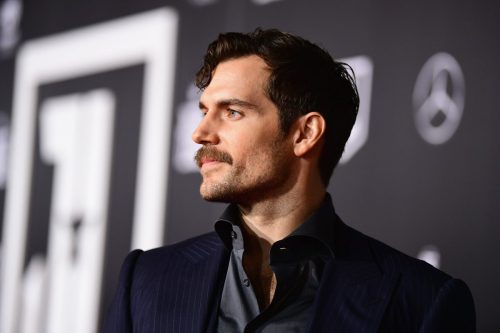
Why Henry Cavill Shouldn’t Apologize For His Comments On The Anti-Harassment Movement (But Still Had To)

gettyimages-873854634-1200x800

What does it say about the state of a society when people have to apologize for voicing honest, legitimate concerns? Pragmatically speaking, it implies that the value of truth and just has been subsumed by other influences. Whether it’s politics or ideology, it’s not hard for society to get to a point where unreasonable forces subvert reasonable issues.

In that sense, it’s ironic that the latest person to experience those influences once played Superman, the personification of truth, justice, and the American way. Henry Cavill, whose star has risen significantly since he broke out in “Man of Steel,” got into some hot water recently after an interview with GQ.

In that interview, he essentially made the same mistake Matt Damon made when he tried to comment on the anti-harassment movement. He said something that was reasonable, honest, and understandable from a purely logistical standpoint. He’s worried that something as simile as flirting with a woman could somehow be construed as harassment, which could lead to a full-blown scandal.

For reference, these were his exact words from the interview and the ones that subsequently led him down the same path as Matt Damon.

It’s very difficult to do that if there are certain rules in place. Because then it’s like: ‘Well, I don’t want to go up and talk to her, because I’m going to be called a rapist or something’. So you’re like, ‘Forget it, I’m going to call an ex-girlfriend instead, and then just go back to a relationship, which never really worked’. But it’s way safer than casting myself into the fires of hell, because I’m someone in the public eye, and if I go and flirt with someone, then who knows what’s going to happen?

Now? Now you really can’t pursue someone further than, ‘No’. It’s like, ‘OK, cool’. But then there’s the, ‘Oh why’d you give up?’ And it’s like, ‘Well, because I didn’t want to go to jail?’

Think about what he’s saying here and take a step back to see how he got to that point. He’s talking about being called a rapist just for going up to a woman and talking to her. How is that reasonable? It’s not. It sounds paranoid, but it’s perfectly understandable in the current social climate.

It’s easy to picture a scenario where someone like Cavill walks up to a woman, starts flirting, and ends up saying something inappropriate. That’s not just something men do. Women do that too. Being vulgar knows no gender. However, if the woman in this scenario takes particular offense, it could be construed as harassment or even assault.

If a woman was especially vindictive or just prone to exaggeration, she could accuse him of assaulting her. Even if those accusations aren’t even close to warranting an actual crime, it would still be devastating. The accusation alone would be enough to derail a promising career.

You don’t have to look far for evidence of this. Aziz Ansari was not charged with any crimes for the infamous incident that came out earlier this year and even if he had been, there’s no way he would’ve been convicted. An incident built entirely around a he said/she-said situation doesn’t come close to meeting the burden of proof for a criminal conviction.

That doesn’t matter, though. Ansari’s career has already taken a major down turn. His hit show, “Masters of None,” has not been renewed by Netflix since the allegations came out. Men like Henry Cavill, whose careers are ascending, certainly take notice of that. They don’t even have to commit a crime and suddenly, everything they worked for is in ashes.

For powerful men in Hollywood, it’s a reasonable concern, but one they probably won’t get much sympathy for expressing. Men like Henry Cavill are rich, successful, and handsome enough to comfortably wear Superman’s skin-tight costume. He’s a man who can attract women just by breathing. However, that may end up making him even more vulnerable.

Most people aren’t going to be inclined to make a big deal about someone who flirts inappropriately. When that person is a celebrity, though, the incentives are much stronger. You need only have an overreaction or a burning desire for attention to twist it into something much worse.

It’s for that reason that Cavill shouldn’t have apologized for his comments. His concerns are legitimate and after all the work he’s put in, he’s right to worry about the forces that might destroy it. That still didn’t matter. His comments still triggered a major backlash on social media. He also had to apologize for it. These were his exact words.

“Having seen the reaction to an article in particular about my feelings on dating and the #metoo movement, I just wanted to apologize for any confusion and misunderstanding that this may have created. Insensitivity was absolutely not my intention. In light of this I would just like to clarify and confirm to all that I have always and will continue to hold women in the highest of regard, no matter the type of relationship whether it be friendship, professional, or a significant other. Never would I intend to disrespect in any way, shape or form. This experience has taught me a valuable lesson as to the context and the nuance of editorial liberties. I look forward to clarifying my position in the future towards a subject that it so vitally important and in which I wholeheartedly support.”

Notice that there’s nothing in that apology that expands on his concerns. Cavill doesn’t attempt to re-frame his point or address some of the complaints levied against him. He just throws his hands up and apologizes about everything, as though every word he said was factually wrong.

Now, to be fair to Cavill, it’s very likely that the statement he gave was written by a publicist or agent. Chances are he was pressured to read that as quickly as possible in order to prevent him from getting labeled a misogynist or someone who did not wholly support the anti-harassment movement. Even if he didn’t feel inclined to apologize, he still had to do it in order to preserve his career and reputation.

Regardless of his reasons for doing so, he still apologized for telling the honest truth. The backlash he received didn’t even argue that truth. Most of it amounted to scoffing at the concerns of a rich, handsome celebrity who is undeserving of any sympathy. One commenter even went so far as to call him a wannabe victim.

Such criticism is every bit as absurd as the kind Matt Damon got when he dared to point out that there’s a difference between patting a woman on the butt and full-blown rape. They also fail to acknowledge that it’s entirely possible for a woman to be vindictive enough to falsely accuse someone of a heinous crime for the sole purpose of ruining their career, despite documented cases that this has happened.

It’s one thing to expose the serious crimes of predators like Bill Cosby and Harvey Weinstein. Those cases did have evidence and are being processed through appropriate legal means. The behaviors Henry Cavill described don’t even come close to that kind of conduct.

The fact that Cavill had to apologize sets a dangerous precedent for the anti-harassment movement. History has shown that any movement that throws off honest truth and basic justice is built on a poor foundation. In time, that foundation eventually crumbles and the merits of the movement get lost.

There are plenty of behaviors among celebrities and non-celebrities that warrant outrage. What Henry Cavill said wasn’t one of them. The fact he still had to apologize for his words does not bode well for anyone concerned with the values that heroes like Superman embody.

10 Comments

Filed under Celebrities and Celebrity Culture, Current Events, gender issues, media issues, political correctness, sex in media, sex in society, sexuality

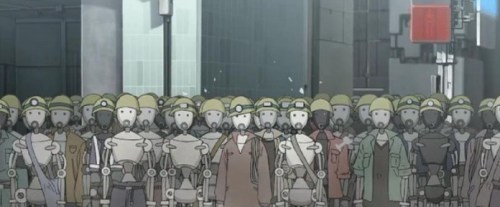
Technology, Slavery, And The (Distressing) Future Of Both

robot062715

Picture, for a moment, the perfect slave. Try to do it without making it a commentary on the current state of gender inequality, racial politics, or working at a fast food restaurant. Treat it like the other serious thought experiments I’ve proposed. What kind of traits would such a slave have?

Naturally, the perfect slave would have to be obedient. He, she, or it wouldn’t just obey an order without question. The idea of not obeying an order never even crosses their mind. In addition to obedience, the slave would have to be robust, durable, and capable. That may require some level of cognitive ability, but only to the extent that it can serve a master.

I bring this issue up knowing that slavery is an emotionally-charged topic with a bloody history. While we, as a society, have made strides in confronting the ethical issues surrounding it, including wars and social movements, slavery is still relevant today. At this very moment, millions of people are living as slaves.

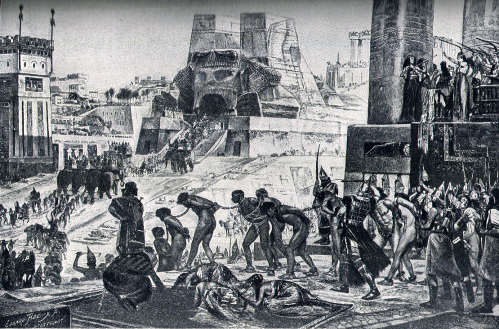
The fact that many people find slavery morally reprehensible says a lot about humanity’s capacity for justice. The fact slavery exists despite that aversion says just as much about the economics behind it. Producing anything requires labor. Cheap labor ensures more profit. It sounds simple, but it understates the massive financial incentives at work.

It’s because of those incentives that slavery, as abhorrent as it is, will likely have a place in our future. Ideally, the rapid growth of technology and automation will eliminate the need for human slavery. Advanced machines that have no sense of self basically circumvents the moral problem entirely.

Unfortunately, we don’t live in an ideal world. We also don’t live in a world where everyone exercises similar moral standards. Some are perfectly okay with utilizing slaves. Some of those people, sadly, are rulers of entire countries.

As such, it’s distressingly possible that emerging technology could be utilized to expand slavery rather than reduce it. I think it’s an unlikely scenario, given current social and technological trends. However, I worry it’s a road our society could go down if our choices are wrong and the incentives are strong.

To contemplate how, it’s important to note the limitations of slavery. While it does provide the cheapest possible labor, its inherent flaws tend to work against any society that relies on it and not just because of moral condemnation.

In any system that uses slavery, there are hidden costs that go beyond human suffering. Slaves require significant maintenance if you want them to produce. A master, no matter how ruthless, needs to care for their slaves so that they’re healthy enough to work. The logistics of that, especially in a world without modern medicine, made slavery a risky investment.

You could say the same about feudal societies that relied on serfs. While it wouldn’t be accurate to classify them as slaves, they still survived by providing slave-like labor to landlords. That may be a good deal for the landlords, but the system has a lot of vulnerabilities.

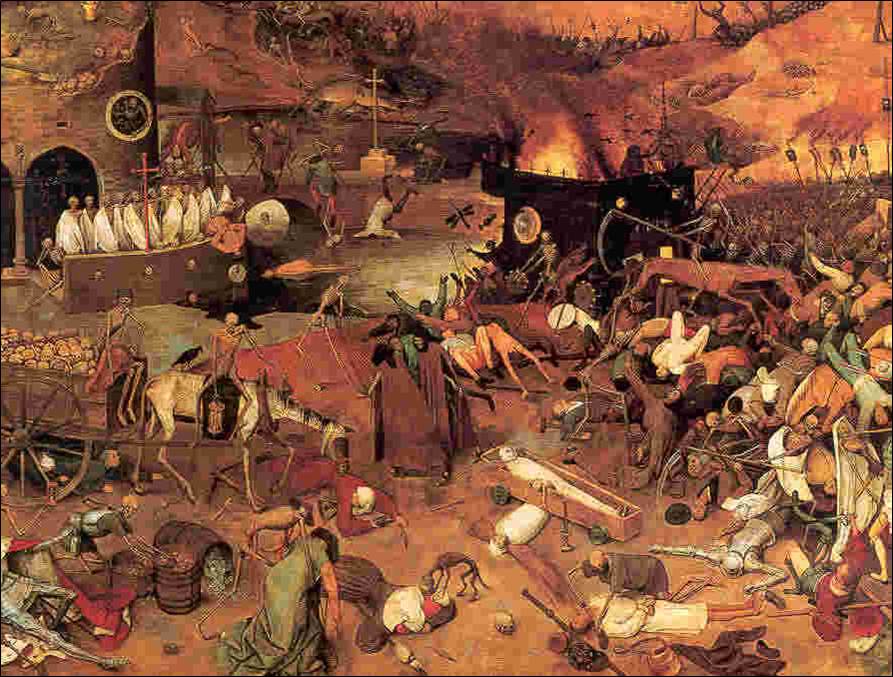
Historically, waves of death caused by disease, famine, and war hit these lower-class people first. When so much of the society relies on their cheap labor, it tends to collapse or stagnate. It happened after the Black Death and it happened in the American south.

It’s another byproduct of incentives. When you have cheap labor, there just isn’t much incentive to innovate. A lack of innovation over the long haul tends to doom empires and economies alike. In a modern context, that’s a good thing because it ensures slave-based economies can’t function over the long haul. However, emerging technology is in a position to change that.

Think back to the perfect slave I mentioned earlier. Those traits are currently unattainable for a human or a machine. On top of that, human beings are stubborn in their desire to not be enslaved. Refinements in biotechnology, genetic engineering, and cloning could change that, though.

This is where the dystopian potential of technology reveals itself. Even if robotics continues to advance, there’s a chance that the labor they provide isn’t adequate or the maintenance involved is too costly. In that scenario, those with the exceedingly flexible moral standards could resort to tapping genetic engineering to fill the gap.

It’s already possible to edit a genome, thanks to tools like CRISPR. It’s also possible to partially hack an existing genome, although that process is still in its infancy. In theory, there’s no reason why someone with the right tools couldn’t re-engineer a human being into a perfect slave.

That being may or may not look human. They may have a body, a similar muscle structure, and a series of specified cognitive abilities. However, every trait they have, biological or otherwise, would have the sole purpose of obeying and serving a master.

That means editing out the parts of the brain that give someone a sense of self or suppressing it with a brain implant. That also means limiting the slave’s capacity for thoughts and desires beyond serving their master.

Their bodies, as a whole, could also be engineered to minimize maintenance. Their digestive system could be made to require only an intake of cheap gruel. Their genetics and immune system could be structured in a way to resist disease. They could even be made sterile through gene editing or implants.

This is where the influence of cloning technology and artificial wombs enter the picture. One of the costliest parts of the old slave trade was traveling to remote areas, buying or subduing people into bondage, and then transporting them to areas where their labor could be exploited. Once you’ve engineered the perfect slave, though, biotechnology could effectively create a copy-and-paste process.

It goes beyond labor, as well. I’ve mentioned before how advances in sex robots could allow people to create customized lovers. Well, if it’s possible to engineer the perfect slave for labor, then it’s just as possible to engineer the perfect sex slave. The implications of that raise a whole host of disturbing possibilities.

Whether for sex or for labor, crating such slaves would be an incredibly tedious, incredibly risky feat. However, given the economics of slavery I mentioned earlier, the incentives are already there. With these advances, coupled with cybernetic augmentations, and the potential payoff is even greater.

Suddenly, there’s an endless pool of labor to work in factories, fields, and homes. There’s no need to worry about labor unions, minimum wage, or slave revolts. When slaves are engineered at the cellular level to be a slave, then it makes too much financial sense to use their labor.

As a result, future societies will find some excuse to justify this kind of slavery. The precedent is already there. It wasn’t that long ago that people found excuses to justify enslaving an entire race. In this case, though, it would be even easier.

If these slaves don’t come from existing populations and aren’t even genetically “human,” then it’s easy for someone to see this brand of slavery as something different from the kind we’ve utilized throughout history. If these slaves are engineered not to suffer or feel any discomfort, then that makes it even more tenable.

The end result could be something similar to what George Orwell envisioned with the proles in “1984.” There would be this massive underclass population that exists solely to work, serve, and obey. To some extent, it would go even further than Orwell did.

This population of slaves wouldn’t need to be placated with meaningless entertainment, indulgence, or distractions. Their default condition would be to serve their masters in every way necessary. Anything beyond that is never even a thought.

I don’t deny that the scenario I just described sounds bleak. If you have even a moderate sense of decency, you would be aghast at any society structured in such a way. Even if the slaves seemed happy and the people who served as their masters had no moral qualms with it, chances are it would still bother you and that’s a good thing.

I think it’s because of that inherent revulsion to slavery that this dystopian path is not likely. I believe advances in robotics technology is already outpacing the rate of biotechnology. By the time we have the tools to create the perfect slave biologically, we’ll probably already have the tools to make machines that can function just as well.

That’s still not a guarantee. Nobody can predict the future, especially not an aspiring erotica/romance writer. It’s still a potential path, though, and a very dark path at that. As a society and a civilization, we’re still recovering from the scars of slavery. Those are wounds we should avoid opening for the society we’re hoping to build.

Leave a comment

Filed under futurism, sex robots, Sexy Future

Reflecting On The Greatest Advice Rick Sanchez Ever Gave Us

rick-and-morty-season-3-creators-tease-a-return-to-previous-cliffhangers-and-characters-663486

Greetings, and wubba lubba dub dub! By now, you should know that means this will be another article about “Rick and Morty,” one of the greatest animated shows of this century or any other century, for that matter. I know that sometimes means the topics involved are depressing or downright fatalistic. I can’t promise this one will balance that out to any meaningful, but I still hope that this piece is more useful than most.

Love it or hate it, either due to its nihilistic undertones or exceedingly passionate fanbase, there are a lot of interesting insights to explore within “Rick and Morty.” From specific episodes that deal with the not-so-hidden appeal of the apocalypse to those built around Rick turning himself into a pickle, there’s a wide variety of lessons and themes to take in.

In this case, I want to focus on what I feel is the best advice “Rick and Morty” has given anyone, both within his animated world and in our own world. It’s a lesson that anyone can use in a multitude of situations, be it dealing with never-ending flood of depressing news to finding out a beloved actor was a total asshole.

Rick has given this advice to Morty on more than one occasion throughout the show, including the pilot episode and, most notably, in “Rick Potion #9.” It applies to battles against alien security guards, burying the body of your alternate self, and that time you farted in class a bit too loudly. It can be summed up in four simple words.

Don’t think about it!

On the surface, it doesn’t sound too useful. Not thinking about something seems like an elaborate excuse to avoid a particular problem or issue. It sounds like something adults tell children just to shut them up so they’ll stop bothering them. Whether they’re asking about where babies come from or why we can’t stop fighting wars, it feels like the overly easy way to avoid an unpleasant conversation.

However, I don’t think that’s what Rick means when he says that. He’s already proven in multiple episodes that he doesn’t give a Grunglokian fart about unpleasant conversations, as evidenced by his many unfiltered rants around his family. When he says “don’t think about it,” he’s saying it in a particular context that makes it more than just a method for avoiding awkward moments.

Watch any one episode of “Rick and Morty” and you’ll notice more than a few themes, not all of which are based on Rick’s ego or Morty’s obsession with a particular redhead. One of the major over-arching concepts that binds the show, and gives much of its appeal, is the idea that none of the things that people hold dear actually matter in the grand scheme of things.

Whether it’s religion, the economy, love, family, or the formula for concentrated dark matter, it just doesn’t matter in the long run. Religion doesn’t matter because it’s just some arbitrary set of beliefs built on unrelated correlations. The economy doesn’t matter if the value of money is entirely arbitrary. Love and family don’t matter when there’s an infinite number of them in the multiverse.

While that fits with the shows more nihilistic themes, it also speaks to the helplessness and frustration that a lot of people feel when dealing with a chaotic world/multiverse. There’s so much they can do, but so much of it doesn’t matter. The causes they fight for, the wealth they accrue, and the people they encounter simply lose their meaning when you consider the sheer size of the universe and how old it is.

In that context, not thinking about it might actually be helpful. If you work a job you don’t like, pay taxes you don’t like paying, and deal with people you can’t stand every day, the idea that it’s all for nothing in the long run isn’t just untenable. It maddening. How can anyone possibly cope with that kind of existence?

Not thinking about it, though, solves a lot of issues because it allows you to maintain the necessary perspective to function within that existence. Even if the things we do are meaningless, not thinking about it at least gives us the illusion that they’re meaningful. More often than not, perception beats reality and not just in terms of bias news.

It’s a byproduct of human’s being so limited in their thinking. Human brains did not evolve to prioritize reason, understanding, or making sense of an obscenely large universe. They evolved with the primary function to help us survive and reproduce, as individuals and as a species. Anything else is secondary or an afterthought.

Rick Sanchez seems to understand that and constantly exploits those limits for his own ends, whether it involves outwitting the President or outsmarting the devil. Unlike everyone else in a meaningless world within an infinite multiverse, he’s a super-genius. He has a portal gun that allows him to travel to infinite timelines at will, even if it’s just for a pizza.

Nobody else in this world has those capabilities, although I wouldn’t at all be surprised if Elon Musk weren’t working on it. Nobody in this world is as smart or as resourceful as Rick Sanchez. There’s very little he can’t do. This is a man who defeated a Thanos/Darkseid rip-off while blackout drunk. By every measure, what he does should carry more meaning than most.

Despite Rick’s abilities, he’s the one who often belabors how meaningless everything is. Never-the-less, he still operates as though there’s a reason to continue existing. That may send mixed messages when he says not to think about it, but that’s only if you overthink it, which would entirely defeat the purpose.

Rick knows that nothing he does matters in the long run, but he doesn’t think about that.

Rick knows that everyone he cares about are just random clumps of matter in a meaningless universe within an infinite multiverse, but he doesn’t think about that.

Rick knows that love, connection, and emotions are just manifestations of brain chemistry that help our species survive, but he doesn’t think about it.

Instead, he focuses his genius intellect on the things that matter to him. Whether that’s his family or that sweet, delicious Szechuan Sauce, he concerns himself primarily with what he feels gives his cosmic adventures meaning. It doesn’t matter if that meaning is empty in the grand scheme of things because, again, he doesn’t think about it.

It may sound egotistical or selfish, but it’s remarkably pragmatic in a meaningless universe. It keeps us from stepping back, realizing how insignificant we are, and succumbing to despair. It directs our energy and efforts into issues that are localized. For Rick Sanchez, a man with access to a portal gun and a space ship, localized is a relative term. For everyone else, though, it’s just that much more pragmatic.

There’s only so much we can do to exact meaningful change in the world. Unless you’re willing to go through the long, tedious process that involves reshaping government institutions, influencing cultural trends, or educating people on a mass scale, you can’t expect to achieve much change, especially by yourself.

Rick Sanchez could probably achieve all the change he wants, but chooses not to because he knows it’ll bore him or it’s just easier to go to a universe where that change has already occurred. For the rest of us, though, we’re frustratingly limited. We may never see or inspire the change we want. Even if we do, we can’t do it alone.

That kind of helplessness can be depressing. The idea that so little of what we do matters, even when we believe in a cause, is pretty distressing. That’s why Rick’s advice is so relevant. It’s not deep or inspiring, but it gets the job done.

Upset with past injustices upon a particular group? Don’t think about it.

Upset that you can’t change the minds of your friends and family on politics, religion, or ideology? Don’t think about it.

Upset that we’re not doing enough to address climate change? Don’t think about it.

Upset that the economy isn’t doing well and all the best opportunities are gone? Don’t think about it.

These are all things that you can’t change without a portal gun or galactic-level genius. Since Rick Sanchez has that and we don’t, our best recourse is to not obsess over it because there’s not much we can do. Eventually, the heat death of the universe will render everything we do or have ever done totally meaningless.

That can either be depressing or empowering, depending on how you look at it. Yes, not thinking about it won’t undo a traffic ticket, undo a crime you committed, or turn off your biological urges to eat, sleep, love, and mate. Efforts to do so can be damaging. For everything else though, not thinking about it is probably better for your mind, your body, and your overall sense of being.

In that sense, we should all thank Rick Sanchez for this amazingly useful device. While he’d probably say that gratitude is just a polite way of idiots admitting how incapable they are, it’s probably best not to think about his reaction. So long as the advice he gave works, what does it matter? Wubba lubba dub dub!

5 Comments

Filed under Current Events, human nature, philosophy, Rick and Morty

The Unofficial Platform Of The Nihilist Party

What follows is a little exercise I found myself doing after hearing too many political debates on TV and reading too many rants on social media. Debating/whining about politics seems to be our new favorite pastime in the age of social media and cable news. Personally, I find it frustrating and unproductive.

It’s for that reason that I’m going to attempt to flip the script on the endless barrage of outrage-inducing diatribes. Instead of attempting to inject a new political context into a discussion, I’m going to just hit the whole concept upside the head with a baseball bat of pure nihilism. I’ve enjoyed talking about it in the past, thanks largely to my love of “Rick and Morty,” and I’d like to channel it into something new.

In the spirit of those equally annoyed by political mud-slinging, who just happen to have an extra-healthy appreciation of nihilism, I hereby present the unofficial platform of the Nihilist Party. I know it’s not  real political party. In fact, nihilism being a political party would be paradoxical, given its philosophical underpinnings.

Now, I understand the inherent absurdity of such a concept. I also don’t deny that my expertise in nihilism and other such philosophies are limited, at best. There’s only so much you can learn by binge-watching “Rick and Morty” and “Bojack Horseman.” I still feel like that’s enough with which to craft a new political party. It’s not like other parties set the bar that high to begin with.

With those disclaimers out of the way, I hereby present what I believe is the unofficial platform for the Nihilism Party. If you want to imagine it being recited in the voice of Rick Sanchez, then by all means. I’m not expecting it to win your vote in the next election. It really doesn’t matter, which is kind of the point.


Preamble

We, the random clumps of matter drifting aimlessly throughout a meaningless universe, hereby decree in the name of a wholly arbitrary set of empty standards, set forth the following principles that we feel adequately create the illusion that how we govern our purposeless society matters. We believe all political ideologies are equally vapid and all forms of government inherently flawed, albeit to varying degrees. As such, we neither seek to pretend ours is superior, nor do we claim we can fix the flaws others ignore.


Statement of Principles

We acknowledge that any functional society, be it free or tyrannical, is finite in nature and subject to inescapable entropy over time. In the long run, no society or its various achievements can hope to outlive the inevitable destruction of our planet and the heat death of the universe. To pretend otherwise is an exercise in futility and ultimately counterproductive.

With these harsh truths in mind, the Nihilist Party seeks only to forge a temporary medium of comfort for those who insist on living in functioning society within a infinitesimal speck in the universe for an inherently finite period of time. Whether or not the individuals in that society accept those harsh truths is irrelevant. The Nihilism Party’s primary goal is to maintain whatever functional order is necessary to keep others content as they wait for their eventual annihilation into nothingness.

In accord with that goal, as meaningless as it may be, the following articles reflect the wholly arbitrary articles of the Nihilist Party. Please note that these principles are necessarily vague in order to embody the empty nature of all political underpinnings. Any effort to inject specifics for a pointless society within a pointless world would be contrary to the principles of the Nihilism Party.


Article 1: Nihilist Rights

  • Since all rights are just legal constructs disguised as inalienable assets, we neither support nor discourage efforts by a significant group of people to randomly denote what constitutes a legal right, provided that group does not impose it others in a manner that would make their meaningless lives uncomfortable.
  • The tendency for individuals to form complex social bonds, as determined by the biological programming of their flesh, is neither the concern of the Nihilism Party, nor is it their responsibility to manage beyond ensuring the nature of these arbitrary bonds aren’t impeding the desire of others to pursue their own false meaning.
  • Since government is nothing more than a temporary construct attempting to manage an inherently chaotic world in an ongoing act of never-ending futility, the scope and reach of such government will be limited to simply ensuring that citizens residing within whatever invisible borders are in place can willfully and peaceful pursue a life of empty meaning on their own terms.

Article 2: Nihilist Economic Policies

  • To the extent that everything of value is based on people just believing it has value, the Nihilist Party remains ambivalent to whatever kind of currency people want to use, be it slabs of metal, pieces of paper with famous dead people on them, or bits of digital code.
  • While the the Nihilist Party does not ascribe or inflate the value of one economic transaction over the other, those built on fraud, lies, and deception hinder peoples’ ability to seek whatever false meaning they pursue and therefore, in the name of preserving meaninglessness for all, favors efforts to limit such behavior to the greatest extent possible.
  • Truth and ethics are ultimately pointless in the long term, but in the short term, it creates favorable conditions for contentment among people and since that’s the most any sentient life from can hope for, the Nihilist Party supports policies that preserve both in economic activity.
  • Since all economic trends are finite, fleeting, and prone to both inflated and deflated value, the Nihilist Party favors playing no favorites in any industry and strongly opposes any efforts to support one form of economic activity over the other.
  • In the interest of ensuring all economic activity is on an equally meaningless playing field, each transaction and industry will be subject to the same arbitrary fees and rules as any others, but the Nihilist Party favors limiting the fees and rules to an extent that ensures equally worthless pursuits of worth.

Article 3: Nihilist Justice

  • The Nihilist Party’s default position on justice is that no one individual, group, majority, or minority is worthy of greater or lesser justice than anyone else and efforts to the contrary are ultimately a waste.
  • Seeing as how justice is a product of flawed, situational perspectives within a given time and place that is ultimately pointless, traditional notions of what is just in one situation cannot and should not apply to another, seeing as how every moment is fleeting.
  • While a meaningless life incurs little meaning in the long run, the needless infliction of suffering and loss is seen as incompatible with the Nihilist Party’s belief that all deserve some modicum of contentment while they await their eventual death and seeks to limit any disruptions to that contentment to the greatest extent possible.
  • The Nihilism Party does not endorse special treatment for anyone who prioritizes their contentment over another and only favors treating measurable, tangible harms as actual wrongdoings, as those are the only harms that carry any weight in a meaningless universe.

Article 4: Nihilist Government Structure

  • The Nihilism Party believes that governments, like the failed economies and fallen empires before it, are simply finite manifestations of spontaneous order among sentient beings and can neither be trusted nor empowered to do more than simply preserve meaningless contentment among its citizens.
  • To the extent that meaningless contentment requires the absence of petty wars and violent conflict, the Nihilism Party favors the maintenance of whatever defense forces are necessary to protect the population within its arbitrary borders from such conflicts, but opposes instigating conflicts for vapid notions of empire and legacy that are ultimately pointless at the heat death of the universe.
  • For those seeking to attain positions of authority within a government, the Nihilist Party supports those who seek to persuade a large enough group of citizens of their worth, but also favors measures that permit the easy removal of such individuals in the name of preserving the arbitrary nature of authority, in general.
  • Since people inevitably die, laws inevitably change, and legal traditions are rendered null over significant spans of time, the Nihilist Party remains ambivalent to the structure and makeup of a government, provided it preserves the party’s policy of maintaining equal contentment for those who seek to forge meaning in a meaningless universe.

Article 5: Nihilist Omission Provision

  • The absence, oversight, or omission of any policy or position in this platform is not to be construed as tacit or indirect statement of support or opposition, seeing as the Nihilism Party holds a position of strict ambivalence in the interest of maintaining the equal meaninglessness of all endeavors, past and present.

There you have it. That is my version of the a platform for the Nihilist Party. Please note that I do not pretend to speak for all nihilists, nor do I claim to be an expert in the subject. This is just a fun little exercise in mixing politics, nihilism, and the absurdity of both.

If you feel like there’s something worth adding to this platform, then please let me know in the comments. For those who are just as frustrated with politics and debates as I am, I hope this offers a nice reprieve, a good laugh, or a potent mixture of both.

Leave a comment

Filed under Current Events, nihilism, philosophy, political correctness, psychology

Why The Sexual Revolution Was Incomplete (And How It Can Be Completed)

hippies-free_-love_-600x521

Imagine, for a moment, putting together a piece of furniture, but stopping before it was finished. Depending on where you stop, chances are the furniture isn’t going to be as useful as you’d hoped. Sure, it may still function to some extent, but it’s incomplete. As a result, it can’t entirely do what it’s supposed to do.

With that idea in mind, imagine the same thing happening to a major social movement, a new vision for society, or a full-blown revolution. What happens if it stops before it realizes its goals? Even if some of those goals were unachievable, abruptly stopping an ongoing process or not bothering to adjust the methods of that process is bound to cause issues.

Some argue that the civil rights movement that began in 1950s was never completed. Others may argue that the French Revolution and the Russian Revolution were never complete, which was why they resulted in so much chaos and destruction. I’m not an expert on those subjects so I’m not going to wade into them.

However, I would support an argument stating that the sexual revolution that began in the 1960s was not complete and that has heavily influenced ongoing controversies involving sex, gender, and everything in between. Again, I am not an expert in this field. I am an aspiring erotica/romance writer. I’m about as much an expert as I am a wizard.

Expert or not, I do think that incomplete revolution is worth talking about in the context of ongoing gender-driven issues. We’re in the midst of pretty significant upheaval in wake of the anti-harassment movement, which I’ve talked about on more than one occasion and in some pretty eclectic ways. It may seem like this upheaval is very recent, but I believe its roots go back to the sexual revolution in the 1960s.

With each passing year, the sexual revolution gets a worse and worse rap. Conservative types will blame the sexual revolution for everything from human trafficking to the Catholic Church sex abuse scandals. Liberal types are starting to blame it on current social ills like the Harvey Weinstein scandal and so-called toxic masculinity.

To some extent, that’s understandable when you consider the context of the sexual revolution. As I’ve noted before, this major social upheaval emerged in a perfect convergence of factors. First, contraception and modern medicine made exploring sex less risky. Second, a generation of young people that has grown up in the exceedingly uptight 1950s rebelled.

Regardless of how you may feel about the sexual revolution now, it’s easy to understand why it happened when you look at the circumstances. A generation saw the state of sex in society and were not satisfied with it. As such, they sought change. Moreover, they sought radical change and not just in the classic hippie sort of way.

It wasn’t just about unmarried men and women having sex just to enjoy it and not make grandkids for their parents. The sexual revolution dared to explore and undermine taboos about homosexuality, monogamy, and gender roles. To some extent, the sexual revolution helped facilitate a new era of feminism that pushed for greater gender equality.

While I know feminism has some controversial connotations these days, the brand of feminism that emerged during the sexual revolution is one that I think most would support in 2018. They helped push for some of the legal protections and educational opportunities that have helped multiple generations of women and men alike.

Moreover, and most importantly to the gender issues of today, the sexual revolution attempted to normalize discussions and depictions of sexuality in general. One could argue that was the most critical aspect of the revolution, beyond the hippies and free love. After all, it’s next to impossible to have a meaningful discussion about anything if the topic is so taboo.

It’s also in this critical area, however, that the sexual revolution came up short. Sure, those involved did plenty of outrageous things, in private and in public, that shocked and terrified their more repressed elders. That was revolutionary for its time. However, they didn’t confront the stigma surrounding sex, at least not in a way that was gender neutral.

This is where I’m sure I’m going to draw the ire of both sides of gender-driven debates, but I think this needs to be said to add a little insight to the current debate. Yes, the sexual revolution did a lot to make sexual activity outside of marriage less taboo. However, that impact did not affect men and women the same way.

In wake of that revolution, men no longer faced as much stigma for fooling around sexually. The idea of “boys will be boys” became an accepted mantra. A young man fooled around in his youth, had multiple partners, and generally enjoyed himself without much shame. The sexual revolution helped him a great deal in terms of realizing his sexuality.

Ideally, women should’ve enjoyed the same freedom. However, that’s not what happened. There’s no “girls will be girls” equivalent. Even during the sexual revolution, women who slept around like their male counterparts were still subject to stigma. They were still called sluts and whores. They were generally looked down upon.

Now, before some start bemoaning “patriarchy” or something of the sort, it’s important to note that the source of that stigma does not come exclusively from men. In fact, according to a study done by Demos, other women were far more likely to slut-shame or use derogatory words to other women compared to men.

Regardless of the source, that lingering stigma that the sexual revolution attempted to confront has helped maintain a significant gender gap with respect to sexual freedom. It’s why men can be studs, but only women can be sluts, a frustrating double standard that has lingered well beyond the 1960s.

It may also be a significant factor in the current orgasm gap between men and women. Whereas the male orgasm is seen as routine and uncomplicated, the female orgasm has this elaborate mystique surrounding it. Just talking about it seems akin to talking about the meaning of life.

In many respects, that vast disparity reflects the current sexual divide. Men are still expected to be sexually aggressive. Women are still expected to be sexually reserved. Any deviation is subject to stigma. As is often the case with expectations, it doesn’t take much for them to become a self-fulfilling prophecy.

Due to that aggression, society has done a lot to cater to male sexual desires. That same system has done just as much to mystify female sexuality. It’s a grossly imperfect system, one that limits the ability of women to explore their sexuality without fear while giving men in positions of power more reason to pursue sex as though it were a holy relic.

That is not in line with the ideals of the sexual revolution. Love them or hate them, hippies had the right idea in terms of openness about sex. They did not divide the sexuality of a particular gender into something entirely different. They saw it as one thing that was worth exploring, but stopped short of pursuing it fully.

That shortcoming has had some noteworthy consequences. Reason Magazine nicely summed it up in a recent article about the sexual revolution and the sexual frustrations that current generations face.

The problem is not that sex has been over commodified as hardline feminists and conservatives (talk about strange bedfellows!) like to assert; the problem is that it hasn’t been commodified enough. The sexual industry in the broadest sense hasn’t matured enough yet to cater to the myriad and diverse needs of lonely single people (of both sexes). Where are the Dr. Ruths for single people facing confidence issues or looking for advice?

Now, none of this is to detract from the aspects of the sexual revolution that were misguided or had long-reaching consequences. The law of proportional backlash for social movements doesn’t care how complete or incomplete it is. Even if the sexual revolution had succeeded, it would’ve still incurred a counter-revolution of some sorts.

Regardless of its shortcomings, the sexual revolution got the conversation going on how we stigmatize sex. It wasn’t completed and there are plenty of flaws in our current sexual landscape to show that. Even so, that conversation is still worth having and I would argue it’s more important to have now than at any time in 1960s.

1 Comment

Filed under gender issues, political correctness, polyamory, Second Sexual Revolution, sex in society, sexuality

Using Nihilism To Make Sense Of Politics

nihilist_lives_dont_matter_462x385

I don’t consider myself that huge philosophy buff, but in general, I’m a fan of anything that helps me make sense of mind-bending complexities of the universe. In an era where mass media and the internet have made it easier than ever to see the breadth of that complexity, I think such tools are more valuable than ever.

Lately, I’ve found myself more frustrated than usual with the news media, the politics surrounding it, and the never-ending crisis/outrage cycle that it seems to perpetuate. I’ve written articles before where I’ve mused over the absurdities surrounding the media and outrage culture in general, but I’ve tried to be apolitical about it.

It hasn’t been easy, to say the least.

Well, given the ongoing trends of politically-driven divides in recent years, I don’t think that approach is entirely tenable in the long run. At some point, I’m going to have to get somewhat political on certain issues, more so than I already have. For that reason, I want to take a certain kind of philosophy and use it to cut through the layers of political bullshit that are sure to obscure any issue, present and future alike.

That philosophy is nihilism, which should come to no surprise of those who regularly follows this site. Whether it involves the tendencies of future generations or my favorite cartoon show, I’ve made my fondness of nihilism fairly clear. I also think that, as a philosophy, it’s a more useful tool than most with respect to filtering hyper-partisan politics.

In my experience, Nihilism is useful because its premise and principles are relatively simple. There’s nothing too convoluted or esoteric about it. As a baseline philosophy, nihilism posits that life, the universe, and everything in it has no inherent meaning. Human life isn’t special. Life, in general, isn’t special. The entire universe isn’t special. It’s just random clumps of matter floating around aimlessly.

It’s simple, albeit depressing. There’s a good reason why it’s popular among goths, punk music, and Rick Sanchez from “Rick and Morty.” It makes no promises and guarantees nothing. It acknowledges that all the meaning we ascribe to our lives and our world, be it through religion, ideology, or our favorite football teams, is entirely arbitrary.

Naturally, this does not sit well with those whose religion preaches faith in a higher power or whose ideology requires adherents to accept some greater, intangible meaning to it all. The basic implications of nihilism can leave many feeling uneasy. The idea that our universe is so purposeless can trigger an existential crisis, especially among those who’ve been led to believe there’s something special about them.

However, it’s that same cold, callous element to nihilism that makes it so useful. It immediately casts doubt on anything that someone or a group of people deem meaningful. It forces both observers and participants to take a step back and ask some metaphysical questions about why they deem something so meaningful.

To illustrate, here’s a painfully recent example. There have been two school shootings in 2018, thus far, that have garnered major media attention, followed significant political upheaval. One occurred in Parkland and the other occurred at Sante Fe High School in Texas. In both cases, the political upheaval involved gun control. One even led to a major, nationwide protest.

For one side of the political spectrum, these incidents motivate politically minded individuals to fight for stricter gun control. That’s the common position of liberal politics. For the other side of the political spectrum, such incidents motivate other politically minded individuals to protect the rights of gun ownership against government intrusion. That’s the common position of conservative politics.

Which side is right? Which side is wrong? Which side’s policies are more supported by verifiable scientific research? Which side’s position is statistically shown to result in less suffering?

These are all questions that both sides of the political spectrum argue about endlessly and to the point of absurdity. They’re questions that are impossible to answer. However, when you apply a little nihilism to the debate, the context suddenly changes. Instead of asking all these specific, unanswerable questions. Nihilism asks only one major question.

Why does it even matter?

More specifically, why does it matter what the liberals say? What does it matter what the conservatives say? Why does all the outrage and protest surrounding gun control, abortion rights, or convoluted campaign finance laws matter at all?

It’s not a question meant to trigger or troll an audience. The purpose, in this instance, is to get people to take a step back and understand that the meaning behind the current debate requires that the meaning behind this current point in time be exceedingly inflated.

With gun control, the primary catalyst for the debate that rages today began with the Columbine shooting in 1999. Many of the passions surrounding gun control began with that event. I’m old enough to remember how big a deal it was when it first happened. My school underwent a great deal of melodrama during that time.

As horrific as that event was, why is it any more meaningful than the deadly shooting that occurred in 1966 at the University of Texas in Austin? Going back even further than that, what about the deadly massacre that occurred without guns at Enoch Brown that occurred in 1764 and left 10 people dead, 9 of which were children?

Most people don’t even remember or know of those atrocities. Do they matter any less? Sure, there aren’t as many people alive today who are affected by them. In fact, for most atrocities committed before the 20th century, nobody is alive to ascribe meaning to those events.

That makes sense through the lens of nihilism because, given enough time and entropy, nothing matters in the long run. The outrage of those events and all those effected passed as soon as the people involved passed. When they died, they took the meaning with them. Even though the records of those events still exist to anyone willing to look them up, they are devoid of meaning.

Now, with that in mind, think about how meaningful the recent school shootings will be 200 years from now. It’s a given that they won’t be nearly as relevant, but will they carry the same meaning? Will anything that happened as a result really matter in the long run? Will all those political debates mean anything in the grand scheme of things?

If history is any indication, and history itself is subject to arbitrary meaning with nihilism, then chances are it won’t. There’s a high possibility that the current uproar surrounding gun control, as well as the uproar surrounding every political issue we deem important today, will eventually be rendered pointless.

That’s not to say they become pointless in an instant. Time has a way of skewing and twisting hot-button issues that don’t always make much sense in the decades that followed. Before the 1980s, abortion was largely considered a Catholic issue and didn’t become really touchy until the rise of the religious right.

The same thing happened with issues of censorship. Back in the mid-1960s, campuses like UC Berkeley were the central hub of the free speech movement that championed the right of people to say controversial things. These days, those same campuses have promoted censorship of controversial speakers, sometimes to the point of violence.

To most, that comes off as an act of hypocrisy. In a nihilistic context, though, it makes sense because both positions are similarly flawed. They were deemed meaningful during a particular time, but once that time passes, that meaning faded once the people who gave it that meaning moved on.

That, more than anything, is the ultimate message nihilism conveys to political discourse. What people consider politically charged is only relevant because the people currently alive are making it so. When those people die, move on, or get bored, the political upheaval fades and loses meaning.

The fact that such a heated issue can lose meaning further implies that the meaning ascribed to it in the first place was entirely arbitrary. It only meant something because people subjectively believed it. There was no larger force at work in the grand scheme of things. It’s just individuals in a certain time at a particular place collectively deciding that this is worth their emotional energy.

It may seem callous. It may even seem to undercut suffering and injustice. However, I would argue that nihilism actually helps by putting an issue into a proper context. Whether it’s gun control, abortion, or the right of a person to marry a squirrel, the meaning of both the issue and the passions behind it is contingent on those experiencing it. There’s nothing else beyond that and pretending there is only obscures the situation.

Nihilism, and its propensity to strip away inflated meaning, reduces every issue back to temporary, finite beings concerned with their current condition in a fleeting, uncaring, unguided universe. It doesn’t matter if life is ultimately meaningless in the long run. It doesn’t matter that life in the past has been rendered pointless or that life in the future will eventually be pointless. What matters is what we’re experiencing now.

Anything beyond that context within a political issue is just false meaning. Anything that attributes more meaning to the events in the past and future is just as arbitrary. Ultimately, the individuals alive today are responsible for ascribing meaning to an issue, whatever it may be.

I believe that harsh truth actually puts every political issue in a proper perspective, one that shows just how responsible we are as a society for giving meaning to an issue. It doesn’t mean we should all just give up and lament at the meaninglessness of our lives. It means we should be mindful of the things to which we ascribe meaning because, in a nihilistic universe, nothing else will do it for us.

Leave a comment

Filed under Current Events, nihilism, philosophy

The (Not So) Hidden Philosophical Insights In “Avengers: Infinity War”

landscape-1522945902-mlu-17652-r

The past few weeks have been exciting, shocking, and downright cathartic for fans of superhero movies. The success of “Avengers: Infinity War” is beyond dispute. Between critical praise and a record-setting box office haul, it has entered uncharted territory in terms of success, both as a movie and as a cultural phenomenon.

As a lifelong comic book fan who hasn’t forgotten the dark days “X-men Origins: Wolverine” and “Batman and Robin,” the impact of this movie puts a big smile on my face. Even those who doubted a movie this ambitious could be made or keep hoping for superhero fatigue can’t deny the breadth of what “Avengers: Infinity War” has achieved.

Those achievements are worth celebrating, at least until the first trailer of “Avengers 4” comes out. As part of that celebration, I also think it’s worth taking a step back and looking at the bigger messages that “Avengers: Infinity War” conveys. To simply call it a big, flashy spectacle meant to milk movie fans of money would be a gross oversimplification.

Nothing becomes this successful without having meaning beyond the spectacle. No movie can appeal to such a wide audience or get them to pay grossly inflated ticket prices without having that meaning. Movies like “Avatar” and “The Godfather” have that kind of meaning that transcends the content of the movie. Even other superhero movies like “The Dark Knight” dare to explore deeper philosophical insights .

I believe those insights are present in “Avengers: Infinity War.” I also believe that those insights are unique because the entire setup for the movie is so unique. No movie in history has required a decade of build-up, multiple phases, and an over-arching narrative that spans movies that range from gods invading Earth to talking Raccoons teaming up with renegade space pirates .

That puts this movie in uncharted territory. The events of the movie can’t function in a vacuum without losing elements of that larger message. While the nature of that message is debatable, I’m going to make a case that the deeper meaning in “Avengers: Infinity War ” is one that complements those of the previous Avengers movies. I’ll even go so far as to claim it has implications for the real world.

The core of that message, I believe, has to do with a simple truth that probably seems inane, especially to those who read a lot of comics or consume a healthy dose of superhero-themed media. However, it’s a message worth belaboring and it can best be summed up like this.

A united team is stronger than a collection of powerful individuals.

I know that sounds like a snippet from one of Captain America’s inspiring speeches. It’s probably something teachers, coaches, and parents have conveyed to their kids, going all the way back to pre-school. However, I think “Avengers: Infinity War” conveys that message in a way that makes for a much greater spectacle with an equally great impact.

Even if you watch “Avengers: Infinity War” without seeing the last two Avengers movies, there’s one obvious obstacle that all the heroes face in the battle against Thanos. Before the first shot is fired, they’re all deeply divided. They’re not a team. They’re a mess.

Iron Man and Captain America aren’t on friendly terms. Tony Stark said as such at the beginning of the movie. It’s also established that Captain America and those loyal to him are fugitives, a direct result of the events in “Captain America: Civil War.” They are, to some extent, a metaphor for a divided team and a divided society.

That may not sound like a big deal, but to the extent it reflects a core strength of humanity, as both a species and a society, it couldn’t be more vital. I’ve mentioned before how tribal people can be. I’ve even framed it as a flaw, at times. While it certainly can work against us, it’s also one of our greatest strengths.

I don’t think it’s unreasonable to say that the human ability to form groups, work together, and coordinate in the name of a common goals is one of our greatest survival advantages. By forming teams and organizing societies, we’ve become the most dominant species on this planet. The Avengers are, from a philosophical standpoint, the embodiment of that team strength.

As individuals, we all have plenty of shortcomings. Not everyone knows how to fix a car, program a computer, or treat a staph infection. There are also too many of us who die from stupid accidents or treatable infections. As a team within a society, though, we’re able to thrive and overcome obstacles that no individual can overcome, even if they’re a super soldier or a billionaire inventor.

In “Avengers: Infinity War,” the team faces the ultimate obstacle in Thanos. He hits like an unpredictable force of nature. He brings callous, chaotic death and is willing to cross every conceivable line to achieve his goal. He’s not someone that can be dissuaded, talked down, or negotiated with. He must be opposed directly.

In other words, he’s the worst kind of threat the Avengers could’ve faced in their current condition. That’s critical because the first “Avengers” movie and “Avengers: Age of Ultron” do plenty to establish the value of having a unified team against such threats. In both those movies, the Avengers bicker and clash. However, they stay united and eventually defeat the threat.

You don’t need to look that deep into history to see parallels that reflect the strength of unified alliances. The unity of the allied powers in World War II proved overwhelming to the Axis. Contrary to popular belief and even a few popular alternate history stories , the Axis powers were never that close to winning the war. In fact, they were a very poor allegiance and hurt each other much more than they helped.

Even in recent times, greater unity in the form of globalization, free trade, and mass communication has helped unite the world on an unprecedented scale. While globalization gets a bad rap these days, it has helped create one of the most peaceful and prosperous times in human history. Like the Avengers, disparate societies are working together to achieve things they couldn’t achieve on their own.

In “Avengers: Infinity War,” and I know this is somewhat of a spoiler for those who haven’t seen the movie, the divisions within the team kept them from uniting against Thanos. They couldn’t be as effective as they were in “Avengers” and “Avengers: Age of Ultron.”

You could also make the argument that the Avengers weren’t willing to sacrifice as much as him. There were, indeed, opportunities to stop Thanos in his tracks. However, those opportunities required someone to die. The logic was that sacrificing one life would save many, trillions in this case.

That may seem like a failure on the part of the Avengers, but I would argue those difficult decisions are a direct byproduct of disunity. When a team is divided and not coordinating with one another, they have to make these kinds of sacrifices. Even if they did, though, it still doesn’t guarantee that they would beat Thanos.

It’s another consequence of disunity, division, and not coordinating with one another. Everything becomes a reaction. There’s little room to plan or prepare. That worked against the Avengers in a big way because they did have some warning surrounding Thanos. The visions Tony had in “Avengers: Age of Ultron,” at the very least, offered hints as to what might be coming.

Rather than use that opportunity to unite, they ended up divided. In the end, the outcome of “Captain America: Civil War” ensured that “Avengers: Infinity War” was going to end badly for the Avengers. It’s part of what helped give “Avengers: Infinity War” such an enormous impact. It takes those over-arching narratives from other movies and gives them greater weight.

Now, none of this is to say that the Avengers would’ve defeated Thanos easily had they been united from the beginning. Even if every one of them had been present and on the same page, there are no guarantees against a threat like Thanos. Like a supervolcano eruption or a gamma ray burst, it’s impossible to know whether we can survive a powerful threat we’ve never faced before.

Even so, history and nature are ripe with examples that demonstrate how united, cohesive teams are better able to survive major threats than powerful individuals. One human versus one hungry grizzly bear is not a fair fight. An entire team of humans, armed with a desire to survive and the collective know-how of multiple individuals, makes it exceedingly unfair for the grizzly.

Like the Avengers, the best teams are those that maximize an individual’s unique talents while empowering them with a collective drive. In those same teams, the conflict between individualism and collectivism strikes a critical balance. They aren’t so unified that they become prone to drone-like behavior. They also aren’t so divided that they’re too weak to coordinate.

We see that balance in teams that win championships. We also see it in organizations that accomplish great things, from building the pyramids to landing a man on the moon . A lot of what humanity has achieved, as a species, has been done through a collection of brilliant individuals who are able to work within a society to make their ideas happen.

The same effect applies to superheroes, who embody ideals of individual powers and abilities. On their own, Captain America, Iron Man, Thor, and even Ant Man can do great things. As a team, though, they can do much better.

It’s both a lesson and a powerful message, laced within a cinematic marvel. It shows just how weak and vulnerable we are when we’re divided, petty, and disorganized. Hopefully, “Avengers 4” can complete the story by showing just how strong we can be when we’re united, motivated, and driven. It may be an old, overplayed message, but it’s one worth belaboring in a world that’s still very divided.

Leave a comment

Filed under Comic Books, Jack Fisher, Superheroes, human nature