Tag Archives: sex in society

Sex Robots, 3D Printing, And The Future Of The Porn Industry

feature

Most people with a passing knowledge about the history of media know that the porn industry played a significant role in deciding the competition between VHS and Betamax back in the 1970s. Decades later, porn played a similar role in the growth of the internet. It’s not unreasonable to say that the growth of the internet was fueled by porn.

Love it or hate it, the adult entertainment industry is a powerful economic driving force. Every effort to combat or avoid it has failed. Protests and outrage has done little to undercut the billions in revenue it generates every year. Culture, tastes, and media technology keeps changing and porn finds a way to adapt to it.

Lately, though, it has had a harder time adapting than usual. While the internet helped grow the adult industry, that same medium is undermining it by facilitating piracy and limiting distribution channels. Unlike Netflix or other streaming services, most major media companies don’t allow adult content on their platforms. Some have even gotten rid of their softcore content.

These limitations and setbacks are likely temporary, though. For as long as there is a market for sexy content and a collective libido that remains unsatisfied, the adult industry will find a way to adapt and make profits. It’s very likely that 20 years from now, the porn industry will look nothing like it does today.

Whatever form it takes will likely astonish some and terrify others. It’s hard to know for sure how the economics of porn will evolve, but there are already signs that the future of the adult industry is taking shape. As we saw with the VHS/Betamax issue, the technology is already in place. It’s just a matter of maturation and refinement.

As I write this, the development of sex robots is well underway. There’s also already an established market for life-like sex dolls that can’t interact with users, but can still provide an intimate experience that you can’t get through a computer screen. This current situation has already been subject to controversy, but further refinements ensure there will be many more to come.

That’s not just me speculating, though, as I’ve done before with sex robots and sex dolls. I’m writing this because a critical, but under-reported refinement in the sex doll/sex robot industry took place recently in China from a company called DS Doll Robotics. Their plans, if they come to fruition, may do for sex dolls what McDonald’s did for cheeseburgers.

Those plans involve addressing one of the key limitations of sex dolls at the moment, which also will plague sex robots if it isn’t addressed. As it stands, just making a sex doll is expensive, labor-intensive, and difficult to mass produce. That’s why most high-quality sex dolls will set you back at least several thousand dollars. It’s actually comparable to the cost of cell phones in the early 1980s.

DS Doll Robotics is looking to change that. In July 2018, they launched plans to utilize 3D printing to help streamline the manufacturing process. What the assembly line did for cars, this company hopes to do for sex dolls and, eventually, sex robots that incorporate artificial intelligence.

It may sound mundane on paper since 3D printing has been an emerging technology in the manufacturing sector. It’s still has room to mature in the same way the early internet had to mature, but it’s one of those technologies that’s uniquely equipped to help the adult industry. In fact, it’s not unreasonable to say that it’ll completely reinvent it.

That’s because DS Doll Robotics isn’t just using 3D printing to streamline the manufacturing process. They’re also using new scanning techniques to scan the bodies of real humans as a baseline, of sorts. This is an exact quote from the July 2018 article that reported on the company’s plans.

“It is also connected to a 3D scanner which can be used to scan in the body of a full person as well as prototype parts for replication. This type of technology is excellent for creating new doll bodies and faces as they can be developed from a real human.”

That bold text is my doing because that’s the part of the story, I feel, that has far greater implications. Just making sex dolls cheaper and easier to produce isn’t going to change the adult industry too much. It may expand an existing market that had been cost-restrictive before, but it won’t provide a radically different experience compared to the one that exists today.

The part where sex doll manufacturers scan the bodies of real people, though, is something that will significantly impact the entire landscape of the adult entertainment industry. It won’t just change the economics of sex dolls. It’ll change the way the adult industry operates.

To understand how, it’s necessary to know how adult entertainers make money in the current economy. Most people in the adult industry, be they performers, directors, or producers, get paid a certain amount for each scene they perform. In the past, they could also depend on residuals from DVD sales, but those have declined sharply due to piracy and tube sides.

As a result, it’s becoming increasingly common for porn stars to do escorting on the side. Being a porn star makes it more lucrative than regular escorting, but that still comes with risks, especially in wake of recent legal issues attacking sex work. With sex dolls and 3D printing, though, these entertainers suddenly have a new way to monetize their sex appeal.

From a business standpoint, porn stars and beautiful celebrities in general are in the best possible position to franchise their bodies. Say there’s a moderately-successful porn star, male or female, who has some level of notoriety. If they do their job well, they create a fan base. Chances are there’s a significant portion of that fan base that wants to have sex with them.

Thanks to DS Doll Robotics, they can get that or at least something close to that without having to resort to escorting. Some porn stars already licence parts of their bodies as sex toys, but with 3D printing technology, they can do it all. With further refinements to the flesh and molding of the body, it wouldn’t just feel like plastic. It would feel real.

Some of this is already being done to a limited extent. Some porn stars have licensed their bodies to create life-like sex dolls. However, they’re still very expensive and labor intensive. Refinements of 3D printing will bring that cost down and that will grow the market, but it won’t stop there.
It’ll only be when sex robots and artificial intelligence enter the mix that the true future of the adult entertainment industry will take hold. Once those same licensed bodies develop an ability to interact with their users, then they’re not just over-sized masturbation aids. They deliver a full-on sexual experience.

Like brands of clothing or food, each adult entertainer could create a particular brand. One star might have a really cute, friendly personality. Another might have a very domineering, controlling personality. By incorporating them into a sex robot, they create a product that cannot be experienced through a computer screen, let alone pirated.

For the adult stars themselves, it’s easy money. They wouldn’t actually have to do anything, sexual or otherwise. They would just have to license their likeness to a company and collect a portion of the residuals like any merchandising company. If they prove really popular, then they could conceivably create a life-long income that continues well past their stint in the business.

That’s something that’s difficult to do in any entertainment industry, pornographic or otherwise. The use of 3D printing and more realistic materials will make that both possible and lucrative. If it becomes cheap enough, then the opportunities even go beyond direct sales.

There are already sex doll brothels operating in certain parts of the world. In areas where prostitution is legal, there’s even an app for people to order a prostitute the same way they would an Uber. In the future, if someone doesn’t want to buy, store, and maintain a sex robot, they may just rent one for a while. Between discretion and safety concerns, there would certainly be a market for that.

I’m sure that sort of business would attract a great deal of controversy and outrage. Sex dolls are already controversial and sex robots already have their opponents. However, if history is any guide, the prospect of making money and satisfying peoples’ burning libidos will win out. It’s just a matter of how quick the technology can progress and how quickly the ever-evolving adult industry adapts.
10 Comments

Filed under futurism, Marriage and Relationships, sex in media, sex in society, sex robots, sexuality, Sexy Future

Why Henry Cavill Shouldn’t Apologize For His Comments On The Anti-Harassment Movement (But Still Had To)

gettyimages-873854634-1200x800

What does it say about the state of a society when people have to apologize for voicing honest, legitimate concerns? Pragmatically speaking, it implies that the value of truth and just has been subsumed by other influences. Whether it’s politics or ideology, it’s not hard for society to get to a point where unreasonable forces subvert reasonable issues.

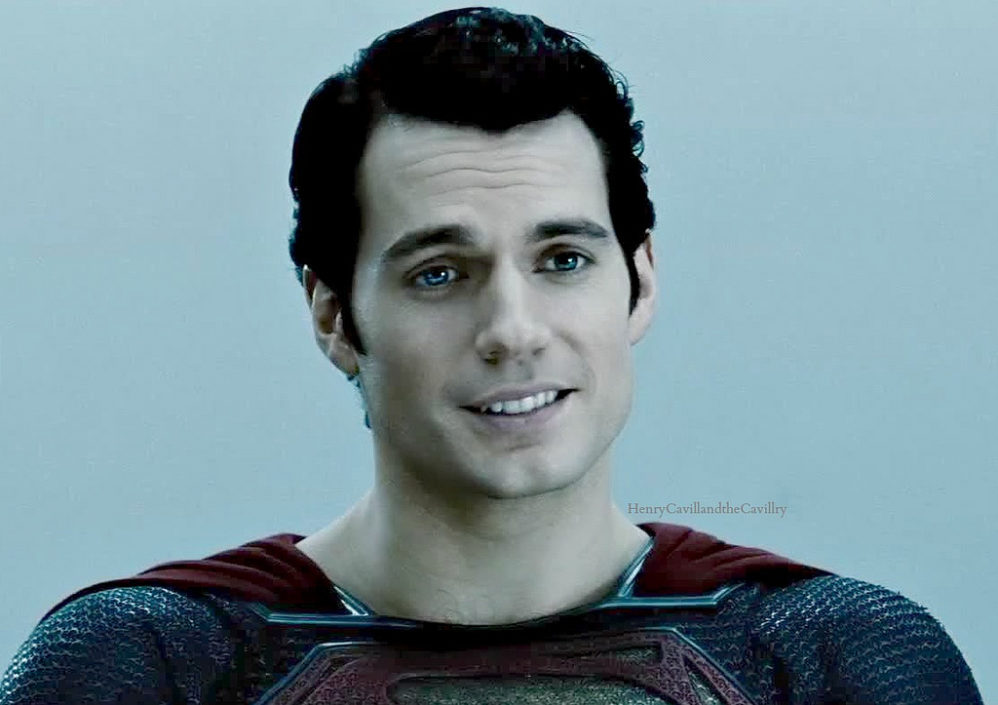
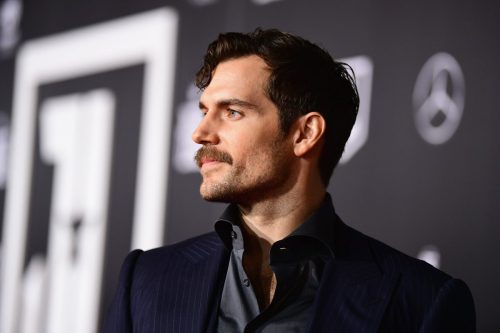
In that sense, it’s ironic that the latest person to experience those influences once played Superman, the personification of truth, justice, and the American way. Henry Cavill, whose star has risen significantly since he broke out in “Man of Steel,” got into some hot water recently after an interview with GQ.

In that interview, he essentially made the same mistake Matt Damon made when he tried to comment on the anti-harassment movement. He said something that was reasonable, honest, and understandable from a purely logistical standpoint. He’s worried that something as simile as flirting with a woman could somehow be construed as harassment, which could lead to a full-blown scandal.

For reference, these were his exact words from the interview and the ones that subsequently led him down the same path as Matt Damon.

It’s very difficult to do that if there are certain rules in place. Because then it’s like: ‘Well, I don’t want to go up and talk to her, because I’m going to be called a rapist or something’. So you’re like, ‘Forget it, I’m going to call an ex-girlfriend instead, and then just go back to a relationship, which never really worked’. But it’s way safer than casting myself into the fires of hell, because I’m someone in the public eye, and if I go and flirt with someone, then who knows what’s going to happen?

Now? Now you really can’t pursue someone further than, ‘No’. It’s like, ‘OK, cool’. But then there’s the, ‘Oh why’d you give up?’ And it’s like, ‘Well, because I didn’t want to go to jail?’

Think about what he’s saying here and take a step back to see how he got to that point. He’s talking about being called a rapist just for going up to a woman and talking to her. How is that reasonable? It’s not. It sounds paranoid, but it’s perfectly understandable in the current social climate.

It’s easy to picture a scenario where someone like Cavill walks up to a woman, starts flirting, and ends up saying something inappropriate. That’s not just something men do. Women do that too. Being vulgar knows no gender. However, if the woman in this scenario takes particular offense, it could be construed as harassment or even assault.

If a woman was especially vindictive or just prone to exaggeration, she could accuse him of assaulting her. Even if those accusations aren’t even close to warranting an actual crime, it would still be devastating. The accusation alone would be enough to derail a promising career.

You don’t have to look far for evidence of this. Aziz Ansari was not charged with any crimes for the infamous incident that came out earlier this year and even if he had been, there’s no way he would’ve been convicted. An incident built entirely around a he said/she-said situation doesn’t come close to meeting the burden of proof for a criminal conviction.

That doesn’t matter, though. Ansari’s career has already taken a major down turn. His hit show, “Masters of None,” has not been renewed by Netflix since the allegations came out. Men like Henry Cavill, whose careers are ascending, certainly take notice of that. They don’t even have to commit a crime and suddenly, everything they worked for is in ashes.

For powerful men in Hollywood, it’s a reasonable concern, but one they probably won’t get much sympathy for expressing. Men like Henry Cavill are rich, successful, and handsome enough to comfortably wear Superman’s skin-tight costume. He’s a man who can attract women just by breathing. However, that may end up making him even more vulnerable.

Most people aren’t going to be inclined to make a big deal about someone who flirts inappropriately. When that person is a celebrity, though, the incentives are much stronger. You need only have an overreaction or a burning desire for attention to twist it into something much worse.

It’s for that reason that Cavill shouldn’t have apologized for his comments. His concerns are legitimate and after all the work he’s put in, he’s right to worry about the forces that might destroy it. That still didn’t matter. His comments still triggered a major backlash on social media. He also had to apologize for it. These were his exact words.

“Having seen the reaction to an article in particular about my feelings on dating and the #metoo movement, I just wanted to apologize for any confusion and misunderstanding that this may have created. Insensitivity was absolutely not my intention. In light of this I would just like to clarify and confirm to all that I have always and will continue to hold women in the highest of regard, no matter the type of relationship whether it be friendship, professional, or a significant other. Never would I intend to disrespect in any way, shape or form. This experience has taught me a valuable lesson as to the context and the nuance of editorial liberties. I look forward to clarifying my position in the future towards a subject that it so vitally important and in which I wholeheartedly support.”

Notice that there’s nothing in that apology that expands on his concerns. Cavill doesn’t attempt to re-frame his point or address some of the complaints levied against him. He just throws his hands up and apologizes about everything, as though every word he said was factually wrong.

Now, to be fair to Cavill, it’s very likely that the statement he gave was written by a publicist or agent. Chances are he was pressured to read that as quickly as possible in order to prevent him from getting labeled a misogynist or someone who did not wholly support the anti-harassment movement. Even if he didn’t feel inclined to apologize, he still had to do it in order to preserve his career and reputation.

Regardless of his reasons for doing so, he still apologized for telling the honest truth. The backlash he received didn’t even argue that truth. Most of it amounted to scoffing at the concerns of a rich, handsome celebrity who is undeserving of any sympathy. One commenter even went so far as to call him a wannabe victim.

Such criticism is every bit as absurd as the kind Matt Damon got when he dared to point out that there’s a difference between patting a woman on the butt and full-blown rape. They also fail to acknowledge that it’s entirely possible for a woman to be vindictive enough to falsely accuse someone of a heinous crime for the sole purpose of ruining their career, despite documented cases that this has happened.

It’s one thing to expose the serious crimes of predators like Bill Cosby and Harvey Weinstein. Those cases did have evidence and are being processed through appropriate legal means. The behaviors Henry Cavill described don’t even come close to that kind of conduct.

The fact that Cavill had to apologize sets a dangerous precedent for the anti-harassment movement. History has shown that any movement that throws off honest truth and basic justice is built on a poor foundation. In time, that foundation eventually crumbles and the merits of the movement get lost.

There are plenty of behaviors among celebrities and non-celebrities that warrant outrage. What Henry Cavill said wasn’t one of them. The fact he still had to apologize for his words does not bode well for anyone concerned with the values that heroes like Superman embody.

10 Comments

Filed under Celebrities and Celebrity Culture, Current Events, gender issues, media issues, political correctness, sex in media, sex in society, sexuality

Why I Don’t Use The Term “Social Justice Warrior” And Ideas For A Better Label

sjw-o-face

Every now and then, I get comments and criticisms about my writing style. Some are constructive. Some are just angry rants that I’m perfectly content to ignore. There is one criticism, though, that I feel is worth addressing.

Specifically, it involves some specific terms I avoid using. Most people with an internet connection or access to cable news have probably heard the term “social justice warrior” at least once. It’s rarely in a positive light. It’s often used as an insult or a signal that you’re about to say something that’s going to evoke a lot of angry comments on social media.

I’ve been tempted to use it in the past. I’ve discussed many topics involving feminism, men’s issues, and social inequality that often get people throwing that term around as though it were a demonic chant. There’s a reason I’ve avoided it, though, and I hope to demonstrate that it’s a good reason.

First off, I want to make clear that I despise the term “social justice warrior” almost as much as I despise “toxic masculinity,” a phrase I believe cannot fade from our language fast enough. I see this label as one of the worst manifestations of the English language since the hippie era and at least they could blame psychedelic drugs.

I also believe that its continued usage will do more to breed hatred, outrage, and division at a time when we’re already more divided than ever. It derails a conversation and detracts from discussions about serious issue involving society, justice, and gender. This term is literally holding back progress, which is ironic given the nature of its definition.

The actual definition of a social justice warrior, or SJW as it’s colloquially used, is somewhat vague. It’s a modern-day catch-all term for a particular brand of politics and social attitudes. According to Wikipedia, the definition is as follows:

A pejorative term for an individual who promotes socially progressive views, including feminism, civil rights, and multiculturalism, as well as identity politics. The accusation that somebody is an SJW carries implications that they are pursuing personal validation rather than any deep-seated conviction, and engaging in disingenuous arguments.

I think that definition covers most of the most common ways the term is used, but I think it underscores how much vitriol it inspires. Spend any amount of time on social media and you’ll find some of the most hateful, demeaning, and divisive rhetoric you can imagine.

However, it’s not just the extreme rhetoric this term inspires that discourages me from using it. It’s not even the tendency for a conversation to devolve rapidly as soon as the words “social justice warrior” show up in a sentence. What I find most objectionable about this term is how fundamentally dishonest it is.

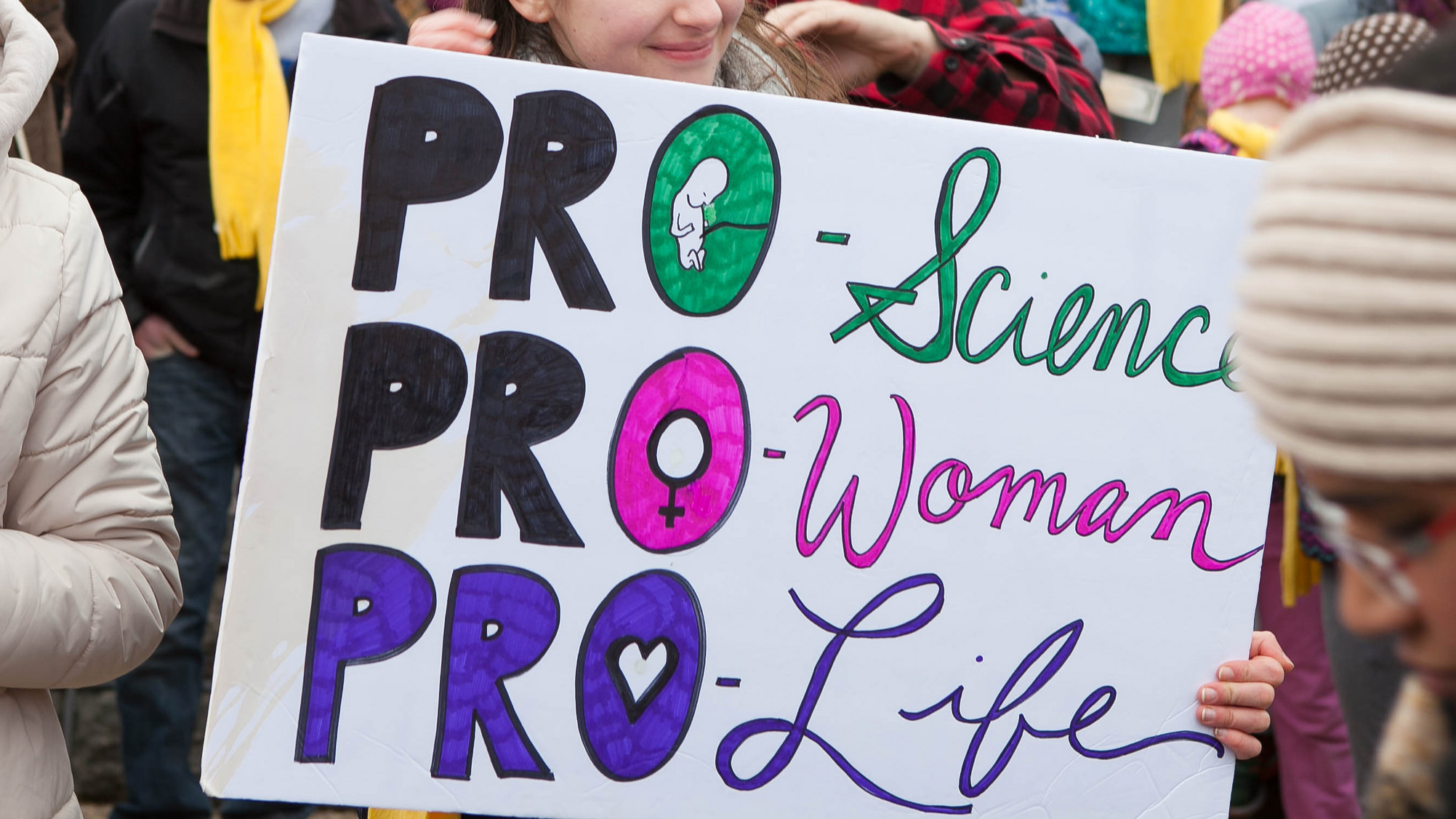
To illustrate how, look at the anti-abortion movement, another extremely divisive issue that tends to evoke all the wrong emotions. There are some pretty passionate opponents to abortion, but they don’t call themselves anti-abortion. They call themselves “pro-life.” It’s a disingenuous term, but from a marketing standpoint, it’s brilliant.

That’s because, if you go by the literal meaning of the words, it means you’re for life in general. It doesn’t directly imply anything about abortion. By calling themselves “pro-life,” they skew the meaning so that they can claim they’re on the side of all things alive and good.

Again, it’s a smart ploy, but it’s also dishonest and George Carlin did a brilliant job of explaining why. Those who use the “social justice” label use a similar tactic. They use words that denote inherently positive concepts like society and justice. However, I would argue that this ploy is even more dishonest than those hiding behind the “pro-life” table.

Most reasonable people are for justice. They’re also for a functional society in which people of any race, gender, religion, or ethnic background can live in peace and enjoy the same protections under the law. On paper, we have that. In practice, there’s room for improvement.

However, whenever I listen to someone who adheres to the Wikipedia definition of “social justice warrior,” I never get the impression that their ideas of justice are genuine. They tend to reflect a personal, selfish brand of justice that is more concerned with how the world makes them feel and less with how it really works.

A “social justice warrior” will look at issues like female depictions in video games, cultural appropriation in media, and proper pronoun usage and not see the full picture. In fact, they’ll go out of their way to ignore that picture and focus only on the parts that sends their emotions into overdrive.

It’s not enough to just criticize these injustices. A “social justice warrior” has to treat them like some grand conspiracy by wannabe fascists who bathe in the tears of orphans and wish they could still own slaves. It becomes a potent blend of holier-than-thou grandstanding and virtue signaling. To say that brings out the worst in some people would be an understatement.

Talk to most people outside a 4chan board and chances are, they’ll be in favor of a just society whether they’re liberal, conservative, progressive, feminist, or whatever other political affiliation they may have. The fact that “social justice” now has more to do with misguided outrage and little to do with actual justice is downright tragic.

The term gets thrown around so often that I’ve made a conscious decision to just avoid using it in my writing. After this article, I intend to use different words that I feel are more reflective of the outrageous attitudes that “social justice warrior” evokes.

I’m not doing that because using words gives them power and I don’t want to give “social justice warrior” more power than it already has. While I doubt that’ll reduce the vitriol it currently carries, I still prefer terminology that’s more reflective of these damaging attitudes.

In the name of offering some potential solutions to this issue, I want to put forth a new approach to dealing with the “social justice warrior” phenomenon. I believe that it reflects an ideology that’s worth confronting. It espouses attitudes that promote censorship, infantilize groups of people, and elevates one person’s feelings over another for all the wrong reasons.

These are people and attitudes that will continue to make noise and push bad ideas on a society that already has too many circling around. For that reason, I believe that warrants creating some new labels for them, one that I think is more descriptive of what they truly area. Here are just a few.

Professional Whiner

Regressive Whiner

Weakly Whiner

Sad Whiner

I think the theme here is pretty obvious. Most of the time, “social justice warriors” don’t really protest. They whine. They whine in a way that’s worse than any child. They don’t try to solve a problem. They don’t try to learn the facts and figure out a better process for doing something. They just whine.

That’s not just pathetic. That makes whole “warrior” part of their label hypocritical. Warriors are supposed to fight and not whine. When reality doesn’t cater to your feelings, whining never changes that. A “social justice warrior” may even understand that, but they also understand that without validation of some sort, their outrage is empty.

That, I believe, is the key to confronting the misguided attitudes of the “social justice warrior” phenomenon. Attitudes that have little to do with actual justice or a healthy society need to be called out for what they are. I say that as someone who does have attitudes that some may consider progressive, but I understand that whining about them won’t do much to further those ideals.

At the end of the day, if all “social justice warriors” have to go on is whining, then the harsh reality of the world will do plenty to undercut their attitudes in the long run. Calling them what they truly are will just help remind them a little sooner.

4 Comments

Filed under Current Events, gender issues, philosophy, political correctness, sex in society

How Atheism May Improve Your Sex Life

Relationship with passionate affection

When it comes to improving your sex life, there’s no one way to go about it that works for everyone. Human sexuality is complex, diverse, and exceedingly kinky. What works for one person won’t work for another and may even be detrimental in some cases.

Conversely, there are also variety of ways to undermine or ruin your sex life. That same sexual diversity that helps the human race find novel ways to get intimate with one another can also backfire horribly. Some are minor, in terms of effect, but other forces can have a much greater impact.

That brings me to religion, a topic that tends to inspire the best and worst in people. Like sex, it’s a complex phenomenon that impacts everybody differently. It can inspire great charity and compassion in some. It can just as easily incur greed, exploitation, and outright atrocity.

For those reasons, and plenty more that are too numerous to list, any effort that involves mixing sex with religion is akin to mixing napalm with TNT. I’ve made an effort to discuss both topics in a fair, balanced manner in the past. I feel as though I can only go so far before I totally inflame certain audiences.

I’m still going to try to push the conversation a bit farther. That means taking a few risks and since religion is still such a prominent force in the world, it’s effect on our collective sex lives is unavoidable.

For this particular discussion, want to focus on what happens when religion is removed from the equation. If religion is really that powerful an influence on our lives, and both history and current politics indicate that influence is not entirely trivial, then it stands to reason that the impact of its absence can reveal something about the extent of that influence.

That’s not to say that this is going to be a glowing endorsement of atheism. I prefer to let the data, the logic, and the implications speak for themselves. Since religion is on decline in many parts of the western world, I think exploring the potential impact is critical and even a little urgent.

Information on the sex lives of atheists compared to those who consider themselves religious is somewhat difficult to come by. The act of assessing and measuring someone’s sex lives, as well as the extent of their religiosity, is extremely difficult without the aid of lie detectors or mind-readers. The information we do have, though, does offer some intriguing insights.

Back in 2011, a survey entitled “Sex and Secularism” surveyed approximately 14,500 people revealed that those who identified as religious had less satisfying sex lives than their non-religious counterparts. On top of that, those same religious participants reported a high level of guilt that came along with their sex lives. Given how some religions build their theology around guilt, that shouldn’t be too surprising.

Conversely, those identifying as non-religious didn’t just report better sex lives. They had better sexual education and were more open to discussing sex in general. Everything from personal fantasies to simple tastes was fair game and less affected by guilt. That openness, along with considerably less stigma, was conducive to a more fulfilling sex life.

That effect was more pronounced by those who had once been religious, but had since become atheist. Between the absence of religiously-motivated guilt and the sexual taboos that are often theologically driven, the cumulative effect is pretty striking. This notable quote from the researchers summed it up nicely.

“People who had lost their belief and became atheists reported a significant improvement in sexual satisfaction,” the paper went on to say. Apparently the guilty feelings that religion creates around sex dissipate after a while.

Now, I can already hear the outrage sincerely devout religious crowd on the conclusions of this study. More than a few people who consider themselves religious will claim that their sex lives are superior and they may even have a case to make. Many religions offer a simple, one-size-fits-all approach to sex that is uncomplicated, straightforward, and safer. The fact that it’s also ordained by a divine power is also a factor.

I don’t deny that there are plenty of religious couples out there who have satisfying sex lives. There are probably plenty of atheists out there who have terrible sex lives, as well. However, in order to draw larger conclusions about the impact of religion on sex, we can’t just go by a few anecdotal experiences. We have to step back and see the forest from the trees.

From a psychological and physiological perspective, it makes sense that guilt, religiously-motivated or not, would undermine anyone’s sex life. Guilt has measurable effects on people. It makes it harder to focus. It keeps us from enjoying things. It’s a powerful distraction that makes us feel stress and anxiety. All of these forces can do plenty to undermine your sex life.

In my musings on taboos, I often cite religion as a driving force behind them. Organized religion has made no secret of its intent to regulate, control, or outright exploit human sexuality. There’s plenty of theology, especially among the Abrahamic religions, that imparts divinely-mandated guilt on sex.

In these religious cultures, sex isn’t just some basic biological act that people do for intimacy, procreation, and recreation. It’s subject to all sorts of holy and unholy connotations. The deities involved in these religions aren’t just interested in the kind of sex you’re having. They’ll actually punish you if you do it the wrong way.

That does more than just impart extra guilt for doing anything that strays from what priests, mullahs, monks, and rabbis deem appropriate. It also instills a very rigid family structure, one centered around a specific manifestation of sex that has very little room for fun, kink, and exploration.

That manifestation involves strict gender roles where men do the hard labor and women do the child rearing. The only sex that is sanctioned is the one that involves producing babies who subsequently grow up to be adherents/soldiers/patrons of a particular religion. The fact that type of sexual expression indirectly benefits religious institutions is probably just a coincidence.

The act of enjoying sex for non-procreative purposes would constitute a distraction. A distraction is dangerous in any religion because if people become too distracted, then they pay less attention to the religious institutions and the duties they espouse. As such, it’s in the interest of any successful religion to maintain a strict control over someone’s sex life.

That kind of control is naturally prone to stress. Given how the biological wiring of human sexuality is not conducive to that kind of narrow expression, there’s bound to be temptation. The best way to combat temptation is through stigma and taboo. By hijacking powerful feelings like guilt, it’s possible heavily influence peoples’ sex lives, even if it’s impossible to control them.

It’s akin to putting lead weights on somebody’s limbs and convincing them that the weight is normal. Even if they come to accept that, the weight still skews perceptions and that can only do so much in terms of circumventing basic biology. It also means that when those weights come off, the effect is pretty striking.

Suddenly, the stigma that once kept someone from seeking the sex they desired are gone. The burdens associated with thoughts and feelings that religious institutions deem unholy are lifted. Like any form of stress relief, it can be pretty liberating.

That doesn’t necessarily mean the 2011 survey is conclusive. It has been criticized for being unscientific in some aspects. Some of those criticisms are valid and the researchers concede that, but to the extent the data is consistent with what we understand about how religion can affect our sexuality, it passes some critical filters.

Our sex lives are complicated. Religion, in its many forms, is complicated as well. Regardless of how you feel about one or the other, mixing them is almost certain to compound both. Atheism, like not playing a sport or not having a hobby, simply removes one of those complications.

It’s not a universal fix. It doesn’t subvert other potential issues that may undermine someone’s sex life. There’s plenty more research to be done and religion is still evolving with each passing year, but when it comes to removing divinely-imposed, theologically-driven guilt, atheism stimulates the necessary aspects that make for a satisfying sex life.

1 Comment

Filed under gender issues, human nature, Marriage and Relationships, philosophy, psychology, religion, romance, sex in society, sexuality

What It Means To “Man Up” And Why It’s Changing (For The Worse)

man-up-and-military-press

It wasn’t that long ago that parents and peers emphasized the importance of “manning up” to young boys. There would come a point in a kid’s life where he was encouraged to do more than just grow up. He was expected to push himself in a unique way, fighting and sacrificing for those who couldn’t. Sometimes, those expectations were unreasonable and a little unhealthy, but it was part of the overall gender dynamic.

That dynamic has been changing a great deal over the past several decades. I’m young enough to have grown up during many of those changes, but old enough to remember the old traditions associated with “manning up.” The sheer breadth of that change has been remarkable, but not entirely in a good way.

For the most part, I was never pushed too hard to man up by others. My friends and family encouraged me to push myself, but never to the point where I felt pressure or anxiety. I often ended up pushing myself, whether it involved going to college or moving out of my parents’ house.

That’s not say I didn’t feel any pressure to “man up” at any point in my life. Beyond my friends and family, I was as vulnerable to expectations surrounding masculinity as anyone. Most of the time, those expectations involved little things like stepping up to fix a problem, helping out those who were physically limited, and enduring pain or discomfort in the name of a particular goal.

Overall, I feel as though these expectations were either healthy or benign. Some of those standards could’ve been gender neural. When you see someone in a wheelchair at the grocery store struggling to get something from a shelf, it’s neither masculine nor feminine to help them. That’s just common courtesy.

In recent years, however, the whole notion of “manning up” has gained new a new complications. Some of them are ideological. Some of them are politically motivated. It’s because of these various nuances that I put the term in quotes because its meaning keeps shifting, gaining and losing connotations year by year. At some point, the term itself may become empty.

In contemplating that meaning, I thought briefly about the connotations that term had back when I was a kid. I doubt my interpretation was definitive, but I like to think it captured the spirit of the term. When someone told me to “man up,” this is what I took it to mean.

  • Grow up and mature
  • Take responsibility and solve your own problems
  • Stop whining and start doing something about it
  • Quit being satisfied with mediocrity and push yourself
  • Be stronger and tougher in difficult situations
  • Work hard and endure for the good of others who can’t

I don’t think it’s a coincidence that many of these same traits associated with superheroes, as espoused by the comic books I read and the cartoons I watched. They might have colored my perspective on masculinity and “manning up,” but I suspect these ideals were still consistent with healthy masculinity. The fact that characters like Wonder Woman and Storm of the X-men had some of these traits was just a bonus.

Now, as I contemplate the meaning of “manning up” in its current context, those don’t seem to have the same prominence they once did. There are also a new host of expectations surrounding the term that are fueled, in part, by identity politics. Some even conflict with others, which adds even more complications.

To get a feel for those complications, I posed a question on Reddit on what “manning up” meant to them. The response somewhat surprised me. Most wouldn’t have found their way into the comic books or cartoons I consumed as a kid, to say the least. They involved ideas such as this.

  • Checking your privileged and making way for those your kind has oppressed
  • Acknowledging the crimes and guilt of your gender, as a whole
  • Sacrificing any advantage or benefits that being a man might have once conferred
  • Subjecting yourself to greater degradation in the name of greater equality
  • Learning about all the ways men have ruined society and the world
  • Accepting that the things men love are unhealthy, damaging, and detrimental

None of these are very positive traits for those being told to “man up.” It’s basically a less overt way to tell them that them being a man is “problematic,” a term that has also gained one too many complications. It’s a term reserved for those who appear to be benefiting too much from being a man who isn’t subject to the rigors of childbirth, rampant sexism, and a long history of exploitation.

Never mind the fact that no one alive to day is directly responsible for the injustices their ancestors committed. They’re also not responsible for the injustices their particular race, gender, or ethnicity committed. It happened in the past. Yes, parts of that past were horrible, but punishing people in the present doesn’t make it less horrific. If anything, it just tries to fight one injustice with another.

This is where the concept of “manning up” really loses whatever positive connotations it once held. It’s a sentiment that many responders to my Reddit question shared. When they contemplate that term, they interpret as someone telling them that they need to endure, suffer, or overlook a particular aspect of their identity.

A few posters went so far as to say the term can be replaced with “serve my interests” and carry the same meaning. While I don’t entirely agree with that notion, I can understand why it would feel that way. Being a man, I sometimes feel like I’m expected to get to the front of the line when the time comes to sacrifice. I won’t go so far as to say I find it oppressive, but it certainly feels like I’m held to a different standard.

Sometimes, that standard can be unreasonable. That was another common theme of the responses I got. The notion of “manning up” denotes operating in a way to avoid a particular stigma that others wouldn’t incur for the same behavior. It’s not always ideological, but the pressure is there.

A man who is too emotional is considered a sissy and has to “man up.” A woman or even a gay man who does this won’t face that stigma.

A man who is reluctant to sacrifice for the well-being of another group is considered selfish and should “man up.” A woman or another minority who show a similar reluctance can do the same, but won’t face the same stigma.

A man who shows his pain when he’s harassed is told to suck it up and “man up.” A woman or minority who is harassed can expect plenty of supporters who will cheer them on. Even if men are subject to more overall harassment, they don’t get any sympathy. They’re told to “man up” while everyone else is allowed to seek social support without much scrutiny.

This, I feel, is the ultimate tragedy of the concept. A term that once use to reflect certain ideals for men has now become an instrument of ridicule. It’s no longer a lesson for boys to learn. It’s a rhetorical shortcut that allows someone to hold an entire group of people to a different standard, one that requires them to go out of their way for someone else.

I don’t doubt that there are instances where it’s good for society that some people go out of their way to help others. For those who are disabled, elderly, or ill, it’s just more just and compassionate to set a different standard for ourselves. We don’t ask someone who is missing a limb or suffering from ALS to “man up.” We go out of our way to help them.

It’s the extent of those instances, however, that seems to be damaging the notion. It’s no longer sufficient to just have a particular ailment or shortcoming. Just being someone who isn’t a man who can claim some sort of injustice, be it historical or contemporary, is sufficient.

I believe that’s a dangerous precedent for men and women, for that matter. It sends the message that in order for there to be more justice and equality, an entire group of people need to sacrifice to an extent where they have to be the villains. They have to come to the table, surrender unconditionally, and admit they were wrong and they were the cause of the problem.

That may not be sentiment of those telling someone to “man up,” but that’s how it’s being interpreted. It’s less a masculine ideal and more a shaming tactic, one that is more likely to incur a backlash rather than get someone to reconsider their understanding of gender roles.

I still feel like there’s a way to recapture the positive elements of “manning up.” Gender dynamics is one of those concepts that’s always evolving. Sometimes, there’s progress. Sometimes, there are setbacks. At the moment, I think masculinity and femininity are going through some growing pains as they adapt to a changing world. That process is likely to involve plenty of conflicts and controversies along the way.

In the long run, though, I think society will find a healthy balance with respect to “manning up.” I think there’s a way to use that notion to bring out the best in men and women alike. It’ll likely take plenty of work, toil, and sacrifice from everyone involved in gender-driven controversies, but it’s definitely worth doing.

1 Comment

Filed under gender issues, human nature, Marriage and Relationships, media issues, political correctness, sex in society, sexuality

How Ellie From “The Last Of Us” Does LGBT Characters Right

1482574113135812936

In the current state of popular culture, one of the most emotionally-charged words is “diversity.” It gets thrown around like a nuclear hot potato. Anyone who holds it too long gets burned and anyone who doesn’t hold it long enough gets attacked. Whether it’s the handling of female characters or representation of minorities, diversity is one of those buzzwords that creates the wrong kind of buzz.

That’s not to say that it’s always mishandled. From a pure business standpoint, it makes sense for media companies to pursue diversity because the world is becoming an increasingly diverse place. New markets and consumer bases are emerging as people gain greater access to media, thanks largely to global connectivity. Any competent business would want to appeal to the most customers possible.

Economics aside, injecting diversity into a movie, TV, comic book, or video game is fraught with challenges and potential backlash. Movies have felt it. Comic books have felt it. Video games have especially felt it, thanks to scandals that seem to get more frustrating with each passing year.

The number of failed attempts to promote diversity is vast and tends to bring out the worst in many people. The successes, though, often fly under the radar and generate way too little attention. Other than the success ofBlack Panther” and the occasional Supergirl comic, the cases of diversity done right are few and far between.

That’s why I think it’s fitting that one of the best cases of diversity comes from the world of video games, an industry that finds itself in a new controversy every other week. It’s even more fitting that it comes courtesy of “The Last of Us,” a franchise I’ve praised before in how it portrays masculinity in a refreshingly positive way.

Beyond just being an excellent game with amazing characters, it also provides a case study in how diversity can be done effectively. It doesn’t have to be forced. It doesn’t have to be preachy. It doesn’t even have to have a larger agenda. It can just be a bonus on top of a well-made product.

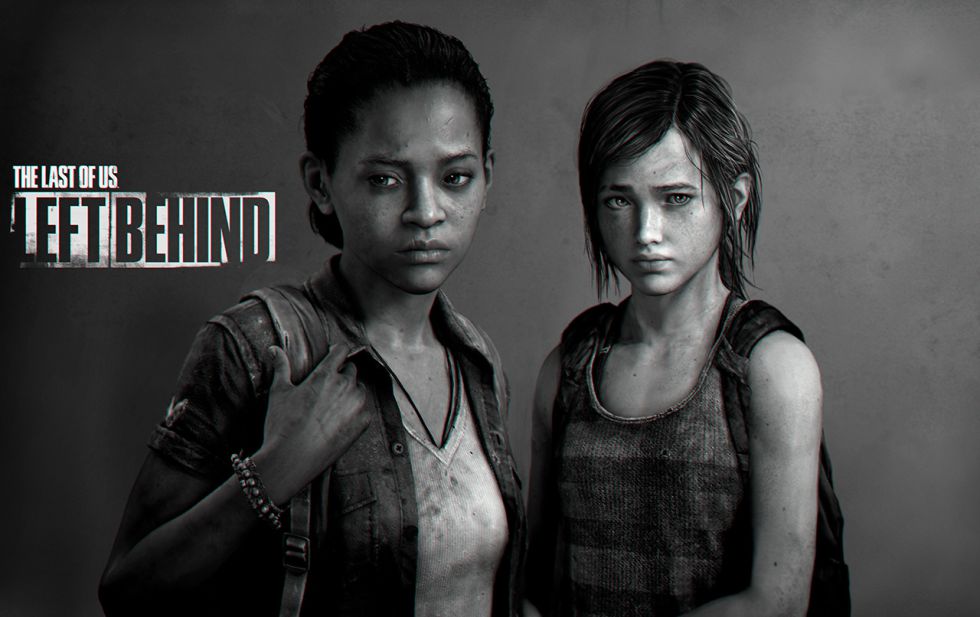
The character in question this time is Ellie, the co-protagonist to Joel in the first game and the main protagonist in the upcoming sequel. Her story is every bit as rich and compelling as Joel’s. Her history, her personality, and even the way she complements the gameplay helps make her distinct. She’s a major reason why this game is so enjoyable and why it sold so well.

She achieved all this as both a female and an LGBT character. It sounds like one of those combinations that has to be forced, but that’s not the case with Ellie. In fact, anyone who plays the entire story of the first game wouldn’t even know about Ellie’s sexuality because it was only revealed through a DLC , or downloadable content.

Even within that content, though, Ellie’s sexual orientation was not a big part of the story it told. It effectively filled in a time gap within the main game while also exploring more of Ellie’s backstory, but at no point did it make her sexuality a bigger issue than it needed to be. You could’ve removed that detail entirely and the story would still work, but it wouldn’t be quite as memorable.

More recently, during a preview of “The Last of Us Part II” at E3 2018, Ellie’s status as a homosexual woman was reaffirmed. Again, it wasn’t critical to making the moment work. The fact she’s attracted to other women doesn’t take anything away from the emotional weight of the scene. It does help enhance it, though.

Therein lies the key. What makes Ellie a great character has nothing to do with her sexuality. It’s not a defining aspect of her persona, nor should it be. It defines her no more than Joel’s heterosexuality defines him. It doesn’t have to be thrown in someone’s face as this huge, all-encompassing feature. It’s just a small part of a much greater whole that is Ellie.

There’s no effort to make her this LGBT icon, which has a tendency obscure a character when forced. Her status as LGBT isn’t belabored, either. She’s not important to the overall narrative in “The Last of Us” because she’s female and gay. She’s important because of factors independent of those traits.

That importance grows throughout the story, but not because of her gender or her sexuality. It’s what she does that helps establish her as an important character and a compelling one, at that. Her story complements Joel’s and the various other characters she encounters.

In the process, she also demonstrates a unique personality. She’s tough and stubborn, but she’s also impulsive and temperamental. Many of those qualities are entirely gender-neutral. Some stand out more because she’s a woman and that’s okay because a girl acting girly isn’t a big deal, which tends to get lost with other female characters.

It may seem so obvious, but the fact that diversity in media is such an issue shows just how difficult it is to pursue. Ellie succeeds because the diversity she represents is never primary to her character. It’s not even secondary, either. That’s not to say her gender and her sexuality are ignored, but it’s never elevated beyond a certain point.

Before any of those diversity-related issues come up, “The Last of Us” works to establish who Ellie is and why she’s important. That process of establishing a good, compelling character without her gender or sexuality being the focal point does a lot to get you to care about her story. It’s a process that can’t be rushed and the game does a masterful job in that respect.

The person Ellie is when you first encounter her early in the game is not the same person by the end. She’s someone who undergoes a lot of growth, encountering more than a few setbacks along the way. There are times she’s easy to root for. There are times when she comes off as an arrogant brat. Before you ever find out about her sexuality, you learn about her as a person.

By the time her sexuality finally comes up, Ellie is already so much more than the gender she’s attracted to. She’s a survivor, a fighter, and someone who has seen everyone she’s ever cared about die or leave her until Joel comes along. She also has a vital part to play in the ongoing apocalypse the world around her faces. All of this, once again, is not dependent on her gender or her sexuality.

I know I keep belaboring that, but it’s worth belaboring because that aspect of character development keeps getting glossed over. Other efforts at diverse characters often rush to the diversity without establishing why anyone should care about them. It’s why all-female remakes rarely resonate. It also leads to characters whose diversity is so blatant that it’s hard to take them seriously.

That’s not to say Ellie is a perfect example of diversity done right. She has her flaws, as does Joel. There are times when she’s too tough for her own good. She has a tendency to push peoples’ buttons for the wrong reasons. She also has questionable tastes in jokes. Even proponents of diversity can find flaws in her.

Despite those flaws, there are many lessons that characters like Ellie and games like “The Last of Us” can teach when it comes to doing diversity and LGBT representation right. The most important can be boiled down to four basic components:

  • Don’t try and force diversity just to fill a quota
  • Develop the character before developing the diversity
  • Don’t make their status as a woman or LGBT their most defining trait
  • Have the character complement their supporting cast, regardless of their diversity status

There are probably many more lessons that I’m not qualified to teach, but I think characters like Ellie do plenty by just being memorable and endearing. She’s a great character within a great story. That wouldn’t change if she were straight, but her being a lesbian does help her stand out, albeit for all the right reasons.

It’s also worth noting that Ellie’s story is still ongoing. “The Last of Us Part II” is set to come out in 2019 and the next part of her story promises to get pretty dark. Whether she maintains the complexity and appeal of her current character remains to be seen, but she has a strong foundation to build on, which is key for any character, regardless of their sexual preferences.

Whether we like it or not, there’s a lot of animosity between both sides, there more diversity in future media because the world is a diverse place. It’s just a matter of going about it in a meaningful, compelling way. Ellie is an example of how an LGBT character can work and when done right, it works pretty damn well.

3 Comments

Filed under gender issues, political correctness, sex in media, sex in society, sexuality, video games

Why Linking Human Trafficking And Prostitution Hurts Efforts To Deal With Both

5812c0292f23a-image

As a quick thought experiment, take a moment to picture the appearance and circumstances of a typical plumber. Chances are you’re imagining a big-bellied, greasy-haired, middle-aged man who prides himself on wearing old jeans that expose his butt crack. As stereotypes come, it’s fairly crude, but harmless for the most part.

Now, take a moment to picture a typical victim of human trafficking. Chances are the images you conjure are a lot more distressing. Depending on how much you’ve read into the issue, you can picture a scared young woman from a foreign country huddled in a corner, traumatized and broken after being exploited by her ruthless captors.

Chances are, those ruthless captors conjure some nasty images as well. You imagine they’re sadistic, deviant men who smile at the sight of a scared young woman, having to sell herself sexually in order to pay off a debt that she didn’t even ask for. Such men are the closest thing we have to real-world super-villains.

In terms of terrible crimes, human trafficking ranks near the top in terms of things that offend every sense of decency, humanity, and justice. It’s one of those crimes that’s so horrific that it’s almost impossible to scrutinize without a sense of outrage clouding our judgment. Any effort to do so is usually overshadowed by the horrors of the crime itself.

Despite those obstacles, it’s still an issue worth discussing. If anything, the fact that human trafficking is such an egregious crime makes it that much more relevant. When there’s something that’s so objectively evil, people tend to line up in droves to play the role of a hero. It’s not quite like virtue signaling because this is an actual crime with actual victims.

However, and this is where I’m sure I’ll lose some people, the assumptions surrounding human trafficking and the efforts to combat it aren’t as clear cut. That image of a typical human trafficking victim that I described earlier is, like the plumber, a popular perception that doesn’t quite reflect reality.

Now, none of that is to say that human trafficking isn’t a terrible crime and a serious problem. I want to make that abundantly clear before moving forward. The point I want to make here has more to do with our attitudes towards this crime, its association with prostitution, and how it reflects certain gender dynamics.

For better or for worse, human trafficking is linked to prostitution. It’s major component of the popular perceptions surrounding the crime. As such, a great deal of opposition to the legalization of prostitution comes from the idea that it will increase human trafficking. The veracity of that claim does have some data behind it, but even the most comprehensive studies concede that the link is inconclusive at best.

It’s that link though, however true it might be, that gives human trafficking its insidious reputation. It’s why it is often cited by feminists, human rights advocates, and moral crusaders as an issue worthy of outrage. Battling human trafficking means battling exploitation, sexual promiscuity, and exploited women all at once. That appeals to a lot of people, but it also obscures the true nature of the crime.

That nature is not entirely dependent on sex or prostitution. According to the International Labor Organization (ILO), approximately 22 percent of estimated 20.9 million human trafficking victims are exploited for forced sexual labor. That’s still way too many people being exploited, but what about that other 78 percent?

That portion of human trafficking victims are primarily forced into labor of a non-sexual nature. That labor includes work in sectors such as agriculture, construction, domestic work, and manufacturing. That kind of exploitation affects victims of any gender, as well. While women make up about 55 percent of the victims, that still leaves 45 men and young boys, who can also be sexually exploited as well.

The hard data alone undermines the popular perceptions surrounding human trafficking, but it gets even more complicated than that. Since human trafficking is a criminal enterprise that’s exceedingly difficult to prosecute, it’s hard to get accurate data on the scope and scale of the issue.

Back in 2001, a terrifying report from the University of Pennsylvania made headlines by claiming that approximately 300,000 children, mostly young girls, were being sexually exploited. Understandably, this caused a lot of outrage and horror among politicians and activists.

That claim was not accurate, by the way. The report, which was based on outdated data from the 1990s, only covered children “at risk” of being sexually exploited. It didn’t refer to actual victims. That data is harder to come by, but most figures are nowhere near that egregious number. In addition, the methodology for gathering such data is both incomplete in some areas and flawed in others.

Even with those flaws, though, the perceptions surrounding human trafficking and the mental images it conjures are more than sufficient for people with agendas to garner support. Unfortunately, it’s not the forced labor or the 45 percent of victims who are male that get the attention. It’s the women and the sex that gets the emphasis.

As a result, policies and legislation intended to combat this issue tend to focus primarily on that component. Earlier this year, a couple of major laws were passed with the stated intent of combating human trafficking. However, the primary impact is being felt by sex workers, as a whole.

These laws explicitly mentioned sex trafficking. It said nothing about forced labor, which makes up the bulk of human trafficking victims if the data from the ILO is accurate. That’s akin to passing a bill that punishes the maker of ski masks rather than focusing on those who actually use them to commit crimes.

That’s not to say efforts to combat the sexual exploitation of young women aren’t justified. However, why does that particular variation of a crime warrant more laws and resources than another? Why is sexual exploitation the main focus and not the forced labor that is more likely to impact men and boys?

It says something about both our priorities and our attitudes when the exploited sexuality of women is given a greater priority than the enslavement of men. It sends the message that the pain of a sexually exploited woman is somehow greater than that of an exploited man. Pain is still pain, last I checked. When you prioritize one, you undermine the other, by default.

Moreover, those noble efforts to combat human trafficking may end up making the situation worse by coupling it with anti-prostitution efforts. Like the war on drugs, making prostitution illegal does nothing to mitigate the demand for prostitution, nor does it make things easier for those who are prostitutes. It just puts the industry in the hands of criminals.

In recent years, it has become popular in some countries to pass laws that prohibit the buying of sex, but not the selling of sex. It’s an approach that still criminalizes part of an act and, according to a 2012 report by the Center for Human Rights and Humanitarian Law, it has not achieved the desired effect of reducing prostitution or human trafficking.

It’s because of these shortcomings in combating both prostitution and human trafficking that organizations like Amnesty International now favor the full decriminalization of prostitution and stricter laws against forced labor. To date, no country has attempted to enact such a policy.

That’s not to say that Amnesty International’s measure will eliminate all instances of human trafficking or forced prostitution. Like any imperfect society, there will be cases of injustice and exploitation. However, that’s exactly why it’s so important to have reasonable policies that emphasize the full spectrum of an issue.

Human trafficking is a terrible crime. Forced labor, be it sexual or otherwise, is just as terrible. There’s no denying that, regardless of how uncertain we may be of its prevalence. By focusing only on its links to prostitution, though, we don’t just undermine the full scope of the crime. We do a disservice to all victims, regardless of gender.

6 Comments

Filed under gender issues, political correctness, prostitution, sex in society, sexuality

Why The Sexual Revolution Was Incomplete (And How It Can Be Completed)

hippies-free_-love_-600x521

Imagine, for a moment, putting together a piece of furniture, but stopping before it was finished. Depending on where you stop, chances are the furniture isn’t going to be as useful as you’d hoped. Sure, it may still function to some extent, but it’s incomplete. As a result, it can’t entirely do what it’s supposed to do.

With that idea in mind, imagine the same thing happening to a major social movement, a new vision for society, or a full-blown revolution. What happens if it stops before it realizes its goals? Even if some of those goals were unachievable, abruptly stopping an ongoing process or not bothering to adjust the methods of that process is bound to cause issues.

Some argue that the civil rights movement that began in 1950s was never completed. Others may argue that the French Revolution and the Russian Revolution were never complete, which was why they resulted in so much chaos and destruction. I’m not an expert on those subjects so I’m not going to wade into them.

However, I would support an argument stating that the sexual revolution that began in the 1960s was not complete and that has heavily influenced ongoing controversies involving sex, gender, and everything in between. Again, I am not an expert in this field. I am an aspiring erotica/romance writer. I’m about as much an expert as I am a wizard.

Expert or not, I do think that incomplete revolution is worth talking about in the context of ongoing gender-driven issues. We’re in the midst of pretty significant upheaval in wake of the anti-harassment movement, which I’ve talked about on more than one occasion and in some pretty eclectic ways. It may seem like this upheaval is very recent, but I believe its roots go back to the sexual revolution in the 1960s.

With each passing year, the sexual revolution gets a worse and worse rap. Conservative types will blame the sexual revolution for everything from human trafficking to the Catholic Church sex abuse scandals. Liberal types are starting to blame it on current social ills like the Harvey Weinstein scandal and so-called toxic masculinity.

To some extent, that’s understandable when you consider the context of the sexual revolution. As I’ve noted before, this major social upheaval emerged in a perfect convergence of factors. First, contraception and modern medicine made exploring sex less risky. Second, a generation of young people that has grown up in the exceedingly uptight 1950s rebelled.

Regardless of how you may feel about the sexual revolution now, it’s easy to understand why it happened when you look at the circumstances. A generation saw the state of sex in society and were not satisfied with it. As such, they sought change. Moreover, they sought radical change and not just in the classic hippie sort of way.

It wasn’t just about unmarried men and women having sex just to enjoy it and not make grandkids for their parents. The sexual revolution dared to explore and undermine taboos about homosexuality, monogamy, and gender roles. To some extent, the sexual revolution helped facilitate a new era of feminism that pushed for greater gender equality.

While I know feminism has some controversial connotations these days, the brand of feminism that emerged during the sexual revolution is one that I think most would support in 2018. They helped push for some of the legal protections and educational opportunities that have helped multiple generations of women and men alike.

Moreover, and most importantly to the gender issues of today, the sexual revolution attempted to normalize discussions and depictions of sexuality in general. One could argue that was the most critical aspect of the revolution, beyond the hippies and free love. After all, it’s next to impossible to have a meaningful discussion about anything if the topic is so taboo.

It’s also in this critical area, however, that the sexual revolution came up short. Sure, those involved did plenty of outrageous things, in private and in public, that shocked and terrified their more repressed elders. That was revolutionary for its time. However, they didn’t confront the stigma surrounding sex, at least not in a way that was gender neutral.

This is where I’m sure I’m going to draw the ire of both sides of gender-driven debates, but I think this needs to be said to add a little insight to the current debate. Yes, the sexual revolution did a lot to make sexual activity outside of marriage less taboo. However, that impact did not affect men and women the same way.

In wake of that revolution, men no longer faced as much stigma for fooling around sexually. The idea of “boys will be boys” became an accepted mantra. A young man fooled around in his youth, had multiple partners, and generally enjoyed himself without much shame. The sexual revolution helped him a great deal in terms of realizing his sexuality.

Ideally, women should’ve enjoyed the same freedom. However, that’s not what happened. There’s no “girls will be girls” equivalent. Even during the sexual revolution, women who slept around like their male counterparts were still subject to stigma. They were still called sluts and whores. They were generally looked down upon.

Now, before some start bemoaning “patriarchy” or something of the sort, it’s important to note that the source of that stigma does not come exclusively from men. In fact, according to a study done by Demos, other women were far more likely to slut-shame or use derogatory words to other women compared to men.

Regardless of the source, that lingering stigma that the sexual revolution attempted to confront has helped maintain a significant gender gap with respect to sexual freedom. It’s why men can be studs, but only women can be sluts, a frustrating double standard that has lingered well beyond the 1960s.

It may also be a significant factor in the current orgasm gap between men and women. Whereas the male orgasm is seen as routine and uncomplicated, the female orgasm has this elaborate mystique surrounding it. Just talking about it seems akin to talking about the meaning of life.

In many respects, that vast disparity reflects the current sexual divide. Men are still expected to be sexually aggressive. Women are still expected to be sexually reserved. Any deviation is subject to stigma. As is often the case with expectations, it doesn’t take much for them to become a self-fulfilling prophecy.

Due to that aggression, society has done a lot to cater to male sexual desires. That same system has done just as much to mystify female sexuality. It’s a grossly imperfect system, one that limits the ability of women to explore their sexuality without fear while giving men in positions of power more reason to pursue sex as though it were a holy relic.

That is not in line with the ideals of the sexual revolution. Love them or hate them, hippies had the right idea in terms of openness about sex. They did not divide the sexuality of a particular gender into something entirely different. They saw it as one thing that was worth exploring, but stopped short of pursuing it fully.

That shortcoming has had some noteworthy consequences. Reason Magazine nicely summed it up in a recent article about the sexual revolution and the sexual frustrations that current generations face.

The problem is not that sex has been over commodified as hardline feminists and conservatives (talk about strange bedfellows!) like to assert; the problem is that it hasn’t been commodified enough. The sexual industry in the broadest sense hasn’t matured enough yet to cater to the myriad and diverse needs of lonely single people (of both sexes). Where are the Dr. Ruths for single people facing confidence issues or looking for advice?

Now, none of this is to detract from the aspects of the sexual revolution that were misguided or had long-reaching consequences. The law of proportional backlash for social movements doesn’t care how complete or incomplete it is. Even if the sexual revolution had succeeded, it would’ve still incurred a counter-revolution of some sorts.

Regardless of its shortcomings, the sexual revolution got the conversation going on how we stigmatize sex. It wasn’t completed and there are plenty of flaws in our current sexual landscape to show that. Even so, that conversation is still worth having and I would argue it’s more important to have now than at any time in 1960s.

1 Comment

Filed under gender issues, political correctness, polyamory, Second Sexual Revolution, sex in society, sexuality

A Compelling (And Balanced) Insight Into Open Relationships: A Review Of “Swing”

636039-_sx1280_ql80_ttd_

When it comes to my love of comics, I sometimes give the impression that I’m overly narrow with my tastes. Given how much I’ve made my love of X-men, Wonder Woman, and Superman known, I wouldn’t blame anyone for believing my collection consists entirely of the kinds of superhero comics that big movie studios are using to rake in billions at the box office.

While I don’t deny that comics featuring mutants, aliens, and super-powered demigods make up a significant portion of my collection, there are a few other comics that stand out. I’m the kind of person who will go out of his way to look for something different every now and then, if only to take a break from seeing Batman fight killer clowns.

Most of the time, I don’t find anything that warrants more than a quick skim. Then, there are those rare, special occasions when I do find a comic that stands out and does it without resorting to superpowers, spandex, or ripping off Jack Kirby. Those books are as rare as they are special and I’m proud to report that I’ve uncovered such a title.

It’s called “Swing,” written by Matt Hawkins and Jenni Cheung with gorgeous art done by Linda Sejic. It’s not a superhero comic. It’s not a comic published by Marvel or DC. It’s a publication by Image Comics, a publisher known for supporting creator-owned comics and letting creators maintain the rights to their creations. It’s also a publisher that dares to tell stories about mature themes that would offend any Disney-owned company.

In other words, it’s the perfect place to tell a story about love, sex, and open relationships. Those aren’t just the underlying themes of “Swing.” They’re topics I’ve discussed on multiple occasions. I’ve even incorporated it into one of my books. How can a comic like this not appeal to me? Moreover, I feel like I’m uniquely qualified to review it, if only to determine whether the story deals with these themes in a compelling way.

If you’re looking for the kind of love story that involves tragedy, magic spells, or curses by evil witches, then “Swing” probably won’t appeal to you. If you’re in the mood for a love story that feels real, genuine, and overtly sexy, then this comic is for you. It’s a story that tries to be real by providing insight into a world that is still taboo and associated with one too many bad pornos.

The characters involved in “Swing” are not porn stars, though. They’re not exceedingly deviant or damaged either. Cathy Chang and Dan Lincoln are two healthy, affable, multi-layered individuals. Cathy starts off as a wide-eyed college student eager to start building a life of her own. Dan is grad student and aspiring writer. Their paths cross, they fall in love, and things evolve from there.

This isn’t a case of a student falling in love with a teacher or a teacher becoming infatuated with a student. Dan and Cathy come off as two functioning adults who develop a very healthy attraction to one another for all the right reasons. It’s the kind of romance that most people can easily picture unfolding in the real world.

That’s a critical element for the drama that later unfolds between these characters. By most measures, Dan and Cathy’s romance follows much of the standard model for romance. They meet, they feel attraction, they fall in love, and they immerse themselves in that passion. Yes, that passion involves sex, but never in an overly gratuitous way. The sex, in this case, is a product of the passion and not the end result.

Then, like many other real-world romances, that initial spark fades after life gets in the way. Cathy becomes pregnant, she and Dan get married, and they build a stable family life together that involves considerably less sex. According to traditional models of modern romance, this is where the story ends. However, this is where the story in “Swing” starts to escalate.

Cathy is not content to let stable family life define her love life. She wants to maintain that passion. She wants to still experience an exciting sex life. However, she and Dan just aren’t on the same page anymore. It makes for some awkward/hilarious moments, but it also helps establish that Dan shares those wants too. They both seek to sustain that passion, but they’re not sure how at this point in their relationship.

It effects them both and not just in terms of their sex life, although that does make for a few other awkward/hilarious moments. This is where polyamory enter the picture. Within their respective lives, Dan and Cathy aren’t immune to temptation. Dan attracts cute girls. Cathy attracts cute guys. They never cheat, though.

They make clear that they love each other. Resisting the urge to sleep with co-workers not that hard, but recapturing some of that passion makes it seem so much harder. They’re sticking to the script of what they think a married couple with children is supposed to be, but it’s just not working for them.

051

That’s when Cathy brings up the idea of swinging. It’s an idea that seems crazy and evokes plenty of mixed emotions in both of them. Again, the feelings come off as real. There’s uncertainty, anxiety, jealousy, and outright paranoia at times. Both of them feel it, but both of them also want that passion again.

Together, they start to explore the world of swinging. It doesn’t directly lead to the kind of decadent antics once reserved for the letters section of Hustler Magazine. Dan and Cathy’s journey is a bit bumpier than that, but never stops feeling sincere or genuine. Without spoiling the outcome, I’ll just say that “Swing” sets these two lovers on a path that’s both intriguing and sexy.

This comic achieves something remarkable, both as a love story and one built around mature themes. It presents both monogamy and polyamory in a way that’s balanced. Neither is overly glorified. The benefits and flaws of both are laid out for all to see. There aren’t any moral judgments or social agendas being pushed. It’s a personal journey between two characters with a shared desire.

It’s not just sex positive in how it presents sexuality. It’s positive in how it conveys romance, as well. The love Dan and Cathy share is healthy, mutual, and strong. The sexual component helps complement that. One doesn’t depend on the other, but one certainly helps the other.

The story in “Swing” does not attempt to redefine romance. Through Dan and Cathy, it reveals the inherent struggle two people have when they want to maintain the passion in their lives, but aren’t sure how. If there’s an underlying message to the overall story, it’s that the pursuit sometimes requires nuanced thinking.


Hawkins and Cheung clearly put a lot of thought and effort into balancing the romance, the sex, and the inherent kink that comes with polyamory. Thanks to Sejic’s masterful artwork, there’s an undeniable beauty to that balance. Whether you’re a fan of love, sex, or comics that aren’t afraid to depict female nipples, “Swing” brings something special to the table.

If I had to score this comic, I would give it a solid 8 out of 10. I can’t give it too high a score because the story is incomplete. That’s a given since this was just Volume 1 of “Swing.” At the same time, there were other parts of the narrative that weren’t as well-developed.

Dan and Cathy’s surrounding cast didn’t get much depth beyond Cathy’s mom. Dan’s backstory isn’t really touched on, even though his personality is nicely fleshed out. In addition, the pace was uneven at times, but never to the point of being confusing. As a whole, the flaws are minor and do little to detract from the finished product.

As a fan of comics, romance, and all things sexy, “Swing” really surprised me in the best possible way. Regardless of how you feel about polyamory or open relationships, there’s a good story here that’s brought to life with amazing artwork. There will always be a place for comics with superheroes in spandex uniforms, but “Swing” fills a special role that even the greatest superhero can’t hope to fill.

3 Comments

Filed under gender issues, Marriage and Relationships, polyamory, romance, sex in media, sex in society, sexuality

The Appeal And (Major) Implications Of “Westworld”

westworld

When most people think about the future, they imagine all the ways that technology and progress will solve problems and make our lives better. I’ve certainly imagined that. I’ve even written about it, with respect to how future advances will make us smarter, protect us from disease, and even help us love each other better.

As intriguing as those possibilities may be, it’s also worth taking a moment to contemplate the implications. I’m not talking about the potential existential crisis we may face with advancing technology either. I’m referring more to the practical aspects of a future where disease, suffering, and toil are largely mitigated by technology.

Beyond just living in a world with less suffering and less struggle, how exactly would we entertain ourselves? That may seem like a mundane question, given the more serious implications of advances like genetic engineering and advanced robotics, but it’s one of those issues that effects individuals on a personal level.

If we’re always health, physically strong, and have our basic needs met through some universal basic income, then what exactly are we going to do with all that free time? I’ve expressed concern that this may create an epidemic of boredom that’s every bit as serious as any major pandemic. No matter how strong, healthy, or affluent you are, boredom can have some pretty debilitating effects.

Enter the fanciful world of “Westworld” and all its implications, sexy and otherwise. For those of you who don’t get HBO, it’s a TV show inspired from an old movie produced by Michael Crichton, also known as the guy who wrote “Jurassic Park.” It’s no “Game of Thrones,” but it has a fair amount of gratuitous violence, nudity, and sex, albeit with much less incest.

Graphic content aside, it’s the underlying concept behind “Westworld” that makes it such an intriguing show. That same concept also has even greater implications for what the future may hold in terms of immersive entertainment, managing artificial intelligence, and how we treat sex robots. For once, I’m not going to focus entirely on the sex robots, since I give that subject plenty of attention.

The appeal of “Westworld,” as both a concept and a show, is built around a company called Delos Inc., which offers its high-paying customers a chance to immerse themselves in a unique experience. For a while, they get to leave civilization, modernity, and all its associated infrastructure behind and live in rugged, lawless world of the old west.

It’s not some movie where they just get to see images of scenery. It’s not some virtual reality that just makes them feel like they’re there, either. It’s a fully realized artificial world, complete with intelligent androids that have the look, feel, and presence of real people. Sure, some still act as sex robots, but that appeal goes far beyond that.

This is a world where you can live a different life, experience in a different time, and explore a world that no longer exists. You don’t watch it. You don’t listen to it. You don’t follow along through the eyes of a protagonist. You are the protagonist. You actually get to live out a real fantasy where the participants aren’t just role playing. They’re sophisticated androids that really believe they are what they are.

Now, the operation and function of those androids has been a major source of conflict within the show. As the show has progressed, controlling these androids and seeing them develop a sense of self has made for great drama. I would argue it’s one of the most engaging aspects of the show. It creates powerful moments that reflect real existential issues with respect to artificial intelligence, some of which I’ve contemplated.

While those issues are profound, in and of themselves, I find myself more interested in how “Westworld” may reflect the evolution of entertainment itself. Look past the issue with managing intelligent androids for a moment and think about the business Delos Inc. is employing here.

On paper, it’s not just brilliant in terms of potential profitability. It may very well embody the future of entertainment. Take a moment to contemplate how the entertainment industry has evolved over the past 30 years. We’ve gone from analog to digital, standard definition to high definition, and now high definition to 4k.

I’m still old enough to remember the lousy picture quality of TV shows, the pre-IMAX movie theater experience, and theme parks with less-than-polished exhibits. I still vividly remember going to see “Men in Black” in a theater that was crowded, dirty, and cramped. It was fun, but not that immersive.

Over time, the general trend of entertainment, both with movies and with TV shows, has been to make it more interactive. Movies have done that with the rise of 3D movies. TV shows have done that through things like live-tweeting. Video games, especially, have become much more immersive, both through virtual reality and through online interaction.

This trend reflects the understanding from producers and consumers alike that the most powerful form of entertainment is the kind that offers the most immersion. A game on your smartphone is fun and all, but it’s just data on a screen. It’s not going to engage too many senses.

The same goes for virtual reality, which is basically just putting that same screen over your eyes and bombarding you with sound to make you feel like you’re somewhere you’re not. It also doesn’t change the fact that you don’t have to move your body, exert yourself, or engage in the kind of activity that would lead you to believe that the experience is real. Granted, the brain can be fooled, but only to a point.

What “Westworld” does is logical in terms of crafting an experience that makes people feel like it’s truly real. The customers of Delos Inc. aren’t just observing or following along. They’re actually engaging with this fantasy world. It’s not on a screen. It’s not being projected into their brains. It’s real and they get to be part of it.

That world can literally be anything they Delos Inc. wants it to be. With their resources and their army of life-like androids, they can create all kinds of worlds for customers to explore. These worlds don’t have to be confined by the laws of modern civilization, current social norms, or even notions of reality.

Perhaps they can create an apocalyptic world where participants can kill zombies and live the lives of rag-tag survivors, like those of “The Walking Dead.”

Perhaps they can create a medieval world in the mold of “Game of Thrones” where participants can live the lives of brave knights, lecherous kings, or privileged queens.

Perhaps, if the Marvel Cinematic Universe continues to grow, there can be a world where people either get to interact with the Avengers or even get to be the Avengers. As a comic fan, I would definitely pay for that experience. I would be shocked if Disney isn’t working on something like this now, as we speak.

It doesn’t even have to involve an elaborate fantasy world either. Perhaps there’s a world where participants can live the lives of rock stars in 70s and 80s, complete with cocaine, groupies, and massive concerts where they’re the stars.

In theory, there’s no limit to the kinds of worlds a company like Delos Inc. can create. The old wast in “Westworld” is just one of them. The key is making the world perfectly immersive, but still safe to the point where the costumers aren’t ever hurt and face no repercussions for what happens during the experience.

However, it’s in that key safeguard in which the implications of “Westworld” get more distressing. It even plays out a few times in the show. In this immersive world of the old west, participants can carry out acts that would be wrong, immoral, or downright abhorrent in the real world.

The androids in “Westworld” may be more intelligent than the average exhibit at Disney World, but they’re still just robots playing a role. If a participant kills, rapes, or tortures one of them, there’s no repercussion. The android can just be cleaned up, fixed, and reloaded with a new program like it never happened.

It’s that kind of moral void, so to speak, that may make this brand of entertainment questionable. Say there’s someone willing to pay a lot of money to a company like Delos Inc. to create a world where they could go on a killing spree, murdering and raping as much as they want. This person is a law-biding citizen who has never acted on any violent impulses. Would the company be unethical in accommodating that fantasy?

There may be plenty of other distressing requests. Maybe someone wants a world where they can live the life of an 19th century slave-owner because they want to abuse slaves. Maybe someone wants a world where they’re the Nazis and they get to commit any number of unspeakable atrocities.

Remember, what they do in this world isn’t done to real people. They’re just paying for an experience. It’s not like the kind they would get in “Total Recall” where they only get memories of an experience. In a world like that of “Westworld,” they actually interact with that world. They make choices and do things, but no matter what they do, there’s no consequence or repercussion.

It raises many disturbing questions that are impossible to answer now. “Westworld” attempts to answer some of them, but there are plenty more that are simply beyond the scope of the show. It may do a commendable job focusing on what happens when intelligent robots start to get a will of their own, but it doesn’t do much to explore the implications that this form of entertainment inspires.

It’s going to be quite a while before we have the technology that we see in “Westworld,” but even if the human race progresses to a point where people and society are free from most conflict, there will be a need for entertainment. The form that entertainment takes may just reveal more about us than we care to know.

1 Comment

Filed under Artificial Intelligence, futurism, human nature, sex in society, Sexy Future, Thought Experiment, War on Boredom