Tag Archives: health

Why You SHOULD Donate Your Genome To The Public

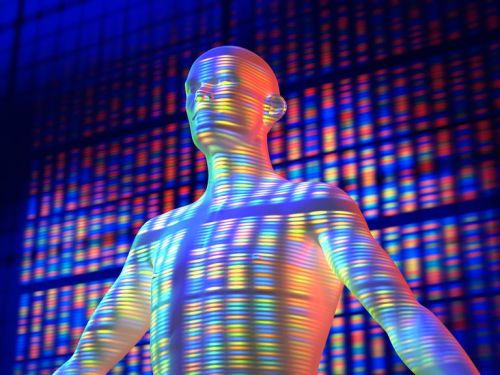
genetic-individuality-male-body-with-dna-548001023-59f9d183af5d3a0010859452

Have you ever wanted to contribute to the future of humanity, but lack the engineering skills or the understanding of quantum mechanics? Well, there are many ways to do so that don’t involve getting a PHD, working for Elon Musk, or volunteering as a guinea pig for medical experiments.

As I speak, medical science is boldly pushing forward in exploring the basic building blocks of human biology. I’m not just referring to the sexy parts either. Since the completion of the Human Genome Project in in the early 2000s, we’ve entered unknown territory in terms of understanding what makes us healthy, what makes us sick, and how we go about treating it.

Beyond simply uncovering new treatments for genetic disease, of which there are many, learning about the fundamentals of human biology is critical to understanding who we are and where we’re going in the future. If the goal of every species is to adapt and survive, then learning about the human genome is akin to giving a light saber to a caveman.

Image result for man with a lightsaber

However, completing the Human Genome Project was just the first step. The primary goal of that project was to simply determine how many genes were in the human genome and how they’re organized within the 3 billion base pairs that make up our chromosomes. It’s not as much a tool as it is an instruction manual with a list of raw materials.

It was an arduous process. Between the time the Human Genome Project started in the early 90s to the time when it was completed over a decade later, the overall cost of sequencing one genome was a hefty $2.7 billion in 1991 dollars. That’s a lot for just one strand of DNA for one species. It’s hard to learn much from anything when it’s that expensive.

Image result for Gold diamond iphone

Thankfully, much like early cell phones, science has refined the process and made it cheaper. In fact, it’s gotten a lot cheaper over the past decade. At the moment, it costs just a couple thousand dollars to get your genome sequenced. It’s only going to get cheaper. Some companies, in fact, hope to offer the service for less than $100. That means getting your genome sequenced may one day be cheaper than a set of premium headphones.

This is where your contribution comes in. Last last year, a man made his genome publicly available to the Personal Genome Project in the United Kingdom. That means pretty much anyone with an internet connection can access the specifics of this man’s genetics, right down to the base pair.

While that may seem like an overt surrender of privacy that the Ron Swansons of the world would despise, it’s actually a critical element in the process. It’s not enough to just understand the structure of the human genome. We also need to understand the many variations and diversity within it.

Image result for genetic diversity

To better understand why that’s so important, it’s important to remember just how clunky and inexact nature can be. Nature is, by necessity, a blunt instrument that is prone to many flaws. The range of genetic diversity within the human species is what helps us adapt, but it’s also prone to all sorts of flaws.

For most of human history, if not the history of life on Earth, we haven’t been able to do much about these flaws. Nature’s way of dealing with them is through the harsh, tedious, and slow process of natural selection. By learning more about the variations in the human genome, we can skip that process entirely. We can effectively maximize our genetic potential without multiple generations of trial, error, and suffering.

The tools for making use of that knowledge are already in development. I’ve mentioned CRISPR before as a possible method for treating most infectious diseases. That’s just one component in the larger field of genetic engineering, which promises to do more than just treat diseases. It could, in principle, maximize the potential of our genetics in every individual.

Image result for olympic athletes 2018

By that, I don’t mean turning every human into a the kind of Übermensch that drives racists, mad scientists, and comic book villains. Like it or not, genetics can be a significant barrier for certain people in terms of realizing their physical, mental, and even sexual goals. If there’s a way to circumvent those barriers, why shouldn’t we seek it?

That’s not to say there aren’t risks. I remember Ian Malcom’s famous speech in “Jurassic Park” as much as anyone who was alive in the early 1990s. We’re not talking about creating monstrous creatures for our own amusement, though. We’re talking about the health, well-being, and suffering of countless individuals, including those alive today and those yet to be born.

In any effort to alleviate suffering and maximize human achievement, knowledge is power and information is the fuel. As it stands, we need more of the latter to improve the former. That’s why contributing your genome is one of the most meaningful things anyone not named Elon Musk can do to further this endeavor.

Image result for human genome

That means if you have the ability to participate in the Personal Genome Project, you should seriously consider doing so. There’s still a lot we don’t know about the fundamentals of our own biology. The sheer breadth of human diversity at the genetic level is still not clear, but it’s already astounding in its own right.

By adding your genome to the mix, maybe you’ll reveal a certain trait or mechanism that will help us better understand disease. Maybe your DNA will help refine our understanding of how genetics influence our behavior, appearance, and ability to get along. Maybe doing so will reveal some unexpected heritage that you didn’t know you had.

Related image

If you need a sexier reason for contributing your genome, then consider the possible insights our genes may offer to our sex lives. Perhaps there are genetic factors that effect our ability to form romantic bonds. Perhaps there are factors that effect the intensity, enjoyment, and satisfaction of sex. Even if you’re wary of genetic engineering, isn’t that worth exploring and refining?

There’s a lot to learn and a lot to gain. Some of us might not live long enough to experience those gains, but children alive today may still benefit. A future with less disease, less suffering, and even better sex lives is certainly a future worth working towards.

The opportunity to donate your genome is limited at the moment, but the growing demand for biotechnology and medicine is only accelerating. Even if you’re unable to contribute to the actual science, contributing your genome can be every bit as valuable. Our genome, like our lives, are precious and finite resources. Let’s make the most of them in the name of a better and sexier future.

Related image

Leave a comment

Filed under Current Events, Sexy Future

What Men Lose From Circumcision

I know it’s been a while since I talked about circumcision. Believe me, that’s not a mistake. Most men would rather have root canal while recovering from a hangover than talk about circumcision. There just aren’t many ways to make it an easy conversation.

I’ve talked about my own circumcision and why many attitudes about circumcision, at least in North America, comes from a man who believed that it would stop boys from masturbating. I’d hoped that was the most I would ever need to discuss it on this blog. Unfortunately, those hopes collapsed after a recent conversation I had.

The context of the conversation isn’t that important, but involved a woman I knew online and the recent efforts to end female genital mutilation. By and large, most people in the industrialized world oppose female genital mutilation. It’s seen as a barbaric, brutal practice meant to control women by limiting their ability to experience sexual pleasure. I count myself among those who share in that sentiment.

When it comes to male circumcision, though, those same people just shrug it off. This led to an awkward part of the conversation where I asked why male circumcision gets overlooked while female genital mutilation is considered a major social issue. It led to a somewhat lengthy exchange that I won’t repeat word-for-word, but it came down to this argument.

Men don’t lose as much from circumcision compared to female genital mutilation.

According to the World Health Organization, female genital mutilation is prone to many negative health impacts beyond simply losing the ability to enjoy sex. While male circumcision is prone to its share of complications, the general perception is that it’s a minor issue that does not impair sexual functioning. Even the American Academy of Pediatrics state that the benefits outweigh the risks.

I wasn’t really able to continue the conversation much beyond that. However, I wish I’d had a chance to present more information because, at the end of the day, male circumcision still involves hacking off a part of a man’s anatomy. This isn’t a vestigial tail or a wisdom tooth. This is a man’s penis, a pretty critical part of the body, to say the least.

Even if there are potential health benefits, as the Mayo Clinic states, there is a cost and it’s not just restricted to what a man feels during sex. The most obvious cost is an overall decrease in sensitivity, which leads decreased sexual pleasure and lower orgasm intensity for the man. As with female genital mutilation, the first casualty of this procedure is the basic feelings of sex.

It doesn’t stop there, though. Think about the implications of decreased sensitivity, for a moment. Specifically, if you’re a woman or a gay man, think about how that effects someone’s ability to actually pursue the satisfaction they seek from intimacy. If the sensitivity isn’t there, then that means circumcised men have to work harder to get that same feeling.

This can make for some less-than-intimate experiences. Ever hear of someone complain about how some men resort to “jack-hammering” during sex? Well, those men may not actually be trying to recreate something they’ve seen in porn. That may just be a side-effect of having decreased sensitivity.

Naturally, that can make things uncomfortable for a circumcised man’s partner, be they male or female. Beyond the sensitivity issue, there’s something else that’s lost when a man’s foreskin is absent. However, it’s felt primarily by the man’s partner.

According to a study from Denmark, female partners of uncircumcised men report far less discomfort and far greater lubrication when getting intimate with their partners. Here’s a direct quote from that study that might interest some women if they’ve never been with an uncircumcised man.

“The uncircumcised penis is much glossier, a more velvety feel,” says Dr. Paduch. “So for women who aren’t lubricating well, they have much less discomfort having sex with a guy who is uncircumcised.”

Despite these benefits, there’s still this popular perception that an uncircumcised penis is unattractive and unsightly. Given how prevalent circumcision has been for the past century or so, that’s understandable. However, if that’s the only reason for continuing the routine mutilation of male genitals, it’s not a good one by any stretch.

Now, I don’t doubt that there are some instances in which circumcision is necessary. There are even some drawbacks to having an uncircumcised penis, but it’s debatable just how significant those drawbacks actually are.

The most common issues usually relate to hygiene and risks of infection. That might have been a more pressing issue in the era before anti-bacterial soap and sanitation, but it’s not quite as serious in the modern era. We have soap, showers, indoor plumbing, and condoms. All can work together to mitigate those risks, significantly. Honestly, does it really take that much to convince a man to wash his penis?

For the moment, the primary obstacle to reducing circumcision involves cultural attitudes. For now, uncircumcised penises are still taboo. I’ve written about how taboos come and go. Given that the overall circumcision rate is in decline, there may already be signs that the taboo is waning.

Evolution may be clunky and erratic, but it when it comes to emphasizing survival and reproduction, it’s pretty damn effective. The fact that human beings are among the most successful, dominant species on this planet is a testament to that. That same process created genitals that give us many reasons to enjoy sex. Genital mutilation, for men and women, overtly undermines that to the utmost.

At the moment, society deems any effort to undermine a woman’s ability to enjoy sex to the utmost as immoral, misogynistic, and downright oppressive. As someone who writes erotica/romance novels, I wholly support efforts to preserve a woman’s sexual autonomy. However, when something like circumcision goes on so routinely and without scrutiny, that feels like an egregious double standard.

As it stands, it’s criminal to mutilate a woman’s genitals so that she can’t feel as much pleasure, but it’s accepted to do the same to a man. That’s a fundamental disconnect that cannot sustain itself logically or ethically. If one gender’s pleasure becomes more critical than another’s, then that undermines everyone’s satisfaction in the long run.

8 Comments

Filed under gender issues, sex in society, sexuality

No, Porn Is NOT A Public Health Crisis (But Our Attitudes About It Are)

porn-industry

In his book, “Sex and God,” which I highly recommend, author Darrel Ray tells a brief, but revealing story about the topic of porn addition. It goes something like this:

One day, an anxious and distressed man walks into a therapist’s office. He tells the therapist he’s addicted to porn. He spends no less than six hours a day watching, masturbating at least three times in the process. Needless to say, this habit has completely disrupted his life.

He struggles to hold down a job. He struggles to maintain a relationship. His porn consumption is so all-encompassing that it is a serious detriment to his day-to-day living. He desperately seeks help and the therapist listens intently, hoping to help this man overcome this issue and forge a healthier life.

The next day, another anxious and distressed man walks into the same therapist’s office. He also tells the therapist he’s addicted to porn. However, when the therapist asks how much porn he consumes, the man says he watches only a few hours every week. He does masturbates, but not every day and never more than twice.

He holds down a steady job. He has a wife and kids that he loves dearly. He also comes from a deeply religious community where he’s widely respected. He’s terrified that someone will find out that he watches porn or masturbates. The guilt he feels is so serious and he desperately seeks help.

The therapist still listens intently, but has to find a way to explain to the man that the porn itself is not the problem. It’s the undue guilt he feels that’s causing all these issues.

It’s a basic story, but one that reflects the strange, eccentric nature of our attitudes towards porn. It exists. It’s legal. It’s a multi-billion dollar industry, complete with some of the most heavily trafficked websites on the internet. There have been efforts to ban it in the past, but those efforts rarely succeed. Even in non-democratic countries, porn finds a way to feed the human libido.

Image result for anti-porn crusade

Despite this, there are still efforts by regressive people on both sides of the political spectrum who see porn the same way others see crystal meth. It’s not just an addictive drug. It’s one that has seriously detrimental side effects on those who use it and society as a whole. It’s one of those strange sentiments that both radical feminists and right-wing conservatives share for different reasons.

I don’t want to focus too much on the reasons for those sentiments, nor do I want to break down all the reasons why I believe they’re misguided. That’s not the reason I’m writing this article. In general, I try avoid talking about these sorts of moral crusades because, like other notable crusades, they tend to be more spectacle than substance.

That said, I have noticed the anti-porn crowd shifting their tactics in their quest to temper human desire. Rather than push for outright censorship, which is rarely popular in democratic societies, this crowd is attempting to label porn a public health crisis.

Image result for anti-porn crusade

The government of Utah, the current title holder for most porn subscriptions by state, was the first to declare porn a public health crisis back in 2016. Other states have followed, but the most notable is Florida, who managed to declare it a public health crisis after denying a ban on assault rifles.

Let that sink in for a moment. Florida says that porn is a crisis that warrants greater scrutiny than assault weapons, which actually kill people. If that doesn’t show just how flawed our attitudes are about porn and guns, then I don’t know what does.

Bear in mind that just declaring porn a health crisis has limited effect beyond bad PR for the business. A government cannot censor porn any more than they can shut down another multi-billion dollar industry with massive global reach. As CNN reported, it’s more a symbolic gesture, which is just a fancy way of saying it’s one huge act of virtue signaling. It’s as empty and worthless as any declaration can possibly be.

Image result for anti-porn crusade

While this crowd will eagerly cite studies that claim porn leads to all sorts of negative behaviors that destroy families and relationships, they’re just as eager to ignore the many flaws in those studies. They’ll also ignore data that suggests an increase in porn consumption actually decreases instances of sex crimes.

As I’ve noted before, human beings are complex, multi-layered creatures. Porn is just one of those few things that impacts a wider range of those complexities than most. It strikes at our moral values, our understanding of intimacy, our insights into sex, and our concept of love.

For some people, it has no effect. For some, it has a positive effect. For others, it has a negative effect. You could say the same thing for everything from fast food to video games to stamp collecting. When it comes to the effect, it depends on the attitude of the individual and how they’re wired.

Image result for anti-porn crusade

The republican party in America has made no secret of their attitudes towards porn. That attitude is not unlike the one of the second man who walked into the therapists office that I described earlier. It’s not the porn that made him feel so damaged. It was his attitude and overbearing guilt, which is often religiously motivated.

It’s for this reason that organizations like the American Psychological Association don’t put porn addiction in the same category they do with substance abuse. They’ve noted that the vast majority of porn consumers rarely suffer ill-effects. For some, it even provides significant benefits.

There is, however, a small subset of the population that struggles with it. By small, I mean less than 10 percent. These people are, in their own minds, hopelessly addicted to porn. However, when compared to the prevalence of alcoholism or prescription drugs, porn is hardly a fair comparison. That’s not to take away from the suffering of those people, but there is a context to it.

Image result for anti-porn crusade

Porn is not like a chemical you inject into your brain to directly evoke a particular effect. It’s not sort of mental conditioning, either. For those addicted to it, as with other addictions, there are other factors involved. It’s not the porn itself as much as it is the mentality behind it.

Maybe someone is using it because they’re just a lot hornier than the average person. Maybe it’s because they’re not getting enough sex from their current personal life. Maybe it’s because there’s a particular aspect of their sexuality that they cannot otherwise explore. Whatever their reason, the damage only gets worse when they’re racked with guilt about it.

Image result for racked with guilt

Everyone’s experience with porn, sex, and everything in between is different. Actor Terry Crews claimed he battled porn addiction, but absent any larger context, it’s hard to know whether porn was actually the problem or whether it was an effect of something else.

That’s the ultimate irony of calling porn a public health crisis. It attempts to label an effect as a cause, which isn’t just asinine. It’s utterly backwards and detracts from other, more substantive issues. By calling porn a crisis, it creates the sentiment that there’s this one, simple target that’s the source of all these complex troubles.

I can already spoil the outcome of that effort right now. Even if porn disappeared tomorrow, those troubles would remain. Those attitudes would continue hurting those who were addicted. It won’t solve any problems. It’ll just redirect those issues, waste time, needlessly spend taxpayer money, and further undermine our ability to be comfortable with our sexuality.

Related image

4 Comments

Filed under Current Events, gender issues, sex in media, sex in society, sexuality

Natural Contraceptive App Blamed For Unplanned Pregnancies (As Expected)

Pregnant woman standing outside on a sunny day

There’s no question that advances in contraception have had a profound impact on our society. Some applaud it. Some resent it. Either way, there’s no uninventing it. Contraception, be it male or female, is a big part of our society and further advances promise to have an even bigger impact.

I’ve talked about the future of contraception before, as well as the potential impacts of those advances. There are a lot of things in development, as I write this, that men and women alike should get excited about. Between better IUDs and more birth control options for men, we’re quickly entering an age where we have unprecedented control over our fertility.

It’s for that very reason that it’s necessary to take a step back and remind ourselves of the existing flaws we have with the current state of contraception. There’s a reason why those advances I mentioned are in development to begin with. What we have now is pretty good, relative to older, more archaic forms of birth control. However, there are a few shortcomings that tend to lead to dramatic, albeit predictable failures.

One of those shortcomings/failures made the news recently and left several dozen women very disappointed, to say the least. According to a story from TheVerge, a recently-developed contraceptive app called Natural Cycles is being blamed for 37 unwanted pregnancies. Anyone who knows anything about pregnancy, female biology, and nature in general probably isn’t surprised.

That’s because the app in question basically made something like this inevitable. According to the article, the Natural Cycles app is supposed to help women who rely on more natural family planning methods. In terms of the actual process, these are the basics:

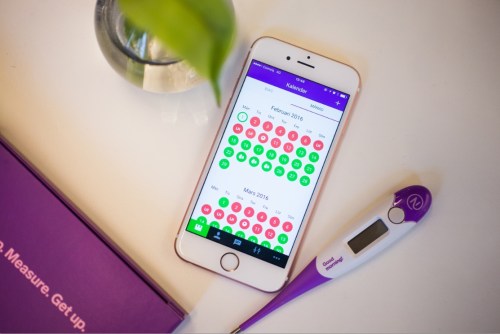
The app uses an algorithm and measures factors like temperature to determine the period when a woman may be fertile. It’s a popular alternative to hormonal contraceptives like the pill because it lacks side effects.

It’s pretty basic, but the principle makes sense on paper and isn’t based on radically new ideas. The concept of a woman tracking her fertility to determine the times of month when she’s most likely to conceive a child is fairly well-known. It’s most commonly called the “Rhythm Method” and according to the Mayo Clinic, it takes a lot of preparation.

To use this method, a woman needs actively track her menstrual cycle, accurately determine the parts of that cycle where she’s most fertile, and plan her sexual activity around those time-frames. It takes a great deal of physical awareness, as well as a certain measure of discipline, which some people are better at than others.

The Natural Cycles app is supposed to supplement those principles by aiding in that tracking process. It even tries to provide the woman with more data so that she has a better understanding of her body while tracking her cycle. In theory, having perfect knowledge of her biology will ensure a woman knows when she is or isn’t fertile.

natural-cycles-5

It’s that exact theory, however, that makes this news about a surge in unplanned pregnancies so unsurprising. There’s a good reason why this sort of approach to contraception is rarely practiced by anyone other than committed couples and is often discouraged as a general form of contraception.

As with so many other theories, the actual practice of the method doesn’t always work in the real world. That’s because the real world is a lot more chaotic, varied, and unpredictable than concepts on a piece of paper. That applies even more to human biology, male and female.

Now, the appeal of natural family planning like the one Natural Cycles promotes is undeniable. You don’t need to take a pill. You don’t need to have something inserted into your body. Plus, it gives you a chance to really know and understand the workings of your body. For both sexual health and general health, that’s has many benefits.

Unfortunately, the human body is not known for being that transparent. It does not come equipped with a USB port or a wireless interface that provides us with accurate, real-time data about our insides, although that’s one advancement science is working on. Absent that data, natural family planning, even with the aid of Natural Cycles, is going to be either incomplete or flawed.

I don’t doubt that the use of Natural Cycles helps in the process, but there’s a good reason why the same Mayo Clinic that so thoroughly lays out the process of natural family planning also identifies it as one of the least reliable forms of contraception. This is what they had to say about the risks associated with this method.

Using the rhythm method as a form of birth control doesn’t pose any direct risks. However, it’s considered one of the least effective forms of birth control. How well the rhythm method works varies between couples. In general, as many as 24 out of 100 women who use natural family planning for birth control become pregnant the first year. Also, the rhythm method doesn’t protect you from sexually transmitted infections.

Given this information, the fact that some of those using the Natural Cycles app ended up pregnant should surprise no one. The shortcomings of natural family planning are well known and, for the moment, no app is capable of circumventing those shortcomings.

It’s not just that even the most basic activities of the human body are so difficult to quantify and track. Doing so and trying to plan around it assumes all those involved behave with perfect discipline. While I still believe that most human beings are inherently good at heart, I don’t doubt that human beings can also be erratic, irrational, and just plain stupid at times.

There will be moments when a woman misjudges or mistimes her fertility over the course of her cycle. There will also be moments when the passions between a woman and her lover will override whatever discipline they had promised to exercise during that time of the month. Even when people aren’t stupid, they can be overwhelmed by a moment.

That’s the ultimate flaw of natural planning and apps like Natural Cycles. It’s not just prone to human error. It relies on the absence of human error in order to work perfectly. That’s not just flaw. Those are unreasonable expectations that no population of healthy human beings can hope to meet.

It’s sad that several dozen women had to learn this the hard way, even if the outcome was fairly predictable. If nothing else, it should remind us just how much work we need to do on improving contraception, women’s health, and our overall understanding of our biology.

1 Comment

Filed under Current Events, gender issues, sex in society, sexuality

My Five Major Goals For 2018

It’s over. The year that was 2017 is complete. To say it was eventful, especially given the events that affected it in 2016, would be an understatement on par with calling Jennifer Lawrence decent looking. It’s certainly been an eventful year for me, but I’m ready to close the book on 2017 and look ahead to 2018.

Every year, I try to establish a set of goals at the beginning so that I have some semblance of focus for the coming year. They’re rarely specific or overly-ambitious, but they give me a sense of perspective that help me guide myself forward in a positive way. I genuinely want to improve myself year after year, both an erotica/romance writer and a man.

Looking back at the goals I set for myself in 2017, I think it’s safe to say I made progress. It’s not quite as much as I hoped, but I feel as though I’ve taken a step forward. I’d like to keep moving forward in 2018 and I encourage everyone else to do so.

With that in mind, I’d like to share a list of goals that I’ve set for myself for 2018. While these aren’t the only goals I intend to pursue, as every year tends to bring unexpected challenges, I want these to serve as the foundation for how I’ll make 2018 both enjoyable and sexy.


Goal #1: Promote The Hell Out Of “Rescued Hearts”

rescuedhearts_9781786862631_800

This is the most pressing goal I’ll face in the early parts of 2018. As I announced earlier this year, my next published novel by Totally Entwined Group is “Rescued Hearts” and it’s set for release in February. It’ll be my second major release since “Passion Relapse” and I hope to make it the foundation of greater success.

Now, I never expected “Passion Relapse” to be a best seller from the get-go, nor did I expect any of my other self-published novels to gain that kind of audience. I understand that I’m still fairly new to this industry. I’ve released less than a dozen novels and I’ve yet to build a strong audience. “Rescued Hearts” is just another step in that effort and I’m hoping it’ll be a big one.

As I’ve mentioned before, I know little about marketing. I can talk about sexy topics all day long, but selling them is a challenge. I’m hoping to learn more about that process in 2018, although I’m not sure which form that’ll take. I hope Totally Entwined Group will continue to help me, both as an author and as someone trying to stake his claim in this sexy industry. By the time 2018 ends, I want to feel like I’ve made real progress.


Goal #2: Finalize And Submit Two Additional Manuscripts

While I intend to focus heavily on promoting “Rescued Hearts” upon release, I’ve no intention of stopping slowing down the development of other sexy ideas. During the latter parts of 2017, I worked hard to complete a couple of manuscripts that I intend to submit to my publisher very soon. Given how helpful Totally Entwined Group has been, they’ll likely have priority.

However, these stories are quite different from both “Passion Relapse” and “Rescued Hearts.” I’m trying to mix up the sexiness as I grow as a writer. That means you won’t see some of the same themes I’ve been exploring in previous novels. You’ll see a different kind of sex appeal, one I hope expands the appeal of my work.

While I’m hopeful for these manuscripts, I won’t hide from the fact that they’re still in need of editing and revising. The first draft of a manuscript is almost always subject to some pretty major revisions. Even my first novel, “Passion Relapse,” involved a complete re-write of the ending. I don’t know whether these manuscripts will require that much revision, but I’m willing to put in the work to ensure they’re sufficiently sexy.

These manuscripts are both a work-in-progress. I’m also exploring a few other ideas for my next manuscript. Most of these ideas are tentative so don’t expect to hear much for now, but I’m hoping I’ll have plenty of sexy ideas to announce in 2018.


Goal #3: Continue Growing The Traffic And Audience Of This Blog

More than anything else, I’ll remember 2017 as the year the traffic for this website really took off. I’ve already mentioned it a couple of times. It started back in November and only continued to grow as the year went on. Much of this is thanks to me joining Reddit and sharing my work with that community. The response has been overwhelmingly positive for the most part.

I want to continue that trend into 2018. I want to keep growing the traffic volume for this blog. That effort is tied directly into the process I mentioned in previous goals to grow an audience. I want this site to be part of peoples’ regular internet diet. Whether it’s my Sexy Sunday Thoughts or my serious discussions on major issues, I want it to have a presence.

The only way I, or anyone on the internet, can achieve that is to continue providing awesome content. I’m not sure at the moment what form that content will take. I’m not even sure which topics I’ll explore. Some of that depends on what happens in the real world. Given all the major events that took place in 2017, I imagine I’ll have plenty to talk about.

I can’t guarantee all those discussions will be sexy, but I will try to make them relevant and meaningful. The internet is already full of digital trash. I’d like to not add to it.


Goal #4: Work On My Personal Life And Get Serious About Finding Love

This goal has little to do with my site and more to do with me, as a person. I’ve mentioned before how I’ve struggled to find a meaningful love in my life. It has been quite a while since I’ve had a steady girlfriend and that has already caused some awkward moments that give me cause for concern.

As always, I look at 2018 with a new hope that this year will be different. My situation is already evolving. As I write this, I’m settling into a new life in a new condominium. It’s my first condo that I own and inhabit myself. I’m hoping that’ll add to my overall appeal with the opposite sex and I intend to keep working on myself to find that special someone.

I get that this will likely be a bigger challenge than most. As is often the case in matters of love, you can’t just expect to bump into the love of your life and let made-for-TV Disney movie take it from there. You have to actually work at being in situations where the one you love will find you. Whether that’s my new neighborhood or the New York City Comic Con, I hope to find that someone this year.


Goal #5: Intensify My Workout And Emphasize More Body Building

This is another personal effort that has little relation to this website or my writing, but part of understanding sex appeal involved enhancing your own. I’ve recounted how I initially got into shape years ago when I effectively shamed myself into going to the gym. I intend to continue that effort in 2018.

However, I’d like to step it up a bit. My new condominium actually has an on-site gym, something I haven’t had before. I’m hoping that this will provide new opportunities and fewer excuses to further improve my health and my sex appeal. Whether it’s with more body building or better athletic training, I want to make that effort.

It’s not going to be easy, but that’s exactly why it’s worth doing. In a sense, this goal feeds into all the others. If I’m going to continue writing about sexy topics and producing sexy novels, I might as well try to be sexy myself. Going to the gym more, sweating it out, and becoming the kind of man I hope women will want to love can only help make 2018 a better, sexier year.

Leave a comment

Filed under Jack Fisher's Insights, sexuality

Study Confirms We’re Hornier Around The Holidays

I love the holidays. In terms of themes, traditions, and elaborate decorations, there’s just so much to love about them. I’ve loved them since I was a kid. I still love them as an adult. The older I get, the more reasons I find the love the holidays.

With that in mind, I’d like to share one of those reasons for anyone who might not have enough to love the holidays as much as I do. Even if you don’t need another reason, one more couldn’t hurt. On top of that, this one has to do with sex, love, and making babies under the light of a Christmas tree. I hope I have your attention now.

No, this isn’t just me trying to sell one of my sexy holiday-themed novels, although I do have one that I’m more than happy to promote. This is me reporting on a real scientific phenomenon that’s both sexy and festive, a potent combination for this time of year, if ever there was one.

It comes courtesy of Health.com, a site not known for being festive or sexy. However, one particular reports on a lesser-known phenomenon associated with the holidays and it has little to do with how many times people watch “The Charlie Brown Christmas Special.”

According to a real study published in Scientific Reports, there is a notable uptick in sexual interest during the holidays and that interest actually results in a surge of babies the following September. No, this isn’t something out of The Onion. This is a direct quote.

More babies are born in September than any other month in the United States, which means that nine months prior—right around Christmas and New Year’s—is the most popular time of year for conception.

Think about that for a moment, especially if your birthday is in September. Despite all the whining about the so-called War on Christmas or the overt commercialization of Christmas, there’s still something about the holidays that gets people in the mood. As an aspiring erotica/romance writer and a lover of Christmas, this fills my eyes with tears of holiday joy.

The actual data of the study is pretty revealing in that holidays seem to have a genuine effect on our collective libido. It’s not just Christmas that sees this effect either, but since it’s the biggest holiday of the year in terms of raw capital, the sexy effects are most pronounced.

If you’re interested in the raw data or just want to know the specifics of such a sexy study, here’s what researchers at Indiana University and the Instituto Gulbenkian de Ciencia in Portugal did to surmise this sexy, yet festive conclusion. It’s not exactly in depth, but the results speak for themselves.

To investigate mood and interest in sex, researchers looked at Google Trends data from 2004 to 2014, and Twitter data from 2010 to 2014, in nearly 130 countries. In predominantly Christian countries, they found that web searches for the word sex were highest around Christmas—even in countries in the Southern hemisphere, like Australia and Argentina, where Christmas takes place in the summer.

In majority Muslim countries, web searches for sex spiked around Eid-al-Fitr, a major holiday that marks the end of Ramadan. This was particularly interesting, say the researchers, since Ramadan is based on a lunar calendar and is observed during different seasons, depending on the year.

The study is the first “planetary-level” look at human interest and desire as they refer to sex and reproduction at different times of the year, says co-lead author Luis Rocha, PhD, professor of informatics and associate professor of cognitive science at Indiana University. And it offers strong support for the idea that interest in sex peaks during major cultural or religious celebrations, he says.

Beyond the data, it makes a lot of sense from a purely anecdotal perspective. The holidays, especially Christmas, make us all more inherently aware of traditions and personal connections. We often take time off work, break from our rigorous routines, and share quality moments with our loved ones.

More quality moments, absent the rigors of work, mean more opportunities to get sexy. Add cold weather that forces us to remain indoors and huddling together for body heat and those opportunities get even sexier. It’s just basic math and the sexiest kind of biology.

Considering there’s more than one person in my family who was born in September, I like to think my folks have contributed to this phenomenon. I think it’s a phenomenon that deserves more celebration, even if it can never exceed the strong association between holidays and overpriced toys.

It’s also worth noting that in the pre-Christian era of Western Civilization, there was this proto-Christmas holiday that Ancient Roman celebrated called Saturnalia. While some of its traditions aren’t directly linked to the holiday that became Christmas, it did involve such festivities as gift-giving, feasts, and constant partying. For those with particularly elaborate holiday traditions, that should sound familiar.

Whatever the source, be it the pre-Christian traditions or the modern commercialism we’ve all embraced, there’s just something about the holidays that makes us all feel a bit friskier. It’s a beautiful thing and the fact that there’s real science to bake it up just makes it all the more beautiful.

So, in the spirit of the holidays, I urge everyone to take some time in between gift-giving and Christmas cookies to get a little extra cozy with your lover. You won’t be offending anyone’s religious sensibilities by doing so. In fact, you’ll be carrying on a proud tradition that the human race has celebrated since it invented the concept of holidays. If we’re going to celebrate anything, we’re going to get sexy while doing it.

With that in mind, I hope this adds a little sex appeal to your holiday traditions. If, come September, you find that your festities resulted in the creation of a new life, then you just gave that child even more reasons to love Christmas. Everybody wins.

1 Comment

Filed under sex in society, sexuality

Gender Equality, Artificial Ovaries, And The End Of Menopause

There are certain situations where, if you take away modern medicine, social institutions, and various life hacks, there’s an inescapable gender disparity. I know that by saying that, I’m inviting all sorts of nasty comments. There are those who claim that just hinting at inherent gender differences is to empower the patriarchy, oppress women, and probably strangle puppies in the process.

This piece isn’t directed at those people, nor is it directed at those who want to fight Round 2,697,206,077 of never-ending the gender wars arguments that the internet has made exceedingly easy to wage. I write this with the intent to inspire hope, excitement, and maybe a few sexy thoughts beyond those I share every Sunday.

When it comes to helping men and women operate on a level playing field, technology has been the great equalizer. It’s because of technology that we’ve helped women gain a greater level of control over their fertility. It’s because of technology that men who otherwise wouldn’t have been able to have children can now do so. A huge chunk of modern society is built around having greater control over our sexual health.

For men, that control has gotten pretty darn robust. Thanks to advancements in modern medicine, as well as tireless marketing efforts from pharmaceutical companies, men can enjoy continuous sexual function well into old age. Say what you will about the greed of pharmaceutical companies, but the collective sex lives of men are better because of it.

While that’s great news for men who want to stay sexy into their golden years, this does widen a particular gender disparity that is rarely discussed, if only because it evokes distressing thoughts about what our grandparents do in their private time. While modern medicine allows men to keep humping like they did in their youth, women face the biological equivalent of a brick wall as they get older.

It’s called menopause and like reverse puberty, it’s a fact of life for women. It typically happens in a woman’s late 40s or early 50s. It’s effects vary from woman to woman, but its signature trait is that a woman stops menstruating. That means they no longer have periods, they no longer ovulate, and they can no longer have children.

At the moment, it’s basically a fact of life. If a woman lives long enough, this is what they deal with. It’s like graying hair, wrinkly skin, or liver spots. At a certain point, their reproductive systems cease functioning. While they can still have sex, the various biological changes associated with menopause can make that difficult.

In terms of the gender scorecard, this definitely deducts some points for women. Whereas men have a way to keep their dicks functioning well into their elder years, women’s options are much more limited. Sure, there are a few medical ways to deal with it, some of which can be purchased at a local pharmacy for less than twenty bucks. However, the biology is still behind the curve.

What if a woman wants to continue having children late in life? What if a woman couldn’t have children in her youth, but later wants them even after her fertility has declined? Whereas men can still father children into their 90s, women seem to be out of luck.

However, and this is where I offer a glimmer of hope to those dreading their unsexy elder years, that may change thanks to recent advancements in biotechnology. According to MIT Technology Review, our ongoing research into regenerative medicine is drawing us closer to the day when we can actually regrow a woman’s ovaries. Here are the basics of this amazing and inherently sexy work.

The work, carried out at Wake Forest Baptist Medical Center, suggests a potential alternative to the synthetic hormones millions of women take after reaching middle age. A paper describing the findings was published Tuesday in Nature Communications.

When tested in rats, the pieces of tissue, known as organoids, were better than traditional hormone replacement drugs at improving bone health and preventing weight gain. The treatment was also as good as hormone drugs at maintaining healthy tissue in the uterus.

In essence, this is like treating your organs as rusty car parts that need replacing. Ovaries, like any other organ in the body, tend to break down as time goes on. We’ve already grown some basic organs in the lab. Growing ovaries, though, has far greater implications than simply keeping your body humming along.

Ovaries, as anyone who sat through a health class knows, are the organs that produce the various hormones and androgens that make up a woman’s biology. It plays key roles in just about everything having to do with female sex and reproduction. Once it shuts down, it’s like the main generator of a building going down. Sure, some parts have backup power, but that’s not enough to keep it running.

The ability to regrow fresh, healthy ovaries completely changes that dichotomy. In some respects, it puts the women out ahead of the men in terms of sexual function in their golden years. Unlike little blue pills or even bionic penises, these re-grown ovaries are entirely functional organs. It’s like resetting, rebooting, and re-energizing a woman’s sexual function.

This doesn’t just mean that women can still have healthy children well beyond their golden years. It means they can also avoid the various downgrades to their sexual function that often comes with menopause. They don’t need to take pills or constantly replenish hormones. They’ll have entirely functional organs inside them to do that for them.

Now, ignoring the possibility that creating new ovaries may also lead to creating enhanced ovaries, this does more than just improve the sex lives of older women. In many respects, it puts them on the same level as their elder male counterparts.

Their sexual function and their reproductive function don’t have to decline with age. Like older men, they can still have sex for fun. They can still have sex to make babies. Their options are just as open. If you’re a fan of gender equality, then this is an advancement that’s every bit as vital as advances in male birth control.

While I’m sure this will still generate some unpleasant mental images about our parents and grandparents, the incentives are already in place and too great to ignore. Sure, there will be some women who opt not to get fresh ovaries, just as there are some men who don’t mind having a less active penis later in life. However, the fact that medical science will give people these options is a true game-changer.

Technology has always changed our society in immense ways, but technology that affects our sex lives and our reproductive health tends to have bigger impacts than most. What happens to our family structures when our grandparents are still having children at the same time as our parents? What happens when getting older is no longer associated with succumbing to menopause and sexual dysfunction?

These are the kinds of questions that don’t have easy answers now, but those answers may end up finding us sooner than we expect. Since I’m in the business of erotica/romance novels, it may very well affect me at some point. Then again, having more people who stay horny into old age might be good for business.


1 Comment

Filed under gender issues, Second Sexual Revolution, sex in society, Sexy Future

Is Loneliness Really THAT Bad For You?

I’d like to preface this article with what I hope is an exciting announcement. As I write this, I’m preparing to move to a new place. By nearly every measure, it’s a good thing. My living situation is set to change for the better.

Without getting into the specifics, just know that I’ve been living with roommates in a shared house for quite some time now. That has been my standard living situation since college. For a while now, I’ve been looking to upgrade that situation by buying my own condo. I’ve been working hard, selling as many sexy novels as I can, to scrap together enough money.

Finally, I had the money and I found the perfect place. In less than a month, I’ll be living on my own in a beautiful one bedroom, one bathroom condo that I won’t have to share with anyone else. I won’t just be able to sleep naked anymore. My entire living situation will be clothing optional. Just thinking about it brings tears of joy to my eyes.

I’m genuinely excited about this and not just because it will provide more opportunities for nudity. However, it does give me some pause in terms of the larger implications. Every major change in life, be it a living situation or a new lover, is bound to have unforeseen impacts. Moving to a new place certainly qualifies.

The most jarring change in this instance is that, for the first time in my adult life, I’ll be living completely alone. I won’t have to contend with roommates. I won’t have to share any ounce of my living space. Everything from the thermostat to the brand of toilet paper to the visibility of my Playboy calendar will be completely under my control.

I don’t deny that living alone has its appeal, but I’m somewhat used to always being in a place where I could just go talk to someone if I wanted. Living in this new place will mean fewer opportunities of that nature. Then, I found this distressing article from the New York Times on the potential health hazards of living alone and suddenly, the price for clothing-optional living seems a bit higher.

The hazards are not necessarily trivial. This isn’t something that can be fixed by eating an extra bowl of fruit, running a few miles, or getting a coffee enema, which is a thing. According to the article, these are some of the issues that loneliness and isolation can breed.

Loneliness can accelerate cognitive decline in older adults, and isolated individuals are twice as likely to die prematurely as those with more robust social interactions. These effects start early: Socially isolated children have significantly poorer health 20 years later, even after controlling for other factors. All told, loneliness is as important a risk factor for early death as obesity and smoking.

While it’s important to note that the keyword in that conclusion is that it can incur these effects. That doesn’t necessarily mean it will. As I’ve noted before, human beings are frustratingly complex creatures. Anyone who claims that there’s a simple solution to a big problem is usually pursuing a bullshit agenda that makes lousy documentaries.

However, there is some relevant data behind this phenomenon of loneliness being detrimental to someone’s mental health. According to a 2013 study by the American Journal for Public Health, socially isolated men and women died earlier at a rate that was consistent with smoking and high blood pressure. Those kinds of correlations are disconcerting, even if they’re not akin to direct causation.

Smoking, Cigarette, Smoke, Unhealthy, Cigar, Addiction

Under the lens of caveman logic, that makes sense. Human beings are a very social species. Social interaction is a core need, right up there with food, water, and a regular orgasm. It’s because of our social nature that solitary confinement is rightly seen as torture.

While I do have plenty of other social outlets, primarily my friends and a very supportive family, living alone will make it easier to keep to myself more often. Granted, that could change fairly quickly if I fall in love and get into a relationship. That’s something I am actively working on. However, I’m not going to assume that’ll happen soon after I move in.

I’m taking these concerns seriously, but I’m still looking forward to the benefits. As if often the case with something as complex as human psychology, there are also potential benefits to living alone. There is some research that indicates that certain people do better when they live alone. I’m not sure that I’m one of those people, but Psychology Today summed it up nicely with the kind caveman logic that makes me smile.

For some people, living alone is not just a casual preference – it feels more like a need. What happens when you are deprived of a genuine need? You can’t stop thinking about it. You daydream about it, makes plans for when you will get to have that need fulfilled again. When living alone is a need and you finally get to do it after being deprived, you feel relief and a sense that your living situation is once again just what it should be.

So with these variations in mind, I’ve got a lot to think about as I prepare to take this big step in my life. I’m still excited about it. I’m really looking forward to actually owning my own place, having a space I can truly call my own. It goes beyond having an excuse to spend more time naked. It’s about me carving a real space for myself.

I don’t know entirely how I’m going to handle it. I like to think I know myself well enough to believe that I’ll be among those who benefit from living alone. I could very well be wrong, but I’ll finally have a chance to find out.

To everyone else who may be facing this issue, take some comfort in the knowledge that the question as to whether being alone is bad for you has no clear-cut answer. It varies from person to person. Some people benefit. Some people don’t. Human beings are kinky like that. As an aspiring erotica/romance writer, that’s something I can appreciate.

1 Comment

Filed under Jack Fisher's Insights, War on Boredom

Making Exercise Obsolete (While Still Looking Sexy)

About nine years ago, I finally came to the realization that I was not as healthy, attractive, or fit as I wanted to be. I was weak, undersized, unassuming, and got winded just by walking around the block a few times. I had next to no sex appeal and hesitated to remove my shirt at the beach. Sadly, it wasn’t until five years ago that I got serious about getting healthy.

Why did it take so long for me to get my act together? It’s simple. That kind of health and sex appeal takes work. It takes a lot of work. To look like I do now, I go running for at least a half hour, six times a week. I go to the gym and lift weights at least twice a week. I also try to limit my sugar intake and drink plenty of water.

While the results have done wonders for my confidence and my sex appeal, it still took a lot of work. Most people, especially those who were die-hard couch potatoes like I was, are reluctant to do that kind of work. It’s strenuous, inconvenient, and downright uncomfortable at times. Go try running four miles in 102 degree weather to see why. Yes, I’ve done that. No, it’s not the most pleasant feeling in the world.

It’s a big reason why most diet and weight loss efforts fail. It’s also why most people tend to break their New Years Resolution to get healthy. Given the extent of the obesity epidemic, it shouldn’t take that much to motivate people into being healthier. However, the work it takes to get that kind of sex appeal is pretty significant, especially when you lack the genetics of a supermodel.

This is now the part where I get peoples’ hopes up about a sexier future, but have to temper them because we’re not quite there yet. However, in reflecting on how hard I worked to reach my current level of health and sex appeal, I think this is something that should give hope those who have given up at becoming sexy something.

For years, diet companies and bad infomercials have been looking for that magic diet pill. You’ve probably heard and/or fantasized about it to some extent. It’s that special pill that you take one a day, change nothing about your lifestyle, and still lose weight. It’s magic because, by and large, that’s literally what such a pill requires in order to work.

Many people claim to have discovered it. Dr. Oz has discovered it no fewer than 16 times. The fact that obesity is still a problem and people still need to exercise in order to lose weight and gain sex appeal shows just how bogus these products are. If you’re depressed now, please bear with me because there is some good news here.

That magic pill that Dr. Oz keeps failing to find might actually be possible, minus the magic. According to research conducted at Leiden University, in the Netherlands, it is possible for a pill that will not only help them lose weight, but mimic the effects of exercise. It basically means that you can get the equivalent of a two-hour workout and never leave your couch. It’s a lazy person’s ultimate dream.

How is that possible, though? How can it not rely on magic? Well, if you’ve been reading this blog for any amount of time, you already know how much I belabor the inherent flaws in the human body. The human body, despite its beauty and sexiness, is kind of crude. It can easily be tricked, hacked, and hijacked like an old computer running Windows 95.

According to the research, the miracle drug involved, unoriginally called GW501516, basically tricks the body into doing the same thing it does when you actually exercise. As it turns out, there are all sorts of basic, but varied process that happen when you work out. Your heart rate goes up, your metabolism spikes, and your body basically stresses itself into burning energy, becoming fitter and sexier in the process.

Those same processes are, like I said, fairly crude. Exercise is just the reaction your body has. If a pill can induce that same reaction, then your body won’t know the difference. It doesn’t have to do the same workout as Dwayne “The Rock” Johnson. It just has to react as though it did.

If it sounds like cheating, that’s because it is, from a biological perspective. Unlike professional athletes and certain World of Warcraft players, the only consequence is washboard abs, toned arms, and legs that can kick a soccer ball across the field. Biology is pretty lousy at punishing cheaters, especially when it helps them look sexier and survive.

Now, if you’re wondering why this miracle drug isn’t already making billions turning everyone into fitness models, there’s a damn good reason. The drug, in its current state, has some nasty side-effects, one of which is cancer. No matter how much you want those washboard abs, cancer isn’t worth paying that kind of price.

However, the fact that pill worked is a proof of concept. Finding ways to mitigate those side-effects, or remove them entirely, is simply a matter of refinement, research, and testing. Given that the weight loss market it worth $66 billion, rest assured there are plenty of incentives to get this drug right.

It’s promising, but still a ways off, as many of the other advancements I’ve mentioned tend to be. However, unlike major breakthroughs such as smart blood, this one is probably closer than most. Given the incentives and the scale of the obesity epidemic, it’s only a matter of time before someone turns this into a true magic bullet for obesity.

It also means that, when that time comes, it’ll be possible for more people to get in shape, get sexier, and stay that way without maintaining a ridiculous workout routine. I’m not going to lie. If I could just take a pill instead of running 15 miles a week, I’d do it in a heartbeat. Who among us wouldn’t?

It might very well make the very concept of exercise obsolete. Who would want to go to the gym or run every day if they didn’t have to? While that may upset gym owners, I think a fitter, healthier, sexier population is a price worth paying.

2 Comments

Filed under gender issues, Sexy Future

What If We Didn’t Have To Sleep?

Last week, I went to bed early in hopes of getting some extra sleep. The next couple of days were going to be long and busy. I wanted to be as rested as possible in anticipation. Any over-worked college student who ever tried to do this in anticipation of an exam probably knows where I’m going with this.

My hopes were quickly dashed because I ended up lying in bed for several hours, tossing and turning, trying to will myself to sleep. I was tired and usually I’m pretty good at falling asleep when I need to, but not on this night. For whatever reason, I just couldn’t get the rest I wanted.

It was frustrating, but easily resolved the next day with more coffee. However, in recalling that frustration, I found myself thinking back to all the other nights where I just lay there in bed, trying to sleep and failing miserably. It led me to one inescapable conclusion. That’s a lot of wasted time that I could’ve used to do something else.

With that time, I could’ve written dozens of more sexy novels. For all I know, one of them might have been a masterpiece and a best seller. Sure, it’s more likely that most of them would either be average or crap, but the fact is I still would’ve written them.

With that time, I also could’ve read more books written more content for this blog, or worked out more. How much healthier or more well-read would I be? Sure, a lot of those books might have been comics, but I’ve shown before that comics can provide some pretty uncanny insights.

With that time, I could’ve just done more of the mundane stuff that gives me joy. I could’ve played more video games, danced to terrible pop music, or binged-watched more of the shows that my friends and family keep recommending.

My point is that I’ve wasted a lot of time in bed, failing to fall asleep. I doubt I’m alone either. How many others out there struggle to fall asleep at night? Seeing as how the market for sleeping pills is around $58 billion, I imagine it’s more than a few.

I’m not saying sleep is a waste of time. There’s a biological need associated with sleep. Like food, not getting enough of it will actually kill you in the long run. That puts sleep just above sex in terms of the needs hierarchy, albeit not by much. While the need for sleep is somewhat of a mystery, we know we have to do it. We just don’t realize how much of it consumes our lives.

As it stands, we spend about a third of our lives sleeping. That means every day we’re alive, we’re stuck only living part of it. That’s a lot of time that we end up losing. That leads me to a simple, but colorful thought experiment. What if we could get that time back? What if we, as a whole, didn’t have to sleep or only needed a little to be refreshed?

This isn’t one of my overly sexy or overly disturbing thought experiments. This is basically akin to wondering what it would be like to have superpowers, something most people do on a daily basis when they’re stuck in traffic. Not sleeping may not be as impressive as flying like Superman, but it would incur an undeniable impact on our lives and our society.

Some of it might be good. Some of it might be bad. Some of it might be downright mundane. For certain people, not sleeping just means more time sitting on the couch watching “Star Trek” re-runs. Whatever the case, it has many possibilities for better, for worse, and everything in between.

As much as I enjoy sleeping naked, I would prefer to have more time and energy to do more things. I might even end up doing those things naked anyways so it wouldn’t be too much of a loss. Sure, that might cause some legal issues, but I’m willing to make that trade-off.

There are a lot of things I’d like to do, try, or explore. The problem is often a confluence of time, energy, and focus. I don’t always have enough of all three and sometimes one overcompensates for the other. The need to sleep is the only factor that ties into all them.

I get that there are some who genuinely enjoy sleep. I admit it’s a great feeling, waking up on a Saturday morning, feeling rested and refreshed. However, is it really worth all that time we miss? Who’s to say that what we do with that extra time won’t be just as rewarding? Like I said, there are trade-offs.

I’m not sure what I would do if I didn’t have to sleep so much, but I like to think I’d be able to do more and be better. What about you, the wonderful readers of this humble, yet sexy website? What would you do if you had an extra eight hours of life every day? Would you be more productive? Would you be happier? Would you succumb faster to the looming plague of boredom?

It’s a non-disturbing, non-sexual thought experiment that I encourage everyone to try it and share your thoughts in the comments. We’re all the mercy of our need to sleep to some extent. It’s interesting to imagine what our lives would be like or what kind of person we’d become if we had more time to work with.

1 Comment

Filed under Jack Fisher's Insights, Thought Experiment