Tag Archives: gender

Gender Equality, Artificial Ovaries, And The End Of Menopause

There are certain situations where, if you take away modern medicine, social institutions, and various life hacks, there’s an inescapable gender disparity. I know that by saying that, I’m inviting all sorts of nasty comments. There are those who claim that just hinting at inherent gender differences is to empower the patriarchy, oppress women, and probably strangle puppies in the process.

This piece isn’t directed at those people, nor is it directed at those who want to fight Round 2,697,206,077 of never-ending the gender wars arguments that the internet has made exceedingly easy to wage. I write this with the intent to inspire hope, excitement, and maybe a few sexy thoughts beyond those I share every Sunday.

When it comes to helping men and women operate on a level playing field, technology has been the great equalizer. It’s because of technology that we’ve helped women gain a greater level of control over their fertility. It’s because of technology that men who otherwise wouldn’t have been able to have children can now do so. A huge chunk of modern society is built around having greater control over our sexual health.

For men, that control has gotten pretty darn robust. Thanks to advancements in modern medicine, as well as tireless marketing efforts from pharmaceutical companies, men can enjoy continuous sexual function well into old age. Say what you will about the greed of pharmaceutical companies, but the collective sex lives of men are better because of it.

While that’s great news for men who want to stay sexy into their golden years, this does widen a particular gender disparity that is rarely discussed, if only because it evokes distressing thoughts about what our grandparents do in their private time. While modern medicine allows men to keep humping like they did in their youth, women face the biological equivalent of a brick wall as they get older.

It’s called menopause and like reverse puberty, it’s a fact of life for women. It typically happens in a woman’s late 40s or early 50s. It’s effects vary from woman to woman, but its signature trait is that a woman stops menstruating. That means they no longer have periods, they no longer ovulate, and they can no longer have children.

At the moment, it’s basically a fact of life. If a woman lives long enough, this is what they deal with. It’s like graying hair, wrinkly skin, or liver spots. At a certain point, their reproductive systems cease functioning. While they can still have sex, the various biological changes associated with menopause can make that difficult.

In terms of the gender scorecard, this definitely deducts some points for women. Whereas men have a way to keep their dicks functioning well into their elder years, women’s options are much more limited. Sure, there are a few medical ways to deal with it, some of which can be purchased at a local pharmacy for less than twenty bucks. However, the biology is still behind the curve.

What if a woman wants to continue having children late in life? What if a woman couldn’t have children in her youth, but later wants them even after her fertility has declined? Whereas men can still father children into their 90s, women seem to be out of luck.

However, and this is where I offer a glimmer of hope to those dreading their unsexy elder years, that may change thanks to recent advancements in biotechnology. According to MIT Technology Review, our ongoing research into regenerative medicine is drawing us closer to the day when we can actually regrow a woman’s ovaries. Here are the basics of this amazing and inherently sexy work.

The work, carried out at Wake Forest Baptist Medical Center, suggests a potential alternative to the synthetic hormones millions of women take after reaching middle age. A paper describing the findings was published Tuesday in Nature Communications.

When tested in rats, the pieces of tissue, known as organoids, were better than traditional hormone replacement drugs at improving bone health and preventing weight gain. The treatment was also as good as hormone drugs at maintaining healthy tissue in the uterus.

In essence, this is like treating your organs as rusty car parts that need replacing. Ovaries, like any other organ in the body, tend to break down as time goes on. We’ve already grown some basic organs in the lab. Growing ovaries, though, has far greater implications than simply keeping your body humming along.

Ovaries, as anyone who sat through a health class knows, are the organs that produce the various hormones and androgens that make up a woman’s biology. It plays key roles in just about everything having to do with female sex and reproduction. Once it shuts down, it’s like the main generator of a building going down. Sure, some parts have backup power, but that’s not enough to keep it running.

The ability to regrow fresh, healthy ovaries completely changes that dichotomy. In some respects, it puts the women out ahead of the men in terms of sexual function in their golden years. Unlike little blue pills or even bionic penises, these re-grown ovaries are entirely functional organs. It’s like resetting, rebooting, and re-energizing a woman’s sexual function.

This doesn’t just mean that women can still have healthy children well beyond their golden years. It means they can also avoid the various downgrades to their sexual function that often comes with menopause. They don’t need to take pills or constantly replenish hormones. They’ll have entirely functional organs inside them to do that for them.

Now, ignoring the possibility that creating new ovaries may also lead to creating enhanced ovaries, this does more than just improve the sex lives of older women. In many respects, it puts them on the same level as their elder male counterparts.

Their sexual function and their reproductive function don’t have to decline with age. Like older men, they can still have sex for fun. They can still have sex to make babies. Their options are just as open. If you’re a fan of gender equality, then this is an advancement that’s every bit as vital as advances in male birth control.

While I’m sure this will still generate some unpleasant mental images about our parents and grandparents, the incentives are already in place and too great to ignore. Sure, there will be some women who opt not to get fresh ovaries, just as there are some men who don’t mind having a less active penis later in life. However, the fact that medical science will give people these options is a true game-changer.

Technology has always changed our society in immense ways, but technology that affects our sex lives and our reproductive health tends to have bigger impacts than most. What happens to our family structures when our grandparents are still having children at the same time as our parents? What happens when getting older is no longer associated with succumbing to menopause and sexual dysfunction?

These are the kinds of questions that don’t have easy answers now, but those answers may end up finding us sooner than we expect. Since I’m in the business of erotica/romance novels, it may very well affect me at some point. Then again, having more people who stay horny into old age might be good for business.


1 Comment

Filed under gender issues, Second Sexual Revolution, sex in society, Sexy Future

Forgiving Sexual Misconduct (And Why We Should Try It)

When someone says they’re sorry, how do you decide whether or not to accept their apology? Some are easier than others. If someone uses your toothbrush by mistake, it’s not a big deal for them to say they’re sorry, buy you a new one, and move on with your lives. It’s only when someone does something that’s really egregious that we find out how forgiving we truly are.

When it comes to egregious behavior, though, sexual assault and sexual harassment are near the top of the list. Recent news surrounding celebrity sex scandals have only solidified that sentiment. Just being a dick to someone is bad enough. Being a dick in a way that makes someone feel violated, used, and abused takes it ten steps further.

As bad as those lurid misdeeds can be, should we still accept their apologies when they express remorse? It’s a hard question to ask and one I’m sure evokes a lot of difficult emotions, especially for those who have been victims. However, forgiveness is a powerful force, more so than most people realize.

I’m not saying that everyone should forget about someone’s crime or overlook how awful it was, but it’s still a question that’s worth asking. Our ability to answer it will reveal a lot about our society and the kind of people we are. Knowing those risks, I’ll say it outright.

Should we forgive those accused of sexual misconduct if they apologize? 

I ask that question with the understanding that some people will never forgive someone for their misdeeds and for entirely understandable reasons. I don’t blame animal lovers for refusing to forgive Michael Vick for what he did to innocent dogs. I certainly wouldn’t blame victims of sexual assault to forgive the likes of Harvey Weinstein or Bill Cosby if they ever came out and offered a heartfelt apology.

However, even if certain people can’t forgive, that doesn’t mean that we, as a society, shouldn’t make the effort. Human beings are flawed creatures. They make mistakes. They do bad things, some worse than others. They may not think of their actions as bad. They may just see what they do as their own twisted version of “normal.”

It’s only when the breadth of their crimes are shoved in their faces that they stop making excuses. For those with power and influence, those excuses can be pretty egregious, as I’ve mentioned in my discussions on excuse banking. Despite those factors, these people are still human, at the end of the day. Provided they’re not sociopaths, they do have feelings and they do experience remorse.

Even if we, as a society, hate what they’ve done, should we give them the benefit of the doubt when they apologize? That may be harder to do for certain celebrities, but I still believe it’s worth doing.

It reflects a sentiment I expressed a while back on our growing lack of faith in people, as a whole. We’ve become so jaded, so cynical about the world that as soon as we see a public figure’s name trending, we instinctively assume the worst. I admit that whenever I see someone on the top trends of Twitter, I brace myself for news that’s going to churn my stomach.

It’s that kind of cynicism that really poisons our perceptions, leading us to assume the worst in people. Beyond making us miserable like extra in an old grunge music video, it numbs us to the possibility that someone can be capable of redemption. If we’re just too cynical, we don’t even bother giving them a chance.

That’s a tragedy, in and of itself, because if we don’t at least try to forgive people for their crimes, then what reason do they have to apologize in the first place? It just gives people more reasons to make more excuses, as Kevin Spacey tried and failed to do when his scandal broke.

Those excuses just leave us more jaded, thereby making those accused more defensive. It’s a brutal cycle that ensures people will become more focused on not getting caught for their misdeeds rather than rectifying them. That’s not a healthy mentality for any society, be it one that exists online or one from our caveman days.

I don’t deny that forgiveness is a challenge, especially as we’ve become more sensitive to certain types of crimes. It’s also a two-way street in that the celebrity and/or public figure has to actually apologize in the first place. That doesn’t always happen. Some people are incapable of such humility.

Some, however, do make the effort. Shortly after news of his scandal broke, Louis CK issued a statement admitting the allegations were true and expressed remorse for them. He didn’t file a lawsuit or go on a PR blitz to quash the story. He confronted it directly and owned up to it. That’s something even non-celebrities struggle to do and for that, he deserves some credit.

Again, that’s not to say that the things Louis CK did weren’t egregious. If possible, he should face the same penalties that any non-celebrity would face if they were in his position, whether that be a hefty fine, a restraining order, or jail time.

However, once he pays his price and admits his guilt, the ball is then in our court. It’s up to us to give him another chance to make amends. Yes, it’s a risk because if he does it again, then there will be another victim that suffers. We still have to ask ourselves, though, what good can possibly come by punishing someone like Louis CK until the day he dies?

Excessive shaming can have some pretty debilitating effects on people, some of which can inspire even more misdeeds. Think back to what I described with learned helplessness and Al Bundy Syndrome. At some point, a person subjected to too much punishment just stops trying to avoid it and does nothing to change their behavior. That too can lead to more victims and more crimes.

That’s why, in the grand scheme of things, it’s in our best interests as decent human beings to give those who express remorse for their sexual misdeeds a chance. First, give them a chance to confront and apologize for their actions. Then, once convinced of their sincerity, give them a chance to be good again.

That means not belaboring or hounding them for their past crimes. That doesn’t mean ignoring them either. What happened in the past is bad, but it should remain in the past. The focus should be on the present and the future. If both sides are on the same page, in that respect, then that’ll do much more to improve our sate of affairs. Let’s not lie to ourselves. We kind of need that right now.

1 Comment

Filed under Celebrities and Celebrity Culture, Current Events

The (Uncomfortable) Questions We’ll Have To Answer With Human Enhancement

In general, I tend to be optimistic about the future. I know that seems crazy, given our current political climate, but I try to look beyond the petty grievance’s and focus on the bigger picture. By so many measures, the world is getting better. The human race is on an unprecedented winning streak and we’re only getting better.

A great deal of this improvement is due, largely, to our ability to make increasingly amazing tools. As I type this, countless people who are far smarter than I’ll ever be are working on advances that will keep us healthier, make us smarter, and help us transcend our physical and mental limits by orders of magnitude.

This is all exciting stuff. We should all look forward to a future where we never get sick, we never age, and we have the physical and sexual prowess of an Olympic athlete on meth. The aspiring erotica/romance writer in me is giddy with excitement over the sexy possibilities.

Like all advancements, though, there will be a cost. Even the greatest advancements mankind has ever made in science, technology, and sex have come at a cost. It’s just the nature of the chaotic world we live in. Nothing is ever smooth and easy when there are so many chaotic forces that we can’t always make sense of.

That’s why for some of these advancements, such as CRISPR, biotechnology, and artificial intelligence, we have to be extra proactive. We’re not just talking about tools that makes it easier to defend ourselves against a hungry lion. These are tools that will fundamentally change what it means to be human.

They’ll take the caveman logic and tribalism that has guided the human race for its entire existence and throw it out the window. They’ll completely rewrite the rules of human nature, crossing lines and redrawing them in ways that even a kinky mind like mine can’t imagine. It won’t just be an overwhelming transition. For some, it’ll be downright traumatic.

Given that there are over seven billion humans on this planet, there will be a lot of moving parts to this transformation. Before we can even think about taking the first steps in that process, we need to ask ourselves some serious, unsexy questions. As much an optimist as I am, I cannot deny the need for caution here.

That’s why I’ll take a step back, keep my pants out, and ask some of these unsexy questions. I understand this won’t exactly get everyone in the mood, but given the rate at which our technology is advancing, we need to be extra proactive. That way, we can get through the hardest parts of the process and get to the sexy parts.


Uncomfortable Question #1: Who (Or What) Gets To Decide How Much We Enhance Ourselves?

This will probably be the most pressing question once the technology becomes refined enough for the commercial market. Most technology goes through a progression. We saw it with the development of cell phones. At first, only business tycoons and drug lords could afford to use them or even have a use for them, to begin with.

That model might have worked for cell phones. It’s not going to work for something like CRISPR or smart blood. That’s because, unlike cell phones, the poorest and the impoverished are the ones most in need of these tools. They’re also the ones that stand to benefit most, in terms of quality of life.

Historically speaking, though, the government has not treated the poor and impoverished very well. Use the same approach with cell phones and the rich and well-connected will be the only ones to benefit. They’ll also further widen the gap, so much so that they might be even less inclined to share.

That’s why the default answer to this question can’t just be the government or rich business interests. I’m not going to pretend to know who the authority will be or how they’ll even go about distributing these advances to people in a fair and just manner. I just know that our current method will not be sufficient.


Uncomfortable Question #2: How Do We Stop Certain Human Enhancements When They Go Wrong?

When your computer freezes, you reboot it. When the sound on your speakers starts making noises, you turn it off. It’s a beautiful, but underrated thing, having an off-switch. I’m sure we’ve all had people in our lives whom we wish had an off-switch. It’s a necessary fail-safe for a chaotic world that we can’t always manage.

Putting an off-switch on dangerous technology, especially something like artificial intelligence, is just common sense. It would’ve made “The Terminator” a lot shorter and a lot less confusing. With other advancements, especially those involving CRISPR and biotechnology, it’s not as easy as just installing an extra switch.

How do you turn off something that literally rewrites our DNA? How do you stop someone who has grown used to having superhuman abilities, by our standards? That’s akin to asking someone to make themselves sick or hack off a limb because the technology has some side-effects. That’s going to be a tough sell.

Again, I am not smart enough to imagine how a fail-safe for that sort of thing would work. It can’t just rely on blind faith, magical thinking, or whatever other tactic that used car salesmen exploit. It has to be in place and up to speed as soon as this technology goes live.


Uncomfortable Question #3: How Independent/Dependent Will Human Enhancement Make Us?

Smartphones, running water, and free internet porn are great. However, they do require infrastructure. People today are at the mercy of whoever pays their cell phone bill, whoever knows the wifi password, and whoever can stop their toilets from overflowing with shit. To some extent, we all depend on certain institutions to keep our lives and our society going.

In a future of enhanced humans, who have been imbued with traits and abilities that way beyond the scope of our current infrastructure, how dependent or independent can they be in the grand scheme of things?

If they rely on a regular injection of nanobots or need to recharge every other day, then they’re going to have to rely on some form of infrastructure. That may help keep enhanced humans from becoming super-powered Biff Tannens, but it will also give a lot of power to whoever or whatever is supplying those resources.

In a sense, it can’t be one or the other. If enhanced humans are too independent, then they have no reason to interact or aid one another. If they’re too dependent on certain resources, then those controlling those resources become too powerful. There needs to be a healthy balance, is what I’m saying. There will be costs, but we have to make sure that the benefits far outweigh those costs.


Uncomfortable Question #4: How Much Of Our Humanity Do We Keep?

Let’s not lie to ourselves. There’s a lot about the human condition we wish we could change or drop altogether. Personally, I would love to never have to go to the dentist, never have to clip my toe nails, and never have to sleep, which is an advancement that’s closer than you think.

Humanity has has a lot of flaws, which is a big part of what drives the development of these tools. However, there are certain parts about humanity that are worth preserving and I’m not just talking about the health benefits of orgasms. Change too much about our bodies, our minds, and everything in between and we cease to become human. At that point, why even care about other humans?

Maintaining a sense of humanity is what will separate enhanced humans from overpriced machines. Our sense of humanity is a big part of what drives us to live, love, explore, and understand. If we lose that, then we’re basically a very smart rock that’s only interested in maintaining its status as a rock.

To really expand our horizons, we need to preserve the best of humanity. Humans do amazing things all the time that reminds us why humanity is worth preserving. When we start enhancing ourselves, we need to save those traits, no matter what we become.


Uncomfortable Question #5: How Will Society Function In A World Of Enhanced Humans?

We’ve built a good chunk of our society around our inherent flaws, as humans. We form tribes to cooperate and survive in ways we can’t do on our own. We seek leaders who are capable of guiding us to functional, stable society. Granted, sometimes those efforts fail miserably, but the goal is the same.

With human enhancement, the rules aren’t just different. They’re obsolete. So much of our society is built around the idea that we’re still a bunch of cavemen with fancier tools that we really don’t have a concept of how we’ll function beyond that context. We have nation states, national identities, and various tribes to which we bind ourselves.

Those are all still products of our inherent drive towards tribalism. That’s still our default setting, as a species. What happens when we start tweaking those settings? Will things like nation states, government, and social circles even exist? When society is made up of a bunch of superhuman beings who can live forever and never need a sick day, how do we even go about functioning?

This is well-beyond my expertise, as an aspiring erotica/romance writer. It may be one of those things we can’t contemplate until after some of these advances take hold. At the very least, we need to put this question at the top of our to-do list when that time comes.


Uncomfortable Question #6: How Will Human Enhancement Affect Our Understanding Of Family And Love?

This is probably the most pressing question for me, as an aspiring erotica/romance writer. I’ve already highlighted some of the flaws in our understanding of love. Once humanity starts enhancing itself, it may either subvert those flaws or render them obsolete. In the process, though, it may create an entirely new class of flaws to deal with.

What happens to a marriage when the people involved live forever and don’t age? That whole “death do us part” suddenly becomes an issue. What happens when having children is essentially uncoupled from romance, through tools like artificial wombs? What will love even feel like once we start enhancing our brains along with our genitals?

Since all love and passion still starts in the brain, which we’re already trying to enhance, any level of human enhancement will necessarily affect love, marriage, and family. Chances are it’ll take on a very different meaning in a world where marriage is less about tax benefits and more about new forms of social dynamics.

Human enhancement will change a lot about our bodies, our minds, and our genitals. It’ll effect so much more, including how we go about love and family. It’s still impossible to grasp since we’re all still stuck with our caveman brains. However, once that changes, this is just one of many issues we should contemplate if we’re to make the future better, sexier, and more passionate.

Leave a comment

Filed under Sexy Future, Thought Experiment

An Interesting Conversation I Had With A (Transgender) Woman

Every now and then, my various curiosities on sexy and unsexy topics alike will lead to some unexpected insights. Personally, I love those insights. It’s just so easy to put yourself in your own custom echo-chamber that those moments are more important now than ever.

Just his past week, I had a very revealing conversation with someone on Reddit that caught me off-guard, but in a good way. It came shortly after I posted my article on the prospect of transplanting a uterus into a person who was born a man so that they could bear children. When I wrote that piece, I got an unexpected reaction, but one that taught me something I never would’ve learned otherwise.

I’ve written about transgender issues before, but not often. I fully concede that I know very little about transgender issues. I haven’t really interact with transgender individuals. Unless you count my love of Mystique from the X-men, I really don’t have much understanding of the whole transgender phenomenon.

As a result, the article I wrote about transplanting uteri reflected that ignorance. I later found out that the transgender people who read it took offense to some of my rhetoric. For this, I apologize. I honestly didn’t understand why my words were offensive at first. Then, a very kind, very understandable transgender woman helped me understand.

Since I don’t have permission to reveal her name or even her username, I won’t say it, out of respect for her privacy. Also, I am calling her a she and that’s perfectly valid for reasons that I hope will become clear. To me, she is a woman, regardless of what the Ben Shapiros of the world may claim.

Prior to writing my article, I didn’t buy into the notion that people who identify as transgender have some sort of mental illness. I accepted the conclusions of the American Psychological Association in that that they felt they were born the wrong gender. As it turns out, that’s not even half the story.

Here’s how the woman on Reddit described it to me in ways that go beyond what you’ll read on Wikipedia.

“I know exactly what’s missing inside my abdomen, and it feels weird, as though I have the drivers for hardware that was never installed. My experience is comparable enough to other infertile women I know that we’ve been able to comfort each other, but one does tend to feel a bit broken in a society that puts such a premium on motherhood. I started trying to plan for eventual pregnancy around age four or so when my little brother was born, and it took a few years before I learned it wasn’t going to happen barring cool future technology.”

I found this to be incredibly revealing. As a man whose body and mind are fairly in sync, in terms of gender idenity, it’s hard for me to wrap my head around that. However, this woman had to spend a good chunk of her life dealing with this fundamental disconnect.

It’s not so much that she’s a woman who was born as a man. She was always a woman in the same way I was always a man. It’s not that she has a penis instead of a vagina. It’s that she’s missing the parts she already feels she has, but the biological hardware doesn’t reflect that. It’s not like being born without a limb. It’s more akin to being born with a different limb than the one your brain says should be there.

Unfortunately, it’s that outer hardware that made her look like a man that led everyone to treat her like a man while expecting her to behave as such. That’s more than a little jarring. That utterly undermines a huge chunk of your identity.

Imagine, for a moment, waking up one day and having everyone treat you as the opposite gender. Imagine having to live every day, wanting to be treated like a woman, but instead being treated like a man. That’s what it’s like for many transgender individuals. She best summed it up like this.

“Trans people aren’t an especially interesting mystery once you get past the first basic fact: I’m not a man who became a woman. I’m a woman who was treated like a boy until she was old enough to fix her body without having to ask for permission.”

It’s still an amazing thought to contemplate, having an identity that is completely inconsistent with your body. The idea that our minds and our bodies aren’t on the same page is hard for anyone to imagine, which is a big reason why there are so many misconceptions about transgender people.

In a sense, I get why some get so hostile about the very idea of transgender issues. To them, gender is determined by your chromosomes and nothing else. If you have a Y-chromosome, you’re a man, regardless of how you look. It’s simple, concise, and easy to grasp. Like many aspects of biology, though, it’s only part of a much bigger picture.

Anyone who tries to reduce complex biological and psychological concepts into simple, easy-to-understand bullet points are almost always wrong to some extent. As I’ve said before, biology and human behavior are extremely complex. Chromosomes are just a small ingredient in a much larger biological cocktail.

Chromosomes are just DNA and DNA is just a blueprint. You can’t entirely define a person by their DNA any more than you can define a building by its blueprints. Sure, those blueprints are part of the process, but they’re not nearly as influential as all the hardware that actually create the structure.

A transgender person is no more defined by their DNA than anyone else. Sure, your DNA can effect you in many ways, but it’s not the only factor. Life, people, and the world around them is just too chaotic, complex, and dynamic to be reduced to something that simple.

As such, I sincerely thank this kind, patient woman for giving me this insight into a world I wouldn’t have otherwise learned about. I don’t doubt there’s a lot I don’t know. The way I write about transgender issues may still come off as ill-informed or even offensive. For that, I apologize.

However, as someone with a general interest in people and the way they see themselves, sexually, I hope to learn more. The fact that someone took the time to help me by sharing her insights makes me all the more astonished by the breadth of human experiences.

4 Comments

Filed under gender issues, Jack Fisher's Insights

Sex Education Vs. Love Education: Why We Need More Of The Latter

Talk to most teenagers about the awkward moments of their lives and they’ll usually agree on a couple themes. Puberty did all sorts of weird things to their bodies, talking about sex with parents is very uncomfortable, and there’s no easy way to explain certain stains in your underwear.

Even adults who survived their teenage years would agree. That jarring transition from kid to adult is fraught with all sorts of challenges, obstacles, and exceedingly embarrassing moments. I’m not just talking about awkward boners either. It’s overwhelming, so much so that we often need guidance, even though most never admit to seeking it.

This is a big reason why sex education is so difficult, which I’ve discussed before. At least parents, teachers, priests, and poorly-produced after school specials tried to teach kids about these topics. Sure, some of it was misguided and misleading, but at least it wasn’t ignored.

There was one particular topic, which happened to be closely related to sex, that rarely got mentioned. In fact, it was only ever hinted at indirectly, if not overlooked purposefully. It might very well be the greatest oversight that school, parents, and society have committed, short of informing teenagers that pictures of their genitals are never secure.

It has to do with love. No, I’m not talking about the kind we make in a bedroom or within my sexy novels. I’m talking about the real, sincere love that most of us only know from old Beatles songs. Yes, I realize that sounds cheesy as hell, but that’s exactly my point.

Growing up, talking about sex was awkward and uncomfortable. It evoked all sorts of giggles, jokes, and crude remarks, often with respect to certain aspects of human anatomy. At least we talked about it. At least we acknowledged that it’s there and it’s something adults at least try, albeit haphazardly, to teach us about.

The same can’t be said for love. In some respects, talking about love is even more taboo than talking about sex. There was never a class about love. There was never an open discussion about what it meant, how it felt, and how to approach it. We, as hormonal teenagers, were left to figure it out on our own. That already leads to all sorts of problems with sex. Why wouldn’t the same apply to love?

Unlike sex, though, the silence on love has nothing to do with the agenda of religious zealots, government bureaucrats, or parents too horrified to think about their children getting naked. It had more to do with our attitudes, as teenagers.

I don’t know how it is now, but when I was a teenager, I hid the fact that I enjoyed romance. In many ways, my love of comics provided a shield since comics have all sorts of great romance stories. If someone found out I read comics, that wasn’t too big a deal. Liking comics wasn’t too taboo, but liking romance was different.

To enjoy romance, especially for a man, was to be a sissy. It was like there was something wrong with you to actually be into that sort of thing. Just talking about love made you less manly. Never mind the fact that men have done some insanely manly things in the name of love. Just being a fan of love and wanting to explore it was akin to dressing up in bunny pajamas and going to a Metallica concert.

For women, it was somewhat easier, but not by much. Girls were more expected to be into love and melodrama, but that came at a cost too. I knew girls in high school and college who got a lot of crap for being too sentimental, so to speak. Whenever they would talk about love, I could actually see others rolling their eyes and secretly wishing they could mute their friend.

In any case, talking about love was just something that seemed uncool, lame, or insipid. Never mind the fact that everyone seeks love, on some level, and that it goes onto become a major driving force in our lives, just like sex. We just didn’t talk about it and were expected to know it when we felt it.

That, unfortunately, was the most anyone ever dared teach me about love. It was the advice I got from parents and relatives. It was the advice I got from teachers. They would tell me the same things.

“Love is just one of those things you’ll know when you feel. Trust me!”

Now, I trust my parents and teachers with a lot of things. For the most part, the advice my parents give me is pretty damn good. When it comes to love, though, their advice felt empty and unsatisfying.

To some extent, I suspect they said that because even they didn’t know. I doubt they got an education on love, even if they got an education on sex. It’s also worth remembering that our concept of love and actually marrying for it is fairly recent. However, that doesn’t make the lack of insight any less jarring.

Even as a kid, I wanted to learn more about love, but had no idea how to go about it or who to talk to. I suspect others felt the same, but didn’t want to bring it up because it was just too uncool. I ended up learning most from comic books, TV shows, and movies like “Crazy/Beautiful.”

While those offered some insights, you generally don’t want to learn too much from mass media. That’s why we have an ongoing issue about kids learning about sex through porn. It’s also why we, as a society, don’t trust movies to teach teenagers how to drive. We understand mass media is going to horribly skew reality. However, we seem okay with letting it teach us about love.

Naturally, that’s going to cause problems. There are any number of doomed or toxic romances that the media loves to convey as romantic ideals. At least with sex, given the physical elements involved, it’s a bit easier to figure out you’re doing something wrong. Usually, your partner will tell you. With love, though, its a bit harder.

How do you know your understanding of love is healthy or even feasible? How do you know that your concept of love isn’t misguided or flawed? How do you even go about pursuing love, forging intimate bonds, and working with someone to strengthen that bond?

Those are not rhetorical questions. Those are actual questions that never get asked, let alone answered. Humans are a very emotional species. Love is among the most powerful emotions any human can feel. To not talk about it is akin to ignoring that at least half your body is on fire. At some point, the burning becomes too intense.

I don’t deny that our current standards for sex education have room for improvement. However, we haven’t even contemplated standards for education about love. Like our desire for sex, love is one of those innate human feelings that we cannot and should not turn off. It shouldn’t be one of those issues that’s uncool to talk about. It sure as hell shouldn’t be one of those issues that we ignore, especially for young people.

In a sense, though, maybe this is one of those rare issue where adults and teenagers are on the same page. Neither can claim to have a firm understanding of love. That may mean we have to learn and teach it together, but as an aspiring erotica/romance writer, I can think of few things more worthy of learning.

2 Comments

Filed under gender issues, Love Or Obsession, Marriage and Relationships

Men Who Can Give Birth (Is ALMOST A Reality)

It’s a common joke that women make about men. I hear it in at least once in every debate that involves gender issues, feminism, or anything that inspires fist fights over Thanksgiving dinner. If men could give birth, then contraception would be a tax write-off and abortion would be available at every Starbucks.

I don’t deny it. A man’s perspective is inherently limited when it comes to understanding women. That’s why we have all these gender issues in the first place. It’s also why some of them can never be resolved, although that’s hardly the only reason. Despite what some of the radical, gender-bending enthusiasts may say, men and women have undeniable differences in their biology, physiology, and psychology.

We are a sexually dimorphic species. One gender is always going to have some perspective or experience that the other cannot relate to, no matter how close they might be. Whether they’re siblings, spouses, or parents, you just can’t get over the fact that one gender gives birth and the other doesn’t.

Sure, a man can sometimes get boobs, albeit in a very unsexy sort of way. However, he can never give birth. He can never know what it’s like to carry a life inside him and then push that life out into the world in a way that has been described as passing a watermelon through a straw.

Well, what if that changed? What if it suddenly became possible for men to actually have a uterus and experience childbirth? Believe it or not, this isn’t another one of my sexy thought experiments. This isn’t just a funny question for women to ask men about. It’s about to become very serious.

According to a story from The Telegraph, the science of putting functioning wombs into transgender women is just about ready for prime time. That means people who began their lives as men will be able to bear children in ways that no man, no matter how girly, has ever been able to experience.

The doctors made it pretty clear too. This is not like artificial wombs, a technology that’s still decades away from perfection. This can happen with our current medical technology. Chances are, it will happen in the next few years and pretty much every head at Fox News is likely to explode.

This is what Dr. Richard Paulson, President of the American Society for Reproductive Medicine, said on the matter.

“You could do it tomorrow,” he said.

“There would be  additional challenges, but I don’t see any obvious problem that would preclude it.

“I personally suspect there are going to be trans women who are going to want to have a uterus and will likely get the transplant.”

While men and women have a different shaped pelvis, he added, there would nevertheless be room for an implanted womb.

Think about this for a second and try to appreciate the implications here, especially if you’re a man. The day where that joke I mentioned earlier about men giving birth isn’t going to be a laughing matter for much longer. Very soon, a man might be able to describe for the first time in the history of the species what it feels like to give birth.

This isn’t just big news for the transgender community, who have faced their share of challenges lately. This is big news for gender dynamics, as a whole. Think back to all the controversies surrounding feminism, gendered politics, and the different factors that make men and women assholes. A lot of that is built on some of these intractable differences between men and women.

Men could never give birth. Women have to give birth in order for the species to survive. It’s an unequal situation that inspires all sorts of unequal, unjust dynamics. Whether it’s egregious traditions of misogyny or insane standards of masculinity, these dynamics ensure that neither gender can ever understand each other on the same level.

However, as medical technology improves, especially with respect to gender reassignment surgery, we’re getting closer to the day where someone born as one gender can change their physiology so completely that it would be indistinguishable from other individuals of that gender.

The ability to give birth was one of those remaining obstacles that kept transgender women from being on the same level as their cis-gendered peers. The other half of that equation, namely the ability to transplant a penis, was already achieved. In fact, the recipient of a transplanted penis actually managed to father a child.

That happened two years ago. This step, having someone who was born a man give birth through a transplanted womb, will complete the process of destroying one of those intractable barriers between the genders. Like in vitro fertilization before it, this technology changes and/or removes the limits that our sexually dimorphic biology has put upon us.

Also like in vitro fertilization, which is still illegal in certain countries, this is sure to intensify the debate surrounding transgender rights. For much of that struggle, even with today’s advances, opponents often painted transgender individuals as mutilated perversions of a particular gender. They would claim the bodies they put themselves in are unnatural and a product of mental disorders.

Well, that perspective loses weight once the transformation from one gender to another becomes so complete that they can do pretty much everything that their cis-gendered peers can do. Whether it’s taking a piss or giving birth, this technology means that people who feel they were born in the wrong bodies can actually complete the transformation they seek.

What will that mean for the transgender community? Moreover, what will that mean for how men and women understand one another? What happens to someone’s perspective when they’ve spent much of their life as a man, but then change into a woman who goes onto give birth?

These are impossible questions to answer now, but it won’t be long before someone is actually able to answer them with real, unfiltered experiences. That kind of insight is unprecedented for our society, our species, and everything we think we understand about the opposite sex.

Other advances in technology, such as those that will make us full-fledged shape-shifters, will further blur the lines between men and women. However, before that technology gets here, this critical step in the process will set the stage. It may help men and women get along. It may trigger a whole new set of debates that make us want to yell at each other just as much.

Whatever the case, our understanding of gender and our ability to understand the opposite sex is changing. Also, if there’s a way for me to turn this into a sexy novel, expect me to do so the first chance I get.

3 Comments

Filed under gender issues, Second Sexual Revolution, Sexy Future

The Unspoken Gender Disparity (Of Sex Toys)

I talk a lot about our current attitudes towards sex and the various problems it causes in our society. There are a lot of ways those attitudes manifest and my sexy novels can only do so much to expose them. Many of those attitudes have a clear and frustrating gender bias, which always inspires heated debates.

To reveal the breadth of this disparity, here’s a quick little test you can take. It doesn’t matter if you’re a man, woman, or something in between. It’ll reveal a little something about yourself and the way this disparity affects us. It goes like this.

A young woman walks up to you. She seems healthy, happy, and sane. She then tells you, “I own a vibrating dildo that has the look, feel, and texture of a real penis and I use it regularly to pleasure myself.” How do you react?

Shortly after, a young man walks up to you. He seems just as healthy, happy, and sane. He then tells you, “I own a sex doll that has the look, feel, and texture of a real vagina and I use it regularly to pleasure myself.” How do you react?

If we’re being honest with ourselves, and I know that’s not always easy or possible, we’ll react very differently to the man than we do the woman. Fundamentally, they’re both saying the same thing. They use a sex toy as a means of satisfying their basic desires when they don’t have a partner.

However, we don’t see either person the same way. The idea of a woman using a sex toy conjures all sorts of lurid mental images about a woman alone, surrounded by candles, touching herself in all sorts of wonderfully erotic ways. That imagery is the basis of a good chunk of the porn out there.

The idea of a man doing something similar conjures a very different kind of imagery. We don’t see that scene as erotic. Most likely, we’ll picture an ugly, lonely man in his basement, humping an imitation of a vagina because he’s too pathetic to experience the real thing.

Unlike the woman, there’s nothing sexy about it. At most, it just reminds us of that iconic scene in “American Pie” that had Jason Biggs going to down on a pie. On top of making everyone inherently suspicious of warm pies, it acts as a testament to how hilarious/pathetic men can be in their pursuit of sex.

It’s a double standard in the highest order, a concept I’ve explored before. It’s just one of those double standards that gets lost in arguments about a woman’s body image or the basics of sexual harassment. You could even argue that it’s an extension of the war on horny men. It’s hard enough being that horny. Any effort to satiate it is going to be met with added scrutiny.

In the middle of this huge double standard is a fundamental engineering challenge that mankind has yet to solve. Specifically, it involves sex toys. While these wondrous tools of pleasure have made incredible advances in recent years, there are still certain deficiencies that further the disparity for men and women.

Go into any place that sells sex toys and chances are you’ll be bombarded by every phallic-shaped accessory that it’s possible to imagine. If you want something that looks like an erect penis, you have an abundance of riches.

You can choose a penis made of glass, plastics, or a hyper-realistic synthetic. You can get one that vibrates. You can get one that has a clitoral stimulator. They even come in every imaginable size, shape, and color. Given the simple, basic structure of an erect penis, it’s fairly easy to replicate with our amazing tool-making skills. That’s a major reason why dildos are among the oldest, most successful sex toys of all time.

Contrast this with the options for toys resembling female genitalia. Sure, you’ll see the occasional blow-up doll, hand-held pussy, or molding based on a famous porn star, but chances are it won’t look or feel very real. These things are basically rubber and plastic. They’re incapable of mimicking the intricacies of actual vaginas.

While this is a testament to wonder that is a real vagina, it leaves the straight men who seek them at a frustrating disadvantage. It’s bad enough their natural, fully-functioning penises can never compete with a dildo that is always hard and vibrates to stimulate the deepest recesses of female anatomy. They don’t have something similar that delivers an equally intense experience.

At the moment, the closest approximation men can enjoying a real, artificial vagina comes from extremely advanced sex dolls like those made by Real Dolls. However, those super-real synthetics are extremely expensive, especially when compared to the average dildo.

It’s possible to get a quality vibrator these days for around fifty bucks and no shame. Even the cheapest accessory offered by Real Dolls will run you over four hundred dollars. On top of that, a man who admits he owns one is going to be subject to a fair amount of scrutiny and ridicule. Bud Bundy from “Married With Children” is proof enough of that.

That kind of disparity is bound to cause problems and not just through egregious double standards. As technology advances and sex dolls become more advanced, as well as full-fledged sex robots, the realism gap will narrow. It may have taken way too long, but there will come a day where a sex toy will give a man a sexual experience that’s indistinguishable from that of a woman.

However, this has already inspired controversy. There are some out there who would decry the use of such realistic sex toys because it literally objectifies the female body into something men can purchase. That’s something the radical, sex-negative crowd has been bemoaning for decades.

Ironically, these same individuals are relatively silent when it comes to the continued sale of realistic dildos. I imagine if someone came along and argued that if sex toys that mimic the female body should be banned, then all those penis-shaped accessories should be banned too in the name of gender equality. I imagine that would not go over well, even among radical feminists.

For now, though, the disparity remains. A woman has access to every kind of penis-shaped satisfaction she could hope for at a price most anyone can afford. An average man with an average income is out of luck and any effort he makes to satisfy his desires will be subject to added scrutiny. If he tries too hard, he’ll be labored a creep.

It’s not fair. It’s a complete affront to anyone who claims to be in favor of gender equality. If we’re going to endure the current disparity between male and female sex toys, we should at least offer a measure of understanding and sympathy.

Both genders have desires. Both genders want to share those desires. Let’s work together in that effort. I intend to do my part with my sexy novels. Those busy/horny scientists in sex toy labs like Real Dolls will surely do theirs. Collectively, in the name of all things sexy, we must be willing to do ours.

5 Comments

Filed under gender issues, sex robots, Sexy Future

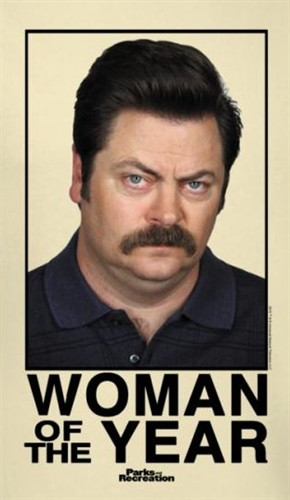
A Better Male Feminist: Ron Swanson

When it comes to icons and heroes, it says a lot about society when most these days are fictional characters. We’ve become a very cynical bunch, never putting too much stock into real people. It’s often only a matter of time before they tweet something stupid or are discovered to be card-carrying asshole.

In some ways, it’s a sign of the times. We are an exceedingly jaded bunch, born from a generation of burned-out hippies. We also live in a world where we have no concept of privacy and no ability to give anyone who holds problematic opinions a pass. For anyone who becomes an icon, it’s usually only a matter of time before they say or do something to ruin their iconic status.

Recently, Joss Whedon added his name to that bloated list of fallen icons. Up until a few weeks ago, he wasn’t just a successful director and alpha dog of geek culture. He was held up, by many, as a feminist icon. He was the gold standard that feminists referred to when asked to reference how a male feminist should conduct themselves.

Now, like so many other icons whose hypocrisy was exposed, Joss Whedon’s once impeccable feminist credentials have been shattered. While I’ve argued that his hypocrisy isn’t quite on the same level as other less reputable celebrities, it’s still a mortal blow, of sorts, to his status as an icon. He may still be a celebrity and a successful director, but he cannot be a feminist icon anymore.

I think that’s more than tragic. As an unapologetic fan of superhero comics, I know the value of having an iconic hero who embodies the values of a particular idea. While I’ve taken issue with certain brands of feminism, I do think there are still important women’s issues that deserve attention. Those kinds of struggles need icons and heroes.

So, in lieu of Joss Whedon’s shortcomings in this area, I’d like to offer an alternative to those seeking a new feminist hero who can raise the bar for everyone in terms of true gender equality. That hero is already an icon to many and one whose feminist credentials are a lot more pragmatic than Whedon’s ever were.

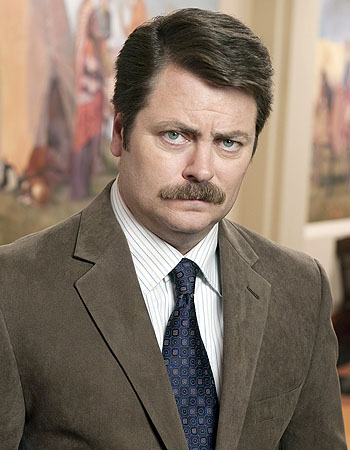
He’s a man, but he’s a man who earns the respect of men, women, and everything in between. He’s also a fictional character, but one who managed to carve a special place in popular culture for all the right reasons. Ladies, gentlemen, and those of unspecified gender, I give you the ultimate feminist hero, Ron Swanson.

To those who haven’t watched every episode of “Parks and Recreation,” bear with me. I have a feeling that those already familiar with the unstoppable force of American manliness that is Ron Swanson don’t need much convincing. They already know damn well why this man deserves to be an icon to men and woman alike.

For the sake of those who haven’t seen the show, and I weep for those people, allow me to explain. Ron Swanson isn’t just a man of many talents, from wood-working to cutting wasteful government spending. He’s a man of principle. Throughout every season of the show, he makes those principles clear and doesn’t give a wet fart about whose feelings or faces are hurt in the process.

Those are ideals that plenty of men can respect. However, it’s how he conducts himself around women that sets him apart even more. The fact he can do so with a perfectly groomed mustache is just an awesome bonus.

One of Ron Swanson’s most defining traits is that he deals with everyone the same way and sees them on a similar level, as individuals. Specifically, he sees most people as morons who annoy him and are too lazy/stupid/weak to solve their own problems. Yes, that’s a somewhat cynical view of people in general, but that’s just it. It’s how he views people.

Ron Swanson is nothing if not even-handed in dealing with men and women alike. Throughout the show, he holds both genders to the same standard. If you annoy him, as most people do, he won’t give you special treatment on the basis of what body parts you may or may not have. Annoyance is annoyance, no matter where it comes from.

That is, in essence, what traditional feminism has been about, treating both genders fairly and holding them to a similar standard. Ron Swanson does that better than anyone. Moreover, he doesn’t need to be constantly reminded. That’s just how he rolls. He doesn’t need any rigorous feminist training.

He also trusts women to be as capable as men in whatever tasks he gives them. While he’s the director of the Pawnee Park’s Department, he delegates most of the tasks to his deputy, Leslie Knope. However, he doesn’t do that because he has to. He does it because he trusts her to do the job and because Leslie wants that job.

His relationship with Leslie Knope shows that Ron is capable of working with women, trusting them, and acknowledging their value in a professional, non-romantic sort of way.

He has a similar relationship with his assistant, the crass and crude April Ludgate. Again, Ron doesn’t give her the job because she’s a woman. He gives her the job because he knows she’ll do it effectively. He also doesn’t try to make her conform to any particular standard for an assistant, gender or otherwise. He lets her be herself. Can you think of fairer, more pro-feminist way to deal with a female employee? I think not.

Beyond his working relationships, Ron shows he’s also capable of having deeper relationships with other women. Not all of them are healthy, though. He’s been divorced twice, both to women named Tammy. However, it’s these unhealthy relationships that really help solidify Ron’s status as a true feminist hero for men and women alike.

In a sense, Ron’s ex-wives are the very antithesis of feminism. In fact, they’re perfect feminist villains. Tammy One, as Ron calls her, is a joyless, ball-busting tyrant who has the warmth and comfort of a venomous snake. She exists to control everyone around her, especially Ron. She doesn’t accept anyone for who they are. She tries to mold them into whoever she wants them to be. Men and women alike are right to fear her.

On top of that, she works for the IRS. I honestly can’t think of a way to make anyone, man or woman, more terrifying. The fact that Ron survived a marriage with her should immediately give him credibility with any feminist looking to avoid the label of a man-hater.

Then, there’s Tammy Two, as Ron calls her, and while not quite as terrifying, she’s every bit as devious. What she lacks in Tammy One’s callousness, she more than makes up for with weaponized sex appeal. I’m not talking about the cute, lovable kind of sex appeal either. I’m talking about the kind that attempts to strangle a man with brute vaginal strength.

Like Tammy One, Tammy Two attempts to use sex to bend men and everyone around her to her will. Throughout the show, she makes multiple attempts to seduce Ron back into her grasp and almost succeeds a number of times. Despite her supernatural ability to manipulate men with her vagina, Ron is able to resist and break her hold.

On one level, that’s a perfect demonstration of a woman who uses sexuality for manipulation, something feminists and men’s rights activists alike complain about. On another, it also demonstrates that some men cannot be bought with sex, no matter how wild and amazing it might be. Ron is one of those men and he’s a better man because of it.

Despite his experiences with his ex-wives, Ron Swanson still treats women fairly. He’s even a romantic, of sorts, and not just towards bacon. In the later seasons of the show, he meets a woman named Diane Lewis and she’s everything the Tammys aren’t.

She accepts him for who he is, doesn’t want him to change, and eventually marries him. Ron treats her the same. Theirs is a true relationship of equals, a kind that feminists can respect and admire alongside that of Cyclops and Jean Grey. For a man to have endured two failed marriages to two monstrous women, yet still love a better woman for all the right reasons, is as heroic a story as any, especially within a feminist context.

Between the way Ron works with women, the way he loves them, and the way he deals with them, he demonstrates a far more refined approach to feminism than Joss Whedon ever did. He didn’t need to create female heroes. He didn’t need to make multi-billion dollar movies or iconic TV shows. He just had to show that it’s possible to deal with women in a fair, equal, and respectful way.

The fact that Ron does all of that without being the kind of whiney beta-male that makes every male feminist sound like they have a deflated scrotum. Ron is, by every measure, as alpha as it gets when it comes to men. He’s strong, he’s tough, he’s stern, and he has one of the manliest mustaches of all time. No one in their right mind would doubt this man’s masculine credentials.

On top of that, he’s not the kind overly-muscled, John Rambo kind of alpha male with woefully impractical muscles and ridiculous skills that nobody without Arnold Schwarzenegger’s body-building routine can hope to match. Ron Swanson has the build and physique of an actual man. He does set the bar too high or inspire body image issues, except when it comes to manly facial hair.

By nearly every measure, Ron Swanson is the kind of man that should earn him a place in the feminist hall of fame. He is everything men respect and women admire. He should be the icon and hero that feminists refer to.

I’m not saying he’s without flaws. I’m not saying there aren’t other men, real and fictional, who deserve a similar status. I’m just saying that Ron Swanson is the kind if icon that feminists can rally around. Granted, Ron doesn’t care much for rallies, icons, heroes, or annoying people in general, but that’s what makes him Ron fucking Swanson.

3 Comments

Filed under Celebrities and Celebrity Culture, Current Events, gender issues

What Makes A Woman An Asshole?

These days, discussing any inherent differences between men and women is an easy way to turn a casual conversation to a blood feud between radical feminists and angry men’s right’s activities. It doesn’t matter if there’s substance, logic, or legitimate issues involved. It only takes one poorly-worded remark to turn a simple discussion into an all-out gender war.

In general, I try not to take sides in that war or give either side any ammunition. I’ve learned, often the hard way, that no good can ever come from angry debates on the internet about any relevant subject. Eating sand and rubbing my ass on my computer screen would be just as productive.

While this hasn’t stopped me from commenting on certain issues regarding feminism and various gender issues, I’ve generally tried to limit the amount of time and energy I spend on these topics. If I can’t apply it to something sexy or something relating to my efforts to be an erotica/romance writer, I generally don’t bother.

Well, when I did my article on the factors of what makes men assholes, I knew I would do something similar for women at some point. For one, it’s only fair that I give both genders equal weight on this topic because being an asshole is one of the few issues that’s truly gender neutral. No matter what genitals we may or may not have, we still have assholes and we’re just as capable as being one.

However, and this is where I’m sure I’ll get in trouble with the more radical elements of gender issues, women deal with very different dynamics, compared to men. Some are biological. Some are societal. Some are just basic variations we see from person to person. Regardless of how convinced you are of one gender’s superiority/inferiority, it’s impossible to deny that both genders breed assholes.

As with the men, understanding those factors is important to creating characters in a story. Not all of the female characters involved will be paragons of virtue with the chastity of a devout nun. Some are just going to be assholes who just happen to be female.

Skin Deep” had more than a few female characters who fit that description. In fact, you could argue that Mary Williams, the second protagonist and primary love interest to Ben Prescott, started off the story as a selfish asshole who didn’t realize she was just exploiting her looks to be popular. While she underwent a dramatic change, others like her friend, Melissa Miller, did not.

It’s debatable just how much an asshole Melissa was in the context of the story. She was definitely no Regina George or Quinn Morgendorffer, but she definitely walked a fine line between just being selfish and being an outright asshole of the bitchiest variety.

As with men, we’ve all probably dealt with female assholes at some point in our lives. The main difference with women is that they’re not as overt about it, compared to men. Yes, I realize there are some women who will match and exceed men in certain instances, but in general, the female genders have an style of asshole that’s all their own.

So, just as I did with the men, I’m going craft another list of basic factors to explore the unique elements associated with female assholes. Some might also call these the factors of a bitch, but I prefer the asshole label and not just because it’s more gender neutral. A bitch can just be a state of mind. An asshole is a way of life.

Again, I realize that this list will be somewhat limited than the one for men because I’m a man. However, I’m also human and women are human, last I checked. I don’t deny that my gender does influence the way I interpret the world and that has shown on this blog before. So please keep that in mind before you start another gender war on this blog.

It’s also because I’m a man and my perspective is limited, I encourage the female portion of my audience to comment and, if necessary, correct my list. I think it’s important that we all know the factors influencing male and female assholes, alike. If we’re going to have to deal with these people in life, then we might as well be proactive.


Asshole Factor #1: Completely (And Willfully) Lacking In Self-Awareness

It’s one thing for a girl just to be ditzy and clueless. There are women, and even plenty of men, who just haven’t made enough sense of the world to really understand why some of the things they do come off as annoying. These people aren’t assholes. They’re just ignorant or misguided.

What crosses the line between ignorant and asshole is akin to a suspension of belief that just being a girl is somehow a substitute for actually doing something. This is most comment with cute, naturally beautiful women who think people are nice to them just because they’re inherently awesome.

They think this, despite wearing skin-tight jeans and push-up bras. It would be one thing if they just flaunted their beauty with the full understanding that it gave them an edge. Those kinds of women aren’t assholes. They’re just honest. The dishonest ones, namely the Quinn Morgendorffers of the world, don’t even make the effort.

Beyond the laziness, that willful lack of self-awareness ensures they always have a flawed view of the world. They think they’re more special than they actually are and don’t make an effort to do anything other than exploit their looks or their gender. The extent to which they’ll avoid any meaningful depth is what makes them a unique brand of asshole.


Asshole Factor #2: Getting Others To (Unknowingly) Fight Their Battles For Them

This is something I find that women do better than men in almost every case. It would actually be strategic and cunning if it weren’t such a common tactic for assholes. Whereas a male asshole would just brutishly charge into battle, swinging his fists and not caring if his fly was unzipped, a female asshole will get others to do the hard work for them so she can sit back, sip martinis, and laugh her ass off from a distance.

Sometimes it takes the form of lurid gossip that turns into full-blown rumors. Sometimes it takes the form of using social status to effectively outsource direct acts of assholery. Back in college, I knew a girl who gave her ex-boyfriend’s roommate a blowjob in exchange for installing malware on his laptop. Yes, it was an asshole move, but you can’t argue with results.

This is also what makes asshole women every bit as dangerous as men, if not more so in some instances. Just ask Cersei Lannister. They don’t even have to go so far as to offer a blowjob or a nude picture to get others to do stuff for them. Sometimes, they just create the impression that doing their bidding will win them favors that may involve nudity. Sure, it’s working smarter and not harder, but it still makes her an asshole.


Asshole Factor #3: Treating Every Friend And/Or Lover As Disposable

This is probably the most overt manifestation of the female asshole. That’s not to say men don’t do it too. They most certainly do. There are men who treat women and other men with the same care as a used candy wrapper. What sets women apart, though, is the breadth and spectacle of their actions.

It’s one of those traits that’s easy to spot in spoiled rich girls who see everyone as an employee who is legally required to do what they say. However, it also shows up in the non-spoiled brat crowd just as often. Whether a girl is just pretty or well-connected, she actively avoids any deeper connection with others. People are just a means to an end for her.

Whereas asshole men will often employ that approach when it comes to getting sex, women use it to get everything, including sex. The line between their friends, colleagues, and lovers is distressingly thin, if not invisible. The second she’s done with someone, or senses they serve no further purpose to her, she jumps at the first opportunity to abandon them like a used tissue.


Asshole Factor #4: Making Everything An Agenda For Or Against Them

People blaming other people for their failings is nothing new. Everybody of every gender has done it at some point in their lives to some extent. It’s part of the mechanism that our brains use to protect our overly fragile ego. It doesn’t always make someone an asshole, but it certainly can when taken to an extreme.

In my experience, women are more eager to go to that extreme then men. It often shows up at radical feminist rallies or internet shouting matches about who’s the bigger victim. Whatever the setting or the ideology, the intent is the same. The female asshole goes out of her way to not just blame everyone for their problems, but make it seem as though everyone is actively plotting against her.

This is conspiracy thinking on the level of Alex Jones, assuming he’s not faking it. It’s what female assholes use to either derail or end an argument. It doesn’t always have to involve debates on feminism too. A simple debate with a friend, spouse, or co-worker can turn everyone into a Lex Luthor level villain who deserves every asshole thing done to them.

Such asshole tactics, when employed effectively, can make it both convenient and easy for someone to be the kind of asshole they want to be. While male assholes may occasionally explore these tactics, female assholes have mastered them.


Asshole Factor #5: An Eagerness To Weaponize Whining/Annoyance

This factor goes all the way back to childhood for certain asshole women. They learned early on that whining incessantly can help get them what they want and they never unlearned that tactic when they got older. When they were little, it made them a brat. As an adult, it makes them an asshole.

In my experience, women channel their ability to whine and annoy better than any man. It’s not enough for them to just be loud. They’re very tactical with their whining, striking just the right emotional chords to get someone to react in just the way they want. They’ll still be the asshole, but they’ll make it so everyone around them is an even bigger asshole by not heeding her whining.

On some levels, asshole women seem to know that people in general have a low capacity for annoyance. If they exceed that capacity to any reasonable extent, they can get others to either concede their point, even when they’re wrong, or make any meaningful exchange impossible. It’s basically the social equivalent of cheating at a video game and cheaters tend to be assholes.


Asshole Factor #6: Always Talking Down To Everyone (And Never Justifying It)

In general, we expect assholes to talk down to us. At the same time, however, we celebrate and cheer leaders who do the same. What’s the difference? Why do we love one and hate the other?

With respect to assholes, it has to do with merit. A good leader earns the right to talk down to others. Assholes don’t even bother. Male assholes might be loud and annoying, but at least they’ll yell directly into your face. A female asshole has to take it a step further. She has to elevate herself or bring someone else down before she can start yelling.

This is where asshole women maximize their excuse bank, doing anything and everything to put them in a position to yell at others in a way where they can’t respond. We see it lousy teachers, bad parents, and women who just think they deserve a greater say because they have a vagina.

The tactics may be more subtle, but the themes are the same. An asshole will not give two licks of a squirrels nut sack about substance, effort, or reason. They would rather just skip those steps and get to the part where they can just be an asshole and get away with it.


Once again, please refrain from turning the comments section of my blog into Round 1,039,280,860,896,077 of angry feminists versus whiny men’s rights activities. I understand my blog doesn’t get the kind of traffic to warrant that level of discourse just yet, but I would still prefer to leave those kinds of discussions to 4chan and Reddit.

As with the men’s list, though, I encourage others to leave comments and suggest other factors to add to either list. The struggle against assholes, male and female alike, is real for all of us. The more we know, the better-equipped we’ll be in the long run.

7 Comments

Filed under Jack Fisher's Insights, Marriage and Relationships, Reasons and Excuses

Why Do We Choose The Wrong Lovers?

We’ve all either seen it from afar, experienced it ourselves, or know someone who has. It’s one of the few narratives that plays out as often in real life as it does in fiction, including the sexy novels I write.

We seek out love and connection, putting a sizable chunk of our time and energy into finding that perfect lover. It’s the basis of almost every iconic love story ever made, from Shakespeare to “Titanic” to almost every Disney movie ever made. It’s also the basis of family, elaborate social connections, and the entire wedding industry. By every measure, finding that special someone is a big freakin’ deal for us.

If it’s such a big deal, though, then why do we do such a lousy job of actually choosing our lovers? I don’t ask that question out of cynicism. I ask it with a straight face, a sober mind, and a never-ending need to understand romance so I can write sexier, more romantic novels.

I know that’s somewhat self-serving, but every question involving love and sex has major implications far beyond those of aspiring erotica/romance writers. In that context, the actual process of choosing a lover is one of the most important choices we can ever make in our personal lives. It’s right up there with choosing your smartphone or your internet speeds. So why is it that we do such a lousy job in making such a critical choice?

I’m not just referring to the frustrating divorce rate among married couples, although that is a sign. I’m also not referring to the documented fact that the average number of sexual partners a person has in their lifetime is not one or less, although that also is a sign.

We humans seem to understand the importance and value of love, sex, and intimacy. However, we do a piss poor job when it comes to actually making decisions about it. Good girls will fall in love with bad boys. Good men will fall in love with bitchy girls. Good, decent people will try to love one another, but for all the wrong reasons and not realize it for years.

It’s both tragic and unsexy. People want to love each other, but can’t seem to pick up on the right signs. Even if they’re not looking for love and just want sex, they still find a way to screw that up too, as evidenced by the orgasm gap.

I even have some personal experience with this myself. Without getting into too great a detail, I was once involved with a cute, sweet, yet naturally sexy young woman in college. She and I met through our mutual love of comics and she was, in many ways, my first serious relationship. I won’t deny that I actually did feel love for her.

However, the longer we were together, the more I noticed on some fairly telling signs that were hard to ignore. She and I may have had a lot in common, but we had very different personality types. She was one way. I was another. We were rarely on the same page and it did cause plenty of stress.

Being drunk on love, I sure as hell didn’t notice it. My parents did, though, and they weren’t afraid to tell me. They know me too damn well and love me enough to discourage me from making foolish decisions. Were it not for them, I probably would’ve cut my face off the first time I tried to shave.

I credit them more than anyone for keeping me anchored, with respect to my emotions. I admit I kind of resisted their insight and made my share of excuses. In the end, they turned out to be right. My girlfriend and I broke up. It hurt, but I can’t say it was entirely surprising.

The fact that I, a guy who writes and reads a lot about sex and romance, can be so blinded by the feeling should be as clear a sign. It shows that we, as a species, aren’t very good at making wise choices when it comes to our love lives. Why is that, though?

That’s a hard question to answer and I’m certainly not going to claim to be a definitive authority on that. It’s so hard to answer that you can kind of understand why marrying for love is such a novel concept and why it was actually discouraged throughout history. Even so, it’s still a question worth contemplating, if only to refine our understanding.

I feel as though being an erotica/romance writer gives me a certain insight into this issue. I won’t say I’m the best equipped to confront it, but I do think I can bring something to the conversation. So in the interest of furthering that conversation, here are my explanations/speculations on why we choose the wrong lovers.


Reason #1: We Commit And Promise For Misguided Reasons

When most people talk about being with someone for the wrong reasons, they almost immediately conjure images of the kind of big-titted, gold-digging skank whose sole purpose in life is to inherit money from a horny old guy. Thanks to Anna Nicole Smith, that sentiment is not wholly inaccurate.

However, I’m not just talking about the gold digging angle here. That’s actually a tiny part of this reason. When I talk about being with someone for wrong or misguided reasons, I’m referring to the mental and emotional gymnastics that people do to justify the status of an inherently flawed relationship.

We’ve all heard a variation of those excuses. It usually takes a pretty bloated excuse bank to begin with, but it often manifests in fairly familiar, sometimes distressing sort of ways. It often ends with statements like this.

  • “Things will settle down after we get married.”

  • “Things will settle down after we have children.”

  • “I don’t think I can handle being alone right now.”

  • “I need someone like him/her in my life.”

  • “We’ve been together for a long time so we might as well get married.”

Each one of these statements probably makes sense to the person saying them. However, a lot of weird things make sense when you’re in love or you think you’re in love. That’s why falling in love is often described as being intoxicated. You don’t always make good decisions when you’re drunk. The same applies to when you’re in love.


Reason #2: We Have False Or Misguided Ideas Of Who We Should Be With

This reason is a big less convoluted than the first. We’ve either known someone who has made horrible choices in their love lives or we’ve been that someone. A lot of those choices stem from having a skewed or erratic criteria for who should be our lover. Some people don’t even stop to examine that criteria and it only becomes painfully clear after the relationship fails.

This is actually something that plays out in one of my books, specifically “Skin Deep.” Early in the story, Mary Williams is the hot girl that every guy wants to be with. Not surprisingly, she ends up with a star basketball player named Zach Crenshaw. It’s the classic hot girl and male athlete hook-up that we’ve seen play out every movie inspired by “Varsity Blues.”

Initially, she doesn’t really give much thought to why she’s with him. As the story plays out, though, Mary realizes that she was with Zach because she thought she was supposed to be with him. There was this indirect assumption that because she’s the hot girl, she should be with someone like Zach.

That misguided idea becomes part of the many conflicts that play out in “Skin Deep.” It also plays out in real life with people seeking certain types because they think they’re supposed to. Sometimes it’s peer pressure. Sometimes the pressure comes from culture or religion. It’s hard to actually acknowledge these pressures until after a relationship ends, but they all work to skew our emotions in certain directions.

It’s also part of why good girls fall for bad boys and good boys fall for bad girls. We have a false impression of why we’re with these people. We may call it love, but sometimes it’s something as simple as the adrenaline rush we feel when we’re with someone who might crash a motorcycle into septic tank on a bar bet.

Granted, that can be a good time that results in some pretty hot sex, but that’s not love, nor is it the foundation for a meaningful relationships.


Reason #3: We Underestimate AND Overestimate Our Ability To Love Someone

This one is a bit more subtle and self-reflective, compared to the other reasons on this list. Some of it has to do with our eagerness to love someone outstripping our ability. That does happen a lot with people who try their best to make a failing relationship work. Sometimes they succeed. Most of the time, though, it just delays the inevitable.

A better manifestation of this concept plays out in nearly every wedding ceremony, but not in the way you might think. A man or woman at their wedding is so overwhelmed by emotion and passion that it’s easy to love someone and imagine loving them until your dying days. That moment, and everything surrounding it, makes it seem so easy.

However, it’s all the days after that wedding ceremony that someone really has to worry about. A person is usually at their best on their wedding day. It’s only when we deal with someone when they’re having a really bad day that we understand the breadth of our love for them.

It’s when things go wrong that the strength of a relationship, or lack thereof, really shows. It’s in those moments when we realize that we don’t love this person nearly enough to deal directly with these issues. It’s also in these moments when we realize that we may love this person too much because their issues become hugely detrimental to our own.

Our capacity for love varies from person to person. It even varies from situation to situation. The key is finding a person whose capacity for love is similar to our own and who knows how to deal with those situations. That’s how some people can stay in love for half-a-century while others leave a trail of failed relationships wherever they go.

It’s like an extension of the laws of entropy. When you’re not on the same page as your lover, things just tend to fall apart in the long run. It’s only when you and your lover truly complement each other that it grows stronger over time. We see it in in real life and in the occasional X-men comic. It’s a perspective worth heeding.


Reason #4: We Fail To Know Ourselves Or Our Lovers Well Enough

This is basically the ultimate manifestation of not seeing the forest from the trees with respect to your love life or yourself. It also happens to be the reason that is almost impossible to realize until after it’s too late. You’re not going to see it on the first night you have sex or on your wedding day. It’s only going to become clear after the damage has been done.

This often happens with couples who marry young and divorce quickly. I actually know a few people who have endured this. One of them described it as akin to getting blackout drunk for seven years, waking up in a strange new city, and almost dying on the spot from sheer shock. In this person’s defense, he married someone who just wanted kids and that’s it. The lack of love or meaningful connection was an afterthought.

It’s somewhat tragic, but understandable to a certain extent. Some people really don’t know themselves as well as they think. Some are just really good at lying to themselves about the kind of person they are. We see it frequently in alcoholics and people with poor impulse control. They never think too much about a situation or themselves, never realizing their mistake until it’s too late.

The best illustration of this comes from another friend of mine who went through a nasty divorce early in life, but met the love of his life and has been happily married for decades. He told me outright that he and his first wife really didn’t know each other that well. They knew enough to want to hook up and that was it. It wasn’t until after they divorced that it became painfully obvious why they were wrong for each other.

Then, he met his future wife and he knows pretty much everything about her. He can tell me how she takes her coffee, what her favorite movie is, and what she throws at the TV whenever a referee calls a bad penalty during a football game. He and his wife know each other so well and not just with respect to their anatomy. It’s that knowledge and understanding that helps make their relationship so strong.

Sometimes, we get ahead of ourselves in wanting to be with someone. We love them before we truly know them and marry them before we’re ready. It creates a lot of complications for ourselves and our lovers, some of which become ticking time bombs in a relationship that can sometimes go off in the worst of ways.


Reason #5: We Fail To Understand That Love (And Sex) Is An Ongoing Process

I look at this reason the same way I look at foreplay. For one, I am totally in favor foreplay. It is one of the best parts of sex. It helps turn what is already an inherently intimate experience into something more awesome.

Sex without foreplay is still sex. It still can have the same end result, preferably a mutual orgasm. However, the process behind it, namely the foreplay, is what makes it meaningful. It’s that process that tends to get overlooked in both sex and love.

It happens with marriages that grow stale. It happens with relationships that burn out quickly. Those involved eventually stop putting work into the process of love and sex. Some think that the work is done when they get married or after they start having sex. They see that as an endpoint. It’s not. That’s just the beginning of a new process.

I’ve learned this in my own personal life. I’ve seen it play out with friend and family as their relationships evolve. Seeing love and sex as an endpoint is usually setting yourself up for disappointment, heartbreak, and a lack of quality orgasms. Emotions don’t end until we’re dead. Treating them otherwise will just turn us into the Bundy family.

Now, that’s not to say that the process always gets harder and more tedious over time. That only applies to relationships that are flawed or doomed from the start. Ideally, the process gets smoother over time if you’re with someone that you love for all the right reasons.

You shouldn’t have to do quantum physics to keep being with someone. Just being yourself, always trying to improve along the way, should be sufficient and complementary to the efforts of your lover. It’s a process that never ends, but is always rewarding if done right.


Once again, I want to emphasize that I am not an authority on love. I just write a lot about it and try to tell sexy stories. This is just my way of exploring this question that doesn’t get enough scrutiny, in my opinion.

If anyone has any insight that they would like to add, please let me know in the comments. I’d love to turn this into a larger conversation about the poor and not-so-poor decisions we make about our live lives. Until the day comes when super-intelligent machines can make those decisions for us, which may eventually happen, this is an issue that we’ll continue to struggle with.

1 Comment

Filed under Marriage and Relationships, Reasons and Excuses