Tag Archives: economics

Sex Robots, 3D Printing, And The Future Of The Porn Industry

feature

Most people with a passing knowledge about the history of media know that the porn industry played a significant role in deciding the competition between VHS and Betamax back in the 1970s. Decades later, porn played a similar role in the growth of the internet. It’s not unreasonable to say that the growth of the internet was fueled by porn.

Love it or hate it, the adult entertainment industry is a powerful economic driving force. Every effort to combat or avoid it has failed. Protests and outrage has done little to undercut the billions in revenue it generates every year. Culture, tastes, and media technology keeps changing and porn finds a way to adapt to it.

Lately, though, it has had a harder time adapting than usual. While the internet helped grow the adult industry, that same medium is undermining it by facilitating piracy and limiting distribution channels. Unlike Netflix or other streaming services, most major media companies don’t allow adult content on their platforms. Some have even gotten rid of their softcore content.

These limitations and setbacks are likely temporary, though. For as long as there is a market for sexy content and a collective libido that remains unsatisfied, the adult industry will find a way to adapt and make profits. It’s very likely that 20 years from now, the porn industry will look nothing like it does today.

Whatever form it takes will likely astonish some and terrify others. It’s hard to know for sure how the economics of porn will evolve, but there are already signs that the future of the adult industry is taking shape. As we saw with the VHS/Betamax issue, the technology is already in place. It’s just a matter of maturation and refinement.

As I write this, the development of sex robots is well underway. There’s also already an established market for life-like sex dolls that can’t interact with users, but can still provide an intimate experience that you can’t get through a computer screen. This current situation has already been subject to controversy, but further refinements ensure there will be many more to come.

That’s not just me speculating, though, as I’ve done before with sex robots and sex dolls. I’m writing this because a critical, but under-reported refinement in the sex doll/sex robot industry took place recently in China from a company called DS Doll Robotics. Their plans, if they come to fruition, may do for sex dolls what McDonald’s did for cheeseburgers.

Those plans involve addressing one of the key limitations of sex dolls at the moment, which also will plague sex robots if it isn’t addressed. As it stands, just making a sex doll is expensive, labor-intensive, and difficult to mass produce. That’s why most high-quality sex dolls will set you back at least several thousand dollars. It’s actually comparable to the cost of cell phones in the early 1980s.

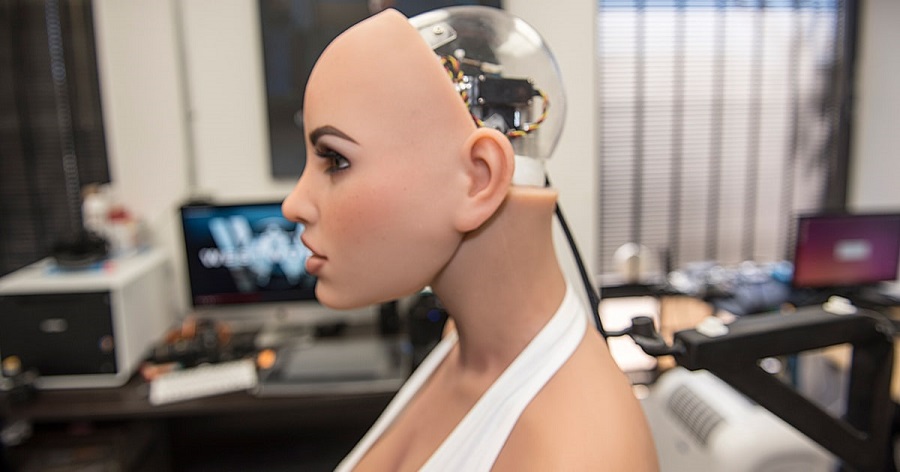
DS Doll Robotics is looking to change that. In July 2018, they launched plans to utilize 3D printing to help streamline the manufacturing process. What the assembly line did for cars, this company hopes to do for sex dolls and, eventually, sex robots that incorporate artificial intelligence.

It may sound mundane on paper since 3D printing has been an emerging technology in the manufacturing sector. It’s still has room to mature in the same way the early internet had to mature, but it’s one of those technologies that’s uniquely equipped to help the adult industry. In fact, it’s not unreasonable to say that it’ll completely reinvent it.

That’s because DS Doll Robotics isn’t just using 3D printing to streamline the manufacturing process. They’re also using new scanning techniques to scan the bodies of real humans as a baseline, of sorts. This is an exact quote from the July 2018 article that reported on the company’s plans.

“It is also connected to a 3D scanner which can be used to scan in the body of a full person as well as prototype parts for replication. This type of technology is excellent for creating new doll bodies and faces as they can be developed from a real human.”

That bold text is my doing because that’s the part of the story, I feel, that has far greater implications. Just making sex dolls cheaper and easier to produce isn’t going to change the adult industry too much. It may expand an existing market that had been cost-restrictive before, but it won’t provide a radically different experience compared to the one that exists today.

The part where sex doll manufacturers scan the bodies of real people, though, is something that will significantly impact the entire landscape of the adult entertainment industry. It won’t just change the economics of sex dolls. It’ll change the way the adult industry operates.

To understand how, it’s necessary to know how adult entertainers make money in the current economy. Most people in the adult industry, be they performers, directors, or producers, get paid a certain amount for each scene they perform. In the past, they could also depend on residuals from DVD sales, but those have declined sharply due to piracy and tube sides.

As a result, it’s becoming increasingly common for porn stars to do escorting on the side. Being a porn star makes it more lucrative than regular escorting, but that still comes with risks, especially in wake of recent legal issues attacking sex work. With sex dolls and 3D printing, though, these entertainers suddenly have a new way to monetize their sex appeal.

From a business standpoint, porn stars and beautiful celebrities in general are in the best possible position to franchise their bodies. Say there’s a moderately-successful porn star, male or female, who has some level of notoriety. If they do their job well, they create a fan base. Chances are there’s a significant portion of that fan base that wants to have sex with them.

Thanks to DS Doll Robotics, they can get that or at least something close to that without having to resort to escorting. Some porn stars already licence parts of their bodies as sex toys, but with 3D printing technology, they can do it all. With further refinements to the flesh and molding of the body, it wouldn’t just feel like plastic. It would feel real.

Some of this is already being done to a limited extent. Some porn stars have licensed their bodies to create life-like sex dolls. However, they’re still very expensive and labor intensive. Refinements of 3D printing will bring that cost down and that will grow the market, but it won’t stop there.

It’ll only be when sex robots and artificial intelligence enter the mix that the true future of the adult entertainment industry will take hold. Once those same licensed bodies develop an ability to interact with their users, then they’re not just over-sized masturbation aids. They deliver a full-on sexual experience.

Like brands of clothing or food, each adult entertainer could create a particular brand. One star might have a really cute, friendly personality. Another might have a very domineering, controlling personality. By incorporating them into a sex robot, they create a product that cannot be experienced through a computer screen, let alone pirated.

For the adult stars themselves, it’s easy money. They wouldn’t actually have to do anything, sexual or otherwise. They would just have to license their likeness to a company and collect a portion of the residuals like any merchandising company. If they prove really popular, then they could conceivably create a life-long income that continues well past their stint in the business.

That’s something that’s difficult to do in any entertainment industry, pornographic or otherwise. The use of 3D printing and more realistic materials will make that both possible and lucrative. If it becomes cheap enough, then the opportunities even go beyond direct sales.

There are already sex doll brothels operating in certain parts of the world. In areas where prostitution is legal, there’s even an app for people to order a prostitute the same way they would an Uber. In the future, if someone doesn’t want to buy, store, and maintain a sex robot, they may just rent one for a while. Between discretion and safety concerns, there would certainly be a market for that.

I’m sure that sort of business would attract a great deal of controversy and outrage. Sex dolls are already controversial and sex robots already have their opponents. However, if history is any guide, the prospect of making money and satisfying peoples’ burning libidos will win out. It’s just a matter of how quick the technology can progress and how quickly the ever-evolving adult industry adapts.

10 Comments

Filed under futurism, Marriage and Relationships, sex in media, sex in society, sex robots, sexuality, Sexy Future

How Less Sex Can Crash The Economy

economic-collapse-960x451

There’s a funny, but revealing saying by famed economist, Paul Samuelson, on the difficulty of predicting economic trends. It goes like this:

The stock market has forecast nine of the last five recessions.

Other than being a play on numbers, there is a message in this quip that’s worth noting. No matter how many dire warnings accomplished economists give, a recession always seem to hit. It only ever becomes truly obvious with the benefit of hindsight.

I bring this up because I’m about to make some predictions about the future of the economy and I’m not an economist. I don’t claim to have more credibility on the matter than anyone else who has read every Freakanomics book ever written.

However, since the economy affects us all, it’s still worth talking about. Since the economy can influence our sex lives in ways I’ve discussed before, I feel like I can comment on the subject and even do a little speculation. Again, I want to make clear that I’m not an expert. This is just me making connections I feel are worth making.

When it comes to the economy, it’s not physically possible for anyone to make sense of all the data and connections that govern our affairs. Human beings are just too unpredictable and the amount of data involved is just too vast. Some points of data, though, carry more weight than others.

One of those points has to do with population and demographics. It’s a topic that’s becoming more and more relevant these days. Just this year, the birth rate in the United States dipped to a 30-year low. That’s somewhat remarkable because people tend to have more children when the economy is doing well and by most measures, the economy has been pretty good these past couple years.

This isn’t just an American problem, though. Many industrialized countries throughout the world are experiencing very low birth rates, some of which well below the replacement level rate that would keep a population stable. The reasons for this are many, but most boil down to cost. It’s just very expensive to raise a child these days and that cost is only going up.

Beyond the cost, though, there’s another factor at work that’s driving these declining fertility rates. People, in general, are just having less sex. That may seem obvious, given the data surrounding birth rates, but there are other aspects of the data that may reveal other factors.

For one, the decline in sexual activity is actually hitting the younger demographics, who are historically and biologically the most eager to engage, so to speak. I’m still old enough to remember when every other week seemed to bring dire news about teenagers having too much sex and horrifying their parents. Now, they’re not doing, but still finding ways to horrify their parents.

While I’m sure it still comes as a relief to some parents, it’s already causing concerns among demographers. However, I believe there’s a much larger concern about the economy, as a whole, that’s just starting to emerge. It has less to do with there being fewer babies and more to do with the nature of modern economies.

The days of economic health being measured by how many widgets a factory could produce are long gone. These days, most modern economies are built around consumer spending. Around 70 percent of the economy is consumer spending. That is not a trivial portion.

To illustrate why that could be a much greater problem down the line, I’ll need to make a few connections between sex and the economy. It’s not quite as kinky as it sounds, but those connections matter if you’re going to speculate about the future with any measure of accuracy.

Think, for a moment, about just how much economy activity goes into people seeking out sex and dealing with its associated byproducts, namely children. Whether you’re a man, a woman, or something in between, that pursuit drives a great deal of our economic activity.

Men work hard at jobs that don’t always pay that well to buy clothes, cars, and gifts with the hope that it’ll improve their chances of finding a partner. Women do the same, spending a great deal of money on cosmetics, clothes, and beauty treatments to attract desirable lovers. The money people spend on beauty products alone pumps a lot of money into the economy.

Even if the goal of these purchases isn’t directly linked to someone’s pursuit of sex, this activity does link to that fundamental pursuit that has driven society and our species for centuries. We work hard, establish functioning lives, and buy the things that prove to one another that we’re desirable lovers. It’s part of the many incentives that drive any economy.

It’s those same incentives, though, that can lead an economy into a cycle of destruction. Those cycles are behind every major financial crisis, but the one created by less sex and low birth rates may end up having a far greater impact. Some of those incentives are economic, but it’s the social incentives that might compound the issue.

Some of those incentives involve how modern marriage functions. More than a few people, myself included, have pointed out that marriage is not a very good deal, especially for men. If you look at it from the perspective of a simple contact, the flaws are pretty obvious.

Imagine, for a moment, that someone presents you with a contract. You will enter into a partnership in which you pledge emotional, financial, and intimate support for an undefined period of time. However, if the other party wishes to dissolve the partnership at any time for any reason, they can do so and get half your assets, as well as custody of your children.

Read over the fine print carefully. Would you sign that contract? Who in the right mind who isn’t drunk on irrational passions would? I think most people would see that as a bad deal and one that they have plenty of incentive to avoid.

On top of those incentives, there’s another round of them that has been growing recently. These come directly from the ongoing anti-harassment movement that has helped expose horrible sex crimes, but has also given men a powerful incentive to avoid women.

As a man, and I know this is anecdotal on my part, I find myself feeling very anxious around women who I don’t know or aren’t close family. I worry that one wrong gesture or one wrong comment will lead to an accusation that will subsequently ruin my life. I don’t want that and I don’t think any man wants that.

That’s not to say those incentives are powerful enough to make men stop feeling attracted to women, but I do think they’re sufficient to make men more reluctant to seek out intimate relationships with women. From an economic standpoint, the potential cost is very high, whether it’s paying for a child or for having your life ruined by an accusation.

From these incentives, the resulting economic situation won’t just be different. It will be unsustainable when you take into account the declining fertility rates. It doesn’t even have to be an economy where nobody gets married and has kids. It can just be an economy where most men and women stay single and don’t build much of their economic activity around pursuing sex.

In that economy, the only major purchases would be shelter, electricity, internet, and entertainment. As expensive as some of those can be, they’re not going to match the same amount of spending that comes with caring for children or for people just trying to get laid.

In the short-term, that means the economy will be dominated primarily by products and services that just help single men and single women relax on a Friday night after work. In the long-term, however, the consequences are much greater.

Without a growing population, there aren’t as many workers to support the large welfare states that most modern economies utilize. Moreover, without that same growing population, the consumer base starts shrinking. Even if a greater number of people have more money, that money is useless if there aren’t enough people to spend it.

From there, a cycle of fewer consumers starts feeding a process of declining spending. On top of that, fewer workers means it’s impossible to sustain a large welfare state, which leaves more people impoverished with even less money to spend. It began with declining birth rates, but it only accelerated when people just had less sex.

In the end, the economy as we know it now, just can’t function anymore. I’m not saying it’ll completely collapse, but it would have to adapt a lot in order to function with these incentives. I’m not sure what those adaptations would entail, whether it involves a universal basic income or using artificial wombs to augment the population.

I’ll say it one more time because I think I need to belabor this. I’m not an expert. This is just speculation on my part. This is what I feel could be the endgame for our economy, as we know it, if the current incentives hold. It’s a near certainty that there will be changes, but it’s impossible to predict what those changes will entail.

From my perspective, though, I think the implications are clear. A society where people are having fewer children is hard enough to adapt to, but we’ve already been doing that to some extent. One where people have less sex or flat out avoid it, though, may end up being much harder.

4 Comments

Filed under Current Events, gender issues, human nature, Marriage and Relationships, sex in society, sexuality

Technology, Slavery, And The (Distressing) Future Of Both

robot062715

Picture, for a moment, the perfect slave. Try to do it without making it a commentary on the current state of gender inequality, racial politics, or working at a fast food restaurant. Treat it like the other serious thought experiments I’ve proposed. What kind of traits would such a slave have?

Naturally, the perfect slave would have to be obedient. He, she, or it wouldn’t just obey an order without question. The idea of not obeying an order never even crosses their mind. In addition to obedience, the slave would have to be robust, durable, and capable. That may require some level of cognitive ability, but only to the extent that it can serve a master.

I bring this issue up knowing that slavery is an emotionally-charged topic with a bloody history. While we, as a society, have made strides in confronting the ethical issues surrounding it, including wars and social movements, slavery is still relevant today. At this very moment, millions of people are living as slaves.

The fact that many people find slavery morally reprehensible says a lot about humanity’s capacity for justice. The fact slavery exists despite that aversion says just as much about the economics behind it. Producing anything requires labor. Cheap labor ensures more profit. It sounds simple, but it understates the massive financial incentives at work.

It’s because of those incentives that slavery, as abhorrent as it is, will likely have a place in our future. Ideally, the rapid growth of technology and automation will eliminate the need for human slavery. Advanced machines that have no sense of self basically circumvents the moral problem entirely.

Unfortunately, we don’t live in an ideal world. We also don’t live in a world where everyone exercises similar moral standards. Some are perfectly okay with utilizing slaves. Some of those people, sadly, are rulers of entire countries.

As such, it’s distressingly possible that emerging technology could be utilized to expand slavery rather than reduce it. I think it’s an unlikely scenario, given current social and technological trends. However, I worry it’s a road our society could go down if our choices are wrong and the incentives are strong.

To contemplate how, it’s important to note the limitations of slavery. While it does provide the cheapest possible labor, its inherent flaws tend to work against any society that relies on it and not just because of moral condemnation.

In any system that uses slavery, there are hidden costs that go beyond human suffering. Slaves require significant maintenance if you want them to produce. A master, no matter how ruthless, needs to care for their slaves so that they’re healthy enough to work. The logistics of that, especially in a world without modern medicine, made slavery a risky investment.

You could say the same about feudal societies that relied on serfs. While it wouldn’t be accurate to classify them as slaves, they still survived by providing slave-like labor to landlords. That may be a good deal for the landlords, but the system has a lot of vulnerabilities.

Historically, waves of death caused by disease, famine, and war hit these lower-class people first. When so much of the society relies on their cheap labor, it tends to collapse or stagnate. It happened after the Black Death and it happened in the American south.

It’s another byproduct of incentives. When you have cheap labor, there just isn’t much incentive to innovate. A lack of innovation over the long haul tends to doom empires and economies alike. In a modern context, that’s a good thing because it ensures slave-based economies can’t function over the long haul. However, emerging technology is in a position to change that.

Think back to the perfect slave I mentioned earlier. Those traits are currently unattainable for a human or a machine. On top of that, human beings are stubborn in their desire to not be enslaved. Refinements in biotechnology, genetic engineering, and cloning could change that, though.

This is where the dystopian potential of technology reveals itself. Even if robotics continues to advance, there’s a chance that the labor they provide isn’t adequate or the maintenance involved is too costly. In that scenario, those with the exceedingly flexible moral standards could resort to tapping genetic engineering to fill the gap.

It’s already possible to edit a genome, thanks to tools like CRISPR. It’s also possible to partially hack an existing genome, although that process is still in its infancy. In theory, there’s no reason why someone with the right tools couldn’t re-engineer a human being into a perfect slave.

That being may or may not look human. They may have a body, a similar muscle structure, and a series of specified cognitive abilities. However, every trait they have, biological or otherwise, would have the sole purpose of obeying and serving a master.

That means editing out the parts of the brain that give someone a sense of self or suppressing it with a brain implant. That also means limiting the slave’s capacity for thoughts and desires beyond serving their master.

Their bodies, as a whole, could also be engineered to minimize maintenance. Their digestive system could be made to require only an intake of cheap gruel. Their genetics and immune system could be structured in a way to resist disease. They could even be made sterile through gene editing or implants.

This is where the influence of cloning technology and artificial wombs enter the picture. One of the costliest parts of the old slave trade was traveling to remote areas, buying or subduing people into bondage, and then transporting them to areas where their labor could be exploited. Once you’ve engineered the perfect slave, though, biotechnology could effectively create a copy-and-paste process.

It goes beyond labor, as well. I’ve mentioned before how advances in sex robots could allow people to create customized lovers. Well, if it’s possible to engineer the perfect slave for labor, then it’s just as possible to engineer the perfect sex slave. The implications of that raise a whole host of disturbing possibilities.

Whether for sex or for labor, crating such slaves would be an incredibly tedious, incredibly risky feat. However, given the economics of slavery I mentioned earlier, the incentives are already there. With these advances, coupled with cybernetic augmentations, and the potential payoff is even greater.

Suddenly, there’s an endless pool of labor to work in factories, fields, and homes. There’s no need to worry about labor unions, minimum wage, or slave revolts. When slaves are engineered at the cellular level to be a slave, then it makes too much financial sense to use their labor.

As a result, future societies will find some excuse to justify this kind of slavery. The precedent is already there. It wasn’t that long ago that people found excuses to justify enslaving an entire race. In this case, though, it would be even easier.

If these slaves don’t come from existing populations and aren’t even genetically “human,” then it’s easy for someone to see this brand of slavery as something different from the kind we’ve utilized throughout history. If these slaves are engineered not to suffer or feel any discomfort, then that makes it even more tenable.

The end result could be something similar to what George Orwell envisioned with the proles in “1984.” There would be this massive underclass population that exists solely to work, serve, and obey. To some extent, it would go even further than Orwell did.

This population of slaves wouldn’t need to be placated with meaningless entertainment, indulgence, or distractions. Their default condition would be to serve their masters in every way necessary. Anything beyond that is never even a thought.

I don’t deny that the scenario I just described sounds bleak. If you have even a moderate sense of decency, you would be aghast at any society structured in such a way. Even if the slaves seemed happy and the people who served as their masters had no moral qualms with it, chances are it would still bother you and that’s a good thing.

I think it’s because of that inherent revulsion to slavery that this dystopian path is not likely. I believe advances in robotics technology is already outpacing the rate of biotechnology. By the time we have the tools to create the perfect slave biologically, we’ll probably already have the tools to make machines that can function just as well.

That’s still not a guarantee. Nobody can predict the future, especially not an aspiring erotica/romance writer. It’s still a potential path, though, and a very dark path at that. As a society and a civilization, we’re still recovering from the scars of slavery. Those are wounds we should avoid opening for the society we’re hoping to build.

Leave a comment

Filed under futurism, sex robots, Sexy Future

Why Most Complaints About Hollywood Are Empty

hollywood-sign-mulholland-highway

There are a many annoying trends in the media these days and I’m not just talking about “fake news” or “alternative facts.” Those are trends that only bring out the worst in people whenever they’re discussed. While still annoying, there’s at least some legitimate substance behind those discussions. The trends I’m referring to are as empty as the whining they inspire.

It involves a new online cottage industry. It utilizes criticism wrapped in an agenda that’s disguised as meaningful social justice. It usually takes the forms of articles with click-bait heavy titles that give the impression that this is an official statement on behalf of all those who consume media. In reality, it’s just empty rhetoric that hides more whining.

You’ve probably seen these articles before. They’re often made by sites like BuzzFeed or Cracked, a site I’ve been reading for years and even reference frequently. They usually contain heavy-handed titles like this.

5 Things Action Movies Need To Stop Doing

8 Things Hollywood Needs To Stop Doing With Female Characters

7 Recurring Gags That Movies Need To Stop Using

14 Things TV Shows Need To Stop Doing With Minority Characters

15 Ways Hollywood Is Still Racist

37 Ways Movies And TV Are Still Offensive To Women And Minorities

9 Common Hollywood Practices That Need To Stop

None of these titles are to real articles, but you don’t have to look far to find articles like them. If there’s a legitimate and/or petty way to complain about the way Hollywood does business, then chances are there’s an article about it. Some pretend to express real concern about real issues. Most just whine about it, though.

I get that Hollywood is easy to criticize. It is, after all, a very shallow and cut-throat world with a history of scandals and less-than-ethical business practices. However, discussing those issues and trying to reform them is hard. Just whining about some of the content Hollywood puts out is easier and allows certain people to virtue signal. It’s not that hard to understand why people do it.

Even so, it doesn’t change a few inescapable facts that render all these click-bait articles utterly devoid of substance. Most of those fact come back to the simple truth that Hollywood is, and always has been, a business. It does have an agenda, but that agenda begins and ends with making money. Everything else is an afterthought.

It’s not very glamorous or sexy, but you could say that about almost every business venture. The only difference with Hollywood and the media is that pursuing that goal requires them to present a fantasy that sometimes requires that the goal be less obvious. That’s how you can get movies that protest corporate greed, but are still produced by corporations driven by greed.

It’s that same desire to make money and turn a profit that often leads to the kinds of practices that these wannabe media critics complain about. In general, people want to see beautiful women and attractive men following the kind of tried-and-true that has entertained people for centuries, long before movies and TV even existed.

From a pure business perspective, it’s easy to understand why Hollywood and media companies use these tropes. Like it or not, they work. People still aren’t tired of seeing male action stars like Tom Cruise run from explosions. People still aren’t tired of seeing beautiful women like Jennifer Lawrence or Scarlet Johannsen run around in skin-tight outfits either.

If the masses want it, then those in Hollywood would be lousy business people if they didn’t try to give it to us. There’s a demand for something. They supply it. That’s economics at its most basic. What these articles are basically asking for, to some extent, is that Hollywood stop doing what has historically made them money and do something completely different that may not work at all.

Think about that for a moment and try to appreciate the implications. You’ve got a job. It’s a good job that pays well. It involves doing something you know how to do and have seen, time and again, how well it works. Then, some person comes along who has never done your job and yells at you for how you do it.

On top of that, they claim that doing your job the way you do it contributes to all the horrible things in the world. Somehow, your job is what fosters all the racism, sexism, and bigotry that makes the world such an awful place and it’s your obligation to change everything about your job, risking your own money and livelihood in the process.

How would you feel about that person? Would you be all that inclined to listen to them? Would you even take them seriously? Chances are you wouldn’t and it’s not that surprising that Hollywood rarely responds directly to these complaints. The only reason Hollywood ever changes its approach to entertainment in any capacity is to make more money. That’s all there is to it.

It’s the biggest flaw in complaints about things like whitewashing, the Bechdel Test, and every damsel in distress trope. People can complain all they want. As long as movies, TV shows, and video games keep turning a profit, they’ll keep getting made. Hollywood and the media would be irresponsible, as a business, not to do just that.

That’s not to say Hollywood is doomed to remain stagnant. Hollywood, like any business, tries to follow market trends. That’s how we get things like a half-dozen superhero movies in a year and a glut of “Die Hard” rip-offs. When you find a winning formula, you stick with it. Those that don’t usually don’t stay in business for very long. The fickle and unpredictable nature of markets sees to that.

However, those who complain about Hollywood are basically demanding that they adopt this inherently risky method for producing media. They’re demanding that they ignore market trends and go out of their way to produce content that’s new, unproven, and politically correct to cultural and social sensibilities. They demand all this, regardless of how much it costs or how much profit it turns.

In general, when people make such unreasonable demands, they doom themselves to disappointment. For the professional whiners of the world, that basically creates a self-reinforcing cycle. They demand the impossible or the impractical. Then, when it doesn’t happen, they get upset and blame those who didn’t go out of their way for them.

It’s petty and annoying, but it’s the nature of the current media landscape. Thanks to the internet and social media, every has a platform and a voice. They have a mechanism for making demands that their media cater to certain groups and agendas, despite having no understanding of the business or economic forces behind the things they consume.

On top of all this, the process of making movies is getting more expensive with each passing year. That means producers have less room for error. If they make a movie that bombs, the losses are a lot bigger. It also means that even if a movie does well, the amount of profit it generates isn’t quite as great. That’s why the most profitable movies tend to be low-budget films that are unexpectedly successful.

It’s that unexpected part, though, that’s so frustrating to Hollywood. Nobody truly knows if a movie will be a hit, even if it’s from an established franchise. Sure, we can question how George Lucas thought Jar Jar Binks was a good idea for a character, but most every competent movie maker creates their products with the expectation and hope that they’ll be successful.

Now, none of that is to say that some themes aren’t overplayed. In recent years, Hollywood has made a concerted effort to improve how women are depicted in film and TV. The recent success of “Black Panther” has shown that there is money to be made in crafting products with a more diverse appeal.

However, these efforts weren’t the results of people complaining about a lack of diversity. They were the results of a business following market trends. The world is getting more diverse and so its consumer base. Naturally, a business will want to appeal to the most people possible. A successful business doesn’t care about the gender, race, religion, or sexual orientation of the consumer. The money is just as valuable.

For some people, though, that’s not happening fast enough and it doesn’t make up for past transgressions. Never mind the fact that history can’t be changed and doesn’t give a damn about how people feel about it. The fact that something once existed or doesn’t exist yet still offends some people.

At the end of the day, whining about the prevalence tropes, jokes, or themes that pervade Hollywood is no different than whining about how too many people like something that you hate. It’s selfish, petty, and asinine on every level. If it keeps making money, then it’ll keep happening. Until capitalism and economics radically changes, then those who keep whining about these trends will just have to deal with it.

Leave a comment

Filed under Celebrities and Celebrity Culture, media issues, movies

Shifting Demographics: A Dangerous (And Unsexy) Trend To Worry About?

At what point does our willingness to have sex to make babies become a larger social problem? That’s not a rhetorical question, by the way. I’m not even the first person to ask that question. Ongoing changes in demographics are a real issue. Yes, the human population is still growing at a remarkable pace, historically speaking. However, the way it is growing is generating all sorts of problems.

I know talking about demographics isn’t all that sexy, but I think it should be. Demographics involve population. A population of any measure requires that people have sex. I’m in the business of telling sexy stories so changes in demographics will indirectly affect me to some extent.

To understand this issue, it’s necessary to sift through some annoying levels of fear-mongering. Not too long ago, there were some pretty dire predictions about the impact that our rapid population growth would incur on the environment. While these are still pressing issues, we’re not living in a “Mad Max” style hellscape for now.

More recently, much of the doom-saying has come from those anxious about the declining fertility rates of the industrialized world, some of which have dropped below replacement levels.

You don’t need to know much about the particulars of demographics or statistics to understand the implications. For any society to prosper, both economically and functionally, it needs a steadily growing population. Old people die off. Their children take their place. More children grow into productive adults that contribute to society and the economy. It is very much the life-blood of civilization.

That process got a massive boost in the mid to late 20th century thanks to improvements in medicine, technology, and economics. Around 1900, the world population was below two billion. By the end, it had tripled to six billion. As of this post, the global population stands at approximately 7.5 billion. It’s very possible that we may cross the 8 billion mark by the end of the decade.

However, that continued growth is starting to encounter some obstacles. The rates of growth, especially in the industrialized world, are starting to slow. Just this past year, the fertility rate in the United States dropped below replacement level for the first time in a century. That’s a major milestone with some major implications.

Some parts of the world are already dealing with those implications. In some areas, they’re slowing so much that it’s causing major concerns for the future of that society. Japan, especially, is dealing with some unprecedented issues with a society that has a booming elder population and a dwindling pool of youth.

I won’t get into the specifics of the apocalyptic visions associated with declining fertility rates. That kind of doom-saying is rarely productive and often flat out wrong. However, a declining population carries with it all sorts of issues.

A society with a declining population has very poor economic prospects and I’m not just talking about a smaller market for my sexy novels. A declining population means fewer workers, fewer customers, and fewer people to come up with sexy new ideas. For a community and a culture, it’s basically the social equivalent of rapid decay.

In some cases, this decline can be compensated through immigration, but that brings with it a whole host of hot-button issues that I don’t care to discuss on this site. After all the anti-immigration rhetoric that erupted from the 2016 presidential election, there’s little chance that anything productive will emerge from that issue.

What concerns me more about this ongoing trend are the more personal implications behind it. There has already been a noticeable decline in overall sexual activity among younger generations. That doesn’t mean people are less horny. That just means less people are actually getting together and doing it.

The reasons for this are hard to quantify, but I’ve mentioned some of the obstacles that millennials are dealing with, beyond their sex lives. There will likely be even more obstacles once Generation Z, their successors, take hold.

In essence, these coming generations are drowning in debt and lack the economic of their predecessors. It’s hard to find time to seek a lover, start a family, and raise multiple children when there aren’t as many well-paying jobs to go around and the cost of living just keeps going up. The stress alone in dealing with all these issues is enough to kill anyone’s libido.

Others will claim that trends like growing acceptance of abortion and contraception, two issues that I’ve discussed more than once, is a major factor here. I tend to disagree, at least in part. Historically speaking, economics tends to drive fertility, politics, and most other major trends. Money is just that powerful.

I don’t doubt that having a greater control over our fertility from a medical standpoint is an issue, but just having that control doesn’t necessarily undermine our inherent desire to procreate. It’s the resources, circumstances, and conditions that have a much bigger impact on peoples’ desire to have children.

I even see this among my friends, family, and peers. Most of the people who are my age or younger are not in a situation where they have the resources to have a family. Most are struggling to find steady, well-paying jobs. Some are struggling just to find affordable living space, an issue I only recently addressed. Even if they’re still horny, they are not in a position to exercise their fertility.

While that’s understandable from a pragmatic point of view, the long-term implications are still there. If a large enough chunk of society faces these same issues, then at some point, the shift in demographics becomes unavoidable. Fewer children being born, along with a higher cost of raising them, carries with it all sorts of uncertainties that promise to make a tense situation even worse.

It may still be too early to worry about this trend, even the context of an aspiring erotica/romance writer. Trends have a nasty way of changing erratically. The old investor adage of past performance not guaranteeing future results has held true on many occasions.

Paul R. Ehrlich‘s “The Population Bomb” found that out the hard way because it failed to anticipate how humanity would react and adapt. Given how notoriously hard it can be to predict the future, it’s not smart to make too many assumptions about what will happen with these trends in declining fertility rates.

That said, if I have to adapt my novels to cater to an aging population, I’m willing do to that. It just may mean that I’ll have to learn how to describe sagging boobs in a sexier way.

2 Comments

Filed under Current Events, gender issues, sex in society

Sex Dolls, Porn Stars, And Preserving Sex Appeal

Picture, for a moment, a time when your spouse, lover, or favorite celebrity looked their absolute best. It might have happened years ago. It might have been last Tuesday. Just take a mental snapshot of that image, recounting every minute detail of that beauty everything that went into it. Take all the time you need.

Do you have that image? Good, then keep it in your head for a bit longer because now I want you to imagine being able to preserve it in a physical, tangible, and exceedingly sexy form. It doesn’t just have to be a vivid memory or a daydream, which is prone to fading easily. It can be something you can actually revisit when you’re feeling nostalgic, horny, or both.

Enter the world of RealDolls, the Apple/Google/Amazon of realistic sex dolls. These are not cheap blow-up dolls that a teenage boy hide under his bed. These are advanced, sophisticated replicas that capture the look, feel, and texture of real human flesh. They’re basically the closest we have to sex robots, albeit without the robot part.

I’ve mentioned RealDolls a couple of times on this blog in various articles, often when discussing sex robots. They are currently on the cutting edge of this field, but that edge has tried to sharpen itself in a whole new way recently.

Back in 2013, the company began doing something that was probably bound to happen at some point. It began making its trademark sex dolls using the bodies, figures, and curves of real-life porn stars. That means famous figures, in the literal sense of the word, like Jessica Drake, Asa Akira, and a whole bunch of other names that men pretend they don’t recognize can be the basis for their ideal sex doll.

In a sense, it’s an extension of the porn people already watch. Most viewers will never get the opportunity to have sex with these famous porn stars. These replicas will give them the next best thing without resorting to illegal cloning, which is far more trouble than it’s worth these days. As the technology and materials improve, that gap might eventually become negligible.

In terms of economics, everyone comes out a winner here, in some cases literally. The company, RealDolls, gets perfect models that don’t have to be customized with every purchase. The porn stars get a cut of the profits from each sale. The customers get to actually live out their sexy fantasy, to some extent.

Granted, the men who buy these dolls will be subject to stigma, just as the women who work in porn are subject to stigma. Sex and stigma go together almost as much as dirty bed sheets, candles, and lube. However, that stigma may be stretched more than most expect.

That’s because those same economics I mentioned earlier are changing. The sex industry is undergoing some pretty major shake-ups that most people aren’t aware of, if only to preserve their browser history. DVD sales, website subscriptions, and the live sex shows that once fueled the industry are declining in sales. Between piracy and the porn-centric tube sites that some probably have open in another tab, that’s understandable.

It’s a lot more challenging today to make a living in the sex industry. Whether you’re a big-breasted, big-dick star or a simple producer, you’re feeling the hit on the profit margins in an era where everything ends up online for free and few have the legal muscle to ally themselves with such a seedy industry.

The challenge is how will the porn stars of the future turn a profit from their sexy trade? Even beyond porn stars, what about other celebrities whose star has fallen and need to license their name behind something other than a clothing line? Well, RealDolls has set the precedent. That’s usually all anything takes to become a trend.

Legally speaking, the laws are already in place. RealDolls even says on their website that they cannot legally create a doll to look like a particular celebrity, alive or dead. That would be like Photoshopping someone’s face into unflattering photos. So anyone hoping for their own personal Jennifer Lawrence sex doll will be out of luck.

Then again, who’s to say that Jennifer Lawrence won’t need extra money at some point in the future? What if she, or some other celebrity like Channing Tatum or Taylor Swift, see licensing their appearance as just another revenue stream? Legally, they could do that and make a great deal of money in the process. The box office for “Magic Mike” alone proves there is market for a Channing Tatum sex doll.

It would be difficult now because today, even if you wanted to buy a sex doll that resembled a porn star who has licensed her appearance, it’s still obscenely expensive. These life-like sex dolls cost almost as much as a used car, mostly because of the materials involved and the labor that goes into them.

That process is going to need to improve before celebrity sex dolls become a viable business investment. RealDolls might be on the cutting edge of the industry, but that industry has not yet had its version of Henry Ford or Ray Kroc come along. That person is probably alive right now, but just doesn’t know it.

Once someone finds a way to bring the cost of these things down, then that’s when things get interesting and not just in the sexy sort of way. Again, I need everyone to think back to that mental image I described at the beginning of this post. I promise this is the last time, but it’s part of a larger point.

After the technology behind sex dolls improves, then chances are they won’t just be used for sex. Imagine someone who lost their spouse and refuses to let them go. A lifelike sex doll could provide comfort. Imagine someone develops a terminal disease and can’t easily be intimate with someone. A lifelike sex doll could provide at least some form of intimacy to improve their quality of life.

In the end, that’s the ultimate goal of these products, beyond the sex appeal. Before lifelike robots or Matrix-like virtual reality comes along, these realistic sex dolls may provide a stepping stone, of sorts, that bridge the gap between fantasy and reality. It will likely start with porn, as many technological advances do, but it certainly won’t end there.

5 Comments

Filed under Jack Fisher's Insights, sex robots, Sexy Future

Why Evil Billionaires And Politicians Will Save The World

The world is fraught with so many problems. There’s climate change, poverty, economic turmoil, disease, and reality TV shows. At times, it seems so overwhelming. Even though I’ve argued the world is getting better by most measures, I don’t deny there are still a lot of problems in the world that need solving.

So who’s going to solve them? Who will save us from all these destructive forces and guide the human race forward? Movies, TV shows, comic books, religion, and Oprah have convinced us that it’s the selfless, loving heroes who live to dry the tears of sick orphans and shit rainbows who will save us. Hell, a part of us needs it to be true.

However, in the same way media that pretends us that sex involves a lot more rose petals and spanking than it really does, reality presents a colder, harsher truth. Like the making of a sausage or the outcome O.J. Simpson trial, the truth tends to shatter your preferred fantasy with a hammer and shotgun.

The hard truth, in this case, is that superheroes, saints, and legendary kings who pull swords out of stones won’t save us. Robert Downy Jr. is not going to put on a giant suit of armor and defeat terrorists. Christian Bale is not going to put on a costume and beat up all the criminals. In reality, it’s the evil billionaires and self-serving politicians that will save the world.

I’ll give everyone a moment for their eye to stop twitching. Take all the time you need. I have a feeling I’m going to get plenty of hate for this post. It wouldn’t be the first time either. I know this is not a popular sentiment, especially from someone who loves comic books and superhero movies as much as I do. It is, however, the cold hard truth.

Before you try to punch me through your computer screen, please hear me out. I’m not bringing this up to upset people. I’m talking about it because sometimes, a dose of harsh truth is necessary. In a world where too many people look for easy solutions to impossible problems, it helps to maintain some level of perspective.

In this case, it’s less about perspective and more about understanding how the world works and how people, in general, govern their affairs. Most people who aren’t billionaires or in high positions of power probably have some vague, albeit cynical understanding of how they operate. Whether you’ve seen every Michael Moore documentary or watched one too many Chuck Norris movies, the vision is similar.

You imagine a dark room in a highly secure, underground bunker. In that bunker, there’s a group of men in fancy suits. Sometimes they’re old white men. Sometimes they’re evil foreign dictators. Sometimes they’re scheming celebrities who fantasize about all the ways they’ll corrupt the world’s youth.

It’s a mental picture that plays out in every James Bond movie and every hippie fever dream. We all think that the politicians and billionaires of the world live only to destroy the environment, spit on poor people, and pleasure themselves while sick children suffer. It’s a simple, understandable sentiment that makes us feel like the underdogs in our own movie.

However, this isn’t a movie, nobody is an underdog, and that mental picture is complete bullshit. The reality is that evil billionaires and corrupt politicians are still human, like you and me. They still want similar things. Sure, they may want crazier things like a pool of orphan tears to swim in every now and then. At the end of the day, though, they still eat, sleep, and get horny like everyone else.

As such, they have a vested interest in making sure the world stays in one piece and people don’t die needlessly. They need a world that’s stable, prosperous, and not full of rotting corpses. They need it because their power, wealth, and everything in between depends on it.

It’s the harshest, but most refreshing truth, in a sense. Since we don’t live in a James Bond movie, the companies, governments, and religious groups have a lot of incentive to keep the world in one piece. Sure, they’ll still take stupid risks that end up causing a lot of destruction, but in the grand scheme of things, they want the world to keep turning. They can’t get money, power, and adherents if it doesn’t.

That’s why all the evil organizations and sinister dictators we see in fiction wouldn’t last a day in the real world. It doesn’t matter if they’re as smart as Lex Luthor or as devious as the Red Skull. If they enter this world, they have to go through Disney lawyers, criminal cartels, entrenched lobbying groups, corrupt bureaucrats, and governments with bloated military budgets. They really don’t stand a chance.

I can sense that some are still skeptical, though. I imagine the left-leaning crowd will scoff at the notion that big corporations will somehow save the planet. The crowd on the far right will scoff even harder at the idea that governments, dictators, and all things un-American will do any good whatsoever.

Well, while you’re scoffing, all those things you don’t think can happen are happening. Countries like China and Saudi Arabia, who have an abysmal human rights record, are investing heavily in green energy, biotechnology, and robotics. They are making a concerted effort to be the greenest, cleanest, most efficient society on the planet.

Now, they’re not doing it out of the goodness of their hearts. Don’t think for a nanosecond they are. Their goals are more pragmatic. They understand that relying on fossil fuels, polluting the air, and trashing the environment is not good for the stability of their country. Even if they’re evil to the core, they like they’re power and they want to hold onto it.

Like the Empire in “Star Wars” or Big Brother in “1984,” the biggest concern of any government, especially the repressive ones, is preserving power. They can’t do that if their society is dirty, inefficient, and disease-ridden. They also can’t do that if their people are sick, weak, or improvised. They need doctors, scientists, lawyers, and henchmen who don’t fall after a single judo chop.

That means these sinister rulers need to create a functioning economy that allows at least some of its citizens to prosper. If they don’t, they risk losing everything. They know as well as any high school history student that the Soviet Union, the Ottoman Empire, and the entire state of Venezuela collapsed for being a bit too evil and corrupt.

The same goes for evil billionaires running businesses that make the Lisa Simpsons of the world cry. Whether they’re cigarette companies, oil companies, or companies that sell lead-laced candy, they need a society that’s peaceful and prosperous. They need people to be alive and healthy enough to actually buy their shit.

That’s why companies that people love to hate will donate billions to charity, invest in new technology, and fund the kinds of social change that combats our tribal urge to slaughter one another for petty reasons. Money may very well be the root of all evil, but it doesn’t discriminate. Money from a minority is as good as money from Bill Gates.

Again, these big companies don’t do what they do out of the goodness of their greedy hearts. They do it to make more money. Sure, big pharmaceutical companies may charge obscene prices for life-saving drugs, but they’ll also work to create new drugs that save even more lives.

On top of that, some evil companies go so far as to compete with one another. If one company does something particularly evil, like make a drug that only treats the symptoms of a disease rather than cure it, another might try to give that company a big middle finger by creating a cure instead. Evil selfish people are petty like that. The fact their actions save millions of lives in the process is just an afterthought.

That’s the greatest irony. In order for all this peace and progress to be made, we need evil billionaires and corrupt governments to embrace some of that evil in order to make the progress we seek. We need them to be selfish, paranoid, and cunning.

That’s why it won’t be some selfless scientist, gentle nun, or peace-loving hippie who will fix the problems of this world. It will be some ruthless company or corrupt government looking to strike it rich, gain power, or selfishly fuel their ego. It’s callous, but the end result still benefits everybody.

For all we know, these devious people just want to do what they do to get laid. If that means running a country that funds education and green energy programs or creating a business that makes billions treating disease, then we should cheer them on. Sure, they’re still not heroes, but they’re going to save our asses and expect us to kiss theirs. If it means a better, safer world, then I’m ready to pucker up.

3 Comments

Filed under Jack Fisher's Insights

Excuse Banking: What It Is, How It Effects Us, And Why It Matters

https://i0.wp.com/www.dailyentertain.com/wp-content/uploads/2014/12/banker-laughing.jpg

If you thought I was done talking about reasons and excuses, I’m sad to report that you’re very wrong. If you thought there’s no other way to make funny, sexy, or relevant, then I’m not so sad to report that I’m eager to prove that wrong as well. Trust me. This is a huge topic, one with many implications for writing novels and so much more.

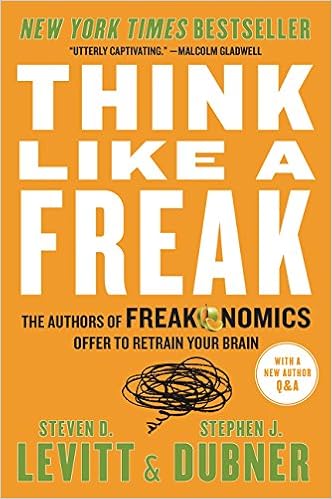
A big part of what inspired me to explore this topic is a new book I’m reading called “Think Like A Freak.” It’s a book by Stephen Levitt and Stephen Dubner, the two authors behind the best-selling “Freakanomics” books that I’ve enjoyed so much in the past.

There’s a lot to digest in this book and I’m still not done reading it yet, but the primary takeaway is fairly simple. It teaches you to step back from a situation, look at all the complex incentives and motivations surrounding it, and think in new, unorthodox ways to further your understanding. These posts on reasons and excuses are an exercise, of sorts, in understanding things from a new perspective.

I’ve already explored the basics of reasons and excuses. Now, I’d like to expand on those basics and create a new concept of sorts, one not unlike the idea of “caveman logic,” which I’ve cited so often on this blog. Please don’t mistake this for a real scientific concept. I’m as much a scientist as I am an astronaut ninja. This is just me, an aspiring erotica/romance writer, creating a term to encompass a larger concept.

With that said, ladies, gentlemen, and those of unspecified gender, I introduce to you the concept of “Excuse Banking.” It’s not in a dictionary. You won’t find it in any textbooks or erotica/romance stories yet, but it’s an idea that has affected us all to some extent.

Again, this is a term I’m inventing right now with no expertise and nothing but a blog to explore it. I understand that’s like a hobo walking into MIT and trying to build a star ship, but I want use this term to explore the more intimate aspect of reasons and excuses. As anyone who has read my books knows, I’m all for more intimacy.

First off, here’s a quick and dirty definition of what excuse banking is:

  • A form of rationalizing one’s actions by using one or more justifications that have been remembered, accepted, and understood as something of personal value;
  • A series of actions meant to mitigate or eliminate the emotional or mental stress of a decision or action that may occur in the future; and
  • The process of shaping ideas, beliefs, and morals in a manner that facilitates difficult ethical decisions.

In reading over these definitions, it should be easy to recall situations where excuse banking applies to you or someone you know on some level. Have you ever loaned someone money? Have you ever helped them with a chore? Have you ever done a favor and asked for nothing in return?

Well, in doing so, you’re effectively making deposits into the excuse bank that you can use as currency, so to speak. Sometimes those deposits gain interest over time. Sometimes they depreciate. In either case, we use this currency to either garner favors through reciprocity or mitigate stressful, demanding situations we may have at a later time.

Much like caveman logic, the idea of excuse banking reflects the understanding that our brains are wired a certain way. That wiring, unfortunately, is akin to an operating system that never gets upgraded. As far as our brain wiring is concerned, we’re still cavemen living in hunter/gatherer tribes in the African savanna.

That wiring, regardless of whether you believe it’s a product of nature or supernatural deities, is the guiding force behind everything from our social behavior to our sexual fantasies. For this particular topic, I’ll focus on the social behavior and save the sexual fantasies for my novels.

Like every other cognitive function, our social behavior does have a basis in neurobiology. That behavior helps guide what we do and why we do it. The behavior, and the wiring behind it, have two primary imperatives that take priority over pretty much everything else. Those priorities are, once again, survival and reproduction.

Nature may be blunt, imperfect, and messy at times, but you can never accuse it of misplacing priorities. When it comes to helping a species thrive, survival and reproduction have to be major priorities. Whether it involves surviving a bear attack or successfully making love to one hundred beautiful cavewomen, those priorities guide a significant part of our thoughts and actions.

It’s for that reason, as I stated in a previous post, that our process for making decisions is so different compared to what we believe. We like to think we’re rational creatures, assessing a situation logically like Spock or Dr. House, and then acting in accord with the utmost reason and morality. That’s the ideal and the basis of multiple superheroes, TV doctors, and scientists.

However, due to that pesky biological wiring that hasn’t been upgraded since the stone age, we do it ass-backwards. We first make a decision, often based on emotion and instinct, and then look for ways to justify it. It’s a good way to ensure we survive bear attacks long enough to get laid. It’s not a good way to promote rational decisions, much to the chagrin of Dr. House.

This is the domain in which excuse banking manifests. Regardless of whether or not we believe that this is how we make our decisions, excuse banking ensures we have a way to justify our actions and decisions, especially if they cause us physical or emotional distress.

We do this because there’s a 100-percent chance that at some point in our lives, we’re going to face a difficult decision. Maybe we have to decide whether to lie to a girl to get her attention. Maybe we have to decide whether or not we should trust the guy who claims to be a Nigerian prince wanting to help us collect an unclaimed lottery place. At some point, we will confront these decisions. It’s an inevitable fact of life.

Excuse banking is a way of hedging our bets, so to speak. It encompasses the actions, beliefs, and social connections we make prior to these decisions. We may have different reasons for seeking these connections, but they have the same secondary function. They help deposit excuses that we might be able to use in future situations.

The process of banking excuses is almost always secondary, in that sense. Nobody goes out of their way to do or believe something because they want an excuse to justify their actions. Nobody overtly think, “I’m going to work at this soup kitchen and provide medicine to sick orphans so I don’t feel as guilty when I strangle puppies with my bare hands.” Those that do are probably sociopaths or reality TV hosts.

Like real banking, sometimes the excuses we bank generate interest. This is especially true when actions involve forming a strong social network of people who support you, even when you screw up. They act as a safety net and over time, that net can become reinforced.

Also, like real banking, banked excuses require fees of sorts. You have to pay a price in order to bank a certain excuse. It can be the time and energy we put into crafting social networks. It can be the resources we expend to join a group, mold an identity, or sell our skills. Some fees are small. Some are much larger, but tend to be more flexible.

That’s where excuse banking starts to diverge from actual banking. Unlike hard currency, excuses can be malleable to a certain extent. You can turn past favors, past charity work, and all that money you gave to PETA into excuses you can use in multiple situations.

This is especially true of excuses built around beliefs. Since beliefs are intangible, unmeasurable, and unverifiable, they are extremely malleable. Take circumcision, a topic I’ve covered before, sometimes to an exceedingly personal degree. Absent a tangible medical condition, there’s no logical reason as to why we would cut off part of an infant’s penis.

However, if you inject a sincerely held belief that your particular religion has a tradition regarding circumcision, then that requires a hefty withdraw from the excuse bank. That excuse better be malleable and low cost as well. When it comes to beliefs, though, the cost is usually close to zero and it’s hard to beat that.

Now that’s not to disparage anyone’s sincerely held religious beliefs. I’m not saying that all religions exist as systematic forms of excuse banking. Human beings just aren’t that simple. If they were, then erotica/romance writers like me would have little to work with. Excuse banking is just one of those understated, unseen processes that emerges from our faulty brain wiring.

When put into a proper context, excuse banking can help make sense of an inherently irrational world populated by very crazy people, some of which have their own radio shows. At a time like this, when the concept of “alternative facts” is a thing, we need every tool we can get.

This is just one from an aspiring erotica/romance writer. I don’t know how useful it will be or if it’ll make anyone horny, but we can only hope.

29 Comments

Filed under Reasons and Excuses

Reasons Vs. Excuses: Why The Difference Matters

https://i0.wp.com/www.realmenrealstyle.com/wp-content/uploads/Blame.jpg

Has anyone ever asked you to do something you really don’t want to do? Actually, let me rephrase that. How many times does someone ask you to do something you don’t want to do in the past 24 hours? Let’s face it. Unless you’re a king, a dictator, or Taylor Swift, it’s happened at least once.

Whatever was asked of you, how did you try to get out of it? I know some people will just grit their teeth and do it. Those people deserve ten times the respect they get. Every now and then, if not most of the time, we try to do something to get out of doing what we don’t want to do. Whether you’re in New York City or the Gobi desert, you can’t escape these situations. They’re just part of life.

Whenever we’re in these situations, we usually try any number of things to get out of it. Whether it’s chores, homework, or ballet recitals, we all have our own set of tactics. Some are more elaborate than others.

I knew a kid in school who could throw up on demand. He didn’t even have to put his finger in his mouth. He could just concentrate, cough, and then spew the kind of chunky bile that would dissuade any teacher from giving him an exam. I lost count of how many times that skill got him out of trouble.

Most of us don’t have that talent though. We all still look for ways to get out of things we don’t want to do. I sure have. I don’t deny that. I’m not saying that’s a bad thing either. It’s a good skill to have, knowing how to avoid situations that make you miserable. However, it does reveal an important concept that I find myself noticing more and more as I get older, although sometimes I wish I didn’t.

It has to do with two simple words: reasons and excuses. They both have similar definitions. Most of the time, outside of a scientific context, we use these words interchangeably. For the most part, we understand the meaning behind them.

However, for the purpose of this discussion, as well as future discussions since this is a big topic, I’d like to focus on a particular context. Specifically, I’d like to focus on the situations and justifications we individually use to do or avoid doing something. Make no mistake. There is a difference between a reason and an excuse.

A reason is logical, narrow, and concise. It can be understood by anyone with a functioning brain and verified with simple tools. That’s not to say a reason has to be cold and callous like a Vulcan. It just has to be valid and clear.

I’ll offer a simple example. Growing up, there were a certain set of chores for which me and my siblings were responsible. If we didn’t do these chores, we didn’t get an allowance. It was that simple. The one chore I did most often was mowing the lawn. I didn’t enjoy doing it, but I still did it.

Then, one day, I got sick. I’m not talking about a headache either. I mean I got really sick, so much so that I ran a 102-degree fever. I know because my mother took my temperature twice. I was then bed-ridden for the next two days. Somebody else mowed the lawn, but I still got my allowance because I had a valid reason. My parents understood that. I understood that. There was no need for debate.

Using this same example in lawn care, I’ll highlight why an excuse is so different. If I wanted to use an excuse to get out of mowing the lawn, I sure as hell wouldn’t have chosen something that could be verified. Sure, I could’ve claimed to be sick, but that would’ve been pushing it because they could check. They could take your temperature and see if you’re running a fever.

On top of that, your parents may be really good at knowing when you’re lying. Mine certainly were. It might as well have been their mutant power. They knew when I was lying and if I ever tried, I’d just make an ass of myself.

Plus, lying to your parents isn’t just a dick move. It’s a bad long-term investment. If you lose your parents trust, especially over something as trivial as mowing the lawn, then you’ll give them way too many valid reasons not to trust you in the future, even when you have a good reason of your own.

So in order to make a more valid excuse, you need to come up with something more believable. It doesn’t have to be a lie. It doesn’t have to be completely true either. You could claim you’re depressed that your lover broke up with you. You could say there’s a movie you’d rather watch instead. You could say you just don’t feel like it. These aren’t lies. However, they are still excuses.

The primary trait of an excuse is that it doesn’t physically prevent you from doing whatever is asked of you. It defends and/or justifies your particular decisions, preferences, and what not. Being on vacation in Fiji ensures I can’t physically mow the lawn. That’s a reason. Being in a lousy mood and just wanting to sleep in does nothing to prevent me from operating the lawnmower. That’s an excuse.

With that in mind, let’s take the concept of reasons and excuses to a larger stage. Let’s assess how this applies to the overall process we use in rendering the various decisions and actions of our lives. What we do and why we do it is at the core of what it means to be a conscious human being.

For practical purposes, we like to think that we’re reasonable people. We like to think that we have valid reasons for what we do and why we do it. We break up with a lover because they’re not right for us. We buy organic food because it’s better for our health. We smoke pot because it makes us more fun to be around. Some of that may be true, but we still think of them as reasons and not excuses.

The problem with this is basically everything about it. Once again, caveman logic enters the picture and spits all over that rosy picture we have of ourselves and others. Based on our growing understanding of cognitive science and neurobiology, we have a better idea of how we make decisions and how we justify them.

When it comes to reasons and excuses, the two main factors are choice-supportive bias and cognitive dissonance. I know those sound like terms that Sheldon Cooper would use in a skit on “The Big Bang Theory” that somehow makes him sound like more of an asshole, but unlike 98 percent of what Sheldon says, these concepts are useful.

Choice-supportive bias is our tendency to ascribe positive attributes to the choices we make. It’s also a byproduct of cognitive dissonance, which is just a fancy way of saying our brain feels stressful and uncertain.

In essence, our brain is wired to avoid wrong decisions and for good reasons. Back in the caveman days, if we made a wrong decision, it usually meant we ended up as dinner for a hungry grizzly bear or ate poison berries that made us shit out our lower intestines. We’re alive because of this wiring so let’s not discount its use.

Unfortunately, nature is still a blunt instrument and our brains don’t know we only encounter bears in zoos that charge ten bucks for a soda. That aversion to making wrong decisions is still there, even when we decide something as simple as which breakfast cereal to buy.

With that in mind, we’ll do anything and everything to avoid wrong decisions and the brain stress they cause. Unfortunately, that often means making excuses to reduce the stress and justify our choice, even if it ends up being wrong.

If that weren’t bad enough, our brains don’t run our decisions through a logic filters first. Don’t worry though. That filter is still there in our brains. It’s just not at the front of the line like we all wish it were. If it were, then half the videos on YouTube wouldn’t exist.

Instead, according to current neuroscience, we make most of our decisions on snap judgments and emotions. Then, we’ll use reasons and excuses to justify those decisions after the fact. Unfortunately, since reasons are so rigid and stubborn, we’re more inclined to make excuses. Even if those excuses are mostly true, they’re still excuses.

There are so many other dynamics behind reasons and excuses. There’s no way I’ll be able to cover even half of them in a single blog post. However, there is a reason why I’m discussing this topic and it’s a good reason. It’s applies to both my novels, as well as other topics with very sexy implications.

That reason will become clearer in later posts. For now, consider this a trailer of sorts, minus the cheesy one-liners and explosions. If possible, take a moment to analyze how many excuses you make for your decisions compared to reasons. You may be shocked/appalled/disgusted by what you uncover. I promise you, though, it gets much crazier.

15 Comments

Filed under Reasons and Excuses

A (Partially) Sexy Thought Experiment: Work Vs. Life

Here’s a question I’m sure everybody has asked themselves at some point in their lives, probably during a long day at work or during mid-terms at school. What if we didn’t have to work? What if our jobs was not critical to our survival?

That’s actually a question a lucky few don’t even have to answer because they live it. The trust fund babies of the rich elites, some of which go onto be the rich, arrogant shits on Instagram, already know that luxury. To them, it’s their perverse concept of normal. The idea of working to survive might as well be alien as having to cook their own meals. It just doesn’t resonate with them.

It’s because there are so few rich, arrogant fucks like that in this world that we can’t answer the question completely. Sure, we all fantasize about how we would live if we won the lottery. I sure have. That’s why I didn’t ask what you would do if you didn’t have to work. I asked what we would do so that means no elaborate fantasies about quitting your job.

By we, I mean us as a society. I mean us as a functioning, lawful, economically viable society and not some liberal utopia that exists only in Bernie Sanders’ dreams. I ask this question because I’ve been talking a lot about poverty recently. I’ve also talked about potential solutions, including the still-radical notion of a universal basic income. Now, I’d like to turn off the cold, harsh reality of politics and facts so we’re free to speculate.

I’m an erotica/romance writer so contemplating fantasies is easy for me. I kind of have to be good at it to write the stuff I write. That often means twisting and stretching my imagination in ways that even a team of Russian gymnast porn stars can’t match.

Every so often, I do try to think in extremes, like radical redesigns of the human body. Other times, I try to think of something a bit more feasible, like entirely eliminating all sexually transmitted diseases.

This experiment falls somewhere in the middle. It hasn’t been tried yet, but there are some places in the world that are conducting active experiments. The results of those experiments are a long ways off and it may be decades before a country has the balls to try it. Even so, like driverless cars and VR porn, it is conceivable that this will happen within my lifetime.

With that in mind, I want to create a scenario for people to imagine. It’s a scenario I think applies equally to men and women alike. The year is 2065. Society has progressed to a point where machines and AIs do pretty much all the work that humans used to do. This is an ongoing trend and one that will likely accelerate.

As a result, basic things like food, water, shelter, and utilities are pretty much free. No intensive labor is needed. To ensure that everyone has the means to live, every adult over the age of 18, although that age could be fluctuate depending on certain conditions, receives a regular basic income that’s today’s equivalent of $52,000 a year, which is the median income in 2013 for the United States.

Without getting into specifics about how the nuts and bolts of this system would operate, let’s just assume for the sake of the experiment that people receive this money the same way the elderly receive social security checks today. They can do with it what they please. They can still work. They can just sit home all day, smoke weed, and watch Netflix if they want. They have that freedom.

What would this do for our collective lives? What if working and surviving were no longer the same thing? This isn’t just a luxury for a bunch of rich fucks on instagram. This is an entire society where nobody has to worry about their next meal, their next rent check, or their utilities bill.

For some people, sitting at home all day, smoking weed and watching Netflix, is the first thing that comes to mind. However, not everybody is wired to do that and only that every day until they die.

People are diverse, eccentric, and erratic. They have all sorts of varying tastes, motivations, and aspirations. Many are stifled because they have to spend a good chunk of their time and energy working just to survive. How many more people would be inclined to pursue different passions if they didn’t have to work?

For someone like me, that passion involves writing erotica/romance. I know if I didn’t have to work, I would certainly spend more time writing more books. I may even find time to write about things I’ve never even contemplated. Not having to worry about money, food, or poor wi-fi would free me up to pursue entirely new ideas.

Beyond the lonely erotica/romance writers of the world, that extra time and energy could translate into more time focusing on family affairs. Parents could spend more time with their children. They would even have time to raise more children. As I’ve stated before, the birth-rate tends to decline when the economy tanks. Would a world like this lead to a never-ending baby boom?

How many families fall apart because the parents are too stressed to hold it together? How many children turn into assholes because their parents don’t have time to love them? How many families never even get started because the stress of work keeps them from having sex?

This is where the thought experiment takes on its sexier connotations. In this world, we don’t have to spend as much time worrying about work, money, or making the next rent payment. We actually have time to get out there, meet people, and form new social connections. Yes, some of these social connections would result in more sex.

Given the decline in sexual activity among millennials, who often enter a lousy job market with thousands of dollars in student debt, I can’t think of anything that would boost more libidos. When you’re less stressed and have more time, you can devote more energy into pursuing the relationships you want, sexual or otherwise.

Now for some uptight religious types, this is downright horrifying. There’s a reason why institutions like the Catholic Church and various protestant denominations revere the whole “protestant work ethic.” The impotent old men who run these institutions know that if young, sexy people are too busy working, they won’t be able to engage in large levels of fun and fornication. If they don’t know, it’s indirectly implied.

Maybe that ethic applied for an era where it took hundreds of people to farm land and hundreds more to protect that land from bandits, but in a future where technology and automation deliver our essentials, it’s kind of outdated. Like sacrificing a goat to ensure the rains come, it doesn’t need to be part of society anymore.

Being the optimist I am, I believe that a future like this will be a lot sexier than what we have now. I concede there will be those who use exploit this world and become fat, lazy slobs that would disgust Homer Simpson. However, I believe that the vast majority of people would use this world to forge new intimate connections.

Some of those connections will be simple fan clubs. Maybe more people will get together to share their fondness of baking dildo-shaped pottery. Who knows what gets certain people excited? Sure, some of those connections will lead to more sex, some of it of a kinky variety that will make every Catholic priest and mullah alive today faint in horror. I still think that, overall, it would be a net gain for the human race.

These are still the ramblings of an optimist who’s trying to make a living writing erotica/romance novels. This experiment may play out very differently in the minds of others, depending on how cynical they are about human nature or how many Nirvana songs they’ve listened to.

Whatever your outlook, I encourage you to do this experiment. I encourage you to contemplate a society where nobody has to work to meet their basic needs. What kind of society would it be? What kind of person would you be in that society? It’s an intriguing thought and, like so many of the others on this blog, one that has a lot of sex appeal.

4 Comments

Filed under Jack Fisher's Insights