Tag Archives: DC

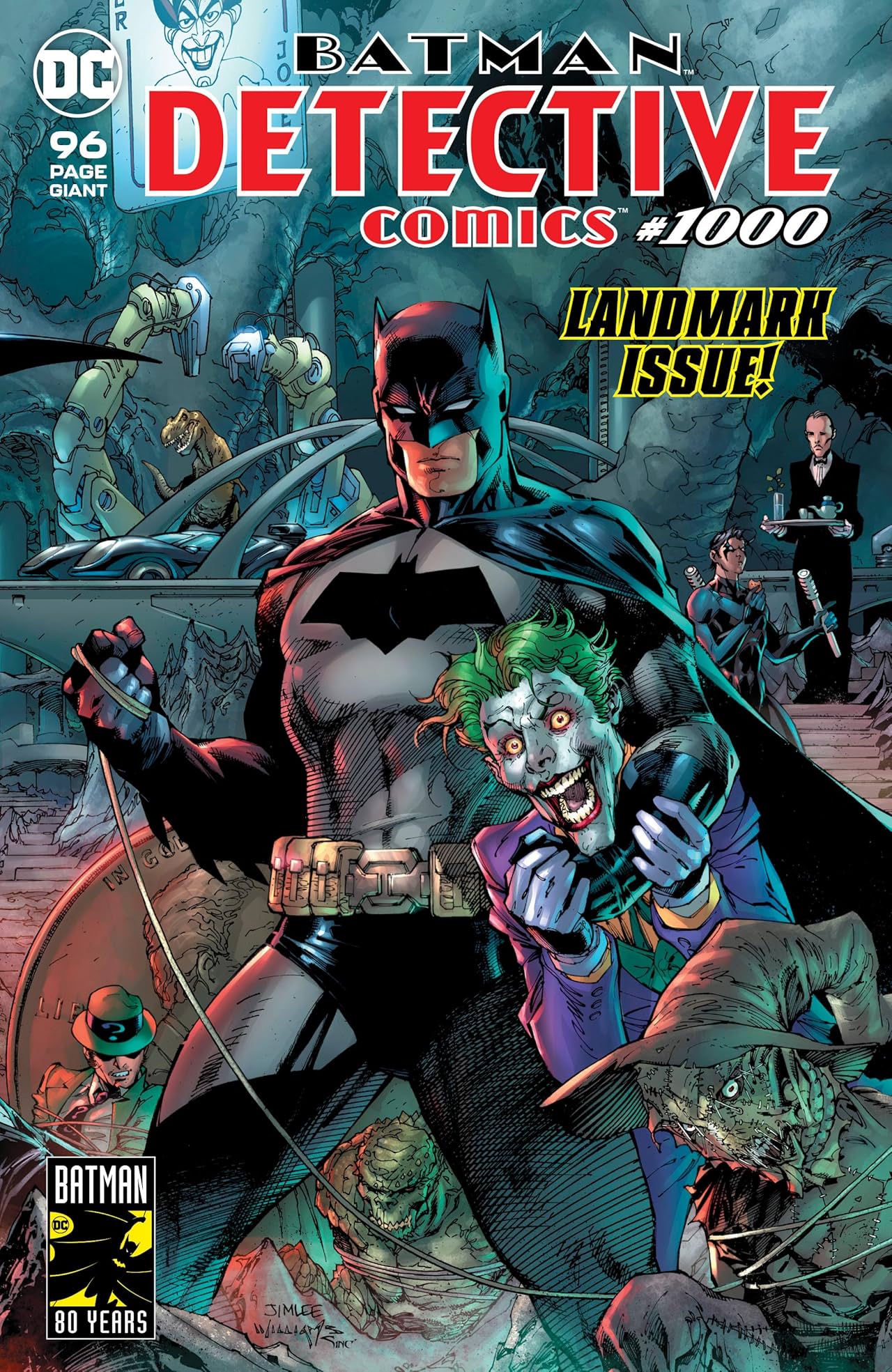
Jack Fisher’s Weekly Quick Pick Comic: Detective Comics #1000

Every Wednesday, a new batch of comics enters this world and makes it a little more awesome. However, it’s not every week that an iconic character achieves an incredible milestone that only one other superhero comic has achieved to date. There aren’t a lot of characters who could hope to achieve such ratified status, but if ever there were someone equipped for that journey, it’s Batman.

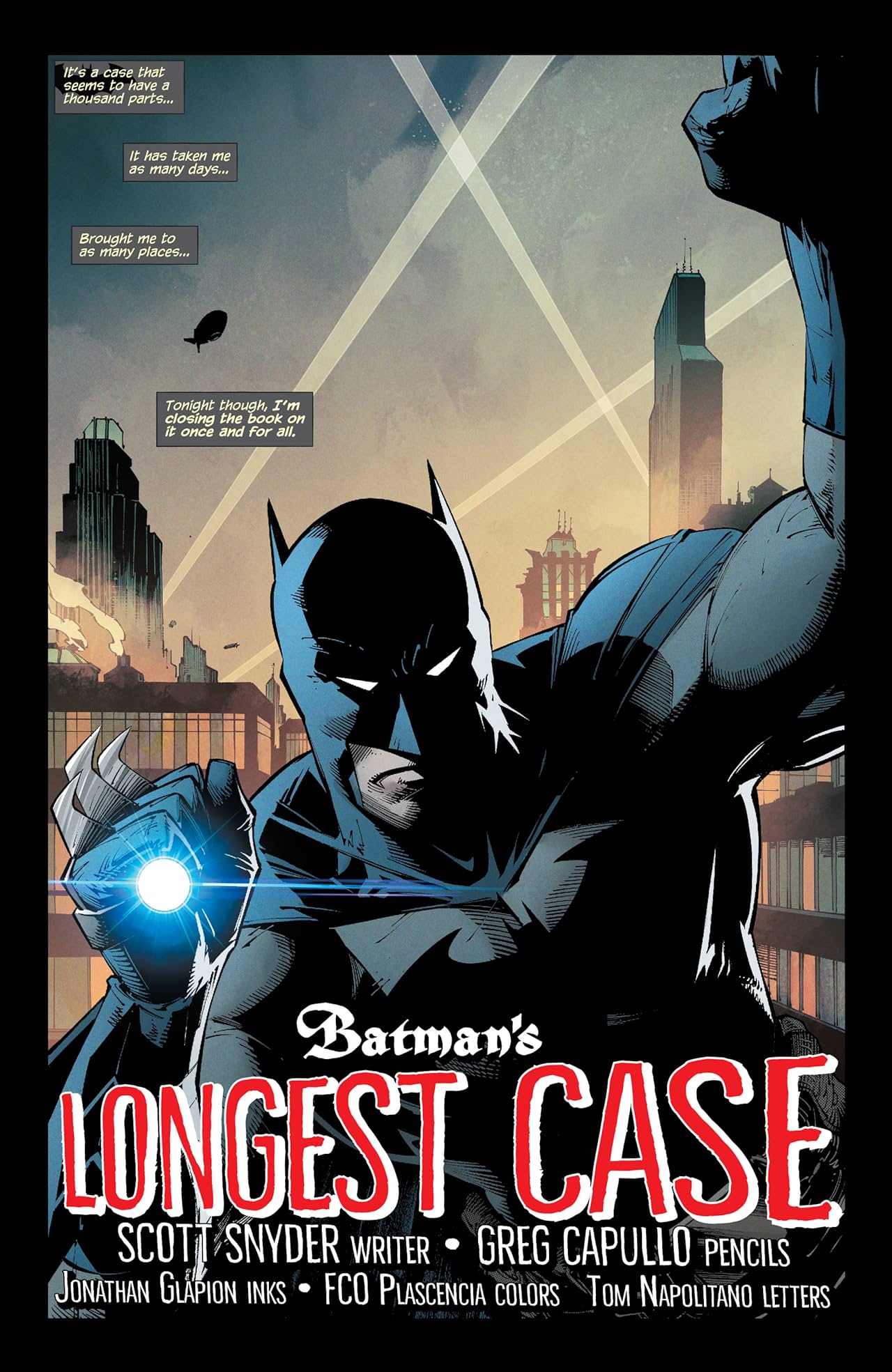
Today will likely go down in history as one of Batman’s greatest triumphs and he achieves it without the aid of Christopher Nolan. That’s because on this day, Detective Comics #1000 came out. Beyond just being a landmark issue that celebrates the legacy of Dark Knight, this comic helps remind superhero fans of every generation why Batman has endured.

From the triumph of “The Dark Knight” to the lasting damage done by Joel Shumacher, Batman has navigated many eras over the years. However, like Superman and Wonder Woman, he has never deviated far from his core persona. He’s a detective, a symbol, and a personification of vengeance against egregious injustice. No matter the time, place, or culture, there’s always room for that kind of crusade.

Detective Comics #1000 helps affirm that by telling a collection of short stories by some of DC Comics’ top writers. None of these stories really tie into one another and they don’t have to. It’s just not possible to capture the breadth of Batman’s legacy in just one story, no matter how many members of his iconic rogues gallery enter the picture.

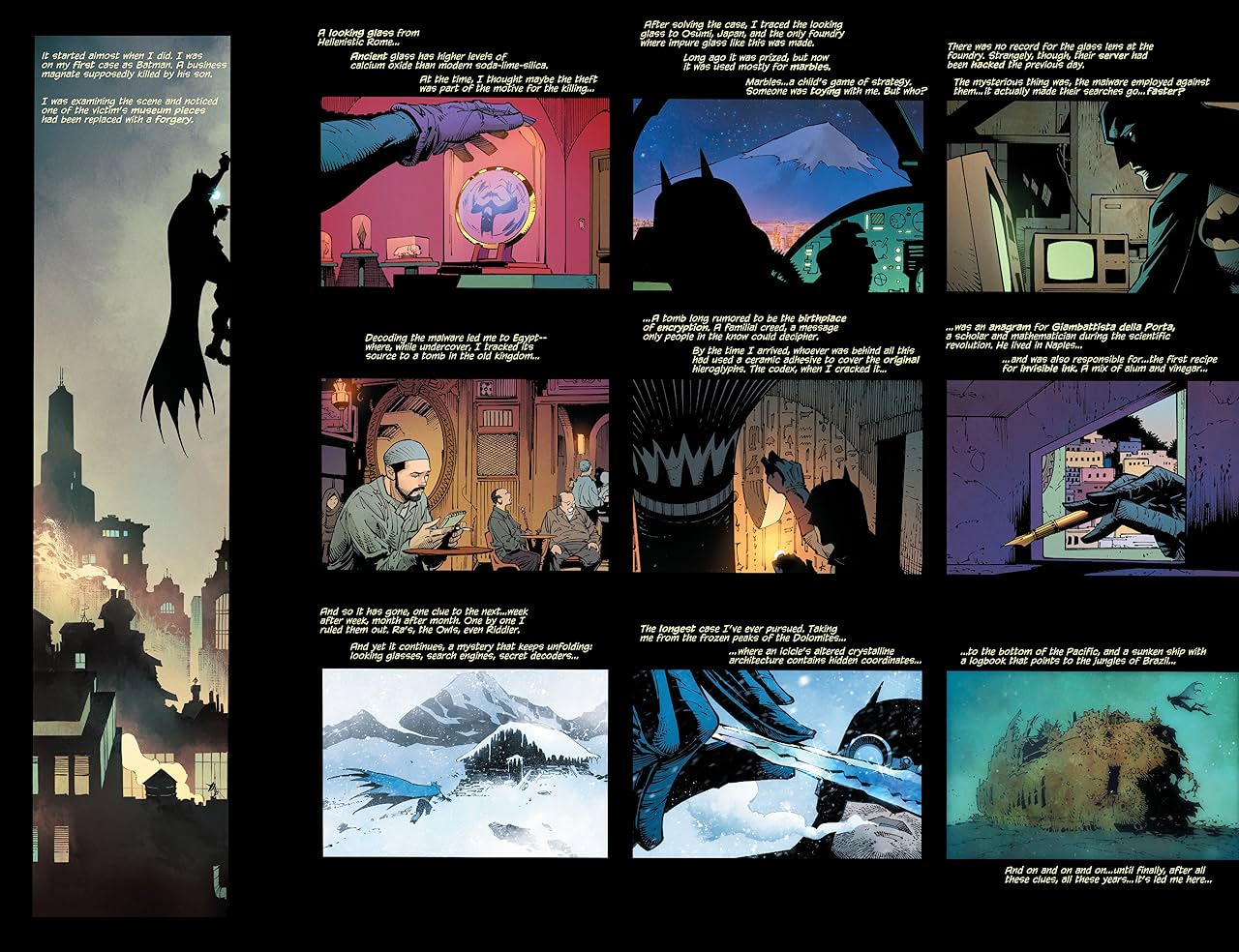
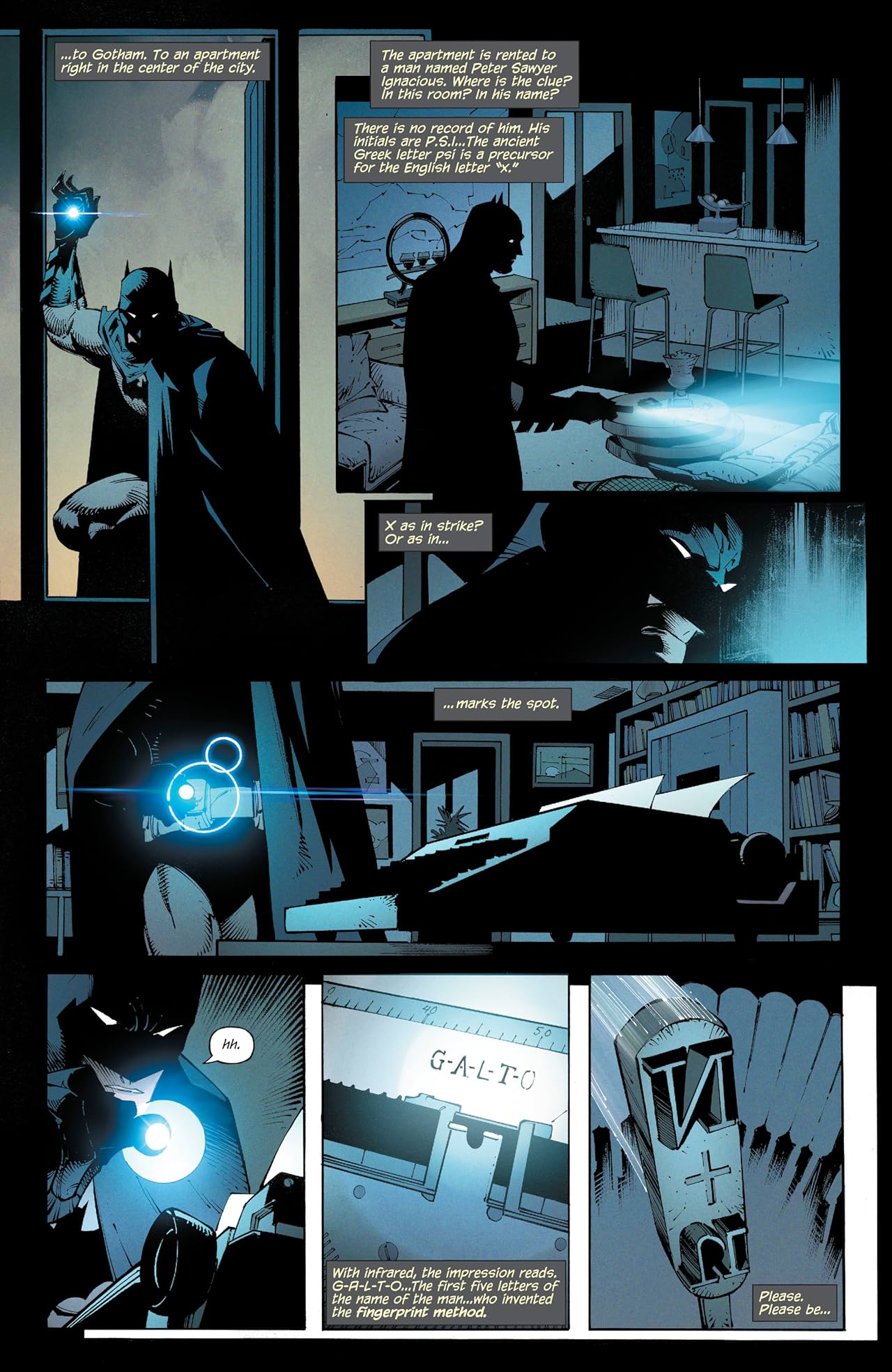
Instead, each story is crafted in a way that helps capture a critical element of Batman’s never-ending crusade. A story by Scott Snyder helps highlight Batman’s unparalleled detective skills. A story by Warren Ellis highlights Batman’s ability to strike fear in criminals. A story by Christopher Priest show show Batman’s humanity is as strong as any one of his skills.

Each story carries its own weight, in terms of drama and impact. They present some of Batman’s best traits alongside his greatest weaknesses. They never give the impression that Batman is too powerful or too capable. At the end of the day, he’s still human. He has very human vulnerabilities and not just compared to the heavy hitters of the Justice League.

Beyond not being bulletproof, there are many instances that show he’s still someone who was deeply scarred as a child. The murder of his parents still haunts him. There are times in which he fails to cope with it, as nicely shown in a story by Denny O’Neil. At the same time, however, that loss and the pain it causes still drives him to be Batman.

In many respects, Batman is more true to his persona than Bruce Wayne. If anything, Bruce Wayne is the real mask. When he’s not wearing his cowl, he has to be someone else. He has to give the impression that he’s a successful, functional adult who got over the murder of his parents long ago. That has never been the case for Batman.

After 1,000 issues of Detective Comics, it’s abundantly clear that Batman does not see injustice the same way others do. People suffer tragedy and injustice all the time, both in the world of superhero comics and in the real world. Most people are content to let the authorities and the justice system deal with it. Batman isn’t most people.

In his world, the crime-ridden metaphor that is Gotham City, the authorities are corrupt and the system is flawed. Unlike people of lesser means, he’s in a position to actually do something about injustice. As Bruce Wayne, he can help improve the economy of the city. As Batman, though, he can make it so other children don’t have to watch their parents die.

It’s a powerful message full of powerful themes. They’re as relevant today as they were 80 years ago when Bob Kane and Bill Finger first created Batman. Injustice and tragedy know no single time, race, culture, or gender. They affect everyone and Batman stands on the front lines to fight it.

More than anything else, Detective Comics #1000 reminds us of why we want Batman on the front lines of that crusade. He’s capable of confronting the worst of the worst in terms of criminals. He’s also compassionate enough to understand and empathize with those who have been affected by injustice. It’s how he’s able to recruit and inspire others like Robin, Nightwing, Batgirl, and Catwoman.

Over the years, he’s even managed to carve out an extended Batman family, of sorts. It’s not the same as the family he lost, but an incredibly touching story by Tom King and Tony Daniels shows just how much it means to him. It helps give balance to someone who can be a hardened crime-fighter one moment and a caring friend the next.

Not all the stories in Detective Comics #1000 are so serious and dramatic. The story by Paul Dini provides some colorful humor that shows that even the gritty world of Batman isn’t prone to a few absurdities. Batman himself doesn’t deny this. He just embraces and accepts it as part of his never-ending crusade.

It’s hard to imagine any crusade lasting 1,000 issues and spanning eight decades, complete with campy TV shows and genre-defining movies. The universal nature of Batman’s crusade against injustice helped fill those issues with so many iconic moments. This landmark issue shows why that crusade is poised to endure another 1,000 issues.

The struggle never ends, but he never gives up. He can’t and he won’t. He’s the goddamn Batman.

Leave a comment

Filed under Jack's Quick Pick Comic

The Secular Theology of “Lucifer” (The TV Show)

lucifer

What happens when you die?

Does our consciousness live on in some form?

Is there a way in which people who escaped punishment in life ultimately face it in death?

These are distressing, but profound questions that form the backbone of nearly every major religion. From the major Abrahamic faiths to the lore of ancient civilizations, there are many ways to approach this question. We all contemplate our mortality at some point and wonder/dread what will happen after our mortal bodies fail us.

Even some non-believers have mused about it at some point. Whereas religion tends to speculate wildly on the possibilities, an secular view of the afterlife isn’t too different from how it views deities. In the same way there’s no evidence for any gods or supernatural forces, there’s no evidence that consciousness exists outside the human brain.

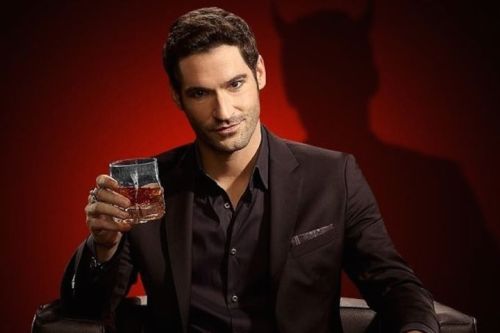
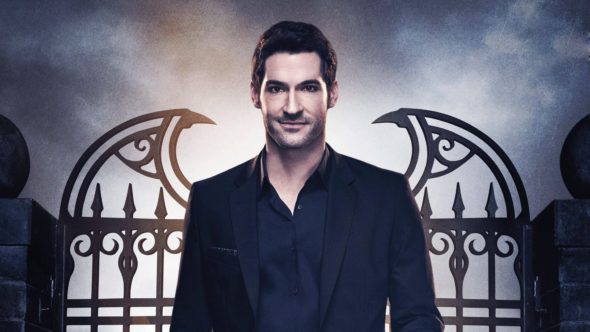
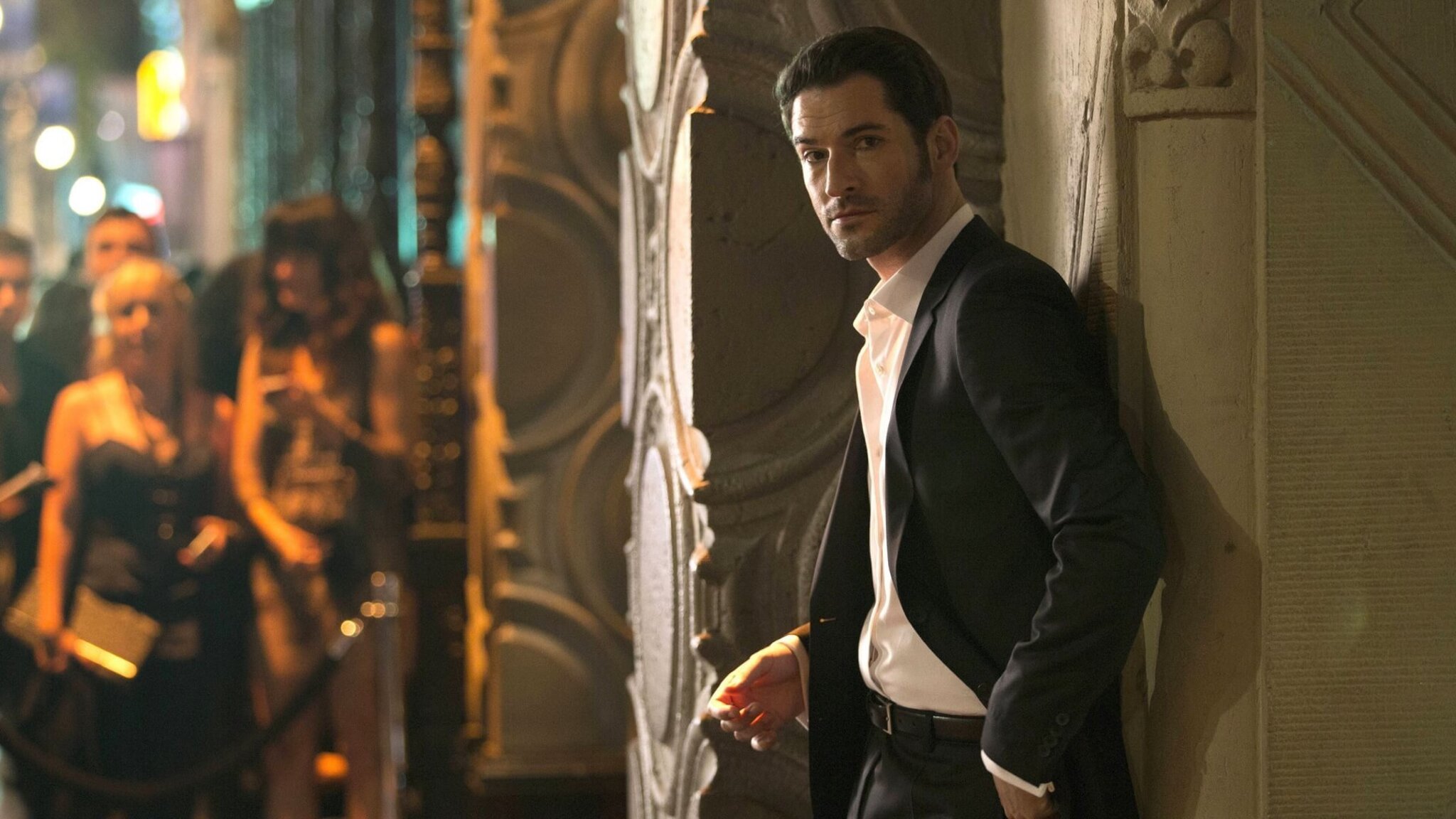
That’s what makes the recently-canceled, but saved by Netflix show, “Lucifer,” such a compelling contributor to this age-old question. Beyond Tom Ellis flexing his uncanny charm, the show achieves something remarkable in how it approaches gods, angels, demons, and the afterlife. I would even go so far as to say that it crafts a theology that affirms secular values over those of any religion.

By that, I don’t mean that “Lucifer” glorifies atheism or non-religious worldviews. If anything, one the show’s common themes is that glorifying any worldview is pointless. It’s surprisingly balanced in how it portrays religious and non-religious characters. The show contains respectable believers like Father Frank Lawrence and deplorable non-believers like Jimmy Barnes.

When it comes to addressing those age-old questions about deities, the afterlife, and morality, though, the show crafts a mythos that doesn’t play favorites. In the world of “Lucifer,” it doesn’t matter whether you’re a Christian, Muslim, Scientologist, Buddhist, or Pastafarian. Your life and your afterlife are subject to the same standards.

To understand those standards, it’s necessary to understand the influences of the show. Before Tom Ellis put on an Armani suit, the story of Lucifer Morningstar emerged in a the critically-acclaimed graphic novel, “The Sandman.” Even if you’re not a comic book fan, I highly recommend this book. There’s a good reason why it’s in Entertainment Weekly’s 100 best reads from 1983 to 2008.

While there are many differences between this comic and the TV show, the core tenants are the same. Lucifer Morningstar once ruled Hell, but decided to abandon that role and set up shop in the mortal world. Much like Tom Ellis’ character in the show, this version of Lucifer resents the stereotypes and misunderstandings surrounding him.

He’s not the source of all evil. He’s not the Lord of Lies, either. In fact, Lucifer has his own personal code of conduct and chief among that code is not lying. It goes beyond just telling the truth, though. Lucifer doesn’t sugarcoat anything, nor does he tell only part of the story. He tells the truth in the clearest, harshest way possible.

The show captures many of these elements. In the first episode when he meets Detective Chole Decker, he says outright who he is and isn’t coy about it. While she doesn’t believe he’s the actual devil, he sets a similar tone in how wields the truth. He’s not afraid to shove it in peoples’ faces and let horrifying realizations do the rest.

That emphasis on hard truth, both in the show and the comics, closely mirrors a secular approach to reality. It doesn’t matter how strongly you believe or don’t believe in something. The truth doesn’t change. People can spend their entire lives avoiding it, making excuses or crafting elaborate mythologies.

Whether someone identifies as atheist or agnostic, the premise is the same. If there’s no verifiable evidence, then you can’t say something is true. That leaves a lot of uncertainty about the nature of life, the afterlife, and everything in between. For many people, that’s just untenable and that leads to all sorts of contemplation and speculations.

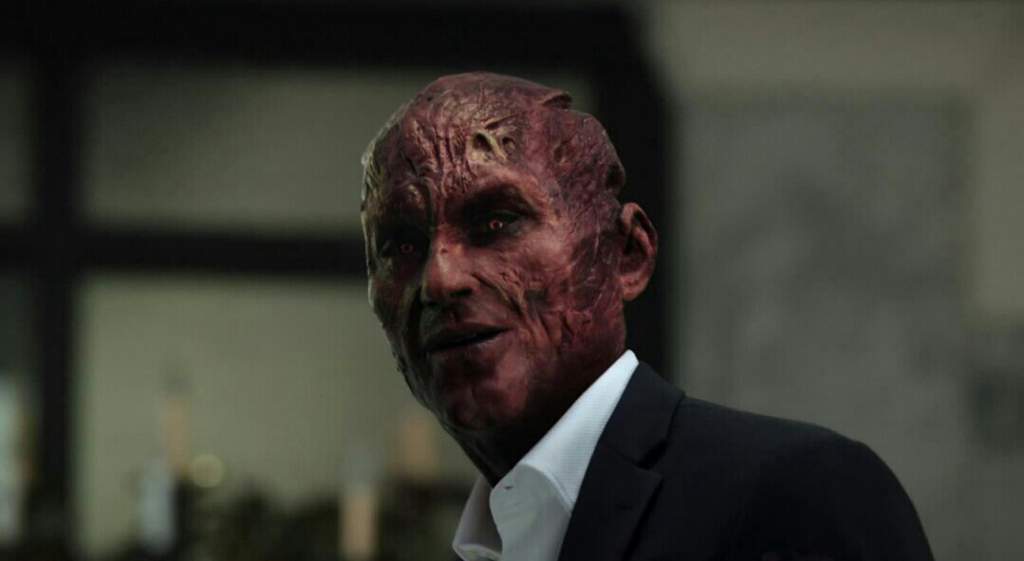
It only gets worse when there’s considerable evidence to the contrary, which those who cross Lucifer often learn the hard way. While the comics touch on this to a limited extent, the show is much more overt. It often occurs when Lucifer flashes his true form to others. Most of the time, their reaction is one of unmitigated horror and understandably so.

These people, whether they’re cold-blooded killers or schoolyard bullies, just got a massive dose of exceedingly heavy truth. They just learned that the devil is real. Hell is real. Angels, demons, and deities are real. That also means it’s very likely that there’s some form of life after death. For those who have done bad things, that’s a genuinely terrifying prospect.

The details of that terror are explored throughout the show, especially in the first and second season. It’s here where the show distances itself from the fire and brimstone of the Abrahamic faiths. It even differs considerably from the hellish visions of Eastern religious tradition. To some extent, it takes the ethical concepts of secular humanism and crafts a prison around it.

That prison doesn’t involve pitchforks, fire, or monsters who chew on the souls of history’s greatest traitors. In the divine world of “Lucifer,” Hell is dark domain in which the souls of sinful mortals are punished for the misdeeds they committed in life. How that punishment plays out varies from soul to soul.

In the first season, Malcolm Graham spends a brief time in Hell, relatively speaking. He describes it as a place that takes everything someone loves and uses it to torment them. In his case, he freely admits that he loves life. As such, he is starved and isolated so that he cannot experience it or its many joys. It’s an extreme form of solitary confinement, which is very much a form of torture.

On top of that, time flows differently in Hell. Even though Malcolm wasn’t there for very long, he conceded that 30 seconds felt like 30 years. That doesn’t necessarily mean it moves slower, though. Time is simply a tool with which to ensure the effectiveness of the punishment. Lucifer, himself, finds this out in Season 2, Episode 13, “A Good Day To Die.”

For him, time becomes an endless loop of sorts. In that domain, he continually relieves the moment he kills his brother Uriel, one of the few acts in which Lucifer feels genuine regret. It keeps on happening again and again, evoking the same anguish. It’s like the movie “Groundhog Day,” but one in which people constantly relieve the worst day of their life.

These kinds of punishments are certainly worthy of Hell. They’re harsh in that they’re customized torture that’s specific for every damned soul. It’s a lot more flexible than the elaborate Hellscape described in “Dante’s Inferno.” However, there’s one important aspect to this punishment that puts it into a unique context.

The specifics are revealed in Season 3, Episode 7, “Off The Record.” Lucifer reveals to Reese Getty that the devil isn’t the one who decides which souls end up in Hell. No deity decides that, either. Ultimately, it’s the individual who makes that decision, albeit indirectly.

When humans transgress in the world of “Lucifer,” there’s no cosmic judge keeping track of their misdeeds. What sends them to Hell is the weight of their own guilt. Even when they pretend they don’t feel it, like Malcolm Graham, it’s still there. They’re just ignoring it or avoiding it. When they die, though, it ultimately comes back to weigh them down.

This means that punishment in Hell isn’t technically eternal, which I’ve noted is critical if the concept is to have any meaning whatsoever. Lucifer even says in the same episode that there’s no demon army guarding the gates of Hell. The doors are opened and unlocked. Those damned souls are free to leave, but they never do. It’s their own choices, guilt, and regret that keeps them damned.

That means the deeds that send people to hell are subjective and contextual. It’s an outright rejection of the universal morality that many religious traditions favor and an affirmation of the more nuanced ethics espoused by secular humanism. Both the morality and the theology of “Lucifer” depends heavily on the situation, intent, and consequences of someone’s action.

In the world of “Lucifer,” a priest and a porn star can both go to Heaven. It’s strongly implied that Father Frank Lawrence went to Heaven after his heroic actions in “A Priest Walks Into A Bar.” It’s also implied in “City Of Angels?” that there’s a distinct lack of porn stars in Hell due to all the good works and joy they bring to people in life.

At its core, “Lucifer” frames damnation as an underlying consequence of individual actions. Everything begins and ends with the individual. What they do, why they do it, and the consequences they incur are primary criteria for how souls spend their afterlife. In both the comics and the TV show, Lucifer is a champion of individual choices and all the implications that come with it.

This emphasis on the individual effectively tempers the influence of any deity or supernatural force. Even though gods and angels exist in the world of “Lucifer,” they don’t make choices for anybody. Granted, they can have major influences, as shown in episodes like “Once Upon A Time.” At the end of the day, it’s still the individual who is ultimately responsible.

This secular approach to theology works because individual actions are the only deeds we can truly quantify. It creates criteria under which neither atheists nor believers have any clear advantages. How they live their lives and how they go about making choices is what determines whether they face punishment after death.

It still has some problems that the show has yet to address. It doesn’t indicate how Hell handles people who are incapable of feeling guilt or otherwise mentally ill. It also doesn’t reveal how Heaven differs from Hell, although Lucifer implied to Father Frank that it’s more boring than Hell. Hopefully, that’s just one of many other themes that get touched on in Season 4.

Whatever the flaws, the unique take on theology and morality give “Lucifer” a special appeal for both believers and non-believers. It presents a world where those profound questions I asked earlier have answers. No one religion got it right and atheists aren’t at a disadvantage for not believing. That may not sit well with some, but it affirms a brand of secular justice that judges every individual by the choices they make.

More than anything else, Lucifer Morningstar is a champion of deep desires and hard truths. He opposes anyone who tries to dictate someone’s decision or fate, be they a devil or a deity. People who do bad things are ultimately punished, but not by him. In the end, he really doesn’t have to. An individual is more than capable of creating their own personal Hell.

13 Comments

Filed under human nature, philosophy, religion, television, Villains Journey

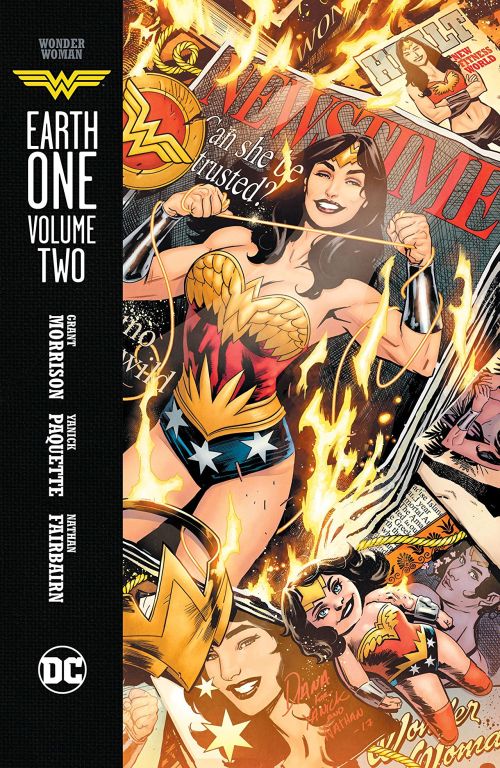
Exploring Radical (And Kinky) Idealism: “Wonder Woman Earth One Volume Two” Review

cover-_sx1280_ql80_ttd_

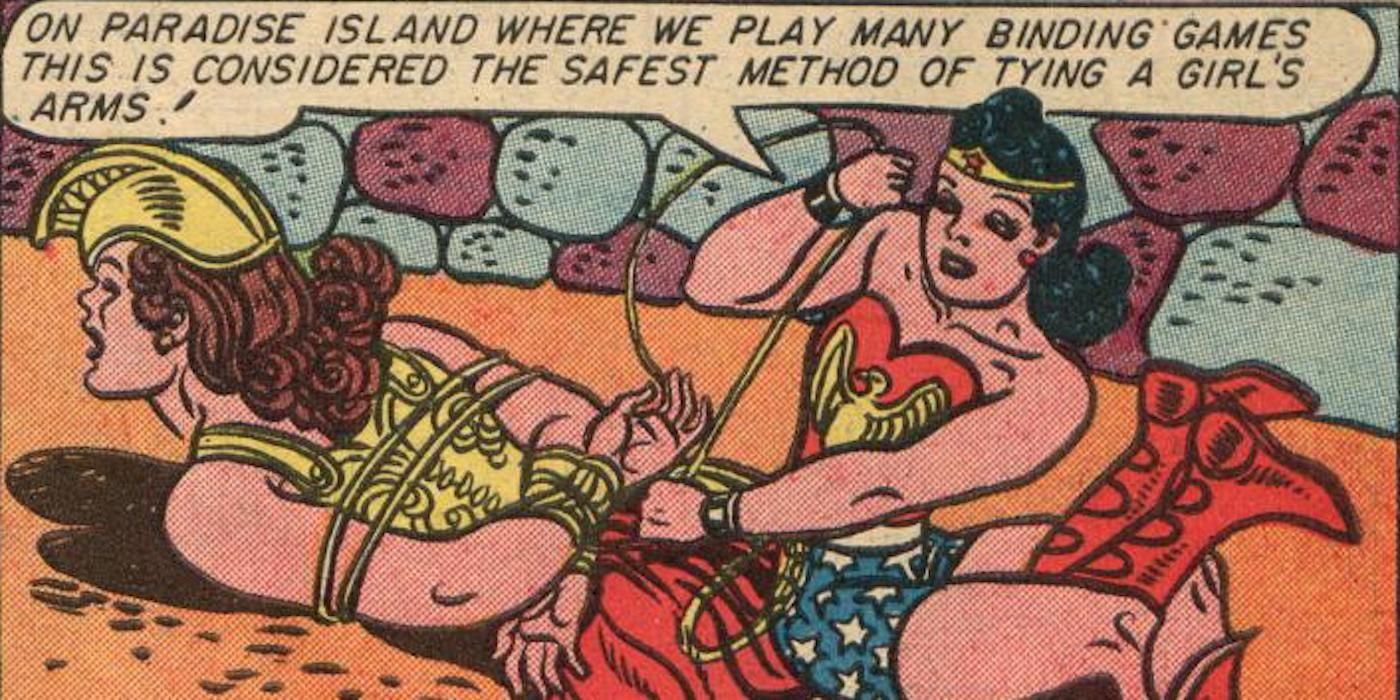
When “Wonder Woman Earth One: Volume 1” came out in 2016, it was groundbreaking in how it re-imagined Wonder Woman while reconnecting her with her kinkier roots. For years, she’d been moving away from the unique brand of feminism that her creator, William Moulton Marston, had once defined her. This culminated in her 2017 movie in which all the BDSM connotation were purged from her persona.

While many creative forces over multiple decades turned Wonder Woman into someone very different from her creator had intended, Grant Morrison and Yanick Paquette went in the opposite direction. They dared to embrace the kinks and reshape Wonder Woman’s story in a way that works while retaining Marston’s original themes.

That story remains one of my favorite Wonder Woman stories of all time and one I’ve gone out of my way to praise. Finally, after a two-year wait and a prolonged absence of kink from superhero comics, “Wonder Woman Earth One: Volume 2” has arrived. Fans of warrior women, feminist utopias, and not-so-subtle bondage themes can rejoice.

Like any sequel, it faces the inescapable challenge of matching the high bar set by its predecessor. On top of that, it also has to dig deeper into an aspect of Wonder Woman that generations of writers have tried to overwrite or ignore. Even with an elevated profile, thanks to her movie, this is a part of Wonder Woman’s persona that is largely unknown or undeveloped.

The greatest challenge of Volume 1 was to reintroduce Marston’s radical concepts of love, submission, and domination in a way that didn’t feel like bad fan fiction. Morrison and Paquette succeeded by building the story around this dazzling, techno-feminist utopia on a mythology built on ideas that seem antithetical to the world dominated by lies, mistrust, and cynicism.

If the goal of that story was to affirm the potential of these ideas, then “Wonder Woman Earth One: Volume 2” is built around how those ideas are challenged. It’s one thing to defend them on an island paradise populated by immortal warrior women of unyielding compassion. It’s quite another to defend them in a world where gay frogs inspire conspiracy theories.

Wonder Woman’s situation is considerably different this time around. She’s not insulated on her island paradise. She’s well-known public figure, an established superhero, and a vocal proponent for her radical ideology. She presents it as a viable way of achieving peace and justice in a world full of suffering and hatred. Unlike other wide-eyed idealists, she comes off as entirely genuine.

Not surprisingly, the world isn’t eager to sign up for her novel approach of peace through submission to a loving authority. It doesn’t just come from grumpy old men who only want women to make babies and sandwiches, either. Even among other women, her ideas are challenged and deconstructed throughout the story.

What does it even mean to submit to a loving authority?

Why is she so sure that it’ll work in the world outside her idyllic homeland?

How are men supposed to approach this concept?

How far is she willing to go to implement her ideas?

These are all difficult questions that get asked throughout the story. Wonder Woman doesn’t avoid these questions, but she doesn’t get a chance to answer them either. Even though she is celebrated by many, nobody seems capable of embracing her ideology as completely as her.

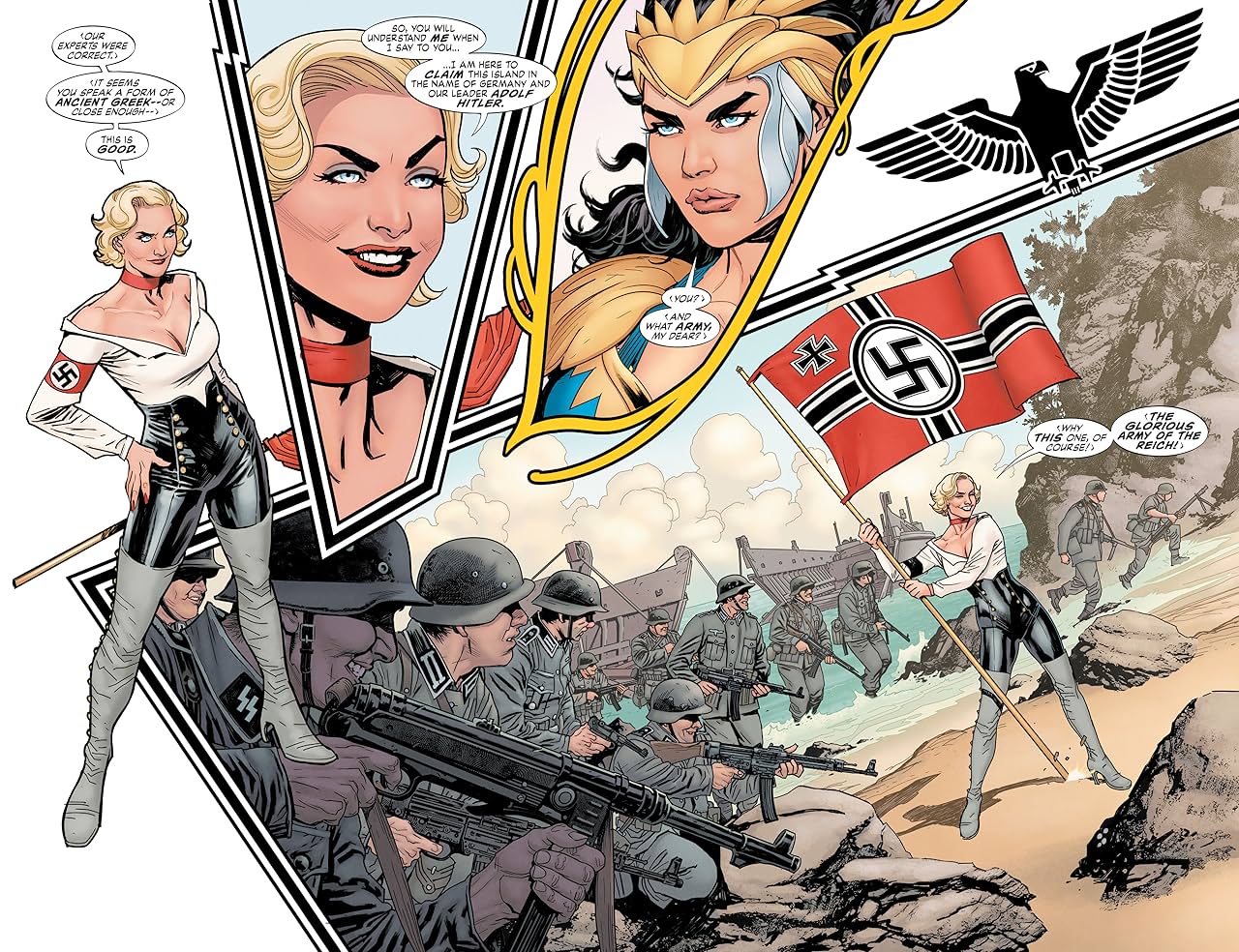
To further complicate this challenge, Nazis enter the picture. Trust me, it’s not as shallow as it sounds. The story isn’t built around Wonder Woman acting like Captain America, traveling the world and punching Nazis. In fact, the way she handles her enemies in this story is very different to the methods she used in the “Wonder Woman” movie. However, that’s where the story gains both complications and nuance.

Through a few flashbacks and side-plots, we get to see how Wonder Woman’s ideology confronts something that’s completely antithetical to everything she stands for. Initially, it looks like her approach works. She’s so compassionate and so empathetic that she can take violent, hate-filled Nazis and redeem their souls. That’s where the complications come in.

In both the events that unfolded in the past and those that play out in the present, we see shortcoming of Wonder Woman’s ideals. It’s not that someone taints or disproves them. As the conflict plays out, we see how the components necessary to make her ideology work aren’t as abundant as they are in her homeland. As a result, Wonder Woman pays a price for her idealism and it’s a steep, heartbreaking price.

Not all of it is a direct result of her ideology, though. Wonder Woman also deals with a devious adversary in Dr. Psycho, who effectively turns her ideals against her. He doesn’t just question or deconstruct the merits of submission to a loving authority. He manipulates them to his own ends, which plays right into the hands of her critics.

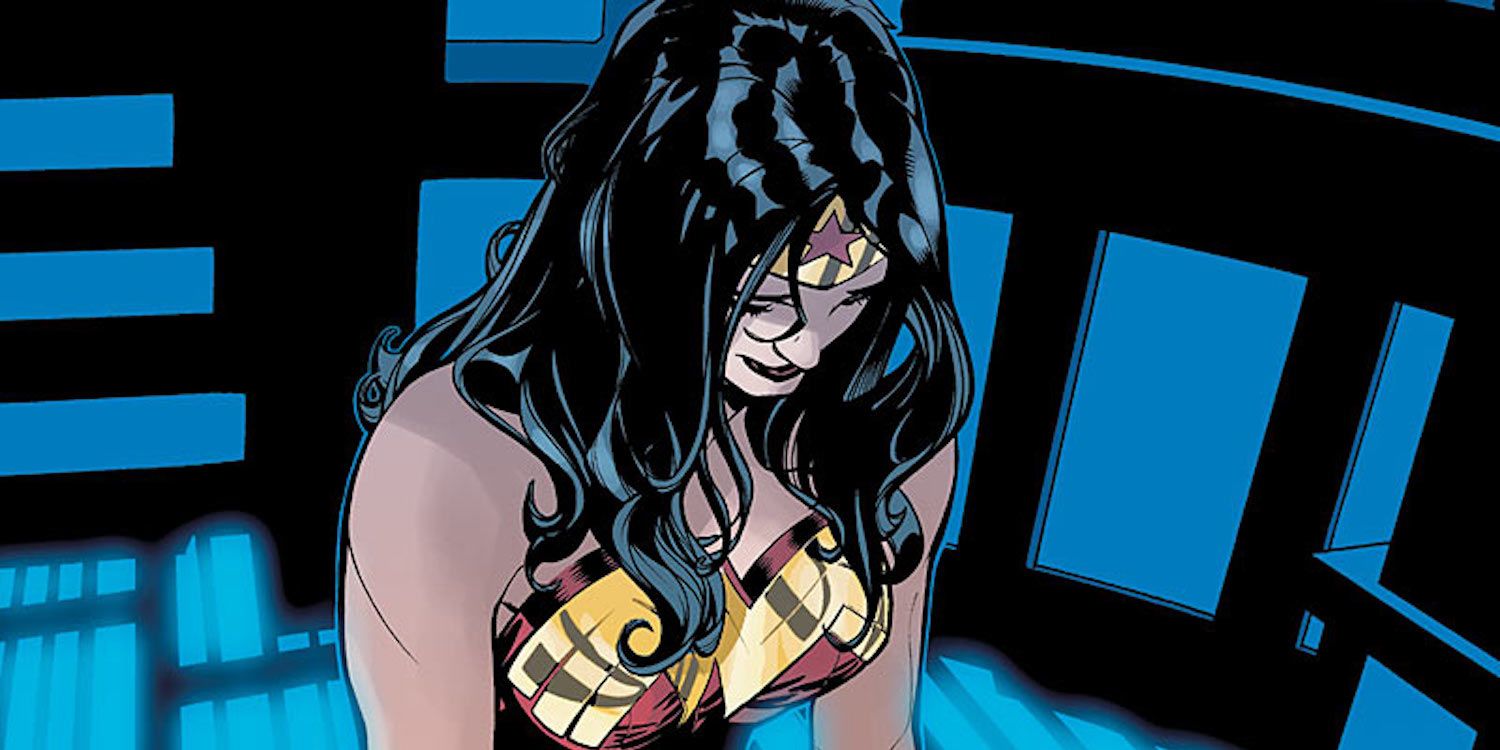
It’s tragic in that it leads to heartache for Wonder Woman and her friends, but it stops short of breaking her. This is Wonder Woman, after all. Loss, defeat, and criticism do not break her. No mortal or God can break her. Those are her words, not mine. These challenges, however, put her in a difficult position where she has to confront unpleasant truths.

Without spoiling too many plot points, I’ll note that Wonder Woman comes to realize that there are grater complexities to loving submission than she ever could’ve realized. She sees first-hand how difficult it is to get someone to willingly submit in a world where weakness can invite harm, exploitation, and injustice. Just preaching her message isn’t enough. By not doing more, it costs her and those she cares about.

In terms of the larger narrative, “Wonder Woman Earth One: Volume 2” is a wonderfully effective evolution of the world that Morrison and Paquette created. Along the way, the story continues to embrace the unique principles of the original iteration of Wonder Woman that Marston crafted in 1942.

Not entirely, that is.

If there’s any shortcoming to the narrative, it’s how incomplete it feels at the end. It’s not a cliff-hanger, but there are many lingering plot threads that don’t get resolved. Granted, it says on the final page that there is a Volume 3 planned for this series. Given the two-year gap in between this book and its predecessor, the wait seems nothing short of agonizing.

Even with those dangling threads, “Wonder Woman Earth One: Volume 2” is still a complete Wonder Woman story that’s unlike anything you’ll get in the movies or comics. If I had to score it, I would give it a 9 out of 10. The lack of resolution at the end is the only thing keeping it from a perfect score. It still gets so many things right about who Wonder Woman is and why she’s so endearing.

The fact that she can be endearing while retaining the radical spirit that Marston had envisioned helps make “Wonder Woman Earth One: Volume 2” all the more remarkable. She’s not just a fierce warrior woman. She’s the personification of a different approach to gender, power, and love. It may seem bizarre and kinky to us, but it has powerful implications for people of any gender.

It doesn’t go overboard with the BDSM undertones, nor does it focus heavily on gender politics. They are mentioned, but not forced into the plot. There are things Wonder Woman does that feminists, conservatives, and BDSM fans can get behind. At every turn, she carries herself as someone who is willing to embrace everyone. It’s that unconditional, universal compassion that makes her Wonder Woman.

Leave a comment

Filed under comic book reviews, gender issues, superhero comics, superhero movies, Wonder Woman

The Awomsome (And Sexy) Moments Of My Trip To New York Comic Con 2018

img_2679-1

Another New York Comic Con has come and gone. Once again, the experience has left me astonished, amazed, and satisfied. Every year I go, I worry that next year will have to be a let-down compared to this year. Time and again, I’m proven wrong.

This year was probably my most ambitious year at New York Comic Con. In the past, I was just so overwhelmed by the crowds and spectacles that I didn’t really map out all the events and panels I wanted to attend. This year, however, I tried to make a list of all the places I wanted to go and all the people I wanted to see.

Needless to say, it made for a more exhausting trip, but it was so worth it. I got to meet people I really wanted to meet. I got to interact with fellow fans in a way that was very rewarding. I even managed to meet a few celebrities that made my inner child squeal with joy.

It would take too long to detail everything I saw and experienced. However, thanks to having extra chargers for my phone, I managed to take plenty of pictures. What follows are just some of the sights I saw at New York Comic Con. Some of them were just fun. Others were downright sexy. As always, I am deeply grateful to everyone who once again made New York Comic Con an awesome experience.

5 Comments

Filed under Comic Books, Jack Fisher, Superheroes, Deadpool, Jack Fisher's Insights, superhero comics, superhero movies, video games, Wonder Woman, X-men

Hello From New York Comic Con 2018!

2 Comments

October 5, 2018 · 4:56 pm

On My Way To New York Comic Con 2018!

Today, there’s no need for sexy musings.

Today, there’s no time for sexy stories.

Today is all about me heading to the New York Comic Con! I’ve documented my experiences before. I’ve every intention of doing the same here. Every year seems to bring a new experience, a new spectacle, and a new story to tell. Say what you will about nerd culture and superhero media. It’s a hell of an experience and one that fans like me deeply cherish.

I hope to post various updates throughout the day. If I encounter anything especially exciting or sexy, I’ll be sure to document it here. For now, just know that I am on my way to the Jacob Javits center in New York City where I hope to join those looking to share the experience.

1 Comment

Filed under Jack Fisher's Insights, superhero comics, superhero movies, television, video games, Wonder Woman, X-men

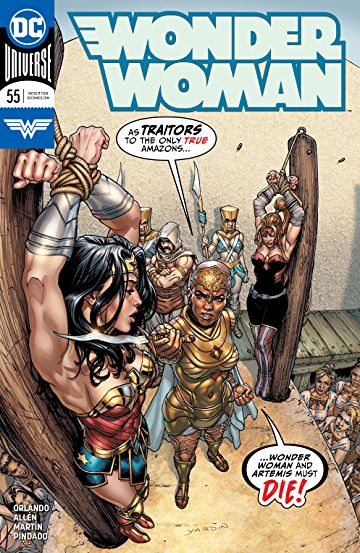
Jack’s Quick Pick: Wonder Woman #55

cover-_sx360_ql80_ttd_

I’m going to try a little something new here so please, if possible, tell me what you think. Every Wednesday, a crop of new comics come out. I’m usually up bright and early to read them, thanks to digital subscriptions through Comixology. It makes for many restless nights, but it’s worth it to start my day with an awesome comic. As such, I want to single out a particular comic that I feel really stood out.

This week, it’s Wonder Woman #55. Granted, I’ve written plenty about Wonder Woman and the many reasons why she’s an iconic female hero. Sometimes it’s easy to forget that she still has comic coming out regularly come out and this week, we got an especially wondrous treat.

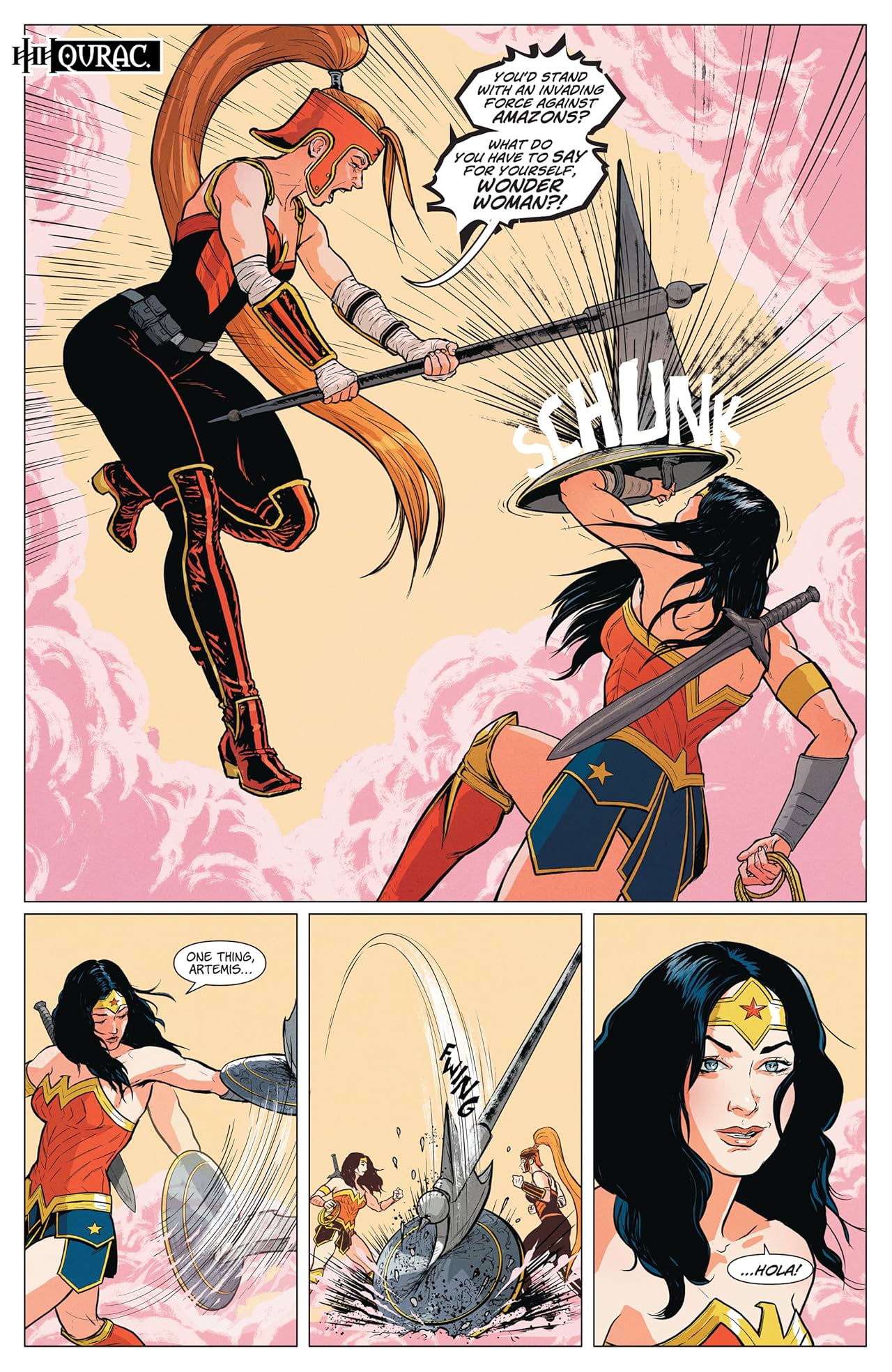
Steve Orlando and Raul Allen capped off a story that began several issues ago that had Wonder Woman reunite with her renegade Amazon sister, Artemis of Bana-Mighdall. While this isn’t the first time they’ve clashed, this particular comic beautifully demonstrated what sets Wonder Woman apart from her fellow Amazons and so many other heroes in general.

While Wonder Woman’s power set makes her one of the most powerful figures in the entire DC Universe, even those immense abilities don’t reflect her greatest strength. Sure, they come in handy whenever Darkseid invades Earth, but those are not the most important weapons in her arsenal.

More than anything else, Wonder Woman’s greatest power is winning battles with truth and compassion. She doesn’t seek to solve problems through domination. She seeks peace through truth and loving submission, a theme with some kinky undertones. She wields that power with effective grace in this, albeit not in too kinky away.

I could go on and on about the non-kinky aspects of the story that make it so awesome, but I’d rather let the book speak for itself. That’s why I’m proud to make this comic my first quick pick. Even if it doesn’t make you submit, it’ll fill your heart with Wonder Woman’s love and compassion. Any comic that can do that is a true wonder.

Wonder Woman #55

Leave a comment

Filed under comic book reviews, Jack's Quick Pick Comic, superhero comics, Wonder Woman

Jack Fisher’s Top Five Romance Comics

tumblr_m9f6wpy3tu1qjzyxso1_1280

I love comics. I love romance, too. When you put them together, it’s like putting bacon on pizza. It takes two inherently wonderful concepts and combines them, thereby compounding everything that makes them awesome.

I talk a lot about comics and romance. I’ve cited certain relationships that stand out in the current romantic landscape and praise certain comics that raise the bar for romance between superheroes. I think I’ve made the extent of my fondness for both fairly clear. Now, I’d like to offer some specifics.

For a while now, I’ve gotten comments and emails from people asking for recommendations of good romantic comics. I feel like I’ve contemplated this enough to craft a list of the comics I feel have the most to offer in terms of romance. While there are plenty of comics that cater specifically to romance, I’ve left those out in favor of those that offer a broader story that general comics fans can also appreciate.

What follows are my top five picks for the best romance comics. Please note that this is a personal list. I don’t wish to imply that this ranking is definitive. These are just my hand-picked comics that I feel offer the perfect blend of love and comic book level awesome.


Number 5: Spider-Man Loves Mary Jane
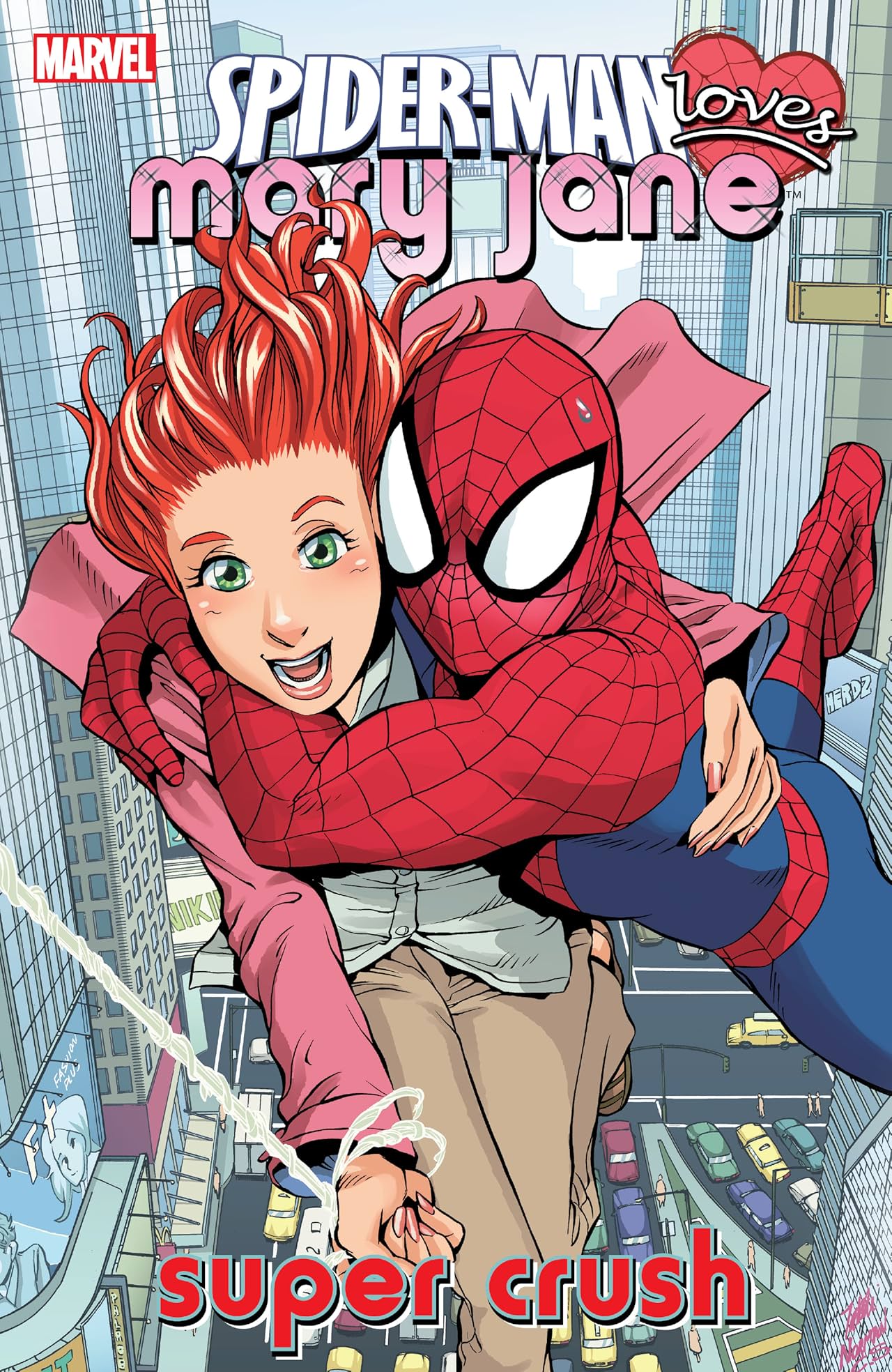
This sweet, fun little series from the mid-2000s is one of Marvel’s more underrated gems. There’s a lot of drama, angst, and frustration surrounding the romance between Spider-Man and Mary Jane Watson. I’ve cited some of the “complications” these two have endured on more than one occasion.

This series basically avoids all of that and doesn’t rely on elaborate retcons to do it. The story is less about Spider-Man and more about Mary Jane Watson. Specifically, it’s about a young, pre-supermodel Mary Jane Watson who hasn’t quite become the gold standard for sex redheaded comic book characters. That’s critical to what makes this series so great in terms of story and romance.

For once, Peter Parker being Spider-Man is secondary. That story is unfolding behind the scene, but the real drama comes directly from Mary Jane. She’s at an age where she’s blossoming into a beautiful young woman, but still figuring herself out. She’s not sure of what she wants, how to love, or where she fits into this crazy world. On every level, she’s far more relatable than any superhero.

As she navigates that world, she makes touch choices and even a few mistakes. More than anything else, though, this series shows how and why Mary Jane came to love Peter Parker so much. It doesn’t rely on overt sex appeal or excessive heroics. The story focuses entirely on chemistry and growth.

On paper, it sounds like something that shouldn’t work in a superhero comic, but it totally does. It’s a romance story that’s balanced and well-developed. It also isn’t too mature. Anyone from age 8 to 80 can appreciate the romance here. On top of that, Takeshi Miyazawa’s artwork is gorgeous, bringing light and heart to a romance that badly needs it.


Number 4: Rogue and Gambit

This is a very recent entry on my list, but one that did more than enough to justify its position. Over the course of five issues, “Rogue and Gambit” accomplished something extraordinary. It took a well-known romance that had been deconstructed, denigrated, and mishandled for years and effectively rebuilt it into something truly uncanny.

Kelly Thompson, one of Marvel’s rising stars, took the baggage surrounding the Rogue/Gambit relationship and channeled it in a way that felt both rewarding and sincere. It starts as an undercover mission, but evolves into some overdue couple’s therapy. Thompson doesn’t ignore all the factors that kept them apart. She even lets them argue and agonize over them.

In doing so, this series presents this romance as one you won’t find in any fairy tale. This isn’t a case of star-crossed lovers destined to be together. It’s a romance in which the two people involved have to really work at it. They have to confront their flaws, their failures, and all the excuses they’ve made to avoid their feelings. It gets ugly, but beautiful at the same time.

I would go so far as to cite this series a template for how a modern superhero romance can work, even without an iconic legacy. The Rogue/Gambit romance isn’t ideal, but that’s exactly what makes it so enjoyable and endearing. These are flawed characters who have both found themselves playing villainous roles at some point in their history. Them coming together despite all that just feels so right.

The only reason this series isn’t higher on my list is because it’s so recent. It’s also still evolving through a companion series, “Mr. and Mrs. X.” I’ve reviewed and praised that series too, but it wouldn’t be possible without this series. Whatever complications the Rogue/Gambit relationship faces in the future, this series will remain one of its most defining moments.


Number 3: The Adventures of Cyclops and Phoenix
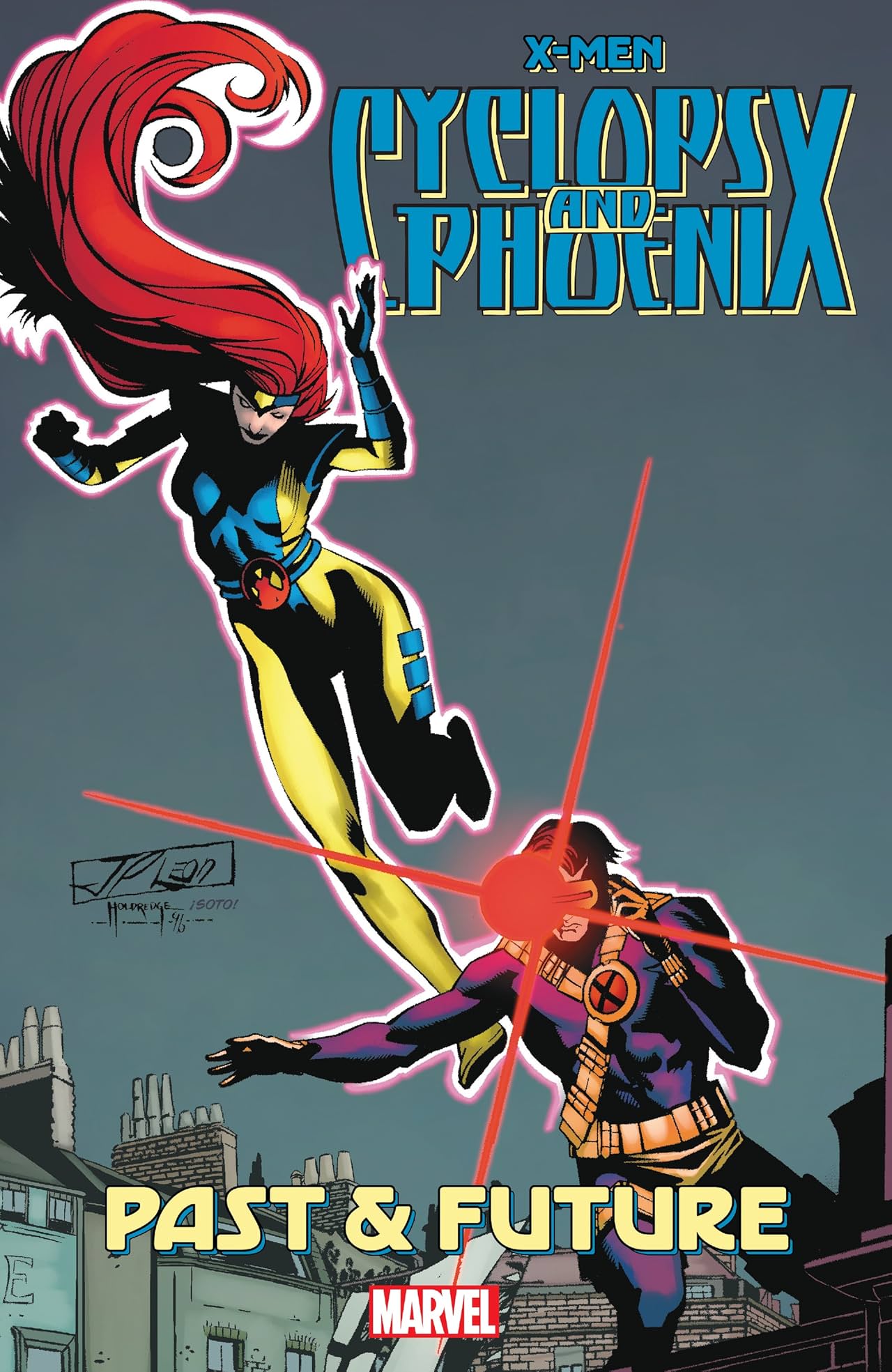
I’ve made no secret of how much I love the romance between Cyclops and Jean Grey. I’ve cited them as one of those uniquely special relationships that is both iconic and balanced, a rare combination for a romance that has been unfolding for over 50 years now. While they’ve endured plenty of tribulations, complications, and retcons along the way, they remain iconic for a reason.

This series from the late 1990s is a testament to just how strong their romance can be when retcons, cosmic forces, and terrible love triangles are set aside. At their core, Cyclops and Jean Grey are two people don’t just want to love each other. They want to create a better world for their friends, their family, and their future children. They get to do all of that and then some here.

Much of the story takes place in one of the many dystopian futures that plague the X-men, namely one ruled by Apocalypse. It puts Cyclops and Jean in a position where they can’t fall back on their fellow X-men or the support of other superheroes. They have to navigate this wasteland of a world with only each other to fall back on. It’s a true testament to the strength of their relationship.

As the title implies, though, the story emphasizes the adventure more than the romance. While there are plenty of sweet moments between Cyclops and Jean, their relationship is not the primary focus. It’s certainly a factor driving them forward, but the meat of the story is how it drives them through the conflict. If you enjoy adventure with your romance, then this is definitely the series for you.


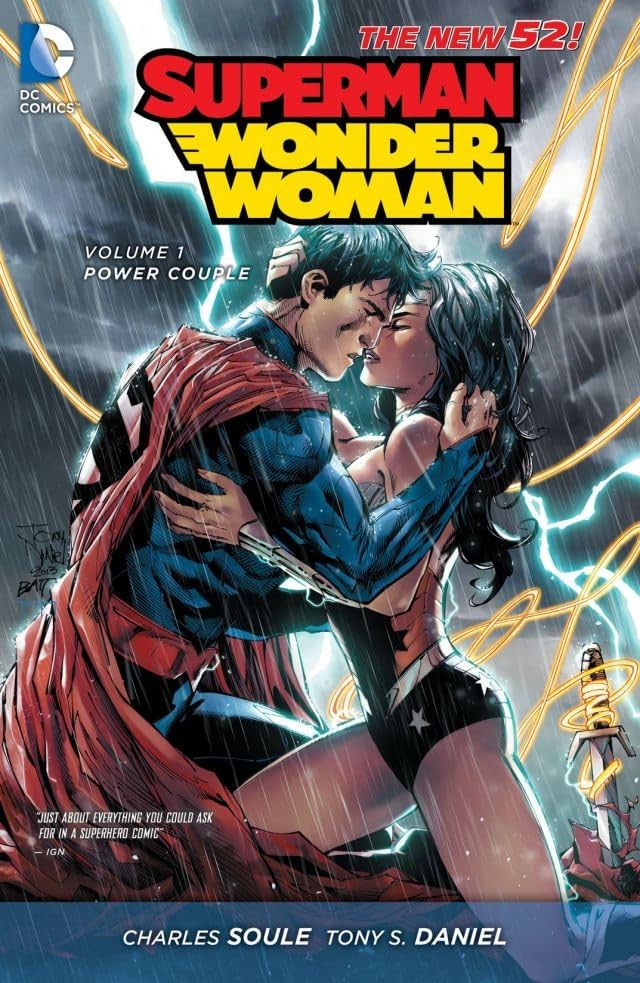
Number 2: Superman and Wonder Woman Volumes 1 and 2
Yes, I know Superman and Lois Lane are still considered the most iconic superhero couple of all time.

Yes, I know there’s an extremely vocal contingent of Superman fans that believe there’s something missing whenever he’s not with Lois.

No, I do not care. That’s because the run on this series by Charles Soule and Tony Daniel really raised the bar for just how great a romance can be for these two iconic characters.

There’s a lot I can say about the romantic potential between Superman and Wonder Woman. It would probably take me multiple blog posts and several essays to adequately describe what sets it apart from Superman’s relationship with Lois and why it works so beautifully. Thanks to this series, though, I don’t need to do that.

This particular series takes place during the controversial, but endearing New 52 era of DC Comics. During this strange, but amazing period of DC Comics, Superman and Lois aren’t married. They know each other, but they aren’t romantically involved. That opens the door for Superman to explore a relationship with Wonder Woman. However, this series makes clear that this romance is no gimmick.

They’re not forced together, nor is it presented as a gimmick. From the very beginning, as well as the events that led up to it, there’s a distinct sense that Superman and Wonder Woman find one another during tenuous times in their lives. They’re two powerful characters making their way through a world in which they feel isolated. When they’re together, though, they’re at their best.

This story brands them as a power couple and they do plenty to earn it. Together, they face threats from alien tyrants and renegade Greek gods. Their worlds collide, but they guide each other through. They make each other stronger. They make each other better. They fight as individuals and as equals. If that’s not the definition of a power couple, I don’t know what is.

Again, if you’re a die-hard supporter of Superman and Lois, that’s fine. This series does nothing to undercut that. However, it does plenty to prove that Superman and Wonder Woman can share a powerful romance, literally and figuratively. Even after DC has undergone extensive retcons and reboots, this series still captures the power of that romance in the best possible way.


Number 1: Saga
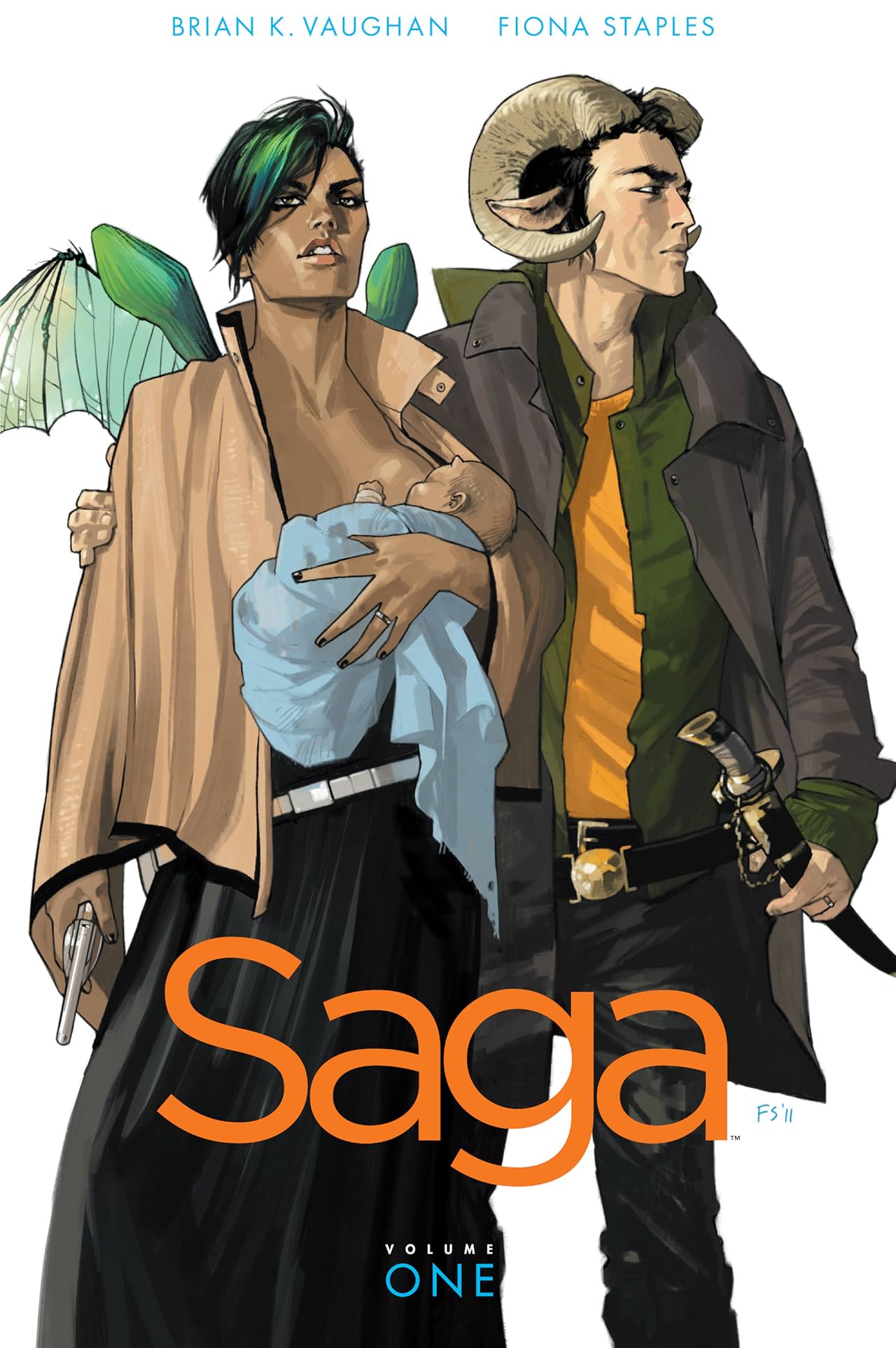
This is probably a controversial selection for those who aren’t familiar with this series. It doesn’t involve superheroes. It’s not a product of Marvel or DC Comics. It’s an entirely different world full of bizarre creatures that include talking cats, a humanoid seal, and an entire race of beings with TVs for heads. I swear I’m not making any of that up.

However, at the heart of this amazing series by Brian K. Vaughan and Fiona Staples is an amazing love story between two characters from warring worlds. That love is very much the driving force between all the conflict and the characters that get caught up in it. It’s one of those romances that has every conceivable force working against it, but it still happens and it’s downright beautiful

Alana and Marko aren’t Superman and Lois Lane. They’re not even Rogue and Gambit. They’re not exactly heroes trying to live up to an ideal. They’re soldiers in a war between two worlds, but they somehow find each other, fall in love, and create a family together.

It’s not a fairy tale romance, though. Their romance involves more than a few explicit sex scenes, as well as a scene where Alana gives birth to their daughter. Nothing is filtered or polished. The sexy and unsexy parts of their relationship is laid bare within a world that is full of fanciful characters and locales.

It’s a genuinely epic journey, but one that all comes back to the romance between Alana and Marko. No matter what kind of romantic you are, these two find a way to check the right boxes. There are many moments of passion, sorrow, and loss. There are also plenty of moments that are funny, cute, and endearing. It has everything a great romance needs and then some.

I should offer a fair warning, though. You will get attached to these characters. You will feel it during certain moments. As a self-professed romantic, I can safely say that it’s worth the risk.

There you have it! These are my top five selections for romance comics. I’m sure some will disagree with my selections. The list may even change as other great romance comics emerge in the coming years. That’s perfectly fine and I welcome any debates on my list.


Romance is in every medium and comics are no exception. I would even argue that the romance in comics is under-appreciated and under-valued. As the genre continues to evolve, I have a feeling that’ll change and I hope to be part of that change.

5 Comments

Filed under Comic Books, Jack Fisher, Superheroes, Marriage and Relationships, romance, sex in media, superhero comics, X-men

The following is a review I wrote for PopMatters for “Scarlet #1.” Enjoy!

Evolving Revolutions in a Devolving World: ‘Scarlet #1’

Leave a comment

August 30, 2018 · 4:22 pm

Understanding (And Learning From) Lex Luthor’s Hatred Of Superman

supes-vs-lex

As a lifelong fan of superhero comics and someone who enjoys shows like “Breaking Bad,” I’m genuinely fascinated by villains. Specifically, I’m intrigued by what makes them tick and why they walk the villain’s path. Their journey is distinct from that of a hero, but one that can be just as compelling.

In many cases, these villains have capabilities that allow them to solve many of the world’s problems. I’ve cited Dr. Doom as one of those villains who blurs the lines of villainy because of his intentions. Characters like Dr. Doom genuinely believe that their villainous actions are justified because it will lead to a better, safer, more prosperous world. Heroes also believe that too, which helps fuel their epic battles.

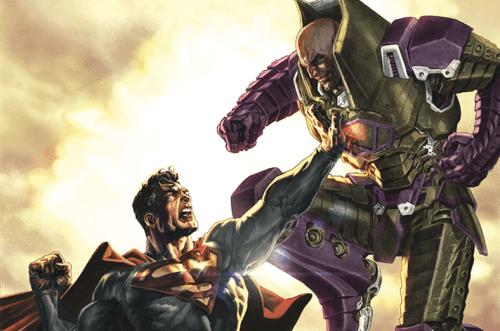
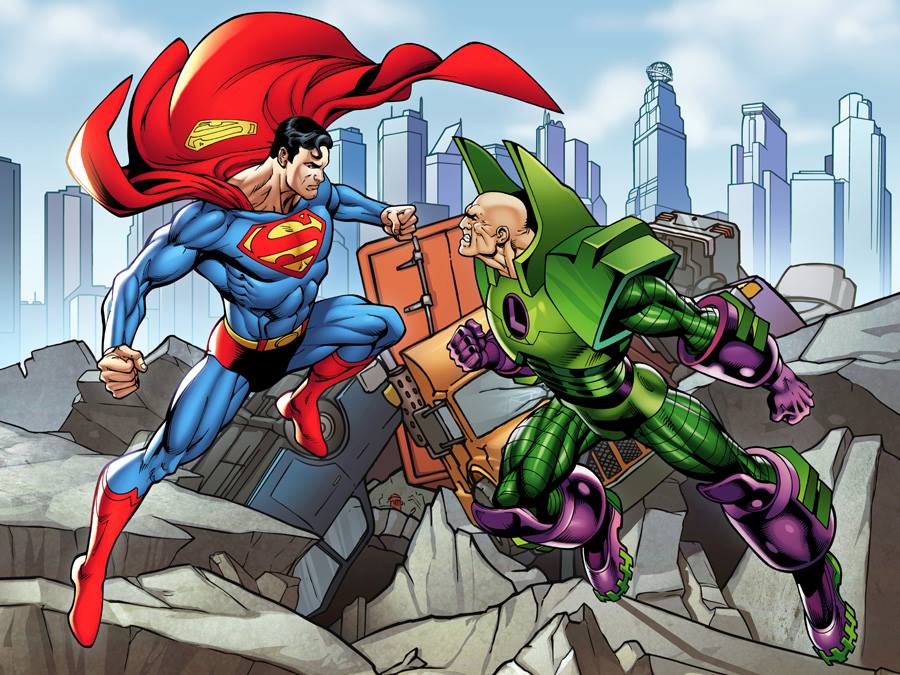
For a character like Lex Luthor, though, the line isn’t that blurry. He’s a villain, plain and simple. He’s selfish, callous, arrogant, cruel, and narcissistic to an extreme. If he existed in the real world, he would check every box for narcissistic personality disorder. In terms of personality, he’s the polar opposite of his nemesis, Superman.

That goes a long way towards giving Superman an enemy who stands against his heroic ideals. I would even argue that Superman couldn’t be the iconic kind of hero he is without Lex Luthor. At the same time, I also think Lex reveals something critical about humanity, morality, and superheroes in general.

That’s difficult to see because for much of Lex’s early years in comics, there wasn’t much depth to his motivation. He just wanted to dominate the universe and Superman was in his way. It’s basic and bland, but that was typical for the early era of superhero comics. Villains like Lex were mostly just obstacles for the heroes to overcome in their journey.

That changed in the late 80s and early 90s with the modern era iteration of Lex Luthor. Finally, Lex got more backstory and depth. He was still no Walter White, but these details helped set the stage for the kind of villain he became. It also helped establish why he hates Superman so much.

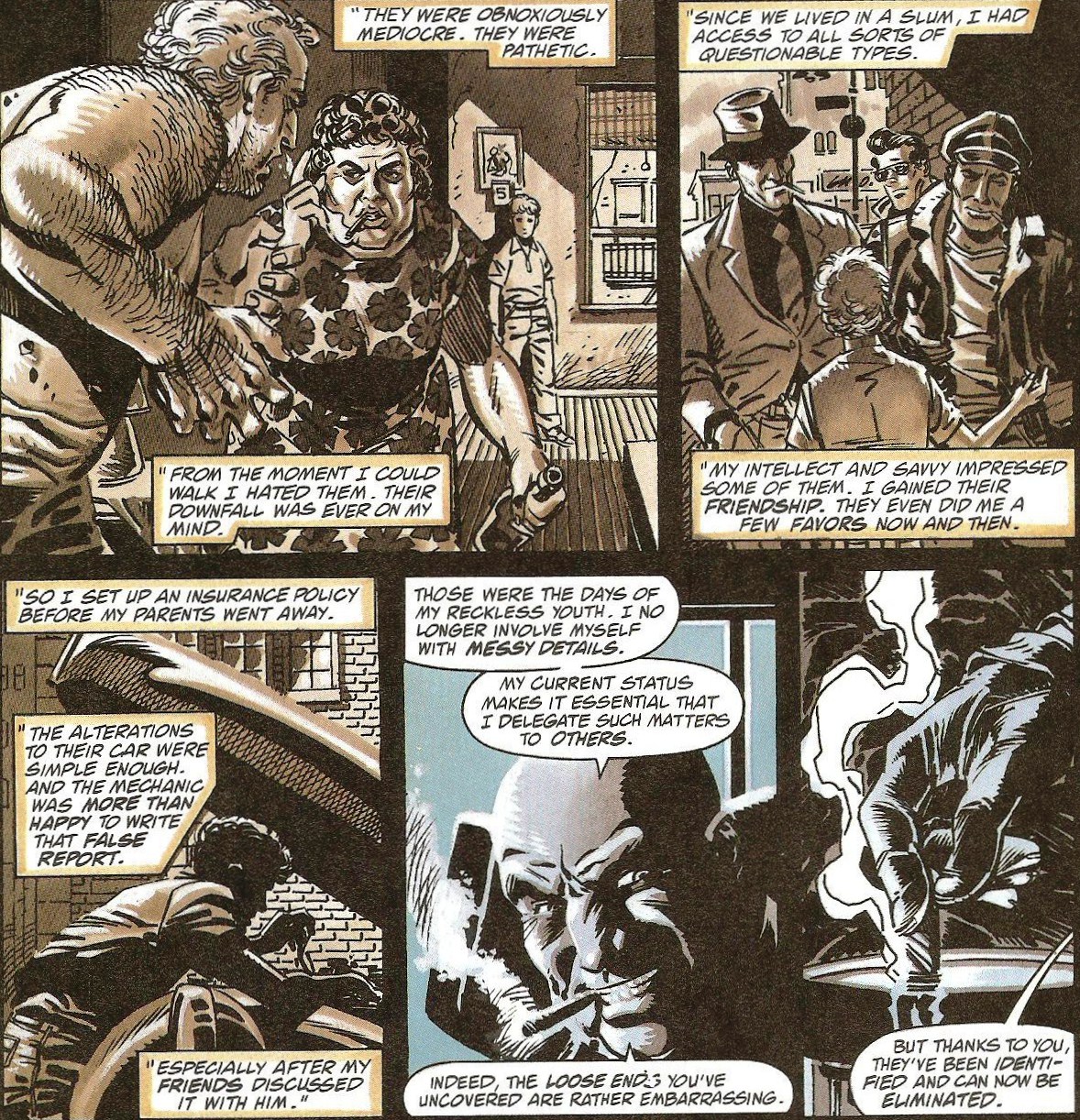
Whereas Superman landed on Earth and was adopted by loving parents, Lex grew up in a rough part of Metropolis called the Suicide Slums and was raised in an abusive household. Right off the bat, Superman gets lucky by having the best parents a child of any species could ask for while he’s unlucky enough to be born with the worst.

As a result, Lex had to be ruthless, manipulative, and cunning. Unlike other villains, though, he didn’t need much tempting. He didn’t agonize over his moral decisions, either. He just did it and didn’t feel a shred of guilt. That includes the role he played in the death of his parents.

That alone establishes Lex Luthor as the kind of ruthless villain who would oppose Superman for any number of reasons. However, as evil as that act was, it’s important to note the motivation behind it. Lex didn’t just kill his parents because murder makes him happy. He did it because they were an obstacle and an opportunity.

They were holding him back, but their deaths meant insurance money that he could use to strike out on his own and build something worthy of his genius. To him, the morality of his decision didn’t matter. Only the results mattered. That’s a critical detail and one that puts Lex Luthor’s villainy into a unique context.

Lex, being one of the smartest characters in the entire DC universe, doesn’t care much for things that are esoteric and obscure. He’s all about results that are tangible and measurable. That means things like truth, justice, and the American way are empty concepts to him. Superman champions those ideals, but for Lex Luthor, they’re just hindrances.

That kind of cold, callous approach to the world gives a unique substance to Lex’s behavior. He’s certainly not the first person to take such a materialistic approach to reality. Rick Sanchez of “Rick and Morty” does the same, but rather than misanthropic despair, Lex Luthor sees it as the key to producing the results he seeks.

Moreover, he has to produce those results without the god-like power that Superman wields. If Superman wants to move the Earth out of the way or destroy an oncoming asteroid, he doesn’t have to build anything or learn anything. He just has to flex his muscles, fly up into the sky, and destroy it with a single punch. There’s no tangible reason to his actions beyond it being the right thing to do.

To Lex Luthor, that’s not just an affront to someone who had to work for everything he ever gained. It’s an insult to his egocentric, results-focused worldview. Just saving the world because it’s the right thing to do doesn’t achieve anything. It does nothing to move humanity forward because nobody had to produce something of merit. It just allows them to continue in the same, unaltered state.

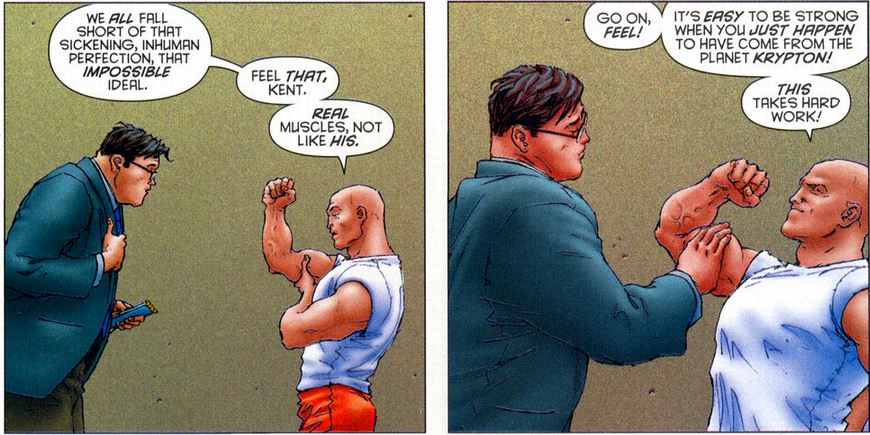
This gets to the heart of why Lex Luthor hates Superman. The extent of that hatred was fully articulated in one of the best modern Superman stories ever told, “All-Star Superman” by Grant Morrison and Frank Quitely. If you only read one Superman comic, make it this one because it perfectly encapsulates the pure heroism of Superman and the cold villainy of Lex Luthor.

In one critical part of the story, Lex tells Clark Kent, who he doesn’t know is Superman, what it means to actually work for his power. Superman, for all his idealism, did nothing to earn his abilities. He just happened to be an alien who landed on a planet with a yellow sun.

It’s like winning the lottery as opposed to working hard for a fortune. One is built on hard work and skill while the other is just dumb luck. Beyond basic jealousy, though, Lex makes another critical point about the ideal Superman sets.

From his perspective, that lofty ideal diminishes the entire human race. By being this other-worldly savior who achieves all these impossible feats, Superman reveals how inept the human race is. More importantly to Lex and his massive ego, it shows just how feeble his achievements are, despite all the work he put in.

Being the extreme narcissist he is, Lex takes that as the ultimate insult. In terms of the bigger picture, it establishes that neither he nor humanity can achieve their full potential. In that context, it’s understandable why Lex dedicated so much time and energy to killing Superman.

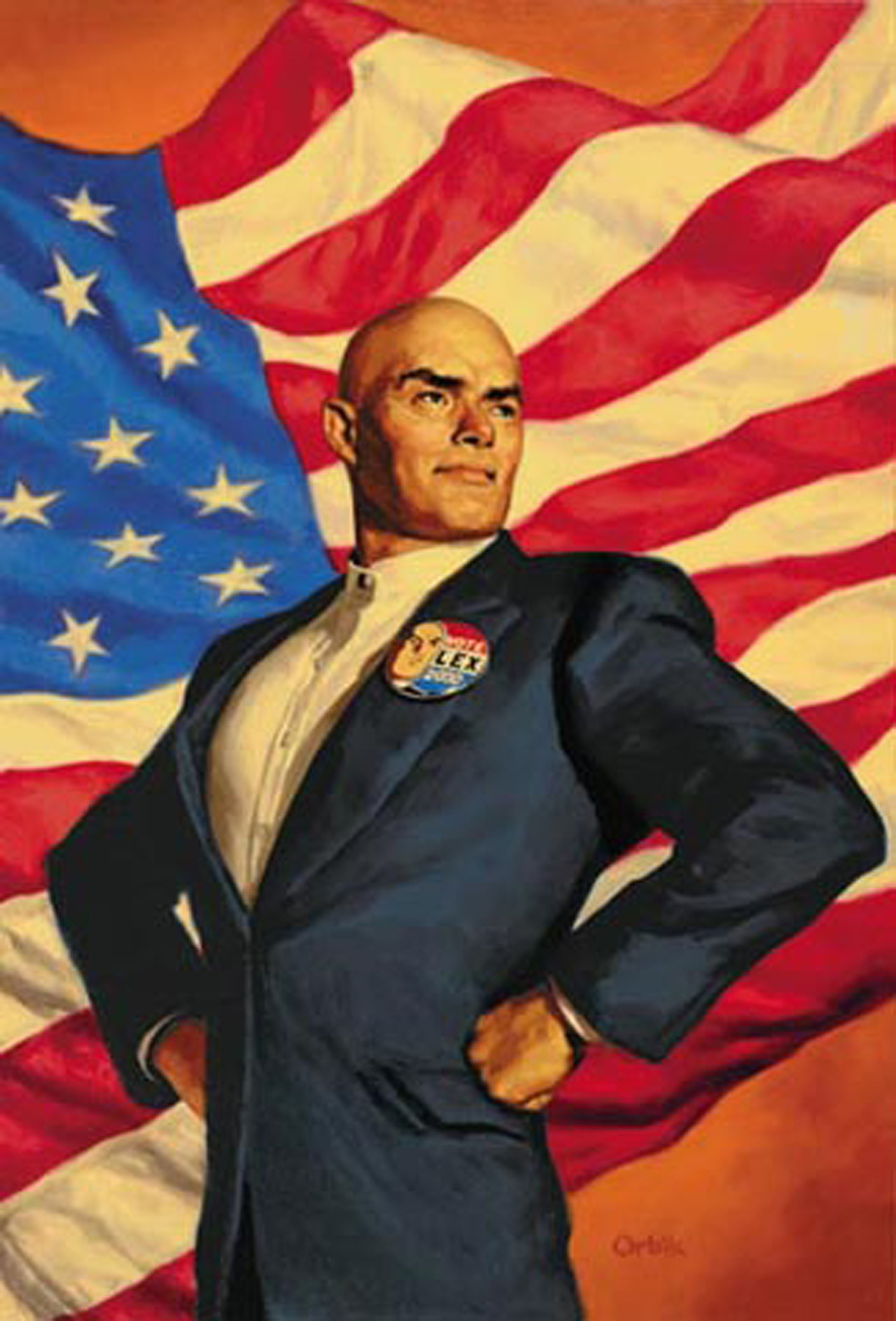
I won’t get into all the ways Lex has tried and failed over the years, although one of his plots did involve him becoming President of the United States. Whatever his methods, I think there’s a larger lesson to learn from Lex’s hatred and for once, it goes beyond his ego.

A big part of what turns someone into a villain is this sense that the world isn’t fair, but could be made better with the right guidance. Lex believes he’s capable of providing that guidance and not just because of his ego. He is, objectively, one of the smartest and most capable human beings on the planet. However, it’s Superman who keeps Lex from making the world less unfair.

Superman believes in the merits of truth and justice. He inspires others to uphold these ideals, even without his vast power. That’s a problem for Lex, who builds much of his power on lies and treachery. To him, though, he doesn’t see that as wrong. He just sees that as the most efficient way to get results.

To uphold truth and justice, in his brilliant mind, is to prevent the world from progressing. Granted, progress in Lex Luthor’s mind means him being in charge, but that doesn’t necessarily undermine the implications.

Like Dr. Doom, Lex is ambitious in that he doesn’t just want to save the world like Superman. He wants to fundamentally change it and he’s willing to cross any line to achieve that. Killing Superman is part of that change, but so is becoming a billionaire and a future President of the United States. If a billion people die in the process, then that’s acceptable because it means humanity is stronger because of it.

There have been times in the comics where Luthor’s vision has manifested. In another critically-acclaimed Superman story, “Red Son” by Mark Millar, Lex has a chance to lead the world into a brighter future. By and large, he succeeds. He’s still an unapologetic narcissist, but he still gets the results he seeks.

Like all great conflicts between superheroes and their arch-nemesis, the dichotomy between Superman and Lex Luthor is stark. They’re two extremes on opposite ends of a spectrum delineating heroism and villainy. By being on those extremes, though, it’s easier to see the inherent shortcomings of both.

While Lex’s shortcomings are easier to identify since he’s an outright villain, he does help identify an important flaw in Superman’s idealism and one that extends to superheroes, as a whole. Superman is willing to save the day, but he’s not willing to cross any lines. He will only ever do the right thing and that means not sacrificing innocent lives or usurping individual freedom.

Those heroics will keep the world turning, but they won’t move society forward. Superman believes in inspiring humanity rather than doing it for them, but Lex Luthor believes his heroism achieves the opposite. It just makes people complacent and dependent on heroes like him rather than crossing the lines that he’ll cross to get things done.

At the end of the day, both in the real world and the world of comic books, we have to determine how much we’re willing to pay for the results we seek. Lex is willing to pay any price. Superman isn’t willing to pay a cent beyond doing the right thing. Most reasonable people, including other superheroes, fall somewhere in the middle.

In the pantheon of super-villains, Lex Luthor is probably the easiest to despise and the hardest to understand. Like Superman, he exposes another side of an ongoing struggle between doing the right thing and achieving more. As society continues to progress, achieving abilities rivaling that of any superhero, it’s a struggle we’ll have to confront.

3 Comments

Filed under Comic Books, Jack Fisher, Superheroes, human nature, philosophy, psychology, superhero comics