Tag Archives: DC Comics

My Justice League Review (And Why The Criticisms Are Unwarranted)

When I did my review for the “Wonder Woman” movie earlier this year, I did so under fairly favorable circumstances. The movie was already getting a lot of positive buzz from critics and general word-of-mouth. I was excited to see it in any case, but that buzz certainly set a positive tone when assessing the merits of that movie.

With “Justice League,” I face the polar opposite of those circumstances. While I generally try not to give much weight to critics or Rotten Tomatoes scores, it was hard to avoid this time. Unlike “Wonder Woman,” the buzz for this movie was entirely negative and it showed in the box office returns, also known as the only real measure that studios care about.

For a movie that was set to be a major milestone, finally putting DC’s most iconic heroes into one movie, it has since become an outright scandal. How can a movie with so much superhero star power do this poorly? That’s a question I am not equipped to answer, especially since people much smarter and more well-connected than me already have.

Instead, I’m going to walk right into this ongoing firestorm of whining and anger to give my spoiler-free review of this movie. I wanted to do it sooner, but I decided to let that firestorm die down just a bit before I offered my take. That might have been a mistake on my part. There’s a lot of noise surrounding “Justice League,” but not much insight.

With that in mind, I’m going to keep my review simple. I’m not going to try and extrapolate a bigger picture, like I did with “Wonder Woman.” I’m just going to focus my review on one simple question.

Is “Justice League” a good movie?

Before I go into detail and try to talk over all the noise, I want to answer this question with my honest and sincere sentiment. Given how much I’ve talked about comic books, superheroes, and superhero movies, including the sexy parts, I like to think my answer has at least some weight. However much stock you put into my opinion, here’s my ultimate conclusion on “Justice League.”

It is a good movie.

Yes, I realize that sentiment doesn’t reflect its Tomatometer score. Keep in mind, though, that score reflects the opinions of critics who are paid to see and/or overthink movies. It doesn’t reflect how actual fans feel about it, which actually shows in the response for this movie.

Even critics can’t deny that this movie went out of its way to please fans, especially those who were dissatisfied with “Batman v. Superman: Dawn Of Justice.” It directly dealt with the aftermath of that movie, as well as the characters’ reaction to it. It even dealt with the aftermath of “Wonder Woman,” building upon a foundation and creating connections, exactly like a real movie universe should.

Those connections weren’t too critical to appreciate the movie as a whole. It also works very well on its own, creating a simple, concise plot that really ramps up the scale. Again, it’s entirely consistent with the effort to make a large, inter-connected movie universe, just as Marvel has done with so much acclaim.

However, that’s not my primary reason for me saying that “Justice League” is a good movie. In simplest terms, this movie is good because it sticks to the basics and does them very well. It doesn’t try to be overly elaborate. It doesn’t attempt to reinvent the characters to an excessive degree. Yes, those characters have some variations, compared to their comic counterparts, but it’s nothing that warrants confusion or outrage.

Superman is still Superman. Wonder Woman is still Wonder Woman. Batman is still Batman, even if it is through the brooding demeanor of Ben Affleck. Getting those three right is critical to the success of any “Justice League” movie and this one makes it a point to do that early on.

It doesn’t stop there, though. It puts time and energy into developing the rest of the league, namely Flash, Aquaman, and Cyborg. These three characters had only brief cameos in “Batman v. Superman: Dawn Of Justice,” but they achieved much greater depth here.

These supporting members weren’t just there to fill out the ranks. They each had their own personal story to follow. Through that story, Flash, Aquaman, and Cyborg gain a personal stake in “Justice League.” It’s not just about saving the world for them. They’re struggling for something greater and, through the story, they achieve it.

At times, there are a lot of plots unfolding simultaneously. The personal stories of all those involved tend to mix. While it does get somewhat messy, it never gets chaotic. The story never goes off-track and it never becomes too confusing, which was a common criticism levied against “Batman v. Superman: Dawn Of Justice.”

A major reason why the story remained so concise was because of the main villain, Steppenwolf. While he’s not as iconic a villain as Lex Luthor, Loki, or Darkseid, who is mentioned multiple times, he does plenty to establish himself as a powerful threat and a highly motivated villain.

Like the other members of the league, his role in the plot has a personal component. He doesn’t just show up, wanting to destroy the world for shits and giggles. There’s an actual reason behind his actions and those reasons never become excuses, something that should carry weight for any character.

On top of those reasons, Steppenwolf’s story helps build the bigger picture of the DC Extended Universe. Through it, we learn that there are much larger conflicts in this universe that go beyond the Justice League. It helps establish a larger role for the Amazons, who showed their strength in “Wonder Woman.” It also establishes the Atlanteans and Green Lantern Corp, who are set to show theirs in future movies.

If the secondary goal of “Justice League” was to build a world and expand the possibilities, it certainly succeeded. If its primary goal was to bring each hero together in a way that was entertaining, flashy, and dramatic, then it succeeded as well.

There were plenty of powerful moments. There were plenty of dramatic moments. There were even some funny moments, most of which involved Ezra Miller’s Flash. Few of the moments felt forced or contrived. None felt empty either. There was purpose in every moment, decision, and action. By those most basic of standards, “Justice League” works.

I would even argue that this movie works better than a lot of Marvel movies. I would certainly put it above titles like “Avengers: Age Of Ultron” and “Iron Man 3,” movies that I think get more praise than they deserve. “Justice League” even makes the effort to improve on the mistakes of its predecessor, something few franchises even try, as “Amazing Spider-Man” can attest.

None of this is to say that “Justice League” is without flaws. It certainly has a few. The effects aren’t as flashy or colorful as other movies. Even “Man Of Steel” had better effects, by comparison. It’s also worth belaboring that Ben Affleck is no Christian Bale and Steppenwolf is no Darkseid. It really did feel as though the movie held back, at times.

If that’s the biggest shortcoming of “Justice League,” though, then I still say it qualifies as a good movie. It tells a story. It fleshes out characters. It tells a big, flashy story, full of big battles and satisfying conclusions. There’s a sense of emotional catharsis at the end that is much more uplifting than what we got in “Batman v. Superman: Dawn Of Justice.” When put in the context of the greater DCEU, it acts like frosting on the cake.

Why, then, does it receive such hate and scorn from critics? If this movie does have a major crime, it’s that it isn’t crafted in the same mold as Marvel with their cinematic universe. I don’t deny that Marvel sets a very high bar. However, this movie cannot and should not operate by those same standards. If it did, then those same critics would just whine that it’s ripping off Marvel too much.

There are other criticisms of “Justice League,” but when so many of them revolve around Henry Cavill’s digitally-removed mustache, those criticisms are downright petty. It is possible to hate and criticize this movie by focusing on those petty issues, but that’s hardly a fair way to judge the actual substance of the movie.

In terms of actual substance, “Justice League” has it and plenty more. It Superman being Superman, Batman being Batman, and Wonder Woman being Wonder Woman, just in case her movie didn’t give you enough of that. For that reason, “Justice League” deserves far more praise than it has gotten and far less petty criticism.

In the end, it still gives us a satisfying, live-action Justice League movie. That, in and of itself, makes it inherently awesome

4 Comments

Filed under Comic Books, Jack Fisher, Superheroes, Movie Reviews, Wonder Woman

Why Wonder Woman Is The Most Important Member Of The Justice League

There’s a lot that can be said about the “Justice League” movie. Granted, not a lot of it has been good lately. The horrendous critical reception, despite the solid audience reception, has effectively muted the sheer accomplishment of creating this movie in the first place.

It is a hell of an accomplishment, creating a live-action “Justice League” movie just two decades after “Batman and Robin” nearly ruined the genre completely. While the success of movies like “The Avengers” has undermined the novelty of the concept, it still means something to those like me who grew up loving these characters in comics and cartoons.

I could spend multiple blog posts discussing and dissecting the issues with the “Justice League” movie, but I’ll save them for another time. For now, I want to take a moment to highlight an important point that the “Justice League” made, despite all the controversies and shortcomings that hounded it. That point is this.

Wonder Woman is THE most important member of the Justice League.

I know that sounds like something a hopeless fanboy would say, particularly those who enjoy talking about the kinkier elements of Wonder Woman’s history. It’s probably something most Wonder Woman fans would agree with and not give much thought to. However, I’d like to take a moment to make my point, even to those die-hard fans of Superman, Batman, and even Plastic Man. You know who you are.

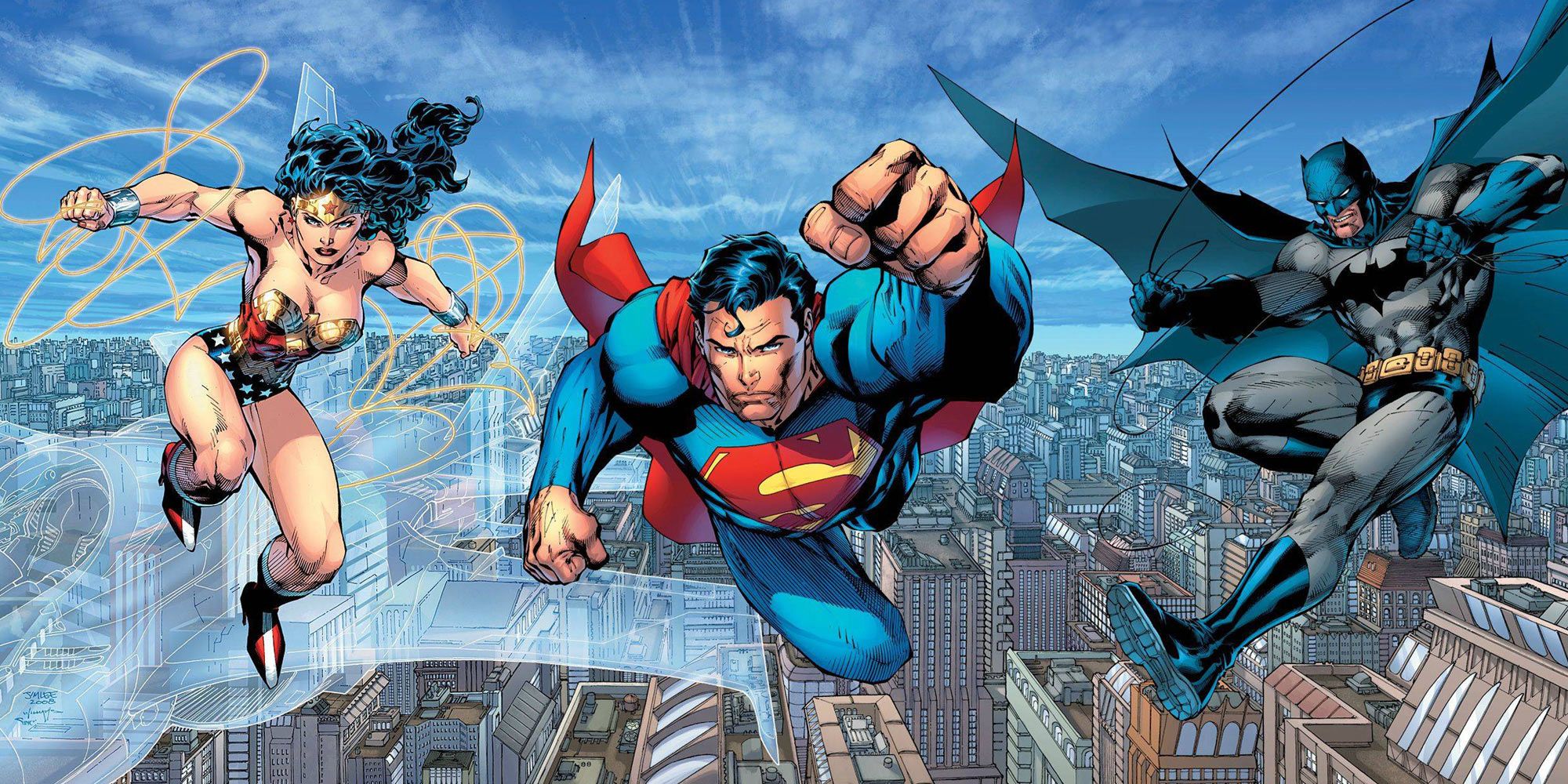
Even among those die-hard fans, there’s no denying that Wonder Woman is part of DC’s superhero trinity. For decades, Superman, Wonder Woman, and Batman have been the anchor of DC’s entire superhero universe, both in terms of popularity and importance. That superhero foundation is unlikely to change anytime soon.

Most of the time, though, Superman or Batman wield the most influence. Between Batman’s cast of iconic villains and Superman’s iconic status, they have a lot going for them, in terms of influence and depth. I don’t deny the strength of their status, nor do I think Wonder Woman trumps them on every level.

However, I still contend that Wonder Woman is the most important member of DC’s superhero pantheon in terms of impact, theme, and narrative. She may never get as many movies as Batman. Considering she has the same number of movies as Catwoman, though, I don’t think that’s a fair measure of Wonder Woman’s importance.

The reason I believe she is that important has less to do with her role within the world of DC and more to do with how she goes about being a hero and an icon. Her situation is very different from that of Batman, Superman, or any other hero in the DC universe, male or female.

Wonder Woman didn’t enter a flawed world that needs heroes by accident or tragedy. In fact, she had every possible reason to not join that world. Her situation before becoming a hero was as ideal as it gets without ripping off a Disney movie.

She was a princess on Themyscira, a literal island paradise. As the daughter of Hippolyta, she wanted for nothing. She was surrounded by love, support, and luxury of every kind. Who would ever be inclined to leave such a place to begin with? Those who saw the “Wonder Woman” movie remember that her mother did not want Diana to leave and did what she could to dissuade her.

Despite this, Diana still left her paradise home. She chose to enter a world full of gender inequality, oppression, and bad reality TV. She chose to confront all those flaws and fight them, both with her fists and her heart. She didn’t need to lose someone or be forced by tragedy. That alone makes her a greater hero than most can hope to be.

Contrast that with Batman or Superman. Batman became who he is because of tragedy. Crime took his parents so he built his entire heroic persona out of a response to that tragedy. It helped drive him to become the hero he is. It also led to some pretty insane feats, even by comic book standards.

Superman’s heroic persona wasn’t built on quite as much tragedy, but like Batman, he was somewhat guided into the heroic role. From the time he was an infant, these ideals were in stilled in him. Those who saw the classic 1978 “Superman” movie remember the message his father gave him, through the famous voice of Marlon Brando.

Live as one of them, Kal-El, to discover where your strength and your power are needed. Always hold in your heart the pride of your special heritage. They can be a great people, Kal-El; they wish to be. They only lack the light to show the way. For this reason above all, their capacity for good, I have sent them you…my only son.

Whether by accident or luck, Superman ended up with perfect loving parents who helped nourish those ideals in him. Between those ideals and his immense powers, him not being a hero was never really an option.

With Wonder Woman, she didn’t need circumstances or guidance. She chose the path that led her to becoming a hero. She even chose that path when there were obstacles in her way, namely her mother. Beyond that choice, though, Wonder Woman’s heroism takes on an even greater context when you look at how she goes about it.

Superman may be the ideal when it comes to heroic values. Batman may be the ideal when it comes to seeking justice. However, Wonder Woman’s ideals are even greater in the sense that they’re concepts that ordinary people can relate to. Despite all her power, her approach is something that is wonderfully unifying, if that’s not too fitting a term.

She doesn’t just provide a standard with which to measure heroism. She goes out of her way to confront the good, the bad, and the frustrating of the modern world and not always with her firsts.

In the “Wonder Woman” movie, she doesn’t just criticize the attitudes of early 20th century England, which weren’t very progressive to say the least. She smiled and cheered when she saw a woman with her baby. She also went from fighting alongside men on a bloody battlefield to celebrating with them afterwards.

Along the way, she always wore her heart and her emotions on her sleeve. However, they weren’t a weakness, as they’ve been with Superman. They weren’t her primary motivation either, as is often the case with Batman. She channels her emotions and her passions to win over the hearts of men, women, children, and everyone in between. That’s a power that far exceeds anything form Superman’s strength or Batman’s gadgets.

That ability to embrace a flawed world, confronting its ugliness and its beauty, is something that everyone can do and not just Wonder Woman. She just does it better than most and inspires others to join her. She certainly inspired Steve Trevor in the “Wonder Woman” movie. The fact it got Chris Pine naked was just a nice bonus.

It’s an approach she utilizes in every other medium, from comics to cartoons. For those who enjoyed seeing Wonder Woman’s capacity for heart and strength, I urge you to check out the “Justice League Unlimited” cartoon from the early 2000s. There’s no naked Chris Pine, but Wonder Woman still shines in so many meaningful ways.

Every one of those ways comes back to her heart and her willingness to embrace a flawed world with love and compassion. It’s not just about what is right and wrong, just and unjust, or masculine or feminine. It’s about tempering hate and oppression with love and compassion. Those are powerful principles that work just as well in the real world as they do the fictional one.

While those principles might not help the critical reception of “Justice League,” those who’ve seen the movie have likely seen all the ways Wonder Woman uses her heart and her skills to the utmost. It may not convince everyone that she’s the most important member of the Justice League, but I hope it makes a powerful case.

It’s a concept that will likely carry over into future movies in the DC Extended Universe, but has already shown itself to be true throughout the comics, especially in recent years. Superman and Batman have their place and their status among the world of superheroes. However, Wonder Woman’s impact extends far beyond any comic book or movie. It’s an impact that we would all be wise to learn from.

2 Comments

Filed under Celebrities and Celebrity Culture, Comic Books, Jack Fisher, Superheroes, gender issues

Why Stupid Love Is Honest Love (According To Batman)

Whenever someone says love is stupid, they’re usually getting over having their heart broken or upset that other people aren’t lining up to fuck them. It’s a cynical, jaded position on one of the most fundamental and powerful emotions there is in the human experience. As an aspiring erotica/romance writer, I’m often reminded of its power.

Sometimes, though, you need other kinds of reminders to appreciate the breadth of love. In a sense, it is stupid, but not in the way ex-lovers, recent divorcees, and Evanescence fans often claim. It is an inherently irrational, exceedingly overwhelming emotion that drives us to do some pretty crazy things. However, that’s exactly what makes it beautiful.

That beauty isn’t easy to see. Sometimes, it manifests in subtle ways. Other times, though, it’s front and center in a Batman comic. No, that’s not some colorful aside. I’m dead serious. The stupidity of love has actually manifested itself in a Batman comic and it’s beautiful to a level that only Batman can achieve.

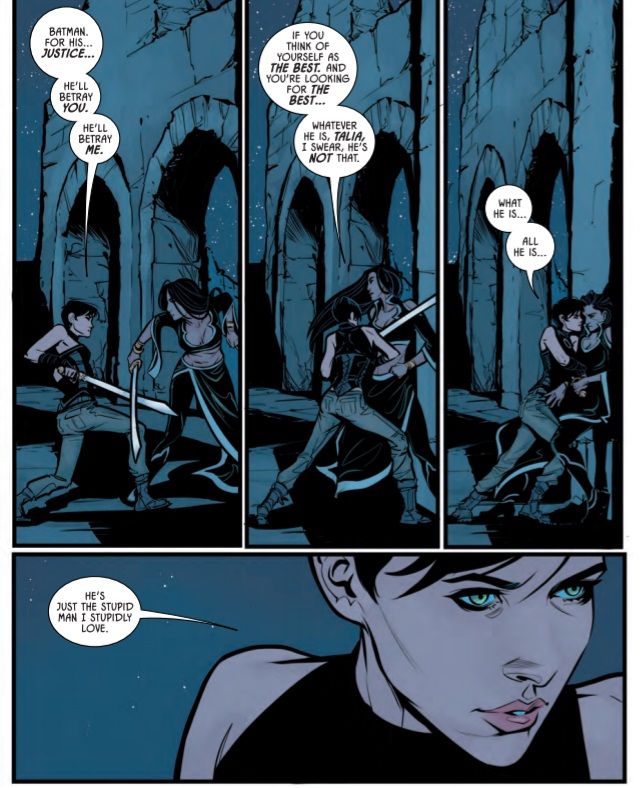
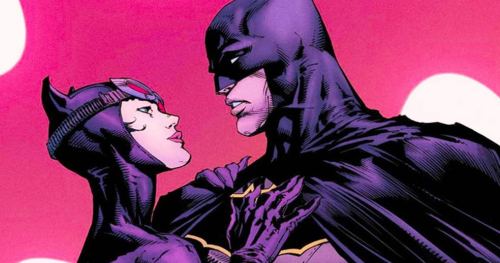
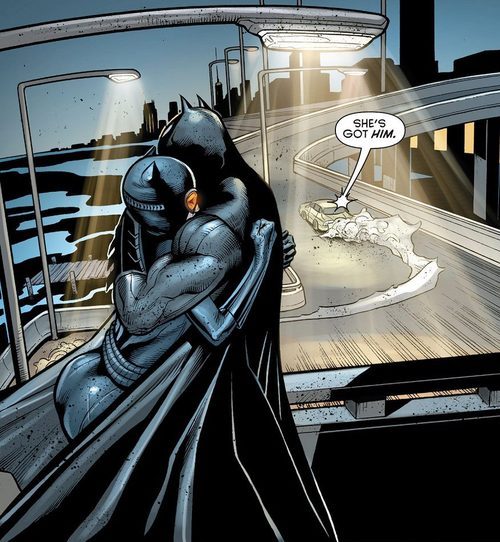
This beauty was on full display in Batman #35, which picks right up from the huge development that occurred a few issues back when Catwoman accepted Batman’s marriage proposal. It has little to do with wedding plans, overpriced engagement rings, or how good Catwoman looks in skin-tight outfits. It actually goes out of the way to highlight the stupidity of love and all its uncanny beauty.

The context of the issue is secondary. If you really want to know the particulars, I highly recommend you read Batman #35 to get the full context of the situation. With respect to the topic at hand, namely the stupidity of love, all you need to know is that Catwoman has a chance to confront one of Batman’s other famous flames, Talia Al Ghul.

That’s a big deal for anyone who dares to get involved with Batman’s personal life. Talia Al Ghul isn’t just someone that both Batman and Bruce Wayne were fond of seeing naked. She’s also the mother of Damien Wayne, but not in the classic sense. He wasn’t conceived in the classic, fun sort of way.

The creation of Damien Wayne, much like Baman’s relationship with Talia, was largely a byproduct of a cold, unfeeling agenda. It had a specific purpose, a defined goal, and very little passion involved. It’s even less sexy than it sounds. It’s basically the antithesis of the stupidity of love.

That’s very much who Talia Al Ghul is. Sure, she looks almost as good as Catwoman in skin-tight outfits, but she’s not much of a romantic. She’s a cold, calculating bitch who sees love as an asset at best and an inconvenience at worst. She’s also the one Catwoman has to deal with in Batman #35 and not just because she’s marrying her baby daddy.

The clash between these two women may not be as sexy as nude oil wrestling at the Playboy mansion. It may not even be as epic as a battle between Superman and Doomsday. However, the way this fight plays out perfectly highlights both the stupidity and the beauty of love. Catwoman herself articulates it perfectly.

It’s not just that loving Batman carries with it a lot of baggage. It’s not just that being involved with the goddamn Batman is overwhelming and not just because he tends to attract homicidal clowns. To love someone like Batman is not to ignore the sheer stupidity of being involved with him in the first place. It’s to embrace it.

It’s a message that fans of romance and aspiring erotica/romance writer alike can get behind. Instead of scrutinizing or overthinking why someone loves another person, you just focus on the love itself. Sure, it’s stupid in the sense that it ignores the logistics. Sometimes, though, that’s the key to making love work.

When you’re in love with a complex person with loads of baggage, like Batman, there’s a lot to think about and scrutinize. It’s one of the many reasons that Batman has had such a colorful history with women. Between being a costumed crime fighter and a billionaire playboy, he’s a complicated man with a lot of moving parts.

It’s because of those complications that many of those women who may genuinely love him find plenty of reasons to walk away. Talia Al Ghul is a perfect example of this because she approaches her love with Batman in a way that’s cold and calculated.

To love him, in her mind, isn’t to embrace his baggage. It’s to re-shape and re-mold it into something she sees as greater. What she tries to do with Batman is very similar to what many people try to do with their lovers in the sense that they try to change and mold them into the person they want them to be, even if it means undermining the person they are.

That’s not just a losing battle that only leads to greater heartache. It goes against the very principles of love. You don’t love someone for who you want them to be. You love them for who they are.

Talia Al Ghul wants Batman to be a certain way for her. She feels she knows what’s best for him, their future, and their family. She’s also willing to lie, cheat, and manipulate him into achieving those goals. She may leave his balls intact, but she’ll make sure his soul is hers to guide. Even Regina George isn’t quite that ambitious.

Catwoman does the exact opposite. She doesn’t try to change Batman into some ideal version of a man that she has in her head. She loves him for who he is and doesn’t want to mold him into something else. On paper, that’s still kind of stupid in the sense that it basically permits him to keep doing the crazy things he does. However, it’s probably the most sincere and honest love anyone can offer.

That does more than contrast Catwoman’s love for Batman from that of Talia Al Ghul. It shows how genuine love compares to the shallow brand of love that comes with caveats. Some people build their relationships around an agenda, much like Talia Al Ghul. They see it as a means to an end. Love, in that context, is indistinguishable from a mortgage application.

Loving someone honestly means loving their flaws as much as their strengths. Catwoman doesn’t overlook or deny those flaws in Batman. Batman himself doesn’t try to hide them either. That honesty, making themselves so vulnerable to one another, is stupid from a purely logistical point of view.

However, that’s exactly what makes their love so sincere. Even if you’re not a comic book fan or a fan of beautiful women in skin-tight outfits, it’s still a love that’s worth celebrating.


2 Comments

Filed under Comic Books, Jack Fisher, Superheroes, Marriage and Relationships

Afterglow: The (Sexy AND Non-Sexy) Sights Of New York Comic Con 2017

I hope everyone forgives me for not having the energy to write about something elaborate, complicated, and insightful today. I’m still buzzing from all the fun I had at New York Comic Con the other day. That buzz is going to take a while to wear off and I’m totally okay with that.

If this were one of my sexy novels, I would be fully immersed in the afterglow phase. We all know that wonderful feeling, that sense you get when you’ve expended all your energy into something sexy, satisfying, and beautiful. You just want to bathe in that wonderful feeling it evokes. The fact that I’m writing this with a big goofy grin on my face should highlight the breadth of that feeling.

In the spirit of my New York Comic Con afterglow and the wonderful time I had, here are some of the pictures I collected of all the sexy sights and experiences I had. I hope to top them next year, but for now I’ll just let this fuel the afterglow.

Thanks again, New York Comic Con, for making my experience fun, satisfying, and so many other sexy things that I’d rather keep to myself. Coming from an aspiring erotica/romance writer, that’s saying something.

5 Comments

Filed under Comic Books, Jack Fisher, Superheroes, Uncategorized

Big Superhero/Romance News: Batman And Catwoman Are Getting Married!

Batman1

I had a whole other topic I wanted to discuss today, but sometimes certain events occur that require you to throw out your plans, spit on your schedule, and love every second of it. Despite some of the tragic news to come about in the last few days, something big just happened in the world of comics, a world with which I’ve made my passions known.

It’s news that appeals to both the comic book fan in me and the erotica/romance fan in me. It’s rare that a combination that potent converges in my world. When it does, my heart and loins are sent into overdrive for all the right reasons. I don’t care if that sounds overly dramatic. I’m in good a mood right now to dampen my spirits.

This time, I’m not going to provide a larger context. I’m not going to give some elaborate backstory on the circumstances to explain an ongoing controversy. Whether you don’t know squat about superhero comics or haven’t felt a romantic sentiment since the series finale of “90210,” you can’t deny this is big.

You don’t need context. You don’t need much insight either. All you need to know is this.

Batman and Catwoman are getting MARRIED! 

Batman2

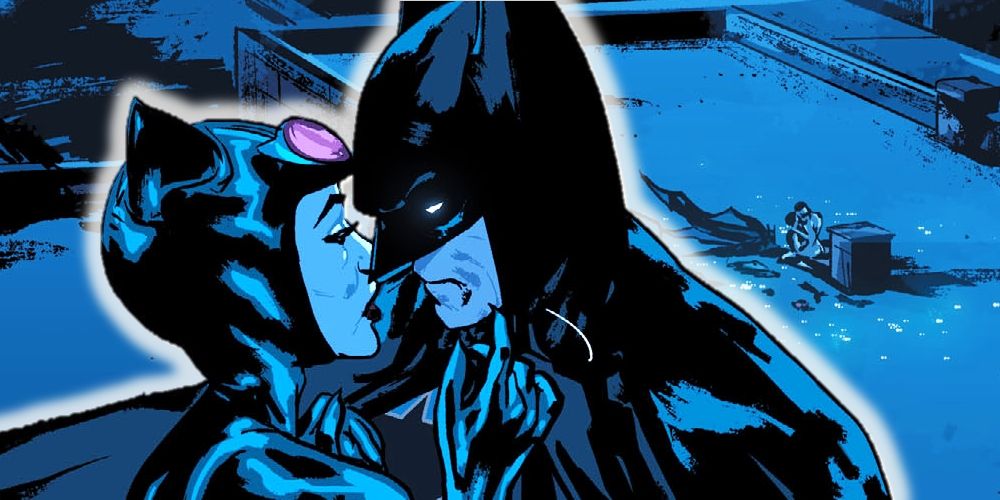
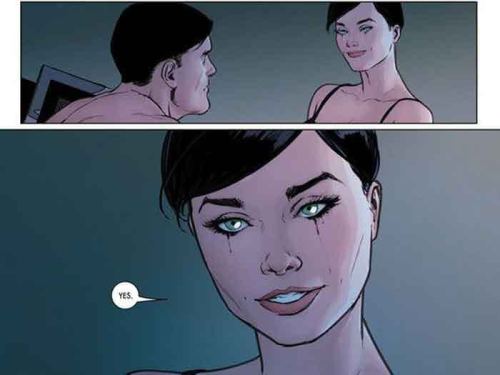
That’s right. USA Today broke the story. In Batman #24, Bruce proposed to Selena on a rooftop. Now, after months of agonizing build-up, Batman #32 gives the answer. The Dark Knight and the sexy jewel thief who dresses in a skin-tight costume are getting married.

In an era where 95 percent of all Batman stories involve him brooding all the time, including those involving Lego-themed characters, Batman is getting married. If you put your ear to a computer screen, you can hear thousands of comic fans squeeing and cheering uncontrollably.

In the context of superhero comics, this is big news and not just because it means seeing Catwoman in her underwear more often. As I write this, superhero comics are going through a rough patch in which iconic romances, especially those involving Marvel’s heroes, are being undone, undermined, or reserved for non-canon alternate universes. It’s a tough time to be a romance fan and a comic fan.

image

Lately, DC Comics has been trying to change that. They’ve been expanding the long-time marriage between Superman and Lois Lane in recent years, building on a family element and even giving them a son to raise. Someone actually had the audacity to think that a loving relationship can have appeal outside of a toxic love triangle. What a concept, right?

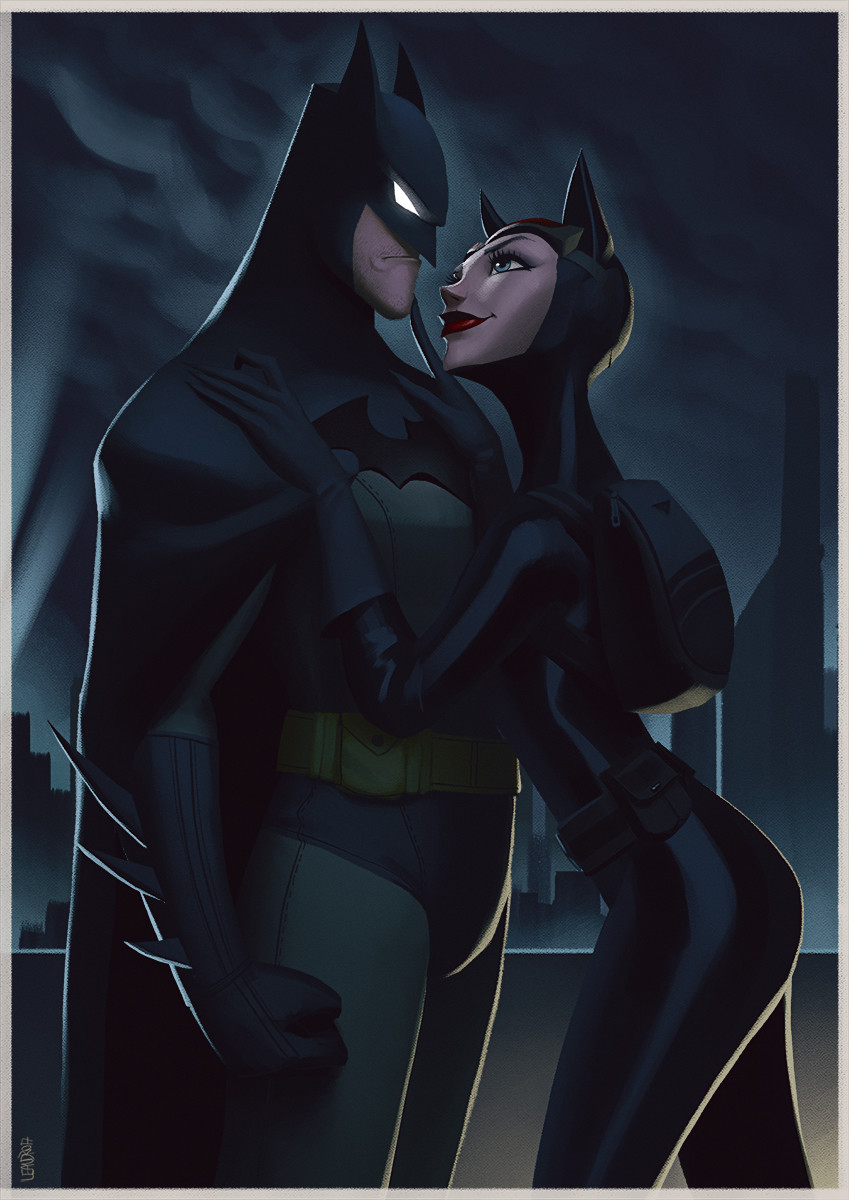
While they may not be as iconic as Superman and Lois Lane, Batman and Catwoman have had their share of romantic and sexy moments. Theirs is not the sweet, cuddly relationship that Superman has with Lois Lane. Theirs is more complicated, but many times hotter and not just because Catwoman looks sexy as hell in her underwear.

image

These are two people who don’t always find themselves on the same side of the law, but they both have lines they won’t cross. They both have principles they won’t compromise. They’re both tough, capable, and know how to handle themselves in overwhelming situations.

He’s the goddamn Batman. She’s the sexy-as-hell Catwoman. Superman and Lois may make sweet, passionate love. That’s fine for them. For Batman and Catwoman, they’ll settle for the hot, exciting, dangerous love that gets the heart and genitals going in all the right ways. It’s even sexier than it sounds.

image

For Batman, a character best known for brooding, growling, and making Christian Bale one of the biggest names in Hollywood, it’s a huge shift in his life. The past several years of Batman comics have expanded his mythos in many ways, even giving him a son, but he’s never really gone beyond brooding and beating up criminals. For a man defined by how tortured he is, this sort of thing adds some badly-needed balance.

Ever since the mid-80s when Frank Miller got his hands on Batman, he’s been such a dark character who is so overly serious in everything he does. At times, he seems to go out of his way to deny himself any measure of happiness. It makes Batman feel less like a hero and more like someone who’s just obsessive and/or mentally ill.

By having him find love with someone, that adds an important dynamic to his character. It means that he doesn’t just want to brood all the time over Gotham City’s crime problem. He wants to find some measure of happiness. Despite the loss his suffered as a kid, he still wants and feels love. Something about that shows just how resistant he is as Batman.

image

Granted, Batman has had his share of love interests over the years, as is the case with most heroes. He’s still nowhere near as bad as Wolverine. However, of all those love interests, Catwoman is probably the most iconic. They’ve been married in other realities with varying degrees of success, but this is the first time DC Comics is giving them the same shot they gave Superman and Lois Lane.

Not much has been revealed beyond Catwoman’s acceptance of Batman’s proposal. I doubt anyone has thought about wedding plans or honeymoons just yet, which for them probably involves beating the snot out of the Joker. There may or may not be a wedding special like there has been with other iconic romances.

All we know is that the desire and the will is there. For Batman and Catwoman, or passionate lovers of any kind in any reality, real or fictional, sometimes that’s all you need.

batman-has-sex-with-catwoman-rebirth-3

6 Comments

Filed under Celebrities and Celebrity Culture, Comic Books, Jack Fisher, Superheroes, Marriage and Relationships

Doomed Superheroes And The Paradox Of Heroism

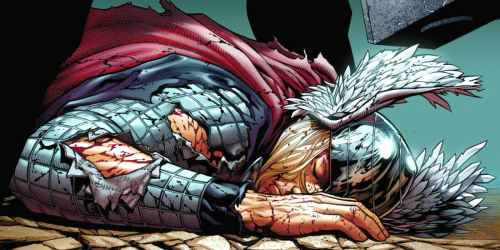
thor-defeated-fear-itself

When I wrote my post on Dr. Doom being the perfect ruler, I expected that a follow-up would be unnecessary. Dr. Doom is one of those characters who gets the point across, regardless of how fictional he might be. When Dr. Doom makes a point, it doesn’t need to be made again. That’s just how he rolls.

Then, someone on a message board brought up an interesting point that I didn’t cover, one that highlighted some even larger implications to Dr. Doom’s character and superheros as a whole. That’s pretty remarkable since a lot of discussions on comic book message boards tend to devolve into arguments about Thor’s hammer and the Hulk’s penis. As such, I feel it’s worth discussing.

Whenever I do a blog post about comic books, whether it’s a movie review or why Spider-Man sucks at his job, I often post links in message boards, such as the one run by Comic Book Resources. For the Dr. Doom article, I posted it in the Official Dr. Doom Appreciation Thread. Yes, that’s a thing.

That’s where one of the regular posters of that thread replied to my link. This is what he said.

Regardless, the existence of Doom in the Marvel Universe does raise an important point, that few Marvel stories actually deal with ruling. It’s been said that ‘with great power comes great responsibility’ but in many ways Marvel’s superheros are dangerously irresponsible. They fight to save the day and defeat evil but they draw the line at actually trying to change society or assume any real positions of authority. Instead, they hand power back to the same short-sighted and corrupt officials, allowing the whole cycle of violence to perpetuate itself. That ultimately, Marvel’s superheros can’t truly save the world, it all ends in ruin eventually as Marvel’s endless crisis and civil wars attest. Only Doom’s leadership has ever been able to bring a measure of stability to the Marvel universe.

Those bold parts are the ones I highlighted. They’re also the parts that stood out to me most because it speaks to a much larger issue about superheroes, one that Dr. Doom reveals just by being what he is.

It’s an issue I’ve touched on, in part, before on this blog. A while back, I wrote about how most superheroes are incompetent by design. They kind of have to be incompetent to keep the story going. If a hero ever became too competent, the world would have too little conflict and no interesting story to tell. At that point, the comics would stop and there would be no new material for billion-dollar superhero movies.

That’s why Superman will never defeat Lex Luthor. That’s why Batman will never defeat the Joker. That’s why the Avengers will never beat Thanos. However, that’s just a matter of publishers and movie studios not wanting to throw away good villains. The problem is that this inescapable flaw in the system creates a paradox, of sorts.

Superheroes, be they in comics or movies, can save the day and stand for all that is good and noble in the world. They can save countless innocent lives, stop every major threat, and embody the greatest qualities that we humans value. However, in the long run, they do nothing to actually fix the flaws in the system that makes their heroics necessary.

It’s like fighting the symptoms, but never attacking the disease. In the real world, that’s a problem because it means someone will think they just have the flu when they actually have something much worse. For superheroes, everything is the flu. There’s no real effort to find another ailment. As such, they never change their tactics.

The approach of most superheroes is fairly standard. It varies in scope, scale, and personalities involved. However, it tends to follow a few major themes.

  • A dangerous threat emerges

  • A superhero, or team of heroes, respond to that threat

  • A battle ensues, complete with setbacks, losses, and personal growth

  • The heroes win the battle, throw the villains in prison or exile them, and go back to the way they were before

Granted, that’s a very basic and general assessment of how superheros work. However, it’s the first and last parts of the process where the flaw emerges.

For the most part, superheroes aren’t very proactive. They only react to threats. In fact, some major superhero conflicts are built around the idea that being too proactive is evil and working with the authorities will turn you into a villain. Anyone who has ever read Sun Tzu’s “The Art of War” or just played any real-time strategy game in the past 20 years knows that’s a losing strategy.

It’s the end of that process, though, where the paradox really takes hold. Whenever a conflict or story ends for a superhero, they usually go back to their lives and nothing really changes. In fact, it’s somewhat of a running joke among comic book fans that every major change is subject to a “retcon” eventually. That’s not always the case, but it happens so frequently that most comic fans aren’t shocked by it anymore.

As a result, the heroes never really learn from the conflicts. They never attempt to change anything about the system they live in. Bruce Wayne spends much of his vast fictional wealth fighting crime as Batman. However, he never uses any of that wealth to reform the government, create major social programs, or fund projects that actually reduce crime. The same can be said for someone like Iron Man.

With Superman, the potential for change is even greater. Superman isn’t just a paragon of virtue. He has access to advanced alien technology, which he keeps at his Fortress of Solitude. That alien technology could probably solve every major global issue by the end of the week. Technology that advanced could cure cancer, eliminate pollution, and provide clean, safe energy for everyone.

However, Superman never shares this technology with anyone. He never gives a reason for it. In the first “Superman” movie, his father, Jor-El, claims sharing such technology goes against Krypton’s highest laws. He never fully justifies those laws. Keep in mind, though, there are many major laws that have since become obsolete. That makes Superman’s inaction all the more egregious.

By not at least trying to use that advanced alien technology to improve the world, heroes like Superman, Iron Man, and the Fantastic Four effectively doom the planet to the same ills it has always had. At the moment, many of those ills are impossible to fix. With alien technology, they’re not just fixable. They’re basically an afterthought.

Beyond the technology, Superman and other heroes like him never attempt to get involved in the process of actually managing human affairs. They never try to improve the laws, governments, and regulations that effect peoples’ lives far more than an occasional alien invasion. They leave all those ills and flaws untouched.

In a sense, the inaction of many major superheros constitutes a crime in and of itself. If Superman ran for President of any country, he’d win in a landslide. If the Avengers campaigned to take over the United Nations, most average people who aren’t overpaid government bureaucrats would be for it. The fact they don’t do these things means they’re dooming the world to a brutal cycle of conflict that it need not suffer.

Even when they do, which happens from time-to-time, they end up getting corrupted. They become cruel, heartless tyrants. It happened with the Justice League. It happened to Tony Stark. When heroes try to rule the world, they just become evil asshats. That says a lot more about them than it does the villains they fight.

That brings me back to Dr. Doom, a man who doesn’t give half a cow fart about heroic ideals. In a sense, heroes only ever go halfway towards saving the world. Sure, they’ll stop it from being blown up, but they’ll do nothing to fix the cracks.

Victor Von Doom never does anything half way. Hell, he actually became God at one point. He never stops at simply keeping the world in one piece. He seeks to change it in a huge way. Sure, change is scary, but who’s to say those changes wouldn’t be better?

People resisted major changes like same-sex marriage, the abolition of slavery, and not beating children. Some people still resist those changes, some more than others. However, these changes did lead to improvements in the human condition and a reduction in overall suffering.

Superheroes may be willing to confront that suffering, but Dr. Doom is willing to go ten steps further and actually change the conditions that led to it. Sure, he’ll be ruthless about it, bullying and killing anyone who dares get in his way. However, villainous rulers have, historically, inspired positive change.

Since Dr. Doom has no equal in the real or fictional world, he might very well inspire more positive change than any superhero. In that sense, he has the potential to be a greater hero than anyone. Conversely, the deeds of superheroes will always be empty in the long run, their potential squandered by their unwillingness to do more.

Essentially, superheroes are doomed, if that’s not too fitting a word, to be villains through their sheer inaction. Conversely, villains like Dr. Doom have the potential to do the most good. It’s tragic, but painfully pragmatic in the grand scheme of things.

5 Comments

Filed under Comic Books, Jack Fisher, Superheroes

Wonder Woman Exceeds Deadpool At The Box Office (And Deadpool Is Okay With That)

I talk about movies fairly frequently on this blog, especially the sexy kind. Sometimes I talk about the sex appeal they have in the present. Sometimes I explore the potential for sex appeal in the future. When it comes to specific movies though, the two I’ve discussed most are “Deadpool” and “Wonder Woman.”

The reasons for this should be obvious. They’re both awesome movies with an insane amount of sex appeal. One of them has the most iconic female hero of the past century coming to life in her first, big-budget solo movie. The other has a naked Ryan Reynolds. It’s hard to get more awesome and sexy than that.

Recently, though, both movies made the news in a wonderfully fitting way. First, the “Wonder Woman” box office total achieved a milestone, raking in $373 million domestically. That puts it beyond the $363 million that “Deadpool” pulled in. While “Wonder Woman” still hasn’t matched the international total for “Deadpool,” it’s closing the gap fast and has a good chance of matching it.

Now, that’s not to say both movies are entirely on an equal footing. Remember, “Deadpool” was a bloody, R-rated poop joke that included Ryan Reynolds getting naked and enough F-bombs to make a Mormon faint. It managed to rake in nearly $800 million worldwide despite this rating, not being released in China, and on a paltry $58 million budget.

That’s not to undermine the accomplishments of “Wonder Woman” in any way. This movie, despite having nearly three times the budget, was made for $100 million less than “Batman v. Superman: Dawn of Justice” and still managed to make more domestically.

In addition, Gal Gadot did not have the same profile as Ryan Reynolds did when he made Deadpool. Other than her role in “Batman v. Superman: Dawn of Justice,” she hadn’t established herself as a draw like Reynolds did. She also accomplished all this with a female director in Patty Jenkins, who had proven herself in TV, but not in movies.

For “Wonder Woman,” a female superhero starring in her own movie after “Catwoman” nearly killed the genre, that’s still a hell of an accomplishment. Deadpool actor, Ryan Reynolds, understands this as well as anyone who has been following superhero movies for the past two decades. Being the awesome, formerly sexiest man alive that he is, he even responded.


That’s right. In the spirit of good sportsmanship and dirty jokes about body odor, Reynolds congratulated “Wonder Woman” for accomplishing so much. In such a highly competitive, cocaine-fueled world, that just warms my heart.

Gal Gadot, being badass beauty that brought Wonder Woman to life, responded as well on Twitter. True to the heart of her character, she acknowledges and accepts the loving sentiment of others, regardless of whether they’re male, female, or used to be married to Scarlett Johanssen.

After talking about such dire topics like fascism on this blog, this really made my week. As a fan of superhero movies and people being decent to each other, it just put a smile on my face in the best possible way.

Deadpool and Wonder Woman may be two characters owned by different companies. They may be very different in how they operate, what they stand for, and how they go about making awesome movies. However, for them to unite in the spirit of making awesome superhero movies is just too fitting.

Excuse me. I just teared up a little.

5 Comments

Filed under Comic Books, Jack Fisher, Superheroes

Wonder Woman And Sex Positivity

download

I know I’ve been talking about Wonder Woman a lot lately. No, I’m not going to apologize for that. I’ve had a perfectly valid reason and no need for excuses. It’s not unreasonable to say that Wonder Woman is having the best year she’s had in her 75-year history and that includes the era in which she made Lynda Carter a sex symbol.

The “Wonder Woman” movie is an unabashed success. Just this past week, it surpassed both “Batman v. Superman: Dawn of Justice” and “Suicide Squad” to become the highest-grossing DC Comics movie to date on the domestic front. It managed to do all this with a female director in Patty Jenkins, a strong female lead in Gal Gadot, and a naked Chris Pine. I think ladies everywhere deserve to flex their ovaries this year.

As great a year as she’s had, there’s been another major development with Wonder Woman that will likely slip under the radar. That’s a shame too because it’s an important development, which is another way of saying it has very sexy implications. Given the nature of this blog, it would be a professional failure on my part if I didn’t talk about it.

In this case, it has to do with what’s been going on with Wonder Woman in the comics. Now, I don’t deny that a very small percentage of the people who saw the “Wonder Woman” movie actually follow the current comics. Most have probably read Wonder Woman comics in the past, seen her in various cartoons, or watched the old Lynda Carter TV show.

The current comics, however, are kind of an afterthought. That’s understandable in some cases. If you only saw the “Captain America” movie, you might be a little confused to find out he’s a Hydra agent in the comics. If you only ever saw the “Iron Man” movie, you might even more confused to find out that Tony Stark is in a coma and Iron Man is a 15-year-old black girl from Chicago.

The comics are confusing, convoluted, and frustrating to say the least. I say that as someone who has been closely following comics for nearly two decades. There are so many different interpretations, alternate universes, and re-launches that most reasonable people would decide it’s not worth the aggravation. I like to think I’m reasonable in most instances, but I guess my love of comics is just that strong.

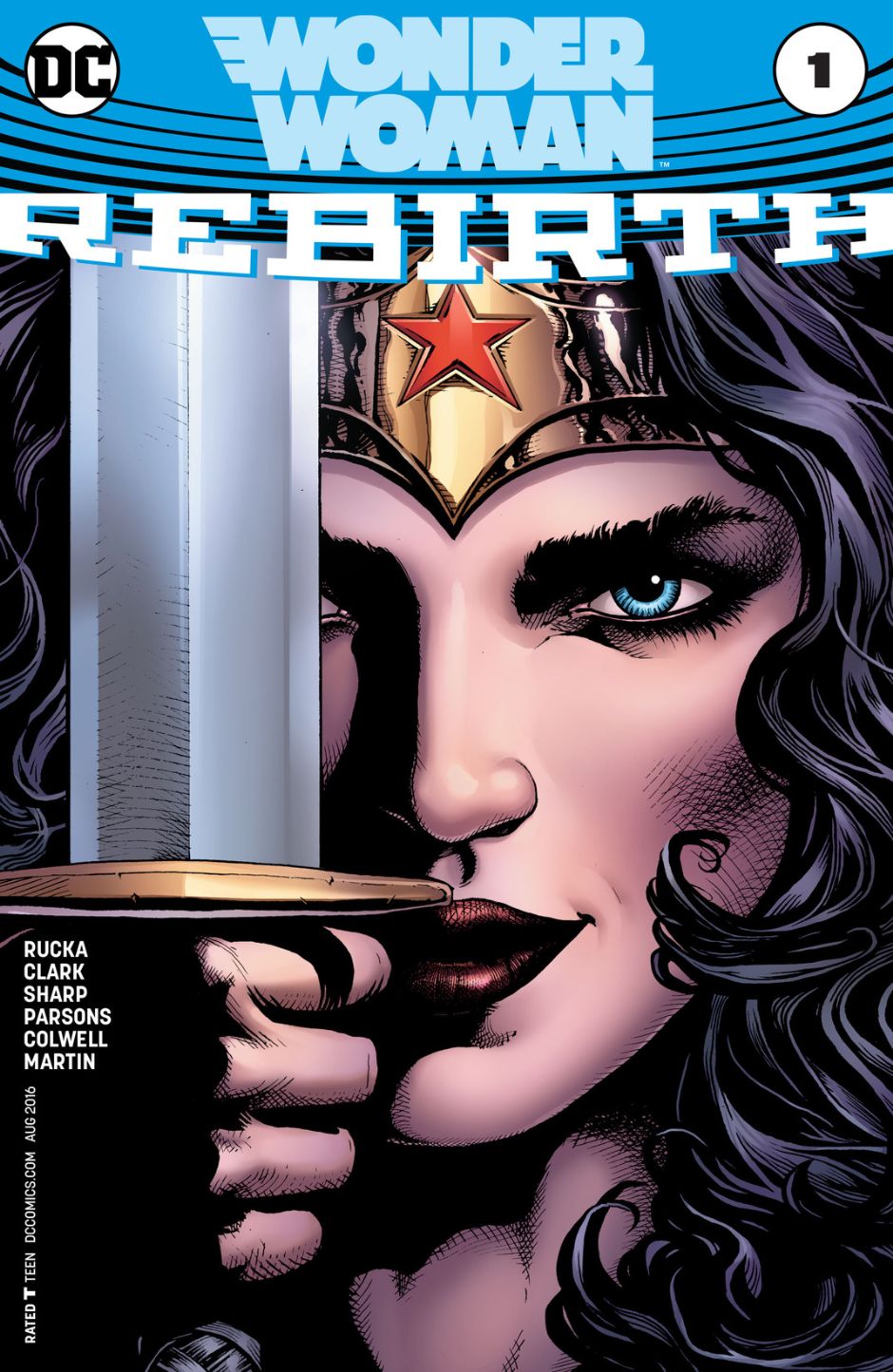
For those Wonder Woman fans who do follow DC’s iconic comics, they got an overdue, but extra-satisfying treat. As part of DC’s ongoing Rebirth initiative, Wonder Woman’s comic was re-launched and revamped in a way that helped streamline a mess of conflicting continuities and scrambled timelines. Trust me, it’s much more complicated than it sounds. Just look up something called “Flashpoint” to see what I mean.

If you’re a Wonder Woman fan, though, you don’t need to know the cow shit to appreciate the flowers. Under the pen of Greg Rucka, an accomplished comic book writer who has written Wonder Woman in the past, and Liam Sharp, an equally-accomplished comic book artist, Wonder Woman’s entire story underwent an overhaul.

That story is one that I cannot recommend enough to Wonder Woman fans. If you loved the movie, then you’ll love these comics. They cover everything that makes Wonder Woman great. Her heart, her compassion, her warrior spirit, and her sex appeal is all on highlighted in all the right ways for all the right reasons. It may very well be the most balanced she’s ever been as a character.

However, it’s the conclusion of that story, which culminated just last week with the release of Wonder Woman #25, that introduces an important element to Wonder Woman’s story. It goes beyond simply capping off a successful run on an iconic comic book series in a satisfying way. That alone is pretty remarkable, especially at a time when comic companies can’t resist killing major characters for a sales boost.

Specifically, it has to do with Wonder Woman’s sexuality. I know that’s a favorite topic of mine and for good reason. Her sexuality is actually pretty broad compared to other male heroes who simply want to bang supermodels all day. Her origins have strong ties to the world of BDSM and in recent years, she has been revealed to be bisexual.

Despite these details, Wonder Woman has been one of those characters who has been sexually nullified, so to speak. For a good chunk of her history, she’s never been allowed to be overtly sexy. Sure, her attire is sexy and she’s not exactly shy about showing off her body. When it comes to having an actual sex life, though, it might as well be on par with the Hulk’s penis. We know it’s there. It’s just not something we talk about.

Sure, she’s allowed to have love interests. Steve Trevor, who was played by Chris Pine in the movie, is her most famous. She’s had others, including Batman in the Justice League cartoon and Superman in the comics at one point. However, the sexuality in all those relationships is severely muted, if not outright ignored.

That changed somewhat in Wonder Woman #25. Greg Rucka and Liam Sharp actually acknowledged that Wonder Woman can be sexual and it doesn’t have to be some big, shocking ordeal. She’s a powerful woman and she has sex. That should not be shocking on any level.

On top of that, Rucka and Sharp make it a point to mix Wonder Woman’s sexual inclinations with her romantic inclinations. Remember, Steve Trevor? Well, now he’s not just the man who managed to get Chris Pine naked in  the “Wonder Woman” movie. He’s the one who makes love with Wonder Woman in Wonder Woman #25. I’m sure both Chris Pine and Gal Gadot would approve.

Wonder Woman (2016-) 025-029

It was a sweet, beautiful scene that mixed both romance and sexuality. After a long journey that had many heart-wrenching moments, Wonder Woman returns to Steve, who prepared a romantic night for them. She opted to skip most of it, head into the bedroom, and make love. I’m not going to lie or apologize. That moment made me shed tears of joy and gave me a boner.

It may not seem like a big deal, Wonder Woman getting frisky with her oldest and most well-known love interest. Trust me, both as an erotica/romance writer and a comic book fan. It’s a huge deal and it adds a critical dimension to Wonder Woman’s character that tends to get censored way too often, which is sex positivity.

I’ve talked about sex positivity before, namely how it stands in contrast to sex negative feminism. I’ve even talked about distinctly sex positive superheroes like Starfire. Given Wonder Woman’s status as a feminine ideal, you’d think she would be naturally sex positive. That thinking wouldn’t be dead wrong, but it wouldn’t be right either.

It may be a result of her having not-so-subtle BDSM origins. It may also be a byproduct of the heavy censorship comics endured for most of its history, thanks largely to a bullshit moral panic from the 1950s that nearly killed the industry. Whatever the reasons, Wonder Woman’s BDSM origins were purged and her sexuality was effectively ignored.

She was still a woman, but her sexuality was about as prominent as her appendix. Her entire persona, even into the modern era, emphasized her warrior woman status. She only fought and looked good while doing it. That was pretty much the core of her character.

Now that’s not to say she had no other appeals. She most certainly did. However, her sexuality, and even her attitudes towards sex, were either ignored or circumvented. That’s why this new development in Wonder Woman #25 is so critical.

In this case, Wonder Woman actually did something even Starfire struggles to accomplish. She created a perfect balance of sexuality and love. Starfire may have a very healthy attitude towards sex and nudity, but she tends to be too casual when it comes to romance. She’s perfectly comfortable having sex, but expressing love through sex is a bit trickier.

For Wonder Woman, it’s a natural manifestation of her loving, compassionate personality. She has love for her friends, her fellow heroes, and Steve Trevor. Rucka and Sharp just let her express it through her sexuality in a way that was sincere, meaningful, and perfectly appropriate for the context of the story.

That kind of sex positivity is exceedingly rare these days. I’ve said before that the world needs more of it. There are ominous signs that society is becoming more sexually uptight. Sexuality, especially of the female variety, is still very much a taboo. Men and women alike seem to have conflicting attitudes that can manifest in unhealthy ways.

How fitting is it that Wonder Woman, the most iconic female hero of the last century, finds a way to achieve a beautiful balance between sexuality and romance? It’s a powerful element that I hope DC Comics doesn’t censor once more. A female hero knows how to fight, love, and make love in a meaningful, compelling way is a beautiful story in its own right. You could even say it’s a true wonder.

Yes, I know that sounds cheesy as hell. No, I’m not going to apologize for that either.

13 Comments

Filed under Comic Books, Jack Fisher, Superheroes

Superman Vs. Boredom: Why It Matters (For Your Love Life)

In talking so much about boredom, it can get kind of boring just dwelling on it so much. I don’t know if that counts as irony or a paradox, but I think it’s kind of poetic. The more we contemplate the impact boredom has on our lives and our society, the more we realize just how powerful it is and how quick we are to avoid talking about it.

We still don’t know the true impacts of crippling boredom on society because, for the moment, there are plenty of distractions, jobs, and obligations to keep people busy. Horrific stories like the murder of Christopher Lane, which was allegedly inspired by boredom, will continue to be rare and newsworthy, at least for the near future.

However, there may very well be future generations, including those that will emerge within our lifetime, that will have to deal with a growing glut of boredom. Between advances in biotechnology that will cure disease and the rise of automation, which may necessitate a universal basic income, this may be an issue that impacts us sooner than we think.

That brings me to Superman. Bear with me. I promise that’s not a non-sequiter. I’ve used comic book superheroes before to make my points, be they inspiration for one of my novels or examples of a sex-positive female character. I even cited comics when I singled out Vandal Savage as a villain forged by boredom. For the purposes of this post I need to cite him again, but Superman will be the primary focus.

Being the personification of our ideals and morals, the things that affect Superman also affect and I’m not just referring to kryptonite. If the epitome of our heroes and the icon of our most cherished values cannot handle a certain burden, then what hope do we have? That’s why when there’s a flaw with Superman, one of the most powerful characters in the DC Universe, we need to take notice.

Image result for Superman iconic

In a sense, Superman and the immoral villain, Vandal Savage, are indirectly linked. They’re facing the same overwhelming burden and neither of them has found a way to effectively deal with it. The only difference is that Savage had a huge head start. Superman will catch up eventually and that’s where the true struggle resides.

Based on his current power set, which has been prone to change over the years, Superman is functionally immoral. So long as he replenishes his powers with the energy of a yellow sun, he’ll never age and he’ll never die. That puts him in the same boat as Vandal Savage, who never ages and can’t die. That also means that, at some point, he’ll have to deal with the burden of crippling boredom.

That’s a burden that DC Comics has never had him deal with. Like so many other oversights, such as how glasses can be an effective disguise, it’s one of those flaws that’s easier to just ignore. However, it has been confronted to some extent and the implications for Superman, the real world, and our love lives is pretty distressing.

Image result for Superman struggling

Again, that’s not a non-sequiter. I brought up our love lives for a reason and it’s not just because I’m an aspiring erotica/romance writer, although that is part of it. While we might not be immortal, our lifespan is increasing. There are emerging technologies that may very well make us functionally immortal. That’s going to, by default, affect our love lives just as it will affect Superman.

Nearly everyone, including non-comic book fans, know the extent of Superman’s love life. They may not know about that time he made a porno tape with Big Barda, but they know that Superman’s primary love interest is Lois Lane. His romance with Lois is, by nearly every measure, the most iconic romance in the history of superhero comics.

Image result for Superman and Lois Lane

While the romance has evolved a number of ways over time, the core themes remain the same. Lois Lane, being as human as they come, complements Superman in every meaningful way. She often acts as an emotional anchor of shorts, highlighting and strengthening the humanity within Superman. While she isn’t the primary source of Superman’s values, she is definitely a catalyst for strengthening them.

It’s a big part of what makes Superman so strong and so upstanding, with respect to his values. Lois Lane provides that sense of love and connection that reminds Superman that, despite being an alien, he has a strong sense of humanity. That is a humanity that Vandal Savage lost long ago.

While Superman’s romance with Lois Lane may be iconic, it still relies on one major flaw. Lois Lane, as beautiful, sexy, and charismatic as she might be, is still human. That means that at some point, she’s going to grow old and die. Superman may still love her all the same because he’s just that kind of person. However, she’s not immortal and he is. There’s just no way around that.

That’s not a primarily concern for him, though, because in the comics, Superman’s age is usually between 29 and 33 years old. There are some comics that explore an older version of him, but the bulk of his mythos is structured around him being the age of a typical man. That means, by default, the story can only cover a tiny sliver of Superman’s love life with Lois.

That has major implications because if Superman is functionally immortal, then he will outlive Lois Lane and that emotional anchor that helps him be the hero he is disappears. What will that do to him? Can he still be Superman without it?

Image result for Lois Lane Dies

Vandal Savage’s descent into madness sets a dangerous precedent. It’s entirely possible that Savage had someone like Lois Lane in his life at some point. The man has been alive for 50,000 years old. The sheer breadth of his lifespan makes that entirely possible.

Unfortunately, or tragically in some respect, that love died because everyone around Savage dies. It’s not because he kills them. He just outlives them. Being immortal, getting attached to anybody means enduring heartbreak and loss.

Even if someone he loves dies peacefully in their sleep, he still feels that loss. People in general, when they lose loved ones, feel emotional pain no matter what the circumstances. I had a relative live into her late 90s and die peacefully. When I went to her funeral, there were still people with tears in their eyes.

Imagine how many times Vandal Savage has endured that over his 50,000 year lifetime. Is it any wonder that he lost his humanity and has such a lower regard for human life? For him, forming human attachments of any kind just guarantees more pain. Whether you’re a human or a worm, you do whatever it takes to avoid that kind of pain.

That brings me back to Superman. He’s only lived a fraction of the life of Vandal Savage. However, he’s in a far worse position because while Savage may be a genius, he doesn’t have anything close to the power set that Superman possesses.

Superman is not just immortal and smart. He possesses the kind of speed, strength, and agility that allows him to do anything, go anywhere, and master every skill. Whereas someone like Savage may take centuries to master something, Superman can do it in seconds. That means he’ll run out of things to do even faster than Savage. It will not take 50,000 years for Superman to be overcome by crippling boredom.

Someone like Lois Lane might be able to keep Superman human, at least in his young age. However, there are many occasions in the comics where Lois Lane’s death leads to Superman becoming distant, detached, and despondent. While their love may be strong, the influence is at the mercy of time.

That’s not to say Superman will inevitably become like Vandal Savage. Granted, there are stories where Superman goes completely insane and becomes the kind of super-powered tyrant that North Korean dictators aspire to be. There are others where he ages gracefully and helps make the world a better place. In a sense, Superman’s potential reflects the uncertainty that such boredom will incur on immortals.

That’s an important concept to grasp because, as we humans live longer, healthier lives, we’ll have to contend with some of Superman’s burdens. Some people may be able to live centuries and maintain a strong sense of humanity. Others may end up like Vandal Savage and see humanity as a bunch of perishable meat bags.

This has huge implications for both our love lives, as well as the attachments we make. If we start living long, near-immortal lives, why even form romantic attachments? Why bother when time is just going to destroy it in the long run? Will we abandon those passions because it only leads to more pain? Will a world of functional immortals be completely devoid of love?

It’s impossible to say for sure and that’s what’s so disturbing about it. If someone as good and pure as Superman struggles to deal with the impact of crippling boredom, then what hope do we have?

1 Comment

Filed under Comic Books, Jack Fisher, Superheroes, Jack Fisher's Insights, Uncategorized

Vandal Savage: A Super-Villain Forged By Boredom?

Related image

Boredom can sometimes drive you to do crazy things. Give someone a bunch of paperclips, some sticky notes, and too much free time and wonderful things will happen. It can also inspire some truly horrible acts. I’ve already mentioned the horrific murder of Christopher Lane, who was murdered by three bored teenagers. That’s an extreme rarity, for the most part, but it’s an egregious act that helps highlight the power of boredom.

As is often the case with various human quirks, some of our most iconic characters of fiction are built around the extremes of these innate human traits. Heroes like Superman and Wonder Woman embody the noblest ideals for men and women alike. They set the highest of standards for the best of what humanity can be in terms of heart, compassion, love, strength, and charity.

Image result for Superman

Conversely, the villains that heroes like Superman and Wonder Woman face highlight the worst of the worst when it comes to human depravity. These characters are manifestations of the darkest parts of the human psyche. They show us just how bad humans can get if you give them enough incentive, hatred, and clown makeup.

That’s what makes characters like the Joker, Lex Luthor, and Apocalypse so terrifying. They are personifications of blood-lust, chaos, narcissism, and pretty much every personality disorder associated with Kanye West. They bring out the worst in people. Their conflict with other heroes mirrors the inner conflict many of us deal with.

I’ve talked about the varying differences between the classic hero’s journey and the more nuanced villain’s journey. Thanks to the success of characters like Walter White, Dexter Morgan, and the cast of “Suicide Squad,” there’s been a surge of interest in super-villains and what makes them tick.

Related image

Being a noted comic book fan, I can talk for hours about various villains, how they came to be, and what makes them so evil. I’ve already talked extensively about Walter White and comic book villains like Magneto. These characters embody a certain type of villainy, each driven by a set of motivations that highlight a villainous aspect of our human mind.

Most people are familiar with the villains driven by greed, narcissism, vengeance, or hatred. They’re usually the characters getting punched, shot, or blasted on lunch boxes or posters. Some of them often get compared to real-life politicians. So if villains can embody so many of these defining traits, can one embody the dark side of boredom?

Well, I can say as someone whose love of comics is only matched by his love of nudity that there is. There is actually a character, a major villain no less, whose motivations and evil is very much a product of boredom. Granted, it’s an indirect kind of boredom, but it’s every bit as devious. Ladies, gentlemen, and those of unspecified gender, I give you Vandal Savage, the poster boy for the evils of boredom.

Related image

Some may be confused. I imagine that even some of my fellow comic book fans are confused. Bear with me, though. There is some twisted logic behind this and boredom is a big part of it.

Vandal Savage is one of the most notorious villains in DC Comics. He’s not as well-known as Lex Luthor or the Joker, but then again, very few villains are. While he may not be an evil all-star, he does show up a lot whenever DC’s heroes need a daunting villain to face.

If you’ve watched shows like “Arrow,” “Flash,” or “Legends of Tomorrow,” then you’ve probably seen him show up in both minor and major roles. He’s also been a major villain in the old “Justice League” cartoon. In terms of sheer reach, Savage’s resume is pretty impressive, but his notoriety is not. There are many reasons for this, but some of it has to do with his origin.

Vandal Savage is not exactly on par with Walter White in terms of the journey he took to become a villain. In fact, it’s kind of mundane in terms of substance. He’s actually a real caveman who lived way back in the hunter/gatherer days of 50,000 BC. He would’ve been nothing more than a fossil sample to frustrate creationists had he not encountered an exotic meteor that crashed near his home.

That meteor, which is basically one of DC’s many mystical McGuffins, transformed Savage from a simple knuckle-dragging caveman to an immortal, super-intelligent being. He’s been running around, causing problems for humanity ever since. That means he’s been in the super-villain business for over 50,000 years. He has a lot of experience being an asshole.

There are a great many events throughout the history of DC Comics that highlight just how big an asshole Savage is. He has such a low regard for human life that even Lex Luthor finds him crass. Most of the time, he’s either trying to conquer humanity or destroy it. It’s basically typical super-villain antics.

Related image

However, what sets him apart and what makes him a potential warning sign for us, as a species, is what motivates him. Throughout his history, he’s given any number of typical excuses. He’s a big, mean bully who thinks he deserves to rule the world because he’s smart and immortal. There’s nothing about that to really set him apart from every other Biff Tannen wannabe.

Like many villains, though, writers have given him other motivations. One of the most recent and, by far, the most relevant occurred in major DC Comics event called “Final Crisis.” It came out in 2008 and it had Savage join an army of super-villains in a plot that would’ve essentially undid creation and remake it. Many villains had their share of reasons for joining this plot, but Savage had one that set him apart.

He joined this universe-ending plot for with simple purpose, to end his boredom. That wasn’t an indirect, off-the-cuff comment. That’s what he actually said to Lex Luthor when they talked about it. He wasn’t trying to conquer humanity this time. He just wanted his boredom to end.

Regardless of how Savage’s motivations and presence affected the plot, it’s an idea worth contemplating. Just think about it from his perspective, if you can, and try to get around all that wanting-to-conquer-humanity crap. Vandal Savage is over 50,000 years old. He’s seen, done, and mastered so much that what else can he do with himself?

He doesn’t age. He doesn’t decline, mentally or physically, in any way. As far as he or anyone else knows, he can’t die. He can be shot, stabbed, punched, buried, and everything else that David Blaine pretends to do to himself and he just brushes it off. Nothing about his condition ever changes.

On top of that, he’s super-intelligent. It’s been documented to some extent that very smart people are often prone to crippling boredom. Being so smart, it’s easy for a genius to master a task. Once they’ve mastered it, they get bored with it and look for another challenge. In a sense, idiots have an edge when it comes to killing time. If they’re always struggling with something, they have something to focus on.

It creates a perfect storm of boredom for Vandal Savage because not only is he a genius, he has unlimited time to kill. Being a genius, he can master pretty much any task. In the comics, he’s described some of the jobs he’s had. He’s been a poet, a priest, a laborer, a scholar, a king, a warrior, and pretty much anything a man could’ve been before 1850.

No matter what he does, he’s mastered every single skill and overcome every challenge he’s ever faced. Even if it’s not through sheer genius, the fact he has unlimited time ensures he’ll always figure it out. Given enough time, he could’ve built the pyramids by himself. He could’ve painted every great masterwork in history on his own. He could’ve done all this multiple times, but it the outcome is the same. He still gets bored.

It’s hard to imagine for anybody who still struggles to use a microwave. No matter what Vandal Savage does, be it advanced calculus or conquering a planet, he still has too much time to kill. He can read every book. He can watch every movie. He can solve every crossword puzzle. He can even do it all multiple times and it still wouldn’t matter. He’d still get bored with it. At what point does he get bored with everything?

In a sense, it’s easy to understand why he keeps clashing with DC’s mightiest heroes. That’s one challenge he’s yet to overcome. He still tries to fight them, but they keep beating him. That’s just one of those skills he hasn’t mastered yet. It leads to pain and frustration, but it also leads to intense awareness, arousal, and exhilaration. When you’re that bored, you’ll get it however you can.

The fact that Savage is still a man, an actual caveman no less, also highlights the painfully human component of his struggle. He’s not some advanced machine or alien that has no concept of boredom. He’s still a man. He still feels all the things other humans feel, including boredom. The problem is, after 50,000 years, he’s got nothing left but boredom.

He can’t create meaningful relationships with other people because other people get old and die. He can’t have a family or fall in love because they’ll get old and die too. At a certain point, everybody around him just becomes another corpse-in-the-making. The fact he has such a low regard for human life is not surprising. If anything, it’s remarkable that he shows as much humanity as he does.

It’s impossible for anyone to truly relate to Vandal Savage and that’s part of what makes him a great villain. At the same time, his circumstances and motivations can act as a warning of sorts. Give a caveman unlimited time and unlimited brilliance and what will happen to him? What does a man do when he’s done pretty much everything a man can do to a point where everything seems boring?

As our medical technology improves at fighting disease and enhancing our bodies, more people will be able to live longer, healthier lives. At a certain point, we may be able to live so long that our only real challenge is filling the hours. Living that long turned Vandal Savage into a cold-hearted super-villain. What will that mean for us? Ironically enough, only time will tell.

8 Comments

Filed under Comic Books, Jack Fisher, Superheroes