Category Archives: Jack Fisher’s Insights

Does (Too Much) Knowledge Drive You Crazy? “Rick And Morty” Says Yes!

Greetings, and wubba lubba dub dub! If you remember that wacky string of words from a previous article, then you know, in part, what this will be about. That’s right. I’m going to talk about “Rick and Morty” again.

I promise it involves a serious issue and one I’ve touched on before. I know that’s hard to do when “Rick and Morty” contains characters named Mr. Poopybutthole, but I’m willing to rise to that challenge because I think this show illustrates that issue better than most, while still being hilariously subversive.

In some ways, the issue stems from problems I already highlighted with the crippling effects of boredom. It’s an issue Rick Sanchez deals with many times in the show and it’s just one of the reasons why I pegged him as someone who might relate to an emerging generation that will have to deal with more boredom than any generation before it.

However, this may even go beyond boredom in the sense that it strains our sanity more directly. In a world that’s already full of traffic jams, internet trolls, and reality TV shows featuring spoiled toddlers, that’s already pushing it. It all boils down to one simple question.

“Does too much knowledge drive us crazy?”

It’s a question that “Rick and Morty” tries to address in the least subtle way possible. In an episode called “Morty’s Mind Blowers,” which inspired this article, Morty briefly gains ultimate knowledge by gazing into the eyes of an alien turtle. I swear on Pamela Anderson’s tits that’s not made up. That really happened.

Naturally, this drives Morty nuts, which is saying something because it’s hardly the first time he’s been horribly traumatized. This is a different kind of trauma, though. Having all that knowledge, plenty of which strains his teenage brain more than it can handle, leaves him completely unhinged. He carries himself as someone who will need heavy medication and a padded cell.

Rick, being the lovable asshole he is, just shrugs this off and offers a simple solution. He’ll simply remove Morty’s memory of the experience from his brain. In fact, he reveals that he does this quite often, so much so that there’s a whole room full of Morty’s memories that he’s removed during their mind-bending adventures. Again, not a word of that is made up.

It’s an extension, of sorts, on a concept I’ve discussed earlier in dealing with trauma. I think most would see, to some extent, the merit of removing traumatic memories from someone’s brain. It spares them undue suffering and helps them function. On the basis of limiting someone’s pain, I think it could be argued that it’s a moral thing to do.

If, however, we use that same moral concept of reducing suffering, then what does that mean when excessive knowledge strains the human psyche to untenable extremes? If such knowledge inevitably leads to suffering, then it might take more than just removing memories to fix it.

It’s a distressing, but documented phenomenon and not just in shows like “Rick and Morty” either. There is a body of research that shows a correlation between mental illness and individuals with genius IQs. While correlation and causation are very different concepts, so much so that they’re easily confused, it’s hard to ignore the pattern here.

Those with obscenely high IQs know more you, me, or 99 percent of the average population. They see the world in a way that’s so different that it’s hard to relate to them on a fundamental level. It goes beyond the comical social awkwardness we see in shows like “The Big Bang Theory.” It can be downright debilitating for some people.

It speaks to the inherent limits of our caveman brains. As I’ve said many times before, our brains are not wired to process ultimate knowledge. They’re wired with two purposes in mind, namely survival and reproduction. While I enjoy writing stories about the latter, it’s hard to get around the former.

Knowing a lot means thinking a lot. Thinking a lot means realizing things that most people never even contemplate, either because they’re too busy trying to get laid or too stupid to wrap their head around it. In that sense, idiots may have an advantage when it comes to sanity, but what happens when it gets harder to be a happy idiot in this world?

As I write this, our society is being influenced by something called the Flynn Effect. In essence, it’s like Moore’s Law in that it documents a general rise in our collective IQ as civilization advances. That has huge implications and not just for the viral video industry that lives off the theatrics of idiots.

idiot moron 19 I can count to potato (22 photos)

I’ve noted that it’s getting a lot easier and cheaper these days to educate people without sending them to the hormonal torture camp that is high school. This generation, as well as the next one, is the most educated generations of all time. Is it possible that as people get smarter, they’ll be more prone to mental illness?

It’s a difficult question to answer, especially when you throw brain augmentation like those being developed by Neuralink into the mix. It may very well be the case that Morty wouldn’t have needed his memories removed if he just had some sort of brain implant that allowed him to process all the knowledge he had. That may be what keeps everybody sane in the distant future.

It’s impossible to know for sure, but the conclusion of “Morty’s Mind Blowers” isn’t very hopeful. Near the end, Morty tries to absorb all the other memories he’s had purged from his brain over the years. Once he has them all back, he decides there’s only one solution. He tries to kill himself. Yes, it gets that dark.
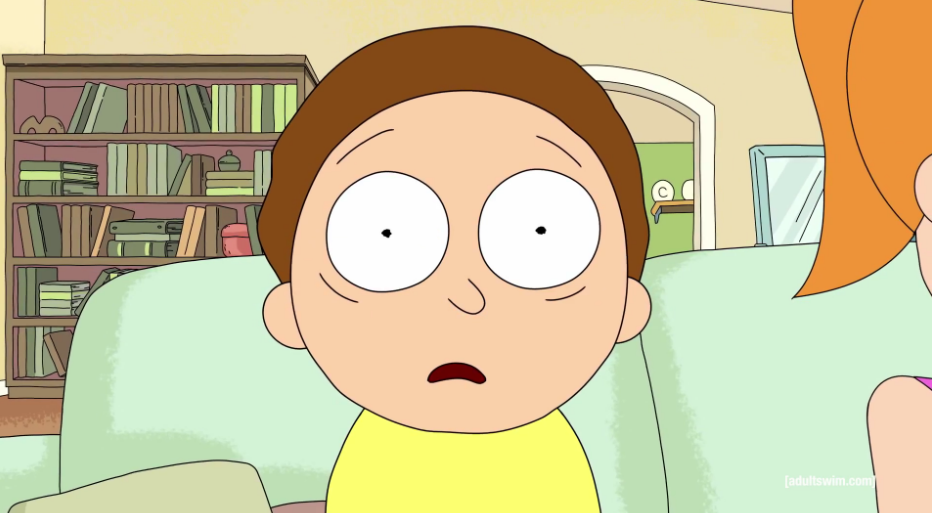
Naturally, he doesn’t succeed and not because someone talked him down. He doesn’t succeed because his sister, Summer, shows up and we find out that Rick actually had a plan for something like this, as he often does with everything.

To solve the issue, and effectively render all the conflict in the episode pointless, Summer purges Rick and Morty’s memory of the events of the entire episode. She then restores them to what they were at the beginning and makes it seem as though they fell asleep watching TV. There’s no real resolution, no greater insight, and no real lesson learned. This isn’t a 50s sitcom. This is “Rick and Morty.”

That resolution, as crass as it might be, might be the most we can do at this point. Our caveman brains are still painfully limited, even as our ability to craft and share knowledge grows. At what point do we reach a tipping point where so much knowledge starts to drive us crazy?

We don’t know for sure and the development of brain augmentation is sure to complicate things, but shows like “Rick and Morty” highlight just how hilariously unequipped we are to deal with this stuff at the moment. For now, we might be best taking Rick’s own advice and simply not thinking about it.

In that sense, maybe reading some of my sexy stories will help. It’s just a suggestion.

cropped-passionrelapse_9781786511645_bookmark.jpg

1 Comment

Filed under Jack Fisher's Insights, Rick and Morty, Thought Experiment

Why The NFL Protests Matter Less Than You Think (And How To MAKE Them Matter)

Whenever I talk about football, the NFL, and how much I love it, I usually do it to lighten the mood. Sure, sometimes football inspires talk of some less pleasant issues, but in general I try to avoid them and focus on the parts that make my Sundays so enjoyable.

Then, the real world has to come around and shit all over it, compelling me to talk about it when I’d rather be talking about my sexy novels or movies involving Sophie Turner and Jennifer Lawrence. I wish I could resist that temptation, but as many of the characters in my sexy novels can attest, that’s not always possible.

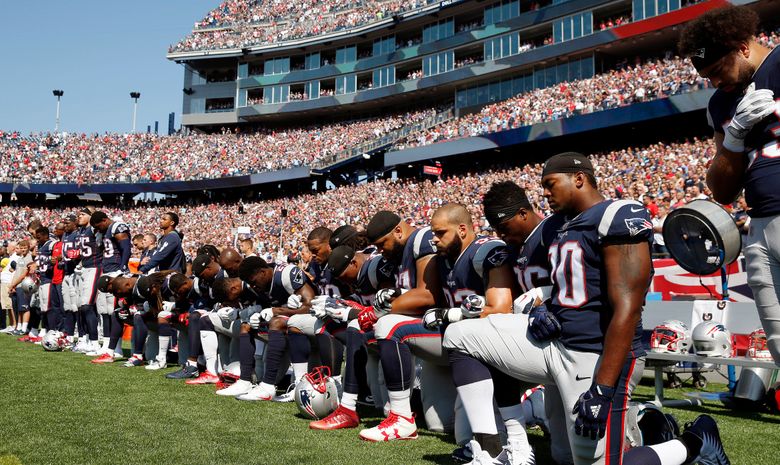
Unless you were in a coma under a rock inside a cave on Mars, you probably heard about the mass protests conducted across the NFL last Sunday. What exactly were they protesting, you ask? Well, that’s a hard question to answer and the fact that it’s hard to answer is pretty telling, in and of itself.

Officially, the protests were a stand against social injustice and a response to some trash talk by some high-ranking government official whose name I refuse to say, primarily because I don’t want to give him more attention than he deserves. Unofficially, it was the rhetorical equivalent of two colliding shit storms that only succeeded in creating a bigger storm.

There are many ways to protest injustice, corruption, and everything Gordon Gekko stands for. One of the perks of living in a relatively free society is that you get to attempt and experiment with a variety of ways. Sometimes petitioning works. Sometimes viral videos work. Sometimes just being Mr. Rogers and talking to people with unwavering kindness works.

Unfortunately, there are far more ways that fail instead of work. That’s just the nature of the world we live in. What Colin Kapernick did last year and what multiple NFL teams did last week succeeded to the extent that it raised awareness. While awareness is an important part of the process, especially in the era of the attention economy, that doesn’t mean that it achieved its goals.

More than anything else, it divided people within two tribes. In one, Colin Kapernick and the NFL are patriots in that they’re protesting in the name of the justice that the flag and the national anthem stands for. In the other, Colin Kapernick and the NFL are self-absorbed, virtue signaling drama queens who are disrespecting a symbol that many brave Americans fought and died for.

These are two irreconcilable ideas that kill any substantive conversation. They’re seeing the same picture, but interpreting it in wildly different ways. Instead of highlighting the egregious disparities in how the justice system treats certain minorities, it’s now a discussion about who has the a more patriotic hard-on for all things American.

That begs and important question. Which interpretation is right and which side is wrong? Who can truly say they’re being more patriotic than their counterparts? Well, here’s where it gets tricky and where I’m probably going to upset both sides. Bear with me, though. I promise I’ll try to inject some substance that both sides can use to further their cause.

First, I’ll answer those two questions definitively. I don’t expect everyone to agree with my answer, but I suspect I’ve already upset both sides already so I won’t bother making excuses.

“Both sides BELIEVE they’re true patriots. Both sides BELIEVE their opponents are anti-America. Neither side is inherently RIGHT, but BOTH are valid in their beliefs.”

I know. It sounds like I’m talking out of both sides of my mouth and a little out of my ass. Ignoring the influence of my ass, here’s where I’m certain I’ll upset both sides of the debate.

Regardless of how patriotic you feel, the American flag and the national anthem are symbols. No matter how universal you think they are, symbols are always subject to interpretation and those interpretations are rarely, if ever, agreed upon by every person in a society. Just look at all the symbols whose meaning has wildly changed over the centuries.

It’s because of this subjectivity that it’s possible for two people to look at it and interpret extremely different messages. That’s how one side can look at a flag and see the beauty of America. That’s how another can look at a flag and see the ideals America stands for and realizing that the people haven’t lived up to those ideals.

It seems impossible, but when you remember that irrational, tribal nature of the human species, it makes sense. In that context, the NFL and its players are patriots for telling Americans that they have not lived up to the ideals their flag stands for. The people booing them are patriots too for pointing out how they’re disrespecting the symbols and traditions that bind society together.

In either case, both sides can’t claim to be entirely objective. Those claiming that the NFL players are spoiled and using their positions of power to divide people probably wouldn’t feel that way if they were protesting something they agreed with. Change the message and the context and suddenly, they’re on the same side.

22008167_2038396299504671_1575711025395615984_n

Again, it’s an irreconcilable disagreement, as is often the case with such extreme tribalism. There’s nothing either side can do to convince the other that they’re the true patriots. It’s a downright tragedy because racial injustice is an important issue if we want to improve as a society. Once it becomes a discussion about who is more patriotic, then the protests and outrage behind them no longer matters.

That finally leads me to the practical part of this article. If you’re bummed out or frustrated at this point, then I thank you for sticking with me this long. I imagine some of you already hate my guts and think I’m trying to solicit money from George Soros and the Koch brothers.

I promise you I’m not doing this to win any favors with one particular political agenda. The suggestion I’m about to offer is being offered free of charge. Sure, I’ll kindly request that you buy one of my books or make a donation, but I won’t expect it. I’m still offering free insight into fixing a major problem.

With that said, and knowing that nobody in the NFL or their critics are listening, here’s how you protest social injustice effectively. It can be accomplished in one easy step.

“Make the protest easy, fun, and rewarding to join.”

I know that sounds easy on paper and for once, it kind of is. Granted, it’s not the same kind of spectacle as Colin Kapernick’s protest, but that’s kind of the point. It shouldn’t be that kind spectacle. It should be something else. Moreover, it should be fun.

The best example I’ve seen in recent years is the ice bucket challenge that briefly swept the nation a few years ago. For a brief time, celebrities and ordinary people alike participated in a fun show of solidarity that helped raise money for a worthy cause, namely the treatment of ALS.

It worked too. The ALS Association reported a record $3 million in donations because of this goofy ploy that was fun, easy, and entertaining to join. If it worked with ALS, why not racial injustice?

I’m not saying people should usurp the ice bucket part. I think the ALS folks have already branded that. Instead, protesting racial injustice should involve something different. Maybe it involves hugging someone, popping a balloon, or hitting yourself with a pie. It doesn’t have to be big. It doesn’t have to make sense. It just has to be fun, easy to join, and make people feel better about themselves.

Think of it as a way to weaponize the power of virtue signaling, making people feel better about themselves by doing something inane. In this case, there would be some substance behind it. In addition to the inanity, there would be a donation to organizations like the ACLU, Big Brothers and Big Sisters, or The Sentencing Project. It doesn’t have to be much, but if it’s more than zero, it helps.

If Colin Kapernick had taken this route instead of protesting the national anthem, would he be the poster child for all that is wrong with professional athletes not named O.J. Simpson? I don’t know, but it would attract more attention for the right reasons.

It would make his stand against racial injustice matter. It would get people to participate rather than remain numb or indifferent. Now that kneeling for the anthem has just become this never-ending argument about who’s the real patriot, the protest no longer matters. However, I don’t think it’s too late to change that.

2 Comments

Filed under Celebrities and Celebrity Culture, Current Events, Jack Fisher's Insights

Just How Close Have We Come (And How Close ARE We) To Nuclear War?

For most of human history, we could take comfort in one simple fact. No matter how brutish, crude, or stupid we were, from burning witches to fighting wars over a stray dog, we could never screw up so badly that we would destroy our entire world. Sure, we could leave some pretty noticeable scars, but we could never outright destroy it.

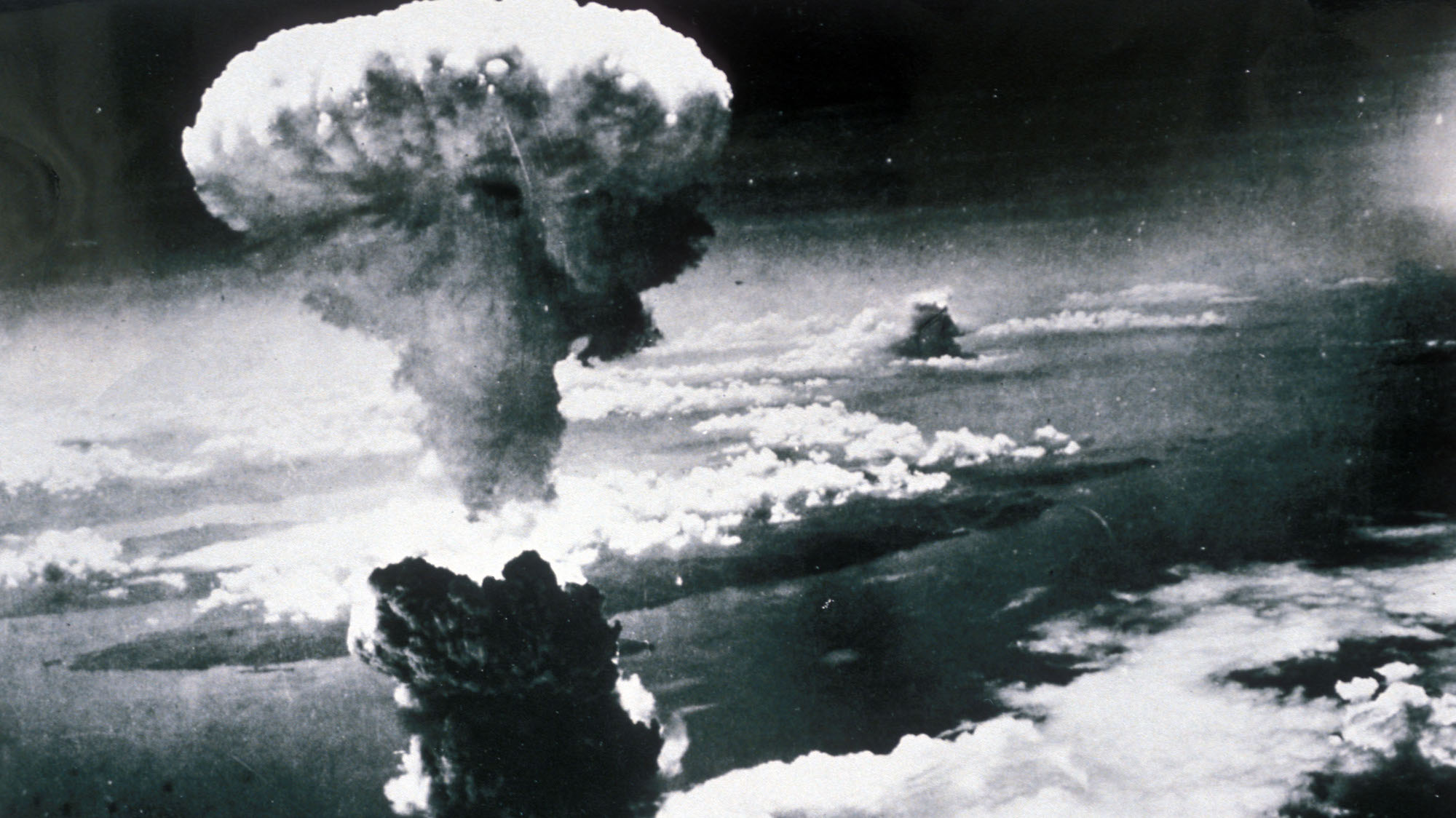
That all changed on July 16, 1945 in Los Alamos, New Mexico when the first atomic bomb was detonated. It’s impossible to overstate how significant that moment was in the history of the human race and not just because it helped end World War II, thereby inspiring countless war movies for decades to come.

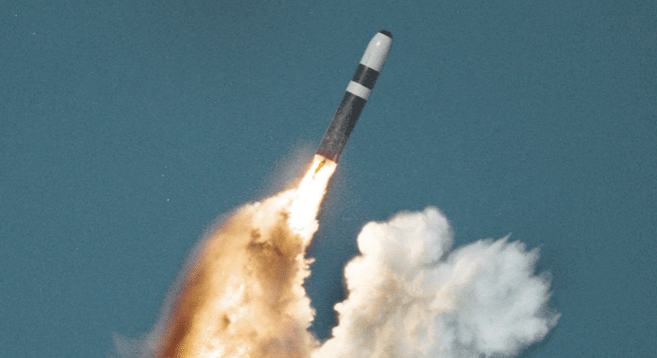
For the first time in the history of planet Earth, a species that had evolved to hunt, gather, and pick nuts out of elephant shit had the means to wipe itself out, along with most other life. At the height of the Cold War, there were approximately 64,500 active nuclear warheads. That’s enough destructive power to kill every person in the world, and their pets, many times over.

While the number of live nuclear warheads at the global level has decreased, they still have plenty of destructive power to both wipe out our species and render large chunks of the world uninhabitable to any species less hardy than a cockroach. These are, by and large, the most dangerous items mankind has ever created and that includes machine guns, nerve gas, and fidget spinners.

The very existence of these weapons says a lot about the state of our species and where it came from, more so than I can cover in a single blog post. However, in wake of the 35th anniversary of the day when the world, as we know it, almost ended, I think it’s worth emphasizing just how skilled/lucky/crazy we are to still live in an intact world.

Despite the undeniable danger of nuclear weapons, we don’t always treat them with the same care that we would treat the latest iPhone. Several years ago, John Oliver dedicated an entire show to highlighting the sorry state of America’s nuclear arsenal. Even if you only believe half of what a comedy news show tells you, it’s hard to take much comfort when weapons of mass destruction are involved.

What happened on September 26th, 1983 was terrifying in just how close we came to nuclear war. Many would make the argument that this incident was the closest we, as a species, came to destroying ourselves. I would tend to agree with that argument. Unfortunately, it’s one of those arguments that has an uncomfortable breadth of details.

It’s true. There have been more incidents that could’ve easily escalated to terrifying levels. Some were simple accidents that could’ve warranted far more than a demotion. Some where intense, geopolitical ordeals that went onto inspire major Hollywood movies starring Kevin Costner.

In any case, the stakes were painfully high. You literally can’t get much higher than a nuclear war that wipes out billions. We’ve managed to avoid it, but we’ve come so uncomfortably close that it’s a miracle the world is still spinning. A video from the YouTube channel AllTimeTop10s nicely documents some of these incidents. If you feel like you’re having a bad day, this should help provide some context.

I’ll give everyone a moment to catch their breath, vomit, or a combination of the two. I promise nobody would blame you. Knowing how close we came to nuclear war and how bad it could’ve been, we should all share in a collective sigh of relief every day.

However, as bad as these past cases have been, there’s no guarantee that we won’t face something similar in the future. There’s also no guarantee that there will be someone like Santislav Petrov to make the right decision when those situations come around.

That said, the situation today is very different than what it was during the Cold War. Say what you will about ongoing talking points about Russia. It’s not even in the same hemisphere at it was in the 50s and 60s when the United States and Russia seemed eager for an opportunity to go to war.

The world of geopolitics has evolved, in many ways, beyond the concept of two competing superpowers engaging in a nuclear dick-measuring contest. These days, increased globalism and a more interconnected economy makes that kind of geopolitical strategy untenable and counterproductive.

In a sense, globalization and the economic bounty that came with it made war of any kind, nuclear or otherwise, a losing endeavor. As I’ve noted before, even the most evil billionaires in the world prefer that the world remain intact so they can keep enjoying their billions. That’s just common sense and shameless self-interest.

That might offer some comfort, but there are those much smarter than I’ll ever be who still have concerns. According to the Bulletin of Atomic Scientists, who have been gauging the likelihood of nuclear war for decades, we’re two-and-a-half minutes to midnight. This is their statement on the matter.

For the last two years, the minute hand of the Doomsday Clock stayed set at three minutes before the hour, the closest it had been to midnight since the early 1980s. In its two most recent annual announcements on the Clock, the Science and Security Board warned: “The probability of global catastrophe is very high, and the actions needed to reduce the risks of disaster must be taken very soon.” In 2017, we find the danger to be even greater, the need for action more urgent. It is two and a half minutes to midnight, the Clock is ticking, global danger looms. Wise public officials should act immediately, guiding humanity away from the brink. If they do not, wise citizens must step forward and lead the way.

Since I’m an aspiring erotica/romance writer and not an atomic scientist, I am woefully unqualified to contest the conclusions of these individuals, let alone argue them. They cite a new wave of tensions between Russia and the United States, as well as the nuclear ambitions of North Korea. These are not the same conflicts that fueled the Cold War and that uncertainty has many understandably spooked.

Me being the optimist I am, I tend to believe that world leaders, however deranged or misguided they may be, prefer that the world remain intact. Nobody wants to be the leader of a smoldering pile of ash. There’s no way to build a palace, a harem, or a giant golden statue of themselves on a foundation of ash. That’s as good an incentive as anyone can hope for in avoiding nuclear war.

Unfortunately, human beings don’t always act rationally and are prone to making stupid decisions that change the course of history. One mistake in a situation involving nuclear weapons might be all it takes. Only time will tell, but the extent to which we’ve survived thus far should give us all reasons to be hopeful and thankful.

7 Comments

Filed under Current Events, Jack Fisher's Insights

How Nuclear Weapons Have (Kind Of) Had A Positive Impact On Society

There are just some ideas in society that cannot and will never be justified. Concepts like sexual assault, spousal abuse, and the premature cancellation of “Firefly” usually come to mind. Some things are just so awful that the world would be objectively better if they didn’t exist.

Well, I’m going to put on some extra layers and change the locks on my doors this morning because I’m about to justify the existence of something that many rightfully dread and for entirely understandable reasons. I imagine my position will upset a certain crowd of people, especially the peace-loving hippie types that are fond of the sexier, more decadent stories I’ve written.

That’s because I’m going to spend this article justifying the existence of nuclear weapons. Given how I’ve covered just how close we came to nuclear annihilation about 35 years ago that may seem like a complete reversal. I promise there’s a logic to it, albeit a distressing kind.

First off, let me make clear that I find nuclear weapons abhorrent. The fact we have weapons that powerful and no killer aliens/superintelligent apes to justify them reflects the sad, chaotic state of affairs of our civilization. The idea that just one of the handful of nuclear armed countries can slaughter millions on the whim of an itchy trigger finger is nothing short of terrifying.

However, and this is where I’m sure I’ll lose the hippie crowd, they may also be responsible for our growing ability to avoid war and cooperate with one another. Please set the pitchforks down for a moment. Let me explain myself, at least as much as any aspiring erotica/romance writer can on such a sensitive topic.

Most of people alive today don’t remember a world without nuclear weapons. Sure, they’re terrifying in their destructive potential, but we’re kind of used to their presence. Most people today don’t give them a second, a third, or a tenth thought. The fact they’ve only ever been used twice in a conflict limits the impact of that terror.

Even if entire generations are numb to it, that doesn’t change the inherent horror or the destructive capabilities of these weapon. These weapons don’t just kill a few hundred or a few thousand people. They kill millions, and even billions, of people. At a time when any event that kills more than tens of thousand people is considered a global crisis, most people can’t even wrap their heads around such horror.

It’s because of that horror, though, that nuclear weapons incurred such a significant impact on the world. It’s not the kind of impact that we feel every day, but it’s one that has shaped the mindset of our society in the late 20th and 21st century. How it did that requires a little perspective that’s not easy for anyone under the age of 75 to understand.

Despite what cable news and conspiracy theories/performance artists may claim, the last 50 years have seen an unprecedented decline in war. That may evoke some heavy scoffs from those who hear terrible news out of Iraq and Afghanistan at least twice a day, but the data doesn’t lie.

Since 1945, there hasn’t been a major world war involving major world powers. Sure, there have been smaller proxy wars like Vietnam, Iraq, and Korea. However, those wars never even came close to the staggering death toll of World War II. Fittingly enough, that was a war ended by nuclear weapons, but it’s really the events that played out in the decades after that war that showed the impact of those weapons.

Now, thanks to weapons that could wipe out entire continents, nations couldn’t wage war on the same level they had for centuries past. Before the 20th century, a nation going to war with another was seen as standard business practices. You couldn’t call yourself a powerful nation without going to war and sending thousands of young men off to die on a battlefield. Some even tried to paint that kind of thing as glorious.

With nuclear weapons, there’s nothing glorious about incinerating entire cities in the blink of an eye. There’s no room for heroism, gallantry, or warrior spirit. One second you’re a live, flesh-and-blood human. The next, you and everything around you is a pile of radioactive ash. That fundamentally changes the image of war.

Suddenly, nations have a very good reason to not go to war, especially with a country that has nuclear weapons. It’s not just their soldiers that will die. It’s every city, town, and village within their borders. Even the most brutal, sociopath-like ruler can’t overlook the high cost of such a war. Most rulers enjoy the perks that come with ruling. Going to war is the quickest way to lose it all.

That’s the biggest impact that nuclear weapons have had, as a whole. They’ve made large wars on the level of World War II impossible, if not downright suicidal for all those involved. Say what you will about the ineptitude of modern nation states, but in general, they want to survive.

Making war that untenable is an objective good, on some level. Granted, that good is only achieved through the sheer terror and destructive potential that nuclear weapons possess, but the result is still the same. Going to war is no longer a viable means for a nation to grow. Instead, nations grow through economics and instead of war stories, that gives us smartphones, cars, and exotic music like K-pop.

Regardless of how you feel about K-pop, it’s much less destructive than any war. It could be argued, and I would tend to agree, that the lack of a major war is a big reason why the 20th and 21st century has seen the hugest economic growth, as well as the greatest reduction in global poverty, in recorded history.

Beyond just making nations too reluctant/terrified of going to war, nuclear weapons have had another impact on how global powers function. In the past, major nations went to war for stupid, petty reasons all the time. Why be diplomatic about anything when war is so much sexier? That’s how the British Empire got to be one of the largest empires of all time.

Then, nuclear weapons come along and suddenly, nobody can afford to be that petty anymore. Now, fighting a stupid war that could escalate for stupid reasons runs the risk of seeing your glorious empire reduced to ash in the span of a day. Nuclear weapons are just that powerful.

Fear, being such a powerful motivator, makes nations more inclined to talk a problem out rather than sending in the army. It requires them to make more of an effort to talk to rival nations, make mutual deals with them, and not rely so much on bully tactics because one might have a larger army. When nuclear weapons are involved, the size of an army means less than the size of their shoes.

That’s why, despite a fair amount of bravado on the geopolitical stage, modern nations generally prefer diplomatic solutions over war. When the alternative is nuclear annihilation, even the most petty rulers will opt to negotiate. As chaotic as the world might be, the presence of nuclear weapons makes war untenable and diplomacy indispensable.

Whether out of sheer terror or begrudging pragmatics, the advent of nuclear weapons has changed the way that modern nations conduct themselves on the global stage. By nearly every measure, that method is an improvement over the bloody wars of the past.

Most people who aren’t kings, despots, or related to one can’t appreciate the benefits of a world where war is so untenable, due to the presence of real doomsday-level weapons. Perhaps that’s for the best. So much of our time as a civilization has been spent dreading when we’ll be conscripted to fight a bloody war for some ambitious king/tyrant/emperor. Not having to live our lives with that fear counts as an improvement.

Now, as beneficial as this on some levels, it doesn’t discount the true danger of nuclear weapons. Make no mistake. These things can and will destroy us all if we use them, even on accident. The stakes literally cannot be higher when such weapons are involved, but if they help us function better as a species and a society, then I think that gives at least some merit to their presence.

2 Comments

Filed under Current Events, Jack Fisher's Insights

In Memory Of Stanislav Petrov: The Man Who (Literally) Saved The World

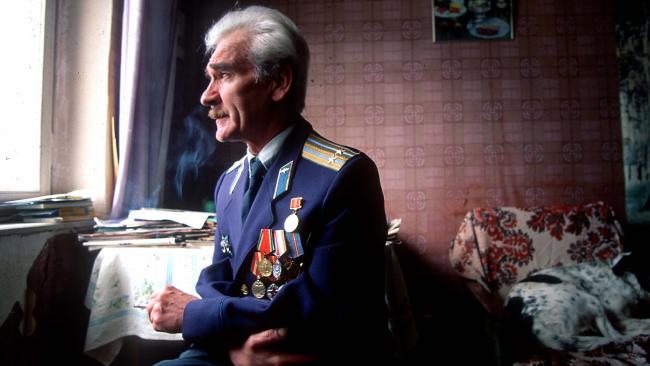
Stanislav Petrov

Today is an important day, one that became even more important this past year. You probably didn’t realize it and for good reason. Until recently, the significance of this day had been lost to history, but it’s a day that deserves recognition, albeit for a very sobering reason.

This day became one of the most significant days not affiliated with a holiday sale at the mall on September 26, 1983. On that day, the world as we know it almost ended. That’s not a hyperbole. That’s not a conspiracy theory out of a an Alex Jones fever dream either. It’s painfully true. The world almost died in a nuclear fire on that day, but it didn’t because of a decision made by one man.

That man’s name is Stanislav Yevgrafovich Petrov and if you were alive on that day, or were born after it, then you owe your existence to this man. For a brief moment on that day, 35 years ago, he literally held the fate of the world in his hand and he made the decision that saved it. As someone who regularly lauds superheroes and the values espoused in comics, even I can’t overstate the significance of what that man did.

The incident that almost ended the world and made Stanislav Petrov a man for the ages widely known about until the mid-2000s. It involved an incident in the former Soviet Union that brought the world to the brink of nuclear annihilation. In terms of worst case scenarios, this ranked right up there with an invasion by aliens armed with atomic anal probes.

At the time, Petrov was a lieutenant colonel in the Soviet Air Defense Forces and had been on duty at the Serpukhov-15 bunker near Moscow. In terms of Soviet defense strategy, his role in that bunker was pretty damn important. It was tasked with monitoring Soviet air space to detect an incoming nuclear attack.

It’s worth mentioning that this was a time of heightened tension. President Reagan, at the time, was going long and hard on anti-communist rhetoric. Being a former Hollywood actor who’d just been elected President, the Soviets had no idea if this guy was just going to shoot nuclear missiles at them because he thought it would make a great movie.

In a sense, this was the worst possible time for the systems at the Serpukhov-15 bunker to give a false alarm, but that’s exactly what happened. In the middle of Petrov’s shift, the systems began blaring every alarm it was possible to blare, telling them that America’s new Hollywood President had done just what they’d feared. He launched a full-scale nuclear attack to wipe out the Soviet Union.

I’d say it’s a nightmare scenario, but no amount of killer clowns armed with chainsaws can do justice to this kind of horror. As far as the men in that bunker knew, their country and everyone they loved was about to die in a nuclear inferno. It was the policy of the USSR and the Red Army to respond to any nuclear attack with a devastating retaliation, as specified in the doctrine of mutual assured destruction.

It was Stanislav Petrov’s job/duty to inform the Soviet high command of the detection. Every bit of his military training demanded that he inform his superiors to retaliate, thereby destroying the United States and Western Europe in reign of nuclear fire. In a state of such heightened tensions, he might have been justified in doing so.

All it took was one call to his superiors. That would’ve been it. That would’ve ended the world, as we knew it. Try and think about that for a second. In that moment, the fate of the world and billions of lives lay on the shoulders of Stanislav Petrov. If he makes that call, then the world as we know it is over.

However, in that moment when he literally had the world on his shoulders, he didn’t make that call. In that moment, he made a decision that saved the world and its future. He did it by not following the protocol that he’d been trained to follow and by the Soviet Union, no less, who were not known for being understanding to disobedience.

Petrov, with his duty and the weight of the situation bearing down on him, believed it to be a false alarm. He had good reason for believing this. The systems were detecting only several missiles, which was pretty small, given the sheer size of America’s nuclear arsenal. If America’s Hollywood President really wanted to wipe out the Soviet Union, he definitely would’ve used more.

Even so, his training and his duty told him to inform his superiors. He only had 15 minutes to do so because that’s how long it took for a detectable missile to reach its target. That’s right. In the time it takes to watch an episode of “Robot Chicken,” Stanislav Petrov had to make a decision that would’ve determined the fate of this entire planet.

The fact that no nuclear bombs went off and billions of people didn’t die is proof that he made the right decision. It was later determined that the false alarms were caused by a rare alignment of sunlight on high-altitude clouds and the erratic orbits of the Soviet’s satellites.

It seems so trivial now, but keep in mind that these were tense times during the Cold War. It really didn’t take much to spook either America or the USSR. It could’ve easily become a perfect storm, of sorts, for accidental nuclear annihilation and nobody would’ve been left on this planet to admit they screwed up.

It’s because of Petrov’s decision that day, to not follow protocol and trust his instinct, that we avoided Armageddon. For that decision, Petrov received no metal, commendation, or recognition for his decision. He just got a pat on the back, which was the most anyone could hope for in the Soviet Union at that time.

This man literally saved the world in the most painfully literal sense, but was quickly forgotten. There were no parades, movies, or free tickets to a Madonna concert. Petrov just went back to living his life until he retired from the military.

It really wasn’t until 2004 that Petrov began getting recognized for his actions, that day. By then, though, the weight of that moment had lost its place in the public consciousness. The fact I have to write about it on this blog shows just how little awareness this man and that fateful day have in the annuls of history.

Well, in this year, that day became a lot more important because back in May, Stanislav Petrov passed away at age 77. It wasn’t widely reported. It didn’t even get mentioned on any of the major news outlets in America or Russia. This man who saved billions of lives isn’t even alive anymore to appreciate.

He lived a quiet, unremarkable life towards the end. He never considered himself a hero. He never even tried to put that label on himself. He was just the right man in the right place to make the right decision. In doing so, he saved billions of lives and preserved the future of this planet.

It’s impossible to overstate the importance of the decision that this man made on that fateful day 35 years ago. Some may brag that they saved the world or are arrogant enough to think that they can. Stanislav Petrov didn’t need to brag because he did it. He saved this world and most people will never know what he did.

Now that he’s passed, let’s all take a moment to appreciate what this man did. By trusting his instinct and his humanity, not wanting to make the decision that would destroy this world, he proved just how heroic a person could be in the worst of circumstances.

From the bottom of my heart, and on behalf of all those who are alive because of the decision made that day, thank you Mr. Petrov. Thank you for doing the right thing in the worst of circumstances. This world is still spinning because of you. Rest in peace knowing you saved it.

7 Comments

Filed under Celebrities and Celebrity Culture, Jack Fisher's Insights

The (Real) Crisis Of Faith In Society

Every now and then, I hear some pundit, politician, and/or professional troll lament about the ongoing “crisis of faith” in society. They’re not entirely wrong in their whining. The numbers don’t lie. Religion, especially the organized variety, has been declining significantly over the past decade throughout the western world.

I won’t get into the particulars of that decline. I’ve already given religion a hard time on this blog, especially when it gets taken to extremes. While I stand by my criticisms, I don’t want to give the wrong impression. I respect religious people and the various religious institutions that do wonderful work.

I should also note that I have some devoutly religious people in my family, whom I love and respect dearly. I don’t want to disparage their beliefs or the fulfillment they get from them. While there was a time when I used to seek out heated debates with religious people, I’ve since realized how pointless and counterproductive they are. As I’ve said before, winning arguments rarely changes the harsh truths of reality.

With that in mind, I do agree with part of their lamentations. I honestly do think that there’s an ongoing crisis of faith in society, especially in Western society. However, it’s not the kind of crisis that the televangelists, the militant atheists, and the card-carrying Satanists of the world have in mind.

To illustrate that crisis, I’ll need to depict a couple scenarios that should make a significant number of people uncomfortable. For this, I apologize, but I think it gets my point across better than any burning bush, fiery sermon, or tax-exempt initiative.

The first scenario shouldn’t be too hard to picture for anyone familiar with the Playboy Mansion. For this, I want you to imagine an ordinary man standing in a large room, surrounded by a 100 women. The man doesn’t have to be Hugh Hefner and all the women don’t have to be Playboy Playmates. It just has to be one man and 100 women in the same room. How do you think that man feels in that situation?

Anyone who has seen a few overtly sexy music videos shouldn’t have too hard a time surmising that sentiment. If he’s a straight man, then he’s probably feeling like a kid in a candy story within a toy store within a water park. He’s probably looking around with a goofy grin, crunching the numbers in his head and wondering which of the 100 women will want to touch his penis.

It’s a goofy, juvenile scenario that most just shrug off as harmless male fantasy. Even if the man is gay, chances are he doesn’t feel threatened or unsafe in any capacity. Being surrounded by women doesn’t garner those kinds of feelings. There’s a deeper message there, but one that only becomes clear when you picture the second scenario.

For that scenario, I want you to something similar. This time though, just flip the genders. Make it so there’s a woman in a room surrounded by 100 men. It’s similar to an exceedingly distressing thought experiment that I pitched before. This isn’t quite like that, but it gets an important message across.

This is a scenario that I’ve actually heard some women use when talking about rape and sexual violence. That’s because in that scenario, if we’re all being honest with ourselves, that woman probably doesn’t feel lucky or safe. One women in a room with 100 men is a situation that evokes discomfort on a level that’s hard to articulate, but easy to understand.


The woman in that scenario isn’t imagining which of those 100 men might be her future husband or, at least, a good one night stand. That woman is dreading every worst case scenario ever inspired by reruns of “Law and Order: SVU.” Her survival instincts go into overdrive because she doesn’t just see a room of men. She sees a room of men who might be inclined to rape her.

As a man, I can’t help but take offense to that notion that women assess men solely on how likely they are to assault her. However, I can completely understand the sentiment. The numbers aren’t on my side. In pretty much every major category of violent crime, men are far more likely to be perpetrators than women. There’s nothing sexist about it. That’s just what the numbers say and they don’t inspire a lot of faith.

In recent years, there has been growing awareness of rape culture and increasing efforts to decrease sexual violence against women. While that is an innately noble effort, seeking to reduce the unsexist forms of violence in our culture, it hasn’t always been entirely honest. In some cases, it inspires moral panics that claim video games cause sexism or just criticizing a woman constitutes a form of assault.

I won’t get into the absurdities of those concepts, as I’ve only so much energy and this blog only has so much bandwidth. I’ll just say that some of the hysteria that such efforts inspire, as noble their intentions might be, are what fuels the escalating crisis of faith and I fear that crisis is escalating to disturbing levels.

In this case, it’s not about faith in a higher power, a collection of deities, or some divine force that determines who wins football games every week. The faith I’m talking about here is more personal. It’s the faith we have in each other, as human beings.

On some levels, we’ve always had it. When you order a pizza, you have faith that the people making the pizza and the one delivering it will make it right and not spit in the dough. When you call a doctor, you have faith that this person knows what they’re doing and will do the right thing in treating you when you’re injured, sick, or vulnerable.

Beyond institutions, we also have faith that our neighbors won’t murder us the first time we meet. We have faith that the people we love really love us back. We can’t read other peoples’ thoughts or know with absolute certainty that their feelings towards us are genuine. However, the simple fact that we, as a society, are able to function and get along to some degree is a testament to the faith we have in one another.

Now, I fear that faith is being undermined by the various hysterias that plague our collective consciousness. Some of it is a byproduct of news media, the internet, and social media where terrifying news is easier to spread and garners more attention. That’s understandable, given how fear is such a powerful motivator.

However, and this is a concept that’s not easy to accept, that fear often clouds our judgment and skews our perspective. It’s an unfortunate byproduct of our caveman brains, which almost always gives the edge to perception over reality. Things that scare us get our attention. Our survival instincts, by necessity, over blow any possible threat in order to ensure our survival.

That fear is the universal counter to faith and since it’s so easy to spread scary things in the age of the internet, it’s easy for our faith to be undermined. It might be for that same reason that organized religion is taking a hit. The internet is making it too easy to look up the many absurdities of a religion and its associated frauds.

Again, I don’t wish to denigrate those with sincere religious beliefs, nor do I want to make light of those who use their beliefs to justify atrocities. However, the faith that many have in a higher power, even within a less religious society, only seems to go so far when it comes to other people.

In a sense, it reflects the sentiment that many parents express to their kids when they have a bad attitude. I heard it from my own parents on more than one occasion. If you expect the worst of a person or situation, then that’s what you’ll experience. Assume the worst and it will usually find you, if only because you invite it.

Thanks to our declining faith in other people, we’ve become far more prone to assuming the worst in others. I know that’s hard to avoid for some people, especially when they’ve been the victim of harassment or violent crime. However, in this case, the numbers are actually on our side.

I’ve shared the story of how I came to believe that people are generally good. For those looking for less anecdotal evidence, the data is pretty clear. There are approximately 7.5 billion people on this planet. The amount of violent crime is only a fraction of a fraction of a fraction of that. We would not even have that many people on this planet if we, as a species, were so inclined to harm each other.

It’s one of those rare cases where faith and facts are actually in alignment. Most of the data we have paints a fairly clear picture. In general, people are good if you give them the chance. Think of it in terms of a game of chance. If you want to win, you want the odds in your favor. As such, if you’re a smart gambler, betting on people to be good is the best bet you can make.

However, just being naturally good isn’t enough. What good are those instincts if people don’t have faith in them? If people are inclined to assume the worst, then they’ll be just as inclined to expect it and when you expect the worst, you tend to attract it. It’s the worst kind of self-fulfilling prophecy.

I get that it’s hard to have faith in people when social media is lined with volumes of stupidity and hate. That’s part of what makes faith such a powerful force in our lives, even when it’s absent of religious connotations. That’s also part of what makes it so vital in our efforts to create a better society.

With that in mind, think back to the second scenario I mentioned with the woman in a room of 100 men. This time, though, I want to add some extra bit of context. I concede that there’s a chance that at least one of those men will be an asshole who tries to assault the woman. However, I have faith that those men would be grossly outnumbered and outmatched by those who will feel inclined to protect that woman.

That’s the kind of faith that I believe we need, these days. Yes, there will always be bad people in this world, but I believe those people will always be outnumbered, overpowered, and outgunned by those who are good. Hopefully, more people come to share in that belief.

9 Comments

Filed under Current Events, gender issues, Jack Fisher's Insights

Sex Dolls, Porn Stars, And Preserving Sex Appeal

Picture, for a moment, a time when your spouse, lover, or favorite celebrity looked their absolute best. It might have happened years ago. It might have been last Tuesday. Just take a mental snapshot of that image, recounting every minute detail of that beauty everything that went into it. Take all the time you need.

Do you have that image? Good, then keep it in your head for a bit longer because now I want you to imagine being able to preserve it in a physical, tangible, and exceedingly sexy form. It doesn’t just have to be a vivid memory or a daydream, which is prone to fading easily. It can be something you can actually revisit when you’re feeling nostalgic, horny, or both.

Enter the world of RealDolls, the Apple/Google/Amazon of realistic sex dolls. These are not cheap blow-up dolls that a teenage boy hide under his bed. These are advanced, sophisticated replicas that capture the look, feel, and texture of real human flesh. They’re basically the closest we have to sex robots, albeit without the robot part.

I’ve mentioned RealDolls a couple of times on this blog in various articles, often when discussing sex robots. They are currently on the cutting edge of this field, but that edge has tried to sharpen itself in a whole new way recently.

Back in 2013, the company began doing something that was probably bound to happen at some point. It began making its trademark sex dolls using the bodies, figures, and curves of real-life porn stars. That means famous figures, in the literal sense of the word, like Jessica Drake, Asa Akira, and a whole bunch of other names that men pretend they don’t recognize can be the basis for their ideal sex doll.

In a sense, it’s an extension of the porn people already watch. Most viewers will never get the opportunity to have sex with these famous porn stars. These replicas will give them the next best thing without resorting to illegal cloning, which is far more trouble than it’s worth these days. As the technology and materials improve, that gap might eventually become negligible.

In terms of economics, everyone comes out a winner here, in some cases literally. The company, RealDolls, gets perfect models that don’t have to be customized with every purchase. The porn stars get a cut of the profits from each sale. The customers get to actually live out their sexy fantasy, to some extent.

Granted, the men who buy these dolls will be subject to stigma, just as the women who work in porn are subject to stigma. Sex and stigma go together almost as much as dirty bed sheets, candles, and lube. However, that stigma may be stretched more than most expect.

That’s because those same economics I mentioned earlier are changing. The sex industry is undergoing some pretty major shake-ups that most people aren’t aware of, if only to preserve their browser history. DVD sales, website subscriptions, and the live sex shows that once fueled the industry are declining in sales. Between piracy and the porn-centric tube sites that some probably have open in another tab, that’s understandable.

It’s a lot more challenging today to make a living in the sex industry. Whether you’re a big-breasted, big-dick star or a simple producer, you’re feeling the hit on the profit margins in an era where everything ends up online for free and few have the legal muscle to ally themselves with such a seedy industry.

The challenge is how will the porn stars of the future turn a profit from their sexy trade? Even beyond porn stars, what about other celebrities whose star has fallen and need to license their name behind something other than a clothing line? Well, RealDolls has set the precedent. That’s usually all anything takes to become a trend.

Legally speaking, the laws are already in place. RealDolls even says on their website that they cannot legally create a doll to look like a particular celebrity, alive or dead. That would be like Photoshopping someone’s face into unflattering photos. So anyone hoping for their own personal Jennifer Lawrence sex doll will be out of luck.

Then again, who’s to say that Jennifer Lawrence won’t need extra money at some point in the future? What if she, or some other celebrity like Channing Tatum or Taylor Swift, see licensing their appearance as just another revenue stream? Legally, they could do that and make a great deal of money in the process. The box office for “Magic Mike” alone proves there is market for a Channing Tatum sex doll.

It would be difficult now because today, even if you wanted to buy a sex doll that resembled a porn star who has licensed her appearance, it’s still obscenely expensive. These life-like sex dolls cost almost as much as a used car, mostly because of the materials involved and the labor that goes into them.

That process is going to need to improve before celebrity sex dolls become a viable business investment. RealDolls might be on the cutting edge of the industry, but that industry has not yet had its version of Henry Ford or Ray Kroc come along. That person is probably alive right now, but just doesn’t know it.

Once someone finds a way to bring the cost of these things down, then that’s when things get interesting and not just in the sexy sort of way. Again, I need everyone to think back to that mental image I described at the beginning of this post. I promise this is the last time, but it’s part of a larger point.

After the technology behind sex dolls improves, then chances are they won’t just be used for sex. Imagine someone who lost their spouse and refuses to let them go. A lifelike sex doll could provide comfort. Imagine someone develops a terminal disease and can’t easily be intimate with someone. A lifelike sex doll could provide at least some form of intimacy to improve their quality of life.

In the end, that’s the ultimate goal of these products, beyond the sex appeal. Before lifelike robots or Matrix-like virtual reality comes along, these realistic sex dolls may provide a stepping stone, of sorts, that bridge the gap between fantasy and reality. It will likely start with porn, as many technological advances do, but it certainly won’t end there.

5 Comments

Filed under Jack Fisher's Insights, sex robots, Sexy Future

Another Lesson From The X-men: Does Power OR Stress Corrupt?

We’ve all heard it before, a saying so common and overplayed that our first reflex is to roll our eyes and think briefly whether those leftovers in the refrigerator are still edible. It manifests in many forms and is the theme of 98.7 percent of every movie featuring evil empires and overly rich assholes. We use many words, but most of us know the basics.

“Power corrupts. Absolute power corrupts absolutely.”

I’ll give everyone a moment to finish yawning. I don’t blame you. As someone who has spent three quarters of his life reading superhero comics and seen nearly every movie that tried to rip off “Star Wars,” I’ve neither the energy nor the bandwidth to list all the stories that play with this theme so I’m not going to try.

Instead, I’m going to be a little bold and challenge that overplayed, overused theme that has been more belabored than a puke bucket at a bulimics convenstion. I’m also going to do it while citing X-men comics again, specifically another one featuring Jean Grey. Yes, I’m aware I’ve done that multiple times already. Yes, I’m going to keep doing that. No, I’m not going to apologize for it.

However, I’m not just going to focus on the events of a particular comic. While this post was inspired by Jean Grey #7, a comic written by Dennis Hopeless and drawn by Alberto Jimenez Alburquerque, it’s the bigger picture the story highlights that I want to focus on. I still encourage everyone to read the comic, but you don’t have to in order to appreciate its theme. It’s almost subversive in the larger message it implies.

Think back to that overplayed saying about power corrupting and try, if you can, to do it without yawning. Now, ask this follow-up question and try to do it with a straight face.

“Is it really power that corrupts? Is it possible that the stress that comes along with power is the true danger?”

I hope nobody’s yawning after that because that’s not a question that gets asked very often, but it’s one that Jean Grey ends up answering in Jean Grey #7, albeit indirectly. Given that it’s a question so few ask in the first place, it’s easy to overlook, but it’s worth thinking about.

Think, for a moment, about the impact that stress has on your life. That’s much easier than thinking/fantasizing about what it would be like to have absolute power. Unlike absolute power, there is some actual science behind the effects of stress. According to the Mayo Clinic, the impact of stress is basically the grand slam of negative health effects. Those effects include, but certainly aren’t limited to, nasty stuff like:

  • Headache
  • Muscle tension or pain
  • Chest pain
  • Fatigue
  • Stomach upset
  • Sleep problems
  • Anxiety
  • Restlessness
  • Lack of motivation or focus
  • Feeling overwhelmed
  • Irritability or anger
  • Sadness or depression
  • Overeating or undereating
  • Angry outbursts
  • Social withdrawal

These are all issues that negatively impact your personal life, your work life, your sex life, and pretty much every other life you hope to have as a functional human being. We all endure stress on some levels, but having too much of it is kind of like being really horny. You know when it happens and it’s hard to ignore.

With those effects in mind, imagine just how stressful it is wielding great power. It doesn’t even have to be like the cosmic power Jean Grey is destined to wield in Jean Grey #7. It could be a powerful political position. It could be a powerful business leader. Hell, it could just be the power that comes with being the head of a household.
It’s somewhat paradoxical in that it seems unavoidable. Gaining more power means dealing with more stress. However, we seek power, to some extent, in order to achieve our goals. More often than not, those goals involve alleviating certain stresses on our lives, be they poverty, strife, or simple inconvenience. In a sense, we exchange one form of stress for another and hope the other is easier to deal with.

Sometimes, those hopes don’t pan out. Sometimes, the stress that comes with whatever role that power brings us is more than we expect. In that state of mind, is it really that surprising that people become corrupt?

When I talked about powerful fascist states, I noted the extent to which they have to control the personal lives of others and how that can often be used against them. Those efforts, if you ignore the egregious abuses they entail, require some pretty stressful efforts that anyone not named Dr. Doom isn’t equipped to manage.

It creates, sort of, a chicken-and-egg scenario for the corruption that often follows. Was it the power in and of itself that led that corruption or was it the stress it entailed? While I doubt every situation has the same answer, the one in Jean Grey #7 has some intriguing possibilities.

In the context of this story, the same out-of-time Jean Grey that I’ve covered in previous posts is still dealing with the prospect of a cosmic power known as the Phoenix Force coming after her. She knows it’s destined to kill her. She knows how much it corrupts her, so much so that Fox is making a movie about it. It’s a stressful situation, to say the least.

However, Jean Grey isn’t the only overly powerful character in the diverse menagerie that is the Marvel Universe. Hell, overpowered characters in Marvel probably have their own lobbying group. One of their most notable members is Wanda “the Scarlet Witch” Maximoff. Like Jean Grey, she also wields exceedingly immense power that has driven her insane on more than one occasion.

Like a friend staging an intervention for someone they care about, Wanda seeks Jean out and basically has a girl’s day with her. She shows her that obsessing over the power they wield, or are destined to wield, will drive her just as crazy as the power itself. She dares to help Jean do normal, healthy things that don’t involve stressing out over that power.

Some of those things involve stuff actual people do, like going to a beach or running on a hot sunny day. Others are a bit more exotic, like a cooking class that involves monster meat. I swear on Jennifer Lawrence’s ass that I’m not making that up.

MonsterCooking

The events of Jean Grey #7 make a compelling case about the impact of stress over power. The fact that there are other powerful characters throughout the Marvel universe that manage to function on a day-to-day basis without going insane proves, to some extent, that power and corruption need not be the same thing.

Eventually, circumstances within Jean Grey #7 that are beyond Jean’s control derail her efforts to better manage her stress. In a sense, that’s another part of wielding power and the corruption that comes with it. No matter how much power anyone has, be they a comic book character or a warlord in a third-world country, they are still at the mercy of various circumstances beyond their control.

Jean Grey, and most other superheroes, often learn that the hard way. People in real life who wield great power deal with that as well, sometimes in a very public way. Whether you’re Jean Grey or Emporer Palpatine, it’s impossible to deal with every conceivable circumstance that may undermine your power or stress you out. For some people, that just compounds the stress.

In the end, Jean Grey #7 leaves the question surrounding power, corruption, and stress unanswered. However, the fact it dares to ask that question in the first place and make a concerted effort is what really sets it apart. The original Phoenix Saga never asked that question directly, but its indirect implications reveal a lot about how we think of power, corruption, and beautiful female superheroes played by Sophie Turner.

Related image

5 Comments

Filed under Comic Books, Jack Fisher, Superheroes, Jack Fisher's Insights, Reasons and Excuses

Ted Cruz, Twitter Porn, And Why We Shouldn’t Make A Big Deal Of It

As a general principle, I don’t like mentioning certain politicians by name. That’s because to mention them is to give them more attention than they deserve and, as I’ve pointed out before, attention is the life blood of both the internet and the trolls that make it awful.

I only ever get specific once their propensity for bullshit reaches a level of absurdity and hilarity that both sides of the political spectrum can laugh out. That’s why I’ll drop names like Rick Santorum and Bernie Sanders. If they didn’t exist in real life, they’d probably exist as cartoon characters that Seth MacFarlane made up.

With that in mind, I have to say I’m shocked that I can add Ted Cruz to that list. In terms of politicians, there’s not much about him that makes him deserving of attention. He’s a cut-and-paste conservative republican who espouses everything you’d expect a guy who once called same-sex marriage a threat to liberty and makes one too many Nazi comparisons when he talks about health care.

It’s for that reason why nobody should be surprised that he’s as sex-negative as they come. While he was the solicitor general in Texas, he ardently defended a state ban on sex toy sales. He even went so far as to make this unsexy statement.

“There is no substantive-due-process right to stimulate one’s genitals for non-medical purposes unrelated to procreation or outside of an interpersonal relationship.”

Try to read that without cringing. I dare you. This is a man who honestly sided with people who believed in using taxpayer money and policing power to discourage people from touching their own bodies in ways they might enjoy. It’s enough to make the Ron Swanson in all of us fume.

Image result for Ron Swanson on government

It’s also for that very reason that nobody should be surprised that Ted Cruz just got himself into trouble by “accidentally” liking a porn video on Twitter. I put the word “accidentally” in quotes because it’s a loaded word in a situation where any word can turn into the dirtiest kind of innuendo. Since I prefer to save that sort of rhetoric for my novels, I don’t want to overdo it here.

Naturally, the idea of an uptight conservative republican who once argued for prohibitions on masturbation liking a porn video was like catnip for social media. Cruz is now the butt of a lot of crude humor and understandably so. It’s like catching a priest with a prostitute. It’s just inherently funny.

Now, as funny as this is and as detestable as Ted Cruz may be to anyone who enjoys stimulating their genitals, there’s a good chance the man may be completely innocent here. He has already gone on record as saying that a staffer managing his social media account liked the video and not him. Given how common that practice is among politicians, that’s the most likely scenario.

That doesn’t make situation any less hilarious, nor will it stop the onslaught of reactions from people calling Ted Cruz a hypocrite and a fraud. Given how much we, as a society, detest hypocrites, even from those from the non-political class, that’s understandable. Hypocrites are the epitome of everything that makes a human being unlikable.

However, in this case, I think the reactions to the hilarity may do more harm than good. Please don’t take that to mean I’m defending Ted Cruz, nor am I making excuses for him. I am not a big Ted Cruz fan. I would not vote for him to be my local dog catcher, let alone a politician of any standing.

That said, I’ve never met the man. I don’t know what he’s like outside of these ridiculous stories about the ridiculous things he says on the record. He might very well be a nice guy who only says what he says because his party’s platform involves decrying porn as a public health crisis. When the cameras go off, he may not really care much about the kinky stuff people do in the privacy of their bedrooms.

You could probably say the same about a lot of ardent conservatives like him, whose party gets a boatload of money from anti-sex, anti-porn, anti-fun organizations like the Family Research Council. What they say in public doesn’t always reflect what they believe in private.

Let’s not get too high and mighty here. If someone paid us enough money, then we would probably say all sorts of horribly unsexy things as well. I don’t deny that if someone gave me millions of dollars to only write novels that would appeal to Mormon clown enthusiasts, I would do it in a heartbeat.

Short of reading Ted Cruz’s mind or getting some private audio recordings that has him going on a Mel Gibson style rant about the evils of porn and masturbation, we have no way of knowing how he really feels about porn and sex. However, social media is still going to mock him as the ultimate hypocrite, right up there with Ted Haggard.

That, I feel, is a mistake because Ted Cruz is not Ted Haggard. Haggard got caught red-handed in a way he could not blame on a lazy staffer. In Cruz’s case, it’s very likely that this was just some staffer with too much free time, not enough coffee, and badly in need of a good orgasm. Attacking him for something he probably didn’t do makes us the assholes and not him.

There’s another more important reason why we shouldn’t make too big a deal about Cruz’s possible porn tastes and it goes beyond simply not being an asshole, an effort we should all value. There’s a time for mocking and a time for pointing out the hilarity of a situation, of which there are many. However, let’s not mistake mockery for an actual argument against the idea we find so abhorrent in the first place.

Mocking Ted Cruz does not make an effective argument against his regressive attitudes towards sex, porn, and all things fun in this world. Mockery outside of a “South Park” or “Rick and Morty” rerun never adds any kind of meaningful insight to an issue. Sure, it’s funny, but that’s the extent of the contribution.

For someone like Ted Cruz, who still wields real power and has real influence over public policy, mocking him isn’t going to change his mind about anything. If anything, it may make him that much more eager to send police into peoples’ houses to make sure they’re not pleasuring themselves. People get unreasonable when they’re mocked, especially when it’s not warranted.

Whether or not Ted Cruz genuinely believes his party’s platform on sex, porn, and minorities is beyond the point. At some point, just being an asshole to someone who likely didn’t have any role in an incident, other than having his name attached to it, helps nobody. It just gives Ted Cruz more reason to despise his opponents and not listen to them.

That’s the biggest reason why this whole ordeal with him liking a porn video on Twitter is already overblown and need not be an indictment on all things Ted Cruz. Instead of actually pointing out to Ted Cruz how regressive, harmful, and unproductive his attitudes are, people are taking the easier path and mocking him instead.

That approach is every bit as asinine as anything Ted Cruz has been part of. In fact, I dare you to find any person of power that ever changed their mind because of mockery. Men like Cruz should be challenged, but part of that process involves actually respecting them enough understand their situation. That’s harder for certain people, especially politicians who are beholden to donors.

It’s hard, frustrating, and not nearly as funny, but when our sex lives are at stake, I think it’s worth enduring. It might not be possible to persuade a man like Ted Cruz that his attitudes towards sex are wrong, but by being assholes about it, we’re doing a disservice to those who can be persuaded and for all the right reasons. In the end, that benefits both our sex lives and political discourse.


Leave a comment

Filed under Current Events, Jack Fisher's Insights, Reasons and Excuses

My Ideal Romance Movie (And Why It Will Never Get Made)

When it comes to things men avoid with their lovers, going to a cheesy romance movie ranks right up there with cleaning a clogged toilet. Going with your girlfriend to see a generic love movie is almost a rite of passage for a couple, acting as proof that you’re willing to inconvenience yourself just that much in order to see her naked.

Some men actually do like romance movies, but most won’t ever admit it. I did recently when I highlighted my favorite romance movie of all time, “Crazy/Beautiful.” I might be undermining the status of my man card, but I could care less. I get enough weird looks from other men when I say I find Hugh Jackman sexy. If they think less of me because of that, then that’s their problem.

In talking about my favorite romance movie, though, it occurred to me that there haven’t been a lot of quality romance movies lately. I’m not saying every one of them have been garbage, but I can’t recall too many that really stood out or weren’t the sub-plot of a superhero movie.

At the moment, romance movies are almost like westerns in that they’re out of style. Unlike westerns, though, some romance-heavy movies are making an impact, namely the “50 Shades of Grey” franchise. Say what you will about those movies, and many have, but it did make money. That’s the only excuse Hollywood needs.

There will always be a market for romance, to some extent, because we’re a romantic species. We all seek love in our lives. Romance, despite what the bitter dispassionate cynics may say, resonates with all of us and it should. That’s part of why I write romantic sexy novels.

So rather than spend too much time trying to find another romance movie that appeals to me like “Crazy/Beautiful,” I’m going to try something else. I’m going to create a list, of sorts, to describe my ideal romance movie. Like I’ve done with other movies, I’m going to keep it simple and concise.

I’m not smart or successful enough to write an entire script for the perfect romance movie. I can only offer tips, concepts, and a general framework for such a movie. For the sake of shameless branding, I’m going to call them my “Passion Rules.” Since I emphasize passion so much in my novels, I might as well embrace that brand.

With that in mind, here are Jack Fisher’s unofficial rules for making the perfect romance movie. If any Hollywood producer wants to strike the right chords and soak the maximum amount of panties, then these simple passion rules will help in that effort.


Passion Rule #1: The Romance Must Be (Unapologetically) Sex-Positive

This is the most important element of any powerful romance movie. That’s not to say that it has to rely entirely on sex, sexy scenes, or sex-centered plots. That’s what porn is for. By sex-positive, I mean that in the tradition of superheroes like Deadpool and Starfire.

Sex and physical intimacy can’t be the center of the relationship, but it can’t be an afterthought either. In the real world, people express their love through sex. Priests, mullahs, rabbis, and monks may hate that, but that’s what’ people do. It’s fun, intimate, and enjoyable on so many levels. A good romance movie should not shy away from that.

The romance doesn’t have to exist because of great sex. The great sex needs to exist because of the romance. It shouldn’t be a complication, an issue, or an obstacle. There are enough nerdy coming-of-age stories about horny teenagers trying to get laid. In a sex-positive romance, the sexy parts complement the passion.

That also means those parts aren’t pornographic, but they aren’t heavily censored like a 50s sitcom either. They should be willing to show breasts, butts, and genitals in all their glory. If you want sexy, romantic love, you can’t and shouldn’t censor it. Granted, that may earn this movie an R-rating, but given the box office returns of the “Deadpool” movie, that doesn’t have to be a deal-breaker.


Passion Rule #2: The Romance Must NOT Rely Or Depend On A Love Triangle

This is only a rule because love triangles are so inherently toxic that they might as well be the romantic equivalent of a spastic colon. I’ve gone on record as saying that love triangles are an affront to romance in both the real world, the fictional world, and any other kind of world. As such, they have no place in an ideal romance movie.

It’s not just because love triangles require that one character get screwed while the other two come off as assholes. The very concept devalues the romance itself, creating the impression that these two characters have to be together just because another romance didn’t work.

That’s part of why I deemed the Cyclops/Jean Grey/Wolverine love triangle in X-men the worst love triangle of all time. It makes every character involved look bad. It also creates the impression that these characters have to be in love, rather than actually wanting to. Short of dead animals and poop jokes, I can’t think of anything less romantic.

For any great romance movie to work, it cannot be the product or catalyst for a love triangle. There can be ex-lovers involved. There can even be a few broken hearts along the way. However, the story cannot revolve around two people loving each other despite or because of other romantic entanglements. It’s both counterproductive and frustrating to everyone involved.


Passion Rule #3: There Must Be Time, Energy, And Depth To The Romance

In many other movie genres, from over-the-top action movies to psychological thrillers, there’s usually some sort of romantic sub-plot. From the “Transformers” franchise to “Erin Brockovich,” there’s usually an effort to squeeze a little romance into a larger plot.

There’s nothing wrong with this and I totally support it. However, if you’re trying to make a real romance movie, you can’t use the same approach that Michael Bay uses in movies with giant robots. In those movies, the romance has to be wedged in between the scene where cities are blowing up and aliens are invading in order to keep the plot concise within a two-hour movie.

If the goal of the movie is to craft a compelling romance, it has to replace those invading aliens with the kind of time, energy, and depth that goes into making a romance work. It can’t always work like “Titanic” and unfold in the course of a few days. There has to be a sense of progression and effort for both characters.

It’s not enough to just meet in a bar and find each other attractive. Each character has to have a particular motivation that fully complements the other. That’s how strong romances form in real life. In a movie, those same elements can be pushed even farther by Hollywood magic. If you don’t think that has any appeal, then you haven’t seen “Magic Mike.”


Passion Rule #4: The Obstacles The Romance Faces Must Not Be Forced Or Contrived

This rule is related to the previous one in that it it’s a natural byproduct of romance being wedged in between alien invasions. Again, I’ll reference the “Transformers” movie because they do everything right and wrong with respect to these tropes.

The primary romance in the first two movies, Sam Witwicky and Mikaela Banes, is entirely built on a foundation of running from killer robots. That’s how they come together. That’s how their relationship progresses. That’s really the only obstacle we ever see them facing together.

In a sense, their romance is forced by circumstance, namely an invasion of killer transforming robots. That’s not exactly a catalyst for meaningful romance. A romance built around the adrenaline rush that comes with fleeing from killer robots is not a romance that’s built to last.

Every romance faces obstacles. Not all of those obstacles have to involve running from killer robots. They have to be stressful, meaningful, and even a little dangerous. More than anything else, though, they have to be something that both characters seek out together. By making it a shared journey, the romance becomes that much more epic.


Passion Rule #5: The Lovers Must Not Be (Entirely) Dependent On Each Other

This is one of those subtle rules that you don’t really notice until you scrutinize a romance. In some respects, it’s Disney’s fault for making the concept of the fairy tale romances so damn popular. As a result, we don’t always realize when a romance is less a romance than it is a dependence.

It’s something that plays out in cheesy love songs as well, the idea that someone loves another person so much that they need them. It’s not just that they want to be with them. They need to be with them or they’ll die. That may make for a good song by a generic boy band, but in terms of meaningful romance, it’s downright unhealthy.

I’ve talked about the thin line between love and obsession. Some movies do lousy job of walking that line, creating relationships where the characters can’t stand on their own two feet. It’s even more apparent in shows like “The Big Bang Theory” and “True Blood.”

Too many characters depend on others to be interesting. It makes the romance feel less genuine and the characters more bland. For any romance movie that looks to check the right boxes, it has to establish that this is not that kind of relationship. The characters should be individuals seeking to make each other better and sexier. That’s the core value of any great romance.


Passion Rule #6: The Little Things In The Romance Have To Matter

Related image

The most epic romances in movies, TV, and sexy novels like the ones I write all involve some sort of epic journey where two people come together in a powerful, meaningful, and hopefully sexy sort of way. That’s a big part of what makes romances like Romeo and Juliet, Jack and Rose, or Superman and Lois Lane so iconic.

However, that epic journey is just one side of the coin. The other, which many movies ignore, are the little things that make a romance great. Those are the same little things that help some couples stay together for decades. It’s those subtleties between the characters that make their romantic journey feel meaningful.

Now, I’m not saying my ideal romance movie has to dedicate a full half-hour to two characters listing all the quirks they love about each other. Those quirks should reveal themselves throughout the journey that the story takes them on. They can’t just love each other when they’re at their most passionate. They also have to share that love when they’re at their most dispassionate, as well.

This might be the hardest element to incorporate into a movie. Then again, we have movies about stoners losing their car and snakes on a plane. If Hollywood can make movies about that crap, then they have no excuses when it comes to romance.


I hope that got hearts racing and panties moistening to all those who read it. Even for those who claim to not care for romance movies, I hope this offers some intrigue. We all need love in our lives. A good romance movie is like a free piece of cake. It inherently makes our day better.

Now, here’s why a movie like this will never happen. First and foremost, it has never been cool or manly for men to like romance movies. I’m sincerely trying to change that with my novels, but it probably won’t change much within my lifetime. Since the 18 to 35-year-old male demographic is one the most sought-after demographics in the economy, we can’t expect Hollywood to ignore them.

A romance movie like this, which actually emphasizes romance, would have limited appeal, if only because it wouldn’t translate as well to international markets as giant robots. It also couldn’t be watered down to a PG-13 rating, which every movie seeks these days to appeal to the most people possible.

A movie like this would also struggle to find the necessary actors and actresses. As I’ve pointed out before with the flaws in creating quality erotica/romance, most of the Hollywood elites are reluctant to take their clothes off and get too sexy. There’s still a stigma against getting too sexy, even if movies like “Deadpool” and “50 Shades of Grey” are changing that.

At the moment, there are too many forces working against a movie like this. A lot would have to change, both in terms of the movie industry and the attitudes of movie-goers, for something like this to ever happen. Then again, if a movie like “Crazy/Beautiful” can still work, then maybe I’ll live to see the day when a movie this romantic and sexy happens. I may not be able to inspire it with my novels, but I’m sure as hell going to try.

Leave a comment

Filed under Celebrities and Celebrity Culture, Jack Fisher's Insights, Marriage and Relationships