Category Archives: gender issues

No, Porn Is NOT A Public Health Crisis (But Our Attitudes About It Are)

porn-industry

In his book, “Sex and God,” which I highly recommend, author Darrel Ray tells a brief, but revealing story about the topic of porn addition. It goes something like this:

One day, an anxious and distressed man walks into a therapist’s office. He tells the therapist he’s addicted to porn. He spends no less than six hours a day watching, masturbating at least three times in the process. Needless to say, this habit has completely disrupted his life.

He struggles to hold down a job. He struggles to maintain a relationship. His porn consumption is so all-encompassing that it is a serious detriment to his day-to-day living. He desperately seeks help and the therapist listens intently, hoping to help this man overcome this issue and forge a healthier life.

The next day, another anxious and distressed man walks into the same therapist’s office. He also tells the therapist he’s addicted to porn. However, when the therapist asks how much porn he consumes, the man says he watches only a few hours every week. He does masturbates, but not every day and never more than twice.

He holds down a steady job. He has a wife and kids that he loves dearly. He also comes from a deeply religious community where he’s widely respected. He’s terrified that someone will find out that he watches porn or masturbates. The guilt he feels is so serious and he desperately seeks help.

The therapist still listens intently, but has to find a way to explain to the man that the porn itself is not the problem. It’s the undue guilt he feels that’s causing all these issues.

It’s a basic story, but one that reflects the strange, eccentric nature of our attitudes towards porn. It exists. It’s legal. It’s a multi-billion dollar industry, complete with some of the most heavily trafficked websites on the internet. There have been efforts to ban it in the past, but those efforts rarely succeed. Even in non-democratic countries, porn finds a way to feed the human libido.

Image result for anti-porn crusade

Despite this, there are still efforts by regressive people on both sides of the political spectrum who see porn the same way others see crystal meth. It’s not just an addictive drug. It’s one that has seriously detrimental side effects on those who use it and society as a whole. It’s one of those strange sentiments that both radical feminists and right-wing conservatives share for different reasons.

I don’t want to focus too much on the reasons for those sentiments, nor do I want to break down all the reasons why I believe they’re misguided. That’s not the reason I’m writing this article. In general, I try avoid talking about these sorts of moral crusades because, like other notable crusades, they tend to be more spectacle than substance.

That said, I have noticed the anti-porn crowd shifting their tactics in their quest to temper human desire. Rather than push for outright censorship, which is rarely popular in democratic societies, this crowd is attempting to label porn a public health crisis.

Image result for anti-porn crusade

The government of Utah, the current title holder for most porn subscriptions by state, was the first to declare porn a public health crisis back in 2016. Other states have followed, but the most notable is Florida, who managed to declare it a public health crisis after denying a ban on assault rifles.

Let that sink in for a moment. Florida says that porn is a crisis that warrants greater scrutiny than assault weapons, which actually kill people. If that doesn’t show just how flawed our attitudes are about porn and guns, then I don’t know what does.

Bear in mind that just declaring porn a health crisis has limited effect beyond bad PR for the business. A government cannot censor porn any more than they can shut down another multi-billion dollar industry with massive global reach. As CNN reported, it’s more a symbolic gesture, which is just a fancy way of saying it’s one huge act of virtue signaling. It’s as empty and worthless as any declaration can possibly be.

Image result for anti-porn crusade

While this crowd will eagerly cite studies that claim porn leads to all sorts of negative behaviors that destroy families and relationships, they’re just as eager to ignore the many flaws in those studies. They’ll also ignore data that suggests an increase in porn consumption actually decreases instances of sex crimes.

As I’ve noted before, human beings are complex, multi-layered creatures. Porn is just one of those few things that impacts a wider range of those complexities than most. It strikes at our moral values, our understanding of intimacy, our insights into sex, and our concept of love.

For some people, it has no effect. For some, it has a positive effect. For others, it has a negative effect. You could say the same thing for everything from fast food to video games to stamp collecting. When it comes to the effect, it depends on the attitude of the individual and how they’re wired.

Image result for anti-porn crusade

The republican party in America has made no secret of their attitudes towards porn. That attitude is not unlike the one of the second man who walked into the therapists office that I described earlier. It’s not the porn that made him feel so damaged. It was his attitude and overbearing guilt, which is often religiously motivated.

It’s for this reason that organizations like the American Psychological Association don’t put porn addiction in the same category they do with substance abuse. They’ve noted that the vast majority of porn consumers rarely suffer ill-effects. For some, it even provides significant benefits.

There is, however, a small subset of the population that struggles with it. By small, I mean less than 10 percent. These people are, in their own minds, hopelessly addicted to porn. However, when compared to the prevalence of alcoholism or prescription drugs, porn is hardly a fair comparison. That’s not to take away from the suffering of those people, but there is a context to it.

Image result for anti-porn crusade

Porn is not like a chemical you inject into your brain to directly evoke a particular effect. It’s not sort of mental conditioning, either. For those addicted to it, as with other addictions, there are other factors involved. It’s not the porn itself as much as it is the mentality behind it.

Maybe someone is using it because they’re just a lot hornier than the average person. Maybe it’s because they’re not getting enough sex from their current personal life. Maybe it’s because there’s a particular aspect of their sexuality that they cannot otherwise explore. Whatever their reason, the damage only gets worse when they’re racked with guilt about it.

Image result for racked with guilt

Everyone’s experience with porn, sex, and everything in between is different. Actor Terry Crews claimed he battled porn addiction, but absent any larger context, it’s hard to know whether porn was actually the problem or whether it was an effect of something else.

That’s the ultimate irony of calling porn a public health crisis. It attempts to label an effect as a cause, which isn’t just asinine. It’s utterly backwards and detracts from other, more substantive issues. By calling porn a crisis, it creates the sentiment that there’s this one, simple target that’s the source of all these complex troubles.

I can already spoil the outcome of that effort right now. Even if porn disappeared tomorrow, those troubles would remain. Those attitudes would continue hurting those who were addicted. It won’t solve any problems. It’ll just redirect those issues, waste time, needlessly spend taxpayer money, and further undermine our ability to be comfortable with our sexuality.


Related image

4 Comments

Filed under Current Events, gender issues, sex in media, sex in society, sexuality

Remembering (And Learning From) The Satanic Panic

stufftoblowyourmind-podcasts-wp-content-uploads-sites-24-2015-04-satanic

Lock your doors, hide your children, and pray with the force of a million pious nuns because it’s happening. It’s out there and it’s probably going on as you’re reading this. There’s a vast network of Satanic cults who have infiltrated schools, child day care centers, and major media outlets. They’re coming for you, they’re coming for your kids, and they’re determined to corrupt every soul they can.

I hope everyone who just read that laugh paragraph is either laughing or confused. It was not meant to be serious. The fact that I actually have to clarify that for a certain segment of people who may take it seriously says a lot about the human condition. It also reveals even more, albeit in a way that’s hardly flattering to our species.

When one person has crazy, irrational fears, we can easily shrug them off and move on with our lives. When a large group of people have those fears, though, it’s a bit harder to ignore, especially when it becomes a full-fledged panic that spurs outrage, ruins lives, and wastes resources.

Image result for moral panic

This is exactly what happened in the 1980s during the so-called Satanic Panic. It may sound like the name of a bad heavy metal band or one of those funny church signs, but make no mistake. It was no laughing matter. There was a real, genuine fear among people that there was a conspiracy of Satanists looking to abuse, exploit, and corrupt children.

It got so serious that major news outlets, the FBI, and even Oprah Winfrey began reporting on it. They included disturbing recollections of adults taking children into dark rooms, dressing up in Satanic attire, and subjecting them to unspeakable abuse that often included sex acts. It got pretty horrifying, which is part of why it got so much attention. This is just a small sample of what some kids recalled.

In hours of footage, they talked about how the devil-worshipers preyed on the wealthy community, holding pedophilic orgies and murdering innocent people. They said the Satanists abused and tortured babies, slitting their throats, drinking their blood and dancing while wearing their skulls.

It all sounds too horrible to imagine. The descriptions are objectively horrifying. There’s just one key detail that undercuts that horror. There’s no verifiable evidence that any of it happened. There’s only evidence that the lives of innocent adults were irreparably ruined.

Image result for satanic ritual

It’s amazing to think that something so irrational had terrified and overwhelmed sane, rational people in a civilized society. Actually, that might have been amazing to contemplate five years ago. I think it’s distressingly easy to imagine something like that happening in an era where false accusations can become a viral media spectacle.

Most people may roll their eyes at the notion that history tends to repeat itself from those who don’t heed it’s lessons. Historically speaking, though, those lessons keep popping up in new forms in conjunction with new panics. One day, it’s a conspiracy of Satanists. The next, it’s a conspiracy of Bronies. In each case, a similar pattern emerges. History may not entirely repeat itself, but it sure follows a similar script.

The catalyst for Satanic Ritual Abuse panic was similar to what triggers most panics. One particular story, which may or may not be true, captures the public’s imagination and terrifies parents to no end. The story, in this case, was called “Michelle Remembers” by Lawrence Pazder. This was to Satanic Ritual Abuse what Harvey Weinstein and GamerGate was to the ongoing panic over sexual misconduct.

Related image

The book itself is a disturbing story disguised as a real documentation about a psychiatrist uncovering repressed memories from a woman who had been abused by a Satanic cult. Almost immediately after publication, the legitimacy of the story came into question and Pazder got sued for libel. That didn’t matter, though. The story went onto become very popular and was actually taken seriously.

This culminated in the infamous McMartin Preschool Trial where, after seven years and millions of dollars in legal fees, those accused were found innocent. That didn’t matter in the end. The media coverage, combined with public fears, made them Satan-loving monsters by default. Needless to say, their lives were ruined.

Image result for McMartin preschool trial

As I said before, and it’s worth belaboring, there was no hard evidence that any of these crazy Satanic rituals ever took place. The allegations were pretty elaborate, but the problem from a truth perspective was that they were based primarily on the testimony of young children. That’s a huge problem beyond the fact that most anecdotal evidence, even from competent adults, is unreliable and rarely admissible in a trial.

The testimony of those children was gained largely through something called recovered-memory therapy. It’s not as intensive as it sounds. Therapists just ask impressionable kids leading questions and get them to tell say whatever they want while claiming it’s a real memory.

That proved to be an effective/dangerous tool in provoking the emotions of the masses. It’s one thing when an adult makes a claim that sounds extreme, but when a child says it who may have been horribly abused, that nurturing instinct that most decent human beings have goes into overdrive. It doesn’t matter if there’s no evidence. The mere possibility that it could be true convinces us.

Image result for satanic ritual

Even after more thorough investigations revealed far more mundane truths, there was still plenty of panic. There was even an organization called Believe The Children that advocated accepting their testimony, even if it couldn’t be verified and meant ruining innocent lives.

This is where some of the distressing similarities to the ongoing crusade against sexual misconduct start to manifest. Now, right of the back, I want to make clear that I am not claiming that the movement to combat sexual harassment is as vacuous as the movement against Satanic Ritual Abuse. I really want to make that clear. However, the parallels are worth noting.

Yes, there have been cases of real, verified assault that have been proven in a court of law. There have also been cases where a false accusation put an innocent person in prison. Just like those urging that people believe the horrific stories told by the children, though, there are those who urge that we place a similar belief in anyone who accuses someone of a sex crime.

Image result for false rape accusations

There’s a reason why we have a justice system. There’s also a reason why the standard of proof for a serious crime is so high. There are some who don’t like applying that standard to sexual misconduct, but there’s a reason for that. In a civilized society, we understand that punishing innocent people can be much more damaging than letting a guilty person go.

I know that doesn’t sit well with certain people. One person getting away with a sex crime is one too much, especially for those who have been victimized. However, and I know this is going to strike the wrong chords, but that’s the price we all pay for having a functional justice system.

Image result for justice system

It’s not perfect because humans aren’t perfect. Trying to make it perfect, though, at the cost of innocent lives is a price that undermines the very concept of justice. The Satanic Ritual Abuse craze in the 1980s ruined innocent lives. Their suffering is a crime in and of itself.

In a sense, the unjust suffering of an innocent is twice the injustice of a guilty person getting acquitted because it inflicts unjust guilt on someone and forces them to carry that burden beyond the accusation. That is why presumption of innocence is so important in any justice system.

The ongoing efforts to combat sexual misconduct has noble goals. Even the panic around Satanic Ritual Abuse had noble goals in wanting to protect children. Most decent people are on the same page with those goals. However, when outrage, anecdotes, and hyperbole are the primary tactics, it leaves little room for actual substance.

Image result for satanic ritual abuse

That substance matters because, in terms of the bigger picture, violence against women has gone down significantly over the past 20 years. Women today are far safer and less likely to be victimized than they’ve been in decades past. I know that’s not much comfort to those who have been victimized, but one burning tree doesn’t need to start a forest fire.

In the end, the Satanic Ritual Abuse panic created a pretty scary environment for parents and children, so much so that little things like facts, truth, and justice got lost within the horror. Those little things matter even more with real crimes like sexual assault. If there’s one lesson we should learn from the Satanic panic of the 1980s, it’s that terrible stories can lead to terrible injustices if the truth gets overlooked.

In the interest of ending this on a lighter note, check out this old video from the Satanic Panic and enjoy a good laugh. Yes, they really took it that seriously.


9 Comments

Filed under Current Events, gender issues, human nature, sex in society

Is Netflix To Blame For Decreasing Sexual Activity?

netflix-and-chill-condom-foil-hand_1

For most of human history, society regularly concerned itself with how much sex people were having. It wasn’t always just a matter of people having too much sex. The collective forces of religion, government, culture, and social norms all worked together to encourage people have the “right” kind of sex.

I put “right” in quotation marks because the whole concept of there being a “right kind of sex” is asinine to begin with. The concept only exists to the extent that it reflects the genuine, pragmatic concerns of previous societies about maintaining a growing population in the face of constant war, famine, plague, and whatever other forces were conspiring to wipe out the human race.

Pragmatic or not, the amount of sex that people have is still a concern and probably always will be to some extent. Unlike 99 percent of human history, though, having enough sex to make enough babies to keep the species going is no longer an issue. If anything, having too many babies is a larger concern.

Image result for overpopulation

It’s within this unprecedented situation, one in which the human race has made so much progress and dominated the world so completely, that we’re also facing a growing issue. People are having less sex. According to the journal Archives of Sexual Behavior, overall sexual activity has been declining since the mid-2000s.

The rate of decline is even more significant among the younger demographics. According to the Centers for Disease Control, the amount of sexually active teenagers declined from 47 percent in 2005 to 41 percent in 2015. Considering that at least half of the teenage population was sexually active throughout the 90s, that is not a trivial decline.

Related image

I’ve talked a bit about this decline in sex. Being an aspiring erotica/romance writer, it’s one of those trends I need to keep up. I’ve posed a number of potential explanations. I’ve explored the possibility that society is becoming more sexually uptight. I’ve also talked about how the ongoing anti-harassment movement may impact our sex lives.

However, there may be an even more powerful force at work that’s hindering our collective ability to get frisky, especially among youth. For once, it has nothing to do with religion, government initiatives, or hashtag movements. In fact, this force may be more powerful than all those forces combined. It has a name and it’s one we know well: Netflix.

Image result for netflix

This actually might be one instance where I don’t need to present a long, detailed explanation about how something affects our sex lives, our culture, and our society as a whole. There’s no need to employ caveman logic or scrutinize agendas. I think most competent can probably look at these trends in sexuality and readily accept that Netflix might very well be a factor.

I admit when I first heard it, I thought it made too much sense. I first saw it in an article in Politico that I thought was an Onion spoof. Apparently, it’s a serious story entitled “Too Much Netflix, Not Enough Chill: Why Young Americans Are Having Less Sex.” Granted, a lot of it is lumping correlation without digging into the causation, but it does make some pretty compelling points.

Dating has fallen precipitously in recent years, at least among teens, as smartphones and screens have become more popular. In the past 10 years, the share of high school seniors who reported ever going out on dates fell from about 70 percent to approximately 55 percent. We don’t have data for dating among adults, but “socializing offline” is down among them, too. For all the talk about young adults’ “Netflix and chilling,” many young men and women may end up just bingeing on Netflix, not chilling.

Within those points, however, is a growing sentiment in which people opting for Netflix is more a reaction than a provocation. The article spends a lot of time breaking down other ongoing trends, including a few from the anti-harassment movement. It’s not that people want to cut themselves off from intimacy, but the risks of getting intimate are greater, albeit not for the same reasons that we had in the past.

These days, young people are less concerned about being branded with a scarlet letter or challenging the sexual norms of our uptight ancestors. However, they are concerned about navigating an ever-changing social landscape that seems to disparage horny men and horny women.

For full-grown adults, it’s already pretty dangerous, as Aziz Ansari found out recently. For inexperienced teenagers, it’s probably even more terrifying. The article even highlighted a few of the notable pitfalls that are likely discouraging young people from putting themselves out there.

One is that in an era where concerns about sexual consent are becoming more salient, false allegations of sexual assault or rape may become more likely to proliferate, driven partly by a lack of clarity about how to define consent in sexual encounters that are often ambiguous and alcohol-fueled. Think of the fraternity accused of gang rape in the retracted Rolling Stone story about the University of Virginia. Or the bizarre charges made by Columbia University’s “mattress girl,” Emma Sulkowicz, against her former friend and lover, Paul Nungesser. Or the sexual assault charges lodged against Alphonso Baity that led to his expulsion from the University of Findlay, despite the fact that multiple witnesses were willing to testify that he engaged in consensual sex with his accuser. Or the successful cases that have been brought by men thrown out of college for alleged sexual assaults. Such allegations can do untold harm to the reputations and lives of many parties—mostly men—who engaged in what seemed to them to be consensual sex.

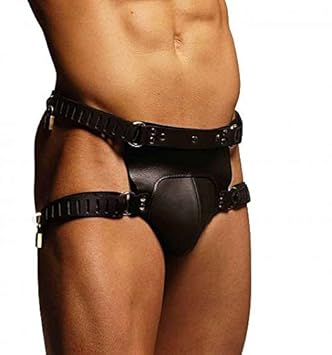
This is where Netflix comes in, almost by accent. In the past, it was a lot harder to stay entertained and content while also suppressing sexual urges. Why else would chastity belts have been a thing? When there wasn’t much entertainment beyond books and games, it was only a matter of time before those basic urges caught up with people.

Netflix does something that even the strongest chastity belt can never hope to do. It actually succeeds in keeping people distracted and content so that those base desires can’t occupy our thoughts. When there are so many amazing shows, from “Bojack Horsemen” to “Travelers” to “House of Cards” to “Stranger Things,” who has time for sex?

Related image

I write that only half-jokingly because, while it’s not possible to completely overwrite our base desires, it’s still possible to distract us. Human beings are, from a biological standpoint, pretty easy to distract. In the era of the internet and streaming media, it has never been easier to forget about the fact that you’re not having sex.

Add on top of that the growing risks with just attempting to get sex, thanks to concerns about harassment and assault, and Netflix suddenly seems like the path of least resistance. You won’t get accused of assault or harassment by staying home and watching Netflix. You also won’t get pregnant or a nasty disease, either. Add the inherent entertainment of the content and even I can’t deny the appeal.

Image result for binge watching

Now, it’s still doubtful that Netflix and others like it are the primary reason for the decline in sexual activity. As anyone familiar with logical fallacies will tell you, correlation does not equal causation. However, when scrutinized within the context of evolving sexual attitudes, the deficiencies of the past, and basic incentives, I think it’s reasonable to conclude that Netflix is a factor.

That trend, like all trends, is likely to change over time. It’s impossible to predict how our sex lives will change in the next few years, especially as emerging technologies start to affect sex and society at large. For now, there are a lot of factors affecting our sex lives. Netflix is just one, but as someone who is a big fan of “Bojack Horsemen” and “Stranger Things,” I think it’s more powerful than we think.

1 Comment

Filed under gender issues, sex in media, sex in society, sexuality

Presidents Day, Strong Leaders, And Why We’re Attracted To Powerful People (And Always Will Be)

23235661._SY540_

It’s Presidents Day. I know that’s a somewhat bitter reminder for those still upset about the results of the 2016 Presidential Election, but it’s here and we might as well appreciate it. For most people, it’s a chance to get a day off work or take advantage of stores wanting any excuse to have a sale. I’m as fond of sales as much as the next guy, but I think there’s something else about Presidents Day that’s wroth discussing.

Presidents Day, in principle, is an American celebration of the famous leaders who have helped shape the path of the country. Most agree that not just anyone can lead. Even among those who can, only a select few have led particularly well. Even among the Presidents of the United States, there’s a decent mix of admirable strength and frustrating ineptitude.

Image result for inept Presidents

However, the ability of a strong leader isn’t what I want to scrutinize here. Instead, I want to focus on why we’re so attracted to powerful people. I’m not just talking about in a sexual sort of way, either. Regardless of whether or not you want to sleep with a powerful person, it’s hard to deny that we’re attracted to them on many levels.

From a pragmatic perspective, we kind of have to be to some extent. A powerful person is only powerful if they can get people to follow them, carry out their agenda, and do things they wouldn’t normally do for a total stranger. Sure, they can threaten people with force or violence, but that only goes so far. As I’ve noted before in my discussions on fascism, raw leading by brutality can be pretty self-defeating in the long run.

A Biff Tannen style bully, in the grand scheme of things, isn’t very powerful. A truly powerful person is someone who can rally a hundred people who are physically weaker than Biff Tannen and subdue him through a coordinated, cooperative effort. That person, even if they’re as unimposing as George McFly, will always be more attractive.

Image result for george mcfly punches biff gif

In some sense, it’s frustrating. That’s especially true if you’re among those who don’t agree with or care for a powerful person’s agenda. From that perspective, they may seem like a Lex Luthor style super-villain. To them, someone with that kind of power can only ever be up to no good.

To their supporters, though, that same person is basically a messiah. They hold the hopes and dreams of an entire people in their hands. They aren’t just willing to follow that person into battle. They’re probably willing to sleep with them as well. There’s a reason why powerful cult leaders often have a lot of sex.

Related image

That attraction isn’t just reserved for men, either. Women can also gain a special level of allure from power. They don’t have to be a cult leader. They can just be an influential celebrity. It’s one thing for some ordinary woman to demand that someone get down on their knees and lick the dirt off their shoes. However, if Madonna or Taylor Swift made that demand, more than a few people would probably line up to do it.

Regardless of how earned or undeserved that power might be, the forces behind the attraction are the same. A powerful person, be they a world leader or a celebrity, is going to have more advantages when it comes to influence others, regardless of whether or not their goal involves sleeping with them.

Image result for Gaddafi

There are plenty of reasons why so many fall under that spell, but a few stand out more than most. A powerful person may have the physical sex appeal of a bloated George Costanza, but they can more than make up for it by providing some very attractive benefits such as:

  • Protection from physical violence or personal loss
  • Status within a community by simple association
  • Advantages that allow someone to subvert or undercut laws or social norms
  • Resources for one’s self and their family
  • Opportunities to exert influence and pursue personal goals
  • Opportunities to create stronger social networks

By any measure, a powerful person is in a position provide someone with everything they need to survive, reproduce, and live their lives in some degree of comfort. A powerful person doesn’t have to be physically attractive. They just have to be physically capable of providing those benefits to a sizable group of people.

It plays directly into our collective survival instincts, which may very well be the only instinct more powerful than our sex drive. From an evolutionary standpoint, it follows a logical progression. First, we have to ensure that we’re alive and in one piece. Then, we can focus on getting sex and passing on our genes.

Related image

Hooking up with a powerful figure is basically a two-for-one deal in the evolutionary game. Some may even go so far as to call it cheating and I wouldn’t disagree with that sentiment. However, when you consider how much men like Harvey Weinstein and John F. Kennedy got away with, it’s hard to argue with results.

Even as powerful people make the news for all the wrong reasons, a part of us is still going to be attracted to them. It’s a part of ourselves we may hate, to some extent, but in the same way we find ourselves affected by professional trolls, it’s hard to escape. Even as we advance our bodies and minds through technology, we may never escape it.

Now, I’ve argued before that we need to upgrade our brains through technology in order to transcend our tribal tendencies to hate and attack one another. I still believe that’s an imperative. However, even if Elon Musk manages to become a trillionaire by helping us all upgrade our brains to super-human levels, these same forces that make powerful people attractive will remain.

Image result for The Illusive Man

No matter how advanced we become, both as a society and as a species, survival will always be a concern. So long as there are ways for individual people to become powerful within that system, they will always be attractive on a basic level.

At the same time, though, these same powerful people are also major factors in guiding our species forward. Without them, we probably wouldn’t have made the kind of progress we have to date. Like so many other things in this unfair world, you take the good with the bad. In the spirit of Presidents Day, I say we celebrate the good and continue working to minimize the bad.

Leave a comment

Filed under gender issues, human nature, sex in media, sex in society, sexuality

In Defense Of Hook-Up Culture (To A Point)

635915974671817180628327593_the-crucial-guide-to-surviving-the-hook-up-culture

There are certain cultural phenomena that are difficult to defend. Things like big businesses, the NFL, or the current president come to mind. However, some of those things are attacked, denigrated, or hated for misguided reasons. It’s not always the case that they should be defended, but there are times when a little balance is needed.

When it comes to a topic that’s easy to criticize, hook-up culture has a bigger target than most and that target has only grown in recent years. It’s one of those issues that has fronts for both the unceasing war on horny women and the escalating war on horny men. To defend it means fighting a two-front war, which has historically been a bad idea.

I’m still going to try, though, and not because I think hook-up culture in its current state deserves to be defended. There are certain aspects about that state that I find flawed, some of which I’ve discussed before. Even so, I do believe some aspects of hook-up culture should be defended. I still intend to pick my battles very carefully, though.

At the moment, hook-up culture has been getting attacked on multiple fronts. It used to be that only cantankerous old people whined about young people having more sex than what priests, mullahs, rabbis, and monks deem appropriate. These people saw hook-up culture as antithetical to the idealized nuclear family model that was glorified in every 50s sitcom.

Most people, these days, don’t take that kind of whining seriously. However, a new attack on hook-up culture is actually coming from other young people and otherwise educated people that are smart enough to recognize why those idealized 50s sitcoms were pure fantasy. Instead, they’re attacking hook-up culture as some inherently toxic manifestation that’s destroying men and women alike.

Make no mistake. This attack isn’t restricted to extreme conservatives who see hook-up culture as an affront to traditional values or liberals who see it as a tool of oppression that’s inherently objectifying. It’s not even restricted to man-hating feminists who think cat-calling constitutes assault or women-hating men who see every woman is a gold-digger who wants to ruin his life.

The attack runs deeper than that. Taken all together, these attacks reflects a sentiment that isn’t always hostile to sex, but treats it the same way most people treat a phobia. Regardless of political or agenda affiliation, sex from the attackers is almost always in a context of anxiety, fear, and hyper-vigilance. That phobia manifests in different ways.

If you’re a conservative traditionalist, hook-up culture evokes a fear that anything other than the nuclear family will destroy society and hurt those who participate.

If you’re a liberal progressive, hook-up culture evokes the fear that men will exploit women, using them for their own selfish reasons and subsequently contributing to their continued oppression.

To some extent, I can understand those fears. However, like most phobias that don’t involve spiders, those fear are not justified. They also reflect some very unhealthy attitudes about sex, intimacy, and romance in general.

Some of those attitudes play out in the sensationalized headlines surrounding hook-up culture. In these stories, it’s often portrayed as callous, bland, and overtly hedonistic. People aren’t getting together to fall in love, get married, and make babies. They’re just having sex the same way they would scratch an itch.

For some people, that’s unnerving, especially if they have children above the age of consent. There may even be a twinge of jealousy in that these young people are enjoying the kind of fun that older people didn’t get to experience when they were that age. While I suspect that’s a factor, I don’t think it’s the root cause.

Beyond the cause, though, the attitudes feed the sex-phobic sentiments whenever there’s news that hook-up culture may be harmful. There has been research on the topic and while the American Psychological Association does not draw any sweeping conclusions, it does take the position that hook-up culture is often prone to complications.

Chief among those complications, which also provokes the sentiments of the liberal progressive crowd, are the instances in which people regret hooking up. This is especially sensitive for women. In one study, over 75 percent of the women who’d hooked up with someone regretted it.

For some, it was just an unsatisfying experience. For others, it was somewhat traumatizing. This has become especially taboo since the recent scandal with Aziz Ansari in which the line between regret and misconduct is difficult to see. If you have an agenda, though, confirmation bias will allow you to see these situations as either misogynistic assault or man-hating extortion.

That’s what I find particularly dangerous/revealing about these attacks on hook-up culture. It’s so easy to find instances where people have a bad experience with it or are negatively affected by it. By singling these instances out, whether it’s mental health issues or part of a major celebrity scandal, every side can point to hook-up culture to justify their various sexual anxieties.

It probably doesn’t help that these anxieties may very well contribute to the ongoing orgasm gap between men and women. It also doesn’t help that trends in social media have made hook-up culture even easier to pursue than ever before. By nearly every measure, hook-up culture has little way of defending itself.

This is where I come in and I’m already bracing myself for the criticism.

armor knight man art warrior wallpaper

When I take a step back and look at the intent of hook-up culture instead of the anecdotes surrounding it, I do see something that’s worth defending. I’m not going to discount the negative impact it might have on some people, but I think the sentiment behind hook-up culture deserves more merit.

To highlight that merit, I need only ask a few questions. I doubt I’ll get honest answers from everyone, but at least consider them when contemplating hook-up culture.

Is it possible that hook-up culture reflects some of the inherent flaws with our traditional approaches towards seeking love and sex?

Is it possible that those engaged in hook-up culture are actually looking for some casual intimacy and NOT just hedonistic indulgence?

Is it possible that men prefer hook-up culture because they don’t want to jump through all the hoops of a relationship to get the intimacy and sexual release they desire?

Is it possible that women prefer hook-up culture because they just want to enjoy the toe-curling pleasure that comes with basic sexual intimacy?

Is it possible that some people just want to explore their sexuality without committing too much of their time, energy, and life to a relationship?

None of the questions above are rhetorical or factious in any way. They’re serious, honest questions that I think need to be asked when assessing the issues surrounding hook-up culture.

Regardless of whether or not hook-up culture exists, people are going to get horny. People are going to want to express their sexual desires. There’s no way to stop that. Religion, government, and culture has tried desperately over the years, some going to more extremes than others. All have failed.

This is what I think it hook-up culture’s best defense. It reflects and acknowledges the inherent need of people to express and explore their sexual desires without navigating the myriad of legal, social, and cultural rituals associated with it. In some respects, that reveals the inherent shortcomings in those rituals themselves.

I don’t doubt there are risks associated with hook-up culture. Disease and unwanted pregnancy are at the top of that list, along with instances of exploitation and assault. Focusing on those outcomes is like calling Eddie Murphy’s entire career a failure just because he stared in “Pluto Nash.”

There is a larger context to consider. Remember that study about people regretting their hook-ups? Well, science is rarely that definitive when it comes to matters of human psychology and sexuality. Later studies reveal that the extent of that regret isn’t very strong. It turns out that, like paying to see “Pluto Nash,” we tend to get over it. Most functioning human beings do.

Those same studies also make clear that the quality of the hook-up matters. If someone hooks up with someone for sex, but the sex isn’t satisfying, then of course there’s going to be some regret and anxiety later on. That’s what happens whenever our expectations aren’t met. Just ask anyone who got excited about the Jacksonville Jaguars’ failed Super Bowl guarantee.

This is where the extent of my defense of hook-up culture ends. While I think the various criticisms and anxieties about it are unwarranted, it does carry some baggage that makes all those unpleasant anecdotes so common.

Hook-up culture, in its current form, has all sorts of heavy expectations surrounding it. Whether it’s people actively engaged in it or those observing it from the outside, there’s this sense that hook-up culture is this non-stop party where everyone is enjoying the Caligula-style orgy and nobody leaves unsatisfied. That’s just not how human sexuality works.

Human beings are a passionate, social species. When hook-up culture becomes too dispassionate, which can happen, then it ceases to be a healthy expression of human sexuality. In that context, it’s basically glorified masturbation. As a romance fan and an aspiring erotica/romance writer, I can’t get behind that sort of callousness.

However, I think the attacks on hook-up culture are more misguided than hook-up culture itself. Men are seeing it as an agenda that beautiful women are exploiting. Women are seeing it as an agenda that misogynistic men are exploiting. Liberals and conservatives are seeing it as an affront to everything they deem good and moral. In attacking it, though, they all reveal their own sexual anxieties.

If our collective sexual attitudes are to improve, along with our overall satisfaction, we need to confront these anxieties. Hook-up culture isn’t going away because people wanting to enjoy sex with fewer strings is not going away. We can either learn from it or fight it, with the understanding that fighting it rarely ends well for either side.

Leave a comment

Filed under gender issues, sex in media, sex in society, sexuality

Five Reasons Why I WOULD Date A Transgender Woman

Model

The older I get, the more I realize just how much work, energy, and even flat out luck goes into finding a romantic partner. It’s not just from my own personal experience, either. I see it play out in my friends and family as they find lovers, some of which work out and some of which don’t.

At the moment, I am single and my efforts to find love have been difficult, to say the least. I’ve tried online dating. I’ve tried putting myself out there. I’ve even tried flirting a bit. It hasn’t really amounted to much, thus far, but I remain hopeful that I’ll find that special someone one day.

Recently, though, someone asked me an interesting question. Over the course of a conversation about our respective struggles in finding love, he asked if I would ever consider dating a transgender woman. That’s the first time someone asked me that question seriously and I needed a moment to think about it.

As I’ve said before, my knowledge of transgenderism is fairly limited. However, writing about the issue has given me opportunities to interact with a few transgender individuals. I can say without hesitation that much of my interactions with transgender people have been positive. Nearly everyone I’ve met, thus far, has been decent and sincere.

With those experiences in mind, I thought long and hard about this issue. I’m not the first one, either. According to a poll done by adamandeve.com, which isn’t exactly scientific, about 65 percent of adults say they would not date a transgender individual. There are any number of reasons why that might be, but I don’t want to speculate so I’ll just give my answer.

Yes, I WOULD date a transgender woman.

Now, I’m not saying that to virtue signal. I’ve already made my feelings on that fairly clear. I came to this conclusion after thinking about what I want in a lover, what kind of person I would want to be for them, and how I would go about pursuing a relationship. After considering all that, the answer became fairly clear.

I would, indeed, be open to dating a transgender woman. I don’t deny that it would be somewhat different than dating a cis-gendered woman, but every individual has their quirks. I don’t see why being transgender should be a deal-breaker in a relationship, at least for me.

I even came up with a few reasons as to why I would be open to such a relationship. Please note that these reasons are coming from someone whose experience with transgender people is limited. I have had issues in the past where my discussions on the issue have inadvertently offended certain people. I will make an effort to avoid that here, but please bear with me if I slip up.


Reason #1: A Transgender Woman Has A More Balanced Understanding Of Gender

This is probably my top reason and the first that came to mind when I contemplated this issue. A transgender person who often has to approach gender in a radically different way from what the social and cultural norms dictate. Their world is one where it just doesn’t work to put clear, defined lines between men and women.

This is kind of a big deal for me because there have been times in my life where I’ve been insecure about what’s expected of me as a man. I love romance. I love passion. I like to explore emotions and walk the fine lines of certain cultural expectations. Some of these things will earn awkward looks from other men and even other women. That was why I often hid my love of romance as a teenager and even a young adult.

I think a transgender woman would understand that feeling better than most, not conforming to certain expectations of their gender and trying to navigate those issues that the Ben Shapiros of the world say don’t exist. I think I would find a lot of common sentiments with a transgender woman, more so than a cis-woman in some cases.


Reason #2: A Transgender Woman Has Greater Insight Into Male AND Female Anatomy 

This was probably the second thing that popped into my mind. I admit, it’s fairly crude. It’s probably the same idea an immature teenage boy might give if asked about the benefits of dating a transgender woman. I have a feeling a number of transgender individuals would roll their eye at that, but I also think there’s something to be said about someone’s experience with the diversity of human anatomy.

In my conversations with transgender women in the past, that experience often involves a disconnect between the mind and the body. The mind says they’re a woman. The body says they’re a man. The struggle is trying to get the body and mind on the same page.

Gender reassignment surgery is just part of that experience and one that’s too big to cover in one post. As it stands, the process has advanced to a point where a transgender woman can have a fairly comprehensive understanding of what it’s like to have both a penis and a vagina.

I think that understanding would help with the intimacy of a relationship. I’ve been with girls who think a penis is basically a faulty light switch, which has made for some awkward moments. Regardless of your gender, it helps to have a better understanding of how genitals actually work.


Reason #3: A Transgender Woman Has A Firmer Grasp On Her Identity

This is a more introspective reason. It’s a reason that also reflects on issues of identity, as a whole. I’ve met men and women throughout my life present themselves in one way, but it’s obvious they’re forcing it. They don’t always know who they are, but try desperately to be what everyone around them expects.

Transgender individuals probably have greater self-awareness than any cis-gendered person ever will. It takes a lot of personal insight to understand that your mind says you’re one thing, but your body says another. It’s difficult for most cis-gendered people, like myself, to comprehend. That’s why it’s so easy to take self-awareness for granted.

For me, dating a transgender woman who is secure in her identity means dating someone who understands who she is and what she wants to be. That’s a rare and under-valued quality in a partner. If one or both people in a relationship lack that, then there will be problems. I imagine a transgender woman would teach me a thing or two about my own identity that I might not have realized.


Reason #4: A Transgender Woman Better Understands The Importance Of Personal Growth

There are a lot of things that go into a successful relationship. One trait my parents often emphasized is to love more than just who a person is when you meet them. It’s often more critical to love who they’re trying to be. People are not static. They grow and develop over time. That’s just part of the human experience.

A transgender person faces more growing pains than most. They have to live their lives with a body and mind that are at odds. Just dealing with that is something that most non-transgender people struggle to grasp, but that means their growth process as individuals takes more turns than most.

For someone seeking to truly align the identity of their mind and body, it takes more than just growth or surgery. It also involves growing up in a world that is not very friendly to transgender individuals. That kind of growth involves a lot of hazards and their ability to navigate them reveals the kind of person they are.

For someone like me, who sometimes has difficulty surmising who someone is trying to be, a transgender woman provides a unique personal story. As someone with a strong appreciation for such stories, I can see an intimate appeal to that sort of connection.


Reason #5: A Transgender Woman Faces A Unique Set Of Life Experiences That Reflect A Unique Kind Of Strength 

This reason ties, somewhat, into the previous reason because it stems from that personal growth that a transgender person undergoes. In aligning their mind and their body into a singular identity, they undergo a difficult growth process. That process requires strength, namely a kind most cis-gendered people take for granted.

I wake up every day, look in a mirror, and don’t even think about my gender identity. I feel like a man. I look like a man. I have manly interests. I don’t have to put an ounce of effort into it. That part of my identity is not in conflict. I imagine if I woke up tomorrow in a woman’s body, I would be very confused and probably very distressed.

Dealing with that sort of disconnect requires strength and not just the kind that involves accepting their identity or undergoing surgery. Like I said before, it takes an uncanny amount of self-awareness to realize one’s identity. A transgender woman who made it to a point where she’s willing to date a guy like me reflects a strength that’s hard to put into words, even for an aspiring erotica/romance writer.

No matter who you are, having a firm grasp of your identity and being willing to share it with someone takes strength. A transgender woman would have more strength than most and for a guy with as many sexy thoughts as me, I think we could make a relationship work. I may never get a chance to try, but I’m comfortable saying I would be open to the experience.

16 Comments

Filed under gender issues, Jack Fisher's Insights, sex in society, sexuality

Should We Re-Think Our Expectations Of Teenagers?

pexels-photo-246367

When I was a teenager and in a particularly bad mood, which happened more often than I care to admit, there was this one thing my parents often told me that really pissed me off.  It came out in many forms, but this was the underlying sentiment.

“If you EXPECT it to be a bad experience, then it’s GOING to be bad experience.”

I can’t recount how many times I heard something like this. I just remember it pissing me off even more every time I heard it. They usually said it to me whenever we were going out to do something that didn’t involve me sulking in my mood. Being the great parents they were, they didn’t let that happen. They got me off my ass and out of that mindset.

They probably didn’t know at the time, but that bit of good parenting reflects a real phenomenon within our collective psyche. It’s called expectancy theory and it’s kind of what it sounds like.

It’s based on the principle that if someone has certain expectations about something, it’ll affect how they approach it. If they have a positive, hopeful attitude, then they’ll be more likely to evoke positive, hopeful outcomes. If they’re negative about it, as I often was, then it’s not going to turn out well and confirmation bias will help make it worse.

With that in mind, I’d like to apply this to an experience that’s pretty much universal for everyone. Specifically, I want to focus on our expectations as and towards teenagers. Now, I know I’ve given teenagers a lot of crap on this blog, often highlighting how they tend to do dumb things and have misguided attitudes. In my defense, my own confirmation bias has somewhat affected that.

I did not have a good teenage experience. I had a terrible attitude for much of my teenage years and, despite having great parents and amazing social support, I found ways to make myself miserable. However, for the purposes of this discussion, I want to focus less on my own experience and more on the concept as a whole.

Take a moment, whether you’re a teenager or not, to ask a few important questions about the sentiment you have towards teenagers. Don’t just think about how you feel about it, personally. Think about how we collectively approach the teenage experience.

Are teenagers more deviant because of basic developmental biology or because we expect them to be deviant?

Are teenagers more immature because of basic developmental biology or because we expect them to be immature?

Are teenagers disrespectful because of their basic developmental biology or because we expect them to be disrespectful?

Are teenagers more prone to risky behavior because of basic developmental biology or because we expect them to do risky things?

See the pattern? There seems to be this underlying assumption about teenagers that rarely gets scrutinized. It’s this idea that all the biological changes that teenagers go through with puberty somehow transforms them from these sweet, innocent children into these reckless, irresponsible, proto-adults who aren’t capable of managing themselves.

It’s fairly likely that all those biological transformations that teenagers go through has some affect on their mentality. However, even the most up-to-date research on the issue concedes that our understanding of the mechanisms behind the process are extremely limited. What that means in a scientific context is we should not assume that our assumptions at the moment are wholly valid.

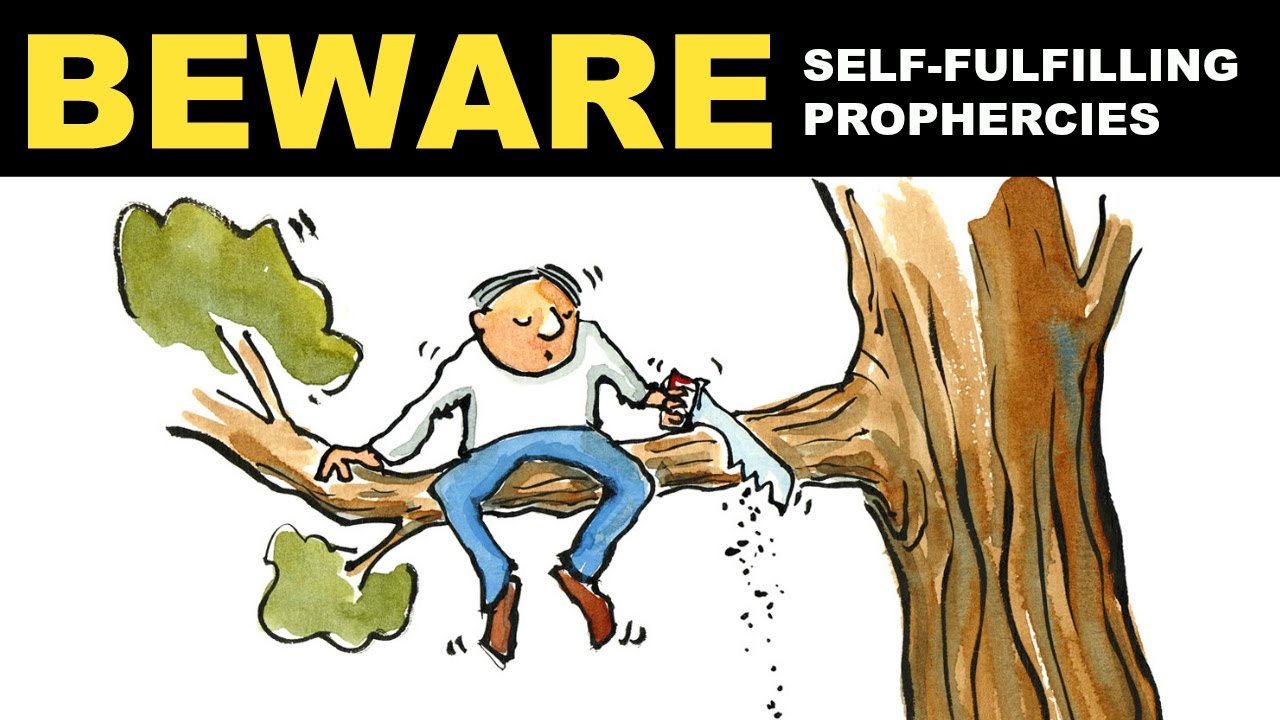
It may very well be the case that our expectations about teenagers have a significant impact on how we treat them. In turn, how we treat them ends up affecting how they act in response. Then, when they react, we use confirmation bias to justify our expectations. It comes off as one elaborate self-fulfilling prophecy to which we all contribute.

When you think about it, the signs are there. If you’re a teenager, just look at how the world treats you. If you’re an adult, think about how you were treated as a teenager and how you treat teenagers now.

We impose strict curfews about what they can do with their private time. We don’t trust them to consent to sexual activity until a certain age. We regularly send them to educational institutions where their lives and schedules are strictly controlled, not unlike that of prisoners. Whenever there’s a crime or an act of deviance, we tend to expect teenagers to be involved.

From my own experience, I can attest to this. When I was in high school, I noticed a distinct change in the way adults and teachers dealt with us, compared to middle and elementary school. Suddenly, everything we did was subject to greater scrutiny. It was as though everyone thought that we, a bunch of hormonal teenagers, were just one impulse away from becoming violent deviants.

I’m not going to lie. I found that kind of insulting. Teachers, adults, and even police officers would talk down to us whenever they discussed things like sex, crime, and even our personal lives. It wasn’t just that we were expected to screw up. It was almost as though we were supposed to screw up.

It never really crossed my mind that being a teenager could mean anything else. The idea that these attitudes were somehow flawed never entered my mind. I don’t think many people, including other teenagers, give it much thought now. That may very well be a problem that only makes itself worse the longer we have these expectations.

Part of what inspired me to write about this topic is an article from TheVerge that pitched the crazy, yet oddly logical idea that we should consider those under the age of 24 to still be teenagers. I admit I thought it was a joke at first, albeit not of The Onion variety. However, the author does make some interesting points.

Compared to earlier generations, youth today are staying in school longer, marrying and having kids later, and buying a house later, writes Susan Sawyer, the chair of adolescent health at the University of Melbourne, in an op-ed published today in the journal The Lancet Child & Adolescent Health. The transition period from childhood to adulthood lasts far beyond age 19, when it is popularly thought to end. As a result, she writes, we should change our policies and services to better serve this population.

In a sense, the author of the article is doubling down on the expectations. Now, it’s not just people who don’t have a two in front of their age to which we should ascribe these assumptions. We need to apply that to people even older because somehow, they’re still not meeting the other expectations we have of functioning adults.

Personally, I think that’s taking things in the wrong direction. If we’re going to start expecting more deviance and immaturity from more people, then that’s what we’re going to see and not just from confirmation bias. Just as I did as a kid, my negative expectations led to negative manifestations. Now, they may follow young people beyond high school.

It’s not magical thinking to say that attitude matters when it comes to dealing with people. Human psychology is extremely complex and varies wildly from individual to individual, but humans are still a very social species. As such, treating others with respect and maturity will provide them with incentives to do the same.

I don’t deny that certain assumptions are difficult to escape, especially when some of them are incorporated into actual policies. Even if we woke up tomorrow and started treating everyone over the age of 13 as a responsible adult, it probably wouldn’t resolve the many issues we still have with youth in society. However, as I came to learn as an adult, having a good attitude goes a long way towards achieving a good outcome.

1 Comment

Filed under gender issues, sex in society, sexuality

Boredom Vs. A Lack Of Belonging: Which Drives Outrage Culture More?

http3a2f2fi-huffpost-com2fgen2f45348782fimages2fn-group-holding-hands-628x314

Here’s a quick non-rhetorical question. Which is worse, crippling boredom or social isolation? There’s no right answer, but every answer has distressing implications. More than anything else, those answers reinforce why solitary confinement is rightly considered torture.

I ask that question because I had an interesting conversation with someone on Reddit about what drives certain people to be constantly outraged about whatever happens to be controversial that day. I’ve talked a bit about outrage culture before and how professional trolls exploit them, but I haven’t really dug into the mechanisms behind it. Given how new controversies seem to trend every day, I think it’s worth scrutinizing.

In the discussion, I singled out boredom as a possibly underrated factor. Having highlighted the power of crippling boredom, I felt qualified to make the case that boredom may very well be an understated, under-appreciated cause. I still feel there’s a case to be made.

In the grand scheme of things, humanity is in uncharted territory when it comes to boredom. For most of human history, we had to live our lives under the constant threat of plague, famine, war, and natural disasters. Whether we were hunter/gatherers or subsistence farmers, life was chaotic and unpredictable.

Say what you will about those harsh, pre-modern eras, but they weren’t boring. They couldn’t be. There was always work to do. Given the lack of effective birth control, there were children to raise. Even if social media had existed 100 years ago, who would have the time or energy to even be outraged about a man wearing a sexist shirt.

Fast forward to the 21st century and things like war, famine, disease, and crippling poverty are all in decline. This is objectively good on so many ways, but for some people, especially in well-to-do middle class people, it leaves a large void that quickly becomes boring if not filled with something. Sometimes, it can get so bad that it can lead to outright murder.

When I made this argument, I think more than a few people took it seriously on Reddit. It was easy to see how someone whose life is so affluent and devoid of heart-pounding conflict that they will latch onto petty outrages just so they can feel something. Like someone stuck in solitary confinement, they’ll do anything for some sort of stimulation beyond counting the tiles on the floor.

Given how our brains can’t always discern the source of arousal, sometimes it’ll settle for whatever adrenaline rush we get from righteous outraged. Some go so far as to call the rush we get from outrage an addiction and it’s not a wholly inaccurate idea.

However, one person in that discussion pointed another element that also relies on that part of the brain that can’t always discern what gets it aroused. Instead of combating boredom, though, this issue deals with our inherent need to join a group and become part of a larger movement.

It’s very much an extension of tribalism and, like seeking stimulation when there is none, human beings are well-equipped by evolutionary biology to form groups. Whether we’re a small band of hunter/gatherers or a group of Taylor Swift fans, it doesn’t take much for us to form those groups and our brains reward us greatly.

Being part of a group feels good. Being part of something gives us a rush. It’s a major reason why peer pressure works and why tribalism often overrules reason. That solidarity we feel when we’re part of a group isn’t just intoxicating. It’s a fundamental component of any highly social species, which includes humans.

What this means for those constantly outrage isn’t that far off from the implications relating to boredom. Like boredom, our current society is pretty unprecedented in terms of how easy it is to form a close-nit group and share in that solidarity that has been driving our species since the hunter/gatherer days.

Thanks to social media and mass communication, it’s possible for people to do more than just share their opinions, no matter how outrageous they might be. It’s also possible to connect with those who either share in those opinions or despise them. In terms of forming a tribe, it’s a two-for-one-deal because it creates both a sense of “us” while revealing a “them” to rally against.

For anyone who has spent any amount of time on social media, it doesn’t take much to see the whole us versus them mentality to take shape. If any amount of disagreement goes on long enough, Godwin’s Law usually takes over and the battle lines are set.

On top of this, the social issues in 2018 aren’t quite nearly as clear-cut as they were in decades past. In the past, there were some pretty egregious injustices surrounding civil rights, women’s rights, and LGBT rights that required major social movements to combat. By and large, society has done a lot to improve the state for these marginalized groups.

There’s no question that being part of such righteous movements is laudable. We, as a society, rightly praise civil rights leaders who stand for such righteous causes. Naturally, some people seek to emulate that. Whether by ego or altruism, it’s only natural that they want to experience that kind of accomplishment.

Thanks to the sheer breadth of human progress, though, there causes on the levels faced by Martin Luther King Jr. or Mahatma Gandhi. However, because that drive to be part of a movement is just that strong, those same people will settle for pettier movements that protest sexy women in video games or bemoan the lack of diversity in old TV shows like “Friends.”

Make no mistake. Those outrages are petty and asinine when compared to the real injustices that past social movements have fought, but the brains of the outraged can’t tell the difference. From their perspective, their movement is every bit as righteous as every other civil rights movement in history. The outrage they express and the solidarity they feel is every bit as fulfilling as something that alleviates boredom.

Even if these causes are petty and the outrage is shallow, it’s important to note the alternative here. If these same people who protest the lack of diversity in the tech industry didn’t have this sort of thing to drive them, then what would happen to the group they’d formed?

Absent that outrage and protest, the group has nothing to rally behind. The person has nothing provoking arousal, be it anger or excitement. Without this dynamic, they don’t belong to something bigger anymore. They’re not the ones marching alongside famous civil rights leaders of the past. They’re just alone, by themselves, contributing nothing of value.

For many people, that’s just untenable. I would go so far as to say it’s almost as untenable as crippling boredom. Even self-proclaimed introverts and ardent individualists, we seek an identity and a constant source of stimulation. When we lack one or both, we lack a core element of any social species. In the same way we’re driven to meet the rest of our basic needs, we’ll be driven to find that somewhere, no matter how misguided.

In the past, we might have found that sense of belonging and purpose through our small communities or organized religion. Today, the world is much bigger and more diverse, thanks to technology and civilization. Organized religion is also not effective anymore due to factors too numerous to list. People are still going to seek belonging.

It’s somewhat ironic that civilization has advanced to such a degree that there aren’t as many clear-cut, good versus evil movements to be part of anymore. However, there’s still this longing to be the hero of our own story and be part of something greater, even if it means actually going out of their way to feel outraged.

Getting back to the initial question I posed, I think the influence of boredom and belonging are inherently linked. We agonize over escaping boredom and over having a sense of belonging. We can’t get that same rush our ancestors felt when surviving bear attacks and hunger so we’ll settle for whining about protests during football games. It’s still annoyingly petty, but distressingly understandable.

4 Comments

Filed under Current Events, gender issues, Reasons and Excuses, War on Boredom

Natural Contraceptive App Blamed For Unplanned Pregnancies (As Expected)

Pregnant woman standing outside on a sunny day

There’s no question that advances in contraception have had a profound impact on our society. Some applaud it. Some resent it. Either way, there’s no uninventing it. Contraception, be it male or female, is a big part of our society and further advances promise to have an even bigger impact.

I’ve talked about the future of contraception before, as well as the potential impacts of those advances. There are a lot of things in development, as I write this, that men and women alike should get excited about. Between better IUDs and more birth control options for men, we’re quickly entering an age where we have unprecedented control over our fertility.

It’s for that very reason that it’s necessary to take a step back and remind ourselves of the existing flaws we have with the current state of contraception. There’s a reason why those advances I mentioned are in development to begin with. What we have now is pretty good, relative to older, more archaic forms of birth control. However, there are a few shortcomings that tend to lead to dramatic, albeit predictable failures.

One of those shortcomings/failures made the news recently and left several dozen women very disappointed, to say the least. According to a story from TheVerge, a recently-developed contraceptive app called Natural Cycles is being blamed for 37 unwanted pregnancies. Anyone who knows anything about pregnancy, female biology, and nature in general probably isn’t surprised.

That’s because the app in question basically made something like this inevitable. According to the article, the Natural Cycles app is supposed to help women who rely on more natural family planning methods. In terms of the actual process, these are the basics:

The app uses an algorithm and measures factors like temperature to determine the period when a woman may be fertile. It’s a popular alternative to hormonal contraceptives like the pill because it lacks side effects.

It’s pretty basic, but the principle makes sense on paper and isn’t based on radically new ideas. The concept of a woman tracking her fertility to determine the times of month when she’s most likely to conceive a child is fairly well-known. It’s most commonly called the “Rhythm Method” and according to the Mayo Clinic, it takes a lot of preparation.

To use this method, a woman needs actively track her menstrual cycle, accurately determine the parts of that cycle where she’s most fertile, and plan her sexual activity around those time-frames. It takes a great deal of physical awareness, as well as a certain measure of discipline, which some people are better at than others.

The Natural Cycles app is supposed to supplement those principles by aiding in that tracking process. It even tries to provide the woman with more data so that she has a better understanding of her body while tracking her cycle. In theory, having perfect knowledge of her biology will ensure a woman knows when she is or isn’t fertile.

natural-cycles-5

It’s that exact theory, however, that makes this news about a surge in unplanned pregnancies so unsurprising. There’s a good reason why this sort of approach to contraception is rarely practiced by anyone other than committed couples and is often discouraged as a general form of contraception.

As with so many other theories, the actual practice of the method doesn’t always work in the real world. That’s because the real world is a lot more chaotic, varied, and unpredictable than concepts on a piece of paper. That applies even more to human biology, male and female.

Now, the appeal of natural family planning like the one Natural Cycles promotes is undeniable. You don’t need to take a pill. You don’t need to have something inserted into your body. Plus, it gives you a chance to really know and understand the workings of your body. For both sexual health and general health, that’s has many benefits.

Unfortunately, the human body is not known for being that transparent. It does not come equipped with a USB port or a wireless interface that provides us with accurate, real-time data about our insides, although that’s one advancement science is working on. Absent that data, natural family planning, even with the aid of Natural Cycles, is going to be either incomplete or flawed.

I don’t doubt that the use of Natural Cycles helps in the process, but there’s a good reason why the same Mayo Clinic that so thoroughly lays out the process of natural family planning also identifies it as one of the least reliable forms of contraception. This is what they had to say about the risks associated with this method.

Using the rhythm method as a form of birth control doesn’t pose any direct risks. However, it’s considered one of the least effective forms of birth control. How well the rhythm method works varies between couples. In general, as many as 24 out of 100 women who use natural family planning for birth control become pregnant the first year. Also, the rhythm method doesn’t protect you from sexually transmitted infections.

Given this information, the fact that some of those using the Natural Cycles app ended up pregnant should surprise no one. The shortcomings of natural family planning are well known and, for the moment, no app is capable of circumventing those shortcomings.

It’s not just that even the most basic activities of the human body are so difficult to quantify and track. Doing so and trying to plan around it assumes all those involved behave with perfect discipline. While I still believe that most human beings are inherently good at heart, I don’t doubt that human beings can also be erratic, irrational, and just plain stupid at times.

There will be moments when a woman misjudges or mistimes her fertility over the course of her cycle. There will also be moments when the passions between a woman and her lover will override whatever discipline they had promised to exercise during that time of the month. Even when people aren’t stupid, they can be overwhelmed by a moment.

That’s the ultimate flaw of natural planning and apps like Natural Cycles. It’s not just prone to human error. It relies on the absence of human error in order to work perfectly. That’s not just flaw. Those are unreasonable expectations that no population of healthy human beings can hope to meet.

It’s sad that several dozen women had to learn this the hard way, even if the outcome was fairly predictable. If nothing else, it should remind us just how much work we need to do on improving contraception, women’s health, and our overall understanding of our biology.

1 Comment

Filed under Current Events, gender issues, sex in society, sexuality

Why Men And Women Cheat (And Lessons To Learn From It)

44BAA17400000578-4920910-image-a-1_1506423209524

As an unapologetic romance fan, I concede that I often talk about love the same way dog lovers talk about puppies. I go on and on about how wonderful it is, but often gloss over the nasty parts. In the same way those dog lovers don’t dwell on all the times their beloved companion shits on the rug, I don’t dwell on the more painful aspect of romance.

Well, in the same way ignoring the pile of dog poop doesn’t make the stench go away, ignoring those painful elements of romance doesn’t make them any less relevant. Even those who aren’t romance fans understand that romance often involves tragedy. It’s no coincidence that some of the most famous love stories, from “Romeo and Juliet” to “Titanic,” involve a hefty bit of heartache.

I would argue that’s exactly what makes love and stories about romance so powerful. There’s a significant risk of heartache, rejection, and loss. There’s real pain that comes with pursuing romance, but the we gladly risk that pain because the rewards can be as fulfilling as they are sexy. I’ve done more to highlight the breadth of those rewards in my novels, especially with stories like “Passion Relapse.”

However, the pain that comes from the other side of that coin can be just as dramatic, if not more so. Anyone who has ever seen old episodes of “Jerry Springer” understands this to some extent. It’s not usually the kind of drama that ends with two lovers dying in each other’s arms or Rose not making room for Jack on that floating plank. More often than not, it’s a more frustrating kind of drama.

In many respects, the unsexiest version of this drama has to do with cheating. To some, that’s the much more dreaded C-word. Cheating is to romance what food poisoning is to Thanksgiving dinner. It is the worst-case scenario for those seeking the joys and appeals associated with romance. It is also one of those unfortunate elements that plays out in real life more often than it does in sexy romance novels.

It’s unromantic, but inescapable. Cheating happens and it happens a lot. While it doesn’t happen as often as “Jerry Springer” might have us believe, it happens often enough that it’s a legitimate concern among lovers. That’s why modern marriage laws, however skewed they might be, often account for infidelity.

In the same way there has never been a drug-free society, there has never been a society where cheating and infidelity has not occurred to some extent. From our caveman ancestors to the increasingly-uptight Millennials, the risk of cheating is there and the rise of social media and online dating sites like Ashley Madison are only making it easier.

I’ve talked a bit about cheating when I’ve discussed jealousy and our approach to marriage in modern society. Within the context of those discussions, cheating is a significant portion of those issues, but it’s still only part of a larger whole. It’s still a significant stain on the pursuit of romance, but it doesn’t completely overshadow it.

To make sense of it, as difficult as that may be, it’s necessary to focus on the reasons why people cheat. To anyone who has ever been the victim of a cheating lover, that may mean poking at old wounds and for that, I apologize. I admit it’s somewhat underhanded to suggest there are reasons why people cheat instead of just excuses, but to make sense of cheating overall, we need to accept that there are reasons behind it.

Listen to any story about cheating, be it a magazine article or a poorly-directed reality show, and you’ll notice a few themes about cheating. For one, there is a gender disparity in the numbers. Statistically speaking, men do cheat more often than women. However, the difference in those numbers isn’t quite as vast as the “Mad Men” stereotypes would have us believe.

As to why the gender disparity exists, there are just as many theories about that as well. I’ve talked somewhat about those disparities in discussions about sexual promiscuity and gender double standards. However, those theories don’t always explain the reasons behind cheating. In fact, the process for gathering data on cheating is exceedingly tricky.

Absent an underlying theory, we’re left with a diverse list of reasons that men and women give for their infidelity. According to WebMD, men and women cheat in different ways. For men, it’s often physical, a method of meeting unmet needs. For whatever reason, they’re no longer satisfied with their spouse and cheating is either a way to meet those needs or escape from that spouse.

For women, the act of cheating often has more emotional connotations. While meeting a physical need is part of it, women are more inclined to seek an emotional connection when they cheat. That’s not to say that some women just want some sexual variety or some men don’t fall in love with those they’re cheating with, but these are the popular narratives and some of it does bear out in the data.

Like I said earlier, though, the disparity in that data is not exceedingly vast and there are a lot of issues associated with gathering that data in the first place. If you accept the rule of the great Dr. House, “The most successful marriages are based on lies,” then it’s almost impossible to ascertain just how much cheating is going on and why it’s happening.

Even if it’s impossible to know, there are lessons we can learn from the reasons and excuses that people give. Chief among the reasons men give for cheating involve seeking new intimate experiences, either out of dissatisfaction or boredom. Given how I’ve explored the impact of boredom before, I think that is likely a bigger factor than most care to admit.

With women, the reasons often involve a lack of satisfaction that goes beyond physical. It’s not just that they feel unsatisfied. The underlying theme often involves their sentiment that their partner is no longer putting in the kind of effort they did when they fell in love. That lack of effort gives the impression that they don’t care anymore, leading women to seek out someone who does care.

In scrutinizing these reasons that vary widely between gender, cultures, and personality types, there does appear to be one common theme that binds both genders when it comes to cheating. Whether it’s physical or emotional, it often comes down to the perception that someone in the relationship isn’t putting in the effort anymore. Either they don’t have the energy or just don’t care enough.

In either case, the context of the cheating seems less about meeting a need and more about finding someone who will match your passionate efforts. Regardless of whatever gender disparity may or may not be at work with cheating, there’s no denying that men and women are passionate creatures. We each seek outlets for our passion and if we’re not getting it from that outlet, we’re going to seek another.

That’s not to say that some who cheat are just looking for an exciting and novel experience. That’s another inclination that is hard-wired into both genders in ways that go beyond sex, romance, or fidelity. When it comes specifically to cheating, though, the primary catalyst often comes back to passion and how it’s being channeled.

Cheating and being cheated on often comes with many hard lessons, some of which leave deeper scars than others. Whether you’re a romantic like me, a jaded heart with cynical views on love, or believe that human beings aren’t meant to just love one person for the rest of their lives, the betrayal and dishonesty associated with cheating still hurts us. If nothing else, it’s a harsh reminder of how deep our passions run.

If there’s a lesson that both genders can and should learn from the pain of cheating, it’s the importance of understanding and channeling those passions. When two people share the kind of passion that keeps their love, sex, and relationship strong, then there’s no reason for either of them to cheat. It’s not easy sharing that kind of passion, but the fact we risk the pain of being cheated on shows it’s a risk worth taking.

Leave a comment

Filed under gender issues, sex in media, sex in society, sexuality