Tag Archives: identity politics

Gender Politics, Military Conscription, And Why It Matters

Syria US

When it comes to gender politics, there are certain issues that come to mind and others that slip under the radar. These days, the most newsworthy issues involve things like diversity in popular media, discrimination in certain social spheres, attitudes within certain sub-cultures, and patterns of harassment.

I’ve explored some of these issues in the past, but only when I feel like there’s relevant discussion worth having. The problem with the issues that slip under the radar is that they rarely make headlines, which helps them persist. Even when a headline finally does come along, it’s difficult to discuss because most people aren’t aware of it and haven’t contemplated the implications.

A good example is military conscription. If you live in America, Canada, or Western Europe and are under the age of 40, chances are you haven’t given it a moment’s thought. Conscription, or the draft as it’s commonly known, is one of those institutions that just isn’t as relevant as it used to be. Considering how much war, in general, has declined in the past 50 years, that’s understandable.

However, it’s still relevant in the sense that it reflects old attitudes about society, war, and gender roles. These attitudes are rarely scrutinized, even among feminists, conservatives, liberals, and egalitarians. Now, thanks to recent developments in the courts, this might be a good time to discuss this often-overlooked issue.

If you’re an adult, able-bodied man, then this issue affects you. It has already affected me and almost every other man older than 18 years of age because that’s the age when we had to sign up for the Selective Service System. In doing so, we gave the government the information and discretion to draft us into military service, should the need arrive.

Make no mistake. This is not akin to getting a driver’s license or a social security card. By signing up for the Selective Service System, a sizable chunk of the male population is agreeing to go to war whenever their government decides to conscript them. It’s not a formality, nor is it done out of patriotism either.

Every man has had to learn what this emblem means.

It’s not just because doing so is necessary to access federal programs like student loans, job training, and Pell Grants. Failure to sign up for Selective Service is a felony, punishable by hefty fines and prison time. Logistically speaking, this is an issue in which consent truly doesn’t matter. Men have to do this. They are as subject to conscription as they are to paying taxes.

It’s one of the few issues in which the gender divide is clear cut. Men must permit the government to conscript them into military service. Women do not. While women are still free to join the military and enjoy its many benefits, they ultimately have a choice that men don’t. In the event of a war that requires conscription, they won’t be forced to join the fight.

Whether you’re a pacifist, egalitarian, or a radical feminist, this issue should matter because it has significant implications. It’s frequently cited as a case of male disposability and for good reason. The fact that only men must sign up for conscription implies that society is comfortable sending them to the front lines of a war. It affirms that we’re okay with men being brutalized, but not women, a double standard I’ve explored before.

While there are many historical reasons for this, ranging from ancient warrior cultures to evolutionary factors to the pragmatism of protecting the gender that bears the babies, those reasons don’t carry as much weight anymore. Most countries, including the United States, rely on a voluntary service system and several decades of civil rights movements have made gender discrimination illegal.

However, the Selective Service System managed to escape all these changes until very recently. In February 2019, a federal court issued a groundbreaking ruling that concluded the Military Selective Service Act was unconstitutional. This quote from the ruling nicely sums up the reasoning behind that ruling.

In short, while historical restrictions on women in the military may have justified past discrimination, men and women are now “similarly situated for purposes of a draft or registration for a draft.”

While it’s likely that this ruling will be contested, it does provide an opportunity for a more nuanced discussion. Most debates regarding gender tend to focus on areas where women and transgender individuals face discrimination and marginalization. These debates have certainly made their share of headlines, but military conscription is unique in its impact on men.

That might be part of the reason why conscription rarely arises in a gender debate, but with this ruling, the time is right to address it. There’s no denying the discrimination here. Men are being forced to do something at the behest of their government and women are not. This issue reflects a major disparity, but it’s also an opportunity.

Even though military conscription hasn’t been practiced in the United States for several decades, it has already played a significant role in shaping society. A big reason why the civil rights movement made so much progress in the 1950s and 1960s is because conscription required people of various races and backgrounds to work together. In many respects, the structure of the military was a huge equalizer.

This is nicely depicted in the opening scenes of “Full Metal Jacket.” Gunnery Sergeant Hartman made it abundantly clear to every recruit that there’s no discrimination in his unit. Your race, ethnicity, and background didn’t matter in the slightest. In a war, it can’t matter. It’s a powerful message that many soldiers brought back with them.

The face of true unity.

That sort of message has never been applied to gender in the United States. It’s not unprecedented, though. There are a number of countries that have mandatory military service for both men and women. Israel, one of America’s closest allies, is one of them. While they tend to serve different roles, the fact that they’re subject to the same obligations as men sends a powerful message.

It doesn’t just show in the status that women have in Israel have, especially when compared to other neighboring nations. It establishes equal expectations for women and men, alike. In a system where everyone is held to a similar standard when defending their country, it’s harder to justify discrimination.

That has significant implications for the United States in wake of the ruling. Either the Selective Service System must be thrown out entirely or women must be subject to the same requirements. As recently as 2016, Congress debated the idea of including women in the system, but it did not pass. The fact that it sparked few protests is revealing, in and of itself.
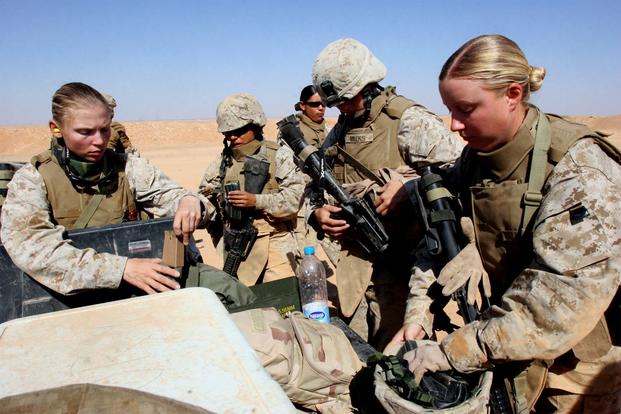
By not acting through legislation, the courts are forcing the issue. The Justice Department is already opposing the ruling by claiming that requiring women to register for the draft is “particularly problematic.” That’s somewhat ironic, given that similar rhetoric is used when feminists criticize video game characters for being too sexy.

Despite that rhetoric, it’s just as telling that there are few protests surrounding this statement. The same protesters who marched in Washington DC back in 2017 have been relatively silent in how the government views gender disparity with respect to military conscription. This isn’t a right. It’s a responsibility and one that can unify a society full of diverse people.

To some extent, it’s understandable why those same protesters don’t argue for the same standards with respect to military conscription. Unlike Israel, the United States and most western countries don’t have mandatory military service and the draft hasn’t been utilized in 40 years. For most people, it doesn’t directly affect them.

However, that might also make it the perfect issue for unifying people from both ends of gender issues. If feminists and men’s rights activists are serious about equality in terms of the law and societal standards, then military conscription is a clear-cut issue that they can both rally behind. Either you’re for equality or you’re not. At the very least, it would be helpful to know who’s not.
1 Comment

Filed under Current Events, extremism, gender issues, men's issues, outrage culture, political correctness, women's issues

Rise Of The Phony Nihilists

1230453_1

A while back, a relative of mine told a story about a college professor and a smart-ass student. The student claimed he was a hardcore nihilist. He genuinely believed that there was no inherent purpose to humanity, life, or the universe. His professor didn’t respond at first. However, that didn’t stop him from making a point and sending a message.

Shortly after that initial encounter, the professor handed out grades on the first paper. He gave the self-professed nihilist a zero. When the student protested the grade, the professor just shrugged and reminded him that he was a nihilist. If he thought nothing mattered, then why should he care about his grades?

Regardless of whether this story is true, it makes an interesting point. That professor, who I suspect a PHD in trolling, exposed his arrogant student’s hypocrisy. He claimed to be a nihilist, but he still cared about his grades. He may have overestimated the extent of his nihilism, but the professor proved it only went so far.

It’s a lesson that’s a lot more relevant today because nihilism, in general, has become oddly fashionable. We have popular TV shows like “Rick and Morty,” “True Detective,” and “Bojack Horseman” that each espouse a certain degree of nihilistic philosophy. Iconic villains like Heath Ledger’s Joker in “The Dark Knight” also embody the random chaos that often reflects the chaos of a nihilistic worldview.

As much as I love the “The Dark Knight” and “Rick and Morty,” including its unique approach to exploring nihilism, there are serious issues with applying their philosophy to real life. These are fictional characters unbound by the logistics and consequences of real life. Nobody could reasonably do what they do and get the same result. We already have enough scary clowns committing crimes.

That hasn’t stopped some people from taking those complex philosophical concepts more seriously than most. It also happens to complement the ongoing rise of trolling, both on the internet and in real life. That makes sense because the mentality of a troll has to be nihilistic to some extent. When your goal is to cross lines and demean people for the thrill of it, you can’t be too concerned with greater meaning.

That’s not to say there aren’t trolls who are genuine sadists. I’ve encountered more than a few who would qualify. For the most part, though, nihilism is an excuse rather than a motivation. Some pretend they just want to watch the world burn when they say something that’s horribly offensive or laughably absurd. They’re just trying and failing to be as charismatic as Heath Ledger’s Joker.

It’s a phony brand of nihilism and one that defeats itself when you apply the slightest bit of scrutiny. It often leads to empty arguments on otherwise serious issues. It usually breaks down like this.

Someone will say something absurd, wrong, or just flat out offensive.

Someone else calls them out on it.

An argument ensues that usually involves an escalating amount of hatred, insults, and frustration.

Ultimately, the person who made the triggering remark claims they’re just in it for the kicks, the cheap thrills, and to taste the tears of their enemies.

In the end, they try to come off as this enlightened, above-it-all intellectual who has somehow transcended the petty arguments that the non-nihilists of the world keep having. They pretend they’re above it all or just don’t care. Again, it’s an excuse. They’re not full-on nihilists in the traditions of Rick Sanchez or Friedrich Nietzsche. They’re just assholes trying to hide from the fact that they’re assholes.

These same people who claim to care nothing about the greater meaning of the universe rarely practice what they so poorly preach. They still pay their taxes. They still work jobs that they probably hate to make money so that they can function in this undeniably flawed society we live in. If they were truly nihilists, they wouldn’t see the point in any of that.

If they got sick, they wouldn’t go to a doctor to get better. What’s the point?

If they lost all their money, they wouldn’t worry. What’s the point?

If their lives were utterly ruined by their behavior, they wouldn’t complain about it. What’s the point?

The phony nihilists pretend they can be Rick Sanchez or Heath Ledger’s Joker. However, they never come close to turning themselves into a pickle or setting fire to a giant pile of money. Those are things that a hardcore nihilist would do and they wouldn’t bother arguing about it. Again, and this is the question that phony nihilists avoid answering, what’s the point?

More and more, nihilism is being used less as a philosophy and more as a rhetorical tactic from trolls. In an era where it’s easy to troll and people are extremely divided, I understand why this brand of phony nihilism is emerging. I can even see why it has an appeal. It allows people to skip the part where they have to justify their beliefs or take responsibility for the actions. It’s more about convenience than conviction.

I don’t expect the trend of phony nihilism to stop anytime soon. If anything, it’s going to intensify as the world becomes increasingly complex on every level. There are over 7.7 billion people on this planet and it’s getting exceedingly difficult to feel like you matter in such a world. Falling into a nihilist trap is easy and even comforting for some.

It’s still not an excuse to be an asshole. Even if you think nothing truly matters and we’re all just globs of matter waiting for the heat death of the universe, you’re alive in this world with billions of other people trying to find their place in it. Being an asshole, whether it’s out of nihilism or some other philosophy, is never justified.

6 Comments

Filed under human nature, media issues, nihilism, outrage culture, philosophy, psychology

Why More Men Are Confiding In Sex Workers

australia_prostitution

Where do you turn to when you need to confide in someone? Who can you trust to listen to your problems, not judge you, and show you basic human decency? Some people are lucky enough to have one or more person they can turn to during difficult times.

For me, it’s my parents. Both my mother and my father have always been there for me, no matter what I’m going through. I can tell them anything and I know they’ll listen. They won’t judge me. They won’t tell me to just suck it up. They’ve helped me through some pretty difficult times and I love them deeply for that.

Some people aren’t as lucky. They don’t have close friends or family members they feel they can turn to. This is especially true for those with poor social skills or severe social anxieties. These issues affect everyone, regardless of race, gender, or sexual orientation. However, in recent years, the impact on men has been more pronounced.

As a result, some of those men have been turning to an unexpected source when they need to confide in someone. It’s not friends, family members, or licensed therapists. It’s sex workers. While there are plenty of ugly politics surrounding sex work, some of which I’ve discussed, this unusual phenomenon makes sense, albeit for tragic reasons.

Rather than speculate on those reasons, I’ll let Nicole Emma share the distressing details from her recent Ted Talk. While I strongly recommend everyone to listen to the full lecture, this one anecdote she shared nicely sums up the issue.

“Yesterday, a miracle happened. Since my wife passed, I’ve been very lonely. I haven’t so much as been hugged in over two years. I’m not handsome. I’m not rich. I don’t know how to talk to women, but you held me. You rubbed my back. You listened to me vent about my grief. This might just be a job for you, but today you saved my life.”

Think about this aside from the fact that a man hired a sex worker. This man was lonely, having lost his wife and not experienced much physical intimacy since then. He’s not some charismatic character from a beer commercial. He’s just an ordinary man with the same basic needs as everyone else. He felt like he couldn’t meet those needs so he turned to a sex worker.

Why he felt this way is difficult to surmise, but as a man, I can make a few educated guesses. Like it or not, there’s a stigma associated with men who share their insecurities. I learned that first-hand last year when I dealt with the death of someone very close to me. Even though I was comfortable confiding in my parents, I still felt inclined to hold back.

I know I’m not the only man who has felt this and there are people far smarter than me who have studied this. There are many factors behind this taboo. Some will blame “toxic masculinity,” a flawed concept at best. Others will attribute it to certain expectations about men that we simply don’t scrutinize as much as we should.

Regardless of the cause, the issue comes back to having few outlets for their feelings. Not everyone can afford a therapist and some are even reluctant to share these sentiments online. Given the prevalence of trolling these days, I can’t say I blame them. In that context, a sex worker is in a perfect position to help these men.

Yes, I’m aware that may be a poor choice of words.

Logistically, it provides them with something clear and transparent. The man knows what the woman wants. The woman knows what the man wants. The price is clear and predetermined. There’s no uncertainty or mixed messages.

Beyond the logistics, the exchange fulfills some of basic of needs. There’s actual, physical intimacy. There’s no screen between the man and the sex worker. There’s real human contact and that, in and of itself, provides significant health benefits. Add the inherent health benefits of orgasms and the impact of a sex worker can be more therapeutic than any therapist.

Even without the sex, a sex worker offers the man something that’s difficult to find, even in today’s hyper-connected world. For once, they’re with someone who will listen to them in a way that’s objective, unbiased, and free of judgment. A sex worker may see them as a client, but part of their work involves providing intimacy. Oftentimes, the line between physical and emotional intimacy isn’t clear.

Ms. Emma, having been a sex worker for years, understood that and, based on her personal testimony, she did her job very well. That man she referenced benefited from having that kind of intimacy. Unlike a therapist or a counselor, she didn’t treat him as someone who was sick or in need of medication. She just treated him as a lonely man who needed some intimacy.

I think many men can empathize with that situation. I doubt don’t that women can empathize with it as well. Sometimes, you don’t want therapy and you don’t want the complexities of other social interactions. You just want someone who provides a service that allows you to feel some basic level of emotional and physical intimacy.

Regardless of how you feel about the legality of prostitution or the men who hire sex workers, there’s no denying that this sort of intimacy is a fundamental need. We’ve seen what happens when people don’t get it. In recent years, we’ve seen it get downright ugly and hateful.

People need emotional and physical outlets, regardless of gender. The fact that sex workers are the primary outlet for some men is emblematic of a much larger problem. Beyond the taboos, stigmas, and misguided gender politics, we’re still human. We all still seek intimate connections. Without it, people will suffer and ignoring that suffering will only make it worse.

3 Comments

Filed under Current Events, gender issues, human nature, men's issues, political correctness, prostitution, psychology, romance, sex in society, sexuality, women's issues

Scrutinizing (And Questioning) The Gender Wage Gap

wage_gap_photo_

There are some assumed truths that we, as a society, don’t question as much as we should. In the era of fake news, alternative facts, and conspiracy theorists who act like living internet memes, it’s hard to know what’s true anymore. Even when things are proven definitively false, people still cling to them. Why else would creationism still exist?

However, there are a few over-arching assumptions that I feel deserve more than just skepticism. There are some common talking points that have significant flaws solely because of their implications. You don’t even need to compile statistics or conduct extensive research. Just asking questions that build directly from the logic are sufficient to expose underlying flaws.

One talking point that keeps coming up in the world of gender politics is the gender wage gap. It’s been an issue for years, but keeps coming up in everywhere from Hollywood to tech companies. Even though I’ve talked about gender politics many times before, I’ve avoided this particular issue because everyone can find numbers to throw at it to support their position. As a result, there’s not much to write about.

That’s why I’m not going to try and debate it with economic studies or statistics. There are plenty of other people far smarter and more qualified to do that sort of thing. Instead, I want to scrutinize this common and contentious issue in a few simple ways that I hope demonstrate why it’s such a flawed issue to begin with. I believe this can be accomplished by asking just a few simple questions.


If Women Are Always Paid Less, Then Why Would A Company Hire Men?

I’m not an economist, a financial specialist, or a business expert, but I understand logistics as well as most people. Last I checked, a good business seeks to maximize profits and minimize costs. That’s the hard of nearly every challenge for every business, whether they’re selling widgets or time shares.

With that in mind, why would any business hire men if they can save money by hiring women? If women are every bit as capable, as many in the halls of gender politics argue, then there’s no reason for them to favor men. If the gender wage gap is true, then any business that hires men is intentionally throwing money away.

I get that the economics of wages, combined with the complexities of gender dynamics, create all sorts of confounding factors. That doesn’t change the math or the incentives surrounding profit. The basics of the wage gap imply that there’s a system in place that allows companies to pay women less for the same work, but they’re not taking advantage of it.

That just doesn’t make sense and I rarely hear those who bemoan the pay gap address this. I feel like since most people don’t understand business or economics, it’s easy to ignore and people just take the path of least resistance.


What Exactly Constitutes Equal Work?

This might be entirely subjective in most cases, but the idea of “equal pay for equal work” is becoming a bigger and bigger part of this issue. I hear politicians, pundits, and protesters using this phrase in any number of speeches in debates. However, they never go into detail.

Equal pay is one thing, but equal work is something else entirely. Human beings are not machines. Even if two people have the exact same skill level, they’re not always going to produce the same product with their work. That’s just not physically possible for non-cyborg humans.

I don’t doubt that a woman can be just as good as a man in many tasks, from typing up reports to carving furniture out of wood like Ron Swanson. Most of these skills are not physically impossible for able-bodied people, regardless of their genital configuration. Even if they’re capable, though, how do you decide that their work is equal?

Is it determined by how much time they put in? Is it determined by the volume of the work or the amount of money it generates? Most businesses use a mix of workers that have a wide variety of talents, skills, and abilities. Given those constraints, the whole idea of equal work seems to break down.

I’m not saying there aren’t cases where a woman is paid less for doing the same work as a male counterpart. That probably has happened before and will happen again. I just don’t see how that can be address beyond a case-by-case basis.


How Do You Enforce Perfectly Equitable Pay?

Beyond just determining what equal work is, there’s the whole concept of enforcing that equality. Passing laws is the most obvious possibility, but implementing those laws can be tricky. In the state of Georgia, there’s a weird law that prohibits people from living on a boat for more than 30 days. How do the authorities go about enforcing something like that?

Like I said before, businesses have all sorts of complex machinations. People have a variety of skills, roles, and duties. Not everyone works the same hours and not everyone will work with the same efficiency. Do they all still get paid the same? How would you even go about determining what constitutes fair pay in every instance?

It’s not just unfeasible. It’s physically impossible. There are so many subjective forces at work and everyone will argue that their work contributed more value than everyone else’s. They all can’t be right, but they all can be wrong and if everyone is wrong, then how can you know the truth? Even if the idea of equal pay seems good and just, it still breaks down when you try to apply logistics.


What Else Can People (Reasonably) Do?

In 1963, the Equal Pay Act was passed and signed into law by President Kennedy. This law stated outright that no employer could utilize sexist discriminatory practices when determining the wages of its employees. That law has been on the books ever since. It’s a federal law so it applies to every state and territory. It can be enforced by legal resources at every level of government.

Paying someone less because they’re a woman is already illegal and has been for decades. What else can people do? Like I said, enforcing a law is difficult, but the law is still there. However, in the same way that drug laws didn’t make illicit drugs go away, laws concerning equal pay don’t make the gaps go away.

Laws can only provide rules. They can only do so much to change society as it is. The pay gap has significantly narrowed, but it’s not perfect. Nothing ever is. Beyond abolishing wages for everyone, which may actually happen one day, what else can be done? I get that many favor hiring more women and minorities, but is that really reasonable for every business in every sector of the economy?


Again, I see the merit and the passion behind the idea. Someone getting paid less for their work just because of their gender is a gross injustice, but righting that wrong in such a complex world just isn’t that easy. Nothing ever is. I know these questions can’t be fully answered, but I hope that simply asking them offers a more complete perspective of the issue.

1 Comment

Filed under gender issues, men's issues, outrage culture, political correctness, sex in society, sexuality, women's issues

Why “Adulting” Is Getting Harder

adulting-1

I’ve stated before that there are certain words I believe should be purged from the English lexicon. Contrived, agenda-driven terms like “toxic masculinity” or “mansplaining” are at the top of my list. I strongly believe that terminology like that is doing everything to further hostility and hinder understanding.

That being said, there are a few words that I have mixed feelings about. I think they also do plenty to divide people for all the wrong reasons, but I also understand why they exist. One term that I feel is increasingly relevant, albeit for negative reasons, is the concept of “adulting.”

I put that term in quotes for a reason, but it’s not out of sarcasm or scorn. This is one of those words that exists because there’s a need for it. Even if you think “adulting” sounds silly, chances are a word every bit as silly, if not more so, would’ve been coined. That’s because what it means to be a functioning adult is changing and not in a way that makes things easier.

This sentiment is implied in the popular definition. Even though it’s a fairly new term, it has become relevant enough to warrant a listing in the Oxford Dictionary, which defines it as follows:

The practice of behaving in a way characteristic of a responsible adult, especially the accomplishment of mundane but necessary tasks.

It may seem too simple to warrant scrutiny and maybe that was right several decades ago. However, a lot has changed in the past 30 years. A lot has changed in the past 10 years. The world isn’t as simple as it used to be. It’s become incredibly complex, full of fake news, alternative facts, and contrived outrage. That has changed what it means to be an adult.

I know this will elicit plenty of groans from certain crowds, but I’ll say it anyways. Being an adult is hard these days. Yes, I’m aware that it’s supposed to be hard to some extent. It always has been, going back to the hunter/gatherer days. Being an adult means functioning on your own and contributing to your society. You can no longer rely on parents or elders to provide for you. You must now do the providing.

It’s a challenge for many, some more so than others. However, there are some unique challenges facing adults today, especially among the younger crowds. I know this because I’m one of them. I’ve discussed the distressing issues surrounding Millennials and the potential issues that Generation Z will face in the coming years. Many of those issues, though, will affect everyone of any generation.

I’m not just referring to the crippling student loan debts that are burdening Millennials or the rising cost of housing in urban areas. There are deeper, more fundamental struggles that hinder or even discourage our ability to embrace adulthood. You want to know why nostalgia is so popular or why escapism is so prominent in media? Well, the complications and frequent frustrations that come with “adulting” are huge factors.

To understand, here’s a list of a few reasons why “adulting” is a thing and why just being an adult is getting harder. Hopefully, it’ll help make sense of this annoying, but relevant term. You’ll still probably roll your eyes whenever someone claims they cannot “adult” anymore for the day. If nothing else, this will help you understand where they’re coming from.


Too Much Information Is Overwhelming Us (And Making Us Mentally Ill)

This isn’t just a Millennial thing. It’s not even a byproduct of social media. The trend of people just getting more and more information has been happening for decades as people moved further and further away from rural, agrarian communities. Today, more people are educated now than at any point in human history. That has many benefits, but it comes at a cost.

Now, we can’t just see what’s going on in our world through pictures and streaming media. We can read about things, learn about them, and scrutinize them. That’s helpful in some instances, but in a world that’s increasingly connected and full of conflicting information, it can be overwhelming.

On top of that, we tend to find out about bad news and horrific atrocities as they’re unfolding. Many people alive today actually saw the horrors of the September 11th attacks occur on live TV. More recently, people were able to follow the horrors of the Parkland shooting as it unfolded on social media.

Being informed is part of being an adult, but when you’re informed of every horrific thing that happens in the world, it can wear on you. Some research has shown that this sort of system is impacting peoples’ mental health. In that context, it makes sense for someone to want to step back from that part of adulting.

For most of human history, we didn’t know or care about the horrors going on outside our tiny community. In the past 30 years, we know everything that’s going on everywhere. The human mind is good at a lot of things. Making sense of that much information isn’t one of them.


Our Options Feel Increasingly Limited (And We Don’t Know Which To Follow)

Growing up, every adult told me the path to success was simple. If you just stayed in school, got good grades, went to a decent college, and got a bachelor’s degree, then you were set. You could expect to find a good job with decent pay that would allow you to build a comfortable living for yourself and your future family. I believed in that path. I followed it. I can safely say it was half-true at best.

While there is plenty of merit to a college education, it’s no longer the clear-cut path it once was. I personally know people who graduated from good schools with quality degrees in subjects like engineering and they’re struggling. It’s not that people are getting useless degrees in underwater basket weaving. It’s that just getting a degree is no longer sufficient.

After graduating from college, I was in this daze for a while and many of my fellow graduates were the same. We were all told that getting this degree would set us on the right path, but nobody told us how to navigate that path or what it even looked like. As a result, most people ended up in jobs that had nothing to do with their college major.

On top of that, the job market is becoming increasingly unstable. The rise of the gig economy is making it so people don’t just live paycheck to paycheck. They live job to job, never knowing if they’ll even have one when they wake up the next day. These are not the same well-paying, blue collar factory jobs of the past. This is work that will not help pay a mortgage or a student loan debt.

However, we’re still told that this is the path. This is how we’ll prosper in the future. Even as we look for other options, most adults today don’t know how viable they are. We’re left in a state of uncertainty that past adults never had to deal with. We still need to choose, though, because our bills aren’t going to pay themselves.


There’s No Margin For Error And Every Mistake Will Follow You Forever

Remember when it was possible to make a dirty, offensive joke among friends and not worry about it haunting you for the rest of your life? I’m not being old or cantankerous. I’m serious because I do remember when that was possible. In my youth, I heard plenty of jokes that would’ve ruined someone’s life today if they’d been captured on video or posted on social media.

This isn’t just about political correctness or identity politics corrupting discourse. Adults today live in a world where any mistake they make, be it a bad joke or an off-hand comment, can come back to haunt them. It doesn’t matter if it’s from a celebrity or even if it occurs in private. It can still cost you dearly.

Now, I wish I didn’t have to say this, but I have to since I’m posting this on the internet. None of what I’m saying is implying that certain behavior, language, or comments are justified. I think it’s a good thing, for the most part, that certain people are paying a price for their bigoted attitudes. However, that good does come at a cost and it’s felt by adults at every level.

To some extent, we envy kids now because kids can say dumb things and get away with it. They’re kids. They have an excuse and it’s one of the few excuses most people accept these days. If you’re an adult, though, you’ve got nothing of the sort. You can blame liberals, conservatives, or Ambien all you want. You’re still going to pay a price.

As adults, we’re responsible for what we say and do. That’s part of what it means to be an adult. The problem is that in a world where every mistake is documented and preserved forever, our margin for error is exceedingly small. How many people don’t get the job they want because of an embarrassing photo or tweet they made a decade ago? How many people get fired because of it?

Regardless of how justified it may or may not be, it adds further stress to the inherently-stressful responsibilities that come with being an adult. The adults of today have many complications to deal with and if you mess even one up, then it could haunt you to the day you die. Now, do you understand why so many adults seem so uptight about adulting?


We Feel Like We Cannot Escape (And Badly Need To)

Life has always carried harsh burdens. Whether it was escaping wars or fighting disease, people of every generation in every period have sought out some reprieve from the endless struggle. Sometimes, it takes the form of games, drugs, books, or sports. After a long day of working the fields or gathering food, we needed some form of reprieve.

It’s as important today as it was in previous centuries. The big difference today is that we feel like we have fewer and fewer opportunities to do so. Life on farms and fields was rough, but at least the challenges were clear and laid out. We worked to survive. If we survived, we celebrated. It was simple.

Today, surviving just isn’t enough. We have bills to pay, debts to service, jobs to find, and connections to make. On top of that, we have to keep up with the news and popular trends. We have to fit into an increasingly diverse world where people of different communities and cultures are connected. It’s a lot of work, taking time and energy that go beyond plowing a field.

It doesn’t help that the abundance of information and the prominence of bad news makes the future seem so bleak. Even if society is progressing on almost every measurable level, our perceptions imply that the world outside our windows is dangerous, hostile, and hopeless. We can’t do anything about it, our politicians are inept, and our votes don’t even count.

In those frustrating circumstances, it makes sense for people to lose themselves in video games, movies, and TV shows. The whole concept of binge-watching allows adults to lose themselves in hours of content, which subsequently allows them to detach from a harsh reality that they have no hope of effecting.

Say what you want about adults who still love comic books and video games. The fact that they’re both multi-billion dollar industries is a sign that many are desperate for an escape from the frustrations of their adult lives. The things we loved as kids are just the easiest and most familiar paths.


There are plenty of other reasons I could list about “adulting” and why it’s getting increasingly difficult. I have a feeling that many adults reading this have their own sets of reasons and there will probably be more within the coming years. There will also be others who complain about anyone who tries to talk about those reasons. It’s sure to evoke more frustration and whining.

In the end, we all have to be adults at some point. There’s a time and a place to just step back from it all and take a breath. That shouldn’t be controversial, but the fact that “adulting” is now a thing means there are a lot of complications to adult life and we’re not doing a good enough job handling them.

Leave a comment

Filed under human nature, outrage culture, philosophy, psychology

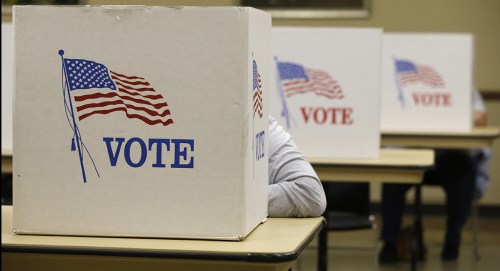
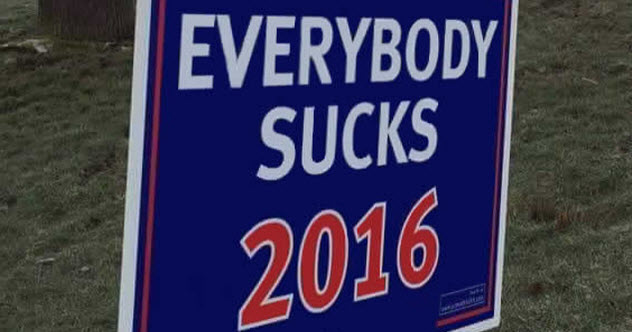
Why I’m Not Overly Excited About Voting

Vote

I’m bracing myself right now because I’m about to express a sentiment that’s going to put me at odds with a lot of people here in America. It’s a sentiment that runs contrary to some pretty loud rhetoric that has been brewing over the past two years. Some of it has even come from close family members. Knowing I’ll probably upset them too, I’ll just come out and say it.

I’m not that excited about voting.

I’ll give my fellow American’s a moment to stop fuming. For everyone else, I think a larger explanation is warranted. Bear with me because these are sensitive times for freedom, democracy, and everything in between.

Today, my country will conduct its mid-term election. It occurs every four years, right in between Presidential elections. These elections are a critical part of the foundation on which the United States government is built. These are the elections in which a sizable chunk of governors, senators, and representatives are elected.

While mid-term elections rarely generate the same voter turnout of Presidential elections, this year is different. The impact of the 2016 Presidential Election has galvanized the passions of both sides of the political spectrum. Conservatives seek to maintain their hold on power. Liberals seek to re-establish power after some of the worst setbacks in recent memory. To them, the stakes are very high.

I’m not entirely convinced of that. In fact, I feel like those stakes are so inflated that it makes me feel even less excited about voting. I see people in the media, on message boards, and within political circles calling this election the most important mid-term in history. That makes me suspect they have a narrow concept of history.

Now, I don’t deny the sincerity of those who say stuff like this. I get that they’re genuinely concerned about the direction of the country they love. They have this ideal vision for how they want America to be and getting like-minded people to vote is part of realizing that vision. Whether it’s reigning in the President, outlawing abortion, or legalizing weed, they have a fantasy that they want to make reality.

As someone who writes a lot about the sexy kind of fantasies, I can appreciate that to some extent. When I was younger, I even entertained similar visions. As I’ve gotten older, though, I’ve become less enchanted by my country’s democratic processes. The reasons for that have less to do with the content of those visions and more to do with the unique quirks of American elections.

The first complications surrounding American democracy, and one that sets it apart from other democratic countries, is that we don’t elect the President by a popular vote. We use something called the Electoral College. Simply put, our votes don’t go towards who we want to be President. They go towards electing the people who go onto elect the President.

If that sounds confusing, then you’re starting to see why I’m skeptical about voting. The logic behind the Electoral College made sense 200 years ago when trying to ensure that heavily populated states didn’t gain too much power over all the others. A lot has changed in 200 years and I’m not just talking about the prevalence of powdered wigs.

Since I became eligible to vote, I’ve seen two of the past three Presidents get elected without winning the popular vote. That means the candidate that got the most votes did not win the election. Call me cynical, but that does not sound very democratic.

To be fair, the Electoral College applies only to the President. Other representatives like governors, senators, and mayors are elected by way of popular vote. While that is more democratic, on paper, the logistics still aren’t ideal. That’s due to additional factors like gerrymandering, a practice that dilutes democracy to the point of watered down light beer.

Simply put, it ensures that your vote only partially matters because you didn’t necessarily pick the candidate. The candidate picked you by making sure you lived in their voting district. It’s a big reason why incumbents have such high re-election rates. It doesn’t matter how voting trends change. All that matters is aligning districts with a certain type of voters.

It’s not quite on the same level as the phony elections conducted by dictators, but it sends a painfully clear message. No matter how passionate you are at voting, there’s a good chance that it has little bearing on the outcome. That doesn’t mean your vote is thrown away. It still counts. It just doesn’t matter and I’m not the only one who has reached this conclusion.

Most of the time, you live in an area where the overwhelming majority of people align themselves with a particular part of the political spectrum. Districts located in rural areas almost always vote conservative. Districts located in cities almost always vote liberal. That divide has only widened over the years, especially since I began voting.

Some of that goes beyond direct influences like gerrymandering and voter suppression tactics. None of those tactics would even work if not for the predictable psychology of the average voter. In a perfect world, every voter goes to the polls as an objective, impartial citizens who weighs the worth of every candidate. However, we live in an imperfect world full of many imperfect people.

According to analysis of past elections, most people adopt the voting patterns of their parents. It’s not a minor factor, either. By a substantial margin, your vote was mostly determined when you were still a kid. That’s not a flaw in the system as much as it is a flaw in perspective.

If you grow up in a conservative environment, then you’ll vote in accord with conservative candidates. The same applies if you live in a liberal environment. The area I live is pretty liberal, for the most part. I’ve seen the polls for my candidates. The outcome is pretty much a given, no matter how I vote.

On top of all that, and it’s more than enough to temper my enthusiasm for democratic processes, voting in America is extremely inconvenient. It’s not a national holiday. It’s on a Tuesday in the middle of the week and often involves standing in long lines at poorly-staffed polling places. Sure, you can cast an absentee vote, but that process has its own set of complications.

Taken together, I find it frustrating, as a voter. The older I get, the more resigned I’ve become. Each passing year, I see more and more flaws in the system. I see reprehensible human beings and shameless hypocrites win elections, time and again. I also see the list of candidates and groan at my lack of options.

Despite all this, I’m still told that voting is important. Voting is what separates us from tyranny. Ignoring the historical fact that some tyrants come to power through democracy, I’m supposed to believe that my vote will help further the ideals my country espouses. As much as I love my country, I just have a hard time believing that.

Don’t get the wrong idea. I’m pretty cynical about voting and the current democratic processes in place for the United States. I’m not completely resigned, though. I still intend to vote, but I’m under no illusions. I know it won’t change much in the grand scheme of things. Like renewing my driver’s license, it’s part of my civic duty.

Regardless of who wins and who gets voted out, I can already sense where this narrative will go from here. I have a feeling that as soon as this day passes, the 2020 Election will be subsequently billed as the most important election in history. Just like before, the act of voting will be framed as taking part in a battle against a fascist army led by Darth Vader and Joseph Stalin.

That narrative, in my opinion, will do more to undermine voting than help it in the long run. At the end of the day, elections come and go. Leaders change, politics evolve, and demographics shift the cultural landscape. Not every election will go down in history as the most important. The act of voting in those elections won’t matter that much in the long run. It’s still worth doing, but it’s also worth maintaining perspective along the way.

2 Comments

Filed under Current Events, human nature, media issues, outrage culture, psychology

Abortion, Prostitution, And The Indirect (But Powerful) Link Between Them

Pic

When it comes to conflict between genders, there are many factors driving it. Chief among them is the unavoidable ignorance that comes with men not knowing what it’s like to be a woman and women not knowing what it’s like to be a man. Add those who identify as transgender into the mix and there’s a massive disparity in understanding.

While I consider that limited understanding to be the primary driving force behind gender-driven conflicts, there’s another force that is a close second. It has less to do with how people relate to one another and more to do with who determines the accessibility and availability of sex.

As an aspiring erotica/romance writer, this issue is more relevant to me than others. However, after a few notable news stories, one involving prostitution and another involving abortion, the issue is now relevant to everyone and that’s why I feel it’s worth talking about.

The concept of sex being this tangible commodity that certain people control is already bound to cause plenty of consternation among people from every part of the political spectrum, but for logistical purposes, this is how we treat sex in a modern context. It’s no longer something we do for survival or for the passing on of property.

Like food, sex has developed a more diverse role in the modern world. We treat it as a tangible asset that we must manage. Like any asset, though, there are logistics to it and those who do the managing wield a great deal of power. Why else would pimps be so glorified in popular culture?

Who actually wields that power, though, depends on the political affiliation of who you talk to. If you ask someone who is liberal, feminist, or left-leaning, they will claim that the power is held primarily by rich old men who try to manage sex by punishing those who do it in ways they don’t like.

Ask someone who is conservative, traditional, and right-leaning, and they’ll probably say the power is held by radical feminists and their submissive male allies who wield the power of sexual management. They’re just as convinced as those opposing them that they’re right. It’s difficult to convince them otherwise and I’m not going to try. That’s not the purpose of this article.

My goal here is to point out a connection from which the conflict has evolved. Given recent events in the political world, that evolution is likely to continue and not in a direction that benefits either side in the long run. To understand that connection, I need to dig a little deeper into the unspoken, but powerful link between abortion and prostitution.

I know that just talking about one of these issues is abound to send peoples’ passions into overdrive. I’ve discussed abortion before. I’ve discussed prostitution as well. I haven’t really touched on the link between them because they’re tied up in different political domains, but have enough similarities affect one another.

Prostitution is commonly known as the world’s oldest profession and for good reason. It only ever makes the news when there’s a scandal or a legal upheaval. For once, there has been an uptick in the latter rather than the former. It began with new laws that made it more difficult for prostitutes to operate online. In some respects, these efforts are the byproduct of a trend that has been going on since the early 2000s.

Most industrialized countries in the world accept, to some degree, that it’s impossible to stamp out prostitution completely. As a result, there have been more elaborate efforts to reduce it that don’t rely entirely on blanket prohibition. Currently, the most popular approach is known as the Swedish model.

In this setup, it’s legal for someone to sell sex, but it remains illegal to buy it. It’s akin to making it legal to set up a lemonade stand, but illegal to buy lemonade. While that sounds absurd on paper, the intent of the law is somewhat clever. It’s a means to criminalize the buyer of sex to give the seller more leverage. Since the seller is often assumed to be an exploited woman, it’s viewed as an equalizer of sorts.

Granted, the assumption that those selling sex are always exploited women is flawed, as an estimated 20 percent of prostitutes are men. There are people in the world who enter the business willingly, just as there are people who willingly work in coal mines.

There’s also plenty of data that indicates that the Swedish model doesn’t have the desired effect. There’s also no evidence that it has reduced human trafficking, either. That hasn’t stopped it from spreading to other countries. In the process, it has had another effect that goes beyond the issue of prostitution.

Essentially, this approach to combating prostitution places more power in the hands of women with respect to managing sexuality. Since they make up the majority of the prostitutes in the world and men are the primary clients, this dynamic ensures they have more leverage. They can, under this model, decide whether or not their client becomes a criminal. That’s a lot of leverage and not the kinky kind.

This is where the link to abortion comes into play. It’s an indirect link, but it utilizes the same dynamics. In countries where abortion is legal, the women wield a significant amount of power in terms of sexual decision-making. In the context of abortion, they can decide how the consequences of sex play out.

Women can, in this dynamic, decide whether or not to have a child if she becomes pregnant. Whether or not the father wants to child is irrelevant. The woman can abort the child against the father’s wishes. She can even have the child against his wishes, in which case he would be on the hook for child support for 18 years.

Again, that’s a lot of power for one gender to wield. That’s not to say it isn’t understandable. Women are the ones who bear children. They’re the one whose bodies undergo the 9-month rigor that is pregnancy. It’s totally logical that women would have more leverage in this situation because they’re putting themselves at greater risk.

However, and I know this is where I’ll upset a few people, there comes a point where that leverage can become excessive. There are cases where men lose their money and their freedom because of what a woman chooses. There’s no way for them to opt out of their parental responsibilities. That hasn’t stopped some from attempting to create a legal mechanism for that choice, but to date those efforts have not been successful.

Within this context, it shouldn’t be that surprising that abortion rights are steadily eroding. In the United States, it’s looking more likely with recent upheavals in the Supreme Court that this erosion will accelerate. Some are already claiming that we’re on our way to becoming the kind of oppressive society depicted in “The Handmaid’s Tale.”

While most of those concerns are overly apocalyptic, I think part of that effort is tied directly to who wields the power in the sexual landscape. Women are poised to gain more of that power as prostitution laws in the mold of the Swedish model spread. They’ve also gained even more leverage socially through the anti-harassment movement.

From the perspective of men, who cannot turn off their sex drives, women already wield so much authority in matters of sex. They’re the ones more likely to get paid to do it. They get to decide when and where it happens. They get to decide whether or not a sex act was consensual. They don’t even face the same stigma or consequences when sex crimes does occur and are granted greater protections by the law.

That perspective is not going to sway most women, though. The same women arguing for abortion rights are just as likely to argue for the Swedish model in combating prostitution. It’s a common thread among certain brands sex-negative feminism that see prostitution as an inherently oppressive force for women in every circumstance.

This is where the paths converge and where the fuel for the conflict gets a boost. Whether intentionally or by accident, both prostitution and abortion eventually link back to who wields authority in sexual matters. Both sides can claim some form of oppression. Both sides can even be right to a limited extent. By fighting to secure the most leverage though, they inevitably invite more backlash.

I don’t claim to know what the endgame is. I have a feeling that once sex robots enter the picture, and they have to some extent, there will be a major upheaval in the whole sexual landscape that neither side will be able to confront. Until then, though, the conflict over sexual leverage will continue. In the end, though, it’s unlikely that anyone will ever be truly satisfied.

1 Comment

Filed under gender issues, human nature, Marriage and Relationships, political correctness, prostitution, psychology, sex in society, sexuality

Why I Don’t Use The Term “Social Justice Warrior” And Ideas For A Better Label

sjw-o-face

Every now and then, I get comments and criticisms about my writing style. Some are constructive. Some are just angry rants that I’m perfectly content to ignore. There is one criticism, though, that I feel is worth addressing.

Specifically, it involves some specific terms I avoid using. Most people with an internet connection or access to cable news have probably heard the term “social justice warrior” at least once. It’s rarely in a positive light. It’s often used as an insult or a signal that you’re about to say something that’s going to evoke a lot of angry comments on social media.

I’ve been tempted to use it in the past. I’ve discussed many topics involving feminism, men’s issues, and social inequality that often get people throwing that term around as though it were a demonic chant. There’s a reason I’ve avoided it, though, and I hope to demonstrate that it’s a good reason.

First off, I want to make clear that I despise the term “social justice warrior” almost as much as I despise “toxic masculinity,” a phrase I believe cannot fade from our language fast enough. I see this label as one of the worst manifestations of the English language since the hippie era and at least they could blame psychedelic drugs.

I also believe that its continued usage will do more to breed hatred, outrage, and division at a time when we’re already more divided than ever. It derails a conversation and detracts from discussions about serious issue involving society, justice, and gender. This term is literally holding back progress, which is ironic given the nature of its definition.

The actual definition of a social justice warrior, or SJW as it’s colloquially used, is somewhat vague. It’s a modern-day catch-all term for a particular brand of politics and social attitudes. According to Wikipedia, the definition is as follows:

A pejorative term for an individual who promotes socially progressive views, including feminism, civil rights, and multiculturalism, as well as identity politics. The accusation that somebody is an SJW carries implications that they are pursuing personal validation rather than any deep-seated conviction, and engaging in disingenuous arguments.

I think that definition covers most of the most common ways the term is used, but I think it underscores how much vitriol it inspires. Spend any amount of time on social media and you’ll find some of the most hateful, demeaning, and divisive rhetoric you can imagine.

However, it’s not just the extreme rhetoric this term inspires that discourages me from using it. It’s not even the tendency for a conversation to devolve rapidly as soon as the words “social justice warrior” show up in a sentence. What I find most objectionable about this term is how fundamentally dishonest it is.

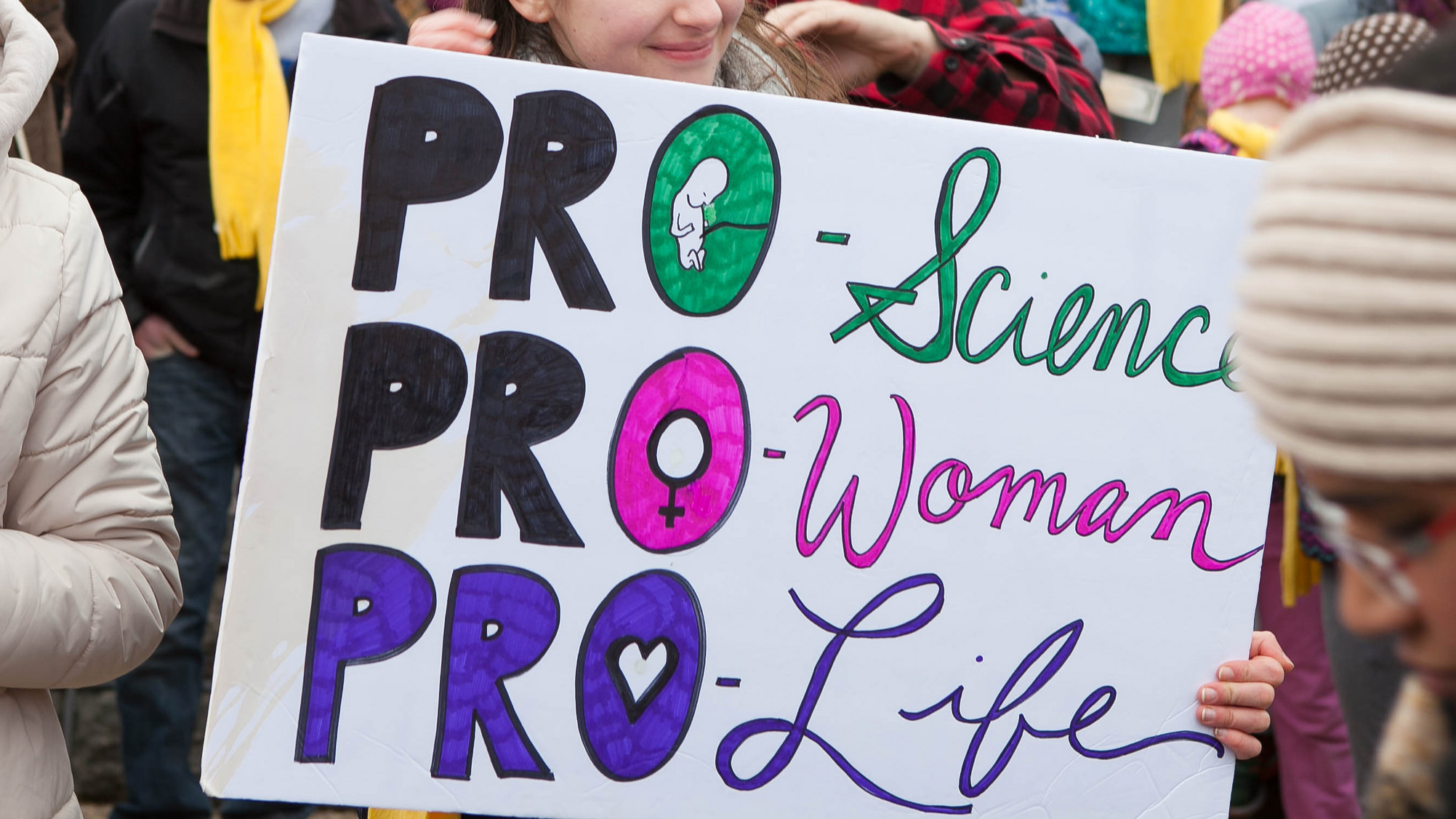
To illustrate how, look at the anti-abortion movement, another extremely divisive issue that tends to evoke all the wrong emotions. There are some pretty passionate opponents to abortion, but they don’t call themselves anti-abortion. They call themselves “pro-life.” It’s a disingenuous term, but from a marketing standpoint, it’s brilliant.

That’s because, if you go by the literal meaning of the words, it means you’re for life in general. It doesn’t directly imply anything about abortion. By calling themselves “pro-life,” they skew the meaning so that they can claim they’re on the side of all things alive and good.

Again, it’s a smart ploy, but it’s also dishonest and George Carlin did a brilliant job of explaining why. Those who use the “social justice” label use a similar tactic. They use words that denote inherently positive concepts like society and justice. However, I would argue that this ploy is even more dishonest than those hiding behind the “pro-life” table.

Most reasonable people are for justice. They’re also for a functional society in which people of any race, gender, religion, or ethnic background can live in peace and enjoy the same protections under the law. On paper, we have that. In practice, there’s room for improvement.

However, whenever I listen to someone who adheres to the Wikipedia definition of “social justice warrior,” I never get the impression that their ideas of justice are genuine. They tend to reflect a personal, selfish brand of justice that is more concerned with how the world makes them feel and less with how it really works.

A “social justice warrior” will look at issues like female depictions in video games, cultural appropriation in media, and proper pronoun usage and not see the full picture. In fact, they’ll go out of their way to ignore that picture and focus only on the parts that sends their emotions into overdrive.

It’s not enough to just criticize these injustices. A “social justice warrior” has to treat them like some grand conspiracy by wannabe fascists who bathe in the tears of orphans and wish they could still own slaves. It becomes a potent blend of holier-than-thou grandstanding and virtue signaling. To say that brings out the worst in some people would be an understatement.

Talk to most people outside a 4chan board and chances are, they’ll be in favor of a just society whether they’re liberal, conservative, progressive, feminist, or whatever other political affiliation they may have. The fact that “social justice” now has more to do with misguided outrage and little to do with actual justice is downright tragic.

The term gets thrown around so often that I’ve made a conscious decision to just avoid using it in my writing. After this article, I intend to use different words that I feel are more reflective of the outrageous attitudes that “social justice warrior” evokes.

I’m not doing that because using words gives them power and I don’t want to give “social justice warrior” more power than it already has. While I doubt that’ll reduce the vitriol it currently carries, I still prefer terminology that’s more reflective of these damaging attitudes.

In the name of offering some potential solutions to this issue, I want to put forth a new approach to dealing with the “social justice warrior” phenomenon. I believe that it reflects an ideology that’s worth confronting. It espouses attitudes that promote censorship, infantilize groups of people, and elevates one person’s feelings over another for all the wrong reasons.

These are people and attitudes that will continue to make noise and push bad ideas on a society that already has too many circling around. For that reason, I believe that warrants creating some new labels for them, one that I think is more descriptive of what they truly area. Here are just a few.

Professional Whiner

Regressive Whiner

Weakly Whiner

Sad Whiner

I think the theme here is pretty obvious. Most of the time, “social justice warriors” don’t really protest. They whine. They whine in a way that’s worse than any child. They don’t try to solve a problem. They don’t try to learn the facts and figure out a better process for doing something. They just whine.

That’s not just pathetic. That makes whole “warrior” part of their label hypocritical. Warriors are supposed to fight and not whine. When reality doesn’t cater to your feelings, whining never changes that. A “social justice warrior” may even understand that, but they also understand that without validation of some sort, their outrage is empty.

That, I believe, is the key to confronting the misguided attitudes of the “social justice warrior” phenomenon. Attitudes that have little to do with actual justice or a healthy society need to be called out for what they are. I say that as someone who does have attitudes that some may consider progressive, but I understand that whining about them won’t do much to further those ideals.

At the end of the day, if all “social justice warriors” have to go on is whining, then the harsh reality of the world will do plenty to undercut their attitudes in the long run. Calling them what they truly are will just help remind them a little sooner.

4 Comments

Filed under Current Events, gender issues, philosophy, political correctness, sex in society

The Unofficial Platform Of The Nihilist Party

What follows is a little exercise I found myself doing after hearing too many political debates on TV and reading too many rants on social media. Debating/whining about politics seems to be our new favorite pastime in the age of social media and cable news. Personally, I find it frustrating and unproductive.

It’s for that reason that I’m going to attempt to flip the script on the endless barrage of outrage-inducing diatribes. Instead of attempting to inject a new political context into a discussion, I’m going to just hit the whole concept upside the head with a baseball bat of pure nihilism. I’ve enjoyed talking about it in the past, thanks largely to my love of “Rick and Morty,” and I’d like to channel it into something new.

In the spirit of those equally annoyed by political mud-slinging, who just happen to have an extra-healthy appreciation of nihilism, I hereby present the unofficial platform of the Nihilist Party. I know it’s not  real political party. In fact, nihilism being a political party would be paradoxical, given its philosophical underpinnings.

Now, I understand the inherent absurdity of such a concept. I also don’t deny that my expertise in nihilism and other such philosophies are limited, at best. There’s only so much you can learn by binge-watching “Rick and Morty” and “Bojack Horseman.” I still feel like that’s enough with which to craft a new political party. It’s not like other parties set the bar that high to begin with.

With those disclaimers out of the way, I hereby present what I believe is the unofficial platform for the Nihilism Party. If you want to imagine it being recited in the voice of Rick Sanchez, then by all means. I’m not expecting it to win your vote in the next election. It really doesn’t matter, which is kind of the point.


Preamble

We, the random clumps of matter drifting aimlessly throughout a meaningless universe, hereby decree in the name of a wholly arbitrary set of empty standards, set forth the following principles that we feel adequately create the illusion that how we govern our purposeless society matters. We believe all political ideologies are equally vapid and all forms of government inherently flawed, albeit to varying degrees. As such, we neither seek to pretend ours is superior, nor do we claim we can fix the flaws others ignore.


Statement of Principles

We acknowledge that any functional society, be it free or tyrannical, is finite in nature and subject to inescapable entropy over time. In the long run, no society or its various achievements can hope to outlive the inevitable destruction of our planet and the heat death of the universe. To pretend otherwise is an exercise in futility and ultimately counterproductive.

With these harsh truths in mind, the Nihilist Party seeks only to forge a temporary medium of comfort for those who insist on living in functioning society within a infinitesimal speck in the universe for an inherently finite period of time. Whether or not the individuals in that society accept those harsh truths is irrelevant. The Nihilism Party’s primary goal is to maintain whatever functional order is necessary to keep others content as they wait for their eventual annihilation into nothingness.

In accord with that goal, as meaningless as it may be, the following articles reflect the wholly arbitrary articles of the Nihilist Party. Please note that these principles are necessarily vague in order to embody the empty nature of all political underpinnings. Any effort to inject specifics for a pointless society within a pointless world would be contrary to the principles of the Nihilism Party.


Article 1: Nihilist Rights

  • Since all rights are just legal constructs disguised as inalienable assets, we neither support nor discourage efforts by a significant group of people to randomly denote what constitutes a legal right, provided that group does not impose it others in a manner that would make their meaningless lives uncomfortable.
  • The tendency for individuals to form complex social bonds, as determined by the biological programming of their flesh, is neither the concern of the Nihilism Party, nor is it their responsibility to manage beyond ensuring the nature of these arbitrary bonds aren’t impeding the desire of others to pursue their own false meaning.
  • Since government is nothing more than a temporary construct attempting to manage an inherently chaotic world in an ongoing act of never-ending futility, the scope and reach of such government will be limited to simply ensuring that citizens residing within whatever invisible borders are in place can willfully and peaceful pursue a life of empty meaning on their own terms.

Article 2: Nihilist Economic Policies

  • To the extent that everything of value is based on people just believing it has value, the Nihilist Party remains ambivalent to whatever kind of currency people want to use, be it slabs of metal, pieces of paper with famous dead people on them, or bits of digital code.
  • While the the Nihilist Party does not ascribe or inflate the value of one economic transaction over the other, those built on fraud, lies, and deception hinder peoples’ ability to seek whatever false meaning they pursue and therefore, in the name of preserving meaninglessness for all, favors efforts to limit such behavior to the greatest extent possible.
  • Truth and ethics are ultimately pointless in the long term, but in the short term, it creates favorable conditions for contentment among people and since that’s the most any sentient life from can hope for, the Nihilist Party supports policies that preserve both in economic activity.
  • Since all economic trends are finite, fleeting, and prone to both inflated and deflated value, the Nihilist Party favors playing no favorites in any industry and strongly opposes any efforts to support one form of economic activity over the other.
  • In the interest of ensuring all economic activity is on an equally meaningless playing field, each transaction and industry will be subject to the same arbitrary fees and rules as any others, but the Nihilist Party favors limiting the fees and rules to an extent that ensures equally worthless pursuits of worth.

Article 3: Nihilist Justice

  • The Nihilist Party’s default position on justice is that no one individual, group, majority, or minority is worthy of greater or lesser justice than anyone else and efforts to the contrary are ultimately a waste.
  • Seeing as how justice is a product of flawed, situational perspectives within a given time and place that is ultimately pointless, traditional notions of what is just in one situation cannot and should not apply to another, seeing as how every moment is fleeting.
  • While a meaningless life incurs little meaning in the long run, the needless infliction of suffering and loss is seen as incompatible with the Nihilist Party’s belief that all deserve some modicum of contentment while they await their eventual death and seeks to limit any disruptions to that contentment to the greatest extent possible.
  • The Nihilism Party does not endorse special treatment for anyone who prioritizes their contentment over another and only favors treating measurable, tangible harms as actual wrongdoings, as those are the only harms that carry any weight in a meaningless universe.

Article 4: Nihilist Government Structure

  • The Nihilism Party believes that governments, like the failed economies and fallen empires before it, are simply finite manifestations of spontaneous order among sentient beings and can neither be trusted nor empowered to do more than simply preserve meaningless contentment among its citizens.
  • To the extent that meaningless contentment requires the absence of petty wars and violent conflict, the Nihilism Party favors the maintenance of whatever defense forces are necessary to protect the population within its arbitrary borders from such conflicts, but opposes instigating conflicts for vapid notions of empire and legacy that are ultimately pointless at the heat death of the universe.
  • For those seeking to attain positions of authority within a government, the Nihilist Party supports those who seek to persuade a large enough group of citizens of their worth, but also favors measures that permit the easy removal of such individuals in the name of preserving the arbitrary nature of authority, in general.
  • Since people inevitably die, laws inevitably change, and legal traditions are rendered null over significant spans of time, the Nihilist Party remains ambivalent to the structure and makeup of a government, provided it preserves the party’s policy of maintaining equal contentment for those who seek to forge meaning in a meaningless universe.

Article 5: Nihilist Omission Provision

  • The absence, oversight, or omission of any policy or position in this platform is not to be construed as tacit or indirect statement of support or opposition, seeing as the Nihilism Party holds a position of strict ambivalence in the interest of maintaining the equal meaninglessness of all endeavors, past and present.

There you have it. That is my version of the a platform for the Nihilist Party. Please note that I do not pretend to speak for all nihilists, nor do I claim to be an expert in the subject. This is just a fun little exercise in mixing politics, nihilism, and the absurdity of both.

If you feel like there’s something worth adding to this platform, then please let me know in the comments. For those who are just as frustrated with politics and debates as I am, I hope this offers a nice reprieve, a good laugh, or a potent mixture of both.

Leave a comment

Filed under Current Events, nihilism, philosophy, political correctness, psychology

How Ellie From “The Last Of Us” Does LGBT Characters Right

1482574113135812936

In the current state of popular culture, one of the most emotionally-charged words is “diversity.” It gets thrown around like a nuclear hot potato. Anyone who holds it too long gets burned and anyone who doesn’t hold it long enough gets attacked. Whether it’s the handling of female characters or representation of minorities, diversity is one of those buzzwords that creates the wrong kind of buzz.

That’s not to say that it’s always mishandled. From a pure business standpoint, it makes sense for media companies to pursue diversity because the world is becoming an increasingly diverse place. New markets and consumer bases are emerging as people gain greater access to media, thanks largely to global connectivity. Any competent business would want to appeal to the most customers possible.

Economics aside, injecting diversity into a movie, TV, comic book, or video game is fraught with challenges and potential backlash. Movies have felt it. Comic books have felt it. Video games have especially felt it, thanks to scandals that seem to get more frustrating with each passing year.

The number of failed attempts to promote diversity is vast and tends to bring out the worst in many people. The successes, though, often fly under the radar and generate way too little attention. Other than the success ofBlack Panther” and the occasional Supergirl comic, the cases of diversity done right are few and far between.

That’s why I think it’s fitting that one of the best cases of diversity comes from the world of video games, an industry that finds itself in a new controversy every other week. It’s even more fitting that it comes courtesy of “The Last of Us,” a franchise I’ve praised before in how it portrays masculinity in a refreshingly positive way.

Beyond just being an excellent game with amazing characters, it also provides a case study in how diversity can be done effectively. It doesn’t have to be forced. It doesn’t have to be preachy. It doesn’t even have to have a larger agenda. It can just be a bonus on top of a well-made product.

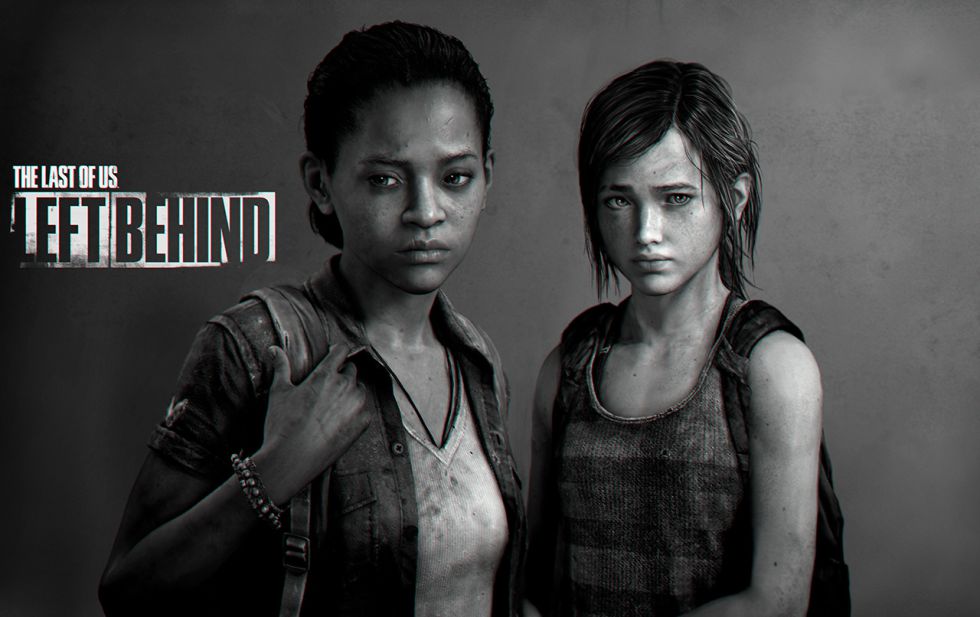
The character in question this time is Ellie, the co-protagonist to Joel in the first game and the main protagonist in the upcoming sequel. Her story is every bit as rich and compelling as Joel’s. Her history, her personality, and even the way she complements the gameplay helps make her distinct. She’s a major reason why this game is so enjoyable and why it sold so well.

She achieved all this as both a female and an LGBT character. It sounds like one of those combinations that has to be forced, but that’s not the case with Ellie. In fact, anyone who plays the entire story of the first game wouldn’t even know about Ellie’s sexuality because it was only revealed through a DLC , or downloadable content.

Even within that content, though, Ellie’s sexual orientation was not a big part of the story it told. It effectively filled in a time gap within the main game while also exploring more of Ellie’s backstory, but at no point did it make her sexuality a bigger issue than it needed to be. You could’ve removed that detail entirely and the story would still work, but it wouldn’t be quite as memorable.

More recently, during a preview of “The Last of Us Part II” at E3 2018, Ellie’s status as a homosexual woman was reaffirmed. Again, it wasn’t critical to making the moment work. The fact she’s attracted to other women doesn’t take anything away from the emotional weight of the scene. It does help enhance it, though.

Therein lies the key. What makes Ellie a great character has nothing to do with her sexuality. It’s not a defining aspect of her persona, nor should it be. It defines her no more than Joel’s heterosexuality defines him. It doesn’t have to be thrown in someone’s face as this huge, all-encompassing feature. It’s just a small part of a much greater whole that is Ellie.

There’s no effort to make her this LGBT icon, which has a tendency obscure a character when forced. Her status as LGBT isn’t belabored, either. She’s not important to the overall narrative in “The Last of Us” because she’s female and gay. She’s important because of factors independent of those traits.

That importance grows throughout the story, but not because of her gender or her sexuality. It’s what she does that helps establish her as an important character and a compelling one, at that. Her story complements Joel’s and the various other characters she encounters.

In the process, she also demonstrates a unique personality. She’s tough and stubborn, but she’s also impulsive and temperamental. Many of those qualities are entirely gender-neutral. Some stand out more because she’s a woman and that’s okay because a girl acting girly isn’t a big deal, which tends to get lost with other female characters.

It may seem so obvious, but the fact that diversity in media is such an issue shows just how difficult it is to pursue. Ellie succeeds because the diversity she represents is never primary to her character. It’s not even secondary, either. That’s not to say her gender and her sexuality are ignored, but it’s never elevated beyond a certain point.

Before any of those diversity-related issues come up, “The Last of Us” works to establish who Ellie is and why she’s important. That process of establishing a good, compelling character without her gender or sexuality being the focal point does a lot to get you to care about her story. It’s a process that can’t be rushed and the game does a masterful job in that respect.

The person Ellie is when you first encounter her early in the game is not the same person by the end. She’s someone who undergoes a lot of growth, encountering more than a few setbacks along the way. There are times she’s easy to root for. There are times when she comes off as an arrogant brat. Before you ever find out about her sexuality, you learn about her as a person.

By the time her sexuality finally comes up, Ellie is already so much more than the gender she’s attracted to. She’s a survivor, a fighter, and someone who has seen everyone she’s ever cared about die or leave her until Joel comes along. She also has a vital part to play in the ongoing apocalypse the world around her faces. All of this, once again, is not dependent on her gender or her sexuality.

I know I keep belaboring that, but it’s worth belaboring because that aspect of character development keeps getting glossed over. Other efforts at diverse characters often rush to the diversity without establishing why anyone should care about them. It’s why all-female remakes rarely resonate. It also leads to characters whose diversity is so blatant that it’s hard to take them seriously.

That’s not to say Ellie is a perfect example of diversity done right. She has her flaws, as does Joel. There are times when she’s too tough for her own good. She has a tendency to push peoples’ buttons for the wrong reasons. She also has questionable tastes in jokes. Even proponents of diversity can find flaws in her.

Despite those flaws, there are many lessons that characters like Ellie and games like “The Last of Us” can teach when it comes to doing diversity and LGBT representation right. The most important can be boiled down to four basic components:

  • Don’t try and force diversity just to fill a quota
  • Develop the character before developing the diversity
  • Don’t make their status as a woman or LGBT their most defining trait
  • Have the character complement their supporting cast, regardless of their diversity status

There are probably many more lessons that I’m not qualified to teach, but I think characters like Ellie do plenty by just being memorable and endearing. She’s a great character within a great story. That wouldn’t change if she were straight, but her being a lesbian does help her stand out, albeit for all the right reasons.

It’s also worth noting that Ellie’s story is still ongoing. “The Last of Us Part II” is set to come out in 2019 and the next part of her story promises to get pretty dark. Whether she maintains the complexity and appeal of her current character remains to be seen, but she has a strong foundation to build on, which is key for any character, regardless of their sexual preferences.

Whether we like it or not, there’s a lot of animosity between both sides, there more diversity in future media because the world is a diverse place. It’s just a matter of going about it in a meaningful, compelling way. Ellie is an example of how an LGBT character can work and when done right, it works pretty damn well.

3 Comments

Filed under gender issues, political correctness, sex in media, sex in society, sexuality, video games