Monthly Archives: June 2017

Hard Truths: Justice, Injustice, And O.J. Simpson

I understand that not everything I say on this blog is going to be popular, sexy, or funny. I don’t doubt that there are opinions I’ve shared and jokes I’ve told that haven’t gone over well. There may be even a few people out there who have read them and felt the urge to punch me in the face through their computer screen.

I understand that. It’s just part of the internet. You’re going to say things people hate and meet people who hate your guts. I’m sure there are people who still haven’t forgiven me for my post on the mind of misogynistic men. I won’t apologize for saying what I say, but please understand that I don’t say it with the intention of hurting or upsetting people.

I say all this as a preface, of sorts, because I know some of the things I’ll say in this post are going to upset some people. If not on this post, I’m sure there will be other posts that draw anger, disgust, and disagreement. Some of these issues are not as innocent as sex robots, Wonder Woman’s BDSM origins, or the sexiness of chest hair. They’re real, serious issues.

The issue, in this case, has to do with something that’s fairly timely in the sense that it often comes up this time of year. Just this past week was the 23rd anniversary of the infamous O.J. Simpson Bronco chase. It happened on June 17th, 1994. It was one of those days where everyone remembers where they were. It’s also one of those days where everyone formed an ardent opinion that still divides people to this day.

At the time, I was fairly young and didn’t really understand the gravity of what was going on. I kept hearing the name O.J. Simpson in the news. I kept seeing people watch the trial on TV, talk about it, and obsess over it. Being so young, I thought it was annoying. All that talk about O.J. Simpson cut into time I’d rather be using to read comics, watch cartoons, and play video games.

I guess you can say I’m part of a generation that only ever knew O.J. Simpson as the alleged murderer who got away with it. Pretty much anyone born before 1982 only knows this side of O.J. Simpson. When they hear his name, they usually think of the Bronco chase, the trial, and the bloody glove. They don’t think of the larger context.

There are members of my own family, as well as major news figures like Keith Olbermann, who’ve tried to explain to me just how big a deal this was. It’s hard for them to convey to people of my generation just how beloved O.J. Simpson once was. Between his Hall of Fame football career, his acting career, and his iconic Hertz commercials, it’s impossible to overstate just how popular this man was.

There was actually a time when the name O.J. Simpson had many positive connotations. He was a celebrity sports icon whose popularity transcended race, class, and everything in between. For someone like him to be accused of a ghastly double-murder was akin to Captain America becoming a Nazi. Actually, that’s a bad example.

It’s because of that other side of O.J. Simpson, namely the one that people of my generation never saw, that his trial became the “Trial of the Century.” That trial, and the controversial verdict that followed, still divides America to this day, often among racial lines.

If you want to have an uncomfortable conversation about race, justice, injustice, and the legal system, pretty much every distressing element you can think of is highlighted by the O.J. Simpson case. It involves spousal abuse, police corruption, racism, media spectacles, and the Kardashian family. Even today, this kind of spectacle would check all the right boxes to become a total media shit storm.

There are so many aspects of the murder trial, the aftermath, the media circus, and the tenuous relationship O.J. Simpson had with his ex-wife, Nichole, that I could highlight. In every case, there are elements to that story that are both unsexy and controversial, dividing and enraging people of every opinion.

However, there’s only one part I want to single out for this particular post. It’s probably going to upset more people than most. I might even get some hate for it. That said, it’s one of those hard truths that needs to be said, even if it’s uncomfortable. Brace yourself because here it is.

The jury in the O.J. Simpson trial got it RIGHT.

Now, it’s my turn to brace myself. I know that opinion isn’t very popular. I also know most of the people in my own family disagree with it. I’ve talked to close relatives about it. They’re all convinced that O.J. Simpson is guilty. They all believe beyond a shadow of a doubt that O.J. brutally murdered his ex-wife and Ronald Goldman. There’s nothing anyone can say or do that can convince them otherwise.

Therein lies the problem, though. It’s one that I’ve pointed out before when I’ve talked about reasons, excuses, and the idea of excuse banking. We all like to think of ourselves as rational, logical human beings that Spock from Star Trek would get along with. In reality, we’re nothing of the sort.

Our brains don’t work through logic. Our brains can use it, but it’s only every a secondary function. Our default caveman setting is to form an irrational opinion first and then look for ways to justify it. It doesn’t matter if it’s racist, sexist, or wholly irrational. That’s how our brains work. That’s how most people look at the O.J. Simpson case.

The problem is, from a legal point of view, that our justice system does everything it can to circumvent those flaws and it’s not always good at it. There’s a reason why criminal justice reform is a major topic these days. The justice system is woefully inefficient at dealing with all crime fairly, especially those committed by minorities.

That’s part of what makes the O.J. Simpson case such an important case, but not for the reason you might think. The reason why it matters so much and why it’s such a harsh truth to digest is because the O.J. Simpson trial highlighted how the justice system is supposed to work. In a perfect world, every criminal would get the kind of legal defense that O.J. Simpson got. The fact that O.J. is black only makes the truth that much harder.

Like it or not, the O.J. Simpson trial got right one of the most important elements of our criminal justice system, at least with respect on how it’s supposed to work. It is built around the idea that a defendant is presumed innocent and must be proven guilty beyond a reasonable doubt.

It can’t just be probable that someone is guilty. It can’t just be likely either. To convict someone of a serious felony, like a double murder, it has to be beyond any reasonable doubt. That’s a very lofty standard and for good reason.

Legal systems in modern western societies emphasize ensuring guilt and not punishing the innocent. There’s a callous practical reason for that too. In a society built around a modern economy, we can’t have the state throwing innocent people in prisons who could otherwise be working and contributing. That’s why if someone is accused of a crime, the system has to make damn sure that they’re guilty.

In O.J. Simpson’s case, and I know this is going to make a lot of people gnash their teeth on a cinder-block, there was reasonable doubt. Pretty much all the evidence against O.J. was either circumstantial or hearsay. On top of that, the LAPD had a sordid history of corruption and racial bias. Police do frame suspects and innocent people do get charged with crimes they didn’t commit.

Unlike most of those innocent people, though, O.J. Simpson had access to the best legal help that money could buy. Those men might be despised now for defending O.J. However, there’s no getting around it. They did their jobs. They did exactly what a lawyer is supposed to do.

They revealed the reasonable doubt surrounding the case and, as upsetting as it might have been, there was reasonable doubt. The blood evidence was immense, but so was the evidence of improper handling and corruption from the officers involved. There are a great many theories as to what actually happened, but that doesn’t matter in the end.

The mere presence of that doubt meant that the jury did the right thing in acquitting O.J. Simpson. It’s a painful truth, especially to the families of Nichole Brown Simpson and Ronald Goldman. Their story will always be the biggest tragedy of the O.J. Simpson case. However, as hard as it is to accept, the justice system was right in this case.

There’s so much more to the O.J. Simpson story that I could talk about. I’m going to avoid it because any discussion about this case is bound to trigger all sorts of anger and outrage. If you want to hear more about this topic, including O.J. Simpson, check out the Unpopular Opinion podcast. They’re usually pretty balanced and pretty funny as well.

Short of a confession, complete with photographs and a bloody knife, we’ll never know what happened in the O.J. Simpson case. It’s that inability to truly know that’s the hardest to accept. Our caveman brains just can’t deal with that kind of uncertainty so we cling to our opinions and excuses.

Personally, I think it’s likely that O.J. did murder his ex-wife and Ron Goldman. At the very least, I think he had something to do with it. However, I don’t know all the facts. Nobody knows all the facts. That’s why, in the context of justice, his acquittal was the right thing to do.

It’s for that very reason, though, that we need a justice system that works around that. We, as a people, are at the mercy of our caveman brains and its inability to use logic properly. That’s the biggest challenge of our justice system, having to deal with all these shortcomings. It’s not perfect. For the O.J. Simpson case, at least, we see first-hand how it’s supposed to work, even if we don’t like the outcome.

4 Comments

Filed under Jack Fisher's Insights

Announcement: Contract Signed And Edits Begin!

I just want to make a quick announcement to update everyone on the status of “Rescued Hearts,” which is to be my second published book. The release schedule is already set by my publisher, Totally Entwined Group. I have every intention of making that date.

Earlier today, I made it truly official. I received the actual contract for the publication of “Rescued Hearts” and signed it. Just a while ago, I received confirmation from their office that the contract went through. It’s singed, sealed, and official. “Rescued Hearts” is on its way!

Along with the confirmation, I received the first round of edits. Just as I did with “Passion Relapse,” this novel will involve plenty of editing. Editing is one of the toughest processes in any novel, but it also happens to be the most necessary. It’s not enough to tell a sexy story. That sexy story has to have polish. That’s the only way to truly maximize the sexiness.

I intend to make “Rescued Hearts” as polished as possible. I hope it shows when the book finally comes out later this fall. Until then, I’ll be hard at work editing and polishing this sexy, romantic story. I’ll provide more updates as they come in.

1 Comment

Filed under Book Announcement

One-Punch Man: A Hero Forged By Boredom

Image result for One PUnch Man

When it comes to the crippling power of boredom, it’s easy to see how it can create deranged super-villains like Vandal Savage and hardened anti-heroes like Rick Sanchez from “Rick and Morty.” In the real world, boredom tends to inspire people in all the wrong ways. It can even inspire horrific crimes.

As such, it’s hard to imagine boredom being the driving force behind a superhero. That seems utterly antithetical to what a superhero is. As a noted comic book fan, which I’ve belabored many times on this blog, I know more than most people should about what makes a superhero. Boredom should not be on that list.

Heroes are supposed to be champions of all that is good and virtuous. They’re supposed to embody our highest ideals as a people. They raise the bar and set an example for others to follow. Their hearts, souls, and eyes are supposed to radiate hope, love, and everything else we associate with puppies and kittens.

However, it’s because I’m a die-hard comic book fan that I would know about a hero inspired by boredom if he or she even existed. Well, thanks to my love of comics and the extra free time that I enjoy between football season, I have discovered such a hero.

He’s not Superman. He’s not Captain America. He’s not even Wolverine, Deadpool, or Squirrel Girl. He’s not a product of Marvel, DC Comics, or any major comic book company from the past century. He’s in a category of his own, although not for reasons you might not expect. His real name is Saitama, but most know him as “One-Punch Man.”

Unlike most heroes, One-Punch Man is exactly what he sounds like. His story isn’t as convoluted as Wolverine’s or as generic as Superman’s. His powers are nothing fancy. As his name indicates, he has the power to defeat any foe with a single punch. It doesn’t matter whether it’s a giant, mountain-sized titan or some monster from outer space. No matter how big or powerful they are, Saitama beats them with just one punch.

If that sounds bland to you, then congratulations. You’re seeing exactly what the writer, who goes by the pseudonym, One, intended for you to see. Unlike other attempts to create iconic superheroes, most of which fail spectacularly, “One-Punch Man” didn’t set out to create an interesting, compelling hero. It was crafted as a parody, of sorts, to modern superheroes.

In the same tradition of Weird Al Yankovic, “One-Punch Man” took an established narrative and turned it into a joke, of sorts. It went out of its way to do all the things that traditional superhero comics avoid. It actually tried to create a hero who was bland, overpowered, and un-iconic. Whether by design or by accident, it worked.

It was created in 2009, but by 2012 the Japanese comic sold over 7.9 million issues in Japan and was later exported to the United States, where it was nominated for an Eisner Award in 2015. For those of you who don’t know, Eisner Awards are the comic book equivalent of the Oscars. For any comic, let alone one that started off as a joke, to be nominated is a pretty big deal.

Parody or not, “One-Punch Man” struck a chord. It might be due to the saturation of superhero movies or the ongoing frustration of comic book fans about how their favorite characters are treated, but a hero who basically spits all over the standard superhero narrative has a unique appeal. Given the success of Weird Al, maybe we shouldn’t be that surprised.

In utterly lampooning modern superhero stories, “One-Punch Man” makes boredom the primary catalyst. In a sense, it channels the power of boredom to create a character who breaks every possible rule for making a compelling superhero and it does it with the blankest of stares.

His backstory is not that compelling. He’s not some alien from a dead planet. He’s not an exiled god or a genetic freak. He’s not even gifted in any way. In fact, the first episode of the anime cartoon shows him as just some generic unemployed office worker who randomly encounters a monster. He defeats the monster, albeit not with one punch, and on the spot he decides to be a superhero.

If you’re hoping for a more compelling story than that, then save yourself the trouble and throw that hope away along with the leftovers and dog shit. That’s as compelling as Saitama’s origin story gets. The way he becomes so powerful is even less compelling than that, if you can believe that.

Saitama didn’t get strong through a genetic mutation, a crazy lab experiment, advanced technology, or even a radioactive bug. Saitama gained his immense power over the course of three short years and he did it through a very simple, very bland workout routine. In his own words, this is how he became the most powerful hero in the world.

100 push-ups, 100 sit-ups, 100 squats, and a 10-kilometer run! And I do it every single day!

Again, it’s every bit as bland as it sounds. The mere fact that everything in Saitama’s workout is nothing more than a set of basic exercises that almost anyone can do is so inane and generic. It’s so generic that people in the real world are even trying this regiment. Given the extent and utter unfeasibility of Batman’s training, it’s basically a joke.

That’s entirely the point, though. Saitama isn’t supposed to be the kind of underdog hero who defies all odds, pushes his limits, and overcome immense obstacles. He is the embodiment of a classic “Deus Ex Machina,” the proverbial god machine that so many stories utilize to resolve a conflict.

In nearly every writing class you take, and I’ve taken more than a few, you’re taught to avoid using the deus ex machina trope as much as possible. It’s not easy, even for erotica romance writers. I like to think I’ve avoided it for the most part in my novels, but I don’t deny the challenge is there. Even comic books struggle with this. Just look up something called the Cosmic Cube for proof of that.

However, whereas most writers avoid a deus ex machine, “One-Punch Man” doubles down on it. It even embraces it to some extent. It doesn’t craft classic superhero stories about how Saitama faces overwhelming odds, powerful enemies, and insane obstacles. He’s so strong that nothing really threatens him anymore. Every threat or enemy he faces is easily defeated with a single punch.

Instead, the narrative of “One-Punch Man” explores Saitama’s struggle with the sheer boredom of being such a powerful hero. He rarely raises his voice. He rarely gets excited. He’s never afraid, threatened, or agitated in any way. He often yawns in the middle of epic battles, much to the annoyance of his enemies and even his fellow heroes.

There’s no getting around it. Saitama is bored out of his mind. Beyond just being powerful, his reasons for being a hero aren’t that deep. He doesn’t have a deep sense of duty like Superman. He didn’t suffer a terrible tragedy like Spider-Man or Batman either. He’s just a hero for the fun of it. That’s the only reason he ever gives. Again, that annoys the hell out of his enemies, but that’s the point.

If you were to put Saitama on the traditional hero’s journey, it would be the shortest journey ever. Everything about Saitama’s backstory, powers, and motivations are bland. They’re intended to be bland because he’s supposed to be a parody of modern hero tropes, a walking joke of how every epic superhero struggle can be reduced to one proverbial punch.

While “One-Punch Man” does an admirable job mocking superhero traditions, sometimes too well, it also reflects the sheer impact of boredom. When someone becomes so powerful and so competent at resolving any conflict, it tends to get boring. Saitama is the perfect embodiment of this.

He might also be a warning sign, of sorts. I’ve talked a lot about the potential for human enhancement in the future, from smart blood to brain implants. While these advancements will do a lot to improve our lives and our bodies, it might also put us in the same position as Saitama.

What happens when it becomes overly easy to master a skill, overcome an obstacle, or achieve a goal? When you’ve got a body that can download knowledge, shape-shift, and make love to an army of sex robots, what else is there? How can you not get bored by all that?

Saitama lives in a world where nothing is a threat to him and nothing challenges him in any way. As such, he’s bored out of his mind. He’s only a hero because he still gets some fun out of it. It’s not much, but it’s better than nothing. For someone as powerful as him, he’ll take it in any way he can. It might not be the most noble reason for being a hero, but it is understandable.

Parody or not, “One-Punch Man” is a unique exploration of a superhero narrative. It purposefully breaks and mocks all the rules of a heroic narrative, but does so in a way that’s entertaining and quirky. You could argue that Saitama is the only hero forged and driven by boredom.

However, if superheroes are supposed to represent our ideals and hopes, then what kind of message does “One-Punch Man” tell us? If becoming so powerful and so competent leads to boredom, then what does that mean for our own efforts? In a sense, our limits keep us from doing so much, but they also keep us from getting bored. In the end, it’s hard to say whether that’s much of an ideal.

1 Comment

Filed under Comic Books, Jack Fisher, Superheroes, Jack Fisher's Insights

Sexy Sunday Thoughts: Poolside Edition

It’s summer time and you know what that means. The days are hot, the beaches are open, and the bikinis are out in force. It’s a beautiful time of year, especially for those like myself who appreciate nudity and various excuses for nudity. It’s not always full-nudity, but we’ll take what we can get. After being cooped up all winter, it’s hard to be that petty.

I’m already enjoying the feeling I get when I walk around the house naked. Even just wearing a pair of boxers feels extra special on some levels. Sure, the heat means more sweat, more humidity, and more body odor. However, if handled correctly, it just makes me feel that much sexier.

This time of year marks the first juicy bite of the savory steak that is summer. Some of us are still getting used to the idea that we don’t need to bring a sweatshirt with us wherever we go, just in case it gets cold. This is the time of year where you can get away with under-dressing. Sure, you have to be mindful of your local indecency laws, but it beats the hell out of wearing layers every day.

I am so ready to embrace summer that I’m sweating sunscreen. I’m sure many others tired of long underwear, heavy coats, and no bikinis are just as eager. For that reason, I dedicate this week’s edition of Sexy Sunday Thoughts to the arrival of summer and all the sexiness it brings.


“Necessity may be the mother of invention, but horniness is its first cousin.”

Related image

I don’t deny the influence of need, profit, curiosity, and laziness in the process of invention. I’m sure those factors were behind a great many advances, be they the light bulb or spray cheese in a can. I’m just saying that horniness is one of those understated influences. What else explains the creation of vibrators and bacon flavored lube?


“When you think about it, a bar of soap is the most intimate, non-sexual item that we own.”

There are all sorts of household items that we use in intimate ways. Be they vibrators, bottles of hand lotion, or socks, we have a uniquely close attachment to these products. Not all of it is sexual, though. Sometimes, a product is intimate just because it regularly touches our genitals.

In that sense, a bar of soap is the most intimate product we own. That bar of soap doesn’t just touch our genitals. It touches almost every inch of our naked bodies. It makes our skin feel clean and smooth. I could go on, but I’d rather not think such lurid thoughts when I’m around a bar of soap. I need to save those lurid thoughts for my novels.


“For rock stars and celebrities, groupies are like candy and every day is Halloween.”

Image result for rock star groupies

Rock stars having sex with legions of beautiful women is nothing new, but it does offer a uniquely sexy narrative. Most men go their whole lives spending countless time and energy just trying to get one woman to have sex with them. Rock stars have the opposite problem. It’s like picking a flavor of ice cream for them. The only problem is having enough of an appetite.


“If a house has a woman living in it and a shower with a detachable shower head, it’s generally safe to assume that shower head has been used for masturbation at one point.”

I think most people understand that when they enter a man’s house and see a bottle of lotion, they assume that lotion has been used for masturbation or something sexual. Not as many people understand the appeal of a detachable shower head with women.

It’s not just one of a billion crude jokes from an episode of “Two Broke Girls.” Women get horny too. This is a scientific fact that too many people deny. They don’t always use the same tools as men. I’m not saying vibrators and dildos don’t have their place, but I think a shower head is an underrated piece of sexual hardware.


“Going to a strip club and window shopping are disturbingly similar experiences for some people.”

I love strip clubs as much as the next man. Since I’ve been of legal age, I’ve been to more than my share. I’m a healthy young man. I enjoy looking at beautiful women getting naked on stage, dancing to music. I’m not going to apologize for that. It’s a spectacle and we humans love spectacles.

For some people, though, strip clubs and shopping are a bit too intertwined. I’ve seen men at strip clubs look at women the same way they look at a new Ferrari. I’m not saying it’s wrong. I’m just saying that some men blur the line more than others.


“Variety is the spice of life, but we’re expected to forget that on our wedding day.”

We’re all told that variety and novelty are good things. We should seek new experiences and enjoy the variety of wonders that life has to offer. Most people agree with that. It may very well have helped us thrive as a species. There are even parts of it that are hardwired into our genetics.

For that very reason, it’s somewhat telling that we expect people to turn all that off on their wedding day. When you get married, you’re supposed to stop seeking novelty, settle down, and become a responsible, tax-paying family that will birth the next generation of tax-paying workers. Is it any wonder why the divorce rate is so high?


“There’s no right way to make love, but there are too many wrong ways, some of which leave awkward scars.”

Being an erotica/romance writer, part of the fun is finding all sorts of wonderfully sexy ways to have couples make love. It pushes both your imagination and libido in all the right ways. So long as the love is genuine, lovemaking can take many forms.

Conversely, it can also fail spectacularly in ways that don’t make it into erotica/romance novels. It doesn’t take much to ruin the moment or kill the mood. Whether it’s an ill-timed spank or irresponsible dirty talk, it can really undermine a romance. It can also leave scars, emotionally and physically. It’s debatable which of the two are more embarrassing, though.


That’s it for now. Until next Sunday, get out there and enjoy the summer heat. Hang out by the pool, take in the sight of bikinis, and appreciate nature’s most clothing-optional season. Whether you’re working on a tan or reading a sexy novel, there’s a lot to enjoy. Just stay cool and stay sexy while doing it.

2 Comments

Filed under Sexy Sunday Thoughts

Announcement: “Rescued Hearts” Release Schedule

It’s been an exciting couple of weeks for me. Not only has summer arrived, thereby allowing me to spend more time naked, but I received word from Totally Entwined Group that they’re going to publish my second novel, “Rescued Hearts.”

This is another huge deal for me. Earlier this year, I celebrated one major milestone in my aspiration to become an erotica/romance writer. Thanks to Totally Entwined Group, I got my first novel, “Passion Relapse,” published. It’s a huge step for me because there’s only so much of an audience you can build through self-publishing.

Prior to “Passion Relapse,” I had a half-dozen other books I had self-published through services like Lulu. Being a nobody with no fanbase or audience, that really limits my ability to succeed. That’s why I need the support of a publisher and that’s why I’ll be forever grateful that Totally Entwined Group took a chance on me.

Working with them has been great and they seem to enjoy my presence just as much because they’re willing to publish more of my work. I’m already hard at work with them, editing my manuscript and giving “Rescued Hearts” the kind of polish that will make it that much sexier.

That effort now has a time frame. My editor has sent me a release schedule for “Rescued Hearts.” Even though I released “Passion Relapsea couple months ago, much to my elation, I want to get more of my sexy work out there. I want to be able to say that I had two published novels in 2017. If this current time frame holds, I’ll be able to say that with a smile on my face and a boner in my pants.

For those of you who got a taste of “Passion Relapse” and liked what they read, here’s the schedule. Plan your private time and your panties accordingly.

Pre-Order: 12th September, 2017
Early Download: 26th September, 2017
General Release: 24th October, 2017

Again, I’m going to work as hard as I can to keep this schedule with Totally Entwined Group. The editing process can be intensive. I actually had to rewrite huge chunks of “Passion Relapse” before it ever came out. I’m expecting “Rescued Hearts” to be every bit as intensive. As such, I have faith that it’ll be just as worth it.

4 Comments

Filed under Book Announcement

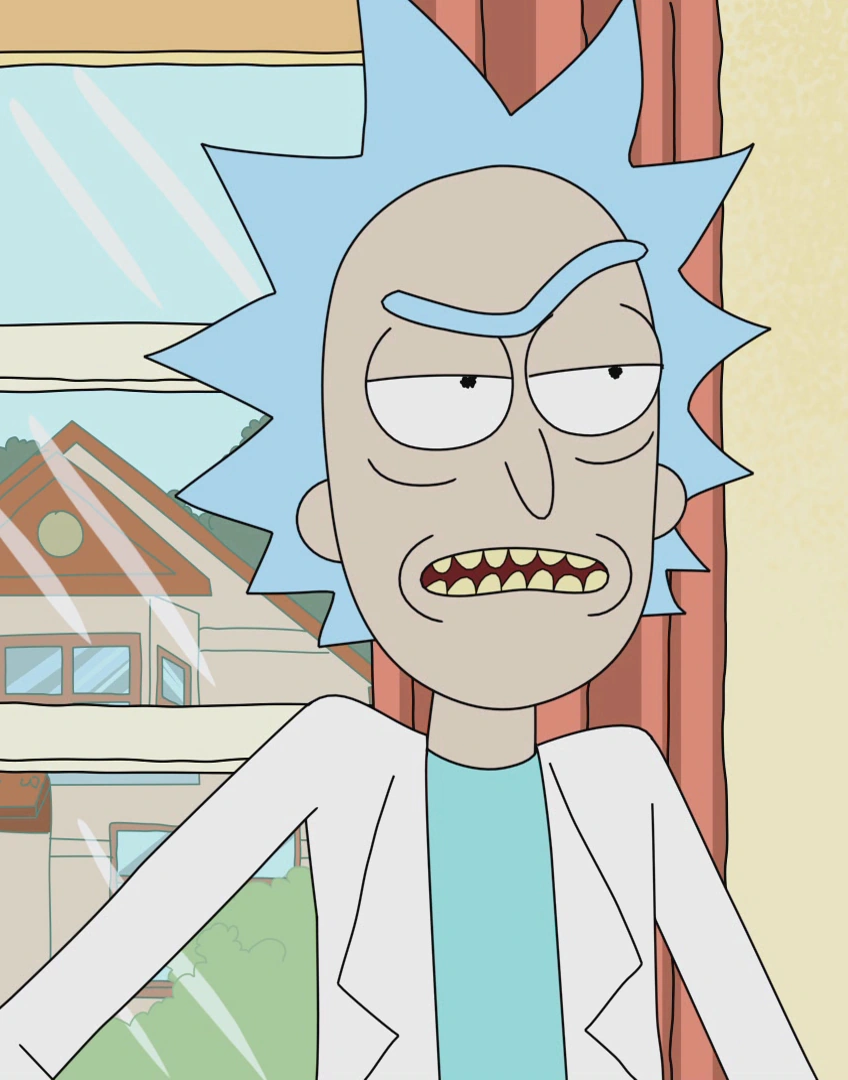
Rick Sanchez: An Anti-Hero Forged By Boredom?

Image result for Rick Sanchez

Greetings, and wubalubadubdub! If you have no idea what I just said and worry that I’ve suffered some kind of traumatic head injury, then calm down. It’s nothing like that. If you happen to know what that word means, then congratulations. Your life is inherently richer because you’ve watched a show called “Rick and Morty.”

For those of you who think “South Park” is too polite, “Rick and Morty” is right up your alley. It’s crude, lewd, callous, crass, vulgar, obscene, and pretty much every other word you would use to upset a typical PTA meeting. It’s also one of the most hilarious, insightful, smart, and wildly entertaining shows on TV right now. Unless you find shows like “Family Guy” too harsh, a show like “Rick and Morty” will appeal to you.

Why do I bring this show up? I usually don’t do post just to lavishly praise a particular TV show or movie without making a larger point. While I may make exceptions to movies like “Wonder Woman,” I usually try to tie it into a larger discussion. This time is no different. At some point, I was going to use “Rick and Morty” in a discussion. It was only ever a matter of time and topic.

Image result for Rick and Morty

In this case, the topic is both relevant and revealing. It once again ties into my ongoing exploration of boredom, an inescapable facet of modern life and a potential plague of the future. I cited DC Comics character Vandal Savage as a super-villain who is defined by boredom. He’s even said outright that boredom is what motivates him.

As compelling as Savage’s case might be, Rick Sanchez would probably still roll his eyes and call it stupid. He would also probably find a way to kill Savage, spit on his corpse, and do it all while exceedingly drunk. That’s the kind of man he is. He’s not a hero by even the greatest stretch. He’s also not a villain either, although he has been known to carry himself like a sociopath at times. He is, at his core, an anti-hero.

I’ve talked about anti-heroes before and how they’re neither heroes nor villains. They exist on a different spectrum of sorts, from tragic characters like the Incredible Hulk to truly brutal souls like the Punisher. In respect to this spectrum, Rick Sanchez exists on a nebulous, yet extreme end.

Image result for Rick and Morty

He rarely goes out of his way to save the world or do good. He also regularly traumatizes his friends, family, and his cohort, Morty Smith. His dimension-hopping, universe-spanning exploits often put everyone around him in danger. He’ll also show little reservation about participating in various acts of debauchery, violence, and general douche-baggery.

There’s no such thing as a typical episode of “Rick and Morty” in the sense that it follows a formula. In a sense, it defines itself by essentially taking the formula of traditional adult animation and shitting all over it.

As a general rule, though, an episode of “Rick and Morty” usually revolves around Rick getting his side-kick/grandson, Morty, caught up in something crazy. Morty, being young and innocent, tries to help him out and do the right thing. More often than not, though, Morty’s idealism gets crushed and/or backfires horribly. Rick, being a genius inventor, usually finds a way to fix everything and he does it while rarely being sober.

Image result for Rick and Morty

Why he does what he does, getting Morty caught up in his antics in the first place, is what makes him relevant to the discussion about boredom. Throughout the first two seasons of the show, there are various teases about what truly motivates Rick Sanchez. At times, it seems like he really loves his family. At other times, though, he gives the impression that they’re just a means to an end.

At every turn of his antics, regardless of context or motivation, Rick and the plot of nearly every episode tends to trivialize everything. Think of any cherished tradition, be it family, religion, culture, love, or friendship. To Rick Sanchez, it’s all pointless crap. It’s only important because people make stupid excuses to justify it. These are some of his soul-crushing quotes, which he often says in the presence of loved ones, no less.

“What people call love is just a chemical reaction that compels people to breed.”

“Listen, I’m not the nicest guy in the universe, because I’m the smartest, and being nice is something stupid people do to hedge their bets.”

“Don’t break an arm jerking yourself off.”

This is where the boredom aspect comes in. In addition to being a high-functioning drunk who has a very crass view of the world, he’s extremely smart. He’s a genius who is at or above the likes of Vandal Savage.

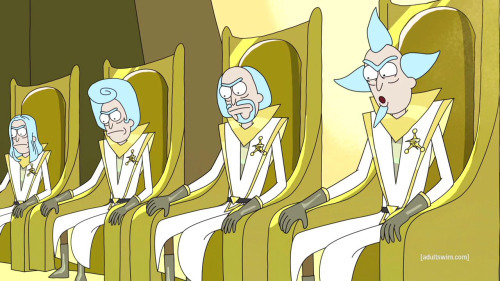
He creates portals to other dimensions with the same ease of changing the channel on a TV. He creates inter-stellar spaceships in a garage, complete with a super-intelligent AI that will obey orders in disturbingly literal ways. He’s so smart that he actually outsmarted an entire army of alternate-reality versions of himself. It’s even more messed up than it sounds.

Image result for Rick Sanchez vs council of ricks

Keep in mind, he does all of this while often being intoxicated. He almost always has a metal flask of hard liquor in his pocket. He’ll gladly gorge on harder drugs, even if it inspires his own dance. The fact he can do so much of this while being such a drunk is a testament to the sheer breadth of his genius.

Like Vandal Savage, though, genius does come at a cost. Having such a high intelligence means you tend to get bored easily and are constantly in need of new challenges. Rick Sanchez is so smart that there’s pretty much nothing he can’t do.

With his gadgets, he could become the world’s richest man. With his understanding of reality, he could win every Nobel Prize and get every major university to name a building after him. He could do all of this without breaking a sweat, but therein lies the problem.

Rick could do all these things, but it wouldn’t be a challenge. It would be too easy and provide a fleeting distraction at best. It would also get bureaucratic and tedious too, which only bores Rick even more. It’s why he can outsmart the devil himself, get bored, and burn down a building all in the same episode. I swear there’s no part of that last sentence that’s made up.

In trivializing anything and everything that other people hold dear, Rick Sanchez often brings up boredom. He even looks bored, as well as drunk, when talking about it. Whenever Morty asks him about some terrible, traumatic, morally reprehensible issue, be it doing business with a hitman or the purge, his response is always dispassionate and crass.

Related image

Like Vandal Savage, Rick is often frustrated by how easy things come. He’s so smart, even while drunk, that nobody can really challenge him. No matter what he does, his gadgets and his utter lack of regard for ethical considerations ensure he wins easily. He rarely experiences the thrill of overcoming a challenge, which is part of why he’s so dispassionate and crass.
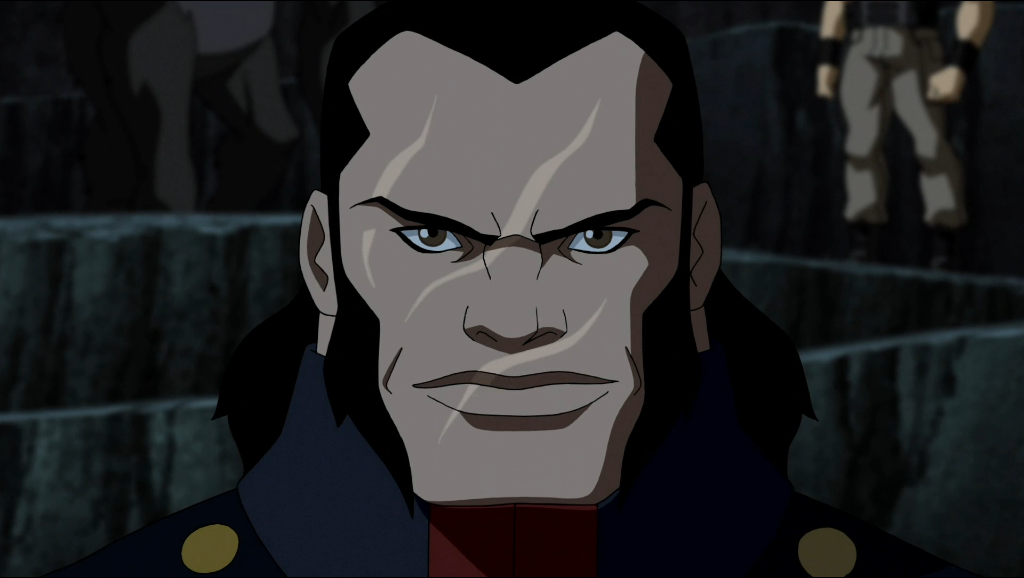
Unlike Vandal Savage, though, Rick’s exploits also have him traveling across the universe and into different dimensions. This does more than highlight just how smart and resourceful Rick is. It effectively affirms just how trivial his actions and existence is in the grand scheme of things.

In one particular episode, his exploits with Morty lead to the complete and utter destruction of the world. Rick’s solution is as crass as it is anti-heroic. He just takes Morty to another universe where they both died and take their place. He even digs his own grave. He does all of this and then goes back to drinking beer and watching TV while Morty is horrifically traumatized.

In a sense, this understanding that nothing he does matters makes the boredom even worse. It means that even if Rick finds something meaningful to do, it really doesn’t matter in the grand scheme of things because there are literally infinite universes where the same thing was done in any number of ways. Whether he succeeds or fails doesn’t matter. Nothing he does matters.

Despite all this, Rick doesn’t become a full-fledged villain like Vandal Savage. He probably could conquer the world if he wanted. He already defeated an intergalactic empire of insect humanoids with relative ease. Again, not a word of that last sentence is made up. Unlike Savage, though, he doesn’t do that. He’d get bored with that too and understand that it doesn’t matter in the long run.

Related image

That doesn’t stop him from protecting Morty and the rest of his family. When they’re in trouble, he usually goes out of his way to help them. At times, he seems to do it out of sheer boredom, but he still does it. It’s not very heroic, but it’s not at all villainous.

It would be a stretch to say that Rick Sanchez is entirely driven by crippling boredom. The show is somewhat erratic in the things that drive rick. The first episode of the third season indicated that Rick is almost entirely driven by his love of a discontinued promotional dipping sauce from the late 90s. I swear I’m not making any of that up. I know I keep saying that, but it really is worth saying.

Image result for Rick Sanchez

On paper, Rick Sanchez and Vandal Savage don’t have much in common. However, one trait they do share is that they are distinctly human. They have human weaknesses and human drives. They are very much at the mercy of human limits, both mentally and physically. That’s why boredom effects them so profoundly.

That’s also why they are both cautionary tales about the power of boredom. Rick Sanchez, through both boredom and extreme nihilism, is plagued and frustrated by boredom. It keeps him from using his genius to achieve a meaningful good. It also keeps him drunk, miserable, and constantly in trouble with killer insect people.

Image result for Rick Sanchez Season 3

While Rick Sanchez is by no means a role model, he still manages to do a lot with his brilliance and he can do it while drunk. He may be a callous, dispassionate anti-hero, but he gets the job done and he does it in a way that’s wonderfully entertaining. For that, he deserves respect, although he’d probably say respect is an idiot thing.

4 Comments

Filed under Comic Books, Jack Fisher, Superheroes, Jack Fisher's Insights

Vandal Savage: A Super-Villain Forged By Boredom?

Related image

Boredom can sometimes drive you to do crazy things. Give someone a bunch of paperclips, some sticky notes, and too much free time and wonderful things will happen. It can also inspire some truly horrible acts. I’ve already mentioned the horrific murder of Christopher Lane, who was murdered by three bored teenagers. That’s an extreme rarity, for the most part, but it’s an egregious act that helps highlight the power of boredom.

As is often the case with various human quirks, some of our most iconic characters of fiction are built around the extremes of these innate human traits. Heroes like Superman and Wonder Woman embody the noblest ideals for men and women alike. They set the highest of standards for the best of what humanity can be in terms of heart, compassion, love, strength, and charity.

Image result for Superman

Conversely, the villains that heroes like Superman and Wonder Woman face highlight the worst of the worst when it comes to human depravity. These characters are manifestations of the darkest parts of the human psyche. They show us just how bad humans can get if you give them enough incentive, hatred, and clown makeup.

That’s what makes characters like the Joker, Lex Luthor, and Apocalypse so terrifying. They are personifications of blood-lust, chaos, narcissism, and pretty much every personality disorder associated with Kanye West. They bring out the worst in people. Their conflict with other heroes mirrors the inner conflict many of us deal with.

I’ve talked about the varying differences between the classic hero’s journey and the more nuanced villain’s journey. Thanks to the success of characters like Walter White, Dexter Morgan, and the cast of “Suicide Squad,” there’s been a surge of interest in super-villains and what makes them tick.

Related image

Being a noted comic book fan, I can talk for hours about various villains, how they came to be, and what makes them so evil. I’ve already talked extensively about Walter White and comic book villains like Magneto. These characters embody a certain type of villainy, each driven by a set of motivations that highlight a villainous aspect of our human mind.

Most people are familiar with the villains driven by greed, narcissism, vengeance, or hatred. They’re usually the characters getting punched, shot, or blasted on lunch boxes or posters. Some of them often get compared to real-life politicians. So if villains can embody so many of these defining traits, can one embody the dark side of boredom?

Well, I can say as someone whose love of comics is only matched by his love of nudity that there is. There is actually a character, a major villain no less, whose motivations and evil is very much a product of boredom. Granted, it’s an indirect kind of boredom, but it’s every bit as devious. Ladies, gentlemen, and those of unspecified gender, I give you Vandal Savage, the poster boy for the evils of boredom.

Related image

Some may be confused. I imagine that even some of my fellow comic book fans are confused. Bear with me, though. There is some twisted logic behind this and boredom is a big part of it.

Vandal Savage is one of the most notorious villains in DC Comics. He’s not as well-known as Lex Luthor or the Joker, but then again, very few villains are. While he may not be an evil all-star, he does show up a lot whenever DC’s heroes need a daunting villain to face.

If you’ve watched shows like “Arrow,” “Flash,” or “Legends of Tomorrow,” then you’ve probably seen him show up in both minor and major roles. He’s also been a major villain in the old “Justice League” cartoon. In terms of sheer reach, Savage’s resume is pretty impressive, but his notoriety is not. There are many reasons for this, but some of it has to do with his origin.

Vandal Savage is not exactly on par with Walter White in terms of the journey he took to become a villain. In fact, it’s kind of mundane in terms of substance. He’s actually a real caveman who lived way back in the hunter/gatherer days of 50,000 BC. He would’ve been nothing more than a fossil sample to frustrate creationists had he not encountered an exotic meteor that crashed near his home.

That meteor, which is basically one of DC’s many mystical McGuffins, transformed Savage from a simple knuckle-dragging caveman to an immortal, super-intelligent being. He’s been running around, causing problems for humanity ever since. That means he’s been in the super-villain business for over 50,000 years. He has a lot of experience being an asshole.

There are a great many events throughout the history of DC Comics that highlight just how big an asshole Savage is. He has such a low regard for human life that even Lex Luthor finds him crass. Most of the time, he’s either trying to conquer humanity or destroy it. It’s basically typical super-villain antics.

Related image

However, what sets him apart and what makes him a potential warning sign for us, as a species, is what motivates him. Throughout his history, he’s given any number of typical excuses. He’s a big, mean bully who thinks he deserves to rule the world because he’s smart and immortal. There’s nothing about that to really set him apart from every other Biff Tannen wannabe.

Like many villains, though, writers have given him other motivations. One of the most recent and, by far, the most relevant occurred in major DC Comics event called “Final Crisis.” It came out in 2008 and it had Savage join an army of super-villains in a plot that would’ve essentially undid creation and remake it. Many villains had their share of reasons for joining this plot, but Savage had one that set him apart.

He joined this universe-ending plot for with simple purpose, to end his boredom. That wasn’t an indirect, off-the-cuff comment. That’s what he actually said to Lex Luthor when they talked about it. He wasn’t trying to conquer humanity this time. He just wanted his boredom to end.

Regardless of how Savage’s motivations and presence affected the plot, it’s an idea worth contemplating. Just think about it from his perspective, if you can, and try to get around all that wanting-to-conquer-humanity crap. Vandal Savage is over 50,000 years old. He’s seen, done, and mastered so much that what else can he do with himself?

He doesn’t age. He doesn’t decline, mentally or physically, in any way. As far as he or anyone else knows, he can’t die. He can be shot, stabbed, punched, buried, and everything else that David Blaine pretends to do to himself and he just brushes it off. Nothing about his condition ever changes.

On top of that, he’s super-intelligent. It’s been documented to some extent that very smart people are often prone to crippling boredom. Being so smart, it’s easy for a genius to master a task. Once they’ve mastered it, they get bored with it and look for another challenge. In a sense, idiots have an edge when it comes to killing time. If they’re always struggling with something, they have something to focus on.

It creates a perfect storm of boredom for Vandal Savage because not only is he a genius, he has unlimited time to kill. Being a genius, he can master pretty much any task. In the comics, he’s described some of the jobs he’s had. He’s been a poet, a priest, a laborer, a scholar, a king, a warrior, and pretty much anything a man could’ve been before 1850.

No matter what he does, he’s mastered every single skill and overcome every challenge he’s ever faced. Even if it’s not through sheer genius, the fact he has unlimited time ensures he’ll always figure it out. Given enough time, he could’ve built the pyramids by himself. He could’ve painted every great masterwork in history on his own. He could’ve done all this multiple times, but it the outcome is the same. He still gets bored.

It’s hard to imagine for anybody who still struggles to use a microwave. No matter what Vandal Savage does, be it advanced calculus or conquering a planet, he still has too much time to kill. He can read every book. He can watch every movie. He can solve every crossword puzzle. He can even do it all multiple times and it still wouldn’t matter. He’d still get bored with it. At what point does he get bored with everything?

In a sense, it’s easy to understand why he keeps clashing with DC’s mightiest heroes. That’s one challenge he’s yet to overcome. He still tries to fight them, but they keep beating him. That’s just one of those skills he hasn’t mastered yet. It leads to pain and frustration, but it also leads to intense awareness, arousal, and exhilaration. When you’re that bored, you’ll get it however you can.

The fact that Savage is still a man, an actual caveman no less, also highlights the painfully human component of his struggle. He’s not some advanced machine or alien that has no concept of boredom. He’s still a man. He still feels all the things other humans feel, including boredom. The problem is, after 50,000 years, he’s got nothing left but boredom.

He can’t create meaningful relationships with other people because other people get old and die. He can’t have a family or fall in love because they’ll get old and die too. At a certain point, everybody around him just becomes another corpse-in-the-making. The fact he has such a low regard for human life is not surprising. If anything, it’s remarkable that he shows as much humanity as he does.

It’s impossible for anyone to truly relate to Vandal Savage and that’s part of what makes him a great villain. At the same time, his circumstances and motivations can act as a warning of sorts. Give a caveman unlimited time and unlimited brilliance and what will happen to him? What does a man do when he’s done pretty much everything a man can do to a point where everything seems boring?

As our medical technology improves at fighting disease and enhancing our bodies, more people will be able to live longer, healthier lives. At a certain point, we may be able to live so long that our only real challenge is filling the hours. Living that long turned Vandal Savage into a cold-hearted super-villain. What will that mean for us? Ironically enough, only time will tell.

8 Comments

Filed under Comic Books, Jack Fisher, Superheroes

Boredom: The Epidemic Of The Future?

Image result for crippling boredom

Back in August of 2013, a very heinous, very unusual crime made headlines around the world. In Dunkan, Oklahoma, a group of three teenagers allegedly murdered Christopher Lane, an Australian exchange student just out for a jog, in cold blood just because they were bored.

Think about that for a moment. A bunch of teenagers got so bored and were so desperate form stimulation that they resorted to cold-blooded murder just to get their adrenaline flowing. We, as a society, are so used to crimes of passion and desperation. They’re basically the premise of every episode of “CSI” and “Law and Order.”

The fact those shows keep getting renewed show that we have a certain concept of what inspires and propagates crime and deviance. People who commit these crimes usually have some sort of overpowering motivation that overshadows any sense of decency they have. They’re desperate for money, they’re hopelessly in love, or in some cases, they’re pathological psychopaths with fatal flaws in their biology.

Image result for Dexter morgan

What makes the murder of Christopher Lane so horrifying is that it completely upends that narrative. The killers, in this case, weren’t motivated by revenge, money, or personality disorders. They were just bored.

That is extremely disconcerting because we’ve all felt bored at some point in our lives. There was this one time the power got knocked out at my house for nearly two days and I couldn’t do damn near anything. When it got dark and I had no more light with which to read comics, it got to be damn near agonizing. I never did anything stupid because of it, but this crime should give everyone pause.

The fact that we’re all capable of being exceedingly bored reveals a disturbing possibility. If three bored teenagers are capable of such a heinous act, then are others just as capable? Are we, personally, capable of such horror? Depending on how bored you’ve been in the past, that’s a disturbing question to even think about.

Image result for terrible boredom

However, it may become an increasingly relevant question in the future. Usually, when I talk about the future on this blog, I explore the more positive ramifications of our advances in technology. I talk about how this technology will cure infectious disease, enhance our cognitive abilities beyond our caveman limits, and improve our sex lives to amazingly kinky heights.

I know, at times, it sound downright utopian in my vision of the future. By our current standards, wherein we live in a world where 3.7 million children die before their fifth birthday, it certainly seems rosy by comparison. However, I stick my fingers in my ears and start singing John Lennon songs when I contemplate potential problems in that vision. This is one issue that’s easy to overlook, but has major implications.

Image result for John Lennon imagine

At this moment in history, society has a great many distractions in terms of entertainment and productivity. Most people have jobs, of some sort, to keep them busy. The three teenagers who killed Christopher Lee were on summer vacation and had nothing productive to do. It’s hard to know whether a part-time job at a fast food joint would’ve averted a murder, but they would’ve had to find a different excuse.

Whether you’re toiling in the fields of a small farm or running around an office like an episode of “The Office,” we’ve always had some kind of work to keep us, as a species, occupied. For most of human history, we had to work. If we didn’t, then we starved to death. It was that simple.

It’s another rare instance where caveman logic seems to apply equally across time and history. It doesn’t matter whether we’re hunter/gatherers or sweatshop workers putting together barbie dolls. We’re a species that’s wired to work. It may not always be the work we prefer, but we know why it’s necessary on some levels. We need to gather and manage our resources to survive.

Image result for toiling in the fields

That, however, is where the chink in our boredom-busting armor might start. For most of human history, we’ve always had to work ourselves to the bone to keep our species and our civilization moving. That’s rapidly changing due to trends in automation. Add in the growth of artificial intelligencethe rise of 3D printing, and the possibility of lab-grown food, and suddenly we don’t need millions of people toiling anymore.

Now by most measures, it’s a good thing that we don’t need people to endure back-breaking labor just to get the bare minimum of sustenance. Most people would rather not work in fields of cow shit or work 12-hour shifts in a factory. They’d rather work a reasonable number of hours that provides them abundant leisure and family time. That’s wholly possible in a modern economy.

Image result for leisure time

However, at some point, technology will make even that reasonable set of hours won’t be necessary. Our ability to make our food, purify our water, and generate power might become so efficient that the amount of work needed is minimal. Given our tendency to screw up on the job, it may get to a point where having human workers is a liability.

It could lead to a huge mass of unemployment or under-employment. However, that wouldn’t mean everyone would have to live in poverty. On the contrary, it may eliminate poverty altogether because we could allocate the basic necessities of life so efficiently. Policies like the universal basic income, which I’ve talked about before, may effectively decouple the link between work and survival.

Image result for technological utopia

This is all well and good for people who hate doing menial jobs for low pay, but it creates a situation that we, as a species, have never dealt with before. What happens to our bodies, minds, and biology when we don’t have to work at all and are subject to the constant threat of boredom?

That’s not entirely a rhetorical question. It’s also one of those questions that’s impossible to answer now, but might be possible to address in the future. We’ve never had a functioning society where nobody has to work and everybody has access to the basics of life, free of charge. It’s so unprecedented that it’s hard to know whether we’re even wired for it.

The ghastly murder of Christopher Lane implies that our minds and bodies don’t react well to boredom. It makes us think crazy thoughts, do crazy things, and act on crazy impulses. What else other than boredom can explain people dedicating so much time and energy into making paperclip chains?

Image result for paper clip chain

It doesn’t just reflect to our basic caveman settings. These are essential survival instincts that every species that has ever lived have built into their biology. Every creature, be it a lion or a dung beetle, dedicates a significant amount of its existence simply securing food, avoiding predators, and finding a mate. Given the never-ending competition of nature and evolution, there’s literally no time to be bored.

Humans are in an unprecedented situation compared to other species. We’re basically like players in a massive multi-player video game armed with cheat codes. We are so dominate, so powerful, and so adaptable that no other species has a prayer. Sure, a deer may kill an unlucky human every now and then, but deer are just not able to dominate the way humans dominate.

Image result for deer in headlights

The problem is that this undermines the very mechanics of evolution and survival instinct. What happens to a species where it doesn’t need those instincts to survive and reproduce anymore? With our tools and technology, humans can kill any predator and beat any disease.

That means our only concern would be reproduction. That might already be playing out to some extent. There have been some links, albeit weak ones, between adolescent boredom and teen pregnancy. When you think about it from a survival standpoint, it makes sense. If there’s no food to gather or predators to avoid, your next instinct is to mate. At the very least, having kids gives you something to do.

Image result for bored teenagres

However, technology may make that unnecessary as well. Between advances in contraception and artificial wombs, even that most basic instinct won’t be necessary for the propagation of our species. In that scenario, sex would have no reproductive purposes. It would just be another thing we do with our bodies when we’re bored. While that might mean more people get laid, it also means risking even more boredom.

Can we, as a species and as individuals, function with that kind of boredom? In a future where we have so few concerns to our survival, safety, and propagation, can we actually tolerate life? Again, it’s not entirely a rhetorical question.

Just imagine yourself in that situation. You wake up in a nice, comfortable dwelling every day. You don’t have to work. Anything you want to eat is readily available. If you want to have sex, there are apps to connect you with people or sex robots that make that as easy as ordering a pizza. You have all the time you want for hobbies, sports, and what not.

Image result for bored teenagres

It might be fun at first, but what happens when you get bored? How do you fill every hour of every day? What happens when you’ve read all your books, beat every video game, and collected every stamp? What will you do to entertain yourself?

That’s not to say some people will resort to the lengths that those teenagers in Oklahoma went to when they murdered an innocent man. However, the fact that this happened today when we’re still a long way from that rosy future is telling. It might even be a warning that we’re not prepared for the boredom pandemic to come.

18 Comments

Filed under Jack Fisher's Insights, Sexy Future

Khan Academy: The (Near) Future Of Education?

Image result for Khan Academy

In talking about education, I’ve highlighted issues that give me fever dreams about my experience in high school and those that give me hope for future students. While I know it’s not a very sexy topic, it does matter a great deal.  A society full of idiots is only good for creating embarrassing YouTube videos and Chuck Lorre sitcoms, but not much else.

Our current method for education people in the western world has a lot of room for improvement. Some, like South Korea and Japan, do it better than others. Others, like the state of Texas, are easy punchlines in jokes about stupidity and I’m not just talking about their laughable record on sexual education.

Let’s not lie to ourselves. Education is hard. Every human being is wired different. Kids are especially tricky. Between puberty and sugar, it’s hard to help them learn, especially if they don’t want to learn. Our brains weren’t wired for assembly line style education that requires memorization, lectures, and standardized tests. They were wired for survival, reproduction, and avoiding hungry bears.

At some point in the future, we may be able to tweak that old wiring to make education easier. Companies like Neuralink are already working on that. However, that kind of brain building is years off. While it is promising, there are many who may lament that they or their children won’t get to benefit from this kind of innovation. They’re stuck using textbooks and number two pencils.

Image result for standardized test

Well, for once, I’m not going to fantasize about an advancement that’s way off in the future, like smart blood or sex robots. There are some amazing advancements in this field and they don’t require a brain implant. They don’t even require a private tutor from South Korea. Big changes to education aren’t just some far-off future fantasy. They’re actually happening.

That brings me to Khan Academy. I’ve mentioned them before, albeit not in great detail. I kind of feel bad about that because it’s doing some amazing work in the field of education. It is, very much, a game-changer to the way we think about education. It has the potential to educate people all over the world at a cost that’s almost negligible.

Image result for standardized test

What is Khan Academy, though? Well, that’s not an unreasonable question because it’s one of those things that is known in some crowds, but not others. It’s also fairly new. Khan Academy started only ten years ago and it started by accident, which happens a lot more than you think.

The story of how it came to be is actually pretty remarkable. The man who created, Salman Khan, didn’t intend to make it into one of the biggest innovations to hit education since the invention of pocket calculators. It just played out that way. Several years ago, 60 Minutes did a story about it and it reveals some pretty amazing insights.

However it came to be, Khan Academy’s mission is as bold as it is important. It seeks, in their own words, “to provide a free, world-class education to anyone, anywhere.” At a time when the cost of education is rising frustratingly fast, Khan Academy dares to be bolder.

It doesn’t require big, fancy schools. It doesn’t require an army of trained teachers, some of which may or may not be qualified for their job. It doesn’t even require students to leave the house. It only requires someone with a computer, an internet connection, and an ability to access a website. These days, those are skills that most kids learn to do right out of the womb.

That’s not to say it’s better in every way. There are some things that you can’t just learn by doing exercises online. You wouldn’t want a mechanic, plumber, or gynecologist only learning their trade through online videos. You’d want them to have some kind of training.

Image result for smart kids

Even so, the value of having a cheap, effective way of educating young children cannot be understated. Beyond simply knowing how much to tip at a restaurant, education helps children think and reason for themselves. It helps them make sense of a world where the Kardashians are celebrities and Johnny Depp still makes movies.

We, as a species, need societies of kids and adults who can think. Until we perfect neural implants, education is still going to be a challenge. That’s why innovations like Khan Academy are so valuable.

Leave a comment

Filed under Jack Fisher's Insights, Sexy Future

The Future Of Education (And The Demise Of Idiots)

Image result for accelerated learning

In his seminal book, “Outliers: The Story Of Success,” Malcolm Gladwell explored the factors behind some of the world’s most successful individuals. In that exploration, he stated that it took approximately 10,000 hours of correct, focused practice to master a skill. It’s an often-repeated rule espoused by athletes, artists, and YouTube stars.

It’s also somewhat debatable. If that figure really were accurate, then I should’ve mastered writing three years ago. I don’t think I have. I still find new ways to improve with every book and every blog post. I get the message of Gladwell’s rule. To get really good at anything, you do need to practice and practice well.

Image result for training hard

Then, we see movies like “The Matrix,” where Neo mastered every martial art ever created in the span of a day. Even though it was a work of fiction, it presented a scenario where practicing a skill was for suckers. Neo didn’t have to practice anything. He just sat in a chair, plugged a gizmo into the back of his neck, and just like that he knew Kung Fu.

That scenario may have been pretty extreme at the time. Keep in mind, though, that the Matrix came out in 1999. Back then, a flip phone was still considered cutting-edge technology. A lot has happened since then and I’m not just talking about our ability to watch porn on the bus.

Image result for Cell phones in 1999

The ability to upload knowledge directly into our brains, effectively learning a skill in an instant, is one of the most underrated technologies in science fiction. It’s never more than an afterthought or plot convenience at most. In terms of its utility and impact on human society, though, it’s right up there with flying cars and sex robots.

I’ve talked about the ongoing deficiencies of our education system and the human brain’s limitations when it comes to learning critical thinking skills. Now, I’d like to stop spitting on my own species and give everyone some reason for hope. I do believe that our species will one day make idiots, as we know them, a relic of the past, much like circumcision and the orgasm gap.

That’s because our species, despite its many limitations, is really good at one particular skill. That’s the ability to build tools. As we speak, the fine folks at DARPA, also known as the United State’s Military’s “mad science” division, is working on a form of accelerated learning that would make Neo proud, albeit unimpressed.

Related image

It’s not the same as uploading a skill the same way we upload files to our phones. They call it Targeted Neuroplasticity Training, which is a fancy way of saying it seeks to directly stimulate the human nervous system to facilitate the learning of an advanced skill.

From a pragmatic standpoint, it makes sense for DARPA and the military to want something like this. A lot of time and money goes into training soldiers, pilots, officers, and operatives into mastering a specialized skill, be it flying a plane or interrogating a suspected terrorist. Not every military recruit has the skill or sex appeal of James Bond. Most have to work at it.

This new form of training will cut down on the amount of time soldiers and recruits need to learn various skills. Like many other advances that got their start in the military, it may only be a matter of time before this sort of technology finds its way into classrooms.

Image result for The classroom of the future

There’s already a potential business opportunity, thanks to Elon Musk’s new company, Neuralink. I’ve already talked about the potential of how brain interfaces will make us smarter and sexier. The current research with DARPA will provide a viable method for using that interface to improve learning.

Once this technology matures, and there are plenty of financial and pragmatic incentives behind it, then we’ll have to completely rethink how we educate ourselves and our kids. Old methods like catchy nursery rhymes or standardized tests, which have a limited effectiveness at best, would instantly be obsolete.

The school of the future may not involve big, bulky buildings full of lockers, overpriced textbooks, and wedgies. It may just be a simple office building where an individual, be it a kid or an adult, sits down and links their brain implant to a computer. Then, through a mix of direct neural stimulation and machine interface, we learn the kinds of skills that used to take decades to master.

Image result for mastering a skill

That means every kid, from the age of five, can learn the kind of critical thinking skills usually reserved for college grad students and NPR talk shows. It also means learning technical skills like how to operate a computer, fix a car, build a birdhouse, or paint like Bob Ross are as easy as downloading an app to our phones.

Make no mistake. There are people working on the technology to download knowledge directly into the human brain. The incentives are just too strong and I’m not just talking about the military. Between big business and professional sports teams looking for an edge, the idea of just downloading a skill into a person has too many potential uses.

The impact this will have on society cannot be understated. It’s an impact that few, especially an aspiring erotica/romance writer, are equipped to imagine. Education is one of the few policies cited as a major tool against poverty. Also, a society of fewer idiots is a healthier society by nearly every measure.

Related image

While education is, on orders of magnitude, much better today than it was 100 years ago, there’s still plenty of room for improvement. There are just so many practical and logistic issues that come with educating over seven billion people from different backgrounds, cultures, languages, and what not.

The ability to download knowledge and stimulate the brain directly could be the key to finally closing what remains of the education gap. That gap is still pretty wide and a huge factor in many unresolved issues, from job opportunities to sexual education. There are huge swaths of the population that still don’t know how condoms work.

As this technology improves, the barriers that keep entire swaths of people from knowing and understanding the world critically will crumble. That has major implications for the multi-trillion dollar education market, as well political parties that rely too much on idiots voting.

Image result for idiots voting

It also has major implication for our love lives, our sex lives, and everything in between. Whenever I’ve talked about human enhancement, I’ve pointed out how smart people tend to make better decisions in both their love lives and their sex lives. In matters of intimacy, it makes sense to know how your partner’s genitals work. That’s just common sense.

The extent to which accelerated learning would affect our personal and professional lives is still hard to quantify. As society becomes more and more educated, we’ve had to rethink and re-imagine what it means to be in love or make love with someone.

Like Morpheus pointed out in “The Matrix,” though, our system of education is still governed by a set of rules and limitations. Our brains and bodies are still stuck on the same settings they were during our caveman days. We’re only beginning to unlock and rewire those settings.

Image result for neo from the matrix

That means there may indeed come a day where won’t just be able to circumvent the 10,000 hours of practice that Gladwell espoused. We won’t even need practice in the first place. When that day comes, we’ll all be Neo.

3 Comments

Filed under Sexy Future, Uncategorized