Tag Archives: social psychology

What “The Gifted” Reveals (And Warns Us) About Ourselves

Every now and then, a TV show comes along at just the right time. Like bikinis in the summer, hot chocolate in the winter, or beer at a football game, it just makes the right connections for all the right reasons.

You could argue that shows like “Married With Children” or “South Park” were shows that just happened to come along at a time when audiences were eager for something different, but didn’t know it. Some, especially “Married With Children,” couldn’t be made today because of changing standards. The fat jokes alone would’ve triggered endless whining on social media that would’ve gone on for years.

That brings me to “The Gifted,” Fox’s latest effort to squeeze every cent of profit from the X-men franchise. Yes, this is going to be another one of those posts. As I’ve done before, I’m going to tie real-world issues to one of my favorite superheroes. Unlike other posts, though, those ties go beyond getting romance tips from Deadpool.

While I’m usually skeptical about efforts to shamelessly exploit the glut of superhero shows on TV, I gladly make an exception for “The Gifted” and for a good reason. Compared to superhero melodrama on the CW or the gritty violence of the superheroes on Netflix, it’s a very different kind of show with a very different kind of struggle. Unlike aliens, blind lawyers, and secret armies of ninjas, this struggle is more relevant.

That’s because “The Gifted” doesn’t focus on heroes. Sure, it takes place in the same world as the X-men, but they aren’t the focus. Instead, the show builds its story around the Von Strucker family. They don’t live in a mansion. They don’t have their own personal hypersonic jet. They don’t even have their own personal high-tech training room.
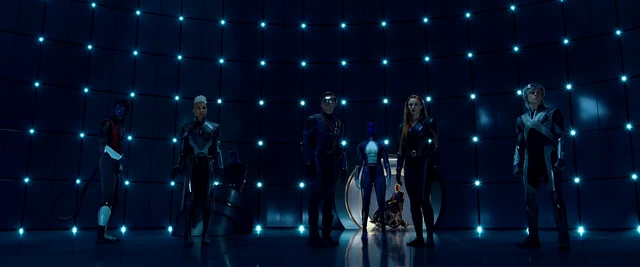
The Von Struckers, unlike their comic counterparts, are an ordinary middle class family. They aren’t concerned with superheroes, super-villains, and insane love triangles between heroes. They’re concerned with work, school, taxes, and taking out the garbage. In a sense, they are a reflection of real people in a world with unreal challenges.

That’s a perspective that rarely manifests in the X-men movies. In fact, other than a memorable scene in “X2: X-men United,” the impact that mutants have on ordinary people is rarely touched on. Sure, they’ll show humans running in terror from a Sentinel or a pissed-off Magneto. That doesn’t give us much insight into the lives these people live.

The Gifted” builds an entire narrative around a family that lives in this world and during exceedingly tense times, no less. This is not a world where seeing the X-men take down a Sentinel is the sort of thing that happens every other Tuesday. This is a world where both the X-men and the Brotherhood have disappeared in an event that has only been referred to as “The July 15th Incident.”

That incident, much like 9/11 or a major assassination, created a dramatic/traumatic shift in society. Suddenly, mutants aren’t just another minority issue. They’re an existential threat, like nuclear weapons or mass pandemics. Mutants aren’t just a distant threat anymore. They’re a real threat.

From the perspective of the Von Struckers, at least in the first episode, the danger of mutants is like the threat of terrorism. They know it’s there. They accept the systems and precautions that society has put in place to deal with it. They’ve learned not to think much of it. They’re too busy just being an ordinary family in a world that happens to have individuals who have the mutant ability to turn into ice cream.

In a sense, we’ve done the same thing in the real world. We accept that we live in a world where the NSA reads all our emails, the CIA tries to assassinate world leaders, and gross injustices happen every day. We know, to some extent, that it’s manifesting all around us. We just shut it out and try to live our lives.

What happens, though, when that injustice hits you or someone you love? That’s what happens to the Von Struckers in the very first episode of “The Gifted.” Their blissfully oblivious lives are shattered when Reed and Kate Strucker find out their children are both mutants. Not only that, one of them ends up trashing the school gymnasium when his powers first manifest.

Their happy, middle class lives aren’t just disrupted. They’re shattered, spit on, and covered in fresh whale shit. To make matters worse, Reed Strucker, played by Stephen Moyer, was a prosecutor who made his living sending mutants to prison. Short of beating mutant children with a baseball bat for a living, he couldn’t have had a worse job.

The mutants he sent to prison weren’t always guilty of crimes. Sometimes, it was just a matter of being in the wrong place when their biology decided to act up. It would be like a teenage boy being arrested for an awkward boner, something we can’t always control. Granted, mutant powers tend to be more destructive, but they can be just as unpredictable.

It’s this revelation, as well as the events that unfold in the episodes that follow, that really highlight the impact that “The Gifted” leaves. It’s an impact more relevant than most X-men stories, including the ones that involve jealous ex-lovers. In a sense, it’s one that many minorities already understand all too well.

From the beginning of the show, there’s never a sense that Reed Strucker believed that he was hurting anyone. He never came off as the kind of guy who hates mutants and longs for the days where men like him can throw mutants into internment camps. He’s just doing his job, which he believes is making the public safer.

It’s really no different from those who genuinely believe that homosexuality is inherently harmful or that gun control will only lead to more violence. Most of the people who believe these things, the Pat Robertsons and Richard Spencers of the world notwithstanding, are decent people who want to live in a world where they’re families are safe.

Then, something traumatic comes along that shatters this worldview. They find out they have a gay son or they find themselves in the crossfire of a mass shooting. Suddenly, they can’t ignore these injustices anymore. They can’t go about their happy lives as though the system isn’t victimizing someone. It’s one of those rare situations where no amount of excuse banking can change the truth.

In a sense, the Von Strucker family are reflections of the families in the real world that find themselves on the wrong end of injustice. Whether it’s a Muslim family victimized by racial profiling or being on the wrong side of a sexual harassment claim, it’s not possible to avoid or ignore it anymore. These injustices are hurting you and the people you love. It’s soul-shattering, but that’s what makes “The Gifted” so compelling.

In the fourth episode, this message really hits hard. Reed finds himself in a jail cell right next to Polaris, a mutant who he prosecuted in the first episode, who also happens to be Magneto’s daughter. In these bleak conditions, she basically lays out all the hard truths that he and others like him avoid.

Yes, there was an incident where a group of mutants, which you could substitute for any minority, did something terrible. That was a terrible incident, but efforts to prevent other incidents like that are just hurting real people who don’t want to be superheroes fighting killer robots. Polaris is just one of them. Reed’s children are two more.

That harsh message is one that carries over in the real world, often in tragic ways. Back in 2007, a documentary called “For The Bible Tells Me So” highlighted deeply religious families who had been vehemently anti-gay, only to have one of their children turn out to be gay. Sometimes, it changed their perspective. In some instances, though, it ended tragically.

It’s a harsh, but necessary truth. We can’t control our circumstances. Much like Reed Strucker, we sometimes find ourselves in the worst situations at the worst possible times. The world is chaotic, full of strange people who do terrible things. The fact we can’t control or prevent those things is agonizing, at times. We, as a society, will do as much as we can to mitigate that danger.

In the process, though, we’ll try to fight injustice with more injustice. We’ll obsess less over what is real and more about what is potentially real. It leads us to do extreme things like throw innocent people into internment camps or create killer robots to protect people.

The Gifted” reveals the cost of those measures. It goes beyond the eccentricities surrounding superheroes and focus on the real impact that real minorities feel. Most who are lucky enough to not be part of that group remain content to ignore it. Then, when it finally affects them, they realize just how unjust it is.

At a time when injustices are harder to hide and minorities are a growing part of society, these are important messages. The X-men have been exploring these themes for years, often with colorful adventures involving cosmic birds. “The Gifted” goes even deeper and during these troubled times, these are messages worth heeding.

2 Comments

Filed under Current Events, gender issues, X-men

Sex Cults: The Kinky (And Often Dark) Side Of Religion

Certain things don’t go well together, but still find a way to be potent, albeit for all the wrong reasons. I’m not just talking about people who dip their french fries in mayonnaise or banana peppers on pizza either. Certain combinations are just uniquely powerful and not always for the right reasons.

That brings me to religion, a topic I try to avoid like a rash on my scrotum. While I have written about religion and how it affects our sex lives before, I generally don’t like to bring it up on this blog. In my experience, few things kill the mood quicker than discussions about religion. It might as well be the antithesis of every Barry White.

I also feel compelled to point out that I have some deeply religious friends and family members. While I may not share their theology, I go out of my way to respect their beliefs. I don’t try to debate them or de-convert them. They have every right to believe what they believe with all their hearts and souls.

With those disclaimers out of the way, let’s talk about sex cults. I hope I have your attention now because this is one of those potent combinations I mentioned. More often than not, religion and sex are constantly at odds. For some, achieving orgasm and achieving spiritual enlightenment are the same thing. One just requires fewer tissues.

There seems to be a never-ending battle to temper, mitigate, or manage certain sexual desires in the name of religious zeal, often resulting in major taboos. That’s understandable in that sexuality is one of the things that influences the lives of every person on this planet, regardless of language, location, race, or attitude. It’s like a giant mountain. It can’t be circumvented. It can only be navigated.

Sex cults, on the other hand, do more than just navigate. They don’t just try to manage the sexual proclivities of its adherents either. In essence, they attempt to channel sexuality into forging stronger, more faithful adherents. Since people have sexuality hardwired into them at birth, you could argue they work smarter rather than harder.

In theory, this doesn’t have to be a bad thing. Not every sex cult needs to micromanage how its adherents use their genitals. Some are outright gleeful about sex. However, there are many that take it to unhealthy and unsexy extremes, which undermines the mood for everyone except the cult leader.

Speaking of which, one of the most common themes in a sex cult revolves around the leader, specifically with respect to how their genitals are somehow more holy than everyone else’s. This is how men like David Koresh and Warren Jeffs manage to convince dozens of pious women to do their religious duty, which requires them to make their bodies accessible to the cult leader in whatever holy or unholy way he sees fit.

That’s not to say there haven’t been female cult leaders. There have and yes, they can be every bit as perverse as the men. At the core of any sex cult, manipulation of sexuality is usually a secondary goal, at least officially. No successful religion, or any organized social movement, succeeds by being that transparent from the beginning.

Most cult leaders, male or female, won’t say outright that the entire basis of their cult is built around exploiting our most basic desires. They may not even believe it themselves. In fact, I would argue that most people, aside from admitted frauds, that they sincerely believe that they’re not just exploiting peoples’ spiritual sensibilities so they can more easily get sex from adherents.

In their own minds, those in a sex cult may be convinced that what they’re doing is spiritual and holy. Even if it is something as basic as an orgasm, they’ve ascribed some sort of spiritual significance to it. As an erotica/romance writer, I can kind of understand that.

There’s power in that kind of feeling, especially in cultures where it’s so easy to induce shame in others for simply having sexual feelings. I’ve mentioned before how sexual repression can really mess with someone’s psyche and not just with respect to their sex life. Building a cult around this powerful feeling that so few of us can escape isn’t just cunning. It’s distressingly practical.

There are a whole lot of factors that go into creating a cult, but most of them come back to control. Most religion, especially the successful and sincere ones, only go so far with control. When properly done, it can actually be beneficial to society. Cults, especially those of the sexual variety, take it ten steps further.

A sex cult won’t just try to control the when, how, and why you have sex. It won’t just try control how you feel about sex. It will actively shape, re-shape, and warp, if necessary, your entire perceptions about sex, intimacy, and everything in between. Again, it won’t do this directly. It’ll usually hide behind a vast excuse bank of morality, piety, and peer pressure.

More often than not, a sex cult will make you depend on the cult to get the release that your caveman brain still craves. I’m not just talking about the orgasm either. A sex cult will also try to provide the sense of intimacy, love, and community that most people get without sacrificing an animal or a piece of your penis.

It’s usually at that point where it’s hard to tell the difference between piety and subversion. Once people get locked into a cult that gives them a strict, but clear structure for how they get their sex, and all the sweet extras that come with it, they’re effectively locked in. Some may argue that they’re trapped, but I don’t suspect that most adherents will see it that way.

In addition to being very horny, we humans are a very social species. We form groups, tribes, and fan clubs with the same ease that a lion mauls a wounded zebra. Whether it’s a religion, erotica/romance novels, or Taylor Swift music, we’ll form a group about it and pursue it with religious fervor. In that sense, a sex cult isn’t doing anything magical. It’s just taking our own biology and pushing it to an extreme.

Now, I don’t bring up sex cults to warn people about them. I’m also not trying to point out the signs that the charismatic preacher who claims salvation comes through his penis might be a cult leader. Like I said before, most religion is fairly harmless and even beneficial to society. Sex cults, like any other cult, just hijacks a basic, yet powerful part of our being and exploits it.

It’s nefarious, but also fascinating. I built the entire premise of one of my novels around it, namely “The Final Communion.” In that novel, a young woman named Grace Maria Goodwin navigates a sex-fueled ritual that her deeply-religious community uses to control its adherents. Many of the themes I incorporated into this story come from my fascination with sex cults.

I’ve thought, at times, about expanding on novels like “The Final Communion.” I might not be able to develop a full-fledged sequel for Grace’s story, but I think there are untapped stories surrounding sex cults that are either too controversial or too distressing to contemplate.

It’s because they’re distressing, though, that we shouldn’t ignore it. So long as sex is such a powerful driving force in our lives, cults and even organized religion will continue to use it to exploit people. Religion, in and of itself, isn’t a bad thing, but when it starts to undermine our sex lives, then we should be concerned.

2 Comments

Filed under Celebrities and Celebrity Culture, polyamory, religion

Cheap Sex, Sexual Revolutions, And Why It’s A GOOD Thing

When something is cheap, you tend to get what you pay for. I learned that the hard way when I tried to spend as little money as possible on a trip to Florida. I ended up staying in an awful hotel with dirty sheets, piss-poor room service, and towels that felt like sandpaper. I definitely paid for not wanting to pay too much.

In any functional economy, that’s how it’s supposed to work. If you’re not willing to put effort and resources into a product, then you’re not going to get much out of it. It’s the cornerstone of how western society has prospered, according to Adam Smith. With sex, however, you can’t always apply the same rules.

Granted, I’ve often tied certain sexual attitudes to economic factors. I still stand by some of those comparisons, but I don’t deny some special circumstances, with respect to sex. Unlike the stock market, new smartphones, or junk bonds, sex isn’t a product, nor is it a simple service.

We’re not hard-wired to want to buy the new iPhone X, even if some people feel otherwise. We are, however, hard-wired to seek sex. It’s one of the most basic drives any animal can have, including humans. Unlike other markets, we can’t just opt out or cash in our investment, so to speak. Even those who try to avoid it, the desire is still there. In some cases, avoiding it can have a high cost as well.

I bring this up because current sexual trends have certain people who care a lot about how much sex other people are having seem to be taking our society into uncharted territory. Even though sexual activity among younger people is down, there’s a growing sentiment that the sex people are having is cheap, dispassionate, and empty.

Now, I’m certainly not the one saying this. As a man who writes erotica/romance novels, I always put a special premium on all thing sexy. That may make me an anomaly, but others interpret our sexual trends differently.

That brings me to the article that inspired this post. According to Ian Snively of the Daily Signal, our society is being undermined by the notion of cheap sex. While I certainly don’t agree, this is the argument he makes.

He says people’s dependence on “cheap sex” has a lot to do with the influences of the “sex market.” Specifically, the products and media that promote sex don’t cater to women’s best interests.

“The mating market no longer seems to favor women’s interests like it once did,” said Regnerus. “It favors men’s interests, which is why so many women find dating in their 20s and early 30s so frustrating.”

Regnerus thinks that because women generally want a long-term commitment in a relationship, their interests make selling sex more difficult. Instead, the sex market plays into the interests of men, who generally prefer less commitment.

“If you asked men and you asked women, ‘What is your ideal relationship?’” he said, “more men than women will say, ‘Oh, I would love something short-term, where I can just go over, and replace whenever I feel like it.’”

And because the market has exposed society to “cheap sex” for so long, Regnerus thinks people have a hard time getting out of that mindset.

“People have been so trained into cheap sex, that they don’t know how to get out of this pattern that’s been bothering them,” he said.

Now, I’m going to resist the urge to go on a long-winded tirade about how this man interprets our current sexual climate. In many ways, he’s not much different from any priest, mullah, monk, or rabbi who claims that too many people aren’t having monogamous, missionary-style sex for the sole purpose of producing new adherents/tax payers/workers/etc.

The one aspect in which he’s all too similar to these age-old, anti-sex sentiments is how he makes the broad assumption of what women want in a long-term commitment and what men want, conversely. The idea that all women want the same thing and men always want something inherently different is, to be honest, both insulting and misguided.

Mr. Snively doesn’t entertain the possibility that maybe some women might want a casual relationship wherein the sole purpose to have regular, recreational sex for the sole purpose of enjoying the toe-curling pleasure it brings them. At the same time, he doesn’t entertain the possibility that men actually want love and commitment.

He’s basically assuming that every gender stereotype that every teen movie ever made is correct. Never mind the fact that movies have a horrible track record when it comes to reflecting reality, especially with firearms. The man here is building his entire understanding about “cheap sex” around assumptions that anyone with even a little non-Hollywood life experience knows are flawed, at best.

Mr. Snively calls these trends in cheap sex a new sexual revolution. Having already written about the prospects of future sexual revolutions, I can say his standards for revolutions are laughably low. In addition, just researching sexual revolutions reveals that there’s nothing revolutionary about cheap sex.

No matter what religion, government, culture, or peer pressure tries to do, horny men and horny women, alike, will seek outlets. Some will be legitimate. Some will be illicit. In any case, the culture and attitudes will ascribe a cost to getting that outlet.

If the cost is high and sex is expensive, then not everyone can afford it. Sure, the rich and the powerful will have their mistresses, concubines, and side-lovers. The not-so-rich, however, will have a problem. They will have an unmet need that their biology won’t allow them to ignore completely. Like famine, you can only do so much to ignore how hungry you are.

It’s for this reason that others have argued that societies full of sexually-deprived people will be an unstable one. When the cost of sex is that high and your biology won’t let you forget you have this unmet need, you’ll do anything to meet that need, no matter how irrational or horrific it might be.

That’s cost of expensive sex. Flip the scrip, make sex cheaper, and suddenly, there’s a different dynamic at work. In a world of cheaper sex, it’s easier to meet those needs. With the rise of dating apps like Tinder and eHarmony, it’s easier today to seek both cheap sex and deeper relationships. Individuals have options to pursue, depending on what they seek and why.

Mr. Snively sees this as revolutionary. It’s really not and I’m not just talking about the old hippie concept of free love. There have been numerous cultures where sex was even cheaper than it is today. Those cultures functioned and faltered in their own unique way. The cheapness of sex was not seen as all that groundbreaking.

That’s not to say that cheap sex came without a cost. It certainly did. Cheap sex does have consequences that include increased transmission of diseases, unwanted pregnancies, and unstable family structures. However, I would argue that those costs are far less than the alternative.

I’ve mentioned before how fascist regimes need to control sexuality to some extent. Therein lies the key, though. It takes an extremely authoritarian government to impart the kind of force necessary to counter something as powerful as the human sex drive. Pretty much every government/church that has tried that in the past has failed in the long run.

In a sense, the cost of trying to make sex more expensive is actually far higher than making it cheap. It requires a lot of power, suppression, and micromanaging to manage, let alone contain the sex drives of every person in a society. That kind of effort requires a level of cost and resources that no government can hope to manage, especially in the long run.

That’s why I believe Mr. Snively is wrong. Cheap sex is not that revolutionary. In addition, cheap sex is actually far better for a free and open society than the alternative. In that sense, it should be celebrated and I intend to use my sexy novels to contribute to that effort.

1 Comment

Filed under Current Events, gender issues, Second Sexual Revolution, sex in media

How Learned Helplessness Dooms Your Sex Life (Among Other Things)

When I was growing up, I considered myself lucky to be surrounded by so many loving people. I like to think my fondness of romance, as well as my desire to become an erotica/romance writer, is a direct result of seeing so much love among friends, family, and all those close to me.

It wasn’t all smiles, chocolate, and gratuitous tongue-kissing. Every now and then, I encountered certain couples that stood in stark contrast to the love I saw so much of throughout my life. They weren’t abusive or hateful. In a sense, they were their own tragedy, albeit not of the Shakespearean variety.

Picture a couple that’s about as passionate as a sick cat. There’s no fire in their romance. If there was, it burned out years ago and neither one of them cares enough to spark it again. They don’t necessarily hate each other. At best, they tolerate one another on a day-to-day basis, resigned to the fact that this is their life.

What I just described is not the kind of relationship that ends up on Jerry Springer or leads to protracted divorce hearings. They’re rarely that dramatic. If anything, they’re the antithesis to drama. That’s why those involved are so miserable. In a relationship like that, a clogged toilet counts as an adventure.

These kinds of relationships are not as easy to notice, but they do happen. You might even know a few, but I’d bet a stack of old Playboys that there are more than you think. Instead of love, passion, and heart, these relationships are fueled misery, laziness, and failure. At some point, those involved just stop trying to escape it.

In a world where people get worked up over dipping sauces and dress colors, it seems outrageous that anyone could be that callous and numb. It’s even more outrageous to think that a relationship could be built around it. However, there are powerful, unsexy forces at work and they’re not to be taken lightly.

This brings me to the concept of learned helplessness. If you’ve every taken a psychology course, you know what it is and you probably have an idea as to how it acts as kryptonite to love, romance, and passion. For those of you who don’t know, it’s a fairly easy concept. According to Wikipedia, the phenomenon is defined as follows:

[A] behavior typical of a human or an animal and occurs where the subject endures repeatedly painful or otherwise aversive stimuli which it is unable to escape or avoid. After such experience, the organism often fails to learn or accept “escape” or “avoidance” in new situations where such behavior would likely be effective. In other words, the organism learned that it is helpless in situations where there is a presence of aversive stimuli, has accepted that it has lost control, and thus gives up trying.

In terms of common behavioral traits, it’s somewhat bland. That doesn’t make it any less powerful, though. There is real, distressing science behind it, starting with experiments conducted in the 1960s. If you’re a dog lover, though, these experiments should be particularly disturbing.

If you’re also a fan of meaningful love, then you should be even more disturbed because it’s not hard to see how something like learned helplessness can creep into a relationship. For those trying to tell powerful, sexy stories, it’s important to know the signs.

The challenge, however, is that learned helplessness is one of those things that doesn’t happen all at once. Whether it’s those cruel experiments on dogs that I mentioned or continuous torture by the CIA, one painful experience is rarely enough. While love can manifest in a single moment, as is the case with “love at first sight,” learned helplessness takes a longer, more tedious road.

Sometimes it starts with boredom, a powerful feeling that I’ve discussed before. Sometimes it starts with frustration. Maybe a couple tries a few times to spice things up, but it doesn’t work. Maybe they try to shake up their routine, but that doesn’t work either. The key ingredient here is failure and frustrations, two experiences that tend to accumulate rapidly.

The couple involved may never get angry, resentful, or bitter to one another. Learned helplessness rarely inspires abuse or outright hatred. However, that’s part of what makes it so debilitating. When a relationship becomes abusive, one part of the relationship has a much stronger incentive to either escape or fight back. It’s hard to be lazy or apathetic when you feel like your well-being is at risk.

With learned helplessness, laziness and apathy are weaponized. That’s because without that incentive, neither side has the energy or desire to shake up the situation. Ending a relationship always requires some amount of upheaval, work, or effort. Someone under the influence of learned helplessness sees that as more trouble than it’s worth.

Beyond just rendering a relationship stale, the effects on your sex life can be just as debilitating. Once a couple gets to a point in their relationship where they’re just resigned to the fact that this is their normal, sex becomes less a treat and more a chore. Even if the orgasms still feel good, they’re barely distinguishable from masturbation.

That, by far, is the clearest sign that learned helplessness has consumed a relationship. As soon as sex becomes a chore, then it’s safe to say that two people have crossed the point of no return. They are beyond the point of rekindling whatever flame they once had. They just accept their misery and dispassion.

In defense of those poor souls, they don’t always have the luxury of ending that relationship and starting fresh. Sometimes, it’s because of their age. Sometimes, they’re in an environment where they don’t have anywhere else to go and few resources to work with. Then, there are times when the inconvenience just doesn’t justify the cost. It’s just easier to stay miserable than deal with the stress of rebuilding.

There’s little question that misery, depression, and boredom are bad for your love life, your sex drive, and everything in between. Learned helplessness is just the catalyst. Instead of blowing up in your face, love just whithers slowly like a piece of rotting fruit, getting emptier and deader with each passing day.

In some cases, it’s difficult to avoid. Some people just find themselves in relationships where they lose control and accept their misfortune. They’re content to just accept the misery and make the best of it, however fruitless it might be.

In others, you can take steps to avoid that kind of misery. Think back to those awful experiments involving dogs. After a while, the dog just stops trying to avoid the pain. The key to avoiding that kind of misery is to keep making an effort. Don’t stop trying. Do what you can to avoid mistakes. Moreover, do what you can to improve your situation, however possible.

That might mean pushing yourself when you don’t want to. It’s like exercising, which sometimes requires extra motivation. Within a relationship, it’s even more difficult because both you and your lover have to share in that motivation. You have to want to maintain that passion, even as you get older, have less energy, and feel less sexy.

In my experience, the most successful couples I know never truly stop dating each other. Even when they’ve been married for decades, they still carry themselves as a couple that’s still dating. They still go to interesting places, try new things, and explore new activities. Some aren’t always sexy, but they have the potential to be.

Every couple is different, but nobody benefits from learned helplessness. Whether you’re a dog, a dumb-ass, or a hopeless romantic, falling into that pit of apathy will never inspire your passion or increase your sex appeal. It’ll drain it, bit by bit.

Nobody deserves that. I certainly want to avoid that if and when I ever find a steady lover. I’m not a relationship expert or a therapist, nor should anybody assume I’m one, but I hope to help in whatever way I can. Whether it’s making people aware of learned helplessness or writing sexy novels, I intend to do my part.

2 Comments

Filed under gender issues, Marriage and Relationships, War on Boredom

Being A Good Person In The Age Of Social Media (And Why We Obsess Over It)

Whenever there’s an argument on the internet, and there are no fewer than 1,029,296,198 going on at any one moment, they tend to fall into a fairly standard pattern. Whether it’s politics, religion, video games, comic books, Harry Potter, or the series finale of “Lost,” the crux of every outraged outburst usually boils down to this.

“I believe that [insert crazy idea/opinion/theory here] and that’s that.”

“You’re a horrible person for believing [insert crazy idea/opinion theory here] and should be a ashamed of it! I demand that everyone shun, scorn, and marginalize you and everyone like you from now until the end of time!”

I want to say that’s an extreme example, but I’ve been navigating comic book message boards, Reddit fan theories, and the comments section of every major news site for too long. I can pretty much set my watch to when, how, and to what extent the argument with devolve.

Follow any thread on politics and within five minutes, someone will accuse someone else of being a Nazi. Spend more than a day on any message board, be it Harry Potter or the Walking Dead, and you’ll find entire sub-groups of fans that have tacitly declared war on another.

Some of it is a product of the passion people have for certain issues and ideas. Some of it is just plain tribalism, a factor I’ve highlighted before as the underlying source of a great many problems in our world. However, recent trends in social media, along people just being more able to anonymously share every crazy thought and feeling on a whim, have created a new source of conflict that more and more people stress over every day.

Think back to that generic argument I mentioned earlier. There’s one more component to it that doesn’t always play out on any message board, comment section, or video chat. It’s something that most people are reluctant to acknowledge, but on the inside, we’re all telling ourselves the same thing.

“I’m NOT evil! I’m a good person! I know it! Why can’t these people see that? For them to feel that way about me, THEY must be the bad ones!”

Again, that’s a very generalized summation. I doubt this mentality has played out anyone’s mind, word for word. However, I think it’s a near certainty that everybody is concerned with how they’re perceived by others, to some extent. Unless you’re a sociopath or playing a villain in a movie, you want others to see you as a good person.

It’s not just because being a dick rarely does anything to improve your life or those around you. We kind of need people to think we’re good on some levels. Otherwise, we have problems functioning.

Even if you are a sociopath, you need to at least give the impression of decency so you can live a functional life in between torturing small animals for fun. If not, then the Dexter Morgans of the world would get weeded out fast and characters in sitcoms would be a lot less interesting.

While society has always had some pretty nasty people, the growth of the internet and social media is changing the rules. It used to be that you could get away with being a terrible person because news of your terrible deeds rarely went beyond the small town or city you lived in. For most of human history, you only ever moved along with your tribe or community.

Now, there are entire generations of people in this world who have grown up in a society of unprecedented mobility and connection. The generation being born now will likely continue that trend, so much so that they’ll never have to know how an old 56k modem sounds. In that world, being perceived as a good person, even if you’re an asshole, will be that much more vital.

It’ll be impossible to hide. In a world where everyone has a smartphone and those phones can broadcast crimes in real time, it’ll be much harder to hide our more rotten tendencies. While it might be helpful to know who the real assholes are out there, it comes at a price. It means the margin for error is that much smaller.

That’s because in this hyper-connected world, it’s a lot easier for someone to call us out on being a lousy person. Even if we’re not, someone can effectively create that perception and, as I’ve said before, perception beats reality 99 times out of 100.

When someone is accused or accosted of being a bad person, it can be pretty traumatic. It’s like being a kid on a playground and everyone ganging up on you all at once. With the internet, though, it’s like legions of other kids from every other playground on the planet joining the battle. It can get pretty damn harsh, so much so that it can seriously undermine our sense of identity.

For a clear example, I don’t even need a thought experiment. Seth MacFarlane already did that for me. In one of the harshest scenes in the history of “Family Guy,” Glenn Quagmire basically lays into Brian, pointing out every harsh truths about his phony, pseudo-intellectual douche-baggery. For Brian, it’s pretty soul-crushing.

What Quagmire does to Brian is basically a microcosm of what people face today whenever they create a presence online. Whether it’s on social media or in the anonymous comments section in digital sewers like 4chan, there are legions of faceless strangers out there who are not afraid to lay into you, even if you are the nicest person it’s possible to be in real life.

Therein lies the problem, though. The identities we create online are so fluid and prone to corruption. One misplaced tweet, one viral video, and one ill-conceived comment on FaceBook is all it takes to ruin a life now. Even if it’s unintentional or misconstrued, it doesn’t matter. It will still be used to make you a bad person in the eyes of the world.

In a sense, we have to obsess over whether we’re a nice person, both in real life and online. It’s just a lot harder online because once something bad or embarrassing is out there, it’s almost impossible to remove. If you don’t think that matters, keep one thing in mind. When you’re out there looking for a job, employers are looking you up. They can and will use the crap you put online to decide whether or not to hire you.

When you consider the stakes that come with having be perceived as a good person, it makes perfect sense that people might get unreasonably defensive with their positions. I’ve noticed this in any discussion online about politics.

Everyone in the debate thinks they’re the good person. They think they’re on the side of everything that is good and pure. They may or may not be right, but that’s the narrative they craft in their minds. For them to lose an argument doesn’t just mean admitting that they’re wrong, which is extremely distressing, in and of itself. Losing means conceding you might be a bad person and that’s just untenable.

Being the optimistic person I am, I tend to believe that most people are inherently good. My own life experiences have convinced me of that. I recognize that some have very different experiences and I cannot blame them for thinking otherwise. However, our very identity and sense of self requires us to believe that we’re a good person at heart.

It can sometimes twist our perceptions and make us cling to irrational, immoral, and downright weird believes. In many ways, it’s an extension of excuse banking and virtue signaling. In the past, we didn’t have to work so hard to maintain that narrative of ourselves that has us believe that we’re the heroes of our own story. Now, thanks to the internet and social media, it’s harder than ever to escape it.

I suspect that our collective obsession with winning arguments and being the good guy will escalate as we become more connected, as a world. I don’t doubt that our obsession will get downright unhealthy at times. However, the mere fact that we obsess that much over being good also convinces me that we want to be good.

That should offer some comfort to those who feel as though the world is filled with angry internet trolls who exist only to make good, decent people feel miserable. Granted, there are some very mean trolls out there. Most people, though, don’t see themselves that way. They think they’re the good guys, just like you and me.

The more we recognize that shared effort, the less inclined we’ll be to call each other a Nazi. Given recent events, I think that should count as progress to everyone.

Leave a comment

Filed under Celebrities and Celebrity Culture, Current Events, gender issues, Marriage and Relationships

The War On Horny Men (And Why It’s Doomed To Fail)

I won’t deny it. Men do stupid things when they’re horny. That’s just a cold, hard fact. I realize I’m inviting any number of dick jokes by saying that, but it’s still worth saying. It’s partly because of that fact that there’s a market for the erotica/romance novels I write in the first place so I have more appreciation for it than most.

Unfortunately, we live in a world where facts are about as relevant as a giraffe’s shoe size. It doesn’t matter how true or vindicated something is, be it a scientific theory or a documented observation. Unless it makes people feel a certain way or allows them to push some sort of agenda, it either doesn’t matter or gets twisted to suit a purpose.

When it comes to horny men, though, evolution and global warming got nothing on them. It’s not so much that they exist that’s the problem. It’s that they are now the face of all that is wrong and evil in the world.

Look at any controversy or social issue in recent years, from Hollywood scandals to trends in feminism, and chances are a horny man is involved and that man isn’t the good guy in that narrative. I’ve seen it become more magnified in recent years, but in a sense, there has always been a war over horny men. It takes many forms and has gone to disturbing extremes, but it rarely succeeds in the long run.

In the past, you could argue that battling horny men was a frustrating, but necessary endeavor to some extent. Up until the 20th century, the status of women in society and concerns over the spread of debilitating diseases gave society a valid reason for wanting to temper men’s desire to bone everything in sight. A society full of diseases and children without fathers is not a stable society.

On top of that, organized religion had often tried to play a part in that war. In general, they espouse traditions that value modesty and restraint. Naturally, some try to take it too far. Some have gone so far as to create a special circle of Hell to endlessly punish those who give in to readily to their horniness.

There are time when it’s worth questioning the motivations of organized religion in this war, though. As I’ve pointed out before, religion has an incentive to want people to bone only for procreation.

For one, they want all that pent up energy reserved for helping out at the church/temple/mosque/synagog. Second, they know that children of adherents tend to adopt their parents’ religion so they want them making as many babies as possible. More children means more adherents. More adherents means more money. Even when deities are involved, it often comes back to money.

However, as the influence of religion has faded and the status of women has improved, the war on horny men has taken a very different form. In some respects, it has been escalating lately. It’s not just a matter of horny men cheating on their wives with their secretary anymore. Horny men have basically become the de-facto enemy that are determined to hold women, minorities, and society back.

It’s horny men who become sleazy Hollywood producers that try to get sex out of ambitious young women. It’s horny men who demand that the women in comic books, video games, and movies be beautiful, thereby contributing to the objectification and degradation of women.

I won’t get into the issues I have with the concept of objectification, but it’s becoming increasingly taboo for a horny man to like and appreciate sexual imagery. It has become especially taboo to voice that appreciation, so much so that some countries are looking to criminalize men who cat-call women. That’s right. It one day might be a crime to say how sexy you find a beautiful woman.

For an aspiring erotica/romance writer, it’s a distressing trend. I get some of the logic behind it. Men still commit the majority of the sexual assaults in this world. That’s another cold, hard fact that can’t be denied.

It’s also a fact that sexual assault, as a whole, is on the decline. That’s a good thing, but thanks to the rise of mass media, terrible stories about sexual assault are easier to come by. It’s even easier to sensationalize, sometimes to the detriment of the truth. Whatever the statistics say, though, there’s still a horny man with poor impulse control at the center of it all.

At the moment, it’s not illegal to be a horny man or express some of that horiness. We don’t live in the days of John Harvey Kellogg and most horny men have access to abundant free porn, giving them an outlet for their horiness. However, even with all that free porn and a lack of uptight religious figures demanding that men not pleasure themselves, horny men are still subject to shame and ridicule.

If you like your female superheroes wearing chain mail bikinis, then congratulations! You’re a sexist, misogynistic pig.

If you like admiring beautiful women and go to strip clubs to exercise that admiration, then congratulations! You’re a sexist, misogynistic pig.

If you like having sex with beautiful women and seek to do so with every resource available to you, then congratulations! You’re still a sexist, misogynistic pig.

Are you seeing a trend, here? Whether it takes the form of porn or involves casual flirting, there seems to be no way around it. Any effort a man makes to get with a beautiful woman, sexually or otherwise, is somehow vilified. Just the act of wanting to sleep with a beautiful woman can now be construed as sexist, misogynistic, or whatever the hopelessly outraged can scream at the top of their lungs.

A man just looking for sex or some kind of sexual outlet garners no sympathy. Even a man looking for love is somehow prone to ridicule, as evidenced by the prominence of the beta male in shows like “The Big Bang Theory.” A man can’t ask for sex because he’ll get accused of being a creep or worse. He can’t even admit he wants sex because that somehow means he sees women as glorified sex objects.

There seems to be no way around it. No matter what a man does, he’s practically doomed himself and his reputation for daring to admit that he’s that horny. If he just masturbates to satisfy his desires, he’s a loser. If he eagerly pursues sex, then he’s a creep. If he just tries to repress it all, then he’s a dork who can’t get laid. Unless he’s a rock star with a foot-long dick, the average horny man has no hope.

This is an issue and it affects both genders because both genders are wired to seek love, sex, and everything in between. Nature, itself, gives us plenty of reasons, considering the various health benefits of orgasms. All those pursuits are effectively undermined if one side is overtly shamed for wanting something so basic and beautiful.

I’m not saying horny men don’t do stupid things. They most certainly do. I’m also not saying horny men don’t do heinous things too. They do that too and it’s become major news. People should be mindful of crimes like sexual assault and issues like consent. The problem is that the outrage over scandals and sex in the mass media is overshadowing the basic desire behind it.

Men, and humans in general, are sexual creatures. No matter how much people try to temper sex in society, whether by forcing women to cover their faces or designing video game characters to be less sexy, it’s impossible to subvert basic biology.

That’s the ultimate tragedy of the war on horny men. It can’t succeed in making men less horny. It can only ever succeed in making men feel guilty about feeling something that they’re hard-wired by biology and evolution to want, pursue, and enjoy. Guilt can keep us from stealing a cookie as a kid, but it can be downright debilitating if heaped on someone to excess.

All that guilt can make people angry, depressed, desperate, hopeless, and irrational. For a man that is already irrationally horny, that can be dangerous and frustrating. That kind of mentality is not going to help in efforts to curb sexual violence. If anything, it’s going to make those efforts even harder.

For now, I don’t see the war on horny men abating, nor do I see one side claiming victory over the other. I’ll just say that the hostilities are doing a lot more harm than good. They’re hindering those seeking love, sex, and all the good stuff that comes with it. As an aspiring erotica/romance writer, that’s a dangerous trend.

To those who still insist on fighting this war, claiming horny men are the bane of all societies in all times, I have one simple message for you. For several centuries, the Catholic Church wielded immense power throughout Europe. If even they couldn’t stop horny men, despite being armed with the Spanish Inquisition, then what chance do you have?

14 Comments

Filed under Current Events, gender issues, Marriage and Relationships

The (Kind Of) Silver Lining To Recent Sex Scandals

Given the number of lurid sex scandals that have popped up in recent years, and not just the ones I’ve mentioned, you can be forgiven for thinking that there’s an epidemic of powerful men being a dick to women. Go to any social media site or comments section and you’ll usually find angry rants that are nothing short of apocalyptic.

I certainly don’t blame people for being angry about these scandals. What the Harvey Weinsteins, Bill O’Reillys, and Bill Cosbeys of the world have done is egregious. There are no excuses for being that unapologetically crude.

These are men in positions of power. They know, on some levels, that they have leverage that they can use to exploit others. It’s impossible to know whether they would do what they did without this power. So few people have that kind of power that it’s difficult and disturbing to know how most people would use or abuse it.

At the end of the day, though, they still decide whether or not to exploit their power for personal gain. Even if they’re able to cover it up for years, it’s still their choice and it’s all the more egregious.

As bad as these scandals are, though, I think it’s worth taking a step back to acknowledge an understated upside to this string of lurid news. It’s easy to forget sometimes that good news hides in the shadows of bad news. In fact, good news in general tends to hide behind the glut of horror and dread we’re fed every day by the media.

So what kind of good news can we possibly glean from the increasingly lurid sex scandal involving Harvey Weinstein? What good can come out of any sex scandal where a powerful man exploits his position to seduce desperately driven women? Well, if you’re willing to look beyond the infuriating details, it’s actually pretty revealing.

It’s getting MUCH harder for people to get away with sex scandals in general.

Think about it for a moment. Take a step back and look at the world we’re in now, with respect to sex scandals. Ignore, for a moment, the extreme voices from radical feminists and men’s rights activists who would use this scandal to push an agenda. The fact that everyone is so outraged by this scandal should count as good news.

Very few people are making excuses for Harvey Weinstein. Former allies are abandoning him. His wife is leaving him. The film industry that he helped expand is cutting ties with him at every turn. Despite being such a powerful, influential figure in Hollywood, this lurid scandal is costing him dearly.

Compare that to how scandals of the past often unfolded. Other than hilariously dishonest tabloids claiming that Madonna had a secret affair with Martian ambassador, most scandals rarely drew this kind of scrutiny and condemnation.

One of the most infamous examples is that of O.J. Simpson, who had a documented history of spousal abuse prior to the murder of his ex-wife, Nichole. However, despite this abuse, he was still largely a beloved celebrity figure. He was so beloved that some people just refused to believe that he was the kind of monster who would beat a woman.

If O.J. Simpson had carried out such abuse today, it would trend on social media immediately and there would be no way to sweep it under the rug. Say what you will about the prevalence of the internet, but it does carry out one important function. It makes hiding bad, sometimes criminal behavior a lot harder.

Go back 30 years and it was possible, albeit inconvenient, for someone with money and influence to hide a scandal. They just had to pay off the right people, sweet-talk the authorities, and have some damn good lawyers. When used wisely, it’s like it never happened.

Fast forward to today and no amount of money, influence, or overpaid lawyers can stop some random person with a smartphone from tweeting about a celebrity having a major meltdown or cheating on their spouse. Once it’s online, it’s next to impossible to stop.

Now sometimes, this can be a problem. Every now and then, a false rumor will start trending and lead to a lot of frustration. However, given the breadth and speed of modern media, it tends to correct itself. Once a rumor is obviously false, it tends to disappear quickly.

When it’s not a rumor and there’s a lot of digital evidence to back it up, as was the case with Harvey Weinstein, social media does not hold back. No amount of lawyers, PR agents, or hit men can stop it. Once the lurid truth gets out, people will respond and the internet ensures their responses won’t be filtered by the FCC.

This is where we, as a society, show another kind of progress. When it comes to powerful men exploiting women, we as a people have very little tolerance for that these days. We’ll tolerate a certain amount of douche-baggery, but when it becomes criminal, most people draw the line.

Harvey Weinstein is now paying the price. While I think it’s still important to see how valid the accusations against him are, the amount of evidence that has come out thus far leads me to believe that a significant chunk of these lurid stories are true. For what he did, he should pay a price.

Given the price he’s already paid, in terms of his reputation and loss of job opportunities, it sends a powerful message to powerful men. This isn’t the era of “Mad Men” anymore. You can’t expect to get away with these kinds of sex scandals anymore. Social media and the reactionary masses that use it will find out. When they do, you will pay a huge price.

In a world where powerful people can get away with atrocious behavior, some of which is downright criminal, it’s hard to have faith in people. While our world is far from perfect, I think the response to the Harvey Weinstein scandal shows that we’re making progress.

Even powerful men like Weinstein can’t hide their misdeeds anymore. People today are far less willing to turn a blind eye to these kinds of crimes. It won’t completely eliminate the kinds of lurid scandals that frustrate celebrities and titillate gossip magazines, but it will ensure that those kinds of scandals will be much harder to avoid. It won’t stop certain people, but it will help prevent them from using celebrity to hide their misdeeds.

12 Comments

Filed under Celebrities and Celebrity Culture, Current Events, gender issues

Why The NFL Protests Matter Less Than You Think (And How To MAKE Them Matter)

Whenever I talk about football, the NFL, and how much I love it, I usually do it to lighten the mood. Sure, sometimes football inspires talk of some less pleasant issues, but in general I try to avoid them and focus on the parts that make my Sundays so enjoyable.

Then, the real world has to come around and shit all over it, compelling me to talk about it when I’d rather be talking about my sexy novels or movies involving Sophie Turner and Jennifer Lawrence. I wish I could resist that temptation, but as many of the characters in my sexy novels can attest, that’s not always possible.

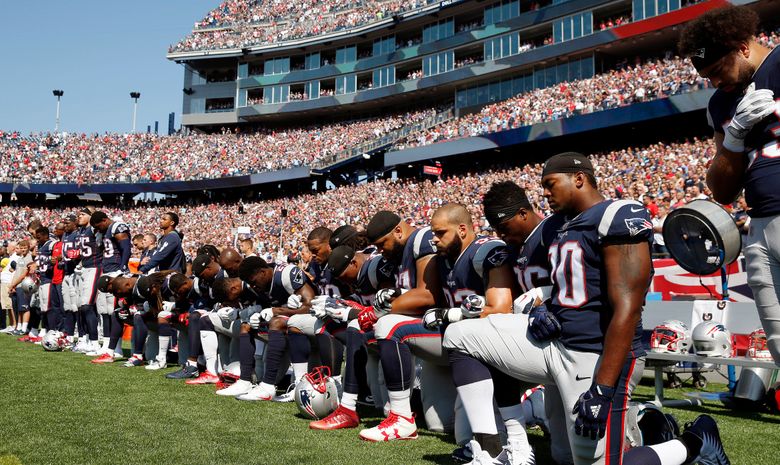
Unless you were in a coma under a rock inside a cave on Mars, you probably heard about the mass protests conducted across the NFL last Sunday. What exactly were they protesting, you ask? Well, that’s a hard question to answer and the fact that it’s hard to answer is pretty telling, in and of itself.

Officially, the protests were a stand against social injustice and a response to some trash talk by some high-ranking government official whose name I refuse to say, primarily because I don’t want to give him more attention than he deserves. Unofficially, it was the rhetorical equivalent of two colliding shit storms that only succeeded in creating a bigger storm.

There are many ways to protest injustice, corruption, and everything Gordon Gekko stands for. One of the perks of living in a relatively free society is that you get to attempt and experiment with a variety of ways. Sometimes petitioning works. Sometimes viral videos work. Sometimes just being Mr. Rogers and talking to people with unwavering kindness works.

Unfortunately, there are far more ways that fail instead of work. That’s just the nature of the world we live in. What Colin Kapernick did last year and what multiple NFL teams did last week succeeded to the extent that it raised awareness. While awareness is an important part of the process, especially in the era of the attention economy, that doesn’t mean that it achieved its goals.

More than anything else, it divided people within two tribes. In one, Colin Kapernick and the NFL are patriots in that they’re protesting in the name of the justice that the flag and the national anthem stands for. In the other, Colin Kapernick and the NFL are self-absorbed, virtue signaling drama queens who are disrespecting a symbol that many brave Americans fought and died for.

These are two irreconcilable ideas that kill any substantive conversation. They’re seeing the same picture, but interpreting it in wildly different ways. Instead of highlighting the egregious disparities in how the justice system treats certain minorities, it’s now a discussion about who has the a more patriotic hard-on for all things American.

That begs and important question. Which interpretation is right and which side is wrong? Who can truly say they’re being more patriotic than their counterparts? Well, here’s where it gets tricky and where I’m probably going to upset both sides. Bear with me, though. I promise I’ll try to inject some substance that both sides can use to further their cause.

First, I’ll answer those two questions definitively. I don’t expect everyone to agree with my answer, but I suspect I’ve already upset both sides already so I won’t bother making excuses.

“Both sides BELIEVE they’re true patriots. Both sides BELIEVE their opponents are anti-America. Neither side is inherently RIGHT, but BOTH are valid in their beliefs.”

I know. It sounds like I’m talking out of both sides of my mouth and a little out of my ass. Ignoring the influence of my ass, here’s where I’m certain I’ll upset both sides of the debate.

Regardless of how patriotic you feel, the American flag and the national anthem are symbols. No matter how universal you think they are, symbols are always subject to interpretation and those interpretations are rarely, if ever, agreed upon by every person in a society. Just look at all the symbols whose meaning has wildly changed over the centuries.

It’s because of this subjectivity that it’s possible for two people to look at it and interpret extremely different messages. That’s how one side can look at a flag and see the beauty of America. That’s how another can look at a flag and see the ideals America stands for and realizing that the people haven’t lived up to those ideals.

It seems impossible, but when you remember that irrational, tribal nature of the human species, it makes sense. In that context, the NFL and its players are patriots for telling Americans that they have not lived up to the ideals their flag stands for. The people booing them are patriots too for pointing out how they’re disrespecting the symbols and traditions that bind society together.

In either case, both sides can’t claim to be entirely objective. Those claiming that the NFL players are spoiled and using their positions of power to divide people probably wouldn’t feel that way if they were protesting something they agreed with. Change the message and the context and suddenly, they’re on the same side.

22008167_2038396299504671_1575711025395615984_n

Again, it’s an irreconcilable disagreement, as is often the case with such extreme tribalism. There’s nothing either side can do to convince the other that they’re the true patriots. It’s a downright tragedy because racial injustice is an important issue if we want to improve as a society. Once it becomes a discussion about who is more patriotic, then the protests and outrage behind them no longer matters.

That finally leads me to the practical part of this article. If you’re bummed out or frustrated at this point, then I thank you for sticking with me this long. I imagine some of you already hate my guts and think I’m trying to solicit money from George Soros and the Koch brothers.

I promise you I’m not doing this to win any favors with one particular political agenda. The suggestion I’m about to offer is being offered free of charge. Sure, I’ll kindly request that you buy one of my books or make a donation, but I won’t expect it. I’m still offering free insight into fixing a major problem.

With that said, and knowing that nobody in the NFL or their critics are listening, here’s how you protest social injustice effectively. It can be accomplished in one easy step.

“Make the protest easy, fun, and rewarding to join.”

I know that sounds easy on paper and for once, it kind of is. Granted, it’s not the same kind of spectacle as Colin Kapernick’s protest, but that’s kind of the point. It shouldn’t be that kind spectacle. It should be something else. Moreover, it should be fun.

The best example I’ve seen in recent years is the ice bucket challenge that briefly swept the nation a few years ago. For a brief time, celebrities and ordinary people alike participated in a fun show of solidarity that helped raise money for a worthy cause, namely the treatment of ALS.

It worked too. The ALS Association reported a record $3 million in donations because of this goofy ploy that was fun, easy, and entertaining to join. If it worked with ALS, why not racial injustice?

I’m not saying people should usurp the ice bucket part. I think the ALS folks have already branded that. Instead, protesting racial injustice should involve something different. Maybe it involves hugging someone, popping a balloon, or hitting yourself with a pie. It doesn’t have to be big. It doesn’t have to make sense. It just has to be fun, easy to join, and make people feel better about themselves.

Think of it as a way to weaponize the power of virtue signaling, making people feel better about themselves by doing something inane. In this case, there would be some substance behind it. In addition to the inanity, there would be a donation to organizations like the ACLU, Big Brothers and Big Sisters, or The Sentencing Project. It doesn’t have to be much, but if it’s more than zero, it helps.

If Colin Kapernick had taken this route instead of protesting the national anthem, would he be the poster child for all that is wrong with professional athletes not named O.J. Simpson? I don’t know, but it would attract more attention for the right reasons.

It would make his stand against racial injustice matter. It would get people to participate rather than remain numb or indifferent. Now that kneeling for the anthem has just become this never-ending argument about who’s the real patriot, the protest no longer matters. However, I don’t think it’s too late to change that.

2 Comments

Filed under Celebrities and Celebrity Culture, Current Events, Jack Fisher's Insights

The (Possible) Secrets Of Generation Z (And Why We’ll Be Appalled By Them)

Every time I write a post that requires me to speculate, I always write a disclaimer at some point that makes clear I am not some psychic soothsayer who can see the future in any meaningful capacity. If I were, then the last PowerBall jackpot would’ve had a very different outcome.

Nobody knows the future. Nobody can possibly know, given how erratic we are as a species and a society. Seriously, who the hell could’ve predicted that fidget spinners would be a thing?

That said, I do think it’s a necessary mental exercise, of sorts, to speculate on certain elements of the future. By that, I don’t mean next week’s lotto numbers or who will win in Fantasy Football. I’m talking more in terms of the bigger picture.

I’ve speculated before on many elements of the future, from the prospects of a second sexual revolution to the sex lives of enhanced humans. In each of these speculations, I freely admit that I could be dead wrong and this will be no different because I’m about to speculate about a topic that’s much more immediate.

It doesn’t involve technology, brain implants, or whatever crazy venture that Elon Musk and Richard Branson are cooking up. It has to do with the next generation that will follow those constantly-texting, selfie-taking, latte-loving millennials that everyone loves whining about these days.

It will happen. It has already started happening. Millennials may be having less sex, but they’re still having sex. That means babies are being born. That means there will be another generation of people after the millennials start getting old, whiny, and cantankerous.

At the moment, this generation doesn’t have much of an identity. It barely has a name. Some call it Generation Z or the Cloud Generation. Since they’re so young and they haven’t been around long enough to do anything to earn them a more creative nickname, I’ll just go with calling them Generation Z.

It’s hard to know much about them, right now. Nobody even knows what sort of age range they belong in, but for the moment, Generation Z is primarily defined as the cohort of people born after 2001. They are basically the generation that has never been influenced by the 90s, dial-up internet, or the pre-terrorism days when you could still carry bottles of shampoo on a airplane.

They are also a generation born into a world where social media has matured, internet access is a necessity and not a luxury, and talking to devices that talk back is considered normal. They have some very unusual factors guiding them, many of which previous generations created and none of which they had any say in shaping.

It’s hard to know much about what defines this new generation, if only because they’re still teenagers who haven’t entered the workforce or started voting yet. That will change in the next few years. It won’t be long before the generation that those overly-connected, over-caffeinated millennial hipsters spawned starts to mature.

That still begs many questions to marketing departments, fashion magazines, and older people looking for a new batch of youth to whine about. What kind of people will Generation Z be? What sort of attitudes, tendencies, and mentalities will they embrace? Who will their leaders, heroes, and icons be?

These questions are still impossible to answer, but Generation Z is growing. I’ve already got a number of nephews and cousins, some of which are still in diapers, who will be part of this generation. I’m sure many reading this blog have family members who will be part of that generation as well.

Every generation has their share of challenges and quirks. Since I fall squarely in the age-range of the millennial crowd, I have some insight into those issues. That’s why I felt at least partially qualified when I wrote my article on the dark secrets of the millennial mind. I’m far less qualified to know the secrets of Generation Z, but I’m still going to try.

Make no mistake. Generation Z will have certain quirks that will annoy the hell out of millennials. They’ll probably end up annoying baby boomers and those of Generation X even more. I’m sure once they get old enough to start making a scene, there will be even more jokes about them than there are about millennials.

Until then, we can only speculate on the kinds of secrets that will shape Generation Z and all whining other generations will do about them. I’m not looking forward to so much whining, but I will still attempt to find a context for it.

With all that in mind, what follows is a list of the potential dark secrets that Generation Z will possess and how those secrets will annoy older people to no end. Again, I am woefully unqualified to make predictions about the future and there’s a very high chance that what I write will be dead wrong. Please keep that in mind before you start lamenting about the attitudes of your future children.


Potential Secret #1: They Will Be The Most Nihilistic Generation Of All Time

Every generations is, to some extent, a reaction of the previous generation and those that came before it. If one generation is upbeat, then the other is cynical. If one is uptight, then the other is rebellious. It’s not quite a cycle because the extent is always changing, but the dynamics are fairly common.

It’s because of those dynamics that Generation Z will very likely be the ultimate personification of nihilism. I’m not just talking the Friedrich Nietzsche style, existence-has-no-meaning type of mentality that inspired every goth band ever made. Generation Z will likely embrace a more passive form of nihilism.

Think about the outrage that previous generations have voiced on any number of issues. Baby Boomers voiced a lot of outrage about the Vietnam War. Generation X voiced outrage about outdated, corrupt traditions. Millennials voiced outrage about fake news, quasi-fascists, and poor wi-fi. Generation Z will be influenced by all of this and will respond with a resounding “meh.”

Here’s a scenario that should illustrate that sentiment.

Baby Boomers: “You kids are a bunch of self-entitled, narcissistic deviants who have no idea how good you have it! You ought to be ashamed!”

Millennials: “You kids are destroying the world! You’re empowering racists, fascists, sexists, homophobes with your actions and inactions! You ought to be ashamed!”

Generation Z: “Yeah, so what? In the long run, it really doesn’t matter.”

That’s the main crux of any debate for Generation Z. They’re born into a world where the sheer volume of media, information, and access is so big, so vast, and so overwhelming that they feel like tiny specks of sand within a digital ocean. Their perspective is one of inherent smallness.

Nothing they say will ever be loud enough for most people to hear. Nothing they do will be significant enough to stand out. Between that information and being the kids of highly-educated millennials, they will see just how small and pointless they are in a world so big and complex.

By the time Generation Z comes of age, there could be nearly 8 billion people on this planet, many with access to the same internet, social media feeds, and every kind of news source, fake or otherwise. They will feel so small in such a large global community that the passions of the millennials will feel pointless.

This will be what really frustrates other generations, especially the millennials. Generation Z will be born into the world of fake news and alternative facts, so much so that the meaning behind news, events, and controversies will be muted.

Generation Z will see beloved celebrities fall, corrupt politicians ascend, and cherished institutions crumble and just shrug their shoulders. They won’t be sad or depressed about it, though. They just won’t waste their energy on it because they see it as pointless in the grand scheme of things.


Potential Secret #2: They Will Be More Conservative (But Not In The Way You Think)

In the same way every generation seems to react to one another in terms of trends, political persuasions often adapt in accord with those trends. By that, I don’t mean they go from one extreme to another. The Baby Boomers were far more liberal than their predecessors, but compared to Generation X and millennials, they’re fairly conservative on a lot of issues.

At the moment, the majority of millennials identify as liberal, at least in the current context of the term. These attitudes will likely shape and influence the politics of Generation Z. They’re being born into a world where the idea of having a black man or a reality TV show host as president is not considered outrageous. As such, they’re going to be pretty numb to political extremes.

It’s for that reason that Generation Z will probably be a bit more conservative than their millennial parents or Generation X grandparents, but they’ll still disagree a great deal with Baby Boomers.

That’s because their kind of conservatism won’t be built on the overtly-religious, pro-business, let’s-trust-the-greedy-folks-running-the-free-market-to-sort-it-out ideology. It’ll be built more on the notion that all the liberal activism that millennials and the Generation X crowd took part in didn’t amount to much, especially compared to the Baby Boomers.

Generation Z will live in a world where they can watch old videos of presidential debates, TV pundits, and college protests and see just how much and how little they accomplished. Sure, they’ll probably be accepting of minorities and relatively lenient on social issues, but it’ll take a lot to get the Generation Z crowd to shake up the political and social norms of their time.

Part of this will likely be due to their inherent nihilism. Another part of this will be having seen their parents call everything a racist, sexist, anti-gay, anti-trans, fascist agenda. Once everything becomes an agenda, it just becomes more trouble than it’s worth and Generation Z won’t bother with that kind of activism. They’ll be too content and/or numb to profane politicians or ridiculous traditions.


Potential Secret #3: They Will Be Obsessed With Purpose Rather Than Passion

This may seem inconsistent with the overall sense of nihilism that I mentioned earlier, but it’s actually the other side of the same coin that may very well define Generation Z. This is the side that every marketing department, mass media company, and aspiring erotica/romance writers need to consider if they’re to appeal to this generation.

Whereas Baby Boomers were driven by rebellion and millennials were driven by passion, the Generation Z crowd will focus on finding something that gives them a sense of purpose. Things like passion, duty, or responsibility will be secondary at best. Those in Generation Z will be striving and struggling for purpose.

Some of that has less to do with nihilism and more to do with trends in the economy. With each passing year, more of our economy and daily lives is being automated. I’ve even talked about the possibilities before, but it’ll be more than a possibility for Generation Z. They’ll be living in it.

By the time my cousins and nephews are legal adults, they’ll be surrounded by virtual assistants who will shop for them and self-driving cars who will drive for them. They may not even live in a world where actual humans check out their groceries anymore.

So much will be automated and/or facilitated for them that they won’t have to toil anywhere nearly as much as previous generations. Working in a factory, a construction site, or even an art studio will be exceedingly rare for the folks of Generation Z. With so many tasks done for them and so little need to toil, what will they do with themselves?

It’s hard to know the specifics. Again, who the hell could’ve predicted the rise of fidget spinners? However, I suspect that those in Generation Z will dedicate most of their time and energy into finding that purpose, whatever it might be. Chances are, it’ll be something that makes millennials and Baby Boomers roll their eyes.

I imagine the lives of Generation Z will be filled with any number of absurd ideas of personal meaning. It may be a weird job, a strange hobby, or an odd new way of doing business. In any case, it won’t matter how absurd it is. So long as it gives them meaning, Generation Z will embrace it to the utmost.


Potential Secret #4: They Will Have No Concept Of Privacy (And Won’t Care)

This probably doesn’t count as much of a secret. We’re already seeing privacy, as we once knew it, erode with each passing year. Millennials took the technology that Generation X helped create and used it to tell the world damn near everything about them. Privacy, for them, might as well be a steam-powered train.

Those within Generation Z will likely continue this trend. It’s a trend that began long before their parents. When trends have roots that deep, they tend to continue. They don’t always manifest in the same way, though. With Generation Z, the lack of privacy will likely take on a distinct twist, compared to their parents.

As transparent as many are in the internet age, both Generation X and millennials still choose their words carefully. They helped create the climate of political correctness that is so easy to despise for its absurdities. Today, voicing any opinion, even if it occurred in private, can become a huge spectacle that costs people their livelihoods, their reputations, and in some cases their lives.

Generation Z will grow up in a world where that climate has caused too many people too much stress. Between that, and living in a world that’s so vast and overwhelming, they’ll probably be even more likely to share every little detail about their lives on the internet. Moreover, they won’t care how offensive or wrong it is to their parents or grandparents.

It’s probably going to appall the millennial generation the most. They’ll be the ones crying, “It’s [insert current year here]! How can you possibly still hold these opinions?” Those of Generation Z will just shrug their shoulders and say, “So what? What does it matter?”

I shudder to think just how detailed they’ll be when it comes to sharing their lives. I’m all for pretty girls sharing pictures of them in a bikini or parents showing adorable pictures of their babies. I’d rather not see more graphic pictures that include the contents of poopy diapers.


Potential Secret #5: They Will Be Emotionally Numbed (To A Point)

In a sense, millennials and the Generation X crowd will be the mad scientists that create the perfect monsters in Generation Z. They’re both defined by varying extremes of being overly passionate about too many things and not being passionate about damn near everything. Basically, they’ll be the children of Kurt Cobain and Taylor Swift.

As a result of those extremes, Generation Z will probably be the most emotionally numb generation to date, at least publicly. That’s not to say they’ll be a bunch of manikins with a pulse. They will still feel emotion. They won’t be entirely Vulcan in their mentality. They’ll just be more channeled with their emotions.

By that, I mean Generation Z will see their emotions as a precious resource that should be reserved for people and things that matter. They’ll have seen their parents get so emotional about all sorts of trivial crap, from who dies in “Game of Thrones” to what sort of political statements that Beyoncé made. They’ll notice how stressful and pointless that was and adapt accordingly.

That probably means that Generation Z will be very hard to market to, in terms of creating a consumer base. Remember, this is a generation that emphasizes purpose, but it doesn’t matter how absurd or inane that purpose is. It’s not enough to just evoke emotional responses with Generation Z. It has to be tied to a purpose.

Everything else outside that purpose, though, isn’t going to jar them in the slightest. They’ll already be living in a world where every emotionally-charged story and image is online, accessible, and blared to everyone with an internet connection. They’ll be fairly numb to the big stuff. They’ll reserve those emotions for the small stuff, the trees within the forest, that really gives their lives meaning.


I hope I haven’t scared everyone over the age of 30 too much. Again, and I’m sorry to belabor this, but these are just speculations on my part. I have no idea what sort of people Generation Z will spawn. Five years from now, this list may be obsolete and I’ll look like an idiot for writing something so wrong.

If you think I’m dead wrong and feel like you have something else to add to this list, please let me know in the comments. I’ll be happy to revise it, especially if it means looking less stupid down the line.

Wrong or not, this new generation is coming. We’re all going to have to live with them and find ways to appeal to them. That includes aspiring erotica/romance writers. So if you start noticing a shift in tone to my sexy novels, as if I’m trying to appeal to a new crowd, you’ll know why.

9 Comments

Filed under Current Events, gender issues, Second Sexual Revolution, Sexy Future

On Nice Guys, Women, And Whining

We’ve all heard it before. We’ve either experienced it, know someone who has, or seen at least fifteen movies built around the concept. There’s a guy sitting myself, his head held low as his lips quiver with sorrow. He’s sad. He’s lonely. Nobody likes him and women would rather endure amputation rather than touch his cock. When anyone asks about it, he tells the same boring story.

“I’m a nice guy! Why don’t women want to be with me? I’m not some jerk or asshole. What’s wrong with them?”

On some levels, we have sympathy for guys like that. Yes, I know there are women who feel this way too, but a generation of teen movies, romantic comedies, and high school drama has conditioned us to hear a male voice every time we hear this overplayed diatribe of angst.

Since I’m not in a position to undo that conditioning, I won’t try. Just bear with me because this is an important message to anyone who has either said those words or heard them from someone else. I don’t want to underscore the depths of that loneliness and angst. I’ve been there too. However, there is a context worth pointing out here.

Call it what you want. We really don’t have a label for it. I call it it “The Nice Guy Whine.” Unlike the wine you can drink, this one doesn’t get better with age. It’s one of those overplayed tropes that play out way too much in both the real world and in fiction. Movies like “10 Things I Hate About You” and “She’s Out Of My League” try to make it interesting and sexy. It doesn’t make the whining any less annoying, though.

They’re frustrated, isolated, and in utter despair. They’re nice guys. They do the right things. They’re generally well-behaved, law-abiding, and friendly. They don’t hurt anyone or go out of their way to make trouble. They’re just genuinely nice guys. So why won’t the beautiful women they want to get with hook up with them?

I don’t deny it’s hard and I’m not just talking about genitals here. As I’ve said before, we humans are a social, passionate species. We seek connection and intimacy. I’m not just talking about the kind we do between the sheets either, although that is part of it.

We want to find love. We want to be with someone. In terms of core needs, that’s right up there with food, water, and sufficient WiFi. When we don’t get that connection and intimacy, we get lonely and upset. That’s to be expected. Our brains and bodies know we need that intimate connection. When we don’t get it, it tries to do everything possible to get you to seek it, even if it means the occasional awkward boner.

So what’s going on here? Why is it that nice guys just can’t get any? Well, as someone who once asked those same questions and did plenty of Nice Guy Whining himself, I’d like to offer a clear and concise answer. For all the fictional characters and real people in this world who’ve whined like I have, listen up. This might be the most important thing you hear that doesn’t involve the IRS.

“Being a nice guy isn’t enough. The vast majority of the planet is full of nice people. By whining about it, you’re indirectly insulting every man or women who doesn’t want to be with you because you make it about them and not you.”

Reading that out loud, I’m sure it sounds harsh. Trust me, it’s not meant to be that harsh. It’s supposed to reveal a simple truth and it’s actually uplifting on some levels when you think about it.

It’s true. Most of the people in this world, including the guys, are nice. We only think it’s full of mean assholes because they’re the ones who make the news, get reality TV shows, and star in movies, albeit for all the wrong reasons.

The fact that these assholes get our attention is actually proof that most people are nice. Things don’t get our attention unless they’re rare, dangerous, or shaped like female breasts. Even science bears it out. People today are generally nicer and more decent to one another than they’ve ever been.

Why does this matter? Well, it matters because by whining about being a nice guy, you might as well be whining about the sky being blue or water being wet or tits being awesome. You act as though the mere fact you’re alive and not dissecting animals in your basement is reason enough for your dream girl to be with you.

Step back for a moment and think about that. You’re a nice guy. I don’t doubt that. Even so, why should that be your primary appeal to a woman? What else do you have to offer? What sort of skills, passions, and personality traits do you bring to the table? I’m not saying you’re devoid of those things. I’m just saying these are questions you haven’t bothered answering.

I ask them with the full understanding that I’ve done plenty of whining like that too. There were plenty of times, especially in my teenage years, when I whined about the girls I liked not wanting to be with me. For a time, it left me very depressed and extremely isolated. It was not a good feeling.

However, I’m not good at lying to myself so I was able to answer that question on my own. In addition to having a debilitating acne problem, I had piss-poor social skills and did not take care of myself. I like to think I was pretty nice in general, but how does that make up for the utter lack of benefits I would bring to a woman?

I know I have much more to offer now because I’ve actually worked on myself. I’ve taken the time to develop new skills and abilities. In addition to being nice, I’m very physically fit. I run at least 15 miles a week. I lift weights. I try to watch my diet. By most measures, I’m a physically attractive man.

In addition to my looks, I’ve got other benefits to offer. I have a car. I have no credit card debt. I have a steady job. I’m very skilled in terms of writing passionate, sexy stories meant to moisten panties. Believe it or not, these are skills that women find attractive. Just being nice is only a base requirement. Everything else on top of that are premium features.

It may sound cynical, the idea that being nice isn’t enough and you actually have to sell yourself somewhat. It gives the impression that people only want to be with you because you can do something for them. Well, how is that any different than what you want from them? It’s a bit crass, I know, but it’s entirely pragmatic when you think about it.

Part of being a social creature is bringing something unique to the table. Maybe it’s a skill. Maybe it’s a personality. Maybe it’s a certain type of energy that stands out from the others. Whatever it is, it’s part of the overall package that is you and you actually control what’s in that package. You have the ability to make yourself appealing. There’s nothing, other than sheer laziness, to stop you.

By just whining about being a nice guy, it’s like you’re trying to shame others for not having lower standards. You give the impression that someone is evil just because they prefer a smartphone with more features than an old flip phone.

In a sense, that undercuts your whole “nice guy” persona because wanting to do the absolute minimum to achieve the maximum desired results isn’t very nice. If anything, it’s as big a dick move as any Biff Tannen wannabe ever pulled off.

With that, all those whining nice guys out there have their answer. You know why being a nice guy isn’t getting you anywhere with your current crush. I even told you how to fix the situation. It may be harder for some than others, but the opportunity is there. You just have to take advantage of it. I’ll even add that most women, in my experience, will be attracted to men who takes advantage of those opportunities.

Leave a comment

Filed under Jack Fisher's Insights