Category Archives: romance

Five Places Where I’ll Likely Meet The Love Of My Life

couple-in-love-1100x733

I’m a romantic at heart. Between the sexy stories I’ve written and the sexy topics I’ve discussed, I think I’ve made that abundantly clear. Love, in all its wondrous forms, is something worth pursuing, channeling, and embracing. It’s one of the few forces that can be as powerful in the real world as it is in fictional words.

It may be corny, but love is a wonderful thing. It’s easy to be cynical and jaded, especially if you’ve had your heart broken or been in one too many bad relationships. It’s just as easy to find yourself overwhelmed by all the joy and fulfillment it brings to your life. The hardest part is finding it, but finding it often requires vulnerability, dedication, and even a little blind luck.

At the moment, I’m single. I’ve been single for a number of years now, but I’m always on the lookout for love. I’ve tried online dating. It didn’t work for me. I’ve also tried having a family member set me up with someone. That didn’t work, either. I haven’t lost hope. I still believe that one day, I’ll find the love of my life. It’s just a matter of when and where.

While it’s impossible to predict the when, I know myself well enough to have a general idea of where I might find that special someone. Everyone in my family says it’ll happen when I least expect it, but a few have said I probably won’t be surprised where it happens.

With that in mind, I’d like to take a moment to speculate on where that magical moment might happen for me. I know myself. I know where I hang out and where I tend to meet new friends. If I’m going to fall in love, it’s probably going to happen at a place like that.

Granted, I could be wrong. It could happen somewhere completely unexpected. Love is unpredictable and erratic like that. That’s part of what makes it so amazing. In terms of sheer probability, these are the locales where I’m most likely to meet the love of my life.


#1: A Comic Book Convention

This is probably the most obvious. I’ve been very transparent with my love of comic books and superhero movies. It’s also one that has a track record. I met my last girlfriend on an online comic book forum. Having a shared interest is a great catalyst for love and comic conventions are the epicenter of it all.

I’ve met good friends and a few cute girls at comic conventions. I’ve documented my trips to the New York Comic Con multiple times. I’ve every intention of attending the New York Comic Con this year and for years to come. If I’m going to fall in love, it’ll likely be with someone who shares the same interests.

Maybe they’ll be a cos-player dressing up as one of my favorite characters. Maybe they’ll be someone I’m sitting next to during a panel. Maybe they’ll just happen to be stuck in line with me, waiting to get an autograph from one of my favorite writers or celebrities. Comic conventions offer all sorts of opportunities for fans and lovers alike.

If I fall in love with someone, I’d like them to share my interest. If I meet the love of my life at a comic book convention, then that’ll only give us more reasons to go every year. I can’t think of a better way for a romance to blossom.


#2: A Football Game

Like comic conventions, football games are a perfect celebration of something I love. I’ve been a football fan all my life. During the season, I schedule every Sunday around watching games and cheering on my favorite teams. Some of my favorite memories as a kid involved watching football with my dad and siblings. I hope to make similar memories with the love of my life.

I don’t go to as many football games anymore, but when I do, I encounter women who are just as passionate about the game as any man. That can be difficult to find in other walks of life. Football is often seen as a male-centric interest, but that has been steadily changing in recent years.

As with comics, I believe I’ll fall in love with someone who shares my passions. If I find a woman who can drink, cuss, and cheer during games as much as me, I have a feeling we’ll share an amazing romance. Through hard losses and major victories, we can give each other yet another reason to look forward to football season. Love has that power, even for things you already love.


#3: A Book Store/Library

This might be a bit trickier with respect to finding love, but I think it’s possible for the same reason as comic conventions and football games. Book stores and libraries may not be big events or gatherings, but they’re where I go to celebrate and further my love for great stories. Whether it’s romance or sci-fi, book stores and libraries are almost a necessary hub for a guy like me.

I’m the kind of person who could spend an hour in a book store, sifting through everything from the latest comic books to cheesy romance novels. The people you meet aren’t always in the mood to talk, let alone fall in love. However, it’s a lot easier to strike up a conversation with someone, especially when they’re picking out the same books you enjoy.

One day, I could be hanging out in the graphic novel or romance section of a book store. Then, a woman could just show up, start looking at the same books as me, and that’s all it would take. If we happen to share the same passion for the same stories, then it could lead to sharing passions of other kinds. It can start small, but grow rapidly. Like all great romance, it takes a little spark to trigger a great love story.


#4: A Sports Bar

This one has similar factors to that of a football game and a comic book convention. It’s a gathering spot for events, albeit on a smaller scale. It’s not flashy or elaborate, but that’s exactly why I think it’s a good place for a guy like me to find love.

I love sports. I also love good food and good beer. I go to sports bars to do more than just drink and eat, though. I like to hang out, watch whatever game is on, and strike up random conversations with people. It’s a great experience that has helped me develop the social skills that I didn’t have in my youth.

In the same way I can talk for hours about sports and comics, I’d like to find a special someone who can share in those conversations. We can share a few beers, a batch of buffalo wings, and an extensive discussion about playoff scenarios and draft picks. If I’m going to fall in love someone, it’s probably going to happen with someone I love talking to.

Sports bars aren’t known for being romantic. As a date, it’s probably not the first place you want to go with your lover. In terms of meeting that lover, though, I think a sports bar is one of the places where our paths may first cross.


#5: A Strip Club

I know. I can already sense the judgement pouring in through certain corners of the internet. Yes, I’m aware that strip clubs have a dirty, lurid reputation. I know it’s not the first place anyone goes when looking for a spouse. I also know most strippers aren’t looking to find love. I don’t care. I think there’s plenty of room for romance.

Strippers, be they male or female, seek love just as much as anyone else. It may not be the kind of epic romance that inspires Shakespearean plays or chick flicks, but it can be just as sincere. As someone who appreciates nudity and celebrating sex appeal, I think I’d connect with women at a strip club.

I don’t deny that there would be unique challenges. I’m aware that most strippers only pretend to like the men who go to clubs so they can extract money for their company. It’s part of the job. There’s also life beyond the job. Sometimes, you connect with people in unexpected ways over the course of their work. That’s the entire premise behind workplace romances.

Whether the person I fall for is a stripper or just someone who works there, I can imagine something starting out as a simple exchange that blossoms into something unexpectedly. I’ve been in my share of strip clubs. The women who work there are as varied as the women you find any another occupation. If they appreciate nudity and all things sexy like I do, I can see that as being a good foundation for love.


For now, these places are just educated guesses. Whenever or wherever I meet the love of my life, I probably won’t realize it at first. When I do, I hope the moment is as special as the location. Romance can blossom in many different places. For certain people, some are just more fertile than others.

Leave a comment

Filed under Jack Fisher's Insights, romance, sex in society

Swing Volume 2: Evolution Of A (Uniquely Sexy) Romance

747522._sx1280_ql80_ttd_

Every relationship is different. How they come together and how they stay together varies from couple to couple. Some work perfectly fine a traditional, monogamous setup. You marry one person and that’s who you make love to, till death do you part. There’s nothing wrong with that and plenty of great love stories can be told from it.

However, that approach doesn’t work for everyone and there’s nothing wrong with that, either. It’s just more challenging to tell a non-monogamous love story without it becoming overly pornographic. That didn’t stop Matt Hawkins and Jenni Cheung, with help from artist Linda Sejic, from telling a genuine, compelling love story about non-monogamy in “Swing: Volume 1.”

When I reviewed this graphic novel last year, I highlighted how it perfectly balanced the romance with the sex appeal. The first part of the story was about how its two protagonists, Cathy Chang and Dan Lincoln, fell in love. Then, after settling into married life, complete with two kids and decent careers, they sought to recapture that passionate spark that helped bring them together.

It culminated with them navigating the colorful world of open relationships. At the same time, it laid the foundation for a deeper romantic journey in a future sequel. Having waited anxiously for over a year, I can safely say that “Swing: Volume 2” was worth the patience. This book doesn’t just continue Dan and Cathy’s journey. It takes the sexiness and romance to new heights.

swing2

The story picks up where the first book left off. Dan and Cathy got their first state of the non-monogamous lifestyle and they liked it. That’s made abundantly clear through Yishan Li and Linda Sejic’s art in first several pages. However, that’s not the end of their romantic journey. It’s just another step in the process.

Now that Dan and Cathy are in this sexy new world, their next challenge is successfully navigating it. Having a few threesomes is fun, but the swinging world of non-monogamy is much bigger. It’s also a world that requires Dan and Cathy to confront certain aspects of their relationship that they’ve never had to deal with before.

While Dan admits that he’d been with multiple women, Cathy has only been intimate with one man. She lived a more sheltered life, which was nicely established in the first book. The second book builds on that, showing that there are parts of her sexuality that she hasn’t explored. That desire to explore this world is what helps drive the plot and the drama in “Swing: Volume 2.”

A taste of that drama.

Yes, there is drama. It’s not all fun sexy time all the time. While those times are certainly present, Hawkins and Cheung make this exploration feel genuine and believable. From how Cathay and Dan establish a set of rules to how they struggle to find compatible partners, the various details of the story come off as something that can happen in the real world.

There are triumphs and setbacks. Some of those setbacks make for the funniest moments of the story. Like any relationship, an open relationship takes a great deal of work. Dan and Cathy find that out the hard way on more than one occasion. That only makes the fruits of their labor satisfying, both in terms of plot and sex appeal.

Compared to the first book, “Swing: Volume 2” has a lot more sex appeal and I’m not just referring to Li and Sejic’s graphic, yet tasteful depictions. There are plenty of scenes that involve exposed body parts, intimate love scenes, and overt innuendo that anyone’s inner 13-year-old will recognize. However, it never comes off as crude or gratuitous.

The overall tone of “Swing: Volume 2” is very much in keeping with the sex positive themes of its predecessor. It also does something important with those themes. As the story unfolds, we see how Cathy and Dan’s relationship evolves. Before, they were just a typical married couple looking to spice things up. Now, their relationship has gained greater complexity and, most importantly, it’s better because of it.

Both characters get an opportunity to narrate parts of the story. We get insights into their thoughts and feelings, revealing how they each approach this new facet of their relationship. Dan shows his share of insecurities, at times. Cathy’s reservations also crop up, as well. There are times she feels things that she doesn’t express and that causes some tension.

They make an effort to establish rules and boundaries. Many of them feel like concepts that actual couples who have navigated the world of open relationships would exercise. When the rules work, Dan and Cathy’s relationship benefits. When they don’t, even when it’s not intentional, it causes problems.

The problems never get overblown, but they don’t get brushed aside either. If “Swing: Volume 2” has an overarching theme, it’s that the world of open relationships is difficult. It’s not for everyone. It’s not the kind of thing that’ll fix a trouble relationship, either. Dan and Cathy make very clear that they love each other. Venturing into an open relationship wasn’t meant to fix that. It was meant to make their lives more exciting.

swing3

Without giving away too many spoilers, I’ll say that Hawkins and Cheung once again succeed in making all these dramatic elements work. There’s never a point where “Swing: Volume 2” feels too focused on sex or too focused on romance. It seamlessly blends the two together so that they complement one another, as any good love story should.

There is romance.

There is eroticism.

There is personal growth for both these characters.

Along the way, you don’t just find yourself rooting for them or their relationship. You can’t help but be curious to see where this journey takes them. Like real relationships, there’s no endgame or culmination in mind. This isn’t that type of story. The lives of Dan and Cathy stay firmly grounded in a realistic setting. That’s part of what makes it so impactful, as a story.

That’s not to say that “Swing: Volume 2” is without flaws. There are parts of the story that feel a bit truncated. A few dramatic moments don’t come off as intense as they’re set out to be. There are also other characters that don’t get fleshed out as much, despite them showing potential in the first volume.

It doesn’t stop the overall story from fitting together seamlessly. The story effectively builds on the foundation that the first one established while ramping up the passion along the way. It’s compelling, heartfelt, and sexy. Between the mature themes and the beautiful artwork, “Swing: Volume 2” stands out as a fitting slice-of-life style comic in a sea of superheroes and spectacles.

Crop

If I had to score “Swing: Volume 2,” I’d give it a solid 8 out of 10. If you’re looking for something different, mature, and even a little risqué, then this book will check all the right boxes and then some. I’m not saying it’ll give all monogamous couples second thoughts, but it’ll give more than a few some interesting ideas.

To purchase “Swing: Volume 2,” please do so through Comixology, Amazon, or your local comic shop.

2 Comments

Filed under comic book reviews, Marriage and Relationships, polyamory, romance

Five Terrible Life Lessons I Learned From Sitcoms

featuuuure

As a kid, I loved cartoons and comics. I think I’ve made my love of superhero comics abundantly clear on multiple occasions. However, I had other guilty pleasures as a kid that weren’t as common. Among those pleasures were sitcoms.

I’m not just referring to the popular or iconic ones, either. There was a time in my life where I would literally watch any sitcom that happened to be on TV at the moment. It didn’t matter if the premise was stupid. I still watched and I still enjoyed it. I certainly have my favorites. “Married With Children” and “Malcom in the Middle” are near the top of that list.

A big part of that love came from how I consumed them. My awesome mother also enjoyed sitcoms. I often watched them with her. She even let me watch sitcoms with themes that weren’t exactly kid friendly. That didn’t stop us from laughing hysterically at episodes of “Seinfeld” together. Those were good times.

As fun as they were, I also feel like I gleaned some less-than-helpful lessons from those shows. Unlike cartoons or kids shows, sitcoms involve real people who deal with real situations. I wasn’t the smartest kid, but I knew a show that involved superheroes, killer robots, and talking turtles was wholly unrealistic. Most kids with functional brains know that.

Sitcoms were a bit trickier. When the people are real and the scenarios look real, your inexperienced can’t always make sense of it. Even as an adult, the message of a sitcom can become muddled, even if it’s not based on a ridiculous premise.

Since I probably watched more sitcoms as a kid than most people did as an adult, I think I’ve been exposed to those misguided messages more than most. As a result, I learned plenty of terrible life lessons that did not help when reality hit me with a few gut punches.

I’m not saying that sitcoms were the reasons for my problems, growing up. I don’t blame the sitcoms themselves. I think that, in terms of the bigger picture, the themes of these shows tend to get complicated when it clashes with reality. In the same way fairy tales and porn create unrealistic expectations of romance and sex, sitcoms present false assumptions for making sense of the world.

What follows are five of those terrible lessons that I surmised from my excessive sitcom assumption. If you have other lessons you’d like to add, please share them in the comments. Some sitcoms tell better lessons than others, but these are some of the worst.


Terrible Lesson #1: All Great Romances Begin As Friendships

This lesson preyed off my inherent love of romance. While superhero comics offered plenty in terms of in-depth romance and melodrama, sitcoms were a bit more limited, thanks to their half-hour format. It was a tough, but not insurmountable limitation. Unfortunately, a great many sitcoms relied heavily on flawed, incomplete concepts of romance.

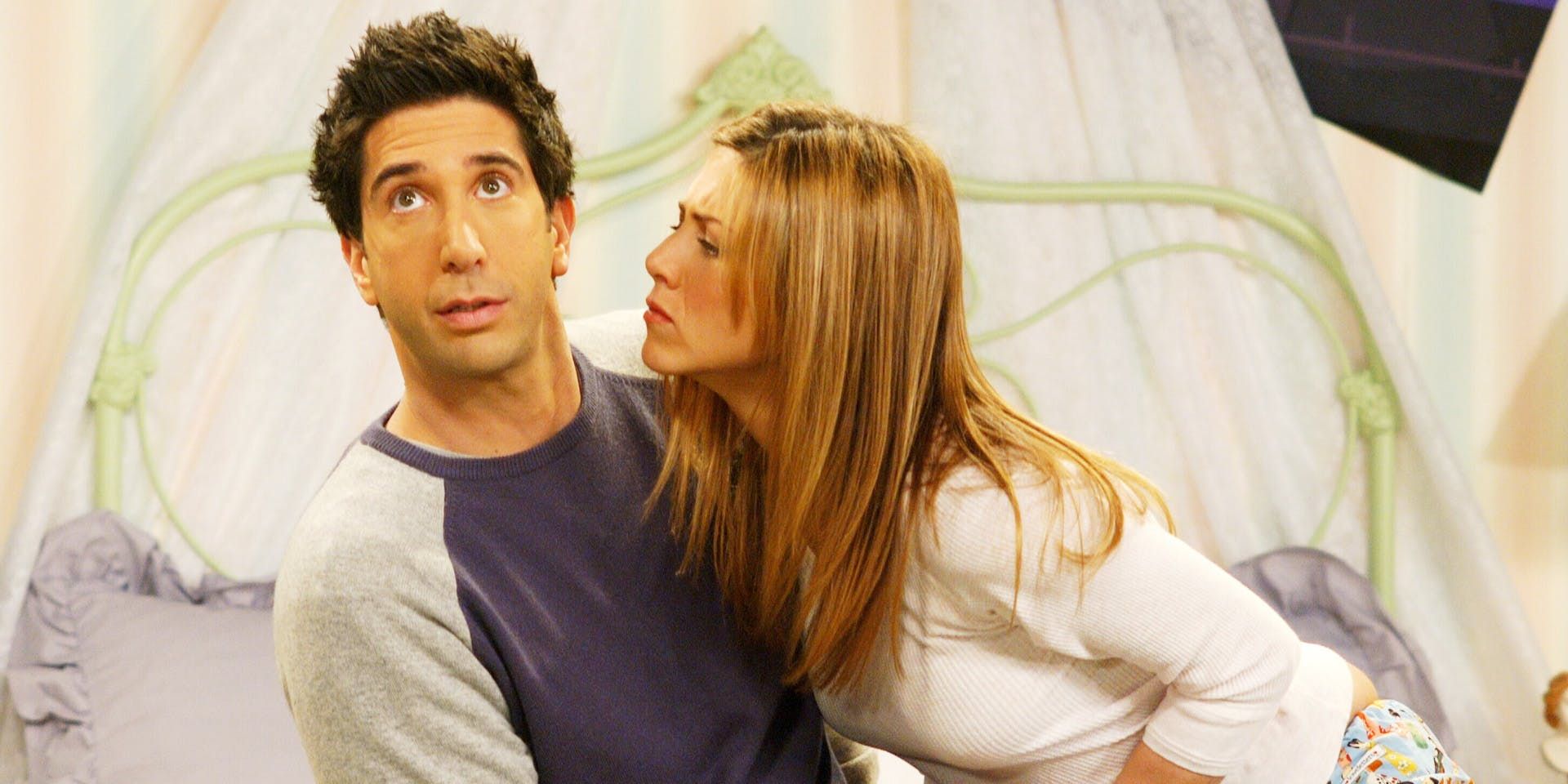
The most common involved romances that begin as friendships. Shows like “Friends” built almost every meaningful romance around this concept. While it wasn’t the only sitcom that did this, it’s by far the worst offender in sending the message that an epic romance starts with a great friendship.

While that makes for good TV, it’s a very flawed approach in the real world. I’m not saying that being friends with someone can’t lead to meaningful romance. It definitely can. However, shows like “Friends” give the impression that this is the only romance that has true depth. Every other romance is just flat and uninspiring, by comparison.

In the real world, seeking friendship is a good thing, but using that as a pre-cursor to romance can come off as deceitful. Sometimes, a person wants a friend more than a love interest and if that’s the only reason you’re friends with them, then that just comes off as insincere and a little creepy.

That’s not to say that sitcoms don’t contain meaningful romance lessons. This just isn’t one of them.


Terrible Lesson #2: Everyone Always Has Ulterior Motives

Chief among the hallmarks of sitcoms are the conflicting motivations of the characters involved. Whether it’s Charlie Harper trying to hook up with a new woman in “Two and a Half Men” or Kelly Bundy trying to win a modeling gig in “Married With Children,” those motivations are rarely that complicated. The only conflict arises when they encounter others whose interests aren’t in line with theirs.

In a half-hour sitcom, there’s little room for characters whose agenda has nothing to do with that of the main characters. Unlike real life, everyone around these characters is either looking to help or thwart their efforts. There’s rarely anyone who just wants to live their life and doesn’t care if someone like Kelly Bundy gets a modeling gig for a pest control company.

While that makes logistical sense within the context of a sitcom, it has some nasty implications for the real world. It further fosters a mentality that anyone who isn’t helping you is actively opposing you. That us versus them mentality already brings out the worst in people, both in the real and fictional world.

At least in the fictional world, that mentality is somewhat justified. It often is the case that the people around you, including close friends and family, have ulterior motives. In many sitcoms, close family members are the ones who screw you over the worst. It’s not a healthy approach to dealing with the world. If you can’t trust your family, then who can you trust?


Terrible Lesson #3: Every Authority Figure Conspires Against You

When it comes to villains or antagonists, there isn’t much room for nuance in sitcoms. You’re not going to find a Walter White within those constraints. Most of the time, the bad guys in a story are painfully obvious. That, in and of itself, isn’t too big a problem. Villains don’t have to be complex to work, even in a sitcom.

However, if a sitcom does have a villain of any kind, it’s almost guaranteed to be an authority figure. They can be a parent, a teacher, or an older sibling. If they have even a shred of authority, no matter how arbitrary, you can assume they’re going to oppose the protagonists in some form or another.

Whether it’s Red Foreman clamping down on the pot smoking in “That 70s Show” or Lois being a tyrannical mom in “Malcom in the Middle,” the authority figures are always the problem. There’s really not much to their villainy. They exist solely to prevent the main characters from having fun and achieving their goals.

Now, I’m not going to claim authority figures can’t be corrupt. There are real cases of authority figures acting like real villains. There are also cases in which authority figures do genuine good. Whether it’s the leader of a country or the chief of a police unit, it is possible for someone to wield authority over others and not be an asshole.

If your understanding of authority comes solely from sitcoms, then that’s like claiming pigs can do algebra. It’s not just that power corrupts. In sitcoms, any kind of power corrupts and it does so completely. It’s as simplistic as it is absurd. In reality, there are authority figures worthy of respect and sitcoms seem to go out of their way to avoid that point.


Terrible Lesson #4: There’s Never A Reason For Someone Being A Bully

In the same way sitcoms present a simplistic view of authority and villains, they take an equally bland approach when it comes to villains. For the most part, bullies in sitcoms aren’t characters. They might as well be robots programmed to insult, denigrate, or annoy the main characters at every turn. There’s no deeper motivation beyond that. They’re just mean, unrepentant assholes.

Characters like Libby Chessler in “Sabrina The Teenage Witch” and Harley Keener in “Boy Meets World” don’t exist to give depth to a sitcom. As bullies, they’re function is to present obstacles and setbacks for others. Giving them a reason for being a bully, be it a personality disorder or past trauma, would hinder their ability to achieve that function.

While this makes sense in the context of plotting a sitcom, it grossly simplifies the concept of bullying. When it happens in the real world, it’s nothing like what we see in a sitcom. I know this because I dealt with bullies in my childhood. It did not play out like any sitcom I ever saw.

Bullies aren’t robots fueled by the whimpering cries of their victims. They are human beings too and while few will sympathize with them, few people are born bullies. They may not even see themselves as one. There are some deeper complexities to the mental makeup of a bully and sitcoms pretend those complexities don’t against.

Granted, it’s difficult for a half-hour TV show to explore and flesh out the personality of a bully. It’s considerably easier to make them an unlikable asshole who helps glorify the main characters. As a result, it’s easy to see bullies as blunt instruments rather than people you need to deal with in your day-to-day life. In such a complicated world full of complicated people, it’s bound to cause problems beyond losing lunch money.


Terrible Lesson #5: Hard Work Is For Suckers

Let’s not lie to ourselves. Growing up, we tend not to appreciate hard work. Most of us go out of our way to avoid it or when we can’t, we take the path of least resistance. Many sitcoms reflect this sentiment. They certainly aren’t the reason why people avoid hard work. That inclination existed long before sitcoms, but they do take it to extremes that can be both hilarious and asinine.

In the world of sitcoms, hard work is tantamount to waterboarding. From Lucy standing on an assembly line in “I Love Lucy” to the over-the-top slacker behavior that plays out in “Workaholics,” hard work is only a step down from bullies. It’s something every major character either avoids or gets crushed by.

Sitcoms build entire plots around characters looking for a way to get out of hard work. Francis in “Malcom in the Middle” is the personification of this struggle. He once spent an entire episode willingly distracting himself from an overdue history assignment. While characters like him often pay a price for their slacking, it’s rarely a worse alternative than hard work.

In the world of sitcoms, you only work hard if you have your dream job. Since most people don’t get their dream job, hard work is basically tantamount to defeat. That’s the main take-away from sitcoms. Anyone with just a small amount of life experience knows how flawed that is.

Even when I was working a part-time job in high school, I learned the value of hard work very quickly. It’s a means to an end. It’s something that, when done right, gives you a sense of accomplishment. While we all can’t approach it with the same passion as Hank Hill, it does have value and sitcoms would have you believe that value doesn’t exist.


I still enjoy sitcoms. I still watch them regularly when there aren’t superhero movies or TV shows to see. While they can be funny and entertaining, they can also present a very flawed concept of life, people, and how to handle it. There are a lot of bad lessons to be learned from even great sitcoms, but if they make us a laugh, then I say that’s a price worth paying.

2 Comments

Filed under human nature, media issues, romance, television

Finding True Love And Living Happily Ever After According To Isaac Arthur

photographer-finds-couple-she-took-proposal-pics-of

I’ve talked quite a bit about the future of love on this site. I’ve explored the impact of artificial intelligence, radical life extension, and human enhancement on the dynamics of pursuing love and fostering romance. I don’t claim to be the best when it comes to contemplating these topics. I’m humble enough to admit I’m not even in the top 10.

As such, I freely admit there are people who discuss this issue in far greater detail with far greater production values than I’ll ever manage. Just recently, I stumbled across a YouTube channel by someone who makes contemplating the future a relaxing, engaging, and downright pleasant experience.

The name of that channel is Isaac Arthur. If you, or anyone you know, has even a passing interest on future technology, sci-fi concepts, or space exploration, I highly recommend you check out this channel. It covers a wide range of topics from colonizing space to future sources of energy to what kind of pets we may have in the future.

Naturally, a video he made about finding love using future technology is one of my favorite. It only came out earlier this year, but it perfectly breaks down how love, romance, marriage, and family may unfold in a future dominated by artificial intelligence and radical life extension. Mr. Arthur does in one video what I probably couldn’t do in a hundred articles. For that, I thank him.

Leave a comment

Filed under Artificial Intelligence, futurism, romance, sex in society, sexuality, Sexy Future, technology

Helga Pataki: Profile Of A Tragic Love Story (From A 90s Kids Cartoon)

heyarnold2

I was lucky to be a kid in the 1990s. Talk to most people my age and they’ll agree. The 1990s was a golden age for cartoons. That may seem somewhat egocentric, but I’ve yet to hear a convincing counter-argument. This was the era that brought us the animated classes for “X-Men,” “Batman,” “Daria,” “Animaniacs,” and so much more.

As a kid during that era, there were many great shows that I still hold dear to my heart. I’ve mentioned a few of them in the past. A few of these shows hold up, even by today’s standards. I contend that the “Batman” animated series only gets better with age. One show, however, has taken on a very different meaning over the years the air and, being an aspiring romance writer, it still resonates with me.

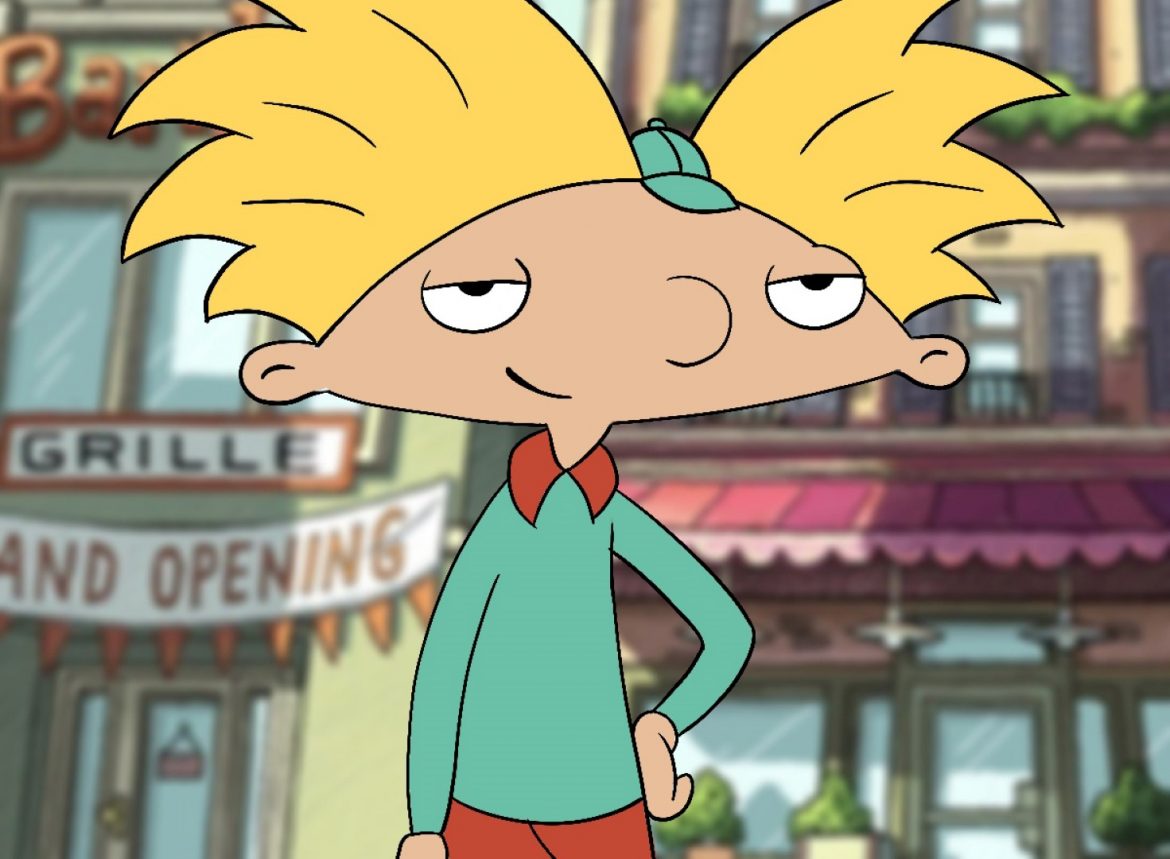
That show is “Hey Arnold!” and for most cartoon-loving kids in the 1990s, this was one of the best shows that didn’t involve talking babies. It was a unique show that followed a diverse cast of characters, each with their own unique connection to the titular Arnold. By almost any measure, Arnold was a lovable, relateable idealist who you just can’t help but root for.

How can you not love that football shaped head?

He’s loyal, altruistic, friendly, compassionate, and empathetic. Even as a 4th grader, he’s the kind of kid you want to be friends with. He’ll go to bat for you. He’ll stand by you when the chips are down. When the whole world around him is wrong, he’ll stand for what’s right. Whether it’s the 90s or today, there’s a lot to like about a character like that.

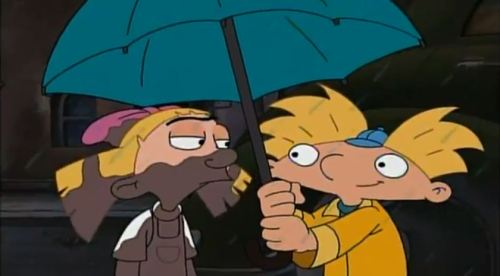
However, the best part of “Hey Arnold!” isn’t how inherently likable Arnold is. In fact, one of the most endearing sub-plots of the show is built around a character who, on paper, couldn’t be more different. That character is Helga Pataki, the short-tempered, overly hostile, overly dramatic girl who often threatens others with her fists.

She’s also secretly in love with Arnold. It’s not just a childish crush, either. She’s really in love with Arnold.

When I watched this show as a kid, I thought that crush was kind of odd. It’s not that I didn’t care for romantic sub-plots. Even as a kid, I enjoyed romance, even in cartoons. It was one of the reasons I loved the 90s Marvel cartoons so much. I just didn’t understand the romance in “Hey Arnold!” Then, when I watched it with a more refined perspective, it gained a whole new context.

In essence, the love story of Helga and Arnold is built around tragedy, but somehow manages to feel sincere and genuine. It’s a love story that initially comes off as obsessive and unhealthy. However, as we learn more about each character, they gain more complexity. With each subsequent refinement, it becomes clear just how much these two complement each other.

It’s worth reiterating that this is a kids show from the 1990s. Things like tragedy, romance, and chemistry are things that usually don’t fit into a show within the pre-Spongebob Nickelodeon era. Even within those limitations, the complicated love story between Helga and Arnold is surprisingly mature.

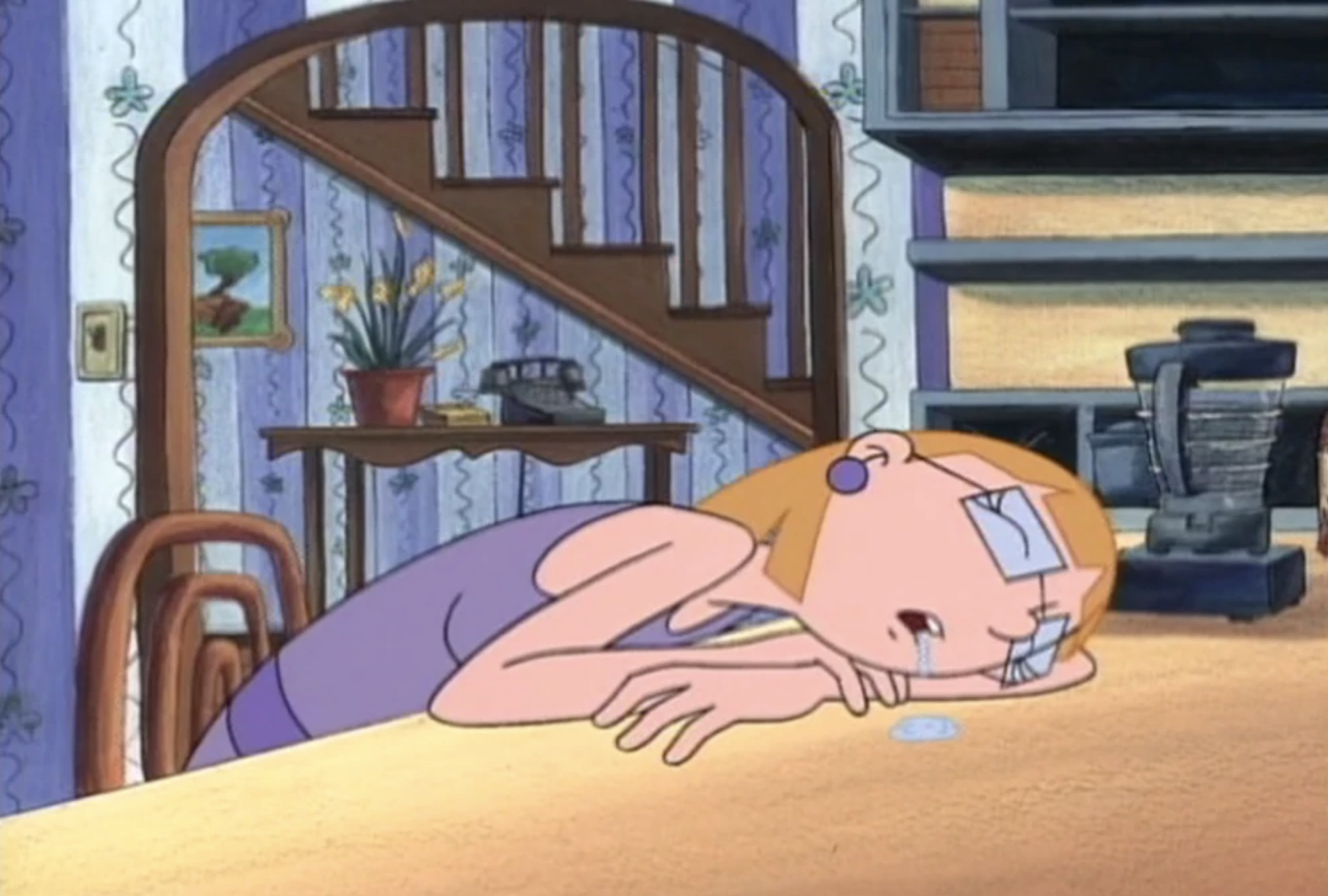
To appreciate the depth of that story, it’s necessary to understand some of Helga’s story. Even by the skewed standards of a kids cartoon, it’s pretty sad. Helga does not come from a nurturing, supportive environment. Her parents are a wreck. Her father is a self-centered blowhard who cares more about his business than his family. Her mother is a dazed alcoholic who always seems hung over.

Then, there’s her older sister, Olga. She’s basically the perfect daughter who sucks up all the attention in her family. She’s sweet, successful, kind, and an overachiever. She sets the bar so high that Helga has no chance of ever matching it, so she doesn’t even try. As such, her parents barely notice her. Her father often forgets her name. Most of the time, she just calls her “the girl.”

This pretty much sums it up.

This is not a happy home life for anyone, let a lone a 4th grade kid. Nobody pays attention to her. Nobody shows her any semblance of affection or love. Nobody is even nice to her. Then, she meets Arnold. He’s the first person to show her real, sincere kindness. It’s not out of pity, either. That’s just the kind of person Arnold is. Naturally, it makes an impression.

It’s a tragic foundation for any love story, but it’s one that isn’t fully fleshed out until later seasons. If there’s one episode that defines Helga’s character, it’s Season 4, Episode 78, entitled “Helga on the Couch.” This is the episode that lays bare just how tragic her life was and still is. It also puts all the obsessive feelings she has for Arnold into a larger context.

It’s almost disturbing how sad things were for her. As early as pre-school, we see just how neglected she was. We also see just how big an influence Arnold was for her at that moment.

Again, it’s worth reiterating that this is a kids show. If there were a story about a pre-school kid who was that neglected by her family, it would make headlines and stir plenty of outrage on social media. However, “Hey Arnold!” managed to make this distressing story feel genuine and heartfelt.

The romance isn’t entirely one-sided, either. In the early seasons of the show, Arnold mostly saw Helga as his bully. He rarely saw her as anything more than that. However, as the show went on, he starts noticing her complexities. He even manages to get through her tough, hostile exterior on a few occasions.

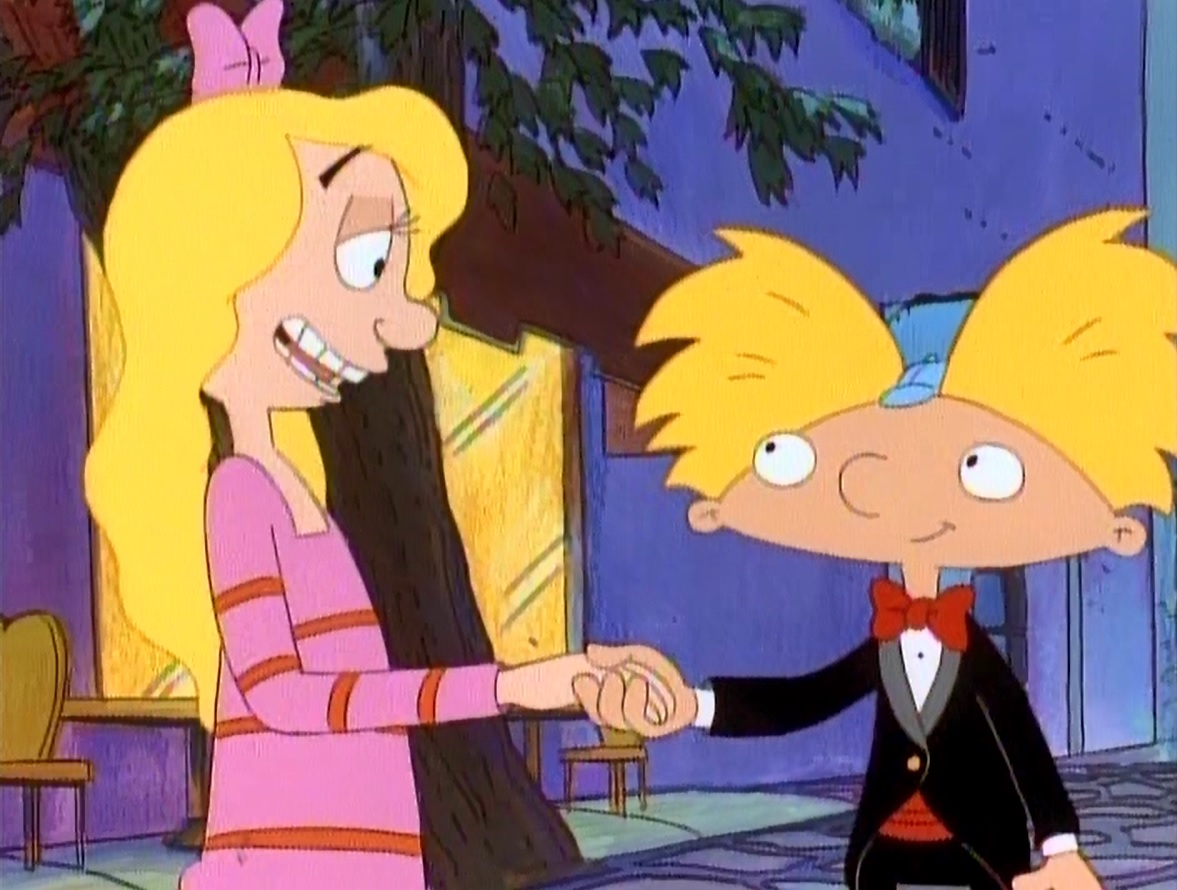
While there are more than a few occasions when she comes close to confessing her feelings for him, it’s not until the series finale/movie that they actually become an item, at least as much as a couple of 4th graders can be. The way they go about is part of what makes the romance feel genuine.

It doesn’t just revolve around Helga finally coming clean. Without getting too heavy into spoilers, Arnold gets to see first-hand just how far Helga is willing to go for him. She shows him with her actions how much she cares. It’s not something she could ever put into words and not just because she’s a kid. Remember, she comes from a home where she never got a shred of affection from anyone.

This moment, which was a culmination of many hints and sub-plots that developed over many seasons, is incredibly cathartic. Even my inner 90s kid could appreciate it. It effectively completed a journey that started with the first episode. Helga starts off as this obsessive, stalker-like bully. Then, over time, we understand why she feels the way she does and why Arnold reacts to it so strongly.

It’s still tragic on many levels. As a foundation for romance, Helga and Arnold don’t start off on the right foot. This is a relationship that could’ve easily become a one-sided affair that quickly devolved into stalking. Somehow, “Hey Arnold!” managed to make it work. It even managed to make it feel sweet.

The fact that such a complicated, yet genuine romance could manifest in a kids show is further evidence that the 1990s truly was a golden age for cartoons. For that reason, and many others, “Hey Arnold!” and the unique love story it told will have a special place in my heart.

3 Comments

Filed under romance, television

Polygamy Vs. Consensual Non-Monogamy: Is There A Difference?

open-relationships-hero

When it came to dissecting the absurdities of language, nobody did it better than George Carlin. Beyond being one of the funniest comedians of all time, Carlin could break down certain concepts in a way that was as insightful as it was hilarious. His brilliant analysis of what he called “soft language” is more relevant now than it was when he was still performing.

Given the rise of outrage culture, I often wish George were still alive today so that he could tear the absurdities down, as only he could. We can only imagine how he would’ve tackled issues like fake news, alternative facts, and toxic masculinity. At the very least, his legacy of attacking soft language lives on.

In his book, “Parental Advisory,” Carlin defined soft language as terminology people use to help them avoid unpleasant truths. It helps fat people feel better about being “morbidly obese.” It helps poor people feel better about being “economically disadvantaged.” It helps drug addicts feel better about being “substances abusers.”

The face of a man who didn’t buy such bullshit.

Whatever the case, no matter how many colorful words people utilize, the underlying theme is the same. There are certain aspects of reality that bother some people, so they decide to re-frame it in a way that feels less serious and more palatable. It’s rarely overt. There’s rarely an official announcement or anything. Most of the time, it’s just a trend that people forget is absurd.

This leads me to the emerging concept of “consensual non-monogamy.” It’s kind of what it sounds like. It’s a form of a non-monogamous relationship in which both partners grant one another permission to seek sexual or romantic entanglements with others. Sometimes it involves certain rules and boundaries that are openly negotiated. The key is that there is consent and understanding at all levels.

This is not a new idea. If it sounds a lot like polyamory, an idea I’ve touched on before, that’s because it is for the most part. It’s a non-monogamous relationship that people pursue for any number of reasons. It’s actually one of humanity’s oldest forms of relationships and some even argue that it’s more natural than monogamy.

I’m not going to argue how natural or unnatural such practices are, but I think this latest manifestation of soft language requires scrutiny. Like every other kind of soft language, these sorts of linguistic quirks don’t evolve randomly. There’s often a method behind the absurdity and while I’m not as brilliant as Carlin, I have a pretty good idea of why it’s happening.

In terms of definitions, there isn’t that much difference between polyamory and consensual non-monogamy. Logistically, though, there are a few complexities that differentiate the two practices. They’re minor, but relevant to the extent that inspired soft language.

While there hasn’t been much research into consensual non-monogamous couples, the little we do have paints a fairly comprehensive narrative. In these relationships, there is a “primary” partner who holds the role of spouse/lover. This is the partner with which they love and seek to share their lives with. They’re the ones whose names are on emergency contact forms, loan applications, and wills.

Beyond the primary partner are all the girlfriends/boyfriends with which the sexy stuff occurs. The extent and motives behind these encounters are communicated and understood with the primary partner. Every couple is different so the boundaries vary. Some couples have to be together when they’re getting sexy with others. Some are okay with it happening more randomly.

If that sounds a lot like polyamory, then congratulations. You’re starting to understand how George Carlin thought. While polyamory has its own dictionary definition, it’s connotations are not the same as consensual non-monogamy. What people think of when they hear the word “polyamory” conjures different mental images than a term like consensual non-monogamy.

Polyamory, for better or for worse, is one of those terms that has a certain level of linguistic baggage. It’s less associated with the free-spirited couples who get their own reality show and more with outdated traditions associated with polygamous marriages. Think “Big Love” rather than “Friends With Benefits.”

Now, I know I’ll upset those in the polyamorous community for just hinting at that association. For that, I apologize. I know most who identify as polyamorous or consensual non-monogamous don’t like being associated with the kinds of practices that are often associated with horrific crimes. That gets to the heart of where this soft language comes from.

Even if the principles are the same, those sexy free-spirited couples have a valid incentive to set themselves apart from polyamory. It doesn’t matter the disturbing practices of extreme religious cults are only a small subset of polyamorous relationships. They’re distressing enough for most reasonable people.

I dare you to find something more creepy.

As a result, a less broad term emerges. Consensual non-monogamy may have a few extra syllables, but it feels more technical and official. It’s harder to apply to the more distressing aspects of polyamory because it emphasizes consent, a concept that has only become more heated in recent years.

You can’t have child marriages or even arranged marriages of any kind under consensual non-monogamy. It would undermine the whole “consensual” part of the term. In that context, it’s understandable that this kind of term would emerge. There’s nothing in the definition of polyamory that weeds out those negative associations. Rather than actually confront it, soft language acts as a filter.

Given the frequency with which the negative aspects of polygamy still occur, it’s hard to blame those who practice consensual non-monogamy for wanting to set themselves apart. As those relationships become increasingly acceptable, there will be an increasing desire to frame it in a particular way and “consensual non-monogamy” checks all the right boxes.

It emphasizes consent.

It implies choice and personal freedom.

It’s technical, but doesn’t completely undercut the sex appeal.

Even if the definitions aren’t that different, consensual non-monogamy still does just enough to set itself apart from polyamory. In terms of soft language, it adds some critical, but necessary complications to something that is still subject to plenty of taboos. In a perfect world, such a differentiation wouldn’t be necessary. Sadly, that’s not the kind of world we live in.

Sadly, indeed.

I like to think even Carlin would understand that some amount of soft language is necessary. Whether you call it consensual non-monogamy or polyamory, how we think about these ideas are going to affect our attitudes towards it. If consensual non-monogamous couples don’t want to be associated with crackpot religious cults, then they have every right to set themselves apart.

That said, it’s also entirely possible that more soft language will emerge as consensual non-monogamy becomes more mainstream. Love, sex, and relationships are complicated and human beings are uniquely talented at complicating things. Years from now, we may not call it consensual non-monogamy. We may use something along the lines of “mutually non-binding romantic intimacy relationship agreements.”

At that point, hopefully someone will have picked up on the absurdities. George Carlin may no longer be with us, but that doesn’t mean we should tolerate more bullshit in a world that already has too much of it.

Leave a comment

Filed under gender issues, human nature, Marriage and Relationships, polyamory, psychology, romance, sex in society, sexuality

The (Unequal) Gender Politics Of Divorce

debt-and-divorce

There are a handful of words that evoke a special kind of dread. I’m not just talking about racial slurs, crushing insults, or George Carlin’s famous seven dirty words. There’s one word that evokes dread that transcends race, gender, and political affiliation. That word is divorce. I’ll give everyone a moment to stop cringing.

I can personally attest to the impact of that word. I have many close friends, relatives, and family members who have gone through divorce. I’ve seen, first-hand, how devastating it can be to individuals and their family. It can be every bit as devastating on children as well. While there is certainly a benefit for spouses and children who escape an abusive relationship, there can still be lasting scars.

Most people agree that divorce is a pretty traumatic experience. It is very much the antithesis of the love, connection, and intimacy we seek in others. It is against everything I generally write about on this website. However, divorce is a significant part of our society.

At this point, it’s worth pointing out that the old “half of all marriages end in divorce” saying is not in line with the data. According to the National Center for Family and Marriage Research, the divorce rate in 2015 was 16.9 divorces per 1,000 marriages. That actually represents a significant decline since the 1980 when the divorce rate was nearly 23 per 1,000 marriages.

Whatever the rate is, the effects of divorce are still devastating and heartbreaking. Those effects also get lost in a lot of doom-saying surrounding marriage and the state of the family, which is often led by religious zealots and reactionary pundits. Beyond even the tragic and painful stories surrounding divorce, there is another element to it that often goes overlooked.

Unfortunately, it has to do with gender disparities and I’ve learned in the course of writing about this topic, this often brings out some heated debates. I expect that to hold true more than usual on this issue because it’s already so emotionally charged. On top of that, there’s plenty of data to show that when it comes to marriage and divorce, men and women are not on the same page.

The first major indicator of that disparity is shown in who does the proposing. Even in today’s more progressive climate, men are still the ones who propose 90 percent of the time. Despite the many running jokes about men being afraid to commit, they’re still the ones who pop the question. While more and more women are starting to propose, this gap is still significant.

The second indicator, which I’m sure is going to inflame ongoing gender conflicts, has to do with who initiates divorce. According to the National Center for Health Statistics, 80 percent of divorces are initiated by women. Again, that’s not a trivial gap. That implies there’s a major disconnect at work and it’s not getting better, even as more people remain single.

The reasons for women initiating divorce are many. I don’t want to get too deep into them, but there are many conflicting narratives. There are those who see marriage as a tool of patriarchal oppression and divorce is tool of liberation. On the other side are those who claim marriage is just an institutional tool that women use to exploit men for resources with divorce being the oversized sledge hammer.

With the added complication of no fault divorce, alimony laws, and child support, there are more legal mechanisms than ever to rub salt in the wound that is divorce. It’s not enough for a relationship to end and for romance to fade. Involving lawyers and lawmakers adds multiple layers of heartbreak and frustration to the mix.

This is where the gender divide can get especially hostile. On top of the disparity in who proposes and who divorces, there’s also a significant divide in how these laws affect each gender. Even though women have gained much more economic independence over the years, 97 percent of the ex-spouses who receive alimony after a divorce are women.

Add the ease of no-fault divorce into the mix and there’s a painful incentive for women to initiate divorce. If the choice is staying in a boring marriage or leaving with some money without having to prove any wrongdoing, then who could blame someone for taking that option? It’s still heartbreaking and hurtful, but people are going to respond to incentives, regardless of gender.

It certainly hasn’t helped gender relations. Many unabashed misogynists will cite how many women receive alimony and use that to claim that all women are manipulative psychopaths who only see men as a wallet or a sperm bank. Those kinds of generalizations are crude, but when you can cite real-world cases of unapologetic gold digging among women, it’s easy to see where that hatred comes from.

Personally, I don’t believe that hatred is justified. Most men don’t see women with that kind of hostility. In principle, alimony exists to protect women who would otherwise be in poverty after divorce. That is reasonable and well-intentioned. In practice, though, it’s a legal tool that can be abused and further foster hateful attitudes.

The data for who gets primary custody of children is just as striking. According to Census data, 82 percent of mothers get custody after divorce. That same set of data also notes that this stat hasn’t changed much over the past 20 years. That, in my opinion, is the most frustrating aspect of this issue.

Despite all the other changes and trends we’ve seen in recent years with feminism, men’s rights activism, and evolving trends in marriage, there hasn’t been much change in the overall narrative. Even as feminists bemoan patriarchal oppression and men’s rights activities protest gender-driven injustice, the rhetoric rarely translates into meaningful change.

I understand that some relationships are just doomed from the start. I also understand that the nature of romance is changing in accord with culture, society, and law. However, the lack of change in the fundamentals of how we pursue marriage and manage divorce is confusing and even a little infuriating.

Women seek, and have gained, a great deal of rights and protections in pursuing their own path within a more egalitarian society. At the same time, they still hold onto traditions surrounding relationships. They still expect the man to propose and to support her in the event of divorce. I doubt that’s out of malice. This is just what we, as a society, consider normal.

At the same time, men are pursuing their own brand of rights and protections within this society. Issues like father’s rights and reforms to family courts all have a place in pursuing a more equitable system. Even so, men still expect women to play a certain role within a relationship while assuming too much about their own role.

It’s an untenable situation. Society is guiding the genders in one direction while they’re pulling towards another. The old narrative surrounding divorce is just not compatible with the one that’s emerging. The situation today is very different than it was in 1908. Laws, culture, and even the economy are changing the factors that guide divorce. The only thing that doesn’t change is the pain of a broken relationship.

As it stands, men and women both seem to want more equality in the tragic realm of divorce. However, they each seem to have very different ideas of what constitutes “equality.” The narrative, as it stands, is built around men pursuing women and women deciding when that pursuit is over. Anything that deviates from that is seen as abnormal or absurd.

Every relationship is different. Every individual is different. There are probably some women out there who divorce out of blind hatred and there are men who marry women they have no intention of loving for the rest of their lives. There are plenty of vindictive people out there and divorce is a weapon that needs no sharpening.

The late, great Robin Williams once said that “Divorce is like ripping a man’s genitals out through his wallet.”

Feminist, Gloria Steinem, once said “You become a semi-non person when you get married. The surest way to be alone is to get married.”

These attitudes nicely reflect the current gender divide when it comes to divorce. Until that gap is narrowed, the heartbreak and hatred inspired by divorce will only get worse. Men and women have enough reasons to clash with one another. Divorce just makes it worse by giving that animosity legal powers.

Leave a comment

Filed under gender issues, human nature, Marriage and Relationships, men's issues, political correctness, psychology, romance, sexuality, women's issues

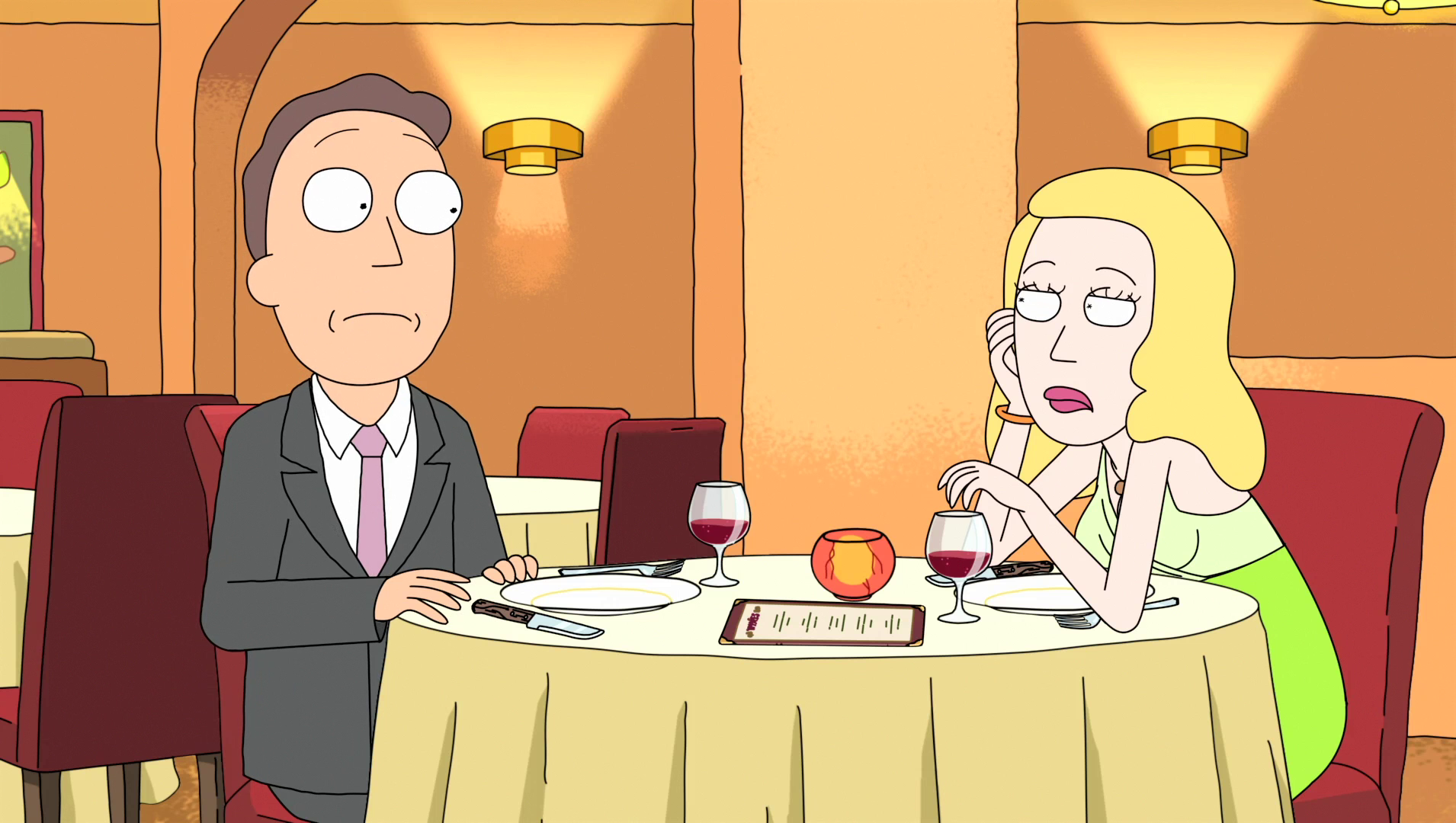
Beth And Jerry: The Ultimate Anti-Romance Love Story

b1zhrl6g4khz

When it comes to telling a good love story, there are many ways to go about it. I’ve certainly learned that from the novels and short stories I’ve written. The nature of romance is constantly evolving. What constitutes quality romance today might seem strange or downright flawed by the standards of the past.

There are many examples of quality, well-developed romances in popular culture today, as well as a few that are downright toxic. However, there’s one particular love story that seems to break all the rules, yet still functions in its own eccentric way. Fittingly enough, that utterly unromantic love story plays out in “Rick and Morty,” a show often defined by its various eccentricities.

I know it’s been a while since I’ve talked about “Rick and Morty.” Like so many others, I’ve been anxiously awaiting news about the fourth season. Ever since the show was renewed for 70 episodes, details have been scares. There have been some occasional teases, but nothing of substance as of yet.

While waiting for those details, I think it’s worth revisiting an issue that has been evolving and devolving since the very first episode. That issue is the less-than-ideal relationship between Beth and Jerry Smith, the parents of Morty and his sister, Summer. Like everything else in the world of “Rick and Morty,” the relationship of Morty’s parents is subject to many issues, flaws, and mishaps.

In essence, the relationship between Jerry and Beth is the antithesis of romantic love. This isn’t a case of two people falling in love and facing challenges when kids enter the picture. It’s not even a case of two people not being in love initially, but falling in love over time as they raise a family. In fact, the most defining aspect of Beth and Jerry’s love story is the complete absence of traditional romance.

That lack of romance doesn’t just stem from the show’s over-arching themes surrounding nihilism and meaning. By nearly every measure, Beth and Jerry aren’t the least bit compatible. Beth, like her eccentric father, is a very smart and capable, as shown in more than one episode. She’s a skilled horse surgeon and can hold her own when wielding advanced sci-fi weapons.

In contrast, Jerry is a case study in mediocrity. He’s not a complete idiot, but he certainly walks a fine line between laughably inept and downright pathetic. He’s unemployed for a good chunk of the first three seasons and is so oblivious that he doesn’t even realize when he’s in a poorly-rendered simulation. At times, he can be a lovable loser, but most of the times, he’s just a loser.

How he and Beth ended up together is neither romantic, nor glamorous. It’s established in Season 1 that Jerry got Beth pregnant on their prom night in high school. The reason they stayed together was for the sake of their child, which isn’t saying much because they almost got an abortion. The only reason they didn’t was because they blew a tire on the way to the clinic.

That may sound dark, but it’s perfectly in line with how “Rick and Morty” handles serious issues like teen pregnancy and abortion. It doesn’t attempt to romanticize the situation, nor does it send the message that having the child and getting married was in any way rewarded. Their always at odds and arguing about everything. There’s rarely a sense that their marriage is loving, stable, or anything romantic.

At one point in Season 3, Rick calls Jerry out on how he ended up with Beth. Despite what he claims, it wasn’t an act of romance that brought him and Beth together. It was little more than pity.

Jerry, being so inept at everything, has little more going for him than pity. It’s the only real skill he has, but it was enough to get him an ill-fated prom date with Beth. Rick sums it up nicely in one of his many memorable speeches.

You act like prey but you’re a predator. You use pity to lure in your victims. It’s how you survive. I survive because I know everything, that snake survives because children wander off, and you survive because people think, “Oh, this poor piece of shit, he never gets a break. I can’t stand the deafening silent wails of his wilting soul. I guess I’ll hire him or marry him.”

This moment is revealing in that it reinforces how little romance was involved in the development of Beth and Jerry’s relationship. Their entire lives together are built around Beth feeling sorry for Jerry. Then, once she got pregnant and failed to get an abortion, circumstances did the rest.

It’s not romantic. It’s not tragic, either. They just ended up in a lousy situation and made the most of it. That’s not a love story. That’s basic survival for anyone who isn’t a super-genius with access to a portal gun.

That’s not to say there aren’t some moments of sincerity. Jerry, being the least capable member of the family, tends to remember fondly the early days of their relationship. He’s the only one who sees the relationship in a romantic context. The only time anyone else sees it, Beth included, is when they’re facing a crisis, be it an identity crisis or the end of the world.

When it comes to the day-to-day logistics of the relationship, it’s never that functional. Jerry can’t hold down a job or handle himself whenever he gets caught up in Rick and Morty’s adventures. Beth drowns herself in bottles of wine and episodes of “The Bachelor.” Even when they try to do something romantic, like a Titanic-themed get-away, it often fails spectacularly.

This dysfunction eventually culminates in the first episode of Season 3, “The Rickshank Redemption.” Jerry, in a rare moment of assertiveness, tells Beth that she has to choose between him or her father. In his unintelligent mind, he believes the romance they have will win out. He ends up being wrong. Beth chooses her father and Jerry gets kicked out of the house.

In most shows, that would be the end of a relationship that’s so inherently flawed. However, “Rick and Morty” isn’t most shows and not just because it has characters like Mr. Poopybutthole. In this world of infinite realities and bird people, even love stories devoid of romance find a way to gain meaning in a show steeped in nihilistic undertones.

That meaning emerges at the end of Season 3 in “The Rickchurian Mortydate” in which Beth has a chance to make another choice. This time, she’s at odds with her father, who had revealed some harsh truths about who she was as a kid and what it means to be smart. Unlike before, she chooses Jerry over Rick and he gets to move back in.

This, through the twisted logic of “Rick and Morty,” affirms Beth and Jerry as a genuine love story, but one that is still devoid of romance. Beth didn’t choose Jerry out of love. She chose him because she that’s what she wanted. That’s all there is to it. In a show where Rick once described love as “a chemical reaction that compels animals to breed,” that might be the greatest act of love anyone can offer.

It also mirrors the inherent value of having a choice. Episodes like “Pickle Rick” and “The Ricks Must Be Crazy” all emphasize the importance of choice, especially for those of near infinite capabilities. Both Rick and Beth are endowed and burdened with intelligence, abilities, and options. Their choices are, ultimately, the only actions that truly matter in a meaningless universe.

In the case of Beth and Jerry, the choice doesn’t have to involve romance. In fact, romance would only complicate things. Just choosing to be together, despite all the flaws in their relationship, is the only thing they need to make their love work. They’re together because they want to be together. That’s all there is to it and that’s all they need.

In that sense, Beth and Jerry’s story still qualifies as a love story, despite the utter lack of romance. It’s hard to say where their relationship will go in the coming seasons of “Rick and Morty.” Maybe it will develop some amount of romance. Maybe it’ll only become more flawed and less romantic, as the series progresses.

Whatever ends up happening, it still doesn’t matter, as is often the case in “Rick and Morty.” As long as Beth chooses Jerry and Jerry chooses Beth, their story will still be a love story in its own unique way. Regardless of whether love is real or just a chemical reaction in their brains, it’s still their choice and that’s as meaningful as love can get in a meaningless universe.

1 Comment

Filed under Marriage and Relationships, psychology, Rick and Morty, romance, sex in society

My Wedding Speech: Love, Marriage, And Hope

rebecca-clay-wedding-north-carolina-ceremony-103228806_sq.jpg

The following is a little speech I prepared for the wedding I’m set to attend later today. As I announced yesterday, I’m currently out of town to attend a wedding involving a close family member of mine. I’m not the one that’s getting married, but being the romantic I am, I have a strong appreciation for weddings.

There is sure to be plenty of joy to be had on all sides. There will be plenty of speeches, toasts, and tears. I don’t know if I’ll get a chance to say anything, given the size of the crowd. However, I’ve never been good at giving big speeches anyways. My strength has always been the written word.
With that in mind, I’d like to share a little speech that I wrote for this momentous occasion. Even if I don’t get a chance to say it, I hope to forward it to friends, family, and loved ones so they can share in the sentiment during and after the ceremony. Also, if you or someone you know is getting married and need something romantic to say, please feel free to use this.

What can we say about love that hasn’t been demonstrated, expressed, or put into every other pop song in history?

What can we possibly do, by ourselves and with each other, to demonstrate the power of this feeling?

On this joyous day, I think we can skip those questions because what we’re experiencing right now is the most complete answer we’re ever going to get. Here, in this moment, we are feeling those magical, intangible things that unite us all, but defy description.

Take a moment, every one of you, to appreciate this feeling. To the bride and groom, take an extra moment or several. Can you sense it? Can you grasp it, if only in though? It doesn’t have to be tangible. It doesn’t even have to be complete. All that matters is that it’s there.

Take another moment, if you can, to understand how powerful a feeling it takes to bring us together. What other emotion can inspire an event like this? Friends, family, and loved ones from all over are here to share in this experience. Some say love is magical. I say magic has nothing on love’s ability to bring us all together.

To the bride and groom, whose love brought us here, you’ve achieved something that few can hope to grasp. What brought you to this point wasn’t just a passing feeling. A simple passion may inspire a kiss or a smile, but it takes something much greater to create something like this.

Your love is something special. It’s not just one particular feeling at one particular moment in time. It is a process and an evolution. Like gravity or the changing of the seasons, love has been the catalyst through which you’ve weaved your lives together. The hopes of the past are now the promises of the future. The joy you feel now is the foundation for greater joy in the future.

When we truly love someone, we don’t just love the person before us. Their body, their smile, and the things they do for us are merely the surface of something much deeper.

To love someone is to love who they’re trying to be.

To love someone is to love who you’re trying to be, as well.

To feel that love and know it is a moment worth capturing. For you to share that moment with us, giving us a chance to see and marvel at what you’ve achieved together, is a true wonder.

Having witnessed your love and celebrated your new life together, I think we can all say without reservation that love is real. We need ask no more questions. We need not contemplate any more factors. Seeing you together and sharing in the moment is all we need to know the truth.

From this day forward, through every challenge and triumph, we wish you all the love and happiness that this feeling can bring. From here on out, let love be your guide, your bond, and your greatest strength.

1 Comment

Filed under Jack Fisher's Insights, Marriage and Relationships, romance

Imagining My Perfect Valentine’s Day

istock-487440873-1024x681

A while back, I imagined what my perfect Christmas would be if I had unlimited resources. Since Christmas is my favorite holiday, it was not too difficult to imagine. When you love a certain occasion, it’s easy to let your imagination run wild. For Valentine’s Day, though, it’s a bit trickier.

At the moment, I’m single. I haven’t been in a serious relationship for quite some time. My reasons for that are many, but I’d rather not focus on that for the moment. Instead, I’d like to push my imagination once more, while also mixing in my fondness for romance, to contemplate the perfect Valentine’s Day.

To do so requires that I be in a relationship, so for this scenario to work, I’m going to use a similar set of rules that I used for Christmas. Once again, that means money is no object. Either I’ve won the lottery or one of my novels became a best seller. Whatever the case, I’m unbound by financial constraints and I have whatever resources I desire, be they tangible assets or logistical know-how.

In addition to those resources, I’ll operate under the assumption that I’m with someone I’m deeply in love with. It doesn’t matter whether we’re married or not. At the very least, we already live together and we’ve a couple long enough to know that our love is serious. It’s not a fling or one of those brief relationships that isn’t supposed to last too long. This is the real deal.

With those parameters in place, here’s how I envision my perfect Valentine’s Day playing out with my lover. Please note that I’ll leave some details ambiguous so that things are flexible between me and my lover. The goal is still the same, though. I want me and my lover to have the greatest Valentine’s Day possible and this is just one way of going about that.

It begins a full month before Valentine’s Day. At some point in mid-January, I ask my love to pick a tropical locale. It doesn’t matter where it is, so long as it has a beach, warm weather, and plenty of places for us to be romantic. Whether it’s the Bahamas, South America, Mexico, or Southeast Asia, I leave it entirely up to her.

Once she makes her choice, I spend the rest of the month making appropriate plans. First, I find the fanciest, most luxurious hotel there is. I then reserve the most expensive suite there is. If necessary, I’ll buy out an entire floor. On top of that, I’ll request that the staff be ready to prepare any of my love’s favorite meals, whether it’s a fancy steak, exotic seafood, or a microwave pizza.

In addition to the food, I’ll make sure to reserve a private portion of the beach, just for us. It doesn’t have to be the entire beach. It just has to be big enough for us to enjoy some privacy, especially if we feel the need to engage in nude sunbathing, nude swimming, or anything other romantic activities that may require nudity.

After those preparations are made, I plan for me and my love to fly out to our tropical destination the day before Valentine’s Day. I make sure the trip itself is romantic. We travel to the airport in a limousine, complete with champagne and snacks. We then fly out on a private jet. There’s no waiting in long lines or being stuck at an airport. We get in and take off as quickly as possible, so as to maximize our time at the beach.

While on route in the air, we share a pre-prepared meal meant to replicate the first meal we shared on our date. As we dine, we also watch the first movie we ever saw together, whatever it might be. Then, depending on how long the trip is, we make love before taking a nice long nap until we arrive at our destination.

Once we’re there, we depart from the private jet, enter another limo, and make our way to the hotel. If we have time, we make love again in the back while enjoying some more champagne, whichever comes first. Upon arriving at the hotel, we settle into our room, get a nice meal if we’re hungry, and go for a nice long walk together on the beach.

From there, things get less structured. We just relax, explore our surroundings, and rest up for an eventful day tomorrow. Before we got to sleep that night, we make love again and we make sure we’re not disturbed. We then settle into a peaceful sleep.

The next morning is Valentine’s Day. As such, we sleep in as long as we please. If we’re in the mood, we make love again. If not, we simply order breakfast in bed and dine naked together. We then share a nice long shower together, followed by a romantic stroll on the beach. Clothing is entirely optional for the most part and discouraged in most instances.

We spend the rest of the morning and most of the afternoon just lounging together on the private areas we reserved. We relax, go swimming, and make love in whatever way we please. Every distraction is minimized. Ever comfort is provided, be it food or suntan lotion.

After a day on the beach, we return to the hotel where we spend the afternoon getting pampered in a spa. We each take turns getting massages. We spend ample time in a hot tub together. Again, clothing is entirely optional or discouraged. Once we’re sufficiently pampered, we retire to our room where a buffet of our favorite food and deserts await us.

As we dine, we have a mini-marathon of our favorite movies and TV shows. We binge as much as we can, recounting the moments they inspired and the passions they evoked. Along the way, we snuggle as much as possible, making love whenever possible. We try to make use of every hour of the day, right up until midnight.

Finally, in the last hour of Valentine’s Day, I carry my lover back to the bedroom, sit her down, and read her a special poem I wrote just for that day. I make sure it’s the most romantic, heart-felt thing I’ve ever written. I say every word with the utmost passion. Then, once I’m finished, I curl up with her in bed, make love to her one last time, and settle into a peaceful sleep just as the clock strikes midnight.

There you have it. That is my vision for the perfect Valentine’s Day. I know it involved a lot of nudity and lovemaking. I’m not going to apologize for that. This is simply my vision for the greatest day of romance I can conjure for my lover. I only hope that one day I meet someone with which I can share such a romance. Until then, I’m content to keep imagining and hope it inspires plenty of sexy stories.

If you have your own vision for the perfect Valentine’s Day, I’d love to hear it. For everyone else lucky enough to have a lover in their lives, I wish you a happy and sexy Valentine’s Day.

1 Comment

Filed under Jack Fisher's Insights, romance