The following is a review I wrote for PopMatters for X-men Black: Emma Frost #1. Enjoy!

The following is a review I wrote for PopMatters for X-men Black: Emma Frost #1. Enjoy!

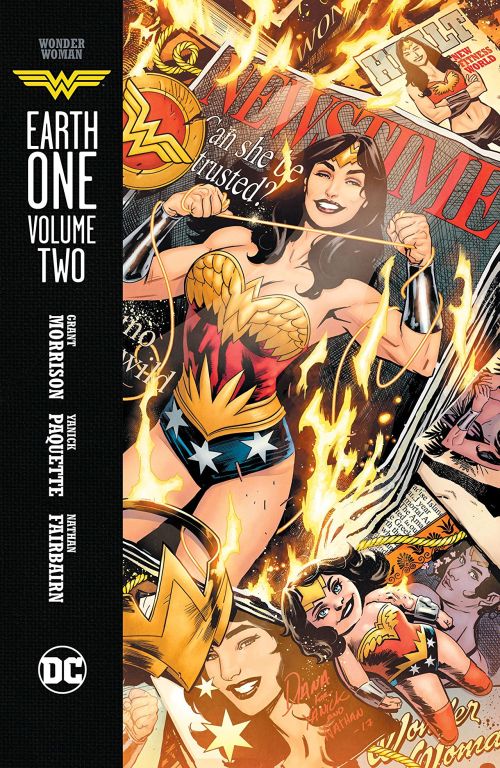
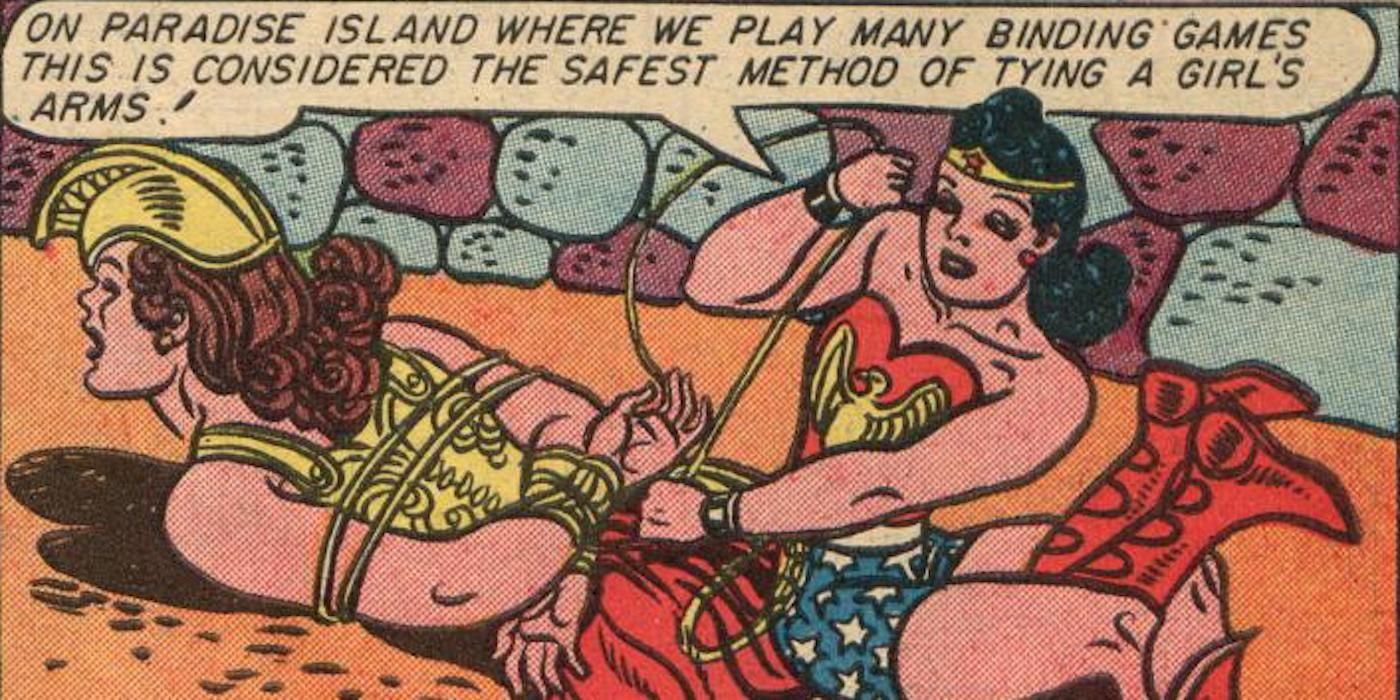
When “Wonder Woman Earth One: Volume 1” came out in 2016, it was groundbreaking in how it re-imagined Wonder Woman while reconnecting her with her kinkier roots. For years, she’d been moving away from the unique brand of feminism that her creator, William Moulton Marston, had once defined her. This culminated in her 2017 movie in which all the BDSM connotation were purged from her persona.
While many creative forces over multiple decades turned Wonder Woman into someone very different from her creator had intended, Grant Morrison and Yanick Paquette went in the opposite direction. They dared to embrace the kinks and reshape Wonder Woman’s story in a way that works while retaining Marston’s original themes.
That story remains one of my favorite Wonder Woman stories of all time and one I’ve gone out of my way to praise. Finally, after a two-year wait and a prolonged absence of kink from superhero comics, “Wonder Woman Earth One: Volume 2” has arrived. Fans of warrior women, feminist utopias, and not-so-subtle bondage themes can rejoice.

Like any sequel, it faces the inescapable challenge of matching the high bar set by its predecessor. On top of that, it also has to dig deeper into an aspect of Wonder Woman that generations of writers have tried to overwrite or ignore. Even with an elevated profile, thanks to her movie, this is a part of Wonder Woman’s persona that is largely unknown or undeveloped.
The greatest challenge of Volume 1 was to reintroduce Marston’s radical concepts of love, submission, and domination in a way that didn’t feel like bad fan fiction. Morrison and Paquette succeeded by building the story around this dazzling, techno-feminist utopia on a mythology built on ideas that seem antithetical to the world dominated by lies, mistrust, and cynicism.
If the goal of that story was to affirm the potential of these ideas, then “Wonder Woman Earth One: Volume 2” is built around how those ideas are challenged. It’s one thing to defend them on an island paradise populated by immortal warrior women of unyielding compassion. It’s quite another to defend them in a world where gay frogs inspire conspiracy theories.

Wonder Woman’s situation is considerably different this time around. She’s not insulated on her island paradise. She’s well-known public figure, an established superhero, and a vocal proponent for her radical ideology. She presents it as a viable way of achieving peace and justice in a world full of suffering and hatred. Unlike other wide-eyed idealists, she comes off as entirely genuine.
Not surprisingly, the world isn’t eager to sign up for her novel approach of peace through submission to a loving authority. It doesn’t just come from grumpy old men who only want women to make babies and sandwiches, either. Even among other women, her ideas are challenged and deconstructed throughout the story.
What does it even mean to submit to a loving authority?
Why is she so sure that it’ll work in the world outside her idyllic homeland?
How are men supposed to approach this concept?
How far is she willing to go to implement her ideas?
These are all difficult questions that get asked throughout the story. Wonder Woman doesn’t avoid these questions, but she doesn’t get a chance to answer them either. Even though she is celebrated by many, nobody seems capable of embracing her ideology as completely as her.
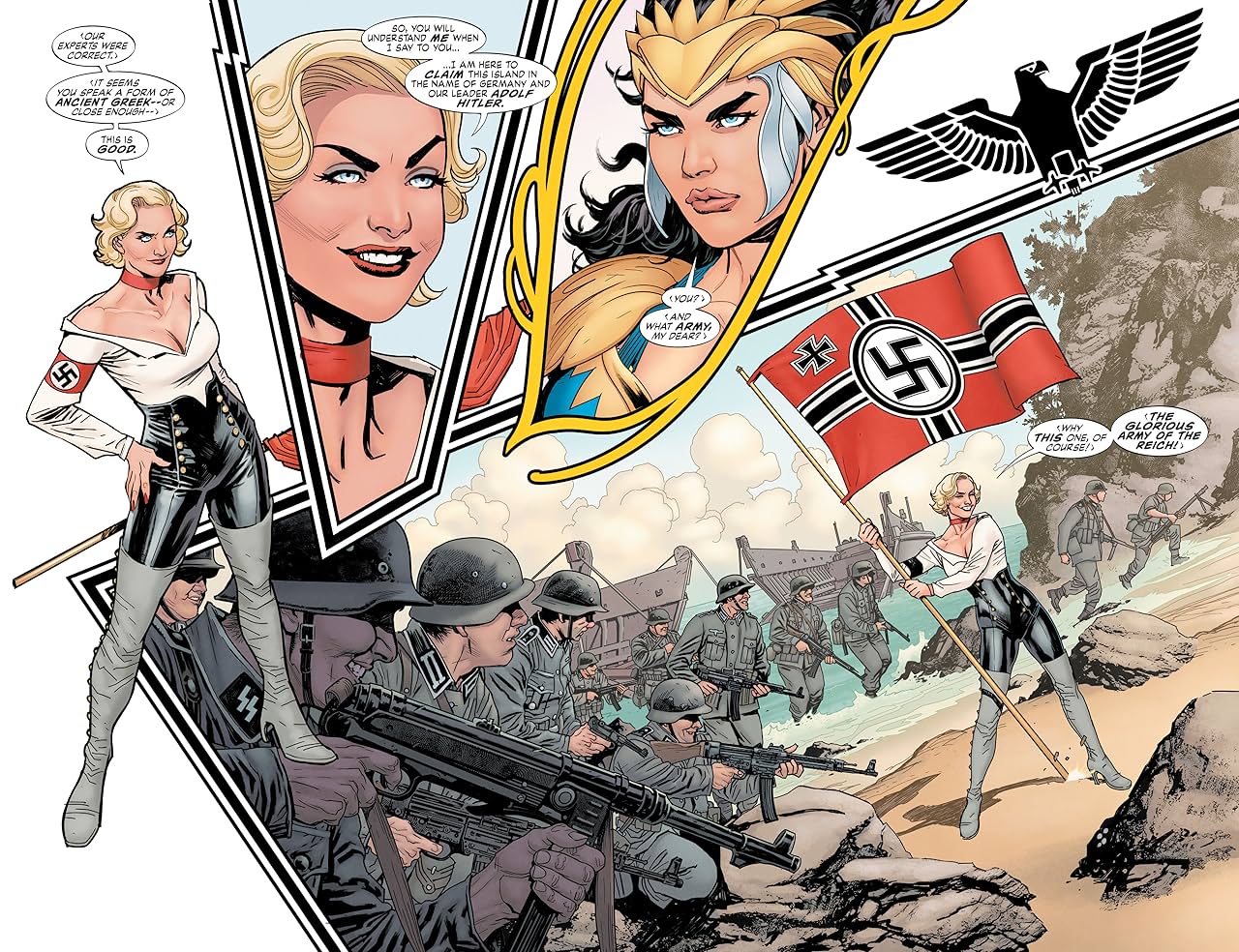
To further complicate this challenge, Nazis enter the picture. Trust me, it’s not as shallow as it sounds. The story isn’t built around Wonder Woman acting like Captain America, traveling the world and punching Nazis. In fact, the way she handles her enemies in this story is very different to the methods she used in the “Wonder Woman” movie. However, that’s where the story gains both complications and nuance.

Through a few flashbacks and side-plots, we get to see how Wonder Woman’s ideology confronts something that’s completely antithetical to everything she stands for. Initially, it looks like her approach works. She’s so compassionate and so empathetic that she can take violent, hate-filled Nazis and redeem their souls. That’s where the complications come in.
In both the events that unfolded in the past and those that play out in the present, we see shortcoming of Wonder Woman’s ideals. It’s not that someone taints or disproves them. As the conflict plays out, we see how the components necessary to make her ideology work aren’t as abundant as they are in her homeland. As a result, Wonder Woman pays a price for her idealism and it’s a steep, heartbreaking price.
Not all of it is a direct result of her ideology, though. Wonder Woman also deals with a devious adversary in Dr. Psycho, who effectively turns her ideals against her. He doesn’t just question or deconstruct the merits of submission to a loving authority. He manipulates them to his own ends, which plays right into the hands of her critics.

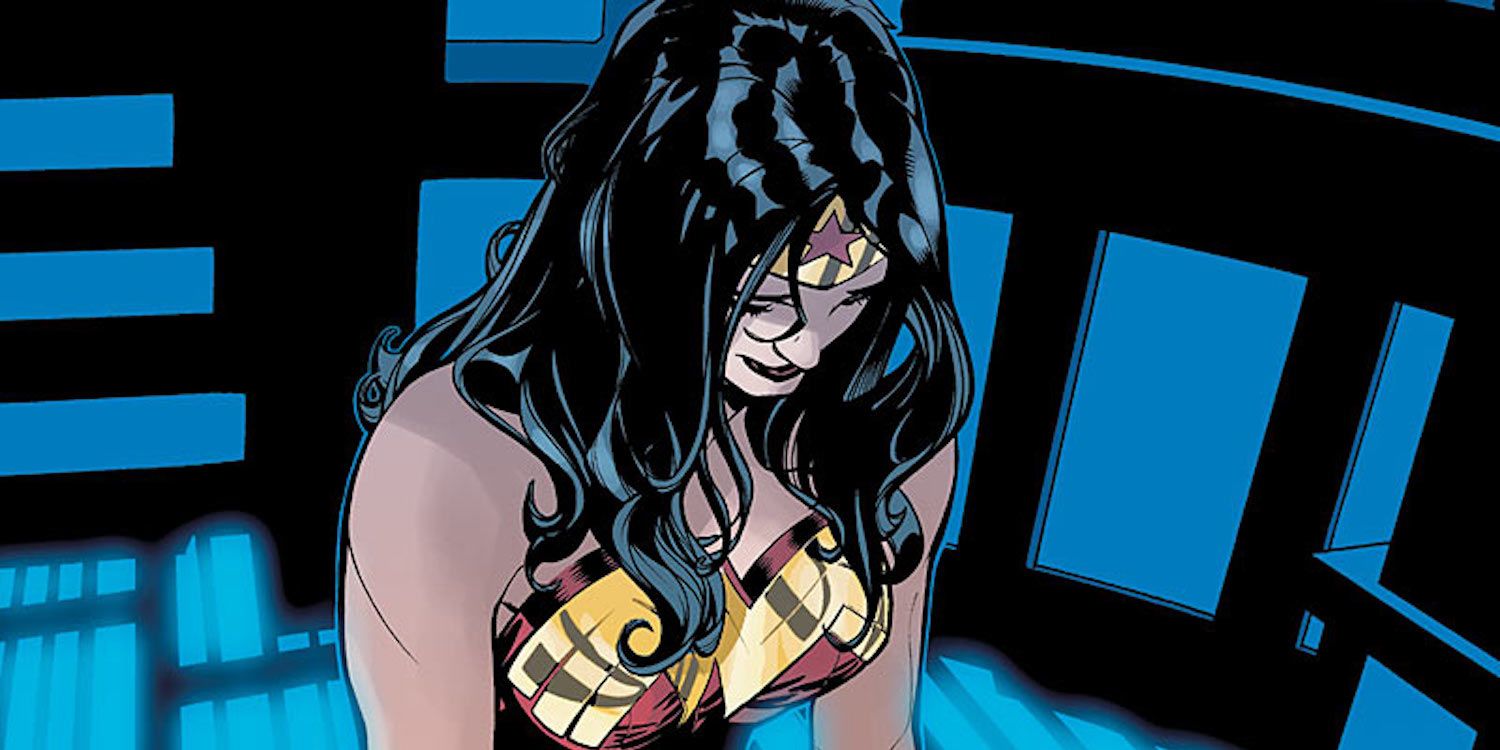
It’s tragic in that it leads to heartache for Wonder Woman and her friends, but it stops short of breaking her. This is Wonder Woman, after all. Loss, defeat, and criticism do not break her. No mortal or God can break her. Those are her words, not mine. These challenges, however, put her in a difficult position where she has to confront unpleasant truths.
Without spoiling too many plot points, I’ll note that Wonder Woman comes to realize that there are grater complexities to loving submission than she ever could’ve realized. She sees first-hand how difficult it is to get someone to willingly submit in a world where weakness can invite harm, exploitation, and injustice. Just preaching her message isn’t enough. By not doing more, it costs her and those she cares about.
In terms of the larger narrative, “Wonder Woman Earth One: Volume 2” is a wonderfully effective evolution of the world that Morrison and Paquette created. Along the way, the story continues to embrace the unique principles of the original iteration of Wonder Woman that Marston crafted in 1942.

Not entirely, that is.
If there’s any shortcoming to the narrative, it’s how incomplete it feels at the end. It’s not a cliff-hanger, but there are many lingering plot threads that don’t get resolved. Granted, it says on the final page that there is a Volume 3 planned for this series. Given the two-year gap in between this book and its predecessor, the wait seems nothing short of agonizing.
Even with those dangling threads, “Wonder Woman Earth One: Volume 2” is still a complete Wonder Woman story that’s unlike anything you’ll get in the movies or comics. If I had to score it, I would give it a 9 out of 10. The lack of resolution at the end is the only thing keeping it from a perfect score. It still gets so many things right about who Wonder Woman is and why she’s so endearing.

The fact that she can be endearing while retaining the radical spirit that Marston had envisioned helps make “Wonder Woman Earth One: Volume 2” all the more remarkable. She’s not just a fierce warrior woman. She’s the personification of a different approach to gender, power, and love. It may seem bizarre and kinky to us, but it has powerful implications for people of any gender.
It doesn’t go overboard with the BDSM undertones, nor does it focus heavily on gender politics. They are mentioned, but not forced into the plot. There are things Wonder Woman does that feminists, conservatives, and BDSM fans can get behind. At every turn, she carries herself as someone who is willing to embrace everyone. It’s that unconditional, universal compassion that makes her Wonder Woman.

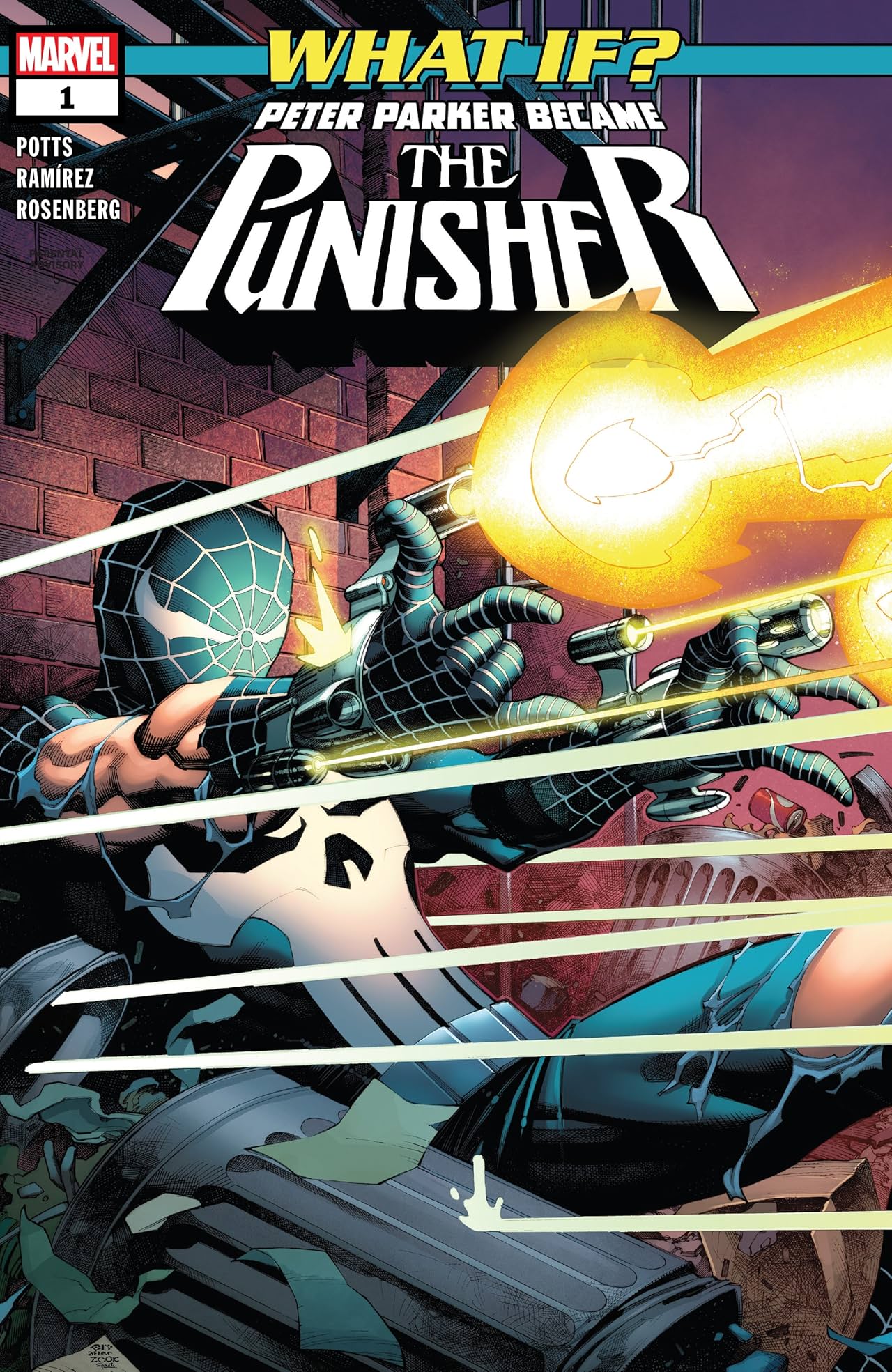
The following is a review I wrote for PopMatters for “What If? Punisher #1.” Enjoy!
‘What If? Punisher #1’ Toys With Spider-Man’s Concept Of Power And Responsibility

Every Wednesday, a new batch of comics comes out and for comic fans like me, it’s the biggest highlight of the week that doesn’t involve ice cream and whiskey. Within that batch of comics, it’s hard find the gems that really stand out. That’s why every week, I pick out a comic that I feel warrants extra praise.
This week, my quick pick is “What If? Punisher #1.” Now, this may seem like an odd selection. In fact, this comic is very much an anomaly. There was once a time where Marvel had an ongoing “What If?” series that basically offered alternate history takes on iconic characters and stories.
Personally, I have mixed feelings about how these stories are handled. For the most part, they’re hit or miss. They’re either really good or really bad. Rarely, if ever, are they fleshed out stories.
“What If? Punisher #1” finds a way to stand out because it does more than speculate on what would happen to Spider-Man if he chose a slightly different path. It actually explores the entire premise that with great power comes great responsibility. It even makes the case that the mainline Spider-Man in the long-running “Amazing Spider-Man” series is wholly irresponsible in his methods.

This is an idea that I’ve actually explored before. I once made the argument that Spider-Man is the most inept hero of all time. I got a lot of hate for that piece, mostly by long-time Spider-Man fans. I don’t blame them for a second. However, this comic actually takes some of the concepts I discussed and puts them into a cohesive story.
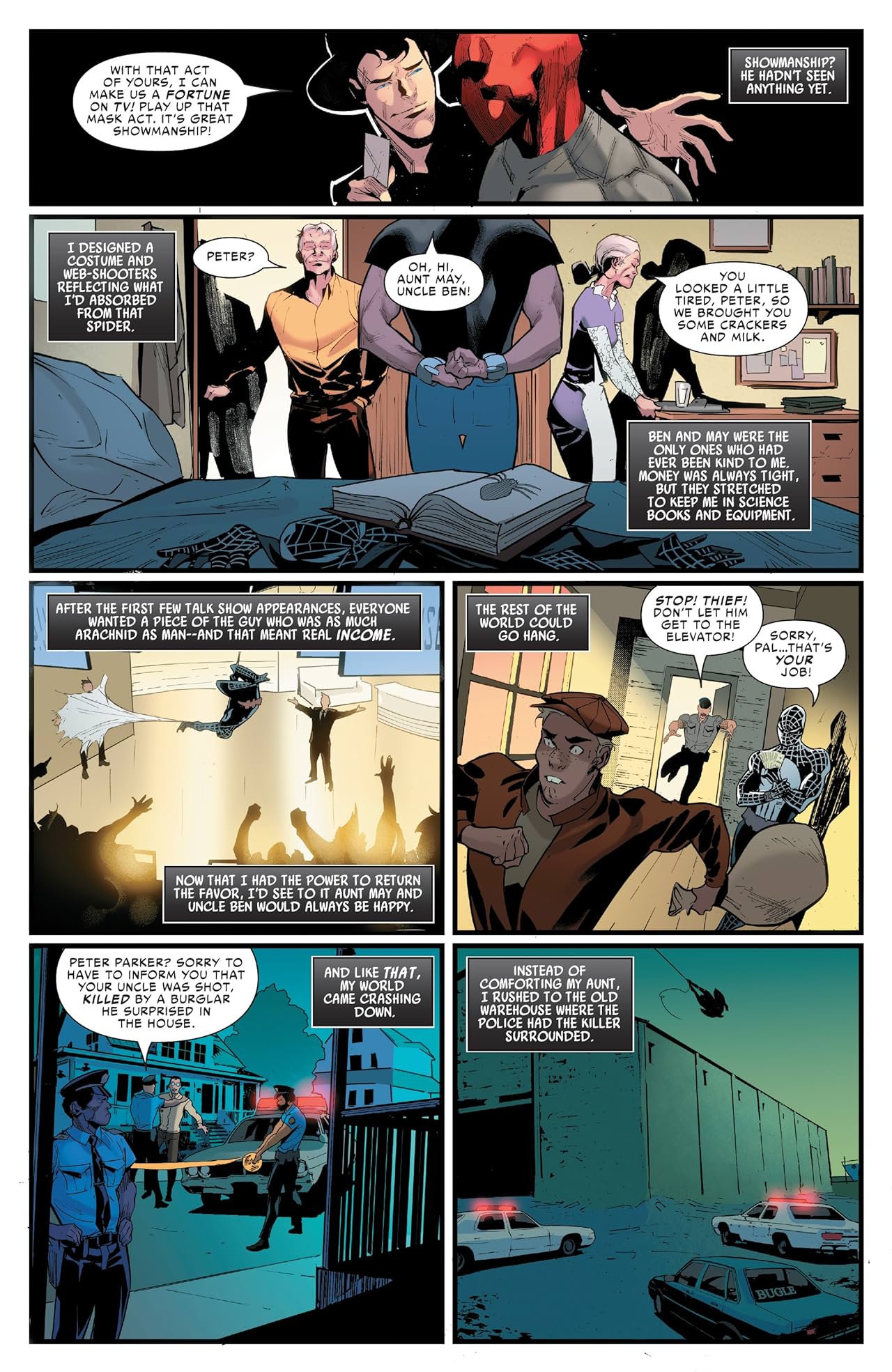
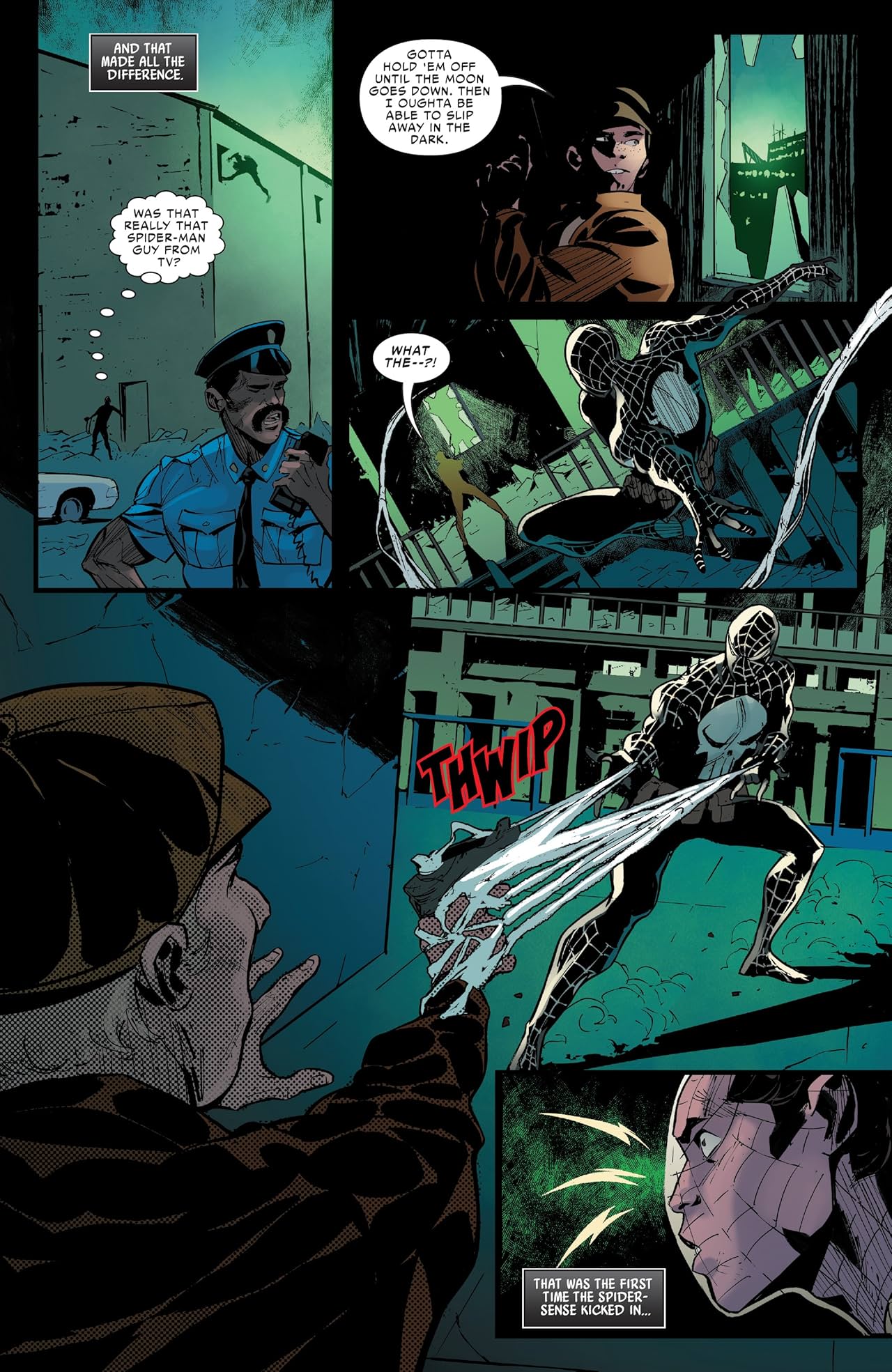
It doesn’t radically reinvent Peter Parker or Spider-Man. It also doesn’t radically alter his origin. He still fails to stop a burglar that goes onto murder his Uncle Ben. From that tragedy, he learns that critical lesson about power and responsibility. The only difference in this timeline is that great responsibility means killing his enemies, just like the Punisher.
It’s a line that the Friendly Neighborhood Spider-Man doesn’t dare cross most of the time. In nearly every famous iteration of Spider-Man, Peter makes clear that he does not kill. However, “What If? Punisher #1” makes the case that not only is this irresponsible. It actually played a part in hurting his loved ones.

How that happens and how it makes this case is something I won’t spoil. Since this is a “What If?” comic, though, there’s not room to dig deeper. There are more than a few gaps and oversights, but most of that is due to logistics rather than merit. At the very least, this comic asks some pretty damning questions about how Spider-Man approaches power and responsibility.
Even though most “What If?” comics are quickly forgotten and have no impact on the actual canon, this issue is worthy of my pick because the concept is so intriguing. It’s too brief and very much incomplete, but the ideas it presents are pretty remarkable. Not all Spider-Man fans will like it, but it’ll definitely get them thinking.
Filed under Jack's Quick Pick Comic

Certain movies are subject to unique standards. Nowhere is this more apparent than with superhero movies. A sci-fi movie can be flexible with its use of sci-fi elements. The same can be said for generic genres like romantic comedies, horror, action, and even stoner movies. A superhero movie, whether fairly or unfairly, will be judged by much stricter criteria.
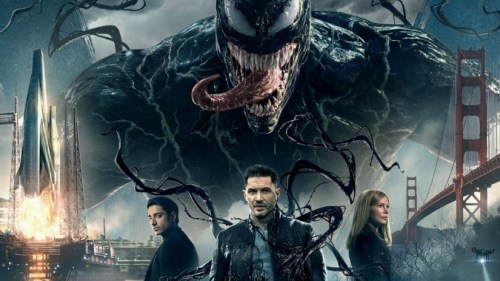
This is the problem “Venom” faced before it even started shooting. Most fans, especially those who follow Marvel Comics, were probably intrigued by the possibility of a movie about Venom. Casting Tom Hardy in the lead role definitely help. No offense to Topher Grace, but he’s far more qualified to play Eddie Brock than he’ll ever be.

Even so, “Venom” had a lot of logistical problems from the beginning. It wasn’t going to feature Spider-Man. It wasn’t going to take place in the Marvel Cinematic Universe. It wasn’t even going to get input from Kevin Feige and everyone else at Marvel Studios, who have made creating billion-dollar movies seem inane. By some standards, that’s a serious handicap.
Most Marvel fans, and I consider myself one of them, aren’t too keen on the idea of a Venom movie that doesn’t involve Spider-Man or have any connection to the MCU. Even if you have a passing familiarity with Venom in the comics, you probably know that a lot of his story is connected with Spider-Man. Telling a Venom movie without Spider-Man is like telling a Joker movie without Batman.
Actually, that may be a bad example. Forget I said that.
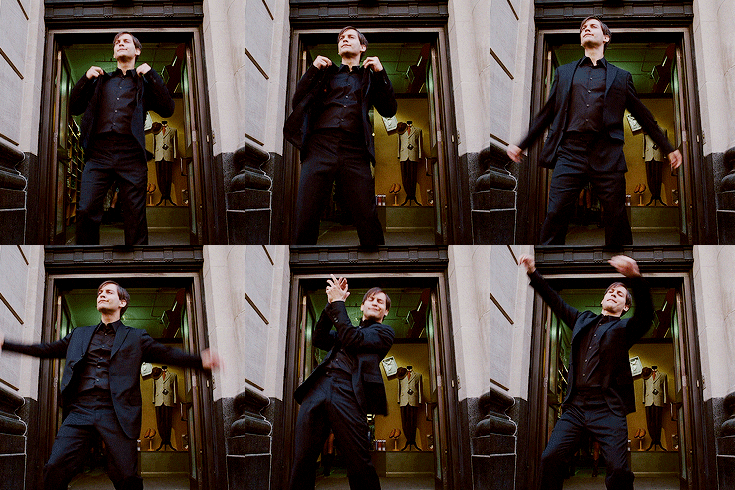
Logistical issues aside, I was still intrigued enough to give “Venom” a try. Like many other Marvel fans, I was not pleased with how his story was handled in “Spider-Man 3.” The only good that came out of that was a slew of dancing Toby Maguire memes. I felt Venom deserved better.

Well, without getting too deep into spoiler territory, I can affirm that “Venom” definitely succeeded where “Spider-Man 3” failed. It’s not just a good movie about Venom. It’s a good movie, overall. It had a lot of things working against it, but it still worked.
I know that the movie didn’t exactly thrill critics, nor did it blow the minds of hardcore fans who saw it. At the same time, it wasn’t messy or cumbersome like the theatrical cut of “Batman v. Superman: Dawn of Justice.” Yes, this movie probably would’ve benefited by taking the “Deadpool” approach and gone for an R-rating. However, it still succeeds in many ways.
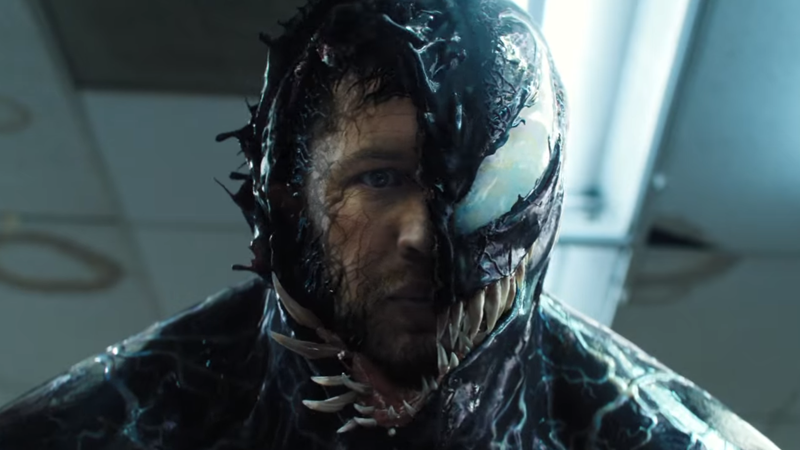
At its core, “Venom” works because it’s less about alien symbiotes infecting random people and more about Eddie Brock. This is his story and Tom Hardy does an excellent job capturing his persona. You don’t have to read a single comic to understand that Eddie Brock is not Peter Parker. He’s not exactly a hero, but he’s not a blood-thirsty villain, either.

Although that’s not necessarily obvious.
Eddie Brock is one of those guys who’s a loser and not just because he ends up bonding with a parasitic alien. One of the best things this movie did was show that Eddie’s life falls apart because of a decision that he makes. He’s not a victim of bad luck. In the beginning, his life is actually really good. However, he makes a fateful choice that completely changes that.
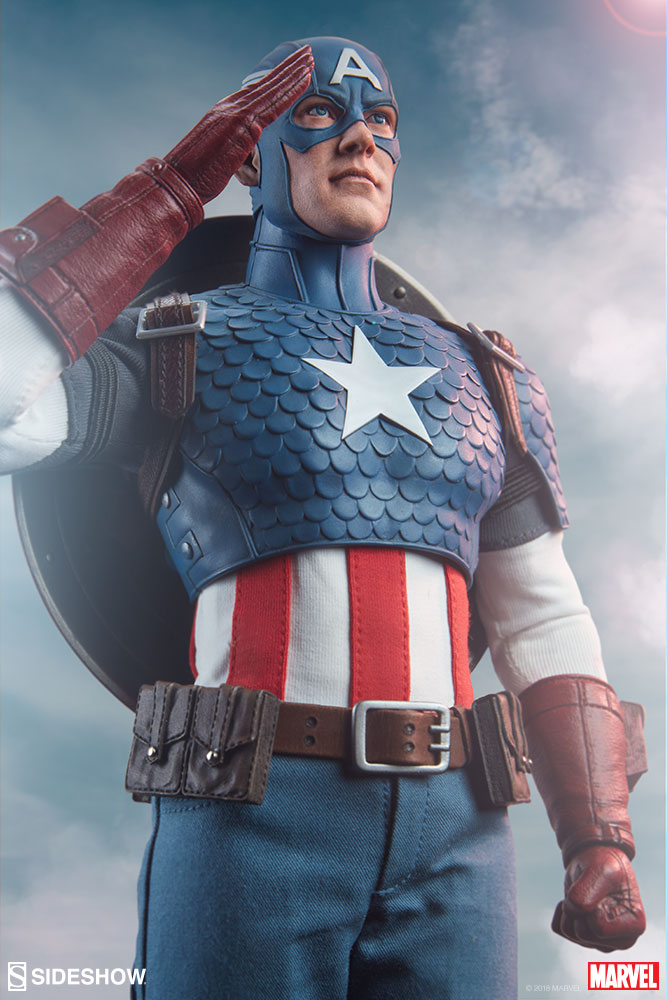
At the same time, the movie establishes that Eddie is not the kind of guy who jumps at the chance to be a hero. He has a few opportunities before he bonds with the Venom symbiote. He doesn’t take it and unlike Peter Parker, it’s not purely out of responsibility. He’s just not the kind of guy who embodies the selfless spirit of Superman or Captain America.

Then, when he encounters the symbiote, these personality flaws intensify. At first, he’s just overwhelmed. He reacts in a way most people would. His first instinct isn’t to help people or be a hero. He’s actually petty and self-serving for the most part. As the story unfolds, he and the symbiote literally and figuratively feed off one another. They both grow and evolve, as characters.
That process involves plenty of action, some of which is pretty visceral. If you’re looking for the kind of cartoonish beat-downs we got in “Spider-Man: Homecoming,” you’re going to be disappointed. The action here is quite violent. It’s not on the same gratuitous level as “Deadpool,” but it’s close and it even holds back at times.
Given Venom’s brutal nature in the comics, this can be a bit of a problem. In watching this movie, you get the sense that the effects team worked overtime to keep the violence just below PG-13 levels. At times, it feels forced and that impacts the story to some extent.

This moment could’ve been MUCH bloodier.
That’s not the only issue, nor is it the biggest. While I believe the story works, I also can’t deny that it’s missing some key components. Those not familiar Spider-Man’s history surrounding Venom probably won’t notice, but it’s hard for me to be a Marvel fan and overlook some of these flaws.
The story of how Venom and Eddie Brock come together is solid, concise, and compelling, as it’s presented in this movie. However, it still feels like it’s missing a lot of emotional depth without Spider-Man. A big reason why Venom, and Eddie by extension, becomes so menacing is because of Spider-Man’s role in his story. Removing him from that story is glaring, to say the least.
To fill in those gaps, the movie creates a new source of conflict through the Life Foundation, which acts as the primary antagonist through its unscrupulous Mark Zuckerberg wannabe, Carlton Drake. That’s not to say Drake isn’t a decent villain, but he’s not even in the same hemisphere as Erik Killmonger or Thanos.

Pictured here is NOT Thanos.
Even by non-superhero standards, these villains are pretty bland. It’s basically Venom versus and evil corporation who ends up serving an alien agenda. There’s nothing memorable or iconic about them, but that’s okay in the context of this movie because they still fulfill their primary purpose. They create the necessary moments that move Eddie’s story forward.
On top of that, the lack of connections with the MCU make this movie feel small by comparison, especially in a year when “Black Panther” and “Avengers: Infinity War” broke box office records. “Venom” has everything it needs to connect with the MCU. There’s nothing in the story that precludes it from having a role, but Sony has gone on record as saying that this movie is completely detached from that world.

The shared reaction of many Marvel fans.
As much as I’d love to see Tom Hardy and Tom Holland battle in a future movie, the lack of MCU connections still don’t take away from everything this movie does well. Overall, “Venom” is good movie that had a lot of factors working against it. This movie faced an uphill battle from the beginning, but still managed to achieve a lot. If I had to score it, I’d give it a 7 out of 10.
I’ve heard some claim that this movie belongs in the early 2000s and just doesn’t work within the current market of superhero movies. I say that’s bullshit. Good movies work, regardless of the year or era they come out. “Venom” is a good movie, but it’s also one that could’ve been much greater.
Coming out of the theater, I was satisfied, but felt as though there was a lot of potential left on the cutting room floor. It’s hard to know whether this movie would function better with an R-rating or as part of the MCU, but it manages to do plenty within its many constraints. Tom Hardy was handicapped in bringing Eddie Brock and Venom to life, but he still pulled it off.
Again, with all apologies to Topher Grace, Tom Hardy is now the definitive face of Venom and this movie sets him up for a promising future.

Another New York Comic Con has come and gone. Once again, the experience has left me astonished, amazed, and satisfied. Every year I go, I worry that next year will have to be a let-down compared to this year. Time and again, I’m proven wrong.
This year was probably my most ambitious year at New York Comic Con. In the past, I was just so overwhelmed by the crowds and spectacles that I didn’t really map out all the events and panels I wanted to attend. This year, however, I tried to make a list of all the places I wanted to go and all the people I wanted to see.
Needless to say, it made for a more exhausting trip, but it was so worth it. I got to meet people I really wanted to meet. I got to interact with fellow fans in a way that was very rewarding. I even managed to meet a few celebrities that made my inner child squeal with joy.
It would take too long to detail everything I saw and experienced. However, thanks to having extra chargers for my phone, I managed to take plenty of pictures. What follows are just some of the sights I saw at New York Comic Con. Some of them were just fun. Others were downright sexy. As always, I am deeply grateful to everyone who once again made New York Comic Con an awesome experience.
Today, there’s no need for sexy musings.
Today, there’s no time for sexy stories.
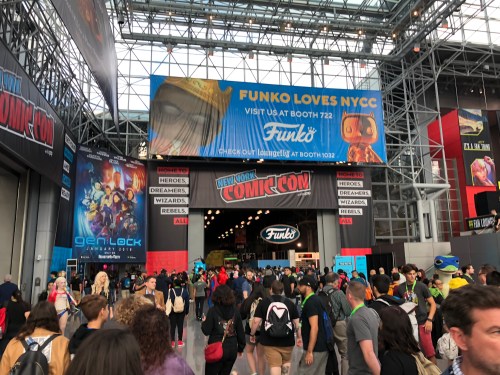
Today is all about me heading to the New York Comic Con! I’ve documented my experiences before. I’ve every intention of doing the same here. Every year seems to bring a new experience, a new spectacle, and a new story to tell. Say what you will about nerd culture and superhero media. It’s a hell of an experience and one that fans like me deeply cherish.
I hope to post various updates throughout the day. If I encounter anything especially exciting or sexy, I’ll be sure to document it here. For now, just know that I am on my way to the Jacob Javits center in New York City where I hope to join those looking to share the experience.

What makes a character cute?
That’s a not an empty question. It’s one that movie studios, TV networks, toy makers, and novelists attempt to answer every day. I’m not just talking about the ones affiliated with Disney, either. While the House of Mouse is legendary for crafting a winning formula for the creation of all things cute and lovable, it’s worth breaking down the components.
Understanding them isn’t just important for creating likable characters. It can be pretty damn lucrative too. Just look at the merchandise sales for “Frozen.” Cute, adorable characters sell. They sell a lot. Plenty has been written about the cuteness of characters created by Disney, Fox, and a multitude of Japanese anime. However, I’d like to single out one particularly adorable character.

As it just so happens, this character is from the world of superhero comics. Specifically, she’s from the X-men comics. If you’ve followed this website for any length of time, this shouldn’t surprise you in the slightest. I promise this isn’t just another love letter to the X-men like the many I’ve crafted before. This is an exploration of a character who forged a unique path to cuteness.
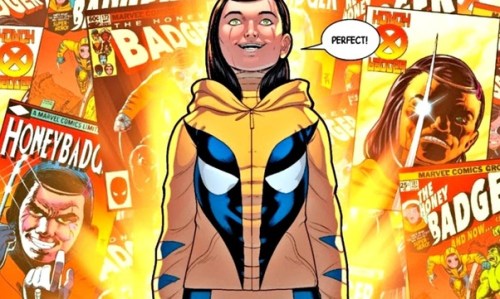
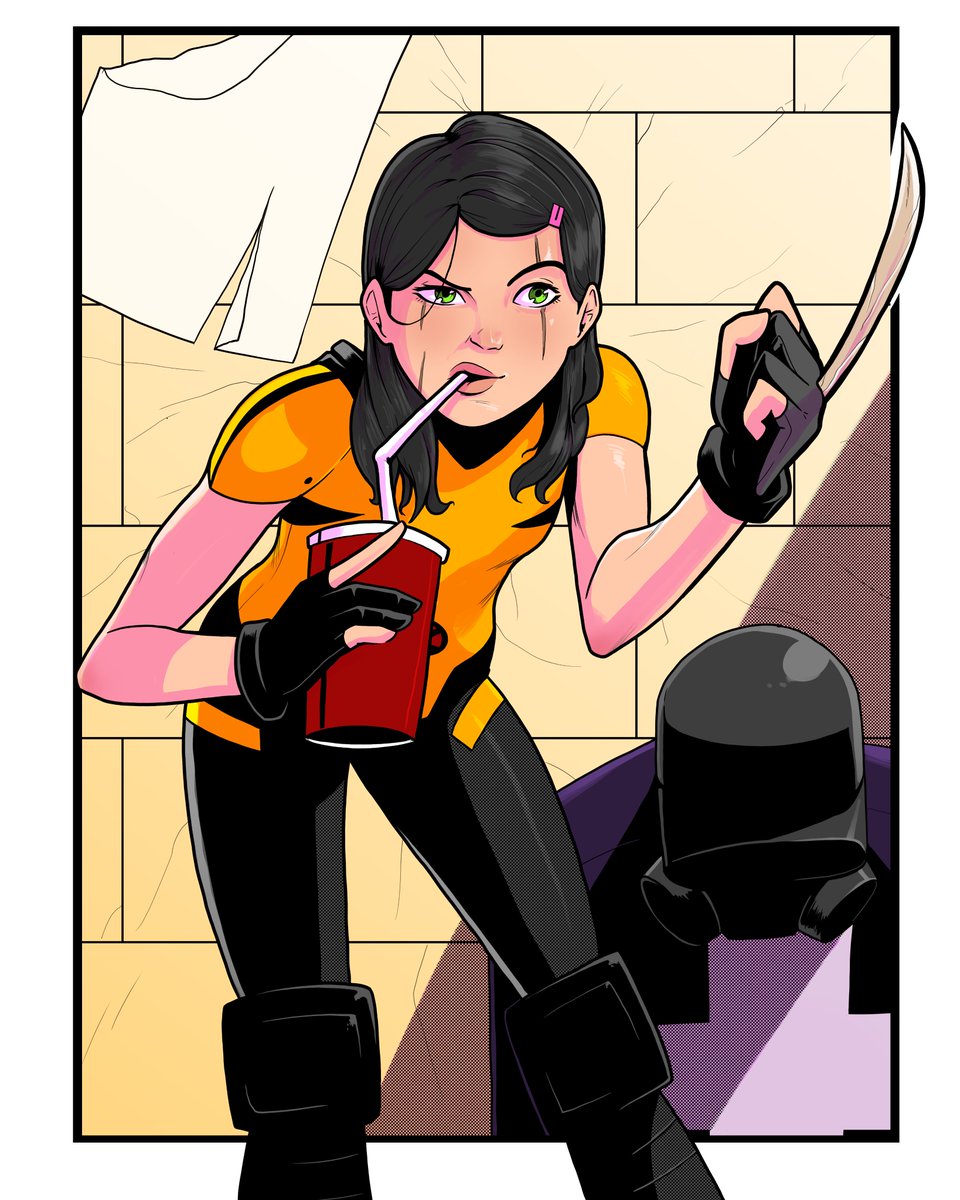
Her name is Gabrielle “Gabby” Kinney, also known as Honey Badger. You probably haven’t heard of her because, in the context of Marvel’s vast history, she’s very new. She has only been around for about three years. In that time, though, she’s done plenty to make her mark on the world.
Think of the cutest characters you’ve ever known. Whether it’s a talking animal, a princess, or a boy band, take a moment to contemplate all the traits that make them cute. From their looks, their personality, their story, and everything in between, think about qualities that make them so adorable.
Without hesitation, I can say Gabby has all those qualities, as well as a few you didn’t know could be so adorable in the first place.
That may sound like a bold claim, but it’s true. After reading every issue of All-New Wolverine, I genuinely believe that she has raised the bar for cuteness for any character, both within superhero comics and in the real world. To appreciate why her story is so remarkable, it’s necessary to know some key details about her backstory.

This should give you a few telling hints.
On paper, she doesn’t come off as the kind of character who can be overly cute. She’s a clone of Laura “X-23” Kinney, who herself is a partial clone of Wolverine. Given the number of clone-based character in comics, including a few who are notably infamous, she doesn’t have a lot going for her at first.
That changes quickly after she’s introduced. She’s actually one of three clones from Laura, but she ends up being the one who makes the greatest impression and not just because she doesn’t go evil, which tends to happen a lot with clones in comics.
From the beginning, Gabby sets herself apart as being the more upbeat, bubbly clone of the bunch. She’s not overly angry or vindictive. She isn’t even that bothered by the fact that she’s a clone. It helps that she’s just a kid, but it also helps that this has never been hidden from her. She knows what she is and doesn’t whine about it. That, alone, makes her more mature than the majority of adult heroes, even the non-clone ones.

She even has a sense of humor about it. She doesn’t take herself too seriously. She doesn’t get too uptight in tense situations, either. That even includes dangerous situations that involve dragons, zombie animals, and alien parasitic bugs. Gabby sees the world through a rose-colored lens, regardless of how ugly it is, and this is the key to what makes her so adorable.
Whether she’s helping Laura battle Sentinels or caring for a pet wolverine, Gabby always finds a reason to smile. She’ll always look for the lighter side of a complicated situation and help others see it. That sort of thing is becoming increasingly precious in today’s overly-cynical world, but it’s especially powerful in the world of superhero comics.
The very premise of any world involving superheroes requires that the world contain the kinds of chaos that can’t be contained with extra police and stiffer fines. In Gabby’s case, she inhabits a world full of evil organizations like Hydra, shape-shifting aliens like the Skrulls, and actual devil-like creatures that go out of their way to ruin marriages between iconic characters.

The fact that Gabby can lighten the mood under those circumstances helps amplify her lovability. Make no mistake. She is disturbingly lovable. I say that as someone who was extremely sick of clone character at the time All-New Wolverine debuted in June 2015. However, the writer of All-New Wolverine, Tom Taylor, went the extra mile with Gabby.
It’s not just in the light-hearted jokes that she makes. It’s not just the fact that she’s a cute kid full of youthful innocence, despite having been cloned in a lab by assholes who wanted to make her a living weapon. Any character can just say goofy things and ignore the horrible crap going on around them. Where Gabby really shines is how she affects those around her.

From the moment she meets Laura to her first hilarious team-up with Deadpool, Gabby has a positive influence on pretty much everyone she meets. She doesn’t get scared or overwhelmed by any given situation, even those involving parasitic aliens. She never lets these situations destroy her child-like innocence.
That, in and of itself, sets her apart in a major way. In so many other stories involving cute characters, their innocence is treated like fine china. It’s easy to crack, easy to taint, and irreparable when damaged. More often than not, a big part of a plot surrounding cute characters is how they become corrupted.

Tom Taylor basically turns that narrative upside down. Rather than build the story around how Gabby loses her innocence, he essentially surrounds her innocence in an adamantium shell that’s every bit as unbreakable as Wolverine’s claws.
This is critical to what makes Gabby uniquely cute, but it’s also important to the presence she brings to the X-men comics and the larger Marvel universe. Instead of having everyone try to protect her innocence, she basically has to shove her cuteness in their face and remind them that she doesn’t need protecting. In fact, they need her more than she needs them.
She gives them a reason to laugh and smile after Hydra has taken over the United States. She gives them a reason to feel good after the Red Skull comes back to life yet again to bring old-fashioned fascism to the world. She goes out of her way to be a positive presence on everyone she encounters. However, it’s her impact on Laura where her cuteness becomes genuinely endearing.

To appreciate why that matters, it’s worth recalling just how dark and brutal Laura’s story has been thus far. That story has closely followed that of her predecessor, Logan. She was born in a lab, subject to dehumanizing treatment, and turned into a living weapon. Unlike Gabby, she didn’t escape it until she’d committed soul-scarring atrocities, one of which included the death of her mother.
Since her introduction in the memorable, yet underrated “X-men Evolution” cartoon of the early 2000s, Laura has personified a worst-case-scenario for a cloned character. Her life, her story, and her personality are driven by loss, anger, and sorrow. Then, Gabby comes along and suddenly, there’s a light in her life.

Gabby is like a breath of fresh air to someone who has only been breathing smog for all their life. She’s like a hot shower after spending 4 hours shoveling snow in a blizzard. She provides an overdue balance to long-suffering characters like Laura that it’s more than just refreshing. It’s cathartic.
Gabby helps give Laura and her story something that benefits them both. She creates an outlet from the endless string of tragedies that plague the Marvel universe and the real world. She dares Laura and those following her story to not let all that ugliness destroy all that is good and pure. A cloud of darkness doesn’t have to cover the entire sky. There’s always room for a ray of light.
Gabby is that ray of light. Cute, adorable characters tend to shine brighter than most. That’s what gives them such a powerful presence. Whether it’s in a Disney movie or a superhero comic, they illuminate the darkness and make the characters around them do more than just lament. The fact that Gabby does all of this and cares for a pet Wolverine makes her a special kind of cute.

Filed under Deadpool, human nature, media issues, superhero comics, superhero movies, video games, X-men

I’m going to try a little something new here so please, if possible, tell me what you think. Every Wednesday, a crop of new comics come out. I’m usually up bright and early to read them, thanks to digital subscriptions through Comixology. It makes for many restless nights, but it’s worth it to start my day with an awesome comic. As such, I want to single out a particular comic that I feel really stood out.
This week, it’s Wonder Woman #55. Granted, I’ve written plenty about Wonder Woman and the many reasons why she’s an iconic female hero. Sometimes it’s easy to forget that she still has comic coming out regularly come out and this week, we got an especially wondrous treat.
Steve Orlando and Raul Allen capped off a story that began several issues ago that had Wonder Woman reunite with her renegade Amazon sister, Artemis of Bana-Mighdall. While this isn’t the first time they’ve clashed, this particular comic beautifully demonstrated what sets Wonder Woman apart from her fellow Amazons and so many other heroes in general.

While Wonder Woman’s power set makes her one of the most powerful figures in the entire DC Universe, even those immense abilities don’t reflect her greatest strength. Sure, they come in handy whenever Darkseid invades Earth, but those are not the most important weapons in her arsenal.
More than anything else, Wonder Woman’s greatest power is winning battles with truth and compassion. She doesn’t seek to solve problems through domination. She seeks peace through truth and loving submission, a theme with some kinky undertones. She wields that power with effective grace in this, albeit not in too kinky away.
I could go on and on about the non-kinky aspects of the story that make it so awesome, but I’d rather let the book speak for itself. That’s why I’m proud to make this comic my first quick pick. Even if it doesn’t make you submit, it’ll fill your heart with Wonder Woman’s love and compassion. Any comic that can do that is a true wonder.

I love comics. I love romance, too. When you put them together, it’s like putting bacon on pizza. It takes two inherently wonderful concepts and combines them, thereby compounding everything that makes them awesome.
I talk a lot about comics and romance. I’ve cited certain relationships that stand out in the current romantic landscape and praise certain comics that raise the bar for romance between superheroes. I think I’ve made the extent of my fondness for both fairly clear. Now, I’d like to offer some specifics.
For a while now, I’ve gotten comments and emails from people asking for recommendations of good romantic comics. I feel like I’ve contemplated this enough to craft a list of the comics I feel have the most to offer in terms of romance. While there are plenty of comics that cater specifically to romance, I’ve left those out in favor of those that offer a broader story that general comics fans can also appreciate.
What follows are my top five picks for the best romance comics. Please note that this is a personal list. I don’t wish to imply that this ranking is definitive. These are just my hand-picked comics that I feel offer the perfect blend of love and comic book level awesome.
Number 5: Spider-Man Loves Mary Jane

This sweet, fun little series from the mid-2000s is one of Marvel’s more underrated gems. There’s a lot of drama, angst, and frustration surrounding the romance between Spider-Man and Mary Jane Watson. I’ve cited some of the “complications” these two have endured on more than one occasion.
This series basically avoids all of that and doesn’t rely on elaborate retcons to do it. The story is less about Spider-Man and more about Mary Jane Watson. Specifically, it’s about a young, pre-supermodel Mary Jane Watson who hasn’t quite become the gold standard for sex redheaded comic book characters. That’s critical to what makes this series so great in terms of story and romance.
For once, Peter Parker being Spider-Man is secondary. That story is unfolding behind the scene, but the real drama comes directly from Mary Jane. She’s at an age where she’s blossoming into a beautiful young woman, but still figuring herself out. She’s not sure of what she wants, how to love, or where she fits into this crazy world. On every level, she’s far more relatable than any superhero.
As she navigates that world, she makes touch choices and even a few mistakes. More than anything else, though, this series shows how and why Mary Jane came to love Peter Parker so much. It doesn’t rely on overt sex appeal or excessive heroics. The story focuses entirely on chemistry and growth.
On paper, it sounds like something that shouldn’t work in a superhero comic, but it totally does. It’s a romance story that’s balanced and well-developed. It also isn’t too mature. Anyone from age 8 to 80 can appreciate the romance here. On top of that, Takeshi Miyazawa’s artwork is gorgeous, bringing light and heart to a romance that badly needs it.
Number 4: Rogue and Gambit

This is a very recent entry on my list, but one that did more than enough to justify its position. Over the course of five issues, “Rogue and Gambit” accomplished something extraordinary. It took a well-known romance that had been deconstructed, denigrated, and mishandled for years and effectively rebuilt it into something truly uncanny.
Kelly Thompson, one of Marvel’s rising stars, took the baggage surrounding the Rogue/Gambit relationship and channeled it in a way that felt both rewarding and sincere. It starts as an undercover mission, but evolves into some overdue couple’s therapy. Thompson doesn’t ignore all the factors that kept them apart. She even lets them argue and agonize over them.
In doing so, this series presents this romance as one you won’t find in any fairy tale. This isn’t a case of star-crossed lovers destined to be together. It’s a romance in which the two people involved have to really work at it. They have to confront their flaws, their failures, and all the excuses they’ve made to avoid their feelings. It gets ugly, but beautiful at the same time.
I would go so far as to cite this series a template for how a modern superhero romance can work, even without an iconic legacy. The Rogue/Gambit romance isn’t ideal, but that’s exactly what makes it so enjoyable and endearing. These are flawed characters who have both found themselves playing villainous roles at some point in their history. Them coming together despite all that just feels so right.
The only reason this series isn’t higher on my list is because it’s so recent. It’s also still evolving through a companion series, “Mr. and Mrs. X.” I’ve reviewed and praised that series too, but it wouldn’t be possible without this series. Whatever complications the Rogue/Gambit relationship faces in the future, this series will remain one of its most defining moments.
Number 3: The Adventures of Cyclops and Phoenix

I’ve made no secret of how much I love the romance between Cyclops and Jean Grey. I’ve cited them as one of those uniquely special relationships that is both iconic and balanced, a rare combination for a romance that has been unfolding for over 50 years now. While they’ve endured plenty of tribulations, complications, and retcons along the way, they remain iconic for a reason.
This series from the late 1990s is a testament to just how strong their romance can be when retcons, cosmic forces, and terrible love triangles are set aside. At their core, Cyclops and Jean Grey are two people don’t just want to love each other. They want to create a better world for their friends, their family, and their future children. They get to do all of that and then some here.
Much of the story takes place in one of the many dystopian futures that plague the X-men, namely one ruled by Apocalypse. It puts Cyclops and Jean in a position where they can’t fall back on their fellow X-men or the support of other superheroes. They have to navigate this wasteland of a world with only each other to fall back on. It’s a true testament to the strength of their relationship.
As the title implies, though, the story emphasizes the adventure more than the romance. While there are plenty of sweet moments between Cyclops and Jean, their relationship is not the primary focus. It’s certainly a factor driving them forward, but the meat of the story is how it drives them through the conflict. If you enjoy adventure with your romance, then this is definitely the series for you.
Number 2: Superman and Wonder Woman Volumes 1 and 2

Yes, I know Superman and Lois Lane are still considered the most iconic superhero couple of all time.
Yes, I know there’s an extremely vocal contingent of Superman fans that believe there’s something missing whenever he’s not with Lois.
No, I do not care. That’s because the run on this series by Charles Soule and Tony Daniel really raised the bar for just how great a romance can be for these two iconic characters.
There’s a lot I can say about the romantic potential between Superman and Wonder Woman. It would probably take me multiple blog posts and several essays to adequately describe what sets it apart from Superman’s relationship with Lois and why it works so beautifully. Thanks to this series, though, I don’t need to do that.
This particular series takes place during the controversial, but endearing New 52 era of DC Comics. During this strange, but amazing period of DC Comics, Superman and Lois aren’t married. They know each other, but they aren’t romantically involved. That opens the door for Superman to explore a relationship with Wonder Woman. However, this series makes clear that this romance is no gimmick.
They’re not forced together, nor is it presented as a gimmick. From the very beginning, as well as the events that led up to it, there’s a distinct sense that Superman and Wonder Woman find one another during tenuous times in their lives. They’re two powerful characters making their way through a world in which they feel isolated. When they’re together, though, they’re at their best.
This story brands them as a power couple and they do plenty to earn it. Together, they face threats from alien tyrants and renegade Greek gods. Their worlds collide, but they guide each other through. They make each other stronger. They make each other better. They fight as individuals and as equals. If that’s not the definition of a power couple, I don’t know what is.
Again, if you’re a die-hard supporter of Superman and Lois, that’s fine. This series does nothing to undercut that. However, it does plenty to prove that Superman and Wonder Woman can share a powerful romance, literally and figuratively. Even after DC has undergone extensive retcons and reboots, this series still captures the power of that romance in the best possible way.
Number 1: Saga

This is probably a controversial selection for those who aren’t familiar with this series. It doesn’t involve superheroes. It’s not a product of Marvel or DC Comics. It’s an entirely different world full of bizarre creatures that include talking cats, a humanoid seal, and an entire race of beings with TVs for heads. I swear I’m not making any of that up.
However, at the heart of this amazing series by Brian K. Vaughan and Fiona Staples is an amazing love story between two characters from warring worlds. That love is very much the driving force between all the conflict and the characters that get caught up in it. It’s one of those romances that has every conceivable force working against it, but it still happens and it’s downright beautiful
Alana and Marko aren’t Superman and Lois Lane. They’re not even Rogue and Gambit. They’re not exactly heroes trying to live up to an ideal. They’re soldiers in a war between two worlds, but they somehow find each other, fall in love, and create a family together.
It’s not a fairy tale romance, though. Their romance involves more than a few explicit sex scenes, as well as a scene where Alana gives birth to their daughter. Nothing is filtered or polished. The sexy and unsexy parts of their relationship is laid bare within a world that is full of fanciful characters and locales.
It’s a genuinely epic journey, but one that all comes back to the romance between Alana and Marko. No matter what kind of romantic you are, these two find a way to check the right boxes. There are many moments of passion, sorrow, and loss. There are also plenty of moments that are funny, cute, and endearing. It has everything a great romance needs and then some.
I should offer a fair warning, though. You will get attached to these characters. You will feel it during certain moments. As a self-professed romantic, I can safely say that it’s worth the risk.
There you have it! These are my top five selections for romance comics. I’m sure some will disagree with my selections. The list may even change as other great romance comics emerge in the coming years. That’s perfectly fine and I welcome any debates on my list.
Romance is in every medium and comics are no exception. I would even argue that the romance in comics is under-appreciated and under-valued. As the genre continues to evolve, I have a feeling that’ll change and I hope to be part of that change.