Tag Archives: Spider-Man

Understanding The Recent Changes (And Upheavals) In The Life Of Carol Danvers

Carol

Some characters are iconic from the get-go. Spider-Man, Superman, Wonder Woman, and Batman all managed to establish themselves as special early on in their history. They’re the lucky ones, though. Most characters have to go through a long, arduous process to reach the top tier of superhero icons. A lot of them never make it, but those that do are special in their own right.

These days, the character who best embodies that spirit is Carol Danvers. You don’t have to go back too far to remember a time when she was relegated to the superhero B-list. As Ms. Marvel, she had her share of fans. I was one of them. She also had her place in the annuls of Marvel lore. However, she was never able to break through and join that elite club occupied almost exclusively of Stan Lee creations.

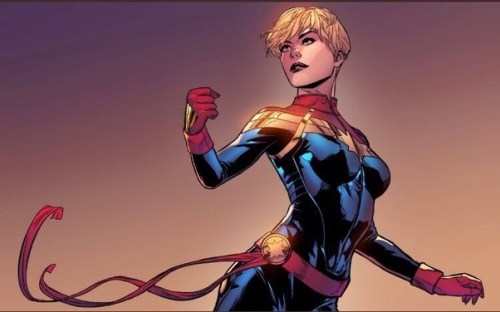
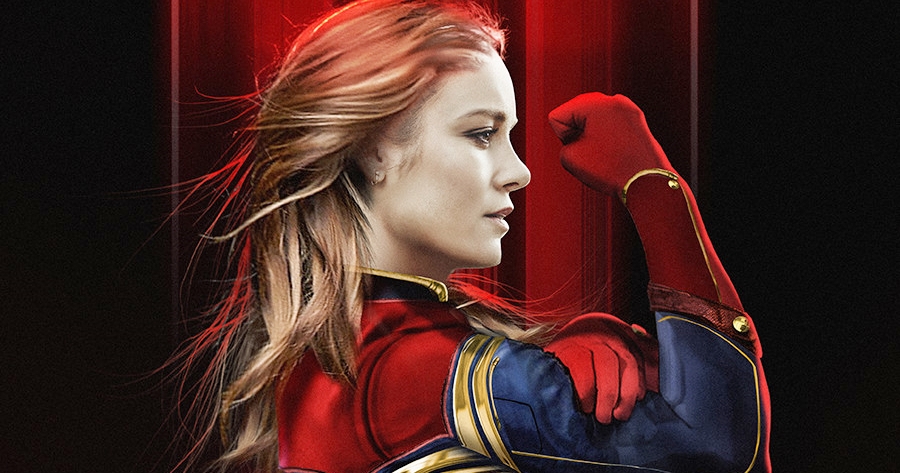
That all changed when Kelly Sue DeConnick came along and reinvented Carol Danvers as Captain Marvel in 2012. That process, which has since become one of my favorite runs on a comic book series of the past 10 years, helped Carol finally break into the upper echelon of superheroes. With a movie coming out in 2019 staring Brie Larson, it’s safe to say she’s entrenched.

I could write a dozen articles about why Carol Danvers’ character resonates more now than it did when she first showed up in 1968. I’ve already mentioned some of the unique challenges she faces as she enters rarefied air among Marvel heroes and female superheroes, in general. However, I want to focus on one particular aspect of her character that helps her stand out.

As it just so happens, it’s also part of her character that recently underwent a major upheaval in the comics. Among other comic book fans, it has been controversial. I’ve certainly seen more than a little whining on message boards and Reddit. I have my share of criticisms too, but I intend to justify why I believe this is a promising new era for Carol “Captain Marvel” Danvers.

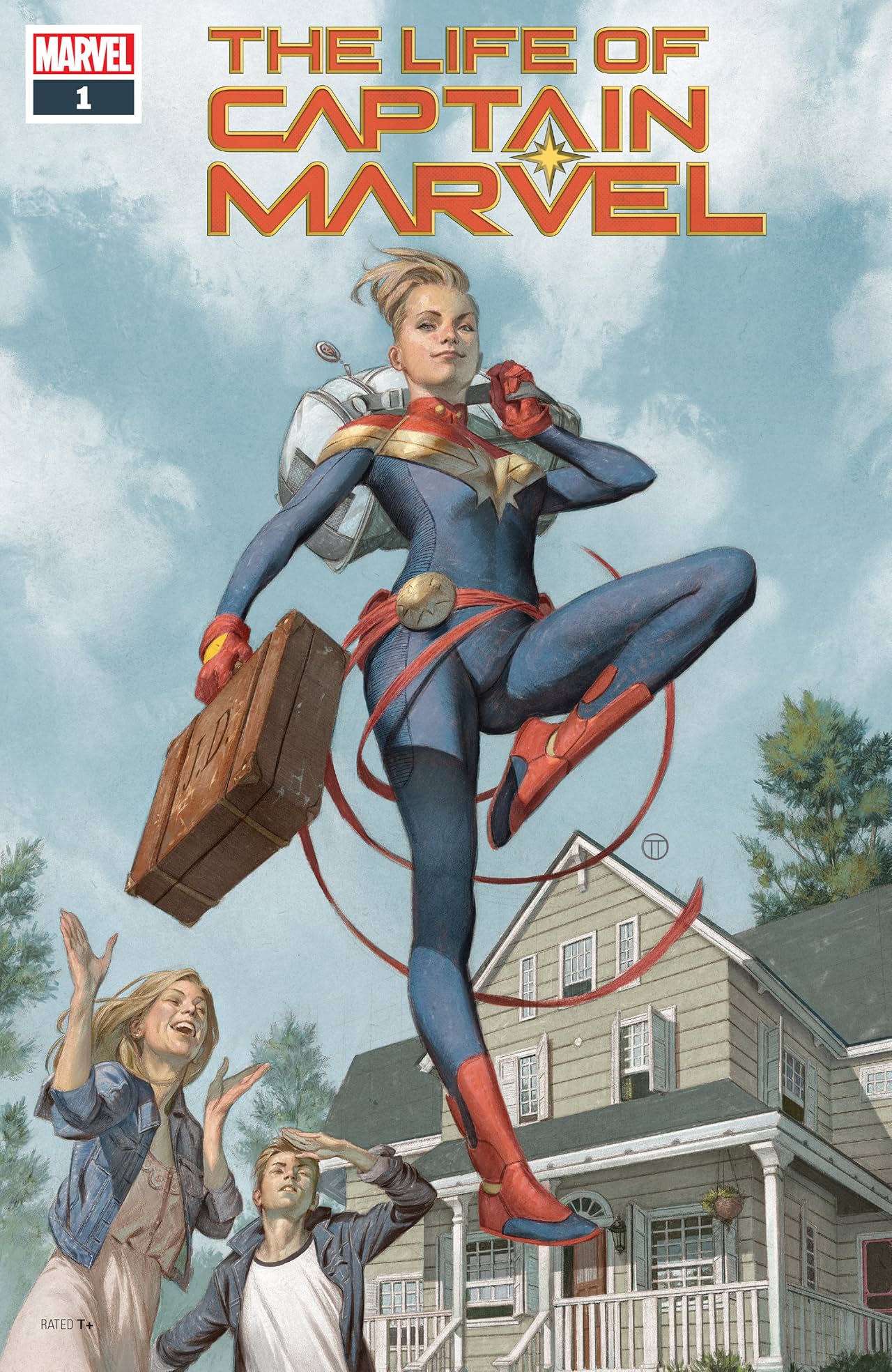
The upheaval in question occurred in a recently-launched mini-series called “The Life of Captain Marvel.” Written by Margaret Stohl, who has been guiding Carol’s journey for several years now, I cannot recommend this series enough. It is, by far, one of the best Carol Danvers stories ever written. Years from now, it will likely mark a major turning point for her story.

That’s because Stohl does something that’s both critical and controversial to Carol’s history. She makes a major alteration to an aspect of Carol’s life that doesn’t change her past, but puts it in a very different perspective. That change, in my opinion, makes Carol a much more intriguing character.

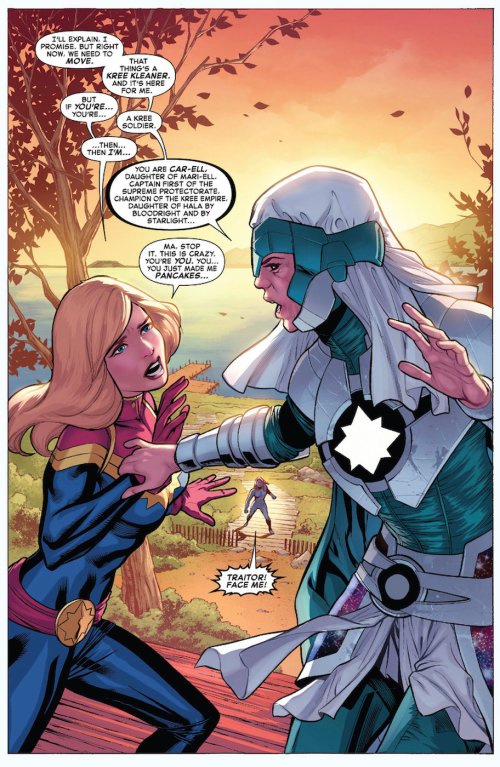
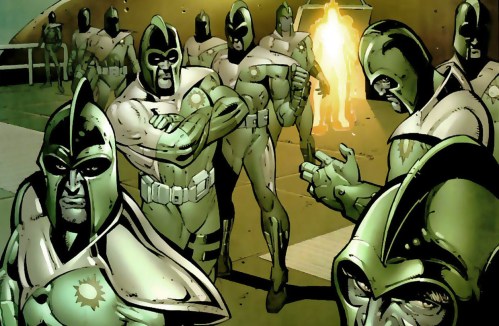
If you want to avoid spoilers, you should probably stop reading here and check out the series. Again, I highly recommend it. The big change, however, takes place in the fourth issue. Here, her mother, Marie, drops a bombshell revelation on Carol that rocks her world. She reveals that she’s half-human and half-alien. Specifically, she’s half-Kree.

Carol2

Anyone who saw “Guardians of the Galaxy” knows why that’s a big deal.

Anyone who has a passing knowledge of Marvel history knows why that’s a huge deal.

The fact that she’s half-alien isn’t that unique. Peter “Starlord” Quill has a similar heritage. The reason it’s such a big deal for Carol is because it changes the context of how she got her powers and the role she plays in the greater Marvel universe.

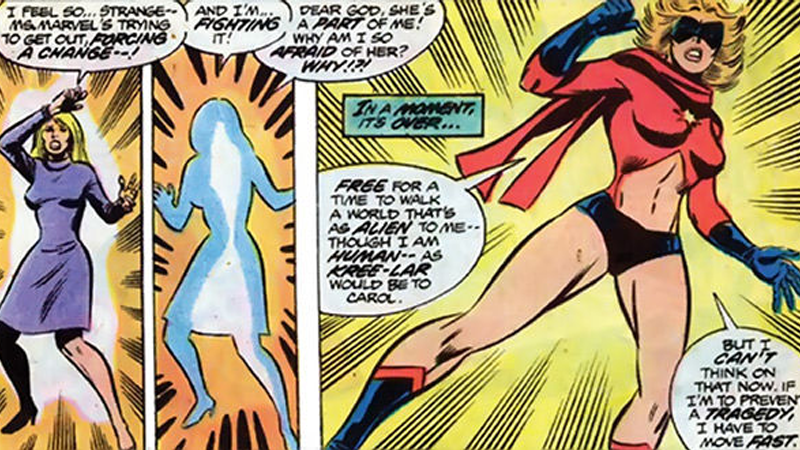
Before this change, Carol’s powers were somewhat of an afterthought. Like Spider-Man, they were the result of an accident. Her’s just involved alien device called the Psyche Magnetron. She got caught in an explosion and that explosion allegedly fused her DNA with Kree DNA to give her superpowers. It’s not the most contrived origins story, but it’s not exactly epic.

To some extent, getting her powers by accident undercut all the work she did before that. Even without powers, she managed to carve out a successful career in the air force and NASA. That work became somewhat superfluous once she got superpowers. Unlike Peter Parker, she was already on a heroic path. Getting powers just seemed like skipping a bunch of steps.

With the revelation by her mother, there’s more connective tissue between her journey as Carol Danvers and her journey as Captain Marvel. Her mother, who comes out as a full-blooded Kree warrior, tells Carol that the accident wasn’t the sole cause of her abilities. It was just the catalyst. These are her exact words.

“What humans see as Kree powers are just our biological adaptations to a life of combat. They’re triggered in battle, usually around adolescence. Sadly, most of us have known war by then.”

This implies that even if she hadn’t been caught in the crossfire of the Psyche Magnetron, her Kree abilities would’ve come out at some point. For some fans, including die-hard Captain Marvel fans, it feels like this is denigrating her origins. I respectfully disagree with that notion. I believe this gives Carol’s story a new kind of appeal.

In terms of how superheroes become iconic, how they get their powers and how they choose to use them plays a huge part in their appeal. I would argue that just making Carol an ordinary human who got caught in an accident has limited appeal. Like I said before, she’s not Peter Parker. She’s not an average person. She’s more like Batman in that she’s an overachiever who strives to do more.

Her being half-Kree adds a new dynamic to the mix because it makes Carol a product of two different worlds. She is born on Earth and lives her whole life as a human. However, she now has this alien heritage that has already influenced her life in ways she didn’t understand. You need only look at the mass appeal of Superman to see why that story is compelling.

Being half-Kree means Carol suddenly has a connection to a race that has waged war on Earth before. She also has a connection to a world that has blatantly experimented on humans before. At the same time, her human life wasn’t exactly ideal. Unlike Superman, she was not raised by picture perfect parents like the Kents.

Her mother, despite being a Kree warrior, was in an unstable relationship with Carol’s very human father. Their family suffered a devastating loss when Carol’s brother, Steve, died in combat. They never really recovered from that and, for most of Carol’s history, that loss kept her parents as a side-note at best in her journey.

With Carol’s mother being a Kree warrior, it changes her into something more than a woman who stayed in a bad marriage. It adds more layers to why she and her husband clashed. Even in the first few issues of “The Life of Captain Marvel,” her father comes off as a generic asshole. Finding out he was dealing with an alien wife makes his struggles a lot less generic.

In many ways, Carol’s parents represent her divided heritage. Her father didn’t want her embracing her Kree side and fighting alien wars. Having already lost a son, who can blame him? Her mother didn’t want to stop Carol from embracing both sides of her heritage, even though that was sure to leave her conflicted.

It effectively connects Carol’s superhero journey with that of her family. Those journeys involve some heavy losses, painful secrets, and destructive alcoholism. It’s something you’re not going to find with Superman, Spider-Man, Batman, or any of the X-men. It leaves Carol Danvers in an uncertain, but promising state.

It’s not yet clear how much of Stohl’s revisions will find their way into the “Captain Marvel” movie. To some extent, it helps that Carol’s origin isn’t as iconic as that of other heroes. The Marvel Cinematic Universe has already done some considerable tweaks to certain characters to make them fit the narrative. I have a feeling we’ll see plenty of that in the movie.

However things plays out on the big screen for Carol, I think her story in the comics just became a lot more interesting. I know there are some fans upset by this. I’ll even concede there are some parts of this revision I don’t care for. There was some appeal to Carol just being an ordinary human who worked her ass off to achieve what she did.

Every major revelation or retcon in a comic or movie comes at a price. You’re bound to upset some people. That’s unavoidable in a world full of such diverse tastes. However, I believe that Carol gained much more than she lost in “The Life of Captain Marvel.” I believe she’s bound to gain a whole lot more, both through her movie and through the new host of stories that can be told.

Whatever the case, I hope Brie Larson takes plenty of notes.

3 Comments

Filed under Comic Books, Jack Fisher, Superheroes, superhero comics, superhero movies

The following is a review I wrote for PopMatters for “What If? Punisher #1.” Enjoy!

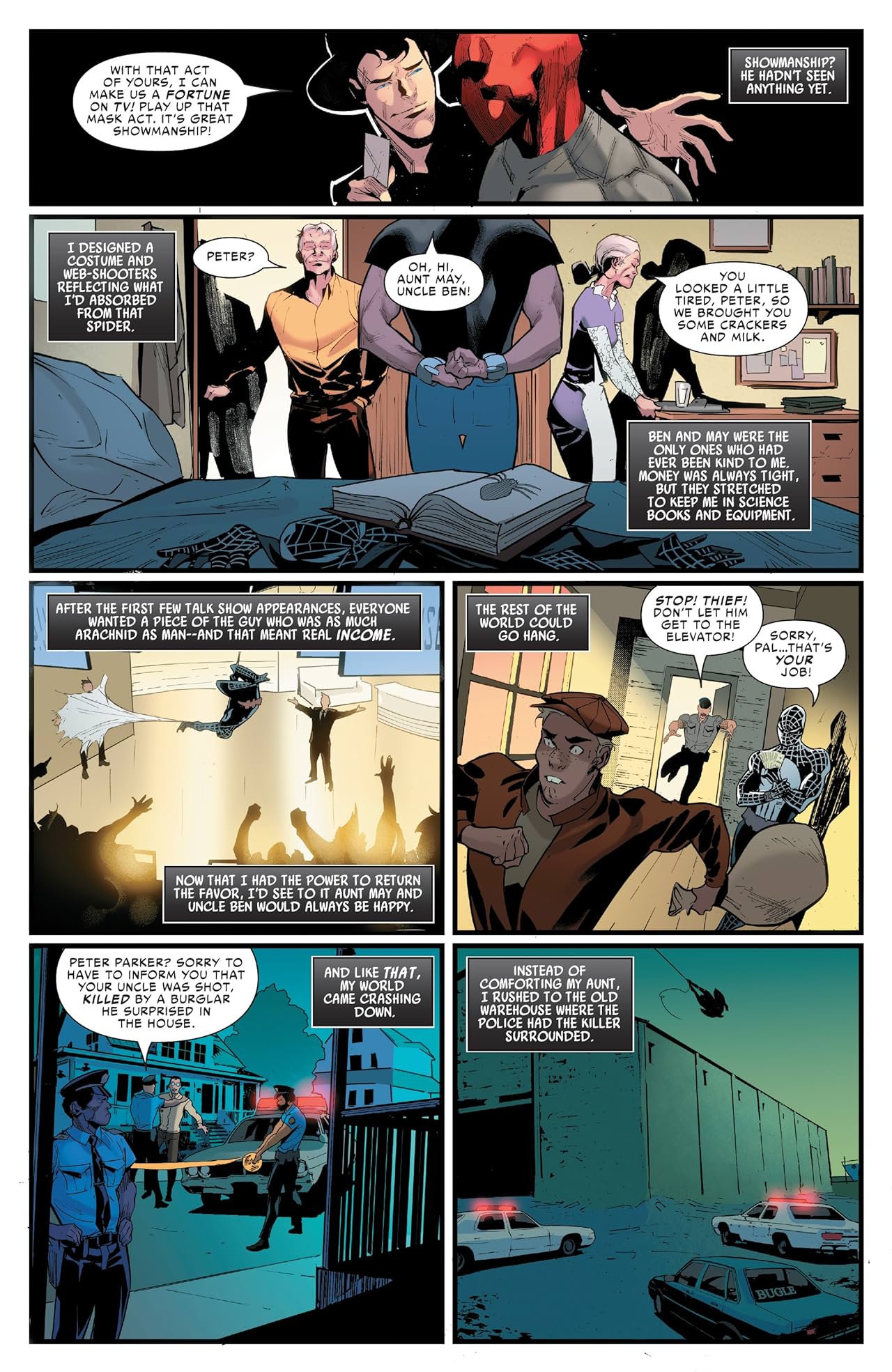
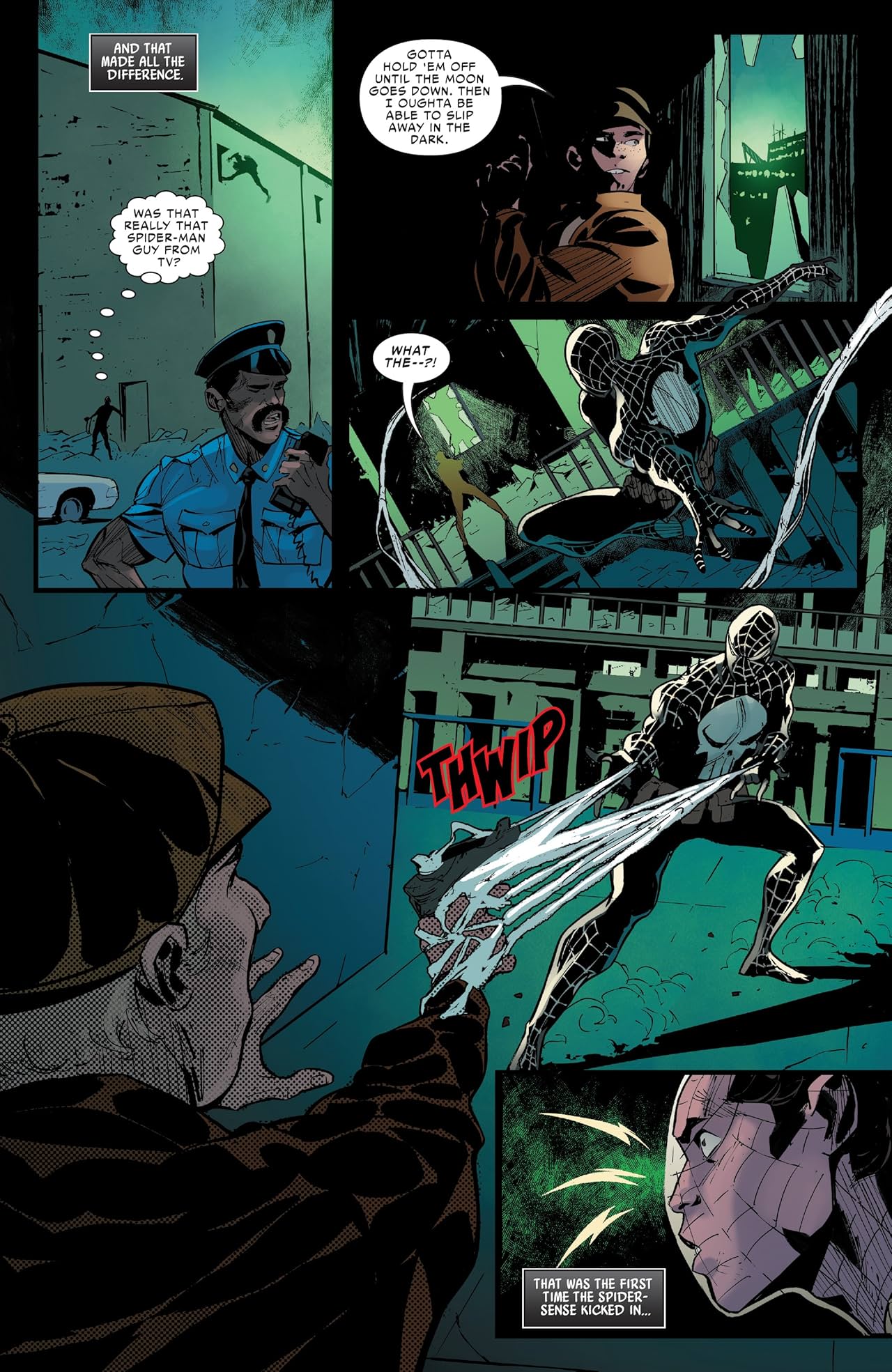
‘What If? Punisher #1’ Toys With Spider-Man’s Concept Of Power And Responsibility

Leave a comment

October 11, 2018 · 5:28 pm

Jack’s Quick Pick Comic: What If? Punisher #1

Every Wednesday, a new batch of comics comes out and for comic fans like me, it’s the biggest highlight of the week that doesn’t involve ice cream and whiskey. Within that batch of comics, it’s hard find the gems that really stand out. That’s why every week, I pick out a comic that I feel warrants extra praise.

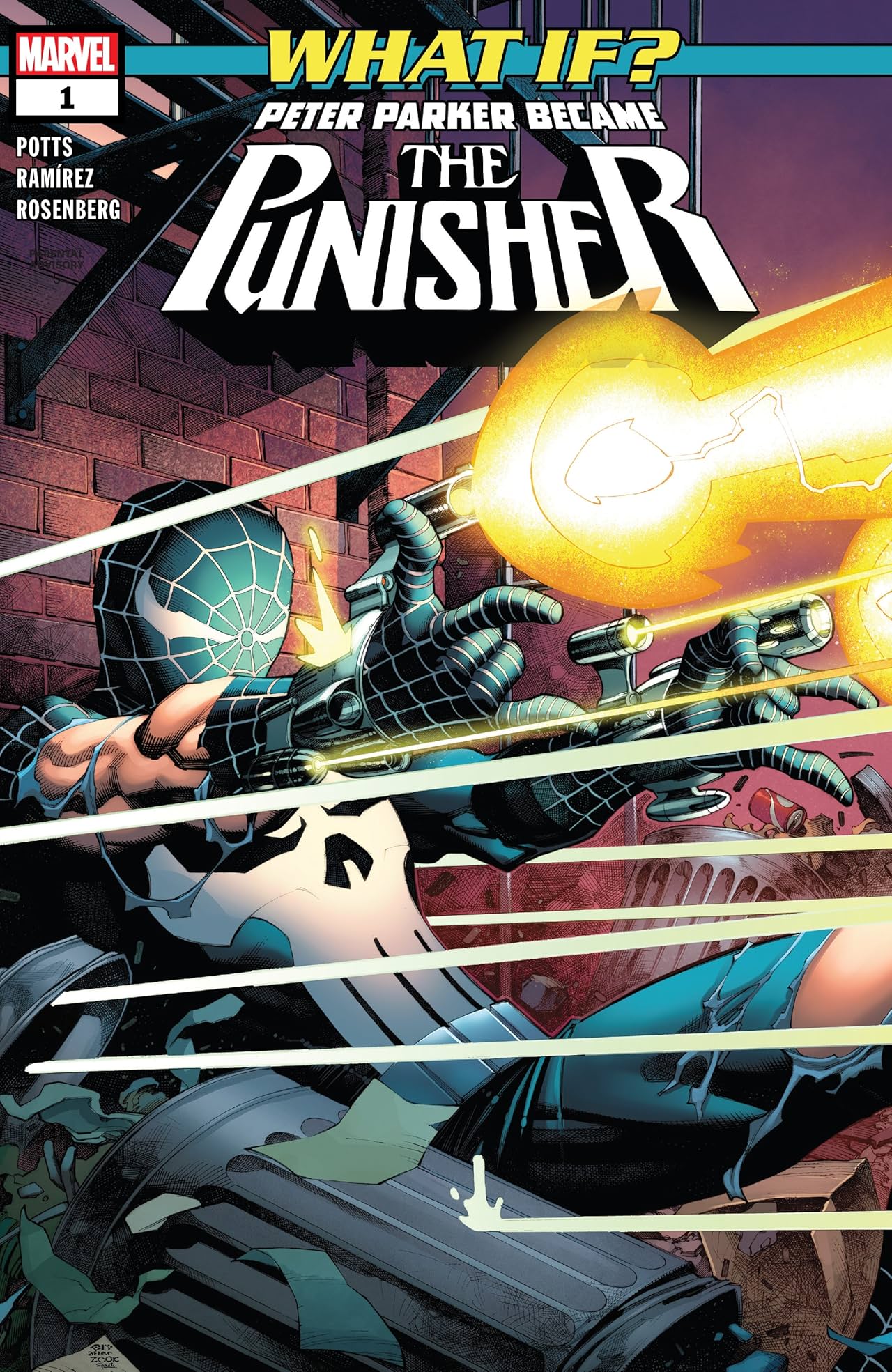
This week, my quick pick is “What If? Punisher #1.” Now, this may seem like an odd selection. In fact, this comic is very much an anomaly. There was once a time where Marvel had an ongoing “What If?” series that basically offered alternate history takes on iconic characters and stories.

Personally, I have mixed feelings about how these stories are handled. For the most part, they’re hit or miss. They’re either really good or really bad. Rarely, if ever, are they fleshed out stories.

What If? Punisher #1” finds a way to stand out because it does more than speculate on what would happen to Spider-Man if he chose a slightly different path. It actually explores the entire premise that with great power comes great responsibility. It even makes the case that the mainline Spider-Man in the long-running “Amazing Spider-Man” series is wholly irresponsible in his methods.

This is an idea that I’ve actually explored before. I once made the argument that Spider-Man is the most inept hero of all time. I got a lot of hate for that piece, mostly by long-time Spider-Man fans. I don’t blame them for a second. However, this comic actually takes some of the concepts I discussed and puts them into a cohesive story.

It doesn’t radically reinvent Peter Parker or Spider-Man. It also doesn’t radically alter his origin. He still fails to stop a burglar that goes onto murder his Uncle Ben. From that tragedy, he learns that critical lesson about power and responsibility. The only difference in this timeline is that great responsibility means killing his enemies, just like the Punisher.

It’s a line that the Friendly Neighborhood Spider-Man doesn’t dare cross most of the time. In nearly every famous iteration of Spider-Man, Peter makes clear that he does not kill. However, “What If? Punisher #1” makes the case that not only is this irresponsible. It actually played a part in hurting his loved ones.

How that happens and how it makes this case is something I won’t spoil. Since this is a “What If?” comic, though, there’s not room to dig deeper. There are more than a few gaps and oversights, but most of that is due to logistics rather than merit. At the very least, this comic asks some pretty damning questions about how Spider-Man approaches power and responsibility.

Even though most “What If?” comics are quickly forgotten and have no impact on the actual canon, this issue is worthy of my pick because the concept is so intriguing. It’s too brief and very much incomplete, but the ideas it presents are pretty remarkable. Not all Spider-Man fans will like it, but it’ll definitely get them thinking.

Leave a comment

Filed under Jack's Quick Pick Comic

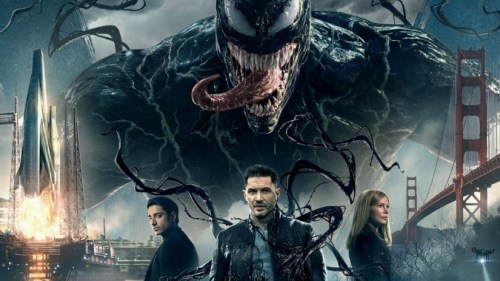
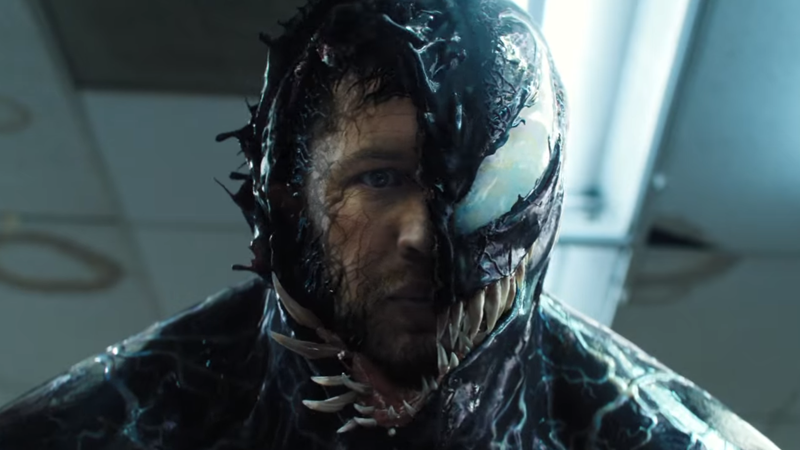
A (Partial) Symbiosis Of Awesome: My “Venom” Review

venom_movie_post_credits_explained

Certain movies are subject to unique standards. Nowhere is this more apparent than with superhero movies. A sci-fi movie can be flexible with its use of sci-fi elements. The same can be said for generic genres like romantic comedies, horror, action, and even stoner movies. A superhero movie, whether fairly or unfairly, will be judged by much stricter criteria.

This is the problem “Venom” faced before it even started shooting. Most fans, especially those who follow Marvel Comics, were probably intrigued by the possibility of a movie about Venom. Casting Tom Hardy in the lead role definitely help. No offense to Topher Grace, but he’s far more qualified to play Eddie Brock than he’ll ever be.

Even so, “Venom” had a lot of logistical problems from the beginning. It wasn’t going to feature Spider-Man. It wasn’t going to take place in the Marvel Cinematic Universe. It wasn’t even going to get input from Kevin Feige and everyone else at Marvel Studios, who have made creating billion-dollar movies seem inane. By some standards, that’s a serious handicap.

Most Marvel fans, and I consider myself one of them, aren’t too keen on the idea of a Venom movie that doesn’t involve Spider-Man or have any connection to the MCU. Even if you have a passing familiarity with Venom in the comics, you probably know that a lot of his story is connected with Spider-Man. Telling a Venom movie without Spider-Man is like telling a Joker movie without Batman.

Actually, that may be a bad example. Forget I said that.

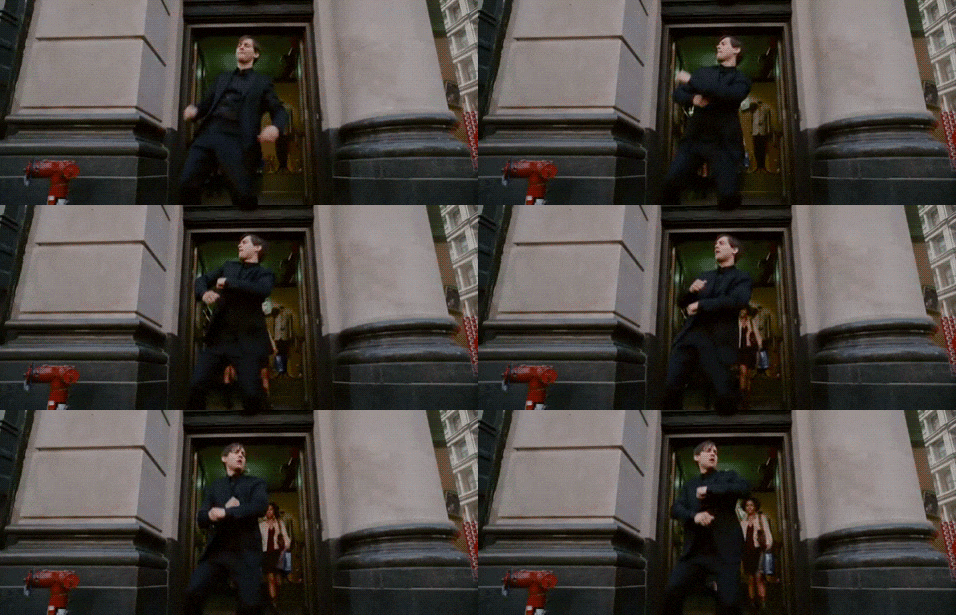
Logistical issues aside, I was still intrigued enough to give “Venom” a try. Like many other Marvel fans, I was not pleased with how his story was handled in “Spider-Man 3.” The only good that came out of that was a slew of dancing Toby Maguire memes. I felt Venom deserved better.

Well, without getting too deep into spoiler territory, I can affirm that “Venom” definitely succeeded where “Spider-Man 3” failed. It’s not just a good movie about Venom. It’s a good movie, overall. It had a lot of things working against it, but it still worked.

I know that the movie didn’t exactly thrill critics, nor did it blow the minds of hardcore fans who saw it. At the same time, it wasn’t messy or cumbersome like the theatrical cut of “Batman v. Superman: Dawn of Justice.” Yes, this movie probably would’ve benefited by taking the “Deadpool” approach and gone for an R-rating. However, it still succeeds in many ways.

At its core, “Venom” works because it’s less about alien symbiotes infecting random people and more about Eddie Brock. This is his story and Tom Hardy does an excellent job capturing his persona. You don’t have to read a single comic to understand that Eddie Brock is not Peter Parker. He’s not exactly a hero, but he’s not a blood-thirsty villain, either.

Although that’s not necessarily obvious.

Eddie Brock is one of those guys who’s a loser and not just because he ends up bonding with a parasitic alien. One of the best things this movie did was show that Eddie’s life falls apart because of a decision that he makes. He’s not a victim of bad luck. In the beginning, his life is actually really good. However, he makes a fateful choice that completely changes that.

At the same time, the movie establishes that Eddie is not the kind of guy who jumps at the chance to be a hero. He has a few opportunities before he bonds with the Venom symbiote. He doesn’t take it and unlike Peter Parker, it’s not purely out of responsibility. He’s just not the kind of guy who embodies the selfless spirit of Superman or Captain America.

Then, when he encounters the symbiote, these personality flaws intensify. At first, he’s just overwhelmed. He reacts in a way most people would. His first instinct isn’t to help people or be a hero. He’s actually petty and self-serving for the most part. As the story unfolds, he and the symbiote literally and figuratively feed off one another. They both grow and evolve, as characters.

That process involves plenty of action, some of which is pretty visceral. If you’re looking for the kind of cartoonish beat-downs we got in “Spider-Man: Homecoming,” you’re going to be disappointed. The action here is quite violent. It’s not on the same gratuitous level as “Deadpool,” but it’s close and it even holds back at times.

Given Venom’s brutal nature in the comics, this can be a bit of a problem. In watching this movie, you get the sense that the effects team worked overtime to keep the violence just below PG-13 levels. At times, it feels forced and that impacts the story to some extent.

This moment could’ve been MUCH bloodier.

That’s not the only issue, nor is it the biggest. While I believe the story works, I also can’t deny that it’s missing some key components. Those not familiar Spider-Man’s history surrounding Venom probably won’t notice, but it’s hard for me to be a Marvel fan and overlook some of these flaws.

The story of how Venom and Eddie Brock come together is solid, concise, and compelling, as it’s presented in this movie. However, it still feels like it’s missing a lot of emotional depth without Spider-Man. A big reason why Venom, and Eddie by extension, becomes so menacing is because of Spider-Man’s role in his story. Removing him from that story is glaring, to say the least.

To fill in those gaps, the movie creates a new source of conflict through the Life Foundation, which acts as the primary antagonist through its unscrupulous Mark Zuckerberg wannabe, Carlton Drake. That’s not to say Drake isn’t a decent villain, but he’s not even in the same hemisphere as Erik Killmonger or Thanos.

Pictured here is NOT Thanos.

Even by non-superhero standards, these villains are pretty bland. It’s basically Venom versus and evil corporation who ends up serving an alien agenda. There’s nothing memorable or iconic about them, but that’s okay in the context of this movie because they still fulfill their primary purpose. They create the necessary moments that move Eddie’s story forward.

On top of that, the lack of connections with the MCU make this movie feel small by comparison, especially in a year when “Black Panther” and “Avengers: Infinity War” broke box office records. “Venom” has everything it needs to connect with the MCU. There’s nothing in the story that precludes it from having a role, but Sony has gone on record as saying that this movie is completely detached from that world.

The shared reaction of many Marvel fans.

As much as I’d love to see Tom Hardy and Tom Holland battle in a future movie, the lack of MCU connections still don’t take away from everything this movie does well. Overall, “Venom” is good movie that had a lot of factors working against it. This movie faced an uphill battle from the beginning, but still managed to achieve a lot. If I had to score it, I’d give it a 7 out of 10.

I’ve heard some claim that this movie belongs in the early 2000s and just doesn’t work within the current market of superhero movies. I say that’s bullshit. Good movies work, regardless of the year or era they come out. “Venom” is a good movie, but it’s also one that could’ve been much greater.

Coming out of the theater, I was satisfied, but felt as though there was a lot of potential left on the cutting room floor. It’s hard to know whether this movie would function better with an R-rating or as part of the MCU, but it manages to do plenty within its many constraints. Tom Hardy was handicapped in bringing Eddie Brock and Venom to life, but he still pulled it off.

Again, with all apologies to Topher Grace, Tom Hardy is now the definitive face of Venom and this movie sets him up for a promising future.

Leave a comment

Filed under Comic Books, Jack Fisher, Superheroes, Movie Reviews, superhero comics, superhero movies

Jack Fisher’s Top Five Romance Comics

tumblr_m9f6wpy3tu1qjzyxso1_1280

I love comics. I love romance, too. When you put them together, it’s like putting bacon on pizza. It takes two inherently wonderful concepts and combines them, thereby compounding everything that makes them awesome.

I talk a lot about comics and romance. I’ve cited certain relationships that stand out in the current romantic landscape and praise certain comics that raise the bar for romance between superheroes. I think I’ve made the extent of my fondness for both fairly clear. Now, I’d like to offer some specifics.

For a while now, I’ve gotten comments and emails from people asking for recommendations of good romantic comics. I feel like I’ve contemplated this enough to craft a list of the comics I feel have the most to offer in terms of romance. While there are plenty of comics that cater specifically to romance, I’ve left those out in favor of those that offer a broader story that general comics fans can also appreciate.

What follows are my top five picks for the best romance comics. Please note that this is a personal list. I don’t wish to imply that this ranking is definitive. These are just my hand-picked comics that I feel offer the perfect blend of love and comic book level awesome.


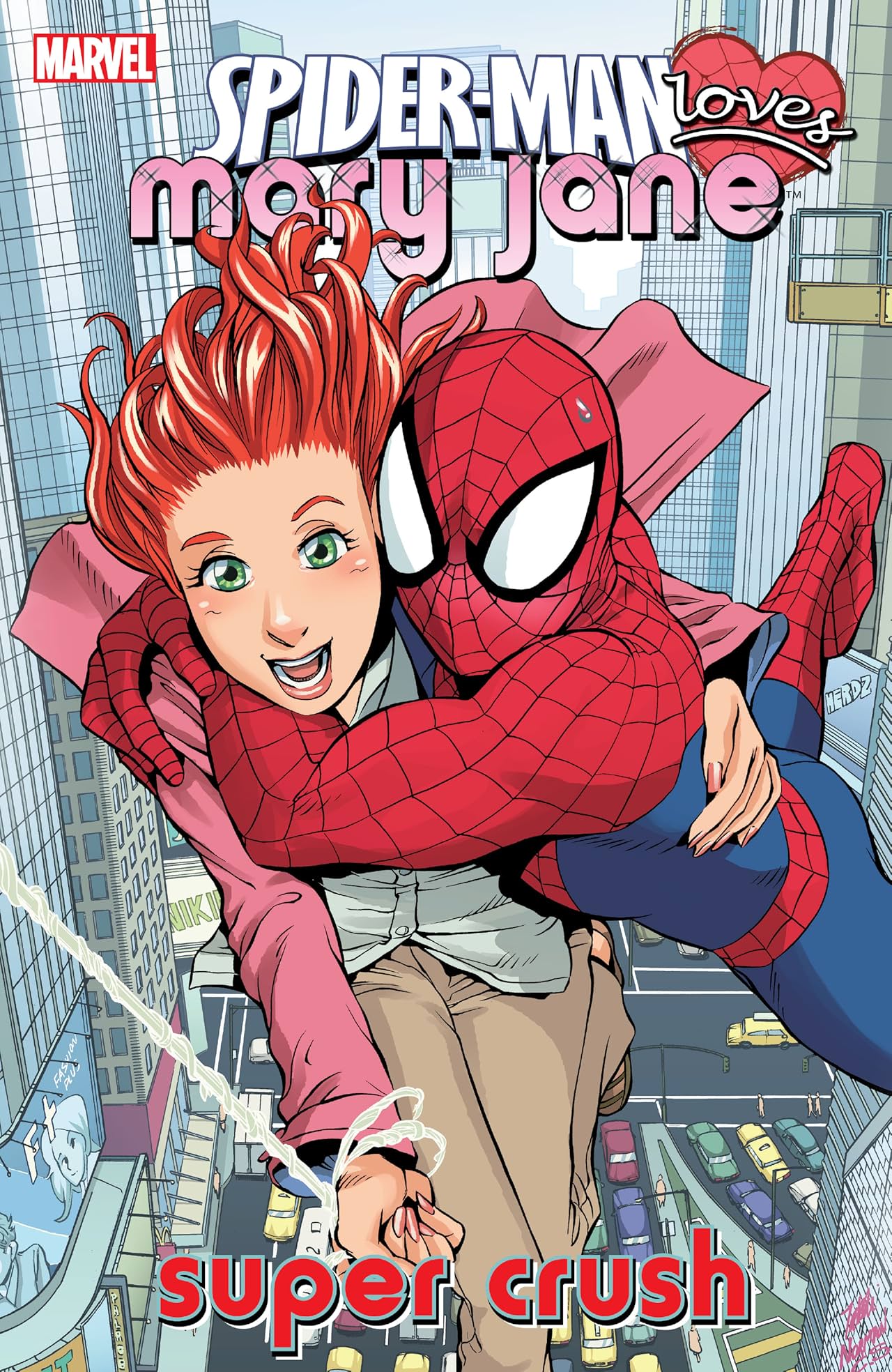
Number 5: Spider-Man Loves Mary Jane

This sweet, fun little series from the mid-2000s is one of Marvel’s more underrated gems. There’s a lot of drama, angst, and frustration surrounding the romance between Spider-Man and Mary Jane Watson. I’ve cited some of the “complications” these two have endured on more than one occasion.

This series basically avoids all of that and doesn’t rely on elaborate retcons to do it. The story is less about Spider-Man and more about Mary Jane Watson. Specifically, it’s about a young, pre-supermodel Mary Jane Watson who hasn’t quite become the gold standard for sex redheaded comic book characters. That’s critical to what makes this series so great in terms of story and romance.

For once, Peter Parker being Spider-Man is secondary. That story is unfolding behind the scene, but the real drama comes directly from Mary Jane. She’s at an age where she’s blossoming into a beautiful young woman, but still figuring herself out. She’s not sure of what she wants, how to love, or where she fits into this crazy world. On every level, she’s far more relatable than any superhero.

As she navigates that world, she makes touch choices and even a few mistakes. More than anything else, though, this series shows how and why Mary Jane came to love Peter Parker so much. It doesn’t rely on overt sex appeal or excessive heroics. The story focuses entirely on chemistry and growth.

On paper, it sounds like something that shouldn’t work in a superhero comic, but it totally does. It’s a romance story that’s balanced and well-developed. It also isn’t too mature. Anyone from age 8 to 80 can appreciate the romance here. On top of that, Takeshi Miyazawa’s artwork is gorgeous, bringing light and heart to a romance that badly needs it.


Number 4: Rogue and Gambit

This is a very recent entry on my list, but one that did more than enough to justify its position. Over the course of five issues, “Rogue and Gambit” accomplished something extraordinary. It took a well-known romance that had been deconstructed, denigrated, and mishandled for years and effectively rebuilt it into something truly uncanny.

Kelly Thompson, one of Marvel’s rising stars, took the baggage surrounding the Rogue/Gambit relationship and channeled it in a way that felt both rewarding and sincere. It starts as an undercover mission, but evolves into some overdue couple’s therapy. Thompson doesn’t ignore all the factors that kept them apart. She even lets them argue and agonize over them.

In doing so, this series presents this romance as one you won’t find in any fairy tale. This isn’t a case of star-crossed lovers destined to be together. It’s a romance in which the two people involved have to really work at it. They have to confront their flaws, their failures, and all the excuses they’ve made to avoid their feelings. It gets ugly, but beautiful at the same time.

I would go so far as to cite this series a template for how a modern superhero romance can work, even without an iconic legacy. The Rogue/Gambit romance isn’t ideal, but that’s exactly what makes it so enjoyable and endearing. These are flawed characters who have both found themselves playing villainous roles at some point in their history. Them coming together despite all that just feels so right.

The only reason this series isn’t higher on my list is because it’s so recent. It’s also still evolving through a companion series, “Mr. and Mrs. X.” I’ve reviewed and praised that series too, but it wouldn’t be possible without this series. Whatever complications the Rogue/Gambit relationship faces in the future, this series will remain one of its most defining moments.


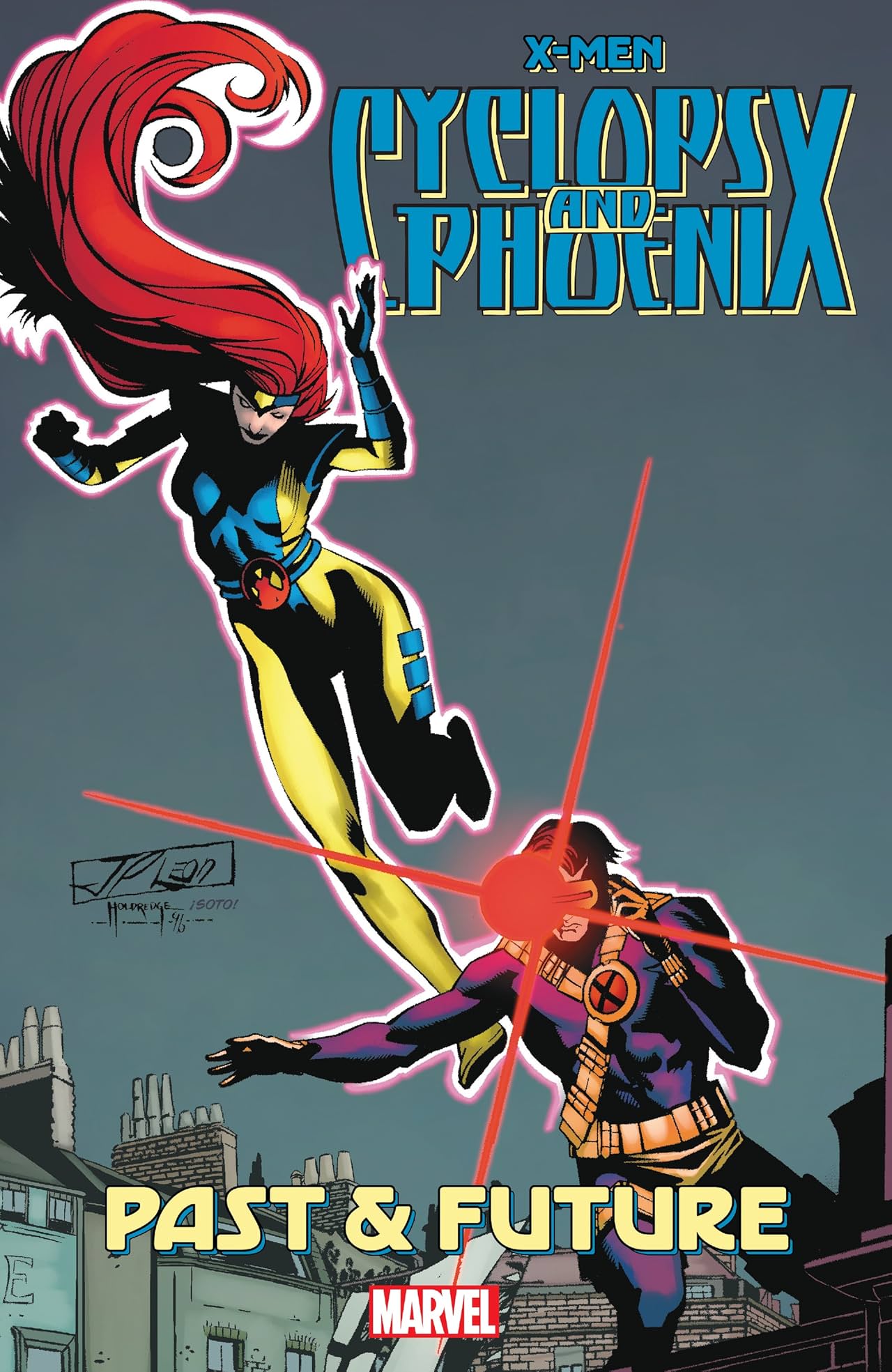
Number 3: The Adventures of Cyclops and Phoenix

I’ve made no secret of how much I love the romance between Cyclops and Jean Grey. I’ve cited them as one of those uniquely special relationships that is both iconic and balanced, a rare combination for a romance that has been unfolding for over 50 years now. While they’ve endured plenty of tribulations, complications, and retcons along the way, they remain iconic for a reason.

This series from the late 1990s is a testament to just how strong their romance can be when retcons, cosmic forces, and terrible love triangles are set aside. At their core, Cyclops and Jean Grey are two people don’t just want to love each other. They want to create a better world for their friends, their family, and their future children. They get to do all of that and then some here.

Much of the story takes place in one of the many dystopian futures that plague the X-men, namely one ruled by Apocalypse. It puts Cyclops and Jean in a position where they can’t fall back on their fellow X-men or the support of other superheroes. They have to navigate this wasteland of a world with only each other to fall back on. It’s a true testament to the strength of their relationship.

As the title implies, though, the story emphasizes the adventure more than the romance. While there are plenty of sweet moments between Cyclops and Jean, their relationship is not the primary focus. It’s certainly a factor driving them forward, but the meat of the story is how it drives them through the conflict. If you enjoy adventure with your romance, then this is definitely the series for you.


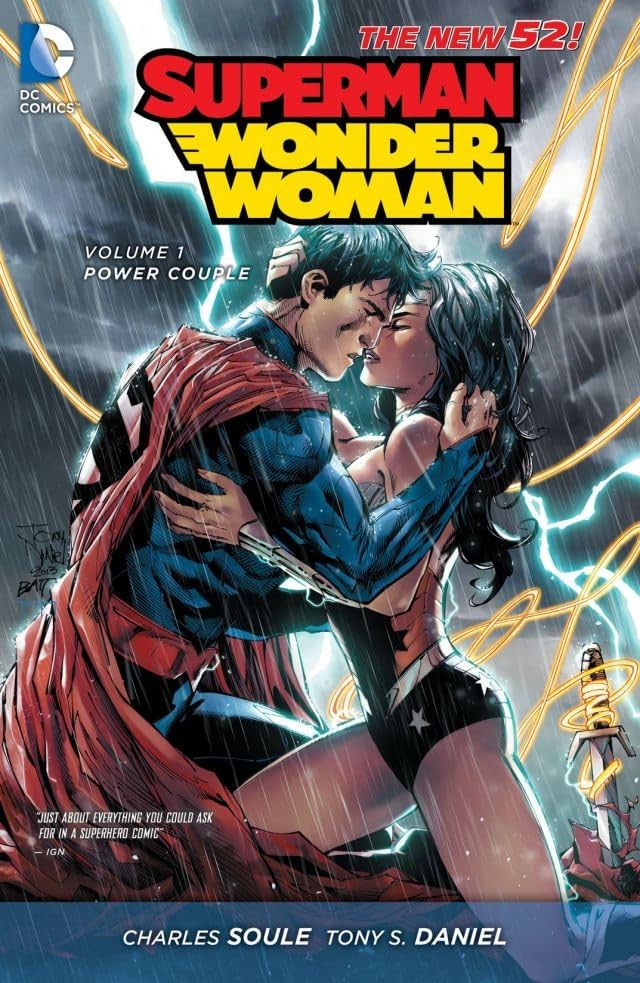
Number 2: Superman and Wonder Woman Volumes 1 and 2

Yes, I know Superman and Lois Lane are still considered the most iconic superhero couple of all time.

Yes, I know there’s an extremely vocal contingent of Superman fans that believe there’s something missing whenever he’s not with Lois.

No, I do not care. That’s because the run on this series by Charles Soule and Tony Daniel really raised the bar for just how great a romance can be for these two iconic characters.

There’s a lot I can say about the romantic potential between Superman and Wonder Woman. It would probably take me multiple blog posts and several essays to adequately describe what sets it apart from Superman’s relationship with Lois and why it works so beautifully. Thanks to this series, though, I don’t need to do that.

This particular series takes place during the controversial, but endearing New 52 era of DC Comics. During this strange, but amazing period of DC Comics, Superman and Lois aren’t married. They know each other, but they aren’t romantically involved. That opens the door for Superman to explore a relationship with Wonder Woman. However, this series makes clear that this romance is no gimmick.

They’re not forced together, nor is it presented as a gimmick. From the very beginning, as well as the events that led up to it, there’s a distinct sense that Superman and Wonder Woman find one another during tenuous times in their lives. They’re two powerful characters making their way through a world in which they feel isolated. When they’re together, though, they’re at their best.

This story brands them as a power couple and they do plenty to earn it. Together, they face threats from alien tyrants and renegade Greek gods. Their worlds collide, but they guide each other through. They make each other stronger. They make each other better. They fight as individuals and as equals. If that’s not the definition of a power couple, I don’t know what is.

Again, if you’re a die-hard supporter of Superman and Lois, that’s fine. This series does nothing to undercut that. However, it does plenty to prove that Superman and Wonder Woman can share a powerful romance, literally and figuratively. Even after DC has undergone extensive retcons and reboots, this series still captures the power of that romance in the best possible way.


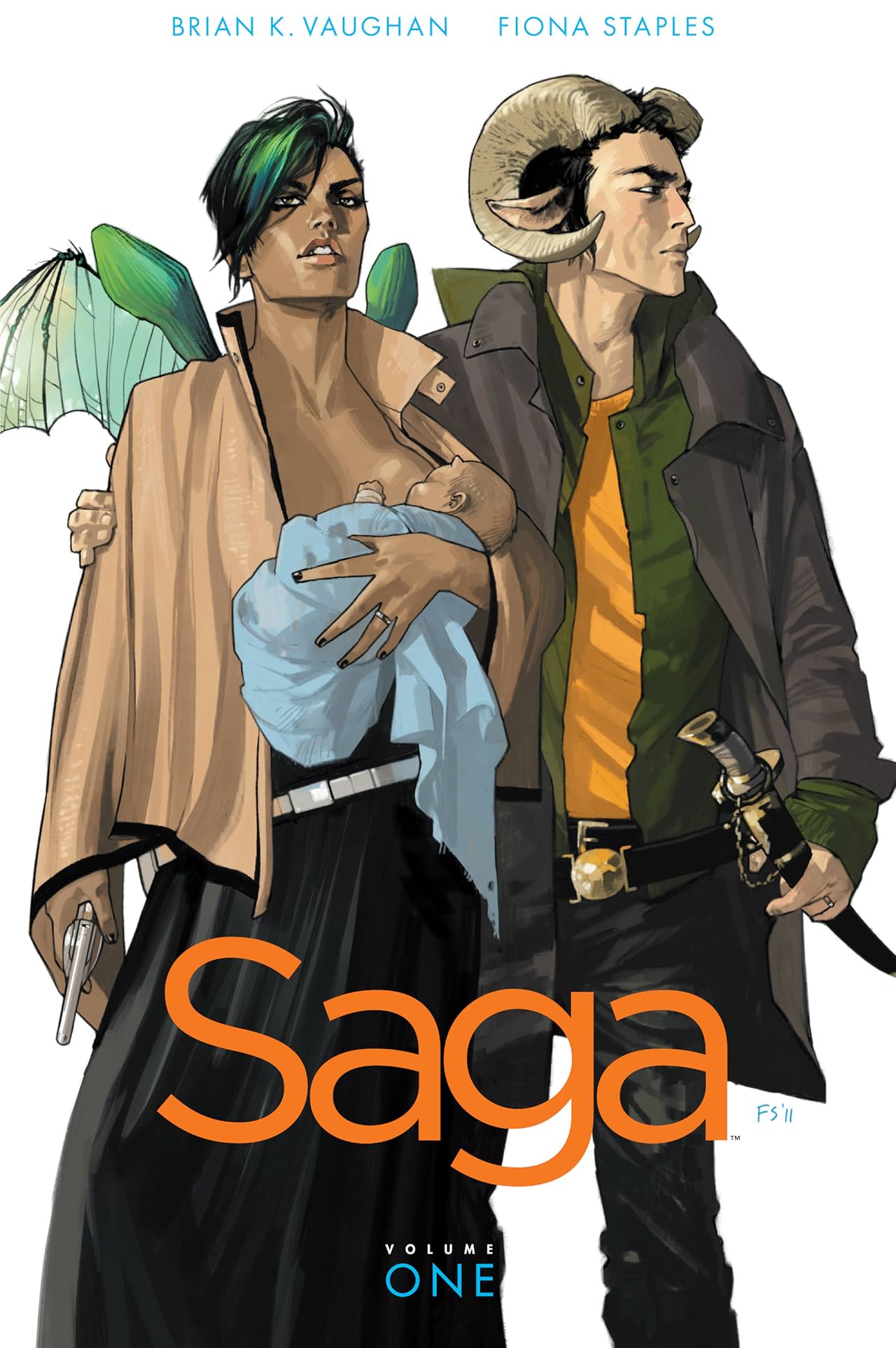
Number 1: Saga

This is probably a controversial selection for those who aren’t familiar with this series. It doesn’t involve superheroes. It’s not a product of Marvel or DC Comics. It’s an entirely different world full of bizarre creatures that include talking cats, a humanoid seal, and an entire race of beings with TVs for heads. I swear I’m not making any of that up.

However, at the heart of this amazing series by Brian K. Vaughan and Fiona Staples is an amazing love story between two characters from warring worlds. That love is very much the driving force between all the conflict and the characters that get caught up in it. It’s one of those romances that has every conceivable force working against it, but it still happens and it’s downright beautiful

Alana and Marko aren’t Superman and Lois Lane. They’re not even Rogue and Gambit. They’re not exactly heroes trying to live up to an ideal. They’re soldiers in a war between two worlds, but they somehow find each other, fall in love, and create a family together.

It’s not a fairy tale romance, though. Their romance involves more than a few explicit sex scenes, as well as a scene where Alana gives birth to their daughter. Nothing is filtered or polished. The sexy and unsexy parts of their relationship is laid bare within a world that is full of fanciful characters and locales.

It’s a genuinely epic journey, but one that all comes back to the romance between Alana and Marko. No matter what kind of romantic you are, these two find a way to check the right boxes. There are many moments of passion, sorrow, and loss. There are also plenty of moments that are funny, cute, and endearing. It has everything a great romance needs and then some.

I should offer a fair warning, though. You will get attached to these characters. You will feel it during certain moments. As a self-professed romantic, I can safely say that it’s worth the risk.

There you have it! These are my top five selections for romance comics. I’m sure some will disagree with my selections. The list may even change as other great romance comics emerge in the coming years. That’s perfectly fine and I welcome any debates on my list.


Romance is in every medium and comics are no exception. I would even argue that the romance in comics is under-appreciated and under-valued. As the genre continues to evolve, I have a feeling that’ll change and I hope to be part of that change.

5 Comments

Filed under Comic Books, Jack Fisher, Superheroes, Marriage and Relationships, romance, sex in media, superhero comics, X-men

Why We Should Embrace Married Superheroes

renewvitrine-760x428

What is more emotionally satisfying than seeing someone you care about find happiness? Whether it’s a friend, a sibling, or even a celebrity you admire, don’t you feel a twinge of joy when you see them achieve something special? Unless you’re a cynic or a sociopath, you’ve probably had those feelings at least once in your life.

With those warm and fuzzy feelings inside, why shouldn’t that also extend to the iconic superheroes we know and love? When our favorite heroes finally get around to marrying the love of their life, it’s natural to want to cheer them on the same way we would cheer for our best friend as he and his bride do karaoke at the reception.

However, those tasked with building the canon seem to have an aversion to married superheroes. Just this past summer, that aversion was on full display. Two major superhero weddings were set up, one involving Kitty Pryde and Colossus in X-men Gold #30 and the other involving Batman and Catwoman in Batman #50.

Sadly, both events ended without tearful vows and a drunken toast, although one salvaged a matrimonial quickie at the last second. I’ve already broken down how one wedding just prolonged an already drawn out romance while the other denigrated the entire concept of romance, as a whole. Rather than bemoan those romantic misfirings, I’d like to step back and look at the bigger picture of married superheroes.

This is actually a controversial issue among fans of superhero comics and those who create them. I’ve been browsing comic book message boards for years. I can attest to just how much fans care when their favorite characters get married. They continue caring long after the wedding reception.

On the other side of the controversy, though, there are the creators that work for Marvel, DC, and their corporate overlords. They have a slightly different view of married superheroes and one that’s not nearly as sentimental. To say their views are complex is like saying a plumber has mixed opinions on food poisoning.

While many of those writing, editing, and producing superhero media are fans themselves, they often have to leave their fandom at the door. Companies like Marvel and DC Comics don’t pay them to write fan fiction. They pay them to tell stories that will sell, increase the value of their brand, and improve market share.

A writer or editor’s ability to do this is prone to many challenges. Fans, especially comic book fans, are notoriously fickle with their passions. If they see something they don’t like happening to a character they love, they’re pretty vocal about it. Just ask fans of Captain America, the Fantastic Four, or Cyclops of the X-men.

In that respect, I have some sympathy for the people responsible for handling beloved characters. They’re basically playing with someone else’s toys and getting paid for it. However, if they break those toys or damage them in any way, there can be hell to pay. Just look at the current situation with Star Wars.

That sympathy, though, only goes so far and I can’t extended to how some at Marvel and DC have approached marriage. DC Comics editor, Dan Dido, once went on record as saying that superheroes should not get married. Long-time Marvel editor and COO, Joe Quesda, even had to justify breaking up Spider-Man’s marriage to Mary Jane Watson by claiming that it “stabilized” Spider-Man too much.

Now in general, I try to be understanding and respectful when people hold positions that I disagree with. I’ve even tried to do that with hot-button issues like abortion, feminism, and organized religion. In this case though, I just have to call bullshit.

Claiming marriage does too much to stabilize a superhero is like saying ketchup makes food too red. It gives the impression that stability is somehow a liability with superheroes, as though they can only be interesting when their world is falling apart and they’re one stubbed toe away from a nervous breakdown.

It’s true that we superhero fans love seeing our favorite heroes fight back invading aliens, punch Nazis, and even take on renegade alien gods. However, it’s also true that we don’t expect or want that to be the only story that superheroes tell. We’re also interested in the lives they live outside their flashy costumes. It doesn’t just humanize them. It gives us more reasons to root for them.

Both Mr. Quesada and Mr. Dido try to make the case that part of being a hero involves sacrificing parts of their personal life in order to serve the greater good. There’s little doubt that being a hero comes at a price, as many of Batman’s former lovers can attest, but that doesn’t have to involve outright isolation.

It also doesn’t mean being a superhero makes a functioning marriage impossible, either. Yes, it’s a lot harder to be a loving spouse and a superhero, but I wouldn’t say it’s as daunting as battling planet-eating space gods or surviving a team-up with Deadpool. In fact, it can enhance their heroics in ways that go beyond romance.

I’m not the only one to make that point either. In wake of the recent wedding debacles by Marvel and DC, Comic Books Resources asked why publishers are so afraid of married superheroes. They cited the same excuses I did about heroes needing to sacrifice, but they also pointed out how these kinds of real-life, mundane events help people connect with these characters.

What the article didn’t get into is why this matters. Superman is a hero with god-like power who can move planets and create diamonds with his bare hands. He’s also married to Lois Lane and still has to put in the effort to make that marrage work, even when it becomes prone to complications.

Reed Richards of the Fantastic Four is among the smartest beings in the entire Marvel Universe. He creates thought projectors, flying cars, and personal robots without breaking a sweat. He too has to work hard to keep his marriage and family functioning, especially when a handsome Atlantean king keeps trying to sleep with his wife.

Then, there’s Spider-Man. I know I’ve brought him up a number of times and not always in a positive light, but what happened to him and his marriage is still one of the most controversial things that have ever happened in comics. In many ways, he embodies the ultimate flaw in the excuses to undercut married superheroes.

In the infamous story, One More Day, Spider-Man’s marriage to Mary Jane Watson wasn’t just undone. He actually made a deal with Mephisto, Marvel’s stand-in for the devil, to sacrifice his marriage in exchange for saving his Aunt May’s life. Considering his Aunt had told him just a few issues ago that she didn’t want to be saved, Spider-Man still went through with it.

To say fans were upset by that decision would be like saying the Hulk has a slight anger management problem. This act didn’t just undercut an iconic superhero romance. It essentially reverted Spider-Man back to the state of an immature loser who had barely grown up since high school.

Again, Marvel made plenty of excuses. Long-time Spider-Man writer, Dan Slott, claimed that Spider-Man has to remain within a particular status quo. He has to keep being this lovable loser who is always struggling to hold down a job, keep a girlfriend, and still be a hero. In order to keep that unique appeal he has, and all the merchendising money it makes, he can’t be married.

I understand that logic, but I still call bullshit. You know what happens to characters who never change, grow up, or evolve over time? It’s the same thing that happens to real people. They become boring and unlikable. In Spider-Man’s case, he becomes something worse. He becomes the guy who sold his marriage to the devil to save someone who didn’t even want to be saved. That’s not heroic. That’s just plain selfish.

That’s the price a superhero pays for remaining in a prepetually regressed state. I contend that price is far higher than any associated with the inherent difficulty of writing married characters. With Spider-Man, One More Day established that no matter what he did in his personal or heroic life, he would never change. He’d always end up sleeping on his Aunt May’s couch.

It doesn’t matter if he pursues a new romance. It doesn’t matter if he becomes a billionaire and runs his own company. A reader can just assume he’ll screw it all up somehow and end up right back where he started. It’s just hard to root for any character that keeps regressing like that.

It’s like rooting for a sports team that never wins. Even terrible teams can turn it around at some point. Yes, that includes the Cleveland Browns. If that team never wins, though, why even root in the first place?

This is why marriage is so vital to the growth and evolution of superheroes. When a hero gets married, it’s not just an excuse to have a big event full of superhero-themed cakes. It’s a culmination of a much larger story about love, growth, and strength. It takes a lot to make a marriage work and not all of it can be done with superpowers.

Therein lies the ultimate appeal, though. When a superhero gets married, they go from simply pursuing a relationship to actually making it work. They have to learn how to build a life with another person and become part of a larger family, something that cannot and should not be exclusive to the Fantastic Four.

It fundementally changes how superheroes approach their lives, in and out of costume. It adds new layers of complexity and intrigue. Yes, it’s considerably harder than telling stories about Superman rescuing Lois Lane from Lex Luthor’s evil clutches. That’s exactly what makes it more compelling.

I don’t doubt that Marvel and DC will continue making excuses about married superheroes. Whether or not their approach to the issue evolves remains to be seen. However, since they’re in the business of keeping their characters relevant, they will have an incentive to adapt these characters for changing times and maturing audiences.

Being the romantic I am, I believe love will eventually win out in the end because love is part of why we root for superheroes in the first place. Love isn’t just about being unselfish. It’s also about achieving something special after so much sacrifice. Fans of superheroes want to see them achieve the things they struggle for. It affirms that all those heroics have meaning and purpose.

Marriage doesn’t have to be the ultimate achievement for a superhero. It can be part of it, though. It doesn’t have to be an end. It can be a beginning, as well. Until Marvel and DC lets its heroes get to that point, though, those stories won’t get told and hearts will keep getting broken for all the wrong reasons.

1 Comment

Filed under Comic Books, Jack Fisher, Superheroes, Love Or Obsession, Marriage and Relationships, romance, superhero movies, X-men

Infinitely Astounding And Then Some: My Review Of “Avengers: Infinity War”

https3a2f2fblogs-images-forbes-com2fcurtissilver2ffiles2f20182f042favengers

We’ve heard it all our lives from parents, teachers, and cartoon characters. Good things come to those who wait. Patience is a virtue. If something is worth having, then taking your time and going through the process will make it that much more rewarding.

As impatient, overly energetic kids, we hated that. As adults, we still hate it to some extent. However, those inane words of wisdom have proven themselves valid time and again.

To some extent, the Marvel Cinematic Universe has a been a decade-long exercise in patience. That patience has already paid off in so many ways with so many memorable moments, raising the bar for cinematic excellence every step of the way. After ten years of that process, though, how could it possibly vindicate all the patience?

Well, having seen “Avengers: Infinity War,” I’m comfortable saying that all the waiting, hype, and post-credits teasers was totally worth it. Never before has a movie come along that required so much build-up and so much connection from other films over such a lengthy period of time. Never before has a film franchise ever achieved such sustained, consistent success that has raked in billions for its Disney overlords.

By nearly every measure, “Avengers: Infinity War” is the culmination of all those efforts. It’s an effort that spans dozens of movies, made and re-birthed entire careers, and dared to tell the kind of story that required such a lengthy, elaborate process. It’s the kind of movie that, a decade ago, seemed impossible. Well, the impossible has been done and the results are nothing short of astounding.

Beyond the hype, setup, and process that went into making this movie, “Avengers: Infinity War” is a ride like no other. It’s not just about superheroes coming together to battle a common enemy. It’s not just about big battle scenes and witty quips between gods and talking raccoons. This is a movie with a powerful, impactful story that strikes so many emotional chords.

That may seem strange for a superhero movie, which have traditionally been big-budget spectacles meant to delight the inner child/fanboy in us all. The idea that a superhero movie could generate real drama and evoke powerful emotions almost seems like a subversion of the underlying appeal of the genre.

It’s for that reason that “Avengers: Infinity War” is so special. It doesn’t just build around the appeal of all these iconic characters, most of which are older than the actors and actresses playing them. It crafts a story that takes all the emotional stakes that had been set up in other movies and pushes them to the absolute limit.

The emotional journey that began in “Iron Man” and “The Avengers” comes to a head in a way that’s both definitive and powerful. There’s no more teasing surrounding Thanos, the Infinity Stones, and all the agendas surrounding them, many of which began in the earliest phases of the MCU. The stakes are clear, the threat is there, and the battles surrounding both are appropriately epic.

Beyond just the spectacle, though, “Avengers: Infinity War” succeeds in what might be the most important aspect for a movie of this scope and scale. The story and the high-octane clashes that fuel it all unfold in a way that makes the last decade of Marvel movies feel even more relevant.

Marvel big-wigs like Kevin Feige love to say it’s all connected. Well, “Avengers: Infinity War” strengthens those connections. Suddenly, the plots involving the infinity stones, going all the way back to “Captain America” and “Guardians of the Galaxy,” matter that much more.

All those plots gain much greater weight as Thanos fights to retrieve all six stones. Now, all the triumphs and failures of these characters more weight. These characters we’ve been cheering for and connecting with now have to push themselves beyond their limits. The end result is an experience that hits as hard as a punch by the Hulk.

Beyond the connections created by the past ten years of Marvel movies, “Avengers: Infinity War” succeeds in another important way. It crafts the conflict around a powerful, compelling villain. After seeing the movie, I think most would agree that Thanos really steals the show and not just because Josh Brolin’s voice gives us all the right shivers.

It was probably the biggest challenge of this movie, beyond having to build it around a decade of overarching plot points. This movie needed to make Thanos more than just a daunting threat. It had to make him compelling. Given his colorful history in the comics, that was more challenging than most non-comic fans realize.

Thanos needed to be adapted, to some extent, in order for him to work. He couldn’t just be this mad, death-obsessed monster. In a universe that has birthed compelling villains like Loki and Erik Killmonger, he has to have some level of complexity. “Avengers: Infinity War” gives him more than any CGI-generated character could ever hope for.

It’s not just that Thanos is menacing, powerful, and able to subdue the Hulk. It’s that he has a clear, unambiguous motivation. He’s very overt about what he’s doing and why he’s doing it. What makes it all the more remarkable is that he finds a way to justify it that doesn’t come off as outright villainous. I would argue that he justifies his actions are better than any other villain in the MCU.

That doesn’t just make Thanos compelling, as both a character and a villain. It helps create moments that establish he’s not just some overwhelming force of evil. He’s a being who has feelings and emotions. Even in the comics, Thanos is a very emotion-driven character. The emotions, in this case, are directed towards something other than wanting to hook up with the living embodiment of death.

As menacing as Thanos is, though, he’s driven by his passions and those passions push him to the kinds of extremes that make all villains so dangerous. It’s not the same kind of greed and ego that makes Lex Luthor’s villainy so overt. As a result, the Avengers have to tap into their own passions to stop him.

This brings out the best in them as well. There are moments between Iron Man, Spider-Man, Vision, the Scarlet Witch, Starlord, Gamora, and Thor that really elevate the drama. There are moments of romance, building on romantic sub-plots from previous movies. There are moments of heart-wrenching loss, more so than any other Marvel movie to date. Most importantly, though, those moments carry weight and impact.

That, more than anything, is what makes “Avengers: Infinity War” a special cinematic experience that was worth waiting a decade for. To some extent, the movie makes clear that it needed those ten years to build up the drama and story. It also needed those ten years to make us, the audience, really care about all these characters. That way, when the final credits roll, we all feel the true breadth of that impact.

You could, in theory, still watch “Avengers: Infinity War” without having seen any other Marvel movie or superhero movie, in general. Even in that context, it’s still a great movie full of action, drama, and memorable moments featuring gods, super soldiers, and talking raccoons. However, without all the movies that came before it and all the connections from them, it just doesn’t carry the same weight.

If “Avengers: Infinity War” has any flaws, it’s that. To truly appreciate the impact of the movie, it’s necessary to know and somewhat care about the other movies in the MCU that helped set it up. Without that, the movie is just another spectacle. It’s still an amazing spectacle full of quality acting and stunning effects. It just relies so much on the foundation that other movies have crafted.

I’ve no problem saying that “Avengers: Infinity War” is one of the greatest superhero movies ever made. It may very well go onto become the highest-grossing superhero movie of all time. However, it’s not without flaws. They are very minor, but they are there.

If there’s one glaring flaw in this masterful superhero saga, though, it’s that the movie is clearly organized to be in two parts. Like “Kill Bill” or the latest “Star Wars” trilogy, the story is incomplete, by necessity. As a result, the ending feels abrupt. It’s still more impactful than gut punch by an army of Hulks, but it’s one of those endings that never comes off as an endpoint.

This movie is presented very much in the mold of “The Empire Strikes Back” in that it hits the heroes hard, allows the villains to make devastating gains, and really raises the stakes for the sequel. Just as that movie made you want to see Luke Skywalker battle Dearth Vader again, “Avengers: Infinity War” makes you want to see the Avengers take down Thanos.

There’s so many things to love about “Avengers: Infinity War” and what it managed to accomplish. It is definitely a historic achievement for movies and the superhero genre, as a whole. If I had to score it, I’d give it a 9.5 out of 10. It’s not perfect because it’s incomplete, but it’s as close to perfect as anything can get after ten years of build-up.

The wait was long and agonizing, but so worth it. The wait for “Avengers 4” will likely be agonizing as well, but Marvel Studios has made a glorious habit of rewarding such patience so I certainly don’t mind waiting. “Avengers: Infinity War” once again raised the bar. I look forward to seeing how Marvel and Disney raise it again.

5 Comments

Filed under Comic Books, Jack Fisher, Superheroes, Movie Reviews

The following is my review for Venomized #1 that I wrote for PopMatters. Enjoy!

The Poison and Perils of Symbiotic Plots in Marvel’s ‘Venomized #1’

Leave a comment

April 6, 2018 · 10:42 am

When Love (And Lust) Is Genuine

https://i0.wp.com/infinitehuman.com/wp-content/uploads/2014/12/DivineLove670X440-1.jpg

Does she love me?

Does she love you?

Is our love real?

Is the sex good?

Is the sex really that good?

Is this love the real deal?

These are all questions I’m sure everyone has asked themselves at some point. If not, then chances are you’ll ask yourselves these questions at some point in the future. Sometimes you may not even ask them with a completely sober mind and I’m not just talking about shots of tequila.

Love, lust, and everything in between is a beautiful thing. It’s one of the most powerful experiences we can have as human beings. In fact, according to research from MIT, being in love can produce a high similar to that of cocaine. In another life, maybe Pablo Escobar could’ve been the ultimate love guru. I guess we’ll never know.

I know I say it a lot, but it’s worth saying again, especially for a topic like this. We are a very social species. The human race thrived, despite bodies that were easily crushed by hungry bears, because we could collaborate and cooperate. We worked together, shared resources, and made beautiful love that resulted in more humans. Now, we’re the most dominant species on the planet. Bears just cannot make that claim.

As beautiful as it is, sometimes the answers to those questions are tragic, if not downright heartbreaking. It does happen. Sometimes the love two people have isn’t real. Sometimes the lust they feel is fake. Sometimes the sex is only a minor step above having someone watch while you masturbate. The challenge is finding out how to answer these questions.

I bring up this topic because I recently got into an interesting discussion with some people on a comic book message board. Now in general, I try to avoid most of the discussions on message boards. I’ve found that over 95 percent of them involve fans whining about the current situation in their favorite comics and how they hate it so much, but not enough to stop talking about it.

Every now and then, though, there will be a more meaningful conversation. I really enjoy being part of that conversation because it brings out some interesting perspectives. A lot of those perspectives can apply to real life, even in comics that involve clones, time travel, and poop jokes. Yes, I’m referring about Deadpool.

Specifically, the conversation I had involved a discussion about how genuine the love and romantic chemistry is between two particular characters. In this case, one of those characters was Spider-Man, whose romantic history is almost as vast as Wolverine’s. While I do criticize Spider-Man for being an incompetent hero, the man is still pretty good when it comes to getting laid. For that, I do respect him.

However, like a lot of comic book characters and real people, his love life is subject to a lot of variations. There are times when his emotions are not entirely sincere. By that, I mean he’s with someone because they’re there. That’s it. Then, there are times when he really does love someone, enough to marry them and make a deal with a devil with them. Like I said, there’s a lot of range with Spider-Man.

Sometimes it’s hard to make sense of these situations. Within the discussion I had, there were all sorts of conflicting opinions about just how sincere Spider-Man was and how much potential the relationship actually had. For every one person in the discussion, there were at least five different opinions, including my own.

Comic book fans are notoriously stubborn for how their characters are portrayed, but when it comes to our love lives, the stakes are a bit higher. In the discussion, I noticed a few common themes that set genuine love apart from the kind of love that end with Spider-Man getting his ass kicked by the Green Goblin.

One of those elements is luck. I know that doesn’t sound very romantic, but it’s an unavoidable function of life. Sometimes you’re in the right situation at the right time to take advantage of something, be it love or a winning lotto ticket. You can’t always control it, but it happens.

With respect to genuine love, though, luck plays a very specific role. If a relationship relies on luck to work, then that relationship is basically a reverse lottery. Over time, the odds just aren’t in anyone’s favor. The Law of Averages is both a harsh mistress and an outright sadomasochist. Spider-Man finds that out on a regular basis with how badly his relationships turn out, often due to forces he can’t control.

In addition to luck, there’s also the chemistry aspect. This is much sexier and much more romantic than luck. There’s no question about that. It’s also one of the hardest component to really nail down.

We all understand what romantic and sexual chemistry is to some extent. If two people are drawn together and struggle to keep their clothes on around each other, that’s a sign of pretty potent chemistry. Like real chemistry, though, some mixtures are more potent than others. Some are downright volatile.

If the chemistry is restricted to lust, then that’ll make for some hot sex. However, it won’t make for much else. Now I’ve got nothing against hot sex. It’s a wonderful part of being human. It can just be shallow and crude though. It can be a key ingredient for sexual chemistry, but it can’t be the only ingredient.

Add love to the mix and that’s where the potency shows. Genuine love complements one another. Genuine love involves two people cooperating, sacrificing, and sharing on a level that you just don’t do with a total stranger. Genuine love is usually equal for the most part. It’s rarer than hot sex, but beautiful. It even shows up in an X-men comic every now and then.

Lastly, one key element in genuine love involves reasons and excuses. I know this isn’t very sexy either, but it’s a necessary practical element of love. It can be either the glue or the napalm that binds/destroys a relationship.

Specifically, it deals with the how and why two people are involved in the first place. If they’re in an arranged marriage, which still happens a lot these days, then that’s a fairly unambiguous reason. If they’re together because they just don’t want to be alone, then that’s not much of a reason. That’s more of an excuse.

Sometimes Spider-Man is just with someone because they’re part of his life. They happen to cross paths with him both in and out of the mask. That’s often the case with characters like the Black Cat, whose about as genuine as a very hungry, very horny wolf. It rarely makes for a very genuine connection.

Sometimes two people start out as friends and the connection deepens. This often happens in a lot of teen movies and sitcoms, but it happens in real life too so it’s not entirely flawed like most movie tropes. That can sometimes be a solid foundation for genuine love.

There are also cases where two people are together purely for pragmatic reasons. A beautiful woman is with a man because he’s rich. A man is with a beautiful woman because she’s sexy. Sometimes people are just friends with benefits. That does happen and can work, despite what an Ashton Kutcher movie may claim.

That doesn’t mean pragmatism is necessarily genuine though. If two people are together because not being together would be too much work or too inconvenient, that’s not genuine. That’s just plain lazy. If two people are together because one has a great deal of leverage over the other, then that’s not genuine either. That’s exploitation.

Overall, there are a lot of components that go into a genuine romance and, without spoiling too much of the discussion I had, Spider-Man sucks at it. Characters like Superman, Wonder Woman, and even Starfire, to some extent, have a much better track record.

In the real world and throughout history, you’ll find plenty of examples of genuine love. They don’t always make for great stories or good erotica/romance, but that doesn’t make them any less genuine. In the end, genuine love combined with genuine lust makes for the best and sexiest connections. Not everyone can find it, but that’s what makes it so precious.

Leave a comment

Filed under Jack Fisher's Insights

How NOT To Market Comic Books: A Marvelous Cautionary Tale

Let’s face it. We all make mistakes. We all do dumb things. We’re all just one “reply all” button away from humiliating ourselves and undermine our entire professional career. One time, I accidentally washed my hair with shaving cream instead of shampoo. It made me feel pretty stupid, but at least it happened in the shower and in private.

It’s only when we make mistakes that become public shit storms that we really agonize over our mistakes. For most people, that’s difficult enough, but usually manageable, provided you avoid the “reply all” button and don’t watch porn at the office.

For celebrities, it’s like walking on egg shells on top of land mines on top of hungry lions. If Taylor Swift accidentally washed her hair with shaving cream and did it on camera, it would blow up Twitter and turn into a week-long national scandal. We envy a lot of things about celebrities, but nobody should envy that circus act.

https://i0.wp.com/akns-images.eonline.com/eol_images/Entire_Site/2015718/rs_560x415-150818105404-1024-taylor-swift-performance.jpg

Then, there are the non-celebrities who still find a way to make their minor mistake into a national shit storm. Taylor Swift doing something that blows up the internet is kind of an inevitability. A non-celebrity creating that kind of shit storm is an accomplishment.

A man named David Gabriel found that out the hard way last week. Who is David Gabriel, you ask? He’s not a celebrity. He’s not a pop star. He’s not even a famous internet meme. He’s the Vice President of sales at Marvel Comics, a company that’s very important to me as an admitted comic book fan.

It’s a job that’s probably much less glamorous than it sounds. He’s tasked with selling products that include iconic heroes, women dressed in skin-tight costumes, and talking raccoons. His products couldn’t sell themselves better without being laced with nicotine.


https://static.comicvine.com/uploads/original/14/145984/3419084-rocket_raccoon_by_crazymic-d64dqay.jpg

Despite this advantage, Mr. Gabriel’s job has been a lot tougher recently. Overall, Marvel’s sales and overall share of the comic book market has been declining for the past couple of years. That’s somewhat odd, given how Marvel’s movies have made more money than the gross national product of some countries.

Now the reasons for this decline are too numerous and too unsexy for me to cover in a single blog post or multiple blog posts, for that matter. The real story here comes back to David Gabriel, a man whose job it is to figure out why the company he works for isn’t swimming in a fresh pile of money every year.

What’s his explanation for the sales decline? Well, if you thought you’ve ever screwed up badly at your job, take a deep breath and put your feet up. You’re about to feel a lot better about yourself because this is what Mr. Gabriel said in an interview ICv2:

Now the million-dollar question.  Why did those tastes change?

I don’t know if that’s a question for me.  I think that’s a better question for retailers who are seeing all publishers.  What we heard was that people didn’t want any more diversity.  They didn’t want female characters out there.  That’s what we heard, whether we believe that or not.  I don’t know that that’s really true, but that’s what we saw in sales.

We saw the sales of any character that was diverse, any character that was new, our female characters, anything that was not a core Marvel character, people were turning their nose up against.  That was difficult for us because we had a lot of fresh, new, exciting ideas that we were trying to get out and nothing new really worked.

The bold parts are my doing because it’s the bold parts that got made David Gabriel the most hated, non-politician man on the internet for a week. Comic book fans, movie fans, and fans of people who publicly screw themselves all took the time to jump in and pile on a man who probably didn’t fully realize what he was saying.

https://i0.wp.com/www.kiddnation.com/wp-content/uploads/2014/10/foot-in-mouth-header.jpg

On the surface, the words themselves don’t mean much. Marvel made a push for greater diversity in its comics. I even covered some of the issues that came up during this push. That push didn’t work as well as they’d hoped. Compared to the efforts of DC Comics with their “Rebirth” initiative, there was a lot of room for improvement.

This is where Mr. Gabriel’s internal filter failed him. He looked at the situation, tried to make sense of it, and came up with something that indirectly insulted comic book fans and non-comic book fans alike. I get what he was trying to say, pointing out that the response to their diversity push wasn’t what Marvel had hoped. He just ended up saying way more, if not way too much.

Indirect or not, we’re living in an age where anything you say can and will be misconstrued as bigoted, sexist, racist, homophobic, or anything else associated with the republican party. With Mr. Gabriel’s comments, it didn’t take much for anyone with a Twitter feed to twist his words appropriately.

The implications are as apparent as they are misguided. Comic book fans don’t want diversity. They just want to read comics about the same old white guys who save beautiful women in bikinis that they’ve been reading since the Kennedy Administration. If a character is black, female, or does any that straight white men don’t approve of, then they’re not interested.

Again, that’s the implication. That’s not the actual substance of Mr. Gabriel’s words, but that doesn’t matter anymore. It doesn’t even matter if he meant something else entirely. The angry, politically correct whims of the internet and social media has spoken. David Gabriel and comic book fans are in league with the white male fascist order that’s intent on making the world one big sitcom from the 1950s.

That last part was sarcasm, by the way. I know it doesn’t take much to kick up a shit storm of outrage these days, but I feel like I have to cover my ass with an adamantium plate. There are too many people in the world who just can’t resist a good dose of whining.

Naturally, Mr. Gabriel’s remarks triggered a week-long sideshow where everyone weighed in to voice their outrage, even if they weren’t comic book fans. Most of the outrage was pretty standard. It can usually be boiled down to the following remarks:

“HOW DARE YOU ACCUSE OF US BIGOTRY!”

“HOW DARE YOU TRY TO SPEAK FOR ALL COMIC BOOK FANS!”

“HOW DARE YOU IMPLY THAT DIVERSITY IS A BAD THING!”

“HA! YOU ADMIT YOU’RE A RACIST, BIGOTED, HOMOPHOBE!”

No less than 95 percent of all reactions can be boiled down to something of that nature. One side claims the other is being a bigot/racist/insert-minority-hating-term-here. The other side claims Mr. Gabriel is wrong, stupid, and doesn’t speak for the majority of comic book fans. Somewhere in between the shit storm are just people who want to read awesome comics. They’re basically stuck smelling this stench.

I can already spoil how this is going to play out. The outrage will continue to be a controversy for a while. Then, something else will come along that’ll start another outrage-fueled shit-storm about racism, sexism, homophobia, etc. After that, David Gabriel will go back to being a nobody who wouldn’t be recognized if he had a two-foot cock plated in gold. I’m sure that day can’t come fast enough for him.

It’s not just human nature. It’s part of the system/flaws in marketing. People have very short attention spans. Unless it affects their livelihood, they get bored pretty easily. People are also very selective with their outrage. It doesn’t matter how asinine or misguided it is, even if it’s something as simple as a Halloween costume. Outrage is inherently irrational.

It’s an important, albeit bittersweet lesson for anyone looking to market anything in a day where we’re all just one offensive hashtag away from a really bad week. Since I’m trying to sell my own books and preparing to launch my first published book, it’s a lesson worth learning.

We don’t live in an age where a bad add or an off-hand remark can be swept under the rug or forgotten. We live in an age where everybody has a camera and a recorder in their pocket. We live in an age where anything you say or do can be misconstrued in any number of wholly ridiculous ways.
Whether you’re a straight white man working for Marvel or a black transgender lesbian working for BET, your words and actions can and well be skewed if you’re not careful. Professional trolls like Ann Coulter, Lena Dunham, Michael Moore, and Milo Yiannopoulos can get away with it. Most people trying to make a decent, honorable living can’t.

Now I believe that David Gabriel is as decent a person as the rest of us. I don’t think he believes that diversity is a bad thing in comic books or anything else in life. He just made the mistake of saying a certain sequence of words that evoked a knee-jerk reaction from a public that’s more and more sensitive to anything remotely bigoted, regardless of how valid that sentiment might be.

These are strange and volatile times. Today, the worst thing you can be is opposed to diversity. Marvel Comics is behind the curve, unfortunately, because so many of their iconic characters were created at a time when the market almost exclusively favored straight white men. They can’t undo that or the legacy that helped build their company, even if a new generation of politically correct hippies despise that.

If I could say one thing to David Gabriel, I would say, “Take a step back, open a cold beer, and just wait for everybody to get bored being upset with you.” Hell, I’d even buy him the beer.

Even as we forget about David Gabriel and what he said when he underestimated the internet’s capacity for outrage, there will be others like him who fall flat on their face in their effort to sell their products to a public that’ll jump at any reason to get outraged. It’s a challenge, and an annoying one at that, but it’s challenges that make us stronger.

That’s why I still have high hopes for the future of Marvel comics. It’s also why I have hopes for the future of my novels. I doubt I’ll sell anything as well as Marvel sells its comics, but if I can do that without generating misguided outrage, I’ll know I’ve done it right.

2 Comments

Filed under Jack Fisher's Insights