Tag Archives: social issues

Gender, Equality, And The Pain That Binds Us

gender-bias-design-aiga-640

Imagine, for a moment, there are two kids playing on a playground. Both are young, rowdy, and energetic. They run around, rough-house, and engage in the kind of reckless fun you would expect of most kids.

Then, at some point, they both run into each other. They both get hurt, sustaining similar bruises and experiencing similar pain. They both start crying. Those cries are equally loud and they each shed the same volume of tears. Naturally, this gets the attention of nearby adults.

However, in responding to the cries, one child ends up getting more attention than the others. Most crowd around that child, offering solace and treatment. All the while, the other child is still crying just as loudly. Only a handful of other adults tend to that child, but the crying and the pain persist.

Does what I just describe sound fair? Does the idea of one child’s pain getting more attention than the other strike seem wrong to you? Absent any larger context or notable personality disorders, I believe most people would agree. The idea that one child’s pain warrants more attention than others is wrong. It offends that innate sense of empathy and justice that binds us as humans.

I tell this story to make an important point about pain. To some extent, pain is the ultimate egalitarian. It doesn’t care about your gender, your race, your ethnic background, your politics, your ideology, or your religion. It also doesn’t care about how many arguments you win, how much virtue signaling you do, or how informed you may be. It still hurts all the same.

Pain is, effectively, the one uniting force that reasonable and unreasonable people alike can agree on. It affects us all. Too much of it can leave lasting scars. When someone’s pain is ignored or overlooked, it still feels like an injustice. On the most basic level, pain reveals just how similar we are in the grand scheme of things.

I make this important point in lieu of a revealing conversation I had with someone on Reddit. Every now and then, you find yourself interact with people who help you come to profound realizations without seeking them in the first place. It’s a conversation that I feel is worth sharing, if only to thank the person who inspired it.

The conversation began with a woman posting a brief inquiry in the Men’s Rights subreddit. That, in and of itself, is pretty remarkable and says a lot about the woman. She identifies herself as a feminist, yet she goes out of her way to start a conversation in a place that is sure to have differing opinions. In this era of highly bias media exposure, we should all take a moment to appreciate her open-mindedness.

The substance of her post was not combative or hostile. At no point did she come off as anything other than sincere and curious. These are the exact words she used to start the conversation.

I’m a woman and for lack of a better term a feminist and to be honest I don’t understand why there has to be conflict between men’s rights and women’s rights. The way society is set up at the moment I think women face more challenges, the majority of which are created by men. But on the flip side men also face challenges due to their gender, but these problems are often created by men as well. I’m not saying for either gender men create all the problems, as women we have to step up and acknowledge what we do as well.

I guess what I’m asking is why not try and work with the feminist movement?

When I first read this post, I admit I was somewhat worried about the reaction it would generate. In my vast experience with Reddit and message boards, people who go out of their way to talk to those who disagree with them tend to start conversations that get easily derailed. Whether it’s feminism or Star Trek, people can get pretty passionate with their opinions and that can cause problems.

In reading through some of the comments, there were indeed some crass remarks. You see those in almost any subreddit or message board in some form or another. Not everyone was reasonable during the conversation, but I still felt it was a conversation worth having.

That’s why I made it a point to submit some comments of my own. In doing so, and getting a few generous responses from the woman, I came to this critical realization about pain and how it affects gender issues, double standards, and identity politics as a whole.

When you get down to the most fundamental level, it all comes back to pain. Feminism, men’s rights, the LGBT community, racial politics, ethnic conflicts, and even clashes within a sub-culture all build their movements around the pain their group experiences.

Whether it’s political oppression, social stigma, legal discrimination, or just plain hostility, these groups and the agendas they pursue are forged by the pain they experience. The most divisive part of that agenda, though, is the idea that their pain matters more than others.

With respect to gender, which was the primary topic of the discussion the woman started, much of the arguments could be broken down into categories of pain. For the feminist crowd, the pain they experience from discrimination, slut shaming, harassment, reproductive rights, and specific health issues takes priority and understandably so.

It’s just as understandable that the men’s rights crowd would prioritize the pain they experience by damaging double standards, legal discrimination, circumcision, social pressures, and violent victimization. When they feel their pain is deemed less important or trivial, it doesn’t just inspire resentment. It sends the message that someone else’s pain doesn’t matter.

That very notion, the idea that someone else’s pain is more important than another, undermines some of the most fundamental facets of our humanity. That’s not to say there aren’t times when certain pain takes priority. When there’s an ongoing atrocity, like a mass shooting or a war crime, then that’s an instance where we should prioritize that pain.

It’s an indirect message that few intend to send, but many find themselves surmising. A woman stands up and should that their pain is important. Others interpret that as her saying that the pain of men doesn’t matter. A man does the same, shouting that their pain is important. Even if they’re wholly sincere, women interpret that as opposition.

When it comes to discussions about gender politics, racial politics, ideology, or social justice, though, the act of elevating someone else’s pain over the other will only ever serve to breed resentment. It’s rarely direct, but that’s exactly what makes it so impactful.

If there’s one message that I took away from the conversation, it’s that one person’s pain can undermine the other when agendas take priority over understanding. Whether they’re feminist, men’s rights, LGBT, religious, or racial in nature, building that agenda around a particular pain requires that it be elevated to some extent.

That may be understandable within a certain context, but when the agenda takes on the character of an ideology, it turns that pain into a force for division. Given our tribal nature, those divisions can widen considerably and at a time when there are over 7.6 billion of us, that can be more damaging.

Even with these divisions, the conversation with that woman gave me hope because it reminded me of just how similar we are when you get down to it. We all experience pain in our lives. We all tend to elevate our own pain compared to that of others. However, the fact that we’re all vulnerable to such pain proves that we’re more equal than we think.

I believe we can take comfort in that, if only to remind ourselves that our pain matters as much as those of others. We are, at the end of the day, a compassionate species. We may have any number of ways to divide ourselves, but we have far more powerful ways to bring us together.

To the woman who posted that message, I sincerely thank you. I hope your effort will inspire others as much as they inspired me.

2 Comments

Filed under gender issues, human nature, sex in society, sexuality

Being Offended, When It Matters, And What To Do About It

image

Let’s face it. We live in a pretty offensive world. As much progress as we’ve made, as a species, there are still a lot of hateful, insulting, and outright disgusting things in this world. I’m not just talking about war atrocities, injustices, and reality TV shows either. You don’t have to look too far to find something that offends you to your core.

Therein lies the problem, though. In this era of super-connected, hyper-vigilant people who can’t always tell the difference between actual news and “fake news,” it’s exceedingly easy to find something offensive. Look hard enough, deep enough, and with a reckless disregard for facts and context, and you’ll probably find a way to be offended.

Image result for snowflake millennial

I hope I’ve made clear, by now, that I don’t particularly care for the politically correct, inherently regressive attitudes that undermine our ability to live, love, and even make love. In fact, I’ve gone on record as saying that this crude approach to evaluating our society and culture needs to go the way of dial-up internet.

While I doubt political correctness will fade anytime soon, there are signs that it is cracking under the annoying strain it has caused, as the 2016 Presidential Election showed. It still rears its head constantly in controversies involving movies, video games, and even my beloved world comic books. However, it doesn’t quite have the momentum it used to when it really got going during the 2014 GamerGate saga.

Image result for gamergate

I expect that momentum to fluctuate in accord with whatever controversies and/or outrages emerge over the course of 2018 and beyond. I also expect those who claim offense will demonstrate wildly varying degrees of pettiness in their outrage. For some, it’ll be genuine. For most, though, I don’t expect it to go beyond the “I hate it and it makes me upset, therefore it shouldn’t exist” variety.

With that exceedingly varied pettiness in mind, I’d like to offer a quick a service, of sorts, to those who will inevitably be offended and those who will be annoyed by the degree of pettiness that such offense requires. I won’t give it a fancy name or anything. I just want to lay out some guidelines for interpreting offense.

Having watched political correctness and regressive attitudes evolve a great deal over the course of my life, I’ve noticed more than a few patterns in the attitudes of those who are genuinely offended. They tend to be very different compared to those whose offense is indistinguishable from trolling.

Image result for internet trolls

At its core, the exceedingly regressive, politically correct forms of offense require a certain set of attitudes. Those attitudes include, but aren’t restricted to the following:

  • Being offended on behalf of an entire group of people, regardless of whether or not you’re actually a member of that group
  • Demanding broad, systemic change from the top down, imposed either by rules or by public scorn
  • Demanding some form of reparation or acknowledgement of past wrong-doing, regardless of whether or not someone was directly involved
  • Seeking to fix broad, non-specific injustices all at once
  • Re-shaping society through petty scrutinizing of media, language, and thought

There are probably more attitudes I could highlight, but for now, I’ll use these as the core tenants of those whose offense requires a significant absence of context or specifics. I won’t cite certain groups or sub-cultures, but those who spend any amount of time on social media or message boards can probably discern a few that fit that criteria.

Now, before I go any further, I want to add one important caveat. Regardless of how petty or asinine someone’s sense of offense may be, I don’t doubt for a second that it feels relevant from their perspective. Granted, there are a few professional trolls out there who will pretend to be offended, but I think those people are the minority. The rest do feel offense, but only to the extent that it has limited substance.

Image result for Ann Coulter

Genuine or not, there are certain types of offending sentiments that carry more weight than others. Offense over the historical treatment of minorities, the inflammatory remarks of a public figure, and general insults from ordinary people exists on a vast spectrum.

It’s one thing to take offense to the depiction of minorities in an episode of “Family Guy,” but it’s quite another when someone makes a direct threat to an entire segment of people. That’s the key element to the substance of the offending behavior, though. It’s a matter of how direct it is.

Think of it as a forest-from-the-trees concept, but from the opposite direction. A person actively promoting a policy that would murder an entire group of people is different from one who just says horrible, disgusting things about that group in general. Promoting a policy is a tangible act in the same way a tree is a tangible thing, whereas a forest is more a concept.

Image result for forest from the trees

This gets even trickier for those who claim to be offended for an entire group of people. That offense requires that everyone within the group actually think and feel the same way about a particular issue. Absent mass telepathy or a Borg-style hive-mind, that’s neither feasible, nor logical.

Even for those who are part of that group, be they a race, religion, or sexual minority, attitudes can vary wildly because people are complex. Every individual has unique thoughts, feelings, and experiences. The more a type of offense relies on everyone sharing those sentiments, the more petty and empty it has to be.

Image result for being offended for someone else

As a result, the endgame for those offended in such a way requires a recourse that is either antithetical to a just society or exceedingly unreasonable, if not wholly impractical. You know a form of offense is petty when it requires things like:

  • Condemning people just for thinking certain thoughts or holding certain beliefs
  • Demanding that other people sacrifice a part of their freedom, assets, or autonomy on behalf of another
  • Apologizing for past injustices that they did not directly commit

The pettiness is really on display whenever the offense requires the interpretation of other peoples’ thoughts. This often comes up whenever media like TV, movies, and video games are deemed offensive. It’s not that they’re triggering actual crimes, despite what some may claim. They’re somehow influencing the process.

This sentiment has gotten much more extreme in recent years, especially when it comes towards sexism. Never mind the fact that rates of sexual assault are declining and have been since the mid-1990s. It’s the thoughts and attitudes this media is instilling that’s so offensive.

Related image

Again, that kind of offense requires someone to actually know what’s going on in the minds of other people when they consume certain media and see certain images. While we are working on that technology, that’s not possible right now. Absent a case where someone can tie a specific crime directly to a real victim, this kind of offense is empty at best and disingenuous at worst.

Those specifics matter even more when it comes to really sensitive issues like reparations for slavery, affirmative action, or the gender pay gap. These issues are sensitive because they often require a particular context. Namely, they require that part of that context be ignored in order to seem palatable to a large group of people.

To get behind slavery reparations, people have to ignore the fact that there’s nobody alive today who directly enslaved someone else. To get behind affirmative action, people have to ignore the fact that promoting diversity will come at the expense of disadvantaging someone who might be more qualified. To get behind the gender pay gap, even, it’s necessary to ignore all the other factors that go into that disparity.

Image result for PC Bros

With all this in mind, how does anyone determine how much their offense matters beyond their own personal feelings? Well, the criteria for that is a bit trickier to determine, but there are concepts that pass the Simpson Filter. They can include, but aren’t limited to:

  • Tying a specific incident to actual, verifiable harm suffered by another person
  • Recourse that involves a specific, feasible goal that reforms a situation and addresses a direct injustice
  • Establishing a phenomena that has actual causation and not just correlation in a way that other people can verify
  • Incorporated the entirety of context within a given issue

It may seem like an impossible set of standards, but it can and has been done. The civil rights reforms that men like Martin Luther King Jr. fought for were targeted, specific, and addressed an ongoing injustice. More recently, the protests at Standing Rock created a real movement to address a real injustice with a clear goal in mind.

Image result for Standing Rock protest

Again, that’s not to say that someone who takes offense to a shirt a man wore during an interview is entirely empty, but it is exceedingly petty and a little selfish to seek vindication for that offense on a larger scale. That’s where the really damaging effects of political correctness and regressive attitudes take hold.

At the end of the day, the universe and society at large is under no obligation to change in order to accommodate your hurt feelings. Sure, you can attempt to persuade others that your offense is somehow legitimate, but attempting to force it only undermines those whose offense is real and genuine.

6 Comments

Filed under Current Events, gender issues, human nature

Should We Re-Think Our Expectations Of Teenagers?

pexels-photo-246367

When I was a teenager and in a particularly bad mood, which happened more often than I care to admit, there was this one thing my parents often told me that really pissed me off.  It came out in many forms, but this was the underlying sentiment.

“If you EXPECT it to be a bad experience, then it’s GOING to be bad experience.”

I can’t recount how many times I heard something like this. I just remember it pissing me off even more every time I heard it. They usually said it to me whenever we were going out to do something that didn’t involve me sulking in my mood. Being the great parents they were, they didn’t let that happen. They got me off my ass and out of that mindset.

They probably didn’t know at the time, but that bit of good parenting reflects a real phenomenon within our collective psyche. It’s called expectancy theory and it’s kind of what it sounds like.

It’s based on the principle that if someone has certain expectations about something, it’ll affect how they approach it. If they have a positive, hopeful attitude, then they’ll be more likely to evoke positive, hopeful outcomes. If they’re negative about it, as I often was, then it’s not going to turn out well and confirmation bias will help make it worse.

With that in mind, I’d like to apply this to an experience that’s pretty much universal for everyone. Specifically, I want to focus on our expectations as and towards teenagers. Now, I know I’ve given teenagers a lot of crap on this blog, often highlighting how they tend to do dumb things and have misguided attitudes. In my defense, my own confirmation bias has somewhat affected that.

I did not have a good teenage experience. I had a terrible attitude for much of my teenage years and, despite having great parents and amazing social support, I found ways to make myself miserable. However, for the purposes of this discussion, I want to focus less on my own experience and more on the concept as a whole.

Take a moment, whether you’re a teenager or not, to ask a few important questions about the sentiment you have towards teenagers. Don’t just think about how you feel about it, personally. Think about how we collectively approach the teenage experience.

Are teenagers more deviant because of basic developmental biology or because we expect them to be deviant?

Are teenagers more immature because of basic developmental biology or because we expect them to be immature?

Are teenagers disrespectful because of their basic developmental biology or because we expect them to be disrespectful?

Are teenagers more prone to risky behavior because of basic developmental biology or because we expect them to do risky things?

See the pattern? There seems to be this underlying assumption about teenagers that rarely gets scrutinized. It’s this idea that all the biological changes that teenagers go through with puberty somehow transforms them from these sweet, innocent children into these reckless, irresponsible, proto-adults who aren’t capable of managing themselves.

It’s fairly likely that all those biological transformations that teenagers go through has some affect on their mentality. However, even the most up-to-date research on the issue concedes that our understanding of the mechanisms behind the process are extremely limited. What that means in a scientific context is we should not assume that our assumptions at the moment are wholly valid.

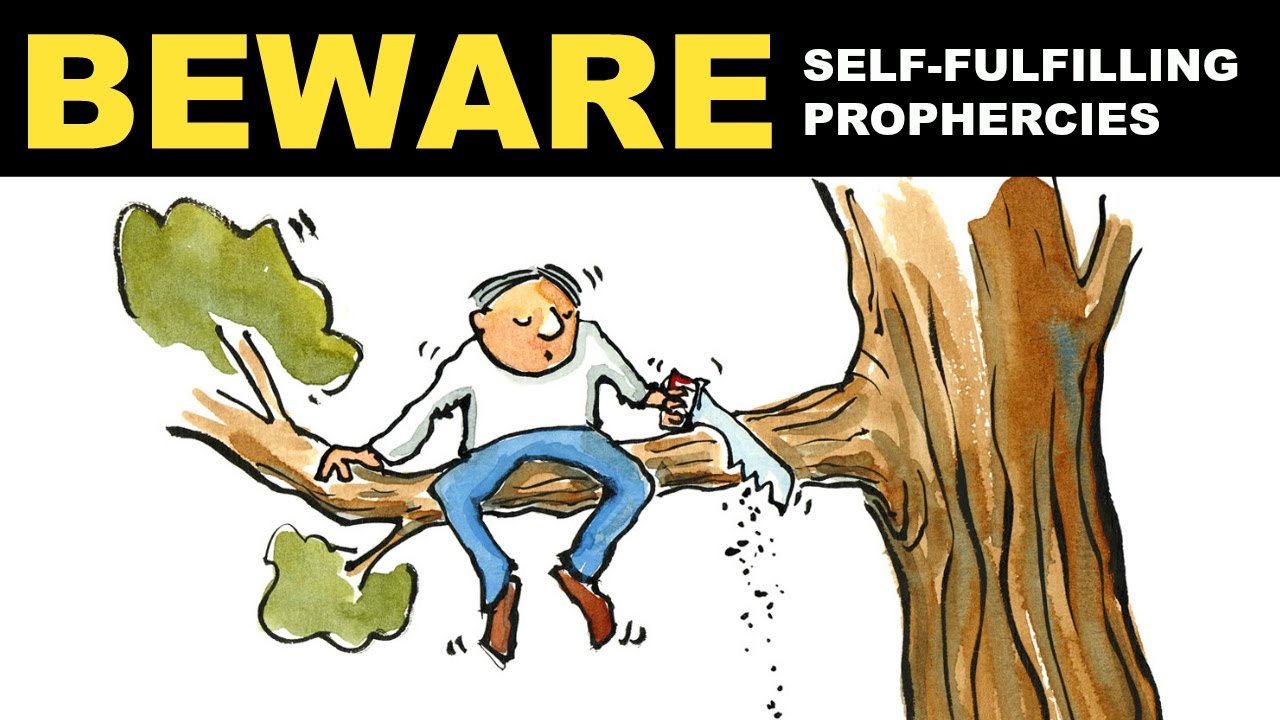
It may very well be the case that our expectations about teenagers have a significant impact on how we treat them. In turn, how we treat them ends up affecting how they act in response. Then, when they react, we use confirmation bias to justify our expectations. It comes off as one elaborate self-fulfilling prophecy to which we all contribute.

When you think about it, the signs are there. If you’re a teenager, just look at how the world treats you. If you’re an adult, think about how you were treated as a teenager and how you treat teenagers now.

We impose strict curfews about what they can do with their private time. We don’t trust them to consent to sexual activity until a certain age. We regularly send them to educational institutions where their lives and schedules are strictly controlled, not unlike that of prisoners. Whenever there’s a crime or an act of deviance, we tend to expect teenagers to be involved.

From my own experience, I can attest to this. When I was in high school, I noticed a distinct change in the way adults and teachers dealt with us, compared to middle and elementary school. Suddenly, everything we did was subject to greater scrutiny. It was as though everyone thought that we, a bunch of hormonal teenagers, were just one impulse away from becoming violent deviants.

I’m not going to lie. I found that kind of insulting. Teachers, adults, and even police officers would talk down to us whenever they discussed things like sex, crime, and even our personal lives. It wasn’t just that we were expected to screw up. It was almost as though we were supposed to screw up.

It never really crossed my mind that being a teenager could mean anything else. The idea that these attitudes were somehow flawed never entered my mind. I don’t think many people, including other teenagers, give it much thought now. That may very well be a problem that only makes itself worse the longer we have these expectations.

Part of what inspired me to write about this topic is an article from TheVerge that pitched the crazy, yet oddly logical idea that we should consider those under the age of 24 to still be teenagers. I admit I thought it was a joke at first, albeit not of The Onion variety. However, the author does make some interesting points.

Compared to earlier generations, youth today are staying in school longer, marrying and having kids later, and buying a house later, writes Susan Sawyer, the chair of adolescent health at the University of Melbourne, in an op-ed published today in the journal The Lancet Child & Adolescent Health. The transition period from childhood to adulthood lasts far beyond age 19, when it is popularly thought to end. As a result, she writes, we should change our policies and services to better serve this population.

In a sense, the author of the article is doubling down on the expectations. Now, it’s not just people who don’t have a two in front of their age to which we should ascribe these assumptions. We need to apply that to people even older because somehow, they’re still not meeting the other expectations we have of functioning adults.

Personally, I think that’s taking things in the wrong direction. If we’re going to start expecting more deviance and immaturity from more people, then that’s what we’re going to see and not just from confirmation bias. Just as I did as a kid, my negative expectations led to negative manifestations. Now, they may follow young people beyond high school.

It’s not magical thinking to say that attitude matters when it comes to dealing with people. Human psychology is extremely complex and varies wildly from individual to individual, but humans are still a very social species. As such, treating others with respect and maturity will provide them with incentives to do the same.

I don’t deny that certain assumptions are difficult to escape, especially when some of them are incorporated into actual policies. Even if we woke up tomorrow and started treating everyone over the age of 13 as a responsible adult, it probably wouldn’t resolve the many issues we still have with youth in society. However, as I came to learn as an adult, having a good attitude goes a long way towards achieving a good outcome.

1 Comment

Filed under gender issues, sex in society, sexuality

The Devastation Of Alienation On Our Sexuality (Among Other Things)

When I was growing up, the concept of alienation only applied to grunge rock, heavy metal, and whatever other media disaffected youth used to voice their dissatisfaction with the world around them. Being such a miserable teenager myself, I thought I understood that sentiment to some extent. As I’ve gotten older, I’ve realized that there’s a lot more to it.

Alienation has been in the news a lot lately, but it’s not one of those annoying contemporary buzzwords like “toxic masculinity.” It’s actually a term with a dictionary definition, which also has some philosophical backbone that goes back centuries. Like most philosophical terms, though, it has undergone some revisions over the years.

Rather than get into the long, tedious path the idea of alienation has taken, I want to apply it to our current situation. In addition, I’m going to analyze alienation the same way I often do with superhero comics in that I’m going to apply it to sexuality. I doubt that’ll surprise long-time readers of this blog, but I also doubt it’ll surprise anyone who has observed recent societal trends in how we approach sex in society.

Without question, there is a sense of alienation going on in our collective sex lives. While it doesn’t affect everybody, especially the billionaire rock star/celebrity crowd, it does affect some people more than others. I imagine I’ll upset or offend some people by identifying parts of that crowd, but I need to take that chance to make my point.

The basics of alienation are simple. According to Dictionary.com, the definition is as follows:

  • The act of alienatingor of causing someone to become indifferent or hostile.
  • The state of being alienatedwithdrawn, or isolated from the world, through indifference or disaffection.
  • The act of turning away, transferring, or diverting.

Within the scope of this definition, you probably know someone who has experienced this type of feeling. At the very least, you knew someone growing up who just felt left out of everything and went out of their way to detach themselves from the rest of society.

Their reasons for doing this vary. Some have serious mental health issues. Others are driven to alienation by economic factors like poverty. Some even go so far as to say that our modern form of capitalism is an inherently alienating force. The entire premise of “Fight Club” actually revolves around that idea, as so wonderfully articulated by the folks at Wisecrack.

With respect to sexuality, though, alienation is a bit trickier. So much attention has been placed on how powerful men solicit sex from beautiful women or how women struggle to maintain some semblance of sexual freedom that it’s hard to see the forest from the trees. Being both a man and an aspiring erotica/romance writer, I’m going to make an effort.

I don’t doubt for a second that alienation affects the sexuality of all genders. Sex, especially if you’re not having the kind that fulfills your needs and desires, can be pretty alienating. We humans are wired to want, seek, and enjoy sex. Given the crude and clunky nature of biology, in general, it’s bound to get distressing and disorienting.

For centuries, women were more prone to sexual alienation than men. That’s because, until relatively recently, their sexual choices were made for them. They didn’t get to choose their spouse. They didn’t get to live their own lives or explore their sexuality with a variety of partners. In fact, doing so might actually be detrimental to their safety.

When you have no choices and much of your life is controlled by others, it’s easy to feel alienated. You have no agency, control, or freedom to even know what you want sexually. That led to a lot of unsatisfied, desperate women.

Conversely, men weren’t just allowed to fool around on their spouses. In fact, it was kind of expected. In that respect, not having a mistress might actually be alienating. Men who loved their wives too much were even criticized.

Then, in the late 20th century and into the 21st century, the pendulum swung in the other direction. The women’s rights movements and the rise of modern feminism gave women more control of their sexuality. For the most part, modern women can explore their sexuality and enjoy a level of sexual freedom once reserved for aristocratic men with a legion of mistresses.

By and large, this has been a good thing. In fact, greater gender equality with respect to sexuality might actually be more conducive to our caveman brains. The sexual practices of Bonobo apes are a testament to that. However, in some respects, the pendulum has swung so far in the other direction that the alienating forces are hitting another group.

I’ve mentioned it before and it seems to be an ongoing trend. With the rise of third-wave feminism and political correctness, all the evil and ills of the world are attributed to horny men seeking sex from beautiful women. It’s very much a double standard that seems to be intensifying with each passing year.

Whereas a man trying to seek sex with multiple women are more likely to be seen as a misogynist pig, women seeking sex are seen as empowered. Sure, there’s still slut-shaming, but a good chunk of that actually comes from other women. It’s almost paradoxical in the sense that a woman will be criticized, no matter how much or how little she decides to exercise her sexual freedom.

That too can be alienating, but those same women can take comfort in the knowledge that they’re the sexual gatekeepers. They’re the ones who give the consent. They’re the ones who decide whether a man is getting sex. If the man has a problem with that choice, then he can be subject to serious consequences, even if he misinterprets the message.

The recent surge of sex scandals and the growing emphasis on consent has put a lot more pressure on men, especially those who aren’t rich, well-connected, or attractive. In terms of raw numbers, that represents the vast majority of men, myself included. Some call it the 80/20 rule of dating, but I prefer to think of it as a greater alienation complex.

By that, I mean the existing standards and methods for men seeking love, sex, and intimacy make most men prone to a sense of alienation. I won’t say it’s as bad as it was for Victorian Era women, but alienation is difficult for anyone, regardless of time, circumstance, or gender.

The situation for men is akin to playing a game in which you know other players cheat and/or have inherent advantages, but there’s nothing you can do about it. On top of that, the standards are so high and the margin for error is so low that, from a distance, it seems impossible. It creates this distressing sentiment that you will never find the love or intimacy you seek.

I’m not going to lie. I’ve looked in the mirror on some mornings and felt that way, especially in my awkward, acne-laden teen years. I like to think I’ve gotten better over the years because I’ve worked on myself, gotten into shape, and made myself more attractive to the opposite sex. However, I understand that there are plenty of men who struggle to do that or don’t have the same opportunities.

For them, the alienation is almost unavoidable. They see the marketplace for love and sex, but don’t see any opportunities. Sure, they can still play the game, but it would be like a toddler trying to win a boxing match against Floyd Mayweather. It just doesn’t seem worth it.

Within the current system, the structures in place ensure that there will always be a sizable chunk of men who are left out of the sexual landscape. They’re not the only ones either. Women who are either unattractive or not inclined to play by the evolving rules of that landscape will be just as isolated. So long as those standards are so rigid, there will be a lot of sexually unsatisfied people in this world.

From a pragmatic standpoint, our current approach to sexuality fails the Stanhope Principle. Society cannot function or progress with such a system. Any system that has such large groups of people feeling alienated and left out is inherently unstable. Karl Marx, however you feel about him and his ideas, made that obvious years ago.

For now, we can only do so much to adapt the current system. The sexual alienation that people feel will continue to evolve, for better and for worse, in accord with major trends. If history is any guide, though, the sexual landscape will continue to change. Whether or not that’ll mitigate or intensify the alienation remains to be seen.

3 Comments

Filed under gender issues, sex in society, sexuality

Quality Life Lessons From The Cleveland Browns And Their Fans

NFL: SEP 18 Ravens at Browns

Even though I often say that the world is getting better by most measures, I don’t deny that it’s not improving for a sizable part of the global population. There are parts of the world still racked with disease, poverty, and despair of all kind. The unfortunate people in these parts deserve our respect, sympathy, and support.

However, there’s one particular part of that suffering population I want to focus on. While 2017 might have been bad for quite a few people, there’s one group of people whose anguish is unique in terms of its breadth and context. That group is the Cleveland Browns and their long-suffering fans.

Being a football fan, who often finds himself defending the unflattering situations in which the NFL often finds itself, I follow most major news stories surrounding the NFL throughout the season. Few stories have been as disheartening as those involving the Cleveland Browns, who became only the second team to lose all 16 games in 2017.

In terms of a major sports team in a major American city with a rich sports history, you literally cannot get worse than the 2017 Cleveland Browns. Between their long-standing issues at quarterback, a terrible track record in the NFL Draft, and a high turnover of coaches in the past several years, the Cleveland Browns have set a solemn standard for ineptitude.

It doesn’t matter how disappointed you were with your favorite team this year. It doesn’t matter how upset you were when they got eliminated from the playoffs, lost to a hated rival, or made a bone-headed play that made you ashamed to be affiliated with them. Cleveland Browns fans had it worse. There’s just no way around it.

However you feel about the city of Cleveland, their sports teams, or LeBron James, you can’t help but feel bad for the fans of the Browns. They are a very passionate bunch, one whose history includes big names like Paul Brown, Jim Brown, and Bernie Kosar. Given the heartbreak they’ve endured over the years, this latest news is just salt in the wound.

I’m sure there are plenty of Browns fans out there who could talk for hours about how rough it is, being a Browns fan. Up until 2016, being a Cubs fans was the only fair comparison. Now, the Browns are very much alone in their solemn state. It’s a modern tragedy that seems downright masochistic to some.

That’s exactly why the decision by some fans to hold a parade to celebrate their ineptitude is so remarkable. It wasn’t a prank or an elaborate joke, either. This parade really did happen and it managed to draw over 2,000 people.

To some, it seems funny that a team that had such a historically bad season is worth celebrating. To others, it may seem like an elaborate form of therapy, holding a parade instead of just wallowing in the misery of being such a historically bad team. Personally, I see it as an important life lesson, of sorts, that we would all be wise to heed.

Losing in any capacity is hard, whether it’s a major sports team or just losing your keys. There’s actual psychology behind it that is wired into us, even as children. Losing, especially dealing with it, can be downright painful for some people. It’s like suffering a nasty wound and having that wound fester.

That’s why coping skills are so important. Most of us who aren’t billionaires or Tom Brady are going to endure our share of losing in life. Our ability to cope and learn from those losses help shape the kind of person we are. There’s a right way to cope and many wrong ways. Too many wrong ways risks breaking someone mentally or just making them an asshole.

When it comes to the coping skills of Cleveland Browns fans, throwing a parade and celebrating the absurdity of their team’s ineptitude is actually pretty damn healthy. Unlike the fans who riot when their team loses a championship game, this parade caused no real property damage.

It didn’t involve people angrily lashing out, which has been proven to be bad for you. It didn’t involve angry protests, which can be hit or miss in terms of effectiveness. It was a parade, one in which Browns fans overtly acknowledged their team’s failures and essentially accepted it. From a psychological and societal standpoint, that’s pretty damn healthy.

There’s even some real philosophy behind this concept, one that goes beyond sports and their fans. It’s called absurdism, the idea that in order to cope with the struggle to find meaning in a seemingly-meaningless world, we must embrace the absurd condition of life in general. We should even celebrate it.

Some philosophers cite the story of the myth of Sisyphus, the man doomed to endlessly push a boulder up a cliff for all eternity, only to fail every time. However, through the lens of absurdism, Sisyphus is actually the happiest guy in the world because he ascribes meaning to his meaningless act. He doesn’t see what he does as futile. He sees it as purpose and he celebrates it, as such.

The situation for the Cleveland Browns may not be as hopeless as Sisyphus, as many bad teams have gone from worst to first before, but the fact that fans are celebrating the struggle reflects strange comfort our minds find in absurdism. We know the situation is bad and it literally can’t get much worse, but we accept and embrace it. As such, it doesn’t’ destroy us. It actually makes our collective psyche stronger.


This is even more useful in sports because, even after such a historically bad season, things are pretty much guaranteed to get better for the Cleveland Browns. They literally cannot get worse. They enter the 2018 season with a new general manager, abundant cap space, and multiple high draft picks. They will get better. The history of bad NFL teams makes that a given.

Until that improvement comes, though, holding a parade to celebrate the rock bottom of such a proud franchise is both fitting and healthy. It’s an act from which we can all derive lessons. Sure, we all have bad days and some of them are worse than most. However, things do tend to improve when we know how to cope.

For the Cleveland Browns, such good coping skills will make future victories and championships feel that much sweeter. It may take a while. It may take a long while. As Red Sox fans and Cubs fans can attest, though, it’s worth the wait.

1 Comment

Filed under Current Events, sports

How Men Are Set Up To Fail With Women

When it comes to seeking love and sex, I kind of need to be on top of things. I’m trying to get into the business of writing sexy romance novels. I’ve got another novel coming out in a couple months and a couple manuscripts I hope to submit to my publisher very soon. If I want to tell quality romance stories with the right amount of sex appeal, I need to know about the dynamics of these intimate processes.

Unfortunately, that’s a lot harder than it sounds and few people who aren’t billionaire rock stars/supermodels would contest that. Finding love and finding sex aren’t always mutually exclusive, but they tend to be linked for reasons I don’t think require much explanation. Humans are a sexual, passionate species. Ideally, we should make the process of seeking those experiences clear, efficient, and understandable.

I’ll give everyone a moment to stop laughing because I know we’re a long way from that ideal. In some respects, we’re doing the exact opposite. We’re actually making it harder on ourselves to find love, sex, and everything in between and I’m not just talking about the effects of recent sex scandals. We’ve gotten to a point where men and women aren’t just on the same page. They’re not even reading the same book.

This brings me to a recent article from Cracked.com. I know they’ve been hit or miss lately. Between their poor understanding of what makes someone a pervert and their knack for complicating ideas of consent, they’ve had a bit of a regressive streak lately. They’ve been less focused on humor and more focused on pushing the kind of everything-is-sexist agenda that is rarely funny.

This time, however, they’ve managed to step back from that agenda and offer some insight into the other side of that equation. Yes, women do face their share of challenges in pursuing love and sex with men. Sifting through the crop of potential partners, trying to figure out who one wants something meaningful and who just wants a quick romp, is frustrating and the source of nearly every romantic comedy ever made.

However, the other side of that struggle with the men, has its own set of challenges and our culture does plenty to add to the difficulty. Since I am a man and I’m familiar with some of these challenges, I feel it’s worth talking about. I’m also glad Cracked.com took the time to write something like this. For those interested, here’s the link:

Five Ways Society Trains Men To Expect Sex From Women

This is one of those articles that will likely generate plenty of discussions among feminists, MRAs, egalitarians, and romance fans, like myself. There are some parts of it that still come off as overly-gendered preaching. However, I think the article presents the situation in a way where those discussions need not involve threats or insults to each other’s mothers. Then again, this is the internet.

Chief among the arguments that this article makes involves how our culture, from movies to TV shows to comic books, gives the impression that good men have do things a certain way to get love and sex from women. However, those things rarely involve the kind of work, strength, and achievements that women and men alike find attractive.

Instead, sitcoms and romantic comedies constantly feed men the idea that just being meek, passive, and constantly friend-zoned will eventually earn them their dream girl. At no point is there any effort to actually find out what that dream girl actually wants in a lover because that just wouldn’t make for a good romance movie, even if it makes total sense. The article puts it even more succinctly.

The idea that women will eventually find their lengthy secret crushes cute if they cling to them is an anxiety-reducing godsend. So they keep waiting and waiting for the “right” time. But that time never comes, because their life isn’t being written by a hack. So they get bitter and frustrated, because they don’t just feel rejected; they feel ripped off, like they were owed love, but it was somehow denied them.

It’s basically an extension of the old “nice guys finish last” diatribe that I’ve criticized before. I admit that even I bought into that growing up and my lack of romantic interest from other women is testament to how flawed this concept is. It also says something that my favorite romantic movie, “Crazy/Beautiful,” does not follow that trope.

It gets even worse than that, though. Beyond presenting a false understanding that good men have to be meek to get the girl, there’s also this weird/unhealthy idea that every romantic pursuit has to be its own epic narrative. In the same way people erroneously believe they’re the hero of their own story, they believe they’re one of the lovable nerds in “The Big Bang Theory” who ends up with the cute girl.

Never mind the fact that some of the romance in that show may be very unhealthy, there’s a sense that sex and romance has to fit into this narrative or it’s a total failure. There’s no room for more mundane notions that a guy just asks a girl out, she says no, and they get on with their lives. That story just seems wrong and doesn’t fit the epic love story/sexual conquest that men build up in their minds.

This is where it gets really soul-crushing for men looking for that kind of romance and sex that bad Julia Roberts movies are made of. For men who try to play by those rules, being the meek and lovable underdog that they think will get them love and sex, what happens when it fails? What happens when Leonard Hofsteader doesn’t get the girl and ends up alone, heartbroken, and frustrated?

It can be pretty traumatic and the article points that out, giving the impression that men have no room for error. If they fail to get the love and sex they seek by playing by the rules laid out in every romantic comedy ever made, then they will die poor and lonely.

So Nice Guys see countless stories wherein women vent about creepy encounters they’ve had with men who interrupted their days, and it freaks them out. That venting is understandable — I’d be angry too if I was constantly getting harassed about my chiseled good looks while trying to run errands. But Nice Guys end up under the impression that every encounter ends in either a sweeping success or a reminder of why mace was invented. They think there’s no margin for error, because there’s a constant fear that failure will end in loneliness and humiliation. There’s a brutal contradiction. Nice Guys are told that they need to meet new people, but also that if they fuck up even a tiny bit, they will be mocked.

This is also where some of the gender disparities really show, especially from the male end of the equation. That’s because within this epic romance narrative that men think they’re part of, there’s one component that amplifies the tension between gender. It has to do with who decides the when, where, how, and why of love and sex.

Even within a society where women are vulnerable to various forms of sexual misconduct, they are still very much the sexual and romantic gatekeepers, as the article calls it. In that narrative, the women are the ones who decide whether or not anyone has any sex. The women are the ones who decide whether or not a relationship ensues. It’s not like sex and romance have any cooperative elements, right?

That last part was meant to be sarcasm, but it’s no laughing matter in the context of the narrative that men think they have to follow. So much of it is built on the idea that women are the final decision-makers. It’s an idea that frustrates men and is rarely acknowledged by women, creating the kind of inequality in a relationship that is rarely healthy.

It’s a component that does more than just set men up for heartbreak and women up for frustration. It can be downright unsexy when it comes together. The article puts it better than I ever could.

So while many men from generations past thought that the female orgasm was a myth and that a clitoris was an African insect, most Nice Guys readily accept that a woman’s sexual satisfaction is important. But in getting that message across, we’ve accidentally started telling men that while it’s wrong to try to seduce women in most situations, when sex does happen, you’d better be goddamn incredible at it.

Think about the disconnect in that dynamic. Since women are the sexual gatekeepers, men can’t readily seduce a woman without coming off as a creep or a Biff Tannen wannabe. Even when they do get the go-ahead for sex, if they don’t satisfy the woman with the prowess of Wilt Chamberlin on crack, then they’ve failed.

Considering sex, like anything in life, takes practice and cooperation, this kind of imbalance is bound to make for some less-than-romantic situations that’ll leave everyone involved unsatisfied. Men, particularly, build up all these expectations around what they think movies, TV shows, and bad porno says is important and grade themselves on that steep curve.

It’s not too hard to imagine why men get so frustrated and women are so disappointed, which only serves to heighten the hostilities between genders. Real life simply doesn’t play out the same way that movies, sitcoms, or sexy romance novels do. If they did, then there would be no appeal to those things in the first place.

That’s probably the most important take-away from this article. Yes, there are still parts where it tacitly mentions the ongoing sex scandals that make men groan, but the message is fairly concise. The way we’re going about finding love and sex is exceedingly imbalanced. It’s making men and women despise each other far more than they should.

Being the optimist I am, at heart, I believe that our inherent desire for love and sex will gradually change this narrative. Men and women, as hostile as they can be to one another, still seek love and the toe-curling pleasure that comes with making it. It may take time and more frustration, but we’ll find a way to go about it. Genuine love and great sex is worth it.

1 Comment

Filed under gender issues, sex in media, sex in society, sexuality

Forgiving Sexual Misconduct (And Why We Should Try It)

When someone says they’re sorry, how do you decide whether or not to accept their apology? Some are easier than others. If someone uses your toothbrush by mistake, it’s not a big deal for them to say they’re sorry, buy you a new one, and move on with your lives. It’s only when someone does something that’s really egregious that we find out how forgiving we truly are.

When it comes to egregious behavior, though, sexual assault and sexual harassment are near the top of the list. Recent news surrounding celebrity sex scandals have only solidified that sentiment. Just being a dick to someone is bad enough. Being a dick in a way that makes someone feel violated, used, and abused takes it ten steps further.

As bad as those lurid misdeeds can be, should we still accept their apologies when they express remorse? It’s a hard question to ask and one I’m sure evokes a lot of difficult emotions, especially for those who have been victims. However, forgiveness is a powerful force, more so than most people realize.

I’m not saying that everyone should forget about someone’s crime or overlook how awful it was, but it’s still a question that’s worth asking. Our ability to answer it will reveal a lot about our society and the kind of people we are. Knowing those risks, I’ll say it outright.

Should we forgive those accused of sexual misconduct if they apologize? 

I ask that question with the understanding that some people will never forgive someone for their misdeeds and for entirely understandable reasons. I don’t blame animal lovers for refusing to forgive Michael Vick for what he did to innocent dogs. I certainly wouldn’t blame victims of sexual assault to forgive the likes of Harvey Weinstein or Bill Cosby if they ever came out and offered a heartfelt apology.

However, even if certain people can’t forgive, that doesn’t mean that we, as a society, shouldn’t make the effort. Human beings are flawed creatures. They make mistakes. They do bad things, some worse than others. They may not think of their actions as bad. They may just see what they do as their own twisted version of “normal.”

It’s only when the breadth of their crimes are shoved in their faces that they stop making excuses. For those with power and influence, those excuses can be pretty egregious, as I’ve mentioned in my discussions on excuse banking. Despite those factors, these people are still human, at the end of the day. Provided they’re not sociopaths, they do have feelings and they do experience remorse.

Even if we, as a society, hate what they’ve done, should we give them the benefit of the doubt when they apologize? That may be harder to do for certain celebrities, but I still believe it’s worth doing.

It reflects a sentiment I expressed a while back on our growing lack of faith in people, as a whole. We’ve become so jaded, so cynical about the world that as soon as we see a public figure’s name trending, we instinctively assume the worst. I admit that whenever I see someone on the top trends of Twitter, I brace myself for news that’s going to churn my stomach.

It’s that kind of cynicism that really poisons our perceptions, leading us to assume the worst in people. Beyond making us miserable like extra in an old grunge music video, it numbs us to the possibility that someone can be capable of redemption. If we’re just too cynical, we don’t even bother giving them a chance.

That’s a tragedy, in and of itself, because if we don’t at least try to forgive people for their crimes, then what reason do they have to apologize in the first place? It just gives people more reasons to make more excuses, as Kevin Spacey tried and failed to do when his scandal broke.

Those excuses just leave us more jaded, thereby making those accused more defensive. It’s a brutal cycle that ensures people will become more focused on not getting caught for their misdeeds rather than rectifying them. That’s not a healthy mentality for any society, be it one that exists online or one from our caveman days.

I don’t deny that forgiveness is a challenge, especially as we’ve become more sensitive to certain types of crimes. It’s also a two-way street in that the celebrity and/or public figure has to actually apologize in the first place. That doesn’t always happen. Some people are incapable of such humility.

Some, however, do make the effort. Shortly after news of his scandal broke, Louis CK issued a statement admitting the allegations were true and expressed remorse for them. He didn’t file a lawsuit or go on a PR blitz to quash the story. He confronted it directly and owned up to it. That’s something even non-celebrities struggle to do and for that, he deserves some credit.

Again, that’s not to say that the things Louis CK did weren’t egregious. If possible, he should face the same penalties that any non-celebrity would face if they were in his position, whether that be a hefty fine, a restraining order, or jail time.

However, once he pays his price and admits his guilt, the ball is then in our court. It’s up to us to give him another chance to make amends. Yes, it’s a risk because if he does it again, then there will be another victim that suffers. We still have to ask ourselves, though, what good can possibly come by punishing someone like Louis CK until the day he dies?

Excessive shaming can have some pretty debilitating effects on people, some of which can inspire even more misdeeds. Think back to what I described with learned helplessness and Al Bundy Syndrome. At some point, a person subjected to too much punishment just stops trying to avoid it and does nothing to change their behavior. That too can lead to more victims and more crimes.

That’s why, in the grand scheme of things, it’s in our best interests as decent human beings to give those who express remorse for their sexual misdeeds a chance. First, give them a chance to confront and apologize for their actions. Then, once convinced of their sincerity, give them a chance to be good again.

That means not belaboring or hounding them for their past crimes. That doesn’t mean ignoring them either. What happened in the past is bad, but it should remain in the past. The focus should be on the present and the future. If both sides are on the same page, in that respect, then that’ll do much more to improve our sate of affairs. Let’s not lie to ourselves. We kind of need that right now.

1 Comment

Filed under Celebrities and Celebrity Culture, Current Events

Cheap Sex, Sexual Revolutions, And Why It’s A GOOD Thing

When something is cheap, you tend to get what you pay for. I learned that the hard way when I tried to spend as little money as possible on a trip to Florida. I ended up staying in an awful hotel with dirty sheets, piss-poor room service, and towels that felt like sandpaper. I definitely paid for not wanting to pay too much.

In any functional economy, that’s how it’s supposed to work. If you’re not willing to put effort and resources into a product, then you’re not going to get much out of it. It’s the cornerstone of how western society has prospered, according to Adam Smith. With sex, however, you can’t always apply the same rules.

Granted, I’ve often tied certain sexual attitudes to economic factors. I still stand by some of those comparisons, but I don’t deny some special circumstances, with respect to sex. Unlike the stock market, new smartphones, or junk bonds, sex isn’t a product, nor is it a simple service.

We’re not hard-wired to want to buy the new iPhone X, even if some people feel otherwise. We are, however, hard-wired to seek sex. It’s one of the most basic drives any animal can have, including humans. Unlike other markets, we can’t just opt out or cash in our investment, so to speak. Even those who try to avoid it, the desire is still there. In some cases, avoiding it can have a high cost as well.

I bring this up because current sexual trends have certain people who care a lot about how much sex other people are having seem to be taking our society into uncharted territory. Even though sexual activity among younger people is down, there’s a growing sentiment that the sex people are having is cheap, dispassionate, and empty.

Now, I’m certainly not the one saying this. As a man who writes erotica/romance novels, I always put a special premium on all thing sexy. That may make me an anomaly, but others interpret our sexual trends differently.

That brings me to the article that inspired this post. According to Ian Snively of the Daily Signal, our society is being undermined by the notion of cheap sex. While I certainly don’t agree, this is the argument he makes.

He says people’s dependence on “cheap sex” has a lot to do with the influences of the “sex market.” Specifically, the products and media that promote sex don’t cater to women’s best interests.

“The mating market no longer seems to favor women’s interests like it once did,” said Regnerus. “It favors men’s interests, which is why so many women find dating in their 20s and early 30s so frustrating.”

Regnerus thinks that because women generally want a long-term commitment in a relationship, their interests make selling sex more difficult. Instead, the sex market plays into the interests of men, who generally prefer less commitment.

“If you asked men and you asked women, ‘What is your ideal relationship?’” he said, “more men than women will say, ‘Oh, I would love something short-term, where I can just go over, and replace whenever I feel like it.’”

And because the market has exposed society to “cheap sex” for so long, Regnerus thinks people have a hard time getting out of that mindset.

“People have been so trained into cheap sex, that they don’t know how to get out of this pattern that’s been bothering them,” he said.

Now, I’m going to resist the urge to go on a long-winded tirade about how this man interprets our current sexual climate. In many ways, he’s not much different from any priest, mullah, monk, or rabbi who claims that too many people aren’t having monogamous, missionary-style sex for the sole purpose of producing new adherents/tax payers/workers/etc.

The one aspect in which he’s all too similar to these age-old, anti-sex sentiments is how he makes the broad assumption of what women want in a long-term commitment and what men want, conversely. The idea that all women want the same thing and men always want something inherently different is, to be honest, both insulting and misguided.

Mr. Snively doesn’t entertain the possibility that maybe some women might want a casual relationship wherein the sole purpose to have regular, recreational sex for the sole purpose of enjoying the toe-curling pleasure it brings them. At the same time, he doesn’t entertain the possibility that men actually want love and commitment.

He’s basically assuming that every gender stereotype that every teen movie ever made is correct. Never mind the fact that movies have a horrible track record when it comes to reflecting reality, especially with firearms. The man here is building his entire understanding about “cheap sex” around assumptions that anyone with even a little non-Hollywood life experience knows are flawed, at best.

Mr. Snively calls these trends in cheap sex a new sexual revolution. Having already written about the prospects of future sexual revolutions, I can say his standards for revolutions are laughably low. In addition, just researching sexual revolutions reveals that there’s nothing revolutionary about cheap sex.

No matter what religion, government, culture, or peer pressure tries to do, horny men and horny women, alike, will seek outlets. Some will be legitimate. Some will be illicit. In any case, the culture and attitudes will ascribe a cost to getting that outlet.

If the cost is high and sex is expensive, then not everyone can afford it. Sure, the rich and the powerful will have their mistresses, concubines, and side-lovers. The not-so-rich, however, will have a problem. They will have an unmet need that their biology won’t allow them to ignore completely. Like famine, you can only do so much to ignore how hungry you are.

It’s for this reason that others have argued that societies full of sexually-deprived people will be an unstable one. When the cost of sex is that high and your biology won’t let you forget you have this unmet need, you’ll do anything to meet that need, no matter how irrational or horrific it might be.

That’s cost of expensive sex. Flip the scrip, make sex cheaper, and suddenly, there’s a different dynamic at work. In a world of cheaper sex, it’s easier to meet those needs. With the rise of dating apps like Tinder and eHarmony, it’s easier today to seek both cheap sex and deeper relationships. Individuals have options to pursue, depending on what they seek and why.

Mr. Snively sees this as revolutionary. It’s really not and I’m not just talking about the old hippie concept of free love. There have been numerous cultures where sex was even cheaper than it is today. Those cultures functioned and faltered in their own unique way. The cheapness of sex was not seen as all that groundbreaking.

That’s not to say that cheap sex came without a cost. It certainly did. Cheap sex does have consequences that include increased transmission of diseases, unwanted pregnancies, and unstable family structures. However, I would argue that those costs are far less than the alternative.

I’ve mentioned before how fascist regimes need to control sexuality to some extent. Therein lies the key, though. It takes an extremely authoritarian government to impart the kind of force necessary to counter something as powerful as the human sex drive. Pretty much every government/church that has tried that in the past has failed in the long run.

In a sense, the cost of trying to make sex more expensive is actually far higher than making it cheap. It requires a lot of power, suppression, and micromanaging to manage, let alone contain the sex drives of every person in a society. That kind of effort requires a level of cost and resources that no government can hope to manage, especially in the long run.

That’s why I believe Mr. Snively is wrong. Cheap sex is not that revolutionary. In addition, cheap sex is actually far better for a free and open society than the alternative. In that sense, it should be celebrated and I intend to use my sexy novels to contribute to that effort.

1 Comment

Filed under Current Events, gender issues, Second Sexual Revolution, sex in media

The Lessons (And Misguided Agendas) Of The Harvey Weinstein Scandals

I promise I’m going to stop talking about the Harvey Weinstein scandal at some point. I know everyone is probably sick of it. Make no mistake, I’m sick of writing about it. Unfortunately, it’s one of those issues that grows way beyond its original context.

It’s not enough to highlight the sheer breadth of the transgressions committed by such a powerful man. It just has to be part of a larger issue that brings out the best and worst of all those eager to comment on it, myself included. Never mind the fact that Weinstein is being punished severely for his many transgressions. People just have to make it part of a much larger agenda, and not necessarily for the right reasons.

It’s that component of this tragedy/crime/outrage that compels me to keep talking about it. Make no mistake, I’d much rather be talking about resolving love triangles in superhero comics and products made specifically for female breasts. However, I see the massive uproar over the Harvey Weinstein affair as entering dangerous territory.

Now, I don’t deny the good that this scandal has inspired. Sexual assault is a serious crime and powerful men like Weinstein have too long a history of getting away with it. In a just and peaceful society, these kinds of crimes shouldn’t be overlooked. That said, there’s a big difference between pursuing justice and a misguided moral panic.

To provide some context, there’s plenty of recent history that should provide some perspective to the ongoing outrage. Back in the 1990s, before hashtags and dick pics, there was a huge outrage over the impact of violent video games and the role they played in mass shootings like Columbine.

Never mind the fact that there’s no established causal link between violent video games and actual violence. Never mind the fact that all available data has shown an overall decrease in violence over the past several decades. The moral panic allowed people with agendas to pursue those agendas to the utmost, even when the truth isn’t on their side.

This brings me back to sexual crimes committed by men like Harvey Weinstein. What he did was egregious. What he did to his victims, if even half-true, warrants full prosecution to the utmost. Unlike the panic over violent video games, this issue involves real people who were subjected to real harassment. That’s beyond dispute.

Unfortunately, the media, the public, and everyone with a Twitter handle aren’t content to just ensure that Weinstein faces justice for his crimes. They just have to turn it into a kind of rallying cry that exposes the depths of misogyny, corruption, and abuse. It happened with video games in 2014. Now, it’s happening again.

It’s getting dangerous because people who express concern about the implications of taking every accusation of sexual assault seriously are being labeled sexist, misogynist monsters. Like many moral panics before it, there comes a point where anyone who doesn’t subscribe to the panic is guilty of thought crimes that deserve the kind of scorn that even George Orwell would find excessive.

We’re already seeing this happen as everyone gets in line to voice their outrage and virtue signal, accordingly. In wake of the Harvey Weinstein scandal, everyone seems eager to become the hero in the battle against powerful men abusing vulnerable women. I’ve mentioned before how that kind of mentality is dangerous and misguided. We’re seeing a similar mentality emerge as everyone seeks to push their agenda.

Among those pushing that agenda include our friends at Cracked.com, a website I usually enjoy and often cite on this blog. They’ve already jumped at the chance to push an agenda, conflating the Harvey Weinstein scandal as an indictment of all men who ever dared to lust after a pretty woman.

It’s not just websites like Cracked either. There’s already a hashtag on Twitter called #MeeToo that has people recounting their experiences with sexual harassment and sexual assault. I don’t doubt that there are plenty of these stories that are both disturbing and true. However, there is a context to consider.

Sexual assault is a crime. It’s prosecuted like a crime. Like all crime, there are standards by which to process it. Chief among those standards is evidence. Those voicing outrage over the fact that neither Weinstein, nor Bill Cosby, are being charged with a crime is seen as a failure of justice. However, there’s another point to consider.

Sexual assault is hard to prove. So much of the evidence relies on testimony and in a court of law, that often gets conflated with anecdotal evidence. Science has revealed, time and again, that eyewitness testimony is among the least reliable forms of evidence you can have. Without better evidence, the high burden of proof that comes with a justice system that presumes innocence takes over.

In a sense, I can understand why those lamenting over men like Weinstein are so furious. It is frustrating to think that a man can commit such crimes against women and get away with it. In that frustration, things like facts and context tend to lose meaning.

I still don’t doubt that men like Weinstein and Bill O’Reilly are guilty of making life miserable for women. However, the extent and veracity of that misery is hard to quantify. The fact that they haven’t been charged with sexual assault tells me that the evidence just isn’t strong enough, even if it occurred. Where the justice system fails, though, mobs of hate and disdain will fill the gaps.

While that can help the voices of victims, it can also be dangerous. It can, in some respects, drown itself by claiming everything is harassment, everything is sexist, and everything is some sort of agenda to silence women. People want to believe that they’re Superman and men like Harvey Weinstein are the Lex Luthors of the world.

At some point, though, outrage burns itself out. Our collective capacity for emotional catharsis has its limits. Once it reaches that limit, we start rolling our eyes and become numb to it. For something as serious as sexual assault, we cannot and should not let that happen.

That’s a challenge, though, when everybody is so eager to virtue signal and ally themselves with the so-called right side of history. By over-blowing the outrage, victims of true sexual assault get lumped in with those who just didn’t like the person flirting with them.

Since harassment is so subjective and some people are more sensitive to it than others, the context will often get skewed. However, a scandal like Harvey Weinstein provides a sense of clarity on an issue that is so frustratingly subjective.

Therein lies the issue, though. Harassment, unlike assault, is subjective. Sexual assault is not. One is an emotional reaction. The other involves real, physical harm. Conflating one with the other is a dangerous precedent that will make people more reluctant to interact. As a fan of love, intimacy, and sexy novels, that’s not a world I want to live in.

9 Comments

Filed under Celebrities and Celebrity Culture, gender issues

The (Kind Of) Silver Lining To Recent Sex Scandals

Given the number of lurid sex scandals that have popped up in recent years, and not just the ones I’ve mentioned, you can be forgiven for thinking that there’s an epidemic of powerful men being a dick to women. Go to any social media site or comments section and you’ll usually find angry rants that are nothing short of apocalyptic.

I certainly don’t blame people for being angry about these scandals. What the Harvey Weinsteins, Bill O’Reillys, and Bill Cosbeys of the world have done is egregious. There are no excuses for being that unapologetically crude.

These are men in positions of power. They know, on some levels, that they have leverage that they can use to exploit others. It’s impossible to know whether they would do what they did without this power. So few people have that kind of power that it’s difficult and disturbing to know how most people would use or abuse it.

At the end of the day, though, they still decide whether or not to exploit their power for personal gain. Even if they’re able to cover it up for years, it’s still their choice and it’s all the more egregious.

As bad as these scandals are, though, I think it’s worth taking a step back to acknowledge an understated upside to this string of lurid news. It’s easy to forget sometimes that good news hides in the shadows of bad news. In fact, good news in general tends to hide behind the glut of horror and dread we’re fed every day by the media.

So what kind of good news can we possibly glean from the increasingly lurid sex scandal involving Harvey Weinstein? What good can come out of any sex scandal where a powerful man exploits his position to seduce desperately driven women? Well, if you’re willing to look beyond the infuriating details, it’s actually pretty revealing.

It’s getting MUCH harder for people to get away with sex scandals in general.

Think about it for a moment. Take a step back and look at the world we’re in now, with respect to sex scandals. Ignore, for a moment, the extreme voices from radical feminists and men’s rights activists who would use this scandal to push an agenda. The fact that everyone is so outraged by this scandal should count as good news.

Very few people are making excuses for Harvey Weinstein. Former allies are abandoning him. His wife is leaving him. The film industry that he helped expand is cutting ties with him at every turn. Despite being such a powerful, influential figure in Hollywood, this lurid scandal is costing him dearly.

Compare that to how scandals of the past often unfolded. Other than hilariously dishonest tabloids claiming that Madonna had a secret affair with Martian ambassador, most scandals rarely drew this kind of scrutiny and condemnation.

One of the most infamous examples is that of O.J. Simpson, who had a documented history of spousal abuse prior to the murder of his ex-wife, Nichole. However, despite this abuse, he was still largely a beloved celebrity figure. He was so beloved that some people just refused to believe that he was the kind of monster who would beat a woman.

If O.J. Simpson had carried out such abuse today, it would trend on social media immediately and there would be no way to sweep it under the rug. Say what you will about the prevalence of the internet, but it does carry out one important function. It makes hiding bad, sometimes criminal behavior a lot harder.

Go back 30 years and it was possible, albeit inconvenient, for someone with money and influence to hide a scandal. They just had to pay off the right people, sweet-talk the authorities, and have some damn good lawyers. When used wisely, it’s like it never happened.

Fast forward to today and no amount of money, influence, or overpaid lawyers can stop some random person with a smartphone from tweeting about a celebrity having a major meltdown or cheating on their spouse. Once it’s online, it’s next to impossible to stop.

Now sometimes, this can be a problem. Every now and then, a false rumor will start trending and lead to a lot of frustration. However, given the breadth and speed of modern media, it tends to correct itself. Once a rumor is obviously false, it tends to disappear quickly.

When it’s not a rumor and there’s a lot of digital evidence to back it up, as was the case with Harvey Weinstein, social media does not hold back. No amount of lawyers, PR agents, or hit men can stop it. Once the lurid truth gets out, people will respond and the internet ensures their responses won’t be filtered by the FCC.

This is where we, as a society, show another kind of progress. When it comes to powerful men exploiting women, we as a people have very little tolerance for that these days. We’ll tolerate a certain amount of douche-baggery, but when it becomes criminal, most people draw the line.

Harvey Weinstein is now paying the price. While I think it’s still important to see how valid the accusations against him are, the amount of evidence that has come out thus far leads me to believe that a significant chunk of these lurid stories are true. For what he did, he should pay a price.

Given the price he’s already paid, in terms of his reputation and loss of job opportunities, it sends a powerful message to powerful men. This isn’t the era of “Mad Men” anymore. You can’t expect to get away with these kinds of sex scandals anymore. Social media and the reactionary masses that use it will find out. When they do, you will pay a huge price.

In a world where powerful people can get away with atrocious behavior, some of which is downright criminal, it’s hard to have faith in people. While our world is far from perfect, I think the response to the Harvey Weinstein scandal shows that we’re making progress.

Even powerful men like Weinstein can’t hide their misdeeds anymore. People today are far less willing to turn a blind eye to these kinds of crimes. It won’t completely eliminate the kinds of lurid scandals that frustrate celebrities and titillate gossip magazines, but it will ensure that those kinds of scandals will be much harder to avoid. It won’t stop certain people, but it will help prevent them from using celebrity to hide their misdeeds.

12 Comments

Filed under Celebrities and Celebrity Culture, Current Events, gender issues