Tag Archives: gender

Recalling The Time I Felt Most Emasculated

depressed-man1_3265726b

Everybody has a few low points in their lives that they would prefer to forget. Even the richest, most privileged among us have moments where they feel like a wounded deer in a den of hungry wolves. I’ve certainly had my share of those days. While the pain they’ve caused me has waned over the years, I still remember them as clearly as they day they happened.

Talking about those moments is never easy. Most are content to keep them buried in the past and not think about them, a tactic favored by eccentric mad scientist cartoon characters. However, I believe there is some therapeutic value to revisiting those moments. Some of them can even offer insights that are more relevant today than they were when they happened.

In that spirit, I’d like to share one the greatest low points I ever had. What makes it relevant, though, isn’t that it was just especially bad. This one particular point marked the time in my life when I felt most emasculated, as a man.

Seeing as how I’ve talked a great deal about masculinity, from the way it has been demonized by ongoing social trends to the double standards that affect it, I think moments like this stand out more than they would have in previous years. I’ve even found myself recalling these moments more lately, but this particular moment tends to hit me the hardest.

To understand this memory and why it left me feeling so emasculated, I need to establish the situation. It takes place back when I was in grade school, specifically the fifth grade. That’s an important detail because this is a time when most kids are on the cusp of puberty and just learning what it means to mature from a kid to an adult.

Even before this particular event, I wasn’t handling that transition as well as I’d hoped. I had some attitude problems back then. I wasn’t much of a troublemaker, but I had a nasty habit of getting defensive. I would take things way too personally and overreact way too easily, even by the standards of a fifth grader.

As a result, this left me with few friends and more than a few enemies. I won’t say they were outright bullies, but they were close and I did everything I could go to goad them. My social skills were just that poor and my insecurities were just that great.

All those issues culminated near the end of the school year when my class took part in this big Civil War project that was supposed to be fun. The way it worked was we all picked names out of a hat to represent notable Civil War figures. Then, we would act out those roles in a make-shift activities, the last one being this big mock battle outside using water balloons.

It should’ve been fun. It was late May, the weather was warm, and we’d have an excuse throwing water balloons at each other. For me, though, it turned into one of the worst moments of my pre-adult life. I still consider it one of the most damaging moments of my life, to date.

Back when we were picking names out of a hat, I had the misfortune of picking the name of a woman. The name of the woman was Louisa May Alcott and, for all the wrong reasons, I’ve come to shutter at that name. That’s not to criticize her place in history, but picking that name really made that project a nightmare.

I tried to get another name, but my teacher wouldn’t let me. In hindsight, I could understand why. There were a lot of girls in that class stuck with male roles and there were only a few female roles to go around. I couldn’t even trade with someone. She basically told me to suck it up and go with it.

That, alone, was tough because I was the only boy in that class stuck with a female role. Needless to say, I got made fun of pretty quickly. Thanks to my attitude and immaturity at the time, I did everything possible to make it worse.

Throughout the project, I felt very uncomfortable playing this role and didn’t do a very good job. No matter what I did, I just gave everyone another reason to make fun of me and I reacted in a way that just gave them more incentive. In many ways, it was my fault for letting it get that bad. There were easy solutions, though, and my teachers never did a damn thing to help me.

Finally, on the day of the water balloon fight, it all came to ahead. I had already been in a bad mood that day and I did a lousy job of hiding it. As a result, I heard some kids talking about how they’d gang up on me and target me alone with their water balloons. It left me genuinely scared that I was going to be completely humiliated.

That might have been paranoia on my part, but it was more than enough to make me sit it out. When we were lining up to start the water balloon fight, I slipped away and sat down near the back wall of the school. I don’t remember if I told my teacher. I’m pretty sure I got knocked down a grade for not participating, but I wasn’t thinking about that.

However, that wasn’t the worst part. Shortly after the water balloon fight started, some of the kids from my class started mocking me from far. They started calling out, “Hi Louisa!” None of them ran up to me and threw their water balloon at me, but the damage had been done.

It was at that moment, all those kids laughing at me and calling me that woman’s name, where the distress I felt turned into outright emasculation. Make no mistake. There is a difference. Just being embarrassed is hard enough for anyone. Being emasculated, though, feels much more personal.

Regardless of how you feel about gender being a social construct or the faults in masculine standards, our gender is very much a part of who we are. Being a man is part of who I am, more so than me being a comic book fan or an aspiring erotica/romance writer. When I feel like that part of me is under attack, the damage runs much deeper.

Hearing those voices from my classmates and the laughter that followed didn’t just make me feel upset, sad, and angry. I suddenly felt less than human, lacking the qualities of men and women alike. I had no sense of worth, dignity, or identity. I felt like a wounded animal, just waiting to get eaten.

I tried to shut it out. I just kept my head down and stared at my shoes the entire time, trying with all my might not to break down and cry on the spot. I managed to avoid that, thankfully. I don’t doubt that would’ve made the moment even worse.

I’m also grateful that one of the school counselors stopped by and sat next to me. I think her presence was what stopped the chanting. She talked to me, but I don’t remember her saying anything that made me feel better. I just sat there and waited for the day to end.

Eventually, it did. I got through it and moved forward, but that moment still left quite a few scars that took a long time to heal. After that day, I became much more of a shut-in. I stopped talking in class. I stopped trying to make friends. I basically shut myself off as much as possible, saying as little as I could to get through the day.

I’m not saying that moment was completely responsible for my poor social skills, which would carry on through high school where a terrible acne problem helped compound my situation. However, I do think it set the tone. It damaged my sense of self, both in terms of my gender and of the person I was growing into.

It took a long time and a lot of work, complete with the undying support of my friends and family, to recover from that moment. When I think back on it now, I feel like it has greater meaning at a time when masculinity is seen as inherently negative. Having had my masculinity attacked at one point, I understand how damaging it can be.

These days, it’s not uncommon to hear people decry and demean men, as a whole. There have been women who advocated for the outright murder of men. They’ve been brushed off, not unlike how my teachers brushed off my discomfort on that fateful day. However, if a man even shows a hint of misogyny, they’re outright vilified. Just ask Henry Cavill.

That gives the impression that it’s okay to make a man feel emasculated, but you’re an outright monster if you make a woman feel offended in any way. It’s as though our gender determines how much compassion we get. That’s not just unfair. That’s unjust to an egregious extent.

I’ve since come to terms with what happened that day. I acknowledge that I was responsible for how parts of it played out, but there were also factors I couldn’t control and it hurt me on a deeply personal level. I don’t doubt for a second that plenty of men out there have found themselves in similar positions, feeling so low and utter unmasculine that it’s downright traumatic.

Nobody deserves to feel that way, regardless of their gender. I hope that by sharing my experience, other men will feel comfortable sharing theirs as well. There may still be those who hear stories like this and roll their eyes, thinking a man’s pain just cannot compare to that of a woman or someone who is transgender. To those people, I would say that pain is pain. It doesn’t care about your gender. It still hurts all the same.

4 Comments

Filed under gender issues, human nature, Jack Fisher's Insights, psychology, sex in society, sexuality

How Less Sex Can Crash The Economy

economic-collapse-960x451

There’s a funny, but revealing saying by famed economist, Paul Samuelson, on the difficulty of predicting economic trends. It goes like this:

The stock market has forecast nine of the last five recessions.

Other than being a play on numbers, there is a message in this quip that’s worth noting. No matter how many dire warnings accomplished economists give, a recession always seem to hit. It only ever becomes truly obvious with the benefit of hindsight.

I bring this up because I’m about to make some predictions about the future of the economy and I’m not an economist. I don’t claim to have more credibility on the matter than anyone else who has read every Freakanomics book ever written.

However, since the economy affects us all, it’s still worth talking about. Since the economy can influence our sex lives in ways I’ve discussed before, I feel like I can comment on the subject and even do a little speculation. Again, I want to make clear that I’m not an expert. This is just me making connections I feel are worth making.

When it comes to the economy, it’s not physically possible for anyone to make sense of all the data and connections that govern our affairs. Human beings are just too unpredictable and the amount of data involved is just too vast. Some points of data, though, carry more weight than others.

One of those points has to do with population and demographics. It’s a topic that’s becoming more and more relevant these days. Just this year, the birth rate in the United States dipped to a 30-year low. That’s somewhat remarkable because people tend to have more children when the economy is doing well and by most measures, the economy has been pretty good these past couple years.

This isn’t just an American problem, though. Many industrialized countries throughout the world are experiencing very low birth rates, some of which well below the replacement level rate that would keep a population stable. The reasons for this are many, but most boil down to cost. It’s just very expensive to raise a child these days and that cost is only going up.

Beyond the cost, though, there’s another factor at work that’s driving these declining fertility rates. People, in general, are just having less sex. That may seem obvious, given the data surrounding birth rates, but there are other aspects of the data that may reveal other factors.

For one, the decline in sexual activity is actually hitting the younger demographics, who are historically and biologically the most eager to engage, so to speak. I’m still old enough to remember when every other week seemed to bring dire news about teenagers having too much sex and horrifying their parents. Now, they’re not doing, but still finding ways to horrify their parents.

While I’m sure it still comes as a relief to some parents, it’s already causing concerns among demographers. However, I believe there’s a much larger concern about the economy, as a whole, that’s just starting to emerge. It has less to do with there being fewer babies and more to do with the nature of modern economies.

The days of economic health being measured by how many widgets a factory could produce are long gone. These days, most modern economies are built around consumer spending. Around 70 percent of the economy is consumer spending. That is not a trivial portion.

To illustrate why that could be a much greater problem down the line, I’ll need to make a few connections between sex and the economy. It’s not quite as kinky as it sounds, but those connections matter if you’re going to speculate about the future with any measure of accuracy.

Think, for a moment, about just how much economy activity goes into people seeking out sex and dealing with its associated byproducts, namely children. Whether you’re a man, a woman, or something in between, that pursuit drives a great deal of our economic activity.

Men work hard at jobs that don’t always pay that well to buy clothes, cars, and gifts with the hope that it’ll improve their chances of finding a partner. Women do the same, spending a great deal of money on cosmetics, clothes, and beauty treatments to attract desirable lovers. The money people spend on beauty products alone pumps a lot of money into the economy.

Even if the goal of these purchases isn’t directly linked to someone’s pursuit of sex, this activity does link to that fundamental pursuit that has driven society and our species for centuries. We work hard, establish functioning lives, and buy the things that prove to one another that we’re desirable lovers. It’s part of the many incentives that drive any economy.

It’s those same incentives, though, that can lead an economy into a cycle of destruction. Those cycles are behind every major financial crisis, but the one created by less sex and low birth rates may end up having a far greater impact. Some of those incentives are economic, but it’s the social incentives that might compound the issue.

Some of those incentives involve how modern marriage functions. More than a few people, myself included, have pointed out that marriage is not a very good deal, especially for men. If you look at it from the perspective of a simple contact, the flaws are pretty obvious.

Imagine, for a moment, that someone presents you with a contract. You will enter into a partnership in which you pledge emotional, financial, and intimate support for an undefined period of time. However, if the other party wishes to dissolve the partnership at any time for any reason, they can do so and get half your assets, as well as custody of your children.

Read over the fine print carefully. Would you sign that contract? Who in the right mind who isn’t drunk on irrational passions would? I think most people would see that as a bad deal and one that they have plenty of incentive to avoid.

On top of those incentives, there’s another round of them that has been growing recently. These come directly from the ongoing anti-harassment movement that has helped expose horrible sex crimes, but has also given men a powerful incentive to avoid women.

As a man, and I know this is anecdotal on my part, I find myself feeling very anxious around women who I don’t know or aren’t close family. I worry that one wrong gesture or one wrong comment will lead to an accusation that will subsequently ruin my life. I don’t want that and I don’t think any man wants that.

That’s not to say those incentives are powerful enough to make men stop feeling attracted to women, but I do think they’re sufficient to make men more reluctant to seek out intimate relationships with women. From an economic standpoint, the potential cost is very high, whether it’s paying for a child or for having your life ruined by an accusation.

From these incentives, the resulting economic situation won’t just be different. It will be unsustainable when you take into account the declining fertility rates. It doesn’t even have to be an economy where nobody gets married and has kids. It can just be an economy where most men and women stay single and don’t build much of their economic activity around pursuing sex.

In that economy, the only major purchases would be shelter, electricity, internet, and entertainment. As expensive as some of those can be, they’re not going to match the same amount of spending that comes with caring for children or for people just trying to get laid.

In the short-term, that means the economy will be dominated primarily by products and services that just help single men and single women relax on a Friday night after work. In the long-term, however, the consequences are much greater.

Without a growing population, there aren’t as many workers to support the large welfare states that most modern economies utilize. Moreover, without that same growing population, the consumer base starts shrinking. Even if a greater number of people have more money, that money is useless if there aren’t enough people to spend it.

From there, a cycle of fewer consumers starts feeding a process of declining spending. On top of that, fewer workers means it’s impossible to sustain a large welfare state, which leaves more people impoverished with even less money to spend. It began with declining birth rates, but it only accelerated when people just had less sex.

In the end, the economy as we know it now, just can’t function anymore. I’m not saying it’ll completely collapse, but it would have to adapt a lot in order to function with these incentives. I’m not sure what those adaptations would entail, whether it involves a universal basic income or using artificial wombs to augment the population.

I’ll say it one more time because I think I need to belabor this. I’m not an expert. This is just speculation on my part. This is what I feel could be the endgame for our economy, as we know it, if the current incentives hold. It’s a near certainty that there will be changes, but it’s impossible to predict what those changes will entail.

From my perspective, though, I think the implications are clear. A society where people are having fewer children is hard enough to adapt to, but we’ve already been doing that to some extent. One where people have less sex or flat out avoid it, though, may end up being much harder.

4 Comments

Filed under Current Events, gender issues, human nature, Marriage and Relationships, sex in society, sexuality

Why Henry Cavill Shouldn’t Apologize For His Comments On The Anti-Harassment Movement (But Still Had To)

gettyimages-873854634-1200x800

What does it say about the state of a society when people have to apologize for voicing honest, legitimate concerns? Pragmatically speaking, it implies that the value of truth and just has been subsumed by other influences. Whether it’s politics or ideology, it’s not hard for society to get to a point where unreasonable forces subvert reasonable issues.

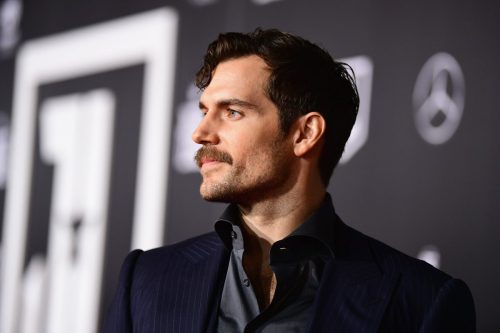
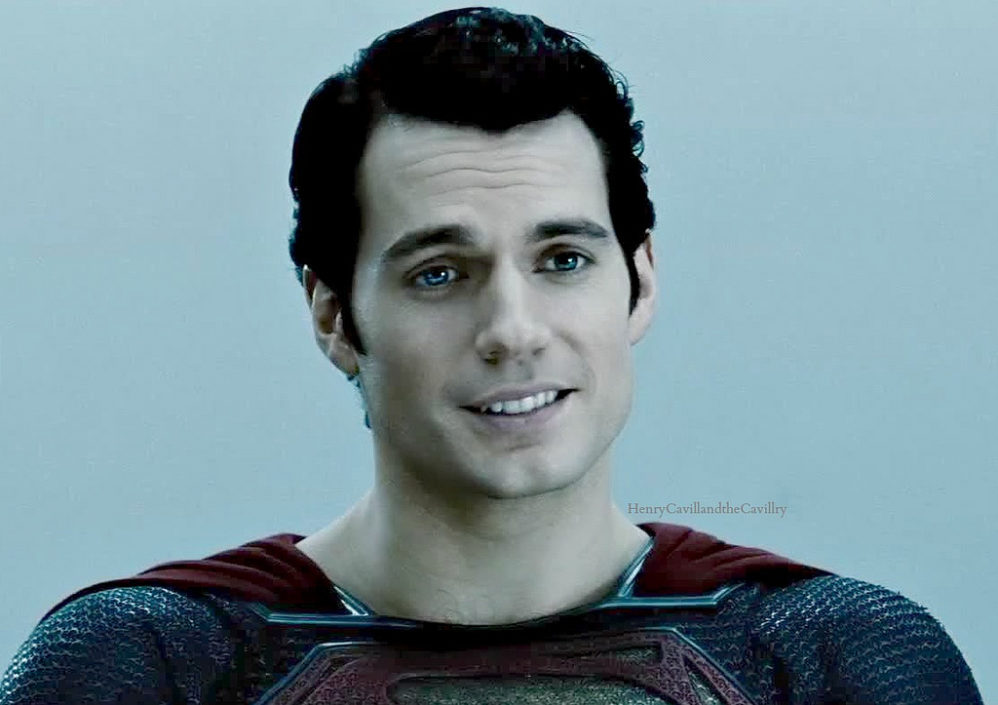
In that sense, it’s ironic that the latest person to experience those influences once played Superman, the personification of truth, justice, and the American way. Henry Cavill, whose star has risen significantly since he broke out in “Man of Steel,” got into some hot water recently after an interview with GQ.

In that interview, he essentially made the same mistake Matt Damon made when he tried to comment on the anti-harassment movement. He said something that was reasonable, honest, and understandable from a purely logistical standpoint. He’s worried that something as simile as flirting with a woman could somehow be construed as harassment, which could lead to a full-blown scandal.

For reference, these were his exact words from the interview and the ones that subsequently led him down the same path as Matt Damon.

It’s very difficult to do that if there are certain rules in place. Because then it’s like: ‘Well, I don’t want to go up and talk to her, because I’m going to be called a rapist or something’. So you’re like, ‘Forget it, I’m going to call an ex-girlfriend instead, and then just go back to a relationship, which never really worked’. But it’s way safer than casting myself into the fires of hell, because I’m someone in the public eye, and if I go and flirt with someone, then who knows what’s going to happen?

Now? Now you really can’t pursue someone further than, ‘No’. It’s like, ‘OK, cool’. But then there’s the, ‘Oh why’d you give up?’ And it’s like, ‘Well, because I didn’t want to go to jail?’

Think about what he’s saying here and take a step back to see how he got to that point. He’s talking about being called a rapist just for going up to a woman and talking to her. How is that reasonable? It’s not. It sounds paranoid, but it’s perfectly understandable in the current social climate.

It’s easy to picture a scenario where someone like Cavill walks up to a woman, starts flirting, and ends up saying something inappropriate. That’s not just something men do. Women do that too. Being vulgar knows no gender. However, if the woman in this scenario takes particular offense, it could be construed as harassment or even assault.

If a woman was especially vindictive or just prone to exaggeration, she could accuse him of assaulting her. Even if those accusations aren’t even close to warranting an actual crime, it would still be devastating. The accusation alone would be enough to derail a promising career.

You don’t have to look far for evidence of this. Aziz Ansari was not charged with any crimes for the infamous incident that came out earlier this year and even if he had been, there’s no way he would’ve been convicted. An incident built entirely around a he said/she-said situation doesn’t come close to meeting the burden of proof for a criminal conviction.

That doesn’t matter, though. Ansari’s career has already taken a major down turn. His hit show, “Masters of None,” has not been renewed by Netflix since the allegations came out. Men like Henry Cavill, whose careers are ascending, certainly take notice of that. They don’t even have to commit a crime and suddenly, everything they worked for is in ashes.

For powerful men in Hollywood, it’s a reasonable concern, but one they probably won’t get much sympathy for expressing. Men like Henry Cavill are rich, successful, and handsome enough to comfortably wear Superman’s skin-tight costume. He’s a man who can attract women just by breathing. However, that may end up making him even more vulnerable.

Most people aren’t going to be inclined to make a big deal about someone who flirts inappropriately. When that person is a celebrity, though, the incentives are much stronger. You need only have an overreaction or a burning desire for attention to twist it into something much worse.

It’s for that reason that Cavill shouldn’t have apologized for his comments. His concerns are legitimate and after all the work he’s put in, he’s right to worry about the forces that might destroy it. That still didn’t matter. His comments still triggered a major backlash on social media. He also had to apologize for it. These were his exact words.

“Having seen the reaction to an article in particular about my feelings on dating and the #metoo movement, I just wanted to apologize for any confusion and misunderstanding that this may have created. Insensitivity was absolutely not my intention. In light of this I would just like to clarify and confirm to all that I have always and will continue to hold women in the highest of regard, no matter the type of relationship whether it be friendship, professional, or a significant other. Never would I intend to disrespect in any way, shape or form. This experience has taught me a valuable lesson as to the context and the nuance of editorial liberties. I look forward to clarifying my position in the future towards a subject that it so vitally important and in which I wholeheartedly support.”

Notice that there’s nothing in that apology that expands on his concerns. Cavill doesn’t attempt to re-frame his point or address some of the complaints levied against him. He just throws his hands up and apologizes about everything, as though every word he said was factually wrong.

Now, to be fair to Cavill, it’s very likely that the statement he gave was written by a publicist or agent. Chances are he was pressured to read that as quickly as possible in order to prevent him from getting labeled a misogynist or someone who did not wholly support the anti-harassment movement. Even if he didn’t feel inclined to apologize, he still had to do it in order to preserve his career and reputation.

Regardless of his reasons for doing so, he still apologized for telling the honest truth. The backlash he received didn’t even argue that truth. Most of it amounted to scoffing at the concerns of a rich, handsome celebrity who is undeserving of any sympathy. One commenter even went so far as to call him a wannabe victim.

Such criticism is every bit as absurd as the kind Matt Damon got when he dared to point out that there’s a difference between patting a woman on the butt and full-blown rape. They also fail to acknowledge that it’s entirely possible for a woman to be vindictive enough to falsely accuse someone of a heinous crime for the sole purpose of ruining their career, despite documented cases that this has happened.

It’s one thing to expose the serious crimes of predators like Bill Cosby and Harvey Weinstein. Those cases did have evidence and are being processed through appropriate legal means. The behaviors Henry Cavill described don’t even come close to that kind of conduct.

The fact that Cavill had to apologize sets a dangerous precedent for the anti-harassment movement. History has shown that any movement that throws off honest truth and basic justice is built on a poor foundation. In time, that foundation eventually crumbles and the merits of the movement get lost.

There are plenty of behaviors among celebrities and non-celebrities that warrant outrage. What Henry Cavill said wasn’t one of them. The fact he still had to apologize for his words does not bode well for anyone concerned with the values that heroes like Superman embody.

10 Comments

Filed under Celebrities and Celebrity Culture, Current Events, gender issues, media issues, political correctness, sex in media, sex in society, sexuality

Why I Don’t Use The Term “Social Justice Warrior” And Ideas For A Better Label

sjw-o-face

Every now and then, I get comments and criticisms about my writing style. Some are constructive. Some are just angry rants that I’m perfectly content to ignore. There is one criticism, though, that I feel is worth addressing.

Specifically, it involves some specific terms I avoid using. Most people with an internet connection or access to cable news have probably heard the term “social justice warrior” at least once. It’s rarely in a positive light. It’s often used as an insult or a signal that you’re about to say something that’s going to evoke a lot of angry comments on social media.

I’ve been tempted to use it in the past. I’ve discussed many topics involving feminism, men’s issues, and social inequality that often get people throwing that term around as though it were a demonic chant. There’s a reason I’ve avoided it, though, and I hope to demonstrate that it’s a good reason.

First off, I want to make clear that I despise the term “social justice warrior” almost as much as I despise “toxic masculinity,” a phrase I believe cannot fade from our language fast enough. I see this label as one of the worst manifestations of the English language since the hippie era and at least they could blame psychedelic drugs.

I also believe that its continued usage will do more to breed hatred, outrage, and division at a time when we’re already more divided than ever. It derails a conversation and detracts from discussions about serious issue involving society, justice, and gender. This term is literally holding back progress, which is ironic given the nature of its definition.

The actual definition of a social justice warrior, or SJW as it’s colloquially used, is somewhat vague. It’s a modern-day catch-all term for a particular brand of politics and social attitudes. According to Wikipedia, the definition is as follows:

A pejorative term for an individual who promotes socially progressive views, including feminism, civil rights, and multiculturalism, as well as identity politics. The accusation that somebody is an SJW carries implications that they are pursuing personal validation rather than any deep-seated conviction, and engaging in disingenuous arguments.

I think that definition covers most of the most common ways the term is used, but I think it underscores how much vitriol it inspires. Spend any amount of time on social media and you’ll find some of the most hateful, demeaning, and divisive rhetoric you can imagine.

However, it’s not just the extreme rhetoric this term inspires that discourages me from using it. It’s not even the tendency for a conversation to devolve rapidly as soon as the words “social justice warrior” show up in a sentence. What I find most objectionable about this term is how fundamentally dishonest it is.

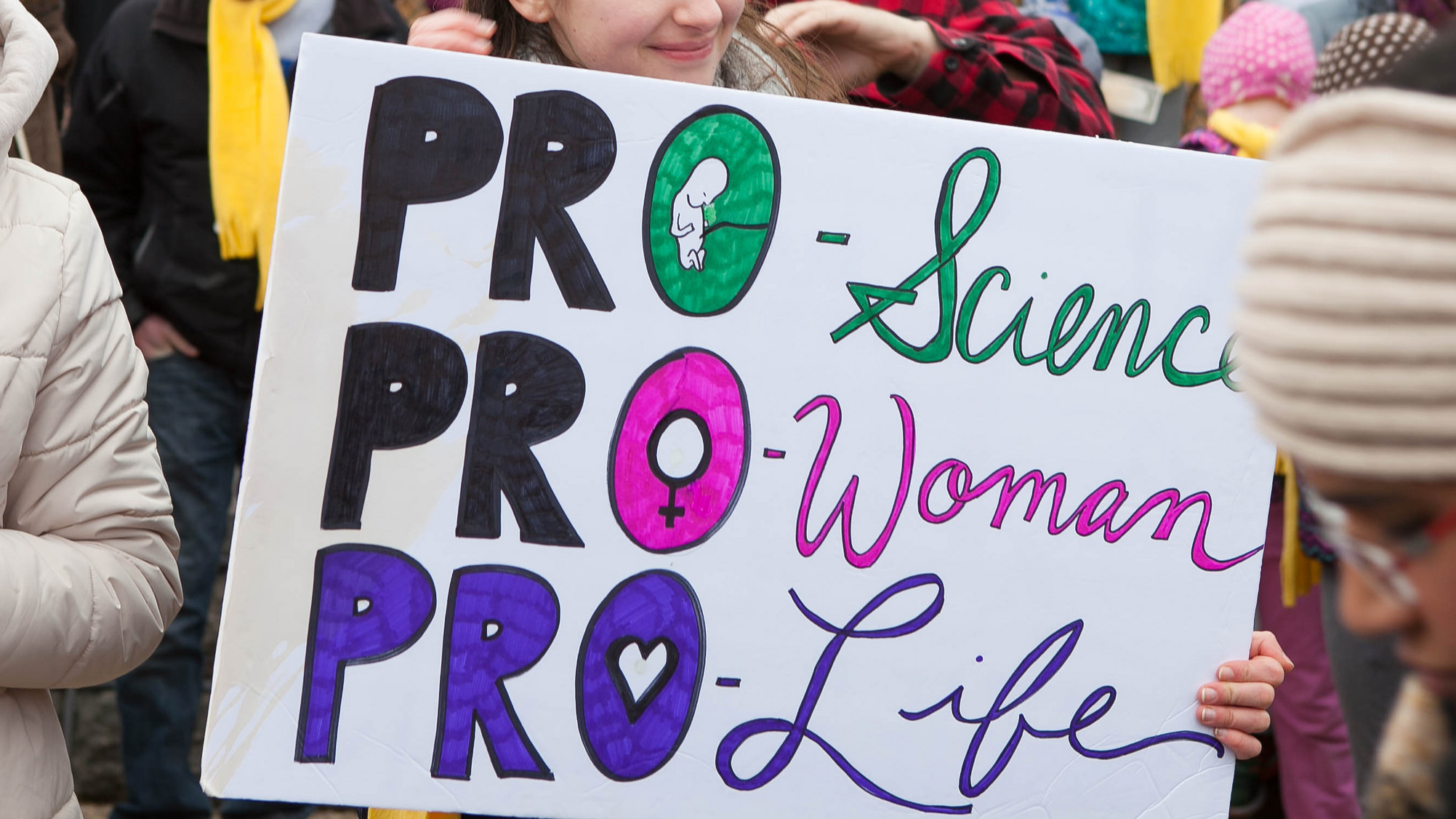
To illustrate how, look at the anti-abortion movement, another extremely divisive issue that tends to evoke all the wrong emotions. There are some pretty passionate opponents to abortion, but they don’t call themselves anti-abortion. They call themselves “pro-life.” It’s a disingenuous term, but from a marketing standpoint, it’s brilliant.

That’s because, if you go by the literal meaning of the words, it means you’re for life in general. It doesn’t directly imply anything about abortion. By calling themselves “pro-life,” they skew the meaning so that they can claim they’re on the side of all things alive and good.

Again, it’s a smart ploy, but it’s also dishonest and George Carlin did a brilliant job of explaining why. Those who use the “social justice” label use a similar tactic. They use words that denote inherently positive concepts like society and justice. However, I would argue that this ploy is even more dishonest than those hiding behind the “pro-life” table.

Most reasonable people are for justice. They’re also for a functional society in which people of any race, gender, religion, or ethnic background can live in peace and enjoy the same protections under the law. On paper, we have that. In practice, there’s room for improvement.

However, whenever I listen to someone who adheres to the Wikipedia definition of “social justice warrior,” I never get the impression that their ideas of justice are genuine. They tend to reflect a personal, selfish brand of justice that is more concerned with how the world makes them feel and less with how it really works.

A “social justice warrior” will look at issues like female depictions in video games, cultural appropriation in media, and proper pronoun usage and not see the full picture. In fact, they’ll go out of their way to ignore that picture and focus only on the parts that sends their emotions into overdrive.

It’s not enough to just criticize these injustices. A “social justice warrior” has to treat them like some grand conspiracy by wannabe fascists who bathe in the tears of orphans and wish they could still own slaves. It becomes a potent blend of holier-than-thou grandstanding and virtue signaling. To say that brings out the worst in some people would be an understatement.

Talk to most people outside a 4chan board and chances are, they’ll be in favor of a just society whether they’re liberal, conservative, progressive, feminist, or whatever other political affiliation they may have. The fact that “social justice” now has more to do with misguided outrage and little to do with actual justice is downright tragic.

The term gets thrown around so often that I’ve made a conscious decision to just avoid using it in my writing. After this article, I intend to use different words that I feel are more reflective of the outrageous attitudes that “social justice warrior” evokes.

I’m not doing that because using words gives them power and I don’t want to give “social justice warrior” more power than it already has. While I doubt that’ll reduce the vitriol it currently carries, I still prefer terminology that’s more reflective of these damaging attitudes.

In the name of offering some potential solutions to this issue, I want to put forth a new approach to dealing with the “social justice warrior” phenomenon. I believe that it reflects an ideology that’s worth confronting. It espouses attitudes that promote censorship, infantilize groups of people, and elevates one person’s feelings over another for all the wrong reasons.

These are people and attitudes that will continue to make noise and push bad ideas on a society that already has too many circling around. For that reason, I believe that warrants creating some new labels for them, one that I think is more descriptive of what they truly area. Here are just a few.

Professional Whiner

Regressive Whiner

Weakly Whiner

Sad Whiner

I think the theme here is pretty obvious. Most of the time, “social justice warriors” don’t really protest. They whine. They whine in a way that’s worse than any child. They don’t try to solve a problem. They don’t try to learn the facts and figure out a better process for doing something. They just whine.

That’s not just pathetic. That makes whole “warrior” part of their label hypocritical. Warriors are supposed to fight and not whine. When reality doesn’t cater to your feelings, whining never changes that. A “social justice warrior” may even understand that, but they also understand that without validation of some sort, their outrage is empty.

That, I believe, is the key to confronting the misguided attitudes of the “social justice warrior” phenomenon. Attitudes that have little to do with actual justice or a healthy society need to be called out for what they are. I say that as someone who does have attitudes that some may consider progressive, but I understand that whining about them won’t do much to further those ideals.

At the end of the day, if all “social justice warriors” have to go on is whining, then the harsh reality of the world will do plenty to undercut their attitudes in the long run. Calling them what they truly are will just help remind them a little sooner.

4 Comments

Filed under Current Events, gender issues, philosophy, political correctness, sex in society

What It Means To “Man Up” And Why It’s Changing (For The Worse)

man-up-and-military-press

It wasn’t that long ago that parents and peers emphasized the importance of “manning up” to young boys. There would come a point in a kid’s life where he was encouraged to do more than just grow up. He was expected to push himself in a unique way, fighting and sacrificing for those who couldn’t. Sometimes, those expectations were unreasonable and a little unhealthy, but it was part of the overall gender dynamic.

That dynamic has been changing a great deal over the past several decades. I’m young enough to have grown up during many of those changes, but old enough to remember the old traditions associated with “manning up.” The sheer breadth of that change has been remarkable, but not entirely in a good way.

For the most part, I was never pushed too hard to man up by others. My friends and family encouraged me to push myself, but never to the point where I felt pressure or anxiety. I often ended up pushing myself, whether it involved going to college or moving out of my parents’ house.

That’s not say I didn’t feel any pressure to “man up” at any point in my life. Beyond my friends and family, I was as vulnerable to expectations surrounding masculinity as anyone. Most of the time, those expectations involved little things like stepping up to fix a problem, helping out those who were physically limited, and enduring pain or discomfort in the name of a particular goal.

Overall, I feel as though these expectations were either healthy or benign. Some of those standards could’ve been gender neural. When you see someone in a wheelchair at the grocery store struggling to get something from a shelf, it’s neither masculine nor feminine to help them. That’s just common courtesy.

In recent years, however, the whole notion of “manning up” has gained new a new complications. Some of them are ideological. Some of them are politically motivated. It’s because of these various nuances that I put the term in quotes because its meaning keeps shifting, gaining and losing connotations year by year. At some point, the term itself may become empty.

In contemplating that meaning, I thought briefly about the connotations that term had back when I was a kid. I doubt my interpretation was definitive, but I like to think it captured the spirit of the term. When someone told me to “man up,” this is what I took it to mean.

  • Grow up and mature
  • Take responsibility and solve your own problems
  • Stop whining and start doing something about it
  • Quit being satisfied with mediocrity and push yourself
  • Be stronger and tougher in difficult situations
  • Work hard and endure for the good of others who can’t

I don’t think it’s a coincidence that many of these same traits associated with superheroes, as espoused by the comic books I read and the cartoons I watched. They might have colored my perspective on masculinity and “manning up,” but I suspect these ideals were still consistent with healthy masculinity. The fact that characters like Wonder Woman and Storm of the X-men had some of these traits was just a bonus.

Now, as I contemplate the meaning of “manning up” in its current context, those don’t seem to have the same prominence they once did. There are also a new host of expectations surrounding the term that are fueled, in part, by identity politics. Some even conflict with others, which adds even more complications.

To get a feel for those complications, I posed a question on Reddit on what “manning up” meant to them. The response somewhat surprised me. Most wouldn’t have found their way into the comic books or cartoons I consumed as a kid, to say the least. They involved ideas such as this.

  • Checking your privileged and making way for those your kind has oppressed
  • Acknowledging the crimes and guilt of your gender, as a whole
  • Sacrificing any advantage or benefits that being a man might have once conferred
  • Subjecting yourself to greater degradation in the name of greater equality
  • Learning about all the ways men have ruined society and the world
  • Accepting that the things men love are unhealthy, damaging, and detrimental

None of these are very positive traits for those being told to “man up.” It’s basically a less overt way to tell them that them being a man is “problematic,” a term that has also gained one too many complications. It’s a term reserved for those who appear to be benefiting too much from being a man who isn’t subject to the rigors of childbirth, rampant sexism, and a long history of exploitation.

Never mind the fact that no one alive to day is directly responsible for the injustices their ancestors committed. They’re also not responsible for the injustices their particular race, gender, or ethnicity committed. It happened in the past. Yes, parts of that past were horrible, but punishing people in the present doesn’t make it less horrific. If anything, it just tries to fight one injustice with another.

This is where the concept of “manning up” really loses whatever positive connotations it once held. It’s a sentiment that many responders to my Reddit question shared. When they contemplate that term, they interpret as someone telling them that they need to endure, suffer, or overlook a particular aspect of their identity.

A few posters went so far as to say the term can be replaced with “serve my interests” and carry the same meaning. While I don’t entirely agree with that notion, I can understand why it would feel that way. Being a man, I sometimes feel like I’m expected to get to the front of the line when the time comes to sacrifice. I won’t go so far as to say I find it oppressive, but it certainly feels like I’m held to a different standard.

Sometimes, that standard can be unreasonable. That was another common theme of the responses I got. The notion of “manning up” denotes operating in a way to avoid a particular stigma that others wouldn’t incur for the same behavior. It’s not always ideological, but the pressure is there.

A man who is too emotional is considered a sissy and has to “man up.” A woman or even a gay man who does this won’t face that stigma.

A man who is reluctant to sacrifice for the well-being of another group is considered selfish and should “man up.” A woman or another minority who show a similar reluctance can do the same, but won’t face the same stigma.

A man who shows his pain when he’s harassed is told to suck it up and “man up.” A woman or minority who is harassed can expect plenty of supporters who will cheer them on. Even if men are subject to more overall harassment, they don’t get any sympathy. They’re told to “man up” while everyone else is allowed to seek social support without much scrutiny.

This, I feel, is the ultimate tragedy of the concept. A term that once use to reflect certain ideals for men has now become an instrument of ridicule. It’s no longer a lesson for boys to learn. It’s a rhetorical shortcut that allows someone to hold an entire group of people to a different standard, one that requires them to go out of their way for someone else.

I don’t doubt that there are instances where it’s good for society that some people go out of their way to help others. For those who are disabled, elderly, or ill, it’s just more just and compassionate to set a different standard for ourselves. We don’t ask someone who is missing a limb or suffering from ALS to “man up.” We go out of our way to help them.

It’s the extent of those instances, however, that seems to be damaging the notion. It’s no longer sufficient to just have a particular ailment or shortcoming. Just being someone who isn’t a man who can claim some sort of injustice, be it historical or contemporary, is sufficient.

I believe that’s a dangerous precedent for men and women, for that matter. It sends the message that in order for there to be more justice and equality, an entire group of people need to sacrifice to an extent where they have to be the villains. They have to come to the table, surrender unconditionally, and admit they were wrong and they were the cause of the problem.

That may not be sentiment of those telling someone to “man up,” but that’s how it’s being interpreted. It’s less a masculine ideal and more a shaming tactic, one that is more likely to incur a backlash rather than get someone to reconsider their understanding of gender roles.

I still feel like there’s a way to recapture the positive elements of “manning up.” Gender dynamics is one of those concepts that’s always evolving. Sometimes, there’s progress. Sometimes, there are setbacks. At the moment, I think masculinity and femininity are going through some growing pains as they adapt to a changing world. That process is likely to involve plenty of conflicts and controversies along the way.

In the long run, though, I think society will find a healthy balance with respect to “manning up.” I think there’s a way to use that notion to bring out the best in men and women alike. It’ll likely take plenty of work, toil, and sacrifice from everyone involved in gender-driven controversies, but it’s definitely worth doing.

1 Comment

Filed under gender issues, human nature, Marriage and Relationships, media issues, political correctness, sex in society, sexuality

Why Linking Human Trafficking And Prostitution Hurts Efforts To Deal With Both

5812c0292f23a-image

As a quick thought experiment, take a moment to picture the appearance and circumstances of a typical plumber. Chances are you’re imagining a big-bellied, greasy-haired, middle-aged man who prides himself on wearing old jeans that expose his butt crack. As stereotypes come, it’s fairly crude, but harmless for the most part.

Now, take a moment to picture a typical victim of human trafficking. Chances are the images you conjure are a lot more distressing. Depending on how much you’ve read into the issue, you can picture a scared young woman from a foreign country huddled in a corner, traumatized and broken after being exploited by her ruthless captors.

Chances are, those ruthless captors conjure some nasty images as well. You imagine they’re sadistic, deviant men who smile at the sight of a scared young woman, having to sell herself sexually in order to pay off a debt that she didn’t even ask for. Such men are the closest thing we have to real-world super-villains.

In terms of terrible crimes, human trafficking ranks near the top in terms of things that offend every sense of decency, humanity, and justice. It’s one of those crimes that’s so horrific that it’s almost impossible to scrutinize without a sense of outrage clouding our judgment. Any effort to do so is usually overshadowed by the horrors of the crime itself.

Despite those obstacles, it’s still an issue worth discussing. If anything, the fact that human trafficking is such an egregious crime makes it that much more relevant. When there’s something that’s so objectively evil, people tend to line up in droves to play the role of a hero. It’s not quite like virtue signaling because this is an actual crime with actual victims.

However, and this is where I’m sure I’ll lose some people, the assumptions surrounding human trafficking and the efforts to combat it aren’t as clear cut. That image of a typical human trafficking victim that I described earlier is, like the plumber, a popular perception that doesn’t quite reflect reality.

Now, none of that is to say that human trafficking isn’t a terrible crime and a serious problem. I want to make that abundantly clear before moving forward. The point I want to make here has more to do with our attitudes towards this crime, its association with prostitution, and how it reflects certain gender dynamics.

For better or for worse, human trafficking is linked to prostitution. It’s major component of the popular perceptions surrounding the crime. As such, a great deal of opposition to the legalization of prostitution comes from the idea that it will increase human trafficking. The veracity of that claim does have some data behind it, but even the most comprehensive studies concede that the link is inconclusive at best.

It’s that link though, however true it might be, that gives human trafficking its insidious reputation. It’s why it is often cited by feminists, human rights advocates, and moral crusaders as an issue worthy of outrage. Battling human trafficking means battling exploitation, sexual promiscuity, and exploited women all at once. That appeals to a lot of people, but it also obscures the true nature of the crime.

That nature is not entirely dependent on sex or prostitution. According to the International Labor Organization (ILO), approximately 22 percent of estimated 20.9 million human trafficking victims are exploited for forced sexual labor. That’s still way too many people being exploited, but what about that other 78 percent?

That portion of human trafficking victims are primarily forced into labor of a non-sexual nature. That labor includes work in sectors such as agriculture, construction, domestic work, and manufacturing. That kind of exploitation affects victims of any gender, as well. While women make up about 55 percent of the victims, that still leaves 45 men and young boys, who can also be sexually exploited as well.

The hard data alone undermines the popular perceptions surrounding human trafficking, but it gets even more complicated than that. Since human trafficking is a criminal enterprise that’s exceedingly difficult to prosecute, it’s hard to get accurate data on the scope and scale of the issue.

Back in 2001, a terrifying report from the University of Pennsylvania made headlines by claiming that approximately 300,000 children, mostly young girls, were being sexually exploited. Understandably, this caused a lot of outrage and horror among politicians and activists.

That claim was not accurate, by the way. The report, which was based on outdated data from the 1990s, only covered children “at risk” of being sexually exploited. It didn’t refer to actual victims. That data is harder to come by, but most figures are nowhere near that egregious number. In addition, the methodology for gathering such data is both incomplete in some areas and flawed in others.

Even with those flaws, though, the perceptions surrounding human trafficking and the mental images it conjures are more than sufficient for people with agendas to garner support. Unfortunately, it’s not the forced labor or the 45 percent of victims who are male that get the attention. It’s the women and the sex that gets the emphasis.

As a result, policies and legislation intended to combat this issue tend to focus primarily on that component. Earlier this year, a couple of major laws were passed with the stated intent of combating human trafficking. However, the primary impact is being felt by sex workers, as a whole.

These laws explicitly mentioned sex trafficking. It said nothing about forced labor, which makes up the bulk of human trafficking victims if the data from the ILO is accurate. That’s akin to passing a bill that punishes the maker of ski masks rather than focusing on those who actually use them to commit crimes.

That’s not to say efforts to combat the sexual exploitation of young women aren’t justified. However, why does that particular variation of a crime warrant more laws and resources than another? Why is sexual exploitation the main focus and not the forced labor that is more likely to impact men and boys?

It says something about both our priorities and our attitudes when the exploited sexuality of women is given a greater priority than the enslavement of men. It sends the message that the pain of a sexually exploited woman is somehow greater than that of an exploited man. Pain is still pain, last I checked. When you prioritize one, you undermine the other, by default.

Moreover, those noble efforts to combat human trafficking may end up making the situation worse by coupling it with anti-prostitution efforts. Like the war on drugs, making prostitution illegal does nothing to mitigate the demand for prostitution, nor does it make things easier for those who are prostitutes. It just puts the industry in the hands of criminals.

In recent years, it has become popular in some countries to pass laws that prohibit the buying of sex, but not the selling of sex. It’s an approach that still criminalizes part of an act and, according to a 2012 report by the Center for Human Rights and Humanitarian Law, it has not achieved the desired effect of reducing prostitution or human trafficking.

It’s because of these shortcomings in combating both prostitution and human trafficking that organizations like Amnesty International now favor the full decriminalization of prostitution and stricter laws against forced labor. To date, no country has attempted to enact such a policy.

That’s not to say that Amnesty International’s measure will eliminate all instances of human trafficking or forced prostitution. Like any imperfect society, there will be cases of injustice and exploitation. However, that’s exactly why it’s so important to have reasonable policies that emphasize the full spectrum of an issue.

Human trafficking is a terrible crime. Forced labor, be it sexual or otherwise, is just as terrible. There’s no denying that, regardless of how uncertain we may be of its prevalence. By focusing only on its links to prostitution, though, we don’t just undermine the full scope of the crime. We do a disservice to all victims, regardless of gender.

6 Comments

Filed under gender issues, political correctness, prostitution, sex in society, sexuality

Why The Sexual Revolution Was Incomplete (And How It Can Be Completed)

hippies-free_-love_-600x521

Imagine, for a moment, putting together a piece of furniture, but stopping before it was finished. Depending on where you stop, chances are the furniture isn’t going to be as useful as you’d hoped. Sure, it may still function to some extent, but it’s incomplete. As a result, it can’t entirely do what it’s supposed to do.

With that idea in mind, imagine the same thing happening to a major social movement, a new vision for society, or a full-blown revolution. What happens if it stops before it realizes its goals? Even if some of those goals were unachievable, abruptly stopping an ongoing process or not bothering to adjust the methods of that process is bound to cause issues.

Some argue that the civil rights movement that began in 1950s was never completed. Others may argue that the French Revolution and the Russian Revolution were never complete, which was why they resulted in so much chaos and destruction. I’m not an expert on those subjects so I’m not going to wade into them.

However, I would support an argument stating that the sexual revolution that began in the 1960s was not complete and that has heavily influenced ongoing controversies involving sex, gender, and everything in between. Again, I am not an expert in this field. I am an aspiring erotica/romance writer. I’m about as much an expert as I am a wizard.

Expert or not, I do think that incomplete revolution is worth talking about in the context of ongoing gender-driven issues. We’re in the midst of pretty significant upheaval in wake of the anti-harassment movement, which I’ve talked about on more than one occasion and in some pretty eclectic ways. It may seem like this upheaval is very recent, but I believe its roots go back to the sexual revolution in the 1960s.

With each passing year, the sexual revolution gets a worse and worse rap. Conservative types will blame the sexual revolution for everything from human trafficking to the Catholic Church sex abuse scandals. Liberal types are starting to blame it on current social ills like the Harvey Weinstein scandal and so-called toxic masculinity.

To some extent, that’s understandable when you consider the context of the sexual revolution. As I’ve noted before, this major social upheaval emerged in a perfect convergence of factors. First, contraception and modern medicine made exploring sex less risky. Second, a generation of young people that has grown up in the exceedingly uptight 1950s rebelled.

Regardless of how you may feel about the sexual revolution now, it’s easy to understand why it happened when you look at the circumstances. A generation saw the state of sex in society and were not satisfied with it. As such, they sought change. Moreover, they sought radical change and not just in the classic hippie sort of way.

It wasn’t just about unmarried men and women having sex just to enjoy it and not make grandkids for their parents. The sexual revolution dared to explore and undermine taboos about homosexuality, monogamy, and gender roles. To some extent, the sexual revolution helped facilitate a new era of feminism that pushed for greater gender equality.

While I know feminism has some controversial connotations these days, the brand of feminism that emerged during the sexual revolution is one that I think most would support in 2018. They helped push for some of the legal protections and educational opportunities that have helped multiple generations of women and men alike.

Moreover, and most importantly to the gender issues of today, the sexual revolution attempted to normalize discussions and depictions of sexuality in general. One could argue that was the most critical aspect of the revolution, beyond the hippies and free love. After all, it’s next to impossible to have a meaningful discussion about anything if the topic is so taboo.

It’s also in this critical area, however, that the sexual revolution came up short. Sure, those involved did plenty of outrageous things, in private and in public, that shocked and terrified their more repressed elders. That was revolutionary for its time. However, they didn’t confront the stigma surrounding sex, at least not in a way that was gender neutral.

This is where I’m sure I’m going to draw the ire of both sides of gender-driven debates, but I think this needs to be said to add a little insight to the current debate. Yes, the sexual revolution did a lot to make sexual activity outside of marriage less taboo. However, that impact did not affect men and women the same way.

In wake of that revolution, men no longer faced as much stigma for fooling around sexually. The idea of “boys will be boys” became an accepted mantra. A young man fooled around in his youth, had multiple partners, and generally enjoyed himself without much shame. The sexual revolution helped him a great deal in terms of realizing his sexuality.
Ideally, women should’ve enjoyed the same freedom. However, that’s not what happened. There’s no “girls will be girls” equivalent. Even during the sexual revolution, women who slept around like their male counterparts were still subject to stigma. They were still called sluts and whores. They were generally looked down upon.

Now, before some start bemoaning “patriarchy” or something of the sort, it’s important to note that the source of that stigma does not come exclusively from men. In fact, according to a study done by Demos, other women were far more likely to slut-shame or use derogatory words to other women compared to men.

Regardless of the source, that lingering stigma that the sexual revolution attempted to confront has helped maintain a significant gender gap with respect to sexual freedom. It’s why men can be studs, but only women can be sluts, a frustrating double standard that has lingered well beyond the 1960s.

It may also be a significant factor in the current orgasm gap between men and women. Whereas the male orgasm is seen as routine and uncomplicated, the female orgasm has this elaborate mystique surrounding it. Just talking about it seems akin to talking about the meaning of life.

In many respects, that vast disparity reflects the current sexual divide. Men are still expected to be sexually aggressive. Women are still expected to be sexually reserved. Any deviation is subject to stigma. As is often the case with expectations, it doesn’t take much for them to become a self-fulfilling prophecy.

Due to that aggression, society has done a lot to cater to male sexual desires. That same system has done just as much to mystify female sexuality. It’s a grossly imperfect system, one that limits the ability of women to explore their sexuality without fear while giving men in positions of power more reason to pursue sex as though it were a holy relic.

That is not in line with the ideals of the sexual revolution. Love them or hate them, hippies had the right idea in terms of openness about sex. They did not divide the sexuality of a particular gender into something entirely different. They saw it as one thing that was worth exploring, but stopped short of pursuing it fully.

That shortcoming has had some noteworthy consequences. Reason Magazine nicely summed it up in a recent article about the sexual revolution and the sexual frustrations that current generations face.

The problem is not that sex has been over commodified as hardline feminists and conservatives (talk about strange bedfellows!) like to assert; the problem is that it hasn’t been commodified enough. The sexual industry in the broadest sense hasn’t matured enough yet to cater to the myriad and diverse needs of lonely single people (of both sexes). Where are the Dr. Ruths for single people facing confidence issues or looking for advice?

Now, none of this is to detract from the aspects of the sexual revolution that were misguided or had long-reaching consequences. The law of proportional backlash for social movements doesn’t care how complete or incomplete it is. Even if the sexual revolution had succeeded, it would’ve still incurred a counter-revolution of some sorts.

Regardless of its shortcomings, the sexual revolution got the conversation going on how we stigmatize sex. It wasn’t completed and there are plenty of flaws in our current sexual landscape to show that. Even so, that conversation is still worth having and I would argue it’s more important to have now than at any time in 1960s.

1 Comment

Filed under gender issues, political correctness, polyamory, Second Sexual Revolution, sex in society, sexuality

Profiles In Noble Masculinity: Hank Hill

nol3t

When it comes to paragons of masculinity, the standards tend to skew towards characters who crank the testosterone levels up to the maximum and even go a little bit beyond. From mythical figures like Hercules to modern icons like James Bond, it often seems as though that a truly masculine man has to exceed some lofty standards.

While there’s certainly a place for that kind of masculinity, I don’t think that has to be the only criteria. I believe there’s room for a more subtle, yet equally strong manifestation of manliness. They don’t have to be the kind of men who sweat raw testosterone and shave with shards of broken glass. They can be their own man and still embody respectable masculinity.

I chose Joel from “The Last Of Us” for my first profile in noble masculinity primarily because his example was not very subtle. He embodied the masculine values of strength, survival, fatherhood, and compassion in ways that are easy to highlight within a larger narrative. It didn’t take much work to make my case for Joel’s noble traits.

For my next profile, though, I’ve chosen a character who presents a tougher challenge. He comes from a narrative that’s very different from Joel’s. Instead of a post-apocalyptic world where everything comes back to survival, his is a more contemporary story from the far less dire setting of suburban Texas.

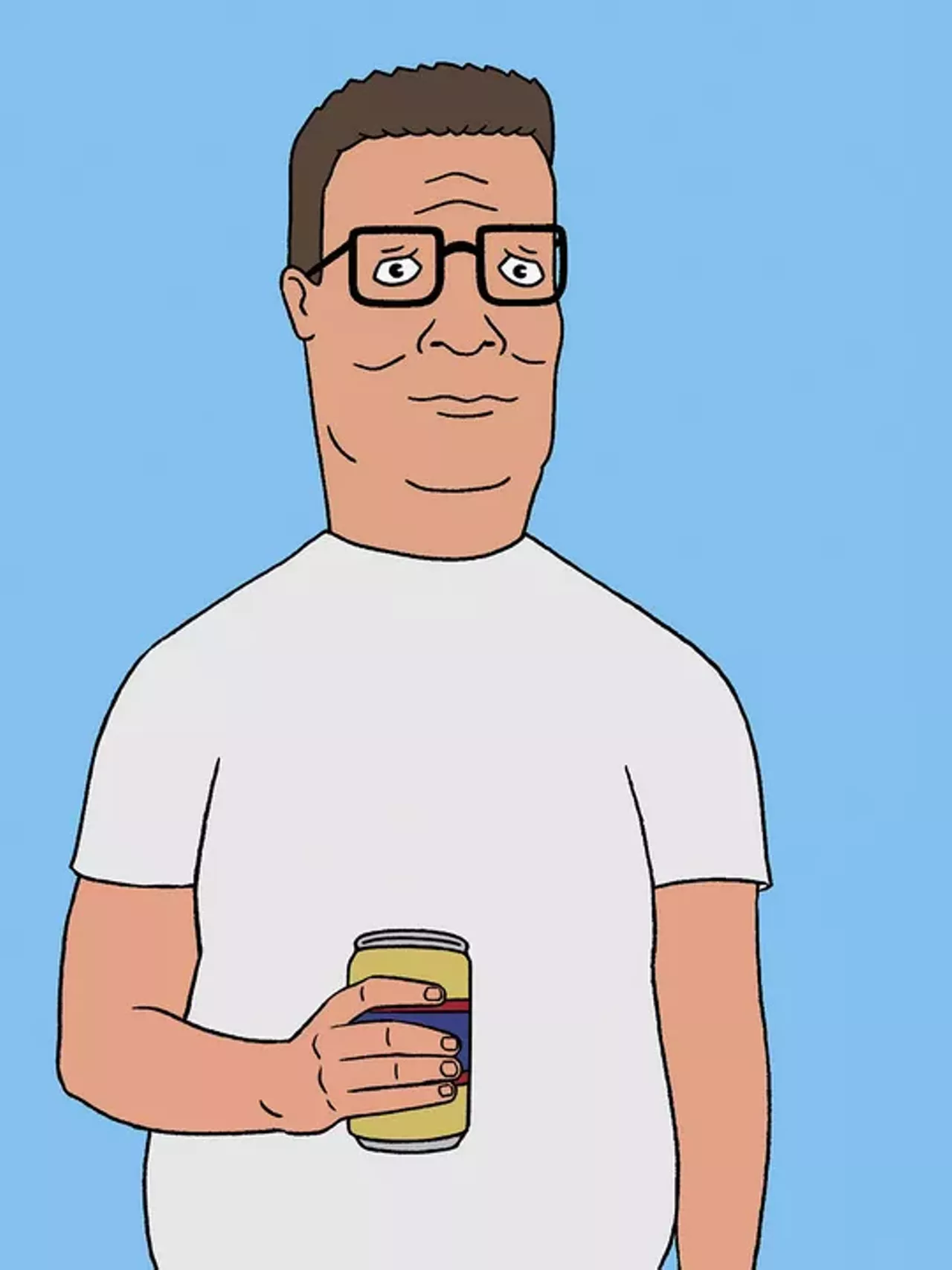
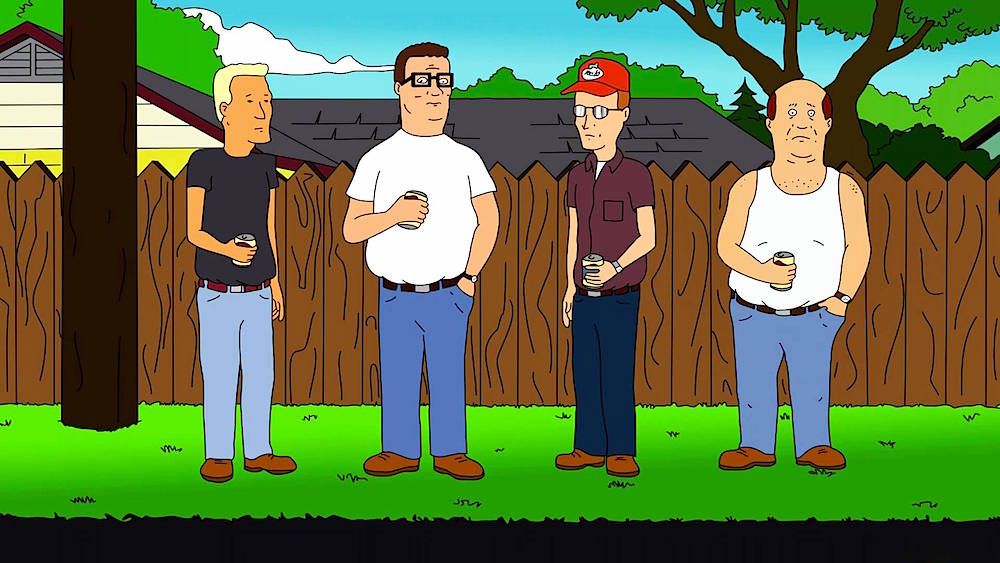
His name is Hank Hill. He sells propane and propane accessories. He’s a proud American, a hard worker, a die-hard football fan, and the star of “King of the Hill.” In the pantheon of modern-era animation, it’s a show that doesn’t usually rank near the top for most people, but the fact it lasted 13 years proves it did something right and Hank his is one of those things.

I consider him another example of noble masculinity. He’s one that differs considerably from Joel in “The Last Of Us,” but I consider him an example none-the-less. Over the course of 258 episodes and 13 seasons, Hank establishes himself as one of those rare characters who manages to be compelling and respectable without being too flawed.

He’s not a bumbling dad, nor is he self-absorbed narcissist always looking to get ahead. Hank Hill, at is core, is blue collar family man who loves his job, loves his wife, and tries to make the most of his situation. He’s not a whiner. When he sees a problem, he tries to fix it. When he makes a mistake, he owns up to it, even if he stumbles along the way.

He tries to do all of this while surrounded by characters who have a wide range of issues, flaws, and eccentricities. One of his neighbors is a self-loathing loser obsessed with his wife. Another is a chain-smoking paranoid idiot who doesn’t know his wife cheats on him. The other is Boomhaur. Actually, Boomhaur is awesome.

Beyond his idiot friends, Hank also deals with a know-it-all wife with an inflated ego, a lazy son who goes out of his way to under-achieve, a bimbo niece who attracts all the wrong people, and an eccentric, misogynistic father who hates his guts. The fact that Hank manages to maintain such a calm, collected demeanor most of the time is a testament to his strength.

That strength, however, isn’t exactly obvious if you just look at his persona on paper. In fact, if you just skim the basics, Hank doesn’t come off as a very interesting character, let alone one who fits the criteria for noble masculinity. He’s conservative, he’s frugal, he doesn’t exude charisma, and he’s a staunch defender of law, order, and the status quo.

Hank isn’t the kind of man who willingly goes on adventures, acts on an impulse, or seeks to radically change the world around him. He actually likes his world, for the most part, and actively defends it from those who try to upset it. This has led to more than a few conflicts throughout the show, but Hank’s ability to resolve those conflicts reveals that there’s much more to his character.

It’s in those efforts where Hank’s nobility, as both a man and a character, really shows. While he is a staunch traditionalist who goes to church, votes Republican, and is extremely uncomfortable with sex, he’s also remarkably tolerant of those who don’t share his views.

Throughout the show, he encounters people who are overtly promiscuous, exceedingly liberal, and don’t care much for football. At no point, though, does he try to change those people or convince them that they’re flawed. Sure, he’ll threaten to kick an ass every now and then, but he usually reserves that recourse for those who most deserve it.

When he’s not kicking asses that deserve to be kicked, Hank is also demonstrates an ability to reserve judgment and not make anything too personal. Throughout the show, he’s encountered crazy right-wing religious types, flamboyant homosexuals, and unapologetic womanizers. By nearly every measure, he deals with them in a way that’s respectable and fair for the most part.

For the most part, indeed.

Hank doesn’t condone or condemn their behavior. He’s more concerned with the consequences they have on others. In his view as a freedom-loving American, what people choose to do is their business, provided they understand and accept responsibility for the consequences.

Throughout the course of the show, he’ll point out or remind others of those consequences. He’ll even help some confront it. However, he doesn’t make it personal. He doesn’t whine about it. He doesn’t try to get everyone to embrace his way of doing things. Hank basically lets other people be free and live their lives.

It’s not the same as slaying giant monsters or rescuing princesses from towers, but it’s noble in its own right. In the context of masculinity, Hank Hill’s ability to remain strong, stern, and confident in the face of so much chaos from so many characters, each with plenty of quirks and eccentricities, is a testament to the kind of man he is.

He’s a man who takes pride in his work, leads by example, and tries to be the voice of reason in a world full of unreasonable people. He’s willing to be brave and bold when he has to be. He’s also willing to take responsibility when others won’t or refuse to. As a man, he’s someone who earns the respect of others and does plenty to maintain it.

That’s not to say that Hank is without his flaws. Sometimes, he is traditional to the point of being petty. In one episode, the entire plot was driven by his dismay at another family sitting in his non-assigned seat at church. He can also be controlling, especially with how he raises his son, Bobby.

On more than one occasion, he’s been an obstacle for Bobby’s endeavors. His famous refrain, “That boy ain’t right,” is often said in the context of him wanting to guide Bobby down a certain path. Most of the time, though, he does so in a way that’s appropriate for a caring father. Other times, though, he gives the impression that he wants Bobby to be just like him.

Even with these flaws, Hank Hill still commands and earns respect. As a man, a father, and an American, he checks most of the boxes in terms of noble masculinity. He’s strong, responsible, hard-working, and accepting of other peoples’ strengths and flaws. He’s a man worthy of admiration and the fact he knows propane is a nice bonus.

4 Comments

Filed under gender issues, media issues, noble masculinity, political correctness

Are Cheerleaders An Endangered Profession?

cheerlader

There are certain professions that go extinct and for perfectly valid reasons. Occupations like elevator operator, switchboard operators, and milkmen are all jobs that just don’t have a place in the economy or society anymore. Technology and trends have rendered them unnecessary or obsolete.

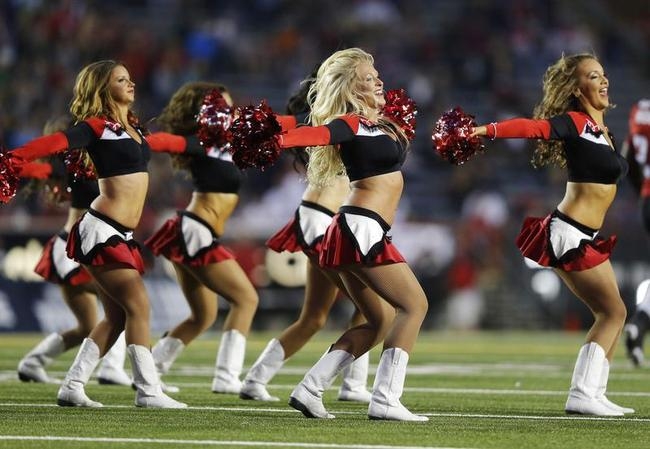
For a small, but vocal contingent of regressive individuals with a low threshold for outrage, there’s a particular occupation that they’d like to add to that list. That is the profession/hobby of cheerleading, specifically the kind that involves parading beautiful women in sexy attire so they can dance, shake pom-poms, and get a crowd excited. Hell, it’s not like there’s anything inherently appealing about that.

That last sentence was sarcasm, by the way. I want to make clear that, as both a man and an avid sports fan, I love cheerleaders. They embody so many wonderful concepts about the world. They combine sports, sex appeal, dancing, and excitement. They bring happiness, excitement, and spirit to an event. There is literally no downside.

Unfortunately, that regressive crowd who insist on seeing sexism, misogyny, and oppression at every corner sees none of that. They only see beautiful women being paraded around in sexy attire for horny men to gawk at. It doesn’t matter if those women choose to do so or are paid to do. Beautiful women attracting the attention of horny men is seen as inherently oppressive to all women everywhere.


That was sarcasm too. I’m sorry if I’m using more than usual, but I find it’s the best way to highlight the sheer absurdity of this attitude. However, it’s an absurdity with serious implications because it reflects a growing trend. Now, in an era where it’s suddenly scandalous to depict the female body in any sexual context, cheerleading is a growing target.

It’s a target that has already taken a few hits. Earlier this year, Formula One Racing announced that it would no longer utilize grid girls, who are basically cheerleaders for racing. This act was cheered by the radical anti-sex feminist crowd. It was probably secretly cheered by priests, mullahs, and monks, as well. While it did inspire somewhat of a backlash, it hasn’t stopped that same crowd from aiming at other targets.

More recently, NFL cheerleaders are in the spotlight. In terms of cheerleading, as a profession, this is basically going for the very top of the hierarchy. The NFL is for cheerleaders what the Pro Bowl is for NFL players. It’s seen as the very pinnacle of the profession and it may be in danger.

It hasn’t helped that there have been some distressing scandals involving how some NFL cheerleaders are treated. The recent scandal involving the Washington Redskins cheerleading squad has only added more fuel to the outrage. Never mind that the facts of these scandals are limited and anecdotal, in some cases. It gives the regressive crowd everything they need to cry sexism and misogyny.

Now, none of this is to downplay some of the real issues surrounding cheerleading, as a profession. There are certainly issues with respect to how much cheerleaders are paid and how their lives are micromanaged. Those issues should be addressed and reformed. However, that’s not the conversation anyone wants to have.

Instead, cheerleading is getting lumped into other outdated traditions like arranged marriages, virginity tests, and being forced to cover their ankles in public. It’s not a profession or a passion that needs to be reformed and improved. It’s something that needs to be outright purged from society.

That’s not just an extreme reaction to a job that isn’t even the most dangerous or the most prone to sex scandals. It’s an attack on the very idea that beautiful, sexy women can and should be used to promote anything, be it a sports team or a fast food meal. The problem isn’t how the job is unfairly managed. It’s the job itself.

From the perspective of cheerleading’s opponents, it objectifies the female body and commodifies female sexuality for the consumption of men. In an era where sexually harassing a woman is seen as the ultimate evil, whereas sexually abusing a man isn’t nearly as outrageous, that’s just unacceptable.

The attitudes of the women who seek this profession don’t matter. The attitudes of the men who enjoy the sexiness and excitement that cheerleaders inspire especially don’t matter. All that matters is that cheerleaders are too sexually stimulating to the masses and that’s feeding a culture of misogyny and sexism. I wish that were sarcasm, but that’s what these regressive people genuinely believe.

For them, undermining the freedom and agency of those who want to pursue cheerleading and those who want to admire cheerleaders is a price they’re willing to pay. While some, like the Grid Girls, try to fight back, they’re facing an uphill battle and it’s one that cheerleaders might end up losing.

That’s because these are exceedingly sensitive times. Just trying to inject reason and criticism into the movement against sexism is subject to irrational outrage. Matt Damon found that out the hard way. More and more, people are just avoiding the conversation altogether because it just keeps fueling more outrage.

The current dynamic is as simple as it is unfair. If you stand up for cheerleaders, then the regressive crowd can just claim you’re a sexiest who wants to gawk at beautiful women. Even if you’re a woman speaking on behalf of cheerleaders, your criticism can be cast aside because you’re just brainwashed by the patriarchy and you’re for the objectification of women.

Never mind the fact that the very concept of objectification is fundamentally flawed. Never mind the fact that that flawed concept is also prone to some pretty disturbing double standards. The protests against cheerleading is framed as a protest against sexism, misogyny, and patriarchal oppression. It doesn’t matter how wrong or misguided that notion is. That’s the perception and there’s just no way to win that argument.

These days, being called a sexist is bad for business and for your profession. I believe the regressive crowd knows that, to some extent. They understand that the NFL is a business and one that has already been ravaged by negative press. Their success and their profits are dependent on their brand. If they see something as potentially damaging to their brand, then they’re going to either get rid of it or downplay it.

I’m not good at predicting the future, but depending on how these recent cheerleading scandals play out, I suspect that the NFL might just slowly phase out cheerleaders, altogether. It’s the path of least resistance. Keeping them around means keeping the outrage around. That’s just more risk and frustration than it’s worth.

It would be another major loss, one far bigger than the loss of the Grid Girls. However, as much as I love cheerleaders and the sex appeal they bring, I can totally understand why a major organization like the NFL would resort to such an extreme. By just removing cheerleaders, altogether, the crowd of regressive outrage will move onto their next crusade and, hopefully, leave them alone.

It’s a scenario that nobody wins. If the NFL ends up eliminating cheerleaders, it won’t be because they’ve seen the error of their ways and are now champions of women’s empowerment. They’re just protecting their brand. They’re trying to stop the whining, an approach that only offers the illusion of progress and not actual progress.

Personally, I hope the NFL resists the outrage. The more ground we give to regressive attitudes, the more regressive our society becomes. This is a crowd that won’t stop until everything that might potentially evoke sexual feelings or portray women in a sexy way is either eliminated or stigmatized.

As both a fan of all things sexy and an aspiring erotica/romance writer, that’s not a world I want to live in. That’s not a world that even other women want to live in, as the Grid Girls have shown. It’s a boring, unsexy, downright dystopian world that’s worth resisting and I hope there are plenty of cheerleaders, male and female alike, who will cheer on that effort.

Leave a comment

Filed under Current Events, gender issues, media issues, political correctness, sex in society, sexuality, sports

The (Fragile) State Of Modern Chivalry

Courtesy Photo

These days, you can’t go more than a few days without hearing someone complaining that chivalry is dead, dying, or some elaborate patriarchal conspiracy to keep women in their place. A few are even arguing it’s part of some matriarchal conspiracy to control men. The very concept of chivalry is in a precarious state is what I’m saying.

Now, I’m somewhat hesitant to write about this because in my experience, both in real life and online, it brings out a lot of mixed sentiments. I’ve met men who resent it. I’ve met women who are outright offended by it. No matter how I approach it, there’s no way to avoid rubbing certain people the wrong way.

Hesitation aside, I do feel compelled to talk about it because the idea of modern chivalry, the kind that involves common courtesy and not the medieval kind that made high school English class so frustrating, is kind of personal to me. That’s because I had awesome, loving parents who went out of their way to teach me and my siblings the manners, attitude, and mentality that go into modern chivalry.

They may not have built their entire parenting strategy around it, but I like to think that them emphasizing it was part of a larger life lesson. It’s one that effects me to this day. I still make it a point to hold doors, pull out chairs, and address people as sir/ma’am. If I don’t, then I feel like I’m not showing the respect I want.

It may not sound like much, but I find myself wondering and worrying about the state of this gender-driven quirk. Some of that worry stems from how relevant those vital lessons my parents taught me are today and whether they’re losing relevance with each passing year. That might just be a byproduct of me getting older, but it does concern me, if only because I feel there’s a lot of gender-driven conflict these days.

To understand why, I need to give a little background as to just how my parents instilled an appreciation of modern chivalry in me and, as a bonus, demonstrate why they’re so awesome. While both my parents were big on teaching me and my siblings manners, my father was more focused in emphasizing courteous behavior.

As a kid, I remember more than one occasion where we would go out somewhere and my father told me to hold the door for women and/or total strangers coming up behind you. It wasn’t just for women either. He made it clear that if you have a chance to hold the door for someone, you do it and you be a gentleman about it.

I only remembered why it was so important on the occasions I forgot. There was this one time when I was around 10-years-old that my parents took me and my siblings to the mall. I, being an overly excited kid, ran out ahead to get inside. In doing so, I forgot to hold the door for a woman and her daughter. My dad did not approve of that.

I vividly recall him catching up with me, grabbing me by the arm, and telling me that if I’m going to run out ahead like that, I damn well better hold the door like a goddamn gentleman. Remember, I was only 10 at the time and my father was holding me to higher standards than that. At the time, I was kind of annoyed, but as I got older, I came to appreciate that lesson.

There were probably other similar incidents. My dad, who I know occasionally reads this site, can probably remember plenty of others like that. I hope they’re still relatively few because as I got older, things like holding doors, pulling out chairs, and saying sir/ma’am became second nature to me. It got to a point where I really didn’t think about it.

Then, in a more recent incident, I had an encounter that kind of worried me. I was walking around my neighborhood. I then make my way into a fast food restaurant for a quick lunch. Since an older woman was behind me, I held the door for them. She smiled and thanked me. I replied with a simple, “You’re welcome, ma’am.”

It was that last part, though, that got a stronger reaction. She was genuinely surprised when I said “ma’am.” It was a pleasant surprised, though. She even went out of her way to thank me for being so courtesy, claiming she doesn’t hear that sort of rhetoric much anymore.

Now, this was not some old woman longing for the good old days, mind you. This woman didn’t look that much older than me. It really caught me off-guard, mostly because I was just doing what my parents had taught me to do all my life. It also kind of worried me, too.

That’s not the first time something like that happened. I’ve said “sir/ma’am” to strangers before and gotten strange looks, both from older and younger crowds. I’ve noticed the older women, though, are the ones that react most often to it. They tend to react most positively as well. Women who are around my age or younger just smile and shrug it off, as though it’s no big deal.

I’m honestly not sure what to make of it. I understand my experiences are purely anecdotal and it’s unreasonable to make broad generalizations about society, as a whole. However, the more reactions of this sort that I encounter, the more I worry that the value of modern chivalry is declining.

That worry, though, is not akin to some old man longing for the good old days. I understand that the good old days are never as good as we remember. I feel a more pressing concern is how this attitude reflects the growing tension between genders that seems to fuel so many conflicts, these days.

I’ve talked about a few of those conflicts, including the absurd ones. A part of me can’t help but wonder whether the lack of a reaction I get from younger women on my chivalrous acts reflects a distressing trend in attitudes towards men, in general.

I worry that recent scandals, trends in feminism, and even a few trends in men’s rights activism are conditioning people to just assume the worst in men, even when they demonstrate good conduct. Assuming the worst in any situation is usually the first step towards falling into a nasty cycle of self-fulfilling prophecies.

In that context, there’s no behavior, chivalrous or otherwise, that can convince anyone that they’re just trying to be polite. I hold a door for a woman with those assumptions and she won’t see it as good manners. She’ll just see it as some elaborate effort to get into her pants or somehow draw her into a system of patriarchal oppression.

The assumptions are just as bad for the men. I hold a door for a man, or just get seen holding the door for a woman, and the assumption is I’m trapped in some radical feminist agenda that seeks to turn all men into weak, submissive, beta-males. Again, it overlooks the mere possibility that it’s just the kind, courteous, polite thing to do.

I sincerely hope this is just empty concern on my part and the observations I’ve made are just a byproduct of growing cynicism. I also hope that the current state of gender politics doesn’t reduce the concept of modern chivalry to an agenda. Just acting like a decent human being to other people, regardless of their gender, should never be an agenda.

It’ll be interesting to see how the current social landscape evolves over the next several years. How it sees and interprets modern chivalry will reveal a lot about the direction we’re heading with respect to how men and women relate to one another. If every little action suddenly becomes part of an agenda, then I imagine it’ll get a lot harder to just show common courtesy to someone.

I hope it doesn’t get that bad. I sincerely hope that the lessons my parents taught me about showing good manners and common courtesy are just as relevant in the future as they are now. If I ever get around to having kids, I intend to teach them those same lessons.

Some things just don’t need to be part of a gender-driven conflict. They can just be an overly-formal way of showing respect to one another. Call it what you want, be it modern chivalry or just not being an asshole to someone. There’s still a place for it in any society and I believe there always will be.

1 Comment

Filed under gender issues, Jack Fisher's Insights, Marriage and Relationships, romance