The following is a review I wrote for PopMatters for “The Life of Captain Marvel #5.” Enjoy!
Losses, Journeys, and Ascensions: ‘The Life of Captain Marvel #5’

The following is a review I wrote for PopMatters for “The Life of Captain Marvel #5.” Enjoy!
Losses, Journeys, and Ascensions: ‘The Life of Captain Marvel #5’

This is the time of year where you can’t go more than a half-hour without seeing a Christmas movie on TV. We’re basically in the heart of the holiday season. People have finally stopped complaining about Christmas decorations going up too early or getting a head start on their shopping. It’s not just fast-approaching anymore. The holidays are here.
Now, I love the holidays as much as anyone. As such, I have a strong appreciation for Christmas movies. I often go through stretches in December where I’ll watch at least part of a Christmas movie every day. It’s a beautiful thing that gets me in the spirit and gives me an excuse to drink eggnog spiked with whiskey.
I have a long list of personal favorites. I’m also among those who argue vehemently that “Die Hard” qualifies as a Christmas movie. Despite what Bruce Willis himself says, this movie will always be part of my holiday viewing schedule. I could write multiple articles to justify that position, but that’s not my intent here.

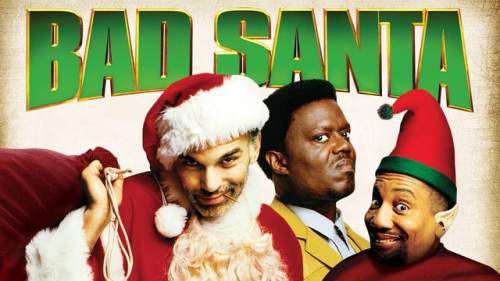
In recent years, I’ve found myself immersed in another argument surrounding a unique kind of Christmas movie. That movie is a lesser-known, but underrated gem called “Bad Santa.” If you’ve seen it, then you probably understand why it inspires such colorful discussions during the holidays. If you haven’t, then I urge you to check it out, but do not watch it with your children.
Make no mistake. “Bad Santa” is to Christmas movies what the McRib is to fast food fans. It’s one of those rare movies that doesn’t just go in the opposite direction of every classic trope associated with a particular genre. It gives those themes the finger, kicks it in the balls, and throws up on them for good measure.

This movie has no holiday miracles. There’s no magic at work. There’s no heartwarming moments that reaffirm the spirit of the season. This movie is weapons grade cynicism for all things Christmas and it goes about it in a way that’s vulgar, crude, disgusting, and hilarious.
The story is not for the faint of heart. It follows Willie Soke, a degenerate, misanthropic, womanizing, alcoholic who makes his living cracking safes with his dwarf partner-in-crime, Marcus Skidmore. Their tactics are the antithesis of the holiday spirit. Willie works as a mall Santa while Marcus works as an elf. They work at malls during the holidays and then rob them on Christmas Eve.
If you expect the movie to be a feel-good holiday story about a criminal redeeming himself during Christmas, then prepare to be disappointed. Willie is not that kind of character and “Bad Santa” does not tell that kind of story. While Willie does undergo some growth, he’s still an asshole by the time the credits roll.

The story doesn’t try to redeem Willie. It doesn’t even try to put him on the path to becoming a better person. All the Christmas miracles in world can’t do that for someone like him. However, his story does bring something uniquely festive to the table. The way things play out for Willie and those around him convey a powerful message that resonates with the holiday season in its own perverse way.
Some go so far as to argue that “Bad Santa” is an anti-Christmas movie. I can understand that sentiment to some extent. However, I would argue that “Bad Santa” is one of those movies that has become more relevant with time. I would even argue that, in the context of the modern spirit of Christmas, “Bad Santa” is the greatest modern Christmas movie.
Now, I know that won’t sit well with those who still love “It’s A Wonderful Life” or “How The Grinch Stole Christmas.” I don’t deny that those are great Christmas movies that deserve to be classics. I’m not arguing that “Bad Santa” is better than those movies or deserves to be in the same category. I simply believe that “Bad Santa” is the greatest Christmas movie for the current times in which we live and these are my reasons why.
Reason #1: It Reflects The Real (And Increasingly Jaded) World

Let’s face it. These are not the upbeat, idealistic times of yesteryear. People no longer trust in their government. People keep seeing once-beloved celebrities self-destruct. In general, people just aren’t confident about the future anymore. As a society, we’re becoming more and more jaded. That’s exactly the kind of sentiment that “Bad Santa” appeals to.
This movie is a world where assholes keep being assholes. Bad things happen to good people and good things happen to bad people. That may not be a great basis for a Christmas movie, but it perfectly represents the real world, now more than ever. In this day and age, we see famous and powerful people get away with awful things time and again. There’s no miracle that comes around to right all the wrongs.
In “Bad Santa,” this harsh view of the world isn’t avoided. For the entire movie, Willie essentially channels the defeatist attitude of Al Bundy. His life sucks. He hates himself. He barely even flinches when he’s staring down the barrel of a gun at one point. Beyond the self-loathing, though, he finds a way to provide real insights into the holidays.
Do we really need all the crap we ask for on Christmas? Do we really need magic, miracles, or some grand spectacle to appreciate it? Willie’s entire persona is an indictment of those who rely too much on magical thinking during the holidays. In the real world, that doesn’t get anyone anything other than a gut punch and a kick in the ass.
Reason #2: It Relies On Choices Rather Than Miracles

As deplorable a human being as Willie Soke is, he does have one defining trait that makes him somewhat sympathetic. He doesn’t make excuses. He doesn’t blame the world or everyone else for his lousy lot in life. He’s very much a product of his choices. He chooses to drink, spit, swear, and piss himself while wearing a Santa suit. There’s no extenuating circumstances. These are his choices.
Granted, they’re deplorable choices from someone inclined to self-destruction, but he makes them freely and doesn’t hide from the consequences. These same choices are what makes his relationship to the dense, but lovable kid in the movie, Therman, so meaningful. Willie has no reason to care or help this kid in any capacity and the kid is in no position to stop him.
In the end, though, Willie doesn’t need a miracle or some visit from Christmas spirits to make his choices. Therman’s influence on him, while ridiculous and downright pathetic at times, is sufficient for him to make the choices that make the story work. While they don’t necessarily redeem Willie for all his misdeeds, it does show that even a drunk like him can do the right thing without a miracle.
That, in and of itself, is a testament to the spirit of Christmas. When someone like Willie Soke can actually choose to do something good for a gullible kid, then that offers hope to any jaded soul on the holidays.
Reason #3: It Highlights Small (But Meaningful) Gestures

Many of the most memorable Christmas movies often have these big, elaborate gestures that attempt to make our hearts gush with holiday cheer. Whether it’s embracing loved ones at the end of “It’s A Wonderful Life” or reuniting with family in “Home Alone,” it feels like a Christmas movie has to go overboard with holiday sentiment.
“Bad Santa” takes the exact opposite approach, but somehow finds a way to make those gestures more meaningful. The movie doesn’t take place in the North Pole or some fanciful holiday setting. It takes place in Phoenix, Arizona where it doesn’t snow and heavy coats are useless. It effectively removes the ambiance of the holidays beyond the tacky decorations that people put up.
That works perfectly for “Bad Santa” because it ensures any gesture carries more weight. Whether it’s Willie trying to get Thurman his Christmas present or Willie putting back together the Advent Calendar, these small moments feel bigger in a setting devoid of traditional holiday magic.
There’s no sweeping change that turns Phoenix into some sort of Christmas haven. The world of “Bad Santa” never tries to be anything other than a world of shallow holiday imagery because that’s all it needs. Anything more than that is just fantasy and there’s only so much fantasy you can muster in a story that follows a misanthropic drunk.
Reason #4: It Offers Perspective Rather Than Hope

Another major trait of classic Christmas movies is the hope they inspire. When you get to the end of a Christmas movie, you’re supposed to feel a sense of hope. There’s this sense that the story has somehow rekindled someone’s holiday spirit. While there will always be a place for that kind of hope in a fantasy world, “Bad Santa” offers something different, but valuable.
More than anything else, “Bad Santa” conveys a sense of perspective about the holidays. It’s not this wonderful, heartfelt occasion for everybody. There are a lot of miserable, self-loathing drunks like Willie Soke out there who don’t want or need hope. They’d rather have something that’ll make life suck a little less.
That’s the best Willie can strive for in “Bad Santa” and that’s exactly what he does. Being around Therman doesn’t make him a beacon of Christmas spirit. It just makes his miserable life slightly less miserable and he’s grateful for that. As a result, he makes an effort to help the kid have a good Christmas.
Sure, his efforts result in him getting roughed up and shot, but that’s perfectly appropriate for the tone of the story. In the real world, noble efforts like that aren’t always rewarded. Sometimes, they end up pretty messy, which Willie finds out the hard way on more than one occasion. It’s not the most uplifting message, but it’s the most honest.
Perspective today is more precious than it has ever been before. In the era of fake news and alternative facts, it’s hard to maintain a firm grasp on reality. Christmas movies tend to obscure reality for something more cheerful, but “Bad Santa” for something more real and that’s what makes it so effective as a story.
Reason #5: It Finds Humor In Bad Situations

To this point, if I’ve given the impression that “Bad Santa” is one depressing slog of a movie, I apologize. Yes, it can be depressing and bleak, but it’s also obscenely funny. There are dark moments in this movie that involve depression, alcoholism, and even attempted suicide. However, many of these moments are perfectly balanced with moments of raw hilarity.
Whether it’s Willie beating the snot out of a bunch of bullies or Marcus berating Gin with a masterful string of profanity, this movie invests heavily on humor. Granted, it’s a very adult form of humor, but it works perfectly within the context of the story. From the very beginning, Willie and his supporting cast are in all sorts of awful situations. Injecting humor into the mix helps balance it out.
It helps create a particular tone for a movie that goes out of its way to spit on so many holiday traditions. Things are ugly for these characters. They’re miserable excuses for human beings, but they often find themselves in funny situations that they make more hilarious with their reactions. No matter how bad it gets, they find a way to make their devolving situations entertaining.
In an era were awful situations unfold in real time because of social media, it’s important to find humor wherever you can. There’s only so much we can do to change a situation. Willie makes that clear from the very beginning of “Bad Santa.” Sometimes, all you can do is just laugh at the absurdities and that’s exactly what this movie does.
I won’t claim that “Bad Santa” is the new standard for Christmas movies. I doubt it’s going to start the kinds of trends we’ve seen in other genres. However, the story it told and the dark humor it utilized struck a chord when it first came out. As the years have gone by, it keeps finding new ways to resonate with an emerging audience.
There will always be a place for “Home Alone” and the Grinch. However, I think for the current generation and all the others who have watched this world embrace new levels of absurdities, “Bad Santa” deserves a special place in our holiday traditions.
Filed under Current Events, human nature, Movie Reviews, movies, nihilism, philosophy

This is the season of gift giving and gift exchanges. Unless you’re an inherently miserable person or the basis of Billy Bob Thorton’s best movie, it’s a wonderful time of year. I’ve always loved the holidays. As a kid, it was fun because it meant getting toys and eating candy. As an adult, it’s fun for those same reasons, but there’s also festive sex appeal that goes with it.
There have been a few points in my life where I’ve been in a relationship during the holidays. Without giving away too many intimate details, I can safely say that the spirit of gift giving did plenty to raise both my holiday spirit and that of my significant other. Sharing in gifts may seem shallow and exceedingly commercial, but it still conveys a powerful sentiment beyond the season.
It shows, among other things, just how much you care. It shows that you’re willing to put in the time and effort. All functional relationships require that kind of commitment. The holidays, when done right, can celebrate that commitment. It can even be a sexy celebration. Sometimes, being a little naughty makes everything feel extra nice in ways that only adults can appreciate.
With Christmas fast approaching, I dedicate this Daily Sexy Musing to the kinkier, more mature side of gift-giving. There will always be a place for child-like fun during this time of year, but adults can have fun too. If they can squeeze the sexy kind of fun into the mix, then that just makes the season all the more special. Enjoy!
The snow is falling.
The tree is lit.
The presents are neatly wrapped.
For children, it is the most exciting time of the year. They all sleep restlessly, eager to play with their new toys. For us, however, we share a more intimate gift. It doesn’t always involve toys, but it evokes the same excitement.
Under the light of the tree and the smell of fresh cocoa, I give to you a simple gift. It’s small, neatly wrapped, and fits easily in the palm of your hand. What it lacks in size, it makes up for in sentiment. It has to because there’s no package big enough to contain the passion I feel for you.
I watch you open it.
I see your eyes light up with the joy of a thousand children.
I know then that Santa Clause himself just got upstaged.
You throw your arms around me. I embrace you without hesitation. Your touch carries the intensity of a spirit enchanted by something beyond any holiday. It burns brighter than any star, echoing with cheer beyond any season. No one day or month can possibly contain the love we share, but that only makes the moments more festive.
In that unique spirit, we celebrate. An exchange of goods becomes an exchange of passions. We defy the long nights and winter cold, shedding thick layers of clothes in favor of the heat we create together. Every act conveys the extent of our spirit. In the light of the holidays, it offers unique paths with which to journey.
With one gift, I put my love into a tangible form.
With one gift, I tell you more than I can ever put into words.
With one gift, I inspire a year’s worth of passion.
With one gift, I celebrate the love we share.
It need not be large or smell. It just has to convey the feelings we cherish. By embracing that passion, every day we share our love feels like Christmas.
Filed under Daily Sexy Musings

These are tenuous times for gender relations. Between the rise of the anti-harassment movement and the revelation of egregious crimes committed by once-respected celebrities, society is undergoing to significant upheaval in how we approach sex, relationships, and harassment.
Some claim this upheaval is overdue and I don’t disagree. There is a well-documented history of powerful people getting away with egregious behavior. In general, it’s a good thing when society seeks justice and accountability for everyone, regardless of gender, race, religion, sexual orientation, etc.

With that good, however, often comes obstacles that need to be navigated carefully and flawed human beings have a mixed history in those efforts to say the least. We’ve already seen some of that in how some have responded to the anti-harassment movement. Some are going so far as to avoid women entirely to minimize the risk. This is an extreme reaction, but one in keeping with the law of proportional backlash.
It has been frustrating for those who genuinely seek to improve gender relations. It has also made for easy sources of outrage with one side calling the other misogynist, patriarchal bigots and the other calling them regressive, whiny leftists. There’s a lot of room for arguments and plenty of opportunities for shouting, especially in the age of social media.

It’s still a relevant question for people caught up in the current state of gender politics, avoiding accusations of sexual misconduct and maintaining amicable relations among the genders. Crimes should be prosecuted and punished. Good people, whether they’re men, women, or something in between, should be free to engage with one another without fear of getting caught up in fervor.
Recently, the reigning sexiest man alive, Idris Elba, offered an easy solution to all those arguing about the current state of gender relations that many have rallied around. In an interview with Vanity Fair, he had this to say to those worried about navigating the anti-harassment movement.
“It’s only difficult if you’re a man with something to hide.”
It’s a simple, logical, almost mundane piece of advice. Many loudly cheered it as a welcome change of pace from the more complicated responses given by Matt Damon and Henry Cavill. When you’re the sexiest man alive and a top choice for the next James Bond, it’s easy to offer a simple solution that carries significant weight.

Now, I have a lot of respect for Mr. Elba. He’s a great actor and, by all accounts, one of Hollywood’s most likable personalities. In a perfect world, his words would not be controversial and require no further scrutiny. Sadly, we don’t live in that world.
I won’t go so far as to say that Mr. Elba is dead wrong. I won’t say he’s more than half-right, either. More than anything else, his comments are incomplete. They’re coming from a famous celebrity who also happens to be a tall, dark, handsome man whose success often leads to a considerable detachment from reality, as often happens in Hollywood.
If Mr. Elba had just said that men who have something to hide will probably face more difficulty than others, then he would be spot on. Whether you’re a famous celebrity or some ordinary person living their lives, having nothing to hide makes you far less likely to be on the wrong end of a sexual assault accusation.

In the era of smart phones, social media, and hacked emails, it’s considerably harder for anyone to hide their misconduct, sexual or otherwise. If anything, celebrities and powerful politicians are the only ones with the resources to hide their misdeeds and even that isn’t always enough. For non-celebrities, though, the resources are far more limited and this is where the merit of Mr. Elba’s words comes up short.
There are many ways to break down why simply having nothing to hide is not the most effective strategy for navigating the current landscape of gender politics. To best illustrate why it’s so shallow, though, we need only know the story of Brian Banks.

This guy’s story will upset/move you. You have been warned.
If you’re not familiar with that name, then chances are Mr. Elba isn’t either. His story is a tragedy with a bittersweet ending. Back in 2002, he was a promising a promising football player from Long Beach, California who had already committed to playing college football at USC.
Then, a classmate of his accused him of raping her in a stairway. Rather than face the possibility of 41 years to life in prison, Banks accepted a plea deal that included five years in prison, five years of probation, and having to register as a sex offender. By every measure, his life and his once-promising future was over. On top of it all, Banks was completely innocent.
That’s not just what a court eventually ruled. The accuser actually confessed that she made it up, adding that it was part of an effort with her mother to sue the school for money. It’s every bit as deplorable as it sounds. By the time this came out, though, it was 2012. He still served five years in prison for a crime he didn’t commit and lost out on his once promising football career.

Brian Banks followed Mr. Elba’s advice to the letter. He had nothing to hide. That still wasn’t enough, though. His life was still derailed and had the accuser not confessed, he probably wouldn’t have been able to rebuild his life to the extent that he has.
It’s easy for someone like Mr. Elba to give that advice and just as easy for him to practice it. As I noted before, he’s rich, successful, handsome, and respected. If someone tried to falsely accuse him of sexual misconduct, he wouldn’t have a hard time fighting it. Beyond his reputation as the sexiest man alive, he has access to the best legal defense that obscene wealth can buy.
People like Brain Banks don’t have that luxury. Exceedingly few individuals do. Banks plead guilty to a crime he didn’t commit because, without those resources, there was a real possibility that he would’ve gotten a much worse sentence. He’s actually fortunate that he managed to escape the fate he did. Others, however, weren’t so lucky.

Brian Banks’ story, alone, is tangible proof that Mr. Elba’s advice is incomplete. Sadly, there are other stories like this and some of them have far less pleasant outcomes. According to the Innocence Project, there are an estimated 20,000 innocent people serving prison sentences for crimes they did not commit. They too had nothing to hide, but were convicted anyways.
There’s men like Randolph Arledge, who served 29 years for a rape and murder that he did not commit. The evidence that convicted him was based entirely on informant testimony.
There’s also the story of Marvin Anderson, who had no criminal record when he was convicted of a brutal rape for which he served 20 years in prison.
There’s also the case of Ted Bradford, who spent 10 years in prison for a rape he did not commit. There wasn’t even any physical evidence tying him to the crime.
There’s the case of David Johns Bryson, who served 20 years for heinous crime involving kidnapping and rape. A combination of bad forensic science and misguided police tactics did him in.

These men are not celebrities. They’re not rich movie producers or well-connected politicians. They’re just ordinary men trying to live their lives. They had no more to hide than anyone else. That still wasn’t enough. In some cases, they were the victims of mistaken identity. In others, they were the targets of a vindictive accuser. In every case, their lives were irreparably damaged.
I still don’t doubt Mr. Elba’s sincerity. Even those who applaud his words probably don’t realize the flaws in his advice. Names like Brian Banks probably don’t ever cross their mind. Even if it did, Mr. Elba’s words present a clean, concise response to those who express concern about the larger impacts of the anti-harassment movement. For those looking for an easy recourse to a difficult problem, it has a lot of appeal.

That’s the biggest problem with simple solutions to complex problems. The narrative of the anti-harassment movement, or any social movement, cannot accommodate that much complexity. If it did, the narrative wouldn’t be as compelling. As I’ve noted before, the idea that there’s this brave movement of empowered women standing up to serial abusers has all the makings of a feel-good Hollywood story.
The reality, though, is far less ideal. Men like Brian Banks found that out the hard way. If the work of the Innocence Project is any indication, there are probably plenty more who never had anything to hide, but still got convicted. For them, Mr. Elba’s advice will only compound one kind of injustice with another.

When it comes to a meaningful romance, the first time often sets the tone. By that, I’m not just referring to the first time two people get naked in an intimate setting. As a fan of romance beyond the sexy themes, I believe it encompasses more than that.
There’s that first real date you go on. There’s that first kiss you share. There’s that first time when you make your lover laugh. I certainly remember my first kiss. Even though that relationship did not pan out in the long run, I’ll always treasure that memory. It was exciting and powerful in so many ways. Whether a relationship succeeds or fails, those moments stand out.
The following Daily Sexy Musing is a deeper contemplation on the idea of first times and the feelings that come with them. As novelty-seeking creatures, those feelings resonate on a profound level. They can be a critical point in an epic romance or just the catalyst for a sexy short story. Either way, the romantic and sexual potential is undeniable and worth cherishing. Enjoy!
Not long ago, you and I were total strangers. We woke up every morning, oblivious to one another’s existence. We neither hindered nor aided our respective lives. We were perfectly functional beings without each other. Then, in one fateful moment, it changes.
Now, I cannot imagine my life without you.
Now, I cannot stomach the idea of never seeing you again.
Now, I cannot stop myself from wanting you and the passions you inspire.
It happened so quickly. First, we met. It was not planned or expected. By fate or circumstance, we just happened to meet. That initial impression stuck with us. I intrigued you and you intrigued me. There was a draw between us, a gravity from which we couldn’t escape. Rather than resist, we followed this unspoken force.
Then, we had our first date. On that night, you became something more than a curiosity. You revealed yourself as the missing part of soul unaware of how broken it was. You filled a void that had always been present, but never acknowledged. You are no longer just another presence. You are so much more to me.
Then, we had our first kiss and everything changed again. In one act, I realize how much I want to be with you. From that simple gesture, I come to know how much I need you in my life. The line between want and need blurs. In you, I find fulfillment and completion.
One gesture inspires countless others.
One touch evokes an endless desire for more.
One act empowers the heart and spirit to greater heights.
Finally, we make love for the first time. Like tasting water for the first time, it transcends reason. Our hearts soar and not just from heated exertion. The excitement of new a new intimacy blends with the desire to forge a lasting bond. Together, we share this feeling. In doing so, we find out how much we like it.
That initial thrill leaves a lasting impression. Our minds and souls are now marked with the echoes of this profound experience. I feel in you an uncharted path. I see in you a long journey I wish to undertake.
Together, we take that first step.
Together, we remember that step.
For the rest of our lives, we recall our first time.
Filed under Daily Sexy Musings

The following is a review I wrote for PopMatters for X-Men Red #11.
Jean Grey Exercises the Power of Emotional Intelligence in ‘X-men Red #11’

In the modern era of superhero movies, Spider-Man is one of the bedrock franchises that has guided the genre through its journey from niche market to global box office dominance. Alongside the first “X-men” movie, Sam Raimi’s original “Spider-Man” is credited with ushering in this golden age of superhero cinema.
It has been a bumpy road at times. We had high points with “Spider-Man 2” and not-so-high points with “Amazing Spider-Man 2.” Regardless of how these movies fared, the story of Peter Parker shouldering the power and responsibilities of Spider-Man has become ingrained in pop culture. We still could’ve done without that awful dance scene, though.

Given all the weight Spider-Man has for the genre, a movie like “Into The Spider-Verse” has a lot going for it and just as much working against it. The story of Peter Parker has been done, redone, and overdone so much that it feels like there’s no room left for nuance. Well, “Into The Spider-Verse” definitively proves there’s still untapped potential and it runs even deeper than anyone thought.
I don’t want to spoil much about this movie, but I will spoil this. “Into The Spider-Verse” is every bit as awesome as critics and audiences alike have said. It’s a truly groundbreaking achievement for superhero movies, animation, and the Spider-Man franchise. The fact that it managed to do this without being part of the Marvel Cinematic Universe makes that accomplishment all the more remarkable.
This movie succeeds on so many levels. It takes a concept drawn directly from the comics and expands on it, creating a whole new world in which all things Spider-Man do not revolve entirely around Peter Parker. That’s not a typo, by the way. This is a Spider-Man movie in which Peter Parker is not the main driving force of the story.

It’s this kid.
He’s still there. He still plays a major part in the story. However, this movie is a story about Miles Morales. Those who follow the comics will recognize that name. He’s not just some unknown character who gets thrust into a central role in the vein of the “Ghostbuster” reboot. Miles has a fairly comprehensive history going back to 2011 and this movie captures the heart of that history perfectly.
Miles is not like Peter in many ways. Beyond the fact that he’s half-black, half-Latino, and the nephew of a dangerous super-villain, his powers are slightly different. His personality is different, as well. He’s not the same nerdy dork that Peter Parker was, but he is very much an outsider who struggles to fit in.

Miles has more confidence, but not in the arrogant hipster Andrew Garfield sort of way. He’s someone who isn’t sure of who he wants to be or where he wants his life to go. On one hand, he’s got his parents who want him to aspire to something greater than a life in Brooklyn. On the other, he has influences like his Uncle Aaron pulling him down a darker path.
Him getting bit by a radioactive spider only compounds these conflicting forces. Part of what makes Miles work when other would-be Spider-Man replacements failed is that his struggle feels genuine. He never comes off as a rip-off or a substitute. What makes Miles a Spider-Man worth rooting for is how Peter Parker inspires him to take on that responsibility.
The comics went about that in one particular way that worked brilliantly. “Into The Spider-Verse” utilizes a different, but similar approach that’s every bit as compelling. Peter Parker has a major influence, but the movie throws in many other influences that send Miles down the path to becoming Spider-Man.

Some of those influences come in the form of other famous alternate-version Spider-Man characters, including the likes of Spider-Gwen and Spider-Ham. “Into The Spider-Verse” manages to give them their own stories that show how they fit into the greater Spider-Man mythos, but for Miles, they embody the responsibility before him.
Like Peter, and so many other Spider-Man characters, he’s initially reluctant to bear that burden. Over the course of the movie, he endures plenty of agonizing decisions and crippling self-doubt. He struggles in ways that we’re not used to seeing Spider-Man struggle, but that’s exactly why “Into The Spider-Verse” works so well in the current landscape of superhero movies.
Going back to the first “Iron Man” movie, we’ve come to expect struggles and setbacks from our heroes. Miles has a lot more than most and not just because of his youth or inexperience. He has huge shoes to fill and the history of characters filling the shoes of iconic heroes is mixed at best.

By the end of the movie, though, Miles effectively proves that he’s worthy of being Spider-Man. He deserves a spot in the greater Spider-Man mythos. It doesn’t have to revolve entirely around Peter Parker. For some Spider-Man fans, that may seem outrageous. “Into The Spider-Verse” shows that there’s plenty of room for characters like Miles.
How it goes about this has greater implications for the future of superhero movies than it does for the present. I would even go so far as to say that “Into The Spider-Verse” might end up being a major turning point for the superhero genre because of how it tells Miles’ story alongside that of Peter Parker.
Aside from just raising Miles’ profile, “Into The Spider-Verse” does something that is overdue for Peter Parker’s story. Specifically, it ages him. The Peter Parker in this story is not some wide-eyed kid with Tom Holland’s baby face. He’s an older, more jaded version of Peter who has made mistakes and lost confidence in himself, as often happens to those who survive to middle age.

The look of a man who has fought one too many muggers.
It’s part of the paradox of heroism that I’ve mentioned before in that many popular superheroes aren’t allowed to age beyond a certain point. In fact, that was cited as the primary reason for breaking up Spider-Man’s marriage to Mary Jane Watson in the comics. Aging a hero beyond the mold Frank Miller’s version of Batman just seems like a dead end.
“Into The Spider-Verse” makes the case that this doesn’t have to be the case. Peter Parker can grow up and even endure a mid-life crisis. For a character who has been around since the early 1960s, it almost feels overdue. His struggle doesn’t have to be the end of his story. If anything, it helps further Miles’ ascension to becoming the new Spider-Man.

It’s a theme that has played out in the comics more recently. Older heroes are inspiring a new crop of younger heroes. Miles Morales was among the first. Others like Kamala Khan and Riri Williams have followed. It feels like a natural progression of the superhero archetype, inspiring others to take up the responsibility and aspire to something greater.
Miles Morales isn’t a replacement for Peter Parker. He’s a supplement to the greater Spider-Man mythos and “Into The Spider-Verse” establishes how well this can work. His story is every bit as endearing as Peter’s, but without supplanting him. As such, it provides a new template for superhero movies in the future.
Not every story has to rely on rehashing and revamping iconic characters from the Stan Lee/Jack Kirby/Steve Ditko era. It’s possible for new characters to emerge without replacing older ones. The world of superheroes can grow and evolve with subsequent generations. It’ll have to and not just because of actors’ contracts expiring.

If I had to score “Into The Spider-Verse,” I would give it an 8 out of 10. It’s a great movie, but it does have some shortcomings. They’re very minor. The pacing of the movie is erratic at times and the designs for certain characters, namely Kingpin and Scorpion, have room for improvement. It never feels chaotic or disconnected, though. The movie has a unique artistic style that fits perfectly with the story.
Every now and then, someone will claim that superhero movies will one day go the way of the western. That may still happen at some point, but “Into The Spider-Verse” shows that there are whole new paths to explore and they have to exist in the MCU. This movie is an incredible achievement beyond just being a great superhero movie and one I hope inspires others for years to come.
Also, the tribute to Stan Lee at the end will bring a tear to your eyes. Be certain of that.

We’re in the heart of the holiday season now. This is the time when people generally stop whining about seeing Christmas displays in shopping malls and just start enjoying the ambiance. Every year, it seems to get a little longer for that whining to die down, but when it does, the spirit of the season really sets in.
Part of that spirit involves the various candy and treats that coincide with the holidays. Coming from a family of talented chefs, I’ve always had a soft spot certain treats. In the same way pumpkin spice lets me know that fall has arrived, the abundance of peppermint flavored candy and treats help affirm that the holidays are truly here.
Now, I don’t consider myself that big a peppermint fan. I still enjoy it and will occasionally indulge in some peppermint candy, but I won’t say it’s my favorite. It’s one of those truly seasonal tastes that just doesn’t fit with other times of year. I still appreciate it for what it is and the season it represents.
With the spirit of the season in full swing and plenty of festive treats to choose from, I gladly single out peppermint for this week’s edition of my Sexy Sunday Thoughts. That extra fresh taste in your mouth goes a long way towards becoming more kissable and more eager to kiss, in general. For an erotica/romance fan, you can’t get much more festive than that. Enjoy!
“When you think about it, there isn’t that much difference between making your lover climax and hacking a computer.”

“Sometimes, you fall in love with a person, but other times, you fall in love with their financial situation.”

“Kids with active imaginations are more likely to become adults with elaborate kinks.”

“The lipstick industry probably owes a good chunk of its sales to oral sex.”

“Depression is one of the few feelings that can be both the cause of and reason for a lack of sex.”

“Fantasizing about your lover is like giving them a cameo in your wet dreams.”

“To some extent, puberty is your sex appeal under construction.”

I hope that puts everyone in the mood to take advantage of the glut of holiday candy we’ll be seeing for the next couple weeks, among other things. Even if you’re not a fan of peppermint, it’s still an excuse to eat more candy and in my experience, nobody can get into a sexy mood on an empty stomach. Uniquely flavored candy just makes that mood more festive.
Filed under Sexy Sunday Thoughts

When it comes to emerging technology, there’s one inescapable byproduct that I’m sure confounds plenty of inventors and innovators. If said technology can be used to enhance and/or accommodate sex, it will. It’s like taxes, gravity, or traffic during rush hour. It’s inescapable.
While I’m sure the inventor of the back massager knew on some levels that it was going to be used for lurid purposes, there are plenty of others who had no idea how horny people would use their creations. I suspect that those developing self-driving cars know that at some point, a horny couple will have sex in a self-driving car. It’s just a matter of relegating it to a secondary concern, at most.
Even if you don’t closely follow to ongoing trends of the auto industry, it’s hard to overlook the recent news surrounding self-driving cars. This is not some far-off technology like smart blood, artificial wombs, or warp drives. This is a rapidly-maturing technology that is happening. As we speak, big companies like Uber, Apple, and Tesla are testing this technology.

I can even personally attest to the potential of this technology. Earlier this summer, I got a chance to ride in a Tesla Model S with a self-driving feature. It was quite an experience and I can verify that the technology worked. The car drove itself on a busy highway in the middle of the day. The driver still kept his hands close to the wheel, but the results exceeded my expectations.
While riding in that car, I wondered for a brief moment how this would lead to more sex on the road. Being an aspiring erotica/romance writer, those kinds of thoughts come to me fairly often. With this, it was easy to envision.
The car drives itself.
The driver and the passenger get bored.
As they combat the boredom, they get horny.
Since the car is taking care of itself, they decide to have sex and make their road trip memorable.
I think it’s inevitable. I bet that on the same day self-driving cars enter the market, some adventurous couple will celebrate by having sex in one. It might be so expected that it won’t even make the news. People already have sex in cars, even while they’re moving. Self-driving cars will just make it easier.

This is where sex work enters the equation. It’s another, less common byproduct of technology. Whenever something comes along to change the sexual landscape, it often finds its way into sex work. It happened with the internet. It happened with smartphones. It’s going to happen with self-driving cars.
The impact won’t be direct. It might not even be immediate. However, self-driving cars are bound to affect everything from urban planning to job markets to personal finances. It’s not too great a stretch to believe that it’ll effect sex work.
I’m not the only one who has speculated on this issue. One academic from the University of Surrey and Oxford stated that self-driving cars could be the brothels of the future. Instead of hotel rooms, apartments, massage parlors, or street corners, a self-driving car could act as a mobile red light district, bringing sex workers to clients with greater ease than ever before.

Considering the recent legal upheavals to the world of sex work, self-driving cars may arrive in a chaotic market that is rapidly adapting to new circumstances. Today, it’s a lot harder for sex workers to operate online. It’s also increasingly difficult for them to organize and find support on any area of the political spectrum beyond standard libertarians.
Conservatives see prostitution as immoral and deviant, favoring prosecution and punishment of providers and clients alike.
Liberals see prostitution as exploitative and oppressive, favoring policies that prosecute pimps and treat sex workers as victims.
As a result, operating as a sex worker is very difficult. Even if you live in an area that doesn’t criminalize sex work, as done by the increasingly popular Nordic Model, the logistics of having a place to operate and getting to customers is still fraught with complications. It’s here where self-driving cars could be a potential game-changer.

The most obvious and immediate impact has to do with mobility. As it stands, sex workers have to either operate on the streets or advertise online. Both have only become more dangerous in recent years. A self-driving car is akin to a Taxi that doesn’t ask questions or judge a sex worker on what they may or may not be wearing.
With self-driving cars, sex workers have a cheaper, more anonymous method for getting to clients and expanding their reach. They don’t have to stand on dirty street corners or stay in seedy hotels with questionable laundry service. They can get to where they need to go and not have to rely on a pimp or partner, which is critical in terms of limiting exploitation.
That’s one of the key factors in what makes sex work so dangerous in places where it’s illegal. Sex workers can’t rely on the police or standard legal services for protection. Pimps, including the violent kind, provide that service in a black market environment where workers have to surrender their autonomy in exchange for safety. Self-driving cars could make those services less necessary.

That means sex workers will be able to operate more independently. In terms of limiting the potential for abuse, that’s critical. While the operations of sex work are difficult to study, most research has shown that independent sex workers are better able to avoid the abuse and exploitation that often follows the illegal sex trade. Self-driving cars could make that easier for more sex workers.
Beyond the logistics, self-driving cars could actually become a life-saving tool for sex workers. One of the greatest dangers they face is escaping a violent client. In the past, a sex worker had to rely on a pimp or a fellow worker to get out of those situations. Even calling a cab was risky because, for all they knew, the driver could refuse to help them or report them to the police.
A self-driving car is less prone to ask questions. In addition to being cheaper, it could get them farther away from a bad situation and allow them to operate far from their where they reside. They don’t need to be confined to certain areas or districts. They can move around more freely and expand their reach while keeping more of the money they make.

That’s just the initial impact, though. There are plenty more potential benefits that self-driving cars could bring to the world of sex work. That concern about mobile brothels is probably not an exaggeration. The current laws prohibiting brothels in many jurisdictions assume that domain of sex workers isn’t moving. That wouldn’t apply to a self-driving vehicle.
Even in places where prostitution is legal, establishing a brothel is riddled with all sorts of red tape and regulations. A self-driving car that operates as a brothel isn’t constrained by zoning laws or specified districts. It literally goes to wherever the demand is. Considering how expensive apartments and hotel rooms are in some areas, a self-driving car/brothel may actually be the most cost-effective way for a sex worker to operate.

Given these potential benefits, it’s very likely that plenty of areas would seek to prohibit or regulate this kind of prostitution. However, I suspect that enforcing those laws would be even more difficult than the existing statutes. If a self-driving car operating as a brothel is always moving and the sex workers are discrete, then how would the public or the authorities even know?
There’s also the possibility that self-driving cars could make some aspects of the sex industry even worse. A self-driving car could make activities like human trafficking easier by giving traffickers a cheap new way to move people around. It could also set up some tricky legal battles, especially if sex workers regularly move between areas where prostitution is legal and illegal.
One way or another, self-driving cars are going to affect the world of prostitution in ways that neither an academic from the University of Surrey and Oxford nor an aspiring erotica/romance writer can contemplate. Given how prevalent prostitution has been in every society, no matter hard religion and government tries to suppress it, enterprising sex workers will find a way make the most of it.
Filed under futurism, gender issues, human nature, men's issues, prostitution, sex in society, sexuality, Sexy Future, women's issues