Category Archives: women’s issues

The Stigma Of Being Single (Especially If You’re A Man)

maledepression

Picture, for a moment, a single woman in her mid-30s with no kids. What’s the image that comes to mind? For most people, especially those who watch sitcoms or have seen one episode of “Sex In The City,” a certain narrative plays out that helps shape that picture.

The woman is probably not a supermodel, nor could she be mistaken for Sarah Jessica Parker. She probably has a stable career. She probably has her own money, a tight social circle, and a fair amount of independence. She likely has a few hobbies and passions outside her career. Even if she isn’t in a relationship, it’s easy to imagine her being happy with her situation.

The fact that she’s single wouldn’t raise many red flags. That said, there are some stigmas associated with being single at a certain age for women. There’s still this misguided notion that women who are single at that age have somehow come up short in life. Every woman has different reasons for being single. By and large, though, we tend to have sympathy for women who stay single.

Now, picture a single man in his mid-30s with no kids. What image comes to mind in that instance? Chances are it’s not the same as that picture you imagined of a single woman. A single man in his mid-30s probably won’t inspire mental pictures of Channing Tatum. Hell, it probably won’t even inspire pictures of Jonah Hill.

A single man in his mid-30s with no kids will likely raise more red flags than the woman. It’s not just that the man is struggling to forge a meaningful relationship. He’s not just unlucky in love. There’s something wrong with him. A man like that must be a creep to some extent. He must have some sort of shortcoming or deficiency that repulses the opposite sex.

Maybe he has unhealthy hobbies.

Maybe he has a short temper and abusive tendencies.

Maybe he’s just a lazy slob who doesn’t even try.

It’s still entirely possible that a single man in his 30s is just content being single. He doesn’t feel inclined to pursue a relationship at the moment. He’s healthy, relatively attractive, and contributes positively to society. He’s not opposed to being in a relationship, but not just for the sake of being with someone.

No matter how common that possibility is, though, that’s probably not the first assumption you would make if all you knew about a man was that he’s over 30 and single. Even though marriage rates are declining, there’s still a stigma associated with being single beyond a certain age. It exists for women and men, but the stigma is more pronounced for men.

There’s no getting around it. A single man in his mid-30s is going to evoke a different reaction. It’s not a double standard like some of the others I’ve cited. It’s just the byproduct of different expectations and assumptions. I know this better than most because I’m a single man in my mid-30s with no kids and I’ve witnessed some of these reactions.

It’s subtle, but noticeable. When I tell someone I’m single and in my 30s, I get this weird look. If the person doesn’t know me very well, I get the sense they’re a little concerned. Once they learn that about me, I suspect they think that’s creepy or odd. There have been times when I’ve seen people, mostly women, get uncomfortable when they learn I’m over 30 and single.

There was even one instance where a woman at a store asked if I was gay. That really caught me off-guard, but it was the first time when I really felt the stigma of being single. I laughed it off at the time and so did the woman. However, when I later recalled the incident, I felt genuinely anxious about my status. I worry that it will undermine my ability to find love in the future.

I’ve even seen it among relatives. While most of my family don’t make a big deal out of it, there are a few who express concern about me. They see my age and my relationship status as a problem to be solved. I can understand that sentiment. I even appreciate it because I know it comes from sincere concern. Even so, I still feel the stigma on some levels.

I know I’m not alone in that. As much progress as we’ve made in society, with respect to tolerating non-traditional relationships, there’s still this over-arching sentiment that being single is a deficiency. It’s not so much a choice as it is an excuse. When it’s less subtle, it can be downright demeaning. It takes many forms, but often carries similar themes.

Your standards are too high.

You’re not a desirable companion.

You’re too high-maintenance and clingy.

You’re past your prime.

You’ve got little to offer.

I’ve seen this levied at women and men. I know women who get very combative when someone tries to figure out why they’re not in a relationship after a certain age. I honestly don’t blame them, but I’ve seen those same women get plenty of sympathy. Even when they make excuses, men and women alike will offer them support when they need it.

As a man, though, I feel like I can’t get away with that. If I were as apprehensive as some of the women I’ve known, I wouldn’t get a lick of sympathy. If anything, I would be scorned. Men would look down at me as desperate and whiny. Woman would look down on me as pathetic and weak. None of those traits warrant much sympathy or support.

On some levels, I  understand why being single is stigmatized. For society to grow, it needs people to get together, forge close society bonds, and creature stable families. People who remain single aren’t contributing to that growth and stigma is just one way of incentivizing them to try harder, even if it creates distressing taboos.

I can also understand why the stigma is more pronounced in men. Like it or not, men tend to commit more crime. Men who lack the influence of a stabilizing relationship tend to cause more deviance and there’s even some research to back that up. It’s one of those instances where a particular prejudice has some statistics behind it.

However, statistics rarely tell the entire story. More often than not, they leave out critical details. In my case, the primary factor that has influenced my single status is a desire not to be with someone just for the sake of being with someone. I’ve seen more than one person fall into the trap of being with someone who is totally wrong for them, but stays with them to avoid being single.

I don’t want that for myself. I want any relationship I have, be it romantic or platonic, to be for the right reasons. Being single hasn’t made me feel more inclined to commit crime or do something deviant. It’s a reasonable choice that I made for myself and I don’t regret it. That doesn’t make it any less frustrating when other people make misguided assumptions about why I’m single.

I’ve met women who’ve made similar choices. I’ve also known plenty more who are single for different, but understandable reasons. They’re not selfish predators who are just holding out to marry a prince who will love them, cater to their every need, and be their personal pocketbook. There are women like that, but they’re the annoyingly loud exception and not the norm.

When it comes to being single, the lingering stigma feels like a very small battle in a much larger war involving gender, society, and politics. As a self-professed romantic, I’m all for encouraging people to find love and forge relationship. It’s a beautiful thing and I feel like that same stigma undermines the beauty.

On top of that, it shoves yet another wedge between men and women when we already have too many of those. We’ve steadily moved away from the notion that an unmarried woman at a certain age must either be a widow, a prostitute, or a nun. There’s still room for improvement, but we’re steadily making progress in empowering people to find their way, regardless of whether they’re single.

At the same time, a man remaining single is not prone to as much scrutiny as we’ve seen in in the past. There are still assumptions and anxieties that are uniquely associated with single men. Regardless of whether single men or single women have it worse, I feel as though one part of the stigma is being addressed while the other is being overlooked.

Like it or not, this is going to be an increasingly relevant issue. As women stay single for longer, there are going to be more single men. That’s just basic math. The desire to find someone special won’t go away anytime soon. The stigma is just making it more difficult and a lot less romantic.
3 Comments

Filed under gender issues, Marriage and Relationships, men's issues, sex in society, sexuality, women's issues

Kamala Khan Vs. America Chavez: How To Succeed (And Fail) With Female Superheroes

birthday_present__marvel_team_up_by_viktormon-d7mq5iy

It shouldn’t be that difficult or controversial to create compelling female superheroes. In a perfect world, it would be no different than creating quality male heroes. As long as they’re compelling, enjoyable, and foster great stories, that should be enough.

Sadly, we don’t live in a perfect world. You could even argue it has become even worse in recent years for female superheroes because they’ve become entwined with identity politics. It’s no longer sufficient for a female hero to just be likable and interesting. They have to take part in the never-ending whining contest that dominates outrage culture.

As a lifelong fan of superhero comics, this really frustrates me. I get that comics, like any medium, often reflect the issues of the time. That’s not new and comics have taken positions in those issues. Iconic stories have been crafted around them. The current situation with female superheroes, however, is less a reflection of the times and more a liability.

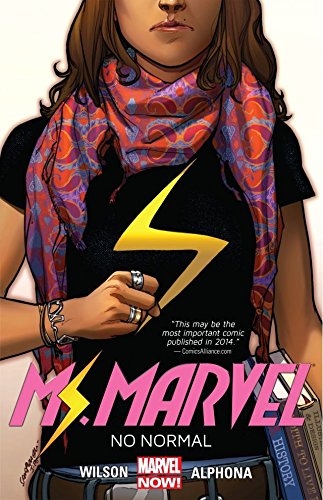
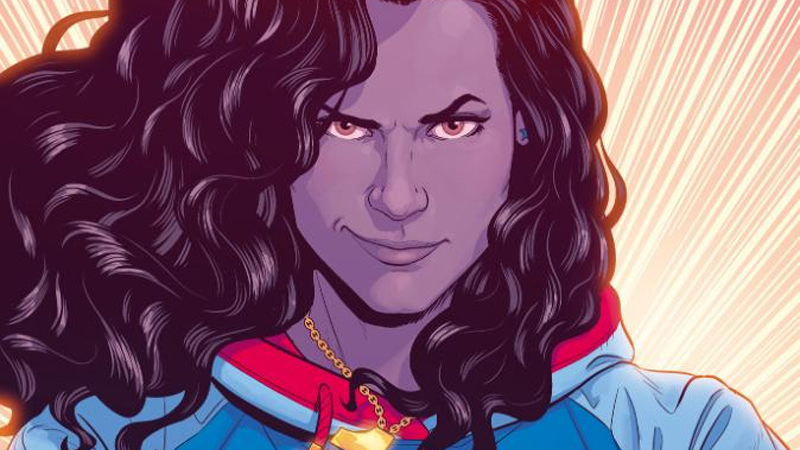
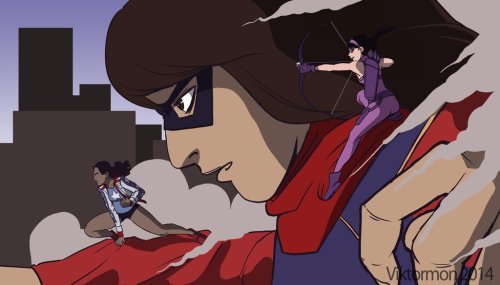
To illustrate this point, I’d like to single out two female superheroes, Kamala “Ms. Marvel” Khan and America “Miss America” Chavez. Both characters were created within the past 10 years. They’ve also been cited as prominent figures in the recent push for diversity within comics that has caused a lot of uproar or all the wrong reasons.

What sets them apart is that one character, Kamala Khan, has become a success story by most measures. Since her debut issue in February 2014, she has become popular and beloved. She has received and won numerous accolades and her graphic novels have made it onto the New York Times Best Sellers list. I consider myself a fan of hers. She’s one of my favorite female heroes.

On the other end of that spectrum is America Chavez. She debuted in 2011 and went onto have her own ongoing series. Unlike Kamala, though, her series received no accolades, sold poorly, and did nothing to endear her to fans of superhero comics. She has had opportunities to establish herself as a quality female hero. With few exceptions, she has failed at every turn.

These two characters represent a stark dichotomy in the current world of female superheroes. One provides a template for success. The other is a cautionary tale of how not to create a compelling female superhero in the current climate. It’s pretty striking how two characters created within a similar cultural environment can go in such wildly different directions. However, that difference also carries with it plenty of lessons.

To be fair to the medium I love, creating female superheroes today is very different compared to past decades. If Wonder Woman, Storm, Carol Danvers, or Supergirl were created today, they wouldn’t have the same impact. They came out at different times and under different circumstances. Those circumstances played a key role in how they became iconic.

Great female superheroes, and quality female characters in general, have traits that allow them to resonate in any era. However, the timing and influences have to be right for them to carve a place in popular culture. Kamala Khan and America Chavez dealt with similar circumstances when they debuted. That makes them a good case study in how female superheroes can succeed and fail.


Why Kamala Khan Succeeded

I still remember the day I read Ms. Marvel #1. I hadn’t been planning to buy it. I remember clearly that it was a light week, in terms of comics. I happened to have a few extra bucks to spend. I had heard that there was going to be a new Ms. Marvel. Having been a fan of Carol Danvers, I decided to check it out.

I’m glad I did because that one fateful issue made me a Kamala Kahn fan for years to come. The story it told struck all the right chords. It presented a character who felt real, genuine, and relatable. The fact that she was a girl, a Muslim, and the daughter of Pakistani immigrants was secondary. She still felt like a character that I could be friends with if she were real.

The reasons why Kamala was so endearing had little to do with how many diversity points she scored and everything to do with how the writer, G. Willow Wilson, went about developing her. She spent almost the entire first issue just revealing who Kamala was and what sort of life she had. We learn about her family, her friends, her hopes, her dreams, and even her favorite hobbies.

She quickly becomes more than just another teenage character. She’s a self-professed fangirl who writes fan fiction, plays MMO games, and loves gyros. Wilson approached developing Kamala the same way Stan Lee approached developing Peter Parker. She developed the personality before turning them into a superhero.

When Kamala finally does get her powers, Wilson establishes a solid reason for why she’s a hero. Just getting powers isn’t enough. Unlike Peter Parker, however, she doesn’t need a loved one to die. Being a fan of superheroes and having decent parents puts her in a position to make that choice without anyone dying. That, alone, makes her worthy of admiration.

From that point forward, it’s easy to root for Kamala. She carries herself as someone you want to root for. She personifies how fans of superhero comics are inspired by their heroes. Her having a chance to be a hero like the ones she idolizes isn’t just endearing. It’s special. That’s why she succeeds and why it’s very likely we’ll see her enter the Marvel Cinematic Universe at some point.


Why America Chavez Failed

Take everything I just said about why Kamala Khan works and why she’s so lovable. Then, reverse it completely. That’s basically who America Chavez is and why she’s more a joke than a success.

On paper, America has a lot going for her. She’s not just another generic female hero. She’s Latina, she’s a lesbian, and she comes from a very different world, literally and figuratively. In terms of diversity points, she checks as many boxes as Kamala. She has her own unique style and she even uses a familiar moniker that has been successfully used by others.

Beyond those traits, however, there’s nothing about her character or her story that will get superhero fans cheering. She’s not relatable like Peter Parker or Kamala Khan. She’s from a place called Utopian Parallel, which is exactly as boring as it sounds. Her world was threatened with destruction, but her parents sacrificed themselves to save it. They’re the only respectable heroes in her story.

America, for reasons that are poorly told and poorly developed, decides to prove that she’s as good a hero as her parents. Her world is a utopia. It doesn’t need her. As a result, she just looks for a world that needs heroes and happens to choose one that has a massive glut of them. Already, her judgment is questionable.

If you’re expecting me to explain the depths of why she’s a hero and how she distinguishes herself, I’m sorry to disappoint. That’s the extent of her heroic journey. She doesn’t answer the hero’s call as much as she looks for an excuse. She doesn’t work her way into the world of heroism. She just throws herself into it and skips the part that makes it a meaningful story.

It certainly doesn’t help that she’s grossly overpowered in a way that makes every battle feel boring. Unlike other powerful characters, including Superman or Captain Marvel, there’s no real intrigue to her abilities. Whereas Kamala Khan and Peter Parker struggle, seeing their powers as burdens at times, America Chavez rarely strains herself. When she does, it feels forced and contrived.

On top of all that, America never comes off as a likable person. In nearly every scene she’s in, she carries herself with an in-your-face, screw-you, I’m-better-than-everyone attitude that isn’t the least bit endearing. She basically tries too hard to be a badass female hero, but forgets the part where heroes are actually supposed to be admirable.

It’s not enough to just punch a Nazi, which she does at one point. Being a hero means embodying ideals that go beyond gender politics. America Chavez’s story is so contrived, at times, that it feels like the most shameless kind of pandering. It’s why those who bemoan Marvel’s diversity push often cite America Chavez as the personification of everything wrong with that effort. Sadly, she gives them plenty to work with.


Lessons For The Future

I have high hopes for Ms. Marvel. I even hope that, at some point, America Chavez becomes a solid character. There’s plenty of room for new characters that resonate with everyone, regardless of gender, race, creed, ethnicity, or sexual orientation. It doesn’t have to come at the cost of established characters, either. Heroes can be anyone. That’s what makes them icons.

Now, I understand that there are plenty of people out there who don’t like Kamala. I don’t deny that she has her flaws and she’s had some pretty unflattering moments. I also understand that America Chavez has her share of fans who think I’m not being fair to her. I don’t claim that my take on her is definitive.

I singled these two characters out because I believe they embody the struggle facing female superheroes in the existing cultural climate. Like any creative endeavor, there is a right and wrong way to go about it. Kamala Khan and America Chavez provide important lessons on what to do and what to avoid. They include, but aren’t restricted to, the following.

Lesson #1: Build the character before the hero

Lesson #2: Appeal to everyone and not just a select few

Lesson #3: Make their struggle feel real and genuine

Lesson #4: Give the character a distinct and endearing voice

Lesson #5: Don’t just rely on punching Nazis

There are many other lessons to be learned from characters like Kamala Khan and America Chavez. Some of those lessons have to be learned the hard way, but they’re worth learning. More quality female superheroes can only help the genre, as a whole. Superheroes, by definition, are supposed to inspire others to be better. That inspiration need not be restricted to gender, race, or any other distinction.

17 Comments

Filed under censorship, Comic Books, Jack Fisher, Superheroes, gender issues, media issues, political correctness, sex in media, superhero comics, superhero movies, women's issues

Masculinity, Feelings, And The Taboo Of Expressing Emotions

man-crying_2532946b

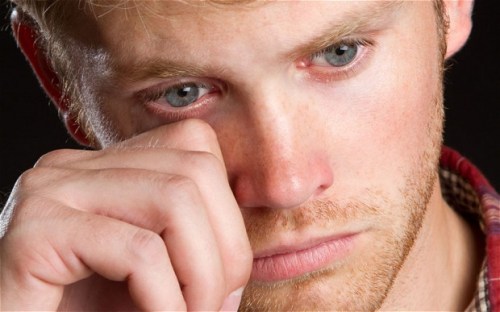
Real men don’t get all touchy-feely with their emotions. How many times have you heard that said in one way or another? Maybe that’s the wrong question to ask. Maybe a better question would be why is it that men can’t get emotional without it being a flaw?

Whatever way you frame the question, it’s hard to deny that there’s an unspoken taboo when it comes to men expressing emotions. A man who gets emotional is seen as weak. He’ll get called a sissy, a wimp, or a pussy. Their ego takes a hit. Their reputation and sense of worth takes a hit. As a result, men have little choice but to suppress their emotions, which is objectively unhealthy.

Conversely, a woman who gets emotional tends not to get criticized. For them, showing emotions is normal. We don’t think it’s wrong for a woman to cry during an emotionally distressing experience. We don’t see that as a sign of weakness. If anything, we would be more concerned if they didn’t show emotion.

It’s a strange, but impactful dynamic. One gender is allowed to express a wide range of emotions without ridicule. The other is expected to suppress those emotions. For men, the only acceptable emotion, it seems, is anger. Men being angry is the only emotion they can show that isn’t entirely taboo, although even that is changing.

The same regressive attitudes that create meaningless terms like “toxic masculinity” adds even more constraints on men’s emotions. Now, a man isn’t even allowed to be angry anymore. His anger just identifies him as another member of a toxic culture that hates women, despises minorities, and wants to create a patriarchal world where they’re all Don Draper.

I hope I don’t need to explain why that notion is wrong, misguided, and just plain asinine. That’s not the purpose of this piece.

I bring this topic up because, as a man, I’ve felt the impact of these attitudes on a personal level. There are a lot of stereotypes about men and masculinity that don’t bother me because the effects are usually overblown or exaggerated. This is one issue where I’ve felt genuine distress.

As I’ve said many times before, I’m a big romance fan. I love romance in comics, movies, TV shows, and even video games. I’ve been a fan of all things romantic since I was a teenager. However, a young man who admits that enjoys romance is likely to get a lot of odd looks from men and women. Nobody ever told me that it’s uncool for men to like romance, but that’s the impression I got.

As a result, I was downright secretive about my love of romance. I wouldn’t mention romantic sub-plots in movies or TV shows among friends or family. I often had to seek out romantic media covertly. There were even occasions where I would be watching something with heavy romance on TV, but change the channel as soon as someone entered the room.

At times, I treated hiding my fondness for romance with the same tact as most men would in hiding their porn stash. If anything, hiding porn would’ve been easier because most people expect men to enjoy that. A man admitting he watches porn won’t surprise anyone these days. A man admitting he enjoys romance doesn’t have that luxury.

That sounds melodramatic on my part and in hindsight, it probably was. However, being a man, I didn’t want to deal with that extra scrutiny. Growing up, I already had other personal issues to deal with, including a terrible acne problem that killed my confidence for most of my youth. The last thing I needed was another reason to feel like a freak.

Eventually, it helped when I found online communities full of romance fans who were men, women, gay, straight, bisexual, and everything in between. That finally gave me an outlet and it’s a big reason why I started writing sexy stories. While I’ve come to appreciate that outlet, it was still frustrating having to hide the fact that I liked romance. If I weren’t a man, it wouldn’t have been a big deal.

As hard as that was, the cost of managing emotions as a man can get much higher. Just this past year, I’ve felt the extent of that cost in ways I honestly can’t put into words. It started with the passing of my grandmother. Saying goodbye to her was one of the hardest things I’ve ever done before.

I had to go through so many painful feelings during that process. I couldn’t tell you whether I handled them well. I like to think I did, but I can’t say with a straight face that I successfully managed my emotions through that whole ordeal. There was a lot I had to either temper or suppress.

It wasn’t because someone was stopping me. There weren’t a cabal of other men actively shaming me for feeling sadness, sorrow, and grief. There weren’t teams of women questioning my masculinity because I dared to show unmanly emotions. As a man, I just didn’t know how to express these feelings. There was just a sense that this wasn’t something men did.

I think it’s only getting harder as masculinity, itself, faces more scrutiny. Nobody can seem to agree on when it’s okay for men to get emotional or how they should go about it. We just know there’s a high price for screwing up. Think about the kinds of criticisms men face if they don’t put on the tough, confident poise of James Bond.

A man who shows too much anger is just a product of toxic masculinity.

A man who cries openly is overly sensitive.

A man who is overly romantic is either whipped or domesticated.

A man who shows sadness is weak and incapable.

A man who tries to talk about his feelings is either mansplaining or whining.

Given all these pitfalls, how is a man supposed to go about expressing his emotions? Just being strong isn’t enough anymore because strength has steadily become more gender neutral. While I think that’s a good thing for men and women alike, I also believe that dealing with emotions is a major blind spot in the world of gender politics.

That’s not to say this issue is being ignored. In wake of the anti-harassment movement, there has been some efforts to re-evaluate how we think about men and emotion. A few tech companies have even formed private men’s groups where men can get together and do more than discuss these issues, among other things.

I can already hear some men saying those groups are for wimps. Some might even doubt the masculinity of the men who participate. That’s understandable. These kinds of attitudes don’t change overnight. However, between the growing suicide rate among men and the impact emotions have on mental health, this is an issue worth confronting.

I won’t say yet whether these groups will be effective at helping men with their emotions, but I believe it’s a start. I also believe that this is one issue in which men and women can come together on. Other parts of the anti-harassment movement and modern feminism are bound to be divisive. This can actually be a unifying force.

Human beings are emotional creatures. No matter how masculine you are or how feminine you are, you’re going to experience a wide range of emotions over the course of your life. If one gender can’t even figure out which emotions are socially acceptable, then how can we hope to forge emotional bonds with one another?

I don’t doubt that emotions are difficult to deal with. I’ve learned that the hard way this past year. I know plenty of other men who are going through the same struggle. In the end, being able and comfortable expressing feelings should be one of the most gender-neutral aspects of the human experience.

2 Comments

Filed under gender issues, human nature, men's issues, outrage culture, sex in society, sexuality, women's issues

Controlling Women’s Bodies Versus Policing Men’s Thoughts

000_hkg10109760-e1506859911100

Discussing gender issues, whether it’s from a feminist perspective or a male perspective, is fraught with problems. I’m not just referring to the hashtags, virtue signaling, systemic deficiencies, or historic injustices, either. Talk to anyone on any part of the political spectrum for more than five minutes and you’ll realize something very quickly.

Addressing gender issues isn’t just difficult. It’s frustrating.

By that, I don’t mean that it’s impossible to have a productive conversation. There are just certain aspects of that conversation that are intractable. We’ll never be able to agree because we’ll never be on the same page.

Women will point out the historic abuses and injustices perpetrated by men.

Men will point out the inherent advantages and privileges that women are afforded.

Women will bemoan instances of harassment, toxic masculinity, and patriarchal oppression.

Men will cite instances of egregious double standards, male disposability, and cultural marginalization.

Those in the transgender community will point out how both sides are guilty of denigrating their community.

From the most radical of feminists to the most egregious misogynist, there seems to be no common ground. It fuels a great deal of the perpetual outrage culture surrounding gender. Whatever your ideology, it feels like there’s no underlying thread through which we can get to the heart of the conflict.

While I don’t claim to be an expert in feminism, men’s issues, or gender, I’ve written enough about these topics to gain some insight. In doing so, I wish to do something other than complain about the state of gender politics. Instead, I’d like to offer an idea that I believe puts many gender-driven conflicts into a more cohesive context.

The primary catalyst for gender conflicts boils down to controlling women’s bodies versus policing men’s thoughts.

I know it’s a generalization, one that seems too simple to cover so many complicated issues. However, the connections are there. If you take a step back, it’s possible to see how many current and past issues involving gender came down to this simple dynamic.

To understand its implications, take a moment to think about the different ways we judge men and women. Consider how we do it now, how we’ve done it in the past, and the ways we justify it. When you look at the big picture, there are some clear patterns.

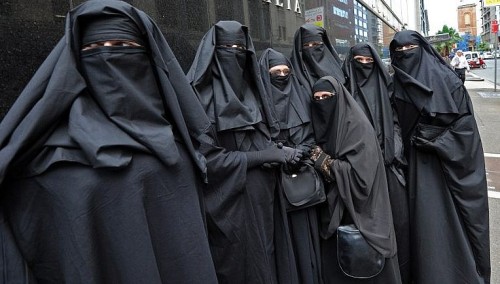
Take, for example, the extent to which modesty and chastity is emphasized for women. In both modern Islamic cultures and ancient agrarian cultures, a virtuous woman was one who didn’t show off her body, didn’t have promiscuous sex, and didn’t thrust herself into major issues. At the same time, modesty in men is never mentioned.

Why is this? I know some feminists will cite the nefarious patriarchy as the source of all female marginalization. That makes for a great melodrama, but it does not reflect reality. I know I’ll upset a few feminists here when I say this, but I think it needs to be said.

The obsession over the female body has nothing to do with patriarchy and everything to do with the fact that women bear children. That’s the one intractable difference between men and women that no ideology can deny. One gender has to carry the future of the species inside their bodies for nine months and the other doesn’t.

Any woman who has endured a pregnancy can attest that this process is strenuous, to say the least. Unfortunately, it’s necessary for the continuation of our species and, by default, the growth of society. From a purely pragmatic perspective, it makes sense to micromanage female bodies.

We need female bodies to be healthy and safe in order to bear children. The fact that, for much of recorded history, men needed to be certain those children were theirs for the inheritance of property only increased that need. Women who were promiscuous, injured, or in any way damaged didn’t just result in their own suffering. It could cause the entire tribe to suffer.

It certainly doesn’t help that we had a limited understanding of human biology and disease until recently. It also doesn’t help that these values of protecting female bodies became enshrined in religion and culture, some of which are still practiced today. This emphasis on controlling the female body is the foundation on which many taboos, traditions, and tropes are built.

On that same foundation is the other side of that dynamic that involves policing the thoughts of men. By that, I don’t just mean men acting immature at the sight of a naked woman or cringing at discussions concerning female biology. I’m talking about a mentality that builds assumptions and expectations about an entire gender based on unknowable thoughts.

Think back to what Judeo-Christian morals say about men who look at a women with lust. It’s such an important issue that Jesus himself says outright that just thinking sexy thoughts about a woman is a major transgression. He didn’t say anything about homosexuality, but he made it clear that contemplating lust is as bad as acting on it.

Many religious traditions and cultures place a similar emphasis on the subject. It’s why traditions in Islam and ancient China advocate separating men from women. If they’re in close proximity, they may look at one another. If they look at one another, then they may think lustful thoughts.

This isn’t just cultures being sexually uptight or overly patriarchal. This emphasis on scorning men’s thoughts makes logistical sense when you look at the intent. From perspective of a functional society, it has to emphasize thought over actions because just judging a man for his actions is insufficient when you extrapolate the consequences.

Say a man sexually assaults a woman. The community rightfully convicts him and punishes him as harshly as possible. No matter how harsh or cruel, though, it doesn’t undo the harm he inflicted on the woman. She is still traumatized. She might even be permanently injured. As I noted before, when a female body suffers, it puts the future of the community in danger.

As a result, we have no choice but to attack the thoughts of the man that preceded his assault. The only way to prevent damage to the female body is to prevent those violent thoughts from occurring in the first place. Unfortunately, we can’t read thoughts. We don’t know what a man is or isn’t thinking when he commits an egregious crime. As a result, we’re left with expectations and assumptions.

That’s where we get flawed concepts like toxic masculinity, the male gaze, and mansplaining. That’s also why there’s a greater emphasis on assuming the guilt of men and believing the claims of women. Attacking their thoughts is the only sure-fire way to prevent them from turning into actions that would harm women and their bodies.

Please note that I emphasized the harm to the female bodies with respect to men’s actions. That’s not an accident. The assumptions are the same today as they were in ancient times when protecting the reproductive function of women wasn’t just a cultural tradition. It was a matter of survival. Any effort that could reduce the chances of a female body being harmed had merit. From there, natural selection does the rest.

With this dynamic in mind, look at some of the relevant cultural issues going on today. Even if the connections aren’t direct, the influencing factors are there. Nearly every one of them come back to controlling women’s bodies and policing men’s thoughts.

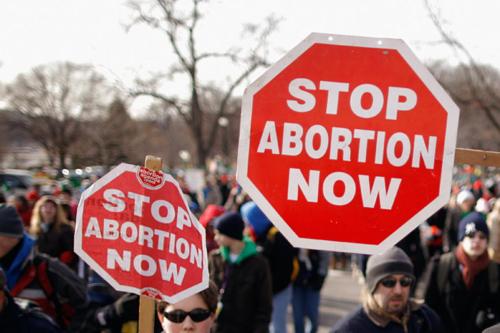
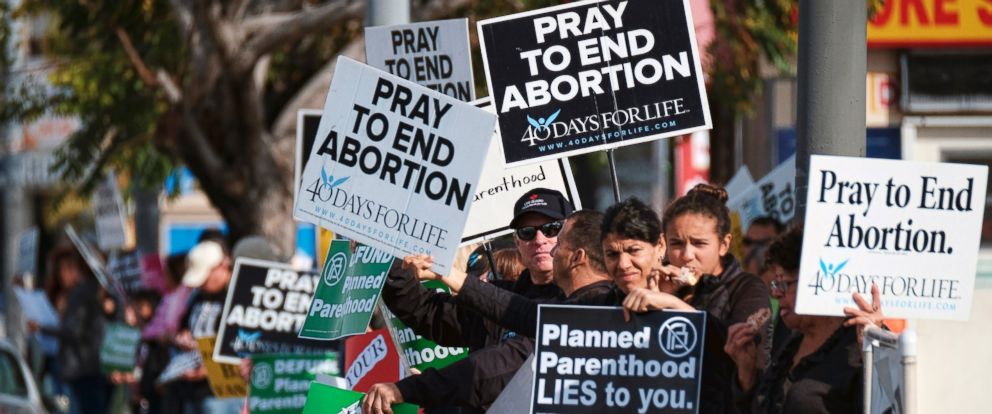
At the heart of the abortion debate is controlling women’s bodies.

At the heart of the debate over depictions of women in media is policing men’s thoughts.

At the heart of the anti-harassment movement, the anti-pornography movement, and the opposition to prostitution is the control of female bodies and the policing of men’s thoughts.

It’s rarely stated outright. However, that is what many issues comes back to. Often times, the people involved won’t use words like “control” or “policing.” They’ll claim they’re protecting women’s bodies and enlightening men’s thoughts. That may be the intention, but there are only so many ways anyone can go about pursuing such recourse.

To protect anything, you have to be able to control it to some degree. We can’t protect people, pets, or possessions without some kind of containment. The same goes for reforming someone’s attitudes. It’s necessary to police undesired thoughts to promote the thoughts you want.

In both cases, the outcome is the same. It’s both impossible and untenable to completely control women’s bodies. That requires a level of subjugation that even the most brazen misogynist cannot stomach or maintain. It’s just as impractical to police men’s thoughts. We can never know for sure what someone else is thinking. We’re left to assume and that’s usually the first step towards expecting the worst.

Despite the efforts of government, culture, tradition, and organized religion, nobody has come close to controlling women’s bodies and policing men’s thoughts to any sustainable extent. Men will still think sexy thoughts, a small part of which will precede a serious crime. Women will still put themselves at risk to be free, have fun, and enjoy their bodies on their own terms.

Even if 99 percent of what men think results in no crimes and 99 percent of what women did with their bodies resulted in no negative effects, we’ll still obsess over that one percent of the time when something goes horribly wrong. That obsession will continue to fuel the most radical parts of feminism and the most vocal parts of men’s rights activists.

For now, there’s no way to bridge the gap. That may change as a result of major social and technological trends, but this is the current situation. Again, I don’t claim this idea of controlling women’s bodies and policing men’s thoughts is the definitive catalyst for all gender-driven conflicts. This is just an idea I wanted to share in hopes of providing perspective.

14 Comments

Filed under gender issues, human nature, men's issues, outrage culture, political correctness, sex in society, sexuality, women's issues

Why Extremists (Of All Kinds) Seek To Destroy Sex And Love

198420teaser-850x510

Whenever a tyrannical power gains influence, it’s only a matter of time before it attempts to control sex and subvert love. Whether it’s a theocracy like “The Handmaid’s Tale” or a communist dictatorship like North Korea, those in power will eventually get to it. It’s just a matter of how repressive they dare to be.

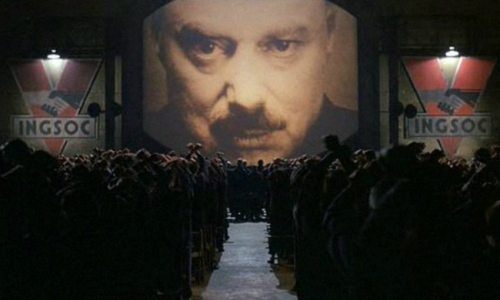
When it comes to the extremes of authoritarianism, those envisioned by George Orwell are the standards by which all are measured. Whether they’re fictional tyrannies like those in “Star Wars” or real-life autocracies like Nazi Germany, the extent of their repression is best measured by contrasting it with the one Orwell crafted in “1984.”

This isn’t the first time I’ve cited that book or Orwell’s writing, but I do so for a reason and it’s not just because it’s one of my favorite novels. The narrative Orwell envisioned took our understanding of repression and pushed it to its greatest extremes. On every level, the world of “1984” is a worst-case-scenario for anyone who values freedom.

Under the ruling party, Ingsoc, every aspect of human life is controlled, managed, or outright subverted. That includes sex, but it’s certainly not limited to it. Through institutions like the ironically-named Ministry of Love and the Junior Anti-Sex League, people aren’t just shamed or bullied into certain sexual practices. They’re tortured, brainwashed, and forced into it.

It’s a level of control that the Catholic Church, the religious right, and even conservative Muslims would find excessive. It’s also an important part of the story because so much of the events surrounding “1984” emerge from Winston’s relationship with Julia. In fact, the love they share is framed one of the biggest threats to the party.

That, in and of itself, is extremely telling of the power of sex and the love that emerges from it. Even in a world in which the repression is so complete that the party can convince people that two plus two equals five, it still has a problem dealing with sex. If Big Brother can’t manage it, then what hope does the Vatican have?

I ask that question within the context of “1984” because I’m seeing more and more issues inevitably link back to sexuality. It’s not just from religious institutions, though. They’ve made their eagerness to shape sexuality to serve their interests known for centuries. They aren’t always overt about it, but it’s not too hard to understand why they want their adherents having sex only for procreation.

For them, linking sex to making babies means all those sexual thoughts people have will result in more adherents. More adherents means more money. More money means more power and influence. It’s often cloaked in sin and morality, but this is the ultimate byproduct of their sexual morals.

However, it’s at the other end of the spectrum where a different, but powerful kind of sexual subversion is at work. The link isn’t quite as obvious as those espoused by religious institutions, but it is there in that the byproduct is the same and the underlying themes are richly reflected in “1984.”

On that end of the spectrum are those who identify as secular, but still hold extreme ideologies. This includes extreme brands of feminism, social justice ideology, and even old school communism. These are people who don’t just want to reform the current system through political and social discourse. They seek to overthrow the system and replace it with their own Utopian ideal.

Like the religious zealots they often clash with, they see the current order as oppressive. Whether it’s a religious sect facing persecution or the historical oppression against anyone who isn’t part of a historic majority, these individuals see revolution as the only way to right these wrongs. Part of that revolution involves destroying sex, albeit indirectly.

Whereas religious zealots rely on outright censorship, those on the opposite end employ a more subtle approach. They denigrate and bemoan sexual imagery, be it in video game characters or a shirt somebody happens to be wearing. They obsess over inequities and victimization, singling out egregious crimes while ignoring others that don’t fit the narrative.

Some will go so far as to claim sex as inherently oppressive. A few radical feminists have gone so far as to say that the fundamentals of sex can only ever be oppressive. In the same way some religious preachers will shame someone for looking at anyone with lust, this ideology identifies anyone who has or pursues sex as an oppressor.

That might have been absurd several decades ago, but in the current state of outrage culture where the dress Jennifer Lawrence wears to a movie premier becomes a controversy, it’s steadily creeping into the discourse. Concepts like beauty are now oppressive to those not born with beautiful bodies. Anything that may titillate or excite is seen as dangerous or damaging to the oppressed.

It’s at a point where the idea of people seeking any kind of release outside the narrative espoused by extremists is pathologized. For religious zealots, it’s sinful. For the non-religious extremists, it’s oppressive. Both see it as something that needs to be reformed or envisioned.

Chances are these individuals don’t see themselves as the authoritarians depicted in “1984.” They still see themselves as the underdogs in a “Rocky” movie, fighting to win an epic battle against an oppressive bully. Beyond being an absurd conflation of what they’re fighting for, this very approach is envisioned by Orwell and is key to empowering Ingsoc.

In the world of “1984,” the Ministry of Truth builds a similar narrative for the masses. They’re told that prior to Ingsoc taking power, the world was a terrible, oppressive place. It was only by rallying around the party and Big Brother that they were able to triumph. Moreover, it’s through the wisdom and guidance of the party that they escape this oppression.

Part of that process involves reshaping/subverting sex. In “1984,” the party isn’t just looking to control it. They seek to destroy it. The Junior Anti-Sex League even says it outright at one point.

“The sex inherent aptitude will be eradicated. Reproduction will be a one-year formality like the reclamation of a ration card. We shall get rid of the orgasm.”

Even by extreme repression standards, this seems extreme. It might even seem like something that would give zealots of all types pause. However, Orwell’s way of justifying such extremes reveal more than just a twisted ideology. He ends up exposing why sex is such a huge concern for any extreme ideology.

“When you make love you’re using up energy; and afterwards you feel happy and don’t give a damn for anything. They can’t bear you to feel like that. They want you to be bursting with energy all the time. All this marching up and down and cheering and waving flags is simply sex gone sour. If you’re happy inside yourself, why should you get excited about Big Brother?”

Read over that quote again, but replace Big Brother with the name of any religious sect or political ideology. It has the same meaning and the same implications. In order for both the zealots and the radicals to achieve their goal, they have to destroy sex. It’s the only way they can achieve their Utopian ideal.

Religious zealots can’t shame or guilt people entirely out of wanting to enjoy sex for non-procreative purposes. They can certainly make it difficult and painful for many, even to the point of serious abuse, but it never works in the long run. The drive to just want to hump for fun is too strong.

Certain brands of radical feminism have a similar issue. They can’t stop straight men from enjoying the sight of a beautiful woman. They can’t stop anyone from wanting to enjoy something different in their sex lives that they don’t like. No matter how much they’re triggered, it doesn’t turn off that powerful, instinctual drive.

In “1984,” the party actively works towards destroying that drive through technology. This is a lot scarier now because that kind of technology is already in the works. In theory, an extremely repressive religious zealot or a very regressive feminist could turn the implants in development at Neuralink into something that removes all pleasure from sex.

From there, they could redirect that energy into serving their ideology/religion. The procreative function could still be utilized, but only to the extent that it’s necessary. That may not be the ultimate goal. It’s not even the ultimate goal of Ingsoc. It’s just necessary in the grand scheme of pursuing and securing power.

As it stands, those in the religious right and other extremist circles aren’t remotely close to gaining the influence and control exercised by Big Brother in “1984.” Logistically speaking, it’s impossible for them because subverting human nature requires an understanding of it and the scientific process for achieving that understanding rarely adheres to ideology.

It still says something about their goals when the only way to achieve them in the long run requires that they destroy sex. I don’t think it’s a coincidence that Orwell built a major part of “1984” around two characters falling in love and experiencing the joys of the sex act. That proved to be one of most powerful ways for them to oppose the party.

To that extent, Orwell’s understanding of sexuality is nothing short of prophetic in terms of how revolutionaries on both ends of the political spectrum view it. In an Orwellian world, sex and love aren’t just a hindrance to a revolution. They’re an outright threat.

The fact that it took repression on the level of Big Brother to confront that threat is a testament to the power of sex and love. If Big Brother couldn’t contain it, then what hope does any religion or ideology have?

1 Comment

Filed under gender issues, human nature, Marriage and Relationships, men's issues, outrage culture, religion, sex in society, sexuality, women's issues

Why Men Should Also Be Concerned About The Future Of Roe v. Wade

108294094

These are tenuous times for abortion rights. Regardless of your gender, there’s no getting around the news. The overall trend in abortion access is not on the path of greater accessibility. If anything, it’s going in the opposite direction.

Regardless of which side you’re on in this exceedingly divisive issue, there’s no denying the legal reality. For the past 25 years, a woman’s ability to get an abortion has steadily eroded, thanks largely to the spread of TRAP Laws. These laws may not explicitly outlaw abortion, but they make getting one inconvenient at best and impossible at worst.

As I say in every piece I write about abortion, I don’t particularly enjoy talking about abortion. This is an issue that I feel I’m woefully unqualified to talk about because I’m not a woman and will never know what it’s like to be in such a difficult situation.

That said, there is an aspect about this topic that I feel needs to be addressed and it’s a part of the issue that impacts men. It takes two to make a baby, last I checked. Even though it’s objectively true that abortion affects women more directly, men do have a role and I feel that role will expand as abortion rights trend in a less-than-liberal direction.

As I write this, the United States Supreme Court is in the midst of a huge shake-up. After the retirement of Justice Anthony Kennedy, the justice system is poised to shift heavily to the right. That has caused plenty of concerns among those who worry about the status of Roe v. Wade, the Supreme Court case that legalized abortion nationwide in 1973.

At the moment, it still seems like a long-shot for this decision to be overturned. However, Supreme Court decisions have been overturned in the past. It happened with racial segregation. It happened with anti-sodomy laws. Legally speaking, there’s no reason why it couldn’t happen with abortion.

Now, that process is fraught with a long list of political, legal, and ethical complications, the least of which would be the long-term alienation of whatever political party favors it. However, I don’t want to harp too much on the politics here. Instead, I want to focus on the social component because that’s where the effects will be most directly felt.

Women, by far, will be the most directly impacted. There are still women alive today who can recount what life was like before Roe v. Wade. Their stories are becoming more relevant. For men, however, I don’t think those stories are as well-known and for good reason. Women had to endure bearing those unwanted children. At worst, men just found themselves on the wrong end of a shotgun wedding.

If Roe v. Wade were overturned, however, that wouldn’t be the only predicament most men faced. Beyond the abortion issue, 1973 was a very different place. In that world, it was possible for a man to just skip town, run out on a pregnant woman, and never interact with her again. While that man would have to be a callous, irresponsible asshole, it was possible and it did happen.

That sort of thing isn’t as easy to do today. Anyone who has seen a single episode of Maury Povich knows that. Between social media, improvements in paternity tests, and tougher child support laws, most of which came after 1973, it’s a lot harder for a man to escape parental obligations. It’s not impossible, but it’s not as easy as just skipping town.

In a world where women cannot easily end an unwanted pregnancy, there will be greater incentive to find these reckless men and hold them responsible. Where there’s an incentive, especially one that has the potential to become a lucrative legal racket, there will be people and businesses that emerge to fill that need.

How that manifests is hard to determine, but desperate people will find a way and you won’t find many more desperate than a woman dealing with a child she can neither afford nor care for. I know a sizable contingent of people, many of which are probably men, will blame the woman for being promiscuous. That still doesn’t change the basic equation of human reproduction.

Two people are involved. Those people, in a world where decisions about a pregnancy are pre-made by the law, are going to be in a tough situation. Regardless of whether a pregnancy was the result of an accident, a crime, or an extortion plot, there will be serious ramifications and not just in terms of legal fees.

The story of women enduring the rigors and hardship of an unwanted pregnancy are many. However, the story of men living in a world without Roe v. Wade and modern child support laws haven’t been told yet because the circumstances haven’t been in place. On the day Roe v. Wade gets overturned, those stories will begin and those are stories men don’t want told.

They’re not very sexy stories, to say the least. They have sexy moments, but extremely unsexy outcomes. Picture, if you can, the following scenario that may play out in a world without Roe v. Wade.

A young man with plenty of dreams has a one-night stand with a woman in a lone act of recklessness. The woman ends up pregnant. Since they live in a state where abortion is illegal, she has to have the child. The man has no idea for months until the woman tracks him down through the courts, forces him to take a paternity test, and confirms that he’s the father.

With no say in the matter, he’s legally liable for child support for the next 18 years. The woman, without any of his input, decides to keep the child instead of putting it up for adoption. The man resents the woman for making this decision without him, but begrudgingly goes along with it, if only to avoid the stigma.

Years go by and his life becomes more of a struggle. He can barely afford to support himself due to the child support payments. He and the mother of his child are constantly at each other’s throats, going through legal battles over how much support is needed and how much access he should have to his child.

Between the legal and financial struggles, both end up in poverty. Their child ends up in poverty too, growing up in a broken home. In a world where there are few choices for women and fewer choices for men, there are plenty others.

Does that sound like an appealing, functional society? Does it sound like one that benefits men, women, and children in any capacity? You don’t need to be a liberal, conservative, or a Supreme Court Justice to understand why such a society is undesirable.

Some of this isn’t even speculation. There have been societies that have outlawed abortion completely. Those societies didn’t prosper. They didn’t benefit men, women, or children. However, the lessons from those societies will probably not faze the anti-abortion crowd. I doubt they’ll give any judges or legislators pause as they push for more restrictions.

The impact of these laws will be felt first by the women. They still bear the children. They’ll still suffer the most negative effects at first. Those effects will quickly find their way to the men, as well. Unlike the men prior to 1973, they won’t be able to escape it.

As a man, there’s only so much I can bring to the table in the abortion debate. However, given the current laws surrounding child support, child rearing, and parental rights, there are more than a few issues that should give men cause for concern. Even if you’re a man and you consider yourself anti-abortion, there’s one inescapable truth. A world without Roe v. Wade is going to impact everyone.

4 Comments

Filed under gender issues, human nature, Marriage and Relationships, media issues, men's issues, outrage culture, political correctness, sex in media, sex in society, women's issues

The Pathetic Life Of Alan Harper: A Prelude/Warning To Men?

maxresdefault

Sometimes, popular culture is uncanny at predicting the future. “Star Trek” famously predicted cell phones. “2001: A Space Odyssey” predicted tablet computers. Then, there’s “The Simpsons,” which has predicted so many things that it’s creepy. Some predictions, however, fly under the radar. Some aren’t even predictions as much as they are worst case scenarios.

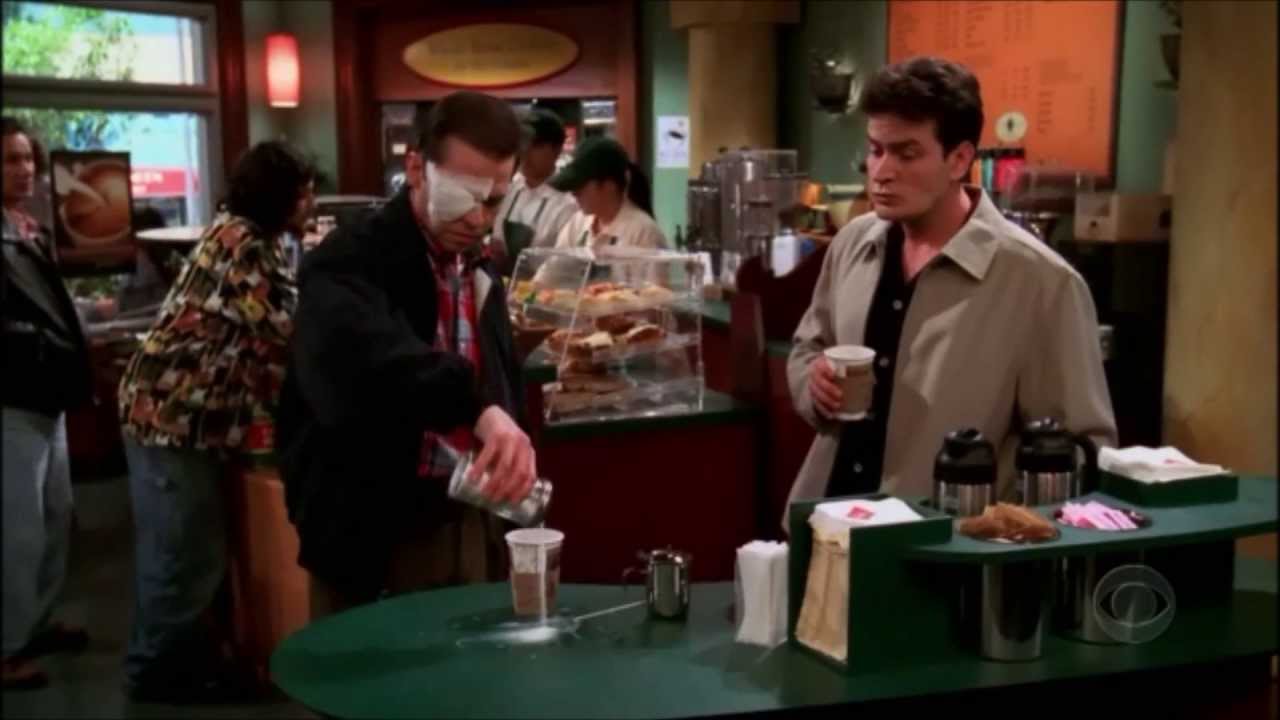
One such scenario played out in “Two and a Half Men,” a show more famous for its off-screen drama than its on-screen antics. Granted, those antics were fairly crude. Most episodes revolved around dirty jokes, sexual innuendo, and glorified hedonism. In today’s social climate, this show would trigger mass protests with every episode.

That didn’t stop it from being funny. I consider myself a fan of the show. However, this is one of those shows that could never be made today, even with an emotionally-stable Charlie Sheen. Its brand of comedy just wouldn’t work in an era where sexy Halloween costumes are considered controversial.

However, the message “Two and a Half Men” conveyed goes beyond its brand of humor and the actors who made it controversial. It’s a message that probably wasn’t intended when the show first aired, but one that manifested with time. That message centers around the only male character to make it through every season alive and unaltered, Alan Harper.

As a character, Alan is the catalyst for the whole show. It begins with him getting kicked out of his house by his wife, forcing him to live with his brother, Charlie. It serves as the foundation for the antics that follow. However, in light of recent trends in feminism, Alan Harper has become more of a concept than a character.

Simply put, Alan Harper is the perfect embodiment of a defeated, emasculated man. He’s a step below the stereotypical beta male. He’s the masculine equivalent of rock bottom. Even the entire cast of “The Big Bang Theory” or Al Bundy from “Married With Children” would feel sorry for him.

You don’t need to watch every episode of every season to see how this plays out. The show rarely goes more than a few minutes without highlighting how pathetic Alan is. The denigration goes beyond his ex-wife kicking him out of his house, divorcing him, and hitting him with egregious alimony payments.

Alan Harper, at his core, is a man dependent on everyone around him for affirmation, but is incapable or unwilling to earn it. His womanizing brother, Charlie Harper, often describes him as a parasitic leech who feeds on the pity of others to survive. In terms if how he conducts himself throughout the show, that’s pretty accurate.

Everything Alan does, from trying to make a living to pursuing romance, is done from a position of dependence. He depends on his brother for a place to live. He depends on his ex-wife to see his son, Jake. He depends on all the women he encounters for love, sex, and affection. He never has any leverage, always working from a position of weakness.

This earns him sympathy, but he’s no lovable loser. In addition to being dependent and weak, he’s also neurotic, selfish, and lazy. He rarely puts much effort into improving his lot in life. He never stands up for himself, rarely accepts responsibility for his mistakes, and endures failure without ever learning from it.

This is especially true in the later seasons of the show after Charlie Sheen was fired. Instead of having to leech off his brother, Alan managed to leech off a total stranger in Walden Schmidt. He makes every possible excuse to keep living in his brother’s house, never pay for anything, and avoid any semblance of personal growth.

Even if you pity Alan Harper, there’s little reason to respect him. Whenever he has a chance to make choices that can change that, he either makes the wrong decision or avoids it entirely. He’s not just a perpetual victim of a vindictive ex-wife, a hedonistic brother, and an idiot son. He actually clings to his victimhood, as though it were part of his identity.

It was fodder for comedy when “Two and a Half Men” was still on the air. Now, it’s a serious issue that affects men and women alike. That’s because leveraging victimhood has become less a comedy trope and more an ideological tactic.

The current discourse, especially when it comes to gender, is often built around who victimizes who. A big part of the anti-harassment movement is driven by the idea that women have been victims for years, suffering in silence under the thumb of misogynistic men. There are more than a few situations like that in “Two and a Half Men.”

Men are just as guilty of using that tactic too, albeit not to the extent of Alan Harper. Men have cited the lack of attention people give Terry Crews or Corey Feldman whenever they talk about issues like sexual abuse. They’ll point out the ways in which women get preferential treatment in our society, some of which actually plays out in “Two and a Half Men.”

There’s no question that harassment and inequality are problems, but just being a victim can’t be the end of the conversation. Alan Harper is, in essence, the personification of what happens when we don’t attempt to further that conversation. It impacts everybody, but it’s especially relevant for men.

Alan reflects a worst-case-scenario. In the overall gender dynamic, he draws every bad card and makes every wrong move. He marries a woman who hates him and exerts immense control over his life. He has a callous, egocentric mother who gives him no affection, guidance, or support. The entire world takes advantage of him and he does nothing to stop it.

To make matters worse, there’s very little Alan can do to stop it. Even if he stands up for himself, he has no support because he’s so dependent on other people. If he gets kicked out of the house, he has nowhere to go. If he makes any money, someone else ends up getting it, often his ex-wife or an ex-girlfriend. He’s not just pathetic in how he handles it. He’s utterly trapped.

This is the kind of nightmare scenario that men genuinely worry about. Many women may laugh it off, but men aren’t blind to the bigger picture. If Alan Harper were gay or transsexual, then he would have organizations that support him. There are many groups that work hard to help disadvantaged members in the LGBT community.

There are also plenty of organizations that help women as well. If Alan were a woman who had been kicked out of his house by a vindictive husband, then there’s no way that the comedy in “Two and a Half Men” would’ve worked. It’s not funny to see a poor woman get thrown out on the streets and denied custody of her child. When it happens to a man like Alan, though, it’s hilarious.

That’s where the humor in “Two and a Half Men” becomes distressingly serious. A character like Alan Harper lends himself to ridicule, but his situation is no laughing matter. He’s the pinnacle of a defeated man. Society does nothing to help him and everything to mock him. If he weren’t a man, it would be a tragedy. Instead, it’s a comedy.

For men, that’s a scary thought. On top of that, his situation can manifest in the real world, minus the laugh track. It is possible for a man to lose his home, his kid, and his money thanks to a vindictive wife. It is possible for a man to be so utterly helpless that he has to depend on everyone’s pity to survive.

The fact that it’s possible, but still funny in the context of a sitcom, gives men more pause today than it did when “Two and a Half Men” was still on the air. Men’s lives are being ruined by a society that does not give them the benefit of the doubt. Any debate that tries to take the side of men tends to get labeled as misogynistic.

We can either take those concerns seriously or create a society where men may end up like Alan Harper, laughably pathetic and utterly destitute. “Two and a Half Men” was still a funny show. However, the core of its comedy has serious implications and that are worth taking seriously, now more than ever.

12 Comments

Filed under gender issues, human nature, Marriage and Relationships, political correctness, psychology, romance, sex in media, sex in society, sexuality, women's issues

The Humor In Mutilating Men Versus The Atrocity Of Harming Women

45ee4ed9041461da247f826745881661e77f2046

It’s one of the most traumatic things a man can experience, the permanent damage or total removal of his penis. Whether by accident or intentional violence, he’s badly injured on a physical physical and psychological level. His ability to identify as a man, experience intimacy with others, or just feel basic pleasure is irreparably damaged.

Just mentioning the possibility of losing his penis will make most men cringe. Joke all you want about how much men glorify their genitals, but it really is an important part of their bodies and their identities. Losing it is like losing a limb, which does plenty to cause serious mental trauma. Add losing a key aspect of their masculinity to the mix and that trauma becomes amplified.

Despite that trauma, men losing their genitals is fodder for comedy. Recently, Netflix released a movie called “The Package,” the plot of which is built entirely around a man who loses his penis in an accident. That movie, if you look it up on IMDB, is listed as a comedy. Imagine, for a moment, a movie that tried to make a comedy out of female genital mutilation. How much outrage would that generate?

There’s nothing funny about women’s bodies getting mutilated or even harmed in any serious way. For men, though, it’s actually a pretty common trope. You don’t have to look too deep into the history of media to find jokes about men losing their genitals.

It’s a famous line in “The Big Leboswki.”

It’s a recurring theme in “Fight Club.”

It’s a sub-plot in an episode of “Rick and Morty.”

It’s a primary plot in an episode of “Family Guy.”

Even in media that isn’t overtly comedic, it still becomes a joke. Just look up the various internet memes about Theon Greyjoy from “Game of Thrones” for proof of that. In each case, the mutilation of men and the loss of their masculinity is portrayed as something that’s inherently funny. The fact that Netflix made a movie about that premise shouldn’t surprise anyone.

Even in the cases of real stories about real men losing their genitals, it’s prone to plenty of humor. The most famous case is probably that of John Wayne Bobbitt, whose wife cut off his penis after he raped her. While Bobbitt was, by all accounts, a horribly abusive man who deserved plenty of condemnation for what he did, his name still inspires jokes.

When people say the name Bobbitt, they don’t think of all the abuse he imparted on his wife. They think of how funny it is that his wife cut his dick off. While he was able to get it re-attached, many other men aren’t so lucky. Whether it’s public perception or daytime talk shows, a man losing his penis is still seen as funny.

Conversely, any media that shows a woman being harmed in any way, even if it’s just a slap in the face, is seen as an irredeemable atrocity. Watch shows like “Married With Children” or “The Simpsons” and you’ll see plenty of scenes where Al Bundy and Homer Simpson badly injure themselves through their antics. However, there are exceedingly few scenes that ever lead to the women being harmed.

Anything that leaves any lasting scar on a woman is inherently abhorrent. There are even major international organizations that work to combat practices like female genital mutilation. When women lose their reproductive organs from disease or injury, it’s seen as a tragedy. Anyone who laughs at their pain is rightly scorned.

Why is this, though? Why is it that an entire comedy can be built around a man losing his penis while any plot that involves a woman getting hurt in any way is dead serious? That’s not an easy question to answer. It can’t be entirely attributed to the gender-driven  double standards that I’ve singled out before.

I don’t claim to know the full answer, but I think it’s worth discussing, if only for the sake of maintaining a balanced perspective. I don’t doubt that many have their theories. Some may attribute the humor we find in men getting mutilated to trends in modern feminism. I would strongly disagree with that.

I believe that this idea of laughing at male mutilation while gasping at female victimization preceded modern feminism by a great deal. I would go so far as to say it goes back much further than that. I believe this unique quirk in gender dynamics has roots in ancient pre-modern societies that transcend geography, culture, and ethnicity.

At the core of this phenomenon is one unpleasant, but inescapable truth. I’m probably going to upset some of my fellow men by saying this, but I think it needs to be said.

We NEED to be comfortable with men getting mutilated on some levels.

Take a moment to stop fuming. Then, take a moment to consider why we would need to be okay with this in both current and ancient societies. From a purely logistic standpoint, it makes sense.

For most of human history, men were expected to carry out the dangerous, back-breaking, body-maiming work that built our civilization. Regardless of location, culture, or traditions, putting men in these situations was necessary. Someone needed to fight the wars, plow the fields, hunt dangerous animals, and work in factories.

Until very recently, men had to fill that role because women were at a severe disadvantage due to the dangers and risks of child-rearing. In the pre-modern world, the most vulnerable individuals in a society were pregnant women, newborn infants, and women in labor. In 18th-century England alone, there were 25 deaths per 1,000 births.

With odds like that, there was a legitimate reason to give women extra protection and care that was not afforded to men. Men didn’t have the babies and no society could survive in the long run if it didn’t have a growing population. That’s why, for better or for worse, there are so many cultural and religious traditions that encourage women to remain in domestic roles.

Those same traditions, however, establish a dynamic requiring that we accept a certain level of male victimization. It’s one thing for a man to die in battle or having his genitals maimed in an accident. It’s quite another for a woman, who are tasked with birthing and caring for a new generation, to endure similar harm. Another man can still impregnate a healthy woman. No amount of men can impregnate an injured woman.

I know that dynamic is offensive to both feminists and men’s rights activists because it reduces their value to their reproductive capacity. I get why that’s offensive. Even I find it offensive, as a man. However, therein lies the most critical detail with respect to male mutilation versus male victimization.

These disparate standards, which predate the modern era by centuries, are still very much ingrained in our society. We still see women, especially those of breeding age, as more valuable than men. We romanticize young men who heroically sacrifice themselves in war, but recoil at the idea of young women suffering a similar fate.

Add emerging demographic issues with respect to declining fertility rates and the same incentives for accepting male mutilation are there. We still need people to have children for society to grow and function, but more women are having fewer children and more men are eschewing the pursuit of families entirely.

In terms of logistics, that increases the value of every woman who wishes to have a children and decreases the value of men who refuse to go along with that plan. In that system, a man losing his genitals or suffering a severe injury has to be funny in order for the situation to be tenable. By the same token, any harm coming to a woman has to remain extremely taboo.

Logistics aside, it’s still an unfair predicament that undermines the suffering and trauma that men endure. The fact that we have to be okay with their suffering while overvaluing the suffering of women is bound to fuel more egregious double standards. Movies like “The Package” certainty don’t help, but so long as this age-old gender disparity persists, men losing their penises will remain fodder for comedy rather than tragedy.

10 Comments

Filed under circumcision, gender issues, human nature, media issues, men's issues, outrage culture, political correctness, psychology, sex in media, sex in society, women's issues

Terry Crews, Corey Feldman, And Why The Anti-Harassment Movement Is Ignoring Them

terry-crews-ht-capitol-hill-ht-mem-180626_hpmain_12x5_992

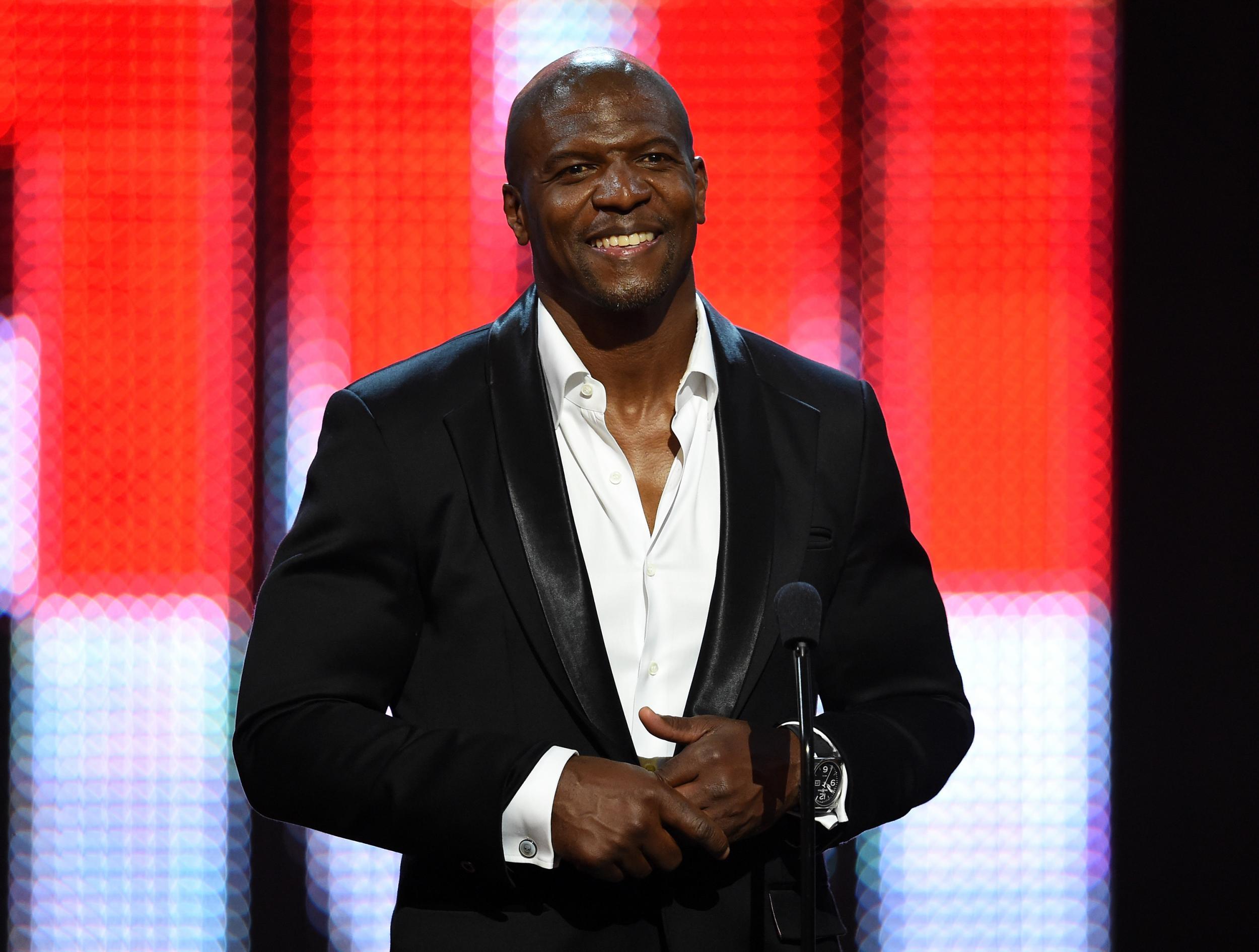
Recently, late-night talk host, Samantha Bee, took some time from her comedy news show to talk about sexual assault. That, in and of itself, isn’t too remarkable. Many women have been doing that since the anti-harassment movement began. However, Ms. Bee did something noteworthy with her message.

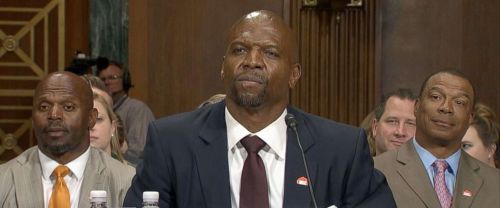
She talked about the impact that harassment and sexual assault had on men. She even invited actor and former NFL player, Terry Crews, to participate. That gives her message more weight because Mr. Crews has been trying to raise awareness of that issue ever since the movement began. He even testified in front of a Senate committee on the issue, sharing his own stories of assault and abuse.

It’s a surprisingly balanced message from someone not known for having a good filter. If you haven’t checked it out, I highly recommend it. She doesn’t present it in an overly dire way, but the message it conveys is still serious.

It also sheds light on a major blind spot in the anti-harassment movement. It showed in how the scandals involving Kevin Spacey and Bryan Singer were handled by the media. Whereas the victims of Harvey Weinstein and Bill Cosby were given plenty of support to tell their story, the male victims were largely ignored.

In fact, the primary reason why the Kevin Spacey scandal made headlines had less to do with the victim he assaulted and more to do with him using that to come out as gay. Him using that incident to address his sexuality wasn’t seen as contributing to the anti-harassment movement. It was seen as him derailing the movement for LGBT acceptance by associating his sexuality with assault of a minor.

The victims for both Kevin Spacey and Bryan Singer never got a chance to have their voices heard. Unfortunately, that’s fairly common for male victims of sexual abuse. Mr. Crews has even addressed this on multiple occasions. Shortly after the Harvey Weinstein scandal broke, he provided a fairly lengthy explanation on Twitter that explain why few speak up and even few are heard.

His comments are gender-neutral, but Mr. Crews also mentions how men face unique challenges in confronting this issue. Make no mistake. Sexual assault against men does happen and there’s plenty of raw data to back it up. The way it’s talked about and thought about, though, gives the impression that it’s not as big a deal.

That’s a big reason why men like Mr. Crews don’t come forward with their experiences. In his own words, “The silence is deafening when it comes to men talking about this issue.” Even though he’s been fairly vocal on this issue, few outside Ms. Bee have given him a chance to tie those experiences into the ongoing movement.

In addition to Mr. Crews, there are a few other notable voices trying to raise attention on the harassment and abuse of minors. Corey Feldman, a former child star, has been vocal in his efforts to expose the physical and sexual abuse he endured in his youth. He has even been trying to make a documentary exposing rampant child abuse in Hollywood, which has yet to be made.

This issue is personal for someone like Mr. Feldman because his friend and fellow child actor, Corey Haim, was also sexually abused as a young teenager. In his book, Coreyography, he talked about how they both struggled to deal with it. Drug abuse, which played a major part in Mr. Haim’s death in 2010, was a means of escaping the issue rather than dealing with it.

That’s understandable, considering the business they were in. Drug use in Hollywood isn’t just a long-standing part of the culture. It’s sometimes necessary, albeit for tragic reasons. It provides an escape for people like Mr. Feldman and Mr. Haim, one that’s much easier than coming forward and naming their abusers.

It’s the same issue women face when they’re victims of sexual assault. They’ll make a claim, but hesitate to name the abuser out of fear, shame, guilt, or willful disbelief. In Hollywood, especially, the people they deal with are rich and powerful. They have the resources to make anyone’s life, especially public figures like Mr. Feldman and Mr. Crews, extremely unpleasant.

On top of that, people who accuse a celebrity or public figure of such crimes are usually subject to major harassment as well. In that sense, staying silent is just easier. The anti-harassment movement has been trying to change that, at least for women, by providing them a platform with which to come forward. As a result, egregious crimes have been exposed and are actively being prosecuted.

However, those same efforts aren’t making much room for men like Mr. Feldman and Mr. Crews. They’re still in the same situation as they were before the anti-harassment movement began, trying to speak openly about a difficult issue and struggling to find support.

Why is that, though? Why are these men not allowed to stand on the front lines with the women who brought down Harvey Weinstein? There’s no easy answer to that. Chances are if you ask 100 people, you’ll get 100 different answers and at least 90 of them will sound like conspiracy theories.

I don’t claim to have a definitive answer, but I have reasonable suspicions and it has do with crafting a narrative. As an aspiring writer, I know a thing or two about narratives and why it’s so important to keep them concise. To some extent, the anti-harassment movement is an ongoing narrative that has to stay concise in order to pursue its goals.

Unfortunately, staying concise means ignoring or avoiding anything that might disrupt that narrative. In that context, Mr. Feldman and Mr. Crews are significant disruptions, albeit through no fault of their own or even those who champion the anti-harassment movement.

That’s because, for better or for worse, there’s this standard notion of how a case of sexual assault plays out. When most people close their eyes to imagine it, they probably don’t imagine someone like Terry Crews getting cornered in a crowded room. They probably imagine a scared young woman in a dark alley, crying out for help as some big, ugly, sadistic man abuses her.

Like any strong narrative, that notion conjures all sorts of powerful emotions. We feel anger, disgust, and sorrow for any woman who has to endure such an experience. We also feel seething anger towards any man who would do that to such a woman. The decent human being in us wants to help that woman and beat the snot out of that man.

If you reverse the genders in that narrative, though, it just doesn’t work. Those same decent people just can’t imagine a scenario where Terry Crews or Corey Feldman are cornered in a dark alley, assaulted by a man or woman, and suffer the same way. Even when they do, it doesn’t evoke the same feelings.

If anything, it complicates the narrative. These are supposed to be men. They’re supposed to be tough. Mr. Crews is a former football player. Mr. Feldman is a Hollywood star. We expect them to fight back. We expect them to not need our support the same way a woman would. To some extent, that assumptions demeans both men and women.

That doesn’t matter, though, because the narrative only works if it has that emotional resonance. People are more inclined to rally around a movement where they get to comfort an emotionally distraught young woman rather than a rich, imposing man. Like a movie where the sweet virgin schoolgirl escapes the masked serial killer, it’s more satisfying.

Moreover, it has to be satisfying to get people to rally behind it. This often come with a cost, which can really escalate if it goes too far. Some are already voicing concerns about the anti-harassment movement losing control of the narrative. Ignoring the abuse of men like Mr. Crews and Mr. Feldman only compounds those concerns.

Until the narrative changes, these men will still struggle to be part of the conversation. The piece with Samantha Bee is a good start, but it’s still an uphill battle. The idea of men being sexually abused is subject to a unique brand of stigma. That doesn’t make the suffering of the victims any less real, nor does it make crimes of the abusers any less egregious.

I don’t expect the anti-harassment movement to fully embrace Mr. Crews or Mr. Haim anytime soon, but so long as they keep making their voices heard, they’ll remind people that the narrative is still incomplete. Abuse, harassment, and victimization affects everybody, regardless of gender. When you prioritize justice for some over others, then that only creates more injustice for everyone.

3 Comments

Filed under Celebrities and Celebrity Culture, Current Events, gender issues, media issues, men's issues, political correctness, sex in media, sex in society, sexuality, women's issues

Why You Can’t Believe In Eternal Hell, Be Anti-Abortion, And Be Morally Consistent

The Fallen Angels Entering Pandemonium, from 'Paradise Lost', Book 1 ?exhibited 1841 by John Martin 1789-1854

Brace yourself because I’m about to talk about two topics that make people very uncomfortable. One is abortion, a heated political topic that is poised to get even more heated, due to recent political upheavals. The other is Hell, a distressing theological issue that makes us dwell/lament on our impending death. If that weren’t volatile enough, I’m going to tie both topics together.

Rest assured, I’m not doing this to combine a couple of controversial issues for dramatic effect. While I loathe talking about issues like abortion, I don’t avoid it when it reveals something important about a particular movement or can demonstrate important lessons about society.

When it comes to Hell, a topic that heats up any debate between believers and non-believers, the conversations are just as difficult. I still feel they’re worth having. This one, in particular, counts as one of them because there are certain implications that warrant a more nuanced discussion.

It’s no secret that those who are vehemently anti-abortion also happen to be religious. Anti-abortion protesters even cite bible passages to justify their position. Now, I can understand and even accept certain ethical aspects of the pro-life position. However, when religion enters the debate, that’s where some real disconnects emerge.

That’s because when those factors enter the pro-life equation, both the morality and the math break down. To understand why, it’s important to focus on an aspect of the abortion debate that the late, great George Carlin famously emphasized. He sought consistency in the anti-abortion debate and noted its rarity in the most hilarious way possible.

Consistency is important if your argument is going to have merit. Even with emotionally-charged topics like abortion, consistency is key to ensuring that an argument has some semblance of logic. Since logic and faith tend to conflict, especially in matters of science, bringing religion into the mix can easily derail that consistency.

This is where the issue of Hell enters the picture. It’s a very unpleasant, but very critical concept to certain religions, namely Christianity and Islam. It’s central to their theology, which emphasizes punishment for the sinful. It’s a very morbid, but very relevant concept because everybody dies and nobody knows for sure what happens afterwards, if anything.

In the abortion debate, Hell matters for the anti-abortion side because their most frequent refrain is that abortion is murder. Having an abortion is the taking of a human life and murder is an egregious sin. It’s one of the few sins that’s enshrined in both secular law and the 10 Commandments.

By holding that position, though, it raises an important implication for both the consistency of the anti-abortion position and the theology used to justify it.

If abortion really does take a life, then what happens to that life? Does it go to Heaven or Hell?

That’s a critical question to answer, but it’s here where both the consistency and the moral underpinnings of the anti-abortion debate break down. In fact, it doesn’t even matter which way the question is answered. It still has critical implications that make an anti-abortion stance for religious reasons untenable.

To understand why, we need to look at the possible answers to the question and examine the bigger picture. Say, for instance, that you believe the deity you worship saves the souls of aborted fetuses. They all get to go to Heaven because sending unborn children to Hell just doesn’t make sense for a loving God.

By that logic, though, wouldn’t abortion actually be the best thing a woman could do for her unborn child? If, by aborting a pregnancy, she guarantees that her child goes to Heaven, wouldn’t that be the greatest act of love a mother could give?

In that moral framework, any woman who gives birth is basically gambling with their child’s soul. By bringing them into a sinful world, they put them in a position to live a life that will eventually send them to Hell. It doesn’t matter if that chance is remote. It doesn’t even matter if the deity reserves Hell for the worst of the worst. Any child born still has a non-zero chance of damnation.

In that context, being anti-abortion is the worst position to take for someone who believes that their deity sends aborted fetuses to Heaven. If anything, they would have to be in favor of abortion for every pregnancy, planned or unplanned, because it means more souls in Heaven and fewer in Hell.

The implications are just as distressing if you answer the question the other way. If your deity sends aborted fetuses to Hell, then logic follows that this deity cannot be just or loving. A fetus, by default, has no ability to even contemplate sin, let alone commit it. Sending it to Hell implies that sin, itself, is an empty concept.

It also undercuts key aspects of Judeo-Christian theology, which says that someone must sin to warrant damnation. Holding both a fetus and a young child with a limited capacity to understand such concepts is untenable. Keep in mind, Hell is supposed to be full of torture and suffering. What kind of deity puts a child through that?

Even if the deity knows which fetus or small child is destined to sin and punishes them accordingly, that still renders the anti-abortion position pointless. If the deity already knows which life is damned, then why does it matter whether a woman opts to have an abortion? If that has already been determined, then abortion has no religious implications whatsoever.

Whatever the case, the very concept of Hell creates an illogical loop that is incapable of consistency. Even if you grant the most generous assumptions of a religious argument, it still falls apart as soon as you try to put it into an ethical framework.

While the very concept of Hell is subject to all sorts of moral complexities, it effectively supercedes those complexities in the abortion debate. Either Hell is full of innocent aborted souls or is devoid of them. In both cases, it reveals more about the deity and the adherents of a religion than it does the actual issue.

None of this is to say that those who make anti-abortion arguments on the basis of faith aren’t sincere. I don’t doubt for a second that they are. They genuinely believe that abortion is immoral and constitutes murder. However, when it comes to making a moral argument, consistency matters. Without it, the arguments are entirely arbitrary and there’s no winning that debate.

6 Comments

Filed under gender issues, human nature, philosophy, political correctness, religion, sex in society, women's issues