Tag Archives: sexual health

Why Extremists (Of All Kinds) Seek To Destroy Sex And Love

198420teaser-850x510

Whenever a tyrannical power gains influence, it’s only a matter of time before it attempts to control sex and subvert love. Whether it’s a theocracy like “The Handmaid’s Tale” or a communist dictatorship like North Korea, those in power will eventually get to it. It’s just a matter of how repressive they dare to be.

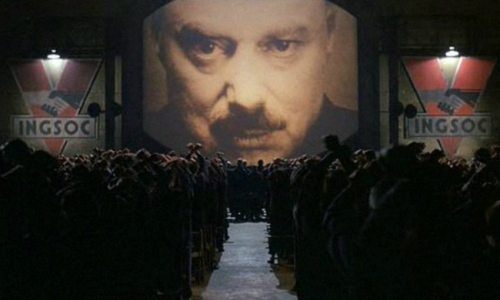
When it comes to the extremes of authoritarianism, those envisioned by George Orwell are the standards by which all are measured. Whether they’re fictional tyrannies like those in “Star Wars” or real-life autocracies like Nazi Germany, the extent of their repression is best measured by contrasting it with the one Orwell crafted in “1984.”

This isn’t the first time I’ve cited that book or Orwell’s writing, but I do so for a reason and it’s not just because it’s one of my favorite novels. The narrative Orwell envisioned took our understanding of repression and pushed it to its greatest extremes. On every level, the world of “1984” is a worst-case-scenario for anyone who values freedom.

Under the ruling party, Ingsoc, every aspect of human life is controlled, managed, or outright subverted. That includes sex, but it’s certainly not limited to it. Through institutions like the ironically-named Ministry of Love and the Junior Anti-Sex League, people aren’t just shamed or bullied into certain sexual practices. They’re tortured, brainwashed, and forced into it.

It’s a level of control that the Catholic Church, the religious right, and even conservative Muslims would find excessive. It’s also an important part of the story because so much of the events surrounding “1984” emerge from Winston’s relationship with Julia. In fact, the love they share is framed one of the biggest threats to the party.

That, in and of itself, is extremely telling of the power of sex and the love that emerges from it. Even in a world in which the repression is so complete that the party can convince people that two plus two equals five, it still has a problem dealing with sex. If Big Brother can’t manage it, then what hope does the Vatican have?

I ask that question within the context of “1984” because I’m seeing more and more issues inevitably link back to sexuality. It’s not just from religious institutions, though. They’ve made their eagerness to shape sexuality to serve their interests known for centuries. They aren’t always overt about it, but it’s not too hard to understand why they want their adherents having sex only for procreation.

For them, linking sex to making babies means all those sexual thoughts people have will result in more adherents. More adherents means more money. More money means more power and influence. It’s often cloaked in sin and morality, but this is the ultimate byproduct of their sexual morals.

However, it’s at the other end of the spectrum where a different, but powerful kind of sexual subversion is at work. The link isn’t quite as obvious as those espoused by religious institutions, but it is there in that the byproduct is the same and the underlying themes are richly reflected in “1984.”

On that end of the spectrum are those who identify as secular, but still hold extreme ideologies. This includes extreme brands of feminism, social justice ideology, and even old school communism. These are people who don’t just want to reform the current system through political and social discourse. They seek to overthrow the system and replace it with their own Utopian ideal.

Like the religious zealots they often clash with, they see the current order as oppressive. Whether it’s a religious sect facing persecution or the historical oppression against anyone who isn’t part of a historic majority, these individuals see revolution as the only way to right these wrongs. Part of that revolution involves destroying sex, albeit indirectly.

Whereas religious zealots rely on outright censorship, those on the opposite end employ a more subtle approach. They denigrate and bemoan sexual imagery, be it in video game characters or a shirt somebody happens to be wearing. They obsess over inequities and victimization, singling out egregious crimes while ignoring others that don’t fit the narrative.

Some will go so far as to claim sex as inherently oppressive. A few radical feminists have gone so far as to say that the fundamentals of sex can only ever be oppressive. In the same way some religious preachers will shame someone for looking at anyone with lust, this ideology identifies anyone who has or pursues sex as an oppressor.
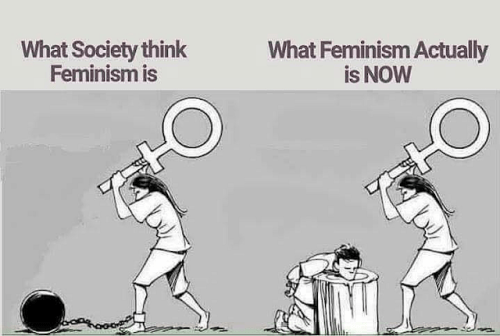
That might have been absurd several decades ago, but in the current state of outrage culture where the dress Jennifer Lawrence wears to a movie premier becomes a controversy, it’s steadily creeping into the discourse. Concepts like beauty are now oppressive to those not born with beautiful bodies. Anything that may titillate or excite is seen as dangerous or damaging to the oppressed.

It’s at a point where the idea of people seeking any kind of release outside the narrative espoused by extremists is pathologized. For religious zealots, it’s sinful. For the non-religious extremists, it’s oppressive. Both see it as something that needs to be reformed or envisioned.

Chances are these individuals don’t see themselves as the authoritarians depicted in “1984.” They still see themselves as the underdogs in a “Rocky” movie, fighting to win an epic battle against an oppressive bully. Beyond being an absurd conflation of what they’re fighting for, this very approach is envisioned by Orwell and is key to empowering Ingsoc.

In the world of “1984,” the Ministry of Truth builds a similar narrative for the masses. They’re told that prior to Ingsoc taking power, the world was a terrible, oppressive place. It was only by rallying around the party and Big Brother that they were able to triumph. Moreover, it’s through the wisdom and guidance of the party that they escape this oppression.

Part of that process involves reshaping/subverting sex. In “1984,” the party isn’t just looking to control it. They seek to destroy it. The Junior Anti-Sex League even says it outright at one point.

“The sex inherent aptitude will be eradicated. Reproduction will be a one-year formality like the reclamation of a ration card. We shall get rid of the orgasm.”

Even by extreme repression standards, this seems extreme. It might even seem like something that would give zealots of all types pause. However, Orwell’s way of justifying such extremes reveal more than just a twisted ideology. He ends up exposing why sex is such a huge concern for any extreme ideology.

“When you make love you’re using up energy; and afterwards you feel happy and don’t give a damn for anything. They can’t bear you to feel like that. They want you to be bursting with energy all the time. All this marching up and down and cheering and waving flags is simply sex gone sour. If you’re happy inside yourself, why should you get excited about Big Brother?”

Read over that quote again, but replace Big Brother with the name of any religious sect or political ideology. It has the same meaning and the same implications. In order for both the zealots and the radicals to achieve their goal, they have to destroy sex. It’s the only way they can achieve their Utopian ideal.

Religious zealots can’t shame or guilt people entirely out of wanting to enjoy sex for non-procreative purposes. They can certainly make it difficult and painful for many, even to the point of serious abuse, but it never works in the long run. The drive to just want to hump for fun is too strong.

Certain brands of radical feminism have a similar issue. They can’t stop straight men from enjoying the sight of a beautiful woman. They can’t stop anyone from wanting to enjoy something different in their sex lives that they don’t like. No matter how much they’re triggered, it doesn’t turn off that powerful, instinctual drive.

In “1984,” the party actively works towards destroying that drive through technology. This is a lot scarier now because that kind of technology is already in the works. In theory, an extremely repressive religious zealot or a very regressive feminist could turn the implants in development at Neuralink into something that removes all pleasure from sex.

From there, they could redirect that energy into serving their ideology/religion. The procreative function could still be utilized, but only to the extent that it’s necessary. That may not be the ultimate goal. It’s not even the ultimate goal of Ingsoc. It’s just necessary in the grand scheme of pursuing and securing power.

As it stands, those in the religious right and other extremist circles aren’t remotely close to gaining the influence and control exercised by Big Brother in “1984.” Logistically speaking, it’s impossible for them because subverting human nature requires an understanding of it and the scientific process for achieving that understanding rarely adheres to ideology.

It still says something about their goals when the only way to achieve them in the long run requires that they destroy sex. I don’t think it’s a coincidence that Orwell built a major part of “1984” around two characters falling in love and experiencing the joys of the sex act. That proved to be one of most powerful ways for them to oppose the party.

To that extent, Orwell’s understanding of sexuality is nothing short of prophetic in terms of how revolutionaries on both ends of the political spectrum view it. In an Orwellian world, sex and love aren’t just a hindrance to a revolution. They’re an outright threat.

The fact that it took repression on the level of Big Brother to confront that threat is a testament to the power of sex and love. If Big Brother couldn’t contain it, then what hope does any religion or ideology have?


1 Comment

Filed under gender issues, human nature, Marriage and Relationships, men's issues, outrage culture, religion, sex in society, sexuality, women's issues

Daily Sexy Musings: Sharing A Hot Shower

10-amazing-benefits-couples-get-when-they-shower-together-daily

The following is a sexy musing on the joys and inherent sex appeal of a hot shower. More specifically, it’s about how that joy and sexiness gets enhanced when we have someone to share it with.

It’s not just a scene out of a bad porno. A hot shower shared with a lover is one of the most understated acts of intimacy. It’s not just one of those situations that’s likely to result in some impromptu lovemaking. There are larger forces at work, both of the loving kind and of the sexy kind. Enjoy!

We enter cold and dirty. We leave warm and clean.

We enter stressed and miserable. We leave relaxed and content.

A hot shower is like being reborn, cleansed and cleaned from rigors of daily life. It requires no skill to enjoy. It needs little in terms of resources. A steady source of water and heat are the only requirements. Nearly every society in every part of the world has the means and desire to enjoy it.

Beyond cleaning our bodies, it requires that we be intimate with ourselves. It demands that we know our bodies, touching and feeling every little sinew. We know the parts that need extra care. We try to be extra careful, trusting our hands and the will that guides them to all the right places.

Alone, however, a hot shower can only do so much. Like a hot cup of coffee on a cold winter morning, it’s a simple act that gets the job done. It’s only when you share that warm, rejuvenating experience that it becomes something more. Instead of one cup, there’s a whole feast of deserts we eagerly consume.

Together, we shed our clothes and our inhibitions.

Together, we enter a hot, steamy world.

Together, we cleanse one another of grime and stress.

Under torrents of hot water, we’re drawn to one another. We seek to share in its healing power. Our naked bodies are so close, able to touch without barrier or restraint. There are no forces keeping us apart and plenty of forces drawing us together. It’s a world where love and desire complement rather than conflict.

It starts off simple. We soak ourselves in water. We embrace, finally clean of the sweat incurred by a long day. Hands touch, lips meet, and body parts rub together in an intimate mesh. From simple contact, a greater desire blossoms. From that desire, passion ignites. In a steamy world, we are unbound. The heat cannot stop us. Instead, it only fuels us.

We can be as messy as we want. We can be as thorough as we want. Under steady stream of water, we exist in a perfect cycle of renewal and revitalization. We feel bolder, feeling each other up with more fervor and stirring in one another the most heated of passions.

It’s a perfect domain for a perfect venting, a harmonious blend of love and desire. Through the water and steam, our flesh longs for a more thorough cleaning. Our own hands may make us feel content. Only our lover’s hands can make us feel fulfilled.

Leave a comment

Filed under Daily Sexy Musings

Daily Sexy Musings: Love Versus Desire

rever-de-son-ex

The following is a daily sexy musing inspired by the discrepancy between love and desire. Make no mistake. There is a difference. You can love someone, but not desire them. You can also desire someone without loving them, too.

It’s a subtle, but powerful difference. Those with first-hand experience know that all too well, albeit mostly through hindsight. Those without that experience have no idea, so I hope they read these intimate words carefully.

What does it mean to be loved? It’s the subject of countless songs and just as many epic tales. It’s a question with many answers, few of which remain the same from one soul to the other.

What does it mean to be desired? It has fewer songs and stories, but only because they’re not necessary. To be desired is to feel something basic, raw, and unfiltered. That’s exactly what makes it so different, yet so similar to love.

To love someone is to seek connection on multiple levels. To desire someone is to seek a connection with only a few. Love can connect people for eternity. Desire can connect people for minutes at a time. Love may be fickle, but desire is downright erratic. We can channel love, but we can never contain desire.

It’s that feeling you get when you see a pair of breasts, but not the face of the person above them.

It’s that feeling you get when you see the bulging chest muscles and not the eyes just a few inches above.

It’s the feeling you get when your brain and your genitals are no longer in sync. It isn’t just an obstacle. It’s a barrier, one that can be circumvented, but never avoided.

Desire can lead to love, but love rarely incurs desire. It can fuel desire, but only in the way that a spark ignites a gas-soaked rag. Absent the necessary ingredients, a spark can only do so much. It burns fast and disappears faster. In one domain, it barely flickers. In another, it triggers a raging wildfire. It can be so much and so little. Love is just one of many outcomes, but it is rarely the most likely.

We feel desire on a whim, but we feel love for a lifetime.

Desire puts us in a moment, but love will carry us through a lifetime.

They can be incredibly thrilling, but easily confused. One is a flash. The other is a steady gleam. Both can light up our world, but only one can illuminate a path. Desire helps us be in the moment. Love helps us see the path ahead of us.

Desire can only ever be fleeting, but love can be eternal. Desire runs on instinct. Love runs on passion. Wanting to be loved is like a journey. Wanting to be desired is like yelling at the clouds on a rainy day. We only have so much control over either, let alone both. We don’t always know which one we crave, but we know how much we want it.

The line is always blurred. We can feel one, the other, or both. Together or apart, they bring us exhilaration and fulfillment. Only hindsight reveals the truth, but it also brings perspective.

Desire can lead us to love, but it can also lead us away from it. Love can subvert desire, but it can never truly escape it. One defines us while the other guides us. We need one to get to the other. We need the other to appreciate the one.

Love and desire need not oppose one another, but they rarely complement one another. To follow desire is to seek love. To be in love means channeling desire. From a simple feeling to a life shared, we can only appreciate its power when we embrace both together.

Leave a comment

Filed under Daily Sexy Musings

Sex Doll Brothels And The First (Of Many) Legal Battles

(EDITORS NOTE: Image contains graphic content.) General view

Go back 100 years and chances are that the smartest, most capable lawyer or judge wouldn’t know how to craft reasonable legislation on what constitutes “obscenity.” In the United States, there wasn’t even a legal standard for until 1973 with the Miller v. California case.

Go back 25 years and chances are even the greatest legal minds of the time would have trouble creating legislation about issues such as online harassment, net neutrality, and fake news. The very concept wouldn’t make sense to them because it has no contemporary context. As a result, the people of a particular time and place can’t hope to make sense of the legal issues that subsequently emerge decades later.

This is the emerging situation with sex dolls. Specifically, it’s the laws governing the growing commercial uses of sex dolls that go beyond that of personal masturbation aids. I’ve often mentioned sex dolls as a precursor to intelligent sex robots, which are certain to be a game-changer for the overall sexual landscape. However, sex robots are the future. Sex dolls exist now.

Even though sex dolls have existed for decades, the industry is maturing to a point where they’re not just exceedingly expensive sex toys. They’re a growing segment of a multi-billion dollar industry. Beyond just being a toy, though, sex dolls have the potential to establish a whole new segment of the sex industry.

In early 2018, France opened its first brothel that exclusively utilized sex dolls. While this did cause controversy, efforts to close it failed. As of this writing, it is still open for business. Around that same time, I predicted that this would be the beginning of a much larger legal quandary. Thanks to some recent news from Canada, this prediction is ahead of schedule.

In August 2018, the city of Toronto was poised to open its first sex doll brothel. It would’ve been the first establishment of its kind in North America. Like France, it generated plenty of controversy. Unlike France, though, the public protests succeeded. The brothel’s opening was suspended. As of this writing, there are no plans to open the sex doll brothel at another location.

That’s not to say it won’t happen. In fact, if I were to bet money on the issue, I would wager that a sex doll brothel in North America will open at some point between now and the end of 2019. It probably won’t be in Toronto, but there will be some locality that decides to take a chance. It’s just a matter of when and who has the bravado/business sense to try it.

I won’t go so far as to say it’s inevitable, but I believe the events in France and Canada have laid the foundation for a new legal struggle. As the laws surrounding prostitution become more restrictive, the demand for a sexual outlet is not going away. You can implement as many laws and taboos as you want. Horny people will find an outlet.

I see the emergence of sex doll brothels as both a reaction and a byproduct of the current rhetoric surrounding prostitution and sexuality, in general. The sex-negative attitudes of social conservative, radical feminists, and other regressive whiners have done such a thorough job of conflating prostitution with exploitation that it’s becoming exceedingly impractical for flesh-and-blood prostitutes to operate.

The passage of recent laws intended to combat human trafficking, of which prostitution is only a small part, was a tipping point. It was hard enough for sex workers to operate prior to those laws and since politicians are more reluctant than ever to favor legislation associated with exploiting women, sex dolls are likely to emerge as a viable recourse.

From a legal standpoint, sex doll brothels are in an uncertain state. They’re not people. They have no measure of intelligence, artificial or otherwise. They are literal objects. While that’s sure to offend more than a few select people out there, that’s what they are from a legal point of view.

Even though they’re objects with overtly sexual functions, they are legal. Outside absurd laws in places like Alabama, a private citizen can legally purchase and use sex toys in most of the industrialized world. If you had the money and wanted to, you could order a sex doll today and face no legal repercussions.

On top of that, there are no laws that prohibit people from borrowing someone else’s sex toy. Set aside, for a moment, the revulsion of using someone else’s sex toy. There are no laws prohibiting such a practice. Being able to rent someone else’s toys/products is an established commercial activity practiced by arcades, pool halls, and gyms.

Under that framework, a sex doll brothel could conceivably operate in a manner similar to an arcade. In fact, that’s the legal argument that the operators of the sex doll brothel in France used to keep it open. The argument was that there were no people working in the brothel. These were just toys. Technically speaking, the place wasn’t a brothel. It was a “gaming operation.”

In the legal world, technicalities are often a good work-around, but they’re rarely the basis for a long-term solution. Make no mistake. Sex dolls and sex doll brothels will need long-term solutions, especially as the sex robot industry matures. The only question is how to go about it.


Would sex doll brothels be regulated like strip clubs?

It’s possible, but that would establish a legal precedent for declaring anything sexually stimulating, including people, as objects or toys. Even the most sex-negative of individuals probably don’t want to establish that precedent.


Would sex doll brothels be regulated like massage parlors?

This is also possible, but it comes with its own legal shortcomings. There are, indeed, legitimate massage parlors that function primarily as day spas. You probably see them in strip malls next to a Hallmark and a dry cleaner. These are not places where people go for sexual release.

Then, there are other massage parlors that still consider themselves massage parlors, but offer “extras” on the side. Whenever there’s a prostitution bust these days, many of those operations involve massage parlors and more than a few have been known to use trafficked women. That association, alone, would make this classification for sex doll brothels difficult.


Would sex doll brothels be regulated like adult novelty stories?

This is probably the most likely. It wouldn’t be that much of a stretch for an establishment to sell both sex toys and provide space for someone to use a sex doll. In fact, this function may end up making sex shops more lucrative. As long as it’s not employing actual prostitutes, then it avoids the same pitfalls as massage parlors.

That’s not to say there won’t be issues. Sex shops are already subject to plenty of opposition. Go to any municipality and you’ll find that zoning laws will go out of their way to place immense burdens on such establishments. They usually can’t be located near residential areas, churches, or schools. They’re often seen as a public nuisance, even when they’re small. A sex doll brothel would be much more visible.

Even in a scenario where sex doll brothels are regulated like an adult novelty store, I imagine most people won’t live near one. Only extra-libertarian communities would even permit them with reasonable regulations. Even those that don’t prohibit them will probably be protested by religious zealots and sex-negative feminists claiming that these establishments promote obscenity, sin, and rape culture.

As a result, I suspect that the future of sex dolls and sex doll brothels will probably circumvent all of that by using them as an escort service. If it’s no longer possible for actual people to work as escorts, then chances are some enterprising sex workers will simply exchange the person for the sex doll. Instead of going somewhere, people order a sex doll the same way they would order a pizza.

In this scenario, there’s no need for commercial space. Someone could run the whole thing out of a garage, a basement, or a rental storage unit. That operation might require some resources, especially once sex robots mature. As long as there are horny customers willing to pay for a sexual outlet, though, there will be a market for it.

That’s the one inescapable fact that will drive both the industry and the legislation surrounding it. You can stamp out prostitution, sex work, and sex toys all you want. People are still going to get horny. They’re still going to seek an outlet. The emergence of sex doll brothels are just the latest and they’re sure to set many precedents, not all of which will be sexy.

1 Comment

Filed under Artificial Intelligence, gender issues, human nature, men's issues, outrage culture, romance, sex in society, sex robots, sexuality

Daily Sexy Musings: It Starts With A Touch

7460417_orig

The following is a sexy musing on simple touching and how it can turn into something sexy. It may seem like common sense and the basis of many sexy stories, including a few I’ve written, but I believe there’s something much more profound/sensual at work. Enjoy!

One touch is all it took. First, they touched their lover’s shoulder. It was simple, generic, and non-sexual. It was affection at its most basic level. Then, like a seed becoming a giant redwood, it grew and blossomed into something much greater.

One touch became another.

Multiple touches became intimate feelings.

Intimate feelings became powerful lust.

Powerful lust became intense love.

Intense love mixed with all of the above, manifesting into a single cumulative act that encompasses so much.

It all started with that one, simple touch. It can happen at any time under any number of circumstances. Maybe it’s late at night when you and your lover are feeling restless. Maybe it’s early in the morning when a day’s worth of energy hits you both. Maybe it’s the middle of the day when spontaneity or outright boredom take hold. In any case, the evolution of that one touch unfolds.

No words are necessary. Everything that needs to be said is told through action. A caressing of the face reveals affection. A grasp of the buttocks reveals lust. Feeling up the sinews and curves of a lover’s body evokes desire. From expressing our own desires, we then feel desired. It is a perfect cycle of love and lust.

It happens quickly and suddenly. It can be intentional or unintentional. However it happens, the underlying theme is the same. One touch is all it takes to convey so much feeling. Both emotionally and physically, one touch can become an act of intense passion or an outburst of blind lust.

With one touch, the most complex of feelings and the most basic of acts unfold all at once. A caress turns into entrancement. Entrancement becomes foreplay. Foreplay becomes sex. Sex becomes love. It blossoms and blooms, tapping into and channeling the very beauty of nature. It’s just a simple touch, but for two passionate lovers, that’s all it takes.

Leave a comment

Filed under Daily Sexy Musings

Daily Sexy Musings: Underneath Our Clothes

truly20feeling20good20

The following are some of my sexy musings to help start your day, among other things. Enjoy!

We’re all naked underneath our clothes. Thin layers of fabric separate modesty from obscenity. We go outside every day, knowing that our most private areas are protected only by the attire we choose. We never give it a second thought, but we cover ourselves, as though exposure will bring us irreparable harm.

We come out of the womb blissfully unaware of all taboos. We simply seek warmth from the elements and nothing more. There is purpose to covering ourselves, but it gets lost as we grow into a world afraid of its own reflection, aghast at what the sight of our bodies may evoke. Is it out of fear? Is it out of uncertainty as to how we’ll react? We don’t know, but we never bother to ask.

Perhaps it’s because it makes us horny, wanting sensual experiences that go beyond what society deems appropriate.

Perhaps it’s because it makes us complacent, realizing that every person is equally vulnerable at the end of the day. No matter their race, creed, wealth, or status, they are as frail as any animal in the wild.

Perhaps it’s because it reminds us that we are conditioned to avert our eyes, avoiding vanity and the thoughts that go with it. There is danger in self-obsession, large and small. How are we to function when we are too captivated by our own beauty?

At the end of every day, we are still naked. Our skin, genitals and all, are there for us to see. We cannot avoid them. We can only make excuses, but never valid reasons. The mirror still reveals everything, unfiltered and unobscured. Dread it or embrace it. One will bring acceptance. The other will only bring more excuses.

Leave a comment

Filed under Daily Sexy Musings

Abortion, Prostitution, And The Indirect (But Powerful) Link Between Them

Pic

When it comes to conflict between genders, there are many factors driving it. Chief among them is the unavoidable ignorance that comes with men not knowing what it’s like to be a woman and women not knowing what it’s like to be a man. Add those who identify as transgender into the mix and there’s a massive disparity in understanding.

While I consider that limited understanding to be the primary driving force behind gender-driven conflicts, there’s another force that is a close second. It has less to do with how people relate to one another and more to do with who determines the accessibility and availability of sex.

As an aspiring erotica/romance writer, this issue is more relevant to me than others. However, after a few notable news stories, one involving prostitution and another involving abortion, the issue is now relevant to everyone and that’s why I feel it’s worth talking about.

The concept of sex being this tangible commodity that certain people control is already bound to cause plenty of consternation among people from every part of the political spectrum, but for logistical purposes, this is how we treat sex in a modern context. It’s no longer something we do for survival or for the passing on of property.

Like food, sex has developed a more diverse role in the modern world. We treat it as a tangible asset that we must manage. Like any asset, though, there are logistics to it and those who do the managing wield a great deal of power. Why else would pimps be so glorified in popular culture?

Who actually wields that power, though, depends on the political affiliation of who you talk to. If you ask someone who is liberal, feminist, or left-leaning, they will claim that the power is held primarily by rich old men who try to manage sex by punishing those who do it in ways they don’t like.

Ask someone who is conservative, traditional, and right-leaning, and they’ll probably say the power is held by radical feminists and their submissive male allies who wield the power of sexual management. They’re just as convinced as those opposing them that they’re right. It’s difficult to convince them otherwise and I’m not going to try. That’s not the purpose of this article.

My goal here is to point out a connection from which the conflict has evolved. Given recent events in the political world, that evolution is likely to continue and not in a direction that benefits either side in the long run. To understand that connection, I need to dig a little deeper into the unspoken, but powerful link between abortion and prostitution.

I know that just talking about one of these issues is abound to send peoples’ passions into overdrive. I’ve discussed abortion before. I’ve discussed prostitution as well. I haven’t really touched on the link between them because they’re tied up in different political domains, but have enough similarities affect one another.

Prostitution is commonly known as the world’s oldest profession and for good reason. It only ever makes the news when there’s a scandal or a legal upheaval. For once, there has been an uptick in the latter rather than the former. It began with new laws that made it more difficult for prostitutes to operate online. In some respects, these efforts are the byproduct of a trend that has been going on since the early 2000s.

Most industrialized countries in the world accept, to some degree, that it’s impossible to stamp out prostitution completely. As a result, there have been more elaborate efforts to reduce it that don’t rely entirely on blanket prohibition. Currently, the most popular approach is known as the Swedish model.

In this setup, it’s legal for someone to sell sex, but it remains illegal to buy it. It’s akin to making it legal to set up a lemonade stand, but illegal to buy lemonade. While that sounds absurd on paper, the intent of the law is somewhat clever. It’s a means to criminalize the buyer of sex to give the seller more leverage. Since the seller is often assumed to be an exploited woman, it’s viewed as an equalizer of sorts.

Granted, the assumption that those selling sex are always exploited women is flawed, as an estimated 20 percent of prostitutes are men. There are people in the world who enter the business willingly, just as there are people who willingly work in coal mines.

There’s also plenty of data that indicates that the Swedish model doesn’t have the desired effect. There’s also no evidence that it has reduced human trafficking, either. That hasn’t stopped it from spreading to other countries. In the process, it has had another effect that goes beyond the issue of prostitution.

Essentially, this approach to combating prostitution places more power in the hands of women with respect to managing sexuality. Since they make up the majority of the prostitutes in the world and men are the primary clients, this dynamic ensures they have more leverage. They can, under this model, decide whether or not their client becomes a criminal. That’s a lot of leverage and not the kinky kind.

This is where the link to abortion comes into play. It’s an indirect link, but it utilizes the same dynamics. In countries where abortion is legal, the women wield a significant amount of power in terms of sexual decision-making. In the context of abortion, they can decide how the consequences of sex play out.

Women can, in this dynamic, decide whether or not to have a child if she becomes pregnant. Whether or not the father wants to child is irrelevant. The woman can abort the child against the father’s wishes. She can even have the child against his wishes, in which case he would be on the hook for child support for 18 years.

Again, that’s a lot of power for one gender to wield. That’s not to say it isn’t understandable. Women are the ones who bear children. They’re the one whose bodies undergo the 9-month rigor that is pregnancy. It’s totally logical that women would have more leverage in this situation because they’re putting themselves at greater risk.

However, and I know this is where I’ll upset a few people, there comes a point where that leverage can become excessive. There are cases where men lose their money and their freedom because of what a woman chooses. There’s no way for them to opt out of their parental responsibilities. That hasn’t stopped some from attempting to create a legal mechanism for that choice, but to date those efforts have not been successful.

Within this context, it shouldn’t be that surprising that abortion rights are steadily eroding. In the United States, it’s looking more likely with recent upheavals in the Supreme Court that this erosion will accelerate. Some are already claiming that we’re on our way to becoming the kind of oppressive society depicted in “The Handmaid’s Tale.”

While most of those concerns are overly apocalyptic, I think part of that effort is tied directly to who wields the power in the sexual landscape. Women are poised to gain more of that power as prostitution laws in the mold of the Swedish model spread. They’ve also gained even more leverage socially through the anti-harassment movement.

From the perspective of men, who cannot turn off their sex drives, women already wield so much authority in matters of sex. They’re the ones more likely to get paid to do it. They get to decide when and where it happens. They get to decide whether or not a sex act was consensual. They don’t even face the same stigma or consequences when sex crimes does occur and are granted greater protections by the law.

That perspective is not going to sway most women, though. The same women arguing for abortion rights are just as likely to argue for the Swedish model in combating prostitution. It’s a common thread among certain brands sex-negative feminism that see prostitution as an inherently oppressive force for women in every circumstance.

This is where the paths converge and where the fuel for the conflict gets a boost. Whether intentionally or by accident, both prostitution and abortion eventually link back to who wields authority in sexual matters. Both sides can claim some form of oppression. Both sides can even be right to a limited extent. By fighting to secure the most leverage though, they inevitably invite more backlash.

I don’t claim to know what the endgame is. I have a feeling that once sex robots enter the picture, and they have to some extent, there will be a major upheaval in the whole sexual landscape that neither side will be able to confront. Until then, though, the conflict over sexual leverage will continue. In the end, though, it’s unlikely that anyone will ever be truly satisfied.

1 Comment

Filed under gender issues, human nature, Marriage and Relationships, political correctness, prostitution, psychology, sex in society, sexuality

Why Henry Cavill Shouldn’t Apologize For His Comments On The Anti-Harassment Movement (But Still Had To)

gettyimages-873854634-1200x800

What does it say about the state of a society when people have to apologize for voicing honest, legitimate concerns? Pragmatically speaking, it implies that the value of truth and just has been subsumed by other influences. Whether it’s politics or ideology, it’s not hard for society to get to a point where unreasonable forces subvert reasonable issues.

In that sense, it’s ironic that the latest person to experience those influences once played Superman, the personification of truth, justice, and the American way. Henry Cavill, whose star has risen significantly since he broke out in “Man of Steel,” got into some hot water recently after an interview with GQ.

In that interview, he essentially made the same mistake Matt Damon made when he tried to comment on the anti-harassment movement. He said something that was reasonable, honest, and understandable from a purely logistical standpoint. He’s worried that something as simile as flirting with a woman could somehow be construed as harassment, which could lead to a full-blown scandal.

For reference, these were his exact words from the interview and the ones that subsequently led him down the same path as Matt Damon.

It’s very difficult to do that if there are certain rules in place. Because then it’s like: ‘Well, I don’t want to go up and talk to her, because I’m going to be called a rapist or something’. So you’re like, ‘Forget it, I’m going to call an ex-girlfriend instead, and then just go back to a relationship, which never really worked’. But it’s way safer than casting myself into the fires of hell, because I’m someone in the public eye, and if I go and flirt with someone, then who knows what’s going to happen?

Now? Now you really can’t pursue someone further than, ‘No’. It’s like, ‘OK, cool’. But then there’s the, ‘Oh why’d you give up?’ And it’s like, ‘Well, because I didn’t want to go to jail?’

Think about what he’s saying here and take a step back to see how he got to that point. He’s talking about being called a rapist just for going up to a woman and talking to her. How is that reasonable? It’s not. It sounds paranoid, but it’s perfectly understandable in the current social climate.

It’s easy to picture a scenario where someone like Cavill walks up to a woman, starts flirting, and ends up saying something inappropriate. That’s not just something men do. Women do that too. Being vulgar knows no gender. However, if the woman in this scenario takes particular offense, it could be construed as harassment or even assault.

If a woman was especially vindictive or just prone to exaggeration, she could accuse him of assaulting her. Even if those accusations aren’t even close to warranting an actual crime, it would still be devastating. The accusation alone would be enough to derail a promising career.

You don’t have to look far for evidence of this. Aziz Ansari was not charged with any crimes for the infamous incident that came out earlier this year and even if he had been, there’s no way he would’ve been convicted. An incident built entirely around a he said/she-said situation doesn’t come close to meeting the burden of proof for a criminal conviction.

That doesn’t matter, though. Ansari’s career has already taken a major down turn. His hit show, “Masters of None,” has not been renewed by Netflix since the allegations came out. Men like Henry Cavill, whose careers are ascending, certainly take notice of that. They don’t even have to commit a crime and suddenly, everything they worked for is in ashes.

For powerful men in Hollywood, it’s a reasonable concern, but one they probably won’t get much sympathy for expressing. Men like Henry Cavill are rich, successful, and handsome enough to comfortably wear Superman’s skin-tight costume. He’s a man who can attract women just by breathing. However, that may end up making him even more vulnerable.

Most people aren’t going to be inclined to make a big deal about someone who flirts inappropriately. When that person is a celebrity, though, the incentives are much stronger. You need only have an overreaction or a burning desire for attention to twist it into something much worse.

It’s for that reason that Cavill shouldn’t have apologized for his comments. His concerns are legitimate and after all the work he’s put in, he’s right to worry about the forces that might destroy it. That still didn’t matter. His comments still triggered a major backlash on social media. He also had to apologize for it. These were his exact words.

“Having seen the reaction to an article in particular about my feelings on dating and the #metoo movement, I just wanted to apologize for any confusion and misunderstanding that this may have created. Insensitivity was absolutely not my intention. In light of this I would just like to clarify and confirm to all that I have always and will continue to hold women in the highest of regard, no matter the type of relationship whether it be friendship, professional, or a significant other. Never would I intend to disrespect in any way, shape or form. This experience has taught me a valuable lesson as to the context and the nuance of editorial liberties. I look forward to clarifying my position in the future towards a subject that it so vitally important and in which I wholeheartedly support.”

Notice that there’s nothing in that apology that expands on his concerns. Cavill doesn’t attempt to re-frame his point or address some of the complaints levied against him. He just throws his hands up and apologizes about everything, as though every word he said was factually wrong.

Now, to be fair to Cavill, it’s very likely that the statement he gave was written by a publicist or agent. Chances are he was pressured to read that as quickly as possible in order to prevent him from getting labeled a misogynist or someone who did not wholly support the anti-harassment movement. Even if he didn’t feel inclined to apologize, he still had to do it in order to preserve his career and reputation.

Regardless of his reasons for doing so, he still apologized for telling the honest truth. The backlash he received didn’t even argue that truth. Most of it amounted to scoffing at the concerns of a rich, handsome celebrity who is undeserving of any sympathy. One commenter even went so far as to call him a wannabe victim.

Such criticism is every bit as absurd as the kind Matt Damon got when he dared to point out that there’s a difference between patting a woman on the butt and full-blown rape. They also fail to acknowledge that it’s entirely possible for a woman to be vindictive enough to falsely accuse someone of a heinous crime for the sole purpose of ruining their career, despite documented cases that this has happened.

It’s one thing to expose the serious crimes of predators like Bill Cosby and Harvey Weinstein. Those cases did have evidence and are being processed through appropriate legal means. The behaviors Henry Cavill described don’t even come close to that kind of conduct.

The fact that Cavill had to apologize sets a dangerous precedent for the anti-harassment movement. History has shown that any movement that throws off honest truth and basic justice is built on a poor foundation. In time, that foundation eventually crumbles and the merits of the movement get lost.

There are plenty of behaviors among celebrities and non-celebrities that warrant outrage. What Henry Cavill said wasn’t one of them. The fact he still had to apologize for his words does not bode well for anyone concerned with the values that heroes like Superman embody.

10 Comments

Filed under Celebrities and Celebrity Culture, Current Events, gender issues, media issues, political correctness, sex in media, sex in society, sexuality

How Atheism May Improve Your Sex Life

Relationship with passionate affection

When it comes to improving your sex life, there’s no one way to go about it that works for everyone. Human sexuality is complex, diverse, and exceedingly kinky. What works for one person won’t work for another and may even be detrimental in some cases.

Conversely, there are also variety of ways to undermine or ruin your sex life. That same sexual diversity that helps the human race find novel ways to get intimate with one another can also backfire horribly. Some are minor, in terms of effect, but other forces can have a much greater impact.

That brings me to religion, a topic that tends to inspire the best and worst in people. Like sex, it’s a complex phenomenon that impacts everybody differently. It can inspire great charity and compassion in some. It can just as easily incur greed, exploitation, and outright atrocity.

For those reasons, and plenty more that are too numerous to list, any effort that involves mixing sex with religion is akin to mixing napalm with TNT. I’ve made an effort to discuss both topics in a fair, balanced manner in the past. I feel as though I can only go so far before I totally inflame certain audiences.

I’m still going to try to push the conversation a bit farther. That means taking a few risks and since religion is still such a prominent force in the world, it’s effect on our collective sex lives is unavoidable.

For this particular discussion, want to focus on what happens when religion is removed from the equation. If religion is really that powerful an influence on our lives, and both history and current politics indicate that influence is not entirely trivial, then it stands to reason that the impact of its absence can reveal something about the extent of that influence.

That’s not to say that this is going to be a glowing endorsement of atheism. I prefer to let the data, the logic, and the implications speak for themselves. Since religion is on decline in many parts of the western world, I think exploring the potential impact is critical and even a little urgent.

Information on the sex lives of atheists compared to those who consider themselves religious is somewhat difficult to come by. The act of assessing and measuring someone’s sex lives, as well as the extent of their religiosity, is extremely difficult without the aid of lie detectors or mind-readers. The information we do have, though, does offer some intriguing insights.

Back in 2011, a survey entitled “Sex and Secularism” surveyed approximately 14,500 people revealed that those who identified as religious had less satisfying sex lives than their non-religious counterparts. On top of that, those same religious participants reported a high level of guilt that came along with their sex lives. Given how some religions build their theology around guilt, that shouldn’t be too surprising.

Conversely, those identifying as non-religious didn’t just report better sex lives. They had better sexual education and were more open to discussing sex in general. Everything from personal fantasies to simple tastes was fair game and less affected by guilt. That openness, along with considerably less stigma, was conducive to a more fulfilling sex life.

That effect was more pronounced by those who had once been religious, but had since become atheist. Between the absence of religiously-motivated guilt and the sexual taboos that are often theologically driven, the cumulative effect is pretty striking. This notable quote from the researchers summed it up nicely.

“People who had lost their belief and became atheists reported a significant improvement in sexual satisfaction,” the paper went on to say. Apparently the guilty feelings that religion creates around sex dissipate after a while.

Now, I can already hear the outrage sincerely devout religious crowd on the conclusions of this study. More than a few people who consider themselves religious will claim that their sex lives are superior and they may even have a case to make. Many religions offer a simple, one-size-fits-all approach to sex that is uncomplicated, straightforward, and safer. The fact that it’s also ordained by a divine power is also a factor.

I don’t deny that there are plenty of religious couples out there who have satisfying sex lives. There are probably plenty of atheists out there who have terrible sex lives, as well. However, in order to draw larger conclusions about the impact of religion on sex, we can’t just go by a few anecdotal experiences. We have to step back and see the forest from the trees.

From a psychological and physiological perspective, it makes sense that guilt, religiously-motivated or not, would undermine anyone’s sex life. Guilt has measurable effects on people. It makes it harder to focus. It keeps us from enjoying things. It’s a powerful distraction that makes us feel stress and anxiety. All of these forces can do plenty to undermine your sex life.

In my musings on taboos, I often cite religion as a driving force behind them. Organized religion has made no secret of its intent to regulate, control, or outright exploit human sexuality. There’s plenty of theology, especially among the Abrahamic religions, that imparts divinely-mandated guilt on sex.

In these religious cultures, sex isn’t just some basic biological act that people do for intimacy, procreation, and recreation. It’s subject to all sorts of holy and unholy connotations. The deities involved in these religions aren’t just interested in the kind of sex you’re having. They’ll actually punish you if you do it the wrong way.

That does more than just impart extra guilt for doing anything that strays from what priests, mullahs, monks, and rabbis deem appropriate. It also instills a very rigid family structure, one centered around a specific manifestation of sex that has very little room for fun, kink, and exploration.

That manifestation involves strict gender roles where men do the hard labor and women do the child rearing. The only sex that is sanctioned is the one that involves producing babies who subsequently grow up to be adherents/soldiers/patrons of a particular religion. The fact that type of sexual expression indirectly benefits religious institutions is probably just a coincidence.

The act of enjoying sex for non-procreative purposes would constitute a distraction. A distraction is dangerous in any religion because if people become too distracted, then they pay less attention to the religious institutions and the duties they espouse. As such, it’s in the interest of any successful religion to maintain a strict control over someone’s sex life.

That kind of control is naturally prone to stress. Given how the biological wiring of human sexuality is not conducive to that kind of narrow expression, there’s bound to be temptation. The best way to combat temptation is through stigma and taboo. By hijacking powerful feelings like guilt, it’s possible heavily influence peoples’ sex lives, even if it’s impossible to control them.

It’s akin to putting lead weights on somebody’s limbs and convincing them that the weight is normal. Even if they come to accept that, the weight still skews perceptions and that can only do so much in terms of circumventing basic biology. It also means that when those weights come off, the effect is pretty striking.

Suddenly, the stigma that once kept someone from seeking the sex they desired are gone. The burdens associated with thoughts and feelings that religious institutions deem unholy are lifted. Like any form of stress relief, it can be pretty liberating.

That doesn’t necessarily mean the 2011 survey is conclusive. It has been criticized for being unscientific in some aspects. Some of those criticisms are valid and the researchers concede that, but to the extent the data is consistent with what we understand about how religion can affect our sexuality, it passes some critical filters.

Our sex lives are complicated. Religion, in its many forms, is complicated as well. Regardless of how you feel about one or the other, mixing them is almost certain to compound both. Atheism, like not playing a sport or not having a hobby, simply removes one of those complications.

It’s not a universal fix. It doesn’t subvert other potential issues that may undermine someone’s sex life. There’s plenty more research to be done and religion is still evolving with each passing year, but when it comes to removing divinely-imposed, theologically-driven guilt, atheism stimulates the necessary aspects that make for a satisfying sex life.

1 Comment

Filed under gender issues, human nature, Marriage and Relationships, philosophy, psychology, religion, romance, sex in society, sexuality

Why Linking Human Trafficking And Prostitution Hurts Efforts To Deal With Both

5812c0292f23a-image

As a quick thought experiment, take a moment to picture the appearance and circumstances of a typical plumber. Chances are you’re imagining a big-bellied, greasy-haired, middle-aged man who prides himself on wearing old jeans that expose his butt crack. As stereotypes come, it’s fairly crude, but harmless for the most part.

Now, take a moment to picture a typical victim of human trafficking. Chances are the images you conjure are a lot more distressing. Depending on how much you’ve read into the issue, you can picture a scared young woman from a foreign country huddled in a corner, traumatized and broken after being exploited by her ruthless captors.

Chances are, those ruthless captors conjure some nasty images as well. You imagine they’re sadistic, deviant men who smile at the sight of a scared young woman, having to sell herself sexually in order to pay off a debt that she didn’t even ask for. Such men are the closest thing we have to real-world super-villains.

In terms of terrible crimes, human trafficking ranks near the top in terms of things that offend every sense of decency, humanity, and justice. It’s one of those crimes that’s so horrific that it’s almost impossible to scrutinize without a sense of outrage clouding our judgment. Any effort to do so is usually overshadowed by the horrors of the crime itself.

Despite those obstacles, it’s still an issue worth discussing. If anything, the fact that human trafficking is such an egregious crime makes it that much more relevant. When there’s something that’s so objectively evil, people tend to line up in droves to play the role of a hero. It’s not quite like virtue signaling because this is an actual crime with actual victims.

However, and this is where I’m sure I’ll lose some people, the assumptions surrounding human trafficking and the efforts to combat it aren’t as clear cut. That image of a typical human trafficking victim that I described earlier is, like the plumber, a popular perception that doesn’t quite reflect reality.

Now, none of that is to say that human trafficking isn’t a terrible crime and a serious problem. I want to make that abundantly clear before moving forward. The point I want to make here has more to do with our attitudes towards this crime, its association with prostitution, and how it reflects certain gender dynamics.

For better or for worse, human trafficking is linked to prostitution. It’s major component of the popular perceptions surrounding the crime. As such, a great deal of opposition to the legalization of prostitution comes from the idea that it will increase human trafficking. The veracity of that claim does have some data behind it, but even the most comprehensive studies concede that the link is inconclusive at best.

It’s that link though, however true it might be, that gives human trafficking its insidious reputation. It’s why it is often cited by feminists, human rights advocates, and moral crusaders as an issue worthy of outrage. Battling human trafficking means battling exploitation, sexual promiscuity, and exploited women all at once. That appeals to a lot of people, but it also obscures the true nature of the crime.

That nature is not entirely dependent on sex or prostitution. According to the International Labor Organization (ILO), approximately 22 percent of estimated 20.9 million human trafficking victims are exploited for forced sexual labor. That’s still way too many people being exploited, but what about that other 78 percent?

That portion of human trafficking victims are primarily forced into labor of a non-sexual nature. That labor includes work in sectors such as agriculture, construction, domestic work, and manufacturing. That kind of exploitation affects victims of any gender, as well. While women make up about 55 percent of the victims, that still leaves 45 men and young boys, who can also be sexually exploited as well.

The hard data alone undermines the popular perceptions surrounding human trafficking, but it gets even more complicated than that. Since human trafficking is a criminal enterprise that’s exceedingly difficult to prosecute, it’s hard to get accurate data on the scope and scale of the issue.

Back in 2001, a terrifying report from the University of Pennsylvania made headlines by claiming that approximately 300,000 children, mostly young girls, were being sexually exploited. Understandably, this caused a lot of outrage and horror among politicians and activists.

That claim was not accurate, by the way. The report, which was based on outdated data from the 1990s, only covered children “at risk” of being sexually exploited. It didn’t refer to actual victims. That data is harder to come by, but most figures are nowhere near that egregious number. In addition, the methodology for gathering such data is both incomplete in some areas and flawed in others.

Even with those flaws, though, the perceptions surrounding human trafficking and the mental images it conjures are more than sufficient for people with agendas to garner support. Unfortunately, it’s not the forced labor or the 45 percent of victims who are male that get the attention. It’s the women and the sex that gets the emphasis.

As a result, policies and legislation intended to combat this issue tend to focus primarily on that component. Earlier this year, a couple of major laws were passed with the stated intent of combating human trafficking. However, the primary impact is being felt by sex workers, as a whole.

These laws explicitly mentioned sex trafficking. It said nothing about forced labor, which makes up the bulk of human trafficking victims if the data from the ILO is accurate. That’s akin to passing a bill that punishes the maker of ski masks rather than focusing on those who actually use them to commit crimes.

That’s not to say efforts to combat the sexual exploitation of young women aren’t justified. However, why does that particular variation of a crime warrant more laws and resources than another? Why is sexual exploitation the main focus and not the forced labor that is more likely to impact men and boys?

It says something about both our priorities and our attitudes when the exploited sexuality of women is given a greater priority than the enslavement of men. It sends the message that the pain of a sexually exploited woman is somehow greater than that of an exploited man. Pain is still pain, last I checked. When you prioritize one, you undermine the other, by default.

Moreover, those noble efforts to combat human trafficking may end up making the situation worse by coupling it with anti-prostitution efforts. Like the war on drugs, making prostitution illegal does nothing to mitigate the demand for prostitution, nor does it make things easier for those who are prostitutes. It just puts the industry in the hands of criminals.

In recent years, it has become popular in some countries to pass laws that prohibit the buying of sex, but not the selling of sex. It’s an approach that still criminalizes part of an act and, according to a 2012 report by the Center for Human Rights and Humanitarian Law, it has not achieved the desired effect of reducing prostitution or human trafficking.

It’s because of these shortcomings in combating both prostitution and human trafficking that organizations like Amnesty International now favor the full decriminalization of prostitution and stricter laws against forced labor. To date, no country has attempted to enact such a policy.

That’s not to say that Amnesty International’s measure will eliminate all instances of human trafficking or forced prostitution. Like any imperfect society, there will be cases of injustice and exploitation. However, that’s exactly why it’s so important to have reasonable policies that emphasize the full spectrum of an issue.

Human trafficking is a terrible crime. Forced labor, be it sexual or otherwise, is just as terrible. There’s no denying that, regardless of how uncertain we may be of its prevalence. By focusing only on its links to prostitution, though, we don’t just undermine the full scope of the crime. We do a disservice to all victims, regardless of gender.

6 Comments

Filed under gender issues, political correctness, prostitution, sex in society, sexuality