Tag Archives: loneliness

Why I Live Alone, But Don’t Feel Lonely

Loneliness is an awful, solemn feeling. Nobody denies that.

We’ve all probably had points in our lives when we’ve felt utterly alone, literally and figuratively. I know I have. There have been times when I’ve just laid in bed at night, staring up at the ceiling, and feeling like I’m in this dark prison cell that I can never escape. I don’t care who you are or how tough you think you are. That feeling hurts on a fundamental level.

Human beings are social creatures. That’s not an opinion. That’s a tangible, fundamental aspect of our species. No matter how much of a rugged individualist you think you are, we still need some level of social interaction to maintain our mental well-being. It doesn’t have to be overly elaborate. It just has to be there.

I make this point because there has been increasing talk of a loneliness epidemic. And it’s something that the COVID-19 pandemic did plenty to intensify. I know I felt it at times. I’m sure others felt it far worse than me. And even though the worst of the pandemic is behind us, those lingering feelings of loneliness are still there.

Now, I don’t claim to be an expert. I also won’t try to offer some contrived bullshit solution that a life coach might charge someone for. That’s not my style. All I can do is share my own experience and how I’ve dealt with loneliness in the past.

Because years ago, especially when I was out of college and starting off on my own, I felt pretty damn lonely. In college, I was surrounded by people my age. And even though I had awful social skills, poor self-image, and lingering personal problems that started in high school, I took some comfort in knowing I was surrounded by others like me. Even if I didn’t interact with them as much as I wish I had, I felt like we were all sharing the same struggles that came with going to class, studying for exams, and budgeting our limited money.

Then, I graduated and got out into the real world. Suddenly, I was in an environment where I was expected to fend for myself. Even though I had a wonderful family who supported me every step of the way, it was overwhelming. I felt isolated and lonely, wondering if I was strong enough to handle all of this.

Keep in mind, I still lived with others at the time. Even after I moved out of my parents’ house, I went through a period in which I lived in shared houses and apartments with other people. Most were around my age. And for the most part, I got along with these people. At one point, I lived in this large suburban house with five other people who all met on Craigslist. It’s not quite as chaotic as it sounds, but I was rarely ever completely alone in that place.

But I still felt lonely. I still felt isolated, even though my parents were just a 20-minute drive away. Those were difficult times.

However, I did get through it. Things did get better.

Now, as I write this, I live alone. I have my own place and I have no roommates. I’m also single, at the moment. I was single throughout the COVID-19 pandemic, as well.

And yet, I don’t feel nearly as lonely as I did during those years when I lived in a shared home. I don’t even feel as lonely as I did in college, despite being on a large campus surrounded by people in a similar situation.

I know that sounds like a paradox, but it’s the truth. I can only do so much to explain why I feel this way. I’ll only say that loneliness is an easy feeling to fall into without much effort. And it takes a lot more effort to actually escape it.

By that, I don’t mean pushing yourself to go out, meet people, and make new friends just to feel less lonely. That’s a mistake I see a lot of people making, especially socially awkward people like I was for much of my early life. If your reason for making friends is to just be less lonely, then you’re not making friends for the right reasons. And if you’re trying to talk to people just to feel less lonely, that’s just as bad a reason. That essentially turns your social interactions into something selfish.

It’s not about actually wanting to meet peole and be their friends. It’s about you and making yourself feel better.

That’s not a healthy mentality. And I freely admit I had that mentality for a good chunk of my early 20s. Growing out of it took time, as well as a concerted effort. It also required efforts that went beyond just improving my inherently poor social skills.

I’ve noted before how hard it was for me to get into shape after having many unhealthy habits throughout my life. I didn’t start working out regularly until I was almost 30 and when I started, it took a while for me to really feel the benefits. And while it might not have been my primary goal, working on myself and trying to be healthier really helped me feel less lonely.

Beyond just improving my mental well-being and self-image, it made me much more comfortable in my own skin. I feel like it sent a message to myself that I care enough about myself to put in the effort to be better, even when it requires spending an hour at the gym or running through freezing weather in the middle of January. Once that message sank in, I felt more confident to connect with others for the right reasons.

At the same time, my general social skills and communication skills had improved to a point where I really felt the benefits. It showed in how I interacted with family and friends. It showed in how I interacted with total strangers, both in real life and online. And during the COVID-19 pandemic, I leaned on those new skills to help me feel connected with others.

Those connections didn’t have to be big or elaborate. One thing that really helped was scheduling regular Zoom calls with my siblings and parents. That ended up helping me make entirely new connections because I met a lot of my siblings’ friends that I usually don’t get to interact with. Later on, once the pandemic faded, I met up with them in real life and it was a great experience. It felt like a true mark of progress that I didn’t realize I was achieving.

And if I can achieve that kind of progress, then I’m confident everyone reading this can as well. Yes, there are still times when I feel lonely. But it’s a feeling that doesn’t hit nearly as hard as it once did. Even though I live alone at the moment, I never feel the same crippling isolation I used to feel years ago.

For that, I’m grateful to the friends I’ve made in that time.

And I’m even more grateful to my parents and family, who were there for me during those times.

I realize I’m very lucky in some regards. Not everyone can enjoy the opportunities I’ve had. But we’re all capable of confronting loneliness in our own unique way. And I sincerely hope that by sharing my experience, others can draw strength from it.

Leave a comment

Filed under human nature, Jack Fisher's Insights, psychology, real stories

How AI Companions Can Be Helpful AND Harmful

It is not easy finding that special someone. It never has been, even if you’re rich, beautiful, and have strong social skills. Every generation encounters new challenges in their pursuit of love and companionship. I know I have. I’ve even shared some of those struggles before.

At the moment, I have not found that special someone. I am single, I live alone, and I currently have no romantic prospects of any kind. I’m honestly not even sure where to begin at this point in my life. Nearly everyone else in my immediate family has settled down and started having kids. I am very much behind the curve in that regard.

However, there are some individuals who are in an even tougher situation. I know I am lucky in many regards. I own my own home. I own my own car. I’m never behind on my bills or anything. But there are plenty of men and women my age who have none of that. Some of the people I went to college with are still stuck in debt and can’t even afford to pursue a serious relationship.

In that sense, I don’t blame anyone for seeking other forms of companionship. Loneliness really does suck. It is objectively bad for your health. While it has become a hot topic, even in political fields, it has also led to some controversial trends. And among the most contentious involves people seeking AI companions.

Now, before I go any further, I want to make clear that I am somewhat reluctant to talk about this. While I’m usually up for any discussions about artificial intelligence, especially with how it may affect our love lives, this one specific aspect of AI is riddled with complications.

On one hand, there’s the general stigma. Most AI companions, such as Replika, are essentially idealized avatars of whatever kind of companion the user wants. If a man wants an AI girlfriend to look like a porn star and have hair like a girl from his favorite fantasy anime, he can have that and the personality to match. And while that is appealing, as a product, it still carries a stigma with it.

Men like this who use AI companions aren’t seen in a very sympathetic light. They’re more likely to be seen as examples of toxic male behavior. They’re not just lonely and in need of companionship. They’re seen as perverts who prefer a girlfriend that they can turn off, manipulate, or control in whatever way they please.

And make no mistake, there are men who treat their AI companions like that. They’re not all that subtle about it, either. But most of these men were shallow, crass, and crude before the advent of AI companions. They would’ve been that way regardless of whether or not this technology existed. There have always been men like that. And there always will be to some extent.

But there’s also a double standard at work with these men. Because there are AI companions for women too. They’re every bit as available as the ones men use. They just don’t get as much scrutiny and don’t carry as much stigma. If a woman were to create an AI companion to resemble their favorite male celebrity, chances are they won’t be stigmatized as much as their male counterparts.

Some may see this as concerning, thinking the woman must have issues if she was resorting to AI companions. But she would certainly garner less stigma than the man.

I would still argue there are women out there who seek AI companions for the same reason as men. They’ll even mold avatars meant to resemble the sexiest, most attractive figure they can conjure. I don’t claim to know how common it is, but I don’t doubt this exists.

Even with that kind of shallow use of this technology, I think it’s much more common that these users are just lonely. They seek companionship the same way most humans seek companionship. Even if there are plenty of people to interact with, AI companions help fill a particular need. That’s really all there is to it.

That’s not to say that AI companions are harmless. I strongly believe they can be. It just depends on the user and how they go about interacting with these AI systems.

If someone is manipulative, controlling, abusive, and self-centered, then having an AI companion that they can mold to their whims is not going to temper those tendencies. More than likely, they’ll get much worse. They’ll basically set a standard for the user that conditions them to expect certain qualities in a companion. And since real people can’t be molded, manipulated, or configured like an AI, they’ll never find someone who meets their impossible criteria.

In the process, that same user might grow bitter and angry that no real person can be to them what their AI companion is. And as these feelings simmer, it could just lead them into a destructive cycle of resenting everyone and everything that they can’t control the same way they control their AI companion.

That is very much a worst-case scenario for users of AI companions. I did try to look up research on this, but it was hard to come by. Both the stigma and novelty of these products make it difficult to assess. Maybe I’m being too hopeful, but I think cases like this are rare.

They certainly exist, but they’re the exception rather than the norm. It just tends to get more attention because seeing horrible people reinforce their horrible behavior with these AI companions is disturbing to many people and understandably so.

At the same time, I also believe that AI companions can be genuinely beneficial for a lot of people and those benefits are likely understated. Remember, we are social creatures. And as intelligent as we can be, we’re also blunt instruments with respect to certain mental faculties. Our brains and our psyche don’t care about the nature of social interaction. So long as we find it fulfilling on some levels, we’ll incur the benefits.

In their early form, AI companions probably didn’t offer much in that regard. But in recent years with the rise of AI chatbots and large language models, it’s relatively easy and cheap to create an AI that people can interact with in ways that closely resemble those of real humans. And the growing size of the AI companion industry is solid that there is growing market for this sort of thing.

But the good these AI companions could do goes further than simply giving people a facsimile of human interaction. Remember, the current crop of AI chatbots and LLMs are relatively new. They’re like the early models of the iPhone. They’re going to continue being refined, developed, and improved upon now that an industry is being built around it.

In time, AI chatbots and general AI technology will improve.

At some point, AI technology will get advanced to the point where it can offer more than just a base level interactions. In theory, an AI could be configured in way that didn’t just perfectly complement the personality of the user. It could also interact with them in a way that fosters healthy personal growth, just like any other good relationship.

There could even be AI companions specifically configured to deal with abusive men or women, helping them understand and deal with their issues in a way that makes them better individuals. That could be life-saving for certain people who struggle to find companionship due to issues like personal trauma or mental illness.

These AI companions don’t even need to take a physical form. They don’t need to be incorporated into sex robots or anything. They can still be effective as simple avatars on smart devices. There would certainly need to be some level of testing, safeguards, and refinement in order to make them work effectively. It might even take years before AI companions have such capabilities.

That’s the most I’m willing to say about AI companions at the moment. I don’t doubt this industry will continue to evolve in the coming years. I also don’t doubt there will be plenty of controversies about the ethics of these companions, as well as how they affect the user.

But even in their current form with their current level of intelligence, it offers lonely people an outlet. Reasonable people can argue just how healthy or unhealthy it is. But it doesn’t change the fact that lonely people are out there. They’re seeking connection and companionship like everyone else. These AI companions aren’t perfect replacements, but they’re better than nothing.

Leave a comment

Filed under Artificial Intelligence, futurism, men's issues, psychology, romance, sex in society, sex robots

Suicides (Surprisingly) Went Down During 2020: Possible Reasons And Insights

Every now and then, I go out of my way to highlight good or uplifting news. From brave priests who do defy the Vatican to wholesome comic strips involving Mr. Rogers, I try to use these stories to lift everyone’s spirits during difficult times.

Let’s face it. We’ve had a lot of that lately. Last year gave us plenty of difficulties, to say the least. It certainly doesn’t help that good stories rarely make the news, mostly because it doesn’t garner ratings or shock value. I tried to do my part, but I admit it wasn’t easy.

I managed to find some silver linings, by they hardly made up for all the soul-crushing hardship that year wrought. My spirit is still not fully intact after being so broken by last year.

Even so, I still want to make that effort to highlight good news, especially when it’s unexpected or surprising. One such story involves the less-than-uplifting topic of suicide, something that is both emotionally charged and incredibly devastating for a great many people and their families.

If ever there was a year during which people could be forgiven for thinking such morbid thoughts, it’s 2020. If a story came out that indicated suicides went up during 2020 as the pandemic raged, then I doubt anyone would be surprised. It probably wouldn’t even be news.

However, according to a story from CBS, that’s not what happened. In fact, the opposite occurred. Against all dire assumptions and understandable cynicism, the number of suicides in the US declined significantly during 2020. I’ll give everyone a minute to wrap their heads around that.

CBS News: U.S. suicides dropped last year, defying pandemic expectations

The number of U.S. suicides fell nearly 6% last year amid the coronavirus pandemic — the largest annual decline in at least four decades, according to preliminary government data.

Death certificates are still coming in and the count could rise. But officials expect a substantial decline will endure, despite worries that COVID-19 could lead to more suicides.

It is hard to say exactly why suicide deaths dropped so much, but one factor may be a phenomenon seen in the early stages of wars and national disasters, some experts suggested.

“There’s a heroism phase in every disaster period, where we’re banding together and expressing lots of messages of support that we’re in this together,” said Dr. Christine Moutier, chief medical officer of the American Foundation for Suicide Prevention. “You saw that, at least in the early months of the pandemic.”

An increase in the availability of telehealth services and other efforts to turn around the nation’s suicide problem may have also contributed, she said.

I want to make one thing clear again before proceeding. Suicide is a serious issue that affects a lot of people. If at all you’re struggling with suicidal thoughts, please consider calling a help line or reaching out to someone. There are people out there who will listen.

Having said that, I also want to note that this news genuinely surprised me. Even as someone who tries to have more faith in humanity than most, this is pretty much the opposite of what I would’ve assumed and in the best possible way.

During a crisis, people tend to panic. We all saw that last year. Anyone who fought someone for access to toilet paper remembers that. When people panic, they get stressed out. When they get stressed, they tend to get depressed. How else are you supposed to feel when you see the death toll climbing every day?

Despite all that, fewer people fell beyond that darkest of dark points. More chose to endure. That bold part is something I highlighted because that is a real effect. Whenever a disaster strikes, people tend to come together. Things like political divisions, racial strife, and what not tend to fall to the wayside when we’re all at the mercy of something we can’t control.

It’s one of humanity’s greatest strengths. Our tribalism may divide us a lot during times of peace, but when the going gets tough, we come together for the sake of survival. That’s powerful sentiment and one that can bring out the best in people. During a global pandemic, we all have to come together to some extent to make it through.

In addition, some cite the rise of telemedicine and the ability to treat people with mental illness remotely as a contributing factor. I certainly think that played a part, but I suspect that the shared struggle and solidarity that often comes during a disaster was a larger factor.

That same shared sense of community and commonality directly counter some of the most powerful risk factors for suicide. Those who make that dire choice often feel alone and isolated. They feel they lack that core sense of community that’s so critical to any social species.

The fact it was strong enough to reduce suicide during a once-in-a-century pandemic is both revealing and encouraging. It shows that this shared sense of community has tangible benefits to large swaths of people. It also hints that the world we had prior to the pandemic wasn’t given enough people this sense of connection.

You can blame that on any number of things, from smartphones to outrage culture to politics. I certainly have my theories, but I’m not smart enough or informed enough to make them credible. I highlight this story because I think it offers and important perspective.

When things get really bad, people will come together. It’s only when they get bad enough that we realize how much more we can do as a community than we can as individuals. We shouldn’t forget that. Even after this pandemic is over and things revert to some semblance of normalcy, we can’t forget that we’re a social species.

We need each other.

We need friends, family, and neighbors. It doesn’t just make us all stronger during a crisis. It’s an integral part of being human.

Leave a comment

Filed under Current Events, health, human nature, politics, psychology

Sales Of Sex Dolls Surge, But Will The Stigma Decline?

Years from now, we’ll look back on this global pandemic with a mix of amazement and sorrow. We’ll recount to our kids and grandkids what it was like to endure months on end without sports, haircuts, gyms, or hugs. It’ll be hard for them to appreciate, even if they’re cyborgs or genetically enhanced somehow. At the same time, we’ll see this period in history as a turning point for certain trends and industries.

That brings me to sex dolls and sex robots. Chances are this is a detail we’ll opt not to share with our kids and grandkids, no matter how enhanced they are.

A while back, I speculated on the technologies that would likely get a significant boost or a revitalization due to this pandemic. Sex robots was on that list, obvious. However, the hardware associated with the kind of fully functional sex robots we see in “Blade Runner 2049” is still a long way off. Until then, we have to get by with hyper-realistic sex dolls.

Unlike robots and advanced AI, this technology exists. It’s also a mature market. Realistic sex dolls have been an emerging industry for decades now. However, the pandemic has triggered some rapid growth, both in terms of sales and expansion. That shouldn’t surprise anyone who has been stuck at home for weeks on end, but it should still spark some intrigue.

Forbes recently documented this surge in sales. It also noted how this surge can’t just be attributed to loneliness. How valid that sentiment is remains to be seen, but there’s no arguing with the numbers. Sales of sex dolls are increasing. The industry is growing. Taboo or not, this is happening and sex robots aren’t far behind.

Forbes: Sex Doll Sales Surge In Quarantine, But It’s Not Just About Loneliness

Sex doll sales have surged since quarantine began, to the extent that one company are looking to take on new staff to keep up with demand.

Sex Doll Genie has received “hundreds” more inquiries than usual in the last eight weeks, from both couples and single people. The company saw a 51.6% increase in orders from single men in February and March, with a 33.2% year-on-year growth in orders placed by couples in April.

“We have lots of products in stock but we can’t work fast enough to keep up with demand,” co-founder Janet Stevenson said. “We are hiring as quickly as we can and have created several new roles in fulfillment management and customer support in both the US and Europe.”

This surge in sales may be temporary. Once things open up again, sales may decline and sex dolls will go back to being a perverse curiosity. However, there’s no getting around the sales data.

If nothing else, it proves that when people are isolated, they’ll seek intimacy in whatever way they can. They’re even willing to pay for it. Whether you approve of sex dolls or not, there’s still a demand and where there’s demand, there will be someone willing to supply it.

There are still plenty of barriers for this industry to overcome. You’re not going to see sex dolls on display at a local mall anytime soon, assuming malls will still exist 15 years from now. Some are pure logistics. Those will be overcome with improvements in production, distribution, and design, just like any industry. Others are less tangible.

The one barrier that has kept this industry a niche market is stigma. There’s still a significant taboo for people who seek the company of or even admit they’re intrigued by sex dolls. If you were to tell a random stranger that you own a sex doll, chances are they’ll look at you oddly and not in a flattering way.

However, that knee-jerk reaction may be changing now. After being cooped for months on end, I think everyone is a bit more sympathetic do those who feel lonely. Does that sympathy extend to sex dolls? It’s hard to say. With sales surging, we might find out sooner rather than later.

If the stigma surrounding this industry continues to decline, then that bodes well for future sex robots. Chances are the current market for sex dolls will overlap with the future market for sex robots. The more that market grows, the more incentive businesses have towards improving that industry. It’s hard to know what that end result will be. Hopefully, it’ll be as sexy as it is satisfying.

This pandemic has made us all appreciate human intimacy. In the long right, it might end up being the catalyst that helped spark an entire industry that made the world feel a bit less lonely and a lot less horny.

1 Comment

Filed under Current Events, Second Sexual Revolution, sex in society, sex robots, sexuality, Sexy Future

Loneliness, Bitterness, And Perspectives From Pandemics

See the source image

The crisis surrounding the Coronavirus/COVID-19 pandemic affected our world and our lives in ways too numerous to list. I hate talking about it and lamenting on all the things we’ve lost because of it, from March Madness to movies to new comics. Unfortunately, it’s unavoidable. Unlike misguided outrage or clickbait, I can’t just step away from my computer and escape. The world around me is still quarantined.

It’s a rare, unprecedented level of awful that will likely resonate for decades to come. It’s awful on so many levels, but it’s often through awful experiences that new perspectives emerge. I’d like to offer one today, if only to divert attention from how bad the news keeps getting.

Let’s face it. If you’re a very social person who enjoys going out, meeting new people, and forging new connections, this experience has been hell. It’s not just that bars, clubs, malls, and movie theaters are closed. You can’t even get close to people to connect with them anymore. Social distancing has made everyone less inclined to get close. For people who value that closeness, it’s nothing short of devastating.

At the same time, the less social crowd has probably noticed just how little their lives have changed. If you enjoyed sitting on your ass all day, watching TV and playing video games, then chances are you’re not feeling the impact that much. You might even take a perverse satisfaction out of the fact that your hobbies and passions have already equipped you to weather this crisis.

Between those extremes, however, lies the insights that are worth noting. Before this crisis took hold, it wasn’t uncommon to cite lonely, anti-social people, most of which were men, as damaged and dangerous. They’re behind many of the insults thrown at the “incel” community or those who debate feminism and social justice on message boards.

I know because I’ve been called that on more than one occasions. It’s often some variation of “basement-dwelling neckbeard” or something of the sort. I honestly don’t pay much attention to those insults. I’ve been on the internet long enough to grow fairly thick skin. At the same time, I think this crisis can offer a new perspective on loneliness to those who aren’t used to it.

Being trapped at home for days on end, unable to go out and socialize, means a sizable chunk of people who haven’t experienced loneliness to this extent can now know what it’s like. While I genuinely hope it ends soon and doesn’t leave any lasting scars on people, I hope it makes the necessary impression.

If you’re lucky enough to have a family, then you’ve got some support. If you’re lucky enough to have a lover, then you’ve got a source of intimate contact that feels like a precious luxury to many. That assumes that nobody you care about is sick, which adds a new level of dread to the loneliness. It’s not a pleasant feeling. It’s also a feeling worth scrutinizing.

To get that point across, I’d like to pose some questions to those who have ever labeled someone an incel, toxic, problematic, or any other insult that makes them unworthy of compassion.

How does it feel to have the desire to connect with others, but not the means?

How does it feel to be cut off from intimate human contact through no fault of your own?

How does it feel to have hours on end to yourself with nothing more than your hobbies to occupy yourself?

How does it feel to feel so utterly alone through no fault of your own?

How does it feel to be completely powerless to change your current situation?

I apologize if any of these questions come off as harsh. I hope they still convey the necessary message. Some of it may be personal for me. I’ve had people insult me whenever I’ve admitted to feeling lonely. Being a man, I feel like I don’t get much sympathy. People just assume I’m not doing something right and it’s up to me to fix it.

While part of that might be true, there are also parts that are simply beyond my control. A global pandemic is one of those things that’s beyond everyone’s control, from young men who play video games to world leaders who wield real power. For once, we’re all at the mercy of the same overwhelming force. We can’t hide from it or its effects.

There’s no patriarchal conspiracy, radical feminist plot, or secret cabal of lizard people working against us. This is just something that emerged from nature and hit us where it hurt at the worst possible time. For once, we’re all on the same page in terms of how vulnerable and concerned we are.

It’s a rare, but bittersweet opportunity. In recent years, there has been this narrative about lonely, bitter men, as well as lonely bitter women. They’re lonely and bitter because the world didn’t give them everything they wanted on a silver platter, so they take it out on everyone else.

They want the world to cater to their sensibilities.

They claim their preferences are right and anything to the contrary is flawed, political, or in some ways invalid.

They cling to their opinions, citing only the facts that justifies them while attacking those that oppose them.

Everyone is guilty of doing this. I certainly am. It’s tempting to write them off as products of a bitter, lonely existence for which they are wholly responsible. If nothing else, this pandemic shows that everyone is at the mercy of their circumstances.

Whatever someone’s attitude may be, even if it is misguided and flawed, it doesn’t make their loneliness any less real. It’s easy to insult those kinds of people when your situation is entirely different and arguably better. Now, this disease has put every one of us in the same boat, relatively speaking.

I hope we all remember this feeling and how much it sucks. I genuinely hope it inspires and educates others to understand how crippling loneliness can be for some people. Not everyone deals with it in a healthy way. Many will continue to cope in unhealthy ways long after this crisis is over.

At least now we know what drives those feelings. Whether you’re a lonely man, a lonely woman, or just lonely in general, we’ve all experienced the struggle it brings. Keep that in mind the next time you judge someone who seems bitter and angry at the world. They may just be lonely and no matter what your politics or ideology may be, it can make us feel as sick as any pandemic.

Leave a comment

Filed under gender issues, health, human nature, men's issues, outrage culture, political correctness, psychology, sex in society, sexuality, women's issues

John Oliver, Sex Dolls, And The (Unwarranted) Shaming Of Lonely Men

6732

There’s a general rule in comedy with respect to insults. If you’re going to demean, denigrate, or make fun of a particular person or group, you don’t want to punch down. Granted, you can do it. You can even get a few laughs out of it if you do it well and are exceptionally funny. However, in the grand scheme of things, you’re still an asshole.

It’s the main reason why comedians, be they stand-up comics or talk show hosts, generally direct their insults at the rich, powerful, and privileged. There’s a general understanding that if you’re doing well in this chaotic game of life, either through luck or talent, you can afford to take a few insults. At the end of the day, you can still go home and cry into a pile of money, fame, and affluence.

When you insult a group that has none of those things in any abundance, it’s usually not something people respect, even if they laugh. It’s why even great comedians like George Carlin had to be very careful and exceptionally skilled when he joked about rape.

We miss you, George. We miss you SO much.

Unfortunately, not everyone can be as funny or talented as George Carlin. Sometimes, insult comedy hits an undeserving target. It tends to reveal something about the comedian delivering the insult and where society is, in terms of sympathies. It’s often subtle, but the subtext is there and it has larger implications.

That brings me to John Oliver, the nerdy smart-ass British comedian who owes 95 percent of his fame to John Stewart. His show, “Last Week Tonight,” has won multiple Emmy awards and has garnered substantial praise for its colorful approach to tackling major issues, from the abortion debate to annoying robocalls to the flaws in standardized testing.

While I don’t agree with Mr. Oliver’s politics all the time or his approach to tackling certain issues, I consider myself a fan of his show. Compared to other satirical comedy shows, he tends to strike just the right balance between quality comedy and tackling serious issues.

However, he recently took a comedic jab that deviated from his usual style and not in a good way. It occurred during his episode that focused on China’s controversial One Child Policy. It’s an issue that has been subject to plenty of controversy for years and I think Mr. Oliver was right to talk about it.

One of the major consequences of this policy, which Mr. Oliver rightly pointed out, was how it led to a massive gender population imbalance. Due to a historic preference for sons, there are millions more men than women in China. The disparity is so great that it has caused major social upheavals.

While discussing some of those upheavals, the issue of sex dolls came up. In a country where there are so many lonely men, it makes sense that they would seek some form of outlet and it helps that the market of sex dolls is growing. This is where Mr. Oliver did a little punching down and, unlike his jabs at New Zealand, this didn’t have the same impact. See for yourself in this clip.

Take a moment to consider what he’s joking about here. There are millions of men in China who, through no fault of their own, are likely doomed to a life of loneliness. It’s not because they’re bad men. They’re not creepy, cruel, or misogynistic. They’re just at the mercy of math and demographics. There simply aren’t enough women in their country.

For these men, the old saying that there’s plenty of fish in the sea is an outright lie. Their options are limited and Mr. Oliver is making light of that. He essentially claims that men who use sex dolls are somehow even more pathetic and destined for more loneliness. He makes that claim as someone who is married, has a child, and doesn’t have to deal with those prospects.

It’s not just bad comedy. It’s hypocritical. Earlier in that same clip, he showed sympathy and understanding to a Chinese woman who was forced to have an abortion against her will. He’s shown similar sympathy to people in other situations, from women dealing with restrictive abortion laws to prisoners who had been screwed over by an unfair justice system.

Why would he show no sympathy for these lonely men?

Moreover, why would he make a joke about it?

To some extent, it’s not all on him. There is an egregious double standard when it comes to men who use sex toys. A woman can walk into a sex shop, buy a vibrator, and talk about using it without too much stigma. Sure, there will be a few repressive, sex-negative religious zealots who will complain about anything that gives anyone unsanctioned pleasure, but most people don’t take them seriously.

For men, however, there’s a taboo surrounding the use of sex toys in any capacity. Some of that comes from men more than women. There’s this not-so-subtle assumption that a man who needs a sex toy is somehow less manly. Any man who has to resort to one must be somehow deficient. It can’t just be that he’s lonely or wants to use new tools to please his lover. That would make too much sense.

For the men in China, and other areas where there’s a huge gender disparity, the situation is even worse. These are men who are facing both loneliness and sexual frustration. There’s more than a little evidence that this is not healthy for them on any level. That’s not to say that sex dolls or sex toys will help fill that void, but it will give them an outlet, just as a vibrator gives a lonely woman an outlet.

Unlike a lonely woman, though, these men can’t expect much sympathy. As Mr. Oliver demonstrates, they can expect plenty of shame and stigma. It doesn’t matter that they can’t do anything about their situation. They’re victims of circumstance, demographics, and basic math. Adding stigma and taboo to the mix is akin to kicking them in the balls on the worst day of their lives.

I won’t say that Mr. Oliver should apologize for his remark. He’s a comedian. He’s a citizen in a free country. He can say what he wants. However, the fact that he can joke about lonely men and still get a laugh says a lot about the current attitudes towards lonely men, in general.

We know they’re suffering. We know there’s not much they can do about it, especially in places like China. While we’ll give plenty of sympathy to the lonely women who resort to using sex toys, we’ll stick to shaming and stigmatizing the men who dare to do the same. Then, we’ll pretend to be surprised when they get angry and resentful.

Is that fair? No, it isn’t.

Is that funny? No, I argue that it’s not, especially with the way Mr. Oliver went about it.

He’s no George Carlin. He’s no John Stewart, either. In this particular case, he’s just an asshole.

4 Comments

Filed under Current Events, gender issues, human nature, men's issues, outrage culture, psychology, sex in society, sex robots, sexuality, women's issues

Lessons In Love According To Rick Sanchez

mv5botexyzyxodytogrimi00mzbmltkwnzmty2q5zdu2zjdmogzmxkeyxkfqcgdeqxvyntkymje3ndu-_v1_

What is love? Can we ask that question without referencing to a one-hit wonder R&B song from 1993? I think it’s a question worth asking and one people have been asking since the dawn of our species. Many men who are way smarter than I’ll ever be have tried to answer this question. Some have offered revealing insights. Others just use it as an excuse to whine about a cheating spouse.

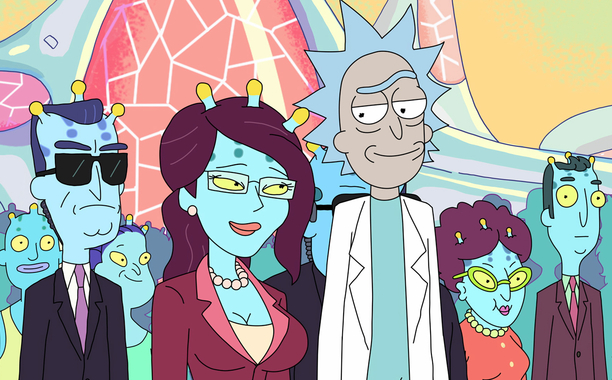
Then, there’s Rick Sanchez. I know that by saying that name, I’ve completely altered the tone of this topic. I could’ve easily spent the next several paragraphs breaking down how the smartest men in history view love and how that understanding reveals itself in our modern concept of romance. For now, I’d rather scrutinize love from the perspective of a hard-drinking, brutally honest, nihilistic cartoon character from Adult Swim.

Yep, I’m referring to this guy again.

Make no mistake. I’m not just using this as another excuse to talk about “Rick and Morty,” although I wouldn’t blame anyone for thinking that. I really do think characters like Rick Sanchez have something to teach us on the topic of love. Being an admitted romantic and aspiring erotica/romance writer, I believe those lessons are worth heeding.

On paper, Rick Sanchez is the last person most would go to for insights into love. From the first scene in the first episode, he establishes himself as an overly-cynical, high-functioning alcoholic who may or may not be okay with blowing up the world for the sake of a fresh start. To say he’s not the romantic type would be like saying Jerry needs help with his golf game.

However, Rick does demonstrate throughout the show that he has a capacity for love. He has even had a few moments where he has shown genuine heart. There’s an odd mix of eccentricity and complexity to Rick’s behavior. That’s part of what makes him such an endearing character and why he resonates so much with an emerging generation.

From all that chaos, though, there are insights worth noting. “Rick and Morty” may go heavy with nihilism and moments of existential crisis, but it doesn’t avoid the impact of love. Whether it’s Morty constantly trying to get with Jessica or the constant upheavals in Beth and Jerry’s marriage, love is an underlying factor throughout the show.

This is despite the fact that Rick is pretty overt about his feelings on love. In “Rick Potion #9,” the sixth episode of the first season, he gives his clearest, most quote-worthy opinion on love.

“Listen, Morty, I hate to break it to you but what people call ‘love’ is just a chemical reaction that compels animals to breed. It hits hard, Morty, then it slowly fades, leaving you stranded in a failing marriage. I did it. Your parents are gonna do it. Break the cycle, Morty. Rise above. Focus on science.”

That sounds pretty jaded, to say the least. It’s perfectly fitting with Rick’s misanthropic mentality. However, there is a context here and one that’s fairly subtle, as things tend to be in the world of “Rick and Morty.”

Part of that context is Rick’s family situation. Beyond being a drunk and an eccentric mad scientist, he also has a family. It’s not just his daughter and two grandkids, either. He mentions in his cynical musings that he’d fallen in love and gotten married at one point.

That, alone, has some pretty profound implications. It shows that even the smartest, most capable man in the multiverse cannot avoid the impact of love. Keep in mind, this is a man who travels the multiverse on a whim, defeats Thanos-level super-villains while drunk, and understands how meaningless everything is in the grand scheme of things.

Despite all that, Rick Sanchez still fell in love. He still got married. That, in and of itself, shows the power of love better than any Huey Lewis song. While the show hasn’t revealed much about his former wife, Diane, it does establish an important fact. Rick is capable of love, even when he sees it as just a confluence of brain chemicals.

The show goes onto to reveal that Rick is still influenced by love, despite this reductionist understanding of it. The most comprehensive example comes in Season 2, Episode 3, “Auto Erotic Assimilation.” In many ways, this episode helps convey the most meaningful lesson in love that any animated series has ever attempted.

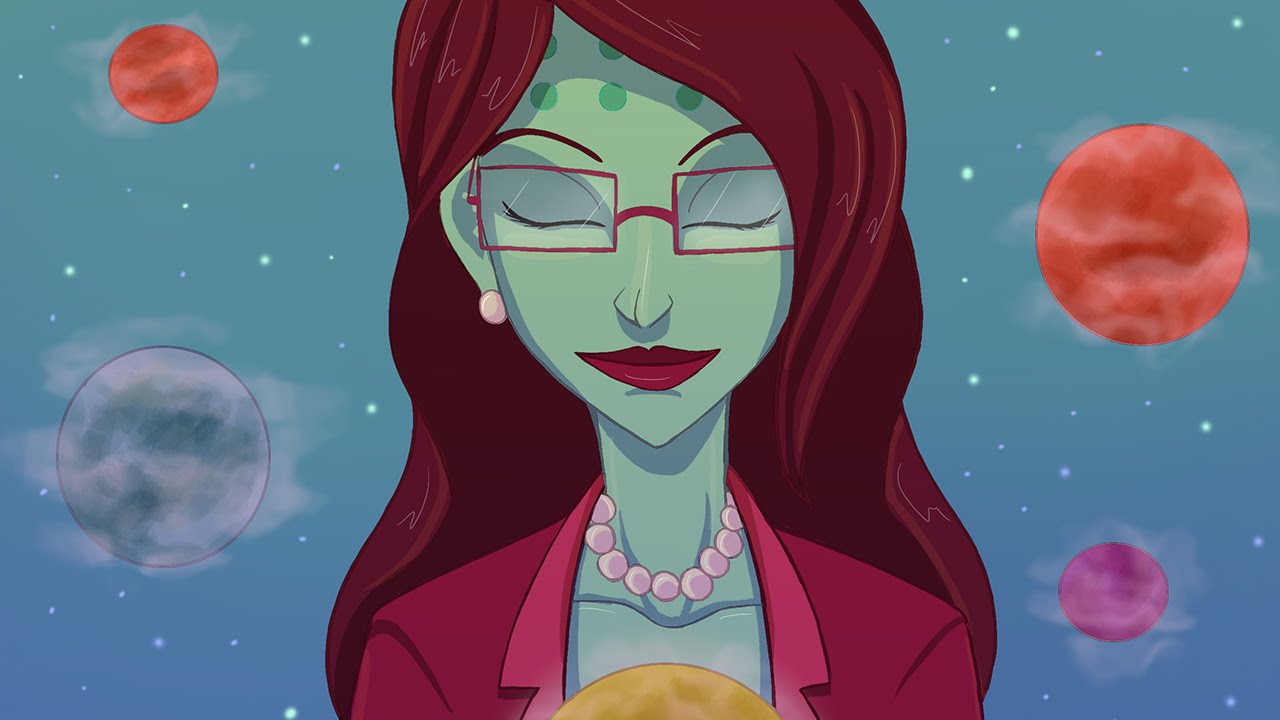
In the episode, Rick catches up with an old girlfriend, who happens to be an alien hive mind named Unity. If that sounds weird, even by “Rick and Morty” standards, trust me when I say it doesn’t crack the top ten. The fact that Unity is a hive mind is part of why the insights are so unique and impactful.

Throughout the episode, we learn about the particulars of Rick and Unity’s relationship. Unity establishes herself as one of the few beings in the multiverse who can keep up with Rick’s eccentricities. If anything, she has to be a hive mind in order to do so, as evidenced by Rick’s elaborately kinky requests.

In this context, Unity is the ultimate manifestation of supportive lover. She can literally do anything and be anywhere because she has the collective resources of an entire planet at her disposal. She’s more capable than a shape-shifter like Mystique or even an advanced sex robot.

If she wants to make love as a beautiful, buxom blond right out of a Playboy centerfold, she can do that. If she wants to do it as a greasy-haired, middle-aged man with a hairy back and bad breath, she can do that too. She can be two people, ten people, or as many people as she wants to be to love Rick and express that love however they want.

This breaks down, however, when Unity’s efforts to pursue that romance with Rick ends up straining her ability to maintain her hive mind. It gets so strenuous, at one point, that it leads to a nipple-driven race war on the planet. Again, this is pretty standard in terms of weirdness for “Rick and Morty.”

The implications of this breakdown are serious and I’m not referring to the nipple-driven race war. Logistically speaking, Rick and Unity had everything they needed to make their relationship work. They had unlimited resources and unlimited opportunities for intimacy, decadence, and everything in between. In exercising that, though, their relationship devolved into an ongoing spiral of self-destruction.

There was clear, unambiguous love between Rick and Unity. However, the act of being together proved toxic to both of them. Unity couldn’t be with Rick without losing herself, literally and figuratively. Rick couldn’t be with Unity without descending into a spiral of debauchery. Even if the love is there, embracing it leads to both of them getting hurt.

This made for one of the most dramatic and emotional moments of the show, one that reveals just how much Rick loved Unity. After she leaves him, it really hits him on an emotional level, so much so that he nearly kills himself. Remember, this is a man who said love is nothing more than a chemical reaction in the brain.

The pain in that moment, though, belabors a much larger point about love and being with someone. Just loving someone is easy. As Rick says, it’s just a chemical reaction in your brain. It’s something that can happen to anyone, even the smartest man in the multiverse.

However, being with someone and expressing the full spectrum of love involves much more than convergent brain chemistry. For some people, love can be downright destructive. If pursuing love means undermining your sense of being, as happened with Unity, then that’s a sign that the relationship isn’t tenable.

It’s tragic, but unavoidable. You can love someone with all your heart, but not be capable of having a functional relationship. It’s a harsh reality, one that’s perfectly in line with the nihilistic subtext in “Rick and Morty.” At the same time, though, there’s a less dire lesson to be learned.

Even if love is just a brain function that helps propogate the species, it has the power to affect us in the best and worst of ways. It can lead us to the greatest of joys, as Rick and Unity experienced for a brief time. It can also lead us to the worst of sorrows. Few other brain functions can make that claim.

That wide range of experiences are a powerful mechanism for finding meaning in a meaningless universe. Rick Sanchez doesn’t avoid the pain in those experiences and he doesn’t hesitate to pursue the joys, often to a reckless degree. Finding meaning in this universe is hard enough, but love can do plenty to carry us forward. You don’t have to be a Rick-level genius to appreciate that, although that’s probably a good thing.

7 Comments

Filed under gender issues, Marriage and Relationships, philosophy, Rick and Morty, romance

The WRONG Way To Deal With The Incel Phenomenon (And Ideas For A Better Way)

wallpaper-man-and-woman-at-sunset

When dealing with complex social issues, people have a frustrating tendency to propose solutions that cause more problems. Some of them are unintended and manageable. Some are just absurd and untenable.

I say that as someone who has stated before that complaining about a problem without pursuing a solution amounts to little more than empty whining. I’m in favor of confronting major issues, be they small-scale problems on a local level and bigger problems that may end up being an existential threat to the human race.

However, most reasonable people agree that attempting to solve a problem with a bad solution is akin to killing a fly with a machine gun. Even if it works, it causes plenty of damage and creates an entirely new set of problems that need solving.

This brings me to what I feel is the most asinine issue to emerge since religious zealots got needlessly outraged over the Teletubbies. I’m referring, sadly, to the incel phenomenon and believe me, it makes me miss the days when the Teletubbies were a problem.

I’ve mentioned it before and I’d really prefer to talk about less frustrating topics, but this is quickly evolving/devolving into an issue that isn’t going away on its own. People have started dying because of this phenomenon. Some depraved individuals are already being idolized because of it. This is not one of those things that will blow over after the next Kardashian scandal.

Before I go any further, I need to make clear that I do not think highly the incel phenomenon. It brings out the absolute worst in those who espouse it. I also do not associate incels with other movements involving men’s rights, gender equality, or any mainstream political ideology. These individuals are their own entity.

Their deplorable behavior and demeaning attitudes are solely on them. Their hatred, misogyny, and violent acts are not the least bit justified. I can only manage so much sympathy for those who identify as incel, given the recent news surrounding them. With all that being said, I’m going to try and be fair in addressing this problem.

As much as I abhor the ideology of self-identified incels, I don’t deny that they’re real human beings who are in a state of deep distress. I also don’t deny that their distress is painful to them. Others can call it pathetic all they want. To them, the pain is real.

This is a group of people who genuinely feel that they are the victims of a gross injustice. They see themselves as individuals who have followed all the rules that society has laid out for them. They believe themselves to be good, decent people who are worthy of sex, love, and intimacy. To them, the fact that they aren’t getting any of that is akin to denying a starving child food while donating meals to Bill Gates.

It certainly doesn’t help that popular culture has been selling us all the narrative for decades that being a nice person will get you the lover you want. Since kids, we’ve been led to believe that if we just follow the examples of our favorite photogenic heroes, we’ll get what we want. It always works out in the movies and on TV. Why shouldn’t it work out in real life?

Anyone with a passing knowledge of reality knows why that sentiment is dead wrong. We all have to learn at some point that we are not the heroes of our own story. Things don’t always work out. Life isn’t fair. Nobody owes you anything and the universe doesn’t give a wet fart about your feelings.
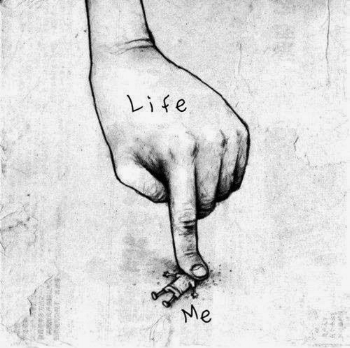
It’s a painful revelation, but for those in the incel movement, that pain is too much. It’s not that they haven’t gotten over it. It’s that they’ve given up. They call it “taking the black pill” instead of the red pill. Rather than the truth offered by “The Matrix,” the black pill is akin to just waving the white flag and conceding the battle to the machines.

In this case, though, the machines are the social conditions that ensure incels will never have sex, find love, or feel intimacy. Like sexual and romantic nihilists, they stop trying to navigate a world that they believe is actively working against them. They don’t try to change it or help it. They’re just left wallowing in their hatred and misery.

To some, it’s self-deprecating melodrama. I think it’s tragic. I even understand to some extent how certain people might look at the challenges before them, see how many forces are working against them, and not even try because the odds are so stacked against them. Whether or not that’s actually true doesn’t matter. This is their mentality and it’s a very damaging mentality.

It’s for that reason that the potential “solutions” some have set forth seem intent on either furthering that damage or exchanging one problem for another. One emerging “solution” comes in the form of something called enforced monogamy. It’s not quite what it sounds, but it still lends itself to a great many problems.

The logic, on paper, makes some sense. It posits that in a sexually free market, most of the women will only pursue the top tier of men. It works if you have the looks of Brad Pitt or the bank account of Warren Buffet, but for most everyone else, they’re left behind. As such, monogamy must be rigidly enforced and promiscuity significantly discouraged.

It could take many forms. People who have sex with one too many people could be taxed, fined, or jailed. People who refuse to marry someone could be required to do so. If someone doesn’t sufficiently perform they’re monogamous duties, then they’re subject to both condemnation and punishment. Whatever form it takes, the inherent flaws ensure this “solution” will only incur more problems.

Never mind the fact that human beings, as a species, may not be naturally monogamous. Never mind the fact that sexual monogamy is exceedingly rare throughout the animal kingdom. For the good of society and repressed incels, it has to be imposed and enforced. I’ll give everyone a minute to fume over that half-hearted effort at sarcasm.

In any case, this recourse requires that some segment of the population be oppressed to placate another. Historically speaking, that has never worked out. Sure, using the power of society to guide and/or micromanage sexuality might grant a little intimacy to those who wouldn’t otherwise have it. It will also significantly undermine the freedom and liberty of another individual.

It doesn’t just exchange one problem for another. Whenever society tries to micromanage peoples’ lives, it tends to collapse and not just because it fails the Boredom Filter. Human beings are complex and difficult to manage. Trying to manage the unmanageable is destined to end in failure.

While it’s doubtful that forced monogamy will ever gain favor in any society outside “The Handmaid’s Tale,” other less oppressive solutions have been put forth, relatively speaking. They largely center around legalizing sex work or hastening the development of sex robots.

While I’ve spoken favorably about sex robots and advocated the decriminalization of prostitution, I don’t think either would resolve the incel issue. In fact, I think it would make the situation worse.

Even if we all woke up tomorrow and discovered that prostitution was legal and sex robots were perfected, the incel phenomenon would still exist because those who identify as such would still feel like failures. Even if they had plenty of satisfying sex with prostitutes and sex robots, the fact they had to resort to those means would only affirm their failure.

On top of that, those working in prostitution who served them would probably be subject to stigma of their own. That’s on top of the stigma already associated with sex work. There would be a similar stigma on the manufacturers of sex robots or sex dolls, which has already drawn ire from sex-negative feminists.

In the end, not only will incels still feel angry and resentful, but those associated with this “solution” would have a reason to feel that way too. Given the breadth of that problem and the inherent flaws of the proposed solutions, is there any recourse that is both effective and tenable? I believe there is, but it’s not one of those solutions that’s simple, direct, and requires the passage or removal of a particular law.

The incel phenomenon was born of chaotic social issues that were further compounded by mass media and popular culture. Before solutions like prostitution and sex robots can even enter the conversation, the stigma associated with sex, both for the incels and those involved in sex work, must be confronted.

The idea that anyone who has too much sex or not enough sex deserves stigma is the primary driving force behind controversies surrounding sexuality. Whether it comes from uptight religious zealots or radical feminists, heaping stigma on someone else’s sex life is both damaging and demeaning.

Beyond confronting the stigma, it’s also important to educate those who identify as incels that it’s not entirely hopeless. They can still find love, sex, and intimacy. Part of that process, though, involves learning that they are not owed sex and they have to actually work for someone else’s affection.

That could come in the form of helping people develop better social skills. It could also come in the form of identifying those in the incel community that have legitimate issues with mental health. At the end of the day, they’re still people. Helping them should be prioritized over resenting them.
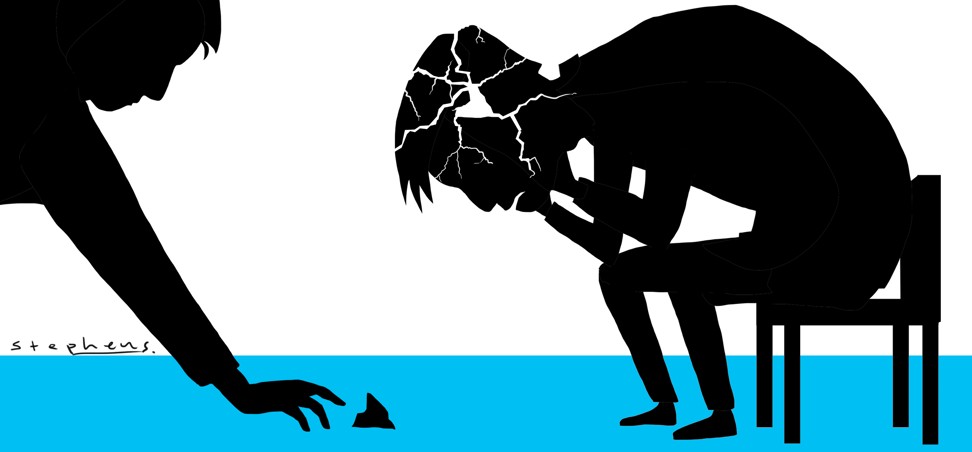
Re-shaping attitudes and teaching better social skills will be a slow, arduous process. People do have a nasty tendency to cling to their hate. However, it is possible to help someone overcome it. I believe most incels can be helped and are deserving of it. Only those who commit acts of violence should face such scorn.

This is not the kind of effort that one particular gender must take on. It has to be a collective effort, which I know will upset some who feel incels are an exclusive manifestation of toxic masculinity, a term I still contend is inherently flawed. We’re all still human, regardless of our gender. If some of us our suffering, then we’re still the one’s responsible for confronting it.

We can’t expect the incel issue to resolve itself. We also can’t expect those who identify as such to change just because others scorn, mock, or hate them. At some point, one side has to take a deep breath, be the adult, and confront the issue in a meaningful way.

Chances are it’ll get worse before it gets better. It’s also likely that both incels and those who despise them will hate dealing with the issues associated with them. However, that’s exactly why it’s so important to address. The longer a group of people remain at the mercy of stigma and self-loathing, the more suffering the world around them is likely to incur.

13 Comments

Filed under Current Events, gender issues, human nature, political correctness, sex in media, sex in society, sexuality

How I Had A Good Valentine’s Day Last Year (Thanks To My Mother)

It’s that time of year again. That’s right. It’s Valentine’s Day. To some, it’s a day where you can get away with being a little extra romantic with your lover. To others, it’s a conspiracy by Hallmark to sell more greeting cards. To people like me, namely those who are single and alone, it’s sometimes a harsh reminder that loneliness sucks and we all yearn to be loved.

I’ve talked a bit about my struggles as a single guy whose single status seems to get more taboo with age. I’ve also shared some difficult personal experiences that highlight why Valentine’s Day has been my least favorite holiday over the years. For someone who claims to be such a big fan of romance, I imagine it sends mixed messages.

I still consider myself a fan of love, intimacy, and everything else Valentine’s Day stands for. I gladly cheer those who have someone special to spend this day with. It’s just tough when you’re stuck spending this couples-friendly holiday by yourself. Most people who know me tend to understand I’m a little jaded this time of year.

However, there have been times when I’ve had a genuinely good Valentine’s Day while still being single. One of those times actually happened last year. I didn’t share it because I didn’t know whether it was worth sharing. Now, as I’ve come to appreciate that day more and more, I feel like this is something I should put out there on a day like this.

Around this time last year, I was planning to spend much of my Valentine’s Day alone again, either writing sexy novels, reading comics, or just doing whatever it took to distract myself. I had gotten so used to spending this romantic holiday that I was kind of resigned to my fate.

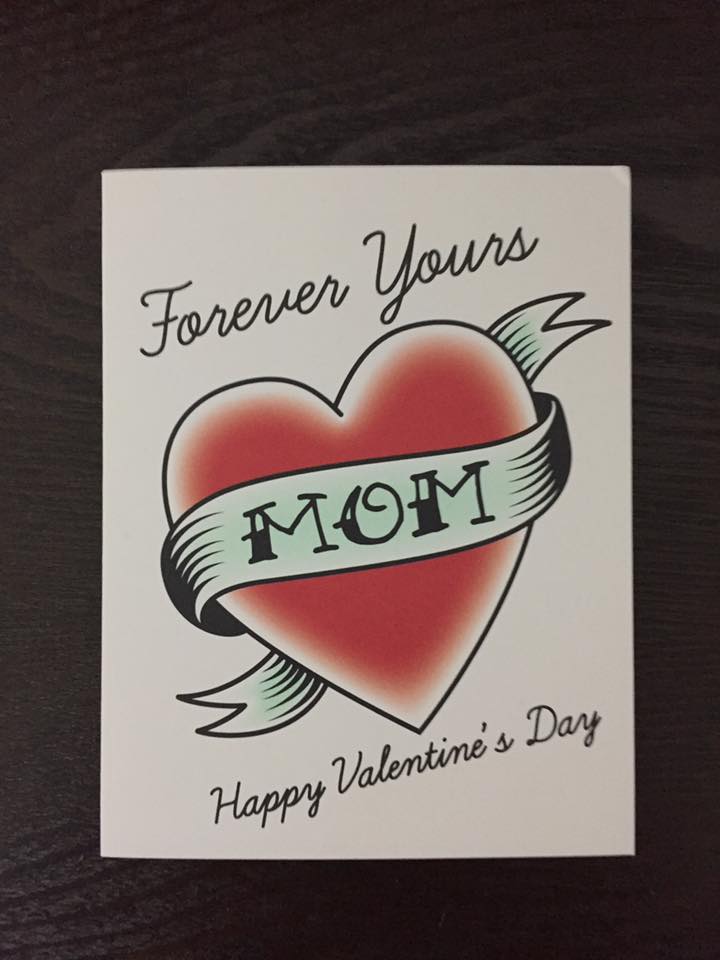
Then, I went out to get the mail and got a letter. It wasn’t a bill, a coupon, or an ad. It was a letter from my mother. Curious, since she usually texts or emails me when she wants to talk, I opened the letter and found this card inside.

mom

I’m not going to lie. I had the biggest, goofiest grin I’ve ever had outside of a comic book store or a donut shop when I saw it. My mother had actually gone to the effort of finding me a card, stuffing it in a regular envelope, and sending it to me, postage cost and all. It would’ve been easier to just send a few texts with some funny gifs, but my mother is someone who goes the extra mile.

In addition to the card, there was a note on the back. Since it’s somewhat personal, I won’t recite it word for word. That’s between me and my mother. What she wrote, though, really made my day and warmed my heart. She reminded me that, even when you’re alone on Valentine’s Day, you can still feel loved.

I needed that reminder. I needed it more than I cared to admit. Once again, though, my mother proved that she knows me better than I know myself sometimes. She understands why I’ve struggled to find love and how hard I’ve worked to overcome those struggles. She and the rest of my family have helped me every step of the way. Most importantly, though, she always made sure I felt loved.

I still have this card. It’s one of those special little mementos that I can turn to whenever I’m feeling miserable, restless, or unloved. On a day like this, though, it carries an even greater meaning. It’s a meaning that helps make Valentine’s Day feel special, even when you’re single like me.

Now, I know I’m exceedingly bias in this sentiment, but I don’t care. I’ll say it anyways.

MY MOM IS THE ABSOLUTE BEST!

Yes, I used all caps. Yes, I’m shouting that as loud as my computer will allow me. No, I don’t care if you disagree or think that’s childish. It’s a sentiment worth sharing on Valentine’s Day and I gladly share it with everyone, single or otherwise.

Also, I know my mother is a regular reader of this blog. Even though it sometimes discusses sexy and exceedingly unsexy issues, she supports me in everything I do and encourages me every step of the way.

With that in mind, I’d like to thank my wonderful mom for making Valentine’s Day great for me again. Mom, I know you’ll probably read this at some point, but I mean it. You’re the best! Thank you for being the best Valentine that a single guy like me can hope for.

2 Comments

Filed under Jack Fisher's Insights

Boredom Vs. A Lack Of Belonging: Which Drives Outrage Culture More?

http3a2f2fi-huffpost-com2fgen2f45348782fimages2fn-group-holding-hands-628x314

Here’s a quick non-rhetorical question. Which is worse, crippling boredom or social isolation? There’s no right answer, but every answer has distressing implications. More than anything else, those answers reinforce why solitary confinement is rightly considered torture.

I ask that question because I had an interesting conversation with someone on Reddit about what drives certain people to be constantly outraged about whatever happens to be controversial that day. I’ve talked a bit about outrage culture before and how professional trolls exploit them, but I haven’t really dug into the mechanisms behind it. Given how new controversies seem to trend every day, I think it’s worth scrutinizing.

In the discussion, I singled out boredom as a possibly underrated factor. Having highlighted the power of crippling boredom, I felt qualified to make the case that boredom may very well be an understated, under-appreciated cause. I still feel there’s a case to be made.

In the grand scheme of things, humanity is in uncharted territory when it comes to boredom. For most of human history, we had to live our lives under the constant threat of plague, famine, war, and natural disasters. Whether we were hunter/gatherers or subsistence farmers, life was chaotic and unpredictable.

Say what you will about those harsh, pre-modern eras, but they weren’t boring. They couldn’t be. There was always work to do. Given the lack of effective birth control, there were children to raise. Even if social media had existed 100 years ago, who would have the time or energy to even be outraged about a man wearing a sexist shirt.

Fast forward to the 21st century and things like war, famine, disease, and crippling poverty are all in decline. This is objectively good on so many ways, but for some people, especially in well-to-do middle class people, it leaves a large void that quickly becomes boring if not filled with something. Sometimes, it can get so bad that it can lead to outright murder.

When I made this argument, I think more than a few people took it seriously on Reddit. It was easy to see how someone whose life is so affluent and devoid of heart-pounding conflict that they will latch onto petty outrages just so they can feel something. Like someone stuck in solitary confinement, they’ll do anything for some sort of stimulation beyond counting the tiles on the floor.

Given how our brains can’t always discern the source of arousal, sometimes it’ll settle for whatever adrenaline rush we get from righteous outraged. Some go so far as to call the rush we get from outrage an addiction and it’s not a wholly inaccurate idea.

However, one person in that discussion pointed another element that also relies on that part of the brain that can’t always discern what gets it aroused. Instead of combating boredom, though, this issue deals with our inherent need to join a group and become part of a larger movement.

It’s very much an extension of tribalism and, like seeking stimulation when there is none, human beings are well-equipped by evolutionary biology to form groups. Whether we’re a small band of hunter/gatherers or a group of Taylor Swift fans, it doesn’t take much for us to form those groups and our brains reward us greatly.

Being part of a group feels good. Being part of something gives us a rush. It’s a major reason why peer pressure works and why tribalism often overrules reason. That solidarity we feel when we’re part of a group isn’t just intoxicating. It’s a fundamental component of any highly social species, which includes humans.

What this means for those constantly outrage isn’t that far off from the implications relating to boredom. Like boredom, our current society is pretty unprecedented in terms of how easy it is to form a close-nit group and share in that solidarity that has been driving our species since the hunter/gatherer days.

Thanks to social media and mass communication, it’s possible for people to do more than just share their opinions, no matter how outrageous they might be. It’s also possible to connect with those who either share in those opinions or despise them. In terms of forming a tribe, it’s a two-for-one-deal because it creates both a sense of “us” while revealing a “them” to rally against.

For anyone who has spent any amount of time on social media, it doesn’t take much to see the whole us versus them mentality to take shape. If any amount of disagreement goes on long enough, Godwin’s Law usually takes over and the battle lines are set.

On top of this, the social issues in 2018 aren’t quite nearly as clear-cut as they were in decades past. In the past, there were some pretty egregious injustices surrounding civil rights, women’s rights, and LGBT rights that required major social movements to combat. By and large, society has done a lot to improve the state for these marginalized groups.

There’s no question that being part of such righteous movements is laudable. We, as a society, rightly praise civil rights leaders who stand for such righteous causes. Naturally, some people seek to emulate that. Whether by ego or altruism, it’s only natural that they want to experience that kind of accomplishment.

Thanks to the sheer breadth of human progress, though, there causes on the levels faced by Martin Luther King Jr. or Mahatma Gandhi. However, because that drive to be part of a movement is just that strong, those same people will settle for pettier movements that protest sexy women in video games or bemoan the lack of diversity in old TV shows like “Friends.”

Make no mistake. Those outrages are petty and asinine when compared to the real injustices that past social movements have fought, but the brains of the outraged can’t tell the difference. From their perspective, their movement is every bit as righteous as every other civil rights movement in history. The outrage they express and the solidarity they feel is every bit as fulfilling as something that alleviates boredom.

Even if these causes are petty and the outrage is shallow, it’s important to note the alternative here. If these same people who protest the lack of diversity in the tech industry didn’t have this sort of thing to drive them, then what would happen to the group they’d formed?

Absent that outrage and protest, the group has nothing to rally behind. The person has nothing provoking arousal, be it anger or excitement. Without this dynamic, they don’t belong to something bigger anymore. They’re not the ones marching alongside famous civil rights leaders of the past. They’re just alone, by themselves, contributing nothing of value.

For many people, that’s just untenable. I would go so far as to say it’s almost as untenable as crippling boredom. Even self-proclaimed introverts and ardent individualists, we seek an identity and a constant source of stimulation. When we lack one or both, we lack a core element of any social species. In the same way we’re driven to meet the rest of our basic needs, we’ll be driven to find that somewhere, no matter how misguided.

In the past, we might have found that sense of belonging and purpose through our small communities or organized religion. Today, the world is much bigger and more diverse, thanks to technology and civilization. Organized religion is also not effective anymore due to factors too numerous to list. People are still going to seek belonging.

It’s somewhat ironic that civilization has advanced to such a degree that there aren’t as many clear-cut, good versus evil movements to be part of anymore. However, there’s still this longing to be the hero of our own story and be part of something greater, even if it means actually going out of their way to feel outraged.

Getting back to the initial question I posed, I think the influence of boredom and belonging are inherently linked. We agonize over escaping boredom and over having a sense of belonging. We can’t get that same rush our ancestors felt when surviving bear attacks and hunger so we’ll settle for whining about protests during football games. It’s still annoyingly petty, but distressingly understandable.

4 Comments

Filed under Current Events, gender issues, Reasons and Excuses, War on Boredom