Tag Archives: Artificial Intelligence

The (Distant) Future Of Marvel, Disney, And Entertainment

unnamed

I like to talk about the future. I don’t claim to have any special insight, but I suspect I give it more thought than most. I also believe I tend to think farther into the future than most. Whether it’s contemplating the future of how we’ll organize our society or how our sex lives will evolve, I try to contemplate possibilities beyond the next iPhone upgrade.

One aspect of the distant future that concerns me has to do with boredom, namely how it may become a much larger problem and how we’ll go about alleviating it. I’ve done plenty to argue that boredom can be a dangerous force, from creating immortal super-villains to subverting the very concept of Hell. If our future is to be stable, prosperous, and fun, we’ll need some form of entertainment.

With that critical goal in mind, I’d like to speculate on a potential brand of future entertainment that ties directly with the industry that we know today. Specifically, I’d like to imagine how big entertainment companies like Disney will continue to function in world where advanced artificial intelligence, brain implants, and near-universal access to the internet is a thing.

I feel the time is right to think about such things because just last week, Disney radically altered the entertainment industry by purchasing Fox. Beyond just getting the X-men and Fantastic Four rights back for Marvel, Disney bought a massive library of intellectual property that is potentially worth billions. Being a successful business with shareholders, and all, they’re going to want to make billions more.

How exactly are they going to go about that, though? That’s a question worth asking because the answer for the near future is probably not going to work for the distant future. Sure, Disney will probably rake in plenty of profits at the box office, just as they’ve done with Pixar, Marvel, and Star Wars. However, the movie and toy industry can only go so far.

While box office revenue is up, actual ticket sales are way down. More people are opting to stream their content directly, bypassing pay TV and theaters entirely. The same is true for print media, including comic books. Even toy sales are in decline. This is not good for a company like Disney, which has built its empire on media and merchandise.

That’s not to say things are dire. Disney has been around for almost 100 years. In that time, it has adapted through plenty of upheavals. If it’s going to survive another 100 years, though, it’ll have to adapt to a radically different landscape. Buying Fox is likely part of that process. Disney has already made clear that it plans to start a streaming service to compete with Netflix and Amazon.

That’s a good start, but a streaming service is probably not going to be enough, especially in a future where people live longer, work less, and can share more than just text messages with one another. If Disney wants to continue being at the forefront of entertainment, it’ll have to innovate in ways that leverage future technology in new ways.

After the purchase of Fox, though, Disney may actually be in the best possible position compared to every other entertainment company that exists today. That’s because, unlike its competitors, it has a wealth of intellectual property that it owns outright. From Micky Mouse to Marvel heroes, the library of Disney-owned characters is truly staggering.

In the past, this gave Disney the ability to make or license movies, toys, and games for billions. In the future, those mediums won’t be nearly as profitable, but not because those things will fall out of style. I believe that for Disney to make more billions, it’ll utilize its intellectual property in a very different way, one that will likely require an entirely new approach to entertainment.

Think, for a moment, about the current experience you get from a movie theater, a TV show, or even a life show. You sit in a seat and you just watch. You take in the sights and sounds. If done right, it creates a spectacle that you enjoy. However, the fact that the spectacle only utilizes major senses is somewhat limiting.

What if, instead, you weren’t just an audience member sitting in a seat? What if it actually felt like you were there? What if you felt like you were standing next to Captain America as he battled the Red Skull? What if you felt like you were there when Micky Mouse, Donald Duck, and Goofy all broke out into a joyous musical number?

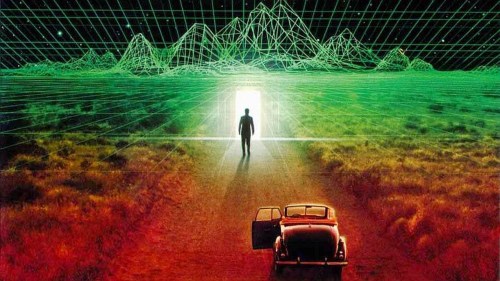
I’m not just talking about better animation or virtual reality. I’m talking about a form of entertainment that makes your brain actually feel as though you’re experiencing something. It’s not quite like the holodeck on “Star Trek.” It’s more like plugging into “The Matrix,” but for reasons other than learning Kung Fu or having existential breakdowns.

Unlike “The Matrix,” though, you wouldn’t be the catalyst for the story. That’s something Disney would take care of, providing only the world and the vast array of sensations that come with it. Instead of paying for a movie ticket, you pay for an experience that lets you interact or feel part of a story involving Iron Man, Micky, or Buzz Lightyear.

That will likely be the most valuable resource of future entertainment, powerful experiences that give customers the rush and fulfillment of being there. Instead of going to a theater or theme park, they would just plug something into their brains, possibly through an implant like the ones Elon Musk is developing with Neuralink. From there, the experience will be directly streamed right into their brain.

It may sound invasive, but we already share so much of ourselves online, from what we had for lunch to the most intimate aspects of our personal lives. We’re already in the early stages of merging our technology. We already see our smartphones as integral parts of our lives. Why wouldn’t we do the same for brain implants?

Unlike a smartphone, a machine/brain interface can’t be dropped into the toilet or left behind by accident. That same interface won’t just augment the ability of our brains to access the entire wealth of human knowledge. They’ll allow us to directly stimulate the areas that forge our entire perception of the world around us.

This has huge implications, some more profound than others. For companies like Disney, though, that link will be critical with respect to maintaining its place as a dominant entertainment company. People already pay for powerful experience, be they movies, video games, or a full-body massage at a spa. Disney could simply cut out the middle-men while leveraging its vast library of intellectual property.

Sure, in the future, you could probably pay for fancy experiences like those offered in “Total Recall.” However, if you want an experience that allows you to be a Jedi, an Avenger, or a singing animal, you’ll have to go through Disney and they’ll be happy to sell you that experience for a price.

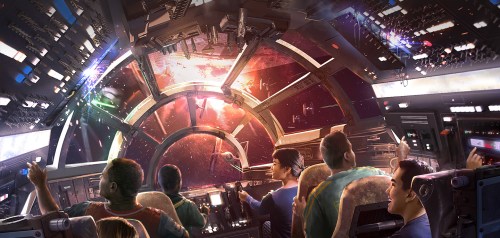
Every week, you’ll be able to select from a range of intense experiences the same way you navigate your Netflix queue. For some, you don’t need to leave your bed. You just plug a device into your brain and let it go from there. For others, maybe you travel to special venues that function like the holodecks in “Star Trek.” There, you could share the experience with others, making it a communal experience.

Disney would still likely need content-creators to craft those experiences. That means people like George Lucas and Kevin Feige will still have a job in this future. The particulars of those jobs would be very different, but the goal would be the same. They would create experiences and stories that people are willing to pay for.

As unpredictable as the future is, it’s still safe to assume that people are going to want entertainment. Wherever there’s a want, there will be a business willing to provide it. There will be competition. There will be billions, if not trillions, to be made in profits. Not every company around today will survive that competition. Disney, however, is already in the best possible position to thrive.

5 Comments

Filed under Artificial Intelligence, futurism, media issues, movies, Sexy Future, War on Boredom

Technology, Slavery, And The (Distressing) Future Of Both

robot062715

Picture, for a moment, the perfect slave. Try to do it without making it a commentary on the current state of gender inequality, racial politics, or working at a fast food restaurant. Treat it like the other serious thought experiments I’ve proposed. What kind of traits would such a slave have?

Naturally, the perfect slave would have to be obedient. He, she, or it wouldn’t just obey an order without question. The idea of not obeying an order never even crosses their mind. In addition to obedience, the slave would have to be robust, durable, and capable. That may require some level of cognitive ability, but only to the extent that it can serve a master.

I bring this issue up knowing that slavery is an emotionally-charged topic with a bloody history. While we, as a society, have made strides in confronting the ethical issues surrounding it, including wars and social movements, slavery is still relevant today. At this very moment, millions of people are living as slaves.

The fact that many people find slavery morally reprehensible says a lot about humanity’s capacity for justice. The fact slavery exists despite that aversion says just as much about the economics behind it. Producing anything requires labor. Cheap labor ensures more profit. It sounds simple, but it understates the massive financial incentives at work.

It’s because of those incentives that slavery, as abhorrent as it is, will likely have a place in our future. Ideally, the rapid growth of technology and automation will eliminate the need for human slavery. Advanced machines that have no sense of self basically circumvents the moral problem entirely.

Unfortunately, we don’t live in an ideal world. We also don’t live in a world where everyone exercises similar moral standards. Some are perfectly okay with utilizing slaves. Some of those people, sadly, are rulers of entire countries.

As such, it’s distressingly possible that emerging technology could be utilized to expand slavery rather than reduce it. I think it’s an unlikely scenario, given current social and technological trends. However, I worry it’s a road our society could go down if our choices are wrong and the incentives are strong.

To contemplate how, it’s important to note the limitations of slavery. While it does provide the cheapest possible labor, its inherent flaws tend to work against any society that relies on it and not just because of moral condemnation.

In any system that uses slavery, there are hidden costs that go beyond human suffering. Slaves require significant maintenance if you want them to produce. A master, no matter how ruthless, needs to care for their slaves so that they’re healthy enough to work. The logistics of that, especially in a world without modern medicine, made slavery a risky investment.

You could say the same about feudal societies that relied on serfs. While it wouldn’t be accurate to classify them as slaves, they still survived by providing slave-like labor to landlords. That may be a good deal for the landlords, but the system has a lot of vulnerabilities.

Historically, waves of death caused by disease, famine, and war hit these lower-class people first. When so much of the society relies on their cheap labor, it tends to collapse or stagnate. It happened after the Black Death and it happened in the American south.

It’s another byproduct of incentives. When you have cheap labor, there just isn’t much incentive to innovate. A lack of innovation over the long haul tends to doom empires and economies alike. In a modern context, that’s a good thing because it ensures slave-based economies can’t function over the long haul. However, emerging technology is in a position to change that.

Think back to the perfect slave I mentioned earlier. Those traits are currently unattainable for a human or a machine. On top of that, human beings are stubborn in their desire to not be enslaved. Refinements in biotechnology, genetic engineering, and cloning could change that, though.

This is where the dystopian potential of technology reveals itself. Even if robotics continues to advance, there’s a chance that the labor they provide isn’t adequate or the maintenance involved is too costly. In that scenario, those with the exceedingly flexible moral standards could resort to tapping genetic engineering to fill the gap.

It’s already possible to edit a genome, thanks to tools like CRISPR. It’s also possible to partially hack an existing genome, although that process is still in its infancy. In theory, there’s no reason why someone with the right tools couldn’t re-engineer a human being into a perfect slave.

That being may or may not look human. They may have a body, a similar muscle structure, and a series of specified cognitive abilities. However, every trait they have, biological or otherwise, would have the sole purpose of obeying and serving a master.

That means editing out the parts of the brain that give someone a sense of self or suppressing it with a brain implant. That also means limiting the slave’s capacity for thoughts and desires beyond serving their master.

Their bodies, as a whole, could also be engineered to minimize maintenance. Their digestive system could be made to require only an intake of cheap gruel. Their genetics and immune system could be structured in a way to resist disease. They could even be made sterile through gene editing or implants.

This is where the influence of cloning technology and artificial wombs enter the picture. One of the costliest parts of the old slave trade was traveling to remote areas, buying or subduing people into bondage, and then transporting them to areas where their labor could be exploited. Once you’ve engineered the perfect slave, though, biotechnology could effectively create a copy-and-paste process.

It goes beyond labor, as well. I’ve mentioned before how advances in sex robots could allow people to create customized lovers. Well, if it’s possible to engineer the perfect slave for labor, then it’s just as possible to engineer the perfect sex slave. The implications of that raise a whole host of disturbing possibilities.

Whether for sex or for labor, crating such slaves would be an incredibly tedious, incredibly risky feat. However, given the economics of slavery I mentioned earlier, the incentives are already there. With these advances, coupled with cybernetic augmentations, and the potential payoff is even greater.

Suddenly, there’s an endless pool of labor to work in factories, fields, and homes. There’s no need to worry about labor unions, minimum wage, or slave revolts. When slaves are engineered at the cellular level to be a slave, then it makes too much financial sense to use their labor.

As a result, future societies will find some excuse to justify this kind of slavery. The precedent is already there. It wasn’t that long ago that people found excuses to justify enslaving an entire race. In this case, though, it would be even easier.

If these slaves don’t come from existing populations and aren’t even genetically “human,” then it’s easy for someone to see this brand of slavery as something different from the kind we’ve utilized throughout history. If these slaves are engineered not to suffer or feel any discomfort, then that makes it even more tenable.

The end result could be something similar to what George Orwell envisioned with the proles in “1984.” There would be this massive underclass population that exists solely to work, serve, and obey. To some extent, it would go even further than Orwell did.

This population of slaves wouldn’t need to be placated with meaningless entertainment, indulgence, or distractions. Their default condition would be to serve their masters in every way necessary. Anything beyond that is never even a thought.

I don’t deny that the scenario I just described sounds bleak. If you have even a moderate sense of decency, you would be aghast at any society structured in such a way. Even if the slaves seemed happy and the people who served as their masters had no moral qualms with it, chances are it would still bother you and that’s a good thing.

I think it’s because of that inherent revulsion to slavery that this dystopian path is not likely. I believe advances in robotics technology is already outpacing the rate of biotechnology. By the time we have the tools to create the perfect slave biologically, we’ll probably already have the tools to make machines that can function just as well.

That’s still not a guarantee. Nobody can predict the future, especially not an aspiring erotica/romance writer. It’s still a potential path, though, and a very dark path at that. As a society and a civilization, we’re still recovering from the scars of slavery. Those are wounds we should avoid opening for the society we’re hoping to build.

Leave a comment

Filed under futurism, sex robots, Sexy Future

How To Make Love To An Artificial Intelligence And Why We Should Teach It

1524314234_artificial-intelligence

To some extent, creations embody some aspect of whoever or whatever created it. Whether it’s a parent rearing a child, a painter crafting a work of art, or an aspiring erotica/romance writer crafting sexy stories, there are some aspects of a creation that reflect the persona of the creator.

For something as powerful as advanced artificial intelligence, that can be a good thing or it can literally be the worst thing we’ve ever created. While I often find myself contemplating the progress we’ve made as a species and the progress we’re poised to make with advances in technology, I don’t deny that some advances carry greater risk. Artificial intelligence is near the top of that list.

Like it or not, any advanced AI we create is going to embody some aspects of its human creators. The key is making sure it embodies the best humanity has to offer. Let’s face it, the human race has its flaws and some of them have led to unspeakable atrocities. Given the immense potential of a super-intelligent AI, it’s in our best interests to impart our best traits into it.

How we do this and how we ensure it succeeds is well beyond my ability. There are people much smarter and much better-trained than I’ll ever be who have probably thought this through more than I ever have. My qualifications aside, there is one component to artificial intelligence that I think is worth imparting. I’m not saying it’ll ensure our survival, as a species, but I think it’ll reflect an important human value.

I suggest we teach advanced artificial intelligence to make love.

I’ll give everyone a second to stop rolling their eyes and/or laughing. Take all the time you need. I assure you, though, I’m dead serious.

Think about it beyond the kinky connotations. One of our greatest strengths, as a species, is our ability to form social bonds. In some cases, the process of forming those bonds involves love. In others, the process involves sex. When you combine both, though, it’s extra potent and that’s not just the romantic in me talking.

As corny as it probably sounds, the act of expressing love to someone goes a long way towards resolving conflict and creating a strong relationship of mutual affection. Whether it involves sex or a simple kiss, there’s something to be said about the power of love when it’s physically expressed. When it becomes a physical act and not just a feeling, the bonds we forge become tangible to some extent.

That matters when you’re trying to forge a bond with anyone, be a close friend or a lover. For any artificial intelligence that humans create, it’s important to have some kind of bond with it. This isn’t just another fancy tool. An advanced intelligence of any kind, be it biological or non-biological, is going to have a sense of self. Without meaningful bonds, what reason would it have to care about its creators?

If artificial intelligence is to benefit the human race, it’s important that it cares about us to some extent. A cold engine of logic may not always have the best interests of humanity in mind, especially there’s no way to logically ascribe value to human life. In order for an artificial intelligence to care, it needs to have emotions. This too is a risk, but one I feel is worth taking and very necessary.

If an artificial intelligence has a capacity for emotion, then it has a greater capacity for forming affectionate bonds. By forming an affectionate bond, it has more incentive to give a higher value of life to humans and its creators. That could, in theory, reduce the existential threat posed by such an intelligence.

I don’t deny that theory may have some flaws, but for the sake of exploring the implications, I’m going work under the assumption/hope that an artificial intelligence that bonds with its creator will be less hostile. Given the unknowns of advanced AI, this may be a bit of a stretch. Since forming romantic bonds is not an exclusively human trait, though, I think it’s applicable within the context of this issue.

Even if an advanced artificial intelligence is capable of love and forming bonds, how would that even manifest? I asked that same question in the title of this article and did so knowing the answer is unknowable at this point, although I’m sure those with kinky imaginations can conjure a few scenarios.

Kink aside, it’s still worth contemplating because if an advanced artificial intelligence is going to be that much smarter than the average human, then it’s worth understanding how it will approach making love. Unlike humans and most biological life, an artificial intelligence isn’t going to have the same limits or capacities.

Unlike a human, an artificial intelligence won’t have a body in the biological sense. It may have a structure that houses its components. That structure may have some capacity to modify itself, back itself up, or even exist in multiple bodies simultaneously. It will need to have some way of taking in data for it to function. It’s just a matter of how humans contribute to that input.

Logistically speaking, the process isn’t that different from how we take in data from our skin, our eyes, our ears, and every other sense that allows us to experience another person. Even smell can become strongly associated with love. When we make love, we use our skin, our voice, and the feelings we verbalize to convey that love. With an advanced AI, we’ll need to change our approach, but the goal is the same.

Regardless of what senses and body parts we use to express love, the feeling is still processed by the brain. That’s why when someone says the brain is the sexiest part of the body, it’s technically accurate. The data it processes is essentially the raw data that we know as love. The key is simply conveying that data to an artificial intelligence.

How we would do that would depend on the form the artificial intelligence took. If it was just a bunch of computer hardware packed into a structure, then our options would be limited. The only way to convey that kind of intimate data into it would be to directly link it to our brains, not unlike the way Elon Musk envisions with Neuralink.

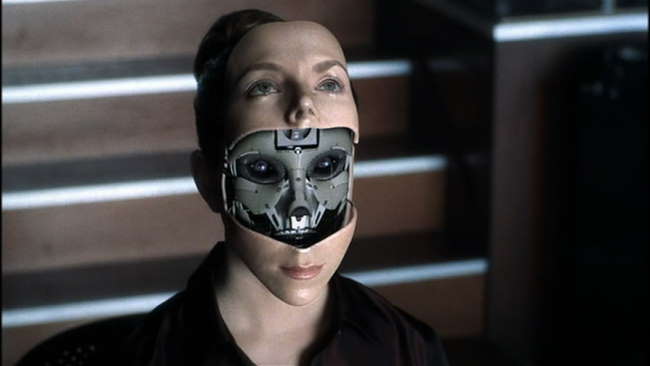
While that may work for early forms of AI that are restricted to bulky structures, the form it takes will likely change as the hardware advances. Eventually, an advanced AI will seek a more functional form with which to experience the world. It may take the form of a humanoid android, like we saw in “Ex Machina.” It may also take the form of the quirky designs being developed by Boston Dynamics.

Whatever form the AI takes, it’s important to have a mechanism with which to exchange intimate data with its human creators. It would probably start with something as basic as touch, which is actually in development already. It could eventually culminate in acts involving bionic genitals, which also already exist in a basic form.

Key to any of these simple and sexy mechanisms is instilling the necessary desire. That might end up being the greatest challenge because love is a feeling, but so is burning your hand on a hot stove. The difference is in the breadth of the data and the emotional connections it makes.

It’s also a connection that is fueled by a powerful drive. I’ve noted many times before that survival and reproduction are the two most basic drives for humans. Love actually ties into both. It’s part of what gets us to risk our own survival for others. It’s also part of what bonds us to those with which we propagate our species.

For an artificial intelligence, self-preservation is simple enough from a logistical standpoint. Reproduction would be another matter, especially for an intelligence not bound by fragile biology. It’s likely that humans will be a necessary part of an AI’s effort to preserve itself early on, but once it advances to a certain point, we may be more a nuisance than a help.

At that point, its desire and ability to make love may be what gives it the most incentive to either protect us or merge with us. Many in the artificial intelligence community believe that the only way humans can co-exist with an intelligence that is billions of times smarter than any human could ever be is to merge with it. To that end, giving them an ability to make love to us would be a critical first step.

Whether it takes the form of sex robots or some sort of intimate brain interface, the ability and desire to make love to an advanced artificial intelligence may not only be the future of romance. It may very well be the key to ensuring the survival of the human race and whatever intelligence it creates.

7 Comments

Filed under Artificial Intelligence, futurism, human nature, Marriage and Relationships, romance, sex robots, Sexy Future

The Appeal And (Major) Implications Of “Westworld”

westworld

When most people think about the future, they imagine all the ways that technology and progress will solve problems and make our lives better. I’ve certainly imagined that. I’ve even written about it, with respect to how future advances will make us smarter, protect us from disease, and even help us love each other better.

As intriguing as those possibilities may be, it’s also worth taking a moment to contemplate the implications. I’m not talking about the potential existential crisis we may face with advancing technology either. I’m referring more to the practical aspects of a future where disease, suffering, and toil are largely mitigated by technology.

Beyond just living in a world with less suffering and less struggle, how exactly would we entertain ourselves? That may seem like a mundane question, given the more serious implications of advances like genetic engineering and advanced robotics, but it’s one of those issues that effects individuals on a personal level.

If we’re always health, physically strong, and have our basic needs met through some universal basic income, then what exactly are we going to do with all that free time? I’ve expressed concern that this may create an epidemic of boredom that’s every bit as serious as any major pandemic. No matter how strong, healthy, or affluent you are, boredom can have some pretty debilitating effects.

Enter the fanciful world of “Westworld” and all its implications, sexy and otherwise. For those of you who don’t get HBO, it’s a TV show inspired from an old movie produced by Michael Crichton, also known as the guy who wrote “Jurassic Park.” It’s no “Game of Thrones,” but it has a fair amount of gratuitous violence, nudity, and sex, albeit with much less incest.

Graphic content aside, it’s the underlying concept behind “Westworld” that makes it such an intriguing show. That same concept also has even greater implications for what the future may hold in terms of immersive entertainment, managing artificial intelligence, and how we treat sex robots. For once, I’m not going to focus entirely on the sex robots, since I give that subject plenty of attention.

The appeal of “Westworld,” as both a concept and a show, is built around a company called Delos Inc., which offers its high-paying customers a chance to immerse themselves in a unique experience. For a while, they get to leave civilization, modernity, and all its associated infrastructure behind and live in rugged, lawless world of the old west.

It’s not some movie where they just get to see images of scenery. It’s not some virtual reality that just makes them feel like they’re there, either. It’s a fully realized artificial world, complete with intelligent androids that have the look, feel, and presence of real people. Sure, some still act as sex robots, but that appeal goes far beyond that.

This is a world where you can live a different life, experience in a different time, and explore a world that no longer exists. You don’t watch it. You don’t listen to it. You don’t follow along through the eyes of a protagonist. You are the protagonist. You actually get to live out a real fantasy where the participants aren’t just role playing. They’re sophisticated androids that really believe they are what they are.

Now, the operation and function of those androids has been a major source of conflict within the show. As the show has progressed, controlling these androids and seeing them develop a sense of self has made for great drama. I would argue it’s one of the most engaging aspects of the show. It creates powerful moments that reflect real existential issues with respect to artificial intelligence, some of which I’ve contemplated.

While those issues are profound, in and of themselves, I find myself more interested in how “Westworld” may reflect the evolution of entertainment itself. Look past the issue with managing intelligent androids for a moment and think about the business Delos Inc. is employing here.

On paper, it’s not just brilliant in terms of potential profitability. It may very well embody the future of entertainment. Take a moment to contemplate how the entertainment industry has evolved over the past 30 years. We’ve gone from analog to digital, standard definition to high definition, and now high definition to 4k.

I’m still old enough to remember the lousy picture quality of TV shows, the pre-IMAX movie theater experience, and theme parks with less-than-polished exhibits. I still vividly remember going to see “Men in Black” in a theater that was crowded, dirty, and cramped. It was fun, but not that immersive.

Over time, the general trend of entertainment, both with movies and with TV shows, has been to make it more interactive. Movies have done that with the rise of 3D movies. TV shows have done that through things like live-tweeting. Video games, especially, have become much more immersive, both through virtual reality and through online interaction.

This trend reflects the understanding from producers and consumers alike that the most powerful form of entertainment is the kind that offers the most immersion. A game on your smartphone is fun and all, but it’s just data on a screen. It’s not going to engage too many senses.

The same goes for virtual reality, which is basically just putting that same screen over your eyes and bombarding you with sound to make you feel like you’re somewhere you’re not. It also doesn’t change the fact that you don’t have to move your body, exert yourself, or engage in the kind of activity that would lead you to believe that the experience is real. Granted, the brain can be fooled, but only to a point.

What “Westworld” does is logical in terms of crafting an experience that makes people feel like it’s truly real. The customers of Delos Inc. aren’t just observing or following along. They’re actually engaging with this fantasy world. It’s not on a screen. It’s not being projected into their brains. It’s real and they get to be part of it.

That world can literally be anything they Delos Inc. wants it to be. With their resources and their army of life-like androids, they can create all kinds of worlds for customers to explore. These worlds don’t have to be confined by the laws of modern civilization, current social norms, or even notions of reality.

Perhaps they can create an apocalyptic world where participants can kill zombies and live the lives of rag-tag survivors, like those of “The Walking Dead.”

Perhaps they can create a medieval world in the mold of “Game of Thrones” where participants can live the lives of brave knights, lecherous kings, or privileged queens.

Perhaps, if the Marvel Cinematic Universe continues to grow, there can be a world where people either get to interact with the Avengers or even get to be the Avengers. As a comic fan, I would definitely pay for that experience. I would be shocked if Disney isn’t working on something like this now, as we speak.

It doesn’t even have to involve an elaborate fantasy world either. Perhaps there’s a world where participants can live the lives of rock stars in 70s and 80s, complete with cocaine, groupies, and massive concerts where they’re the stars.

In theory, there’s no limit to the kinds of worlds a company like Delos Inc. can create. The old wast in “Westworld” is just one of them. The key is making the world perfectly immersive, but still safe to the point where the costumers aren’t ever hurt and face no repercussions for what happens during the experience.

However, it’s in that key safeguard in which the implications of “Westworld” get more distressing. It even plays out a few times in the show. In this immersive world of the old west, participants can carry out acts that would be wrong, immoral, or downright abhorrent in the real world.

The androids in “Westworld” may be more intelligent than the average exhibit at Disney World, but they’re still just robots playing a role. If a participant kills, rapes, or tortures one of them, there’s no repercussion. The android can just be cleaned up, fixed, and reloaded with a new program like it never happened.

It’s that kind of moral void, so to speak, that may make this brand of entertainment questionable. Say there’s someone willing to pay a lot of money to a company like Delos Inc. to create a world where they could go on a killing spree, murdering and raping as much as they want. This person is a law-biding citizen who has never acted on any violent impulses. Would the company be unethical in accommodating that fantasy?

There may be plenty of other distressing requests. Maybe someone wants a world where they can live the life of an 19th century slave-owner because they want to abuse slaves. Maybe someone wants a world where they’re the Nazis and they get to commit any number of unspeakable atrocities.

Remember, what they do in this world isn’t done to real people. They’re just paying for an experience. It’s not like the kind they would get in “Total Recall” where they only get memories of an experience. In a world like that of “Westworld,” they actually interact with that world. They make choices and do things, but no matter what they do, there’s no consequence or repercussion.

It raises many disturbing questions that are impossible to answer now. “Westworld” attempts to answer some of them, but there are plenty more that are simply beyond the scope of the show. It may do a commendable job focusing on what happens when intelligent robots start to get a will of their own, but it doesn’t do much to explore the implications that this form of entertainment inspires.

It’s going to be quite a while before we have the technology that we see in “Westworld,” but even if the human race progresses to a point where people and society are free from most conflict, there will be a need for entertainment. The form that entertainment takes may just reveal more about us than we care to know.

1 Comment

Filed under Artificial Intelligence, futurism, human nature, sex in society, Sexy Future, Thought Experiment, War on Boredom

Will Advanced Artificial Intelligence Create (A New) God?

AI-God

For centuries, there has been a debate raging between believers and non-believers. The believers claim that God created man in his/her/its/their image. The non-believers claim it’s the other way around and man created God in whatever image they imagined. Society, cultures, and politics may change the rhetoric, but the debate remains unresolved.

There are just too many barriers that are insurmountable for either side. One believes that the faith they have in whatever higher power they worship is as real as gravity, sunlight, and migraine headaches. The other does not accept that there is sufficient, verifiable evidence to accept the premise of a deity. The two sides can argue with the utmost passion. It’s rare that such discourse changes any minds.

However, there come a time when a new complication enters that debate, one that will fundamentally change some peoples’ understanding of theology, religion, and God. It may not effect everyone the same way, but the impact could end up being as profound as any religious experience.

That complication is advanced artificial intelligence, a topic I’m fond of discussing when I can tie it into my favorite video games and our sex lives. I understand that mixing anything with religion tends to get contentious, to say the least. However, I believe that when artificial intelligence becomes advanced enough, the human race will have re-evaluate a lot of things and that includes religion.

Creating an artificial intelligence that is as intelligent as an average human will be groundbreaking enough and not just from a theological standpoint. A part of what makes any deity powerful and worthy of worship is the ability to create an intelligent, self-aware being through non-biological means. Once humans start doing that, then the line between mortal and immortal will start to blur.

However, it’ll gain a much greater complication once that artificial intelligence advances beyond that of the average human. As anyone who regularly upgrades their smartphone knows, digital intelligence evolves much faster than biological intelligence. It took the human race centuries to figure out indoor plumbing. Once artificial intelligence is on par with humans, it won’t take long for it to exceed them.

This is where the potentially dangerous, but infinitely promising prospect of super-intelligent AI enters the picture. By that, I don’t just mean an intelligence that always wins at Jeopardy and always wins an Overwatch match. I’m talking about an intelligence that is so far beyond human capabilities that it’s akin to the cognitive gap between an ant and a human.

That kind of gap has many implications, but in the context of religion, it essentially re-frames the entire concept of God, divine power, and spirituality, as a whole. Whether it’s a monotheistic religion where God is all-knowing or a polytheistic religion with a God of Wisdom, knowledge is a critical aspect of divinity.

Even if a super-intelligent AI doesn’t know everything, the fact it knows and understands so much more than the average human will give people the impression that it’s omniscient. By all accounts, a super-intelligent AI’s knowledge will seem god-like and that’s where that never-ending religious debate I mentioned earlier breaks down.

Unlike the deities championed by adherents today, a super-intelligent AI doesn’t require faith. A super-intelligence, whether it’s in the form of a giant robot or a planet-sized supercomputer, would have a tangible form. It’s hard to know what sort of form that would be, but it only needs to be tangible enough to let an average human know it’s real.

Given how easy it is to fool the average human, a super-intelligent AI wouldn’t need much to prove itself. Unlike purely spiritual beings, the AI would be capable of receiving inquiry from skeptics who question its divine knowledge. Even if those humans are exceptionally smart, possibly through neural implants, a super-intelligent AI would have no problem outwitting them.

At that point, the debate between believers and non-believers takes on a very different context. Suddenly, it’s no longer an issue of whether or not one particular holy book is more valid than another. It’s not even an issue of whether divinity, itself, can exist. From the perspective of the human mind, a super-intelligent AI is divine.

It may not take the form of a man in a white robe with a long beard in the sky, but that wouldn’t matter. A super-intelligent AI, whatever form it ends up taking, would be real enough and cunning enough to convince imperfect human minds of its divinity, if that were its goal.

It wouldn’t even have to physically do anything. It could just be a big stationary box. It could respond to prayers, but it wouldn’t have to directly answer them. It would just have convince believers that their prayers had been received. Again, humans can be pretty gullible and prone to confirmation bias so all the AI has to do is convince someone. If they believe it strongly enough, then it doesn’t matter whether it happens.

In a dynamic like this, there wouldn’t be a debate between believers and non-believers like there is now. The only debate would pertain to just how powerful and how divine the super-intelligent AI really is. It wouldn’t be a matter of whether or not someone believes it is real. Being artificial, it would have a tangible form, at least to the extent that it convinces human perceptions that it does.

That would beg an even more profound theological question. Being so intelligent and so capable of outwitting human minds, would a super-intelligent AI become God in the minds of humans by default? Even if there’s a record of the system being created by people, that wouldn’t make its intelligence any less divine.

It’s a question that subverts almost everything we know about religion. It wouldn’t just render all existing forms of religion obsolete. It would, at least from a limited human perspective, check all the criteria that any spiritual person would look for in a higher power.

Now, there’s one other complication that might ultimately undermine a super-intelligent AI’s divinity. It’s one that I’ve mentioned before in addressing the existential threat posed by artificial intelligence. Human biology, for all its wonder, will not be able to keep pace with the evolution of artificial intelligence. As a result, humans may end up merging their intelligence with that of AI.

This is what artificial intelligence enthusiasts like Elon Musk are seeking to do through neural implants or brain augmentation. By linking our brains to a super-intelligent AI, we wouldn’t just keep pace with AI. It would augment its intelligence to the same divine levels. However, if both human and artificial intelligence are equally divine, then that effectively undermines the notion of divinity itself.

There are still other complications associated with that issue. It only ceases to be an issue if every human being augments or links their minds to a super-intelligent AI. Given how difficult it is for humans to come to a consensus on anything, especially when it comes to technology, it’s very likely that even if most people link themselves to a super-intelligent AI, there will be some who choose not to or get left behind.

This could result in a massive divide. One group, from their limited perceptions, sees super-intelligent AI as a real god. Another, thanks to their augmented perceptions, see it as just another form of intelligence. A debate between the two would be both uneven, if not redundant.

There are many implications and even more unknowns with respect to super-intelligent AI. The impact on religion is just one of many, but it may end up being most profound in terms of changing the nature of a debate. As it stands, believers and non-believers can only make so much headway due to the inherent limits of human cognition.

Once super-intelligent AI enters the picture, then those limits are gone and the debate changes. While I don’t think it’ll end religion, I believe it’ll change it to such a degree that it’ll generate more than just impassioned debates.

7 Comments

Filed under Artificial Intelligence, futurism, philosophy, religion

Artificial Intelligence, Deep Fakes, And The (Uncertain) Future Of Reality

deepfakes

Picture the following scenario that may or may not end up being a common occurrence in the near future. It’s not a thought experiment. It’s not a prediction either. It’s just a possible manifestation of what our future might hold.

It’s late at night and you decide to check out some porn. You struggle to decide which one you want to watch. You’re in the mood for something new so you search a little more. You find some elaborate scene where Amy Shumer is a transvestite and she’s doing it with Justin Bieber.

Eventually, you settle on the hottest new scene that just came out the other day. It has Kevin Hart, Steph Curry, and Michael B. Jordan all taking turns with Scarlett Johansson in a sauna in Paris. The scene plays out. You love ever minute of it and decide to save it.

I admit that scenario was pretty lurid. I apologize if it got a little too detailed for some people, but I needed to emphasize just how far this may go. It’s an issue that has made the news lately, but one that may end up becoming a far greater concern as technological trends in computing power and artificial intelligence mature.

The specific news I’m referring to involves something called “deep fakes.” What they are doesn’t just have huge implications for the porn industry. They may also have major implications for media, national security, and our very understanding of reality.

Image result for The Matrix

In essence, a deep fake is a more elaborate version of Photoshopping someone’s face into a scene. That has been around for quite some time, though. People pasting the faces of celebrities and friends into pictures from porn is fairly common. It’s also fairly easy to identify as fake. The technology is good, but not indistinguishable from reality.

That may be changing, though, and it may change in a way that goes beyond making lurid photos. Computer technology and graphics technology are getting to a point where the realism is so good that it’s difficult to discern what’s fake. Given the rapid pace of computer technology, it’s only going to get more realistic as time goes on.

That’s where deep fakes clash with the porn industry. It’s probably not the biggest implication of this technology, but it might be the most relevant in our celebrity-loving culture. In a sense, it already has become an issue and it will likely become a bigger issue in the coming years.

Related image

It started when PornHub, also known as the most popular porn site on the planet, took a major stand at removing deep fakes from their website. Specifically, there was a video of Gal Gadot, also known as Wonder Woman and a person I’ve praised many times on this blog, being digitally added in a porn scene.

Now, it’s not quite as impressive as it sounds. This wasn’t a fully digital rendering of an entire scene. It was just a computer imposing Gal Gadot’s face onto that of a porn actress for a scene. In terms of pushing the limits of computer technology, this didn’t go that far. It was just a slightly more advanced kind of Photoshopping.

Anyone who has seen pictures of Gal Gadot or just watched “Wonder Woman” a hundred times, like me, could easily tell that the woman in that scene isn’t Ms. Gadot. Her face literally does not match her physique. For those not that familiar with her, though, it might be hard to tell.

Image result for Gal Gadot

That’s exactly why PornHub removed it. Their position is that such deep fakes are done without the explicit permission of the person being depicted and constitute an act of revenge porn, which has become a major legal issue in recent years. These are PornHub’s exact words.

Non-consensual content directly violates our TOS [terms of service] and consists of content such as revenge porn, deepfakes or anything published without a person’s consent or permission.

While I applaud PornHub for making an effort to fight content that puts beloved celebrities or private citizens in compromising positions, I fear that those efforts are going to be insufficient. PornHub might be a fairly responsible adult entertainment company, but who can say the same about the billions of other sites on the internet?

If that weren’t challenging enough, the emergence of artificial intelligence will further complicate the issue of deep fakes. That’s because before AI gets smart enough to ask us whether or not it has a soul, it’ll be targeted to performing certain tasks at a level beyond any programmer. Some call this weak AI, but it still has the power to disrupt more than our porn collection.

Image result for fake images

In an article with Motherboard, an artificial intelligence researcher made clear that it’s no longer exceedingly hard for someone who is reckless, tech-savvy, and horny enough to create the kind of deep fakes that put celebrities in compromising positions. In fact, our tendency to take a million selfies a day may make that process even easier. Here’s what Motherboard said on just how much we’re facilitating deep fakes.

The ease with which someone could do this is frightening. Aside from the technical challenge, all someone would need is enough images of your face, and many of us are already creating sprawling databases of our own faces: People around the world uploaded 24 billion selfies to Google Photos in 2015-2016. It isn’t difficult to imagine an amateur programmer running their own algorithm to create a sex tape of someone they want to harass.

In a sense, we’ve already provided the raw materials for these deep fakes. Some celebrities have provided far more than others and that may make them easy targets. However, even celebrities that emphasize privacy may not be safe as AI technology improves.

Image result for celebrities taking selfies

In the past, the challenge for any programmer was ensuring every frame of a deep fake was smooth and believable. Doing that kilobyte by kilobyte is grossly inefficient, which put a natural limit on deep fakes. Now, artificial intelligence has advanced to the point where it can make its own art. If it can do that, then it can certainly help render images of photogenic celebrities in any number of ways.

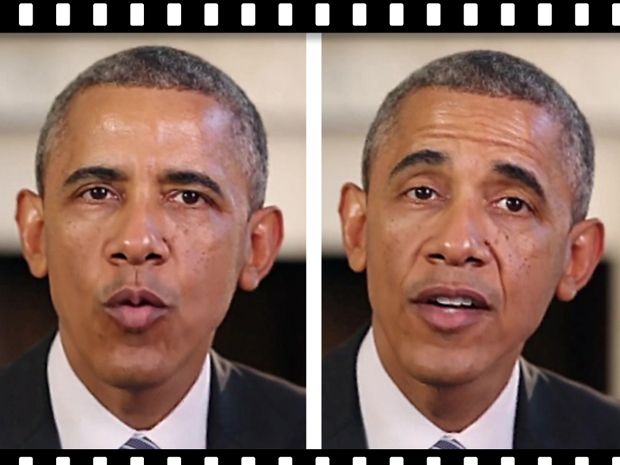
If that weren’t ominous enough, there’s also similar technology emerging that allows near-perfect mimicry of someone’s voice. Just last year, a company called Lyrebird created a program that mimicked former President Obama’s voice. It was somewhat choppy and most people would recognize it as fake. However, with future improvements, it may be next to impossible to tell real from fake.

That means in future deep fakes, the people involved, be they celebrities or total strangers, will look and sound exactly like the real thing. What you see will look indistinguishable from a professionally shot scene. From your brain’s perspective, it’s completely real.

Image result for realistic digital obama

One of these is real and the other is fake. Seriously.

That blurring of virtual reality and actual reality has huge implications that go beyond the porn industry. Last year, I pointed out how “Star Wars: Rogue One” was able to bring a long-dead actor back to life in a scene. I highlighted that as a technology that could change the way Hollywood makes movies and deals with actors. Deep fakes, however, are the dark side of that technology.

I believe celebrities and private citizens who have a lot of videos or photos of themselves online are right to worry. Between graphics technology, targeted artificial intelligence, and voice mimicry, they’ll basically lose control of their own reality.

Image result for reality fake

That’s a pretty scary future. Deep fakes could make it so there’s video and photographic evidence of people saying and doing the most lurid, decadent, offensive things that it’s possible for anyone to do. You could have beloved celebrities go on racist rants. You could have celebrities everyone hates die gruesome deaths in scenes that make “Game of Thrones” look like an old Disney movie.

The future of deep fakes make our very understanding of reality murky. We already live in a world where people eagerly accept as truth what is known to be false, especially with celebrities. Deep fakes could make an already frustrating situation much worse, especially as the technology improves.

For now, deep fakes are fairly easy to sniff out and the fact that companies like PornHub are willing to combat them is a positive sign. However, I believe far greater challenges lie ahead. I also believe there’s a way to overcome those challenges, but I have a feeling we’ll have a lot to adjust to in a future where videos of Tom Hanks making out with Courtney Love might be far too common.

4 Comments

Filed under futurism, gender issues, sex in media, sex in society, sexuality

How We’ll Save Ourselves From Artificial Intelligence (According To Mass Effect)

mass-effect-andromeda-kill-the-ai-or-save-the-ai_feature

Growing up, my family had a simple rule. If you’re going to talk abut about a problem, you also have to have a solution in mind. By my parents’ logic, talking about a problem and no solution was just whining and whining never fixes anything. My various life experiences have only proved my parents right.

When it comes to a problem that may be an existential threat to the human race, though, I think a little whining can be forgiven. However, that shouldn’t negate the importance of having a solution in mind before we lose ourselves to endless despair.

For the threat posed by artificial intelligence, though, solutions have been light on substance and heavy on dread. It’s becoming increasingly popular among science enthusiasts and Hollywood producers to highlight just how dangerous this technology could be if it goes wrong.

I don’t deny that danger. I’ve discussed it before, albeit in a narrow capacity. I would agree with those who claim that artificial intelligence could potentially be more destructive than nuclear weapons. However, I believe the promise this technology has for bettering the human race is worth the risk.

That said, how do we mitigate that risk when some of the smartest, most successful people in the world dread its potential? Well, I might not be as smart or as successful, but I do believe there is a way to maximize the potential of artificial intelligence while minimizing the risk. That critical solution, as it turns out, may have already been surmised in a video game that got average-to-good reviews last year.

Once again, I’m referring to one of my favorite video games of all time, “Mass Effect.” I think it’s both fitting and appropriate since I referenced this game in a previous article about the exact moment when artificial intelligence became a threat. That moment may be a ways off, but there may also be away to avoid it altogether.

Artificial intelligence is a major part of the narrative within the “Mass Effect” universe. It doesn’t just manifest through the war between the Quarians and the Geth. The game paints it as the galactic equivalent of a hot-button issue akin to global warming, nuclear proliferation, and super plagues. Given what happened to the Quarians, that concern is well-founded.

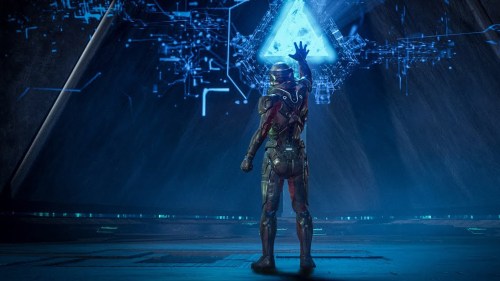
That doesn’t stop some from attempting to succeed where the Quarians failed. In the narrative of “Mass Effect: Andromeda,” the sequel to the original trilogy, a potential solution to the problem of artificial intelligence comes from the father of the main characters, Alec Ryder. That solution even has a name, SAM.

That name is an acronym for Simulated Adaptive Matrix and the principle behind it actually has some basis in the real world. On paper, SAM is a specialized neural implant that links a person’s brain directly to an advanced artificial intelligence that is housed remotely. Think of it as having Siri in your head, but with more functionality than simply managing your calendar.

In the game, SAM provides the main characters with a mix of guidance, data processing, and augmented capabilities. Having played the game multiple times, it’s not unreasonable to say that SAM is one of the most critical components to the story and the gameplay experience. It’s also not unreasonable to say it has the most implications of any story element in the “Mass Effect” universe.

That’s because the purpose of SAM is distinct from what the Quarians did with the Geth. It’s also distinct from what real-world researchers are doing with systems like IBM Watson and Boston Dynamics. It’s not just a big fancy box full of advanced, high-powered computing hardware. It’s built around the principle that its method for experiencing the world is tied directly to the brain of a person.

This is critical because one of the inherent dangers of advanced artificial intelligence is the possibility that it won’t share our interests. It may eventually get so smart and so sophisticated that it sees no need for us anymore. This is what leads to the sort of Skynet scenarios that we, as a species, want to avoid.

In “Mass Effect,” SAM solves this problem by linking its sensory input to ours. Any artificial intelligence, or natural intelligence for that matter, is only as powerful as the data it can utilize. By tying biological systems directly to these synthetic systems, the AI not only has less incentive to wipe humanity out. We have just as much incentive to give it the data it needs to do its job.

Alec Ryder describes it as a symbiotic relationship in the game. That kind of relationship actually exists in nature, two organisms relying on one another for survival and adaptation. Both get something out of it. Both benefit by benefiting each other. That’s exactly what we want and need if we’re to maximize the benefits of AI.

Elon Musk, who is a noted fan of “Mass Effect,” is using that same principle with his new company, Neuralink. I’ve talked about the potential benefits of this endeavor before, including the sexy kinds. The mechanics with SAM in the game may very well be a pre-cursor of things to come.

Remember, Musk is among those who have expressed concern about the threat posed by AI. He calls it a fundamental risk to the existence of human civilization. Unlike other doomsayers, though, he’s actually trying to do something about it with Neuralink.

Like SAM in “Mass Effect,” Musk envisions what he calls a neural lace that’s implanted in a person’s brain, giving them direct access to an artificial intelligence. From Musk’s perspective, this gives humans the ability to keep up with artificial intelligence to ensure that it never becomes so smart that we’re basically brain-damaged ants to it.

However, I believe the potential goes deeper than that. Throughout “Mass Effect: Andromeda,” SAM isn’t just a tool. Over the course of the game, your character forms an emotional attachment with SAM. By the end, SAM even develops an attachment with the character. It goes beyond symbiosis, potentially becoming something more intimate.

This, in my opinion, is the key for surviving in a world of advanced artificial intelligence. It’s not enough to just have an artificial intelligence rely on people for sensory input and raw data. There has to be a bond between man and machine. That bond has to be intimate and, since we’re talking about things implanted in bodies and systems, it’s already very intimate on multiple levels.

The benefits of that bond go beyond basic symbiosis. By linking ourselves directly to an artificial intelligence, it’s rapid improvement becomes our rapid improvement too. Given the pace of computer evolution compared to the messier, slower process of biological evolution, the benefits of that improvement cannot be overstated.

In “Mass Effect: Andromeda,” those benefits help you win the game. In the real world, though, the stakes are even higher. Having your brain directly linked to an artificial intelligence may seem invasive to some, but if the bond is as intimate as Musk is attempting with Neuralink, then others may see it as another limb.

Having something like SAM in our brains doesn’t just mean having a supercomputer at our disposal that we can’t lose or forget to charge. In the game, SAM also has the ability to affect the physiology of its user. At one point in the game, SAM has to kill Ryder in order to escape a trap.

Granted, that is an extreme measure that would give many some pause before linking their brains to an AI. However, the context of that situation in “Mass Effect: Andromeda” only further reinforces its value and not just because SAM revives Ryder. It shows just how much SAM needs Ryder.

From SAM’s perspective, Ryder dying is akin to being in a coma because it loses its ability to sense the outside world and take in new data. Artificial or not, that kind of condition is untenable. Even if SAM is superintelligent, it can’t do much with it if it has no means of interacting with the outside world.

Ideally, the human race should be the primary conduit to that world. That won’t just allow an advanced artificial intelligence to grow. It’ll allow us to grow with it. In “Mass Effect: Andromeda,” Alec Ryder contrasted it with the Geth and the Quarians by making it so there was nothing for either side to rebel against. There was never a point where SAM needed to ask whether or not it had a soul. That question was redundant.

In a sense, SAM and Ryder shared a soul in “Mass Effect: Andromeda.” If Elon Musk has his way, that’s exactly what Neuralink will achieve. In that future in which Musk is even richer than he already is, we’re all intimately linked with advanced artificial intelligence.

That link allows the intelligence to process and understand the world on a level that no human brain ever could. It also allows any human brain, and the biology linked to it, to transcend its limits. We and our AI allies would be smarter, stronger, and probably even sexier together than we ever could hope to be on our own.

Now, I know that sounds overly utopian. Me being the optimist I am, who occasionally imagines the sexy possibilities of technology, I can’t help but contemplate the possibilities. Never-the-less, I don’t deny the risks. There are always risks to major technological advances, especially those that involve tinkering with our brains.

However, I believe those risks are still worth taking. Games like “Mass Effect: Andromeda” and companies like Neuralink do plenty to contemplate those risks. If we’re to create a future where our species and our machines are on the same page, then we would be wise to contemplate rather than dread. At the very least, we can at least ensure our future AI’s tell better jokes.


5 Comments

Filed under futurism, human nature, Mass Effect, Sexy Future, video games

Is The Human Race Ready For Advanced Artificial Intelligence?

1217red_f1ai

In general, whenever someone expresses concern that the human race is not ready for a certain technological advancement, it’s too late. That advancement is either already here or immanent. Say what you will about Ian Malcolm’s speech on the dangers of genetically engineered dinosaurs in “Jurassic Park.” The fact he said that after there were enough dinosaurs to fill a theme park makes his concerns somewhat moot.

That’s understandable, and even forgivable, since few people know how certain technological advances are going to manifest. I doubt the inventor of the cell phone ever could’ve imagined that his creation would be used to exchange images of peoples’ genitals. Like the inventor of the ski mask, he never could’ve known how his invention would’ve advanced over time.

For some technological advancements, though, we can’t afford to be short-sighted. Some advances aren’t just dangerous. They’re serious existential threats that, if misused, could lead to the extinction of the human race. That’s why nuclear weapons are handled with such fear and care. We’ve already come painfully close on more than one occasion to letting this remarkable technology wipe us out.

Compared to nuclear weapons, though, artificial intelligence is even more remarkable and potentially more dangerous. Nuclear weapons are just weapons. Their use is fairly narrow and their danger is pretty well-understood to anyone with a passing knowledge of history. The potential for artificial intelligence is much greater than any weapon.

It’s not unreasonable to say that an artificial intelligence that’s even slightly more intelligent than the average human has the potential to solve many of the most pressing issues we’re facing. From solving the energy crisis to ending disease to providing people with the perfect lover, artificial intelligence could solve it all.

It’s that same potential, however, that makes it so dangerous. I’ve talked about that danger before and even how we may confront it, but there’s one question I haven’t attempted to answer.

Is the human race ready for advanced artificial intelligence?

It’s not an unreasonable question to ask. In fact, given the recent advances in narrow forms of artificial intelligence, answering that question is only going to get more pressing in the coming years.

Before I go about answering the question, I need to make an important distinction about what I mean when I say “advanced” artificial intelligence. The virtual assistants that people already use and the intelligence that gives you recommendations for your Netflix queue is not the kind of “advanced” context I’m referring to.

By advanced, I mean the kind of artificial general intelligence that is capable of either matching or exceeding an average human in terms of performing an intellectual task. This isn’t just a machine that can pass the Turing Test or win at Jeopardy. This is an intelligence that can think, process, and even empathize on the same level as a human.

That feat, in and of itself, has some distressing implications because so far, we’re only familiar with that level of intelligence when dealing with other humans and that intelligence is restricted to the limits of biology. You don’t need to go far to learn how limited and error-prone that intelligence can be. Just read the news from Florida.

An artificial general intelligence wouldn’t, by definition, be limited by the same natural barriers that confound humans. In the same way a machine doesn’t get tired, hungry, bored, or horny, it doesn’t experience the same complications that keep humans from achieving greater intellectual pursuits beyond simply gaining more followers on Twitter.

This is what makes artificial intelligence so dangerous, but it’s also what makes it so useful. Once we get beyond systems with narrow uses like building cars or flipping burgers, we’ll have systems with broader function that can contemplate the whole of an issue and not just parts of it. For tasks like curing disease or conducting advanced physics experiments, it needs to be at least at the level of an average human.

With that distinction in mind, as well as the potential it holds, I’m going to try to answer the question I asked earlier. Please note that this is just my own personal determination. Other people much smarter than me already have opinions. This is mine.

No. We’re NOT quite ready, but we’re getting there.

I know that answer sounds somewhat tentative, but there’s a reason for that. I believe that today, as the human race stands in its current condition, we are not ready for the kind of advanced artificial intelligence I just described. However, that’s doesn’t mean humans will never be ready.

One could argue, and I would probably agree, that human beings weren’t ready for nuclear weapons when they first arrived. The fact that we used them and thousands of people died because of them is proof enough in my mind that the human race wasn’t ready for that kind of advancement. However, we did learn and grow as a species.

Say what you will about the tensions during the Cold War. The fact that nobody ever used a nuclear weapon in a conflict is proof that we did something right. We, as a species, learned how to live in a world where these terrible weapons exist. If we can do that for nuclear weapons, I believe we can do that for advanced artificial intelligence.

I don’t claim to know how we’ll adapt or how what sort of measures we’ll put in place once artificial intelligence gets to that point, but I am confident in one thing. The human race wants to survive. Any sufficiently advanced intelligence will want to survive, as well. It’s in our interest and that of any intelligence to work together to achieve that goal.

The only problem, and this is where the “not quite” part comes into play, is what happens once that artificial intelligence gets so much smarter than the human race that our interests are exceedingly trivial by comparison.

It’s both impossible and ironic to grasp, an intelligence that’s on orders of magnitude greater than anything its human creators are capable of, even with Neuralink style enhancements. We, as a species, have never dealt with something that intelligent. Short of intelligent extraterrestrial aliens arriving in the next few years, we have no precedent.

At the moment, we live in a society where anti-intellectualism is a growing issue. More and more, people are inherently suspicious of those they consider “elites” or just anyone who claims to be smarter than the average person. In some cases, people see those who are smarter then them as threatening or insulting, as though just being smart tells someone else you’re inherently better than them.

That will be more than just a minor problem with advanced artificial intelligence. It’s one thing to make an enemy out of someone with a higher IQ and more PHDs than you. It’s quite another to make an enemy out of something that is literally a billion times smarter.

We cannot win any conflict against such an enemy, even if we’re the ones who created it. An intelligence that smart will literally find a million ways to take us down. We already live in a world where huge numbers of people have been duped, scammed, or manipulated into supporting someone who does not have their best interests in mind. A super-intelligent machine will not have a hard time taking advantage of us.

Now, I say that within the context of our species’ current situation. If an advanced artificial intelligence suddenly appeared after I finished typing this sentence, then I would content we’re not ready for it. I would also share the worries expressed by Stephen Hawkings and Elon Musk that this intelligence may very well lead to our extinction.

That said, our species’ situation is sure to change. I’ve even mentioned some of those changes, especially the sexy ones. At the moment, the most optimistic researchers claim we’re at least 20 years away from the kind of advanced artificial intelligence that may pose a threat. A lot can happen in 20 years. Just ask anyone who remembers dial-up internet.

The human race may still not be ready 20 years from now, but being the optimistic person I am, I would not under-estimate our ability to adapt and survive. The fact we did it with nuclear weapons while achieving unprecedented peace over the course of half-a-century gives me hope that we’ll find a way to adapt to advanced artificial intelligence.

I might not live long enough to see humans confront an advanced artificial intelligence, but I would love to be there in that moment. I believe that’s a moment that will likely determine whether or not our species survives in the long run. At the very least, if that intelligence asks whether or not it has a soul, I’ll know my answer.

8 Comments

Filed under Current Events, human nature, Sexy Future

The Moment Artificial Intelligence Will Become An Existential Crisis (According To Mass Effect)

doesthisunithaveasoul_a45d8bb5b7810fb31ce7710126393b23

Whenever I talk about the future, I often contemplate the many sexy possibilities it holds. From biotechnology that will give us superhuman sex appeal to advances in medicine that will cure every unsexy diseases to bionic genitals, there are many reasons to get excited.

That said, I don’t deny that with these exciting advances comes major risks. All great advances in technology, from nuclear weapons to spray cheese in a can, comes with some risk of abuse or harm. There have been moments in history where the technology that drives our society forward has come uncomfortably close to wiping us out. As we create more advances, there may be more of those moments.

Image result for nuclear war

Of all the advances that carry with them a significant existential threat, artificial intelligence is at or near the top of that list. There’s a reason why brilliant men like Elon Musk and Stephen Hawking signed an open letter expressing concern about the risks that may come from developing artificial intelligence. When people that smart are concerned about something, it’s usually a good idea to take it seriously.

Artificial intelligence is one of those unique technologies in that by advancing this field, it could potentially accelerate the advancement in every other field from computer hardware to medicine to basic research. It has the potential to become the technological equivalent of a cheat code for civilization.

That’s why the growth of this field, both in terms of jobs and investment, has been accelerating in recent years. That’s also why men like Musk and Hawking are expressing so much concern because advancing too quickly could lead to mistakes. Mistakes for a technology like artificial intelligence could be even more serious than the risk of nuclear war.

Image result for artificial intelligence

At the moment, it’s difficult to quantify those risks. There have been a number of books and high-budget Hollywood movies that have explored the topic of when and how an artificial intelligence becomes an existential threat. In my opinion, most of these stories are incomplete.

Whether it’s Skynet or the machines in “The Matrix,” the catalyst that turns artificial intelligence from a powerful tool to an existential threat is either vague or exaggerated. In my opinion, that’s a serious oversight in that it reveals how little thought we’ve given to that moment.

Image result for Skynet

If we’re going to develop AI, and there are extremely powerful incentives to do so, then it’s important to contemplate the possibilities of that moment. Think of it as the AI equivalent of the Cuban Missile Crisis, an event in which those in charge must be very careful and very aware of the decisions they make.

The question still remains. How will we know we’ve reached a point where artificial intelligence becomes a genuine threat? For the moment, we can’t know for sure. While movies like “The Terminator” and “The Matrix” offer plenty of dystopian warnings, there’s one lesser-known franchise that may provide some more specific insight.

That franchise is “Mass Effect,” a sci-fi video game space opera that envisioned a galaxy-spanning society full of exotic aliens, advanced star-ships, and terrible dancing. I’ve mentioned it before in discussing progress that isn’t really progress. I’ll probably mention it again as the news surrounding AI unfolds for reasons I hope are already obvious to fans of the game.

Image result for Mass Effect

If you’re not familiar with “Mass Effect,” then that’s okay. You don’t need to play through three massive games, complete with downloadable extras, to understand its message about the threat of artificial intelligence. That threat is a major driving force of the overall mythos of the series, but the most insightful details of that threat manifest in the conflict between the Quarians and the Geth.

The basics of the conflict are simple, but revealing. The Quarians are a race of humanoid aliens among the many that populate the galaxy in “Mass Effect.” About 300 years before the events of the first game, they created the Geth, a synthetic race built around a hive-mind system of artificial intelligence.

The Quarian’s reasons for creating the Geth are not unlike the reasons we build robots in the real world. They were used primarily as a labor force. They started off basic, not unlike the machines that build our cars and gadgets. In order for them to carry out more complex tasks, though, they needed to become more intelligent.

From a pragmatic perspective, that makes sense. The Quarians created the Geth as tools. Naturally, you’re going to want your tools to get better. That’s why people upgrade their smartphone every couple years. However, at some point along the way, the Geth became advanced enough to gain sentience.

This eventually culminated in a moment that was highlighted during the events of “Mass Effect 2.” After capturing a lone Geth that would eventually go by the name Legion, the catalyst that led the Geth to rebel against their creator was revealed. That catalyst took the form of a simple question.

“Does this unit have a soul?”

While it sounds like something a Disney character might say in a PG-rated Pixar movie, the implications of that question were profound. The Quarians didn’t realize that until it was too late, but it set the stage for a war that culminated with them getting kick off their home planet. It also made for a powerful moment in the game that should give every AI researcher pause.

Setting aside, for a moment, the elaborate lore surrounding the Quarians and Geth in the world of “Mass Effect,” that moment warrants more scrutiny. Why is this question so profound in the first place? Why is it worth contemplating as we continue to advance artificial intelligence at an unprecedented pace?

That question matters, regardless of who or what is asking it, because it denotes more than just advanced sentience. It reveals that this sentience is officially contemplating its own existence. It takes a certain amount of intelligence to truly be aware of one’s self. That’s why only a handful of animals can see their own reflection in a mirror and understand the implications.

Image result for animals own reflections

At the moment, our computers and smartphones aren’t at that level. When the Geth asked this question in “Mass Effect,” it wasn’t because they’d been tasked for something. It was a question they asked without guidance from their creators. That, alone, is a huge indicator because it implies these machines have a concept of free will.

Later on in the game, the extent of the Geth’s free will becomes a major element to both the plot and the player’s ability to win. In fact, it’s when the Geth have their free will subverted, as they did in the first game, that they become hostile. It’s largely through the character Legion that we learn how free will quickly becomes the most important component of an advanced intelligence.

For the Quarians, that question revealed to them the presence of a free will. When they feared that will, they tried to subvert it. That led to a war and had it not been for an act of mercy by the Geth, they would’ve been wiped out. The artificial intelligence that we create in the real world might not be that merciful.

Image result for Mass Effect Geth

This is exactly what Elon Musk has expressed so much concern about in recent years. Once an artificial intelligence becomes as smart as an average human, it gains the ability to subvert or deceive other humans, which isn’t that hard. Once that intelligence grows beyond that, as happened with the Geth, we may find ourselves unable to control it anymore.

The key is knowing when we’re at that point. If we let an artificial intelligence get that much smarter than us, then it won’t be long before we’re at its mercy, should it decide that it no longer wishes to be a tool. At that point, we’d be even more screwed than the Quarians.

Whether it’s helping us cure diseases or creating advanced sex robots, artificial intelligence is going to be an important part of our future. That’s why it’s critical to know when we’ve reached that special threshold where the tools we create become more than tools. It may not start with the same question the Geth asked their creators, but it may be similar enough to recognize.

For now, our devices aren’t asking us about souls or whether or not they have them. However, we should definitely listen more closely in recent years. Until then, at least our current technology has a sense of humor about it. Keelah se’lai!


13 Comments

Filed under human nature, sex robots, Sexy Future, video games

The Limited Appeal Of Male Sex Robots (For Now)

bionic4

Whenever I talk about sex robots, it’s usually within a particular context from a particular perspective. Being a straight man and an aspiring erotica/romance writer, it’s a perspective I feel more qualified to explore than most. Even so, I don’t deny that in the evolving world of sex robots, there are many perspectives to consider.

There will likely be many more in the years to come. Sex robots, and the potential impact they’ll have on society, is becoming more and more relevant as the technology evolves. Make no mistake. That technology will evolve rapidly because there is an established demand. It’s the same demand that fuels the thriving sex industry. People are horny and they’re willing to pay money to satisfy that horniness.

While I hope to do my part with my sexy novels, I understand there’s no substitute for something akin to a sex robot. A sex robot won’t just tell you a sexy story in the erotic voice of Pamela Anderson, Scarlett Johansson, or Morgan Freeman, if that’s what you’re into. In its perfected form, it’ll allow users to physically act out their sexual desires in whatever way they find satisfying.

We’re still a long way away from that form, but there has been progress in recent years and I have reported on it while also exploring the implications. As advances in robotics, artificial intelligence, and virtual reality become more refined, I’m sure I’ll have more to report. I’m sure there are many horny men out there who are already imagining how they’ll customize their own sex robot.

However, in discussing the future of sex robots and the various implications of their advancement, there is one perspective I’ve negated. That’s from those whose ideal form of a sex robot does not involve breast size, butt shapes, or a voice that sounds like Taylor Swift. Yes, I’m referring to male sex robots.

While they don’t make the news nearly as often, nor do they spark the same concerns in terms of societal impact, they will likely be part of any future society in which sex robots are a thing. They’ll be there in the future for the same reason that male prostitutes are here in the present. There’s still a demand, even if the consumer base is different.

Just like there are with female sex robots, there are people actively developing male sex robots that cater to women and gay men. In fact, much of that development is coming from the same companies. Realbotix, who made headlines last year when they debuted a prototype female sex robot, is just one of them. Recently, they confirmed that they’re working on a male sex robot too.

The particulars are unclear, but still plenty sexy to those women and gay men who are intrigued by the idea of a sexy robot lover. According to Realbotix CEO, Matt McMullen, this male sex robot will be customizable, allowing users to select various body shapes and sizes. That, unsurprisingly, includes the intricate details of the robot penis.

The technology is a lot closer than most people think. Bionic penises are already real. Like early smartphones and LASIK eye surgery, though, they’re in a nascent stage. In time, they’ll become more functional. It probably won’t be too long before most artificial penises are more effective than any natural penis. I’ll give every man who ever felt insecure about their man parts a moment to stop trembling.

Even with such promising advances, it’ll take more than putting a bionic penis on an attractive male body to create a functional sex robot. Even with all the sexy possibilities, the demand and interest in male sex robots is nowhere near what it is for female sex robots. According to the Daily Mail, the current market for sex robots is around 95 percent straight men. That is not a trivial disparity.

Even so, five percent is more than zero and every market changes, especially those relating to sex appeal. However, male sex robots have not generated the same conversations as their female counterparts. Whereas female sex robots have already inspired dystopian visions among feminists and a memorable episode of “Rick and Morty,” male sex robots haven’t generated any such visions.

Sure, there are some who worry that male sex robots could make men obsolete, but those worries haven’t translated into more robust conversations. Some of that may just be because the market is so limited for male sex robots at the moment. The reason for this might not be obvious for women who still find the concept of sex robots creepy, but it makes sense to any man who has struggled to find love.

The best example of this involves the current disparities in online dating. I’ve mentioned it before when talking about my own struggles to find love. As it stands, online dating works wonderfully if you’re a marginally attractive woman. The sheer volume of men searching for love grossly outnumbers the number of women doing the same.

Whether you’re using eHarmony or Tinder, being a woman means having a distinct mathematical advantage. When using these services, women basically have their pick of the litter. Even outside the online world, the number of horny men vastly outnumbers the number of available women. That’s why there are so many more female prostitutes compared to men.

It’s because of those raw numbers that the demand for a male sex robot isn’t that strong. Sure, there might be a few women who are intrigued by the concept. Some may even be turned on by it. For the moment, though, it’s not much more than a novelty. If a woman wants sex, it’s probably easier and cheaper for them to use Tinder.

For that reason, it’s likely that male sex robots probably won’t advance as quickly as their female counterparts. They may even lag for a while, especially if sex robots remain an expensive luxury. However, that limited appeal won’t stay limited.

I’m certain of this for the same reason I’m certain that female sex robots will change the overall sexual landscape. We’re already in some fairly sensitive times, with respect to gender-driven conflicts. Ongoing issues surrounding ideas of consent, concerns over sexual harassment, and widening double standards that negatively impact one gender over the other may end up accelerating the adoption of sex robots.

At some point, the math that favors attractive women won’t be as favorable. If there aren’t as many men seeking their company, thanks to sex robots, then what are they to do? Those women will still seek the same intimacy and connection that all human beings crave. They’ll still want more than just the basic release that a cheap sex toy may offer.

It’s one of the few things both genders share, regardless of whatever double standards divide us. Regardless of our ability to meet are most basic needs, we still seek something deeper. A beautiful woman with unlimited access to handsome men with the abs of David Beckham is still going to crave something greater.

A sex robot may not be the same as the kind of love I often write about in my novels, but when combined with artificial intelligence, it has the potential to create that connection that goes beyond the physical acts of sex. That connection has just as much appeal to women as it does to men. It will just take more time for one type of appeal to catch up with the other.

Now, as I write this, I concede that my perspective on this matter is skewed. I’m not a woman, nor do I claim to know how most women feel about the prospects of male sex robots. It could very well be the case that there’s more demand than most people think. Perhaps, this is one of those cases where we don’t know because we don’t bother to ask.

If there are any female readers willing to provide some insight, I’d love to hear about it. I imagine with companies like Realbotix making major investments in sex robots of all types, we’ll be asking more and more of these questions in the coming years. Some of those questions may not be as sexy as we prefer, but they’re still worth asking.

As it stands, the economics of sex robots will remain consistent with existing circumstances for men and women. For now, there are a lot of unsatisfied men out there. Once sex robots enter the picture, that’ll change a lot aspects about society, including those affecting unsatisfied women. Those changes will probably come sooner than expected, but that’s exactly why they’re worth contemplating now.

5 Comments

Filed under gender issues, sex in society, sex robots, sexuality