Tag Archives: superhero comics

My (Mixed) Reaction To The “Morbius” Trailer

Whenever a trailer for a new superhero movie comes out, I get excited. It’s basically a reflex at this point. In this golden age of superhero movies, we’re at a point where the bar is high, the variety of movies is fast, and it promises to get even more diverse in the near future.

While movies like “Avengers Endgame” and “Joker” have left fans like me feeling spoiled, it’s still possible for some movies to come along and just not strike any chords. That’s not to say they’re terrible or doomed to “Catwoman” levels of failure. They just come along at a strange time when they don’t seem to fit.

That’s what colored my reaction to the recent release of the “Morbius” trailer. I knew of this movie. I knew it was set to come out this year. I also knew that Jared Leto had been cast in the main role of Michael Morbius. After how poorly his rendition of Joker panned out in “Suicide Squad,” I welcomed this news. Leto is a great actor who just needs to find the right role. I thought Morbius could be that role.

It’s one of those roles that could be great for both Leto and the character. Even if you’re familiar with Marvel comics, especially the Spider-Man branch of the comics, you probably don’t know much about Michael Morbius. He’s not a new character. He’s been around since 1971.

However, he has never been a high-profile hero. He’s best known as an occasional antagonist for Spider-Man, but in terms of notoriety, he’s a far cry from Venom, Doctor Octopus, or the Green Goblin.

Since his debut, he’s tried to stand on his own. Sometimes, he succeeds, but he’s never risen to the same levels as other popular Spider-Man characters. This movie could change, but after seeing the trailer, I’m not so sure.

It’s not bad. It’s not great, either. It didn’t get me excited like “Venom” or “Joker.” It didn’t paint Morbius in a unique light, either. It teases a plot that feels pretty generic. It doesn’t feel bold or groundbreaking. It doesn’t come off as stupid or poorly handled, either. Leto looks great in the part, especially at the end.

I don’t hate it. I don’t love it, either. For the moment, I’m ambivalent about this movie. Compared to the colorful antics of “Birds of Prey” and the horror themes of “New Mutants,” this just doesn’t stand out.

I’ll still give it a chance. I’ll still root for this movie to succeed, but I won’t be surprised if it fails. It could be another “Venom” or it could end up as bad as “Catwoman.” It’s hard to say at this point. Only time will tell.

At the very least, this will be a story in which the vampires don’t sparkle.

1 Comment

Filed under Marvel, Marvel Cinematic Universe, movies, superhero comics, superhero movies

New Comic Book Day January 8, 2020: My Pull List And Pick Of The Week

Christmas may be over, but for fans of comic books, every Wednesday is Christmas. With every new week comes a new batch of comics and the world is a little more awesome because of it. In the past, I’ve singled out a single comic and tried to do a thorough review. However, in the interest of being more concise, I’ve decided to switch things up a bit.

From here on out, I’m going to use each New Comic Book Day to share my personal pull list. These are all comics I go out of my way to read the moment they’re available, usually through sites like Comixology. Sometimes, I’ll buy more if I have some spare change by the end of the day.

From that list, I’ll still single out a comic that I highly recommend. Please let me know if you like this new format or if you prefer I go back to the old one. Thanks and to all my fellow comic fans out there, I hope it’s the first of many awesome New Comic Days for 2020 and the decade to come.


My Pull List

Amazing Mary Jane #4

Batman #86

Excalibur #5

Ghost Spider #6

Magnificent Ms. Marvel #11

New Mutants #5

Star #1

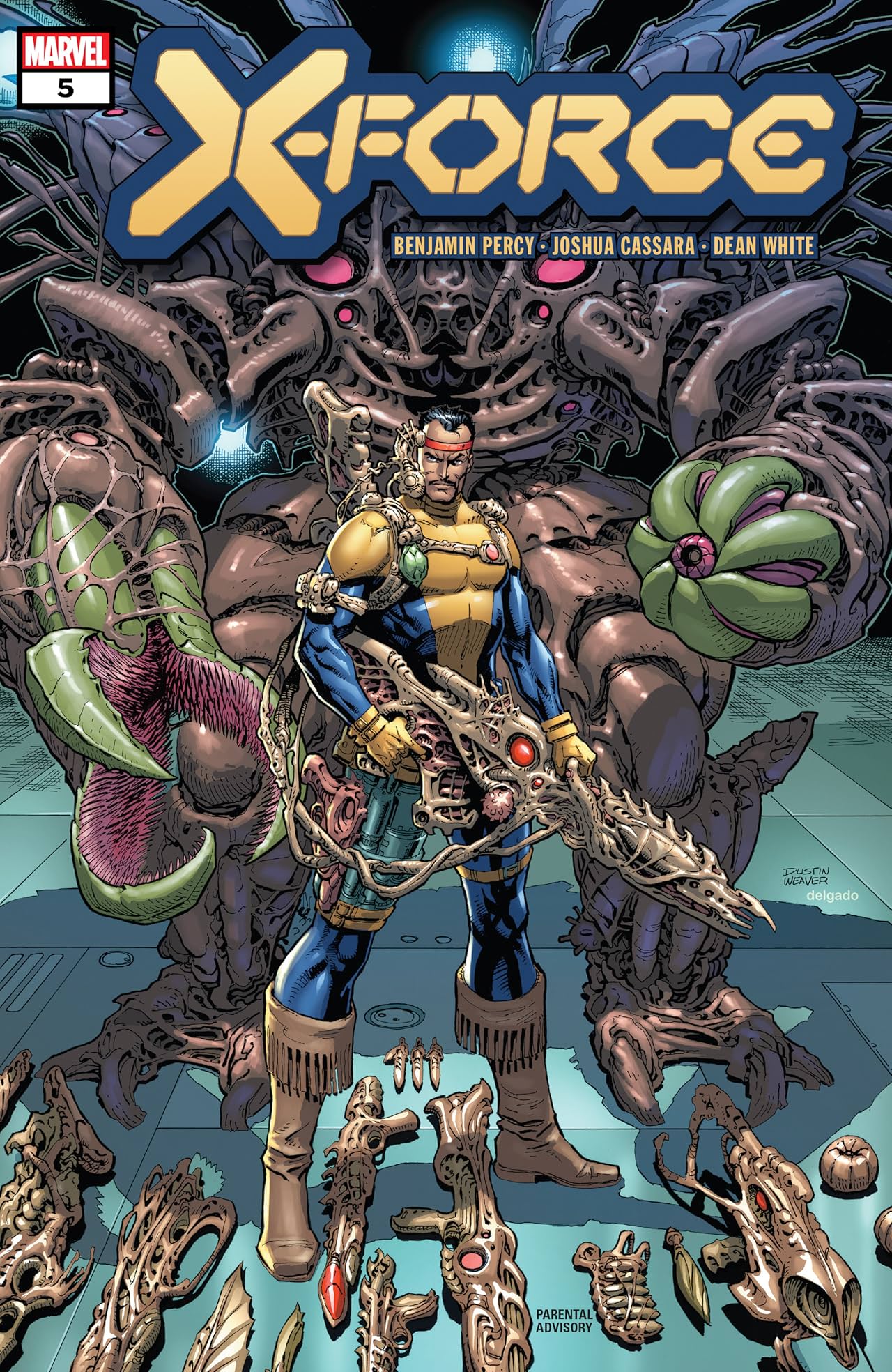
X-Force #5

Supergirl #38


My Pick of the Week

X-Force #5

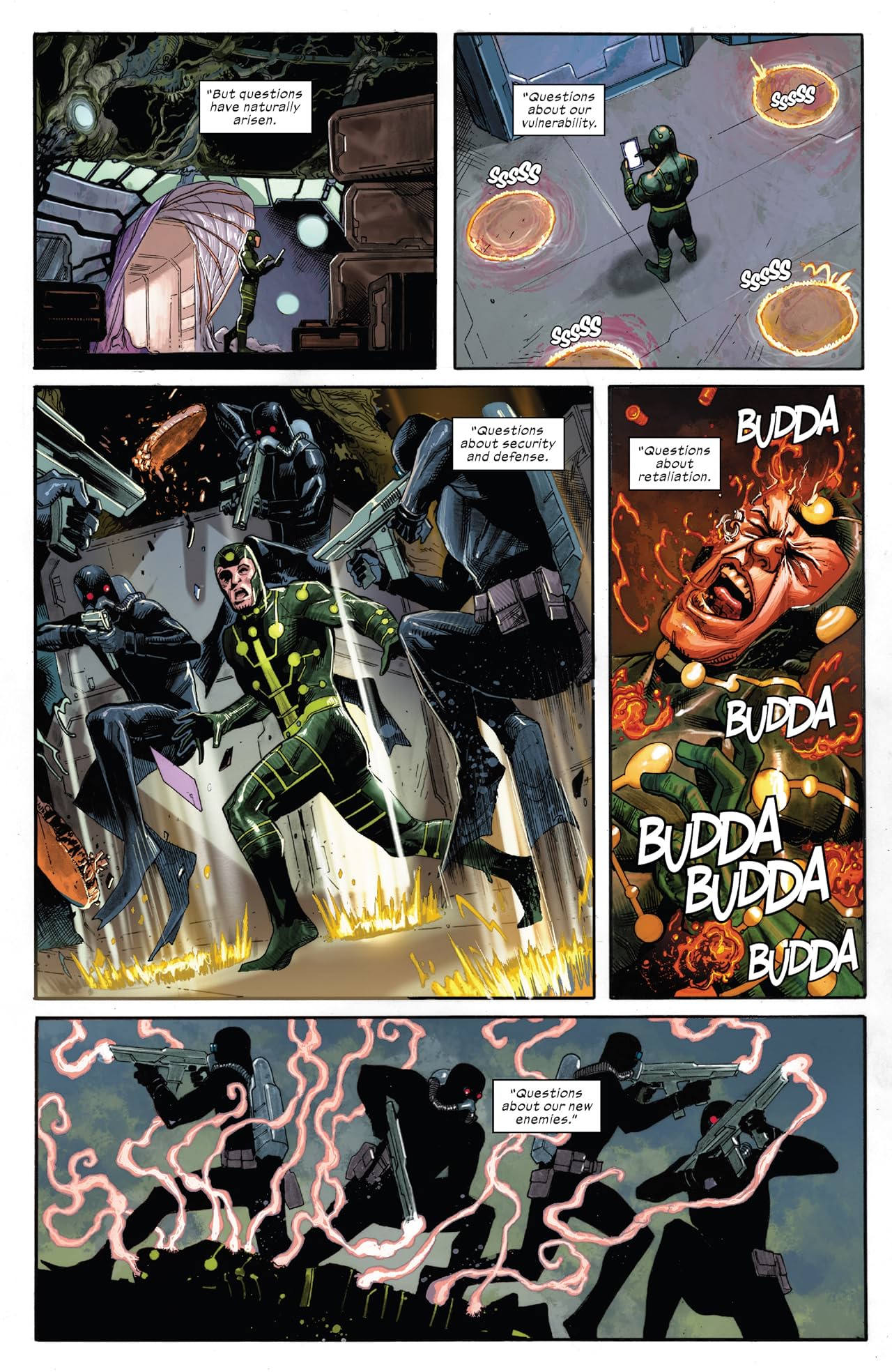
Some comics have broad appeal and multiple themes meant to appeal to as many people as possible. X-Force is not one of those comics. You don’t pick up an X-Force comic looking for big philosophical insights on the universe, the human condition, or what it means to be a hero. You go to an X-Force comic when you want to see gratuitous violence, pissed off mutants, and reasons as to why Wolverine drinks so much whiskey.

This comic has all of those things, including whiskey. The plot is simple. A group of well-armed mercenaries have invaded Krakoa. In the last issue, they managed to split Wolverine in half. In issues before that, the ones who hired them peeled off Domino’s skin to tap her powers. Even by X-Force standards, that’s still pretty brutal.

What makes X-Force #5 my pick this week is how Wolverine, Domino, and an emerging cast that includes Forge, Beast, and Jean Grey respond. They’ve been hit. They’ve been brutalized. They’ve been wounded and scarred in ways that no healing factor can treat. Now, they have a chance to take it out on the people responsible and they don’t hold back.

The results are bloody, violent, and compelling on multiple levels. Krakoa is supposed to be a place where mutants can finally enjoy some semblance of peace. Certain people in the world just can’t have that. Those people aren’t going to be reasoned with or convinced otherwise. That’s where X-Force comes in. It’s a dirty, ugly, unsanctioned aspect of making Krakoa work, but it’s necessary.

X-Force #5 reinforces that to an extreme. It also hints at where they’ll have to direct their gratuitous violence next. With the possible exception of having a weak stomach, there’s every reason to love what this book delivers.

Leave a comment

Filed under Jack's Quick Pick Comic

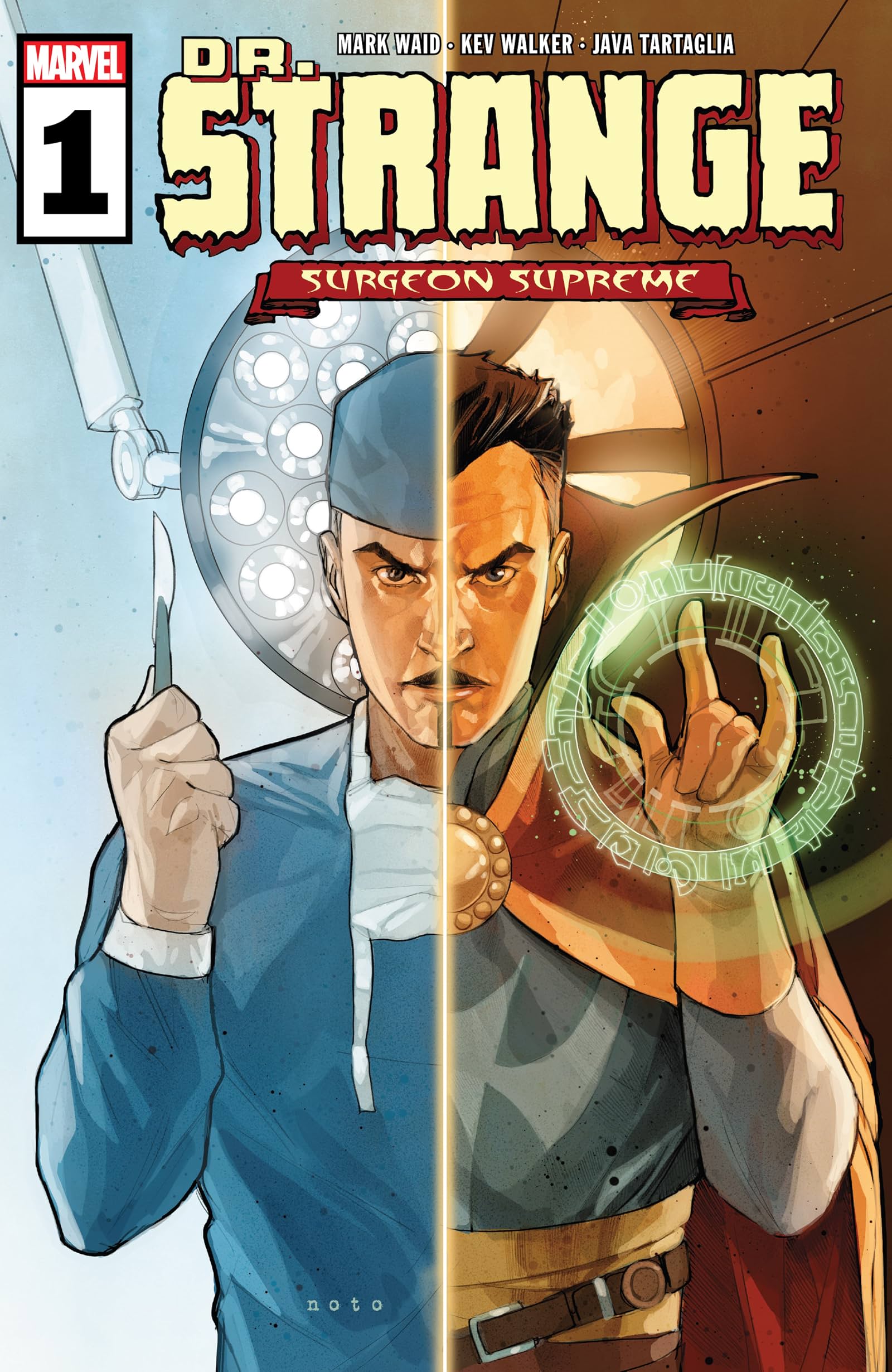
Jack Fisher’s Weekly Quick Pick Comic: Dr. Strange Surgeon Supreme #1

Certain characters never begin their hero’s journey until they lose something they can never get back. It happened to Luke Skywalker when he lost his aunt and uncle in “Star Wars: A New Hope.” It happened to Spider-Man when his Uncle Ben was murdered by a mugger he could’ve stopped. For Dr. Strange, what he lost and where that took him is unique.

For Steven Strange, it wasn’t someone he lost. It was something. Before he became the Sorcerer Supreme, he was a gifted, but self-centered surgeon. He was a man of science and prestige. He had knowledge and skill that few could match. It afforded him wealth, respect, and affirmation the likes of which few achieve.

Then, in an instant, he lost it all. Beyond humbling him, it forced him to follow a new path. That path eventually led him to becoming the Sorcerer Supreme that Benedict Cumberbatch so brilliantly played in Marvel Studios’ dazzling adaptation to his story. He’s been on that journey for years in the comics and it has taken him to many magical places, literally and figuratively.

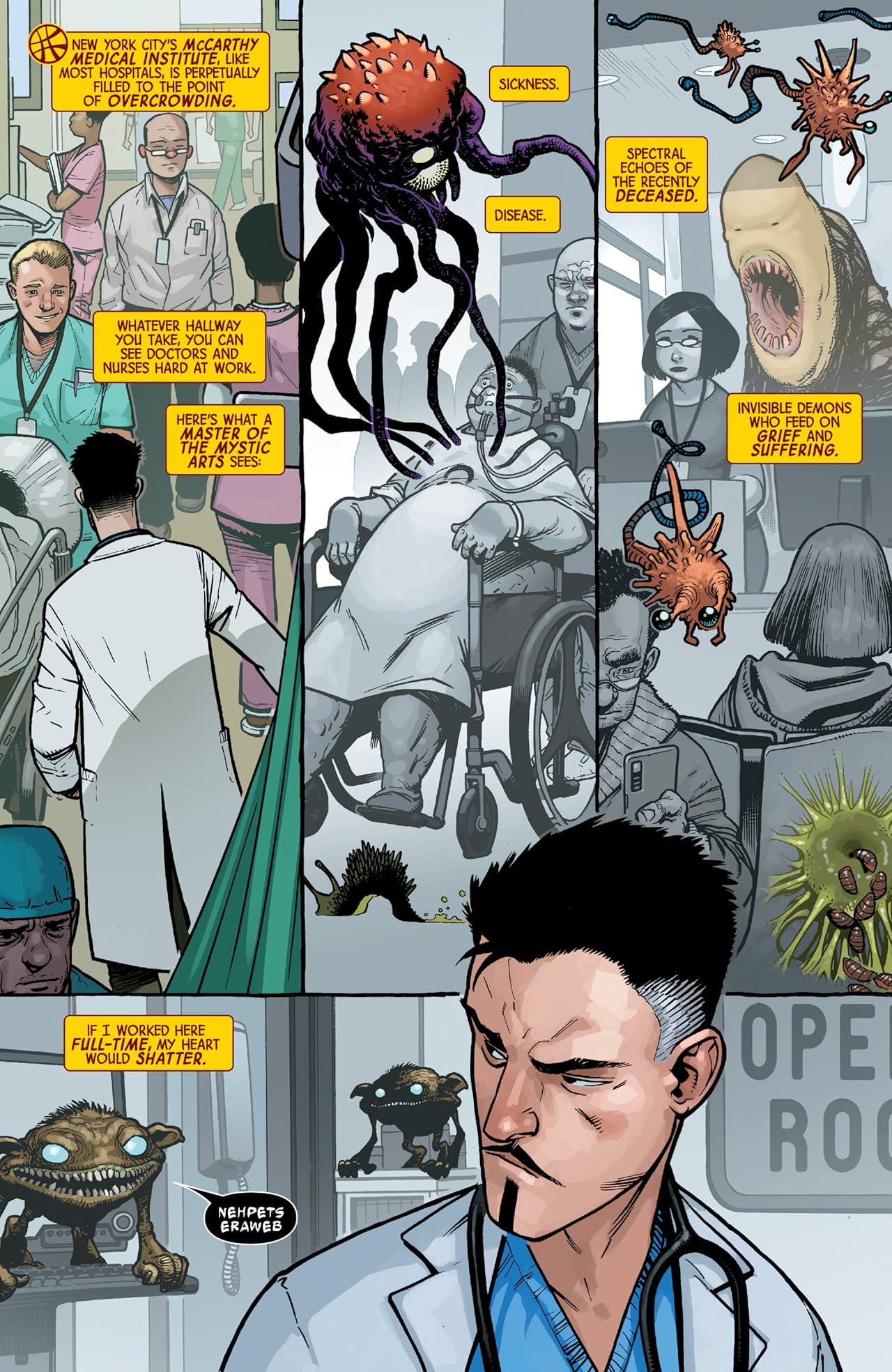
That does raise some interesting questions, though. What would happen if Dr. Strange suddenly got back what he’d lost all those years ago? How would regaining that precious gift he once lost affect him? This is what writer Mark Waid explores in “Dr. Strange Surgeon Supreme #1” and the implications are revealing.

The circumstances of this issue and this new series spin out of recent events involving the magical sector of the Marvel universe. The details aren’t necessary to know in order to follow the story. There’s a passing reference from Dr. Strange about making a bargain with a demon to get the use of his hands back, but that’s all you need to know to follow the plot.

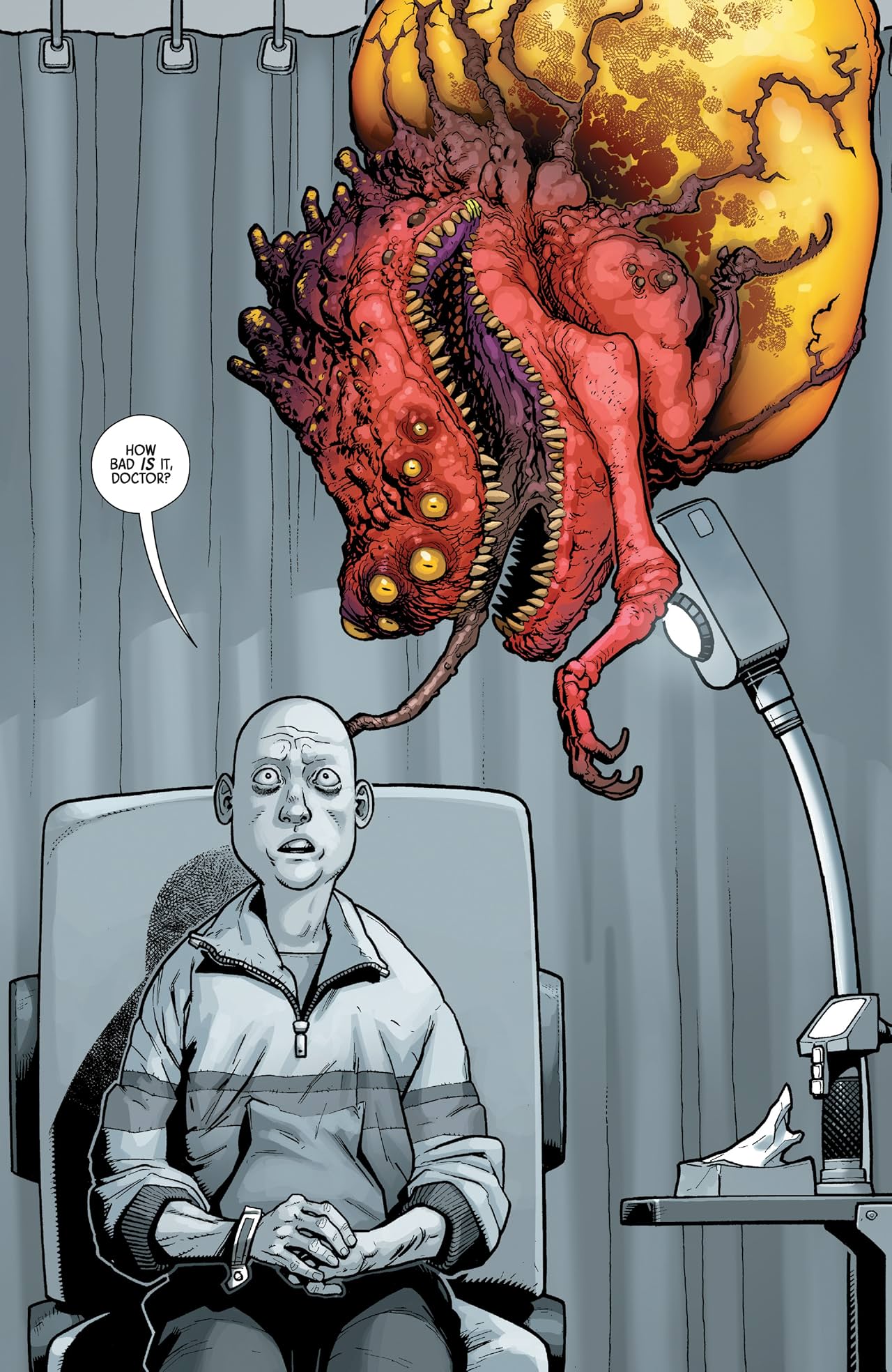
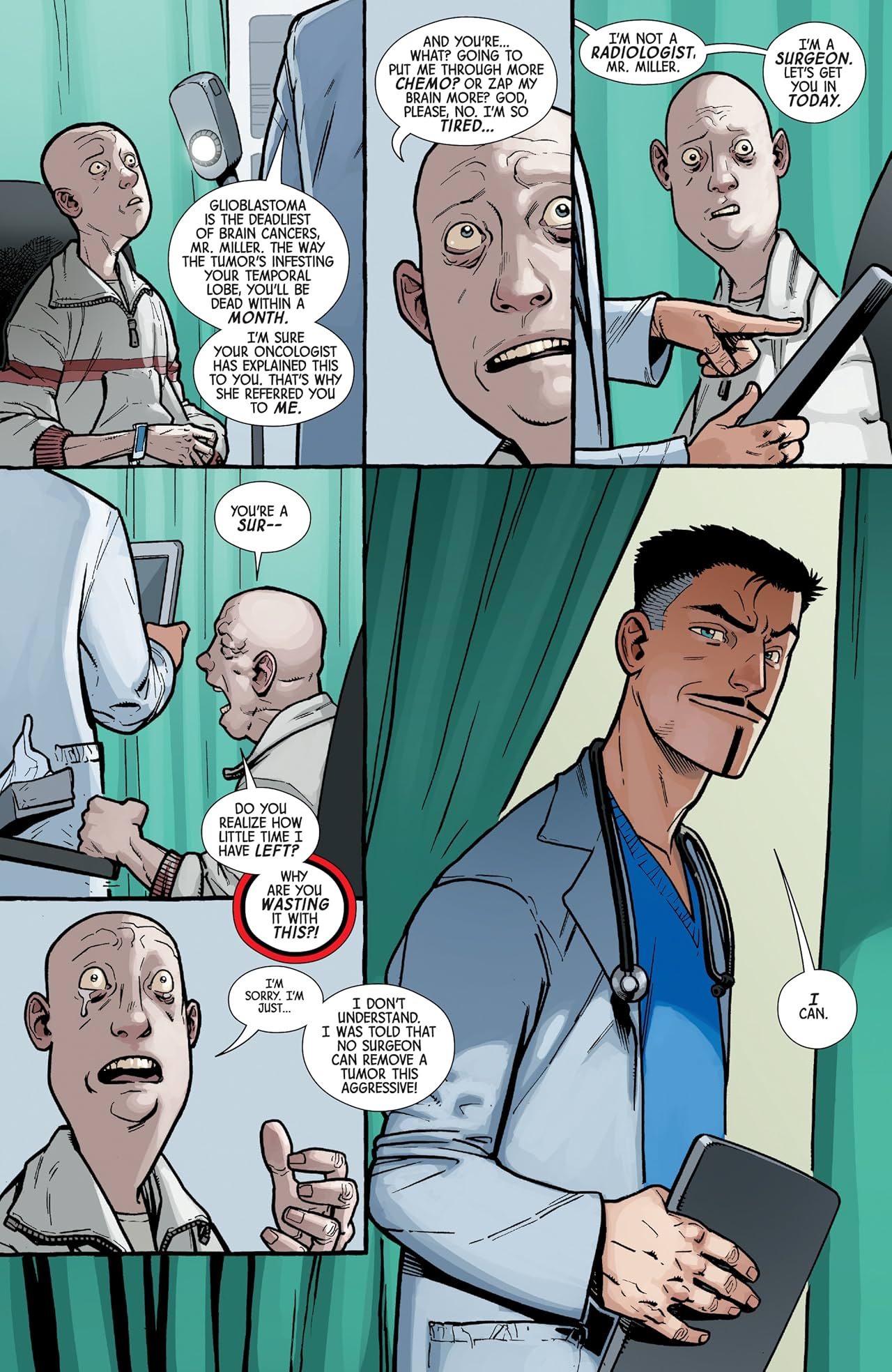
It’s a unique plot in the context to a Dr. Strange story. In addition to the mystical battles with demons and various Lovecraftian forces, Dr. Strange is back to being a doctor. Specifically, he’s a neurosurgeon who takes on cases that no one else is equipped to handle. Dr. Strange makes that very clear. He only gets the cases that everyone else says is impossible.

For anyone who knows somebody who has been told by a doctor that there is no hope, it’s a powerful message and one that isn’t lost on Dr. Strange. Waid even lets some of that old arrogance from Dr. Strange show, but it’s the kind of arrogance that’s understandable. He’s not just a master of the mystic arts. He has skills as a surgeon that nobody else can match. He has a right to be a little arrogant.

At the same time, he’s still the Sorcerer Supreme. He’s still the same man who went down that hero’s journey and came out a better man. Seeing him navigate a crowded hospital and its labyrinthine of bureaucracy while also fighting mystical battles on the side is compelling. It provides a unique balance that mixes real world threats with those of magic.

It’s a balance that is difficult to strike in a Dr. Strange comic. One of the major appeals of Dr. Strange comics is that it doubles down on all those mystical tropes that push the imaginations of writers and artists alike. Mixing it with something as common as a crowded hospital feels like it shouldn’t fit, but Waid makes it work and the imagery provided by artist Kev Walker still gives it a magical ambiance.

That mix works because, as Dr. Strange often points out when describing magic, the byproducts come at a price. He has back what he lost and he’s still the Sorcerer Supreme. However, it’s not all operating rooms and dark dimensions. Doing both, even on a part-time basis, takes a toll on him and that toll shows.

It doesn’t just mean he has less time to sleep and slay demons. As the story unfolds, there’s an ominous undertone that Dr. Strange can’t completely balance these two lives. He can dedicate himself to being the Sorcerer Supreme. He can also dedicate himself to being a gifted surgeon. However, by doing both, one life will affect the other. There’s no way around it.

Going back to the catalyst that leads many down a hero’s journey, it’s rare for any character to reclaim what they lost. Peter Parker can never get his Uncle Ben back. Luke Skywalker can never save his aunt and uncle. However, “Dr. Strange Surgeon Supreme #1” gives Dr. Strange that rare opportunity to still be the hero he’s become while regaining what he lost.

The story never gives the impression that Dr. Strange goes back to being the arrogant asshole he was before he knew magic was real. His attitude and disposition in “Dr. Strange Surgeon Supreme #1” never feels like a regression. At the same time, there’s a clear sense that he can only push himself so far, even as the Sorcerer Supreme.

When mystic threats start to affect his non-mystical pursuits, he struggles in ways we don’t expect of a man who regularly stares down the likes of Dormammu. It reinforces the notion that magic comes at a price and so too does regaining what you once lost. Is Dr. Strange willing and able to pay that prices?

That question remains unanswered, but “Dr. Strange Surgeon Supreme #1” makes clear that it cannot go unanswered forever. At some point, Dr. Strange will have to make some difficult decisions and for once, there’s no magic spell that will make those decisions any easier.

Leave a comment

Filed under Jack's Quick Pick Comic

Jack Fisher’s Weekly Quick Pick Comic: X-Force #4

There are some people in this world, as well as fictional worlds, who will never be content to let things progress for the better. No amount of mutual benefit, understanding, or sincerity will be enough. They’ll always seek to destroy anything that might change the world they know, even if it’s for the better. They won’t just complain about it on social media, either. They’ll resort to the worst kinds of violence.

These are the people that X-Force deal with. Throughout their history in the X-Men comics, they’ve dealt with the dirty stains of humanity that never wash out, no matter how hard you scrub. They’re the ones tasked with confronting these threats, be they human or mutant, with a level of gratuitous violence that you won’t see outside of “Game of Thrones” reruns.

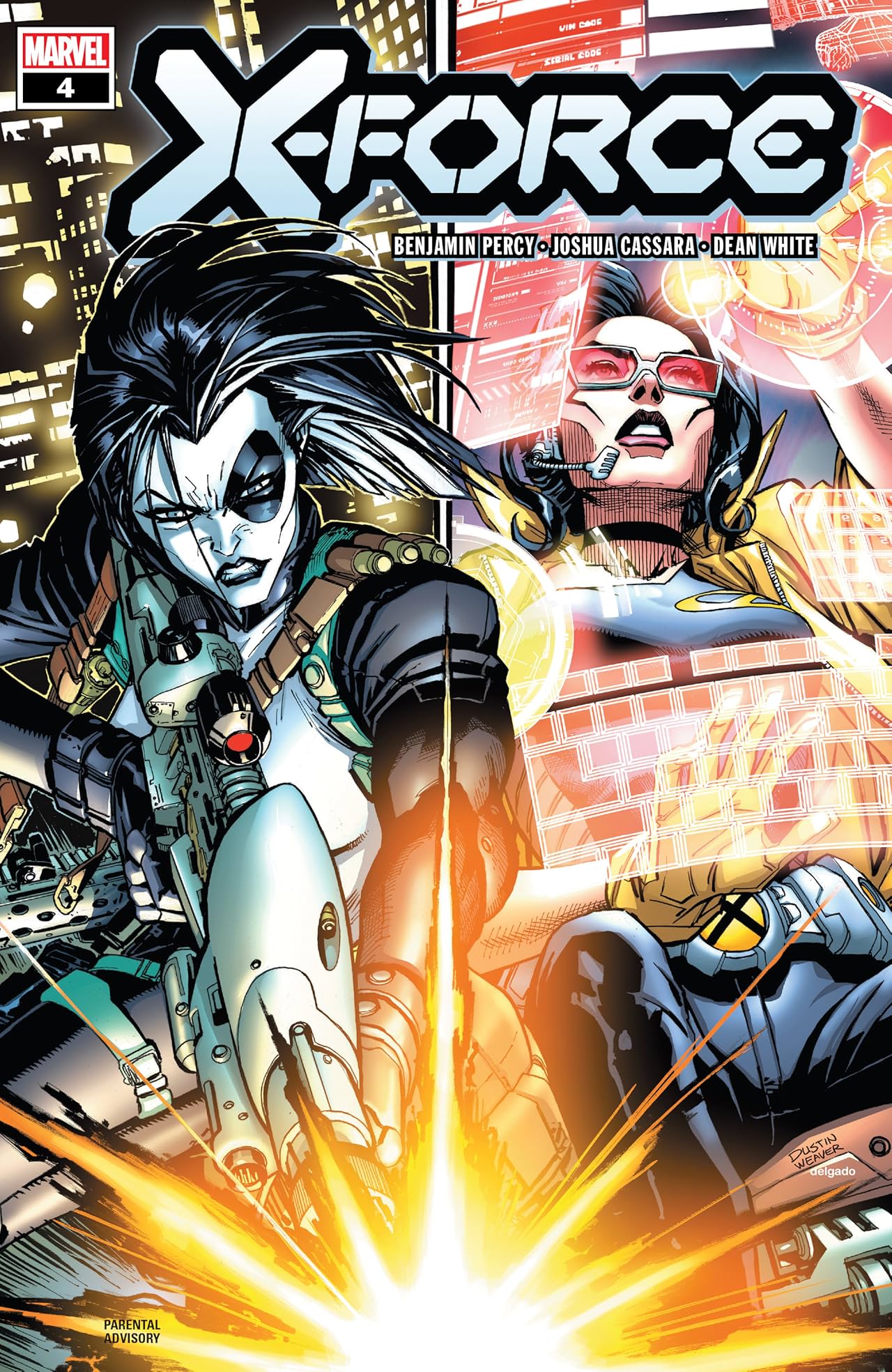
The need for X-Force, as well as their violent tactics, is one again reaffirmed in “X-Force #4.” At a time when mutants have made genuine progress through Krakoa and a new geopolitical role in the world, they’re still subject to hatred, attacks, and atrocities.

In the first three issues of the series, writer Benjamin Percy demonstrated that, despite having their own nation in the form of a living island and the ability to resurrect dead mutants, they’re still vulnerable.

Charles Xavier got shot. Domino was captured and had half her skin ripped off. The fact that any of this can happen, given all the resources at the X-Men’s disposal, is wake-up call and a reminder as to why X-Force isn’t just necessary. It needs an overhaul.

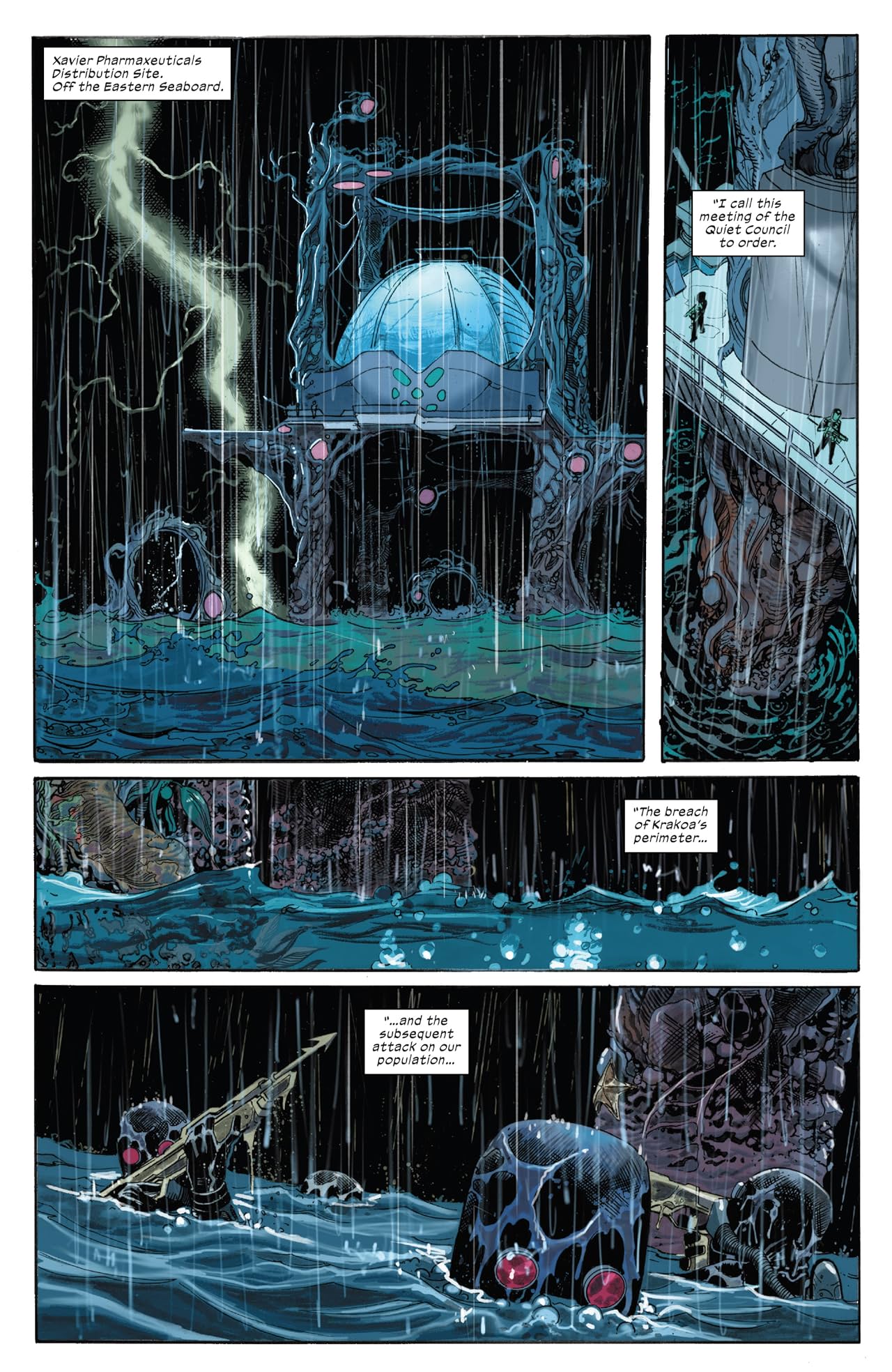
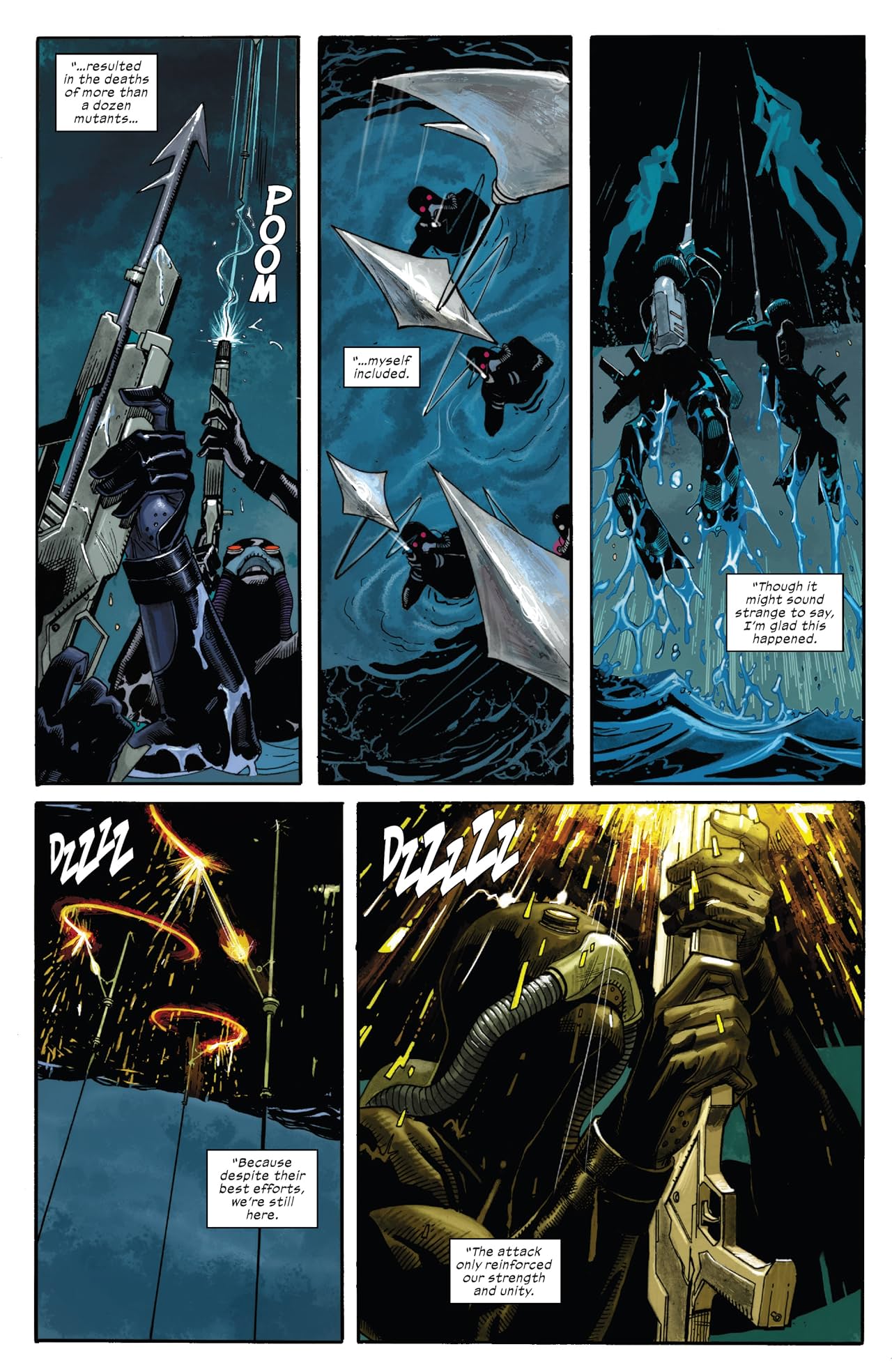
That overhaul begins to unfold in “X-Force #4” and in the midst of another mysterious attack, no less. While this one didn’t end with anyone getting shot or flayed, it did hit Krakoa in the wallet, which can hurt as much as getting shot. The nature of the attack and who is behind it remains a mystery, but X-Force is put on the front lines.

However, this is not the same X-Force that that Rob Liefeld brought to live during the grunge-fueled heyday of the 1990s. They’re not operating completely in secret as some secret kill-squad that everyone is better off not knowing about. Instead, Percy sets them up to be Krakoa’s version of the CIA, complete with its own Seal Team 6.

It’s somewhat of a shift for what X-Force has historically been in the X-Men comics, but it fits perfectly with the current situation surrounding mutants and Krakoa. Mutants are no longer scattered, isolated, and running from killer robots at least once a week. They have their own nation, language, and emerging culture. Protecting it requires something more organized than a shadowy kill squad.

That means more assistance from those who have traditionally argued against the merits of secret kill squads, such as Beast and Jean Grey. However, after seeing Charles Xavier get shot in the head and Domino get tortured, they’ve become a bit more pragmatic in handling these kinds of threats.

The events of the first three issues caught them off-guard. They try to be much more proactive in “X-Force #4,” investigating the attacks and organizing a response. Naturally, Wolverine is part of that response since many of the threats X-Force deals with require significant stabbing. Now, armed with Krakoan weapons provided by Forge and Kid Omega’s attitude, they’re ready to be a new kind of X-Force.

It may not be the kind of profane, brooding, blood-soaked X-Force we’ve seen in the past, but it feels appropriate for the X-Men’s current situation. Jonathan Hickman set up a very different set of dynamics for the X-Men through “House of X/Powers of X.” Percy just creates a version of X-Force that fits within the context of these dynamics.

Having a team like this doesn’t just feel necessary after the events of the first three issues. It feels personal. These weren’t just angry protests or hate threads on Twitter. Someone managed to attack their home and shoot one of their most powerful figures in the head. However one might feel about X-Force’s violent tactics, there’s no denying that they’re as motivated as they ever were.

For a quality X-Force comic, it’s not enough to just have ample violence and an attitude ripped from mid-90s heavy metal music. There needs to be a greater context to the added violence, preferably one that complements the current status quo of the X-Men comics. With “X-Force #4,” Percy succeeds in creating that context and artist Joshua Cassara gives it the necessary grit.

The overall lineup for X-Force is still somewhat small, but it has plenty of room to grow. After what happens on the final page, it’ll have to for reasons that are as obvious as they are bloody. The threat X-Force has to kill is still somewhat vague. Only a few details have come out thus far, but the only detail that matters is that they can hit Krakoa where it hurts and they’re not inclined to be diplomatic about it.

X-Force has always billed itself as a superhero team that relies on less-than-heroic methods to get the job done. They’re not a team that wears flashy costumes and parades alongside other, more reputable heroes. They do what they do in the shadows and don’t mind incurring some extra bloodstains to do it.

X-Force #4” starts with something bloody, but ends with something bloodier. Given the nature of the emerging threats they face and the wounds they’ve already incurred, it promises to get even bloodier with future issues. It’s everything you want in an X-Force comic and then some.

Leave a comment

Filed under Jack's Quick Pick Comic

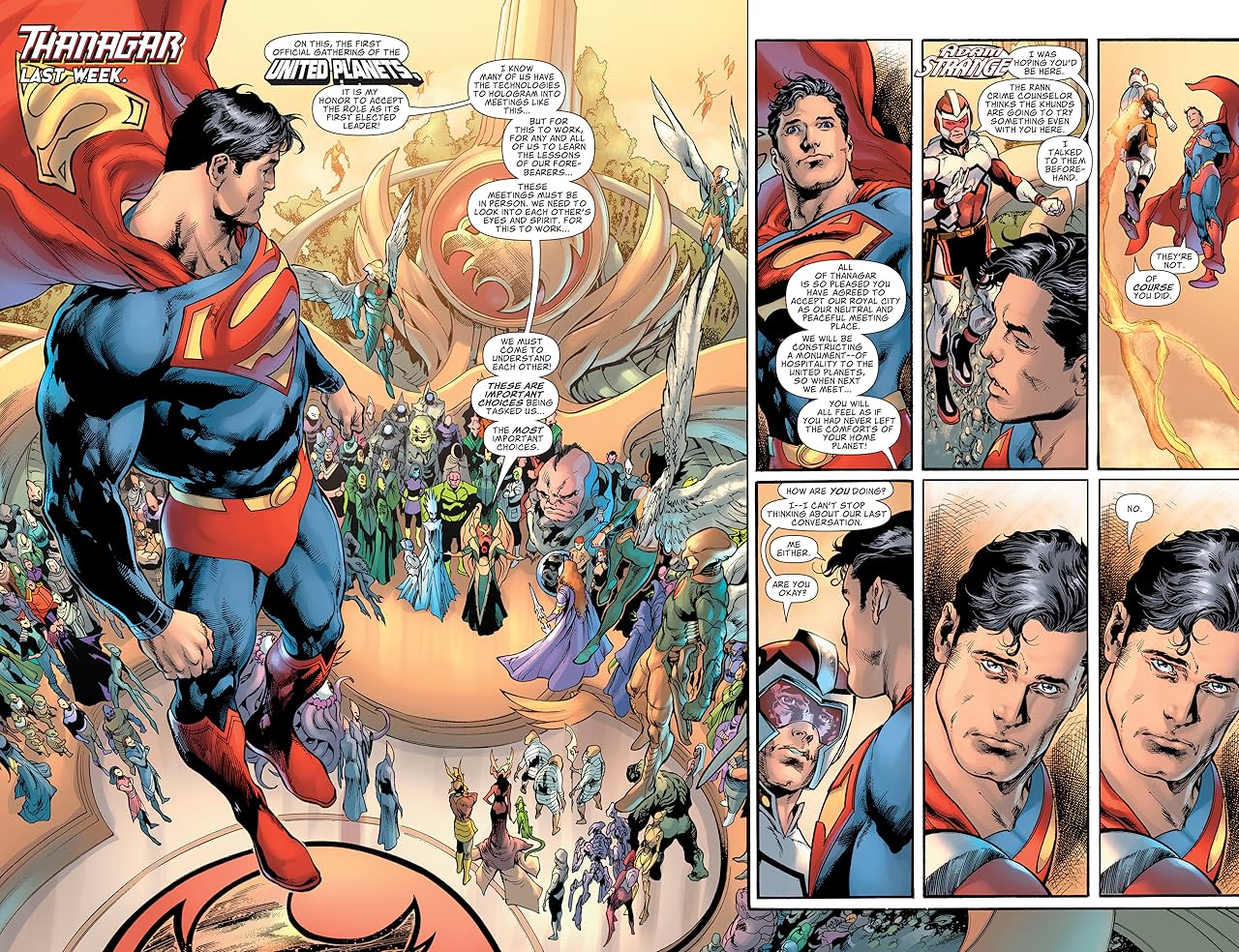
Jack Fisher’s Weekly Quick Pick Comic: Superman #18

Anyone who has read superhero comics for a sizable chunk of their lives knows the difference between a gimmick and a genuine plot upheaval. Gimmicks are shallow. They’re sales tactics disguised as shocking twists that promise to change a character, world, or team forever. Most of the time, they get retconned within a few years.

Plot upheavals that are real, genuine, and permanent are rarer, but that’s what makes them more precious. They often become defining moments in their own right for a character or a franchise. For comic fans, they’re like major life-changing events.

In the same way you vividly recall your first kiss or your first car, you remember where you were when Superman married Lois Lane.

You remember where you were when the Joker brutally beat up Jason Todd.

You remember where you were when Barry Allen died during Crisis on Infinite Earths.

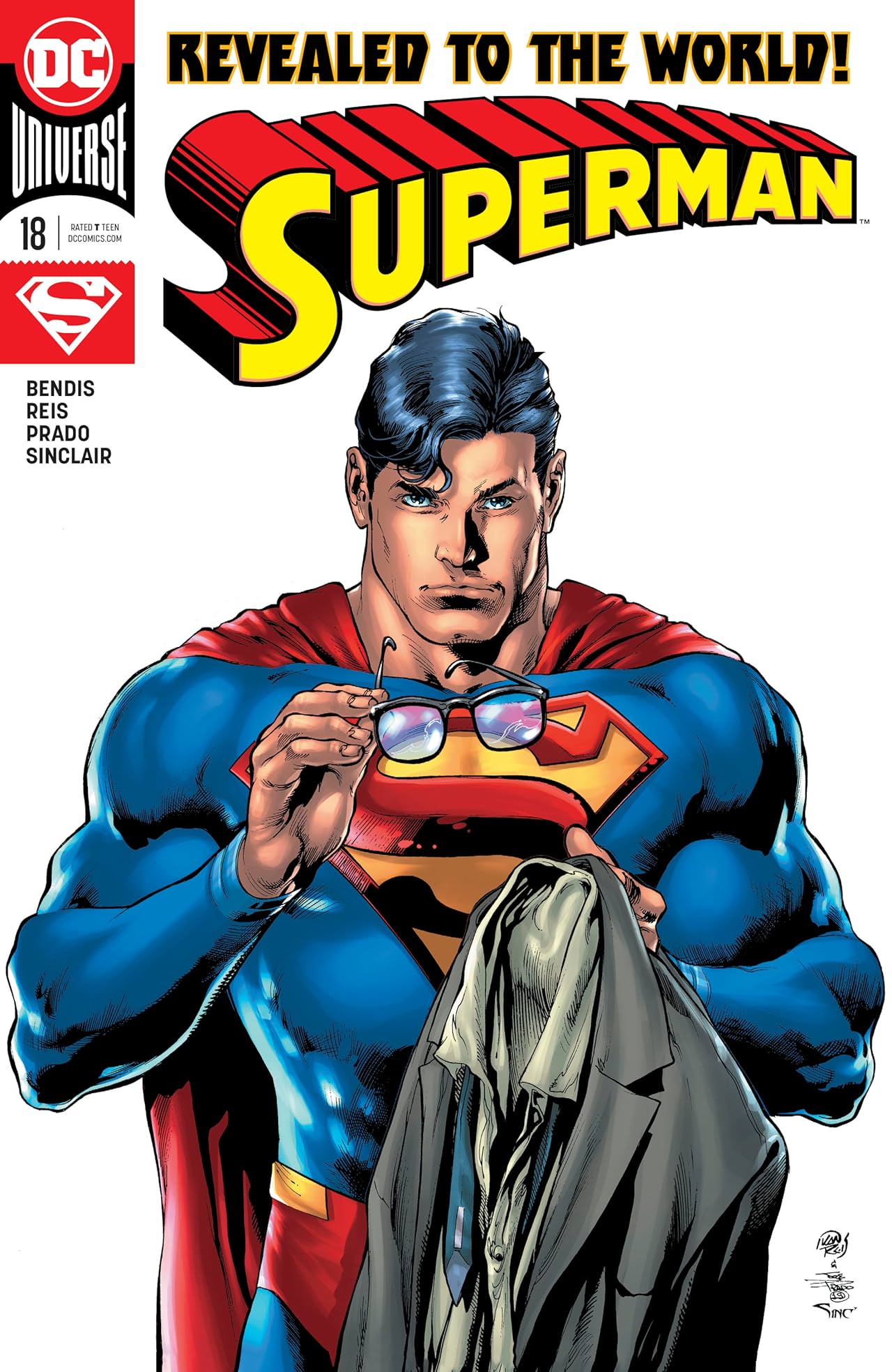
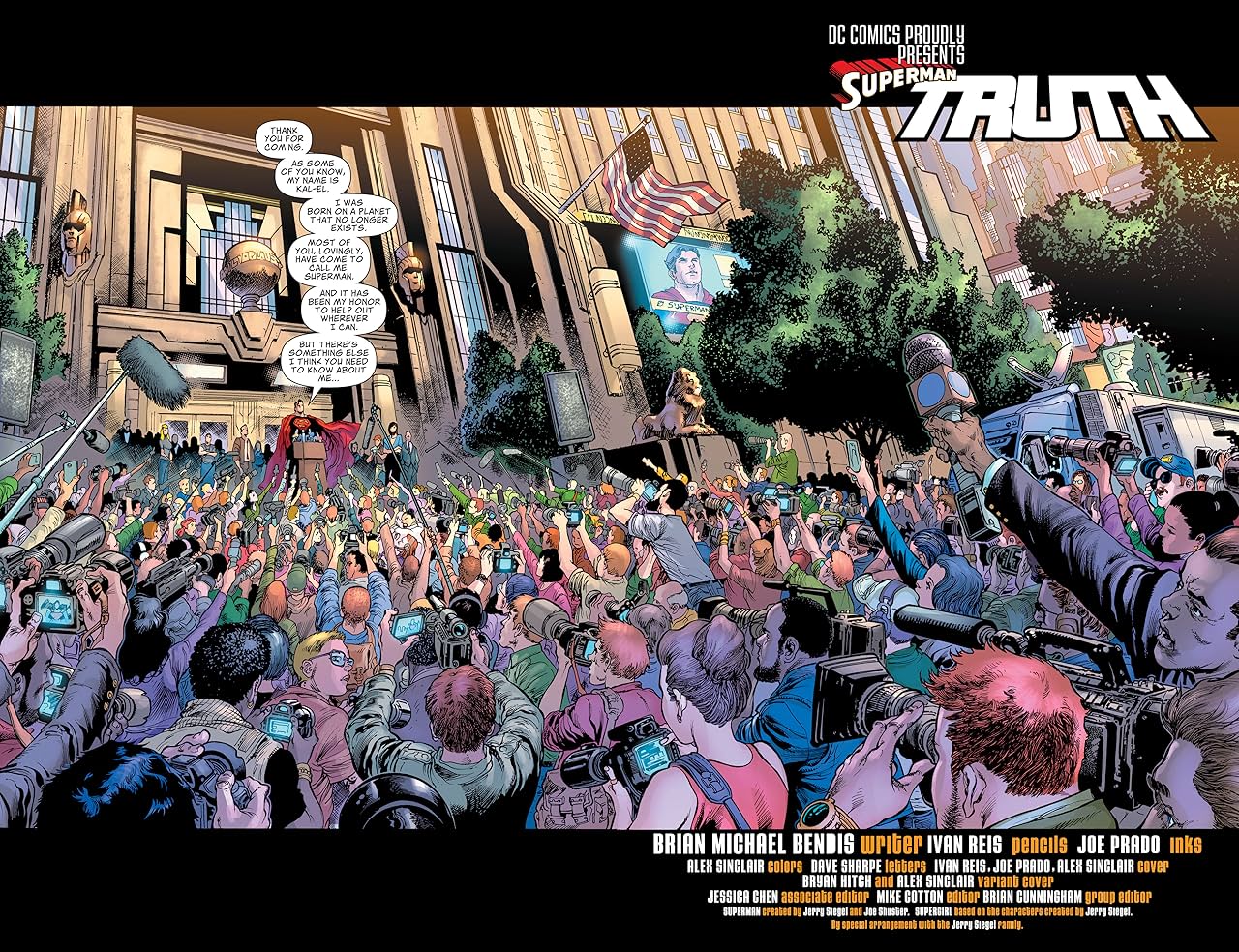
In that same tradition, you’ll probably remember where you were when you read “Superman #18.” This is a comic that promises to change Superman’s life and his story in major ways. It’s the comic in which he finally reveals his secret identity to the world. It’s not a gimmick this time. This is real and it has an impact that will likely resonate for years to come.

Writer Brian Michael Bendis has built a career on powerful, dramatic moments. He did it for years at Marvel with Spider-Man, the Avengers, and the X-Men. Since he began his run on Superman, he’s taken the Man of Steel through his share of upheavals. Superman’s semi-stable family life with his wife and son became a lot less stable, but he still hung onto the same identity that had kept him grounded for decades.

That finally changes in “Superman #18.” It’s not a snap decision, either. This isn’t Tony Stark going off the cuff at the end of “Iron Man.” That’s not how Superman does things. He’s thoughtful, thorough, and very much aware of the implications. He doesn’t agonize or brood over it, as many other heroes are prone to do, especially if they have egos like Tony Stark. He simply tries to determine the right thing to do.

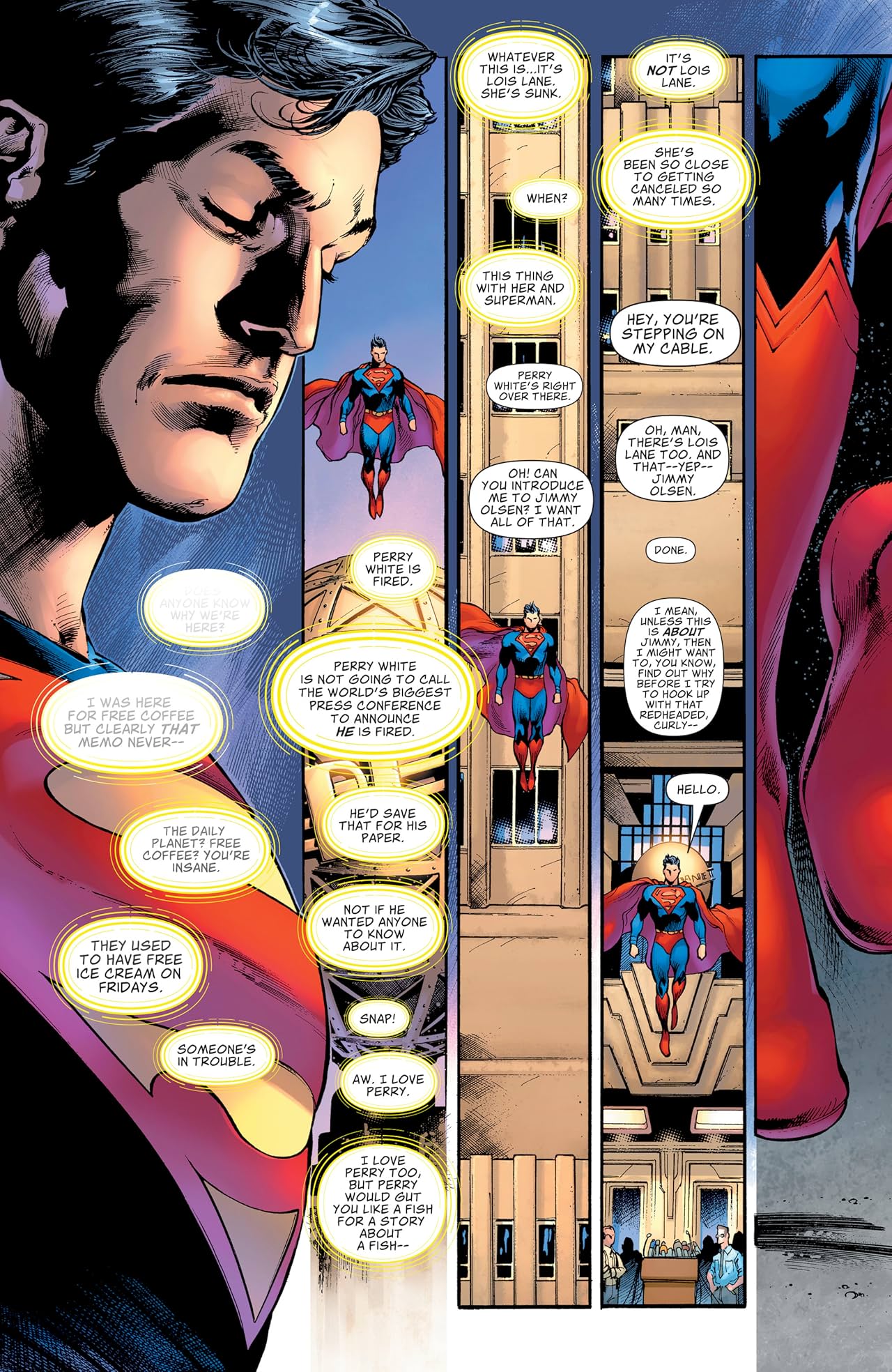
It’s not easy. Before the big reveal, Bendis takes Superman through a round of self-reflection in which he goes over all the reasons why he maintained his secret identity as Clark Kent. Some of those reasons were entirely valid. They weren’t excuses that kept demanding more excuses. They genuinely felt like the right thing at the time.

Superman lived as Clark Kent so he could be human. That has always been important to him, going back to the Golden Age. He’s an alien from another world, trying to live and be part of this new home that he has come to love. Being Clark helped him be human, even though he is objectively not human.

While that might have been important before, a lot has changed for Superman. He no longer has anything to prove. He’s built a life as Clark Kent. He has established himself as Superman, a hero among heroes who sets the highest standards for humans and aliens alike. He couldn’t have done this without maintaining his secret identity. The only question is what more can he do to justify keeping that identity?

The tipping point in “Superman #18” comes when Superman recounts what happens when others in his life have kept secrets. Even if they were kept for good reasons, it never ended with just that secret. One secret demands another. As they compound over time, they become dangerous.

That’s still only part of the issue. Beyond the secrets, having that identity sends a message to the same people he’s trying to protect. It says that he doesn’t trust them to handle him being both Superman and Clark Kent. Maybe that made sense when he was still winning their trust, but it doesn’t make sense anymore. It also helps make the right thing to do very clear.

That effectively ends the debate. Whenever Superman is faced with a decision, his first and only instinct is to do the right thing. That’s exactly what he does in “Superman #18.”

It’s what helps make the big moment in “Superman #18” feel like something other than a gimmick. Bendis makes sure that Superman revealing his identity to the world is the right thing to do. It never comes off as the end of something, either. Whenever Superman’s identity has been revealed in the past, it has always been a complication or a last resort. That’s not how it’s framed here.

Superman #18” feels like another step in Superman’s journey to be the hero by which all other heroes are measured. He’s lived as a human. He’s become an iconic hero. Those lives no longer need to be separate. In Superman’s eyes, they shouldn’t be. He’s still the same man, whether he’s wearing glasses or his iconic cape.

In principle, it’s a minor distinction. However, at no point in “Superman #18” does it feel trivial. Superman acknowledges that this is going to change things. His life is going to change, both as Superman and as Clark Kent. He knows there will be difficulties, but he’s willing to face them. He’s also willing to trust in the same people he protects to face them with him.

It’s a beautiful, powerful moment made all the more memorable by the art of Ivan Reis. It doesn’t require Superman to save the world, defeat Lex Luthor, or punch a planet into dust. It just requires him to do the right thing. That doesn’t just make him a hero. That’s what makes him Superman.

Leave a comment

Filed under Jack's Quick Pick Comic

Selling (And Exploiting) Human Enhancement: An Ominous Lesson From “Superior Iron Man”

tumblr_static_tumblr_static_251b2rz5uxz4s4sssw0skg04c_640

How much would you be willing to pay for perfect health, perfect beauty, and a greater capacity to enjoy life as you see fit? This is not a rhetorical question. I would even argue that it’s an increasingly relevant question. In the coming years, answering it might even become more urgent.

I’ve talked about the prospects of human enhancement through emerging technology before. From its impact on our concept of beauty to how our society will function, there are many impacts to consider. Some of those impacts are already manifesting before our eyes. Just last year, the first genetically modified babies were born in China. Like it or not, this is happening.

It’s impossible to overstate the benefits, risks, and upheavals that human enhancement will have on our species and our world. Nobody knows for sure what’s going to happen as this technology matures or how societies, economies, and governments will react to it. Even so, it’s worth contemplating. It’s even worth imagining elaborate scenarios in fictional worlds.

While plenty of noteworthy stories have imagined such scenarios, some more dystopian than others, there’s one in particular I’d like to single out. It’s not entirely dystopian, but it does offer some distressing lessons about the larger economics of human enhancement. It also helps that those lessons come through a forgotten, but criminally underrated Iron Man comic.

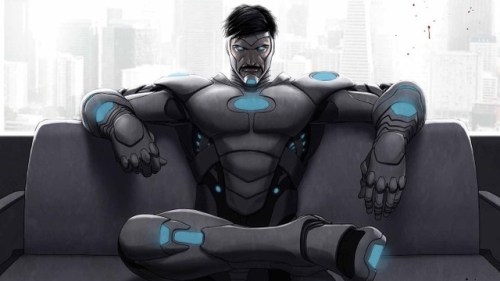
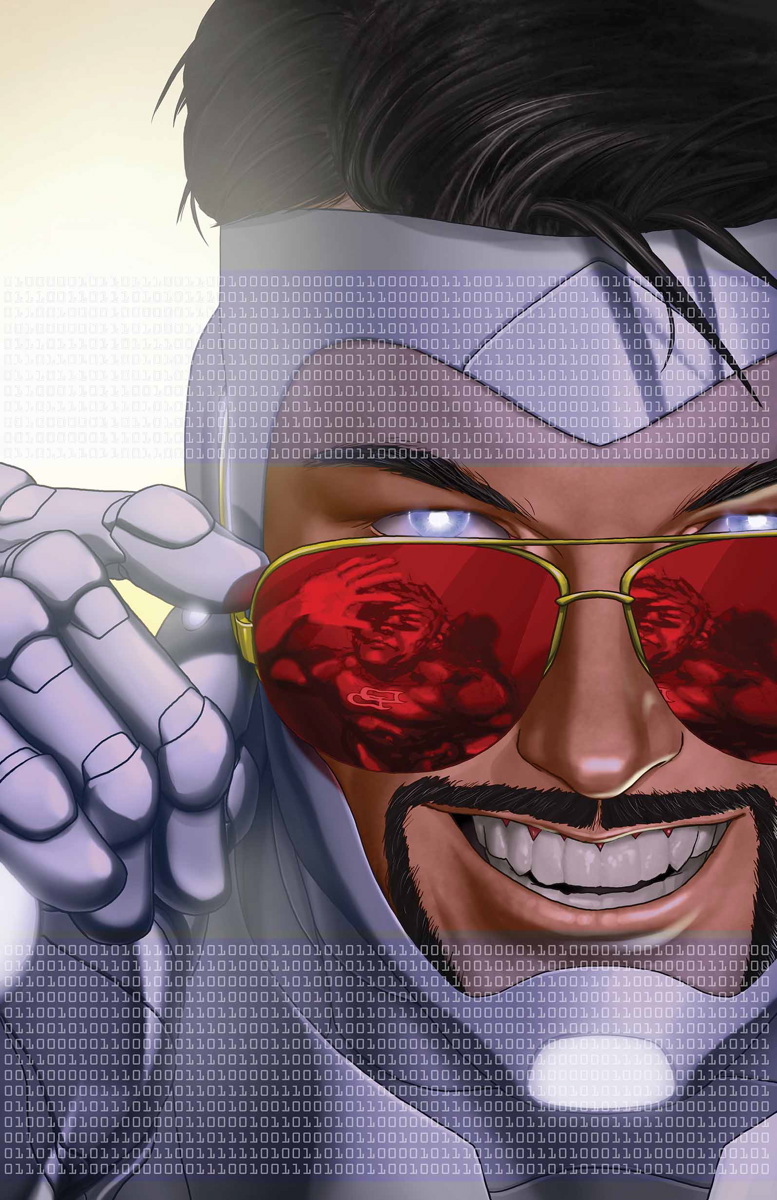
Given the rapid rise of Iron Man’s star power over the past decade, his character is uniquely qualified to explore these difficult questions surrounding technology and how we use it. He is, at his core, a visionary who uses technology to solve problems, save lives, and occasionally fight invading aliens. In the series, “Superior Iron Man,” he takes that vision several steps further and cross many lines along the way.
While there are some convoluted circumstances surrounding this series, the ideas it explores are profound, even by the standards of superhero comics. You don’t need to know the specifics of those circumstances. They involve forces like magic and inversion spells, which are far too complicated to explain to those who haven’t followed Marvel comics for more than two decades.

The only detail anyone needs to know about “Superior Iron Man” is that the Tony Stark in this story is not the same lovable character that helped make Robert Downy Jr. one of the most lovable stars in Hollywood. This version of Tony is less bound by concepts of heroism, selflessness, and sobriety. That’s not to say he’s evil, but he’s definitely no hero.

Within this ethically bankrupt state, Tony embarks on a new initiative that’s as selfish as it is lucrative. It revolves around Extremis, an exotic cocktail of nanotechnology and biotechnology that effectively rewrites the blueprint of the entire human body into something better, stronger, and more robust. In essence, it is the ultimate tool for human enhancement.

While the initial version of Extremis was lethal to most people who used it, Tony creates a more commercialized version in “Superior Iron Man” that gives everyone a chance to enjoy its benefits. He calls it Extremis 3.0 and people can access it through a simple smartphone app. With it, people can achieve what Tony describes as physical perfection.

Everyone can be perfectly healthy.

Everyone can be young and beautiful.

Everyone can be functionally immortal.

It sounds like a miracle drug and by every measure, it is. This isn’t some Dr. Oz wannabe pitching vitamins that do nothing other than give you false hope. This technology actually works. With it, Tony gives the entire city of San Francisco a chance to experience the fruits of human enhancement.

Understandably, once people get a taste of what Extremis 3.0 has to offer, they love it. They also take full advantage of it. At one point in the story, Pepper Potts says it’s turning the streets of San Francisco into a non-stop parade of debauchery and self-indulgence. Tony does not see this as a bad thing. If anything, it perfectly complements his plans and his renewed appetite for self-indulgence.

This is where “Superior Iron Man” attempts to answer that question about putting a price on physical perfection. Writer Tom Taylor, alongside artist Yildiray Çinar, doesn’t hide from the disturbing parts of that answer. By the end of the first issue, Tony puts a literal price on that perfection. Needless to say, it causes plenty of conflict and it escalates quickly.

When he initially released Extremis 3.0 onto San Francisco, he gives ordinary people a taste of what it’s like to be as fit as Captain America, as beautiful as Emma Frost, and as physically endowed as Thor. It’s not a drug that just attempts to match that feeling. It physically changes their bodies and their capacity for using them. That taste, however, was just a free sample. To keep enjoying it, they must pay $99 a day.
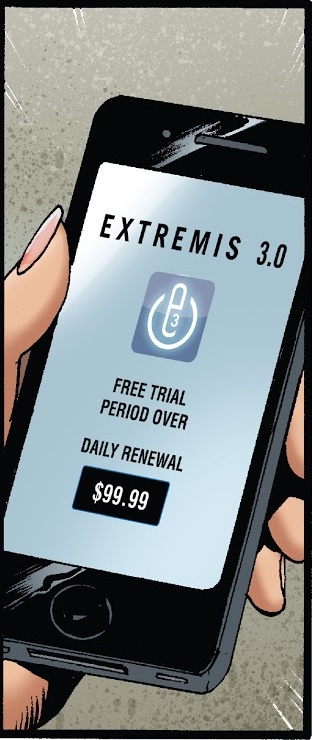
It’s crude trick right out of the playbook of subscription apps. People get a free trial period that’s just long enough to get them hooked. Then, before they even realize they have to pay anything, they get hit with a paywall. It’s a cruel bait-and-switch, but this isn’t just another streaming video service. This is physical perfection and unlimited self-indulgence. Is $99 a day really that unreasonable?

It certainly rubs plenty of people the wrong way, including many of Tony’s long-time friends and allies. Both Daredevil and Pepper Potts turn against him for such devious tactic. It also has some noticeable effects on the people who use it. By the end of the first issue, a stark class divide emerges between those who can afford Extremis 3.0 and those who can’t.

Naturally, it causes crime and conflict among the residents of San Francisco. Tony, now both feared and beloved by these people, takes it upon himself to manage it. He gains power, wealth, status, and an endless supply of eager party guests for whenever he seeks to indulge. It’s a perfect cocktail of recklessness and irresponsibility.

Without spoiling the rest of the story, which ended too soon, I think it’s worth taking a step back and looking at the bigger picture that “Superior Iron Man” presented. If you take away the iconic characters and the superhero themes, you get a story about a selfish business tycoon who has sole possession of the ultimate biotech product.

The goal isn’t to heal the sick, ease suffering, or evolve the human species. The goal is simply to make a lot of money, feed an inflated ego, and indulge in every conceivable vice without consequences. It’s a worst-case scenario for liberals and conservatives, alike. At the same time, it makes a compelling case that our current system can’t handle the impacts of large-scale human enhancement.

That doesn’t mean it can’t succeed in our current system. The size of the current biotech industry is already measured in the hundreds of billions. Overpriced drugs are nothing new, either. Just this past year, the FDA approved a drug called Zolgensma, which costs $425,000 a year for five years to treat a rare genetic disorder called spinal muscular atrophy.

By comparison, Extremis 3.0 is a bargain with far greater value. Even at $99 a day, the yearly cost of enjoying that physical perfection amounts to around $36,500 a year. That still takes up a good chunk of the average income for most Americans, but considering all the benefits of having a perfect body, is it still a bargain?

For anyone who has overpaid for inflated medical expenses, I suspect they would gladly pay that high price for Extremis 3.0. Tony Stark banked on that in “Superior Iron Man” and he was right. People did pay and it was very lucrative for him. The population of the San Francisco Bay Area in which he unleashed Extremis 3.0 is around 4.6 million. At $99 a day, that’s a potential annual revenue of $167 billion.

In terms of business ranking, that would put Tony’s venture in the top 20 in terms of largest companies by revenue. If he were to unleash Extremis on the entire United States, the potential annual revenue would be near $11.8 trillion. That’s a little more than half of the entire US economy.

Imagine one company, let alone one person, having that much money and influence over a population. Tony was already a billionaire before “Superior Iron Man,” but Extremis 3.0 rewarded him with more than just money. Tony, being the sole provider, held a great deal of power and influence over San Francisco. As is often the case in superhero stories, that power goes to his head.

That story plays out in the real world just as often. In some cases, it brings out the worst in people. For a product like Extremis 3.0, which provides human enhancement into a simple commercial package that anyone can access through an app, the potential for abuse is much worse.

Beyond the greed it would inspire and the recklessness it fosters, it would also widen and solidify a gap in society that might be impossible to close. The wealth gap is in the non-superhero world is already egregious. Adding something like Extremis 3.0 to the mix would only make it immeasurably worse.

More than a few people has expressed concern about the prospects of such an enormous societal divide. “Superior Iron Man” showed just how bad it could get and how quickly it could escalate. While the series only managed to explore this conflict to a point before it got canceled, Tom Taylor did enough to get a powerful point across.

In a world where human enhancement is real and commercially available, how do we go about distributing it among a population? Should we put a price on it? How high should that price be? Who should be in control of it?

Worst case scenario.

Superior Iron Man” never got a chance to explore the answers, but these are questions that will become increasingly relevant as advances in biotechnology accelerate. We may not be close to having a product like Extremis 3.0 and it’s uncertain whether we’ll even develop something like it in the next few decades.

Even if we do, “Superior Iron Man” made one thing clear. We, as a species and a society, are not ready for it.

1 Comment

Filed under biotechnology, futurism, health, human nature, Neuralink, Sexy Future, superhero comics

Jack Fisher’s Weekly Quick Pick Comic: Dr. Doom #3

Death has always been a running joke of sorts in superhero comics. Characters die all the time, but rarely stay dead. That includes important, iconic characters whose deaths resonate beyond the pages of comics. Sometimes, these deaths are incredibly dramatic, showing just how great these characters can be when everything is on the line. Regardless of how heroic their deaths might be, however, it rarely sticks.

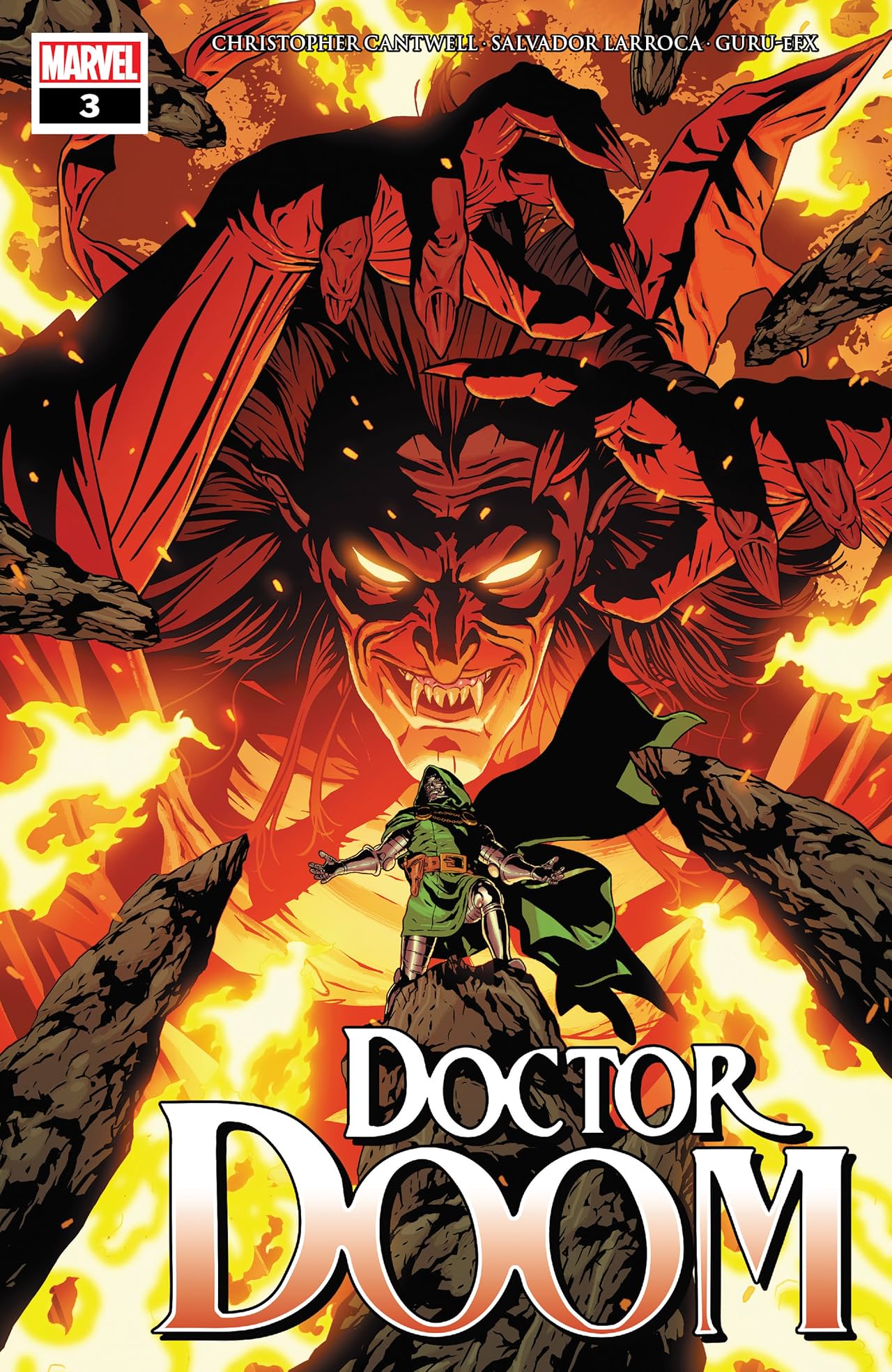
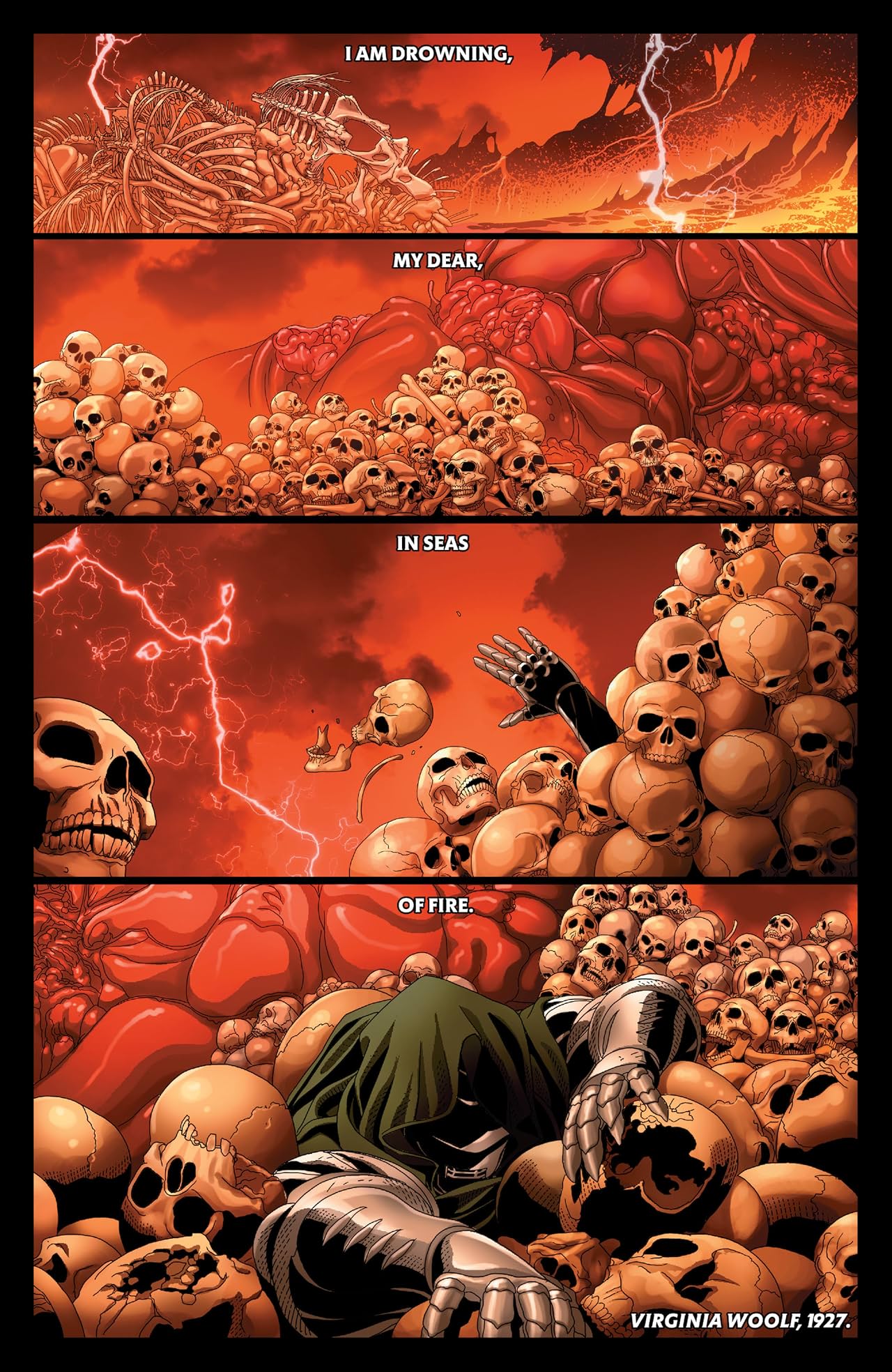
That’s why it’s often more interesting when major villains die. While they rarely stay dead as well, their postmortem journey is often more arduous. If ever there was a villain who constantly skews the concept of death, it’s Victor Von Doom. If anyone needs proof, then look no further than “Dr. Doom #3.”

While he has “died” before, he rarely stays dead. It’s not just because every one of his “deaths” can be attributed to a Doombot, either. This is a man who has been a God and won battles against Marvel’s version of the devil. To him, death is more an inconvenience than a permanent end. It’s just a lot more inconvenient than usual in “Dr. Doom #3.”

These are not good times for Victor Von Doom. The Fantastic Four are back. His brief stint as the new Iron Man ended before he had a chance to show up Tony Stark. He has also been deposed from Latveria, exiled from the country, and thrown into a world with a target on his back for every superhero and SHIELD agent. It is the most vulnerable Doom has been since he was stranded butt naked on Counter Earth.

In short, he’s vulnerable, pissed off, and under constant attack. It’s precisely the situation that brings out the best and worst in Dr. Doom. While the events of “Dr. Doom #2” ended with him “dying” at the hands of Taskmaster, death only gives him a chance to remind everyone why no afterlife can hold him.

It also gives him a chance at another rematch with Mephisto, also known as Marvel’s devil and the one responsible for breaking up Spider-Man and Mary Jane’s marriage. It’s not the first time they’ve clashed, but to date, Dr. Doom has a winning record against Mephisto. That’s something Mephisto is eager to change in his own hellish way.

It makes for a battle full of hellfire. Artist Salvador Larroca brings beautiful depictions of the hellscape that is Mephisto’s domain and writer Christopher Cantwell captures their less-than-heavenly egos every step of the way.

Mephisto tries to torment Doom with what he has sacrificed in the past to achieve his goals. Doom tries torment Mephisto by reminding him that he has beaten damnation before and only got stronger because of it. Neither one of them comes off as heroic, but that’s exactly what makes Doom’s defiance of death’s grip so unique.

Dr. Doom is not the kind of man who makes heroic sacrifices, but he’s also not a man who does what he does for no reason. As I’ve noted before and as other comics have highlighted, Doom doesn’t terrorize innocent people, heroes, and even other villains for no reason. He does what he does because he truly believes that the only future in which people are free from want and suffering is a future in which he rules.

It’s a sentiment that the late Stan Lee himself echoed. The first two issues of this series effectively double down on this vision, but “Dr. Doom #3” presents it with a major challenge. There are obstacles in his way aside from the Fantastic Four and the Avengers. Death and damnation only compound those obstacles, but as is often the case, Doom raises to the challenge.

There are times when Mephisto tries to poke at Dr. Doom’s very few, but very real vulnerabilities. He tempts him with challenges and deals that test even his unshakable will. Cantwell never lets Doom come off as pure evil or pure ego, but he never comes off as a hero, either.

Heroes don’t beat death, Hell, and the Devil like this. At the same time, villains don’t prevail in ways that makes us want to cheer them on. That’s what Dr. Doom does in “Dr. Doom #3” and he’s somehow more menacing because of it.

There are only a handful of characters in comics that can truly die and stay dead, even if some of them do find roles in alternate universes. There are also certain characters who can die in any number of ways, but will never stay dead for long. Dr. Doom is definitely on that list, if not at the very top.

Dr. Doom #3” might very well be Doom’s darkest hour in the sense that his destiny to rule the world in a Utopian future seemed most distant. He has been dethroned, killed off, and sent to Hell to be tormented by a devil with plenty of motivation to see him suffer. For once, Doom has to beat the odds when they’re not stacked in his favor.

It’s a test of his will and resolve, but one we expect him to pass because he’s Dr. Doom. This is what he does. It doesn’t matter how many times every hero, villain, angel, or demon takes him down. Doom always finds a way to claw his way back. It’s not always easy to root for Dr. Doom, but when he’s beating the devil himself, it’s hard not to cheer him on.

Leave a comment

Filed under Jack's Quick Pick Comic

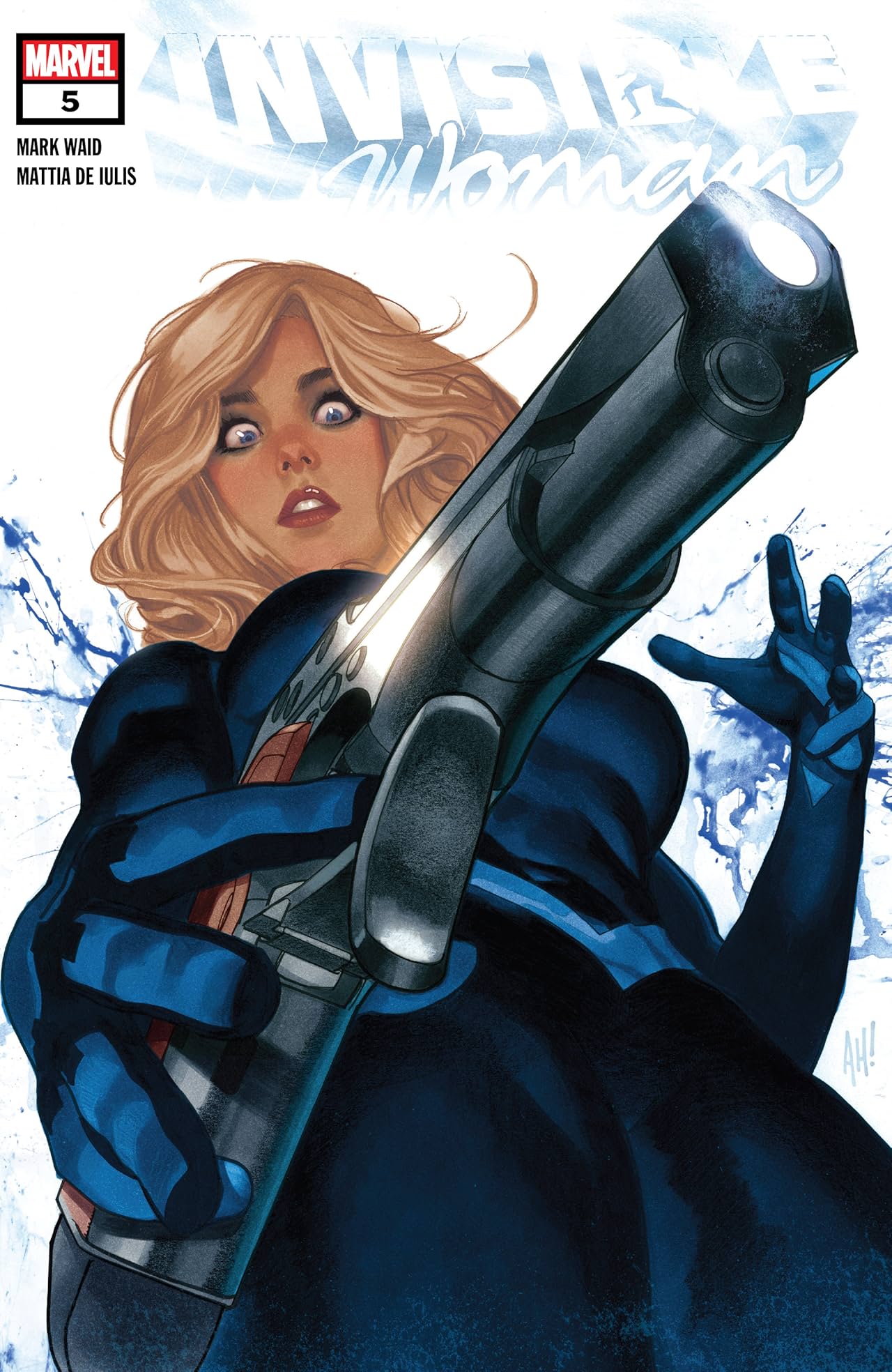
Jack Fisher’s Weekly Quick Pick Comic: Invisible Woman #5

Certain characters are held to very high standards. That’s especially true of superheroes. Not all heroes can or should be judged with the same criteria. Wolverine can go on a rage-fueled killing spree, lust after married women, and drunk a gallon of whiskey a day, but still get labeled a hero. That’s because he’s held to a different, albeit very lenient standard.

That sort of standard just can’t work for a character like Sue Richards. Aside from being a hero, she carries herself very differently from the likes of Wolverine, Tony Stark, and Black Widow. She’s not a career assassin, a playboy billionaire, or some cosmic tyrant. She’s a hero, a role model, a loving wife, and a caring mother. She knows who she is and cherishes that identity.

That same identity has been tested, strained, and pushed in her latest solo series, courtesy of writer Mark Waid. We’ve seen her revisit an old part of her life that almost took her down a very different path, one that would not have met those lofty standards ascribed to heroes like her and teams like the Fantastic Four. In “Invisible Woman #5,” she comes dangerously close to crossing lines she swore to never cross.

It’s the end of a story that has taken Sue Richards away from her family and her life of wild cosmic adventures. Instead of battling planet-eating cosmic beings, she navigates the shady world of espionage. By the end, it’s easy to see why she prefers battling Galactus.

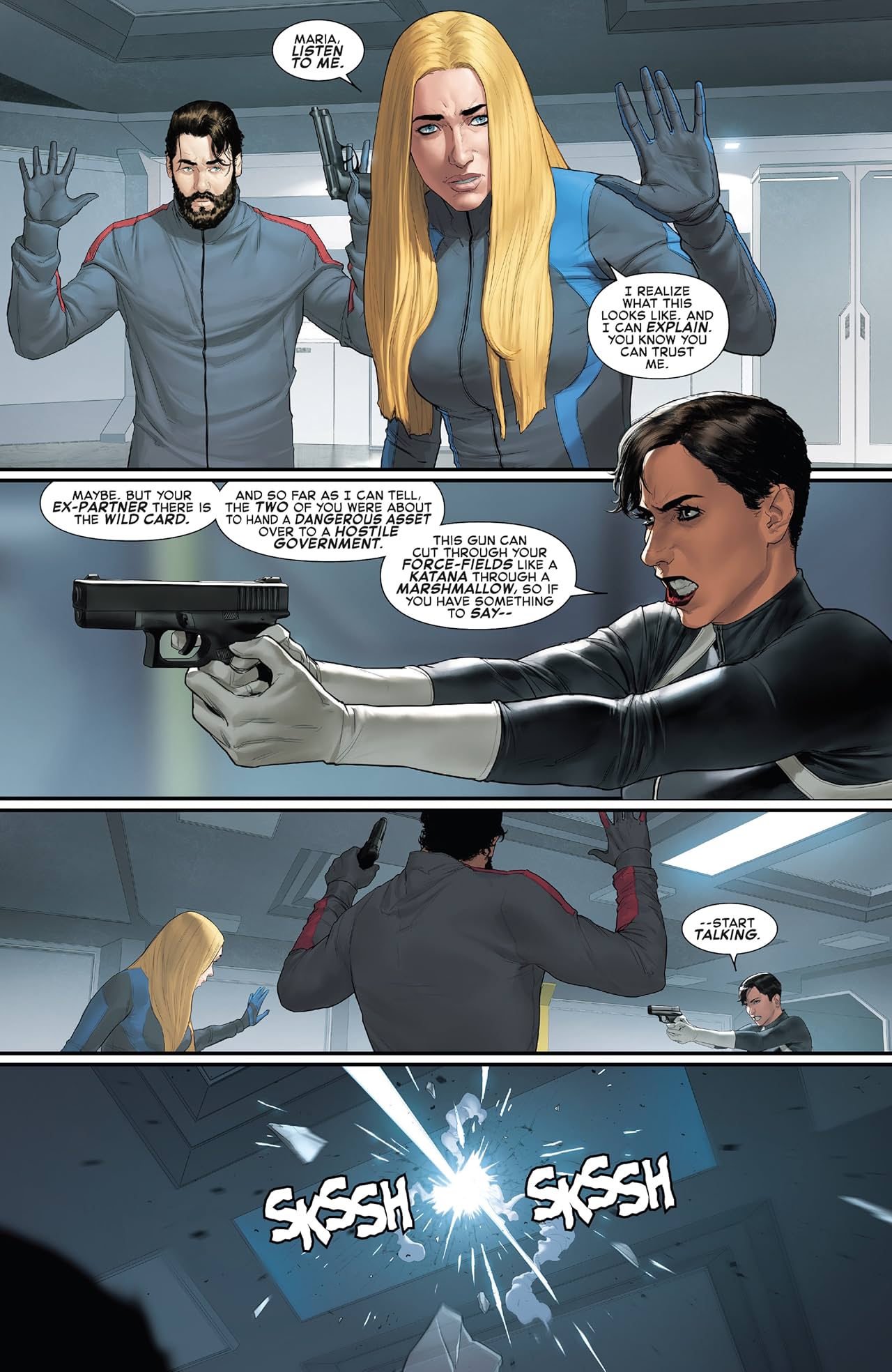
At first, the mission was simple. Sue set out to find a former friend and partner, Aidan Tintreach. As is often the case in stories involving spies, espionage, and beautiful women, it gets exceedingly complicated very fast. Along the way, Waid explores just how capable Sue is on her own. She’s one of those characters who is often defined by her team and her family. She rarely gets a chance to show what she can do by herself.

As a spy, Aidan saw that potential in her. Throughout the series, he has forced her to realize it in ways that don’t always sit well. Initially, it was as an ally and someone in need of her help. The events leading up to “Invisible Woman #5” steadily revealed the kind of person he became. He now has Sue in a position to become that same person.

True to the high heroic standards that she holds for herself, Sue never stops trying to save her former partner. She keeps trying to reconnect with the man she once knew. At every turn, however, Aidan keeps shooting holes in their history and her faith in him. It puts Sue in a difficult position in “Invisible Woman #5,” one for which she can’t play by the same rules that help make her an iconic hero.

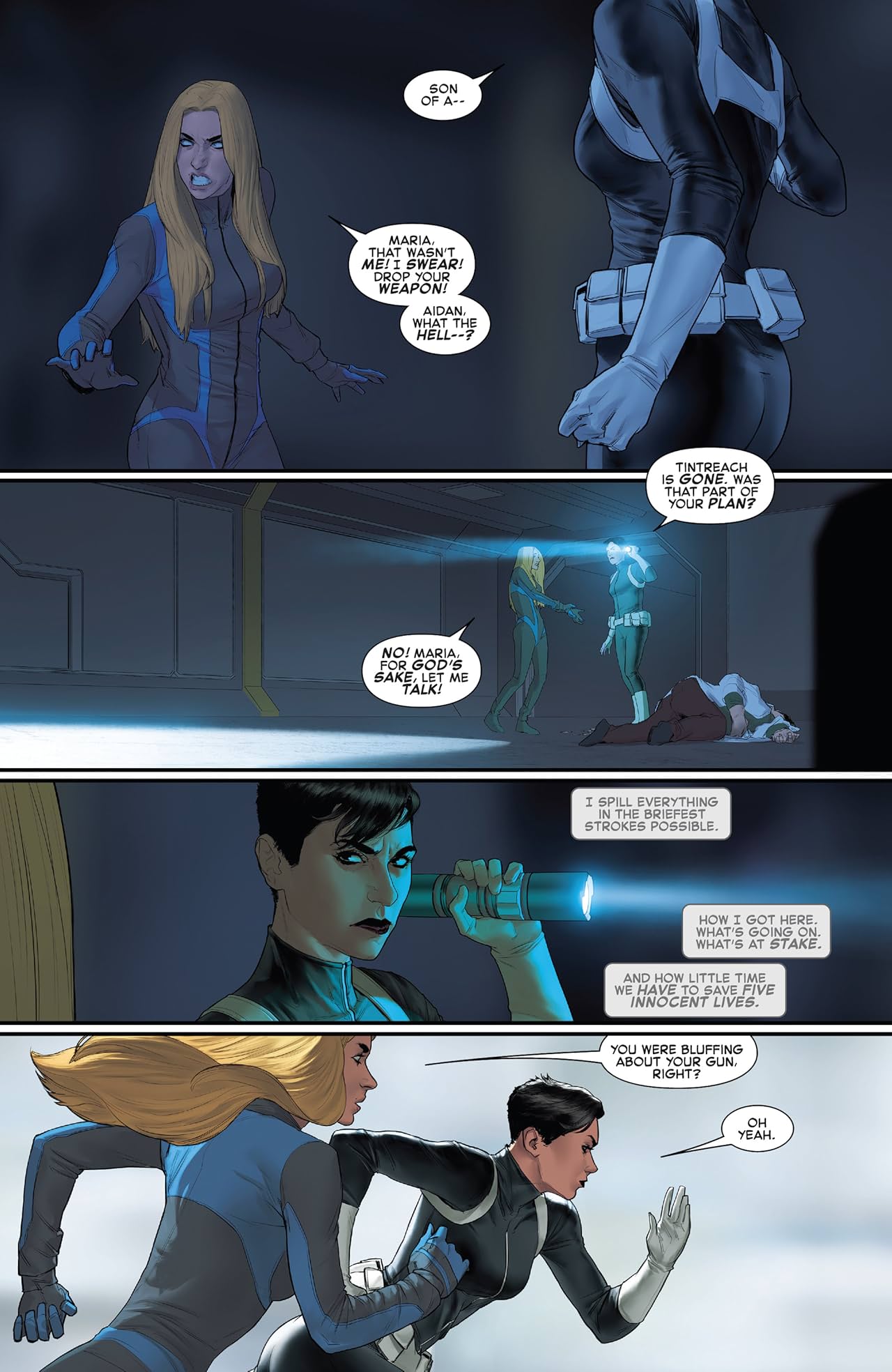
What starts as a rescue is now an unfolding tragedy and it comes dangerously close to becoming much worse. At this point, there’s no more room for betrayals and secrets. Sue has to confront Aidan, who at this point has a death wish. However, rather than poke the Hulk’s eye or kick a puppy in front of the Punisher, he wants Sue to be the one to stop him.

He seems so far gone, but Waid never paints Aidan as someone who has just lost their mind. He’s not the Joker, the Green Goblin, or a villain from a James Bond movie. He’s just someone who has crossed so many lines over the year as a spy, lying and betraying everyone along the way, that there’s no standard left to judge him. As a character and someone who used to ally himself with superheroes, he’s gone morally numb.

At times, Aidan comes off as a dark mirror for Sue. In him, she sees what she could’ve become if she’d remained a spy. He is living proof of what happens when you’re held to a high standard, but cross too many lines. It makes what Sue has to do to stop him feel so dramatic and impactful.

Along the way, she has to push herself and her powers in ways we rarely see outside of trips to the Negative Zone. Artist Mattia de Iulis does an excellent job showing off what Sue can do when she needs to use her powers creatively. The visuals make clear that, even without her family, Sue is very powerful.

Anyone who has read more then one Fantastic Four comic knows that. However, seeing her powers applied in such unique ways helps demonstrate what Aidan sees in her. If she held herself to a different standard, she could be a true force to be reckoned with and not just as a spy.

Between de Iulis’ renderings and Waid’s characterization, “Invisible Woman #5” shows the Fantastic Four’s perennial mother figure in a new light. We get to see glimpses of her past before she became this iconic hero that we hold to such lofty standards. We also see how her approach to heroism differs from those who immerse themselves in situations where heroes and villains alike have to lie, cheat, and deceive.

It’s not one of those stories in which Sue can rely on her family, teamwork, or her inherently endearing personality to save the day. She has to face down someone who ventured into the same shady world, but came out far worse. It’s not the kind of situations that Sue often finds herself in with the Fantastic Four, but “Invisible Woman #5” shows that she can handle it, albeit with a heavy heart.

In the end, that same heart is exactly why Sue Richards holds herself to such high standards. It’s the same reason why her heroism is judged by such a strict criteria compared to other characters in the greater Marvel pantheon. When she does have to cross a line, it breaks her heart, as it would for anyone who hasn’t been too hardened by circumstance.

The fact that there are still characters like Sue Richards, who hold onto those values and refuse to cross certain lines, is nothing short of refreshing. In an age where we expect heroes, celebrities, icons, and leaders to cross lines all the time, a hero like Invisible Woman stands out for all the right reasons.


Leave a comment

Filed under Jack's Quick Pick Comic

Vision, the Scarlet Witch, and the MCU’s Romance Problem

vision-and-scarlet-witch-avengers-infinity-war-sdcc-banner

Trying to find flaws in the Marvel Cinematic Universe these days is like trying to find a flaw in Mr. Rogers. It’s pretty much impossible, unless you’re willing to be exceedingly petty. Even the most ardent critic can’t deny the success of this now iconic cinematic universe. Such a franchise doesn’t make over $7 billion at the box office by having many egregious flaws.

That said, the MCU is not without its shortcomings and I’m not just talking about underperforming outliers like “The Incredible Hulk” or outright failures like “Inhumans.” One such shortcoming, which I feel has not had sufficient scrutiny, has to do with romance in the MCU. As someone who is a lifelong comic book fan and an admitted romantic, this stands out to me more than most.

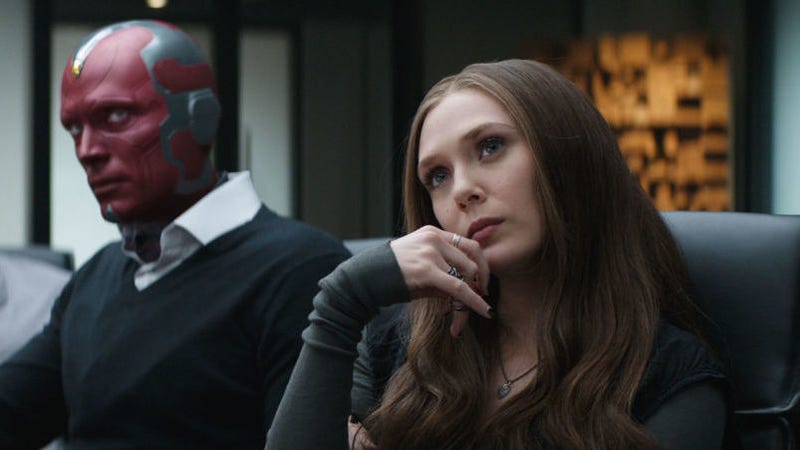
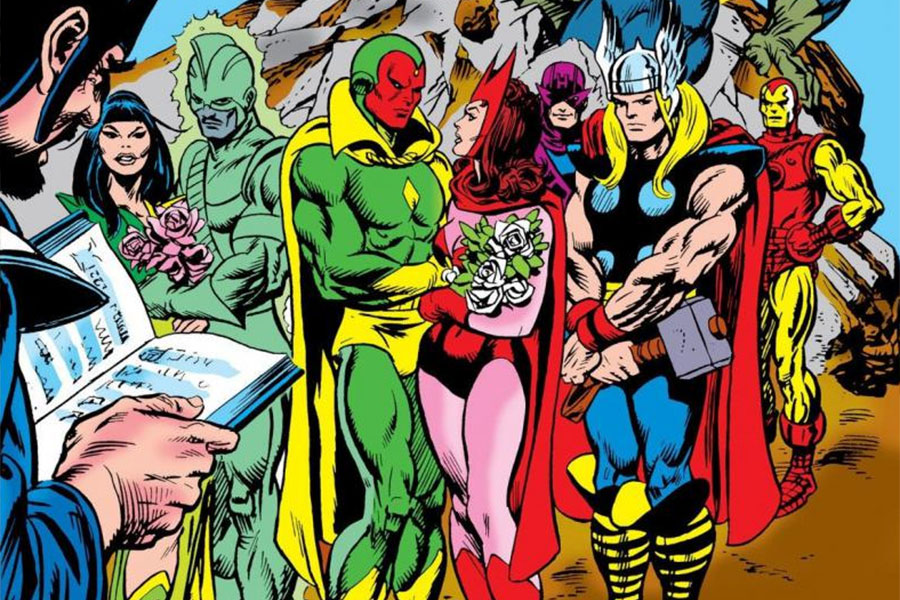
It only became more apparent with the upcoming a TV series starring Vision and the Scarlet Witch on the Disney+ streaming service. The romance fan and the comic book fan in me initially liked that idea because Vision and the Scarlet Witch are one of the Avenger’s most endearing and colorful romances in the comics. This is definitely one of those relationships that can carry an entire show.

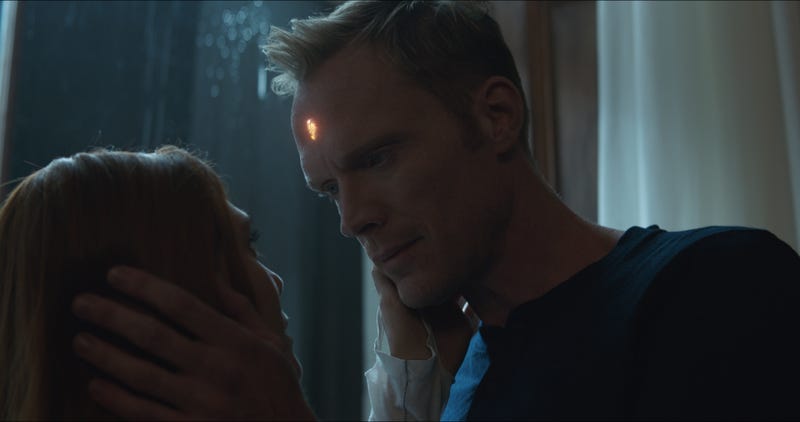
However, given that this takes place in the MCU, the concept is already on a shaky foundation. While the events of “Avengers: Infinity War” established that these two characters are romantically involved, there’s little in terms of how that relationship developed. As a result, the tragedy that played out in the Battle of Wakanda had little dramatic weight.

It’s one of the few glaring flaws in an otherwise stellar narrative. However, the lack of romantic depth between Vision and the Scarlet Witch is only the most obvious symptom of a much larger problem that has been unfolding in the MCU since the days of “Iron Man” and “Thor.”

Some parts of that problem are pure logistics. Building a cinematic universe on the scale of the MCU requires a lot of moving parts and, as a result, romance was often a secondary concern. Kevin Feige and the creative minds at Marvel Studios opted to prioritize other aspects of character development. Given the MCU’s unprecedented winning streak, it’s safe to say those priorities were well-placed.

It’s only recently that the lack of emphasis on romance has caught up to the MCU. From having Thor break up with Jane Foster prior to “Thor Ragnarok” to horribly mismatched romance between Hulk and Black Widow, there’s a glaring absence of successful, well-developed romances in the MCU.

Even the successful romances, namely Tony Stark and Pepper Pots or Ant Man and Wasp, had much of that success unfold off-screen. At most, a movie would show them getting together or enduring a major conflict, but there would rarely be any moments that fleshed out the romance in a meaningful way. Every bit of development only centered around defeating a villain, which is good catalyst for romance, but not much else.

Now, we’re getting an entire show about a couple who were on opposite sides of the conflict in “Captain America: Civil War” and inexplicably together in “Avengers: Infinity War.” In terms of meaningful romance, this is not a trivial oversight. If someone didn’t know their romantic history in the comics, then they would be understandably confused as to why they ended up together.

Not seen here is ANY hint that these two have been flirting.

It’s the same problem that the original “X-Men” movies made when developing the horribly flawed love triangle between Cyclops, Jean Grey, and Wolverine. The narrative in the movies relied too heavily on assuming peoples’ knowledge of the source material in lieu of providing an understandably reason as to why this romance is occurring. Again, that’s not a trivial oversight.

How is anyone who only saw “Captain America: Civil War” and “Avengers: Infinity War” supposed to buy into the relationship between Vision and the Scarlet Witch? The movies only establish that they’re together. They don’t establish why, how, or what they went through in establishing their relationship. Everyone is just left to assume, which is rarely a good strategy for developing meaningful romance.

Even if the relationship between Vision and the Scarlet Witch were entirely platonic, it would still be quite a stretch to believe that they have a genuinely intimate connection. It’s possible that the upcoming show will help develop that connection, but there’s no getting around how underdeveloped it has been to this point.

The same could be said for other relationships throughout the MCU. Some are so underdeveloped that when intimate moments do occur, they rarely have much impact. Captain America’s relationship with Peggy Carter in his first movie probably had the best foundation, of all the MCU romances, but that only made him kissing her niece, Sharon, feel downright wrong. Haley Atwell herself has said as such.

Romance, even among fictional characters, requires some level of chemistry to go along with the narrative. While that can be difficult to fit into a single movie, it’s not impossible. Movies like “Man of Steel” and the first “Spider-Man” movie were able to establish the necessary chemistry with only a handful of scenes. Such scenes have been absent or underdeveloped in the MCU.

Ironically, the most fleshed out romance in the MCU is between Starlord and Gamora, two characters who aren’t an endearing love story in the comics. I would even argue that the scene in which Starlord sacrifices himself to save Gamora in the first “Guardians of the Galaxy” movie shows more romantic depth than any other MCU movie to date.

It didn’t take much to show that Starlord and Gamora have chemistry. From their first interactions to the many challenges they overcame over the course of two movies, they developed a powerful connection that just isn’t there for Vision and the Scarlet Witch. That connection is part of what made the events between them in “Avengers: Infinity War” so heart-wrenching.

That same sentiment just wasn’t there with Vision. We knew from the events of two previous movies that Starlord genuinely loved Gamora. We understood how strong it was by the time Thanos entered the picture. There’s none of that present with Vision and the Scarlet Witch. When they face a similar situation, it just doesn’t have the same impact.

It probably helps that Guardians of the Galaxy was a relatively obscure series before the first movie and has little history of iconic romances compared to the Avengers. However, it does show that the MCU is capable of meaningful romance. It just seems incapable of applying it to the more notable couples from the comics.

While such flaws haven’t stopped the MCU from succeeding on so many other levels, it still ensures that Vision and the Scarlet Witch have an uphill battle in terms of proving their romance is more than an assumed contrivance. It’s certainly not impossible, but there’s a lot to develop in terms of chemistry and depth.

Given on how “Avengers Endgame” played out, it may not matter how poorly past romances have been handled. However, the impact it has had in the “Guardians of the Galaxy” movies shows that there is a place for romance in the MCU. Perhaps Vision and the Scarlet Witch can be part of that with the upcoming show, but it has lot to overcome before it can be the iconic romance that the MCU needs.

4 Comments

Filed under Marvel, romance, superhero comics, superhero movies, television

Jack Fisher’s Weekly Quick Pick Comic: Deadpool #1

Sometimes, the right job finds you before you find it. I would even argue that’s how most people find the right job. Only a select few of us are born with the natural talent and the right opportunities to do what we love. Unless your name is Tom Brady, Elon Musk, or Taylor Swift, you usually end up in a job you don’t expect, but still embrace.

Take that premise to an absurd, vulgar, and violent extreme, and you basically get the life of Deadpool in a nutshell. As a kid, I doubt Wade Wilson thought he would grow up to be a wise-cracking, fourth-wall-breaking, sharp-shooting mercenary who frequently teams up with time travelers played by Josh Brolin. Then again, is it really less absurd than wanting to be an astronaut?

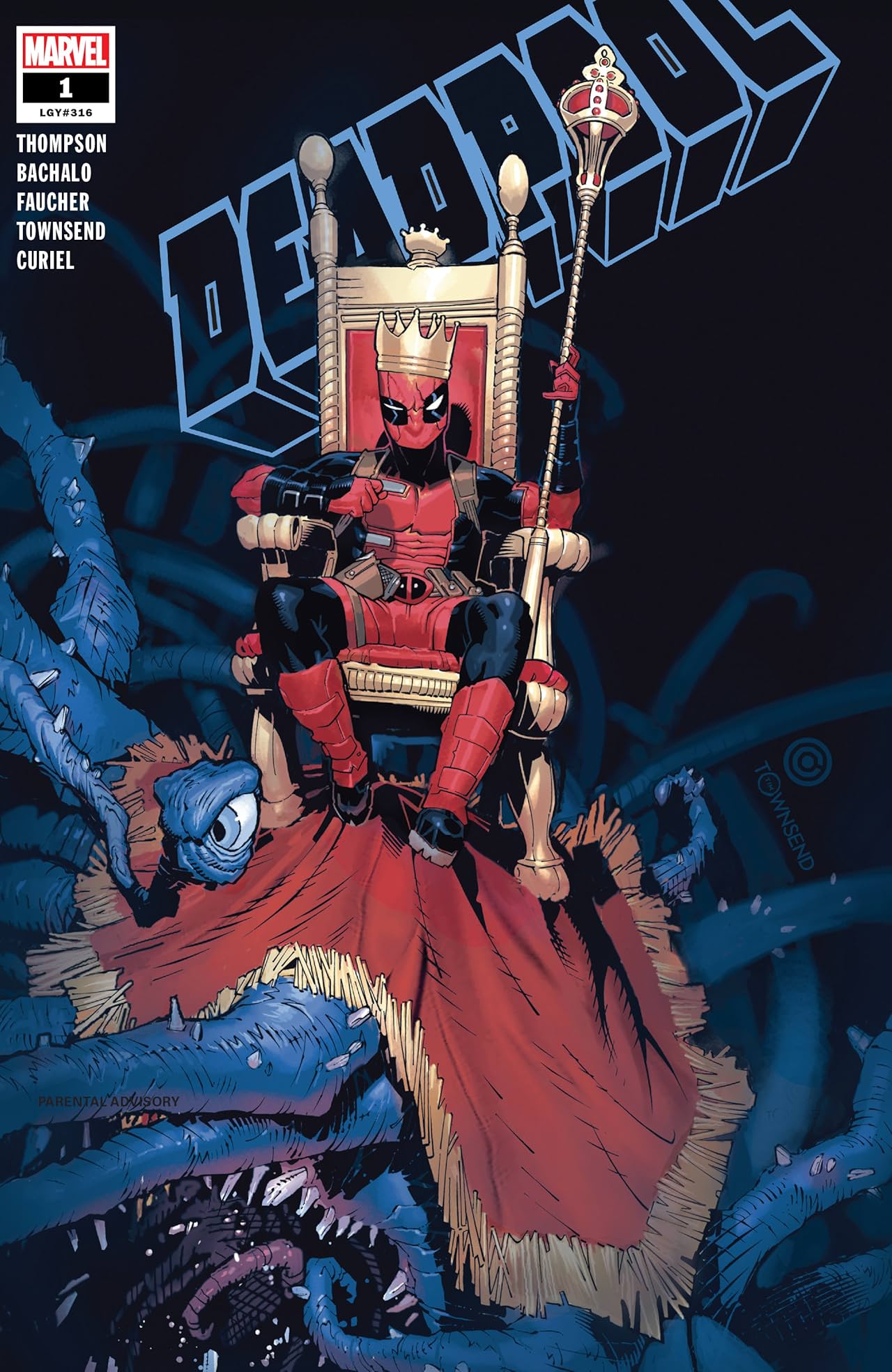
Deadpool, for all his insane antics and violent tendencies, often finds himself in in unexpected roles, but they’re usually roles that makes the most of his talents. Writer Kelly Thompson and artist Chris Bachalo take that concept, run with it, and inject it with some fresh absurdity in “Deadpool #1” by making him King of the Monsters.

That’s not a ceremonial title, either. That’s a real, actual role in the Marvel Universe and Deadpool essentially stumbles ass-backwards into it. It’s every bit as crazy, fun, and entertaining as it sounds.

Deadpool comics aren’t known for high concepts, cerebral plots, or fanciful world-building. These are comics built on a foundation of gratuitous violence, dirty jokes, and concepts that even a paste-eating fifth-grader can understand. Thompson embraces that style perfectly in “Deadpool #1” and even finds time to work in a few colorful cameos.

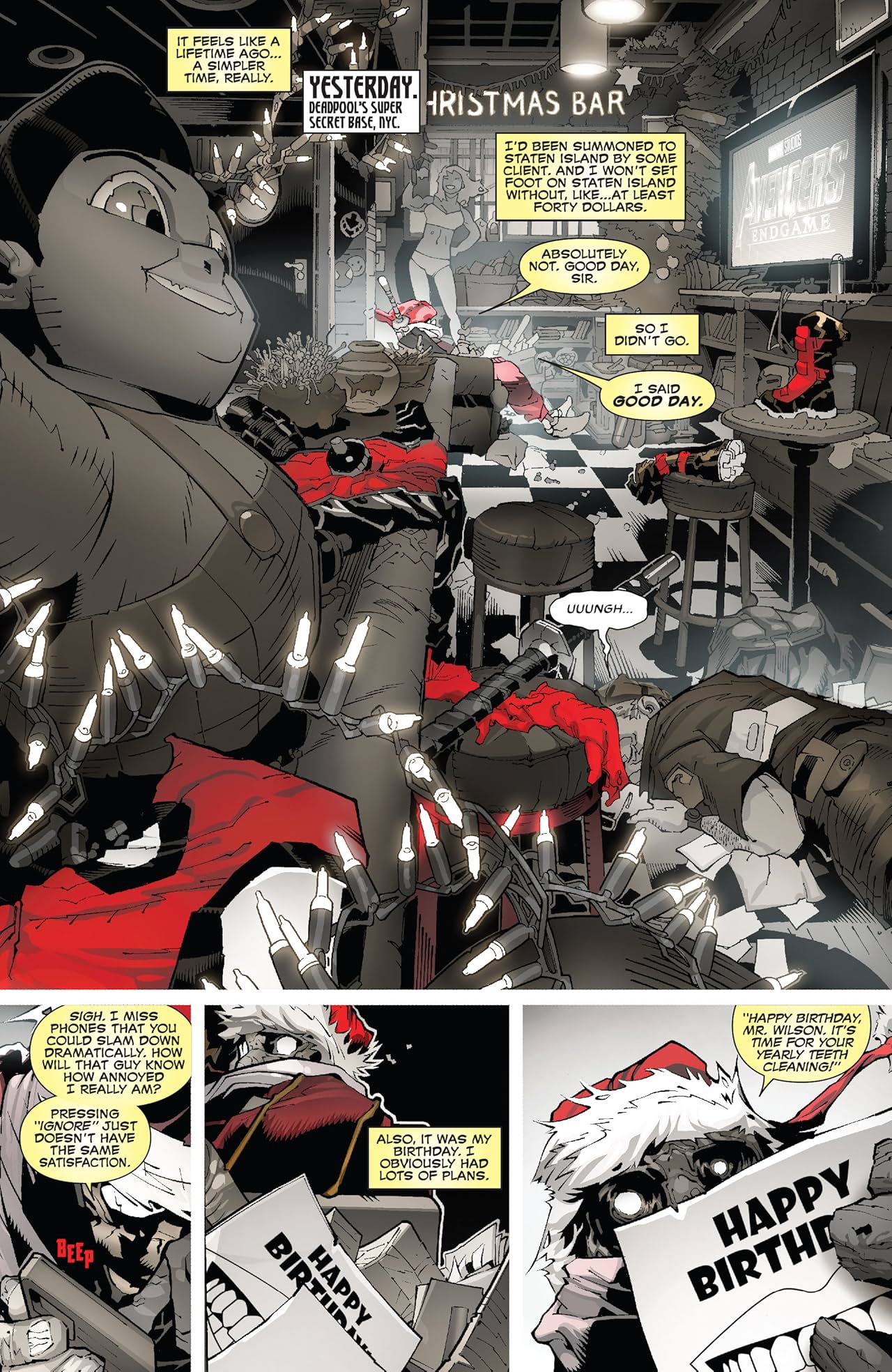
The story doesn’t begin with Deadpool making it his lifelong mission to become the new King of the Monsters. He’s not the kind of guy who thinks that far ahead. He’s just another gun-toting mercenary celebrating his birthday with a mailman he kidnapped. Like I said, he tends not to think that far ahead.

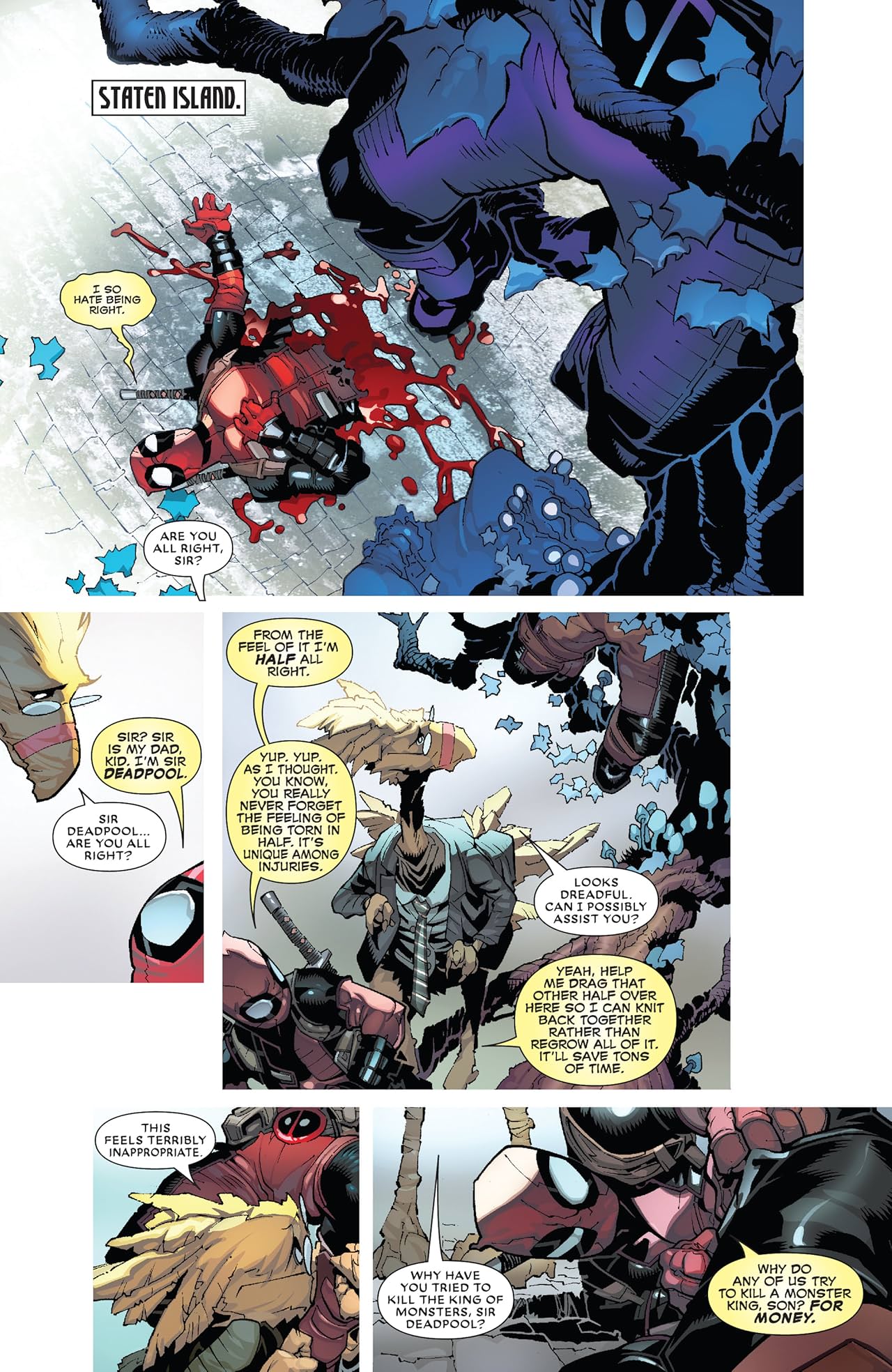
He then lands a new mercenary gig that involves traveling to Staten Island to slay someone who goes by the completely unsubtle title, King of the Monsters. The gig pays well and up front so Deadpool isn’t inclined to ask too many questions. There is a more detailed lore about who the King of the Monsters is and why they’ve set up shop in Staten Island of all places, but none of that matters to Deadpool

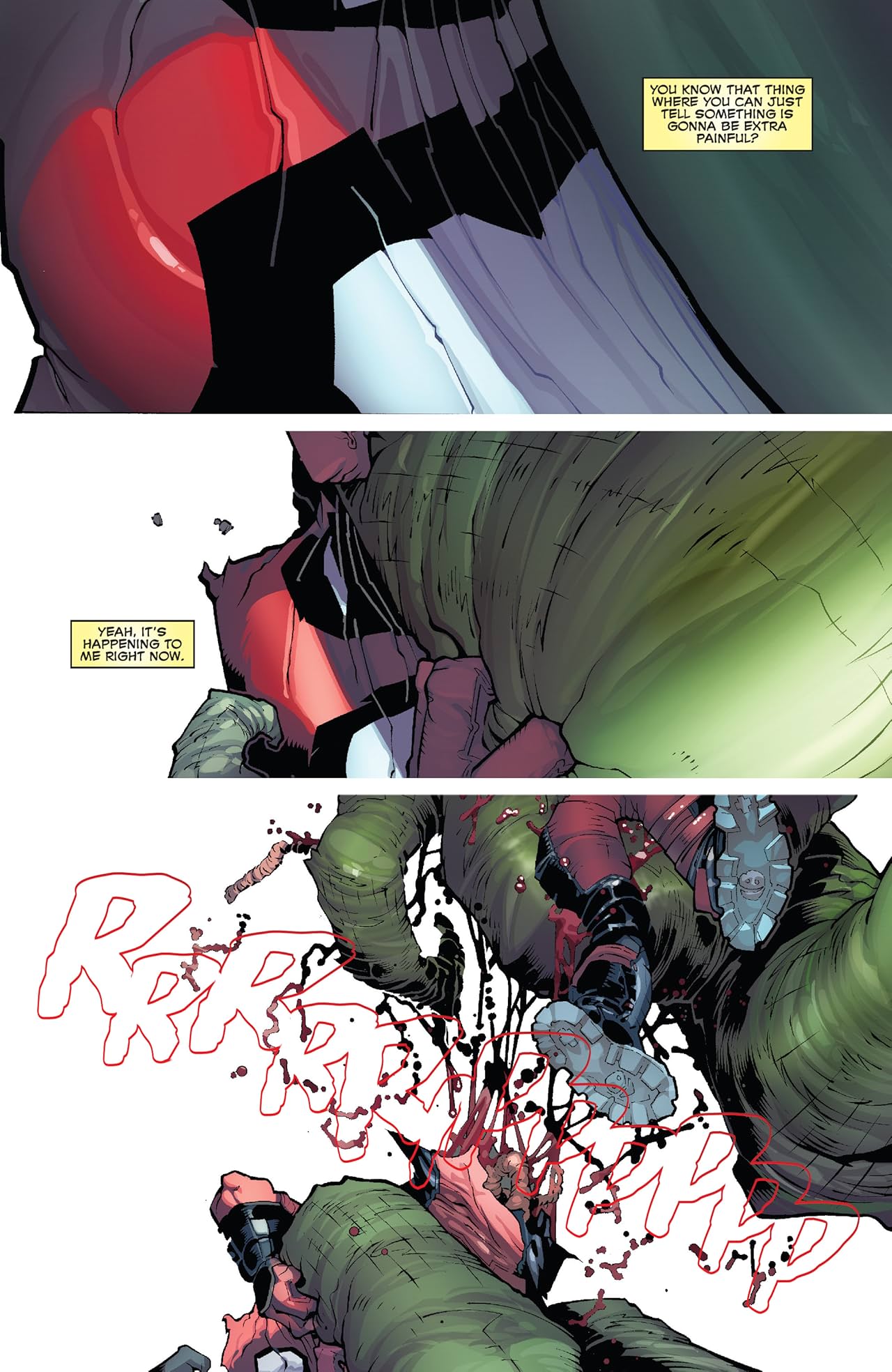
What matters is that it puts him in a position to inflict a little rampant destruction on a hideous, Lovecraftian monster that is beautifully rendered by Bachalo’s art. It’s simple. It’s fun. It’s everything you want a quality Deadpool comic to be.

Deadpool #1” checks all those necessary boxes, but it doesn’t stop at the basics. Thompson throws in a few bonuses as well, including appearances from Elsa Bloodstone and Gwenpool. While Elsa’s appearance is a bit more pragmatic, being that she’s Marvel’s premier monster hunter, Gwenpool just adds a little extra entertainment value.

Plus, she brings a baby shark with her. Yes, this comic has a baby shark in it too.

What other comic besides a Deadpool comic would that both work and make perfect sense? I challenge anyone to find one.

Even with those cameos and the quirky details, “Deadpool #1” still has a coherent plot. Deadpool becoming King of the Monsters is just part of it. Even if he didn’t set out to achieve that title at first, it’s not something he just shrugs off. He now finds himself in this strange new role that comes with responsibilities, crowns, and minions. He’s going to try and have a little fun with it. That’s just how Deadpool approaches things.

It ensures his story rarely has a larger, over-arching theme. Deadpool is not the kind of character who can carry an epic, Lord of the Rings level quest on his own. He just doesn’t have the necessary attention span. He just takes random jobs, follows them to whatever messy outcome they inspire, and takes it from there. The fact it includes so much R-rated entertainment along the way is just a nice bonus.

Deadpool #1” doesn’t reinvent the character or how his comics are crafted. Thompson and Bachalo stick to the basics, but still find a way to mix in some extras. Some of those extras even lend themselves to bigger stories that promise even more absurdities, some of which will require more monsters and more explosions. It’s every bit as appealing as it sounds.

It even makes the case that Deadpool is uniquely qualified for his new role as King of the Monsters. While he’s not a monster and is hardly qualified to be king of anything not associated with a Bea Arthur fan club, he knows how to handle himself around monsters. He knows how to slay them and get along with them. Isn’t that a prerequisite for any king?

Being so immature and unbalanced, Deadpool is uniquely suited to his new title. He may still be a mercenary at heart, but he now finds himself in an unexpected role that fully complements some of his most eccentric traits. It’s a fertile foundation on which to build Deadpool’s story. With monsters, violence, and baby sharks, I’d say Deadpool’s new reign is off to a promising start.

With that, I say all hail the new King of the Monsters!


Leave a comment

Filed under Jack's Quick Pick Comic