Tag Archives: masculinity

Ode To Tomboys And How One Made Me A Better Person

I try not to get personal on this site too often. When I do, though, I try to make an important point that others can learn from. That’s not easy, since everyone’s personal experiences are different. When one of those stories resonates, though, it’s a beautiful thing.

With that beauty in mind, I’d like to take a moment to appreciate a certain female persona that tends to evoke mixed emotions in people. For me, though, that persona has a special place in my heart because certain women have influenced me in a major way. That persona, in this case, is that of the female tomboy.

I know the stereotypical tomboy isn’t known for her sex appeal. She doesn’t come off like the kind of person who would inspire an aspiring erotica/romance writer. However, I think the appeal of a tomboy goes far beyond how little she has in common with the cast of “Mean Girls.”

I’m guessing that most people knew someone growing up who fit the mold of a tomboy. She was a girl, but she didn’t have “girly” interest. She liked sports. She liked cars. She liked to hang out with boys, didn’t care for makeup, and didn’t mind getting her nails dirty. Whether she was a friend, relative, or classmate, she probably stood out more than most.

There’s all sorts of social and psychological insights into what makes a girl a tomboy. I don’t want to get too much into that. For this, I want to keep things personal. I want to tell a short story about how a very special tomboy influenced me in a positive way, one that I still feel to this day.

Out of respect for her privacy, as well as the fact that I haven’t kept in touch with her, I won’t use her real name. From here on out, I’m just going to call her Carly. If, by some remote chance she ever reads this, she’ll probably recognize the importance of that name. She may even recognize me. I hope that happens because I don’t think she knows what a profound impact she had on me.

I knew Carly from grade school. We met when we were in the third grade and we shared the same classes until grade six. That’s a pretty critical time because we were both still kids, but were on the edge of puberty. While I don’t think it played too great a role at the time, I think it influenced the context of our friendship and our connection.

What made Carly stand out, even for a kid like me, was the fact that she didn’t look like the kind of hardcore tomboy you’d imagine after seeing “Little Giants.” If you randomly met her in public, you wouldn’t know she was a tomboy, but you would probably expect it. While she did look feminine, she never wore dresses, skirts, or makeup.

If you spent any amount of time with her, you learned quickly that Carly wasn’t a typical girl. She didn’t conduct herself like the other girls I knew. Whenever we did group projects, she worked with boys. Whenever we had lunch at the cafeteria, she sat with the boys. It wasn’t that she hated other girls. She just preferred being around boys, myself included.

I didn’t think too much of that until I saw her doing more than just being around boys. What made Carly special was how she went out of her way to match other boys in terms of skill, grit, and strength. While the other girls hung out on the playground, Carly was playing basketball and football. While those same girls talked about boy bands, she talked about who won on Monday Night Football.

I remember multiple instances where the boys got together to play touch football and she would be the only girl who wanted to play. We let her too. None of the other boys joked about it. There was this unspoken rule that Carly was one of the guys. She proved that she belonged. Anyone who gave her crap about it was not welcome.

Keep in mind, these are pre-teen boys who still think cooties are a thing. These are boys whose maturity level is limited by the amount of cartoons they watched that same morning. The fact that none of them gave Carly a second look, nor did they question her ability, says as much about them as it does about her.

More than any other girl, at that time, Carly fascinated me. I watched as she ran alongside other boys during gym class, playing sports like football and baseball better than some of the other boys I knew. Being so young, I wasn’t sure what to make of it. I just knew I had to go out of my way to hang out with her and be friends with her.

While I won’t say we were close friends, we did know each other. We recognized each other outside of class. That eventually culminated in a moment that would both solidify Carly’s place in my memory and inspire me in ways I didn’t appreciate until later in life. That moment occurred when I was in little league one year.

From the time I was in first grade until the time I went to middle school, I played little league baseball. I loved baseball as a kid and it was the only sport I ever felt passionate enough about to play seriously. In all those years of playing little league, I played with a lot of other boys, some more memorable than others. However, through those same years, only one girl ever dared to play little league with boys and that was Carly.

I still remember the day when I saw her run out onto the field, a dirty old hat and a new baseball glove in hand. I had no idea she would be on my team, but when I saw her, I remember smiling. I even watched as she fielded pop flies and practiced batting with the coach. While I wouldn’t say she was our best player, she held her own. She could throw, run, hit, and catch. She wasn’t just a tomboy. She was an athlete.

In later years, that memory has taken on far greater meaning. Remember, I was a kid at the time. I was still at an age where girls might as well have been another species. Since pre-school, boys hung out with boys. Girls hung out with girls. We didn’t question it. We just separated ourselves, as though it had been ordained.

Carly showed that those unwritten rules weren’t really rules. She showed that girls didn’t have to be that different. Girls could still like boyish things. They could also be tough, play sports, and relate to boys just as well as they did with girls. Carly embodied that spirit better than anyone I’d known before or since. She was like a kid version of Rhonda Rousey.

That may not sound like much on the surface, but I can’t overstate the importance of that influence. The fact that I knew a girl who could so comfortably embrace boyish things made me question whether the divide between genders really mattered that much. The older I got, the more I realized how arbitrary that divide truly was. Carly was living proof of that.

It was because of Carly that I began interacting more with girls. This did make me a bit weird in the eyes of other boys. I started seeking out female company before it was considered cool for a kid. I like to think that gave me a head start on puberty in that it prepared me to appreciate female company better than most.

It’s also through my interactions with Carly that I stopped trying to talk to girls as though they were so radically different. In doing so, I realized that girls can talk about things like sports, cartoons, and even comics. While these girls might not have been tomboys like Carly, we were capable of sharing the same interests.

Conversely, it showed me that boys can share girls’ interests as well. To me, that was a big deal because it’s through dealing with girls that I developed a fondness for romance. Whereas boys may look at movie, comic, or TV show and appreciate the action, I often found myself appreciating the romantic sub-plots. I don’t think I would’ve had the mind to appreciate those things without Carly.

For that, I’ll always be grateful to her. At the same time, I regret not being a closer friend with her or keeping in touch with her. In my defense, we ended up going to different middle schools so we never got a chance. I would still love to know what came of her. She struck me as the kind of girl who would go far in life.

I don’t know if she outgrew her tomboy persona, as many girls do. Even if she did, Carly’s influence on me was a turning point. I may have been a kid when I knew her, but she inspired in me the kinds of ideas that shaped me into the man I am today. I like to think I’m a better overall person because of it.

Dealing with Carly helped me interact better with girls and people who were different from me, in general. Carly also proved to me that girls and boys weren’t so different after all. We could relate to one another, work together, and grow together. As a kid, that’s a radical concept. As an adult, that’s an important life lesson that helps men and women alike appreciate each other.

2 Comments

Filed under gender issues, Jack Fisher's Insights, sexuality

Five New Years Resolutions We Should All Make For 2018

Christmas is over. The last major holiday of 2017 has come and gone. Now that we’re done opening presents, roasting chest nuts, and getting drunk on eggnog, we turn our attention to 2018.

2017 was a long, eventful year to say the least. It started with plenty of controversy and plenty more followed it over the course of the year. Along the way, this blog underwent some enormous growth in terms of traffic. I also got finalized the release schedule for my next novel, “Rescued Hearts.”

While there were plenty of positives in 2017, especially if you’re a New England Patriots fan, I think this year will go down as one most people would rather forget. There are many reasons for that, but I don’t want to focus too much on those. I’d like to look to the future rather than lament on the past and not just because the future may have sex robots.

With every new year comes renewed hope. With renewed hope comes an opportunity to make things better than the year that came before it. However bad 2017 might have been, 2018 offers an opportunity to make it better. It’s an opportunity we should all collectively seize.

As such, I’d like to propose a brief list of New Years Resolutions for 2018. These aren’t resolutions for just one specific person or group. These are resolutions that, I hope, will apply to everyone and benefit everyone. The events of 2017 gave us all too many reasons to be jaded and cynical. With these resolutions, I believe we can make 2018 much better.


Resolution #1: React, But DON’T Overreact

This should be at the top of everyone’s list of New Years Resolutions in 2018. To hell with trying to lose weight. Make this the cornerstone of your effort to do better in the new year.

A good chunk of 2017 was built on a foundation of continue, unceasing overreactions to everything from the fan response to “Star Wars: The Last Jedi” to a typo on a tweet by the President to how Kellyanne Conway sits. I get it. People are passionate about what they’re passionate about.

However, there’s a fine line between passion and outrage and nobody even tries to walk it anymore. Passion is good in that it can be channeled. Outrage is not because it’s just glorified yelling and whining, which rarely adds anything meaningful to a conversation. Sure, it’ll get attention to an issue, but it won’t do much to solve it.

Now, that’s not to say we should stop reacting to things that outrage or offend us, but we should make a concerted effort to not overreact. That way, our overall response is more meaningful and substantive. We need more of that in 2018 because we sure as hell didn’t get it in 2017


Resolution #2: Acknowledge The Positives And Don’t Belabor The Negatives

This may sound like something an idealistic guidance counselor may say. I admit it’s cheesy, but I think it has merit. One thing I noticed in 2017 that I found very distressing was how eager and quick everyone was to focus on the negatives of any issue.

It’s not enough that some person, group, or organization did something controversial. Everything about that action has to be terrible, evil, and an affront to all that is decent in the world. Whether it’s the President, a Hollywood celebrity, or a controversial policy made by a video game company, it’s only the worst parts that seem to get the energy and attention.

I don’t doubt there are negatives in a lot of these issues, but they don’t encompass the entirety of an issue. People and the world around them is more complicated than that. The truth is there are silver linings. It’s rare that an issue is so lopsided that there’s no possible benefit to consider.

I’ve tried to do my part, pointing out the silver lining to the surge of sex scandals that came out in 2017 involving powerful men. It wasn’t much, but I like to think it serves as an extra bit of perspective for 2018. There will always be plenty of bad news to go around, which makes highlighting the positives all the more important.


Resolution #3: Acknowledge Another Point Of View (Even If You Don’t Agree With It)

This feels like one of those resolutions we should’ve had at the beginning of 2017, but just let it slip aside because we were too busy processing how the Falcons collapsed in the Super Bowl. In addition to the constant outrage that dominated 2017, there was also a growing inability by anyone with an opinion to acknowledge the other side of an argument.

It’s not just on message boards, YouTube videos, and protests. The entire year of 2017 seemed like a testament to increasing polarization of everything from politics to the Season 3 finale of “Rick and Morty.” If there was a middle ground, it was either ignored or blown up with a fury of collective outrage.

More than ever, people are convinced that their ideas are correct and anyone who disagrees with them might as well be a card-carrying Nazi. It’s like Godwin’s law became a goddamn commandment and as a result, nobody is listing to anyone else make their point. It’s worse than a political echo-chamber. It’s a brutal cycle of self-glorification and never-ending frustration.

There is an easy remedy to that, but it involves taking a deep breath and actually listening to someone make their arguments. I know that’s hard when it’s so much easier and more cathartic to remain outraged, but inherently more productive and gives people fewer excuses to hate each other. Seeing as how we have enough of those, this resolution should be a high priority.


Resolution #4: Be Willing To Trust, But Eager To Verify

Another common theme of 2017 that we should avoid carrying into 2018 had to do with accusations. At first, it was just everyone accusing everyone else of being a Nazi, a racist, a bigot, and whatever other insult you see in the YouTube comments section of the “Ghostbusters” trailer. However, it got much worse and for good reason.

Like it or not, 2017 will go down as the year that sexual misconduct by men of significant power became a huge issue. I’ve covered it in multiple ways, acknowledging the extent of the misdeeds and expressing concerns about the implications. However, as the year went on, it became less about the conduct and more about the accusations.

We’re at a point where there seems to be new accusations of sexual misdeeds every other week. We’re almost used to it and that’s a dangerous thing because accusations aren’t the same as actual facts. While it’s not inherently wrong to believe someone when they say they’ve been a victim of sexual misconduct, that belief shouldn’t be blind.

Blind belief isn’t just unhealthy. It’s the primary ingredient in creating dangerous cults. We should continue taking sexual misconduct seriously in 2018 and beyond, but we can’t just keep focusing on the accusations. We need to be more eager to verify the validity of those accusations, making sure they have some basis in reality before someone’s life is irreparably ruined.

I know this resolution will be controversial. There’s a growing sentiment that not believing an accuser somehow counts as victim blaming. It’s not easy resisting that sentiment because most people inherently sympathize with victims, but sympathy is only meaningful when there’s some measure of validity to the accusations.


Resolution #5: Try To Love And Not Just Tolerate

This is more an approach, rather than a resolution. I won’t say it should be at the top of anyone’s list, but it should be in the back of everyone’s mind in 2018. Again, I know it seems like more hippie talk, but there is some greater purpose behind it.

For years now, tolerance has been a major goal. For the most part, we’ve succeeded in that goal. People today are far more tolerant of other races, religions, ethnicity, and sexual minorities than they’ve ever been before. That’s an objectively good thing. We should continue that effort as much as possible in 2018.

However, tolerance has become kind of a low bar in recent years. It’s one thing to tolerate a minority, but it’s quite another to actually embrace and love them. That’s something we haven’t put a lot of energy into in our efforts to create a more peaceful society.

Given all the outrage and polarization that emerged in 2017, I think 2018 is a good time to start making that extra effort. We can’t just be satisfied with tolerance. It’s like the humanitarian equivalent of a C-minus. We need to start shooting for B’s and A’s in 2018.

That means making an effort to love someone, even when there are things about them we find distressing. It goes back to my comments about having faith in people. Sometimes, we have to put some extra effort into believing people are better than we think they are. Making that effort in 2018 will go a long way towards helping people be better for the new year and beyond.

Leave a comment

Filed under Current Events, Reasons and Excuses

Social Context Versus “Toxic” Behaviors: Why The Difference Matters (A Lot)

There’s a fairly well-known set of experiments involving rats and cocaine. It’s a strange, yet revealing combination. In the initial experiment, a rat in a cage was given the choice between cocaine and food. Not surprisingly, especially for someone who has ever tried cocaine, the rat chose cocaine to the point of killing itself.

That experiment, which took place in the 1960s and 1970s, helped establish the idea that those who use cocaine would be so damaged, so addicted, and so utterly gone that they would rather take the drug than survive. It was pretty scary stuff and it helped inspire harsher anti-drug policies in the 1980s.

However, that experiment came into question in 1981 when a professor named Bruce Alexander re-did the experiment, but with one critical change. He didn’t isolate the rats in a cage. He put them in a colorful, positive environment with other rats that came to be known as “rat park.” The results weren’t nearly as scary.

As it turns out, when placed in a better environment with more social support, the rats didn’t become irreversibly damaged cocaine addicts. In fact, even when offered much more addictive drugs like morphine, the rats didn’t imbibe in illicit, drug-fueled bliss nearly as much as their caged counterparts.

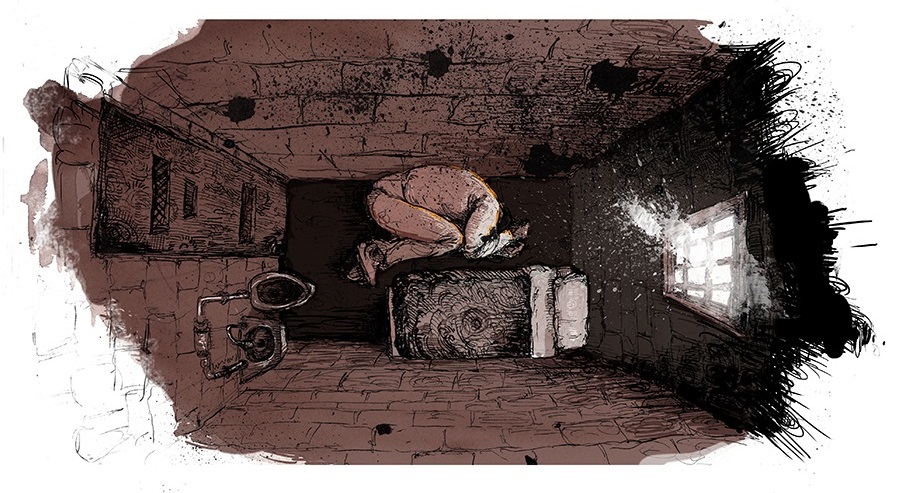
I bring up this experiment because it illustrates an important point about behavior and social creatures. Context and social setting matters. It matters a lot. Put someone in a cage, strip them of any social support, and isolate them from the world and they’re bound to endure some pretty toxic effects. That’s a big reason why solitary confinement is considered torture.

That brings me back to the inherently flawed idea of “toxic masculinity,” a term I’ve gone on record as saying should be buried in the deepest, darkest pit of our collective lexicon. I don’t want to re-hash or belabor any of the points I’ve already made about toxic masculinity. I’ll just note that some of the rhetoric surrounding it is distressingly similar to what anti-drug zealots used when demonizing cocaine.

Think, for a moment, about some of the negative traits associated with toxic masculinity. They include, but aren’t restricted to, stuff like:

  • Suppression of emotions
  • Being prone to violence
  • Increases in aggression
  • Associations with abhorrent sexual behavior

Then, look at the traits associated with cocaine addiction and note some of the parallels. In each case, there’s a direct association between these traits and a tangible, unambiguous cause. In one case, it’s a drug. In the other, it’s just being a man and associating with masculinity. Like the rats in that first experiment, though, there’s no context or social circumstances to consider.

That begs an intriguing, but important question, especially to those who still want to use “toxic masculinity” as a catch-all for certain behaviors. Is it really the nature of masculinity itself that’s behind these toxic behaviors or is it the social circumstances within the society?

That’s not a question anyone, especially not aspiring erotica/romance writers, can definitively answer. I don’t doubt it has been asked in other ways. It might even have been studied to some extent, but since it involves the complex machinations of the human psyche, definitive answers are hard to come by.

Even without the results of those studies, is it really that hard to contemplate the possibility that circumstances may effect how masculinity and femininity manifest? The rat park experiments alone hint at a fairly significant impact. Given the orders of magnitude in difference between rat and human brains, it’s not unreasonable to suspect that impact is substantial.

While we can’t run the kinds of experiments that Bruce Alexander did in 1981, we can assess the current status of masculinity within our culture. It may vary from region to region, but in terms of modern western culture, there are a number of traits that we’ve come to associate with masculinity.

It tends to manifest most distinctly in our standard models of romance, which puts men in situations where they have to be competitive, aggressive, cunning, and determined to get the kind of emotional and sexual satisfaction they want. Even when they do, those same situations make them just as inclined to seek other outlets of satisfaction.

Furthermore, men have to navigate these situations with the added baggage of being biologically wired to seek social, romantic, and sexual connections. Women have this wiring too, but the circumstances for them are different in that the culture has different expectations. Moreover, there’s no concept of “toxic femininity” to color their feminine traits as inherently negative.

What this means is the men are entering these circumstances pre-programmed to be very horny, very lonely, and in need of various forms of fulfillment. Being men, they’re expected to go out and get it while women are expected to just let it come to them. Now, I get that this is a gross oversimplification that obscures the overall gender dynamics, but in terms of the overall culture, these are the circumstances.

To illustrate the inherent issues with those circumstance, here’s a scenario that should help paint a picture of the male predicament. Again, it’s a gross oversimplification that I’m sure will offend more than a few people, but still reflects an important point.

Man: Hello, ma’am. I’m lonely and horny. How do I go about getting sex, love, and social support?

Woman: First of all, the fact that you just admitted you’re horny is disgusting. Women being horny, that’s beautiful and erotic. Men being horny is not, so you’re already a pig in my mind.

Man: What? Why? That’s not fair.

Woman: Don’t interrupt me! Talking down to a woman is rude and sexist. It’s basically the first step towards harassment and abuse. Raising your voice to a woman, showing any kind of dominance, is just perpetuating an oppressive gender stereotype that has no place in the current year.

Man: Okay. I’m sorry about that. So how do I go about it then?

Woman: You’re still talking over me. You’re getting dangerously close to harassing me and since you’re a man, everyone will believe me if I accuse you. So choose your words very carefully because if any woman feels upset by what you say or do, even if it’s unintentional, we can accuse you of being an abuser and ruin your life.

Man: Well, I’d like to avoid that at all costs.

Woman: Then, you’ll have to play by our rules. You’ll have to respect every choice a woman makes and take her side in every argument. Disagree with us or go against us and we’ll label you a sexist, misogynist pig. Then, you’ll never find love, sex, or any kind of social support.

Man: Wow. That almost sounds risky. I might just be better off watching porn and masturbating by myself.

Woman: Now, you’re just making it worse. For one, watching porn or admiring female bodies in any capacity is insulting, demeaning, and objectifying.

Man: But I’m attracted to beautiful women. Is that bad?

Woman: It’s awful! You’re contributing to unhealthy beauty standards that not every woman can hope to achieve. You’re part of a much larger problem in society that forces women to meet obligations that are difficult, inconvenient, or outright impossible. That makes you an accomplice to all the crimes ever committed against women.

Man: But I’ve never attacked, hurt, or insulted a woman in my entire life.

Woman: That doesn’t matter. Since men have gotten away with too many crimes in the past, you have to be the one to pay the price in the present. That means you have to carry the guilt of men you’ve never met for crimes and attitudes you had no part in creating. If you go against this in any way, then you’re an even bigger sexist misogynist.

Man: I don’t want that. I don’t want that at all. I guess I’ll have to find some other way to masturbate.

Woman: You’re still making it worse. You see, women can masturbate because it’s sexy and erotic. Men can’t. It’s just disgusting for reasons that neither of us can change. If any women finds out you’ve ever masturbated or paid for sex in any capacity, then they’ll think you’re a creep and a loser. They won’t even look at you, let alone want to be with you.

Man: But that’s not fair! I can’t turn off my desires.

Woman: That’s too bad. You’ll just have to suppress them while you jump through all the elaborate hoops a woman demands in the meantime. Just remember that even if you jump through all those hoops and do everything they ask, they still reserve the right to not have sex with you or love you in the way you want. That’s their choice and you can’t do anything about it.

Man: So what am I supposed to do? This is making me kind of frustrated and angry.

Woman: That’s not my problem. You either play by these arbitrary rules or we cut you off socially, sexually, and romantically. Try to change any of these rules and that just makes you the biggest misogynist of them all.

I’ll stop there and give everyone a moment to fume. Take all the time you need. It’s not the first time I’ve crafted a scenario with some pretty distressing monologues.

If you can get past the outrage, then try and take a moment to reflect on the circumstances in the scenario. Men are in a situation where the path to the kind of sexual, emotional, and social fulfillment that all social species seek is full of potential pitfalls.

Since those obstacles have gotten a lot more treacherous lately, it’s even harder for men to actively seek the very things that make them healthy and fulfilled. It’s akin to forcing the rats from the cocaine experiment back in the cage and demanding that they not succumb to the detrimental effects.

Now, it’s worth pointing out that women didn’t create these circumstances. There’s no feminist conspiracy any more than there’s a nefarious patriarchal conspiracy. In fact, some of these circumstances stem from traditions men have promoted, like the whole obsession with female purity and the concept of slut-shaming. Men have done more than their part to create and exacerbate these circumstances.

As it stands, though, the circumstances for men are such that frustration, anger, and isolation are almost inescapable. Unless you’re very rich and very well-connected, you’ve got a lot of hazards to navigate. Slip up and you’ll be labeled a creep, a misogynist, or worse. Even if that doesn’t put you in a literal cage, it’ll make you feel like you’re in one. At that point, is it really that surprising when a person’s behavior comes off as toxic?

With these circumstances in mind, the concept of “toxic masculinity” becomes even more asinine because it utterly ignores this context. Absent that context, it can only ever damage whatever harmony men and women have. Given how sensitive we’ve become to scandals and sexism, we can’t afford to do much more damage and expect either gender to come out better.

3 Comments

Filed under gender issues, sex in media, sex in society, sexuality

Making Sense Of Sexual Misconduct, Valid Arguments, And Matt Damon

We like to think that when there’s a serious problem, our first instinct is to approach it with a logical, reasoned understanding of what it is and how to go about solving it. Ideally, that’s how competent, civil societies go about these things. By those same ideals, though, nobody ever cheats on their taxes, lies on their resume, or downloads free movies from torrent sites.

In the real world, there are some problems where our emotions surrounding an issue are so powerful, so intense that they undercut our ability to approach it logically. It’s part of the flawed wiring in our caveman brains that seems to crop up in every major issue I discuss on this blog.

That brings me back to one of the most emotionally charged issues of the day in sexual assault. It’s an issue that has touched everything from movies to video games to the comic book industry that I’m so fond of. Between the scandals and the movements they inspire, it’s one of the most heated issues that doesn’t involve Star Wars fan theories.

It’s because the emotions surrounding sexual assault and sexual harassment are so heated right now that trying to force any level of logic or context into the discussion is next to impossible. If done poorly, it can come off as victim blaming, which is tends to intensify emotions even more.

This brings me to Matt Damon, an actor who has built much of his career about having to be rescued. Unfortunately, he didn’t get that memo about the current emotional state of this issue. It’s still very raw and very charged. There’s a reason for that, but that reason is secondary right now and he just found that out the hard way.

It happened during a recent interview for ABC’s “Popcorn with Peter Travers.” During the interview, Mr. Damon decided to give his opinion on the issue, as many other celebrities have on the issue. This is what he had to say.

“I think it’s wonderful that women are feeling empowered to tell their stories and it’s totally necessary,” he said. “I do believe there’s a spectrum of behavior. … You know, there’s a difference between, you know, patting someone on the butt and rape or child molestation, right? Both of those behaviors need to be confronted and eradicated without question, but they shouldn’t be conflated.”

The bold parts are my doing. That’s because these are the parts stirring even more emotion within an already heated discussion that shows no signs of settling. Harvey Weinstein triggered it and subsequent celebrity scandals escalated it. Matt Damon may have escalated it even more by trying to put a kind of logic into a discussion that isn’t ready for it.

On paper, what Mr. Damon said isn’t unreasonable. In fact, it’s fairly logical by most standards. There is, indeed, a spectrum of behavior for sexual misconduct, just as there’s a spectrum for behavior of any kind of deviance.

In the same way that stealing a bag of candy from a grocery store isn’t the same as stealing the Mona Lisa, an unwanted hug at an office Christmas party is not the same as a brutal rape in a dark alley. There is a spectrum for that kind of behavior. One warrants serious punishment and prosecution. The other warrants disapproval and scorn, but not much else.

However, that kind of approach is just too logical for something that’s so emotionally charged. I know I keep saying that, but it’s worth belaboring and it really does matter. Sexual assault is an extremely emotional topic, one that incurs an immense amount of trauma and suffering to the victims. To them, logic and spectrums mean as much as the weather on Neptune.

As a result, the reactions to Mr. Damon’s words have been more than a little charged. The most vocal reaction came from Alyssa Milano and Minnie Driver. This is what they had to say on the matter.

Now, I don’t doubt their sincerity. These are two women who have been in the entertainment industry long enough to know more than a few dirty secrets. There’s plenty of emotion and disdain in their words. They go out of their way to focus on the bigger picture that’s fueling the outrage, emphasizing past injustices and systemic problems that pre-dated them, Matt Damon, and most people alive today.

In terms of the emotions surrounding the ongoing discussion, their words struck all the right chords. They focused on the pain and suffering that sexual assault has done to women like them and many other before them. They also emphasize how these injustices went overlooked and unpunished.

That’s where they have Mr. Damon beat because, like I’ve noted before, we have this inherent sense of justice hardwired into us from birth. Injustice rightly makes us upset, uncomfortable, and outraged. However, it’s that same reaction that can also blind us to the logic behind the injustice.

There’s nothing that Ms. Driver and Ms. Milano said that disproves or undercuts Mr. Damon’s points. They don’t even try to argue that everything, from a hug to a rape, is equally egregious when judging sexual misconduct. They just point out that Mr. Damon is a terrible person and part of the problem they’re trying to fight. As such, there’s no reason for them to take his words seriously.

That may help them win the current argument, but it doesn’t necessarily make them right in the long run. I’ve said before that there’s a huge difference between winning an argument and being right. One matters in the long run. The other doesn’t. For an issue as serious as sexual misconduct, that’s a dangerous precedent.

Again, I get the reason why women like Ms. Driver and Ms. Milano react so strongly. It’s very personal for them. I doubt Mr. Damon has ever been a victim of the kind of misconduct they’ve endured. Therein lies the problem, though, if either side is serious about confronting the issue.

It’s so personal for some people. It’s a problem to be solved with logic and understanding for others. At the moment, those sides just can’t coexist. It doesn’t matter whether Matt Damon, a well-known celebrity, makes a valid point. It doesn’t even matter if that’s an important point to make in order to prevent this movement from enduring a backlash, which some have already expressed concerns about.

However, it has to matter. In order for us, men and women alike, to create a more just society that confronts sexual misconduct appropriately, both the high emotions and the logic has to matter. It’s the only way anyone can be motivated and informed enough to do something about it.

I’m not going to say that Mat Damon was wrong for saying what he said. I’m also not going to say that Alyssa Milano and Minnie Driver were wrong for reacting the way they did, either. I’ll only say that overlooking logic and ignoring context never work out in the long run. At some point, reality catches up to us all. In the long run, reality wins every argument, regardless of our emotions.

11 Comments

Filed under Celebrities and Celebrity Culture, Current Events, gender issues, sex in society

The Unspoken Gender Disparity (Of Sex Toys)

I talk a lot about our current attitudes towards sex and the various problems it causes in our society. There are a lot of ways those attitudes manifest and my sexy novels can only do so much to expose them. Many of those attitudes have a clear and frustrating gender bias, which always inspires heated debates.

To reveal the breadth of this disparity, here’s a quick little test you can take. It doesn’t matter if you’re a man, woman, or something in between. It’ll reveal a little something about yourself and the way this disparity affects us. It goes like this.

A young woman walks up to you. She seems healthy, happy, and sane. She then tells you, “I own a vibrating dildo that has the look, feel, and texture of a real penis and I use it regularly to pleasure myself.” How do you react?

Shortly after, a young man walks up to you. He seems just as healthy, happy, and sane. He then tells you, “I own a sex doll that has the look, feel, and texture of a real vagina and I use it regularly to pleasure myself.” How do you react?

If we’re being honest with ourselves, and I know that’s not always easy or possible, we’ll react very differently to the man than we do the woman. Fundamentally, they’re both saying the same thing. They use a sex toy as a means of satisfying their basic desires when they don’t have a partner.

However, we don’t see either person the same way. The idea of a woman using a sex toy conjures all sorts of lurid mental images about a woman alone, surrounded by candles, touching herself in all sorts of wonderfully erotic ways. That imagery is the basis of a good chunk of the porn out there.

The idea of a man doing something similar conjures a very different kind of imagery. We don’t see that scene as erotic. Most likely, we’ll picture an ugly, lonely man in his basement, humping an imitation of a vagina because he’s too pathetic to experience the real thing.

Unlike the woman, there’s nothing sexy about it. At most, it just reminds us of that iconic scene in “American Pie” that had Jason Biggs going to down on a pie. On top of making everyone inherently suspicious of warm pies, it acts as a testament to how hilarious/pathetic men can be in their pursuit of sex.

It’s a double standard in the highest order, a concept I’ve explored before. It’s just one of those double standards that gets lost in arguments about a woman’s body image or the basics of sexual harassment. You could even argue that it’s an extension of the war on horny men. It’s hard enough being that horny. Any effort to satiate it is going to be met with added scrutiny.

In the middle of this huge double standard is a fundamental engineering challenge that mankind has yet to solve. Specifically, it involves sex toys. While these wondrous tools of pleasure have made incredible advances in recent years, there are still certain deficiencies that further the disparity for men and women.

Go into any place that sells sex toys and chances are you’ll be bombarded by every phallic-shaped accessory that it’s possible to imagine. If you want something that looks like an erect penis, you have an abundance of riches.

You can choose a penis made of glass, plastics, or a hyper-realistic synthetic. You can get one that vibrates. You can get one that has a clitoral stimulator. They even come in every imaginable size, shape, and color. Given the simple, basic structure of an erect penis, it’s fairly easy to replicate with our amazing tool-making skills. That’s a major reason why dildos are among the oldest, most successful sex toys of all time.

Contrast this with the options for toys resembling female genitalia. Sure, you’ll see the occasional blow-up doll, hand-held pussy, or molding based on a famous porn star, but chances are it won’t look or feel very real. These things are basically rubber and plastic. They’re incapable of mimicking the intricacies of actual vaginas.

While this is a testament to wonder that is a real vagina, it leaves the straight men who seek them at a frustrating disadvantage. It’s bad enough their natural, fully-functioning penises can never compete with a dildo that is always hard and vibrates to stimulate the deepest recesses of female anatomy. They don’t have something similar that delivers an equally intense experience.

At the moment, the closest approximation men can enjoying a real, artificial vagina comes from extremely advanced sex dolls like those made by Real Dolls. However, those super-real synthetics are extremely expensive, especially when compared to the average dildo.

It’s possible to get a quality vibrator these days for around fifty bucks and no shame. Even the cheapest accessory offered by Real Dolls will run you over four hundred dollars. On top of that, a man who admits he owns one is going to be subject to a fair amount of scrutiny and ridicule. Bud Bundy from “Married With Children” is proof enough of that.

That kind of disparity is bound to cause problems and not just through egregious double standards. As technology advances and sex dolls become more advanced, as well as full-fledged sex robots, the realism gap will narrow. It may have taken way too long, but there will come a day where a sex toy will give a man a sexual experience that’s indistinguishable from that of a woman.

However, this has already inspired controversy. There are some out there who would decry the use of such realistic sex toys because it literally objectifies the female body into something men can purchase. That’s something the radical, sex-negative crowd has been bemoaning for decades.

Ironically, these same individuals are relatively silent when it comes to the continued sale of realistic dildos. I imagine if someone came along and argued that if sex toys that mimic the female body should be banned, then all those penis-shaped accessories should be banned too in the name of gender equality. I imagine that would not go over well, even among radical feminists.

For now, though, the disparity remains. A woman has access to every kind of penis-shaped satisfaction she could hope for at a price most anyone can afford. An average man with an average income is out of luck and any effort he makes to satisfy his desires will be subject to added scrutiny. If he tries too hard, he’ll be labored a creep.

It’s not fair. It’s a complete affront to anyone who claims to be in favor of gender equality. If we’re going to endure the current disparity between male and female sex toys, we should at least offer a measure of understanding and sympathy.

Both genders have desires. Both genders want to share those desires. Let’s work together in that effort. I intend to do my part with my sexy novels. Those busy/horny scientists in sex toy labs like Real Dolls will surely do theirs. Collectively, in the name of all things sexy, we must be willing to do ours.

5 Comments

Filed under gender issues, sex robots, Sexy Future

The War On Horny Women (And Why We Keep Fighting It)

People have been waging wars since the dawn of civilization. These never-ending struggles have people clash over ideas, concepts, and identities that cannot and will not be resolved. Some of these conflicts have literally reshaped society and the world we live in. They are a fundamental, and at times inescapable, part of civilization.

Then, there are the subtle, less obvious wars that we never win, but insist on fighting. These wars rarely have epic battles or iconic names like Waterloo, D-Day, or Super Bowl XLII. On some level, we know these wars can’t be won. We know we inflict a lot of collateral damage by fighting them. We’ve just been doing it for so long that we don’t know how not to fight it.

The war, in this case, involves horny women. Yes, that’s a war too. I know I dedicated an entire post to documenting the war on horny men. Even though I am a man with functioning genitals and a healthy sex drive, I don’t deny that women experience plenty of horniness, as well. I also don’t deny that those same women have endured a war that has spanned generations, cultures, and rap battles.

Despite not being a woman, I think it’s important to touch on that struggle, especially since recent scandals and trends in our sexual culture have taken the war to uncharted territory for both genders. For women, in particular, the conflict is far different from the one they’re used to fighting.

Anyone who has studied history, or just listened to Pat Robertson for more than five minutes, understands that civilization hasn’t exactly been kind to the female libido. For a good chunk of human history, a horny woman had exceedingly limited options.

If they weren’t having sex with their husband, who they probably didn’t even choose, then they weren’t having much sex. For the most part, a man could get away with having a few mistresses or seeing a prostitute every now and then. If a woman dared stray from her wifely duties, though, the punishments were severe.

Even today, a woman sleeping around on her husband is dangerous in some parts of the world. Even when it doesn’t get you killed, it can ruin your life in many other ways that men rarely deal with. It’s not fair. It’s certainly not in line with notions of gender equality. That’s the problem with wars, though. Things like logic, justice, and compassion are the first to go.

Why is this war even being fought in the first place, though? Moreover, why are women dealing with a different war than men? Well, there are many answers to that question and most of them will piss off most feminists, egalitarians, or people who just value any semblance of fairness.

I’ve touched on it before, to some extent, but the foundation for the war on horny women has its roots in a mix of biology and economics. Humans are a sexually dimorphic species in that each gender bears distinct traits that set them apart, beyond the presence or absence of certain organs. However, the trait that most distinguishes women is their ability to have children.

It’s a beautiful, but critical skill that any species needs to survive. A great deal of energy goes into giving incentives for humans to make babies and some of those incentives are pretty damn powerful. However, because of the biology involved, there are circumstances that set a horny woman apart from a horny man.

In terms of raw numbers, horny women are at a evolutionary disadvantage. No matter how horny they are or how much sex they have, they can only bear one or a few children at the same time over the course of nine months. Men, on the other hand, can impregnate dozens of women and sire a much larger volume of offspring.

From an evolutionary perspective, it’s like one person has a butter knife and the other has a machine gun. One tool is just inherently better at doing more damage. Now, if men and women are living in some hippie commune where nobody cares about which kid belongs to who and nobody has to deal with messy child custody hearings, then a horny woman doesn’t have much issues.

Unfortunately, hippie communes are few, far between, and prone to poor hygiene and clogged toilets. Much of our civilization was built on complex, hierarchical societies that required men to work the fields, women to care for children, and a certain assurance that the kids you had were yours.

Before the days of Maury Povich, though, the only way to be sure of that was to be sure that a woman was faithful from her wedding night onward. Since people rarely trust the horniness of their spouses or the men who may seduce them, this led to traditions and taboos that demanded modesty and subjugation for women.

It didn’t matter how horny or sexually unsatisfied they were. From the perspective of society, it was more important that these women remained “untainted” so that men could be sure their kids were legitimate and there were no nasty diseases, a common problem that plagued ancient societies to no end. It wasn’t as much a war of misogyny as it was a war of practicality.

Even after we learned to treat disease, control conception, and test for paternity, the idea of a horny woman is still taboo. There are some that even claim that promiscuous women bring down entire civilizations. These are not claims that anyone should take seriously, but they do reflect the ongoing struggles of this war.

The idea of a woman being horny, sexual, and feeling no shame about it just seems wrong to many people. They see that and they see an affront to how they believe society should work. Never mind the fact that society is always changing and technology promises to accelerate that change. We, men and women alike, are still stuck in this war-like mentality when it comes to horny women.

It often manifests in subtle ways. Watch any slasher movie, sitcom, or poorly-scripted reality show and you’ll see a similar theme. The horny, promiscuous women are the villains. They are an evil, corruptive force that undermines all that is good and noble. Why else would Regina George be so easy to despise?

Beyond the media, female horniness is often presented as something that has to be contained and hidden. Unlike men, who are expected to fight the wars and work the fields, the standards for women are different. A “good woman” is someone who doesn’t sleep around, flash her tits, or show off her thong to an entire basketball team. A “good woman” stays home, has babies, and dresses in a way that doesn’t attract horny men.

That’s why modesty is conveyed as such a virtue for women, but not so much for men. That’s also why exceedingly repressive societies segregate women from men. The possibility that someone might get horny and might act on that horniness is seen as a bomb going off in house full of puppies. It’s just that terrifying.

However, despite this centuries-old war, ripe with traditions and taboos, women still get horny. Women still want to have sex and not just to make babies, but to enjoy the toe-curling pleasure that comes along with it. No amount of modesty, shame, or scorn can stop it. That says a lot about the strength of horny women. As an aspiring erotica/romance writer, I can’t help but admire that.

As much an optimist I am, at heart, I don’t see the war ending anytime soon. Like the war against horny men, certain taboos and insecurities still linger. Some are cracking, though. Just recently, Mayim Bialik from “The Big Bang Theory,” generated a lot of criticism for daring to claim that women should dress more modestly in order to avoid harassment, as though horny men aren’t that determined.

Naturally, albeit unfairly, she got accused of blaming the victim for the misdeeds of horny men. The idea that horny women are somehow responsible for crimes committed against them is rightfully absurd, but the notion that horny women need to contain themselves while some men can still push the boundaries is beyond absurd.

As I said at the beginning, the basis of the war on horny women is neither fair nor logical. Compared to the war on horny men, though, it’s just unfair and illogical in a very different way. There reasons and justifications for the war are changing and will likely continue to change, especially as certain medical advancements emerge.

Whatever the change, though, the war will continue to rage. Horny women will still be considered this taboo force of chaos that could potentially undermine the whole of society. This may be a taboo that’s impossible to break, but that may not matter much in the long run.

No matter how the war is fought, whether by religious dogma or excessive shaming, it won’t turn off that fundamental drive to make love or to enjoy good orgasm. In the long run, the horny women will win, if only because the horny men will want to hang out with them more. I’m not one to take sides in a war, but if my sexy novels can act as battle cries, I’m happy to do my part.

5 Comments

Filed under Current Events, gender issues, Marriage and Relationships

The War On Horny Men (And Why It’s Doomed To Fail)

I won’t deny it. Men do stupid things when they’re horny. That’s just a cold, hard fact. I realize I’m inviting any number of dick jokes by saying that, but it’s still worth saying. It’s partly because of that fact that there’s a market for the erotica/romance novels I write in the first place so I have more appreciation for it than most.

Unfortunately, we live in a world where facts are about as relevant as a giraffe’s shoe size. It doesn’t matter how true or vindicated something is, be it a scientific theory or a documented observation. Unless it makes people feel a certain way or allows them to push some sort of agenda, it either doesn’t matter or gets twisted to suit a purpose.

When it comes to horny men, though, evolution and global warming got nothing on them. It’s not so much that they exist that’s the problem. It’s that they are now the face of all that is wrong and evil in the world.

Look at any controversy or social issue in recent years, from Hollywood scandals to trends in feminism, and chances are a horny man is involved and that man isn’t the good guy in that narrative. I’ve seen it become more magnified in recent years, but in a sense, there has always been a war over horny men. It takes many forms and has gone to disturbing extremes, but it rarely succeeds in the long run.

In the past, you could argue that battling horny men was a frustrating, but necessary endeavor to some extent. Up until the 20th century, the status of women in society and concerns over the spread of debilitating diseases gave society a valid reason for wanting to temper men’s desire to bone everything in sight. A society full of diseases and children without fathers is not a stable society.

On top of that, organized religion had often tried to play a part in that war. In general, they espouse traditions that value modesty and restraint. Naturally, some try to take it too far. Some have gone so far as to create a special circle of Hell to endlessly punish those who give in to readily to their horniness.

There are time when it’s worth questioning the motivations of organized religion in this war, though. As I’ve pointed out before, religion has an incentive to want people to bone only for procreation.

For one, they want all that pent up energy reserved for helping out at the church/temple/mosque/synagog. Second, they know that children of adherents tend to adopt their parents’ religion so they want them making as many babies as possible. More children means more adherents. More adherents means more money. Even when deities are involved, it often comes back to money.

However, as the influence of religion has faded and the status of women has improved, the war on horny men has taken a very different form. In some respects, it has been escalating lately. It’s not just a matter of horny men cheating on their wives with their secretary anymore. Horny men have basically become the de-facto enemy that are determined to hold women, minorities, and society back.

It’s horny men who become sleazy Hollywood producers that try to get sex out of ambitious young women. It’s horny men who demand that the women in comic books, video games, and movies be beautiful, thereby contributing to the objectification and degradation of women.

I won’t get into the issues I have with the concept of objectification, but it’s becoming increasingly taboo for a horny man to like and appreciate sexual imagery. It has become especially taboo to voice that appreciation, so much so that some countries are looking to criminalize men who cat-call women. That’s right. It one day might be a crime to say how sexy you find a beautiful woman.

For an aspiring erotica/romance writer, it’s a distressing trend. I get some of the logic behind it. Men still commit the majority of the sexual assaults in this world. That’s another cold, hard fact that can’t be denied.

It’s also a fact that sexual assault, as a whole, is on the decline. That’s a good thing, but thanks to the rise of mass media, terrible stories about sexual assault are easier to come by. It’s even easier to sensationalize, sometimes to the detriment of the truth. Whatever the statistics say, though, there’s still a horny man with poor impulse control at the center of it all.

At the moment, it’s not illegal to be a horny man or express some of that horiness. We don’t live in the days of John Harvey Kellogg and most horny men have access to abundant free porn, giving them an outlet for their horiness. However, even with all that free porn and a lack of uptight religious figures demanding that men not pleasure themselves, horny men are still subject to shame and ridicule.

If you like your female superheroes wearing chain mail bikinis, then congratulations! You’re a sexist, misogynistic pig.

If you like admiring beautiful women and go to strip clubs to exercise that admiration, then congratulations! You’re a sexist, misogynistic pig.

If you like having sex with beautiful women and seek to do so with every resource available to you, then congratulations! You’re still a sexist, misogynistic pig.

Are you seeing a trend, here? Whether it takes the form of porn or involves casual flirting, there seems to be no way around it. Any effort a man makes to get with a beautiful woman, sexually or otherwise, is somehow vilified. Just the act of wanting to sleep with a beautiful woman can now be construed as sexist, misogynistic, or whatever the hopelessly outraged can scream at the top of their lungs.

A man just looking for sex or some kind of sexual outlet garners no sympathy. Even a man looking for love is somehow prone to ridicule, as evidenced by the prominence of the beta male in shows like “The Big Bang Theory.” A man can’t ask for sex because he’ll get accused of being a creep or worse. He can’t even admit he wants sex because that somehow means he sees women as glorified sex objects.

There seems to be no way around it. No matter what a man does, he’s practically doomed himself and his reputation for daring to admit that he’s that horny. If he just masturbates to satisfy his desires, he’s a loser. If he eagerly pursues sex, then he’s a creep. If he just tries to repress it all, then he’s a dork who can’t get laid. Unless he’s a rock star with a foot-long dick, the average horny man has no hope.

This is an issue and it affects both genders because both genders are wired to seek love, sex, and everything in between. Nature, itself, gives us plenty of reasons, considering the various health benefits of orgasms. All those pursuits are effectively undermined if one side is overtly shamed for wanting something so basic and beautiful.

I’m not saying horny men don’t do stupid things. They most certainly do. I’m also not saying horny men don’t do heinous things too. They do that too and it’s become major news. People should be mindful of crimes like sexual assault and issues like consent. The problem is that the outrage over scandals and sex in the mass media is overshadowing the basic desire behind it.

Men, and humans in general, are sexual creatures. No matter how much people try to temper sex in society, whether by forcing women to cover their faces or designing video game characters to be less sexy, it’s impossible to subvert basic biology.

That’s the ultimate tragedy of the war on horny men. It can’t succeed in making men less horny. It can only ever succeed in making men feel guilty about feeling something that they’re hard-wired by biology and evolution to want, pursue, and enjoy. Guilt can keep us from stealing a cookie as a kid, but it can be downright debilitating if heaped on someone to excess.

All that guilt can make people angry, depressed, desperate, hopeless, and irrational. For a man that is already irrationally horny, that can be dangerous and frustrating. That kind of mentality is not going to help in efforts to curb sexual violence. If anything, it’s going to make those efforts even harder.

For now, I don’t see the war on horny men abating, nor do I see one side claiming victory over the other. I’ll just say that the hostilities are doing a lot more harm than good. They’re hindering those seeking love, sex, and all the good stuff that comes with it. As an aspiring erotica/romance writer, that’s a dangerous trend.

To those who still insist on fighting this war, claiming horny men are the bane of all societies in all times, I have one simple message for you. For several centuries, the Catholic Church wielded immense power throughout Europe. If even they couldn’t stop horny men, despite being armed with the Spanish Inquisition, then what chance do you have?

14 Comments

Filed under Current Events, gender issues, Marriage and Relationships

The Lessons (And Misguided Agendas) Of The Harvey Weinstein Scandals

I promise I’m going to stop talking about the Harvey Weinstein scandal at some point. I know everyone is probably sick of it. Make no mistake, I’m sick of writing about it. Unfortunately, it’s one of those issues that grows way beyond its original context.

It’s not enough to highlight the sheer breadth of the transgressions committed by such a powerful man. It just has to be part of a larger issue that brings out the best and worst of all those eager to comment on it, myself included. Never mind the fact that Weinstein is being punished severely for his many transgressions. People just have to make it part of a much larger agenda, and not necessarily for the right reasons.

It’s that component of this tragedy/crime/outrage that compels me to keep talking about it. Make no mistake, I’d much rather be talking about resolving love triangles in superhero comics and products made specifically for female breasts. However, I see the massive uproar over the Harvey Weinstein affair as entering dangerous territory.

Now, I don’t deny the good that this scandal has inspired. Sexual assault is a serious crime and powerful men like Weinstein have too long a history of getting away with it. In a just and peaceful society, these kinds of crimes shouldn’t be overlooked. That said, there’s a big difference between pursuing justice and a misguided moral panic.

To provide some context, there’s plenty of recent history that should provide some perspective to the ongoing outrage. Back in the 1990s, before hashtags and dick pics, there was a huge outrage over the impact of violent video games and the role they played in mass shootings like Columbine.

Never mind the fact that there’s no established causal link between violent video games and actual violence. Never mind the fact that all available data has shown an overall decrease in violence over the past several decades. The moral panic allowed people with agendas to pursue those agendas to the utmost, even when the truth isn’t on their side.

This brings me back to sexual crimes committed by men like Harvey Weinstein. What he did was egregious. What he did to his victims, if even half-true, warrants full prosecution to the utmost. Unlike the panic over violent video games, this issue involves real people who were subjected to real harassment. That’s beyond dispute.

Unfortunately, the media, the public, and everyone with a Twitter handle aren’t content to just ensure that Weinstein faces justice for his crimes. They just have to turn it into a kind of rallying cry that exposes the depths of misogyny, corruption, and abuse. It happened with video games in 2014. Now, it’s happening again.

It’s getting dangerous because people who express concern about the implications of taking every accusation of sexual assault seriously are being labeled sexist, misogynist monsters. Like many moral panics before it, there comes a point where anyone who doesn’t subscribe to the panic is guilty of thought crimes that deserve the kind of scorn that even George Orwell would find excessive.

We’re already seeing this happen as everyone gets in line to voice their outrage and virtue signal, accordingly. In wake of the Harvey Weinstein scandal, everyone seems eager to become the hero in the battle against powerful men abusing vulnerable women. I’ve mentioned before how that kind of mentality is dangerous and misguided. We’re seeing a similar mentality emerge as everyone seeks to push their agenda.

Among those pushing that agenda include our friends at Cracked.com, a website I usually enjoy and often cite on this blog. They’ve already jumped at the chance to push an agenda, conflating the Harvey Weinstein scandal as an indictment of all men who ever dared to lust after a pretty woman.

It’s not just websites like Cracked either. There’s already a hashtag on Twitter called #MeeToo that has people recounting their experiences with sexual harassment and sexual assault. I don’t doubt that there are plenty of these stories that are both disturbing and true. However, there is a context to consider.

Sexual assault is a crime. It’s prosecuted like a crime. Like all crime, there are standards by which to process it. Chief among those standards is evidence. Those voicing outrage over the fact that neither Weinstein, nor Bill Cosby, are being charged with a crime is seen as a failure of justice. However, there’s another point to consider.

Sexual assault is hard to prove. So much of the evidence relies on testimony and in a court of law, that often gets conflated with anecdotal evidence. Science has revealed, time and again, that eyewitness testimony is among the least reliable forms of evidence you can have. Without better evidence, the high burden of proof that comes with a justice system that presumes innocence takes over.

In a sense, I can understand why those lamenting over men like Weinstein are so furious. It is frustrating to think that a man can commit such crimes against women and get away with it. In that frustration, things like facts and context tend to lose meaning.

I still don’t doubt that men like Weinstein and Bill O’Reilly are guilty of making life miserable for women. However, the extent and veracity of that misery is hard to quantify. The fact that they haven’t been charged with sexual assault tells me that the evidence just isn’t strong enough, even if it occurred. Where the justice system fails, though, mobs of hate and disdain will fill the gaps.

While that can help the voices of victims, it can also be dangerous. It can, in some respects, drown itself by claiming everything is harassment, everything is sexist, and everything is some sort of agenda to silence women. People want to believe that they’re Superman and men like Harvey Weinstein are the Lex Luthors of the world.

At some point, though, outrage burns itself out. Our collective capacity for emotional catharsis has its limits. Once it reaches that limit, we start rolling our eyes and become numb to it. For something as serious as sexual assault, we cannot and should not let that happen.

That’s a challenge, though, when everybody is so eager to virtue signal and ally themselves with the so-called right side of history. By over-blowing the outrage, victims of true sexual assault get lumped in with those who just didn’t like the person flirting with them.

Since harassment is so subjective and some people are more sensitive to it than others, the context will often get skewed. However, a scandal like Harvey Weinstein provides a sense of clarity on an issue that is so frustratingly subjective.

Therein lies the issue, though. Harassment, unlike assault, is subjective. Sexual assault is not. One is an emotional reaction. The other involves real, physical harm. Conflating one with the other is a dangerous precedent that will make people more reluctant to interact. As a fan of love, intimacy, and sexy novels, that’s not a world I want to live in.

9 Comments

Filed under Celebrities and Celebrity Culture, gender issues

A Better Male Feminist: Ron Swanson

When it comes to icons and heroes, it says a lot about society when most these days are fictional characters. We’ve become a very cynical bunch, never putting too much stock into real people. It’s often only a matter of time before they tweet something stupid or are discovered to be card-carrying asshole.

In some ways, it’s a sign of the times. We are an exceedingly jaded bunch, born from a generation of burned-out hippies. We also live in a world where we have no concept of privacy and no ability to give anyone who holds problematic opinions a pass. For anyone who becomes an icon, it’s usually only a matter of time before they say or do something to ruin their iconic status.

Recently, Joss Whedon added his name to that bloated list of fallen icons. Up until a few weeks ago, he wasn’t just a successful director and alpha dog of geek culture. He was held up, by many, as a feminist icon. He was the gold standard that feminists referred to when asked to reference how a male feminist should conduct themselves.

Now, like so many other icons whose hypocrisy was exposed, Joss Whedon’s once impeccable feminist credentials have been shattered. While I’ve argued that his hypocrisy isn’t quite on the same level as other less reputable celebrities, it’s still a mortal blow, of sorts, to his status as an icon. He may still be a celebrity and a successful director, but he cannot be a feminist icon anymore.

I think that’s more than tragic. As an unapologetic fan of superhero comics, I know the value of having an iconic hero who embodies the values of a particular idea. While I’ve taken issue with certain brands of feminism, I do think there are still important women’s issues that deserve attention. Those kinds of struggles need icons and heroes.

So, in lieu of Joss Whedon’s shortcomings in this area, I’d like to offer an alternative to those seeking a new feminist hero who can raise the bar for everyone in terms of true gender equality. That hero is already an icon to many and one whose feminist credentials are a lot more pragmatic than Whedon’s ever were.

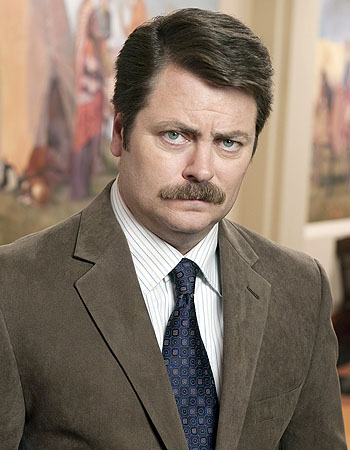
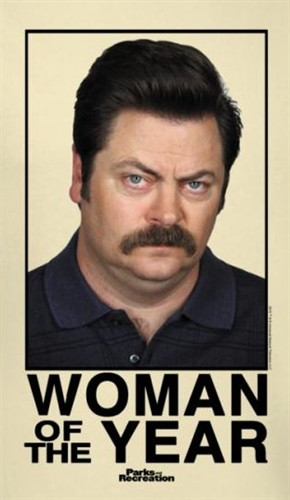
He’s a man, but he’s a man who earns the respect of men, women, and everything in between. He’s also a fictional character, but one who managed to carve a special place in popular culture for all the right reasons. Ladies, gentlemen, and those of unspecified gender, I give you the ultimate feminist hero, Ron Swanson.

To those who haven’t watched every episode of “Parks and Recreation,” bear with me. I have a feeling that those already familiar with the unstoppable force of American manliness that is Ron Swanson don’t need much convincing. They already know damn well why this man deserves to be an icon to men and woman alike.

For the sake of those who haven’t seen the show, and I weep for those people, allow me to explain. Ron Swanson isn’t just a man of many talents, from wood-working to cutting wasteful government spending. He’s a man of principle. Throughout every season of the show, he makes those principles clear and doesn’t give a wet fart about whose feelings or faces are hurt in the process.

Those are ideals that plenty of men can respect. However, it’s how he conducts himself around women that sets him apart even more. The fact he can do so with a perfectly groomed mustache is just an awesome bonus.

One of Ron Swanson’s most defining traits is that he deals with everyone the same way and sees them on a similar level, as individuals. Specifically, he sees most people as morons who annoy him and are too lazy/stupid/weak to solve their own problems. Yes, that’s a somewhat cynical view of people in general, but that’s just it. It’s how he views people.

Ron Swanson is nothing if not even-handed in dealing with men and women alike. Throughout the show, he holds both genders to the same standard. If you annoy him, as most people do, he won’t give you special treatment on the basis of what body parts you may or may not have. Annoyance is annoyance, no matter where it comes from.

That is, in essence, what traditional feminism has been about, treating both genders fairly and holding them to a similar standard. Ron Swanson does that better than anyone. Moreover, he doesn’t need to be constantly reminded. That’s just how he rolls. He doesn’t need any rigorous feminist training.

He also trusts women to be as capable as men in whatever tasks he gives them. While he’s the director of the Pawnee Park’s Department, he delegates most of the tasks to his deputy, Leslie Knope. However, he doesn’t do that because he has to. He does it because he trusts her to do the job and because Leslie wants that job.

His relationship with Leslie Knope shows that Ron is capable of working with women, trusting them, and acknowledging their value in a professional, non-romantic sort of way.

He has a similar relationship with his assistant, the crass and crude April Ludgate. Again, Ron doesn’t give her the job because she’s a woman. He gives her the job because he knows she’ll do it effectively. He also doesn’t try to make her conform to any particular standard for an assistant, gender or otherwise. He lets her be herself. Can you think of fairer, more pro-feminist way to deal with a female employee? I think not.

Beyond his working relationships, Ron shows he’s also capable of having deeper relationships with other women. Not all of them are healthy, though. He’s been divorced twice, both to women named Tammy. However, it’s these unhealthy relationships that really help solidify Ron’s status as a true feminist hero for men and women alike.

In a sense, Ron’s ex-wives are the very antithesis of feminism. In fact, they’re perfect feminist villains. Tammy One, as Ron calls her, is a joyless, ball-busting tyrant who has the warmth and comfort of a venomous snake. She exists to control everyone around her, especially Ron. She doesn’t accept anyone for who they are. She tries to mold them into whoever she wants them to be. Men and women alike are right to fear her.

On top of that, she works for the IRS. I honestly can’t think of a way to make anyone, man or woman, more terrifying. The fact that Ron survived a marriage with her should immediately give him credibility with any feminist looking to avoid the label of a man-hater.

Then, there’s Tammy Two, as Ron calls her, and while not quite as terrifying, she’s every bit as devious. What she lacks in Tammy One’s callousness, she more than makes up for with weaponized sex appeal. I’m not talking about the cute, lovable kind of sex appeal either. I’m talking about the kind that attempts to strangle a man with brute vaginal strength.

Like Tammy One, Tammy Two attempts to use sex to bend men and everyone around her to her will. Throughout the show, she makes multiple attempts to seduce Ron back into her grasp and almost succeeds a number of times. Despite her supernatural ability to manipulate men with her vagina, Ron is able to resist and break her hold.

On one level, that’s a perfect demonstration of a woman who uses sexuality for manipulation, something feminists and men’s rights activists alike complain about. On another, it also demonstrates that some men cannot be bought with sex, no matter how wild and amazing it might be. Ron is one of those men and he’s a better man because of it.

Despite his experiences with his ex-wives, Ron Swanson still treats women fairly. He’s even a romantic, of sorts, and not just towards bacon. In the later seasons of the show, he meets a woman named Diane Lewis and she’s everything the Tammys aren’t.

She accepts him for who he is, doesn’t want him to change, and eventually marries him. Ron treats her the same. Theirs is a true relationship of equals, a kind that feminists can respect and admire alongside that of Cyclops and Jean Grey. For a man to have endured two failed marriages to two monstrous women, yet still love a better woman for all the right reasons, is as heroic a story as any, especially within a feminist context.

Between the way Ron works with women, the way he loves them, and the way he deals with them, he demonstrates a far more refined approach to feminism than Joss Whedon ever did. He didn’t need to create female heroes. He didn’t need to make multi-billion dollar movies or iconic TV shows. He just had to show that it’s possible to deal with women in a fair, equal, and respectful way.

The fact that Ron does all of that without being the kind of whiney beta-male that makes every male feminist sound like they have a deflated scrotum. Ron is, by every measure, as alpha as it gets when it comes to men. He’s strong, he’s tough, he’s stern, and he has one of the manliest mustaches of all time. No one in their right mind would doubt this man’s masculine credentials.

On top of that, he’s not the kind overly-muscled, John Rambo kind of alpha male with woefully impractical muscles and ridiculous skills that nobody without Arnold Schwarzenegger’s body-building routine can hope to match. Ron Swanson has the build and physique of an actual man. He does set the bar too high or inspire body image issues, except when it comes to manly facial hair.

By nearly every measure, Ron Swanson is the kind of man that should earn him a place in the feminist hall of fame. He is everything men respect and women admire. He should be the icon and hero that feminists refer to.

I’m not saying he’s without flaws. I’m not saying there aren’t other men, real and fictional, who deserve a similar status. I’m just saying that Ron Swanson is the kind if icon that feminists can rally around. Granted, Ron doesn’t care much for rallies, icons, heroes, or annoying people in general, but that’s what makes him Ron fucking Swanson.

3 Comments

Filed under Celebrities and Celebrity Culture, Current Events, gender issues

What Makes A Woman An Asshole?

These days, discussing any inherent differences between men and women is an easy way to turn a casual conversation to a blood feud between radical feminists and angry men’s right’s activities. It doesn’t matter if there’s substance, logic, or legitimate issues involved. It only takes one poorly-worded remark to turn a simple discussion into an all-out gender war.

In general, I try not to take sides in that war or give either side any ammunition. I’ve learned, often the hard way, that no good can ever come from angry debates on the internet about any relevant subject. Eating sand and rubbing my ass on my computer screen would be just as productive.

While this hasn’t stopped me from commenting on certain issues regarding feminism and various gender issues, I’ve generally tried to limit the amount of time and energy I spend on these topics. If I can’t apply it to something sexy or something relating to my efforts to be an erotica/romance writer, I generally don’t bother.

Well, when I did my article on the factors of what makes men assholes, I knew I would do something similar for women at some point. For one, it’s only fair that I give both genders equal weight on this topic because being an asshole is one of the few issues that’s truly gender neutral. No matter what genitals we may or may not have, we still have assholes and we’re just as capable as being one.

However, and this is where I’m sure I’ll get in trouble with the more radical elements of gender issues, women deal with very different dynamics, compared to men. Some are biological. Some are societal. Some are just basic variations we see from person to person. Regardless of how convinced you are of one gender’s superiority/inferiority, it’s impossible to deny that both genders breed assholes.

As with the men, understanding those factors is important to creating characters in a story. Not all of the female characters involved will be paragons of virtue with the chastity of a devout nun. Some are just going to be assholes who just happen to be female.

Skin Deep” had more than a few female characters who fit that description. In fact, you could argue that Mary Williams, the second protagonist and primary love interest to Ben Prescott, started off the story as a selfish asshole who didn’t realize she was just exploiting her looks to be popular. While she underwent a dramatic change, others like her friend, Melissa Miller, did not.

It’s debatable just how much an asshole Melissa was in the context of the story. She was definitely no Regina George or Quinn Morgendorffer, but she definitely walked a fine line between just being selfish and being an outright asshole of the bitchiest variety.

As with men, we’ve all probably dealt with female assholes at some point in our lives. The main difference with women is that they’re not as overt about it, compared to men. Yes, I realize there are some women who will match and exceed men in certain instances, but in general, the female genders have an style of asshole that’s all their own.

So, just as I did with the men, I’m going craft another list of basic factors to explore the unique elements associated with female assholes. Some might also call these the factors of a bitch, but I prefer the asshole label and not just because it’s more gender neutral. A bitch can just be a state of mind. An asshole is a way of life.

Again, I realize that this list will be somewhat limited than the one for men because I’m a man. However, I’m also human and women are human, last I checked. I don’t deny that my gender does influence the way I interpret the world and that has shown on this blog before. So please keep that in mind before you start another gender war on this blog.

It’s also because I’m a man and my perspective is limited, I encourage the female portion of my audience to comment and, if necessary, correct my list. I think it’s important that we all know the factors influencing male and female assholes, alike. If we’re going to have to deal with these people in life, then we might as well be proactive.


Asshole Factor #1: Completely (And Willfully) Lacking In Self-Awareness

It’s one thing for a girl just to be ditzy and clueless. There are women, and even plenty of men, who just haven’t made enough sense of the world to really understand why some of the things they do come off as annoying. These people aren’t assholes. They’re just ignorant or misguided.

What crosses the line between ignorant and asshole is akin to a suspension of belief that just being a girl is somehow a substitute for actually doing something. This is most comment with cute, naturally beautiful women who think people are nice to them just because they’re inherently awesome.

They think this, despite wearing skin-tight jeans and push-up bras. It would be one thing if they just flaunted their beauty with the full understanding that it gave them an edge. Those kinds of women aren’t assholes. They’re just honest. The dishonest ones, namely the Quinn Morgendorffers of the world, don’t even make the effort.

Beyond the laziness, that willful lack of self-awareness ensures they always have a flawed view of the world. They think they’re more special than they actually are and don’t make an effort to do anything other than exploit their looks or their gender. The extent to which they’ll avoid any meaningful depth is what makes them a unique brand of asshole.


Asshole Factor #2: Getting Others To (Unknowingly) Fight Their Battles For Them

This is something I find that women do better than men in almost every case. It would actually be strategic and cunning if it weren’t such a common tactic for assholes. Whereas a male asshole would just brutishly charge into battle, swinging his fists and not caring if his fly was unzipped, a female asshole will get others to do the hard work for them so she can sit back, sip martinis, and laugh her ass off from a distance.

Sometimes it takes the form of lurid gossip that turns into full-blown rumors. Sometimes it takes the form of using social status to effectively outsource direct acts of assholery. Back in college, I knew a girl who gave her ex-boyfriend’s roommate a blowjob in exchange for installing malware on his laptop. Yes, it was an asshole move, but you can’t argue with results.

This is also what makes asshole women every bit as dangerous as men, if not more so in some instances. Just ask Cersei Lannister. They don’t even have to go so far as to offer a blowjob or a nude picture to get others to do stuff for them. Sometimes, they just create the impression that doing their bidding will win them favors that may involve nudity. Sure, it’s working smarter and not harder, but it still makes her an asshole.


Asshole Factor #3: Treating Every Friend And/Or Lover As Disposable

This is probably the most overt manifestation of the female asshole. That’s not to say men don’t do it too. They most certainly do. There are men who treat women and other men with the same care as a used candy wrapper. What sets women apart, though, is the breadth and spectacle of their actions.

It’s one of those traits that’s easy to spot in spoiled rich girls who see everyone as an employee who is legally required to do what they say. However, it also shows up in the non-spoiled brat crowd just as often. Whether a girl is just pretty or well-connected, she actively avoids any deeper connection with others. People are just a means to an end for her.

Whereas asshole men will often employ that approach when it comes to getting sex, women use it to get everything, including sex. The line between their friends, colleagues, and lovers is distressingly thin, if not invisible. The second she’s done with someone, or senses they serve no further purpose to her, she jumps at the first opportunity to abandon them like a used tissue.


Asshole Factor #4: Making Everything An Agenda For Or Against Them

People blaming other people for their failings is nothing new. Everybody of every gender has done it at some point in their lives to some extent. It’s part of the mechanism that our brains use to protect our overly fragile ego. It doesn’t always make someone an asshole, but it certainly can when taken to an extreme.

In my experience, women are more eager to go to that extreme then men. It often shows up at radical feminist rallies or internet shouting matches about who’s the bigger victim. Whatever the setting or the ideology, the intent is the same. The female asshole goes out of her way to not just blame everyone for their problems, but make it seem as though everyone is actively plotting against her.

This is conspiracy thinking on the level of Alex Jones, assuming he’s not faking it. It’s what female assholes use to either derail or end an argument. It doesn’t always have to involve debates on feminism too. A simple debate with a friend, spouse, or co-worker can turn everyone into a Lex Luthor level villain who deserves every asshole thing done to them.

Such asshole tactics, when employed effectively, can make it both convenient and easy for someone to be the kind of asshole they want to be. While male assholes may occasionally explore these tactics, female assholes have mastered them.


Asshole Factor #5: An Eagerness To Weaponize Whining/Annoyance

This factor goes all the way back to childhood for certain asshole women. They learned early on that whining incessantly can help get them what they want and they never unlearned that tactic when they got older. When they were little, it made them a brat. As an adult, it makes them an asshole.

In my experience, women channel their ability to whine and annoy better than any man. It’s not enough for them to just be loud. They’re very tactical with their whining, striking just the right emotional chords to get someone to react in just the way they want. They’ll still be the asshole, but they’ll make it so everyone around them is an even bigger asshole by not heeding her whining.

On some levels, asshole women seem to know that people in general have a low capacity for annoyance. If they exceed that capacity to any reasonable extent, they can get others to either concede their point, even when they’re wrong, or make any meaningful exchange impossible. It’s basically the social equivalent of cheating at a video game and cheaters tend to be assholes.


Asshole Factor #6: Always Talking Down To Everyone (And Never Justifying It)

In general, we expect assholes to talk down to us. At the same time, however, we celebrate and cheer leaders who do the same. What’s the difference? Why do we love one and hate the other?

With respect to assholes, it has to do with merit. A good leader earns the right to talk down to others. Assholes don’t even bother. Male assholes might be loud and annoying, but at least they’ll yell directly into your face. A female asshole has to take it a step further. She has to elevate herself or bring someone else down before she can start yelling.

This is where asshole women maximize their excuse bank, doing anything and everything to put them in a position to yell at others in a way where they can’t respond. We see it lousy teachers, bad parents, and women who just think they deserve a greater say because they have a vagina.

The tactics may be more subtle, but the themes are the same. An asshole will not give two licks of a squirrels nut sack about substance, effort, or reason. They would rather just skip those steps and get to the part where they can just be an asshole and get away with it.


Once again, please refrain from turning the comments section of my blog into Round 1,039,280,860,896,077 of angry feminists versus whiny men’s rights activities. I understand my blog doesn’t get the kind of traffic to warrant that level of discourse just yet, but I would still prefer to leave those kinds of discussions to 4chan and Reddit.

As with the men’s list, though, I encourage others to leave comments and suggest other factors to add to either list. The struggle against assholes, male and female alike, is real for all of us. The more we know, the better-equipped we’ll be in the long run.

7 Comments

Filed under Jack Fisher's Insights, Marriage and Relationships, Reasons and Excuses