Tag Archives: Heroes

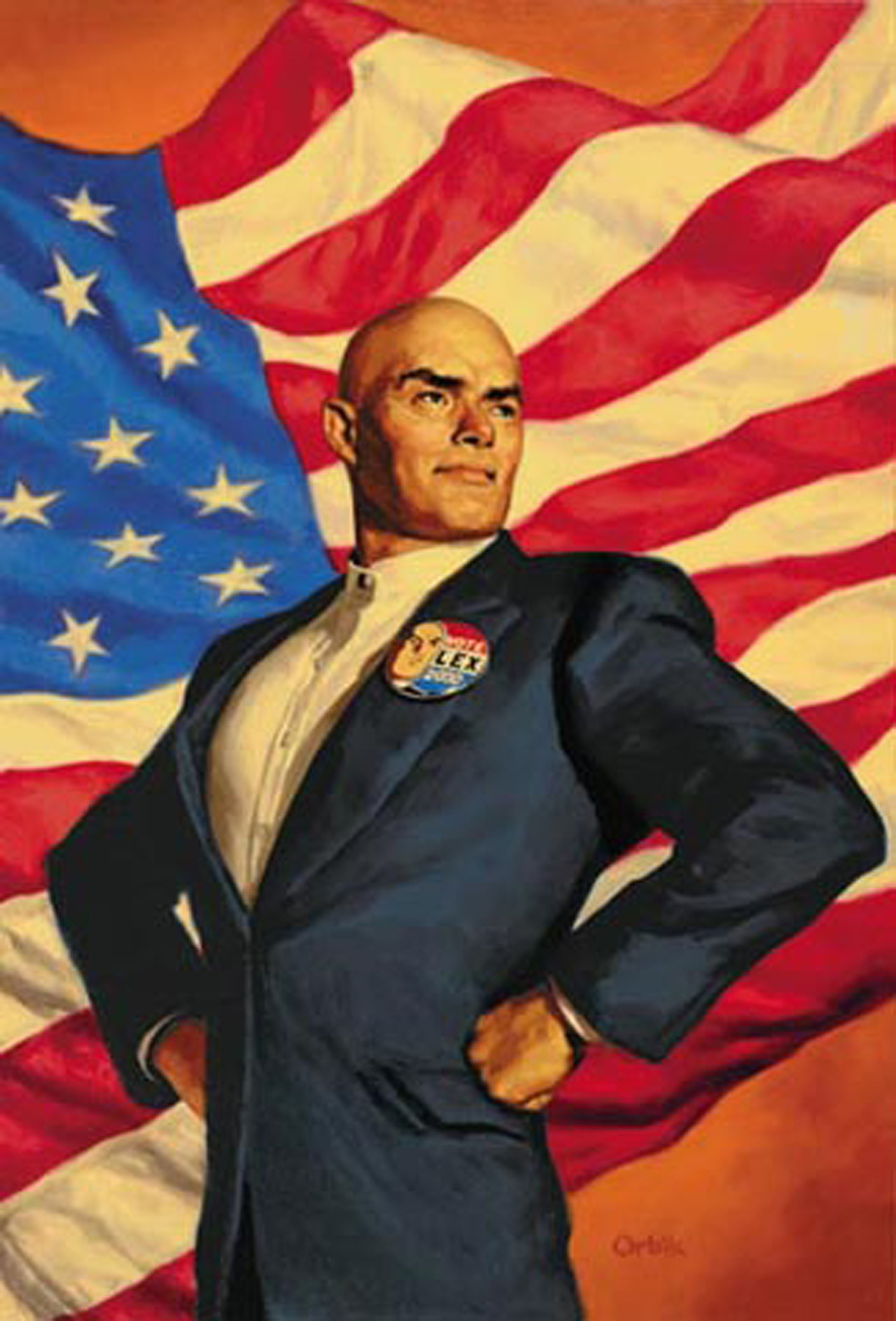
Why Lex Luthor Is The Ultimate Villain

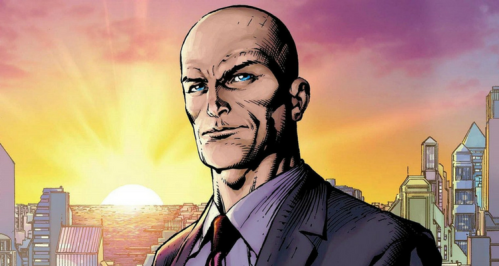
lex-luthor

What makes a villain truly evil? It’s a question with many answers that apply to both the real and the fictional world. History is ripe with real people with villainous tendencies on par with that of any mustache-twirling villain in fiction. The world of fiction is just as vast, full of all sorts of cruel, sadistic, greedy beings that range from alien conquerors to psychotic killer clowns.

Then, there’s Alexander Joseph “Lex” Luthor. What Superman is to heroes, an ideal and a standard to which others aspire, Lex Luthor is to villains. Think back to the question of what makes a villain evil. Lex Luthor checks every box and even a few others you probably didn’t think of.

In the spirit of celebrating Superman’s 80th anniversary, which I went out of my way to honor, I think it’s just as important to appreciate the other, less heroic side of the spectrum. Superman occupies the extreme end of that spectrum, namely the side that embodies truth, justice, and the highest of morals. Lex Luthor, conversely, is at the other end, one where the depths of greed, hatred, and outright cruelty are at their worst.

To that end, it’s impossible to appreciate the values Superman stands for without also appreciating the villainous traits that Lex Luthor personifies. I’ve noted the major differences between the journey that a villain takes, compared to that of heroes. I’ve also singled out characters like Walter White, who have given a new level of complexity to modern villains. However, the villainy of Lex Luthor is as basic as it is profound.

Lex Luthor doesn’t need the same complexity as Walter White, nor does he need the tragic circumstances that help forge villains like Magneto. Lex is a villain to his core. He needs no catalyst or motivation. He is, by his own nature, an arrogant, selfish person who will go to any length to get what he wants and/or deserves, regardless of cost or ethics.

Despite that simple, if not inelegant approach to villainy, Lex Luthor still finds a way to elevate himself above the many other villains that occupy the real and fictional world. It’s not just because he’s Superman’s primary adversary either. At his core, Lex represents something that highlights the breadth of true villainy.

Like most iconic villains, Lex Luthor’s status was closely tied to that of the hero he opposes. He first appeared in Action Comics #23 in 1940, a full two years after Superman debuted. Like most villains in those days, he didn’t get much development or backstory. He was simply the extra devious bad guy who tested Superman more than most.

Over the years, Lex Luthor’s story has evolved, but the extent of his villainy has never waned. The modern version of Lex Luthor, which became canonized after the big 1986 event known as Crisis on Infinite Earths, is defined largely by his greed, ego, and extreme xenophobia. He became less a mad scientist and more heartless narcissists.

Through that evolution, Lex establishes a blunt, but powerful method to his villainy. He is, at his core, a selfish egotist. There isn’t an altruistic cell in his body. Everything he does is for one purpose and that’s to profit and/or glorify himself. It doesn’t matter whether he’s battling Superman or creating a community of low-income housing. It’s all to serve him and his interests.

In the same way you can assume that every decision Superman makes is in the name of truth and justice, you can also assume that everything Lex Luthor does is in the name of benefiting Lex Luthor. Even by Ayan Rand standards, Lex’s motivation are extreme. At the end of the day, he’s out for himself and no one else.

To some extent, though, that’s what makes him even more devious. In his endless crusade to serve himself, Lex will portray himself as less a villain and more a hero who is out to use his unrivaled genius to make the world a better place. He has even become a hero on multiple occasions within the annuls of DC Comics.

Lex Luthor will save the world. He’ll even work with Superman every now and then. However, such efforts are never in the name of doing the right thing. It always comes back to Lex serving his own agenda. He understands, at the end of the day, that no one can glorify him if the world is destroyed.

Even with those circumstances, though, Lex still finds a way to set himself apart from other villains. Characters like Dr. Doom, Thanos, and Darkseid definitely fit the mold of a villain, but even they have motivations that go beyond their ego. You could even argue that villains like Dr. Doom often blur the line because their actions sometimes align with what most consider the greater good.

With Lex Luthor, though, there are no blurred lines. He is not Dr. Doom in that he feels he needs to rule the world to ensure that it’s free from want and suffering. From Lex’s point of view, ruling the world and destroying Superman are simply a means to further glorify his ego and fuel his narcissism.

That’s what makes him so dangerous, but it also reveals something profound about villainy itself. It’s not always simply a product of being greedy and sadistic. To some extent, it’s a byproduct of being entirely self-serving and having no inclinations for selfless acts.

Whereas most people would feel some level of guilt for that level of selfishness, Lex feels nothing of the sort. That’s not to say he’s a sociopath on the level of some serial killers. He just feels that he rightly deserves all the power and aggrandizing he wants. It’s not a matter of morals. It’s a matter of him just being better than anyone else.

It’s in that domain where Lex’s rivalry with Superman becomes truly adversarial. Unlike Superman, Lex is human. However, he also happens to be the smartest human in the world, as well as one of the smartest beings in the entire DC Universe. That means he doesn’t just think he’s better than anyone else. He can actually prove it.

That’s how he’s able to craft insanely advanced technology. It’s also how he managed to get elected President of the United States at one point. It’s not enough to have a massive ego. It’s that he’s smart enough and ruthless enough to outwit anyone into serving him. There’s simply no way for any other human to match him on an intellectual level.
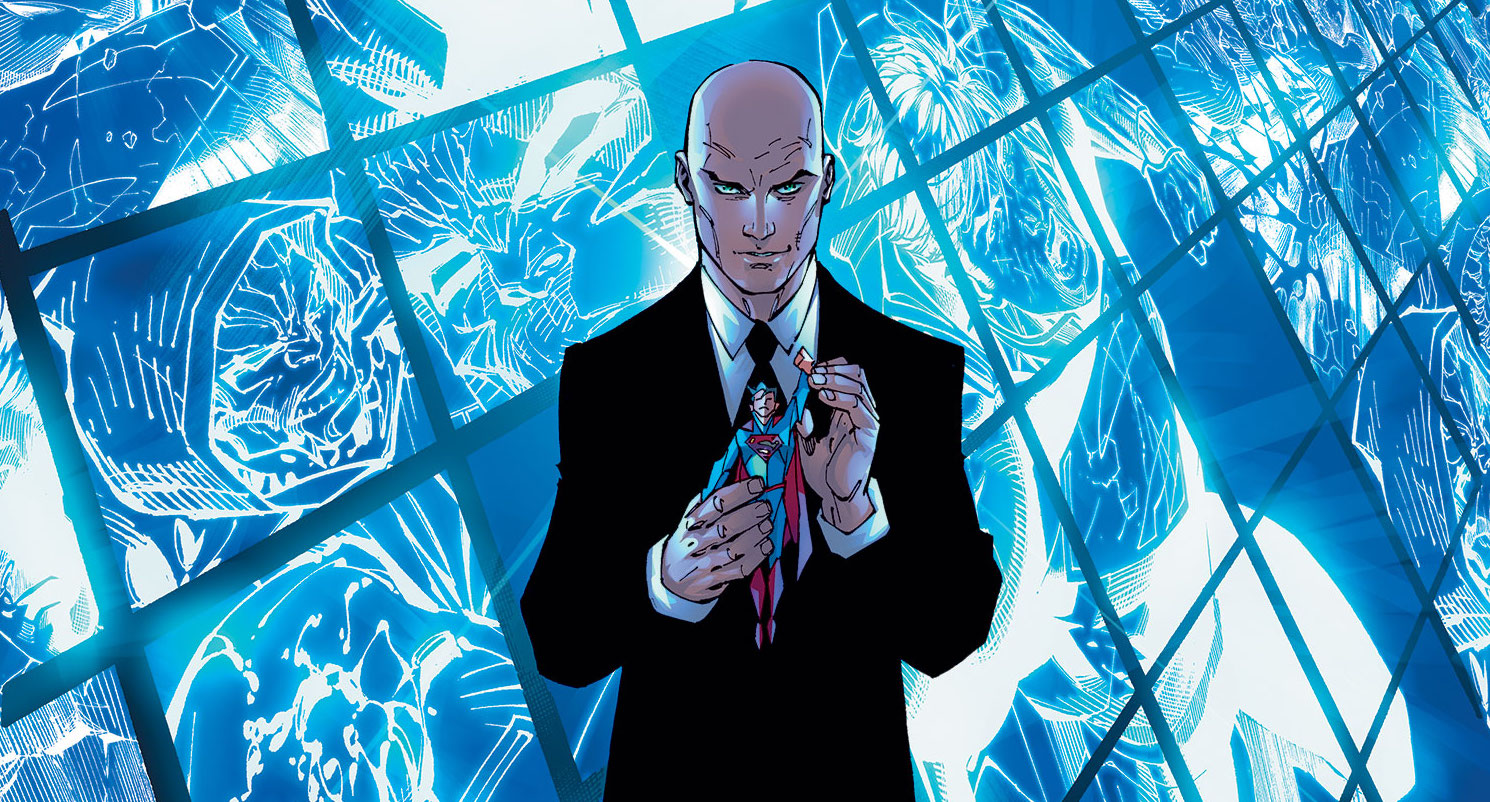
That’s where Superman enters the equation. That’s also what fuels Lex’s unparalleled hatred of him. From his point of view, the very existence of Superman undermines his ability to establish himself as the most superior person in the world. More than that, though, he see’s Superman’s presence as a degrading force to the human race as a whole.

It’s a sentiment that isn’t often touched on in the comics or recent movies, but it is perfectly articulated in the animated feature, “All-Star Superman.” If ever you want a perfect demonstration of Superman’s heroism or Lex Luthor’s villainy, this movie is the current gold standard.

Beyond the condescension, the bragging, and the insufferable ego behind his words, Lex Luthor makes some uncomfortably valid points. In light of Superman’s impossible ideal, every human being falls short. Even him, the smartest human being of them all, can’t hope to match it.

From Lex’s point of view, that’s not just profoundly insulting. It undermines the entire human species. The existence of an alien god-like being reduces humans to a bunch of ants under the boot of a titan. By relying on that being, looking up to him as an ideal, people can only ever hope to be better ants and nothing more.

Even if that thinking is valid on some perverse level, Lex takes it even further by making it the ultimate excuse. By establishing Superman and heroes like him as affronts to his rightful place at the top of humanity, he can basically justify anything. Read into his history and you won’t find any shortage of atrocities.

It’s for that same reason that Lex rejects any notion of truth, justice, and the American way. As he also articulated in “All-Star Superman,” he sees those concepts as inherently flawed. They’re just vague concepts that can’t be touched, measured, or quantified in any meaningful way. In Lex Luthor’s world, all that matters is what he can do with the forces around him and how they can be used to glorify him.

As a villain, Lex Luthor doesn’t live in a world of abstracts, ideals, or faith. His world is cold, calculating, and deterministic. Much like Superman, he puts a face and a name on a particular archetype. Unlike Superman, though, he doesn’t evoke hope or inspiration. He inspires fear, hatred, and mistrust.

By standing against Superman, challenging him in ways that even other god-like beings can’t, Lex Luthor demonstrates just how far someone can take true villainy. In his world, nothing is ever given. It’s either earned, taken, or stolen. Things like compassion, empathy, and love are weaknesses and not strengths. They are barriers to overcome and not strengths to embrace.

Even by the standards of Rick Sanchez from “Rick and Morty,” that kind of extreme callousness is excessive. At least under Rick’s nihilistic outlook, there’s a context to his action. For Lex Luthor, though, the only context that matters is the one that serves Lex Luthor.

Superman is a beloved heroic icon and for good reason. He represents the best to which a hero can aspire. However, the extent of those aspirations and the power of that heroism is hard to appreciate without also acknowledging the villainous side of the struggle.

Superman is the hero he is because he has a villain like Lex Luthor to battle. Lex Luthor is the villain he is because Superman pushes him. However, even in the absence of Superman, Lex would still be the kind of villain who hurts, exploits, and deceives anyone and everyone to serve his agenda. That, more than anything, is what makes him the ultimate villain.
4 Comments

Filed under Comic Books, Jack Fisher, Superheroes, human nature

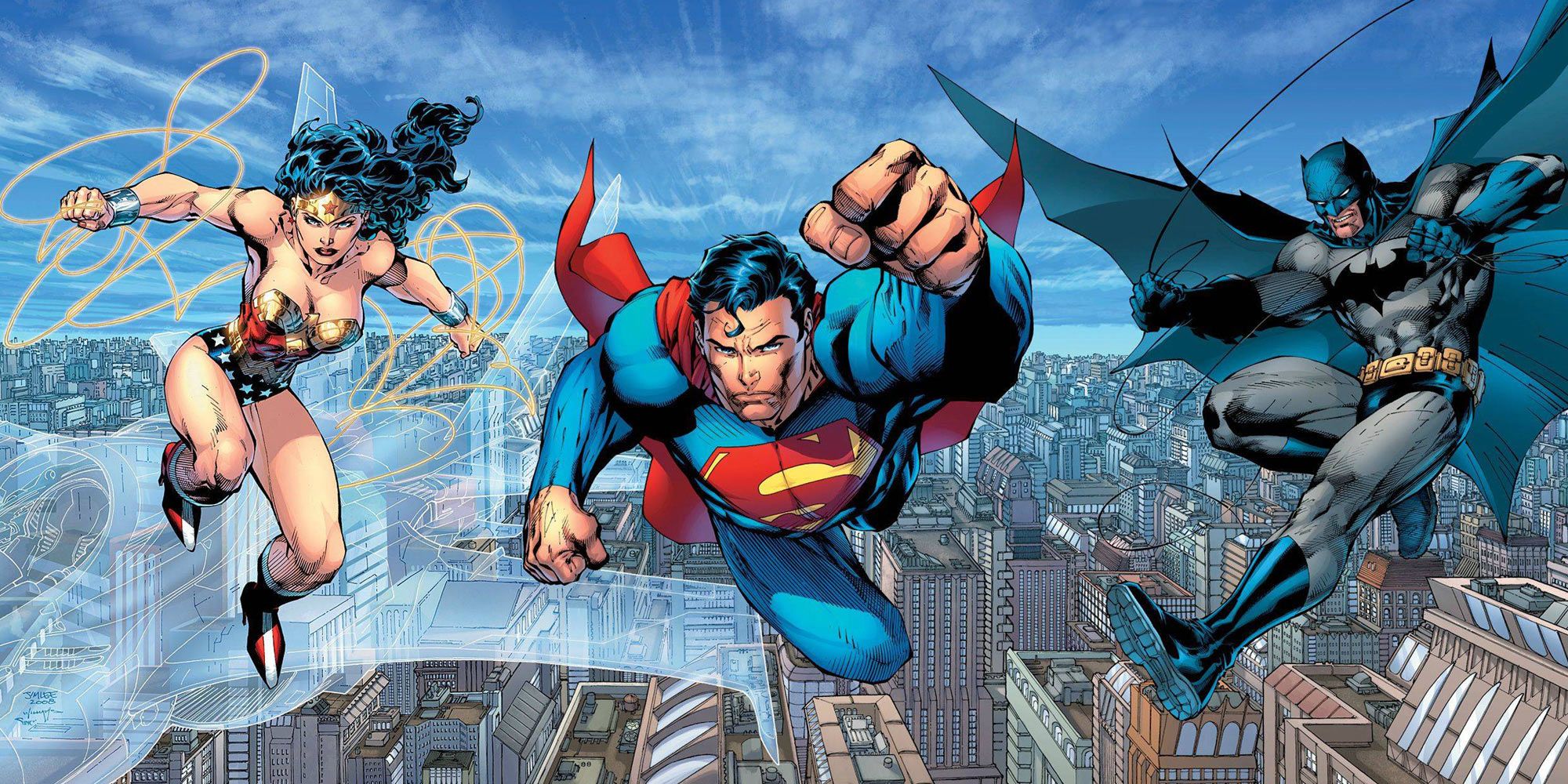
Why Wonder Woman Is The Most Important Member Of The Justice League

There’s a lot that can be said about the “Justice League” movie. Granted, not a lot of it has been good lately. The horrendous critical reception, despite the solid audience reception, has effectively muted the sheer accomplishment of creating this movie in the first place.

It is a hell of an accomplishment, creating a live-action “Justice League” movie just two decades after “Batman and Robin” nearly ruined the genre completely. While the success of movies like “The Avengers” has undermined the novelty of the concept, it still means something to those like me who grew up loving these characters in comics and cartoons.

I could spend multiple blog posts discussing and dissecting the issues with the “Justice League” movie, but I’ll save them for another time. For now, I want to take a moment to highlight an important point that the “Justice League” made, despite all the controversies and shortcomings that hounded it. That point is this.

Wonder Woman is THE most important member of the Justice League.

I know that sounds like something a hopeless fanboy would say, particularly those who enjoy talking about the kinkier elements of Wonder Woman’s history. It’s probably something most Wonder Woman fans would agree with and not give much thought to. However, I’d like to take a moment to make my point, even to those die-hard fans of Superman, Batman, and even Plastic Man. You know who you are.

Even among those die-hard fans, there’s no denying that Wonder Woman is part of DC’s superhero trinity. For decades, Superman, Wonder Woman, and Batman have been the anchor of DC’s entire superhero universe, both in terms of popularity and importance. That superhero foundation is unlikely to change anytime soon.

Most of the time, though, Superman or Batman wield the most influence. Between Batman’s cast of iconic villains and Superman’s iconic status, they have a lot going for them, in terms of influence and depth. I don’t deny the strength of their status, nor do I think Wonder Woman trumps them on every level.

However, I still contend that Wonder Woman is the most important member of DC’s superhero pantheon in terms of impact, theme, and narrative. She may never get as many movies as Batman. Considering she has the same number of movies as Catwoman, though, I don’t think that’s a fair measure of Wonder Woman’s importance.

The reason I believe she is that important has less to do with her role within the world of DC and more to do with how she goes about being a hero and an icon. Her situation is very different from that of Batman, Superman, or any other hero in the DC universe, male or female.

Wonder Woman didn’t enter a flawed world that needs heroes by accident or tragedy. In fact, she had every possible reason to not join that world. Her situation before becoming a hero was as ideal as it gets without ripping off a Disney movie.

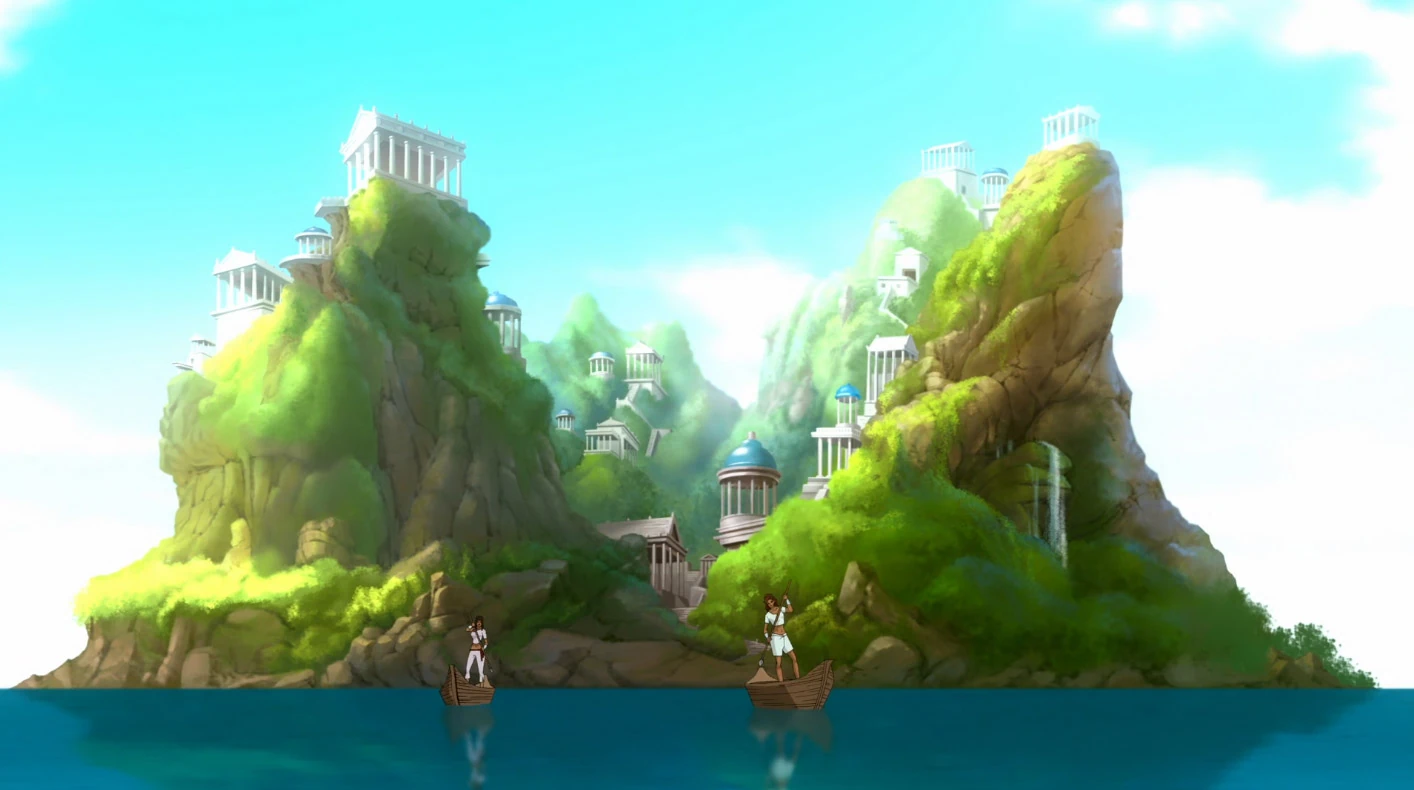
She was a princess on Themyscira, a literal island paradise. As the daughter of Hippolyta, she wanted for nothing. She was surrounded by love, support, and luxury of every kind. Who would ever be inclined to leave such a place to begin with? Those who saw the “Wonder Woman” movie remember that her mother did not want Diana to leave and did what she could to dissuade her.

Despite this, Diana still left her paradise home. She chose to enter a world full of gender inequality, oppression, and bad reality TV. She chose to confront all those flaws and fight them, both with her fists and her heart. She didn’t need to lose someone or be forced by tragedy. That alone makes her a greater hero than most can hope to be.

Contrast that with Batman or Superman. Batman became who he is because of tragedy. Crime took his parents so he built his entire heroic persona out of a response to that tragedy. It helped drive him to become the hero he is. It also led to some pretty insane feats, even by comic book standards.

Superman’s heroic persona wasn’t built on quite as much tragedy, but like Batman, he was somewhat guided into the heroic role. From the time he was an infant, these ideals were in stilled in him. Those who saw the classic 1978 “Superman” movie remember the message his father gave him, through the famous voice of Marlon Brando.

Live as one of them, Kal-El, to discover where your strength and your power are needed. Always hold in your heart the pride of your special heritage. They can be a great people, Kal-El; they wish to be. They only lack the light to show the way. For this reason above all, their capacity for good, I have sent them you…my only son.

Whether by accident or luck, Superman ended up with perfect loving parents who helped nourish those ideals in him. Between those ideals and his immense powers, him not being a hero was never really an option.

With Wonder Woman, she didn’t need circumstances or guidance. She chose the path that led her to becoming a hero. She even chose that path when there were obstacles in her way, namely her mother. Beyond that choice, though, Wonder Woman’s heroism takes on an even greater context when you look at how she goes about it.

Superman may be the ideal when it comes to heroic values. Batman may be the ideal when it comes to seeking justice. However, Wonder Woman’s ideals are even greater in the sense that they’re concepts that ordinary people can relate to. Despite all her power, her approach is something that is wonderfully unifying, if that’s not too fitting a term.

She doesn’t just provide a standard with which to measure heroism. She goes out of her way to confront the good, the bad, and the frustrating of the modern world and not always with her firsts.

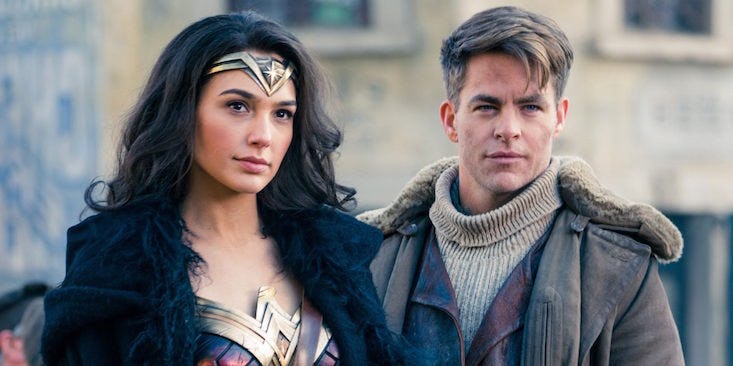
In the “Wonder Woman” movie, she doesn’t just criticize the attitudes of early 20th century England, which weren’t very progressive to say the least. She smiled and cheered when she saw a woman with her baby. She also went from fighting alongside men on a bloody battlefield to celebrating with them afterwards.

Along the way, she always wore her heart and her emotions on her sleeve. However, they weren’t a weakness, as they’ve been with Superman. They weren’t her primary motivation either, as is often the case with Batman. She channels her emotions and her passions to win over the hearts of men, women, children, and everyone in between. That’s a power that far exceeds anything form Superman’s strength or Batman’s gadgets.

That ability to embrace a flawed world, confronting its ugliness and its beauty, is something that everyone can do and not just Wonder Woman. She just does it better than most and inspires others to join her. She certainly inspired Steve Trevor in the “Wonder Woman” movie. The fact it got Chris Pine naked was just a nice bonus.

It’s an approach she utilizes in every other medium, from comics to cartoons. For those who enjoyed seeing Wonder Woman’s capacity for heart and strength, I urge you to check out the “Justice League Unlimited” cartoon from the early 2000s. There’s no naked Chris Pine, but Wonder Woman still shines in so many meaningful ways.

Every one of those ways comes back to her heart and her willingness to embrace a flawed world with love and compassion. It’s not just about what is right and wrong, just and unjust, or masculine or feminine. It’s about tempering hate and oppression with love and compassion. Those are powerful principles that work just as well in the real world as they do the fictional one.

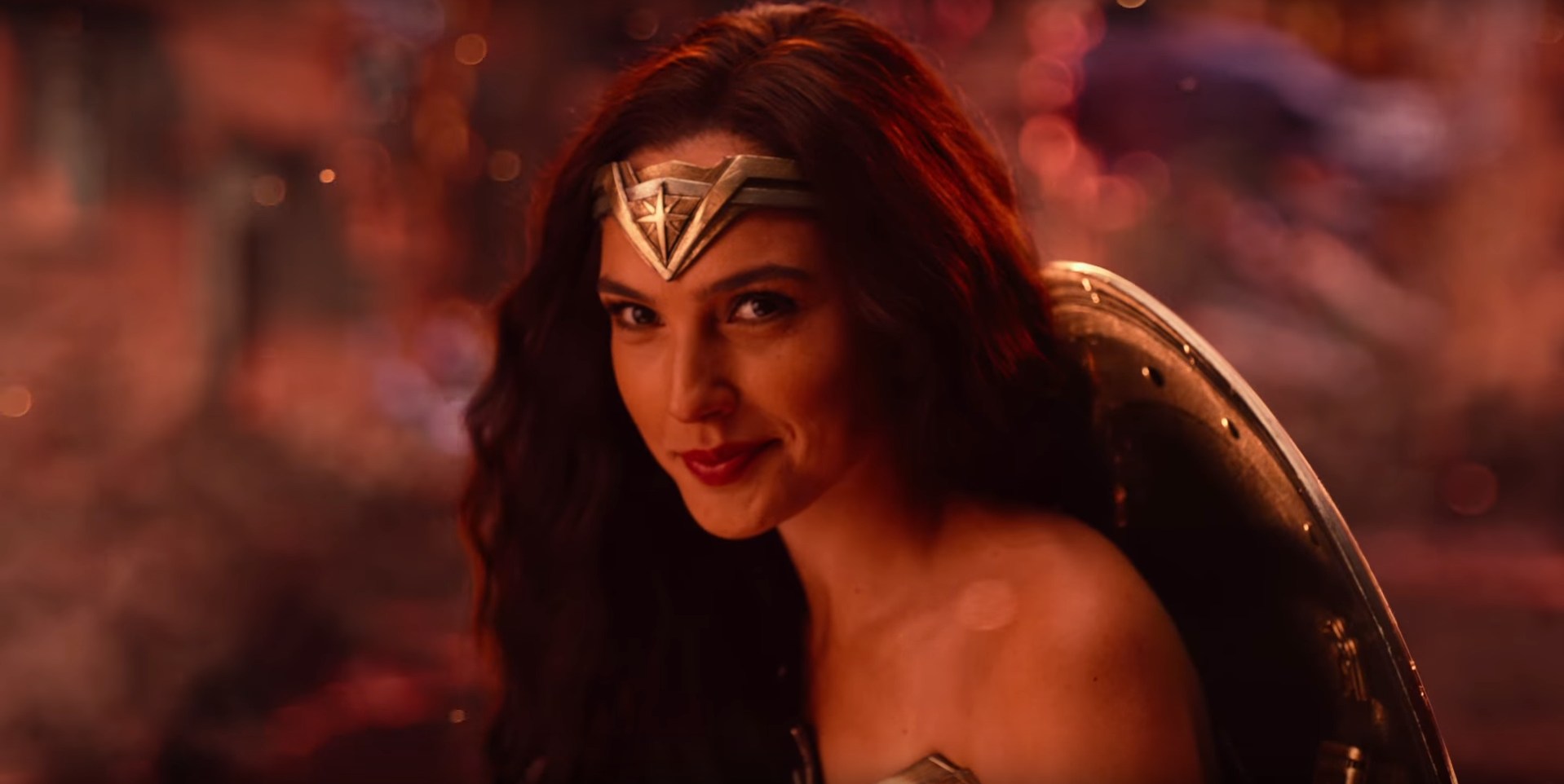
While those principles might not help the critical reception of “Justice League,” those who’ve seen the movie have likely seen all the ways Wonder Woman uses her heart and her skills to the utmost. It may not convince everyone that she’s the most important member of the Justice League, but I hope it makes a powerful case.

It’s a concept that will likely carry over into future movies in the DC Extended Universe, but has already shown itself to be true throughout the comics, especially in recent years. Superman and Batman have their place and their status among the world of superheroes. However, Wonder Woman’s impact extends far beyond any comic book or movie. It’s an impact that we would all be wise to learn from.

2 Comments

Filed under Celebrities and Celebrity Culture, Comic Books, Jack Fisher, Superheroes, gender issues

In Memory Of Stanislav Petrov: The Man Who (Literally) Saved The World

Stanislav Petrov

Today is an important day, one that became even more important this past year. You probably didn’t realize it and for good reason. Until recently, the significance of this day had been lost to history, but it’s a day that deserves recognition, albeit for a very sobering reason.

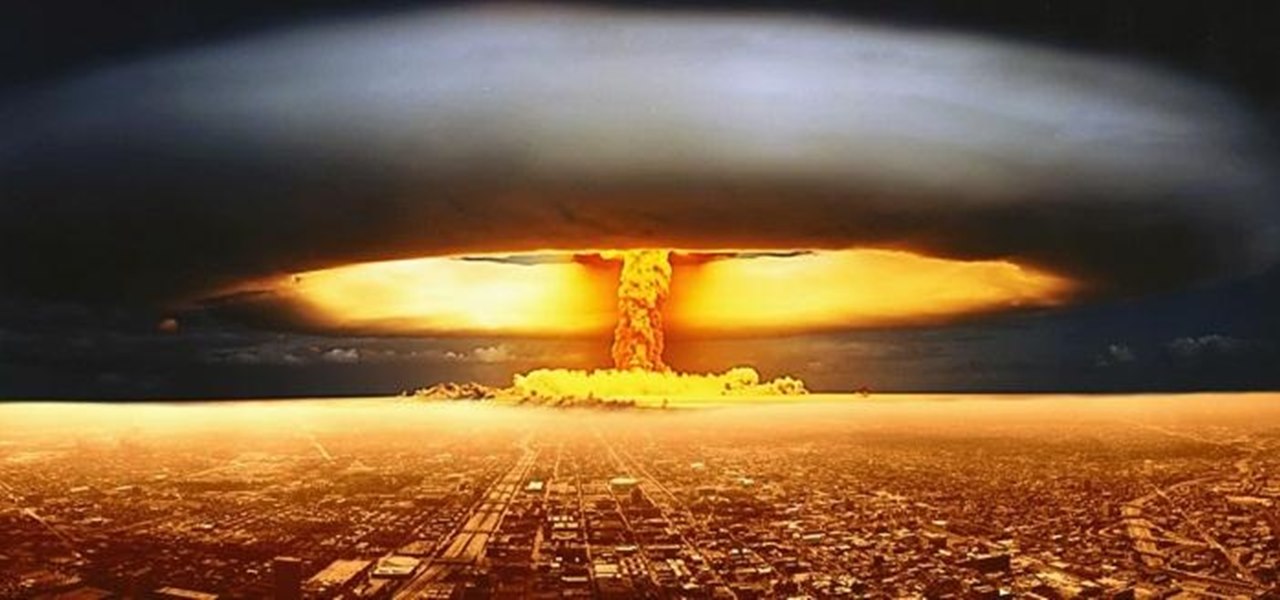
This day became one of the most significant days not affiliated with a holiday sale at the mall on September 26, 1983. On that day, the world as we know it almost ended. That’s not a hyperbole. That’s not a conspiracy theory out of a an Alex Jones fever dream either. It’s painfully true. The world almost died in a nuclear fire on that day, but it didn’t because of a decision made by one man.

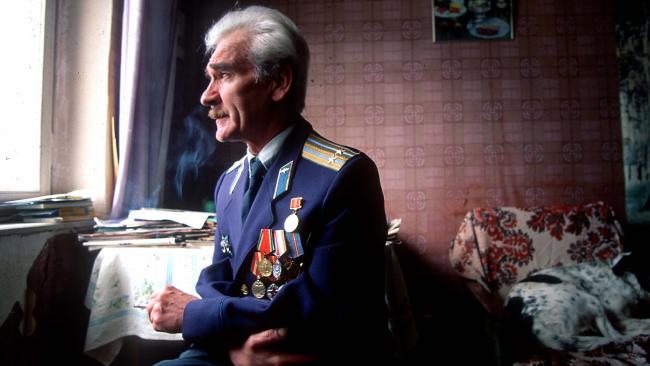
That man’s name is Stanislav Yevgrafovich Petrov and if you were alive on that day, or were born after it, then you owe your existence to this man. For a brief moment on that day, 35 years ago, he literally held the fate of the world in his hand and he made the decision that saved it. As someone who regularly lauds superheroes and the values espoused in comics, even I can’t overstate the significance of what that man did.

The incident that almost ended the world and made Stanislav Petrov a man for the ages widely known about until the mid-2000s. It involved an incident in the former Soviet Union that brought the world to the brink of nuclear annihilation. In terms of worst case scenarios, this ranked right up there with an invasion by aliens armed with atomic anal probes.

At the time, Petrov was a lieutenant colonel in the Soviet Air Defense Forces and had been on duty at the Serpukhov-15 bunker near Moscow. In terms of Soviet defense strategy, his role in that bunker was pretty damn important. It was tasked with monitoring Soviet air space to detect an incoming nuclear attack.

It’s worth mentioning that this was a time of heightened tension. President Reagan, at the time, was going long and hard on anti-communist rhetoric. Being a former Hollywood actor who’d just been elected President, the Soviets had no idea if this guy was just going to shoot nuclear missiles at them because he thought it would make a great movie.

In a sense, this was the worst possible time for the systems at the Serpukhov-15 bunker to give a false alarm, but that’s exactly what happened. In the middle of Petrov’s shift, the systems began blaring every alarm it was possible to blare, telling them that America’s new Hollywood President had done just what they’d feared. He launched a full-scale nuclear attack to wipe out the Soviet Union.

I’d say it’s a nightmare scenario, but no amount of killer clowns armed with chainsaws can do justice to this kind of horror. As far as the men in that bunker knew, their country and everyone they loved was about to die in a nuclear inferno. It was the policy of the USSR and the Red Army to respond to any nuclear attack with a devastating retaliation, as specified in the doctrine of mutual assured destruction.

It was Stanislav Petrov’s job/duty to inform the Soviet high command of the detection. Every bit of his military training demanded that he inform his superiors to retaliate, thereby destroying the United States and Western Europe in reign of nuclear fire. In a state of such heightened tensions, he might have been justified in doing so.

All it took was one call to his superiors. That would’ve been it. That would’ve ended the world, as we knew it. Try and think about that for a second. In that moment, the fate of the world and billions of lives lay on the shoulders of Stanislav Petrov. If he makes that call, then the world as we know it is over.

However, in that moment when he literally had the world on his shoulders, he didn’t make that call. In that moment, he made a decision that saved the world and its future. He did it by not following the protocol that he’d been trained to follow and by the Soviet Union, no less, who were not known for being understanding to disobedience.

Petrov, with his duty and the weight of the situation bearing down on him, believed it to be a false alarm. He had good reason for believing this. The systems were detecting only several missiles, which was pretty small, given the sheer size of America’s nuclear arsenal. If America’s Hollywood President really wanted to wipe out the Soviet Union, he definitely would’ve used more.

Even so, his training and his duty told him to inform his superiors. He only had 15 minutes to do so because that’s how long it took for a detectable missile to reach its target. That’s right. In the time it takes to watch an episode of “Robot Chicken,” Stanislav Petrov had to make a decision that would’ve determined the fate of this entire planet.

The fact that no nuclear bombs went off and billions of people didn’t die is proof that he made the right decision. It was later determined that the false alarms were caused by a rare alignment of sunlight on high-altitude clouds and the erratic orbits of the Soviet’s satellites.

It seems so trivial now, but keep in mind that these were tense times during the Cold War. It really didn’t take much to spook either America or the USSR. It could’ve easily become a perfect storm, of sorts, for accidental nuclear annihilation and nobody would’ve been left on this planet to admit they screwed up.

It’s because of Petrov’s decision that day, to not follow protocol and trust his instinct, that we avoided Armageddon. For that decision, Petrov received no metal, commendation, or recognition for his decision. He just got a pat on the back, which was the most anyone could hope for in the Soviet Union at that time.

This man literally saved the world in the most painfully literal sense, but was quickly forgotten. There were no parades, movies, or free tickets to a Madonna concert. Petrov just went back to living his life until he retired from the military.

It really wasn’t until 2004 that Petrov began getting recognized for his actions, that day. By then, though, the weight of that moment had lost its place in the public consciousness. The fact I have to write about it on this blog shows just how little awareness this man and that fateful day have in the annuls of history.

Well, in this year, that day became a lot more important because back in May, Stanislav Petrov passed away at age 77. It wasn’t widely reported. It didn’t even get mentioned on any of the major news outlets in America or Russia. This man who saved billions of lives isn’t even alive anymore to appreciate.

He lived a quiet, unremarkable life towards the end. He never considered himself a hero. He never even tried to put that label on himself. He was just the right man in the right place to make the right decision. In doing so, he saved billions of lives and preserved the future of this planet.

It’s impossible to overstate the importance of the decision that this man made on that fateful day 35 years ago. Some may brag that they saved the world or are arrogant enough to think that they can. Stanislav Petrov didn’t need to brag because he did it. He saved this world and most people will never know what he did.

Now that he’s passed, let’s all take a moment to appreciate what this man did. By trusting his instinct and his humanity, not wanting to make the decision that would destroy this world, he proved just how heroic a person could be in the worst of circumstances.

From the bottom of my heart, and on behalf of all those who are alive because of the decision made that day, thank you Mr. Petrov. Thank you for doing the right thing in the worst of circumstances. This world is still spinning because of you. Rest in peace knowing you saved it.

7 Comments

Filed under Celebrities and Celebrity Culture, Jack Fisher's Insights

Rick Sanchez: Hero Of Generation Z?

Every generation has heroes, icons, rebels, and blowhards. While they don’t always define that generation, they often act as their voice. Sometimes, they even become a metaphor that embodies their hopes, dreams, and struggles. Other times, they reflect just how screwed up certain parts of that generation became.

The Baby Boomers had the Beatles, JFK, MLK, the Rolling Stones, and the average hippie. Generation X had Nirvana, MTV, NWA, “The Simpsons,” “South Park,” and Bill Clinton. For better or for worse, these people embodied the spirit and attitudes of that generation. Sure, the worse tends to make more headlines, but those who are part of that generation fondly remember the better.

The book is still being written on the millennial generation, which I’m just barely a part of. They’ve still assembled their share of heroes and icons. Steve Jobs, Mark Zuckerberg, Elon Musk, and Barack Obama would definitely fit into that category. I would also list Taylor Swift, Lady Gaga, and Kanye West as musical icons. For heroes, I’d basically put the entire Marvel Cinematic Universe on that list.

That list of heroes and icons is still in flux for millennials because many of them are still young. They’ve yet to go through the natural evolution of a generation where spirits get crushed, rebuilt, crushed a few more times, and then stitched back together in a way that embodies the breadth of their story.

For Generation Z, who I’ve also been talking about, that story is barely beginning. Most of that generation isn’t even old enough to drive or buy a beer, let alone establish who their heroes and icons are. Right now, much of their identity is still tied to that of their millennial parents.

Make no mistake, though. They’re going to rebel against those parents. Every generation does that. It’s like laws that govern gravity, atoms, or the inherent appeal of female breasts. They see what they’re parents are doing, decide that it’s “uncool,” and try to forge their own path. Along the way, they often forge new heroes and icons.

I’ll give millennial parents a moment to dread this process. At the moment, though, Generation Z is still too young to latch onto any icon that isn’t a stuffed animal, a homework assignment, or a game they can play on a smartphone. However, that doesn’t mean some aren’t already emerging.

Once again, I’m going to try and speculate here. That means I need to make the same disclaimer I did with my last post about Generation Z where I say I am woefully unequipped to predict the future. I’m an aspiring erotica/romance writer. I’m as qualified to predict the future as an unlicensed plumber. Please keep that in mind as I attempt to make sense of a generation too young to pay its own phone bill.

I’m still going to take that chance because I feel like there is an icon emerging, as we speak. He already resonates with a sizable crowd of disillusioned individuals from previous generations. In some respects, he’s a force for utterly deconstructing everything that Generation X, Baby Boomers, and millennials held dear. As a result, he may very well be the first hero/icon that Generation Z rallies around.

To complicate matters even further, he’s not even a real person. He’s a cartoon character on a show that doesn’t air on Saturday mornings. I’ve talked about him before and I’ll probably talk about him again for any number of reasons. His name is Rick Sanchez, the raging alcoholic, nihilistic super-genius from “Rick and Morty,” the greatest show on TV that doesn’t feature a naked Emilia Clarke.

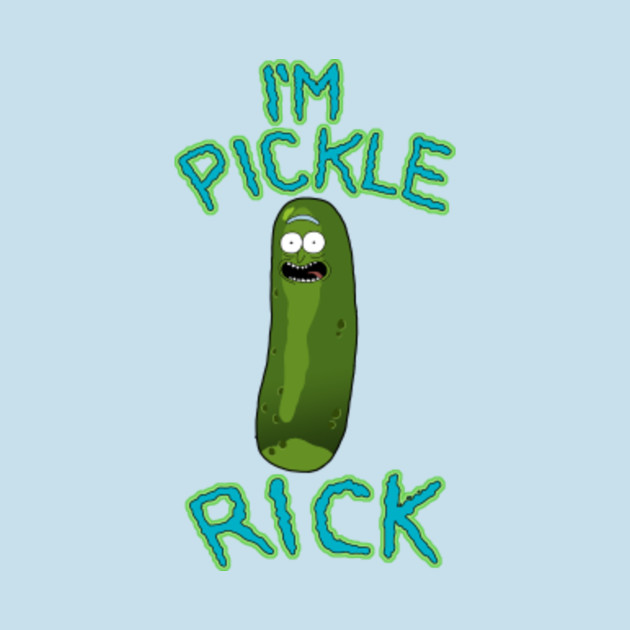
Those who watch “Rick and Morty” as avidly as I do are probably cringing at the idea of him being the voice of any generation, let alone the one the millennials are creating. This is a character who once turned himself into a pickle to get out of going to family therapy. I swear that last sentence is real. Trust me, it’s even crazier than it sounds.

I could spend multiple blog posts talking about the various antics, exploits, and traits of Rick Sanchez. I could spend even more posts talking about why a show like “Rick and Morty” is so unique compared to every other cartoon, sitcom, or TV show managed. I may end up talking about Rick Sanchez almost as much as I talk about X-men comics and Wonder Woman.

For now, though, I’m going to restrict the discussion to why Rick Sanchez may be their first iconic voice of a new generation. If you’ve read my post about the possible secrets that this generation may possess, I recommend you check that out first. That’ll help make sense of why Rick Sanchez embodies many of the traits that may shape Generation Z.

If there’s one trait that makes Rick Sanchez stand out, even more so than his raging alcoholism or trademark portal gun, it’s his unique brand of nihilism. Granted, it’s not the same nihilism that would’ve made sense to its champions in the 19th century. They probably would’ve drawn a line at turning themselves into a pickle. With Rick Sanchez and Generation Z, the context here is more subtle.

Throughout the various antics in “Rick and Morty,” there’s one common theme. Nothing you do really matters in the grand scheme of things. Nobody has an inherent purpose. There’s nothing mystical, special, or unique about you or the world you live in. Even Friedrich Nietzsche would find that extreme.

As a result, none of the conflicts that play out in “Rick and Morty” follow the traditional path of a story. It’s basically the antithesis of every cartoon, sitcom, or general narrative that we all follow in high school English classes. In the world of Rick Sanchez, all that crap is a total farce.

In many cases, especially in episodes like “Meseeks And Destroy” and “Ricksy Business,” the conflict is either forcibly contrived by someone or is revealed to have never been a conflict in the first place. In most cases, Rick Sanchez already knows this and usually can’t be bothered to make much of it. He’s so smart, so capable, and so devoid of ethical boundaries that there’s really no conflicts he can’t resolve with ease.

This is part of why I highlighted him as an anti-hero forged, in part, by boredom. The issue for him is that because he’s so smart, he’s aware that he’s part of a vast multi-verse filled with infinite versions of himself, his family, and everyone he’s ever dealt with. He’s even made allies and enemies with alternate versions of himself in some episodes. It basically reinforces the notion that nothing he or anyone does truly matters.

It doesn’t matter of he succeeds at anything. In another universe, he failed. Conversely, it doesn’t matter if he fails either because in another universe, he succeeds. The biggest example of this, by far, is the events of “Rick Potion Number 9.”

In that episode, Rick and Morty essentially destroy their entire world. Every human being gets turned into a monster and civilization collapses. Rick’s solution to this is as simple as it is pointless. He and Morty just travel to another universe where he did succeed, but died afterwards. They just go to that universe, bury their own bodies, and take their place.

It might be one of the most disturbing, but telling messages of the show. While Morty is horribly traumatized, Rick just shrugs it off. One minute, he’s burying his own body. The next, he’s drinking a beer and watching TV. That’s because he understands how pointless everything is in the grand scheme of things.

In a sense, Morty’s trauma is a metaphor for the millennial mindset. Many millennials are so driven by their sense of passion, social justice, and community. When that gets shattered, it’s pretty traumatic. That’s why a lot of millennials will suffer a major meltdown at some point in their lives. I know this because I’ve had more than a few.

Conversely, Rick Sanchez is the perfect response to that mindset. He’s so smart, aware, and informed that he understands all that drive means nothing in the grand scheme of things. In world that’s so small in a universe that’s unimaginably big, all those hysterical theatrics are pointless.

It’s because Rick’s attitudes are so utterly opposed to those of millennials like Morty that it’ll strike a greater chord with Generation Z than it will with any other generation. Unlike all previous generations, this is a cohort of people that is actually over-educated and over-informed.

Yes, it is possible to be too educated and too informed. The millennials, the most educated generation of all time, have already begun crossing that line. They helped forge a society that has unlimited access to information and is more socially accessible than any generation before it.

However, in recent years, all that information and education has unveiled a problem that only someone like Rick Sanchez could’ve foreseen. Given the sheer breadth of information, as well as the inherent chaos that comes with people in general, it’s impossible to know what’s real, what’s fake, and what’s just plain stupid.

Most of Generation Z isn’t even old enough to drive, but they’ll be entering a world where known falsehoods are alternative facts, all news is fake, everybody lies, and nobody can be trusted. The implications are unavoidable. If everyone is special, then nobody is special. If nobody is right, then it doesn’t matter how wrong everyone is.

That’s not to say there’s no meaning, whatsoever. Even Rick Sanchez shows throughout “Rick and Morty” that he is driven by something. It’s just not the same crap that drove millennials, Baby Boomers, or Generation X. In a sense, everything that drives Rick is more petty and personal.

Rick uses people, selfishly indulges in self-destructive vices, and crosses any line he has to, even before he knows its there. He does all of this because while he understands that there is no meaning to what he does, he still challenges himself. Sometimes it’s just because he can. Sometimes it’s because he really likes a certain flavor of dipping sauce.

Rick Sanchez doesn’t just understand this. He basically lives it in every episode and he’s fine with that. He doesn’t try to prove himself to anyone, even other versions of himself. He doesn’t bother virtue signaling or making excuses. He just does what he does, understands it’s meaningless, and enjoys himself along the way.

That, more than anything, is what will resonate with Generation Z. They’re inheriting a world where uncertainty is the only certainty. Their millennial parents whined and protested about it. They just accept it, shrug it off, and watch TV like Rick. That’s what will make him a true voice for a burgeoning generation.

4 Comments

Filed under Celebrities and Celebrity Culture, Current Events, Jack Fisher's Insights

A Dr. Doom Movie Has Been Announced (And It May Already Be Doomed)

This past weekend was a magical weekend for comic book fans, like myself. It was the four-day, fanboy and fangirl orgy known as the San Diego Comic Con. For comic book fans, it is the perfect combination of Christmas, Halloween, and Mardi Gras, all rolled into one. To say it’s kind of a big deal would be like saying boobs are kind of awesome.

I’ve been to comic book conventions before. I’ve talked about my experience and given advice on how to maximize the experience. I’m a regular attendee of the New York Comic Con, which is essentially the low-calorie version of the San Diego Comic Con. It’s still awesome, but if you want to be on the front lines of the greatest spectacle in all of comic book fandom, you go to San Diego.

One of the things at the very top of my bucket list, right up there with getting a kiss from Jennifer Lawrence, is to attend the San Diego Comic Con one year. I haven’t been out there yet, but I’m hoping that if my novels are successful enough, I’ll be able to buy myself some VIP passes and spend four days taking in the glorious spectacle.

I may very well meet my future wife there. Chances are, she’ll be dressed as Wonder Woman, Jean Grey, or Starfire. I don’t know what I’ll be wearing, but I hope it’s something that wins their heart.

Until that day comes, I’ll settle for watching news feeds and live-streaming. I spent a good four days effectively glued to my phone or anything with an internet connection, taking in every bit of news, sexy and otherwise. There’s always so much to take in. Some of it involves comics. Some of it involves movies. Some of it just involves celebrities dressing up in crazy shit to get a laugh.

This past weekend, though, there was one bit of news that really stood out. For an event that involves a lot of women dressed up as Sailor Moon characters, that’s saying something. As it just so happens, it involves someone that I’ve been talking about a lot lately, Dr. Doom.

I don’t know if this is the universe trying to tell me something. I don’t know if Fox secretly hacked my brain or some intern just read my blog on a coffee break. Maybe it’s just one big coincidence and my caveman brain has convinced me these internet ramblings are more influential than they could possibly be.

Whatever the case, the news got everyone buzzing and not necessarily in a good way. Fox, despite their craptacular failures in all things Fantastic Four related, are developing a Dr. Doom movie.

Den of Geek: Dr. Doom Movie In Development

Now, this is big news to comic fans. The idea that Fox would do anything involving the Fantastic Four should be enough to induce a migraine in anyone who thinks the world already has too many shitty movies. I’ve joked about it before, but for comic fans, this is no joke.

To date, Fox’s track record with Fantastic Four movies sucks. There’s just no nice way to say it. They have butchered, bungled, and failed so miserably that they’ve become a case study, of sorts, in how not to do a superhero movie. If you’re not sure whether or not the movie you’re making sucks, just go watch 2015’s “Fantastic Four.” If what you’re doing is too similar, then you’ve fucked up.

As frustrating as Fox’s history with the Fantastic Four is, it’s also completely understandable as to why they’d want to make a movie like this. Unlike the Marvel Cinematic Universe or any movie in DC’s movie universe, Fox can’t just take it’s time and be careful with a Fantastic Four movie. They can’t even wait for fans to forget about their previous failures.

That’s because, due to a legal clusterfuck that goes all the way back to the early 90s, Fox has to keep making Fantastic Four movies or they lose the rights. It doesn’t matter how awful they are. It doesn’t even matter whether or not they release it. They have to make these movies or Marvel and their Disney overlords get the rights back and Fox gets nothing.

It already happened once before. Fox tried and failed to turn Daredevil into a movie franchise. All they did was give Ben Affleck a better understanding on how to eventually become Batman.

By failing to continue that franchise, the rights lapsed back to Marvel and they immediately showed up Fox by creating a critically-acclaimed Netflix series. I’ve seen it. The first 10 minutes of the first episode is more entertaining than the entire “Daredevil” movie.

That’s why Fox needs to keep doing something with the Fantastic Four. Otherwise, they’ll have to sit back and watch as Marvel humiliates them again by succeeding where they failed on multiple occasions. Given all the egos in Hollywood, it’s totally understandable that they’d keep throwing good money at bad just to avoid that kind of pwning.

Now, if it sounds like I’m being overly pessimistic about a movie that may or may not even get made, I apologize. I hope I’ve made clear in previous posts that I’m as passionate about my comics as I am about sleeping naked. Dr. Doom is one of my favorite characters and, by a wide margin, one of my favorite comic book villain.
Fox has had multiple chances to make Dr. Doom the alpha and omega of villainy. First, they tried making him some charming, egotistical sweet-talker using the guy who played the asshole from “Nip/Tuck.” Then, they tried making him some disgruntled blogger. From a comic fan’s perspective, that’s akin to making chocolate fudge taste like dried horse shit.

Fox clearly doesn’t have a damn clue on who Dr. Doom is and how to capture what makes him so iconic. It’s not like they don’t have suitable reference materials. There’s an entire series called “Books of Doom” that show how Dr. Doom came to be. There are also cartoons that do, in a few minutes, what Fox couldn’t do with two movies.

Now, after all their failures, they still want to make a Dr. Doom movie? Not only would that give them yet another opportunity to undermine the greatest comic book villain of all time. It would also ensure that Dr. Doom never finds his way to the Marvel Cinematic Universe. Given how big a menace he’s been to pretty much every Marvel hero, that’s just tragic.

It’s hard to say just how serious Fox is with this. This is the same company that tried everything it could to stop the “Deadpool” movie and has been dragging its feet on a “Gambit” movie. However, they have way too many reasons not to pursue this.

It’s not just that Dr. Doom is one of the most iconic villains of all time. It’s not even that they’ve botched him horribly through multiple movies. We’re currently living in an era where villains are starting to gain just as much prominence as heroes.

The success of TV shows like “Breaking Bad” and the success of movies like “Suicide Squad” show that there is a market for a villain. I’ve talked about the heroes journey and the villains journey. Few could walk the villain’s journey better than Dr. Doom. At a time when people are turning to villains to fix problems, this may very well just be the best possible time for Dr. Doom to get a movie.

Unfortunately, it’ll still be Fox that makes that movie. Their track record leaves a lot to be desired. Despite this, there are some signs that they aren’t just trying to cling to the movie rights by throwing a couple million dollars at Roger Corman. They’re putting Noah Hawley, the man who made “Legion” a successful show this year, on the job. He’s got credentials, far more than Josh Trank ever did.

That said, I doubt you’ll find many comic fans who are excited about the prospect of Fox doing anything Fantastic Four related. Even fewer fans will have faith that Fox can get Dr. Doom right. They thought turning Doom into a disgruntled blogger was a good idea. What hope does this movie truly have?

I’m going to keep an eye on this so expect me to talk about this again, as I do with many topics involving superhero movies. Until then, here’s a quick fan film I found does with an $11,000 budget what Fox couldn’t do with millions. It shows that, villain or not, Dr. Doom is a character who deserves better.

1 Comment

Filed under Comic Books, Jack Fisher, Superheroes

Virtue Signaling: Why We Are NOT The Hero Of Our Own Story

https://i0.wp.com/www.nsu-magazine.com/wp-content/uploads/2014/10/stupid-heroes-18a.jpg

Think back to any movie that ever involved a lovable underdog. For anyone who has been to a movie theater more than once since 1978, this shouldn’t be that hard. Hell, think about a popular TV show involving a lovable underdog, going all the way back to the “Leave It To Beaver” days. What do they all have in common?

The similarities aren’t exactly subtle. The lovable underdog isn’t someone who is big, strong, handsome, cocky, arrogant, or dumb. They’re often unremarkable, so much so that others don’t acknowledge their existence. They do little to stand out and even less to distinguish themselves, but the same story usually plays out for them.

Whether they’re John McClane from “Die Hard,” Peter Parker from “Spider-Man,” or the entire cast of “The Big Bang Theory,” they embody the traits of all that is good and right with the world. They overcome obstacles, bullies, and a world where pretty girls aren’t lining up to touch their dicks to become heroes in their own right.

In the end, everything works out for them. In the end, they get what they want. The world comes to love them. Everybody, male and female alike, loves them. They are respected and admired for their thoughts, actions, and ideas at every turn. They have every reason to feel good about themselves.

What I just described is both the standard narrative for no less than 95 percent of every underdog story ever told and the primary reason why virtue signaling is getting out of hand. If that sounds like a bit of a stretch, then please bear with me. There is a logic behind it and, unlike my previous post on virtue signaling, it has a major implications.

As with other topics, like sex robots and body shaming, it’s impossible to cover every aspect of a certain topic. Virtue signaling, having only recently become a major buzzword, definitely qualifies. It is very much an emerging trend that is finding its way into politics, gender issues, media, and even erotica/romance. Since I’m trying to make a living writing erotica/romance, that deeply concerns me.

For this particular post, I want to highlight the more direct impacts of virtue signaling that I’ve observed in recent years. Specifically, I want to focus on how it affects the way people see themselves and the way they relate to one another. There’s a lot of material to cover and I can only handle so much coffee before my brain starts to short out.

I’ll table my concerns about brain function for the moment because this is something that I haven’t just observed. I’ve experienced it as well. As a man, trends that affect how men and women relate to one another don’t just affect the kinds of sexy stories I tell. They effect me personally and how I conduct myself in my day-to-day life. They effect all of us, often in ways we don’t see or acknowledge.

https://68.media.tumblr.com/b664b64461e0d42f56e427ab57e978d6/tumblr_of2nn1s1fl1vho2i6o1_500.gif

With respect to virtue signaling, these effects have only recently become more pronounced to the growth of social media. Unlike every other point in human history, we no longer need a million people to march through a capital city or a massive rebellion to send a message. We just need a smartphone, an internet connection, and a willingness to castigate ourselves in a public sphere.

As a result, virtue signaling has become a popular pastime of sorts. Political leaders, media figures, and ordinary people with too much free time on their hands go out of their way to make these elaborate gestures to prove that they’re virtuous or pious or tolerant or not a Nazi.

More often than not, these gestures just aren’t enough and people end up doing more and more, thus creating a brutal cycle of sorts. Sometimes the gesture is misinterpreted, as often happens with poorly-worded Tweets. Sometimes it’s just part of a larger agenda, one that requires constant reaffirmation in light of incessant criticism. Video game critics found out just how bad this could get back in August 2014.

https://i0.wp.com/orig04.deviantart.net/5ec4/f/2015/363/1/f/gamergate_life_67_by_kukuruyoart-d9lx9tn.png

It’s a stressful endeavor, trying to loudly proclaim to the masses that you’re as virtuous, heroic, and understanding as any protagonist from a John Hughes movie. It’s also tearing us apart and making us despise one another.

So how exactly does it work and why is it so toxic? Well, to answer that, think back to lovable underdogs that I mentioned earlier. We, as a culture, love those characters for a reason. They live in a world where they do what they do, but come out on top. They win in every way they want to win, becoming the heroes of their own stories.

The problem with that world is that it’s a total fantasy and too many people try to make that fantasy fit into their reality. Unfortunately, reality is notoriously uncompromising. Just ask anyone who tried to make a romantic gesture that backfired horribly.

https://imgix.ranker.com/user_node_img/50052/1001036453/original/dead-flowers-and-a-ruined-car-interior-freestyle-list-photo-u1?w=650&q=50&fm=jpg

It’s not that they’re insincere or inept, though. They’re just part of an entire generation that has grown up seeing this narrative of the lovable underdog overcoming the odds and they’ve been led to believe that this is how you succeed. This is how you become the hero of your own story.

We, being the egotistical creatures we are, want to be that hero. We want to be the lovable underdog we see in the movies who can say they overcame the odds, succeeded, and got laid in the process. However, the tactics we see in movies and TV shows just don’t work in the real world or require an obscene amount of luck.

Since all the success, adulation, and sex doesn’t just immediately happen like it does over the course of a two-hour movie, those wanting to be the hero try to force it. That’s where virtue signaling comes in.

Since being a hero often requires hard work, sacrifice, talent, training, and the ability to be in the right place at the right time, virtue signaling offers a much easier alternative. It’s not solely about laziness. It’s just often the path of least resistance and the most readily available path. Can you blame anyone for taking it?

https://thehungryrabbitblog.files.wordpress.com/2017/01/virtue.jpg

Rather than actually doing something meaningful, virtue signaling allows people to feel like they’re the hero of their own story, even if they accomplish nothing heroic. To their caveman brain, it doesn’t matter. It already has a hard time processing what gets it aroused. How the hell is it going to determine whether someone qualifies as a hero?

The short answer is that it can’t. The longer answer is that our caveman brains still urge us to seek validation from our tribe and security in our identity. Virtue signaling allows us to do both, even when there’s nothing of substance behind it.

This can lead to a real identity crisis for some people. There are people who define themselves as members of a particular tribe, be they radical feminists, conservative Christians, or Twilight fans. When they feel as though they aren’t slaying the necessary dragons, s to speak, they become distressed and look for any way to alleviate it. Virtue signaling allows them to at least feel it’s alleviate, which is close enough.

https://www.blogcdn.com/massively.joystiq.com/media/2010/07/hero.jpg

That laughably low standard ensures that virtue signaling is almost always an empty, shallow gesture at most. It only ever functions as a means to help certain individuals feel better about themselves, alleviate the mental stresses that come with seeking validation, and ensure they can be the hero of their own story, even if they do nothing heroic.

In a real world full of unflinching, unyielding circumstances that keep most people from ever doing anything remotely heroic, virtue signaling offers empty promises that only feel real enough to keep our brains and tribes functioning. Even when there’s no substance whatsoever, it gives people an illusion to buy into and that can be dangerous because it gives people an excuse to not do something greater.

https://i.gse.io/gse_media/116/9/1476388021-Allen-Batista---Magic-Show-tickets.jpg?c=1&h=520&p=1&q=60&w=920

As I’ve pointed out before, people will cling to any excuse that allows them to justify their actions or lack thereof. Now that doesn’t make those who virtue signal bad. If anything, their desire to be the lovable underdog hero of their own story proves to me that such people are good at heart. They’re just misguided, clinging to the feelings and validation that virtue signaling earns them.

Since I like to be a bit more optimistic about people in general, I believe that the lack of substance that inherently comes with virtue signaling will eventually catch up with most people. There will be those who can never escape it. For most people, though, I believe they’ll learn that there are better ways to be the lovable underdog hero of your own story.

19 Comments

Filed under Jack Fisher's Insights

How To Be An Effective Superhero

This is a direct follow-up to my previous post about why modern superheroes are inherently incompetent and designed to stay that way. I felt I needed to scrutinize the cracks in the foundation, so to speak, before I get around to discussing the stuff build on top of it. That will help make the discussion in this post more relevant and concise.

Even without the context of my previous post, it’s not hard to understand or even acknowledge that so many superheroes are inept, irresponsible, and incompetent at their jobs. Their villains always escape. Their friends/lovers/parents always die/suffer. The world they want to better never changes. It’s a flaw in the system as much as it is an exercise in futility.

Now, I’d like to take a step back, acknowledge the forest from the trees, and offer a solution of sorts. As I’ve done with other issues, I don’t just like to point out flaws. I like to offer viable solutions. Those solutions may not be practical or possible at the moment, but I try to make sure that the concept is sound.

https://i0.wp.com/www.chapter3blog.com/wp-content/uploads/2015/05/super-hero-500x300.jpg

I’d like to apply that method to superheroes now. By that, I mean I’d like to create a guide of sorts that helps establish the tactics, strategies, and ethics of being a competent, effective superhero. I say this knowing that it could never work in any comic book or major movie. This is mostly just an exercise in the actual pragmatics of superheroes.

First off, let’s establish some guidelines for a prototypical hero that would utilize these tactics. In order for them to work, they have to meet a certain criteria. Here’s a quick list of what that may include:

  • The goal of the hero is to reduce crime, confront injustice, and undermine corruption

  • The hero has a concerted interest in protecting as many innocent people as possible

  • The strategy in question cannot rely on the use of certain superpowers, although the use of superpowers can help supplement the strategy

  • The strategy is equally usable by male, female, and alien characters

  • The hero in question is willing to operate in a manner outside the framework of traditional law enforcement

  • The hero in question is willing to cross a certain set of moral lines, but only to an extent

I’m sure there are other ways to refine and supplement this list, but for now, this is what I’ll use in devising my strategy. In order to ensure that its applicable, heroes like Batman, Spider-Man, and Daredevil must be equally capable of implementing it.

Keep in mind, though, that some heroes have goals that go beyond just administering justice. Characters like Superman and the X-men have other goals, some of which goes beyond justice. I’ll save those goals for another post. For now, I intend to focus on the traditional superhero goal of justice and countering evil.

https://leadershipspirit.files.wordpress.com/2013/09/hero-leaders.jpg

In order to formulate this strategy, it’s also important to acknowledge a few unpleasant truths that would make Superman and Captain America cry. By that, I mean that the strategy cannot, for practical means, rely heavily on ideals. This is supposed to apply to the real world and, unfortunately, the real world is extremely unforgiving when it comes to ideals. Just ask Bernie Sanders.

So if we’re going to create a strategy that operates in the real world, we must make sure it accounts for the eccentricities of human psychology. It must utilize caveman logic and pass the Simpson filter. It can’t be too concerned with the nuts and bolts of people and why they do the crazy things they do. It must focus exclusively on results.

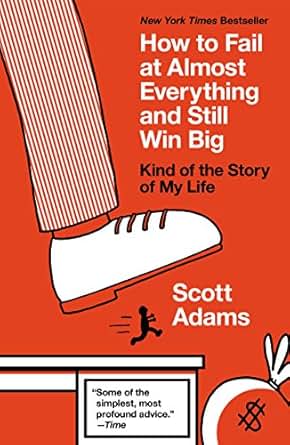
Does your brain hurt yet? Are you wondering if I’m asking you to contemplate dry water, a one-handed clap, or a decent Fantastic Four movie? Bear with me because there is a strategy that checks all these boxes. It’s a strategy I came up with thanks to two books, “Freakanomics” and “How To Fail At Everything And Still Win Big.”

https://i0.wp.com/freakonomics.com/wp-content/uploads/2016/01/Freakonomics-Paperback-298x450.jpg

I’ve read both these books over the past few years and I’m a big fan of their style. They dig deep into the hidden intricacies of how the world works and challenges readers to think about how doing things in new and novel ways. Seeing as how I have the kind of imagination that links robots with a dominatrix, they fit my unique mentality perfectly.

For the purposes of this discussion, I want to cite an article that the authors of “Freakanamics” wrote a number of years ago on terrorism. Basically, with a gross negligence to the high emotions that come with terrorism, the authors used their understanding of economics and human behavior to come up with the most cost-effective way to conduct terrorism. What they came up with was pretty damn terrifying.

My general view of the world is that simpler is better. My guess is that this thinking applies to terrorism as well. In that spirit, the best terrorist plan I have heard is one that my father thought up after the D.C. snipers created havoc in 2002. The basic idea is to arm 20 terrorists with rifles and cars, and arrange to have them begin shooting randomly at pre-set times all across the country. Big cities, little cities, suburbs, etc. Have them move around a lot. No one will know when and where the next attack will be. The chaos would be unbelievable, especially considering how few resources it would require of the terrorists. It would also be extremely hard to catch these guys. The damage wouldn’t be as extreme as detonating a nuclear bomb in New York City, of course; but it sure would be a lot easier to obtain a handful of guns than a nuclear weapon.

Think about that for a moment. If terrorists used a tactic like this, how much fear and dread would it inflict on our daily lives? If those terrorists were even marginally competent, then it would be even scarier. No matter what we did, we would dread that we would be a victim and it wouldn’t be entirely misguided.

This is where “How To Fail At Everything And Still Win Big” comes in. That book talks heavily about how stress and uncertainty affect people. It also teaches on how you can use that to your advantage. It makes painfully clear that the human brain is an irrational device with faulty wiring that hasn’t been updated in 200,000 years. If you’re going to influence it, then you might as well exploit those quirks.

https://images-na.ssl-images-amazon.com/images/I/51sqVXNWHhL._SY445_QL70_.jpg

With these two principles in mind, we can formulate a strategy for our prospective superhero. If utilized, then the criminals, villains, and future threats they face will either be defeated, deterred, or nullified.


  • The hero operates in complete secrecy, working at night or under a different identity. If the hero uses a uniform, then that uniform must not be identifiable or have some sort of stealth feature

This first part of the strategy is simple and not entirely new. Characters like Batman and the Teenage Mutant Ninja Turtles utilize some form of stealth. They operate in the shadows and generally avoid being seen.

Some heroes are even more well-equipped than others. Characters like Solid Snake from the “Metal Gear Solid” video games utilize a stealth suit that utilizes camouflage. Characters like Mystique can shape-shift into looking like someone else. This makes it easier for them to utilize this tactic, but someone as resourceful as Batman could use it just as well.

However, there’s room for improvement.


  • The hero must not have an identifiable name or make themselves known to the media in any way or coordinate with the media. They must, at all costs, avoid creating an identifiable persona

This is where Batman, Spider-Man, and pretty much any hero with a publicly-known name fails. The issue isn’t the name itself. The issue is that by having a name and having some kind of media exposure, they create a tangible, identifiable target.

From a practical perspective, that’s a big problem. That means enemies, be they a mugger or Lex Luthor, have someone they can target and identify. Entire teams of enemies, like the Legion of Doom or the Sinister Six, can rally around a common enemy. That makes enemies stronger and no strategy can succeed with that.


  • The hero must conduct detailed surveillance on villains and criminals, know their crimes and how they connect with others, and focus on those who are high in rank and influence

This is another tactic that most heroes already use to some extent. Batman is probably the most well-known. He uses his detective skills to determine who is a threat, how big a threat they are, and how to go after them. Other heroes, like the Avengers or the Justice League, generally have some type of monitoring system to determine pending threats.

This strategy requires the kind of extensive intelligence and understanding that someone like Batman could appreciate. When Batman determines that someone is a big threat, he’s almost always right. Any hero using this strategy must have similar certainty. Knowing the threat is the first step towards actually defeating it. That’s just a basic rule of war.


  • The hero must defeat their villains/enemies/criminals by making them disappear without a trace, either by killing them and destroying the body or by sending them into a domain from which they can never escape

This is where the strategy conflicts with nearly every major hero, especially the Batmans and Supermans of the comic book world. For the most part, the heroes avoid killing. It’s seen as an ideal. Taking a life is seen as morally abhorrent and for good reason.

However, that moral absolution ends when those same villains, such as the Jokers and Green Goblins of the world, live on to torment again. Despite defeating these villains multiple times, the heroes never do anything to end them. They try and try to lock them away in a prison cell, but they just keep escaping. From a moral standpoint, the suffering those villains inflict is on the heroes’ shoulders.

For most heroes, this means killing is unavoidable. It’s the only sure-fire way to ensure that a villain is never a threat again. For more resourceful/powerful heroes, there are other options like shrinking them to the size of atoms like Ant Man or sending them into the far-distant future, as Superman did with Doomsday.

However, it’s not enough to just kill a villain or enemy in this instance. Superheroes have killed before. Some, like the Punisher, kill a lot, but it still backfires in the long run. Why is that? Well, that’s where the next part strategy comes in.


  • The hero must make sure that nobody knows the villains they kill or disappear are dead, must never take credit for their disappearance, and must do everything possible to disconnect themselves from the villain

This is where even the brutal tactics of the Punisher fail. It’s also where the Freakanomic strategy comes in. The problem with the Punisher’s harsh methods isn’t that they’re harsh or that they result in a lot of killing. The problem is that they give the villains another rallying cry.

The Punisher’s enemies knows he kills. The Punisher usually likes to make clear that he’s the one who killed their associates. While this may shock and horrify some of them, it also has the effect of rallying them against a common enemy. Whether someone is a criminal or a hero, giving your enemies a common threat to rally behind is always a bad idea.

This is why the Punisher’s methods often fail in the long run. Criminals may fear him, but they know he’s responsible. The threat they’re up against has a face. There is a target for them to direct their fear and anger. This means that the criminals and enemies of the hero know who to fight against and in the long run, that never works out for the hero.


  • The hero must make sure that the villains, their allies, and their enemies don’t know why others are disappearing and must never make themselves known. Most importantly, they must make sure the villains are free to make wrong, misguided decisions

Here is where the methods of Scott Adams intersect with “Freakanomics.” In “How To Fail At Everything And Still Win Big,” Adams constantly talks about how people are at the mercy of their caveman brains. When they’re uncertain or anxious about something, they’re prone to making bad decisions for bad reasons. Make too many of those decisions and you tend to doom yourself to failure.

With this method, the hero must make sure that the villain is free and able to keep making those decisions that will ensure they defeat themselves. This is why it’s so important to make sure that the villain never knows that the hero is even fighting against them. They can’t have a mask, a costume, or a symbol to rally against. If it’s one big unknown, then their irrational caveman brains will do the rest.

The Norman Osborns and Lex Luthors of the world will start making up their own targets, irrationally lashing out at what they think is the source of the threat. The hero, for the most part, just needs to sit back and watch it unfold. Let them attack their rivals, make new enemies, and falter under the pressure. So long as they don’t know who or what they’re fighting against, their paranoia will eventually work against them.

In the long run, the villains will lose. They’ll end up dead. They’ll get caught. Most importantly, from the hero’s perspective, they’ll never know who to blame or why. That’s a scary thought, even for a hardened criminal. Nothing scares people more than the unknown.


  • The hero must never seek any kind of recognition, adulation, or compensation for their deeds

This is the final part of the strategy and, arguably, the most important. The problem with characters like Batman and Superman are that they want to be symbols. They want to be recognized for their efforts. Practically speaking, that’s a mistake.

By being symbols, they give their enemies a clear target and something to rally around. No matter how good the hero is at their job, they still make themselves a target. No matter how many villains they defeat, more will emerge and more will know who to fight.

Remove that symbolism. Remove the recognition. Remove the masks, costumes, and iconography of a hero and suddenly, the world of villains is very scary. They don’t know who to fight. They just know that by doing what they do, they could disappear without a trace and never be heard from again.

That’s more terrifying than any torture or punishment because their caveman brains will fill in the blanks with the worst they can conjure.


This caps off my official perfect superhero strategy. To date, no hero in a comic book uses these tactics and for good reason. If it were a comic book, it wouldn’t be very interesting because the outcome would be too final. The hero would be too competent and that’s just not very interesting.

Remove the need for sales, lunch boxes, and porn parodies and imagine how this strategy could work. Say there’s a superhero that wants to take down organized crime. Say that hero has the power of Superman or the Flash. Using their abilities, they quickly locate the top level bosses and associates of these criminals and just make them disappear.

There’s no body. There’s no trace. There’s no police report. There’s no trial. They just disappear. Not knowing who to fight, the criminals start attacking others they think are responsible. When they don’t know who, they just pick random people they think are enemies.

https://spiceaddictionsupport.org/wp-content/uploads/2015/05/paranoid-delusions.jpeg

This makes them more enemies, both from other criminals and law enforcement. No matter what they do, anyone who becomes a boss just disappears and they don’t know why. As a result, nobody even wants to be a crime boss anymore. The organizations just collapse on their own. Criminals still disappear, ensuring even low-level criminals have an incentive to stop. In the long run, the hero accomplishes what they set out to do.

It works with criminals. It works with those who are corrupt. It exploits the quirks of human nature, but also relies on the traits that make us function as a species. Again, it’s a tactic that I doubt any major heroes with movie rights could ever use. However, if they really do care about results, then this is the best way to go. Spider-Man should take notes.

6 Comments

Filed under Comic Books, Jack Fisher, Superheroes

Why Spider-Man May Be The Most Incompetent Hero Of All Time

https://jackfisherbooks.com/wp-content/uploads/2017/03/4f8a2-1420239869401.png

Whenever I talk about comic books and superheroes on this blog, I generally try not to single one particular character out unless I’m trying to make a point. I find that singling out one too many characters is like pointing out all the plot holes in a Michael Bay movie. It just becomes too frustrating and futile in the long run.

That means if I’m going to dedicate a post to a character, it better be for a damn good reason. They must be a uniquely compelling sex-positive female character or a potential prelude for future female villains. Well, after talking about why most superheroes are incompetent by design, I feel compelled to single out one particular character who is, within this context, the worst offender.

That character isn’t some obscure, little-known sidekick from a bygone era either. In this case, the worst case of inept superheroes who take their incompetence to the next level is one of the most recognizable superheroes of the past 50 years. He’s had multiple movies, multiple cartoons, and multiple actors play him with varying degrees of success and/or failure.

Image result for Tobey Maguire Dancing gif

Yes, I’m talking about Spider-Man, also known as Peter Parker. He is, by far, the most recognizable and iconic of Stan Lee’s many creations. He’s also, by a ridiculous margin, the most profitable superhero in terms of merchandise sales. He makes enough money for Marvel every year for them to eat caviar every day off diamond-encrusted gold plates.

So why, then, is he so incompetent as a hero? Why is Marvel’s most iconic character a case study in how not to operate as a superhero? Well, some of it has to do with the built-in incompetence I mentioned before. Spider-Man can’t be too competent, otherwise his overall narrative just wouldn’t be as compelling and his toys wouldn’t sell.

However, compared to the many other orphaned heroes who get their powers through accident or tragedy, Spider-Man sets himself apart by not just screwing himself over, but also by undermining the very principles of power and responsibility that he espouses. That doesn’t just make him an incompetent hero. It just makes him misguided, albeit not on purpose.

So what exactly makes Spider-Man inept by both the standards of a superhero and the standards that he sets on himself? Well, that has everything to do with his tactics and how he goes about them. If you’ve ever read a Spider-Man comic, seen a Spider-Man movie, or watched a Spider-Man cartoon, you know those tactics well. It goes like this:

  • Someone commits a crime
  • Peter Parker springs into action, putting on his costume and mask
  • Spider-Man fights the criminal, making jokes and quips along the way
  • The criminal whines and complains about how he’s ruining their master plan
  • The fight plays out and Spider-Man wins
  • Spider-Man ties the criminal up with his webs for the police
  • Spider-Man goes back to being Peter Parker and uses the pictures he takes of himself to make a living

This is Spider-Man’s primary method for dealing with crime and irresponsibility. It is the primary structure of every major battle he’s ever fought, be it the Green Goblin, Dr. Octopus, or Venom. While he wins/survives many of those battles, and even goes onto marry a supermodel for a while, it’s only when you step back and scrutinize the larger picture that you see how he loses his war against irresponsibility.

First and foremost, it’s important to establish that Spider-Man is one of those heroes who doesn’t kill. Like Superman and Batman, he goes out of his way to prevent the loss of life, be it innocent life or that of his enemy. That’s an understandable position to take. Killing is one of those unambiguous moral lines and many superheroes define their heroics by respecting that line.

For Spider-Man, however, this moral stand against killing is a major liability and the catalyst for his ineptitude. Granted, it’s not intentional, but the byproducts are unavoidable and those close to him have suffered as a result. Just ask Gwen Stacy.

Now I’m not saying Spider-Man is directly responsible for such suffering. Like all heroes, his intentions are good. He wants to help people. He wants to save lives. The problem is that, with his tactics, he’s doomed to hurt far more people than he helps.

This is because his tactics essentially guarantee that he will be a target, his loved ones will suffer, and his enemies will become stronger as a result. This isn’t just because Spider-Man refuses to kill them, although that is part of it. It’s because of the very persona that Spider-Man creates that his efforts are so inept.

Spider-Man, unlike Batman or Daredevil, doesn’t present a very intimidating presence. He’s many things, but intimidating isn’t one of them. His costume isn’t that intimidating. He doesn’t operate in the shadows or anything. He’s actually a well-known public figure, thanks largely to his own efforts and those of his boss, the ultimate blowhard that is J. Jonah Jameson.

This is a huge problem because it ensures that Spider-Man’s presence isn’t considered a major threat or danger to his enemies. He’s more of an annoyance or inconvenience. Whether they’re the Green Goblin or a simple mugger, they know Spider-Man isn’t going to kill them. He’s not even going to seriously wound them. He’ll just fight them, tie them up, and give them over to the police.

Even for those without access to overpaid lawyers, that’s not so much a threat as it is a frustration. On top of that, Spider-Man doesn’t really have meaningful conversations that get people to rethink their choices. He’s just cracks jokes, makes lewd comments, and generally carries himself with the maturity of a 13-year-old. Granted, this is part of his charm as a character, but it also ensures his tactics are doomed to fail.

It’s one thing to anger and annoy an enemy in the heat of battle. That can work to a hero’s advantage. However, the problems with Spider-Man manifest after the battle is over.

By annoying and angering his enemies, all he does is give them more incentive to fight him and hurt those he cares about. On top of that, he wears a flashy, distinct costume that’s easily recognizable in both night and broad daylight. It’s also well-known, thanks to his own efforts at taking pictures of himself and selling them to a newspaper.

Even before the era of smart phones and Twitter hacks, that’s putting a pretty big target on his back. He makes himself an identifiable figure on which his enemies can focus on. Even if they don’t know his identity, they know the source of their frustration. Since Spider-Man doesn’t scare them, they have every possible reason to fight him.

To make matters even worse, he gives his enemies a common threat to rally against. Anyone who knows anything about social psychology, or has just been to a Taylor Swift concert, knows that nothing unites people better than a common cause. He doesn’t just make his enemies stronger as individuals. He makes them stronger as a team. How is that responsible?

In essence, Spider-Man doesn’t intimidate his villains, doesn’t do anything to deter their irresponsible decisions, and gives them a common enemy to really around. If being responsible is deterring the kind of criminals that killed his Uncle Ben, then he’s the most irresponsible hero of all time.

I’m not saying Spider-Man has to start killing like the Punisher. I’m saying that his own tactics undermine his goals. Now you could make a similar criticism to characters like Batman or Daredevil because they don’t kill and their enemies constantly escape to torment them. However, there is one key difference that sets them apart.

Batman and Daredevil, despite their gaudy costumes, are intimidating. In fact, intimidation is a key tactic of theirs. Batman said it himself in the early scenes of “Batman Begins.” He seeks to strike fear in those that prey on the fearful. In this sense, he does succeed.

You could make the argument that because of Batman’s presence, there people in Gotham City who choose not to enter a life of crime. The prospect of dealing with Batman is scary. Fear is a powerful deterrent. Only the truly deranged criminals dare to enter this life and take on Batman. In that context, it makes perfect sense that the kind of villains he faces are the exceedingly deranged kind.

Spider-Man can’t make that claim. He can’t claim that he scares or intimidates people into not choosing a life of crime. If anything, his tactics may annoy ordinary people who wouldn’t otherwise consider such a life, but try it anyways just to shut him up or make a name for themselves.

Every hero is different. Every hero has their own set of tactics, goals, and ideals. However, no hero is as inept, incompetent, or irresponsible as Spider-Man. So long as he keeps doing what he’s doing, and Marvel has a huge financial interest in never allowing it to change, he’ll continue emboldening his enemies while guaranteeing that everyone around him suffers.

It’s both an irony and a tragedy. In his efforts to be responsible with his powers, Spider-Man conducts himself in the most irresponsible way possible. Even if it’s indirect and unintentional, the results are the same. He can still call himself a hero because of his principles. He just can’t call himself a very competent hero.

11 Comments

Filed under Comic Books, Jack Fisher, Superheroes

Why Most Superheroes Are Woefully Incompetent (By Design)

Image result for incompetent superhero

I’ve been meaning to do a post like this for a while now. It’s a topic I’ve actually tried to discuss on comic book message boards. Unfortunately, most comic book message boards too readily devolve into debates about who can lift Thor’s hammer, who Wolverine is sleeping with, and whether or not She-Hulk shaves her pubic hair. Yes, it gets that bad.

Ignoring, for a moment, the immaturity of certain crowds on message boards, there are certain issues pertaining to comic books and superheroes that are too easy to overlook. I say this as someone who is plenty eager to overlook the flaws in a story if it means seeing Starfire, Wonder Woman, Emma Frost, and Storm of the X-men kick ass and look damn sexy while doing it.

One of those flaws, ironically enough, deals with the actual pragmatics that come with being a superhero. Granted, those practical details are usually an afterthought in most superhero comics. Why would anyone give much thought to that when they could instead focus on giant monsters, killer robots, and the Hulk’s penis?

Some of the problem has entirely to do with fans like me. I freely admit that, as a fan, I’m part of the problem. Superheroes, whether they’re in comic books, cartoons, or blockbuster movies, aren’t created with the intent of being really good at their jobs. They’re created as a product to sell. That means they have to be compelling, engaging, and part of a meaningful story.

That’s why we don’t care if Spider-Man fails miserably to stop a criminal or if Superman fails miserably to keep Lex Luthor locked in prison. So long as it’s part of a story, we keep buying in. We increase our emotional and financial investment. It keeps the narrative going and, by default, the money for the company producing the merchandise.

That’s also why there will never be a superhero who is too good at fighting crime, defeating enemies, and solving problems. After a while, they do too much good and the world they live in just doesn’t have enough flaws to be interesting anymore. Who wants to read about Spider-Man anymore after he’s effectively solved New York’s crime problem and spends his days taking photos of hobos pissing on trees in Central Park?

On some levels, comic book companies and movie studios of the world knows this. They’ll never admit it outright, but in the back of their mind, they have to know that they can never let a hero be too competent. Even Superman has to slip up every now and then. Make no mistake though. He definitely has throughout his 70-plus year history, sometimes in laughably disturbing ways.

There’s a very simple reason for this and unfortunately, it’s neither heroic nor sexy. I’ll give you a hint. It’s valuable, it’s green, and it fits perfectly in a stripper’s G-string. If you need more than one guess, you should probably see a doctor.

Yes, I’m talking about money. If anything, it’s kind of ironic, given the values that many superheroes hold and how broke many superheroes often are. They’re created to embody our greatest values, but they’re sole purpose, from an image standpoint, is to make money for the company that owns their rights.

Fortunately or unfortunately, depending on how you look at it, superheroes do succeed in that respect. According to The Hollywood Reporter, Spider-Man alone makes over a billion dollars a year in merchandising. That’s not a typo. I said billion. Batman is a very distant second with a little less than half-a-billion.

Superheroes are big business these days, both in terms of making money and spending it. According to rumors by Bleeding Cool, the next two Avengers movies could collectively cost a billion dollars. Again, that’s not a typo.

It’s because superheroes make so much money and generate so much money for the economy that they have to stay incompetent to some extent. Just look at the superheroes of old, from Greek mythology to the bible to the medieval legends of King Arthur. They all have one defining trait. They all had definitive endings.

Whether tragic or triumphant, the heroes of old were part of a finite narrative that had an ending. King Arthur dies. Hector dies. Jesus Christ triumphs over the Satan. If these were comics, they would never survive in the modern market because they’re too complete. Modern superhero stories can never truly end.

Even iconic comics like Watchmen, which was supposed to have a definitive end, but DC Comics nixed that by incorporating it into their mainline superhero comics. Granted, this thoroughly pissed off Watchmen’s creator, Alan Moore, but he’s been pissed off for any number of reasons for the past 30 years so that’s not saying much.

Instead of ending, modern superhero comics are prone to a tricky phenomenon that most comic book fans know all too well. It’s called retroactive continuity, also known as a “retcon.” This is basically the literary equivalent of a mulligan.

Has Spider-Man become too convoluted, mature, and dark? A retcon will make him a lovable loser again. See “Brand New Day.”

Has Batman become too campy and goofy? A retcon will make him dark and gritty again. See “Batman Begins.”

Have the Fantastic Four become too flat and boring? A retcon will make them a team of jaded young millennials. See 2015’s “Fantastic Four,” although pretty much every Fantastic Four fan would strongly advise against it.

Thanks to retcons, superheroes never age. They can always be reinvented, re-tooled, and adapted for a new audience. Granted, that won’t stop some audiences from whining about it, but it effectively ensures that the narrative never ends and the particulars of the story at every point in the timeline are subject to change.

This can be a good thing sometimes, such as when a retcon gives us a great character like the Winter Soldier in the Captain America comics. However, it can also splatter painfully disturbing details on an established narrative that didn’t need it. Just talk to Spider-Man fans about a story called “Sins Past” and watch them become visibly ill.

In the end, however, it often means that characters never really progress beyond a certain point and the problems they hope to solve never go away. The Joker always escapes. Lex Luthor always returns. Spider-Man’s girlfriend gets killed, injured, or impregnated by his worst enemy. It’s as frustrating as it sounds.

Most superheroes will gloss over this detail by taking a stand against killing. That’s perfectly understandable on some levels. The morality of killing someone is one of those few moral issues that don’t generate too much debate, unless it involves Nazis in video games. However, in some respects, the anti-killing is both an excuse and a sales tactic.

Batman is, by far, the best example in this respect. Despite being the alpha and omega of an ordinary man achieving extraordinary feats without superpowers, Batman still cannot and will not stomach killing any of his villains. No matter how many times they escape, kill, or torment others, he refuses to kill them.

Ignoring for a moment the debate on whether he’s responsible for the deaths those villains subsequently inflict, there’s one other issue that makes Batman’s anti-killing stance more a marketing gimmick than a morality stand. Batman’s villains are iconic characters in their own right.

Just look at the list of famous Batman villains. Then, remember how many of them are popular Halloween costumes. Also keep in mind one of them earned Heath Ledger an Oscar and another got Margot Robbie to put on hot pants. Creating characters this iconic isn’t easy. That’s why comic companies and movie studios are so reluctant to kill them.

This is the dilemma that all superheroes face in modern comics and movies. If Batman kills the Joker, then there are no more iconic battles between the two. If Superman kills Lex Luthor, then there’s no more epic struggle. That means there are fewer comics to sell, toys to make, and slutty costumes to create. That situation, from both a fan and business standpoint, is untenable.

As a result, every modern superhero is, by design, incompetent to some degree. On top of that, the villains are either insanely lucky or ridiculously resilient. That’s why we’ll never see a version of Batman, Superman, or Spider-Man who actually succeed at reducing crime. That’s why we’ll never see the X-men or the Justice League actually create a peaceful world.

It’s not that it’s impossible. It’s just that it ends the story and the ability for big companies to make a boatload of money off them. That ensures every modern superhero is a walking paradox. They can never truly achieve their goal, but they can never stop trying either. It’s not because it’s the right, moral thing to do either. It’s because movie studios and publishing companies still need to make money.

That’s not very heroic, to say the least, but that’s the world we live in. Until money and movie rights stop driving superhero narratives, we’ll never see a truly competent superhero.

5 Comments

Filed under Comic Books, Jack Fisher, Superheroes

Emma Frost: The Future Of Female Villains?

Not long ago, I dedicated several posts to the defining traits of villains and why Walter White was such a game-changer, beyond getting Bryan Cranston more Emmys than he’ll ever need. I could’ve done many more posts because quality villains are every bit as integral to any story as a quality hero. Just look at Batman’s rogues gallery, and the number of cos-players that dress as them, for proof of that.

In these discussions, I kept things fairly general and if I did, I singled out a specific character like Walter White or Magneto. Well, recent events and ongoing trends have inspired me to re-address the issue of villains from a different angle. Specifically, I’d like to talk a bit about female villains.

Quickly, take a moment and recall your favorite female villain of all time. Chances are it’ll take you a moment and not just because a great many female villains made us both scared and horny at the same time. It may also be difficult because some female villains don’t exactly carry themselves as villains. Catwoman may be a thief, a deceiver, and the subject of one of the worst comic book movies of all time, but she’s not an outright villain.
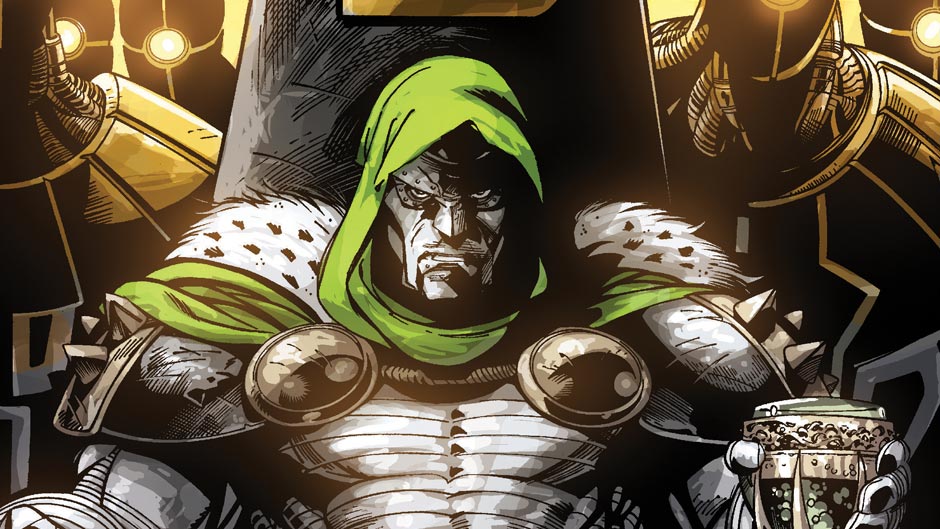
Female villains are one of those difficult concepts to flesh out and not just because men can’t resist turning female villains into sexy anti-heroes, some more egregiously than others. It’s just one of those elements that either gets under-used or overlooked.

Well, as is often the case with the ever-changing/insanely-erratic tastes of pop culture, that may be changing. At a time when a new generation of strong female characters, badass female superheroes, and women who just do more than give the male characters something to obsess over, it was only a matter of time before female villains caught up.

Now I generally suck at making predictions. I’m the same guy who was convinced that Cleveland Cavaliers would never win the NBA championship last year. I’m not proud of the things I had to do for the bets I made on that game, but it does show that everybody, including aspiring erotica/romance writers, can be dead wrong. With this, however, it’s not just a prediction. It’s based, in part, on an observation.

As most regular readers of this blog already knew, I love comic books and superheros. Specifically, I have a special affinity for X-men comics. So it should come as no surprise that I follow the events of the X-men comics very closely. Well, this past week, something pretty damn major happened in the X-men comics and it has to do with this woman.

Her name is Emma Frost. Trust me, she’s even sexier than her fan art would imply. She’s a prominent character in the X-men comics and has had numerous roles throughout the series for over 30 years now.

At times, she’s been a devious villainous vixen. At others, she’s been a cunning heroic vixen. In every role she’s in, she generally makes it a point to be sexy as hell. She doesn’t mind getting naked, she doesn’t mind having sex, she doesn’t give half-a-tortoise fart about what anyone things. In short, she’s a perfect blend of Regina George and Wonder Woman.

Now Emma Frost is somewhat unique in that she’s had so many roles, but she’s never defined herself completely as a hero or villain. She hasn’t even been an anti-hero. If you were to do the villain’s journey test I laid out in a previous post, she wouldn’t complete it, but she would come pretty damn close.

The same goes for the hero’s journey. She would check some boxes, but not all. She’d just look a million times sexier than anyone else on that journey.

Why is this important? Well, in a major X-men crossover event that just concluded recently, Emma’s role changed again. After a clash between the X-men and the Inhumans, one Marvel built up over the course of two years, Emma crossed a line that effectively sealed a new fate for her. She’s a villain now. However, she’s a very different kind of villain.

What do I mean by that? Why is that even relevant? Well, to answer that, think back to what I said about listing your favorite female villains. Go back to that list again. Exactly how many of those villains are refined, well-rounded, complex characters? Chances are your list will shrink considerably or outright disappear.

That’s because female villains have a history of being annoyingly flat. Going all the way back to the Wicked Witch of the West, they rarely had many compelling traits. Most of the time, they were just evil witches or devious vixens. Basically, just think of every evil female character in a James Bond movie. That’s the extent of the depth female villains usually get.

This is what makes the development with Emma Frost so intriguing. Emma Frost isn’t like Pussy Galore or the Wicked Witch of the West and not just because she looks better in a thong. As a character, she has a rich history. She even had her own comic series at one point. She has various layers as well. She’s not just out to be a total bitch and look good doing it, although she does make it look pretty damn easy.

Emma Frost has real, genuine motivations. They’re not always pure either. For a time, she was a stripper who didn’t mind using her sexuality to get ahead in the Hellfire Club, who have been major X-men villains for many years. When she was a teacher, she watched many of her students die in an attack that she had no chance to stop.

However, she has never been one to play the part of a victim. She never uses tragedy or excuses to justify her actions. She does what she thinks needs to be done and anyone who disagrees with her can just kiss her perfectly shaped ass. Hell, she could probably charge for that and it would be worth every penny.

The recent events in the X-men comics pushed her to extreme actions and for good reason. As part of the story that set up the clash between the X-men and the Inhumans, she lost someone near and dear to her. Cyclops, a character she had been romantically involved with, died in her arms. It affected her profoundly, which is saying a lot for someone who killed her own sister.
That effect leads her to do more than just lead a conflict. They put her in a position to become a hardened, but complex villain, both to the X-men and anyone else who generally pisses her off.

Her timing really couldn’t be better. Just as everyone from Disney Princesses to Taylor Swift prove that there’s a market for strong female personalities, she’s entering a domain that’s ripe for new energy. Emma Frost could very well be the first of a new push for better female villains to go along with the female heroes that every comic company and movie studio is pushing these days.

I feel like this is a trend that needs to happen. Women can kick ass as heroes. That much they’ve proven. Why not show they can do the same as villains? Emma Frost is unique in that she has the kind of complexity that allows her to be a hero when she needs to be and a villain when she wants to be. I believe there will be a market for that kind of complexity.

Sure, some parents would still prefer that their daughters dress up as Disney princesses rather than Emma Frost, if only to avoid any Honey Boo Boo comparisons, but having strong female villains still does something important. It adds balance to the greater narrative between heroes and villains as a whole.

Now I’m somewhat guilty myself of not fleshing out female villains. In my book, “The Escort and the Gigolo,” the main villain was a woman named Madam Felicity. While I did make an effort to give her some complexity, I admit she’s not more ground-breaking than a James Bond villain with boobs.

I’d like to change that in future novels. I just hope that by then, Emma Frost will have set the bar and set it high. As any X-men fan will tell you, Emma never does anything haphazardly. If she’s going to usher in a new wave of strong female villains, then she’s going to make damn sure she’s the best and looks damn sexy while doing that. For that, she’ll always have a special place in the hearts and pants of X-men fans everywhere.

5 Comments

Filed under Uncategorized