We all have bad days every now and then. Even if you’re rich, beautiful, and successful by every measure, you’re going to have days when you feel like an army of evil spirits has been kicking your ass since you woke up. There’s no escaping it. It’s just part of life.
Even if it can’t be avoided, it’s still within our control on how we deal with it. Some people cope better than others. Some do so in ways that are downright unhealthy. If it involves alcohol, yelling, or punching something, then chances are it does more harm than good.
For me, comics have proven to be effective in dealing with life’s inevitable rigors. Going all the way back to high school, in which bad days were fairly common, reading comics really helped me endure and push forward. They weren’t just an escape. They reminded me that even people with superpowers can have crappy days.
Given the events of the past year, we’ve all had plenty of days like that. Our coping skills have been tested more than usual. If they’re effective, then you’ve only come to appreciate them even more. That’s how I feel about comics. Since this year began, they’ve helped me navigate plenty of rough days.
I encourage everyone to develop and refine their methods for coping bad days. I also encourage comic fans to incorporate comics into those methods. To that end, here’s my pull list and pick for the week. Enjoy! Better days are indeed coming.
In early 2020, which might as well be another lifetime, I speculated on the lasting impact of increased telework and distance learning due to the pandemic that uprooted our entire society. At the time, I didn’t know just how bad this pandemic would get. In my defense, my hopes were still intact. Now, they’re charred ashes, but that’s beside the point.
In essence, I speculated that once people got used to teleworking, they would not be eager to go back, even after the pandemic had passed. That wasn’t exactly a bold speculation. You don’t have to be a world class psychic to surmise that people will come to enjoy working in their underwear, not having to commute, and enjoying the general flexibility that telework affords.
I’ve been stuck in enough traffic jams to appreciate that kind of flexibility. I know I’m not the only one who might become too fond of telework.
Well, that all-too-obvious insight is starting to take hold in many sectors. It’s not just related to typical office work in cubicles. Everyone from the United States Military to big tech companies to law firms are embracing this new normal for the workplace. Even though it’s more out of necessity than innovation or good will, it’s still happening and there may be no going back.
The pandemic has already forced a mentality shift among the workforce. According to research done by Pew, telework was mostly seen as an optional benefit reserved for an affluent few. That’s not surprising. That kind of flexibility just felt more like a luxury, one that someone had to earn by establishing trust and credibility from an organization.
Now, it’s not just a necessity. It’s unavoidable. The world we’re living in now just cannot accommodate the same professional environment we once knew. I’ve worked in many professional environments before. I can attest that some of them are not built with pandemics in mind.
At one point, I worked at a company in which my desk was crammed into a closet-sized space with three other people. If even one of us caught a cold, we’d all be sick by the end of the week. It was that bad.
I doubt that’s an isolated case. In some of the jobs I’ve had, I have been able to work from home, but it’s only as a last resort. The only times I actually had to do it involved an emergency that occurred on a Saturday morning and one instance where the office was being renovated. In both cases, I still got plenty of work done. I just did it in my underwear.
In that sense, I get why many organizations reserve telework as a luxury rather than a norm. There’s this underlying sentiment that people will abuse it. If they can work from home, they just won’t get as much done. They’ll be too tempted to just grab a bag of chips, lie down on the couch, and watch game shows.
While I don’t doubt there are people who do that, this pandemic has revealed that most people aren’t assholes on that level. In some cases, it’s increasing productivity. Apparently, when workers are comfortable and afforded flexibility, they can get more done. That shouldn’t be too surprising, but it’s still remarkable in its own way.
This has born itself out in subsequent studies and surveys. For some industries, telework is probably more productive in the grand scheme of things and that shouldn’t be surprising. Anyone who has ever had a lousy commute knows why. If a good chunk of your day is spent waking up, putting on itchy clothes, and spending hours in traffic, you’re not going to be in a very productive mood.
That won’t be the case for certain industries. If you’re a doctor, a police officer, a fire fighter, or a trucker, you just can’t telework. The nature of the work doesn’t allow it. That’s still going to be the case, at least until we have robots capable of doing those tasks, which we are working on. However, there’s also sizable chunk of work that could probably be done remotely.
I think the impacts of this emerging truth will extend far beyond the pandemic. I’ve already seen it with people I know. They enjoy teleworking. They don’t want to stop, even after the pandemic becomes a bleak footnote in history. Some are willing to still go into the office some of the time, but they would prefer to telework. I suspect that’s going to become the new normal.
Last year has proven that people can, for the most part, be responsible with the flexibility afforded by telework. As long as they’re getting the work done, who cares if they do it in their underwear while Netflix plays in the background? Considering how costly commutes can be and how expensive office space can be, it might just make more fiscal sense in the long run.
Like it or not, businesses and various organizations tend to err on the side of reducing operating costs. It may mean more employees waste time at home, but if the difference is made up by better productivity, then it’s a net gain overall.
That shift could have impacts that go far beyond business operations. If people have to commute less, then that makes living out beyond urban and suburban settings more feasible. Given how expensive it is to live in those areas, this could spread people out even more, which is an objectively good thing if you’re looking to prevent future pandemics.
It might even help those in depressed rural areas in need of human capital. I can easily imagine some people preferring the quiet, less crowded environment afforded by a rural setting. If they can live in that environment while still getting their work done via internet, assuming they have a reliable connection, then that’s another big benefit that goes beyond the business itself.
This is likely to be a trend. That’s not a fanciful prediction. We’re already seeing it happen. The pandemic just forced it to accelerate. There will likely be other impacts. It may very well change how cities, suburbs, and rural areas are planned from here on out.
I don’t claim to know the specifics, but we’ll likely see it continue in the coming years. I, for one, welcome this change. If I can reduce the amount of time spent in traffic and increase the amount of time I spend in my underwear, then my overall well-being improves considerably.
I talk about the futurea lot on this site. That’s because, in general, the future excites me. I genuinely want to see some of the emerging technologies under development manifest. From advanced artificial intelligence to hacking our own biology to sex robots, I think these developments will lead to some major upheavals in society and I want to be around to see them.
I don’t know if I’ll live long enough to see all of them, but I want to make the effort. I want to experience the future and not just speculate about it.
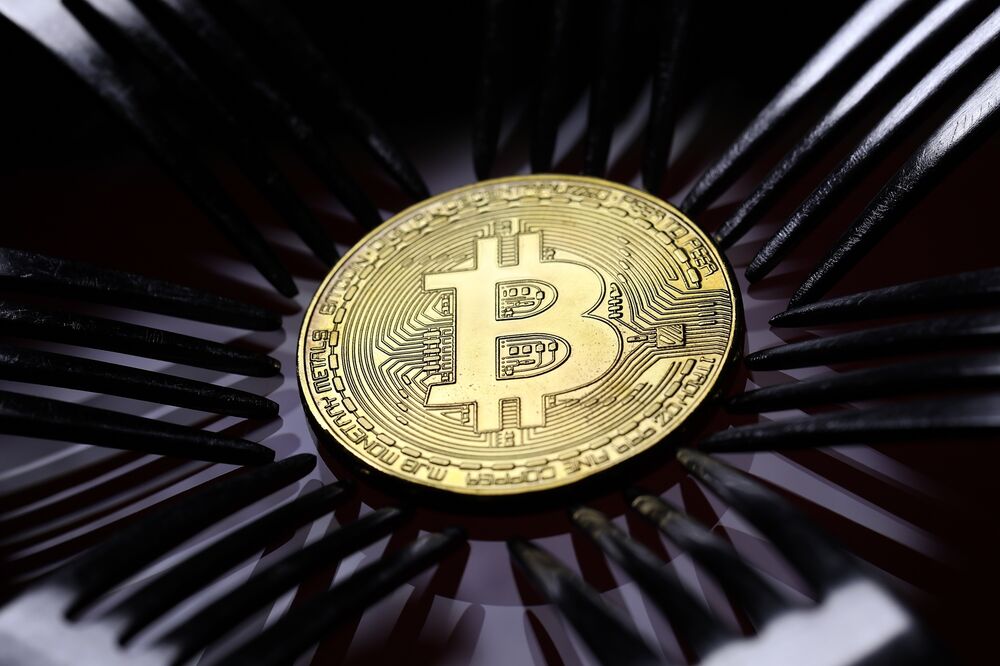
This brings me to Bitcoin. Now, before I go any further, let me disclose that I am not one of those hardcore, uber-libertarian Bitcoin fans who see Bitcoin as the technology that will bring down corrupt governments and banking cartels. I’m also not among those who think Bitcoin is a total scam. For this technology, I try to keep my perspective balanced.
I see Bitcoin the same way I see email. It’s basically a digital form of a tangible thing/service that we’re familiar with. Email was a supplement to regular mail. Bitcoin is simply a supplement for money. Email didn’t end all forms of regular mail. As such, I don’t see Bitcoin ending all other forms of money.
As for the technology behind it, I’m no expert, but I definitely see the value. Bitcoin, unlike other currencies, has no boarders. It has no middlemen or central authorities. It doesn’t require a big bank or some other financial institution to authorize it. All it requires is an internet connection and a smart device with an app.
Beyond the money, the technology behind it, most notably the blockchain, has some exciting applications. It promises to change the way we process, manage, and scale big data. It has the potential to create secure, decentralized operations that can’t be run from the top-down by the future Mark Zuckerbergs of the world.
Even if you think Bitcoin has no inherent value, I hope you see the value in that.
Now, I have been following news about Bitcoin since 2013. I remember the first time it became a major source of headlines. It was primarily associated with black market economies on the dark web, namely the Silk Road. That was not necessarily a good association, but that didn’t stop Bitcoin from growing considerably in both value and use.
However, I didn’t invest in it or seek to buy any Bitcoins. Some of that was mostly because it was still so new. I wasn’t sure what to make of it and I didn’t necessarily trust the early Bitcoin wallets. It also didn’t help that some of the early Bitcoin exchanges went completely bust.
I understand this era still created plenty of Bitcoin millionaires. Those people are the lucky ones. Even after 2013, I don’t think we’ll see Bitcoin create any more millionaires like that. I still watched Bitcoin with a skeptical eye. I didn’t want to buy in until I could be sure it was able to weather these upheavals.
In hindsight, I think I waited too long. At this point, I think Bitcoin has proven its worth and its utility. It’s been around for more than a decade now. If it were a bubble or a scam, it would’ve failed long ago. Even if I’m late to the party, I can safely say that I have finally joined in.
Granted, I didn’t put my whole life savings into Bitcoin. I decided to start off small and honestly, it was a lot easier than I thought.
Here’s what I did to get my first batch of Bitcoin money.
Step 1: I downloaded a basic Bitcoin wallet, namely BRD. It’s the simplest, least cumbersome wallet I could find.
Step 2: I compiled about $100 in cash. These were just a bunch of $20 bills I had in my drawer. They were actually bills I got from Christmas cards. Since I buy most of my stuff with credit cards and my phone, I really didn’t have much use for them.
Step 3: I went to a gas station up the road from my house, which had a Bitcoin ATM. I used that ATM to purchase $100 in Bitcoin. It took less than four minutes.
That’s it. That’s all I did. I didn’t have to give my bank account number to anyone. I didn’t have to give my credit card number to anyone. I just took some bills that I probably wasn’t going to spend anyways and turned it into digital currency. I have every intention of purchasing more down the line.
In terms of loose change or extra bills, I believe Bitcoin is actually better than just letting that paper money gather dust. Unlike bills, Bitcoin’s value actually has the potential to go up. That’s something paper money rarely does.
It’s a key part of Bitcoin’s legendary volatility. That sort of thing turns a lot of people off and I understand that. They don’t want to wake up one mourning and find out their money lost half its value.
However, I would counter that paper money would lose that same value, but just over a longer period of time. It’s like owning fruit. It’ll only ever rot. It’s never going to get fresher. Bitcoin is a bit more like a game of cards, but with the odds in your favor.
That $100 was only going to get less valuable sitting in my drawer. At least with Bitcoin, there’s at least a possibility that $100 could be worth a lot more later this year. Compared to what inflation does to money, I’ll take those odds.
For now, I just wanted to share my experience. I genuinely believe that Bitcoin and the technology behind it is going to be a big part of our future. It may not completely replace money, but it will improve on what we’ve got.
I’ll share more stories as the year unfolds. In the meantime, I’ll leave everyone with this little anecdote.
The first known Bitcoin purchase was on May 22, 2010 when a man named Laszlo Hanyecz bought a pizza for 10,000 Bitcoins. As of this post, one Bitcoin is valued at $32,711. That means someone payed $327,110,000 for a pizza.
There are a lot of things that go into a good romantic setting. Some aren’t always within our control, but that just makes putting in the effort more important. There are a lot of things you don’t want to half-ass in life or in relationships. Romantic settings is one of them.
One element you can control has to do with lighting. I’m not just talking about candles and lamp shades, either. A romantic moment can stand out in many ways, but if the lighting is just right, you and your lover will remember it for all the right reasons.
How you get it to stand out depends on what a couple is into. When I was dating my girlfriend, we were both early risers. We enjoyed the subtle lighting of the morning sunrise. That usually meant drawing the shades in my bedroom just right to give us that perfect blend of morning sun. It made for some wonderful moments between us.
For others, it’s different. One of my old roommates was the opposite of a morning person. He and his girlfriend liked to keep things dark, but not pitch black. That usually meant extra dim lighting in which you couldn’t see much, but you could make out just enough to discern the sexy details. They liked that sort of mystery element and I can totally understand why.
When contemplating your own mood lighting, what kind do you and your lover prefer? Does it need to be bright or dim? Do you prefer candles or sunlight? What gets you and your lover in the best possible mood? Contemplate that as you read over these Sexy Sunday Thoughts. Enjoy!
“People with a voyerism fetish make the worst spies.”
“Is it really possible to not discover a kink by accident?”
“A man who is good at puzzles has an advantage when it comes to pleasing a woman.”
“Your sense of modesty and shame is directly proportional to how little you’re willing to wear when receiving a pizza delivery.”
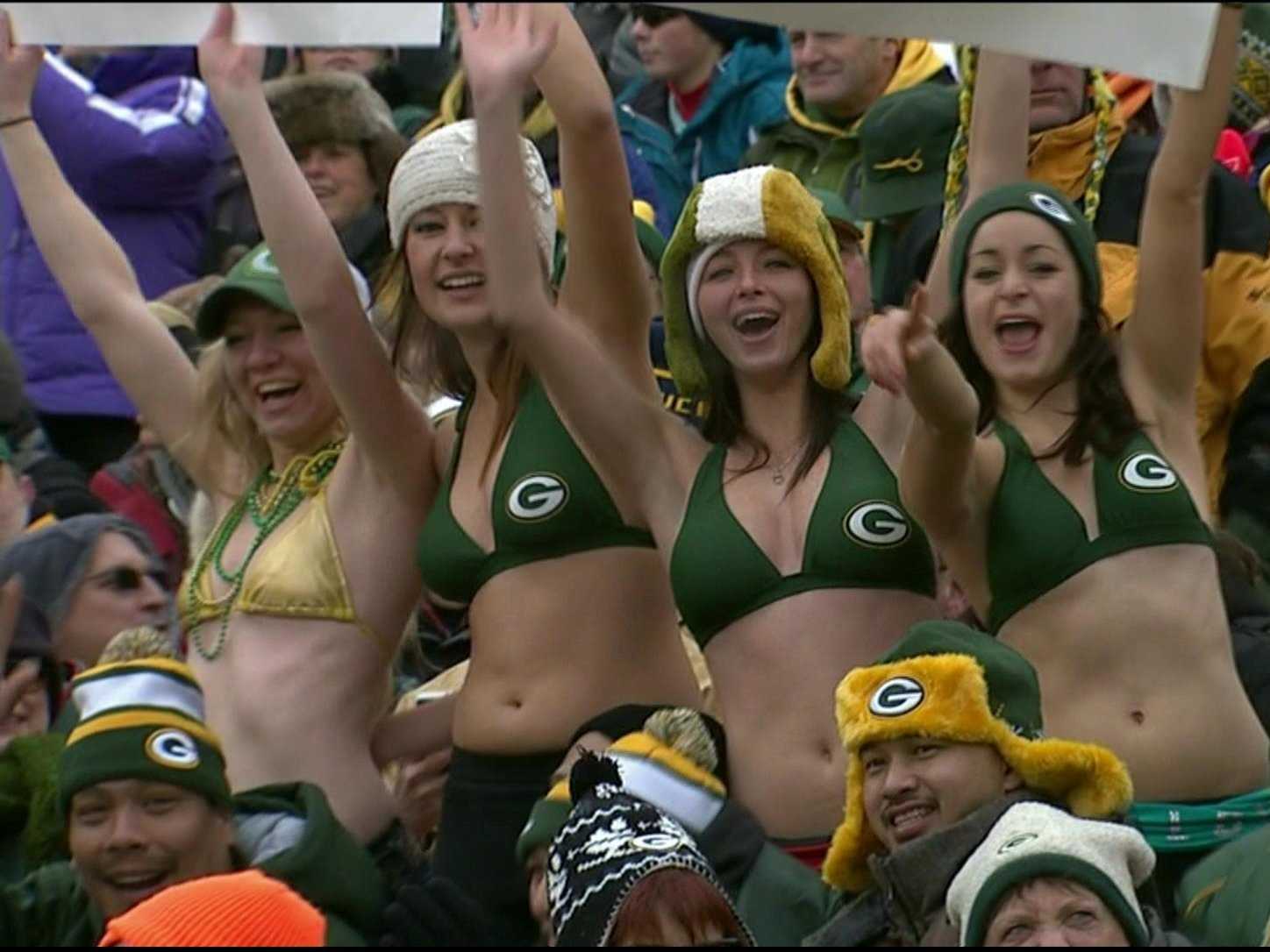
“Being sexually repressed and moving to Las Vegas is like hating football and moving to Green Bay.”
“A fight that ends in make-up sex can horribly skew your concept of foreplay.”
“Never mistake being in love for not wanting to go back to masturbating alone on weekends.”
The following is a video for my YouTube channel, Jack’s World. It explores another thought experiment, something I’ve done plentyof timesbefore. This one just happens to involve money. Given the recent events with the stock market, I think the time is right to contemplate money and how it guides our lives. Enjoy!
Every now and then, a news story comes along that just puts a smile on my face for all the right reasons. Granted, a lot of those news stories involve comic books and sex robots, but certain news transcends my preferences. They’re just too inherently awesome and cathartic to ignore.
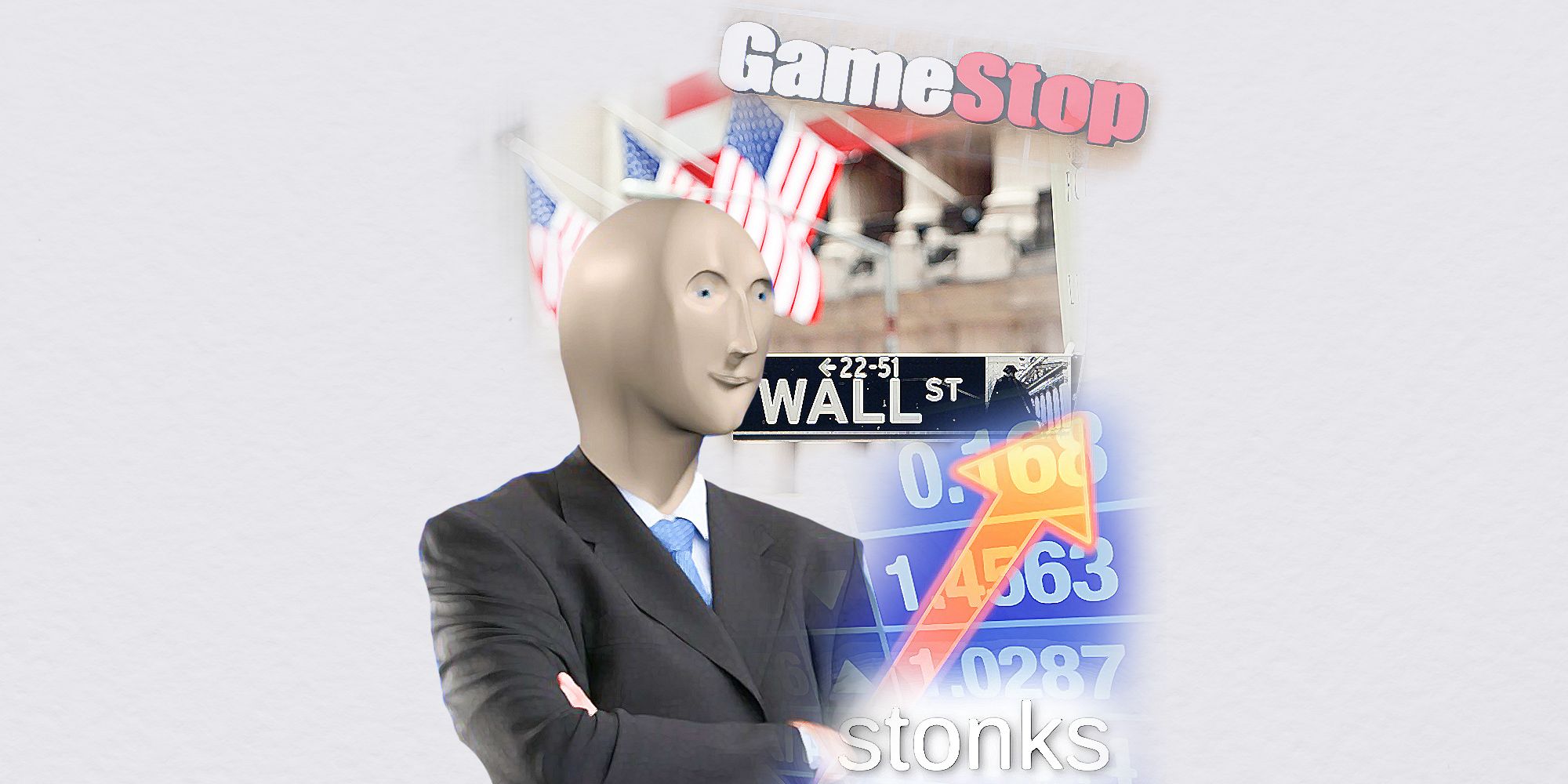
This recent story surrounding a sub-reddit beating a multi-billion dollar hedge fund on Wall Street is definitely one of them. In the process, it suddenly turned Gamestop, a store I haven’t been in for three years, into the hottest stock on the market.
It’s the kind of story that would make a ridiculous movie. It’s not “The Big Short.” Hell, reads like a “Robot Chicken” sketch, plus or minus a few poop jokes. Except, this actually happened in the real world.
For those who haven’t been following this story, here’s a colorful breakdown by Esquire.
News about the stock market rarely crosses over into the cultural mainstream, and historically when that’s happened, it’s meant some catastrophic financial event has taken place. (See: The housing and stock market crashes of 2008.)
But the stock market was the single biggest news story Wednesday, financial or otherwise, due to a group of Reddit shitlords pumping up a collection of stocks and pushing some billion-dollar financial institutions to the brink of bankruptcy.
Hedge fund Melvin Capital needed a $2.75 billion bailout on Monday after the stock price for GameStop, the video game retailer, spiked to more than $70 a share over the weekend. Just a month earlier, the stock was hovering near $15. Melvin was shorting the stock, hence the need for a bailout. Reports of Melvin Capital’s financial struggles sent GameStop’s share price soaring even higher, though, to more than $100 a share on Monday, putting the hedge fund in an even more precarious financial decision. As of this writing, the stock was trading for $330 per share—77 times higher than its share price of $4.28 a year ago.
The GameStop stock rally is the handiwork of r/WallStreetBets, a Reddit community where people share news, memes and personal anecdotes about playing the stock market.
Let’s all take a moment to shed a fake tear for a hedge fund that sought to make money by hoping a company would die. Let’s also take a moment to contain our rage that those assholes still got a multi-billion dollar bailout with little to no debate, but I digress.
That article gave us the basics. In short, a bunch of people on Reddit decided to exploit the short positions that a bunch of hedge funds had on Gamestop and make a ton of money on the side. It’s the kind of gimmicky stock trading tactics that you’d see in “The Wolf of Wall Street,” minus the strippers and ludes. The only difference is this didn’t break any laws and only fucked over hedge funds.
If you need a more thorough breakdown of just how those hedge funds were fucked over, here’s a video by the YouTube channel TLDR News. They break it down beautifully. I must warn you, though. If you get excited by seeing hedge funds get screwed over by a bunch of Reddit trolls, you might not be able to contain yourself.
Now, why do I love this story so much?
Why am I making such a big deal of it?
Why is this even news on such a large scale?
The answer is fairly simple. It’s not just that I love Reddit and have been an active user for years. This kind of thing just doesn’t happen that often. A bunch of normal, everyday people on Reddit getting the best of a Wall Street hedge fund? It just doesn’t seem possible.
Even if you’re a die hard capitalist or an dogmatic liberation, you can’t be too fond of hedge funds. In addition to being fertile grounds for fraudsters, con-men, and Gordan Gecko wannabes, they have just one goal. They seek to make rich people even richer. How they go about that varies, but they’re not above lying, cheating, and effectively gaming every capitalist system to their advantage.
They’re basically villains for both capitalists, socialists, and communists alike. They’ll screw over anyone, be they individuals or companies, so long as they can turn a profit. They don’t make anything. They don’t create or develop products that they sell to willing consumers. They mostly dick around with math, balance sheets, and stock prices to make money. That’s it.
I’m not a fan, to say the least. Watching them lose is like watching Lex Luthor get beat up by a five-year-old girl. You don’t think it’s possible, but it’s a glorious sight when you see it.
Honestly, this is the kind of story we need right now. A bunch of nobodies on the internet find a way to screw over a hedge fund whose business model involves screwing over struggling companies. What’s not to love? That’s a superhero narrative wrapped in true capitalism wrapped in American ingenuity. Ron Swanson himself would be proud.
There’s a lot more I could say about this. Since the story is still unfolding on many fronts, I’ll hold off. I’ll just say that if r/WallStreetBets does nothing more than screw over a hedge fund trying to profit from Gamestop’s demise, they’ll still have done a great good for this world.
Hell, it’s been official for the past several years and 2020 only accelerated it. The battle to dominate digital media in all forms is raging on multiple fronts and while many have their favorites, none can say they’ve won.
It’s Netflix versus Hulu versus Amazon versus Disney versus CBS/Viacom versus YouTube versus whatever other media companies are fighting for every possible eyeball. The stakes are high for consumers and content creators alike. There are billions in profits to be made and plenty of epic, culture-defining content to be made. It’s going to get intense is what I’m saying.
I don’t think I need to remind everyone just how much the streaming market has changed in the past 10 years. Even if you’re still a teenager, chances are you still vaguely remember the days before Netflix and chill. Media back then was movies, TV, and Blu-Ray/DVD collections. I’m not saying it was ideal, but that’s what we had to work with.
Then, every company and their deep-pocketed subsidiaries tried to catch up.
It hasn’t always been smooth. Some people are still not over “The Office” leaving Netflix. Chances are there will be more upheavals like that as companies fight over who streams what and who has the streaming rights to a particular show or movie. That’s sure to get messy and I’m not smart enough to make sense of it.
However, as this war rages, I think there’s a relevant question worth asking. It’s a question that I’m sure both consumers like me and big media companies like Netflix and Disney ask as well. The answer could depend on how the war plays out.
How many streaming services can the average customer have?
Most people already pay for some form of streaming media. Most people subscribe to some form of pay TV, although that trend is in flux. The days of having all the entertainment you want with a simple cable subscription alongside Netflix is long gone and it’s not coming back.
Now, you have to be very selective and self-aware of what you want.
Do you want access to the library of shows from NBC or CBS?
Do you want access to the content from Warner Brothers, Universal, Dreamworks, Discovery, Cartoon Network, or 20th Century Fox?
You can have some, but you can’t have them all without paying way more than you ever would for cable. Even if you did, could you even watch all those streaming services enough to justify the cost? There are only so many hours in a day and there’s only so much attention we have to give. Even if we dedicated half our day to binging movies and TV, we couldn’t watch it all.
That’s the big limiting factor on streaming. It’s also the biggest obstacle any company faces with respect to their effort in the streaming wars. People can only watch so much and they only have so much they can reasonably spend on a streaming service. There comes a point where, even if the content is appealing, they just can’t justify the cost.
Personally, I have subscriptions to five streaming services. They are as follows:
Netflix
Hulu
Amazon Prime
Disney Plus
HBO Max
Now, it’s worth noting that I got HBO Max through my cable subscription. I’ve subscribed to HBO for years so it’s not something I consciously sought out. With Amazon Prime, I primarily used it for the 2-day shipping instead of streaming media, but I’ve certainly found some quality shows on that platform.
I’m not sure I can justify another subscription beyond this. Once my subscriptions cannot be counted on one hand anymore, I think that’s too much. I just cannot watch enough content to warrant paying extra. I say that knowing companies like Paramount and NBC have just launched their own streaming services.
Even though both networks include shows that I love, I’ve no intention of buying their streaming service. If my cable company offers it for free, like it did with HBO, then that’s great. I’ll certainly watch it, but I’m not paying extra.
I feel like a lot of people are in that boat. If they don’t have a cable subscription, then they’re already trying to save money and paying more for a streaming package just defeats the purpose. If they do have cable, then they’re probably not willing to pay more for something they’re already paying too much for.
It’s a tougher situation and one that I’m sure will get tougher in the coming years. It’s not cheap to run a streaming service. The profit margins can be thin if you don’t have the content. There’s a good chance that some streaming services will either fail or get absorbed into another, like CBS All Access did.
Then, there are the pirates and no, I’m not talking about the ones with eye-patches.
Before Netflix streaming, pirating copyrighted content was already pretty rampant. Since the streaming wars began, there has been an uptick in pirated streaming content. That is also likely to intensify the more fragmented the streaming market becomes. If people are really that unwilling to pay a whole subscription to watch just a single show, they will resort to piracy. It’s still distressingly easy.
That’s why this question matters, both for us and the companies who provide our entertainment. I don’t claim to know how it’ll play out. By the time it settles, there might be another major upheaval in the media to supplant it. Whatever happens, I feel like I’ve reached the limit on the number of streaming subscriptions I have.
That’s just me, though. What about you?
How many streaming services do you have and are you willing to pay for another? Our collective answer could very well change the course of the streaming wars.
It hasn’t been easy hoping for better days. In general, I’m a pretty optimistic person. Until 2020, I was genuinely hopeful that the world would continue to steadily improve with each passing year. Much of those hopes were stabbed, crushed, and spit on throughout 2020. For a while, my spirits were totally crushed.
Now, I’m trying to rebuild that spirit. It’s not nearly whole again, but it’s a process.
Part of that process involves clinging to the things that taught me to have hope in the first place. That’s where comics come in. Since I was a kid, comics helped inspire me to hope for something greater. They taught me to look to the future and dare to think that greater things were possible. I know it’s corny, but it really did resonate with me.
I miss that feeling. I hope it returns at some point this year. Every morning, I check my newsfeed and the headlines are still bleak, dire, and depressing. They’re not quite as terrible as things were late last year, but overall progress has been slow.
I understand that such progress takes patience. That’s not easy when there’s still a pandemic raging across the world. A lot of areas near where I live are still in a state of lockdown. I want to get through it, but I also want to keep my spirit intact. That’s still difficult, but a weekly dose of new comics goes a long way.
This week, there’s a bit more than usual. Honestly, it’s exactly what I need at a time like this. I hope others get just as much out of it. To that end, here is my pull list and pick for the week. Enjoy!
I hate talking about “cancel culture,” a term I think has all the wrong connotations for all the wrong reasons.
I am a proud American and I believe in free speech to the utmost. I will gladly fight for that freedom and support those who do.
I say all that because, in wake of the terrible events at the Capitol recently, there has been a lot of whining from certain people. I won’t name names. I’ll just note that they’re whining and ranting about censorship and cancel culture. Watch the news for more than five minutes and you’ll know who they are.
Now, I don’t want to go on an extended rant about why censorship is different from not being allowed to post on your favorite social media site. Make no mistake. There is a difference. There’s actually a lengthy legal framework behind what constitutes censorship in a purely legal sense.
I’m not a lawyer, nor am I smart enough to break down the various complexities about censorship, cancel culture, and the various cases attributed to both. I doubt any point I make will change anyone’s mind, especially if they’ve been affected by perceived censoring from either side. Even so, I still think a point is worth being made.
In watching this debate, I’ve noticed something that’s both peculiar and revealing about this issue. Whenever there’s a case of alleged censorship or cancel culture, those who bemoan it only complain when it’s used against them.
For instance, say your favorite politician who you vote for and vocally support was kicked off Twitter, Facebook, and all major social media platforms for rhetoric that incited violence and spreads damaging disinformation. Chances are, you’re going to defend them more than you would if that politician was someone you vocally opposed.
Those same people might not raise an eyebrow if there was a case of an gay couple who denied service at a bakery. They might also be perfectly fine with laws on the books that actually ban atheists from holding public office. Those are both actual cases of discrimination, but it’s happening against people who they don’t agree with, politically. As such, they don’t care or actively support it.
The absurdity is the same. The only difference is the target and the political affiliation of those complaining about it. It’s just tribalism at its most basic. You support and make excuses for the people and things you support. You protest those you think are against you. There’s no logic to it. It’s all based on who you support or hate.
With respect to those who actually do get censored, there’s also another side of that coin. While I am a vocal proponent of free speech, I also believe in accountability, especially for people in positions of power. It’s one thing for me to say something stupid on social media. It’s quite another for someone who is an elected official.
Those words carry a lot more weight. When someone in that position encourages anger, outrage, and protest, it can lead to real world actions. We saw that at the Capitol. Real people suffered and died because of those actions. In that case, there are consequences.
When you incite violence against others, that’s not free speech. That’s a crime. When your words lead to tangible harm and destruction, that’s something that you are accountable for. It’s not censorship. It’s not cancel culture. It’s just accountability, plain and simple.
If you can’t understand that, then you don’t understand free speech and what it really means. Now, with respect to tech companies removing certain voices or having a bias, that’s another issue. It’s complicated and requires more nuance than simple whining.
However, when it comes to powerful people just wanting to use social media to exercise their power, that’s different. Powerful people must be held to a higher standard. If not, then people far less powerful will pay the price and we can’t have any kind of freedom in a society like that.
Also, blurring female nipples is still bullshit censorship. Can we at least agree on that?
It’s the middle of winter. Unless you’re living in a tropical or semi-tropical climate, it be depressing. Outside, it’s cold, it’s barren, and the simple act of going out to get the mail requires too many layers of clothing.
It’s not my favorite time of year, to say the least. After Christmas, I’m pretty much ready for winter to be over. In a perfect world, there’s one single snowstorm from Christmas Eve until the day after Christmas. After that, we go right into summer.
Sadly, we don’t live in that world. I live in the mid-Atlantic region of the United States. This is an area that doesn’t see the kind of snow you’d get in places like Buffalo, Boston, or Chicago. We’ll get a few flurries and snow showers here and there, but it’s nothing that you need to shovel.
In fact, a major snowstorm is fairly rare in my area. When it does it, people get a little anxious. I have friends and relatives from up north who think it’s hilarious that we freak out over a mere six inches of snow. Having spent some time in places like Buffalo, I see why they feel that way.
However, every once in a while, my area gets hit with a storm that even people from Buffalo and Boston think is serious. They don’t happen every year. We can sometimes go several years without a storm that will dump more than ten inches. Even among those storms, there are some that were so bad that we remember them for years to come.
Well, in the spirit of winter, I’d like to share one of those memories. I imagine anyone living in my area around this time has similar memories. That’s because I’m going to talk about one of the worst blizzards my area ever got. It doesn’t have a name. We just call it the Blizzard of 96.
Admittedly, it’s not a very original name, but make no mistake. This was a storm that left a hell of an impression from New York to Washington, DC.
I remember this storm for many reasons. Most notably, I remember it as one of those rare storms that earned us an entire week off school. As kids in grade school, that was our primary way of measuring how severe a snowstorm was. In hindsight, though, that did not do justice to just how big this storm was.
Again, I live in an area that does not get storms like this regularly. We can handle a few snow showers here and there. This storm dumped over two feet on us in the span of three days. Even by Canada standards, that’s a lot of snow.
My memories of that storm still stand out, more so than most. One of the most vivid was just the night before the storm rolled in. I’ll never forget it. I was sitting on the couch with my dad. We were both watching the weather forecast like it was the World Series. My dad, who had seen his share of snowstorms, just looked at me and said, “Here it comes.”
I went to bed that night with just some light flurries coming down. It was barley enough to coat the tops of my parents’ cars. I then woke up the next morning and it was a total white out.
Every inch of grass and every inch of road was completely covered.
Every tree and bush was covered.
It was a hell of a scene. As a kid, I was just excited because it meant school was definitely cancelled. It also meant my friends and I were going to have some winter fun. However, that’s where I once again underestimated this storm.
The snow was so heavy and got so deep that normal winter activities like sledding and snowball fights were impossible. We couldn’t run around in it. The snow came all the way up to our waist. We couldn’t sled in it because it was so fresh you just couldn’t get any traction. It was really unlike any storm we had ever been through.
At one point, and this is another memory that stands out, we just decided to climb into the back of my dad’s truck and sit in the snow-filled back like it was a hot tub. I don’t remember who’s idea it was. I just remember it was snowing so hard that we just couldn’t come up with another way to enjoy it.
That blizzard ultimately became the storm by which I measured every future snowstorm. In the years that followed, I lived through more major snowstorms, some of which were larger than the Blizzard of 96. However, none of those storms have left the same impression. I don’t know if I’ll ever encounter a winter storm that will have that kind of impact. Hopefully, before it ever hits this area, I’ll have long since retired to a tropical climate.









 Jack Fisher's Official Publishing Blog