Tag Archives: relationships

A (Distressing) Thought Experiment On Gender Double Standards

http://vignette1.wikia.nocookie.net/diehard/images/e/ea/DH3_-_John_McClane.jpg/revision/latest?cb=20130411165945

Whenever I pose one of my thought experiments, I do so with the hope of inspiring novel, entertaining ideas that get people thinking for all the right reasons. Ideally, these ideas are fun and enlightening. If they make people horny in the process, then that’s just a bonus.

Every now and then, however, it’s not enough for an idea to be enlightening or sexy. Sometimes, for a thought experiment to work, it needs to make people feel uncomfortable. It needs to create some sort of mental distress.

I know that’s something most people avoid. I’ve even pointed out how our brains are wired to do anything and everything to avoid mental distress, even if it leads to outright hypocrisy.

Well, as uncomfortable as it is, mental distress has a purpose. It forces us to contemplate an idea that highlights a major problem in the world. It’s often one of those problems we know is there on some level, but avoid thinking about because it’s too daunting. For this particular thought experiment, it’s not so much that the idea is overwhelming. It’s more that it reveals something about our attitudes that we don’t often scrutinize.

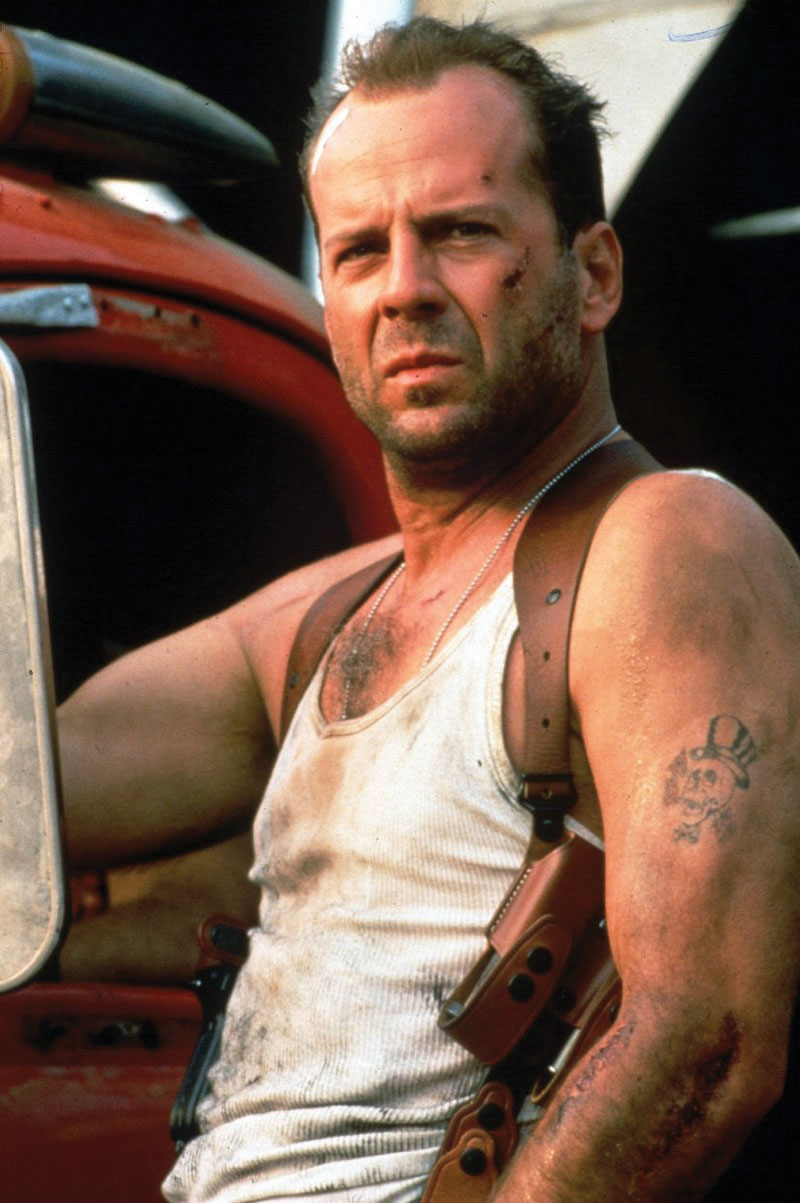
So with that in mind, here’s the experiment. Think back to any action scene in any major action movie of the past couple decades. Given the glut of superhero movies and “Die Hard” rip-offs out there, that shouldn’t be too difficult. Specifically, think of a scene where a female character was kicking ass. Given the rise of strong female characters, that shouldn’t be too difficult either.

A good example comes from the memorable Black Widow fight scene in “Iron Man 2.” By any measure, it’s a wonderfully entertaining scene. It has Scarlett Johanssen kicking ass in a skin-tight outfit. What’s not to love about it? Most people who watch this scene, especially comic book fans and people who find Scarlett Johanssen sexy, would be rightly entertained.

Here’s where the thought experiment comes in. This is where it gets really uncomfortable. Watch the scene above once as you usually would. You don’t need to know the context too much. This is just Black Widow beating up the hired goons of Justin Hammer, the primary antagonist of the movie. Use that first reaction as a baseline of sorts.

Now, watch the scene again. This time, though, reverse all the genders of the characters involved. Make Black Widow a man. Make Justin Hammer’s goons women. Let it play out in your mind, this lone male character beating up all these women. Does the scene evoke the same reaction? For most people not named Chris Brown, it probably makes you sick to your stomach.

This goes beyond the typical double standards between men and women, which I’ve talked about before. It even goes beyond strong female characters, which I’ve also touched on in various ways. This is one of those dynamics that has always been there right in front of us. We just don’t take the time to scrutinize it.

Image result for stressed out man

We can watch scenes of James Bond beating the crap out of a bunch of SPECTRE henchmen and be entertained. We can also watch scenes of Black Widow, Sarah Conner, and Furiosa do the same and be entertained. Swap the genders, though, and it becomes extremely distressing. We don’t see powerful characters kicking ass anymore. We just see a man beating up multiple women.

Find a scene like the one above from “Iron Man 2” and do the same thought experiment. Look for a scene where a woman beats up a much of male thugs. Then, swap the genders. Chances are, the feelings it evokes are just as distressing.

Image result for Furiosa fighting

For a greater sense of context, I came up with this thought experiment after reading an article on Cracked.com about the way Hollywood treats men. I’ve cited Cracked before because and while I don’t always agree with them, they’re good at tackling serious topics in a humorous way, even sexy topics. This one, however, had a hard time being funny.

6 Backwards Ideas Hollywood Still Has About Men

Some parts of the article were more inane than others, like pointing out how every leading man has to be at least a half-foot taller than the average guy or how tortured men are somehow compelling. Some of those details are just quirks, blatant examples of style over substance.

Beyond the quirks, though, there are some genuinely disturbing dynamics at work. We find such entertainment in women beating the crap out of men. We also find entertainment in men beating the crap out of men. However, when it’s men beating the crap out of women, context doesn’t matter. It always makes us feel disgusted and repulsed.

The thought experiment I just posed highlights that. However, it goes beyond violence as well. Rape is one of those super-sensitive issues that’s impossible to make funny or sexy. However, if you put it in the context of prison rape where men rape men, then that somehow changes things, so much so that jokes about rape will even find their way into an episode of SpongeBob SquarePants.

Image result for Spongebob Soap

Then, there are the cases where women rape men. Yes, that does happen in real life. Women are capable of domestic violence against men. However, it’s still okay to joke about. Christopher Titus has even worked it into his standup. It even finds its way into cartoons that air on prime-time.

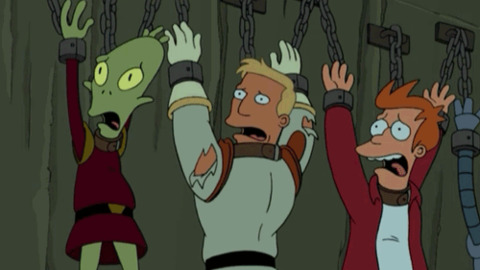
The best example of this is the “Futurama” episode, “Death By Snu Snu.” In that episode, the cast encounters a planet populated by big, hulking, hostile Amazonian women, albeit not of the Wonder Woman variety. Through a series of hilarious antics that are entirely appropriate for a show that has a hard-drinking, sociopath robot, the male characters end up captured.

This is where the line between hilarity and distress blurs if you dare do the same thought experiment. Once captured, the Amazonian women decide to “torment” their prisoners with “snu snu,” which is their alien verbiage for sex. The reaction of Fry and Zap Branigan is a mix of horror and intrigue.
Related image

Granted, it’s presented in a funny way, but that doesn’t change the actual substance of what happens. The women rape these men. They rape them and it’s portrayed as humorous. I’m not going to lie. I did laugh somewhat at how the episode played out. Most people with a healthy sense of humor would.

However, if you do the same thought experiment with the Black Widow scene in “Iron Man 2,” it takes on a very different context. Watch the episode again, but turn the hulking Amazons into men. Then, turn Fry and Zap into women. Suddenly, that scene takes on a much darker undertone.

It would push the line even for the most hardcore porn. Think about how that would play out, a group of warrior men taking a couple of women who just stumbled upon their world and deciding to rape them to death. It wouldn’t just be rated NC-17. It would be outright banned and subject to protest from every women’s group in the world.

What does it say about our attitudes, our culture, and our standards when we’re okay with one gender dynamic and not the other? Now, there are inherent differences in those dynamics. Human beings are a sexually dimorphic species. That means there are inherently different traits within the genders that are impossible to overlook completely.

However, the sheer breadth of the disparity here is cause for concern. If flipping the genders of a story or scene evokes such a different reaction, then that’s a serious disconnect that’s worth scrutinizing.

That’s not to say that the scenes in “Iron Man 2” or “Futurama” are wrong or not entertaining. There’s just something inherently revealing about ourselves when we flip the gender dynamics and react to the same scene. We may not like what that reveals, but it’s not something that can or should be ignored.

21 Comments

Filed under Thought Experiment

A Second Sexual Revolution: The (Sexy And Non-Sexy) Possibilities

https://s-media-cache-ak0.pinimg.com/originals/52/bc/dd/52bcdd5a06b5306c1f4f53120ec9846d.png

Every revolution in history thought theirs was to be the last. They thought when all was said and done, the radical change they brought to society would be vindicated, ever-lasting, and celebrated. Through the harsh lens of history, those behind those revolution all have one thing in common. They all thought wrong.

Whether you’re fighting for the right to marry a squirrel or marching with Vladimir Lenin himself, those behind a revolution are often blinded by their ideals. They see the change they’re seeking as a new and proven method for fixing society’s many ills. Seeing as how every society in every point in history has had many ills, they’ve had a lot to work with.

That was the case with the sexual revolution of the 1960s. However, I explained in another post how this so-called revolution followed the basic formula of many other revolutions. Those revolutions are now pages in history whose effects have been either tempered, rebuked, forgotten, or overlooked.

It’s impossible to predict when, where, and how a revolution will unfold. The why, though, is almost always the same. There’s something insufficient about the current state of affairs. Whether it’s the government, the economy, or trends in movies, there’s always some sort of deficiency. With sex, the rules are unique, the stakes are higher, and the impact spans everything from how we do it to what we wear to get it.

https://i0.wp.com/www.arq.ro/html/media/photos/0/1/837/big/618x371_14435417795345de5f.jpg

At some point, there will be another “sexual revolution” of sorts. It probably won’t be called that. You won’t turn on the news one day and hear that another sexual revolution has begun so everyone should stock up on stilettos and lube. As time passes, though, and we can look back with painfully clear hindsight, we’ll see just how revolutionary it was.

It’s not a guarantee. Nothing is when you speculate about the future. However,  current trends in technology are taking us down a similar path to the sexual revolution we saw play out in the 1960s. As those trends achieve certain milestones, our sex lives will be impacted. After that, all bets are off.

I’ve already talked about a few of these trends and their very sexy possibilities. The field of human enhancement, particularly with advances like smart blood, could give us superhuman endurance, beauty, and sex skills. A world where men and women can hump like porn stars on crack is definitely revolutionary.

https://static.comicvine.com/uploads/scale_small/10/101435/2118157-jj.jpg

That advance is a ways off, though. Others like new forms of long-lasting contraception and new disease-fighting agents like CRISPR would bring their own brand of change. Some are even already here. There are two men living this planet who have a bionic penis. If you think that’s not going to cause some revolutionary ideas, then you’re underestimating how much inspiration men draw from their penis.

All these amazing advances are emerging at a time when we, as a society, seem to be getting more sexually uptight. We already saw how technology, specifically the advent of antibiotics and modern contraception, helped spur the sexual revolution of the 60s. So what kind of revolution will these advances inspire?

https://i0.wp.com/blog.hippiecouture.com/wp-content/uploads/2012/12/sexy-girl-in-rings.jpg

Again, it’s impossible to predict. I’m an aspiring erotica/romance writer. I’m as qualified to be an oracle of the future as I am an astronaut brain surgeon. That said, since I write so much about sex on this blog and in my novels, I like to think I have some insight.

If a second revolution does start, it’ll do so when technology like CRISPR develops to the point where every nasty infectious disease that kept our collective panties on gets cured. That will eventually happen. The first sexual revolution in the 60s saw the end to some of the nastiest diseases we ever endured as a species. It just came too late for men like Al Capone.

As soon as we enter a world where there’s no debilitating disease like syphilis or AIDS to terrify us between the sheets, that will change the game. At the moment, we dedicate significant resources to teaching horny teenagers about the dangerous diseases they can get if they have more sex than what religious authorities and registered republicans deem appropriate.

https://cdn.psychologytoday.com/files/u26/476C3FE6-FD5C-4FA4-AC33-36B98D9DA4DE_w527_s.jpg

So what happens when those diseases are cured? Well, it’s going to certainly terrify parents who don’t want to think about their precious babies getting sweaty, naked, and loud as they indulge in the kinds of decadent orgies usually reserved for Roman emperors. Some will rally against it. Some may even try to prevent these diseases from being cured. That didn’t work in the 60s, though. I doubt it’ll work in the 21st century.

Without disease, the only real consequence people will have about sex is unplanned pregnancy. However, that too might become an afterthought thanks to advances like Vasalgel, which will likely enter the market within the next five years or so. Add this on top of improvements to IUDs, as well as advances in artificial wombs, and then pregnancy becomes a non-issue.

That’s not to say that sex won’t have risks. Even without the potential anxiety of disease and unplanned pregnancy, there will still be issues between the sheets. If there isn’t, we’ll create them. That’s what we humans tend to do with our caveman brain. Then again, with the emergence of brain enhancements, such as Neuralink, that too might be mitigated.

This is all assuming there won’t be other major trends in technology or society that nobody, especially not an aspiring erotica/romance writer, is able to anticipate. There’s a virtual 100 percent chance guarantee that such an assumption is wrong. Even if we can’t make that assumption, we can still entertain some sexy speculation.

That’s where the prospect of a second sexual revolution gets interesting/scary. It’ll arouse some while making others put on an extra pair of panties. That’s also where being an erotica/romance writer gives me an edge because it gives me a chance to blur the line between fantasy and reality.

Perhaps the second sexual revolution will involve a new concept of what it means to be monogamous with someone. That concept may actually not involve sex, weddings, or legally binding documents either.

Perhaps the second sexual revolution will emphasize intimacy more than basic pleasure. With no concerns about pregnancy or disease, along with enhancements to the body and brain, we can focus entirely on being intimate with our partner.

Perhaps the second sexual revolution will expand and enhance the pleasure we experience. Between brain enhancements and biotechnology, the orgasms we feel today may be a mild tingle compared to what we experience in the future.

Perhaps the second sexual revolution won’t just emphasize pleasure between two people. We may end up forming intimate groups, linked together by a shared love and possibly shared thoughts.

Perhaps the second sexual revolution will actually temper our sex drives so that we can better channel it. We may emphasize control over expression, preferring quality over quantity with the aid of brain enhancements and biotechnology.

There are all possibilities. There’s very little chance that only one manifests. There’s a better chance that we’ll see bits and pieces of these ideas converge to create something that we simply can’t imagine right now with our caveman brains. It’s an inherently sexy idea with many implications, both sexual and otherwise.

So what do you think a second sexual revolution will bring? What can we expect in a world where technology and medicine expand our ability and understanding of sex and intimacy? I don’t usually get a lot of comments on this blog, but I’m very interested in hearing new ideas on this topic.

So please take the time to share your thoughts on this issue. I think it’s definitely worth discussing, if only to give me more excuses to talk about sex robots.

3 Comments

Filed under Sexy Future

A Disease-Free World: We’re More Ready Than You Think

https://i0.wp.com/portuguese-american-journal.com/wp-content/uploads/2011/05/stem_cell_lab_hood05_10734.jpg

It’s such a frightening thought. It terrifies parents, priests, rabbis, mullahs, monks, and conservative republicans. People, especially young people, are having sex at this very moment. If that’s not horrifying enough, they’re having sex for fun.

They’re not doing it with their government-approved, religiously-sanctioned spouse. They’re not doing it to produce more babies that will grow into tax-paying, church-going citizens. They’re just doing it because they enjoy the wonderful, toe-curling pleasure that comes with sex.

The most horrifying thought of all, though, is that they’re doing it and they’re not facing any consequences for it. They’re not getting pregnant because of modern contraception. They’re not getting sick either because of modern medicine. There’s literally no legitimate reason other than stigma to dissuade people from having sex for fun. It’s such a horrifying thought.

Okay, that’s enough sarcasm for now. What I just described is an exaggerated extreme of the mentality of those who are opposed to a society that permits or does not punish sexual promiscuity. It’s a reverse of the thought experiment I pitched last year about a world where the diseases that used to scare people out of having sex are all cured.

I don’t think people realize just how much closer we are to that world than they think. Most people alive today don’t remember a world where the biggest dread wasn’t HIV. It was debilitating diseases like syphilis, gonorrhea, and chlamydia. To give you an idea of just how devastating they were, over 20,000 people died from syphilis alone in 1939.

Like small pox, these diseases ravaged generation after generation. Also like small pox, modern medicine eradicated it from our collective fears. In fact, the rise of antibiotics has been largely credited with kick-starting the sexual revolution of the 1960s, more so than contraception.

There are still some scary diseases out there, though. In some respects, those same parents, priests, rabbis, mullahs, monks, and conservative republicans can take a perverse comfort that diseases like HIV/AIDS provides a strong incentive to avoid excessive promiscuity. That comfort, however, won’t last.


In a previous post, I talked about an emerging medical tool called CRISPR and how it may hold the key to ending infectious disease as we know it. I also asked a question I’m sure the anti-promiscuity crowd dreads. Are we ready for a world where we don’t have to worry about sexually transmitted diseases?

There are people who believe that our society simply cannot function in a world where there aren’t any scary diseases to dissuade people from having more sex than the Catholic Church sanctions. On paper, their fears aren’t wholly unreasonable.

In a society with so much promiscuity, fewer people will get married. Fewer people will form the stable, nuclear family that every 50s sitcom championed. Without disease, why would anyone forge any stable family units? Then, there’s the children. How traumatic would it be for them if they grew up in a world where people just had sex for fun?


That’s not entirely sarcasm. That is a very real concern and I can empathize with it to some extent. A society without disease, but full of rampant promiscuity is just so different. Our society has always had to content with these horrible diseases. The idea that they would no longer be a factor just seems unnatural and uncharted for our species.

However, empathy or not, it’s also a sentiment that I believe is misguided. It’s rooted more in flawed assumptions about a specific cultural ideal than actual human biology. I would argue that human beings, as well as society in general, is more prepared for a disease-free world than the Vatican would have us believe.

I believe this because there is a precedent, sort of. In fact, this may be one of the few instances where caveman logic works in favor of our emerging future and not against it. To understand this, we have to go beyond the ways our hunter/gatherer ancestors functioned. We have to look at the practical aspects of these nasty diseases.

For a disease to be real nasty, it has to both spread easily and within a population of hosts that are able to infect as many potential hosts as possible. When you look at our modern infrastructure, or even our ancient trade routes, it’s easy to see why a nasty disease would choose humans.

It’s also easy to see why diseases would use sex to spread. Like eating, it’s a hardwired drive that built into every human being. The desire to mate is every bit as powerful as the desire to eat. Unlike foodborne disease, though, sex provides more opportunities to infect other hosts. On top of that, rubbing body parts together is a lot more direct than simply sneezing on someone.

However, while modern and even pre-modern infrastructure made sex an ideal mechanism for spreading disease, we have to remember that this situation is actually very recent. The ability to simply travel to other regions, meet other people, and possibly have sex with them is very new in the context of our evolutionary history. For most of that history, though, the story was very different.

That brings me back to the hunter/gatherer lifestyle from which all our ancestors evolved. Books like “Sex At Dawn,” which I’ve mentioned before, describe in great detail the particulars of this lifestyle. It’s a lifestyle that, ironically to some extent, makes sex a pretty lousy method for transmitting disease.

This is because during those hunter/gatherer days, we humans roamed and foraged in small bands of closely-knit tribes. These tribes rarely interacted with other tribes because most were spaced out over large areas. Naturally, roaming lands and foraging for food makes it hard to stay in one place, stake claim to a territory, and fight over it.

On top of that, these close-knit tribes had very low population density, a limited ability to travel long distances, and no elaborate trade networks. That means that within these tribes, a sexually transmitted disease is rightly screwed. Sure, it can infect a tribe, but not much else. If that disease is fatal, it may kill the tribe, but it also kills itself as well. So if a disease as nasty as AIDS did emerge, it never had a chance to spread.

If there were any diseases, they couldn’t be fatal and they couldn’t seriously affect fertility. Like the common cold or the flu, it could only ever be so nasty. Otherwise, it never would’ve survived into the modern era.

Keep in mind, also, that the hunter/gatherer lifestyle was the lifestyle of choice for our species for nearly 90 percent of its existence. Our evolution and biology emerged within this lifestyle. That lifestyle was also conducive to some fairly loose sexual practices, many of which would make the Rick Santorums of the world faint. That’s why it’s not unreasonable to say that our ancestors had better sex lives than we do.

Those sexual practices were rarely conducive to the world of white picket fence type families that is so idealized by western civilization. It’s also not conducive to the world of kings and his multiple wives/concubines/sex slaves. That kind of rigid structure or hierarchy just doesn’t work in in a hunter/gatherer society. That’s why many practice strong egalitarian traditions.

This makes sense in terms of sheer pragmatism. In a society of hunter/gatherers where you’re only working with small tribes, you can’t be too much of a bigot. Everyone has to pitch in. Everyone has to share. You can’t be too big an asshole because you won’t survive without your tribe, nor will you have a chance to have sex. From an evolutionary and society perspective, it’s a pretty good deal.

In this context, human beings are already well-wired for a more promiscuous society. In fact, as “Sex At Dawn” argues half-jokingly, it may be better for us overall. You need only look at the happy, sexy lives that Bonobo chimps live. They have a lot of sex. They rarely fight. Even by hippie standards, they’re pretty chill.

At the moment, we humans can’t live those lives. Our world is too developed, too connected, and too vast for our caveman brains to make sense of. Add nasty diseases that can now use sex to effectively spread and it just isn’t pragmatic anymore, even if our biology favors it.

That may change very soon though. Once tools like CRISPR and contraceptives like Vasalgel are refined, those barriers are gone. We can safely exercise the same libido that our ancestors got to enjoy. What will that do for society? What will that do for the dynamics between men and women? It’s hard to imagine, but it’s a damn sexy idea that’s worth imagining.

3 Comments

Filed under Sexy Future

Virtue Signaling: How It Creates Beta Males And Bitchy Girls

They’re weak, pathetic, gullible, whiny, sullen, and boring. They lack confidence, charisma, and any meaningful personality trait that might help them stand out and accomplish something of value. They do nothing to excite the opposite sex and make only the most asinine of efforts to do so. They are the beta males, an inane segment of the male population that I’ve protested before.

Now, allow me to describe a different crop of annoying people whose presence pollutes the collective gene pool. They’re loud, obnoxious, arrogant, impolite, dense, unreasonable, vindictive, and crass. They are unflinching, unfeeling, and utterly devoid of empathy to anyone who isn’t like them. Their disdain of others and perpetual victimhood complex is the only thing that gets them up in the morning.

I’m talking, of course, about bitchy girls. If beta males are a bane to all those with a Y-chromosome, then bitchy girls are repugnant stain on the feminine mystique. I call them girls because there’s a difference between women and girls. Being a woman, just like being a man, requires some measure of maturity. Girls, like their beta male boys, have none of that. As such, they don’t deserve to be called women.

https://k61.kn3.net/taringa/1/9/4/6/2/7/8/shakas666/579.jpg

I bring up these two case studies of festering warts within the human condition to help make another point about virtue signaling. I know some people are probably tired of this topic. Believe me, I feel your pain. However, this last point is more relevant because it affects our personal lives, as well as my efforts as an erotica/romance writer.

Beta males and bitchy girls are sometimes a necessary component of a story, especially one that relies on major antagonistic characters. You need a male or female character that is easy to hate and easy to root against. That’s why we have characters like Biff Tannen and Regina George from “Mean Girls.”

It used to be that we needed those characters to be alpha males or alpha females. They had to be tough, mean-spirited jocks or cruel, cold-hearted bitches that nobody rooted for when they got gutted by a crazed killer in a hockey mask. It’s crude, but it did the trick. Unfortunately, new trends in character development, as well as real life, are tweaking that script and not for the better.

https://typeset-beta.imgix.net/rehost%2F2016%2F9%2F13%2F88eaf78f-f569-41af-aae6-bb067df4f16e.jpg

Beta males and bitchy girls may not be natural allies on paper, but they occupy the same space in terms of being utterly contemptible on multiple levels. They just take different routes and virtue signaling is how they get there.

The best contemporary example are certain breeds of those who call themselves “male feminists.” By the way, anyone who actually has to preface feminism like that should raise a few red flags. That’s usually a sign that they’re already retreating into beta male mode and there’s nothing you can do to stop them.

These types of men are habitual virtue signalers, routinely bashing their own gender and agreeing with the bitchy girls about everything involving some “cisgendered white male patriarchy” conspiracy. They essentially emasculate themselves, shunning any male traits, and associating every masculine trait with being Biff Tannen.

https://i0.wp.com/thelibertarianrepublic.com/wp-content/uploads/2017/01/maxresdefault-2.jpg

It’s a form of self-flagellation, an effort to alleviate the sheer guilt they feel with being male and trying to earn attention and/or pity from others. That’s how they seek their validation and when they interact in groups, they can’t help but reinforce those efforts. Virtue signaling is just the proverbial gasoline they use to keep the fire going.

For bitchy women, the virtue signaling is much more overt. Unlike the beta males, they’re exceedingly vocal with their efforts. They don’t discuss, debate, or rationalize. They just yell, whine, and groan. Virtue signaling is just how they stay on topic.

Bitchy women don’t care about anyone’s voices, except their own. They loudly whine and bemoan about everyone who doesn’t buy into their view of the world. They will yell about the oppressive white male patriarchy at the top of their lungs. Then, when someone calls them out on their bullshit, they dare to play the victim.

https://i0.wp.com/roughcutmen.org/wp-content/uploads/2014/04/Playing-the-Victim1-1.jpg

In the mind of a beta male and a bitchy girl, they are the underdog hero of their own story and everyone else is an evil demon-possessed Nazi working on behalf of reincarnated slave-holders from the 1850s. Virtue signaling allows them to prop up this inner narrative, as though they have to keep it going in order to ensure they get the same ending they’ve seen in every Rocky movie.

It isn’t just that this inner narrative is utterly false and devoid of substance. It isn’t just that it gives them too many excuses to cling to these annoying tendencies, which constitutes excuse banking of the worst kind. The biggest tragedy here, beyond the people they annoy, is that with their virtue signaling, they champion traits that naturally drive people apart.

Beta males and bitchy women do not conduct themselves in ways that inspires intimacy, progression, and growth. They present themselves as heroes of their own story, an ideal for what a man and woman should be, but they cannot and will not realize that the picture they’re paintings is both flawed and repugnant.

https://images-na.ssl-images-amazon.com/images/G/01/digital/video/hero/TVSeries/TheGreatestAmericanHero_327393900_GAH._V348547917_SX940_.jpg

A beta male, in his meek ineptitude, barely qualifies as a pet to a bitchy girl. A bitchy girl, in her immature arrogance, is just another bully that a beta male tolerates. Together, they reinforce a brutal cycle of bitterness, self-loathing, and arrogance that ensures isolation, apathy, and loneliness.

For an aspiring erotica/romance writer, that’s a triple dose of narrative kryptonite. For characters like the ones in “Passion Relapse” or “Skin Deep,” it’s important I strike a particular balance. I can’t have characters being too much like Biff Tannen or Regina George. I can’t have them be like the entire cast of the “Big Bang Theory” either. If I want those characters to be more than mere foils, they need to have some complexity.

I’m not saying there isn’t a place for characters like this. Someone needs to be Freddy Kruger’s first victim in a horror story. However, virtue signaling and those who abuse send a toxic message about what makes a man or a woman moral within the context of a story.

https://i0.wp.com/bh-s2.azureedge.net/bh-uploads/2016/06/freddy-krueger1-1.jpg

Beta males and bitchy girls don’t deserve to be heroes, ideals, or examples. More than anything else, they are cautionary tales of what happens when virtue signaling goes too far and infects someone’s mind. They should not be encouraged, nor should they be ignored either.

There are many different dynamics that go into making a character, real or fictional, into who they are. If they need something like virtue signaling to function, then that’s a sign there’s something inherently flawed. People have enough excuses to be mean to one another, some of which they can’t do a damn thing about. It’s better for society, our live lives, and erotica/romance novels if we don’t provide them with more.

3 Comments

Filed under Jack Fisher's Insights

What The NFL Draft Can Teach Us About Finding Romance

https://cbsphilly.files.wordpress.com/2015/04/nfl_draft2.jpg?w=625&h=352&crop=1

It was an eventful weekend for NFL fans. The 2017 NFL Draft is complete. Many are still buzzing, hung over, or complaining about what they’re team did, what they didn’t do, and how closer or farther they are from winning the Super Bowl. Ask any fan outside of Cleveland and they’ll probably say they’ll be playing for a Super Bowl at the end of the year.

To those of you who don’t give a damn about the draft and don’t get the appeal, take a deep breath. It’s over now. You don’t have to hear about trades, mock drafts, or guys named Mike Mayock for at least another eight months. Trust me, those months will go by fast though.

As an ardent NFL fan, which I’ve made clear on this blog before, I’ve always had mixed feelings about the draft. It’s always been more style than substance for me. I see my favorite teams picking players and I know in the back of my head that few of these players are going to make a lick of difference. Getting worked up about it feels like energy that could be better used telling more sexy stories.

https://moolta.files.wordpress.com/2012/09/raiders-fan-crazy-scary-skulls.jpeg

That’s not to say it has no value. The NFL Draft is the raw ore from which the NFL’s players are forged. Whether they’re first round picks or undrafted, they become the iconic athletes that help make any sports league a success. Given the NFL’s $13 billion in revenue last year, it’s pretty damn clear that they’re doing something right.

In watching the NFL Draft, though, I found myself making some unusual connections between this bawdy spectacle and my own personal endeavors. Specifically, I saw a distinct parallel between the NFL Draft and it relates to our efforts at finding romance or telling kinky stories.

I know. That sounds like an odd collection of thoughts, especially from someone who talks a lot about sex robots on his blog. Bear with me. I promise there is some substance to these thoughts and it’s relevant to more than just aspiring erotica/romance writers.

The NFL Draft, at its core, is an elaborate job interview coupled with an investment opportunity. A finite number of teams looks at the vast pool of applicants and tries to determine which among them is worth development. That development costs time, money, and sometimes frustration. Any sport, be it football or jump rope, is going to involve wins and losses. It’s just part of the process.

https://athlonsports.com/sites/athlonsports.com/files/styles/article_top_img/public/NewEnglandPatriots_2015_minicamp_0.jpg?itok=R6WnrVbF

In that sense, there are some uncanny similarities with how we go about seeking romantic partners. It’s not like just hiring a prostitute or having a one night stand. That’s more akin to hiring a plumber for a service. Finding a romantic partner is like finding someone you’re willing to share a home, a bathroom, and bank account with. There’s a lot more at stake.

In seeking romantic partners, you can’t just look at someone and determine whether they’re worth the emotional investment. Even if someone has tits the size of basketballs or a dick the size of an elephant’s tusk, you need to know more about someone to determine whether you want more than a one night stand.

https://bollywoodbingo.files.wordpress.com/2016/05/sunny-leone-one-night-stand.jpg?w=623&h=499

NFL scouts, and the teams they work for, don’t get much value out of one night stands. They want to find players that will be part of their respective teams for the long haul, working hard for them and producing for them on the field. That’s why no scout will ever just look at a prospect on the service and decide on the spot whether they’re a fit for their team.

For those seeking meaningful romance, they need to be every bit as thorough as a competent NFL scout. They need to study a prospects measurables, immeasurables, and everything in between. It’s not enough to know whether someone is capable of loving you back, just like it’s not enough to know whether someone can physically play the game of football. You need to know that the chemistry is there.

It happens in the NFL all the time. Sometimes, a prospective player will have all the skills and intangibles to be a quality player. Unfortunately, they end up going to a team that doesn’t fit them. The chemistry isn’t there and they end up languishing, like someone caught in an unhealthy relationship.

https://i0.wp.com/cdn.tinybuddha.com/wp-content/uploads/2015/12/Arguing.jpg

One well-documented example in the NFL was Steve Young, a Hall-of-Fame quarterback for the San Francisco 49ers. Young was an undeniably talented player, but had the misfortune of being drafted by the Tampa Bay Buccaneers at a time when they were among the worst teams in the league.

Then, after an overdue breakup, Young was traded the 49ers where he eventually took over after the team’s other Hall-of-Fame quarterback, Joe Montana, left for Kansas City. It turned out to be a great match. Young thrived in San Francisco, eventually culminating in a Super Bowl victory in 1994.

https://cdn1.lockerdome.com/uploads/11a55f5abe349d798d30d2eccdbec59d556fb843f7b7790f4bd0159798dda88c_large

Looking at Steve Young’s story, you can draw some similarities to someone who ended up with someone in a place where it just wasn’t going to work. It took some effort from both sides to come together and an investment of resources to make something productive out of it. Replace football with love, passion, and having to share a bathroom and you’ve got yourself a template for forging a meaningful romance.

It’s also highlights something that a lot of NFL fans mistakenly believe about the NFL Draft. They’ll say it’s entirely a crap shoot. Some very smart and sincere people might even agree with it. If you look at the numbers, it seems logical. Even for first round draft picks, nearly a third of them end up leaving the team. For any pick below the fifth round, the odds are even worse.

However, to say the NFL Draft is a crap shoot is like saying love is only an anomaly. The fact that the NFL is so successful and finding love is such a prominent part of our lives is a clear indicator that there’s more than just random chance at work.

I don’t deny that there is some element of luck involved with the NFL Draft. Who knew that a sixth round draft pick from Michigan would go onto win five Super Bowls or that a number one overall pick from LSU would be better known for loving “purple drank” than throwing touchdown passes? Like finding love, sometimes you do need a bit of luck to be in the right place at the right time.

https://i0.wp.com/sports.cbsimg.net/images/blogs/Brady-Combine-snap-02-15-15.png

However, luck only goes so far. Players like Tom Brady and Joe Montana had legendary coaches like Bill Belichick and Bill Walsh teaching them. It goes both ways too. Those coaches are legendary because they could mold these players into the champions they eventually became. They need each other and together, they achieve their goals.

In meaningful love, it goes both ways. Whether you’re playing the role of a scout or a prospective player, you both need to make an investment. Those investments need to complement one another. They need to be part of a good situation with all the right emotions and all the right desires.

Like the NFL draft, there will be mistakes and poor decisions. There are romantic equivalents of draft busts who seem like potential super stars, but turn out to be toxic. I’ve already talked about Lawrence Phillips in a previous post. There are other big busts like Ryan Leaf, Tony Mandarich, and Tim Couch.

https://i0.wp.com/cdn.soundpublishing.com/dailyweekly/ryan-leaf-huh.jpg

These busts are akin to our misguided passions that lead us into relationships that are doomed to fail. There are NFL scouts who thought they could fix the flaws with players like Lawrence Phillips. There are just as many people who think they can fix the flaws in a prospective lover. Most of the time, those efforts fail.

Finding love and finding pro-bowl football players is hard, but the fact it’s so hard is part of what makes it so meaningful. That’s because when we find love or a pro-bowl player, the investments we make pay off in a big way. A football team has a player that can help them win. A lover can find someone who fulfills them on an intimate, emotional level.

It takes a lot of work. It often requires quite a few heartbreaks and draft busts. It can hurt. It can be costly. It can seem like you’ll never win that championship. Like sports, though, the hardship that comes with finding love is part of what makes it so meaningful when you win.

https://s-media-cache-ak0.pinimg.com/originals/2b/6a/f6/2b6af6cbcaf852e45de12fea50fc786a.jpg

1 Comment

Filed under Jack Fisher's Insights

Why Bigotry And Prejudice Can NEVER Be Resolved (For Now)

https://i0.wp.com/cdn.thedailybeast.com/content/dailybeast/articles/2014/09/28/why-bigotry-persists/jcr%3Acontent/image.crop.800.500.jpg/47066895.cached.jpg

It’s all around us. It generates protests, outrage, and angry rants of every variety on cable news. It floods social media, infects college campuses, and drowns out any and all meaningful dialog that might actually lead to productive change. I don’t even have to reveal it at this point. Everybody knows what I’m talking about on some level or they at least have a vaguely accurate idea.

It goes by many names. Call it racism, reverse racism, sexism, man-hating, homophobia, islamophobia, or transphobia. It all falls under the same overly-divisive rhetoric that is bigotry and prejudice. It always seems to be in the news. It always makes a conversation awkward and unsexy. It seems to get better some days and regress the others.

Now I know I’m making everybody’s panties very dry by bringing this up, but bear with me. This post is not going to get as bleak or depressing as it would if it were a Michael Moore documentary. I prefer to convey a more optimistic spirit to my audience. It puts them in a better mood, which is important if you’re trying to sell erotica/romance novels.

On the surface, though, there’s no way around it. This is as ugly a topic as it gets these days, the concepts of bigotry and prejudice. If it isn’t the stereotypical white male patriarchal types bemoaning how lazy and violent minorities are, it’s the radical left-wing hippies who call everyone who doesn’t support interracial gay couples kissing in the streets Nazi supporters.

It really is a strange, distressing state in which we find ourselves in. There used to be just one extreme in terms of prejudice, namely that which tried to preserve the overtly-unequal status quo that favored one particular group, be it white men or one particular religious group. Now, the extremes are all over the place.

I’ve talked about a few of them, like radical feminism. They’re just one of the many extremes that have emerged in recent years, often in conjunction with trends in identity politics. It’s not peace-loving hippies who put flowers in guns anymore. It’s angry, entitled, hashtag-starting narcissists who go into a Hulk-like rage whenever someone dares contest their utopian worldview.

There’s an extreme for women, who want men to suffer for their historical crimes against gender. There’s an extreme for race, some of which favor completely disenfranchising all white men for their historical crimes. There’s even an extreme for those who dare to use the wrong pronouns when describing boys and girls. Yes, it really has gotten that crazy.

That says nothing about the craziness that has emerged from extremes within religious groups, but we’re all kind of used to that. We expect extremes in religion, whether they’re favoring the execution of cartoonists or demanding that their particular religion be given a right to discriminate. It’s just the same bigotry and prejudice, but with holy decrees and a convenient excuse to not pay taxes.

No matter the extreme, the outcome is the same. It divides people. It makes them angry, unruly, and hateful. It makes the comments section in every YouTube video about feminism and race relations a raging tire fire that undermines whatever faith in humanity you might have had at this point.

It’s as frustrating as it is tragic. It often leads us to ask the same question Rodney King once asked. Can’t we all just get along? Well, with all due respect to Mr. King, I’m sorry to say that there’s a wholly valid answer to that question.

Unfortunately, the answer is a definitive no. We cannot.

That’s not the solemn musings of cynical man who has read one too many BuzzFeed articles. It’s a cold, inescapable fact. However, there is a context here and a fluid context, which means we shouldn’t be too cynical. If anything, we should be even more hopeful.

The reason why prejudice and bigotry exist is simple and it has nothing to do with some vast, elaborate conspiracy by cisgendered white heterosexual males. Any conspiracy involving that many straight men probably involves fantasy sports or a “My Little Pony” marathon. Once again, this immutable problem in our society has roots in our biology.

It’s another byproduct of caveman logic. Those same settings in our brains that haven’t been updated in 200,000 years essentially guarantee that there will always be some level of prejudice and bigotry. The fact we’re able to function as well as we do as a global society is nothing short of miraculous.

To understand why this is, you need to recall the circumstances of our distant ancestors. They did not live in big cities full of a diverse mix of people from various cultures and ethnicities. They didn’t even live on farms in rural towns where cow-tipping counts as entertainment. They were hunter/gatherers, roaming and foraging in small, close-knit tribes.

For most of the history of our species, that’s how we lived. As such, that’s how our brains are wired and that wiring has not changed much. Due to the slow, clunky processes within our biology, it really can’t and that’s the crux of the problem.

Modern neuroscience has revealed a great deal about our brain’s capacity to form groups and cooperate. These groups become tribes and we, being the very social species that we are, come to tie our identity to those tribes. We work with them. We trust them. We rely on them. Most importantly, as it pertains to prejudice, we defend them and make endless excuses for them.

Picture, for a moment, how this works in our hunter/gatherer context. You’re an individual living 100,000 years ago. You have only a loin cloth, a spear, and functioning genitals. On your own, you’re not going to survive for very long. In a fight against a hungry lion, you’re basically a walking snack.

Then, you join a tribe. You ally yourself with other people who can help you, share resources, and give you an opportunity to use your genitals with others in a more enjoyable, intimate way. Suddenly, that hungry lion loses its appetite. One human is easy to maul. A hundred humans, each armed with spears and an incentive to impress fertile women, is much harder.

Being in that tribe, you come to rely on them and cherish them. Being around them gives you a sense of purpose and identity. You come to love and respect them. You form your own rituals and quirks. You sing certain songs. You do certain dances. You wear certain loin cloths that you think are stylish as hell. This tribe makes you feel complete.

Then, one day, you encounter another tribe. However, this tribe is not yours. They look different. They talk funny. They believe weird things. They wear weird clothes. They follow different rules. Everything about them is so strange and that freaks you out, so much so that you cling harder to your tribe.

Maybe there’s something about that other tribe that’s scary. Maybe they have weapons that are bigger. Maybe they have talents that your tribe can’t do. Maybe their food tastes better and their gods are more powerful. This is all causing you some serious stress and when your brain gets stressed, it does a lot of crazy things to mitigate it.

The next thing you know, your tribe goes to war with the other tribe. Your tribe loudly proclaims that theirs is the greatest tribe in the world. Their gods are better, their food is better, and their rituals are better. The other tribe is so wrong and misguided that they can’t be human. As such, killing them or demeaning them isn’t a big deal. It’s no more distressing than putting down a rabid dog.

Now, extrapolate this tribal mentality, carry it out a billion times in a billion ways within large multi-cultural societies, and apply the reaction to the comments section of a Justin Bieber video, and you now understand why prejudice and bigotry exists. You also understand why nothing can be done about it for now.

Remember those last two words though. I bolded them for a reason. This is where I offer readers a sliver of hope. Does racism, sexism, and homophobia truly disturb you? Do you wish that our society could move past it and forge a more peaceful existence? Well, you may live to see that day.

Keep in mind, these traits that make us so hateful and divisive all stem from our brains. It’s that flawed wiring that still thinks we’re hunter/gatherers picking nuts out of elephant shit on the African savanna that fosters so much bigotry and prejudice. We humans are capable of a great many technological and intellectual feats, but we cannot circumvent the wiring of our brains.

Thanks to companies like Neuralink and advances in human enhancement, like smart blood, we are very close to finally tweaking those outdated settings that make us mute certain people on Twitter. It may very well happen in our lifetime. We may see a new breed of humans whose brains can function beyond brutish tribalism.

We don’t know how these humans will think, how they’ll function with those still stuck in caveman mode, or how they’ll relate to one another. If they aren’t as hateful or petty as we are today, then perhaps they’ll find creative new ways to relate to one another, connect with one another, and make love to one another.

We can only imagine/fantasize for now, but I do take some comfort in the progress we’ve made as a species. We’ve done remarkably well, despite our caveman brains. It’s fun to imagine how much more we can do once we update the software. It may make for a more promising future and some very sexy stories, some of which I intend to write.

24 Comments

Filed under Jack Fisher's Insights

When Love (And Lust) Is Genuine

https://i0.wp.com/infinitehuman.com/wp-content/uploads/2014/12/DivineLove670X440-1.jpg

Does she love me?

Does she love you?

Is our love real?

Is the sex good?

Is the sex really that good?

Is this love the real deal?

These are all questions I’m sure everyone has asked themselves at some point. If not, then chances are you’ll ask yourselves these questions at some point in the future. Sometimes you may not even ask them with a completely sober mind and I’m not just talking about shots of tequila.

Love, lust, and everything in between is a beautiful thing. It’s one of the most powerful experiences we can have as human beings. In fact, according to research from MIT, being in love can produce a high similar to that of cocaine. In another life, maybe Pablo Escobar could’ve been the ultimate love guru. I guess we’ll never know.

I know I say it a lot, but it’s worth saying again, especially for a topic like this. We are a very social species. The human race thrived, despite bodies that were easily crushed by hungry bears, because we could collaborate and cooperate. We worked together, shared resources, and made beautiful love that resulted in more humans. Now, we’re the most dominant species on the planet. Bears just cannot make that claim.

As beautiful as it is, sometimes the answers to those questions are tragic, if not downright heartbreaking. It does happen. Sometimes the love two people have isn’t real. Sometimes the lust they feel is fake. Sometimes the sex is only a minor step above having someone watch while you masturbate. The challenge is finding out how to answer these questions.

I bring up this topic because I recently got into an interesting discussion with some people on a comic book message board. Now in general, I try to avoid most of the discussions on message boards. I’ve found that over 95 percent of them involve fans whining about the current situation in their favorite comics and how they hate it so much, but not enough to stop talking about it.

Every now and then, though, there will be a more meaningful conversation. I really enjoy being part of that conversation because it brings out some interesting perspectives. A lot of those perspectives can apply to real life, even in comics that involve clones, time travel, and poop jokes. Yes, I’m referring about Deadpool.

Specifically, the conversation I had involved a discussion about how genuine the love and romantic chemistry is between two particular characters. In this case, one of those characters was Spider-Man, whose romantic history is almost as vast as Wolverine’s. While I do criticize Spider-Man for being an incompetent hero, the man is still pretty good when it comes to getting laid. For that, I do respect him.

However, like a lot of comic book characters and real people, his love life is subject to a lot of variations. There are times when his emotions are not entirely sincere. By that, I mean he’s with someone because they’re there. That’s it. Then, there are times when he really does love someone, enough to marry them and make a deal with a devil with them. Like I said, there’s a lot of range with Spider-Man.

Sometimes it’s hard to make sense of these situations. Within the discussion I had, there were all sorts of conflicting opinions about just how sincere Spider-Man was and how much potential the relationship actually had. For every one person in the discussion, there were at least five different opinions, including my own.

Comic book fans are notoriously stubborn for how their characters are portrayed, but when it comes to our love lives, the stakes are a bit higher. In the discussion, I noticed a few common themes that set genuine love apart from the kind of love that end with Spider-Man getting his ass kicked by the Green Goblin.

One of those elements is luck. I know that doesn’t sound very romantic, but it’s an unavoidable function of life. Sometimes you’re in the right situation at the right time to take advantage of something, be it love or a winning lotto ticket. You can’t always control it, but it happens.

With respect to genuine love, though, luck plays a very specific role. If a relationship relies on luck to work, then that relationship is basically a reverse lottery. Over time, the odds just aren’t in anyone’s favor. The Law of Averages is both a harsh mistress and an outright sadomasochist. Spider-Man finds that out on a regular basis with how badly his relationships turn out, often due to forces he can’t control.

In addition to luck, there’s also the chemistry aspect. This is much sexier and much more romantic than luck. There’s no question about that. It’s also one of the hardest component to really nail down.

We all understand what romantic and sexual chemistry is to some extent. If two people are drawn together and struggle to keep their clothes on around each other, that’s a sign of pretty potent chemistry. Like real chemistry, though, some mixtures are more potent than others. Some are downright volatile.

If the chemistry is restricted to lust, then that’ll make for some hot sex. However, it won’t make for much else. Now I’ve got nothing against hot sex. It’s a wonderful part of being human. It can just be shallow and crude though. It can be a key ingredient for sexual chemistry, but it can’t be the only ingredient.

Add love to the mix and that’s where the potency shows. Genuine love complements one another. Genuine love involves two people cooperating, sacrificing, and sharing on a level that you just don’t do with a total stranger. Genuine love is usually equal for the most part. It’s rarer than hot sex, but beautiful. It even shows up in an X-men comic every now and then.

Lastly, one key element in genuine love involves reasons and excuses. I know this isn’t very sexy either, but it’s a necessary practical element of love. It can be either the glue or the napalm that binds/destroys a relationship.

Specifically, it deals with the how and why two people are involved in the first place. If they’re in an arranged marriage, which still happens a lot these days, then that’s a fairly unambiguous reason. If they’re together because they just don’t want to be alone, then that’s not much of a reason. That’s more of an excuse.

Sometimes Spider-Man is just with someone because they’re part of his life. They happen to cross paths with him both in and out of the mask. That’s often the case with characters like the Black Cat, whose about as genuine as a very hungry, very horny wolf. It rarely makes for a very genuine connection.

Sometimes two people start out as friends and the connection deepens. This often happens in a lot of teen movies and sitcoms, but it happens in real life too so it’s not entirely flawed like most movie tropes. That can sometimes be a solid foundation for genuine love.

There are also cases where two people are together purely for pragmatic reasons. A beautiful woman is with a man because he’s rich. A man is with a beautiful woman because she’s sexy. Sometimes people are just friends with benefits. That does happen and can work, despite what an Ashton Kutcher movie may claim.

That doesn’t mean pragmatism is necessarily genuine though. If two people are together because not being together would be too much work or too inconvenient, that’s not genuine. That’s just plain lazy. If two people are together because one has a great deal of leverage over the other, then that’s not genuine either. That’s exploitation.

Overall, there are a lot of components that go into a genuine romance and, without spoiling too much of the discussion I had, Spider-Man sucks at it. Characters like Superman, Wonder Woman, and even Starfire, to some extent, have a much better track record.

In the real world and throughout history, you’ll find plenty of examples of genuine love. They don’t always make for great stories or good erotica/romance, but that doesn’t make them any less genuine. In the end, genuine love combined with genuine lust makes for the best and sexiest connections. Not everyone can find it, but that’s what makes it so precious.

Leave a comment

Filed under Jack Fisher's Insights

How To Manage Your Excuse Bank (Within Reason)

https://i0.wp.com/www.caproasia.com/wp-content/uploads/2015/08/Professional-Banker-3.jpg

When I did my first post on reasons versus excuses, I challenged readers to take a closer look at their actions and decisions. Why did they end up doing what they did? Was there a reason for it? Was that reason actually an excuse? Did that reason or excuse end with you getting laid, fired, or slapped in the face?

Given how many actions and decisions unfold on a day-to-day basis in the massive doughnut shop that is life, it’s hard to make sense of them all. I’m sure those without OCD or a personality disorder was quickly overwhelmed by the sheer breadth of reasons and excuses they came up with for their behaviors. Don’t worry and put down the vodka. That’s entirely normal.

We’re all human. We’re all bound to make bad decisions or bad reasons and/or lousy excuses. That’s part of life. The key is learning from those bad decisions and improving the skills that help us better our loves, help those around us, and even get us laid from time to time. Since I’m an erotica/romance writer, that last one was worth adding.

It’s also worth offering whatever help I can to others in developing those skills. Again, I need to remind everyone that I’m an aspiring erotica/romance writer. I’m not a scientist, a therapist, a psychologist, or doctor. I may write about people in those occupations getting involved in sexy situations, but I’m not at all qualified to offer the kind of substantive advice, complete with technical charts and an hourly bill.

https://i0.wp.com/allennance.com/wp-content/uploads/2013/12/peanuts-blogging-advice-770x433.jpg

However, in dealing with plenty of colorful personalities throughout my life and writing various personalities in my novels, I do feel like I can at least offer some insight that can help people use my colorful ramblings in pragmatic ways. I can’t guarantee they’ll work, get you laid, or make you rich. This is just me trying to make my words both sexy and useful.

In discussing reasons versus excuses, I brought up the concept of excuse banking. It’s almost exactly what it sounds like. It’s the process of acting, believing, and learning in a way that effectively pockets an excuse to use to justify decisions later on. Since our brains are wired to decide first and then justify those decisions, excuse banking is very much a pragmatic manifestation of our collective psyche.

It’s not inherently good or bad. It can certainly get pretty darn bad, as I pointed out when I tied excessive excuse banking to political and religious extremism. Most people, though, don’t operate in extremes and if they do, it’s usually out of fear and survival, which are among the most valid reasons we can have for doing something. For the purposes of providing useful advice in excuse banking, I’d like to focus on the good.

In that spirit, I’d like to offer a quick rundown of tips and tricks for managing your excuse bank effectively. We’re all going to make excuses at some point. We’re all going to bank those excuses in some form or another. We might as well figure out how to do it in a way that improves our lives and gets us laid.


Tip #1: Maintain A Balance, But Avoid Hoarding

Like any useful bank account or credit card, it’s important to maintain a balance. You always want to have some reserves, just in case it’s an emergency and you need a valid excuse to explain why your pants are in the refrigerator. You don’t want to be stuck relying on reasons that may or may not apply. That’s just going to make you look stupid, incompetent, and decidedly unsexy.

Unlike a traditional bank account, though, you don’t want to let your excuse bank get too bloated. That’s because excuses aren’t hard assets. They’re intangible, malleable, and much easier to abuse. You may be able to use a dollar bill to snort a line of blow, but with an big enough excuse you can justify snorting blow off a stripper’s tits.

That’s why you should not hoard your excuses the same way I hoard comic books. As I noted in my post on extremism, having too many excuses that are too malleable creates all sorts of nasty temptations. Having those excuses is like having a loaded AK-47 in a traffic jam. Even if you can resist the temptation, the potential is still there and the danger of that potential can be pretty vast. Just ask any experienced traffic cop.


Tip #2: Invest With Other Peoples Whenever Possible

This part of excuse banking also highlights one of the key differences from other types of banking. In a sense, excuse banking is almost always a joint effort. It’s not enough to just have an excuse. You also need other people to believe them in order for them to be useful.

An excuse with a random stranger and an excuse with a close family member is not going to have the same value. At the same time, an excuse you bank on your own isn’t going to be as valuable as one you bank with other people. Human beings are very social creatures. When you forge close social bonds, be they with family or lovers, your excuses carry more weight and so do those of others.

In a sense, it’s a win-win investment. By banking excuses within a social group, you develop a sense of trust and understanding. That makes deposits and withdraws from your bank easier and less likely to blow up in your face. Just watch any Ben Stiller movie to see why that’s so important.


Tip #3: Know Which Investments Grow And Which Are Toxic

It’s true. Excuse banking sometimes deals in toxic assets. I’m not just talking about bad mortgages or too much stock in Enron either. When your excuse bank has toxic assets in it, you’re in big trouble.

A toxic asset in an excuse bank is often one we don’t realize is toxic. Sometimes, we even refuse to realize it. That’s what often happens with dictators, religious zealots, and child actors. Their excuse bank is so full of toxic assets that they don’t know how bad their excuses are and if someone tries to tell them, they don’t listen. That often leads to the kind of tragic self-destruction that becomes an A&E documentary.

That’s why it’s so important to identify these toxic assets before they poison you. Those assets will undermine your ability to work with others and gain their trust, two things everybody needs to survive in a functioning society. So how do you know if an asset is really toxic? Just follow these simple steps:

  • Step One: Ask yourself, “Would this excuse allow me to punch someone in the face and make them apologize for hurting my hand?”
  • Step Two: If you answered yes to the following question, then the excuse is toxic.

Tip #4: Understand An Investment’s Potential, But Don’t Ignore The Risks

Like any investment, there are risks and rewards that you have to weigh. Sometimes the risks are minimal. When you fake sick just a couple times and don’t announce to the world on FaceBook that you’re running a marathon, the risks are pretty minimal. Those risks escalate when you let them pile up, so much so that your girlfriend won’t believe you when you say you need to perform brain surgery on the President.

This is especially important for anyone in a position in power, be they the despot of a country or a manager at Walmart. Having power offers a lot of potential because it creates both excuses and reasons for people to do what you tell them. However, the risks are much greater, especially if you want to use that power competently.

It’s easy to lose yourself in power. Anyone who used cheat codes in old Mario games understands that. That’s what makes it so dangerous because it prompts us to ignore the risks. When we do that, we’re less likely to realize when our excuses become toxic. People don’t trust us and look for ways to get us out of the way. No matter how much power you have, you won’t be able to use it effectively if your excuses are toxic.


Tip #5: Avoid Banking Excuses As A Means To Improve Past Investments

This tip is directly tied to a little something called the sunk cost fallacy. Anyone who has ever had a gambling problem or knows someone who would bet their shirt at a blackjack table knows it well. It’s this annoying quirk in our psyche that compels us to keep throwing resources into a game we’ve already lost to justify past investments.

In a sense, it’s an excuse to justify stupid risks that didn’t pay off. It’s a way to alleviate the mental stress of knowing just how badly we’ve lost. In the context of excuse banking, it applies to more than just a bad run of luck at a casino.

Like trying to win back what you’ve lost, banking excuses to improve toxic assets rarely works out. When an excuse has become toxic, it usually stays that way. It’s like the boy who cried wolf. Even if the wolf does come once in a while, there isn’t much you can do to improve the utility of the excuse.

Excuses, like fresh fruit, can perish quickly. They can be finite and applicable only to specific circumstances. Once those circumstances pass, trying to cling to those excuses is like trying to make spoiled milk taste good. It just can’t be done.


Tip #6: Long Term Investments Usually Pay More Than Short Term Investments

This is where we kind of have to battle our inner caveman here. As I’ve covered before, caveman logic compels us to think primarily in the short-term. We prioritize the potential for avoiding tigers and mating with fertile partners. Those short-term investments worked well in the caveman days, but they work less well in more complex societies.

The key purpose of excuse banking is to ensure you can justify your decisions to others. If you can’t do that, then other people aren’t going to trust you, work with you, or want to have sex with you. Now there’s a time and place for short-term investments, but they’re usually very specific and rare.

Long-term excuse banking involves crafting excuses that build trust and understanding with others. Ideally, they have some amount of reason to support them, if only in part. Bank enough long-term excuses and you’ll find people who are eager to work with you, ready to trust you, and eager to take their clothes off with you.

That kind of investment usually takes a lot more time and effort, but the payoffs can be pretty damn awesome.


These are just a few tips to start out. If I come up with others or learn from someone else, I’ll share them in another post or list. If anyone else has investment advice in the world of excuse banking, please share it.

Excuses may be one of the most important investments we can make. It’s one of the few currencies that is valid in every country, culture, and society. Sure, we can’t use them to tip strippers, but they’ll help us in negotiating our lap dance.

3 Comments

Filed under Reasons and Excuses

Excuse Banking: What It Is, How It Effects Us, And Why It Matters

https://i0.wp.com/www.dailyentertain.com/wp-content/uploads/2014/12/banker-laughing.jpg

If you thought I was done talking about reasons and excuses, I’m sad to report that you’re very wrong. If you thought there’s no other way to make funny, sexy, or relevant, then I’m not so sad to report that I’m eager to prove that wrong as well. Trust me. This is a huge topic, one with many implications for writing novels and so much more.

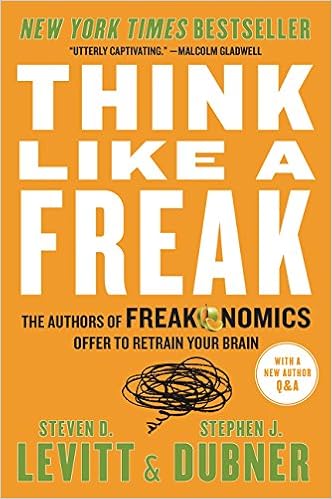
A big part of what inspired me to explore this topic is a new book I’m reading called “Think Like A Freak.” It’s a book by Stephen Levitt and Stephen Dubner, the two authors behind the best-selling “Freakanomics” books that I’ve enjoyed so much in the past.

There’s a lot to digest in this book and I’m still not done reading it yet, but the primary takeaway is fairly simple. It teaches you to step back from a situation, look at all the complex incentives and motivations surrounding it, and think in new, unorthodox ways to further your understanding. These posts on reasons and excuses are an exercise, of sorts, in understanding things from a new perspective.

I’ve already explored the basics of reasons and excuses. Now, I’d like to expand on those basics and create a new concept of sorts, one not unlike the idea of “caveman logic,” which I’ve cited so often on this blog. Please don’t mistake this for a real scientific concept. I’m as much a scientist as I am an astronaut ninja. This is just me, an aspiring erotica/romance writer, creating a term to encompass a larger concept.

With that said, ladies, gentlemen, and those of unspecified gender, I introduce to you the concept of “Excuse Banking.” It’s not in a dictionary. You won’t find it in any textbooks or erotica/romance stories yet, but it’s an idea that has affected us all to some extent.

Again, this is a term I’m inventing right now with no expertise and nothing but a blog to explore it. I understand that’s like a hobo walking into MIT and trying to build a star ship, but I want use this term to explore the more intimate aspect of reasons and excuses. As anyone who has read my books knows, I’m all for more intimacy.

First off, here’s a quick and dirty definition of what excuse banking is:

  • A form of rationalizing one’s actions by using one or more justifications that have been remembered, accepted, and understood as something of personal value;
  • A series of actions meant to mitigate or eliminate the emotional or mental stress of a decision or action that may occur in the future; and
  • The process of shaping ideas, beliefs, and morals in a manner that facilitates difficult ethical decisions.

In reading over these definitions, it should be easy to recall situations where excuse banking applies to you or someone you know on some level. Have you ever loaned someone money? Have you ever helped them with a chore? Have you ever done a favor and asked for nothing in return?

Well, in doing so, you’re effectively making deposits into the excuse bank that you can use as currency, so to speak. Sometimes those deposits gain interest over time. Sometimes they depreciate. In either case, we use this currency to either garner favors through reciprocity or mitigate stressful, demanding situations we may have at a later time.

Much like caveman logic, the idea of excuse banking reflects the understanding that our brains are wired a certain way. That wiring, unfortunately, is akin to an operating system that never gets upgraded. As far as our brain wiring is concerned, we’re still cavemen living in hunter/gatherer tribes in the African savanna.

That wiring, regardless of whether you believe it’s a product of nature or supernatural deities, is the guiding force behind everything from our social behavior to our sexual fantasies. For this particular topic, I’ll focus on the social behavior and save the sexual fantasies for my novels.

Like every other cognitive function, our social behavior does have a basis in neurobiology. That behavior helps guide what we do and why we do it. The behavior, and the wiring behind it, have two primary imperatives that take priority over pretty much everything else. Those priorities are, once again, survival and reproduction.

Nature may be blunt, imperfect, and messy at times, but you can never accuse it of misplacing priorities. When it comes to helping a species thrive, survival and reproduction have to be major priorities. Whether it involves surviving a bear attack or successfully making love to one hundred beautiful cavewomen, those priorities guide a significant part of our thoughts and actions.

It’s for that reason, as I stated in a previous post, that our process for making decisions is so different compared to what we believe. We like to think we’re rational creatures, assessing a situation logically like Spock or Dr. House, and then acting in accord with the utmost reason and morality. That’s the ideal and the basis of multiple superheroes, TV doctors, and scientists.

However, due to that pesky biological wiring that hasn’t been upgraded since the stone age, we do it ass-backwards. We first make a decision, often based on emotion and instinct, and then look for ways to justify it. It’s a good way to ensure we survive bear attacks long enough to get laid. It’s not a good way to promote rational decisions, much to the chagrin of Dr. House.

This is the domain in which excuse banking manifests. Regardless of whether or not we believe that this is how we make our decisions, excuse banking ensures we have a way to justify our actions and decisions, especially if they cause us physical or emotional distress.

We do this because there’s a 100-percent chance that at some point in our lives, we’re going to face a difficult decision. Maybe we have to decide whether to lie to a girl to get her attention. Maybe we have to decide whether or not we should trust the guy who claims to be a Nigerian prince wanting to help us collect an unclaimed lottery place. At some point, we will confront these decisions. It’s an inevitable fact of life.

Excuse banking is a way of hedging our bets, so to speak. It encompasses the actions, beliefs, and social connections we make prior to these decisions. We may have different reasons for seeking these connections, but they have the same secondary function. They help deposit excuses that we might be able to use in future situations.

The process of banking excuses is almost always secondary, in that sense. Nobody goes out of their way to do or believe something because they want an excuse to justify their actions. Nobody overtly think, “I’m going to work at this soup kitchen and provide medicine to sick orphans so I don’t feel as guilty when I strangle puppies with my bare hands.” Those that do are probably sociopaths or reality TV hosts.

Like real banking, sometimes the excuses we bank generate interest. This is especially true when actions involve forming a strong social network of people who support you, even when you screw up. They act as a safety net and over time, that net can become reinforced.

Also, like real banking, banked excuses require fees of sorts. You have to pay a price in order to bank a certain excuse. It can be the time and energy we put into crafting social networks. It can be the resources we expend to join a group, mold an identity, or sell our skills. Some fees are small. Some are much larger, but tend to be more flexible.

That’s where excuse banking starts to diverge from actual banking. Unlike hard currency, excuses can be malleable to a certain extent. You can turn past favors, past charity work, and all that money you gave to PETA into excuses you can use in multiple situations.

This is especially true of excuses built around beliefs. Since beliefs are intangible, unmeasurable, and unverifiable, they are extremely malleable. Take circumcision, a topic I’ve covered before, sometimes to an exceedingly personal degree. Absent a tangible medical condition, there’s no logical reason as to why we would cut off part of an infant’s penis.

However, if you inject a sincerely held belief that your particular religion has a tradition regarding circumcision, then that requires a hefty withdraw from the excuse bank. That excuse better be malleable and low cost as well. When it comes to beliefs, though, the cost is usually close to zero and it’s hard to beat that.

Now that’s not to disparage anyone’s sincerely held religious beliefs. I’m not saying that all religions exist as systematic forms of excuse banking. Human beings just aren’t that simple. If they were, then erotica/romance writers like me would have little to work with. Excuse banking is just one of those understated, unseen processes that emerges from our faulty brain wiring.

When put into a proper context, excuse banking can help make sense of an inherently irrational world populated by very crazy people, some of which have their own radio shows. At a time like this, when the concept of “alternative facts” is a thing, we need every tool we can get.

This is just one from an aspiring erotica/romance writer. I don’t know how useful it will be or if it’ll make anyone horny, but we can only hope.

29 Comments

Filed under Reasons and Excuses

Building Your Own Lover: Possibilities And Implications

Strap yourself in and put on a clean pair of panties because I’m going to talk about sex robots again. I know I’ve talked about it a lot, sometimes as a thought experiment and sometimes in response to new breakthroughs, such as the first robot brothel. If it sounds like I think about sex robots more than any straight man should, I apologize. It’s not my fault the subject is both titillating and relevant.

I say it’s relevant because, even when you remove the titillating parts, robots are becoming an increasingly large part of our society. They’re not just fancy toys and CGI characters in Michael Bay movies. Robots are a growing part of our economy. In some ways, they’re taking it over.

Forget China, Mexicans, and immigrants. According a Ball State study, robots accounted for 87 percent of the loss in manufacturing jobs from 2000 to 2010. People aren’t being put out of work because some foreigners are coming over and stealing jobs. Factories are just becoming more efficient because they’re using robots.

Have you ordered something from Amazon lately? Have you ordered something from any retailer? Well, chances are, a robot helped process that order and for good reason. Robots don’t get sick, they don’t unionize, they don’t get tired, and they don’t take coffee breaks.

The problem is that robots don’t respond to protests, intimidation, racism, and xenophobia. In addition, robots like the ones Boston Dynamics have created recently are kind of scary. Protest all you want. You are not going to win a fight against a robot. They may not kill you like the Terminator, but they will take over because they’re just that much more efficient.

Now I don’t want to get into a debate about how robots affect the economy and how people can possibly compete against robot workers. That’s a complex debate that isn’t going to make anyone outside of an economics class horny. Instead, I’d like to discuss the growing trends in robots in a more intimate manner.

Robots are going to be a bigger part of our lives in the coming years. There’s just too much money to be made and too many benefits to overlook. There will be those who take “The Terminator” and “The Matrix” too seriously and dread that robots will destroy us all. I’m not saying that’s an impossible scenario, but I do believe it’s one we can avoid.

That’s where the intimacy comes in. We can’t fight robots and win. Robots can’t get made without us. In a sense, we’re already two creatures that are intimately entwined. So perhaps a solution to embracing robots as part of humanity is to actually love them and teach them to love us back.

I know it doesn’t sound that sexy right now. When most people think of robots these days, they either think of the ones that took their jobs or the ones that blow shit up in every action movie ever made. On top of that, they don’t exactly much sex appeal.

https://tgc-cache.s3.amazonaws.com/images/uploads/articles/Ultron.jpg

However, I believe that will change. I believe it’s already changing with the way we interact with technology. We already have AI assistants that are steadily integrating themselves into our lives. We have Siri on our phones, Alexa in our homes, and Cortana in our computers. These AI’s don’t have bodies yet, but one day they will. The only question is how much sex appeal will we give them?

That’s progress for some and another step towards a robot apocalypse for another. What’s the endgame though? Well, nobody can really say right now, especially not an aspiring erotica/romance writer who gets most of his robot knowledge from comic books and TED Talks. However, there is one scenario that I might be able to explore, which may end up deciding whether we get along with them or become their pet meat-bags.

It starts with a simple question that I’m sure everyone who is single or stuck in an unsatisfying relationship has asked themselves in some form or another. If you could create the perfect lover, what would he or she be like?

With pace of advancement in robotics technology, that’s not entirely a rhetorical question anymore. If we can program a robot to keep our schedule, clean our carpets, and fill our Amazon orders, then why can’t we program one to love us? Again, that’s not entirely a rhetorical question.

I say not entirely because there’s still a lot about emotions we don’t understand. There are probably certain aspects about emotions we can never understand. Human beings are just too complicated. What else explains the love and devotion that some people put into lovers, family, and My Little Pony?

Even if we don’t fully understand our emotion, we still understand them well enough to know what want in a lover. Robots, being programmable and malleable, are an ideal medium for crafting those emotional connections. We’ve already made a movie about a man who falls in love with his phone. Someone falling in love with a life-like robot isn’t too great a stretch.

The concept has already found itself into plenty of narratives, including a Hallie Joel Osmont movie and a technical demonstration for the PlayStation 4 called “Kara.” Just watch “Kara” for a moment and let your dirty, sexy thoughts fill in the blanks.

https://youtu.be/sQ4BB7vpJgo

Kara might have just been a demonstration, but it crafts a clear and believable scenario about how our future robot lovers may take shape. Like buying a custom computer, we specify how we want it to look. We specify which language it’ll speak. We even craft a personality that we find desirable. Anything we could possibly want in a lover, we could create.

Want your lover to look like a young Brad Pitt? You can have one. Want your lover to look like Jennifer Lawrence? You can have one. Want your lover to look like mix of Keith Richards and Snoop Dogg? You can have one of those too, even if it does reveal a lot about your tastes in lovers.

The gender of your robot lover could be fluid. It could be exceedingly masculine, like John Cena on steroids. It can be voluptuously feminine, like Pamela Anderson after a boob job. It can even be some sort of blend, a female body with a penis or a male body with a vagina. There’s no limit because robots aren’t confined by the limits of biology.

Those worried about the functionality of certain body parts wouldn’t have to worry. Lab-grown body parts are already in development. It’s even farther ahead than you think. I’ve already talked about the development of a bionic penis. Given a few more decades of refinement, artificial genitals won’t just be functional. They’ll function better than anything nature could create.

These robot lovers wouldn’t be slaves or servants, though. There would likely be other types of robots to fill these uses. These robots have one purpose and one purpose only. That’s to be your ideal lover. How can any other human possibly compete? Just as robots took our factory jobs, they may also take the job of every whore, gigolo, and match-maker.

For some, this is a scary scenario, people preferring the love of robots over other people. Some would even dread that this would lead to the extinction of the human race. Well, those same people probably haven’t heard about artificial wombs either. In fact, it’s probably a good idea not to tell them. If they have that big a problem with robot lovers, then chances are they won’t feel much better about robot wombs.

We create robots because we seek more efficiency. We seek lover because, as living beings, we seek connection. Robots, in their current form, aren’t alive and don’t need the same connections. However, once we create in them a desire for connection, what would that mean for them? What would that mean for us?

I’m not at all qualified to contemplate the full implications. At most, I’m qualified to take this concept and turn it into a sexy story. Chances are, I will at some point in the future. I can’t say it’ll be a prelude of things to come. I craft my stories with the intent of being fun, entertaining, and sexy.

However, there may come a day when a sexy story just doesn’t cut it. One day, our desire for connection may find its way into a robot. When that happens, what kind of connection will we create? What kind of intimacy will we forge? It’s a daunting, but sexy idea to contemplate.

3 Comments

Filed under Jack Fisher's Insights