Tag Archives: philosophy

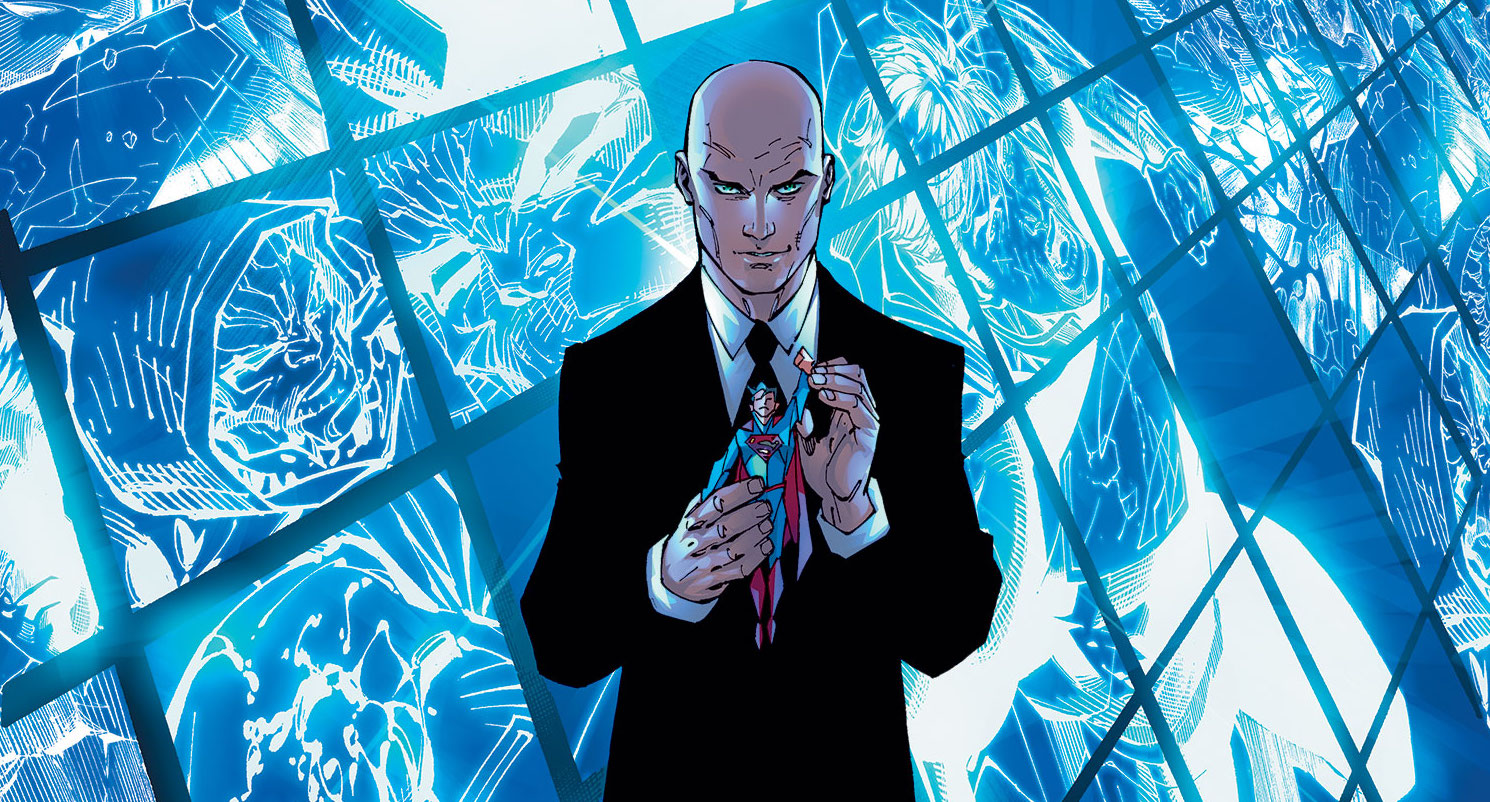
Understanding (And Learning From) Lex Luthor’s Hatred Of Superman

supes-vs-lex

As a lifelong fan of superhero comics and someone who enjoys shows like “Breaking Bad,” I’m genuinely fascinated by villains. Specifically, I’m intrigued by what makes them tick and why they walk the villain’s path. Their journey is distinct from that of a hero, but one that can be just as compelling.

In many cases, these villains have capabilities that allow them to solve many of the world’s problems. I’ve cited Dr. Doom as one of those villains who blurs the lines of villainy because of his intentions. Characters like Dr. Doom genuinely believe that their villainous actions are justified because it will lead to a better, safer, more prosperous world. Heroes also believe that too, which helps fuel their epic battles.

For a character like Lex Luthor, though, the line isn’t that blurry. He’s a villain, plain and simple. He’s selfish, callous, arrogant, cruel, and narcissistic to an extreme. If he existed in the real world, he would check every box for narcissistic personality disorder. In terms of personality, he’s the polar opposite of his nemesis, Superman.

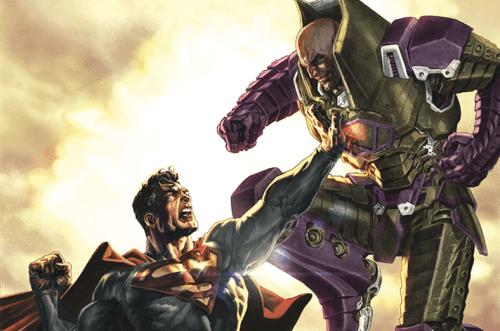
That goes a long way towards giving Superman an enemy who stands against his heroic ideals. I would even argue that Superman couldn’t be the iconic kind of hero he is without Lex Luthor. At the same time, I also think Lex reveals something critical about humanity, morality, and superheroes in general.

That’s difficult to see because for much of Lex’s early years in comics, there wasn’t much depth to his motivation. He just wanted to dominate the universe and Superman was in his way. It’s basic and bland, but that was typical for the early era of superhero comics. Villains like Lex were mostly just obstacles for the heroes to overcome in their journey.

That changed in the late 80s and early 90s with the modern era iteration of Lex Luthor. Finally, Lex got more backstory and depth. He was still no Walter White, but these details helped set the stage for the kind of villain he became. It also helped establish why he hates Superman so much.
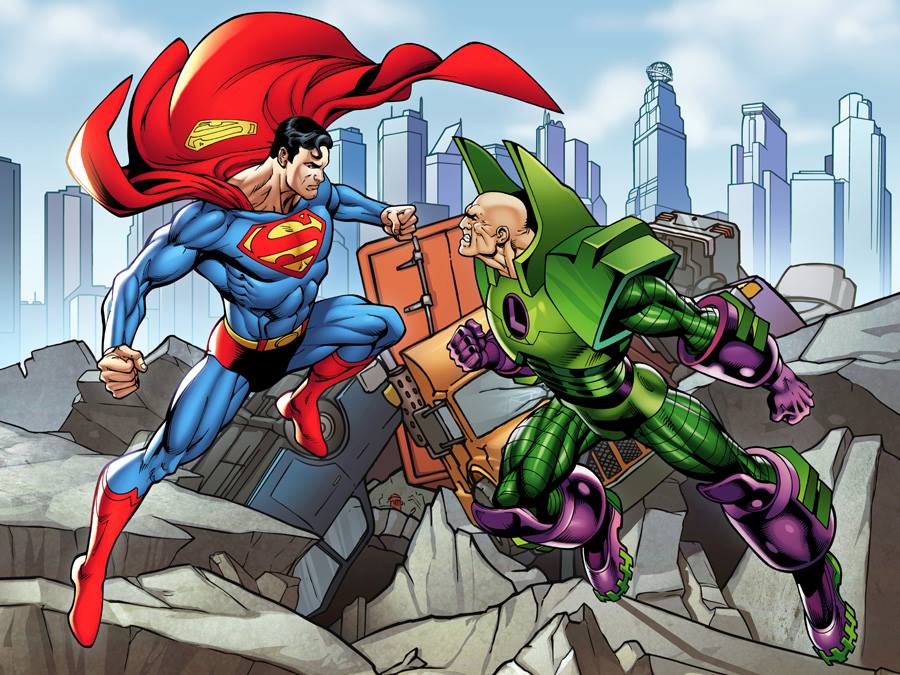
Whereas Superman landed on Earth and was adopted by loving parents, Lex grew up in a rough part of Metropolis called the Suicide Slums and was raised in an abusive household. Right off the bat, Superman gets lucky by having the best parents a child of any species could ask for while he’s unlucky enough to be born with the worst.

As a result, Lex had to be ruthless, manipulative, and cunning. Unlike other villains, though, he didn’t need much tempting. He didn’t agonize over his moral decisions, either. He just did it and didn’t feel a shred of guilt. That includes the role he played in the death of his parents.

That alone establishes Lex Luthor as the kind of ruthless villain who would oppose Superman for any number of reasons. However, as evil as that act was, it’s important to note the motivation behind it. Lex didn’t just kill his parents because murder makes him happy. He did it because they were an obstacle and an opportunity.
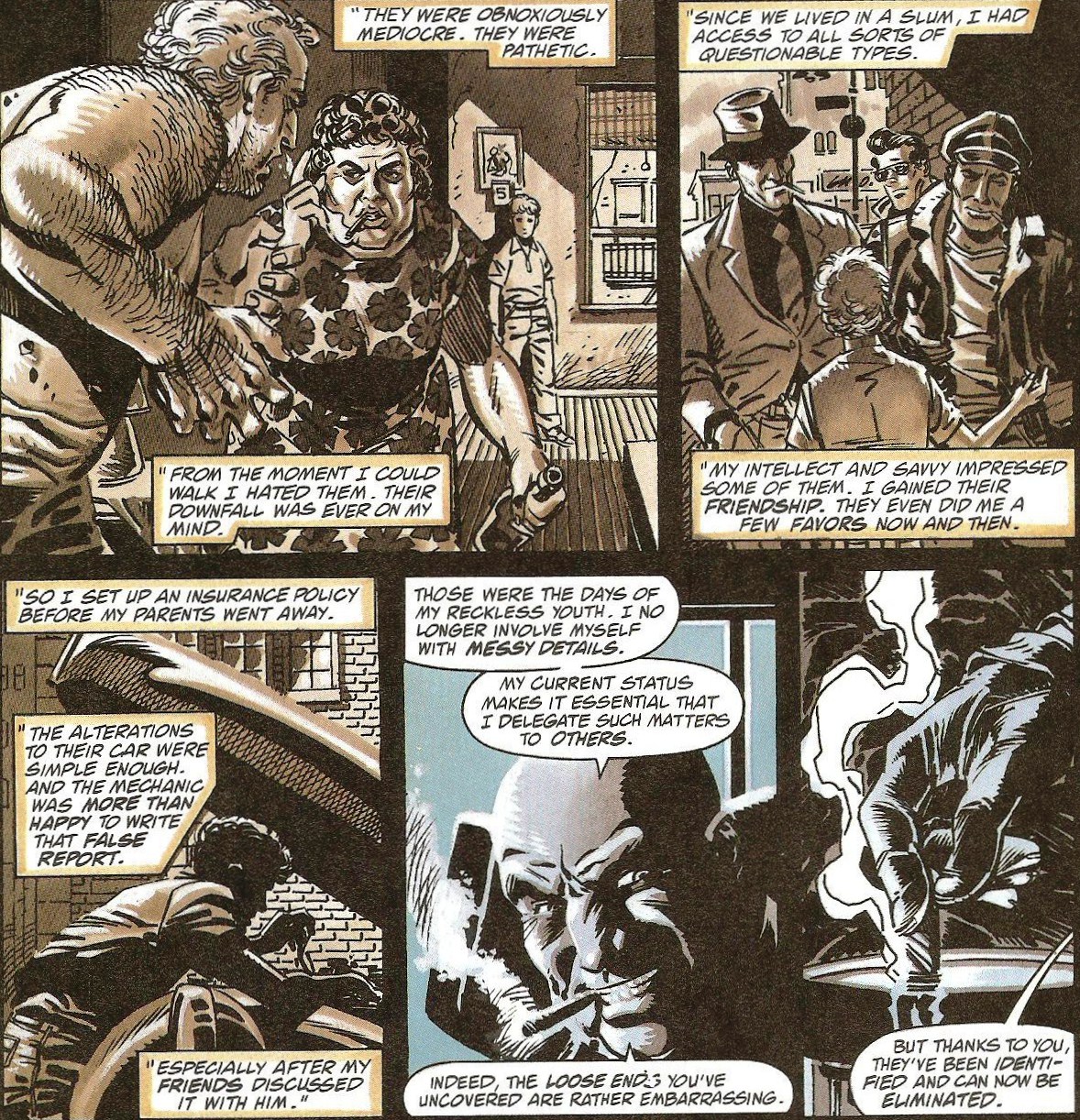
They were holding him back, but their deaths meant insurance money that he could use to strike out on his own and build something worthy of his genius. To him, the morality of his decision didn’t matter. Only the results mattered. That’s a critical detail and one that puts Lex Luthor’s villainy into a unique context.

Lex, being one of the smartest characters in the entire DC universe, doesn’t care much for things that are esoteric and obscure. He’s all about results that are tangible and measurable. That means things like truth, justice, and the American way are empty concepts to him. Superman champions those ideals, but for Lex Luthor, they’re just hindrances.

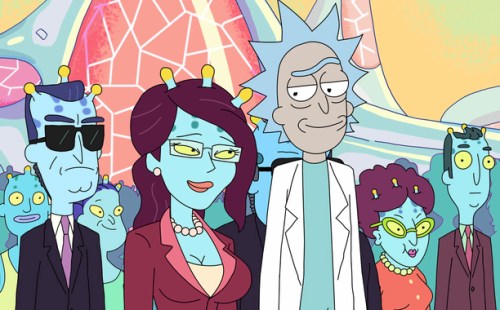
That kind of cold, callous approach to the world gives a unique substance to Lex’s behavior. He’s certainly not the first person to take such a materialistic approach to reality. Rick Sanchez of “Rick and Morty” does the same, but rather than misanthropic despair, Lex Luthor sees it as the key to producing the results he seeks.

Moreover, he has to produce those results without the god-like power that Superman wields. If Superman wants to move the Earth out of the way or destroy an oncoming asteroid, he doesn’t have to build anything or learn anything. He just has to flex his muscles, fly up into the sky, and destroy it with a single punch. There’s no tangible reason to his actions beyond it being the right thing to do.

To Lex Luthor, that’s not just an affront to someone who had to work for everything he ever gained. It’s an insult to his egocentric, results-focused worldview. Just saving the world because it’s the right thing to do doesn’t achieve anything. It does nothing to move humanity forward because nobody had to produce something of merit. It just allows them to continue in the same, unaltered state.

This gets to the heart of why Lex Luthor hates Superman. The extent of that hatred was fully articulated in one of the best modern Superman stories ever told, “All-Star Superman” by Grant Morrison and Frank Quitely. If you only read one Superman comic, make it this one because it perfectly encapsulates the pure heroism of Superman and the cold villainy of Lex Luthor.

In one critical part of the story, Lex tells Clark Kent, who he doesn’t know is Superman, what it means to actually work for his power. Superman, for all his idealism, did nothing to earn his abilities. He just happened to be an alien who landed on a planet with a yellow sun.
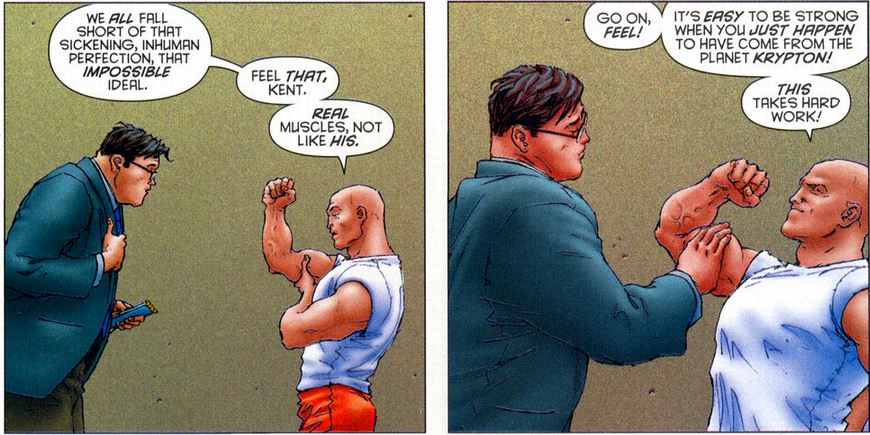
It’s like winning the lottery as opposed to working hard for a fortune. One is built on hard work and skill while the other is just dumb luck. Beyond basic jealousy, though, Lex makes another critical point about the ideal Superman sets.

From his perspective, that lofty ideal diminishes the entire human race. By being this other-worldly savior who achieves all these impossible feats, Superman reveals how inept the human race is. More importantly to Lex and his massive ego, it shows just how feeble his achievements are, despite all the work he put in.

Being the extreme narcissist he is, Lex takes that as the ultimate insult. In terms of the bigger picture, it establishes that neither he nor humanity can achieve their full potential. In that context, it’s understandable why Lex dedicated so much time and energy to killing Superman.

I won’t get into all the ways Lex has tried and failed over the years, although one of his plots did involve him becoming President of the United States. Whatever his methods, I think there’s a larger lesson to learn from Lex’s hatred and for once, it goes beyond his ego.

A big part of what turns someone into a villain is this sense that the world isn’t fair, but could be made better with the right guidance. Lex believes he’s capable of providing that guidance and not just because of his ego. He is, objectively, one of the smartest and most capable human beings on the planet. However, it’s Superman who keeps Lex from making the world less unfair.

Superman believes in the merits of truth and justice. He inspires others to uphold these ideals, even without his vast power. That’s a problem for Lex, who builds much of his power on lies and treachery. To him, though, he doesn’t see that as wrong. He just sees that as the most efficient way to get results.
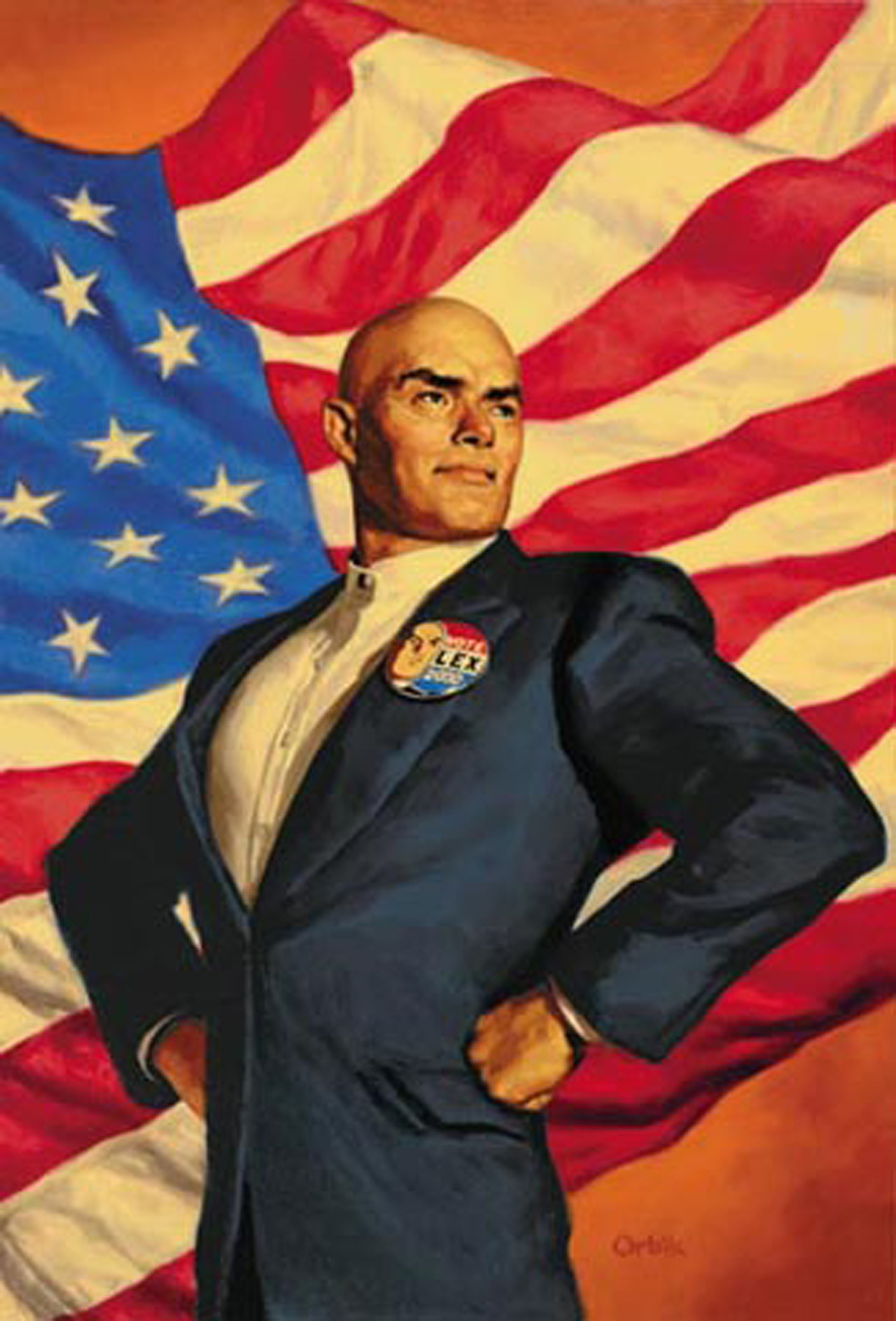
To uphold truth and justice, in his brilliant mind, is to prevent the world from progressing. Granted, progress in Lex Luthor’s mind means him being in charge, but that doesn’t necessarily undermine the implications.

Like Dr. Doom, Lex is ambitious in that he doesn’t just want to save the world like Superman. He wants to fundamentally change it and he’s willing to cross any line to achieve that. Killing Superman is part of that change, but so is becoming a billionaire and a future President of the United States. If a billion people die in the process, then that’s acceptable because it means humanity is stronger because of it.

There have been times in the comics where Luthor’s vision has manifested. In another critically-acclaimed Superman story, “Red Son” by Mark Millar, Lex has a chance to lead the world into a brighter future. By and large, he succeeds. He’s still an unapologetic narcissist, but he still gets the results he seeks.

Like all great conflicts between superheroes and their arch-nemesis, the dichotomy between Superman and Lex Luthor is stark. They’re two extremes on opposite ends of a spectrum delineating heroism and villainy. By being on those extremes, though, it’s easier to see the inherent shortcomings of both.

While Lex’s shortcomings are easier to identify since he’s an outright villain, he does help identify an important flaw in Superman’s idealism and one that extends to superheroes, as a whole. Superman is willing to save the day, but he’s not willing to cross any lines. He will only ever do the right thing and that means not sacrificing innocent lives or usurping individual freedom.

Those heroics will keep the world turning, but they won’t move society forward. Superman believes in inspiring humanity rather than doing it for them, but Lex Luthor believes his heroism achieves the opposite. It just makes people complacent and dependent on heroes like him rather than crossing the lines that he’ll cross to get things done.

At the end of the day, both in the real world and the world of comic books, we have to determine how much we’re willing to pay for the results we seek. Lex is willing to pay any price. Superman isn’t willing to pay a cent beyond doing the right thing. Most reasonable people, including other superheroes, fall somewhere in the middle.

In the pantheon of super-villains, Lex Luthor is probably the easiest to despise and the hardest to understand. Like Superman, he exposes another side of an ongoing struggle between doing the right thing and achieving more. As society continues to progress, achieving abilities rivaling that of any superhero, it’s a struggle we’ll have to confront.
3 Comments

Filed under Comic Books, Jack Fisher, Superheroes, human nature, philosophy, psychology, superhero comics

Lessons In Love According To Rick Sanchez

mv5botexyzyxodytogrimi00mzbmltkwnzmty2q5zdu2zjdmogzmxkeyxkfqcgdeqxvyntkymje3ndu-_v1_

What is love? Can we ask that question without referencing to a one-hit wonder R&B song from 1993? I think it’s a question worth asking and one people have been asking since the dawn of our species. Many men who are way smarter than I’ll ever be have tried to answer this question. Some have offered revealing insights. Others just use it as an excuse to whine about a cheating spouse.

Then, there’s Rick Sanchez. I know that by saying that name, I’ve completely altered the tone of this topic. I could’ve easily spent the next several paragraphs breaking down how the smartest men in history view love and how that understanding reveals itself in our modern concept of romance. For now, I’d rather scrutinize love from the perspective of a hard-drinking, brutally honest, nihilistic cartoon character from Adult Swim.

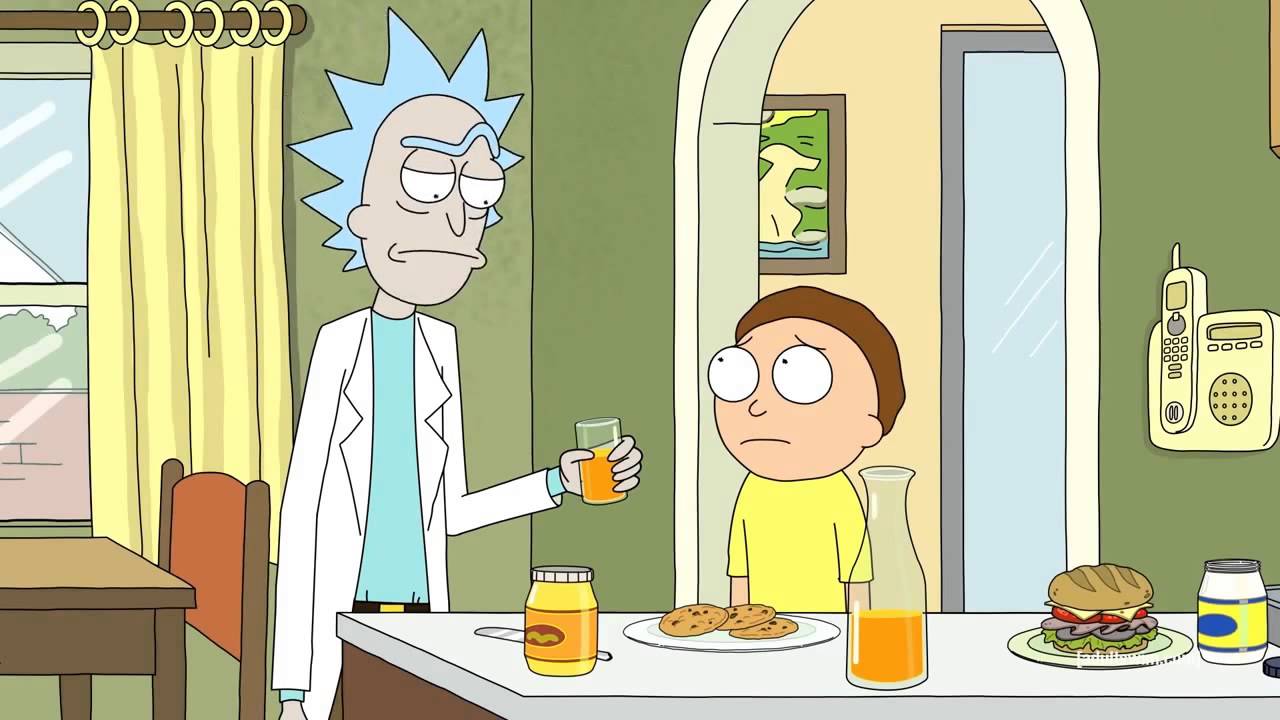
Yep, I’m referring to this guy again.

Make no mistake. I’m not just using this as another excuse to talk about “Rick and Morty,” although I wouldn’t blame anyone for thinking that. I really do think characters like Rick Sanchez have something to teach us on the topic of love. Being an admitted romantic and aspiring erotica/romance writer, I believe those lessons are worth heeding.

On paper, Rick Sanchez is the last person most would go to for insights into love. From the first scene in the first episode, he establishes himself as an overly-cynical, high-functioning alcoholic who may or may not be okay with blowing up the world for the sake of a fresh start. To say he’s not the romantic type would be like saying Jerry needs help with his golf game.

However, Rick does demonstrate throughout the show that he has a capacity for love. He has even had a few moments where he has shown genuine heart. There’s an odd mix of eccentricity and complexity to Rick’s behavior. That’s part of what makes him such an endearing character and why he resonates so much with an emerging generation.

From all that chaos, though, there are insights worth noting. “Rick and Morty” may go heavy with nihilism and moments of existential crisis, but it doesn’t avoid the impact of love. Whether it’s Morty constantly trying to get with Jessica or the constant upheavals in Beth and Jerry’s marriage, love is an underlying factor throughout the show.

This is despite the fact that Rick is pretty overt about his feelings on love. In “Rick Potion #9,” the sixth episode of the first season, he gives his clearest, most quote-worthy opinion on love.

“Listen, Morty, I hate to break it to you but what people call ‘love’ is just a chemical reaction that compels animals to breed. It hits hard, Morty, then it slowly fades, leaving you stranded in a failing marriage. I did it. Your parents are gonna do it. Break the cycle, Morty. Rise above. Focus on science.”

That sounds pretty jaded, to say the least. It’s perfectly fitting with Rick’s misanthropic mentality. However, there is a context here and one that’s fairly subtle, as things tend to be in the world of “Rick and Morty.”

Part of that context is Rick’s family situation. Beyond being a drunk and an eccentric mad scientist, he also has a family. It’s not just his daughter and two grandkids, either. He mentions in his cynical musings that he’d fallen in love and gotten married at one point.

That, alone, has some pretty profound implications. It shows that even the smartest, most capable man in the multiverse cannot avoid the impact of love. Keep in mind, this is a man who travels the multiverse on a whim, defeats Thanos-level super-villains while drunk, and understands how meaningless everything is in the grand scheme of things.

Despite all that, Rick Sanchez still fell in love. He still got married. That, in and of itself, shows the power of love better than any Huey Lewis song. While the show hasn’t revealed much about his former wife, Diane, it does establish an important fact. Rick is capable of love, even when he sees it as just a confluence of brain chemicals.

The show goes onto to reveal that Rick is still influenced by love, despite this reductionist understanding of it. The most comprehensive example comes in Season 2, Episode 3, “Auto Erotic Assimilation.” In many ways, this episode helps convey the most meaningful lesson in love that any animated series has ever attempted.

In the episode, Rick catches up with an old girlfriend, who happens to be an alien hive mind named Unity. If that sounds weird, even by “Rick and Morty” standards, trust me when I say it doesn’t crack the top ten. The fact that Unity is a hive mind is part of why the insights are so unique and impactful.

Throughout the episode, we learn about the particulars of Rick and Unity’s relationship. Unity establishes herself as one of the few beings in the multiverse who can keep up with Rick’s eccentricities. If anything, she has to be a hive mind in order to do so, as evidenced by Rick’s elaborately kinky requests.

In this context, Unity is the ultimate manifestation of supportive lover. She can literally do anything and be anywhere because she has the collective resources of an entire planet at her disposal. She’s more capable than a shape-shifter like Mystique or even an advanced sex robot.

If she wants to make love as a beautiful, buxom blond right out of a Playboy centerfold, she can do that. If she wants to do it as a greasy-haired, middle-aged man with a hairy back and bad breath, she can do that too. She can be two people, ten people, or as many people as she wants to be to love Rick and express that love however they want.

This breaks down, however, when Unity’s efforts to pursue that romance with Rick ends up straining her ability to maintain her hive mind. It gets so strenuous, at one point, that it leads to a nipple-driven race war on the planet. Again, this is pretty standard in terms of weirdness for “Rick and Morty.”

The implications of this breakdown are serious and I’m not referring to the nipple-driven race war. Logistically speaking, Rick and Unity had everything they needed to make their relationship work. They had unlimited resources and unlimited opportunities for intimacy, decadence, and everything in between. In exercising that, though, their relationship devolved into an ongoing spiral of self-destruction.

There was clear, unambiguous love between Rick and Unity. However, the act of being together proved toxic to both of them. Unity couldn’t be with Rick without losing herself, literally and figuratively. Rick couldn’t be with Unity without descending into a spiral of debauchery. Even if the love is there, embracing it leads to both of them getting hurt.

This made for one of the most dramatic and emotional moments of the show, one that reveals just how much Rick loved Unity. After she leaves him, it really hits him on an emotional level, so much so that he nearly kills himself. Remember, this is a man who said love is nothing more than a chemical reaction in the brain.

The pain in that moment, though, belabors a much larger point about love and being with someone. Just loving someone is easy. As Rick says, it’s just a chemical reaction in your brain. It’s something that can happen to anyone, even the smartest man in the multiverse.

However, being with someone and expressing the full spectrum of love involves much more than convergent brain chemistry. For some people, love can be downright destructive. If pursuing love means undermining your sense of being, as happened with Unity, then that’s a sign that the relationship isn’t tenable.

It’s tragic, but unavoidable. You can love someone with all your heart, but not be capable of having a functional relationship. It’s a harsh reality, one that’s perfectly in line with the nihilistic subtext in “Rick and Morty.” At the same time, though, there’s a less dire lesson to be learned.

Even if love is just a brain function that helps propogate the species, it has the power to affect us in the best and worst of ways. It can lead us to the greatest of joys, as Rick and Unity experienced for a brief time. It can also lead us to the worst of sorrows. Few other brain functions can make that claim.

That wide range of experiences are a powerful mechanism for finding meaning in a meaningless universe. Rick Sanchez doesn’t avoid the pain in those experiences and he doesn’t hesitate to pursue the joys, often to a reckless degree. Finding meaning in this universe is hard enough, but love can do plenty to carry us forward. You don’t have to be a Rick-level genius to appreciate that, although that’s probably a good thing.

7 Comments

Filed under gender issues, Marriage and Relationships, philosophy, Rick and Morty, romance

Reflecting On The Greatest Advice Rick Sanchez Ever Gave Us

rick-and-morty-season-3-creators-tease-a-return-to-previous-cliffhangers-and-characters-663486

Greetings, and wubba lubba dub dub! By now, you should know that means this will be another article about “Rick and Morty,” one of the greatest animated shows of this century or any other century, for that matter. I know that sometimes means the topics involved are depressing or downright fatalistic. I can’t promise this one will balance that out to any meaningful, but I still hope that this piece is more useful than most.

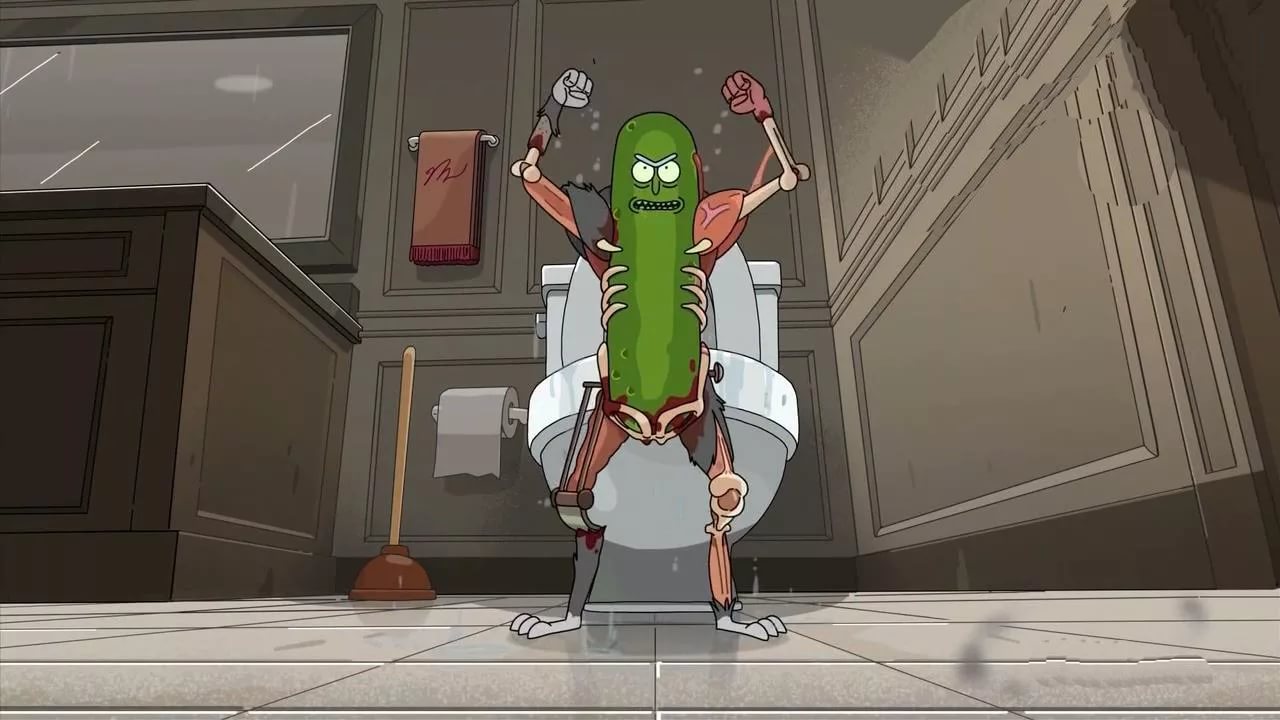
Love it or hate it, either due to its nihilistic undertones or exceedingly passionate fanbase, there are a lot of interesting insights to explore within “Rick and Morty.” From specific episodes that deal with the not-so-hidden appeal of the apocalypse to those built around Rick turning himself into a pickle, there’s a wide variety of lessons and themes to take in.

In this case, I want to focus on what I feel is the best advice “Rick and Morty” has given anyone, both within his animated world and in our own world. It’s a lesson that anyone can use in a multitude of situations, be it dealing with never-ending flood of depressing news to finding out a beloved actor was a total asshole.

Rick has given this advice to Morty on more than one occasion throughout the show, including the pilot episode and, most notably, in “Rick Potion #9.” It applies to battles against alien security guards, burying the body of your alternate self, and that time you farted in class a bit too loudly. It can be summed up in four simple words.

Don’t think about it!

On the surface, it doesn’t sound too useful. Not thinking about something seems like an elaborate excuse to avoid a particular problem or issue. It sounds like something adults tell children just to shut them up so they’ll stop bothering them. Whether they’re asking about where babies come from or why we can’t stop fighting wars, it feels like the overly easy way to avoid an unpleasant conversation.

However, I don’t think that’s what Rick means when he says that. He’s already proven in multiple episodes that he doesn’t give a Grunglokian fart about unpleasant conversations, as evidenced by his many unfiltered rants around his family. When he says “don’t think about it,” he’s saying it in a particular context that makes it more than just a method for avoiding awkward moments.

Watch any one episode of “Rick and Morty” and you’ll notice more than a few themes, not all of which are based on Rick’s ego or Morty’s obsession with a particular redhead. One of the major over-arching concepts that binds the show, and gives much of its appeal, is the idea that none of the things that people hold dear actually matter in the grand scheme of things.

Whether it’s religion, the economy, love, family, or the formula for concentrated dark matter, it just doesn’t matter in the long run. Religion doesn’t matter because it’s just some arbitrary set of beliefs built on unrelated correlations. The economy doesn’t matter if the value of money is entirely arbitrary. Love and family don’t matter when there’s an infinite number of them in the multiverse.

While that fits with the shows more nihilistic themes, it also speaks to the helplessness and frustration that a lot of people feel when dealing with a chaotic world/multiverse. There’s so much they can do, but so much of it doesn’t matter. The causes they fight for, the wealth they accrue, and the people they encounter simply lose their meaning when you consider the sheer size of the universe and how old it is.

In that context, not thinking about it might actually be helpful. If you work a job you don’t like, pay taxes you don’t like paying, and deal with people you can’t stand every day, the idea that it’s all for nothing in the long run isn’t just untenable. It maddening. How can anyone possibly cope with that kind of existence?

Not thinking about it, though, solves a lot of issues because it allows you to maintain the necessary perspective to function within that existence. Even if the things we do are meaningless, not thinking about it at least gives us the illusion that they’re meaningful. More often than not, perception beats reality and not just in terms of bias news.

It’s a byproduct of human’s being so limited in their thinking. Human brains did not evolve to prioritize reason, understanding, or making sense of an obscenely large universe. They evolved with the primary function to help us survive and reproduce, as individuals and as a species. Anything else is secondary or an afterthought.

Rick Sanchez seems to understand that and constantly exploits those limits for his own ends, whether it involves outwitting the President or outsmarting the devil. Unlike everyone else in a meaningless world within an infinite multiverse, he’s a super-genius. He has a portal gun that allows him to travel to infinite timelines at will, even if it’s just for a pizza.

Nobody else in this world has those capabilities, although I wouldn’t at all be surprised if Elon Musk weren’t working on it. Nobody in this world is as smart or as resourceful as Rick Sanchez. There’s very little he can’t do. This is a man who defeated a Thanos/Darkseid rip-off while blackout drunk. By every measure, what he does should carry more meaning than most.

Despite Rick’s abilities, he’s the one who often belabors how meaningless everything is. Never-the-less, he still operates as though there’s a reason to continue existing. That may send mixed messages when he says not to think about it, but that’s only if you overthink it, which would entirely defeat the purpose.

Rick knows that nothing he does matters in the long run, but he doesn’t think about that.

Rick knows that everyone he cares about are just random clumps of matter in a meaningless universe within an infinite multiverse, but he doesn’t think about that.

Rick knows that love, connection, and emotions are just manifestations of brain chemistry that help our species survive, but he doesn’t think about it.

Instead, he focuses his genius intellect on the things that matter to him. Whether that’s his family or that sweet, delicious Szechuan Sauce, he concerns himself primarily with what he feels gives his cosmic adventures meaning. It doesn’t matter if that meaning is empty in the grand scheme of things because, again, he doesn’t think about it.

It may sound egotistical or selfish, but it’s remarkably pragmatic in a meaningless universe. It keeps us from stepping back, realizing how insignificant we are, and succumbing to despair. It directs our energy and efforts into issues that are localized. For Rick Sanchez, a man with access to a portal gun and a space ship, localized is a relative term. For everyone else, though, it’s just that much more pragmatic.

There’s only so much we can do to exact meaningful change in the world. Unless you’re willing to go through the long, tedious process that involves reshaping government institutions, influencing cultural trends, or educating people on a mass scale, you can’t expect to achieve much change, especially by yourself.

Rick Sanchez could probably achieve all the change he wants, but chooses not to because he knows it’ll bore him or it’s just easier to go to a universe where that change has already occurred. For the rest of us, though, we’re frustratingly limited. We may never see or inspire the change we want. Even if we do, we can’t do it alone.

That kind of helplessness can be depressing. The idea that so little of what we do matters, even when we believe in a cause, is pretty distressing. That’s why Rick’s advice is so relevant. It’s not deep or inspiring, but it gets the job done.

Upset with past injustices upon a particular group? Don’t think about it.

Upset that you can’t change the minds of your friends and family on politics, religion, or ideology? Don’t think about it.

Upset that we’re not doing enough to address climate change? Don’t think about it.

Upset that the economy isn’t doing well and all the best opportunities are gone? Don’t think about it.

These are all things that you can’t change without a portal gun or galactic-level genius. Since Rick Sanchez has that and we don’t, our best recourse is to not obsess over it because there’s not much we can do. Eventually, the heat death of the universe will render everything we do or have ever done totally meaningless.

That can either be depressing or empowering, depending on how you look at it. Yes, not thinking about it won’t undo a traffic ticket, undo a crime you committed, or turn off your biological urges to eat, sleep, love, and mate. Efforts to do so can be damaging. For everything else though, not thinking about it is probably better for your mind, your body, and your overall sense of being.

In that sense, we should all thank Rick Sanchez for this amazingly useful device. While he’d probably say that gratitude is just a polite way of idiots admitting how incapable they are, it’s probably best not to think about his reaction. So long as the advice he gave works, what does it matter? Wubba lubba dub dub!

5 Comments

Filed under Current Events, human nature, philosophy, Rick and Morty

Heroes, Villains, And The Forgotten (But Relevant) Message Of “Megamind”

megamindfilm

Every now and then, a movie comes along that was unremarkable in its time, but gained greater meaning years later. It’s one of those unspoken challenges of movie making that doesn’t involve dealing with difficult actors. Sometimes, a movie is either ahead of its time or too late to make much of an impact. Like cooking the perfect steak or good fart joke, timing is everything.

That brings me to “Megamind,” a very well-done, but often overlooked animated movie from Dreamworks. Since it’s not Pixar and doesn’t involve “Shrek,” it had a lot working against it before it came out. However, it also had plenty more going for it and not just in terms of quality 3D animation at a time when “Avatar” finally made that gimmick viable.

The movie boasted an amazing voice cast that included Brad Pitt, Will Ferrell, Jonah Hill, Tina Fey, and David Cross. It also did plenty to leverage that star power. Will Ferrell even famously dressed up as the titular character at the San Diego Comic Con to promote the movie. I’m not saying that, alone, would’ve made that movie a success, but Will Ferrell is one of those rare talents who can make anything more appealing.

You can’t argue with THAT kind of appeal.

In addition, the movie told a compelling story in a way that was concise, enjoyable, and appealing for adults and children alike. It showed in the favorable reviews it received from critics and the high scores it earned from audiences. Unfortunately, it didn’t quite show in the box office totals. The movie did well, but it fell short of the high bar that both Pixar and “Shrek” have set for animated features.

The reason for the movie’s shortcomings are numerous and varied. It came out in 2010, just in time for titles like “Toy Story 3,” “How To Train Your Dragon,” and “Tangled” to steal the show. It also came out at a time when superhero movies were just starting to ascend. “Iron Man” had just come out and the scars from “X-men Origins: Wolverine” were finally starting to heal.

However, “Megamind” really jumped the gun in terms of timing. We were still a few years before “The Avengers” cemented superhero movies as ultimate box office gold encased in vibranium. As a result, the remarkable concept that “Megamind” introduced went forgotten, but I believe it’s worth remembering.

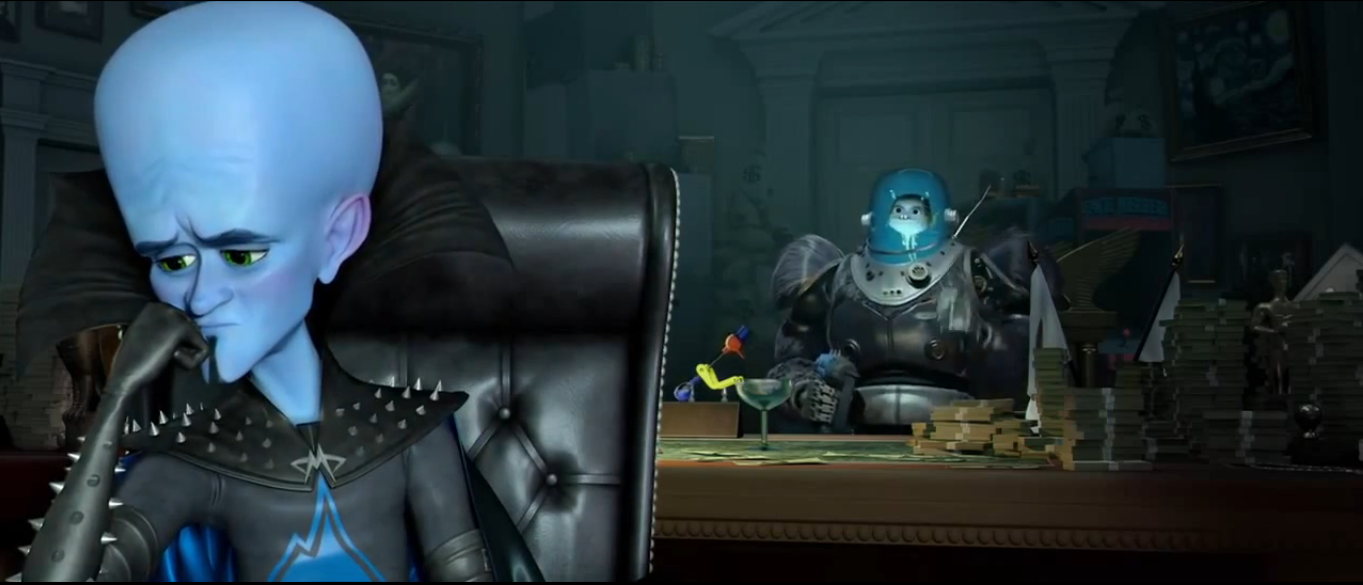
The plot of “Megamind” is simple on paper, but complex in its implications. It tells the story of a self-proclaimed super-villain named Megamind, who was voiced by Will Ferrell. His persona is essentially a comedic parody of every super-villain trope that ever existed. He’s a mad genius bent on conquest and domination, but is constantly thwarted by an overly-powerful, overly-handsome hero.

That hero, appropriately voiced by Brad Pitt, is Metro Man. Like Megamind, he’s also a parody of every superhero trope. He’s part Superman and part Captain America, grossly overpowered and so morally pure that it’s laughable. As such, the movie never attempts to frame Metro Man’s heroism or Megamind’s villainy in a serious sort of way.

That approach is key because the way the story plays out essentially flips the script on the standard narrative surrounding superheroes, super-villains, and what motivates both of them. It conveys a message that didn’t really have much impact in 2010, but if it came out just five years later, its themes would’ve been much more relevant.

At its core, “Megamind” asks what would happen if an over-the-top villain like Megamind actually defeated an over-the-top hero like Metro Man. How would he react? How would the society around them react? These are questions that often have simple answers in other superhero movies. “Megamind” dares to add an extra layer of complexity.

Early on in the movie, Megamind achieves what Lex Luthor, Dr. Doom, and every other mustache-twirling villain failed to achieve. He defeats his heroic nemesis. He takes over the city he seeks to rule. There is no longer anyone or anything to stand in his way. He is, for all intents and purposes, the most powerful being in Metro City.

That’s not the end of the story, though. That’s just the beginning. Shortly after this achievement, which caught Megamind himself by surprise, he has an existential crisis of sorts. Suddenly, there are no more plots left to hatch. There are no more battles left to fight. He has everything he ever wanted, but it still leaves him feeling empty inside.

It leads him on a path that reveals some unexpected insights into the whole hero/villain dynamic. At first, Megamind doesn’t know how to handle his new situation. It’s so unfamiliar and so jarring that it causes serious distress. Even for a super-genius, sudden change and unfamiliarity can be very difficult to handle.

Megamind’s first instinct, which is usually the same instinct most ordinary people act on in such distressed states, is to return to something familiar. He attempts to recreate the status quo as he knew it, which led him to create a new hero in Titan, who is voiced by Jonah Hill. He says outright that without a hero to fight, he has no purpose. Since he happens to be a super-genius, he just decides to create one.

In doing so, he learns as well as everyone else in Metro City that creating a hero is not as easy as just giving someone heroic abilities. On top of that, he also learns that it’s not always possible to go back to that comfortable status quo. In fact, attempting to do so could only make things worse.

Without giving away the entire movie, which I encourage everyone to see, “Megamind” presents some pretty insights into what it means to be a hero and a villain. At a time when more complex villains like Walter White and Erik Killmonger are gaining greater appeal, I believe these insights are more critical now than they were in 2010.

A great deal of what drove Megamind early on was his assumption that he’s the villain and Metro Man is the hero. As such, they’re destined to fight each other with the hero always triumphing. He never stops to question that assumption, nor does he contemplate his goals for after he succeeds. It’s not until he actually succeeds that he realizes how flawed those assumptions were.

Metro Man realizes that even sooner. In one of the main twists of the story, “Megamind” shows that even idealized heroes aren’t immune to this inescapable dynamic. Like Megamind, Metro Man does what he does because he assumes that’s his role. He doesn’t question it until it becomes untenable.

By breaking that classic hero/villain dynamic, both Metro Man and Megamind reveal that the nature of the struggle between a superhero and a super-villain is often incomplete. They may think they know what they want. Heroes want to save the day. Villains want to conquer and rule. Beyond that, though, there’s no other vision. It’s just an endlessly repeating cycle that eventually goes nowhere in the long run.

In a sense, the entire story of “Megamind” is a reflection of the paradox of superheroes. Heroes may save the day and defeat the villains at every turn, but they never go beyond that struggle. They never attempt to change the conditions that allow the villains to instigate conflict, nor do they do anything to prevent new villains from emerging. They save the world, but don’t do anything to change it.

This shortcoming is a big part of “Megamind” from the beginning. No matter how many times Metro Man defeated Megamind, he always ended up back in jail. From there, he always escaped. He never changed or reconsidered his actions until he actually succeeded. To some extent, Metro Man does exactly what keeps Spider-Man and Batman from effectively achieving their heroic goals.

Ultimately, the resolution that “Megamind” offers in the end is something that undercuts the hero/villain dynamic completely. In the end, both Megamind and Metro Man stop making assumptions about their roles and actually make choices of their own, for once. In Megamind’s case, his choice conveys something that no other superhero movie has dared to attempt.

He takes the same traits and abilities that make him a villain and uses them to become a hero. More importantly, though, he doesn’t do so because of a role based on an assumption. He does it because that’s what he chooses. When finally given a choice to do something with his abilities, he chooses to do good. That’s not just uplifting, even for an animated movie. It speaks heavily to the forces that shape our identity.

In the context of modern superhero movies, “Megamind” both parodies and subverts the foundation of the genre. It doesn’t just ask the question as to what would happen if a villain actually beat the hero. It asks whether those who identify as villains are capable of doing heroic things, if given a choice.

Even with more complex villains like Walter White, most superhero movies and superhero media, in general, still follow the same dynamic that trapped Megamind. They have a villain, put them in a particular role, and keep them in that role by locking them into a cycle.

For some inherently villainous individuals, like Lex Luthor, that cycle isn’t necessary. For others, though, it poses interesting questions that rarely get answered. The villains have their roles. The heroes have theirs. The story plays out and the heroes triumph, but does that have to be the end of the story?

Megamind” dared to expand on that story and while it may have been ahead of its time, those themes are still relevant. As superhero movies continue to set new box office records, they will likely become even more relevant and “Megamind” will get the appreciation it was just too premature to achieve.

3 Comments

Filed under Comic Books, Jack Fisher, Superheroes, movies, philosophy, psychology, superhero movies

The Unofficial Platform Of The Nihilist Party

What follows is a little exercise I found myself doing after hearing too many political debates on TV and reading too many rants on social media. Debating/whining about politics seems to be our new favorite pastime in the age of social media and cable news. Personally, I find it frustrating and unproductive.

It’s for that reason that I’m going to attempt to flip the script on the endless barrage of outrage-inducing diatribes. Instead of attempting to inject a new political context into a discussion, I’m going to just hit the whole concept upside the head with a baseball bat of pure nihilism. I’ve enjoyed talking about it in the past, thanks largely to my love of “Rick and Morty,” and I’d like to channel it into something new.

In the spirit of those equally annoyed by political mud-slinging, who just happen to have an extra-healthy appreciation of nihilism, I hereby present the unofficial platform of the Nihilist Party. I know it’s not  real political party. In fact, nihilism being a political party would be paradoxical, given its philosophical underpinnings.

Now, I understand the inherent absurdity of such a concept. I also don’t deny that my expertise in nihilism and other such philosophies are limited, at best. There’s only so much you can learn by binge-watching “Rick and Morty” and “Bojack Horseman.” I still feel like that’s enough with which to craft a new political party. It’s not like other parties set the bar that high to begin with.

With those disclaimers out of the way, I hereby present what I believe is the unofficial platform for the Nihilism Party. If you want to imagine it being recited in the voice of Rick Sanchez, then by all means. I’m not expecting it to win your vote in the next election. It really doesn’t matter, which is kind of the point.


Preamble

We, the random clumps of matter drifting aimlessly throughout a meaningless universe, hereby decree in the name of a wholly arbitrary set of empty standards, set forth the following principles that we feel adequately create the illusion that how we govern our purposeless society matters. We believe all political ideologies are equally vapid and all forms of government inherently flawed, albeit to varying degrees. As such, we neither seek to pretend ours is superior, nor do we claim we can fix the flaws others ignore.


Statement of Principles

We acknowledge that any functional society, be it free or tyrannical, is finite in nature and subject to inescapable entropy over time. In the long run, no society or its various achievements can hope to outlive the inevitable destruction of our planet and the heat death of the universe. To pretend otherwise is an exercise in futility and ultimately counterproductive.

With these harsh truths in mind, the Nihilist Party seeks only to forge a temporary medium of comfort for those who insist on living in functioning society within a infinitesimal speck in the universe for an inherently finite period of time. Whether or not the individuals in that society accept those harsh truths is irrelevant. The Nihilism Party’s primary goal is to maintain whatever functional order is necessary to keep others content as they wait for their eventual annihilation into nothingness.

In accord with that goal, as meaningless as it may be, the following articles reflect the wholly arbitrary articles of the Nihilist Party. Please note that these principles are necessarily vague in order to embody the empty nature of all political underpinnings. Any effort to inject specifics for a pointless society within a pointless world would be contrary to the principles of the Nihilism Party.


Article 1: Nihilist Rights

  • Since all rights are just legal constructs disguised as inalienable assets, we neither support nor discourage efforts by a significant group of people to randomly denote what constitutes a legal right, provided that group does not impose it others in a manner that would make their meaningless lives uncomfortable.
  • The tendency for individuals to form complex social bonds, as determined by the biological programming of their flesh, is neither the concern of the Nihilism Party, nor is it their responsibility to manage beyond ensuring the nature of these arbitrary bonds aren’t impeding the desire of others to pursue their own false meaning.
  • Since government is nothing more than a temporary construct attempting to manage an inherently chaotic world in an ongoing act of never-ending futility, the scope and reach of such government will be limited to simply ensuring that citizens residing within whatever invisible borders are in place can willfully and peaceful pursue a life of empty meaning on their own terms.

Article 2: Nihilist Economic Policies

  • To the extent that everything of value is based on people just believing it has value, the Nihilist Party remains ambivalent to whatever kind of currency people want to use, be it slabs of metal, pieces of paper with famous dead people on them, or bits of digital code.
  • While the the Nihilist Party does not ascribe or inflate the value of one economic transaction over the other, those built on fraud, lies, and deception hinder peoples’ ability to seek whatever false meaning they pursue and therefore, in the name of preserving meaninglessness for all, favors efforts to limit such behavior to the greatest extent possible.
  • Truth and ethics are ultimately pointless in the long term, but in the short term, it creates favorable conditions for contentment among people and since that’s the most any sentient life from can hope for, the Nihilist Party supports policies that preserve both in economic activity.
  • Since all economic trends are finite, fleeting, and prone to both inflated and deflated value, the Nihilist Party favors playing no favorites in any industry and strongly opposes any efforts to support one form of economic activity over the other.
  • In the interest of ensuring all economic activity is on an equally meaningless playing field, each transaction and industry will be subject to the same arbitrary fees and rules as any others, but the Nihilist Party favors limiting the fees and rules to an extent that ensures equally worthless pursuits of worth.

Article 3: Nihilist Justice

  • The Nihilist Party’s default position on justice is that no one individual, group, majority, or minority is worthy of greater or lesser justice than anyone else and efforts to the contrary are ultimately a waste.
  • Seeing as how justice is a product of flawed, situational perspectives within a given time and place that is ultimately pointless, traditional notions of what is just in one situation cannot and should not apply to another, seeing as how every moment is fleeting.
  • While a meaningless life incurs little meaning in the long run, the needless infliction of suffering and loss is seen as incompatible with the Nihilist Party’s belief that all deserve some modicum of contentment while they await their eventual death and seeks to limit any disruptions to that contentment to the greatest extent possible.
  • The Nihilism Party does not endorse special treatment for anyone who prioritizes their contentment over another and only favors treating measurable, tangible harms as actual wrongdoings, as those are the only harms that carry any weight in a meaningless universe.

Article 4: Nihilist Government Structure

  • The Nihilism Party believes that governments, like the failed economies and fallen empires before it, are simply finite manifestations of spontaneous order among sentient beings and can neither be trusted nor empowered to do more than simply preserve meaningless contentment among its citizens.
  • To the extent that meaningless contentment requires the absence of petty wars and violent conflict, the Nihilism Party favors the maintenance of whatever defense forces are necessary to protect the population within its arbitrary borders from such conflicts, but opposes instigating conflicts for vapid notions of empire and legacy that are ultimately pointless at the heat death of the universe.
  • For those seeking to attain positions of authority within a government, the Nihilist Party supports those who seek to persuade a large enough group of citizens of their worth, but also favors measures that permit the easy removal of such individuals in the name of preserving the arbitrary nature of authority, in general.
  • Since people inevitably die, laws inevitably change, and legal traditions are rendered null over significant spans of time, the Nihilist Party remains ambivalent to the structure and makeup of a government, provided it preserves the party’s policy of maintaining equal contentment for those who seek to forge meaning in a meaningless universe.

Article 5: Nihilist Omission Provision

  • The absence, oversight, or omission of any policy or position in this platform is not to be construed as tacit or indirect statement of support or opposition, seeing as the Nihilism Party holds a position of strict ambivalence in the interest of maintaining the equal meaninglessness of all endeavors, past and present.

There you have it. That is my version of the a platform for the Nihilist Party. Please note that I do not pretend to speak for all nihilists, nor do I claim to be an expert in the subject. This is just a fun little exercise in mixing politics, nihilism, and the absurdity of both.

If you feel like there’s something worth adding to this platform, then please let me know in the comments. For those who are just as frustrated with politics and debates as I am, I hope this offers a nice reprieve, a good laugh, or a potent mixture of both.

Leave a comment

Filed under Current Events, nihilism, philosophy, political correctness, psychology

A (Welcome) Message Of Forgiveness And Compassion In X-men Red Annual #1

654226-_sx1280_ql80_ttd_

Who doesn’t enjoy a good revenge story? That’s not a rhetorical question. I’m dead serious. Is there anyone out there who isn’t enamored with a story about sweet, bloody revenge? I know the success of movies like “John Wick” and the iconic status of Batman do plenty to answer that question.

The question is still worth asking because the answer says just as much about the appeal of stories about forgiveness. To some extent, it shows that forgiveness isn’t as sexy as revenge. A revenge story can be bloody, action-packed, exciting, and cathartic. Almost every moment in “John Wick” and every issue of the Punisher is like that. It’s not hard to see why that is the basis of so many movies, TV shows, comics, and video games.

That’s not to say that a story about forgiveness can’t have appeal as well. It most certainly can. Forgiveness may not offer the same spectacle as revenge, but it can incur a uniquely powerful emotional impact. There’s a reason why forgiveness has been shown to have therapeutic effects and was the basis of a major religion.

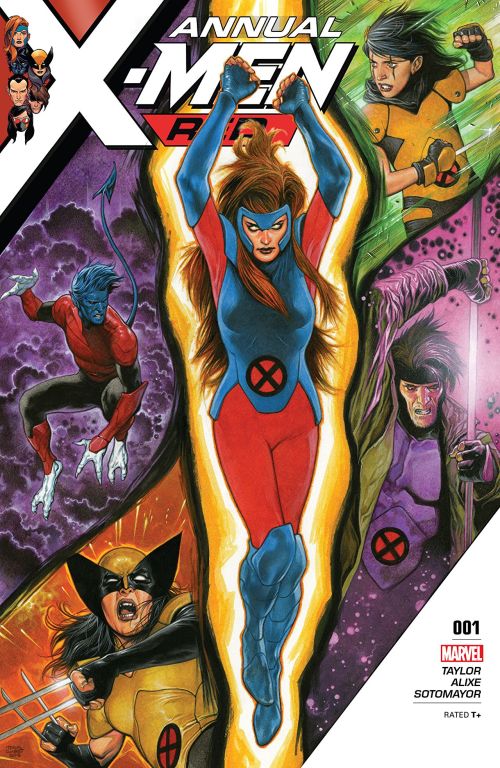
This brings me to a very special comic book entitled “X-men Red Annual #1.” Yes, I am going to tie this powerful human experience to a comic book. No, I’m not going to apologize for it. If you’ve had a chance to read this comic, you’ll understand why.

It’s been a while since I singled out a specific comic that I believe conveys a much larger message, but sometimes a comic comes along at just the right time and strikes just the right emotional chords. This one does all that and so much more, especially for a die-hard X-men fan like me. However, it’s the forgiveness themes I want to focus on here.

Without spoiling too much about the comic itself, which I encourage everyone to go out and buy, it’s important to establish the circumstances that make those themes work here. Those circumstances revolve around Jean Grey, a character who is no stranger to death, resurrection, love triangles, and clones. Even by superhero standards, she deals with a lot of emotional baggage.

Until recently, though, she didn’t have to deal with any, largely because she was dead. From 2004 until earlier this year, Jean was among the numerous superheroes who were “officially dead.” I put that in quotes because “dead” in the world of comics tends to have a pretty loose meaning, well past the point of absurdity. The fact that Jean Grey stayed dead for that long is, in and of itself, pretty remarkable.

However, it was never a matter of if she would return from the dead or even whether Marvel would resort to time travel to replace her. It was only ever a matter of when. Her return was bound to have a huge impact on the X-men and the entire world of Marvel comics. “X-men Red Annual #1” simply built a story around it and it’s a damn good one.

It unfolds mere moments after Jean officially comes back to life again on the final page of “Phoenix Resurrection #5.” That moment, in and of itself, is full of emotions that writer, Tom Taylor, captures beautifully. It provides insights into Jean’s thoughts, feelings, and emotions at that moment. It’s a lot to take in, but in addition to the joy, there’s also a heavy bit of sorrow thrown in.

In a sense, Jean Grey picked a lousy time to come back to life. She’s coming into a world where her mentor, Charles Xavier, is dead. Her best friend and occasional love interest, Wolverine, is also dead, although that’s already changing. Most painful, though, is that her husband, Cyclops, is dead due to the events that unfolded in a series aptly named Death of X.

These are people near and dear to Jean Grey. She’s not the kind of character who just brushes off that kind of loss, hardens her heart, and moves forward. She’s someone who wears her emotions on her sleeve and does it with pride. It’s part of what makes her such a lovable, endearing character. Sure, those passions attract destructive cosmic forces every now and then, but she makes it one of her strengths.

As she reconnects with those who’ve sorely missed her, she has an opportunity to confront the one most responsible for her husband’s death, namely Black Bolt of the Inhuman royal family. While Cyclops’ death was largely an accident, he’s still the one whose decisions ended up killing him and many other innocent mutants. For that, Jean has many reasons to hunt Black Bolt down and make him pay.

Had she gone that route, I don’t think anyone would’ve blamed her. Hell, some within the X-men would’ve gladly fought by her side, including a few who hate her guts. Accident or not, Black Bolt killed her husband by doing what he did. There’s no way around that. She has every possible excuse to channel her inner John Wick.

However, that’s not what happens. Yes, she still assembles a team of X-men to confront Black Bolt and the Inhumans. Yes, she has a very tense exchange with Black Bolt. What she doesn’t do, though, is seek vengeance for her husband’s death. Instead, she seeks forgiveness and that ends up being far more powerful.

Think about the mentality it takes to forgive someone like that. Imagine you knew there was someone responsible for the death of a loved one. Even if it was an accident or unintentional, chances are your first inclination wouldn’t be to forgive them. More than likely, you would rather see them suffer and pay for their crime.

Even if that person ends up going to jail or is held legally liable for your loved one’s death, you’re still going to resent them. They took the life of someone you loved and, assuming you’re not in a world where people regularly come back from the dead, you can never get back what you’ve lost.

That feeling would be even more intense if the person responsible never faces consequences for what they did. In the case of Black Blot, he didn’t face any repercussions for killing Cyclops. He wasn’t charged with murder or even for involuntary manslaughter. In fact, Cyclops becomes vilified for a while.

If anyone would be motivated to pursue retributive justice, it’s Jean Grey. She even has the perfect opportunity to do so when she fights her way towards Black Blot. At one point, she uses her telepathy to show him just how much she loved Cyclops and how much losing him hurt. She even admits she could make him feel some of that pain, if only to let him know why he deserves punishment.

She doesn’t do that, though. She doesn’t attempt to impart her pain onto him. What she ends up doing is much more heartfelt and meaningful. She gives Black Bolt a chance to offer genuine, sincere remorse for his role in Cyclops’ death. He ends up taking that chance. He apologizes for what he did and, more importantly, Jean accepts it.

For a woman confronting a man responsible for her husband’s death, even if she is a comic book character, it’s a pretty powerful moment. It’s one that carries a unique emotional weight that you wouldn’t otherwise get if Jean had just shot him in the head with a 44 magnum. It very much reflects the power of forgiveness.

Forgive

It’s the kind of heart that is exceedingly rare outside of Superman comics. At a time when we expect our superheroes to be edgy and tough, Jean Grey offers a very different approach in “X-men Red Annual #1.” It’s one that Tom Taylor uses to full effect, reaffirming Jean’s incredible capacity for love and compassion. It’s an approach that feels refreshing in an era of superhero civil wars.

It also reminds us that while vengeance may still be more appealing to our most basic instincts, it’s also incomplete at times. No matter how many criminals the Punisher kills or how many villains that Batman beats up, their loved ones are still dead. The pain continues and so too does the struggle. Forgiveness, on the other hand, offers a way forward.

Jean Grey feels the pain of loss like anyone else. She also has the choice to seek retribution or forgiveness. Forgiveness is, by far, a much harder recourse because it means accepting painful circumstances and even a certain level of injustice. Given how most of us are wired with an innate sense of justice, such acceptance seems untenable.

That’s what makes forgiveness so hard, but that’s also what makes it more impactful. Rather than focus on making Black Bolt pay for her husband’s death, Jean chooses to channel that pain into something positive. The very end of “X-men Red Annual #1” has her acknowledging how much it hurts losing her husband, but it also shows how this pain has inspired her.

Jean Grey is, essentially, doing the most heroic thing a superhero can do and it doesn’t even involve her powers. She decides to forgive the transgression that killed her husband and chooses to use that pain as motivation to make the world around her better. It’s still not as big a spectacle as watching John Wick kill 77 people over a dog, but it’s more dramatic for all the right reasons.

7 Comments

Filed under Comic Books, Jack Fisher, Superheroes, human nature, philosophy, X-men

Using Nihilism To Make Sense Of Politics

nihilist_lives_dont_matter_462x385

I don’t consider myself that huge philosophy buff, but in general, I’m a fan of anything that helps me make sense of mind-bending complexities of the universe. In an era where mass media and the internet have made it easier than ever to see the breadth of that complexity, I think such tools are more valuable than ever.

Lately, I’ve found myself more frustrated than usual with the news media, the politics surrounding it, and the never-ending crisis/outrage cycle that it seems to perpetuate. I’ve written articles before where I’ve mused over the absurdities surrounding the media and outrage culture in general, but I’ve tried to be apolitical about it.

It hasn’t been easy, to say the least.

Well, given the ongoing trends of politically-driven divides in recent years, I don’t think that approach is entirely tenable in the long run. At some point, I’m going to have to get somewhat political on certain issues, more so than I already have. For that reason, I want to take a certain kind of philosophy and use it to cut through the layers of political bullshit that are sure to obscure any issue, present and future alike.

That philosophy is nihilism, which should come to no surprise of those who regularly follows this site. Whether it involves the tendencies of future generations or my favorite cartoon show, I’ve made my fondness of nihilism fairly clear. I also think that, as a philosophy, it’s a more useful tool than most with respect to filtering hyper-partisan politics.

In my experience, Nihilism is useful because its premise and principles are relatively simple. There’s nothing too convoluted or esoteric about it. As a baseline philosophy, nihilism posits that life, the universe, and everything in it has no inherent meaning. Human life isn’t special. Life, in general, isn’t special. The entire universe isn’t special. It’s just random clumps of matter floating around aimlessly.

It’s simple, albeit depressing. There’s a good reason why it’s popular among goths, punk music, and Rick Sanchez from “Rick and Morty.” It makes no promises and guarantees nothing. It acknowledges that all the meaning we ascribe to our lives and our world, be it through religion, ideology, or our favorite football teams, is entirely arbitrary.

Naturally, this does not sit well with those whose religion preaches faith in a higher power or whose ideology requires adherents to accept some greater, intangible meaning to it all. The basic implications of nihilism can leave many feeling uneasy. The idea that our universe is so purposeless can trigger an existential crisis, especially among those who’ve been led to believe there’s something special about them.

However, it’s that same cold, callous element to nihilism that makes it so useful. It immediately casts doubt on anything that someone or a group of people deem meaningful. It forces both observers and participants to take a step back and ask some metaphysical questions about why they deem something so meaningful.

To illustrate, here’s a painfully recent example. There have been two school shootings in 2018, thus far, that have garnered major media attention, followed significant political upheaval. One occurred in Parkland and the other occurred at Sante Fe High School in Texas. In both cases, the political upheaval involved gun control. One even led to a major, nationwide protest.

For one side of the political spectrum, these incidents motivate politically minded individuals to fight for stricter gun control. That’s the common position of liberal politics. For the other side of the political spectrum, such incidents motivate other politically minded individuals to protect the rights of gun ownership against government intrusion. That’s the common position of conservative politics.

Which side is right? Which side is wrong? Which side’s policies are more supported by verifiable scientific research? Which side’s position is statistically shown to result in less suffering?

These are all questions that both sides of the political spectrum argue about endlessly and to the point of absurdity. They’re questions that are impossible to answer. However, when you apply a little nihilism to the debate, the context suddenly changes. Instead of asking all these specific, unanswerable questions. Nihilism asks only one major question.

Why does it even matter?

More specifically, why does it matter what the liberals say? What does it matter what the conservatives say? Why does all the outrage and protest surrounding gun control, abortion rights, or convoluted campaign finance laws matter at all?

It’s not a question meant to trigger or troll an audience. The purpose, in this instance, is to get people to take a step back and understand that the meaning behind the current debate requires that the meaning behind this current point in time be exceedingly inflated.

With gun control, the primary catalyst for the debate that rages today began with the Columbine shooting in 1999. Many of the passions surrounding gun control began with that event. I’m old enough to remember how big a deal it was when it first happened. My school underwent a great deal of melodrama during that time.

As horrific as that event was, why is it any more meaningful than the deadly shooting that occurred in 1966 at the University of Texas in Austin? Going back even further than that, what about the deadly massacre that occurred without guns at Enoch Brown that occurred in 1764 and left 10 people dead, 9 of which were children?

Most people don’t even remember or know of those atrocities. Do they matter any less? Sure, there aren’t as many people alive today who are affected by them. In fact, for most atrocities committed before the 20th century, nobody is alive to ascribe meaning to those events.

That makes sense through the lens of nihilism because, given enough time and entropy, nothing matters in the long run. The outrage of those events and all those effected passed as soon as the people involved passed. When they died, they took the meaning with them. Even though the records of those events still exist to anyone willing to look them up, they are devoid of meaning.

Now, with that in mind, think about how meaningful the recent school shootings will be 200 years from now. It’s a given that they won’t be nearly as relevant, but will they carry the same meaning? Will anything that happened as a result really matter in the long run? Will all those political debates mean anything in the grand scheme of things?

If history is any indication, and history itself is subject to arbitrary meaning with nihilism, then chances are it won’t. There’s a high possibility that the current uproar surrounding gun control, as well as the uproar surrounding every political issue we deem important today, will eventually be rendered pointless.

That’s not to say they become pointless in an instant. Time has a way of skewing and twisting hot-button issues that don’t always make much sense in the decades that followed. Before the 1980s, abortion was largely considered a Catholic issue and didn’t become really touchy until the rise of the religious right.

The same thing happened with issues of censorship. Back in the mid-1960s, campuses like UC Berkeley were the central hub of the free speech movement that championed the right of people to say controversial things. These days, those same campuses have promoted censorship of controversial speakers, sometimes to the point of violence.

To most, that comes off as an act of hypocrisy. In a nihilistic context, though, it makes sense because both positions are similarly flawed. They were deemed meaningful during a particular time, but once that time passes, that meaning faded once the people who gave it that meaning moved on.

That, more than anything, is the ultimate message nihilism conveys to political discourse. What people consider politically charged is only relevant because the people currently alive are making it so. When those people die, move on, or get bored, the political upheaval fades and loses meaning.

The fact that such a heated issue can lose meaning further implies that the meaning ascribed to it in the first place was entirely arbitrary. It only meant something because people subjectively believed it. There was no larger force at work in the grand scheme of things. It’s just individuals in a certain time at a particular place collectively deciding that this is worth their emotional energy.

It may seem callous. It may even seem to undercut suffering and injustice. However, I would argue that nihilism actually helps by putting an issue into a proper context. Whether it’s gun control, abortion, or the right of a person to marry a squirrel, the meaning of both the issue and the passions behind it is contingent on those experiencing it. There’s nothing else beyond that and pretending there is only obscures the situation.

Nihilism, and its propensity to strip away inflated meaning, reduces every issue back to temporary, finite beings concerned with their current condition in a fleeting, uncaring, unguided universe. It doesn’t matter if life is ultimately meaningless in the long run. It doesn’t matter that life in the past has been rendered pointless or that life in the future will eventually be pointless. What matters is what we’re experiencing now.

Anything beyond that context within a political issue is just false meaning. Anything that attributes more meaning to the events in the past and future is just as arbitrary. Ultimately, the individuals alive today are responsible for ascribing meaning to an issue, whatever it may be.

I believe that harsh truth actually puts every political issue in a proper perspective, one that shows just how responsible we are as a society for giving meaning to an issue. It doesn’t mean we should all just give up and lament at the meaninglessness of our lives. It means we should be mindful of the things to which we ascribe meaning because, in a nihilistic universe, nothing else will do it for us.

Leave a comment

Filed under Current Events, nihilism, philosophy

The (Not So) Hidden Philosophical Insights In “Avengers: Infinity War”

landscape-1522945902-mlu-17652-r

The past few weeks have been exciting, shocking, and downright cathartic for fans of superhero movies. The success of “Avengers: Infinity War” is beyond dispute. Between critical praise and a record-setting box office haul, it has entered uncharted territory in terms of success, both as a movie and as a cultural phenomenon.

As a lifelong comic book fan who hasn’t forgotten the dark days “X-men Origins: Wolverine” and “Batman and Robin,” the impact of this movie puts a big smile on my face. Even those who doubted a movie this ambitious could be made or keep hoping for superhero fatigue can’t deny the breadth of what “Avengers: Infinity War” has achieved.

Those achievements are worth celebrating, at least until the first trailer of “Avengers 4” comes out. As part of that celebration, I also think it’s worth taking a step back and looking at the bigger messages that “Avengers: Infinity War” conveys. To simply call it a big, flashy spectacle meant to milk movie fans of money would be a gross oversimplification.

Nothing becomes this successful without having meaning beyond the spectacle. No movie can appeal to such a wide audience or get them to pay grossly inflated ticket prices without having that meaning. Movies like “Avatar” and “The Godfather” have that kind of meaning that transcends the content of the movie. Even other superhero movies like “The Dark Knight” dare to explore deeper philosophical insights .

I believe those insights are present in “Avengers: Infinity War.” I also believe that those insights are unique because the entire setup for the movie is so unique. No movie in history has required a decade of build-up, multiple phases, and an over-arching narrative that spans movies that range from gods invading Earth to talking Raccoons teaming up with renegade space pirates .

That puts this movie in uncharted territory. The events of the movie can’t function in a vacuum without losing elements of that larger message. While the nature of that message is debatable, I’m going to make a case that the deeper meaning in “Avengers: Infinity War ” is one that complements those of the previous Avengers movies. I’ll even go so far as to claim it has implications for the real world.

The core of that message, I believe, has to do with a simple truth that probably seems inane, especially to those who read a lot of comics or consume a healthy dose of superhero-themed media. However, it’s a message worth belaboring and it can best be summed up like this.

A united team is stronger than a collection of powerful individuals.

I know that sounds like a snippet from one of Captain America’s inspiring speeches. It’s probably something teachers, coaches, and parents have conveyed to their kids, going all the way back to pre-school. However, I think “Avengers: Infinity War” conveys that message in a way that makes for a much greater spectacle with an equally great impact.

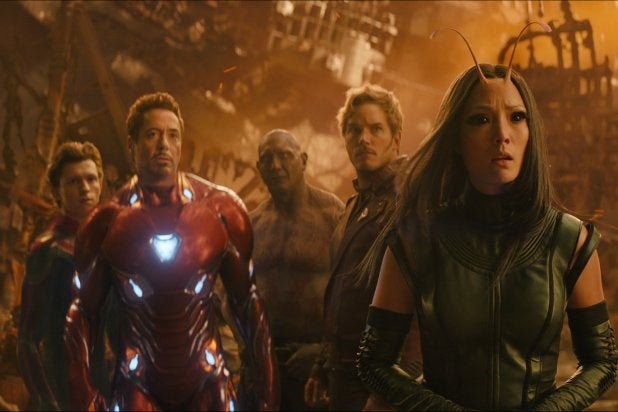
Even if you watch “Avengers: Infinity War” without seeing the last two Avengers movies, there’s one obvious obstacle that all the heroes face in the battle against Thanos. Before the first shot is fired, they’re all deeply divided. They’re not a team. They’re a mess.

Iron Man and Captain America aren’t on friendly terms. Tony Stark said as such at the beginning of the movie. It’s also established that Captain America and those loyal to him are fugitives, a direct result of the events in “Captain America: Civil War.” They are, to some extent, a metaphor for a divided team and a divided society.

That may not sound like a big deal, but to the extent it reflects a core strength of humanity, as both a species and a society, it couldn’t be more vital. I’ve mentioned before how tribal people can be. I’ve even framed it as a flaw, at times. While it certainly can work against us, it’s also one of our greatest strengths.

I don’t think it’s unreasonable to say that the human ability to form groups, work together, and coordinate in the name of a common goals is one of our greatest survival advantages. By forming teams and organizing societies, we’ve become the most dominant species on this planet. The Avengers are, from a philosophical standpoint, the embodiment of that team strength.

As individuals, we all have plenty of shortcomings. Not everyone knows how to fix a car, program a computer, or treat a staph infection. There are also too many of us who die from stupid accidents or treatable infections. As a team within a society, though, we’re able to thrive and overcome obstacles that no individual can overcome, even if they’re a super soldier or a billionaire inventor.

In “Avengers: Infinity War,” the team faces the ultimate obstacle in Thanos. He hits like an unpredictable force of nature. He brings callous, chaotic death and is willing to cross every conceivable line to achieve his goal. He’s not someone that can be dissuaded, talked down, or negotiated with. He must be opposed directly.

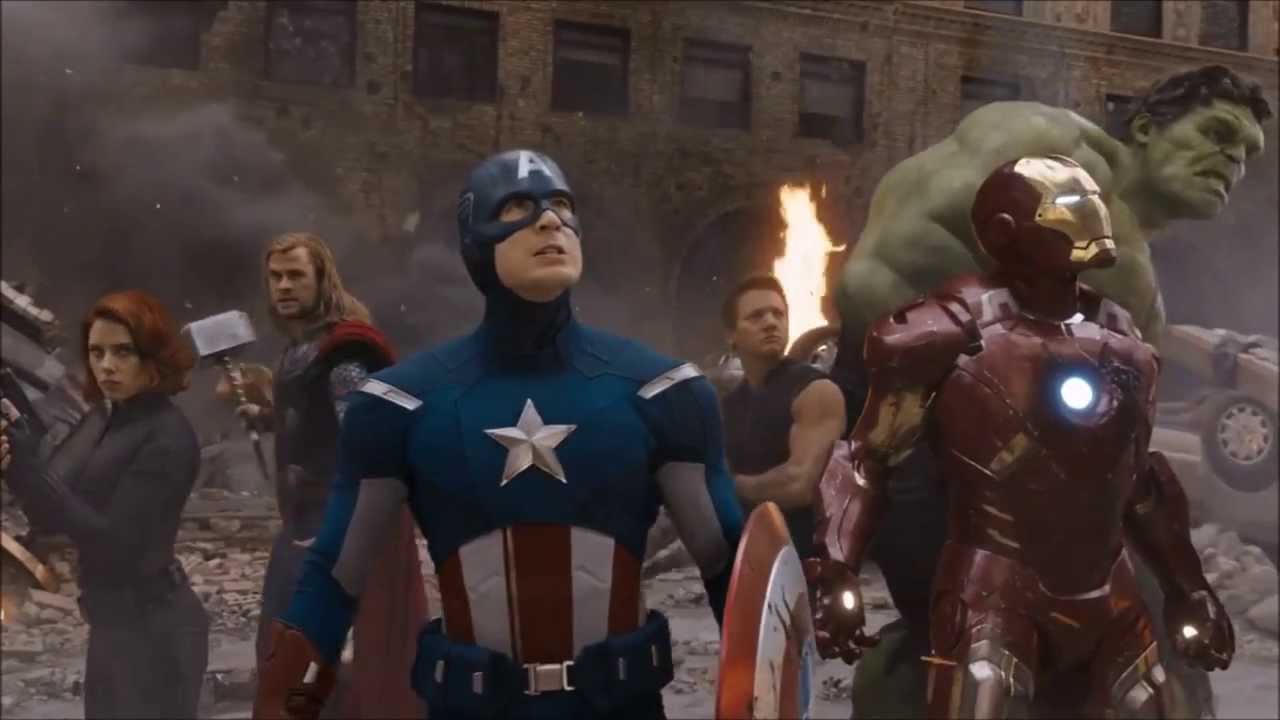
In other words, he’s the worst kind of threat the Avengers could’ve faced in their current condition. That’s critical because the first “Avengers” movie and “Avengers: Age of Ultron” do plenty to establish the value of having a unified team against such threats. In both those movies, the Avengers bicker and clash. However, they stay united and eventually defeat the threat.

You don’t need to look that deep into history to see parallels that reflect the strength of unified alliances. The unity of the allied powers in World War II proved overwhelming to the Axis. Contrary to popular belief and even a few popular alternate history stories , the Axis powers were never that close to winning the war. In fact, they were a very poor allegiance and hurt each other much more than they helped.

Even in recent times, greater unity in the form of globalization, free trade, and mass communication has helped unite the world on an unprecedented scale. While globalization gets a bad rap these days, it has helped create one of the most peaceful and prosperous times in human history. Like the Avengers, disparate societies are working together to achieve things they couldn’t achieve on their own.

In “Avengers: Infinity War,” and I know this is somewhat of a spoiler for those who haven’t seen the movie, the divisions within the team kept them from uniting against Thanos. They couldn’t be as effective as they were in “Avengers” and “Avengers: Age of Ultron.”

You could also make the argument that the Avengers weren’t willing to sacrifice as much as him. There were, indeed, opportunities to stop Thanos in his tracks. However, those opportunities required someone to die. The logic was that sacrificing one life would save many, trillions in this case.

That may seem like a failure on the part of the Avengers, but I would argue those difficult decisions are a direct byproduct of disunity. When a team is divided and not coordinating with one another, they have to make these kinds of sacrifices. Even if they did, though, it still doesn’t guarantee that they would beat Thanos.

It’s another consequence of disunity, division, and not coordinating with one another. Everything becomes a reaction. There’s little room to plan or prepare. That worked against the Avengers in a big way because they did have some warning surrounding Thanos. The visions Tony had in “Avengers: Age of Ultron,” at the very least, offered hints as to what might be coming.

Rather than use that opportunity to unite, they ended up divided. In the end, the outcome of “Captain America: Civil War” ensured that “Avengers: Infinity War” was going to end badly for the Avengers. It’s part of what helped give “Avengers: Infinity War” such an enormous impact. It takes those over-arching narratives from other movies and gives them greater weight.

Now, none of this is to say that the Avengers would’ve defeated Thanos easily had they been united from the beginning. Even if every one of them had been present and on the same page, there are no guarantees against a threat like Thanos. Like a supervolcano eruption or a gamma ray burst, it’s impossible to know whether we can survive a powerful threat we’ve never faced before.

Even so, history and nature are ripe with examples that demonstrate how united, cohesive teams are better able to survive major threats than powerful individuals. One human versus one hungry grizzly bear is not a fair fight. An entire team of humans, armed with a desire to survive and the collective know-how of multiple individuals, makes it exceedingly unfair for the grizzly.

Like the Avengers, the best teams are those that maximize an individual’s unique talents while empowering them with a collective drive. In those same teams, the conflict between individualism and collectivism strikes a critical balance. They aren’t so unified that they become prone to drone-like behavior. They also aren’t so divided that they’re too weak to coordinate.

We see that balance in teams that win championships. We also see it in organizations that accomplish great things, from building the pyramids to landing a man on the moon . A lot of what humanity has achieved, as a species, has been done through a collection of brilliant individuals who are able to work within a society to make their ideas happen.

The same effect applies to superheroes, who embody ideals of individual powers and abilities. On their own, Captain America, Iron Man, Thor, and even Ant Man can do great things. As a team, though, they can do much better.

It’s both a lesson and a powerful message, laced within a cinematic marvel. It shows just how weak and vulnerable we are when we’re divided, petty, and disorganized. Hopefully, “Avengers 4” can complete the story by showing just how strong we can be when we’re united, motivated, and driven. It may be an old, overplayed message, but it’s one worth belaboring in a world that’s still very divided.

Leave a comment

Filed under Comic Books, Jack Fisher, Superheroes, human nature

On Nihilism And Love (And How Nihilism Enhances Love)

reverse-light-happy-couple-in-love-at-sunset-men-and-women_nj0u1rvxx__f0000

Whenever I talk about nihilism, it’s usually in the context of how it could effect an emerging generation or as an excuse to talk about one of my favorite cartoons. I try not to incorporate it into too many discussions, mostly because nihilism has some pretty sullen connotations. Whether you believe it or not as a philosophical principle, discussions about it can get pretty depressing.

Considering the underlying premise of nihilism, which is that life and existence has no inherent meaning, that’s somewhat unavoidable. At the same time, though, nihilism can provide a revealing context. Due to its inherently harsh nature, it can cut through the empty rhetoric and needless complications that overly complicate a subject. That can be exceptionally useful for a concept as broad and powerful as love.

Yes, I am going to talk about love and nihilism. I promise it’s not going to get as depressing as you expect. If anything, I believe that love and nihilism are a potent mixture that, when framed properly, can actually enhance both concepts.

Being an aspiring erotica/romance writer, I’m an unapologetic about my fondness of romance. I like to think I’ve made that abundantly clear. However, the more I write about love, the more I notice how often love gets twisted and contorted into something that undercuts its fundamental value.

That’s not to say I don’t enjoy the occasional fairy tale romance that makes love seem like this unstoppable force that is ordained by angles and guided by unicorn magic. That sort of thing has its place alongside stories of giant robots and superhero movies. In the real world, though, pursing that kind of love is like pursuing actual fairy dust. It’s woefully unrealistic and potentially damaging to someone’s psyche.

That’s where nihilism can provide an important filter, of sorts. At its core, nihilism strips away the magical thinking people ascribe to certain phenomena, be it love, honor, friendship, or happiness. From a purely nihilistic point of view, love is just another manifestation of brain chemistry within a larger manifestation of social dynamics.

On paper, that’s pretty cold. If it were incorporated into a fairy tale or an erotica/romance novel, it wouldn’t come off as very romantic. If you take a step back and go beyond what’s on paper, though, that nihilistic insight actually reveals the larger complexities of love.

To illustrate, think back to some of the most iconic love stories of all time, both classical and contemporary. Look at the epic love of Romeo and Juliet, Jack and Rose from “Titanic,” or Superman and Lois Lane. These are all held up as romantic ideals, the kind that make real world love seem inane by comparison.

However, applying a little nihilism to these narratives and something happens to these ideals. The strength of all these epic love stories is how passionate the characters feel for one another and all the obstacles they overcome to be together, sometimes at the cost of their own lives. That makes for an epic tale, but nihilism exposes a major oversight.

If we’re going to look at love as just a series of chemical reactions in the brain between two people, then we cannot overlook the other reactions surrounding it. To do so would mean ignoring real, tangible manifestations of reality. Since that’s the only manifestation that nihilism acknowledges, it has to accommodate those other feelings alongside love.

This is important, in terms of expanding love, because it establishes that it’s just one of many potential feelings that may manifest within the brains of two individuals. The mechanisms are the same. It’s just brain matter interacting with other brain matter. Sure, that reduces the biology of love to brain chemicals, like any other emotion, but at the same time it incorporates into all the other emotions in play.

In the cold, unfeeling world of nihilism, the mechanisms of love don’t carry any greater weight than the mechanisms of hate, happiness, sadness, and annoyance. While that’s bad news for fairy tales, it’s good news for love in a real world where love spells don’t exist and true romance rarely forms from a single kiss at the gate of an airport.

In that world, the basic brain chemistry of love can’t be enough. It’s necessary for two people to also get along in the sense that they can relate to one another, interact with one another, and deal with one another on a day-to-day basis. Those mundane, unromantic factors are rarely part of an epic love story, but an important part of a healthy romance.

When we conflate the meaning of love to the level of an old Beatles song, we undercut those less fanciful aspects of love. We focus only on those moments of intense passion that find their way into romance movies. Some, like my favorite romance movie, do a better job exploring other moments. Most though, along with music that blurs the line between love and obsession, don’t send that message.

That kind of love gives the impression that it’s the most meaningful experience anyone could have. It becomes the primary goal of every individual, seeking that special love that somehow makes them feel complete and content. To not have it is to be denied your very reason for being. It’s something you should dedicate every ounce of energy to, even at the expense of every other pursuit.

That romantic ideal shatters under the weight of nihilism because in that worldview, nothing matters to that degree. The very notion that anything would matter that much requires self-delusion to an egregious extent. Again, it’s a cold way of looking at the world, but it reveals the true tenants of a healthy, fulfilling love.

By mixing love and nihilism, love can no longer be that one feeling that gives someone a sense of purpose. That’s because, in the world of nihilism, nothing gives anything or anyone inherent purpose. Everything is just there by the random chaos and exists only temporarily, only to eventually perish at the eventual heat death of the universe.

Sure, that means that love can no longer be eternal or everlasting like a typical Disney movie, but that’s actually a good thing if love is to have any value. By rendering love a finite, temporary feeling, it becomes more precious on the basis of its rarity. The fact that it is so temporary is what makes it a powerful feeling to those who experience it.

It also leaves room for all the other feelings that go into a strong, healthy romance. Things like growing together, learning from one another, and complementing each other become part of an ongoing process that two people experience. For some, it can last a lifetime. For some, it can barely last a day.

In the long run, they don’t have inherent meaning in a nihilistic world. Whatever meaning love ultimately has is dependent on those who experience it. That means people can’t just rely on the fact that they’re in love and expect it to solve their problems. It means they actually have to work on preserving that meaning they’ve created in a cold, unfeeling world.

To some extent, that gives love true value and not just the inflated value portrayed in movies. By looking at love through the lens of nihilism, it’s possible to understand it for what it truly is, in relation to other experiences that sentient beings share. It’s no fairy tale, but it’s real in that we feel it and because we feel it, we give it meaning.

As a lover of romance and telling sexy stories, I find that uniquely inspiring. We can’t rely on an unfeeling, uncaring universe to give meaning to our love lives. We, as finite and fragile beings, have to do that ourselves. Those willing to take love as it is and not what we wish it were are better able to craft that meaning. If we can make it sexy along the way, then that’s just a nice bonus.

4 Comments

Filed under human nature, Marriage and Relationships, philosophy, romance

Why Lex Luthor Is The Ultimate Villain

lex-luthor

What makes a villain truly evil? It’s a question with many answers that apply to both the real and the fictional world. History is ripe with real people with villainous tendencies on par with that of any mustache-twirling villain in fiction. The world of fiction is just as vast, full of all sorts of cruel, sadistic, greedy beings that range from alien conquerors to psychotic killer clowns.

Then, there’s Alexander Joseph “Lex” Luthor. What Superman is to heroes, an ideal and a standard to which others aspire, Lex Luthor is to villains. Think back to the question of what makes a villain evil. Lex Luthor checks every box and even a few others you probably didn’t think of.

In the spirit of celebrating Superman’s 80th anniversary, which I went out of my way to honor, I think it’s just as important to appreciate the other, less heroic side of the spectrum. Superman occupies the extreme end of that spectrum, namely the side that embodies truth, justice, and the highest of morals. Lex Luthor, conversely, is at the other end, one where the depths of greed, hatred, and outright cruelty are at their worst.

To that end, it’s impossible to appreciate the values Superman stands for without also appreciating the villainous traits that Lex Luthor personifies. I’ve noted the major differences between the journey that a villain takes, compared to that of heroes. I’ve also singled out characters like Walter White, who have given a new level of complexity to modern villains. However, the villainy of Lex Luthor is as basic as it is profound.

Lex Luthor doesn’t need the same complexity as Walter White, nor does he need the tragic circumstances that help forge villains like Magneto. Lex is a villain to his core. He needs no catalyst or motivation. He is, by his own nature, an arrogant, selfish person who will go to any length to get what he wants and/or deserves, regardless of cost or ethics.

Despite that simple, if not inelegant approach to villainy, Lex Luthor still finds a way to elevate himself above the many other villains that occupy the real and fictional world. It’s not just because he’s Superman’s primary adversary either. At his core, Lex represents something that highlights the breadth of true villainy.

Like most iconic villains, Lex Luthor’s status was closely tied to that of the hero he opposes. He first appeared in Action Comics #23 in 1940, a full two years after Superman debuted. Like most villains in those days, he didn’t get much development or backstory. He was simply the extra devious bad guy who tested Superman more than most.

Over the years, Lex Luthor’s story has evolved, but the extent of his villainy has never waned. The modern version of Lex Luthor, which became canonized after the big 1986 event known as Crisis on Infinite Earths, is defined largely by his greed, ego, and extreme xenophobia. He became less a mad scientist and more heartless narcissists.

Through that evolution, Lex establishes a blunt, but powerful method to his villainy. He is, at his core, a selfish egotist. There isn’t an altruistic cell in his body. Everything he does is for one purpose and that’s to profit and/or glorify himself. It doesn’t matter whether he’s battling Superman or creating a community of low-income housing. It’s all to serve him and his interests.

In the same way you can assume that every decision Superman makes is in the name of truth and justice, you can also assume that everything Lex Luthor does is in the name of benefiting Lex Luthor. Even by Ayan Rand standards, Lex’s motivation are extreme. At the end of the day, he’s out for himself and no one else.

To some extent, though, that’s what makes him even more devious. In his endless crusade to serve himself, Lex will portray himself as less a villain and more a hero who is out to use his unrivaled genius to make the world a better place. He has even become a hero on multiple occasions within the annuls of DC Comics.

Lex Luthor will save the world. He’ll even work with Superman every now and then. However, such efforts are never in the name of doing the right thing. It always comes back to Lex serving his own agenda. He understands, at the end of the day, that no one can glorify him if the world is destroyed.

Even with those circumstances, though, Lex still finds a way to set himself apart from other villains. Characters like Dr. Doom, Thanos, and Darkseid definitely fit the mold of a villain, but even they have motivations that go beyond their ego. You could even argue that villains like Dr. Doom often blur the line because their actions sometimes align with what most consider the greater good.

With Lex Luthor, though, there are no blurred lines. He is not Dr. Doom in that he feels he needs to rule the world to ensure that it’s free from want and suffering. From Lex’s point of view, ruling the world and destroying Superman are simply a means to further glorify his ego and fuel his narcissism.

That’s what makes him so dangerous, but it also reveals something profound about villainy itself. It’s not always simply a product of being greedy and sadistic. To some extent, it’s a byproduct of being entirely self-serving and having no inclinations for selfless acts.

Whereas most people would feel some level of guilt for that level of selfishness, Lex feels nothing of the sort. That’s not to say he’s a sociopath on the level of some serial killers. He just feels that he rightly deserves all the power and aggrandizing he wants. It’s not a matter of morals. It’s a matter of him just being better than anyone else.

It’s in that domain where Lex’s rivalry with Superman becomes truly adversarial. Unlike Superman, Lex is human. However, he also happens to be the smartest human in the world, as well as one of the smartest beings in the entire DC Universe. That means he doesn’t just think he’s better than anyone else. He can actually prove it.

That’s how he’s able to craft insanely advanced technology. It’s also how he managed to get elected President of the United States at one point. It’s not enough to have a massive ego. It’s that he’s smart enough and ruthless enough to outwit anyone into serving him. There’s simply no way for any other human to match him on an intellectual level.

That’s where Superman enters the equation. That’s also what fuels Lex’s unparalleled hatred of him. From his point of view, the very existence of Superman undermines his ability to establish himself as the most superior person in the world. More than that, though, he see’s Superman’s presence as a degrading force to the human race as a whole.

It’s a sentiment that isn’t often touched on in the comics or recent movies, but it is perfectly articulated in the animated feature, “All-Star Superman.” If ever you want a perfect demonstration of Superman’s heroism or Lex Luthor’s villainy, this movie is the current gold standard.

Beyond the condescension, the bragging, and the insufferable ego behind his words, Lex Luthor makes some uncomfortably valid points. In light of Superman’s impossible ideal, every human being falls short. Even him, the smartest human being of them all, can’t hope to match it.

From Lex’s point of view, that’s not just profoundly insulting. It undermines the entire human species. The existence of an alien god-like being reduces humans to a bunch of ants under the boot of a titan. By relying on that being, looking up to him as an ideal, people can only ever hope to be better ants and nothing more.

Even if that thinking is valid on some perverse level, Lex takes it even further by making it the ultimate excuse. By establishing Superman and heroes like him as affronts to his rightful place at the top of humanity, he can basically justify anything. Read into his history and you won’t find any shortage of atrocities.

It’s for that same reason that Lex rejects any notion of truth, justice, and the American way. As he also articulated in “All-Star Superman,” he sees those concepts as inherently flawed. They’re just vague concepts that can’t be touched, measured, or quantified in any meaningful way. In Lex Luthor’s world, all that matters is what he can do with the forces around him and how they can be used to glorify him.

As a villain, Lex Luthor doesn’t live in a world of abstracts, ideals, or faith. His world is cold, calculating, and deterministic. Much like Superman, he puts a face and a name on a particular archetype. Unlike Superman, though, he doesn’t evoke hope or inspiration. He inspires fear, hatred, and mistrust.

By standing against Superman, challenging him in ways that even other god-like beings can’t, Lex Luthor demonstrates just how far someone can take true villainy. In his world, nothing is ever given. It’s either earned, taken, or stolen. Things like compassion, empathy, and love are weaknesses and not strengths. They are barriers to overcome and not strengths to embrace.

Even by the standards of Rick Sanchez from “Rick and Morty,” that kind of extreme callousness is excessive. At least under Rick’s nihilistic outlook, there’s a context to his action. For Lex Luthor, though, the only context that matters is the one that serves Lex Luthor.

Superman is a beloved heroic icon and for good reason. He represents the best to which a hero can aspire. However, the extent of those aspirations and the power of that heroism is hard to appreciate without also acknowledging the villainous side of the struggle.

Superman is the hero he is because he has a villain like Lex Luthor to battle. Lex Luthor is the villain he is because Superman pushes him. However, even in the absence of Superman, Lex would still be the kind of villain who hurts, exploits, and deceives anyone and everyone to serve his agenda. That, more than anything, is what makes him the ultimate villain.

4 Comments

Filed under Comic Books, Jack Fisher, Superheroes, human nature