Tag Archives: marriage

The Pathetic Life Of Alan Harper: A Prelude/Warning To Men?

maxresdefault

Sometimes, popular culture is uncanny at predicting the future. “Star Trek” famously predicted cell phones. “2001: A Space Odyssey” predicted tablet computers. Then, there’s “The Simpsons,” which has predicted so many things that it’s creepy. Some predictions, however, fly under the radar. Some aren’t even predictions as much as they are worst case scenarios.

One such scenario played out in “Two and a Half Men,” a show more famous for its off-screen drama than its on-screen antics. Granted, those antics were fairly crude. Most episodes revolved around dirty jokes, sexual innuendo, and glorified hedonism. In today’s social climate, this show would trigger mass protests with every episode.

That didn’t stop it from being funny. I consider myself a fan of the show. However, this is one of those shows that could never be made today, even with an emotionally-stable Charlie Sheen. Its brand of comedy just wouldn’t work in an era where sexy Halloween costumes are considered controversial.

However, the message “Two and a Half Men” conveyed goes beyond its brand of humor and the actors who made it controversial. It’s a message that probably wasn’t intended when the show first aired, but one that manifested with time. That message centers around the only male character to make it through every season alive and unaltered, Alan Harper.

As a character, Alan is the catalyst for the whole show. It begins with him getting kicked out of his house by his wife, forcing him to live with his brother, Charlie. It serves as the foundation for the antics that follow. However, in light of recent trends in feminism, Alan Harper has become more of a concept than a character.

Simply put, Alan Harper is the perfect embodiment of a defeated, emasculated man. He’s a step below the stereotypical beta male. He’s the masculine equivalent of rock bottom. Even the entire cast of “The Big Bang Theory” or Al Bundy from “Married With Children” would feel sorry for him.

You don’t need to watch every episode of every season to see how this plays out. The show rarely goes more than a few minutes without highlighting how pathetic Alan is. The denigration goes beyond his ex-wife kicking him out of his house, divorcing him, and hitting him with egregious alimony payments.

Alan Harper, at his core, is a man dependent on everyone around him for affirmation, but is incapable or unwilling to earn it. His womanizing brother, Charlie Harper, often describes him as a parasitic leech who feeds on the pity of others to survive. In terms if how he conducts himself throughout the show, that’s pretty accurate.

Everything Alan does, from trying to make a living to pursuing romance, is done from a position of dependence. He depends on his brother for a place to live. He depends on his ex-wife to see his son, Jake. He depends on all the women he encounters for love, sex, and affection. He never has any leverage, always working from a position of weakness.

This earns him sympathy, but he’s no lovable loser. In addition to being dependent and weak, he’s also neurotic, selfish, and lazy. He rarely puts much effort into improving his lot in life. He never stands up for himself, rarely accepts responsibility for his mistakes, and endures failure without ever learning from it.

This is especially true in the later seasons of the show after Charlie Sheen was fired. Instead of having to leech off his brother, Alan managed to leech off a total stranger in Walden Schmidt. He makes every possible excuse to keep living in his brother’s house, never pay for anything, and avoid any semblance of personal growth.

Even if you pity Alan Harper, there’s little reason to respect him. Whenever he has a chance to make choices that can change that, he either makes the wrong decision or avoids it entirely. He’s not just a perpetual victim of a vindictive ex-wife, a hedonistic brother, and an idiot son. He actually clings to his victimhood, as though it were part of his identity.

It was fodder for comedy when “Two and a Half Men” was still on the air. Now, it’s a serious issue that affects men and women alike. That’s because leveraging victimhood has become less a comedy trope and more an ideological tactic.

The current discourse, especially when it comes to gender, is often built around who victimizes who. A big part of the anti-harassment movement is driven by the idea that women have been victims for years, suffering in silence under the thumb of misogynistic men. There are more than a few situations like that in “Two and a Half Men.”

Men are just as guilty of using that tactic too, albeit not to the extent of Alan Harper. Men have cited the lack of attention people give Terry Crews or Corey Feldman whenever they talk about issues like sexual abuse. They’ll point out the ways in which women get preferential treatment in our society, some of which actually plays out in “Two and a Half Men.”

There’s no question that harassment and inequality are problems, but just being a victim can’t be the end of the conversation. Alan Harper is, in essence, the personification of what happens when we don’t attempt to further that conversation. It impacts everybody, but it’s especially relevant for men.

Alan reflects a worst-case-scenario. In the overall gender dynamic, he draws every bad card and makes every wrong move. He marries a woman who hates him and exerts immense control over his life. He has a callous, egocentric mother who gives him no affection, guidance, or support. The entire world takes advantage of him and he does nothing to stop it.

To make matters worse, there’s very little Alan can do to stop it. Even if he stands up for himself, he has no support because he’s so dependent on other people. If he gets kicked out of the house, he has nowhere to go. If he makes any money, someone else ends up getting it, often his ex-wife or an ex-girlfriend. He’s not just pathetic in how he handles it. He’s utterly trapped.

This is the kind of nightmare scenario that men genuinely worry about. Many women may laugh it off, but men aren’t blind to the bigger picture. If Alan Harper were gay or transsexual, then he would have organizations that support him. There are many groups that work hard to help disadvantaged members in the LGBT community.

There are also plenty of organizations that help women as well. If Alan were a woman who had been kicked out of his house by a vindictive husband, then there’s no way that the comedy in “Two and a Half Men” would’ve worked. It’s not funny to see a poor woman get thrown out on the streets and denied custody of her child. When it happens to a man like Alan, though, it’s hilarious.
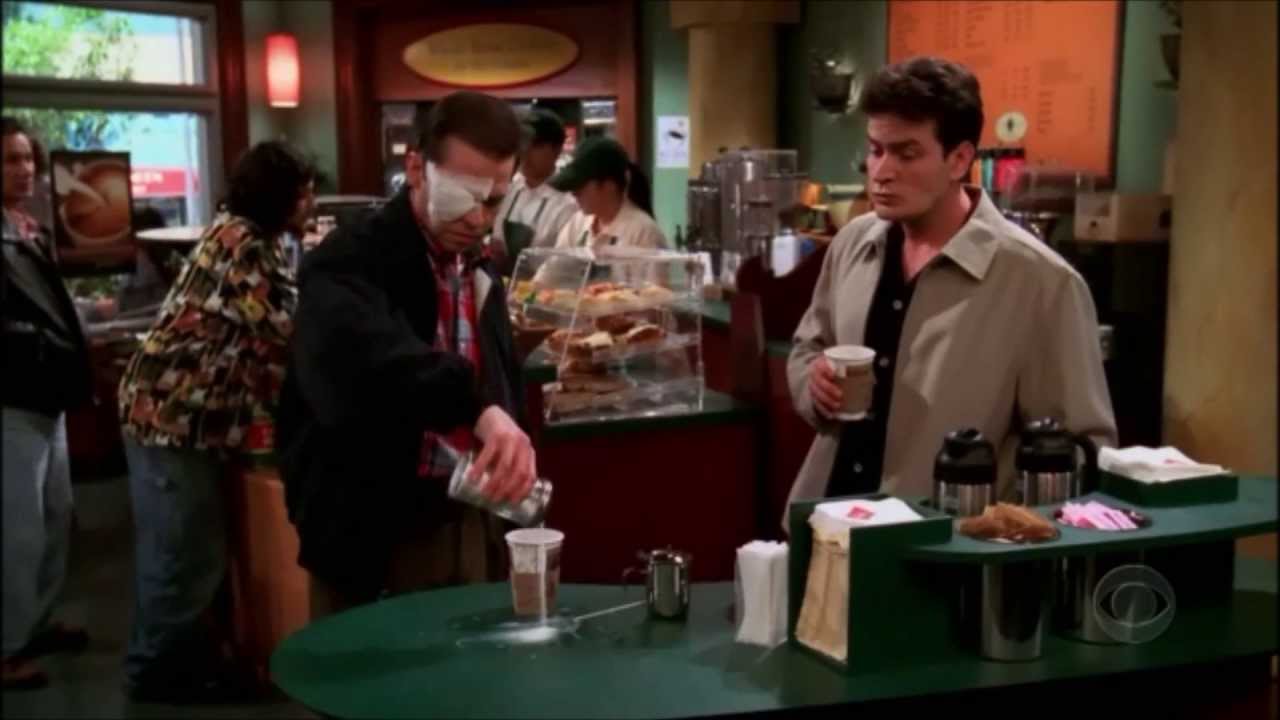
That’s where the humor in “Two and a Half Men” becomes distressingly serious. A character like Alan Harper lends himself to ridicule, but his situation is no laughing matter. He’s the pinnacle of a defeated man. Society does nothing to help him and everything to mock him. If he weren’t a man, it would be a tragedy. Instead, it’s a comedy.

For men, that’s a scary thought. On top of that, his situation can manifest in the real world, minus the laugh track. It is possible for a man to lose his home, his kid, and his money thanks to a vindictive wife. It is possible for a man to be so utterly helpless that he has to depend on everyone’s pity to survive.

The fact that it’s possible, but still funny in the context of a sitcom, gives men more pause today than it did when “Two and a Half Men” was still on the air. Men’s lives are being ruined by a society that does not give them the benefit of the doubt. Any debate that tries to take the side of men tends to get labeled as misogynistic.

We can either take those concerns seriously or create a society where men may end up like Alan Harper, laughably pathetic and utterly destitute. “Two and a Half Men” was still a funny show. However, the core of its comedy has serious implications and that are worth taking seriously, now more than ever.


12 Comments

Filed under gender issues, human nature, Marriage and Relationships, political correctness, psychology, romance, sex in media, sex in society, sexuality, women's issues

Why Men Remain Single: The Science, Lies, And Logistics

9a67b9b6-9c66-11e8-8838-278d266b5e3b

There’s an emerging crisis. To most, it’s just another distressing trend among the many we have in this chaotic world. More men are staying single. Some do it by choice. Some just do it because they’ve given up and decided to take themselves out of the dating pool. Whatever their reason, the results are the same.

Men aren’t seeking love, getting married, or having children. According to both Gallup and data from the United Kingdom, the number of single adults is increasing, especially among the younger generations. Even the number of couples cohabitating aren’t increasing. In the United States alone, 64 percent of young adults report being single. That’s nearly two-thirds of the youth population.

Naturally, the abundance of single men is causing more concern than single women. To governments, demographers, religious leaders, conservatives, and women looking for romance, that’s a major issue with enormous ramifications. They see perpetually single men as a danger that threatens to undercut the current social fabric. Some societies are already having to deal with it, albeit for different reasons.

There are plenty of theories as to why these men are opting to remain single. Conservatives claim they’ve lost touch with tradition. Feminists blame lingering misogyny. They’ll often cite the emerging incel phenomenon as proof that these men are toxic burdens who will hold everyone back.

To all those various groups and their theories, I respectfully disagree. Speaking as a man who is currently single, but very open to finding love, I like to think I have more insight than most on single male mentality. I can’t claim to speak for all men, single or otherwise. However, I can offer my personal take while also citing some actual research.

In August 2018, the Journal of Evolutionary Psychological Science published a study that surveyed approximately 13,400 men on this issue. The methods weren’t exactly sophisticated. They used Reddit as a source of data. As a regular user of Reddit, I can attest that there are some meaningful insights from commenters. I can also attest that there’s a lot of trolling and misinformation.

That said, the study still provides some insights into this phenomenon that has so many people worried. I won’t say it’s definitive. No study is. The author of the paper freely admits that. However, there’s still some truth to be gleaned from the data, as well as a few lies.

To appreciate both, here are the top five reasons that men in the study gave for being single.

1: Poor Looks

2: Low Self-Esteem/Confidence

3: Not Putting Much Effort Into Seeking Relationships

4: Not Being Interested In A Relationship

5: Poor Social Skills With Women

There were a total of 43 other categories of reasons/excuses that men gave, but these were the most common. I feel they’re worth highlighting because they identify some of the inherent complications men deal with in today’s relationship scene.

Of those five stated reasons, three of them reflect traits that a person can actually control to some extent. Looks, confidence, and social skills can all be improved through work and effort. I, myself, am a testament to that. It’s not easy, but it is possible. It’s the other two reasons, though, namely the third and fourth most common response, that are the most telling.

In those cases, being single is a choice. The men don’t want to seek out companionship. They want to stay single. That notion seems off-putting to a lot of people, implying that there’s something wrong with them. How could men not be miserable staying single? That concept just feels flawed in the context of our current culture.

It’s a concept that doesn’t apply equally to women. The idea of a single woman isn’t seen as a societal problem. It’s even glorified in the media. There are popular songs about it. The entire “Sex in the City” franchise is built around it. That’s understandable, to some extent. Historically, women have had very few opportunities for independence. I don’t think anyone should be surprised that some are celebrating it.

With men, though, there’s a disconnect between those who have certain assumptions about masculinity and the mentality of those who don’t abide by those assumptions. This is where some of the lies surrounding the study show. It isn’t explicitly stated in the data, but it is implied.

It all comes back to incentives. If you look at the current structure of relationships, as reflected in popular culture and social norms, men don’t necessarily have much incentive to pursue a relationship. To understand why, just consider the expectations men face in those relationships.

Men are expected to set aside their interests, hobbies, and passions for their partner. They need to stop playing video games, hanging out with friends, and watching sports all day so they can tend to their lover’s needs. They’re expected to support their partner emotionally and financially at every turn. In return, they get love, intimacy, sex, and family. To many men, that reward just isn’t sufficient.
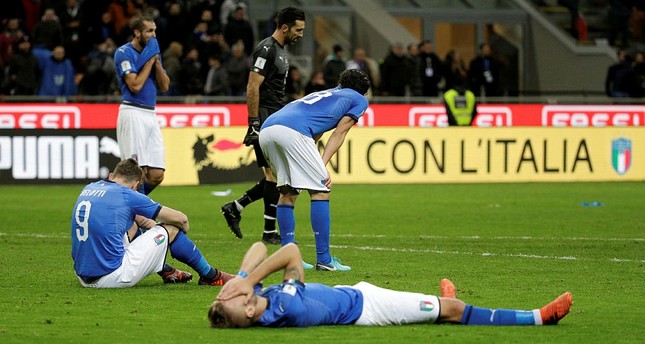
What I just described is not an accurate description of how most relationships play out in the real world. It assumes a lot about how much women want to control their partners. Granted, there are some very controlling women out there. I’ve known a few, but they’re not nearly as common as 80s teen movies would indicate.

How common they are doesn’t matter, though. That is the perception men have of relationships. On top of that, many young people are currently swimming in student loan debt, unable to get a high-paying job, and withholding their rage every time older generations blame them for ruining things. From a logistical standpoint, it makes sense for men to protect their independence.

It certainly doesn’t help that young men are one of the easiest demographics to denigrate. They commit most of the crime. They’re the ones spreading hate, misogyny, and outrage throughout our hyper-connected culture. Even if they’re more likely to be victimized in violent crime and less likely to garner sympathy, you’re not going to face much stigma for hating them.

That doesn’t even factor in the serious inequities in marriage laws, which I’ve talked about before. A man entering a relationship is taking a chance, but unlike the woman, he’s risking more than just heartbreak. If ever that relationship gets to that stage and binding contracts become involved, he stands to lose more than just a partner.

Again, and I feel it’s worth belaboring, some of the reasons these men give for wanting to remain single are based on flawed assumptions about relationships. However, when it comes to issues surrounding our emotions and the hyper-connected media that evokes them, perception matters more than any data from a study.

The men who participated in this particular study are probably not an accurate reflection of all men. They do provide some important insight, though, on the current state of relationships, gender, and everything in between.

Regardless of the study’s conclusion, though, the romance-lover in me genuinely believes that there’s room for improvement. Whether or not we pursue that improvement depends largely on the choices men make and the incentives they have to make them.

11 Comments

Filed under gender issues, human nature, Marriage and Relationships, men's issues, psychology, sex in society, sexuality, Wonder Woman

Attending My First Beach Wedding!

image1

I just want to make a quick, but notable announcement. I know most people don’t come here to hear about my day-to-day activities that don’t result in sexy novels or sexy short stories, but this is one activity that I feel is worth sharing.

As I write this, I’m preparing to attend my first beach wedding ever!

It’s true. I, a self-professed romantic, have never been to a beach wedding. I’ve been to multiple weddings before. I’ve even been to weddings at unique locations, including wineries and museums. However, I’ve never been to a beach wedding and something about that just feels off for a lover of love like me.

If that weren’t unique enough, the wedding I’m about to attend is a lesbian wedding. One of my oldest friends, who I’ve known since I was a kid, is getting married to a woman she has been with for many years now. They’re very excited and very eager to celebrate their love before friends and family.

It promises to be a beautiful moment in a beautiful setting. I look forward to sharing it with them and all the friends and family that will be attending. Being a romantic, I might get a little emotional and I don’t care in the slightest. It’s a wedding. It’s the one event where we can all channel our inner romantic.

1 Comment

Filed under Jack Fisher's Insights, Marriage and Relationships, romance, Uncategorized

Reflections On Major Loss And True Love Between My Aunt And Uncle

7374596426_098bc58861_b

I talk a lot about love on this site. Whether it’s in the novels I write, the short stories I tell, or the ways it may save our species in the future, I like to think I contemplate love more than most men will dare admit. I make no apologies for that. I am a self-proclaimed romantic. Make of that what you will.

As much as I love writing and talking about romance, though, there’s no substitute for love that’s real. It’s not some idealized concept or an elaborate sub-plot. It’s a real feeling shared by real people. There’s no need for fantasy because it’s there for all to see. No story, novel, or fairy tale can ever come close to capturing its essence.

I know this because recently, I had a chance to see and reflect on what real love looks like, albeit under tragic circumstances. Earlier this month, one of my aunts passed away. It was sudden and unexpected. She was in her 70s and she had some health issues, but none that weren’t manageable. Her passing caught a lot of people off-guard and broke a lot of hearts, none more so than my uncle.

I remember speaking to him a day after she passed. I could hear the pain in his voice over the phone. He kept saying that he didn’t just lose his wife of nearly 50 years. He lost his best friend. It was a truly heartbreaking moment. I wish I could put into words how it felt, but I don’t think those words exist. Even if they did, they would be too difficult to write.

In the days that followed, I met up with friends and family who knew my aunt. She was a hell of a character, one who would’ve found a role in any epic story, from a superhero comic to ancient folklore. She was the kind of person who could affect you with only her presence. She didn’t have to say or do anything to make an impact. Just being there was enough.

My uncle felt it more than anyone. Just talking to him and seeing him as we mourned her, I got a chance to witness what true love actually looks like. It’s a love that transcends many of the stories we tell about it. It’s something that becomes a part of you, one that just grows stronger with every passing year. Then, when that part dies, you feel it and it hurts.

However, the fact that it hurts lets you know just how real it was. My uncle didn’t avoid that. He let that pain show. Keep in mind, this man once served in the military. He’s one of the toughest guys you’ll ever meet. He’s not someone who hurts easily. Even when he does, he knows how to endure it. This was one case where he didn’t try to endure. He just let it show.

Say what you want about love being cheesy. When it’s that real, it’s powerful. It can be overwhelming too. Regardless of your gender, your background, or your capacity for strength, it’ll hit you harder than anything. That’s what makes it scary. For some people, it’s just easier to be cynical.

That doesn’t stop it from affecting us. My actually uncle met my aunt by accident. Less than a year after that meeting, though, they got married. They knew what they had was love. They didn’t run from it. They ran towards it and they never let go of it. For someone like me, who has only contemplated stories about such powerful love, seeing it manifest in that moment was profound.

My uncle’s heart is still wounded, but it isn’t broken. In talking to him, I could sense him finding strength in that heartbreak. He spent nearly half-a-century with my Aunt. They had forged many wonderful memories together, having two kids and over a half-dozen grandkids. Her passing doesn’t damage those memories. If anything, it makes them more precious.

I hope everyone, at some point in their lives, gets a chance to see that kind of love first-hand. Whether it’s among relatives, friends, or with your significant other, a love that real is something that extends beyond the people who feel it. We may never be able to completely capture it in a love story, but we can still experience it and appreciate its power.

I’m going to really miss my aunt. She was a wonderful woman who did so much for me and my family. I’ll still never miss her as much as my uncle, though. He loved her in a way that words and thoughts can never express. The fact their love existed in this crazy world and I had a chance to see it gives me hope. To all those who have lost someone they truly love, I like to think we can share that hope as we move on.


Leave a comment

Filed under Jack Fisher's Insights

The Other Orgasm Gap (Involving Men) And Why We Should Confront It

basic-secrets-male-orgasm

There are many disagreements about gender these days, but when it comes to orgasms, most reasonable people are on the same page. In general, regardless of politics or genital configuration, we’re in favor of them. We support efforts to experience more for ourselves and for our partners. In matters of sex, it’s one of the few unifying issues.

Even if most people agree that orgasms are awesome, there are still some sources of tension. I’ve already touched on the current status of the orgasm gap, as it pertains to women. That is still an unresolved issue and the current status of gender relations can only improve if that gap is reduced or eliminated.

However, there is another orgasm gap that is rarely touched on, but inescapably linked to the current pleasure parity. This one pertains to men and, unlike the female orgasm gap, is shackled by hard biological limits. Any man, myself included, knows those limits all too well.

It’s no secret, but it might as well be one because it’s rarely talked about. Without getting too graphic, I’ll just say that the female orgasm is a symphony whereas the male orgasm is like a kazoo. It’s a one-note instrument that is simple, basic, and blunt. You can still make music with it, but the range is limited.

That’s because men have something called a refractory period. It’s basically the cool-down period that men experience after orgasm. From a biological standpoint, it’s the part of sex where the brain and genitals tell one another that the job is done and it’s time to rest. That process involves releasing all sorts of hormones and chemicals that are responsible for men getting sleepy after sex.

It’s the reason why men have a difficult time getting aroused again after sex, both physically and mentally. Once a man reaches that peak, it takes a while to get to that level again. It can take as little as 15 minutes to almost an entire day. During that time, though, a man’s ability and desire are significantly hindered.

This inescapable process is also the source of many jokes about premature ejaculation and men who can’t last long in bed. I don’t doubt it’s a factor in the orgasm gap. Whereas it takes a man only two to three minutes to achieve orgasm, it takes a woman an average of 12 minutes to do the same. That is not a trivial gap.

Conversely, women aren’t hindered by a refractory period. Even though it takes women longer to climax, they’re capable of having more orgasms in rapid succession. To give you an idea of just how many more women are capable of, the record for most female orgasms in an hour is 134 whereas the most a man has ever had is 16. Again, that is not a trivial gap.

While men don’t have to look far for tips and tricks that allow men to have multiple orgasms, many of these so-called techniques are just gimmicks. They’re methods for improving stamina and control, which is a great thing to have with any partner. However, it doesn’t change the fundamental biology of refractory periods.

That’s not to say this particular gap is impossible to close. That’s also not to say that there aren’t documented cases of men achieving multiple orgasms. They do exist, but there’s not a lot of research on the topic, especially compared to the amount of research on the female orgasm.

If we’re to close the orgasm gap for everybody, though, this is something that’s worth studying. I would even argue that we can’t solve the orgasm gap with women without confronting this lesser-known gap with men. In essence, that refractory period is the greatest hindrance to true orgasm parity.

Just talking about it only goes so far, though. Unlike the female orgasm gap, the refractory period is rooted in biology rather than psychology. From an evolution standpoint, it makes sense. By achieving orgasm quickly, a man can spend less time impregnating a woman and more time surviving. It was a necessary trait for managing the survival/reproduction dynamic of the human species.

Like many other traits from our pre-modern ancestors, though, these traits are less necessary in the modern era. In fact, they can be a liability. In a world of low infant and maternal mortality, we have more incentive to seek quality over quantity in our lovers. The refractory period, much like our body’s tendency to get fat, is a real hindrance to that effort.

Addressing it is probably not going to be as simple as telling men to do kegel exercises. Men being able to achieve multiple orgasms may require an effort similar to that of developing the female birth control pill. In the same way modern medicine has given women control over their fertility, it may end up doing the same for male orgasms.

How modern medicine would go about that is well-beyond my expertise. However, we already do have some clues as to what goes into reducing the refractory period. Studies has shown that a chemical called prolactin may play a major role.

Specifically, when a man climaxes and goes through a refractory period, levels of prolactin in the body spike. In rare cases of multi-orgasmic men, though, it doesn’t rise in conjunction with an orgasm. Now, that could be only be part of a much more complex process, as is often the case in medicine, but it’s a start.

In the same way some people are already hacking their biology for reasons relating to health and beauty, it may be possible to tweak certain bodily processes to enable men to have the same orgasmic potential as women. It doesn’t even have to extend to modifying genetics. It can just involve tweaking chemical and hormonal processes, something we’ve been doing in medicine for years.

Unfortunately, research on this phenomenon is scant at best. However, given how much money pharmaceutical companies have made treating sexual dysfunction, I believe the incentives are there. It may take a long time, but given the progress medicine has made on male contraception lately, I think the infrastructure is in place and so is the market.

It’s hard to predict what form modern medicine will take in treating any condition, be it the limits of the male orgasm or the current orgasm gap with women. However, I am confident in saying that any advance that puts everyone on the same level of orgasmic potential will be a game-changer of the sexiest kind.

Leave a comment

Filed under gender issues, Marriage and Relationships, sex in media, sex in society, sexuality

How Less Sex Can Crash The Economy

economic-collapse-960x451

There’s a funny, but revealing saying by famed economist, Paul Samuelson, on the difficulty of predicting economic trends. It goes like this:

The stock market has forecast nine of the last five recessions.

Other than being a play on numbers, there is a message in this quip that’s worth noting. No matter how many dire warnings accomplished economists give, a recession always seem to hit. It only ever becomes truly obvious with the benefit of hindsight.

I bring this up because I’m about to make some predictions about the future of the economy and I’m not an economist. I don’t claim to have more credibility on the matter than anyone else who has read every Freakanomics book ever written.

However, since the economy affects us all, it’s still worth talking about. Since the economy can influence our sex lives in ways I’ve discussed before, I feel like I can comment on the subject and even do a little speculation. Again, I want to make clear that I’m not an expert. This is just me making connections I feel are worth making.

When it comes to the economy, it’s not physically possible for anyone to make sense of all the data and connections that govern our affairs. Human beings are just too unpredictable and the amount of data involved is just too vast. Some points of data, though, carry more weight than others.

One of those points has to do with population and demographics. It’s a topic that’s becoming more and more relevant these days. Just this year, the birth rate in the United States dipped to a 30-year low. That’s somewhat remarkable because people tend to have more children when the economy is doing well and by most measures, the economy has been pretty good these past couple years.

This isn’t just an American problem, though. Many industrialized countries throughout the world are experiencing very low birth rates, some of which well below the replacement level rate that would keep a population stable. The reasons for this are many, but most boil down to cost. It’s just very expensive to raise a child these days and that cost is only going up.

Beyond the cost, though, there’s another factor at work that’s driving these declining fertility rates. People, in general, are just having less sex. That may seem obvious, given the data surrounding birth rates, but there are other aspects of the data that may reveal other factors.

For one, the decline in sexual activity is actually hitting the younger demographics, who are historically and biologically the most eager to engage, so to speak. I’m still old enough to remember when every other week seemed to bring dire news about teenagers having too much sex and horrifying their parents. Now, they’re not doing, but still finding ways to horrify their parents.

While I’m sure it still comes as a relief to some parents, it’s already causing concerns among demographers. However, I believe there’s a much larger concern about the economy, as a whole, that’s just starting to emerge. It has less to do with there being fewer babies and more to do with the nature of modern economies.

The days of economic health being measured by how many widgets a factory could produce are long gone. These days, most modern economies are built around consumer spending. Around 70 percent of the economy is consumer spending. That is not a trivial portion.

To illustrate why that could be a much greater problem down the line, I’ll need to make a few connections between sex and the economy. It’s not quite as kinky as it sounds, but those connections matter if you’re going to speculate about the future with any measure of accuracy.

Think, for a moment, about just how much economy activity goes into people seeking out sex and dealing with its associated byproducts, namely children. Whether you’re a man, a woman, or something in between, that pursuit drives a great deal of our economic activity.

Men work hard at jobs that don’t always pay that well to buy clothes, cars, and gifts with the hope that it’ll improve their chances of finding a partner. Women do the same, spending a great deal of money on cosmetics, clothes, and beauty treatments to attract desirable lovers. The money people spend on beauty products alone pumps a lot of money into the economy.

Even if the goal of these purchases isn’t directly linked to someone’s pursuit of sex, this activity does link to that fundamental pursuit that has driven society and our species for centuries. We work hard, establish functioning lives, and buy the things that prove to one another that we’re desirable lovers. It’s part of the many incentives that drive any economy.

It’s those same incentives, though, that can lead an economy into a cycle of destruction. Those cycles are behind every major financial crisis, but the one created by less sex and low birth rates may end up having a far greater impact. Some of those incentives are economic, but it’s the social incentives that might compound the issue.

Some of those incentives involve how modern marriage functions. More than a few people, myself included, have pointed out that marriage is not a very good deal, especially for men. If you look at it from the perspective of a simple contact, the flaws are pretty obvious.

Imagine, for a moment, that someone presents you with a contract. You will enter into a partnership in which you pledge emotional, financial, and intimate support for an undefined period of time. However, if the other party wishes to dissolve the partnership at any time for any reason, they can do so and get half your assets, as well as custody of your children.

Read over the fine print carefully. Would you sign that contract? Who in the right mind who isn’t drunk on irrational passions would? I think most people would see that as a bad deal and one that they have plenty of incentive to avoid.

On top of those incentives, there’s another round of them that has been growing recently. These come directly from the ongoing anti-harassment movement that has helped expose horrible sex crimes, but has also given men a powerful incentive to avoid women.

As a man, and I know this is anecdotal on my part, I find myself feeling very anxious around women who I don’t know or aren’t close family. I worry that one wrong gesture or one wrong comment will lead to an accusation that will subsequently ruin my life. I don’t want that and I don’t think any man wants that.

That’s not to say those incentives are powerful enough to make men stop feeling attracted to women, but I do think they’re sufficient to make men more reluctant to seek out intimate relationships with women. From an economic standpoint, the potential cost is very high, whether it’s paying for a child or for having your life ruined by an accusation.

From these incentives, the resulting economic situation won’t just be different. It will be unsustainable when you take into account the declining fertility rates. It doesn’t even have to be an economy where nobody gets married and has kids. It can just be an economy where most men and women stay single and don’t build much of their economic activity around pursuing sex.

In that economy, the only major purchases would be shelter, electricity, internet, and entertainment. As expensive as some of those can be, they’re not going to match the same amount of spending that comes with caring for children or for people just trying to get laid.

In the short-term, that means the economy will be dominated primarily by products and services that just help single men and single women relax on a Friday night after work. In the long-term, however, the consequences are much greater.

Without a growing population, there aren’t as many workers to support the large welfare states that most modern economies utilize. Moreover, without that same growing population, the consumer base starts shrinking. Even if a greater number of people have more money, that money is useless if there aren’t enough people to spend it.

From there, a cycle of fewer consumers starts feeding a process of declining spending. On top of that, fewer workers means it’s impossible to sustain a large welfare state, which leaves more people impoverished with even less money to spend. It began with declining birth rates, but it only accelerated when people just had less sex.

In the end, the economy as we know it now, just can’t function anymore. I’m not saying it’ll completely collapse, but it would have to adapt a lot in order to function with these incentives. I’m not sure what those adaptations would entail, whether it involves a universal basic income or using artificial wombs to augment the population.

I’ll say it one more time because I think I need to belabor this. I’m not an expert. This is just speculation on my part. This is what I feel could be the endgame for our economy, as we know it, if the current incentives hold. It’s a near certainty that there will be changes, but it’s impossible to predict what those changes will entail.

From my perspective, though, I think the implications are clear. A society where people are having fewer children is hard enough to adapt to, but we’ve already been doing that to some extent. One where people have less sex or flat out avoid it, though, may end up being much harder.

4 Comments

Filed under Current Events, gender issues, human nature, Marriage and Relationships, sex in society, sexuality

Why We Should Embrace Married Superheroes

renewvitrine-760x428

What is more emotionally satisfying than seeing someone you care about find happiness? Whether it’s a friend, a sibling, or even a celebrity you admire, don’t you feel a twinge of joy when you see them achieve something special? Unless you’re a cynic or a sociopath, you’ve probably had those feelings at least once in your life.

With those warm and fuzzy feelings inside, why shouldn’t that also extend to the iconic superheroes we know and love? When our favorite heroes finally get around to marrying the love of their life, it’s natural to want to cheer them on the same way we would cheer for our best friend as he and his bride do karaoke at the reception.

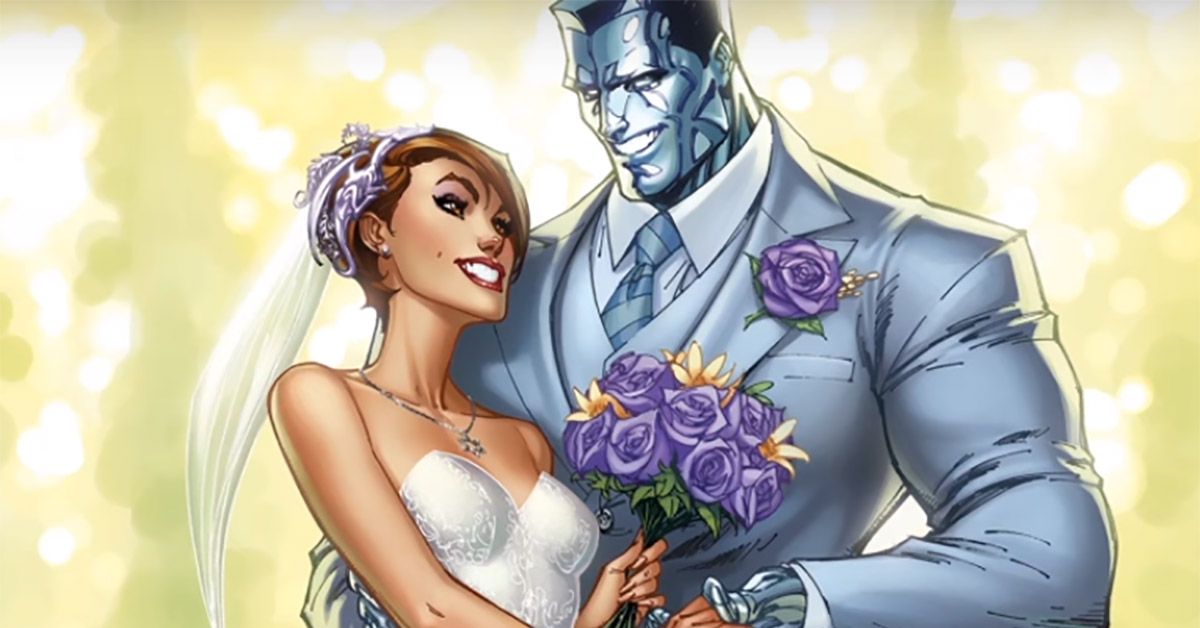
However, those tasked with building the canon seem to have an aversion to married superheroes. Just this past summer, that aversion was on full display. Two major superhero weddings were set up, one involving Kitty Pryde and Colossus in X-men Gold #30 and the other involving Batman and Catwoman in Batman #50.

Sadly, both events ended without tearful vows and a drunken toast, although one salvaged a matrimonial quickie at the last second. I’ve already broken down how one wedding just prolonged an already drawn out romance while the other denigrated the entire concept of romance, as a whole. Rather than bemoan those romantic misfirings, I’d like to step back and look at the bigger picture of married superheroes.

This is actually a controversial issue among fans of superhero comics and those who create them. I’ve been browsing comic book message boards for years. I can attest to just how much fans care when their favorite characters get married. They continue caring long after the wedding reception.

On the other side of the controversy, though, there are the creators that work for Marvel, DC, and their corporate overlords. They have a slightly different view of married superheroes and one that’s not nearly as sentimental. To say their views are complex is like saying a plumber has mixed opinions on food poisoning.

While many of those writing, editing, and producing superhero media are fans themselves, they often have to leave their fandom at the door. Companies like Marvel and DC Comics don’t pay them to write fan fiction. They pay them to tell stories that will sell, increase the value of their brand, and improve market share.

A writer or editor’s ability to do this is prone to many challenges. Fans, especially comic book fans, are notoriously fickle with their passions. If they see something they don’t like happening to a character they love, they’re pretty vocal about it. Just ask fans of Captain America, the Fantastic Four, or Cyclops of the X-men.

In that respect, I have some sympathy for the people responsible for handling beloved characters. They’re basically playing with someone else’s toys and getting paid for it. However, if they break those toys or damage them in any way, there can be hell to pay. Just look at the current situation with Star Wars.

That sympathy, though, only goes so far and I can’t extended to how some at Marvel and DC have approached marriage. DC Comics editor, Dan Dido, once went on record as saying that superheroes should not get married. Long-time Marvel editor and COO, Joe Quesda, even had to justify breaking up Spider-Man’s marriage to Mary Jane Watson by claiming that it “stabilized” Spider-Man too much.

Now in general, I try to be understanding and respectful when people hold positions that I disagree with. I’ve even tried to do that with hot-button issues like abortion, feminism, and organized religion. In this case though, I just have to call bullshit.

Claiming marriage does too much to stabilize a superhero is like saying ketchup makes food too red. It gives the impression that stability is somehow a liability with superheroes, as though they can only be interesting when their world is falling apart and they’re one stubbed toe away from a nervous breakdown.

It’s true that we superhero fans love seeing our favorite heroes fight back invading aliens, punch Nazis, and even take on renegade alien gods. However, it’s also true that we don’t expect or want that to be the only story that superheroes tell. We’re also interested in the lives they live outside their flashy costumes. It doesn’t just humanize them. It gives us more reasons to root for them.

Both Mr. Quesada and Mr. Dido try to make the case that part of being a hero involves sacrificing parts of their personal life in order to serve the greater good. There’s little doubt that being a hero comes at a price, as many of Batman’s former lovers can attest, but that doesn’t have to involve outright isolation.

It also doesn’t mean being a superhero makes a functioning marriage impossible, either. Yes, it’s a lot harder to be a loving spouse and a superhero, but I wouldn’t say it’s as daunting as battling planet-eating space gods or surviving a team-up with Deadpool. In fact, it can enhance their heroics in ways that go beyond romance.

I’m not the only one to make that point either. In wake of the recent wedding debacles by Marvel and DC, Comic Books Resources asked why publishers are so afraid of married superheroes. They cited the same excuses I did about heroes needing to sacrifice, but they also pointed out how these kinds of real-life, mundane events help people connect with these characters.

What the article didn’t get into is why this matters. Superman is a hero with god-like power who can move planets and create diamonds with his bare hands. He’s also married to Lois Lane and still has to put in the effort to make that marrage work, even when it becomes prone to complications.

Reed Richards of the Fantastic Four is among the smartest beings in the entire Marvel Universe. He creates thought projectors, flying cars, and personal robots without breaking a sweat. He too has to work hard to keep his marriage and family functioning, especially when a handsome Atlantean king keeps trying to sleep with his wife.

Then, there’s Spider-Man. I know I’ve brought him up a number of times and not always in a positive light, but what happened to him and his marriage is still one of the most controversial things that have ever happened in comics. In many ways, he embodies the ultimate flaw in the excuses to undercut married superheroes.

In the infamous story, One More Day, Spider-Man’s marriage to Mary Jane Watson wasn’t just undone. He actually made a deal with Mephisto, Marvel’s stand-in for the devil, to sacrifice his marriage in exchange for saving his Aunt May’s life. Considering his Aunt had told him just a few issues ago that she didn’t want to be saved, Spider-Man still went through with it.

To say fans were upset by that decision would be like saying the Hulk has a slight anger management problem. This act didn’t just undercut an iconic superhero romance. It essentially reverted Spider-Man back to the state of an immature loser who had barely grown up since high school.

Again, Marvel made plenty of excuses. Long-time Spider-Man writer, Dan Slott, claimed that Spider-Man has to remain within a particular status quo. He has to keep being this lovable loser who is always struggling to hold down a job, keep a girlfriend, and still be a hero. In order to keep that unique appeal he has, and all the merchendising money it makes, he can’t be married.

I understand that logic, but I still call bullshit. You know what happens to characters who never change, grow up, or evolve over time? It’s the same thing that happens to real people. They become boring and unlikable. In Spider-Man’s case, he becomes something worse. He becomes the guy who sold his marriage to the devil to save someone who didn’t even want to be saved. That’s not heroic. That’s just plain selfish.

That’s the price a superhero pays for remaining in a prepetually regressed state. I contend that price is far higher than any associated with the inherent difficulty of writing married characters. With Spider-Man, One More Day established that no matter what he did in his personal or heroic life, he would never change. He’d always end up sleeping on his Aunt May’s couch.

It doesn’t matter if he pursues a new romance. It doesn’t matter if he becomes a billionaire and runs his own company. A reader can just assume he’ll screw it all up somehow and end up right back where he started. It’s just hard to root for any character that keeps regressing like that.

It’s like rooting for a sports team that never wins. Even terrible teams can turn it around at some point. Yes, that includes the Cleveland Browns. If that team never wins, though, why even root in the first place?

This is why marriage is so vital to the growth and evolution of superheroes. When a hero gets married, it’s not just an excuse to have a big event full of superhero-themed cakes. It’s a culmination of a much larger story about love, growth, and strength. It takes a lot to make a marriage work and not all of it can be done with superpowers.

Therein lies the ultimate appeal, though. When a superhero gets married, they go from simply pursuing a relationship to actually making it work. They have to learn how to build a life with another person and become part of a larger family, something that cannot and should not be exclusive to the Fantastic Four.

It fundementally changes how superheroes approach their lives, in and out of costume. It adds new layers of complexity and intrigue. Yes, it’s considerably harder than telling stories about Superman rescuing Lois Lane from Lex Luthor’s evil clutches. That’s exactly what makes it more compelling.

I don’t doubt that Marvel and DC will continue making excuses about married superheroes. Whether or not their approach to the issue evolves remains to be seen. However, since they’re in the business of keeping their characters relevant, they will have an incentive to adapt these characters for changing times and maturing audiences.

Being the romantic I am, I believe love will eventually win out in the end because love is part of why we root for superheroes in the first place. Love isn’t just about being unselfish. It’s also about achieving something special after so much sacrifice. Fans of superheroes want to see them achieve the things they struggle for. It affirms that all those heroics have meaning and purpose.

Marriage doesn’t have to be the ultimate achievement for a superhero. It can be part of it, though. It doesn’t have to be an end. It can be a beginning, as well. Until Marvel and DC lets its heroes get to that point, though, those stories won’t get told and hearts will keep getting broken for all the wrong reasons.

1 Comment

Filed under Comic Books, Jack Fisher, Superheroes, Love Or Obsession, Marriage and Relationships, romance, superhero movies, X-men

How Atheism May Improve Your Sex Life

Relationship with passionate affection

When it comes to improving your sex life, there’s no one way to go about it that works for everyone. Human sexuality is complex, diverse, and exceedingly kinky. What works for one person won’t work for another and may even be detrimental in some cases.

Conversely, there are also variety of ways to undermine or ruin your sex life. That same sexual diversity that helps the human race find novel ways to get intimate with one another can also backfire horribly. Some are minor, in terms of effect, but other forces can have a much greater impact.

That brings me to religion, a topic that tends to inspire the best and worst in people. Like sex, it’s a complex phenomenon that impacts everybody differently. It can inspire great charity and compassion in some. It can just as easily incur greed, exploitation, and outright atrocity.

For those reasons, and plenty more that are too numerous to list, any effort that involves mixing sex with religion is akin to mixing napalm with TNT. I’ve made an effort to discuss both topics in a fair, balanced manner in the past. I feel as though I can only go so far before I totally inflame certain audiences.

I’m still going to try to push the conversation a bit farther. That means taking a few risks and since religion is still such a prominent force in the world, it’s effect on our collective sex lives is unavoidable.

For this particular discussion, want to focus on what happens when religion is removed from the equation. If religion is really that powerful an influence on our lives, and both history and current politics indicate that influence is not entirely trivial, then it stands to reason that the impact of its absence can reveal something about the extent of that influence.

That’s not to say that this is going to be a glowing endorsement of atheism. I prefer to let the data, the logic, and the implications speak for themselves. Since religion is on decline in many parts of the western world, I think exploring the potential impact is critical and even a little urgent.

Information on the sex lives of atheists compared to those who consider themselves religious is somewhat difficult to come by. The act of assessing and measuring someone’s sex lives, as well as the extent of their religiosity, is extremely difficult without the aid of lie detectors or mind-readers. The information we do have, though, does offer some intriguing insights.

Back in 2011, a survey entitled “Sex and Secularism” surveyed approximately 14,500 people revealed that those who identified as religious had less satisfying sex lives than their non-religious counterparts. On top of that, those same religious participants reported a high level of guilt that came along with their sex lives. Given how some religions build their theology around guilt, that shouldn’t be too surprising.

Conversely, those identifying as non-religious didn’t just report better sex lives. They had better sexual education and were more open to discussing sex in general. Everything from personal fantasies to simple tastes was fair game and less affected by guilt. That openness, along with considerably less stigma, was conducive to a more fulfilling sex life.

That effect was more pronounced by those who had once been religious, but had since become atheist. Between the absence of religiously-motivated guilt and the sexual taboos that are often theologically driven, the cumulative effect is pretty striking. This notable quote from the researchers summed it up nicely.

“People who had lost their belief and became atheists reported a significant improvement in sexual satisfaction,” the paper went on to say. Apparently the guilty feelings that religion creates around sex dissipate after a while.

Now, I can already hear the outrage sincerely devout religious crowd on the conclusions of this study. More than a few people who consider themselves religious will claim that their sex lives are superior and they may even have a case to make. Many religions offer a simple, one-size-fits-all approach to sex that is uncomplicated, straightforward, and safer. The fact that it’s also ordained by a divine power is also a factor.

I don’t deny that there are plenty of religious couples out there who have satisfying sex lives. There are probably plenty of atheists out there who have terrible sex lives, as well. However, in order to draw larger conclusions about the impact of religion on sex, we can’t just go by a few anecdotal experiences. We have to step back and see the forest from the trees.

From a psychological and physiological perspective, it makes sense that guilt, religiously-motivated or not, would undermine anyone’s sex life. Guilt has measurable effects on people. It makes it harder to focus. It keeps us from enjoying things. It’s a powerful distraction that makes us feel stress and anxiety. All of these forces can do plenty to undermine your sex life.

In my musings on taboos, I often cite religion as a driving force behind them. Organized religion has made no secret of its intent to regulate, control, or outright exploit human sexuality. There’s plenty of theology, especially among the Abrahamic religions, that imparts divinely-mandated guilt on sex.

In these religious cultures, sex isn’t just some basic biological act that people do for intimacy, procreation, and recreation. It’s subject to all sorts of holy and unholy connotations. The deities involved in these religions aren’t just interested in the kind of sex you’re having. They’ll actually punish you if you do it the wrong way.

That does more than just impart extra guilt for doing anything that strays from what priests, mullahs, monks, and rabbis deem appropriate. It also instills a very rigid family structure, one centered around a specific manifestation of sex that has very little room for fun, kink, and exploration.

That manifestation involves strict gender roles where men do the hard labor and women do the child rearing. The only sex that is sanctioned is the one that involves producing babies who subsequently grow up to be adherents/soldiers/patrons of a particular religion. The fact that type of sexual expression indirectly benefits religious institutions is probably just a coincidence.

The act of enjoying sex for non-procreative purposes would constitute a distraction. A distraction is dangerous in any religion because if people become too distracted, then they pay less attention to the religious institutions and the duties they espouse. As such, it’s in the interest of any successful religion to maintain a strict control over someone’s sex life.

That kind of control is naturally prone to stress. Given how the biological wiring of human sexuality is not conducive to that kind of narrow expression, there’s bound to be temptation. The best way to combat temptation is through stigma and taboo. By hijacking powerful feelings like guilt, it’s possible heavily influence peoples’ sex lives, even if it’s impossible to control them.

It’s akin to putting lead weights on somebody’s limbs and convincing them that the weight is normal. Even if they come to accept that, the weight still skews perceptions and that can only do so much in terms of circumventing basic biology. It also means that when those weights come off, the effect is pretty striking.

Suddenly, the stigma that once kept someone from seeking the sex they desired are gone. The burdens associated with thoughts and feelings that religious institutions deem unholy are lifted. Like any form of stress relief, it can be pretty liberating.

That doesn’t necessarily mean the 2011 survey is conclusive. It has been criticized for being unscientific in some aspects. Some of those criticisms are valid and the researchers concede that, but to the extent the data is consistent with what we understand about how religion can affect our sexuality, it passes some critical filters.

Our sex lives are complicated. Religion, in its many forms, is complicated as well. Regardless of how you feel about one or the other, mixing them is almost certain to compound both. Atheism, like not playing a sport or not having a hobby, simply removes one of those complications.

It’s not a universal fix. It doesn’t subvert other potential issues that may undermine someone’s sex life. There’s plenty more research to be done and religion is still evolving with each passing year, but when it comes to removing divinely-imposed, theologically-driven guilt, atheism stimulates the necessary aspects that make for a satisfying sex life.

1 Comment

Filed under gender issues, human nature, Marriage and Relationships, philosophy, psychology, religion, romance, sex in society, sexuality

How To Disappoint (But NOT Destroy) An Iconic Romance In Batman #50

688356-_sx1280_ql80_ttd_It’s been a rough summer for fans of romance, superheroes, and superhero weddings. In fact, in all the years I’ve been reading comics and following romantic sub-plots, I can’t remember a time when there was this much melodrama and heartbreak. I understand that any epic romance is going to involve a healthy bit of emotional strain, especially when it involves superheroes. There comes a point when it just becomes too much.After the deconstruction and denigration of superhero romance that unfolded in X-men Gold #30, I feel like we’re dangerously close to that point. It’s as though everyone involved in making superhero comics is admitting that superheroes can’t get married. They can’t have a functional, compelling romance and still be interesting.That sort of sentiment is basically an affirmation of Marvel’s justification for undoing Spider-Man’s marriage to Mary Jane Watson in the infamous One More Day story. Given the relative infamy of that story line and the recent upheaval with the X-men, many fans of both superheroes and romance were placing a lot of hope that the wedding of Batman and Catwoman could help stop the bleeding in Batman #50.I certainly counted myself among those who was very excited about this event. I even admit I really wanted this to make up for the disheartening outcome of X-men Gold #30. The romantic in me wanted at least one superhero wedding this summer that didn’t end in heartbreak or tragedy.Well, if you saw the same spoilers in the New York Times that I did just two days before Batman #50 came out, you already know that’s not what happened. Bruce Wayne and Selina Kyle did not get married. That means in terms of superhero weddings, the summer of 2018 is now 0 for 2.However, that outcome did not compound my lingering disappointment from X-men Gold #30. I’ll even go so far as to say that Batman #50 didn’t send the state of superhero romance past the point of no return. It didn’t improve the state of affairs. It was disappointing, but not to the point where it damaged a story or a romance beyond repair.Before I explain, I want to establish that many of the details beyond this point are heavy spoilers. Seeing as how this comic was already spoiled a couple days prior to its release, much to the chagrin of comic retailers, I don’t think I need to place too many warnings. I still recommend that people buy the comic, but there’s more going on here than a wedding that didn’t happen, much more so than what we saw in X-men Gold #30.By nearly every measure, Batman #50 approaches the concept of a superhero wedding differently than X-men Gold #30. The wedding of Kitty Pryde and Colossus was set up as this big, momentous affair between an established couple that overcame a lot just to have the opportunity to get married. They brought in friends, family, and fellow superheroes from across the X-men comics.In contrast, the ceremony in Batman #50 was very small. In fact, there wasn’t much of a ceremony to speak of. The only ones who were present besides Batman and Catwoman were Aflred, Bruce Wayne’s butler and long-time confidante, and a lone judge who was already drunk so that he wouldn’t remember his or Catwoman’s identity. Batman always has a plan for that sort of thing. That’s why he’s Batman.On top of that, Batman is the one who proposed to Catwoman back in Batman #24. He’s the one who pitched the idea of getting married in the first place. That’s critical because Kitty Pryde was the one who proposed to Colossus in X-men Gold #20. That matters because she’s also the one who broke it off and at the last second, no less. Things were a bit less cruel in Batman #50 and that’s saying something for a Batman comic.At one point in the story, Batman makes clear that he still wants to marry Catwoman. He’s not having second thoughts. It’s Catwoman who makes the fateful decision to break it off and she doesn’t wait until half-way through the ceremony, either. To put that another way, an admitted jewel thief who enjoys having sex on rooftops showed more decency than Kitty Pryde on her failed wedding day.It’s not a public spectacle that turns into an equally public debacle. It’s a private affair that simply doesn’t pan out. There’s no awkward reception. There’s no attempt to salvage it by shoehorning another romance into the mix just so someone gets married, as though such romances can be swapped out like batteries. It just doesn’t happen.Moreover, Catwoman actually gives a reason for not going through with the wedding and, unlike Kitty Pryde, it’s not a wholly contrived. She establishes throughout Batman #50, through a series of montages documenting their romance over the years, why she loves him and why he’s such an effective hero. In the process, she reveals something profound about Batman.What makes Batman both effective and iconic is how he takes the pain of a tragedy, namely the death of his parents, and turns it into strength. The same pain that would break a lesser man drives him to do so much more. He’s the Dark Knight who defends Gotham. He’s a hero who deserves to fight alongside demigods and aliens on the Justice League. For him to be Batman, he needs that pain to fuel him.From Catwoman’s perspective, Batman finding happiness means denying him the fuel he needs to be Batman. That’s not a realization that just randomly pops into her mind at the last second, though. This is something the Joker actually points out to her in Batman #49. It has less to do with whether or not she loves him and more to do with him being the hero that Gotham needs.That doesn’t make Catwoman’s decision any less disappointing, but it’s still nowhere near as callous or selfish as Kitty Pryde’s decision in X-men Gold #30. I know it’s somewhat unfair to keep comparing the two, given the different circumstances of their relationship, but those distinctions highlight an important element that the failed Batman/Catwoman wedding has that the Colossus/Kitty Pryde wedding didn’t.What happens in Batman #50 is definitely a setback for Batman and Catwoman’s relationship, but it doesn’t fundamentally destroy it. In fact, there’s a very critical detail at the end of the issue that leaves the door open for this romance to keep evolving. I won’t spoil it, but it unfolds in such a way that makes romance fans like me want to root for this relationship.The same definitely cannot be said for the Colossus/Kitty Pryde relationship. After the way things played out during their wedding, it really feels as though their romance is damaged beyond repair. It’s no longer a love story. It’s an outright tragedy, one that would need an even greater contrivance to repair at this point. In a universe with shape-shifting aliens, though, that’s not wholly unfeasible.In the grand scheme of things, Batman #50 is still disappointing in the sense that it doesn’t let Batman and Catwoman take their love story to another level. In fact, not a whole lot changes. The way it plays out feels more like a setback rather than a tragedy. The writer of the comic, Tom King, even claims it’s just part of a much larger narrative between Batman and Catwoman.How that story will play out remains to be seen. Given how long it took Batman and Catwoman to get to a point where they try to get married, Batman #50 already gives the impression that their romance is being dragged out. For a couple who has been off and on again since the 1940s, that’s saying something.If I had to score Batman #50, as both a comic book fan and a romance fan, I’d give it a 6 out of 10. It’s a bit of a letdown, but it’s not nearly as soul-crushing as X-men Gold #30. It still leaves the state of superhero romance in a very precarious state, but at the very least, this book gives me reason for hope.I’ll still be very skeptical of any future superhero wedding for the foreseeable future, though.

5 Comments

Filed under Comic Books, Jack Fisher, Superheroes, Marriage and Relationships, romance

How To Denigrate Multiple Iconic Romances In A Single Comic

664803-_sx1280_ql80_ttd_

I love romance. I also love comics. I’ve made my fondness clear for both on numerous occasions. When they’re combined, I’m twice as thrilled. It has proven to be a very potent combination before. Like real life, comic book romance isn’t always done right, but when it works, it’s a beautiful thing.

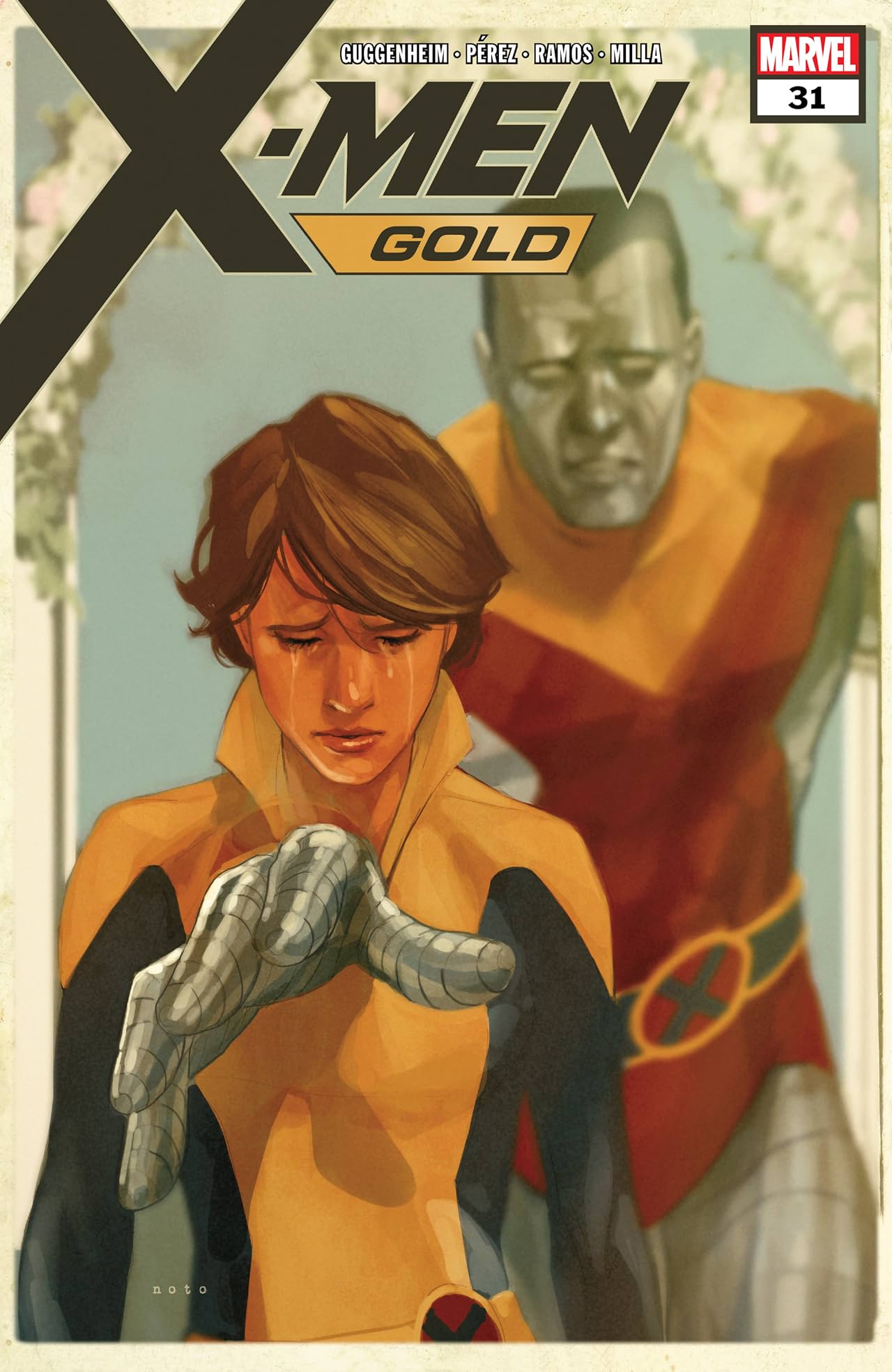
That’s what I had hoped to see with the release of X-men Gold #30, which was billed as the overdue wedding between Kitty Pryde and Colossus. They’re one of the X-men’s most prominent romances, having a history that spans decades and includes death, resurrection, and being trapped in a giant bullet. I swear I’m not making that last part up.

Earlier this year, I detailed why the Kitty/Colossus romance was so special in annuls of X-men lore. It’s one of those romances that isn’t assumed like Superman and Lois Lane. They have to actually work to make their relationship strong, which makes it feel more real than most superhero couples.

It’s why I had such high hopes for X-men Gold #30. It promised to reward these characters for their love and the work they put into it. Being the romance fans I am, I’m a strong believer in having that kind of effort pay off for a couple.

Sadly, and this was spoiled before the comic even came out, that’s not how things played out for Kitty and Colossus. I don’t mind spoiling it, either. Kitty and Colossus don’t get married. Kitty, for reasons that are more asinine than I can put into words, gets cold feet at the last possible second and calls it off.

She doesn’t even wait until she and Colossus are alone so she doesn’t create this mass spectacle that is sure to humiliate and hurt someone she loves in a very public way. She actually gets to the point where Colossus is about to put the ring on her finger and that’s where she stops it. Short of punching his jaw after being told he can kiss the bride, it’s one of the worst things she could’ve done to this man.

On top of that, Kitty was the one who proposed to him. This isn’t a case where a man pressures a woman into marrying someone or a woman feels pressure from her family and peers. The idea, request, and desire to get married came from Kitty and her being the one to call it off like that, after her friends and family did so much to help her, just makes her look more callous than an entire army of Lex Luthors.

I wish I could provide some context to her decision. I really do. I just can’t find a believable way to make her decision anything other than an act of heartlessness, cruelty, and cowardice. There were no hints, whatsoever, in the events that led up to the wedding that would imply Kitty was having second thoughts. In fact, the events of X-men Gold #29 doubled down on her love for this man.

Then, in just one scene that played out early in X-men Gold #30, it all comes apart thanks to a short, unspectacular conversation with Colossus’ sister, Illyana “Magik” Rasputin. It’s not dramatic. It’s not that revealing, either. Again, I don’t mind spoiling it.

Magik just reminds Kitty that she and Colossus had to overcome a lot in order to get to this point. She also throws in that, if they were meant to be, it would’ve happened already. Bear in mind, Magik is considered one of Kitty Pryde’s closest friends on top of being Colossus’ sister. Even if that remark could be attributed to her alcohol intake, it’s still a terrible thing to say to someone who is about to get married.

It’s one of those comments that shouldn’t have derailed a couple that has worked so hard to be together, but it did. Seriously, that’s all it took to convince Kitty that she had to stop the wedding, in the middle of the ceremony, and in front of all her friends and family. Considering she’s supposed to be a leader of the X-men and one of the toughest female X-men of all time, it’s pretty pathetic.

Her decision and terrible timing, alone, could’ve made X-men Gold #30 one of the least romantic stories in the history of the comics. I still wouldn’t have put it on par with some very disturbing romantic sub-plots that played out in some Spider-Man comics. If breaking off a wedding was all this comic did, I would still appreciate it for how it imparted so much heartbreak into a story.

However, it gets even worse than that. It wasn’t enough for X-men Gold #30 to undermine one of the X-men’s most likable romances. It actually succeeded in denigrating the entire concept of romance in superhero comics. I know that sounds like an exaggeration on my part, but I’m dead serious.

Yes, Kitty and Colossus don’t get married in this issue. However, a marriage does occur and it is between another iconic X-men couple that I’m actually really fond of. The lucky couple here is Rogue and Gambit. If you watched the old X-men 90s animated series, you understand why that’s a big deal.

Now, I could write several articles on the quirks of the Rogue/Gambit relationship. It’s another one of those romances that has become iconic in its own right. I would even go so far as to put it slightly above the Kitty/Colossus relationship, if only because both characters have had to deal with some pretty unique obstacles, the least of which involves Mystique being Rogue’s adopted mother.

In the context of X-men Gold #30, though, those various quirks don’t really play into the moment. They haven’t even played into any of the events throughout X-men Gold that led up to this wedding. In fact, they only recently rekindled their relationship in a mini-series called “Rogue and Gambit” by Kelly Thompson, which I highly recommend.

Even with that development, though, them getting married at this point would’ve been rushed, forced, and downright inappropriate, given what just happened to Kitty and Colossus. It would’ve given the impression that someone had to get married in this comic. It didn’t matter who, why, or for what reason. It just had to happen to salvage the issue.

To hell with crafting a story that documents the emotional journey two characters make to get to that point. Never mind the fact that other iconic couples have gone on that journey and made for some of the most memorable moments in the history of comics. Just having Rogue and Gambit randomly decide, on the spot, to get married should carry the same weight. If I could write that with more sarcasm, I could.

Again, I want to make clear that I like the Rogue/Gambit relationship. I’m glad their romance is evolving, once more, especially after some of the other characters they’ve been stuck with. The way it was handled, though, and at Kitty and Colossus’ expense, no less, was just downright demeaning to the very concept of meaningful romance.

It sends the message that romance is as interchangeable as a box of frozen burritos. If one doesn’t heat up right, then another one works just as well. It’s not like they’re unique, having unique emotional dynamics and personal journeys specific to multiple characters. One is no more special or meaningful than the other. Again, if I could write that with more sarcasm, I would.

What happened to Kitty and Colossus in X-men Gold #30 was tragic, but it didn’t undercut romance in superhero comics, as a whole. As soon as Rogue and Gambit were randomly thrust into the moment, doing on a whim what took other couples so much time and effort, the whole issue undercut any deeper meaning that both romances had going for them.

Great romance, especially those that go onto become iconic, can’t be the kind of exchangeable gimmicks that can be sold as easily as plastic cups at Costco. Great romance is like the cookies you bake with your grandmother from scratch. There’s work, patience, and a deeper personal touch to the effort.

I get the appeal of throwing in a major twist. Comics, movies, and everything associated with M. Knight Shyamalan have been doing that for years. That appeal isn’t there in X-men Gold #30 because it comes at the cost of treating romance with the same recklessness as super-villains treat their henchmen.

On it’s own, I thought X-men Gold #30 was just really disappointing for how it handled Kitty and Colossus. However, it’s the precedent and the implications that leave me concerned for the future of romance in comics, particularly Marvel. If this is how love is treated, as something easily cut and pasted into a plot, then I worry for other comic book couples that may face similar denigration.

Here’s to hoping that the upcoming wedding between Batman and Catwoman sets a better precedent.

10 Comments

Filed under Comic Books, Jack Fisher, Superheroes, Love Or Obsession, Marriage and Relationships, romance, X-men