

What would you think of someone who randomly walked up to you, sensed you looked sad, and suggested something that is scientifically proven to make you feel better? The person doesn’t force it on you. They don’t offer their advice to be smug or facetious. They just see a fellow human in distress and offer to help. By nearly every measure, the person is being a compassionate, decent human being.
Now, having contemplated that scenario, what would you think of a man who walked up to a woman and asked her to smile? While some might not see that as too big a deal, it has become a serious issue in recent years. It may not be the most absurd since it doesn’t involve Wonder Woman’s armpit hair, but it’s still up there.
The scenario I just described is something that, from a purely superficial level, may not seem controversial. Telling someone to smile, regardless of whether they’re a man or a woman, is not just an empty platitude. There is real, legitimate science behind it.

Research has shown that the mere act of smiling has many health benefits, such as improving mood, relieving stress, and strengthening immune function. To some extent, it helps rewire our brain in a way that directly combats depression, anxiety, and all sorts of ailments. It might be the easiest thing anyone can do to feel better. If it were a drug, it would be hailed as a medical breakthrough.
Why then has smiling become such a point of contention? While linking it to sexism is full of many absurdities, there are legitimate grievances that helped make this an issue. I know I’m going to upset people when I talk about this, but I believe it’s worth talking discussing, if only to preserve the benefits of smiling.
From the perspective of those protesting being told to smile, many of which identify as feminists or left-leaning, the issue isn’t about those aforementioned benefits. It’s about people telling them to be happy in a world where they don’t feel like equals. Considering how unequal things were for women throughout history, that’s an understandable sentiment.
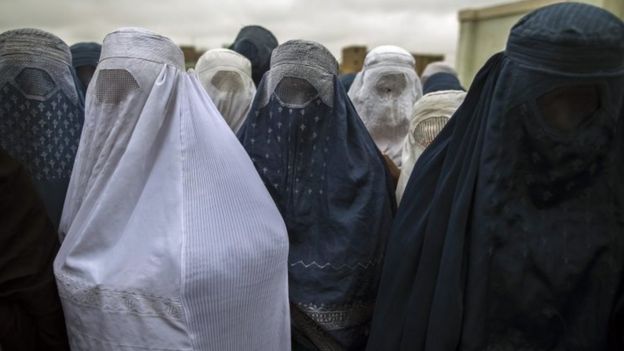
Plenty of inequality lingers.
The situation for these women didn’t involve kind strangers walking up to them when they were sad and telling them to smile. It likely involved bosses, spouses, teachers, and various authority figures telling them to smile because frowning wasn’t lady-like. Even if you don’t consider yourself a feminist, it’s easy to see why that would seem condescending.
In some situations, it was even worse. In service jobs, which are often dominated by women, telling them to smile is like asking them to act as a billboard for an organization. They’re treated as a pretty face rather than a person. It’s the male equivalent of being treated as a cog in an assembly line.

That sort of treatment is dehumanizing and people, regardless of gender, resent that and for good reason. In that context, telling a woman to smile is no different than telling her to just shut up and accept everything the way it is, no matter how much she resents it. While that’s rarely the intent, that’s the interpretation.
Most reasonable people can and do acknowledge the sentiments that women feel in those situations. Nobody likes being told to just smile and accept your misery. However, the issue descends into absurdity when telling someone to smile is famed as a byproduct of sexism. It effectively politicizes the very concept of smiling.
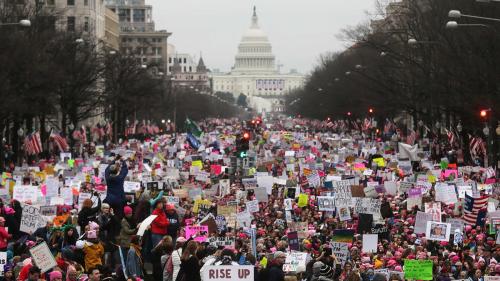
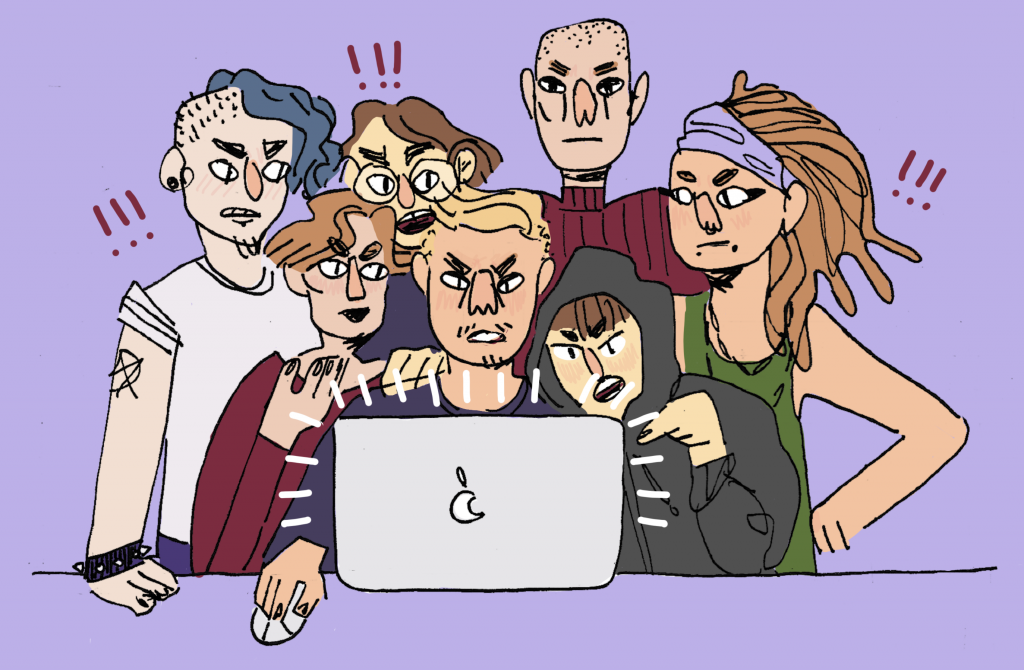
As a result, it fosters this idea that a woman cannot smile and be feminist. It’s an idea that has become more mainstream in recent years. To see how, just Google “modern feminist” and look at the images that come up. Very few of the faces that come up are smiling. There’s no Rosie the Riveter. There’s only angry, outraged women yelling to the point where it’s a common meme.

This isn’t just an issue with respect to the popular perception of feminists. When it comes to faces, there’s a great deal of intrinsic biology and neuroscience at work. Seeing an angry face triggers a very different reaction compared to seeing a smiling face. Some of that reaction transcends even extends to other species.
There are also significant differences in how people react to smiling men compared to smiling women. The extent to which that difference is biological is not clear, but unlike many other behavioral traits, smiling is directly tied to many psychological and physiological forces. Tying smiling to ongoing debates about gender is one nobody can win. Like it or not, you can’t debate around biology.

Then, there’s the other side of the gender equation, specifically the one regarding the male perspective. While this perspective is less obvious, it does add some other complexities that often fall through the cracks during these arguments. This is where I can offer some perspective, as a man, because I can attest to this impact.
Whatever you think about the nature of masculinity, it’s a well-documented fact that male brains are wired differently compared to female brains. One of those differences stems from how we react to women in distress. Whether they’re angry or sad, seeing it can trigger that protective instinct that men often feel around women.
I can attest that this instinct is real. A few years back, I was walking down the boardwalk at a beach. It was a loud, rowdy place in the middle of summer so there was plenty of noise. Then, out of nowhere, I heard this woman scream. Almost immediately, I turned towards it and I wasn’t the only one. Several other men, as well as a few women, took notice as well.

The woman had badly hurt herself on her bicycle. I’d rather not describe the injury so I’ll just say she couldn’t stand on her left leg. Thankfully, she was with a couple of friends and they immediately aided her. However, her cries caught the attention of plenty of men, most of them total strangers.
While some with more cynical attitudes may think of that reaction as white knighting, I can assure you it’s a real phenomenon. Men sensing a woman in distress evokes a reaction that stems directly from our natural inclination to form social bonds and protect others. Since women are the ones who bear the babies, we tend to give them extra scrutiny.
That’s not to say that a man telling a woman to smile is always an altruistic act. It doesn’t overlook the situations in which someone uses that rhetoric to denigrate women and make light of the issues they face. However, if the simple act of smiling becomes part of the line that divides feminists from misogynists, then the entire debate surrounding gender becomes obscure.

Telling a woman to smile is not the same as telling her to get back in the kitchen. In addition, making outrage the face of female empowerment won’t help in addressing legitimate issues. It’ll just frame every discussion as something hostile and unreasonable. No matter how legitimate the issues are, it’s difficult to have a meaningful discussion in that situation.
Objectively speaking, smiling is good for you, regardless of gender. It’s something I encourage everyone to do when they’re feeling upset, depressed, or angry. It’s a small gesture and one that doesn’t solve problem, in and of itself.
However, it can help your in many ways, especially if you’re hoping to connect with others in a way that ensures they’ll listen. There are many issues surrounding men, women, and gender that are worth discussing. Making the act of smiling a rallying cry for gender conflicts will only ensure that nobody succeeds in the long run.











































 Jack Fisher's Official Publishing Blog
Why The Outrage Over Brie Larson And “Captain Marvel” Is Misguided (And Counterproductive)
Celebrities sometimes say dumb things. I doubt most people would contest that. Sometimes, celebrities say things that aren’t dumb, but badly taken out of context. I imagine most people would agree with that too. However, in an era where outrage is a national pastime and social media makes it way too easy to blow things out of proportion, it’s easy for a celebrity to cause controversy for all the wrong reasons.
Brie Larson, whose star is set to rise considerably with the release of “Captain Marvel,” is learning this the hard way and a large consortium of angry people on the internet are intent on making it harder. What should’ve been a culmination of a young woman’s career and a female hero’s ascension to the superhero A-list is now mired in the ugliest kind of gender politics.
The origin of that controversy actually had nothing to do with Ms. Larson’s role on “Captain Marvel.” Back in June 2018, she made some overly political comments while accepting the Crystal Award for Excellence in Film. While celebrities making political statements is nothing new, Ms. Larson’s statement was hardly extreme.
It wasn’t some radical feminist tirade.
It wasn’t some angry rant about the outcome of 2016 Presidential Election.
It wasn’t even some act of elaborate virtue signaling by some smug celebrity.
All Ms. Larson did was advocate for greater diversity among film critics. She didn’t just make such a statement on a whim, either. She did so in response to a study published by the USC Annenberg School for Communication and Journalism that revealed a significant lack of representation in the industry of film criticism.
That’s not an unreasonable concern. The western world is becoming more diverse and the success of movies like “Black Panther” and “Crazy Rich Asians” shows that there’s a market for such diverse tastes. Advocating for greater representation in the field of film criticism makes a lot of sense.
Unfortunately, that’s not the message that some people gleamed from Ms. Larson’s comments. All they heard was that she doesn’t want to hear from white men anymore. They somehow got the impression that Brie Larson resents white men and her movies, including “Captain Marvel,” aren’t made for them. They’re not even welcome in the conversation.
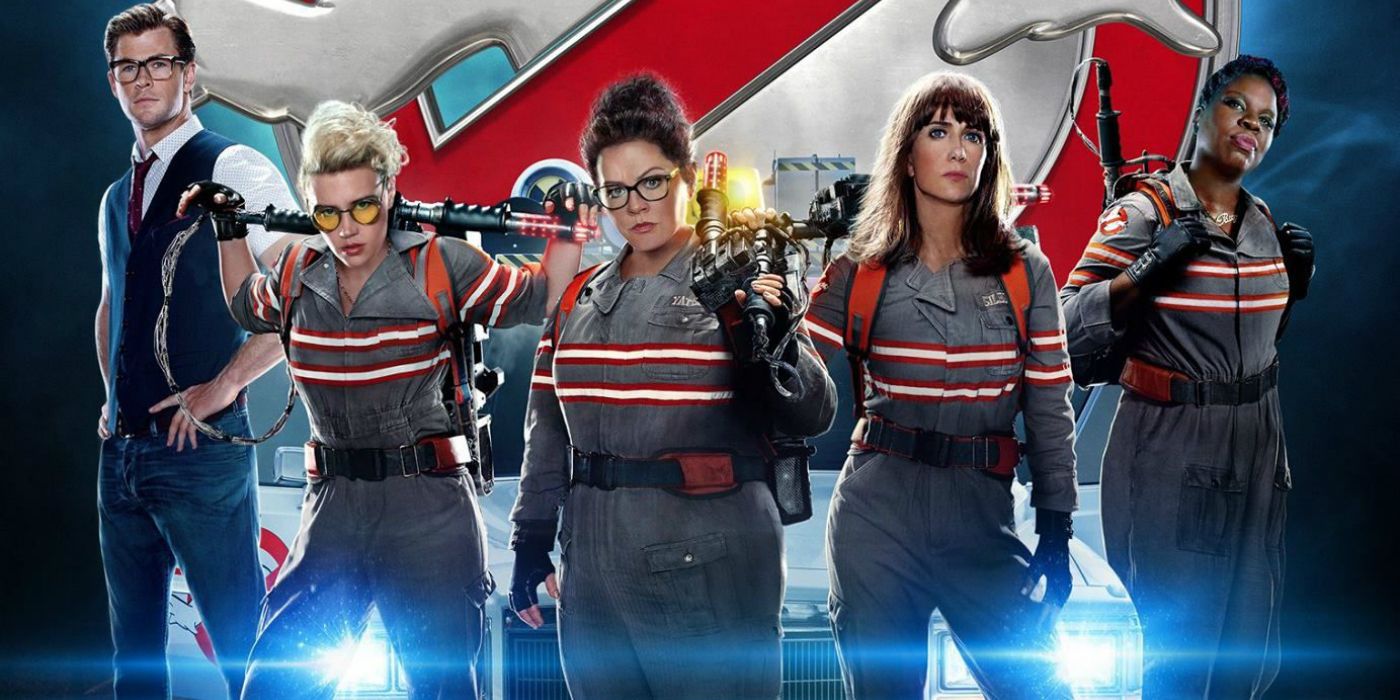
Who these people are and the politics they represent is difficult to discern. I don’t think it’s accurate to call them conservative, liberal, feminist, anti-feminist, leftist, or any other political label. Outrage culture rarely gets that specific, but given the heated politics surrounding movies like “Ghostbusters” and “Star Wars: The Last Jedi,” it’s a frustratingly familiar narrative.
While I can understand some of the outrage surrounding “Ghostbusters” and “Star Wars: The Last Jedi,” in this case I don’t think it’s justified. That’s not just because I’m a big fan of Marvel Comics, superhero movies, and all things Captain Marvel. It’s because the actual substance of Ms. Larson’s words don’t warrant the controversy she has generated.
For specific reference, here’s what she actually said during her speech in June 2018. Read it very slowly and try to understand the context of her statement.
Remember, she said these words after learning how little diversity there was among movie critics. Unlike most people, she was actually in a position to do something about it. Being an Oscar winning actress who was poised to join the Marvel Cinematic Universe, her words carry more weight than most.
Even so, those words were construed as racist and sexist, two exceedingly loaded terms that bring out the worst in people, especially on the internet. Never mind the fact that she made clear in her original speech that she did not hate white men. Never mind the fact that she has since clarified her words. She is still being attacked as some angry radical feminist who hates men, especially those who are white.
It would be one thing if she had said outright that white men should be banned from criticizing certain movies. Many celebrities, including a few still relevant today, have said far worse. However, that’s not what Ms. Larson said. She never, at any point, advocated disparaging white men. She didn’t even say that people who hate her movies are racist and sexist, something the “Star Wars” crowd is painfully familiar with.
Again, all Ms. Larson spoke out against was a lack of diversity among film critics. That part is worth emphasizing because it renders the outrage surrounding her statement as utterly absurd. It also makes the targeted attack on the fan reviews for “Captain Marvel” both asinine and misguided.
Even though the movie isn’t out yet, the movie is being targeted with negative comments on Rotten Tomatoes. Since it has only screened for a handful of audiences, it’s unlikely that any of these people actually saw the movie or were inclined to see it in the first place. Some are even claiming that this has already impacted the projected box office for the movie.
Whether that impact manifests remains to be seen, but it’s worth noting that when “Black Panther” was targeted with similar attacks, it failed miserably. At the moment, early reactions to “Captain Marvel” have been glowing so the chances of these attacks hurting the box office are probably minor at best. If the pre-ticket sales are any indication, the movie will likely turn a hefty profit for Marvel and their Disney overlords.
Even if there were an impact, it would be for all the wrong reasons. It would send the message that there’s a large contingent of people who are willing to work together to tank a movie because of comments a celebrity said that had nothing to do with that movie and weren’t the least bit controversial, when taken in context.
In this case, it was simply twisting someone’s comments to make them sseem like they said things that they never said or even implied. Then, those who bought into that narrative simply use that as an excuse to disparage a movie that they haven’t seen. That’s not just absurd, even by the skewed standards of outrage culture. It sends the worst possible message from those who think they’re protecting their favorite movie genre.
It tells the world that they don’t care what a celebrity actually says. They actively look for an excuse to hate someone who doesn’t completely buy into their preferred status quo. It would be one thing if that status quo was just and reasonable, but that’s not the case here.
All Ms. Larson did was advocate for more diversity among film critics. If that is somehow too extreme, then the problem isn’t with her or celebrities like her. It’s with those determined to hate her. There are a lot of issues in the world of celebrities and movies that warrant outrage, but advocating for more diversity in film criticism isn’t one of them.
I can already hear some people typing angry comments stating that if she had said those same words, but changed the demographic to something other than white men, then it would be an issue. However, the fact remains that this isn’t what she said.
It also doesn’t help that Brie Larson identifies as a feminist and that term has become incredibly loaded in recent years. However, she has never embraced the kind of radical rhetoric that other, less likable celebrities have espoused. Until she does, those determined to identify her and “Captain Marvel” as racist, sexist propaganda are only doing themselves and their politics a disservice.
16 Comments
Filed under Celebrities and Celebrity Culture, extremism, gender issues, Marvel, media issues, men's issues, movies, outrage culture, political correctness, superhero movies
Tagged as anti-feminism, Brie Larson, Brie Larson comments, Captain Marvel, Carol Danvers, celebrities, celebrity controversy, celebrity culture, celebrity scandals, ComicsGate, female superheroes, feminism, gender, gender disparity, gender inequality, gender politics, internet outrage, internet trolls, Marvel, Marvel Cinematic Universe, Marvel Comics, Men's Rights Activists, movie criticism, movie critics, movies, MRA, outrage, outrage culture, political correctness, politics, Racism, Rotten Tomatoes, Superheroes, trolls