Category Archives: television

Theon Greyjoy and Sansa Stark: How “Game of Thrones” Managed to Avoid Double Standards

swlxd57g7rbk7fszejfk5sighi

The following is an article written and submitted by DC-MarvelGirl 1997, who is a friend of mine and a talented young writer. She has a website and a YouTube channel that I highly recommend. I sincerely thank her for taking the time to write this, as it relates closely to other issues I’ve brought up on this site regarding gender, double standards, and media depictions. Enjoy!


Theon1

In a world of double standards, there comes a point where we should question when something is no longer a joke. With television shows such as “Cobra Kai” and “Married with Children” managing to poke fun at emasculation and male circumcision, after the fact we oftentimes question why we find those jokes funny. If those same jokes were made about women, it would be considered “sexist”. When it comes to men, it is almost as though we are okay with men being brutalized.

It’s pretty hard to avoid double standards in this day and age. However, I would say that there might be an exception to this. Today, I will be discussing the television series “Game of Thrones”, and how they managed to avoid double standards about gender.

Now, I’m not expert on “Game of Thrones”. In fact, I’ve only started reading the first book, and I am halfway through it as I am writing this. When you find a story that genuinely intrigues you and piques your interest, you want to keep reading it. With “Game of Thrones” it is no exception. Additionally, when it comes to issues such as gender, the novels do not hold back. The television series most definitely didn’t hold back when it came to showing brutalization of various characters. The throne room scene where Sophie Turner’s Sansa Stark is being stripped and beaten in front of noblemen forever solidifies for me why she’s such a great actress. In fact, it is my favorite scene to view in general. However, naturally, we as human beings would be uncomfortable seeing women being beaten and brutalized. And I can attest as a woman myself that it is disheartening to watch happen. I think a huge part of it is because we consistently try to protect women and keep them as pure as possible. It consistently shows throughout history, as well, how women are treated in comparison to men.

sansa1

In Sansa’s case, she’s received her taste of brutality on more than one occasion. She’s been forced to suffer and endure so much throughout the course of the television series. You watch the scenes where she is being beaten by Joffrey’s men and the scene where Ramsay Bolton rapes her on their wedding night, you cannot help but feel discomforted viewing it. I don’t think any rational person wouldn’t feel uncomfortable watching scenes like that.

However, what is even more uncomfortable is what occurs with the character of Theon Greyjoy – who throughout the course of the show, and the books, has gone through as much brutalization as Sansa. I would argue that what happens to Theon on the show is worse. When I say that “Game of Thrones” doesn’t hold back with showing brutalization of both men and women, this is where I make my point.

Theon2

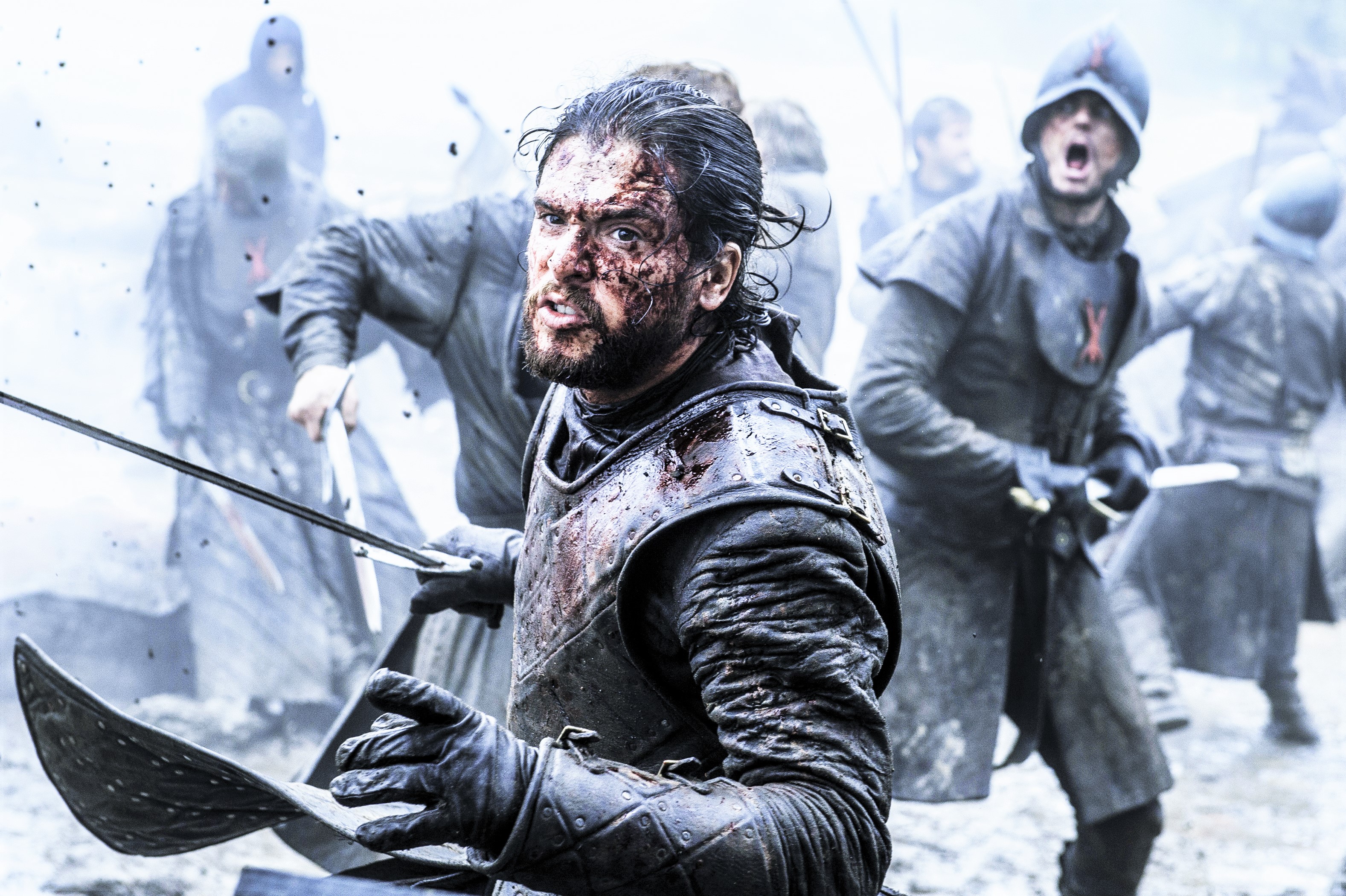
With the character of Theon, we are introduced to him as the character who is taken pity upon by Ned Stark, who proceeds to take him in as his ward. Theon starts of similarly to that of Sansa – arrogant and overconfident, and the character that is probably one of the least liked on the show in the first season. Nonetheless, he gets a taste of what it’s like to be broken to nothing after he makes mistake upon mistake, betraying the Stark family. This leads to he being captured by Ramsay Bolton – who at that point is leading Winterfell with an iron fist. This leads to Theon suffering his own torture.

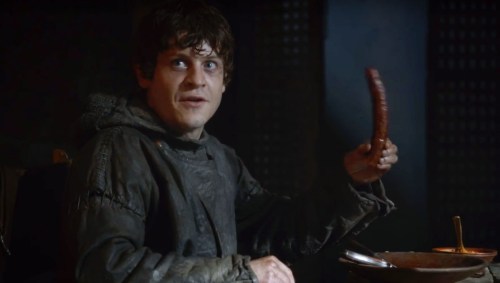
As if Ramsay cutting Theon’s fingers off isn’t bad enough, but Ramsay further emasculates him by cutting his genitalia off. It simply gets worse as Ramsay is next shown eating a long and plump sausage right in front of his captive, making Theon believe that Ramsay is eating his genitals. In addition to emasculating Theon, Ramsay proceeds to rename him “Reek” to further degrade him.

Ramsay

With “Game of Thrones” and the way they portray torture so graphically, there is never a moment where emasculation and brutalization are treated as a joke. Whenever you watch those moments, you can hardly help but feel uncomfortable. With “Game of Thrones”, it’s rare that you will find any double standards regarding the treatment of men and women. In Theon and Sansa’s cases, these would be handled differently if these characters were on a sit-com. Sansa’s situations of rape and being stripped and beaten would be treated seriously on almost any cable network show. Unfortunately, Theon’s case would more than likely be turned into a joke about male circumcision and put on an episode of “Married with Children”.

It comes to show that the book series “A Song of Ice and Fire” and the TV show “Game of Thrones” give a truly eye-opening look at how different genders are treated. It displays an old-fashioned viewpoint of the traditional gender roles, which is a given. Nonetheless, it doesn’t display hypocrisy when displaying torture being thrust upon men and women. Theon and Sansa alike are both treated by various characters with a level of brutality to further humiliate and degrade them. It strips them down to being polar opposites of who they used to be before. Sansa starts off as a bratty and pretentious princess who slowly unravels to a woman who is a lot more hardened, yet she manages to not lose her compassion for others. Theon starts off as an arrogant show-off whom after being emasculated is broken to something else utterly. Nonetheless, you cannot deny that there is something to be said here.

With “Game of Thrones”, both men and women alike suffer and get put through more than we could ever imagine. Both genders are shown to receive the same amount of brutal treatment, and there is no sugarcoating anything at all. If anything, the books and the show alike give us material where you don’t need to talk about double standards, because there are essentially none. However, it doesn’t mean it isn’t worth discussing and bringing up.

DC-MarvelGirl 1997

Leave a comment

Filed under Game of Thrones, gender issues, media issues, men's issues, outrage culture, political correctness, psychology, sex in media, sex in society, sexuality, television, women's issues

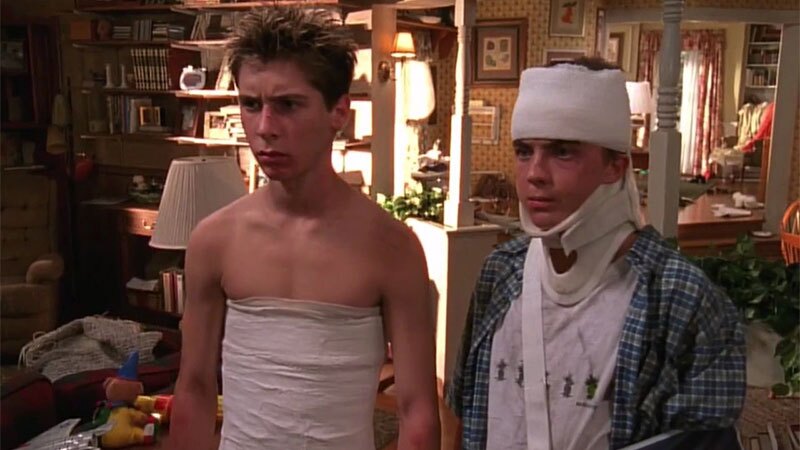
What “Malcolm In The Middle” And “Joker” Can Teach Us About Deviance

mv5bowi0nzzjzjqtyzezzc00zwjiltg1ntmtnmzhmmyyogywywq1xkeyxkfqcgdeqxvynja0otqyode40._v1_

What makes someone deviant? What turns otherwise normal human beings into the kind of deviants who go onto commit crimes, foster discord, or lash out at the rest of society? These questions are often contemplated by psychologists, police, politicians, and people who just want to live in peace.

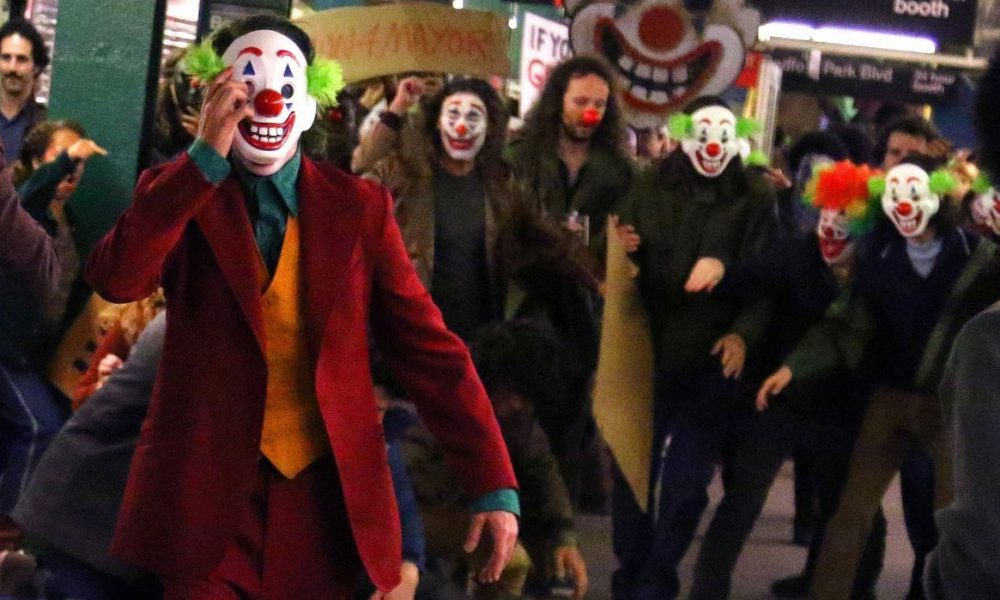
The answers aren’t easy, but they often make for compelling movies and TV shows. Some dare to offer answers that are as revealing as they are distressing. That’s part of what made “Joker” such an impactful movie. It’s also what triggered the controversy surrounding its subversive message. I tried to explore that message my review of the movie, but in doing so, I uncovered something surprising.

The themes in “Joker” are more relevant today than they’ve been in years. It makes the case that when people denigrate, marginalize, or ignore those in the lowest rungs of society, they’re going to create the kinds of monsters and supervillains that undermine the current order. Moreover, they deserve the chaos and deviance that these individuals cause.

In “Joker,” Arthur Fleck was a perfect storm of unfortunate circumstances and societal denigration. While Gotham City didn’t turn him into the Joker, they put him in a position to make those fateful choices. Nobody tried to help him or give him other options. If anything, the help and options he needed were taken away. It was part of what made his deviance both compelling and understandable.

It reminded me of a famous TV show that made a similar point, albeit one from a very different genre and medium. It dared to make that point decade earlier, long before the current controversies surrounding mass shooters in movie theaters and so-called “incel culture.” That show is “Malcolm In The Middle.”

The two narratives couldn’t be more different. One is an R-rated movie that defies the conventions of the superhero genre and explores the twisted mind of an iconic villain. The other is a prime-time sitcom full of funny, cartoonish antics from a dysfunctional working-class family. One is dark and serious. The other is funny and light-hearted.

Despite those vast differences, they convey very similar messages. They both make the case that a callous, negligent society will create deviant individuals within its most disadvantaged. They also highlight how efforts to push them aside or suppress their deviance will only make things worse.

In “Joker,” it turned Arthur Fleck into an agent of chaos who went onto inspire more chaos in others. The circumstances in “Malcolm In The Middle” were very different and a lot more subtle, but the underlying message was still there.

It’s subtle, but it’s there.

From the first episode of the show to its finale, Malcolm and his family are depicted as both dysfunctional and disadvantaged. In some instances, they’re downright destitute. On many occasions, they deal with crippling debt, dead-end jobs, and arrogant upper-class types who look down on them with disgust. More often than not, Malcolm and his brothers get back at them in their own creative way.

Whatever form the antics take, the show never uses the lower-class status of Malcolm’s family to justify their behavior. Much like “Joker,” it establishes that the characters have agency. They’re dealt a lousy hand, but they still have opportunities to make non-deviant choices. They’re rarely forced into deviant acts. Opportunities arise and they exercise poor judgement, to say the least.

The very least.

Malcolm and his brothers didn’t have to lie about what happened to Dewey’s bike in Season 1, Episode 15. They did it anyways and things only escalated from there when the consequences caught up with them.

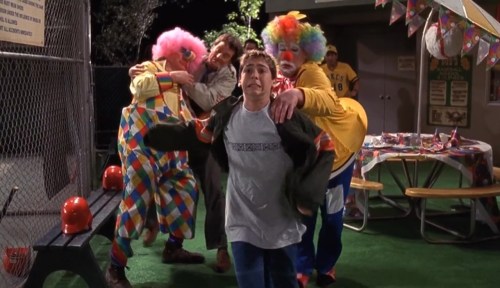
Malcom and his brother didn’t have to buy their mother a terrible birthday gift in Season 2, Episode 3. They still did and the end result led to them fighting an army of clowns in one of the show’s most memorable moments.

It’s not just the kids, either. Hal didn’t have to resort to unorthodox tactics when coaching Dewey’s soccer team in Season 3, Episode 16. He still did and things only got messier from there.

Lois didn’t have to force Malcolm to getting a job as terrible as hers in order to teach him a lesson in Season 5, Episode 6. She still did and, in doing so, taught him an entirely different lesson about just how screwed people like them are. It’s a message that even found its way into her memorable speech in the series finale.

It’s an important component of the show’s brilliance and humor. Malcolm and his family are a mess. They’re constantly getting screwed over by circumstances, bad choices, and other people who look down on them. However, they never come off as victims, nor do they carry themselves as such. They have opportunities to become less dysfunction, but often squander them.

Arthur Fleck had chances to become something other than a killer clown. There were a number of instances in “Joker” in which he could’ve gone a different path. He simply chose not to and society didn’t lift a finger to help him. If anything, they took away what little help he got.

Throughout seven seasons in “Malcolm In The Middle,” Malcolm’s family finds themselves in similar situations. One of the best examples is in Season 4, Episode 17, which happened to be the second clip show episode. In that episode, Hal and Lois recount the births of their kids as they prepare for the arrival of another.

In every instance, the births are subject to strange and hilarious circumstances. In one of them, Lois goes into labor in the driveway of their house because Francis locked her out of the car. Then, while she’s writhing in pain from the labor, a jogger passes by. She yells out she’s having a baby, but the jogger just ignores her and congratulates her.

It’s funny, but symptomatic of the family’s lot in life. Nobody goes out of their way for them. Nobody offers to help them. It even happens again a few episodes later in Season 4, Episode 21 when Lois goes into labor with Jamie. Even though someone calls 9-1-1 and an ambulance arrives, they don’t get there until after she gives birth. The EMTs even joke about how they stopped for coffee.

Like Arthur Fleck, the society around Malcolm’s family doesn’t care about them. They even go out of their way to avoid or neglect them. In “Joker,” Arthur is repeatedly victimized by both the system and individuals who go out of their way to harass him. His situation is already bad, but these ordeals only make it worse.

Early in the movie, Arthur does show signs that he’s capable of being a decent person. He tried to make a kid on the bus laugh. He entertained sick children at a hospital. He could’ve been a productive, positive force in society. Then, society started screwing him over and bad choices on his part led him to become a dangerous deviant.

While Malcolm and his family didn’t become as deviant as the Joker, they still did plenty of damage with their antics. At the same time, there were plenty of instances that showed that, as dysfunctional as they were, they could still be good and decent to others when given the chance. They just rarely got those changes and society rarely provided the incentives.

It’s a powerful message with respect to what makes people deviant. Some people are at the mercy of bad circumstances, be they poverty, mental illness, or having an overbearing mother like Lois. They’re still capable of being good, but it’s easier for them to become deviant when society neglects them. That deviance only compounds as a result of poor judgement and bad choices.

Yes, they compound a LOT.

There are plenty of differences between “Joker” and “Malcolm In The Middle.” Whereas “Joker” takes things to the worst possible outcome in the descent towards deviance, “Malcolm In The Middle” manages to maintain a more hopeful outlook. People can still be deviant and dysfunctional, but they can rise above it. The events of the series finale affirm that.

Those differences aside, this movie and this TV show offer lessons and insight into something that all societies must deal with. There will always be a certain level of deviance. There will also be those more inclined to pursue it. It’s just a matter of how to confront it. More than anything else, “Joker” and “Malcolm In The Middle” shows the consequences of confronting it the wrong way.

1 Comment

Filed under Current Events, human nature, movies, psychology, television, Villains Journey

On My Way To New York Comic Con 2019!

9FE52827-2897-4629-B24A-9FDE46A77E9A

It’s that magical time of year again! The New York Comic Con for 2019 has arrived! For lifelong superhero fans like me, this is like Christmas, the Super Bowl, Black Friday, and Halloween all rolled into one glorious event. I could write an entire book about how excited I am and it still wouldn’t get the point across.

I know I said that last year and the year before that. I’ll probably say it again next year. The sentiment will be the same. The New York Comic Con is one of my favorite times of year. It’s an event that’s near and dear to fans of superhero comics, movies, video games, and all things awesome. For that, it is special.

I hope to share plenty of details when all is said and done. Until then, excuse me while I soak in every glorious moment.

1 Comment

Filed under Jack Fisher's Insights, superhero comics, superhero movies, television

What “Daria” Can Teach Us About Educating (Uninterested) Teenagers

daria-920x584

Some shows have one particular episode that you can watch again and again while still enjoying it. Great shows have multiple episodes like that. By that measure, “Daria” is greater than most. Even by the standards of late 90s animation, the show stands out in so many ways. It’s one of those rare shows that has aged remarkably well and feels more relevant now than when it originally aired.

I’ve already praised “Daria” for its unique approach to shedding a critical light on a world full of lies, half-truths, and fake news. I’ve even singled out a single episode for how the show handled a sensitive issue like mental health. These are issues that have only become more relevant since the show went off the air.

In that same spirit, I’d like to highlight another episode from the show that highlights another major issue. It also happens to be my favorite episode and the one I’ve probably re-watched the most. That episode is “Lucky Strike,” the sixth episode of the fifth season. On top of being one of the funniest episodes of the series, it also has some of the shows best moments while still tackling a major issue.

The issue, this time around, is education. It might not be the kind of a hot-button issue that makes for major headlines, but it’s still as relevant as ever, especially if we’re referring to the American education system. It’s not hard to find stories about just how bad it is, especially when compared to how other industrialized countries do it.

It was a big deal in the 90s and early 2000s, as well. Fittingly enough, this episode aired just a few months before the passage of the No Child Left Behind Act, which has been the cornerstone of the American education system. While reasonable people can debate how well it has or hasn’t worked, “Daria” has already made one of the most effective arguments about what constitutes good education.

The premise of the episode begins with a teacher strike, an issue that has become distressingly common in recent years. Lawndale High’s notoriously uptight principal, Angela Li, short-changes a group of teachers who are underpaid, under-appreciated, and have to deal with uninterested idiots like Kevin Thompson and Brittney Taylor. By any measure, they have a very good reason to strike.

Never one to concede defeat or express genuine concern for student aptitude, she keeps the school running by hiring substitute teachers, some of which demonstrate limited qualifications at best. One even showed an overtly creepy attraction with one of the female students. This leads to Daria getting roped into teaching a class.

As it just so happens, the class she’s teaching is the same class that her sister and unapologetic popularity whore, Quinn, is in. Given how Quinn has spent almost the entire series denying she’s even related to Daria, it’s a great opportunity to make things awkward. Daria makes more than a few quips about it in her own wonderfully misanthropic way.

However, when it comes to actually teaching the class, Daria does something that sets herself apart from most substitutes. Even if she’s only doing it to mess with her sister, she takes her role seriously. She shows a genuine desire to teach, but she doesn’t use the same approach as the rest of her teachers. She utilizes her own unique way.

It helps that the class is an English class. Daria is a voracious reader. That is established in the first episodes of the series and belabored on multiple occasions. It also helps that the assignment is simple. The class is reading Romeo and Juliet, a story that almost every high school English class reads at some point. In terms of substitute teacher gigs, it’s as standard as it comes.

I remember reading this play in high school as well. I don’t remember it fondly, though. In class, we would just read through each act, do a few assignments in a textbook, and take a test at the end. Most of the time, the test involved multiple choice or short answer. There were only right and wrong answers. That was really all there was to it.

Daria’s approach is different. Daria doesn’t just teach from a textbook. She has the students read the play, but not so they can get the answers for an assignment. She takes the time to help them appreciate it. When one of her air-headed students doesn’t appreciate a particular part, she helps put it into a more relevant context. It doesn’t just work. It makes the story feel like something other than an assignment.

It’s an approach that anyone who loathes standardized tests can appreciate. I’ve made my disdain for standardized tests known before, but it’s not a personal peeve on my part. There is legitimate research that indicates that standardized testing is not a good way to educate kids.

Teaching kids to take a test is not the same as teaching. They’re learning how to memorize answers for a test. That’s not real learning. You can memorize all the answers for a particular test, but not know why those answers are correct. For someone like Daria Morgendorffer, who places a high value on thinking for yourself, this approach just doesn’t work for her.

For everyone else, the test is the only thing that matters. For the always-superficial Quinn, that’s her primary concern. She laments about how her sister might screw her over or worse, undermine her popularity. It’s such a burden that actually reading the play and knowing what it’s about barely registers.

Then, in one of Daria’s finest moments, she further deviates from the traditional educational model and gives her class a simple essay test. There’s no multiple choice or short answer. She just gives them a simple question.

What is Romeo and Juliet about?

That’s it. The only requirement is that they write at least 250 words and support their answer. For those who didn’t care enough to read the play, like Quinn’s equally-superficial posse, the Fashion Club, it’s the worst possible scenario. For Quinn, who actually read the play, it was easy.

In fact, it was because of that test that Quinn also had her finest hour. In one of the few moments of the show in which she’s actually likable, she defends Daria’s approach to teaching to the entire class. Then, in another pivotal moment for the series, she admits that Daria is her sister.

In addition to this critical moment of personal growth, Daria shows that she truly values people who think for themselves. Even when one of her students makes an objectively foolish comment about Romeo and Juliet, she still gives him a good grade because he actually tried to back it up. For her, that’s more valuable than simply knowing the difference between Paris and Tybalt.

Her approach is even appreciated by her students. Keep in mind, these are the same students who show little to no interest in class throughout the show. They are, like most teenagers, not that big on having to be at school for seven hours a day, learning things they don’t want to learn about. Daria understands this and tries to make the class less tedious. It’s something even an air-headed teenager can appreciate.

Most of them, anyway.

It’s also a valuable lesson that has real-world applications. Some places have even applied Daria’s approach, to some extent. Countries like Finland have a system that doesn’t rely so heavily on standardized tests. Not surprisingly, Finland’s education ranking is significantly better than the United States and by a significant margin. Daria would’ve actually fit in with that system.

It’s not just because that system eschews standardized tests. It actually emphasizes teaching a student how to think and reason. A test isn’t going to reveal that. On top of that, teachers are better-educated and well-compensated in places like Finland. They would not have had to strike like the teachers in this episode.

In some respects, Daria showed how much better someone could teach a class if they didn’t have to deal with the constraints of the current system. It even helped that the Principal Li was more focused on outwitting the teacher union than she was with teaching students. Without those constraints, Daria managed to teach a class in a way that her students appreciated.

Between that moment and the moment she shared with her sister, “Lucky Strike” accomplishes a great deal. Daria has a chance to shine and makes the most of it. On top of that, she demonstrates that it is possible to educate a room of disinterested teenagers in a way that’s genuinely effective.

There are many other moments in “Daria” where major complications, and the many absurdities they entail, get cut down by the show’s distinct brand of misanthropic humor. Daria rarely sets out to make big statements, be they about the educations system or our flawed understanding of mental health. However, she still finds a way to make her point and never crack a smile.

That’s why Daria is so lovable. It’s also why we need wisdom like hers more than ever.

Leave a comment

Filed under Current Events, Daria, human nature, psychology, television

Jack Fisher’s Predictions/Picks For The 2019 NFL Season

NFL Combine Football

It’s that wonderful, exciting, beer-soaked time of year again. A new NFL season is upon us. Football fans, like myself, have followed news, leaks, and rumors from the start of free agency to the NFL draft to the preseason. It’s all been building towards this.

We’ve all been anxiously waiting to see if our team has done enough to become a contender. There have been all sorts of bold predictions, rampant speculation, heavy hype, and even a little doom-saying. Some major stories about certain players have already thrown things into chaos. More chaos is sure to come as the season progresses. That’s part of what makes the NFL one of the best spectacles in all of sports.

Last year, I made my share of predictions. Again, I was dead wrong. I grossly overestimated how the Pittsburgh Steelers would navigate the chaos that is Le’Veon Bell and how much Kirk Cousins would underachieve after signing his historic free agency contract. This year, I’m sure I’ll make predictions that are every bit as off.

That’s another part of what makes the NFL season such entertaining. It really is unpredictable. You never know what team will go from worst to first. You never know what team will collapse. You never know when a bullshit call by the refs will cost a team a trip to the Super Bowl. You really can’t know until the games are played and it all starts tonight with the kickoff of the 2019 NFL season.

I don’t know about the rest of you, but I am ready for some football! Just as I’ve done the previous two years, I’m going to make my picks and predictions for division winners and Super Bowl contenders this season. Most of them will likely be wrong, but that’s exactly why I’ll be locked in to watch for the next several months. It’s sure to be a wild ride.


AFC East

Once again, the AFC east is the most lopsided division in the NFL. You don’t need to be a psychic to know how this one will play out. For the past two decades, the New England Patriots have dominated this division as though it were a bunch of tune-up games. I don’t see that changing this season.

The fact remains that Tom Brady has six Super Bowl rings. The New England Patriots have won this division almost every year since 2001. The only time they lost it in 2008 was when Brady was out with a knee injury. Unless he’s injured or retires, he and the Patriots will breeze through the Jets, Bills, and Dolphins.

All three of those teams are in a rebuilding phase. The only team that stands a sliver of a chance is the Jets, who have put together a decent team with Sam Darnold as their quarterback. However, neither he nor anyone else in that division is close to dethroning the Patriots. Until Brady and Belichick retire, that will not change.

Winner: New England Patriots


AFC North

Unlike the AFC East, this division has become less and less predictable with each passing season. Not long ago, the Pittsburgh Steelers were the most loaded team in the division. Their presence in the playoffs was almost a given. It was just a matter of them not underachieving at the worst possible time, which tended to happen.

Now, even with Ben Roethlisberger still playing at a high level, the Steelers have been losing ground to the Baltimore Ravens and the emerging Cleveland Browns. Last year, the Ravens really surprised everyone with how Lamar Jackson fared against top defenses. While I suspect opposing defenses will catch up with him, the team around him has what it takes to keep the Ravens competitive.

While I know the Browns have become a hot pick this season, thanks largely to some big time trades, they haven’t proved they’re capable of taking that next step. At the very least, they’ll keep the Steelers and the Ravens from running away with the division. They may even get into the playoffs as a wild card team. For now, though, I think the Ravens have the most balanced team and they’ll repeat this year.

Winner: Baltimore Ravens


AFC South

A few weeks ago, I thought I had a pretty good idea of how this division was going to play out. Then, Andrew Luck retired in the middle of the preseason at age 29. While I can’t necessarily blame him, given all the injuries he endured, his retirement caught the Indianapolis Colts off-guard and the entire AFC South, for that matter.

This division has become a lot more competitive in recent years. Both the Houston Texans and the Jacksonville Jaguars made sure that Luck’s run with the Colts was painful. His absence can only help them. While Colts do have some play-makers outside of Luck, I don’t see them as being enough to compete this year.

Instead, I think this division might end up being the most dramatic, thanks to the arrival of Nick Foles in Jacksonville. While the Texans have big names like J. J. Watt, the Jaguars have a more complete team, overall. Poor quarterback play by Blake Bortles was the only reason they came up short last year and Nick Foles is a huge upgrade over Bortles.

Let’s not forget that Foles has one thing that no other quarterback in the AFC South has, including Andrew Luck, and that’s a Super Bowl ring. This is the guy who beat Tom Brady in a shootout. He brought Philadelphia a championship. I think he’ll get the Jaguars into the playoffs and he may even do some damage.

Winner: Jacksonville Jaguars


AFC West

Last year might have marked the beginning of a new era in the AFC. The season that Patrick Mahomes had last year was nothing short of gaudy. He established the Kansas City Chiefs as an offensive powerhouse and took his team to within a few minutes of the Super Bowl. He even managed to do this during a season when Phillip Rivers had one of his best years with the Los Angeles Chargers.

I see no reason why Mahomes and the Chiefs can’t be contenders again in 2019. However, I’ve been watching football long enough to know that any team can get hot one year and fall flat the next. While I don’t see the Chiefs collapsing, I also can’t see them being as dominant as they were last year.

At the same time, I don’t see any other team in their division elevating their game enough to challenge the Chiefs. The Broncos might give them some issues with Joe Flacco, a former Super Bowl MVP, as their quarterback, but I have a feeling that Mahomes will come back down to Earth this season.

That said, I think the Chiefs have enough firepower and depth to repeat. The Raiders, Broncos, and Chargers will keep it closer this year, but not enough to get past Kansas City.

Winner: Kansas City Chiefs


NFC East

This is one of those divisions that I find frustrating because no team ever seems to sustain their success, once they get it. There hasn’t been a team to repeat as division champs since the early 2000s and I don’t see that changing this year. Between contract disputes with the Dallas Cowboys and the Philadelphia Eagles losing their former Super Bowl MVP to free agency, I’m genuinely perplexed by the NFC East this year.

That said, this division did get somewhat simpler over the offseason. Eli Manning, despite his two Super Bowl rings, keeps showing his age. The Washington Redskins lost the quarterback who was supposed to keep the team stable for the next several seasons. As a result, the NFC East is basically a two-horse race, but both horses have some open wounds.

The Eagles and the Cowboys have playoff-caliber teams. The Cowboys have been more stable, but they haven’t done much in the playoffs. They also let the drama with Ezekiel Elliot get way out of hand. I can see both teams going back to the playoffs this year, but I think the Eagles have more going for them.

Winner: Philadelphia Eagles


NFC North

This is another confusing division, but for much better reasons. This division has steadily gotten more competitive over the past several years. It was once dominated by the Green Bay Packers and their all-pro quarterback/State Farm spokesman, Aaron Rogers. For the past couple years, however, the Packers underachieved while the Chicago Bears, Minnesota Vikings, and Detroit Lions only got better.

This year could be one of the most competitive to date, for this division. You could make an argument for all four teams winning the division. You could even make an argument for them being contenders in the NFC Championship game. They all have quarterbacks that can play at a pro-bowl level and defenses that can make a difference in any given game.

I’m tempted to go with the only quarterback who has won a Super Bowl. However, with a new coach taking over and no play-makers on defense, I can’t pick the Packers to do much this year. I’m also tempted to pick the Vikings again, but until Kirk Cousins stops choking in big games, I’m going to have to go with the growing success of Chicago. They may not compete for a Super Bowl, but they will start to establish themselves this year.

Winner: Chicago Bears


NFC South

Let me make one thing clear before I break down this division. The New Orleans Saints were robbed last year. They should’ve been the team playing the Patriots in Super Bowl LIII. That bullshit no-call in the 2018 NFC Championship Game was one of the worst calls in NFL history.

That said, I think the New Orleans Saints are going to make up for that gaff this year. Drew Brees is a Hall of Fame quarterback. That much is beyond dispute. He’s got a great team around him, but the Saints have suffered two heartbreaking playoff losses in two years. At some point, that starts to wear on a team. Just ask the Buffalo Bills.

I also think the Saints benefited from a weak division in 2018, which was marred by injuries and a version of Cam Newton that was not at full strength. They won’t have those benefits in 2019. They’ll still be the team to beat. They’ll still probably make the playoffs, but I think the Falcons did enough in the offseason to bolster their team.

I know the Falcons may not have gotten over their epic collapse in Super Bowl LI, but they still have an elite quarterback in Matt Ryan and play-makers on offense that are finally healthy. That will be what tips the balance in their favor.

Winner: Atlanta Falcons


NFC West

Let me make another thing clear before I break down this division, as well. The Los Angeles Rams did not deserve to be in Super Bowl LIII, but they are still a team that can contend for a Super Bowl in 2019. They have a defense littered with Pro Bowlers and depth. They have an offense that is more balanced than almost any other team in the NFL. They can get back to the Super Bowl and they can win it.

It helps that their division is relatively weak. Other than the Seattle Seahawks, they really don’t have much in terms of obstacles. The San Francisco 49ers have a quarterback coming off a major knee injury and the Arizona Cardinals have a new coach and a new quarterback who haven’t yet learned how to win in the NFL. Their path to Super Bowl LIV is easier than most.

I admit I was among those who were very skeptical of the Rams. I thought they were just overachieving for a year or so. However, they’ve convinced me that they have what it takes to compete at a high level consistently. Their team, as well as their baby-faced coach, are young and hungry. I think they’ll take the division again. I just don’t think they can keep relying on the refs to hand them the game.

Winner: Los Angeles Rams


Super Bowl LIV Prediction

This year might be one of the least predictable years for the NFL in the past decade. We’re going into a season that has has no overly dominant team. There are a few with weak schedules and weak divisions, but that will only get you into the playoffs. It won’t carry you to a Super Bowl.

Given these uncertainties, I still have a gut feeling as to who will make it to the big game on February 2, 2020 in Miami. My gut feeling is usually wrong when it comes to sports, but right now, it’s telling me that the two teams that will face off on that day will be the Atlanta Falcons and the Kansas City Chiefs.

These are two teams with immense talent at the quarterback position. Both Matt Ryan and Patrick Mahomes are among the NFL’s elite in terms of stats and leadership. They also have defensive talent on each team that can give them an edge once they get into the playoffs.

It’ll be a close game. One is an up-and-coming star. The other is a veteran hungry to avenge a previous Super Bowl loss. It could easily become an offensive shootout. In that battle, I think the Atlanta Falcons will make just enough plays to get the victory and become Super Bowl champs in 2019.

Super Bowl LIV Final Score: Atlanta Falcons 35, Kansas City Chiefs 31


As I’ve noted before, I tend to be very wrong about predictions this early in the season. Pretty much everyone is wrong at this point. That’s what makes this time of year so exciting. With kickoff slated for later tonight, I am ready! The path to Super Bowl LIV begins now.

2 Comments

Filed under football, sports, television

Five Terrible Life Lessons I Learned From Sitcoms

featuuuure

As a kid, I loved cartoons and comics. I think I’ve made my love of superhero comics abundantly clear on multiple occasions. However, I had other guilty pleasures as a kid that weren’t as common. Among those pleasures were sitcoms.

I’m not just referring to the popular or iconic ones, either. There was a time in my life where I would literally watch any sitcom that happened to be on TV at the moment. It didn’t matter if the premise was stupid. I still watched and I still enjoyed it. I certainly have my favorites. “Married With Children” and “Malcom in the Middle” are near the top of that list.

A big part of that love came from how I consumed them. My awesome mother also enjoyed sitcoms. I often watched them with her. She even let me watch sitcoms with themes that weren’t exactly kid friendly. That didn’t stop us from laughing hysterically at episodes of “Seinfeld” together. Those were good times.

As fun as they were, I also feel like I gleaned some less-than-helpful lessons from those shows. Unlike cartoons or kids shows, sitcoms involve real people who deal with real situations. I wasn’t the smartest kid, but I knew a show that involved superheroes, killer robots, and talking turtles was wholly unrealistic. Most kids with functional brains know that.

Sitcoms were a bit trickier. When the people are real and the scenarios look real, your inexperienced can’t always make sense of it. Even as an adult, the message of a sitcom can become muddled, even if it’s not based on a ridiculous premise.

Since I probably watched more sitcoms as a kid than most people did as an adult, I think I’ve been exposed to those misguided messages more than most. As a result, I learned plenty of terrible life lessons that did not help when reality hit me with a few gut punches.

I’m not saying that sitcoms were the reasons for my problems, growing up. I don’t blame the sitcoms themselves. I think that, in terms of the bigger picture, the themes of these shows tend to get complicated when it clashes with reality. In the same way fairy tales and porn create unrealistic expectations of romance and sex, sitcoms present false assumptions for making sense of the world.

What follows are five of those terrible lessons that I surmised from my excessive sitcom assumption. If you have other lessons you’d like to add, please share them in the comments. Some sitcoms tell better lessons than others, but these are some of the worst.


Terrible Lesson #1: All Great Romances Begin As Friendships

This lesson preyed off my inherent love of romance. While superhero comics offered plenty in terms of in-depth romance and melodrama, sitcoms were a bit more limited, thanks to their half-hour format. It was a tough, but not insurmountable limitation. Unfortunately, a great many sitcoms relied heavily on flawed, incomplete concepts of romance.

The most common involved romances that begin as friendships. Shows like “Friends” built almost every meaningful romance around this concept. While it wasn’t the only sitcom that did this, it’s by far the worst offender in sending the message that an epic romance starts with a great friendship.

While that makes for good TV, it’s a very flawed approach in the real world. I’m not saying that being friends with someone can’t lead to meaningful romance. It definitely can. However, shows like “Friends” give the impression that this is the only romance that has true depth. Every other romance is just flat and uninspiring, by comparison.
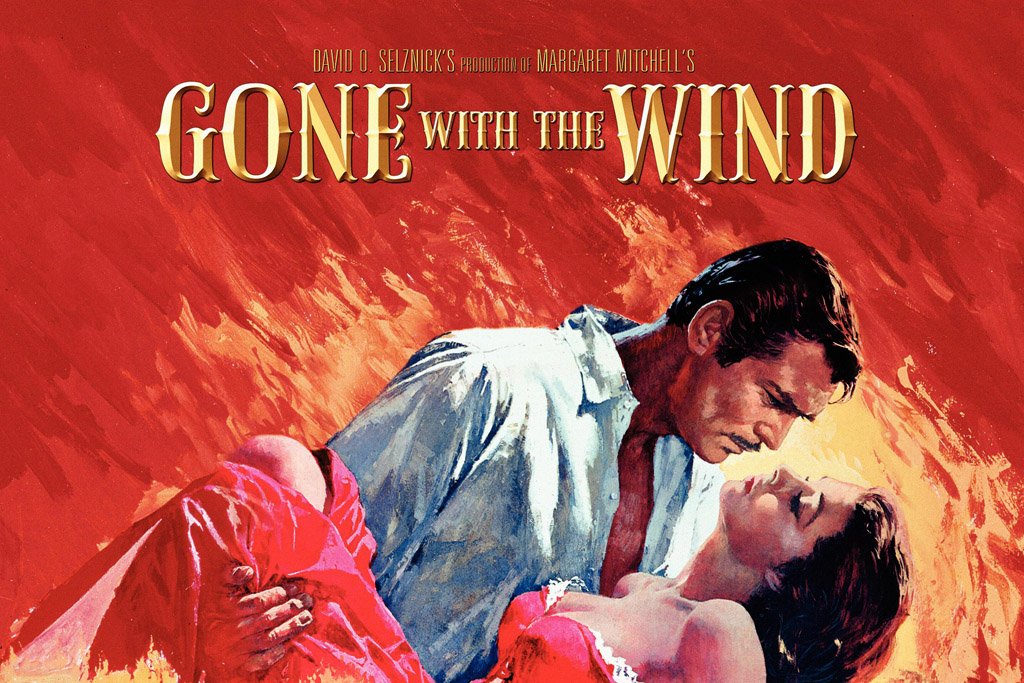
In the real world, seeking friendship is a good thing, but using that as a pre-cursor to romance can come off as deceitful. Sometimes, a person wants a friend more than a love interest and if that’s the only reason you’re friends with them, then that just comes off as insincere and a little creepy.

That’s not to say that sitcoms don’t contain meaningful romance lessons. This just isn’t one of them.


Terrible Lesson #2: Everyone Always Has Ulterior Motives

Chief among the hallmarks of sitcoms are the conflicting motivations of the characters involved. Whether it’s Charlie Harper trying to hook up with a new woman in “Two and a Half Men” or Kelly Bundy trying to win a modeling gig in “Married With Children,” those motivations are rarely that complicated. The only conflict arises when they encounter others whose interests aren’t in line with theirs.

In a half-hour sitcom, there’s little room for characters whose agenda has nothing to do with that of the main characters. Unlike real life, everyone around these characters is either looking to help or thwart their efforts. There’s rarely anyone who just wants to live their life and doesn’t care if someone like Kelly Bundy gets a modeling gig for a pest control company.

While that makes logistical sense within the context of a sitcom, it has some nasty implications for the real world. It further fosters a mentality that anyone who isn’t helping you is actively opposing you. That us versus them mentality already brings out the worst in people, both in the real and fictional world.

At least in the fictional world, that mentality is somewhat justified. It often is the case that the people around you, including close friends and family, have ulterior motives. In many sitcoms, close family members are the ones who screw you over the worst. It’s not a healthy approach to dealing with the world. If you can’t trust your family, then who can you trust?


Terrible Lesson #3: Every Authority Figure Conspires Against You

When it comes to villains or antagonists, there isn’t much room for nuance in sitcoms. You’re not going to find a Walter White within those constraints. Most of the time, the bad guys in a story are painfully obvious. That, in and of itself, isn’t too big a problem. Villains don’t have to be complex to work, even in a sitcom.

However, if a sitcom does have a villain of any kind, it’s almost guaranteed to be an authority figure. They can be a parent, a teacher, or an older sibling. If they have even a shred of authority, no matter how arbitrary, you can assume they’re going to oppose the protagonists in some form or another.

Whether it’s Red Foreman clamping down on the pot smoking in “That 70s Show” or Lois being a tyrannical mom in “Malcom in the Middle,” the authority figures are always the problem. There’s really not much to their villainy. They exist solely to prevent the main characters from having fun and achieving their goals.

Now, I’m not going to claim authority figures can’t be corrupt. There are real cases of authority figures acting like real villains. There are also cases in which authority figures do genuine good. Whether it’s the leader of a country or the chief of a police unit, it is possible for someone to wield authority over others and not be an asshole.

If your understanding of authority comes solely from sitcoms, then that’s like claiming pigs can do algebra. It’s not just that power corrupts. In sitcoms, any kind of power corrupts and it does so completely. It’s as simplistic as it is absurd. In reality, there are authority figures worthy of respect and sitcoms seem to go out of their way to avoid that point.


Terrible Lesson #4: There’s Never A Reason For Someone Being A Bully

In the same way sitcoms present a simplistic view of authority and villains, they take an equally bland approach when it comes to villains. For the most part, bullies in sitcoms aren’t characters. They might as well be robots programmed to insult, denigrate, or annoy the main characters at every turn. There’s no deeper motivation beyond that. They’re just mean, unrepentant assholes.

Characters like Libby Chessler in “Sabrina The Teenage Witch” and Harley Keener in “Boy Meets World” don’t exist to give depth to a sitcom. As bullies, they’re function is to present obstacles and setbacks for others. Giving them a reason for being a bully, be it a personality disorder or past trauma, would hinder their ability to achieve that function.

While this makes sense in the context of plotting a sitcom, it grossly simplifies the concept of bullying. When it happens in the real world, it’s nothing like what we see in a sitcom. I know this because I dealt with bullies in my childhood. It did not play out like any sitcom I ever saw.

Bullies aren’t robots fueled by the whimpering cries of their victims. They are human beings too and while few will sympathize with them, few people are born bullies. They may not even see themselves as one. There are some deeper complexities to the mental makeup of a bully and sitcoms pretend those complexities don’t against.

Granted, it’s difficult for a half-hour TV show to explore and flesh out the personality of a bully. It’s considerably easier to make them an unlikable asshole who helps glorify the main characters. As a result, it’s easy to see bullies as blunt instruments rather than people you need to deal with in your day-to-day life. In such a complicated world full of complicated people, it’s bound to cause problems beyond losing lunch money.


Terrible Lesson #5: Hard Work Is For Suckers

Let’s not lie to ourselves. Growing up, we tend not to appreciate hard work. Most of us go out of our way to avoid it or when we can’t, we take the path of least resistance. Many sitcoms reflect this sentiment. They certainly aren’t the reason why people avoid hard work. That inclination existed long before sitcoms, but they do take it to extremes that can be both hilarious and asinine.

In the world of sitcoms, hard work is tantamount to waterboarding. From Lucy standing on an assembly line in “I Love Lucy” to the over-the-top slacker behavior that plays out in “Workaholics,” hard work is only a step down from bullies. It’s something every major character either avoids or gets crushed by.

Sitcoms build entire plots around characters looking for a way to get out of hard work. Francis in “Malcom in the Middle” is the personification of this struggle. He once spent an entire episode willingly distracting himself from an overdue history assignment. While characters like him often pay a price for their slacking, it’s rarely a worse alternative than hard work.

In the world of sitcoms, you only work hard if you have your dream job. Since most people don’t get their dream job, hard work is basically tantamount to defeat. That’s the main take-away from sitcoms. Anyone with just a small amount of life experience knows how flawed that is.

Even when I was working a part-time job in high school, I learned the value of hard work very quickly. It’s a means to an end. It’s something that, when done right, gives you a sense of accomplishment. While we all can’t approach it with the same passion as Hank Hill, it does have value and sitcoms would have you believe that value doesn’t exist.


I still enjoy sitcoms. I still watch them regularly when there aren’t superhero movies or TV shows to see. While they can be funny and entertaining, they can also present a very flawed concept of life, people, and how to handle it. There are a lot of bad lessons to be learned from even great sitcoms, but if they make us a laugh, then I say that’s a price worth paying.

2 Comments

Filed under human nature, media issues, romance, television

Five Things I Hope To See In The Upcoming “Ms. Marvel” Show

ms-marvel-disney-plus-1184416

Every so often, I get news that excites me like a kid in a candy factory. It doesn’t happen often these days. As adults, it’s hard to get too excited when bills, the news, and traffic do plenty to dampen your spirits. Then, it happens and your world is better because of it.

This past weekend, I got a much-needed dose of that excitement. At Disney’s annual D23 Expo, Marvel Studios announced that they’re making a live-action Ms. Marvel TV show for their Disney+ streaming service. As someone who has praised Ms. Marvel’s comics and her contributions to female superheroes, I freely admit I jumped for joy when I saw this.

I know the news surrounding Disney hasn’t been good lately, given what has been happening with Spider-Man. I also know they’re in a bit of a transitional period after the conclusion of “Avengers: Endgame.” Despite these issues, Marvel Studios and their Disney overlords still want to make money. They’ve got plenty of high-profile movies on their slate, but this could end up being a bigger deal.

I say that as an unapologetic fan of Ms. Marvel and all things Kamala Khan. I also know that Disney is looking for any possible edge to promote their new streaming service and take a bite out of the market share that Netflix currently dominates. I admit I wasn’t planning on subscribing. Shows about She-Hulk, the Scarlet Witch, Vision, and Moon Night sound fun, but not enough to justify the cost.

That all changed with Ms. Marvel. As far as I’m concerned, she’s the only reason I’ll be getting or keeping a Disney+ subscription. There’s a lot to unpack with this announcement. I doubt I’ll cover all of it here, but for now, I’d like to take some time to articulate the extent of my excitement.

To that end, I’d like to share five things I hope to see in this upcoming series. Kamala Khan is one of those characters who can capture the heart, soul, and spirit of the superhero genre. Her entry into the Marvel Cinematic Universe couldn’t be better. These are just some of the things that could make it even more marvelous.


Number 1: The (Many) Quirks That Make Kamala Khan Lovable

Any TV show, comic book, movie, or video game involving Kamala Khan must make its first priority to capture the essence of what makes her so endearing. Being a superhero is only small part of her overall story. What makes Kamala great is the many little things that define who she is.

She’s not just a teenager who gets superpowers and decides to start fighting criminals. She’s a self-professed fangirl. She loves playing video games, eating gyros, and writing fan fiction. These quirks are small, but numerous. They’re real things that people in the real world can relate to. That makes it easy to understand and appreciate her passions.

When I first read about Kamala in “Ms. Marvel #1,” I immediately grew to like her. She came off as the kind of girl I would’ve been friends with in high school. She presents herself as someone who behaves how you would expect a teenage girl to behave in a world where superheroes existed. She has a good family, a good heart, and an adventurous spirit. How can you not love that?

She’s also an outsider and not just because she’s a Pakistani Muslim girl living in Jersey City. Like most teenagers, she’s uncertain of her place in the world. She struggles with real issues, even before she gets superpowers. Those issues stay with her, even as she develops her superhero identity. It makes her easy to like and even easier to root for.

A TV show can’t just focus on her beating up bad guys and making witty one-liners. Plenty of other superheroes already do that, some better than others. It has to highlight, if not belabor, the distinct traits that have helped make her one of Marvel’s most successful female characters. There’s a lot to love and with a TV show, there’s plenty of room to explore it.


Number 2: Relatable Teenage Melodrama (Compounded By Being A Superhero)

Along with the traits that make Kamala Khan so lovable, there’s also the unavoidable battle that is teenage melodrama. Everyone faces it. Superpowers don’t make you immune to it. The last two Spider-Man movies have made that abundantly clear. A TV show provides more time and flexibility to flesh out that melodrama.

In the first few issues of Ms. Marvel’s comic series, which I highly recommend, she deals with a lot of teen angst and uncertainty. In fact, that sentiment is the very thing that prompts her to defy her parents and sneak out at night to a party that would ultimately end with her getting superpowers. In a very literal sense, teenage melodrama helped make Ms. Marvel who she is.

She’s not sure of where she fits in. She clashes with her parents. She argues with her friends. She also is starting to have feelings about other boys, which have made for some wonderfully sweet moments. She deals with all of this on top of being a superhero.

Like a young Peter Parker before her, these different aspects of her life often clash. One tends to undermine the other and it does plenty to overwhelm her at times. That often brings out the best in her and any TV show would be wise to present those moments.


Number 3: The Family And Supporting Cast That Help Make Her Who She Is

Like every major hero in the Marvel Cinematic Universe, Ms. Marvel’s greatest strengths often stem from her supporting cast. Tony Stark wouldn’t have achieved what he did without Pepper Potts. Carol Danvers wouldn’t have accomplished what she did without Nick Fury and Goose the Cat. Kamala Khan is no different.

In “Ms. Marvel #1,” we learn plenty about Kamala’s supporting cast. She has two loving parents who tend to be overprotective of her. She has an uptight brother named Aamir, who tends to intrude into Kamala’s personal life more than most siblings. She also has a friend/love interest in Bruno who had a front-row seat in seeing her become Ms. Marvel.

Each one of these characters helps shape Kamala into who she is, before and after she gets her powers. They support her, but they also complicate her efforts. While none of them have to die for her to be the hero she strives to be, they all make their on contributions to her story. In the same way Superman’s parents guided his heroic journey, Kamala’s friends and family informed hers.

Unlike Superman, Kamala endured a pretty rocky road to establishing herself. However, at no point did her creator, G. Willow Wilson, give the impression that her friends and family were just background decorations. They all care for her. They worry for her. They all want what’s best for her, even when they’re rarely on the same page.

A TV show featuring Kamala has to capture at least part of that family/friend dynamic. Even a fraction of Kamala Khan’s supporting cast from the comics can do plenty to make for a rich, engaging TV show.


Number 4: The Struggles (And Triumphs) Of A Growing Hero

There’s no getting around it. Kamala Khan screwed up more than once when she started off her superhero career in the comics. While she managed to save one life the first time she used her powers, she ended up getting shot the second time. Even before that, she struggled to master her powers in ways that were both understandable and hilarious.

It’s a critical part of every superhero’s journey. With new challenges come new struggles. Some of those struggles devolve into outright failures. Even the best heroes fail sometimes and Kamala had more than her share in the comics. Any TV show that tells the story of her journey cannot and should not gloss over those struggles.

With Kamala, however, the struggles matter even more than the triumphs. While many heroes may lament at their failure, Kamala tends to get a lot more animated. She’s passionate about what she does and has a tendency to wear those passions on her sleeve. It’s part of what makes her lovable. It also reminds everyone that she’s still a teenager. She’s still growing and maturing.

One of the things I love most about Ms. Marvel comics is seeing her grow with each passing story. The first dozen issues had more growth for Kamala than the last 100 issues of Amazing Spider-Man. Along the way, there were missteps, heartbreaks, and victories. They all just made me want to root for Kamala even harder and if a TV show can accomplish that, it’ll do plenty to justify a Disney+ subscription.


Number 5: A Vision For Young (Idealistic) Heroes In A World That Needs Them

From the beginning, Kamala Khan connected with fans like me because she radiated this ideal spirit that a lot of people once had in their youth. Time, age, and watching too much news has a way of crushing that idealism over time, but most of us still remember why it was so important to us.

As Ms. Marvel, Kamala carried herself as the kind of young, idealistic hero that many of Marvel’s traditional heroes grew out of years ago. The comics, themselves, became jaded as the very act of heroism gained major complications, both from events within the stories and influences from the real world. That’s part of what made Kamala a breath of fresh air.
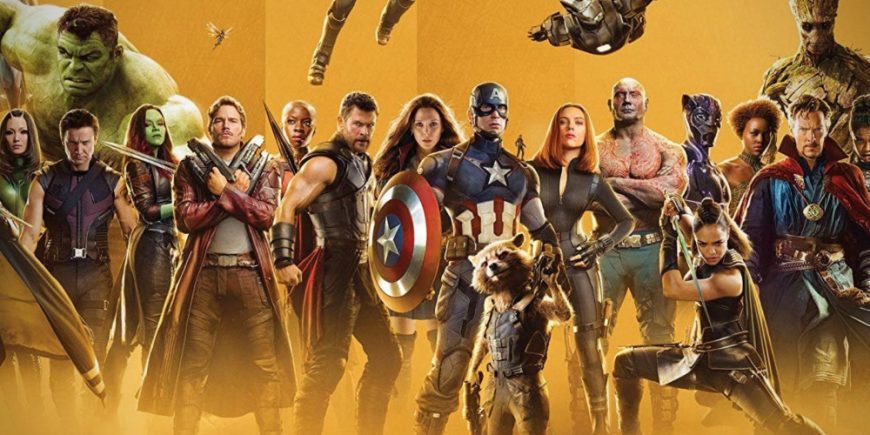
She might be young, naïve, and impressionable, but she’s also exactly what we need right now. The MCU just suffered some devastating losses. The world, as a whole, is still recovering from the events of “Avengers: Endgame.” This world still needs heroes. Even though it still has plenty, it doesn’t have someone like Ms. Marvel.

She can be the hero that emerges from the chaos of this broken world and shows what dedicated heroes can accomplish. She can show everyone that, even in the face of heavy losses and broken hearts, there’s a place for pure, uncorrupted heroics. You don’t need to be a billionaire playboy genius philanthropist, either. You can just be a teenage Pakistani American girl from Jersey city.


I cannot overstate how excited I am for Ms. Marvel to get her own show. I imagine I’ll be writing about it a lot once it comes out. There’s a lot I hope to see for this show, the comics, and the MCU. If Marvel Studios can capture even a fraction of what makes Ms. Marvel great, then the future of that world and ours will be that much brighter.

1 Comment

Filed under Marvel, Marvel Cinematic Universe, superhero comics, superhero movies, television

Helga Pataki: Profile Of A Tragic Love Story (From A 90s Kids Cartoon)

heyarnold2

I was lucky to be a kid in the 1990s. Talk to most people my age and they’ll agree. The 1990s was a golden age for cartoons. That may seem somewhat egocentric, but I’ve yet to hear a convincing counter-argument. This was the era that brought us the animated classes for “X-Men,” “Batman,” “Daria,” “Animaniacs,” and so much more.

As a kid during that era, there were many great shows that I still hold dear to my heart. I’ve mentioned a few of them in the past. A few of these shows hold up, even by today’s standards. I contend that the “Batman” animated series only gets better with age. One show, however, has taken on a very different meaning over the years the air and, being an aspiring romance writer, it still resonates with me.

That show is “Hey Arnold!” and for most cartoon-loving kids in the 1990s, this was one of the best shows that didn’t involve talking babies. It was a unique show that followed a diverse cast of characters, each with their own unique connection to the titular Arnold. By almost any measure, Arnold was a lovable, relateable idealist who you just can’t help but root for.

How can you not love that football shaped head?

He’s loyal, altruistic, friendly, compassionate, and empathetic. Even as a 4th grader, he’s the kind of kid you want to be friends with. He’ll go to bat for you. He’ll stand by you when the chips are down. When the whole world around him is wrong, he’ll stand for what’s right. Whether it’s the 90s or today, there’s a lot to like about a character like that.

However, the best part of “Hey Arnold!” isn’t how inherently likable Arnold is. In fact, one of the most endearing sub-plots of the show is built around a character who, on paper, couldn’t be more different. That character is Helga Pataki, the short-tempered, overly hostile, overly dramatic girl who often threatens others with her fists.

She’s also secretly in love with Arnold. It’s not just a childish crush, either. She’s really in love with Arnold.

When I watched this show as a kid, I thought that crush was kind of odd. It’s not that I didn’t care for romantic sub-plots. Even as a kid, I enjoyed romance, even in cartoons. It was one of the reasons I loved the 90s Marvel cartoons so much. I just didn’t understand the romance in “Hey Arnold!” Then, when I watched it with a more refined perspective, it gained a whole new context.

In essence, the love story of Helga and Arnold is built around tragedy, but somehow manages to feel sincere and genuine. It’s a love story that initially comes off as obsessive and unhealthy. However, as we learn more about each character, they gain more complexity. With each subsequent refinement, it becomes clear just how much these two complement each other.

It’s worth reiterating that this is a kids show from the 1990s. Things like tragedy, romance, and chemistry are things that usually don’t fit into a show within the pre-Spongebob Nickelodeon era. Even within those limitations, the complicated love story between Helga and Arnold is surprisingly mature.

To appreciate the depth of that story, it’s necessary to understand some of Helga’s story. Even by the skewed standards of a kids cartoon, it’s pretty sad. Helga does not come from a nurturing, supportive environment. Her parents are a wreck. Her father is a self-centered blowhard who cares more about his business than his family. Her mother is a dazed alcoholic who always seems hung over.

Then, there’s her older sister, Olga. She’s basically the perfect daughter who sucks up all the attention in her family. She’s sweet, successful, kind, and an overachiever. She sets the bar so high that Helga has no chance of ever matching it, so she doesn’t even try. As such, her parents barely notice her. Her father often forgets her name. Most of the time, she just calls her “the girl.”

This pretty much sums it up.

This is not a happy home life for anyone, let a lone a 4th grade kid. Nobody pays attention to her. Nobody shows her any semblance of affection or love. Nobody is even nice to her. Then, she meets Arnold. He’s the first person to show her real, sincere kindness. It’s not out of pity, either. That’s just the kind of person Arnold is. Naturally, it makes an impression.

It’s a tragic foundation for any love story, but it’s one that isn’t fully fleshed out until later seasons. If there’s one episode that defines Helga’s character, it’s Season 4, Episode 78, entitled “Helga on the Couch.” This is the episode that lays bare just how tragic her life was and still is. It also puts all the obsessive feelings she has for Arnold into a larger context.

It’s almost disturbing how sad things were for her. As early as pre-school, we see just how neglected she was. We also see just how big an influence Arnold was for her at that moment.

Again, it’s worth reiterating that this is a kids show. If there were a story about a pre-school kid who was that neglected by her family, it would make headlines and stir plenty of outrage on social media. However, “Hey Arnold!” managed to make this distressing story feel genuine and heartfelt.

The romance isn’t entirely one-sided, either. In the early seasons of the show, Arnold mostly saw Helga as his bully. He rarely saw her as anything more than that. However, as the show went on, he starts noticing her complexities. He even manages to get through her tough, hostile exterior on a few occasions.

While there are more than a few occasions when she comes close to confessing her feelings for him, it’s not until the series finale/movie that they actually become an item, at least as much as a couple of 4th graders can be. The way they go about is part of what makes the romance feel genuine.

It doesn’t just revolve around Helga finally coming clean. Without getting too heavy into spoilers, Arnold gets to see first-hand just how far Helga is willing to go for him. She shows him with her actions how much she cares. It’s not something she could ever put into words and not just because she’s a kid. Remember, she comes from a home where she never got a shred of affection from anyone.

This moment, which was a culmination of many hints and sub-plots that developed over many seasons, is incredibly cathartic. Even my inner 90s kid could appreciate it. It effectively completed a journey that started with the first episode. Helga starts off as this obsessive, stalker-like bully. Then, over time, we understand why she feels the way she does and why Arnold reacts to it so strongly.

It’s still tragic on many levels. As a foundation for romance, Helga and Arnold don’t start off on the right foot. This is a relationship that could’ve easily become a one-sided affair that quickly devolved into stalking. Somehow, “Hey Arnold!” managed to make it work. It even managed to make it feel sweet.

The fact that such a complicated, yet genuine romance could manifest in a kids show is further evidence that the 1990s truly was a golden age for cartoons. For that reason, and many others, “Hey Arnold!” and the unique love story it told will have a special place in my heart.

3 Comments

Filed under romance, television

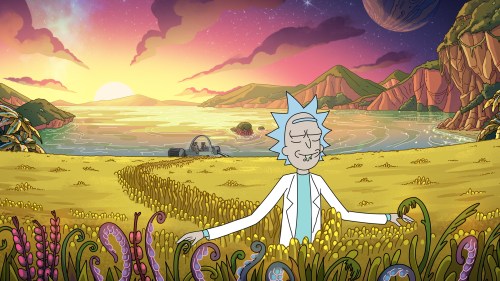
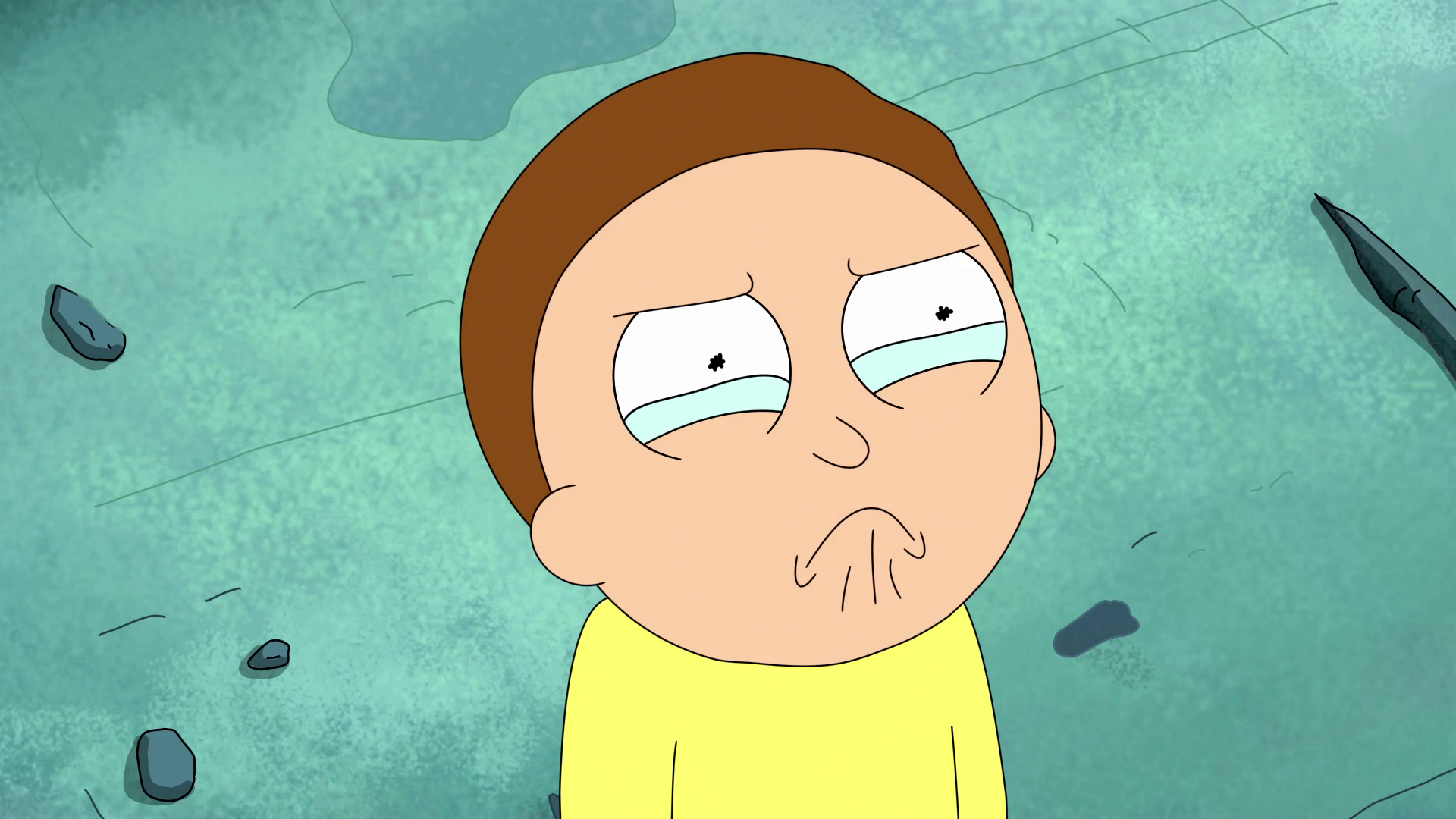
My Top Five Questions/Unresolved Plots For “Rick And Morty” Season 4

rick-and-morty-season-4

Good things are worth waiting for. Great things are worth agonizing over for weeks, months, and years on end. Being an unapologetic romantic, I tend to put love near the top of the list of things that are worth the agony. However, a new season of “Rick and Morty” is definitely in that upper echelon.

Since Season 3 concluded in October 2017, I think it’s safe to say that the line between patience and agony is somewhat blurred. That said, there are plenty of reasons to endure. Last year, it was announced that “Rick and Mortyhad been renewed for 70 episodes. That promised to cut down on the lengthy wait times between seasons that have plagued the show since it gained such a passionate following.

Even after that announcement, news on the status of Season 4 was scarce. We knew it was being worked on, but there was little in terms of certainty and release dates. Finally, it became official. “Rick and Morty” Season 4 is set to debut in November 2019. It still feels like a long wait, but at least we finally know the endpoint.

As someone who loves this show and has written about it more than once, I’m ready to endure the agony of the wait. Knowing there’s a schwifty reward at the end, I’m as excited as many other fans to see how this series and its cosmic eccentricities unfold. After the various events in Season 3, there’s plenty to explore and I’ll be watching with plenty of vodka and pickles in hand.

If you don’t understand that reference, then we’re going to have problems.

While I wait alongside many other anxious fans, I’d like to share a quick list of burning questions I have for Season 4 of “Rick and Morty.” While I don’t doubt many others will emerge along the way, these are the ones that I am eager to see touched on once the show gets going again.

Now, there’s always a risk in getting excited or curious about certain aspects of this show. Both Dan Harmon and Justin Roiland have a knack for twisting plots in quirky, yet creative ways. Given the capabilities of someone like Rick Sanchez, which include using a universe as a car battery and defeating an intergalactic tyrant while drunk, there are infinite possibilities in a very literal sense.

Despite these complications, these are my top questions for this most schwifty of shows. If I had a Meeseeks Box, these are the main objectives I’d want addressed.


Meeseeks #1: What Is Evil Morty’s Plan?

This question is probably the most pressing and I know I’m not the only one contemplating it. Evil Morty has been subject to many fan theories ever since he debuted in Season 1’s “Close Encounters of the Rick Kind.” His story is still a mystery, but his devious nature was solidified in Season 3 when he took over the Citadel of Ricks in “The Ricklantis Mix-Up.”

He has been set up as a looming threat, albeit one who hasn’t implemented his ultimate plan. He’s definitely in a position to do so now. Whether that’ll occur in Season 4 or at a future date is not yet clear, but this is one of the show’s most compelling arcs. What exactly made Evil Morty evil? What are the extent of his capabilities? What’s his connection to Rick C-137, if any?

There are a lot of questions surrounding Evil Morty, but it was made clear in “The Ricklantis Mix-Up” that he has an agenda and it’s only a matter of time before it spreads across the multiverse. It’s one of those stories that has the potential to shake up the entire “Rick and Morty” multiverse, which is why any mention of Evil Morty will be subject to greater scrutiny.


Meeseeks #2: Will We Learn Anything About Diane Sanchez?

Another unresolved and largely unexplored aspect of “Rick and Morty” is the story of Diane Sanchez, Rick’s ex-wife and Beth’s mother. She has been mentioned multiple times, but details about her are scarce and even misleading, as shown in “The Rickshank Redemption.”

Even without those details, Diane has already had an impact. From the very first episode, she is established as someone who has impacted the Sanchez family in major ways. Beth has fond memories of her. While Rick’s views on love aren’t exactly romantic, she clearly influenced him as well.

Whatever happened to Diane could be a major factor in what has driven Rick in the past. She could also be an influence in what drives him in the future, especially if it ties into the ongoing plot with Evil Morty. While it’s still possible that Diane remains one of those esoteric characters who never gets fleshed out, more details could help further add to the web of eccentricities that is Rick Sanchez.


Meeseeks #3: How Will The Family Dynamics Change With Jerry And Beth Getting Back Together?

One of the biggest shake-ups in Season 3 was the disillusion of Beth and Jerry’s marriage. It came as a direct result of the events of “The Rickshank Redemption.” However, this shake-up ultimately came full-circle by the season finale in “The Rickchurian Mortydate” when Beth welcomed Jerry back into the family.

It was a significant upheaval in the Smith family, but Jerry’s return may not be the end of it. Even at their most sentimental, Beth and Jerry’s relationship has never been stable. The subsequent revelations about Beth in “The ABC’s Of Beth” only adds to those complications. Add Rick, Morty, and even Summers’ various antics to the mix and there’s still plenty of family chaos to go around.

Jerry being back doesn’t resolve that fact that he’s still inept, unemployed, and often an obstacle for Rick. It also doesn’t resolve Beth’s own personal issues, the least of which involves her heavy wine consumption. Their chaotic relationship has often impacted Summer, Morty, and Rick on many levels and even if things are better, it’s still going to affect them.

Jerry made some major strides in Season 3. He confronted some of his shortcomings and inadequacies. It was part of what helped him get back with Beth. He’ll never be as capable as Rick, but his ability to grow has opened new doors for him and Beth. Hopefully, Season 4 will give him a chance to grow more, if only to challenge Rick.


Meeseeks #4: How Will Morty’s Character Evolve?

Morty is another one of those characters who underwent some subtle, but significant changes in Season 3. He’s no longer the wide-eyed, deer-in-the-headlights teenager who exists only to be overwhelmed by Rick’s antics. He’s shown that he can be just as capable, whether it’s helping his mom work one of Rick’s gadgets or disarming neutrino bombs.

At the same time, however, Season 3 revealed and darker undercurrent to Morty. “Rest and Ricklaxation” established that Morty can be pretty devious when he is purged of his shortcomings. It helped reveal that it’s very possible or a version of Morty to become evil and the one that was introduced in Season 1 wasn’t just an anomaly.

Whereas Rick is very exceedingly self-aware, often to the point of misanthropy, Morty seems more inclined to cross lines and become something else. When he gets a taste of power, be it from a disembodied arm or a high-tech suit that allows him to enjoy the Purge, it tends to corrupt him.

Does this mean Morty is destined to walk a darker path? Rick has noted a number of times that a Morty that’s full of himself can be dangerous. Hopefully, Season 4 can provide more insight.


Meeseeks #5: Will We Get Another Interdimensional Cable Or More Morty’s Mind Blowers?

This isn’t so much a question about the plot as it is a celebration of the eclectic humor of “Rick and Morty.” Anyone who wants a true understanding of what makes this show so fun need only watch the two episodes of Interdimensional Cable and Morty’s Mind Blowers.

The plots surrounding these episodes are usually asides. The main draw are the wild and quirky shows and memories that often stem from improvised lines by Justin Roiland. It’s basically unfiltered humor that’s brought to life through Rick Sanchez’s eccentric genius. Whether it takes the form of cable channels from other dimensions or memories purged from Morty’s mind, it’s a beautiful thing.

The only question is whether Season 4 will contain an episode of this nature. It doesn’t have to be part of some larger narrative. It can just be a one-off that’s built for laughs and crude jokes. It can be about salesmen with ants in their eyes or how to make a plumbus. As long as it delivers some memorable memes to go along with Pickle Rick, I’ll be happy.


This is just a basic wish list for now. There’s plenty more I hope to see in future episodes of “Rick and Morty.” There are probably things I didn’t know I wanted that this show will reveal. Honestly, who else knew they wanted to see Rick turn himself into a pickle? That’s just how crazy/fun/obscene a show like “Rick and Morty” can be.

Until then, we can only wait and agonize about the scwhiftiness to come. Wubba lubba dub dub!

1 Comment

Filed under Rick and Morty, television

Why “The Boys” Is The Ultimate Superhero Satire

amazon-prime-the-boys-tv-show

In the history of superhero media, 2019 will likely go down as one of the greatest years of all time. This year included three superhero movies that grossed over a billion dollars, including the first female-led superhero movie to gross a billion dollars and one that became the highest grossing movie of all time. Whatever the future holds for the genre, there’s no doubt that 2019 will go down as a banner year.

Regardless of what the James Camerons of the world think, superheroes have made their mark on the pop culture landscape. They’ll likely keep making their mark for years to come, especially after Marvel’s latest announcements for the future of the Marvel Cinematic Universe. However, in the same year that superhero media achieved some of its greatest success, something comes along to utterly deconstruct it.

Whereas a movie like “Avengers Endgame” showed us just how great superheroes can be, a TV show like “The Boys” shows us just how depraved they can be. Being a comic book fan long before this golden age of superheroes, I already knew that. I followed the original comics when they came out in the mid-2000s. Now, thanks to a new TV show, everyone can experience the story that gave superheroes the ultimate gut punch.

Literally.

I’m not going to lie. I was genuinely surprised when I heard Amazon Prime was going to make this show. This is not the kind of story that you can turn into a Disney-approved, PG-13 spectacle for mass consumption. In anything, “The Boys” goes out of its way to explore the kinds of things that would make the censors at Disney and the MPAA throw up.

This is a story that does not hide the brutal violence, intense trauma, and unchecked hedonism that often seems unavoidable in the context of the narrative. Writer and co-creator, Garth Ennis, has a long history of embracing those darker elements of the genre. He did it with “Preacher” and his run on “The Punisher.” With “The Boys,” he took it to another level and beyond.

The world of “The Boys” is not unlike the early days of the MCU. The over-arching story tries to incorporate the fanciful ideals of superheroes into a real-world context. It doesn’t use fictional cities like Metropolis or Gotham. It doesn’t ignore how superheroes would affect society, government, or the economy. The many flaws of the real world are just as relevant in this world.

As are the sentiments about reality, in general.

From here, “The Boys” doesn’t necessarily portray a worst-case scenario for superheroes, but it comes pretty damn close. The “heroes” of this world are the Seven. They include the likes of Homelander, Black Noir, Queen Maeve, A-Train, and the Deep. They’re basically derivations of the Justice League, but in terms of heroic ideals, these characters have none of that.

The Seven conduct themselves as superheroes for the masses. They’re admired, respected, and idolized by many, just like their counterparts in the MCU. However, that heroic zeal is both a lie and a scam. Their entire image is built around a marketing ploy, courtesy of Vought American Consolidated, a defense contractor who incorporates superheroes into their arsenal.

Trust me. It’s even more corrupt than it sounds.

With that corruption comes greed, treachery, violence, and depravity the likes of which Batman would find too grim. These heroes basically get to smile for the cameras, enjoy the benefits of celebrity, and still conduct themselves as self-serving narcissist behind the scene. They can do whatever they want, get away with it, and still be beloved. It’s a recipe for all sorts of disasters.


On top of that, some of these characters are outright psychopaths. Homelander is a mentally unstable sadist who commits many vile acts throughout the comics, including rape. The TV show captures only a fraction of his depravity, but it’s more than enough to highlight the underlying message of “The Boys” and why it’s such a powerful story.

In essence, “The Boys” is the ultimate satire of the superhero genre. It’s entire narrative is built around exploring, exposing, and denigrating the ideals on which all superhero media is built upon. It’s not done for humor or comedic effect, either. The theme of “The Boys” is dead serious in showing how a world with superheroes becomes so depraved.

This is where the Boys themselves come in. They include Billy Butcher, Frenchie, Mother’s Milk, the Female, and Hughie. They both witness and directly experience the breadth of the Seven’s corruption. They take it upon themselves to expose these heroes for who they are.

However, their motivations aren’t entirely heroic. These characters often come off every bit as damaged, petty, and vindictive as the heroes they actively oppose. They don’t stick to high ideals, either. The Boys are brutal, albeit in a more focused and pragmatic sense.

It gets ugly.

It gets violent.

It gets downright traumatic.

It also gets the damn point across.

If “The Boys” has a unifying message that unites both the comics and the TV shows, it’s that superheroes can only ever make things worse in the long run. That ideal of a perfectly altruistic savior in the mold of Superman just doesn’t exist and wanting it to exist can be downright dangerous.

The people behind the scenes with the Seven feed into that. The government, big corporations, and the media glorify these heroes because the people latch onto them. They want these heroes to be the idealized figures that they read about in comics and see in blockbuster movies. They buy into it and both the Seven and the organizations that manage them keep selling it.

It’s a self-reinforcing cycle that only amplifies the corruption. The Boys dare to battle that corruption, but with the understanding they’re fighting a losing battle. They can attack, expose, and frustrate these superpowered sociopaths all they want. They’re never going to destroy those rosy ideals on which the entire genre is build upon. At most, they can just make them pay a price for their egregious misdeeds.

It’s hardly proportional to the many atrocities the Seven commits, but that’s kind of the point. These are superpowered beings who can only be hurt so much, even by other superheroes. The Boys can never punish them in a way that feels equitable, compared to the injustices the Seven inflict. That doesn’t stop them from making an effort and making it better than most would expect.

The right tool for the right job.

How they go about this and how the Seven reacts is a long, tortured story that has many shocking moments that are not for kids or the faint of heart. The trailer for the TV show offers a hint of that, but there are scenes from the comics that even the lenient censors of Amazon Prime wouldn’t dare put on film. I won’t spoil the bloody details, but if you have the stomach, I highly recommend you check out the comics.

More than anything else, the “The Boys” is a brutal reminder that the ideals behind superheroes are probably the most fanciful part of the genre. In a real world full of corruption and collateral damage, superheroes can be far more dangerous than the threats they confront. It’s almost impossible to be a superhero without becoming a self-absorbed asshole to some extent.

Even the Boys, who actively battle the superheroes that fuel this fantasy, never come off as entirely altruistic. They’re simply more respectable and less narcissistic. In that dynamic, nobody can ever come off as truly heroic. There’s just too much room for corruption and ego.

While “The Boys” wasn’t the first comic to satirize superheroes, it’s definitely the most complete. “Watchmen” may get more praise and respect, but even in that story, the heroes still try to act like heroes in their own perverse way. What characters like Ozymandias and Rorschach do is framed as something heroic, even if it gets violent and brutal. There’s none of that with “The Boys.”

In an ideal world, even assholes will find a way to be heroic under the right circumstances. Tony Stark proved that in “Avengers Endgame.” However, in the world of “The Boys,” there’s no such thing as right circumstances. If anything, the entire superhero genre has it ass-backwards. Heroes will inevitably find a way to become assholes and if nobody stops them, then they’ll just push their assholery to new heights.

The Boys” is a unique comic in its own right, but the TV adaptation is coming along at just the right time. I would even argue that this kind of satire is necessary in the current cultural landscape. We need something like this to remind us that the ideals of superheroes are still ideals. Like most things in the real world, ideals tend to crumble when subjected to scrutiny.

At a time when people are consuming the ideals of superheroes at an unprecedented level, it’s important to maintain a sense of perspective about the genre. A satire like “The Boys” may never have the same impact as anything from the MCU, but it’s still a story worth telling, if only to remind us that great power can also breed greater assholes.

1 Comment

Filed under political correctness, psychology, superhero comics, television