Category Archives: television

The Flaw In Happy Endings According To “Bojack Horseman”

1351058-1419981-zoomed

The world can be a harsh, unforgiving place. The extent of that harshness often depends on circumstances, attitude, and even blind luck. Most people, no matter how rich or successful they are, learn that lesson at some point in their lives. It’s rarely pleasant and often leaves scars that don’t heal.

Even with those scars, many cling to a hopeful, wide-eyed idealism about how much better the world could be. Moreover, that world is worth pursuing at every turn. TV shows, movies, music, and literature convinces us that it can be done and still have plenty of room for commercials, ads, and movie trailers. Nearly every great narrative tries to sell us on some unique kind of world-healing happy ending.

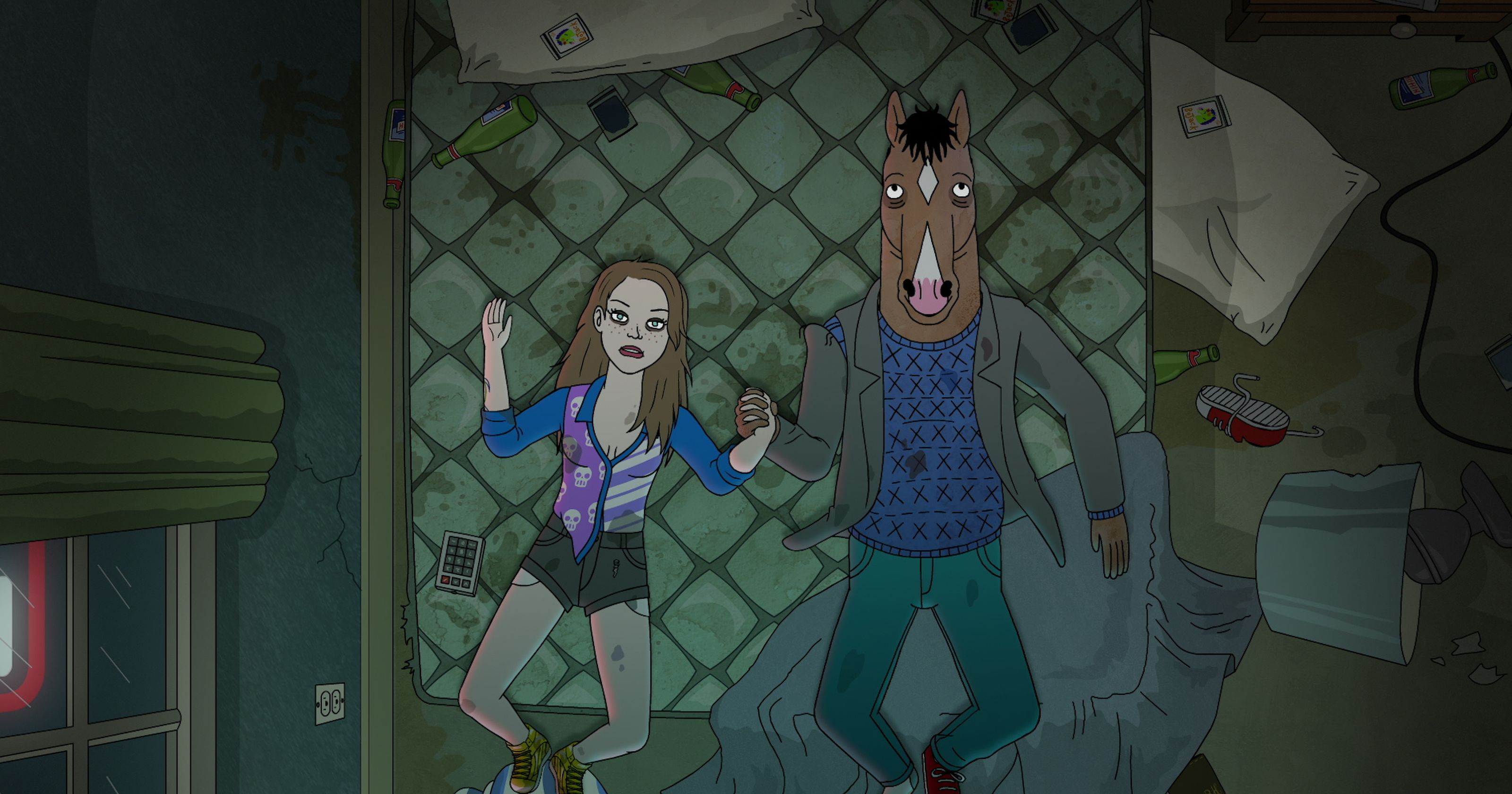
Then, there’s the strange and exceedingly depressing world of “Bojack Horseman.” If ever there was a show that went out of its way to kill happy endings with the force of a billion gut punches, it’s this one. Think of all our most cherished ideals from popular media, social movements, and ideology, in general. “Bojack Horseman” finds a way to crush it all while still being funny, albeit in its own dark way.

I promise it’s funnier than you think.

I say that as someone who has watched “Bojack Horseman” since the first season, but I find myself appreciating its dark themes more and more lately. However, it’s not just because the harshness of the real world is a lot harder to hide in the era of the internet and social media.

Recently, I had a chance to re-watch the past couple seasons. In doing so, I noticed just how much our collective worldview is built around our hope for a happy ending. Almost every character on the show, from Bojack Horseman to Diane Nguyen to Princess Caroline to Mr. Peanutbutter, is driven to achieve some idealized ending for themselves.

For Diane, she seeks to become a successful writer who exacts meaningful change through her work.

For Princess Caroline, she seeks to be an accomplished, independent woman who has it all, both in terms of career and family.

For Mr. Peanutbutter, he seeks to make everyone around him happy and pursue every new project with wide-eyed passion.

For the titular character, Bojack Horseman, pursuing that ending is more complicated. Through him, the harshness of reality seems to hit everyone and everything he comes across. It’s not always through his actions, which are often selfish, reckless, and downright deplorable. His story, which helps drive the show from the beginning, reveals how pursuing idealism can leave us vulnerable at best and destroyed at worst.

To understand how the show does this, it’s necessary to understand what makes this show both unique and appealing. If you only watch the first few episodes, then “Bojack Horseman” doesn’t come off as all that deep. It just seems like a story about a narcissistic washed-up actor who happens to be an anthropomorphic horse in a world full of various human/animal hybrids.

After a while, though, you start to appreciate how Bojack reflects the ugly reality of self-centered celebrities. Whether they’re at the height of their popularity or have been out of work for years, they live in a world that basically requires them to be utterly self-absorbed and completely detached from reality. Living in that world tends to obscure what reality is and provides one too many mechanisms for escaping it.

In the show that made him famous, “Horsin’ Around,” everything was skewed. Every problem was solved within a half-hour. Everyone was happy by the end of the episode. Bojack seems at his happiest and most fulfilled when the cameras are rolling and the show is on. Behind the scenes, which is where most of the show takes place, the ugliness of his reality takes hold.

Without the show, that ugliness consumes him. Over time, it wears on him, causing him to seek that idealized ending that his show often espoused. Throughout multiple seasons, it leads him down many paths. At the same time, others like Diane, Princess Carolyn, and Todd Chavez attempt paths of their own.

From this foundation, any number of ideals can take hold. In Hollywood, or “Hollywoo” as it comes to be called in the show for hilarious reasons, an entire industry is built around telling stories or crafting media that either champion those ideals or distract people from reality. For someone like Bojack, who gets crushed by reality harder than most, it’s the worst place for him to be.

Bojack, and his colorful cast of supporting characters, either embrace or get sucked into this fanciful world. Throughout the show, they get put into positions where they can pursue their dreams, achieve what they think will make them happy, and even are allowed to succeed in some instance. If this were any other show, then that would be the happy ending that both the characters and the audience expect.

Bojack Horseman” is different in that it goes out of its way to expose the flaws in those idealized endings. The creator of the show, Raphael Bob-Waksberg, has even gone on record as saying that he doesn’t believe in “endings,” at least in the way that TV, movies, and popular media present it. In a 2015 interview, he said this about endings.

Well, I don’t believe in endings. I think you can fall in love and get married and you can have a wonderful wedding, but then you still have to wake up the next morning and you’re still you. Like, you can have the worst day of your life, but then the next day won’t be the worst day of your life. And I think it works in a positive and a negative, that all these things that happen are moments in time. And that because of the narrative we’ve experienced, we’ve kind of internalized this idea that we’re working toward some great ending, and that if we put all our ducks in a row we’ll be rewarded, and everything will finally make sense. But the answer is that everything doesn’t make sense, at least as far as I’ve found. Maybe you’ll interview someone else today who’s like “I’ve figured it out, here’s the answer!” But I don’t know the answer, and so I think it would be disingenuous to tell our audience “Here’s the answer!” It’s a struggle, and we’re all trying to figure it out, and these characters are trying to figure it out for themselves.

This sentiment plays out time and again over the course of the show. On more than one occasion, Bojack seems like he’s on the verge of achieving that happy ending and turning those ideals into reality.

He thinks getting cast in his dream role as Secretariat will give him that ending, but it doesn’t.

He thinks being nominated for an Oscar will give him that ending, but it doesn’t.

He thinks being cast in a new TV show will give him that ending, but that only makes things much worse.

At every turn, reality catches up to him. Whether it’s his many vices, his habitual selfishness, or his terrible choices, it always comes back to haunt him. Even when that happy ending seems achievable, it always becomes mired in complications that Bojack can’t always control. The same complications often impact other characters seeking their own happy endings, as well. For some, it ends up being downright tragic.

At times, the show paints a grim picture about even attempting to pursue a happy ending. Even when Bojack has insights into the process, it’s never as easy as his old TV show makes it out to be. However, the fact he and others around him keep pursuing that ending says a lot about everyone’s need to achieve something greater.

Even in a world without talking horsemen, that’s something a lot of people can relate to. Most of us build our lives around hopes and aspirations that we’ll forge our own happy ending. There may even be moments when we feel like we achieve it, whether it’s graduating high school, getting married, having children, or finally beating level 147 in Candy Crush.

However, even after those moments, the credits don’t roll. Things don’t end. The things that led you to that moment only work to the extent that they led you to that one singular moment. Life still continues and the happiness fades. Bojack experiences this at greater extremes, some of which are downright absurd, but people in the real world experience it too throughout their lives.

I can personally attest to this. When I finally finished high school, I thought that was like slaying the final boss in an impossibly hard video game. I felt the same way after graduating college, getting my first girlfriend, or publishing my first book. If the credits started rolling at that moment, it would’ve made for a great ending.

Unfortunately, life just doesn’t work like that. “Bojack Horseman” belabors that every chance it gets while still managing to inject some meaningful comedy along the way. It’s a lesson worth learning, especially for Bojack. It’s one he’ll probably keep learning in future seasons. Chances are, we’ll all learn with him along the way.

In many respects, the one who best summed up this sentiment isn’t Bojack himself. In Season 3, it’s Diane who lays out the harsh reality that everyone in the real and fictional world struggles to accept.

“It’s not about being happy, that is the thing. I’m just trying to get through each day. I can’t keep asking myself ‘Am I happy?’ It just makes me more miserable. I don’t know If I believe in it, real lasting happiness. All those perky, well-adjusted people you see in movies and TV shows? I don’t think they exist.”

It sounds depressing, but that’s par for the course with “Bojack Horseman.” Reality is often depressing, but it’s not utterly untenable because happy endings are impossible. There are many points in the show that try to make that case. Even Bojack himself tries to make that case, albeit in his own twisted way.

I would even argue that the show’s brutal attack on the very concept of idealized happy endings is uplifting, in and of itself. By making the case that all the happy endings we see in the idealized versions of fiction are flawed, it shows how futile and counterproductive it is to pursue them. The real world is harsh and brutal, but you can find moments of happiness along the way. They’re not endings. They’re just part of life.

5 Comments

Filed under Bojack Horseman, Celebrities and Celebrity Culture, human nature, nihilism, philosophy, psychology, television

Why We Are All Jerry Smiths In A World Of Jerry Smiths

jerry_post

If you’re reading this, then chances are you’re not a famous scientist, celebrity, politician, intellectual, or cultural icon. If you are, I’m flattered and a little shocked that you’re reading a site built around sexy short stories, erotica romance novels, and multiple pieces on sex robots. Whatever your status, I hope you find this both informative and revealing. It’ll also help if you’re a fan of “Rick and Morty.”

I know I’ve used that show many times to make points about everything from love to nihilistic morality. It’s not my fault the show is so brilliant in how it presents complex issues in a way that’s entertaining, hilarious, and vulgar. Sometimes, we need certain concepts presented in such a way in order to make sense of them, especially if the implications are unpleasant.

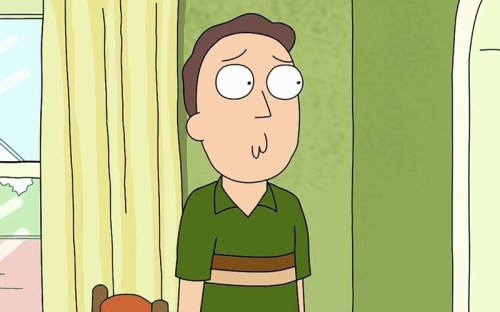
While “Rick and Morty” explores many concepts through many colorful characters, some more memorable than others, there’s one particular character who embodies a particularly distressing concept. That character is Jerry Smith, Morty’s father and Rick’s son-in-law. You could argue Jerry represents a lot of things in this show, but I would argue that Jerry Smith, more than any other character, represents us.

Chances are you’ve done something like this today.

By us, I don’t mean the people who watch regularly “Rick and Morty.” I’m not even referring to those exceedingly passionate fans who went ballistic on McDonald’s employees for not having any Szechuan Sauce. When I say that Jerry Smith is us, I mean that this colorful character that we love to laugh at represents the hopes, dreams, flaws, and foils of the entire human race.

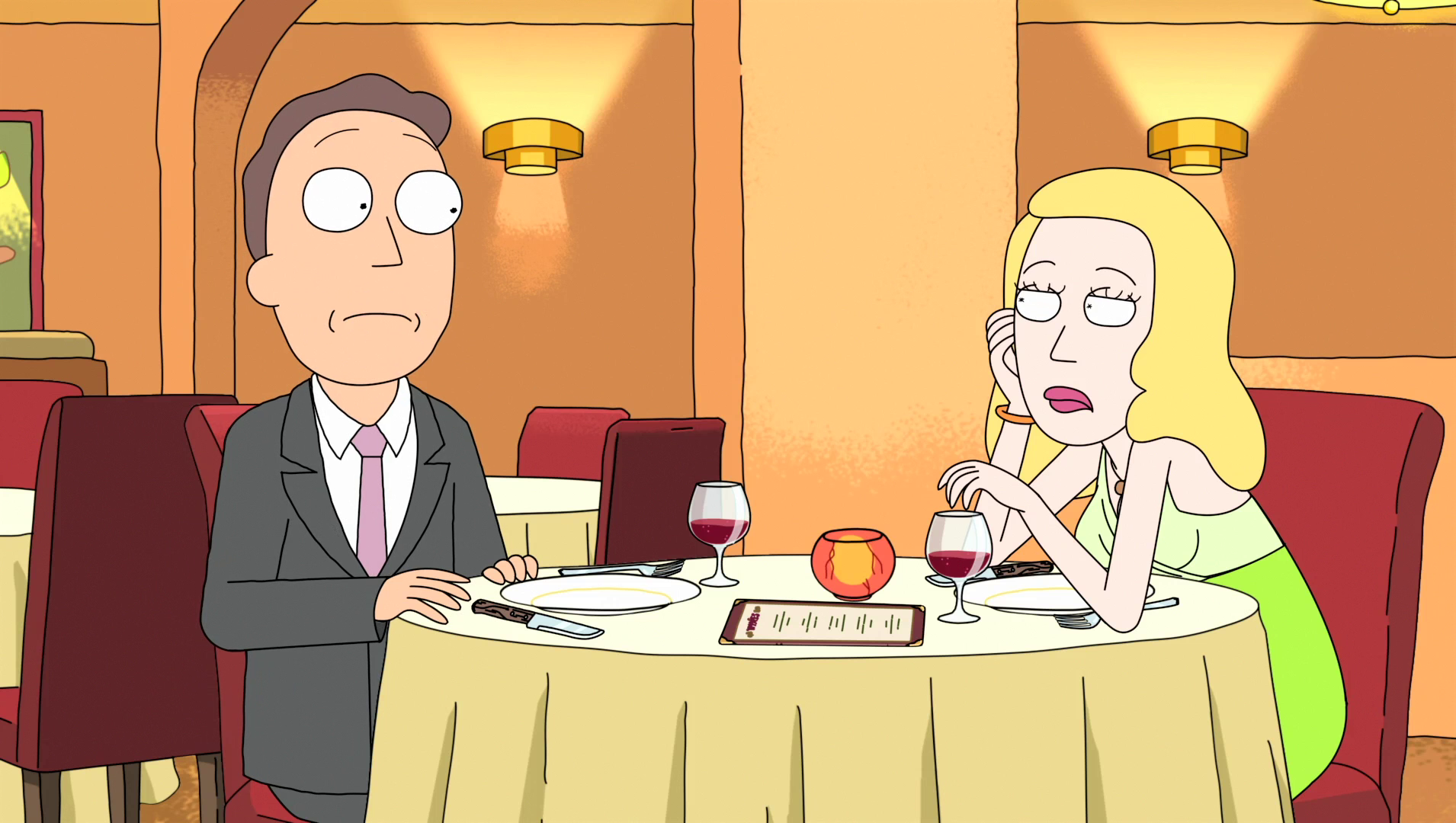
To understand this sentiment, it’s necessary to know who Jerry is and what role he plays in over-arching mythos of “Rick and Morty.” For the most part, he’s neither a protagonist nor an antagonist. He’s rarely a hindrance to the cosmic antics of Rick Sanchez and while he tries to be a capable father to Morty, his influence is limited, at best. For the most part, he’s an afterthought at best and an inconvenience at worst.

When the family has to ban together to fight off alien parasites, Jerry doesn’t do any fighting.

When the family first encounters the Council of Ricks, Jerry either cowers or is fodder for pranks.

Even when he does play a significant role in an episode, Jerry tends to make the problem worse with his actions or is the underlying catalyst for them.

Chances are you’ve been this frustrated recently.

It wouldn’t be accurate to say he’s completely inept. By and large, he is a respectable person who tries to do his best with his current situation. Granted, nobody in his family makes that easy for him, but there’s no doubting his intentions. He wants to do what’s best for his family, but his capabilities are exceedingly limited.

That’s understandable, given who he deals with. Rick Sanchez is an alcoholic super-genius who can travel across universes, enter other peoples’ dreams, and build intelligent robots whose sole purpose is to pass butter. His wife is a skilled horse surgeon who can also hold her own against Rick-level threats. His two kids are young, but still capable of handling themselves in a post-apocalyptic wasteland.

Pretty much every character in “Rick and Morty” demonstrates that they can handle themselves in the crazy situations that Rick often puts them in. When aliens, parasites, or intelligent dogs enter the picture, they can confront the situation and even help resolve it. Jerry has never shown that ability. Every time he tries, he either fails or makes it worse.

Or just looks foolish.

The reasons for his failure aren’t entirely his fault. Jerry’s biggest shortcoming is that he’s an ordinary person in a family of extraordinary people. In any other circumstance, he would be able to relate, understand, and cooperate with others. In an environment where alien creatures are kept in his garage, this just isn’t possible.

In essence, Jerry Smith is as powerless and inept as almost anyone else would be in that situation. That even extends to a real world full of Jerry Smiths and exceedingly few Rick Sanchezes. Unless your name is Elon Musk, Bill Gates, Tim Cook, or Barack Obama, you’ll have more in common with Jerry than you will with anyone else in “Rick and Morty.”

In many respects, that’s a little distressing. It reflects a hard truth that most people aren’t able to effect meaningful change that ripples across the multiverse. For the most part, they’re at the mercy of the powerful forces around them and people like Rick Sanchez who are able to guide them to some extent.

Drunk or sober, Rick will guide you.

Even when Rick Sanchez espouses his nihilistic rhetoric, it seems to hit Jerry and everyone else like him a lot harder. Even if nothing Rick does matters, he’s smart enough and skilled enough to pursue what he wants while minimizing the consequences. Jerry can’t do that. He can only ever react to the random meaningless chaos surrounding him.

Most everyone in the real world is in a similar position. When something crazy happens, be it a natural disaster or a controversial election, there’s little any of us can do about it. A select few, such as lawyers, judges, and other powerful politicians, may be in a position to effect some change. Everyone else is stuck watching, hoping, and living their meaningless lives along the way.

We can react to the meaningless chaos, but we rarely be proactive. If most people had that opportunity, they would likely mess it up in the same way Jerry messed up a simple Meeseeks Box. Even if your intelligence is above average, your credit score is good, and you have no criminal record, you’re still just one person. You can only do so much without a portal gun and a high-tech lab.

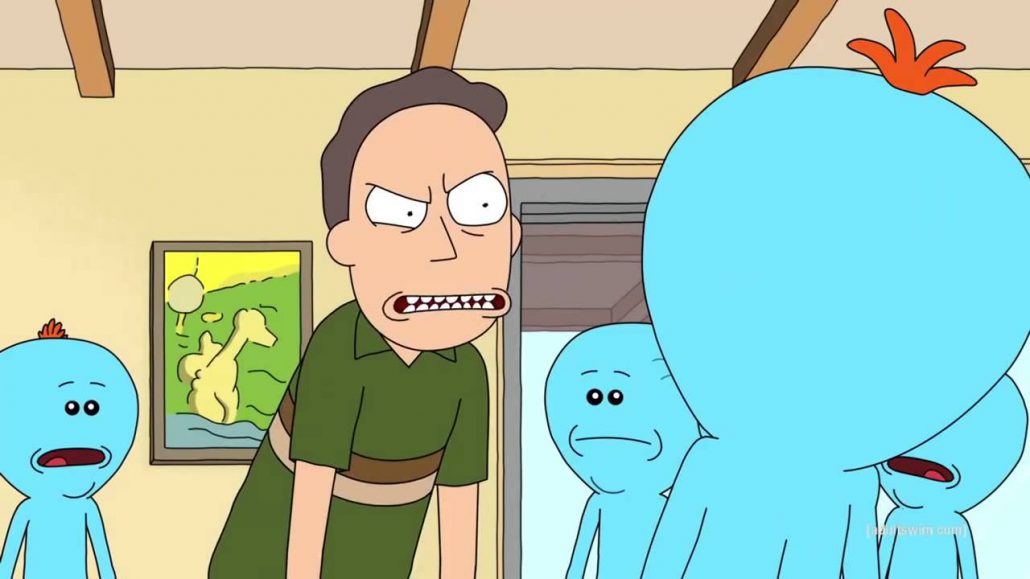
However, it gets even more depressing than that. Throughout three seasons of “Rick and Morty,” Jerry isn’t just shown to be inept whenever faced with a crazy situation. He’s also completely replaceable. This is best demonstrated in the episode, “Mortynight Run,” in which Rick takes Jerry to a special adult daycare center that’s specifically caters to keeping Jerrys from multiple universes safe.

It’s hilarious, but pragmatic for someone like Rick Sanchez because it gives him a place to keep Jerry from undermining his plans. It’s also disturbing how effective it is because as soon as Jerry arrives, he finds himself surrounded by other versions of himself. While upset and insulted, at first, he quickly finds himself enjoying the amenities that are tailor-made to pacify him.

By the end of the episode, it’s hard to tell what separates this Jerry Smith from all the other Jerry Smiths in the multiverse. In the end, even Rick and Morty don’t seem to care which one they take home. One Jerry is as good as any other. He’s basically an interchangeable part that fulfills as basic role and little else.

It’s a role in which many people in the real world find themselves. Modern society, especially after the industrial revolution, has reduced most ordinary people of Jerry Smith’s abilities to that of societal cogs. They’re not individuals as much as they are a mass of humanity that produces, consumes, and provides support for the select few who can achieve the kind of impact of a Rick Sanchez.

More than one episode of “Rick and Morty” has explored how society can dehumanize people and there are plenty of examples in the real world, as well. That dehumanization is just easier to inflict on someone like Jerry Smith. While Rick Sanchez may realize when he’s in a simulation, Jerry likely wouldn’t. In fact, he would be quite comfortable and content in such a simulation.

That’s the ultimate flaw in the character construct of Jerry Smith. By being so unremarkable, he is easy to outwit and even easier to placate. He’s basically a sheep that herders can keep docile just by making sure there’s fresh grass to eat. While Rick Sanchez isn’t always the herder, he and others like him knows how to guide the sheep whenever it benefits him.

Even the Devil is not immune.

Nobody will ever admit they’re just a sheep. People will tell themselves whatever they have to in order to believe that their lives have greater meaning than they actually do. Jerry does this more than once throughout the show. People in real life do so when they carry themselves as the heroic underdogs of their own movie. More often than not, it doesn’t amount to much, which even Morty points out at one point.

Like it or not, most people who aren’t rich, beautiful, or well-connected will always have more in common with Jerry Smith than with any other character in “Rick and Morty.” The number of Jerrys in the world will always vastly outnumber the Ricks. A huge chunk of society is structured around having a vast population of unremarkable, but easily placated Jerrys.

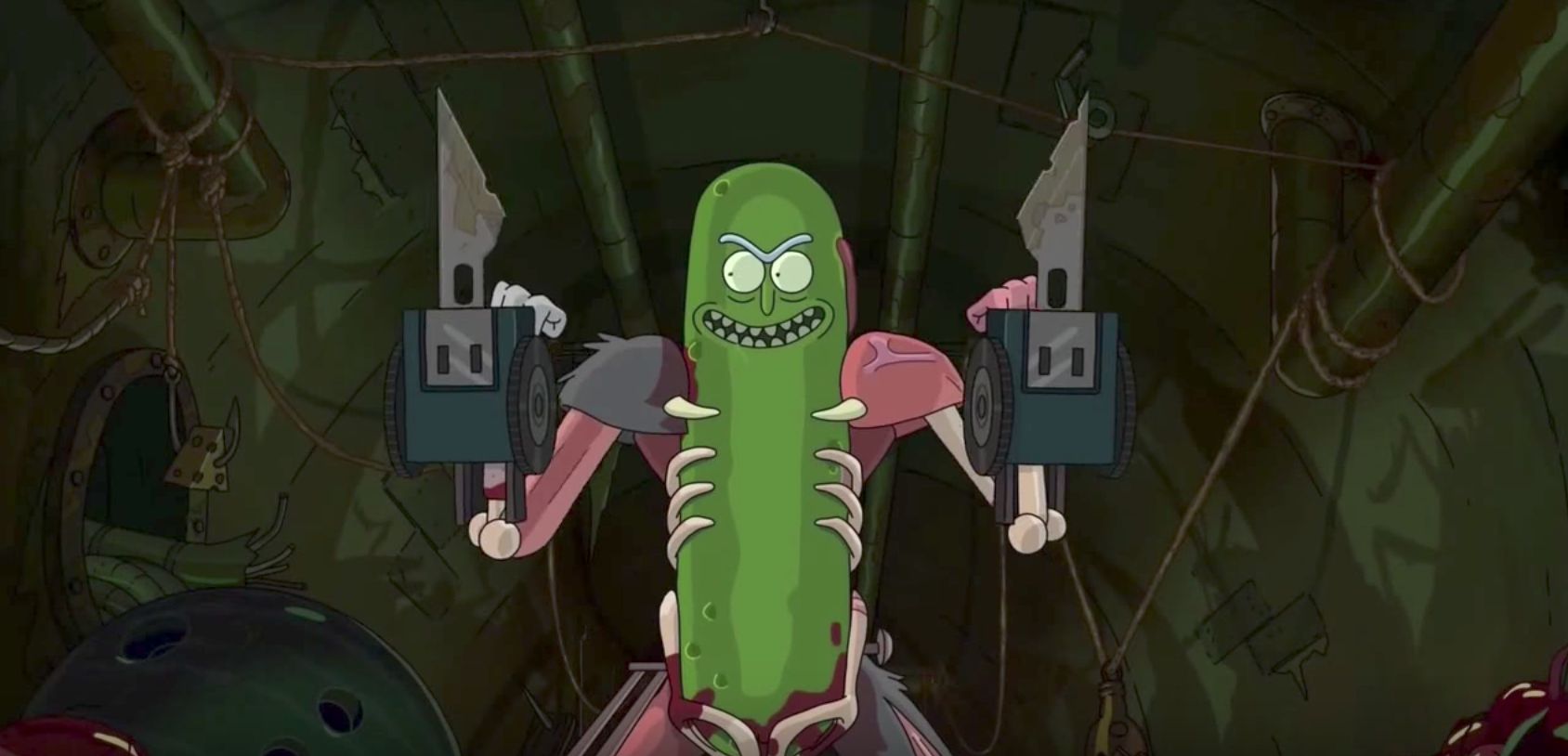
Whether we admit it or not, we are part of that system. We are the Jerrys who act as the cogs while the Ricks act as the operators. We don’t have the resources or genius of a Rick Sanchez so we can’t do much to subvert it. Even Rick can only do so much, even with his immense capabilities, which includes turning himself into a pickle.

It’s a bit depressing, but at the same time, there’s also a strange serenity that comes with the character of Jerry Smith. Even if he isn’t as capable as Rick or his family, he’s still someone who can find contentment and even peace in a chaotic world. Compared to Rick, whose famous catch-phrase masks his own inner pain, Jerry is probably happier overall, despite his meaningless lot in life.

Sometimes, ignorance is bliss, even if we’re oblivious to how ignorant we really are. In the long run, finding happiness will be easier for Jerry than it’ll ever be for Rick. For him, and the countless others who are just like him, the best recourse may be the same advice Rick often gives Morty.

Simply put, just don’t think about it.

2 Comments

Filed under human nature, philosophy, psychology, Rick and Morty, television

How “The Society” Humanizes Teenagers In A Refreshing (And Overdue) Way

the-society-netflix

As someone who hasn’t been a teenager for many years, I admit I have some unflattering perceptions of that demographic. Ask anyone over the age of 30 what they think of teenagers today and chances are you’ll hear more than a few complaints.

They’re too obsessed with their phones.

They’re too emotionally fragile and prone to outrage.

They’re too entitled, coddled, and sheltered from the real world.

You’ve probably heard those rants before and not just from Fox News. With those stereotypes in mind, imagine what would happen if a large collection of teenagers were left unsupervised and isolated in a large area for long stretches of time. What do you think would happen? How do you see that playing out?

Something like this, probably.

I don’t deny that I’d make some unflattering assumptions such a scenario. I would fully expect that they act erratically and irresponsibly. I would also expect for them to falter emotionally if left alone for too long. Having lived their whole lives within some system of authority and supervision, I wouldn’t expect them to function for very long on their own.

It’s those very assumptions that that “The Society,” a very binge-worthy Netflix show, dares to challenge. This thriller/mystery/drama is one of those shows that has all the right ingredients to play up every tired trope that teen-centered television show has explored for years. That was certainly what I expected when I discovered the show. I freely admit that those expectations were wrong.

The premise of “The Society” is built around a strange mystery that “Lost” fans should appreciate. One day, a large contingent of high school students get on a bus and leave the affluent New England town of West Ham for a 10-day camping trip. For reasons not yet revealed, the buses turn around and drop them off exactly where they picked them up.

Upon returning, these teenagers find out that all the adults in their town are gone. Near as they can tell, everyone just picked up and left. To further compound the mystery, they find out that all the paths leading out of the town have become dead ends. There are no neighboring towns to visit. As far as they know, there’s nothing but endless forests in every direction.

It’s genuine mystery with distressing implications. While the specifics are only partially explored in the first season, the mystery is only part of what makes the “The Society” such a compelling show. It doesn’t just put a bunch of hormonal, irrational teenagers in an enclosed area and let the drama tell the story. The show dares to humanize teenagers in a way that is exceedingly rare in a TV show.

By that, I’m not just referring to a handful of character that are well-developed and fleshed out. While there are certainly plenty of those in this show, it approaches how teenagers conduct themselves with more balance and nuance. It even makes the case that, in dire situations, they can come together and cooperate as well as full-fledged adults.

In the beginning, that’s not immediately apparent. When they all return to West Ham and find out the adults are gone, they react the way most would expect of decadent, hormonal teenagers if they were left unsupervised all night. However, the extent of their decadence never goes beyond a certain point.

To a point, being the key term.

Sure, many drink, they dance, and they hook up. A few just go home and turn in for the night, thinking nothing is amiss. They don’t do anything too outrageous, though. In essence, they conduct themselves the same way most single adults would if they knew there were no police or authority figures to stop them.

After that first night, though, things start getting serious. These teenagers, who still come off as kids in the first few episodes, realizes that something has gone very wrong. Their parents are gone. The adults are gone. Their entire town is completely cut off. They have no connection to the world beyond their town. They have a finite supply of food and little experience in terms of governing themselves.

It’s a scary situation. Some handle it better than others, but a few start to crack under the pressure. For some, especially Campbell Eliot and Lexie, the situation reveals sides of their personality that probably wouldn’t have otherwise emerged. That tends to happen with most people in extreme circumstances, but being a teenager tends to raise the stakes even more.

The fun and games quickly end. People start getting hurt. There are even a few deaths, which has a significant impact on everyone in the town. It sends a clear, unambiguous message. This isn’t just about hanging in there until their parents find them. They have to survive and they can’t do that unless they work together.

On paper, it sounds like it can only end in disaster and it certainly comes close, especially towards the end of the first season. Again, these are teenagers. Most people don’t expect them to function beyond a certain point. While “The Society” doesn’t strip away everything in the mold of “Lord of the Flies,” it removes enough to make the situation dire.

They still have electricity, running water, and shelter. However, their food supply is finite and there’s a distressing lack of expertise in everything from basic medical care to fixing a car. In order to survive, they must create a system of governance to keep the peace. If they don’t, then everybody suffers.

This is where “The Society” really shines, both as a story and as a concept. It’s also where it explores how teenagers, despite their maturity and lack of experience, can come together when they have to. They’re not perfect, but neither are experienced adults. They do find themselves in painful, heart-wrenching situations that include murder, illness, and despair. However, things never totally fall apart.

To anyone who has ever tried to explain student loan debt to a teenager, it almost seems absurd. The idea that a bunch of unsupervised teenagers can somehow form a functioning society just doesn’t fit with the common narrative surrounding teenagers.

In that narrative, things always tend to devolve until the adults return to impart the proper amount of discipline. Look at any movie, sitcom, or rowdy music video and the themes often come back to teenagers being out of control and needing the discipline of responsible adults. “The Society” makes the case that teenagers can become responsible on their own, albeit after some setbacks.

There are still many factors working against them. We’ve yet to see what happens to the citizens of New Ham, as they dubbed it, when the food runs out and they have to start farming the land. We also haven’t seen them endure a harsh New England winter. However, “The Society” never gives the impression that these young people are incapable of overcoming these challenges.

By the end of the first season, it’s easy to root for them. The emotional toll is palpable and so are the difficult decisions that many end up facing. Over the course of the show, however, it’s easy to see the progression that they all experience. It’s hard to even see them as teenagers anymore. Some conduct themselves as true, full-fledged adults.

While the mystery surrounding “The Society” is still unfolding, complete with fan theories and potential clues, the show’s approach to depicting teenagers is its greatest accomplishment in my opinion. If there is a second season, I’m definitely interested in seeing how these characters and their over-arching story progresses.

I doubt “The Society” will change anyone’s current attitudes of teenagers. There will surely be other shows and movies that double down on the many stereotypes surrounding them. If nothing else, “The Society” shows that teenagers are capable of carrying a story without adults complaining about them.

2 Comments

Filed under human nature, philosophy, psychology, television

“King of the Hill” Vs. “F is for Family” And The Evolution/Disillusion Of The American Dream

image-20160331-28459-18j5spk

What happened to the American Dream? That’s a question more and more people are asking these days. It’s a question people have been asking in some form or another for decades. Even if you’re not American, it’s relevant because as politics and economics become more global, there’s a sense that a great many people are being left behind. More recently, it feels like that trend is accelerating.

Since I’m not a political scientist or an economist, I’m not qualified to break down all the factors behind these trends. However, given my age and relative experiences, I’ve witnessed many of the changes and upheavals that have shaped the current state of affairs. Over that period, I’ve even seen those changes reflected in two iconic animated TV shows from two disparate eras.

One is “King of the Hill,” a colorful slice of the late 90s/early 2000s cultural zeitgeist. The other is “F is for Family,” a show that, despite taking place in the 1970s, heaps plenty of scathing criticism on current American ideals. I’ve written about both shows before, citing the former as a lesson in work ethic and the latter as a perfect satire for its time. I also consider myself a fan of both shows.

Combined

On their own, they each have their own sense of style, story, and overall humor. They’re both entertaining and endearing in their own unique way. When placed side-by-side, though, they reflect an even greater message that goes beyond the themes of either shows. That message can be summed up with one harsh realization.

The American Dream isn’t just failing. Those who pursue it are being punished.

I know it sounds bleak, if not fatalistic. It’s certainly not a message that “King of the Hill” and “F is for Family” ever state overtly. However, when placed in the context of their time and their over-arching themes, the overarching themes are clear, if not unavoidable.

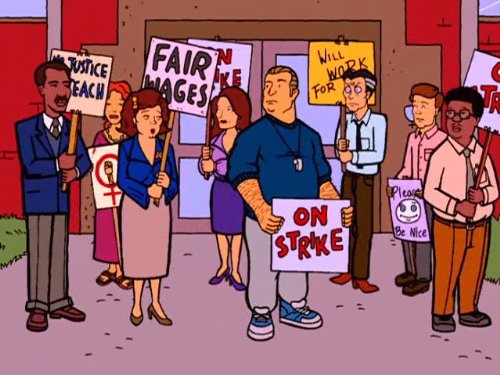
In terms of ideals, Hank Hill and Frank Murphy have a lot in common. They’re both hard-working American men who see themselves as embodiments of American values. They take pride in their roles and responsibilities as husbands, fathers, and providers. They’re active in shaping the identity of their community. They both have an idealized vision of what the American Dream entails.

Some of those similarities extend to their family and how they impact the structure of the show. Many plots in “King of the Hill” and “F is for Family” revolve around Hank and Frank reacting to events that happen within their family. They have wives that seek their own path and kids who rarely appreciate the work they do. Much of the comedy in each show emerges from these conflicts.

The face of many such conflicts.

Things really start to differ when the bigger picture of their respective worlds comes in. Whereas “King of the Hill” reflects a more optimistic view of the world that was more prevalent in the late 1990s, “F is for Family” paints a more dire picture. In Frank’s world, American ideals are failing and he’s struggling just to keep that vision alive.

In just three seasons, Frank has lost his job, struggled to provide for his family, and had his dreams derailed again when his wife gets pregnant. While his temper and his penchant for threatening to put people through walls don’t help, many of the factors that put him in such situations aren’t his fault. In fact, his tendency to do things the right way, as Hank often does, often work against him.

This isn’t even Frank’s worst day.

Within this dynamic, “King of the Hill” and “F is for Family” diverge in a critical way that speaks to the larger issues surrounding the American Dream. In the world of “King of the Hill,” doing the right thing and following American values are rewarded. It’s one of the show’s most common themes over the course of 13 seasons.

In this world, working hard at a blue collar job is fulfilling, respectable, and rewarding.

In this world, a man can support his family with a job that involves selling propane and propane accessories.

In this world, people who take short-cuts or try to avoid hard work ultimately fail.

In this world, a man who marries the woman he impregnates is rewarded with respect, support, and admiration.

Simply put, adhering to principles of hard work, high morals, and personal responsibility will help someone achieve the American dream. Hank Hill, with his quaint suburban house and supportive community, is the personification of these principles. It’s not always easy for him, given his influences, but that only makes his adherence to those principles more respectable.

This is virtuous system is not present in “F is for Family.” If anything, it’s turned upside down. Frank Murphy followed those principles as closely as Hank. He put his personal goals on hold when his wife got pregnant. He served his country dutifully when he got drafted. He works hard and provides, despite having a slob for a boss. However, his efforts go unrewarded. If anything, they’re punished.

In Frank Murphy’s world, a hard-working man can save the company he works for, but still get fired.

In Frank Murphy’s world, marrying your pregnant girlfriend instead of following your dreams will only get you ungrateful kids, a miserable wife, and an unfulfilling job.

In Frank Murphy’s world, people who eschew hard work and behave irresponsibility are rewarded with cocaine-fueled parties and trophy wives.

In Frank Murphy’s world, a corporation can steal your idea and make millions off it while you don’t even get credit.

The system is harsh, unfair, and completely unconcerned with who adheres to American ideals. The only thing that ever seems to matter is dumb luck and already having significant wealth or privilege. Sadly, this is a lot more consistent with the current state of affairs where the rich and powerful exact immense influence, creating a system that benefits those at the top while straining everyone else.

Frank yelling on behalf of America.

This unfair system even extends beyond the political and economic sphere. In “F is for Family,” there are multiple characters who seem to succeed, no matter how little they work or how unmotivated they are. It’s not unlike those who flaunt their lavish lifestyles on Instagram, which is often fueled by inherited wealth that they did not work for or earn.

That kind of system wouldn’t just leave Hank Hill aghast. It would completely undermine his world, his identity, and his ethics. Whether he would resort to putting people through walls instead of just kicking asses is difficult to determine, but the bigger picture is clear. The American Dream in his world is intact whereas its reversing course in “F is for Family.”

To some extent, this reversal is consistent with how the world has been trending since the late 1990s and early 2000s. People have become increasingly cynical and trust in institutions is declining. Thanks to the media and the internet, it’s getting harder to hide the harsh realities of a world where just doing the right thing isn’t enough anymore. Despite taking place before the internet, “F is for Family” perfectly reflects this reality.

The face of that harsh reality.

It creates a dynamic that’s bound to create more Frank Murphys and fewer Hank Hills. People are told that the American dream is still in their grasp. They just have to be like Hank, playing by the rules, working hard, and not taking shortcuts. Those who buy into that dream aren’t just let down. They’re outright punished.

Frank didn’t become a profanity-spewing rageaholic overnight. As perfectly depicted in the show’s opening credits, the various machinations of this unfair system just kept hitting him and no matter how hard he worked or how much he sacrificed, he never got closer to the American Dream. If anything, it just kept getting farther away.

Both “F is for Family” and “King of the Hill” have plenty to offer in terms of insights. Their respective worlds may take place in an animated world where former presidents and future serial killers can show up, but such exaggerated dynamics help each show convey a certain message that fit perfectly within the context of a certain time.

The idealism in “King of the Hill” and the satirical deconstruction in “F is for Family” paint conflicting pictures of the American Dream. Both still glorify it as an ideal, but each present a different understanding of how it plays out. Within the comedy, there are genuine, relevant messages worth considering.

For many people in the real, non-animated world, the American Dream still matters. Many still work as hard and as passionately as Hank Hill and Frank Murphy. It’s hard enough when those efforts go unrewarded, but when doing the right thing becomes a liability, it’s hard to call it a dream.

2 Comments

Filed under Current Events, F is for Family, human nature, King of the Hill, philosophy, political correctness, psychology, television

Why The Republic Of Gilead Would Fail (Spectacularly) In The Real World

w3yn9m9s-1490826576-991x470

In recent years, there has been a great deal of dread among feminists, libertarians, and supporters of secular values in the United States. The country seems to be going down an authoritarian path. Traditions of liberty and personal freedom are under threat by a government that seems more inclined to micromanage peoples’ lives for their own benefit.

One path in particular is becoming a lot more prominent. That is the one that could lead the United States to a government like that of the Republic of Gilead, the repressive theocratic regime from Margaret Atwood’s novel, “The Handmaid’s Tale.” In that system, gender politics are pushed to the utmost extreme. The freedom, equality, sex, and love that contemporary society enjoys doesn’t exist.

The reasons for these fears are many. The current state of gender politics has become heated with the rise of the anti-harassment movement and ongoing legal battles surrounding abortion access. During the protests surrounding upheavals on the Supreme Court, it was common to see female protesters dressed in the distinct garb from the “The Handmaid’s Tale.” Such protest has even spread to other countries.

The message is clear. People are worried that our society is inching closer to a world similar to the repressive gender politics of Gilead. I can certainly understand those concerns. While I’ve often criticized certain aspects of gender politics, I don’t deny the worry that many women feel about the current state of affairs.

That said, I believe the idea that the United States, or any western country for that matter, could descend into a state of gender apartheid like Gilead is absurd. While we should be concerned about the influence of religious extremism, even in the west, the chances of it ever gaining power on the level depicted in “The Handmaid’s Tale” is precisely zero.

Even if a regime like it came to power, it wouldn’t just fail quickly. It would collapse so spectacularly that it would be a joke on par with the Emu War. Gilead is not this all-encompassing, overwhelming power on par with Big Brother in George Orwell’s “1984.” Atwood even implied at the end of “The Handmaid’s Tale” that the regime was set to fall.

We’ve yet to hear that part of the story, but Atwood did announce that she’s working on a sequel. One way or another, Gilead’s days are numbered, even in the fanciful world that she created. Before then, I’d like to break down why the Republic of Gilead would be doomed if it ever attempted to set up shop in the real world.

If nothing else, I’d like to offer some perspective to those who fear that the state of gender politics is regressing. To those people, I share your concerns. However, I’m an optimist. I believe both feminists and men’s rights activists can and will find plenty of common ground on these issues in due time.

Even if they don’t, they can take comfort in knowing that Gilead, as both a philosophy and a system, is so flawed that dreading it is an exercise in hyperbole. There are still plenty of lessons to be learned from “The Handmaid’s Tale,” but in terms of setting up a competent theocratic regime, it’s a perfect check-list on what not to do.


Reason #1: Establishing Gilead Would Collapse The Economy

One of the first things the Sons of Jacob did when they established Gilead was fire every woman from their job and effectively eliminate their legal rights. On top of it being an exercise in brutal oppression, it removed half the labor force from the economy. In 2010, there were approximately 123 million women in the workforce. Firing every one of them wouldn’t just cause a huge recession. It would destroy the economy at every level.

Even the most ardent anti-feminist would be badly hurt by a world where half the GDP just disappeared. Suddenly, the industries that everybody relies on just cease functioning. Baking, health care, technology, and basic services essentially collapse as both the labor pool and the consumer base disappears.

That means from the very beginning, Gilead would have to navigate the worst economic collapse in history. More often than not, governments that cause collapses or fail to recover from them don’t last very long. Even if the Sons of Jacob found a way to blame it on minorities, feminists, or other religions, they would still be on the hook for fixing things and doing so with half the labor force will be difficult, to say the least.

Beyond the logistics, destroying an entire economy as part of a religious crusade is going to piss off some very powerful people who were thriving in the current system. America, alone, has over 500 billionaires whose massive wealth would be threatened by such a collapse. People with those kinds of resources aren’t going to let Gilead succeed, even if they manage to seize power.


Reason #2: Micromanaging Peoples’ Lives Is Impossible (In The Long Run)

I’ve noted before that fascist systems have many fundamental flaws. There’s a reason why some of the most brutal, authoritarian regimes in history still ended up collapsing. In the long run, they find out the hard way that it’s just impossible to effectively manage the lives their citizens.

The Republic of Gilead is a lot like Big Brother in that it takes micromanaging to a ridiculous extreme. It doesn’t just have its own secret police to enforce a rigid caste system. Much of its governing philosophy relies on ensuring people stick to their roles and never deviate. Women do what the state requires them to do without question. Men do the same, right down to how they structure their families.

That system only works if human beings are like machines who never get bored doing the same thing over and over again for their entire lives. Since human beings are not like that, there’s no way that kind of society can remain functional in the long run. The fact that the boredom of solitary confinement drives people crazy is proof enough of that.

It still gets worse than that. In every revolution, there’s often a period of heavy solidarity when the people rally behind the new regime as the beginning of a new Utopian vision. This happened in the Russian Revolution and during the Cultural Revolution in Communist China. Unfortunately for Gilead, it came to power by brute, terrorizing force.

That means this government coming to power isn’t the will of the people. It’s just plain bullying and people tend to resent that sort of thing. Even the Iran Revolution had the good sense to rally the people. The Republic of Gilead didn’t bother with that. It’s hard to imagine that collapsing the economy and subjugating half the population at gunpoint will make them many friends.


Reason #3: Theocracies Are The Least Stable Forms Of Autocracies

Remember when a purely theocratic state managed to prosper without being located atop an ocean of valuable oil? I don’t either and there’s a good reason for that. When it comes to repressive authoritarian states, theocracies are the worst possible choice. That’s because by entwining government with religion, it’s also entwining itself with the various flaws of religion.

Big Brother didn’t bother with religion in “1984.” It didn’t have to because religion, for all intents and purposes, was obsolete. The authority of the state and the authority of a deity was the same thing. The Republic of Gilead doesn’t have that luxury. Their politics and theology is based on an extremely conservative form of Christianity.

While that may seem fine to the Pat Robertson’s of the world, it adds a whole host of complications to the mix. The Sons of Jacob justify their repressive actions by appealing to Christianity and the bible. That’s okay if every single person in the entire republic agrees on one single interpretation of a religion and its holy text. Unfortunately, that has never occurred in the history of humanity.

There are dozens upon dozens of denominations in Christianity. There are also fringe cults, radical sects, and even schisms within those groups. At most, Gilead could have a unified theology at the beginning, but as new generations come along, that unity will collapse.

People will inevitably disagree. Every side will claim God is with them and everyone else are heretics. This sort of thing has been happening with religion for centuries. It won’t stop in Gilead. At some point, someone is going to think they heard God tell them something else and no one will be able to convince them otherwise. When that happens, conflict will ensue.

That sort of conflict can be managed in a more secular dictatorship. When government and religion are entwined, though, it’s much harder to work around. Even if Gilead could survive an economic collapse and the logistics of micromanaging peoples’ lives, it’s very unlikely it’ll survive the never-ending onslaught of religious debates.


Reason #4: Gilead Would Be An Easy Target For Invasion

Whether you’ve read the book or only watched the TV show, it’s hard to tell what sort of geopolitics the Republic of Gilead deals with. There are a few hints that there are other countries who did not descend into theocratic repression. There are even some cases of refugees in neighboring areas where women still have their rights.

The existence of those neighbors is yet another complication that ensures Gilead won’t last long, no matter how much its leaders pray. It already created a huge refugee crisis when it took over a sovereign government by force. At the same time, it handicapped itself by collapsing its economy and relegating half its population to serve as baby factories. It’s not just a source of chaos. It’s an easy target.

Neither the book nor the show reveals much about Gilead’s military capabilities. Even if we assume they get their hands on nuclear weapons, they’re still vulnerable because other countries have them too. More importantly, they know how to operate and maintain them. Religious zealots are good at a lot of things, but science isn’t one of them.

In the same way creationists aren’t likely to understand quantum mechanics, an entire government run by religious extremists aren’t likely to manage advanced weaponry. As time goes on, their emphasis of religion over reality will undermine their ability to develop such weapons. Their secular neighbors will have no such qualms.

Letting Gilead endure with its religious extremism and gender oppression means establishing a precedent that most other countries don’t want. Seeing one country fall to such a violent overthrow would be jarring enough. The first reaction to every nearby country would be to take steps to ensure it doesn’t happen to them. One of those steps could be overthrowing Gilead before one woman has to wear those goofy outfits.


Regardless of how you feel about “The Handmaid’s Tale” or where you stand in terms of gender politics, the book offers a powerful message. Like “1984,” it shows how bad things can get when extremism takes hold. Whether you’re a man, woman, or transgender, we have a lot more incentive to get along rather than fight one another. At the end of the day, that will ensure that Gilead remains nothing more than a flawed, fictional country.

Leave a comment

Filed under Current Events, gender issues, human nature, Marriage and Relationships, men's issues, outrage culture, political correctness, psychology, religion, sex in society, sexuality, television, women's issues

Understanding And Appreciating The Work Ethic Of Hank Hill

nol3t

As kids, we don’t always appreciate the deeper messages of certain TV shows, movies, or songs. I imagine most kids who saw “Jurassic Park” in 1993 didn’t care that much about the larger points Ian Malcom made about tampering with nature. They just loved seeing dinosaurs eat cowardly lawyers off toilets.

That’s why re-watching shows you loved in your youth can be insightful. Sometimes, it can be a little distressing, seeing themes that aren’t quite in line with today’s taboos and social norms. However, I don’t want to focus on those unpleasant instances. Instead, I want to focus on insights that we appreciate more as adults than we do as kids.

This brings me to a show that, even by today’s standards, has uncanny appeal. That show is “King of the Hill,” a show I’ve already singled out as home to Hank Hill, a strong example of noble masculinity. After rediscovering the show, thanks to Hulu, I’ve found myself appreciating the less obvious messages of the show.

One clear message that seems to come up several times over the course of the show’s 13 seasons is the value of a work ethic, especially when contrasted to those who have none. It’s a value few kids and teenagers appreciate. That’s understandable because in the innocence of youth, most go out of their way to avoid hard work or laborious tasks.

What makes “King of the Hill” stand out, more so to adults than to kids, is how it portrays work and the way people go about it. One of Hank Hill’s core traits is his dedication to his job. Among his most memorable and oft-repeated quotes is that he sells propane and propane accessories. That’s not just his job, though. It’s part of his identity.

Hank, unlike many male protagonists in animated sitcoms, actually loves his job. It’s not just something he does to pay the bills and provide for his family. He genuinely loves selling propane and propane accessories. That love is played up in plenty of comedic ways. In one episode, “Hank’s Back,” even doctors had a hard time believing that anyone would avoid a worker’s comp settlement.

What makes that comedy work is the common expectation that few people actually like their jobs. If they do, it’s only because they’re rich and it affords them all sorts of fancy perks. However, Hank is not rich. One episode even goes out of its way to show that, even by middle class standards, he’s not that well off. He’s no Al Bundy, but he’s not Charlie Harper, either.

That doesn’t matter to Hank because his is not entirely about money or even the opportunity to make more money. It’s about doing something he loves and deriving real meaning from it. His job selling propane and propane accessories gives him a unique sense of fulfillment that can’t be quantified with money.

This sort of approach to work isn’t just unique among sitcom dads. It reflects an approach to work that is rarely emphasized, even in a world where work is changing due to automation. Growing up, the nature of work and careers is presented in a certain way. It’s not always through the media or movies like “Office Space,” either.

When kids and teenagers are encouraged to think about future careers, it’s almost always framed as a means to an end. First and foremost, a career provides money and resources with which to build a life, whether it’s a family or just a home in general. It’s part of a much larger process of becoming a productive member of society.

Most counselors and teachers will encourage kids to find a career they actually like. That’s the ideal. However, it’s a poorly-kept secret that few people ever land their “dream job.” Just as few people end up working jobs that are related to their college major. On top of that, many of these people who graduate college are underemployed, which put them in a similar position to Hank.

To some extent, Hank Hill is in an ideal career because he’s doing something he loves and he’s getting paid for it. That alone sets him apart from many career-seekers, both in the real and fictional world. However, the love he has for his work and his career actually runs deeper than that.

To him, his job isn’t just a means to an end. It is the end. The work itself is the reward. The money he makes is only ever secondary. For Hank Hill, the best moment of his job isn’t when he gets his paycheck. It’s when he sees the look on a satisfied customer’s face when he sells them a new grill or helps them refill their propane tank.

That kind of fulfillment isn’t just rare in an animated sitcom that includes a self-professed conspiracy theorist who never realizes that his wife cheated on him for years. It’s a rare and unique state of being, having a job in which the work feels so rewarding. Even in the real world, this sort of mindset is rare, which is part of what helps set Hank Hill apart.

For most of human history, people didn’t have careers. They just had things they had to do to survive another day, whether it involved hunting and gathering or growing crops. In modern times, a new host of jobs gave people a variety of ways to earn a living, but the nature of the work was rarely fulfilling and often laborious.

The idea of having a job that you actually like and feeling fulfilled in the work you do is akin to a modern nirvana, of sorts. It takes the very idea of work and turns it into something other than that stuff people have to do in order to make money. Hank isn’t just lucky in that he has that kind of job. He’s got the perfect attitude for it.

That attitude of seeing work as something inherently fulfilling often puts him at odds with other characters and sub-plots throughout the show. On many occasions, Hank’s approach to work often clashes with other characters who go out of their way to avoid hard work or seek to make as much money as they can for as little effort as possible.

His son, Bobby Hill, often embodies that sentiment and not just because he’s terrible in gym class. In multiple episodes, Bobby’s fondness of laziness is not very subtle. When faced with the prospect of having to work hard, he usually does what he can to avoid it. More often than not, trying to avoid the work backfires or ends up being more laborious than the work itself.

He’s not the only one who harbors this attitude. Hank’s loud-mouthed neighbor, Kahn Souphanousinphone, attempts more than one get-rich-quick-scheme throughout the show. To him, work is always a means to an end. Even though his job affords him more money and better material assets, or so he claims, he rarely comes off as fulfilled as Hank.

Even when money isn’t the endgame, others still approach work with a different end in mind. Hank’s wife, Peggy, approaches her job as a substitute teacher with more passion and purpose than most. For her, though, the work she does is less about the money and more about feeding her inflated ego. In some cases, it borders on outright narcissism.

Regardless of intent or goal, “King of the Hill” often comes back to the same theme with respect to work. Hank, for all his faults and shortcomings, has the right attitude when it comes to work. It’s not just about having your dream job and doing what you love for a living. It’s about seeing work as inherently fulfilling, regardless of money or material aspirations.

At a time when the future of work will likely change what it means to have a career, Hank Hill may very well be ahead of his time. Even in the current work climate, his has major value. It’s a perspective that most kids and teenagers don’t appreciate. For some, it may not even be an idea they’ve ever contemplated, the notion that a job could be so inherently fulfilling.

It may still seem like an impossible ideal for many, but Hank Hill shows that it’s not that impossible. Selling propane and propane accessories isn’t one of those jobs that requires a rare set of skills or talents. It requires only basic people skills, salesmanship, and a working knowledge of propane.

Hank didn’t go to college and he didn’t go through some rigorous training to achieve what he achieved. He simply took a simple job selling propane and propane accessories and made it part of his passion. Even in an animated world where impossible things can happen, Hank makes his approach to his job feel attainable, even in the real world.

Appreciating Hank’s work ethic was not the first thing that appealed to me when I watched “King of the Hill” when it was still on the air. However, as I get older and see people wrestle with their careers, I see more and more merit to Hank’s approach to work.

I don’t deny that hard work can be tedious, at times. I also don’t deny that every job, even so-called dream jobs, have bad days every now and then. Even Hank has a few bad days at Strickland Propane throughout the course of the show. That still never discourages him from doing his job as well as he does it and getting genuine fulfillment from it.

There are plenty of lesson in “King of the Hill” that are as relevant now as they were when the show first aired. It’s possible for people of all ages to appreciate those lessons and the comedy that comes with it. That’s part of what made the show so successful for so many years.

When it comes to work ethic and approaching a career, Hank Hill stands out more than most. He sells propane and propane accessories better than anyone has or probably ever will, but that’s not the point. For him, the work itself is the greatest reward. Whether you appreciate his many other quirks or not, that’s a sentiment worth respecting.

5 Comments

Filed under human nature, media issues, noble masculinity, philosophy, television

A Devilishly Sexy Promo For “Lucifer” Season 4

lucifer

Not long ago, fans of “Lucifer” like myself were upset by the news that Fox had canceled the show after three seasons. Then, in a miracle worthy of the devil himself, Netflix saved the show and gave it a fourth season. If that weren’t wondrously unholy enough, a teaser came out today that takes devilish sex appeal to a whole new level.

I could write a million of the sexiest novels. I’ll never be able to put into to words just how hot it is so I’ll just show it.

Whether you’re gay, straight, bi, trans, religious, or an ardent atheist, there’s no getting around it. Lucifer is sexy as hell in the most literal way possible. May 8, 2019 cannot come fast enough.

Yes, I realize that’s a poor choice of words. No, I do not care.

Leave a comment

Filed under Lucifer, television

Done Deal: The Disney/Fox Merge Is Complete!

As Micky Mouse himself would say, “Oh boy!”

As of 12:02 a.m. on March 20, 2019, the deal that has been 18 months in the making is complete. Disney and Fox are officially merged in an intimate corporate entanglement that sounds extra-sexy to fans of the X-Men and Fantastic Four.

There are a lot of implications here. The media landscape will never be the same. I’m neither smart enough nor psychic enough to make sense of those implications. However, I’m certain there will be plenty to discuss in the coming years. As a fan of superhero movies and all things awesome, I’ll be keeping a close eye on it and I’ll certainly single out the stuff that’s extra sexy.

Until then, let’s all just take a moment to appreciate the bold new, Disney-dominated world we live in now.

Leave a comment

Filed under Marvel, movies, superhero movies, television, X-men

The Secular Theology of “Lucifer” (The TV Show)

lucifer

What happens when you die?

Does our consciousness live on in some form?

Is there a way in which people who escaped punishment in life ultimately face it in death?

These are distressing, but profound questions that form the backbone of nearly every major religion. From the major Abrahamic faiths to the lore of ancient civilizations, there are many ways to approach this question. We all contemplate our mortality at some point and wonder/dread what will happen after our mortal bodies fail us.

Even some non-believers have mused about it at some point. Whereas religion tends to speculate wildly on the possibilities, an secular view of the afterlife isn’t too different from how it views deities. In the same way there’s no evidence for any gods or supernatural forces, there’s no evidence that consciousness exists outside the human brain.

That’s what makes the recently-canceled, but saved by Netflix show, “Lucifer,” such a compelling contributor to this age-old question. Beyond Tom Ellis flexing his uncanny charm, the show achieves something remarkable in how it approaches gods, angels, demons, and the afterlife. I would even go so far as to say that it crafts a theology that affirms secular values over those of any religion.

By that, I don’t mean that “Lucifer” glorifies atheism or non-religious worldviews. If anything, one the show’s common themes is that glorifying any worldview is pointless. It’s surprisingly balanced in how it portrays religious and non-religious characters. The show contains respectable believers like Father Frank Lawrence and deplorable non-believers like Jimmy Barnes.

When it comes to addressing those age-old questions about deities, the afterlife, and morality, though, the show crafts a mythos that doesn’t play favorites. In the world of “Lucifer,” it doesn’t matter whether you’re a Christian, Muslim, Scientologist, Buddhist, or Pastafarian. Your life and your afterlife are subject to the same standards.

To understand those standards, it’s necessary to understand the influences of the show. Before Tom Ellis put on an Armani suit, the story of Lucifer Morningstar emerged in a the critically-acclaimed graphic novel, “The Sandman.” Even if you’re not a comic book fan, I highly recommend this book. There’s a good reason why it’s in Entertainment Weekly’s 100 best reads from 1983 to 2008.

While there are many differences between this comic and the TV show, the core tenants are the same. Lucifer Morningstar once ruled Hell, but decided to abandon that role and set up shop in the mortal world. Much like Tom Ellis’ character in the show, this version of Lucifer resents the stereotypes and misunderstandings surrounding him.

He’s not the source of all evil. He’s not the Lord of Lies, either. In fact, Lucifer has his own personal code of conduct and chief among that code is not lying. It goes beyond just telling the truth, though. Lucifer doesn’t sugarcoat anything, nor does he tell only part of the story. He tells the truth in the clearest, harshest way possible.

The show captures many of these elements. In the first episode when he meets Detective Chole Decker, he says outright who he is and isn’t coy about it. While she doesn’t believe he’s the actual devil, he sets a similar tone in how wields the truth. He’s not afraid to shove it in peoples’ faces and let horrifying realizations do the rest.

That emphasis on hard truth, both in the show and the comics, closely mirrors a secular approach to reality. It doesn’t matter how strongly you believe or don’t believe in something. The truth doesn’t change. People can spend their entire lives avoiding it, making excuses or crafting elaborate mythologies.

Whether someone identifies as atheist or agnostic, the premise is the same. If there’s no verifiable evidence, then you can’t say something is true. That leaves a lot of uncertainty about the nature of life, the afterlife, and everything in between. For many people, that’s just untenable and that leads to all sorts of contemplation and speculations.

It only gets worse when there’s considerable evidence to the contrary, which those who cross Lucifer often learn the hard way. While the comics touch on this to a limited extent, the show is much more overt. It often occurs when Lucifer flashes his true form to others. Most of the time, their reaction is one of unmitigated horror and understandably so.

These people, whether they’re cold-blooded killers or schoolyard bullies, just got a massive dose of exceedingly heavy truth. They just learned that the devil is real. Hell is real. Angels, demons, and deities are real. That also means it’s very likely that there’s some form of life after death. For those who have done bad things, that’s a genuinely terrifying prospect.

The details of that terror are explored throughout the show, especially in the first and second season. It’s here where the show distances itself from the fire and brimstone of the Abrahamic faiths. It even differs considerably from the hellish visions of Eastern religious tradition. To some extent, it takes the ethical concepts of secular humanism and crafts a prison around it.

That prison doesn’t involve pitchforks, fire, or monsters who chew on the souls of history’s greatest traitors. In the divine world of “Lucifer,” Hell is dark domain in which the souls of sinful mortals are punished for the misdeeds they committed in life. How that punishment plays out varies from soul to soul.

In the first season, Malcolm Graham spends a brief time in Hell, relatively speaking. He describes it as a place that takes everything someone loves and uses it to torment them. In his case, he freely admits that he loves life. As such, he is starved and isolated so that he cannot experience it or its many joys. It’s an extreme form of solitary confinement, which is very much a form of torture.

On top of that, time flows differently in Hell. Even though Malcolm wasn’t there for very long, he conceded that 30 seconds felt like 30 years. That doesn’t necessarily mean it moves slower, though. Time is simply a tool with which to ensure the effectiveness of the punishment. Lucifer, himself, finds this out in Season 2, Episode 13, “A Good Day To Die.”

For him, time becomes an endless loop of sorts. In that domain, he continually relieves the moment he kills his brother Uriel, one of the few acts in which Lucifer feels genuine regret. It keeps on happening again and again, evoking the same anguish. It’s like the movie “Groundhog Day,” but one in which people constantly relieve the worst day of their life.

These kinds of punishments are certainly worthy of Hell. They’re harsh in that they’re customized torture that’s specific for every damned soul. It’s a lot more flexible than the elaborate Hellscape described in “Dante’s Inferno.” However, there’s one important aspect to this punishment that puts it into a unique context.

The specifics are revealed in Season 3, Episode 7, “Off The Record.” Lucifer reveals to Reese Getty that the devil isn’t the one who decides which souls end up in Hell. No deity decides that, either. Ultimately, it’s the individual who makes that decision, albeit indirectly.

When humans transgress in the world of “Lucifer,” there’s no cosmic judge keeping track of their misdeeds. What sends them to Hell is the weight of their own guilt. Even when they pretend they don’t feel it, like Malcolm Graham, it’s still there. They’re just ignoring it or avoiding it. When they die, though, it ultimately comes back to weigh them down.

This means that punishment in Hell isn’t technically eternal, which I’ve noted is critical if the concept is to have any meaning whatsoever. Lucifer even says in the same episode that there’s no demon army guarding the gates of Hell. The doors are opened and unlocked. Those damned souls are free to leave, but they never do. It’s their own choices, guilt, and regret that keeps them damned.

That means the deeds that send people to hell are subjective and contextual. It’s an outright rejection of the universal morality that many religious traditions favor and an affirmation of the more nuanced ethics espoused by secular humanism. Both the morality and the theology of “Lucifer” depends heavily on the situation, intent, and consequences of someone’s action.

In the world of “Lucifer,” a priest and a porn star can both go to Heaven. It’s strongly implied that Father Frank Lawrence went to Heaven after his heroic actions in “A Priest Walks Into A Bar.” It’s also implied in “City Of Angels?” that there’s a distinct lack of porn stars in Hell due to all the good works and joy they bring to people in life.

At its core, “Lucifer” frames damnation as an underlying consequence of individual actions. Everything begins and ends with the individual. What they do, why they do it, and the consequences they incur are primary criteria for how souls spend their afterlife. In both the comics and the TV show, Lucifer is a champion of individual choices and all the implications that come with it.

This emphasis on the individual effectively tempers the influence of any deity or supernatural force. Even though gods and angels exist in the world of “Lucifer,” they don’t make choices for anybody. Granted, they can have major influences, as shown in episodes like “Once Upon A Time.” At the end of the day, it’s still the individual who is ultimately responsible.

This secular approach to theology works because individual actions are the only deeds we can truly quantify. It creates criteria under which neither atheists nor believers have any clear advantages. How they live their lives and how they go about making choices is what determines whether they face punishment after death.

It still has some problems that the show has yet to address. It doesn’t indicate how Hell handles people who are incapable of feeling guilt or otherwise mentally ill. It also doesn’t reveal how Heaven differs from Hell, although Lucifer implied to Father Frank that it’s more boring than Hell. Hopefully, that’s just one of many other themes that get touched on in Season 4.

Whatever the flaws, the unique take on theology and morality give “Lucifer” a special appeal for both believers and non-believers. It presents a world where those profound questions I asked earlier have answers. No one religion got it right and atheists aren’t at a disadvantage for not believing. That may not sit well with some, but it affirms a brand of secular justice that judges every individual by the choices they make.

More than anything else, Lucifer Morningstar is a champion of deep desires and hard truths. He opposes anyone who tries to dictate someone’s decision or fate, be they a devil or a deity. People who do bad things are ultimately punished, but not by him. In the end, he really doesn’t have to. An individual is more than capable of creating their own personal Hell.

13 Comments

Filed under human nature, philosophy, religion, television, Villains Journey

Five Comic Books I Would Recommend To Bill Maher

image2

I love comic books.

I love superhero movies.

I love geek culture and actively participate in it.

I also understand that there are people who don’t share those passions. Some may even see them as childish and foolish. That’s perfectly fine. It doesn’t make them a bad person, by default. It doesn’t even mean I can’t get along with them or agree with them on other issues.

The fact I have to make that disclaimer only makes the current state of affairs more frustrating. I feel it’s more necessary now because I’m about to address a topic has evoked all the wrong emotions for all the wrong reasons. Normally, my first instinct is to avoid such controversy, but since it involves superhero comics, I feel inclined to respond.

It started late last year with a blog post by Bill Maher, a late night talk show host for the long-running HBO series, “Real Time With Bill Maher.” That blog post came shortly after the death of Stan Lee and, without going too heavily into details, attacked the culture behind comic books and superhero media.

Many took that post as an insult to the legacy of Stan Lee. Having read that post multiple times, I really didn’t get that sense. I won’t deny that I took some offense to it, but I’ve read far more offensive things in the comments section of YouTube videos. The fact that it got such a visceral reaction only skewed the conversation even more.

Then, this past week on his show, Mr. Maher finally addressed the issue again in the closing commentary on his show. If you haven’t seen it, here it is.

The long and short of it is his commentary had less to do with Stan Lee and more to do with people who think comic books warrant serious cultural weight. He goes onto bemoan how people cling to the things they loved as kids as a way of avoiding the adult world. It’s less an indictment on people who like comics and more a criticism of people who whine about adulting, in general.

To some extent, I understand his criticism. There are people in this world who try to avoid adult responsibilities at every turn. They don’t want to deal with the harshness of the real world and cling to fantasies about having superpowers that render those problems moot. Even as someone who loves superhero comics and movies, I think that’s an issue for some people.

For most people though, it’s just fun. Mr. Maher seems to completely overlook that. I don’t care how old you get. Having fun is fun. Comics are a lot of fun to read, follow, and enjoy. The more “serious” pieces of literature that he recommends in his commentary probably have plenty of merit, but they’re not nearly as fun.

The idea that he finds superhero media as childish is understandable. Bill Maher is over 60 years old. For most of his life, comic books and superheroes have been for children. It’s only within the last 30 years that they’ve matured to a point where they appeal to all ages, so much so that they’ve raked in over $20 billion at the box office. You don’t make that much money on childish things.

In addition to box office billions, some comics have gained serious acclaim. A select few have even been recognized as some of the greatest literary works in the past 100 years. I doubt Mr. Maher is aware of this because most of these amazing works happened after he became an adult. I imagine that if you were to ask most people his age, they would agree that comics shouldn’t be considered serious literature.

I respectfully disagree with that notion and I know many others disagree as well. That said, I doubt anyone will ever convince Mr. Maher that he’s wrong. He has made his politics very clear on many occasions and I don’t doubt he’ll say other offensive things in the future.

At the very least, I can offer Mr. Maher some perspective. I believe that, if he were to give comics a chance, he would see their literary value. He may still think they’re childish, but I think he would have a greater appreciation for the medium, if only because he sees how it has evolved since he was a kid.

What follows are five comics that I would personally recommend to Mr. Maher. I feel these books would help show just how salient comics can be in terms of society, politics, and art. While I doubt he’ll give them a chance, I hope others who share his sentiments take a moment to see why comic books and superhero media have become such an integral part of our culture.


Watchmen

This is an easy choice and not just because Watchmen routinely ranks near the top as on of the greatest comic books of all time. This seminal work by Alan Moore and David Gibbons actually speaks to the same criticisms that Mr. Maher levied against superheroes. Watchmen is, at its heart, the ultimate deconstruction of the entire concept of superheroes.

This story isn’t just about heroes fighting villains or heroes fighting other heroes. Watchmen is a story with deep, philosophical overtones about what it means to wield power and make peace in a chaotic world. It casts a harsh light on the dangers of relying on superheroes or super-powered beings to solve big problems on the global stage. It’s a sentiment that Mr. Maher himself has made on more than one occasion.

Being a political person, I believe Mr. Maher would find a lot to enjoy about the world of Watchmen. Beyond the art and the complexities of the story, it has a message that goes beyond good guys fighting bad guys.

In many respects, Watchmen was the comic that broke all the rules and ushered the medium into a new era. It proved that a comic could make serious contributions to the world of literature. Between its unique place in the history of comics and the awards it received, I think Watchmen can prove to Mr. Maher that comics can be great works of art that tell relevant messages for the real world.


Sandman

This is another series that routinely gets mentioned in discussions surrounding the greatest comics of all time. Like Watchmen, Sandman pushed the limits on what a comic book could be. It’s not a standard superhero comic. It’s not about heroes searching for some ominous glowing object, which is something Mr. Maher pointed out in his criticism. Sandman is deeper than that.

The writer of Sandman, Neil Gaiman, dared to craft a more mature fantasy. This is a world where mythological figures like Morpheus, Lucifer, and even characters from the bible interact with one another in a complex narrative that provides insight into spirituality, religion, and philosophy.

I believe that insight would appeal to Mr. Maher more than most and not just because he’s a self-admitted stoner. Say what you will about him, but he’s a very intelligent man who went to an Ivy League school. He also majored in English, which I think would make Sandman that much more appealing to him.

The story in Sandman is not something most children will understand or appreciate. Even most adults may struggle to make sense of the various themes that Gaiman explores throughout the book. It’s a powerful story, but one that works best in the medium of comics. I think if Mr. Maher gave Sandman a chance, he would see that.


X-men: God Loves, Man Kills

Even though Mr. Maher singled out superheroes as the most childish element of comics, I believe there are still a select few that would still appeal to him, if only because of his political leanings. Mr. Maher has always identified as a liberal and routinely espouses the value of liberal principles. He grew up watching the civil rights movement unfold and it has clearly had an impact on him.

That’s exactly why a comic like X-men: God Loves, Man Kills would resonate with him. Even though it follows many common superhero themes, this classic X-men story by legendary X-men writer, Chris Claremont, goes much further in linking the struggle of the X-men with that of civil rights.

This story is less about the X-men fighting killer robots and more about confronting the depths of human bigotry. In addition to providing the inspiration for “X2,” it explores a kind of bigotry that feels like it was ripped from the real world. It even throws religion into the mix with the introduction of Reverend William Stryker, a man who has drawn more than a few comparisons with Vice President Mike Pence.

Mr. Maher will probably notice those parallels more than most. He has made no secret of his disdain for organized religion and the people who use it to justify their bigotry. X-men: God Loves, Man Kills tells a story of just how dangerous that kind of religiously-motivated bigotry can get. Even though it’s still a superhero story, it doesn’t hide from the real-world parallels.

Good literature, whether it’s a comic book or a novel, often reflects the controversies of its time. The X-men were created right at the onset of the Civil Rights Movement. Stan Lee has gone on record as saying that elements of the X-men were inspired by real life heroes of the Civil Rights Movement. As both a proud liberal and a critic of religion, Mr. Maher will find plenty to like about this classic X-men story.


All-Star Superman

This story might be the toughest sell for Mr. Maher. However, I think if any comic can demonstrate the value of superheroes, it’s All-Star Superman. This love letter to Superman and all the fanciful themes surrounding him is a celebration of the ultimate hero. Even if Mr. Maher thinks idolizing heroes is dangerous, I think even he’ll appreciate why Superman is such an icon after 80 years.

What makes All-Star Superman special isn’t in how it depicts the Man of Steel at his best. It’s not just about him saving the day, defeating Lex Luthor, and winning the love of Lois Lane. More than anything else, the story that Grant Morrison and Frank Quietly tell demonstrates just how much Superman inspires those around him.

Throughout the series, there are many great moments that are full of heart, hope, and compassion. Some of it is cartoonishly over-the-top, but it never feels corny. There’s never a point where Superman takes a moment to tell a bunch of kids to eat their vegetables and stay in school. It doesn’t try to make Superman someone he’s not. He’s the ultimate paragon of virtue and this series just runs with that.

To further raise the stakes, this version of Superman is living on borrowed time. As powerful as he is, he has saved the day one time too many. He basically has to do what he can with what little time he has left to make the world a better place. It’s an endeavor that even Mr. Maher can appreciate.

More than once, Mr. Maher has tried to inspire others to be better. Even if his efforts are politically motivated, the will to inspire is something he’s always shown, going back to his days on “Politically Incorrect.” Even if he thinks Superman comics are for kids, he can still appreciate Superman’s efforts to inspire the good in others.


Y: The Last Man

This is another acclaimed comic series that doesn’t rely on superheroes, fancy costumes, or superpowers. At a time when gender politics are such a hot topic, a series like Y: The Last Man is more relevant than ever. This beloved comic by Brian K. Vaughan and Pia Guerra takes issues surrounding gender to an apocalyptic extreme.

As someone who has routinely criticized how the debate surrounding feminism and gender has evolved, I believe Mr. Maher will find a lot to like about Y: The Last Man. This is a story that puts men and women in the ultimate bind. One day, without warning, every creature on Earth with a Y chromosome just keels over and dies. Only one man, Yorick Brown, and his pet monkey, Ampersand, survive.

The story the follows is both a fight for survival and a critical insight into what happens when gender dynamics operate in extremes. The world that Vaughan and Guerra show just how much men and women rely on one another without realizing it. When one is completely removed from the equation, it pushes people beyond the brink.

At the same time, it shows just how resilient people can be in terrible situations. The will to survive knows no gender. It can bring out the best and the worst in someone, but the best is what usually keeps driving us. Mr. Maher has often spoken urgently about issues like climate change. The apocalyptic setting of Y: The Last Man shows why that urgency is necessary.


Again, I don’t expect Mr. Maher to change his mind on much. He has made it abundantly clear in the past that he is very set in his ways. However, if he is genuinely open to seeing the merits of comic books, these titles should help. Comic books may have been for kids when he was a kid. They have since become so much more and their legacy, like that of Stan Lee’s, will continue for generations to come.

Leave a comment

Filed under Celebrities and Celebrity Culture, Current Events, media issues, political correctness, religion, superhero comics, superhero movies, television