Tag Archives: psychology

Nature Vs. Nurture: A Case Study In “The Big Bang Theory”

mv5bzjg4mgnlzdgtmmm5oc00zmmxltg3y2etzmzjogjlndu4ngnhxkeyxkfqcgdeqxvymtgxotiznzk40._v1_

What makes someone an uptight, narcissistic control freak who refuses to admit when they’re wrong and will never let anyone else sit in their spot on the couch?

What makes someone a needy, whiny, emotionally stunted man-child who is chronically insecure and in constant need of approval?

What makes someone an outgoing, overly social free spirit who is also habitually irresponsible, exercises poor judgement, and intellectually dense?

These are all personal questions that have a multitude of answers, none of which are definitive. There are entire fields of study devoted to answering such questions, none of which are perfect. It often comes down to a question of whether someone was born with certain traits or are simply a product of their environment.

It’s the classic nature versus nurture debate and, in almost every case, it’s neither one nor the other. Some people are born with certain traits or personality quirks that physically manifests in their brains. Others are heavily influenced by the people and environment they grow up around. In between all of this is a multitude of other factors that are difficult to quantify.

Figuring people out what makes them tick and how they got that way is challenging, even if you consider yourself a very insightful person. People, in general, tend to be complicated. Human beings might have basic drives to survive, reproduce, and find a tribe, but there are countless variations beyond those drives.

Many of those exaggerations are also pushed to hilarious extremes with fictional characters. Between the Hulk’s anger issues and Lex Luthor’s narcissism, fictional worlds can provide useful insights into the whole nature/nurture dynamic. Whereas someone like Lex Luthor was born with little empathy and way too much ego, the anger issues of the Hulk were a more complicated, as well as disturbing.

These characters, like real people, often have a combination of nature and nurture that helps influence who they, how they got that way, and what they eventually become. It’s often subtle and building a story around it is difficult. However, there’s one group of fictional characters that I believe embody the nature versus nurture dynamic better than most.

Those characters are the cast of “The Big Bang Theory,” a show that recently ended it’s remarkable 12-year run as one of the highest-rated sitcoms of all time. While the show has garnered plenty of criticism and outright hate, there’s no denying that the show struck a chord. No show involving the same group of characters lasts for 12 years without resonating with audiences on some personal level.

While there are certainly parts of the show that I don’t care for, I still consider myself a fan of it. I even admit that I got emotional when I saw the series finale. I thought it was incredibly well done and it marked a fitting end for the journey that Leonard, Howard, Raj, Sheldon, and Penny began 12 years ago. Many other fans of the show agreed with that sentiment.

Love it or hate it, and plenty did hate it, the show had a great deal of appeal outside its cheesy jokes and comical portrayal of geek culture. After seeing the finale and watching a few reruns, I think one of the most endearing appeals was how much the characters grew over the years. Given that it was a sitcom and character growth in sitcoms are notoriously slow, I think it’s one of the show’s biggest accomplishments.

From the beginning, the personalities of each character are established with distinct traits that were heavily exaggerated for comedic effect.

Leonard was needy, insecure, and weak-willed. He was basically the ultimate beta-male nerd from every 80s teen comedy.

Howard was obsessive, selfish, and immature. He also had some stalker-like creepiness baked into his approach towards getting women.

Raj was passive, effeminate, and quirky, but largely defined by his inability to talk to women.

Sheldon was self-centered, stubborn, and egotistical. He might have also been autistic.

Penny was a bubbly, upbeat, lovable free spirit. However, she was also irresponsible and exercised poor judgement, especially when it came to her personal life.

Like every sitcom, every major plot and iconic gag was built off these traits. From Leonard trying desperately to win Penny’s affection to Howard’s efforts to pick up women to Sheldon’s inability to keep a secret, “The Big Bang Theory” had plenty to work with in terms of eccentric personality quirks. I believe a large part of the show’s success is a direct result of how well it made use of those quirks.

As the show progressed and we learned more about these character, we also learn more about where they came from and what influences them. We find out that Leonard’s insecurities might stem from the relationship he had with his mother. He also learn how much living with his loud-mouthed mother has effected Howard. We learn where Penny came from and how that informed her personality.

We learn plenty about Sheldon too, but it would take a long time to go over his many issues. He was, by far, the most eccentric character on the show and one of the most controversial.

For each character, we get a strong sense of their nature. More than most sitcoms, “The Big Bang Theory” belabors and reinforces the core personality of each character. If you watch just a few episodes, you can get a fairly decent feel for their behavior and how they would react in most situations.

At the same time, however, the show also demonstrates how new influences change these characters over time. In fact, the foundation for this change is established in the pilot episode when Penny first moves in to the apartment across from Sheldon and Leonard. She is a very different kind of influence on these two and vice versa. You could even argue that it’s the most important catalyst for the entire show.

It’s only after we learn about the nature of each characters that we appreciate what a critical moment that was in the context of each character’s journey. Before Penny’s arrival, Sheldon and Leonard didn’t have many disrupting influences. They were surrounded in familiar territory. They had nothing prompting them to change or grow in new directions.

The same goes for Penny. Before she arrived, she was just a simple girl from the mid-west who had never lived around hardcore geeks and accomplished scientists. She never even showed much interest in science, geek culture, or anything of the sort. While it didn’t seem to affect her at first, there were signs of their influence as the show progressed.

Both Howard and Raj went through similar transformations. In the early seasons, there were many sub-plots built around both of them trying to get the attention of women, despite Raj not being able to talk to them without being drunk. Most of them fail spectacularly. Some were downright pathetic at times and not in a funny way.


Then, new influences came into their lives. Howard met Bernadette, who underwent her own transformation as she became a bigger part of the group. While their relationship had its upheavals, it did more than anything to humanize Howard. It still didn’t fundamentally change him. He was still immature and obnoxious at times, but he also showed that he could be a respectable family man.

Raj’s growth wasn’t quite as dramatic, but he did eventually learn to talk to women without the aid of alcohol. He also went from just wanting to get the attention of women to seeking love, marriage, and family. He even gains more self-confidence and assertiveness as the show went on, some of which was a result of interacting with Penny and the rest of the group.

Then, there’s the growth of Sheldon Cooper. More than any other character, Sheldon demonstrated the value of having quality influences.
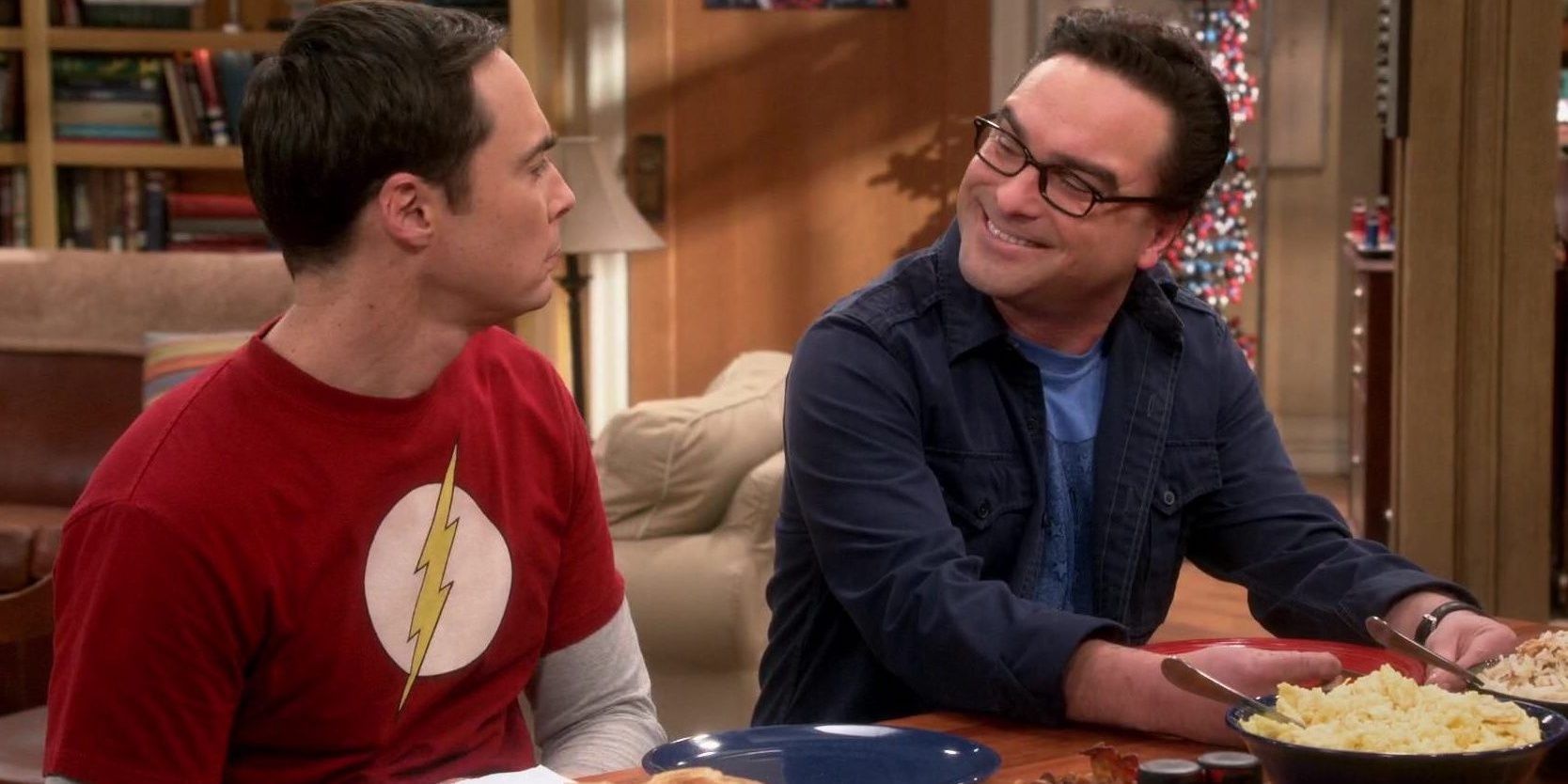
His nature is, by far, the most eccentric and extreme. It’s the nurturing forces, however, that I think had the greatest impact on both his character development and the overall progression of the of the show.

There’s no getting around it. In the first few seasons, Sheldon was a stubborn, selfish egotist. For a time, it was even a popular refrain to note that Sheldon was just one lab accident away from becoming a supervillain. Given that most supervillains tend to be petty, eccentric, and self-centered, I think that’s an accurate statement disguised as a joke.

Thankfully, that accident never happened. Instead, Sheldon was frequently nudged and, in a few cases, shoved into being less insufferable. Penny was usually the one to get him out of his comfort zone in the early seasons. Then, Amy Farrah Fowler came along and gave him a nurturing force that seemed almost impossible in the earlier seasons.

Amy brought issues of her own to the table, but like Bernadette did with Howard, she proved to be a stabilizing presence for Sheldon. She didn’t fundamentally change him, nor did she even demand it. She simply provided new influences. Granted, he stubbornly fought them, at first. He fought harder than anyone else in the group. In the end, though, he still embraced these changes and was better because of it.

It was that change that made his Nobel Prize acceptance speech at the end of the show so perfect. In that moment, he achieved something he’d been hoping to achieve since the earliest season. It was the ultimate affirmation of his genius and his abilities, which he’d bragged and boasted about to no end. It could’ve been the ultimate ego trip for him.

Instead, he thanked his friends. He demonstrated humility on a stage in front of a huge crowed of people. For someone who started the show seeming incapable of empathy and nuance, it was a powerful moment. It showed that this weird, colorful character that we loved and hated at times had really grown. He even acknowledged the source of that growth in a genuine, heartfelt gesture.

When you look at that moment in the context of the entire show, you can see just how powerful those influences can be. These chaLracters, all of which were set in their ways to some extent, showed just how much those influences can change. Even for characters with idiosyncrasies like Sheldon Cooper, people can change in positive ways.

Sheldon, Leonard, Howard, Raj, and Penny wouldn’t have undergone those changes without nurturing one another to some stent. At times, that nurturing took the form of annoyance and frustration. That only makes the change more fitting because most people resist that change. Even in the real world, our default reaction is to keep doing what we’re doing and make every excuse along the way.

While many sitcoms have their characters undergo plenty of upheavals, “The Big Bang Theory” goes the extra mile in showing how people can be changed by the people and influences around them. They’ll still stay true to their nature.

Sheldon will always have that distinct Sheldon-like persona, as will Penny, Leonard, Raj, and Howard. However, with the right kind of nurture, they can become endearing characters in their own right. Say what you will about the quality of the show, but its place in TV history has been secured.

Bazinga!

Leave a comment

Filed under health, human nature, Marriage and Relationships, media issues, psychology, romance

How (And Why) Boredom Undermines Gender Equality

istock-535894841

Imagine, for a moment, you’re in relationship of perfect equality. You and your partner are the personification of gender equality. You share equal roles and responsibilities. In terms of who does what, gender doesn’t factor into the equation. You do your part and your partner does theirs. From dishes to child care to paying the bills, it’s as equal as any relationship can be.

In essence, your relationship is the ideal that feminism, egalitarians, and even most Men’s Rights Activists champion when they describe the fair and just society they’re fighting for. In a perfect world, your relationship would be the standard. Even if you can’t imagine your current relationship being that perfect, you can still appreciate the ideal.

As with most ideals, though, there’s a major flaw and it has to do with boredom.

The scenario I just described above isn’t another one of my thought experiments. It was inspired by a story in Pluralist about a woman who is frustratingly bored with her perfect feminist husband. To get an idea of how frustrated she is, here’s a direct quote from the article.

“Don’t get me wrong, I love him and this year we celebrated 17 years together – 13 of them married – but I wish he’d lie, cheat, defame or slander just once, so that I could feel better about my own less-than-perfect character. Simply put, I’m bored of being married to a paragon of virtue.”

Now, I know it’s tempting to roll your eyes at a woman making this kind of complaint about her love life. The idea that a spouse is too perfect is like a billionaire complaining that the seats in their new Lamborghini are too soft. I’ve seen more than a few comments on social media criticizing this woman for being so petty. Some have used her story as proof that women can’t handle nice guys and men just can’t win with women.

I don’t think that criticism is fair. I also don’t think that her story proves or disproves a particular aspect of gender politics. However, I believe it does highlight how boredom can complicate the push for gender equality. It’s a factor that rarely comes up in discussions surrounding feminism, men’s issues, LGBT issues, and the societal factors that exist in between. It still has immense influence.

After reading the Pluralist story, I felt sympathy for the woman. I know it’s hard to feel much for someone in such a perfect relationship, especially for those of us who are single, but I can understand how boredom can undermine a seemingly ideal situation. To some extent, this woman’s story shows how boredom can complicate the otherwise noble efforts to pursue gender equality.

In making sense of the woman’s feelings, I found myself thinking back to the high school. If that sounds like an odd connection, I promise there is a logic to it. Now, I’ve made clear in the past how much I hated high school. To say my experience was not ideal would be a gross understatement. That said, the idea behind high school has some useful parallels to gender politics.

The ideals of high school are simple. You take a large group of teenagers, put them into a structured environment, educate them to a particular standard, and send them out into the world with all the knowledge and skills they need to become functional adults. Again, that’s the ideal. While that effort works fine for some, there are many more for whom it fails.

For this particular woman, she represents the lucky few who ace every test, pass every class, and follow every rule. As a result, she should be perfectly equipped to enter adulthood. By all accounts, she does. There are no surprises or setbacks. Everything goes according to the plan and the ideals behind it.

It’s here where the boredom takes hold. That lack of major upheavals means there’s little in terms of challenge or growth. The path is already set. The obstacles have already been cleared. You just have to walk it and you’ll get to where you’re going. There’s no strain, but there’s no sense of achievement, either. In the grand scheme of things, you didn’t overcome anything.

In the context of gender equality, it’s akin to a clear, unobstructed path that doesn’t test or excite anyone. That directly conflicts with the basic psychology of boredom that craves novelty and seeks more intense sensations. Perfect equality, be it in a relationship or a high school, doesn’t leave much room for any of this.

This isn’t just about people being inherently flawed or needing something to complain about. In practice, true equality means the outcome of every challenge is determined. The woman herself stated that she knew how a situation would play out in her marriage. There’s never any negotiation or exchange. With such clear-cut equality, everything is pre-determined.

“If I told him on Friday I was spending Saturday chilling at a spa, he’d probably drop me there so I didn’t have to drive, then take the kids to their clubs before making sure the house was tidy.”

When everything is that predictable, then boredom is practically unavoidable. When there’s nothing to gain or lose, then it’s only a matter of time before malaise sets in. It’s not the woman’s fault and it’s not her husband’s fault, either. That’s just how boredom works.

The article went onto cite a number of studies that indicate couples in equitable relationships have less sex, but they primarily focus on the symptoms of boredom and not the underlying cause. For the woman in the story, I think her frustration has little to do with her husband sharing in the work and everything to do with how predictable everything is.

If I could talk to this woman, I would caution her against wanting her husband to lie, cheat, or develop a bad attitude with her. That might shake things up for her in the short-term, but would do a great deal of damage to the both of them in the long run. I would advise that she and her husband seek new challenges outside gender roles. Both she and her husband may benefit from shaking things up for a while.

What that may entail depends on the nature of their relationship. The article didn’t get into too many personal details and understandably so. Without getting to know this woman or her husband, I can’t be certain what else might be fostering such boredom. There could be other issues beyond their relationship that are causing these feelings.

Whatever the case, the corrosive power of boredom is difficult to work around. Equality is generally a good thing, but when equality fosters predictability, boredom is an unfortunate byproduct. This woman, whatever her politics, knows this better than anyone.

I still support efforts to improve gender equality, especially within relationships. I think it’s beneficial to everyone when roles and responsibilities are shared in an equitable manner. However, I also believe that human beings need challenges and obstacles. Without that, pursuing a greater good takes a back seat to escaping crippling boredom.

Leave a comment

Filed under gender issues, human nature, men's issues, outrage culture, philosophy, psychology, romance, sex in society, sexuality, War on Boredom

Why Organized Religion Opposes Assisted Suicide (For The Wrong Reasons)

190613_vod_orig_assistedsuicide_hpmain_16x9_992

Most people under the age of 40 are too young to remember the controversy surrounding Dr. Jack Kevorkian, also known as “Dr. Death.” For a time, he was one of the most polarizing figures in the world because he made assisted suicide a major socio-political issue. From 1989 to 1998, he took part in approximately 130 assisted suicides. It’s because of him that every state has a law regarding the practice.

Before I go any further into this very sensitive, exceedingly emotional issue, I want to make one thing clear. I don’t have a strong position on assisted suicide. I’ve had a hard time arguing in either direction. On one hand, I can understand someone in chronic pain wanting to end their life. On the other, I also worry that making such a practice mundane could undermine efforts to treat debilitating conditions.

I have people in my family who have fought debilitating illnesses. Some have lost those fights. Others won out and are stronger because of it. I believe that if you had talked to them on a particularly bad day, they might have seriously considered assisted suicide as an option. It’s a heart-wrenching issue that I’m not qualified to debate.

Despite those qualifications, I believe I’m still capable of scrutinizing certain aspects of the debate. Reasonable people can make reasonable arguments for and against assisted suicide. I’ll leave that part of the debate to people smarter and more informed than me. For the bad arguments made by unreasonable people, however, I think I’m as qualified as anyone.

One of the most vocal opponents of assisted suicide come from organized religion, especially the Catholic Church. Their position is fairly clear. Suicide is an egregious sin and a crime against human dignity. Even if you’re in debilitating pain, it’s not your place to take your own life. Only the all-powerful, all-knowing deity of their faith can do that. Some go so far as to claim that suicide automatically condemns a soul to Hell.

Setting aside, for a moment, the kind of theology that would condemn suffering people to more suffering in the afterlife, it’s worth taking a step back to ask why assisted suicide is an issue for organized religion in the first place. What interest could any religion have for getting involved in such an immensely personal issue?

To answer that question, it’s also necessary to distinguish between organized religion and the personal faith that people have. Your personal faith is personal. It’s between you and your loved ones. When religions get organized, they become impersonal and subject to different influences. As demonstrated by corporations or governments, those influences aren’t always holy, to say the least.

An organized religion, be it a huge institution like the Catholic Church or just a small denomination of churches, temples, and mosques, are driven by the same incentives. They need money, adherents, labor, and support from as many followers as possible. How they go about obtaining those resources varies from faith to faith. When it comes to maintaining those assets, however, things get less varied.

I’ve noted before how religious institutions have used dogma to maintain and reinforce social inequality. Any institution, religious or not, has a strong incentive to keep its followers in a state of ignorance, poverty, and dependence. It also can’t have too many people questioning the dogma, nor can it have people with enough resources or comforts to function without its help.

With religion, those incentives are easier to codify because it can claim that their doctrine doesn’t come from law, money, or brute force. It’s ordained by a powerful deity that is on their side. People can argue against politicians, protest greedy businesses, and question long-standing traditions. They can only do so much against a powerful, invisible deity.

It’s within this context that organized religion clashes with assisted suicide. Like with inequality, assisted suicide directly undermines the manpower and resources of religious institutions. It doesn’t just take from them an adherent or a potential convert. It strikes at the foundation on which organized religion builds its influence on people.

In the same way that a business needs customers with money to spend on their goods, organized religion needs people who feel deficient, impoverished, or desperate. It’s a well-documented phenomenon. Those who are poor, hungry, and suffering tend to gravitate towards organized religion.

Sometimes, this is a good thing because there are religious organizations out there who provide food, comfort, and care. Even if doing so acts as an indirect way to recruit adherents, it still provides tangible help to people who need it. That’s an aspect of organized religion that deserves respect. When it comes to suffering and dying, however, the practices aren’t nearly as commendable.

When people are dealing with a suffering loved one, it’s incredible difficult. It takes an emotional toll on both the individual and their family. It’s heart-breaking on so many levels. It’s also an unscrupulous opportunity for organized religion.

While they won’t outright prey on someone else’s suffering, they’ll often act as a source of relief and comfort. They’ll try to act as a shoulder to cry on, telling both the person suffering and their families everything they want to hear. It earns them points from both them and the larger community. They can claim they’re helping a suffering family, but without actually helping them.

They stop short of paying for an expensive, life-saving procedure. They’ll also stop short of paying medical bills that might have piled up. They’ll sometimes promise to promote scientific research to treat whatever is causing so much pain, but in terms of over-arching incentives, that makes sense in the context that any organization wants to keep its adherents alive.

When assisted suicide enters the equation, the religious organizations miss out on that opportunity. Instead of comfort from a priest, mullah, rabbi, or monk, those suffering can get relief from a simple medical procedure. Their family can also enjoy a sense of closure in that their loved one isn’t suffering anymore. No religious influence is necessary here.

For some, that’s not just a problem. That’s a threat. Anything that subverts the need for the religious organization undermines its ability to maintain and grow its influence. Assisted suicide does all that and then some. However, it goes beyond simply not having the chance to endear themselves to sick people and their families.

From their perspective, assisted suicide sets a dangerous precedent. If too many poor, desperate, suffering people start killing themselves to escape, then they lose one of their best sources of new adherents. It’s the same reason why they discourage abortion and contraception, hoping that adherents produce more adherents for the organization. It all comes back to maintaining and growing the institution.

That usually isn’t the stated purpose. Almost every major religion that discourages assisted suicide will argue from a moral perspective. However, the indirect effect is certainly there. That’s not to say that the heads of these religious organizations secretly meet in dark rooms and craft their dogma with these factors in mind. It’s simply a byproduct of large groups of people responding to incentives.

Even if the implications of opposing assisted suicide are indirect, it’s still not a good reason to oppose the practice. It requires that people overlook the suffering and pain of others while convincing them that they don’t have the right to make important choices in their lives. That effort only leads to more suffering and that can never be justified, no matter how much dogma is applied.

As always, I want to make clear that I’m not calling all religious organizations malicious for opposing assisted suicide. I don’t believe that those within these organizations are out to cause more suffering. Most believe, in their heart of hearts, that they’re doing the right thing. The problem is that dogma, doctrine, and powerful incentives can overshadow those efforts.

There are good, legitimate reasons to oppose assisted suicide. Unfortunately, organized religion rarely relies on those reasons. On top of that, they have one too many incentives not to focus on those reasons.

2 Comments

Filed under health, philosophy, politics, psychology, religion

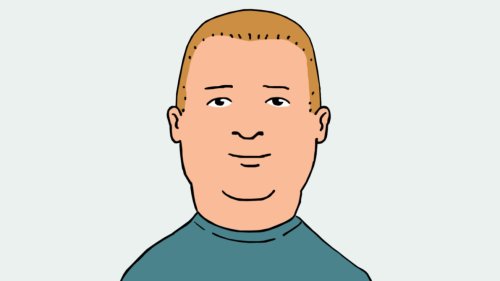
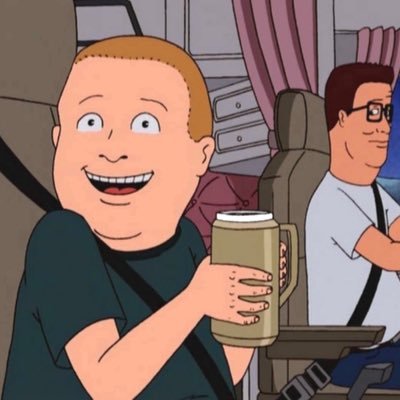
Torn Between Childhood And Adulthood: The Journey Of Bobby Hill

mjphkd8z03611

The greatness of a TV show is often measured in how endearing the characters are. Whether it has dramatic themes like “Mad Men” and “Breaking Bad” or over-the-top comedy like “It’s Always Sunny In Philadelphia,” TV shows thrive and fail by the strength of their characters.

A show like “King of the Hill” is a good example of this and not just because it has plenty of great characters. The personalities and stories of characters like Hank Hill, Boomhauer, and Luanne are all endearing in their own unique way. I’ve even gone out of my way to praise Hank Hill on multiple occasions for his work ethic and his unique approach to masculinity.

However, “King of the Hill” is unique in the sheer range of characters it offers, with respect to likability. Characters like Bill Dautrieve and Khan Souphanousinphone have definite flaws, but do plenty to warrant respect. Peggy Hill is a textbook narcissist, but still does plenty to balance it out. Dale Gribble is a paranoid idiot, but he’s still a loyal friend and just fun to be around.

There are also a few characters who are just assholes most of the time. While the show goes out of its way to balance everyone to some extent, there’s only so much you can do with characters like Cotton Hill and Buck Strickland. I could say a lot about those two, in terms of how they impact the themes of the show, but I’d like to focus on a character who has confounded me over the years.

Confounded, yet entertained.

Of all the colorful characters that make “King of the Hill” one of my favorite shows of all time, Bobby Hill is the one I’m most conflicted about. I’ve always had mixed feelings about him. I can watch one episode where I have no sympathy for him, but in the very next, he’ll come off as one of the most respectable characters in Arlen.

Some of that might have to do with me, as a viewer. When I started watching this show, I was younger and had a lot more in common with Bobby. We were both overwhelmed by the prospect of growing up. We often felt beleaguered by school, adults, and puberty. I related to him a lot more than I did with the adults in the show.

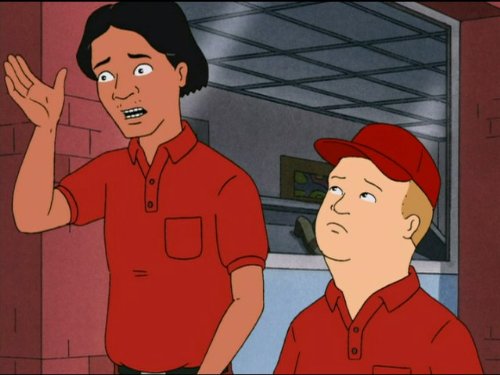
Then, as I re-watched those same episodes as an adult, I saw Bobby in a different light. I had a hard time sympathizing with his struggles in certain episodes. At times, he came off as some immature kid trying desperately to avoid responsibility and hard work. In one episode, he became a full-fledged panhandler.

At the same time, Bobby had moments where he genuinely shined. While I would argue that the series finale was his finest hour and the culmination of his growth, he also had other moments in which he stepped up to do something awesome. He was, in my opinion, the most confounding characters in the entire show.

Now, after having watched and re-watched every episode of “King of the Hill,” while also having the benefit of my own personal growth, I feel like I can appreciate Bobby’s character in a new way. In terms of the bigger picture, Bobby Hill represents an important theme in the show. Specifically, his story revolves around someone torn between adulthood and childhood.

While “King of the Hill” has many themes, Bobby’s were often tied to his youth and that youth was often the catalyst for his misadventures. When the show begins, he’s 11-year-old. By the time it ends, he’s 13-years-old. These are some formative years in a boy’s life and the show takes full advantage of that.

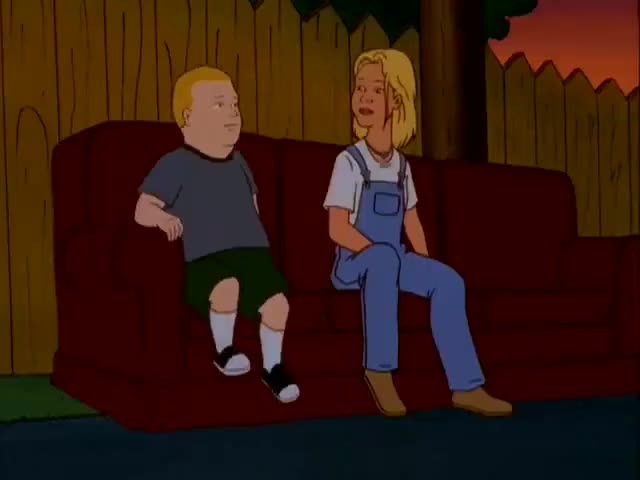
In the first several seasons, Bobby definitely carries himself as a kid. His behavior is distinctly childlike, from using his dad’s golf clubs to hit dog shit to taking part in a camping trip in which he accidentally kills an endangered animal. Then, over the course of the show, his stories evolve. He starts getting interested in girls and sees the effects of puberty on his best friend. At times, he’s more than a little overwhelmed.

In some cases, he wants to be an adult. He even enjoys the maturity and status that comes with it. In others, he actively avoids it, clinging to his childhood and the carefree innocence that it entails. Granted, there are times when he just wants to be lazy. At one point, he states outright that he prefers taking baths because he doesn’t like standing for so long.

However, there are plenty of other instances in which he sees the rigors of adulthood and doesn’t find it the least bit appealing. It doesn’t help that he’s had some very unpleasant experiences with the adult world, which includes one in which he ran out onto a racetrack because of an asshole boss. After an experience like that, who wouldn’t long for the more sheltered life of childhood?

To some extent, it’s not entirely Bobby’s fault that the adult world is so overwhelming. His laziness doesn’t help, but there are times when Hank’s uptight parenting skills actively contribute to the problem. The only reason he had that aforementioned job at a racetrack was because Hank tried to teach him a lesson about hard work and it taught him the wrong lesson, entirely.

On top of that, Peggy often babies him in ways that reinforce how much easier and carefree it is to be a child. Whether it’s cutting his hair or giving him one of Hank’s old trophies, she often makes childhood feel a lot easier and safer, albeit indirectly. Bobby gets so many mixed messages throughout the show that it’s easy to see why he’s often so conflicted.

Like most themes in “King of the Hill,” the nature of the conflicts fluctuate. There is a sense of progression for certain characters, but there’s also a general consistency over the course of the show. Joseph and Luanne are very different by the final season when compared to the first season, but Bobby’s journey is left somewhat ambiguous.

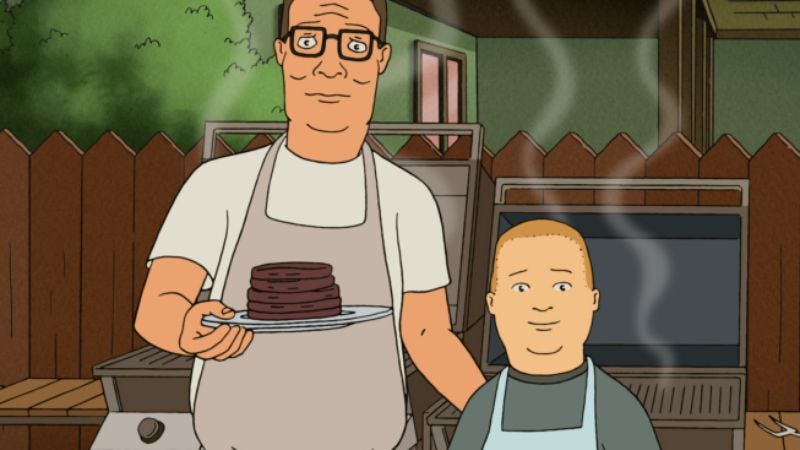
By the end of the show, he finds a skill and a passion that he wants to pursue. In the same way Hank has a passion for propane and propane accessories, Bobby discovers a passion for grading the quality of steaks. It’s a passion that requires both hard work and a level of maturity the likes of which he hasn’t pursued before. It also makes for a powerful moment when he and his dad finally get to share in a mutual interest.

At the same time, he still carries himself like a kid. Even within that final episode, he gets overwhelmed by the pressure placed on him by other adults. While he managed to overcome the pressure, there’s still a sense that he’s not entirely ready for the adult world. At the very least, he’s not quite as reluctant to pursue it.

Bobby Hill’s journey, struggling between childhood and adulthood, is just one among many compelling plots in “King of the Hill.” His journey has many setbacks and absurdities, but it still feels real and relatable. For an animated show that includes eccentric characters in fictitious settings, it’s quite an achievement.

Hank Hill often says his boy ain’t right. On some levels, that might be true. In the grand scheme of things, however, the show demonstrated that Bobby Hill was as right as he needed to be when struggling between childhood and adulthood.

Leave a comment

Filed under King of the Hill, psychology, television

How “Bojack Horseman” Offers A (Refreshingly) Balanced Take On Addiction

bojack20bar

People are complicated. Every person deals with their own set of complications. Some are more serious than others. A person who suffers from crippling addiction doesn’t face the same challenges as someone who has an extreme fear of clowns. Both require different approaches to deal with it and not every person is going to handle it the same way.

I suspect that most people would agree with everything I just stated. Most have probably endured their share of possible complications or dealt with someone who has. It’s one of those basic, but understated facts of life. However, when it comes to complicated problems like addiction and depression, popular media tends to do a lousy job of portraying those problems.

It’s not just that issues like addiction, drug abuse, or depression are overly simplified. The characters involved rarely reflect the complexities surrounding this issue. Look a most TV shows, movies, or books and you tend to get a stripped-down version of these issues. It usually plays out like this.

A character starts the story happy and healthy, but vulnerable and foolish.

Said character makes a few bad choices that triggers the problem.

That character goes through upheavals, losses, and setbacks.

The character hits rock bottom, realizes they have a problem, and decides to get help.

Whatever help they get magically works, the character’s issue is solved, and the credits roll to some upbeat song meant to sell the soundtrack.

I understand most people don’t expect the complex struggles of real people to be boiled down into a half-hour TV show or a two-hour movie. To some extent, these stories sell the fantasy that difficult problems have simple solutions. It’s comforting, but it can be dangerous to those who need help that doesn’t involve magical solutions that leave time for commercial breaks.

Very few TV shows or movies have the time to get into all the nuance surrounding these issues, especially for problems such as addiction. More than any other issue, TV and movies tend to get the nature of addiction very wrong. Addiction, itself, is already subject to all sorts of myths and misunderstandings. That’s even more troubling in the middle of a serious opioid epidemic.

For that very reason, it’s genuinely refreshing to see a popular TV show handle the subject in a more balanced manner. Even if that show involves anthropomorphic horse men that sound like Will Arnett, a little balance goes a long way, especially when dealing with real issues that impact real people.

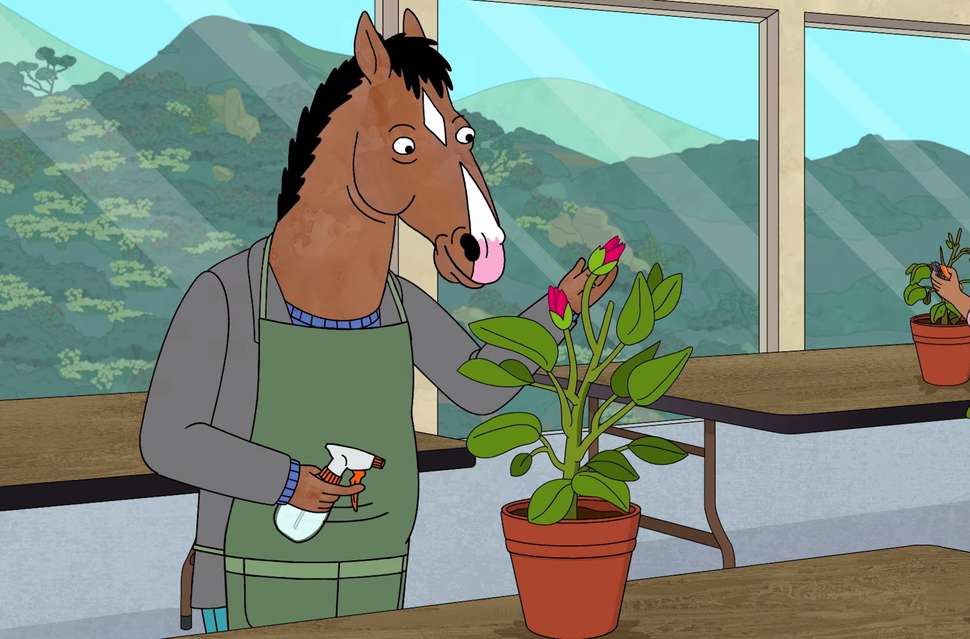
That show, of course, is “Bojack Horseman.” It’s a show I’ve mentioned and praised before for how it confronts the myth of happy endings. It’s also a show that sets itself apart by lampooning and deconstructing the world of celebrities, happiness, politics, popular culture, and injustice. The fact the show can do this while also being funny, entertaining, and genuine is a testament to the show’s quality and brilliance.

I’ve been following this show since it aired. I’ve watched it grow through several seasons, following a unique path to acclaim and success. I was among those disappointed to hear that the show will be ending after Season 6. I don’t know if there will ever be another show that tackled so many sensitive issues in such a balanced way, but that makes it’s handling of addiction in Season 6 even more impressive.

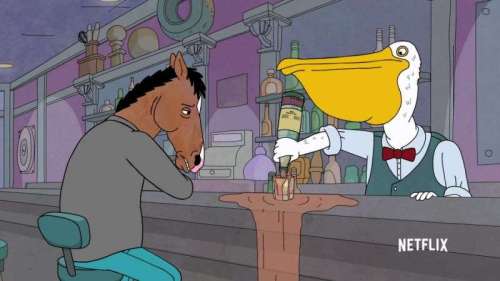
Since the show’s first season, addiction has been both a common theme and a volatile catalyst. In fact, the very first scene of the first episode makes clear that Bojack has a drinking problem. It’s not subtle in the slightest. When he’s not melting down or mentally torturing himself, he’s drinking heavily or ingesting copious amounts of drugs.

Sometimes, he’s downright creative with drug use.

Throughout the course of the show, this has caused more than a few problems to say the least. People have died. Hearts of been broken. Souls have been crushed, regardless of whether you’re a man, woman, or horseman. These moments have helped give the show a level of dramatic impact that few others have matched.

It has also portrayed addiction with more tact, nuance, and understanding than any show I’ve seen to date. If you or anyone you know have dealt with addiction, then this show “Bojack Horseman” offers a compelling message that’s worth heeding.

Bojack’s addiction issues started off simple, but over the course of five seasons, it has become clear that there’s much more to his self-destructive behavior. It’s not just that he’s a celebrity and celebrities tend to get away with more than most, which the show touches on in some hilariously memorable moments. His life, his upbringing, and his choices have created a complex web of influences that fuel his addiction.

It’s not just that he’s depressed.

It’s not just that his parents were neglectful, hateful, and downright cruel.

It’s not just that he betrayed his best friend, who helped make him a success.

It’s not just that he slept with his best friend’s girlfriend.

There are many other gross misdeeds I could list. A lot happens over course of five seasons and it gets very dark. However, the show never attempts to pin Bojack’s problems with addiction on a singular cause. In Season 6, he attempts to finally confront those problems, but doing so doesn’t mean finding simple solutions. In fact, the solutions are prone to complications of their own.

The first three episodes of Season 6 has Bojack doing something important in the context of treating addiction. It has him look at his life, as a whole, and not just focus on the triggers that inspire his self-destructive behavior. Like addicts in the real world, Bojack learns that there’s no one thing that caused his problems. It’s not a single choice, either. Unlike the light-hearted show that made him famous, life is more complicated than that.

In some respects, drinking gave him the comfort and warmth that his parents never gave him. In others, it allowed him to overcome crippling social anxieties, which only got elevated when he became a celebrity. It wasn’t just that he was dependent on the alcohol to give him a quick dopamine hit to his brain. He came to rely on it, so much so that it incurred more and more complications.

Another part of what makes this portrayal feel balanced is that Bojack’s addictions are never framed as the sole source of his problems. Some of his most regrettable choices in the show happened without the aid of alcohol or drugs. He can’t use addiction as an excuse. Even though he tried to in earlier seasons, he’s not making those same excuses in Season 6.

It’s not a smooth process. Few plots in “Bojack Horseman” play out that way. Bojack struggles with his treatment, which is a novel concept for most shows that tackle the issue. Even when he’s not drinking, it still haunts him. That’s another thing addicts in TV shows rarely show. Once they get treatment, it becomes an afterthought. In real life, treating addiction is an ongoing struggle and always will be.

That’s a tough message for any show to depict, let alone one that needs to resolve things within 22 minutes or 26 episodes. On top of that, the act of not resolving serious issues, such as addiction, means the show can’t have a happy ending. That’s something most shows avoid, but “Bojack Horseman” is different.

On multiple occasions, the show points out how flawed the idea of happy endings are, often in depressing ways. At the same time, though, this is necessary context with which to frame addiction. For someone who has as many issues as Bojack, a happy ending just wouldn’t make sense.

It won’t end like this. It just won’t.

He can’t just come to a profound realization in the backdrop of sad music and suddenly be cured. His story and his struggles keep unfolding. Like real addiction, confronting and treating it is a complicated process that can often last a lifetime. It’s frustrating and depressing, but that’s the nature of life and “Bojack Horseman” doesn’t run from that.

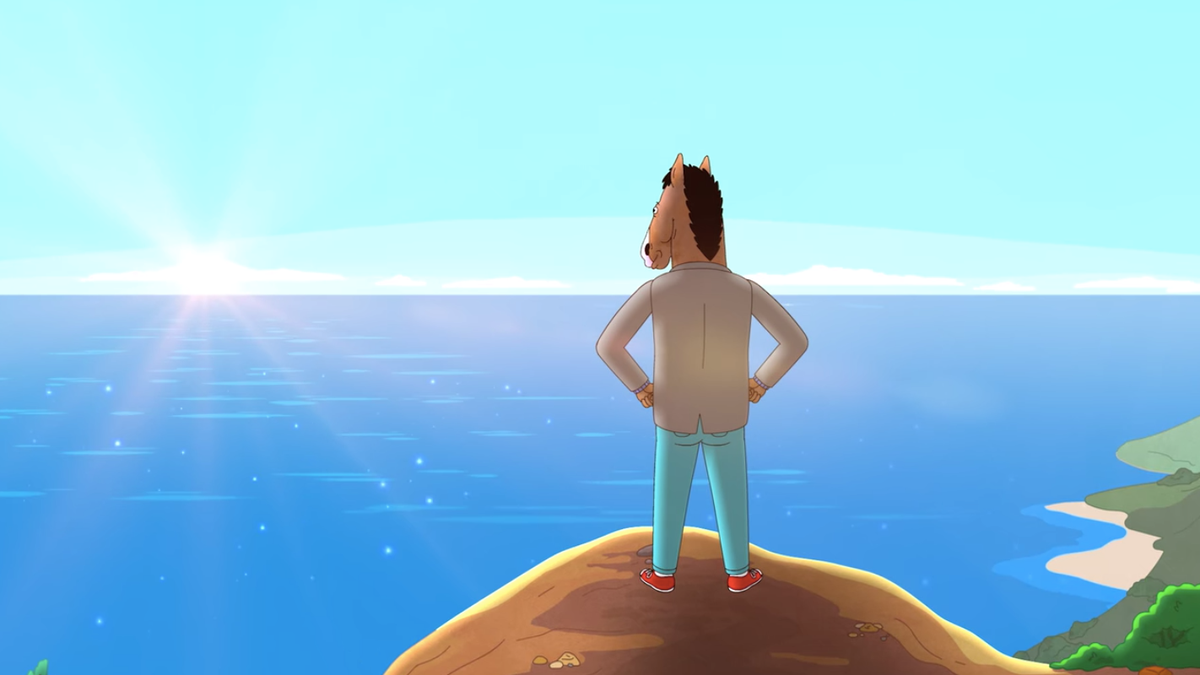
With the second part of Season 6 scheduled for release in January, 2020, the end of “Bojack Horseman” is near. What this means for Bojack, his addiction, and the consequences of his choices remains to be seen. No matter how it ends, the show has achieved a great deal by daring to confront the complications of life that most avoid.

The fact this show can achieve this through a cartoon horse voiced by Will Arnett is an even greater accomplishment. While most people will never be able to relate to a half-man/half-horse former sitcom star, they might be able to relate to his struggles with addiction. Sometimes, being able to deal with things in a quirky, animated show helps make those things less daunting in the real world.

2 Comments

Filed under Bojack Horseman, psychology, television

Texting, Sharing Feelings, And How Neuralink Could Revolutionize Both

mind-melds-e1509130881625

A while back, I speculated that memory enhancement might be the first “killer app” for brain implants. At the time, I thought my logic was solid. Every emerging technology needs that one lucrative use that makes it more than just a gimmick. Killer apps are what helped make smartphones more prevalent than toilets in some parts of the world. I believe brain implants will follow a similar path through companies like Neuralink.

I still believe that memory enhancement will be one of those functions that helps turn brain implants into a multi-billion-dollar industry and Elon Musk is likely to secure a share of those billions. However, after listening to the announcement that Musk gave earlier this year about the future of Neuralink, I’d like to revise my speculation a bit.

What Musk presented was plenty intriguing. Neuralink isn’t some wide-eyed fantasy endeavor conjured by an eccentric billionaire. It’s a real company seeking to develop real products that’ll create a whole new market. Some of those early products are already taking shape.

Right now, the goal is simple. Before humans can link their brains to a simulated world on par with “The Matrix,” they first have to develop a means of interfacing with a basic computer. That kind of technology is not fanciful science fiction. We’ve already successfully inserted brain implants into monkeys, which they’ve used to interface with computers.

At this point, linking a brain to a computer isn’t that great a feat, which is why Musk noted that the first prototypes were being developed to assist quadriplegics. They have much more to gain by being able to interact with a computer. The same can’t be said for most people. Why would they undergo invasive brain surgery just so they could send text messages without typing them?

This is where I believe there’s some untapped potential that Neuralink is in a perfect position to realize. It might even be more feasible in the near-term than memory enhancement, as both a product and a killer app. It’s the kind of function that wouldn’t just convince people to let someone stick electrodes into their brains. It could revolutionize how people communicate with one another.

To understand the extent of that potential, take a moment to look at the last five text messages you sent through your smartphone. It doesn’t matter who you sent them to or why. Just take a step back and consider the strengths and weaknesses of this kind of communication.

In terms of strengths, it’s simple and consistent. It doesn’t matter if you’re a poor speaker or have anxiety issues. As long as you can type out the words and the receiver can read them, you can convey a message that instantly travels from one side of the planet to another. As a communications tool, it’s quite revolutionary, especially when you consider how difficult it was to send messages in the past.

At the same time, it has some major limitations. Texting is so impersonal. Even with the benefit of emojis, it’s still just text on a screen. It can’t convey a sense of nuance or subtext. There’s no undertone to decipher or facial cues to note. While this can make the message more objective, it also makes it feel cold and unemotional. It’s part of why breaking up with someone via text is so taboo.

With those limitations in mind, imagine having the ability to convey a feeling to go along with a text message. Instead of an emoji, you included the emotional context of that message. Maybe you were angry, upset, offended, or elated. It doesn’t have to be too complex. It just has to give a dramatic weight to the emotion.

You send that message knowing the person on the other end could experience it too. They don’t have to read the words and surmise your feelings. They know because they get to experience them too. They feel what you felt when you sent that message. They feel it in a way that no amount of facial cues or subtext can adequately convey.

When you text someone you love them, they can feel your love.

When you text someone you’re angry, they can feel the extent of your anger.

When you text someone you’re seriously depressed, they know it’s not a joke.

This sort of insight is unprecedented. It’s also a function that companies like Neuralink can make a reality and market it as a revolutionary form of communication. It wouldn’t require that we completely abandon our current methods of communication. People would still need their smartphones and computers. This would just be a way of augmenting those tools.

Once a brain implant can link up to a smartphone, then there’s suddenly a new communications channel the likes of which we’ve never had. That channel need not be restricted to moving a cursor or typing out letters on a screen. These commands are simply brain signals coded by implants and transmitted to a device that can make sense of them. Our feelings are just a different kind of signal.

Modern neuroscience already has a comprehensive understanding of where emotions come from. A brain implant could simply take signals from those parts of our brain, code them in a way our smartphone can interpret, and package them in a way that can be transmitted and received by another user.

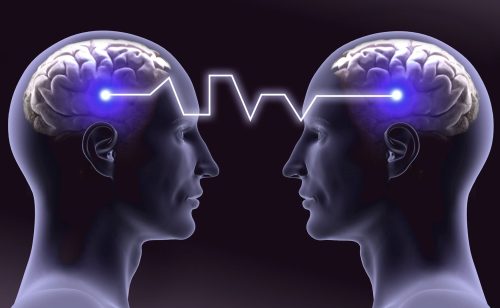
It’s not telepathy. It’s not complex thought or ideas, either. These are the kinds of feelings and emotions that almost everyone experiences in some form or another. Our natural empathy may allow us to relate to one another as a social species, but we’ve never been able to truly share our feelings in a way that others can experience.

I know the idea of sharing feelings has gained a corny connotation, but I think a part of that has to do with how inefficient our current system is. Even before smartphones and texting, our age-old traditions of talking to one another, deciphering tone, and reading body language has left us with plenty of room for improvement.

It doesn’t matter how empathetic or understanding you are. At the end of the day, when someone shares their feelings, you’re still guessing the details and trying to mirror them within your brain. While that has taken us far as a species, in terms of forming social bonds and coordinating as a group, brain implants could take it to another level.

Once we can transmit our feelings with the same ease we do with a text message, then that takes us into uncharted territory. Armed with this tool, we wouldn’t just be able to communicate over vast distances. We’d be able to convey genuine, intimate feelings. Our brains are already wired to form strong social bonds with others. This technology would effectively supercharge it.

It certainly wouldn’t stop with just two people sending a text message with a happiness emotion attached to it. Once emotions can be transmitted like a text message, then there’s no reason they can’t be shared the same way we share everything else on social media. While some may recoil at the idea of sharing something so intimate, trend is already ongoing. Sharing feelings on a mass scale would just accelerate that trend.

The impact this will have on people is difficult to determine. Like I said before, this is uncharted territory. We’ve never had the ability to both know and share the intimate feelings of other people. Would that make us more empathetic? Would that make us more loving? I’ve argued before that it likely will, but I also don’t deny that some may handle it worse than others.

Whatever form Neuralink’s products take, there’s no denying the potential of this technology. There are still technical and engineering challenges, but that has never scared off Elon Musk or ambiguous billionaires like him. Human beings already have an innate need to connect with one another. Smartphones, texting, and every other communications tool we’ve ever created reflect that desire.

The market for those tools is already strong. The market for something that can communicate on a more intimate level will likely be even stronger. Even if the ultimate goal of Neuralink is to help humanity interact with an advanced artificial Intelligence, a good first step would be to help improve our ability to interact with one another.

1 Comment

Filed under Artificial Intelligence, futurism, Neuralink, psychology, technology

How Jar Jar Binks Exposed The Flaws (And Dangers) Of Social Media

maxresdefault-1

Every now and then, something extraordinary happens that reveals how flawed our current system is and how far behind we are in terms of fixing it. Sometimes, it’s tragic. Sometimes, it’s frustrating. In rare cases, it’s hilarious, albeit in a distressing way. Personally, I find those cases most revealing.

Recently, there was one notable instance that included one of the most reviled fictional characters of the past 20 years. No, I’m not talking about King Joffrey or Ramsay Bolton. I’m talking about Jar Jar Binks. If you’re a “Star Wars” fan, then that name likely inspires all sorts of anger, dread, and distress.

Jar Jar is both a joke and a cautionary tale. Aside from proving that George Lucas has no business directing another “Star Wars,” he demonstrates just how wrong an attempt at comedic relief can go. While he wasn’t the only problem with the prequels, he augmented the flaws. On top of being annoying, incoherent, and incompetent most of the time, he was a major symptom of a much larger disease.

Once again, everything that makes Jar Jar such a pariah in the cultural landscape has exposed another disease in a place that’s not far, far away. For reasons that many found confusing and confounding, Jar Jar started trending on Twitter. While there was a someone legitimate reason for this, it was indirect and unintentional. There was no concerted effort to get him trending. It wasn’t even part of any elaborate trolling.

The fact that it took a while to explain why this infamous character was trending says more about social media than it does about Jar Jar. There’s no question that social media has changed the media landscape in ways that cannot be overstated. We current live in a world where companies invest a great deal of time and resources into making their presence on social media unique. Some definitely do it better than others.

At the same time, social media has not always had a positive effect on the world and its users. There have been plenty of cases where social media has been used to brutally harass people and spread blatant lies. There are even some cases in which social media played a role in directing real harm to innocent people. The dangers are there and well-documented.

Most people with an internet connection know those dangers are there. Many see it as the cost of doing business for a technology that has an uncanny ability to connect people. I certainly pay that cost, given my own presence on social media. However, what just happened with Jar Jar on Twitter demonstrated that the cost might have hidden fees in the fine print.

Remember, there was no concerted effort to get Jar Jar trending. Even after he did, nobody could figure out why he was trending. On top of that, the fact that nobody could figure it out only got people more curious, which made him trend even more. It was a self-reinforcing cycle that was funny in some respects, but distressing in many others.

It’s somewhat similar to what happens with people who are famous just for being famous and little more. This unfortunate, but inescapable aspect of celebrity culture rarely creates people who garner respect or admiration. If anything, they foster cynicism and disconnection from the culture. That kind of fame just feels so random, unearned, and empty. Thanks to Jar Jar, we now know social media trends can do the same.

Things can trend for no discernible reason. Matters that nobody even wants to get trending can garner unexpected and often unwanted attention. Thanks to the mechanisms of social media, the mystery behind why something trends can make it trend even more. While that’s going on, legitimate issues that warrant attention can slip under the radar.

Human beings only have so much attention to give. When something like Jar Jar trends for no discernible reason, a non-significant chunk of our collective attention is redirected. It would be one thing if it were just some masterfully act of trolling, but this is something we do to ourselves collective. That means we have no one to blame but ourselves when something like Jar Jar trends.

We’re the ones who make and share these hashtags. The social media companies are just tools and businesses. Like many companies, they’ll engage in plenty of shady activities. They’ll do whatever they think will make them more money. At the end of the day, though, we’re still the consumers who shape social media.

That should be cause for concern because this isn’t vapid celebrity culture we’re dealing with. The things that trend on social media have real-world consequences. Companies have suffered significant harm. Lives of non-celebrity people have been ruined. A random person who becomes famous for no reason rarely causes actual harm to anyone. Social media trends can do so much more.

In some cases, it can cause a great deal of good. If the right thing gets trending, it can rally people to a worthy cause. It can also inform the public of a serious issue. It can even turn real-world tragedies into a powerful force for good. Personally, I think this good overshadows the bad, but when I see Jar Jar trending, I can’t deny that there’s a flaw in this system.

Is there a fix? I believe there is, but I don’t believe it’s as simple as companies tweaking their rules or insulting people who share hash tags. Jar Jar may have been a source of frustration in the early 2000s, but he’s only relevant in 2019 because we make him relevant. It’s not him. It’s not George Lucas. This is all us.

I believe we’re better than that. Despite all the awful things I’ve seen trending on Twitter and Facebook, I see far more positives that warrant far greater attention. Jar Jar might be a symptom, but I take comfort in the fact that he’s a symptom that often burns out quickly. When something is empty, people get bored of it much easier and nobody should ever underestimate the power of boredom.

In the grand scheme of things, Jar Jar trending for no reason isn’t necessarily a setback. It’s just a sign that we, as a tech-savvy society, have a long way to go with respect to managing social media. In an imperfect world, dumb things will trend for dumb reasons. However, when something like Jar Jar starts trending, that’s a sign that we have plenty of room for improvement.

Leave a comment

Filed under human nature, media issues, outrage culture, political correctness, psychology, Star Wars, technology, War on Boredom

What “Malcolm In The Middle” And “Joker” Can Teach Us About Deviance

mv5bowi0nzzjzjqtyzezzc00zwjiltg1ntmtnmzhmmyyogywywq1xkeyxkfqcgdeqxvynja0otqyode40._v1_

What makes someone deviant? What turns otherwise normal human beings into the kind of deviants who go onto commit crimes, foster discord, or lash out at the rest of society? These questions are often contemplated by psychologists, police, politicians, and people who just want to live in peace.

The answers aren’t easy, but they often make for compelling movies and TV shows. Some dare to offer answers that are as revealing as they are distressing. That’s part of what made “Joker” such an impactful movie. It’s also what triggered the controversy surrounding its subversive message. I tried to explore that message my review of the movie, but in doing so, I uncovered something surprising.

The themes in “Joker” are more relevant today than they’ve been in years. It makes the case that when people denigrate, marginalize, or ignore those in the lowest rungs of society, they’re going to create the kinds of monsters and supervillains that undermine the current order. Moreover, they deserve the chaos and deviance that these individuals cause.

In “Joker,” Arthur Fleck was a perfect storm of unfortunate circumstances and societal denigration. While Gotham City didn’t turn him into the Joker, they put him in a position to make those fateful choices. Nobody tried to help him or give him other options. If anything, the help and options he needed were taken away. It was part of what made his deviance both compelling and understandable.

It reminded me of a famous TV show that made a similar point, albeit one from a very different genre and medium. It dared to make that point decade earlier, long before the current controversies surrounding mass shooters in movie theaters and so-called “incel culture.” That show is “Malcolm In The Middle.”

The two narratives couldn’t be more different. One is an R-rated movie that defies the conventions of the superhero genre and explores the twisted mind of an iconic villain. The other is a prime-time sitcom full of funny, cartoonish antics from a dysfunctional working-class family. One is dark and serious. The other is funny and light-hearted.

Despite those vast differences, they convey very similar messages. They both make the case that a callous, negligent society will create deviant individuals within its most disadvantaged. They also highlight how efforts to push them aside or suppress their deviance will only make things worse.

In “Joker,” it turned Arthur Fleck into an agent of chaos who went onto inspire more chaos in others. The circumstances in “Malcolm In The Middle” were very different and a lot more subtle, but the underlying message was still there.

It’s subtle, but it’s there.

From the first episode of the show to its finale, Malcolm and his family are depicted as both dysfunctional and disadvantaged. In some instances, they’re downright destitute. On many occasions, they deal with crippling debt, dead-end jobs, and arrogant upper-class types who look down on them with disgust. More often than not, Malcolm and his brothers get back at them in their own creative way.

Whatever form the antics take, the show never uses the lower-class status of Malcolm’s family to justify their behavior. Much like “Joker,” it establishes that the characters have agency. They’re dealt a lousy hand, but they still have opportunities to make non-deviant choices. They’re rarely forced into deviant acts. Opportunities arise and they exercise poor judgement, to say the least.

The very least.

Malcolm and his brothers didn’t have to lie about what happened to Dewey’s bike in Season 1, Episode 15. They did it anyways and things only escalated from there when the consequences caught up with them.

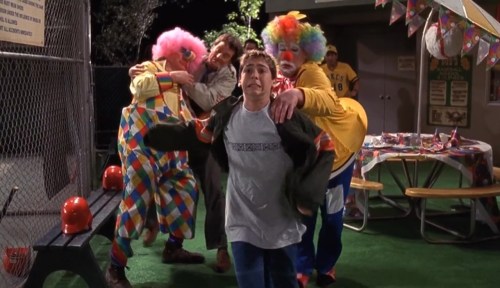
Malcom and his brother didn’t have to buy their mother a terrible birthday gift in Season 2, Episode 3. They still did and the end result led to them fighting an army of clowns in one of the show’s most memorable moments.

It’s not just the kids, either. Hal didn’t have to resort to unorthodox tactics when coaching Dewey’s soccer team in Season 3, Episode 16. He still did and things only got messier from there.

Lois didn’t have to force Malcolm to getting a job as terrible as hers in order to teach him a lesson in Season 5, Episode 6. She still did and, in doing so, taught him an entirely different lesson about just how screwed people like them are. It’s a message that even found its way into her memorable speech in the series finale.

It’s an important component of the show’s brilliance and humor. Malcolm and his family are a mess. They’re constantly getting screwed over by circumstances, bad choices, and other people who look down on them. However, they never come off as victims, nor do they carry themselves as such. They have opportunities to become less dysfunction, but often squander them.

Arthur Fleck had chances to become something other than a killer clown. There were a number of instances in “Joker” in which he could’ve gone a different path. He simply chose not to and society didn’t lift a finger to help him. If anything, they took away what little help he got.

Throughout seven seasons in “Malcolm In The Middle,” Malcolm’s family finds themselves in similar situations. One of the best examples is in Season 4, Episode 17, which happened to be the second clip show episode. In that episode, Hal and Lois recount the births of their kids as they prepare for the arrival of another.

In every instance, the births are subject to strange and hilarious circumstances. In one of them, Lois goes into labor in the driveway of their house because Francis locked her out of the car. Then, while she’s writhing in pain from the labor, a jogger passes by. She yells out she’s having a baby, but the jogger just ignores her and congratulates her.

It’s funny, but symptomatic of the family’s lot in life. Nobody goes out of their way for them. Nobody offers to help them. It even happens again a few episodes later in Season 4, Episode 21 when Lois goes into labor with Jamie. Even though someone calls 9-1-1 and an ambulance arrives, they don’t get there until after she gives birth. The EMTs even joke about how they stopped for coffee.

Like Arthur Fleck, the society around Malcolm’s family doesn’t care about them. They even go out of their way to avoid or neglect them. In “Joker,” Arthur is repeatedly victimized by both the system and individuals who go out of their way to harass him. His situation is already bad, but these ordeals only make it worse.

Early in the movie, Arthur does show signs that he’s capable of being a decent person. He tried to make a kid on the bus laugh. He entertained sick children at a hospital. He could’ve been a productive, positive force in society. Then, society started screwing him over and bad choices on his part led him to become a dangerous deviant.

While Malcolm and his family didn’t become as deviant as the Joker, they still did plenty of damage with their antics. At the same time, there were plenty of instances that showed that, as dysfunctional as they were, they could still be good and decent to others when given the chance. They just rarely got those changes and society rarely provided the incentives.

It’s a powerful message with respect to what makes people deviant. Some people are at the mercy of bad circumstances, be they poverty, mental illness, or having an overbearing mother like Lois. They’re still capable of being good, but it’s easier for them to become deviant when society neglects them. That deviance only compounds as a result of poor judgement and bad choices.

Yes, they compound a LOT.

There are plenty of differences between “Joker” and “Malcolm In The Middle.” Whereas “Joker” takes things to the worst possible outcome in the descent towards deviance, “Malcolm In The Middle” manages to maintain a more hopeful outlook. People can still be deviant and dysfunctional, but they can rise above it. The events of the series finale affirm that.

Those differences aside, this movie and this TV show offer lessons and insight into something that all societies must deal with. There will always be a certain level of deviance. There will also be those more inclined to pursue it. It’s just a matter of how to confront it. More than anything else, “Joker” and “Malcolm In The Middle” shows the consequences of confronting it the wrong way.

1 Comment

Filed under Current Events, human nature, movies, psychology, television, Villains Journey

Purpose, Value, And The Suicide Gender Gap

160322160454_mindfulness_triste_promos_640x360_thinkstock_nocredit

There are few subjects more depressing and tragic than suicide. It’s not a topic people like to talk about. When people take their own lives, either out of sorrow or desperation, it’s terrible. It leaves deep, painful scars on friends and loved ones.

However, it’s because suicide is such a difficult subject that people should talk about it. Before I go any further, I want to urge anyone who might be feeling deeply depressed or suicidal to seek help. The suicide hotline is always available. Please, if you’re feeling that hopeless, call 1-800-273-8255. As someone who has had depressing stretches in life, I urge others in a crisis to seek connection.

Unfortunately, it’s not a connection that people are making these days. According to the American Psychological Association, there was a 30 percent increase in death by suicides from 2000 to 2016. It was the 10th leading cause of death in the United States in 2016. By the numbers, we haven’t seen rates like this since the Great Depression.

There are a great many depressing and tragic factors behind this rise. The ongoing opioid crisis is certainly a factor. A few researchers have cited the influence of social media as contributing to self-destructive behavior. Like mass shootings, everyone has their theories, criticisms, and solutions to the crisis. I’m of the opinion that human beings are too complex to boil it down to something simple.

I agree that in certain cases, opioid addiction can factor into someone committing suicide.

I agree that in certain cases, the use and influence of social media can factor into someone committing suicide.

That’s not to say they’re the cause of it. They’re just small trees in a much larger forest that’s difficult to see, given the heavy emotions involved in this topic. However, I do believe it’s possible to see that bigger picture. To do so, it’s necessary to highlight one particular trend in suicide that also happens to be tied with gender politics.

While suicide is tragic, regardless of gender, there exists an unusual paradox within the data. Women have been shown to attempt and contemplate suicide more than men, but men are still the ones dying at greater rates. It’s not a trivial gap, either. Men are more than three times as likely to commit suicide compared to women.

This indicates there are factors beyond depression, stress, and mental illness. There are other forces at work here and they’re affecting men more than women. What that is and how it works is difficult to surmise. However, speaking as a man who has seen other men endure depressing situations, I believe there are certain factors that gender politics compounds.

At the core of these factors are an individual’s sense of purpose and value. There are many terrible things running through the mind of someone who is suicidal, but it’s not unreasonable to suspect that people who feel suicidal often feel their lives lack purpose and value. There’s nothing left for them to contribute. There’s no value for them to provide. Without that, what’s the point?

It sounds like the kind of sentiment that should affect men and women equally. Depression and despair, after all, know no gender. However, there are a few confounding factors for men. For one, there’s still a significant taboo for men who admit to even having such feelings. It stems from the same taboo about men showing emotions, in general. It’s seen as a form of weakness and men aren’t allowed to be weak.

To understand the implications of that taboo, consider the following scenario.

A man is sitting by himself. He’s crying uncontrollably. He’s sad, depressed, and lonely. He feels like he has nothing to live for. Someone walks by and shows concern. They listen to him lament about his sorrow. They offer sympathy, but tell him he needs to toughen up and get his act together. He just needs to grit his teeth and push forward with his life.

For most people, this scenario isn’t that unrealistic. Most decent human beings will show sympathy when they see someone suffering, male or female. However, the gender of the person suffering does have an impact. I’ve explained before how and why society places a greater emphasis on protecting women’s bodies over those of men.

Even if you discount the extent of that influence, the implications are still clear. We see a depressed man and tell him to fight through it. If he needs to be coddled or treated, then that’s a failure on his part. If he’s that weak, then he has little value to offer. Without value, he has little purpose as well. In essence, he has to prove he’s somehow useful to warrant not killing himself.

Now, consider this scenario.

A woman is sitting by herself. She’s crying uncontrollably. She’s sad, depressed, and lonely. She feels like she has nothing to live for. Someone walks by and shows concern. They listen to her about her sorrow. They offer sympathy and encourage her to find professional help. They even offer contacts and connections. She’s suffering and there are people willing to help her.

Take note of the different approach in this scenario. The person still show sympathy and compassion, as most human beings are wired to do. Where they diverge is in the assumptions surrounding the woman’s distress.

For her, it’s not something she can tough her way through. She’s not expected to just grit her teeth, pull herself out of this deep pit, and move beyond whatever is making her so upset. She’s suffering and the first instinct is to get her some meaningful help. Her life has inherent value. Her just being alive is sufficient to give her purpose.

It’s impossible to overstate the importance of that assumption. It’s an assumption that many men feel like they don’t get. Their suffering is seen as a personal failure. A woman’s suffering is seen as a systemic failure that needs fixing. It perfectly reflects one of Chris Rock’s most memorable quotes.

“Only women, children, and dogs get loved unconditionally. A man is only loved under the condition that he provides something.”

In the context of suicide, men who don’t provide anything have no value. Absent that value, they have no purpose for existing. The source of this disparity is difficult to pin down. Some of it is cultural. Most data shows that when people live in a society with high social cohesion and abundant career opportunities, suicide is low.

That makes intuitive sense. Those social bonds provide purpose. Those opportunities provide value. When people have both, they’re less likely to be depressed. Even if they are, they have a support system that’s there to help them, regardless of their gender or disposition. These bonds are harder to maintain for men because they have to provide something.

Even though women may contemplate or attempt suicide more frequently, the current makeup of society and gender norms provides them with any number of affirmations to remind them of their value. If nothing else, it gives women a moment of pause. Most men don’t get that moment. It’s truly tragic, but it’s a tragedy that gender politics does plenty to compound.

Again, if you are feeling suicidal, regardless of your gender, please take this as my personal plea to seek help. It’s okay to do so. Your life has value. Your life has purpose. Call 1-800-273-8255 if you need to talk. People will listen. People will give you a chance. Whatever the disparities may be, let’s not add to the tragedy.

Leave a comment

Filed under gender issues, Marriage and Relationships, men's issues, psychology, sexuality, women's issues

Kids, Technology, And The Growing Bond Between Them

touchscreens-are-bad-for-toddlers-and-babies-sleep

Last year, I explored the idea of children being raised by intelligent robots. For the most part, it was a thought experiment. I approached it in the context of a technology that won’t be implemented anytime soon. Robotics technology hasn’t advanced to the point where it can properly mimic human-like behaviors, although Boston Dynamics is getting pretty damn close.

We also don’t have an artificial intelligence that could properly mirror human levels of intelligence, let alone basic parenting skills. Even when our technology gets to that level, it’ll probably still be a while before people start trusting it with children. Most people today probably recoil at the idea of a robot raising their kids, even if it were programmed with all the best parenting skills.

I tend to share that sentiment. While I’m generally of the opinion that technology will be a net positive, even for something as potentially dangerous as artificial intelligence, the idea of any non-human system raising kids just doesn’t seem workable. Recently, I’ve had to reassess that notion.

Over the past couple years, some close friends and relatives of mine welcomed their first children into the world. I’ve been lucky enough to share in some of these monumental moments. I’ve watched these kids grow from newborn infants into adorable toddlers. Some already know me as their awesome uncle.

While I could spend all day describing how adorable they are, I’ve noticed something remarkable in their growth that no generation before them has experienced before. It has to do with the way in which they interact with technology. I would even argue it’s gone a step further than basic interaction. It’s almost a bond at this point.

I first noticed when I saw a kid who wasn’t even two-years-old use his mother’s smartphone. Granted, he didn’t use it to do anything too fancy, but he was able to open apps, interact with icons, and do more than just put it in his mouth, which counted as a major feat for him.

He wasn’t the only one, either. You don’t have to look far to see videos of infants using tablets. Some use it better than others. I’ve met some who use it better than many adults. If you need further proof, check out this video of a two-year-old operating an iPad back in 2010.

https://www.youtube.com/watch?v=MGMsT4qNA-c

Not surprisingly, this has already caused concerns among parents, teachers, and doctors. There is genuine, legitimate concern about what these devices are doing to the minds of young children. While the research on this impact is still ongoing and inconclusive, the proverbial genie is out of the bottle. These devices exist, kids are using them, and they’re using them quite well.

I believe this has implications beyond causing yet another moral panic about how strange new technology affects children. Make no mistake. There will be a moral panic. I know because I lived through something similar when I was a kid.

Back then, the big fear was about television. Parents, teachers, and doctors were genuinely concerned about all the time kids were spending watching TV. Some went so far as to claim that they were letting TV raise their kids. I question whether these people understood how a TV worked.

Television is an entirely passive technology. You turn it on, pick a channel, and that’s all you can control. Until recently, it wasn’t very interactive. As a kid, I just saw it as another form of entertainment, like comic books, video games, and sports. These tablets that kids are using now are considerably different.

These aren’t devices that just flash colorful images in front of a kid to entertain them. Kids actually interact with these things. They can guide and manipulate what happens on the screen. Many tablets offer applications specifically tailored for children and can be valuable learning tools. A TV show can only do so much to teach a kid skills. An interactive application can do so much more.

At the moment, most of these applications are basically interactive games. Once artificial intelligence enters the equation, the potential changes considerably. Robot pets are becoming more sophisticated, operating on a level that makes it easier to establish a genuine bond with them. The same goes for virtual assistants. They were once a novelty. Now, they’re a mundane feature of most gadgets.

The kids being born today are entering a world where these same assistants are growing alongside them. They’re getting smarter with each passing day. At some point, they may become a more trustworthy source of information for kids than parents. Given the tendency of parents to lie to their kids, even if it’s for their own good, this could be a game-changer for kids and parents alike.

Going back to some of the kids in my own family, I’ve seen signs of this change. Some kids get genuinely upset when you take a tablet or smartphone away from them. They’ll react stronger than they would if someone took a treat or toy away from them. It gives the impression that these devices aren’t just toys to them. They’re something so much greater.

That has potential benefits and drawbacks. In terms of benefits, these devices and the applications they utilize could help children learn faster and more effectively at young ages. Just being able to effectively utilize a smartphone or tablet is a useful skill in almost any profession. A kid who literally grew up with this technology is going to have an edge over their elders in that respect.

There will still be costs. Kids who grow up around these devices and the connected world they link to could be prone to less-than-positive influences. They’ll be surrounded by the forces of outrage culture, online harassment, fake news, and professional trolls. It’s hard enough for adults to deal with these kinds of issues. For young kids who grew up in this system, it could be even harder.

At the moment, there are too many unknowns. One way or another, this technology exists and kids as young as one are capable of using it. They’re growing up with it. They’re bonding with it. The same goes for the technology itself. As it evolves and advances, it may get to a point where it’s a greater authority figure than any parent. At that point, robots raising kids might seem entirely natural.

I don’t claim to know how it will play out. At times, I do worry about the kids in my family or the kids I may have at some point in my life. However, I still tend to be optimistic about how this technology will impact kids. As scary as it may be to think about technology raising kids, let’s not forget that there are still plenty of dumb parents out there whose kids can only benefit from this.

1 Comment

Filed under Artificial Intelligence, Current Events, futurism, psychology, technology