Tag Archives: politics

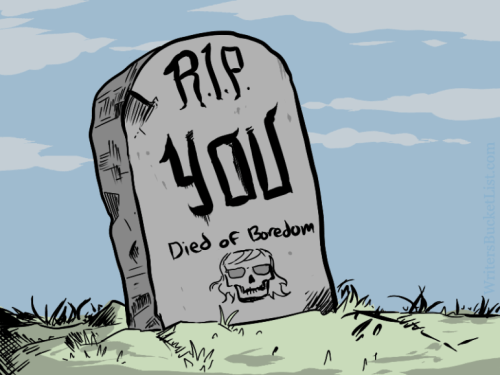
The Boredom Filter: How To Know If Your Agenda/Politics/Ideology Is Doomed

image1

Whenever I talk about boredom, I make it a point to emphasize that it’s a powerful force that’s easy to overlook. In a society that’s full of distractions and ongoing outrage, it’s easy to shrug at the effects of boredom because it’s so easy to find something that keeps you from remembering just how agonizing it can be. I would argue that only makes us more vulnerable to boredom and it’s corrosive effects.

That said, I don’t intend to belabor the power of boredom more than I already have. I feel like I’ve made my case in calling it a potential plague of the future and a force with the ability to subvert the entire concept of Hell. Instead, I’d like to use the power of boredom as a critical tool of sorts, one that might prove useful for those seeking to avoid or exploit its influence.

I call it the Boredom Filter. It’s not unlike the Simpsons Filter that I’ve referenced before in that it’s a method of assessing a message or ideology in terms of how it’ll appeal to the masses. In that context, the Boredom Filter is kind of what it sounds like, but runs so much deeper.

It doesn’t matter if you’re a liberal, a conservative, a communist, a reactionary, a theocrat, or an anarchist. It doesn’t even have to be a political ideology either. It can be a philosophical underpinning like Marxism or a social movement like feminism. The Boredom Filter applies to it and, if used properly, can reveal just how viable that ideology is in the long term.

That is, after all, one of the most important measures of an ideology. Any idea, be it a social movement or a new philosophy, can enjoy a brief wave of success. It’s a matter of how well it endures over time that shows just how valuable or useful it is. From fad diets to one-hit wonders in music, the Boredom Filter help reveal whether an idea has what it needs to really last.

Applying the filter is actually fairly simple. It does require some speculation, a few quick thought experiments, and even a touch of brutal honesty. That might be difficult to contemplate for those immersed in extreme ideology. As I’ve noted before, people clinging to those ideologies will make any excuse to justify them.

With that in mind, here’s the process for the Boredom Filter. To ensure the best results, I urge those using it to be extra thorough.

Step 1: Assess the ultimate goals of the ideology and identify which elements may be prone to boredom.

Step 2: Imagine, for a moment, that all the goals of an ideology were achieved and integrated into a society.

Step 3: Within that ideologically pure society, assess how much conformity is required for it to work and contemplate the mentality of the common people residing within it who have no political power.

Step 4: Ask and honestly answer the question as to whether the lives those people are allowed to live, under the ideology, will get boring over an extended period of time.

Step 5: If the answer to the question in Step 4 is no, then the ideology passes the filter. If, however, the answer to the question in Step 4 is yes or even a probably, ask and honestly answer the question as to whether the ideology is flexible enough to adapt over time.

Step 6: If the answer to Step 5 is yes, then ideology passes the filter, but only to a point. If the answer to Step 4 is still yes and the answer to Step 5 is no or even probably not, then the ideology is doomed.

I understand that part of that process involves contemplating the boredom threshold for other people. That can be somewhat subjective. Everybody is wired differently. Some people can crunch numbers on spreadsheets all day and never feel bored. Others will get bored if it involves spending more than five minutes of reading. For some, it can get so bad that it requires medication.

That said, you don’t have to know or assume everyone’s threshold for boredom. When it comes to speculating on applying an ideology on a large scale, though, it helps to assume a fairly low threshold. That’s because, if history is any guide, people tend to get frustrated with any system that requires a significant level of conformity.

It may not seem like conformity to those who champion the ideology. It definitely won’t seem that way to those the ideology empowers to enforce it, be it a dictator, a religious zealot, or revolutionary. That makes applying the Boredom Filter for those contemplating the ideology all the more critical.

As an example, let’s use the Boredom Filter to examine the two most common political ideologies, liberalism and conservatism. Now, I know these ideologies mean different things to different people in different regions of the world. For the sake of this exercise, I’m going to try and keep things general.

For conservatism, I’m referring to the kind of conservatism espoused by right-wing, religiously-driven ideology that emphasizes traditional morality, gender roles, and free market economics. For liberalism, I’m referring to a brand of ideology that emphasizes secularism, evolving social norms, and economic systems that emphasize regulated management over free enterprise.

I know there are a lot of other intricacies to both ideologies, but it’s not necessary to account for every one of them. The most important aspect, with respect to the Boredom Filter, is knowing enough to speculate how it would function if implemented on a large scale. By that, I don’t just mean a small community or tribe. I mean on a scale of at least 100,000 people that is not totally isolated and has contact with the outside world.

With that in mind, let’s picture a society that’s a perfect model of conservatism. It’s basically the utopian world envisioned by Ben Shapiro, Rush Limbaugh, and Sean Hannity. Everyone goes to the same church, loves the same historical icons, favors the same social policies, condemns the same media messages, and lives in the same family structure. It’s basically “Pleasantville” for Republicans.

Does that world pass the boredom filter? If we’re applying it honestly, the answer is no. It doesn’t. Remember, that world involves a society in which monogamy is the only acceptable relationship, non-procreative sex is condemned, and scandalous media content is censored in the name of protecting children. It’s a world that does not lend itself to a diverse range of activities that alleviate boredom.

Eventually, a world where you have only a certain kind of sex, consume only a certain kind of media, and live a certain kind of lifestyle will get boring at some point. Some people might be able to cope, but others won’t. Even if they still manage, their kids and their grand-kids won’t stand for it. At some point, they’ll be so bored that they demand change, if only to offer a different kind of stimulation.

I’ll give a few conservatives a moment to fume on that assessment, but bear with me because I’m going to do the same to liberalism. You might think that liberalism would be more adept at passing the boredom filter. It’s ideology, at least the classic version, is built on freedom and individual rights. How can boredom possibly infect that?

Well, and I’m sure self-identified liberals will be just as upset, but this ideology doesn’t pass the Boredom Filter either. It’s more flexible in some areas, namely those involving social norms. Liberalism accommodates different family structures, artistic expressions, and social expressions. That certainly provides some of the flexibility necessary to alleviate boredom.

Where liberalism fails, at least in the context of modern liberalism, is how it tends to promote micromanaging of life, economics, and feelings. It may not favor censorship, but like conservatism, it does play favorites. The rise and growth of political correctness has really strained liberalism’s ability to pass the Boredom Filter and it may be getting worse.

In that liberal utopia that Bernie Sanders, Nancy Pelosi, and Rachel Maddow envision, there’s not just equality. There’s enforced equality. That equality is done in the name of fairness, but in trying to be so fair, it’s much harder for any person or idea to stand out. If nothing stands out, then everything becomes more monotone and monotone becomes boring.

Liberalism’s association with belaboring oppression and victimhood don’t help either. It’s not that fighting against oppression and protecting victims is a bad thing. Conservatives are against that too, albeit from a different angle. With liberalism, though, that effort has become clouded with endless virtue signaling that comes off as a never-ending struggle.

Even if it’s a struggle worth fighting, it’s going to get boring if there’s no nuance to it. Taken to an extreme, everything becomes too fair and too bland. Media isn’t offensive anymore. History, debates, and discourse are watered down. Add micromanaging the economy to some extent, even if it’s in the name of preventing exploitation, and you end up with the same economy in fifty years that you have today.

In the long run, the Boredom Filter undercuts pure liberalism just as hard as undercuts pure conservatism. I say pure because, contrary to what Fox News and the Huffington Post may claim, few societies in America or any other country not run by Dr. Doom are ideologically pure. Even in the most repressive regimes, there are some moderating forces.

Technically speaking, every political party in every country is moderate to some degree. The key is understanding the extent of that degree and using that as the basis for the Boredom Filter. From that, you can make a fairly accurate assessment of their goals. Some will even state them outright.

Use that as a guide when both applying the filter and contemplating the world this ideology is trying to create. A conservative world that has no porn, only one acceptable family structure, and one moral code that never changes is going to get boring. A liberal world where nothing offensive is allowed, the economy rarely changes, and life is micromanaged by government gets boring too.

It’s rare, if not impossible, for an ideology to ever get to the point where it can implement every policy it seeks and achieve every goal it pursues. That’s why boredom hasn’t destroyed conservatism or liberalism yet. However, the failure of extreme systems like communism and repressive right-wing dictatorships shows that such ideologically pure societies tend to be unstable, at best.

That instability may not always be related to boredom. However, the documented effects of boredom combined with extreme efforts to engineer that utopian society every ideology seeks make for some significant obstacles. For most, if not all, boredom presents an insurmountable obstacle that no ideology can overcome. By applying the Boredom Filter, it helps to uncover which ideology is more vulnerable to it.

5 Comments

Filed under human nature, philosophy, political correctness, religion, War on Boredom

Generation Z, The March For Our Lives, And The Nihilism Turning Point

03242018_moremarch_154620-1020x680

Last year, I wrote a couple of posts about the mentality of Millennials and the possible quirks they may inspire in Generation Z, which are just starting to emerge. While I’m neither the spokesperson for Millennials, nor am I an expert on the generation they’re creating. Being a Millennial myself, though, I like to think I have more insight than most. I’ve watched their story play out and I’ve even lived part of it.

However, this particular topic isn’t about Millennials. This is about the emerging generation after them, Generation Z. While Millennials are still subject to any number of trends and criticisms, Generation Z hasn’t had much time to establish themselves or have a defining moment. That may be changing in wake of the Parkland shooting.

To understand why, it’s important to provide a bit of context about Generation Z. First and foremost, we need to identify just who they are, relative to Millennials, Generation X, and the Baby Boomers. While there’s no official cut-off point, most reputable sources identify anyone born after the year 2000 as members of Generation Z.

Those who lived through the Parkland shooting are mostly in their mid-to-late teens so they fit into this category. That matters a great deal because it’s happening at a point where Generation Z is on the cusp of adulthood. To understand why that matters, it’s important to note the context of this generation.

These kids, and they are still kids for the most part, were born into a world where they didn’t witness the horrors of Columbine or the experience the collective trauma of the September 11th attacks. Generation Z has always lived in a world where school shootings are a thing and the War on Terror has always been ongoing.

Beyond that, they’re also a generation that has been even more well-connected than their Millennial predecessors. Most never had to endure the hardships of dial-up internet or cell phones that did not have a camera. Their entire lives have been connected, so to speak. That’s part of what has fueled their reaction to the Parkland shooting.

The kids in Generation Z have been watching all their lives as horrible mass shootings from Virginia Tech, Sandy Hook, and Las Vegas happen with distressing regularity. At the same time, they’ve watched as efforts by Millennials, Generation X, and the Baby Boomers amount to very little change. The fact that the internet and social media documents all these failures leaves quite an impression.

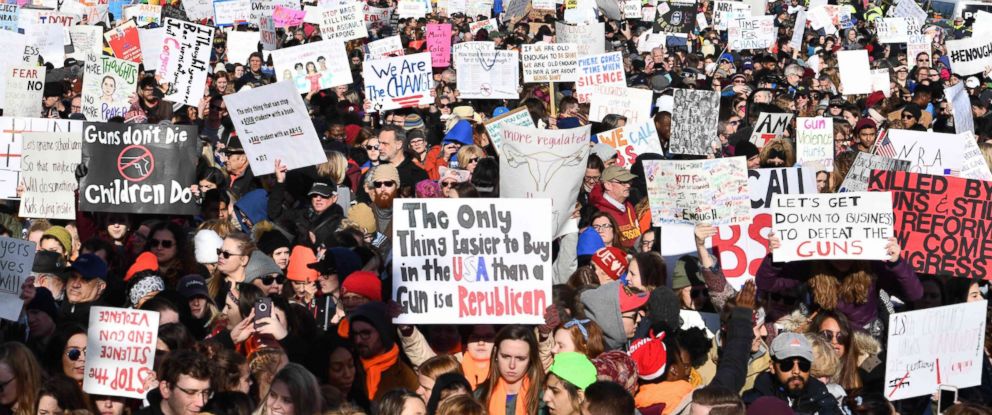
Being young, idealistic, and not totally jaded, the members of Generation Z are finally at an age where they have a chance to make an effort of their own. They’re still not old enough to drink or vote in many instances, but they’re now in a position to make their voices heard. That was the idea behind the March For Our Lives that occurred last week.

It marks a potentially defining moment for Generation Z, one that may have far-reaching consequences for years to come. They’ve seen how many have tried and failed to use the horrors of mass shootings to promote gun control reforms. They’re also informed and educated enough to know how egregious the gun violence disparity is in the United States compared to other developed countries.

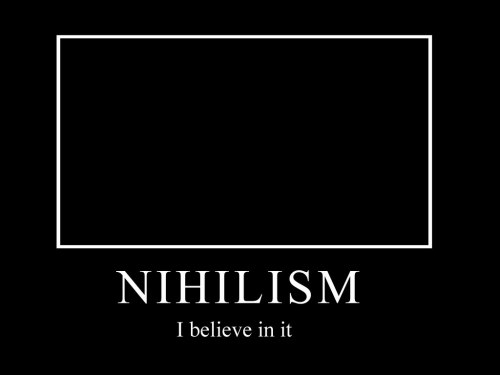
While I applaud the passion of these remarkable young people, I also worry that this event may become a turning point, of sorts. By that, I mean these noble and sincere efforts of these kids could be the catalyst that instills a sense of nihilism that may very well define their generation.

This is something I speculated on when I made my predictions on the collective mindset of Generation Z last year, going so far as to identify Rick Sanchez from “Rick And Morty” as their first icon. I stated that Generation Z would likely be the most nihilistic generation of all time. Now, the success or failure of the March For Our Lives could be the turning point that cements that nihilism within Generation Z.

As I said before, it won’t be the same kind of nihilism we associate with the Friedrich Nietzsches of the world. It’s the kind of nihilism that is the byproduct of being surrounded by so much information and seeing how little it truly matters in the long run.

Like Millennials, Generation Z is very educated. They’ve grown up in a world where they have access to nearly all the world’s relevant information through their smartphones. They’re smart enough and tech-savvy enough to see world events unfolding before their eyes. They’re also informed enough to know how hard it is for any event to make for meaningful change.

Now, here they are, having experienced one of their first traumas as an up-and-coming generation. They’ve seen all those terrible mass shootings inspire nothing but empty thoughts and prayers. They feel inspired enough and bold enough to make an effort, hoping they’ll succeed where so many others have failed.

While many are rooting for them, the odds are stacked against them. Even major news outlets are starting to spoil the outcome, applauding the kids while brushing off their ideals as youthful day-dreaming. I don’t think they realize just what kind of impression they’ll have on their generation as a whole.

Let’s say, for a moment, that the most likely scenario happens and the March For Our Lives leads to no meaningful change in gun control laws or in efforts to curb mass shootings. What kind of message does that send to the survivors of Parkland and the entire generation emerging behind it?

Firstly, it establishes that their lives, their pain, and their ideals don’t matter. It doesn’t matter how passionate they are. It doesn’t matter how traumatized they are. What they went through and how they reacted in response doesn’t matter. In such a crowded, diverse, and complicated world, their lives are trivial.

That’s almost a textbook definition of existential nihilism. Their hopes, their dreams, and their very place in the universe is insignificant. It wouldn’t have mattered if ten times more kids died at Parkland. It still wouldn’t have changed anything. There would still be no gun control. There would still be more mass shootings. All that time, effort, energy, and pain amounted to nothing.

In previous generations, it was almost beneficial to live in a world that wasn’t so connected. They could see horrible events on the news, but find a way to compartmentalize it in their minds so they could go on with their lives. With Generation Z, being so connected and informed, that’s just not feasible anymore.

They don’t just see that their efforts at Parkland were meaningless. They also see how many other mass shootings have occurred throughout history and how utterly inane such violence is in the grand scheme of things. In a sense, their ability to connect and inform themselves could render them numb to any greater sense of purpose.

That’s not to say that the kids behind March For Our Lives or the whole of Generation Z will be a bunch of dispassionate, misanthropic naysayers who are so emotionally flat that they don’t respond to stories of human suffering anymore. It just means that they’ll be a lot more calculated with their perspective.

Keep in mind, a world of regular school shootings and a never-ending war on terrorism is not some major upheaval to Generation Z. That’s their concept of normal. They’ve always lived in a world where terror attacks can happen at any time, when mass shootings can happen just as frequently, and no meaningful change ever comes of it.

For them, all the yelling, protesting, and outrage that generations of the past have voiced will just seem like background noise. If all the suffering and trauma led to nothing, then why should they bother? That may very well be a question that the Parkland survivors start asking themselves after the March For Our Lives accomplishes nothing.

Now, that’s not to say Generation Z won’t react differently. That’s not even to say that the March For Our Lives won’t accomplish something meaningful in the end. It’s impossible to predict major trends that go onto define an entire generation, but it’s still possible to note the vulnerabilities.

For Generation Z, nihilism might end up being less a reaction and more a necessity. They’re coming into a world where all the news is fake, facts battle alternative facts, and dead kids only evoke empty thoughts and prayers. Once this fact settles in, it’ll be interesting to see how they seek to define themselves moving forward.

Being the optimist I am, I believe that the kind of nihilism that Generation Z embraces could help inoculate them from some of the detrimental effects of identity politics, fake news, and outrage culture. I think that’s critical, given how these forces have corrupted debates and empowered professional trolls.

In any case, Generation Z faces an uphill battle in an effort to set themselves apart from their Millennial peers. A greater sense of nihilism may make them difficult to deal, but that’s exactly what will help define them as they seek purpose within a seemingly purposeless world.

8 Comments

Filed under Current Events, human nature

The Law Of Proportional Backlash And The Anti-Harassment Movement

tolentino-rising-pressure-of-the-metoo-backlash

There comes a point in every social movement where the momentum seems unstoppable. Whether it’s same-sex marriage, racial equality, or finally having a female Dr. Who, there’s a sentiment that certain trends are just going to play out and there’s nothing anyone can do about it.

That’s a false impression, by the way. Human beings are complex, erratic, and fickle creatures. I’ve touched on this before and will likely bring it up again because human beings are just that interesting. That said, they can also be quite frustrating.

Image result for human nature

When it comes to highlighting those qualities in the midst of an ongoing controversy, though, I have to be careful because I don’t want my points to get lost in the anger. I know as well as anyone else with an internet connection that digital outrage has a nasty habit of undermining meaningful dialog. I want to avoid that as much as possible cause this is one point I feel is worth making.

As I write this, the latest major social movement to combat sexism and sexual misconduct is close to that point I mentioned earlier. It’s still a very hot-button issue and I’ve tried to be fair in discussing it on this blog. However, the current momentum of this movement, which has the wholly noble goal of preventing harassment, is coming up against a force that reflects the eccentricities of human nature.

That force doesn’t have an official or scientific name, but it has many familiar components. For the sake of this discussion, I’ll label it as follows:

The Law Of Proportional Backlash

I’m not claiming this law is definitive or on the same level as the laws of relativity. To make sense of what’s going on, and what often happens with these social movements, it’s just helpful to have a unifying idea to tie it all together.

The essence of this law that I just randomly coined is pretty simple. It’s the human equivalent of Newton’s Third Law, which says for every action, there is an equal and opposite reaction. When it comes to social movements, though, the reaction is more than that. It’s can also be an outright backlash.

Image result for social backlash

To illustrate, you need only look at the frequency with which political parties gain and lose power. Throughout the latter part of the 20th century, as society has become more connected, open, and diverse, these tendencies have played out with stunning regularity. It often plays out like this:

“Hey! The current social order isn’t the perfect, utopian society I want. Let’s kick the people in power out of office and put in these people making impossible promises to achieve impossible things.”

A few years later.

“Hey! These people we put in power haven’t created the perfect, utopian society I waned either. Let’s kick them out and put in other people in power who are also making impossible promises to achieve impossible things. Moreover, let’s hate, shame, and spit on the other side for failing to do all those impossible things!”

I fully concede that’s a very basic illustration of how political power fluctuates in the modern world. I also concede there are many variations, but in terms of the big picture, this is how the Law of Proportional Backlash works.

A movement begins, be it political or social. It gains momentum. Usually, there’s some sort of event that acts as a catalyst. With racial segregation, events like the ruling in Brown v. Board of Education helped get things going. With same-sex marriage, Massachusetts being the first state to legalize it did the same.

Image result for same-sex marriage legalized

For the current movement against sexism and sexual misconduct, I think most would point to either the 2016 presidential election or the Harvey Weinstein scandal as the catalyst. I would argue it’s a combination of both, but I don’t think there’s any doubt that the movement gained a lot of momentum. If it could take down someone as powerful as Harvey Weinstein, then it’s safe to say that movement is pretty strong.

As often happens, though, the momentum provokes backlash. That happens whenever a movement fails to achieve every goal and, spoiler alert, no movement ever achieves every goal. The world is too complex and impossible problems tend to frustrate human limitations. As a result, a movement has to overreach and that will spurn a backlash.

With the movement against sexual misconduct, there are plenty of signs of overreach. There are people scorning others for making reasonable arguments about there being a spectrum of harassment. Careers are being ruined on the basis of anonymous accusations and mixed messages that are impossible to discern.

Image result for Matt Damon comments

There was even a distressing article on BigThink that argued that crimes involving sexual violence should not be subject to the traditional standards of proof. The underlying reason for that is too many guilty people get away with their crimes so it’s worth the risk of punishing the innocent to remedy that issue.

It’s that kind of sentiment, one in which the proportion becomes increasingly extreme, that tends to hasten the backlash. Whenever a movement gets to a point it’s deemed appropriate to sacrifice innocent people for the sake of a cause, then that’s usually a sign that it’s reaching beyond its ideals and emboldening opponents.

There are already major news outlets reporting on that phenomenon. Publications like the New Yorker, the Washington Post, and even the liberal Huffington Post have discussed it in various forms. The reactions to those speaking out against sexual misconduct is no longer one of unity and support. Now, there’s criticism and animosity, the first signs of a real backlash.

Image result for angry feminist protest

Those behind the movement need only look at the LGBT movement to see what that backlash can entail. Even though same-sex marriage is legal, the resulting backlash triggered a surge in “religious freedom” bills that promoted a new kind of discrimination. That backlash is still ongoing. The one surrounding sexual misconduct may just be getting started.

I still don’t doubt the sincerity and ideals behind the movement against sexual misconduct. People want justice for those who have been victimized. Justice is an inherent aspect of the human condition. We’re literally wired to seek it when we feel there’s an injustice in the world.

Unfortunately, in the pursuit of that justice, anger and resentment end up clouding those ideals. We’ve seen that anger directed towards the political process that played out in 2016. We’ve seen it used to demonize and denigrate entire groups of people, including an entire gender in some cases.

Image result for man hating women

When people are attacked, their first instinct isn’t to admit defeat. It’s to fight back. That’s just basic survival instinct and there’s no way any movement, be it political or social, can circumvent that. By fighting back, the backlash itself gains momentum. Sometimes that backlash gains enough momentum to become a movement in it’s own right. Then, it too may be subject to a backlash.

It seems like an never-ending cycle, one in which little is gained in the long run. While I don’t deny it can be disheartening, I believe there are gains that make many movements worthwhile in the long run. Just ask any same-sex couple who can get married now if they’re willing to risk such a backlash. They would probably do so in a heartbeat.

I don’t know how the movement against sexual misconduct is going to play out, even if the backlash it inspires ends up being minor. I hope, in the long run, it has a net-positive effect on society. It still won’t be a perfect society, but whether it’s from the movement or the backlash, even a little gain in justice and human progress can still mean a lot in the long run.

12 Comments

Filed under Current Events, gender issues, sex in media, sex in society, sexuality

The Doug Stanhope Principle (And Why We Should Apply It)

In my experience, comedians offer the most memorable and insightful commentaries on otherwise serious issues. Even if they’re just trying to be funny, which is their job, I think those commentaries have worth beyond the laughs. There are even times I think comedians don’t realize just how insightful their humor can be.

I’ve made my love of comedy known before and not just through my weekly Sexy Sunday Thoughts. I’ve cited accomplished comedians like Christopher Titus when exploring very non-funny issues, such as jealousy. I don’t just do this to help lighten the mood on a site I want to keep light and sexy. I do it because comedy can reveal more than the breadth of our sense of humor.

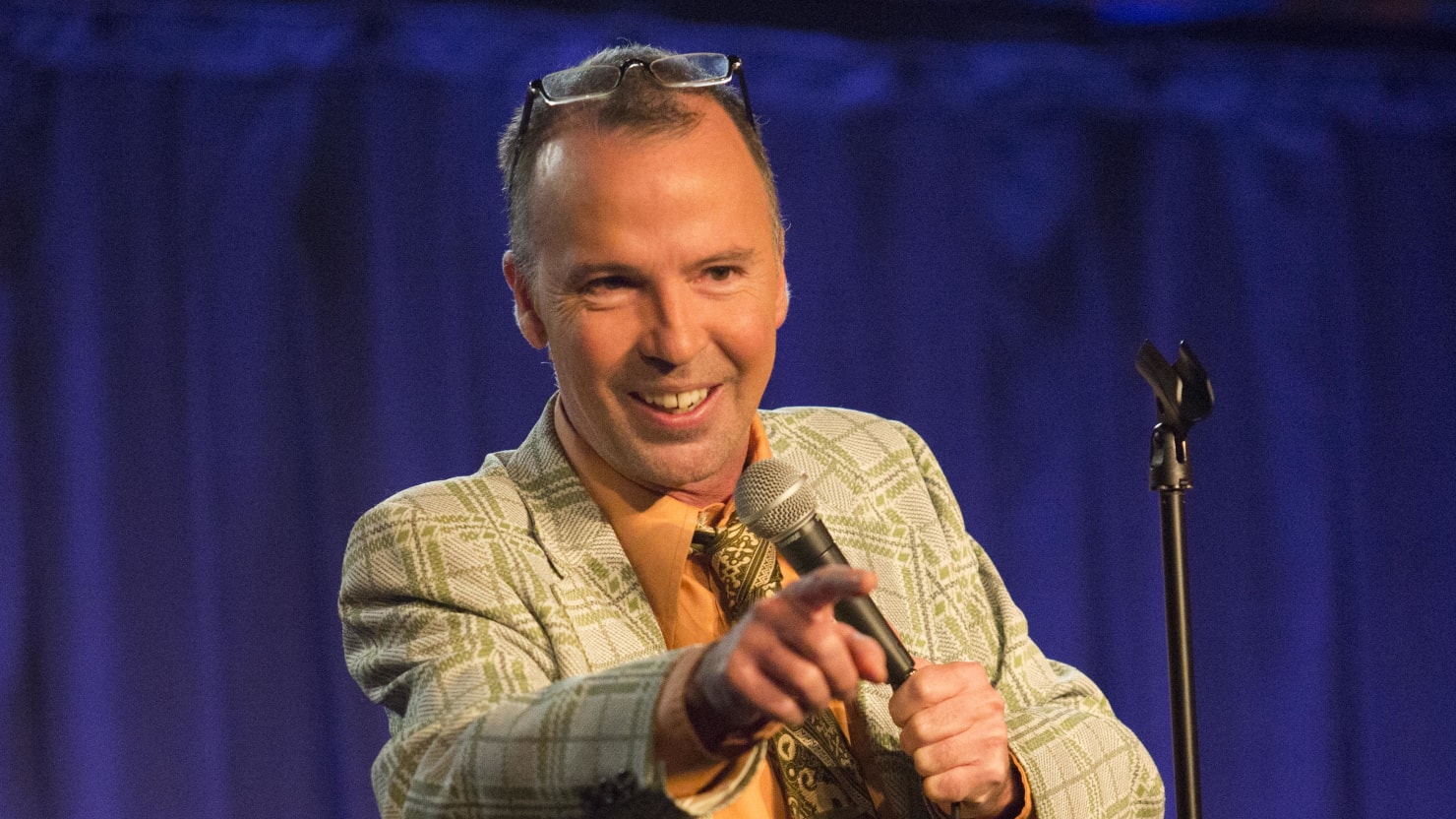
With that in mind, I’d like to cite a comedian by the name of Doug Stanhope. I’ve never mentioned before, but has been one of my personal favorites for years. He’s not on the same level as a Jon Stewart, George Carlin, or Lewis Black. However, given his brand of humor, that’s not too surprising.

Stanhope’s comedy is decidedly NSFW, touching on issues that would give most network producers brain aneurisms. His opinions are overtly harsh and unconcerned with your delicate sensibilities. If you’re wondering just how harsh he can be, here’s a quick taste.

That said, he is not a shock comic in the tradition of Howard Stern or Andrew Dice Clay. Stanope’s comedy, as crude as it can be at times, is very smart. One bit in particular stands out. It comes from his “Deadbeat Hero” album, one of my personal favorites and one I think every comedy fan should listen to at least once.

In that album, he talks about a number of issues, but one in particular stands out. That issue is marriage, one I’ve discussed too on this site, albeit not with the same level of humor. On this topic, he makes one of the most insightful observations I’ve ever seen on a treasured institution.

If marriage didn’t exist, would you invent it? Would you go “Baby, this shit we got together, it’s so good we gotta get the government in on this shit. We can’t just share this commitment ‘tweenst us. We need judges and lawyers involved in this shit, baby. It’s hot!”

The bolded parts are my doing because I think the implications of that question go beyond the comedy, more so than I think Stanhope himself intended. In a sense, it reflects the paradox of marriage and traditional romance that I’ve talked about before in that we see it as natural, yet we need all these social institutions to protect it.

The fact those institutions exist is a subtle, but telling sign that these traditions aren’t as natural as we think they are. More than anything else, they’re the product of taboos and social norms that people cling to out of fear, familiarity, and ignorance. I won’t go so far as to call it a form of excuse banking, but I think it highlights our imperfect understanding of human nature.

One of Doug Stanhope’s greatest strengths as a comedian is his ability to break down a treasured and cherished concept in a way that’s both revealing and insightful. What he did for marriage with this one question immediately makes us ponder the flaws in our current understanding of it.

Once we stop laughing at the punch-line, though, I would take it a step further. I would ask that question again in more general form as a means to help us scrutinize our traditions, values, and everything else we hold sacred. Sure, that’s bound to make some people uncomfortable, but that’s exactly the point of certain brand of comedy, especially Stanhope’s.

Like the Simpson Filter I coined earlier this year, let’s coin another using this question. Since I’m not a branding expert with only a fraction of the wit of Doug Stanhope, I’ll call it “The Stanhope Principle.” The core of that principle can be summed up in one simple question.

If something didn’t exist in its current form, would you invent it that way?

Sure, it’s not nearly as funny as Stanhope’s bit on marriage, nor is it meant to be. In essence, it’s a question meant to get your brain thinking about things that it usually doesn’t think about. In some cases, they’re issues you’ve gone out of your way to avoid.

Take any current issue, be it a major political controversy or a certain state in your personal life. Now, apply the Stanhope Principle and try to answer the question honestly. Here are just a few possible examples.

  • If our tax system existed in its current form, would we invent it that way?
  • If our health care system existed in its current form, would we invent it that way?
  • If our current relationship existed in its current form, would we invent it that way?
  • If the job we worked existed in its current form, would we invent it that way?
  • If our website/blog/product existed in its current form, would we invent it that way?

If you ask that question and answer it honestly, which is key, you might be surprised by what you find out. You might think your personal relationships are functional, but applying the Stanhope Principle could expose flaws that you’ve been overlooking or ignoring.

Apply in a larger context, such as politics, marriage, and gender issues, and the insights get a bit more complicated. Given the current inequalities that still pervade in our society, as well as the double standards we apply, the Stanhope Principle reveals the breadth of the flaws within these institutions.

It can be distressing, acknowledging those flaws. That’s usually where the excuse banking enters the picture, but that can only further mask them. Another honest application of the Stanhope Principle will only remind us of those flaws and even reveal how we’ve made our situation worse.

Ideally, the Stanhope Principle should be a basis for improvement. A good example is Apple, one of the biggest, most successful companies in the world. Steve Jobs and Steve Wozniak probably didn’t know they were applying that principle, but they were.

They saw the current state of computers. They saw there was a lot of room for improvement. Given how cumbersome computers were for much of their early history, they decided to innovate and create a better way of using them. The result is a company that is worth over half-a-trillion dollars.

Applying the Stanhope Principle for worked out pretty well for Apple. I’m not saying it can make everyone a billionaire, but it does help break down a situation and an issue in a way that allows us to see the bigger picture.

More than anything else, it exposes the imperfections of our current situation. For some, it motivates them into improving their situation, be it a relationship, a business, or a social policy. For others, it’s an uncomfortable reminder that there’s a flaw in that they need to cover up or mask. In that sense, it should be easy to see who are more likely to become billionaires.

There are all sorts of way to apply the Stanhope Principle. I’ll certainly try to apply it to future issues that I discuss on this site. For now, I just want to offer my sincere thanks to Doug Stanhope and the principle he inspired. He has made the world inherently funnier and more interesting to explore.

4 Comments

Filed under Current Events, Marriage and Relationships, Reasons and Excuses

Vasili Arkhipov: Another Man Who Saved The World

It’s amazing and sobering to think that there was a point in human history where one person held the fate of the entire world in their hands. We’re a species that can barely be trusted with fireworks. How can we possibly be trusted with weapons so deadly they can end all life on this planet?

Whether we can be trusted or not, these weapons cannot be uninvented. They’re here and they’re a part of the human condition. I’ve made the argument that in some ways, they have benefited the human race. That doesn’t make all the times we’ve come distressingly close to nuclear annihilation any less distressing.

Last month, I highlighted a man who, at one point, held the lives of every person on this planet in his hand. His name was Stanislav Petrov and this year, he passed away shortly before the 34th anniversary of the 1983 nuclear false alarm that almost triggered nuclear war.

That incident was horrifying in that it came so distressingly close to unleashing a nuclear war and due to a computer malfunction, no less. However, there was another incident two decades before that, one that was also disturbingly close in terms of unleashing a nuclear holocaust. Today, October 27th, happens to mark the anniversary of that terrifying, yet sobering event.

Unlike the 1983 incident, though, this is not one of those lesser-known incidents that got swept under the rug for several decades. This involved something called the Cuban Missile Crisis, a terrifying event that most kids learn about in school.

The official story is fairly well-documented. Cuba becomes a communist state, the Soviet Union tries to base mid-ranged ballistic missiles there, the United States is not okay with that, tensions escalate, and eventually, the situation diffuses when both sides realize that negotiating is a lot easier than nuclear war.

Most kids probably know names like Kennedy, Khrushchev, and Castro. They’re the main players who get the credit/blame for bringing the world to the brink of nuclear war. However, there’s one name that few in America or Russia know about. Like Stanislav Petrov, his name is largely an afterthought in history, but at one point, he literally held the fate of humanity in his hand.

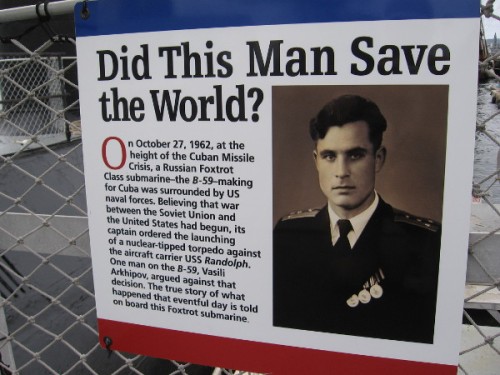
His name is Vasili Arkhipov. He was a high-ranking officer in the Soviet navy. What he did on October 27th, 1962, may very well have saved the world, as we know it. The fact that he did this at a time during one of the most tense standoffs in history makes his accomplishment all the more remarkable.

To appreciate what he did, it’s important to understand just how close the Cuban Missile Crisis came to going nuclear. At one point, a Soviet nuclear-armed submarine was stationed in international waters near Cuba. It was then detected by US destroyers and, in a message that seems pretty mixed in hindsight, began dropping depth charges to force it to surface.

Keep in mind, this sub is armed with nuclear weapons. They also had the authority from Moscow to launch those nuclear weapons if they suspected that war had already started. Once those depth charges started dropping, it’s easy to understand why the officers on board thought that the bombs were already dropping.

That’s where Vasili Arkhipov enters the picture. On that sub, every ranking officer believed that they had to launch. Their sub was running out of air and as far as they knew, if they surfaced, they would only be inhaling radioactive fallout. Everyone on that sub voted to launch. The only one who didn’t was Vasili Arkhipov and because of that, the launch never happened.

Why did Arkhipov’s vote carry so much weight? Well, before he had the fate of the world in his hands, he’d already distinguished himself in an incident involving an ill-fated Soviet submariner called K-19. Like the Cuban Missile Crisis, it resulted in a sub-par movie.

However, the movie did get one thing right. Vasili Arkhipov was a badass who knew how to make hard decisions. Why else would he have been played by Harrison Ford? That incident established Arkhipov as someone whose voice carried more weight than most in the Soviet navy. Even when he was outvoted and outranked, he could make decisions and other people would follow them.

That’s a big part of what sets someone like Vasili Arkhipov apart from Stanislav Petrov. You could argue that Petrov was just in the right place at the right time to make the right decision. That alone makes him a hero.

With Arkhipov, the decision wasn’t as clear-cut. He was an officer in the navy. He had a rank, a responsibility, and a role in one of the most tense geopolitical situations in the history of mankind. He was in a floating coffin surrounded by enemy ships with every other officer wanting to launch a nuclear strike.

He could’ve easily chosen to go along with his fellow officers. Given how badly humans respond to peer pressure, that would’ve been the easiest thing for Arkhipov to do. The fact he chose otherwise is a testament to his ability to do the right thing in a moment where the right thing is hard to grasp.

To appreciate just how hard that decision was, Arkhipov wasn’t even praised for his decision. In fact, he and his crew were disgraced for surfacing in the first place. Sure, he averted a nuclear holocaust, but he didn’t follow the proper protocol that he should’ve after being discovered by the Americans.

Granted, that protocol didn’t involve starting a nuclear war, but it showed weakness during a geopolitical shit storm. This wasn’t like the the 1983 incident in that it could be swept under the rug. This was the Cuban Missile Crisis. You don’t call something a crisis unless it’s that big a deal.

That’s what makes Vasili Arkhipov’s actions on that day all the more remarkable. He was not praised, commended, or even celebrated for his decision that day. He might not have even realized that he had the fate of the human race in his hands at that moment. Remember, he made that decision at a time when, for all he new, nuclear war had already started. Despite that, he did the right thing.

Unlike Stanislav PetrovVasili Arkhipov didn’t live long enough to see his accomplishments acknowledged. He died in 1988 in relative obscurity. He may not have a holiday or a monument named after him, but like Stanislav Petrov, he made a decision that saved the world.

Image result for vasili arkhipov grave

It’s still scary to think that any one person was in a position to make such a decision to begin with. However, the fact that both he and Petrov were able to do it says more about humanity than any weapon ever will.

4 Comments

Filed under Current Events

The (Kind Of) Silver Lining To Recent Sex Scandals

Given the number of lurid sex scandals that have popped up in recent years, and not just the ones I’ve mentioned, you can be forgiven for thinking that there’s an epidemic of powerful men being a dick to women. Go to any social media site or comments section and you’ll usually find angry rants that are nothing short of apocalyptic.

I certainly don’t blame people for being angry about these scandals. What the Harvey Weinsteins, Bill O’Reillys, and Bill Cosbeys of the world have done is egregious. There are no excuses for being that unapologetically crude.

These are men in positions of power. They know, on some levels, that they have leverage that they can use to exploit others. It’s impossible to know whether they would do what they did without this power. So few people have that kind of power that it’s difficult and disturbing to know how most people would use or abuse it.

At the end of the day, though, they still decide whether or not to exploit their power for personal gain. Even if they’re able to cover it up for years, it’s still their choice and it’s all the more egregious.

As bad as these scandals are, though, I think it’s worth taking a step back to acknowledge an understated upside to this string of lurid news. It’s easy to forget sometimes that good news hides in the shadows of bad news. In fact, good news in general tends to hide behind the glut of horror and dread we’re fed every day by the media.

So what kind of good news can we possibly glean from the increasingly lurid sex scandal involving Harvey Weinstein? What good can come out of any sex scandal where a powerful man exploits his position to seduce desperately driven women? Well, if you’re willing to look beyond the infuriating details, it’s actually pretty revealing.

It’s getting MUCH harder for people to get away with sex scandals in general.

Think about it for a moment. Take a step back and look at the world we’re in now, with respect to sex scandals. Ignore, for a moment, the extreme voices from radical feminists and men’s rights activists who would use this scandal to push an agenda. The fact that everyone is so outraged by this scandal should count as good news.

Very few people are making excuses for Harvey Weinstein. Former allies are abandoning him. His wife is leaving him. The film industry that he helped expand is cutting ties with him at every turn. Despite being such a powerful, influential figure in Hollywood, this lurid scandal is costing him dearly.

Compare that to how scandals of the past often unfolded. Other than hilariously dishonest tabloids claiming that Madonna had a secret affair with Martian ambassador, most scandals rarely drew this kind of scrutiny and condemnation.

One of the most infamous examples is that of O.J. Simpson, who had a documented history of spousal abuse prior to the murder of his ex-wife, Nichole. However, despite this abuse, he was still largely a beloved celebrity figure. He was so beloved that some people just refused to believe that he was the kind of monster who would beat a woman.

If O.J. Simpson had carried out such abuse today, it would trend on social media immediately and there would be no way to sweep it under the rug. Say what you will about the prevalence of the internet, but it does carry out one important function. It makes hiding bad, sometimes criminal behavior a lot harder.

Go back 30 years and it was possible, albeit inconvenient, for someone with money and influence to hide a scandal. They just had to pay off the right people, sweet-talk the authorities, and have some damn good lawyers. When used wisely, it’s like it never happened.

Fast forward to today and no amount of money, influence, or overpaid lawyers can stop some random person with a smartphone from tweeting about a celebrity having a major meltdown or cheating on their spouse. Once it’s online, it’s next to impossible to stop.

Now sometimes, this can be a problem. Every now and then, a false rumor will start trending and lead to a lot of frustration. However, given the breadth and speed of modern media, it tends to correct itself. Once a rumor is obviously false, it tends to disappear quickly.

When it’s not a rumor and there’s a lot of digital evidence to back it up, as was the case with Harvey Weinstein, social media does not hold back. No amount of lawyers, PR agents, or hit men can stop it. Once the lurid truth gets out, people will respond and the internet ensures their responses won’t be filtered by the FCC.

This is where we, as a society, show another kind of progress. When it comes to powerful men exploiting women, we as a people have very little tolerance for that these days. We’ll tolerate a certain amount of douche-baggery, but when it becomes criminal, most people draw the line.

Harvey Weinstein is now paying the price. While I think it’s still important to see how valid the accusations against him are, the amount of evidence that has come out thus far leads me to believe that a significant chunk of these lurid stories are true. For what he did, he should pay a price.

Given the price he’s already paid, in terms of his reputation and loss of job opportunities, it sends a powerful message to powerful men. This isn’t the era of “Mad Men” anymore. You can’t expect to get away with these kinds of sex scandals anymore. Social media and the reactionary masses that use it will find out. When they do, you will pay a huge price.

In a world where powerful people can get away with atrocious behavior, some of which is downright criminal, it’s hard to have faith in people. While our world is far from perfect, I think the response to the Harvey Weinstein scandal shows that we’re making progress.

Even powerful men like Weinstein can’t hide their misdeeds anymore. People today are far less willing to turn a blind eye to these kinds of crimes. It won’t completely eliminate the kinds of lurid scandals that frustrate celebrities and titillate gossip magazines, but it will ensure that those kinds of scandals will be much harder to avoid. It won’t stop certain people, but it will help prevent them from using celebrity to hide their misdeeds.

12 Comments

Filed under Celebrities and Celebrity Culture, Current Events, gender issues

Just How Close Have We Come (And How Close ARE We) To Nuclear War?

For most of human history, we could take comfort in one simple fact. No matter how brutish, crude, or stupid we were, from burning witches to fighting wars over a stray dog, we could never screw up so badly that we would destroy our entire world. Sure, we could leave some pretty noticeable scars, but we could never outright destroy it.

That all changed on July 16, 1945 in Los Alamos, New Mexico when the first atomic bomb was detonated. It’s impossible to overstate how significant that moment was in the history of the human race and not just because it helped end World War II, thereby inspiring countless war movies for decades to come.

For the first time in the history of planet Earth, a species that had evolved to hunt, gather, and pick nuts out of elephant shit had the means to wipe itself out, along with most other life. At the height of the Cold War, there were approximately 64,500 active nuclear warheads. That’s enough destructive power to kill every person in the world, and their pets, many times over.

While the number of live nuclear warheads at the global level has decreased, they still have plenty of destructive power to both wipe out our species and render large chunks of the world uninhabitable to any species less hardy than a cockroach. These are, by and large, the most dangerous items mankind has ever created and that includes machine guns, nerve gas, and fidget spinners.

The very existence of these weapons says a lot about the state of our species and where it came from, more so than I can cover in a single blog post. However, in wake of the 35th anniversary of the day when the world, as we know it, almost ended, I think it’s worth emphasizing just how skilled/lucky/crazy we are to still live in an intact world.

Despite the undeniable danger of nuclear weapons, we don’t always treat them with the same care that we would treat the latest iPhone. Several years ago, John Oliver dedicated an entire show to highlighting the sorry state of America’s nuclear arsenal. Even if you only believe half of what a comedy news show tells you, it’s hard to take much comfort when weapons of mass destruction are involved.

What happened on September 26th, 1983 was terrifying in just how close we came to nuclear war. Many would make the argument that this incident was the closest we, as a species, came to destroying ourselves. I would tend to agree with that argument. Unfortunately, it’s one of those arguments that has an uncomfortable breadth of details.

It’s true. There have been more incidents that could’ve easily escalated to terrifying levels. Some were simple accidents that could’ve warranted far more than a demotion. Some where intense, geopolitical ordeals that went onto inspire major Hollywood movies starring Kevin Costner.

In any case, the stakes were painfully high. You literally can’t get much higher than a nuclear war that wipes out billions. We’ve managed to avoid it, but we’ve come so uncomfortably close that it’s a miracle the world is still spinning. A video from the YouTube channel AllTimeTop10s nicely documents some of these incidents. If you feel like you’re having a bad day, this should help provide some context.

I’ll give everyone a moment to catch their breath, vomit, or a combination of the two. I promise nobody would blame you. Knowing how close we came to nuclear war and how bad it could’ve been, we should all share in a collective sigh of relief every day.

However, as bad as these past cases have been, there’s no guarantee that we won’t face something similar in the future. There’s also no guarantee that there will be someone like Santislav Petrov to make the right decision when those situations come around.

That said, the situation today is very different than what it was during the Cold War. Say what you will about ongoing talking points about Russia. It’s not even in the same hemisphere at it was in the 50s and 60s when the United States and Russia seemed eager for an opportunity to go to war.

The world of geopolitics has evolved, in many ways, beyond the concept of two competing superpowers engaging in a nuclear dick-measuring contest. These days, increased globalism and a more interconnected economy makes that kind of geopolitical strategy untenable and counterproductive.

In a sense, globalization and the economic bounty that came with it made war of any kind, nuclear or otherwise, a losing endeavor. As I’ve noted before, even the most evil billionaires in the world prefer that the world remain intact so they can keep enjoying their billions. That’s just common sense and shameless self-interest.

That might offer some comfort, but there are those much smarter than I’ll ever be who still have concerns. According to the Bulletin of Atomic Scientists, who have been gauging the likelihood of nuclear war for decades, we’re two-and-a-half minutes to midnight. This is their statement on the matter.

For the last two years, the minute hand of the Doomsday Clock stayed set at three minutes before the hour, the closest it had been to midnight since the early 1980s. In its two most recent annual announcements on the Clock, the Science and Security Board warned: “The probability of global catastrophe is very high, and the actions needed to reduce the risks of disaster must be taken very soon.” In 2017, we find the danger to be even greater, the need for action more urgent. It is two and a half minutes to midnight, the Clock is ticking, global danger looms. Wise public officials should act immediately, guiding humanity away from the brink. If they do not, wise citizens must step forward and lead the way.

Since I’m an aspiring erotica/romance writer and not an atomic scientist, I am woefully unqualified to contest the conclusions of these individuals, let alone argue them. They cite a new wave of tensions between Russia and the United States, as well as the nuclear ambitions of North Korea. These are not the same conflicts that fueled the Cold War and that uncertainty has many understandably spooked.

Me being the optimist I am, I tend to believe that world leaders, however deranged or misguided they may be, prefer that the world remain intact. Nobody wants to be the leader of a smoldering pile of ash. There’s no way to build a palace, a harem, or a giant golden statue of themselves on a foundation of ash. That’s as good an incentive as anyone can hope for in avoiding nuclear war.

Unfortunately, human beings don’t always act rationally and are prone to making stupid decisions that change the course of history. One mistake in a situation involving nuclear weapons might be all it takes. Only time will tell, but the extent to which we’ve survived thus far should give us all reasons to be hopeful and thankful.

7 Comments

Filed under Current Events, Jack Fisher's Insights

Ted Cruz, Twitter Porn, And Why We Shouldn’t Make A Big Deal Of It

As a general principle, I don’t like mentioning certain politicians by name. That’s because to mention them is to give them more attention than they deserve and, as I’ve pointed out before, attention is the life blood of both the internet and the trolls that make it awful.

I only ever get specific once their propensity for bullshit reaches a level of absurdity and hilarity that both sides of the political spectrum can laugh out. That’s why I’ll drop names like Rick Santorum and Bernie Sanders. If they didn’t exist in real life, they’d probably exist as cartoon characters that Seth MacFarlane made up.

With that in mind, I have to say I’m shocked that I can add Ted Cruz to that list. In terms of politicians, there’s not much about him that makes him deserving of attention. He’s a cut-and-paste conservative republican who espouses everything you’d expect a guy who once called same-sex marriage a threat to liberty and makes one too many Nazi comparisons when he talks about health care.

It’s for that reason why nobody should be surprised that he’s as sex-negative as they come. While he was the solicitor general in Texas, he ardently defended a state ban on sex toy sales. He even went so far as to make this unsexy statement.

“There is no substantive-due-process right to stimulate one’s genitals for non-medical purposes unrelated to procreation or outside of an interpersonal relationship.”

Try to read that without cringing. I dare you. This is a man who honestly sided with people who believed in using taxpayer money and policing power to discourage people from touching their own bodies in ways they might enjoy. It’s enough to make the Ron Swanson in all of us fume.

Image result for Ron Swanson on government

It’s also for that very reason that nobody should be surprised that Ted Cruz just got himself into trouble by “accidentally” liking a porn video on Twitter. I put the word “accidentally” in quotes because it’s a loaded word in a situation where any word can turn into the dirtiest kind of innuendo. Since I prefer to save that sort of rhetoric for my novels, I don’t want to overdo it here.

Naturally, the idea of an uptight conservative republican who once argued for prohibitions on masturbation liking a porn video was like catnip for social media. Cruz is now the butt of a lot of crude humor and understandably so. It’s like catching a priest with a prostitute. It’s just inherently funny.

Now, as funny as this is and as detestable as Ted Cruz may be to anyone who enjoys stimulating their genitals, there’s a good chance the man may be completely innocent here. He has already gone on record as saying that a staffer managing his social media account liked the video and not him. Given how common that practice is among politicians, that’s the most likely scenario.

That doesn’t make situation any less hilarious, nor will it stop the onslaught of reactions from people calling Ted Cruz a hypocrite and a fraud. Given how much we, as a society, detest hypocrites, even from those from the non-political class, that’s understandable. Hypocrites are the epitome of everything that makes a human being unlikable.

However, in this case, I think the reactions to the hilarity may do more harm than good. Please don’t take that to mean I’m defending Ted Cruz, nor am I making excuses for him. I am not a big Ted Cruz fan. I would not vote for him to be my local dog catcher, let alone a politician of any standing.

That said, I’ve never met the man. I don’t know what he’s like outside of these ridiculous stories about the ridiculous things he says on the record. He might very well be a nice guy who only says what he says because his party’s platform involves decrying porn as a public health crisis. When the cameras go off, he may not really care much about the kinky stuff people do in the privacy of their bedrooms.

You could probably say the same about a lot of ardent conservatives like him, whose party gets a boatload of money from anti-sex, anti-porn, anti-fun organizations like the Family Research Council. What they say in public doesn’t always reflect what they believe in private.

Let’s not get too high and mighty here. If someone paid us enough money, then we would probably say all sorts of horribly unsexy things as well. I don’t deny that if someone gave me millions of dollars to only write novels that would appeal to Mormon clown enthusiasts, I would do it in a heartbeat.

Short of reading Ted Cruz’s mind or getting some private audio recordings that has him going on a Mel Gibson style rant about the evils of porn and masturbation, we have no way of knowing how he really feels about porn and sex. However, social media is still going to mock him as the ultimate hypocrite, right up there with Ted Haggard.

That, I feel, is a mistake because Ted Cruz is not Ted Haggard. Haggard got caught red-handed in a way he could not blame on a lazy staffer. In Cruz’s case, it’s very likely that this was just some staffer with too much free time, not enough coffee, and badly in need of a good orgasm. Attacking him for something he probably didn’t do makes us the assholes and not him.

There’s another more important reason why we shouldn’t make too big a deal about Cruz’s possible porn tastes and it goes beyond simply not being an asshole, an effort we should all value. There’s a time for mocking and a time for pointing out the hilarity of a situation, of which there are many. However, let’s not mistake mockery for an actual argument against the idea we find so abhorrent in the first place.

Mocking Ted Cruz does not make an effective argument against his regressive attitudes towards sex, porn, and all things fun in this world. Mockery outside of a “South Park” or “Rick and Morty” rerun never adds any kind of meaningful insight to an issue. Sure, it’s funny, but that’s the extent of the contribution.

For someone like Ted Cruz, who still wields real power and has real influence over public policy, mocking him isn’t going to change his mind about anything. If anything, it may make him that much more eager to send police into peoples’ houses to make sure they’re not pleasuring themselves. People get unreasonable when they’re mocked, especially when it’s not warranted.

Whether or not Ted Cruz genuinely believes his party’s platform on sex, porn, and minorities is beyond the point. At some point, just being an asshole to someone who likely didn’t have any role in an incident, other than having his name attached to it, helps nobody. It just gives Ted Cruz more reason to despise his opponents and not listen to them.

That’s the biggest reason why this whole ordeal with him liking a porn video on Twitter is already overblown and need not be an indictment on all things Ted Cruz. Instead of actually pointing out to Ted Cruz how regressive, harmful, and unproductive his attitudes are, people are taking the easier path and mocking him instead.

That approach is every bit as asinine as anything Ted Cruz has been part of. In fact, I dare you to find any person of power that ever changed their mind because of mockery. Men like Cruz should be challenged, but part of that process involves actually respecting them enough understand their situation. That’s harder for certain people, especially politicians who are beholden to donors.

It’s hard, frustrating, and not nearly as funny, but when our sex lives are at stake, I think it’s worth enduring. It might not be possible to persuade a man like Ted Cruz that his attitudes towards sex are wrong, but by being assholes about it, we’re doing a disservice to those who can be persuaded and for all the right reasons. In the end, that benefits both our sex lives and political discourse.


Leave a comment

Filed under Current Events, Jack Fisher's Insights, Reasons and Excuses

Being Right Vs. Winning An Argument Vs. Ben Shapiro

There’s an old saying that I just made up a few seconds ago, old being a relative term.

“You can either win the argument by merit or be right in principle, but only one matters in the long run.”

It sounds cynical, but it’s something I think most people realize at some point in our lives. The truth is a harsh mistress and it’s rarely the sexy kind. Truth is the kind of mistress that has no safe word, never offers any lube, and rarely gives overt warnings. When she wants to whip us in our most sensitive areas, she’ll do so without asking for permission or a second thought.

I’ll ease up on the BDSM terminology because I’m trying to make a serious point, one that’s a lot more relative in the era of “alternative facts” and “fake news.” More and more, we’re learning the hard way that our caveman brains aren’t equipped to seek truth. Survival and reproduction are our primary imperatives. Truth is optional, at best, and an afterthought at worst.

Image result for fake news

It’s for that very reason that public debates or major speaking present a false sense of perspective that exploits our caveman brains. It gives the impression that the truth can be presented in a slick, concise, and easy-to-digest message that helps us make sense of the world. That kind of certainty in an world of cheap knock-offs and practical jokes is more valuable to our psyche than gold, diamonds, and good Wi-Fi.

I say that as someone who finds a lot of entertainment value in debates. For a time, one of my favorite things to do was to look up debates between scientists and creationists, which always seems to bring out the best and worst of our caveman brains. They nicely highlight how real, functioning human beings can hold such radically different viewpoints, as well as the excuses they’ll make to cling to those viewpoints.

Related image

I won’t get into all the absurdities behind creationist debates. That’s not what prompted this post. The primary inspiration for this topic came from the recent news surrounding Ben Shapiro’s recent speaking gig at UC Berkeley. By every measure, this incident highlights all the problems with such debates better than any creationist ever could.

For those of you who don’t know who Ben Shapiro is, it’s not too hard to know what he’s about. He’s a fast-talking, quick-witted talking head in a media landscape that’s full of them. He specializes in espousing staunch conservative principles and you could make the case he does it better than almost any other conservative, at this point.

Personally, I like Mr. Shaprio’s style and I agree with some of the points he makes and not just because he makes them well. Many of them are points I’ve come to embrace on my own accord in trying to make sense of this crazy world. However, as much as I respect the man and his principles, he does embody a dangerous phenomenon that is becoming more prevalent in the digital age.

Image result for talking heads on tv

It’s one born from that not-so-old saying I mentioned earlier about being right versus winning an argument. They are not the same thing, but they’re easy to confuse, thanks largely to our caveman brains.

Think back to the Simpson Filter in appealing to large swaths of people. For the Homer and Marge Simpsons of the world, winning the argument is enough to win them over. They leave the truth for the sad, lonely, and miserable Lisa Simpsons of the world that nobody listens to.

Ben Shaprio, and others like him, are highly skilled at using the Simpson Filter to get their message across. They’re slick, compelling, and charismatic in the sense that they check all the boxes that appeal to our tribal instincts, which I’ve noted before are a major source of conflict.

Related image

By appealing to these instincts, they don’t have to be completely right. They don’t even have to be half-right. They just have to get people thinking and feeling that it’s right, so much so that they won’t bother checking the facts, doing some research of their own, or even giving it a second thought. Why would they? Ben Shaprio comes off as so smart and so knowledgable that he’s done the thinking for us.

Therein lies the biggest problem, though. By focusing on the argument and not the truth, it’s easy to conflate the two. Ben Shapiro is not a scientist, an economist, a politician, a philosopher, or even a used car salesman. He’s just a commentator, who happens to be exceptionally well at commentating in an articulate manner. That’s a valuable skill, but it’s not the same as being correct.

This actually played out in another event that occurred earlier this year at Politicon 2017. At that event, Ben Shapiro debated Cenk Uygur, another professional commentator who is at the opposite end of the political spectrum. Like Shapiro, I respect Mr. Uygur and agree with some of his positions. However, he is not as skilled a debater as Mr. Shapiro.

If you watch the debate, listen to the crowd, and note the speaking styles of both men, it’s not hard to see who has more skill and experience in that field. If you read the comments and look at the reactions, most agree that Mr. Shapiro won that debate. I’m sure it’s not the first debate he’s won, nor will it be the last.

That’s just it, though. Mr. Shapiro could win a billion more debates against a billion other people much smarter than Mr. Uygur. He could go down in history as the most skilled debater in the history of the human race. It still wouldn’t change one inescapable fact.

The real world, as in the world that operates outside our caveman brains, doesn’t give two whiffs of dried wolf shit about who wins a debate or by how much. Reality still operates under the same facts, rules, and principles. People still operate in ways that are at the mercy of their caveman brains and their collective circumstances.

Image result for Tribalism

Ben Shapiro could convince every person on this planet that Ronald Reagan was right about everything, that the Jewish religion that he practices is the only correct one, and that everyone whoever worked for Hillary Clinton was an alien spy. That still doesn’t change reality. At the end of the day, the truth is still that same harsh mistress that will whip all our asses without warning.

That’s why, in the long run, it doesn’t matter how many debates Ben Shapiro or others like him win. It doesn’t matter how well they craft their message. In the long run, if their ideas don’t line up with reality, then reality will eventually win out. It always does. People die, take their ideas with them, and leave reality to sort out the rest.

Now, I don’t doubt for a second that Mr. Shapiro is sincere in his beliefs. I also don’t doubt that his opponents, like Cenk Uygur are just as sincere. That’s why I wouldn’t classify them as professional trolls, such as the Ann Coulters and Lena Dunhams of the world.

Image result for Ann Coulter

They don’t say what they say, just to provoke our caveman brains and draw attention to themselves. They aren’t outright con-artists either, like certain televangelists. They’re just good at conveying their ideas and making them feel legitimate. Unfortunately, that’s as far as they can take it.

Ben Shapiro, Cenk Uygur, and everyone like them may think they have the answers. They may even believe that their way will make the world a better place, as a whole. They’re not entirely malicious in attempting to convey their points, but they are misguided.

There’s also a danger to their approach, conflating debates with truth. They present the false impression that an issue like politics, evolution, and economics can be resolved through simple debate through a series of talking points. As anyone who has worked with a tax attorney knows, that’s just not how the real world operates.

Image result for Complex economics

The world is complicated, complex, and chaotic. No human brain, or collection of human brains, is equipped to make sense of it. Some of these issues aren’t just complex, either. They’re impossible to resolve because there just aren’t enough resources for everyone.

A skilled debater, like Ben Shapiro, is good at convincing people there are quick fixes. The world can be improved simply by adopting the policies of his favorite ideology. He may convince you, me, and everyone around you that he’s right.

The truth, however, can never be swayed by fast talking, fancy rhetoric, or skilled arguments. At the end of the day, it will stay on the side of the harsh mistress that is reality. In the short term, the Ben Shapiro’s of the world will be able to bask in many victorious debates. In the long term, however, the truth knows whose asses will be stinging in the end.

Related image

9 Comments

Filed under Celebrities and Celebrity Culture, Current Events, Jack Fisher's Insights

How To Tell When A Protest Has Failed (Besides Violence)

These days, it seems as though America has a new favorite pastime. It’s not baseball. It’s not football. It’s not starting flame wars in the comments section of a Justin Bieber music video either. It’s protesting.

Ever since the migraine-inducing side-show that was the 2016 Presidential Election, there has been a lot of protesting going on. I’ve even commented on some of them. First, there was the women’s march. Then, there was the March For Life. These were more about ongoing issues, though. Other protests, in recent months, have been more vocal, to put it kindly.

It seems everybody’s tribal instincts, which are the same instincts I’ve said will destroy us all if we don’t confront them, are in overdrive. Everybody is picking a side. Everybody thinks their side is the side of truth, justice, and thong bikinis. They all see themselves as George Washington taking down an army of Hitler clones with nothing more than a pistol and the American spirit.

Obviously, they all can’t be right, but they all can be wrong. They can all be horribly misguided as well, some more than others. I understand why protesting is a big deal. People feel very passionate about certain issues. Some issues definitely warrant that passion.

Issues like civil rights, the right to marry the person you love, or the right to craft sexy erotica/romance novels without some government bureaucrat micromanaging every page are worth fighting for. People have fought for those rights in the past. While there have been setbacks, progress usually sides with those who aren’t assholes.

That’s what makes the recent surge in protests so frustrating. I can see the passion. I don’t deny it’s there. I also don’t deny that the people feel strongly about what they’re protesting. I do, however, question the merit behind it.

It’s as though people have just skipped the part where they look at the issue they’re protesting, think critically about the implications, and adjust their message accordingly. That’s kind of a big deal in any protest. From Gandhi to Martin Luther King Jr., the ability to craft and convey the right message was critical to their success.

These days, every issue being protested feels like an extension of a petty flame war on a Harry Potter message board. The attitudes involved can best be summed up with this simple chorus.

“Your worldview doesn’t agree with mine so you must be a terrible person!”

It’s not about justice, although most will claim it is. It’s not about one group feeling marginalized, although most will claim it is. It’s not even about righting a wrong, although all will claim it is. It’s about the world not lining up with someone’s particular ideal, as though the world is somehow obligated to cater to your feelings.

It doesn’t matter which side of the political spectrum you’re on. It doesn’t even matter if you’re a card-carrying anarchist. If the crux of your argument is that the world isn’t doing enough for you beyond not putting you in chains and making you lick lead bricks, then your protests are empty.

This brings me to the most recent string of protests that have rocked the news. Unless you’ve been living in a windowless basement for three days, playing Call of Duty, eating only frozen pizza, and shitting in buckets, you’ll know there has been some pretty major protests in Charlottesville, Virginia.

I won’t get too deep into the substance of the protests. I won’t even break down the two opposing sides. I’ll just acknowledge that these protests, unlike the Women’s March or the March For Life, got pretty ugly. One person is dead and others have been injured. By most measures, it’s a protest that went wrong.

I’ll even go a step further. I’ll say that the protest has outright failed for both sides. I get that’s just my opinion. It’s probably not a very popular opinion, but this is how I feel about it after taking a few days to process the events. I get that the opinions of an erotica/romance writer barely amount to a wet fart in a shit factory, but I still feel compelled to share it.

As to why I think it failed, I’d like to explain by setting up a checklist of sorts. Think of it as a basic criteria for determining whether a protest actually has some substance behind it and warrants further debate. It doesn’t always have to result in a law or formal declaration of victory. It just has to be something that furthers the human condition in some meaningful way.

For the sake of not digging too deeply into inherently unsexy topics, like politics and social injustice, I won’t make the list too long or too specific. I’ll try to make sure it can fit on a notecard. That way, if you see a mob of protesters walking down your street, you’ll know whether they’re worth joining.

  • Can the protester cite a specific law or policy that they’re looking to overturn or pass?
  • Can the protesters cite a specific event or incident that warrants outrage among decent human beings?
  • Can the protesters refer to documented injustices by real people who harmed real victims?
  • Can the protesters claim a greater goal than just shaming certain groups?
  • Can the protesters’ agenda be accomplished in a manner that doesn’t subvert basic human nature?
  • Can the protesters’ claim to utilize methods that don’t personally attack opponents in lieu of arguing their point?

Read over these six questions. Think about them carefully and don’t just answer on a whim, which I know can be hard since that’s how our brains are wired make most decisions. Try to go beyond caveman logic for this because if you’re going to join any protest, you should make sure it’s the right kind.

If, after all that contemplation, the answer to all six questions is no, then there’s no getting around the truth. The protest and the agenda behind it is a failure. It’s either doomed to fail or has already failed. It doesn’t always means that it ends in violence, but it often does and, as we’re seeing in Charlottesville, that tends to override any meaningful debate.

In a sense, Charlottesville is a case study in a protest wherein both sides can’t claim much moral high ground. One side is yelling, “Look at our tribe and how great it is! Acknowledge its greatness and celebrate its glory!” The other is yelling, “Your tribe is awful! You people should be ashamed of who you are!” This is not a meaningful argument, nor is it one anyone can win.

The biggest flaw in both sides is that both sides are reducing the other to some kind of inherent wrongness. There’s no effort at all to understand or even talk about the substance behind their sentiment. Just being part of that particular group somehow makes you a horrible human being and that’s it.

Well, I’ve got news for both sides they would be wise to heed before their next failed protest. Human beings are extremely complicated. An individual is more than the sum of their tribal affiliation. While it’s in our nature to lump groups of people into certain tribes, that can often blind us to the real, genuine sentiments of our fellow human beings.

Granted, some of those human beings will be petty assholes who just want the world to carry it on its shoulders so it can sleep in every morning. You’ll find dishonest, disingenuous assholes in every tribe. It’s just part of the erratic nature of humanity. However, the vast majority of people are genuine. We couldn’t have survived as long as we have if we weren’t.

The world is chaotic and our caveman brains aren’t wired to make sense of it for now. We agonize over the chaos of the world, which often can be unjust, because we feel the need to do something about it. However, if that something involves just demonizing other people instead of actually dealing with them as human beings, then you’re not protesting anymore. You’re just whining.

1 Comment

Filed under Current Events