Tag Archives: human nature

No, Porn Is NOT A Public Health Crisis (But Our Attitudes About It Are)

porn-industry

In his book, “Sex and God,” which I highly recommend, author Darrel Ray tells a brief, but revealing story about the topic of porn addition. It goes something like this:

One day, an anxious and distressed man walks into a therapist’s office. He tells the therapist he’s addicted to porn. He spends no less than six hours a day watching, masturbating at least three times in the process. Needless to say, this habit has completely disrupted his life.

He struggles to hold down a job. He struggles to maintain a relationship. His porn consumption is so all-encompassing that it is a serious detriment to his day-to-day living. He desperately seeks help and the therapist listens intently, hoping to help this man overcome this issue and forge a healthier life.

The next day, another anxious and distressed man walks into the same therapist’s office. He also tells the therapist he’s addicted to porn. However, when the therapist asks how much porn he consumes, the man says he watches only a few hours every week. He does masturbates, but not every day and never more than twice.

He holds down a steady job. He has a wife and kids that he loves dearly. He also comes from a deeply religious community where he’s widely respected. He’s terrified that someone will find out that he watches porn or masturbates. The guilt he feels is so serious and he desperately seeks help.

The therapist still listens intently, but has to find a way to explain to the man that the porn itself is not the problem. It’s the undue guilt he feels that’s causing all these issues.

It’s a basic story, but one that reflects the strange, eccentric nature of our attitudes towards porn. It exists. It’s legal. It’s a multi-billion dollar industry, complete with some of the most heavily trafficked websites on the internet. There have been efforts to ban it in the past, but those efforts rarely succeed. Even in non-democratic countries, porn finds a way to feed the human libido.

Image result for anti-porn crusade

Despite this, there are still efforts by regressive people on both sides of the political spectrum who see porn the same way others see crystal meth. It’s not just an addictive drug. It’s one that has seriously detrimental side effects on those who use it and society as a whole. It’s one of those strange sentiments that both radical feminists and right-wing conservatives share for different reasons.

I don’t want to focus too much on the reasons for those sentiments, nor do I want to break down all the reasons why I believe they’re misguided. That’s not the reason I’m writing this article. In general, I try avoid talking about these sorts of moral crusades because, like other notable crusades, they tend to be more spectacle than substance.

That said, I have noticed the anti-porn crowd shifting their tactics in their quest to temper human desire. Rather than push for outright censorship, which is rarely popular in democratic societies, this crowd is attempting to label porn a public health crisis.

Image result for anti-porn crusade

The government of Utah, the current title holder for most porn subscriptions by state, was the first to declare porn a public health crisis back in 2016. Other states have followed, but the most notable is Florida, who managed to declare it a public health crisis after denying a ban on assault rifles.

Let that sink in for a moment. Florida says that porn is a crisis that warrants greater scrutiny than assault weapons, which actually kill people. If that doesn’t show just how flawed our attitudes are about porn and guns, then I don’t know what does.

Bear in mind that just declaring porn a health crisis has limited effect beyond bad PR for the business. A government cannot censor porn any more than they can shut down another multi-billion dollar industry with massive global reach. As CNN reported, it’s more a symbolic gesture, which is just a fancy way of saying it’s one huge act of virtue signaling. It’s as empty and worthless as any declaration can possibly be.

Image result for anti-porn crusade

While this crowd will eagerly cite studies that claim porn leads to all sorts of negative behaviors that destroy families and relationships, they’re just as eager to ignore the many flaws in those studies. They’ll also ignore data that suggests an increase in porn consumption actually decreases instances of sex crimes.

As I’ve noted before, human beings are complex, multi-layered creatures. Porn is just one of those few things that impacts a wider range of those complexities than most. It strikes at our moral values, our understanding of intimacy, our insights into sex, and our concept of love.

For some people, it has no effect. For some, it has a positive effect. For others, it has a negative effect. You could say the same thing for everything from fast food to video games to stamp collecting. When it comes to the effect, it depends on the attitude of the individual and how they’re wired.

Image result for anti-porn crusade

The republican party in America has made no secret of their attitudes towards porn. That attitude is not unlike the one of the second man who walked into the therapists office that I described earlier. It’s not the porn that made him feel so damaged. It was his attitude and overbearing guilt, which is often religiously motivated.

It’s for this reason that organizations like the American Psychological Association don’t put porn addiction in the same category they do with substance abuse. They’ve noted that the vast majority of porn consumers rarely suffer ill-effects. For some, it even provides significant benefits.

There is, however, a small subset of the population that struggles with it. By small, I mean less than 10 percent. These people are, in their own minds, hopelessly addicted to porn. However, when compared to the prevalence of alcoholism or prescription drugs, porn is hardly a fair comparison. That’s not to take away from the suffering of those people, but there is a context to it.

Image result for anti-porn crusade

Porn is not like a chemical you inject into your brain to directly evoke a particular effect. It’s not sort of mental conditioning, either. For those addicted to it, as with other addictions, there are other factors involved. It’s not the porn itself as much as it is the mentality behind it.

Maybe someone is using it because they’re just a lot hornier than the average person. Maybe it’s because they’re not getting enough sex from their current personal life. Maybe it’s because there’s a particular aspect of their sexuality that they cannot otherwise explore. Whatever their reason, the damage only gets worse when they’re racked with guilt about it.

Image result for racked with guilt

Everyone’s experience with porn, sex, and everything in between is different. Actor Terry Crews claimed he battled porn addiction, but absent any larger context, it’s hard to know whether porn was actually the problem or whether it was an effect of something else.

That’s the ultimate irony of calling porn a public health crisis. It attempts to label an effect as a cause, which isn’t just asinine. It’s utterly backwards and detracts from other, more substantive issues. By calling porn a crisis, it creates the sentiment that there’s this one, simple target that’s the source of all these complex troubles.

I can already spoil the outcome of that effort right now. Even if porn disappeared tomorrow, those troubles would remain. Those attitudes would continue hurting those who were addicted. It won’t solve any problems. It’ll just redirect those issues, waste time, needlessly spend taxpayer money, and further undermine our ability to be comfortable with our sexuality.

Related image

4 Comments

Filed under Current Events, gender issues, sex in media, sex in society, sexuality

Superman, Rick Sanchez, And The Nihilism Filter

Here’s a question that should strain the brains of anyone who reads too many comics and watches too much TV.

What do Rick Sanchez and Superman have in common?

Take a moment to finish rolling your eyes. Bear with me, I am going somewhere with this. There is a point to posing such a question, relatively speaking. Maybe a better question would be what possible commonalities could someone like Superman share with Rick Sanchez from “Rick and Morty?”

One is the undisputed icon of truth, justice, and the American way. The other is an eccentric, unstable super-genius who also happens to be high-functioning alcoholic. These are two fictional characters who, on paper, would clash at every turn. However, there is one trait that binds them and it’s one that’s worth scrutinizing.

They both perfectly embody nihilistic morality.

Again, I am going somewhere like this. Just hear me out  because this is something I think that fans of both Superman and “Rick and Morty” can appreciate. In an era where everyone has an excuse, an agenda, or a combination of the two, it’s a perspective that I think everyone can appreciate.

To understand that perspective, it’s necessary to understand what I mean by “nihilistic morality.” I’ve mentioned nihilism before when I’ve discussed “Rick and Morty” in previous posts, specifically on what makes Rick Sanchez an appealing character to an emerging generation. For the purposes of this discussion, you need not be a super-genius or a Kryptonian to understand.

By definition, nihilism sounds bleak and depressing. At its core, it states that life has no inherent meaning or purpose. We’re just globs of matter floating around the universe for a finite period of time. That’s it. There’s no plan, purpose, or greater meaning. Any effort we make at seeking meaning requires that we shamelessly lie to ourselves. Rick Sanchez, himself, put it pretty succinctly.

“When you know nothing matters, the universe is yours. And I’ve never met a universe that was into it. The universe is basically an animal, it grazes on the ordinary. It creates infinite idiots, just to eat them.”

Depressing or not, I don’t intend to belabor the grim prospects of nihilism. Instead, I want to focus on the implications because, even if the principles are depressing, the implications are pretty revealing. In a sense, those implications can say a lot about what we consider moral and why we do what we do.

This is where Superman enters the equation. When it comes to beacons of morality, Superman is basically the alpha and omega of all things good and just. He is the standard by which all heroes are measured. He is the arbiter of the ethics, philosophy, and principles of a good and just person. If Superman does it, then it must be good. If there’s a right way to do something, then Superman does it without hesitation.

Where he and Rick Sanchez intersect has less to do with who they are and more with why they do what they do. Whether it’s stopping Zod from destroying a city or selling weapons to assassins to spend an afternoon at an alien arcade, these two characters have surprisingly similar motivations and those motivations have a basis in nihilism.

Simply put, Superman and Rick Sanchez don’t do what they do because it serves an agenda, makes them look good to others, helps them function better in society, or rewards them after death. They do it because they want to. That’s it. That’s the end of the philosophical discussion.

In the context of pure nihilism, these two exceedingly different characters are on the same page. There’s no larger plan or purpose to their choices. Rick Sanchez has never given a cosmic fart about what others think about him, including his own family. Superman has also made it abundantly clear throughout his history that he doesn’t do what he does for adulation. He does it because it’s the right thing to do.

These simplistic, almost shallow reasons are inherently nihilistic in that they acknowledge the pointlessness of attempting to seek greater meaning in a chaotic universe. It’s just as pointless to do something for personal reasons, be they vengeance for dead parents or upstaging the devil. Any reason, large or small, is just as empty within a nihilistic worldview.

However, if you can look past the depressing concepts, there are major implications for the ethical context of these actions. The fact that both Superman and Rick Sanchez don’t need or seek that greater meaning to justify their actions makes what they do more inherently honest. In terms of judging ethical motivations, that counts for a lot.

Whether they’re iconic heroes or alcoholic mad scientists, honesty matters and so does motivation. Heroes like Captain America, Iron Man, Batman, Spider-Man, and the X-men have factors like duty, vision, responsibility, and tragedy to guide their actions. You could say the same about the real people behind any movement, be they civil rights, gender issues, or a political party.

Spider-Man does what he does out of responsibility and the guilt he feels for being irresponsible in the past. Most peoples’ political affiliation is inherited from their parents or their economic circumstances. Some join civil rights movements out of personal conviction or just to virtue signal.

Both Rick Sanchez and Superman would see all those factors as needless complications to what should be a very simple choice. To them, you simply do something because you want to. If there are consequences to that, then you deal with them. That’s all there is to it. That’s all there needs to be.

Superman didn’t need someone to kill his parents or hate his kind to motivate him. Rick Sanchez didn’t need a loving family or an empire of alien insects to motivate him either. They just need the ability to make a choice and nothing more. Anything beyond that is either bonus or needless complications.

In the context of nihilism, that makes the ethics behind both Rick and Superman more genuine. It flies in the face of those who seek justice, morality, or progress as part of some larger endeavor. That’s an important factor because, absent that context, the motivations can be prone to corruptive forces.

This can unfold subtly in things like organized religion. Sure, religion can inspire great charity, but is that because adherents genuinely want to be charitable? Are they just trying to win favor in the eyes of a deity who may or may not punish them eternally after they die?

It also manifests in political movements. Pretty much any political party will consider their platform to be just. However, is that because it actually is just or because that’s just what the party says? Anyone who has lived in a communist dictatorship probably knows the answer to that more than most.

These days, we’re seeing more and more people rally behind various social movements, be they LGBT rights or anti-harassment efforts. Even if the intent of these movements are just, those behind it can have other motives, such as virtue signaling or maintaining an agenda. Remember, Harvey Weinstein donated to the women’s march in early 2017 before his scandal broke.

In either case, it’s not always possible to know the sincerity of someone’s moral underpinnings. In a sense, nihilism provides a filter, of sorts, to sift through the various agendas that someone may or may not have. If that agenda requires that the universe have a special purpose or destiny for them, then that’s usually a sign that they’re trying to be the heroes of their own story, which rarely turns out well.

Superman could care less if the entire world hates his guts for doing what he does. He’ll still do it because it’s the right thing to do. Rick Sanchez could care less if everybody loves him and worships him like a god. He still does what he does simply because he chooses too. They both understand the universe doesn’t care so why should they?

Think about that next time a fictional hero or a real person explains their motivations. Apply the filter of nihilism and you’ll reveal just how genuine or insincere they truly are. Whether you’re saving Lois Lane or searching for that sweet Szechuan Sauce, those motivations matter, especially in a nihilistic universe where little else does.

Image result for Rick and Morty watching TV

10 Comments

Filed under Current Events, human nature, Jack Fisher's Insights, Rick and Morty

Boredom Vs. A Lack Of Belonging: Which Drives Outrage Culture More?

http3a2f2fi-huffpost-com2fgen2f45348782fimages2fn-group-holding-hands-628x314

Here’s a quick non-rhetorical question. Which is worse, crippling boredom or social isolation? There’s no right answer, but every answer has distressing implications. More than anything else, those answers reinforce why solitary confinement is rightly considered torture.

I ask that question because I had an interesting conversation with someone on Reddit about what drives certain people to be constantly outraged about whatever happens to be controversial that day. I’ve talked a bit about outrage culture before and how professional trolls exploit them, but I haven’t really dug into the mechanisms behind it. Given how new controversies seem to trend every day, I think it’s worth scrutinizing.

In the discussion, I singled out boredom as a possibly underrated factor. Having highlighted the power of crippling boredom, I felt qualified to make the case that boredom may very well be an understated, under-appreciated cause. I still feel there’s a case to be made.

In the grand scheme of things, humanity is in uncharted territory when it comes to boredom. For most of human history, we had to live our lives under the constant threat of plague, famine, war, and natural disasters. Whether we were hunter/gatherers or subsistence farmers, life was chaotic and unpredictable.

Say what you will about those harsh, pre-modern eras, but they weren’t boring. They couldn’t be. There was always work to do. Given the lack of effective birth control, there were children to raise. Even if social media had existed 100 years ago, who would have the time or energy to even be outraged about a man wearing a sexist shirt.

Fast forward to the 21st century and things like war, famine, disease, and crippling poverty are all in decline. This is objectively good on so many ways, but for some people, especially in well-to-do middle class people, it leaves a large void that quickly becomes boring if not filled with something. Sometimes, it can get so bad that it can lead to outright murder.

When I made this argument, I think more than a few people took it seriously on Reddit. It was easy to see how someone whose life is so affluent and devoid of heart-pounding conflict that they will latch onto petty outrages just so they can feel something. Like someone stuck in solitary confinement, they’ll do anything for some sort of stimulation beyond counting the tiles on the floor.

Given how our brains can’t always discern the source of arousal, sometimes it’ll settle for whatever adrenaline rush we get from righteous outraged. Some go so far as to call the rush we get from outrage an addiction and it’s not a wholly inaccurate idea.

However, one person in that discussion pointed another element that also relies on that part of the brain that can’t always discern what gets it aroused. Instead of combating boredom, though, this issue deals with our inherent need to join a group and become part of a larger movement.

It’s very much an extension of tribalism and, like seeking stimulation when there is none, human beings are well-equipped by evolutionary biology to form groups. Whether we’re a small band of hunter/gatherers or a group of Taylor Swift fans, it doesn’t take much for us to form those groups and our brains reward us greatly.

Being part of a group feels good. Being part of something gives us a rush. It’s a major reason why peer pressure works and why tribalism often overrules reason. That solidarity we feel when we’re part of a group isn’t just intoxicating. It’s a fundamental component of any highly social species, which includes humans.

What this means for those constantly outrage isn’t that far off from the implications relating to boredom. Like boredom, our current society is pretty unprecedented in terms of how easy it is to form a close-nit group and share in that solidarity that has been driving our species since the hunter/gatherer days.

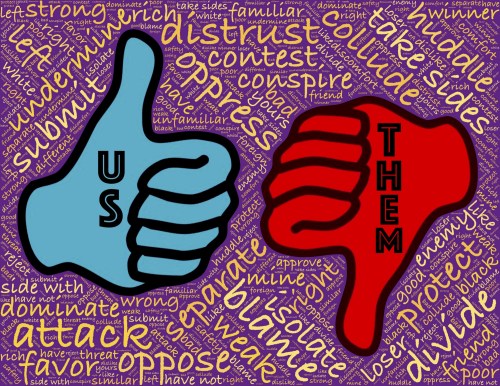
Thanks to social media and mass communication, it’s possible for people to do more than just share their opinions, no matter how outrageous they might be. It’s also possible to connect with those who either share in those opinions or despise them. In terms of forming a tribe, it’s a two-for-one-deal because it creates both a sense of “us” while revealing a “them” to rally against.

For anyone who has spent any amount of time on social media, it doesn’t take much to see the whole us versus them mentality to take shape. If any amount of disagreement goes on long enough, Godwin’s Law usually takes over and the battle lines are set.

On top of this, the social issues in 2018 aren’t quite nearly as clear-cut as they were in decades past. In the past, there were some pretty egregious injustices surrounding civil rights, women’s rights, and LGBT rights that required major social movements to combat. By and large, society has done a lot to improve the state for these marginalized groups.

There’s no question that being part of such righteous movements is laudable. We, as a society, rightly praise civil rights leaders who stand for such righteous causes. Naturally, some people seek to emulate that. Whether by ego or altruism, it’s only natural that they want to experience that kind of accomplishment.

Thanks to the sheer breadth of human progress, though, there causes on the levels faced by Martin Luther King Jr. or Mahatma Gandhi. However, because that drive to be part of a movement is just that strong, those same people will settle for pettier movements that protest sexy women in video games or bemoan the lack of diversity in old TV shows like “Friends.”

Make no mistake. Those outrages are petty and asinine when compared to the real injustices that past social movements have fought, but the brains of the outraged can’t tell the difference. From their perspective, their movement is every bit as righteous as every other civil rights movement in history. The outrage they express and the solidarity they feel is every bit as fulfilling as something that alleviates boredom.

Even if these causes are petty and the outrage is shallow, it’s important to note the alternative here. If these same people who protest the lack of diversity in the tech industry didn’t have this sort of thing to drive them, then what would happen to the group they’d formed?

Absent that outrage and protest, the group has nothing to rally behind. The person has nothing provoking arousal, be it anger or excitement. Without this dynamic, they don’t belong to something bigger anymore. They’re not the ones marching alongside famous civil rights leaders of the past. They’re just alone, by themselves, contributing nothing of value.

For many people, that’s just untenable. I would go so far as to say it’s almost as untenable as crippling boredom. Even self-proclaimed introverts and ardent individualists, we seek an identity and a constant source of stimulation. When we lack one or both, we lack a core element of any social species. In the same way we’re driven to meet the rest of our basic needs, we’ll be driven to find that somewhere, no matter how misguided.

In the past, we might have found that sense of belonging and purpose through our small communities or organized religion. Today, the world is much bigger and more diverse, thanks to technology and civilization. Organized religion is also not effective anymore due to factors too numerous to list. People are still going to seek belonging.

It’s somewhat ironic that civilization has advanced to such a degree that there aren’t as many clear-cut, good versus evil movements to be part of anymore. However, there’s still this longing to be the hero of our own story and be part of something greater, even if it means actually going out of their way to feel outraged.

Getting back to the initial question I posed, I think the influence of boredom and belonging are inherently linked. We agonize over escaping boredom and over having a sense of belonging. We can’t get that same rush our ancestors felt when surviving bear attacks and hunger so we’ll settle for whining about protests during football games. It’s still annoyingly petty, but distressingly understandable.

4 Comments

Filed under Current Events, gender issues, Reasons and Excuses, War on Boredom

Finding Greater Hope In Disturbing News

Every now and then, there’s a news story that comes along that’s so disturbing, so horrific, and so utterly offensive to every level of decency that it makes me question the faith I have in humanity. I know I’ve said before that I genuine believe that people are naturally good, at heart. I’ve even shared stories about how I came to believe this. However, there are times when that believe is tested.

Last week, I got an unexpected test in the form of one of the most disturbing news stories I’ve heard that didn’t involve a mass shooting. At least with mass shootings, it presents the opportunity for good people to show their strength in the face of those who are truly deranged. In this case, there were many of those opportunities to say the least.

While the story is still unfolding with each passing day, it has already made national headlines. It involves the now-infamous Turpin family and the unspeakable horrors they inflicted upon their own children. To those of you who haven’t heard this story, consider yourselves lucky. This is one of those stories that tests both your stomach and your soul.

The details are disturbing to recount. They involve abusive parents, abused kids, gross neglect, intentional malnourishment, and all the disturbing forces in between that drive such deviant behavior. The full story is still unfolding, but accord to a report from ABC News, these are the current facts:

An investigation is underway in California after 13 siblings – ages 2 to 29 – were allegedly held captive in a home, some “shackled to their beds with chains and padlocks,” the Riverside County Sheriff’s Department said in a news release.

Parents David Allen Turpin, 57, and Louise Anna Turpin, 49, were arrested in the alleged torture and child endangerment case in Perris, California, about 27 miles south of San Bernardino.

The investigation began early-Sunday morning when a 17-year-old girl apparently escaped from the home and called 911, saying her 12 brothers and sisters were still being held captive there, the sheriff’s office said.

Responding officers said the teen “appeared to be only 10 years old and slightly emaciated.”

Inside the home, several children were “shackled to their beds with chains and padlocks in dark and foul-smelling surroundings,” the sheriff’s office said. “The victims appeared to be malnourished and very dirty.”

Seven of the alleged victims were adults, ranging in ages from 18 to 29, the sheriff’s office said. The others were children as young as 2. The siblings – who authorities say claimed to be starving – were given food and drinks and interviewed, the sheriff’s office said. They were then hospitalized for treatment, the authorities said.

I’m not going to lie. I felt sick to my stomach reading this story. The idea that anyone, let alone parents, would do these sorts of things to children is pretty disturbing. While there are all sorts of crazy theories circulating about the psychology behind such sadistic behavior, the full truth will probably never be known. Besides, the damage has been done. These children will probably carry some deep scars for the rest of their lives.

News stories like these often remind us that as amazing a species we are, there are still parts of it that are undeniably devious. While I prefer to emphasize the good in people, as well as the progress we’ve made, it’s neither logical nor just to ignore the bad. Parents torturing, neglecting, and abusing their children is objectively bad by any sane measure.

As awful as it is, however, it’s still important to balance out the terrible with the hopeful. In most great atrocities, there are often glimmers of hope. That may seem impossible for a story like this, but it is there if you look. The horrors of the holocaust were undeniable, but even that darkest of periods can reveal moments of true heroism and inspiration.

Even with that in mind, how could anyone find such moments in a story like this? Something this atrocious makes that difficult. However, the moments are there. Even if the worst of this story has yet to come out, there are some powerful lessons to be learned. Here are just a few.


Bright Spot #1: Atrocities Rarely Stay Hidden (Especially These Days)

There was once a time when it was much easier to hide from the authorities and public scrutiny. A truly sadistic person could take their victims out into the vast wilderness, away from prying eyes, and commit their atrocities without much risk of getting caught. For most of human history, that was the norm and not the exception.

It’s different today. Thanks to modern infrastructure, the media, and mass communication, it’s much harder to hide these sorts of atrocities from the public. That’s especially true in a modern, industrialized country where we have internet, emergency services, and a semi-functional justice system.

If the Turpin family had lived in a less developed country, chances are their crimes would’ve gone unpunished. Even if one of their children had escaped, they probably wouldn’t have been able to get proper help or convince the authorities to aid them. In some parts of the world, those authorities don’t even exist.

Say what you will about the state of the industrialized world. It certainly has its flaws. However, when it comes to committing atrocities on children, those crimes are hard to hide and are rightly condemned. That counts as both progress and justice.


Bright Spot #2: All That Abuse Did NOT Prevent The Children From Escaping

Even though the Turpin family couldn’t hide their atrocities forever, they still managed to hide them for much longer than most people will ever be comfortable admitting. One of the ways they hid it was to condition and control their children to an extent not seen outside of a North Korean prison camp.

Stories of the sheer breadth of the neglect these children suffered are still coming in, but one thing is clear. The parents of these children worked tirelessly to control every aspect of their lives. They were sheltered, starved, restrained, and completely cut off from the outside world. By all accounts, there was no outside world, except the world their parents wanted them to see.

Despite all this, though, one of these kids still found the strength and the will to escape. The only reason these crimes were even exposed was because the 17-year-old daughter climbed out a window and managed to call 911. The fact that this girl, despite all the abuse and deprivation, still found the will to escape says a lot about her and the human desire for freedom.

As repressive as these parents were, it still wasn’t enough. They still sought to escape. The strength of the girl who managed to escape cannot be overstated and it highlights, what I believe, is the biggest takeaway from this otherwise horrific story.


Bright Spot #3: It’s REALLY Hard To Control/Break Someone


hope

No matter how disturbing this story gets or what kind of horrific details emerge in the coming weeks, there’s one important lesson we should all take from such a disturbing crime. No matter how much a person is abused or how much someone tries to control them, it’s extremely difficult to completely break them.

These children, including the girl who escaped, were conditioned from birth to live under their parents’ authority. They grew up literally not knowing any other way to live. As far as they knew, the idea of not being controlled by their parents was an alien concept. In terms of controlling and/or breaking someone’s will to resist, the parents had every circumstance working in their favor.

Despite all that, they still failed. They still could not completely control their children because they still tried to escape. It only took one of them to succeed to make the point. No matter how strict the control or hard the abuse, they can’t subvert the natural desire to be free. If nothing else about this terrible story inspires you, let that be it.


I don’t wish to dwell too much on this story, if only because much of it is still playing out. While we shouldn’t discount the horrors involved, there are some small bits of hope that we can glean from such a story. It may not completely overshadow the breadth of the atrocities, but it should remind us that as flawed as the human race may be, we will fight such atrocities when we confront them.

3 Comments

Filed under Current Events

Why 2017 Was The Best Year In Human History (Seriously)

20160218-ilchi-lee-authentic-living-for-a-solar-body-for-new-hopes-and-dreams-of-creating-human-peace-4

These days, being an optimist is hard. In some cases, you’ll get laughed out of the room for not thinking the world is on a steady descent into a dystopian hellscape in the mold of “Mad Max,” “1984,” or “Idiocracy.” I don’t deny that current events, especially after the 2016 Election, have made optimism difficult. However, that’s exactly why it’s worth talking about.

I do consider myself an optimist, at heart. I sincerely believe that, on the whole, things are getting better for the world, the human race, and everything in between. I’ve even tried to make my case through personal experience and through empirical data. I don’t imagine I’ve changed too many opinions, but I still think it’s important to put that perspective out there.

With a new year upon us, I think that perspective is worth belaboring once more. This time, however, I’m not alone in my optimistic sentiment. There are others who share in my optimistic outlook. Some of those individuals are far smarter, far more accomplished, and far more charismatic than I’ll ever be.

By those standards, Steven Pinker checks all the necessary boxes. While he’s somewhat of a controversial figure in some circles, the man has some solid credentials. He’s an accomplished professor at Harvard and has written multiple books on issues ranging from language to psychology to human nature.

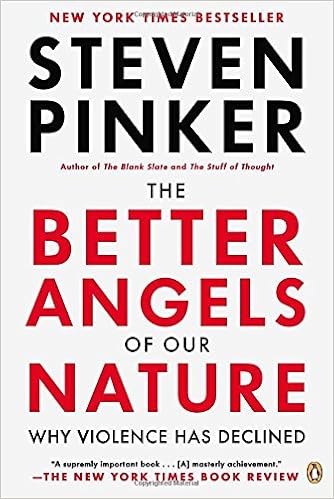
His seminal work, though, is his book, “The Better Angels Of Our Nature.” If you want a compelling reason to believe that the world is getting better by most measures, I cannot recommend this book highly enough. It’s not just about looking at the world through rose-colored glasses. Mr. Pinker provides real, verifiable information that the world is getting better and human nature is far better than we give it credit for.

Beyond his books and his famous TED Talks, Mr. Pinker continues to make his case for a more upbeat outlook in various ways. Recently, his work was cited in an op-ed article in the New York Times entitled “Why 2017 Was The Best Year In Human History.”

Granted, a title like that is a bit heavy on hyperbole, but the writer, Nicholas Kristoff, is dead serious in making that case. Link Mr. Pinker, he doesn’t just interpret all the ongoing trends in the world through the mind of a stoned hippie. He puts the state of the world into a context that goes beyond all the horrible headlines we saw in 2017.

He, and other optimists like him, tend to look at the broader trends in human society. The data is out there, but it’s hard to put into a compelling headline. That doesn’t stop men like Kristoff and Pinker from making a concerted effort, though.

We all know that the world is going to hell. Given the rising risk of nuclear war with North Korea, the paralysis in Congress, warfare in Yemen and Syria, atrocities in Myanmar and a president who may be going cuckoo, you might think 2017 was the worst year ever.

But you’d be wrong. In fact, 2017 was probably the very best year in the long history of humanity.

A smaller share of the world’s people were hungry, impoverished or illiterate than at any time before. A smaller proportion of children died than ever before. The proportion disfigured by leprosy, blinded by diseases like trachoma or suffering from other ailments also fell.

Again, these trends are hard to see and harder to report on because they don’t happen all at once. If tomorrow, all poverty was magically wiped out, that would be a big news story. However, human progress doesn’t work that way. It’s slow, gradual, and sometimes boring. It does happen, though. The events of 2017 were no exception.

Violent went down. Poverty went down. In fact, they went down to their lowest levels in modern history. Compared to a year ago, 5 years ago, or 50 years ago, the trends we saw in 2017 were all improvements by most objective measures. A lot of these trends are things Mr. Pinker has been talking about for years. Mr. Kristoff simply builds on them.

Every day, the number of people around the world living in extreme poverty (less than about $2 a day) goes down by 217,000, according to calculations by Max Roser, an Oxford University economist who runs a website called Our World in Data. Every day, 325,000 more people gain access to electricity. And 300,000 more gain access to clean drinking water.

For most individuals, these trends are difficult to notice. That’s largely because they’re driven by forces that most people don’t notice or understand beyond their personal existence. Even in a world that’s so connected and becoming more connected with each passing day, it’s easy to overlook this kind of progress.

It’s also a lot harder when the news is largely dominated by negative headlines that highlight how dissatisfied the general public is with the direction of society. Again, there is a context here and one that I’ve tried to point out before. It’s one of the first lessons I learned in college when interpreting media of any kind, be it the news or superhero comics.

The reason why all these negative headlines are headlines in the first place isn’t because they’re common. It’s because they’re so rare. Stories such as mass shootings, brutal murders, and war crimes make the news because they don’t happen every day. That’s why they qualify as news. They’re aberrations and not normal occurrences.

Conversely, good headlines rarely make the front page because they lack the same novelty and emotional impact as bad news. Naturally, people are going to react more strongly to a horrific headline because our survival instincts compel us to devote more energy to the bloodier, more dangerous information.

That’s why, even if 2017 was the best year in the history of the human race, our caveman brains aren’t going to process that because it’s so focused on all the negative news that came out over the past year. That news may very well be a tiny sliver of the events that transpired in 2017, but that news will still garner more attention, especially in the current digital economy.

We can still take comfort in the progress that happened in 2017, though. No matter how many negative headlines there were, that doesn’t undo the genuinely good things that transpired in the past year. Mr. Kristoff even went out of his way to provide an anecdote, of sorts, that highlighted just how much good can come from even the worst parts of the world.

Granted, this column may feel weird to you. Those of us in the columny gig are always bemoaning this or that, and now I’m saying that life is great? That’s because most of the time, quite rightly, we focus on things going wrong. But it’s also important to step back periodically. Professor Roser notes that there was never a headline saying, “The Industrial Revolution Is Happening,” even though that was the most important news of the last 250 years.

I had a visit the other day from Sultana, a young Afghan woman from the Taliban heartland. She had been forced to drop out of elementary school. But her home had internet, so she taught herself English, then algebra and calculus with the help of the Khan Academy, Coursera and EdX websites. Without leaving her house, she moved on to physics and string theory, wrestled with Kant and read The New York Times on the side, and began emailing a distinguished American astrophysicist, Lawrence M. Krauss.

Think about that story, for a moment, and reflect on how 2017 made it possible. Thanks to all the progress made in global communications, a woman in Afghanistan in 2017 was able to pursue opportunities that would’ve been impossible a mere 20 years ago.

This woman, despite living in one of the most war torn parts of the world, still managed to gain access to the kind of education and informational resources that were once reserved for aristocrats and academics. That, by any measure, is an astonishing accomplishment for humanity.

In many respects, 2017 was the best year ever because it continued the trends had been going on for years. As a result, more people have access to information, education, and the basic necessities of life than at any other point in human history. That, more than anything, is why it’s not unreasonable to say that 2017 was the best year ever.

The fact that concerns over celebrity scandals is a greater concern than poverty, war, or famine shows that we are making more progress than we think. It also bodes well for 2018 being an even better year than 2017. Despite what negative headlines may say, the human race is on an unprecedented winning streak and I hope, along with men like Mr. Pinker and Mr. Kristoff, that the streak continues into 2018 and beyond.

1 Comment

Filed under Current Events, Sexy Future

Why We SHOULDN’T Judge People For The (Stupid) Things They Say In Their Youth

We all say dumb things when we’re young. That’s not an opinion. That’s an inescapable fact, right up there with gravity, taxes, and the inherent sex appeal of Jennifer Lopez. I doubt anyone would argue that young, inexperienced people say foolish things that they later regret. Despite that, why do we belabor that foolishness later in life?

This is an increasingly relevant question in the era of social media. For much of human history, you could usually get away with saying the dumbest, crudest, most ill-informed shit anyone could possibly say at any age. That’s because peoples’ memories are exceedingly fallible, so much so that even the courts recognize that.

Then, the internet came along and, on top of all the free porn and cat videos, some of that filthy, misguided rhetoric ended up in the digital coffers that are frustratingly robust. It’s become a popular meme that “The internet never forgets.” However, I think it has graduated from meme to a fundamental law of the digital universe.

Like most things, there are benefits and drawbacks to having a system that can remember how foolish and pig-headed we all were in our youth. A little perspective in terms of who we once were and how far we’ve come can actually be healthy. That said, it can also undermine our ability to function as adults who once were pig-headed youth.

This brings me to Cenk Uygur, a media personality that I mentioned earlier this year in a post about winning arguments versus being right. He’s a member of an internet media group called The Young Turks and, for a time, they were at the cutting edge of a new kind of news media.

They were unapologetically progressive in their message, often poking fun at extreme right-wing personalities who probably said less foolish things in their youth. They also provided genuine insight that didn’t always make it into the cable news networks, which was part of why I found them appealing for a while.

Then, the 2016 election happened and The Young Turks began getting more extreme. They became less about covering the news that cable news networks ignored and more about bemoaning the fact that some of their politics were falling out of favor. Cenk Uygur, being one of the most outspoken of the bunch, became one of the loudest voices.

Now, I didn’t care for his exceedingly vocal tactics and have since unsubscribed to the Young Turks network. However, I couldn’t help but feel bad for Mr. Uygur when the laws of the digital universe caught up with him and revealed an old blog post that could only have been written by someone young, uniformed, inexperienced, and in this case, horny.

I won’t get into all the details of the post, since others have already done so. Even by the standards of an aspiring erotica/romance writer who has said more than his share of stupid things on the internet, it’s still pretty crude. Here is just a clip of what Mr. Uygur said.

“Obviously, the genes of women are flawed. They are poorly designed creatures who do not want to have sex nearly as often as needed for the human race to get along peaceably and fruitfully.”

I don’t deny that the rhetoric is crass and offensive. I certainly wouldn’t blame any woman who felt offended reading it. However, and I know this is probably one of those things I’ll end up belaboring again at some point, people say stupid things when they’re young and/or misinformed.

Mr. Uygur may have been in his 30s when he wrote those, but I would still put it under the kind of ill-informed foolishness that we all experience in our youth and even as adults. It’s also worth noting that these blog posts occurred in the early 2000s before YouTube, FaceBook, social media, and cat memes. The internet was a very different place back then is what I’m saying.

Now, because of this crap that he wrote over a decade ago when he was in a different time, place, and mindset, Mr. Uygur is getting all sorts of criticism about this. Just this past week, he got kicked off the board of the Justice Democrats, a group he helped found, no less. Again, it’s not because of crime he committed in the present. It was because of something he wrote over a decade ago.

Think about that, for a moment. Imagine that your boss, parents, or enemies suddenly had access to records for all the stupid, profane, and flat out wrong things you’ve ever dared to say. Most of us, if we’re being honest with ourselves, would be sweating bullets at the prospect. I certainly would. I know there are things I’ve written and said that I would prefer not become public. Who else can claim otherwise?

I’ve often asked this question to some of my older friends and family. I try to get them to seriously contemplate how different their lives would’ve panned out if the internet, cell phones, and social media existed in its current form when they were young. Most don’t really give me a straight answer. A few honest people flat out tell me they would be screwed.

That’s an important perspective to have because our propensity to say and think stupid things goes beyond the internet’s ability to never forget. Youth, inexperience, and an overall limited understanding of the world are unavoidable . We don’t come out of the womb with a sense of context to the complexities of the world. We’re basically limited minds with limited perspectives trying to make sense of an unlimited world.

Have you ever heard a kid, teenager, or horny twenty-something pitch a fit about how the world hates them? Never mind the fact that they live in one of the most prosperous periods in human history and have access to more information than any generation before it. From their perspective, they might as well be a real-life Charlie Brown.

Most people, observing from the outside, would rightly roll their eyes at that sentiment. Even I don’t deny that I’ve engaged in that kind of whining in the past. At the time, though, that’s how it really felt. My perspectives and my understandings of the world were just too limited to convince me otherwise. It wasn’t a flaw in my thinking. It was just a lack of information.

That’s not to say there aren’t truly despicable people in the world who say and think these things, despite having no excuses for seeing the bigger picture. However, I would not put someone like Cenk Uygur, or most people for that matter, in that category.

He said something stupid and offensive years ago. He has since apologized for it and, as I’ve espoused before, we should make an effort to forgive him. People say stupid things when they’re young, dumb, and misinformed. No matter how powerful or robust the internet gets, people will continue saying stupid things. Until we can upgrade our caveman brains, that’s just the nature of who we are.

Accepting that also means understanding that, despite all the stupid things people say, there is a context to consider. Even in a world where the internet never lets us forget any of the stupid things we say or do, we shouldn’t judge someone solely on the basis of the dumbest things they’ve said.

That’s not to say writings like Mr. Uygur’s should be completely overlooked, but it shouldn’t take away from the man he is now and the man he’s trying to be. If we’re not willing to let people learn and grow from the dumb things they say, then nobody will be able to gain the perspective they need to stop saying dumb things in the first place.

2 Comments

Filed under Current Events, Reasons and Excuses

The Doug Stanhope Principle (And Why We Should Apply It)

In my experience, comedians offer the most memorable and insightful commentaries on otherwise serious issues. Even if they’re just trying to be funny, which is their job, I think those commentaries have worth beyond the laughs. There are even times I think comedians don’t realize just how insightful their humor can be.

I’ve made my love of comedy known before and not just through my weekly Sexy Sunday Thoughts. I’ve cited accomplished comedians like Christopher Titus when exploring very non-funny issues, such as jealousy. I don’t just do this to help lighten the mood on a site I want to keep light and sexy. I do it because comedy can reveal more than the breadth of our sense of humor.

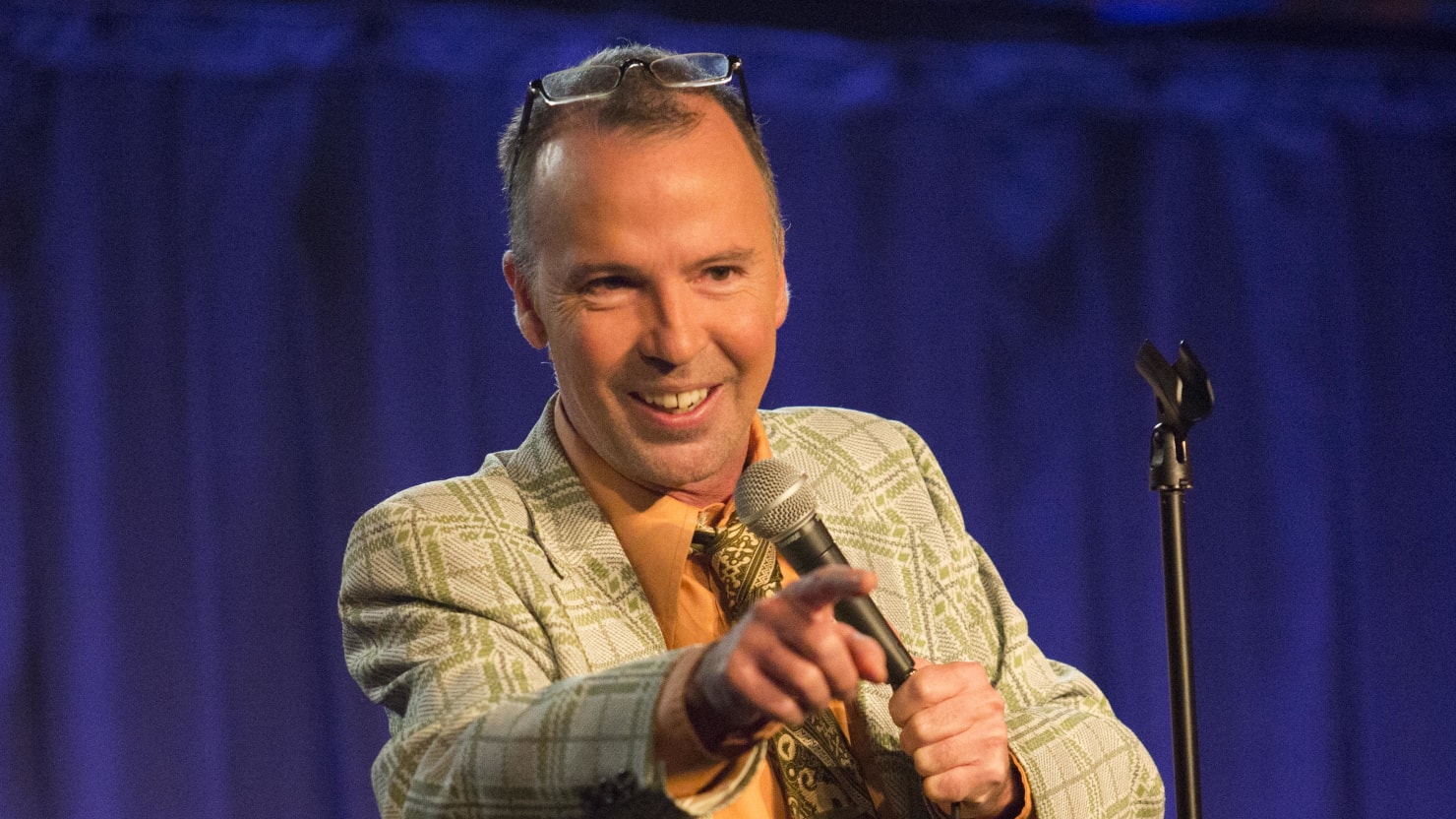
With that in mind, I’d like to cite a comedian by the name of Doug Stanhope. I’ve never mentioned before, but has been one of my personal favorites for years. He’s not on the same level as a Jon Stewart, George Carlin, or Lewis Black. However, given his brand of humor, that’s not too surprising.

Stanhope’s comedy is decidedly NSFW, touching on issues that would give most network producers brain aneurisms. His opinions are overtly harsh and unconcerned with your delicate sensibilities. If you’re wondering just how harsh he can be, here’s a quick taste.

That said, he is not a shock comic in the tradition of Howard Stern or Andrew Dice Clay. Stanope’s comedy, as crude as it can be at times, is very smart. One bit in particular stands out. It comes from his “Deadbeat Hero” album, one of my personal favorites and one I think every comedy fan should listen to at least once.

In that album, he talks about a number of issues, but one in particular stands out. That issue is marriage, one I’ve discussed too on this site, albeit not with the same level of humor. On this topic, he makes one of the most insightful observations I’ve ever seen on a treasured institution.

If marriage didn’t exist, would you invent it? Would you go “Baby, this shit we got together, it’s so good we gotta get the government in on this shit. We can’t just share this commitment ‘tweenst us. We need judges and lawyers involved in this shit, baby. It’s hot!”

The bolded parts are my doing because I think the implications of that question go beyond the comedy, more so than I think Stanhope himself intended. In a sense, it reflects the paradox of marriage and traditional romance that I’ve talked about before in that we see it as natural, yet we need all these social institutions to protect it.

The fact those institutions exist is a subtle, but telling sign that these traditions aren’t as natural as we think they are. More than anything else, they’re the product of taboos and social norms that people cling to out of fear, familiarity, and ignorance. I won’t go so far as to call it a form of excuse banking, but I think it highlights our imperfect understanding of human nature.

One of Doug Stanhope’s greatest strengths as a comedian is his ability to break down a treasured and cherished concept in a way that’s both revealing and insightful. What he did for marriage with this one question immediately makes us ponder the flaws in our current understanding of it.

Once we stop laughing at the punch-line, though, I would take it a step further. I would ask that question again in more general form as a means to help us scrutinize our traditions, values, and everything else we hold sacred. Sure, that’s bound to make some people uncomfortable, but that’s exactly the point of certain brand of comedy, especially Stanhope’s.

Like the Simpson Filter I coined earlier this year, let’s coin another using this question. Since I’m not a branding expert with only a fraction of the wit of Doug Stanhope, I’ll call it “The Stanhope Principle.” The core of that principle can be summed up in one simple question.

If something didn’t exist in its current form, would you invent it that way?

Sure, it’s not nearly as funny as Stanhope’s bit on marriage, nor is it meant to be. In essence, it’s a question meant to get your brain thinking about things that it usually doesn’t think about. In some cases, they’re issues you’ve gone out of your way to avoid.

Take any current issue, be it a major political controversy or a certain state in your personal life. Now, apply the Stanhope Principle and try to answer the question honestly. Here are just a few possible examples.

  • If our tax system existed in its current form, would we invent it that way?
  • If our health care system existed in its current form, would we invent it that way?
  • If our current relationship existed in its current form, would we invent it that way?
  • If the job we worked existed in its current form, would we invent it that way?
  • If our website/blog/product existed in its current form, would we invent it that way?

If you ask that question and answer it honestly, which is key, you might be surprised by what you find out. You might think your personal relationships are functional, but applying the Stanhope Principle could expose flaws that you’ve been overlooking or ignoring.

Apply in a larger context, such as politics, marriage, and gender issues, and the insights get a bit more complicated. Given the current inequalities that still pervade in our society, as well as the double standards we apply, the Stanhope Principle reveals the breadth of the flaws within these institutions.

It can be distressing, acknowledging those flaws. That’s usually where the excuse banking enters the picture, but that can only further mask them. Another honest application of the Stanhope Principle will only remind us of those flaws and even reveal how we’ve made our situation worse.

Ideally, the Stanhope Principle should be a basis for improvement. A good example is Apple, one of the biggest, most successful companies in the world. Steve Jobs and Steve Wozniak probably didn’t know they were applying that principle, but they were.

They saw the current state of computers. They saw there was a lot of room for improvement. Given how cumbersome computers were for much of their early history, they decided to innovate and create a better way of using them. The result is a company that is worth over half-a-trillion dollars.

Applying the Stanhope Principle for worked out pretty well for Apple. I’m not saying it can make everyone a billionaire, but it does help break down a situation and an issue in a way that allows us to see the bigger picture.

More than anything else, it exposes the imperfections of our current situation. For some, it motivates them into improving their situation, be it a relationship, a business, or a social policy. For others, it’s an uncomfortable reminder that there’s a flaw in that they need to cover up or mask. In that sense, it should be easy to see who are more likely to become billionaires.

There are all sorts of way to apply the Stanhope Principle. I’ll certainly try to apply it to future issues that I discuss on this site. For now, I just want to offer my sincere thanks to Doug Stanhope and the principle he inspired. He has made the world inherently funnier and more interesting to explore.

4 Comments

Filed under Current Events, Marriage and Relationships, Reasons and Excuses

People Who Admitted They Were Wrong (And Why We Should Respect Them)

There’s one sentence that nobody likes saying. Hell, it’s a thought we avoid thinking at all costs. It’s painful, stressful, and downright damaging to our entire understanding of who we are. No, it doesn’t involve distressing phrases like “unfortunate accident,” “slight complication,” or “broken condom.” This incredibly gut-wrenching concept can be boiled down to five simple words.

“I admit I was wrong.”

I’ll give everyone not named Kanye West a moment to stop shuddering. I know. Just reading over that sentence was stressful. I’m only being half-sarcastic here, but I’ve been on the internet long enough and seen one too many comments sections to know the sheer power of those words, if only because they’re so rarely said.

More than ever, we live at a time when nobody wants to admit how wrong they are. It doesn’t even matter, in some cases, when someone is proven wrong beyond any possible doubt. People will still deny it. To make matters worse, a lot of these people tend to be in major positions of power.

There are a lot of things I can say about this phenomenon. Hell, I don’t deny that there have been times when I’ve clung to demonstrably wrong sentiments much longer than I should have.

A lot of it has to do with the flawed wiring of our caveman brains, which I know I constantly belabor on this site. We have this mental picture of who we are in our minds and being wrong is like a stack of dynamite to the foundation. It’s often why people will go to egregiously misguided efforts to protect that mental compilation of who they are.

However, I don’t want to spend too much time belaboring that. I’ll save that for other topics, preferably for a time when our collective faith in humanity is due for its regular gut punch. Instead, I want this post to inspire a sense of hope.

As hard as it may seem, it is possible for people to admit they were wrong. It’s even possible for them to make amends. It’s even possible for some of those people to be celebrities, individuals whose grasp on reality is often tenuous at best. I admit it sounds as impossible in an age where celebrities believe in aliens, chemtrails, and 9/11 conspiracy theories. It does happen though.

Recently, the fine and sexy folks at Cracked.com did a compilation, which they call Pictofacts, of people who undertook the agonizingly difficult task of admitting that they were wrong. Here are some highlights that should give everyone pause, if only to marvel at how any human being can humble themselves in the face of such distress.

Entry 20

Entry 19

Entry 17

Entry 15

Entry 3

These are just a few cases. There are plenty more out there that are every bit as profound. Even so, take a moment to appreciate the breadth of these admissions and the change of heart that these people underwent.

These aren’t just people who watched too much Fox News or listened to their crazy uncles too closely. These are admitted racists, homophobes, bigots, and even a goddamned Neo-Nazi who stood up, admitted they were wrong, and tried to make amends.

It’s impossible to overstate how dramatic this is, from a purely personal standpoint. The inability to admit when we’re wrong is hardwired into us. Making such an admission is akin to resisting the urge to eat when you’re starving or avoid staring at a pair of exposed breasts when you’re horny. It goes against some fundamental forces of biology.

It essentially requires that someone take a baseball bat to the entire foundation of their psyche and rebuild it from scratch. That is not an easy process, nor is it pleasant. It can cost friends, family, reputations, and even careers, as some celebrities like Leah Remini are finding out.

Despite all this, these people still do it. They still do what they understand to be the right and decent thing. It’s not just something that warrants respect. It should be celebrated. Stubbornness isn’t just an unfortunate default setting in our biology. It’s one of those forces that’s getting a lot worse. Anyone who can overcome it in this environment has a strength that not everyone has.

It’s because of that environment that cases like this, where people admit outright that they were wrong, will become more rare. In the age of the internet and social media, it’s too easy to find a group of like-minded people who will reinforce any position, no matter how wrong they are. Why else would flat earth societies still exist?

That makes acknowledging those who do admit their mistakes all the more important. Now, that’s not to say that everyone should overlook whatever misdeeds they did when they were wrong. As I said in my piece about forgiving sexual misconduct, there are some things that just shouldn’t be overlooked.

Even in the extreme cases, though, it’s important to give people a chance. We need to place faith in people, something I’ve lamented before. We, as a society, need to reward those who endure the agony of admitting that they were wrong. We should keep in mind just how difficult it is for anyone to come to such a realization, especially if they’re a celebrity or someone of major influence.

Admitting that you’re wrong requires strength. It should not be seen as a weakness. At a time when billions of people have access to unlimited information, including half-truths and outright lies, it’s important that people value what is true and just. It’s still a difficult process and our flawed biology will fight us every step of the way. However, that’s exactly why it’s so important.

Leave a comment

Filed under Celebrities and Celebrity Culture, Current Events, gender issues

Being Right Vs. Winning An Argument Vs. Ben Shapiro

There’s an old saying that I just made up a few seconds ago, old being a relative term.

“You can either win the argument by merit or be right in principle, but only one matters in the long run.”

It sounds cynical, but it’s something I think most people realize at some point in our lives. The truth is a harsh mistress and it’s rarely the sexy kind. Truth is the kind of mistress that has no safe word, never offers any lube, and rarely gives overt warnings. When she wants to whip us in our most sensitive areas, she’ll do so without asking for permission or a second thought.

I’ll ease up on the BDSM terminology because I’m trying to make a serious point, one that’s a lot more relative in the era of “alternative facts” and “fake news.” More and more, we’re learning the hard way that our caveman brains aren’t equipped to seek truth. Survival and reproduction are our primary imperatives. Truth is optional, at best, and an afterthought at worst.

Image result for fake news

It’s for that very reason that public debates or major speaking present a false sense of perspective that exploits our caveman brains. It gives the impression that the truth can be presented in a slick, concise, and easy-to-digest message that helps us make sense of the world. That kind of certainty in an world of cheap knock-offs and practical jokes is more valuable to our psyche than gold, diamonds, and good Wi-Fi.

I say that as someone who finds a lot of entertainment value in debates. For a time, one of my favorite things to do was to look up debates between scientists and creationists, which always seems to bring out the best and worst of our caveman brains. They nicely highlight how real, functioning human beings can hold such radically different viewpoints, as well as the excuses they’ll make to cling to those viewpoints.

Related image

I won’t get into all the absurdities behind creationist debates. That’s not what prompted this post. The primary inspiration for this topic came from the recent news surrounding Ben Shapiro’s recent speaking gig at UC Berkeley. By every measure, this incident highlights all the problems with such debates better than any creationist ever could.

For those of you who don’t know who Ben Shapiro is, it’s not too hard to know what he’s about. He’s a fast-talking, quick-witted talking head in a media landscape that’s full of them. He specializes in espousing staunch conservative principles and you could make the case he does it better than almost any other conservative, at this point.

Personally, I like Mr. Shaprio’s style and I agree with some of the points he makes and not just because he makes them well. Many of them are points I’ve come to embrace on my own accord in trying to make sense of this crazy world. However, as much as I respect the man and his principles, he does embody a dangerous phenomenon that is becoming more prevalent in the digital age.

Image result for talking heads on tv

It’s one born from that not-so-old saying I mentioned earlier about being right versus winning an argument. They are not the same thing, but they’re easy to confuse, thanks largely to our caveman brains.

Think back to the Simpson Filter in appealing to large swaths of people. For the Homer and Marge Simpsons of the world, winning the argument is enough to win them over. They leave the truth for the sad, lonely, and miserable Lisa Simpsons of the world that nobody listens to.

Ben Shaprio, and others like him, are highly skilled at using the Simpson Filter to get their message across. They’re slick, compelling, and charismatic in the sense that they check all the boxes that appeal to our tribal instincts, which I’ve noted before are a major source of conflict.

Related image

By appealing to these instincts, they don’t have to be completely right. They don’t even have to be half-right. They just have to get people thinking and feeling that it’s right, so much so that they won’t bother checking the facts, doing some research of their own, or even giving it a second thought. Why would they? Ben Shaprio comes off as so smart and so knowledgable that he’s done the thinking for us.

Therein lies the biggest problem, though. By focusing on the argument and not the truth, it’s easy to conflate the two. Ben Shapiro is not a scientist, an economist, a politician, a philosopher, or even a used car salesman. He’s just a commentator, who happens to be exceptionally well at commentating in an articulate manner. That’s a valuable skill, but it’s not the same as being correct.

This actually played out in another event that occurred earlier this year at Politicon 2017. At that event, Ben Shapiro debated Cenk Uygur, another professional commentator who is at the opposite end of the political spectrum. Like Shapiro, I respect Mr. Uygur and agree with some of his positions. However, he is not as skilled a debater as Mr. Shapiro.

If you watch the debate, listen to the crowd, and note the speaking styles of both men, it’s not hard to see who has more skill and experience in that field. If you read the comments and look at the reactions, most agree that Mr. Shapiro won that debate. I’m sure it’s not the first debate he’s won, nor will it be the last.

That’s just it, though. Mr. Shapiro could win a billion more debates against a billion other people much smarter than Mr. Uygur. He could go down in history as the most skilled debater in the history of the human race. It still wouldn’t change one inescapable fact.

The real world, as in the world that operates outside our caveman brains, doesn’t give two whiffs of dried wolf shit about who wins a debate or by how much. Reality still operates under the same facts, rules, and principles. People still operate in ways that are at the mercy of their caveman brains and their collective circumstances.

Image result for Tribalism

Ben Shapiro could convince every person on this planet that Ronald Reagan was right about everything, that the Jewish religion that he practices is the only correct one, and that everyone whoever worked for Hillary Clinton was an alien spy. That still doesn’t change reality. At the end of the day, the truth is still that same harsh mistress that will whip all our asses without warning.

That’s why, in the long run, it doesn’t matter how many debates Ben Shapiro or others like him win. It doesn’t matter how well they craft their message. In the long run, if their ideas don’t line up with reality, then reality will eventually win out. It always does. People die, take their ideas with them, and leave reality to sort out the rest.

Now, I don’t doubt for a second that Mr. Shapiro is sincere in his beliefs. I also don’t doubt that his opponents, like Cenk Uygur are just as sincere. That’s why I wouldn’t classify them as professional trolls, such as the Ann Coulters and Lena Dunhams of the world.

Image result for Ann Coulter

They don’t say what they say, just to provoke our caveman brains and draw attention to themselves. They aren’t outright con-artists either, like certain televangelists. They’re just good at conveying their ideas and making them feel legitimate. Unfortunately, that’s as far as they can take it.

Ben Shapiro, Cenk Uygur, and everyone like them may think they have the answers. They may even believe that their way will make the world a better place, as a whole. They’re not entirely malicious in attempting to convey their points, but they are misguided.

There’s also a danger to their approach, conflating debates with truth. They present the false impression that an issue like politics, evolution, and economics can be resolved through simple debate through a series of talking points. As anyone who has worked with a tax attorney knows, that’s just not how the real world operates.

Image result for Complex economics

The world is complicated, complex, and chaotic. No human brain, or collection of human brains, is equipped to make sense of it. Some of these issues aren’t just complex, either. They’re impossible to resolve because there just aren’t enough resources for everyone.

A skilled debater, like Ben Shapiro, is good at convincing people there are quick fixes. The world can be improved simply by adopting the policies of his favorite ideology. He may convince you, me, and everyone around you that he’s right.

The truth, however, can never be swayed by fast talking, fancy rhetoric, or skilled arguments. At the end of the day, it will stay on the side of the harsh mistress that is reality. In the short term, the Ben Shapiro’s of the world will be able to bask in many victorious debates. In the long term, however, the truth knows whose asses will be stinging in the end.

Related image

9 Comments

Filed under Celebrities and Celebrity Culture, Current Events, Jack Fisher's Insights

Why I Believe That People Are Naturally Good (Another Personal Story)

It’s one of the oldest, most confounding questions in all of philosophy and science. Cantankerous old man and nagging old women alike debate it. Are people fundamentally good or evil? People have been trying to answer that question for centuries, some more so than others. However, the answer never seems to be complete.

It’s a question that has huge implications. If people are naturally good when stripped of circumstance, then that bodes well for our ability to survive when the zombies attack, the Illuminati take over, or aliens invade. It means that “Independence Day” wasn’t too far off in showing how good people could be inspired to do great things.

Conversely, the implications of people being naturally evil are a bit more dire. If the Joker was right in “The Dark Knight” and people are only as good as society allows them to be, then that means our society and our civilization is even more fragile and precious than we think. If something like zombies or aliens attack, then it won’t be long before we become the monsters we dread, hopefully without clown makeup.

I’m not a philosophy buff. I’m also not a scientist. I write sexy stories and talk about sexy topics in hopes of making a living from it. I couldn’t be less qualified to answer this profound question without admitting I sleep with a lead brick under my pillow.  Like a virgin on her prom night, though, I’m still going to try and hope for the best.

I’ve talked about evil before and how that affects iconic villains in fiction, but I haven’t really dug into the better angles of our nature. Sure, I could point out that civilization is getting better by nearly every measure, but the Joker enthusiasts of the world would just point out that’s because people are getting better at boxing in their inherent evil with the comforts of civilization.

I won’t say there isn’t some logic to that. I also won’t get into all the research that has gone into determining the nature of mankind. That stuff is too technical. It’s not going to get anyone’s panties wet in discussing this issue and I have sexy standards to maintain on this blog.

Instead, I’m going to tell a story that isn’t very sexy, but should help get my point across. While my outlook on mankind has changed a great deal throughout my life, often coinciding with high school and failed relationships, I genuinely believe that people are innately good. I know that’s hard to grasp for anyone who watches the news or reruns of “Here Comes Honey Boo Boo,” but I believe it’s more apparent than most people think.

To illustrate that, I want to highlight a moment from my late childhood that I didn’t really appreciate until I became an adult. Whenever I find myself thinking about the nature of man, my thoughts often drift to this memory and I smile for reasons that should soon be apparent.

Picture, if you can, a cold and dreary day in late March. Enter a 10-year-old me, still in grade school and just starting to realize how much I hate school. I wasn’t a miserable teenager just yet, but I wasn’t some cheery child either. I often stressed myself out in way more ways than any kid should, but that’s another story. All you need to know is that on this day, I went a bit overboard.

The weather was getting crappier by the second. That’s when I found out that I left something at school. Keep in mind, I’d just gotten home and just wanted to play video games to unwind. However, I had to go back because this wasn’t something I could put off. I had a big project coming up and, being the neurotic grade-grubber I was at the time, I needed to take care of this.

I remember hating myself so much, if only because it took away from the time I wanted to spend playing video games. Then, after talking to my parents, I decided to ride my bicycle up to the school to pick it up. They told me they could drive by later after they got groceries. That wasn’t good enough for me. I had to punish myself for being so forgetful.

So I got on my bicycle and rode down to the school through the increasingly-crappy weather. I was not happy about having to do it, so much so I just peddled as fast as I could, not caring that I had the athletic prowess of a senile hamster. This quickly proved to be a mistake because, less than a block from my house, I swerved off the sidewalk and crashed right into a gate.

I’m not going to lie. I cried like anyone might expect of a 10-year-old kid. I didn’t hurt myself seriously. I didn’t break any bones. I just bruised my knee and scraped my elbow. If my gym teacher were there, he would tell me to walk it off. I probably should’ve, in that case, but I didn’t. I just sat there in the cold, muddy grass and cried my eyes out.

Now, I’m not proud of it. Remember, I was 10-years-old at the time. I hadn’t exactly refined my toughness yet, nor did I realize that forgetting homework from school was not the end of the world. That didn’t matter, though. In my own limited world, this was basically the apocalypse.

I don’t remember how long I just sat there crying on the sidewalk. At some point, though, a woman from the house right behind me came running out from her back yard to tend to me. The way I was crying, she must have thought I’d been impaled by a tree branch. For all she knew, she was about to walk up to the most horrifying site anyone could see outside of a promo for “Law and Order: SVU.”

That didn’t stop her, though. She just came to me, helped me up, and basically babied me until I stopped crying. I didn’t even know this woman. I didn’t know if my parents knew her either. She was a total stranger and in that same year, my school started giving us all those stranger danger lectures. This woman must have missed the danger part.

I never learned the woman’s name. I don’t even remember thanking her. I just remember drying my eyes, saying goodbye once the stinging stopped, and riding my bike back to the school so I could pick up my stuff. I think she mentioned something about calling an ambulance. I did not want that. After I realized I wasn’t hurt that badly, I finally grit my teeth and got up.

My mood didn’t really change, but that was beside the point. The fact that she, some woman I didn’t know, helped me so much on that miserable day still sent a message to me. It would take a long time for me to appreciate it, but I like to think that woman had a far greater impact than she’d intended.

She didn’t know me, but she didn’t care. I was a wounded child on a sidewalk on a cold, dreary day. She didn’t need to be inspired to help me. She didn’t need some sort of incentive or reward. She just did it. She came to my aid, even when I didn’t appreciate it. On that day, she was basically Wonder Woman.

download

To me, that highlights a part of human nature that’s overlooked and underrated. If the Joker were right and people are only as good as the world lets them, then that woman would’ve needed some sort of incentive to help me. There would have to be some sort of outside pressure to make her do what she did.

The situation I just described might as well have been in a vacuum in a laboratory. There was nobody there to tell her to help me or to belittle her if she didn’t. She didn’t go out and tell the papers either. She didn’t seek any kind of vindication or admiration. I don’t think I ever saw that woman again and I didn’t even tell my parents about the incident until days later. She still did the right thing in helping a wounded child.

If people don’t need to be influenced, guilted, or pressured into doing the right thing, then that just leaves one conclusion, in my book. People are naturally good. That woman who helped me was a genuinely good person.

Granted, there may have been someone else who’d heard my cries and chose not to help. That person might have been a sociopath or might have just seen the woman beat them to the punch. Even if that were the case, though, that doesn’t take away from what the woman did. She still helped me.

The fact that one person can do something innately good in that situation proves that it’s possible. If it happens once, then that means there is something in the human condition that compels us to be good. Combine that with all the other overwhelming acts of kindness that people have done and you can’t ignore the implications.

While I don’t deny that there are some truly heinous people in this world, the fact that they make the news just shows how rare they actually are. There are over 7 billion people on this planet. The kindness and care that people show for one another every day will probably never get reported.

That only furthers my point, though. If being good is so mundane that it never makes the news, then that tells you all you need to know about the innate goodness of people. For me, it took one woman on one miserable day to convince me of that. I wish I’d learned that woman’s name. I wish I could thank her for what she did for me. She’ll probably never read this, but I’ll say it anyway.

Ma’am, whoever you are and wherever you are now, thank you for helping that crying 10-year-old boy that day. You helped convince him that people are genuinely good.

10 Comments

Filed under Jack Fisher's Insights