A while back, I talked about what I planned to do with my next (and probably last) stimulus check. I recounted how my previous stimulus checks went primarily to paying down some credit card debt and completing some overdue repairs on my car. This time, I wanted to use my stimulus money on something bigger and bolder.
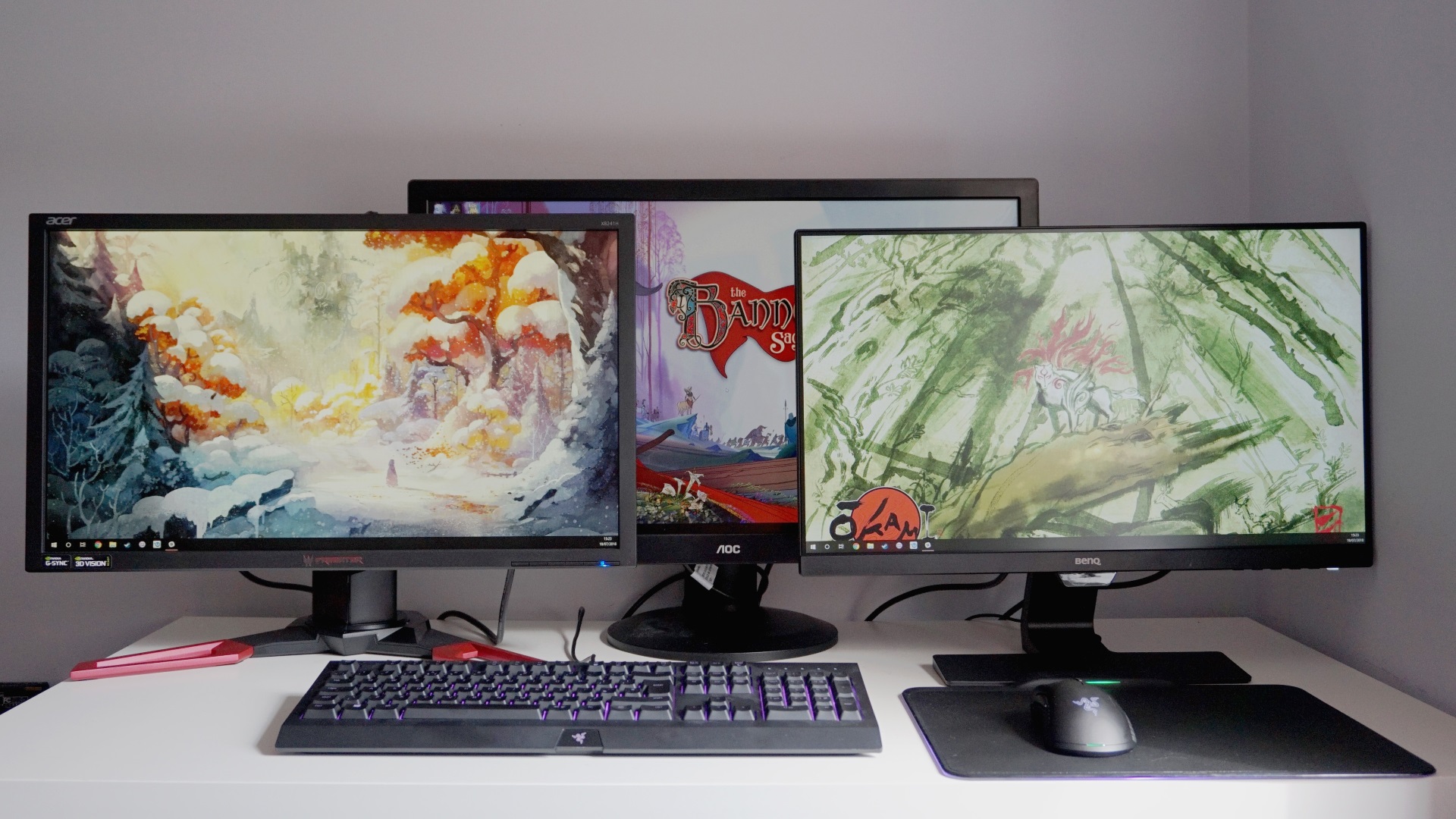
That’s why I decided to put it towards a new PC. I’d been using the same computer for over five years and it was starting to show its age. It was very slow booting up and started crashing constantly in frustrating ways. The time was right for an upgrade.
Well, I can now confirm that this plan I laid out is complete. This piece that you’re reading right now was written on my new PC and, without getting too deep into the specs or cost, I can already confirm that this was a great use of that stimulus money. It might end up being the best way I could’ve sent it.
That’s because, traditionally, when I buy a new PC, I don’t get the most expensive model. I tend to get something that’s relatively modest or mid-tier. I don’t think I’ve spent more than $1,000 on a PC or laptop in my life.
That changed with this PC. I won’t give an exact price, but I won’t say I bought the most expensive model either. I’ll just say I spent more than $1,000 on this machine and that old adage of you get what you pay for has never been more true.
The speed and efficiency of this new computer astounds me. I was genuinely surprised at how quickly it booted itself up and updated itself. Even though it still took a while to transfer all my files and programs to it, the speed difference is night and day compared to my old PC.
Some of that is just because of better hardware, but I suspect most of it is due to this computer having a solid-state hard drive instead of a traditional disk drive. For those not savvy on computer hardware, solid-state drives are the same drives you have in most tablets and smartphones. They have no moving parts and are much faster, but tend to have less space.
It’s a bit of a trade-off, but one I make gladly. In addition to being fast, this machine is almost eerily quiet. With my old machine, I could hear it humming from across the room. This one is so quiet that I’m not sure it’s even on when it’s in sleep mode. It’s that quiet. Based on what I’ve see so far, I don’t think I can ever go back to a traditional hard disk.
However, I didn’t just stop at getting a new PC. While I spent most of my stimulus check on the main unit, I used what was left to purchase something that I hope will be equally valuable. It involves new video editing software.
If you’ve been following my YouTube channel, Jack’s World, you’re probably aware that the quality is a bit limited. That’s mostly a byproduct of me being very new to video creation and having limited equipment. The video editing software I’ve used thus far has been a version of Microsoft Movie Maker that’s no longer being updated. If I want the quality of my videos to improve, I needed better software.
So, after consulting with some people much smarter than me in this field, I went out and purchased a copy of Adobe Premier Elements 2021. This is the software that most successful YouTubers use in some form or another. It’s very new to me. I’ve only started learning about its functionality and interface, but I’ve every intention of using it to make better videos.
For now, expect the next crop of videos to use the old software. When I finally get around to using Premier, I hope the difference will be clear. Along with the new hardware I have on this PC, I hope it leads to a major uptick in the quality of my videos. If it does, then that stimulus money will prove even more valuable.
I’m not expecting more stimulus money at this point. However, I’m already quite pleased with the purchases I’ve made. I hope others are able to make equally fruitful purchases. If you have any other stories about what you did with your stimulus money, please share them in the comments. Now, if you’ll excuse me, I have some awesome videos to with newer, better tools.
Sometimes, an experience you think is life-changing just turns out to be a fluke. You have one remarkable experience and you think it’s the start of a trend. However, it just turns out to be one experience and that’s it. Nothing ultimately changes.
I’ve had more than a few of those in my life. I thought playing “Final Fantasy X” would make me a final fantasy for life after the experience that game gave me. That turned out to be a one-time thing. It’s not out of disappointment. That’s just how things played out.
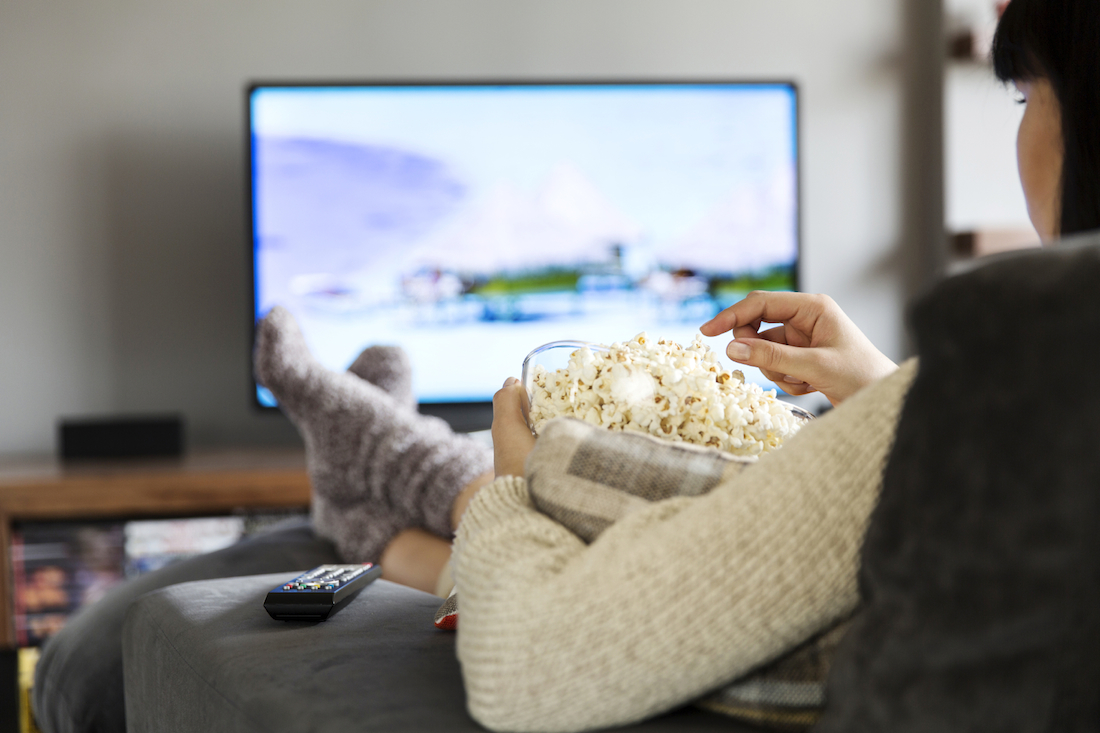
To find out, I used this past weekend as a secondary test, of sorts. I knew “Godzilla Vs. Kong” was coming out on HBO Max, just like “Justice League.” I made it a point to approach that movie the same way I approached “Justice League.” By that, I mean I turned my living room into a make-shift movie theater to maximize the experience.
I ordered some pizza.
I got a six-pack of beer.
I closed the blinds, dimmed the lights, and prepared my couch accordingly.
Now, I need to disclose that “Godzilla Vs. Kong” was not a movie I was particularly excited about. Compared to Zack Snyder’s “Justice League,” it’s the kind of movie I wouldn’t see in theaters on opening night. I’d usually wait a couple weeks until the price of a ticket came down and I could pick my own seat.
It still had all the makings of the kind of movie best enjoyed in theaters. It’s a big-time monster movie full of spectacle and explosions. That’s how it’s billed and, without getting too heavily into spoilers, I can confirm that “Godzilla Vs. Kong” delivers that spectacle in abundance.
As a result, I enjoyed it. I didn’t enjoy it quite as much as “Justice League,” but I still enjoyed the experience. Beyond the enjoyment, though, I confirmed something else. That experience I had with “Justice League” was not a fluke.
I can now say with relative confidence that my approach to consuming movies has changed. This experience of me turning my living room into my own personal movie theater is something I really enjoy. It’s something I want to make part of my movie-consuming experience.
By that, I don’t mean I’ll never set foot in a movie theater again. I still have every intention of doing that relatively soon, especially after I get a COVID-19 vaccine. I just don’t think I’ll ever do it as often as I once did.
It helps that “Godzilla Vs. Kong” came out on HBO Max. Last year, the powers that be decided they would release their new movies in both the theaters and on HBO Max. It’s a decision that upset quite a few people and organizations, but in terms of the bigger picture for the industry, it’s a real game changer.
Like Netflix joining the fray when Blockbuster was at its zenith, HBO Max may very well change how movies are consumed. Other studios are starting to buy in as well. Recently, Disney announced it would do a similar release with “Black Widow.” However, their release would be different in that streaming it from home will cost extra.
It’s a different approach, but one that’s following the same trend. Now, consumers have a choice in how hey consume new movies. They can either go to a movie theater or try to create their own experience at home. It’s a choice that probably wouldn’t have occurred had it not been for the pandemic that nearly destroyed the whole industry.
Be that as it may, I welcome that choice. Personally, I think the industry needs this to happen. Movie theaters and movie studios alike can’t keep clinging to a model that began before the creation of streaming media, 4K televisions, and Grubhub. At some point, they have to adapt to changing consumer habits. Now, they can’t avoid it.
I’ve already made some plans for how I’ll consume movies this summer. Even if all restrictions are lifted and everything goes back to normal, relatively speaking, I don’t think I’ll revert to my pre-pandemic approach to movies. I’ll start weighing my options.
For a movie like “Mortal Kombat” or “Space Jam: A New Legacy,” I’ll probably watch them at home on HBO Max. If I happen to get a date, I’ll probably take her to the theater. Since I can’t assume that’ll happen, my default will be using HBO Max.
With “Black Widow,” I’m a bit less certain. For now, I’m leaning towards seeing that in theaters. It’s not because of the experience. It’s more a matter of cost. If I want to watch that movie at home like I did with “Justice League,” I’ll have to pay extra. Now, for a movie I really want to see, I’m willing to do that. However, I have my limits.
I think $30 just to stream the movie from home is a bit excessive. It amounts to more than I would spend on a ticket and snacks at a movie theater. Even if the price was just $20, I’d still probably see it in theaters. Like many Marvel fans, I’ve been anxious to see this movie for over a year and I want to support it. If that means paying extra at a theater, I’ll do that.
Then again, if I could stream it for free on Disney+ the same way I streamed “WandaVision,” then I might have second thoughts. Given that I’m a lifelong Marvel fan, I might still go to the theater, just to show my support for the franchise. Since that’s not an option, I just don’t know.
For now, those are my plans and they’re always subject to change. I just know that, moving forward, my approach to experiencing new movies is very different. I suspect others are going through something similar. Even after this pandemic has passed, I expect certain movie-going habits to change permanently.
What will this mean for the industry, as a whole?
That, I don’t know. All I know now is that what happened last weekend with “Justice League” was not a fluke and “Godzilla Vs. Kong” proved it. Now, I’m contemplating how I’ll continue adapting my movie-watching experience. For that, I may need to invest in a bigger TV. In the meantime, I’d like to know what everyone else thinks. What has been your experience thus far with respect to consuming movies? Has it changed due to the pandemic? Do you expect it to change even more? Let me know in the comments.
Let’s be honest. Last year had one of the worst Easter holiday weekends since the days of Jesus himself. It hardly counted as a holiday. Even if you only know Easter as that holiday that involves plastic eggs and ham dinners, it was a holiday to forget.
At this time last year, the pandemic was escalating with each passing day and since viruses don’t take holidays, it got much worse in the coming weeks. It wasn’t just bad. It was downright scary. We didn’t know just how bad this pandemic was going to get. We didn’t know how many people would end up sick or dead because of it.
You can’t really celebrate anything in that kind of situation. I think Jesus would understand that too.
My family still made an effort to have an Easter dinner last year. It was better than nothing, but the pandemic kept everyone from getting into the spirit. Easter is usually one of those holidays that my family uses as an excuse to just get together and hang out. I always enjoyed that. A day with family, sharing a good meal and catching up, is a holiday well spent.
Last year robbed us of that. This year, things aren’t entirely back to normal. Only a few relatives have been vaccinated and plenty are still not able to travel. However, it’s a lot less scary this time. The pandemic is still raging, but we’re closer to the end than we are the beginning. That alone is reason to celebrate.
With that in mind, I encourage everyone out there to make the most of this Easter Sunday. Even if it’s not a big holiday in your book, try doing something to make it special. Even if it’s as simple as making hardboiled eggs, do something to help make up for all the festivities we lost last year. Here are some Sexy Sunday Thoughts to help get you in the Easter spirit. Enjoy!
“There’s a good chance that at some point in your life, you’ve talked to your parents shortly after they did something kinky.”
“You can’t outlaw prostitution without criminalizing orgasms to some extent.”
“True charisma is measured by an ability to make people horny without touching them.”
“A skilled tongue can do far more than make up for a small penis.”
“Does having sex with identical twins truly count as a three-way?”
“In many respects, a skilled dominatrix is better at enforcing rules than cops.”
“Things that make certain people feel horny are sure to make other people feel scared.”
The following is a video from my YouTube channel, Jack’s World. It’s a brief exploration of the power of boredom. It’s something I’ve touched on a number of times and will likely do so again. While writing about boredom has helped me appreciate its impact, I feel like this video helps get the point across even more. Keep it in mind the next time the power goes out. Enjoy!
The older I get, the more I wish I could go back in time and tell my younger self that things weren’t as hopeless as they seemed. I would’ve loved to grab my 15-year-old self by the shoulder, looked him right in the eyes, and told him that I had many wonderful experiences ahead of me. I would’ve maybe told him some winning lotto number as well, but that’s beside the point.
Most people who survived adolescents and found ways to thrive in the adult world appreciate the perspective of hindsight. It can be sobering for some, but bittersweet for others. When we’re young, ignorant, and inexperienced, everything just seems more overwhelming. We struggle to make sense of it all. You really can’t hope to understand anything without time, experience, and perspective.
I suspect most people have entertained the idea of sending messages to their younger self at some point in their lives. Even if it’s just to tell them who will win the Super Bowl this year, there’s a lot of wisdom we’d love to impart. Movies like “Groundhog Day” and “Happy Death Day” demonstrate the power of having such hindsight. However, those movies only go so far.
It’s one thing to relive a single day with all your memories intact. An entire lifetime is on a much larger scale with far greater implications. It makes for an interesting thought experiment. Now, after a certain X-Men comic told a remarkable story with this, I’d like to pose it as a formal question.
What would you do if you could live your entire life over again with the same memories, knowledge, and experiences you have now?
It’s a question that is likely to inspire many different answers. Everyone’s life, circumstances, and experiences are different. Some people wouldn’t want to change much. They like how their lives turned out. Others would make significant changes, both for their lives and for others.
Since a scenario like this has so many implications, here are a few specifics to consider before answering this question. I’m going to try and answer it for myself, but I think it’s worth establishing a context, if only to avoid the kind of time travel paradoxes that make the timelines in “Back to the Future” so confusing.
With that in mind, here are the rules for this little experiment:
When you’re reborn, you have all the memories you have up to this point in your life
You’re aware that you were reborn and don’t suffer significant shock from being in a younger body
You keep the fact that you have the knowledge of your future self secret
Your ability to recall your memories is consistent with your ability to recall general memories at this very moment
You have no hint of knowing how different decisions affect the future course of events for yourself and the world as a whole
The course of events still unfold as you remember them and don’t change unless you directly influence them
With those rules in mind, take a moment to contemplate how you would live your life the second go-around. What would you do initially? How would you change the course of your childhood? How would that change the course of your teenage years? What points in your life would you make radically different decisions?
For me, personally, there are many general aspects of my life that I would change, even from a young age. I would take a very different approach to how I went about everything from school to friends to my little league baseball career. Life experiences has shown me how flawed my mentality was during that time. I focused so much on outcomes over the process that it caused more frustration than growth.
I also developed a very negative outlook for much of my youth and during my teen years. In my defense, I had terrible social skills and some irrational anxieties that only became absurd with the benefit of hindsight. Armed with the experience I have now, I would’ve been a lot more hopeful and optimistic in approaching school, friends, and challenges. I think that would’ve helped me achieve more and learn more.
In terms of specifics, I freely admit that I would use my knowledge of the future for personal gain, albeit to a limited extent. I can’t remember specific lotto numbers for specific dates, but I can remember which teams won the Super Bowl and the World Series. I also remember which companies made the most gains in the stock market. As such, I would invest whatever I could in Apple, Netflix, Amazon, and Google.
That would’ve made paying off my student loan debt a lot easier. It also would’ve spared me some very unpleasant experiences I had when it came to finding decent housing, both in college and after I graduated. Not having to worry about money would definitely have helped with a lot of things. I could use it to take additional classes, invest in my writing career, and avoid some major missteps, of which I’ve made plenty.
I imagine a lot of people would take advantage of that knowledge. Now, there are some arguments that making those kinds of investments and bets often end up changing the outcome, resulting in a time paradox of sorts. That might be the case if you randomly invested a billion dollars in Apple at a time when it was on the brink of bankruptcy, but I imagine it would take a lot to significantly change something like that.
This brings me to the most sensitive aspects of this thought experiment and one I’m sure more than a few people have already imagined. Having the benefits of hindsight means you can fix the mistakes you made in your youth, both in terms of decision and attitudes. What about decisions that might affect the entire course of history?
It’s one thing to profit from a bump in stock prices. It’s quite another to change a key moment in history. It’s the inescapable implications behind the butterfly effect. However, even movies like “Back to the Future” show that you can only affect the course of history to a limited extent. Even in the worst scenario, Marty McFly only messed up Hill Valley in “Back to the Future II.” He didn’t cause a nuclear holocaust.
If you only have your memories of the future and no other abilities beyond that, you’re still going to have trouble changing certain events. A lot of people would probably try to prevent the events of September 11th, 2001, but how would you even go about that? Would calling someone at the FBI or warning the airports be enough? Would going there and trying to stop it directly be effective?
At best, you’ll only delay it. At worst, you might get yourself killed. The same goes for any event. Say you wanted to change the outcome of the 2000 US Presidential Election or, depending on your affiliation, the 2016 Election. These events have many moving parts. There’s only so much you can do to influence them. Even if you shout the warnings from the highest rooftop, you’ll probably won’t be taken seriously.
There’s also the distinct possibility that changing these events will lead to something much worse. That’s what happened in the Stephen King novel, “11.22.63.” In the story, Jake Epping stopped the Kennedy Assassination, but that indirectly led to a nuclear war. There was even an episode of “Family Guy” that explored this concept.
It’s a difficult decision that I’m sure most would wrestle with. Personally, I would make an effort to avert something as terrible as the September 11th, 2001 attacks. I don’t know how I would go about it, but I certainly would try. I would probably do the same for things like the Columbine massacre or other school shootings, if only to save the lives that wouldn’t otherwise be saved.
As for other events, it’s hard to say and even harder to know the implications. If someone has a specific method they would use, please share them in the comments. I think they’re worth discussing.
These are just some of the issues you would face if you had a chance to relive your life all over again. Hindsight offers many benefits and perspectives, but it also comes with risks. You might be able to avoid the mistakes you know about, but you also might end up making others you didn’t anticipation and those could be far worse.
It’s still an interesting though to consider. As we get older, our perspective on the past and present changes considerably. We can never know how we would’ve acted with some added foresight. I like to think that I, along with most people, would’ve used it to become better.
Today is a beautiful day for baseball fans and sports fans, in general.
Today is a day that, until last year, many took for granted as something that would always come with the changing seasons.
That’s because today is opening day for the 2021 baseball season. Unlike last year’s never-ending spiral of misery and cancellations, the season is starting on time. This year, we’ll be able to celebrate the early days of spring with a new season of baseball. Even if you’re not a sports fan, it’s something worth celebrating for this year.
I certainly intend to enjoy it more so than usual. I haven’t forgotten just how jarring last year was. The experience of going an entire spring without baseball had a lasting impact, to say the least. I was so used to just sitting on my couch, turning a ball game on, and relaxing throughout the spring and summer.
Losing that hurt.
It hurt a lot.
It also made me appreciate baseball that much more.
For me, there’s a sentimental value for baseball. Growing up, some of my fondest memories involve sitting on the couch with my dad, cracking peanuts, and watching ball games together. I didn’t even care who was playing. Just watching baseball with my dad was a joyous experience. I came to cherish that experience as I got older.
Now, after last year, I’m ready to cherish it even more. I encourage other baseball fans to do the same. We lost a lot in 2020. We took so many things for granted, including baseball. Let’s take the time to celebrate having it this year.
I like that the weather is getting warmer. I really do. However, when you have allergies like I do, your excitement about spring and warmer weather generally take a hit. As I write this, the trees outside my window are blooming. They look beautiful and all, but I know what this is going to do to my allergies and I’m not looking forward to it.
I’ve dealt with allergies all my life. I’ve taken medications to deal with them in the past, but medication only goes so far. Sometimes, you need something else to either supplement that effort or help you ignore the sinus congestion. New comics aren’t a cure all. I’m not going to claim that. I’ll just say that, regardless of the medications I take, they’re a welcome distraction.
This stretch of omega level allergy season usually lasts a couple weeks, at most. During those weeks, having a stack of new comics to help me navigate those weeks is a welcome remedy. You don’t need a prescription and you can safely consume them with alcohol. What more do you want in a remedy?
It also helps that this is also the time of year when major comic companies start teasing their big summer events. Last year was such a bust for obvious reasons. This year, every company seems to be trying to compensate and build up some hype. I’m already starting to see it and I expect the pace to pick up in the coming week.
Marvel is doing it. DC is doing it. Image, Top Cow, and Dark Horse are doing it. Some will succeed. Some will fail. In the end, the fans are the winners. Those with allergies just happen to win more than most. Wherever it leads, this week brings us just a bit closer.
To my fellow allergy suffers, hang in there. In the meantime, here’s my pull list and pick of the week. Enjoy!
Throughout the pandemic-fueled horrors of 2020, I speculated on multipleoccasions how movie theaters may never fully recover. I don’t doubt for a second the movie industry, as a whole, will adapt to changing markets and trends. However, the movie-going experience, as we know it, was suddenly in doubt.
I know I’m not alone in this sentiment. Many people far smarter than me have expressed concerns and made equally dire predictions. How things ultimately play out remains to be seen. The 2021 summer movie season will be a major test for theaters, as a whole.
On top of that, Disney is also trying their hand in simultaneous release. They announced that they’ll be releasing the long-delayed “Black Widow” both in theaters and on Disney-plus. While you’ll have to pay extra to see it on Disney-plus, the result is the same. Movie theaters are suddenly less relevant in the movie-viewing experience.
It’s hard to overstate just how big a deal this is for the industry.
It’s also hard to overstate just how big an impact the pandemic has had on the movie industry, as we know it.
It may very well be the case that “Avengers Endgame” was the last true blockbuster. We may never see a movie gross that kind of money ever again. That, alone has many implications.
However, I don’t want to focus too much on those just yet. Instead, I want to talk about my own movie-going habits and how they have changed recently. Like so many others, I was very excited to watch Zack Snyder’s “Justice League” on HBO Max. I built my entire Saturday night around watching it.
There’s a lot I can say about this movie. If you want a full review, you can check the YouTube video I made for it right here.
Beyond my excitement and reaction to that movie, I felt an impact beyond the general experience of seeing a movie that so many had fought to get released. This really didn’t come off as just me settling in on a Saturday night and binging a movie from a random streaming service, which I’ve done plenty of times before.
I feel like it may affect other movie-going experiences in the future.
To explain why, I also need to explain what I did to prepare to watch that movie. I didn’t treat it like watching any other movie on HBO Max or any other streaming service. Instead, I went out of my way to recreate the movie theater experience.
I closed the blinds to my windows.
I dimmed the lights in my living room.
I even ordered a pizza and got a six pack of beer. That’s not typically what I get when I go to a movie in the theaters, but since this was a four-hour movie and I wasn’t bound by theater rules, I wanted to make the most of it.
After all, this movie wasn’t ever coming out in theaters. If I wanted that experience, I had to recreate it myself. It was not exactly a perfect duplicate. I don’t live in a fancy house that I could turn into a make-shift movie theater. I haven’t sold enough novels yet.
Despite those limited resources, the experience I created for “Justice League” was both effective and personal. It allowed me to basically consume a new blockbuster movie in my own unique way. While I didn’t expect that effort to have too great an impact, I can say not that it definitely changed the experience.
This wasn’t just me re-watching a favorite movie of mine.
This wasn’t me watching a movie that I saw in theaters.
This was me creating my own experience for a new release.
When all was said and done, I found myself planning to do it again. I may ultimately do it with all HBO Max movies that come out this year. That doesn’t mean I won’t see some in theaters, but watching Zack Snyder’s “Justice League” showed me what a more personal movie-watching experience could be.
It also left me somewhat conflicted on how I’ll see “Black Widow” when it comes out. Before I saw “Justice League,” I had every intention of watching it in the theaters, like I’ve done with every Marvel movie since “Iron Man.” Now, I’m not so sure.
Do I go to a movie theater, buy my favorite refreshments, and watch it like I used to watch all new movies?
Do I try to recreate what I did with “Justice League” and consume movies that way?
I’m honestly torn. I still enjoy going to theaters. I don’t exactly have a big screen TV that comes close to matching the screens at a movie theater. I also don’t have a 3-D TV that can take advantage of that feature. However, I can’t sneak a six-pack of beer into a theater or pause the movie when I need to take a bathroom break.
There are positives and negatives for both. I’ll certainly attempt to refine my movie-seeing experience at home with future HBO releases. In doing so, that may ultimately make watching a movie from home more preferable to watching it in a theater. As a result, me going to a movie theater might become a rarity.
It may be the case that Zack Snyder’s “Justice League” was a one-time thing that I’ll never recreate. If not, then I’m very curious to see if others had a similar experience. I’m also curious to see how this will play out as the world emerges from this pandemic and the movie industry seeks to rebuild. If you had a similar experience Zack Snyder’s “Justice League,” or something similar, please share it in the comments. I have a feeling the way people consume movies and media is bound to change considerably in the coming years and not just because of the pandemic.
Not long ago, the idea of any politician running on a platform of decriminalizing marijuana was unthinkable. By not long ago, I mean only 10 years. It really is remarkable how much things have changed on this particular issue. It’s no longer a fringe issue for Libertarian candidates and hippies.
These days, most politicians won’t pay too high a price for saying they’re fine with decriminalizing marijuana. If anything, favoring its continued decriminalization is now a liability. It’s legal in so many states and has so much public support that supporting continued criminalization is on par with supporting gay marriage bans.
It’s just not popular and could tank an aspiring candidates career before it even begins.
We’re getting to a point where marijuana is no longer a hot-button issue. It’s almost past the point of no return in that regressing at this point would be more trouble than it’s worth. However, there’s always a place for social issues in politics. It’s just a matter of time, trends, and circumstances.
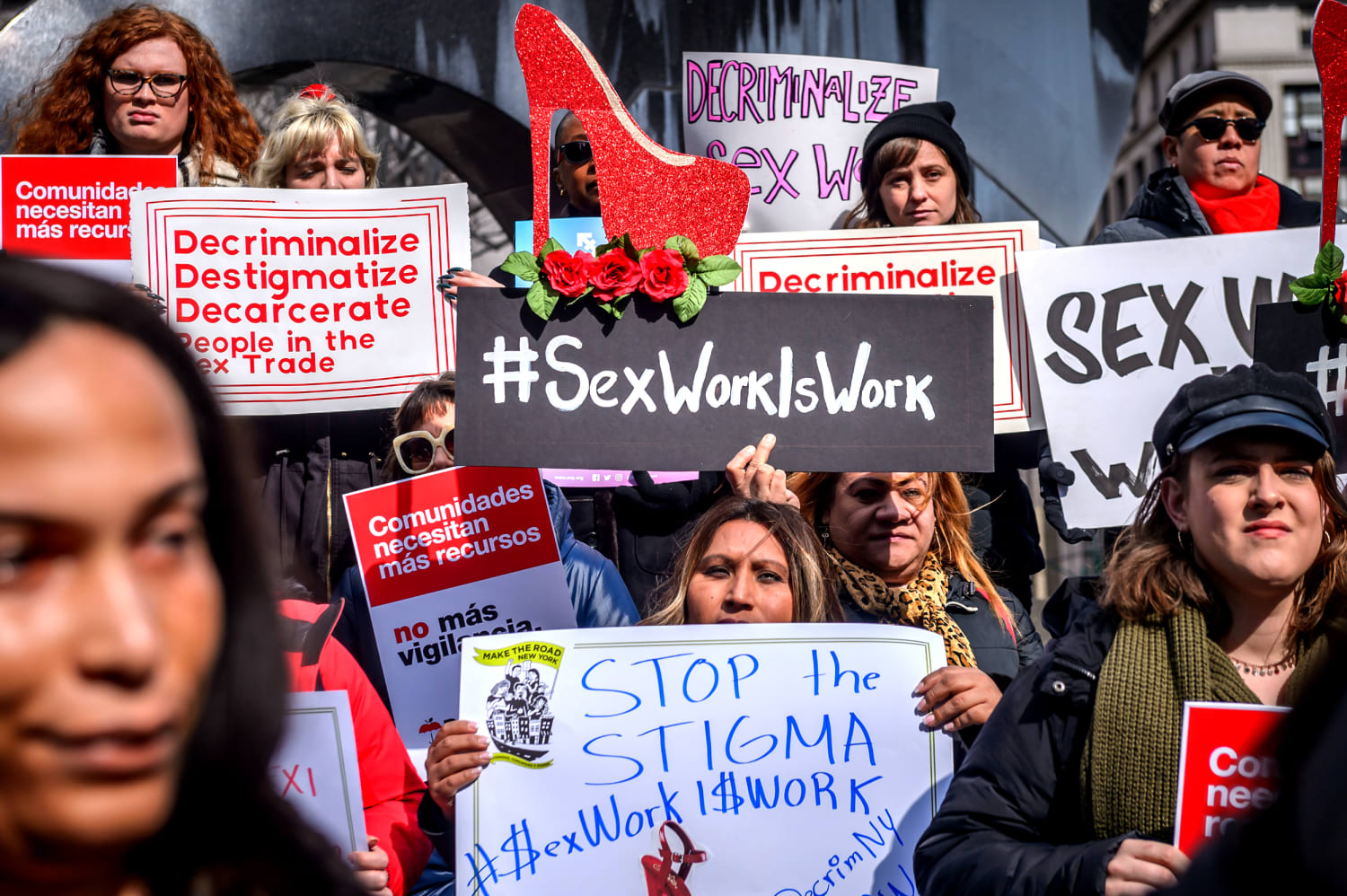
Now, like weed before it, we might be seeing a new social issue fill that void. This time, it’s decriminalizing sex work. It’s something I’ve talked about before. I’ve even speculated on how it’s likely to affect other social trends. It seems some of that speculation was accurate.
According to The Appeal, there’s momentum building for decriminalizing sex work in New York City. It’s gotten to a point where it’s now an issue in this year’s race for Manhattan District Attorney, one of the most important legal positions outside the federal government.
New York State appears to be on a trajectory of expanding the rights of sex workers. On Feb. 2, the state repealed its “walking while trans” ban, an anti-loitering law that critics said the police were using to harass trans New Yorkers. Many advocates are pressing for the passage of legislation that would decriminalize sex work.
But most of the candidates seeking to be elected as Manhattan’s next district attorney this year don’t want to wait for the legislature. If they win, they say, they would take the DA’s office entirely out of the business of going after consensual sex work.
Six of the eight declared candidates told New York Focus and The Appeal: Political Report that they would stop prosecuting charges involving sex work, whether against people who are selling sex or against buyers.
The relative consensus is a measure of how quickly attitudes on sex work have shifted since even 2019, when only one out of seven candidates for Queens DA, Tiffany Cabán, supported the full decriminalization of sex work. A coalition of activists, known as Decrim NY, launched in 2019 and has strenuously championed change since then.
For those who don’t live in New York or follow their politics, it may not seem relevant. In the grand scheme of things, it’s a small issue in a political sphere with a limited scope. However, that’s how all issues begin.
Same-sex marriage was once a fringe issue. In the late 90s, it only affected a couple of states that started by offering benefits for domestic partnerships. It was not full-scale legalization, but it got the ball rolling. Once one state took that step, it snowballed from there.
Sex work probably won’t follow the exact same path, but there will be similarities. It just has to start somewhere outside the most rural parts of Nevada. Manhattan, one of most densely populated areas of the Country, would be a very high-profile site. If just one of these candidates can succeed on this issue, then that opens the door for others.
In addition, the very concept of sex work has changed considerably in wake of the pandemic, as indicated by the rise of those utilizing sites like OnlyFans. Those changes aren’t going to be automatically reversed once the pandemic is over.
There are many factors in play with this issue. It’s an issue that affects sexual attitudes, minorities, poverty, feminism, and so much more. That issue is sure to change even more once things like sex robots enter the picture. It won’t happen all at once, but this could be the beginning. Where it goes from here, only time will tell.
Cartoons are not just for kids and haven’t been for decades. That shouldn’t need belaboring in this day and age. With shows like “Rick and Morty” and “Bojack Horseman,” it’s safe to say the debate is over. Anyone who still thinks cartoons are for children are either willful idiots or just cantankerous trolls.
I’m lucky in many respects because I grew up at a time when cartoons were mostly for kids. Then, in my teen years, they started maturing before my eyes. From “The Simpsons” to “Bevis and Butthead” to “King of the Hill” to “Avatar: The Last Airbender,” I watched as this rich and colorful medium matured.
A big part of that maturity came from how these shows depicted romance. Being a long-time romance fan, I noticed this more than most. For years, romance in cartoons was restricted to Bugs Bunny occasionally kissing Elmer Fudd. There was little in terms of refined relationships, like the ones we see in movies, TV, or books. That has since changed.
Shows like “Futurama” and “The Dragon Prince” have really raised the bar for how romance can unfold in a cartoon. Some animated romances are genuinely beautiful. They have the same dynamics as their non-animated counterparts. It’s a big reason why the “Futurama” finale brought many fans to tears. It was just that beautiful.
Granted, good cartoon romances are still few and far between, but that only makes the ones that work more endearing. As the medium continues to evolve, I hope we get more romances like that. There will always be a place for Looney Toons style slap-stick, but cartoons need not be defined by that. They can be romantic for all the right reasons.
To celebrate all things animated and romantic, here are some Sexy Sunday Thoughts. Enjoy!
“Being sexy while refusing to give oral sex is like being a drag racer who refuses to exceed the speed limit.”
“Like it or not, perverse thoughts are a pre-cursor to our very existence.”
“Is a push-up bra really that different from a cod piece?”
“Teenagers today will never appreciate the amount of work, tact, and cunning it took to both find and hide a porn stash before the internet.”
“There should be no shame in being seduced by someone who is exceptionally good at it.”
“A man cannot condemn homosexuality without indirectly insulting his own genitals.”
“Boring sex can only ever be a luxury in the grand scheme of things.”