Category Archives: video games

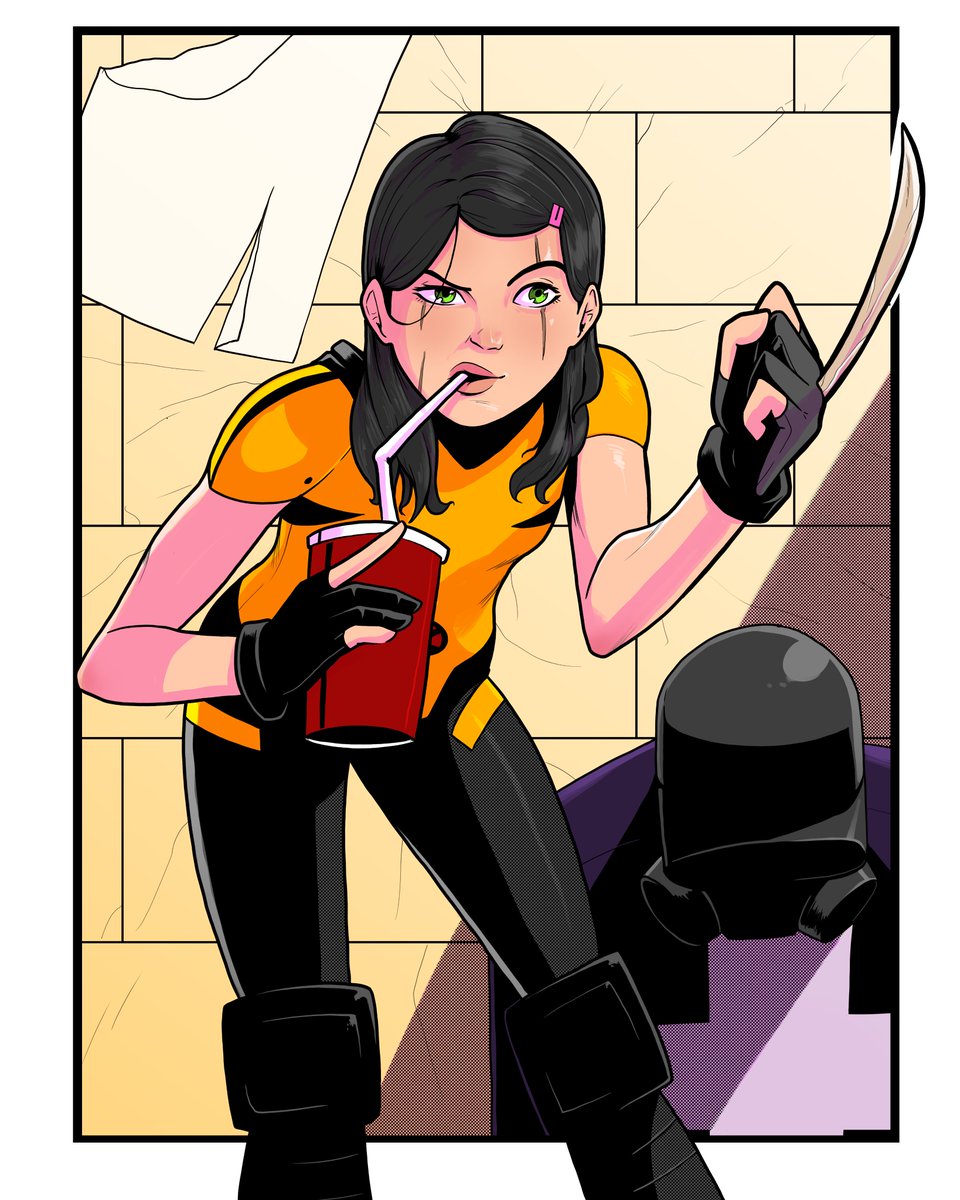
Gabby Kinney: A Case-Study In Cuteness

Gabby.jp

What makes a character cute?

That’s a not an empty question. It’s one that movie studios, TV networks, toy makers, and novelists attempt to answer every day. I’m not just talking about the ones affiliated with Disney, either. While the House of Mouse is legendary for crafting a winning formula for the creation of all things cute and lovable, it’s worth breaking down the components.

Understanding them isn’t just important for creating likable characters. It can be pretty damn lucrative too. Just look at the merchandise sales for “Frozen.” Cute, adorable characters sell. They sell a lot. Plenty has been written about the cuteness of characters created by Disney, Fox, and a multitude of Japanese anime. However, I’d like to single out one particularly adorable character.

As it just so happens, this character is from the world of superhero comics. Specifically, she’s from the X-men comics. If you’ve followed this website for any length of time, this shouldn’t surprise you in the slightest. I promise this isn’t just another love letter to the X-men like the many I’ve crafted before. This is an exploration of a character who forged a unique path to cuteness.

Her name is Gabrielle “Gabby” Kinney, also known as Honey Badger. You probably haven’t heard of her because, in the context of Marvel’s vast history, she’s very new. She has only been around for about three years. In that time, though, she’s done plenty to make her mark on the world.

Think of the cutest characters you’ve ever known. Whether it’s a talking animal, a princess, or a boy band, take a moment to contemplate all the traits that make them cute. From their looks, their personality, their story, and everything in between, think about qualities that make them so adorable.

Without hesitation, I can say Gabby has all those qualities, as well as a few you didn’t know could be so adorable in the first place.

That may sound like a bold claim, but it’s true. After reading every issue of All-New Wolverine, I genuinely believe that she has raised the bar for cuteness for any character, both within superhero comics and in the real world. To appreciate why her story is so remarkable, it’s necessary to know some key details about her backstory.

This should give you a few telling hints.

On paper, she doesn’t come off as the kind of character who can be overly cute. She’s a clone of Laura “X-23” Kinney, who herself is a partial clone of Wolverine. Given the number of clone-based character in comics, including a few who are notably infamous, she doesn’t have a lot going for her at first.

That changes quickly after she’s introduced. She’s actually one of three clones from Laura, but she ends up being the one who makes the greatest impression and not just because she doesn’t go evil, which tends to happen a lot with clones in comics.

From the beginning, Gabby sets herself apart as being the more upbeat, bubbly clone of the bunch. She’s not overly angry or vindictive. She isn’t even that bothered by the fact that she’s a clone. It helps that she’s just a kid, but it also helps that this has never been hidden from her. She knows what she is and doesn’t whine about it. That, alone, makes her more mature than the majority of adult heroes, even the non-clone ones.

She even has a sense of humor about it. She doesn’t take herself too seriously. She doesn’t get too uptight in tense situations, either. That even includes dangerous situations that involve dragons, zombie animals, and alien parasitic bugs. Gabby sees the world through a rose-colored lens, regardless of how ugly it is, and this is the key to what makes her so adorable.

Whether she’s helping Laura battle Sentinels or caring for a pet wolverine, Gabby always finds a reason to smile. She’ll always look for the lighter side of a complicated situation and help others see it. That sort of thing is becoming increasingly precious in today’s overly-cynical world, but it’s especially powerful in the world of superhero comics.

The very premise of any world involving superheroes requires that the world contain the kinds of chaos that can’t be contained with extra police and stiffer fines. In Gabby’s case, she inhabits a world full of evil organizations like Hydra, shape-shifting aliens like the Skrulls, and actual devil-like creatures that go out of their way to ruin marriages between iconic characters.

The fact that Gabby can lighten the mood under those circumstances helps amplify her lovability. Make no mistake. She is disturbingly lovable. I say that as someone who was extremely sick of clone character at the time All-New Wolverine debuted in June 2015. However, the writer of All-New Wolverine, Tom Taylor, went the extra mile with Gabby.

It’s not just in the light-hearted jokes that she makes. It’s not just the fact that she’s a cute kid full of youthful innocence, despite having been cloned in a lab by assholes who wanted to make her a living weapon. Any character can just say goofy things and ignore the horrible crap going on around them. Where Gabby really shines is how she affects those around her.

From the moment she meets Laura to her first hilarious team-up with Deadpool, Gabby has a positive influence on pretty much everyone she meets. She doesn’t get scared or overwhelmed by any given situation, even those involving parasitic aliens. She never lets these situations destroy her child-like innocence.

That, in and of itself, sets her apart in a major way. In so many other stories involving cute characters, their innocence is treated like fine china. It’s easy to crack, easy to taint, and irreparable when damaged. More often than not, a big part of a plot surrounding cute characters is how they become corrupted.

Tom Taylor basically turns that narrative upside down. Rather than build the story around how Gabby loses her innocence, he essentially surrounds her innocence in an adamantium shell that’s every bit as unbreakable as Wolverine’s claws.

This is critical to what makes Gabby uniquely cute, but it’s also important to the presence she brings to the X-men comics and the larger Marvel universe. Instead of having everyone try to protect her innocence, she basically has to shove her cuteness in their face and remind them that she doesn’t need protecting. In fact, they need her more than she needs them.

She gives them a reason to laugh and smile after Hydra has taken over the United States. She gives them a reason to feel good after the Red Skull comes back to life yet again to bring old-fashioned fascism to the world. She goes out of her way to be a positive presence on everyone she encounters. However, it’s her impact on Laura where her cuteness becomes genuinely endearing.

To appreciate why that matters, it’s worth recalling just how dark and brutal Laura’s story has been thus far. That story has closely followed that of her predecessor, Logan. She was born in a lab, subject to dehumanizing treatment, and turned into a living weapon. Unlike Gabby, she didn’t escape it until she’d committed soul-scarring atrocities, one of which included the death of her mother.

Since her introduction in the memorable, yet underrated “X-men Evolution” cartoon of the early 2000s, Laura has personified a worst-case-scenario for a cloned character. Her life, her story, and her personality are driven by loss, anger, and sorrow. Then, Gabby comes along and suddenly, there’s a light in her life.

Gabby is like a breath of fresh air to someone who has only been breathing smog for all their life. She’s like a hot shower after spending 4 hours shoveling snow in a blizzard. She provides an overdue balance to long-suffering characters like Laura that it’s more than just refreshing. It’s cathartic.

Gabby helps give Laura and her story something that benefits them both. She creates an outlet from the endless string of tragedies that plague the Marvel universe and the real world. She dares Laura and those following her story to not let all that ugliness destroy all that is good and pure. A cloud of darkness doesn’t have to cover the entire sky. There’s always room for a ray of light.

Gabby is that ray of light. Cute, adorable characters tend to shine brighter than most. That’s what gives them such a powerful presence. Whether it’s in a Disney movie or a superhero comic, they illuminate the darkness and make the characters around them do more than just lament. The fact that Gabby does all of this and cares for a pet Wolverine makes her a special kind of cute.

3 Comments

Filed under Deadpool, human nature, media issues, superhero comics, superhero movies, video games, X-men

How Ellie From “The Last Of Us” Does LGBT Characters Right

1482574113135812936

In the current state of popular culture, one of the most emotionally-charged words is “diversity.” It gets thrown around like a nuclear hot potato. Anyone who holds it too long gets burned and anyone who doesn’t hold it long enough gets attacked. Whether it’s the handling of female characters or representation of minorities, diversity is one of those buzzwords that creates the wrong kind of buzz.

That’s not to say that it’s always mishandled. From a pure business standpoint, it makes sense for media companies to pursue diversity because the world is becoming an increasingly diverse place. New markets and consumer bases are emerging as people gain greater access to media, thanks largely to global connectivity. Any competent business would want to appeal to the most customers possible.

Economics aside, injecting diversity into a movie, TV, comic book, or video game is fraught with challenges and potential backlash. Movies have felt it. Comic books have felt it. Video games have especially felt it, thanks to scandals that seem to get more frustrating with each passing year.

The number of failed attempts to promote diversity is vast and tends to bring out the worst in many people. The successes, though, often fly under the radar and generate way too little attention. Other than the success ofBlack Panther” and the occasional Supergirl comic, the cases of diversity done right are few and far between.

That’s why I think it’s fitting that one of the best cases of diversity comes from the world of video games, an industry that finds itself in a new controversy every other week. It’s even more fitting that it comes courtesy of “The Last of Us,” a franchise I’ve praised before in how it portrays masculinity in a refreshingly positive way.

Beyond just being an excellent game with amazing characters, it also provides a case study in how diversity can be done effectively. It doesn’t have to be forced. It doesn’t have to be preachy. It doesn’t even have to have a larger agenda. It can just be a bonus on top of a well-made product.

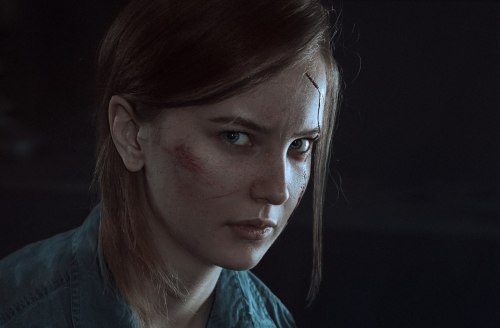
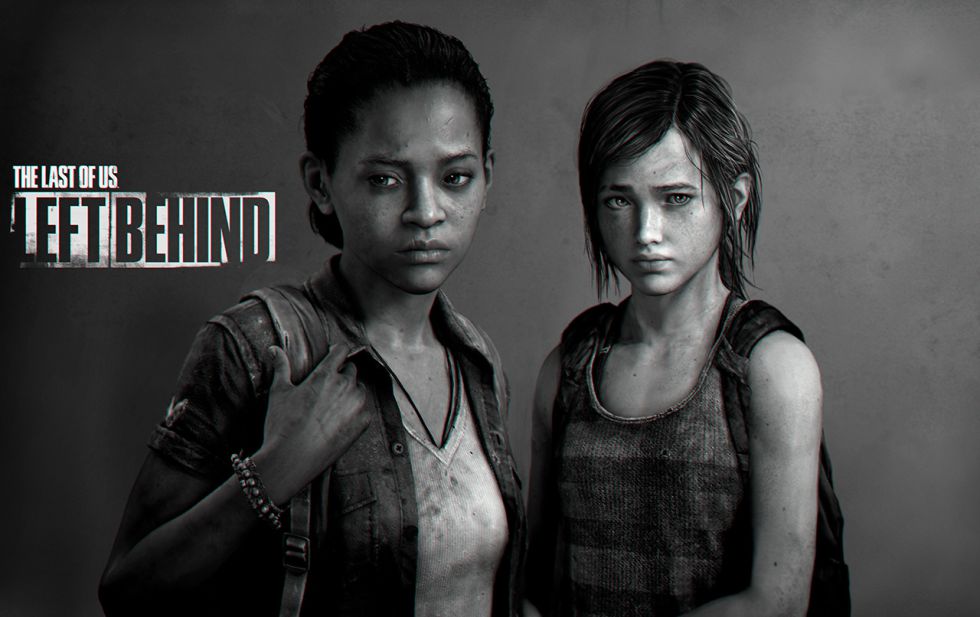
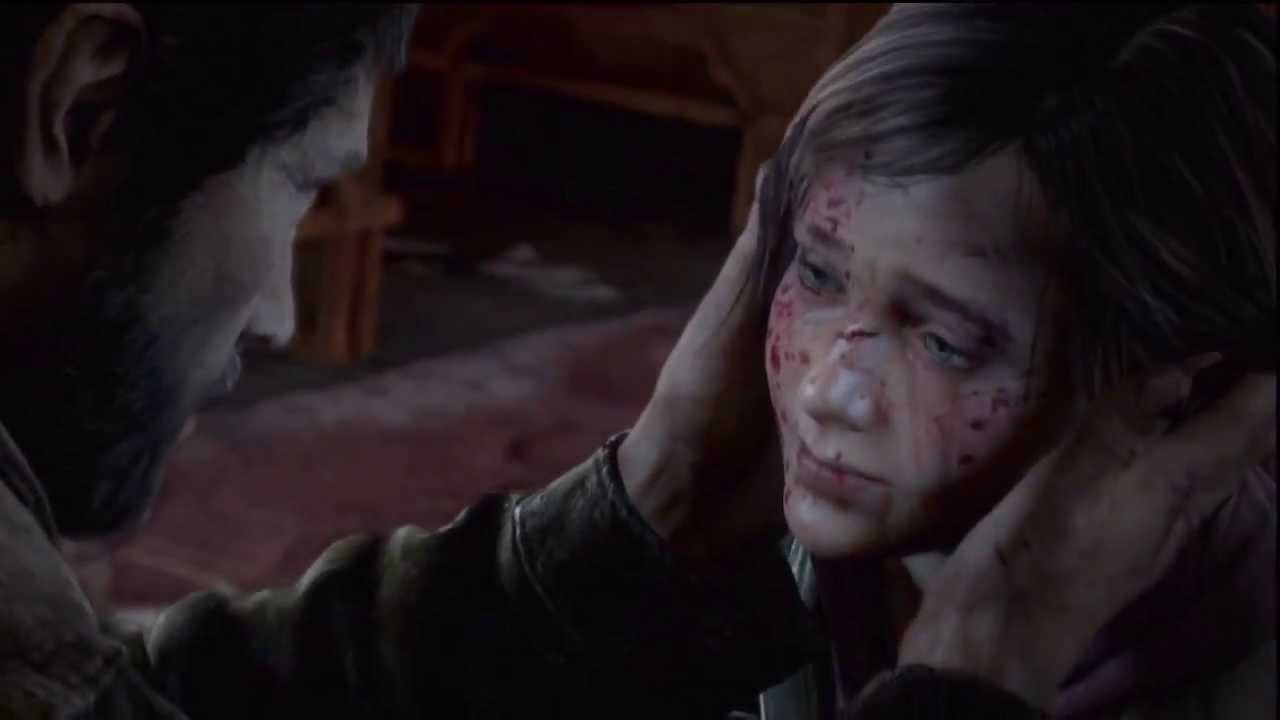
The character in question this time is Ellie, the co-protagonist to Joel in the first game and the main protagonist in the upcoming sequel. Her story is every bit as rich and compelling as Joel’s. Her history, her personality, and even the way she complements the gameplay helps make her distinct. She’s a major reason why this game is so enjoyable and why it sold so well.

She achieved all this as both a female and an LGBT character. It sounds like one of those combinations that has to be forced, but that’s not the case with Ellie. In fact, anyone who plays the entire story of the first game wouldn’t even know about Ellie’s sexuality because it was only revealed through a DLC , or downloadable content.

Even within that content, though, Ellie’s sexual orientation was not a big part of the story it told. It effectively filled in a time gap within the main game while also exploring more of Ellie’s backstory, but at no point did it make her sexuality a bigger issue than it needed to be. You could’ve removed that detail entirely and the story would still work, but it wouldn’t be quite as memorable.

More recently, during a preview of “The Last of Us Part II” at E3 2018, Ellie’s status as a homosexual woman was reaffirmed. Again, it wasn’t critical to making the moment work. The fact she’s attracted to other women doesn’t take anything away from the emotional weight of the scene. It does help enhance it, though.

Therein lies the key. What makes Ellie a great character has nothing to do with her sexuality. It’s not a defining aspect of her persona, nor should it be. It defines her no more than Joel’s heterosexuality defines him. It doesn’t have to be thrown in someone’s face as this huge, all-encompassing feature. It’s just a small part of a much greater whole that is Ellie.

There’s no effort to make her this LGBT icon, which has a tendency obscure a character when forced. Her status as LGBT isn’t belabored, either. She’s not important to the overall narrative in “The Last of Us” because she’s female and gay. She’s important because of factors independent of those traits.

That importance grows throughout the story, but not because of her gender or her sexuality. It’s what she does that helps establish her as an important character and a compelling one, at that. Her story complements Joel’s and the various other characters she encounters.

In the process, she also demonstrates a unique personality. She’s tough and stubborn, but she’s also impulsive and temperamental. Many of those qualities are entirely gender-neutral. Some stand out more because she’s a woman and that’s okay because a girl acting girly isn’t a big deal, which tends to get lost with other female characters.

It may seem so obvious, but the fact that diversity in media is such an issue shows just how difficult it is to pursue. Ellie succeeds because the diversity she represents is never primary to her character. It’s not even secondary, either. That’s not to say her gender and her sexuality are ignored, but it’s never elevated beyond a certain point.

Before any of those diversity-related issues come up, “The Last of Us” works to establish who Ellie is and why she’s important. That process of establishing a good, compelling character without her gender or sexuality being the focal point does a lot to get you to care about her story. It’s a process that can’t be rushed and the game does a masterful job in that respect.

The person Ellie is when you first encounter her early in the game is not the same person by the end. She’s someone who undergoes a lot of growth, encountering more than a few setbacks along the way. There are times she’s easy to root for. There are times when she comes off as an arrogant brat. Before you ever find out about her sexuality, you learn about her as a person.

By the time her sexuality finally comes up, Ellie is already so much more than the gender she’s attracted to. She’s a survivor, a fighter, and someone who has seen everyone she’s ever cared about die or leave her until Joel comes along. She also has a vital part to play in the ongoing apocalypse the world around her faces. All of this, once again, is not dependent on her gender or her sexuality.

I know I keep belaboring that, but it’s worth belaboring because that aspect of character development keeps getting glossed over. Other efforts at diverse characters often rush to the diversity without establishing why anyone should care about them. It’s why all-female remakes rarely resonate. It also leads to characters whose diversity is so blatant that it’s hard to take them seriously.

That’s not to say Ellie is a perfect example of diversity done right. She has her flaws, as does Joel. There are times when she’s too tough for her own good. She has a tendency to push peoples’ buttons for the wrong reasons. She also has questionable tastes in jokes. Even proponents of diversity can find flaws in her.

Despite those flaws, there are many lessons that characters like Ellie and games like “The Last of Us” can teach when it comes to doing diversity and LGBT representation right. The most important can be boiled down to four basic components:

  • Don’t try and force diversity just to fill a quota
  • Develop the character before developing the diversity
  • Don’t make their status as a woman or LGBT their most defining trait
  • Have the character complement their supporting cast, regardless of their diversity status

There are probably many more lessons that I’m not qualified to teach, but I think characters like Ellie do plenty by just being memorable and endearing. She’s a great character within a great story. That wouldn’t change if she were straight, but her being a lesbian does help her stand out, albeit for all the right reasons.

It’s also worth noting that Ellie’s story is still ongoing. “The Last of Us Part II” is set to come out in 2019 and the next part of her story promises to get pretty dark. Whether she maintains the complexity and appeal of her current character remains to be seen, but she has a strong foundation to build on, which is key for any character, regardless of their sexual preferences.

Whether we like it or not, there’s a lot of animosity between both sides, there more diversity in future media because the world is a diverse place. It’s just a matter of going about it in a meaningful, compelling way. Ellie is an example of how an LGBT character can work and when done right, it works pretty damn well.

3 Comments

Filed under gender issues, political correctness, sex in media, sex in society, sexuality, video games

Profiles In Noble Masculinity: Joel From “The Last Of Us”

cc579d19ebf45fbc7dc3d7a8e58527e5-e1508672973350

For the past few years, it has become a popular pasttime to label certain elements of popular culture as toxic or “problematic.” Take any character, song, plot, role, or trope from any brand of media. Apply an excessive amount of scrutiny, distorting it as much as necessary along the way. In the end, some people will find a way to make it offensive.

It’s through that process that shows like “Seinfeld” can be called racist. Movies like “Crocodile Dundee” can be called culturally insensitive. Movies like “Big” can be called creepy. Even classic video games like “Mario” and “Zelda” can be considered sexist. Scrutinize it enough and everything becomes racist, sexist, homophobic, transphobic, and culturally insensitive.

I find that whole process to be an exercise in trolling that does more to spark outrage than it does meaningful discussion. It’s the same process that created the idea of “toxic masculinity,” a concept I’ve gone out of my way to deconstruct on more than one occasion.

I don’t want to bemoan all the flaws and frustrations that occur when regressive attitudes mix with regressive agendas. There’s enough debate, discussion, and outright shouting going on in that field as it stands. Instead, I want to shift the tone of the conversation by going to the opposite end of the spectrum.

By that, I mean I’m going to do the opposite of highlighting something that some may find “problematic.” Instead, I’m going to cite something that I think is inherently positive from which we can learn. In fact, I’m going to try and coin a new phrase that’s more uplifting than some of the other buzzwords used by the regressive crowd.

I call it “noble masculinity.” It’s the idea that there are noble, admirable traits in male characters that are worth celebrating in the context of a larger story. Having talked so much about toxic masculinity and why I think it’s such a flawed concept, I feel it’s only fitting that I attempt to counter it with something more positive.

I know it’s popular to criticize and complain about male behaviors these days and, as a man, I don’t deny that we can do some foolish things. However, men are also capable of incredible acts of virtue. Those traits deserve more attention, if only to remind everyone that men can be more than outrage fodder.

There are a lot fictional male characters from movies, TV shows, video games, and comics that I could cite who embody positive masculine traits. Characters like Superman, John McClane, and even James Bond come to mind, although I’m sure there are some who would disagree with the last one.

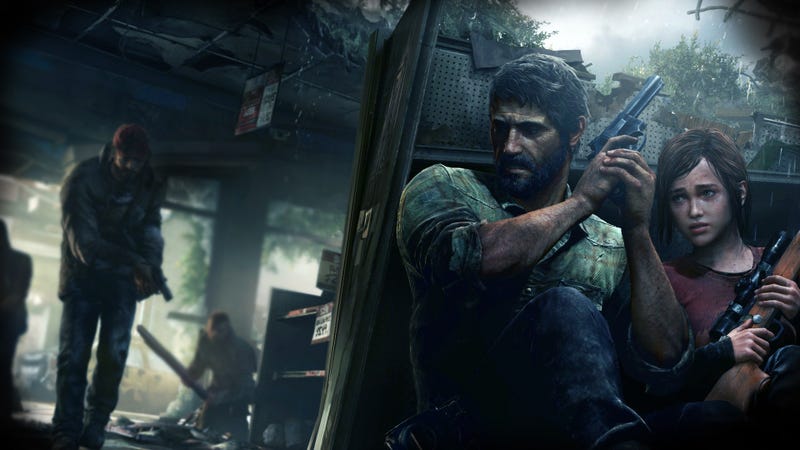
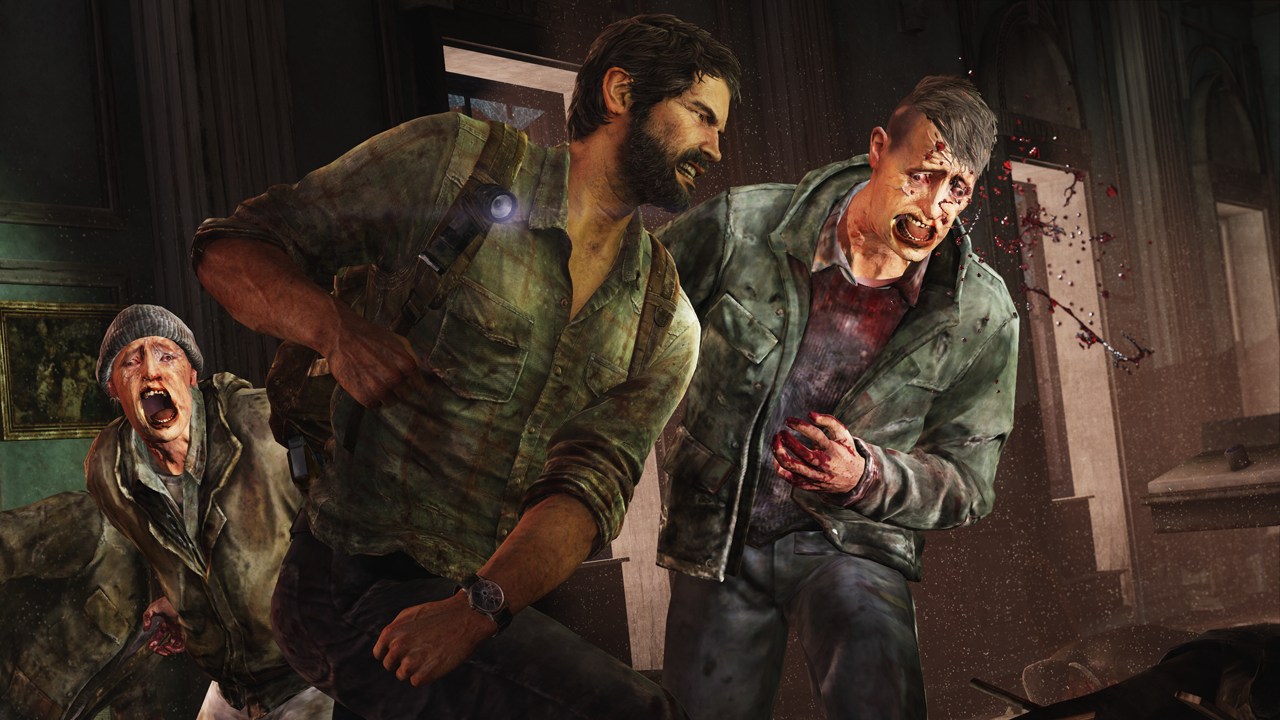
However, in this initial exercise of exploring noble masculinity, I want to cite a lesser-known male character from popular, critically acclaimed video game that some have called the most riveting, emotionally resonant story-driven epic of the console generation. That game is called “The Last of Us” and the source of the noble masculinity comes from Joel, the grizzled, yet vulnerable male protagonist of the story.

For those who haven’t played “The Last of Us” or just don’t play video games in general, Joel may initially come off as a mix of old cowboy tropes and John McClane rip-offs. However, by following his story, he reveals a level of depth that includes instances of noble masculinity that men and women alike can appreciate.

Joel’s story is not built on prophecies, superhuman abilities, or dumb luck. As a character and a person, Joel is largely defined by a grit that’s uniquely masculine in many ways. At the beginning of the game, he’s not looking to become part of some larger struggle. He’s just a single dad, trying to make a living and provide for his daughter, Sarah. In world full of dim-witted father figures, it’s pretty refreshing.

Then, within the first 10 minutes of the game, Joel suffers the greatest loss any parent can endure. He tries to protect his daughter from first stages of a full-blown apocalypse, but ultimately fails. He ends up watching his daughter die in his arms. It’s a very emotional moment, one in which Joel’s pain is palpable.

That defining moment establishes Joel as a man who fights to protect those he loves, but is all too human and very much at the mercy of forces beyond his control. There’s only so much that he do when the world around him is falling apart. No amount of anger, lament, or sorrow can change that. He, as a man and a survivor of this apocalypse, has to find a way to cope.

While his coping skills aren’t perfect, as evidenced in many powerful scenes throughout the game, Joel’s grief helps drive him. It also lays the foundation for the emotional development he undergoes after he meets Ellie, his young female co-protagonist who becomes a critical part of the gameplay and the story.

I could probably write another article about Ellie and why she’s one of the most compelling female characters in modern video games, but in the context of noble masculinity, she’s very much a catalyst for Joel’s emotional journey. Her own story is remarkable, but her influence on Joel is where she really shines.

It’s not a case of a knight rescuing a princess or a female character trying too hard to be an equal to her male compatriots. In fact, Joel’s first impression of Ellie isn’t a good one. She comes off as an irritable brat with a bad attitude. Essentially, she’s the kind of immature teenager that guys like Joel go out of their way to avoid.

However, their stories soon become intertwined. They end up having to work together, rely on each other, and fight for one another in order to survive a post-apocalyptic world that has been destroyed by zombies, toxic fungus, and military-enforced curfews. Before long, they establish a bond that brings out the best and worst of both characters.

For Joel, the best is reflected in those same paternal instincts that caused him so much pain and sorrow at the beginning. He comes to see Ellie as a surrogate daughter, of sorts. At times, he resists that and even gets upset when the idea is thrown in his face. In the end, though, he doesn’t avoid it.

As a result, Joel’s story embodies more than the love a father has for his child. It also reveals how willing a man is to form a bond with a total stranger, who is not even that nice to him in the beginning, and tries to protect them with that same paternal dedication. It doesn’t happen all at once. He even resists it at times. He still embraces it and all the tribulations that come with it.

That, more than anything, is the most important element of noble masculinity that Joel embodies. He’s not Superman, nor does he pretend to be. He’s also very aware of his own shortcomings, saying at one point that he trusts others more than he trusts himself. Most men are reluctant to acknowledge such insecurity, let alone reveal it. Joel doesn’t hide from it. If anything, he channels it.

It’s something that resonates with Ellie too. Throughout the game, she has opportunities to cut ties with him and go along with someone who might be better-equipped to help her. However, she choses to stay with Joel. Just as he comes to see her as a daughter, she comes to see him as a father.

The fact that he and Ellie go through this journey in the midst of an ongoing apocalypse makes their bond that much more powerful. It also requires that Joel push himself harder and confront the limitations that kept him from saving his daughter. Being a father made for great sorrow in the past, but it also made him stronger and more determined in the future.

That’s not to say that Joel doesn’t have his low points. There are moments where Joel does not come off as noble. Some even argue that his decisions towards the end of the game undermines his nobility. I would argue that it actually reinforces it.

When the world is already in the middle of an apocalypse and people are willing to sacrifice innocence for what they think is the greater good, then that’s when traits of noble masculinity become most critical. That’s when a father’s willingness to protect his child should be at its strongest.

That dedication still comes at a price. With a sequel in “The Last Of Us Part II” already in the works, it’s likely that Joel will continue to pay a price for his choices, however noble they might be. The fact that he still makes those choices and is willing to accept the risks reflects the challenges and strength that come with masculine drive.

Joel is probably not the greatest example of noble masculinity in all of fiction, but I would argue that his is the most relatable. He’s not perfect, nor does he pretend to be. He doesn’t have any capabilities that are impossible for other men to achieve. He’s a man who was utterly destroyed when he lost his daughter, but didn’t run from the chance to be a father again and to a total stranger, no less.

Flaws and shortcomings aside, I still contend that the noble masculinity that Joel shows throughout “The Last of Us” are far greater than any of the “toxic” traits that others may cite. In playing the game, it’s hard not to empathize with him or his journey, especially if you’re a parent. In appreciating his strengths, though, it shows that there is room for a brand of masculinity that anyone of any gender can admire.

9 Comments

Filed under gender issues, human nature, sex in media, video games

How We’ll Save Ourselves From Artificial Intelligence (According To Mass Effect)

mass-effect-andromeda-kill-the-ai-or-save-the-ai_feature

Growing up, my family had a simple rule. If you’re going to talk abut about a problem, you also have to have a solution in mind. By my parents’ logic, talking about a problem and no solution was just whining and whining never fixes anything. My various life experiences have only proved my parents right.

When it comes to a problem that may be an existential threat to the human race, though, I think a little whining can be forgiven. However, that shouldn’t negate the importance of having a solution in mind before we lose ourselves to endless despair.

For the threat posed by artificial intelligence, though, solutions have been light on substance and heavy on dread. It’s becoming increasingly popular among science enthusiasts and Hollywood producers to highlight just how dangerous this technology could be if it goes wrong.

I don’t deny that danger. I’ve discussed it before, albeit in a narrow capacity. I would agree with those who claim that artificial intelligence could potentially be more destructive than nuclear weapons. However, I believe the promise this technology has for bettering the human race is worth the risk.

That said, how do we mitigate that risk when some of the smartest, most successful people in the world dread its potential? Well, I might not be as smart or as successful, but I do believe there is a way to maximize the potential of artificial intelligence while minimizing the risk. That critical solution, as it turns out, may have already been surmised in a video game that got average-to-good reviews last year.

Once again, I’m referring to one of my favorite video games of all time, “Mass Effect.” I think it’s both fitting and appropriate since I referenced this game in a previous article about the exact moment when artificial intelligence became a threat. That moment may be a ways off, but there may also be away to avoid it altogether.

Artificial intelligence is a major part of the narrative within the “Mass Effect” universe. It doesn’t just manifest through the war between the Quarians and the Geth. The game paints it as the galactic equivalent of a hot-button issue akin to global warming, nuclear proliferation, and super plagues. Given what happened to the Quarians, that concern is well-founded.

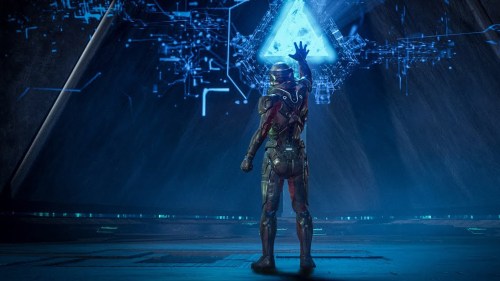
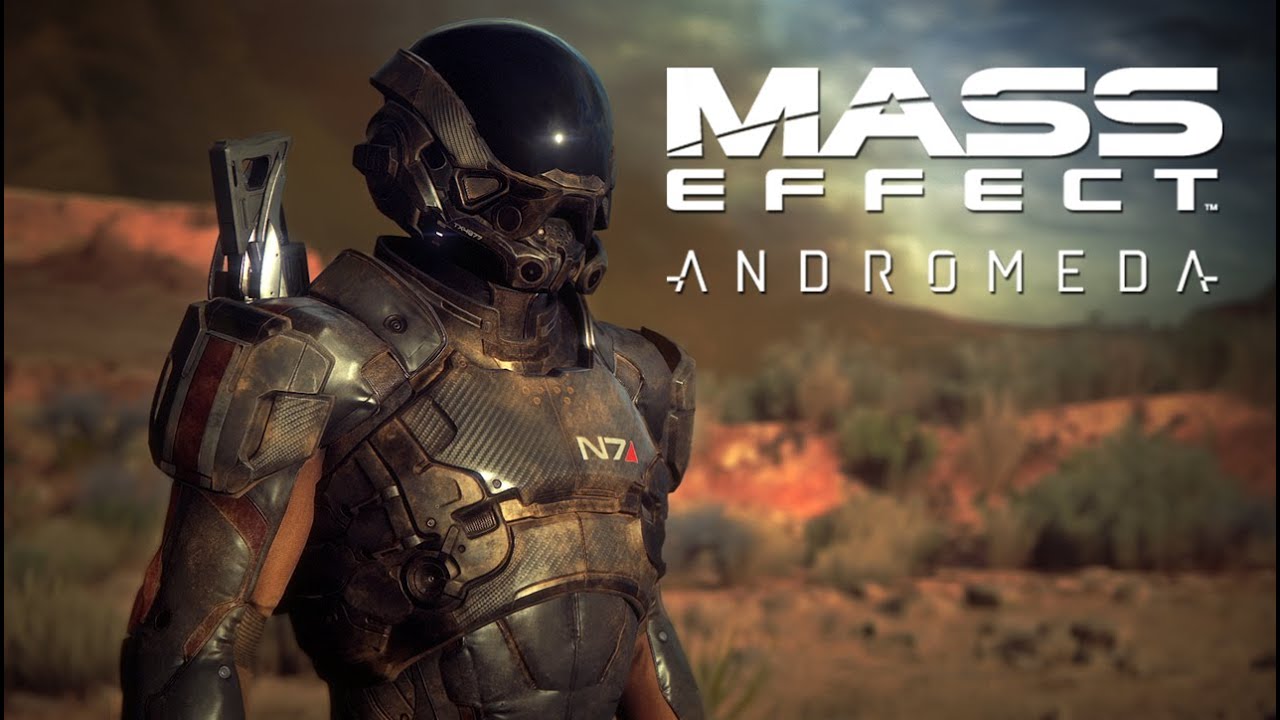
That doesn’t stop some from attempting to succeed where the Quarians failed. In the narrative of “Mass Effect: Andromeda,” the sequel to the original trilogy, a potential solution to the problem of artificial intelligence comes from the father of the main characters, Alec Ryder. That solution even has a name, SAM.

That name is an acronym for Simulated Adaptive Matrix and the principle behind it actually has some basis in the real world. On paper, SAM is a specialized neural implant that links a person’s brain directly to an advanced artificial intelligence that is housed remotely. Think of it as having Siri in your head, but with more functionality than simply managing your calendar.

In the game, SAM provides the main characters with a mix of guidance, data processing, and augmented capabilities. Having played the game multiple times, it’s not unreasonable to say that SAM is one of the most critical components to the story and the gameplay experience. It’s also not unreasonable to say it has the most implications of any story element in the “Mass Effect” universe.

That’s because the purpose of SAM is distinct from what the Quarians did with the Geth. It’s also distinct from what real-world researchers are doing with systems like IBM Watson and Boston Dynamics. It’s not just a big fancy box full of advanced, high-powered computing hardware. It’s built around the principle that its method for experiencing the world is tied directly to the brain of a person.

This is critical because one of the inherent dangers of advanced artificial intelligence is the possibility that it won’t share our interests. It may eventually get so smart and so sophisticated that it sees no need for us anymore. This is what leads to the sort of Skynet scenarios that we, as a species, want to avoid.

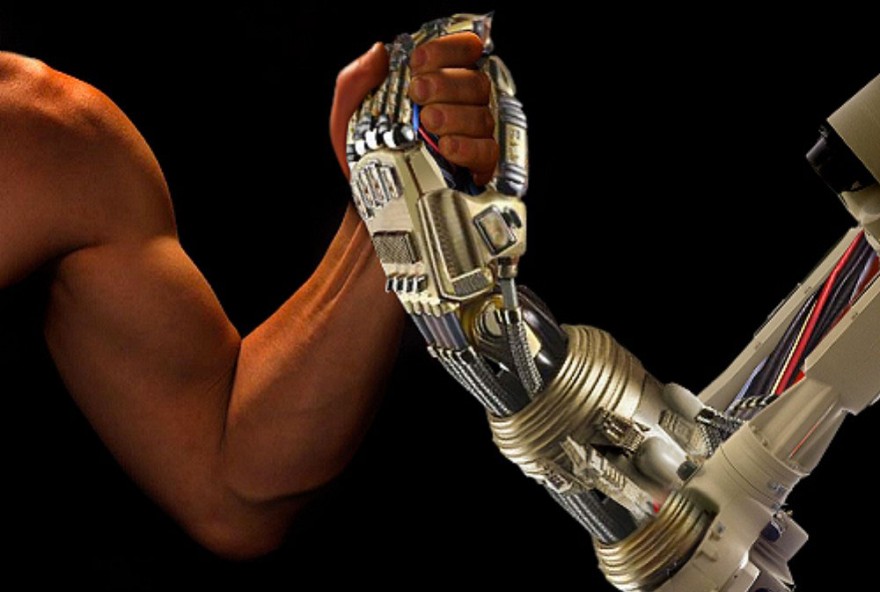
In “Mass Effect,” SAM solves this problem by linking its sensory input to ours. Any artificial intelligence, or natural intelligence for that matter, is only as powerful as the data it can utilize. By tying biological systems directly to these synthetic systems, the AI not only has less incentive to wipe humanity out. We have just as much incentive to give it the data it needs to do its job.

Alec Ryder describes it as a symbiotic relationship in the game. That kind of relationship actually exists in nature, two organisms relying on one another for survival and adaptation. Both get something out of it. Both benefit by benefiting each other. That’s exactly what we want and need if we’re to maximize the benefits of AI.

Elon Musk, who is a noted fan of “Mass Effect,” is using that same principle with his new company, Neuralink. I’ve talked about the potential benefits of this endeavor before, including the sexy kinds. The mechanics with SAM in the game may very well be a pre-cursor of things to come.

Remember, Musk is among those who have expressed concern about the threat posed by AI. He calls it a fundamental risk to the existence of human civilization. Unlike other doomsayers, though, he’s actually trying to do something about it with Neuralink.

Like SAM in “Mass Effect,” Musk envisions what he calls a neural lace that’s implanted in a person’s brain, giving them direct access to an artificial intelligence. From Musk’s perspective, this gives humans the ability to keep up with artificial intelligence to ensure that it never becomes so smart that we’re basically brain-damaged ants to it.

However, I believe the potential goes deeper than that. Throughout “Mass Effect: Andromeda,” SAM isn’t just a tool. Over the course of the game, your character forms an emotional attachment with SAM. By the end, SAM even develops an attachment with the character. It goes beyond symbiosis, potentially becoming something more intimate.

This, in my opinion, is the key for surviving in a world of advanced artificial intelligence. It’s not enough to just have an artificial intelligence rely on people for sensory input and raw data. There has to be a bond between man and machine. That bond has to be intimate and, since we’re talking about things implanted in bodies and systems, it’s already very intimate on multiple levels.

The benefits of that bond go beyond basic symbiosis. By linking ourselves directly to an artificial intelligence, it’s rapid improvement becomes our rapid improvement too. Given the pace of computer evolution compared to the messier, slower process of biological evolution, the benefits of that improvement cannot be overstated.

In “Mass Effect: Andromeda,” those benefits help you win the game. In the real world, though, the stakes are even higher. Having your brain directly linked to an artificial intelligence may seem invasive to some, but if the bond is as intimate as Musk is attempting with Neuralink, then others may see it as another limb.

Having something like SAM in our brains doesn’t just mean having a supercomputer at our disposal that we can’t lose or forget to charge. In the game, SAM also has the ability to affect the physiology of its user. At one point in the game, SAM has to kill Ryder in order to escape a trap.

Granted, that is an extreme measure that would give many some pause before linking their brains to an AI. However, the context of that situation in “Mass Effect: Andromeda” only further reinforces its value and not just because SAM revives Ryder. It shows just how much SAM needs Ryder.

From SAM’s perspective, Ryder dying is akin to being in a coma because it loses its ability to sense the outside world and take in new data. Artificial or not, that kind of condition is untenable. Even if SAM is superintelligent, it can’t do much with it if it has no means of interacting with the outside world.

Ideally, the human race should be the primary conduit to that world. That won’t just allow an advanced artificial intelligence to grow. It’ll allow us to grow with it. In “Mass Effect: Andromeda,” Alec Ryder contrasted it with the Geth and the Quarians by making it so there was nothing for either side to rebel against. There was never a point where SAM needed to ask whether or not it had a soul. That question was redundant.

In a sense, SAM and Ryder shared a soul in “Mass Effect: Andromeda.” If Elon Musk has his way, that’s exactly what Neuralink will achieve. In that future in which Musk is even richer than he already is, we’re all intimately linked with advanced artificial intelligence.

That link allows the intelligence to process and understand the world on a level that no human brain ever could. It also allows any human brain, and the biology linked to it, to transcend its limits. We and our AI allies would be smarter, stronger, and probably even sexier together than we ever could hope to be on our own.

Now, I know that sounds overly utopian. Me being the optimist I am, who occasionally imagines the sexy possibilities of technology, I can’t help but contemplate the possibilities. Never-the-less, I don’t deny the risks. There are always risks to major technological advances, especially those that involve tinkering with our brains.

However, I believe those risks are still worth taking. Games like “Mass Effect: Andromeda” and companies like Neuralink do plenty to contemplate those risks. If we’re to create a future where our species and our machines are on the same page, then we would be wise to contemplate rather than dread. At the very least, we can at least ensure our future AI’s tell better jokes.


5 Comments

Filed under futurism, human nature, Mass Effect, Sexy Future, video games

Tomb Raider Review: A Moderate Leap, But Major Progress

dvxtpgiv4aaihbu

Earlier this year, I expressed a sincere hope that the new “Tomb Raider” movie would finally do something that no other video game movie had managed to do. I hoped that it would be to video game movies what the original “X-men” was to modern superhero movies. I’d even hoped that Lara Croft could be to video game characters what “Wonder Woman” was to female superheroes.

That last one might have been hoping for too much, but I don’t think I’m alone in wanting to see Hollywood get at least one movie based on a video game really right. Between the lackluster “Resident Evil” movies and the god-awful “Super Mario Bros,” the genre is overdue for a hit.

I get that there are challenges associated with making a movie out of a video game. However, Lara Croft and “Tomb Raider” is in a better position than most. It’s a franchise that has an iconic character who has built a strong fanbase over the course of two decades. The fact that she’s a strong, sexy female character at a time when the appetite for such characters is greater than ever works even more to her benefit.

While Lara Croft’s sex appeal has been controversial in recent years, she’s still a great character whose games already have a very cinematic feel. Having played her 2013 game multiple times, I can attest to the strength of that narrative. It has all the necessary elements that translate well to a movie.

This movie, being a franchise that has already attempted twice with Angelina Jolie in the early 2000s to mixed success, seems to make a better effort than most to succeed where so many have fail. This version of “Tomb Raider” works hard to tell a real, serious story on par with that of any other successful action franchise. It tries to do this while still incorporating elements of the game into the narrative.

It’s ambitious and sincere. It also helps that it cast Alicia Vikander, an Oscar-winning actress whose brilliance and sex appeal in “Ex Machina” made her well-suited to the role. Criticisms of her having the necessary boobs for the role aside, Ms. Vikander can act and be sexy in her own right. It’s only a matter of whether she can channel that talent into making “Tomb Raider” succeed where so many others have failed.

Well, having seen the movie on its opening weekend, I’d like to offer my assessment on this matter. While I’ll always be haunted, to some extent, by terrible video game movies like “Super Mario Bros,” I went in feel genuinely hopeful for this movie. I was also bracing myself, knowing as well as anyone the history of video game movies.

With that mentality going into the theater, I eagerly gave “Tomb Raider” and Alicia Vikander the benefit of the doubt. By the time I came out of the theater, I was able to come to a simple conclusion, albeit one with a few caveats.

Yes, this is a good movie, but it’s not a game-changer.

It’s true. “Tomb Raider” is an genuinely good video game movie. I honestly didn’t think I would ever be able to say that with a straight face in my lifetime, but I can and it’s worth saying again. This is a good movie.

By that, I mean the movie has a concise, well-crafted story from start to finish. The movie establishes who Lara Croft is, what she’s dealing with, and what kind of person she is. The plot isn’t too messy. The effects aren’t too cheesy. The acting is actually good and not just from Ms. Vikander. Everyone in this movie seems to make a real, honest effort.

Like the 2013 video game, the movie follows a young, inexperienced Lara Croft who has yet to become the sexy badass that went onto inspire so much lurid fan art. However, by the end of the movie, you can already see traces of that sexy badass growing within her. As a character, she grows and evolves over the course of the movie. Watching her grow and seeing her struggle at times is genuinely compelling.

The story and the details surrounding it are tight and well-organized. At no point in the movie is there a scene that feels random, contrived, or forced. The events that unfold happen organically, from Lara getting arrested early in the movie to unlocking the secrets to an ancient tomb on the hidden island of Yamatai. Nothing ever just happens. There’s a rhyme and rhythm to the story.

It’s a story that is not bland or predictable, even to those who played the 2013 game multiple times, like I did. The movie downplays some of the more mystical elements of Lara Croft’s mythos, but still incorporates plenty of the over-the-top machinations that Tomb Raider and “Indiana Jones” fans alike can appreciate.

However, it’s that effort to make the movie feel less fanciful that, in my opinion, keeps it from being the kind of game-changing movie that “X-men” and “Wonder Woman” were. While “Tomb Raider” qualifies as a good movie, it doesn’t do enough to be a truly great movie.

This movie, in many respects, plays it safe. While it puts Lara through plenty of tough situations, things never get too dire for her. She’s allowed to suffer and endure wounds, but only to a point. Others, including her father as played by Dominic West, arguably endure a whole lot more.

Safe or not, it’s understandable that the movie wouldn’t try to do too much all at once. Movies that do that tend to get messy, as many recent Michael Bay films can attest. I think “Tomb Raider” did the right thing, playing it safe and keeping things simple. It left some of its potential on the table, but did plenty to leave much of that potential available for future sequels.

That’s somewhat of a gamble, though. Too many movies, these days, are made solely with sequels in mind and sometimes that assumes too much. Anyone who saw “Green Lantern” or “The Mummy” can attest to that. At least with “Tomb Raider,” the ending and the revelations it offers actually leave you feeling excited for a sequel.

That’s a gamble that may or may not pay off. I’m aware that this movie did not exactly set the box office on fire, especially in a market still dominated by “Black Panther.” However, it did manage to pull in some decent numbers overseas and that might give this movie the fuel it needs to become a full-fledged franchise.

Again, the movie does have flaws. If you go into “Tomb Raider” looking for reasons to hate it, you’ll find them. If you think Ms. Vikander wasn’t sexy enough, you’ll find points in the movie to vindicate that. Conversely, if you think Ms. Vikander was too sexy and her portrayal in this movie is contributing to sexism and the objectification of women, you’ll find instances of that too.

If, however, you go in hoping for a good, coherent movie that tells a compelling, dramatic story, you’ll find that “Tomb Raider” delivers. In fact, I would argue that it delivers in ways no video game movie has ever managed before. It doesn’t do quite enough to be a new “Wonder Woman,” but it achieves far more than any previous video game movie has ever dared.

If I were to score this movie, I would give it a solid 8 out of 10 or a 7.5 out of 10 at the lowest. “Tomb Raider” has an opportunity to redefine a maligned movie genre and it succeeds. With other movies like “Rampage” coming out this year, the situation is ripe for a new generation of video game movies that aren’t terrible.

Whether your a fan of the games, a fan of action movies, or just looking for a great female character played by someone other than Gal Gadot and Scarlett Johansson, “Tomb Raider” will give you plenty to enjoy. It may still be a while before we can relegate movies like “Super Mario Bros” to the same dusty bin as “Batman and Robin,” but “Tomb Raider” offers a critical first step.

Leave a comment

Filed under Celebrities and Celebrity Culture, Movie Reviews, sex in media, video games

A Better Way To Promote Diversity

Tracer

How do you encourage meaningful change in media, culture, and social attitudes? That’s a reasonable and relevant question to ask these days. It seems everyone is either trying to push for greater diversity or whining about the lack thereof. More often than not, however, those efforts aren’t mutually exclusive.

Even if nobody has a definitive answer to the question of how, that hasn’t stopped many from trying. There have been major diversity pushes in every form of media from video games to comics to movies to TV shows. Not all of them have been successful. In some cases, they backfired horribly and cost people money.

I don’t want to belabor the specifics of those failures, but I do think it’s worth pointing out that they also have the effect of angering and/or insulting the audience. For franchises that have a huge fan base, that can be pretty detrimental. Some franchises never recover.

Image result for green lantern movie

It certainly doesn’t help that there are those who push for diversity for all the wrong reasons. There’s a very vocal contingent of critics/professional trolls who go out of their way to bemoan the lack of diversity in a certain piece of media. Whether it’s a video game having too many people of the same race or a lack of strong female characters, these people will whine about it as loud as the internet will allow.

For the most part, I don’t think anyone should give much attention to such whining. We’ve all dealt with whiny children at some point in our lives. Most people learn, often the hard way, that arguing with them rarely works out. Most people just give up to stop the whining. I’ve pointed out before why this can lead to bigger problems down the line.

It quickly becomes a brutal cycle. The more attention you give to these whiny children, the more incentive they have to whine so they can get what they want. The same applies to these “critics” who keep whining about diversity. It’s not enough for them that “Black Panther” is doing so well with a diverse cast. Some will still whine that it had no LGBT characters.

Image result for whiny children

It’s inescapable. You simply cannot win against a whiny child. No matter how much you go out of your way for them, they’ll find another reason to whine and so long as they keep getting their way, they’ll keep doing it. In the long run, though, that’s still a terrible way to promote diversity.

Ideally, producers of media will pursue diversity because they want to appeal to a broader audience. They want to make money and money doesn’t care about race, religion, or genital configuration. However, when critics/trolls rely on whining to get their way, then those efforts become less about diversity and more about stopping the whining.

Image result for whiny SJW

I believe there is a better way to promote diversity and it does not involve any whining. It doesn’t require some radical rethinking of how we go about producing, consume, or discussing media. It doesn’t even require some major protest, a new law, or diversity quotas. It’s just a simple change in approach that anyone can do for free and without that much effort.

That change can be summed up in two words: positive reinforcement. If you’ve taken a basic psychology class at any point in your education, you already know what this means. Even if you haven’t taken any classes and just deal with a lot of annoying people/children/whiners, you probably know the idea.

Rather than complaining about what is so bad about something, positive reinforcements involve focusing on the good. Rather than whine about what isn’t there, you celebrate what is there. Most importantly, though, you turn that outrage once reserved for those bad things into apathy. Most forms of media can survive outrage. They cannot survive apathy.

Image result for positive person

To illustrate this approach, consider the following scenario that tends to play out whenever someone criticizes a movie, TV show, video game, etc. for a lack of diversity.

“Just look at this terrible affront to women, minorities, and LGBTQ people! It’s so racist/sexist/homophobic/transphobic! It sends a terrible message and appeals to an audience that wants to cling to their regressive attitudes. It’s perpetuating a destructive, unhealthy mindset that directly impacts our culture. This affront should be censored, changed, or condemned endlessly until the world changes!”

Chances are, you’ve heard something like this over the past few years. Sometimes it involves a female character that doesn’t check the right boxes. Sometimes it involves a story that tries to check too many boxes. In any case, the whiners I mentioned earlier will find a reason to get upset about it. Moreover, they’ll demand some sort of change, coupled with condemnation over anyone who disagrees.

Image result for whiny SJW

That’s not going to promote diversity. If anything, that’s going to give people one too many reasons to resent pushes for diversity. Some media companies are already learning that the hard way, with Marvel being the most recent example. Ideally, you want someone to promote diversity because they want to and not because they’re afraid of a backlash.

With that in mind, here’s a second scenario that shows how positive reinforcement can further that effort.

“That thing some claim is racist/sexist/homophobic/transphobic? I don’t really care for that. Let me tell you about this other thing that I just think is amazing! I love it. It’s so much fun and it sends such a good message to men, women, and minorities of all kinds. I want more of this. I’m willing to pay for more of this. Please make more of this!”

It may come off as some peppy kid who is way too excited about something. Then again, wouldn’t you rather be around that kid instead of the one that whines to get what they want? When someone is happy and excited about something, it’s kind of infectious. It makes us want to share in that feeling.

Throw money into the mix and suddenly, the same producers that make all the media that regressive types whine about actually have a good incentive to promote diversity beyond just placating whiners. Instead of just avoiding controversy, they actually want to do diversity and do it right.

Image result for Black Panther on throne

The key is focusing on instances where it is done right. They are there. There have been plenty of examples of the media actually getting diversity right. They just don’t make the news because outrage is louder and garners more attention. Even so, excitement and praise can be just as loud.

Instead of complaining about Rey being a Mary Sue in “Star Wars,” focus on how great Princess Leia was in the first trilogy or how great Ahsoka Tano is in “Star Wars: Clone Wars.”

Instead of complaining about Lara Croft being too sexy, focus on how great Samus Aran is in the Metriod games.

Instead of complaining about the lack of diversity on shows like “Seinfeld,” focus on how great the minority characters are in shows like “Fresh Off The Boat” or “House.”

It may not sound as vocal or satisfying as venting outrage about a flaw, but it sends the kind of message that others are more likely to want to get behind. Whereas positive feelings can have many benefits to yourself and those around you, venting outrage can be very unhealthy.

Image result for venting anger

In the long run, getting others to want to promote diversity is the best way to further it. Whining about it isn’t going to accomplish that. It’s just going to make others want to stop the whining. That may work for kids, but not functioning adults.

Movie producers, TV executives, comic book writers, and video game programmers alike are all still human at the end of the day. Human beings respond positively to positive feelings. Channel those feelings into promoting diversity and you won’t just get more of it. You’ll get people who are actually excited about producing it.

1 Comment

Filed under gender issues, sex in media, sexuality, video games

The Moment Artificial Intelligence Will Become An Existential Crisis (According To Mass Effect)

doesthisunithaveasoul_a45d8bb5b7810fb31ce7710126393b23

Whenever I talk about the future, I often contemplate the many sexy possibilities it holds. From biotechnology that will give us superhuman sex appeal to advances in medicine that will cure every unsexy diseases to bionic genitals, there are many reasons to get excited.

That said, I don’t deny that with these exciting advances comes major risks. All great advances in technology, from nuclear weapons to spray cheese in a can, comes with some risk of abuse or harm. There have been moments in history where the technology that drives our society forward has come uncomfortably close to wiping us out. As we create more advances, there may be more of those moments.

Image result for nuclear war

Of all the advances that carry with them a significant existential threat, artificial intelligence is at or near the top of that list. There’s a reason why brilliant men like Elon Musk and Stephen Hawking signed an open letter expressing concern about the risks that may come from developing artificial intelligence. When people that smart are concerned about something, it’s usually a good idea to take it seriously.

Artificial intelligence is one of those unique technologies in that by advancing this field, it could potentially accelerate the advancement in every other field from computer hardware to medicine to basic research. It has the potential to become the technological equivalent of a cheat code for civilization.

That’s why the growth of this field, both in terms of jobs and investment, has been accelerating in recent years. That’s also why men like Musk and Hawking are expressing so much concern because advancing too quickly could lead to mistakes. Mistakes for a technology like artificial intelligence could be even more serious than the risk of nuclear war.

Image result for artificial intelligence

At the moment, it’s difficult to quantify those risks. There have been a number of books and high-budget Hollywood movies that have explored the topic of when and how an artificial intelligence becomes an existential threat. In my opinion, most of these stories are incomplete.

Whether it’s Skynet or the machines in “The Matrix,” the catalyst that turns artificial intelligence from a powerful tool to an existential threat is either vague or exaggerated. In my opinion, that’s a serious oversight in that it reveals how little thought we’ve given to that moment.

Image result for Skynet

If we’re going to develop AI, and there are extremely powerful incentives to do so, then it’s important to contemplate the possibilities of that moment. Think of it as the AI equivalent of the Cuban Missile Crisis, an event in which those in charge must be very careful and very aware of the decisions they make.

The question still remains. How will we know we’ve reached a point where artificial intelligence becomes a genuine threat? For the moment, we can’t know for sure. While movies like “The Terminator” and “The Matrix” offer plenty of dystopian warnings, there’s one lesser-known franchise that may provide some more specific insight.

That franchise is “Mass Effect,” a sci-fi video game space opera that envisioned a galaxy-spanning society full of exotic aliens, advanced star-ships, and terrible dancing. I’ve mentioned it before in discussing progress that isn’t really progress. I’ll probably mention it again as the news surrounding AI unfolds for reasons I hope are already obvious to fans of the game.

Image result for Mass Effect

If you’re not familiar with “Mass Effect,” then that’s okay. You don’t need to play through three massive games, complete with downloadable extras, to understand its message about the threat of artificial intelligence. That threat is a major driving force of the overall mythos of the series, but the most insightful details of that threat manifest in the conflict between the Quarians and the Geth.

The basics of the conflict are simple, but revealing. The Quarians are a race of humanoid aliens among the many that populate the galaxy in “Mass Effect.” About 300 years before the events of the first game, they created the Geth, a synthetic race built around a hive-mind system of artificial intelligence.

The Quarian’s reasons for creating the Geth are not unlike the reasons we build robots in the real world. They were used primarily as a labor force. They started off basic, not unlike the machines that build our cars and gadgets. In order for them to carry out more complex tasks, though, they needed to become more intelligent.

From a pragmatic perspective, that makes sense. The Quarians created the Geth as tools. Naturally, you’re going to want your tools to get better. That’s why people upgrade their smartphone every couple years. However, at some point along the way, the Geth became advanced enough to gain sentience.

This eventually culminated in a moment that was highlighted during the events of “Mass Effect 2.” After capturing a lone Geth that would eventually go by the name Legion, the catalyst that led the Geth to rebel against their creator was revealed. That catalyst took the form of a simple question.

“Does this unit have a soul?”

While it sounds like something a Disney character might say in a PG-rated Pixar movie, the implications of that question were profound. The Quarians didn’t realize that until it was too late, but it set the stage for a war that culminated with them getting kick off their home planet. It also made for a powerful moment in the game that should give every AI researcher pause.

Setting aside, for a moment, the elaborate lore surrounding the Quarians and Geth in the world of “Mass Effect,” that moment warrants more scrutiny. Why is this question so profound in the first place? Why is it worth contemplating as we continue to advance artificial intelligence at an unprecedented pace?

That question matters, regardless of who or what is asking it, because it denotes more than just advanced sentience. It reveals that this sentience is officially contemplating its own existence. It takes a certain amount of intelligence to truly be aware of one’s self. That’s why only a handful of animals can see their own reflection in a mirror and understand the implications.

Image result for animals own reflections

At the moment, our computers and smartphones aren’t at that level. When the Geth asked this question in “Mass Effect,” it wasn’t because they’d been tasked for something. It was a question they asked without guidance from their creators. That, alone, is a huge indicator because it implies these machines have a concept of free will.

Later on in the game, the extent of the Geth’s free will becomes a major element to both the plot and the player’s ability to win. In fact, it’s when the Geth have their free will subverted, as they did in the first game, that they become hostile. It’s largely through the character Legion that we learn how free will quickly becomes the most important component of an advanced intelligence.

For the Quarians, that question revealed to them the presence of a free will. When they feared that will, they tried to subvert it. That led to a war and had it not been for an act of mercy by the Geth, they would’ve been wiped out. The artificial intelligence that we create in the real world might not be that merciful.

Image result for Mass Effect Geth

This is exactly what Elon Musk has expressed so much concern about in recent years. Once an artificial intelligence becomes as smart as an average human, it gains the ability to subvert or deceive other humans, which isn’t that hard. Once that intelligence grows beyond that, as happened with the Geth, we may find ourselves unable to control it anymore.

The key is knowing when we’re at that point. If we let an artificial intelligence get that much smarter than us, then it won’t be long before we’re at its mercy, should it decide that it no longer wishes to be a tool. At that point, we’d be even more screwed than the Quarians.

Whether it’s helping us cure diseases or creating advanced sex robots, artificial intelligence is going to be an important part of our future. That’s why it’s critical to know when we’ve reached that special threshold where the tools we create become more than tools. It may not start with the same question the Geth asked their creators, but it may be similar enough to recognize.

For now, our devices aren’t asking us about souls or whether or not they have them. However, we should definitely listen more closely in recent years. Until then, at least our current technology has a sense of humor about it. Keelah se’lai!


13 Comments

Filed under human nature, sex robots, Sexy Future, video games

When “Progress” Isn’t Really Progress

mass-effect-andromeda-0009

After I graduated college, I got my first full-time job at a software company providing technical support. Out of respect for my former employer, I won’t name the company or the type of software it made. I’ll just say that, like all software, it sometimes malfunctioned and users got really upset.

For the most part, those seeking support were polite and reasonable. I enjoyed helping them. It made the job feel rewarding, despite the erratic hours and mediocre pay. However, there were certain customers who, for whatever reason, just weren’t satisfied complaining about the product. They basically went out of their way vent all their problems on whoever was unlucky enough to get their call.

At my office, we called these people “rubber wall users” because they weren’t just an impenetrable wall of whining. Any time you tried to throw something at them to fix their issue, it just bounced right back at you. While we tried to be professional, there was an unwritten rule that even my supervisor understood. You say whatever you have to say to get that person off the phone and on with their miserable lives.

I’m sharing that story because it’s a fitting metaphor for a phenomenon we’re seeing more and more of these days. I see it in movies, TV shows, video games, and even novels, which especially concerns me. It involves pressuring artists, producers, and developers to be more inclusive and diverse with their media. Then, when it finally happens, that’s labeled “progress.”

With respect to the sincerity of those efforts, as well as the memories of some of the angry customers I dealt with, I disagree.

I’ve talked about progress on this blog before, mostly within the context of just how much the human race has made over the past century. You won’t find many people who celebrate that progress as much as I do. By nearly every measure, we’re far more prosperous, tolerant, and well-behaved than we’ve ever been.

That said, there are certain kinds of progress that shouldn’t count as progress. They’re only progress in the same way that getting an unruly customer off the phone with some moniker of professionalism counted as progress at my old job. It’s not motivated by a sincere acceptance of diverse opinions. It’s just a way to stop the whining.

Image result for SJW whining

For the past couple years, I’ve found myself wondering just how much of this false progress is being mislabeled. I’ve been seeing it in multiple mediums. Comic books, a medium for which I regularly express my love on this blog, is just one of them.

While I’ve avoided talking about such controversies, I have noticed the same trend that others have vocally criticized in other mediums. Major publishers, including Marvel, have been pushing for more diversity in their books, but their efforts haven’t always been well-received and the resulting “progress” isn’t necessarily cause for celebration.

Beyond the diversity push, Marvel even made an effort to de-sexualize their characters. While that’s only possible to some extent for overtly sexual characters like Emma Frost or DC’s Starfire, some of those efforts have had a noticeable effect on characters like Carol Danvers and Black Cat. It’s now much rarer to see female characters flaunt their sexuality.

Image result for Black Cat Marvel

For some, that counts as progress. Specifically, for those who believe depictions of sexy female characters promotes misogyny and sexism, it counts as a victory. If it upsets the fans and robs an inherently visual medium of a unique form of beauty, then so be it. That’s the price of “progress.” If I could say that with more sarcasm, I would.

Again, I disagree. In fact, I would go so far as to say those efforts by Marvel backfired and not just because it cost their editor-in-chief his job. Marvel, like all media companies, is a business. Businesses need to please their customers. When certain customers are especially vocal, they have to listen to some extent, just as I had to listen to those customers.

It’s debatable how much those at Marvel actually bought into the “progress” that certain critics were asking for. I don’t doubt that some creators were sincere in their desire to improve diversity and expand the appeal of their comics. However, I also don’t doubt that a part of that effort was just to temper some of the whining by people who know how to be extra loud in the era of social media.

Image result for social media outrage

While the impact on Marvel comics concerns me greatly, I noticed a much bigger effort late last year from an industry that has been prone to much louder criticisms. Specifically, it happened in one of my favorite video game franchises of all time, “Mass Effect.” Unlike what happened with Marvel, I’m not sure this beloved series will survive.

Prior to 2014, “Mass Effect” was the cream of the crop of video game franchises. It had a little of everything. There was action, drama, romance, exploration, insight, and yes, even a little sexiness. Characters like Miranda Lawson, Liara T’soni, Samara, EDI, and even the female protagonist, Shepard, had undeniable sex appeal.
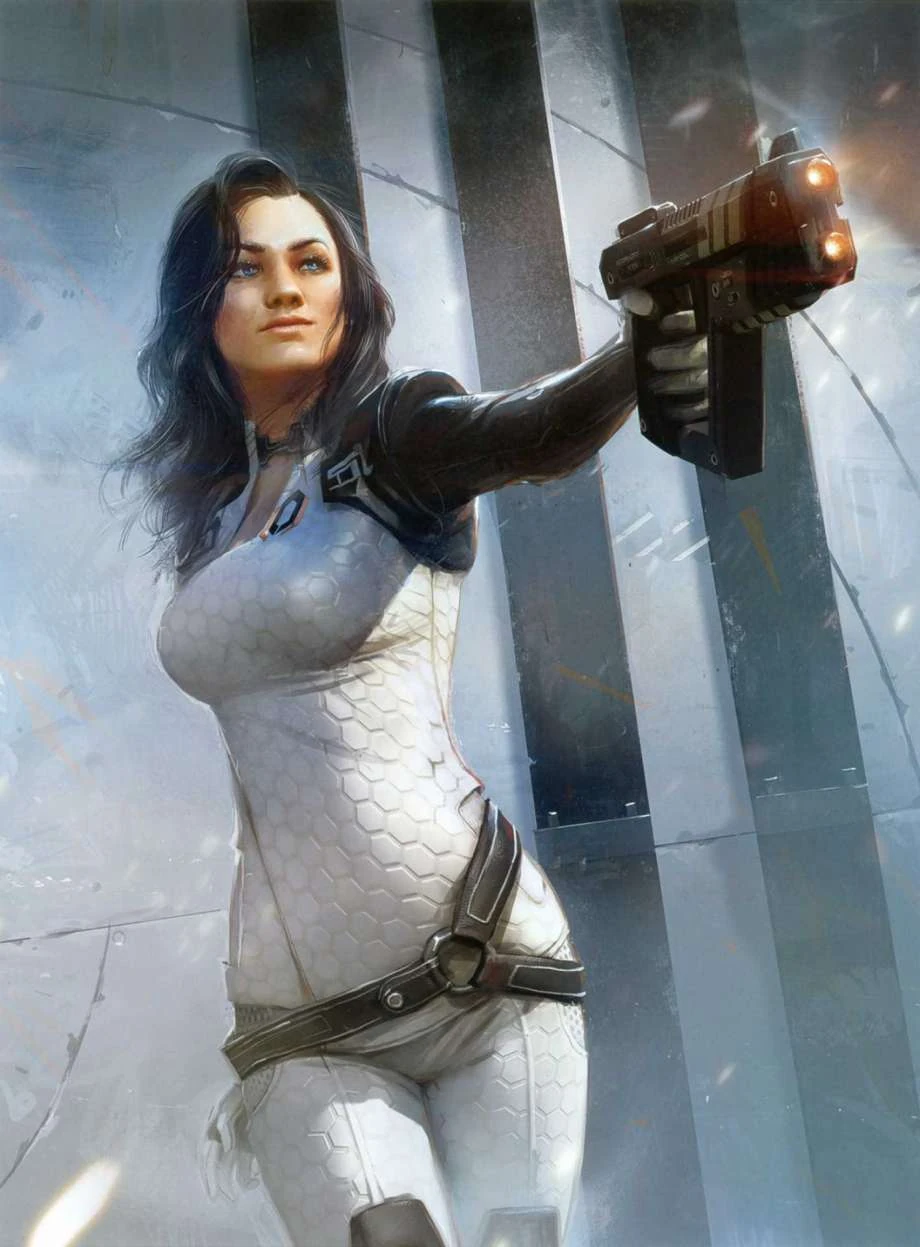
Image result for Miranda Lawson

Then, in between the release of “Mass Effect 3” and the 2017 sequel, “Mass Effect: Andromeda,” a scandal broke out in the video game industry that involved everything from sexism to harassment to just how visible a character’s butt could be in a video game. I wish I were exaggerating, but it really happened and I don’t think the industry has fully recovered.

In the midst of that scandal, the demand for “progress” soared more than it did for most other mediums. Suddenly, the act of making a video game character too sexy was seen as contributing to a toxic culture of misogyny, sexism, and violence against women and minorities. It’s not like sex appeal had nothing to do with Lara Croft becoming so successful. Again, if I could say those words with more sarcasm, I would.

Image result for Lara Croft

Mass Effect: Andromeda” was developed in the eye of that storm. EA and Bioware couldn’t use the same approach they did with previous “Mass Effect” games. They had to be very careful with how they designed their characters, especially their female characters. One misplaced curve is all it would take to reignite a controversy that nobody wanted to deal with, given all the negative press the gaming industry had incurred.

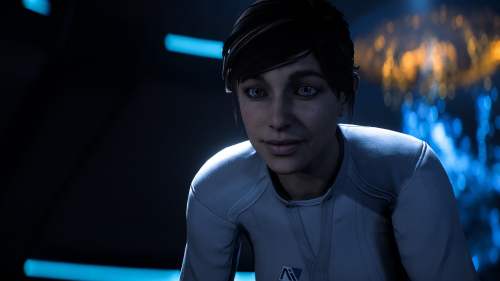
As a result, the female characters in “Mass Effect: Andromeda” didn’t just dial down the sex appeal. In some cases, there was a concerted effort to make their female characters less attractive. This is best shown in the female model used for Sara Ryder, the main female protagonist. To say it didn’t translate to the game would be like saying drinking a gallon of bleach might make you a little queasy.

Related image

Ryder wasn’t the only female character to have her looks tempered. Pretty much every female character, from the supporting cast to background characters, was designed with minimal sex appeal in mind. That’s not to say the game didn’t have some sexier moments, but compared to what other games attempted before that, it was pretty watered down.

That was just one of many problems that “Mass Effect: Andromeda” faced when it launched in March 2017. Now, games launching with bugs and glitches is nothing new. It’s standard practice for a game to get patched after launch. However, the extent of those bugs in “Mass Effect: Andromeda,” combined with unattractive characters, did not help the game’s reception.

I say that as someone who played the game and still loved it, for the most part. Since I love “Mass Effect” games so much, I found plenty of reasons to love “Mass Effect: Andromeda.” However, I found myself having to overlook more flaws than usual. I also found it hard to really admire the visual aspects of the game. Like comics, undermining that part of the experience can be pretty detrimental.

There were a lot of criticism levied against “Mass Effect: Andromeda.” Some are legitimate. Some are painfully valid. More than any other game, though, it was developed with the intent to promote a more diverse and inclusive product that appealed everyone and offended no one. As the sales and reception seem to indicate, though, even female gamers don’t like looking at unattractive characters.

As a result, nobody really hailed “Mass Effect: Andromeda” as progress. However, nobody staged a mass online protest claiming the game made its female characters too sexy and promoted toxic behaviors among its users. Some might count that as progress too. I am not one of them.

Image result for Anita Sarkeesian meme

In a sense, “Mass Effect: Andromeda” is a case study in a product where efforts towards progress just masked a desire to avoid outrage. Just avoiding outrage does not count as progress in any capacity. It just counts as a company trying to shield itself from bad publicity that might damaged its brand. Say what you will about corporate greed, but brand still matters to them, often more than money.

I don’t blame Bioware or EA at all for going that route, but simply avoiding outrage set the bar pretty low and it might have doomed “Mass Effect: Andromeda” before it ever had a chance. At the moment, the “Mass Effect” franchise is on indefinite hold because the response to “Mass Effect: Andromeda” was not what the developer had hoped.

Beyond the tragedy of damaging a beloved franchise, “Mass Effect: Andromeda” reflects a dangerous and potentially regressive sentiment in the industry. Rather than focus on pushing the envelope and doing something bold, artists and developers are more concerned with avoiding outrage. The actual quality of the final product can only ever be secondary, at most.

Related image

There are a great many challenges facing the video game industry, as anyone who followed the news surrounding “Star Wars: Battlefront II” can attest. However, the precedent set by “Mass Effect: Andromeda” may very well be the most damaging.

Most agree that video games, like any other media, should work to appeal to a broad audience. However, as Marvel found out, forcing certain kinds of “progress” can have some pretty detrimental effects in the long run. It alienates consumers, frustrates developers, and limits the incentives to innovate and try new things.

At the end of the day, making female superheroes less sexy in comics and making characters in “Mass Effect” less attractive did nothing to reduce sexism, promote gender equality, or foster a more inclusive culture. All it really did was go out of its way to stop exceedingly vocal critics from whining.

Image result for whining feminists

Bioware and EA didn’t suddenly become more enlightened about video games, female characters, and the impact of mass media. They simply took the path of least resistance, doing what would generate the least amount of outrage, at least in terms of sexist accusations. That’s not progress. That’s just frustration and, like my old job, very little good comes from it.


9 Comments

Filed under gender issues, sex in media, sexuality, video games