Category Archives: psychology

Malcolm In The Middle: Dynamics Of Poverty And Dysfunction

The following is a video from my YouTube channel, Jack’s World. It explores the depths, dynamics, and chaotic humor of one of my favorite shows of all time, “Malcolm In The Middle.” It also expands on a piece I wrote about this show a while back on what makes people deviant. In addition to being funny, this show reveals a lot about what fuels dysfunction. It also manages to be oddly uplifting in the end. Enjoy!

Leave a comment

Filed under Jack's World, psychology, television, YouTube

Contemplating The Lies, Sincerity, And Dishonesty Of Public Figures

53,509 Lying On Back Stock Photos, Pictures & Royalty-Free Images - iStock

When you lie down in bed at night, alone in the dark with your thoughts, I believe that’s when you’re most honest with yourself. Whether you sleep alone or with a lover, this is one of those few times when we can allow our minds to wander freely. Sometimes, we find ourselves thinking things that make us uncomfortable. While it may be distressing, I would argue that’s healthy.

I freely admit that I find myself contemplating a lot of strange things when I lay down to go to sleep at night. I doubt I’m alone. I would question the honesty of anyone who claims their private thoughts perfectly match those they contemplate in public.

With this in mind, I’d like to pose a relevant question. I wouldn’t go so far as to call it a thought experiment because this is one of those questions that may have a definitive answer. Granted, it’s an answer we’ll probably never know for sure. However, I still feel it’s worth asking for the sake of the bigger picture.

It has to do with public figures. By that, I don’t just mean major celebrities like movie stars, musicians, and what not. I’m also referring to well-known politicians, political commentators, and even popular social media figures on sites like YouTube and Tik-Tok. To all of them, I pose this question.

When these people lie in bed at night, do they genuinely believe the things they do, espouse, or support?

I think the answer to that question, even if we cannot know it, is incredibly revealing.

Let’s face it. These are all people who have a very public persona. Most people who know who they are know them only through that persona. Whether they’re a politician known for saying dumb things, a celebrity with a nasty reputation, or religious preachers with controversial views on certain subjects, they have a public face and a public personality.

It’s also incredibly common for people to not be honest with themselves. Most of us have done that at some point in our lives to varying degrees. We carry ourselves as someone we’re not. We convey feelings, ideas, and emotions that are not entirely in line with our true selves. Why we do this varies, but it can be incredibly damaging if taken too far.

For certain public figures, though, there are many additional layers of complications. For some people, especially politicians, shock jocks, and social media personalities, they have to present a certain version of themselves to the public. That version is almost always carefully crafted and refined. It rarely reflects a completely honest version of that person.

On top of that, this version of themselves is presented as a means to obtain money, power, influence, attention, and everything that comes with that. They say and do whatever reaffirms or builds upon that persona. If it gets any level of attention, be it positive or negative, it gets reinforced.

It can quickly become a cycle, but one that’s reinforced with money, power, and influence. At that point, a public figure doesn’t just have an incentive to keep up this persona. They have incentives to double down and take it to new levels. Even if it makes them infamous and hated, they still get enough out of it to justify the effort, no matter how dishonest it might be.

With those incentives in mind, I often find myself wondering how much or how little certain public figures are aware of them. Perhaps when they lay in bed at night and are alone with their thoughts, they acknowledge that hard truth to themselves, but wouldn’t dare acknowledge it to anyone else.

Think about someone like Bernie Madoff. Before he got caught in his infamous Ponzi scheme, he knew what he was doing. He knew he was a fraud. How much or how little did he realize that when he was in bed at night before he got caught?

Think about some of the most radical, right-wing or left-wing politicians you know. Think about some of the craziest beliefs they espouse. When they lay down at night, do they realize how crazy they are? Do they even truly believe what they say? Do they just say what they need to in order to keep their persona going?

Think about some of the radical religious preachers who bilk money from the faithful. Do they truly believe the terrible things they espouse? Do they really believe that they are somehow more holy than everyone else? When they lay in bed at night, do they realize that what they’re doing is antithetical to their religion? Is it possible that some don’t even believe and are simply doing what they do because it earns them money and influence?

We’ll probably never know the answer. Regardless of how you feel about these public figures, especially the ones most decent people find deplorable, the question is still relevant. It should also inform our perspective about certain public figures. If someone has a powerful incentive to keep being who they are in public, then expect them to keep doing what they’re doing. The only time they may acknowledge it is when they lay in bed at night.

Leave a comment

Filed under Current Events, philosophy, political correctness, politics, psychology, religion, Thought Experiment

The Promise, Perils, And Potential Of Elon Musk’s New Tesla Worker Robots

Tesla Promised a Robot. Was It Just a Recruiting Pitch? | WIRED

We’ve all had jobs that are laborious, boring, and repetitive. In fact, for most of human history, those were pretty much the only jobs there were. If you didn’t spend 12 hours a day in a field or factory, doing the same thing again and again, you didn’t have what you needed to survive. Only royalty and the wealthy got to enjoy leisure of any kind.

These days, those types of jobs are still there. Even though we live in an age of increasing automation, there are still plenty of jobs that are hard, repetitive, and draining. Anyone who works in an Amazon warehouse can attest to this.

I have some personal experience with those jobs. I once worked a job at a fast-food restaurant that probably could’ve been done by a trained monkey. I hated it and wouldn’t want my children having to do that kind of work. The fact that many people still have to work these jobs to make endsmeat is tragic.

The prospect of eliminating these jobs with technology, robotics, and artificial intelligence has always been intriguing. I’ve written about it before, both the artificial intelligent aspect of it and the social implications. Unlike other ideas about the future or future technology, this is one trend that’s already happening. Automation is a real thing and it’s not stopping anytime soon.

However, Elon Musk is once again looking to make another massive leap and enrich himself even more in the process. In addition to working on electric cars, commercial space flight, brain/computer interfaces, and flamethrowers, he now wants to create a legion of humanoid robot workers.

Basically, he wants to create the robots in “I, Robot,” minus the part where they go haywire and try to kill everyone. I wish I could say that was a joke, but we already have killer drones, so I think that would be in poor taste.

Musk made an official announcement of this effort on behalf of Tesla. Below is an excerpt of the story, courtesy of The Verge.

The Verge: Elon Musk says Tesla is working on humanoid robots

Tesla CEO Elon Musk says his company is working on a humanoid robot and that it will build a prototype “sometime next year.” The humanoid robot will leverage Tesla’s experience with automated machines in its factories, as well as some of the hardware and software that powers the company’s Autopilot driver assistance software.

Musk, who has spoken repeatedly about his fears of runaway artificial intelligence, said the Tesla Bot is “intended to be friendly,” but that the company is designing the machine at a “mechanical level” so that “you can run away from it, and most likely overpower it.” It will be five feet, eight inches tall, weigh 125 pounds, and have a screen for a face. The code name for the bot inside the company is “Optimus,” he said.

The robots will be designed to handle “tasks that are unsafe, repetitive or boring,” the company’s website reads, but little else, at least at first. (There, the bot is simply called “Tesla Bot.”) “I think essentially in the future, physical work will be a choice, if you want to do it you can,” Musk said.

Musk revealed drawings of the robot near the tail end of his company’s “AI Day” event, where it showcased some of the artificial intelligence and supercomputer technologies that it’s working on with the goal of one day powering self-driving cars. The company also had a mannequin version on the stage, which wasn’t working.

Now, before I continue, I want to make a quick disclaimer. I am not about to gush over Elon Musk and anoint him the bringer of a new techno-utopia. He might be one of the world’s richest human beings, but even he has limitations. I know I’ve gushed over Elon Musk in the past, but I’ve since tempered some of my attitudes.

I’m aware that Musk has a reputation of overpromising and failing to deliver. The article even points that out. I’m also aware that Musk, like many billionaires, has done some shady things in the past. You really can’t get as rich and successful as him without being an asshole to some extent.

At the same time, you cannot overlook the man’s success. He didn’t invent the electric car any more than Steve Jobs invented the personal computer or the smartphone. He just took existing technology, combined it into a new product, and successfully marketed it in a way no other human being had done to that point. He was so good at it that he became even richer than he already was.

Like it or not, he succeeded. He thinks big and tries to deliver. Even when he fails, he gets people to push the envelope. He underestimated just how difficult it was to create a self-driving car. I have a feeling he’ll do the same with these robots.

However, I also think that he will do more than anyone to speed up the ongoing trends in automation. Like I said before, this is not some new, fanciful technology. Robots exist. They already work in factories, doing work that used to be done by humans. They aren’t humanoid, but that’s because they’re limited to just a single task.

These humanoid robots will offer something different. They’ll be able to perform a wider ranger of tasks. The robots that make cares can’t be reconfigured to make something else. These Tesla bots could at least begin that process. Even if it’s flawed and unsuccessful at first, that’s still progress. Pretty much all technological advances are like that in the beginning.

His timing here might actually be just right. In recent years, companies like Boston Dynamics have shown off just how capable robots have become. They’re no T-1000, but they’re getting to a point where they can walk, run, lift, and jump as well as an ordinary human. With some refinement, they’ll be able to do even more.

Just like he did with the electric car, Musk could create the first true fleet of robot workers. They wouldn’t be able to replace every human working a laborious job, but they would be able to take the place of some. At a time when there’s a growing labor shortage, there’s definitely going to be a market for that sort of thing.

Personally, I don’t think Musk is going to be able to deliver functional robot workers as quickly as he claims. However, I do think he’ll get the ball rolling for a new industry. He’ll demonstrate that this technology is possible and there’s a growing market for it. In the same way other companies have started making electric cars, they’ll also start making robot workers.

Even if he only succeeds in part, though, that does raise some major concerns. Stories about workers being exploited aren’t difficult to find and the COVID-19 pandemic only made those stories more relevant. I don’t doubt for a second that if companies could replace their workforce with robots and get the same production, they would do so in a heartbeat.

I suspect that some are already cheering Musk on behind the scenes. Those same people probably won’t give much thought to the larger implications of a robot workforce. The prospect of a large population of people who aren’t working, have no job prospects, and are unable to earn a proper living does not bode well for society.

While people like Musk have advocated for a universal basic income of sorts, the politics behind that are messy to say the least. Given how politics rarely seems to keep up with technology, it’s unreasonable to expect it to be ready for a robot workforce that does all the laborious jobs that people used to do. It’s definitely cause for concern. In that sense, perhaps it’s a good thing that what Musk seeks to do probably won’t work exceptionally well, at least at first. However, even if he fails, it’s only a matter of time and engineering before someone else succeeds. At that point, we won’t be able to avoid the larger implications.

1 Comment

Filed under futurism, psychology, technology

Why Superhero Secret Identities Are More Relevant Than Ever

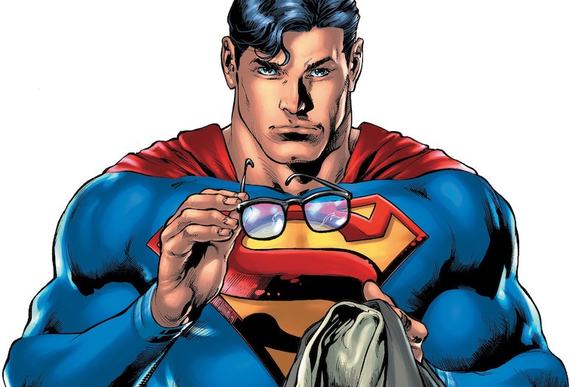
Superman

You don’t have to be a lifelong fan of superheroes to know the role that secret identities play in their over-arching narrative. It’s one of those story elements that often goes hand-in-hand with a hero’s journey. Part of becoming a hero involves forging an identity and, more often than not, this identity can’t function alongside the one they start with.

It’s a story that has roots in the early days of modern superhero comics. It wasn’t just a common plot point. It was practically a given. It was as necessary as capes, colorful costumes, and punishing masked criminals.

From a practical standpoint, having a secret identity has some legitimate merit. There are things Bruce Wayne can do as Batman that he cannot do and vice versa. The same goes for Superman, Wonder Woman, Spider-Man, and many other iconic heroes. In “Batman Begins,” Bruce Wayne set the stage for his secret identity by crafting Batman as a symbol, one that conveyed an idea that went beyond the person in the costume.

In recalling that scene, I think that idea was more prophetic than Christopher Nolan initially intended. When I look at how secret identities have come to define many characters, I believe they’re more important today than they have been in any other era.

I don’t just say that as a long-time fan of superhero comics who has used his knowledge of the genre to explore serious issues. I believe that we, as a society, are entering uncharted territory when it comes to how we manage our identities. The influence of the internet, social media, and an increasingly connected world is more powerful than any fictional hero. It’s already finding its way into superhero media.

This topic became especially relevant for Superman fans because back in late 2019, the release of “Superman #18” officially revealed Superman’s identity as Clark Kent. Now, it wasn’t not the first time Superman’s identity has been exposed, but this time it wasn’t a gimmick. Now, Superman had to learn how to be Superman without a secret identity.

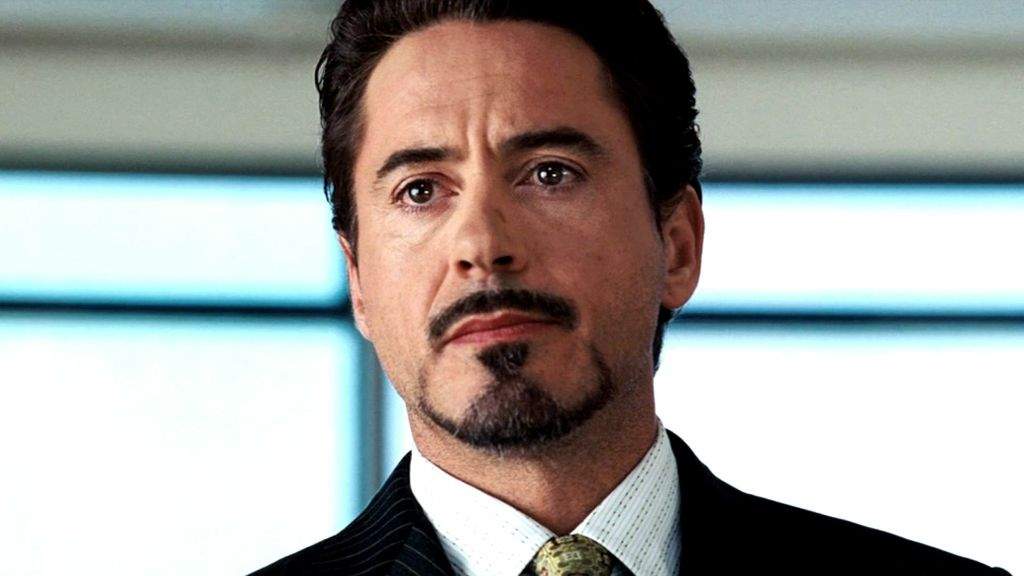
Over the past decade, the value and vulnerabilities of secret identities have been under fire. One of the most jarring moments of the original “Iron Man” movie was the very end when Tony Stark didn’t attempt to hide the fact he was Iron Man. For those not familiar with the comics, it might not have seemed like a big issue. Trust me, it was a major shift.

While Tony Stark debuted as Iron Man in 1963, his identity didn’t become public until the early 2000s. That’s nearly four decades of him operating with a secret identity. In the context of his journey, this was not a trivial decision.

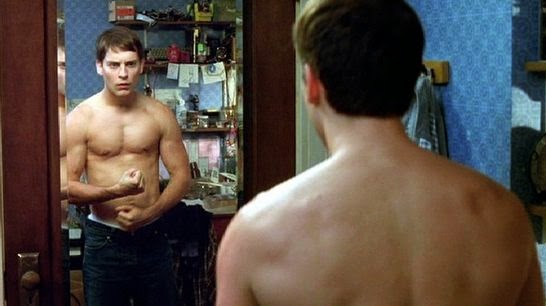
What happened to Spider-Man at the end of “Spider-Man: Far From Home” was even more jarring. While his secret identity has been revealed many times in the comics, it’s almost always retconned. Like Batman and Superman, he has to have a secret identity. He has to have a civilian life that’s separate from his superhero life.

There’s even a notable episode of “Superman: The Animated Series” in which Superman flat out admits that he’d go crazy if he couldn’t be Clark Kent. Think about that for a second. Superman, one of the most powerful and iconic superheroes of all time, admits that can’t handle a life without a secret identity. This is someone who can handle Lex Luthor, Darksied, and Brainiac. If he can’t handle it, then what hope do we have?

That question might not have been too relevant 20 years ago. Before the age of smartphones, broadband internet, and social media, a superhero might have been able to get away with having their identity exposed. You could say the same for anyone who happened to have a dirty secret or a double life. Whether it was an affair or a secret hobby, you didn’t have to work that hard to keep it secret.

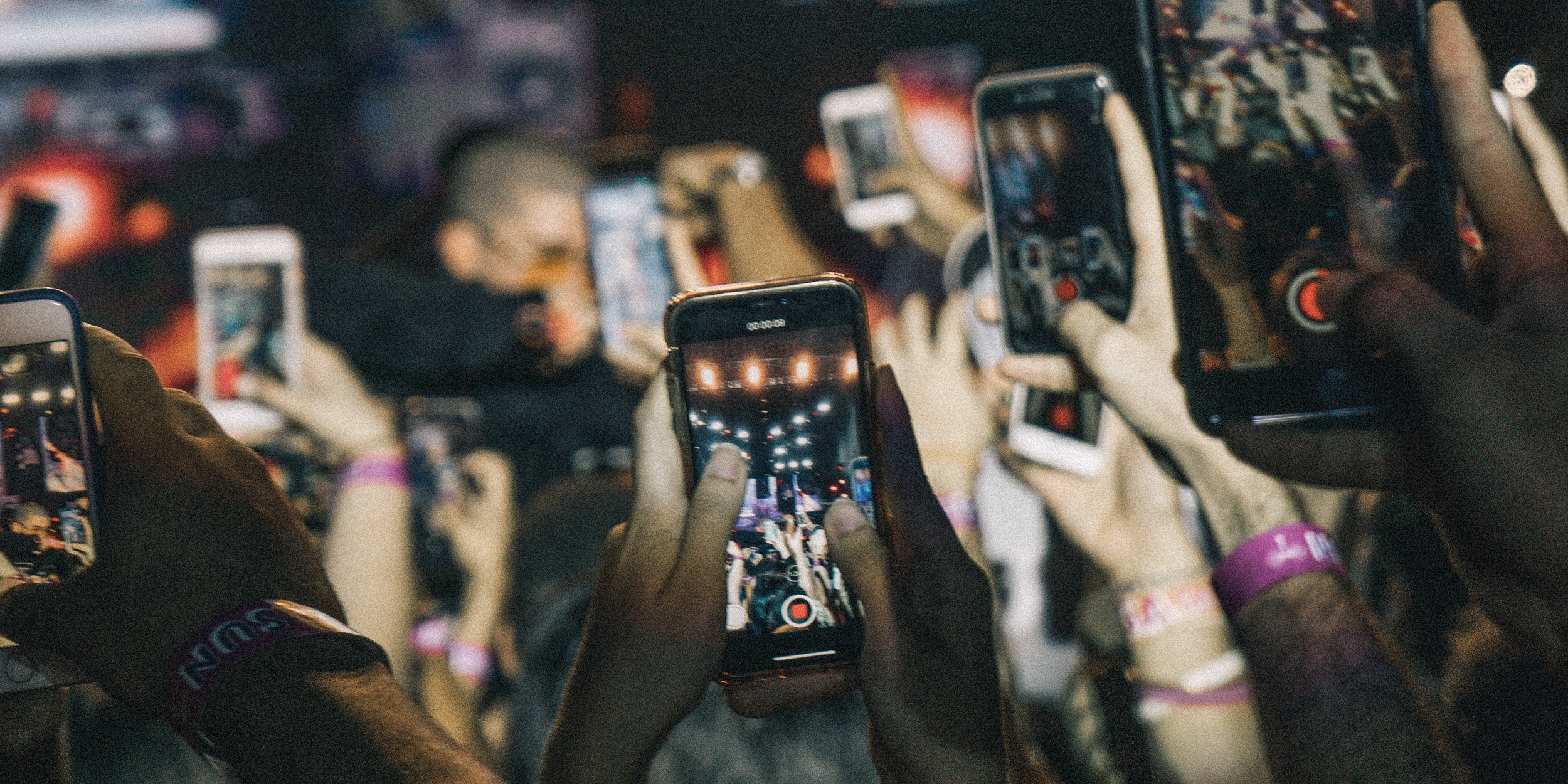
Back then, not everyone had a fully-functional camera in their pocket or a means of sharing their media on a mass scale. Even if someone did manage to take a compromising picture or video, it wouldn’t be a huge revelation unless it was published by a major news source and even then there was no guarantee it would have staying power, especially if other major stories broke at the same time.

Now, anyone with a smartphone and an internet connection can capture compromising footage of anyone and share it with the world in seconds. In the world of superheroes, it makes keeping an identity harder than ever. Spider-Man found that out the hard way at the end of “Spider-Man: Far From Home.” Ordinary people and major celebrities are finding that out as well in the real world.

The internet and social media has created an unusual, yet potent system that skews the dynamics of having an identity, secret or otherwise. On one hand, it’s easier than ever to create an anonymous persona on the internet. With that persona, people are unbound by the propriety of real-world interaction.

It’s part of why the comments section of any website or social media feed is full of deplorable rhetoric that highlights the worst in people. Ordinary people can use the anonymity of the internet to say thing they would never say to another human being face-to-face. At the same time, celebrities and people of influence have the opposite problem.

In this hyper-connected world, every word and every action is permanently archived and subject to greater scrutiny. Every mistake or misstep is amplified and blown out of proportion. Every bit of subtext and nuance is completely lost in the various biases and agendas of the public. In essence, public figures have little to no control of their identity. They are very much at the mercy of how others perceive them.

That kind of scrutiny can have benefits and drawbacks. You could argue that the added scrutiny of social media has held celebrities and people of influence to a higher standard. They can no longer operate in the shadows with impunity. Dirty secrets will come out. Bad behavior will be documented. The O.J. Simpsons and Bill Cosbys of yesteryear could not get away with their deplorable behavior in today’s environment.

That may be a good thing on some levels, but it comes at a cost and not just for those who have had their lives ruined by the internet. In a world where anonymous identities are easily created and valued identities are easily ruined, how can anyone hope to maintain a balanced perspective? Whether you’re an accomplished celebrity or just some random blogger, don’t you still need a persona that feels true?

For people who are stuck in difficult situations, such as those belonging to racial, religious, or LGBTQ minorities, having that secret identity might be the only one that feels true or genuine. If that gets exposed, then those individuals could be in legitimate danger. There are parts of the world who will punish these individuals in ways far more serious than online trolling.

In the past, these kinds of people didn’t have an outlet or a means of connecting with others who share their struggles. They either had to organize in secret or set up their own communities, which often meant making themselves real-life targets. The ability to create an identity, secret or otherwise, can be a powerful mechanism for helping people forge an identity that feels true to who they are.

To some extent, superheroes embody the importance of these identities. They can’t do what they do without them. They can’t remain connected to the people and the world they’re trying to protect if they’re always in costume, trying to maintain this persona they’ve created. Without it, they become disconnected and overwhelmed. As a result, they can’t be the heroes they need to be.

For people in the real world, having these identities is more important than ever. You don’t have to be a superhero to appreciate their value, but as our world becomes more connected, it’s become a lot easier to understand why Spider-Man and Batman work so hard to preserve their secret identities.

The fact they still struggle, despite having super-powers and billions of dollars, is a testament to just how difficult it can be. As the world becomes increasingly connected and increasingly tribal, it’s only going to get harder.

Leave a comment

Filed under Current Events, Marvel, media issues, outrage culture, political correctness, politics, psychology, Spider-Man, superhero comics, superhero movies

Dear Professional Sports Leagues: Marijuana Is NOT A Performance Enhancing Drug

Senate marijuana draft bill: Chuck Schumer, Democrats unveil proposal to  end federal prohibition on pot - ABC7 Chicago

I love sports. I love watching people push their bodies, minds, and skills to the limits of what they can achieve. It’s a testament to what hard work and dedication can achieve. I find that inspiring and worth cheering for.

I also understand that sports, like any major endeavor, has cheating in it. There are no shortage of cases in which athletes cheated to gain an edge. When money and glory are at stake, some will be tempted to cheat. That’s just human nature.

While I wholly support efforts to clamp down on cheaters, there is one area that I think is completely counterproductive and utterly absurd. It has to do with drugs in sports, one of the most time-tested forms of cheating in history.

Now, I know there are certain drugs in sports that really do confer a major edge. If you use steroids, stimulants, or pain killers, you’re going to have a distinct edge over those who don’t. That’s just science and chemistry. That also constitutes cheating and should be treated as such.

However, when it to marijuana, the science is just as clear. It is NOT a performance enhancing drug.

This is one area of sports and science that isn’t just outdated. It’s flat out absurd. I get that, until very recently, marijuana was illegal in most parts of the United States and the world. A lot has changed in the past 10 years. However, even before that change, we knew what the effects of marijuana were. Most of us know people who have used it before.

Even if you’re not a doctor or an athlete, you’ve probably noticed that one thing is clear. When it comes to strenuous activities, it does not enhance performance. People who are stoned are not usually inclined to compete at the highest level. Unless that activity involves eating chips and laughing, it’s not going to enhance much of anything.

Despite this very common knowledge, athletes are still being disciplined from sports because of marijuana use. For once, there is no bigger picture or broader perspective. This rule is just plain dumb.

Even if you don’t believe in the anecdotal reports about marijuana, at least believe the science. In this case, the data is pretty damn clear. Marijuana is not a performance enhancing drug. If anything, marijuana makes it more difficult to compete professionally because it’s likely to make you eat cookies and lounge on your couch rather than train.

As for why athletes smoke it in the first place, that’s also quite clear. In addition to all those other side-effects that come with smoking weed, it does a great job of relieving pain. For athletes who subject their bodies to immense strain and conditioning, pain is unavoidable. Dealing with it comes with the territory. How they manage it varies, but marijuana become increasingly popular, especially compared to dangerous opioids.

More and more, the stupidity of this policy on marijuana is becoming clear. Calling it a performance enhancing drug is akin to calling sleeping pills study aids. It’s not just absurd. It’s completely ass backwards. You can call marijuana a lot of things, but a performance enhancing drug in the realm of professional sports isn’t one of them.

I know I have little credibility on the subject. I’m just an aspiring erotica romance writer. Ifyou don’t trust my expertise, then please consider the argument by the late great Robin Williams on the subject. If he doesn’t convince you on this issue and make you laugh, then I don’t know what will.

Leave a comment

Filed under health, human nature, psychology, sports

Earth, Jeff Bezos, And The Overview Effect

The Overview Effect: How Seeing the Earth from Space Changes You

What happens to someone when they’ve spent their entire life seeing the world one way, only to have it radically change in an instant?

What happens to someone’s perspective when everything they thought they knew and understood suddenly seems smaller and less grand than they thought?

It can be a jarring experience. For some, it might even be traumatic. It can take the form of a religious experience, a major life-changing event, or even something as simple as falling in love. Whatever the case, it’s powerful. You see the world one way when the day starts. Then, when the sun sets, you see it completely differently.

That brings me to astronauts, space flight, and Jeff Bezos. I promise there’s a connection there and it’s one worth highlighting.

Most are aware that Amazon founder, and world’s richest man, Jeff Bezos, took his first flight into space. It was well-covered by the media and was certainly fodder for plenty of criticism, some of which was quite warranted. However, I’m not going to touch on that. Instead, I want to focus on how this experience might affect him and his outlook.

That’s where the Overview Effect comes in. If you’re not familiar with this unique psychological phenomenon, then think back to the questions I asked earlier. Those are very relevant in that they’re part of what certain people experience when they go into space.

In short, the Overview Effect is a byproduct of this newfound prospective astronauts have when they go into space and see Earth from afar. Some treat it as a religious experience, so much so that it has an almost euphoric effect. That’s to be expected.

Up in space, there are no national boundaries. There are no politics, prejudices, and personal gripes. It’s only in space that you realize just how small Earth is and how small humanity is by comparison. That has a major impact on a person’s psyche. Some in the field of neuroscience have even studied it. One retired astronaut, Scott Kelly, once described it like this:

“The planet is incredibly beautiful, breathtakingly beautiful. Having said that, parts of it are polluted, like with constant levels of pollution in certain parts of Asia. You see how fragile the atmosphere looks. It’s very thin. It’s almost like a thin contact lens over somebody’s eye, and you realized all the pollutants we put into the atmosphere are contained in that very thin film over the surface. It’s a little bit scary actually to look at it.

And then you realize looking at the Earth, that despite its beauty and its tranquility, there’s a lot of hardship and conflict that goes on. You look at the planet without borders, especially during the day. At night you can see countries with lights, but during the daytime it looks like we are all part of one spaceship, Spaceship Earth.

And we’re all flying through space together, as a team, and it gives you this perspective — people have described it as this ‘orbital perspective’ — on humanity, and you get this feeling that we just need to work better — much, much better — to solve our common problems.”

That sort of perspective is hard for most to imagine. The number of people who have been into space is less than 600. Jeff Bezos is only the latest entry into a very exclusive club. That may also mean he’s the latest to experience the Overview Effect.

Now, it’s hard to say how much or how little he was influenced by that effect. His trip to space didn’t last very long. However, the journey may have already left an impression. He has already been quoted as saying this:

“The most profound piece of it, for me, was looking out at the Earth, and looking at the Earth’s atmosphere….But when you get up above it, what you see is it’s actually incredibly thin. It’s this tiny little fragile thing, and as we move about the planet, we’re damaging it. It’s one thing to recognize that intellectually. It’s another thing to actually see with your own eyes how fragile it really is.”

That could just be him making good PR, but it could also be revealing. Again, not many people have gone into space. They haven’t had a chance to experience the Overview Effect for themselves. While plenty of trained astronauts have done it, none of them are Jeff Bezos. None of them are worth in excess of $200 billion.

There aren’t many people on this planet who have access to resources like him. There are even fewer with the means and the skills to take a grand vision and make it real. Now, Bezos has seen the world in a new light. He has had his perspective changed. What will that mean for him and for us?

Before he took his famous space flight, Bezos stepped down from Amazon. He’s still very involved, but he now has time to focus on new ventures. Some of those ventures may take us into space. Some may go towards fixing the environment.

It’s hard to know where this will lead. However, if someone like Jeff Bezos can be impacted by the Overview Effect, then what does that say about the rest of us? How much would the world change if more people got to experience that perspective? Maybe we’ll find out one day. Maybe we’ll get that chance because Jeff Bezos funded it.

Only time will tell. Personally, I’d like to experience the Overview Effect myself. Maybe I will one day.

Also, Jeff Bezos should still pay his workers more.

Leave a comment

Filed under Current Events, human nature, philosophy, psychology, real stories, technology, Uplifting Stories

ANOTHER COVID-19 Surge Among Unvaccinated: A Product Of Math, Science, Politics, And No More Excuses

More vaccinated than unvaccinated Britons are now dying from the coronavirus

I do not want to keep talking about the COVID-19 pandemic. I really don’t.

I don’t want to keep urging people to get vaccinated. I’ve already provided tools. I proudly announced when I got my dose of the vaccine. I even went so far as to tell the anti-vaxx crowd that they’re actively killing people. I even cited a video to help debunk the most common anti-vaxx claims.

Now, I understand that I am not a very influential figure. My audience is very small, compared to other voices on the internet. I’m completely aware of my limitations with respect to getting my message out there. At the same time, I can’t keep hiding my frustrations.

This pandemic should be over. We have multiple vaccines. They’re free, they’re widely available, and they work. Most of the restrictions that we lived under for over a year have been lifted. We are in a better place now compared to last year and we have these vaccines to thank for that.

Unfortunately, it’s still a problem. The crisis is not over yet, but it’s not because we lack the tools to resolve it. It’s because people are refusing to do what’s necessary to save lives and end this madness.

I still like to have faith in humanity, as a whole. I really do believe that most people are good. However, the people currently prolonging this pandemic are really challenging that faith. These are people who, for reasons that range from politics to ignorance to completely insane conspiracy theories, refuse to take this vaccine.

As a result, there’s another surge of COVID-19 cases across the country, including my area. However, this surge is different. This surge isn’t as widespread and indiscriminate as previous surges. This time around, the surge in cases is among the unvaccinated. That’s not too surprising, but it’s also a perfect manifestation of the current political land social divide.

NPR: U.S. COVID Deaths Are Rising Again. Experts Call It A ‘Pandemic Of The Unvaccinated’

The death rate from COVID-19 in the U.S. is rising steadily for the first time in months as the nation grapples with a renewed burst of cases in what’s become “a pandemic of the unvaccinated,” the head of the Centers for Disease Control and Prevention said Friday.

The seven-day average of new cases has increased by nearly 70% to almost 30,000 per day; hospitalizations are up 36%. And deaths from the virus have risen steadily in recent days, reversing a months-long downward trend that began in mid-January.

“There is a clear message that is coming through: This is becoming a pandemic of the unvaccinated,” Dr. Rochelle Walensky, the CDC’s director, said at a Friday briefing of the White House COVID-19 Response Team. “Our biggest concern is we are going to continue to see preventable cases, hospitalizations and sadly deaths among the unvaccinated.”

The upward trend in national statistics is being driven almost entirely by outbreaks in places with low vaccination rates, such as the Ozarks, Florida and parts of the Mountain West. Some counties, especially in Missouri and Arkansas, are recording more cases now than they did during the winter.

“Unvaccinated Americans account for virtually all recent COVID-19 hospitalizations and deaths,” said Jeff Zients, the White House COVID-19 response coordinator. “Each COVID-19 death is tragic, and those happening now are even more tragic because they are preventable.”

More than 99% of recent deaths were among the unvaccinated, infectious disease expert Dr. Anthony Fauci said earlier this month on NBC’s Meet the Press, while Walensky noted on Friday that unvaccinated people accounted for over 97% of hospitalizations.

That bolded text is my doing because it makes an important point that I haven’t been able to make until now. A reasonable can have reasonable concerns about a vaccine that was approved in record time. A reasonable person can even be forgiven for waiting until a certain amount of the population took it before getting it themselves.

I understand that.

I really do.

Nobody likes getting shots. They’re uncomfortable, stressful, and leave your arm feeling sore for days.

However, there comes a point where reluctance becomes absurdity and that absurdity is causing more suffering. It doesn’t help that these vaccines have also become politically charged. There is a clear, but distressing correlation between how you identify politically and whether or not you’re getting vaccinated.

If you’re liberal or left leaning, chances are you already got vaccinated and this surge isn’t affecting you.

If you’re conservative or right leaning, chances are you haven’t been vaccinated and you’ll eagerly cite less-than-reputable sources to justify those choices.

While I don’t want to get into the politics of those pushing anti-vaccine messages, I do want to point one thing out to those who take them seriously. Please note that this is not a personal attack. This is not me talking down to you as someone who has been vaccinated and who probably gets his news from very different sources. This is just me making a sincere, honest observation.

At this point, we’re beyond politics and science. You can have different politics. You can even have certain attitudes towards science. At the very least, though, you have to undestand that simple, basic math cannot have an agenda.

I’ll restate what the NPR article said. This latest spike in COVID-19 cases is affecting the unvaccinated at a rate of 99 percent in terms of deaths and 97 percent in terms of hospitalizations.

That is not a trivial difference in terms of margin.

When something is 99 percent, it’s as close to definitive as you can get without god-like aliens coming down to Earth and affirming the results. Think of it in terms like this.

If a pill had a 99 percent chance of curing cancer, would you take it?

If a fruit had a 99 percent chance of killing you, would you eat it?

If a car had a 99 percent chance of exploding every time you turned the key, would you drive it?

If a slot machine had a 99 percent chance of winning the jackpot, would you play it?

I could go on, but I honestly don’t know how much more I can belabor this point. These vaccines work. They prevent COVID-19 from infecting and spreading. If enough people get it, the pandemic will end. The suffering will stop. That’s all there is to it.

The science says they work.

The doctors, experts, and medical authorities throughout the world who dedicate their lives to this sort of thing says they work.

Now, even the math says they work.

At this point, if you’re still skeptical or hesitant, you’re not just being unreasonable. You’re not just being absurd. You’re just being an asshole. We all want this pandemic to end and you’re preventing that. As a result, more people will suffer and die. Face it. You’re out of excuses and the damage this surge does is on you.

Leave a comment

Filed under Current Events, health, human nature, political correctness, politics, psychology, real stories

Finding Love Has Become An Extended Job Interview (And For Good, Yet Unromantic Reasons)

Being a self-professed romantic and an aspiring erotica/romance writer, I often scrutinize the nature of romance more than most. Whereas some might watch a movie or TV show and see the basics of a romantic sub-plot, I’ll dig much deeper. I’ll identify which romances are inherently flawed, why some work beautifully, and why love triangles are inherently awful.

That scrutiny goes beyond media, popular culture, and my own efforts to tell a good love story. I often find myself observing how romance unfolds in real life. Whether it’s how people have pursued romance in the past to my own romantic endeavors, there’s a lot to break down and it doesn’t always make sense. Love isn’t known for being rational, after all.

It’s because of this tendency of mine that I notice things that rarely come up in discussions about romance. Recently, I realized something profound while reading several stories about how modern dating has changed in recent years, of which there are many.

Modern romance has become more a job interview than an emotional journey.

I imagine some will roll their eyes at that notion. Some might even agree with it and not need any convincing. A few probably think I’m giving this too much thought, even for a romance fan. That may be a fair point, but I believe the evolution of modern romance is becoming a lot less romantic.

To be fair, finding has undergone many upheavals throughout history. It wasn’t until the past couple centuries that people actually married for love. Those who claim to champion “traditional” marriage probably aren’t aware that marriage and formal relationships were little more than passionless business contracts for most of human history.

Love and romance were always there. We, as human beings, are hardwired to form loving bonds. It just took different forms and people went about it in very different ways. Most people have a general idea of how people go about it today. It tends to go something like this.

  • Two people meet, either in person or online
  • There’s a spark of attraction
  • They both pursue each other
  • They go on dates to learn about one another and explore their romantic connection
  • If the connection is strong enough, they forge a lasting relationship and build a life together

Granted, this is an exceedingly gross simplification. It still covers most of the basics. That’s the problem, though. It only deals with the basics and people are rarely basic.

It starts shortly after a mutual attraction is established. Once two people start pursuing one another, the dating phase starts. Movies, TV shows, and romance novels tend to be vague about how this unfolds. However, it’s here where the parallels with job interviews start to show.

While a love story may depict candle-lit dinners, coordinated dancing, and intimate gestures, the bulk of that process tends to involve more pragmatic acts. For two people to understand whether they’re romantically compatible, they need to get to know one another. To get to know one another, they need to interact.

That, in and of itself, doesn’t make dating indistinguishable from a job interview. For that, the modern structure of relationships is what fosters that and I’m not just referring to marriage. This affects couples who cohabitate, as well as those who are serial monogamists.

From a logistical standpoint, a modern romance has many moving parts. It’s not enough to just be attracted to one another, enjoy each other’s company, or have great sex. People often have to find a way to fit one another into their lives. There are jobs, career aspirations, and living situations to consider.

These days, people aren’t as likely to stay in the same place they were born in, especially if the opportunities in that town are limited. The same goes for their families. Even if they stay, sometimes their parents or extended family move away. Maybe it’s for retirement, going to college, or pursuing their own romantic interests. Having to accommodate all that into a relationship can be daunting.

In the same way you might be qualified for a job, but not in a position to take it, you might find yourself in a similar relationship with romance. All the emotional, physical, and sexual chemistry is there. However, you’re just not in a position to pursue it. You can’t maintain that relationship when you’re both living in other time zones or pursuing different paths.

That’s not to say long distance relationships can’t work, but it’s like trying to do a job remotely. There’s only so much you can do when you’re not present. If that weren’t the case, everyone would work from home or from a tropical paradise. I that as someone who has been unable to pursue major opportunities and broken up from good relationships due to distance.

Even if you can work around issues of distance and time, there’s also the matter of becoming entwined with family affairs. As the “Meet The Parents” trilogy so hilariously demonstrates, being with someone is rarely just about being with them, individually. At some point, if the romance is to be serious, their family will get involved.

That process can be as complicated as matching qualifications for a specialized job on a resume. You’ve got to make sure both families can get along. They can’t just tolerate each other at the wedding or during the holidays. They have to be capable of co-existing in a way that doesn’t undercut the romance.

It’s very similar from having a job that matches your skill set, but for an organization that is just insufferable. A lot of people have had to endure jobs they hated, even if they paid well or matched their various talents. When the organization within the job is awful, then even a dream job can be awful.

You can love someone with all your heart. You might even have someone your family loves. However, if your lover’s family is an absolute pain, then the romance will suffer. Now that relationships aren’t just business arrangements, we have to navigate around one another’s lives and their families. To do that, it’s necessary to treat dating like a job interview.

You have figure out if this person fits into your life.

You have to figure out if their hopes, dreams, and abilities match what you’re looking for.

You have to prove that your hopes, dreams, and abilities match theirs as well.

You have to determine whether you fit into the organization of their life and their family.

Ultimately, you have to build that shared life together around all of that, knowing that breaking up/being fired/quitting comes with a personal/professional cost.

On the surface, it’s hardly romantic. At the same time, there’s an undeniable pragmatism to it. As society has evolved, complete with more egalitarian gender roles and fewer taboos about being single, we’re in a better position to chart our own romantic path. We don’t just have to settle for limited options and few opportunities. We can dare to seek something greater.

As a byproduct, the basic romantic elements of intimate chemistry can never be enough. It’s necessary, if not unavoidable, to assess a prospective lover’s entire life to determine of that romance is even viable. It’s not easy and it’s exceedingly imperfect, as the rate of divorce and abusive relationships indicates.

However, being the romantic I am, I still say it’s worth pursuing. That process is still very likely to change as society, technology, and attitudes change. The impacts of the COVID-19 pandemic are sure to change it even more. Whether it becomes more or less like a job interview remains to be seen.

Leave a comment

Filed under gender issues, human nature, Love Or Obsession, psychology, romance

How People Discovered (Accidentally) What Turns Them On

People are diverse, complicated, and erratic at times. If you’ve spent any amount of time on this planet, you’ve probably figured that out already. As a result, people are often turned on or aroused by weird things. The very existence of BDSM is proof of that. Some of the sexy stories I’ve written only add to that proof.

I know anything sexual tends to make people uncomfortable. That’s understandable. Sex has a lot of taboos and we, as a society, are still learning to deal with them. At the same time, no amount of stigma can stop people from getting turned on. The human body, the human mind, and the human sex drive is just that strong.

As a result, people will often uncover what turns them on or gets them aroused in unexpected ways. Sometimes, it’s by accident. Sometimes, it’s awkward as hell. It can also be both hilarious and hot. That’s just the extent of how complicated people can get.

To that end, I’d like to share some real stories of how people “accidentally” discovered what turns them on. It comes courtesy of the r/AskReddit subreddit and the YouTube channel, Reddit Legends. Please note that some of these stories are NSFW and some are less titillating’s than others, but they’re still fun and insightful. Enjoy!

Leave a comment

Filed under human nature, psychology, Reddit, sex in society, sexuality

When (And Why) NOT To Be An Optimist

In general, I’m a pretty optimistic person. I have an overall positive outlook on life and the future. I’d even go so far as to say I’m excited about what the future will bring. My posts about sex robots should be proof enough of that.

However, I wasn’t always optimistic. In fact, anyone who knew me in high school or middle school probably saw me as the antithesis of optimism. I was always so dire and bleak with my outlook. I rarely had anything good or positive to say. I put myself down all the time and tried to bring the rest of the world with it.

It was not a healthy mindset, to say the least. I’m very glad I got out of it.

At the same time, it has given me some perspective. Having been on both extremes, I know what fuels that kind of thinking. I know and understand, to some extent, what leads someone to have that mindset.

Overall, I feel like having a positive outlook is more beneficial. That’s to be expected. When you’re more hopeful and optimistic, it tends to bleed into other aspects of your life. Optimism tends to attract optimistic people and those people are generally good for you. I certainly wouldn’t have the friends I have now if I’d remained so negative.

At the same time, there is a limit to optimism. There does come a point where being optimistic can be damaging, in the long run. I’m not talking about the kind of optimism that’s outright delusional, either. I’m more referring to the kind of mindset that makes someone too oblivious to the world.

I think that’s something people do struggle with. That might be a hard thing to say in wake of a global pandemic, but even before that dampened everyone’s spirits, it was easy to get caught up in that mindset. It often goes like this.

If everything seems to be going well, then why bother changing anything?

If things stop going well, then you try to get back to that particular mentality.

If what you do doesn’t work, then you double down and try even harder.

What made you happy and hopeful worked before. Why wouldn’t it work again?

This is a mindset I can attest to. When I was in college, my overall outlook improved. I got a lot less negative about the world. I got better at making friends. I even dared to be hopeful about the future.

Then, I faced some challenges. It was often small or minor. A girl I liked didn’t like me back. A class I took didn’t go well. My favorite team starts losing or I get into a fight with my roommate. It was very stressful, but I thought just maintaining a positive outlook would help work things out.

It didn’t. I won’t say it didn’t help at all. It just didn’t help as much as I’d hoped.

The same thing happened when I got anxious about my health and body image. As I’ve noted before, I did not have good health habits in my youth. I didn’t start regularly going to the gym until I was almost 30. Before then, I thought I just needed to rebuild my confidence and remain hopeful. I now know that was incredibly short-sighted.

Just having the right mindset is barely the first step. At some point, I had to make a more concerted effort. I had to work, grind, and struggle to get to where I wanted to go. If I had just stayed entirely within this positive mindset, I probably wouldn’t have gotten to where I am now, health wise. In that sense, being too positive worked against me.

This is the trap of overly positive thinking. Sometimes, if you’re too positive, you’re less inclined to put in the extra effort and make a meaningful change. Whether it’s about your health, your social life, or your politics, too much positive thinking can become an excuse to not change or do anything different.

That’s rarely healthy. That’s also why a little regular introspection can be a good thing. It’s something that’s encouraged by professionals who are far smarter than me on matters of psychology. If you need further details, check out this piece I found from Psychology Today.

Psychology Today: Positive Thinking Isn’t Always the Best Way to Go

When we suffer pain, rejection, disappointment, loss, disease, or another catastrophe, happy talk, whistling in the dark, or putting on a happy face do not work. Every cloud does not have a silver lining nor is there a pot of gold at the end of every rainbow.

Because the world is filled with all sorts of unhappy events, from not getting that dream job to losing a best friend to cancer, thinking only positive thoughts is delusional. Trying to maintain a happy face while tragedy engulfs us is unnatural, akin to trying to laugh when our hearts are breaking. Like Pagliacci, the clown who was intent upon making others laugh while tears streamed down his cheeks, we shortchange ourselves when we fail to deal with negative events and emotions.

I’ll sum this up by offering one last bit of insight.

Life isn’t easy, but it’s worth the effort. Things do generally get better and assuming the worst tends to be a self-fulfilling prophecy. However, just being positive is never enough. At some point, you have to make the effort. It’s often strenuous and frustrating, but it’s wroth doing.

Leave a comment

Filed under health, human nature, Jack Fisher's Insights, psychology