

Starting an epic journey is a daunting challenge. Keeping people engrossed in that journey for over a decade is exceedingly difficult. Ending that journey in a way that’s dramatic, appropriate, and satisfying is damn near impossible. Despite those insane stakes, that’s the primary goal of “Avengers Endgame.” It attempts to cap off the story that began in 2008 with “Iron Man.”
Without spoiling the many dramatic details of this three-hour cinematic experience, I can safely confirm that it did. “Avengers Endgame” achieved that seemingly impossible goal of completing a decade-spanning story that included 22 movies, a cast of top-notch actors, and one talking raccoon. It’s one of those feats that shouldn’t be possible, even with Disney’s deep pockets, but Marvel Studios pulled it off.
It isn’t hyperbole to say that “Avengers Endgame” is a historic cinematic achievement that fundamentally changes the standards for just how bold a movie can be. All the praise from fans and critics alike that this movie has garnered is well-earned, but still doesn’t do justice to what this movie achieved.

It’s not just another step in the ever-expanding saga that is the Marvel Cinematic Universe. This movie does not set the stage for another sequel or lay the groundwork for the next big battle between the Avengers and the next Thanos-level threat. The movie is true, polished ending that manages to beautifully encapsulate the scope and scale of the story it told.
As a life-long comic book fan and a fan of superhero media, going back to the days of Saturday morning cartoons, this movie was both satisfying and impactful. I came out of the theater with my heart still racing and my mind still reeling from what I just witnessed. Part of me was sad. Part of me was elated. In all, though, I felt like I’d completed a journey alongside these beloved characters.
Even if you’re not a fan of comics and only know these characters through the movies, “Avengers Endgame” still succeeds in terms of raw storytelling. Years of world-building and character development really come to ahead in this movie. The shared journeys of characters like Tony Stark, Steve Rogers, Thor, Black Widow, Hawkeye, and Bruce Banner provide plenty of dramatic weight to everything that happens.

Make no mistake, though. A lot happens. This movie will test your bladder almost as much as it tests your heart. There are so many characters to juggle and many of them have their own arcs. Tony, Steve, Thor, and Hawkeye are all in wildly different places throughout the story, literally and figuratively. Coming together again in a cohesive plot takes time and effort, something the Russo brothers do not shy away from.
As a result, “Avengers Endgame” is very different structurally from “Avengers Infinity War.” Whereas “Avengers Infinity War” played out like unfolding battle with Thanos leading the charge, “Avengers Endgame” is very much a reaction to the aftermath of that battle. To say it left some traumatic scars would be the understatement of all understatements.
There’s no getting around it. Thanos won and the Avengers failed. Before anyone can even contemplate undoing the damage, these characters have to adjust to a world that has been decimated on an unimaginable scale. Processing, exploring, and reacting to that decimation is a big part of what makes that final showdown sufficiently epic.

That means are sizable parts of this movie that don’t involve Hulk smashing things, Captain America fighting Hydra agents, or Iron Man blowing stuff up. “Avengers Endgame” puts much more time and energy into character moments and interpersonal drama, which were fewer and less developed in “Avengers Infinity War.” However, none of this time ever feels wasted or drawn out.
It helps make that final showdown all the more meaningful. It’ll get you to cheer, gasp, cry, and cringe every step of the way. I can even attest that there are moments in this movie that got the people in the theater out of their seats and cheering. In all my experience with superhero movies, I can’t remember the last time a movie got people that emotional.

There’s a lot I can say about how “Avengers Endgame” succeeds in making the emotional investment of the past 22 movies pay off. I don’t think I need to belabor how important this component was in making this movie work in a satisfying, climactic manner. While the movie succeeds in this critical aspect, there are other noteworthy details.
In terms of pure entertainment value, it is not as great as “Avengers Infinity War.” I would even argue the first “Avengers” movie had more spectacle and was more cohesive, overall. There were times when “Avengers Endgame” felt somewhat chaotic, due to all the character arcs it had to balance. While it managed to juggle them all effectively, there’s only so much that can be done to keep that narrative concise.
It’s also worth noting that some character narratives were managed better than others. I won’t cite specific characters for spoiler reasons, but they fairly obvious within the first hour of the movie. I’m sure fans of certain characters will be conflicted by how things play out, but I doubt those same fans will be too disappointed.
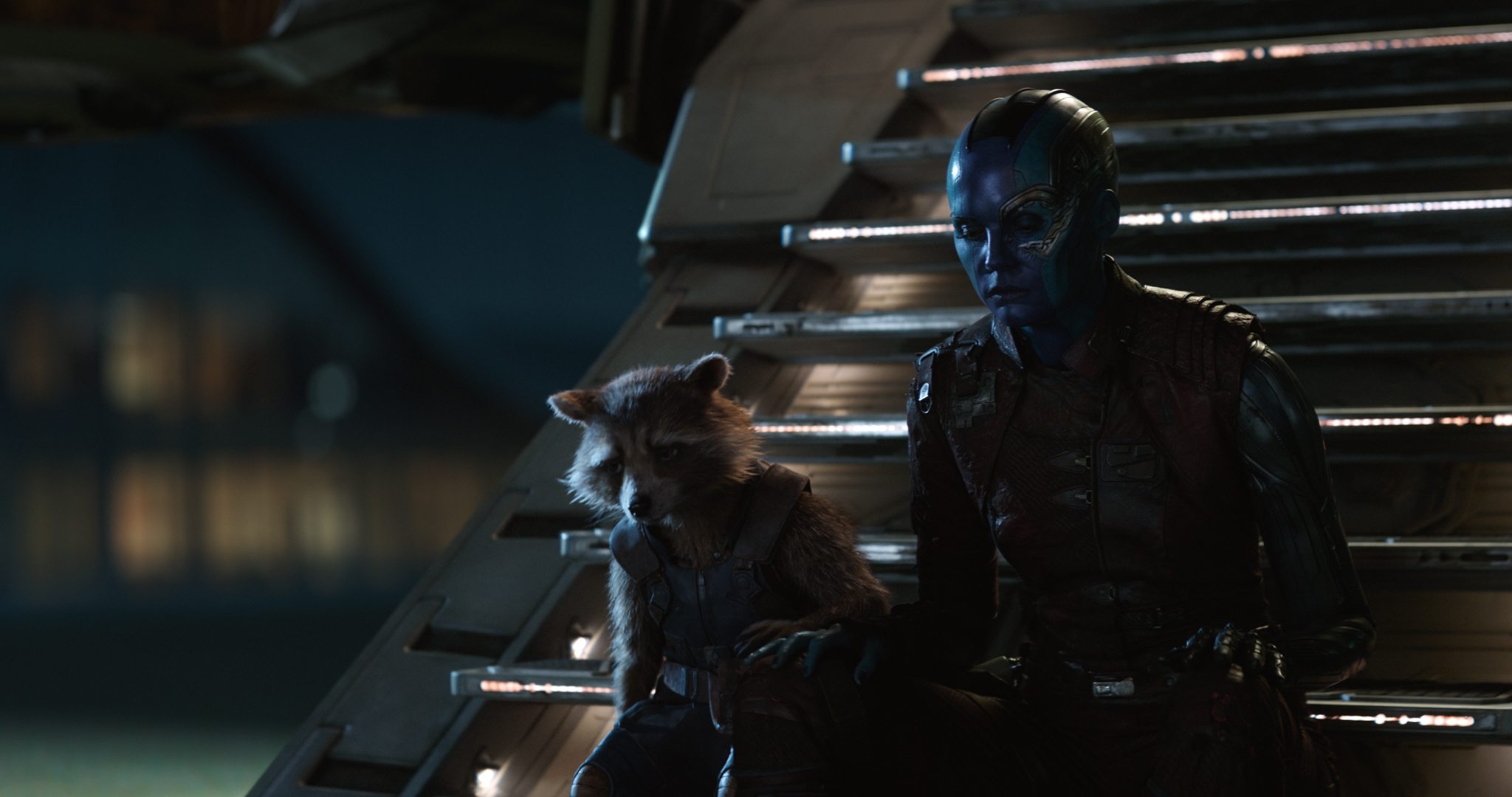
Fans of the distinct humor that often shows up in Marvel Studios productions will also have plenty to laugh at. Granted, the bleak circumstances of the movie make that tricky, but moments are there and they never feel too forced. They’re not quite as numerous as they are in other MCU movies, but given the various plots of the story, I’d say there’s just enough to balance the overall tone.
There are some other flaws within this movie, but the extent of those flaws is never more than minor. It would require an extreme level of pettiness and nit-picking to use those flaws to undercut the movie. “Avengers Endgame” is not perfect, nor does it try to be. Its primary goal is to end this era of the MCU and it does so beautifully.
The ending will leave many with tears in their eyes, both from joy and sorrow. There’s equal amounts of tragedy and triumph. Certain characters get a happy ending. Others must deal with loss and tragedy. Overall, it’s a perfect blend of satisfying conclusion and bittersweet finality. It reinforces the notion that these characters are true heroes.

For a movie that begins under such bleak circumstances, the ultimate conclusion really solidifies “Avengers Endgame” as an incredible cinematic experience. If I had to score the movie, I would give it a 9 out of 10. It hits all the right dramatic notes, evokes all the right emotions, and succeeds on a level that few could’ve imagined 11 years ago.
Like Captain America himself, this movie was willing to do whatever it takes to complete this superhero saga for the ages. Moving forward, it’s hard to say what will come of the MCU, especially in wake of the Disney/Fox merger, but it’s safe to say that “Avengers Endgame” has set a bold new standard for just how great a superhero movie can be.




/cdn.vox-cdn.com/uploads/chorus_image/image/63184208/CaptainMarvel5c1d2766eb7f0.0.jpg)







/cdn.vox-cdn.com/uploads/chorus_image/image/63055334/image3.0.jpg)














 Jack Fisher's Official Publishing Blog
Why The Outrage Over Brie Larson And “Captain Marvel” Is Misguided (And Counterproductive)
Celebrities sometimes say dumb things. I doubt most people would contest that. Sometimes, celebrities say things that aren’t dumb, but badly taken out of context. I imagine most people would agree with that too. However, in an era where outrage is a national pastime and social media makes it way too easy to blow things out of proportion, it’s easy for a celebrity to cause controversy for all the wrong reasons.
Brie Larson, whose star is set to rise considerably with the release of “Captain Marvel,” is learning this the hard way and a large consortium of angry people on the internet are intent on making it harder. What should’ve been a culmination of a young woman’s career and a female hero’s ascension to the superhero A-list is now mired in the ugliest kind of gender politics.
The origin of that controversy actually had nothing to do with Ms. Larson’s role on “Captain Marvel.” Back in June 2018, she made some overly political comments while accepting the Crystal Award for Excellence in Film. While celebrities making political statements is nothing new, Ms. Larson’s statement was hardly extreme.
It wasn’t some radical feminist tirade.
It wasn’t some angry rant about the outcome of 2016 Presidential Election.
It wasn’t even some act of elaborate virtue signaling by some smug celebrity.
All Ms. Larson did was advocate for greater diversity among film critics. She didn’t just make such a statement on a whim, either. She did so in response to a study published by the USC Annenberg School for Communication and Journalism that revealed a significant lack of representation in the industry of film criticism.
That’s not an unreasonable concern. The western world is becoming more diverse and the success of movies like “Black Panther” and “Crazy Rich Asians” shows that there’s a market for such diverse tastes. Advocating for greater representation in the field of film criticism makes a lot of sense.
Unfortunately, that’s not the message that some people gleamed from Ms. Larson’s comments. All they heard was that she doesn’t want to hear from white men anymore. They somehow got the impression that Brie Larson resents white men and her movies, including “Captain Marvel,” aren’t made for them. They’re not even welcome in the conversation.
Who these people are and the politics they represent is difficult to discern. I don’t think it’s accurate to call them conservative, liberal, feminist, anti-feminist, leftist, or any other political label. Outrage culture rarely gets that specific, but given the heated politics surrounding movies like “Ghostbusters” and “Star Wars: The Last Jedi,” it’s a frustratingly familiar narrative.
While I can understand some of the outrage surrounding “Ghostbusters” and “Star Wars: The Last Jedi,” in this case I don’t think it’s justified. That’s not just because I’m a big fan of Marvel Comics, superhero movies, and all things Captain Marvel. It’s because the actual substance of Ms. Larson’s words don’t warrant the controversy she has generated.
For specific reference, here’s what she actually said during her speech in June 2018. Read it very slowly and try to understand the context of her statement.
Remember, she said these words after learning how little diversity there was among movie critics. Unlike most people, she was actually in a position to do something about it. Being an Oscar winning actress who was poised to join the Marvel Cinematic Universe, her words carry more weight than most.
Even so, those words were construed as racist and sexist, two exceedingly loaded terms that bring out the worst in people, especially on the internet. Never mind the fact that she made clear in her original speech that she did not hate white men. Never mind the fact that she has since clarified her words. She is still being attacked as some angry radical feminist who hates men, especially those who are white.
It would be one thing if she had said outright that white men should be banned from criticizing certain movies. Many celebrities, including a few still relevant today, have said far worse. However, that’s not what Ms. Larson said. She never, at any point, advocated disparaging white men. She didn’t even say that people who hate her movies are racist and sexist, something the “Star Wars” crowd is painfully familiar with.
Again, all Ms. Larson spoke out against was a lack of diversity among film critics. That part is worth emphasizing because it renders the outrage surrounding her statement as utterly absurd. It also makes the targeted attack on the fan reviews for “Captain Marvel” both asinine and misguided.
Even though the movie isn’t out yet, the movie is being targeted with negative comments on Rotten Tomatoes. Since it has only screened for a handful of audiences, it’s unlikely that any of these people actually saw the movie or were inclined to see it in the first place. Some are even claiming that this has already impacted the projected box office for the movie.
Whether that impact manifests remains to be seen, but it’s worth noting that when “Black Panther” was targeted with similar attacks, it failed miserably. At the moment, early reactions to “Captain Marvel” have been glowing so the chances of these attacks hurting the box office are probably minor at best. If the pre-ticket sales are any indication, the movie will likely turn a hefty profit for Marvel and their Disney overlords.
Even if there were an impact, it would be for all the wrong reasons. It would send the message that there’s a large contingent of people who are willing to work together to tank a movie because of comments a celebrity said that had nothing to do with that movie and weren’t the least bit controversial, when taken in context.
In this case, it was simply twisting someone’s comments to make them sseem like they said things that they never said or even implied. Then, those who bought into that narrative simply use that as an excuse to disparage a movie that they haven’t seen. That’s not just absurd, even by the skewed standards of outrage culture. It sends the worst possible message from those who think they’re protecting their favorite movie genre.
It tells the world that they don’t care what a celebrity actually says. They actively look for an excuse to hate someone who doesn’t completely buy into their preferred status quo. It would be one thing if that status quo was just and reasonable, but that’s not the case here.
All Ms. Larson did was advocate for more diversity among film critics. If that is somehow too extreme, then the problem isn’t with her or celebrities like her. It’s with those determined to hate her. There are a lot of issues in the world of celebrities and movies that warrant outrage, but advocating for more diversity in film criticism isn’t one of them.
I can already hear some people typing angry comments stating that if she had said those same words, but changed the demographic to something other than white men, then it would be an issue. However, the fact remains that this isn’t what she said.
It also doesn’t help that Brie Larson identifies as a feminist and that term has become incredibly loaded in recent years. However, she has never embraced the kind of radical rhetoric that other, less likable celebrities have espoused. Until she does, those determined to identify her and “Captain Marvel” as racist, sexist propaganda are only doing themselves and their politics a disservice.
16 Comments
Filed under Celebrities and Celebrity Culture, extremism, gender issues, Marvel, media issues, men's issues, movies, outrage culture, political correctness, superhero movies
Tagged as anti-feminism, Brie Larson, Brie Larson comments, Captain Marvel, Carol Danvers, celebrities, celebrity controversy, celebrity culture, celebrity scandals, ComicsGate, female superheroes, feminism, gender, gender disparity, gender inequality, gender politics, internet outrage, internet trolls, Marvel, Marvel Cinematic Universe, Marvel Comics, Men's Rights Activists, movie criticism, movie critics, movies, MRA, outrage, outrage culture, political correctness, politics, Racism, Rotten Tomatoes, Superheroes, trolls