
The second “Captain Marvel” trailer has dropped. There’s a lot I’d love to talk about. For now, though, let’s just take a moment to marvel at what awaits us in March 2019.
The second “Captain Marvel” trailer has dropped. There’s a lot I’d love to talk about. For now, though, let’s just take a moment to marvel at what awaits us in March 2019.
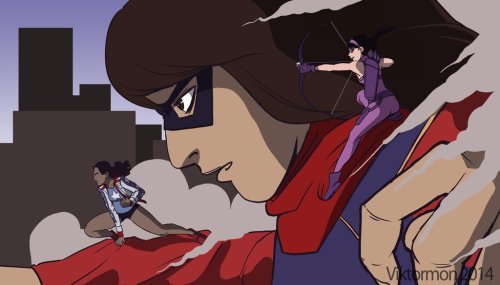
It shouldn’t be that difficult or controversial to create compelling female superheroes. In a perfect world, it would be no different than creating quality male heroes. As long as they’re compelling, enjoyable, and foster great stories, that should be enough.
Sadly, we don’t live in a perfect world. You could even argue it has become even worse in recent years for female superheroes because they’ve become entwined with identity politics. It’s no longer sufficient for a female hero to just be likable and interesting. They have to take part in the never-ending whining contest that dominates outrage culture.
As a lifelong fan of superhero comics, this really frustrates me. I get that comics, like any medium, often reflect the issues of the time. That’s not new and comics have taken positions in those issues. Iconic stories have been crafted around them. The current situation with female superheroes, however, is less a reflection of the times and more a liability.

To illustrate this point, I’d like to single out two female superheroes, Kamala “Ms. Marvel” Khan and America “Miss America” Chavez. Both characters were created within the past 10 years. They’ve also been cited as prominent figures in the recent push for diversity within comics that has caused a lot of uproar or all the wrong reasons.
What sets them apart is that one character, Kamala Khan, has become a success story by most measures. Since her debut issue in February 2014, she has become popular and beloved. She has received and won numerous accolades and her graphic novels have made it onto the New York Times Best Sellers list. I consider myself a fan of hers. She’s one of my favorite female heroes.
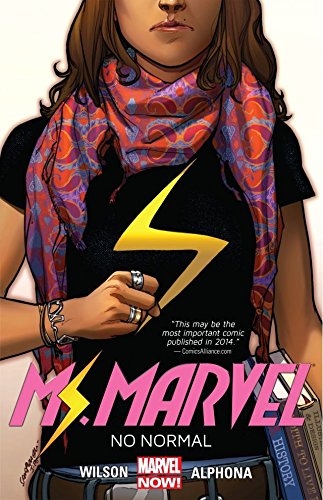
On the other end of that spectrum is America Chavez. She debuted in 2011 and went onto have her own ongoing series. Unlike Kamala, though, her series received no accolades, sold poorly, and did nothing to endear her to fans of superhero comics. She has had opportunities to establish herself as a quality female hero. With few exceptions, she has failed at every turn.
These two characters represent a stark dichotomy in the current world of female superheroes. One provides a template for success. The other is a cautionary tale of how not to create a compelling female superhero in the current climate. It’s pretty striking how two characters created within a similar cultural environment can go in such wildly different directions. However, that difference also carries with it plenty of lessons.
/cdn.vox-cdn.com/uploads/chorus_image/image/54078711/3061358_inline_i_2_half_marvel.0.png)
To be fair to the medium I love, creating female superheroes today is very different compared to past decades. If Wonder Woman, Storm, Carol Danvers, or Supergirl were created today, they wouldn’t have the same impact. They came out at different times and under different circumstances. Those circumstances played a key role in how they became iconic.
Great female superheroes, and quality female characters in general, have traits that allow them to resonate in any era. However, the timing and influences have to be right for them to carve a place in popular culture. Kamala Khan and America Chavez dealt with similar circumstances when they debuted. That makes them a good case study in how female superheroes can succeed and fail.
Why Kamala Khan Succeeded

I still remember the day I read Ms. Marvel #1. I hadn’t been planning to buy it. I remember clearly that it was a light week, in terms of comics. I happened to have a few extra bucks to spend. I had heard that there was going to be a new Ms. Marvel. Having been a fan of Carol Danvers, I decided to check it out.
I’m glad I did because that one fateful issue made me a Kamala Kahn fan for years to come. The story it told struck all the right chords. It presented a character who felt real, genuine, and relatable. The fact that she was a girl, a Muslim, and the daughter of Pakistani immigrants was secondary. She still felt like a character that I could be friends with if she were real.
The reasons why Kamala was so endearing had little to do with how many diversity points she scored and everything to do with how the writer, G. Willow Wilson, went about developing her. She spent almost the entire first issue just revealing who Kamala was and what sort of life she had. We learn about her family, her friends, her hopes, her dreams, and even her favorite hobbies.
She quickly becomes more than just another teenage character. She’s a self-professed fangirl who writes fan fiction, plays MMO games, and loves gyros. Wilson approached developing Kamala the same way Stan Lee approached developing Peter Parker. She developed the personality before turning them into a superhero.
When Kamala finally does get her powers, Wilson establishes a solid reason for why she’s a hero. Just getting powers isn’t enough. Unlike Peter Parker, however, she doesn’t need a loved one to die. Being a fan of superheroes and having decent parents puts her in a position to make that choice without anyone dying. That, alone, makes her worthy of admiration.
From that point forward, it’s easy to root for Kamala. She carries herself as someone you want to root for. She personifies how fans of superhero comics are inspired by their heroes. Her having a chance to be a hero like the ones she idolizes isn’t just endearing. It’s special. That’s why she succeeds and why it’s very likely we’ll see her enter the Marvel Cinematic Universe at some point.
Why America Chavez Failed
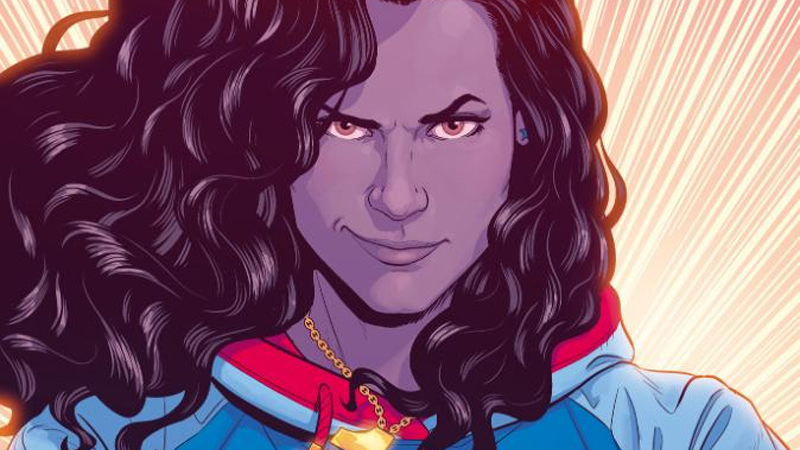
Take everything I just said about why Kamala Khan works and why she’s so lovable. Then, reverse it completely. That’s basically who America Chavez is and why she’s more a joke than a success.
On paper, America has a lot going for her. She’s not just another generic female hero. She’s Latina, she’s a lesbian, and she comes from a very different world, literally and figuratively. In terms of diversity points, she checks as many boxes as Kamala. She has her own unique style and she even uses a familiar moniker that has been successfully used by others.
Beyond those traits, however, there’s nothing about her character or her story that will get superhero fans cheering. She’s not relatable like Peter Parker or Kamala Khan. She’s from a place called Utopian Parallel, which is exactly as boring as it sounds. Her world was threatened with destruction, but her parents sacrificed themselves to save it. They’re the only respectable heroes in her story.
America, for reasons that are poorly told and poorly developed, decides to prove that she’s as good a hero as her parents. Her world is a utopia. It doesn’t need her. As a result, she just looks for a world that needs heroes and happens to choose one that has a massive glut of them. Already, her judgment is questionable.
If you’re expecting me to explain the depths of why she’s a hero and how she distinguishes herself, I’m sorry to disappoint. That’s the extent of her heroic journey. She doesn’t answer the hero’s call as much as she looks for an excuse. She doesn’t work her way into the world of heroism. She just throws herself into it and skips the part that makes it a meaningful story.
It certainly doesn’t help that she’s grossly overpowered in a way that makes every battle feel boring. Unlike other powerful characters, including Superman or Captain Marvel, there’s no real intrigue to her abilities. Whereas Kamala Khan and Peter Parker struggle, seeing their powers as burdens at times, America Chavez rarely strains herself. When she does, it feels forced and contrived.
On top of all that, America never comes off as a likable person. In nearly every scene she’s in, she carries herself with an in-your-face, screw-you, I’m-better-than-everyone attitude that isn’t the least bit endearing. She basically tries too hard to be a badass female hero, but forgets the part where heroes are actually supposed to be admirable.
It’s not enough to just punch a Nazi, which she does at one point. Being a hero means embodying ideals that go beyond gender politics. America Chavez’s story is so contrived, at times, that it feels like the most shameless kind of pandering. It’s why those who bemoan Marvel’s diversity push often cite America Chavez as the personification of everything wrong with that effort. Sadly, she gives them plenty to work with.
Lessons For The Future

I have high hopes for Ms. Marvel. I even hope that, at some point, America Chavez becomes a solid character. There’s plenty of room for new characters that resonate with everyone, regardless of gender, race, creed, ethnicity, or sexual orientation. It doesn’t have to come at the cost of established characters, either. Heroes can be anyone. That’s what makes them icons.
Now, I understand that there are plenty of people out there who don’t like Kamala. I don’t deny that she has her flaws and she’s had some pretty unflattering moments. I also understand that America Chavez has her share of fans who think I’m not being fair to her. I don’t claim that my take on her is definitive.
I singled these two characters out because I believe they embody the struggle facing female superheroes in the existing cultural climate. Like any creative endeavor, there is a right and wrong way to go about it. Kamala Khan and America Chavez provide important lessons on what to do and what to avoid. They include, but aren’t restricted to, the following.
Lesson #1: Build the character before the hero
Lesson #2: Appeal to everyone and not just a select few
Lesson #3: Make their struggle feel real and genuine
Lesson #4: Give the character a distinct and endearing voice
Lesson #5: Don’t just rely on punching Nazis
There are many other lessons to be learned from characters like Kamala Khan and America Chavez. Some of those lessons have to be learned the hard way, but they’re worth learning. More quality female superheroes can only help the genre, as a whole. Superheroes, by definition, are supposed to inspire others to be better. That inspiration need not be restricted to gender, race, or any other distinction.
Filed under superhero comics, superhero movies
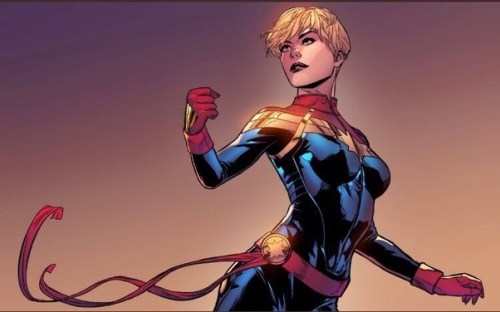
Some characters are iconic from the get-go. Spider-Man, Superman, Wonder Woman, and Batman all managed to establish themselves as special early on in their history. They’re the lucky ones, though. Most characters have to go through a long, arduous process to reach the top tier of superhero icons. A lot of them never make it, but those that do are special in their own right.
These days, the character who best embodies that spirit is Carol Danvers. You don’t have to go back too far to remember a time when she was relegated to the superhero B-list. As Ms. Marvel, she had her share of fans. I was one of them. She also had her place in the annuls of Marvel lore. However, she was never able to break through and join that elite club occupied almost exclusively of Stan Lee creations.
That all changed when Kelly Sue DeConnick came along and reinvented Carol Danvers as Captain Marvel in 2012. That process, which has since become one of my favorite runs on a comic book series of the past 10 years, helped Carol finally break into the upper echelon of superheroes. With a movie coming out in 2019 staring Brie Larson, it’s safe to say she’s entrenched.

I could write a dozen articles about why Carol Danvers’ character resonates more now than it did when she first showed up in 1968. I’ve already mentioned some of the unique challenges she faces as she enters rarefied air among Marvel heroes and female superheroes, in general. However, I want to focus on one particular aspect of her character that helps her stand out.
As it just so happens, it’s also part of her character that recently underwent a major upheaval in the comics. Among other comic book fans, it has been controversial. I’ve certainly seen more than a little whining on message boards and Reddit. I have my share of criticisms too, but I intend to justify why I believe this is a promising new era for Carol “Captain Marvel” Danvers.
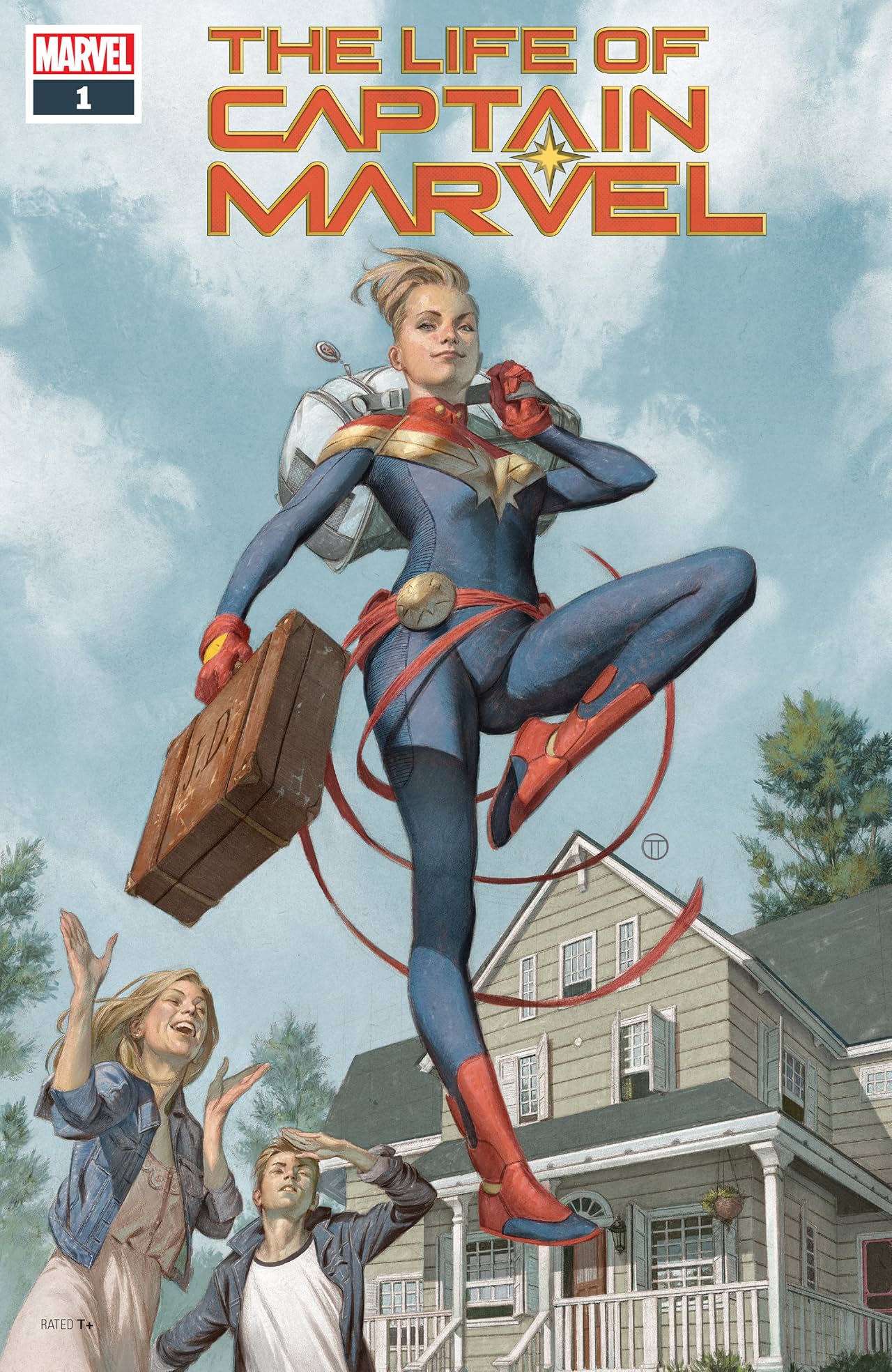
The upheaval in question occurred in a recently-launched mini-series called “The Life of Captain Marvel.” Written by Margaret Stohl, who has been guiding Carol’s journey for several years now, I cannot recommend this series enough. It is, by far, one of the best Carol Danvers stories ever written. Years from now, it will likely mark a major turning point for her story.
That’s because Stohl does something that’s both critical and controversial to Carol’s history. She makes a major alteration to an aspect of Carol’s life that doesn’t change her past, but puts it in a very different perspective. That change, in my opinion, makes Carol a much more intriguing character.
If you want to avoid spoilers, you should probably stop reading here and check out the series. Again, I highly recommend it. The big change, however, takes place in the fourth issue. Here, her mother, Marie, drops a bombshell revelation on Carol that rocks her world. She reveals that she’s half-human and half-alien. Specifically, she’s half-Kree.
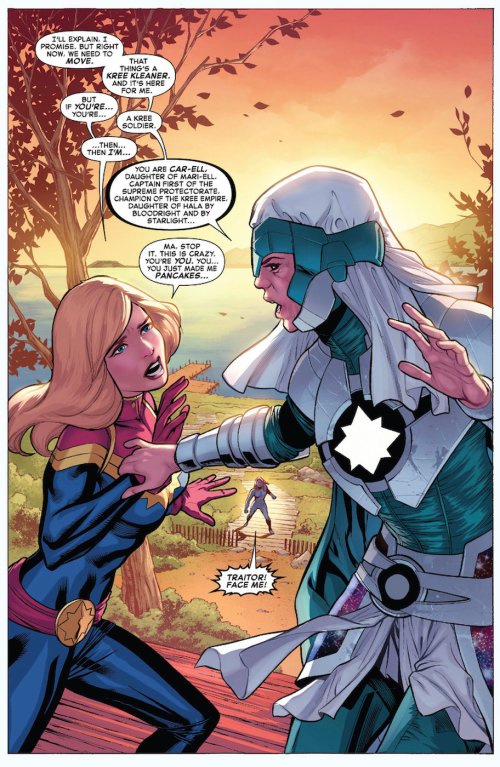
Anyone who saw “Guardians of the Galaxy” knows why that’s a big deal.
Anyone who has a passing knowledge of Marvel history knows why that’s a huge deal.
The fact that she’s half-alien isn’t that unique. Peter “Starlord” Quill has a similar heritage. The reason it’s such a big deal for Carol is because it changes the context of how she got her powers and the role she plays in the greater Marvel universe.
Before this change, Carol’s powers were somewhat of an afterthought. Like Spider-Man, they were the result of an accident. Her’s just involved alien device called the Psyche Magnetron. She got caught in an explosion and that explosion allegedly fused her DNA with Kree DNA to give her superpowers. It’s not the most contrived origins story, but it’s not exactly epic.
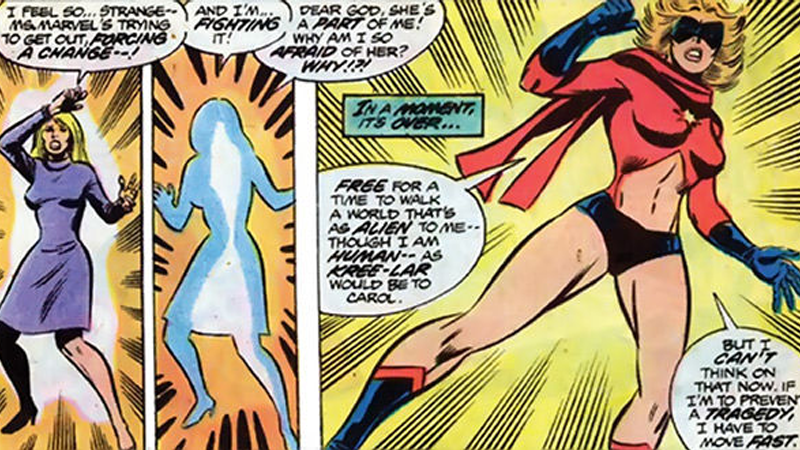
To some extent, getting her powers by accident undercut all the work she did before that. Even without powers, she managed to carve out a successful career in the air force and NASA. That work became somewhat superfluous once she got superpowers. Unlike Peter Parker, she was already on a heroic path. Getting powers just seemed like skipping a bunch of steps.
With the revelation by her mother, there’s more connective tissue between her journey as Carol Danvers and her journey as Captain Marvel. Her mother, who comes out as a full-blooded Kree warrior, tells Carol that the accident wasn’t the sole cause of her abilities. It was just the catalyst. These are her exact words.
“What humans see as Kree powers are just our biological adaptations to a life of combat. They’re triggered in battle, usually around adolescence. Sadly, most of us have known war by then.”
This implies that even if she hadn’t been caught in the crossfire of the Psyche Magnetron, her Kree abilities would’ve come out at some point. For some fans, including die-hard Captain Marvel fans, it feels like this is denigrating her origins. I respectfully disagree with that notion. I believe this gives Carol’s story a new kind of appeal.

In terms of how superheroes become iconic, how they get their powers and how they choose to use them plays a huge part in their appeal. I would argue that just making Carol an ordinary human who got caught in an accident has limited appeal. Like I said before, she’s not Peter Parker. She’s not an average person. She’s more like Batman in that she’s an overachiever who strives to do more.
Her being half-Kree adds a new dynamic to the mix because it makes Carol a product of two different worlds. She is born on Earth and lives her whole life as a human. However, she now has this alien heritage that has already influenced her life in ways she didn’t understand. You need only look at the mass appeal of Superman to see why that story is compelling.
Being half-Kree means Carol suddenly has a connection to a race that has waged war on Earth before. She also has a connection to a world that has blatantly experimented on humans before. At the same time, her human life wasn’t exactly ideal. Unlike Superman, she was not raised by picture perfect parents like the Kents.

Her mother, despite being a Kree warrior, was in an unstable relationship with Carol’s very human father. Their family suffered a devastating loss when Carol’s brother, Steve, died in combat. They never really recovered from that and, for most of Carol’s history, that loss kept her parents as a side-note at best in her journey.
With Carol’s mother being a Kree warrior, it changes her into something more than a woman who stayed in a bad marriage. It adds more layers to why she and her husband clashed. Even in the first few issues of “The Life of Captain Marvel,” her father comes off as a generic asshole. Finding out he was dealing with an alien wife makes his struggles a lot less generic.
In many ways, Carol’s parents represent her divided heritage. Her father didn’t want her embracing her Kree side and fighting alien wars. Having already lost a son, who can blame him? Her mother didn’t want to stop Carol from embracing both sides of her heritage, even though that was sure to leave her conflicted.
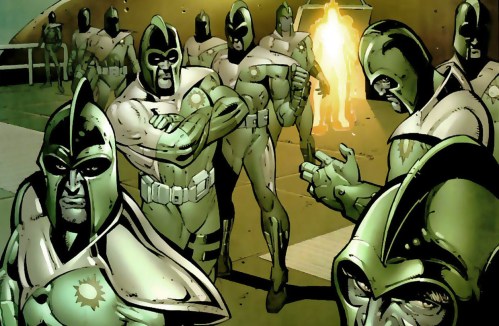
It effectively connects Carol’s superhero journey with that of her family. Those journeys involve some heavy losses, painful secrets, and destructive alcoholism. It’s something you’re not going to find with Superman, Spider-Man, Batman, or any of the X-men. It leaves Carol Danvers in an uncertain, but promising state.
It’s not yet clear how much of Stohl’s revisions will find their way into the “Captain Marvel” movie. To some extent, it helps that Carol’s origin isn’t as iconic as that of other heroes. The Marvel Cinematic Universe has already done some considerable tweaks to certain characters to make them fit the narrative. I have a feeling we’ll see plenty of that in the movie.
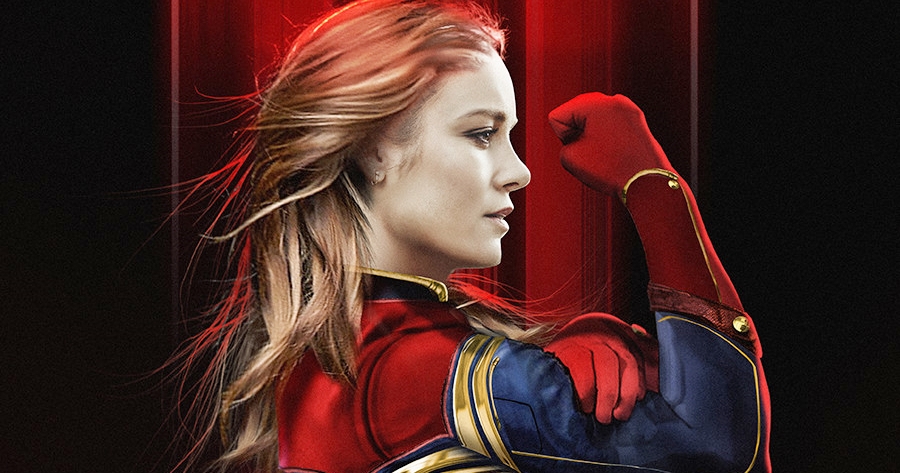
However things plays out on the big screen for Carol, I think her story in the comics just became a lot more interesting. I know there are some fans upset by this. I’ll even concede there are some parts of this revision I don’t care for. There was some appeal to Carol just being an ordinary human who worked her ass off to achieve what she did.
Every major revelation or retcon in a comic or movie comes at a price. You’re bound to upset some people. That’s unavoidable in a world full of such diverse tastes. However, I believe that Carol gained much more than she lost in “The Life of Captain Marvel.” I believe she’s bound to gain a whole lot more, both through her movie and through the new host of stories that can be told.
Whatever the case, I hope Brie Larson takes plenty of notes.

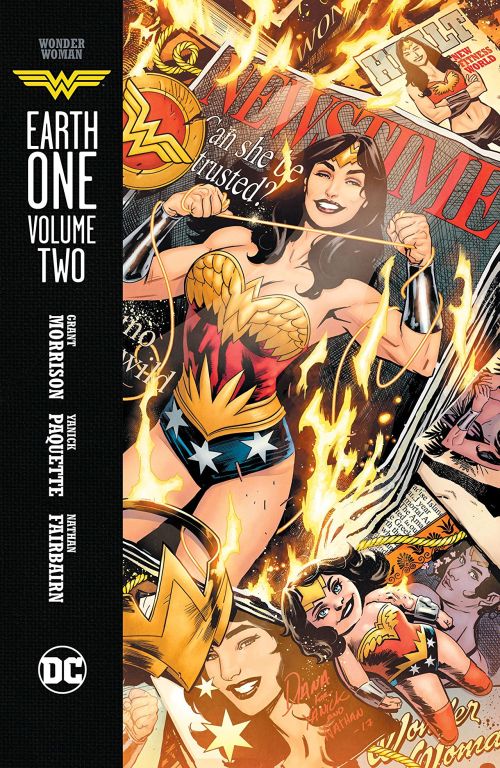
When “Wonder Woman Earth One: Volume 1” came out in 2016, it was groundbreaking in how it re-imagined Wonder Woman while reconnecting her with her kinkier roots. For years, she’d been moving away from the unique brand of feminism that her creator, William Moulton Marston, had once defined her. This culminated in her 2017 movie in which all the BDSM connotation were purged from her persona.
While many creative forces over multiple decades turned Wonder Woman into someone very different from her creator had intended, Grant Morrison and Yanick Paquette went in the opposite direction. They dared to embrace the kinks and reshape Wonder Woman’s story in a way that works while retaining Marston’s original themes.
That story remains one of my favorite Wonder Woman stories of all time and one I’ve gone out of my way to praise. Finally, after a two-year wait and a prolonged absence of kink from superhero comics, “Wonder Woman Earth One: Volume 2” has arrived. Fans of warrior women, feminist utopias, and not-so-subtle bondage themes can rejoice.

Like any sequel, it faces the inescapable challenge of matching the high bar set by its predecessor. On top of that, it also has to dig deeper into an aspect of Wonder Woman that generations of writers have tried to overwrite or ignore. Even with an elevated profile, thanks to her movie, this is a part of Wonder Woman’s persona that is largely unknown or undeveloped.
The greatest challenge of Volume 1 was to reintroduce Marston’s radical concepts of love, submission, and domination in a way that didn’t feel like bad fan fiction. Morrison and Paquette succeeded by building the story around this dazzling, techno-feminist utopia on a mythology built on ideas that seem antithetical to the world dominated by lies, mistrust, and cynicism.
If the goal of that story was to affirm the potential of these ideas, then “Wonder Woman Earth One: Volume 2” is built around how those ideas are challenged. It’s one thing to defend them on an island paradise populated by immortal warrior women of unyielding compassion. It’s quite another to defend them in a world where gay frogs inspire conspiracy theories.

Wonder Woman’s situation is considerably different this time around. She’s not insulated on her island paradise. She’s well-known public figure, an established superhero, and a vocal proponent for her radical ideology. She presents it as a viable way of achieving peace and justice in a world full of suffering and hatred. Unlike other wide-eyed idealists, she comes off as entirely genuine.
Not surprisingly, the world isn’t eager to sign up for her novel approach of peace through submission to a loving authority. It doesn’t just come from grumpy old men who only want women to make babies and sandwiches, either. Even among other women, her ideas are challenged and deconstructed throughout the story.
What does it even mean to submit to a loving authority?
Why is she so sure that it’ll work in the world outside her idyllic homeland?
How are men supposed to approach this concept?
How far is she willing to go to implement her ideas?
These are all difficult questions that get asked throughout the story. Wonder Woman doesn’t avoid these questions, but she doesn’t get a chance to answer them either. Even though she is celebrated by many, nobody seems capable of embracing her ideology as completely as her.
To further complicate this challenge, Nazis enter the picture. Trust me, it’s not as shallow as it sounds. The story isn’t built around Wonder Woman acting like Captain America, traveling the world and punching Nazis. In fact, the way she handles her enemies in this story is very different to the methods she used in the “Wonder Woman” movie. However, that’s where the story gains both complications and nuance.
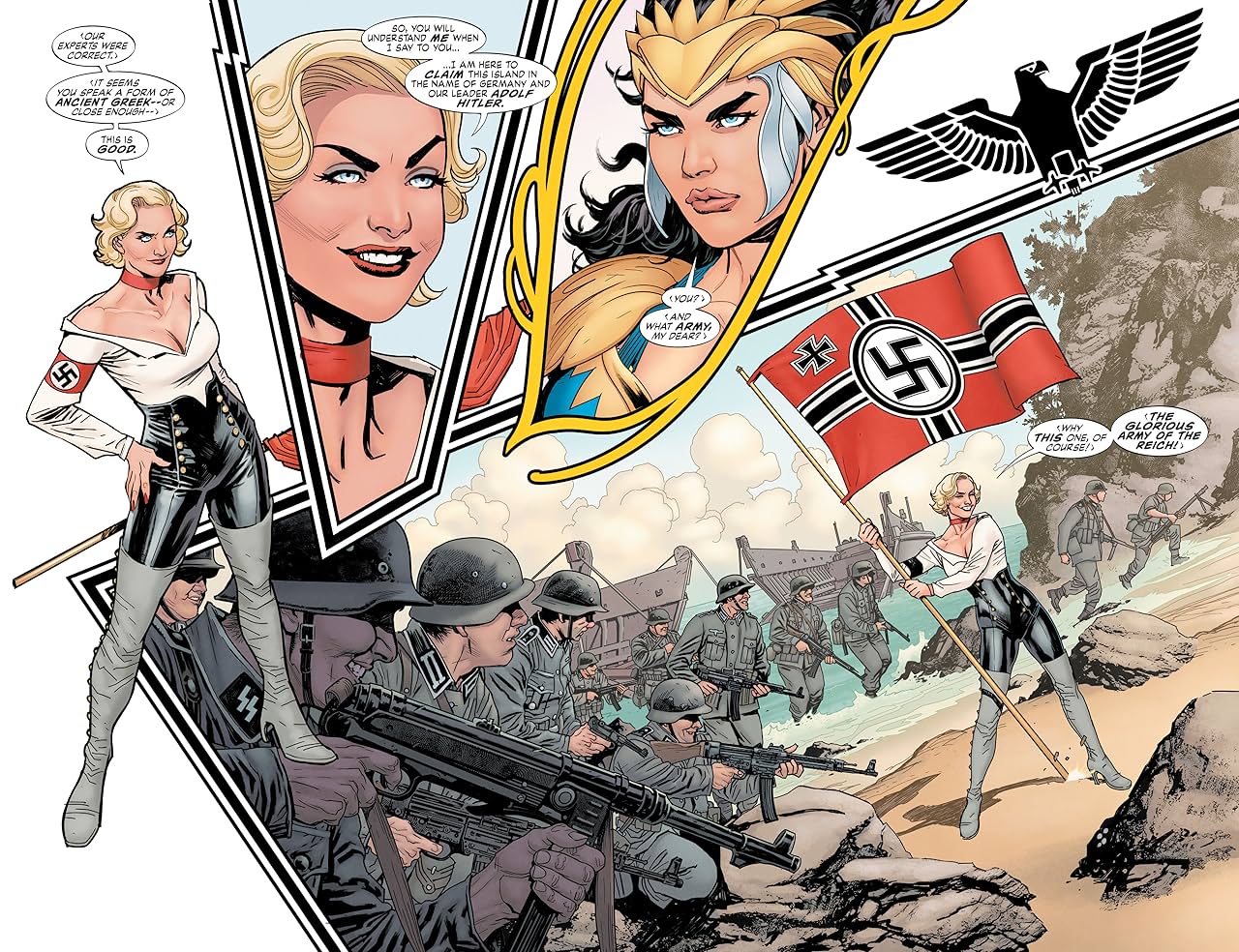
Through a few flashbacks and side-plots, we get to see how Wonder Woman’s ideology confronts something that’s completely antithetical to everything she stands for. Initially, it looks like her approach works. She’s so compassionate and so empathetic that she can take violent, hate-filled Nazis and redeem their souls. That’s where the complications come in.
In both the events that unfolded in the past and those that play out in the present, we see shortcoming of Wonder Woman’s ideals. It’s not that someone taints or disproves them. As the conflict plays out, we see how the components necessary to make her ideology work aren’t as abundant as they are in her homeland. As a result, Wonder Woman pays a price for her idealism and it’s a steep, heartbreaking price.
Not all of it is a direct result of her ideology, though. Wonder Woman also deals with a devious adversary in Dr. Psycho, who effectively turns her ideals against her. He doesn’t just question or deconstruct the merits of submission to a loving authority. He manipulates them to his own ends, which plays right into the hands of her critics.
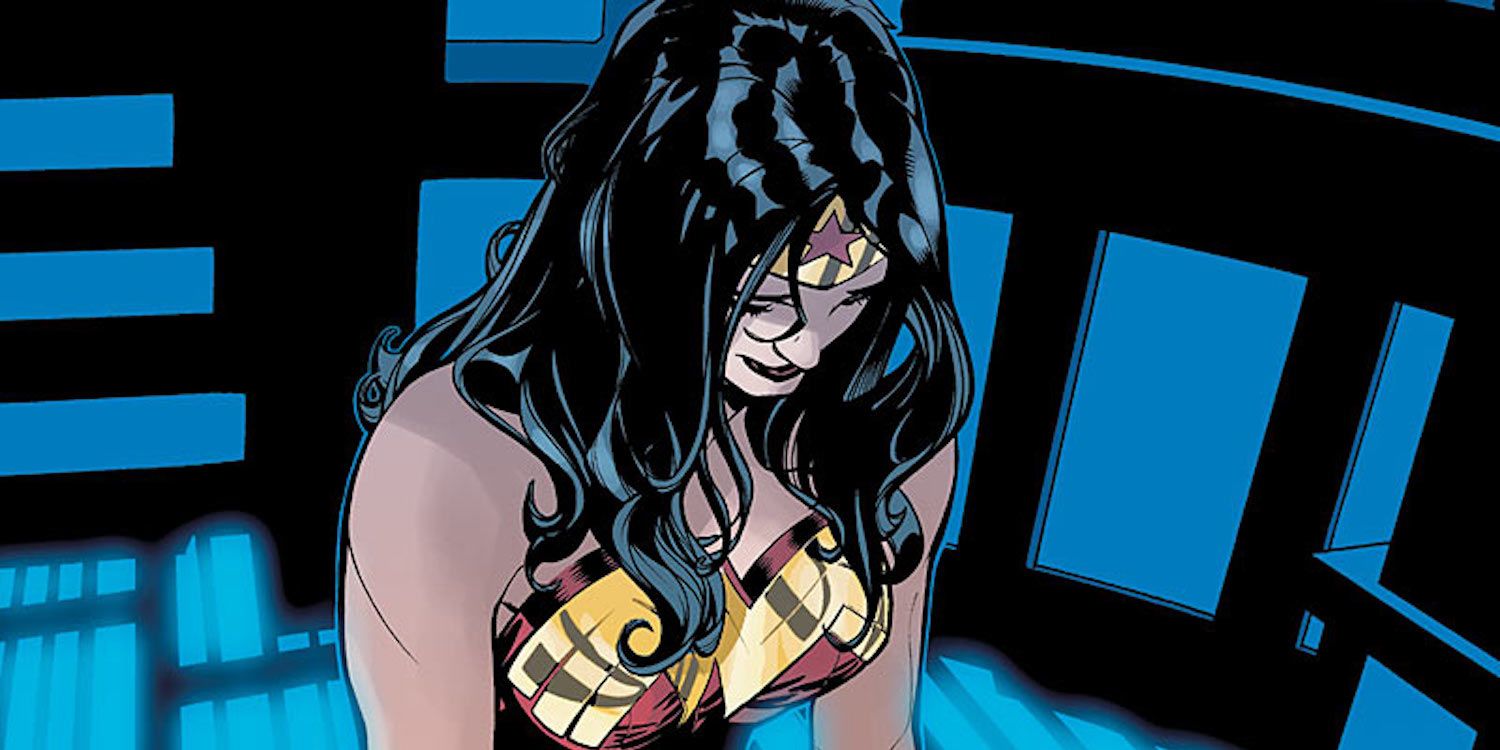
It’s tragic in that it leads to heartache for Wonder Woman and her friends, but it stops short of breaking her. This is Wonder Woman, after all. Loss, defeat, and criticism do not break her. No mortal or God can break her. Those are her words, not mine. These challenges, however, put her in a difficult position where she has to confront unpleasant truths.
Without spoiling too many plot points, I’ll note that Wonder Woman comes to realize that there are grater complexities to loving submission than she ever could’ve realized. She sees first-hand how difficult it is to get someone to willingly submit in a world where weakness can invite harm, exploitation, and injustice. Just preaching her message isn’t enough. By not doing more, it costs her and those she cares about.
In terms of the larger narrative, “Wonder Woman Earth One: Volume 2” is a wonderfully effective evolution of the world that Morrison and Paquette created. Along the way, the story continues to embrace the unique principles of the original iteration of Wonder Woman that Marston crafted in 1942.
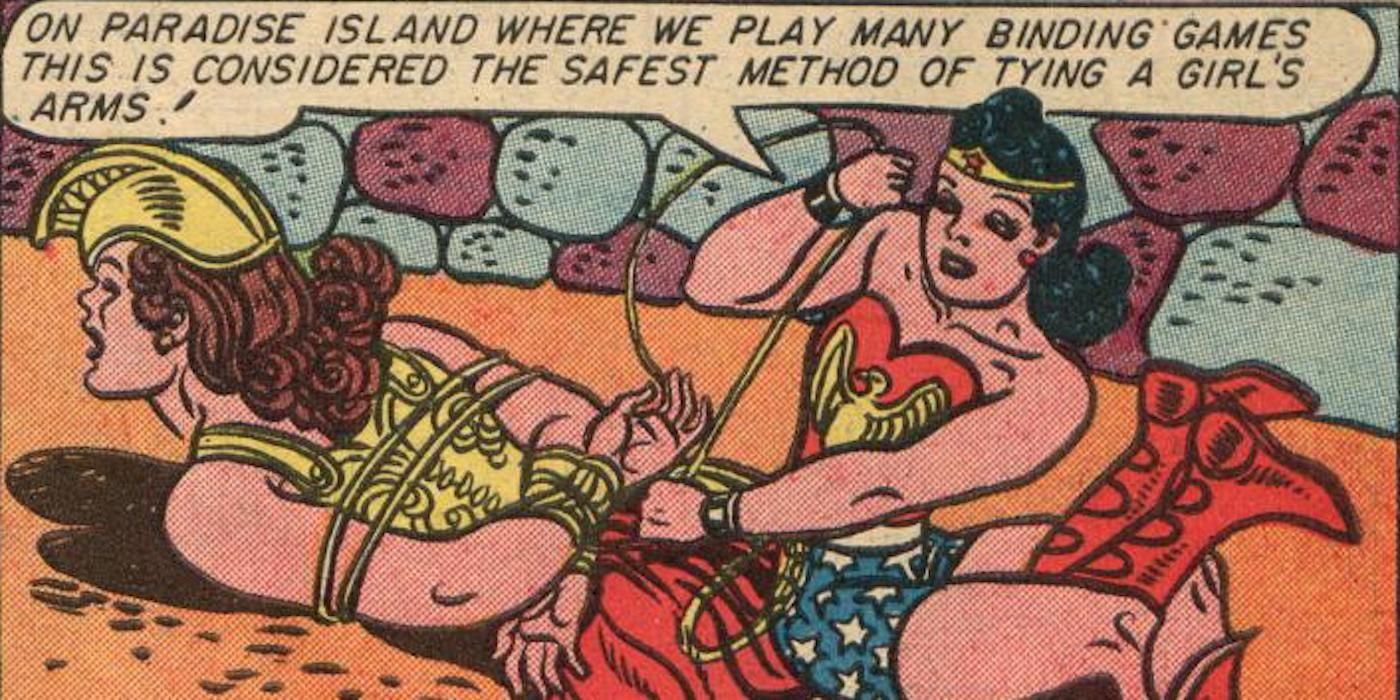
Not entirely, that is.
If there’s any shortcoming to the narrative, it’s how incomplete it feels at the end. It’s not a cliff-hanger, but there are many lingering plot threads that don’t get resolved. Granted, it says on the final page that there is a Volume 3 planned for this series. Given the two-year gap in between this book and its predecessor, the wait seems nothing short of agonizing.
Even with those dangling threads, “Wonder Woman Earth One: Volume 2” is still a complete Wonder Woman story that’s unlike anything you’ll get in the movies or comics. If I had to score it, I would give it a 9 out of 10. The lack of resolution at the end is the only thing keeping it from a perfect score. It still gets so many things right about who Wonder Woman is and why she’s so endearing.

The fact that she can be endearing while retaining the radical spirit that Marston had envisioned helps make “Wonder Woman Earth One: Volume 2” all the more remarkable. She’s not just a fierce warrior woman. She’s the personification of a different approach to gender, power, and love. It may seem bizarre and kinky to us, but it has powerful implications for people of any gender.
It doesn’t go overboard with the BDSM undertones, nor does it focus heavily on gender politics. They are mentioned, but not forced into the plot. There are things Wonder Woman does that feminists, conservatives, and BDSM fans can get behind. At every turn, she carries herself as someone who is willing to embrace everyone. It’s that unconditional, universal compassion that makes her Wonder Woman.
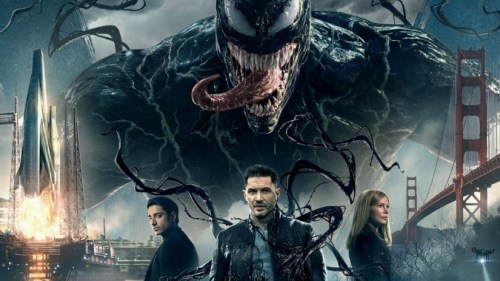
Certain movies are subject to unique standards. Nowhere is this more apparent than with superhero movies. A sci-fi movie can be flexible with its use of sci-fi elements. The same can be said for generic genres like romantic comedies, horror, action, and even stoner movies. A superhero movie, whether fairly or unfairly, will be judged by much stricter criteria.
This is the problem “Venom” faced before it even started shooting. Most fans, especially those who follow Marvel Comics, were probably intrigued by the possibility of a movie about Venom. Casting Tom Hardy in the lead role definitely help. No offense to Topher Grace, but he’s far more qualified to play Eddie Brock than he’ll ever be.
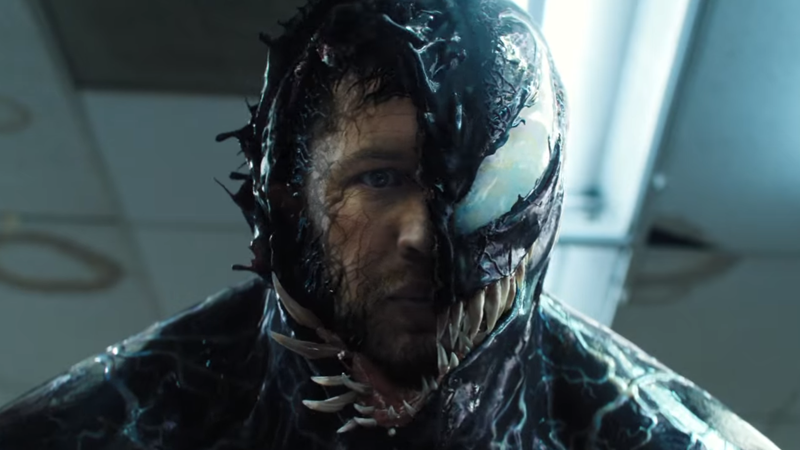
Even so, “Venom” had a lot of logistical problems from the beginning. It wasn’t going to feature Spider-Man. It wasn’t going to take place in the Marvel Cinematic Universe. It wasn’t even going to get input from Kevin Feige and everyone else at Marvel Studios, who have made creating billion-dollar movies seem inane. By some standards, that’s a serious handicap.
Most Marvel fans, and I consider myself one of them, aren’t too keen on the idea of a Venom movie that doesn’t involve Spider-Man or have any connection to the MCU. Even if you have a passing familiarity with Venom in the comics, you probably know that a lot of his story is connected with Spider-Man. Telling a Venom movie without Spider-Man is like telling a Joker movie without Batman.
Actually, that may be a bad example. Forget I said that.
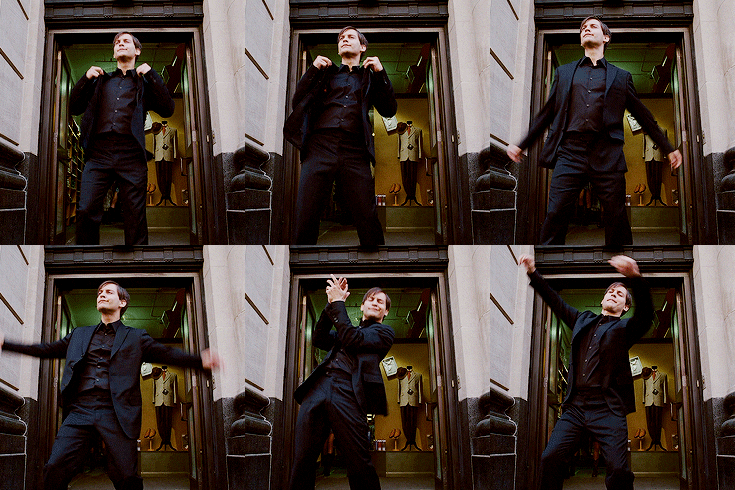
Logistical issues aside, I was still intrigued enough to give “Venom” a try. Like many other Marvel fans, I was not pleased with how his story was handled in “Spider-Man 3.” The only good that came out of that was a slew of dancing Toby Maguire memes. I felt Venom deserved better.
Well, without getting too deep into spoiler territory, I can affirm that “Venom” definitely succeeded where “Spider-Man 3” failed. It’s not just a good movie about Venom. It’s a good movie, overall. It had a lot of things working against it, but it still worked.
I know that the movie didn’t exactly thrill critics, nor did it blow the minds of hardcore fans who saw it. At the same time, it wasn’t messy or cumbersome like the theatrical cut of “Batman v. Superman: Dawn of Justice.” Yes, this movie probably would’ve benefited by taking the “Deadpool” approach and gone for an R-rating. However, it still succeeds in many ways.
At its core, “Venom” works because it’s less about alien symbiotes infecting random people and more about Eddie Brock. This is his story and Tom Hardy does an excellent job capturing his persona. You don’t have to read a single comic to understand that Eddie Brock is not Peter Parker. He’s not exactly a hero, but he’s not a blood-thirsty villain, either.

Although that’s not necessarily obvious.
Eddie Brock is one of those guys who’s a loser and not just because he ends up bonding with a parasitic alien. One of the best things this movie did was show that Eddie’s life falls apart because of a decision that he makes. He’s not a victim of bad luck. In the beginning, his life is actually really good. However, he makes a fateful choice that completely changes that.
At the same time, the movie establishes that Eddie is not the kind of guy who jumps at the chance to be a hero. He has a few opportunities before he bonds with the Venom symbiote. He doesn’t take it and unlike Peter Parker, it’s not purely out of responsibility. He’s just not the kind of guy who embodies the selfless spirit of Superman or Captain America.
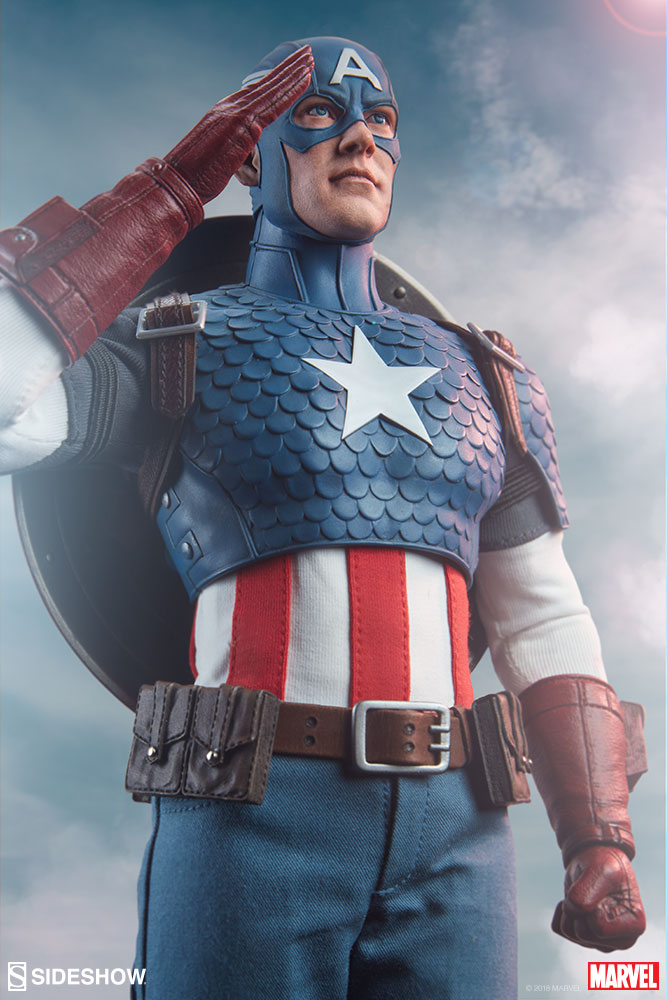
Then, when he encounters the symbiote, these personality flaws intensify. At first, he’s just overwhelmed. He reacts in a way most people would. His first instinct isn’t to help people or be a hero. He’s actually petty and self-serving for the most part. As the story unfolds, he and the symbiote literally and figuratively feed off one another. They both grow and evolve, as characters.
That process involves plenty of action, some of which is pretty visceral. If you’re looking for the kind of cartoonish beat-downs we got in “Spider-Man: Homecoming,” you’re going to be disappointed. The action here is quite violent. It’s not on the same gratuitous level as “Deadpool,” but it’s close and it even holds back at times.
Given Venom’s brutal nature in the comics, this can be a bit of a problem. In watching this movie, you get the sense that the effects team worked overtime to keep the violence just below PG-13 levels. At times, it feels forced and that impacts the story to some extent.

This moment could’ve been MUCH bloodier.
That’s not the only issue, nor is it the biggest. While I believe the story works, I also can’t deny that it’s missing some key components. Those not familiar Spider-Man’s history surrounding Venom probably won’t notice, but it’s hard for me to be a Marvel fan and overlook some of these flaws.
The story of how Venom and Eddie Brock come together is solid, concise, and compelling, as it’s presented in this movie. However, it still feels like it’s missing a lot of emotional depth without Spider-Man. A big reason why Venom, and Eddie by extension, becomes so menacing is because of Spider-Man’s role in his story. Removing him from that story is glaring, to say the least.
To fill in those gaps, the movie creates a new source of conflict through the Life Foundation, which acts as the primary antagonist through its unscrupulous Mark Zuckerberg wannabe, Carlton Drake. That’s not to say Drake isn’t a decent villain, but he’s not even in the same hemisphere as Erik Killmonger or Thanos.

Pictured here is NOT Thanos.
Even by non-superhero standards, these villains are pretty bland. It’s basically Venom versus and evil corporation who ends up serving an alien agenda. There’s nothing memorable or iconic about them, but that’s okay in the context of this movie because they still fulfill their primary purpose. They create the necessary moments that move Eddie’s story forward.
On top of that, the lack of connections with the MCU make this movie feel small by comparison, especially in a year when “Black Panther” and “Avengers: Infinity War” broke box office records. “Venom” has everything it needs to connect with the MCU. There’s nothing in the story that precludes it from having a role, but Sony has gone on record as saying that this movie is completely detached from that world.

The shared reaction of many Marvel fans.
As much as I’d love to see Tom Hardy and Tom Holland battle in a future movie, the lack of MCU connections still don’t take away from everything this movie does well. Overall, “Venom” is good movie that had a lot of factors working against it. This movie faced an uphill battle from the beginning, but still managed to achieve a lot. If I had to score it, I’d give it a 7 out of 10.
I’ve heard some claim that this movie belongs in the early 2000s and just doesn’t work within the current market of superhero movies. I say that’s bullshit. Good movies work, regardless of the year or era they come out. “Venom” is a good movie, but it’s also one that could’ve been much greater.
Coming out of the theater, I was satisfied, but felt as though there was a lot of potential left on the cutting room floor. It’s hard to know whether this movie would function better with an R-rating or as part of the MCU, but it manages to do plenty within its many constraints. Tom Hardy was handicapped in bringing Eddie Brock and Venom to life, but he still pulled it off.
Again, with all apologies to Topher Grace, Tom Hardy is now the definitive face of Venom and this movie sets him up for a promising future.
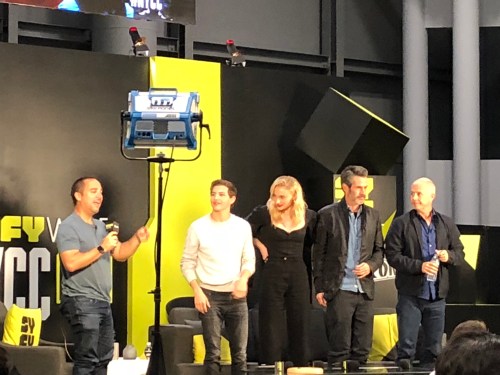
There were a lot of wonderful moments at New York Comic Con this year. While I’ve already shared a few, it’s safe to say that the biggest highlight for me was being able to attend the panel for the “Dark Phoenix” movie. Since I’ve made my excitement and concerns about this movie very clear, I don’t think that should surprise anyone.
The panel itself was very well-attended. Anyone who claims that nobody is interested in this movie since Disney is buying Fox can officially piss off. As soon as Tye Sheridan and Sophie Turner walked out onto that stage, there was a huge cheer that echoed throughout the Jacob Javits Center. It was a really powerful moment.
I had to fight my way through a lot of equally-eager X-men fans to get a good seat. These pictures, by the way, are not taken from some comic reporting site. I took these with my phone and I’m very proud of how close I managed to get. It’s probably the closest I’ll ever get to celebrities like this for the rest of my life.
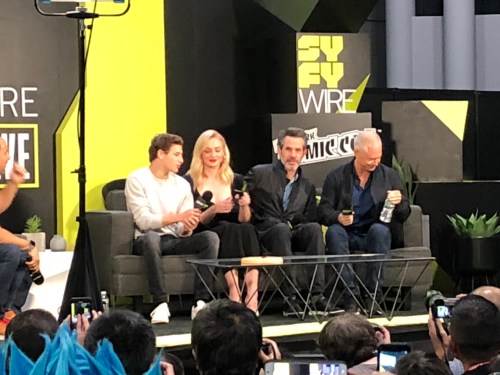
While at the panel, I learned a few things of note that made me all the more excited about this movie. Some of those things have already been reported by some sites. Here are a few others I picked up on.
Sophie Turner and Tye Sheridan have great chemistry, more so than James Marsden and Famken Jansen did in the original X-men movie.
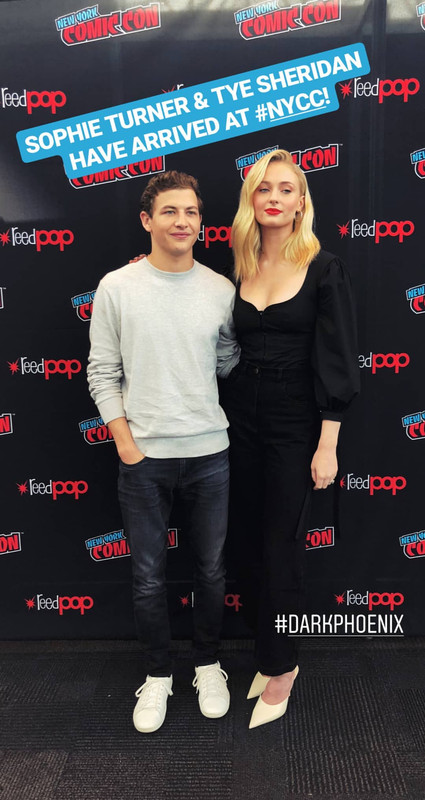
This was obvious by how how well they got along, how close they sat, and how much they smiled around one another. You can usually tell when an actor and actress don’t get along. It really shows and it tends to undermine the movie. If you don’t believe me, just look at how that worked out for Hayden Christiansen and Natalie Portman in “Star Wars: Attack of the Clones.”
This movie will fully embrace the cosmic nature of the Phoenix Saga.

Those aren’t my words. That’s what Simon Kinberg said outright during the panel. He flat out admitted that “X-men: The Last Stand” did not do justice to the Phoenix Saga, which actually drew some cheers. He then made clear that the cosmic part of the Phoenix will be a big part of the movie and the footage they showed definitively proved that.
This is huge because anyone who claims this movie is just a remake of “X-men: The Last Stand” will not be able to say that with a straight face after seeing how it plays out.
Jean Grey is NOT the one in that grave during the funeral scene depicted in the trailer.

I was kind of surprised that Kinberg confirmed this, outright. He said during the interview that the funeral scene was not for Jean. There was someone else in that grave and the identity of that person, which he did not reveal, is what really divides the team.
On top of that, Kinberg made clear that this moment really undermines the faith the X-men have in Charles Xavier. Before this moment, they trust him implicitly. Jean, especially, trusts him. After what happens here, though, the team somewhat turns against him and he struggles to regain their trust.
That’s another powerful bit of drama that “X-men: The Last Stand” did not do much to develop. Xavier makes some hard choices and the consequences of those choices hurt many.
Cyclops really steps up and becomes the true leader of the X-men.

This also got plenty of cheers from the crowd. To hear Tye Sheridan talk about his character was a powerful moment. He talked about how Cyclops finds himself in a tough position where he has to make decisions that put him against others. He has to go against the will of friends, teammates, and even Charles Xavier. He isn’t given the role of leader. He earns it.
For the many Cyclops fans who hated how he got treated in the original X-men trilogy, this should be music to your ears. I could feel Tye’s enthusiasm for the character, along with many others in the crowd. I also noticed Sophie Turner smiling a lot when he talked about it, which I also think was a promising sign.
Jennifer Lawrence, more than any other cast member, tried to get “Game of Thrones” Spoilers out of Sophie Turner.
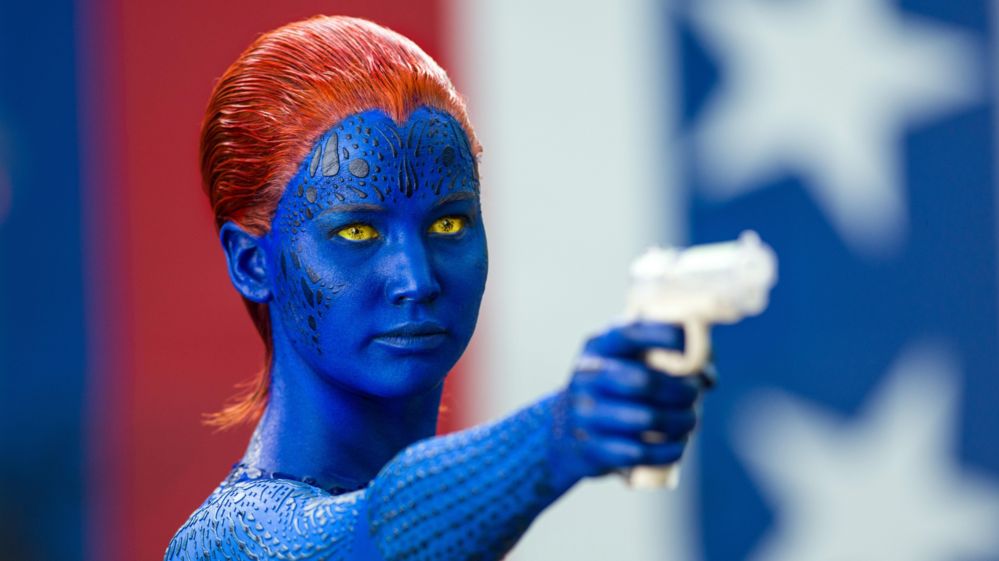
This was a serious question that also got some cheers, mostly from people dressed as “Game of Thrones” characters. Sophie Turner didn’t hesitate when she answered. She said that Jennifer Lawrence made her love of “Game of Thrones” very clear on set. She tried on more than one occasion to get some details from Turner. She didn’t say how much she succeeded, but I wouldn’t be surprised if Lawrence knows something we don’t.
There are a lot of other details I could mention from this panel. I’ll keep them to myself, though. They are now among my most precious memories of New York Comic Con and I honestly don’t know how they’ll be topped in the years to come. After being part of this panel, though, I’m a lot more hopeful about this movie. I genuinely believe it’s going to be the movie X-men fans have been waiting for.
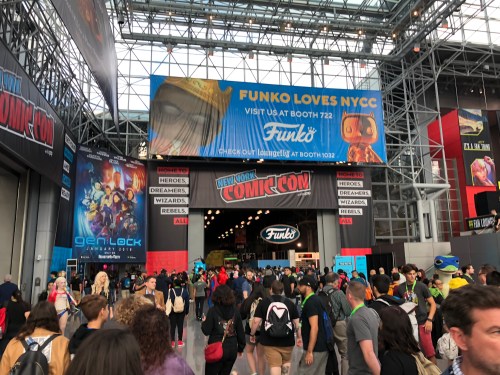
Another New York Comic Con has come and gone. Once again, the experience has left me astonished, amazed, and satisfied. Every year I go, I worry that next year will have to be a let-down compared to this year. Time and again, I’m proven wrong.
This year was probably my most ambitious year at New York Comic Con. In the past, I was just so overwhelmed by the crowds and spectacles that I didn’t really map out all the events and panels I wanted to attend. This year, however, I tried to make a list of all the places I wanted to go and all the people I wanted to see.
Needless to say, it made for a more exhausting trip, but it was so worth it. I got to meet people I really wanted to meet. I got to interact with fellow fans in a way that was very rewarding. I even managed to meet a few celebrities that made my inner child squeal with joy.
It would take too long to detail everything I saw and experienced. However, thanks to having extra chargers for my phone, I managed to take plenty of pictures. What follows are just some of the sights I saw at New York Comic Con. Some of them were just fun. Others were downright sexy. As always, I am deeply grateful to everyone who once again made New York Comic Con an awesome experience.


Today, there’s no need for sexy musings.
Today, there’s no time for sexy stories.
Today is all about me heading to the New York Comic Con! I’ve documented my experiences before. I’ve every intention of doing the same here. Every year seems to bring a new experience, a new spectacle, and a new story to tell. Say what you will about nerd culture and superhero media. It’s a hell of an experience and one that fans like me deeply cherish.
I hope to post various updates throughout the day. If I encounter anything especially exciting or sexy, I’ll be sure to document it here. For now, just know that I am on my way to the Jacob Javits center in New York City where I hope to join those looking to share the experience.
What makes a character cute?
That’s a not an empty question. It’s one that movie studios, TV networks, toy makers, and novelists attempt to answer every day. I’m not just talking about the ones affiliated with Disney, either. While the House of Mouse is legendary for crafting a winning formula for the creation of all things cute and lovable, it’s worth breaking down the components.
Understanding them isn’t just important for creating likable characters. It can be pretty damn lucrative too. Just look at the merchandise sales for “Frozen.” Cute, adorable characters sell. They sell a lot. Plenty has been written about the cuteness of characters created by Disney, Fox, and a multitude of Japanese anime. However, I’d like to single out one particularly adorable character.

As it just so happens, this character is from the world of superhero comics. Specifically, she’s from the X-men comics. If you’ve followed this website for any length of time, this shouldn’t surprise you in the slightest. I promise this isn’t just another love letter to the X-men like the many I’ve crafted before. This is an exploration of a character who forged a unique path to cuteness.
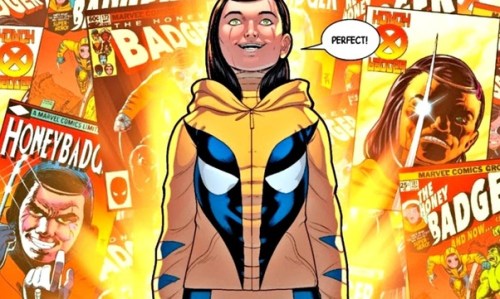
Her name is Gabrielle “Gabby” Kinney, also known as Honey Badger. You probably haven’t heard of her because, in the context of Marvel’s vast history, she’s very new. She has only been around for about three years. In that time, though, she’s done plenty to make her mark on the world.
Think of the cutest characters you’ve ever known. Whether it’s a talking animal, a princess, or a boy band, take a moment to contemplate all the traits that make them cute. From their looks, their personality, their story, and everything in between, think about qualities that make them so adorable.
Without hesitation, I can say Gabby has all those qualities, as well as a few you didn’t know could be so adorable in the first place.
That may sound like a bold claim, but it’s true. After reading every issue of All-New Wolverine, I genuinely believe that she has raised the bar for cuteness for any character, both within superhero comics and in the real world. To appreciate why her story is so remarkable, it’s necessary to know some key details about her backstory.

This should give you a few telling hints.
On paper, she doesn’t come off as the kind of character who can be overly cute. She’s a clone of Laura “X-23” Kinney, who herself is a partial clone of Wolverine. Given the number of clone-based character in comics, including a few who are notably infamous, she doesn’t have a lot going for her at first.
That changes quickly after she’s introduced. She’s actually one of three clones from Laura, but she ends up being the one who makes the greatest impression and not just because she doesn’t go evil, which tends to happen a lot with clones in comics.
From the beginning, Gabby sets herself apart as being the more upbeat, bubbly clone of the bunch. She’s not overly angry or vindictive. She isn’t even that bothered by the fact that she’s a clone. It helps that she’s just a kid, but it also helps that this has never been hidden from her. She knows what she is and doesn’t whine about it. That, alone, makes her more mature than the majority of adult heroes, even the non-clone ones.
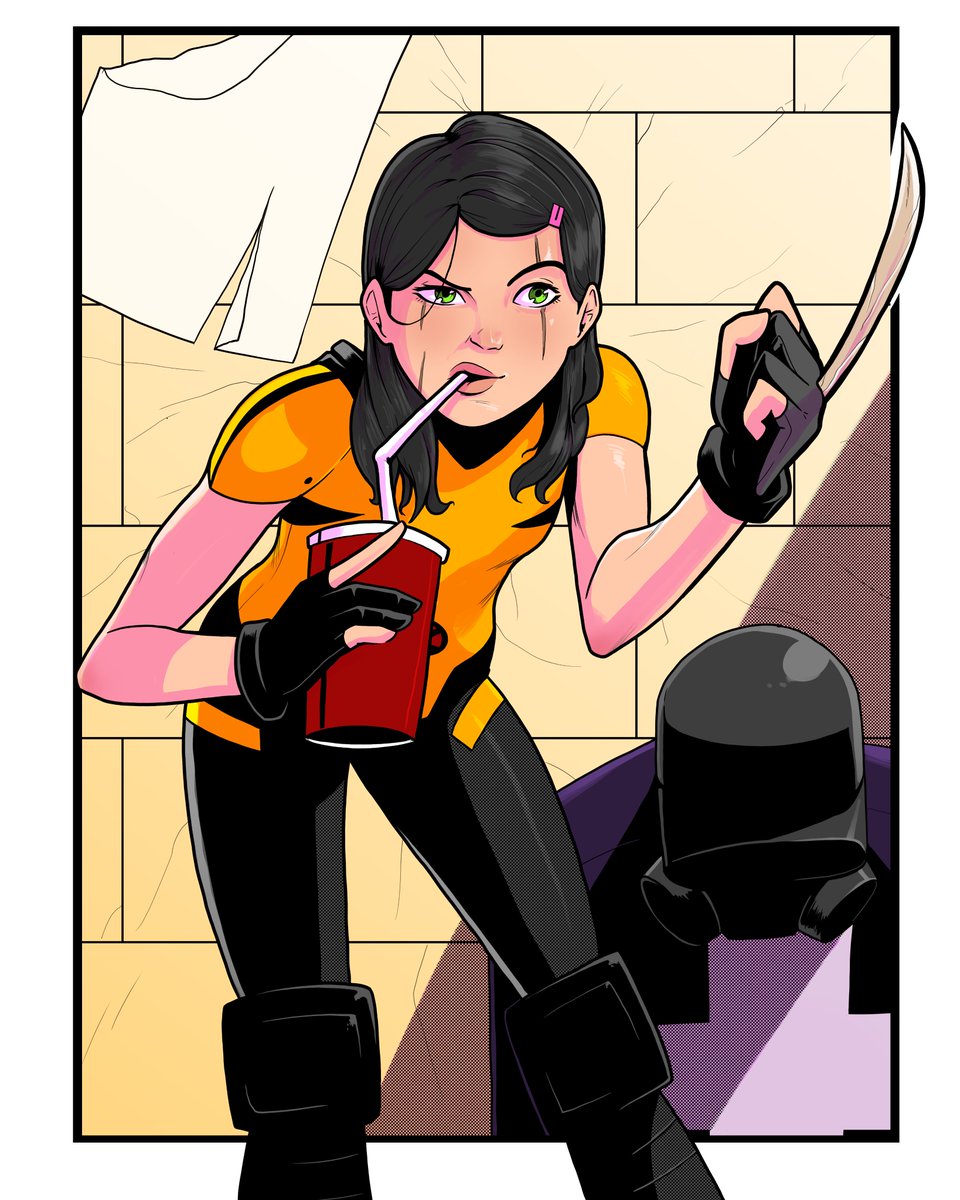
She even has a sense of humor about it. She doesn’t take herself too seriously. She doesn’t get too uptight in tense situations, either. That even includes dangerous situations that involve dragons, zombie animals, and alien parasitic bugs. Gabby sees the world through a rose-colored lens, regardless of how ugly it is, and this is the key to what makes her so adorable.
Whether she’s helping Laura battle Sentinels or caring for a pet wolverine, Gabby always finds a reason to smile. She’ll always look for the lighter side of a complicated situation and help others see it. That sort of thing is becoming increasingly precious in today’s overly-cynical world, but it’s especially powerful in the world of superhero comics.
The very premise of any world involving superheroes requires that the world contain the kinds of chaos that can’t be contained with extra police and stiffer fines. In Gabby’s case, she inhabits a world full of evil organizations like Hydra, shape-shifting aliens like the Skrulls, and actual devil-like creatures that go out of their way to ruin marriages between iconic characters.
The fact that Gabby can lighten the mood under those circumstances helps amplify her lovability. Make no mistake. She is disturbingly lovable. I say that as someone who was extremely sick of clone character at the time All-New Wolverine debuted in June 2015. However, the writer of All-New Wolverine, Tom Taylor, went the extra mile with Gabby.
It’s not just in the light-hearted jokes that she makes. It’s not just the fact that she’s a cute kid full of youthful innocence, despite having been cloned in a lab by assholes who wanted to make her a living weapon. Any character can just say goofy things and ignore the horrible crap going on around them. Where Gabby really shines is how she affects those around her.

From the moment she meets Laura to her first hilarious team-up with Deadpool, Gabby has a positive influence on pretty much everyone she meets. She doesn’t get scared or overwhelmed by any given situation, even those involving parasitic aliens. She never lets these situations destroy her child-like innocence.
That, in and of itself, sets her apart in a major way. In so many other stories involving cute characters, their innocence is treated like fine china. It’s easy to crack, easy to taint, and irreparable when damaged. More often than not, a big part of a plot surrounding cute characters is how they become corrupted.

Tom Taylor basically turns that narrative upside down. Rather than build the story around how Gabby loses her innocence, he essentially surrounds her innocence in an adamantium shell that’s every bit as unbreakable as Wolverine’s claws.
This is critical to what makes Gabby uniquely cute, but it’s also important to the presence she brings to the X-men comics and the larger Marvel universe. Instead of having everyone try to protect her innocence, she basically has to shove her cuteness in their face and remind them that she doesn’t need protecting. In fact, they need her more than she needs them.
She gives them a reason to laugh and smile after Hydra has taken over the United States. She gives them a reason to feel good after the Red Skull comes back to life yet again to bring old-fashioned fascism to the world. She goes out of her way to be a positive presence on everyone she encounters. However, it’s her impact on Laura where her cuteness becomes genuinely endearing.

To appreciate why that matters, it’s worth recalling just how dark and brutal Laura’s story has been thus far. That story has closely followed that of her predecessor, Logan. She was born in a lab, subject to dehumanizing treatment, and turned into a living weapon. Unlike Gabby, she didn’t escape it until she’d committed soul-scarring atrocities, one of which included the death of her mother.
Since her introduction in the memorable, yet underrated “X-men Evolution” cartoon of the early 2000s, Laura has personified a worst-case-scenario for a cloned character. Her life, her story, and her personality are driven by loss, anger, and sorrow. Then, Gabby comes along and suddenly, there’s a light in her life.

Gabby is like a breath of fresh air to someone who has only been breathing smog for all their life. She’s like a hot shower after spending 4 hours shoveling snow in a blizzard. She provides an overdue balance to long-suffering characters like Laura that it’s more than just refreshing. It’s cathartic.
Gabby helps give Laura and her story something that benefits them both. She creates an outlet from the endless string of tragedies that plague the Marvel universe and the real world. She dares Laura and those following her story to not let all that ugliness destroy all that is good and pure. A cloud of darkness doesn’t have to cover the entire sky. There’s always room for a ray of light.
Gabby is that ray of light. Cute, adorable characters tend to shine brighter than most. That’s what gives them such a powerful presence. Whether it’s in a Disney movie or a superhero comic, they illuminate the darkness and make the characters around them do more than just lament. The fact that Gabby does all of this and cares for a pet Wolverine makes her a special kind of cute.

Filed under Deadpool, human nature, media issues, superhero comics, superhero movies, video games, X-men


 Jack Fisher's Official Publishing Blog