Tag Archives: technology

Lab Grown Vaginas Are A Real Thing (And The Sexy Possibilities They Entail)

Good news tends to slip through the cracks, especially in today’s world of misguided hashtags and contrived outrage. It’s unfortunate, but that’s just how people are wired. Bad news gets our attention. That’s just how we’re wired. During times of crisis, such as a global pandemic, good news might as well be an alien concept.

For that reason, and many others, highlighting good news is incredibly important. That’s especially true when it comes to breakthroughs in medical science. As of now, everyone is rooting for doctors, biologists, and researchers to find new breakthroughs in treating diseases like COVID-19. While that effort will likely to dominate headlines for months to come, there is another headline that I feel is worth citing.

It doesn’t involve COVID-19. Instead, it involves vaginas.

I’m assuming I have your attention now.

I promise this isn’t entirely an excuse to write about vaginas. This is a real, legitimate breakthrough with some major implications. Regardless of whether or not you have a vagina, it has the potential to effect you, your loved ones, and future generations. Seeing as how we’re all alive, in part, because of vaginas, those breakthroughs are worth taking note of.

Specifically, this development has to do with lab-grown body parts. It has been an emerging industry in recent years. It’s one of those industries that used to exist on paper, but has since become very real and very promising. Thanks to disease, accidents, and human stupidity, people have a tendency to damage their organs. With this technology, we we’ll be able to swap them out for perfectly functional replacements.

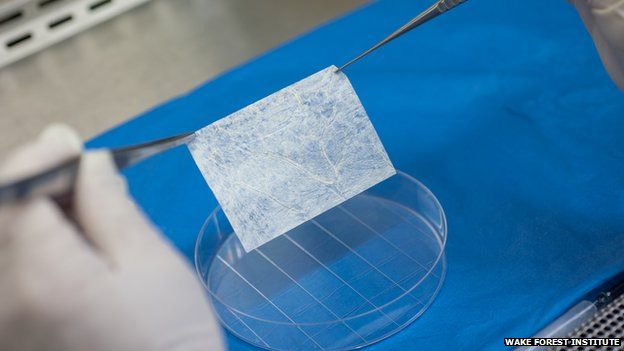
While some organs are much harder to grow than others, a vagina is one of the few we’ve successfully grown in labs and transplanted into actual patients. Like the bionic penis I wrote about a few years ago, this is real. There are currently women in this world who have a lab-grown vagina in them and it works as well as any other. This 2014 article from the BBC nicely documents the science behind this breakthrough.

BBC Health: Doctors implant lab-grown vagina

Doctors at Wake Forest Baptist Medical Centre in North Carolina used pioneering technology to build vaginas for the four women who were all in their teenage years at the time.

Scans of the pelvic region were used to design a tube-like 3D-scaffold for each patient.

A small tissue biopsy was taken from the poorly developed vulva and grown to create a large batch of cells in the laboratory.

Muscle cells were attached to the outside of the scaffold and vaginal-lining cells to the inside.

The vaginas were carefully grown in a bioreactor until they were suitable to be surgically implanted into the patients.

One of the women with an implanted vagina, who wished to keep her name anonymous, said: “I believe in the beginning when you find out you feel different.

“I mean while you are living the process, you are seeing the possibilities you have and all the changes you’ll go through.

“Truly I feel very fortunate because I have a normal life, completely normal.”

All the women reported normal sexual function.

I highlighted that bold part because it emphasizes the current goal of this technology. It’s intended to give women who have developmental issues, such as vaginal aplasia, a chance at normal sexual function. That’s usually how all medical breakthroughs start. It heals patience back to a level of normal functioning.

However, this technology has been working since 2014. It’s still in its infancy, but the reason I bring it up is because we’re currently in a situation where everyone is rooting for medical science to progress faster. This crisis, even though it doesn’t directly involve vaginas, could benefit from our current desire to see medical science progress.

As with the bionic penis, the science of lab grown body parts starts at restoring patients to normal function, but it doesn’t stop there. If anything, that just provides a baseline. As humans, with our wide capacity for kink, we’re rarely satisfied with just normal functionality in our bodies. That’s why breast implants are a multi-billion dollar industry.

Now, I’m not saying lab-grown vaginas will follow a similar path, but there’s definitely a market for them. As I’ve noted before, there’s still a wide orgasm gap between women and men. Some of that is psychological, but there’s also some biology behind it. Most women don’t achieve orgasm through vaginal sex alone and most sex ed classes never teach them that.

Education and insight can help, but that too has limits. As this technology matures, it’ll eventually graduate from simply restoring normal sexual function to enhancing it. That may sound somewhat radical, but it’s not that different from what people do now. People already take drugs, both illicit and prescription, to enhance sexual function. A lab grown vagina could just be a more ambitious effort.

How ambitious could it get? It’s hard to say. I’m not a woman and I can’t speak for women who might contemplate enhancing certain parts of their anatomy. I just know that the desire for a satisfying sex life transcends gender, taboos, and body image. As medical science advances, we have more and more tools with which to achieve that. Lab grown vaginas and bionic penises are just the latest and boldest.

Whatever form they take, they’ll ensure our future is a sexy one.

1 Comment

Filed under biotechnology, Current Events, futurism, health, sex in media, sex in society, sexuality, Sexy Future, technology

Six Technologies The Coronavirus/COVID-19 Pandemic Could Accelerate

Humanity is capable of amazing feats when given the right incentive and circumstances. The problem is that humanity is also rather stubborn when it comes to incentives and exceedingly evasive when it comes to changing circumstances. We’ll go the extra distance and beat the odds eventually. We just need to be dragged kicking and screaming for a while.

When it comes to the ultimate incentives and circumstances, few check more boxes than a global pandemic. I don’t think I need to belabor how bad the ongoing Coronavirus/COVID-19 pandemic has been. Even without media distortions and political agendas, there’s no getting around the damage it has and continues to inflict.

People are dying.

People suffering.

Societies and economies are teetering on the brink of collapse.

This is not a tenable situation and one nobody wants to see again. As bad as it is, there might be one silver lining to this global tragedy. It could help accelerate the development of technology that was already in the works, but lacked the necessary motivation to develop faster.

What follows are a few technologies that I believe this horrible pandemic might help in the sense that it’ll add some urgency. Nobody wants to see a mess like this again. Whether you’re rich, poor, powerful, or powerless, we have every reason to find new ways of preventing these plagues before they happen and these technologies are instrumental in doing just that.


Artificial Intelligence (Not Necessarily The Advanced Kind)
It’s impossible to overstate the potential benefits of artificial intelligence. I’ve certainly made a concerted effort when writing about it in the past. However, in the context of battling plagues, we don’t necessarily need the kind of super-advanced, super-intelligent AI to provide some of those benefits. When it comes to combating plagues, we don’t need an AI to be as intelligent as a human. We just need it to help us combat deadly disease.

This can be done without the kind of AI that finds its way into Skynet or Hal 9000. An AI that can better-analyze genetic data, run simulations on possible treatments, and track the spread of a disease can do plenty to prevent or mitigate future plagues. If it can just help us identify and isolate new cases in a short span of time, then that alone could save millions.

At a certain point, AI could get powerful enough to calculate entire treatment programs once it has the genetic data of a pathogen or condition. After this global, well-publicized crisis, it’ll have plenty of data to work with.


Space-Based Broadband Internet

When it comes to dealing with pandemics, the incentives don’t stop at treating the disease. Given all the closures and cancellations caused by COVID-19, we now know how challenging it is to endure an extended quarantine, especially for kids with no school and sports fans with no sports.

Enduring this crisis has revealed just how critical it is to have a strong, robust internet connection. It may not treat the disease, but it makes the measures recommended by the authorities more bearable. The problem is our current infrastructure for the internet is badly in need of upgrades and its role in helping us function has been made abundantly clear during this crisis.

For work, play, and just avoiding crippling boredom, we need a better internet. That’s where space-based internet, like the ones being developed by companies like FaceBook and Google come in. The idea is as simple as it is awesome. Use satellites and other high-flying crafts to deliver data more efficiently and reliably.

There are a few space-based internet service providers now, but they’re incredibly limited. This crisis, which needs reliable internet for so many reasons, might help pick up the pace in refining this technology. At the very least, it will allow people to binge-watch Netflix from the summit of Mount Everest.


Nanoparticle Vaccines

On the medical side of things, this crisis should go a long way towards teaching people the importance of vaccines. While I don’t doubt the anti-vax crowd will find an excuse to protest, even those skeptical of modern medicine can’t deny the need for better preventative measures for these treatments. Unfortunately, vaccine technology has been stagnant for decades.

This pandemic will hopefully change that and not a minute too soon. The current process for producing a vaccine is long and cumbersome, taking upwards of two years. It’s a process that has a lot of room for improvement. That’s where technology like nanoparticles come in.

The key to any medical treatment is the effectiveness of the delivery system. Vaccines have always had to take a messy path, but nanoparticles could change that. Instead of relying on the biological equivalent of a blunt instrument, nanoparticles could become biological smart-bombs, targeting pathogens with the precision we need to keep them from ever becoming pandemics.

Anti-vaxxers who refuse these just have a death with.


Gene Editing/Synthetic Biology

Not unlike vaccines, gene editing and synthetic biology stand to get a major boost from this crisis. I’ve written about gene editing tool like CRISPR in the past. I’ve touted it as a tool that could potentially treat all infectious disease, especially when combined with synthetic biology. That might have been hyperbole, but I stand by my claims on it’s potential.

Gene editing can do more than make pet fish glow. In theory, it can tweak and rewrite the DNA of organism, including the viruses that infect us. The challenge is refining the procedure so that we know how to modify diseases or create entirely new organisms that combat them through synthetic biology.

It’s not a small challenge. I’m grossly oversimplifying the obstacles in refining this technology into something usable. However, those obstacles are not insurmountable. It just requires time, resources, and motivation. After being economically and socially ravaged by a global pandemic, these efforts will have a lot more urgency.


Immersive Virtual Reality
While the scientists and doctors take up the challenge of fighting future pandemics, the rest of us are tasked with enduring the boredom they incur. I’ve noted before how boredom could become the plague of the future. I hope those stuck at home for weeks on end are done doubting me.

The entertainment industry may never be as vital as the medical industry, but it’ll play an important role in helping people stay sane, calm, and kind. Binge-watching TV and playing video games is helpful, but there’s room for improvement. At the end of the day, you’re still just sitting on a couch, looking at a screen.

To keep things both interesting and active, the development of virtual reality should get a major boost. It has existed for years and grown considerably from the days of the Virtual Boy, but it has room for improvement. Thanks to improving computer technology and more advanced interfaces like Neuralink, the experience could become even more immersive.

Beyond simply treating boredom, it could allow a greater sense of active engagement, which is critical when everyone is practicing social distancing. Being isolated and cut off from human contact may help temper a plague, but it’s not healthy. A way to immerse yourself in a realistic environment could help make future quarantines more bearable while also opening a new market, which gaming companies are sure to exploit.


Sex Robots (Obviously)

Does this one really need an explanation? When you’re stuck inside, horny, and run out of things to binge-watch, things are going to happen. Even if your partner or significant other is with you, they might get sick and you might feel lonely. Given how pandemics tend to temper the market for sex workers, a sex robot might be the best and only option.

If at least one company or horny entrepreneur hasn’t realized that by now, I’ll be shocked. The market for sex robots has been growing in recent years. After enduring a pandemic and weeks of social isolation, that market has likely grown. People rarely forget big global events like this. They’ll remember how lonely they were and that memory will fuel the development of sex robots more than any libido.


2 Comments

Filed under Current Events, futurism, technology

Telework, Online Learning, And What A Global Pandemic Can Teach Us About Both

See the source image

In general, people don’t radically change their habits unless there’s a huge incentive and/or a major disruption. By that, I don’t just mean habits relating to drug addiction, exercise regiment, or bedroom kinks. I’m mostly referring to peoples’ overall tendency to keep doing things the way they’ve been doing them, even if they have major flaws.

While it’s rare to get huge incentives to change those tendencies, it’s just as rare to face the kind of disruption that would force people to re-evaluate how they do things. People are, broadly speaking, pretty stubborn. It takes a lot of time and energy to abandon old habits in exchange for new ones. There’s no guarantee they’ll work. Sometimes, they’ll fail miserably.

In terms of disruptions, it’s hard to top a global pandemic. There’s just no way to overstate how big an impact something like that can have on a society. Pandemics have changed the course of history, as well as the course of society. They are the million-ton sledgehammer to whatever stable social system we have in place.

The ongoing crisis surrounding the Coronavirus/COVID-19 pandemic is the biggest disruption our society has faced in over a century. It has jarred us all from our comfort zone, to say the least. Between cancellations of major events and concepts like social distancing, we’ve had to reassess how we go about our daily lives.

As frustrating and frightening as it has been, these kinds of disruptions also present rare opportunities. We may never face a situation like this that affords such opportunities, so we would be wise to take advantage of it. In this case, it has to do with how we go about work and school.

We all have this time-tested notion of what it means to have a job and get an education. Having a job means going to an office or work site, doing your work there, and then coming home after a certain amount of time. It varies from person to person, but that’s the general approach.

Going to school is similar. You get on a bus, go to some building across town, stay there for six or seven hours while going to multiple classes, and then you come home. That’s what we think of when we think about getting an education and going to school.

Now, thanks to a global pandemic, this time-tested system has been disrupted. Going to crowded facilities is now a health hazard. Kids can’t go to some big school facility and workers can’t go to some crowded office for a third of their day. Instead, people are having to telework or utilize online classes. For now, this is just a temporary measure while we endure all this massive social upheaval.

At the same time, it also gives us a rare opportunity to see just how necessary it is to go somewhere else to do our work or get our education. It’s a relevant issue that goes beyond our current crisis. These questions are worth asking.

How necessary is it for us to go to some office or school to achieve what we seek?

Is that system really the best we can do?

What are the limitations of telework and online schooling?

What can be done to mitigate those limitations within the current infrastructure?

Can people be more productive with telework and online schooling?

How effective is our current system at supporting these options?

Now, I’m the last person who should defend the current school system. My past experiences with public school give me a somewhat heavy bias in assessing it. However, I doubt I’m alone in saying the current system has room for improvement.

When it comes to telework, I have less experience. In the past, I’ve had instances when I’ve been successful with telework. It depends on the situation and what I’m working on. I suspect that’s common for many jobs. An accountant and a brain surgeon work in very different spheres. One is easier to do at home. The other is a lot messier, to say the least.

It’s worth taking note of just how much we’re able to function over the next few weeks with respect to telework and online schooling. If a sizable chunk of the population demonstrates they can get the job done this way, be it with telework or online schooling, then that’s valuable insight that we should not ignore.

I understand that there are some jobs that cannot be done from home. There are also some things you can’t learn remotely. However, looking back at my experience in school, I’d say about 80 percent of what I learned could’ve been learned online. In terms of work, over half of what I did could’ve been done from home with a laptop and an internet connection.

There’s no reason we should be locked into this mindset that work involves leaving our house or that learning has to take place within a school. There are other ways to do these things and certain people might function better that way.

During a massive upheaval like this, things cannot and should not go back to exactly how things were. We have an opportunity to find a new approach to school and work. I say we take advantage of it as best we can.

1 Comment

Filed under Current Events, Environment, futurism, human nature, technology

The Joys Of (Briefly) Unplugging And Running

I freely admit that I love technology. I also admit I’m on my phone constantly, checking social media and playing games. I’m the kind of person who gets extremely stressed out when my phone battery is low or think I’ve misplaced it. I think that puts me in line with most people my age.

I cherish technology. I celebrate it and contemplate how future advances will change our society, for better and for worse. Mostly, I favor the better, but I don’t deny that it can negatively effect people in certain ways. Like anything, you take the bad with the good and determine whether the good will suffice.

That said, even I see the importance of disconnecting every now and then. It’s not about fighting an addiction. The whole concept of tech addiction dubious at best and deceptive at worst, depending on who stands to make money off it. It’s a good thing, but like cake or beer, you can have too much of it.

That’s why I make it a point to do something regularly that allows me to separate myself from my phone, my computer, and any other device that has more computing power than a calculator. It’s not pretentious. It’s not because I’m trying to make a stand or something. I just find it genuinely helpful for my physical and mental well-being.

The way I disconnect is simple. I put on my workout clothes. I put my wallet and keys in my pockets. Then, I go out for a nice long run around the various trails around my house. I don’t listen to music, podcasts, or radio. It’s just me, the trail, and my thoughts. It may sound boring and bland. For me, it’s anything but that.

Unlike running on a treadmill, with which I do listen to music and podcasts, running outdoors along trails is more active. You’re not staring at the same wall or hearing some outdated piece of gym equipment crack with every step. You’re actually traversing the real world. You watch trees, streams, and grasslands pass you by. Even when you haven’t gone far, you feel like you’ve gone somewhere.

It’s not just a nice dose of fresh air. Running without any device beyond my keys allows me to just organize my thoughts. Sometimes, I have a stressful day when it’s hard to keep up with everything. A nice run outdoors allows me to get my heart going while my brain just streamlines itself.

It’s a very therapeutic experience. Thoughts become more streamlined. Ideas become clearer. Perspectives feel more balanced. Some of the ideas that have made it into my novels and my sexy short stories have come to me while I’m running. I doubt I would’ve gotten those ideas if I’d been focusing on music, podcasts, or something else.

Again, I love technology. I love my phone and my music collection. It’ll always have a place in my world. However, there are times when I just need to be on my own with my thoughts and the natural world. It’s a simple pleasure that I’ve come to cherish in my adult life. I won’t claim it has the same effect for everyone, but I strongly encourage everyone to try something like it. You may be surprised by how much you enjoy it.

Leave a comment

Filed under health, Jack Fisher's Insights, technology

Who Will Be The First (Digitally) Immortal Celebrity?

Back in 2012, Tupac Shakur appeared in concert at Coachella in 2012. That’s quite a feat, considering he died in 1996. The Tupac at the concert was just a hologram, but even his digital presence helped make that concert an experience to remember.

In 2019, Samuel L. Jackson played a young Nick Fury in the “Captain Marvel” movie. That too is quite a feat, considering Mr. Jackson was 70 years old at the time. He was able to appear young, thanks to advanced CGI that effectively de-aged him.

Other dead celebrities have shown up in other media. The since deceased Peter Cushing reprised his role as Grand Moff Tarken in “Star Wars: Rogue One” thanks to similar CGI technology. Paul Walker was able to get a proper send-off in “Fast and Furious 7” after his tragic death thanks to this technology. As the technology improves and other famous celebrities pass on, this practice is likely to continue and expand.

That raises some interesting questions that has some profound, yet disturbing implications. Some of those questions are easier to answer than others. This is the easy one.

Will there eventually be a celebrity who becomes digitally immortal?

The short answer is yes.

The long answer is eventually, but there will be some complications along the way.

Modern CGI technology is amazing. We’ve come a long way from the flashy, but wholly unrealistic graphics of “Tron.” Through the development of technology like artificial intelligence deep fakes, which has its own mix of dystopian uses, it’s possible to replicate someone’s appearance, voice, and mannerisms. This replication isn’t perfect, but it’s getting to a point where it’s hard to tell it’s fake.

As this technology improves, it’ll get to a point where a rendering of a celebrity isn’t just indistinguishable from the real celebrity. It’ll be capable of saying, doing, and acting in any way a studio or producer would want. While that has some dangerous possibilities for political ads and porn, it could also completely change the entertainment industry.

That Tupac hologram I mentioned earlier was basically just a recording synched to a projection. Even though Samuel L. Jackson was de-aged in Captain Marvel,” the actor still had to be there to give him the necessary voice, mannerisms, and attitude. He couldn’t have been a hologram and be believable. The technology just isn’t there yet.

It will get there, though. There doesn’t need to be some huge leap in computer technology or artificial intelligence to make an entirely digital celebrity. It’s just a matter of processing power, data crunching, and better hardware. It will happen. It might even happen within the next couple decades. That raises another key question.

Who will be the first digitally immortal celebrity?

By digitally immortal, I don’t just mean recordings set to holograms or faces projected onto body doubles. A truly digitally immortal celebrity will be capable of starring in new movies and TV shows long after their dead. They’ll be able to make new music and perform it, albeit through a hologram. While their bodies might be gone, they’ll never stop contributing to pop culture.

That definitely has some legal implications. I doubt any studio could get away with creating a digital rendering of Carrie Fisher to star in a new movie. However, I suspect one celebrity will eventually license their figure and likeness so that they can keep being celebrities, long after they’re dead. Maybe they’ll do it so their families can be fincianlly set for life. Maybe they’ll do it because they never want to leave the public eye.

Whatever their reasons, someone will eventually do this. It’s just a question of who.

Will it be Taylor Swift?

Will it be Tom Cruise?

Will it be Jennifer Lopez?

Will it be Samuel L. Jackson?

It’s hard to say. If I had to bet money, I’d put it on Samuel L. Jackson. Knowing Disney and their vast resources, I’d be shocked if they weren’t investing in this technology this instant. Bankable celebrities are an increasingly precious commodity in the entertainment world. The incentives are there. It’s just a matter of time and a matter of whom.

Personally, I’d love to hear Samuel L. Jackson call people motherfuckers for generations to come. That’s just me.

1 Comment

Filed under Artificial Intelligence, Celebrities and Celebrity Culture, futurism

A Troubling (But Probable) Thought Experiment Involving Sex Robots And Stalkers

It’s an unavoidable rule of technology. Nobody truly knows how a new machine, gadget, or invention will be used in the future. I doubt the person who invented ski masks knew it would be a common tool of criminals. We can try and anticipate how certain technology will affect society, but there will always be unexpected impacts that come from unplanned uses.

When it comes to sex robots, the impacts are far greater in scope and scale than anyone can possibly predict. I’ve made a concerted effort on multiple occasions. I don’t gloss over the more distressing impacts, either. Chances are this technology will effect people, society, and culture in ways nobody will be able to predict, including aspiring writers who use sex robots in multiple short stories.

It’s often through writing sexy short stories and erotica/romance novels that I often come up with ideas I hadn’t previously considered. Some of those ideas lead to larger thought experiments. Since sex robots are making the news more and more often lately, I thought I’d share one.

It goes as follows:

A man or woman meets someone. They immediately fall for them. It’s love, lust, and passion all rolled into one. They become so obsessed with this person that they can’t imagine not being with them in some way.

Naturally, they pursue this person. They try befriending, flirting, and seducing them. It doesn’t work. They get rejected. At first, it’s just a setback. They try harder to win the love of this special someone. It ultimately fails. Eventually, that someone threatens to call the police and put a restraining order on them.

The person is dejected and sad, but not dissuaded. Since they can’t be with this person they love so dearly, they seek the next best thing. When their would-be love isn’t looking, they scan their body. They then send those specifications to a company that makes sex robots.

They request that the company make them a robot that perfectly resembles the love that rejected them. They also request that the robot be programmed to love them unconditionally and obey them. The company agrees. They make a sex robot that looks, sounds, smells, and acts like the lover they couldn’t have.

Naturally, the person is overjoyed. They lovingly tend to the sex robot, treating it like a real lover. They live out the love they wish they’d had. At some point, it becomes so real that they don’t bother with the person who rejected them. They’re content to leave them alone and live out the fantasy for as long as they please.

Take a moment to think about what I just described. I admit it has some disturbing elements. Stalkers who obsess over someone to an unhealthy degree is a real phenomenon. It ruins lives and can be very damaging to both people.

Throw sex robots into the mix and things get more complicated. What I just described is not technically impossible. It probably won’t be feasible for decades, but there’s nothing against the laws of physics that prevent people from creating perfect sex robot duplicates of random people they see on the streets.

All that anyone would need is the right data. Whether it’s done directly with a device or surmised from a collection of pictures, practically anyone can be made into a sex robot. I’ve noted before how this could effect the porn industry with stars and celebrities licensing their bodies as sex robots. However, I doubt it would stop there.

Whereas celebrities might have the money and legal resources to license their bodies and combat unauthorized use as a sex robot, most ordinary people wouldn’t have that luxury. In the same way most people don’t have access to high-powered attorneys that keep celebrities and rich people out of jail, the average person probably wouldn’t have much recourse.

If some random person found out their high school crush made a sex robot of them, how would they combat it? Could they sue them? Could they sue the manufacturer? What if the sex robot came from an illicit source? How they deal with that?

Moreover, would it even be worth the effort? If a would-be stalker is content to make a sex robot of their obsessive crush, which in turn stops them from stalking altogether, then why would anyone care? Who’s being harmed in this situation?

You could argue the would-be stalker is hurting themselves, but how could we possibly police that? We can’t stop people from hurting themselves. Prohibition proved that. However, with sex robots, we essentially give people a way to cling to an obsession and never move on. Is that healthy? Is there any way to stop it? Is it even worth the effort?

Try to put yourself in this scenario. How would you feel about it? How would you go about confronting it, if at all?

This is just one of the many scenarios that may play out once this technology matures. Again, there will likely be other effects I can’t imagine. Unfortunately, not all of those effects will be inherently sexy.

Leave a comment

Filed under Artificial Intelligence, futurism, psychology, sex in society, sex robots, sexuality, Sexy Future, technology

A (Hopeful) Perspective On The Coronavirus

See the source image

As a general rule, I always watch the news with a skeptical eye. That’s not just because we live in an era of fake news, misguided outrage, and conspiracy theories about shape-shifting lizard people. I’ve learned from time, experience, and observation that the news can only ever tell part of a story as it’s happening. The full story never comes out until much later. Sometimes, it’s years later.

That’s not easy when following stories like the coronavirus. Unlike other major news stories that make headlines for all the wrong reasons, this is a serious issue. This is something the public needs to know about. The coronavirus is not just a nasty cold. It’s killing people all over the world. That’s an indisputable fact and one that warrants serious concern.

At the same time, there’s a context worth noting. As bad as the coronavirus is, it’s not the second coming of the Black Death or the Spanish Flu. This is not the kind of disease that will turn the planet into a post-apocalyptic wasteland in the mold of a Stephen King novel. It’s still serious, but it’s not a global cataclysm. Even if it ends up killing millions, there are over 7.6 billion people on this planet.

Human beings adapt.

Human beings survive.

It’s one of the few things we’re good at.

There’s another perspective worth considering when following the news of the coronavirus. Unlike the devastating plagues of the past, humanity has developed a decent infrastructure for medicine, technology, and research. Granted, it took us centuries of trial, error, and mass death and there’s still plenty of room for improvement, but that system is there. It’s better than nothing. Just ask Medieval Europe.

That system is already doing its job in combating the virus. Already, researchers at the University of Texas in Austin have mapped out critical portions of the virus. That sort of thing couldn’t have been done this quickly or at all just 30 years ago. This data is critical for the development of treatments and, ultimately, a vaccine.

The fact that this happened so quickly after the outbreak is something the news hasn’t reported on. Even if treatments develop and the virus is contained, as we’ve seen with other recent outbreaks, it probably won’t be a huge story within the ever-changing news cycle.

We know this because in late 2019, the first vaccine for Ebola was approved for use by the FDA and it barely showed up in the headlines. Considering how much panic the Ebola outbreak caused several years ago, this is quite a triumph. It shows just how quickly our current system can respond to these diseases.

Again, there’s still room for improvement and accessibility to medicine is a major issue, but the coronavirus is not some new form of disease. It’s a virus. We know what viruses are. We have the technology to study, treat, and combat them, more so than we have at any point in human history. Considering how much better we’ve gotten since the heyday of the AIDS pandemic, I say that’s reason to be hopeful.

That doesn’t mean we should let our guard down. When the CDC issues a warning about the coronavirus, we should take it seriously. At the same time, we should take comfort in the knowledge that we live in an era where human ingenuity has limited the suffering caused by these devastating plagues.

As with Ebola, we will eventually develop a treatment for the coronavirus. It won’t be perfect, but it will limit the death and suffering it causes. It also won’t make the news because it’s just not scary or dire enough. At this point, finding effective treatments for diseases is so mundane it barely qualifies as news. That’s an objectively good thing.

I hope that helps provide a bit of context and hope to the news surrounding the coronavirus. It’s still worth taking seriously, but we shouldn’t let grim headlines distract us from the great things that humanity achieves when faced with a challenge.

2 Comments

Filed under biotechnology, Current Events, technology, Uplifting Stories

How Do We Regulate Artificial Intelligence? Seriously, How?

In general, I don’t pay much attention to doomsayers who claim the end is near and we should all cower, tremble, and give them our credit card number. Don’t get me wrong. I still believe there are serious existential threats facing humanity today. Some are worth taking seriously and dedicating resources to addressing. Others are not. Some simply require a more balanced perspective.

There’s a long list of failed apocalyptic predictions. The fact we’re surviving and thriving by most measures shows just how resilient, adaptable, and capable humanity is. There are some threats that I believe humanity will eventually resolve, thanks largely to our accelerating progress in science, technology, and logistics.

Others, however, have me more concerned. While some are more immediate than others, one in particular continues to confound me, as well as some of the smartest people in the world. It involves artificial intelligence, an emerging technology that’s as promising as it is unpredictable. Given the complexity of this technology, it’s difficult to explain in totality, but it can be best summed up by one simple question.

How do you regulate artificial intelligence?

That’s not a rhetorical question. It’s not a thought experiment either. It’s a serious, honest question that people far smarter and far more capable than me are just starting to ask.

Elon Musk is one of them. Very recently, he called for more regulation on artificial intelligence. That, alone, should be both telling and worrying. This man is a billionaire. Usually, billionaires are more inclined advocate removing regulations. Whenever they make an exception, that’s a sign they know it’s serious.

Even though Musk is one of the top advocates for solving big problems with technology, he still has concerns about the problems associated with artificial intelligence. In AI circles, it’s often called the control problem. It’s not a very creative name, but it gets the point across.

How do you control something that is potentially as smart, if not smarter than a human?

How do you manage something that thinks, adapts, and evolves faster than any machine or living thing?

How do you regulate an artificial intelligence that was built by humans, but isn’t at all human?

These are all difficult questions to contemplate, let alone legislate. Even Musk doesn’t provide specifics. Chances are he doesn’t know any more than the rest of the non-billionaire population. That’s a problem because if we’re going to try and regulate this technology, we need to understand it. On top of that, politicians and lawmakers have a long and embarrassing history of failing to understand technology.

However, this isn’t just about writing laws that protect citizens from being exploited by tech companies. Artificial intelligence, especially the kind that exceeds human intelligence, has capabilities that go beyond sending text messages from bathroom stalls. If handled improperly, it wouldn’t just be an existential threat. It could destroy humanity in ways we literally cannot contemplate.

Now, I try to be an optimist in most things involving emerging technology. Humanity has found a way to manage dangerous technology before, namely with nuclear weapons. However, artificial intelligence is a different beast entirely. Regulating it isn’t as easy as simply controlling the materials that make it. The very concept of regulating this technology lacks precedent.

The closest we have to date is Isaac Asimov’s famous three laws of robotics, which were introduced in 1942. Asimov was a brilliant writer and very ahead of his time on some concepts, but this is one issue where we need more than just three simple tenants. We need to think bigger and bolder. If we don’t, then an advanced artificial intelligence will quickly leave us behind.

After that, it won’t matter what kind of regulations we try to pass. It’ll be smart enough to circumvent them. That doesn’t mean humanity is doomed at that point, but we’ll be distressingly vulnerable. I know it’s in our nature to procrastinate on things we don’t see as vital, but if ever there was an issue to make an exception, this is it.

2 Comments

Filed under Artificial Intelligence, biotechnology, futurism, philosophy, technology, Thought Experiment

A Comment On Bill Maher’s (Dystopian) Rant About Sex Robots

Remember that time someone old, out of touch, and under-informed made an accurate prediction about the impact of emerging technology? That’s not a rhetorical question. Honestly, does anyone remember that ever happening to a meaningful extent?

I ask because it’s been happening for years. People keep seeing an amazing new technology and assume the worst. In some cases, they’re just dead wrong about trends that will or won’t catch on. Some just made dead wrong assumptions about how technology and society would evolve.

At the end of the day, nobody truly knows for sure. It’s fun to speculate, especially when that technology involves sex robots. I know I’ve entertained some colorful possibilities and potential issues, but I never claim I know for certain. I try not to be overly optimistic, but I don’t try to be downright fatalistic, either.

Then, there’s Bill Maher’s latest rant about the future of sex robots. I could try and break down every flaw in his commentary, but I’ll let the clip speak for itself.

Now, I need to disclose that I’m a fan of Bill Maher. I like his show. I think he’s funny. He’s got a great wit and a dry style that I’ve always found entertaining. When it comes to technology, though, he’s more a chronic whiner than a visionary.

He compares social media to cigarettes and complains about how technology has become too complicated. For a man who’s over 60, that’s not surprising. However, for someone smart enough to stay on TV for over three decades, it’s still absurd.

Deconstructing his rant is not that hard. Maher frames the impact of sex robots as an either/or position. To him, people will either completely reject human intimacy for robots or reject robots in favor of human intimacy. However, he never justifies why people would choose only one or the other.

Would people only interact with a sex robot because they can have sex on a level that humans just can’t match? That assumes people are really basic and would all react the same if they somehow had access to a life-like sex robot. However, people are not basic. People are complicated. They have many different wants, needs, and attitudes. Maher himself has noted this when discussing other issues.

Sex robots will change human dynamics significantly. It won’t destroy them. It won’t completely destroy the whole of society. They’re not nuclear weapons. They’ll just change how things are and for older people, especially in Maher’s demographic, that can be scary. It’s easy to assume the worst, but it’s still an assumption and those are notoriously unreliable for predicting the future. The stock market alone is proof of that.

There are many other things I can say about Maher’s rant, but it would all come back to the same point. It’s just flawed and misguided. It assumes there’s not room for both human connection and sex robots in the future. Considering how adaptive and social humans are, I believe we’ll find a way to incorporate them into a new social dynamic that nobody can predict.

It’ll be nothing like Maher can ever imagine.

It’ll be nothing like I can imagine, either.

The future will still come. It’s just a matter of how we’ll adapt, evolve, and grow with it.

1 Comment

Filed under Artificial Intelligence, futurism, sex in society, sex robots, sexuality, Sexy Future, technology

Selling (And Exploiting) Human Enhancement: An Ominous Lesson From “Superior Iron Man”

tumblr_static_tumblr_static_251b2rz5uxz4s4sssw0skg04c_640

How much would you be willing to pay for perfect health, perfect beauty, and a greater capacity to enjoy life as you see fit? This is not a rhetorical question. I would even argue that it’s an increasingly relevant question. In the coming years, answering it might even become more urgent.

I’ve talked about the prospects of human enhancement through emerging technology before. From its impact on our concept of beauty to how our society will function, there are many impacts to consider. Some of those impacts are already manifesting before our eyes. Just last year, the first genetically modified babies were born in China. Like it or not, this is happening.

It’s impossible to overstate the benefits, risks, and upheavals that human enhancement will have on our species and our world. Nobody knows for sure what’s going to happen as this technology matures or how societies, economies, and governments will react to it. Even so, it’s worth contemplating. It’s even worth imagining elaborate scenarios in fictional worlds.

While plenty of noteworthy stories have imagined such scenarios, some more dystopian than others, there’s one in particular I’d like to single out. It’s not entirely dystopian, but it does offer some distressing lessons about the larger economics of human enhancement. It also helps that those lessons come through a forgotten, but criminally underrated Iron Man comic.

Given the rapid rise of Iron Man’s star power over the past decade, his character is uniquely qualified to explore these difficult questions surrounding technology and how we use it. He is, at his core, a visionary who uses technology to solve problems, save lives, and occasionally fight invading aliens. In the series, “Superior Iron Man,” he takes that vision several steps further and cross many lines along the way.

While there are some convoluted circumstances surrounding this series, the ideas it explores are profound, even by the standards of superhero comics. You don’t need to know the specifics of those circumstances. They involve forces like magic and inversion spells, which are far too complicated to explain to those who haven’t followed Marvel comics for more than two decades.

The only detail anyone needs to know about “Superior Iron Man” is that the Tony Stark in this story is not the same lovable character that helped make Robert Downy Jr. one of the most lovable stars in Hollywood. This version of Tony is less bound by concepts of heroism, selflessness, and sobriety. That’s not to say he’s evil, but he’s definitely no hero.

Within this ethically bankrupt state, Tony embarks on a new initiative that’s as selfish as it is lucrative. It revolves around Extremis, an exotic cocktail of nanotechnology and biotechnology that effectively rewrites the blueprint of the entire human body into something better, stronger, and more robust. In essence, it is the ultimate tool for human enhancement.

While the initial version of Extremis was lethal to most people who used it, Tony creates a more commercialized version in “Superior Iron Man” that gives everyone a chance to enjoy its benefits. He calls it Extremis 3.0 and people can access it through a simple smartphone app. With it, people can achieve what Tony describes as physical perfection.

Everyone can be perfectly healthy.

Everyone can be young and beautiful.

Everyone can be functionally immortal.

It sounds like a miracle drug and by every measure, it is. This isn’t some Dr. Oz wannabe pitching vitamins that do nothing other than give you false hope. This technology actually works. With it, Tony gives the entire city of San Francisco a chance to experience the fruits of human enhancement.

Understandably, once people get a taste of what Extremis 3.0 has to offer, they love it. They also take full advantage of it. At one point in the story, Pepper Potts says it’s turning the streets of San Francisco into a non-stop parade of debauchery and self-indulgence. Tony does not see this as a bad thing. If anything, it perfectly complements his plans and his renewed appetite for self-indulgence.

This is where “Superior Iron Man” attempts to answer that question about putting a price on physical perfection. Writer Tom Taylor, alongside artist Yildiray Çinar, doesn’t hide from the disturbing parts of that answer. By the end of the first issue, Tony puts a literal price on that perfection. Needless to say, it causes plenty of conflict and it escalates quickly.

When he initially released Extremis 3.0 onto San Francisco, he gives ordinary people a taste of what it’s like to be as fit as Captain America, as beautiful as Emma Frost, and as physically endowed as Thor. It’s not a drug that just attempts to match that feeling. It physically changes their bodies and their capacity for using them. That taste, however, was just a free sample. To keep enjoying it, they must pay $99 a day.

It’s crude trick right out of the playbook of subscription apps. People get a free trial period that’s just long enough to get them hooked. Then, before they even realize they have to pay anything, they get hit with a paywall. It’s a cruel bait-and-switch, but this isn’t just another streaming video service. This is physical perfection and unlimited self-indulgence. Is $99 a day really that unreasonable?

It certainly rubs plenty of people the wrong way, including many of Tony’s long-time friends and allies. Both Daredevil and Pepper Potts turn against him for such devious tactic. It also has some noticeable effects on the people who use it. By the end of the first issue, a stark class divide emerges between those who can afford Extremis 3.0 and those who can’t.

Naturally, it causes crime and conflict among the residents of San Francisco. Tony, now both feared and beloved by these people, takes it upon himself to manage it. He gains power, wealth, status, and an endless supply of eager party guests for whenever he seeks to indulge. It’s a perfect cocktail of recklessness and irresponsibility.

Without spoiling the rest of the story, which ended too soon, I think it’s worth taking a step back and looking at the bigger picture that “Superior Iron Man” presented. If you take away the iconic characters and the superhero themes, you get a story about a selfish business tycoon who has sole possession of the ultimate biotech product.

The goal isn’t to heal the sick, ease suffering, or evolve the human species. The goal is simply to make a lot of money, feed an inflated ego, and indulge in every conceivable vice without consequences. It’s a worst-case scenario for liberals and conservatives, alike. At the same time, it makes a compelling case that our current system can’t handle the impacts of large-scale human enhancement.

That doesn’t mean it can’t succeed in our current system. The size of the current biotech industry is already measured in the hundreds of billions. Overpriced drugs are nothing new, either. Just this past year, the FDA approved a drug called Zolgensma, which costs $425,000 a year for five years to treat a rare genetic disorder called spinal muscular atrophy.

By comparison, Extremis 3.0 is a bargain with far greater value. Even at $99 a day, the yearly cost of enjoying that physical perfection amounts to around $36,500 a year. That still takes up a good chunk of the average income for most Americans, but considering all the benefits of having a perfect body, is it still a bargain?

For anyone who has overpaid for inflated medical expenses, I suspect they would gladly pay that high price for Extremis 3.0. Tony Stark banked on that in “Superior Iron Man” and he was right. People did pay and it was very lucrative for him. The population of the San Francisco Bay Area in which he unleashed Extremis 3.0 is around 4.6 million. At $99 a day, that’s a potential annual revenue of $167 billion.

In terms of business ranking, that would put Tony’s venture in the top 20 in terms of largest companies by revenue. If he were to unleash Extremis on the entire United States, the potential annual revenue would be near $11.8 trillion. That’s a little more than half of the entire US economy.

Imagine one company, let alone one person, having that much money and influence over a population. Tony was already a billionaire before “Superior Iron Man,” but Extremis 3.0 rewarded him with more than just money. Tony, being the sole provider, held a great deal of power and influence over San Francisco. As is often the case in superhero stories, that power goes to his head.

That story plays out in the real world just as often. In some cases, it brings out the worst in people. For a product like Extremis 3.0, which provides human enhancement into a simple commercial package that anyone can access through an app, the potential for abuse is much worse.

Beyond the greed it would inspire and the recklessness it fosters, it would also widen and solidify a gap in society that might be impossible to close. The wealth gap is in the non-superhero world is already egregious. Adding something like Extremis 3.0 to the mix would only make it immeasurably worse.

More than a few people has expressed concern about the prospects of such an enormous societal divide. “Superior Iron Man” showed just how bad it could get and how quickly it could escalate. While the series only managed to explore this conflict to a point before it got canceled, Tom Taylor did enough to get a powerful point across.

In a world where human enhancement is real and commercially available, how do we go about distributing it among a population? Should we put a price on it? How high should that price be? Who should be in control of it?

Worst case scenario.

Superior Iron Man” never got a chance to explore the answers, but these are questions that will become increasingly relevant as advances in biotechnology accelerate. We may not be close to having a product like Extremis 3.0 and it’s uncertain whether we’ll even develop something like it in the next few decades.

Even if we do, “Superior Iron Man” made one thing clear. We, as a species and a society, are not ready for it.

1 Comment

Filed under biotechnology, futurism, health, human nature, Neuralink, Sexy Future, superhero comics