Category Archives: technology

Guest Post: 5 Highly Recommended Books on Machine Learning (ML) and Artificial Intelligence (AI)

now-ae452835-2617-420e-b8c3-58b5c4668645-1210-680

The following is an article submitted by Harsh Arora, a freelance blogger and writer who shares a similar interest in artificial intelligence, futurism, and the future of the human race. To Mr. Arora, I sincerely thank you for this submission and your continued support.


We would first of all like to welcome all types of readers to our blog – newbies who are just interested about these buzzwords and also experts on the subjects who would like to extend their existing knowledge on the matter. Having established that, it is also imperative to not only define these two concepts (AI and ML) but also to differentiate between them. Although these terms are used synonymously, they are in fact different from one another. AI is the broader level concept where we feed the machine with data and then expect it to take decisions based on that data. ML on the other hand is a subset and application of AI where we feed machines with data and allow them to learn on their own.

Following are the books we recommend for you to learn more about them:

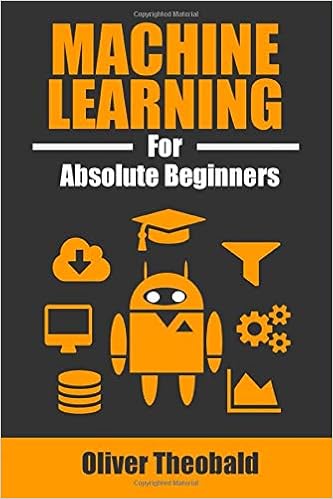
Machine Learning for Absolute Beginners: A Plain English Introduction – Oliver Theobald

It’s easy to see which part of our reader base this particular book is targeted towards. You may be a complete outsider to the world of ML and still be able to understand the granular technical aspects of it through this book. Oliver Theobald assumes no background of programming or coding on the behalf of the reader and allows you to learn right from scratch. It is not only the perfect book for newbies but also experts in the field because it tries to explain the basic concepts in a very coherent and distinct manner. This books not only helps you learn about the concepts of ML but also allows you to unlearn and then relearn them, something is really important for such a subject matter.

The Hundred-Page Machine Learning Book – Andrew Burkov

This is once again a book that will interest not only beginners but also experts in the field. Andrew has really been able to simplify the concepts of ML into basic and easily comprehensible set of cliff notes. With just 100 pages at his disposal, he has really captured the over-arching essence of ML. Though, of course it is not a deep dive into the subject matter like some of our other recommendations, it is however a wonderful summary of it. It is perfect for people who want to understand this technology and its implementations and implications in the real world.

Artificial Intelligence: A Modern Approach (3rd Edition) – Stuart Russell & Peter Norvig

Stuart Russel is one of the sharpest minds working in the field of AI and is a faculty at University of Berkeley. Additionally, he is an Oxford graduate and also holds a PhD from Stanford. In his third edition of the book, Stuart decided to collaborate with Peter Norvig who is currently the R&D Director at Google. Collaboratively, they have created a well-researched and well-defined approach towards understanding modern AI. This book is perfect for students of under-graduate or graduate level courses or even for laymen with the basic understanding of the fundamentals of AI. This long-anticipated edition of its best-seller predecessors offers the most up-to-date and comprehensive understanding of the theory and practice of artificial intelligence.

Machine Learning – Tom M. Mitchell

This is a classic book in which the author has covered the techniques and concepts of the numerous fields and unified them to provide in depth view of ML. Some of the subjects covered include re-enforcement learning, inductive logic programming and genetic algorithms. Tom has tried to simplify these complicated concepts through a clear and explanatory way of writing. At the same time, he has used tools such as case studies and relevant examples to provide a comprehensive overview. Lastly, there is no knowledge of the complex ideas that he has assumed on the part of the reader.

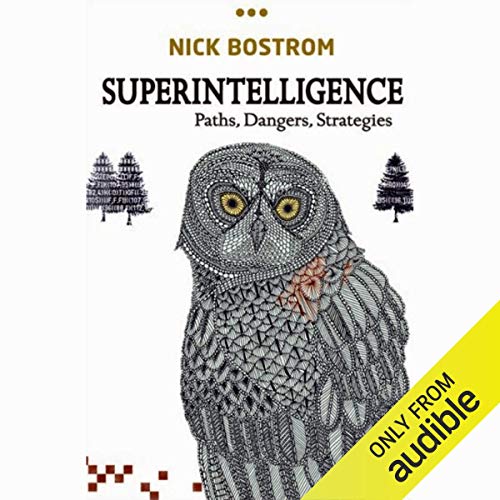
Superintelligence – Nick Bostrom

If you are familiar with the work of Mr. Nick Bostrom, you know you are in for a treat with this book. He takes a different approach to not only explain the artificial intelligence but also the effects it has on our existence. Nick believes that self-aware machines are potentially a bigger threat to humanity than climate change. He has authored over 200 books and his writing forces you to take him seriously in this seemingly sci-fi piece of literature. He helps us understand how the most intelligent form of life i.e. now humans have governed the fate of existence since the dawn. However, with a species (sort of) that has the potential to be smarter than us, what chance is there that they won’t dominate us?

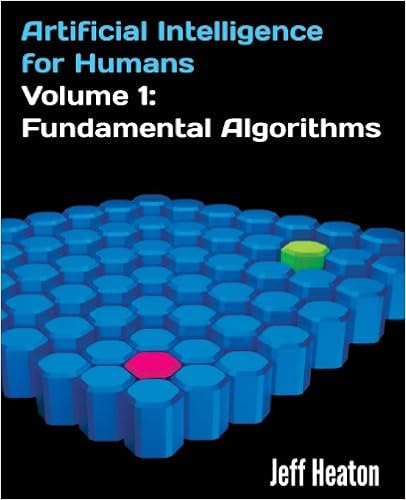
Artificial Intelligence for Humans (Fundamental Algorithms: 1) – Jeff Heaton

If you are planning to build a career in artificial intelligence, this should be your starting off point and you should read it from cover to cover. Jeff Heaton cover several topics in depth such as clustering, distance metrics, dimensionality, linear regression, error calculation and hill climbing. The book takes you through the actual mathematical calculations that you can compute yourself and also see the real-world applications of. However, to build a career in this industry, you must not only understand the basic principals of AI but also of algebra and computer programming. This book will build on those concepts through various computer languages such as C, Java, C#, R and Python.

These books are some of the best in the market and will be perfect for people of all knowledge levels of AI and ML. Given that the industrial revolution 4.0 is upon us and almost all technology is slowly being integrated with it, it is suggested that we all learn more about it. However, it is completely up to you to form opinions about whether or not this technology will be harmful to humans in the long run. Additionally, we also suggest you read up on a few other technologies that are prevalent in this 4.0 era such as IOT, Blockchain and Cloud Computing.

About me: Harsh Arora is a proud father of four rescued dogs and a leopard gecko. Besides being a full-time dog father, he is a freelance content writer/blogger and a massage expert who is skilled in using the best massage gun.

2 Comments

Filed under Artificial Intelligence, biotechnology, futurism, technology

Kids, Technology, And The Growing Bond Between Them

touchscreens-are-bad-for-toddlers-and-babies-sleep

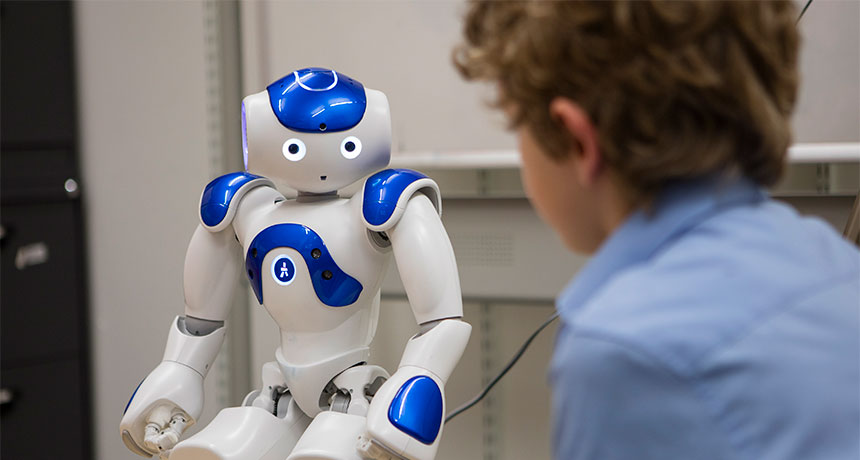
Last year, I explored the idea of children being raised by intelligent robots. For the most part, it was a thought experiment. I approached it in the context of a technology that won’t be implemented anytime soon. Robotics technology hasn’t advanced to the point where it can properly mimic human-like behaviors, although Boston Dynamics is getting pretty damn close.

We also don’t have an artificial intelligence that could properly mirror human levels of intelligence, let alone basic parenting skills. Even when our technology gets to that level, it’ll probably still be a while before people start trusting it with children. Most people today probably recoil at the idea of a robot raising their kids, even if it were programmed with all the best parenting skills.

I tend to share that sentiment. While I’m generally of the opinion that technology will be a net positive, even for something as potentially dangerous as artificial intelligence, the idea of any non-human system raising kids just doesn’t seem workable. Recently, I’ve had to reassess that notion.

Over the past couple years, some close friends and relatives of mine welcomed their first children into the world. I’ve been lucky enough to share in some of these monumental moments. I’ve watched these kids grow from newborn infants into adorable toddlers. Some already know me as their awesome uncle.

While I could spend all day describing how adorable they are, I’ve noticed something remarkable in their growth that no generation before them has experienced before. It has to do with the way in which they interact with technology. I would even argue it’s gone a step further than basic interaction. It’s almost a bond at this point.

I first noticed when I saw a kid who wasn’t even two-years-old use his mother’s smartphone. Granted, he didn’t use it to do anything too fancy, but he was able to open apps, interact with icons, and do more than just put it in his mouth, which counted as a major feat for him.

He wasn’t the only one, either. You don’t have to look far to see videos of infants using tablets. Some use it better than others. I’ve met some who use it better than many adults. If you need further proof, check out this video of a two-year-old operating an iPad back in 2010.

Not surprisingly, this has already caused concerns among parents, teachers, and doctors. There is genuine, legitimate concern about what these devices are doing to the minds of young children. While the research on this impact is still ongoing and inconclusive, the proverbial genie is out of the bottle. These devices exist, kids are using them, and they’re using them quite well.

I believe this has implications beyond causing yet another moral panic about how strange new technology affects children. Make no mistake. There will be a moral panic. I know because I lived through something similar when I was a kid.

Back then, the big fear was about television. Parents, teachers, and doctors were genuinely concerned about all the time kids were spending watching TV. Some went so far as to claim that they were letting TV raise their kids. I question whether these people understood how a TV worked.

Television is an entirely passive technology. You turn it on, pick a channel, and that’s all you can control. Until recently, it wasn’t very interactive. As a kid, I just saw it as another form of entertainment, like comic books, video games, and sports. These tablets that kids are using now are considerably different.

These aren’t devices that just flash colorful images in front of a kid to entertain them. Kids actually interact with these things. They can guide and manipulate what happens on the screen. Many tablets offer applications specifically tailored for children and can be valuable learning tools. A TV show can only do so much to teach a kid skills. An interactive application can do so much more.

At the moment, most of these applications are basically interactive games. Once artificial intelligence enters the equation, the potential changes considerably. Robot pets are becoming more sophisticated, operating on a level that makes it easier to establish a genuine bond with them. The same goes for virtual assistants. They were once a novelty. Now, they’re a mundane feature of most gadgets.

The kids being born today are entering a world where these same assistants are growing alongside them. They’re getting smarter with each passing day. At some point, they may become a more trustworthy source of information for kids than parents. Given the tendency of parents to lie to their kids, even if it’s for their own good, this could be a game-changer for kids and parents alike.

Going back to some of the kids in my own family, I’ve seen signs of this change. Some kids get genuinely upset when you take a tablet or smartphone away from them. They’ll react stronger than they would if someone took a treat or toy away from them. It gives the impression that these devices aren’t just toys to them. They’re something so much greater.

That has potential benefits and drawbacks. In terms of benefits, these devices and the applications they utilize could help children learn faster and more effectively at young ages. Just being able to effectively utilize a smartphone or tablet is a useful skill in almost any profession. A kid who literally grew up with this technology is going to have an edge over their elders in that respect.

There will still be costs. Kids who grow up around these devices and the connected world they link to could be prone to less-than-positive influences. They’ll be surrounded by the forces of outrage culture, online harassment, fake news, and professional trolls. It’s hard enough for adults to deal with these kinds of issues. For young kids who grew up in this system, it could be even harder.

At the moment, there are too many unknowns. One way or another, this technology exists and kids as young as one are capable of using it. They’re growing up with it. They’re bonding with it. The same goes for the technology itself. As it evolves and advances, it may get to a point where it’s a greater authority figure than any parent. At that point, robots raising kids might seem entirely natural.

I don’t claim to know how it will play out. At times, I do worry about the kids in my family or the kids I may have at some point in my life. However, I still tend to be optimistic about how this technology will impact kids. As scary as it may be to think about technology raising kids, let’s not forget that there are still plenty of dumb parents out there whose kids can only benefit from this.

1 Comment

Filed under Artificial Intelligence, Current Events, futurism, psychology, technology

Why Biological Weapons Will Be A (MUCH) Bigger Threat In The Future

diabolical-biological-warfare

It wasn’t too long ago that the biggest existential threat facing humanity was nuclear war. I’ve noted before how distressingly close we’ve come to a nuclear disaster and how the threat of a nuclear holocaust is still present. However, that threat has abated in recent decades, especially as nuclear weapons have gotten so destructive that their use is somewhat redundant.

More recently, people have become more concerned about the threat posed by advanced artificial intelligence. The idea is that at some point, an AI will become so intelligent and capable that we won’t be able to stop it in the event it decides that humanity must go extinct. It’s the basis of every Terminator movie, as well as an Avengers movie.

While I certainly have my concerns about the dangers of advanced artificial intelligence, it’s not the threat that worries me most these days. We still have some measure of control over the development of AI and we’re in a good position to guide that technology down a path that won’t destroy the human race. The same cannot be said for biological weapons.

If there’s one true threat that worries me more with each passing day, it’s that. Biological weapons are one of those major threats that does not slip under the radar, as evidenced by plenty of movies, books, and TV shows. However, the extent of that threat has become more understated in recent years and has the potential to be something more powerful than nuclear weapons.

By powerful, I don’t necessarily mean deadlier. At the end of the day, nuclear weapons are still more capable of rendering the human race extinct and turning the whole planet into a radioactive wasteland. The true power of biological weapons less about how deadly they can be and more about how useful they could be to potential governments, tyrants, or extremists.

For most of human history, that power has been limited. There’s no question that disease has shaped the course of human history. Some plagues are so influential that they mark major turning points for entire continents. The same can be said for our ability to treat such diseases. However, all these diseases had one fatal flaw that kept them from wiping out the human race.

Thanks to the fundamental forces of evolution, a deadly pathogen can only be so deadly and still survive. After all, an organism’s ultimate goal isn’t to kill everything it encounters. It’s to survive and reproduce. It can’t do that if it kills a carrier too quickly. If it’s too benign, however, then the carrier’s immune system will wipe it out.

That’s why even diseases as deadly as Ebola and Influenza can only be so infectious. If they kill all their hosts, then they die with them. That’s why, much to the chagrin of creationists, evolution doesn’t favor the natural emergence of apocalyptic diseases. They can still devastate the human race, but they can’t necessarily wipe it out. It would only wipe itself out in the process and most lifeforms avoid that.

It’s also why the large-scale biological weapons programs of the 20th century could only be so effective. Even if a country manufactured enough doses of an existing disease to infect every person on the planet, it won’t necessarily be deadly enough to kill everyone. Even at its worst, smallpox and bubonic plague never killed more than two-thirds of those it infected.

That’s not even factoring in how difficult it is to distribute these pathogens to everyone without anyone noticing. It’s even harder today because powerful governments invest significant resources into preventing and containing an outbreak. If large numbers of people start getting sick and dropping dead at a rapid rate, then someone will notice and take action.

That’s why, for the most part, biological weapons are both ethically untenable and not very useful as weapons of mass destruction. They’re difficult to control, difficult to distribute, and have unpredictable effects. They also require immense resources, considerable technical know-how, and a keen understanding of science. Thankfully, these are all things that extreme religious zealots tend to lack.

For the most part, these powerful constraints have kept biological weapons from being too great a threat. However, recent advances in biotechnology could change that and it’s here where I really start to worry. With recent advances in gene-editing and the emergence of tools like CRISPR, those limitations that kept biological weapons in check may no longer be insurmountable.

While I’ve done plenty to highlight all the good that tools like CRISPR could do, I don’t deny that there are potential dangers. Like nuclear weapons, this technology is undeniably powerful and powerful technology always carries great risks. With CRISPR, the risks aren’t as overt as obvious as fiery mushroom clouds, but they can be every bit as deadly.

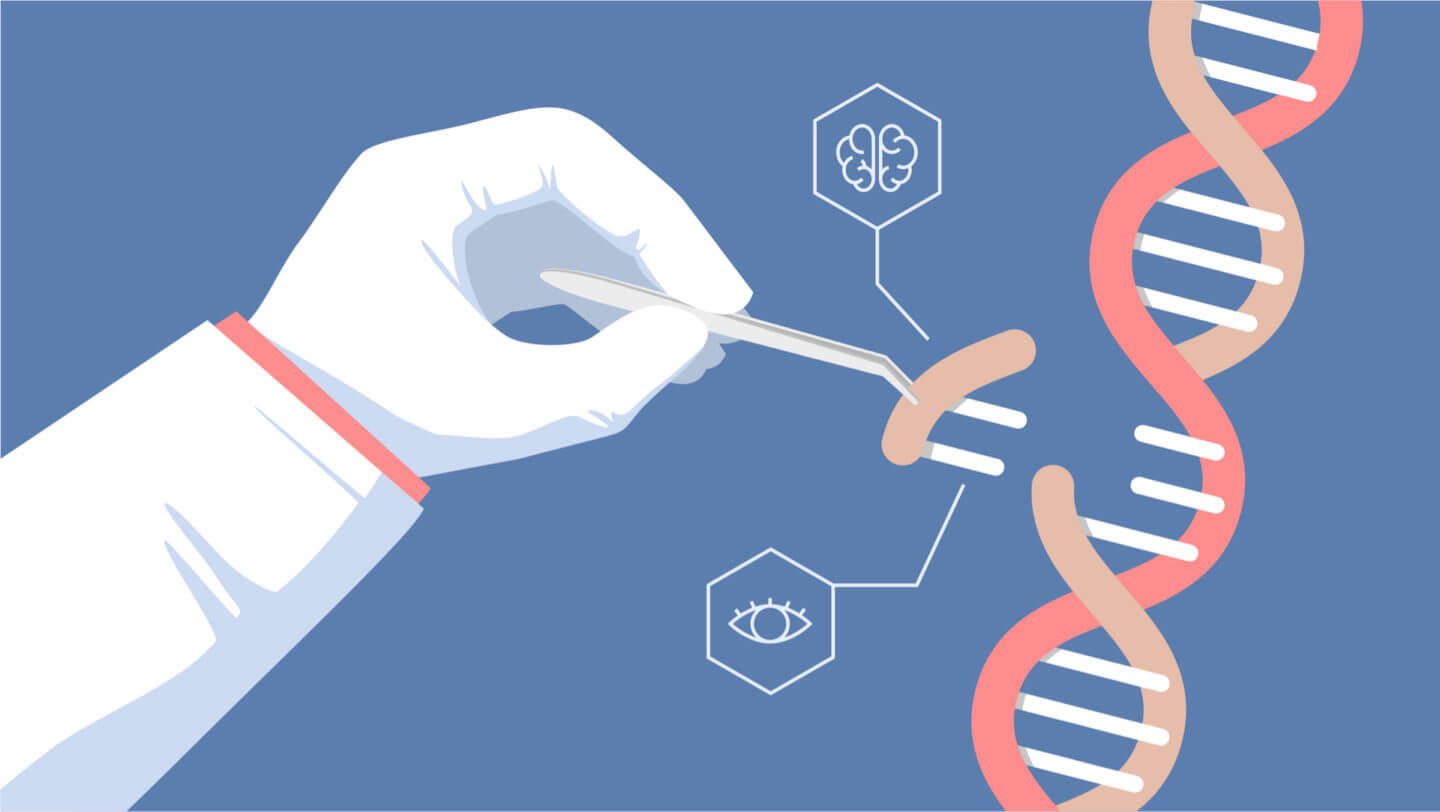
In theory, CRISPR makes it possible to cut and paste genetic material with the same ease as arranging scattered puzzle pieces. With right materials and tools, this technology could be used to create genetic combinations in organisms that could never occur naturally or even with artificial selection.

Imagine a strain of smallpox that was lethal 100 percent of the time and just as infectious.

Imagine a strain of the flu that was as easy to spread as the common cold, but as deadly as bubonic plague.

Imagine a strain of an entirely new pathogen that is extremely lethal and completely immune to all modern medicine.

These are all possible, albeit exceedingly difficult, with genetic editing. Unlike nuclear weapons, it doesn’t require the procurement of expensive and dangerous elements. It just needs DNA, RNA, and a lab with which to produce them. It’s a scary idea, but that’s actually not the worst of it, nor is it the one that worries me most.

A doomsday bioweapon like that might be appealing to generic super-villains, but like nuclear weapons, they’re not very strategic because they kill everyone and everything. For those with a more strategic form of blood-lust, advanced biological weapons offer advantages that sets them apart from any other weapon.

Instead of a pathogen infecting everyone it comes into contact with, what if it only infected a certain group of people that carry a specifics traits associated with a particular race or ethnic group? What if someone wanted to be even more strategic than that and craft a pathogen that attacked only one specific person?

In principle, this is possible if you can manipulate the genetics of a disease in just the right way. Granted, it’s extremely difficult, but the potential utility makes it more useful than a nuclear bomb will ever be.

Suddenly, a government or terrorist organization doesn’t need a skilled assassin on the level of James Bond to target a specific person or group. They just need the right genetic material and a working knowledge of how to program it into a synthetic pathogen. It could even be made to look like a completely different disease, which ensured it didn’t raise any red flags.

It’s not the ultimate weapon, but it’s pretty darn close. Biological weapons with this level of refinement could potentially target entire groups of people and never put the attackers at risk. As a strategy, it can effectively end an entire conflict without a shot being fired. Those infected wouldn’t even know it was fired if the pathogen were effectively distributed.

It’s one of those weapons that both terrorists and governments would be tempted to use. The most distressing part is they could use it in a way that’s difficult to detect, let alone counter. Even after all the death and destruction has been wrought, how do you even prove that it was a result of a bioweapon? Even if you could prove that, how would you know who made it?

These are the kinds of questions that only have disturbing answers. They’re also the reasons why I believe biological weapons are poised to become a far bigger issue in the coming years. Even if it’s unlikely they’ll wipe out the human race, they can still cause a special kind of destruction that’s almost impossible to counter.

Unlike any other weapon, though, the destruction could be targeted, undetectable, and unstoppable. Those who wield this technology would have the power to spread death with a level of precision and tact unprecedented in human history. While I believe that humanity will eventually be able to handle dangerous technology like artificial intelligence, I doubt it’ll ever be capable of handling a weapon like that.

2 Comments

Filed under biotechnology, CRISPR, Current Events, futurism, technology

Killer Robots, Drone Warfare, And How Artificial Intelligence Might Impact Both

920x515_charlene

On November 5, 2001, the history of warfare changed forever. On that date, an unmanned Predator drone armed with hellfire missiles killed Mohammed Atef, a known Al-Qaida military chief and the son-in-law to Osama Bin Laden. From a purely strategic standpoint, this was significant in that it proved the utility of a new kind of weapon system. In terms of the bigger picture, it marked the start of a new kind of warfare.

If the whole of human history has taught us anything, it’s that the course of that history changes when societies find new and devastating ways to wage war. In ancient times, to wage war, you needed to invest time and resources to train skilled warriors. That limited the scope and scale of war, although some did make the most of it.

Then, firearms came along and suddenly, you didn’t need a special warrior class. You just needed to give someone a gun, teach them how to use it, and organize them so that they could shoot in a unit. That raised both the killing power and the devastating scale of war. The rise of aircraft and bombers only compounded that.

In the 20th century, warfare became so advanced and so destructive that the large-scale wars of the past just aren’t feasible anymore. With the advent of nuclear weapons, the potential dangers of such a war are so great that no spoils are worth it anymore. In the past, I’ve even noted that the devastating power of nuclear weapons have had a positive impact on the world, albeit for distressing reasons.

Now, drone warfare has added a new complication. Today, drone strikes are such a common tactic that it barely makes the news. The only time they are noteworthy is when one of those strikes incurs heavy civilian casualties. It has also sparked serious legal questions when the targets of these strikes are American citizens. While these events are both tragic and distressing, there’s no going back.

Like gunpowder before it, the genie is out of the bottle. Warfare has evolved and will never be the same. If anything, the rise of combat drones will only accelerate the pace of change with respect to warfare. Like any weapon before it, some of that change will be negative, as civilian casualties often prove. However, there also potential benefits that could change more than just warfare.

Those benefits aren’t limited to keeping keep soldiers out of combat zones. From a cost standpoint, drones are significantly cheaper. A single manned F-22 Raptor costs approximately $150 million while a single combat drone costs about $16 million. That makes drones 15 times cheaper and you don’t need to be a combat ace to fly one.

However, those are just logistical benefits. It’s the potential that drones have in conjunction with advanced artificial intelligence that could make them every bit as influential as nuclear weapons. Make no mistake. There’s plenty of danger in that potential. There always is with advanced AI. I’ve even talked about some of those risks. Anyone who has seen a single “Terminator” movie understands those risks.

When it comes to warfare, though, risk tolerance tends to be more complicated than anything you see in the movies. The risks of AI and combat drones have already sparked concerns about killer robots in the military. As real as those risks are, there’s another side to that coin that rarely gets discussed.

Think back to any story involving a drone strike that killed civilians. There are plenty of incidents to reference. Those drones didn’t act on orders from Skynet. They were ordered by human military personnel, attempting to make tactical decision on whatever intelligence they had available at the time. The drones may have done the killing, but a human being gave the order.

To the credit of these highly trained men and women in the military, they’re still flawed humans at the end of the day. No matter how ethically they conduct themselves, they’re ability to assess, process, and judge a situation is limited. When those judgments have lives on the line, both the stakes and the burdens are immense.

Once more advanced artificial intelligence enters the picture, the dynamics for drone warfare changes considerably. This isn’t pure speculation. The United States Military has gone on record saying they’re looking for ways to integrate advanced AI into combat drones. While they stopped short of confirming they’re working on their own version of Skynet, the effort to merge AI and combat drones is underway.

In an overly-simplistic way, they basically confirmed they’re working on killer robots. They may not look like the Terminator or Ultron, but their function is similar. They’re programmed with a task and that task may or may not involve killing an enemy combatant. At some point, a combat drone is going to kill another human being purely based on AI.

That assumes it hasn’t already happened. It’s no secret that the United States Military maintains shadowy weapons programs that are often decades ahead of their time. Even if it hasn’t happened yet, it’s only a matter of time. Once an autonomous drone kills another human being, we’ll have officially entered another new era of warfare.

In this era, there are no human pilots directing combat drones from afar. There’s no human being pulling the trigger whenever a drone launches its lethal payload into a combat situation. The drones act on their own accord. They assess all the intel they have on hand, process it at speeds far beyond that of any human, and render decisions in an instant.

It sounds scary and it certainly is. Plenty of popular media, as well as respected public figures, paint a terrifying picture of killer robots killing without remorse or concern. However, those worst-case-scenarios overlook both the strategic and practical aspect of this technology.

In theory, a combat drone with sufficiently advanced artificial intelligence will be more effective than any human pilot could ever be in a military aircraft. It could fly better, carrying out maneuvers that would strain or outright kill even the most durable pilots. It could react better under stressful circumstances. It could even render better judgments that save more lives.

Imagine, for a moment, a combat drone with systems and abilities so refined that no human pilot or officer could hope to match it. This drone could fly into a war zone, analyze a situation, zero in on a target, and attack with such precision that there’s little to no collateral damage.

If it wanted to take a single person out, it could simply fire a high-powered laser that hits them right in the brain stem.

If it wants to take out someone hiding in a bunker, it could utilize a smart bullet or a rail gun that penetrates every level of shielding and impacts only a limited area.

If it wants to take out something bigger, it could coordinate with other drones to hit with traditional missiles in such a way that it had no hope of defending itself.

Granted, drones this advanced probably won’t be available on the outset. Every bit of new technology goes through a learning curve. Just look at the first firearms and combat planes for proof of that. It takes time, refinement, and incentive to make a weapons system work. Even before it’s perfected, it’ll still have an impact.

At the moment, the incentives are definitely there. Today, the general public has a very low tolerance for casualties on both sides of a conflict. The total casualties of the second Iraq War currently sit at 4,809 coalition forces and 150,000 Iraqis. While that’s only a fraction of the casualties suffered in the Vietnam War, most people still deem those losses unacceptable.

It’s no longer feasible, strategically or ethically, to just blow up an enemy and lay waste to the land around them. Neither politics nor logistics will allow it. In an era where terrorism and renegade militias pose the greatest threat, intelligence and precision matter. Human brains and muscle just won’t cut it in that environment. Combat drones, if properly refined, can do the job.

Please note that’s a big and critical if. Like nuclear weapons, this a technology that nobody in any country can afford to misuse. In the event that a combat drone AI develops into something akin to Skynet or Ultron, then the amount of death and destruction it could bring is incalculable. These systems are already designed to kill. Advanced AI will just make them better at killing than any human will ever be.

It’s a worst-case scenario, but one we’ve managed to avoid with nuclear weapons. With advanced combat drones, the benefits might be even greater than no large-scale wars on the level of Word War II. In a world where advanced combat drones keep terrorists and militias from ever becoming too big a threat, the potential benefits could be unprecedented.

Human beings have been waging bloody, brutal wars for their entire history. Nuclear weapons may have made the cost of large wars too high, but combat drones powered by AI may finally make it obsolete.

8 Comments

Filed under Artificial Intelligence, Current Events, futurism, technology

Finding True Love And Living Happily Ever After According To Isaac Arthur

photographer-finds-couple-she-took-proposal-pics-of

I’ve talked quite a bit about the future of love on this site. I’ve explored the impact of artificial intelligence, radical life extension, and human enhancement on the dynamics of pursuing love and fostering romance. I don’t claim to be the best when it comes to contemplating these topics. I’m humble enough to admit I’m not even in the top 10.

As such, I freely admit there are people who discuss this issue in far greater detail with far greater production values than I’ll ever manage. Just recently, I stumbled across a YouTube channel by someone who makes contemplating the future a relaxing, engaging, and downright pleasant experience.

The name of that channel is Isaac Arthur. If you, or anyone you know, has even a passing interest on future technology, sci-fi concepts, or space exploration, I highly recommend you check out this channel. It covers a wide range of topics from colonizing space to future sources of energy to what kind of pets we may have in the future.

Naturally, a video he made about finding love using future technology is one of my favorite. It only came out earlier this year, but it perfectly breaks down how love, romance, marriage, and family may unfold in a future dominated by artificial intelligence and radical life extension. Mr. Arthur does in one video what I probably couldn’t do in a hundred articles. For that, I thank him.

Leave a comment

Filed under Artificial Intelligence, futurism, romance, sex in society, sexuality, Sexy Future, technology

When Sex Is Divorced From Reproduction: The Possibilities And Implications

virtual-reality-sex-110219

Relatively speaking, it wasn’t that long ago in humanity’s history when finding food was a matter of survival. It wasn’t as simple as walking into the nearest grocery store and buying whatever was on sale. Individuals, governments, and societies dedicated a good chunk of their time and energy into securing a stable food source. Those who didn’t were usually the first victims of the next famine.

These days, getting a meal is less about survival and more about logistics. Thanks to major advances in agricultural science, including those of the late Norman Borlaug, we have so much abundant food that overeating is now a bigger problem than famine. Hunger is still a major issue for certain parts of the world, but it’s more a logistical issue than a resource issue.

Once food was divorced from famine and survival, it changed the way society approached it. Most people don’t even think about where they’re going to get their next meal. Their main concern is whether it’ll be a tasty meal.

With this critical need met, we can focus more time and energy on other matters. Even before science gave us abundant food, sex and reproduction was usually our second most pressing focus. It’s the other powerful drive that unites us all as a species. As a result, it’s subject to all sorts of taboos and has been central to multiple revolutions.

There’s no question that technology has impacted sexuality every bit as much as it impacted food production. Even advances unrelated to sex, especially anti-biotics, affected various attitudes and norms. However, even with these advances, sex maintains much of its primary function in that it’s still necessary for reproduction.

With that in mind, what happens when that’s no longer the case?

What happens to sex when it’s completely divorced from reproduction?

This isn’t another speculative thought experiment. This process is already unfolding. I would argue that it started on July 25, 1978 when the first baby was born from in vitro fertilization. Since then, over 8 million babies have been born through this technology. That is not a trivial number when we’re dealing with human lives.

Just take a step back to appreciate the implications of these lives. They were all conceived and birthed without sex. In centuries past, this was grounds for a miracle that could serve as a basis for a major religion. These days, it’s so routine that it never makes the news. Most people don’t think about it. It helps that these people are just as healthy and prosperous as those who were conceived with sex.

In the near future, this could change as well. Late last year, our technology went a step further beyond conceiving babies through in vitro fertilization with the birth of the first genetically edited babies in China. Now, it’s not just normal babies being born through this technology. Thanks to tools like CRISPR, children born without sex could be healthier and stronger than those conceived through sex.

Again, that is not a trivial detail. It’s one thing for technology to simply match a natural process, especially one as critical as human reproduction. Once it starts doing it better than nature, then that’s a huge paradigm shift. It might even be a point of no return. Having babies through sex is still a thing, but it’s no longer the most effective way to have healthy, strong children.

While this has generated plenty of controversy around topics like designer babies, there hasn’t been as much discussion about what this means for sex. If sex is no longer the primary method for reproduction, or the safest for that matter, what happens to our society? What happens to centuries of taboos, attitudes, traditions, and gender roles?

It’s difficult to speculate, but some have tried. In a recent article with the BBC, author Henry T. Greely laid out a general timeline. It doesn’t rely entirely on huge leaps in reproductive technology. It simply follows the trends that began with in vitro fertilization. In the interview, these are just a few thoughts he shared.

In 20 to 40 years, most people all over the world with good health coverage will choose to conceive in a lab. Like most things, there will be a fair amount of visceral negative reaction initially, but as time goes on and kids prove not to have two heads and a tail, the public will come not only to tolerate but to prefer reproducing non-sexually.

From a logistic and public health standpoint, this makes sense. Any healthy and prosperous society would want to promote the birth of healthy children in a manner that preserves the health of the mother. With technology like in vitro and CRISPR, it might very well be preferable because it means fewer diseases, lower health care costs, and fewer burdens on parents.

That doesn’t even begin to factor in the impact of more advanced reproductive technologies. With advances like artificial wombs in development, sex wouldn’t just be divorced from reproduction. Reproduction might not require any intimate connection whatsoever. At that point, sex for reproduction is akin to drinking unpasteurized milk.

Will people still have sex at that point? I believe they will. Unless we radically change our bodies all at once, the hardware for sex will still be present. The drive to do it will still be there as well, although some might opt to turn it off if that were an option. Regardless of any lingering attitudes and taboos, there’s no getting around it. Sex still feels good. It’s still a profoundly intimate act with many health benefits.

How people go about it will likely change. A great many taboos about sex stem from its role in reproduction. Much of the stigma surrounding promiscuity and traditional gender roles have a basis in highlighting the importance of sex in the propagation of our society and species. If are reckless about it, then that can spread disease, destabilize families, and create unhealthy environments for children.

Going back to the parallels with food, the same logic was once used to discourage gluttony. For much of human history, we had to be careful with how we consumed our food. If people consumed too much and were reckless with our eating habits, then they were ill-prepared for the next famine that inevitably came.

While sex and reproduction are still very different from consuming food, the influence of technology had a major impact on collective attitudes. We don’t look at people who overeat the same way we look at people who have lots of sex. Both may still draw scorn, but few will worry for the survival of the future of their community if a handful of people overeat.

At the moment, there are very real concerns surrounding falling birth rates and people having less sex than ever before. In some countries, the low birth rates are seen as an outright crisis that has also fueled ongoing debates surrounding immigration. Crisis or not, this situation is adding more urgency to the development of reproductive technologies. That, along with the decline in sex, could hasten this pending divorce.

Once it’s finalized, what form will sex take? It could simply become an act of intimacy or recreation. Humans might ultimately treat it the same way Bonobo monkeys treat it. It’s just an intimate activity that people do. Reproduction never even enters the conversation. People save that for when they want to design their baby.

It could also gain another purpose entirely. Maybe sex becomes less an act of intimacy and more an elaborate handshake, of sorts. It could be seen as a way of establishing trust or differentiating between casual acquaintances and close friends. In that world, friends with benefits are just friends. The benefits are implied by the friendship.

There’s also the very real possibility that people will just lose interest in sex. If there’s no reason to do it and it has no bearing on the growth of a society, then it just might be an afterthought. People might still do it, but those who do would be like the people who still have their own gardens in the backyard. It’s a quaint echo of our past that most have moved past.

These are possibilities. For now, there are no inevitabilities with respect to how we’ll approach sex once it’s no longer necessary for reproduction. It’ll likely be several decades before reproductive technology gets to a point where it’s preferable to sex, both for individuals and societies at large. Until then, this lengthy divorce is already at the early stages. It’s just a matter of how messy it’ll get in the coming years.

1 Comment

Filed under biotechnology, CRISPR, futurism, gender issues, human nature, Marriage and Relationships, Second Sexual Revolution, sex in society, sexuality, Sexy Future, technology

Good People, Corruption, And Politics According To “Designated Survivor”

1200x627-q80_254c4e9ea1d7fec00147aba9a99acb7e

Politics is a dirty, cut-throat world that often requires good people to compromise principles, integrity, and basic human decency. Most people wouldn’t argue that. Even before the internet, the corruption that often goes hand-in-hand with politics was well-documented. That corruption has only become more visible in recent years. It’s hard to go more than a week without seeing a fresh case of shady political conduct.

However, instead of dwelling on how ugly politics can get in the age of social media and outrage culture, I’d like to scrutinize the nature of that corruption. I don’t doubt the ugliness or absurdities that politics often breeds, but it also poses some interesting question.

Do politics naturally corrupt the people who get involved?

Is corruption in politics unavoidable?

Do politics only attract corrupt individuals?

Is it possible to get anything done in politics without some amount of corruption?

These are not easy questions to answer. You don’t have to look hard to find corrupt politicians or uncover cases where politics undermined efforts to pursue a public good. However, the extent and the process of that corruption is sometimes difficult to understand. Those of us not involved in politics have a hard time imagining how ordinary people could become so callous.

That’s why a show like “Designated Survivor” is so uniquely compelling. Even as a work of fiction, this show explores the complex world of politics within the most extreme of circumstances. There’s political drama, intense action, and ongoing mysteries that go beyond politics, but the latest season of the show accomplished something unique in terms of how people become corrupt.

The premise of the show starts simple. Tom Kirkman, played by Keifer Sutherland, works at the White House as a fairly low-level department head as the Secretary of Housing and Urban Development. In terms of rank and influence, his authority is barely above that of a typical intern.

Then, prior to the annual State of the Union Speech, he gets picked for the unenviable role of designated survivor, which is a real thing. It’s a role meant to keep the government going in the worst of worst-case scenarios when there’s a catastrophic attack that kills the President, Congress, and much of the government. In the pilot episode, that’s exactly what happens.

Suddenly, this man who has never run for political office or served as an elected official is thrust into the role of President of the United States and after the worst attack in the history of the country. It’s overwhelming, to say the least. It makes for great TV drama, but it also creates a unique experiment in what power and politics do to an otherwise ordinary person.

Before Kirkman is thrust into this role, it’s established early on that he’s somewhat of an idealist. He identifies as an independent who is genuinely concerned with using the political process to pursue a public good. He also demonstrates early on that he has a strict understanding of right and wrong. For him, there’s no compromise or second-guessing when it comes to ethics.

On paper, he has the kind of character and ethics that most people want in a politician. Even the dire circumstances of his ascension are favorable because he never had to raise money from billionaires to finance his campaign. He doesn’t even have to make shady deals or back-stab anyone, which is also an all-too-common tactic in politics.

In a sense, Tom Kirkman comes into this position of power free of corruption. He is in a position where he can govern with his principles and ideals intact. This isn’t “Mr. Smith Goes To Washington.” This is Mr. Smith gaining unprecedented power without having to go through the corrupt process.

Throughout the first and second season of the show, Kirkman tries to do his job with his ideals intact. Whether it’s tracking down who blew up the Capitol or preventing an all-out war in East Asia, he has to constantly render difficult and weighty decisions that test his ability to keep being that affable man from the first episode.

For the most part, he succeeds on many fronts. The conflicts throughout the show often followed a common formula. President Kirkman faces a difficult issue. One side urges him to make one risky, politically-motivated decision. The other side urges something else that’s just as risky and just as political. Kirkman, unwilling to compromise his laurels, has to forge a third option.

Time and again, the integrity of his character shows. By the end of the second season, the extent of that integrity is beyond dispute. Then, the third season arrives, via Netflix, and everything changes and not just due to the sudden increase in profanity.

This season, unlike the previous two, cast aside the formula of the first two seasons, but not without reason. The entire third season is built around Kirkman running for re-election as an independent. At this point, all the good he did with respect to rebuilding the government after a devastating attack is a distant memory. It’s all politics now and this is where his integrity is pushed to the limit.

Almost immediately, Kirkman discovers that just being a man of integrity isn’t enough. The first episode of the third season really sets the tone, highlighting how easy it is for his ideals to get lost in the politics of an election. Just saying what’s true and right isn’t enough. It has to resonate with voters. That’s the only criterion that counts for anything.

His primary opponent in this season is Cornelius Moss. In the second season, he was an ally. He came in as a former president who knew the rigors of the job better than most. He was also an experienced politician. He had experienced the corrupt world of politics and he had successfully navigated it. As a result, he never comes off as having the kind of integrity and principles that Kirkman espouses.

For a while, Moss comes off as an outright villain in the world of “Designated Survivor” and in a season that introduces a full-fledged bioterrorist, no less. He conducts himself the same way most people expect a corrupt politician to behave. He doesn’t care about truth, integrity, or decency. He does whatever he must in order to win the election and secure his power.

In previous seasons, Kirkman would’ve sought a way to counter those tactics and come out with his integrity intact. It was part of what made him so respectable, as both a character and a politician. Season three makes it abundantly clear that this is not going to work this time. If Kirkman wants to win, he’ll have to compromise his principles.

Without spoiling too many plot points, I’ll just state that the conclusion of this struggle leaves Kirkman in a very vulnerable position. He’s no longer the same man he was when he became President. The attack on the Capitol that made him President was an extreme circumstance that he never could’ve known about. What happens with the election in season three is very much a byproduct of his own choices.

It doesn’t definitively answer those questions I listed earlier, but it does offer some insights. More than anything else, season three of “Designated Survivor” makes the case that the political process will ultimately corrupt anyone who gets involved. It doesn’t matter how principled or decent they are. The very nature of navigating power requires that people compromise their ideals.

It’s not just Tom Kirkman who struggles with it, either. The same supporting cast that helped him cling to his principles for the first two seasons, such as Aaron Shore, Emily Rhodes, and Seth Wright, end up compromising, as well. For some, it’s disconcerting. For others, it’s downright traumatic. In the final episodes of Season 3, the reactions of Emily Rhodes nicely mirror those who valued Kirkman’s character.

There’s now an unavoidable disconnect between what Kirkman says and what he does. Even the actions of Cornelius Moss are obscured when he too becomes a victim of shady political dealings. In the end, there’s no one left in “Designated Survivor” whose integrity hasn’t been compromised. There’s also no one left whose morals aren’t muddled by circumstances.

Even in a fictional context, the politics in “Designated Survivor” are surprisingly reflective of real-world complications. Like in the show, every political party or movement believes they’re right and their opponents are wrong. They believe in what they’re doing. They also believe that if they fail, then the wrong policies will prevail.

Conservatives, liberals, libertarians, and even anarchists are guilty of that flawed mentality. It’s one of the many reasons why politics tends to breed polarization. When people are so convinced that they’re the good guys, they become more willing to cross certain lines to defeat the bad guys. Tom Kirkman managed to avoid that for two seasons. He couldn’t in the third.

Whether or not he’s vindicated for his choices remains to be seen. Depending on whether the show gets a fourth season, it’s inevitable that he’ll face consequences for his choices. How he manages those consequences will reveal how much integrity he still has. If he plays his cards poorly, he may not have any left when all is said and done.

Designated Survivor” is a great show that explores difficult issues. Season three had its faults, but it marked a major turning point for Tom Kirkman. He is definitely not the same person he was in the show’s first episode, but he’s not quite at that point where we can say he’s lost sight of his laurels.

Both circumstances and politics did plenty to change Tom Kirkman over the course of the show. You could make the case that these forces corrupted him. After season three, you could also make the case that he’s now on the same path as Walter White from “Breaking Bad” in that these circumstances simply brought out a side of him that was always there.

Whatever the case, the ugliness of politics is something people have to navigate, both in the real world and the fictional world of “Designated Survivor.” Good people will keep trying to do good. Corrupt people will keep pursuing corrupt behavior. Politics, whatever form it takes, can only ever complicate that process.

Leave a comment

Filed under Current Events, human nature, political correctness, psychology, technology

Why I Believe In Climate Change, But Doubt Environmentalists

103_shutterstock_88550854-740px

There aren’t a lot of hot button issues that genuinely affect everyone. The environment is one of those issues. We all live in it. We’re all impacted by it. Whenever it changes significantly, we all feel it. That’s why, regardless of your politics or personal leanings, we should take environmental issues seriously.

Given that preface, I’d like to make my own sentiments clear. The environment, like other sensitive topics I’ve discussed, is prone to all sorts of secondary agendas. Some who claim to take environmental issues seriously often do so because it serves their interest in other, often indirect ways. In the interest of transparency, this is where I stand on the environment.

I do believe that climate change is real, human activity is contributing to it, and we should pursue policies to improve the environment and promote cleaner industry.

However, I don’t entirely trust the rhetoric, sincerity, and positions of those who identify as environmentalists.

I know that sounds like someone trying to have their cake and eat it too, but there is a context here. It’s one that I’ve developed over a number of years, some of which I’ve been on the side hardcore environmentalists. As I’ve gotten older, however, I see more and more complications with this issue and not just in terms of the absurd conspiracy theories it attracts.

While I know this will put me at odds certain parts of the political spectrum, I generally accept that the existing science surrounding climate change. The Earth is getting warmer and human activity is a major cause. There have been real, tangible impacts attributed to climate change and I believe those links are real.

The point where I often deviate from environmentalists is when issues of feasible solutions emerge. I’m happy to support efforts that raise awareness and educates the public on the existential dangers of climate change. However, just sounding the alarm is only half the battle. The other half involves doing something about it and this is where environmentalists have a problem.

It’s not that they outright avoid talking about solutions, which sets them apart from other agenda-driven politics. Some of their solutions do have merit and some are even making headway into the economy. However, there’s an over-arching theme of those solutions that leads me to question just how much the environment actually matters to certain environmentalists.

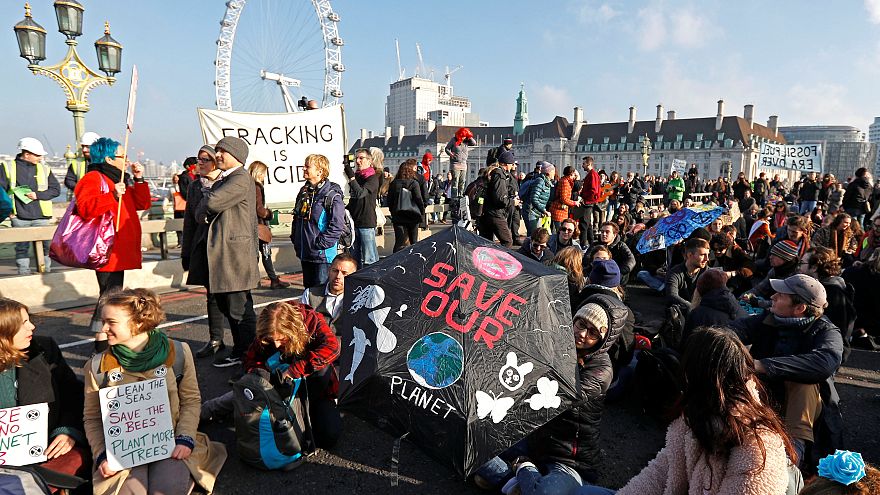
Talk to any self-identified environmentalist and, usually after they’re done talking about melted ice caps and dying polar bears, they’ll single out greedy corporations as the enemy. They tend to lump oil companies, coal producers, and any corporation that doesn’t sound eco-friendly as part of some international consortium of billionaires intent on maintaining their pollution-loving ways for the sake of profit.

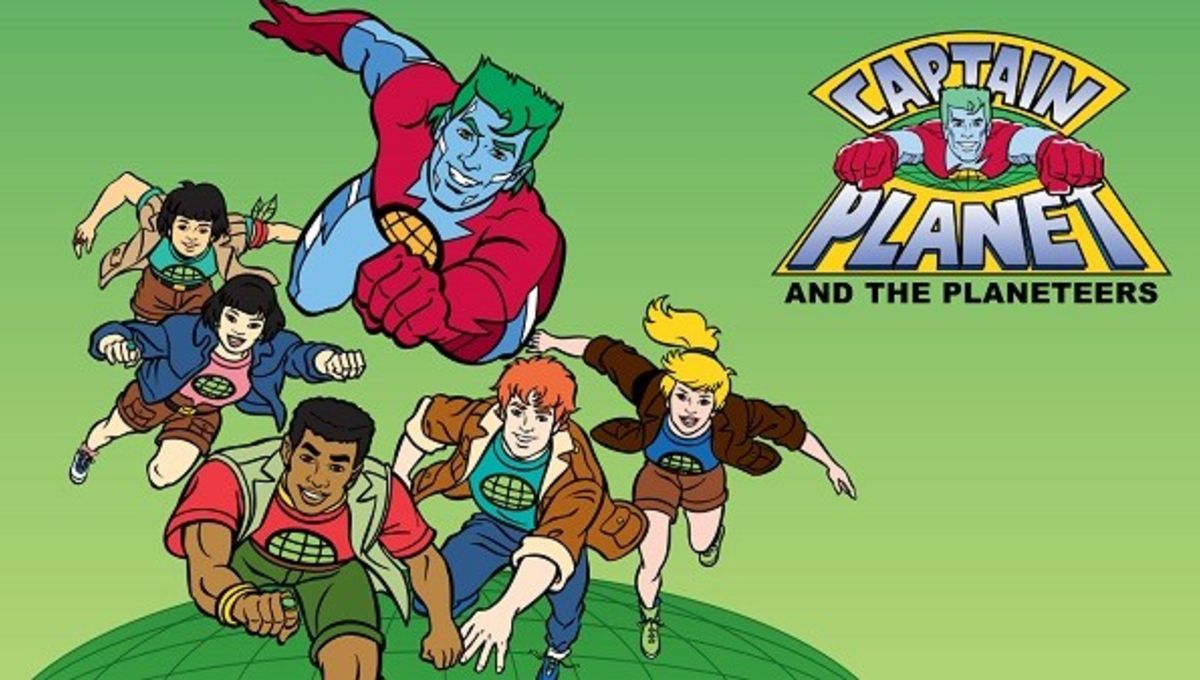
Now, I don’t like defending big corporations, especially when their track record in protecting the environment has plenty of room for improvement. At the same time, I have a hard time believing that the solution to such an enormous problem involves battling big, industrial polluters as though it were an episode of “Captain Planet.”

As much as I love cheesy cartoons in the 1990s, the problems of the real world are far more complicated. Environmentalists, like many other vocal politically-driven groups, try to simplify the issue. Through their protests and the rhetoric surrounding it, they give the impression that to save the world, they need only defeat the evil polluters.

This is where I don’t just question the veracity of environmentalists. I genuinely doubt that the environment is their primary concern. If it were, then protesting polluters would only be a small part of their efforts. If they’re serious about making the world cleaner and more efficient, they would dedicate more time and energy into improving clean energy technology, which itself is prone to corporate greed.

This disconnect is most apparent whenever the topic of nuclear power comes up. Unlike other green energy technologies, nuclear energy is a mature technology that has been providing energy for decades. Compared to other forms of energy, it has very low emissions, but provides abundant energy, regardless of whether the sun is shining or the wind is blowing.

Despite those benefits, the same environmentalists who favor shutting down coal power plants won’t support the construction or further refinement of nuclear power planets. They’ll even outright oppose it and for reasons every bit as irrational as those championed by climate change deniers.

While there are legitimate disadvantages to utilizing nuclear power, I rarely hear environmentalists promote efforts to mitigate those issues. They won’t champion the development of advanced nuclear power, including versions that produce far less waste and are less prone to meltdowns. Many won’t even concede it as an option.

This is akin to anti-abortion advocates who support making abortion illegal in all cases, but also oppose contraception, despite the fact it significantly reduces abortions. It also parallels other environmentalists who protest the usage of genetically modified foods, but overlook the distressing fact that billions would starve without this technology.

It’s not just a case of the perfect being the enemy of the good. It’s environmentalists favoring a particular narrative over actual solutions to the problems they protest. As I’ve noted before, people like to believe that they’re the heroes of their own story. When they take a particular position, they see themselves as the underdogs in an epic struggle against good and evil.

While that makes for great superhero comics and Tolkien novels, it rarely aligns with reality. Environmentalists think they’re protesting a greedy corporation run by an army of Lex Luthors who enjoy bathing in the tears of starving orphans, but the truth is more complicated and more mundane.

A key part of that truth that environmentalists tend to overlook is the fact that, no matter how greedy or evil a corporation may be, they have a vested interest in the world remaining intact. Corporations, be they greedy or virtuous, are driven to make profits. They can’t make profits, nor enjoy the fruits of their wealth, in a world where the planet is a toxic wasteland.

That’s why even oil companies, the boogeyman of many environmentalists, are actively researching more environmentally friendly products. It’s also why oil-rich countries like Saudi Arabia, which has harmed the environment in ways beyond pollution, is also investing in a post-oil economy.

It’s very likely that the advances in green energy that will improve the environment won’t come from some dedicated environmentalist who protests outside of coal plants. Chances are it will be some greedy, profit-seeking business person trying to make money in a world where the demand for energy is rapidly increasing.

Beyond just generating energy, those same greedy billionaires have just as much incentive to create clean, lush landscapes that attract other billionaires and customers. In general, people don’t like being in polluted communities. Aside from the illness and misery it generates, it also means there are fewer people buying goods and producing for the economy. Even the most devious billionaire is hurt by that.

The incentives for improving the environment are already there. That’s not to say there aren’t some who are truly malicious in how they treat the environment, but in terms of an investment that helps greedy people get richer, it’s one of the worst investments anyone can make and not just because of the bad PR it generates.

Environmentalists will gladly single out those exceedingly malicious corporations, but ignore the bigger picture. They, ironically, don’t see the forest from the trees when it comes to action that genuinely improves the environment. They cling to that epic war raging in their minds of them battling evil corporations that are out to destroy the planet, as though that would somehow benefit any business.

I get the appeal of wanting to feel like a hero in an epic struggle. My love of superhero comics should be proof enough of that. However, when that same struggle both ignores and undermines real solutions that could alleviate a serious issue, then it’s hard to take environmentalist rhetoric seriously.

There’s having genuine concern for the environment and then there’s just being against greedy corporations. Those who are unable to discern between the two can call themselves a lot of things, but they certainly aren’t helping the environment.

2 Comments

Filed under Environment, human nature, outrage culture, political correctness, technology

Why Designer Babies Are NOT The Same As Eugenics

david20catalano

As much as I celebrate advances in science and technology, I don’t deny there are instances where some advances it leads to unintended consequences. I’m sure the inventor of ski masks knows that all too well. In many cases, these missteps and mishaps are part of the ongoing challenge to use these advances responsibly. It’s akin to a maturation process that is often difficult, but still necessary.

In some cases, however, certain advances bring out some of humanity’s ugliest traits. Whether it’s a tool or an insight into the natural world, certain people who may or may not be malicious will use science to further a nefarious agenda. Of all the sciences that brought out the worst in humanity, eugenics is probably the most well-known.

The concept, itself, is not entirely abhorrent. If you look up the definition, this is what comes up.

The practice or advocacy of controlled selective breeding of human populations to improve the population’s genetic composition.

On paper, that has some objective merit. The world is a chaotic, dangerous place that’s constantly changing. In some cases, humanity is causing that change. If we’re to survive on a planet in which 99 percent of the species that have ever lived have gone extinct, it makes sense to improve our collective genetics so that we’re best equipped to survive.

Unfortunately, the details surrounding eugenics were permanently tainted when it became the preferred excuse for atrocities by the Nazis. Even before that, it was a popular talking point among racists seeking to marginalize or outright exterminate the impact of certain minorities within a society. At one point, there were organizations dedicated to promoting eugenics through forced sterilization and miscegenation laws.

The legacy of eugenics is so ugly that it’s almost synonymous with some of the worst acts of bigotry ever committed. When people think of eugenics, they don’t think of advancing human biology to make it more robust. They imagine racist tyrants forcibly sterilizing undesirable minorities in the hopes that they eventually die out in a silent genocide.

There’s no question that this form of eugenics is abhorrent. The way it was practiced throughout the 20th century was a perversion of science and technology. We would be wise to remember that as we make bigger and bolder advancements in science, especially for those related to biotechnology.

It’s here where the ugly legacy of eugenics seems destined to clash with science once more. In late 2018, news broke of a groundbreaking advance in biotechnology when a scientist named He Jiankui announced that the first genetically modified humans had been born. I went out of my way to note why this is a huge deal in the history of our species, but it’s also sparking distressing concerns related to eugenics.

Thanks to gene-editing tools like CRISPR, it’s now possible to edit the human genome with the same ease as copying and pasting text from a website. That has sparked concerns that it will be used to purge certain undesirables from the human population, just as was attempted with eugenics.

Logistically, there’s no reason why tools like CRISPR couldn’t be used to edit the genome of every child before they’re born to ensure they look a certain way. Granted, it would require some fairly invasive policies, but that has never stopped ambitious governments in the past. As these tools are refined, it’ll only get easier to pursue the kinds of racist policies that deplorable bigots in the past once favored.

However, this is not a fair association, nor is it constructive in addressing the legitimate issues surrounding the use of CRISPR and so-called designer babies. Linking this technology to eugenics is akin to blaming every nuclear physicist for the destruction of Hiroshima and Nagasaki. It’s not just because the potential of this technology is so great. The intent behind it differs considerably with that of eugenics.

That intent shows in the specifics of the first two genetically modified children. These children were not born out of a desire for racial superiority. The modifications made to their genome was intended to make them more resistant to HIV/AIDS infection. That’s an objective good. Healthier babies who are more resistant to disease is a benefit to our species, as a whole.

In addition, this feat was achieved without sterilizing someone against their will or without the consent of the parents. While there were some legitimate ethical concerns, the underlying purpose has little to do with furthering racial goals and more to do with combating disease and suffering. This is where the difference between eugenics and designer babies at its most stark.

Eugenics, historically speaking, was almost always pursued with a racial agenda. It never stopped at just treating disease. Its advocates sought more than just health. They sought superiority. That’s not how the emerging technology surrounding CRISPR is being used. It’s following a similar path to that of in-vitro fertilization, which was subject to plenty of controversy as well.

Like any technology, there are going to be legitimate concerns mixed in with the doomsayers. With CRISPR and designer babies, the concerns will be greater because the stakes will be higher. We’re not just talking about a technology that will reduce the risk of inherited diseases. This technology could fundamentally change the human race in a very literal sense.

Designer babies, much like their in vitro counterparts, will be part of that change. Regardless of how someone feels about endowing a baby with the genetics of Tom Brady and Stephen Hawking, the potential for good is just too vast. Thousands of people die every year because of diseases that are written into their genes. This technology, if properly refined, could render such suffering a distant memory.

Hesitating with this technology because of potential links to eugenics will only prolong this suffering. In the same way countless individuals wouldn’t be alive without in-vitro fertilization, there are countless people who aren’t alive now because this technology wasn’t available to help them.

Treating diseases and ensuring the health of the next generation is a common good that eugenics corrupted with racist ideology. It attempted to do that by using science and technology to more effectively oppress their chosen enemies. That is radically different than editing the genes of a child so they don’t succumb to certain diseases.

That’s not to say there aren’t risks. At some point, someone will try to abuse this technology and it’s likely that person will have unpopular views on eugenics. There will also be a point where this technology isn’t just used to treat diseases. It will also be used to implement traits and abilities within people that aren’t possible by natural means.

The look of a baby who never has to worry about genetic diseases.

The merits and ethics of such genetic tampering are definitely worth discussing, but references to eugenics will only serve to derail that discussion for all the wrong reasons. Like it or not, humans will need to keep adapting and growing in our chaotic world. If we ever hope to outlast our planet and even our sun, we can’t be bound by genetic constraints or outdated attitudes.

That makes developing genetics technology all the more vital. Eugenics was a bad ideology that hijacked a lot of good science. Whatever your opinion may be on designer babies and improving the human genome, the technology is here. Children born of this technology have arrived. The benefits are vast, provided we have the right approach.

2 Comments

Filed under futurism, human nature, sexuality, technology

DNA Testing, Family Secrets, And Revealing Truths About Infidelity

motleyfool-tmot-982abbc8-dna-test-tube_large

What if you woke up one day and found out your father wasn’t actually your biological father?

What if you woke up one day and found out your kids weren’t actually your biological kids?

For a growing number of people, this isn’t just a distressing hypothetical. It’s a painfully real scenario. Secrets that were once easy to keep are now coming to light, thanks to a mix of curiosity, advancing technology, and simple economics. It’s causing a lot of distress for a lot of people, but the fact that it’s happening is somewhat telling.

To understand it, it’s necessary to understand just how unprecedented this situation is. Until very recently, getting a DNA test was exceedingly expensive. Go back 25 years when the Human Genome Project was just getting underway and just sequencing one person’s DNA cost millions. Then, thanks to advances in sequencing techniques and computing technology, the cost fell rapidly.

Today, sequencing your DNA costs less than $1,000. If you just want to test your ancestry, that’s even cheaper with kits costing around $100. You don’t need a court order or contacts at the FBI. You just need a spare $100 and a willingness to spit in a tube. It may not seem like much, but make no mistake. This is uncharted territory for our species and our society.

Ever since we structured our civilization around agriculture, passing down property through generations, and building more diverse societies, there has been a strong incentive to know that your children are biologically yours. This is where taboos surrounding virginity and female chastity come from. For centuries, the best way to assure your kids were yours was for your bride to be a virgin on her wedding night.

However, even in those limited circumstances, it was entirely possible to get around them. The traditional practices of testing young women for virginity are both invasive and prone to major error. If a woman is cunning enough, she can beat those tests and get away with lying about her sexual history. Men could be just as effective about hiding affairs that may have resulted in children with other women.

Now, hiding the truth isn’t just harder in the era of the internet and social media. Certain lies can no longer remain hidden. You can claim videos are deep fakes and that pictures had been Photoshopped. You can’t make those kinds of excuses when the truth is literally written in someone’s DNA.

Sometimes, the truth is just shocking. Take the story of Dani Shapiro, who found out that the man she’d loved and cherished as her father was not related to her. It wasn’t because of her mother’s infidelity, though. It was because her parents utilized an old infertility treatment that resulted in her being conceived with doner sperm instead of that of her surrogate father.

In other cases, the truth can be devastating, such as the case of Sarah Zhang, who found out that rumors of her mother having an affair with a restaurant owner were all too true. This revelation was heartbreaking. In an instant, her entire identity and sense of self had been uprooted. This is how she described the difficulty processing this information.

When I first found out the news, I considered taking a leave of absence from work, because I had difficulty focusing on anything else besides the revelation from 23andMe. On a hard day, I feel heartbroken about my mom’s secret. Her illness created an intimacy between us in the final months of her life and I felt that we were able to tell each other all the things in our heart. This news taints that memory and created a fresh bout of grieving about her death.

These stories are harrowing and they’re becoming increasingly common. There’s even a support group on Facebook for people who learn from these testing kits that their heritage isn’t what they’d previously thought. It’s hard to understand what these people are going through, living their whole lives thinking they know who their parents are, only to find out it wasn’t true.

As DNA testing kits continue to get cheaper and more prevalent, there’s a good chance there are plenty more cases like this just waiting to be uncovered. The fact that it seems to be happening so much says more about our species and our society than it does about the technology behind it.

Think, for a moment, about all the families who lived in the era before this technology became available. How many of those families had secrets like the ones Dani Shapiro and Sarah Zhang later uncovered? How many fathers unknowingly raised children that weren’t biologically theirs? How many mothers birthed children who were sired by someone other than their spouse?

It’s impossible to know for sure and the fact that it was impossible for most of human history might be just as telling as any family secret. I’ve mentioned before at how our notions of traditional romance and family have significant flaws. We value and idealize monogamy and fidelity, but the fact that we go to such extremes to favor it seems to imply that there’s something untenable about it.

Promiscuity and infidelity have existed in every human society. There’s a reason why even ancient civilizations had laws and traditions regulating marriage, adultery, and divorce. Even when there are serious consequences, people still did it. The fact that some of the punishments were so severe imply that a lot of people were getting away with it.

Even so, this didn’t stop men from raising children as their own. It didn’t stop women from loving their children and their spouses all the same. The fact that it was so hard to determine someone’s heritage might have even helped our species from an evolutionary standpoint.

A big part of what makes humans such a successful species is our ability to form tribes, cooperate, and coordinate towards a common goal. In old hunter/gatherer societies, close-knit tribes weren’t quite as concerned about the paternity of their kids. They took a more communal approach to family. Logistically, they had to. They needed that level of cooperation to survive in a harsh, unforgiving world.

Given that humanity spent most of its history in this hunter/gatherer structure, the forces of evolution are already working against those seeking parental certainty. The rise of civilization complicated things, but not to an extent that people couldn’t get away with fooling around. The fact that the average number of sexual partners for people these days is more than one only reveals that the inclinations is definitely there.

That’s an important factor to remember because as DNA testing becomes easier and cheaper, it won’t be possible to avoid the implications. People cheat. People keep secrets. People lie to their kids, sometimes without knowing it. For the most part, it hasn’t affected our ability to function as families and a society. Whether the emerging truth written within our DNA changes that remains to be seen.

Leave a comment

Filed under gender issues, human nature, psychology, sex in society, technology