Category Archives: superhero comics

Vision, the Scarlet Witch, and the MCU’s Romance Problem

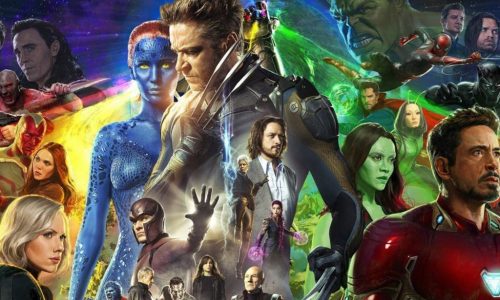
vision-and-scarlet-witch-avengers-infinity-war-sdcc-banner

Trying to find flaws in the Marvel Cinematic Universe these days is like trying to find a flaw in Mr. Rogers. It’s pretty much impossible, unless you’re willing to be exceedingly petty. Even the most ardent critic can’t deny the success of this now iconic cinematic universe. Such a franchise doesn’t make over $7 billion at the box office by having many egregious flaws.

That said, the MCU is not without its shortcomings and I’m not just talking about underperforming outliers like “The Incredible Hulk” or outright failures like “Inhumans.” One such shortcoming, which I feel has not had sufficient scrutiny, has to do with romance in the MCU. As someone who is a lifelong comic book fan and an admitted romantic, this stands out to me more than most.

It only became more apparent with the upcoming a TV series starring Vision and the Scarlet Witch on the Disney+ streaming service. The romance fan and the comic book fan in me initially liked that idea because Vision and the Scarlet Witch are one of the Avenger’s most endearing and colorful romances in the comics. This is definitely one of those relationships that can carry an entire show.

However, given that this takes place in the MCU, the concept is already on a shaky foundation. While the events of “Avengers: Infinity War” established that these two characters are romantically involved, there’s little in terms of how that relationship developed. As a result, the tragedy that played out in the Battle of Wakanda had little dramatic weight.

It’s one of the few glaring flaws in an otherwise stellar narrative. However, the lack of romantic depth between Vision and the Scarlet Witch is only the most obvious symptom of a much larger problem that has been unfolding in the MCU since the days of “Iron Man” and “Thor.”

Some parts of that problem are pure logistics. Building a cinematic universe on the scale of the MCU requires a lot of moving parts and, as a result, romance was often a secondary concern. Kevin Feige and the creative minds at Marvel Studios opted to prioritize other aspects of character development. Given the MCU’s unprecedented winning streak, it’s safe to say those priorities were well-placed.
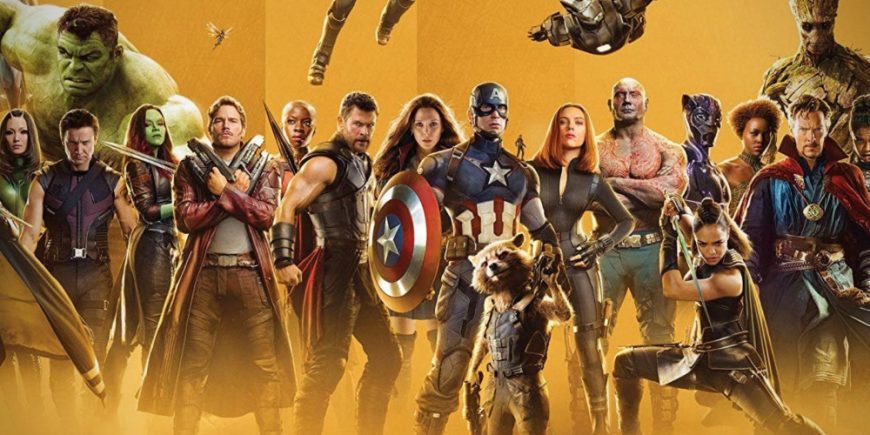
It’s only recently that the lack of emphasis on romance has caught up to the MCU. From having Thor break up with Jane Foster prior to “Thor Ragnarok” to horribly mismatched romance between Hulk and Black Widow, there’s a glaring absence of successful, well-developed romances in the MCU.

Even the successful romances, namely Tony Stark and Pepper Pots or Ant Man and Wasp, had much of that success unfold off-screen. At most, a movie would show them getting together or enduring a major conflict, but there would rarely be any moments that fleshed out the romance in a meaningful way. Every bit of development only centered around defeating a villain, which is good catalyst for romance, but not much else.

Now, we’re getting an entire show about a couple who were on opposite sides of the conflict in “Captain America: Civil War” and inexplicably together in “Avengers: Infinity War.” In terms of meaningful romance, this is not a trivial oversight. If someone didn’t know their romantic history in the comics, then they would be understandably confused as to why they ended up together.
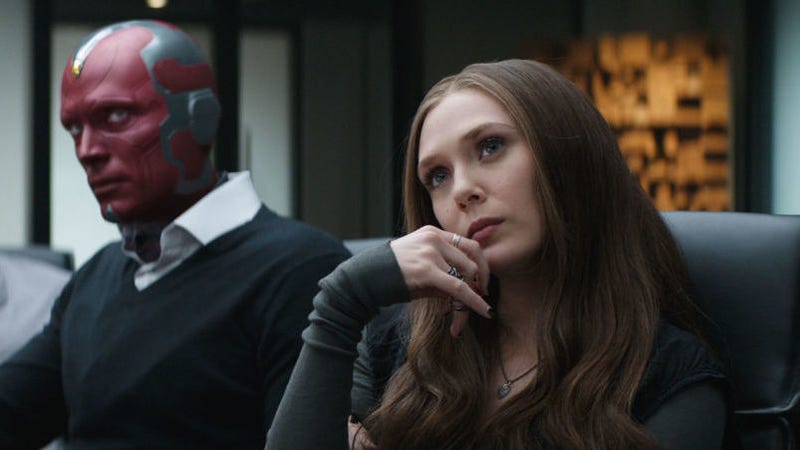
Not seen here is ANY hint that these two have been flirting.

It’s the same problem that the original “X-Men” movies made when developing the horribly flawed love triangle between Cyclops, Jean Grey, and Wolverine. The narrative in the movies relied too heavily on assuming peoples’ knowledge of the source material in lieu of providing an understandably reason as to why this romance is occurring. Again, that’s not a trivial oversight.

How is anyone who only saw “Captain America: Civil War” and “Avengers: Infinity War” supposed to buy into the relationship between Vision and the Scarlet Witch? The movies only establish that they’re together. They don’t establish why, how, or what they went through in establishing their relationship. Everyone is just left to assume, which is rarely a good strategy for developing meaningful romance.

Even if the relationship between Vision and the Scarlet Witch were entirely platonic, it would still be quite a stretch to believe that they have a genuinely intimate connection. It’s possible that the upcoming show will help develop that connection, but there’s no getting around how underdeveloped it has been to this point.
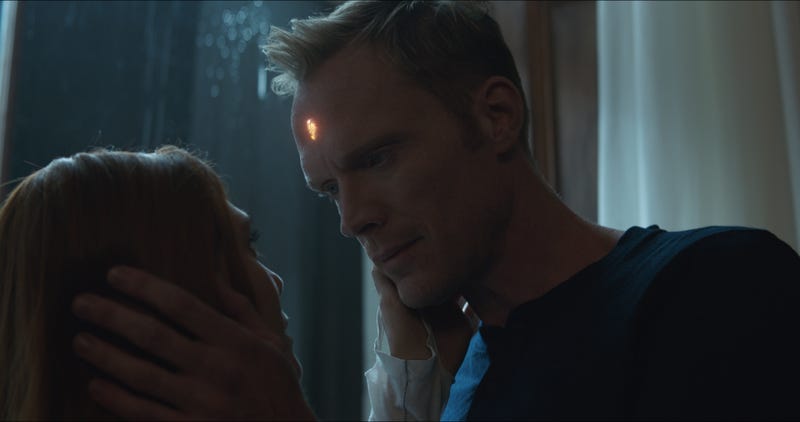
The same could be said for other relationships throughout the MCU. Some are so underdeveloped that when intimate moments do occur, they rarely have much impact. Captain America’s relationship with Peggy Carter in his first movie probably had the best foundation, of all the MCU romances, but that only made him kissing her niece, Sharon, feel downright wrong. Haley Atwell herself has said as such.

Romance, even among fictional characters, requires some level of chemistry to go along with the narrative. While that can be difficult to fit into a single movie, it’s not impossible. Movies like “Man of Steel” and the first “Spider-Man” movie were able to establish the necessary chemistry with only a handful of scenes. Such scenes have been absent or underdeveloped in the MCU.

Ironically, the most fleshed out romance in the MCU is between Starlord and Gamora, two characters who aren’t an endearing love story in the comics. I would even argue that the scene in which Starlord sacrifices himself to save Gamora in the first “Guardians of the Galaxy” movie shows more romantic depth than any other MCU movie to date.

It didn’t take much to show that Starlord and Gamora have chemistry. From their first interactions to the many challenges they overcame over the course of two movies, they developed a powerful connection that just isn’t there for Vision and the Scarlet Witch. That connection is part of what made the events between them in “Avengers: Infinity War” so heart-wrenching.

That same sentiment just wasn’t there with Vision. We knew from the events of two previous movies that Starlord genuinely loved Gamora. We understood how strong it was by the time Thanos entered the picture. There’s none of that present with Vision and the Scarlet Witch. When they face a similar situation, it just doesn’t have the same impact.

It probably helps that Guardians of the Galaxy was a relatively obscure series before the first movie and has little history of iconic romances compared to the Avengers. However, it does show that the MCU is capable of meaningful romance. It just seems incapable of applying it to the more notable couples from the comics.
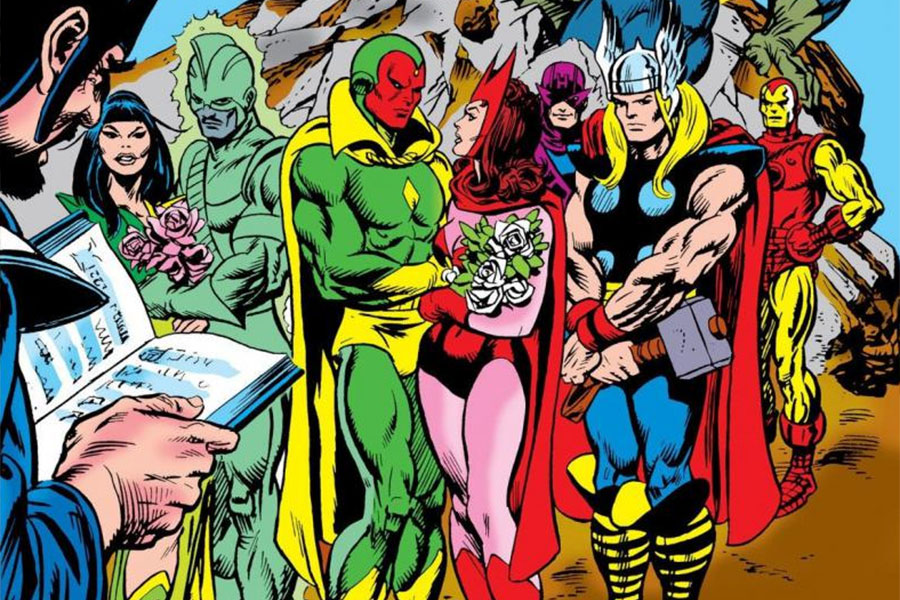
While such flaws haven’t stopped the MCU from succeeding on so many other levels, it still ensures that Vision and the Scarlet Witch have an uphill battle in terms of proving their romance is more than an assumed contrivance. It’s certainly not impossible, but there’s a lot to develop in terms of chemistry and depth.

Given on how “Avengers Endgame” played out, it may not matter how poorly past romances have been handled. However, the impact it has had in the “Guardians of the Galaxy” movies shows that there is a place for romance in the MCU. Perhaps Vision and the Scarlet Witch can be part of that with the upcoming show, but it has lot to overcome before it can be the iconic romance that the MCU needs.


4 Comments

Filed under Marvel, romance, superhero comics, superhero movies, television

The Potential (And Pitfalls) Of Polyamory In The X-Men Comics

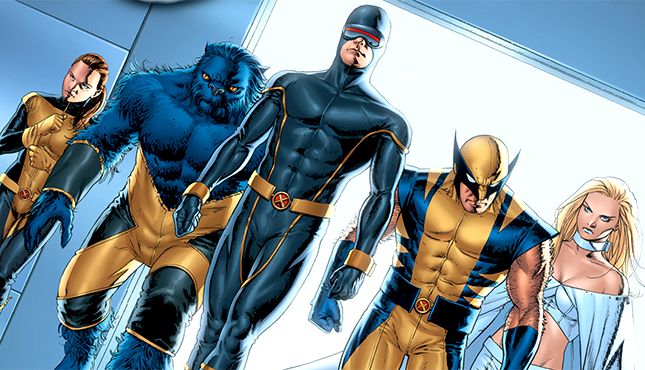
x-men-1-brooks-party

Two years ago, I wrote an article that explored the idea of using polyamory to resolve the infamous Cyclops/Jean Grey/Wolverine love triangle in the X-Men comics. I admit that it was primarily a thought experiment. It was my way of attempting to resolve what I believe to be the worst manifestation of a love triangle in all of fiction. I never expected it to manifest in any form outside head canon of fan fiction.

Then, “X-Men #1” by Jonathan Hickman and Leinil Francis Yu came out, almost two years to the day that I published that article. While it wasn’t overtly stated that polyamory is now a thing in the X-Men comics, there were certain details that strongly hinted at it, so much so that multiple outlets in the world of comics have taken it seriously.

I’m not saying the article I wrote was prophetic. I certainly didn’t predict that Marvel would ever pursue this recourse or even hint at it. At the same time, it’s kind of surreal that this is something that might actually play out in mainstream superhero comics. The fact that it’s playing out in a company owned by Disney makes that even more astonishing.

Now, before I go any further, I want to make one thing clear. After reading “X-Men #1” and all the speculation surrounding it, nothing has been definitively confirmed. The writers and editors at Marvel have not stated outright that they’re actually making Cyclops, Jean Grey, and Wolverine a polyamorous couple. It’s been hinted at, but not confirmed on panel.

In comics, that means a lot. Like a death without a body, if it doesn’t happen explicitly on panel, then you can’t assume it did. That’s just how comics work. That extends to love triangles, polyamory, and everything in between.

That said, I think Hickman and Yu have created the right circumstances. Two years ago, Jean Grey was still dead, Cyclops was dead, and Wolverine had just come back to life. The events of House of X and Powers of X establish that the X-Men, and the rest of the mutant race for that matter, have established a new world for themselves on the living island of Krakoa. It’s a chance to do things differently.

In this new setup, the tensions and melodrama of the past are left in the past. The final pages of House of X #6 make that clear, especially with Cyclops, Jean Grey, and Wolverine. There’s even a nice moment between Jean Grey and Emma Frost, who have been bitter rivals for years. Hickman makes clear that these characters are looking to move forward and not revisit old drama.

The only question is what does that entail? Does moving forward simply mean moving past these old romantic complications? The final pages of “Uncanny X-Men #22,” which predate House of X and Powers of X, establish on panel that Cyclops and Jean Grey are still a thing. They still love each other and don’t hesitate for a second to embrace one another, now that they’re alive again.

ScottJean

However, it’s not quite as clear that they’re content to pursue the same relationship they had before Jean died at the hands of Magneto back in 2004. On some levels, it makes sense to do something different. Both Cyclops and Jean Grey know what happens when they try to ignore these other feelings. They just fester under the surface and it hurts them both in the long run.

Even though their love for one another is very clear, the way they go about their relationship has shown plenty of flaws, going back to the days of Chris Clarmeont’s run on Uncanny X-Men. They still want to be together. They even want to be a family. The events of “X-Men #1” depict them as more a family than reunited lovers, which I thought was both sweet and overdue.

It’s also in this area that the potential for polyamory has already revealed itself. Most have pointed out the unusual arrangement of Cyclops, Jean Grey, and Wolverine’s rooms on the new moon-based Summer house. They’re all connected with Jean’s room in between Cyclops’ and Wolverine’s. They even have doorways between them, which is something the other rooms don’t.

It’s not definitive confirmation, but it certainly implies the possibility. Solicits of future issues have also hinted that Emma Frost may enter the picture as well. If Hickman, Yu, and Marvel are serious about pursuing this plot, then it could open the door for a very different kind of romantic sub-plot, the likes of which we haven’t seen in superhero comics.

While superhero comics have been quite progressive at times, and even somewhat daring, when it comes to pursuing non-traditional relationships, they’ve never attempted to tackle polyamory. Even though it exists in the real world, it’s not something superhero comics have ever taken seriously. This could change that.

A seriously, well-written polyamorous relationship between Cyclops, Jean Grey, and Wolverine could effectively redefine what it means for these characters to love one another. It helps that it’s happening at a time when the X-Men and the entire mutant race are redefining themselves on Krakoa. They’re building their own homeland and culture. Why wouldn’t they redefine how they handle relationships while they’re at it?

It could address some of the most egregious flaws that the love triangle has propagated over the years. Jean Grey would no longer be a prize to be won by Cyclops or Wolverine. Cyclops would no longer be an obstacle for Wolverine. More importantly, it would allow Wolverine to have his romantic connection with someone without being limited by it. For someone with his extensive romantic history, that’s very important.

However, that’s the best case scenario. It also assumes that Hickman is serious about pursuing this sub-plot. Like I said earlier, it has not be confirmed on-panel. There’s no hint in House of X, Powers of X, or “X-Men #1” that there’s something elaborate going on with them. They just carry themselves as though they’re on much better terms than they were before they all died on one another.

There are risks associated with pursuing this kind of relationship. While Hickman is a great writer with a great pedigree for superhero comics, he’s never tackled a love triangle with this much baggage. If handled poorly, it could do serious damage to all the characters involved.

It could devalue the depth and history of the Cyclops/Jean Grey romance, which is one of the most iconic in all of superhero comics. It could also take a character like Wolverine, who has a complicated history as a loner who rarely gets tied down by one relationship, and make him seem out of character. Him becoming a part of the Summers/Grey family would be like James Bond joining the clergy.

There’s also a chance that a polyamorous relationship with these three could devolve into something that is just played up for novelty. The fact that it’s so different can’t be the only reason for doing it. If it is, then it’s not going to be believable and the characters involved will suffer because of it.

Given how these characters have already suffered, I don’t think the time is right to deconstruct their relationships and romantic sub-plots the only reason for doing so is shock value. These are characters poised to enter the MCU at some point. I doubt Disney will want them overly complicated before that occurs.

Personally, it’s for that reason that I doubt Marvel will seriously pursue a polyamorous relationship between Cyclops, Jean Grey, and Wolverine. They may hint at it. They may tease it. They’ll do everything possible, except depict it on panel, which will keep readers guessing and speculating. It’s something they’ve done before, much to the chagrin of fans.

If they do try it, though, I sincerely hope that Hickman, Lu, and the rest of Marvel’s creative team takes the concept seriously. The X-Men, throughout their history, have depicted characters who are very different, if not downright weird compared to the rest of the world. If that’s going to extend to how they pursue romance and relationships, then it deserves a serious effort.

However, it cannot and should not come at the cost of the characters or the iconic romances that came before it.

1 Comment

Filed under polyamory, romance, sex in media, sex in society, sexuality, superhero comics, X-men

Why “Joker” Is Brilliant, But Controversial (For The Wrong Reasons)

960x0

Every now and then, a movie comes along that’s brilliant in so many ways, but undermined by the circumstances of its release. In the same way certain movies come along at just the right time to become a cultural phenomenon, others hit theaters with unexpected forces working against them.

When “The Dark Knight” came out in 2008, its timing was perfect. It struck all the right notes from a cinematic, narrative, and cultural perspective. On top of that, Heath Ledger’s performance as the Joker went down as one of the greatest displays of acting prowess of all time, and not just for a superhero movie. For many, myself included, Ledger’s version of the Joker will always be the one by which all others are measured.

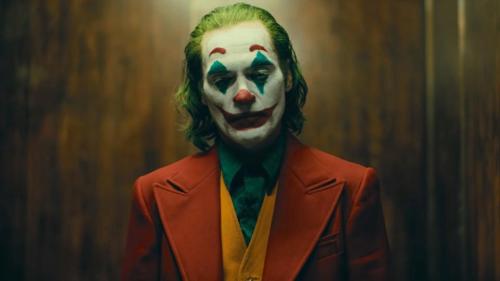
By contrast, “Joker” couldn’t have been timed worse. The current social, political, and cultural landscape is vulnerable and hypersensitive to every one of the themes it explores. On top of that, the movie explores those things very well, so much so that it warrants being in the same conversation as “The Dark Knight” in terms of how it portrays the Joker.

While Heath Ledger’s Joker is still superior in almost every way, what Joaquin Phoenix accomplished in this movie deserves plenty of praise. At the very least, it helps cleanse the memories of those still cringing at Jared Leto’s rather eccentric take on the character in “Suicide Squad.”

This movie, as well as Phoenix’s performance, comes at a time when taboos about mental health and disturbed lonely men are hot-button topics. On top of that, a string of mass shootings perpetrated by disturbed men, some with disturbing manifestos, has created real-life horror while stoking genuine fears. The story in “Joker” neither avoids nor downplays those issues.

This movie also dares to do something that few beyond Alan More has been able to achieve, which is to give the Joker a backstory. For many lifelong comic fans, especially Batman fans, the very concept of fleshing out this character undermines the core of his appeal. He has always functioned better as a chaotic force of nature rather than a person with a tangible history.

Ever since his creation in 1940, his life and his story have been vague. He has been defined as a perfect counter to Batman’s never-ending crusade. Whereas Batman seeks justice through clear, defined rules, the Joker seeks chaos and laughs at such rules. He can never be too defined, as a character, if he’s to personify that chaos.

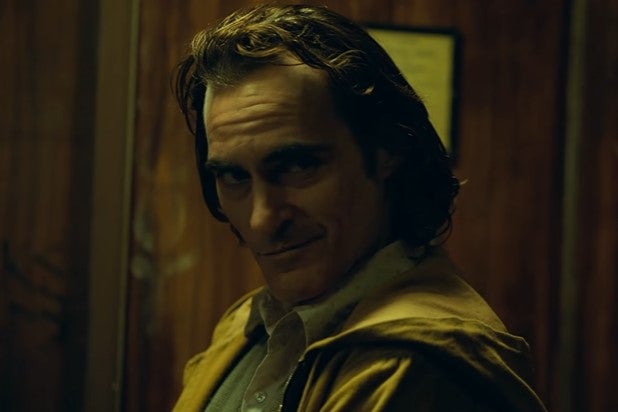
Despite these challenges, “Joker” finds a way to tell his story and, like “The Dark Knight” before it, actually manages to make the Joker even more terrifying. Through the character of Arthur Fleck, we see a disturbed mind trapped within an environment that does everything to make his condition worse. Through both unavoidable circumstances and fateful choices, we see this broken mind become something far more dangerous.

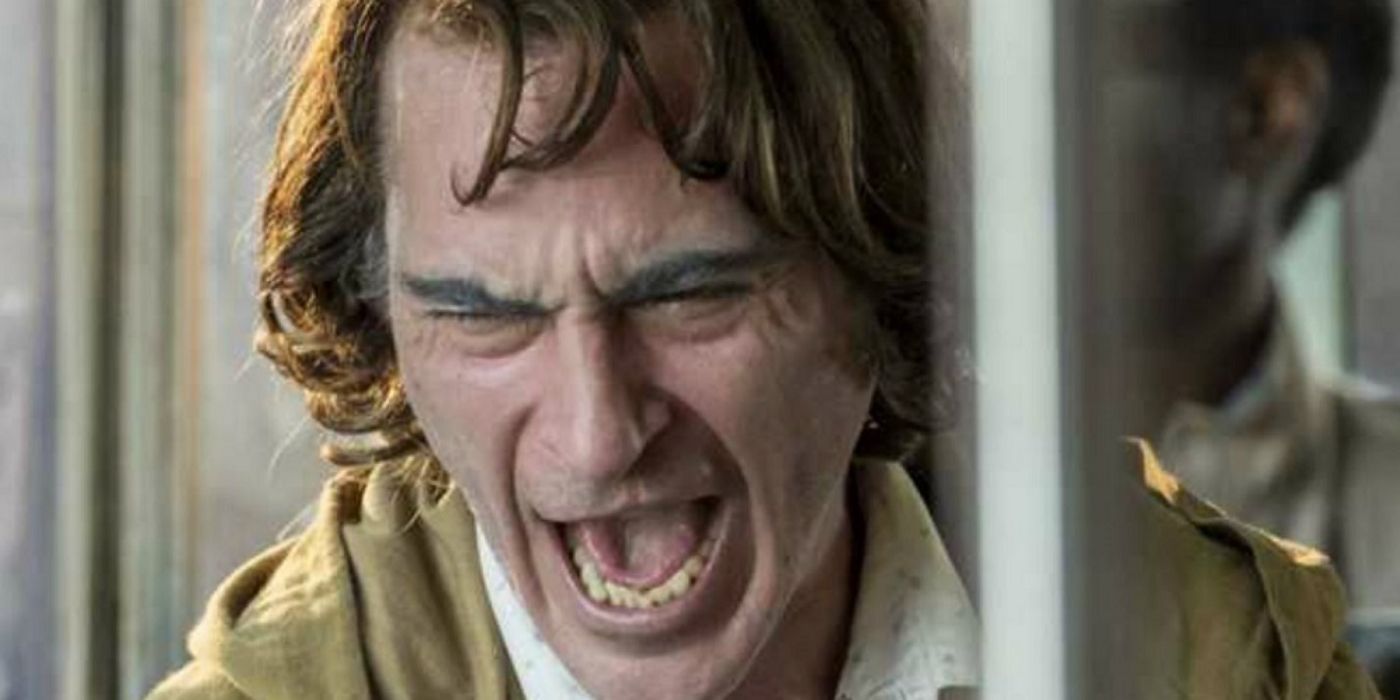
It doesn’t happen all at once. There’s no single trigger, like falling into a vat of chemicals. There’s a cumulative effect to Arthur Fleck’s transformation. It’s not always logical or smooth, which comes off as intentional from the beginning. The only constant is that Fleck gets more twisted and unhinged with each escalating event.

This is where Phoenix’s performance really shines. He carries himself with a presence that feels very close to what Ledger captured in “The Dark Knight.” He starts off as simply being mentally ill and struggling with it. However, what he does with his illness and what it does to him turns him into something more than just another disturbed loner.

It’s here where the controversy behind the “Joker” takes hold. I would argue it’s a dumb controversy, but it was serious enough for Aurora, Colorado to cancel screenings of the movie. While it feels like an overreaction, it’s somewhat understandable, given what happened in Aurora in 2012.

If that were the extent of the controversy, then “Joker” would only be a passing concern for most people. Then came the idea the movie celebrates or glorifies “incel culture” through Fleck’s story. While I usually try to be balanced when scrutinizing certain ideas, even if they’re absurd, I can’t do that this time.

Simply put, this part of the controversy is just plain stupid. There’s no better way to say it.

Worrying that this movie might somehow inspire lonely, disturbed men to go on killing sprees is completely without merit. It’s akin to worrying that “Friday the 13th” will inspire anyone who wears a hockey mask to brutally murder camp counselors. Moreover, the absurdity of this controversy undercuts the more substantive messages of this movie.

There is a real message in “Joker” and it has nothing to do with incels, masculinity, or even violence. In this world, Gotham City is the perfect symbol of a grossly flawed society that tries to pretend those flaws can be fixed by staying the course. From the perspective of people like Arthur Fleck, this notion is a complete joke.

Much like our world, there’s a small segment of very rich, very powerful people who benefit the most from this society. The Wayne family is the perfect manifestation of this joke. Even when they carry themselves as responsible, upstanding pillars of the community, they still look down at those who are dissatisfied. On top of that, they think their dissatisfaction is a flaw.

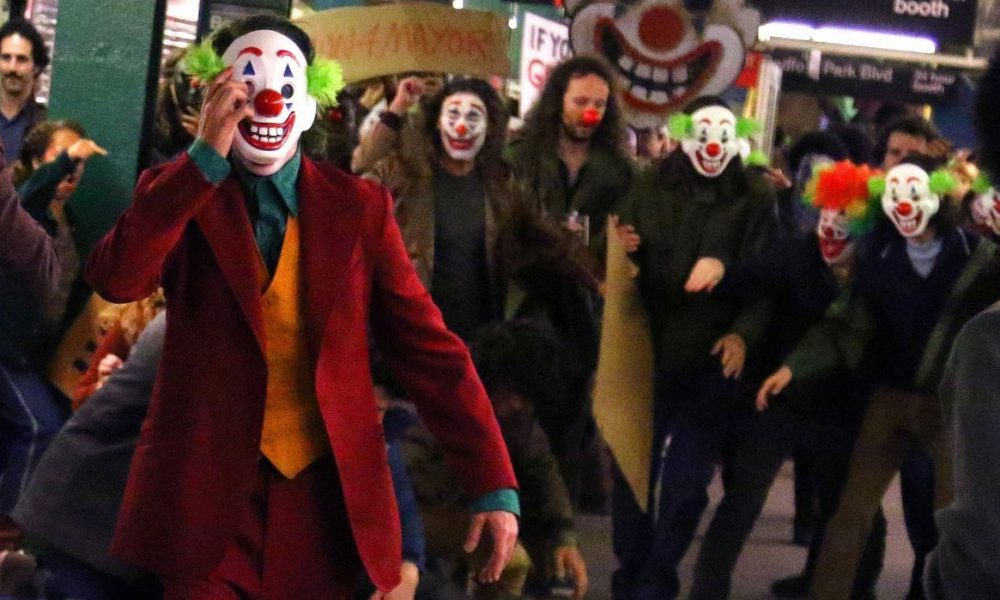
Arthur Fleck is as caught up as anyone in this decaying society. Then, through details I won’t spoil, he starts something that inspires chaos that would make Heath Ledger’s Joker proud. That chaos may or may not be entirely justified, but it’s understandable. In a sense, the Joker is just an extreme manifestation of something that seemed inevitable.

If there is a real controversy with “Joker,” it’s that the wrong issues became controversial. This movie conveys a message to the rich, powerful people who benefit the most from society that things aren’t as rosy as they seem. Those same people who think they know the solutions have no idea what people at the bottom are going through and dismissing them as “clowns” only makes things worse.

We’ve already seen this happen in the real world. The powerful who seek greater power call those who lash out as unimportant or misguided. They think those who protest loudly have nothing of merit to say, which only feels like an excuse to not listen. In that sense, it’s probably not surprising that many media outlets have turned on this movie, albeit for the wrong reasons.

At its core, “Joker” highlights the craziness that compounds craziness. In a world that’s unfair, unjust, and full of lies, how can sane person not be driven insane by their circumstances? Arthur Fleck had more circumstances than most and his mental illness only compounded the situation.

There are times when it’s not entirely clear when the events unfolding are real or vivid delusions. It nicely reflects the uncertain nature of the Joker’s origins, as both the Killing Joke and “The Dark Knight” have previously established. There’s a point in the movie where it becomes unclear where Arthur Fleck truly comes from or whether that name is truly his.

In the end, his name doesn’t matter because once he becomes the Joker, he becomes something more than just a mentally ill loner. For certain people who have seen mentally ill loners commit atrocities in the real world, it sparks real fear. At the same time, “Joker” makes clear that’s the wrong target.

After seeing “Joker,” I feel like I just saw a movie that people are going to be talking about for years to come. It’s a movie that can be interpreted in many ways, which is perfectly befitting of the Joker’s chaotic nature. At the same time, I knew some of those interpretations would be used in the name of an agenda and not in a good way.

In another time, “Joker” would be hailed as a movie worthy of praise on the level of “The Dark Knight.” However, because it came out at a time when people fear the lonely, deranged men more than the society that creates them, it’s not able to have the same impact. It’s still an excellent movie and one that will have a unique place in cinematic history for years to come.

1 Comment

Filed under human nature, outrage culture, philosophy, political correctness, politics, psychology, superhero comics, superhero movies

The (Amazing) Sights, Spectacles, And Lessons Of New York Comic Con 2019

9FE52827-2897-4629-B24A-9FDE46A77E9A

Another New York Comic Con has come. Once again, I managed to experience it for a single day. While I would’ve loved to spend another day seeing everything I didn’t get a chance to see yesterday, it was an incredible experience. I enjoyed every minute of it and, like other New York Comic Cons before it, this one will be full of many treasured memories.

I could write several books, and even a couple sexy short stories, about all the things I saw while I was there. I attended panels, met incredible people, saw amazing costumes, saw some breaking comic book news, and even got a chance to connect with some real celebrities. I cannot overstate what a thrill that was.

New York Comic Con has always been so much fun, just as the entire city of New York always been fun. There are so many places to see and people to meet. I found myself running around the Jacob Javits Convention Center, trying to experience as much as I could. I like to think I took in as much as I can, given the constraints of time and only having a Friday pass.

By far, one of the best parts of New York Comic Con was seeing the costumes of fellow fans. This year might have been the most diverse, creative year yet. I saw plenty of typical costumes, like Batman, Superman, Deadpool, and the Joker. This year, however, had one of the most diverse set of costumes that I’ve ever seen.

It was so incredible that I nearly drained the batter on my phone, trying to get as many pictures as I could from those willing to share one. Here are just a handful of the ones I managed to get. Trust me when I say this is just a small sample of the creative passion I saw.

Every year, the fans who make these costumes find a way to surprise me. Next year, however, is going to be tough to be. That said, I’m sure the passion of these fans will help them find a way.

In addition to the costumes, New York Comic Con often leaves me with some unique takeaways that I could never get by just reading stories about it. Actually being there and seeing it first-hand will always have a more extensive impact. This year had some more nuanced lessons than previous years.

The first, and most apparent, lesson I learned is that the impact of anime is growing. This year, I saw more anime-inspired costumes than any previous year. I didn’t recognize all the anime that it came from, but there was definitely an uptick in anime costumes and that nicely reflects the growth of the genre.

The second lesson, which is more or less a reinforcement of what I’ve learned in previous years, is that most writers, creators, and celebrities are awesome in person. Many consider themselves fans, as well. I’ve interacted with plenty online, mostly through Twitter. They’re as nice in person as they are in real life.

I even had the privilege of meeting a few I’ve worked with. A while back, I reviewed “Swing Volume 2” after getting an advanced copy. While in artists alley, I had a chance to meet the writer, Matt Hawkins. He was an awesome guy and the insights he gave were incredible.

To those who think the details of that story were embellished or eroticized, I can attest that they weren’t. Everything Mr. Hawkins wrote about in that story was inspired by real people and real couples. I can’t thank him enough for sharing such insights and I’m already looking forward to Swing Volume 3.

The third lesson, which I guess is more an exercise in best practices, is that if you really want to get into a panel, you need to get in line at least 20 minutes early. While I managed to get into all the panels I wanted, the lines were long and I just barely got in.

For the advanced screenings of upcoming movies and cartoons, you need to be even more proactive. I was unable to get into a screening of “Wonder Woman: Bloodlines” or “Joker.” Those filled up very quickly and if I want to get in next year, I’ll have to be even more proactive.

There’s so much I experienced. There are many more things I wish I could describe, but it would take too much time and energy away from writing sexy short stories. I’ll just belabor that I had an amazing time. I saw so many amazing things and met so many awesome people. I’m already looking forward to going back next year.

3 Comments

Filed under Comic Books, Jack Fisher, Superheroes, Jack Fisher's Insights, superhero comics, superhero movies

Back (And Exhausted) From New York Comic Con 2019

9FE52827-2897-4629-B24A-9FDE46A77E9A

It was a long, eventful day, but it’s over now. I built my entire day around attending New York Comic Con 2019 and, without a doubt, it was a day well-spent. I saw so many amazing things. I met so many awesome people. Between the fans, the costumes, the panels, and the big news, there was just so much to experience. I’m still processing it all.

To be honest, it’s going to take a few days to fully appreciate what I experienced. That’s to be expected for the New York Comic Con. For as long as I’ve been going, it has always been this huge spectacle that overwhelms me with so many things I love. Every year I feel like it has to take a step back, it somehow surprises me.

This year was no exception. It was an incredible experience. Now, I’m exhausted and badly in need of some rest. As long and arduous as this day was, however, it was SO worth it.

2 Comments

Filed under Jack Fisher's Insights, Marvel, superhero comics, superhero movies

On My Way To New York Comic Con 2019!

9FE52827-2897-4629-B24A-9FDE46A77E9A

It’s that magical time of year again! The New York Comic Con for 2019 has arrived! For lifelong superhero fans like me, this is like Christmas, the Super Bowl, Black Friday, and Halloween all rolled into one glorious event. I could write an entire book about how excited I am and it still wouldn’t get the point across.

I know I said that last year and the year before that. I’ll probably say it again next year. The sentiment will be the same. The New York Comic Con is one of my favorite times of year. It’s an event that’s near and dear to fans of superhero comics, movies, video games, and all things awesome. For that, it is special.

I hope to share plenty of details when all is said and done. Until then, excuse me while I soak in every glorious moment.

1 Comment

Filed under Jack Fisher's Insights, superhero comics, superhero movies, television

Five Reasons Why Joss Whedon Should Direct The First X-Men Movie In The Marvel Cinematic Universe

x-men-mcu-disney

These are exciting times for X-Men fans. The Fox era of X-Men movies is over. With Disney’s purchase of Fox, a new era is set to begin. There are no more divergent timelines or soft reboots. The X-Men are coming to the Marvel Cinematic Universe. It may not happen for a while, but the process has already begun. It’s only a matter of time.

As a lifelong X-Men fan, I’ve discussed both the possibilities and the immense potential of this development. I’m sure I’ll discuss it plenty more as news, rumors, and what not emerge over the next few years. Until then, there isn’t much to go on.

While there are plenty of details to explore, in terms of story, there’s one logistical issue that I feel is worth addressing. It has to do with who will help guide the X-Men into the MCU. Now, it’s a given that Kevin Feige will be the mastermind behind it all. He is, after all, the alpha and omega of all things Marvel Studios. He’ll be the one with the vision, but he’ll still need someone to turn that vision into a tangible product.

That’s not going to be easy for the X-Men. This isn’t the same as making “Ant Man” a viable franchise. The scope and scale of the X-Men franchise is immense. There’s a reason why it lasted 19 years with Fox. It has a wealth of characters, iconic stories, and endearing themes that are as relevant as ever.

Bringing X-Men to the MCU will be a massive undertaking. With that in mind, I’d like to make the case that there’s one director who is uniquely qualified to take on this challenge. Most already know his name and he has already left his mark on the MCU. I think he’ll leave an even bigger mark by taking this on. That name, of course, is Joss Whedon.

Hold your applause/outrage, please.

Now, I know Whedon’s name doesn’t carry the weight it once does. His success really peaked with the first “Avengers” movie, but since then, he’s somewhat faltered. It hasn’t helped that he suffered some bad press, some of which I’ve touched on. Even with these setbacks, and even because of them, I believe he’s the best choice for leading the X-Men into this new era.

As always, I know there will be those who vehemently disagree. I understand that and even welcome those counterarguments in the comments. That said, I’d like to offer five reasons to make my case that Mr. Whedon is the man for the job.


Reason #1: He Has (Successful) Past Experience With X-Men

Joss Whedon is no stranger to the X-Men. In fact, he probably has more experience with this franchise than he did with the Avengers. He did script work on the first X-Men movie. He was also on the short-list to direct multiple X-Men movies at one point. He’s gone on record as saying that he’s an X-Men fan.

Outside the movies, Whedon’s credentials run even deeper. In the early-to-mid-2000s, he penned an acclaimed run for the Astonishing X-Men comic. If you were to talk to any X-Men fan during that time, myself included, they would’ve said the same thing. Whedon’s run on Astonishing X-Men was one of the best of its era.

Through that run, he demonstrated a strong appreciation of these character. It wasn’t just the female characters either, although they definitely shined. He understood the personalities, dynamics, and quirks with characters like Cyclops, Emma Frost, Wolverine, and Kitty Pryde. He gave them all a chance to demonstrate why they’re so iconic.

While the Fox era of X-Men movies did plenty for Wolverine, Charles Xavier, and Magneto, they rarely succeeded for other major characters. Some, like Cyclops and Rogue, were outright butchered. While Whedon has mishandled characters in the past, his experience with X-Men should help avoid that.

Given the size and scope of the MCU, the margin for error will be small. Having a director who knows, understands, and cares about these characters will go a long way compared to one who is unfamiliar with them. Just ask Josh Trank.


Reason #2: His Style Will Give The X-Men The Right Tone For The MCU

Whether it’s a movie or TV show, Joss Whedon’s work has a distinct tone and style to it. There’s often a tight blend of light-hearted character moments mixed with serious drama. There are also plenty of jokes and quips, but not nearly on the level of an Aaron Sorkin script. For the most part, Whedon works to humanize his characters while making them lovable and relatable in their own way.

That kind of approach is exactly what the X-Men need in the MCU. It’s an approach that has already been proven with the first “Avengers” movie, as well as “Avengers: Age of Ultron.” In each case, both the heroes and the villains had moments where they could joke around, but still have heated arguments when necessary. It was a big part of what made these movies so entertaining and memorable.

The X-Men have had their share of funny moments during the Fox era. Unfortunately, most of them came from Deadpool and the always-charming Ryan Reynolds. By the standards of modern superhero movies, the original X-Men trilogy was very serious and even a little dark. Granted, that was necessary, if only to distance itself from the excessive camp in “Batman and Robin.” Things are different now.

The X-Men franchise has had plenty of bleak, serious moments in recent years. As great as “Logan” was, the franchise could benefit from something more uplifting and Joss Whedon’s style fits that perfectly.


Reason #3: He Knows How To Balance Action, Character Development, And Melodrama

This is something else that’s readily apparent to anyone who read Joss Whedon’s run on Astonishing X-Men or seen at least one season of “Buffy: The Vampire Slayer.” Say what you will about his feminist credentials. The man knows how to strike that critical balance between action, character development, and melodrama.

He did plenty of balancing with action and character development in “Avengers,” but X-Men will need a lot more melodrama to succeed. That’s because all those soap-opera elements that tends to complicate other action franchises are a core part of the X-Men’s DNA. They have been since the heyday of Chris Claremont’s run on the comics.

I’m not just talking about romantic sub-plots and love triangles, which have been a detriment to previous X-Men movies. Being an X-Men and a mutant is full of both personal and interpersonal drama. It’s part of what makes these characters relatable and iconic. People might not be able to relate to the Asgardian God of Thunder, but they can relate to someone who is born different and struggles to cope with those differences.

Add clashes with killer robots and murderous bigots to the mix and you’ve got plenty to work with. In the MCU, where superheroes and super-powers already exist, these are exactly the kinds of complications that can keep things interesting and Whedon has experience doing just that.


Reason #4: He Has Something To Prove (And So Does The X-Men Franchise)

As I noted earlier, Joss Whedon’s career and personal life have taken quite a downturn in recent years. In addition to his divorce, his creative decisions during “Avengers: Age of Ultron” were subject to controversy. Some may argue the extent of that controversy, especially given the box office of that movie, it’s still telling that Whedon hasn’t been involved with the MCU ever since.

On top of that, Whedon name has been unfairly linked to the massive commercial failure of “Justice League.” Now, there’s a lot to be said about the problems with “Justice League,” but I think it’s wrong to lump them on Whedon. He came into a movie that was radically different from his usual style and was already grossly overbudget and behind schedule.

Fair or not, Whedon’s credibility has taken hits on multiple fronts. By spearheading the X-Men’s arrival into the MCU, he has a chance to rebuild it. His career is far from over. Even with the upheavals in his personal life, he hasn’t burned too many bridges or completely lost the trust of fans.

If he has any kind of ego, and most people in Hollywood do, he’ll be more motivated than most to succeed with the X-Men in the MCU. At the same time, the X-Men franchise has just as much to prove. Even with the success of “Logan” and “Deadpool,” not one X-Men movie has ever topped a billion dollars.

As a franchise, the X-Men have fallen behind in the superhero hierarchy. Entering the MCU is their chance to show that they deserve to be in the same world as these multi-billion dollar success stories. To some extent, both Joss Whedon and the X-Men franchise need each other.


Reason #5: He Knows How To Balance New Ideas With Classic Elements

The X-Men that show up in the MCU will be different from the X-Men we saw in the 19 years of movies. That’s a given. It’s only a question of how different they’ll be. That will likely be a key consideration because while the X-Men movies had their share of flaws, they did a number of things that worked exceptionally well, Deadpool being the most notable.

While it’s likely that Marvel Studios won’t do much to change Deadpool, there will definitely need to be some fresh nuance to the X-Men. As it just so happens, Joss Whedon is better than most when it comes to balancing new ideas with classic themes. He did that with Astonishing X-Men in the comics. He did that in both “Avengers” movies, as well.

While some elements worked better than others, they still came together in a polished product that made billions. The X-Men will need that balance as they enter the MCU. Unlike other characters and teams that have been introduced, the X-Men come in with 19 years of cinematic baggage. It must distinguish itself in this new era.

That’s not going to be easy. Depending on when they show up, the MCU could be very different from the one that just culminated with “Avengers Endgame.” Whedon, given his experience, is certainly up for that challenge.


There’s little doubt that mutants coming to the MCU will be a huge upheaval. How Marvel Studios and Disney go about it could determine whether the MCU continues to dominate at the box office or finally runs out of steam. This incredible cinematic world has delivered time and again, overcoming immense challenges and breaking box office records along the way. They’ve earned the benefit of the doubt.

Joss Whedon may or may not be the one to lead the MCU into this new era. I think he has what it takes. I hope he gets a chance. There’s a lot of uncertainty with the X-Men franchise right now, but this is a franchise that has overcome major struggles before. With the Disney machine and the MCU behind it, I don’t doubt for a second that it can become uncanny once more.

1 Comment

Filed under Marvel, Marvel Cinematic Universe, movies, superhero comics, superhero movies, X-men

Five Things I Hope To See In The Upcoming “Ms. Marvel” Show

ms-marvel-disney-plus-1184416

Every so often, I get news that excites me like a kid in a candy factory. It doesn’t happen often these days. As adults, it’s hard to get too excited when bills, the news, and traffic do plenty to dampen your spirits. Then, it happens and your world is better because of it.

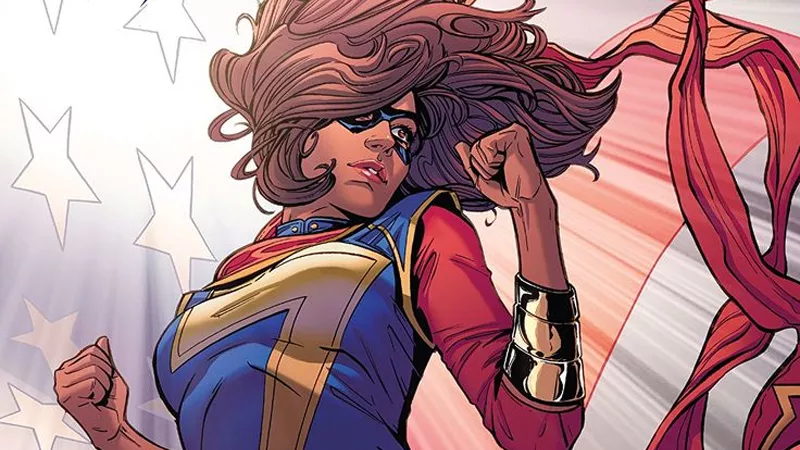
This past weekend, I got a much-needed dose of that excitement. At Disney’s annual D23 Expo, Marvel Studios announced that they’re making a live-action Ms. Marvel TV show for their Disney+ streaming service. As someone who has praised Ms. Marvel’s comics and her contributions to female superheroes, I freely admit I jumped for joy when I saw this.

I know the news surrounding Disney hasn’t been good lately, given what has been happening with Spider-Man. I also know they’re in a bit of a transitional period after the conclusion of “Avengers: Endgame.” Despite these issues, Marvel Studios and their Disney overlords still want to make money. They’ve got plenty of high-profile movies on their slate, but this could end up being a bigger deal.

I say that as an unapologetic fan of Ms. Marvel and all things Kamala Khan. I also know that Disney is looking for any possible edge to promote their new streaming service and take a bite out of the market share that Netflix currently dominates. I admit I wasn’t planning on subscribing. Shows about She-Hulk, the Scarlet Witch, Vision, and Moon Night sound fun, but not enough to justify the cost.

That all changed with Ms. Marvel. As far as I’m concerned, she’s the only reason I’ll be getting or keeping a Disney+ subscription. There’s a lot to unpack with this announcement. I doubt I’ll cover all of it here, but for now, I’d like to take some time to articulate the extent of my excitement.

To that end, I’d like to share five things I hope to see in this upcoming series. Kamala Khan is one of those characters who can capture the heart, soul, and spirit of the superhero genre. Her entry into the Marvel Cinematic Universe couldn’t be better. These are just some of the things that could make it even more marvelous.


Number 1: The (Many) Quirks That Make Kamala Khan Lovable

Any TV show, comic book, movie, or video game involving Kamala Khan must make its first priority to capture the essence of what makes her so endearing. Being a superhero is only small part of her overall story. What makes Kamala great is the many little things that define who she is.

She’s not just a teenager who gets superpowers and decides to start fighting criminals. She’s a self-professed fangirl. She loves playing video games, eating gyros, and writing fan fiction. These quirks are small, but numerous. They’re real things that people in the real world can relate to. That makes it easy to understand and appreciate her passions.

When I first read about Kamala in “Ms. Marvel #1,” I immediately grew to like her. She came off as the kind of girl I would’ve been friends with in high school. She presents herself as someone who behaves how you would expect a teenage girl to behave in a world where superheroes existed. She has a good family, a good heart, and an adventurous spirit. How can you not love that?

She’s also an outsider and not just because she’s a Pakistani Muslim girl living in Jersey City. Like most teenagers, she’s uncertain of her place in the world. She struggles with real issues, even before she gets superpowers. Those issues stay with her, even as she develops her superhero identity. It makes her easy to like and even easier to root for.

A TV show can’t just focus on her beating up bad guys and making witty one-liners. Plenty of other superheroes already do that, some better than others. It has to highlight, if not belabor, the distinct traits that have helped make her one of Marvel’s most successful female characters. There’s a lot to love and with a TV show, there’s plenty of room to explore it.


Number 2: Relatable Teenage Melodrama (Compounded By Being A Superhero)

Along with the traits that make Kamala Khan so lovable, there’s also the unavoidable battle that is teenage melodrama. Everyone faces it. Superpowers don’t make you immune to it. The last two Spider-Man movies have made that abundantly clear. A TV show provides more time and flexibility to flesh out that melodrama.

In the first few issues of Ms. Marvel’s comic series, which I highly recommend, she deals with a lot of teen angst and uncertainty. In fact, that sentiment is the very thing that prompts her to defy her parents and sneak out at night to a party that would ultimately end with her getting superpowers. In a very literal sense, teenage melodrama helped make Ms. Marvel who she is.

She’s not sure of where she fits in. She clashes with her parents. She argues with her friends. She also is starting to have feelings about other boys, which have made for some wonderfully sweet moments. She deals with all of this on top of being a superhero.

Like a young Peter Parker before her, these different aspects of her life often clash. One tends to undermine the other and it does plenty to overwhelm her at times. That often brings out the best in her and any TV show would be wise to present those moments.


Number 3: The Family And Supporting Cast That Help Make Her Who She Is

Like every major hero in the Marvel Cinematic Universe, Ms. Marvel’s greatest strengths often stem from her supporting cast. Tony Stark wouldn’t have achieved what he did without Pepper Potts. Carol Danvers wouldn’t have accomplished what she did without Nick Fury and Goose the Cat. Kamala Khan is no different.

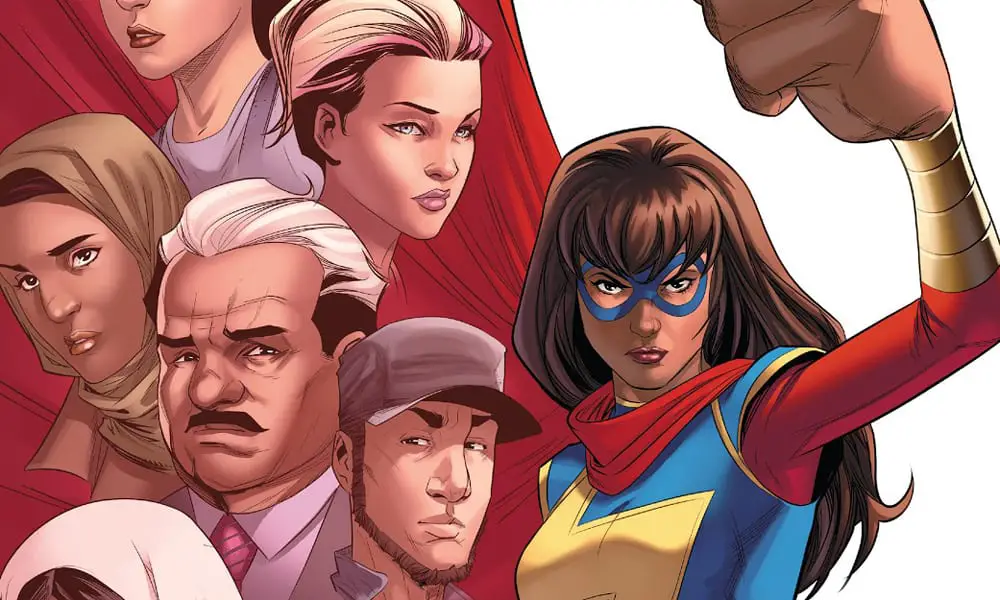
In “Ms. Marvel #1,” we learn plenty about Kamala’s supporting cast. She has two loving parents who tend to be overprotective of her. She has an uptight brother named Aamir, who tends to intrude into Kamala’s personal life more than most siblings. She also has a friend/love interest in Bruno who had a front-row seat in seeing her become Ms. Marvel.

Each one of these characters helps shape Kamala into who she is, before and after she gets her powers. They support her, but they also complicate her efforts. While none of them have to die for her to be the hero she strives to be, they all make their on contributions to her story. In the same way Superman’s parents guided his heroic journey, Kamala’s friends and family informed hers.

Unlike Superman, Kamala endured a pretty rocky road to establishing herself. However, at no point did her creator, G. Willow Wilson, give the impression that her friends and family were just background decorations. They all care for her. They worry for her. They all want what’s best for her, even when they’re rarely on the same page.

A TV show featuring Kamala has to capture at least part of that family/friend dynamic. Even a fraction of Kamala Khan’s supporting cast from the comics can do plenty to make for a rich, engaging TV show.


Number 4: The Struggles (And Triumphs) Of A Growing Hero

There’s no getting around it. Kamala Khan screwed up more than once when she started off her superhero career in the comics. While she managed to save one life the first time she used her powers, she ended up getting shot the second time. Even before that, she struggled to master her powers in ways that were both understandable and hilarious.

It’s a critical part of every superhero’s journey. With new challenges come new struggles. Some of those struggles devolve into outright failures. Even the best heroes fail sometimes and Kamala had more than her share in the comics. Any TV show that tells the story of her journey cannot and should not gloss over those struggles.

With Kamala, however, the struggles matter even more than the triumphs. While many heroes may lament at their failure, Kamala tends to get a lot more animated. She’s passionate about what she does and has a tendency to wear those passions on her sleeve. It’s part of what makes her lovable. It also reminds everyone that she’s still a teenager. She’s still growing and maturing.

One of the things I love most about Ms. Marvel comics is seeing her grow with each passing story. The first dozen issues had more growth for Kamala than the last 100 issues of Amazing Spider-Man. Along the way, there were missteps, heartbreaks, and victories. They all just made me want to root for Kamala even harder and if a TV show can accomplish that, it’ll do plenty to justify a Disney+ subscription.


Number 5: A Vision For Young (Idealistic) Heroes In A World That Needs Them

From the beginning, Kamala Khan connected with fans like me because she radiated this ideal spirit that a lot of people once had in their youth. Time, age, and watching too much news has a way of crushing that idealism over time, but most of us still remember why it was so important to us.

As Ms. Marvel, Kamala carried herself as the kind of young, idealistic hero that many of Marvel’s traditional heroes grew out of years ago. The comics, themselves, became jaded as the very act of heroism gained major complications, both from events within the stories and influences from the real world. That’s part of what made Kamala a breath of fresh air.

She might be young, naïve, and impressionable, but she’s also exactly what we need right now. The MCU just suffered some devastating losses. The world, as a whole, is still recovering from the events of “Avengers: Endgame.” This world still needs heroes. Even though it still has plenty, it doesn’t have someone like Ms. Marvel.

She can be the hero that emerges from the chaos of this broken world and shows what dedicated heroes can accomplish. She can show everyone that, even in the face of heavy losses and broken hearts, there’s a place for pure, uncorrupted heroics. You don’t need to be a billionaire playboy genius philanthropist, either. You can just be a teenage Pakistani American girl from Jersey city.


I cannot overstate how excited I am for Ms. Marvel to get her own show. I imagine I’ll be writing about it a lot once it comes out. There’s a lot I hope to see for this show, the comics, and the MCU. If Marvel Studios can capture even a fraction of what makes Ms. Marvel great, then the future of that world and ours will be that much brighter.

1 Comment

Filed under Marvel, Marvel Cinematic Universe, superhero comics, superhero movies, television

Why “The Boys” Is The Ultimate Superhero Satire

amazon-prime-the-boys-tv-show

In the history of superhero media, 2019 will likely go down as one of the greatest years of all time. This year included three superhero movies that grossed over a billion dollars, including the first female-led superhero movie to gross a billion dollars and one that became the highest grossing movie of all time. Whatever the future holds for the genre, there’s no doubt that 2019 will go down as a banner year.

Regardless of what the James Camerons of the world think, superheroes have made their mark on the pop culture landscape. They’ll likely keep making their mark for years to come, especially after Marvel’s latest announcements for the future of the Marvel Cinematic Universe. However, in the same year that superhero media achieved some of its greatest success, something comes along to utterly deconstruct it.

Whereas a movie like “Avengers Endgame” showed us just how great superheroes can be, a TV show like “The Boys” shows us just how depraved they can be. Being a comic book fan long before this golden age of superheroes, I already knew that. I followed the original comics when they came out in the mid-2000s. Now, thanks to a new TV show, everyone can experience the story that gave superheroes the ultimate gut punch.

Literally.

I’m not going to lie. I was genuinely surprised when I heard Amazon Prime was going to make this show. This is not the kind of story that you can turn into a Disney-approved, PG-13 spectacle for mass consumption. In anything, “The Boys” goes out of its way to explore the kinds of things that would make the censors at Disney and the MPAA throw up.

This is a story that does not hide the brutal violence, intense trauma, and unchecked hedonism that often seems unavoidable in the context of the narrative. Writer and co-creator, Garth Ennis, has a long history of embracing those darker elements of the genre. He did it with “Preacher” and his run on “The Punisher.” With “The Boys,” he took it to another level and beyond.

The world of “The Boys” is not unlike the early days of the MCU. The over-arching story tries to incorporate the fanciful ideals of superheroes into a real-world context. It doesn’t use fictional cities like Metropolis or Gotham. It doesn’t ignore how superheroes would affect society, government, or the economy. The many flaws of the real world are just as relevant in this world.

As are the sentiments about reality, in general.

From here, “The Boys” doesn’t necessarily portray a worst-case scenario for superheroes, but it comes pretty damn close. The “heroes” of this world are the Seven. They include the likes of Homelander, Black Noir, Queen Maeve, A-Train, and the Deep. They’re basically derivations of the Justice League, but in terms of heroic ideals, these characters have none of that.

The Seven conduct themselves as superheroes for the masses. They’re admired, respected, and idolized by many, just like their counterparts in the MCU. However, that heroic zeal is both a lie and a scam. Their entire image is built around a marketing ploy, courtesy of Vought American Consolidated, a defense contractor who incorporates superheroes into their arsenal.

Trust me. It’s even more corrupt than it sounds.

With that corruption comes greed, treachery, violence, and depravity the likes of which Batman would find too grim. These heroes basically get to smile for the cameras, enjoy the benefits of celebrity, and still conduct themselves as self-serving narcissist behind the scene. They can do whatever they want, get away with it, and still be beloved. It’s a recipe for all sorts of disasters.

On top of that, some of these characters are outright psychopaths. Homelander is a mentally unstable sadist who commits many vile acts throughout the comics, including rape. The TV show captures only a fraction of his depravity, but it’s more than enough to highlight the underlying message of “The Boys” and why it’s such a powerful story.

In essence, “The Boys” is the ultimate satire of the superhero genre. It’s entire narrative is built around exploring, exposing, and denigrating the ideals on which all superhero media is built upon. It’s not done for humor or comedic effect, either. The theme of “The Boys” is dead serious in showing how a world with superheroes becomes so depraved.

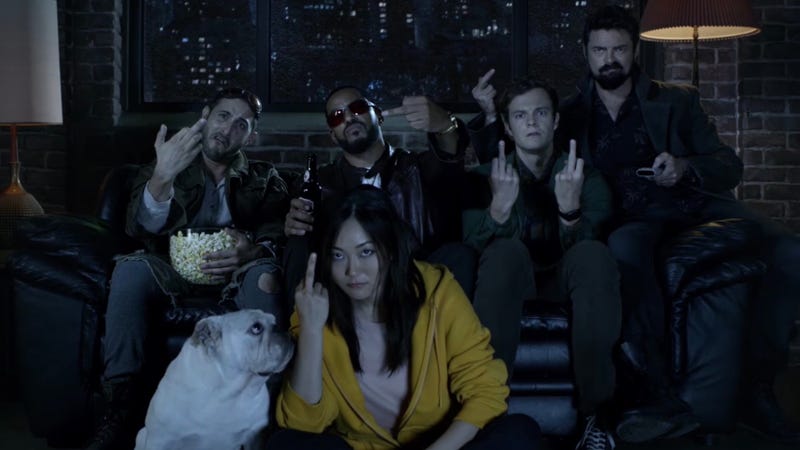
This is where the Boys themselves come in. They include Billy Butcher, Frenchie, Mother’s Milk, the Female, and Hughie. They both witness and directly experience the breadth of the Seven’s corruption. They take it upon themselves to expose these heroes for who they are.

However, their motivations aren’t entirely heroic. These characters often come off every bit as damaged, petty, and vindictive as the heroes they actively oppose. They don’t stick to high ideals, either. The Boys are brutal, albeit in a more focused and pragmatic sense.

It gets ugly.

It gets violent.

It gets downright traumatic.

It also gets the damn point across.

If “The Boys” has a unifying message that unites both the comics and the TV shows, it’s that superheroes can only ever make things worse in the long run. That ideal of a perfectly altruistic savior in the mold of Superman just doesn’t exist and wanting it to exist can be downright dangerous.

The people behind the scenes with the Seven feed into that. The government, big corporations, and the media glorify these heroes because the people latch onto them. They want these heroes to be the idealized figures that they read about in comics and see in blockbuster movies. They buy into it and both the Seven and the organizations that manage them keep selling it.

It’s a self-reinforcing cycle that only amplifies the corruption. The Boys dare to battle that corruption, but with the understanding they’re fighting a losing battle. They can attack, expose, and frustrate these superpowered sociopaths all they want. They’re never going to destroy those rosy ideals on which the entire genre is build upon. At most, they can just make them pay a price for their egregious misdeeds.

It’s hardly proportional to the many atrocities the Seven commits, but that’s kind of the point. These are superpowered beings who can only be hurt so much, even by other superheroes. The Boys can never punish them in a way that feels equitable, compared to the injustices the Seven inflict. That doesn’t stop them from making an effort and making it better than most would expect.

The right tool for the right job.

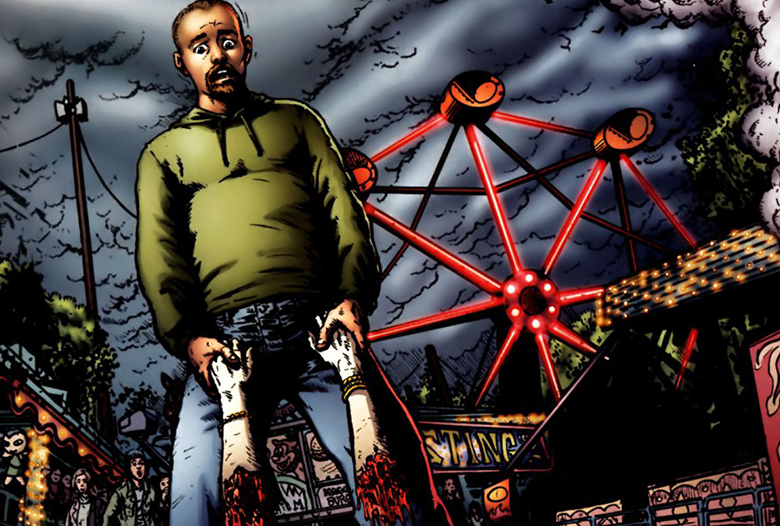
How they go about this and how the Seven reacts is a long, tortured story that has many shocking moments that are not for kids or the faint of heart. The trailer for the TV show offers a hint of that, but there are scenes from the comics that even the lenient censors of Amazon Prime wouldn’t dare put on film. I won’t spoil the bloody details, but if you have the stomach, I highly recommend you check out the comics.

More than anything else, the “The Boys” is a brutal reminder that the ideals behind superheroes are probably the most fanciful part of the genre. In a real world full of corruption and collateral damage, superheroes can be far more dangerous than the threats they confront. It’s almost impossible to be a superhero without becoming a self-absorbed asshole to some extent.

Even the Boys, who actively battle the superheroes that fuel this fantasy, never come off as entirely altruistic. They’re simply more respectable and less narcissistic. In that dynamic, nobody can ever come off as truly heroic. There’s just too much room for corruption and ego.

While “The Boys” wasn’t the first comic to satirize superheroes, it’s definitely the most complete. “Watchmen” may get more praise and respect, but even in that story, the heroes still try to act like heroes in their own perverse way. What characters like Ozymandias and Rorschach do is framed as something heroic, even if it gets violent and brutal. There’s none of that with “The Boys.”

In an ideal world, even assholes will find a way to be heroic under the right circumstances. Tony Stark proved that in “Avengers Endgame.” However, in the world of “The Boys,” there’s no such thing as right circumstances. If anything, the entire superhero genre has it ass-backwards. Heroes will inevitably find a way to become assholes and if nobody stops them, then they’ll just push their assholery to new heights.

The Boys” is a unique comic in its own right, but the TV adaptation is coming along at just the right time. I would even argue that this kind of satire is necessary in the current cultural landscape. We need something like this to remind us that the ideals of superheroes are still ideals. Like most things in the real world, ideals tend to crumble when subjected to scrutiny.

At a time when people are consuming the ideals of superheroes at an unprecedented level, it’s important to maintain a sense of perspective about the genre. A satire like “The Boys” may never have the same impact as anything from the MCU, but it’s still a story worth telling, if only to remind us that great power can also breed greater assholes.

1 Comment

Filed under political correctness, psychology, superhero comics, television

Why Natalie Portman Becoming Thor Is The Biggest Story From San Diego Comic Con 2019

natalie-portman

If you’re a fan of comic books, superhero movies, and the Marvel Cinematic Universe, this past weekend was like Christmas, Halloween, the 4th of July, and the Super Bowl all rolled into one. The San Diego Comic Con is essentially the epicenter of geek culture. In recent years, it has only gotten bigger, becoming a staging area for major pop culture events. This latest convention was no exception.

While there was plenty of news to follow at this year’s Comic Con, especially for X-Men fans like me, the biggest event was always going to be Marvel Studios. It has already been a historic year for superhero movies, especially on the Marvel side of the genre. Shortly before the convention began, “Avengers Endgame” officially passed “Avatar” to become the highest grossing movie of all time.

It’s a good time to be Kevin Feige.

It’s a good time to be Bob Iger.

It’s a good time to be a Marvel fan, in general.

With the end of “Avengers Endgame,” however, the story that began in 2008 “Iron Man” has concluded. The Avengers assembled in a truly spectacular battle for the ages. Thanos is defeated. The Marvel Cinematic Universe is once again secure, but after making the highest grossing movie of all time, how can Marvel Studios keep raising the bar like this?

In Hall H of the San Diego Convention Center, the next phase of the MCU was finally revealed. Some of the announcements were expected. News of a “Black Widow” movie, as well as an “Eternals” movie, had already been reported months ago. News of a “Blade” movie within the MCU was more surprising, but that wasn’t the biggest story by a long shot.

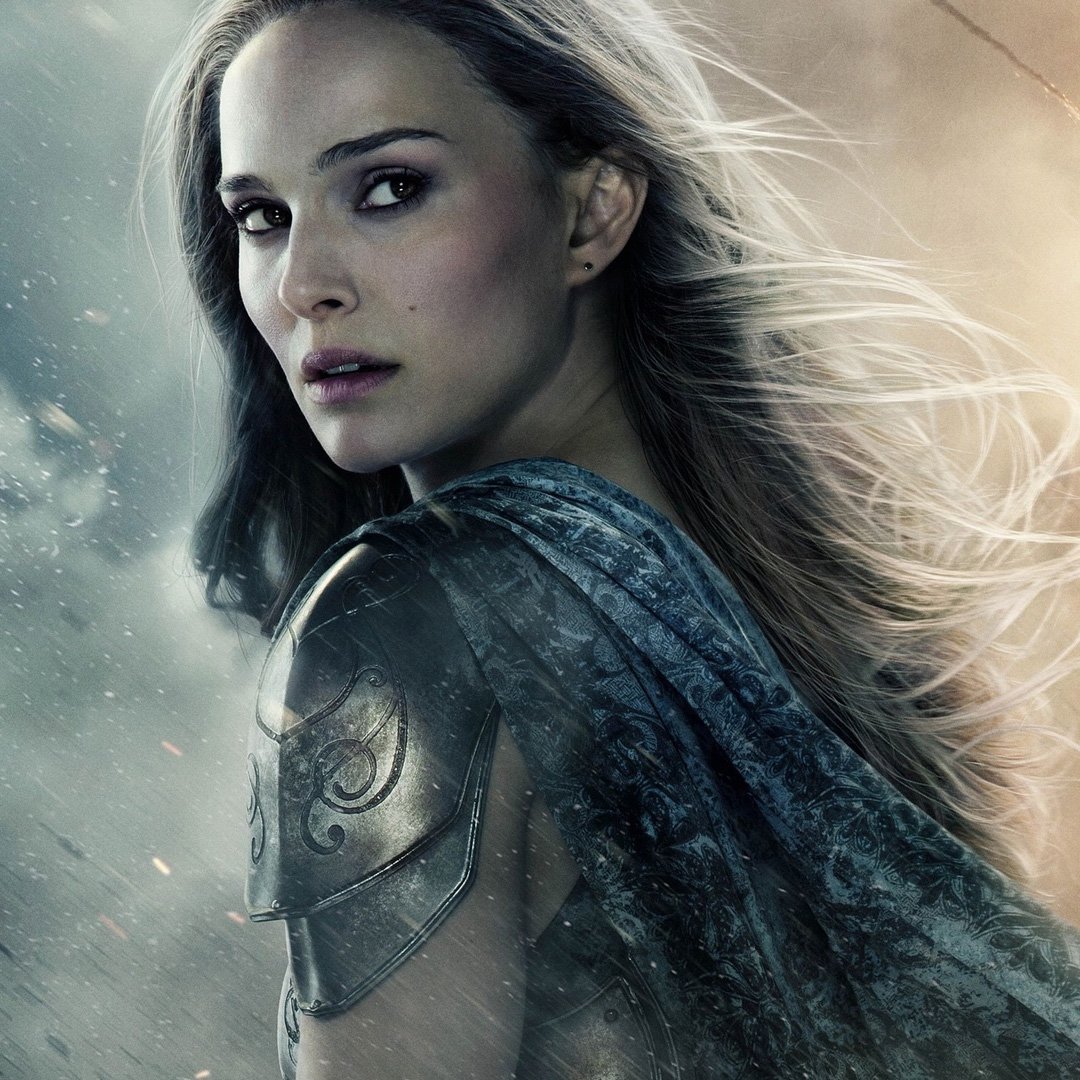
By far, the biggest Marvel Studios news to come out of San Diego Comic Con 2019 was Natalie Portman returning as Jane Foster to play a female Thor. I’m not going to lie. When I saw this news, I had to blink a few times and slap myself to make sure I wasn’t dreaming. Once certain this was real, it finally sunk in.

Natalie Portman is returning the MCU as Jane Foster to play a female Thor.

To appreciate why this is a huge deal to longtime comic readers like me, I need to provide a little context. Jane Foster being Thor is a concept that only recently gained prominence, thanks to one of Marvel’s top-tier writers, Jason Aaron.

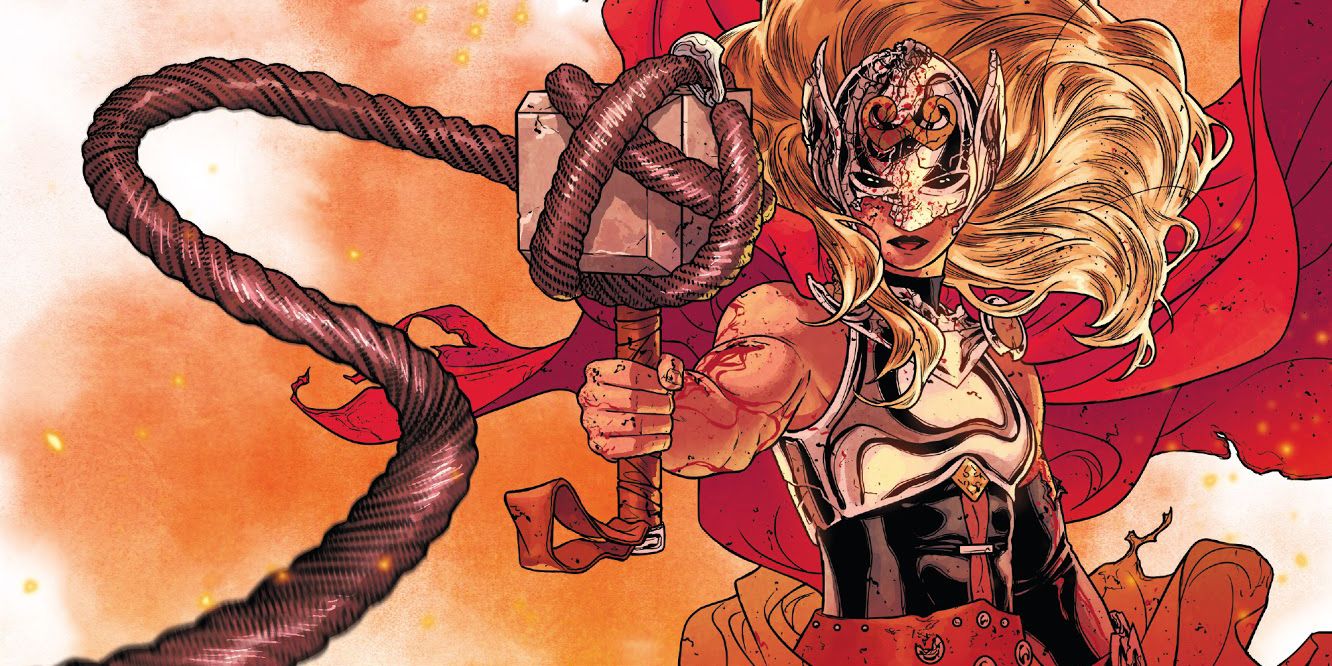
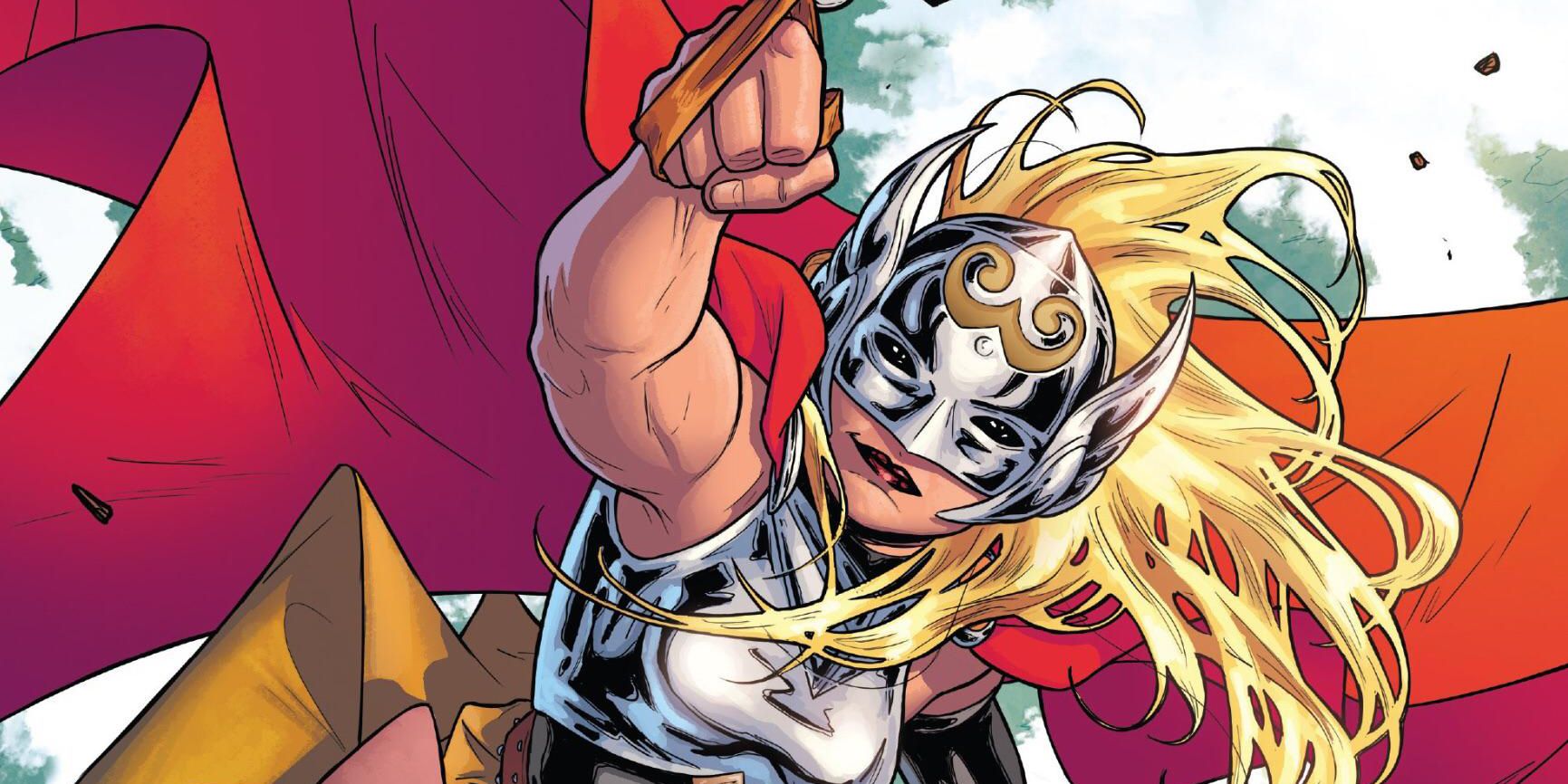
Back in 2014, the Thor comics underwent a major upheaval. After a fateful encounter with Nick Fury, Thor suddenly became unworthy of lifting Mjolnir. It was a dramatic moment that defined the character for years to come. Then, after everyone in Asgard failed to lift the hammer, Jane Foster came along to wield it. In doing so, she became the new Thor.

If you haven’t read the first few volumes of that story, I cannot recommend them highly enough. Even if you’ve only seen the movies, you’ll still find plenty to love about these comics. They made me a fan of both Thor and Jane Foster. If Marvel Studios and Natalie Portman can even capture a fraction of this story’s greatness, then it’ll be a bold new era for superhero movies.

Now, make no mistake. Jane Foster becoming Thor was not without controversy. In fact, the timing of this story couldn’t have been worse. It came out right around the same time that efforts to promote diversity within superhero comics had become mired in regressive politics. It was a time when iconic characters were being replaced and new characters were being created, albeit with mixed results.

This is how mixed it got and NOT in a good way.

I’d rather not go into all the issues, controversies, and absurdities from that era, but I will say that Jane Foster becoming Thor was one of the success stories from that tenuous period. Her journey as the new Thor didn’t supplant that of her predecessor. If anything, it complemented his story. The title of Thor was greatly improved because Jane Foster wielded that hammer.

Now, Marvel Studios is in an even better position to do the same. The success of both “Wonder Woman” and “Captain Marvel” has established that there is a market for female superheroes. The events of “Avengers Endgame” also opened the door for someone else to step in without diminishing Chris Hemsworth’s character, who may still have a part to play in “Guardians of the Galaxy 3.”

It also helps that Natalie Portman’s Jane Foster has been MIA since the events of “Thor: The Dark World.” While her reasons for leaving were somewhat obscure, the announcement at San Diego left no room for ambiguity. She’s coming back and she’s going to play a major role in the next phase of the MCU.

In my opinion, this will go down as one of the most pivotal announcements in the history of the MCU. Why do I believe this is bigger than the Eternals, Blade, Black Widow, or any of the upcoming shows on the Disney+ streaming service? To answer that, it’s necessary to take a step back and look at the bigger picture.

The Jane Foster that Natalie Portman played in the first two Thor movies is not the same Jane Foster who has established herself as a prominent force in the comics. Throughout her history, she has maintained a strong connection to Thor and not just as a romantic interest. In many respects, she has been the character through which ordinary, non-Asgardian people explore Thor’s world of gods, demigods, and monsters.

A big part of what made Jason Aaron’s story surrounding Jane Foster becoming Thor so powerful was how she proved her worthiness of that title. As a mortal woman with many mortal limitations, she embraced that role and proved herself against gods, monsters, and even other superheroes. It was easy to cheer her on every step of the way.

In any era, it’s a powerful story, having an ordinary human embrace god-like power to bear god-like burdens. In this current era of superhero movies, Jane Foster becoming Thor isn’t just a fitting, comics-accurate way to build her story in the MCU. It’s a story that almost feels necessary.

The MCU is a world that has become densely populated by super soldiers, aliens, gods, monsters, and demigods. With the conclusion of “Avengers Endgame,” the world is in a tenuous state. Friendships, families, and teams have been decimated due to the conflict surrounding Thanos and the Infinity Stones. There are voids to be filled, including a few once populated by gods.

Ordinary people becoming heroes is a story that the MCU has told many times before, the latest being “Spider-Man: Far From Home.” Stories about ordinary people becoming gods haven’t been nearly as common and with the Eternals already poised to join the MCU, I think that story should play out in some manner, if only to keep humanity connected to this world.

Jane becoming the Goddess of Thunder is the perfect story to maintain that connection. Unlike Carol Danvers, Jane is not a soldier or a warrior. She’s a scientist who got caught up in the world of gods and superheroes, but she didn’t run from it in the comic. Now, armed with Natalie Portman’s Oscar-winning talent, she’s poised to make a similar journey in a world that needs new heroes to step up.

It’s an exciting, but uncertain time for the MCU. However, when you’ve got a story like that of Jane Foster becoming Thor and an actress as talented as Natalie Portman leading the way, the future has never been brighter.

3 Comments

Filed under Marvel, movies, superhero comics, superhero movies, Wonder Woman